

Submitted:
27 October 2025
Posted:
29 October 2025
You are already at the latest version
Abstract
The contribution of members of the agri-food system to achieving the Sus-tainable Development Goals is a key element of the transition to sustaina-ble development. Here, we show that many issues related to governance, social benefits, environmental impacts, animal welfare, general and oral health, and nutrition dimensions can be integrated into a One Health global approach to the food chain. The use of sustainable management systems allows the development of an integrated approach with a spirit of continuous improvement. Such an organization is based on risk man-agement tools that are applied to multiple stakeholders, viz. product qual-ity, occupational health and safety, environmental impact, etc., thus ena-bling better global performance. Addressing food systems complexities involves analyzing the involved different tools, ethical food consumption, and exploring ways to tackle nutritional insecurity. The need for food sys-tems to be both sustainable and ethical can be achieved through the One Health approach, incorporating plant-based diets. Key suggested inter-ventions to foster a responsible food system include: (i) raising awareness of animal rights and one Health approach, (ii) disseminating nutritional and environmental knowledge, (iii) promoting plant-based food research, commercialization and consumption, and (iv) fostering social inclusion and positive recognition of vegan identity. A case study from Africa shows the implementation of a sustainable and healthy future through the One Health approach.
Keywords:
sustainability
; ethical food systems
; One Health approach
; plant-based diets
; Africa
1. Introduction
Different definitions of sustainable food systems include different pillars, such as food security and nutrition, i.e., the achievement of food security and nutrition security through sustainable and secure food systems [1]. Sustainable diets are another significant pillar targeting low environmental impacts, contributing to food and nutrition security, biodiversity and ecosystems, culturally acceptable, accessible, economically fair, and affordable[2]. Healthy diets are linked to planetary boundaries.
Another direction emphasizes sustainable development, with a focus on Sustainable Agriculture and Rural Development (SARD) in the agriculture, forestry, and fisheries sectors. This approach conserves land, water, plant, and animal genetic resources, ensuring environmental non-degradation, technical appropriateness, economic viability, and social acceptability.
Core dimensions of Sustainable development (Economic, Environmental, and Social) are complemented by other dimensions, such as Food, Health, Nutrition, and Cultural. The emphasis is placed on environmental processes and outcomes through sustainable food systems, which will achieve good nutrition and socioeconomic outcomes while keeping environmental impacts low enough. The aim is not to destabilize the planetary boundaries of biophysical processes and hence environmental systems, but to conserve “natural resources and protect global ecosystems for human and planetary health and wellbeing”[3].
Economic security is another essential pillar of food systems, since they need to achieve economic security of all stakeholders and combat existing malnutrition/obesity-related health problems[4]. The social parameter is also involved, taking into account resilient and equitable food systems, or sociocultural wellbeing, or social system integrity, or right to food & poverty and inequality, or inclusion, or common good, just & ethical & equitable food systems[5].
Cultured (laboratory-grown) muscle cell (CMC) food has emerged due to pressure on traditional food systems and negative aspects of livestock production[6]. The CMC industry claims a reduced demand for natural resources, minimal impact on the environment, and better outcomes for animal welfare[7,8,9]. Moreover, livestock production systems should be discussed and considered within the framework of One Health (https://commission.europa.eu/publications/sustainable-europe-2030_en). One Health encompasses healthy animals, healthy ecosystems, and healthy people [10]. Adoption of agroecology is another transformational change in the livestock industries[11]. This necessitates the combination of livestock production with ecosystem components, including water filtration, nutrient cycling, soil carbon, and increased biodiversity. Scalability of agroecology and equal applicability at the level of smallholder farmers and large livestock enterprises are attained[12,13] (https://www.ilri.org/news/one-health-key-sustainable-livestock-and-human-and-environment-health). Healthy ecosystems with ethical and sustainable production of natural animal protein depend on the complementarity of One Health and agroecology [2,14,15].
Moreover, animal welfare is recognized as a critical concern by the UN’s One Health Expert Panel and other global stakeholders[16]. However, it is not discussed in climate discussions, including the Intergovernmental Panel on Climate Change’s (IPCC) Sixth Assessment Report. The latter fails to address the One Health framework or the welfare implications of mitigation strategies with priority on the reduction of emissions from animal agriculture[17].
Despite the increasing recognition of these sustainability pillars, ethical consumption, and the One Health perspective, there remains limited integration of these dimensions into a unified framework guiding food system transformation. In particular, the intersection of plant-based dietary shifts, governance tools, and regional case studies (such as Africa) has not been sufficiently explored. The aim of this article is therefore to examine how food systems can be made both sustainable and ethical by incorporating the One Health approach, addressing psychological, social, and structural barriers to dietary change, and presenting strategies and examples that can inform global practice. As shown in Figure 1, there are many components and drives in the sustainable food system framework. It also displays that the food supply chain and food environments are integrated to assure sustainable development goals.
A conceptual framework is not only descriptive but also strategic. It underlines the systemic nature of food challenges while mapping the linkages across economic, social, environmental, and ethical domains. This integrative perspective provides the basis for identifying governance tools, consumer-oriented interventions, and dietary shifts, elements that will be further elaborated in the following sections.
2. Methodology
This article follows a narrative review approach, synthesizing peer-reviewed publications, policy documents, and international reports published between 2015 and 2025. Literature was retrieved from major databases, including Scopus, Web of Science, and PubMed, complemented by official sources such as the FAO, WHO, IPCC, and the European Commission. Keywords included sustainable food systems, One Health, ethical consumption, plant-based diets, agroecology, and the Africa case study. Selection criteria prioritized studies offering conceptual models, empirical evidence, or policy analyses relevant to sustainability and ethics in food systems. Articles not directly addressing these intersections were excluded. References were critically examined and cross-checked to ensure accuracy and consistency, while emphasis was placed on recent evidence (2020–2025) to capture emerging trends.
To ensure reliability, all included studies and reports were subjected to a critical appraisal process. Publications were evaluated based on clarity of objectives, methodological soundness, transparency of data sources, and relevance to sustainability and ethical dimensions of food systems. Particular attention was given to identifying potential biases, such as industry influence in nutrition guidelines or limited geographic representation in empirical studies. The reviewing process followed an iterative approach: each co-author independently screened and appraised selected article, followed by cross-checking to resolve discrepancies. Priority was given to peer-reviewed journals and authoritative institutional reports, while grey literature was only included when it added unique contextual insights. This process allowed for a balanced synthesis of evidence across environmental, economic, social, and ethical domains.
3. Addressing Food Systems Complexities and Ethical Food Consumption
Different tools could address food systems complexities. Traditionally the impact of refrigerated chains on food conservation and environmental costs [19], the implications of emerging food technologies, such as plant-based and cultured meat[20], and the effects of alternative diets on systemic outcomes[21,22] could affect these complexities[23]. However, there is concern that national-scale tools might reduce their effectiveness in capturing on-the-ground barriers to food access and consumption, and fail to correlate these local dynamics to environmental, social, economic, and health dimensions. In addition, even though supply chains are affected by consumer demand for fair, healthy, and sustainable food production, local tools frequently overlook diets and consumer behavior[24].
The intersection of food security and nutrition with ecological, health, economic, political, and sociocultural systems, and the demand for healthy interrelationships for long-term food system viability is reported clearly by Clapp, et al. [25]. Sustainable diets are also associated with the right to adequate food, as indicated in in many studies [26,27]. Τhe transformation of the entire food system will affect diet improvement, hence affecting the global burden of disease, also known as the diet-focused perspective [28].
Sustainable development in terms of its core dimensions is often associated with cultural aspects, food quality, health and nutrition, and governance[29]. The privatization of carbon markets, corporate-driven regenerative agriculture, and technological fixes are all responses to the challenges posed by unsustainable food systems. In this context, structural inequalities are avoided, resulting in ‘greenwashing’ and ‘social washing’ practices [30]. However, it is questioned whether these inequalities are avoided or reinforced. Carbon footprints or yield efficiency are examples of an oversimplification of sustainability. Otherwise, promotion of poverty, inequality, hunger, and violations of community livelihoods will occur.
Different systems such as Global Positioning System(s) (GPS) have been employed to define exposure to the food environment. Exposure to food outlets and the assessed associations with either diet-related or cardiometabolic health outcomes have been tested by Siddiqui, et al. [31], but no consistent associations were found.
Ethical decision-making in food consumption is essential, as reported by Varzakas and Antoniadou [32] and this will be enhanced by new tools such as digitalization, which will enhance consumers’ decision-making and affect food systems, as reported by Jose, et al. [33]. Digitalization of livestock farming will aid in the monitoring of the health, welfare, reproduction, and environmental impact of individual animals in real-time [34]. New and traditional technologies such as Radio Frequency Identification (RFID), infrared thermal imaging[35], audio surveillance systems[36], deep learning and image analysis[37], two- and three-dimensional cameras[38], and accelerometers will be employed to monitor and manage animal welfare. Food systems face food and nutritional insecurity, along with climate change-related challenges and unsustainable farming practices[39]. Emerging digital technologies such as artificial intelligence (AI) and its subset, machine learning (ML), have been found to mitigate these challenges[40].
Prioritization of attributes such as animal diets, stress-free environments, humane processing practices, and health conditions, linking these to both ethical and hedonic values, has been indicated by consumers. Some studies also describe the solution to global food insecurity with GMOs as a modern, efficient solution, overshadowing its socio-economic and environmental risks [41]. Are GMOs a symbol of progress, marginalizing alternative models like agroecology by labelling them as inefficient or unscientific[42]?
This might displace small farmers, and lead to disruption of local food systems and consolidation of land ownership among corporations[43]. Emphasis on the preservation of traditional seeds, biodiversity, and agroecological practices to restore autonomy over food systems has been discussed by community-led resistance movements, such as those in Ghana and Argentina[44]. Raimi and Masri [45] applied critical discourse analysis (CDA) to analyze how GMO agripreneurship impacts the global food supply chain. They proposed agroecological sovereignty as a hybrid approach that balances decolonization.
In sum, ethical food consumption is increasingly shaped by digital technologies, consumer values, and contested innovations such as GMOs. These dynamics reveal both opportunities for more transparent and welfare-oriented food systems and risks of reinforcing inequalities or displacing traditional practices. Recognizing these tensions provides the foundation for the following sections, where the focus shifts from individual consumption choices to broader governance mechanisms and systemic transformations needed to ensure sustainability and equity across food systems.
4. Advancing Nutritional and Environmental Awareness
Nutrition affects both health and the environment, influencing climate change, biodiversity loss, and food security [46]. Despite available information, mixed messages lead many to consume high amounts of animal products, primarily from cows and sheep, and processed foods, which harm ecosystems [47,48]. In 2015, the Dietary Guidelines Advisory Committee (DGAC) recommended more plant-based and fewer animal-based foods for health and environmental benefits, but this was excluded from the final USDA guidelines [49,50]. Sharing knowledge through trusted experts can link health benefits to environmental care, motivating sustainable choices[48]. Public awareness, supported by education, media, and policy, is essential for advancing sustainable food systems[51].
4.1. Key Methods of Knowledge Dissemination in Nutrition and Sustainability
Spreading knowledge about healthy eating and its environmental impact requires varied approaches, reaching all ages via education, media, policies, and clear science communication to encourage better choices and sustainable food systems. Integrating sustainability and nutrition into school curricula effectively raises awareness [52]. Nutrition educators should promote healthy diets and ecological awareness[48]. Schools can foster this by combining biology, environmental science, and health education with hands-on activities like gardens, plant-based cooking, and sustainable lunch programs. Given the link between animal-based diets and environmental harm, addressing ecological impacts in curricula is vital[50].
4.2. Media and Digital Platforms: Social Media, Documentaries, and Awareness Campaigns
Social media platforms like Instagram, YouTube, TikTok, and X have become influential in linking eating habits with personal and environmental health, with plant-based chefs, health professionals, and science communicators promoting critical thinking about food choices[53]. Documentaries such as Cowspiracy, What the Health, and The Game Changers show that storytelling can make scientific information more accessible[54]. Digital tools like carbon footprint calculators, sustainability labels, and green recipe apps further help individuals assess the environmental impact of their diets[55]. With over half of Americans concerned about climate change[48], interest in diet advice that supports the environment is growing. Digital platforms thus play a key role in promoting healthier, more sustainable eating, a point highlighted in the 2015 DGAD report[49]. Industry 4.0 technologies like AI, big data, IoT, and blockchain are transforming agriculture and food systems toward sustainability[47]. Figure 2 shows key components of this digital transformation.
4.3. Public Policies and Food Labels: Helping People Make Greener Choices
Public policies and clear food labeling are essential for promoting sustainable habits. Labels that show resource use or product origin help consumers make eco-friendly choices, recognized labels like EU Organic, Rainforest Alliance, and Carbon Trust guide buyers. The EU plans a unified sustainability label covering the full product lifecycle, complementing existing ones[57]. Studies on olive oil show that combining EU Organic and Sustainable Irrigation labels improves consumer perception and purchase intent[58]. The Rainforest Alliance label supports sustainable farming and social aspects, but faces communication challenges[59]. The Carbon Trust label reveals products’ greenhouse gas emissions, aiding carbon footprint comparisons and raising awareness[60,61]. The SNEB supports including sustainability in national dietary guidelines (3). Countries like Brazil already do this, influencing public and institutional purchasing[49,62]. Clear, standardized, science-based labeling with strong regulation is needed for practical impact.
4.4. Scientific Research and Public Engagement: Bridging the Gap Between Academia and the Public
Scientific research is the basis for reliable advice on nutrition and environmental sustainability. Studies consistently show that animal-based foods (especially from ruminant animals) produce more greenhouse gases and use more land and water than plant-based alternatives. In this regard, Tools like Life-Cycle Assessment (LCA) confirm these impacts [48,63]. Experts thus recommend increasing consumption of whole grains, legumes, fruits, and vegetables [64]. However, research must be communicated clearly and accessibly. Researchers are encouraged to engage beyond academia, collaborating with media, educators, policymakers, and communities through methods like citizen science, public talks, open data, and partnerships with digital creators[49]. These approaches align with community-based social marketing, emphasizing clear messaging, local engagement, and behavioral insights to foster sustainable food choices[65]. Table 1 summarizes the key knowledge dissemination strategies discussed in this section, outlining their strengths, intended audiences, and examples from real-world application.
5. Challenges in Spreading Nutritional and Environmental Knowledge
Even though the significance of sustainability and nutrition is becoming widely recognized, several challenges hinder the effective dissemination of knowledge in this field. These challenges span from conflicting information to deeply rooted psychological and structural barriers. Understanding and addressing these challenges is essential for promoting general behavioral change and policy reform.
5.1. The Conflict Between Industry Narratives and Scientific Facts
A key challenge in sharing reliable nutrition and sustainability knowledge is conflicting media messages, with industry often altering or obscuring scientific findings, creating public confusion and distrust. Many commercial websites mix accurate and false information, while government and academic sources are generally more reliable[66]. This confusion undermines confidence and makes it harder to identify truly healthy and sustainable foods. Building a society that values health and trustworthy information, supported by clear public understanding, is essential for guiding better dietary choices.
5.2. Psychological Obstacles to Dietary Change
Despite expert support for healthier, more sustainable diets, many struggle to change due to cultural, emotional, and habitual factors. Even when aware of plant-based benefits, people often resist change. Habit is key; many enjoy meat, are used to it, and lack knowledge about plant-based alternatives, making shifts difficult[67]. Emotions and culture, including comfort and tradition, also play roles. Attachment to familiar foods, distrust of new advice, and limited professional support cause people to ignore facts and maintain their usual diets [68]. Perceived costs, complexity, and restricted access to sustainable foods add barriers. Mixed online messages reduce trust in science-based guidance[66]. Overcoming these challenges requires simple, supportive, and relatable messages that show plant-based eating as affordable and easy.
6. Economic and Political Influences on Food Systems
Economic and political factors strongly influence food systems. In many countries, meat and processed food production receive more government support than fruits and vegetables, which are classified as “specialty crops” and receive minimal funding [69]. Corporate lobbying can also shape nutrition advice, as seen in the U.S. in 2015 when the DGAC’s recommendation to reduce red and processed meat for environmental reasons was omitted from final guidelines under industry pressure [49]. Support for sustainable farming remains inconsistent, with large industrial farms often receiving substantial subsidies despite environmental harm, while eco-friendly farmers get less assistance[48]. For instance, in 2020, the U.S. canceled a $3 billion climate-smart agriculture program, showing how political decisions can hinder sustainability progress[70]. Disseminating nutritional and environmental knowledge can transform food systems to be more sustainable and ethically grounded by fostering critical reflection among consumers, health professionals, and policymakers on the ethical dimensions of food production, consumption, and policy.
7. Raising Awareness About Animal Rights and Welfare
Animals in large-scale farming often face poor living conditions, raising serious ethical concerns [48]. Research shows that when people learn about animal suffering and their capacity to feel pain and emotions, they tend to care more about animal welfare [71]. This awareness can lead to negative attitudes toward eating meat and increased interest in plant-based diets. Visual media, such as documentaries and online campaigns, have played a key role in exposing issues like factory farming and slaughterhouse practices, increasing public demand for more humane food systems [48,72]. However, emotional reactions alone may not create lasting change. Studies suggest that effective media should combine emotional impact with clear guidance for action while considering social norms and possible barriers to change [73].
8. Encouraging Plant-Based Diets Through Education and Commercial Promotion
Plant-based diets are gaining attention not only for health and environmental benefits but also for ethical reasons. Learning that plant-based foods generally require less land and water and produce fewer carbon emissions helps people understand the ethics behind their food choices. Rose et al. emphasize that eating fewer animal products and more vegetables, legumes, and whole grains benefits both health and the planet[48]. Animal foods, especially beef, emit far more greenhouse gases than plant-based foods, with meat producing over 30 kg CO₂-eq/kg compared to under 1 kg of most plant foods [64]. Promotional tools such as “climate-friendly” labels and positive environmental marketing can reduce meat consumption and promote plant-based diets[74]. Tailored strategies with cooking guides, shopping tips, and meal plans, particularly for younger consumers, are more effective when linked to ethical or ecological values [75]. Companies increasingly invest in plant-based products, using in-store campaigns, restaurant partnerships, school collaborations, and product sampling to encourage sustainable eating [76].
9. Supporting Agri-Food Reform by Informing Policymakers and Consumers
Scientific research increasingly shapes food policies as environmental concerns grow. Awareness of the high emissions from livestock encourages support for eco-friendly farming and climate-focused dietary guidelines [48,64]. The European Commission recommends making sustainable food options more accessible and appealing [77]. Consumers, equipped with clear information and tools, influence the market toward ethical choices. However, Reisch notes that effective communication must incorporate behavioral science to truly drive change, empowering individuals and institutions to foster healthier, more resilient food systems [78].
In conclusion, the effective transfer and communication of nutritional and environmental knowledge play a pivotal role in aligning individual behaviors, institutional practices, and policy frameworks with the principles of sustainability and ethics. While education, digital platforms, public policies, and scientific engagement provide powerful vehicles for change, their impact depends on overcoming misinformation, psychological resistance, and structural inequalities. Promoting informed choices and embedding ethical awareness into food systems establishes the foundation for more profound transformations, enabling a shift from awareness-raising toward systemic reforms that will be examined in the following sections.
10. Promotion of Plant-Based Food Research, Commercialization, and Consumption
The plant-based foods commercialization tracks a flexible innovation process that converts scientific findings into fully developed products. The initial phase concentrates on generating ideas, led by consumer trends, sustainable development goals, and perceptions from nutritional studies [79]. To design formulations that simulate the organoleptic characteristics and nutrient profiles of traditional animal-based products, scientists are progressively investigating innovative ingredients such as pea protein and algae.
As an illustration, pea protein shows a rational amino acid profile. It presents similar emulsifying properties that allow it to satisfy current consumer demands for alternative plant-based protein bases. Previous research showed that in liquid emulsions, pea protein has been used for oil microencapsulation as an emulsifier [80]. However, the variability of pea protein is due to its limited molecular flexibility, which prevents it from forming a stable interfacial film in the presence of oil. Additionally, because of its beneficial health impacts, hypoallergenic features, and non-genetically modified aspects, pea protein has been employed as an encapsulation material [80]. Furthermore, pea protein, as a biocompatible and biodegradable natural polymer, has been extensively investigated for the development of edible/biodegradable films. It suggests a promising option for using pea protein-based films in the food industry[81]. Consequently, pea proteins are appreciated as functional ingredients and are commonly integrated into cereals, baked goods, meat products, and dairy alternatives for human consumption.
On the other hand, algae have been gaining popularity as 'superfoods' across the food and beverage sectors, serving as key ingredients, flavoring agents, or natural colorants in an increasing number of premium product launches[82]. In 2023, the global market for algal products was valued at USD 5.3 billion, with expectations for continued expansion, a compound annual growth rate (CAGR) of 6.4% to reach USD 7.3 billion by 2028[83]. Moreover, the worldwide algal protein market touched USD 3.2 billion in 2021, with a CAGR of 8.4% from 2022 to 2030[84]. Although microalgal protein extracts typically display low solubility close to their isoelectric points, they show high solubility in neutral to basic environments[85]. Particularly, high-pressure homogenization allowed Chlorella protothecoides proteins to attain above 90% solubility between pH 2 - 6[86], and Nannochloropsis oceanica proteins also presented high solubility, making them adequate for acidic and low viscosity foods[87]. Abundant in phospholipids and polysaccharides, algal proteins demonstrate strong emulsifying abilities, outstanding gelling and foaming properties, which could support their use in food products like snacks, sauces, baked goods, meat alternatives, and desserts[88]. Michel, et al. [89] specified that consumers had favorable thoughts on algal meat analogs because of the environmental and nutritional advantages. Van der Stricht, et al. [90] reported that E.U. consumers were unfamiliar with food products containing microalgal proteins. Likewise, Mellor, et al. [91] reported that British consumers had limited knowledge of algae as a food source but showed interest in trying them, and the acceptance of algae was determined by the supposed innovation, savor, well-being, sustainability, and cheapness. Lafarga, et al. [92] pointed out that Spanish consumers viewed microalgae as sustainable, nutritious, and safe; however, low consumption was mainly attributed to a lack of awareness and unfamiliarity. Generally, improving consumer familiarity with algae and algal proteins could drive greater adoption and boost market share. However, flavor-including aromatic and basic taste profiles remain a critical barrier to broader acceptance. Vanquishing these flavor challenges across advanced processing methods, formulation adaptations, and flavor covering strategies is indispensable to increasing consumer appeal and boosting market development.
Once a feasible model is developed, the subsequent phase includes prototyping. At this stage, preparations are sophisticated and assessed for organoleptic qualities such as taste, texture, appearance, and storage stability. To enhance product functionality and manufacturability in plant-based food development, cross-disciplinary collaboration among food technologists, flavor experts, and process engineers is required. In this regard, to fine-tune the prototypes, food scientists and product developers use a wide range of tools such as emulsification, extrusion, fermentation, and flavor masking. Continuous experimentation leads to the evaluation of sensory responses, shelf-life stability, and compatibility with food processing engineering.
Every feasible model is developed; the subsequent phase includes prototyping. At this stage, preparations are sophisticated and assessed for organoleptic qualities like taste, texture, appearance, and storage stability. Here, to enhance product functionality and manufacturability in plant-based food development, cross-practice collaboration amongst food technologists, savor experts, and resources engineers was required. In this regard, to fine-tune the prototypes, food scientists and product developers worked on an extensive range of tools comprising emulsification, extrusion, fermentation, and flavor masking. Continuous experimentation leads to weighing consumer sensory responses, shelf-life stability, and correspondence with food processing engineering. Once the prototype encounters standard measurements, the product moved into the pilot testing phase to mimic profitable production conditions. This step is important for classifying mechanical challenges, viz., ingredient distribution, yield rate, processing blocks, packaging requirements, controlling labeling, allergen statements, and endorsements from food safety establishments. The next stage is market authentication, where early adopters offer essential feedback on the quality of the product, usability, and alignment with consumer standards. This feedback loop enables companies to refine their branding and build confidence in their go-to-market approach. If market indications are robust, the product is forwarded to commercial promotion. The focus shifts to increasing production to meet demand, forming distribution partnerships, and implementing targeted marketing strategies. Through this pipeline, rapidity and flexibility are essential, reasonable advantages, as consumer preferences and technological novelties in the plant-based space multiply.
To promote regular plant-based consumption, integrating plant-based options into public institutions and commercial settings is a strategic approach. For instance, New York City has adopted plant-based meals as the primary offering in all public hospitals, resulting in a 36% decrease in food-related greenhouse gas emissions and cost investments of $318,000 in 2023[93]. The platform attained over 90% patient fulfillment, representing the viability and welfare of plant-based blackboards in healthcare settings [94]. Columbia University has dedicated to driving its food-related carbon emissions by 25% by 2030 as part of New York City's Plant-Powered Carbon Challenge[94]. This initiative stimulates organizations to drop their carbon footprints by growing plant-based meal aids and reducing emissions from food procurement[95]. In the first year of contribution, Columbia Dining realized a reduction of 1.6% in emissions strength, notwithstanding a 10% increase in meal quantity. Other NYC institutions have also combined the challenge. The NYC Health + Hospitals is distinguished for serving over 1.2 million plant-based meals, resulting in a 36% decrease in carbon emissions and a 60% cost savings per meal [94] . In the UK, the "Plants First Healthcare" campaign supports making plant-based meals the default option in National Health Service (NHS) hospitals. Supported by signatories, the campaign underlines that such a change could yearly protect the NHS £74 million and decrease food-related emissions by up to 50% [96].
Table 2 provides a comparative overview of the most established and emerging plant-based food sources, highlighting their primary processing methods, functional applications, commercialization, and consumer acceptance trends. It includes widely used ingredients such as soy, oats, and pea protein, as well as novel and underutilized sources like algae, jackfruit, mycelium, and duckweed. Each source is assessed for its technological readiness and market integration, offering insight into its role in current and future plant-based food innovation. In summary, the commercialization of plant-based foods reflects a dynamic innovation pathway that moves from scientific discovery to large-scale adoption. While ingredients such as pea protein and algae illustrate the technological promise and the sensory challenges of alternative proteins, their integration into institutional and commercial contexts demonstrates tangible environmental and economic benefits. As public and private sectors increasingly invest in scaling plant-based solutions, the combination of scientific advances, consumer acceptance, and supportive policy frameworks will determine the long-term role of these products in sustainable and ethical food systems.
11. Fostering Social Inclusion and Positive Recognition of Vegan Identity
Goal 2, aiming at ensuring universal access to safe and nutritious food, is in resonance with veganism. Goal 3 focuses on good health and well-being, while Goal 15 is centered around life on land and the connection to vegan diets (Lang, 2020; Wang & Scrimgeour, 2021). Vegan adoption behavior is interlinked with human health, animal welfare, and environmental sustainability, as reported by many authors (Bolderdijk & Cornelissen, 2022; Gregson et al., 2022; Habib et al., 2024; Khara et al., 2021).
In the context of vegan diet adoption, different factors have been considered, such as taste, religious beliefs, and social and familial environments (Kessler et al., 2016; McKeown & Dunn, 2021; Miller & Dickstein, 2021; Fresán et al., 2020).
Vegan adoption behavior in relation to consumer behavior considers different models such as the stage model of self-regulated behavior change (Siebertz et al., 2022), transtheoretical models (Bryant et al., 2022), value attitude behaviors (Brouwer et al., 2022), the theory of planned behavior (D'Souza et al., 2022), and health belief models (Urbanovich & Bevan, 2020).
Shah and Joshi (2024) showed that environmental beliefs, health beliefs, and anti-speciesism values exerted a positive influence on individuals' attitudes toward adopting a vegan diet.
Moreover, the appearance of attitude has been reported as a pivotal mediator, connecting the social stigma to the vegan diet adoption behavior. Figure 3 shows plant-based food groups and their daily recommended servings. The recommended daily servings illustrated in Figure 3 emphasize not only the nutritional adequacy of plant-based diets but also their alignment with broader sustainability and health goals. A balanced inclusion of fruits, leafy greens, legumes, and whole grains ensures essential nutrient intake while reducing environmental impact. The recommendation for daily servings are as follows: Fruits:1 serving size = 1 piece or ½ cup; Leaf green:1 serving size = 1 cup raw or ½ cup cooked; legumes:1 serving size = ½ cooked legumes or 1 tablespoon seeds; grains: 6-11 serving size = ½ cup cooked or 1 slice whole-grain bread [110].
These guidelines therefore serve as a practical framework for individuals, institutions, and policymakers seeking to promote diets that are simultaneously health-promoting, ethically grounded, and ecologically responsible.
12. A Paradigm for a Sustainable and Healthy Future in Africa Through the One Health Approach
The One Health framework is designed to create a desired impact on preventing, predicting, detecting, and responding to health threats and enhance the health of human beings, animals, plants, and the environment, as well as contribute to sustainable development concurrently. Hence, the One Health joint plan of action (OH-JPA, 2022–2026) developed a guide containing six interdependent action tracks (as shown in Table 3) on how the One Health principles could be applied to strengthen collaboration, communication, capacity building and coordination mutually throughout all sectors and to interface the health concerns at the human– animal–plant–environment lines [111]. Traore, et al. [112] discussed that the existing health security assessment frameworks show limited scope as well as have limitations to sufficiently consider complex social, political, economic, regulatory, and ecological factors. Therefore, approaches like One Health could develop frameworks that interface among humans, animals, and ecosystems to develop global health security. They concluded that such frameworks should ensure the process of prioritization and building capacity following the core One Health principles. Besides, any added values, trade-offs, and benefits across human, animal, and environmental health systems should be the core interventions and outcomes during assessments. For instance, Zinsstag, et al. [113] summarized that the advancement and application of One human–animal–environment health for global health security. They recommended that such approaches appear to be crucial and sustainable to prevent, create preparedness, early detection, and investigation of growing risks and hazards. It creates an evidence base to monitor endemic and neglected tropical diseases. Figure 4 depicts the integrated components of the One Health approach.National One Health platforms have been developed as a setup by many sub-Saharan African countries to integrate surveillance and control of zoonotic diseases, food safety and security, antimicrobial resistance, poverty, as well as other health and socio-economic problems [114]. In Africa, National One Health platforms gained momentum
which provide a capacity to identify prioritization, strengths, weaknesses, opportunities, and gaps during implementation yet it need improvement [114]. Applying the One Health approach helps to tackle parasitic and vector-borne infections, of humans, animals, or both, of topical relevance to the African continent for better food security, livelihood, and public health [115]. Zhao, et al. [116] conducted zoonoses assessment of performance at Sub-Saharan African countries employing the global One Health index. They reported that this region had high performance for sub-indicators in zoonoses surveillance and response, vector and reservoir interventions, and natural protected areas, indicating that the countries in this region have a specific capability to monitor and prevent or respond to any zoonotic cases.
Today many challenges such as understaffing, underfunding of institutions, limitation of interdisciplinary cooperation, collaboration, and coordination [117]; increasing risks of zoonotic infections [118]; raising awareness, commitments, and creating policy influence [119]; demand for integrated set of policy approaches, farmers' food safety education, incorporate regulations, organizations, and multidisciplinary research during the introduction of emerging technologies (genetically modified organisms, nanotechnology, and vertical farming) on food safety [120], etc. have been continued as obstacles to assure the One health goals in Africa. Table 3 shows summaries of some case studies conducted in the African continent, focusing on the One Health joint plan of action (OH-JPA, 2022–2026) tracks.
The recognition of vegan identity and the principles of social inclusion highlight how individual choices and values intersect with systemic transformations in food systems. At the same time, the One Health approach in Africa illustrates how integrated frameworks can address health, environmental, and food security challenges at regional and global scales. Together, these perspectives demonstrate that sustainable food system transitions require both cultural and behavioral shifts, as well as coordinated institutional and policy responses. The article, therefore, concludes by emphasizing the importance of uniting ethical consumption, technological innovation, governance, and multi-sectoral collaboration to advance resilient, equitable, and sustainable food systems worldwide.
Sharing of nutrition- and environment-related knowledge is increasingly regarded as a strategic component in promoting ethical and sustainable food systems. Rather than being a solely educational activity, it contributes to the transformation of food culture, policy frameworks, and consumer behavior. Although progress has been made, particularly in the integration of environmental goals into dietary guidelines, greater cooperation between academic institutions, governmental bodies, media channels, and civil society remains essential for further advancement. These collaborations are necessary to ensure that science-based messages reach the public in a reliable and comprehensible manner.
In addition, transparency across all stages of food production and distribution should be improved. The implementation of mandatory environmental labeling and disclosure of sourcing practices by companies can support more informed and responsible consumer choices. This can contribute to both individual awareness and market-level change. Moreover, promoting critical engagement with food systems, through food literacy programs and public dialogue, can enable consumers better to understand the broader implications of their dietary decisions. Such awareness may lead to more deliberate choices, reductions in environmental impact, and improvements in long-term public health outcomes.
With the growing availability of digital tools and open-access data, the potential to influence food systems at scale is increasing. The intersection of education, transparent policy, and citizen participation can be viewed as a foundation for achieving food systems that are not only sustainable but also socially just and resilient.
Overall, the evidence indicates that the transformation of food systems cannot be achieved through fragmented or isolated measures. An integrated approach is required, one that brings together ethical consumption, technological innovation, scientific communication, and multi-sectoral governance. Situating sustainability and ethics at the center of food production, policymaking, and everyday practice will enable the development of systems that are resilient and nutritionally adequate, while also equitable and just, ensuring that future food pathways serve both humanity and the planet. Beyond individual components, the article suggests viewing the food system as an interconnected ecosystem in which health, environment, culture, and economics are mutually reinforcing, underlining that meaningful change depends on systemic integration rather than incremental adjustments.
Author Contributions
Elahesadat Hosseini, Zenebe Tadesse, Slim Smaoui, Walid Elfalleh, Maria Antoniadou, and Theodoros Varzakas: Conceptualisation, Data curation, Formal analysis, Investigation, Methodology, Resources, Software, Supervision, Validation, Visualization, Writing – original draft, Writing – review & editing.
Funding
None.
Conflicts of Interest
The authors do not have a conflict of interest. Data availability No data was used for the research described in the article.
References
- Acharya, T., J. C. Fanzo, D. Gustafson, J. Ingram, and B. Schneeman, Assessing sustainable nutrition security: the role of food systems. 2014.
- FAO, One Health and agroecology workshop, FAO, Editor.(2023) DOI:ÃÂ www.fao.org/one-health/resource s/events/events-detail/one-health-and-agroecology-workshop/en.
- Gormaz, T., S. Cortés, O. Tiboni-Oschilewski, and G. Weisstaub The Chilean Diet: Is It Sustainable? Nutrients. 2022; 14. [Google Scholar] [CrossRef]
- Chaudhary, A., D. Gustafson, and A. Mathys, Multi-indicator sustainability assessment of global food systems. Nature Communications. 2018. 9(1): p. [CrossRef]
- Shariatmadary, H., S. O’Hara, R. Graham, and M. Stuiver Are Food Hubs Sustainable? An Analysis of Social and Environmental Objectives of U.S. Food Hubs. Sustainability. 2023; 15. [Google Scholar] [CrossRef]
- Deliza, R., B. Rodríguez, F. Reinoso-Carvalho, and T. Lucchese-Cheung, Cultured meat: a review on accepting challenges and upcoming possibilities. Current Opinion in Food Science. 2023. 52: p. 1010. [Google Scholar] [CrossRef]
- Hocquette, J.-F., S. Chriki, D. Fournier, and M.-P. Ellies-Oury, Review: Will “cultured meat” transform our food system towards more sustainability? animal. 2025. 19: p. 1011. [Google Scholar] [CrossRef]
- Tavan, M., N. W. Smith, W.C. McNabb, and P. Wood, Reassessing the sustainability promise of cultured meat: a critical review with new data perspectives. Critical Reviews in Food Science and Nutrition. p. [CrossRef]
- Tuomisto, H.L. , Challenges of assessing the environmental sustainability of cellular agriculture. Nature Food. 2022. 3(10): p. [CrossRef]
- Qian, J., Z. Wu, Y. Zhu, and C. Liu, One Health: a holistic approach for food safety in livestock. Science in One Health. 2022. 1: p. 1000. [Google Scholar] [CrossRef]
- Montgomery, D.R., P. Rabinowitz, Y. Sipos, and E.E. Wheat, Soil health: A common focus for one health and planetary health interventions. One Health. 2024. 18: p. 1006. [Google Scholar] [CrossRef]
- Heerden, N.v., S. S. Grobbelaar, I. Meyer, and E. Vermeulen, Emerging smallholder cattle farming from a One Health perspective: A system dynamics model of the highveld region of South Africa. Environmental Science & Policy. 2024. 152: p. 1036. [Google Scholar] [CrossRef]
- Voisin, R., P. Horwitz, S. Godrich, R. Sambell, K. Cullerton, and A. Devine, What goes in and what comes out: a scoping review of regenerative agricultural practices. Agroecology and Sustainable Food Systems. 2024. 48(1): p. [CrossRef]
- Burke, D.T., P. Hynds, and A. Priyadarshini, Assessing the One Health (ecosystem, animal and human health) impacts of current dietary patterns based on farm-to-fork life cycle assessment in the Republic of Ireland. Science of The Total Environment. 2025. 975: p. 1793. [Google Scholar] [CrossRef]
- Jonas, T. and B. Trethewey, Agroecology for Structural One Health. Development. 2023. 66(3): p. [CrossRef]
- One Health High-Level Expert, P., W. B. Adisasmito, S. Almuhairi, C.B. Behravesh, P. Bilivogui, S.A. Bukachi, N. Casas, et al., One Health: A new definition for a sustainable and healthy future. PLOS Pathogens. 2022. 18(6): p. 1010. [Google Scholar] [CrossRef]
- Maci, S.M. , From Climate Change to Global Crises. The Perspective of UNO, in Critical Approaches to Polycrisis: Discourses of Conflict, Migration, Risk, and Climate, T. Parnell, T. Van Hout, and D. Del Fante, Editors(2024), Springer Nature Switzerland: Cham. p. [CrossRef]
- Neufeld, L.M., J. Huang, O. Badiane, P. Caron, and L.S. Forsse, Advance Equitable Livelihoods, in Science and Innovations for Food Systems Transformation, J. von Braun, K. Afsana, L.O. Fresco, and M.H.A. Hassan, Editors(2023), Springer International Publishing: Cham. p. [CrossRef]
- Chaboud, G. and B. Daviron, Food losses and waste: Navigating the inconsistencies. Global Food Security. 2017. 12: p. [CrossRef]
- Salzano, A., M. J. D'Occhio, A. Balestrieri, G. Bifulco, A. Limone, and G. Campanile, Nutritional, environmental and social profiles of natural meat and food derived from cultured muscle cells: An overview. Meat Science. 2025. 228: p. 1098. [Google Scholar] [CrossRef]
- Semba, R.D., S. de Pee, B. Kim, S. McKenzie, K. Nachman, and M.W. Bloem, Adoption of the ‘planetary health diet’ has different impacts on countries’ greenhouse gas emissions. Nature Food. 2020. 1(8): p. [CrossRef]
- Li, Y., P. He, Y. Shan, Y. Li, Y. Hang, S. Shao, F. Ruzzenenti, et al., Reducing climate change impacts from the global food system through diet shifts. Nature Climate Change. 2024. 14(9): p. [CrossRef]
- Springer, N.P., A. D. Hollander, P.R. Huber, C. Riggle, and T.P. Tomich, A malleable workflow for identifying the issues and indicators that define and measure sustainability in food systems. Frontiers in Sustainable Food Systems. 2022. 2022. [Google Scholar] [CrossRef]
- Röös, E., A. Mayer, A. Muller, G. Kalt, S. Ferguson, K.-H. Erb, R. Hart, et al., Agroecological practices in combination with healthy diets can help meet EU food system policy targets. Science of The Total Environment. 2022. 847: p. 1576. [Google Scholar] [CrossRef]
- Clapp, J., W. G. Moseley, B. Burlingame, and P. Termine, Viewpoint: The case for a six-dimensional food security framework. Food Policy. 2022. 106: p. 1021. [Google Scholar] [CrossRef]
- Gaupp, F., C. Ruggeri Laderchi, H. Lotze-Campen, F. DeClerck, B.L. Bodirsky, S. Lowder, A. Popp, et al., Food system development pathways for healthy, nature-positive and inclusive food systems. Nature Food. 2021. 2(12): p. [CrossRef]
- Mayton, H., T. Beal, J. Rubin, A. Sanchez, M. Heller, L. Hoey, S. de Haan, et al., Conceptualizing sustainable diets in Vietnam: Minimum metrics and potential leverage points. Food Policy. 2020. 91: p. 1018. [Google Scholar] [CrossRef]
- FAO, W. Sustainable healthy diets - Guiding principles, FAO and WHO, Rome, 2019. [CrossRef]
- Reina-Usuga, L., C. Parra-López, T. de Haro-Giménez, and C. Carmona-Torres, Sustainability assessment of Territorial Short Food Supply Chains versus Large-Scale Food Distribution: The case of Colombia and Spain. Land Use Policy. 2023. 126: p. 1065. [Google Scholar] [CrossRef]
- Tittonell, P., V. El Mujtar, G. Felix, Y. Kebede, L. Laborda, R. Luján Soto, and J. de Vente, Regenerative agriculture—agroecology without politics? Frontiers in Sustainable Food Systems. 2022. Volume 6 - 2022.
- Siddiqui, N.Z., L. Wei, J.D. Mackenbach, M.G.M. Pinho, M. Helbich, L.J. Schoonmade, and J.W.J. Beulens, Global positioning system-based food environment exposures, diet-related, and cardiometabolic health outcomes: a systematic review and research agenda. International Journal of Health Geographics. 2024. 23(1): p. [CrossRef]
- Varzakas, T. and M. Antoniadou A Holistic Approach for Ethics and Sustainability in the Food Chain: The Gateway to Oral and Systemic Health. Foods. 2024; 13. [Google Scholar] [CrossRef]
- Jose, H., E. L. Jackson, C. Duong, and B. Sung, Ethical food consumption in the digital age: Consumer attitudes towards digitally monitored animal welfare in pork products. Appetite. 2025. 207: p. 1078. [Google Scholar] [CrossRef]
- Giersberg, M.F. and F.L.B. Meijboom, As if you were hiring a new employee: on pig veterinarians’ perceptions of professional roles and relationships in the context of smart sensing technologies in pig husbandry in the Netherlands and Germany. Agriculture and Human Values. 2023. 40(4): p. 1513. [Google Scholar] [CrossRef]
- Wang, X., F. Hu, R. Yang, and K. Wang An Infrared Temperature Correction Method for the Skin Temperature of Pigs in Infrared Images. Agriculture. 2023; 13. [Google Scholar] [CrossRef]
- Chung, Y., S. Oh, J. Lee, D. Park, H.-H. Chang, and S. Kim Automatic Detection and Recognition of Pig Wasting Diseases Using Sound Data in Audio Surveillance Systems. Sensors. 2013; 13. [Google Scholar] [CrossRef]
- Alameer, A., I. Kyriazakis, H.A. Dalton, A.L. Miller, and J. Bacardit, Automatic recognition of feeding and foraging behaviour in pigs using deep learning. Biosystems Engineering. 2020. 197: p. [CrossRef]
- Riekert, M., A. Klein, F. Adrion, C. Hoffmann, and E. Gallmann, Automatically detecting pig position and posture by 2D camera imaging and deep learning. Computers and Electronics in Agriculture. 2020. 174: p. 1053. [Google Scholar] [CrossRef]
- Ghasemlou, M., G. A. Khan, B. Adhikari, C.J. Barrow, and R. Finger, Sustainability and Environmental Footprints of AI-Supported Agrifood Systems. Journal of Agricultural and Food Chemistry. 2025. 73(15): p. 8675. [Google Scholar] [CrossRef]
- Ektefaie, Y., A. Shen, D. Bykova, M.G. Marin, M. Zitnik, and M. Farhat, Evaluating generalizability of artificial intelligence models for molecular datasets. Nature Machine Intelligence. 2024. 6(12): p. 1512. [Google Scholar] [CrossRef]
- Knudsen, E.R. and U. Rahbek, 8 Postcolonial Theory. The Year's Work in Critical and Cultural Theory. 2021. 29(1): p. 118-137.
- Rashid, A. and C. Whitehead, Applying postcolonial theory in academic medicine. Journal of the Royal Society of Medicine. 2022. 115(5): p. 193-194.
- Naylor, L. , GMOs, the land grab, and epistemological enclosures, in Routledge Handbook of Global Land and Resource Grabbing2023), Routledge. p. 143-155.
- Pimbert, M.P. and P. Claeys, Food sovereignty, in Oxford Research Encyclopedia of Anthropology2024).
- Raimi, L. and M. Masri, Critical discourse on GMO agripreneurship for global food security: bridging agricultural colonialism and food sovereignty perspectives. International Journal of Ethics and Systems. 2025.
- Broome, J. , Climate change 2014: synthesis report. 2015.
- Solaw, F.A.O. , The state of the world’s land and water resources for food and agriculture. Rome, Italy. 2011.
- Rose, D., M. C. Heller, and C.A. Roberto, Position of the Society for Nutrition Education and Behavior: The Importance of Including Environmental Sustainability in Dietary Guidance. Journal of Nutrition Education and Behavior. 2019. 51(1): p. 3-15. [CrossRef]
- Committee, D.G.A., Scientific report of the 2015 Dietary Guidelines Advisory Committee: advisory report to the Secretary of Health and Human Services and the Secretary of Agriculture.(2015) DOI:ÃÂ https://health.gov/dietaryguidelines/.
- USDA, U.D.o.H.a.H.S.a. , Dietary Guidelines for Americans, 2015_2020.(2015), US Dept of Health and Human Services and USDA: Washington, DC.
- Hallström, E., A. Carlsson-Kanyama, and P. Börjesson, Environmental impact of dietary change: a systematic review. Journal of Cleaner Production. 2015. 91: p. [CrossRef]
- Dye Gussow, J. , Dietary Guidelines for Sustainability: Twelve Years Later. Journal of Nutrition Education. 1999. 31(4): p. [CrossRef]
- Liu, H., W. Liu, V. Yoganathan, and V.-S. Osburg, COVID-19 information overload and generation Z's social media discontinuance intention during the pandemic lockdown. Technological Forecasting and Social Change. 2021. 166: p. 1206. [Google Scholar] [CrossRef]
- Hartwell, M., T. Torgerson, R. Essex, B. Campbell, D. Belardo, and M. Vassar, Public awareness of a plant-based diet following the release of “Game Changers” and “What the Health” documentaries. American Journal of Lifestyle Medicine. 2022. 16(2): p. 190-196.
- Brazier, J.C. , Mobile Carbon Footprinting: Sensing and Shaping the Carbon Emissions of Daily Activities Using Digital Technologies. 2021.
- Hassoun, A., H. J.P. Marvin, Y. Bouzembrak, F.J. Barba, J.M. Castagnini, N. Pallarés, R. Rabail, et al., Digital transformation in the agri-food industry: recent applications and the role of the COVID-19 pandemic. Frontiers in Sustainable Food Systems. 2023. Volume 7 - 2023.
- Commission, E. , Towards an EU-wide sustainability food label: Challenges and proposals. 2024.
- Delpozo, B., A. Pons-Gómez, and C. Besada, Eye-tracking study on the impact of ‘EU organic’ and ‘sustainable irrigation’ logos on consumer acceptance of olive oil. Journal of the Science of Food and Agriculture. 2025. 105(3): p. 1864. [Google Scholar] [CrossRef]
- Alliance, R., Case Study: Communicating Food Sustainability Information to Consumers, in One Planet Network.(2023) DOI:ÃÂ https://www.oneplanetnetwork.org/news-and-events/news/rainforest-alliance-case-study-communicating-food-sustainability-information.
- Trust, C., Product Carbon Footprint Label – What it means and why it matters..(2023) DOI:ÃÂ https://www.carbontrust.com/what-we-do/carbon-footprint-labelling/product-carbon-footprint-label.
- Trust, C., Research reveals consumer demand for climate change labelling..(2020) DOI:ÃÂ https://www.carbontrust.com/news-and-insights/news/research-reveals-consumer-demand-for-climate-change-labelling.
- Brazil, M.o.H.o. , Dietary Guidelines for the Brazilian Population.(2014), Ministry of Health of Brazil: Brazil.
- Curran, M.A. , Life Cycle Assessment: a review of the methodology and its application to sustainability. Current Opinion in Chemical Engineering. 2013. 2(3): p. [CrossRef]
- Opio, C., P. Gerber, A. Mottet, A. Falcucci, G. Tempio, M. MacLeod, T. Vellinga, et al., Greenhouse gas emissions from ruminant supply chains–A global life cycle assessment. 2013.
- McKenzie-Mohr, D. , Fostering sustainable behavior: An introduction to community-based social marketing. 2011: New society publishers.
- Lee, J., J. Nguyen, and F. O’Leary Content, Quality and Accuracy of Online Nutrition Resources for the Prevention and Treatment of Dementia: A Review of Online Content. Dietetics. 2022; 1. [Google Scholar] [CrossRef]
- Lourenco, C.E., N. M. Nunes-Galbes, R. Borgheresi, L.O. Cezarino, F.P. Martins, and L.B. Liboni Psychological Barriers to Sustainable Dietary Patterns: Findings from Meat Intake Behaviour. Sustainability. 2022; 14. [Google Scholar] [CrossRef]
- Reipurth, M.F.S., L. Hørby, C.G. Gregersen, A. Bonke, and F.J.A. Perez Cueto, Barriers and facilitators towards adopting a more plant-based diet in a sample of Danish consumers. Food Quality and Preference. 2019. 73: p. [CrossRef]
- Forum, A.A. , Agricultural Subsidies and Their Influence on the Composition of U. S. Food Supply. 2020, https://www.americanactionforum.org.
- Reuters, Trump Administration Cancels $3 Billion Climate-Friendly Farming Program. 2020. DOI:ÃÂ https://www.reuters.com.
- Graça, J., C. A. Godinho, and M. Truninger, Reducing meat consumption and following plant-based diets: Current evidence and future directions to inform integrated transitions. Trends in Food Science & Technology. 2019. 91: p. [CrossRef]
- Machine, T.G.i.O., D.b.L. Marshall., Editor.(2013). 2013.
- Wired, Can Netflix’s Seaspiracy really shock people into not eating fish? ( 2021.
- Bianchi, F., C. Dorsel, E. Garnett, P. Aveyard, and S.A. Jebb, Interventions targeting conscious determinants of human behaviour to reduce the demand for meat: a systematic review with qualitative comparative analysis. International Journal of Behavioral Nutrition and Physical Activity. 2018. 15(1): p. [CrossRef]
- Apostolidis, C. and F. McLeay, Should we stop meating like this? Reducing meat consumption through substitution. Food Policy. 2016. 65: p. [CrossRef]
- (GFI), G.F.I., Plant-based market overview: Retail sales and consumer insights.(2023).
- Mechanism, E.C.s.S.A., Make sustainable and healthy food the easy choice.(2023).
- Reisch, L.A. , Shaping healthy and sustainable food systems with behavioural food policy. European Review of Agricultural Economics. 2021. 48(4): p. 665-693.
- Andreani, G., G. Sogari, A. Marti, F. Froldi, H. Dagevos, and D. Martini Plant-Based Meat Alternatives: Technological, Nutritional, Environmental, Market, and Social Challenges and Opportunities. Nutrients. 2023; 15. [Google Scholar] [CrossRef]
- McClements, D.J. and S.M. Jafari, Improving emulsion formation, stability and performance using mixed emulsifiers: A review. Advances in Colloid and Interface Science. 2018. 251: p. [CrossRef]
- Ge, J., C. -X. Sun, H. Corke, K. Gul, R.-Y. Gan, and Y. Fang, The health benefits, functional properties, modifications, and applications of pea (Pisum sativum L.) protein: Current status, challenges, and perspectives. Comprehensive Reviews in Food Science and Food Safety. 2020. 19(4): p. 1835. [Google Scholar] [CrossRef]
- Ścieszka, S. and E. Klewicka, Algae in food: a general review. Critical Reviews in Food Science and Nutrition. 2019. 59(21): p. 3538. [Google Scholar] [CrossRef]
- Market, B., Available online: https://www. marketsandmarkets. com. Market-Reports/near-field-communication-nfc-market-520. html (accessed on 1 October 2021). 2023.
- Hd, A. and H. Vijayan P. U, Bio-green Evolution: The Journey of Microalgae Products from Lab to Market—An Overview of Microalgae-Based Processes and Products—Part I. Microalgae Horizons: Fundamentals, Innovations, and Industrial Applications. 2025: p. 185-275.
- Geada, P., C. Moreira, M. Silva, R. Nunes, L. Madureira, C.M.R. Rocha, R.N. Pereira, et al., Algal proteins: Production strategies and nutritional and functional properties. Bioresource Technology. 2021. 332: p. 1251. [Google Scholar] [CrossRef]
- Grossmann, L., S. Ebert, J. Hinrichs, and J. Weiss, Effect of precipitation, lyophilization, and organic solvent extraction on preparation of protein-rich powders from the microalgae Chlorella protothecoides. Algal Research. 2018. 29: p. [CrossRef]
- Grossmann, L., J. Hinrichs, and J. Weiss, Solubility of extracted proteins from Chlorella sorokiniana, Phaeodactylum tricornutum, and Nannochloropsis oceanica: Impact of pH-value. LWT. 2019. 105: p. [CrossRef]
- Liu, Y., W. R. Aimutis, and M. Drake Dairy, Plant, and Novel Proteins: Scientific and Technological Aspects. Foods. 2024; 13. [Google Scholar] [CrossRef]
- Michel, F., A. Knaapila, C. Hartmann, and M. Siegrist, A multi-national comparison of meat eaters' attitudes and expectations for burgers containing beef, pea or algae protein. Food Quality and Preference. 2021. 91: p. 1041. [Google Scholar] [CrossRef]
- Van der Stricht, H., Y. Hung, A.R.H. Fischer, and W. Verbeke, Consumer segments less or more willing to adopt foods with microalgae proteins. Food Quality and Preference. 2024. 113: p. 1050. [Google Scholar] [CrossRef]
- Mellor, C., R. Embling, L. Neilson, T. Randall, C. Wakeham, M.D. Lee, and L.L. Wilkinson Consumer Knowledge and Acceptance of “Algae” as a Protein Alternative: A UK-Based Qualitative Study. Foods. 2022; 11. [Google Scholar] [CrossRef]
- Lafarga, T., R. Rodríguez-Bermúdez, A. Morillas-España, S. Villaró, M. García-Vaquero, L. Morán, A. Sánchez-Zurano, et al., Consumer knowledge and attitudes towards microalgae as food: The case of Spain. Algal Research. 2021. 54: p. 1021. [Google Scholar] [CrossRef]
- Morgenstern, S., M. Redwood, and A. Herby, An innovative program for hospital nutrition. American Journal of Lifestyle Medicine. 2025. 19(2): p. 320-323.
- Babich, J.S., M. McMacken, L. Correa, K. Polito-Moller, K. Chen, E. Adams, S. Morgenstern, et al., Advancing Lifestyle Medicine in New York City’s Public Health Care System. Mayo Clinic Proceedings: Innovations, Quality & Outcomes. 2024. 8(3): p. [CrossRef]
- Breggin, L., B. Myers, S. Backer, and T. RaoShah, More than a Hill O'Beans: A Typology for Incorporating Plant-Based Protein Measures into Municipal Climate Action Plans. Geo. Env't L. Rev. 2024. 37: p. 61.
- Sadler, I., A. Bauer, and S. Kassam, How Sustainable Are Hospital Menus in the United Kingdom? Identifying Untapped Potential Based on a Novel Scoring System for Plant-Based Provisions. Journal of Human Nutrition and Dietetics. 2025. 38(1): p. 7001. [Google Scholar] [CrossRef]
- Baig, M.A., F. F. Ajayi, M. Hamdi, W. Baba, F.H. Brishti, N. Khalid, W. Zhou, et al., Recent Research Advances in Meat Analogues: A Comprehensive Review on Production, Protein Sources, Quality Attributes, Analytical Techniques Used, and Consumer Perception. Food Reviews International. 2025. 41(1): p. [CrossRef]
- Shanthakumar, P., J. Klepacka, A. Bains, P. Chawla, S.B. Dhull, and A. Najda The Current Situation of Pea Protein and Its Application in the Food Industry. Molecules. 2022; 27. [Google Scholar] [CrossRef]
- Gohara-Beirigo, A.K., M. C. Matsudo, E.A. Cezare-Gomes, J.C.M.d. Carvalho, and E.D.G. Danesi, Microalgae trends toward functional staple food incorporation: Sustainable alternative for human health improvement. Trends in Food Science & Technology. 2022. 125: p. [CrossRef]
- Dhiman, S., S. Kaur, B. Thakur, P. Singh, and M. Tripathi Nutritional Enhancement of Plant-Based Fermented Foods: Microbial Innovations for a Sustainable Future. Fermentation. 2025; 11. [Google Scholar] [CrossRef]
- Sidhu, J.S., T. Zafar, P. Benyathiar, and M. Nasir, Production, Processing, and Nutritional Profile of Chickpeas and Lentils, in Dry Beans and Pulses2022). p. [CrossRef]
- Yang, Z., C. Xie, Y. Bao, F. Liu, H. Wang, and Y. Wang, Oat: Current state and challenges in plant-based food applications. Trends in Food Science & Technology. 2023. 134: p. [CrossRef]
- Wanasundara, J.P.D., H. Kumagai, A.P. Kasch, L. Van Gels, and S. Peirce, Chapter 3 - Rice: A Source of Plant Protein with Many Valuable Processing Co-products, in Sustainable Protein Sources (Second Edition), S. Nadathur, J.P.D. Wanasundara, and L. Scanlin, Editors(2024), Academic Press. p. [CrossRef]
- Nissen, L., F. Casciano, E. Babini, and A. Gianotti, Chapter 10 - Industrial hemp foods and beverages and product properties, in Industrial Hemp, M. Pojić and B.K. Tiwari, Editors(2022), Academic Press. p. [CrossRef]
- Stone, A.K., D. Shi, C.P.F. Marinangeli, J. Carlin, and M.T. Nickerson, Current review of faba bean protein fractionation and its value-added utilization in foods. Sustainable Food Proteins. 2024. 2(3): p. [CrossRef]
- Balakrishnan, G. and R.G. Schneider The Role of Amaranth, Quinoa, and Millets for the Development of Healthy, Sustainable Food Products—A Concise Review. Foods. 2022; 11. [Google Scholar] [CrossRef]
- Bedsaul-Fryer, J.R., J. Monroy-Gomez, K.G. van Zutphen-Küffer, and K. Kraemer, An introduction to traditional and novel alternative proteins for low-and middle-income countries. Current Developments in Nutrition. 2023. 8(Suppl 1): p. 102014.
- Maseko, K.H., T. Regnier, P. Bartels, and B. Meiring, Mushroom mycelia as sustainable alternative proteins for the production of hybrid cell-cultured meat: A review. Journal of Food Science. 2025. 90(2): p. 7006. [Google Scholar] [CrossRef]
- Takács, K., R. Végh, Z. Mednyánszky, J. Haddad, K. Allaf, M. Du, K. Chen, et al. New Insights into Duckweed as an Alternative Source of Food and Feed: Key Components and Potential Technological Solutions to Increase Their Digestibility and Bioaccessibility, 2025; 15. [Google Scholar] [CrossRef]
- Hever, J. , Plant-Based Diets: A Physician's Guide. Perm J. 2016. 20(3): p. [CrossRef]
- FAO, U., WHO, and WOAH. One Health Joint Plan of Action (2022-2026). Working together for the health of humans, animals, plants and the environment 2022.
- Traore, T., S. Shanks, N. Haider, K. Ahmed, V. Jain, S.R. Rüegg, A. Razavi, et al., How prepared is the world? Identifying weaknesses in existing assessment frameworks for global health security through a One Health approach. The Lancet. 2023. 401(10377): p. [CrossRef]
- Zinsstag, J., A. Kaiser-Grolimund, K. Heitz-Tokpa, R. Sreedharan, J. Lubroth, F. Caya, M. Stone, et al., Advancing One human–animal–environment Health for global health security: what does the evidence say? The Lancet. 2023. 401(10376): p. [CrossRef]
- Fasina, F.O., B. Bett, M. Dione, F. Mutua, K. Roesel, L. Thomas, E. Kwoba, et al., One Health gains momentum in Africa but room exists for improvement. One Health. 2022. 15: p. 1004. [Google Scholar] [CrossRef]
- Lorusso, V. Parasitology and One Health—Perspectives on Africa and Beyond. Pathogens. 2021; 10. [Google Scholar] [CrossRef]
- Zhao, H.-Q., S. -W. Fei, J.-X. Yin, Q. Li, T.-G. Jiang, Z.-Y. Guo, J.-B. Xue, et al., Assessment of performance for a key indicator of One Health: evidence based on One Health index for zoonoses in Sub-Saharan Africa. Infectious Diseases of Poverty. 2022. 11(05): p. [CrossRef]
- Nyokabi, N.S., H. Moore, S. Berg, J. Lindahl, L. Phelan, G. Gimechu, A. Mihret, et al., Implementing a one health approach to strengthen the management of zoonoses in Ethiopia. One Health. 2023. 16: p. 1005. [Google Scholar] [CrossRef]
- Otu, A., E. Effa, C. Meseko, S. Cadmus, C. Ochu, R. Athingo, E. Namisango, et al., Africa needs to prioritize One Health approaches that focus on the environment, animal health and human health. Nature Medicine. 2021. 27(6): p. [CrossRef]
- Alimi, Y. and J. Wabacha, Strengthening coordination and collaboration of one health approach for zoonotic diseases in Africa. One Health Outlook. 2023. 5(1): p. [CrossRef]
- Chukwugozie, D.C., A. F. Victoria, U.G. Onawo, D.A. Kawino, I.M. Mazi, and H. Onyeaka, Assessing the Impact of New Agricultural Technologies on Food Safety in Sub-Saharan Africa. Modern Agriculture. 2025. 3(1): p. 7001. [Google Scholar] [CrossRef]
- Bakiika, H., E. A. Obuku, J. Bukirwa, L. Nakiire, A. Robert, M. Nabatanzi, M. Robert, et al., Contribution of the one health approach to strengthening health security in Uganda: a case study. BMC Public Health. 2023. 23(1): p. 1498. [Google Scholar] [CrossRef]
- Nachega, J.B., S. Nsanzimana, A. Rawat, L.A. Wilson, P.J. Rosenthal, M.J. Siedner, J.K. Varma, et al., Advancing detection and response capacities for emerging and re-emerging pathogens in Africa. The Lancet Infectious Diseases. 2023. 23(5): p. [CrossRef]
- Chotun, N., J. Eaton, I.A. Anagbogu, H.A. Tesfahunei, S. Shawa, C. Karutu, A. Bolarinwa, et al., Sustaining success through strategies for post-elimination management of neglected tropical diseases in African Union Member States. Frontiers in Tropical Diseases. 2024. Volume 5 - 2024.
- Moyo, E., M. Mhango, P. Moyo, T. Dzinamarira, I. Chitungo, and G. Murewanhema, Emerging infectious disease outbreaks in Sub-Saharan Africa: Learning from the past and present to be better prepared for future outbreaks. Frontiers in Public Health. 2023. Volume 11 - 2023.
- Boakye, D.A., D. K. de Souza, and M. Bockarie, Alternative Interventions Against Neglected Tropical Diseases in SSA: Vector Control, in Neglected Tropical Diseases - Sub-Saharan Africa, J.O. Gyapong and B.A. Boatin, Editors(2024), Springer International Publishing: Cham. p. [CrossRef]
- Kamgno, J., M. Adeleke, M.-G. Basáñez, Y. Coulibaly, D.K. de Souza, L.B. Debrah, A.Y. Debrah, et al., Vector-borne helminthiases: a road map for current and future research to support control and elimination in sub-Saharan Africa. The Lancet Infectious Diseases. [CrossRef]
- Mubemba, B., M. M. Mburu, K. Changula, W. Muleya, L.C. Moonga, H.M. Chambaro, M. Kajihara, et al., Current knowledge of vector-borne zoonotic pathogens in Zambia: A clarion call to scaling-up “One Health” research in the wake of emerging and re-emerging infectious diseases. PLOS Neglected Tropical Diseases. 2022. 16(2): p. 0010. [Google Scholar] [CrossRef]
- Chukwugozie, D.C., E. I. Njoagwuani, K. David, B.A. Okonji, N. Milovanova, A.A. Akinsemolu, I.M. Mazi, et al., Combatting food fraud IN SUB-SAHARAN Africa: Strategies for Strengthened safety and security. Trends in Food Science & Technology. 2024. 150: p. 1045. [Google Scholar] [CrossRef]
- Grangxabe, X.S., B. S. Madonsela, T. Maphanga, B. Gqomfa, T.T. Phungela, and K.C. Malakane, An overview of waste management practices of street vendors in sub-saharan africa: A meta-analysis. Journal of Environmental Management. 2024. 364: p. 1214. [Google Scholar] [CrossRef]
- Birgen, B.J., L. G. Njue, D.W.M. Kaindi, F.O. Ogutu, and J.O. Owade, Quantitative versus qualitative risk assessment of meat and its products: what is feasible for Sub-Saharan African countries? Critical Reviews in Food Science and Nutrition. 2022. 62(1): p. [CrossRef]
- Christiana Cudjoe, D., G. I. Balali, O.O. Titus, R. Osafo, and M. Taufiq, Food Safety in Sub-Sahara Africa, An insight into Ghana and Nigeria. Environmental Health Insights. 2022. 16: p. 1178. [Google Scholar] [CrossRef]
- Sunil, P., A. Bipin, J. Tess, and C. Phaik Yeong, Interventions to address antimicrobial resistance: an ethical analysis of key tensions and how they apply in low- income and middle-income countries. BMJ Global Health. 2024. 9(4): p. 0128. [Google Scholar] [CrossRef]
- Moyo, P., E. Moyo, D. Mangoya, M. Mhango, T. Mashe, M. Imran, and T. Dzinamarira, Prevention of antimicrobial resistance in sub-Saharan Africa: What has worked? What still needs to be done? Journal of Infection and Public Health. 2023. 16(4): p. [CrossRef]
- Gashema, P., P. Sesonga, P.G. Iradukunda, R. Muvunyi, J.C. Mugisha, J. Ndayisenga, T. Musafiri, et al., Enhancing Global Health Security in Sub-Saharan Africa: The case for integrated One Health surveillance against zoonotic diseases and environmental threats. One Health. 2025. 21: p. 1011. [Google Scholar] [CrossRef]
- Chidawanyika, F., B. Muriithi, S. Niassy, F.O. Ouya, J.O. Pittchar, M. Kassie, and Z.R. Khan, Sustainable intensification of vegetable production using the cereal ‘push-pull technology’: benefits and one health implications. Environmental Sustainability. 2023. 6(1): p. [CrossRef]
- Aborode, A.T., R. O. Adesola, I.A. Onifade, R. Adesiyan, V.A. Ibiam, N.A. Jinadu, and A.A. Bakre, Outbreak of cholera in Nigeria: the role of One Health. Discover Public Health. 2025. 22(1): p. [CrossRef]
- Yan, Z., C. Xiong, H. Liu, and B.K. Singh, Sustainable agricultural practices contribute significantly to One Health. Journal of Sustainable Agriculture and Environment. 2022. 1(3): p. [CrossRef]
Figure 1.
Sustainable food systems conceptual framework [18].
Figure 1.
Sustainable food systems conceptual framework [18].
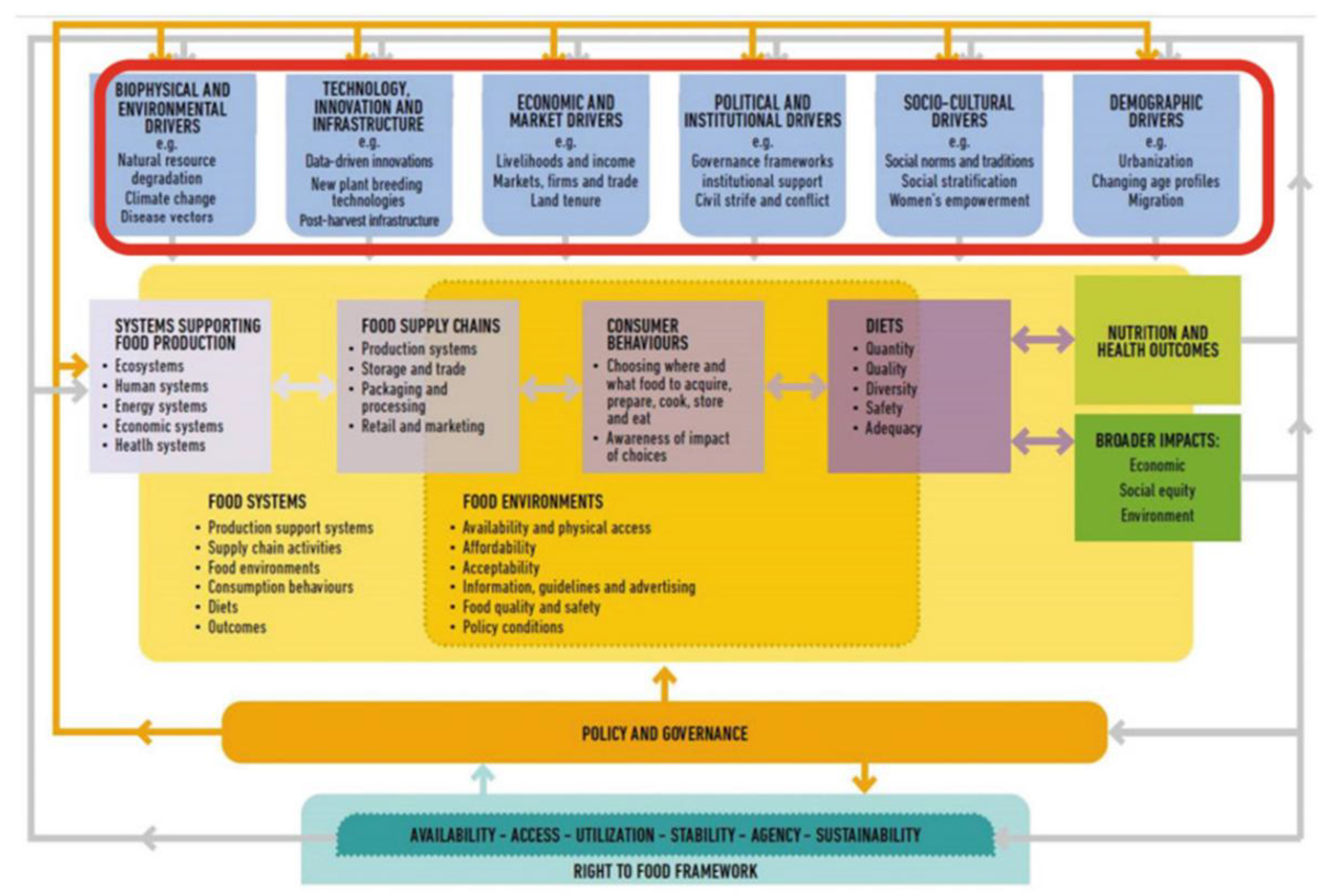
Figure 2.
Food system and digital transformation [56].
Figure 2.
Food system and digital transformation [56].
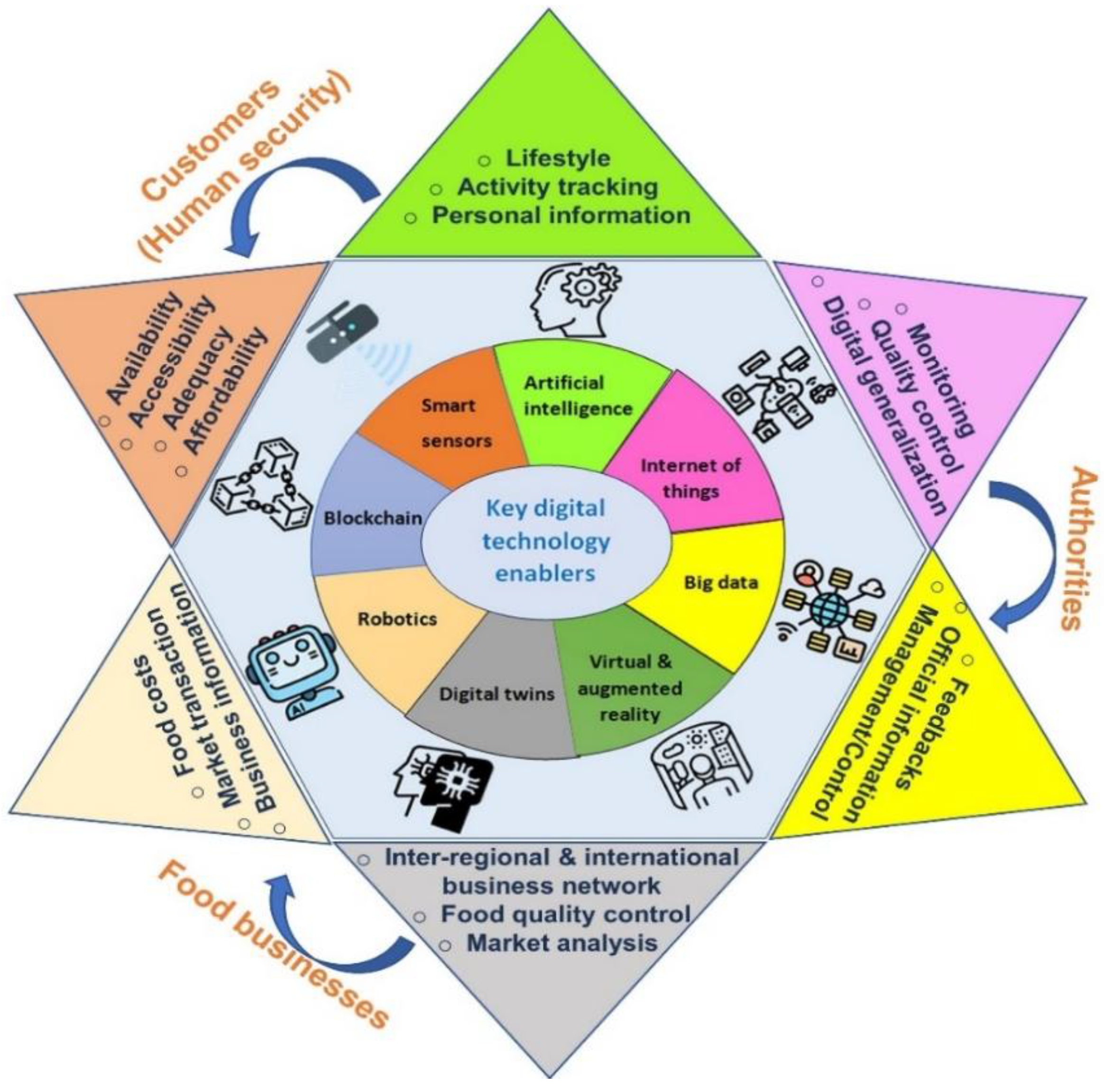
Figure 3.
Plant-based food groups and their daily recommended servings.
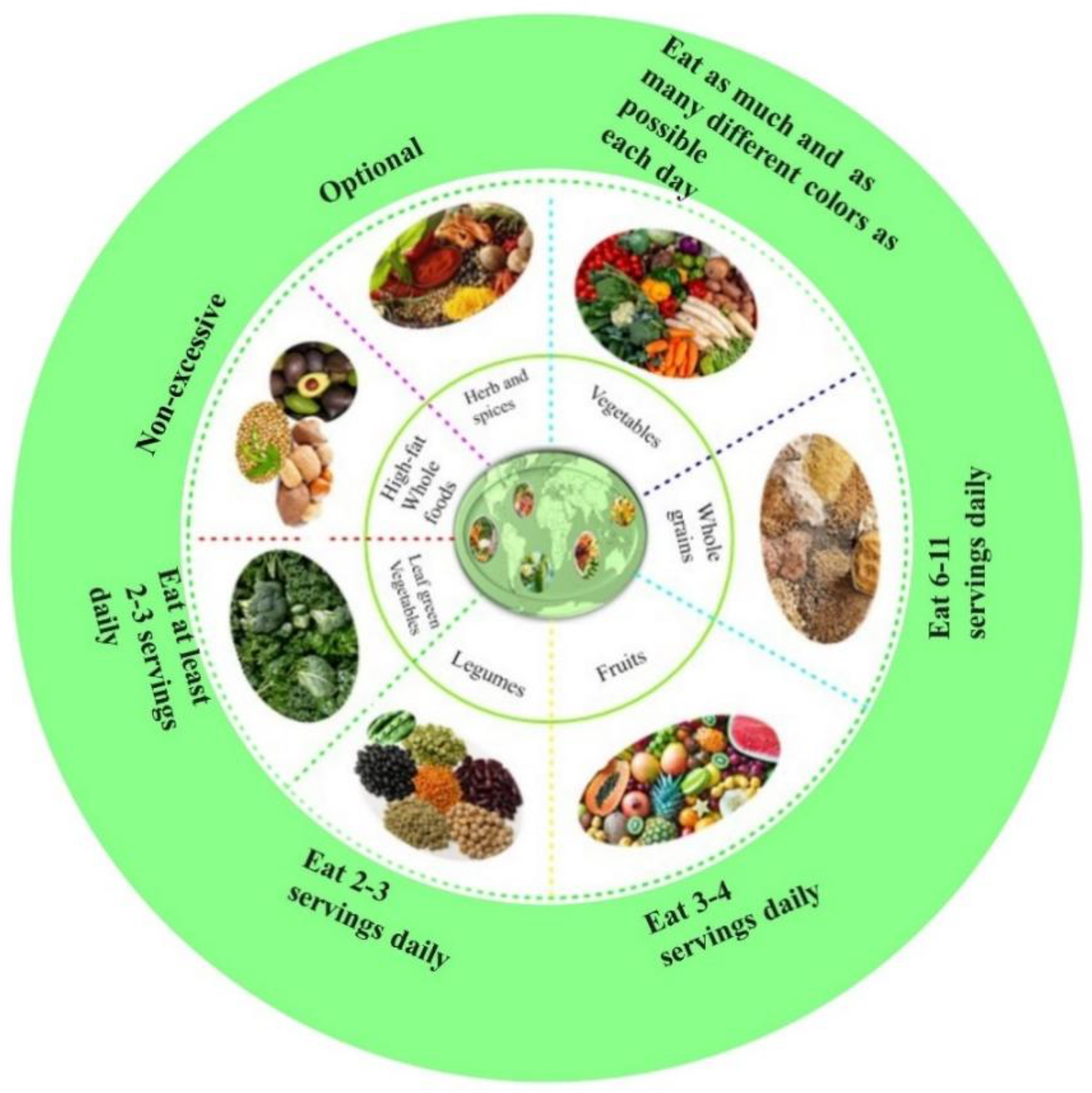
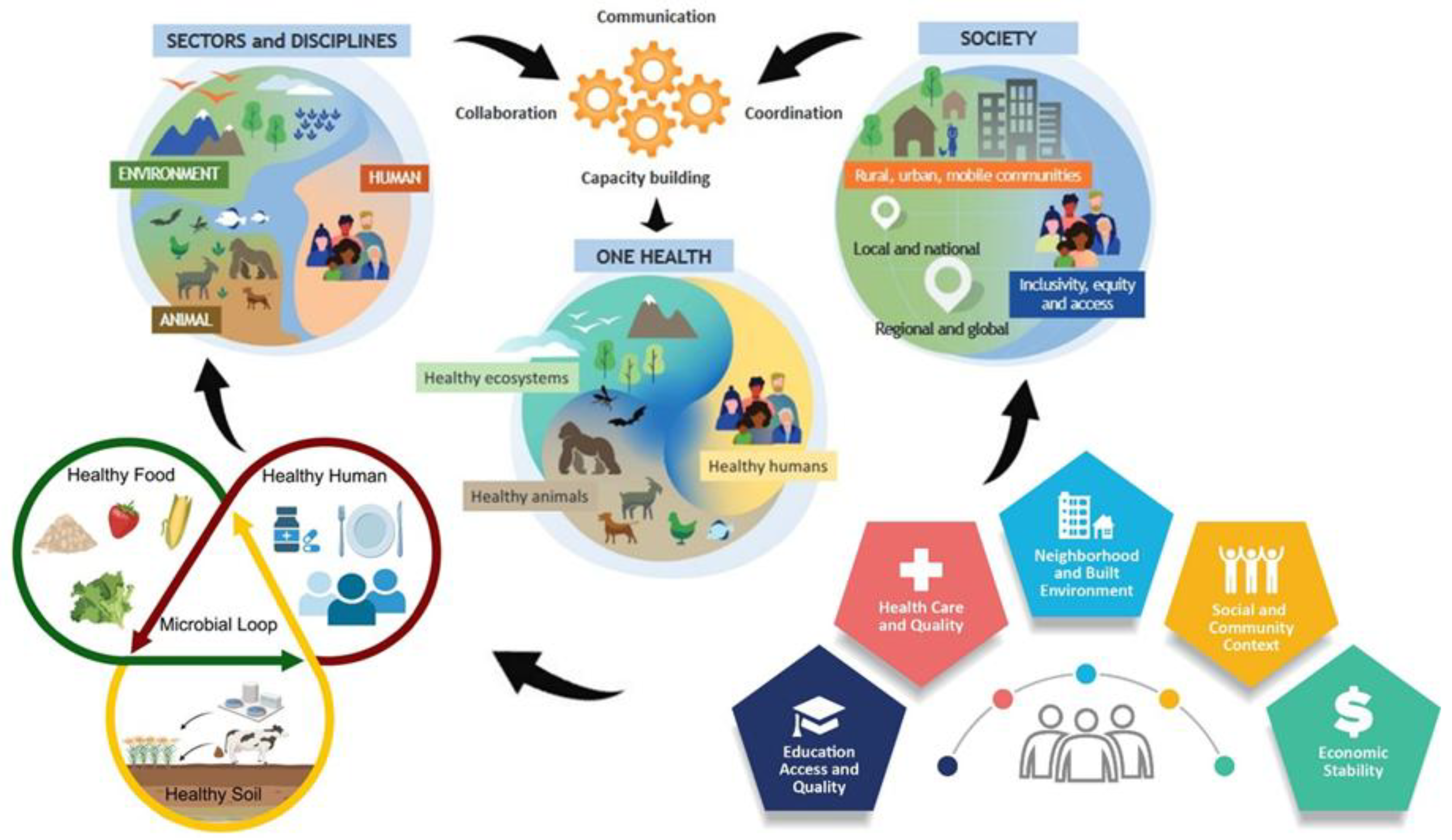

Table 1.
Overview of knowledge dissemination channels in nutrition and sustainability.
| Method | Key Strengths | Target Audience | Example Tools/Initiatives |
|---|---|---|---|
| Education Systems | Builds lifelong habits and awareness | Students, educators | School gardens, integrated sustainability curricula |
| Media & Digital Platforms | Fast, broad reach, and cultural influence | General public, youth | Social media campaigns, documentaries |
| Public Policy & Labeling | Structural change informs purchasing | Consumers, institutions | Eco-labels, national dietary guidelines |
| Scientific Engagement | Credibility, evidence-based advocacy | Researchers, policymakers | LCA models, citizen science, public lectures |
Table 2.
Processing technologies, commercialization status, and consumption trends for established and emerging plant-based protein sources.
Table 2.
Processing technologies, commercialization status, and consumption trends for established and emerging plant-based protein sources.
| Plant Source | Main Processing Methods | Functional Applications | Commercialization Level | Consumer Acceptance/Trends | Reference |
|---|---|---|---|---|---|
| Soy | Soaking, milling, extrusion, fermentation | Meat/dairy analogs, protein isolate | Widely commercialized | High in Asia and Western countries | [97] |
| Pea | Protein extraction, emulsification, film formation | Protein drinks, meat analogs, emulsifiers | Rapid growth, global brands use it | Growing due to hypoallergenic nature | [98] |
| Algae (e.g., Spirulina, Chlorella) | Drying, homogenization, protein extraction | Functional foods, supplements, meat analogs | Niche but growing | Moderate; increasing interest as “superfoods” | [99] |
| Lentils/Legumes | Milling, fermentation, extrusion | Plant protein blends, textured proteins | Well-established | Stable consumption; eco-conscious markets | [100] |
| Chickpeas | Roasting, fermentation, drying | Hummus, dairy alternatives, baked goods | Expanding | Popular in Middle East and now globally | [101] |
| Oats | Milling, enzymatic hydrolysis | Oat milk, cereal bars, dairy alternatives | Very high | Very high, especially in oat milk | [102] |
| Rice protein | Alkaline extraction, filtration | Beverages, protein blends | Mid-stage commercialization | Growing in sports and allergen-free markets | [103] |
| Hemp | Cold pressing, decortication, protein extraction | Beverages, protein powders, bakery products | Niche, expanding post-legalization | Growing among health-conscious consumers | [104] |
| Fava Beans | Dehulling, air classification, dry fractionation | Snacks, meat alternatives | Rising | Good acceptance in EU | [105] |
| Quinoa/Amaranth | Milling, extrusion, puffing | Cereal mixes, meat/dairy alternatives | Early stage | Trendy in functional food segments | [106] |
| Jackfruit | Minimal | Whole-food meat alternative | Small-scale commercialization | Positive trend in vegan cuisines | [107] |
| Mushroom/Mycelium | Fermentation, mycelium cultivation | Meat substitutes, umami enhancers | Experimental to emerging | High for health and sustainability appeal | [108] |
| Duckweed (Lemna) | Wet biomass processing, centrifugation | Protein isolate, smoothies | R&D/Start-up stage | Low; education needed | [109] |
Table 3.
Six interdependent action tracks by the One Health Joint Plan of action (OH-JPA, 2022–2026)[111] and some related case studies in Africa.
Table 3.
Six interdependent action tracks by the One Health Joint Plan of action (OH-JPA, 2022–2026)[111] and some related case studies in Africa.
| OH-JPA (2022–2026) Action track |
Name of the African Country | Main focus/s | Research outcome/s | Reference | |
|---|---|---|---|---|---|
| 1 | Improving the One Health approach to build stronger health systems | Uganda | One Health approach to health security | Investing in the funding gaps reinforces Uganda’s health security | [121] |
| Ethiopia | Implementation of the OH approach | Understaffing, underfunding of institutions, limitation of interdisciplinary cooperation, collaboration, and coordination among animal and human health practitioners are obstacles | [117] | ||
| 2 | Minimizing the widespread threats posed by new and recurring animal-borne diseases | All Africa | Urbanization, armed conflict, and deforestation | Increased risks of zoonotic infections on the environment, animal health, and human health | [118] |
| Limitations in detection of new infectious disease outbreaks in the community, in rapid pathogen identification, and in proactive surveillance systems | Main gaps in public health readiness, detection, and response systems Main paradigm shift is required to develop an effective infrastructure and common frameworks |
[122] | |||
| 3 | Manage and eradicate endemic zoonotic, neglected tropical, and vector-borne diseases |
African Union member states | Controlling the continental strategy for zoonotic disease | Raising awareness, commitments, and creating policy influence | [119] |
| Sustainable and effective strategies for post-elimination control of neglected tropical diseases | Post-elimination control of NTDs remained as challenging | [123] | |||
| Sub-Saharan Africa | Urbanization, fast population growth, increased demand for animal food, and natural habitats invasions | Infectious disease outbreaks are caused by zoonotic pathogens | [124] | ||
| Interventions against neglected tropical diseases | Insecticide resistance, multiplicity of vector species, changes in vector behavior, and cost | [125] | |||
| Vector-borne helminthiases: onchocerciasis, lymphatic filariasis, loiasis, and mansonellosis | Onchocerciasis and lymphatic filariasis have established global elimination programs Loiasis and Mansonellosis have largely been neglected and do not have large-scale control programmes. |
[126] | |||
| Zambia | Zoonotic transmission of vector-borne pathogens in humans | The occurrence of many vector-borne zoonotic pathogens circulating in vectors and animals | [127] | ||
| 4 | Enhancing food safety risk analysis, management, and communication | Sub-Saharan Africa | Food fraud threatens food safety and security | High production costs, weak regulatory systems, cultural practices, and technological limitations | [128] |
| Waste management practices by street vendors and factors influencing their mismanagement | A lack of recognition and comprehensive laws and regulations to monitor waste management | [129] | |||
| Effects of emerging technologies (genetically modified organisms, nanotechnology, and vertical farming) on food safety | Requirements of an integrated set of policy approaches, farmers' food safety education, incorporate regulations, organizations, and multidisciplinary research | [120] | |||
| Meat value chains and prevalent risks | Limitations in policy actors and the incorporation of a participatory approach in the street-vending sector | [130] | |||
| Nigeria and Ghana | Harnessing food safety | Weak enforcement of food safety laws is contributing to complications in the food production chain | [131] | ||
| 5 | Combating the quiet crisis of antimicrobial resistance | Developing countries in Africa | Fundamental conflicts that complicate efforts to control the proliferation of antimicrobial resistance |
Antimicrobial resistance policies and actions require balancing the interests of all relevant stakeholders, considering the interests and well-being of future generations | [132] |
| Sub-Saharan Africa | Antimicrobial resistance's causes and challenges in implementing prevention measures | Weak antimicrobial resistance surveillance and absence of collaboration, irrational use of antibiotics, poor medicine regulatory systems, lack of infrastructural and institutional capacities, deficiency of human resources, and inefficient infection prevention and control (IPC) practices | [133] | ||
| 6 | Ensuring One Health and environmental integration | Sub-Saharan Africa | Integrated One Health on preventing and managing zoonotic and environmental health threats | Integrating One Health in national agendas and a unified continental framework is required | [134] |
| Push-pull technology to sustain vegetable production and maintain soil health and fertility, human and animal nutrition, and food safety | The cropping system could contribute to eradicating zoonotic diseases by incorporating companion plants that fend off disease vectors | [135] | |||
| Nigeria | One Health framework to mitigate cholera outbreak through integration of human, animal, and environmental health | The One Health framework enables understanding of cholera dynamics and promotes sustainable solutions to deter future outbreaks | [136] | ||
Disclaimer/Publisher’s Note: The statements, opinions and data contained in all publications are solely those of the individual author(s) and contributor(s) and not of MDPI and/or the editor(s). MDPI and/or the editor(s) disclaim responsibility for any injury to people or property resulting from any ideas, methods, instructions or products referred to in the content. |
© 2025 by the authors. Licensee MDPI, Basel, Switzerland. This article is an open access article distributed under the terms and conditions of the Creative Commons Attribution (CC BY) license (http://creativecommons.org/licenses/by/4.0/).
Copyright: This open access article is published under a Creative Commons CC BY 4.0 license, which permit the free download, distribution, and reuse, provided that the author and preprint are cited in any reuse.


