

Submitted:
16 April 2025
Posted:
18 April 2025
You are already at the latest version
Abstract
This paper describes the SMALLDERS project, a European initiative focused on designing and implementing new business models that strengthen the position of smallholders in the agri-food supply chain. Small farmers are considered the weaker link in the agri-food supply chain, and their vulnerability has been aggravated by recent crises such as the COVID-19 pandemic and the war in Ukraine. In this context, SMALLDERS project aims at designing and implementing a technological platform which, among other functionalities, will provide the small-scale farmers with innovative business models to improve their resilience. Various methodologies have been employed to achieve this objective: a systematic literature review to identify trends in agri-food business models, focus groups, surveys and in-depth interviews to gather perceptions from key stakeholders. As a result, three innovative business models were identified to be implemented in the platform by using the CANVAS methodology. Such implementation will allow to identify specific opportunities for smallholders and offer a valuable basis for strategic decision-making by all agents involved in the agri-food supply chain. Ultimately, the project provides an innovative and replicable approach to boost the economic and social sustainability of small farms in Europe.
Keywords:
agri-food value chain
; sustainability
; resilience
; e-commerce
; business models
1. Introduction
Smallholders are the most vulnerable link in the agri-food supply chain. In addition to the threats they have been facing for several decades, there are now new ones arising from recent international trade agreements that make the competition more aggressive, from the investment requirements to comply with the environmental criteria established by European Union legislation and green policies, the increase in production costs (especially energy costs) that are not reflected in the prices charged, the greater sensitivity to prices among consumers due to the inflationary crisis experienced after COVID-19, or the process of depopulation and ageing of the rural world that hinders access to labor and generational change on farms.
The limited bargaining power of these smallholders about large industries and distribution chains prevents them from obtaining fair prices for their products. This puts both the economic sustainability and the very survival of their farms at risk. The protests by farmers and ranchers in numerous European Union countries during 2024 reflect the need for a profound transformation of the European agri-food system.
In this context, the research project entitled “Smart Models for Agrifood Local Value Chain based on Digital Technologies for Enabling Covid-19 Resilience and Sustainability” (SMALLDERS) was launched in 2022, funded by the European Union under the PRIMA (Partnership for Research and Innovation in the Mediterranean Area) initiative. Institutions from Italy, France, Tunisia and Spain are participating in the project, and other external agents and entities are collaborating, such as smallholders, retailers, wholesalers, fruit growers’ associations, transport companies and public administrations. Its main objective is to develop a technological platform that serves as a meeting point for the different actors in the agri-food value chain, improving the operational efficiency and resilience of small farms in the Mediterranean region.
This paper presents the work carried out in one of the project’s work packages related to the development of new business models in the agri-food sector. It summarizes the main activities carried out and analyses the role of the different agents involved: farmers, consumers, transport companies, critical stakeholders, and policymakers.
This paper begins by describing the SMALLDERS project and the work package focused on studying business models in the agri-food sector. Subsequently, the tasks carried out and the main results obtained are described, which will be used to design a technological platform for small agri-food farms. Finally, the conclusions drawn from the work carried out are developed, and some final reflections are made.
2. The SMALLDERS Project
The main objective of the project is to develop a technological platform called SMALLDERS that, through innovative strategies, new technologies, and business models, improves the resilience of small farms in the Mediterranean region.
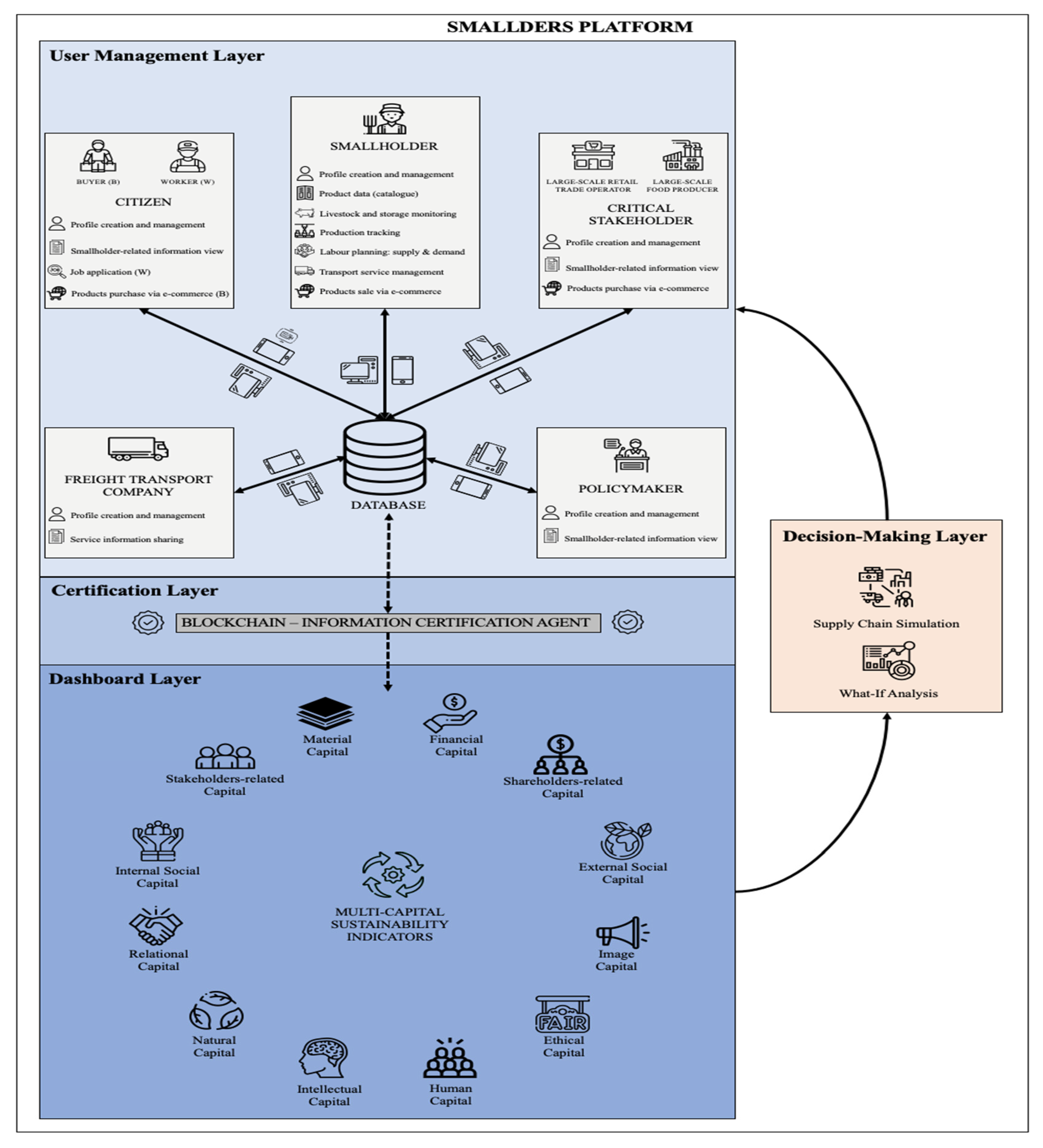
The SMALLDERS platform is intended to be comprehensive and is designed from various modules with specific objectives (). It integrates the different agents in the agri-food value chain: farmers, consumers, transport companies, critical stakeholders (large producers, exporters, and large retail distributors), and policymakers in the agri-food sector. The platform allows for direct sales by smallholders and interaction between the different agents in the supply chain. It will even have a job offers module for job seekers and employers in the sector.
To achieve its objectives, the project is divided into 9 work packages (WP):
- WP1—Project coordination and management
- WP2—SMALLDERS framework design
- WP3—User management layer
- WP4—New business models in the smallholders’ supply chain
- WP5—System technologies: Sensors, IoT, Blockchain
- WP6—Multi-indicator based on a multi-capital sustainability approach
- WP7—Symbiotic simulation and digital twins
- WP8—Integration, implementation and evaluation of testbeds
- WP9—Dissemination, exploitation and long-term sustainability
The overall objective of WP4 is define a business model framework within the SMALLDERS platform that provide the different agents in the value chain with new and effective ways of doing business (smallholders, critical stakeholders, freight transport companies), meet their needs (consumers) and support the decision-making process (policy makers). Specifically, the specific objectives of this work package are as follows:
- O1: To extend the knowledge on business models in the agri-food sector to include innovation and circular economy considerations.
- O2: To identify new business models for the different roles in the SMALLDERS platform.
- O3: To contribute to formalize the business models in resources and functionalities within the SMALLDERS platform.
To achieve these objectives, WP4 is structured around the following tasks:
- T1. State of the art in agri-food business models.
- T2. Analysis of citizens’ needs and policymakers’ decision process.
- T3. New business models for smallholders.
- T4. New business models for critical stakeholders and freight transport companies.
The following sections describe these tasks, the activities carried out, and the main results obtained.
Figure 1.
Architecture of the SMALLDERS platform.
3. State of the Art of Agri-Food Business Models
The WP4 begins with an exhaustive review of the literature on business models in the agri-food sector to ascertain the state of the art and identify the main research gaps. This information serves as a common thread in the development of the remaining tasks of WP4. The objective of this literature review was to identify how research on new business models in this sector has developed to identify those that could be linked to the SMALLDERS platform.
In this way, the main articles published on agri-food business models in journals included in the Web of Science Core Collection (WoS) database between 2004 and 2022 were identified and classified [1]. Specifically, 36 articles were analyzed, from which the following classification of business models in the agri-food sector was established:
- Sustainable business models, which are aimed at obtaining benefits for a wide range of stakeholders, always considering environmental and social objectives, such as maximizing efficiency in the use of materials and energy, creating value from waste, using renewable and natural processes, or those related to the circular economy [2,3].
- Cooperative business models: characterized by adopting collaborative approaches to competing in the market completely different from traditional ones. These include: 1) the shared model, in which companies have similar capacities to achieve economies of scale or network effects; 2) the specialization model, in which companies combine their complementary capacities to offer products that they could not offer individually; and 3) the allocation model, in which companies have overlapping capacities, so the most efficient company in carrying out each of the activities is selected, thus improving the efficiency of the alliance [9].
This classification has been the basis for the development of a framework for implementing business models on the SMALLDERS platform, as described in the following sections, which analyze the role played on this platform by the different agents in the agri-food value chain.
4. Citizens’ Needs Analysis and Policy-Makers Decision Process
This section presents the main results of task T2 related to the study of consumer needs in the field of this type of technological platform, as well as the evaluation made by public officials of the functionalities implemented in SMALLDERS.
4.1. The Role of Consumers
One of the functionalities of the SMALLDERS platform is its use as a direct sales channel for smallholders. In other words, the platform has a commercial functionality as an e-marketplace or collective e-commerce space. An e-marketplace is a technological platform, managed by an independent organization or by one of the interested parties, which brings together multiple buyers and sellers on a website, through which they can buy and sell directly to each other, as well as obtain other services that provide them with added value [10].
Although they originally emerged in the field of Business to Business (B2B) relations, they have now also developed in Consumer to Consumer (C2C) and Business to Consumer (B2C) markets, managed by large technology companies. However, the differentiating feature of the SMALLDERS platform is that the suppliers are exclusively small agricultural producers, so the electronic market becomes a process of disintermediation of the agri-food system.
In short, an e-marketplace for smallholders is a new business model in the agricultural sector that combines the three types of business models identified in the literature review: it is a technology-based model, a cooperative model among equals and a model based on environmental sustainability, which will provide information on specific ecological impacts and characteristics of products and producers. Compared to creating their own online shop, participating in an e-marketplace as a collective project benefits smallholders because it does not require technical knowledge, the associated costs are lower and, above all, it facilitates access to a larger population of potential buyers.
However, the success of an e-marketplace for small producers depends on its acceptance by consumers. Therefore, an analysis of its commercial viability was carried out through research into Spanish consumers’ purchasing and consumption habits of fruit and vegetables. Given the scarcity of studies on the subject [11,12,13], the general objective of this task was to identify the level of interest of consumers in participating in this type of fresh food purchasing channel, pointing out opportunities and threats. The research was carried out both from a qualitative and from a quantitative point of view.
The qualitative phase was designed using a Focus Group methodology. This is a technique in which a group of individuals is brought together to discuss a specific topic with the aim of extracting personal experiences, beliefs, perceptions and attitudes through moderated interaction [14].
In this case, six discussion sessions were organized in which 41 people participated, all of them responsible for food shopping in their households. In each session, with an average duration of approximately 2.5 hours, between 5 and 12 consumers participated. The script used in the sessions was structured into 5 blocks of questions: 1) usual establishments for buying fresh food; 2) the importance of origin and sustainability in food purchasing; 3) direct purchasing from smallholders; 4) the Internet as a purchasing channel and 5) the Internet as online platform for smallholders.
The sessions were recorded and transcribed to conduct content and discourse analysis. This allowed us to identify the main opportunities and threats faced by e-marketplaces as commercial business models for smallholders, which are summarized below. The main opportunities identified are the following:
- Consumers are aware of the importance of protecting agriculture to maintain our quality of life and the low prices that farmers currently receive.
- Increased use of the Internet as a shopping channel since the COVID-19 pandemic.
- Growing preference for local products and for knowing their origin.
- Perception that buying directly from smallholders would generate benefits for them, by giving them a higher margin on the selling price.
- Positive perception of the online platform for smallholders, but only as long as the prices are competitive compared to local shops and supermarkets.
Similarly, several threats to the organization were identified:
- Perception that consumers do not have the power to bring about positive changes in the food distribution chain and fair prices for farmers.
- Being able to see and touch the product is key to choose a channel for buying fresh food. For this reason, e-commerce seems to be very limited.
- A high level of unawareness about the existence of direct purchasing models from smallholders, such as consumer groups, artisan markets or e-marketplaces.
- Consumers are quite price sensitive, and they believe that buying directly from farmers would be more expensive, even though it benefits the farmer.
- Egocentric purchasing behavior. When assessing their willingness to buy directly from the farmer, personal benefits (price, convenience) carry more weight than non-personal benefits (support for the local economy, environmental benefits or contribution to the economic sustainability of the farmer’s business through the payment of fair prices).
Following this qualitative analysis, an online survey was conducted on intentions and attitudes towards purchasing fruit and vegetables through a specific e-marketplace for small producers. The sample comprised 393 Spanish consumers, 41% men and 59% women. The variable ‘purchase intention’ was measured through 10 items that had to be assessed using a 5-point probability scale (not at all probable-very probable). The variable ‘attitude towards purchasing’ was divided into two components, one related to beliefs about products purchased through this sales channel (5 items) and the other related to beliefs about the socioeconomic benefits of buying directly from smallholders (4 items). In both cases, a 5-point Likert scale was used.
The overall results reflected a low intention to subscribe and to buy through an e-marketplace, with values close to the midpoint of the scale (3.46 and 3.61 out of 5, respectively). In addition, the intention to buy is considerably reduced if prices slightly higher than those found in the consumer’s usual shop must be accepted (Error! Reference source not found.). The likelihood of participating in this digital platform would increase if recommendations were received from people they trust, but not so much because of advertising or information from the media or social networks. Similarly to the comments obtained in the focus groups, consumers recognize that, to a certain extent, their intention to buy would increase if certain requirements were met, such as return guarantees or the possibility of placing orders with small quantities of the product.

Table 1.
Intention to subscribe and purchase in an e-marketplace.
| Average | Standard derivation |
|
|---|---|---|
| I would subscribe to a platform of this type if there were no subscription costs or obligation to remain a subscriber. | 3.46 | 1.216 |
| I would be more likely to subscribe to this platform if it were recommended to me by someone I trust (a friend or relative). | 3.56 | 1.073 |
| I would be more likely to subscribe to this platform if I read or saw a news item about it in a trusted media organization or social network. | 3.04 | 1.050 |
| I would buy on this platform if the prices (including delivery costs) were like those I find in my usual shop. | 3.61 | 1.115 |
| I would shop on this platform even if the prices were slightly higher than those I find in my usual shop. | 2.61 | 1.097 |
| I would increase my likelihood of buying on this platform if there are positive reviews from other customers. | 3.34 | 1.042 |
| I would be more likely to buy on this platform if they guaranteed a refund if the order arrived in poor condition. | 3.74 | 1.100 |
| I would buy on this platform if I could order small quantities of the product, to adapt it to the needs of my household. | 3.77 | 1.046 |
| I would buy on this platform if I could buy directly baskets containing a variety of products (several fruits and vegetables), without having to buy each product from different producers. | 3.52 | 1.136 |
| I would be more likely to buy from a farmer through this platform if they had organic farming or sustainable agriculture certificates. | 3.29 | 1.029 |
Note: direct scale of 1 to 5.
On the other hand, regarding the whole sample, there are slightly positive attitudes towards this type of sales channel for fresh food (Error! Reference source not found.). Regarding the attitude towards the products, it is considered that this channel guarantees the quality of the product that is bought; however, there is again a belief that lower prices than those that consumers can find in physical shops are not guaranteed. And, in relation to the attitude towards the socioeconomic benefits of buying directly from small-scale producers, very high scores are obtained that reflect the positive belief of consumers that fair prices would be paid to farmers, also favoring the development of rural areas and sustainability.
Table 2.
Attitude towards buying in an e-marketplace.
| Average | Standard derivation |
|
|---|---|---|
| I think it guarantees the freshness of the food. | 3.74 | 0.978 |
| I believe that it guarantees that during transport the food is properly preserved so that it arrives in good condition. | 3.63 | 0.903 |
| I believe that it guarantees that the producer will not take advantage of the system to send defective food or food in poor condition. | 3.69 | 0.907 |
| I believe that the product will be harvested at the right moment of ripeness and just when the order is being prepared. | 3.76 | 0.938 |
| I think the prices of these foods are cheaper than in physical shops. | 3.21 | 1.087 |
| Buying from these types of platforms guarantees a fair price for smallholders and livestock breeders. | 4.03 | 0.938 |
| Buying from these types of platforms encourages sustainable and ecological production. | 3.90 | 0.950 |
| Buying on these types of platforms reduces the environmental impact of trade. | 3.75 | 1.033 |
| Buying on these types of platforms supports the development of rural areas. | 4.20 | 0.927 |
Note: direct scale of 1 to 5.
After observing differences in the values of the responses within the sample, a K-means cluster analysis was carried out. Three segments of consumers according to their level of intention and attitude towards these e-marketplaces were identified (Error! Reference source not found.). Previously, a factor analysis was conducted to reduce the items of the variables into a single factor or dimension. The segments identified were as follows:
- Consumers reluctant to buy directly from smallholders online: They represent 20.9% of the sample and express a very low intention to participate in an e-marketplace. They also have neutral attitudes towards the quality of food purchased through this channel.
- Consumers willing to participate in this type of purchasing channel: they represent 48.6% of consumers. They give a high score to the intention to subscribe to the platform and to buy from it, based on very positive attitudes both in terms of product quality and socio-economic benefits.
- Indifferent and distrustful consumers: their attitudes towards this type of buying and selling platform are neutral. However, they give average scores to their willingness to subscribe and buy through them, which may indicate that they would be trial buyers, that is, buyers who would try the experience once but would be unlikely to make a repeat purchase.
Table 3.
Consumer segments.
| Reluctant consumers |
Willing consumers |
Indifferent consumers | |
|---|---|---|---|
| Factor: intention to subscribe and purchase | -1.52471 | 0.57305 | 0.12979 |
| Factor: attitude towards products | -0.71222 | 0.72803 | -0.67210 |
| Factor: attitude towards socio-economic benefits | -0.68951 | 0.68816 | -0.62415 |
Considering the qualitative and quantitative results, a series of barriers that hinder the acceptance of an e-marketplace as a channel for purchasing fresh food are identified. From these, a set of recommendations for the design and operation of the platform is drawn up. The key recommendations are:
- On the product policy: Consider the use of small quantity boxes/baskets, adapted to the size of small households and the use of multi-product boxes/baskets and encourage associations between nearby producers for joint sales.
- On the target market: Refocus the platform to turn it into a B2B sales channel as well, not just B2C. Widen the target market of these platforms to customers other than the end consumer, such as the owners of small local shops or people responsible for sourcing products for restaurants or canteens.
- On logistics: Include transport companies as an additional participant in the e-marketplace. Since the success of the platform depends on offering competitive prices, logistics costs could be better controlled if there were a system of collaboration between the producers selling their products and the transport companies.
-
On communication and promotion policy:
- -
- To design clear messages about the freshness of the fruit and vegetables delivered, highlighting them in an attractive way and in an attractive place on the website.
- -
- To include in the platform the option of using the buyer’s location to offer products of nearby origin.
- -
- Preferably, to highlight personal benefits for the shopper and, secondarily, environmental and social benefits. These benefits would focus on the quality of the product and its freshness (time of harvest and delivery time), positioning it as something that cannot be found in large supermarkets or neighborhood shops.
- -
- To include some videos showing the preparation of a real order to appreciate the process and the quality of the products; in addition, a chat to resolve possible doubts should also be included.
- -
- To collect opinions and evaluations from other users would be very useful.
4.2. The Role of Policymakers
Public administrations play a key role in the agri-food supply chain, through policies and regulations that should promote fair competition, transparency, and price stability by contributing to the development of more efficient price structures. In our case, as users of the SMALLDERS platform, public authorities have a place to interact with other actors in the agri-food chain, especially farmers. Thus, based on the information that small producers have decided to share, policymakers can be aware of their needs and difficulties, market trends, the use of innovative technologies, and interactions with other actors in the supply chain, among other aspects. Sharing of information with the government can be even more relevant during crises (e.g., pandemics) to gain a better understanding of the social and economic situation of smallholders during these periods and to take prompt corrective measures, such as providing economic incentives or facilitating access to credit.
The SMALLDERS platform includes a specific module for use by policymakers, with the following functionalities:
- Access to information provided by smallholders.
- Direct channel of communication with smallholders.
- Publication of relevant and useful information for smallholders.
Nevertheless, it seems necessary to analyze the usefulness of such a platform for policymakers. At this point, a questionnaire was designed to obtain primary information on the potential use of this type of platform by policymakers in their decision-making process. The questionnaire was distributed among the partners of the project and structured in 4 parts:
- Knowledge of the project: how they met the project.
- Participation in the platform: about the functionalities of the platform.
- Role of policymakers on the platform: about the potential use of the platform by the policymakers.
According to the answers received, some relevant results are highlighted:
- Regarding their knowledge about the functionalities of the platform, the policymakers considered them as quite useful, assigning 4 points out of 5.
- Regarding the usefulness of the functionalities related directly to the smallholders, the policymakers assessed them as the most relevant, with a valuation of 4.5 out of 5. The usefulness of the platform as a repository obtained an average valuation of 3.5 out of 5.
-
Other remarkable comments about the functionalities of the platform were:
- -
- “I would recommend including functionalities that are easy to use and that allow a fluid and manageable exchange of information, including the possibility for users to attach video or audio files”.
- -
- “In addition, it would also be interesting to create informal cooperation and/or marketing groups, both horizontal and vertical, to generate synergies in the agri-food sector and promote restructuring processes to encourage the integration of small farms into supra-structures for the marketing of their businesses”.
- Regarding the potential use of the platform, the policymakers mentioned some advantages of using this kind of technologies in their relationship with smallholders, for example: access to updated data on farms; monitoring of product traceability; possibility of interaction with small and medium-sized producers for the exchange of detailed information; as a way for creating a relationship of trust between public administration and smallholders; to analyze the current context for possible immediate, medium and long-term interventions; to define strategic plans to support smallholders in short, medium and long term; or to produce predictive actions and react in time.
- Among the advantages for smallholders of using the platform, the public authorities mentioned 1) the possibility of making contributions, in an accessible way, in the regulatory processes that, directly or indirectly, could affect them; 2) as a specialized information point for certain administrative procedures or formalities; 3) as a way of communication with smallholders to identify, explore and understand their problems and expectations as well as their needs in order to be able to assist, support and monitor them; or to define adequate diffusion programs.
- Finally, the policymakers identified some advantages of using the platform for other stakeholders, for example: to know the costs related to the entire supply chain of a given agricultural product; to intervene correctly and beforehand with other political decision-makers; or gain insights into market needs.
In general, the policymakers expressed great interest in the platform SMALLDERS and assessed very positively its functionalities for making decisions based on the information provided by different users, specially, by the small producers. Several advantages of using the platform were identified by policymakers. Specifically, using the platform as an information and communication point with smallholders and as a way for creating long term relationships. In addition, policymakers also indicated other strong points of the platform such as its ability to improve market conditions for smallholders or as a repository of information.
5. New Business Models for Smallholders
As mentioned, the SMALLDERS platform offers tools designed to support smallholders in improving their production and commercial processes. These tools include a specific module on business models. Its main purpose is to provide guidance and methodologies to define effective business models, which not only strengthen their competitiveness, but also allow smallholders to respond to market demands in a more effective way.
This part of the project began with a preliminary analysis to gain an in-depth understanding of the business models currently implemented by small producers. This phase made it possible to identify the gap between the business models currently being developed and the new business models that SMALLDERS platform proposes to implement. The activities carried out in this phase of the project are detailed below.
5.1. Selection and Analysis of Study Subjects
Firstly, key actors within the geographical area of study (a region in south-western Spain) were identified with the aim of selecting subjects to interview. It was decided to focus the analysis on the fruit sector due to its high presence in the territory and its level of organization, which facilitated access to information and actors in the sector.
Contact was made with representatives of relevant organizations within the sector, including: 1) the main association of fruit producers in the region, 2) the management team of an agricultural cooperative specializing in the cultivation of a specific fruit, and 3) small agricultural producers, both members of the cooperative and independent farmers.
The methodology used at this stage was to conduct in-depth interviews. According to Knott et al. [15], «in-depth interviews are a versatile form of qualitative data collection used by researchers in all social sciences. They allow individuals to explain, in their own words, how they understand and interpret the world around them». The interviews were designed with the aim of obtaining detailed information on two fundamental aspects:
- The description and characterization of currently implemented business models.
- The identification of barriers and needs perceived by producers in relation to their business model.
In-depth interviews were carried out with the responsible of a producers’ association, the manager of a cooperative, and two smallholders, one of whom was a cooperative member and the other an independent farmer. The analysis of these interviews identified several key points:
- Vulnerability to market dynamics, such as price volatility or the concentration of purchasing power in the hands of a few intermediaries. In this context, cooperation among farmers emerges as an effective strategy to improve their bargaining power, share risks and optimize resources, for example, through joint management of logistics and distribution activities.
- Alternatives to commercialization through cooperatives as the predominant strategy: some producers have explored the possibility of operating independently, targeting niche markets, generally local ones, with higher profit margins. However, this approach entails higher levels of risk and uncertainty and less marketing stability.
- Limitations related to difficulties in accessing essential resources, particularly labor during harvesting.
- Perception of e-commerce as an opportunity with great potential, although still far from the reality of the sector. Among the main obstacles to its implementation are legal barriers, difficulties, logistics or having a catalogue of products that is attractive to the consumer and at a competitive price.
5.2. Identification of Predominant Business Models
After the information gathered in the interviews, two main patterns of business models coexisting in the fruit sector were identified:
- Cooperative model: Most small-scale producers in the region under study belong to cooperatives or similar organizations, adopting the cooperative business model as their own. This strategy allows them to benefit from economies of scale, improve market access and reduce individual risks.
- Independent model based on local markets: Some producers in the study region have chosen to develop their commercial strategies, identifying opportunities in specific niche markets. This model is based on direct sales to local distributors or retailers, allowing greater control over marketing and pricing, although with greater challenges in terms of stability and risk management.
5.3. Design of Innovative Business Models
This understanding of reality provided a solid foundation for developing new business models and their subsequent integration into the SMALLDERS platform. The choice of business models on the platform was made in accordance with the literature review carried out in the project’s initial task, incorporating the three innovative business models: sustainable, cooperative, and technological.
The methodology chosen to facilitate the implementation of such business models was the CANVAS Business Model [16]. This is a well-known and widely used method for designing business models, comprehensive in terms of the elements it includes and easy for users to understand and apply. For each of the business models identified, the corresponding CANVAS was defined for its implementation on the platform.
A gap was observed between the currently predominant business models and the three innovative models that the platform aims to promote. Similarly, it became clear that most potential platform users have no notable experience or specific knowledge of business model design. For this reason, a pathway was designed that would allow the platform user to move from the current business model to the recommended new business model.
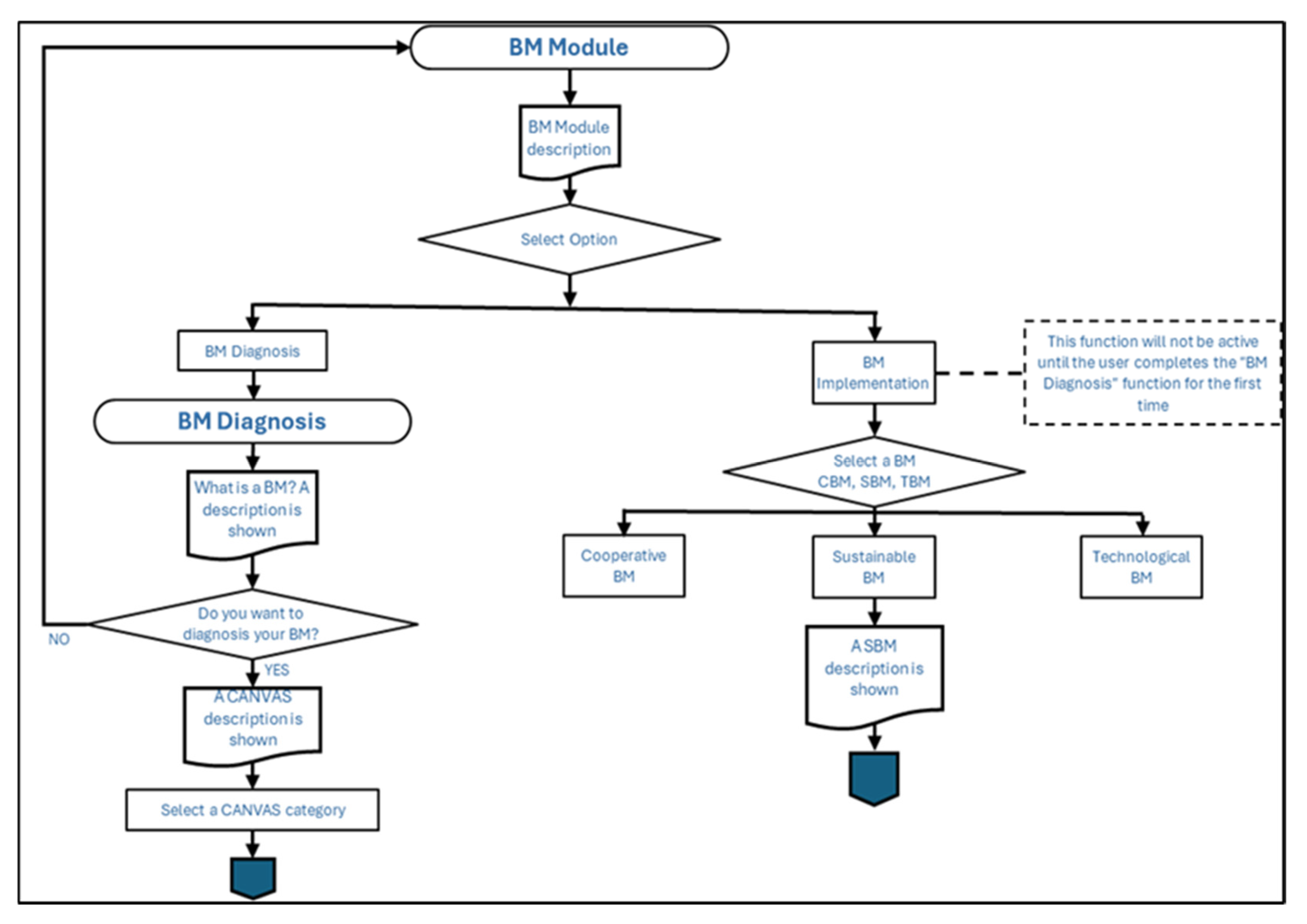
The representation of such a pathway is based on two functionalities or tools: an initial diagnostic tool and a second one for implementing the recommended business model (Error! Reference source not found.).
Figure 2.
Business Model Module.
5.3.1. Business Model Diagnostic Tool
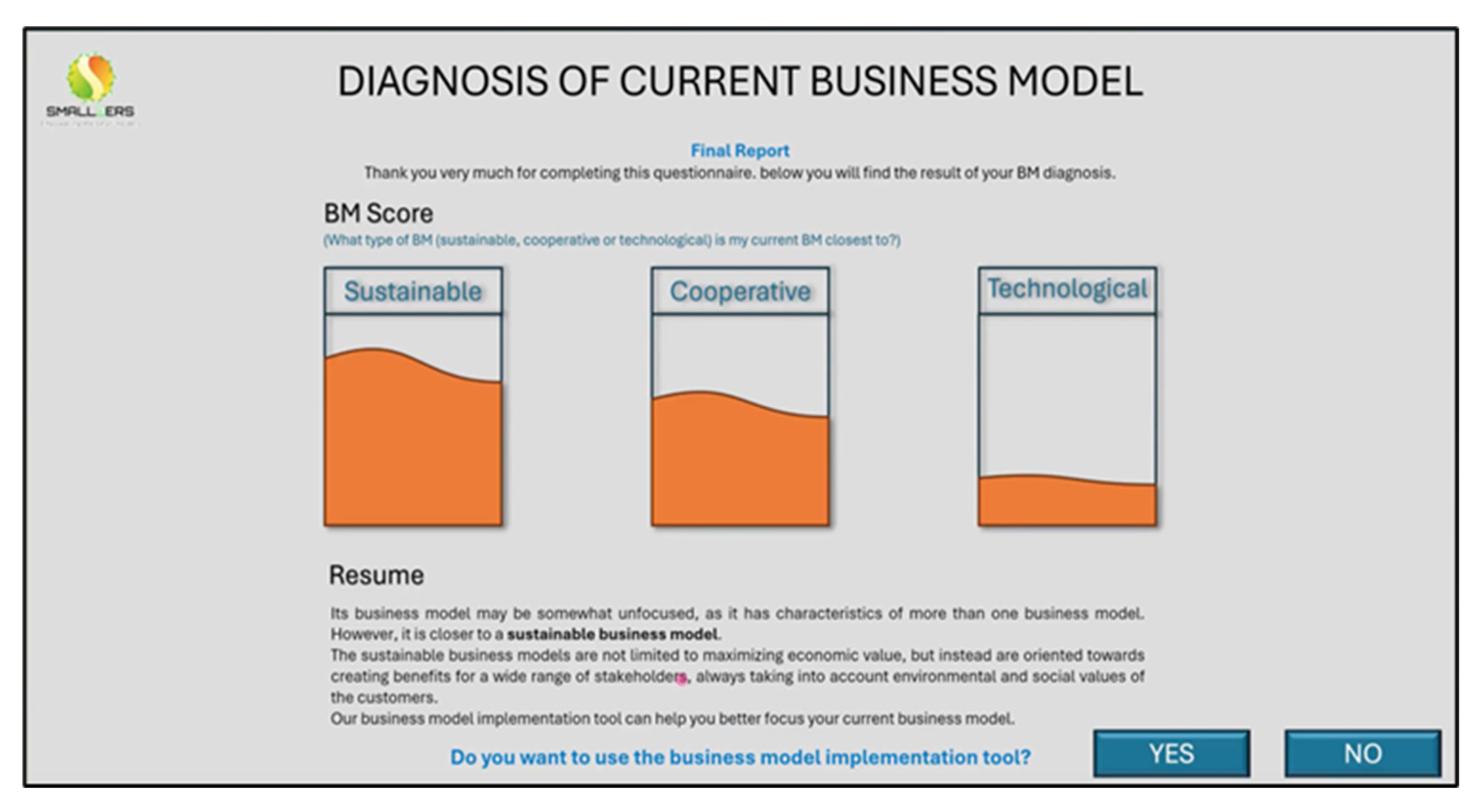
The diagnostic tool aims to identify the business model the smallholder is currently developing. To do this, the SMALLDERS platform uses a questionnaire based on the CANVAS model, consisting of questions covering the key issues of the nine business model dimensions. Based on the answers provided, the tool evaluates key aspects such as the main activity, the customer profile and the value proposition, among others. Then, a report on how their current business model is focused on one of the three innovative models is produced (Figure 3). The objective of the diagnosis is to recommend which of the three innovative business models could be implemented to make the most of its advantages.
The diagnosis requires the user to answer several questions from each of the CANVAS categories. Then the platform assigns a score based on their answers. Once the questionnaire has been completed, the tool generates a final score that facilitates the identification of the business model (sustainable, cooperative or technological) that predominates in the smallholder’s activity (Error! Reference source not found.).
Figure 4.
Business model score.
5.3.2. Tool Implementation of the Business Model
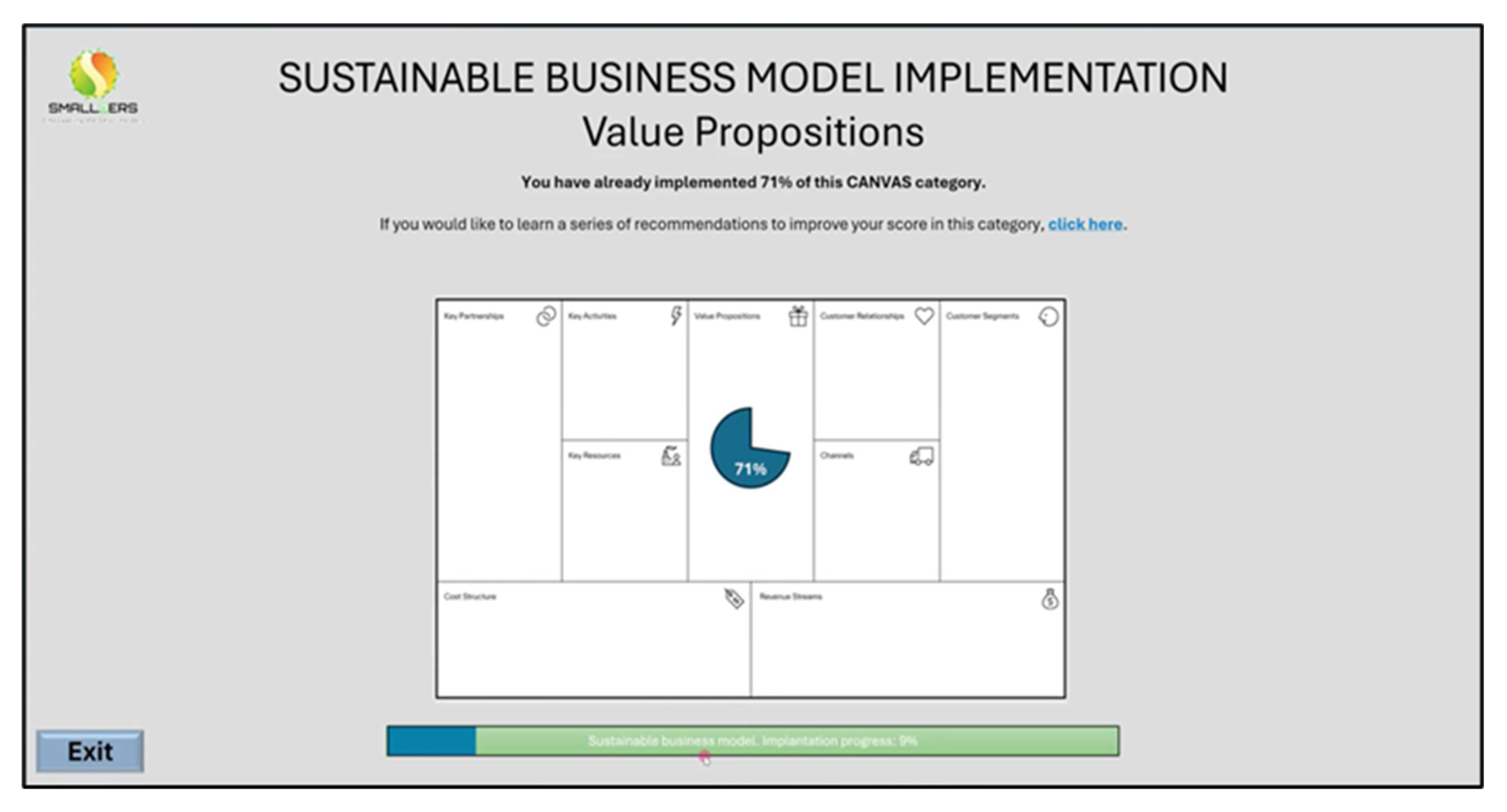
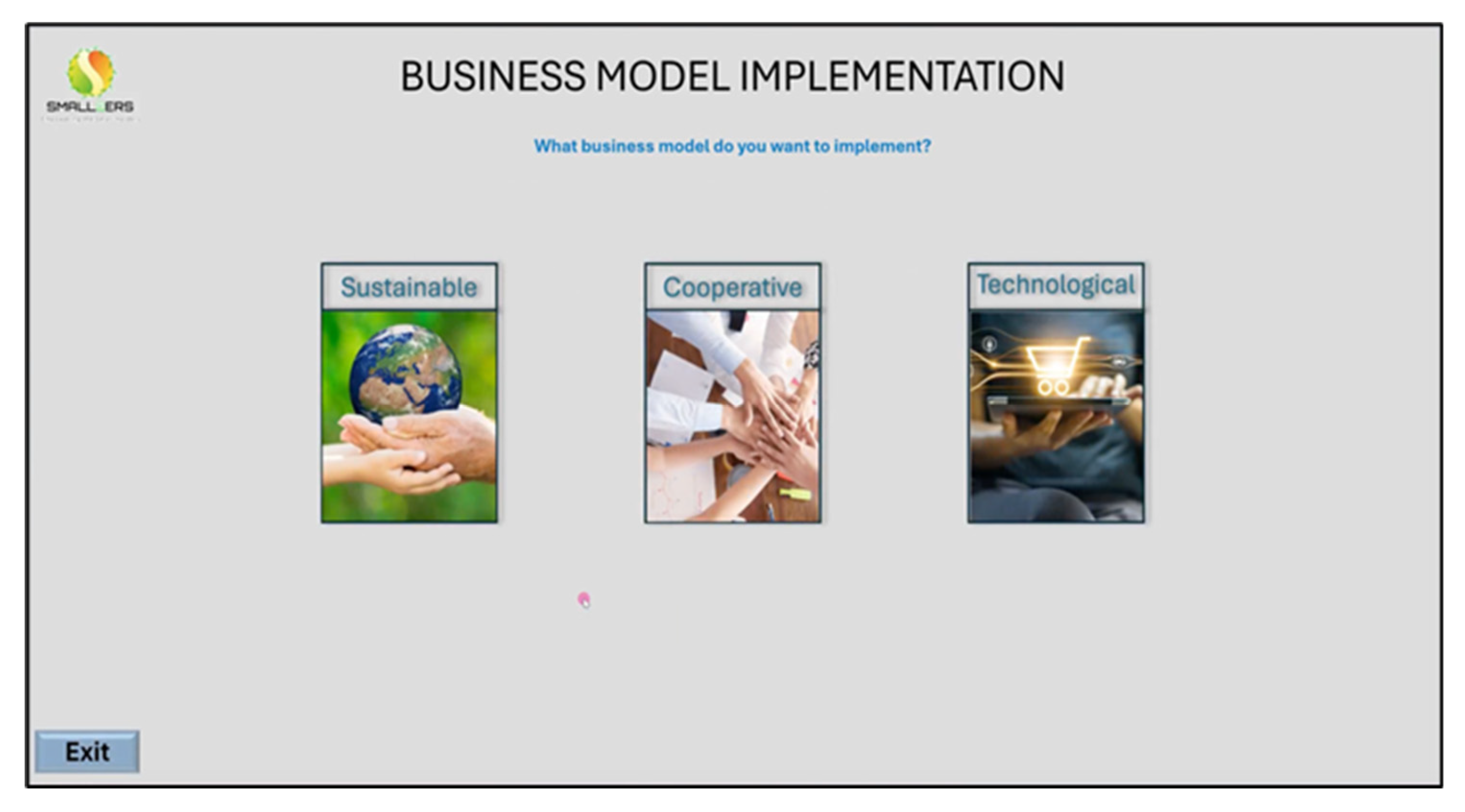
After the diagnosis has been made, the platform activates the functionality for implementing business models (Figure 5). This functionality provides smallholders with a guide for improving their business model, for which SMALLDERS estimates costs and execution times. Also based on the CANVAS methodology, the platform poses a set of dichotomous questions (Yes/No) in relation to the different dimensions of the business model.
Once all the questions within a CANVAS category have been completed, the tool generates a report showing the implementation percentage for that dimension as well as for the business model as a whole (Error! Reference source not found.). If one or more questions have been answered, the tool offers recommendations on the actions to be taken, as well as the necessary resources, to improve the business model. The goal is to optimize performance in each of the dimensions evaluated, which will contribute to improving the overall score in terms of business model implementation.
Figure 6.
CANVAS and BM score.
The SMALLDERS platform establishes a tool for smallholders to increase the value of their products, contributing in a simple but effective way to the productive and commercial decision-making of the smallholder, and by extension to help improve their competitive position.
6. New Business Models for Critical Stakeholders and Transport Companies
Another of the characteristics that bring novelty and originality to the SMALLDERS platform is based on the fact that all the actors in the agri-food value chain can interact with it. One of these actors is the so-called ‘critical stakeholders’, which include large producers, exporters and distributors. In addition, freight transport companies are also key actors in the agri-food supply chain, so they are also potential users of the platform. Similarly to the case of consumers, it was necessary to investigate the attitudes and preferences of these critical stakeholders and freight transport companies towards the functionalities available on the platform.
For this reason, qualitative research was designed. Several interviews were conducted to study the attitudes and assessment of critical stakeholders and freight transport companies towards digital platforms in general and towards the SMALLDERS platform in particular.
Two interviews were designed for this purpose: one aimed at critical stakeholders and the other one at freight transport companies. In both cases, the interview contained several semi-structured questions to allow open-ended responses from the interviewees so that they could express themselves freely on the aspects to be investigated. Both interviews were structured in a similar way, beginning with a presentation of the SMALLDERS project and an explanation of the platform’s functionalities. The interview was structured around a series of questions related to:
- Basic characteristics of the company interviewed: age, size, employees, main clients, etc.
- Operational activity of the company: business model used and use of digital platforms.
- Level of knowledge and familiarity with the use of e-marketplace platforms in the agri-food sector.
- Specific functionalities on the SMALLDERS platform, with the aim of ascertaining the usefulness that the interviewee considered each of them to have to guide their implementation on the platform.
The interviews, conducted in person, were recorded for transcription and content analysis. In the case of critical stakeholders, the interview was conducted with a large producer and exporter from the region under study. In the case of transport companies, the interview was conducted with two businesspeople from the sector in the same area.
As for the conclusions drawn from the interview with the critical stakeholder, the following aspects can be highlighted:
- Overall, he found the SMALLDERS platform attractive, as it facilitates production management and integrates producers and buyers.
- However, he raises doubts as to its viability due to the difficulty smallholders have in achieving a sufficient volume of business to be profitable. For this reason, the interviewee proposed an alliance between small producers to eliminate this barrier, as well as geographical segmentation to design the platform with a focus on local trade.
- The interviewee gave a positive assessment of the planned functionalities for the stakeholder’s module on the platform, as they will generate trust and transparency, which will encourage its use by stakeholders, smallholders and consumers. The job offers module was particularly highlighted, which is considered key in the face of the sector’s current problems in hiring human resources.
Meanwhile, the following aspects of the interviews with the transport companies are worth highlighting:
- They consider that the main obstacle to making the SMALLDERS platform viable for both small producers and carriers is achieving sufficient turnover.
- The proposed solutions differ among the transporters interviewed. In one case, the grouping of small producers is proposed as a way of consolidating orders and, in another case, vertical integration, with the small producer assuming the entire logistics process.
- They believe that the most suitable carrier profile as a user of the SMALLDERS platform is that of a self-employed person or small carrier with a single small vehicle.
- They argue that the distribution process should be centralized at both origin and destination through distribution centres that reduce the number of routes and facilitate the collection and delivery of products.
The results of these interviews and the conclusions drawn from the work carried out in this task provide important guidance for decision-making related to the business models that will be applied on the SMALLDERS platform for stakeholders and transport companies.
7. Conclusions
This paper describes the development of the SMALLDERS project, which aims to develop a technological platform that will provide smallholders with tools to improve their operations and resilience. The main innovation of the SMALLDERS platform, the prototype of which will be ready by the end of the project, is that it can include all the agents in the agri-food value chain, which sets it apart from other e-marketplace platforms in the sector.
As part of the project, the work package 4, called “New business models in the smallholder supply chain”, aims to offer the different actors in the agri-food supply chain new ways of operating efficiently (for smallholders, interest groups and transport companies), as well as meeting the needs of consumers and supporting the decision-making process of public administrations, entities and organizations.
As a result of the WP4, we can highlight a series of conclusions generated from the different activities carried out. Specifically, the systematic review of the literature on business models in the agri-food sector has made it possible to establish a classification in three innovative areas: sustainable, technological and cooperative. This typology is implemented in the SMALLDERS platform through a specific module in which smallholders will be able to carry out a diagnosis of their current business model and evaluate proximity to each of the predefined models.
In terms of market share, the project has managed to identify three consumer segments in terms of their willingness to participate in an e-marketplace for agri-food products: 1) reluctant, representing 20.9% of the sample, and expressing a very low intention to participate in an e-marketplace, 2) consumers willing to participate in this type of purchasing channel, representing 48. 6% of consumers, who give a high score to the intention of subscribing to the platform and buying from them, and 3) indifferent and distrustful consumers, with a neutral attitude towards these platforms, but with a certain predisposition to subscribe and buy through them. In addition, the opinions gathered from consumers have made it possible to guide the functionalities that the commercial module of the SMALLDERS platform should have. Amongst all of them, the recommendation that the e-marketplace should also accommodate large buyers, such as the owners of small physical shops and restaurants, stands out, turning the platform into a B2B e-commerce model as well.
Regarding the development of business models for implementation on the SMALLDERS platform, it is worth noting the existence of a gap between the currently predominant business models and the three innovative models identified in the initial literature review. In addition, a lack of knowledge and experience of the smallholders interviewed in describing business models was observed, which motivated the need to implement a functionality in the platform that would allow them, in the simplest possible way, to transition from their current business model to a recommended new business model.
Regarding the role of other actors such as critical stakeholders, freight transport companies and policymakers, the pessimistic view of both critical stakeholders and transporters on the commercial viability of the platform stands out. Both consider the low turnover of small producers to be the main obstacle and propose strategies such as partnerships between producers or vertical integration in the logistics function to overcome it.
However, both these actors and the policymakers make an upbeat assessment of the functionalities available on the platform. On the one hand, critical stakeholders and transport companies highlight the usefulness of certain functionalities, such as the integration of producers and buyers, the transparency of transactions and, in particular, the job offers module, which is seen as a solution to the recruitment problems in the agri-food sector. Policymakers, for their part, consider the platform to be useful, especially for its ability to facilitate communication and the exchange of information with smallholders. They also highlight its potential to improve strategic decision-making and react more effectively to potential crises in the agri-food sector.
The project will culminate with the launch of the platform on which the different agents will be able to evaluate the functionalities implemented.
Author Contributions
Conceptualization, J.M.G, A.C.M. V.V.A. and S.R.; methodology, J.M.G, A.C.M. V.V.A. and S.R..; validation, J.M.G, A.C.M. V.V.A., M.M.J., P.R., M.T.M. and S.R.; formal analysis, J.M.G, A.C.M. V.V.A., M.M.J., P.R., M.T.M. and S.R..; investigation, J.M.G, A.C.M. V.V.A., M.M.J., P.R., M.T.M. and S.R.; resources, V.V.A., M.M.J., P.R. and M.T.M.; writing—original draft preparation, J.M.G, A.C.M. V.V.A. and S.R.; writing—review and editing, J.M.G, A.C.M. V.V.A., M.M.J., P.R., M.T.M. and S.R.; supervision, S.R. All authors have read and agreed to the published version of the manuscript.
Funding
This work is part of the research project entitled “Smart Models for Agrifood Local vaLue chain based on Digital technologies for Enabling covid-19 Resilience and Sustainability” (SMALLDERS), co-funded by the PRIMA Program—Section 2 Call multi-topics 2021. The authors acknowledge the grant PCI2022_132924 funded by MCIN/AEI/ 10.13039/501100011033 and by the “European Union NextGenerationEU/PRTR.
Data Availability Statement
The data presented in this study are available on request from the corresponding author.
Acknowledgments
The authors thank the support provided by the partners of the project SMALLDERS.
Conflicts of Interest
The authors declare no conflicts of interest.
References
- Miranda, F.J.; García-Gallego, J.M.; Chamorro-Mera, A.; Valero-Amaro, V.; Rubio, S. A Systematic Review of the Literature on Agri-Food Business Models: Critical Review and Research Agenda. Br. Food J. 2023, 125, 4498–4517. [CrossRef]
- Esposito, B.; Sessa, M.R.; Sica, D.; Malandrino, O. Towards Circular Economy in the Agri-Food Sector. A Systematic Literature Review. Sustainability 2020, 12, 7401. [CrossRef]
- McDougall, N.; Wagner, B.; MacBryde, J. Competitive Benefits & Incentivisation at Internal, Supply Chain & Societal Level Circular Operations in UK Agri-Food SMEs. J. Bus. Res. 2022, 144, 1149–1162. [CrossRef]
- Di Vaio, A.; Boccia, F.; Landriani, L.; Palladino, R. Artificial Intelligence in the Agri-Food System: Rethinking Sustainable Business Models in the COVID-19 Scenario. Sustainability 2020, 12, 4851. [CrossRef]
- Lezoche, M.; Hernandez, J.E.; Alemany Díaz, M. del M.E.; Panetto, H.; Kacprzyk, J. Agri-Food 4.0: A Survey of the Supply Chains and Technologies for the Future Agriculture. Comput. Ind. 2020, 117, 103187. [CrossRef]
- Mahdad, M.; Hasanov, M.; Isakhanyan, G.; Dolfsma, W. A Smart Web of Firms, Farms and Internet of Things (IOT): Enabling Collaboration-Based Business Models in the Agri-Food Industry. Br. Food J. 2022, 124, 1857–1874. [CrossRef]
- Liu, P.; Long, Y.; Song, H.-C.; He, Y.-D. Investment Decision and Coordination of Green Agri-Food Supply Chain Considering Information Service Based on Blockchain and Big Data. J. Clean. Prod. 2020, 277, 123646. [CrossRef]
- Latino, M.E.; Corallo, A.; Menegoli, M.; Nuzzo, B. Agriculture 4.0 as Enabler of Sustainable Agri-Food: A Proposed Taxonomy. IEEE Trans. Eng. Manag. 2023, 70, 3678–3696. [CrossRef]
- de Man, A.-P.; Luvison, D. Collaborative Business Models: Aligning and Operationalizing Alliances. Bus. Horiz. 2019, 62, 473–482. [CrossRef]
- Janita, M.S.; Miranda, F.J. Exploring Service Quality Dimensions in B2b E-Marketplaces. J. Electron. Commer. Res. 2013, 14.
- Parth, S.; Manoharan, B.; Parthiban, R.; Qureshi, I.; Bhatt, B.; Rakshit, K. Digital Technology-Enabled Transformative Consumer Responsibilisation: A Case Study. Eur. J. Mark. 2021, 55, 2538–2565. [CrossRef]
- Stephens, R.; Barbier, M. Digital Fooding, Cashless Marketplaces and Reconnection in Intermediated Third Places: Conceptualizing Metropolitan Food Provision in the Age of Prosumption. J. Rural Stud. 2021, 82, 366–379. [CrossRef]
- Robina-Ramírez, R.; Chamorro-Mera, A.; Moreno-Luna, L. Organic and Online Attributes for Buying and Selling Agricultural Products in the E-Marketplace in Spain. Electron. Commer. Res. Appl. 2020, 42, 100992. [CrossRef]
- Kitzinger, J. Qualitative Research: Introducing Focus Groups. BMJ 1995, 311, 299–302. [CrossRef]
- Knott, E.; Rao, A.H.; Summers, K.; Teeger, C. Interviews in the Social Sciences. Nat. Rev. Methods Prim. 2022, 2, 73.
- Osterwalder, A.; Pigneur, Y. Business Model Generation: A Handbook for Visionaries, Game Changers, and Challengers; John Wiley \& Sons, 2010;.
Figure 3.
Business Model Diagnosis with CANVAS.
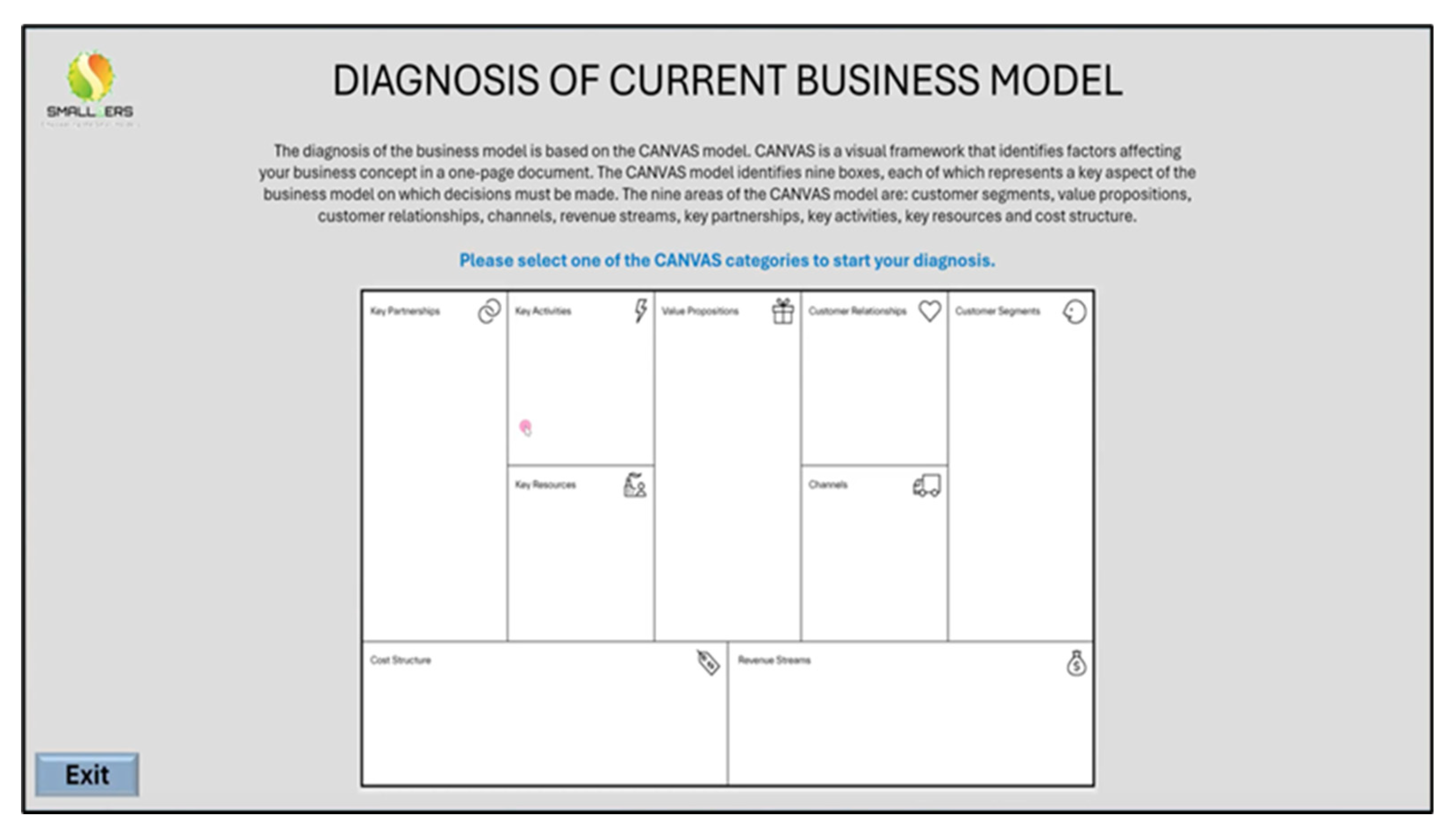
Figure 5.
Business model implementation.
Disclaimer/Publisher’s Note: The statements, opinions and data contained in all publications are solely those of the individual author(s) and contributor(s) and not of MDPI and/or the editor(s). MDPI and/or the editor(s) disclaim responsibility for any injury to people or property resulting from any ideas, methods, instructions or products referred to in the content. |
© 2025 by the authors. Licensee MDPI, Basel, Switzerland. This article is an open access article distributed under the terms and conditions of the Creative Commons Attribution (CC BY) license (http://creativecommons.org/licenses/by/4.0/).
Copyright: This open access article is published under a Creative Commons CC BY 4.0 license, which permit the free download, distribution, and reuse, provided that the author and preprint are cited in any reuse.


