

Submitted:
27 October 2025
Posted:
29 October 2025
You are already at the latest version
Abstract
BackgroundMenopause is a significant life stage for women, marking the permanent cessation of menstruation and the end of reproductive function. It may occur naturally or be induced surgically or medically through treatments such as hysterectomy, chemotherapy, or hormone suppression. While natural menopause is often gradual, surgical and medical menopause are associated with abrupt hormonal changes and more severe symptoms. India is experiencing a rapid demographic transition with a growing ageing female population. Despite this, menopause remains under-recognised in public health discourse, with limited research on women’s experiences and a lack of integrated care pathways. This study explored the lived experiences of perimenopause, menopause, and post-menopause among Indian women, focusing on how biological, psychological, sociocultural, and health system factors shape these experiences.MethodsA qualitative study was conducted as part of the MARIE India chapter (work package WP2a) using semi-structured in-depth interviews. Nineteen participants aged 35–70 years, including those with natural, surgical, and medical menopause, were purposively sampled to represent diverse geographical and socioeconomic contexts. Interviews were conducted in local languages, transcribed verbatim, and translated into English. Analysis was guided by the Delanerolle and Phiri framework, supported by thematic, comparative, and contextual approaches. Themes were identified iteratively through team discussions and validated through member checking.ResultsWomen described menopause as a complex transition influenced by intersecting biological, psychological, cultural, and structural determinants. Surgical menopause was associated with sudden, intense symptoms, while natural menopause presented more gradual variability. Cultural silence and stigma limited open discussion, leaving many to manage symptoms alone. Fragmented healthcare systems and lack of coordinated follow-up care exacerbated challenges, especially for women with multimorbidity or living in rural areas.ConclusionMenopause care in India requires urgent attention. These findings highlight the need for culturally sensitive, integrated services and policies to support women through this transition and reduce systemic inequities.
Keywords:
sociocultural
; systemic determinants
; menopause
; experiences
; India
1. Background
Perimenopause, menopause, and post-menopause represent critical stages in a woman’s reproductive life course, each marked by distinctive physiological and psychological changes [1,2]. Perimenopause is the transitional phase leading up to menopause, typically beginning in the mid- to late-40s, characterised by fluctuating hormone levels and irregular menstrual cycles. During this time, women often experience symptoms such as hot flushes, night sweats, mood disturbances, cognitive changes, and sleep disruption[3]. Menopause is clinically defined as the permanent cessation of menstruation for twelve consecutive months, indicating the end of natural reproductive function [4]. Post-menopause follows this milestone and continues for the remainder of a woman’s life, with symptoms often persisting and evolving over time[5,6]. Menopause may occur naturally with age or be induced surgically or medically[7]. Surgical menopause results from procedures such as hysterectomy with bilateral oophorectomy, leading to an abrupt and intense onset of symptoms due to the immediate loss of ovarian hormones [8,9]. Medical menopause can occur as a side effect of treatments such as chemotherapy, radiotherapy, or hormone-suppressing therapies used for conditions like endometriosis or breast cancer. Unlike natural menopause, which allows for gradual hormonal adjustment, surgical and medical menopause are frequently associated with more severe vasomotor, psychological, and musculoskeletal symptoms, underscoring the need for tailored clinical care and support[10].
India is undergoing a demographic shift marked by a rapidly ageing population[11]. Improvements in healthcare, falling fertility rates, and increasing life expectancy mean that a growing proportion of Indian women are living well beyond their reproductive years[12]. This creates new public health challenges, as a significant segment of the population will experience menopause and its associated health concerns simultaneously. Women in India often occupy central roles within families and communities, serving as primary caregivers for children, spouses, and elderly relatives[13]. In a patriarchal society, women’s health is frequently deprioritised, with cultural expectations placing them in the position of providing care while neglecting their own wellbeing. This dynamic can exacerbate the challenges faced during menopause, especially when symptoms are severe or poorly understood. Many women may continue to work in paid employment or informal sectors while managing extensive domestic responsibilities, often without adequate rest or support[14]. The dual burden of caregiving and symptom management is particularly significant for those living in rural or resource-limited areas, where healthcare access remains inconsistent. Supporting women through menopause is therefore not only a matter of individual health but also of sustaining family structures and community resilience. Failing to address the unique needs of ageing women risks perpetuating cycles of ill health, economic vulnerability, and gender inequity across generations.
Rationale
Menopause remains a neglected area of research and public health discourse in India, despite its profound implications for women’s health and wellbeing. Current reproductive health policies in India predominantly prioritise maternal and child health, with minimal focus on the needs of midlife and older women. While organisations such as the Indian Menopause Society and other midlife health committees exist, challenges in this domain are often addressed through international literature rather than context-specific research. Public awareness remains limited, with efforts often confined to sporadic events rather than sustained, grassroots engagement. There is a lack of systematic statistical analysis to identify region-specific challenges, and the development of evidence-based, locally relevant management protocols is still emerging.
Compounding this, there is a paucity of robust data on the lived experiences of Indian women undergoing natural, surgical, or medical menopause. This gap hinders understanding of the complex interplay between biological, psychological, and sociocultural factors influencing health outcomes. Deep-rooted cultural stigma and silence around menopause further restrict open dialogue, delaying care-seeking and perpetuating myths and misinformation. Clinically, fragmented health systems result in menopausal symptoms being treated in isolation, if addressed at all, with limited coordination between specialities.
This research aims to address these critical gaps by systematically exploring the experiences of Indian women across perimenopause, menopause, and post-menopause in diverse settings. By integrating biological, psychological, cultural, and health system perspectives, it generates evidence to inform targeted interventions and equitable policies. Understanding these experiences is essential not only to improve quality of life for individual women but also to shape workforce training, service delivery, and community-based programmes. In doing so, this study contributes to a more holistic and inclusive approach to women’s health, ensuring that midlife and older women are no longer marginalised within India’s health agenda.
2. Methods
2.1. Study Design
This qualitative study was conducted as part of the MARIE India chapter (work package WP2a) to explore the lived experiences of perimenopause, menopause, and post-menopause among diverse groups of women and transgender individuals across India.
2.2. Setting
The study adopted an interpretivist epistemological stance in state of West Bengal-semi rural, rural, urban and semi-urban settings, recognising that knowledge is co-constructed through lived experience and interaction with social and healthcare environments. The research followed the Consolidated Criteria for Reporting Qualitative Research (COREQ) guidelines to ensure methodological transparency, completeness, and rigour throughout the study.
2.3. Sampling and Recruitment
Participants were purposively sampled to ensure variation in menopausal stage, geographical location, and socioeconomic status. Recruitment strategies were developed collaboratively with local stakeholders to reach populations in urban, semi-urban, and rural areas. Community health workers, local non-governmental organisations, and public and private health facilities acted as recruitment points.
All biological females, aged between 18- 90 years that had experienced natural, surgical, or medically induced menopause were included. Nineteen participants were recruited in total, ensuring representation from different social, cultural, and health system contexts. Informed consent was secured from all participants, with verbal consent documented for those with literacy barriers.
2.4. Data Collection
Data collection involved semi-structured, in-depth interviews conducted in participants’ preferred languages to promote cultural appropriateness and accurate capture of experiences. Interviews were facilitated by trained female research assistants experienced in working with sensitive health topics. To ensure the interview guide reflected local realities, it was co-produced through workshops with clinicians, community representatives, and pilot study participants. This collaborative approach strengthened its relevance and sensitivity to sociocultural contexts.
The topic guide explored four main domains. The biological domain focused on physical and cognitive changes experienced during perimenopause, menopause, and post-menopause. The psychological domain addressed emotional wellbeing, mood disturbances, and mental health challenges. The sociocultural domain captured issues such as stigma, silence around menopause, family dynamics, and community attitudes. The health system domain explored access to services, quality of interactions with healthcare providers, and systemic barriers to care.
Interviews were carried out in private spaces to ensure confidentiality and facilitate open dialogue. All interviews were audio-recorded with participant consent and later transcribed verbatim. Bilingual translators provided English translations of transcripts, which were checked independently by additional team members to ensure accuracy and preserve cultural and linguistic nuances. Field notes were recorded during and immediately after each interview to capture contextual observations, such as non-verbal communication and environmental factors that might shape participants’ narratives.
2.5. Analytical Framework
The study employed a comprehensive analytical approach integrating the Delanerolle and Phiri theory and framework[15], thematic analysis, comparative analysis, and contextual interpretation. This multi-level strategy enabled an exploration of individual lived experiences while connecting them to structural and systemic factors.
2.6. Delanerolle and Phiri Theory and Framework
The Delanerolle and Phiri framework[15] conceptualises health outcomes as the result of interactions between four interconnected domains. The biological domain includes hormonal changes, comorbidities, and other physiological factors. The psychological domain captures emotional trajectories, mental health, and individual coping strategies. The sociocultural domain considers gender norms, stigma, familial roles, and broader cultural factors. The health system domain encompasses policies, access, workforce capacity, and service delivery models. By systematically coding transcripts within these domains, it was possible to explore how biological, psychological, cultural, and structural determinants intersected to shape menopause experiences. The framework was also used to identify systemic inequities, such as gaps in service provision and barriers to accessing appropriate care.
2.7. Thematic Analysis
Thematic analysis followed the six phases outlined by Braun and Clarke. This began with repeated readings of transcripts and field notes to ensure immersion in the data. Initial codes were systematically generated and collated across the dataset. Codes were then organised into potential themes and refined through iterative discussions among the research team. These themes were carefully defined to ensure they accurately represented participants’ accounts.
2.8. Comparative Analysis
Comparative analysis was used to explore variations across different participant groups. Comparisons were made between perimenopausal, naturally menopausal, surgically menopausal, and medically menopausal participants, as well as across rural, semi-urban, and urban settings. Socioeconomic differences were also examined to capture the diverse realities of women’s lives across India. This comparative lens highlighted convergences and divergences in experiences and allowed a deeper understanding of how structural factors influenced health outcomes.
2.9. Contextual Analysis
Contextual analysis was integrated to situate personal narratives within wider healthcare and policy settings. National and state-level policies related to reproductive health, women’s health, and ageing were reviewed to understand how services are organised and delivered. Structural challenges such as cost, workforce shortages, geographic disparities, and limited awareness of menopause were considered alongside participant narratives. Field notes were used to capture community-level dynamics, such as support networks, informal care practices, and environmental barriers to accessing health services. This enriched the analysis by connecting individual stories to broader social determinants and systemic structures.
2.10. Trustworthiness and Rigour
Multiple strategies were employed to enhance the rigour of the study. Data triangulation involved integrating interviews, field notes, and stakeholder engagement discussions. Member checking was carried out with a subset of participants to verify the interpretation of findings, ensuring they reflected participants’ lived realities. Reflexive journals were maintained by researchers to document their positionality and manage potential biases throughout the study process. Peer debriefing sessions with an interdisciplinary team of clinicians, social scientists, and policy experts provided critical feedback, fostering reflexivity and accountability.
2.11. Codebook Development
The final codebook was developed through integration of the Delanerolle and Phiri framework with emergent themes identified during analysis (Table 1). Codes were organised under the four main domains, with subdomains representing recurring patterns in the data. For instance, in the biological domain, subdomains included vasomotor symptoms, musculoskeletal pain, and sleep disturbance. The psychological domain included emotional instability, cognitive challenges, and anxiety. The sociocultural domain incorporated themes such as silence, stigma, and invisible domestic labour. The health system domain captured fragmented care, lack of surgical follow-up, and clinician awareness. Each code was accompanied by definitions, application criteria, and representative quotations, allowing consistent application across transcripts and supporting a transparent analytical process. This codebook provided a systematic tool for examining the interplay of individual, cultural, and structural factors shaping menopause experiences across diverse Indian settings, ensuring depth and consistency in interpretation.
2.12. Ethical Considerations
The study adhered to the Declaration of Helsinki and local ethical guidelines. Ethics approval was granted by Regional Medical Research Centre, Bhubaneswar (ICMR-RMRC/IHEC-2023/175), Institutional Ethic Committee JSS, Medical College, Mysore (JSSMC/IEC/18122023/33 NTC/2023-24) and MARIE consortium oversight committee. Participants received compensation for travel costs but no financial incentives, to minimise coercion. The study was conducted in accordance with the Declaration of Helsinki.
3. Results
3.1. Framework-Guided Synthesis
We analysed 19 interviews spanning natural, surgical, and medical menopause across rural and urban India and experiences were clustered into interlocking themes (Figure 1).
3.2. Biological Domain
Participants described a range of biological changes shaped by their type of menopause, underlying health conditions, and previous treatments. Women experienced pain and spotting linked to medical menopause.
“I have a pain of 4 out of 10. I also have back pain” (PID01)
“I had surgery for endometriosis. I also had COVID. My menopausal symptoms increased after COVID” (PID07)
Surgical menopause was frequently associated with sudden and severe symptoms, leaving women little time to prepare or adapt. These abrupt changes were especially evident in vasomotor and urogenital symptoms.
“My symptoms increased after the surgery.” (PID12)
“I had surgery for endometriosis. After that removed my ovaries and uterus. I have vaginal dryness” (PID9)
Natural menopause followed a more gradual trajectory, with some women reporting mild discomfort and others describing progressive pain, fatigue, and sleep disruption.
“I feel tense and wound up” (PID19)
“I have back pain” (PID19)
“Hot flashes and night sweats are extreme.” (PID12)
Pain was a recurring concern, particularly among participants with disabilities or comorbid conditions such as arthritis or spinal issues. For some, pain caused considerable mobility limitations, forcing them to depend on family members for routine household tasks. In contrast, participants on continuous hormonal therapy for endometriosis reported fewer classic menopausal symptoms.
“My pain is eight out of ten.” (PID9)
“Mostly muscle pain but also bad joint pain” (PID02)
“Muscle pain mostly is a problem” (PID04)
“When I miss the HRT tablet, I feel bleeding and pain again.” (PID7)
Participants described heightened sexual desire or drive ,but they had to comply and opt out due to lack of familial privacy , forbidden act like thoughts as imposed , partner’s non-cooperation or rarely vaginal dryness.
“Sweating at night, extremely” (PID03)
“Sex interest increased than before. Three or 4 times a month” (PID04)
“Sex interest there. It is more” (PID19)
Sleep experiences varied. While some women were able to maintain restorative rest, others experienced persistent early waking and fatigue, which affected both professional and domestic responsibilities.
“I cannot stand for prolonged periods or walk long distances.” (PID9)
“I feel exhausted and burnt out” (PID06)
“Moderate sleeping” (PID07)
Suppressed sexual desire/dissatisfaction was expressed by various unexplained psychosomatic problems like irritability, anger, familial disharmony etc. In contrast three fully engaged women with active sexual life experienced no obvious menopausal symptoms even at 53 year but without HRT.
3.3. Psychological Domain
Psychological responses ranged from resilience and positivity to significant emotional distress. Some participants reported feeling irritable and prone to overreaction, often linked to fatigue and the physical toll of symptoms. For employed women, these psychological effects manifested in concerns about making mistakes or forgetting tasks at work.
"The fatigue makes me anxious about my performance. I keep checking my work repeatedly because I fear missing something." (PID13)
"Sometimes I feel very irritable and snap at people for no reason. It is mostly when I am tired and the symptoms are overwhelming." (PID01)
"I get easily upset these days, even small things make me overreact. It feels like I can't control my emotions." (PID14)
“I feel exhausted and lose focus.” (PID8)
Conversely, a minority of women described feelings of cheerfulness and stability, which they attributed to supportive relationships, positive family dynamics, and meaningful community involvement. These external factors acted as buffers against the psychological burden of menopause.
“I get upset very often and overreact to small things.” (PID14)“I feel cheerful now, even more than before.” (PID11)“Sometimes I feel like crying for no reason.” (PID14)“I am scared of forgetting things at work.” (PID8)
"I keep busy with my work and personal life, and I feel completely fine without taking any medicines." (PID19)
3.4. Socio-cultural Domain
Cultural expectations influenced how women experienced and managed their symptoms. Menopause was rarely spoken about openly, creating a sense of isolation and limiting opportunities for seeking support. Participants described feeling pressured to continue with their household duties, regardless of how unwell they felt. In some cases, even when participants expressed their struggles, these were dismissed or normalised by family members as a routine part of ageing.
“As a housewife… I can’t stand for long or walk far.” (PID9)“My social work gives me purpose.” (PID10)
Women in nuclear families depended heavily on spouses or children for support, though this assistance was inconsistent. Those involved in community work or social roles described these activities as sources of identity and purpose. In contrast, women with limited mobility often felt disconnected and invisible within their communities.
“Even if I feel weak, my family expects me to do all the cooking.” (PID13)“Menopause is not talked about here, so I just keep quiet.” (PID14)
"Even on bad days, I focus on my family and my faith. It helps me stay grounded and hopeful." (PID19)
3.5. Health-System Domain
Across all participants, healthcare experiences were described as fragmented and poorly coordinated. Many women reported seeking help for specific symptoms such as hypertension or pain, but menopause itself was rarely addressed in a comprehensive way. Even following surgical menopause, structured follow-up care was uncommon.
“I have consulted a doctor but take no medicine for menopause.” (PID12)“Care is fragmented across specialists.” (PID13)“After my surgery, nobody explained what changes I would face.” (PID12)
Participants described how navigating between multiple specialists without a central point of coordination added to their stress. Several reported that clinicians lacked understanding of menopausal needs and often dismissed or minimised their concerns. Women using hormone replacement therapy were still left to manage care across different departments on their own, which created significant gaps in their health journey.
“The doctors just give medicine for my diabetes, nothing for these symptoms.” (PID11)
"Even after the operation, I only went back to the hospital when something was wrong. There was no regular follow-up." (PID9)
"I didn’t know what symptoms were from menopause and what were from other problems. The doctors also seemed unsure." (PID7)
3.6. Cross-Domain Intersections
The interaction between biological, psychological, socio-cultural, and health-system factors shaped each woman’s experience. Women undergoing surgical menopause described sudden, intense biological changes that triggered anxiety, disrupted sleep, and cognitive difficulties. These symptoms were intensified by the absence of coordinated care and by societal expectations that women continue fulfilling their roles without complaint. Women with multimorbidity, such as diabetes or arthritis, faced additional challenges, as fragmented healthcare services addressed each condition separately rather than holistically. Conversely, those on continuous hormonal therapy for endometriosis often had more stable energy levels and higher sexual wellbeing. However, these women expressed uncertainty about what would happen when their treatment ended, as no proactive menopause planning had been provided.
“Treatment is to keep endometriosis stable… not for menopause.” (PID7)
“After my surgery, nobody explained what changes I would face.” (PID12)
3.7. Comparative Analysis
Surgical menopause was associated with more severe and sudden symptoms, including intense hot flushes, night sweats, and rapid changes in mood and cognition. Natural menopause was more variable, ranging from mild discomfort to progressive, chronic pain. Both groups described difficulties accessing specialist services, but those with surgical menopause highlighted a lack of preparation and abrupt transition into symptom management.
“My symptoms increased after the surgery.” (PID12)
Employment status shaped how women experienced menopause. Those in professional roles reported fatigue and concentration lapses affecting work performance, with little to no workplace support. Women without paid employment carried the full weight of domestic labour, which remained largely invisible and unacknowledged.
“Early wake up… my sleep affects daily activity.” (PID8)
“Even if I feel weak, my family expects me to do all the cooking.” (PID13)
Women managing endometriosis with continuous hormonal therapy described a unique experience of increased sexual desire and energy. These outcomes contrasted with the experiences of others, underscoring the influence of treatment history on menopausal trajectories.
“My sexual urge has increased… it gives me energy for daily work.” (PID7)
3.8. Contextual Analysis
The narratives revealed that menopause cannot be understood as a purely biological process. Instead, it was experienced as part of a complex web of personal, social, and systemic factors (Table 2). Surgical menopause highlighted the shortcomings of healthcare systems, where women were unprepared for abrupt physical and psychological changes due to a lack of counselling and follow-up. Natural menopause demonstrated how gradual changes could be either manageable or overwhelming, depending on levels of family support, financial stability, and healthcare access. Cultural silence played a central role in shaping these experiences. Participants often avoided discussing menopause, even with close family members, because of social norms that framed it as a private or shameful topic. This silence not only delayed care-seeking but also reinforced feelings of isolation. At the same time, cultural expectations of women as caregivers meant that they were expected to prioritise the needs of others, often at the expense of their own health. The healthcare system was described as fragmented and reactive rather than proactive. Women moved between different specialists without a centralised pathway for menopause care, leading to gaps in treatment and inconsistent advice. This lack of integration particularly affected women with multiple health conditions, who had to navigate complex and uncoordinated services.
3.9. Cultural Importance and Views of the Findings
Cultural values shaped how women interpreted and responded to their menopausal symptoms. In both Hindi- and Bengali-speaking contexts, participants relied on everyday language to describe their experiences rather than using medical terms. Words such as " achanak garmī aur pasina" (feeling of heat or hot flush) and "ghabrāhaṭ" (restlessness or anxiety) conveyed nuanced meanings that were deeply embedded in local understandings of health.
This linguistic framework (Table 3) has significant implications for clinical practice. Without cultural competence, clinicians may misinterpret these descriptions, leading to underdiagnosis or inappropriate care. Recognising and respecting these expressions is essential for building trust and delivering effective services. Menopause was also intertwined with social expectations of womanhood. The expectation that women continue to fulfil domestic duties regardless of their health placed a heavy burden on those with severe symptoms or disabilities. Conversely, community roles and social engagement provided some women with strength and resilience, offering spaces where they could redefine their identities beyond the family setting. These findings highlight the need for culturally tailored interventions that go beyond biomedical treatment. Addressing menopause effectively requires acknowledging the socio-cultural realities in which women live, ensuring that services are linguistically accessible, socially sensitive, and responsive to diverse needs.
4. Discussion
The findings of this study reveal menopause as a deeply multifaceted transition shaped by interconnected biological, psychological, sociocultural, and health system factors. Women’s experiences were diverse, with surgical menopause associated with abrupt and intense symptom onset, while natural menopause followed a more gradual course with varied symptom trajectories. Psychological effects, including anxiety, emotional instability, and cognitive changes, were closely linked to physical symptoms such as sleep disturbance and pain. Cultural silence and stigma surrounding menopause were found to significantly limit help-seeking behaviours, leaving many women to manage their symptoms alone. In addition, fragmented healthcare systems, lack of continuity of care, and absence of structured follow-up after surgical interventions compounded the challenges faced by participants. These findings highlight the need to move beyond a purely biomedical framing of menopause to one that also considers sociocultural contexts and systemic inequities influencing access to care and overall wellbeing (Table 5). Indian women want to share every personal problem like those of developed countries, but failure by caregivers to interact with empathy and compassion makes the difference.
4.1. Population Science
The qualitative findings reveal a deeply complex landscape of menopausal experiences in India, with West Bengal offering a particularly rich context for understanding the intersection of biological, sociocultural, and systemic factors. Women’s accounts of perimenopause, menopause, and post-menopause demonstrate how gender norms, household expectations, and structural inequities converge to shape this life stage. Across narratives, women described a strong cultural imperative to prioritise family welfare and household duties over personal health, often viewing their physical and emotional struggles as a natural and unavoidable part of ageing. This normalisation of suffering reflects entrenched patriarchal structures in which women’s health needs remain secondary and often invisible within both family units and healthcare systems. A recurring theme was the pervasive silence surrounding menopause. Many participants reported that even within families, conversations about bodily changes were avoided or dismissed. This lack of dialogue extended into healthcare interactions, where menopause was rarely addressed as a comprehensive health concern. Instead, women were treated for isolated symptoms such as hypertension, joint pain, or insomnia without consideration of their underlying menopausal transition. This fragmented approach delayed timely interventions and left many women feeling unsupported and misunderstood. Those who were able to access hormonal therapy or holistic care were in the minority, typically from urban, higher socioeconomic groups. For rural women and those in lower-income households, barriers such as cost, travel distance, and limited service availability compounded their struggles, reinforcing stark health inequities.
West Bengal illustrates both the diversity and the disparities that define menopausal experiences in India (Table 4). Urban areas such as Kolkata offer greater access to tertiary hospitals and private clinics, yet these services remain concentrated among middle- and upper-class populations. In contrast, rural districts face chronic shortages of gynaecologists and specialised services, leaving women reliant on primary care providers with limited training in menopause management. This urban-rural divide mirrors national patterns, underscoring systemic weaknesses in India’s healthcare infrastructure. Traditional beliefs prevalent in West Bengal such as reliance on home remedies, Ayurvedic practices, and dietary adjustments play a dual role. While they provide culturally meaningful coping strategies, they can also delay formal care-seeking when symptoms are severe or complex. Additionally, religious and cultural customs, including practices surrounding modesty and silence about reproductive health, contribute to stigma and hinder open discussion.
These regional dynamics position West Bengal as a microcosm of broader national challenges[15,16]. Its dense population, diverse cultural heritage, and mixed urban-rural composition reflect many of the tensions seen across India; modernisation versus tradition, increased health awareness versus persistent stigma, and expanding healthcare infrastructure versus inequitable access[17,18]. Understanding menopause in West Bengal provides transferable insights for other states, particularly those in eastern and northeastern India where similar socioeconomic and cultural conditions prevail[19-21]. capturing both regional specificities and universal challenges. While urban centres such as Kolkata demonstrate progress in healthcare access, rural and low-income areas highlight persistent systemic gaps[21,22]. Cultural beliefs, gender norms, and structural inequities identified in West Bengal resonate strongly with those seen in other eastern states and across the nation. Therefore, strategies developed and piloted in West Bengal could be adapted for other regions, particularly where urban-rural divides, poverty, and cultural silence hinder progress. By addressing these determinants holistically, India can move towards a nationally coordinated, regionally sensitive menopause care strategy that reduces disparities and strengthens women’s health outcomes[22,23].
To address these challenges, there is a need for regionally sensitive interventions that build on local knowledge while strengthening formal health systems. For instance, integrating community health workers such as Accredited Social Health Activists (ASHAs) into menopause education and care pathways could improve outreach in rural areas[24,25]. Similarly, culturally tailored public health campaigns that use local languages and address myths and misconceptions could reduce stigma and promote earlier care-seeking[26,27]. These findings highlight that menopause in India is not a uniform experience but rather a spectrum shaped by intersecting determinants[20,28]. By situating West Bengal within this broader context, it becomes evident that addressing menopausal health is critical not only for improving individual quality of life but also for advancing gender equity and population health across the country.
4.2. Implications for the Indian Diaspora
The experiences captured in this study have significant relevance for the global Indian diaspora[29], which comprises millions of women living across diverse countries. Indian women in diaspora communities often carry with them the same cultural beliefs, expectations, and silences surrounding menopause that were evident among participants in India. In many cases, these cultural norms intersect with health systems in host countries that may not fully understand or respond to their needs. Women may continue to normalise their symptoms, prioritise family and caregiving roles, and avoid seeking care due to stigma or language barriers. This can lead to delayed diagnosis, fragmented treatment, and unaddressed psychological distress, even in countries with advanced healthcare infrastructure. For healthcare providers serving diaspora populations, these findings underscore the importance of culturally sensitive care that acknowledges both the biomedical aspects of menopause and the sociocultural context shaping women’s help-seeking behaviours. Understanding these experiences can also inform the design of targeted outreach and education initiatives, ensuring that diaspora women have equitable access to information, services, and support that reflect their cultural realities while leveraging resources available in their host countries.
4.3. Practice and Policy Guidelines
The results underscore the urgent need for systemic changes in practice and policy to improve menopause care across India. Primary care systems should integrate menopause screening and counselling into routine health services, particularly for women in midlife and those undergoing surgical interventions. Clinicians require targeted training to recognise and address menopausal symptoms holistically, avoiding the current tendency to treat symptoms in isolation. Community-based health education programmes are essential to break the cultural silence around menopause and empower women with accurate information[30]. Policies should also focus on making hormone replacement therapy and other supportive treatments affordable and accessible, while ensuring equitable service delivery across urban and rural areas. By embedding menopause within national reproductive and women’s health strategies, the healthcare system can provide proactive, comprehensive support for women throughout this transition[31].

Table 5.
Recommendations for Practice and Policy.
| Area | Recommendation | Rationale |
|---|---|---|
| Primary care integration | Include menopause screening, counselling, and follow-up within routine services | Early identification and management of symptoms to prevent escalation |
| Workforce training | Provide clinicians with education on holistic menopause care and cultural sensitivity | Improve quality of care and reduce misdiagnosis or dismissal of symptoms |
| Community education | Develop culturally relevant educational campaigns in local languages | Reduce stigma and increase awareness of menopause and treatment options |
| Accessible treatments | Subsidise hormone replacement therapy and other evidence-based interventions | Ensure equitable access across socioeconomic groups |
| Post-surgical pathways | Establish standardised follow-up care after hysterectomy or oophorectomy | Support women in managing abrupt changes associated with surgical menopause |
| Policy alignment | Integrate menopause care into national reproductive and ageing health strategies | Create sustainable, system-wide improvements in service delivery |
5. Conclusions
This study demonstrates that menopause in India is shaped by the interplay of biological changes, psychological wellbeing, cultural expectations, and health system limitations. The findings highlight that many women face this life stage with minimal support, navigating symptoms amid stigma and fragmented services. By centring women’s lived experiences, this study provides an evidence base for culturally tailored interventions and more equitable policies. Addressing menopause care requires collaboration between healthcare providers, policymakers, and communities to ensure that no woman experiences this transition in silence. Embedding menopause into health strategies is critical to improving quality of life and promoting dignity for women across Inda.
Code Availability
Not applicable.
Ethics Approval
Regional Medical Research Centre, Bhubaneswar (ICMR-RMRC/IHEC-2023/175) and Institutional Ethic Committee JSS, Medical College, Mysore (JSSMC/IEC/18122023/33 NTC/2023-24).
Consent to Participate
Obtained.
Consent for Publication
All authors consented to publish this manuscript.
Author Contributions
GD developed the ELEMI program and the MARIE project. This was furthered by GD and PP. PKM submitted and secured the ethics approval for the study. GHU and team collected data. GD and JQS conducted the data analysis. GD and PKM wrote the first draft and was furthered by all other authors. VP edited and formatted all versions of the manuscript. All authors critically appraised, reviewed and commented on all versions of the manuscript. All authors read and approved the final manuscript.
Funding
No funding.
Data Availability Statement
The PIs and the study sponsor may consider sharing anonymous data upon reasonable a request. The datasets used and/or analysed during the current study available from the corresponding author on reasonable request.
Acknowledgments
MARIE Consortium: Donatella Fontana, Aini Hanan binti Azmi, Alyani binti Mohamad Mohsin, Arinze Anthony Onwuegbuna, Artini binti Abidin, Ayyuba Rabiu, Chijioke Chimbo, Chinedu Onwuka Ndukwe, Choon-Moy Ho, Chinyere Ukamaka Onubogu, Diana Chin-Lau Suk, Divinefavour Echezona Malachy, Emmanuel Chukwubuikem Egwuatu, Eunice Yien-Mei Sim, Farhawa binti Zamri, Fatin Imtithal binti Adnan, Geok-Sim Lim, Halima Bashir Muhammad, Ifeoma Bessie Enweani-Nwokelo, Ikechukwu Innocent Mbachu, Jinn-Yinn Phang, John Yen-Sing Lee, Joseph Ifeanyichukwu Ikechebelu, Juhaida binti Jaafar, Karen Christelle, Kathryn Elliot, Kim-Yen Lee, Kingsley Chidiebere Nwaogu, Lee-Leong Wong, Lydia Ijeoma Eleje, Min-Huang Ngu, Noorhazliza binti Abdul Patah, Nor Fareshah binti Mohd Nasir, Norhazura binti Hamdan, Nnanyelugo Chima Ezeora, Nnaedozie Paul Obiegbu, Nurfauzani binti Ibrahim, Nurul Amalina Jaafar, Odigonma Zinobia Ikpeze, Obinna Kenneth Nnabuchi, Pooja Lama, Puong-Rui Lau, Rakshya Parajuli, Rakesh Swarnakar, Raphael Ugochukwu Chikezie, Rosdina Abd Kahar, Safilah Binti Dahian, Sapana Amatya, Sing-Yew Ting, Siti Nurul Aiman, Sunday Onyemaechi Oriji, Susan Chen-Ling Lo, Sylvester Onuegbunam Nweze, Damayanthi Dassanayake, Nimesha Wijayamuni, Prasanna Herath, Thamudi Sundarapperuma, Vaitheswariy Rao, Xin-Sheng Wong, Xiu-Sing Wong, Yee-Theng Lau, Heitor Cavalini, Jean Pierre Gafaranga, Emmanuel Habimana, Chigozie Geoffrey Okafor, Assumpta Chiemeka Osunkwo, Gabriel Chidera Edeh, Esther Ogechi John, Kenechukwu Ezekwesili Obi, Oludolamu Oluyemesi Adedayo, Odili Aloysius Okoye, Chukwuemeka Chukwubuikem Okoro, Ugoy Sonia Ogbonna, Chinelo Onuegbuna Okoye, Babatunde Rufus Kumuyi, Onyebuchi Lynda Ngozi, Nnenna Josephine Egbonnaji, Oluwasegun Ajala Akanni, Perpetua Kelechi Enyinna, Yusuf Alfa, Theresa Nneoma Otis, Catherine Larko Narh Menka, Kwasi Eba Polley, Isaac Lartey Narh, Bernard B. Borteih, Andy Fairclough, Kingsley Emeka Ekwuazi, Michael Nnaa Otis, Jeremy Van Vlymen, Chidiebere Agbo, Francis Chibuike Anigwe, Kingsley Chukwuebuka Agu, Chiamaka Perpetua Chidozie, Chidimma Judith Anyaeche, Clementine Kanazayire, Jean Damascene Hanyurwimfura, Nwankwo Helen Chinwe, Stella Matutina Isingizwe, Jean Marie Vianney Kabutare, Dorcas Uwimpuhwe, Melanie Maombi, Ange Kantarama, Uchechukwu Kevin Nwanna, Benedict Erhite Amalimeh, Theodomir Sebazungu, Elius Tuyisenge, Yvonne Delphine Nsaba Uwera, Emmanuel Habimana, Nasiru Sani, Amarachi Pearl Nkemdirim, Rukshini Puvanendram, Manisha Mathur, Rajeswari Kathirvel, Farah Safdar, Raksha Aiyappan, Jean Pierre Gafaranga, Bertin Ngororano, Victor Archibon, Ibe Michael Usman, Baraka Godfrey Mwahi, Filbert Francis Ilaza, Zepherine Pembe, Clement Mwabenga, Mpoki Kaminyoghe, Brenda Mdoligo, Thomas Alone Saida, Nicodemus E. Mwampashi, Olisaemeka Nnaedozie Okonkwo, Bethel Chinonso Okemeziem, Bethel Nnaemeka Uwakwe, Goodnews Ozioma Igboabuchi, Ifeoma Francisca Ndubuisi, Oscar Mahinyila, Aloisia Shemdoe, Filbert Ilaza, Kornelio Mpalanga.
Conflicts of interest
All authors report no conflict of interest. The views expressed are those of the authors and not necessarily those of the NHS, the National Institute for Health Research, the Department of Health and Social Care or the Academic institutions.
References
- Woods, N.F.; Mitchell, E.S.; Coslov, N.; Richardson, M.K. Transitioning to the menopausal transition: a scoping review of research on the late reproductive stage in reproductive aging. Menopause 2021, 28, 447–466. [Google Scholar] [CrossRef]
- Delanerolle, G.; Phiri, P.; Elneil, S.; Talaulikar, V.; Eleje, G.U.; Kareem, R.; Shetty, A.; Saraswath, L.; Kurmi, O.; Benetti-Pinto, C.L. Menopause: a global health and wellbeing issue that needs urgent attention. The Lancet Global Health 2025, 13, e196–e198. [Google Scholar] [CrossRef]
- Sherman, S. Defining the menopausal transition. The American journal of medicine 2005, 118, 3–7. [Google Scholar] [CrossRef]
- Ambikairajah, A.; Walsh, E.; Cherbuin, N. A review of menopause nomenclature. Reproductive health 2022, 19, 29. [Google Scholar] [CrossRef]
- Prelevic, G.M.; Jacobs, H.S. Menopause and post-menopause. Baillière's clinical endocrinology and metabolism 1997, 11, 311–340. [Google Scholar] [CrossRef]
- Wang, Y.; Mishra, A.; Brinton, R.D. Transitions in metabolic and immune systems from pre-menopause to post-menopause: implications for age-associated neurodegenerative diseases. F1000Research 2020, 9, F1000. [Google Scholar] [CrossRef]
- Secoșan, C.; Balint, O.; Pirtea, L.; Grigoraș, D.; Bălulescu, L.; Ilina, R. Surgically induced menopause—A practical review of literature. Medicina 2019, 55, 482. [Google Scholar] [CrossRef] [PubMed]
- Kingsberg, S.A.; Larkin, L.C.; Liu, J.H. Clinical effects of early or surgical menopause. Obstetrics & Gynecology 2020, 135, 853–868. [Google Scholar] [CrossRef] [PubMed]
- Pillay, O.C.; Manyonda, I. The surgical menopause. Best practice & research clinical obstetrics & gynaecology 2022, 81, 111–118. [Google Scholar]
- Utian, W.H. Psychosocial and socioeconomic burden of vasomotor symptoms in menopause: a comprehensive review. Health and Quality of Life outcomes 2005, 3, 47. [Google Scholar] [CrossRef] [PubMed]
- Loganathan, S.; Iyengar, V.; Chowdappa, S.V.; Varghese, M. Population trends and public awareness of healthy and pathological ageing in India: A brief overview. Asian Journal of Psychiatry 2017, 29, 49–53. [Google Scholar] [CrossRef]
- Mohanan, M.; Hay, K.; Mor, N. Quality of health care in India: challenges, priorities, and the road ahead. Health Affairs 2016, 35, 1753–1758. [Google Scholar] [CrossRef] [PubMed]
- Ugargol, A.P.; Bailey, A. Family caregiving for older adults: gendered roles and caregiver burden in emigrant households of Kerala, India. Asian Population Studies 2018, 14, 194–210. [Google Scholar] [CrossRef]
- Chopra, D.; Zambelli, E. No time to rest: Women’s lived experiences of balancing paid work and unpaid care work. Brighton: Institute of Development Studies, 2017. [Google Scholar]
- Delanerolle, G. The Delanerolle and Phiri Theory: The Basis to the Novel Culturally Informed ELEMI Qualitative Framework for Women's Health Research. 2025.
- Nath, S. People-party-policy interplay in India: Micro-dynamics of everyday politics in West Bengal, c. 2008–2016; Routledge India: 2019.
- Pal, S.; Bengal, W. Diversification of rural economy and narrowing rural urban divide: A study of Barddhaman city and surrounding large villages. Transactions 2024, 46, 81. [Google Scholar]
- Alam, T.; Banerjee, A. Analyzing the Urban Form in Suburban Areas of the South Bengal Region Using Built Fractals. Journal of Urban Planning and Development 2023, 149, 04023043. [Google Scholar] [CrossRef]
- Das, N. Menopause, Aging and ‘Gray’in Between: Learnings From Experiences of Domestic Workers’ Lives in West Bengal. In Contemporary Issues in Late Adulthood: Perspectives from India, Springer: 2024; pp. 79-92.
- PEREIRA, C.Q. The Impact of Menopause on Women in Urban Areas: A Sociological Study in Goa. GOA UNIVERSITY, 2024.
- Sarkar, A.; Samsuzzaman, M.; Thakur, R.P.; Taraphdar, P. Postmenopausal Experiences and Constraints in Seeking Health Care in A Rural Area of West Bengal, India. National Journal of Community Medicine 2023, 14, 212–218. [Google Scholar] [CrossRef]
- Das, M. Culture of Health Care in Urban Slums: A Comparative Study of Metropolitan Cities of Bangalore and Kolkata. 2022.
- Meeta, M.; Digumarti, L.; Agarwal, N.; Vaze, N.; Shah, R.; Malik, S. Clinical practice guidelines on menopause:* An executive summary and recommendations: Indian Menopause Society 2019–2020. Journal of Mid-life Health 2020, 11, 55–95. [Google Scholar] [CrossRef]
- Khan, A.M. Evaluation study of ASHA in providing access to health services and community awareness under national rural health mission. Tilak Maharashtra Vidyapeeth, 2020.
- Taylor-Swanson, L.; Kent-Marvick, J.; Austin, S.D.; Ellis, J.; Charles, C.; Ward, R.; Crandall, L.; Macias, S.N.; Moreno, C.; Simonsen, S.E. Developing a Menopausal Transition Health Promotion Intervention With Indigenous, Integrative, and Biomedical Health Education: A Community-Based Approach With Urban American Indian/Alaska Native Women. Global Advances in Integrative Medicine and Health 2024, 13, 27536130241268232. [Google Scholar] [CrossRef] [PubMed]
- Place, V.; Nabb, B.; Viksten Assel, K.; Bäärnhielm, S.; Dalman, C.; Hollander, A.-C. Interventions to increase migrants’ care-seeking behaviour for stigmatised conditions: a scoping review. Social psychiatry and psychiatric epidemiology 2021, 56, 913–930. [Google Scholar] [CrossRef]
- Feinberg, I.Z.; Owen-Smith, A.; O'Connor, M.H.; Ogrodnick, M.M.; Rothenberg, R.; Eriksen, M.P. Strengthening culturally competent health communication. Health security 2021, 19, S–41. [Google Scholar] [CrossRef]
- Bagga, S.S.; Tayade, S.; Lohiya, N.; Tyagi, A.; Chauhan, A. Menopause dynamics: From symptoms to quality of life, unraveling the complexities of the hormonal shift. Multidisciplinary Reviews 2025, 8, 2025057–2025057. [Google Scholar] [CrossRef]
- Garha, N.S.; Domingo, A. Indian diaspora population and space: national register, UN Global Migration Database and Big Data. Diaspora Studies 2019, 12, 134–159. [Google Scholar] [CrossRef]
- Shams, A.; Aurangzaib, Z.; Sherazi, S.F.A. Breaking The Silence: Understanding Menopause, Stigma, And Support In Under Served Communities. Journal of Medical & Health Sciences Review 2025, 2. [Google Scholar] [CrossRef]
- Nieroda, M.; Posso, D.; Seckam, A. Women's expectations for system support for a healthy menopausal transition: A pilot study. Maturitas 2024, 190, 108133. [Google Scholar] [CrossRef] [PubMed]
Figure 1.
Thematic and sub-thematic map.
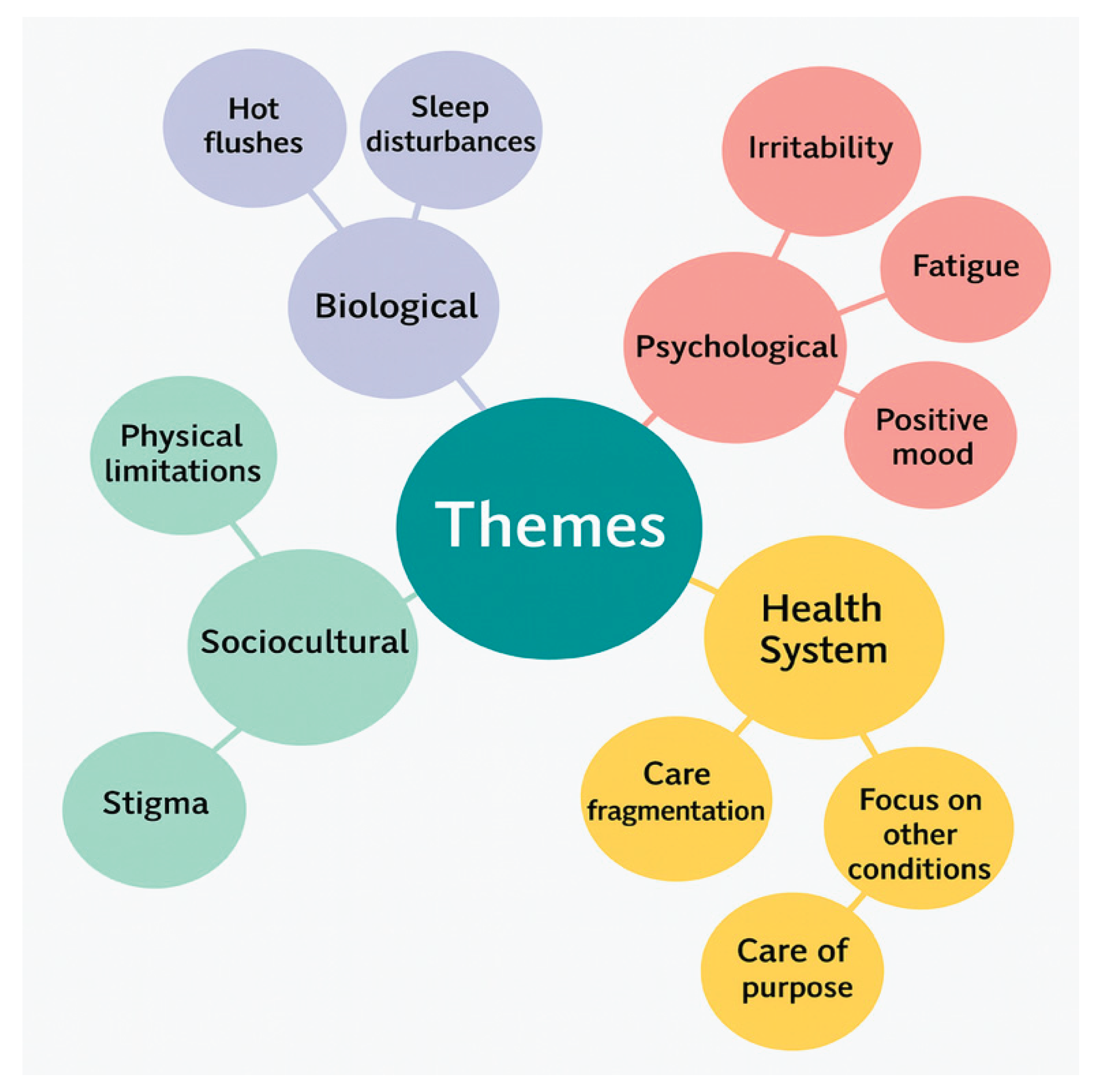
Table 1.
Code book based on the sample identified.
| Domain | Code | Description | When to Apply | Example (Verbatim) | PID |
|---|---|---|---|---|---|
| Biological | Vasomotor symptoms | Sudden sensations of heat, sweating, night sweats linked to menopause | When a participant describes experiences of heat, sweating, or temperature fluctuations | “Hot flashes and night sweats are extreme.” | PID12 |
| Biological | Urogenital changes | Vaginal dryness, discomfort, altered libido, or sexual function changes | Apply when there is discussion of sexual health, vaginal symptoms, or intimacy issues | “My sexual urge has increased… it gives me energy for daily work.” | PID7 |
| Biological | Sudden surgical onset | Immediate and intense symptoms following surgical menopause | When participants report abrupt, severe changes immediately after surgery | “My symptoms increased after the surgery.” | PID12 |
| Biological | Musculoskeletal pain | Back pain, joint pain, or generalised body aches impacting mobility | When participants discuss body pain or movement limitations | “My pain is eight out of ten.” | PID9 |
| Biological | Sleep disturbance | Insomnia, early waking, broken sleep, fatigue related to menopause | Use when disrupted sleep patterns are mentioned | “Early wake up… my sleep affects daily activity.” | PID8 |
| Biological | Endometriosis management | Experiences of hormonal therapy for endometriosis and its impact on menopause | Apply to narratives about endometriosis treatment influencing menopausal symptoms | “When I miss the tablet, I feel bleeding and pain again.” | PID7 |
| Psychological | Anxiety and restlessness | Expressions of worry, panic, unease, or heightened sensitivity | When participants describe emotional tension or anxiety | “I get upset very often and overreact to small things.” | PID14 |
| Psychological | Cognitive challenges | Forgetfulness, poor focus, or mental lapses related to menopause | When participants mention memory problems or concentration issues | “I am scared of forgetting things at work.” | PID8 |
| Psychological | Emotional instability | Sudden mood swings, irritability, or emotional reactions to symptoms | Use for fluctuating emotional states linked to menopause | “Sometimes I feel like crying for no reason.” | PID14 |
| Psychological | Positive emotional wellbeing | Stability, cheerfulness, or resilience despite menopause challenges | When participants describe positive mood or strong coping mechanisms | “I feel cheerful now, even more than before.” | PID11 |
| Socio-cultural | Social silence and stigma | Avoidance of discussing menopause due to shame, stigma, or norms | Apply when participants reference secrecy or silence around menopause | “Menopause is not talked about here, so I just keep quiet.” | PID14 |
| Socio-cultural | Invisible domestic work | Unrecognised household responsibilities expected of women | When women describe the burden of unpaid labour or lack of appreciation | “Even if I feel weak, my family expects me to do all the cooking.” | PID13 |
| Socio-cultural | Functional limitation and roles | Limitations in daily tasks caused by pain, disability, or fatigue | Use when physical symptoms affect women’s ability to manage roles | “As a housewife… I can’t stand for long or walk far.” | PID9 |
| Socio-cultural | Positive coping buffers | Community engagement, faith, or relationships that provide resilience | When women describe social roles as protective and empowering | “My social work gives me purpose.” | PID10 |
| Health-system | Systemic fragmentation | Disconnected, poorly coordinated healthcare services | Apply when there is mention of navigating multiple specialists without integration | “Care is fragmented across specialists.” | PID13 |
| Health-system | Lack of surgical follow-up | Absence of counselling or support after surgical menopause | When participants report no preparation or post-op care | “After my surgery, nobody explained what changes I would face.” | PID12 |
| Health-system | Symptom dismissal by clinicians | Clinicians not recognising or addressing menopausal symptoms | Use when symptoms are minimised or attributed to other conditions | “The doctors just give medicine for my diabetes, nothing for these symptoms.” | PID11 |
| Health-system | Lack of menopause medication | Care accessed but no treatment offered for menopausal symptoms | Apply when participants explicitly say no medications were given | “I have consulted a doctor but take no medicine for menopause.” | PID12 |
| Cultural context | Local terminology and expressions | Culturally specific words for symptoms or experiences | Use when participants use Hindi or Bengali terms to describe their symptoms | “Achanak Garmī aur pasina”(sudden heat, hot flush) | PID14, PID10 |
Table 2.
Thematic table showcasing sub-themes, determinants, exposures and impact.
| Theme | Sub-theme | Determinants | Exposure | Impact | PID | Verbatim Example |
|---|---|---|---|---|---|---|
| Vasomotor symptoms | Hot flushes, night sweats | Hormonal decline, abrupt surgical changes | Daily or nightly | Severe discomfort, disrupted sleep, exhaustion | PID12 | “Hot flashes and night sweats are extreme.” |
| Urogenital changes | Vaginal dryness, altered sexual desire | Oestrogen loss, absence or presence of HRT | Persistent | Intimacy challenges or improved sexual wellbeing | PID7 | “My sexual urge has increased… it gives me energy for daily work.” |
| Sudden surgical onset | Abrupt post-surgical hormonal drop | Lack of preparation and counselling | Immediate post-surgery | Shock, severe early symptoms, emotional instability | PID12 | “My symptoms increased after the surgery.” |
| Musculoskeletal pain | Back pain, joint pain, generalised aches | Ageing, comorbid conditions, menopause | Daily | Restricted mobility, dependency on family members | PID9 | “My pain is eight out of ten.” |
| Sleep disturbance | Early waking, broken sleep | Vasomotor symptoms, stress, anxiety | Frequent | Cognitive decline, work errors, fatigue | PID8 | “Early wake up… my sleep affects daily activity.” |
| Psychological strain | Anxiety, irritability, panic, overreaction | Symptom load, household pressures, sleep loss | Ongoing | Burnout, mood swings, relationship strain | PID14 | “I get upset very often and overreact to small things.” |
| Cognitive challenges | Forgetfulness, loss of focus | Psychological stress, fatigue, ageing | Intermittent | Mistakes at work, loss of confidence | PID8 | “I am scared of forgetting things at work.” |
| Social silence | Avoidance of discussing menopause | Cultural stigma, generational attitudes | Continuous | Isolation, delayed help-seeking, emotional burden | PID14 | “Menopause is not talked about here, so I just keep quiet.” |
| Invisible domestic work | Household duties unrecognised | Gender roles, cultural norms | Daily, repetitive | Fatigue, lack of rest or recognition | PID13 | “Even if I feel weak, my family expects me to do all the cooking.” |
| Positive coping buffers | Social engagement, faith, family support | Access to community roles, enabling networks | Ongoing | Improved resilience, positive mood, empowerment | PID10, PID11 | “My social work gives me purpose.” |
| Systemic fragmentation | Lack of integrated menopause services | Siloed care, poor communication | Persistent | Self-management burden, stress, unaddressed needs | PID13 | “Care is fragmented across specialists.” |
| Lack of surgical follow-up | No counselling or preparation | Limited protocols and clinician awareness | Post-surgery | Shock, unmanaged symptoms, delayed recovery | PID12 | “After my surgery, nobody explained what changes I would face.” |
| Endometriosis management | Continuous hormonal therapy | Disease-focused care without menopause planning | Ongoing | Stability, higher libido, unprepared for future changes | PID7 | “Treatment is to keep endometriosis stable… not for menopause.” |
Table 3.
Colloquial Glossary Table.
| Language | Colloquial Term (Script) | Transliteration | English Meaning | Context in Findings |
|---|---|---|---|---|
| Hindi | गरमी चढ़ना/गरमी की लहर | garmī chaḍhnā/pasina, garmī kī lehar | Sudden heat or hot flush | Used to describe vasomotor symptoms such as hot flushes or night sweats |
| Hindi | घबराहट | ghabrāhaṭ | Anxiety, restlessness | Emotional unease or panic during menopause |
| Hindi | दिल की धड़कन तेज | dil kī dhaṛkan tez | Palpitations, rapid heartbeat | Described during episodes of anxiety or heat waves |
| Hindi | कमजोरी | kamzorī | Weakness, low energy | Commonly reported fatigue or physical depletion |
| Hindi | जोड़ो में दर्द | joṛoṅ meṅ dard | Joint pain | Common musculoskeletal complaint |
| Hindi | नींद टूटना | nīnd ṭūṭnā | Broken or disturbed sleep | Describing insomnia or early waking |
| Hindi | चक्कर आना | chakkar ānā | Dizziness, vertigo | Linked to fatigue or hormonal fluctuations |
| Bengali | গরম লেগে যাওয়া | gorom lege jāoā | Feeling hot, hot flush | Equivalent to vasomotor complaints in everyday speech |
| Bengali | বুক ধুকপুক | buk dhukpuk | Heart pounding or palpitations | Symptom described during stress or anxiety |
| Bengali | অশান্তি/অস্থিরতা | ashaṇti/asṭhiratā | Unease, internal restlessness | Emotional response linked to irritability or anxiety |
| Bengali | শরীর ব্যথা | shorir byathā | Generalised body ache | Physical pain expressed non-clinically |
| Bengali | জয়েন্টে ব্যথা | joente byathā | Joint pain | Common phrase for musculoskeletal discomfort |
| Bengali | ঘুম ভাঙা | ghum bhāṅgā | Sleep broken or disrupted | Waking too early or restless sleep patterns |
Table 4.
The nuance of West-Bengal where it acts as a microcosm of India. .
| Domain | West Bengal Context | Broader Indian Relevance | Implications for Policy & Practice |
|---|---|---|---|
| Cultural Beliefs & Norms | Strong cultural silence around reproductive health. Menopause rarely discussed openly within families or communities. Reliance on traditional remedies such as Ayurvedic herbs, mustard oil massages, and dietary adjustments for symptom relief. | Similar patterns across many states, particularly rural areas in Bihar, Odisha, Assam, and Uttar Pradesh where modesty and stigma are strong. | Public health campaigns must address cultural taboos, encourage open dialogue, and integrate safe traditional practices with biomedical care. |
| Gender Roles & Expectations | Women prioritise caregiving and household duties over self-care. Menopause viewed as a private matter and a sign of ageing rather than a health condition. | Nationwide trend, though intensity varies; more visible in patriarchal states in northern and eastern India. | Promote gender-sensitive health education, recognising unpaid care work and providing workplace menopause policies. |
| Healthcare Infrastructure | Urban areas like Kolkata have tertiary hospitals and private clinics, but rural districts face shortages of gynaecologists and specialised services. Many rely on primary health centres with limited capacity. | Reflects national urban-rural divide, seen prominently in states like Rajasthan, Madhya Pradesh, and Jharkhand. | Strengthen primary care by training ASHAs and primary care physicians to recognise and manage menopause. |
| Socioeconomic Status & Access | Higher-income, urban women more likely to access hormonal therapy (HRT) and specialist care. Low-income rural women face barriers such as cost, transport, and lack of health literacy. | Pattern consistent across India, with extreme inequities seen in tribal regions and slum populations. | Introduce subsidised or free menopause-related services in public health schemes such as Ayushman Bharat. |
| Health Literacy & Awareness | Low awareness of menopause, with many women perceiving symptoms as normal ageing. Limited local-language educational materials. | Similar in most states; few educational resources beyond maternal health, especially in regional languages. | Develop culturally and linguistically tailored educational materials targeting both women and healthcare providers. |
| Workplace & Economic Factors | Few formal workplace policies to support menopausal women, especially in informal labour sectors such as tea plantations and textiles. | Mirrors national picture, as informal work dominates women’s employment in states like Gujarat, Tamil Nadu, and Odisha. | Advocate for national workplace standards addressing menopause, particularly for informal and unregulated labour sectors. |
| Religious & Community Dynamics | Religious practices influence care-seeking, e.g., prayer restrictions due to bleeding, reluctance to discuss sexual health. Community leaders often gatekeepers of health information. | Common across India, especially in conservative regions like Kerala, Bihar, and Uttar Pradesh. | Engage religious leaders and community influencers to promote open discussion and health-seeking behaviours. |
| Traditional Medicine | Ayurveda and Unani widely used alongside or instead of biomedical care, often delaying formal treatment. Some women believe menopause should not be “treated” medically. | Parallel trends across India with increasing integration of AYUSH into state health systems. | Create guidelines for safe integration of traditional and biomedical care, ensuring early recognition of high-risk symptoms. |
Disclaimer/Publisher’s Note: The statements, opinions and data contained in all publications are solely those of the individual author(s) and contributor(s) and not of MDPI and/or the editor(s). MDPI and/or the editor(s) disclaim responsibility for any injury to people or property resulting from any ideas, methods, instructions or products referred to in the content. |
© 2025 by the authors. Licensee MDPI, Basel, Switzerland. This article is an open access article distributed under the terms and conditions of the Creative Commons Attribution (CC BY) license (http://creativecommons.org/licenses/by/4.0/).
Copyright: This open access article is published under a Creative Commons CC BY 4.0 license, which permit the free download, distribution, and reuse, provided that the author and preprint are cited in any reuse.


