Preprint
Article

This version is not peer-reviewed.

Larvicidal Efficacy of Plant-Mediated Silver Nanoparticles from Gmelina arborea and Hyptis suaveolens Against Wild Anopheles Vectors

Submitted:

27 October 2025

Posted:

28 October 2025

You are already at the latest version

Abstract

Malaria remains a leading cause of morbidity and mortality in sub-Saharan Africa, with escalating insecticide resistance among Anopheles vectors threatening the sustainability of current control interventions. The search for novel, environmentally benign larvicidal agents has increasingly focused on nanotechnology innovations derived from medicinal plants. This study assessed the larvicidal potential of silver nanoparticles (AgNPs) synthesized using aqueous leaf extracts of Gmelina arborea and Hyptis suaveolens against wild Anopheles larvae collected from Lagos State, Nigeria. Fresh plant samples were authenticated botanically, and green synthesis of AgNPs was confirmed by a characteristic honey-brown colour change and UV–visible spectrophotometric analysis. Larvicidal bioassays were performed according to WHO guidelines using six graded concentrations under controlled insectary conditions. Mortality was recorded at 24, 48, and 72 hours, and toxicological responses were analyzed using probit regression in IBM SPSS v20. After 72 hours, both AgNP formulations demonstrated a concentration-dependent increase in larval mortality, with H. suaveolens AgNPs showing greater bioefficacy than G. arborea AgNPs. Specifically, H. suaveolens AgNPs achieved LC₅₀ and LC₉₅ values of 0.292 ppm and 1.948 ppm respectively, whereas LC₅₀ = 0.469 ppm and LC₉₅ = 3.919 ppm were recorded for G. arborea AgNPs. Control mortality remained ≤10%, validating experimental reliability. The potent larvicidal activity displayed by both plant-derived AgNPs suggests that phytochemical-mediated nanoparticle synthesis may enhance toxicity against mosquito vectors while retaining environmental safety. These findings provide evidence supporting the integration of green nanotechnology into vector-control strategies to help mitigate resistance to conventional insecticides and strengthen malaria prevention efforts in endemic communities.

Keywords: 
;  ;  ;  ;  ;  ;  

Introduction

Malaria remains one of the most formidable public health challenges in sub-Saharan Africa, accounting for more than 95% of global cases and deaths, with Nigeria among the highest-burden nations [1,2,3,4,5]. The disease is primarily transmitted by Anopheles mosquitoes, whose widespread distribution, ecological adaptability, and increasing resistance to conventional insecticides undermine prevention and control efforts [6]. Despite substantial progress achieved through long-lasting insecticide-treated nets (LLINs), indoor residual spraying (IRS), and chemotherapeutic approaches, vector populations continue to persist, highlighting the need for innovative, sustainable, and environmentally safe larval control strategies. Larval source management (LSM), which includes larvicides, is a key component of integrated vector management (IVM) because it targets mosquitoes at aquatic immature stages before they emerge as biting adults. However, the persistent use of synthetic chemical larvicides presents several ecological and operational limitations—such as toxicity to non-target organisms, environmental persistence, cost constraints, and the rapid emergence of insecticide resistance among Anopheles populations [6,7,8,9,10]. As a consequence, there is growing scientific interest in exploring biogenic alternatives derived from plant resources that may offer improved efficacy, reduced toxicity, and better biodegradability [11,12,13].
Nanotechnology-based mosquito control has recently gained attention due to the distinctive physicochemical properties of nanoparticles, which enable improved stability, targeted action, and enhanced larvicidal potency at lower concentrations. Particularly, green-synthesized silver nanoparticles (AgNPs) have demonstrated broad-spectrum antimicrobial and vector control capabilities [14,15]. Biosynthesis of AgNPs using plant extracts represents a safer, cost-effective, and eco-friendly approach compared with conventional chemical synthesis methods, while also integrating the phytochemical properties of medicinal plants that may synergistically enhance larvicidal activity.
Gmelina arborea (Verbenaceae) and Hyptis suaveolens (Lamiaceae) are medicinal plants widely distributed in tropical regions and traditionally used for antimicrobial, anti-inflammatory and antiparasitic applications. Their phytochemical richness—particularly in flavonoids, terpenoids, phenolics and alkaloids—provides strong rationale for their potential in the biosynthesis of bioactive AgNPs. Although G. arborea extracts have shown larvicidal activity against Aedes aegypti larvae [16] and other pest insects [17], and H. suaveolens has been shown to support green synthesis of AgNPs [14,18,19,20], the larvicidal efficacy of silver nanoparticles derived specifically from these species against wild Anopheles larvae remains under-investigated.
Therefore, this study aims to evaluate the larvicidal potential of biosynthesized silver nanoparticles from Gmelina arborea and Hyptis suaveolens on wild Anopheles larvae. The findings may contribute to the development of novel, plant-based, nanotechnology-driven vector control interventions capable of strengthening malaria prevention and reducing dependence on synthetic insecticides in endemic settings.
Figure 1. Hyptis suaveolens (L.).
Preprints 182419 g001
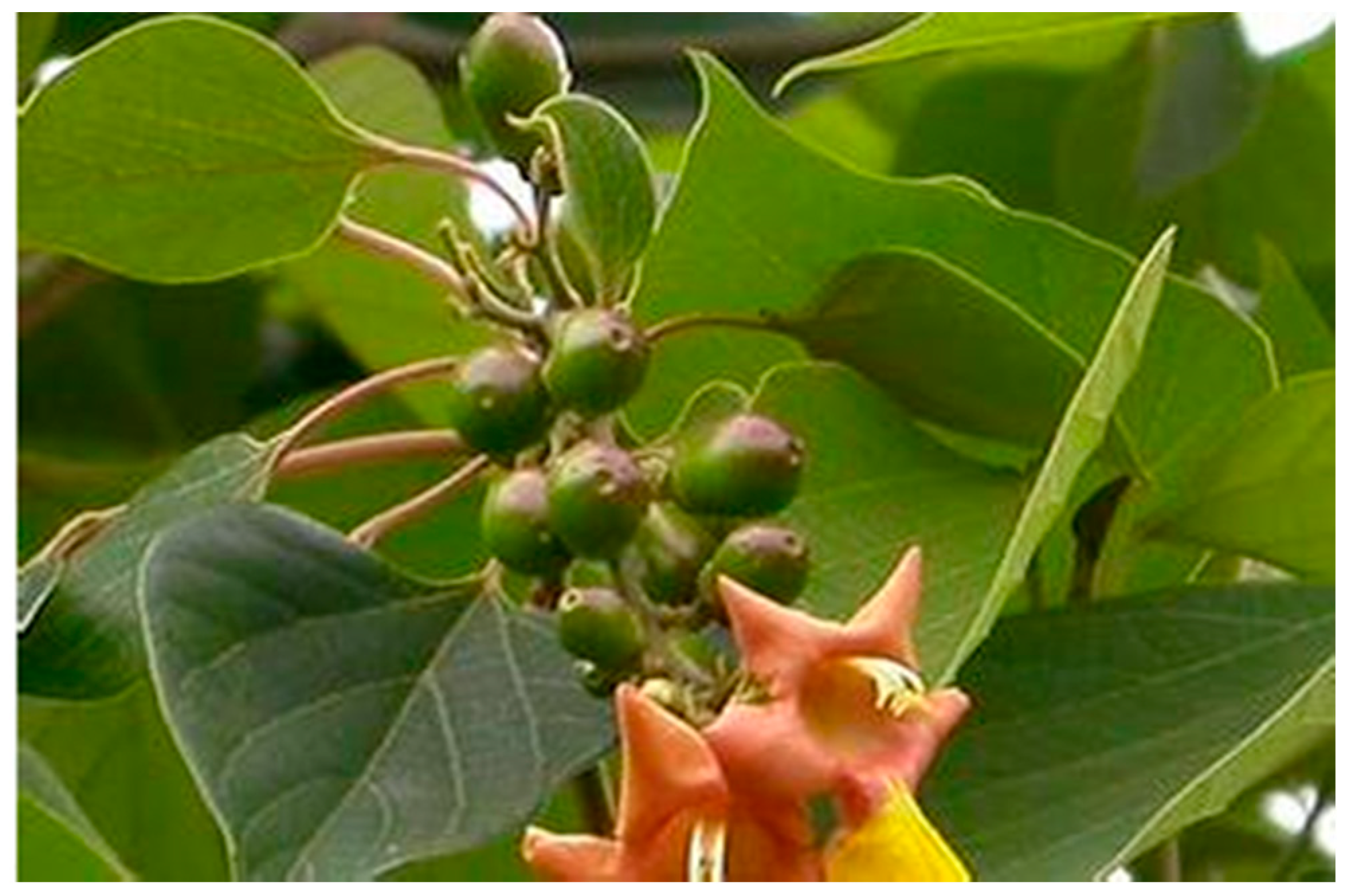
Figure 2. Gmelina arboreal (beech wood).
Preprints 182419 g002

Methods

Source and Rearing of Test Organisms

Wild Anopheles larvae were collected from breeding sites, transported to the Laboratory and maintained under insectary conditions of 25–29 °C and 78–82% relative humidity.
A 24-hour acclimatization period was allowed before testing. Morphological identification was performed using the standard taxonomic keys of Gillies and Coetzee [21].

Preparation of Plant Extracts and Silver Nanoparticles

Fresh leaves of G. arborea and H. suaveolens were collected, washed with distilled water, air-dried, and pulverized into fine powder. This was stored in airtight containers until use.
The silver nanoparticles (AgNPs) were synthesized following the method of Umoren et al. [22] with modifications. Briefly, 1.019 g of AgNO₃ was dissolved in 160 mL deionized water and stirred magnetically for 5 minutes. A 40 mL aliquot of each plant extract was added dropwise under continuous stirring, and the mixture incubated in the dark for 48 hours to prevent photoreduction. Formation of AgNPs was confirmed by colour change from pale yellow to dark brown, indicative of Ag⁺ reduction to Ag⁰. The precipitates were centrifuged, washed, and oven-dried at 70 °C to obtain dry nanosilver powders.

Larvicidal Bioassay

Larvicidal tests were conducted following WHO standard protocols. For each plant-derived AgNP sample, six concentrations were prepared in 500 mL glass beakers containing 250 mL dechlorinated water. Thirty [30] healthy third-instar larvae were introduced into each beaker. Four replicates were used per concentration, with a parallel untreated control.
Experimental conditions were maintained at 27 ± 2 °C with a 12:12 h light–dark photoperiod over a 72-hour exposure. Larval mortality was recorded after 24, 48, and 72 hours. Larvae failing to respond to gentle probing were recorded as dead. Moribund larvae unable to reach the surface or exhibit diving reflex were also included in mortality counts. Tests were considered valid only if control mortality was ≤10%.
Toxicity Endpoints
Lethal concentration values (LC₅₀ and LC₉₅) with 95% confidence limits were determined using probit regression analysis to describe concentration–mortality responses. Any test in which pupation occurred during exposure was excluded.

Statistical Analysis

Mortality percentages were corrected using Abbott’s formula where necessary, and data were subjected to probit analysis using IBM SPSS Statistics version 20.0. Toxicity parameters including LC₅₀, LC₉₅, slopes, and associated confidence limits were generated at a significance level of p < 0.05.

Results

Successful synthesis of silver nanoparticles was indicated by a visible colour change of the reaction mixture from colourless to honey brown, confirming the reduction of Ag⁺ ions to Ag⁰. This transformation was further validated using UV–visible spectrophotometry, which showed the characteristic surface plasmon resonance (SPR) peak of silver nanoparticles.
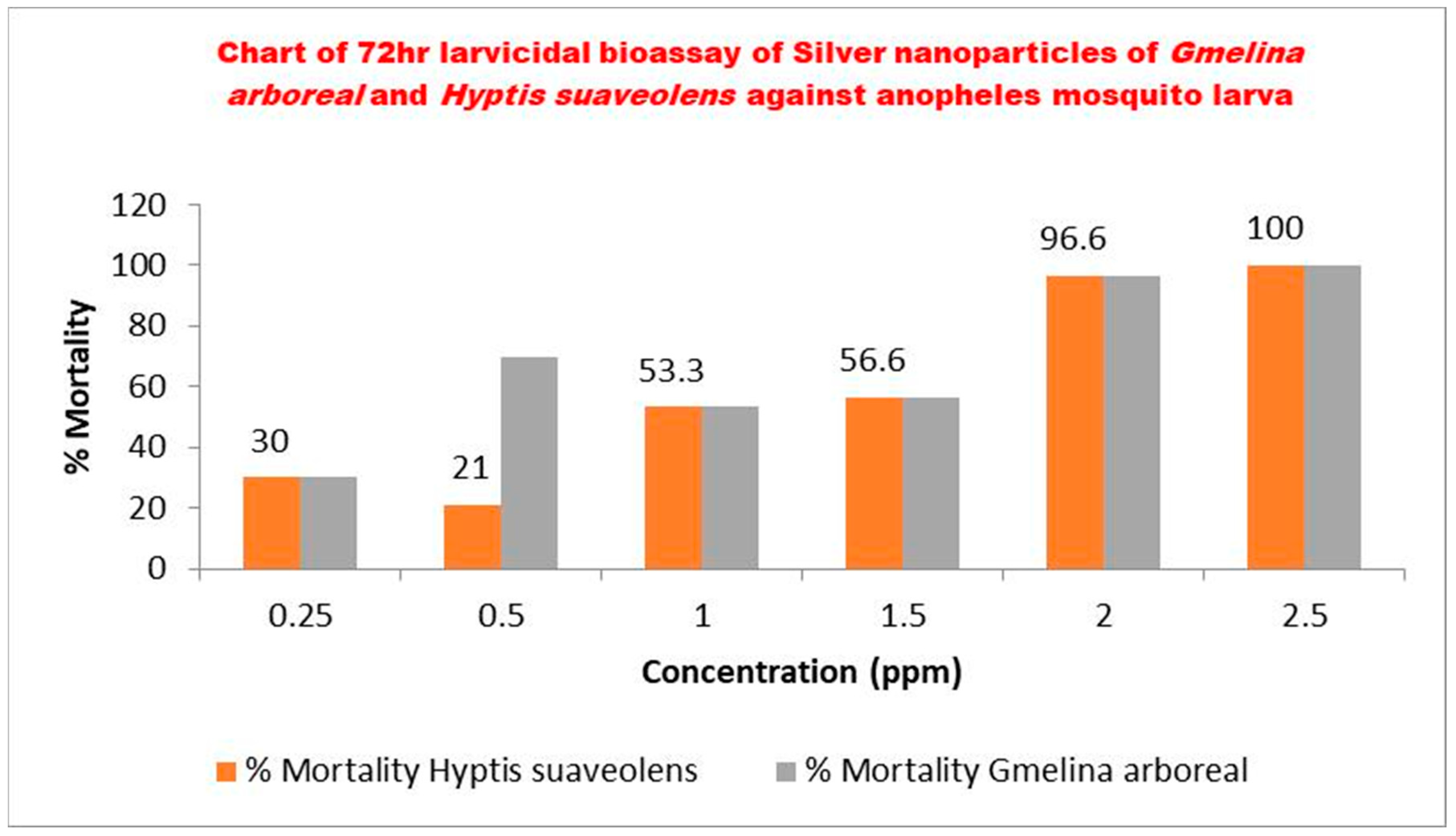
Larvicidal bioassays demonstrated that silver nanoparticles synthesized from both Gmelina arborea and Hyptis suaveolens exhibited concentration-dependent toxic effects against third-instar wild Anopheles larvae. Mortality consistently increased with rising nanoparticle concentrations and exposure time. Control groups recorded mortality rates ≤10%, validating experimental integrity.
Probit regression analysis (IBM SPSS v20.0) revealed the median lethal concentration (LC₅₀) and lethal concentration for 95% mortality (LC₉₅) after 72 hours of exposure, indicating potent larvicidal activity of both plant-derived AgNPs. Toxicity indices, including LC₅₀, LC₉₅, slope, and 95% confidence limits, are summarized in Table 1 and Table 2.
Figure 3. Chart of 72hr larvicidal bioassay of Silver nanoparticles of Gmelina arboreal and Hyptis suaveolens against anopheles mosquito larva.
Preprints 182419 g003

Discussion

The escalating global threat of antimicrobial resistance (AMR) is driving an urgent need for innovative approaches to vector control and infectious disease prevention [23,24,25,26,27,28]. Resistance to commonly used insecticides, including pyrethroids, organophosphates, and carbamates, has been widely reported in Anopheles populations across Nigeria and other malaria-endemic regions, undermining the effectiveness of current public health interventions
This study provides new evidence that plant-mediated silver nanoparticles (AgNPs) synthesized from Gmelina arborea and Hyptis suaveolens extracts possess strong larvicidal effects against wild Anopheles larvae, the primary malaria vector in Nigeria. The pronounced concentration-dependent and time-dependent mortality observed indicates that these biosynthesized nanomaterials act rapidly and effectively in disrupting larval physiology. The superior toxicity profile of H. suaveolens AgNPs, as reflected in its lower LC₅₀ and LC₉₅ values, suggests better bioactive synergy between the phytochemicals present in the plant and silver ions. These phytocompounds—including flavonoids, terpenoids, saponins, and phenolics—serve simultaneously as reducing and stabilizing agents during nanoparticle formation and may enhance larvicidal potency by improving nanoparticle stability, penetration, and interaction with larval tissues [14].
The findings of this study indicate that biosynthesized silver nanoparticles from Gmelina arborea and Hyptis suaveolens exhibited notable larvicidal potency, with LC₅₀ values of 0.469 ppm and 0.292 ppm and LC₉₅ values of 3.919 ppm and 1.948 ppm, respectively. These results are comparable to the larvicidal activity reported in previous nanoparticle-based studies. For example, Santhoshkumar et al.[29], synthesized AgNPs using Nelumbo nucifera leaf extract and demonstrated effective toxicity against Culex quinquefasciatus, with LC₅₀ and LC₉₀ values of 0.69 and 3.59 ppm. Likewise, AgNPs fabricated from Turbinaria ornate showed strong bioefficacy against Aedes aegypti, achieving an LC₅₀ of 0.738 μg/mL. Azarudeen et al.[30], reported LC₅₀ values of 9.20 μg/mL and 10.02 μg/mL for Aedes aegypti and Culex quinquefasciatus when using Merremia emarginata-derived AgNPs, while Govindarajan et al.[31], observed LC₅₀ values of 15.56 μg/mL and 17.46 μg/mL from Hugonia mystax-mediated AgNPs against the same mosquito species. Additionally, AgNPs from Curcuma zedoaria demonstrated strong toxicity against C. quinquefasciatus, with a reported LC₅₀ of 0.64 ppm. Collectively, these comparative studies reinforce the effectiveness of plant-based AgNPs as promising nanobiolarvicides with the potential to strengthen mosquito control in malaria-endemic regions.
Unlike conventional insecticides that act on a single target site (e.g., sodium ion channels for pyrethroids), AgNPs demonstrate multi-target mechanisms of toxicity—including disruption of cell membrane integrity, induction of oxidative stress through reactive oxygen species (ROS), interference with metabolic enzyme pathways, and impairment of respiration and osmoregulation. This multi-modal action makes the development of resistance more difficult and provides a critical advantage for future deployment in integrated vector management (IVM) programmes [32].
Moreover, green synthesis offers significant ecological advantages over synthetic insecticides and chemically synthesized nanoparticles. Using plant extracts eliminates hazardous by-products from production, reduces environmental persistence, and enhances biodegradability, making these nanoformulations highly suitable for larval habitats close to human populations. The reliance on widely available medicinal plants such as G. arborea and H. suaveolens also increases scalability and local acceptability, particularly in rural and peri-urban communities where malaria burden is highest. These factors align well with WHO recommendations calling for eco-friendly innovations that reinforce sustainability, reduce chemical dependency, and support public health policy goals [33,34,35].
While these findings are promising, future research should incorporate comprehensive nanoparticle characterization (e.g., TEM, FTIR, XRD, and zeta potential analysis) to fully elucidate structure–activity relationships. Field trials under natural breeding conditions, toxicological evaluation on non-target aquatic species, and formulation optimization are necessary to support regulatory approval and scale-up. Economic feasibility studies would also be valuable to ensure accessibility in resource-limited settings.

Conclusion

This study demonstrates that silver nanoparticles biosynthesized using Gmelina arborea and Hyptis suaveolens possess potent larvicidal activity against wild Anopheles larvae, with toxicity increasing across concentration and exposure duration. The lower LC₅₀ and LC₉₅ values recorded for H. suaveolens indicate greater bioefficacy, likely due to synergistic phytochemical interactions that enhance nanoparticle action. These findings provide compelling evidence that green-synthesized AgNPs represent a promising alternative to conventional insecticides currently facing widespread resistance in malaria vectors. Their multi-target mechanism of action, eco-friendly synthesis, and potential scalability support their integration into sustainable vector-control strategies within endemic regions of Nigeria and beyond. Further studies including nanoparticle characterization, evaluation of environmental safety on non-target organisms, formulation improvement, and field-based application trials are recommended to advance these nanobiolarvicides toward operational deployment in malaria prevention programs.

References

  1. World Health Organization. (2023). World malaria report 2023. Geneva: World Health Organization.
  2. Ekpunobi, N.F.; Agu, K.C. Emergence and Re-Emergence of Arboviruses: When Old Enemies Rise Again. Cohesive J. Microbiol. Infect. Dis. 2024, 7, 1–7. [Google Scholar] [CrossRef]
  3. Obidi, N. Obidi, N., Chukwunwejim, C. R., Ekpunobi, N. F., Obiajulu, A. C., Obidi, N. L., & Mirabelle, O. (2025). Parasitic diseases and coinfections: Unraveling the complex web of host–pathogen interactions, challenges, and opportunities. International Journal of Medical and Pharmaceutical Research, 9(6), 1–15.
  4. Obidi, N.; Ekpunobi, N.F.; Chukwunwejim, C.R.; Kenechukwu, E.; Obiajulu, A.C.; Obidi, N.L.; Ogunmola, T.; Ajasa, O.S.; Mirabelle, O. Human-monkey interactions and zoonotic disease risk in an urban Nigerian community: A cross-sectional study. Magna Sci. Adv. Biol. Pharm. 2025, 15, 008–015. [Google Scholar] [CrossRef]
  5. Osarumwense, O.-I.I.T.; Nkechukwu, I.M.; Favour, E.N.; Izuchukwu, I.; George, C.O.; Umale, A.M.; Okechukwu, E.C. The Prevalence of Dengue Virus and Malaria Co-Infection among HIV-Infected Patients within South Eastern Nigeria. Adv. Infect. Dis. 2022, 12, 106–117. [Google Scholar] [CrossRef]
  6. F, E.N.; O, E.E. Secondary metabolites from endophytic fungi of moringa oleifera: antimicrobial and antioxidant properties. J. Microbiol. Exp. 2022, 10, 150–154. [Google Scholar] [CrossRef]
  7. Ikegbunam, M.N.; Onochie-Igbinedion, I.T.; Ekpunobi, N.F.; Harrison, A.; Emmanuel, E.; Ushie, S.N.; Adiukwu, M.U.; Esimone, C.O. Comparison of Four Diagnostic Tests Methods for the Detection of Dengue Virus Non-Structural-1 Antigen and IgM/IgG Antibodies. J. Biosci. Med. 2022, 10, 179–190. [Google Scholar] [CrossRef]
  8. Zohra, T.; Khalil, A.T.; Saeed, F.; Latif, B.; Salman, M.; Ikram, A.; Ayaz, M.; Murthy, H.C.A. Green Nano-Biotechnology: A New Sustainable Paradigm to Control Dengue Infection. Bioinorg. Chem. Appl. 2022, 2022, 3994340. [Google Scholar] [CrossRef]
  9. Ekpunobi, N.F.; Adesanoye, S.; Orababa, O.; Adinnu, C.; Okorie, C.; Akinsuyi, S. Public health perspective of public abattoirs in Nigeria, challenges and solutions. GSC Biol. Pharm. Sci. 2024, 26, 115–127. [Google Scholar] [CrossRef]
  10. Ekpunobi, N. F. , Mgbedo, U. G., Okoye, L. C. and Agu, K. C. (2024). Prevalence of ESBL genes in Klebsiella pneumoniae from individuals with community-acquired urinary tract infections in Lagos state, Nigeria. Journl of RNA and Genomics, 20 (2):1-6.
  11. Sunmonu, A.B.; Ekpunobi, N.F. Larvicidal potential of silver nanoparticles synthesized from Ocimum gratissimum leaf extracts against anopheles’ mosquito. GSC Biol. Pharm. Sci. 2023, 25, 041–048. [Google Scholar] [CrossRef]
  12. Ekpunobi, N.; Markjonathan, I.; Olanrewaju, O.; Olanihun, D. Idiosyncrasies of COVID-19; A Review. Iran. J. Med Microbiol. 2020, 14, 290–296. [Google Scholar] [CrossRef]
  13. Ekpunobi, N.; Akinsuyi, O.; Ariri, T.; Ogunmola, T. The Reemergence of Monkeypox in Nigeria. Challenges 2023, 14, 22. [Google Scholar] [CrossRef]
  14. Elumalai, D.; Hemavathi, M.; Deepaa, C.V.; Kaleena, P.K. Evaluation of phytosynthesised silver nanoparticles from leaf extracts of Leucas aspera and Hyptis suaveolens and their larvicidal activity against malaria, dengue and filariasis vectors. Parasite Epidemiology Control. 2017, 2, 15–26. [Google Scholar] [CrossRef] [PubMed]
  15. Favour, E.N.; Isaac, A.A. Phenotypic characterization of biofilm formation and efflux pump activity in multi-drug resistant staphylococcus species isolated from asymptomatic students. J. Microbiol. Exp. 2020, 8, 223–229. [Google Scholar] [CrossRef]
  16. Montero, J. C. (2019). Larvicidal activity of Gmelina arborea fruit extract against dengue vector Aedes aegypti mosquito. International Journal of Biosciences, 15(5), 577-586.
  17. Oyinke, G. N. , Ogidi, O. C. ( 6(2), 36–39.
  18. Okoye, L.C.; Ugwu, M.C.; Oli, A.N.; Okoye, E.C.S.; Ekpunobi, N.F.; Okezie, U.M.; Mgbedo, U.G. Genotypic detection of metallo-Beta-Lactamases among multidrug resistant Klebsiella pneumoniae isolated from urine samples of UTI patients. GSC Biol. Pharm. Sci. 2024, 29, 248–255. [Google Scholar] [CrossRef]
  19. Ekpunobi, N.F.; Obidi, N.; Idowu, O.; Okoye, L.C.; Agu, C.K.; Ogunsanya, T.; Ogbodo, U.C.; Uwanta, L.I. Knowledge and awareness of breast cancer symptoms, risk factors, and early detection methods among Nigerian university students. 2025. [CrossRef]
  20. Animashaun, T. , Ekpunobi, N., Amukele, T., Ogunsanya, T., Aina, T., Idowu. O., Olayemi, A. and Obidi, N. (2024). Evaluation of the biological characteristics of breast cancer in women from Nigeria: A non-intervational pilot study vol. 1. Accessed from: https://metaphorlaboratory.com/wp-content/uploads/2025/01/Metaphor-Dec-2024-Research-Article.pdf. [CrossRef]
  21. Gillies, M. T. and Coetzee, M. (1987). A supplement to the Anophelinae of Africa south of the Sahara (Afro- An annotated checklist and bibliography of the mostropical Region). Johannesburg: South African Institute for Medical Research. Interior Health, 2009. Pest management plan for control of mosquito larvae that are potential West Nile virus vectors.
  22. Umoren, S. A., Obot, I. B., & Gasem, Z. M. (2014). Green synthesis and characterization of silver nanoparticles using red apple (Malus domestica) fruit extract at room temperature. J. Mater. Environ. Sci, 5(3), 907-914.
  23. Obidi, N.O.; Ekpunobi, N.F. A narrative review exploring phage therapy as a sustainable alternative solution to combat antimicrobial resistance in Africa: Applications, challenges and future directions. Afr. J. Clin. Exp. Microbiol. 2025, 26, 106–113. [Google Scholar] [CrossRef]
  24. Chukwunwejim, C.R.; Ekpunobi, N.F.; Ogunmola, T.; Obidi, N.; Ajasa, O.S.; Obidi, N.L. Molecular identification of multidrug-resistant bacteria from eggshell surfaces in Nigeria: A growing threat to public health. Magna Sci. Adv. Biol. Pharm. 2025, 15, 021–028. [Google Scholar] [CrossRef]
  25. Ekpunobi, N.F.; Ugwu, M.C.; Agu, K.C.; Chukwunwejim, C.R.; Nedum, C.H.; Okoye, L.C.; Mgbedo, U.C. Prevalence and molecular detection of ESBL genes in uropathogens isolated from children and adolescents in a General Hospital in Lagos, Nigeria. Afr. J. Clin. Exp. Microbiol. 2025, 26, 263–273. [Google Scholar] [CrossRef]
  26. Ekpunobi, N.; Chukwunwejim, C.R.; Okoye, S.C.; Oghonyon, E.I.; Obidi, N.; Agu, K.C. Gut microbiome dynamics and their emerging role in breast and colorectal cancer: implications for diagnosis and therapy. J. Microbiol. Exp. 2025, 13, 84–90. [Google Scholar] [CrossRef]
  27. Ekpunobi, N.F.; Ugwu, M.C.; Agu, K.C.; Chukwunwejim, C.R.; Oghonyon, E.I.; Ogunmola, T.; Ajasa, O.S.; Okoye, S.C.; Obidi, N. Extended-Spectrum Beta-Lactamase-Producing Uropathogens in Pediatric UTIs: Molecular Characteristics, Clinical Impact and Public Health Consequences. J. Adv. Biol. Biotechnol. 2025, 28, 691–709. [Google Scholar] [CrossRef]
  28. Okoye, S.C.; Chukwunwejim, C.R.; Ekpunobi, N.F.; Ajasa, O.S.; Ojuade, I.O.; Obidi, N.; Agu, K.C. Prevalence of Multidrug-Resistant Escherichia coli O157:H7 in Poultry Faeces from Live Bird Markets in Lagos, Nigeria. GSC Biol. Pharm. Sci. 2025, 32, 025–030. [Google Scholar] [CrossRef]
  29. Santhoshkumar, T.; Rahuman, A.A.; Rajakumar, G.; Marimuthu, S.; Bagavan, A.; Jayaseelan, C.; Zahir, A.A.; Elango, G.; Kamaraj, C. Synthesis of silver nanoparticles using Nelumbo nucifera leaf extract and its larvicidal activity against malaria and filariasis vectors. Parasitol. Res. 2010, 108, 693–702. [Google Scholar] [CrossRef]
  30. Azarudeen, R.M.S.T.; Govindarajan, M.; AlShebly, M.M.; AlQahtani, F.S.; Amsath, A.; Senthilmurugan, S.; Vijayan, P.; Benelli, G. Size-controlled biofabrication of silver nanoparticles using the Merremia emarginata leaf extract: Toxicity on Anopheles stephensi, Aedes aegypti and Culex quinquefasciatus (Diptera: Culicidae) and non-target mosquito predators. J. Asia-Pacific Èntomol. 2017, 20, 359–366. [Google Scholar] [CrossRef]
  31. Govindarajan, M.; Kadaikunnan, S.; Alharbi, N.S.; Benelli, G. Single-step biological fabrication of colloidal silver nanoparticles using Hugonia mystax: larvicidal potential against Zika virus, dengue, and malaria vector mosquitoes. Artif. Cells, Nanomedicine, Biotechnol. 2016, 45, 1317–1325. [Google Scholar] [CrossRef] [PubMed]
  32. Aina, D.A.; Owolo, O.; Lateef, A.; O Aina, F.; Hakeem, A.S.; Adeoye-Isijola, M.; Okon, V.; Asafa, T.B.; Elegbede, J.A.; Olukanni, O.D.; et al. Biomedical Applications of Chasmanthera dependens stem extract mediated silver nanoparticles as Antimicrobial, Antioxidant, Anticoagulant, thrombolytic, and Larvicidal agents. Karbala Int. J. Mod. Sci. 2019, 5, 2. [Google Scholar] [CrossRef]
  33. Benelli, G.; Kadaikunnan, S.; Alharbi, N.S.; Govindarajan, M. Biophysical characterization of Acacia caesia-fabricated silver nanoparticles: effectiveness on mosquito vectors of public health relevance and impact on non-target aquatic biocontrol agents. Environ. Sci. Pollut. Res. 2017, 25, 10228–10242. [Google Scholar] [CrossRef]
  34. Mondal, N.K.; Mondal, A.; Hajra, A.; Shaikh, W.A.; Chakraborty, S. Synthesis of silver nanoparticle with Colocasia esculenta (L.) stem and its larvicidal activity against Culex quinquefasciatus and Chironomus sp. Asian Pac. J. Trop. Biomed. 2019, 9, 510–517. [Google Scholar] [CrossRef]
  35. Muthukumaran, U. , Govindarajan, M., Rajeswary, M. & Hoti, S. L.(2015). Synthesis and characterization of silver nanoparticles using Gmelina asiatica leaf extract against filariasis, dengue, and malaria vector mosquitoes. Parasitology Research,114(5):1817-1827.

Table 1. Results from bioassay of Silver nanoparticles of Hyptis suaveolens against Anopheles mosquito larva.
Silver Nanoparticles Concentration
(ppm)
Mortality (%) ±SE Lethal Concentration
Control 0 0

72h LC50(ppm)(LCL-UCL)
0.292(0.043-0.515)


Hyptis suaveolens
0.25 30±0.344
0.5 21±0.344
1.0 53.3±0.344 72h LC95(ppm)(LCL-UCL)

1.948(1.069-17.152)
1.5 56.6±0.344
2.0 96.6±0.344
2.5 100±0.344
LC=Lethal Concentration, S.E=Standard Error.
Table 2. Results from bioassay of Silver nanoparticles of Gmelina arboreal against anopheles mosquito larva.
Silver Nanoparticles Concentration(ppm) Mortality (%)±SE Lethal Concentration
Control 0 0
LC50 (ppm) (LCL-UCL) 0.469(-)

Gmelina arboreal
0.25 30±0.311
0.5 70 ±0.311
1.0 53.3±0.311
LC95 (ppm) (LCL-UCL) 3.919(-)
1.5 53.3±0.311
2.0 96.6±0.311
2.5 100±0.311
LC=Lethal Concentration, S.E=Standard Error.
Disclaimer/Publisher’s Note: The statements, opinions and data contained in all publications are solely those of the individual author(s) and contributor(s) and not of MDPI and/or the editor(s). MDPI and/or the editor(s) disclaim responsibility for any injury to people or property resulting from any ideas, methods, instructions or products referred to in the content.
Copyright: This open access article is published under a Creative Commons CC BY 4.0 license, which permit the free download, distribution, and reuse, provided that the author and preprint are cited in any reuse.
Prerpints.org logo

Preprints.org is a free preprint server supported by MDPI in Basel, Switzerland.

Subscribe

Disclaimer

Terms of Use

Privacy Policy

Privacy Settings

© 2025 MDPI (Basel, Switzerland) unless otherwise stated