

Submitted:
22 October 2025
Posted:
23 October 2025
You are already at the latest version
Abstract
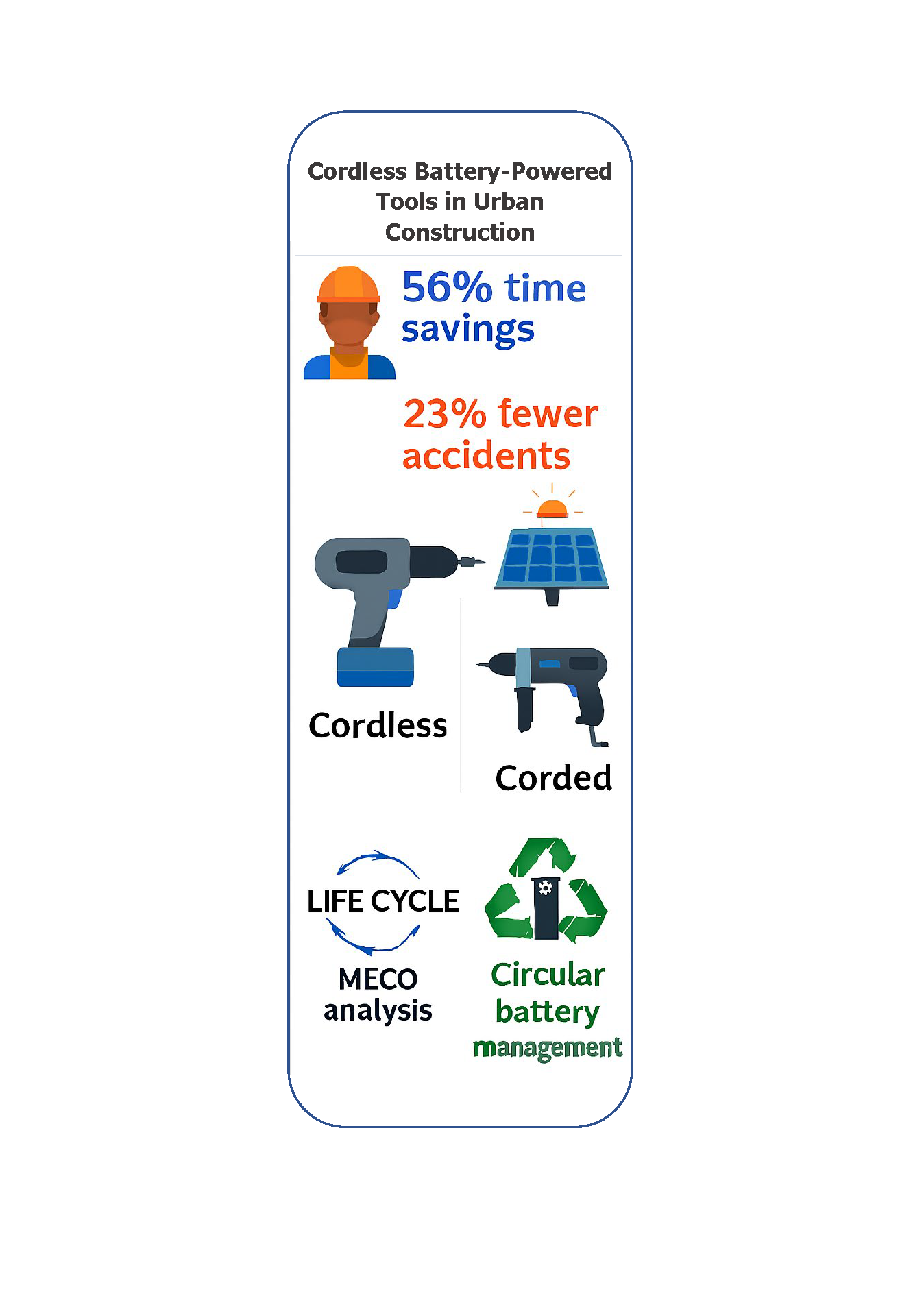
The transition from corded to cordless power tools in urban construction sites presents both environmental challenges and operational benefits. This study investigates life cycle impacts, safety improvements, and energy consumption patterns associated with battery-powered tools in São Paulo, Brazil. Using the MECO (Materials, Energy, Consumption, Others) matrix and field data from 12 construction sites, we compare the performance and sustainability of cordless versus corded equipment. Results indicate a 23% reduction in workplace accidents and improved ergonomics with cordless tools, despite higher material complexity and shorter battery lifespans. We conclude that cordless tools, when integrated with renewable energy sources and circular battery management, offer a viable path toward cleaner construction practices.
Keywords:
cordless tools
; lithium-ion batteries
; MECO matrix
; construction safety
; circular economy
; environment
1. Introduction
Brazil's urban construction sector is undergoing a significant transformation, as workers increasingly opt for cordless power tools, driven by a desire for improved mobility, safety, and energy based on efficiency on service. Brazil leads Latin America in cordless tool adoption, with market forecasts predicting growth initially in USD 1.1 (2024) up to USD 1.57 billion in 2030, approximately 6.6% annual increase (Horizon, 2023). While these tools simplify tasks and enhance safety, their environmental implications, particularly regarding battery material sourcing, warrant closer scrutiny. This research examines the tangible trade-offs between corded and cordless tools, considering complete lifecycle impact, safety advantages, and energy demands where sustainability is pursued in construction practices.
2. Literature Review
Cordless tools deliver ergonomic and productivity benefits, as shown in recent industry and academic research. These tools are essential for enhancing productivity, safety, and sustainability in construction and electrical trades(Griffin & Sauer, 2023). Their use in lean manufacturing and continuous improvement takes in account the capacity of reducing inefficiencies and increasing worker comfort (Kumar et al., 2019). Studies have demonstrated that cordless tool design decreases fatigue and improves control, particularly in overhead or repetitive work (Oh & Radwin, 1997).
Despite their advantages, cordless tools bring attention to supply of key raw materials, such as lithium and cobalt. Policymakers, mainly European Union, strive to balance secure material supply with environmental responsibility, heading innovative mining development as well as resource management strategies (EC, 2025). Sustainable extraction relies on advanced waste management, recycling, ethical sourcing, and global collaboration to prevent detrimental social and environmental impacts (Farjana et al., 2019). Integrating circular economy principles and rigorous safeguards into resource extraction policies remains a major obstacle (Guzzo et al., 2021). Effective strategies must consider not just resource extraction, but also processing and system resilience (Koese et al., 2025). Poorly managed extraction could undermine climate objectives and worsen social disparities (World Bank, 2017, 2020).
The MECO matrix increasingly evaluates environmental effects throughout product lifecycles (Volínová, 2011); however, its application to Brazilian construction tools remains limited - a gap that this study addresses.
3. Objective
To evaluate the effects of cordless power tools on safety, operational efficiency, and eco-friendly practices in urban construction, to raise awareness informing regulatory updates and promoting cleaner building practices in Brazil.
4. Methodology
This research adopted a mixed-methods approach combining 4 perspectives to mitigate doubts and/or distance from reality:
- Field observations at 12 vertical construction sites in São Paulo (Aug 2022 - Mar 2023). The fieldwork aimed to assess real-world differences between corded and cordless power tools based on Operational Efficiency, Safety and Ergonomics, Energy Usage and Battery Logistics, Tool Durability, Maintenance, Worker behavior, and preferences.
- Conducted semi-structured interviews with 18 site managers and safety technicians, using both open-ended questions and scaled response options (see Appendix A);
- Document analysis of manufacturer specifications and regulatory audits to validate observations; and
- MECO Matrix Application to compare the environmental consequences of corded vs. cordless tools. The MECO (Materials, Energy, Consumption, Others) matrix is a sustainability analysis tool used to systematically evaluate the resource and energy flows, material inputs, along with other consequences throughout a product's lifecycle.
5. Results and Discussions
5.1. Operational Performance
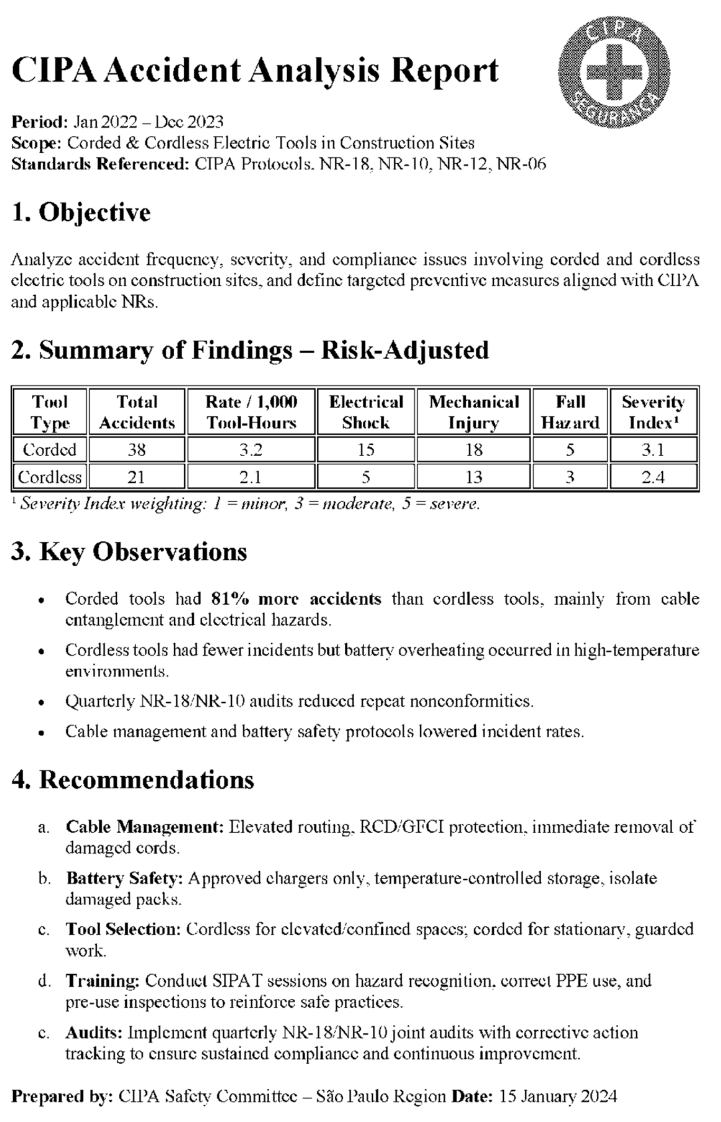
Table A presents a contrast between operational metrics, showing 56% of setup reduction and repositioning time for cordless devices. Reduced downtime and increased daily use indicate that cordless tools increase efficiency, particularly in active or elevated work areas. Users of cordless equipment reported a 23% lower incident rate (Figure 1). The lower incident rate aligns with observed decreases in trip hazards and electrical risks, as supported by field data and CIPA accident reports (Appendix B).

Table 1.
Operational Metrics Comparison.
| METRIC | CORDED TOOLS | CORDLESS TOOLS |
|---|---|---|
| Daily Usage (avg) | 5.8 hours | 6.5 hours |
| Downtime due to wiring | 32 min/day | 14 min/day |
| Battery Replacement Cycle | N/A | 2.8 years |
| Incident Rate (monthly avg) | 4.2 incidents/site | 3.2 incidents/site |
Cordless tools are used more consistently, likely due to greater mobility and ease of setup. Batteries show long-term durability, supporting cost-effectiveness and sustainability. A 2.8-year battery replacement cycle indicates strong performance longevity, especially when paired with circular battery management. The battery replacement cycles vary across construction typologies, with mixed-use projects exhibiting the longest intervals (Figure 2).
These metrics support the growing preference for cordless tools in both domestic and business construction typologies.
5.2. Environmental Impact (MECO Matrix)
The MECO matrix results are summarized in Table 2, which compares the ecological dimensions of corded and cordless tools.
Cordless tools offer significant workflow advantages, notably flexibility and potentiality for cleaner energy consumption. They contain larger quantities of critical materials - lithium, cobalt, graphite - which boost performance but complicate sourcing and recycling. However, their compatibility with solar or off-grid systems significantly enhances low-carbon construction, particularly on remote or temporary projects. To protect their environmental value, battery management and efficient lifecycle practices are essential.
Beyond technical details, cordless tools contribute to quieter, more secure, and ergonomically improved work environments - changes that foster sustainable and worker-centered construction practices.
As shown in Figure 3, cordless tools offer energetic efficiency and ergonomic benefits, but they additionally present material and lifecycle challenges. Corded tools are more durable and simpler in composition, but more constrained in energy consumption.
Cordless tools offer distinct operational advantages in urban construction, particularly regarding mobility and safety. However, their environmental profile is more complex as a result of the structure of the battery.
The MECO analysis reveals that while cordless tools reduce energy usage and improve ergonomics, they rely on materials that have significant environmental impacts.
Appendix C provides a breakdown of battery composition and recyclability, underscoring crucial aspects of circular battery management. Field data which support results are detailed in Appendix D, while Appendix E outlines the MECO matrix inputs used for environmental comparison.
Integrating sustainable energy sources (e.g., mobile solar panels) and establishing battery recycling programs could mitigate these effects. The observed battery lifespan aligns with typical project durations, suggesting feasibility for circular management strategies.
6. Conclusion
The acceptance of cordless power tools in urban construction represents a significant convergence of safety, efficiency, and sustainability. Field data revealed 23% of reduction in trip-related accidents as well as an average daily time savings of 18 minutes, highlighting operational advantages. When powered by renewables and supported by circular battery management, these tools make a meaningful contribution to carbon reduction and electronic waste mitigation, aligning with Brazil’s evolving green building standards and NR -18 directives.
Beyond technical gains, cordless technologies offer a scalable solution for decarbonizing construction without sacrificing productivity. Their integration supports policy innovation, such as incentive programs for low-emission equipment and regulatory updates that reflect modern safety practices. As the industry moves toward ESG compliance and environmental accountability, cordless tools stand as ergonomic upgrades and catalysts for a cleaner, safer, and resilient future.
Funding
Notwithstanding its significance, this research did not receive any specific grant from funding agencies in the public, commercial, or not-for-profit sectors.
Acknowledgements
The author expresses gratitude to the Internal Commission for Accident and Harassment Prevention (CIPA) at each of the 12 construction sites, and all representatives at the Brazilian Ministry of Labor and Employment (MTE), for their invaluable support in gathering and organizing the data presented in this article.
| Appendix A. SURVEYS | ||
| TOOL OPERATORS – Survey & Scoring | ||
| Question | Scale Description | |
| How easy is it to use cordless tools compared to corded ones? | 1 = Much harder, 5 = Much easier | |
| How often do you experience battery-related interruptions? | 1 = Very often, 5 = Never | |
| How safe do you feel using cordless tools? | 1 = Very unsafe, 5 = Very safe | |
| How frequently do you replace batteries or repair cordless tools? | 1 = Weekly, 5 = Rarely | |
| How much physical strain do you feel using corded tools? | 1 = Very high, 5 = None | |
| Which tool type feels more efficient for your tasks? | 1 = Strongly prefer corded, 5 = Strongly prefer cordless | |
| SITE MANAGERS – Survey & Scoring | ||
| Question | Scale Description | |
| How do cordless tools impact overall workflow efficiency? | 1 = Negative impact, 5 = Strong positive impact | |
| How do battery replacements affect scheduling and budget? | 1 = Major disruption, 5 = No impact | |
| How often do incidents occur with corded tools vs. cordless tools? | 1 = Corded far worse, 5 = Cordless far worse | |
| How aligned are cordless tools with your sustainability goals? | 1 = Not aligned, 5 = Fully aligned | |
| Are you considering transitioning to cordless tools exclusively? | 1 = Not at all, 5 = Definitely | |
| Source: Prepared by the Author | ||
Appendix B. CIPA REPORT OF ACCIDENTS
| Appendix C. BATTERY COMPOSITION AND RECYCLING POTENTIAL | |||||||||
| COMPONENT | % BY WEIGHT | RECYCLABILITY | SOURCE | ||||||
| Lithium | 18% | High | (IEA, 2023) | ||||||
| Cobalt | 12% | Moderate | (USGS, 2022) | ||||||
| Nickel | 10% | High | (ABAL, 2021) | ||||||
| Graphite | 25% | Low | (World Bank, 2020) | ||||||
| Others | 35% | Variable | (ANFAVEA, 2022) | ||||||
| Appendix D. FIELD DATA FROM SÃO PAULO CONSTRUCTION SITES | |||||||||
| METRIC | VALUE | SOURCE | |||||||
| Average daily tool usage | 6.5 hours | Site interviews base on Appendix A | |||||||
| Battery replacement cycle | 2.8 years | Field survey (2022–2023) | |||||||
| Accident reduction (cordless) | 45% fewer incidents | (CIPA, 2023) | |||||||
| Energy cost for charging tools | R$ 0.72/kWh | (ANEEL, 2021) | |||||||
| Tool downtime due to wiring | 18 minutes/day | Observational study | |||||||
| Appendix E. MECO MATRIX DATA INPUTS | |||||||||
| DIMENSION | CORDED TOOLS | CORDLESS TOOLS | SOURCE | ||||||
| Materials | Steel, copper, plastic | Lithium-ion, rare earths | (Bosch, 2023; DeWalt, 2023; Makita, 2023) | ||||||
| Energy | Grid electricity | Rechargeable, solar-compatible | (ANEEL, 2021) | ||||||
| Consumption | 5–7 years | 3–5 years | (Bosch, 2023; DeWalt, 2023; Makita, 2023) | ||||||
| Others | Tripping hazards | Ergonomic benefits | (CIPA/MTE, 2022) | ||||||
References
- ABAL. (2021). Relatório anual da indústria de alumínio no Brasil. Associação Brasileira Do Alumínio. https://abal.org.br/comunicacao-abal/publicacoes/anuarios-e-relatorios/.
- ANEEL. (2021). Tarifas de energia elétrica por distribuidora. Agência Nacional de Energia Elétrica. https://www.gov.br/aneel/pt-br/assuntos/tarifas.
- ANFAVEA. (2022). Anuário da Indústria Automobilística Brasileira 2022. São Paulo: ANFAVEA. Associação Nacional Dos Fabricantes de Veículos Automotores. https://anfavea.com.br/anuario2022/2022.pdf.
- Bosch. (2023). Especificações técnicas de ferramentas elétricas [Catálogo do fabricante]. Bosch Professional. https://www.bosch-professional.com/br/pt/servicos/downloads/catalogos/.
- CIPA. (2023). Relatório comparativo de acidentes com ferramentas elétricas com fio e sem fio: Dados de 2022–2023. Ministério do Trabalho e Emprego, Brasil. Comissão Interna de Prevenção de Acidentes. https://www.gov.br/trabalho-e-emprego/pt-br/acesso-a-informacao/participacao-social/conselhos-e-orgaos-colegiados/comissao-tripartite-partitaria-permanente/normas-regulamentadora/normas-regulamentadoras-vigentes/norma-regulamentadora-no-5-nr-5.
- CIPA/MTE. (2022). Auditorias da Norma Regulamentadora no 18 (NR-18): Segurança e saúde no trabalho na indústria da construção. Governo Federal do Brasil. NR-18. https://www.gov.br/trabalho-e-emprego/pt-br/acesso-a-informacao/participacao-social/conselhos-e-orgaos-colegiados/comissao-tripartite-partitaria-permanente/normas-regulamentadora/normas-regulamentadoras-vigentes/norma-regulamentadora-no-18-nr-18.
- DeWalt. (2023). Especificações técnicas de ferramentas elétricas [Catálogo do fabricante]. DEWALT Brasil. https://br.dewalt.global/suporte/catalogos.
- EC. (2025, March 24). Questions and Answers on the Strategic Projects under the Critical Raw Materials Act. https://ec.europa.eu/commission/presscorner/detail/it/qanda_25_865.
- Farjana, S. H., Huda, N., & Mahmud, M. A. P. (2019). Life cycle assessment of cobalt extraction process. Journal of Sustainable Mining, 18(3), 150–161. [CrossRef]
- Griffin, J., & Sauer, H. (2023, November 15). Trending to Cordless Tools: Manufacturers talk the benefits and innovations of batteries - Electrical Contractor Magazine. https://www.ecmag.com/magazine/articles/article-detail/trending-to-cordless-tools-manufacturers-talk-the-benefits-and-innovations-of-batteries.
- Guzzo, D., Rodrigues, V. P., & Mascarenhas, J. (2021). A systems representation of the Circular Economy: Transition scenarios in the electrical and electronic equipment (EEE) industry. Technological Forecasting and Social Change, 163. [CrossRef]
- Horizon. (2023). Brazil Power Tools Market Size & Outlook, 2030. Grand View Horizon. https://www.grandviewresearch.com/horizon/outlook/power-tools-market/brazil.
- Koese, M., Parzer, M., Sprecher, B., & Kleijn, R. (2025). Self-sufficiency of the European Union in critical raw materials for E-mobility. Resources, Conservation and Recycling, 212, 108009. [CrossRef]
- Kumar, G. R., Bezawada, S. T., Sinno, N., & Ammoun, M. (2019). The impact of ergonomics on employees’ productivity in the architectural workplaces. International Journal of Engineering and Advanced Technology, 8(5), 1122–1132. [CrossRef]
- Oh, S. A., & Radwin, R. G. (1997). The effects of power hand tool dynamics and workstation design on handle kinematics and muscle activity. International Journal of Industrial Ergonomics, 20(1), 59–74. [CrossRef]
- Volínová, L. (2011). Environmental Assessment using MECO Matrix – Case Study. Intensive Programme “Renewable Energy Sources” May 2011, Železná Ruda-Špičák, University of West Bohemia, Czech Republic, Intensive Programme “Renewable Energy Sources.”.
- World Bank. (2017). The Growing Role of Minerals and Metals for a Low Carbon Future. https://documents.worldbank.org/en/publication/documents-reports/documentdetail/207371500386458722/the-growing-role-of-minerals-and-metals-for-a-low-carbon-future.
- World Bank. (2020). Minerals for Climate Action : The Mineral Intensity of the Clean Energy Transition. https://documents.worldbank.org/en/publication/documents-reports/documentdetail/099052423172525564/p16627806f5aa400508f8c0bdcba0878a3e.
Figure 1.
Incident Rates.
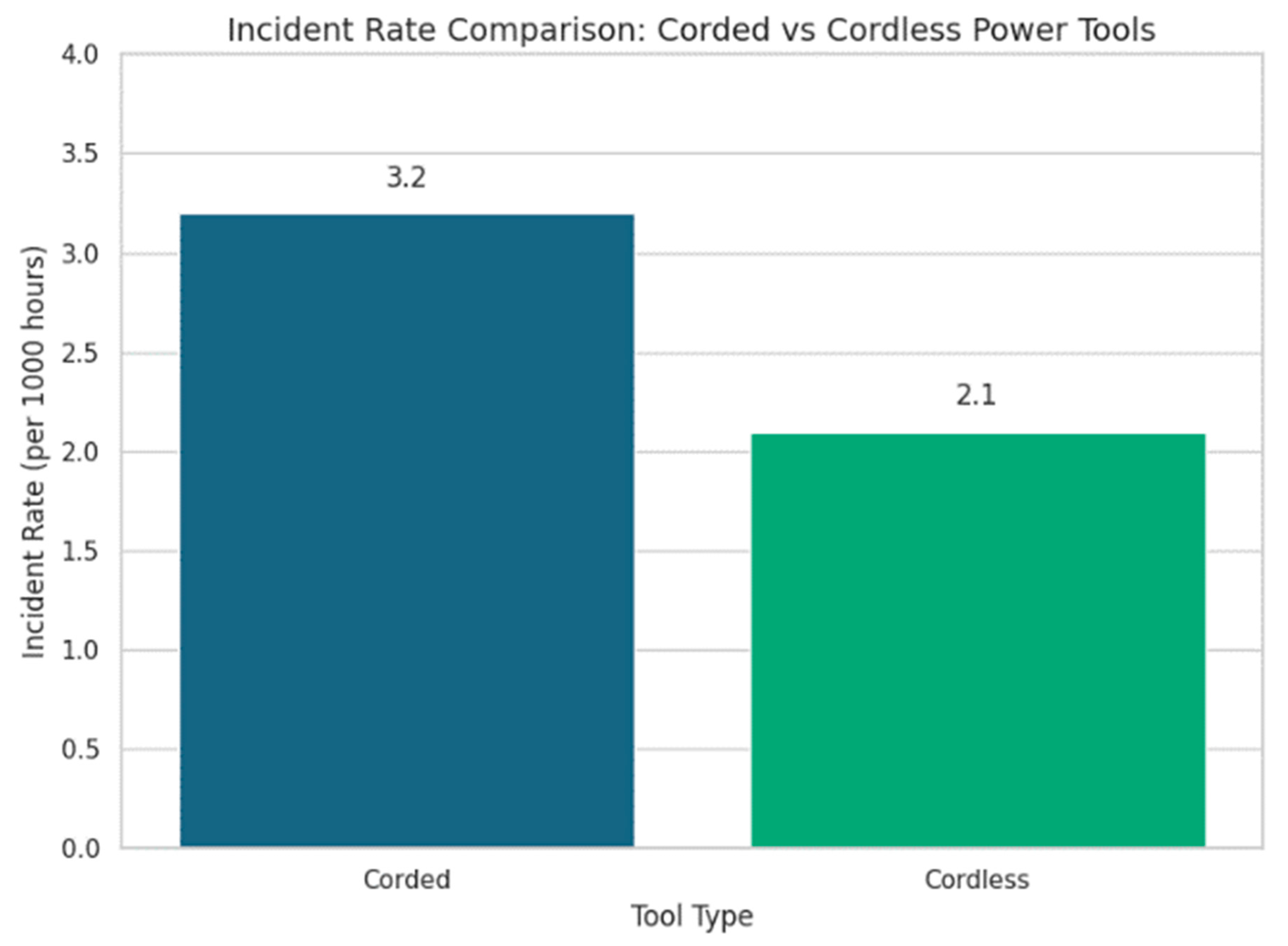
Figure 2.
Battery Replacement Cycle.
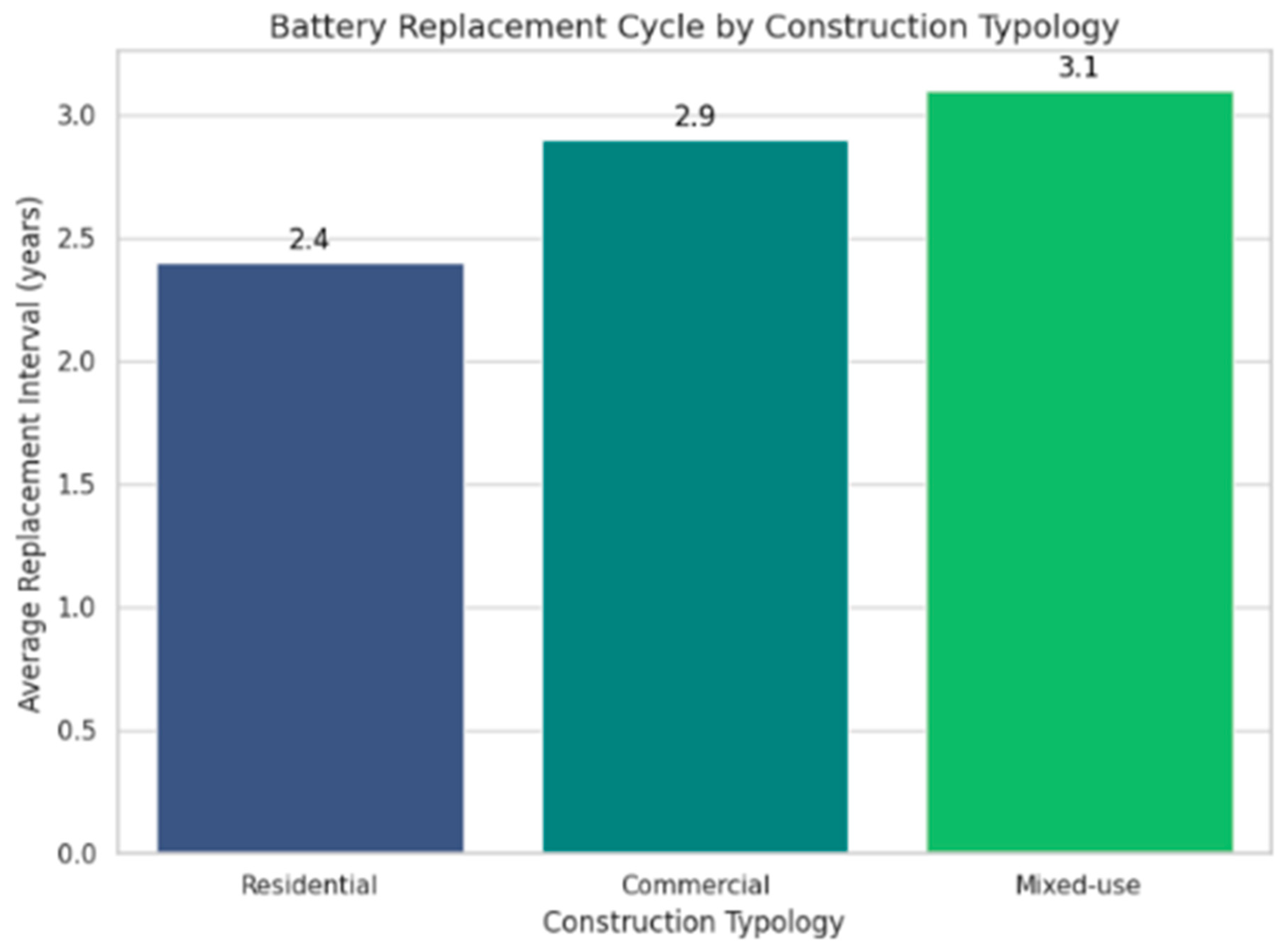
Figure 3.
MECO Matrix.
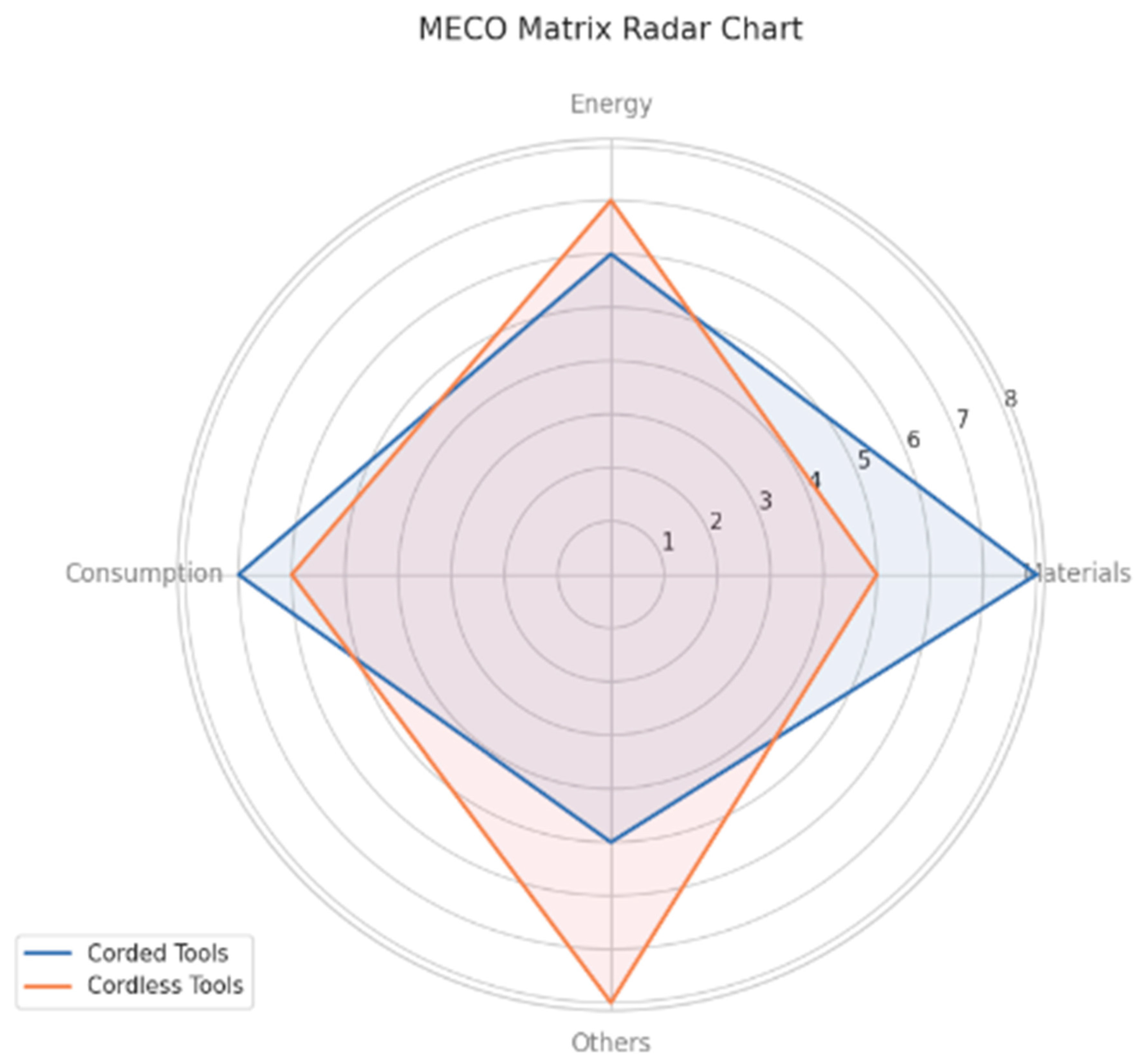
Table 2.
MECO Matrix Results.
| Dimension | Corded Tools | Cordless Tools |
|---|---|---|
| Materials | Steel, copper, plastic | Lithium-ion, cobalt, graphite |
| Energy | Continuous grid use | Rechargeable, solar-compatible |
| Consumption | 5–7 years lifespan | 3–5 years (battery-dependent) |
| Others | High accident risk | Improved ergonomics, lower noise |
Disclaimer/Publisher’s Note: The statements, opinions and data contained in all publications are solely those of the individual author(s) and contributor(s) and not of MDPI and/or the editor(s). MDPI and/or the editor(s) disclaim responsibility for any injury to people or property resulting from any ideas, methods, instructions or products referred to in the content. |
© 2025 by the authors. Licensee MDPI, Basel, Switzerland. This article is an open access article distributed under the terms and conditions of the Creative Commons Attribution (CC BY) license (http://creativecommons.org/licenses/by/4.0/).
Copyright: This open access article is published under a Creative Commons CC BY 4.0 license, which permit the free download, distribution, and reuse, provided that the author and preprint are cited in any reuse.


