

Submitted:
20 October 2025
Posted:
21 October 2025
You are already at the latest version
Abstract
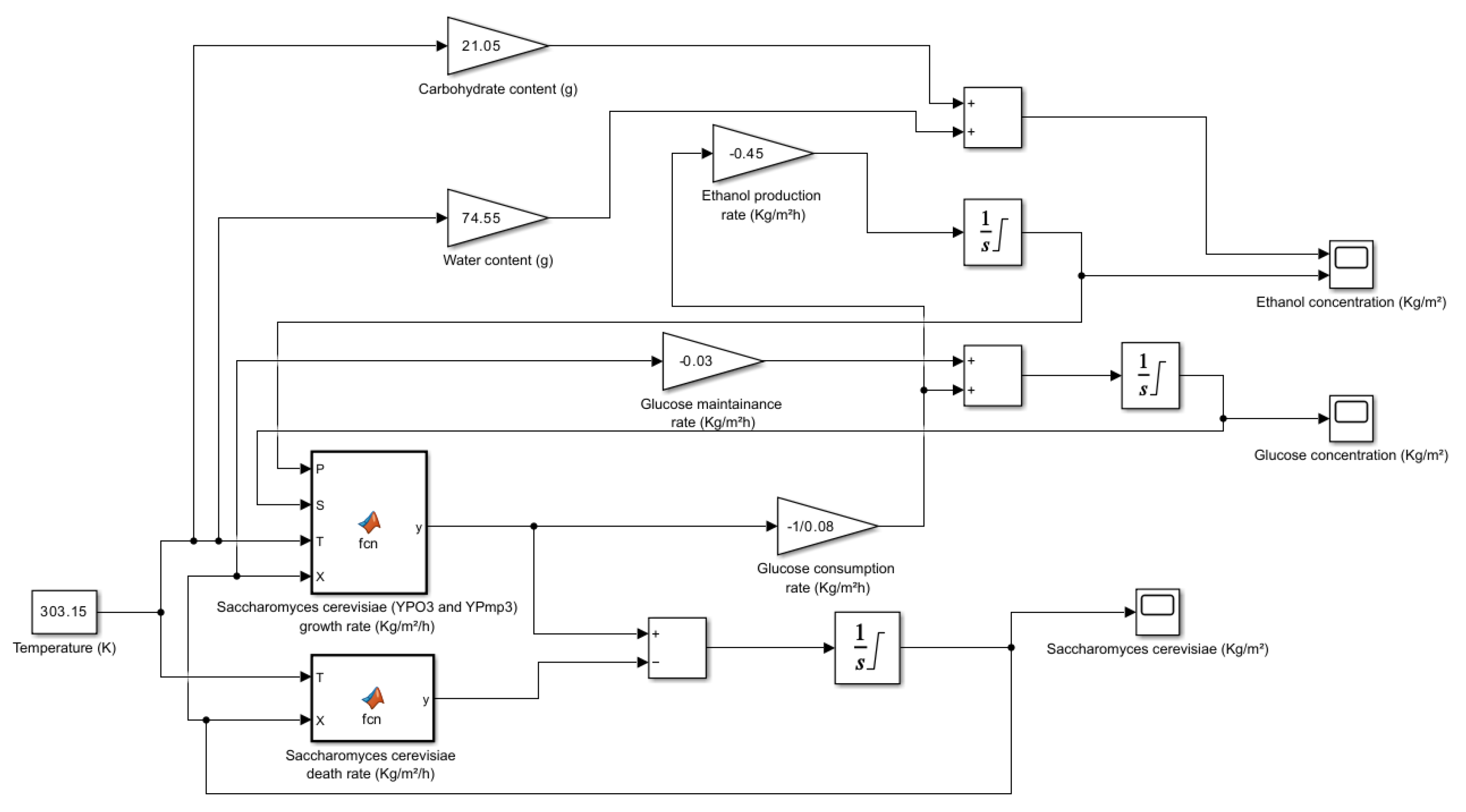
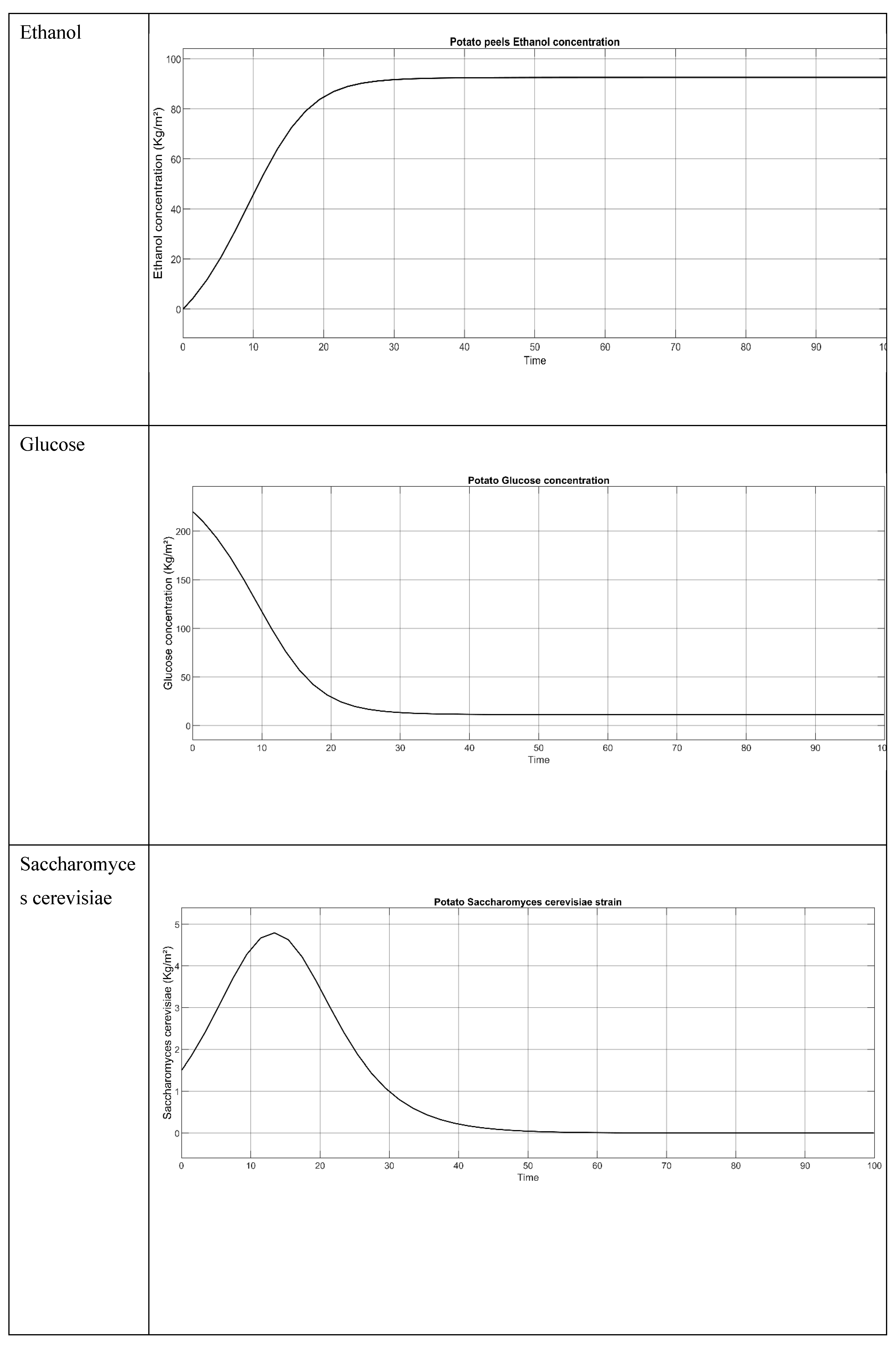
Bioethanol continues to gain popularity as a viable alternative to fossil fuels considering that it is a renewable fuel obtained from biomass. This study explores the optimization of bioethanol production from three potentially useful feedstocks that is marine algae, vegetable waste and lignin-based cellulosic biomass which includes sugarcane, switchgrass, Wood Chips and Corn Stover. Vegetable waste is widely available, but to reduce contamination and maintain sustainability, it must be collected and handled carefully. Although lignocellulosic biomass is a specific energy crop choice, pre-treatment is required to transform its complex structures efficiently. While marine algae grow quickly and do not compete with land resources, large-scale cultivation and harvesting systems still require improvement. Each feedstock's advantages and disadvantages are examined, taking into account issues with conversion, sustainability, and availability. Kinetic modeling will be employed to analyze reaction rates, identify key parameters, optimize process conditions, and guide the development of cost-effective, sustainable bioethanol production. Individual MATLAB simulation models of Saccharomyces cerevisiae were developed for potato peels, sugarcane bagasse, and brown marine algae, revealing their unique bioresource potential. Simulation model analysis for potato peels concentrated mainly on fermentation based on the Monod equation and Michaelis-Menten kinetic models of starch hydrolysis having carbohydrate content of 21.05g by difference. While for marine algae, Saccharina latissima was considered which had an Alginate content of around 34.5% dry weight and it addressed how the polysaccharide is extracted and transformed from it. Sugarcane bagasse models included its complex lignocellulosic structure and pre-treatment simulations containing carbohydrate content of 10.9g.

Keywords:
1. Introduction
2. Vegetable Profiles for Bioethanol Production
2.1. Potato Peels (Solanum tuberosum)
2.2. Carrot Pomace (Daucus carota subsp. sativus)
2.3. Tomato Pomace (Solanum lycopersicum)
2.4. Brinjal (Eggplant) Peels (Solanum melongena)
2.5. Radish Leaves (Raphanus sativus)
2.6. Onion Peels (Allium cepa)
2.7. Pumpkin Peels (Cucurbita pepo)

| Vegetable Waste | Pre-treatment Method | Temperature (°C) | Time (minutes) | pH | Enzyme | Comments |
References |
|---|---|---|---|---|---|---|---|
| Potato peels | Steam explosion | 160 | 10 | 4.5 | Cellulase | High starch content | (Sheikh et al., 2016; Sujeeta et al., 2018) |
| Carrot pomace | Dilute acid hydrolysis followed by enzymatic hydrolysis | 110 | 45 | 2 | Hemicellulase & Cellulase | Fermentation: Saccharomyces cerevisiae | (Khoshkho et al, 2022; Yu et al., 2013) |
| Tomato pomace | Ultrasound-assisted extraction | 80 | 20 | 5.5 | Pectinase & Cellulase | High moisture content |
(Miriana et al., 2013) |
| Brinjal (Eggplant) peels | Steam explosion | 150 | 12 | 4 | Cellulase | Moderate lignin content | (Demiray et al., 2024) |
| Radish Leaves | Dilute acid hydrolysis | 100 | 60 | 2.5 | Hemicellulase & Cellulase | Requires optimization due to low sugar content |
(Khan et al., 2015) |
| Onion peels | Steam explosion followed by enzymatic hydrolysis | 140 | 8 | 4 | Cellulase | Low cellulose content |
(Genemo et al, 2021) |
| Pumpkin peels | Steam explosion | 150 | 12 | 4.5 | Cellulase | Suitable for co-fermentation with other wastes | (Chouaibi et al., 2020) |
3. Lignocellulosic Biomass
3.1. Sugarcane (Saccharum officinarum)
3.2. Corn Stover
3.3. Switchgrass
| Feedstock | Pre-treatment Method | Temperature (°C) | Time (hours) | pH | Enzyme(s) | Comments |
References |
|---|---|---|---|---|---|---|---|
| Sugarcane Bagasse | Steam Explosion | 160 - 190 | 1 - 10 | Nil | Cellulase | - Disrupts lignocellulosic structure for better enzyme accessibility. - Optimize steam pressure and residence time for efficient breakdown. |
(Sabiha et al., 2018) |
| Corn Stover | Dilute Acid Pre-treatment | 90 - 130 | 30 - 60 | 1.0 - 2.0 | Cellulase, hemicellulase | - Similar to fruit peels, minimize sugar degradation and by-product formation. - May require additional enzymes to break down hemicellulose depending on process design. |
(Riansa et al., 2011) |
| Switchgrass | Ammonia Fiber Expansion (AFEX) | 30 - 100 | 0.5 - 3 | Nil | Cellulase, xylanase | - Uses ammonia to swell the biomass and increase enzyme accessibility. - Requires proper ammonia recovery and wastewater treatment. |
(Keshwani et al., 2007) |
| Wood Chips | Enzymatic Hydrolysis | 40 - 50 | 24 - 72 | 4.8 - 5.5 | Cellulase, xylanase | - Optimum temperature for cellulase and xylanase activity. - Enzyme cost can be a significant factor in process economics. |
(Silva et al., 2011; Pereira et al., 2008; Vásquez et al., 2007) |
5. Marine Algae as a Promising Feedstock
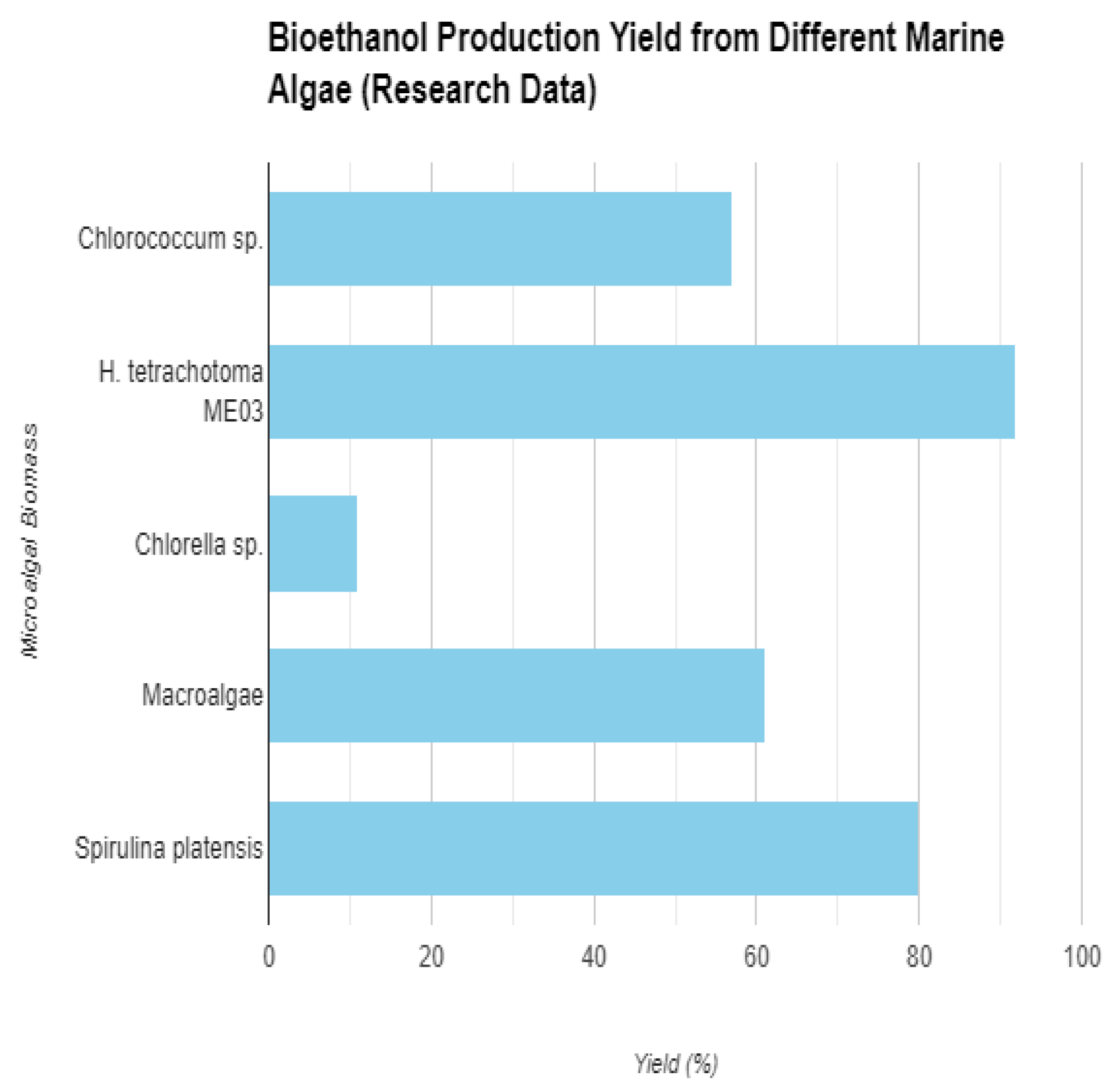
| Microalgal Biomass | Pre-treatment | Enzyme | Yield | Source |
|---|---|---|---|---|
| Chlorococcum sp. | Enzymatic hydrolysis | Cellulase | 57% glucose (0.46 g/g bioethanol) | (Shokrkar et al., 2018) |
| Hindakia tetrachotoma ME03 | Enzymatic hydrolysis | β-glucosidase/cellulase, α-amylase | 92% saccharification | (Onay et a., 2019) |
| Chlorella sp. | Hydrothermal pre-treatment, Enzymatic hydrolysis | α-amylase, glucoamylase | 11 g/L bioethanol | (Ngamsirisomsakul et al., 2019) |
| Macroalgal biomass (fresh river water) | Enzymatic hydrolysis | Cellulase enzyme | 61% bioethanol | (Kumar et al., 2018) |
| Spirulina platensis | None (assumed) | α-amylase, amyloglucosidase | 80% polysaccharide conversion | (Rempel et al., 2019) |
| Algae Type | Pre-treatment Method | Disruption Type | Temperature (°C) | Time (minutes) | pH | Notes for Bioethanol Production |
References |
|---|---|---|---|---|---|---|---|
| Green Algae (e.g., Chlorella sp.) | Bead milling | Mechanical | 20-30 | 5-10 | Neutral | Disrupts cell wall for better sugar release during bioethanol production. | (Yadav et al., 2020) |
| Brown Algae (e.g., Saccharina sp.) | Dilute acid hydrolysis | Chemical | 90-100 | 30-60 | 1-2 | Break down complex carbohydrates to fermentable sugars for bioethanol production. | (Brown et al., 2024) |
| Red Algae (e.g., Gracilaria sp.) | Alkali pre-treatment | Chemical | 30-40 | 30-60 | 10-12 | Removes hemicellulose, improving access to carbohydrates for bioethanol production. | (Sehar et al., 2022) |
| Various Algae | Enzymatic hydrolysis (or other enzymatic methods) | Enzymatic | 40-50 | 60-120 | 4.5-5.0 | Breaks down cellulose and alginate for efficient conversion to fermentable sugars in bioethanol production. | (Jutakridsada et al., 2019) |
5. Selection of Appropriate Kinetic Models for Optimizing Bioethanol Production from Diverse Feedstocks
5.1. Michaelis-Menten (MM) Model
5.2. Semi-Mechanistic Model
5.3. Pseudo-First Order Model
5.4. Model Development for Delignification
5.5. Langmuir Adsorption Model
5. Kinetic and Simulation Model of Saccharomyces Cerevisiae for the Production of Bioethanol from Potato Peels, Sugarcane Bagasse and Brown Seaweed
5.1. Overview of the Simulation Model
| Parameter | Expression | Description |
|---|---|---|
| Microbial Growth Rate | Rate of change of biomass concentration | |
| Substrate Consumption Rate | Rate of change of substrate concentration | |
| Product Formation Rate | Rate of change of product concentration |
| Parameter | Value |
|---|---|
| 1.7 kg/m³ | |
| 93 kg/m³ | |
| n | 0.52 |
| 12.108 exp | |
| m | 0.03 h−1 |
| 0.08 | |
| 0.45 | |
| Initial concentration of Saccharomyces cerevisiae | 1.5 kg/m³ |
| Initial concentration of glucose | 220 kg/m³ |
| Fermentation temperature | 30 °C |
| Fruit | Content (grams/100g) | Method of Measurement | Other Notable Components | **Potential Sources |
|---|---|---|---|---|
| Potato Peels (Raw) | 11.1 | HPLC | Dietary fiber, phenolic compounds, Vitamin C, potassium, iron, antioxidants | USDA FoodData Central, Healthline, WebMD |
| Sugarcane Bagasse (Dried) | 15.8 | HPLC | Lignocellulose, hemicellulose, lignin, trace minerals | USDA FoodData Central, Healthline, WebMD |
| Saccharina latissima (Sugar Kelp, Dried) | 11.4 | HPLC | Iodine, fucoidan, alginate, polyphenols, vitamins A, C, E, K, fiber | (Akter et al., 2024) |
5.1.1. Potato Peels
5.2.2. Sugarcane Bagasse
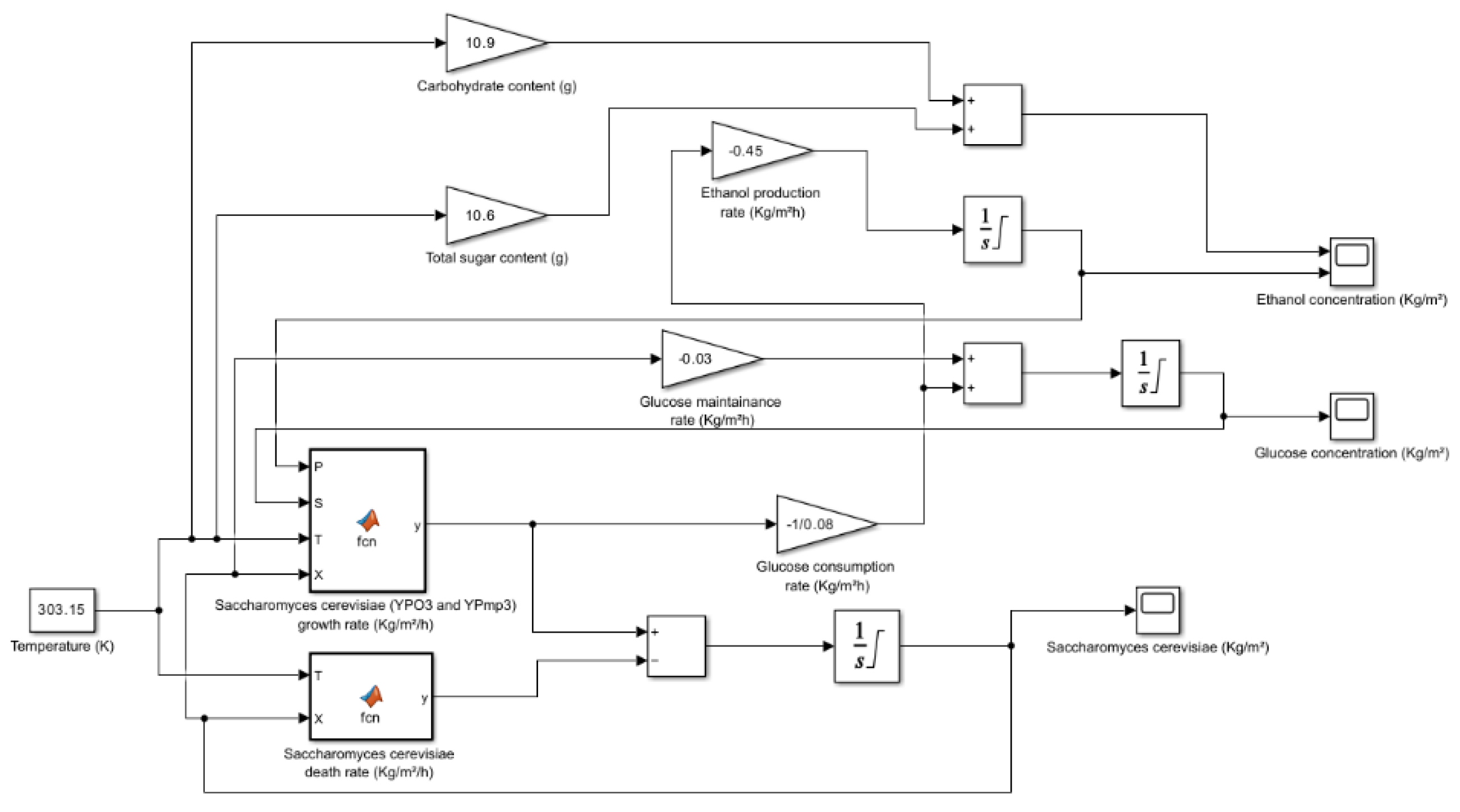
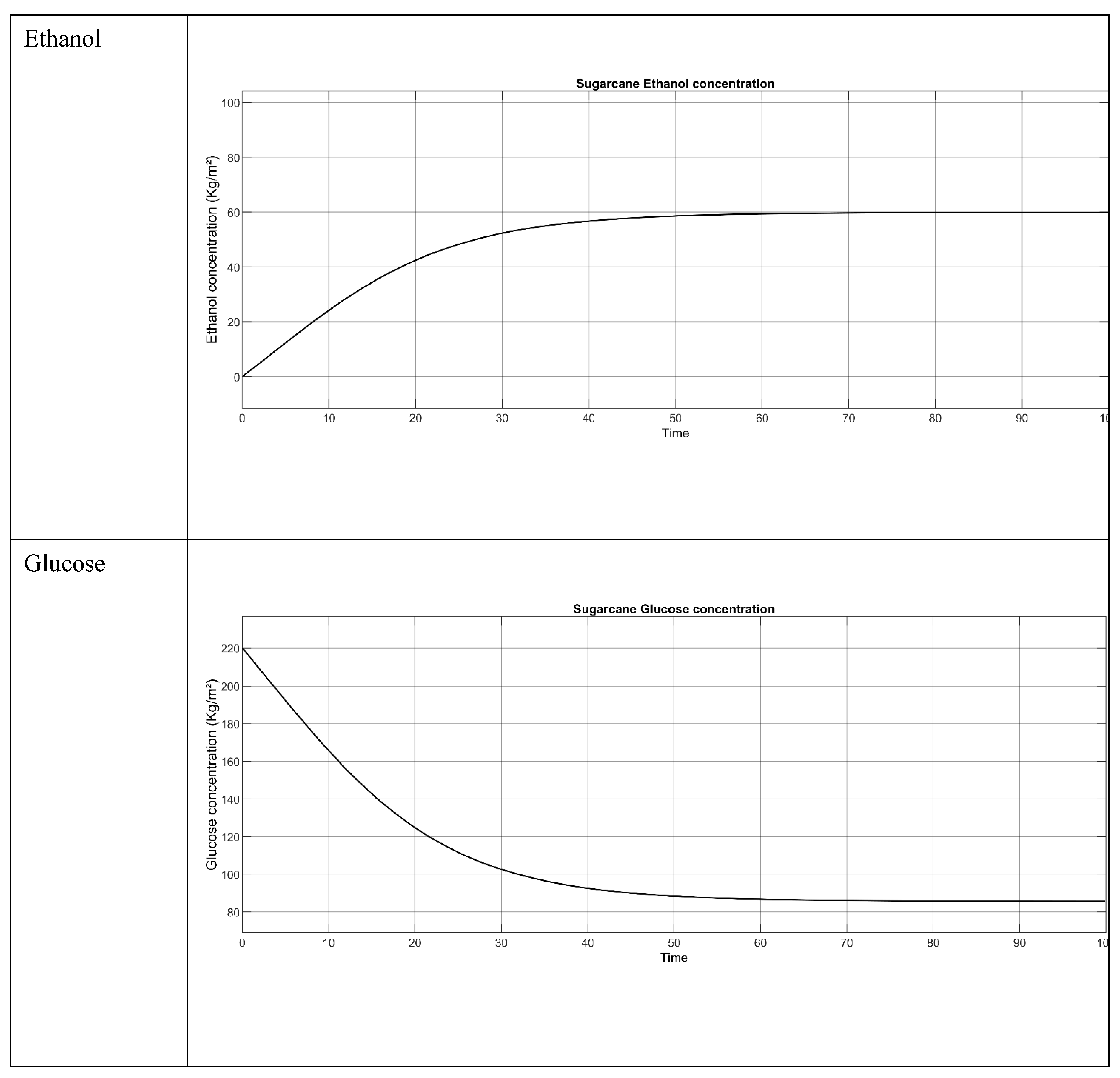
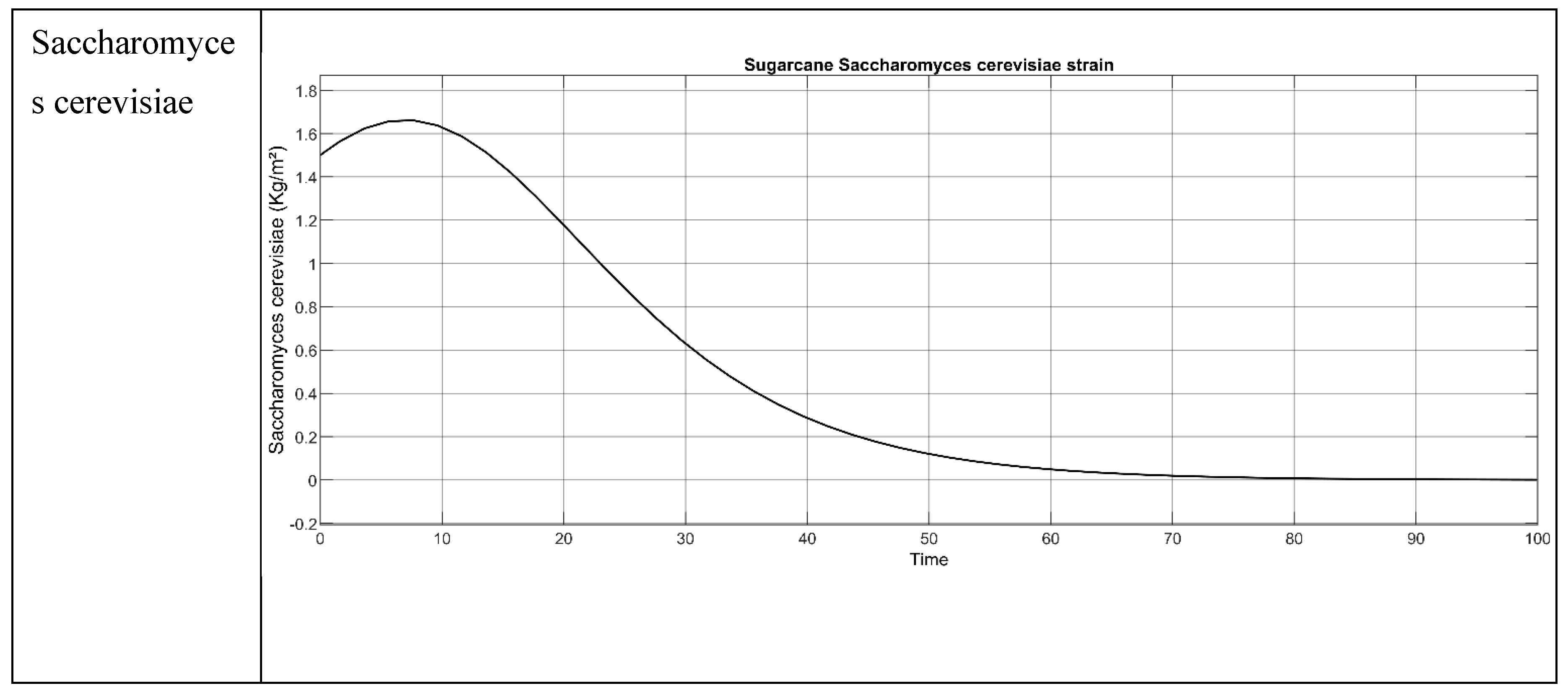
5.2.3. Saccharina latissima (Sugar Kelp)
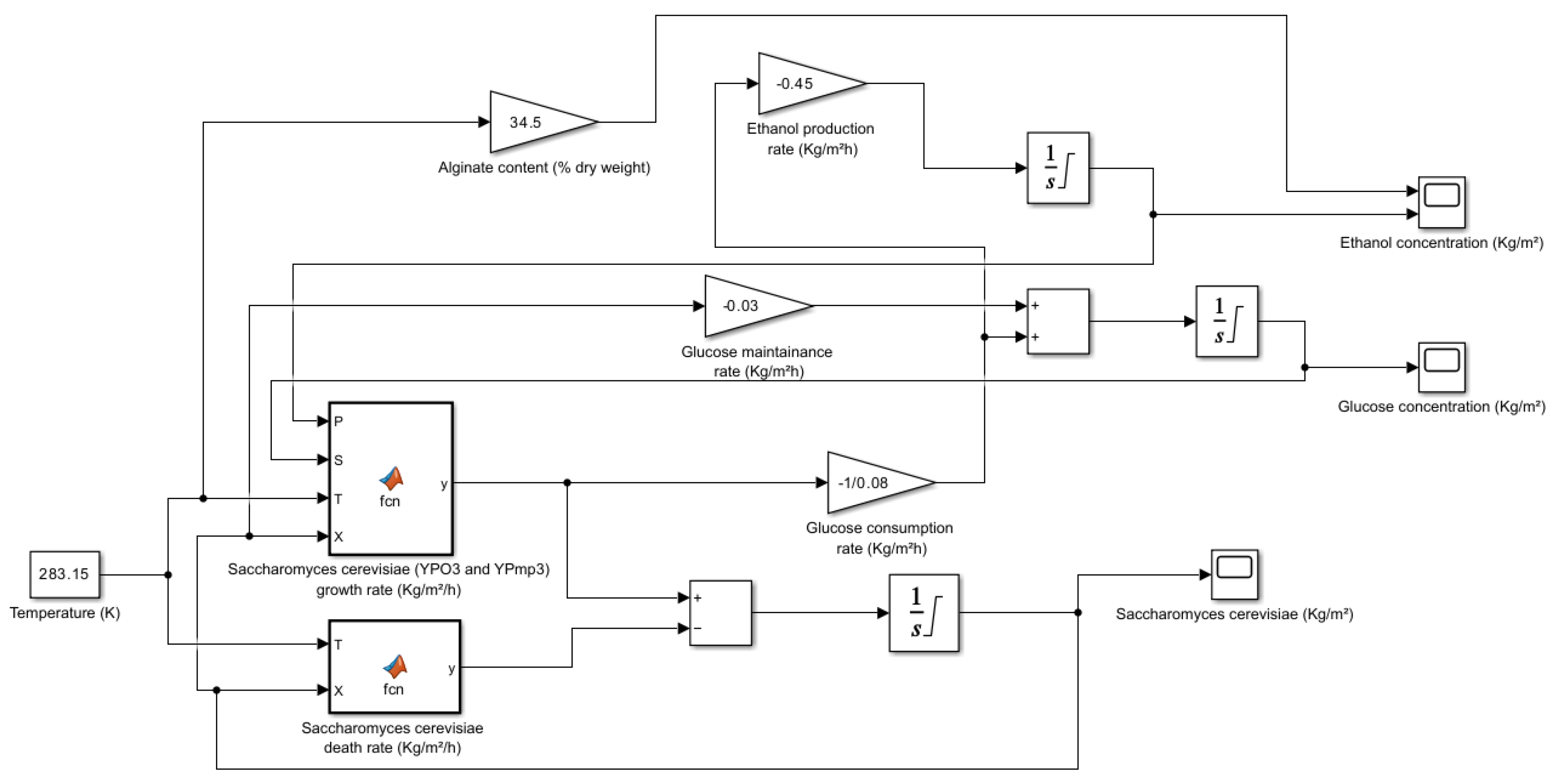
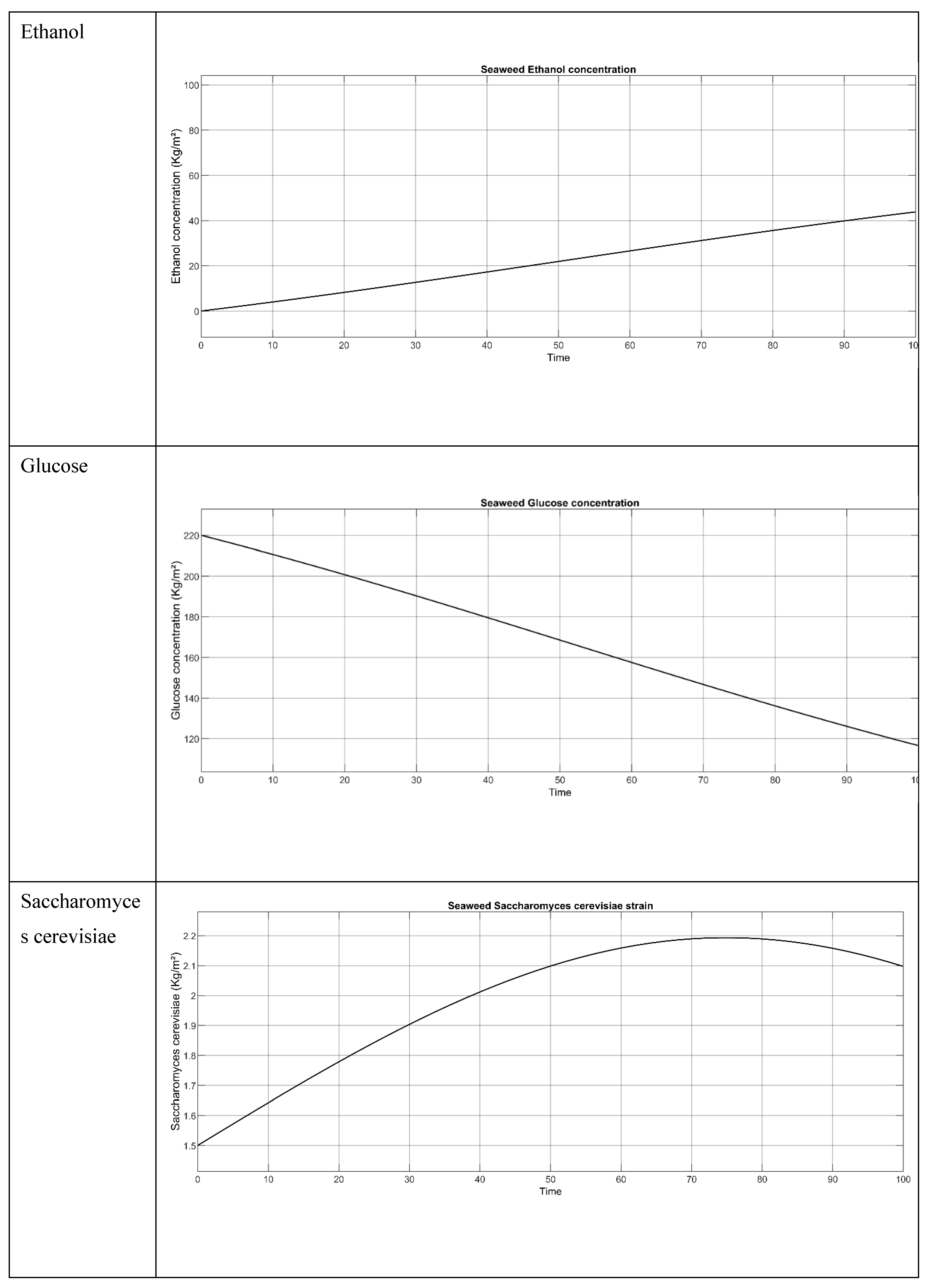
Scope
Conclusion
Acknowledgments
References
- Shukla-Pandya, Hiral. "Bioenergy as a global public tool and technology transfer." Microbial Biotechnology for Bioenergy. Elsevier, 2024. 263-275. [CrossRef]
- Gurevich, Mark. "Examining the Impact of Financial Resources on Solid Waste Management Practices: A Cross-Country Analysis." The National High School Journal of Science Report (2023).
- Ebrahimian, Farinaz, et al. "Effect of pressure on biomethanation process and spatial stratification of microbial communities in trickle bed reactors under decreasing gas retention time." Bioresource technology 361 (2022): 127701. [CrossRef]
- Sheikh, Ryan A., Omar A. Al-Bar, and Youssri M. Ahmed Soliman. "Biochemical studies on the production of biofuel (bioethanol) from potato peels wastes by Saccharomyces cerevisiae: effects of fermentation periods and nitrogen source concentration." Biotechnology & Biotechnological Equipment 30.3 (2016): 497-505. [CrossRef]
- Sujeeta, Kamla Malik, Shikha Mehta, and Khushboo Sihag. "Optimization of conditions for bioethanol production from potato peel waste." International Journal Chemical Studies 6.1 (2018): 2021-2024.
- Husin, Maryam. Study of Leucaena Leucocephala Seed Biomass as a New Source for Cellulose. Diss. University of Malaya (Malaysia), 2019.
- Khoshkho, Saeedeh Movaghar, et al. "Production of bioethanol from carrot pulp in the presence of Saccharomyces cerevisiae and beet molasses inoculum; a biomass based investigation." Chemosphere 286 (2022): 131688. [CrossRef]
- Yu, Chi-Yang, Bo-Hong Jiang, and Kow-Jen Duan. "Production of bioethanol from carrot pomace using the thermotolerant yeast Kluyveromyces marxianus." Energies 6.3 (2013): 1794-1801. [CrossRef]
- Nawirska, Agnieszka, and Monika Kwaśniewska. "Dietary fibre fractions from fruit and vegetable processing waste." Food chemistry 91.2 (2005): 221-225. [CrossRef]
- Miriana, Durante, et al. "Possible Use of the Carbohydrates Present in Tomato Pomace and in Byproducts of the Supercritical Carbon Dioxide Lycopene Extraction Process as Biomass for Bioethanol Production." (2013).
- Osei, Janet Appiah. "Feasibility of Bioethanol Production from Rotten Tomatoes (Solanum Lycopersicum) Using Saccharomyces Cerevisiae." Waste Technology 8.2: 34-38.
- Lenucci, Marcello S., et al. "Possible use of the carbohydrates present in tomato pomace and in byproducts of the supercritical carbon dioxide lycopene extraction process as biomass for bioethanol production." Journal of agricultural and food chemistry 61.15 (2013): 3683-3692. [CrossRef]
- Kehili, Mouna, et al. "Supercritical CO2 extraction and antioxidant activity of lycopene and β-carotene-enriched oleoresin from tomato (Lycopersicum esculentum L.) peels by-product of a Tunisian industry." Food and bioproducts processing 102 (2017): 340-349. [CrossRef]
- Roukas, Triantafyllos, and Parthena Kotzekidou. "From food industry wastes to second generation bioethanol: a review." Reviews in Environmental Science and Bio/Technology 21.1 (2022): 299-329. [CrossRef]
- Demiray, Ekin, et al. "Sequential Anthocyanin Extraction and Ethanol Production from Eggplant Peel Through Biorefinery Approach." BioEnergy Research 17.1 (2024): 383-391. [CrossRef]
- Gupta, Pratima, and Piyush Parkhey. "A two-step process for efficient enzymatic saccharification of rice straw." Bioresource technology 173 (2014): 207-215. [CrossRef]
- Khan, Abdul Majeed, Shaista Khaliq, and Rabia Sadiq. "Investigation of waste banana peels and radish leaves for their biofuels potential." Bulletin of the Chemical Society of Ethiopia 29.2 (2015): 239-245. [CrossRef]
- de Andrade Ávila, Ronaldo Nunes, and José Ricardo Sodré. "Physical–chemical properties and thermal behavior of fodder radish crude oil and biodiesel." Industrial Crops and Products 38 (2012): 54-57.
- Gutiérrez, Rosa Martha Pérez, and Rosalinda Lule Perez. "Raphanus sativus (Radish): their chemistry and biology." The scientific world journal 4 (2004): 811. [CrossRef]
- Srivastava, Neha, et al., eds. Biofuel production technologies: critical analysis for sustainability. Singapore: Springer, 2020.
- Kalaiarasan, A., and S. Ahmed John. "IJMBR International Journal of Medicobiological Research." Int J Med Res 1.2 (2010): 94-98.
- Khan, Abdul Majeed, et al. "Generation of bioenergy by the aerobic fermentation of domestic wastewater." J. Chem. Soc. Pak 32.2 (2010): 209-214.
- Genemo, Temam Gemeda, Desta Lamore Erebo, and Aschalew Kasu Gabre. "Optimizing bio-ethanol production from cabbage and onion peels waste using yeast (Saccharomyces cerevisiae) as fermenting agent." (2021). [CrossRef]
- Gunaseelan, V. Nallathambi. "Biochemical methane potential of fruits and vegetable solid waste feedstocks." Biomass and bioenergy 26.4 (2004): 389-399. [CrossRef]
- Amadi, B. A., E. N. Agomuo, and C. O. Ibegbulem. "Research methods in Biochemistry." Supreme 31 (2004): 50-59.
- Chouaibi, Moncef, et al. "Production of bioethanol from pumpkin peel wastes: Comparison between response surface methodology (RSM) and artificial neural networks (ANN)." Industrial Crops and Products 155 (2020): 112822. [CrossRef]
- Pająk, Paulina, Izabela Przetaczek-Rożnowska, and Lesław Juszczak. "Development and physicochemical, thermal and mechanical properties of edible films based on pumpkin, lentil and quinoa starches." International Journal of Biological Macromolecules 138 (2019): 441-449. [CrossRef]
- Vohra, Mustafa, et al. "Bioethanol production: Feedstock and current technologies." Journal of Environmental Chemical Engineering 2.1 (2014): 573-584. [CrossRef]
- Sebayang, A. H., et al. "Optimization of bioethanol production from sorghum grains using artificial neural networks integrated with ant colony." Industrial crops and products 97 (2017): 146-155. [CrossRef]
- Yesmin, M. N., et al. "Bioethanol production from corn, pumpkin and carrot of bangladesh as renewable source using yeast." Acta Chemica Malaysia 4.2 (2020): 45-54. [CrossRef]
- Publicover, Kristen, Tom Caldwell, and Sarah W. Harcum. "Biofuel ethanol production using Saccharomyces bayanus, the champagne yeast." Proceedings of the 32nd Symposium on Biotechnology for Fuels and Chemicals. 2010.
- Cheirsilp, Benjamas, and Wageeporn Maneechote. "Zero-Waste Biorefinery." Handbook of Waste Biorefinery: Circular Economy of Renewable Energy. Cham: Springer International Publishing, 2022. 21-41.
- Saville, B. A., W. M. Griffin, and H. L. MacLean. "Ethanol production technologies in the US: status and future developments." Global bioethanol. Academic Press, 2016. 163-180.
- Lamsal, B. P., H. Wang, and L. A. Johnson. "Effect of corn preparation methods on dry-grind ethanol production by granular starch hydrolysis and partitioning of spent beer solids." Bioresource technology 102.12 (2011): 6680-6686. [CrossRef]
- Sabiha-Hanim, Saleh, and Nurul Asyikin Abd Halim. "Sugarcane bagasse pretreatment methods for ethanol production." Fuel ethanol production from sugarcane (2018): 63-79.
- Mosier, Nathan, et al. "Features of promising technologies for pretreatment of lignocellulosic biomass." Bioresource technology 96.6 (2005): 673-686. [CrossRef]
- Galbe, Mats, and Guido Zacchi. "Pretreatment: the key to efficient utilization of lignocellulosic materials." Biomass and bioenergy 46 (2012): 70-78. [CrossRef]
- Sarangi, Prakash Kumar, and Sonil Nanda. Bioprocessing of biofuels. CRC Press, 2020.
- Chandel, Anuj Kumar. Biorefinery and Industry 4.0: Empowering Sustainability. Springer Nature, 2024.
- Guedes, A. Catarina, et al. "Algal spent biomass—A pool of applications." Biofuels from algae. Elsevier, 2019. 397-433.
- Avci, Ayse, et al. "Dilute sulfuric acid pretreatment of corn stover for enzymatic hydrolysis and efficient ethanol production by recombinant Escherichia coli FBR5 without detoxification." Bioresource technology 142 (2013): 312-319. [CrossRef]
- Cotta, Michael A. "Ethanol production from lignocellulosic biomass by recombinant Escherichia coli strain FBR5." Bioengineered 3.4 (2012): 197-202.
- Riansa-Ngawong, Wiboon, and Poonsuk Prasertsan. "Optimization of furfural production from hemicellulose extracted from delignified palm pressed fiber using a two-stage process." Carbohydrate Research 346.1 (2011): 103-110. [CrossRef]
- Jennings, Edward W., and Daniel J. Schell. "Conditioning of dilute-acid pretreated corn stover hydrolysate liquors by treatment with lime or ammonium hydroxide to improve conversion of sugars to ethanol." Bioresource technology 102.2 (2011): 1240-1245. [CrossRef]
- Keshwani, Deepak R., et al. "Microwave pretreatment of switchgrass to enhance enzymatic hydrolysis." 2007 ASAE Annual Meeting. American Society of Agricultural and Biological Engineers, 2007.
- Hu, Zhenhu, Yifen Wang, and Zhiyou Wen. "Alkali (NaOH) pretreatment of switchgrass by radio frequency-based dielectric heating." Biotechnology for Fuels and Chemicals: Proceedings of the Twenty-Ninth Symposium on Biotechnology for Fuels and Chemicals Held April 29–May 2, 2007, in Denver, Colorado. Humana Press, 2008. [CrossRef]
- Hu, Zhenhu, and Zhiyou Wen. "Enhancing enzymatic digestibility of switchgrass by microwave-assisted alkali pretreatment." Biochemical Engineering Journal 38.3 (2008): 369-378. [CrossRef]
- Silva, Neumara Luci Conceição, et al. "Ethanol production from residual wood chips of cellulose industry: acid pretreatment investigation, hemicellulosic hydrolysate fermentation, and remaining solid fraction fermentation by SSF process." Applied biochemistry and biotechnology 163 (2011): 928-936. [CrossRef]
- Pereira Jr, N., M. A. P. G. Couto, and L. M. M. Santa Anna. "Series on biotechnology: biomass of lignocellulosic composition for fuel ethanol production and the context f biorefinery." Amiga Digital UFRJ, Rio de Janeiro 2 (2008): 45.
- Vásquez, Mariana Peñuela, et al. "Enzymatic hydrolysis optimization to ethanol production by simultaneous saccharification and fermentation." Applied Biochemistry and Biotecnology: The Twenty-Eighth Symposium Proceedings of the Twenty-Eight Symposium on Biotechnology for Fuels and Chemicals Held April 30–May 3, 2006, in Nashville, Tennessee. Humana Press, 2007.
- Vasić, Katja, Željko Knez, and Maja Leitgeb. "Bioethanol production by enzymatic hydrolysis from different lignocellulosic sources." Molecules 26.3 (2021): 753. [CrossRef]
- Mckiernan, Gerry. "Science. gov." The Charleston Advisor 5.2 (2003): 37-37.
- Keris-Sen, Ulker D., and Mirat D. Gurol. "Using ozone for microalgal cell disruption to improve enzymatic saccharification of cellular carbohydrates." Biomass and bioenergy 105 (2017): 59-65. [CrossRef]
- Shokrkar, Hanieh, Sirous Ebrahimi, and Mehdi Zamani. "Enzymatic hydrolysis of microalgal cellulose for bioethanol production, modeling and sensitivity analysis." Fuel 228 (2018): 30-38. [CrossRef]
- Chandrasekhar, Thummala, et al. "Algae: the reservoir of bioethanol." Fermentation 9.8 (2023): 712. [CrossRef]
- Onay, Melih. "Bioethanol production via different saccharification strategies from H. tetrachotoma ME03 grown at various concentrations of municipal wastewater in a flat-photobioreactor." Fuel 239 (2019): 1315-1323. [CrossRef]
- Ngamsirisomsakul, Marika, et al. "Enhanced bio-ethanol production from Chlorella sp. biomass by hydrothermal pretreatment and enzymatic hydrolysis." Renewable Energy 141 (2019): 482-492. [CrossRef]
- Kumar, Vinod, et al. "Production of biodiesel and bioethanol using algal biomass harvested from fresh water river." Renewable Energy 116 (2018): 606-612. [CrossRef]
- Mata, Teresa M., Antonio A. Martins, and Nidia S. Caetano. "Microalgae for biodiesel production and other applications: a review." Renewable and sustainable energy reviews 14.1 (2010): 217-232. [CrossRef]
- Pendse, Dhanashri S., Minal Deshmukh, and Ashwini Pande. "Different pre-treatments and kinetic models for bioethanol production from lignocellulosic biomass: A review." Heliyon (2023). [CrossRef]
- Akter, Alima, et al. "Seaweed polysaccharides: Sources, structure and biomedical applications with special emphasis on antiviral potentials." Future Foods (2024): 100440. [CrossRef]
- Yadav, Ajar Nath, et al., eds. Biofuels production-sustainability and advances in microbial bioresources. Cham: Springer, 2020.
- Brown, Connor, et al. "Approaching the conformal limit of quark matter with different chemical potentials." arXiv preprint arXiv:2405.01032 (2024). [CrossRef]
- Sehar, Ujala. Investigating Enzymatic Activity Towards Alpha and Beta Glycosidic Linkages by the Unicellular Extremophilic Red Alga Galdieria sulphuraria. Diss. New Mexico State University, 2022.
- Jutakridsada, Pasakorn, et al. "Bioconversion of saccharum officinarum leaves for ethanol production using separate hydrolysis and fermentation processes." Waste and Biomass Valorization 10 (2019): 817-825. [CrossRef]
Disclaimer/Publisher’s Note: The statements, opinions and data contained in all publications are solely those of the individual author(s) and contributor(s) and not of MDPI and/or the editor(s). MDPI and/or the editor(s) disclaim responsibility for any injury to people or property resulting from any ideas, methods, instructions or products referred to in the content. |
© 2025 by the authors. Licensee MDPI, Basel, Switzerland. This article is an open access article distributed under the terms and conditions of the Creative Commons Attribution (CC BY) license (https://creativecommons.org/licenses/by/4.0/).