

Submitted:
06 October 2025
Posted:
06 October 2025
You are already at the latest version
Abstract
A new theory for psychology has been proposed in this work, the core of which is founded on understanding and codifying the material basis of psychology as a behavioral science in the age of both biological and artificial systems that are capable of not just awareness and perception but also learning and behavior/reaction. The purpose was especially to build a foundation via which future work in psychology might take advantage of Transformatics as a coherent body of mathematical ideologies and techniques that are universally applicable in any science. A significant share of this work built upon earlier, and recent results in especially theory, by the author, concerning new mathematical ideas under the umbrella of Transformatics, and how they have been successfully applied to another biological discipline, Genetics, of which, and as we argue in the later sections of this work, likewise serves as a basis for much of the empirical subjects in psychology. Thus, starting from some fundamentals of what defines psychology as a scientific discipline, we steadily build a new approach to some fundamental ideas and concepts in this subject, especially from the point of view of someone already familiar with how transformatics helps establish new foundations for any science, and from which we then demonstrate how to build or evolve new ideas, most of them mathematical, or philosophical, using that method, and which then serves to bring forth a new light to this fundamental science of the mind. As far as results are concerned; we have advanced two working definitions of psychology, one originally by the author; have proposed four important problems for students and readers to use to further the ideas presented in the this work, and have not only presented for the first time, an original mathematical definition of blood, but have also gone ahead, to demonstrate how it could be used to unambiguously specify physiological and psychological pathologies with immediate clinical relevance as laid out in two theorems concluding this present undertaking. We have called out several next/future explorations as well as how other researchers might carry forward the work we have started here.
Keywords:
foundations
; transformatics
; statistical artificial intelligence
; information processing
; sequence transformers
; perception
; sensing
; actuators
; physiology
; psychology
; blood
; mind
; consciousness
1. Introduction
Philosophy is to be studied, not for the sake of any definite answers to its questions, since no definite answers can, as a rule, be known to be true, but rather for the sake of the questions themselves... these questions enlarge our conception of what is possible, enrich our intellectual imagination and diminish the dogmatic assurance which closes the mind against speculation...— Classics of Western Philosophy [1]
- Transformer 1. [The Certain Manifestor] In a reality space ,
-
a certain manifestor,is the following operator:
“I admit nothing that is not necessarily true. I am therefore precisely nothing but a thinking thing; that is, a mind, or intellect" [1] thus we come to appreciate one of the world’s most celebrated thinkers and geniuses of all time — Rene Descartes, when in his Meditations on First Philosophy, a 1641 treatise that would cause a fundamental shift in Western philosophy since then, he invites us to approach the matter of fundamental philosophical problem solving, by setting out from not only a position of radical doubt, but also with a strong trust in the objective power that mathematics and mathematical certainty confers upon us in virtually all matters of speculation and scientific and philosophical inquiry1.
It is the hope of the author, that, as Descarte’s methods helped lay the ground for a certitude about what we are — `we’ meaning humans in the least sense, when he systematically arrived at the conclusion that even though it might be plausible that there exists some Master Deceiver [2] that might cause most of our notions of what is to be flawed or erroneous, and yet, even such a power cannot create nor cause in us the doubt that we exist even while we are being deceived — “no matter how you try to imagine it, although you can doubt absolutely everything that goes on outside you and even everything that goes on within your mind, you cannot doubt your own existence." [2] And thus, his swiss-army-knife proposition cast in [2] as: I am, I exist, is necessarily true every time that I pronounce it or conceive it in my mind, and also famously known as the Cogito ergo sum principle — “I think, therefore I am", might help anchor much of our scientific and philosophical inquiries about the matter of the mind and psychology in general, with a precision such as we see in the author’s earlier work on a mathematical theory to underlie practical application of, as well as objective appreciation of the mind’s faculty of faith [3]2.
This work, though not necessarily meant for [only] students or practitioners of mathematics in the strict sense, is especially meant to approach the subject of psychology with the sensibilities of someone well grounded in the author’s mathematical method known as Transformatics [5,6].
1.1. What is Psychology?
Definition 1 (The Willrich definition of Psychology).
Psy·chol·o·gy is the science of systems that perceive, emote and react; their formal structures, characteristics, and behavior (how structures transform); how to reason mathematically about them in practice and theory.
We open the rest of this work, with my own working definition of psychology, expressed and to be utilized as laid out in Definition 1. However, and in keeping with both traditional literature such as Davidoff’s introduction to psychology [7], we shall mostly fallback to Definition 2 — which we shall come to later, but soon enough. The first, especially because, in relation to how I see psychology being relevant to a computer scientist, mathematician or some modern scientist dealing with traditional psychology subjects, alongside contemporary ideas and new philosophies concerning both living and non-living things; esp. those that can simulate or express human mental phenomena even in non-human things, as a significant portion of my work is going to be like, might need or better base theory, argument and practice on. Also, note that, I have adopted the morphology3 of the term as depicted in [9], though the definition uses my own wording and personal approach to the matter.
Next, consider this enlightening quote;
The Greek word psyche, from which our terms `the psyche’ and`psychology’ derive, is generally translated by `soul’; but the translation is in several respects misleading. Psycheis intimately connected to the notion of life: all and only living things possess a psyche; and to have a psyche is to be alive.— The Oxford Companion to the Mind [10]
It shall help us appreciate the development of our proper, working definition of the subject. Moreover, and before we dive into the meat of this exploration, it shall help everyone embarking on this intellectual, but also sometimes speculative voyage, to unambiguously cast particular and important fundamentals right — especially concerning what exactly our subject is here — psychology that is4.
To paraphrase one authoritative text [11] on the subject, note that psychology did not begin as a science, but rather originally begun as a form of primitive mysticism that later became an aspect of philosophy, and that after more than 2 millennia, finally achieved the status of a science5. So, we at least know that it — psychology — is a science. But not just that, we further learn from Munn [11], that “psychology is a biological science", the justification for this being that “its observations relate to living organisms", but also that it is distinguished from the other [life] sciences by the fact that “it observes and attempts to understand the behavior of organisms. It is concerned with their responses to the world around them." Munn finally concludes that psychology is “the science of behavior."
However, before we settle the matter, we might want to see what other authorities say, and so, referring to another reference book on the subject — Introduction to Psychology by Linda L. Davidoff [7], we learn that psychology is “the science that studies behavior and mental processes.", and that it spans such matters as development, physiological bases of behavior, learning, perception, consciousness, memory, thought, language, motivation, emotion, intelligence, personality, adjustment, abnormal behavior, treatment of abnormal behavior, social influences, and social behavior.
In conclusion then, and as we shall see after reading the next section, we might sum it all up, with the following working definition:
Definition 2(Psychology).
Psychology is the science that studies the behavior and mental processes of both biological and artificial lifeforms.
1.2. To What does Psychology Apply?
The Greek word psyche, from which our terms `the psyche’ and`psychology’ derive, is generally translated by `soul’; but the translation is in several respects misleading. Psycheis intimately connected to the notion of life: all and only living things possess a psyche; and to have a psyche is to be alive.— The Oxford Companion to the Mind [10]
Psychology, much as it is perhaps originally inspired by and concerned with problems relating to its inquirers6, is not just about or applicable to humans. One shall readily find this to be true when reviewing the results of psychological inquiries and research in both academia and the industry, but also, as shall be seen in how many professional psychologists approach the subject, the study of the behavior of other living things, especially animals does contribute to and is a significant part of the science. Davidoff [7] tells us that; ...many other animals serve as subjects, or research participants, in psychological investigations... Students are often surprised and sometimes disheartened to find so many studies on such animals. Behavioral scientists use simple organisms as research subjects for a number of reasons. And so, everything from cats, fish, cockroaches, to the more common7 rats and pigeons shall be encountered when exploring empirical studies and literature on the subject of psychology.
Moreover, note that, given how far human life has advanced, as well as how it has been transformed in the face of modern technologies and sciences dealing with artificial life-forms, we might want to appreciate that contemporary psychology also draws into the domain of the subject, matters not directly relating to biological or living organisms, with subfields as:
- Cognitive Modeling and AI [12]: Psychology now informs and is informed by artificial intelligence. Cognitive architectures and machine learning models simulate human thought processes, enabling psychologists to study cognition in synthetic systems.
- Artificial Emotional Intelligence (AEI) [13]: This emerging field uses algorithms to detect and interpret emotional states—sometimes more accurately than human observers—by analyzing facial expressions, voice tone, and behavior patterns.
- Virtual and Artificial Life (ALife) [14]: Researchers explore whether artificial entities—like software agents or robotic systems—can exhibit behaviors that qualify as “psychological." These systems may learn, adapt, and even evolve, prompting philosophical debates about what constitutes life and mind.
- Strong Emergence and Consciousness [15]: Some theorists argue that complex AI systems might exhibit “strong emergence"—new properties like decision-making or emotional response that aren’t reducible to their parts. This challenges traditional definitions of life and consciousness.
Concerning not to what, but rather, where psychology is applied, we learn from Davidoff in [7], that psychology is often applied in industry, education, engineering and consumer affairs among many other domains. Definitely, given that whatever we engage in as humans is fundamentally based on the principles and processes that underlie our mental functions, it can thus be argued that psychology is essential in virtually all domains of human life and its applications. And by extension, or rather, as per Definition 2, we can appreciate that, even though — especially from a purely philosophical perspective, it might be hard or tricky to say if or not a machine modeled against human-like or biological mental and physiological processes does actually possess a psyche, and yet, merely based on what we might observe or ascertain from their behavior, certain contemporary and arguably future artificial lifeforms8 shall for all practical purposes seem like they have a mind9 of their own, and can thus be comfortably studied under the domain of psychology even in the strict, classical sense.
1.3. How to Navigate this Monograph
This Booklet is Navigable:
To ease and leverage meaningful cross-referencing across the sections, note that there is substantial employment of emboldened, typed, named, numbered and interactive10 references across the monograph. For consistency and ease of navigation, note that where they occur in the text, such shall appear and behave as either this link to Introduction or Transformer 1.
2. Understanding the MIND
Since the material of the subject of psychology originates from, but also, somewhat essentially applies to the mind, we shall want to spend some time clarifying to ourselves what exactly it is that the concept of the mind refers to, what it is. For this matter, and finding that my favorite lexicon [9] offers a concise, though multifaceted definition of the concept, perhaps it shall help to begin by considering that. We shall especially focus on their definition of `Mind’ in the 3rd sense:
3 a) that which thinks, perceives, feels, wills, etc.; seat or subject of consciousness b) the thinking and perceiving part of consciousness; intellect or intelligence c) attention; notice d) all of an individual’s conscious experiences e) the conscious and the unconscious together as a unit; psyche— Webster’s New World Dictionary of the American Language, 2nd College Edition, 1986 [9]
So, we can come to appreciate that this concept applies to a distinct aspect of our nature as humans. That also, this aspect or function of our being somewhat has the ability to experience itself through such processes as thought, reflection and recollection among others. Also that, when considered as the principle which enables us to not only be self-aware, but also be aware [in the general sense], we can then come to appreciate that when we talk of ourselves as “I" — in the first person that is — we essentially are referring to “the mind", and as we have seen in the introductory discourse (see Section 1) about Rene Descartes’s radical thought concerning what we can know with certainty (especially about ourselves), it might be that when we ask ourselves the question “Am I so tied to a body and to the senses that I cannot exist without them?" [1], the answer might be “no", and yet, even though we actually had no physical body — such as might be the case when we experience ourselves in the dream-state11, and yet, we cannot deny, wish-away, nor identify ourselves independently of that aspect of ourselves that is “experiencing" or “thinking" or “recollecting", etc. Essentially, that it is actually impossible to separate ourselves from the “I"12, and this, even though it might be a thing entirely without form or physical appearance13.
2.1. Mind in Waking and Dream-States
In the previous section, we have considered the matter that the "I", our first-person identity, and center of awareness underlies the thing we might refer to as our mind. Moreover, when talking of ourselves in the sense — “I, who is", an affirmation, but also a necessarily true, and also self-satisfying/self-proving truism we might appreciate after entertaining the radical self-doubt foundations of objective psychology as Descartes seems to call for [1].
That said, note that, for properly appreciating our theory of psychology here, it shall help to distinguish between the ways in which the mind can come to be known, or rather, how the mind can come to know itself to begin with. The classics already covered good ground concerning how we might come to know by the use of our physical senses, but also through “internal faculties" such as thought for the case of the method Descartes champions. “I think, therefore I am" — this could be a truth we can only arrive at while we “listen" to our own dialogue; a voice in the head making this affirmation for example, but also the audible chatter using our lips and vocal-chords, that perhaps we scream to ourselves every morning before brushing our teeth at the mirror above the sink... in which case then, the mind expresses a thought into speech, which is then picked up by its own [physical] ears, is transmitted back to the brain, and from their is perceived by the mind. A completion of the loop concerning how the mind might come to know itself — a basic picture might help paint this useful piece of science simply and clearly for most of our future purposes14:
And talking of how the mind perceives things — since that is a provable way by which we can ascertain how we come to know, we shall then want to distinguish between two classes of apparatus by which we might come to know. Two classifications here because, though it might readily be possible to ascertain of and objectify mental functions such as perception of light using a physical eye, or estimating the temperature of a hot body using the tactile senses in the palms, and yet, there is, or rather, is known, to be cases in which humans have been able to perceive things without the aid of their physical senses — such as when they have undergone significant alterations in their physiological anatomical signature that leaves them with anomalies that under normal psychology would render them incapacitated, and they they can register and correctly distinguish between projected phenomena as good as would a subject fully or normally well-equipped. So, where some might only consider senses within the domain of normal psychology, cases spanning borderline cases such as subjects that can perceive visual activity outside of their optical sphere or observation space; subjects that can “feel" for the temperature and/or texture of things at a distance, who can hear vibrations or voices that even the most accurate machine audio recorders or microphones in the same space with them can not even smell, etc. There might thus be no need to relegate discourse about such phenomena and aspects of the mind to parapsychology, if we can admit that there are such Psychic senses in addition to/besides the standard Psychical Senses.
And as for whether or not it makes sense to include such extra-sensory senses within the domain of psychology as a science whose methods we expect, as for all objective sciences, to be verifiable, falsifiable, repeatable, observable and possibly predictable, and so that, when we wish to run a scientific experiment, for example:
Tick or un-tick on a well-labeled tally concerning whether or not some subject — a human student, a laboratory parrot, a caged ape, rat, a humanoid robot or some interactive software (even a chatbot), did actually perceive and correctly so, so as to correctly distinguish between what it perceived (a stimuli we/the operator had control over, or which we likewise independently observed and registered) by correctly passing a test we assign it to help verify their judgment of what was communicated.
We can count among methods that are within the domain of psychology, both physical and non-physical means of perception and actuation perhaps. But more telling, and with regards to how normal-sense interactions and awareness occurs, particularly in the waking-state15 with the eyes and ears operating and being applied consciously, we shall accept any response or reactions the mind of the subject gives in response to our prompts, that they actually did perceive (and whether or not correctly so), as well as use it as evidence to conclude, provably so, that we know or trust that the subject has and did use their physical senses.
However, and especially concerning how we might proceed with making scientific conclusions about the behavior, profile, and characteristics of some or any subject, who, given all we can tell, is not able to, or for the course of our experiment and/or observation/study, is not normally well-equipped with their physical senses or capabilities as far as scientific discernment is concerned, and yet, if they can consistently correctly pass any such correct-perception/stimuli-classification problems we pose them say as part of our profiling or characterization task, or even as part of some sophisticated psycho-therapeutic treatment for the case of pathologies or say psychiatric-practice, and by which then, we would have no alternative to conclude that they are in possession of, and know to use their Psychic Senses.
Talking of psychology beyond the realm of ordinary waking awareness, we shall want to pay heed to the word of well-known father of modern psychoanalysis:
The organizing center from which the regulatory effect stems seems to be a sort of “nuclear atom" in our psychic system. One could also call it the inventor, organizer, and source of dream images.— Man and His Symbols, 1964, Carl G. Jung [19]
And further, we learn from [19], that Jung called this center the “Self" and described it as the totality of the whole psyche — essentially the whole of the mind — “in contrast to the `ego’, which constitutes only a small part of the total psyche".
And talking of “totality of mind", another quote, from yet another authority, J. Pamella, sourced from their treatise-like tome on dreams and dreaming also stresses the matter of not ignoring awareness, but also our sense of [self-]identity from extra-sensory or dream-state realms that are naturally nonphysical and not constrained by or determined by physical limits or laws:
It had been thought that the dreaming self is entirely separate from the conscious self. We are finding that we can build pathways between the two— Dreams and Dreaming, 2003, Pamela J. Ball [20]
And concerning that foregoing quote from Pamela’s work in [20], the author was in the middle of describing an empirical method by which a human operator might not only seed, but also reinforce and leverage particular stimuli of interest that they wish to surface into their awareness space during the dream-state [especially], via use of a practice one might liken to or think of as thought-entanglement via psychic work crystals made of special physical materials such as the gemstone ruby, quartz, emerald or sapphire.
Thus, and again, much as we might like or try, and yet, if, like in the works of Jung or somewhat fringe-scholars like Pamela Ball — or given what they appeal to, we find that we can be aware of aspects of ourselves that are not necessarily constrained to or limited to our physical space and time [awareness], that we might as well deem such phenomena and their study to be plausibly within reach of and under the domain of psychology [as a holistic science] still.
2.2. Is it only Humans that Possess a Mind?
From what we can tell given our understanding of the phenomena that define psychological and mental experiences (see Figure 1), we can argue that, even though it might not be readily possible to attribute to “lower" animals (apes, birds, fish, etc) the same classifications of mental and psychic experience and structure as we might attribute to humans (see Figure 2), and yet, given that the ability to correctly perceive, recall, emote and engage in intentional-action has been observed [8] in some non-human species (primates — such as chimpanzees and bonobos, birds/corvids — such as crows and ravens, dogs, elephants and dolphins, etc), we might then conclude that at least in the realm of living organisms, there could be the semblance of a mind at work in several species apart from humans. But, this still remains largely debatable, especially on philosophical grounds16.
That said, and given we might sometimes wish to operate at a higher-level of abstraction than what the facts or reality immediately reports, we could somewhat settle with the consensus; in its simplest form, as just the unity of the faculties of perception, recall, emotion and reaction, it could be acceptable to attribute to some non-human species and even some entirely artificial constructs such as intelligent machines and software, the possession of a mind, if not literally, at least, conceptually or metaphorically — meaning, for all practical purposes, and without coming-off as totally absurd or acutely pessimistic, that one can conclude, from what we can glean
2.3. Automata, Bio-Automata, and the Question of Mind
The term automaton traditionally refers to a theoretical machine or computational model that transitions between discrete states based on input and internal rules [21] so as to produce some output string [22]. These models, including finite[-state] automata, pushdown automata, and Turing machines, form the backbone of formal language theory and computational logic [22,23]. Automata are abstract, deterministic or nondeterministic systems, often devoid of material embodiment or biological constraints.
In contrast, bio-automata refer to systems that exhibit automaton-like behavior but are embedded within biological substrates. These include cellular automata models of morphogenesis, neural signaling, and tissue growth [24]. Bio-automata are not merely simulations; they are often used to describe real biological processes where cells or molecules behave according to rule-based interactions. For example, pigment patterning in mollusk shells and organ formation in embryogenesis have been successfully modeled using cellular automata frameworks [24].
Mostly, the distinction lies in embodiment and emergence. Traditional automata are syntactic and rule-bound — they might for example be artefacts such as the ZHA interactive and human-support system [17]17, whereas bio-automata are embedded in biochemical environments, capable of stochasticity, adaptation, and self-organization. Bio-automata may also exhibit feedback loops and environmental coupling, features absent in classical automata.
The question of whether automata can possess a mind hinges on the definition of mind itself. If mind is construed as a system capable of intentionality, self-awareness, and semantic understanding, then classical automata fall short [8]. They lack the capacity for qualia18, subjective experience, and semantic grounding. Even Turing-complete automata, while capable of universal computation, operate purely on syntactic manipulation without intrinsic meaning [21].
However, some might argue that sufficiently complex automata—especially those embedded in adaptive environments or equipped with learning algorithms—may exhibit mind-like properties — a good case, and worth mentioning here, is Lucidity AI, also introduced in [16]. This view aligns with functionalist theories in philosophy of mind, which posit that mental states are defined by their functional roles rather than their substrate. Yet, without embodiment, affective states, or symbolic intentionality, automata remain essentially distinct from minds. We can’t for example claim, even if it were remotely possible, whether or not any automata, no matter how sophisticated or human-like, conforms fully to such a model of psychology and mind as depicted in Figure 1 — like, could we argue that a machine could possess a soul or spirit even though it might have the semblance of a mind at work?
In summary then, while automata and bio-automata share structural similarities, their ontological and epistemic capacities diverge. Bio-automata approach the threshold of mind through embodiment and emergence, whereas classical automata remain formal constructs. The mind, as currently understood, requires more than rule-based transitions — it demands semantic depth, intentionality, and adaptive coherence.
Lastly, and especially for the student of both computation and psychology, a problem in-relation to this present topic is due... in particular, concerning psychological programming, or rather, Operant Conditioning — which essentially deals with using clever or systematic techniques to cause an intelligent and otherwise free entity such as human, a child for example, a dog or a bird such as a parrot or dove, to learn to associate some particular stimuli with some [almost automatic] response. It is a way to cause an intelligent system to react in certain [particular] way when presented with the stimuli of interest, a way to shape behaviour, and about which, in the text by Davidoff [7], we learn that:
In the early 1950s, B. F. Skinner wrote: We may reinforce a man with food whenever he “turns red," but we cannot in this way condition him to blush “voluntarily." The behavior of blushing, like that of blanching, or secreting tears, saliva, sweat, and so on cannot be brought directly under the control of operant reinforcement.— Introduction to Psychology, 1980, Linda L. Davidoff [7]
And anyone that has had a chance to study, practice or explore modern advances, not only in mainstream psychology, but also in its applications in domains such as computing — artificial intelligence and machine learning in particular, shall come to agree with Linda when she criticizes the father of operant conditioning;
Skinner appears to have been wrong. A great deal of animal research, beginning in the late 1950s, showed that operant conditioning can modify the response of glands and internal organs (those controlled by the autonomic nervous system and, for that reason, designated autonomic responses..[7].
And not just with animals, but also with artificial systems capable of reinforcement learning.
And so, the problem we leave for the reader:
Problem 1 (On Operant Conditioning for Automata).
Assuming we have a set of responses of size n, denoted , and assuming there was an algorithm , that when presented with any input prompt , returns a random member, , such that any member of the choice-set, , can be picked when the algorithm is prompted. Design or specify a way to alter this automaton, so that, instead of randomly returning any member of , returns elements based on a pattern inherent in some training dataset, , such that for example, every time a training pair occurs in T, with the prompt as say , the corresponding response is strictly either just or , and so on... with other patterns in T, and so that, after the algorithm is presented with sufficient training data, it learns and correctly can respond with the expected as per the patterns in the training data set, essentially, demonstrating that it correctly learned/was conditioned towards the desired behavior.
3. The Material Basis of Psychology
In this section, we shall take a step back, and first ascertain whether or not it helps or not, to consider the matter of a material basis of psychology. This, especially because, even though, as is possible today, and as we have encountered in Section 2.3, it might make sense to generalize psychology to even artificial automata, and yet, for especially the case of practical psychology with humans and animals, we might find it hard or even impossible to distance our discourse from the material basis that underlies the brain and the mind.
3.1. What The Authorities Say
Psychology, though often concerned with abstract phenomena such as thought, emotion, and behavior, is fundamentally grounded in material processes. The material basis of psychology refers to the physical substrates and mechanisms that give rise to mental states, cognitive functions, and behavioral patterns.
At its core, psychology is anchored in the biological architecture of the brain and nervous system. The electrochemical activity of neurons, the release and uptake of neurotransmitters, and the dynamic interplay of hormonal signals constitute the physiological foundation of cognition and emotion [25]. This perspective aligns with the doctrine of materialism, which posits that mental phenomena are emergent properties of complex physical systems.
Recent advances in neuroscience and embodied cognition have expanded this view. The brain is not an isolated organ but part of a distributed system that includes the body and its interaction with the environment. Theories such as material engagement and extended mind suggest that cognition is enacted through the affordances of material culture—tools, objects, and spatial arrangements that shape and scaffold mental processes [26].
This distributed view challenges Cartesian dualism and supports a monist ontology: the mind is not separate from matter but arises through it. Psychological states, therefore, are not merely correlated with material conditions—they are constituted by them. From synaptic plasticity to symbolic manipulation, every psychological function has a material trace.
In summary, the material basis of psychology encompasses both the neurobiological substrate and the embodied, environmental context in which cognition unfolds. It is through this interplay of brain, body, and world that psychological phenomena emerge.
3.2. Concerning Psychology and GENETICS
In an earlier work [5] by the author, we have encountered a systematic process by which we might, at least in theory, approach the problem of how to compare two or more species based on their known genome sequences. However, we have also considered the important problem of how to predict or resolve (in principle at least), what the form and outcome of a particular genome might be given what the mathematics and system of the Lu-Genome Expression System (LGES) predicates. LGES might still be mostly a kind of mathematical curiosity for some, and especially for those dealing with the expression of complex life-forms such as higher-animals including humans and the apes, but, the principles that were presented in the theory might help us come to appreciate some issues in psychology that could, or might be traceable back to first, physiological roots, and thus consequently back to genetic roots in the organism or a species.
That said, note that, psychology, though traditionally focused on behavior and mental processes, is deeply informed by genetic science too. The field of behavioral genetics investigates how genetic variation contributes to individual differences in cognition, emotion, and personality. Twin and family studies have consistently demonstrated that traits such as intelligence, temperament, and susceptibility to mental disorders exhibit substantial heritability [27].
Recent advances in genomic technologies, particularly Genome-Wide Association Studies (GWAS), have enabled researchers to identify specific genetic loci associated with psychological traits. These include genes involved in neurotransmitter pathways—such as serotonin and dopamine—as well as those regulating synaptic plasticity and neurodevelopment [28]. For example, variants near genes implicated in emotional regulation and reward processing have been linked to personality traits like neuroticism and extraversion.
However, genetic influence does not imply determinism. The expression of psychological traits is modulated by environmental factors, including early life experiences, education, and social context. This gene-environment interplay is central to modern psychological theory. Epigenetic mechanisms further complicate the picture, showing how environmental exposures can alter gene expression without changing the DNA sequence itself.
In summary, genetics provides a foundational substrate for psychological variation, but it is through dynamic interaction with the environment that mental life unfolds. Psychology thus relies on genetics not as a sole determinant, but as a critical component in a multifactorial system.
With that brief introduction out of the way, it shall help spur more research and debate, if we leave the following related questions as an exercise for the reader or student in relation to the present topic:
Problem 2 (Problems in Behavioral Genetics).
- 1.
- Could there be genetic mutations or anomalies that might lead to not only inheritable genetic defects but also psychological ones? What kind of mutations are these?
- 2.
- Could cues and transformations in an organism’s environment lead not only to epigenetic transforms in the organism itself, but also lead to inheritable transformations of say its off-spring?
- 3.
- Given that the most decisive moment during the genetic composition of a new organism (in sexual species) is at the moment of fertilization of the ova by a particular sperm, and yet, the process leading up to that moment, in particular, meiosis, via which only half of each partner’s gametes are selected so as to be available to fuse into a final chromosome for the new born (later), could there be any way that the psychology or mental profile of the parents can influence or determine the outcome, first, of meiosis, and thus consequently that of the embryo?
4. Psychology, Blood and Mathematics
It might come off as rather unusual, that a book or paper on psychology centers much of its core discourse around the concept of blood. This is not an accident, and it is something that came to mind early on, as I worked upon the outlines of what it is I wished to bring forth concerning my stance on psychology and why the mathematics of transformatics might be very useful in evolving the subject of psychology further.
In the rest of this chapter, we shall take a moment familiarizing ourselves with not only why the author thinks that blood is a core concept in [especially practical] psychology, but also shall encounter how we think their mathematical work up until this point could be of much use to those exploring theoretically, but also those actually practicing psychology.
Much of this material could be considered somewhat classifiable under the domain of theoretical biology, speculative psychology and philosophy, but also, a significant part of what we are to encounter is well known hard-science, underpinned by facts, years of meticulous observation and experimentation, and also several authoritative works of literature on the matters we are about to unravel.
Blood had to come up in this work, first, because, among things that distinguish living things from non-living things, is the fact that a particular physical principle operates within any living thing (consisting of mostly organic material), that underlies the basic physiological/anatomical and psychological/mental processes that define the nature and character of an entity. For humans especially, I argue that the principle is blood as we shall come to appreciate in the rest of this chapter.
Talking of blood underlying the character or rather nature of any organism, a few more facts might drive the point closer to home. First, note that though they’re intimately connected, blood is not the same as DNA or genetic material, but it contains it — essentially, in white blood cells (WBCs), which contain a nucleus, and are the main source of DNA material in blood samples19.
We also find, in [10], a richer coverage of the subject of blood in psychology, under the intriguing heading, BLOOD MYTH. We shall revisit some of the useful facts they surface concerning this matter:
Always man has been fascinated with blood, and he has often associated it with the life force itself. Primitive man noticed that, when an arrow or spear pierced the skin of another human or animal, as the blood flowed out on to the earth so life gradually ebbed away. So he made the simple deduction that blood must be the source of life itself, since when it drains from the body, life also goes away. Blood is the life sustaining substance. ...In accordance with this belief, primitive man often smeared himself with blood, in order to give himself more life... the use of rouge and lipstick may be regarded as a sophisticated relic of this primitive practice. ...Greeks characterized the dead as `bloodless’ ones who needed blood. ...If one accepts the myth that blood is the source of life, it follows that blood must carry characteristics of the soul....Whoever gives blood, give up a part of himself as well as life. This is the origin of the belief in the sacred character of blood pacts. A blood pact can be set up with God or with the Devil. Both deities seem to enjoy blood sacrifices, since the soul is in the blood.— The Oxford Companion to the Mind [10]
4.1. Concerning Consciousness and Blood
For now, we shall limit our discussion of psychology to that of things that are alive in the sense that they consist of living cells, living tissue, eat, breathe and excrete. We shall not concern ourselves immediately with such queer cases as whether the mummified body of Tutankhamun from 1358 BC, practically dead and drained of life’s most vital substrate, blood, and yet the rest of the physical body almost continues to exist intact across millennia since then, unto this date in some vault or crypt in a museum or semblance of a pyramid, and might be believed by some to still possess some kind of “independent life" or as some works of cinema like to portray, that it could sometimes “wake" and commune with the living, even indirectly so. Nor shall we immediately concern ourselves with the matter of synthetic biological systems — so-called hybrids, cyborgs or even entirely artificial constructs such as humanoids and human-like soft-bots.
Of course, I trust that everyone reading this work has at least a remote idea of what blood actually is, however, and citing one favorite work [29] on applying psychology, note that;
blood is the fluid which runs through the circulatory system and acts as the transport medium. It accounts for about 8 percent of body weight, and on average we have about a gallon (3.8 liters) of blood within our bodies. Visually, it is red in color, but contains both red and white blood cells, as well as salts, body nutrients, hormones and waste materials.
So, now that we know what blood is, perhaps we can proceed to look at why it is indeed relevant to a psychologist...
Transporting Vital Nutrients for Brain: So, first of all, note that while blood itself does not “think", nor “feel", and yet, it plays a critical supporting role in psychological functioning of the organism. Blood underlies the physical mechanism by which vital substrates of biological life such as oxygen and glucose are delivered to the seat of consciousness; the brain. In fact, it is known that the brain consumes close to 20% of the body’s oxygen and glucose, both of which are presented to is via the natural flow of blood in the body, and not only that, but that, in case any disruptions occur concerning the normal flow of blood around the body, or to the brain in particular (such as with anemia or hypoglycemia), this can adversely affect mood, cognition and behavior!
Transporting Hormones that Alter Brain-Functions: But not only that, those who are familiar with neuropsychology — branch of psychology that is concerned with the physiological bases of psychological processes, shall know of, and appreciate that again, blood plays a critical role in determining or influencing neurological functioning of the body, with the role it plays in transporting certain kinds of chemicals around the body that also include the kinds that can lead to alteration of mood and emotional regulation. These chemicals are typically classified as hormones20, and include such important psychologically-important examples such as cortisol (active in carbohydrate and protein metabolism), serotonin (neurotransmitter involved in e.g. sleep and depression and memory) precursors and adrenaline among others.
Transporting Chemical-Signals that Alter Brain-Function: We also learn [8] that blood also participates actively in transmission of various signals around the body that could impact both physiology and psychology; such as cytokines (any of various protein molecules secreted by cells of the immune system that serve to regulate the immune system) and other inflammatory markers in blood that can affect mental states. For example, elevated inflammation is linked to depression and fatigue.
Thus, we can come to appreciate that while blood itself isn’t the seat of the mind, and yet it is that vital, as a medium, for psychological regulation. Essentially, without blood, but with the body having its brain and all other bits — senses and actuators, there would be little or no intercommunication between these bits, and not just that, but there would be no reasonable way for the sustenance of the organism as a whole (since not every organ or part of the body can avail/create its own food, security nor maintain itself when its cells break-down). And thus, if we return to the model in Figure 1, we shall accept that some of those interconnections (the arrows), are indications that some form of physical substratum is required for the mind to exist and function as we know it. In this work, we argue that blood is one such substratum, and that its role is more critical than might be immediately obvious.
Before we move on, it shall help spur more research and debate, if we leave the following related questions as an exercise for the reader or student:
Problem 3 (The Mind-Transplantation Problem).
- 1.
- Assuming something happens that necessitates the organ of one organism/human, say subject A, to be removed and instead be replaced by a donor’s organ, what would result in relation to the psychological profile of subject A?
- 2.
- In particular, and for the critical case of the “seat of consciousness", if the brain of a person were capable of being transplanted — meaning, the brain being lifted from one organism to another, all other things remaining constant, would the person that obtains a transplanted brain remain the same original person?
- 3.
- Also, would it be correct to argue that if subject A’s brain is placed in the body of subject B, that B essentially become A or not?
- 4.
- What of [the more tolerable/commonplace practice] ofblood transfusion; if it is blood (and not the brain) that is transferred from subject A to B, what if any, would the consequences be on the psychological profile of the recipient vis-a-vis that of the donor?
With regards to item #4 in the above list, note that, as Farrar et. al inform us in their book [29] aimed mostly at students of Witchcraft;
there are four types of blood groups; A, B, AB and O. These blood groups were developed as a system to show the compatibility of blood for transfusions. Blood group O is a universal donor group, meaning that it can be given to anyone of any other blood group. AB is a universal recipient, meaning it can receive blood from any of the other groups. Groups A and B cannot be given to each other, but can give or receive appropriately to other groups. Groups A and O are the commonest blood groups.
In conclusion here then, note that, even though blood doesn’t contain the mind, and yet, it is deeply entangled with how the mind functions biologically, symbolically, and culturally, and that is also underlies its proper functioning.
4.2. Concerning [Quality of] Blood and States of Consciousness
Next, and given what we have uncovered in Section 4.1, one might wonder, and correctly so; does the quality and health of one’s blood correspond to the health of one’s active mind? Or rather, could we argue that if there are problems with either the composition or circulation of blood in a normal organism, then that would undeniably lead to noticeable and/or adverse alterations in the organism’s mental functioning and profile?
By what we already saw in the foregoing section, definitely, yes, we can correctly conclude that blood pathologies could escalate into or underlie psychological pathologies. But not just the acutely extreme cases. Take for example the matter of in intentionally introducing particular compounds into the bloodstream as a means to or method for causing particular (especially desirable) altered states of mind21.
We note that, without actually manually or directly ingesting or injecting foreign substances into the body (well, apart from whatever is in the air naturally, and which then gets into the body with or without one’s conscious control), it is possible to induce certain states of mind by performing certain particular kinds of physical and mental exercises. Essentially, or rather, the theory is that, when the physical body is experiencing certain states (for example physical stress, fatigue, physical stimulation, extreme or modest heat, weightlessness, etc), the body typically and naturally proceeds to secrete or produce certain kinds of hormones and chemicals in the bloodstream, and these then are carried to various parts of the body including the brain, from where they eventually if not immediately lead to alterations of the state of the mind; it could be pleasure, but also fright, or pain. More about this is covered in a following note on the matter...
NOTE:
On Exercise-Induced Mind Alteration via Hormonal and Neurochemical Pathways:
Recent research confirms that physical exercise can significantly alter mental states by modulating neurochemical and hormonal pathways—without the introduction of external substances. These effects span cognitive enhancement, emotional regulation, and even structural brain changes.
Aerobic and resistance training stimulate the release of brain-derived neurotrophic factor (BDNF), which enhances neuroplasticity and supports learning and memory [30]. Additionally, exercise promotes hippocampal neurogenesis, particularly through peripheral hormones like IGF-1, ghrelin, and irisin, which cross the blood-brain barrier and activate neural growth pathways [31]. Hormonal responses vary by exercise type and intensity. For instance, high-intensity interval training (HIIT) elevates cortisol and adrenaline, temporarily increasing alertness and stress resilience. In contrast, moderate endurance exercise tends to stabilize serotonin and dopamine levels, contributing to mood regulation and reduced anxiety [32].
These findings suggest that physical movement functions as a non-pharmacological intervention capable of inducing mind alterations through endogenous biochemical cascades. The implications extend to therapeutic contexts, cognitive aging, and even symbolic modeling of embodied cognition.
Before moving on, also note that, in the traditional psychological practices of various cultures and peoples around the world, it is well known and among jealously guarded bits of [cultural] wisdom, that learning and practicing certain kinds of [physical and mental] exercises not only leads to general overall well-being of the practitioner [in the long-term], but also can have immediate side-effects often of a desirable kind. Farrar et al. in [29], offer us some support in line with this, and also in sync with the notion of using the operator’s state of mind to heal another person! We learn that:
As with all types of healing, the healer must have the correct attitude for what he or she is doing. This is particularly true for spiritual healing. The healer must realize that he or she is a vehicle for healing energy.. Good healers do not need to try to heal, they just allow the healing energy to flow... It is also important to be able to connect with where the energy ultimately flows from... The correct frame of mind is probably one of the most important things to learn if you are going to heal... several practical exercises to develop it... skills that a spiritual healer needs... essential to open the chakras[energy centers of the body] before any form of psychic healing involving direct healing... activity such as dancing within the Magic Circle... has effect... opening them naturally... shamans may use herbal preparations as well as dancing and drumming, but this can be potentially dangerous unless you know what you are doing... find somewhere quiet and comfortable to sit... sit.. in the well-known lotus position...— The Healing Craft, 1999, Janet & Stewart Farrar [29]
However, it is not only via indirect methods that one might cause the mind or consciousness to change, and not only that — it is not only via physiological means that the composition of blood might be changed, and consequently, that there are ways to consciously or even indirectly alter the mind using intentional/direct methods.
From the perspective of mental health, of course, it is empowering to know what things might cause what when unintentionally introduced into the bloodstream22. Concerning this, we can glean from what is in the reference text, Oxford Companion to The Mind:
The use of drugs that act on the mind is as old as the recorded history of man. Alcohol... grape wine... Opium.. and marijuana.. The hallucinogenic properties of the magic mushroom (teonanacatl23)... the fly agaric mushroom ( Amanita muscaria)... The concept that drugs can be used medically to restore mental health is... the result of very recent revolution in pharmacology... Staggering quantities of psychoactive drugs are now consumed for medical purposes... sedative drugs to put them to sleep each night... Benzodiazepines in the form of Valium (diazepam) and related substances by day, and Mogadon (nitrazepam) and Dalmane (flurazepam) for night sedation... These substances have a definite although mild calming effect, they relieve anxiety and diminish aggression, and they are relatively safe—in contrast to barbiturate sedatives and hypnotics...— The Oxford Companion to the Mind [10]
So, we see here, that in fact, despite psycho-active substances having been around since ancient times, and yet, their active use as a form of therapeutic intervention — particularly for psychological problems, is only a recent/more modern phenomena. Of course, with concern to introducing substances into the body for the purpose of either healing or just recreation, the careful and mental-health-aware person needs take some precautions no matter what!
Concerns for adversity aside, it is of course possible that certain compounds introduced into the blood stream might evoke pleasant or desirable, even euphoric experiences otherwise hard to come by! Take for example the telling details we find in that same reference text:
Drugs are also consumed very widely for non-medical reasons. Of these, alcohol, nicotine, and caffeine are relatively universal—others, whose use is strictly controlled by legislation, such as the hallucinogens, barbiturates, amphetamines, marijuana, phencyclidine, cocaine, and opiates, are nevertheless, also quite widely taken. These compounds have a bewildering variety of different psychic effects. Alcohol and barbiturates are depressants, leading to a feeling of relaxation, loss of inhibition, and to inebriation and sleep. Others are stimulants, such as nicotine and the more powerful amphetamines; these are performance enhancing drugs. LSD, mescaline, phencyclidine and the many other hallucinogens are in a class apart because these compounds can produce bizarre changes in perception — they replace the present world with another that is equally real but different, often with vivid sensory hallucinations... There are other drugs whose actions are primarily euphoriant, notably cocaine, morphine, heroin and other opiate drugs, and — in milder form — marijuana. They replace the present world with one in which the individual experiences no problems, and often intense pleasure.— The Oxford Companion to the Mind [10]
However, warnings are also due, and we learn that;
The most powerful euphoriant, the opiates and cocaine are medically dangerous drugs — largely becausetheir continued use leads inevitably to tolerance and addiction.
This last point is important, because, unlike what some might think or believe, the more one engages in use of these substances, steadily increasing the dosage they take so as to induce the [side-]effects they wish for/are promised, the more they become substance-dependent, and this definitely, if it does not lead into adverse withdrawal symptoms upon attempt to stop using the substances, might also induce or lead the person into some psychological and consequently physiological pathology;
Withdrawal is a common response to threat. When people withdraw, they chose notto act. Apathy and depression often accompany this behavior... [ranging from] slight to prolonged deep depressions where there was a loss of interest in living and lack of willingness or ability to marshal the powers of will necessary to combat disease. An ever-present sign of fatal withdrawal occurred three to four days before death when the man pulled his covers up over his head and lay passive, quiet, and refusing food— Introduction to Psychology, 1980, Linda L. Davidoff [7]
Thus, what we do to our blood is as important as what we do to our brain and consequently, our mind and overall psychology.
As we close this present section, another exercise for the reader is due, and in particular, one might want to explore or establish, whether or not, non-chemical agents introduced into the bloodstream might likewise create desirable or adverse effects? Essentially, we have the problem:
Problem 4 (The Blood Organism-Intoxication Problem).
Apart from literal/inorganic chemical substances that are well-known to lead to psycho-alterations, might there exist biological organisms (not chemicals), which, when introduced into the blood-stream, can likewise cause altered states of consciousness? For example, might some viruses, and more complex organisms such as certain kinds of bacteria cause distortions [adverse or not] of the normal mental profile and functions? Which? How?
Last but not least, realize that, mind alteration techniques — whether chemical, psychological, or symbolic, require a medium of mediation. In humans, that medium is blood. Without it, the brain cannot sustain or modulate the processes we associate with mind, and neither can be altered readily.
4.3. Cellular and Plasma Components of Blood
Especially for purposes of the formalism we shall develop soon, the details in this section shall really come in handy. In brief, we wish to lay loud, the exact specific we can glean from authorities, concerning what typical [human] blood consists of. The following facts, with the help of [8], have been distilled from [33,34,35].
Red Blood Cells (Erythrocytes)
- Biconcave, anucleate cells ( 7–8 µm)
- Contain hemoglobin for oxygen transport
- 45% of blood volume (hematocrit)
- Lack organelles and nuclear DNA
White Blood Cells (Leukocytes) Grouped into five major subtypes:
- Neutrophils – Phagocytose bacteria; first responders
- Lymphocytes – Includes T cells, B cells, and NK cells; adaptive immunity
- Monocytes – Differentiate into macrophages; clean debris and pathogens
- Eosinophils – Target parasites; modulate allergic responses
- Basophils – Release histamine; involved in inflammation
Additional immune cells:
- Dendritic cells – Antigen-presenting cells
- Mast cells – Tissue-resident but derived from blood precursors
Platelets (Thrombocytes)
- Cell fragments from megakaryocytes
- 1–2 µm diameter, no nucleus
- Essential for clot formation
- Regulated by thrombopoietin
Microparticles and Exosomes
- Sub-cellular vesicles shed from platelets, leukocytes, and endothelial cells
- Carry proteins, RNA, and signaling molecules
- Involved in coagulation, inflammation, and intercellular communication
Circulating Progenitor Cells
- Rare hematopoietic stem cells and endothelial progenitors
- Appear during stress or repair
Plasma Components Plasma ( 55% of blood volume) contains:
- Water ( 92%)
- Proteins: Albumin, globulins, fibrinogen
- Electrolytes: Na+, K+, Ca2+, Cl–
- Nutrients: Glucose, amino acids, lipids
- Hormones: Insulin, cortisol, thyroid hormones
- Waste products: Urea, creatinine
- Clotting factors and antibodies
4.4. The Mathematics of Blood
This should actually have been the opening chapter of this work, however, it is fine enough that we opened it with Transformer 1. In that transformer, we deal with a concept first introduced by the author in a work on a kind of affectant24 metaphysics titled Explorations of Probabilistic Metaphysics, a paper, [3], of April 2023. The certain manifestor was defined as such back then:
Such that, given some potential distinct event , it can be manifested when requested for or wanted — by strong faith/belief especially, definitely a clear application of psychology. In the language of transformatics [6], we could implement the operator, also a special actor in the [same] awareness space of some other actors — fellow humans, netizens in the case of an online social network, a superintendent of a game-park, the president of a state, etc. who, when presented with some request or template of some event e, knows how to or can manifest an instance of e25 as willed (by them or their client).
In the case of Transformer 1, the event is some indicator, label or name of some sequence, such as with the property:
And so that, when given any such identifying label — which, for our purposes here26, and given what we could say of a hypothetical world27, in this case, where, any entity identifier, that identifies a concrete/actual entity expressible as some phenomena spanning for , can be manifested via the transformation:
For cases such as those based on living entities — living organisms such as a human for example, and as we shall come to see and appreciate from Definition 5, , could be some sequence, perhaps a genetic sequence28, with a significant relation to the actual organism or that the organism can be reduced to that sequence29.
However, and before we actually dive into the further development of our own working mathematical definition of blood (and consequently or relatedly that of a blood-oriented psychology) for our major current and future purposes — also a transformatic one, let us first revisit one very interesting, and important work on the subject that we found ideal to surface significantly in this work as suitable background to our own ideas..
4.4.1. Blood as a Fluid – Mostly formalisms from “Hemomath: The Mathematics of Blood" — Antonio Fasano et al. [36]
First, realize that blood is a fluid tissue composed of plasma — the overall carrier, red blood cells (RBCs) — oxygen carriers, white blood cells (WBCs) — immune defenders, and platelets —clotting agents [8]. It is a fluid, which means it is matter in essentially liquid form or that is capable of being modeled as a liquid, but it is not a pure liquid — in the sense that, despite there being multiple elements in blood, as say one might think of a liquid mixture or liquid solution [37], and yet it is not. It is not any of these, because, much as several distinct liquid compounds might be capable of being separated from blood, such as via centrifugation, and yet, apart from water, much else that is significant and which remains after such a processing, might be considered the suspended solids that are the cells floating about in the fluid. A more detailed description is offered us by Professor Antonio and colleague in their title “Hemomath" [36]:
Blood is a concentrated and complex heterogeneous suspension of several formed cellular elements—the blood cells or hematocytes—red blood cells (RBCs or erythrocytes), white blood cells (WBCs or leukocytes) and platelets (thrombocytes), in an aqueous polymeric and ionic solution, the plasma. Plasma represents 55% of the blood volume and contains 92% water with the rest being made up of electrolytes, organic molecules, numerous proteins (among which albumin, globulins and fibrinogen) and waste products.Plasma’s central physiological function is to transport these dissolved substances, nutrients, wastes and the formed cellular elements throughout the circulatory system.
For those that don’t know, the book did actually play a very significant role in enlightening several things concerning the nature of fluids such as blood. For example, we learn that blood obeys some standard and well-known physical laws as it flows about in the body:
Like all fluid systems, blood flow in the cardiovascular system obeys the conservation laws of momentum, mass, and energy described by a group of governing equations.
However, and quite enlightening too, is the realization that because of the way it contains solids of varying characteristics and geometries, often one finds that they must treat or model of blood as a non-Newtonian fluid:
The mechanical properties of blood should be studied by considering a fluid containing a suspension of particles. A fluid is said to be Newtonian if it satisfies the Newton’s law of viscosity (the shear stress is proportional to the rate of shear and the viscosity is the constant of proportionality). Blood plasma, which consists mostly of water, is a Newtonian fluid. However, whole blood has complex mechanical properties which become particularly significant when the particles size is comparable with the lumen size. In this case, blood cannot be modeled as a Navier-Stokes fluid. Depending on the size of the blood vessels and assuming that all macroscopic length and time scales are sufficiently large compared to length and time scales at the level of the individual erythrocyte (in medium size vessels), then the continuum hypothesis holds and whole blood can be approximated as a homogeneous non-Newtonian fluid. Otherwise, at the microcirculation level, blood cannot be modeled has a homogeneous fluid and it is essential to consider it as a suspension of blood cells (specially RBCs) in plasma. The presence of the blood cellular elements and their interactions leads to significant changes in the blood rheological properties and reliable measurements need to be performed to derive appropriate microstructural models.
However, it is not all the time that one might wish to treat of blood in such a way, except when...
In general blood has higher viscosity than plasma, and when the hematocrit rises, the viscosity of the suspension increases and the non-Newtonian behavior of blood becomes more evident, in particular at very low shear rates.
And then finally, and especially because it might not be clear to some that water underlies blood...
Removal from blood of all hematocytes, by blood centrifugation or other separating techniques, leaves behind the aqueous suspending solution (the plasma) with three major components, the albumin, the globulins and the fibrinogen, and others with lesser importance. The primary function of fibrinogen is to work with thrombocytes in the formation of a blood clot, process also aided by one of the most abundant of the lesser proteins, prothrombin. Removal from blood of all hematocytes and the fibrinogen, by allowing the fluid to completely clot before centrifuging, results in a clear fluid called serum, which has a density of about 1:018±0:003 g/cm3 and a viscosity up to 1:5 times that of water
In summary, one shall find that, by looking at Fasano et al. [36], that their work, no doubt admirable and nearly exhaustive concerning the subject of blood, did not actually extend nor propose a mathematical definition of blood. What one learns from the mathematics covered in that book — also which they term “hemomath”, is especially the modeling of and mathematical description of almost all facets of how blood is transported/circulated around the body. Everything from how the pulse that originates from the heart as a fluid pump gets propagated through the arterial system to the final tissues and back; how pressure, viscosity and velocity fluctuate relative to changes in both the length and diameter of the vessels/capillaries as well as relative to the composition of the blood (whether or not it is arterial or veinal blood, etc). And so, one notes that most of the mathematics used in the book was hinged on fluid dynamics/kinematics described using calculus (esp. modeling using differential equations of various kinds as well as several measures based on integrals), various models, estimations and heuristics based on numerical methods/regression analysis, statistical mechanics, thermodynamics, and such.
Thus, without repeating here what Professors Antonio and Sequeira already did well, we shall instead focus on other aspects of blood that arguably, only transformatics can best handle, and thus the following sections...
4.4.2. Blood as an [Unordered] Sequence
Now that we have seen and learned something from how others model blood (see Section 4.4.1 and Section 4.3 before that), note that we can distill some common aspects and then further the theory.
First of all, and most important for the case of transformatics, is that we are not currently interested in the matter of whether blood is at rest (such as in a test-tube after being drawn from a subject), or in motion (as the blood Fasano et al. cover in much of their work). This, because, we wish to first focus on modeling blood not as a fluid per se, but as a quantifiable collection of well-typed elements. This decision shall soon make sense as we shall see, and can very well augment the work already put forward in Fasano’s work.
Concerning treating of blood as a collection, the first critical thing is to agree on what really constitutes blood, and this is a matter that by now we have very well iterated in several previous sections.
In blood, we expect to find:
- Red Blood Cells (erythrocytes);
- White Blood Cells (leukocytes);
- Platelets (thrombocytes);
Which are the significant cellular components, solids all of them, with definite geometries and chemical properties [36], and which are then merely suspended in a fluid almost like a pure-liquid (the solvent). For our case, or just for now, we shall ignore or discard the solvent detail, since it consists of elements of members (at a much finer and innumerable scale) that are essentially the chemical molecules that make up water, and generally the “aqueous polymeric and ionic solution, the plasma" [36].
Thus, we are essentially going to think of any finite sample of blood as a composition (with allowance for duplication) of members spanning the blood-cell symbol set (BSS) — also to be referred to as permissible blood cell types or just “cell types". We shall denote that set as , and definite it hereafter.
Definition 3 (The Blood-Cell Symbol Set, ).
For any possible sample of [human] blood, the distinct types of cells one shall find significantly present in it are of three major kinds; red blood cells (), white blood cells () and platelets (). And thus, for all practical purposes, if we were to represent the unique contents of any blood sample based on the distinct types of cells it contains, at most, we shall essentially have the set:
Moreover, given that we know that there might sometimes be other types of cells other than the members of — such as when we consider that blood might also carry around the cells listed in Section 4.3 under the category “Circulating Progenitor Cells", or that we wish to distinguish between the various kinds of WBCs as highlighted in that section too, then we might instead talk of a wider symbol set; one that can span not just a single class for all white blood cells, but instead all the distinct types, but not just those, plus any other potential distinct cell type that a particular scenario or analysis might warrant. Thus, we shall define the following extra [catch-all] symbol set.
Definition 4 (The Permissible Blood-Particle Symbol Set, ).
Generalizing by allowing more cell types as laid out in
Section 4.3, we define the cell-type to cell-symbol mapping as such:
- 1.
- Red Blood Cells (erythrocytes);
- 2.
- White Blood Cells (leukocytes);
- 3.
- Platelets (thrombocytes);
- 4.
- Neutrophils;
- 5.
- Lymphocytes;
- 6.
- Monocytes;
- 7.
- Eosinophils;
- 8.
- Basophils;
- 9.
- Dendritic cells;
- 10.
- Mast cells;
- 11.
- Hematopoietic stem cells;
- 12.
- Endothelial progenitors;
So that then, and keeping in mind that if we isolate the special, specific symbol set of only the 5 white blood cell kinds, as , then
and so that we can always know that:
And so that, any blood sample, system or collection of blood cells shall always span the set defined as such:
And with that definition out of the way, we can then safely proceed to draft a formal, mathematical definition of blood.
4.4.3. The Mathematical Definition of Blood
Definition 5 (A Blood Sequence, ). For all symbolic and mathematical purposes, a blood sequence is a sequence of n subsequences, , also written such that , , where , is the symbol set of the distinct and permissible blood particle types. And where each cell, , might be further modeled as a sequence30, so that then, if we refer to the symbol set of the potential constituents of some cell type as , we then can model a sequence of n blood cells as such:
We know, or can say, when we have any such blood sequence , that Γ is blood. □
Now that we have Definition 5, the future is limitless!
4.5. How to Apply Definition 5
For the interest of space and time, we are not going to attempt to immediately exploit everything we have in our mathematical and conceptual toolset — which, already with 5 Definitions and 1 Transformer can allow us to say and do many correct and provable things about blood and the psychological theories we can base off of it.
Take for example, the case of having and — with those two symbol sets alone, we can write some basic mathematical laws that can make certain issues in biological and psychological pathology as clear as light of day. For starters, let us treat of one important problem — the case of low or missing white blood cells in blood!
4.5.1. Pathologies Associated with Severe Leukopenia
Acutely low white blood cell count, or leukopenia, may result from several serious conditions. In extreme cases, white blood cells may be nearly absent. Below is a structured overview based off of [38,39,40,41,42,43,44,45]:
1. Aplastic Anemia
- Bone marrow failure to produce blood cells, including WBCs.
- May be idiopathic or triggered by toxins, radiation, or viral infections.
- Often presents with pancytopenia.
- Source: [45]
2. Chemotherapy-Induced Myelosuppression
- Cytotoxic drugs suppress bone marrow activity.
- Neutropenia is common, increasing infection risk.
- Source: [44]
3. Myelodysplastic Syndromes (MDS)
- Defective blood cell precursors in bone marrow.
- WBCs may be malformed or insufficient.
- Source: [43]
4. Acute Leukemia (AML/ALL)
- Immature blasts crowd out normal hematopoiesis.
- Functional WBCs may be severely reduced.
- Source: [42]
5. Severe Viral Infections
- HIV, hepatitis, dengue, and measles can suppress WBC production.
- HIV specifically targets CD4+ T cells.
- Source: [41]
6. Congenital Neutropenia
- Genetic disorders like Kostmann syndrome cause near-total absence of neutrophils.
- Presents in infancy with recurrent infections.
- Source: [40]
7. Autoimmune Destruction
- Conditions like SLE or rheumatoid arthritis may attack WBCs.
- Source: [39]
8. Toxin or Radiation Exposure
- Benzene, pesticides, or radiation can irreversibly damage marrow.
- Source: [38]
4.5.2. Some Early Results
Theorem 1 (Acellular Blood).
Assuming Γ is a blood sequence of any length, and yet, it has the property: , it means Γ is a cellular.
Proof.
Acellular blood is defined as blood without any cells. For our model, using
Definition 5, it readily follows. □
Theorem 2 (Leukopenic Blood).
Assuming, for any blood sequence, the normal count of white blood cells is bounded on the lower side by ϵ, and assuming Γ is some blood sequence of any length, and yet, it has the property: , it means Γ is Leukopenic.
Note that, Theorem 2 would allow us to mathematically, computationally or quantifiably determine when a person is suffering from many of the pathologies listed in Section 4.5.1, and not just that, but in case a blood sample were found that fit the profile of the above two theorems, then we might as well anticipate or predict some related dire consequences for the psychology of the subject thus analyzed. This is one basic example for how we might apply Transformatics in Psychology.
4.6. What are the Consequences in Psychology?
The idea of having a mathematical definition of blood based on transformatics such as Definition 5 shall so much help us come to also appreciate the associated use of Transformatics in any other science and especially mathematical sciences such as genetics where modeling phenomena using sequences is almost natural or typically common. For the case of psychology though, this is still just the tip of the ice-berg; so much power can be wielded with transformatics and its proper applications, but that shall mostly come in later/future works.
For now, it might still strike some readers as strange, that we chose to found the mathematics of our psychology on blood, but again, this is but the start. Perhaps, for those for whom it is not yet clear, it shall become so later.
Also, note that, much as our notion of a blood-based psychology might somewhat make sense for humans and most animals, especially as their “life giving force" as we saw [10] tell us somewhere in the preceding sections, and yet, we might sometimes want or need to distinguish such a “principle" from any other mechanisms in arbitrary systems to which we wish to apply this psychology. For example, for the case of humans we clearly know what “blood” is by now. But what of say... plants (sic) or some peculiar simple animals, for which the common notion of blood as some “red fluid" that flows throughout the organism distributing nutrients and helping siphon off toxins, might not immediately resonate with what it is for humans, and that we need further simplify or extend it? But, I digress, plus, it might not be that helpful trying to apply psychology to things like plants and invertebrates! Or are we correct??
Otherwise, note that for the case of artificial life-forms such as conscious, interactive or reactive computational agents, the notion of consciousness and/or awareness being associated with the presence of blood within the organism shall be akin to that of electricity (more specifically, current), flowing through the thing, without which, even an artificial agent such as a car, smartphone or humanoid robot can’t even remotely mimic the semblance of life nor consciousness. However, and this is worth stressing here, if we were to constraint our scope of what is aware, conscious or reactive to anything that is capable of [any kind of] perception and actuation, then, and without sounding ludicrous, there might be certain physical systems at least, that might somewhat seem like they are capable of both awareness and actuation, and thus can possess character and also possess particular behavior, merely based on mechanical processes.
Talking of which, and with this line of thought, both for living and non-living things that are “usually” known to exhibit any semblance of awareness or conscious behavior, taking them together; plants, animals and artificial man-made automatons, it seems like all three categories have a thing in common concerning what really animates and regulates their behavior — electricity, of which, for the case of humans and other common animals, blood can be thought of as the physical medium (electro-mechanical) by which electro-chemical agencies such as charged molecules, ions, anions and cations of various kinds, are moved about the body of the aware/conscious agent so as to bring it to life (this definitely includes the active, even though almost autonomous movement of oxygen and carbon-dioxide around the body via blood, and without which electro-chemical process, again, consciousness might be lost, and thus not just life, but also mind). It also is how messages or information moves from brain to actuators, but also how it moves back from sensors to the brain, and then the higher-levels (such as mind/spirit/soul) pick it up from there.
So, as we think of the relationship between blood and consciousness it shall also help to think of that between electricity and consciousness.
That said, and back to my argument concerning things that might be aware without necessarily having any meaningful “life-giving" principle flowing through them; and thus, almost or entirely inanimate things; I wish to bring to mind the case of a piece of rock that can react!
Basically, and as shown (refer to Figure 3) in a long-term experiment I have conducted at my private laboratory at Nuchwezi Research over the years;
It started as just a small left-over slice of stone-slate at the time when a section of the yard about our main building was being paved (with floor-tiles). So, seeing as much of the work was complete by the end of like the second day of the job, and yet, a few nice-looking slates were still lying around, I (also owner of the premises), decided to quickly re-purpose some of that extra material before the entire slate-floor had set well and permanently so.And, so, I picked one of the slender stone slates still lying around, and placing it orthogonal to/perpendicular to the floor, somewhere at the end of a corridor between the building and our perimeter wall, let it set in the still fresh-mortar, so that, a day later, it had become like a tiny lithic monument decorating the exterior floor of our backyard. It is short enough so that unless one is close enough to where it was anchored, one might not immediately or readily see it. Moreover, when one is walking about in the dark like in the night or during a dark rain-storm, one might not easily see it, and so, while walking about the house, and given it is short, one might easily knock it down with their feet or otherwise knock into it.At first, this was an accident — to knock into it, or knock it down while walking about was not part of my original intention, and yet, after it had been erect for about three or so months, one time, someone, perhaps a visitor, accidentally knocked into it while moving from the nearby exterior water tap, and so I later found it cracked towards the base and that it had fallen to the floor. I picked it up, and realizing that the way it had cracked from its root still firmly anchored in the mortar holding the rest of the stone slates about allowed me to readily reposition it atop that “base", so that, after carefully repositioning it atop the floor, it could still stand firm as originally meant, and that we could move about and around it without noticing that it had chipped from the floor or that it could be fell once again at any later moment.With time, and as I observed that every once in a while (some times after just minutes or hours, but also after several days), it could somewhat automatically drop on its own, or that it seemed to me to, given sometimes I would rush out of the house upon hearing the `thud’ as it dropped to the floor, and so I might see what could have been moving around when that signal reached me, and yet, though sometimes I might find my cat — a pet that mostly visits and leaves the home at will, had been walking about, and so might have been what knocked into it, and yet, or most times, there was no visible signs of anything moving — not even the sometimes strong current of wind such as precedes a rain-storm, that might overpower it and cause it to fall.And so, I found myself stopping to curse or panick whenever I heard it fall (especially in the night when I would expect no one to be supposed to be walking about), and instead leverage it as a not only purely free and purely mechanical sensor of `arbitrary disturbances’ or motion about the house in a section generally out of sight of any nearby windows or doors, but also, to use it as a simple first-line of alarm in case anything or anyone attempts to meander around the house or access the premises via the rear. And it surely has served that purpose so well over the years since; I sometimes will be taking breakfast, then hear it fall, and upon walking around the corner to ascertain what is happening, shall find that perhaps fowl from the neighbors, or a stray dog (given I don’t keep any around, though I sometimes leave left-over-food for them at a plate outside the house), or perhaps that a kid from the neighborhood had come to fetch water from the tap where they sometimes might come to pick a jerrycan or two of water they later pay for, etc.So, overall, we find that, although this piece of rock has no semblance of `consciousness’ in it — just like any other rock, its just a mass of inanimate quartz mostly; silicone dioxide (Si), no “blood in it"; no flowing water in it (like a living thing, animal or plant might possess) and no electricity no current in it (as an non-living but animate physical system or robot might possess), and yet, like its living counter-parts, the rock somewhat can “sense" — like when an earthquake/seismic wave were to pass, it shall register the event with a corresponding thud sound as it falls; also, in case something inanimate such as wind flows-by strong-enough, it shall likewise signal the event; but also, in case a human or some other animal, knowingly or not, passes by and knocks into it, or pounds hard-enough on the floor nearby, it shall again register the event and pass on/propagate the stimuli!And, not only do we see here a peculiar case of something that defeats all notions of a "living or conscious thing", and yet, like them, it somehow can both sense and [re-]act based on stimuli in the environment!So, could we then say that the rock is “alive" or that it posseses a mind of its own or is it that, given someone — me in particular (arguably with a mind), originally placed it there and in the manner in which it is/that I wanted, and that it is somehow (like how a periscope extends the senses of the human operating inside a submarine, or how the mars rover is an extension of the earth-bound NASA astronauts otherwise consciously exploring a remote world such as the surface of mars), that the rock is an extension/augmentation of my own mind?
So, and considering the above elaborate case and history of what I have personally experienced, does this testimony bring any psychological peculiarities to mind? Also, would the traditional concept and/or definition of psychology help explain or exploit such phenomena as this?
5. Conclusions
God—if you are there!—illuminate this path that we may rightly understand what has [just] happened... We seek plain truth. We intend to follow the facts as best we can discern them. Enable us fairly to examine whether the extraordinary claims made... are true. If you should bring us to the point where it is clear that these claims are true, we will not live as though they were not true but will reorder our lives accordingly.— Systematic Theology, Volume Two, Fr. Thomas C. Oden [18]
In this work (now a monograph), we have embarked on clarifying to ourselves what the subject of psychology is, what it applies to, and then have undertaken the ambitious task of establishing not only a new working definition of psychology meant to underlie work with both biological and artificial life-forms, but also which has a strong foundation whose basis begins with pinning down the material basis of psychology, and building the necessary foundational mathematical ideas upon which we can later construct or evaluate much of the rest of the subject. With regards to this, we surely have [arguably] attained our objective.
5.1. Future Directions
In the future, we shall want to explore how to get from the foundations of Transformatics in Psychology that we have laid out here, to making the theory and associated mathematics work for virtually all subfields of psychology. Especially, we shall want to take on some of the problems that have been brought forth in this work, such as Problem 1 on how to apply a traditional technique from behavioral psychology in building smarter automata capable of learning and continuous improvement.
We shall also want to deepen our exploitation of Definition 5, the mathematical definition of blood, so as to help model, explain or analyze many difficult or important, but less understood problems not just in physiological psychology, but also medical psychology, pathological psychology and more.
With regards to some aspects of Transformatics that we haven’t really touched on in this work, we shall want to explore how the mathematical techniques of modeling using sequences and transformers might be applied to designing, conducting and evaluating the results of psychological experiments such as behavioral tests, performance tests, mental-health tests, etc.
BONUS: HOW TO APPLY TRANSFORMATICS, PSYCHOLOGY and GENETICS in PROGRAMMING REALITY
Before shutting this book, note that, one of the reasons we study or explore science, is to actually be able to apply it so as to solve especially intricate, arcane or otherwise intractable problems for the human without the right tools. Especially for psychology, one of the significant justifications and objectives is to empower or assist the mind.
For those who have read another work by the present author — the creative fiction novel, “ROCK `N’ DRAW" [46], you must have definitely been wondering if there might be a way that the case of the esoteric, intricate drawings that the 3 children in that story encountered while trespassing somewhere in a forest in Uganda, or the rocks with strange hieroglyphics and etchings on them that they encountered there, have anything to do with the actual work of and scientific ideas of J. Willrich Lutalo?
Well, to not keep you hanging, consider the following little experiment in affectant metaphysics that I conducted in the very period while working on this manuscript, and which properly could illustrate what the ideas and mathematics we have come developing since the invention of LGES in [5] — now enriched with the psychological theory and frameworks we could derive from the present scientific undertaking, might accomplish.
First, consider what is depicted in Figure 4.
In brief, Figure 4 documents an experiment I conducted to evaluate the effectiveness of enchantment sigils — in the sense similar to what one finds on page 169 of Janet Farrar’s book [47] on various aspects, techniques and ideas related to occult philosophy [48]. However, and this is important; where other practitioners of western esotericism might prefer to develop their sigils based on methods such as use of planetary squares [47] or transmutation of normal sequences of words and numbers [48] into visual glyphs (a kind of practical kaballah), the method demonstrated in that little experiment involved a twist on starting with a Lu-Genome Expression, then [as is common in practice], simplifying it till it can be properly combined with other systems — a charged summoning circle in this case31.
Without divulging all details, note that the veve was cast in a space near to a place where I typically do bird-watching, and where many species of birds often come gathering to drink from a natural water well (only filled when it rains, unless it is too dry, when I must manually re-fill it — in case I cannot make it rain), and that, I particularly wanted a sign/proof; especially that the sigil can summon and anchor a particular kind of lifeform. I didn’t specifically intend to draw a dove, though they often frequent the place as do other species, but it is a dove that was drawn. About a day after the spell was drawn and charged (see the charging gem-stones in the top photo of Figure 4), a bird came from nowhere, and while flying at high-speed, knocked against the bare wall of the house, and fell to its sudden death. For me, that was enough of an omen. I went ahead to place it inside the veve so as to complete the work, and later, as is ethical to do, let the bird’s spirit swiftly move on via a meaningful ritual/psychodrama.
For those who wish to pick a leaf or learn more, note that I also did some video coverage of the entire process as depicted in the 4 shorts:
- Preparing the Veve: https://youtube.com/shorts/k3kUJWPCX4I
- Anchoring the Subject: https://youtube.com/shorts/125dVX9ZB8s
- Dispatching/Releasing the Spirit: https://youtube.com/shorts/PBCJvo5DhHU
- Neutralizing/Closing the Veve: https://youtube.com/shorts/ZMCiV9mTKqk
Of course, by many people’s normal standards, such an operation as the one just described above might come off as too extreme, obscure or entirely occult. But, everyone is entitled to their opinions concerning how we apply science and mathematics. This was meant to help evaluate and demonstrate some unusual applications of psychology, genetics and the mathematics of transformatics.
BONUS: MENTAL HEALTH DIAGNOSIS FRAMEWORK
As another bonus, and since this work is chiefly about Psychology with the ultimate aim of helping improve both individual and communal/social wellbeing and mental-health, the author wishes to leave here this basic, but powerful mental-health self-diagnosis tool32 (in form of a basic form), with which one might conduct periodic or special psychological evaluation tests that can then help surface serious problems in any aspect of the psyche as laid out in Definition 1 as well as the model of mind depicted in Figure 2. It is the hope of the author, that, together with careful, meticulous record keeping and data aggregation and/or analysis using say Transformatics (see [6] for examples), one shall arrive at clear, conclusive and actionable insights about either themselves or some subject/patient of theirs!
 |
TO CITE:
Lutalo, Joseph Willrich (2025). Transformatics for PSYCHOLOGY. figshare. Online Resource. https://doi.org/10.6084/m9.figshare.30231748
OR
 |
References
- Cahn, S.M., Ed. Classics of Western Philosophy, 4 ed.; Hackett Publishing Company: Indianapolis, 1995. Online preview available at Open Library: https://openlibrary.org/books/OL8374355M/Classics_of_Western_Philosophy.
- White, T.I. Discovering Philosophy: Brief Edition, brief edition ed.; Prentice Hall: Upper Saddle River, NJ, 1996. Electronic edition available via OverDrive: https://www.overdrive.com/media/9130706/discovering-philosophy.
- Lutalo, J.W. Explorations in Probabilistic Metaphysics, 2023. Electronic version accessible via: https://www.academia.edu/download/101096894/Probabilistic_Metaphysics_2023.pdf, . [CrossRef]
- Fagothey, A. Right and Reason: Ethics in Theory and Practice, 2 ed.; TAN Books: Charlotte, NC, 2000. Originally published in 1959. Reprint edition available via TAN Books: https://tanbooks.com/products/books/right-and-reason-ethics-in-theory-and-practice/.
- Lutalo, J.W. Applying TRANSFORMATICS in GENETICS. I*POW 2025, pp. 1–206. A mini-treatise on the mathematics, philosophy and practice of Transformatics for Geneticists. [CrossRef]
- Lutalo, J.W. : The 3 Information Sequence Transformer Families (Anagrammatizers, Protractors, Compressors) and 4 New and Relevant Statistical Measures Applicable to Them: Anagram Distance, Modal Sequence Statistic, Transformation Compression Ratio and Piecemeal Compression Ratio. Academia 2025. [CrossRef]
- Davidoff, L.L. Introduction to Psychology, 2nd ed.; McGraw-Hill: New York, 1980. A an electronic preview is available on the Internet Archive: https://archive.org/details/introductiontops0000davi_d2i4.
- Copilot, M. Clarifying on Conventional Psychology terminologies esp., as well as other in general concepts during manuscript drafting. AI-generated insights via Copilot discussion, 2025. Personal communication, September 2025.
- Guralnik, D.B., Ed. Webster’s New World Dictionary of the American Language, second college edition ed.; Simon and Schuster: New York, 1982. An electronic edition is previewable via: https://archive.org/details/webstersnewworl100gura/page/n7/mode/2up.
- Gregory, R.L.; Zangwill, O.L., Eds. The Oxford Companion to the Mind; Oxford University Press: Oxford, UK, 1987. Available online at: https://archive.org/details/oxfordcompaniont00greg.
- Munn, N.L. Psychology: The Fundamentals of Human Adjustment, 5th ed.; George G. Harrap & Co. Ltd.: London, 1986. A an electronic preview is available on the Internet Archive: https://archive.org/details/psychologyfundam0000norm_5thed.
- Dutta, P.; Pal, S.; Kumar, A.; Cengiz, K. Artificial Intelligence for Cognitive Modeling: Theory and Practice. In Artificial Intelligence for Cognitive Modeling; CRC Press, 2023. An electronic edition accessible via: https://www.taylorfrancis.com/books/mono/10.1201/9781003216001/artificial-intelligence-cognitive-modeling-pijush-dutta-souvik-pal-asok-kumar-korhan-cengiz, . [CrossRef]
- Christian, B. The Alignment Problem: Machine Learning and Human Values. Oxford Bibliographies 2020. For an electronic edition refer to: https://www.oxfordbibliographies.com/display/document/obo-9780199828340/obo-9780199828340-0323.xml.
- Authors, V. Artificial Life. In The Cambridge Handbook of Artificial Intelligence; Cambridge University Press, 2014. For an electronic edition refer to: https://www.cambridge.org/core/books/cambridge-handbook-of-artificial-intelligence/artificial-life/6297A7AEF3F562F7A5425C38805A46B0.
- Chalmers, D. Strong and Weak Emergence. Consciousness Studies 2006. For an electronic edition refer to: https://consc.net/papers/emergence.pdf.
- Lutalo, J.W. Unraveling Mysteries of The ZHA q-AGI Chatbot: an Interview by ICC, of Fut. Prof. JWL and M*A*P Ade. Psymaz of Nuchwezi. FigShare 2025. Accessible via. [CrossRef]
- Lutalo, J.W. Introducing ZHA, a Real q-AGI. FigShare 2025. Accessible via . [CrossRef]
- Oden, T.C. Systematic Theology, Volume Two: The Word of Life, reprint ed.; Hendrickson Publishers: Peabody, Massachusetts, 1987. An electronic edition is previewable via: https://ia801501.us.archive.org/7/items/systematic-theology-vol-2/Systematic%20Theology%20Vol%202.pdf.
- Jung, C.G.; von Franz, M.L.; Henderson, J.L.; Jaffé, A.; Jacobi, J. Man and His Symbols; Aldus Books: London, 1964. Final editing by M.-L. von Franz after Jung’s death.
- Ball, P.J. Dreams and Dreaming; Arcturus Publishing Limited: London, 2003. Preview available at https://openlibrary.org/books/OL22141846M/The_complete_book_of_dreams_dreaming.
- Wikipedia contributors. Cellular Automaton. https://en.wikipedia.org/wiki/Cellular_automaton, 2023. Accessed September 2025.
- Illingworth, V., Ed. Oxford Dictionary of Computing, 4 ed.; Oxford University Press: Oxford, UK, 1996. Available at https://openlibrary.org/books/OL412451M.
- GeeksforGeeks contributors. Applications of Various Automata. https://www.geeksforgeeks.org/theory-of-computation/applications-of-various-automata/, 2023. Accessed September 2025.
- Kaya, I.; et al. Cellular Automata Models and Their Applications in Biology and Biomedicine. Circuits Journal 2023, 32, 1–15. Accessible via: https://www.circuitsjournal.com/article/32/3-1-15-457.pdf.
- California Learning Resource Network contributors. What is materialism in psychology? https://www.clrn.org/what-is-materialism-in-psychology/, 2023. Accessed September 2025.
- Malafouris, L. Understanding the effects of materiality on mental health. BJPsych Bulletin 2023, 47, 147–154. Accessible via: https://www.cambridge.org/core/journals/bjpsych-bulletin/article/understanding-the-effects-of-materiality-on-mental-health/1476D1AE7C30D384F4CD65659BAE4852, . [CrossRef]
- Plomin, R.; Rutter, M. Genetics and experience: The interplay between nature and nurture. Nature Reviews Neuroscience 2001, 2, 883–889. Accessible via: . [CrossRef]
- Kaya, I.; et al. The genetics of behavior: Insights from recent gene discoveries into human personality and behavior traits. Genetics and Molecular Research 2023, 22, 1–15. Accessible via: https://www.geneticsmr.org/articles/the-genetics-of-behavior-insights-from-recent-gene-discoveries-into-human-personality-and-behavior-traits.pdf.
- Farrar, J.; Farrar, S.; Bone, G. The Healing Craft; Phoenix Publishing, 1999. Preview available at https://books.google.com/books/about/The_Healing_Craft.html?id=qa40ngEACAAJ.
- Elahi, F.; et al. Exercise Reshapes the Brain: Molecular, Cellular, and Structural Mechanisms. Molecular Neurobiology 2023, 60, 2345–2362. Accessible via: . [CrossRef]
- Li, X.; et al. Peripheral Hormone Responses to Exercise and Adult Neurogenesis. Frontiers in Endocrinology 2023, 14, 1202349. Accessible via:. [CrossRef]
- Gonzalez, M.; et al. How Does Physical Activity Modulate Hormone Responses? Biomolecules 2023, 14, 1418. Accessible via:. [CrossRef]
- LibreTexts, M. Components of Blood. https://med.libretexts.org/Bookshelves/Anatomy_and_Physiology/Anatomy_and_Physiology_2025. Accessed September 30, 2025.
- Pressbooks, W. General Anatomy & Physiology: Components of Blood. https://wtcs.pressbooks.pub/anatphys/chapter/10-4-components-of-blood/, 2025. Accessed September 30, 2025.
- of Oregon, U. Animal Physiology: Components of the Blood. https://opentext.uoregon.edu/animalphysiology/chapter/6-2-components-of-the-blood/, 2025. Accessed September 30, 2025.
- Fasano, A.; Sequeira, A. Hemomath: The Mathematics of Blood; Vol. 18, Modeling, Simulation and Applications, Springer, 2017. Accessible via: https://link.springer.com/book/10.1007/978-3-319-60513-5, . [CrossRef]
- Obot, K. A Complete Revision Notes in Advanced Level Physical Chemistry, 2016 ed.; Chemistry Department, St. Mary’s College, Kisubi: Kisubi, Uganda, 2016. Privately published educational material, copy accessible via: https://godsmercybookshop.com/physical-chemistry-by-keith-obot-706.
- Organization, W.H. Benzene in Drinking-water. 2025. https://www.who.int/water_sanitation_health/dwq/chemicals/benzene.pdf Accessed September 30, 2025.
- of Arthritis, N.I.; Musculoskeletal.; Diseases, S. Systemic Lupus Erythematosus. https://www.niams.nih.gov/health-topics/lupus, 2025. Accessed September 30, 2025.
- of Health, N.I. Severe Congenital Neutropenia. 2025. https://rarediseases.info.nih.gov/diseases/10992/severe-congenital-neutropenia, Accessed September 30, 2025.
- for Disease Control, C.; Prevention. HIV Basics. https://www.cdc.gov/hiv/basics/index.html, 2025. Accessed September 30, 2025.
- Society, L..L. Leukemia Overview. https://www.lls.org/leukemia, 2025. Accessed September 30, 2025.
- Foundation, M. Understanding Myelodysplastic Syndromes. https://www.mds-foundation.org/what-is-mds/, 2025. Accessed September 30, 2025.
- of Clinical Oncology, A.S. Managing Chemotherapy Side Effects. https://www.cancer.net/navigating-cancer-care/how-cancer-treated/chemotherapy/side-effects, 2025. Accessed September 30, 2025.
- of Health, N.I. Aplastic Anemia. https://www.nhlbi.nih.gov/health/aplastic-anemia, 2025. Accessed September 30, 2025.
- Lutalo, J.W. Rock `N’ Draw; I*POW, 2025. ISBN978-9913-624-71-8 (First Edition). A physical copy might be accessed via the National Library of Uganda (NLU), but also, an education-purposes-only edition is accessible freely via Academia at https://www.academia.edu/128601975/ROCK_N_DRAW_2025_, . [CrossRef]
- Farrar, J.; Farrar, S.; Bone, G. Spells and How They Work; Phoenix Publishing, 1990. Later edition with Gavin Bone, RGN, 1999. Preview available at https://books.google.com/books/about/Spells_and_How_They_Work.html?id=nGnIDwAAQBAJ.
- Agrippa, H.C. Three Books of Occult Philosophy; Llewellyn Publications: Woodbury, Minnesota, 2014. Annotated edition (Edited by Donald Tyson) available at https://archive.org/details/three-books-of-occult-philosophy-henry-cornelius-agrippa-donald-tyson-edition.
| 1 | Descartes was an early champion of Galileo’s doctrine that “the book of nature is written in the language of mathematics." In addition to unifying other sciences through mathematics, Descartes effected a major unification within mathematics when he displayed the relation between geometry of the ancients and the algebra he helped develop through the use of his Cartesian coordinate system. [1] |
| 2 | Concerning this, it shall be interesting, and worth noting, that, as Descarte’s work brings to mind the notion of a Master Deceiver, Lutalo’s work brings to mind the notion of a Certain Manifestor, and is reminiscent of, as well as a more mathematical application of Immanuel Kant’s concept of pure rational faith [4]. |
| 3 | [8] says it is “Study of word structure, including roots, prefixes, suffixes, and morphemes", but also relates to Tokenization — “In computational linguistics, breaking text into units like words or syllables", or Lexicology — “Study of words and their meanings, often used in dictionary compilation", in case this might be useful to some. |
| 4 | We don’t want to be nebulous, and despite the subject sometimes seeming like intractable, we wish to not loose track of what is important or relevant. |
| 5 | Norman Munn, in [11], also tells us that all other sciences had a similar transition: “from mysticism through philosophy to separate development as scientific disciplines." |
| 6 | Essentially humans, since we might not expect that birds or fish might also study behavior or mental processes... |
| 7 | In psychology studies that is. |
| 8 | |
| 9 | And for philosophers, also a [free] will. |
| 10 | Every such link, when encountered in the electronic or digital edition of this book, is clickable, and when clicked, shall automatically jump to the location in the book where that reference points. For paper-printed or non-interactive reading experiences, the type (in form of a guiding concept name: Definition, Transformer, Theorem, Chapter,...) and a reference number (1.2, B.3, 8,...) can be combined to determine where it is in the book the referenced item is. Unfortunately, but not in future editions, this edition has no index yet. |
| 11 | More about this soon. |
| 12 | Without having to deal with arcane absurdities or intractable contradictions. |
| 13 | Talking of aspects of our nature that have no physical appearance or form, though am yet to pin down a compelling authority on the matter, I recall learning somewhere, that there is a fine justification — perhaps in Theology and not necessarily in science such as in pure psychology, to believe that the “I" has multiple [distinct] facets — that it is not just a “mind", but is something like “mind", “soul" and “spirit" or perhaps “mind" and “soul"/“spirit", each, with its own distinct properties and functions, but all without physical form per se. Some “awkward" ideas even point to the possibility that the [physical] body merely exists to serve or fulfill the needs and demands of the nonphysical mind, soul and/or spirit. Very likely, this could be thought in line with the work of researchers such as Oden [18]. |
| 14 | Using a mind-map diagram, and the interpretation of which, given the author’s definition of psychology given in Definition 1, spans both living and non-living things, but also biological and artificial life-forms, and that the model serves to bridge many disparate, and yet connected aspects of treating of systems capable of awareness and reaction; essentially, systems capable of behavior [and thus, transformation]. |
| 15 | To be distinguished from the dream-state by the fact that awareness and consciousness occurs with the mind directly operating via all the physical senses, and with the brain not in its sleep-state |
| 16 | For example, it is known that Rene Descartes generally argued against the possibility of non-human animals possessing a mind, and instead championed the idea that they are merely automata; the are capable of cognition, but mostly, or entirely act based on instinct and hard-coded natural logic/processing. Also, problems like whether or not non-human animals might possess free-will, a soul, etc might spur further intricate arguments that might compel one to momentarily discard any pretensions towards there being “a mind" in anything else but humans. |
| 17 |
Review and Test ZHA on the WEB:
|
| 18 | (philosophy) An ineffable conscious experience, as distinct from any physical or computational process; a quality, as whiteness, loudness, etc. abstracted as an independent, universal essence from a thing [9] |
| 19 | Red Blood Cells (RBCs) on the other hand, though they might constitute the majority of cells in blood, and yet, their primary role is to carry around oxygen, nutrients and hormones, but no DNA, since they contain no nucleus. |
| 20 | For those interested, and who wish to explore this topic, note that in another work by the author — see [5], esp. Chapter 2 such as Equation 2.6, we have explored the genetic substrate of hormones such as insulin. |
| 21 | Also known as “altered states of consciousness", ASC [10] |
| 22 | As many psychedelics and psycho-active substances get first introduced to the brain. |
| 23 | A Nahuatl word referring to a type of psychoactive mushroom used in traditional Mesoamerican rituals, often translated as “divine mushroom" or “flesh of the gods." |
| 24 | In the sense that, a conscious practice of the abstract ideas laid out in that philosophy, does indeed yield results or that it is provably transformative. |
| 25 | Nothing to do with the typical, common physical natural constant , the Euler Number from calculus! |
| 26 | Refer to necessary introduction in Section 3.2. |
| 27 | In which for example, we extend the idea of there existing identifying genome sequences for not only living organisms such as distinct humans and birds, but virtually anything — essentially, for every distinct phenomena, property, character or entity existing in that space, there existing some unique identifier as per the Identity Genome Sequence Law first laid down in [5]. |
| 28 | Because it is readily possible to start from the DNA/genetic-specification of something and eventually arrive at the thing itself. |
| 29 | |
| 30 | Since for example, we know that many of these cells in blood are themselves carriers, meaning they might be modeled as containers/sets/collections of other things. |
| 31 | Perhaps familiar with students or researchers of systems like Voodoo or IFA |
| 32 | The original edition first shared online in the far past via https://t.me/wwwrite/227
|
Figure 1.
Unifying Model of Willrich Psychology — in a mind-map
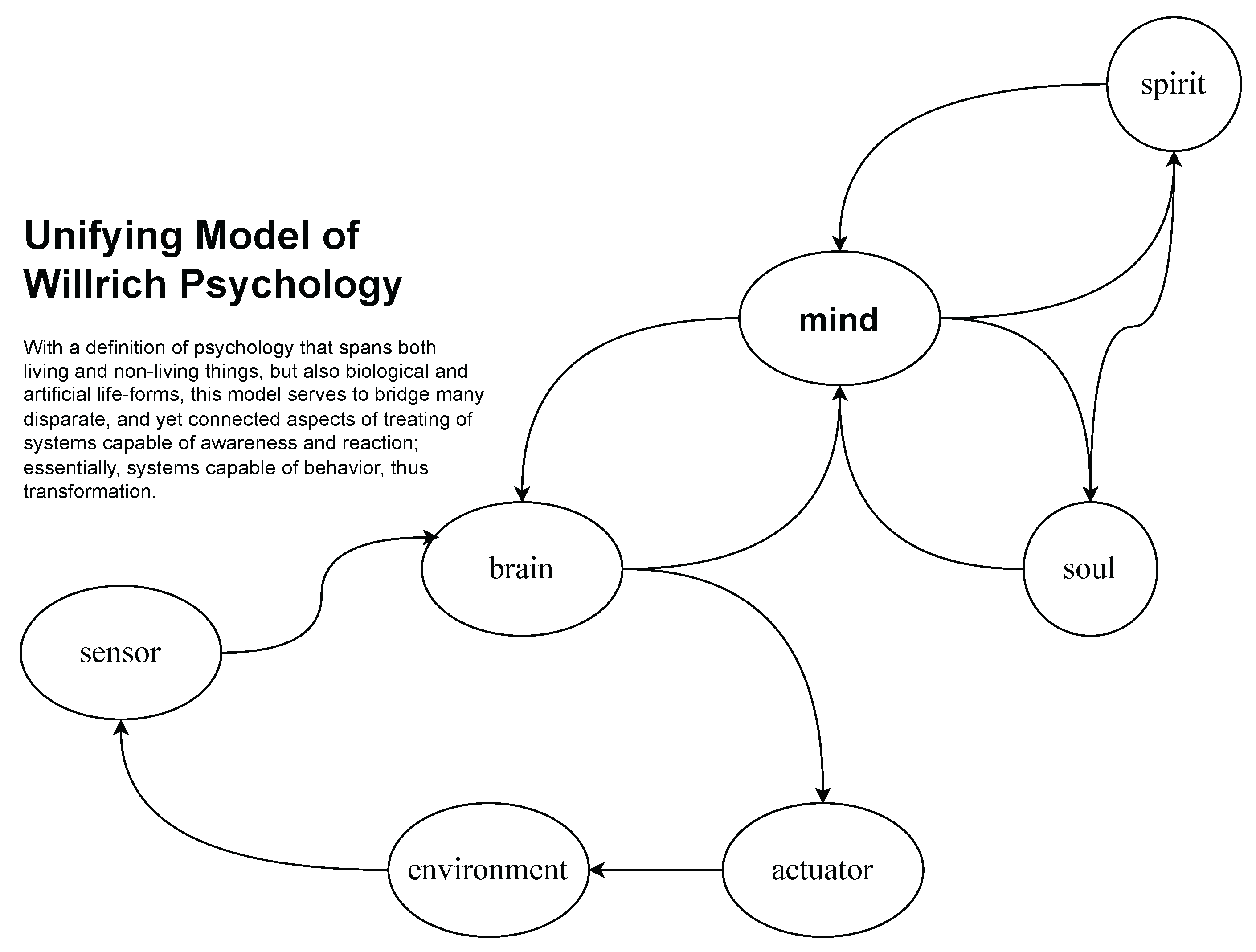
Figure 2.
Visualizing All Aspects of The Mind
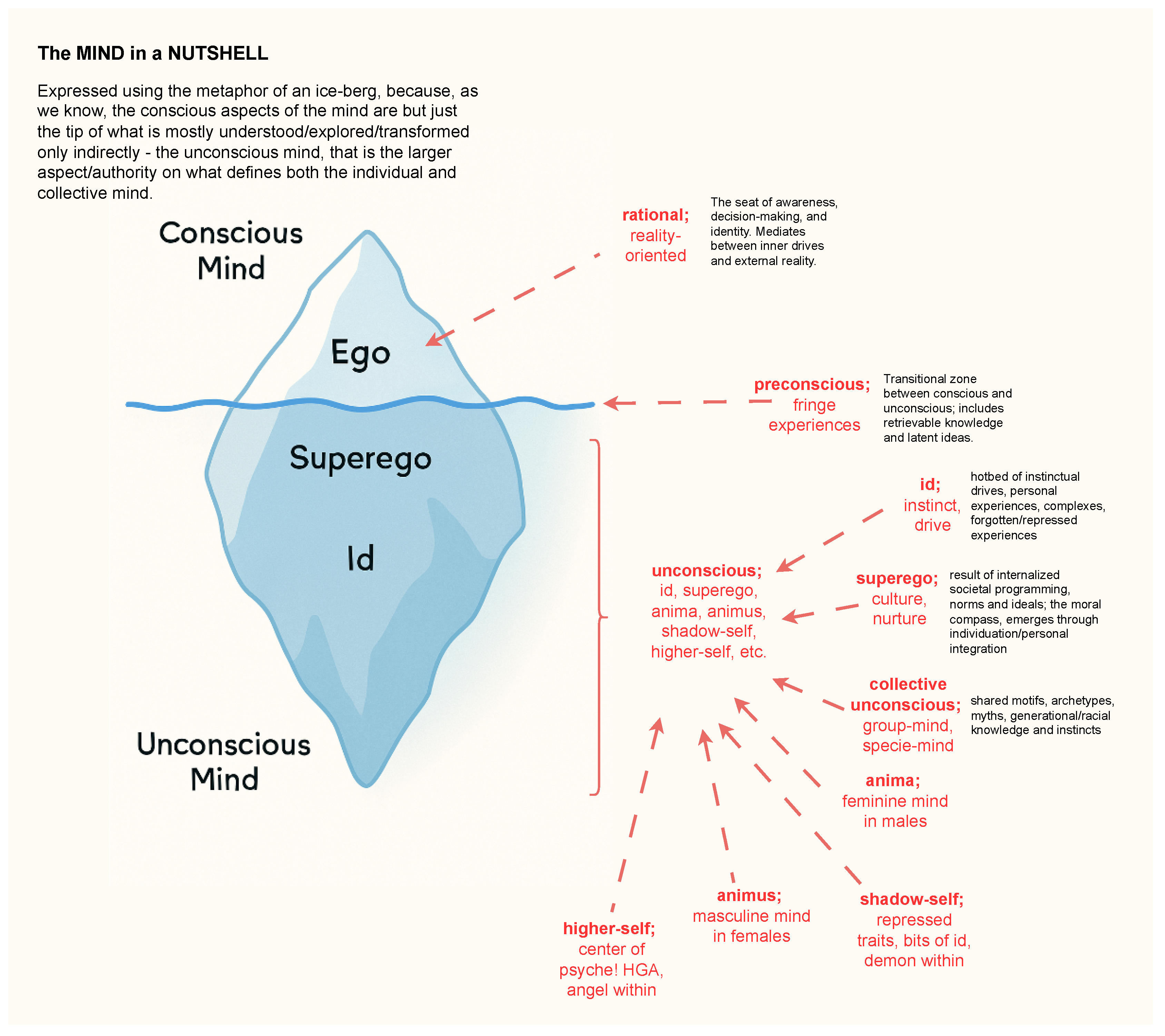
Figure 3.
The Peculiar Stone-Age Machine/Automata: a rock sensor

Figure 4.
Pictorial cover of a recent (successful) case involving applying Lu-Genome Expressions as well as Affectant Metaphysics of JWL
Figure 4.
Pictorial cover of a recent (successful) case involving applying Lu-Genome Expressions as well as Affectant Metaphysics of JWL
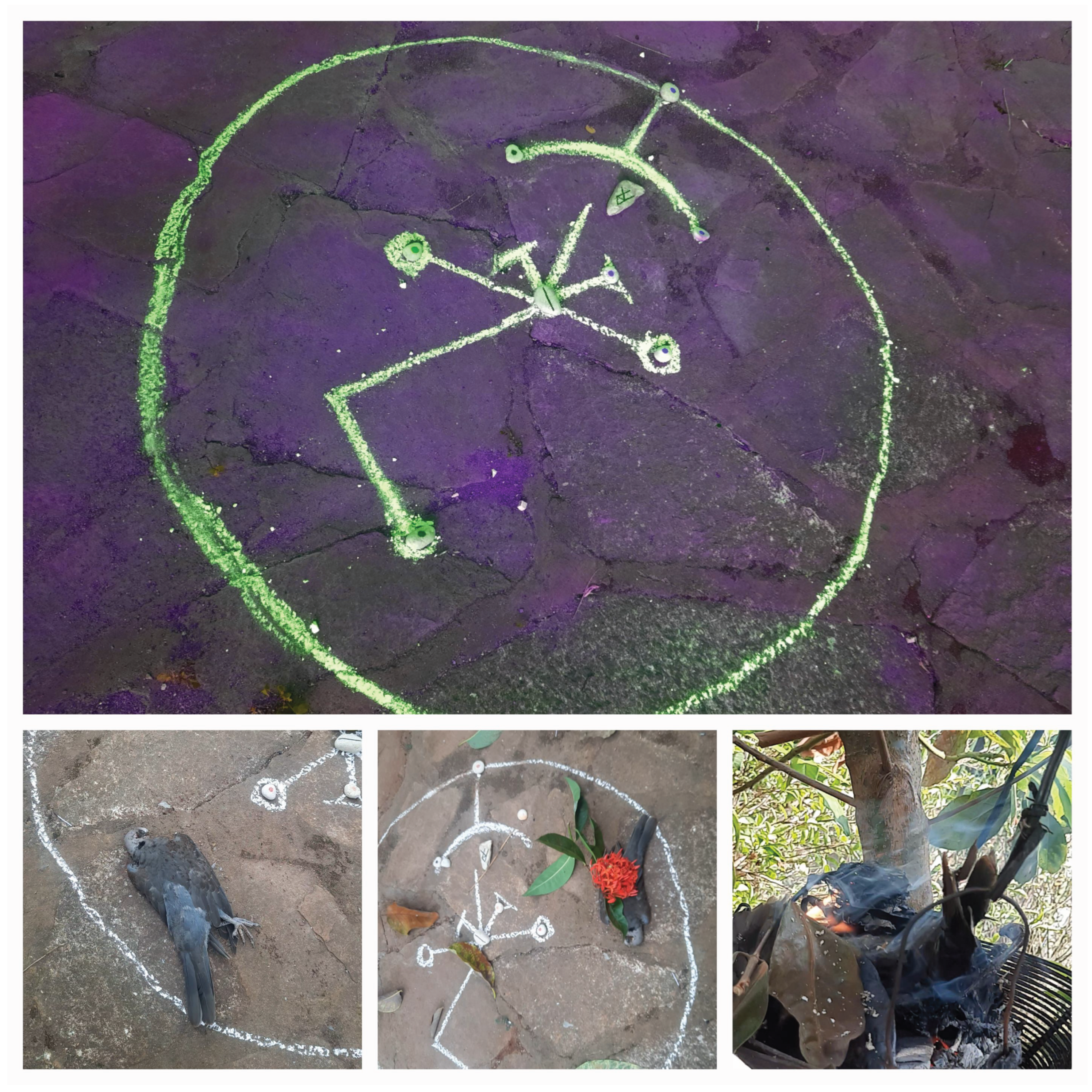
Disclaimer/Publisher’s Note: The statements, opinions and data contained in all publications are solely those of the individual author(s) and contributor(s) and not of MDPI and/or the editor(s). MDPI and/or the editor(s) disclaim responsibility for any injury to people or property resulting from any ideas, methods, instructions or products referred to in the content. |
© 2025 by the authors. Licensee MDPI, Basel, Switzerland. This article is an open access article distributed under the terms and conditions of the Creative Commons Attribution (CC BY) license (http://creativecommons.org/licenses/by/4.0/).
Copyright: This open access article is published under a Creative Commons CC BY 4.0 license, which permit the free download, distribution, and reuse, provided that the author and preprint are cited in any reuse.


