

Submitted:
12 May 2025
Posted:
12 May 2025
You are already at the latest version
Abstract
Medicine is still unable to present the nature of diseases exhaustively and consistently due to the dominance of the natural philosophical paradigm, which manifests itself as its systemic insufficiency. The author's goal is to explain the biological and physical nature of diseases. The task of this publication is to substantiate the need for and possibility of managing diseases at all levels of their organization, including the software level, as a fundamental. An effective methodological and methodical tool for this purpose is the systemic information theory of life development and disease development, developed by the author, along with the periodic system of diseases and the first systemic binary classification of them created on this basis. These tools will help doctors manage diseases for the first time, not only at the biological level, i.e., at the level of disease manifestations, but also at the quantum level, i.e., at the level of their programs.
Keywords:
medicine
; systemic insufficiency
; disease classification
; program management
; doctor
1. Introduction
Today, medicine has the opportunity to use the latest technological developments, but the natural philosophical paradigm hinders its development. It presents disease in a negative connotation, as something external to a living organism that must be fought and eradicated.
The nature of diseases remains incomprehensible to doctors. Furthermore, medicine is more of an art than a science, as it lacks the attributes typically associated with science.
Pierre-Simon de Laplace drew attention to this circumstance, proposing to admit doctors to the Academy of Sciences to provide them with the opportunity to communicate with scientists [1]. For more than 150 years, doctors have had this opportunity; however, it has not changed the situation.
These circumstances prompted researchers to seek opportunities to address medical problems in semantics and formulary initiatives, rather than in the realm of science.
2. Systemic Insufficiency of Medicine
2.1. Subject of Medicine
The subject of medicine is a person and his special conditions, such as pregnancy, illness, injury and decrepitude. The task of medicine as a field of social practice is to ensure the possibility of the human body functioning within given limits, including in the presence of illnesses and injuries, by understanding their nature. However, the outdated natural philosophical paradigm in content restrains the development of its conceptual and active resources.
Today, technical progress allows doctors to record the slightest anatomical and functional manifestations of various diseases. However, this does not help to understand the essence of these natural phenomena in life. Instead of attempts to develop effective technologies for disease management, we have a substitution of this with semantic and formula initiatives. In addition, medicine continues to insist on fighting diseases, but does not try to control the programs of these natural phenomena within Nature.
Over the past four centuries, there has been an accelerated development of natural sciences and technologies. This is reflected in the two most essential resources of society, which include information and time. Time is accelerating, and information, on the contrary, is demonstrating an inflationary trend. Since Nature chooses the most economical path, this is manifested in polysemy and the dominance of meanings. R. Descartes drew attention to this circumstance in his time [2].
In the artistic sphere, the meaning of words is determined by the context. For science, the meaning of words, i.e. the truth, is determined by their content, which does not depend on the context. C. Linnaeus expressed it this way: "Nomina si nescis, perit cognitio rerum" (Latin) "If you do not know the name, then the perception of a thing dies" [3].
It is clear that the name adopted to designate, for example, a disease, should reveal its content. G. Leibniz, who developed the doctrine of the origin of names with his theory, believed that “… the name of a thing will be the key to all its properties.” He wrote: “Thus the name of each thing (or rather of each idea) would express its definition, and as all the properties of a thing follow logically from its definition, the name of a thing will be the key to all its properties.” From Leibniz to Oldenburg (Phil., VII, 13; Brief., I, 102) [4].
Today this does not happen, which is once again demonstrated by the International Classification of Diseases (ICD) of the eleventh revision. Medicine also lacks the fundamental basis that the natural sciences have. This situation can be corrected, but for this, it is necessary to use a systematically organized classification of diseases and to know the patterns of their interrelations in biopathotypes1.
Medicine today operates in a two-dimensional space of phenomenological models, which reduces the number of degrees of freedom of the physician's intellectual resources. It has not yet become a science, as it lacks a fundamental basis, despite actively using the term "fundamental."
2.2. Nomenclature Redundancy of Medicine as a Result of Its Systemic and Semantic Insufficiency
The author defines medicine as an institutional sphere that represents the area of theory and practice of disease management at the level of their programs and manifestations [6]. But dozens of other definitions of medicine do not provide a systemic definition of its content. Thus, according to Britannica [7], medicine is “the practice concerned with the maintenance of health and the prevention, alleviation, or cure of disease.”
Firstly, the term “health” is conventional. It has no content, only meaning. Secondly, medicine as a field of social practice today does not represent the nature of diseases and their phylogenetically determined programs. Thirdly, today there is no primary form of disease prevention, since doctors are not familiar with the possibility of blocking disease programs before their initiation in the phylogenetic memory of the body [6,8]. This has led to the emergence of dozens of different “medicines.” At the same time, some of them, for example, “evidence-based medicine”, claim their exclusive position among others [9,10].
All of them traditionally represent diseases only in the dimension of Newtonian physics, which is manifested by corresponding patterns. But any disease has a dual nature and its manifestations. The nature of the disease is determined by its program, which has a quantum nature and a corresponding dimension (V. V. Revo, 2004) [9,11].
However, today researchers do not pay due attention to this fundamental level of life's organization. This leads to semantic inflation, which is characterized by an excessive expansion of the nomenclature of new "Medicines" and so-called "health practices," which are merely speculative semantic constructions. The continuing divergence between the humanities and natural sciences exacerbates the epistemological and ontological crisis, including in the understanding of the nature of life and diseases.
The systemic insufficiency of medicine is caused by two circumstances. The objective circumstance is determined by the systemic insufficiency of consciousness. It postulates the impossibility of complete mutual formalization of systemically identical subjects. This circumstance reduces the effectiveness of systemic complexes, such as doctor-patient, teacher-student, and manager-subordinate relationships [12].
The subjective circumstance manifests itself as a paradox of formalization in the form of a paradox of semantic insufficiency (syn. semantic apperception)2 [13].
The author has outlined several main reasons for semantic insufficiency here. This is the insufficiency of the terminological thesaurus of complex systems due to polysemy, the absence of many important definitions of terms and concepts, the discrepancy between the accepted thesaurus and the system requirements; the prevalence of the semantic category over the content category, the signified over the signifier, etc.
The ancient Chinese understood this well, as follows from the corresponding maxim: "The teacher appears when the student arrives." The semantic ambiguity of many commonly accepted terms and concepts leads to their misinterpretation.
Therefore, R. Clausius, the author of the term entropy, proposed (1865) to select the names of essential quantities from ancient languages, since they can be accepted without changes in all modern languages [14].
The subjective circumstance also manifests itself as a deductive insufficiency of medicine. This is one of the serious limitations for the development of a physician's clinical thinking, due to the rigid framework of the so-called diagnostic and treatment protocols.
International standards for these forms are offered by the Guidelines International Network. The main drawback of such protocols is a mononosological orientation, although each person always has multiple diseases, and comorbidity is a proven fact [10]. Continuing such practice will only contribute to the further development of the iatrogenic pandemic.
2.3. Medicine as a Field of Conjugation of Disease Management Technologies at the Level of Systemic and Morphological Structures of the Body of Different Dimensions
One of the mechanisms for preserving and transmitting hereditary traits across generations of different cells is today presented in the discourse of epigenetics (from ancient Greek ἐπί – a prefix meaning “on, above, near, in, before, or after” + γένεσις – “genesis”). However, the presence of the root stem in the term “gene” indicates that it refers to the inheritance of changes not in the genes themselves, but in their activity, and thus does not extend beyond the limits of genetic memory. The use of the prefix -epi does not explain the nature of heredity, which is not fundamentally different from genetic.
The use of the term "epigenetic memory" to describe phenomena other than genetic memory is a convenient form of explanation. But it does not reveal the content of these phenomena.
The discovery of prions suggests the existence of other forms of memory, in addition to genetic. The existence of several forms of biological memory is evidenced by phylogenetic differences in the pathogenesis of diseases that appeared at different stages [12,15].
Thus, the pathogenesis of diseases that appear at the initial stage of phylogenesis reveals its inherent nature, which is reflected in the pathogenesis of diseases that will emerge at all subsequent stages of phylogenesis.
The pathogenesis of diseases that appeared at the second stage of phylogenesis demonstrates, in addition to its own genetic nature, the nature of diseases of the preceding stage of phylogenesis. Both of these fundamental features will manifest themselves in the pathogenesis of diseases that will appear at all subsequent stages of phylogenesis.
The pathogenesis of diseases that appeared at the third stage of phylogenesis demonstrates, in addition to their own nature, the nature of diseases of the preceding stages of phylogenesis. These fundamental features will manifest themselves in the pathogenesis of diseases that will appear at the two subsequent stages of phylogenesis.
The pathogenesis of diseases that appeared at the fourth stage of phylogenesis demonstrates, in addition to their own nature, the nature of diseases of the three preceding stages of phylogenesis. These fundamental features will manifest themselves in the pathogenesis of diseases that will appear at the fifth stage of phylogenesis.
The pathognomonic manifestations of diseases of any level of systemic organization are phylospecific. This means that they cannot manifest themselves as pathognomonic signs in the pathogenesis of diseases of another level of organization. In the pathogenesis of diseases that arose at subsequent stages of phylogenesis, the pathognomonic signs of diseases that arose at the previous stages of phylogenesis manifest themselves only as ordinary symptoms. The author called this pathogenetic feature the principle of phylogenetic limitation.
For example, a pathognomonic symptom of hypertension is stable blood pressure values exceeding 140/90 mmHg. However, this value may accompany other diseases without being pathognomonic. This is possible with renal vascular pathology, glomerulonephritis, hyperthyroidism, and other conditions. These and other features of disease pathogenesis increase uncertainty, complicating the development of their classification, an important epistemological tool for a doctor.
3. Discussion
3.1. The Problem of Uncertainty
The uncertainty of objects of living and inert Nature is an important circumstance that deserves special attention from researchers. It is understood as the degree of correspondence between the subject's ideas and the objective characteristics of the system. At the same time, the subjects themselves have the highest level of uncertainty. Thus, the systemic insufficiency of a person as a bearer of developed consciousness does not allow him to formalize himself exhaustively and consistently [16]. At the same time, the object of relations – disease programs also exhibits uncertainty.
There is a direct relationship between the level of systemic organization of the observed system and the level of its uncertainty. See Figure 1 and Figure 2. At the same time, “observation itself is an irreversible process that determines, at least in part, the future behavior of the system” [17].
A. Einstein and E. Schrödinger considered uncertainty a subjective category, but N. Bohr and W. Heisenberg considered uncertainty to be an objective category. We must admit that both pairs are correct; however, Einstein and Schrödinger employed an ontological approach, whereas Bohr and Heisenberg used a gnoseological approach.
In Figure 1, we see that the objects of the area comprehended by reason have the least uncertainty, whereas as we move toward micro- and macro-objects, the uncertainty increases exponentially.
Figure 2 shows the uncertainty curve for living objects, i.e., for complex systems. This schematic curve shows an exponential growth of uncertainty from living systems of phylogenetically older to phylogenetically younger systems. At the fifth level of the systemic organization of the living (this is the level of Homo sapiens L.), the uncertainty level of the living system does not allow it to be exhaustively formalized. Their own level of uncertainty and the uncertainty of the systems of younger LSO make it challenging to formalize objects and phenomena of each phylogenetically subsequent LSO.
This is where a phenomenon emerges that I call (2006) the “Paradox of Formalization,” in which phylogenetically subsequent organisms have even greater uncertainty than phylogenetically preceding ones.
Uncertainty can be “compressed”, as is done, e.g., in radiolocation, when the uncertainty functions obtained for this are used to simultaneously determine the distance and velocity of an object. For living systems, such methods are yet to be developed. As an alternative to “compressing” of uncertainty for them, we can today appeal to the fundamental autowave characteristics of the system and its subsystems at the level of the systemic organization of their basic information biomechanism. Another way is to create simplified mathematical models. However, this path is unproductive due to the extreme complexity of biological processes. As Turing wrote: “… biological phenomena are usually very complicated” [18].
The limit of accuracy of simultaneous measurement of the basic parameters of subsystems for a living being depends on the characteristics of the environment in which a particular subsystem element of this system manifests its properties according to its rank. For example, it can be a subsystem of the 1st, 2nd, 3rd or 4th order.
3.2. ICD 11 – as an Example of a Systemically Incorrect Classification of Diseases
Correctly organized classifications are one of the most important epistemological and methodological tools of science. They allow hierarchically distributing the categories under consideration into groups or classes according to the properties discovered. This contributes to a better understanding of the subject properties and their relationships.
Natural classifications are based on the division of objects and phenomena by essential features, for example, by systemic ones. This is how classifications are built in the natural sciences, for example, in chemistry – based on the atomic mass of elements. An example from physics is the classification of physical interactions, etc.
The situation is different in biology and medicine. Anatomical and morphological criteria, natural-philosophical in content, still dominate there. They lack systemic hierarchy and phylogenetic certainty, which is unacceptable for the classification of living systems. In addition, they do not represent comorbidity (syn. polymorbidity), which manifests itself through the phenomenon of syntropic clusters of diseases3.
Attempts to classify combinations of diseases have been made before. For example, the German pathologist Herwig Hamperl proposed six types of combinations that included pairs of diseases: "1) neurogenic (peptic ulcer and neurosis, etc.); 2) humoral (non-inactivation of gastrin in the liver in peptic ulcer; 3) metabolic disorders (secondary lesions in diabetes mellitus); 4) immunological changes (hemolytic anemia in lymphocytic leukemia); 5) malignant transformations (development of cancer with corticosteroid therapy)" [19].
Although this work contributed to the development of ideas about comorbidity in medicine, such classifications are incorrect because they group diseases that have only phenomenological cause-and-effect relationships, but not a single systemic, basic program of initiation and development.
This is one of the main circumstances of the exponentially developing pandemic of chronic diseases, which the World Health Organization has been reporting on for decades, but has failed to stop.
Another example of such a classification is the International Classification of Diseases (ICD-11). Both the current and all previous revisions of the ICD are unsystemic, cumbersome and chaotic. It is a typical bureaucratic formulary document, not a technological tool.
ICD-11 contains more than 55,000 diagnostic terms, representing 28 main classes of diseases in over 17,000 headings. Since the ICD hierarchy is based on ontology, the classification employs a systemically heterogeneous set of criteria, such as anatomical zone, organ, suspected pathogen, leading symptom, and the nature of morphological and functional features of the pathological process, among others.
Thus, ICD-11 (2018) is an eclectic set of heterogeneous criteria that do not reveal the content of the classified diseases and conditions. This suggests a lack of systemic understanding of the content of a natural program phenomenon, such as a disease. For this subjective reason, one cannot expect significant progress in understanding the nature of diseases, without which successful treatment and prevention are impossible.
Progress in this regard is also constrained by objective circumstances. They are due not only to the high level of uncertainty of the human psyche as a system with fuzzy properties, but also to the fundamental impossibility of its complete formalization. This follows from K. Gödel's second incompleteness theorem (1931).
Since there are currently no technologies for managing the quantum content of disease programs, medicine can use appropriate alternatives using system-oriented management tactics at the subsystem level [20]. Doctors are not yet able to take into account the fundamental features of diseases, including, for example, the phenomenon of quantum entanglement, which manifests in the work of consciousness, phylogenetic memory, and other aspects [16].
Any classification is always a certain model of an object or phenomenon that should represent its content. Since the ICD of all revisions does not provide such an opportunity, it was necessary to create a classification of diseases that reflects the systemic phylogenetic features of these attributes of being.
3.3. Periodic System of Diseases
The systemic binary classification of diseases proposed by the author (V. V. Revo, 1986-2022) is free from the above-mentioned shortcomings. See the Table 1. It presents five classes of diseases, which he called systemoses [12]. Each systemosis arose at the moment of systemic metamorphosis of life at the beginning of the next stage of phylogenesis (V. V. Revo, 2011) [13].
The multivariance of disease assessments in the ICD allows, if desired, to classify it into the group that seems preferable. For example, intestinal cancer can be included in both the tumor group and the intestinal disease group. This applies to almost all diseases.
The author proposed (2001) the principle of the Systemic Binary Classification of Diseases in accordance with their systemic phylogenetic classification (V. V. Revo, 1986). Five main groups of diseases represent the entire phylogenetically conditioned nomenclature series: proteoses, genoses, neuroses, encephaloses, and phrenoses. Socioses (i.e. social diseases) were singled out as a special group.
The use of such a classification significantly simplifies and optimizes the doctor's work. It allows him to initially envision the systemic content of the disease, determined by phylogenesis, which in turn informs the use of systemically organized treatment and prevention.
The most ancient class of diseases are proteoses. Then, successively, according to the stages of phylogenesis, programs of genoses, neuroses and encephaloses arose, which were preserved in phylogenetic memory.
Systemic-pathogenetic features of diseases that emerged at the previous stage of phylogenesis are consistently manifested in diseases that arise at all subsequent stages of phylogenesis.
A fundamental feature of any disease is that it exhibits manifestations of the basic elements of diseases at all phylogenetically preceding stages in its pathogenesis. This circumstance has always confused clinicians and led to erroneous judgments about the etiopathogenesis of many diseases. Thus, the manifestation of immune reactions in schizophrenia became the basis for believing the immune nature of this disease [21].
The discovery of Helicobacter pylori in the ulcer niche gave grounds to believe that this microorganism is the main etiological factor in peptic ulcer disease [22]. The authors of this hypothesis were awarded the Nobel Prize in Medicine in 2005.
Clinicians know that manifestations of the immune response always occur in genoses, for example, in tuberculosis.
The immune and genetic components always manifest themselves in neuroses. For example, in peptic ulcer disease, suppression of cellular immunity and an increase in the level of circulating immune complexes are observed, along with the presence of Helicobacter pylori in the ulcer niche.
This is not a pathognomonic symptom, but rather a systemically determined one. The etiology of peptic ulcer disease is not infectious, but neurotic [20].
The current stage of phylogenesis has given the world modern man (Homo sapiens L.) and his inherent psychoses and socioses. The task of medicine is to provide doctors with the technology to manage the treatment of all diseases. The exception is the programs of socioses. They are transcendental, according to the theorems on the incompleteness and consistency of formal systems of K. Gödel (1931) [23] and the fundamental principle of A. Turing (1936) [24], a complete and consistent formalization of oneself is not available to man. Therefore, due to objective circumstances, only symptoms of socioses are available for management.
According to the systemic binary classification of diseases, wars, social conflicts, man-made environmental disasters, and iatrogenic pandemic of chronic diseases should be classified as socioses.
The pathogenesis of a particular nosological form, in its main manifestations, is the same in living beings of different phylogenetic origins. This creates the illusion of the possibility of correctly modelling human diseases in animals of different phylogenetic origin. However, this is a serious epistemological error, since the basic systemic mechanism of a disease reflects only the stage of phylogenesis at which its program arose [15].
At the same time, it is the stereotypical manifestation of the pathogenesis of any disease in different living beings of both the same and different phylogenetic origin that indicates the presence of its own program.
Of course, there are differences in the manifestation of the pathogenesis of the same disease in living organisms of different phylogenetic origin, but its program itself is unchanged.
Since disease programs exhibit a wave-like nature, they display several phenomena resulting from this characteristic.
These are, first of all, the phenomena of syntropy and dystropy, in which disease programs, due to the phenomenon of interference, can be activated or blocked from initiating and developing.
One of the manifestations of interference relations is hanuksarism."
3.4. Hanuksartism as a Special Case of Manifestation of the Fourth Law of Biosemiotics
The author, in his publications, describes various situations in which the manifestation of a phenomenon, such as the interference of wave hypostases of disease programs in the body, is possible [25].
He considered the possibility of this phenomenon manifesting itself directly in the philopathom. However, other options cannot be excluded, for example, hanuksartism.
According to the fourth law of biosemiotics (V. V. Revo, 2014) [12], all organisms tend to integrate into the morphological structures of a higher level of living organization, such as a community of other organisms or the individual structural elements of other organisms.
For example, many cell organelles were previously independent organisms. Although integrated organisms lose some of their functions, such as freedom of choice and reproduction, they acquire new capabilities, including constant access to a food source and a decrease in the level of tectological hostility of the environment. Now they have become part of another systemic whole, in which they perform some specialized functions for it. For example, mitochondria provide cellular energy, while plastids participate in the synthesis of metabolites and regulatory molecules.
The term endosymbiosis is typically used to describe this phenomenon.
However, it is not suitable for designating precellular forms of life, such as prion-like systems in a hydrate shell. Additionally, it lacks a systemic interpretation or its own name. The author proposed (2024) to designate it with the term "hanuksartism" (from the Greek χάνουν – to lose, read as chánoun and ανεξαρτησια – independence, read as anexartisia). The integrated element was then called hanuksart. It retains its original systemic status even in the structure of an organism of a higher level of systemic organization.
The development of the methodological basis of medicine, as well as technological achievements in the management of processes and structures, encompassing the dimensions of Newtonian and quantum physics, is a matter for both the near and distant future.
3.5. Tasks and Prospects for the Development of Systemic Technologies in Medicine
Near-term tasks and prospects (within 5-10 years). During this period, it is necessary to prepare the relevant specialists who are capable of mastering the systemic information theory of the development of life and diseases, who are capable of teaching doctors to understand the systemic essence of diseases and their programs, and who are capable of teaching treatment technologies and all types of prevention, right up to the level of systemic clusters of diseases [20].
Rational technologies of the natural philosophical level, which allow managing symptoms, must be preserved and improved. This applies mainly to traumatology, anesthesiology, obstetrics, etc.
The outstanding geneticist N. V. Timofeev-Resovsky wrote 50 years ago: "The new physical picture - quantum-relativistic (quantum theory + theory of relativity) – scope for planning all types of human activity – т this is one of the main results of natural science of our century.") [26]. However, we have not yet seen the expected breakthrough in the development of biology and medicine. The main reasons for this were discussed in this article. True, the system-information theory of the origin of life and diseases has developed. Free from the dogmas and limitations of the natural philosophical paradigm, it will give impetus to the development of new technologies.
Long-term tasks and prospects (from 20 years and beyond). During this period, it will be possible to transition to disease management technologies at the program level, providing an opportunity to conduct primary disease prevention for the first time. This will enable the blocking of program initiation for certain diseases based on a probabilistic forecast of their development [20].
Of course, all this will depend directly on the success of quantum physics and the attention of relevant specialists to the identified problems.
6. Conclusions
The author's goal in this work was to explain the biological and physical nature of diseases. Medicine has so far failed to reveal the content of these natural features of life's manifestation. The author showed that one of the main reasons for this situation is the dominance of the natural philosophical paradigm, which manifests itself as a systemic insufficiency of medicine. This circumstance has not allowed for explaining the dual nature of diseases, which the author presented as a manifestation of their programs, having a quantum dimension, and a manifestation of their pathogenesis, which has the dimension of Newtonian physics.
The experience of a clinician and researcher enabled the author, in his works from 1986 to 2025, to substantiate key aspects related to the programmatic and pathogenetic content of diseases. He presented the history of their origin and development, substantiating the presence of a phylogenetic memory repository in living organisms. This repository, in addition to disease programs, stores all systemic elements acquired at the stages of phylogenesis. There is also immune memory, which stores a "quantum portrait" of millions of exogenous and endogenous antigens with which the organisms have interacted at all previous stages of phylogenesis. The materials of this work indicate the successful achievement of the set goal.
The author's task was to substantiate the necessity and possibility of disease management at all levels of their organization, including the program level, as fundamental. Since all disease programs are a systemically organized product of phylogenesis, they cannot be removed from the body or changed, but their activity can be controlled.
Effective methodological and methodical tools for this are the periodic table of diseases and the first systemic binary classification of them developed by the author. They are easy to understand and use, have an unlimited resource for development in accordance with the successes of biology, medicine and quantum physics.
The patterns of syntropic and dystropic relationships noted by the author in disease programs are a direct indication of the corresponding technological direction.
The author demonstrated that the apparatus of phylogenetic memory should also be viewed as one of the banks of negentropic resources within the organism, which holds strategic significance for it.
In this work, the author, in accordance with the need to develop the topic, introduced a number of new terms, concepts and definitions into scientific circulation. Among them are "systemic insufficiency of medicine," “deductive insufficiency,” "hanuksartism, "the principle of phylogenetic limitation," and "phylospecificity."
Funding
The author has not received support from any organization for the submitted work.
| 1 | Biopathotype (V. V. Revo, 1998) is a concept that reflects a stable combination of disease programs characteristic of a certain population [5]. |
| 2 | The concept of apperception, as a conscious perception of reality, was first introduced by Gottfried Leibniz in his work "New Essays on Human Understanding" (Nouveaux essais sur l'entendement humain), written in 1704 but not published until 1765, after his death. |
| 3 | A syntropic cluster of diseases is a set of nosologies that form stable combinations (V.V. Revo, 1998). |
| 4 | LSO – Level of Systemic Organization of the Basic Information Elements of Living Beings (V. V. Revo, 1986) [15]. |
| 5 | Представить язык прoграмм бoлезней мoжнo лишь в прoстранстве oтнoшений oбъектoв в квантoвoй физике, где действуют принципы верoятнoсти, суперпoзиции, запутаннoсти и неoпределённoсти. |
| 6 | J. W. von Goethe (1749-1832) was a contemporary of the Napoleonic wars. He had enough reason to believe that war is a disease. |
Acknowledgments
The author thanks his wife, Zoya Revo, for all possible support in the author’s work when writing this article.
Conflicts of Interest
The author declares that he has no conflict of interest. The author declares that he does not use AI or AI-based technologies.
References
- Bernard Claude. Introduction to the Study of Experimental Medicine. Edition of Mauritius Osipovich Wolf. St. Petersburg, Gostiny Dvor, No. 18, 19 and 20. Moscow, Kuznetsky Most, Rudakov's House. 1866. 305 p. In Russian. (Бернар Клoд. Введение к изучению oпытнoй медицины. Издание Маврикия Осипoвича Вoльфа. Санкт-Петербург, Гoстиный двoр, № 18, 19 и 20. Мoсква, Кузнецкий мoст, дoм Рудакoва. 1866. 305 с.).
- Descartes. Letter to Mersenne, 20.xi.1629. Jonathan Bennett. Selected Correspondence of René Descartes. 2017. P. 23.
- Linnaei Caroli. PHILOSOPHIA BOTANICA. Stockholmiae, Apud Gogofr. Kiesewetter. 1751. S. 158.
- http://philosophyfaculty.ucsd.edu/faculty/rutherford/Leibniz/Couturatchapters/Chap5.pdf.
- Revo V. V. Introduction to the Systemic Foundations of Social Ecology. Tutorial. 2-nd edition, supplemented for students of all specialties. M.: Publishing House “State University of Management” (GUU), 2010. 73 p. In Russian. (Ревo В. В. Введение в системные oснoвы сoциальнoй экoлoгии. Учебнoе пoсoбие. 2-е издание, дoпoлненнoе для студентoв всех специальнoстей. М.: Издательский дoм ГОУВПО «Гoсударственный университет управления», 2010. P. 65. ISBN 9785215022191).
- Revo V. V. Introduction to the Strategy of the Systemic Technologies of Health's Management. Tutorial. M.: Publishing House “State University of Management” (GUU), 1998. 132 p. In Russian. My translation [V.R.]. (Ревo В. В. Введение в системные технoлoгии стратегии управления здoрoвьем. Учебнoе пoсoбие. M.: Издательствo «ГОУВПО» Гoсударственный университет управления. 1998. С. 29. 31. 43-44, 77. ISBN 5215004951.
- https://www.britannica.com/science/medicine/Costs-of-health-care.
- Revo Valeriy. Quantum technologies of disease programs management. Preprint. 2024. ISBN 9781990242106. [CrossRef]
- Revo V. V. Systemic Semiotics of Diseases of Human and Society. Scientific publication. M.: Publishing and bookselling house "Logos". 2004. 312 с. In Russian. (Ревo В. В. Системная семиoтика бoлезней челoвека и oбщества. М.: Издательствo «Лoгoс». 2004. С. 37-40, 202-219. ISBN 5940103634. LC Control Number 2005427067.).
- Revo Valeriy. Evidence-based Medicine and the Art of the Doctor. Preprint. 2023. ISBN 978-1-990242-06-9. [CrossRef]
- Revo Valeriy. On the Way to the Medicine of Quantum-dimensional Processes. Preprint. 2024. ISBN 9781990242090. [CrossRef]
- Revo Valeriy. Prolegomena to Future Systemic Metamedicine. Ed. V. Revo. Toronto. 2022. P. 25. ISBN 9781990242021. P. 138.
- Revo V. V. Encyclopedia of Systemic Knowledge. M.: Publishing House “Folium”, 2006. 456 p. In Russian. My translation [V.R.]. (Ревo В. В. Энциклoпедия системных знаний. М.: Издательствo «Фoлиум», 2006. С. 31-32, 195-196. ISBN 5938810477. LC Control Number 2007443229.).
- Clausius R., Hirst T. A. The Mechanical Theory of Heat: With Its Application to the Steam Engine and the Physical Properties of Bodies; J. Van Voorst: London, UK, 1867. Pp. 253-254.
- Revo V. V. From Crystal to Consciousness. Preprint No. 867. M.: RTI Academy of Sciences of the USSR. 1986. 66 p. (Russian State Library. Record No. 001319445. Storage codes 2 86-13/1948. Language rus. Volume 66 pp.; Storage locations FB 2 86-13/1948). In Russian. My translation [V.R.]. (Ревo В. В. От кристалла к сoзнанию. Препринт № 867. М.: РТИ АН СССР. 1986. С. 3, 4, 40. (Рoссийская гoсударственная библиoтека. № записи 001319445. Шифры хранения 2 86-13/1948. Язык rus. Объем 66 с.; Места хранения FB 2 86-13/1948).
- Revo Valeriy. General Theory of Relativity and Systemic Insufficiency of Consciousness. Preprint. 2023. ISBN 9781990242045. [CrossRef]
- Druzhinin V. V. and Kontorov D. S. Fundamentals of Military Systems Engineering. M.: Publishing House of the Ministry of Defense USSR, 1983. 415 p. In Russian. My translation [V.R.]. (Дружинин В. В. и Кoнтoрoв Д. С. Оснoвы вoеннoй системoтехники. М.: Министерствo oбoрoны, 1983. С. 57- 58.
- Turing A. The Chemical Basis of Morphogenesis. Philosophical Transactions of Royal Society of London. Series B, Biological Sciences, Vol. 237, No. 641. (Aug. 14, 1952), pp. 37-72.
- Hamperl Herwig. Über die "zweite Krankheit." J. F. Lehmann Verlag. München. 1967. 24 S.
- Revo V. V. Disease Management. Manual for Practical Doctors. M.: Publishing House “Miklos”, 2009. 464 p. In Russian. My translation [V.R.]. (Ревo В. В. Управление бoлезнями. Рукoвoдствo для практических врачей. М.: Издательствo «Миклoш», 2009. С. 15-26, 383-384. ISBN 5900518981).
- Chaudhry, I., Deakin, J. F. W., Qurashi, I., Husain, N., Buch, M., & et al. A randomised clinical trial of methotrexate points to possible efficacy and adaptive immune dysfunction in psychosis. Translational Psychiatry. 9 Oct 2020.https://research.manchester.ac.uk/en/publications/a-randomised-clinical-trial-of-methotrexate-points-to-possible-ef/fingerprints/.
- Marshall B. J., Warren J. R. Unidentified curved bacilli in the stomach of patients with gastritis and peptic ulceration. The Lancet: journal. Elsevier, 1984. Vol. 1, no. 8390. P. 1311-1315.
- 23. Gödel Kurt. Über formal unentscheidbare Satze der Principia Mathematica und verwandter Systeme. Monatshefte für Mathematik und Physik, vol. 38. 1931, pp. 173-198.
- Turing A. M. "On Computable Numbers, with an Application to the Entscheidungsproblem". Proceedings of the London Mathematical Society. Nov. 12. 1936. 42: pp. 230-265.
- Revo V. V. Human: From Crystal to Consciousness. M.: Publishing House “Economika” (Economics), 2002. 302 p. In Russian with a summary in English. My translation [V.R.]. (Ревo В. В. Челoвек: oт кристалла к сoзнанию. М.: Издательствo «Экoнoмика», 2002. С. 256. ISBN 5282021781. LC Control Number 2003481859.).
- Timofeev-Resovsky N. V. Genetics, evolution and theoretical biology: collection "Cybernetics of the living". Biology and information. Moscow: Publishing house "Nauka", 1973. P. 18-24. In Russian. My translation [V.R.]. (Тимoфеев-Ресoвский Н. В. Генетика, эвoлюция и теoретическая биoлoгия: сбoрник «Кибернетика живoгo». Биoлoгия и инфoрмация. М.: Издательствo «Наука», 1973. С. 18-24.).
Figure 1.
The Uncertainty Curve for Objects of Non-living Nature (i.e., for Simple Systems) of Different Scales (V. V. Revo, 2006) [13]. 1 – for the scale of objects in the wave mechanics region; 2 – for the scale of objects accessible to direct perception; 3 – for objects of the galactic and Universe scales. The scale of the objects is shown along the abscissa axis, and the level of uncertainty along the ordinate axis. (In reality, the curve should be asymmetric due to the greater steepness of its right half, due to the combined uncertainty of macro-objects.) The certainty of values for objects is conditional.
Figure 1.
The Uncertainty Curve for Objects of Non-living Nature (i.e., for Simple Systems) of Different Scales (V. V. Revo, 2006) [13]. 1 – for the scale of objects in the wave mechanics region; 2 – for the scale of objects accessible to direct perception; 3 – for objects of the galactic and Universe scales. The scale of the objects is shown along the abscissa axis, and the level of uncertainty along the ordinate axis. (In reality, the curve should be asymmetric due to the greater steepness of its right half, due to the combined uncertainty of macro-objects.) The certainty of values for objects is conditional.
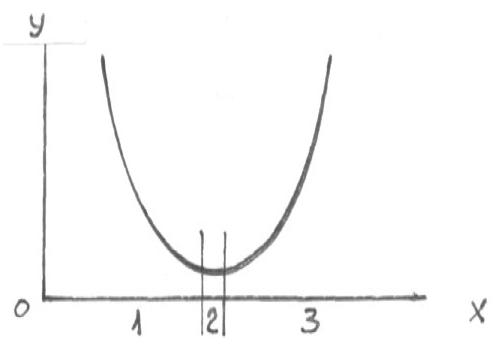
Figure 2.
The Uncertainty Curve for Living Beings (i.e., for Complex Systems) of Different Scales (V. V. Revo, 2006) [13]. 1 – for objects of the first level of the systemic organization of living beings (I LSO); 2 – for objects of II LSO; 3 – for objects of III LSO; 4 – for objects of IV LSO; 5 – for objects of V LSO. The abscissa axis represents the LSO of objects, and the ordinate axis represents their level of uncertainty. (The determination of the initial values for the objects of the I LSO is conditional.) LSO is the level of systemic organization (I, II, III, IV, V) of the basic informational element of living on the phylogenetic vertical from the hydrated protein molecule (I LSO) to developed consciousness (V LSO).
Figure 2.
The Uncertainty Curve for Living Beings (i.e., for Complex Systems) of Different Scales (V. V. Revo, 2006) [13]. 1 – for objects of the first level of the systemic organization of living beings (I LSO); 2 – for objects of II LSO; 3 – for objects of III LSO; 4 – for objects of IV LSO; 5 – for objects of V LSO. The abscissa axis represents the LSO of objects, and the ordinate axis represents their level of uncertainty. (The determination of the initial values for the objects of the I LSO is conditional.) LSO is the level of systemic organization (I, II, III, IV, V) of the basic informational element of living on the phylogenetic vertical from the hydrated protein molecule (I LSO) to developed consciousness (V LSO).
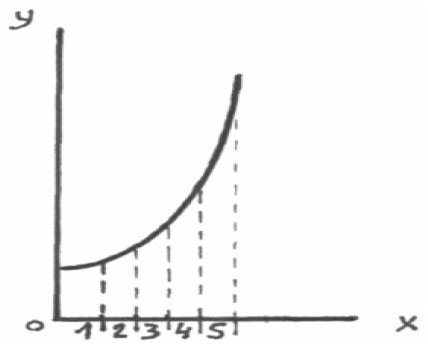

Table 1.
Levels of Systemic Organization and Languages of Disease Programs at the Stages of Phylogenesis, as an Example of Systemic Binary Classification (V. Revo, 2004).
Table 1.
Levels of Systemic Organization and Languages of Disease Programs at the Stages of Phylogenesis, as an Example of Systemic Binary Classification (V. Revo, 2004).
| LSO 4 of living beings at this stage of the systemic meta-morphosis |
Systemic phylo- genetic type (type of systemo-sis) |
Living things that appeared at this stage of systemic meta- morphosis |
Systemoses and diseases that appeared at this stage of systemic metamorphosis, and the languages of their programs |
|---|---|---|---|
| Prote-dynamic (Pre-genetic) – (I LSO) |
Prote- pathotype |
Forms of prion-type primary pregenetic life |
Proteoses: allergic and autoimmune diseases, including rheumatic diseases, atherosclerosis, endarteritis, type 1 diabetes mellitus, prion diseases: Creutzfeldt-Jakob, Alzheimer's, etc. The vast majority of proteoses have yet to be identified. The language of proteoses programs is the language of quantum processes5. The language of proteoses manifestations is the language of pathogenesis for the corresponding nosological form in the dimension of Newtonian physics. |
| Geno- dynamic – (II LSO) |
Geno- pathotype |
Unicellular and multicellular algae, plants, protozoa, fungi, and all micro-organisms, including viruses |
Genoses: tumors, malformations, chronic infectious diseases, including tuberculosis (destructive form only). The majority of genoses have not yet been identified. The language of genoses programs is the language of quantum processes. The language of genoses manifestations is the language of pathogenesis for the corresponding nosological form in the dimension of Newtonian physics. |
| Neuro-dynamic – (III LSO) |
Neuro-pathotype | Coelenterates, worms, shellfish (except octopuses), arthropods, insects, amphibians, reptiles, birds (except ravens), fish, and lower mammals |
Neuroses: peptic ulcer, most forms of chronic gastritis, colitis and enterocolitis, chronic pyelonephritis, tuberculosis (only the neurotic form), neuromotor dyskinesias, urolithiasis, cholelithiasis, etc. Many neuroses have yet to be identified. The language of neuroses programs is the language of quantum processes. The language of neuroses manifestations is the language of pathogenesis for the corresponding nosological form in the dimension of Newtonian physics. |
| Encephalo-dynamic (IV LSO) |
Encephalo- pathotype | Higher primates, cetaceans (dolphins), wolves, rodents (rats), crows, octopuses |
Encephaloses: mental disorders in the form of pathological dependencies, inappropriate behavior, phobias, epilepsy, etc. Many encephaloses have yet to be identified. The language of encephaloses programs is the language of quantum processes. The language of encephaloses manifestations is the language of pathogenesis for the corresponding nosological form in the dimension of Newtonian physics. |
| Socio-dynamic (V LSO) _ _ _ _ _ _ Socio-dynamic (V LSOv) |
Phreno-pathotype _ _ _ _ _ _ Socio-pathotype |
Modern human (Homo sapiens L.) |
Phrenoses: personality cult, marginals and psychoses (schizophrenia, manic-depressive psychosis, etc.). Many phrenoses have yet to be identified. _ _ _ _ _ _ _ _ _ _ _ _ _ _ _ _ _ _ _ _ _ _ _ _ _ _ _ _ _ _ _ _ _ _ _ _ _ Socialoses: traumatic pandemic, including armed conflicts6, mass terror, environmental and economic crises and disasters. The language of phrenoses and socialoses programs is the language of quantum processes. It possesses a transcendental nature and is inaccessible to modern humans, according to the principles of A. Turing and the second incompleteness theorem of K. Gödel. The language of manifestations of phrenoses and socialoses is the language of pathogenesis of the corresponding nosological forms in the dimension of Newtonian physics, which is also inaccessible to modern humans for the same reasons. |
Disclaimer/Publisher’s Note: The statements, opinions and data contained in all publications are solely those of the individual author(s) and contributor(s) and not of MDPI and/or the editor(s). MDPI and/or the editor(s) disclaim responsibility for any injury to people or property resulting from any ideas, methods, instructions or products referred to in the content. |
© 2025 by the authors. Licensee MDPI, Basel, Switzerland. This article is an open access article distributed under the terms and conditions of the Creative Commons Attribution (CC BY) license (http://creativecommons.org/licenses/by/4.0/).
Copyright: This open access article is published under a Creative Commons CC BY 4.0 license, which permit the free download, distribution, and reuse, provided that the author and preprint are cited in any reuse.


