Preprint
Article

This version is not peer-reviewed.

Economic and Biological Impact of Eradication Measures for Xylella fastidiosa in Northern Portugal

A peer-reviewed article of this preprint also exists.

Submitted:

28 September 2025

Posted:

29 September 2025

You are already at the latest version

Abstract

Xylella fastidiosa was first detected in Portugal in 2019 in Lavandula dentata. In response, the national plant health authorities promptly established a Demarcated Zone in the affected area and implemented a series of eradication and control measures, including the systematic removal and destruction of infected and host plants. This study analyzes the economic and operational impacts of these eradication efforts in the northern region of Portugal, with a focus on Demarcated Zones such as the Porto Metropolitan Area, Sabrosa, Alijó, Baião, Mirandela, Mirandela II, and Bougado between 2019 and June 2023. During this period, about 412,500 plants were uprooted. The majority were Pteridium aquilinum (bracken fern), with 360,324 individuals (87.3%), reflecting its wide distribution and the large area affected. Olea europaea (olive tree) was the second most common species removed, with 7,024 plants (1.7%), highlighting its economic relevance. Other notable species included Quercus robur (3,511; 0.85%), Pelargonium graveolens (3,509; 0.85%), and Rosa spp. (1,106; 0.27%). Overall, destruction costs were estimated at about €1.04 million, with replanting costs of roughly €6.81 million. In parallel, prospection activities—conducted to detect early signs of infection and monitor disease spread—generated expenses of roughly €5.94 million. While prospecting represents a significant financial investment, the results show that it is considerably more cost-effective than large-scale eradication. Prospection enables early detection and containment, preventing the widespread destruction of vegetation and minimizing disruption to agricultural production, biodiversity, and local communities. Importantly, our findings reveal a sharp decline in confirmed cases in the initial outbreak area—the Porto Demarcated Zone—from 124 cases in 2019 to just 5 in 2023, indicating the effectiveness of the eradication and monitoring measures implemented. However, the presence of 20 active Demarcated Zones across the country as of 2023 highlights the continued risk of spread and the need for sustained vigilance. The complexity of managing Xylella fastidiosa across ecologically and logistically diverse territories justifies the high costs associated with surveillance and targeted interventions. This study reinforces the strategic value of prospection as a proactive and sustainable tool for plant health management. Effective surveillance requires the integration of advanced methodologies aligned with the phenological stages of host plants and the biological cycle of vectors. Targeting high-risk locations, optimizing sample numbers, ensuring diagnostic accuracy, and maintaining continuous training for field teams are critical for improving efficiency and reducing costs. Ultimately, the findings underscore the need to refine and adapt monitoring and eradication strategies to contain the pathogen, safeguard agricultural systems, and prevent Xylella fastidiosa from becoming endemic in Portugal.

Keywords: 
;  ;  ;  

1. Introduction

The introduction of Xylella fastidiosa (Xf), a highly pathogenic bacterium, can trigger significant consequences for both ecosystems and the economy, particularly in agricultural regions where host species are prevalent [1,2]. Xf belongs to the class Gammaproteobacteria, order Lysobacterales, and family Lysobacteraceae. The genus Xylella contains two species, X. fastidiosa and X. taiwanensis [3]. According to serological and phylogenetic studies, its strains have been divided into six subspecies: X. fastidiosa subsp. fastidiosa [4], X. fastidiosa subsp. multiplex[5], X. fastidiosa subsp. pauca [6], X. fastidiosa subsp. sandyi [7], and X. fastidiosa subsp. Morus [8].
This quarantine pest infects a wide range of economically important plants, such as olive trees [2], grapevines[9], citrus [10], and almond trees[11], compromising plant health and leading to severe yield losses. These impacts can diminish food availability and increase production costs, ultimately affecting consumers through higher prices and reduced food quality as well as compromising its quality, safety, and security [12]. The economic burden caused specifically by Xf has been substantial. In Europe, its spread has led to devastating consequences for olive production in southern Italy, with estimated losses in the billions. For instance, according to EFSA and other recent reports, the outbreak in the Apulia region alone resulted in projected economic damages exceeding €1 billion [13]. These figures underscore the urgent need for effective containment and eradication strategies to prevent further economic and ecological degradation [14].
In Europe, the primary form of transmission of the bacteria is via the insect Philaenus spumarius (Ps) [16,17]. Ps is a univoltine species measuring between 5.3 and 6.9 mm in length, notable for its polymorphic dorsal coloration. Both nymphs and adults feed on xylem sap, which is low in sugar but rich in water, amino acids, and mineral salts. Using their stylets, these insects access the xylem, a behavior that facilitates the acquisition and transmission of Xf [15,16].
This transmission leads to the occlusion of xylem vessels by bacterial aggregates and prompts the plant to produce tyloses as a response to infection [18,19,20]. Following infection, the transport of water and nutrients is impaired [21]. These mechanisms induce the emergence of the disease symptoms [22]. Usually, the symptoms resemble those of water stress, presenting with chlorosis along the leaf margins, followed by necrosis surrounded by a yellowish halo, wilting, burning (necrosis), and in severe cases, plant death [3,23].
Xf was first detected in Portugal in 2019 in asymptomatic plants of Lavandula dentata L. [23]. Currently 20 Demarcated Zones are identified, commonly found the prevailing Sequence Type 7 of Xf subsp. multiplex [24] and Xf subsp. fastidiosa [25]. According to previous studies conducted in Portugal, among the positive cases, the most frequently affected species were Lavandula dentata (18.9%), Hebe (2.0%), Citrus spp. (1.7%), Lavandula angustifolia (1.7%), and Olea europaea L. (1.7%) [26]. The same study indicates that a total of 302 host plant species tested positive for Xf in Northern Portugal, but only a subset could be identified to the subspecies level according to Table 1. All conclusive identifications corresponded to detections in the Porto area, where the majority were assigned to Xf subsp. multiplex. All other detections of Xf during the study period (June 2023) remained inconclusive at the subspecies level. This subspecies was found across a broad range of botanical families, including both woody and herbaceous species. The most frequently infected hosts were Lavandula dentata (6 positives), Medicago sativa and Olea europaea, followed by Cistus inflatus, Cytisus scoparius, Hebe sp., and Magnolia grandiflora (3 each). Several additional species, such as Acacia longifolia, Dodonaea viscosa, Euryops chrysanthemoides, Gazania rigens, Helichrysum italicum, Metrosideros excelsa, Myrtus communis, and Quercus robur, showed two positive detections, while the remaining hosts were represented by single cases. In contrast, Xf subsp. fastidiosa was detected at much lower frequency during the study period, also restricted to the Porto area. Only five positive detections were initially recorded, each corresponding to a different host plant species: Acacia dealbata, Genista tridentata, Lavandula stoechas, Citrus × aurantium var. paradisi, and Citrus × limon. More recent reports indicate that additional cases of subsp. fastidiosa have since been detected in this area, suggesting a broader distribution than initially observed [27]. Overall, these data highlight both the wide host range of Xf in Portugal and the epidemiological predominance of ST7, providing critical information for targeted surveillance, risk assessment, and management strategies. This indicates that the country, and specifically our region has favorable conditions for the development of the bacteria [23]. Upon the identification of Xf, the Portuguese authorities promptly implement a "Demarcated Zone". This area includes the "Infected Zone" covering all vulnerable plants within a 50-meter radius around the affected ones. Furthermore, a "Buffer Zone" is established around this, stretching out to a radius of 2.5 kilometers [23].
After the demarcated zones are established, a series of control and eradication measures are put into action. These measures involve removing infected plants (Figure 1), prohibiting the planting of susceptible plant species, limiting plant transportation from infected areas, and employing vector control methods such as vegetation removal and chemical treatment [28].
There are currently no cure measures available for plants infected with Xf, thus emphasizing the importance of relying on existing control procedures. These strategies primarily revolve around early detection and the prompt removal of infected vegetation [24,29]. Nevertheless, obstacles in plant diagnosis, as illustrated by Chen et al. 2019, along with the prolonged and fluctuating latent period, can impede effective detection, particularly when surveillance depends solely on visual inspection [30,31].
This study aims to comprehensively analyze the impacts of eradication measures implemented between 2019 and June 2023 in the northern region of Portugal. Despite the significance of this topic, there is a notable lack of prior research specifically addressing the consequences of such interventions in this geographical context. The present research seeks to fill this gap by providing a systematic assessment of two key impact dimensions: economic costs associated with eradication and prospection activities. It also aims to address ecological consequences resulting from species removal, social implications such as public perception and community involvement.
More than a retrospective analysis, this evaluation functions as a strategic tool to support informed decision-making in the planning and execution of future control operations. By establishing a robust evidence base, the study enables managers and policymakers to adopt more efficient, risk-conscious, and resource-optimized approaches. Additionally, the insights generated herein may serve as benchmarks for future evaluations, particularly in contexts that demand adaptive and continuous management strategies.
In doing so, the study contributes meaningfully to the refinement of public policies concerning invasive species eradication, providing evidence-based guidance for future interventions. Overall, the findings reveal that while eradication efforts have led to a reduction in Xf prevalence, they also pose significant challenges that must be considered in future planning.

2. Methodology

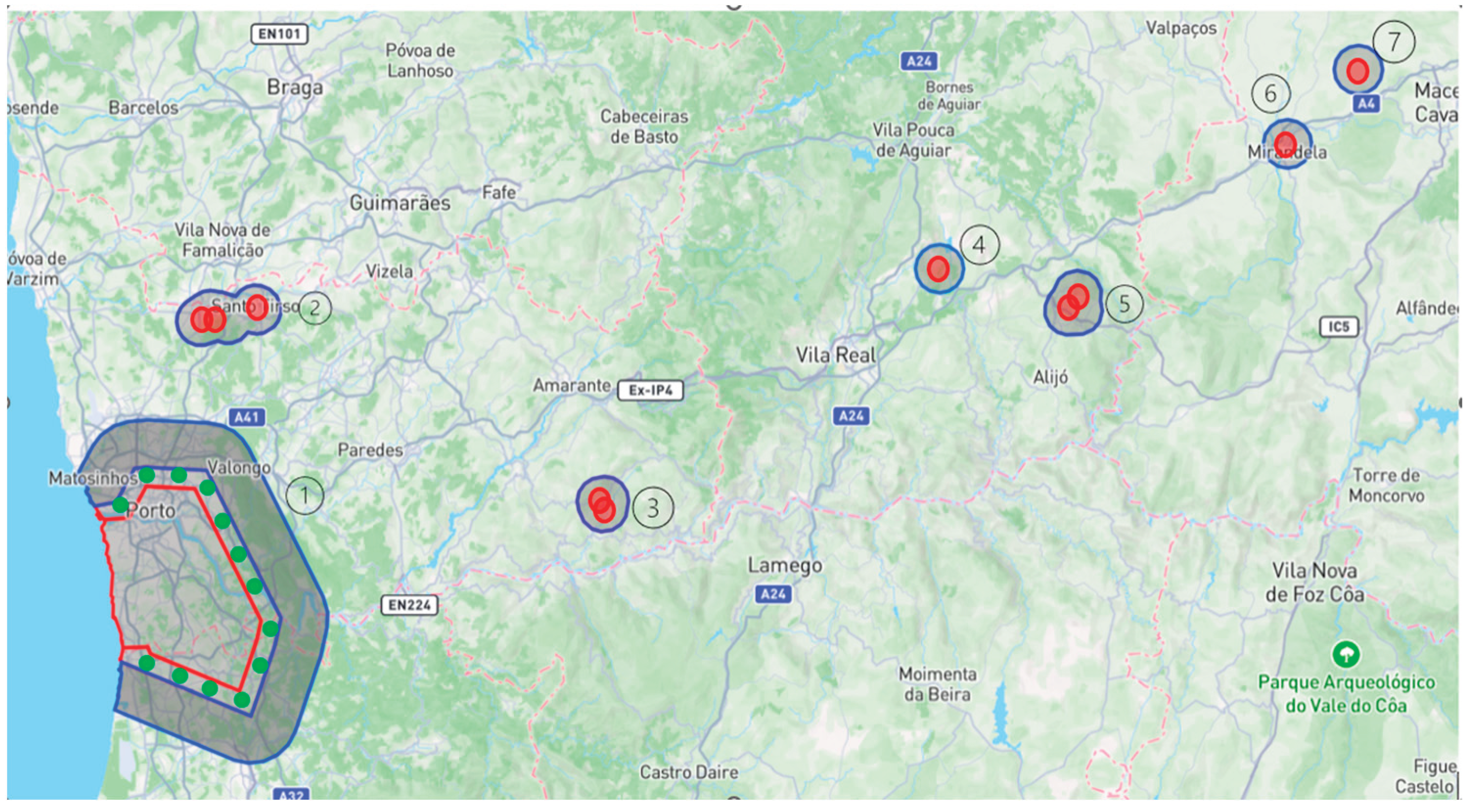
This study focuses on analyzing data related to eradication measures that we provided by the Regional Directorate of Agriculture and Fisheries of the North (DRAP Norte) from January 2019 to June 2023. Porto containment zone was only established in 2024, therefore, all data in this study refers exclusively to eradication measures. The data pertains to plants eradicated in various Demarcated Zones such as the Porto Metropolitan Area, Sabrosa, Alijó, Baião, Mirandela, Mirandela II, and Bougado (Figure 2).
In addition to assessing eradication data, the study compares these results with the number of prospected plants along with the laboratory results in the same period and locations. The prospecting and eradication measures were accompanied by our team, which helped ensure the accuracy and reliability of the collected information. The aim is to understand the relationship between eradicated plants and prospecting efforts, identify patterns, and evaluate the effectiveness of applied strategies. The research was organized into four main phases: Calculation of Prospecting Costs; Eradication; Price Collection and Data Collection, Organization, and Treatment Phase.

2.1. Calculation of Prospecting Costs

The prospecting for Xf involves inspection through symptom observation Between January 2019 and June 2023, plant samples were collected across all Xf demarcated zones in the Northern Region of Portugal. Sampling was primarily symptom-driven, with priority given to plants exhibiting visible signs of Xf infection, such as leaf scorch, branch dieback, or other compatible symptoms. Over the study period, a total of 15,345 samples were collected.
For each selected plant, the sampling procedure followed a standardized protocol designed to ensure sample integrity and prevent the inadvertent spread of insect vectors. Plant parts (typically branches, leaves, or shoots, depending on the host species) were first pre-shaken in the field to dislodge any potential insect vectors present on the plant surface. The plant material was then wrapped in newspaper to absorb excess moisture and provide a protective layer, before being placed inside sealed plastic bags. Special care was taken to ensure that the plastic bags were tightly sealed to avoid accidental release of vectors during transport. Each bag was labeled with a unique alphanumeric code that linked the sample to its collection site, plant host, and date of sampling, ensuring full traceability. Samples were transported under controlled conditions and delivered directly to the INIAV Laboratory, the National Reference Phytosanitary Laboratory, within a maximum of 24 hours after collection. At the laboratory, samples were processed for Xf detection and screening according to national diagnostic protocols.
The methodology used to calculate prospection costs followed the tax table established by the Direção-Geral de Alimentação e Veterinária (DGAV), which regulates the production and commercialization of plant propagation materials in Portugal. Laboratory testing costs were fixed at €65 per sample. For herbaceous and shrub plants, one laboratory sample corresponded to a composite of branches collected from five individual plants, meaning that the cost of €65 was distributed across these five plants. In contrast, for fruit plants and grapevines, one sample corresponded to a single plant, resulting in a cost of €65 per plant tested. This fee covered all laboratory procedures, including sample processing, diagnostic testing, and reporting of results.
In addition to laboratory costs, prospection fees were applied according to plant type. For fruit plants, the prospection cost was €0.75 per 100 plants surveyed, for ornamental plants the cost was €0.99 per 100 plants, and for grapevines the cost was €1.80 per 100 plants. These costs encompassed field inspection and the collection of samples when required. It is important to note that these calculations exclude any additional phytosanitary inspection fees, such as those related to the issuance of plant passports for nurseries and operators, which fell outside the scope of the present study. Likewise, such fees were not applicable in the case of surveys conducted in public or private gardens.
Cost Calculation Formula
The total cost of prospection (Ctotal) for a given plant type can be expressed as the sum of laboratory testing costs (Clab) and prospection costs (Cinsp):
Ctotal = Clab + Cinsp
Where for herbaceous/shrub plants:
Clab = 65 × N / 5
For fruit plants and grapevines:
Clab = 65 × N / C
Prospection cost (per 100 plants inspected):
Cinsp = (N/100) × T
Here, N = number of plants inspected, and T = prospection tariff (0.75 € for fruit plants, 0.99 € for ornamentals, 1.80 € for grapevines).

2.2. Eradication Phase

This phase involves the implementation of phytosanitary measures, according to EU Implementing Regulation (EU) 2020/1201. After detecting the presence of Xf, and upon confirmation of the bacteria, INIAV, the national reference laboratory, informs the national phytosanitary authority (DGAV), which quickly enacts measures to prevent the spread and eradicate the infection. A Demarcated Zone is established, with restrictions on the movement of plants in both the Infected and Buffer Zones. DRAPN, the regional agricultural authority, implements specific actions, such as:
Destruction of infected plants and others of the same species.
Destruction of all plants listed in Annex I and II of the EU Implementing Regulation (EU) 2020/1201.
Destruction of all host plants located within a 50 m radius of a confirmed infected plant, regardless of their testing status, in order to comply with eradication rules.
During the study period, detailed data on the number and species of plants destroyed within the Demarcated Zones was collected.

2.3. Price Collection Phase

After the eradication phase was completed, the data on the number and types of plant species destroyed was sent to an external company. This company is officially responsible for removing and destroying the affected plants in the Demarcated Zones in Northern Portugal. In addition to determining the replacement costs, the same data was shared to obtain cost estimates for acquiring these plants for replanting outside the Demarcated Zone in compliance with quarantine regulations. These estimates help calculate the expenses required to restore the vegetation by replanting species that were removed during the eradication process. Overall, this phase focuses on assessing the financial impact of both removing infected plants and procuring new ones for replanting, providing a comprehensive view of the costs involved in the eradication efforts.
The total replanting cost can be expressed as:
Preprints 178600 i001
where:
Ni​ = number of plants of species i destroyed
Ciremoval​ = cost of removing and destroying one plant of species i
Cireplanting = cost of acquiring and replanting one plant of species i
n = total number of affected plant species

2.4. Assessing the Effectiveness of Eradication Measures

To assess the effectiveness of the eradication measures, we analyzed the annual number of positive Xf cases recorded in each demarcated zone between 2019 and June 2023. After sending the prospected samples to the INIAV Laboratory, the official detection records were compiled and grouped by year and geographic zone, enabling a temporal and spatial evaluation of disease occurrence. Trends in the number of positive cases per zone were examined to determine whether there was a decrease, stabilization, or increase following the implementation of control measures. Additionally, the data was used to assess whether the bacterium remained confined to the initial zones of detection or spread to new areas. This method allowed us to evaluate the success of eradication efforts in both reducing disease prevalence and containing its geographic spread over time.

2.5. Data Collection, Organization, and Treatment Phase

In this phase, all the data collected during the eradication efforts was systematically organized for analysis. This data included the number and types of plants destroyed, the prices associated with plant destruction and replacement, and the costs incurred for implementing eradication measures. Once the data was organized, key variables were selected for statistical analysis. These variables were essential for understanding the financial costs (such as destruction and replacement costs and prospection costs) and biological impacts (such as the number and variety of species affected) of the eradication efforts. The descriptive analysis was conducted using JMP Version 17, a specialized software developed by the SAS Institute. This analysis provided insights into the overall effectiveness of the eradication measures, helping to quantify both the financial burden and the biological consequences, enabling better planning and decision-making for future eradication strategies.

3. Results

3.1. Plant Prospection Costs

The evaluation of plant prospection costs in Table 2 was based on the fee schedule from the General Directorate of Food and Veterinary Services for the production and commercialization of plant propagation materials.
The total cost of prospection activities for detecting Xylella fastidiosa in northern Portugal amounted to €997,570.20, reflecting the extensive monitoring efforts required across multiple plant species. Cost variation among species is influenced by factors such as ecological importance, susceptibility to the bacterium, and the scale of monitoring needed.
Olea europaea (olive tree) incurred the highest prospection cost at €54,736.30, representing 5.5% of the total, highlighting its agricultural significance and the priority given to its health management. Other high-cost species include Pelargonium graveolens (€27,889.20; 2.8%) and Citrus spp. (€27,303.20; 2.7%). Laurus nobilis also showed a considerable cost (€25,028.80; 2.5%), reflecting its widespread occurrence. Species such as Rosa spp. (€22,818.50; 2.3%), Nerium oleander (€21,583.30; 2.2%), Hedera helix (€20,933.20; 2.1%), and Lavandula dentata (€20,608.10; 2.1%) received significant monitoring investment, indicating their relevance for surveillance.
Notably, the “Unknown” category accounted for the largest single expense at €480,228.10, equivalent to 48% of the total prospection costs. This reflects samples for which species identification was not possible, underscoring the need for improved taxonomic resolution in future monitoring efforts.

3.2. Description of the Uprooted Species

Following confirmation of Xylella fastidiosa presence, mandatory phytosanitary measures were enacted, involving uprooting and incineration of infected plants within Demarcated Zones. Table 3 details the species and quantities of plants removed during the study period.
The most abundant species uprooted was Pteridium aquilinum (bracken fern) with 360,324 individuals (87.3% of total plants removed), reflecting its widespread presence and the extensive area affected. Olea europaea (olive tree) was the second most common species with 7,024 plants (1.7%), underscoring its economic importance. Other frequently removed species included Quercus robur (3,511 plants; 0.85%), Pelargonium graveolens (3,509 plants; 0.85%), and Rosa spp. (1,106 plants; 0.27%).
Species present in lower numbers, such as Vitis vinifera (7 plants; 0.002%), Citrus sinensis (14 plants; 0.003%), and Citrus limon (21 plants; 0.005%), suggest more limited cultivation or presence in the affected zones. The removal of 27,636 spontaneous herbaceous plants (6.7%) indicates a rich herbaceous flora, adding complexity to ecological restoration considerations.

3.3. Uprooting Costs by Species

Costs for plant removal and destruction varied considerably, influenced by factors such as plant size, density, removal complexity, and ecological considerations. Table 4 summarizes species-specific destruction costs, totaling €1,043,651.
The highest costs were associated with Pteridium aquilinum (€540,486; 51.8%), driven by its overwhelming abundance and the logistical challenges of clearing large areas. Olea europaea followed with €245,840 (23.5%), reflecting both the number of plants and removal difficulty. Other notable costs included Quercus robur (€140,440; 13.5%) and Hebe spp. (€8,712; 0.8%).
Lower-cost species, such as Prunus domestica (€588; 0.06%) and Lavandula angustifolia (€592; 0.06%), likely incurred reduced expenses due to smaller plant size or simpler removal. The destruction cost for spontaneous herbaceous plants was €41,454 (4.0%), demonstrating how large quantities can still represent a significant financial burden despite lower per-plant costs.

3.4. Replacement Costs by Species

In addition to destruction expenses, replacement costs were estimated to assess financial implications for vegetation restoration outside the DZs. Table 5 presents these costs, amounting to a total of €6,805,690.75.
Pteridium aquilinum again dominated costs at €5,765,184 (84.7%), reflecting the high number of plants removed. Olea europaea replacement costs (€526,800; 7.7%) emphasize the economic and cultural importance of olive trees. Quercus robur (€333,545; 4.9%) also showed substantial restoration investment.
Lower replacement costs were observed for species like Citrus limon (€840; 0.01%), Citrus sinensis (€560; 0.01%), and Vitis vinifera (€98; <0.01%), suggesting ease of procurement and planting. Spontaneous herbaceous plants required no replacement costs, as they naturally regenerate.
It is important to highlight that restoration represents a significant financial burden, with almost €6.8 million estimated for replanting. Moreover, there are no applicable subsidies for most owners, placing the responsibility for replanting squarely on private landowners.
In northern Portugal, eradication efforts demanded substantial economic investment, shaped by factors such as host plant abundance, logistical complexity, and species-specific characteristics. Among these, the disproportionately high costs associated with the removal and replacement of Pteridium aquilinum underscore the magnitude of the challenge. This fern is widespread in the region’s wild flora, though it can also be cultivated for certain purposes. Its inclusion in our results reflects the strict enforcement of eradication regulations, which mandate the removal of all recognized host species within demarcated areas, regardless of their agronomic or economic value. The replanting costs attributed to P. aquilinum were calculated using the same standardized methodology applied to all host species in this study, as detailed in the Methods section, ensuring consistency and comparability across results. Improving species identification during prospection and integrating ecological considerations into replanting could optimize resource allocation and enhance long-term restoration outcomes.

3.5. Assessing the Effectiveness of Eradication Measures

The analysis of positive Xylella fastidiosa cases from 2019 to june 2023, on Table 6, across the demarcated zones revealed a marked decline in the Porto zone, the initial detection site. In 2019, Porto recorded 124 positive cases, which decreased substantially to 51 in 2020, 31 in 2021, then showed a slight increase to 82 in 2022 before dropping again to 5 cases in 2023. Other demarcated zones showed minimal or no cases during the early years but registered isolated positive detections starting in 2022: Baião (1 case in 2022 and 2023), Bougado (2 cases in 2022 and 1 in 2023), Alijó (1 case in 2022), Sabrosa (1 case in 2022), Mirandela (1 case in 2022), and Mirandela I & II (1 case in 2022). These data indicate that while the bacterium remained largely confined to the Porto zone, sporadic cases appeared in surrounding zones from 2022 onward. Overall, the downward trend in the primary zone suggests that eradication measures have been effective in reducing the disease prevalence, although continued surveillance is necessary to prevent further spread.

4. Discussion

Between January 2019 and June 2023, the bacterium Xf established itself as a major threat to agriculture in northern Portugal, affecting key crops that are essential to both the regional and national economy. Among the primary host species identified by Cavalieri et al. [32] are grapevine, potato, tomato, pear, plum, citrus, olive, avocado, and blueberry. The presence of this pathogen poses significant risks to production and exports, requiring costly containment and eradication measures.
During the period analyzed, a total of 412,524 plants were eradicated, with estimated costs of €1,043,651 for destruction, €6,805,690.75 for replanting, and €997,570.20 allocated to prospection activities. These figures reflect the severity of the situation and the urgent need for action to prevent the pathogen from spreading. It is crucial to understand that, despite its high cost, prospection remains one of the most effective strategies to mitigate long-term impacts.
Regarding olive trees, only four trees were confirmed as infected. A total of 7,024 olive trees were uprooted in northern Portugal, predominantly within the Trás-os-Montes region, as part of designated control zones established to mitigate the spread of Xf and safeguard agricultural integrity. Most of these removals were carried out as a preventive measure, rather than as a response to confirmed infection, preventing any direct assessment of the bacterium’s impact on healthy or uninfected trees. Consequently, the actual pathogenic effect of Xf on olive trees in this region remains unclear, and the large-scale destruction of olive groves obscures potential observations of disease development, symptom expression, or long-term crop loss, which are essential for understanding the real epidemiological threat of the bacterium in northern Portugal. The direct costs associated with tree destruction were estimated at €245,840, while the replanting of these olive trees required an additional investment of approximately €526,800. Furthermore, the financial implications of ongoing surveillance and monitoring, referred to as prospection, were estimated at €54,736.3.
The presence of Xf in Olea europaea, particularly in the Trás-os-Montes and Alto Douro regions, poses substantial economic and ecological risks and underscores the necessity of systematic prospection. Olive trees constitute a critical component of the agricultural landscape in this area, with olive oil production representing a major economic activity. In 2022, the regional olive oil output reached 79,317 hectoliters, with an estimated market value of €5,393,556 [33,34]. The introduction of Xf into these regions could result in significant economic losses, as infected trees must be removed to prevent pathogen dissemination. Ecologically, the destruction of olive groves may have severe consequences, given their role in supporting local biodiversity, maintaining soil stability, and contributing to watershed management.
Historical evidence corroborates the potential severity of Xf impacts. Scholten et al. (2017) reported extensive damage in large-scale olive orchards, which comprise approximately 80% of the total orchard area, suggesting that the affected region could encompass up to 650 km². This area corresponds to an estimated 6.5 million olive trees, based on a planting density of 100 trees per hectare [35]. Schneider et al. projected that, should the disease spread beyond its current range in Italy, the decline in consumer welfare could amount to €4.1–10.3 billion over a 50-year horizon, contingent on the rate of disease propagation. Similarly, potential introduction into Greece or Spain could generate consumer costs ranging from €0.4–3.3 billion and €1.8–53 billion, respectively [1].
According to Italia Olivicola (2019), losses in olive oil production between 2017 and 2019 were approximately €390 million. When including downstream economic activities, such as milling, bottling, trade, and distribution, total losses could reach approximately €1 billion. During this period, average annual production decreased by 29,000 tons, corresponding to a 9.5% reduction in Italian olive oil output [36]. Sanchez et al. reported that the impact of Xf on EU crop yields varies with tree age, with olives older than 30 years experiencing a median yield loss of 69.1%, while younger trees (<30 years) exhibit a median loss of 34.6% [37].
Cardone estimated that the total value of olive production losses across nine NENA (North Africa and the Near East) countries is approximately €920 million, ranging from €23.3 million in Lebanon (2% of total losses) to €227.8 million in Morocco (23% of total losses) [38]. Luvisi et al. (2017) further estimated that the cost per deceased olive tree is approximately €115, accompanied by a 31% increase in associated management expenses [39] .
Beyond immediate economic losses, the presence of Xf poses considerable environmental and cultural challenges. Reduced olive production affects not only the supply of olives and olive oil but also the livelihoods of communities dependent on this sector. Olive trees play a fundamental role in Mediterranean landscapes and biodiversity; their removal disrupts ecological balance, affecting soil quality and ecosystem services. Moreover, olive trees hold significant cultural and historical value, and the decline of these groves due to Xf represents a substantial loss of heritage and traditional identity
In the northern region of Portugal, a total of 35 citrus plants were destroyed as part of containment measures aimed at controlling the spread of Xf. The direct costs associated with the destruction of these plants were estimated at €875, covering expenses related to physical removal, transportation, and disposal. An additional investment of €1,400 was required to replace the destroyed citrus plants. This estimate does not account for supplementary expenditures related to soil preparation, irrigation, fertilization, or the period necessary for newly planted trees to reach productive maturity.
The estimated cost of citrus surveillance and monitoring (prospection) in the region amounted to €49,145, highlighting a substantial financial burden relative to the direct destruction and replacement costs. Such cost disparities may raise concerns regarding the feasibility of current management strategies and could potentially discourage stakeholders from undertaking essential monitoring and control measures. The delayed productivity of replanted crops, coupled with the ongoing financial and labor demands of maintenance, further complicates decision-making for local farmers. Additionally, the loss of citrus plants may influence local market dynamics; reduced production could elevate prices for remaining fruits, potentially diminishing their competitiveness relative to imported alternatives. Restrictions on plant movement may further constrain trade opportunities and reduce overall revenue. In this context, proactive investment in regular prospection represents a strategic approach to mitigating disease spread and associated economic losses.
In 2022, the sale of 215,839 fruit trees in the Trás-os-Montes region generated revenue totaling approximately €1,191,431.28 [40], underscoring the economic significance of fruit tree cultivation in the area and the potential consequences of plant pathogen outbreaks such as Xf. Regarding Prunus species, only one tree of each of the following species was confirmed as infected: Prunus cerasifera Ehrh., Prunus persica (L.) Batsch, and Prunus laurocerasus. All other trees of these species were removed as part of the eradication measures, regardless of infection status. In addition to Prunus species, other fruit crops were also destroyed preventively, including 17 fig trees (Ficus carica), 21 plum trees (Prunus domestica), 25 almond trees (Prunus dulcis), and 50 peach trees (Prunus persica). These data indicate that most removals were carried out as a precaution within eradication perimeters, independently of the plants’ infection status. Therefore, the direct impact of the bacterium on fruit trees remains uncertain, as the preventive destruction prevents assessment of whether the remaining plants would have developed symptoms or maintained infection—information that is crucial for understanding the real risk posed by the bacterium in northern Portugal’s crops. The estimated cost of destruction for these plants was €2,988, while replanting required a further investment of approximately €6,065. Prospection and ongoing monitoring activities incurred additional expenses totaling €38,029.
According to Sanchez et al. [37] , various citrus species in the European Union experience an average yield loss of 10.9% due to Xf, demonstrating the widespread and detrimental impact of this pathogen across multiple fruit crops. Economic assessments indicate that, in New Zealand, annual losses attributed to Xf reach approximately €110 million, corresponding to roughly 6% of the country’s total citrus production [41].
At a broader regional scale, collective losses in citrus production across NENA (North Africa and the Near East) countries are estimated at €200,883,835, with Morocco and Syria representing 41.7% and 32.1% of these losses, respectively [41]. These figures highlight the urgent need for effective management strategies to mitigate the impact of Xf and safeguard both farmer livelihoods and regional agricultural economies. Overall, data from Trás-os-Montes, alongside EU and NENA estimates, underscore the critical importance of coordinated efforts in research, monitoring, and implementation of containment measures. Protecting fruit production is essential not only for maintaining agricultural income but also for ensuring regional food security and economic stability.
In the northern region of Portugal, seven vineyards were uprooted within designated zones established to control the spread of Xf and to preserve agricultural integrity. Although limited in scale, the destruction incurred costs estimated at €77. Replanting these vineyards required an additional investment of approximately €98 per plant. Moreover, ongoing monitoring and assessment activities (prospection) were associated with costs of €11,898.3. While destruction and replanting address immediate threats, the relatively higher expenditure on prospection represents a long-term investment that enables early detection and management of potential infections, potentially mitigating larger-scale losses in the future. Prioritizing proactive monitoring can reduce the need for costly future interventions, thereby enhancing agricultural sustainability.
Maintaining vineyard health is critical not only for the economic stability of the region but also for preserving the cultural and agricultural heritage embedded in wine production in northern Portugal. The introduction of Xf into the Douro demarcated zone could cause significant economic and ecological consequences, including vineyard destruction and disruption of the region’s delicate ecosystem. In 2022, total wine production in the Duriense Region exceeded 159 million liters, accounting for 21% of national production [42]. Vineyard cultivation also involves substantial labor demands due to the challenging terrain, with most farms being small-scale and minimally mechanized. This contributes to rural employment and social inclusion, emphasizing the strategic importance of vineyard culture for regional development.
The Douro Demarcated Region holds additional cultural significance, encompassing sub-regions such as the Alto Douro Vinhateiro, which covers approximately 10% of the area and was designated as a UNESCO World Heritage Site in 2001. This area represents a living cultural landscape, reflecting historical and heritage values [32,43].
Yield loss data from Sanchez et al. indicate that in southern EU regions affected by Xf, wine grapes experienced a median yield loss of 2.1%, whereas table grapes experienced a median loss of 1.0%. In northern EU regions, wine grapes showed a median yield loss of 0.5% [37]. Across the nine NENA countries, combined grape production losses due to Xf are estimated at approximately €9.2 million, with 65% attributed to table grapes and 35% to wine grapes. The most affected countries are Syria (27.4%), Morocco (23.6%), Egypt (16.1%), and Algeria (13%), while Lebanon and Tunisia are projected to experience 7.8% and 7.5% losses, respectively. Jordan, Palestine, and Libya are expected to incur the lowest losses, at 2.2%, 1.3%, and 1.1%, respectively.
Considering both harvested area and production losses, the estimated gross margin loss for table grapes is approximately 10%, totaling €2,150,000 (ranging from €33,000 in Jordan to €610,000 in Egypt). For wine grapes, the gross margin loss is estimated at 9%, totaling €315,000 (ranging from €1,700 in Jordan to €105,000 in Algeria) [38]. According to Frem et al., if Xf were to fully spread among Lebanese wine grapes, potential gross revenue losses could reach nearly €10.1 million over an average recovery period of four years, escalating to approximately €75.8 million over the 30-year lifespan of a grapevine if infected plants are not replaced [9].
Ornamental plants were also heavily impacted by Xf. A total of 373,919 units were destroyed, incurring €602,279 in eradication costs and nearly €5.9 million in replanting. Prospection totaled €282,663. Species such as Lavandula, Rosa, and Nerium oleander play not only aesthetic but also ecological roles. According to Ali et al., the availability of ornamentals in the EU may decrease by about 38% due to Xf [35]. In the U.S., damages related to oleander in California were estimated at €115 million [44].
The destruction of 3,747 specimens of the Quercus genus is also noteworthy, with €149,880 in removal costs and €354,785 for replanting. Prospection in this case cost €46,090. The ecological importance of Quercus pyrenaica, found across approximately 62,000 hectares in the Bragança region, is undeniable [45,46]. In urban contexts such as New Jersey, the replacement value of oak trees can exceed €7,000 per specimen [47].
However, there are many more implications caused by the destruction of plants with Xf. According to Sanchez et al., nearly 300,000 jobs linked to production are at risk, particularly in the primary production sectors of olive trees, citrus, almonds, and grapes [37]. Additionally, around 70 agricultural products, such as citrus fruits, olives, almonds, raisins, grapes, asparagus, and cherries, which are covered by EU quality labels, are susceptible to Xf [37]. Table olives and olive oil production are anticipated to decrease due to a decline in both the quantity and quality of fruits, resulting from the death, dieback, and delayed growth of olive trees, as well as the restriction on planting susceptible varieties [48]. It typically takes up to 20 years in traditional and 5–8 years in intensive farming systems with irrigation for newly planted olive trees to reach full productivity. This decline also leads to a short-term reduction in food provisioning due to non- and less-productive periods of newly planted perennial crops [49].
This pathogen may also impact the ecosystem by harming rural landscapes, including Italy's notable olive orchards, with estimated average socio-ecological losses ranging between €1,017 and €1,059 per hectare [9]. The destruction of ancient olive groves leads to the irretrievable loss of both historical-cultural significance and natural heritage [50].
Gardening and landscaping practices are also anticipated to undergo changes due to the impact on monumental trees and ornamental species. According to Ali et al., the biodiversity is expected to decrease by approximately 35% in the short term and 32% in the long term, on average [48].
Moreover, replanting of non-susceptible cultivars may result in genetic uniformity that makes the cultivars susceptible to other pests/diseases. Also, the intensive agricultural practices will negatively impact spittlebug populations, either directly through the application of lethal insecticides or indirectly through the removal of herbaceous vegetation [51]. Specifically, the transformation of the forest into neglected spaces may exacerbate disturbances in the soundscape associated with the fauna inhabiting these traditional [50].
Several studies suggest that trees and green spaces positively influence individuals' perceived health, offering social and biological advantages. These benefits encompass improved attention, stress reduction, increased life satisfaction and enhanced positive emotions [52,53,54]. The destruction of these species could result in negative psychological effects on population. Also, the absence of these trees and their canopies will lead to elevated soil temperature and evaporation rates, while also reducing CO2 sequestration. Experts highlighted that the loss of foliage cover would contribute to higher temperatures, reduced precipitation, and diminished regulation of air quality [50].
Xf has significantly affected the nursery market due to restrictions on planting and commercialization in demarcated areas. Farmers may face additional expenses, such as replanting or grafting, clearing vines or host plants along the property edges to establish a buffer, spraying insecticides to control the vector population, clearing riparian vegetation (potentially hindered by legislative obstacles and accompanied by environmental costs), and implementing more rigorous weed control to eliminate potential vectors and host plants (resulting in erosion-related expenses). They may start abandoning their orchards due to the production decrease. The abandoned orchards will contain dried vegetation (e.g. weeds) that will increase the risk of fire. Consequently, all communities could be negatively affected.
Based on the presented data, prospection should be considered a strategic and essential investment. The significant reduction in positive cases within the demarcated Porto zone—from 186 in 2019 to only 5 in 2023—demonstrates the effectiveness of the eradication and control measures implemented. The comparison between the number of positive cases and the number of samples collected provides valuable insights into the dynamics of Xf detection in northern Portugal. In the Porto Demarcated Zone the proportion of positive samples decreased from 3.7% in 2019 to only 0.5% in 2023, reflecting a progressive control of the initial outbreak. This reduction was not only due to the decline in absolute positive cases but also to the fact that, even when sampling efforts were very high (nearly 5,000 samples in 2019), the infection rate remained relatively moderate. The slight increase observed in 2022 (2.5%) likely corresponds to residual foci, but the sharp decline in 2023 demonstrates the effectiveness of the eradication measures implemented.
In the surrounding zones, the relationship between positive cases and collected samples showed a different pattern. In 2022, apparently high detection rates were recorded (100% in Baião and Sabrosa), but these values resulted from the very limited number of samples collected in those zones during that year (only one sample in each case). When the sampling effort increased substantially in 2023 (e.g., 222 samples in Alijó; 716 in Mirandela II), positive cases either disappeared or dropped to very low levels. This suggests that the initial detections were isolated cases rather than established outbreaks, which enabled a rapid containment response.
Overall, the joint analysis of positive detections and sampling effort leads to two main conclusions. First, in the Porto ZD, the decreasing proportion of positives confirms the successful control of the disease in the epicenter of the outbreak. Second, in the peripheral zones, while detection rates initially appeared high, they were strongly influenced by the low number of samples collected. Once sampling was expanded, the results indicated that the infection was only residual. This highlights the importance of maintaining a robust and consistent sampling strategy, since conclusions drawn from very limited data can overestimate the real scale of infection.
Taken together, these results show that the eradication program has been largely successful in reducing the presence of Xf in northern Portugal, while also underscoring the need for continued vigilance in surrounding areas to prevent the establishment of new foci.
The positive outcome observed in Porto serves as a case study demonstrating that proactive phytosanitary measures can produce tangible results in controlling Xf. Nonetheless, the persistence of 20 demarcated zones across Portugal indicates that the pathogen remains a continuous threat, necessitating ongoing vigilance and adaptive management strategies tailored to local conditions. The presence of multiple demarcated zones suggests that, despite successful containment in the initial epicenter, Xf continues to pose challenges nationwide, affecting several regions either currently or at risk.
Even when the number of cases in newly affected zones is low, the presence and spread of Xf underscores the critical importance of maintaining and strengthening monitoring and eradication efforts to prevent uncontrolled dissemination. The geographic dispersion of these zones justifies the substantial economic investment required, as effective pathogen management extends beyond a single area and necessitates targeted interventions across multiple regions. Furthermore, the fragmentation of affected areas increases the complexity of control operations due to diverse ecological, logistical, and operational conditions.
From a biological perspective, the existence of multiple demarcated zones illustrates the bacterium’s capacity to colonize a variety of habitats, thereby amplifying its potential impact on both biodiversity and agricultural systems. Nevertheless, the fact that most zones report only a limited number of positive cases suggests that, although Xf is present in multiple locations, current eradication and monitoring measures remain effective in preventing extensive proliferation.
Moreover, although many infections in northern Portugal remain asymptomatic, particularly in olive and almond trees, this should not be interpreted as an absence of disease. Host plant trials reported indicated that 91.1% of sampled plants did not display symptoms despite confirmed infection [26], and repeated observations on oak [55]over 10 months demonstrated partial resistance. The rapid implementation of eradication measures, along with regulatory constraints limiting field experiments, has so far hindered a full assessment of symptom development and long-term impact. These findings highlight the importance of continued monitoring, careful interpretation of asymptomatic infections, and further research to determine the true epidemiological and economic significance of Xf in northern Portugal.
In this context, refining prospection methodology is crucial to enhance operational efficiency and cost-effectiveness. Strategic adjustments should include the prioritization of host species based on susceptibility and economic importance within each region, aligned with local vegetation profiles and the phenological stages of crops, as pathogen expression often coincides with specific growth phases. Additionally, sampling schedules should be synchronized with the biological cycles of principal insect vectors to maximize detection probability, allowing for early identification of infections and timely implementation of control measures.
Continuous training of field teams remains a cornerstone of an effective prospection program. An optimized framework requires a regionally adapted, integrative approach, encompassing prioritization of high-risk host species, alignment of sampling schedules with vector and host plant dynamics, and implementation of precise sampling protocols that reflect local vegetation structure. Detailed knowledge of regional flora is essential for accurate identification of primary and secondary hosts, while understanding the seasonal dynamics of vectors and hosts is key for optimizing detection and intervention timing.
Standardized yet adaptable methodologies, combined with ongoing technical training, ensure consistent data collection and minimize diagnostic errors. Investment in botanical education, applied research, and molecular tools is indispensable. This includes expanded field taxonomy instruction, adoption of DNA barcoding for accurate species identification, and development of standardized protocols to enhance reproducibility. Methodological improvements may also incorporate digital technologies, such as drones and remote sensing for vegetation mapping and seasonal monitoring, alongside environmental sensors to correlate vector presence with ecological conditions. Molecular approaches, including metabarcoding, environmental DNA (eDNA), and rapid diagnostics (qPCR, LAMP), provide sensitive and timely detection of the pathogen.
Engaging local communities through citizen science initiatives further expands spatial coverage and facilitates early detection of anomalous symptoms. Predictive modeling and GIS-based analyses that integrate ecological, climatic, and biological data can identify priority surveillance areas. Collaborative networks, shared databases, and regional reference collections of hosts, vectors, and DNA sequences strengthen identification consistency and reproducibility. Adaptive protocols, periodically updated with new ecological knowledge, ensure that prospection efforts remain robust and responsive to emerging threats.
Investing in technical education—particularly in botanical identification and symptom recognition—is essential to reduce generic classifications such as the “Unknown” category, which accounted for 48% of prospection costs (€480,228.10). Minimizing these uncertainties enables more efficient resource allocation and strengthens epidemiological accuracy. Standardized yet flexible methodologies are required to maintain data quality while accommodating ecological diversity across demarcated zones.
Finally, sustained support for scientific research is indispensable. Studies examining interactions among Xf, host species, and vectors under varying environmental conditions are crucial for predicting outbreaks and refining containment strategies. Comprehensive understanding of pathogen survival rates, vector activity periods, and transmission dynamics can guide interventions that are both preventive and responsive. Equally important is the evaluation of cultivar resistance and the ecological consequences of control measures, ensuring long-term sustainability and effectiveness.
In conclusion, a well-calibrated, integrated, and evidence-based prospection program constitutes a vital tool for safeguarding agricultural sustainability. It reduces economic losses, preserves rural livelihoods, and protects the natural and cultural heritage of northern Portugal against the escalating threat posed by Xf.

5. Conclusions

Between January 2019 and June 2023, Xylella fastidiosa emerged as a critical threat to agriculture in northern Portugal, impacting key crops such as olives, grapes, citrus, and other fruit trees that are central to both regional and national economies. Coordinated containment measures—including eradication, replanting, and systematic prospection—have demonstrated notable effectiveness, particularly in the Porto demarcated zone, where positive cases decreased to just 5 in 2023. These results illustrate that proactive phytosanitary interventions, combined with rigorous monitoring, can substantially limit pathogen spread and prevent the establishment of new infection foci.
The economic implications of managing Xf are substantial. Across all affected crops, the costs associated with destruction, replanting, and ongoing prospection exceeded several million euros. Although prospection represents a significant financial commitment, it has proven to be a cost-effective strategy, enabling early detection, guiding timely interventions, and preventing larger-scale outbreaks that would result in far greater expenses. For example, in the olive sector alone, over 7,000 trees were uprooted, with direct destruction costs of €245,840, replanting costs of €526,800, and prospection expenses of €54,736. This comparison highlights that, while destruction and replanting address immediate threats, investment in monitoring provides long-term benefits by safeguarding productivity and reducing potential future losses.
Beyond economics, Xf poses significant ecological and cultural risks. Olive groves, vineyards, and other affected crops play a central role in local biodiversity, soil conservation, and watershed management. Their removal disrupts ecological balance and threatens essential ecosystem services. Moreover, these crops are deeply embedded in the cultural identity and heritage of northern Portugal, with vineyards in the Douro Demarcated Region recognized as a UNESCO World Heritage Site. The loss of traditional olive orchards and vineyards would not only diminish economic productivity but also erode centuries of cultural and agricultural heritage.
Effective containment relies on a comprehensive, regionally adapted prospection program. Such a program must prioritize high-risk host species, synchronize sampling with crop phenology and vector activity cycles, and implement precise, standardized protocols to ensure data quality across diverse habitats. The integration of molecular diagnostics, environmental DNA (eDNA) techniques, remote sensing, GIS-based modeling, and citizen science initiatives further enhances detection capacity and spatial coverage. Continuous technical training, investment in taxonomy, and research on pathogen-host-vector interactions are essential for adapting strategies in response to evolving ecological conditions.
The experience in northern Portugal demonstrates that integrated, evidence-based management can significantly reduce the presence of Xf while protecting agricultural productivity, rural livelihoods, and ecological and cultural heritage. Maintaining vigilance across multiple demarcated zones, combined with strategic investments in monitoring, research, and community engagement, is crucial to ensuring long-term resilience. Lessons learned from this region underscore the need for coordinated action that integrates economic, ecological, and social considerations to mitigate the impact of emerging phytopathogens and safeguard the sustainability of Mediterranean agroecosystems.
Long-term adaptation strategies require robust collaboration among scientists, public authorities, and agricultural stakeholders. Given the likelihood that Xf cannot be completely eradicated in Europe, efforts should focus on developing resistant cultivars, environmentally responsible control strategies, and more cost-effective diagnostic technologies. Regulators play a critical role in facilitating rapid outbreak responses, improving communication between public agencies, researchers, and farmers, and ensuring policy decisions are grounded in the latest scientific evidence. Public engagement through transparent information-sharing and consistent political support for applied research is equally essential to strengthen adaptive capacity at all levels.
Strategic replanting must also be prioritized, not only as a phytosanitary response but as an ecological necessity. Trees are crucial for biodiversity conservation, climate regulation, soil stabilization, and psychological well-being in both rural and urban contexts. Vegetation loss due to Xf must therefore be offset by carefully planned restoration efforts that prioritize ecological integrity, species diversity, and long-term sustainability. Appropriately selected and positioned replacement species can help restore essential ecosystem services, including air purification, thermal regulation, water retention, and habitat provision for local fauna.
In conclusion, addressing the threat of Xf requires a comprehensive, interdisciplinary strategy rooted in scientific evidence, local knowledge, and policy integration. Prospection emerges as a central tool, not only for plant protection but for safeguarding the intertwined fabric of agriculture, ecology, economy, and culture. Investment in monitoring and early detection is not merely a reaction to a current threat but a proactive commitment to the resilience of landscapes and livelihoods for decades to come.

Author Contributions

Conceptualization, T.L., I.C.; methodology: T.L., I.C.; validation: T.L., I.C.; formal analysis: A.M., I.C., P.P.; investigation: T.L. and L.S.; data curation: T.L. and L.S.; writing—original draft preparation: T.L. and L.S.; writing—review and editing: T.L., I.C., P.P., A.M. All authors have read and agreed to the published version of the manuscript.

Funding

This work is supported by National Funds by FCT –Portuguese Foundation for Science and Technology, under the projects UI/00772 and LA/P/0059/2020 and project UID/04033: Centro de Investigação e de Tecnologias Agro-Ambienteis e Biológicas and LA/P/0126/2020 (https://doi.org/10.54499/LA/P/0126/202.

Acknowledgments

The author would like to thank the Northern Regional Directorate of Agriculture and Fisheries of the Ministry of Agriculture and Food, especially to Eng. Maria Manuel Mesquita, Eng. José Alves and to all colleagues involved in this work. The author would like to thank Flor do Penedo for the contribution.

Conflicts of Interest

The authors declare no conflict of interest. The funders had no role in the design of the study; in the collection, analyses, or interpretation of data; in the writing of the manuscript; or in the decision to publish the results.

References

  1. K. Schneider, M. Mourits, W. van der Werf, and A. O. Lansink, “On consumer impact from Xylella fastidiosa subspecies pauca,” Ecological Economics, vol. 185, p. 107024, Jul. 2021. [CrossRef]
  2. K. Schneider et al., “Impact of Xylella fastidiosa subspecies pauca in European olives,” Proc Natl Acad Sci U S A, vol. 117, no. 17, pp. 9250–9259, Apr. 2020. [CrossRef]
  3. EPPO Bulletin, “PM 7/24 (4) Xylella fastidiosa,” EPPO Bulletin, vol. 49, no. 2, pp. 175–227, Aug. 2019. [CrossRef]
  4. N. W. Schaad, E. Postnikova, G. Lacy, M. Fatmi, and C. J. Chang, “Xylella fastidiosa subspecies: X. fastidiosa subsp piercei, subsp. nov., X. fastidiosa subsp. multiplex subsp. nov., and X. fastidiosa subsp. pauca subsp. nov.,” Syst Appl Microbiol, vol. 27, no. 3, pp. 290–300, Jan. 2004. [CrossRef]
  5. N. W. Schaad, E. Postnikova, G. Lacy, M. Fatmi, and C. J. Chang, “Xylella fastidiosa subspecies: X. fastidiosa subsp. correction. fastidiosa correction. subsp. nov., X. fastidiosa subsp. multiplex subsp. nov., and X. fastidiosa subsp. pauca subsp. nov,” Syst Appl Microbiol, vol. 27, no. 3, pp. 2004. [CrossRef]
  6. N. W. Schaad, E. Postnikova, G. Lacy, M. Fatmi, and C. J. Chang, “Xylella fastidiosa subspecies: X. fastidiosa subsp piercei, subsp. nov., X. fastidiosa subsp. multiplex subsp. nov., and X. fastidiosa subsp. pauca subsp. nov.,” Syst Appl Microbiol, vol. 27, no. 6, p. 763, Dec. 2004. [CrossRef]
  7. E. L. Schuenzel, M. Scally, R. Stouthamer, and L. Nunney, “A Multigene Phylogenetic Study of Clonal Diversity and Divergence in North American Strains of the Plant Pathogen Xylella fastidiosa,” Appl Environ Microbiol, vol. 71, no. 7, p. 3832, Jul. 2005. [CrossRef]
  8. L. Nunney, E. L. Schuenzel, M. Scally, R. E. Bromley, and R. Stouthamerc, “Large-scale intersubspecific recombination in the plant-pathogenic bacterium Xylella fastidiosa is associated with the host shift to mulberry,” Appl Environ Microbiol, vol. 80, no. 10, pp. 3025–3033, 2014. [CrossRef]
  9. M. Frem et al., “The potential direct economic impact and private management costs of an invasive alien species: Xylella fastidiosa on Lebanese wine grapes,” NeoBiota 70: 43-67, vol. 70, pp. 43–67, Dec. 2021. [CrossRef]
  10. Alves De Souza, M. Aurélio Takita, A. Morais Do Amaral, • Helvécio, D. Coletta-Filho, and M. A. Machado, “Tree and Forestry Science and Biotechnology Citrus Responses to Xylella fastidiosa Infection, the Causal Agent of Citrus Variegated Chlorosis”, Accessed: Mar. 25, 2023. Online.. Available: www.fundecitrus.com.
  11. T. Cao, J. H. Connell, M. Wilhelm, and B. C. Kirkpatrick, “Influence of Inoculation Date on the Colonization of Xylella fastidiosa and the Persistence of Almond Leaf Scorch Disease Among Almond Cultivars,” https://doi.org/10.1094/PDIS-05-10-0327, vol. 95, no. 2, pp. 158–165, Jan. 2011. [CrossRef]
  12. D. C. Cook, R. W. Fraser, D. R. Paini, A. C. Warden, W. M. Lonsdale, and P. J. de Barro, “Biosecurity and Yield Improvement Technologies Are Strategic Complements in the Fight against Food Insecurity,” PLoS One, vol. 6, no. 10, p. e26084, Oct. 2011. [CrossRef]
  13. R. D. Zenni, F. Essl, E. García-Berthou, and S. M. McDermott, “The economic costs of biological invasions around the world,” NeoBiota 67: 1-9, vol. 67, pp. 1–9, Jul. 2021. [CrossRef]
  14. R. P. P. Almeida, L. De La Fuente, R. Koebnik, J. R. S. Lopes, S. Parnell, and H. Scherm, “Addressing the New Global Threat of Xylella fastidiosa,” Phytopathology, vol. 109, no. 2, pp. 172–174, Feb. 2019. [CrossRef]
  15. T. Loureiro et al., “Xylella fastidiosa: A Glimpse of the Portuguese Situation,” Microbiology Research 2023, Vol. 14, Pages 1568-1588, vol. 14, no. 4, pp. 1568–1588, Oct. 2023. [CrossRef]
  16. M. Saponari et al., “Infectivity and transmission of Xylellua fastidiosa by Philaenus spumarius (Hemiptera: Aphrophoridae) in Apulia, Italy,” J Econ Entomol, vol. 107, no. 4, pp. 1316–1319, 2014. [CrossRef]
  17. S. Avosani, C. Tattoni, V. Mazzoni, and M. Ciolli, “Occupancy and detection of agricultural threats: The case of Philaenus spumarius, European vector of Xylella fastidiosa,” Agric Ecosyst Environ, vol. 324, p. 107707, Feb. 2022. [CrossRef]
  18. G. Pérez-Donoso, J. J. Lenhof, K. Pinney, and J. M. Labavitch, “Vessel embolism and tyloses in early stages of Pierce’s disease,” Aust J Grape Wine Res, vol. 22, no. 1, pp. 81–86, Feb. 2016. [CrossRef]
  19. Ingel et al., “Xylella fastidiosa causes transcriptional shifts that precede tylose formation and starch depletion in xylem,” Mol Plant Pathol, vol. 22, no. 2, pp. 175–188, Feb. 2021. [CrossRef]
  20. M. De Benedictis et al., “Vessel occlusion in three cultivars of Olea europaea naturally exposed to Xylella fastidiosa in open field,” Journal of Phytopathology, vol. 165, no. 9, pp. 589–594, Sep. 2017. [CrossRef]
  21. V. Montilon et al., “Xylella fastidiosa subsp. pauca ST53 exploits pit membranes of susceptible olive cultivars to spread systemically in the xylem,” Plant Pathol, vol. 72, no. 1, pp. 144–153, Jan. 2023. [CrossRef]
  22. P. S. Pereira, “Xylella fastidiosa - a new menace for Portuguese agriculture and forestry.,” Revista de Ciências Agrárias (Portugal), vol. 38, no. 2, pp. 149–154, 2015.
  23. DGAV, Plano de Contingência Xylella fastidiosa e seus vetores. 2022.
  24. D. Gibin, L. Pasinato, and A. Delbianco, “Update of the Xylella spp. host plant database – systematic literature search up to 31 December 2022,” EFSA Journal, vol. 21, no. 6, p. e08061, Jun. 2023. [CrossRef]
  25. C. Baccari, E. Antonova, and S. Lindow, “Biological control of Pierce’s disease of grape by an endophytic bacterium,” Phytopathology, vol. 109, no. 2, pp. 248–256, Feb. 2019. 2019. [CrossRef]
  26. T. Loureiro, L. Serra, Â. Martins, I. Cortez, and P. Poeta, “Xylella fastidiosa Dispersion on Vegetal Hosts in Demarcated Zones in the North Region of Portugal,” Microbiology Research 2024, Vol. 15, Pages 1050-1072, vol. 15, no. 3, pp. 1050–1072, Jun. 2024. [CrossRef]
  27. V. Cavalieri et al., “Update of the Xylella spp. host plant database – Systematic literature search up to 31 December 2024,” EFSA Journal, vol. 23, no. 7, Jul. 2025. [CrossRef]
  28. Paula, A. Cruz De Carvalho, A. Cruz De Carvalho Dn: C=pt, Title=subdiretora Geral, G. De Alimentação E Veterinária, P. De Almeida, and C. De Carvalho, “PLANO DE AÇÃO PARA ERRADICAÇÃO DE Xylella fastidiosa e controlo dos seus vetores ZONA DEMARCADA DA ÁREA METROPOLITANA DO PORTO Atualizado em fevereiro de 2022 Aprovado,” 2022.
  29. M. Godefroid, A. Cruaud, J.-C. Streito, J.-Y. Rasplus, and J.-P. Rossi, “Climate change and the potential distribution of Xylella fastidiosa in Europe,” bioRxiv, p. 289876, Mar. 2018. [CrossRef]
  30. C. Chen, C. H. Bock, and P. M. Brannen, “Novel Primers and Sampling for PCR Detection of Xylella fastidiosa in Peach,” Phytopathology, vol. 109, no. 2, pp. 307–317, Feb. 2019. [CrossRef]
  31. M. Román-Écija et al., “Two Xylella fastidiosa subsp. multiplex strains isolated from almond in Spain differ in plasmid content and virulence traits,” Phytopathology, Dec. 2022. [CrossRef]
  32. Cavalieri Vincenzo et al., “TRANSMISSION OF THE CODIRO STRAIN OF XYLELLA FASTIDIOSA BY DIFFERENT INSECT SPECIES,” XI European Congress of Entomology, 2018. [CrossRef]
  33. “Portal do INE.” Accessed: Mar. 18, 2024. Online.. Available: https://www.ine.pt/xportal/xmain?xpid=INE&xpgid=ine_indicadores&indOcorrCod=0000709&xlang=pt&contexto=bd&selTab=tab2.
  34. GPP, “Newsletter Azeite e Azeitona,” 2022, Accessed: Mar. 18, 2024. Online.. Available: www.gpp.pt/index.php/sima/sistema-de-informacao-de-mercados-agricolas-sima-.
  35. R. Scholten, L. Martinez Sanchez, A. Hornero, J. A. Navas-Cortes, P. J. Zarco-Tejada, and P. S. A. Beck, “Monitoring the impact of Xylella on Apulia’s olive orchards using Sentinel-2 satellite data and aerial photographs Second European conference on Xylella fastidiosa,” 2019.
  36. K. P. Tumber, J. M. Alston, and K. B. Fuller, “Pierce’s disease costs California $104 million per year,” Calif Agric (Berkeley), vol. 68, no. 1–2, pp. 20–29, 2014. [CrossRef]
  37. B. Sánchez, O. E. Mosbach-Schulz Rodríguez Cerezo, B. J. Hurle, and S. I. Embodas, “Estimating the economic, social and environmental impacts of EU priority pests: a joint EFSA and JRC project with a focus on Xylella fastidiosa”.
  38. G. Cardone et al., “Potential socio-economic impact of xylella fastidiosa in the near east and north africa (Nena): Risk of introduction and spread, risk perception and socio-economic effects,” New Medit, vol. 20, no. 2, pp. 27–52, 2021. [CrossRef]
  39. Luvisi, F. Nicolì, and L. De Bellis, “Sustainable Management of Plant Quarantine Pests: The Case of Olive Quick Decline Syndrome,” Sustainability 2017, Vol. 9, Page 659, vol. 9, no. 4, p. 659, Apr. 2017. [CrossRef]
  40. “Árvores de Fruto, Portal do INE.” Accessed: Mar. 18, 2024. Online.. Available: https://www.ine.pt/xportal/xmain?xpid=INE&xpgid=ine_indicadores&indOcorrCod=0000709&xlang=pt&contexto=bd&selTab=tab2.
  41. M. Nielsen, K. Everett, V. Marroni, G. Greer, and S. Bulman, “Risks to New Zealand’s primary industries from Xylella”, Accessed: Mar. 13, 2024. Online.. Available: https://pubmlst.org/X.
  42. “IVV // Produção.” Accessed: Mar. 18, 2024. Online.. Available: https://www.ivv.gov.pt/np4/163.
  43. T. de Figueiredo, A. Martins, Z. Hernández, C. Carlos, and F. Fonseca, “Proteção do solo em viticultura de montanha: manual técnico para a região do Douro,” Proteção do Solo em Viticultura de Montanha Manual Técnico para a Região do Douro, p. 25, 2015, Accessed: Mar. 18, 2024. Online.. Available: https://bibliotecadigital.ipb.pt/handle/10198/14009.
  44. M. E. Grebus and J. M. Henry, “Evaluation of Pruning as a Method to Reduce Damage by Oleander Leaf Scorch”.
  45. T. de Figueiredo, A. Martins, Z. Hernández, C. Carlos, and F. Fonseca, “Proteção do solo em viticultura de montanha: manual técnico para a região do Douro,” Proteção do Solo em Viticultura de Montanha Manual Técnico para a Região do Douro, p. 25, 2015, Accessed: Mar. 18, 2024. Online.. Available: https://bibliotecadigital.ipb.pt/handle/10198/14009. [CrossRef]
  46. T. de Figueiredo, A. Martins, Z. Hernández, C. Carlos, and F. Fonseca, “Proteção do solo em viticultura de montanha: manual técnico para a região do Douro,” Proteção do Solo em Viticultura de Montanha Manual Técnico para a Região do Douro, p. 25, 2015, Accessed: Mar. 18, 2024. Online.. Available: https://bibliotecadigital.ipb.pt/handle/10198/14009.
  47. B. Gould and J. H. Lashomb, “Bacterial Leaf Scorch of Shade Trees.,” APSnet Feature Articles, 2005. [CrossRef]
  48. M. Ali, W. van der Werf, and A. Oude Lansink, “Assessment of the environmental impacts of Xylella fastidiosa subsp. pauca in Puglia,” Crop Protection, vol. 142, p. 105519, Apr. 2021. [CrossRef]
  49. Bragard et al., “Update of the Scientific Opinion on the risks to plant health posed by Xylella fastidiosa in the EU territory,” EFSA Journal, vol. 17, no. 5, p. e05665, May 2019. [CrossRef]
  50. T. Semeraro et al., “Changes in Olive Urban Forests Infected by Xylella fastidiosa: Impact on Microclimate and Social Health,” International Journal of Environmental Research and Public Health 2019, Vol. 16, Page 2642, vol. 16, no. 15, p. 2642, Jul. 2019. [CrossRef]
  51. F. Sanna, N. Mori, G. Santoiemma, D. D’Ascenzo, M. A. Scotillo, and L. Marini, “Ground cover management in olive groves reduces populations of philaenus spumarius (Hemiptera: Aphrophoridae), Vector of Xylella fastidiosa,” J Econ Entomol, vol. 114, no. 4, pp. 1716–1721, Aug. 2021. [CrossRef]
  52. M. G. Berman, J. Jonides, and S. Kaplan, “The Cognitive Benefits of Interacting With Nature,” https://doi.org/10.1111/j.1467-9280.2008.02225.x, vol. 19, no. 12, pp. 1207–1212, Dec. 2008. [CrossRef]
  53. M. P. White, I. Alcock, B. W. Wheeler, and M. H. Depledge, “Would You Be Happier Living in a Greener Urban Area? A Fixed-Effects Analysis of Panel Data,” https://doi.org/10.1177/0956797612464659, vol. 24, no. 6, pp. 920–928, Apr. 2013. [CrossRef]
  54. G. N. Bratman, J. P. Hamilton, K. S. Hahn, G. C. Daily, and J. J. Gross, “Nature experience reduces rumination and subgenual prefrontal cortex activation,” Proc Natl Acad Sci U S A, vol. 112, no. 28, pp. 8567–8572, Jul. 2015. [CrossRef]
  55. T. Loureiro et al., “Histological analysis of Xylella fastidiosa infection in Quercus pyrenaica in Northern Portugal,” AIMS Agriculture and Food 2024 2:607, vol. 9, no. 2, pp. 607–627, 2024. [CrossRef]
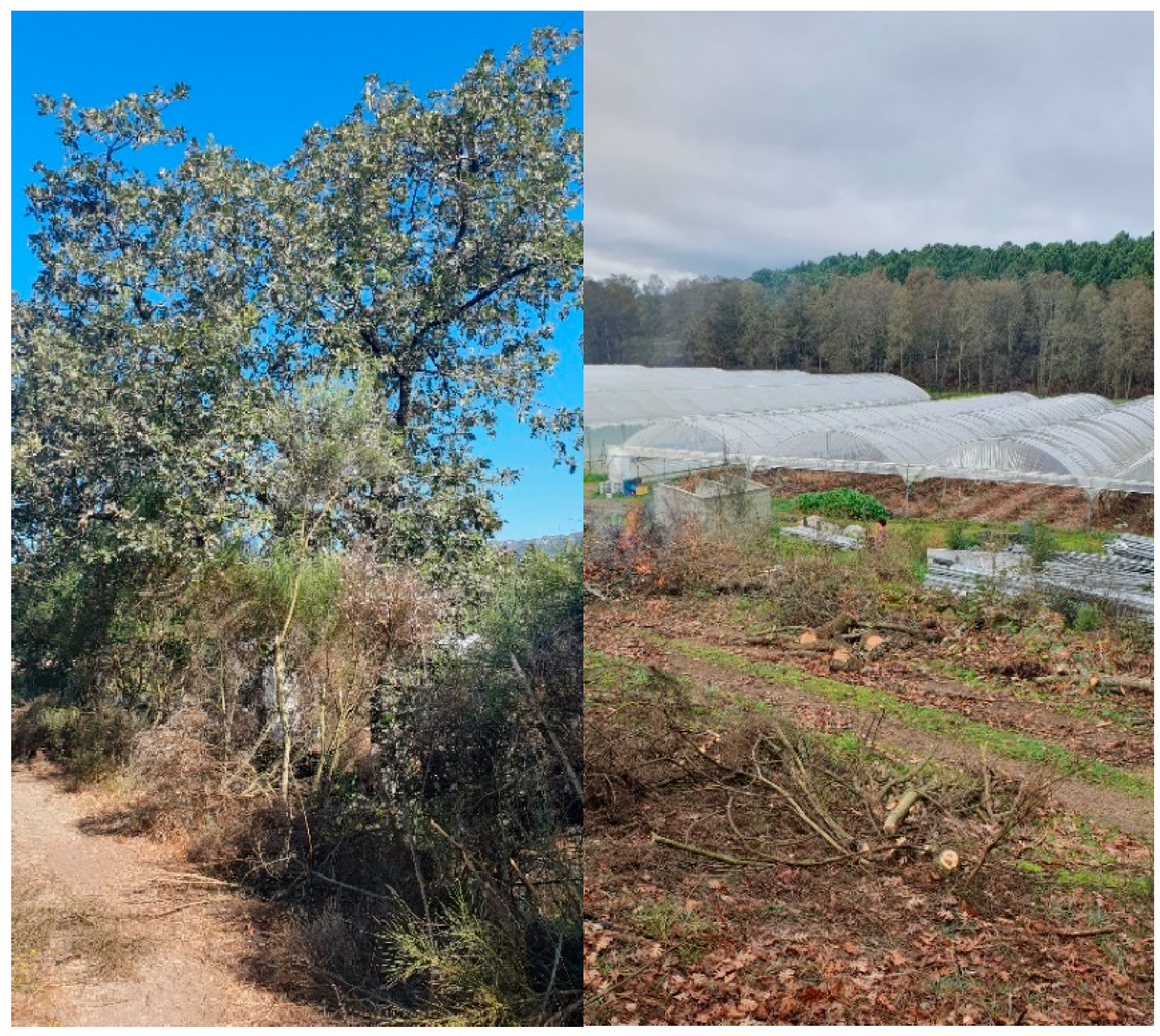
Figure 1. Demarcated zone of Sabrosa, northern Portugal, before and after the implementation of eradication measures (October 2023). This comparative image, taken by the author, illustrates the landscape transformation within the demarcated area of Sabrosa, following the enforcement of official eradication protocols targeting Xylella fastidiosa. The left panel shows the zone prior to intervention, with a high density of susceptible host plants, including ornamental and wild species. The right panel, taken after phytosanitary actions were carried out, depicts the cleared terrain resulting from the removal and destruction of infected and potentially infected vegetation.
Preprints 178600 g001
Figure 2. Xylella fastidiosa demarcated zones (DZs) located in the North of Portugal: 1-Área Metropolitana do Porto,4- Sabrosa, 5-Alijó, 3-Baião, 6/7-Mirandela (I and II), and 2- Bougado. The red zones represent infected areas, while the blue outlines correspond to the buffer zones established around them. In the Porto region, the green circles indicate containment area established in 2024. In Porto and Trofa/Bougado, both X. fastidiosa subspecies multiplex and fastidiosa have been detected, whereas in all other demarcated areas only the subspecies multiplex has been identified (author’s image).
Preprints 178600 g002
Table 1. Host plant species of Xylella fastidiosa strains detected in Northern Portugal until June 2023. Among the 302 positive species, only these were identified to the bacterial subspecies level. Numbers indicate the total of positive plants detected for each host species [27].
Xylella fastidiosa subs fastidosa
Acacia dealbata 1
Genista tridentata 1
Lavandula stoechas 1
Citrus × aurantium var. paradisi 1
Citrus × limon 1
Xylella fastidiosa subs. multiplex st7
Acacia longifolia 2
Acacia melanoxylon 1
Adenocarpus lainzii 2
Artemisia arborescens 2
Asparagus acutifolius 1
Athyrium filix-femina 1
Berberis thunbergii 1
Calluna vulgaris 1
Cistus inflatus 3
Cistus monspeliensis 2
Cistus salviifolius 1
Cytisus scoparius 3
Dodonaea viscosa 2
Echium plantagineum 1
Elaeagnus × submacrophylla 1
Erica cinerea 1
Erigeron canadensis 1
Erodium moschatum 1
Euryops chrysanthemoides 2
Frangula alnus 1
Gazania rigens 2
Genista tridentata 1
Hebe sp. 3
Helichrysum italicum 2
Hibiscus syriacus 1
Hypericum androsaemum 1
Hypericum perforatum 1
Ilex aquifolium 1
Laurus nobilis 1
Lavandula angustifolia 2
Lavandula dentata 6
Lavandula stoechas 1
Lonicera periclymenum 1
Magnolia grandiflora 3
Magnolia × soulangeana 1
Medicago sativa 5
Metrosideros excelsa 2
Myrtus communis 2
Nerium oleander 3
Olea europaea 5
Pelargonium graveolens 1
Plantago lanceolata 1
Prunus cerasifera 1
Prunus laurocerasus 1
Prunus persica 1
Pteridium aquilinum 1
Quercus robur 2
Table 2. - Unit costs associated with plant prospection activities for Xylella fastidiosa detection in the northern region of Portugal. This table presents the standardized pricing structure applied to various plant prospection activities carried out as part of the official surveillance program targeting Xylella fastidiosa. The costs reflect the financial expenditures related to visual inspections, sample collection, laboratory testing, and field logistics.
Species Price for Prospection (€)
Asparagus acutifolius 7 151,1 €
BrassicaL. 9 621,5 €
Citrus 27,303.2 €
Citrus limon 10,011.2 €
Citrus sinensis 11,831.4 €
Dodonea viscosa 11,831.8 €
Eugenia myrtifoliaSims 6,631.0 €
Euryops chrysanthemoides 12,741.9 €
Ficus caricaL. 11,051.3 €
Hebe 9 751,5 €
Hedera helixL. 20,933.2 €
Ilex AquifoliumL. 15,017.3 €
Laurus nobilisL. 25,028.8 €
Lavandula angustifóliaL. 6,891.0 €
Lavandula dentataL. 20,608.1 €
Lonicera japonicaThunb. 8,451.3 €
Metrosideros excelsea 19,828.0 €
Nerium oleanderL. 21,583.3 €
Olea europaeaL. 54,736.3 €
Unknown 480,228.1 €
Pelargonium graveolens 27,889.2 €
Prunus domesticaL. 9,036 €
Prunus dulcis 10,726.2 €
Prunus laurocerasus 16,836.9 €
Prunus lusitanica 6,695.8 €
Prunus persica 7,215.8 €
Prunus sp. 11,246.3 €
Pteridium aquilinum 10,206.6 €
Quercus roburL. 10,011.2 €
Quercus sp. 16,316.9 €
Quercus suberL. 19,762.3 €
Rosa spp. 22,818.5 €
Rubus 10,921.7 €
Strelitzia reginaeAiton 7,801.2 €
Veronica sp. 6,956.1 €
Vitis vinifera 11,898.3 €
Total 997,570.2 €
Table 3. - Total number of plants destroyed as part of Xylella fastidiosa eradication measures in the northern region of Portugal. This table provides a detailed breakdown of the number of plant specimens that were removed and destroyed following the detection of Xylella fastidiosa in demarcated areas of northern Portugal. The table categorizes plant removals by species, offering insights into the scale of intervention. This quantitative information is critical for evaluating the intensity and reach of eradication measures, as well as their associated ecological and economic implications.
Species Number of Plants
Asparagus acutifolius 175
Citrus limon 21
Citrus sinensis 14
Dodonea viscosa 1,943
Euryops chrysanthemoides 245
Ficus carica 17
Hebesp. 2,178
Hedera helix 840
Ilex aquifolium 197
Laurus nobilis 402
Lavandula angustifólia 148
Lavandula dentata 1,152
Lonicera japonica 496
Metrosideros excelsea 447
Nerium oleander 239
Olea europaea 7,024
Pelargonium graveolens 3,509
Pelargoniumsp. 37
Prunus domestica 21
Prunus dulcis 25
Prunus laurocerasus 154
Prunus persica 50
Pteridium aquilinum 360,324
Quercus robur 3,511
Quercus suber 236
Rosaspp. 1,106
Rubussp. 43
Spontaneous herbaceous plants 27,636
Strelitzia reginae 85
Veronicasp. 242
Vitis vinifera 7
Total 412,524
Table 4. – Species-specific destruction costs incurred during Xylella fastidiosa eradication measures in northern Portugal. This table presents a detailed overview of the direct costs associated with the destruction of individual plant species identified as hosts of Xylella fastidiosa within the demarcated zones of northern Portugal. The values represent the financial expenditures required for the uprooting, removal, and proper disposal of infected or potentially infected plants, as part of the officially mandated eradication protocol.
Species Price for Destruction (€)
Asparagus acutifolius 700
Citrus limon 525
Citrus sinensis 350
Dodonea viscosa 7,772
Euryops chrysanthemoides 735
Ficus carica 425
Hebesp. 8,712
Hedera helix 1,260
Ilex aquifolium 6,895
Laurus nobilis 4,422
Lavandula angustifolia 592
Lavandula dentata 4,608
Lonicera japonica 1,984
Metrosideros excelsea 6,705
Nerium oleander 2,151
Olea europaea 245,840
Pelargonium graveolens 7,018
Pelargoniumsp. 74
Prunus domestica 588
Prunus dulcis 725
Prunus laurocerasus 1,848
Prunus persica 1,250
Pteridium aquilinum 540,486
Quercus robur 140,440
Quercus suber 9,440
Rosaspp. 4,424
Rubussp. 258
Spontaneous herbaceous plants 41,454
Strelitzia reginae 1,530
Veronica sp. 363
Vitis vinifera 77
Total 1,043,651
Table 5. - Costs associated with the replacement of plants destroyed during Xylella fastidiosa eradication efforts in northern Portugal. This table details the financial expenditures related to the replanting and restoration of vegetation following the removal of Xylella fastidiosa-infected plants as part of official eradication measures. The costs include procurement of replacement plant material, planting labor, site preparation, and any associated maintenance activities required to establish new vegetation.
Species Price for Replacement
Asparagus acutifolius 2,625
Citrus limon 840
Citrus sinensis 560
Dodonea viscosa 21,373
Euryops chrysanthemoides 1,715
Ficus carica 680
Hebe 17,424
Hedera helix 2,310
Ilex Aquifolium 16,745
Laurus nobilis 15,276
Lavandula angustifólia 1,332
Lavandula dentata 10,368
Lonicera japonica 5,952
Metrosideros excelsea 20,115
Nerium oleander 6,453
Olea europaea 526,800
Pelargonium graveolens 11,404.25
Pelargonium sp. 129.5
Prunus domestica 1,260
Prunus dulcis 1,375
Prunus laurocerasus 3,850
Prunus persica 2,750
Pteridium aquilinum 5,765,184
Quercus robur 333,545
Quercus suber 21,240
Rosa spp. 9,954
Rubus 645
Spontaneous herbaceous plants 0
Strelitzia reginae Aiton 2,720
Veronica sp. 968
Vitis vinifera 98
Total 6,805,690.75
Table 6. - Number of positive Xylella fastidiosa cases detected (P) and samples collected (S) annually from 2019 to June 2023 across different demarcated zones in northern Portugal. The data show a significant decrease in cases in the Porto zone, the primary area of detection, while sporadic positive detections appear in surrounding zones starting in 2022.
2019 2020 2021 2022 2023
P S P S P S P S P S
Porto ZD 124 4977 51 2914 31 3115 82 3287 5 951
Baião ZD 0 0 0 0 0 0 1 1 1 45
Bougado ZD 0 0 0 0 0 0 2 74 1 50
Alijó Zd 0 0 0 0 0 0 1 52 0 222
Sabrosa ZD 0 0 0 0 0 0 1 1 0 110
Mirandela ZD 0 0 0 0 0 0 1 149 0 338
MirandelaI II ZD 0 0 0 0 0 0 1 141 0 716
Disclaimer/Publisher’s Note: The statements, opinions and data contained in all publications are solely those of the individual author(s) and contributor(s) and not of MDPI and/or the editor(s). MDPI and/or the editor(s) disclaim responsibility for any injury to people or property resulting from any ideas, methods, instructions or products referred to in the content.
Copyright: This open access article is published under a Creative Commons CC BY 4.0 license, which permit the free download, distribution, and reuse, provided that the author and preprint are cited in any reuse.
Prerpints.org logo

Preprints.org is a free preprint server supported by MDPI in Basel, Switzerland.

Subscribe

Disclaimer

Terms of Use

Privacy Policy

Privacy Settings

© 2025 MDPI (Basel, Switzerland) unless otherwise stated