

Submitted:
24 September 2025
Posted:
25 September 2025
You are already at the latest version
Abstract
Building Information Modelling (BIM) represents a technological and organisational innovation transforming the architecture, engineering, and construction (AEC) industry by embedding data-rich collaboration into project delivery. However, the diffusion of this innovation is constrained by unresolved legal-contractual complexities, where conventional frameworks fail to manage BIM-specific risks such as unclear responsibilities, intellectual property, and dispute resolution. This study advances knowledge and practice by conceptualising a novel legal-contractual amalgamated dimensional factor that links identified risks with tailored management strategies, thereby enabling BIM innovation to be embedded more effectively into organisational processes. A mixed-methods design was adopted. An integrative review of Scopus- and Google Scholar-indexed studies, supported by thematic analysis in NVivo, generated a comprehensive Risk Breakdown Structure (RBS) that organises fragmented knowledge of legal-contractual risks. Qualitative content analysis, combined with survey and expert interview data, enabled triangulated validation and the development of the BIM-RBS Matrix and BIM-RBS–MS Nexus. These tools operationalise risk knowledge by ranking severity (SPSS) and aligning management strategies with specific risk categories. The results highlight actionable innovations such as QR-code protocols to strengthen cyber/data security and shared risk–reward mechanisms to address contractual design ambiguities. The study contributions are: (1) conceptualising a structured legal-contractual knowledge spectrum for BIM innovation, (2) advancing methodological integration for risk knowledge creation and validation, and (3) providing actionable frameworks that support industry, policymakers, and researchers in embedding BIM innovation more reliably. Framing legal-contractual risk knowledge as critical enabler of innovation extends theoretical understanding, offering globally relevant pathways for knowledge-based transformation of the AEC sector.
Keywords:
BIM
; contract
; innovation
; knowledge
; legal
; risk management
; D81 Criteria for Decision-Making under Risk and Uncertainty
1. Introduction
The architectural, engineering, and construction (AEC) industry is a dynamic interdisciplinary industry merging myriad multidisciplinary professionals that contribute their expertise with diverse backgrounds in segmentation (Berema et al., 2021; Baharom et al., 2021). It is one of the most difficult and challenging industries to manage mainly because of its multi-disciplinary complexity and uniqueness as well as changes in construction methods owing to the increasing diversity of projects and competing demands of stakeholders such as client, contractors, and designers (Muhammad and Nasir, 2022; Erpay and Sertyesilisik, 2021). Due to the complex and fragmented nature of the industry, there is a need to adopt a novel technological solution in order to address the existing shortcomings. Hence, the emergence of Building Information Modelling (BIM) technology is a response to the industry’s needs (Mohammadi et al., 2024). The introduction of BIM prompts a cultural change in the industry and creates a modern technique of working using an integrative approach (Nilchian et al., 2021). BIM adoption is not only a technological shift but an innovation process that requires knowledge integration across stakeholders. It is an innovative technology, a management process, that represents a three-dimensional (3D) geometric model which connects objects with a valuable information platform for a comprehensive digital representation of a facility by integrating data from design conception until demolition (Baharom et al., 2021; Nilchian et al. 2022; Mohammadi et al., 2024). BIM implementation has several benefits such as enhancing construction project efficiency by improving cooperation, influencing the dynamics by transforming design and construction, reducing rework through effective information interoperability, and better visualisation for safety (El Hajj et al., 2023; Dao et al., 2021; Mahdian et al., 2023; Alotaibi et al. 2024; Mohammadi at el., 2024). BIM's capacity to compute project exploration digitally enable various assessment of future design solutions, swift design adjustments to implement preventative measures to improve productivity and sustainability throughout the project lifecycle (Berema et al., 2021; Dao et al., 2021). However, despite these benefits such as integrated supply chain; improve communication; reduction in delays and conflicts; increase in overall project quality, it also comes with consequences that cannot be overlooked (Baharom et al., 2021; Erpay and Sertyesilisik, 2021). Hence, the likely anticipated high adoption rates, the overall effectiveness of BIM, and the implementation strategies developed are not yet fully established due to the inherent complexity of construction projects. Consequently, projects are still vulnerable and exposed to risks and uncertainties arising from unforeseen circumstances e.g. managerial, technical, legal, social, and financial risks. (Mahdian et al., 2023; Mohammadi at el., 2024; Erpay and Sertyesilisik, 2021). BIM conveys new risks of its own as it is receptive to potential conflict leading to disputes, disparities in objectives, and misinterpretation due to the increasing nature of project intricacies (Berema et al., 2021; Alotaibi et al. 2024). Even though various research effort was conducted to overcome these challenges, it is still a grey area. For example, issues with identifying BIM roles and stakeholders’ responsibility; intellectual property rights (IPR) in the common information platform; digital data security and storage (Erpay and Sertyesilisik, 2021). The reason is basic roles and responsibilities, including communication practices and design processes transform under BIM. As Taghizadeh et al., (2022) indicated while each team bears a single point of responsibility in traditional contracts, the overlap of roles and responsibilities in BIM-enabled projects affects the degree of risk placed upon contracting parties which presents higher liability exposure. Hence, BIM is not only changing the design processes but risks of liability, copyright, and ownership due to weakening concept of responsibility of each team member. Because it distorts the lines of responsibility, which leads to difficulties in determining the party liable for design errors, especially if multiple actors or firms have entered or changed data during the process. Additionally, issues with who owns the model and responsible for its maintenance (Taghizadeh et al., 2022; Nilchian et al., 2021; Baharom et al., 2021; Dao et al., 2021; Alotaibi et al. 2024). These risk factors could exacerbate into disputes due to deficiencies in the contracting phase with increasing construction complications (Erpay and Sertyesilisik, 2021; Muhammad and Nasir, 2022). These dynamics, coupled with emerging technologies (BIM), new standards, and delivery methods utilising innovative techniques, not only increase the number of claims and disputes but also made them difficult to manage (Muhammad and Nasir, 2022). As existing contracts may not be suitable for BIM projects and there is no efficient and well-established form of contract for addressing and mitigating all these issues in BIM. Therefore, the full benefit of BIM technology is yet to be achieved due to these unresolved uncertainties and risks that aptly needs addressing (Mohammadi et al., 2024). Existing studies focus on risks, but not on how risk knowledge can enable BIM as an innovation. Additionally, some studies proposed strategies to manage these risk factors, for example international standardised BIM contracts protocols (Nilchian et al., 2021; Dougherty, 2015), BIM contract addendum (Mohammadi et al., 2024; Muhammad and Nasir, 2022), integrated project delivery (IPD) (Mahdian et al., 2023) etc. However, due to BIM’s advancement there is no complete evaluation of the legal-contractual challenges surrounding BIM, nor these remedies now available to resolve the impediment (Berema et al., 2021). Hence, BIM would not significantly progress in projects until these legal and contractual issues are clarified for contract procurement (Nilchian et al., 2022). As various studies proved that contractual practices are not the same in each project regarding these issues. Therefore, there is a pressing need for a structured knowledge BIM contractual form to manage BIM-enabled projects preventing legal issues (El Hajj et al., 2023), so that stakeholders understand the legal and contractual ramifications of adopting BIM (Alotaibi et al. 2024). In order to guarantee BIM’s effective integration into construction activities, the knowledge shortage of legal and contractual management strategies must be addressed (Alotaibi et al. 2024), by translating risk data into actionable innovation strategies. Contrarily it can hinder the effective implementation of BIM, create disagreements, and dither stakeholders from realising its full potential. Recognising this knowledge gab, this research examines prior studies to identify risk factors and appropriate mitigation strategies from a multi-dimensional perspective but limiting the scope to the intersection of the legal and contractual dimensions. The goal is to address the aforementioned issues by initiating an integrative review approach that will aid translate risk data into actionable innovation strategies, assessing the magnitude of the risk factors aligned with appropriate management strategies via the mixed method in closing the research gap.
1.1. Literature Review
The AEC industry is undergoing major transformation due to evolving technologies such as BIM (Alotaibi et al. 2024). While it is ideal to achieve a synchronised construction project, it is not always possible due to the involvement of multiple parties with variety of abilities and diverse specialities (Berema et al., 2021). Introducing BIM is one of the contributing technological advancements in the industry. It is a 3D (Dimensional) model-based technique that combines data from various disciplines enabling the use of information for project stakeholders to collaborate and communicate efficiently, working productively with less error (Alotaibi et al. 2024). Its inception in the 1980s represent an object-based modelling augmenting its adoption within the AEC industry towards mitigating issues associated with segmented traditional methods of construction projects. BIM's transformative improvements bring together not only modelling three dimensions (3D), but also scheduling (4D), estimating (5D), sustainability (6D), and operation and maintenance (O&M) in a single collaborative endeavour (7D) (Berema et al., 2021). It is an efficient process that incorporates all disciplines, aspects, and arrangements of a facility within a single inclusive digital model, and the establishment of a common data environment (CDE) is an added characteristic of BIM enabling communication, sharing, and reuse of data efficiently (Muhammad and Nasir, 2022). Despite the benefits implementing BIM in projects, it raises important legal and contractual issues relating to project roles and responsibilities, copyright and contractual indemnities, and the use of documents not addressed by standard industry contract forms. Comparing with traditional projects where the legal systems focus on individual rights and responsibilities, BIM is distinct because it is basically a collaborative functioning environment. Hence, identifying the contribution of each participant is difficult, in some cases resulting to conflicts between protocols and principal contracts, standards of care, liabilities, model ownership, and intellectual property rights (IPR) etc. (Dao et al., 2021). Encompassing lack of clarity in regulations relating to practitioner’s roles and responsibilities (See Ganbat et al. 2019; Bensalah et al. 2019; Lindblad, 2019; Georgiadou, 2019). Hence, Chong et al. (2017) suggests a specific standard form of BIM contract is required to cover all scopes of work for all parties involved. Scholars have researched this particular area of study. For example, Alotaibi et al., (2024) examine legal and contractual management in construction projects discussing issues such as lack of clarity and uniformity in the contractual agreements that specify the roles and obligations, indicating that it is one of the major risks when various parties merge in BIM projects. This can cause disputes with increasing complexities in construction projects. BIM capabilities of data storage and visualisation of the changes, planned activities, with actual sequences, can aid in dispute resolution processes more efficiently. However, Muhammad and Nasir (2022) argue that lack of clarity about BIM contractual guidelines can undo this advantage and lead to legal disputes in projects. Baharom et al., (2021) focused on contractual issues of Intellectual Property Rights (IPR) in construction projects discussing the integrative and collaborative working environment in BIM that involves sharing and exchanging digital models produced by contributors. They concluded that implementing BIM in a construction project blurs the demarcation lines of copyright ownership among the model contributors and the client, suggesting specific clauses should be clearly addressed and included in the contract. Erpay and Sertyesilisik (2021) indicated that the main causes of legal concerns and disputes implementing BIM are risk allocation, IPR, interoperability, responsibility of the used data and quantities, clash detection, professional reliability and unclassified documents. The involvement of multiple disciplines producing multiple data, models and information create a “grey area” in terms of responsibility among the actors (Baharom et al., 2021; Mohammadi et al., 2024). These issues are additional predicament in the context of integrated project delivery (IPD) according to Alotaibi et al. (2024), because BIM projects frequently involve more complicated data, making it more difficult to settle disagreements. Baharom et al., (2021) indicated that apprehensions on the issue of confidentiality, data security and infringement became obvious due to the integration of multiple proprietary information during the process of developing building models. The transformation in BIM working environment instigates the issue of accountability, which could lead to finger-pointing and adversarial relationship among parties, developing issues of trust with regards to the data and altering the lines of ownership among the contributors as BIM-models are enriched with information of subsequent adaptations (Weber and Achenbach, 2023). Nevertheless, Baharom et al., (2021) discusses advantages and disadvantages brought up by BIM in this context. For example, BIM facilitate dispute resolution, however potential disputes over model management, verification, or ownership can undo this advantage. BIM can reduce likelihood of claims and litigation, but create higher liability for contractors. BIM reduces transaction costs but high cost of BIM software/hardware can reverse the advantage. BIM improves alignment of interests between stakeholders but needs a clear and consistent contractual framework to achieve that. The higher the degree of collaboration among project stakeholders, the more complicated these issues manifest, therefore a clear contractual provision to address these risk factors is essential (Baharom et al., 2021). However, integrating BIM into the contract is challenging locally and internationally as it raises several legal concerns because it contains large amount of information used directly by stakeholders. To overcome this challenge standard contracts and protocols have been established, but not widely used in the AEC industry. Effective contract management with written provisions is vital for regulating these legal concerns and the implementation of essential procedures. However, due to BIM complexity intertwined with lack of experience, there is no mutual consensual strategy for BIM contracts (Erpay and Sertyesilisik, 2021), as standard forms of contract have a strict structure usually adequate for a variety of typical projects, but limited to discussions or revisions which does not align with BIM maturity and advancement (Berema et al., 2021). Another obstacle to the use of BIM-models during the construction life cycle raised by Weber and Achenbach (2023) is the separation of technical and legal information. If the legal information of the contractual relationship is only stored in the frame of the initial participants, it may not be possible to transfer from planning to construction and then to operation requiring separate contracts. Furthermore, majority of the contracts don’t have clear visible provisions for indemnification, insurance or bonding according to Taghizadeh et al., (2022), because when architects delegate their design obligations they are at risk maintaining professional liability insurance for their activities, unless the delegated contractors have professional liability insurance in place when they perform changes. Otherwise, compensation for any defective design claims could be from the architect’s professional liability insurance policy. Taghizadeh et al., (2022) concluded that, there is scarcely a clear and detailed solution for liability assignment in these published studies, allocation of responsibility is not conspicuous and liability of design errors is not clearly defined in contract provisions. However, to grasp the full benefit of BIM these undeniable risk factors from a legal and contractual perspective needs to be addressed. This can be achieved with the aid of risk management.
Risk refers to the potential of losing something of value (Dao et al., 2021), while risk in projects are probabilities of an event occurring that is likely to impact the project outcome such as cost, quality and time. There are three components that aid in describing risk, that is the risk event, its probability of occurrence and the latent consequence of the risk event, usually measured in terms of likelihood and severity (Mat Ya’acob et al. 2018; Mohammedi et al., 2024). It is an unpredictable cause that comes from various sources at any phase of the construction process and risk management has been widely used as a tool to minimise or eradicate these uncertain future events during construction. Risk management refers to a series of actions taken to reduce these risks (Górecki, 2018). Such as the identification and prioritisation of risks, then evaluation followed by the coordinated application of resources to minimise the impact, thus control and monitor the unfortunate event (Dao et al., 2021). The process of risk management involves risk identification which is the first phase, risk analysis, risk assessment either qualitative or quantitative, risk response, then mitigation and risk review (Mohammedi et al., 2024). Uncertainty is a crucial concept in risk conceptualisation that can either be related to the probability or significance of risk factors; therefore, it is constructive to implement the two deep-rooted risk management pillars in fundamental risk management theories. That is the structure of the risk management procedure, and key risk management strategies by reviewing previous research to discover appropriate strategies from a legal and contractual perspective in this study (Dao et al., 2021; Mohammedi et al., 2024). Mohammedi et al., (2024) described three main risk response and mitigation strategies that are generally used: 1) Risk-informed strategies that are classified into risk retention, risk transfer, risk reduction, risk sharing, and risk avoidance. 2) Cautionary/precautionary approach strategies such as supplementary safety considerations, containment, alternate progression, adaptable reaction possibilities, design of safety mechanisms, system adjustment and the establishment of emergency administration. 3) Discursive strategic approaches foster trust and dependability, to achieve diminishing levels of uncertainty and vagueness by highlighting factual information, and engaging in negotiations incorporating affected individuals, for accountability. Therefore, this study focused on preventative risk mitigation measures which are mainly based on risk-informed strategies transferring knowledge. Moreover, legal and contractual issues are different based on BIM maturity levels and solutions may differ at various regions. Therefore, it is required to generate protocols and instruments to manipulate such issues and several solutions have been proposed to tackle such complications in BIM projects. In general, it can be stated that researchers have considered strategies in addressing BIM contracts and their legal aspects (Nilchian et al., 2022; Taghizadeh et al., 2022), however it is still in its infant stage due to BIM integrated with components, processes and methods as the level of maturity progresses, hence a major problem utilising BIM in the AEC industry. For example, it is difficult to follow BIM-based work practices in procurement contracts because detailed contracts requirements on how to use BIM conflicts with management requirements (Ganbat et al. 2019; Bensalah et al. 2019; Lindblad, 2019; Georgiadou, 2019). Some of the solutions proposed to solve these issues is by developing an independent BIM contract, however the disadvantage is that new contracts need to be provided for each of the project parties. Additionally, several standardised BIM contract protocols were developed to administer BIM-enabled projects. Such as Consensus DOCs 301 BIM Addendum, the American Institute of Architects’ (AIA) E-202 and E-203 protocol; the Construction Industry Council’s (CIC) BIM protocol; Architects Engineers and Contractors BIM Protocol (AEC); Construction Industry Council (CIC); BSI Standard Publications and Publicly Available Specification (PAS) series of standards; ISO (International Organization for Standardization); Chartered Institute of Builders (CIOB) Time and Cost Management Contract; the New Engineering Contract (NEC), and the Joint Contracts Tribunal (JCT) (El Hajj et al., 2023; Berema et al., 2021; Mahdian et al., 2023; Dao et al. 2021). Henceforth, an advantage to industry stakeholders because it promotes collaborative practice in its contractual requirement. As these aforementioned documents establish protocols for developing a BIM execution plan, modelling methodology, information exchange and security, assigning liability and resolving issues of intellectual property, it still lack established standards for several areas associated with BIM implementation (Muhammad and Nasir, 2022). Chong et al. (2017) and Nilchian et al., (2022) indicated that BIM contract addendum is the best approach among solutions to solve BIM contract issues that is sufficient to cover a certain BIM’s scopes and requirements (i.e., an attachment to a contract that modifies the terms and conditions of the original contract) (Taghizadeh et al., 2022). However, Erpay and Sertyesilisik (2021) argue that an addendum to the master contract cannot cover all risks, as it causes many changes in the relationship between project parties such as responsibilities of the employer, dispute resolution reference in BIM model, performance guarantee of each party in the project, priority of the BIM model over other contract documents etc. Furthermore, Taghizadeh et al., (2022) argue that there are liabilities in existing contractual standards even with the inclusion of BIM addendum. For example, Consensus Docs 301 BIM Addendum waive liabilities damages due to the use of building data for any purpose other than that stated in the contract. AIA Document G202 merely addresses one aspect relevant to liability. CIC contracts suggest project participants not to accept any liability for the model integrity if results are non-compliance with BIM protocols (Taghizadeh et al., 2022). Other solutions regarding intellectual property can be protected through industrial design, copyright, patents, trade secret, and trademarks. However, the limitation of its use must be agreed upon during contracting for protection during the construction phase, while personal signatures retain the function of authentication of the author, including the integrity of the document and content proof. Accordingly, clients should get the copyright of the final federated BIM model to be further used for maintenance purpose during post-completion (Baharom et al., 2021; Weber and Achenbach, 2023). Other infused strategies are data governance, defined as a system of rules and policies, roles and responsibilities, standards and processes, practices and structures, control and decision rights to oversee data management. However, legal data governance is currently not defined by law (Weber and Achenbach, 2023). Hence, Weber and Achenbach, (2023) concluded that in utilising BIM legal data governance, legal information have to be included in the exchange information requirements to reach practicability. As well as the use of BIM-based Construction Project Management guidelines based on content details and their scope under BSI Standard Publications, and ISO (International Organisation for Standardisation) as earlier indicated (Erpay and Sertyesilisik, 2021). Taghizadeh et al., (2022) suggest integrating BIM-collaborative approach in Design- Bid- Build (DBB) and Design-Build (DB) will compel contractors to share liability for design models making a strong environment for coordination. This can help overcome liability for design errors in BIM by motivating collaboration, risk allocation and responsibility. An alternative suggestion by Jamil and Fathi, (2018) is the application of collaborative project delivery approach in BIM-enabled projects, such as Integrated Project Delivery (IPD) and partnering. These are best-fit approach for contracts, because transparency in data sharing is critical amongst all parties involved in a project. Additionally, a framework for BIM-enabled projects to ensure integrity, avoid confusion, and encourage common work is the Digital Built Britain-Level 3 Building Information Modelling-Strategic Plan (Nilchian et al., 2022). These aforementioned BIM protocols assist with managing risks and liabilities of errors or misuse of data in models, as it is a legal agreement that sets up the role of the information manager, incorporate standards to aid team members, indulges suppliers to provide BIM data at specified levels of detail, and protection for producers of information based on BIM-specific licenses (Dao et al., 2021). Lack of liability pinpointing inaccurate information input or changes in a model is one of the most daunting issues implementing BIM (See Lu et al. 2013; Feist et al. 2017; Lin et al. 2016). However, Lu et al. (2013) suggests the use of relational contract theory that is based upon a relationship of trust between parties in an organisation can minimise this risk. For inadequate model management difficulties and in resolving such conflicting changes in models, Feist et al. (2017) proposed a version control (VC) system that stores project information in a single central repository to minimise any error during model design by several individuals which can be a challenge. A similar system is the Autodesk’s Vault developed to manage the different inputs by multiple participants. An alternative system is Project-Bank, which is a collaborative engineering data repository by Bentley Systems, with similar revision capabilities as Vault (Chien et al. 2014; Feist et al. 2017). When utilising BIM, security is a key factor to take into account on any project, as outlined in PAS 1192:5:2015 standard. Nevertheless, the risk factor associated with lack of clarity as to who owns and is responsible for BIM can be resolved via model development governance approach (i.e., governed by data management and copyright that involves disciplines creating data, must be responsible for its accuracy and correctness, and the authoritative copy stored in their own respective infrastructure) (Beach et al. 2017). Additionally, if the model is designed and contributed by a team, Chong et al. (2017) suggests each party should own all rights to its own contribution. To address this risk of cyber security, Georgiadou, (2019) suggest project teams should ensure, awareness, education, policies and procedures of cyber security. Protection and monitoring of the project’s technical infrastructure (e.g., network security, malware protection). Operational BIM data to ensure confidentiality and integrity, especially sensitive information (Building Information Modelling (BIM) protocol, 2018), that should be protected by QR-Code (i.e., a type of matrix barcode or two-dimensional barcode). Preventing any infringements or copyrights issues on the drawings and documents (Chong et al. 2017). As a result, Kivits and Furneaux, (2013) indicate the key is to generate or access the right data for the right purpose, rather than ingress all data. Furthermore, when developing a BIM model, contracting parties should established standards or guidelines to be applied (i.e., level of detail for the BIM model according to the level of development (LOD)); format for exchanging information using IFC standards should be treated as part of the contract document, and the scopes and requirements should not be obligatory with legal implications but ensure flexibility (Chong et al. 2017). Contractually, the choice of contract forms can shift risk exposure between parties according to Chang (2015), therefore Azhar et al. (2012) suggests before implementing BIM technology, essential negotiation points need to be resolved, such as clarifying penalties, rewards, insurances, limited warranties and disclaimers of liability (Chong et al. 2017; Azhar et al. 2012). However, even with these strategies the legal and contractual aspect implementing BIM is still an issue lacking empirical studies aligned with actionable innovation strategies to mitigate these risk factors. Recognising this knowledge gab, this study undertakes a mixed method approach analysing BIM implementation from a multi-dimensional perspective but limiting the scope to the intersection of the legal and contractual dimension. The goal is to develop a legal-contractual frameworks that are innovation enablers in BIM adoption. By exploring all the legal aspects and contract provisions on BIM-enable project phases with regards to the aforementioned issues. Therefore, the following objectives seeks to implement the risk management process: first, identify and categorise the risk factors using risk breakdown structure (RBS) subsequently analysis; Secondly, risk evaluation by assessing risk severity to determine strategies; Thirdly, risk response and treatment connecting appropriate management strategies to the identified risk factors; finally, assess and interpret the evidence, drawing on the views and experience of these AEC professionals.
This paper is structured as follows: It presents a comprehensive integrative review encompassing key domains of BIM and risk management studies, rationalising the research problem that serves as the focal point. This review adhering to a systematic process analyses evolving risk factors implementing the technology and critically scrutinises the existing body of BIM literature and its intersection with risk management to establish management strategies. Additionally, discusses the proposed theoretical framework that will guide the study. Moving forward, section two outlines the methodology that creates structured knowledge by reporting on the paper retrieval process, describing the research design, and categorising risks systematically from a legal-contractual perspective. Then discusses the online survey and interview strategies. Section three provides a meticulous account of the study's results, and a comprehensive analysis by triangulation to validate and present the research findings. In section four, the paper discusses the practical implications, and delineates its limitations. The concluding section synthesises the research study, drawing attention to its broader impact and applicability. It closes with a well-founded recommendation that encapsulate the direction for future studies and also emphasize the significance of the research's contributions to the field.
1.2. Theoretical Framework
Theoretical framework is the structure and guidance that integrates key concepts, theories and assumptions to support this research enquiry. The review on the literature on BIM and other IT related studies from a contractual and legal perspective suggests there is no descriptive theory that explains what the law is, or a complete normative theory that explains what it should be with regards to contract laws that comprehends a broad domain (Schwartz and Scott, 2003), such as BIM implementation complexity that consist of various aspects. Therefore, a conceptual framework could be a logical approach, as Schwartz and Scott, (2003) argue that without a theory of interpretation to understand the meaning of the content of parties' writing an agreement and its legal implications, a court cannot enforce contracts. The conceptual framework with regards to contractual and legal aspect should first encapsulate tort theory (i.e., A tort is a legal mistake, focusing on legal consequences such as accidents, and the relevant forms of liability which are strict liability and negligence). As Circo (2006) indicated that it appears to become a persistent force in allocating liability arising from shared-design practices, especially in BIM processes. Secondly, the theory of contractual relationship management that suggest managing relations with trust among parties produces the most effective relations between actors (Hartmann and Fischer, 2008). Thirdly, contract theory which is the study of how people and organisations construct and develop legal agreements. However, Circo (2006) argue that a tort approach that involves commercial relationships tends to be inferior to a contract approach for allocating liability such as property damages and economic injuries. Concluding that the industry is skilful at developing project delivery systems and contracting structures that will respond to a constantly changing environment. Therefore, commercially allows participants to sensibly protect their own legitimate interests via risk management techniques and contract negotiations. This aligns with Hartmann and Fischer (2008) argument with regards to BIM, that it is better to understand the processes behind the use of BIM, rather than BIM itself because it is a technological and organisational innovation. Hence, contracts should be written in a standard form that encapsulates not only the use of BIM technology but more. Suggesting that writing contracts covering technological features in detail is not sensible, because technology such as BIM is changing rapidly to be covered through detailed legal agreements. Nevertheless, in understanding organisations and the success of large corporation, Butler (1989) suggest the contractual theory of the corporation provides the theoretical and empirical bases. It includes the appropriate role of privately negotiated contracts and mandatory legal rules. However, these theories need to be validated by scholars investigating BIM implementation. Therefore, the proposed theoretical framework to examine the risk in BIM implementation process that relates to multiple dimensions but limiting the scope to the legal-contractual aspect was established by Elnokaly and Dogonyaro (2024). It connects BIM-RBS (BIM-Risk Breakdown Structure), BIM-RBS-MS (BIM-RBS-Management Strategies), BIM-based construction networks (BbCNs) with the extended version of the sociotechnical theory, known as the Leavitt Socio-technical Model (LSTM) developed by Leavitt, H. J. (1964). The Leavitt’s model comprises of four components tightly connected to each other (i.e., technology, actors, task, and structure). Sackey et al. (2014) utilised the model to examine BIM implementation in relation to the sociotechnical framework, and their findings suggest a complex and interrelated set of incidents, events, and gaps unfolded that threatened the structures of the stable organisation norms and work processes. Merschbrock et al. (2018) similarly applied the model to investigate collaboration in BbCNs, because of the inclusion of new components (i.e., technology, actors, tasks and structure which are four components that act in synergy to achieve a balance in socio-technical systems rather than two). Clearly indicating the possibility of model extension to include more components in developing a novel framework that is suitable to investigate all aspects in BIM implementation. Providing a structured way to organise, share, and apply knowledge of risks and strategies. The core premise embedded in the model suggest these components are highly interrelated, and the system is in a state of equilibrium. Any event that causes a change in the system is an incident (i.e., risk factor). These incidents shift the system into a state of disequilibrium and is determined by the boundaries of the deep structure representing the risk magnitude. Therefore, an intervention is required (i.e., management strategy) to move the system back to a new equilibrium state (Merschbrock et al. 2018; Oraee et al. 2017; Elnokaly and Dogonyaro 2024).
2. Methodology
This section outlines the materials and methods employed to assess BIM implementation risks and establish management strategies. It covers the research design, inquiry procedures, and data collection methods (i.e., primary and secondary data) suitable for analysis and interpretation to achieve the study's objectives. To analyse the intersection of the legal and contractual spectrums, this study adopts an integrative review approach adhering to a systematic process. This method enables the synthesis and structuring of knowledge, facilitating its application in practice by AEC professionals—particularly in risk evaluation, management strategies, and identifying key considerations for BIM implementation, then mixed-methods analysis by triangulation. Henceforth, the research design is presented next.
2.1. Research Design and Paper Retrieval Process
The research design aligned with the risk management process is a novel approach as showed in Figure 1. It presents a flowchart diagram of the strategic plan outlining the methods and procedure for data collection and analysis in relation to the objectives set out. The initial paper retrieval process involved collecting Journal articles and conference papers retrieved from Scopus database because it provided extensive coverage of multidisciplinary scientific literature (Zhao et al. 2017; Oraee et al. 2017; Akhtar, 2016). The search strategy from a multi-dimensional perspective involved three sets of keywords for risk identification “Building information modelling” and “risk” and “management”. For management strategies the terms “Risk management” and “management strategies” and “BIM” or “Building Information Modelling”. Effectively, the initial search covered publications from 2000 to 2020 (Step 1). A total of 326 English language publications were initially downloaded and screened for relevance, by excluding non-English papers and those unrelated to this research. 94 articles were selected for risk identification and 30 for risk management strategies totalling 124 relevant articles from a multi-dimensional perspective. These relevant articles were saved in RefWorks for referencing and elimination of duplicates (Step 2). Then uploaded into NVivo 12 Pro software for analysis via coding. An open coding process facilitated categorisation, a well-established qualitative analysis method that emphasizes comparison, similarity, and contrast against existing models to frame interpretations (Aksenova et al., 2018 and Dhakal, 2022).
Thematic analysis enabled the extraction of risk factors from these relevant papers by recognising that different fields describe risks using various terms such as “barriers,” “threat,” “hazard,” and “challenges,” etc. (Zou et al., 2017) (Step 3). These identified risks were classified and modified using the risk breakdown structure (RBS) technique based on LSTM theoretical perspective. Extraction of management strategies linked to the identified risk factors via content analysis occurred, based on key areas in management such as previous experience, knowledge reuse, techniques, methods, and procedures (Ding et al., 2016; Oyedele et al., 2013; Enegbuma et al., 2014). This aided the establishment of BIM-RBS (risk factors) and BIM-RBS-MS (management strategies) representing variables employed for the quantitative aspect (online survey), followed by the qualitative aspect (online interviews). However, the exposed gap in management strategies within the legal-contract spectrum of BIM-RBS-MS was the criteria for developing the survey and interview questionnaires for the next step.
2.2. Survey and Interviews
A survey was conducted to establish the statistical relationship between BIM-RBS and BIM-RBS-MS, to ensure high representation for precise results (Step 4). The measurement scale utilised was the 5-point Likert scale to determine the magnitude of risk factors aligned with the equilibrium and disequilibrium state principles of LSTM. Defining a specific data sample frame was complex due to geographic restrictions, which could limit valuable insights. Hence, to improve generalisability, AEC professionals through BIM groups on LinkedIn were targeted and invited to participate in both survey and interviews. Microsoft Form is an online tool for creating and distributing surveys which aided in collecting data and 60 participants responded between 2024-2025 which is one of the limitations discussed later. The results were downloaded into Microsoft spreadsheet and then uploaded into Statistical Package for Social Sciences (SPSS) software for numerical data analysis and the techniques for the quantitative analysis are detailed below.
- Variables and Scales: Nominal (N) Gender and Age; Ordinal (O) Level of BIM experience, BIM-RBS as the outcome variable and shares the same properties as the dependent variables; String (S) BIM-RBS-MS as the intervening variable that transmit the effect of an independent variable on a dependent variable.
- Cronbach's Alpha (α) test (CA): Utilised to measure internal consistency/reliability of the survey scale. It assessed the reliability of multiple Likert-scale questions determining the magnitude of risk factors (BIM-RBS). Various thresholds were applied and the test procedure involved [Click Analyse > Scale > Reliability Analysis > select the variables > ensuring the model says 'Alpha' > then click OK].
- Simple linear regression (SLR): Strive to predict the outcome variable (BIM-RBS) using the predictor variable (Level of BIM experience). The test procedure involved [Click Analyse > Regression > Linear > select outcome variable and move to the 'Dependent' box > select predictor variable and move to the 'Block 1 of 1' box > Select Statistics > click Estimates, Confidence Intervals, Model Fit, R Squared Change, and Descriptives].
Inclusion and exclusion criteria aided in converting some survey questionnaires into interviews due to their extreme qualitative nature. For the online interviews the facetime carried out offered access to participants across distance and time barriers via Microsoft Teams. Eight interviews were conducted with BIM professionals and the interview protocol employed was by recording the information obtained. Then converting into text by downloading, saving on a USB stick as backup and writing down the information gathered, which concurs with the philosophical interpretive epistemological standpoint supporting this study (Creswell and Creswell, 2020).
2.3. Mixed Method
The mixed method approach involved the critical analysis of both qualitative data (i.e., interview) and quantitative data (i.e., online survey) aligned with LSTM, enabling different perspectives and paradigms in framing BIM-RBS and BIM-RBS-MS (Step 5). This approach helps gain a holistic understanding of legal and contractual risk factors, and management strategies implementing BIM. Further search for articles that mostly relates to the subject area between 2021 to 2025 commenced, by implementing the risk monitoring and review stage of the risk management process. 15 relevant papers were downloaded (Step 6). The keywords used within Scopus database are “Building information modelling (BIM)” “Contract” “Legal”. Adhering to the same analysis in step 1, the PRISMA guidelines was implemented as a systematic approach to extract risk factors and align with management strategies. It involved the identification, screening, eligibility and inclusion criteria that falls under the scope of the review which aided in updating the research with current findings from these articles. This multi-method analysis by triangulation assisted in manually sifting through and analysing all data (i.e., literature review, interviews and survey), enabling different perspectives and paradigms. This approach creates structured knowledge (BIM-RBS Matrix and BIM-RBS-MS Nexus legal-contract Aspect) that helps translate risk data into actionable innovation strategies. It facilitates gaining apprehension of risk factors, their magnitude, and management strategies by comparing data and producing a more robust and compelling results with global relevance.
3. Results and Analysis
The research gap identified in this study is predominantly associated with the two interrelated domains, through the critical analysis of the literature review focusing on the contractual agreements to prevent legal issues (i.e., Legal-contract aspect). The analytical framework is based on the equilibrium and disequilibrium principles of LSTM as illustrated in section 1.2. Therefore, the aspects and capabilities of BIM are examined narrowing the research scope to the intersection of these two knowledge domains is presented below (Step 5-6).
3.1. Secondary Data Analysis (Literature Review)
Analysing for BIM-RBS, Sabo and Zahn (2005) highlighted legal issues in BIM technology implementation, and current analysis confirms persisting challenges due to lack of effective management strategies. These challenges encompass difficulties in aligning BIM-based work practices with procurement contracts, inadequate contracts specifying information exchange for BIM collaboration, mismatched governmental regulations, and the absence of a suitable legal framework for organisational manipulation. Furthermore, cyber or network security issues during data transmission exchanging BIM models, comprehending dispute over ownership and intellectual property rights (Ganbat et al. 2019; Georgiadou, 2019; Muhammad and Nasir, 2022; El Hajj et al., 2023). Shared data entered or incorrectly interpreted by stakeholders increases the risk of data validity, reliability and security issues (Mohammadi et al., 2024). Contract requirements on BIM implementation process conflicts with management requirements. The exceptional interrelation between the contractual and legal spectrum suggests the risk of conflict between actual and contract quantities, with discrepancies all leads to legal issues. However, challenges persist regarding liability in data sharing, without clear strategies in place. Guidelines like those from the Joint Contracts Tribunal (JCT) and New Engineering Contract (NEC) inadequately addressed legal concerns in BIM projects (Winfield, 2015).
Analysing for BIM-RBS-MS, strategies to address these issues involve establishing clear ownership rights, responsibilities, and model development scopes at project initiation to mitigate intellectual property and licensing concerns (Ganbat et al. 2019; Georgiadou, 2019; El Hajj et al., 2023). Enhancing cybersecurity and preventing knowledge leaks can be achieved through encryption, secure file exchange servers, and QR coding, with blockchain technology offering further cyber risk reduction (BIM protocol, 2018; Chong et al. 2017; Darabseh, and Joo, 2021; Mohammadi et al., 2024). Creating specific BIM standard contracts, including addendums for conflicting requirements, and employing shared risk and reward strategies during contract changes are vital strategies (Ganbat et al. 2019; Bensalah et al. 2019; Lindblad, 2019; Georgiadou, 2019; Almarri et al. 2019; Chong et al. 2017; Nilchian et al., 2022; Taghizadeh et al., 2022). Utilising version control systems helps identify liability for incorrect model information input (Feist et al. 2017).
3.2. Primary Data Analysis (Interviews)
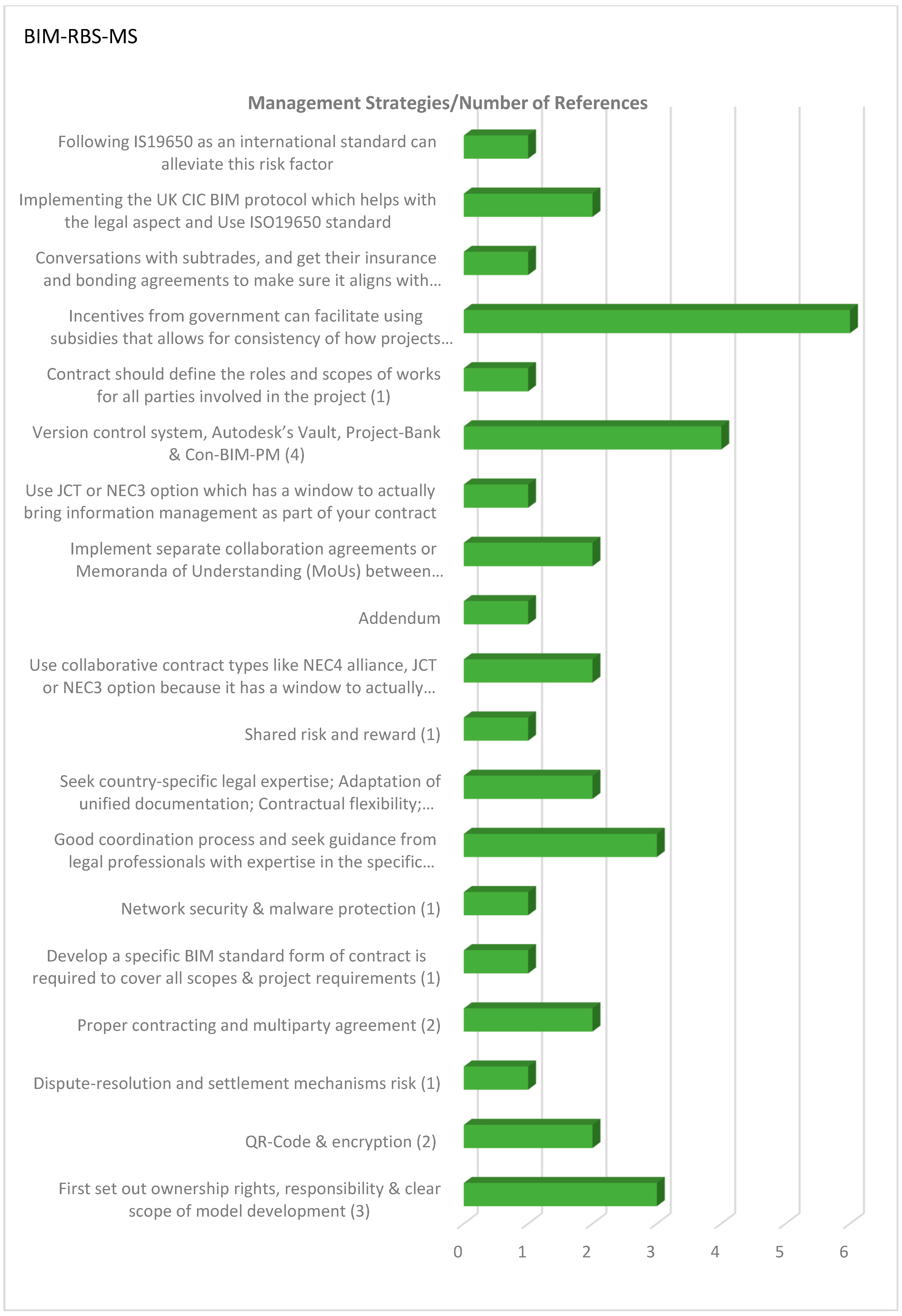
Further research was essential to establish equilibrium-seeking strategies based on the online interviews regarding issues with the difficulty to follow BIM-based work practices in procurement contracts. Participant A and G concur with the risk factor because procurement is lagging in terms of finding ways to accommodate BIM implementation according to Participant A. “In 2016, JCT contract mention that traditional procurement methods cannot handle BIM. More collaborative approaches for instance integrated project delivery are not popular method of procurement in the UK and throughout the whole world. Therefore, these collaborative procurement systems are not popular” (Participant A). Participant G indicated that “the difficulties with such risks are garbage in garbage out situation. We can’t leverage the model from a scheduling perspective, coordination perspective and providing an estimate to that tenth degree, because that data just isn't available. In the early procurement stages, the design is still developing and can't predict necessary changes, so we have to make certain assumptions that could change later and that will have a significant impact”. While participant B believe it is quite unified because BIM as a 3D model is more of a one-way strategy, Participant C; D; E; F and H disagree indicating a low risk factor because if an organisation is professionally sufficient, they should obtain a confirmed standard document and the ability to adhere to the practices in the procurement contract, set of rules and work practice to avoid difficulty or misalignment (Participant C; D; E; F). Hence, analysing for BIM-RBS-MS to mitigate the risk, Participant, A and E suggest implementing a more collaborative contract and procurement method with room for some changes due to unforeseen circumstances, employing a skilled lawyer. Such collaborative contract types like NEC4 alliance, JCT or NEC3 option to an extend because it has a window to actually bring information management as part of the contract (Participant, A).
Issues with lack of contracts for specification of information exchange that supports BIM-collaboration will have negative impact on standard projects. Participant A; B; C; D; E; F; G and H concur with this risk factor “because it is a task to send information to a team member and it is an obligation for them to understand it” (Participant, E). “As it affects not only the implementation but also the entire production chain because everyone does as they want and very often no one does as they should, clearly a very high risk” (Participant, H). Such risk can be associated with missing information that will affect the project, not able to model certain detailed level of drawings in full (Participant, D). Participant G indicated “old school and old school processes trying to use new tools, those are what I'll call traditional handshake agreements that the General Contractor (GC) to the consultant teams have with each other. The risk sometimes happens as we get further into the projects and getting squeezed from the owner’s timelines or to accommodate a certain design change from the owner. For example, into a set are submittal that needs to be delivered and there's no change in delivery of that submittal. So, what they do is take the drawing sets and fix it outside of making the adjustments in the model. This disconnects hugely because then downstream they have to play catch up on the model down the line”. Analysing for BIM-RBS-MS to minimise the risk factor involves establishing an exchange information requirement document to confirm all the information exchange standards and attach it to the construction project (Participant, C; D; E; F; H). Use JCT or NEC3 (Participant, A). Clearly incorporate a well premeditated BIM execution plan as an appendix to the design agreements that are signed off e.g. Rules of engagement for the execution of data transfer, all exchange formats, and versioning of software’s (Participant, G).
Governmental regulations do not meet current and future needs of the construction industry relating to BIM implementation. Participant A; E; F; G concur indicating a medium risk factor as there are no regulations that imposes the use of BIM methodologies within a construction project in Farnce (Participant H), India (Participant D) and Hong Kong (Participant C). However, “in the UK, one of the issues with the government and BIM involved changes to the system all the time. BIM task group which started 2011 use to be the body that promotes BIM but ended. Then central of digital built Britain (CDBB) was created, and not active because it has completed its mission. This change of authority is not a clear message to the industry because the initiative, even though they have spent money on NBS to develop tools and library of BIM objects it has been on and off” (Participant, A). According to participant E “progressive changes are evolving by the day and governmental regulations are sometimes late and most times the regulations are outdated and don’t move with the current pace of the technology changes within the construction industry”. In the case of Canada participant G indicated that “governmental entity in each province have established their own regulation and standards which is too open, then each municipality can then rewrite it for their purpose. Each firm can then establish their own rules and processes that are ironclad to them that don't work with everyone else which causes rifts”. Analysing for BIM-RBS-MS to improve quality, tackle carbon emission, and reduce waste, companies need encouragement to adopt BIM and not wait for the government (Participant, A). Project owners should impose it in their new construction project by inserting a contractual component to make the actors responsible (Participant, H). Incentives from government can facilitate using subsidies that allows for consistency of how projects are being executed and delivered, then the industry can align to that standard (Participant, A; B; C; D; E; F and G).
The issue with lack of legal framework to manipulate organisational environment when different firms work on a BIM project was acknowledged by participant B; D; E; F; G and H, due to the difficulty in finding lasting and trusting partnerships (Participant, H). Following legal framework of two different companies in different countries with different rules e.g. UK promote BIM while Indian government are not (Participant, D). The issue stems from lack of intermediary individuals who understand BIM and the contract (Participant, A). “Certain technologies downstream to mitigate risks prior to it becoming a potential finger pointing of role responsibility, which then turns into the legal issue” (Participant G). Therefore, minimising the risk involves implementing the UK CIC BIM protocol which is supposed to help with the legal aspect, but renewed to CIC BIM protocol 2 as information protocol. This includes ISO19650 standard with professionals having clear understanding from both the contractual and BIM perspective (Participant, A). This can be the contract manager because they have the legal sense regarding project contract terms and agreement (Participant, C), and project manager with effective understanding of BIM protocols (Participant, F). Alternatively, establish an agreement with partners on the methods, tools and conditions to be deployed that is legally tied and identifying the roles and responsibilities, while the commitment to clients should be transparent (Participant G and H).
Issues with Personal Indemnity Insurance (PII) covers not maintained due to unknown liabilities on shared BIM projects when organisations merge was acknowledged by participant D; E; F; G and H indicating a high-risk factor. As most companies rarely cover the same level of insurance because a company might deviate to one segment and the other to another (Participant, E). Participant D stated that “the documents of different professionals’ inputs in the project should be kept personal, and their liability not to be shared with anyone”. Minimising the risk involves conversations with subtrades, and get their insurance and bonding agreements to make sure it aligns with what's required by the ownership (Participant, G). Notify team members areas where they are covered and areas not covered by insurance if issues arise, so they understand the conditions (Participant, F). Precisely frame the BIM interventions in the general terms and conditions of the project before systematically entering into contracts (Participant, H).
3.3. Primary Data Analysis (Survey)
Cronbach’s Alpha test: The results reveal the 16-items questionnaire measured Evaluation Ability across all BIM-RBS dimensions, yielding a Cronbach’s Alpha value of α = .947, indicating "Very High Reliability" (Cohen et al., 2018, p. 744)
Figure 2.
The Cronbach’s Alpha test results (SPSS).

The simple linear regression results are:
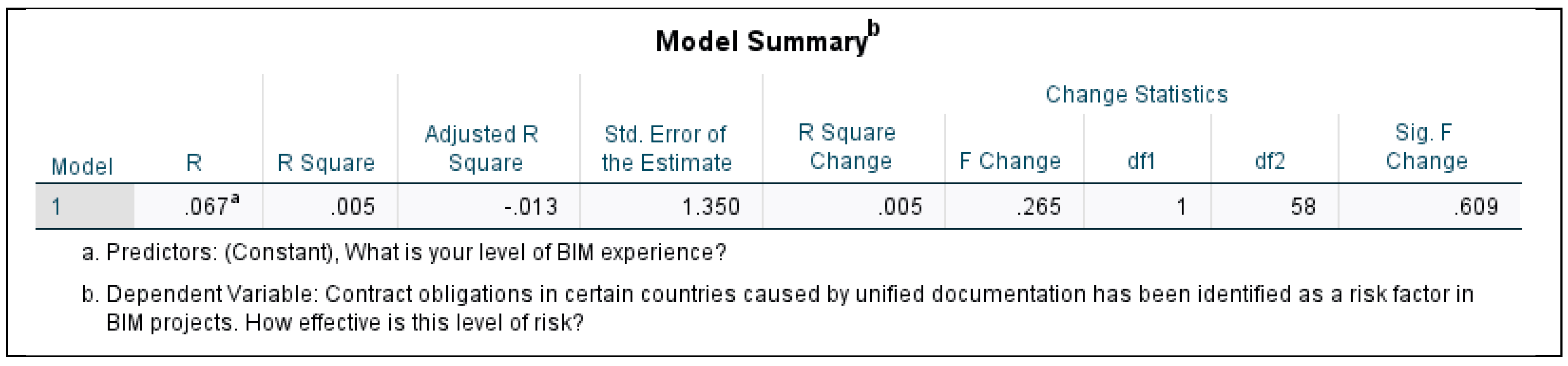
Model Summary: The figure below shows a selection of descriptive statistics about the model/regression overall: the R-value (R), the R-Squared Statistic (R Square), the F statistic measuring change (F Change) and the p-value associated with the F stat change (Sig. F Change)
Figure 3.
Model summary (SLR) (SPSS).
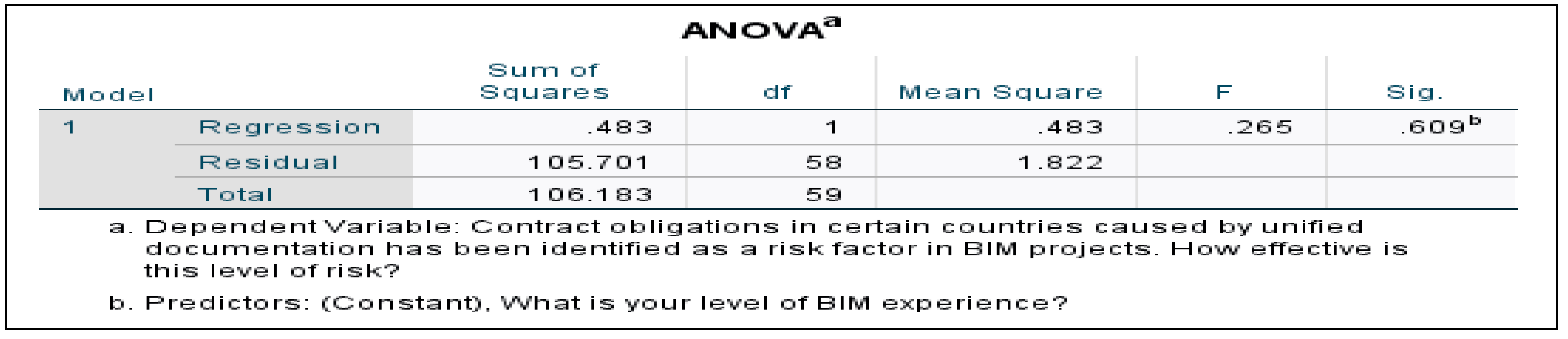
ANOVA: The figure below shows a further selection of descriptive statistics about the model/regression overall: two different Degrees of Freedom (df), the F statistic measuring change (F Change) and the p-value associated with the F stat change (Sig. F Change)
Figure 4.
ANOVA (SLR) (SPSS).
Coefficients: The figure below shows the exact values of the constant and of our predictors, it also shows if the variables are significant (Sig.) and the 95% Confidence intervals (95.0% Confidence Interval for B)
Figure 5.
Coefficients (SLR) (SPSS).
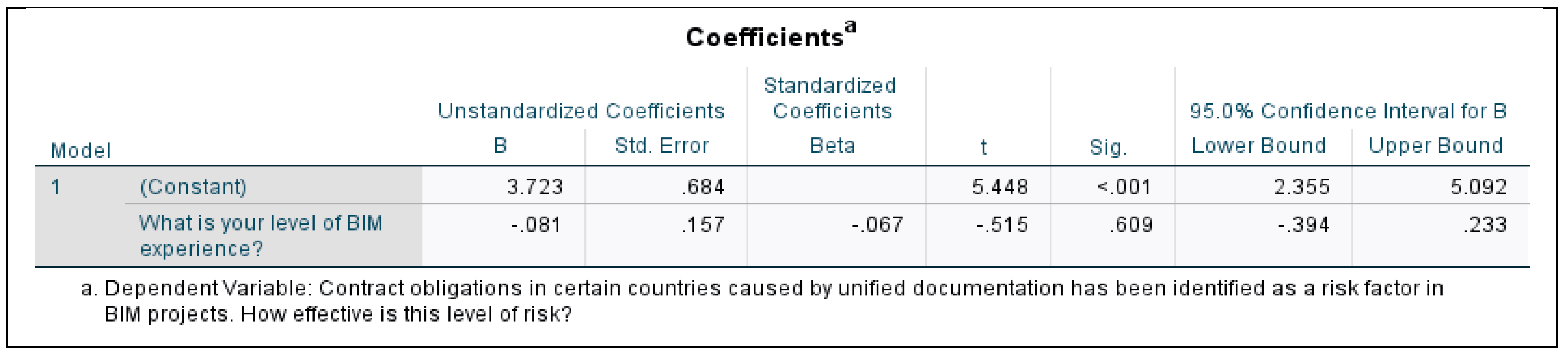
A simple linear regression was used to predict the magnitude of BIM-RBS legal-contract aspect (LCA) based on the level of BIM experience. The results showed that experience is a significant influence on the LCA, however it only accounted for less than 1% of the variance seen in LCA. F= 0.265, p= < .001, R square = 0.005, R square adjusted = -0.013. The regression coefficient (B = -0.081, 95% CI [-0.394,0.233]) indicated that an increase in one point level of BIM experience score, would correspond, on average, to a decrease in BIM-RBS (LCA) score by -0.081 points.
Further research was vital to establish equilibrium-seeking strategies based on the online survey. Analysing the magnitude of the risk factor regarding contract obligations in certain countries caused by unified documentation in BIM projects, is associated with misaligned definitions in the contract between different parties. 33% of participants selected very effective; 27% somewhat effective; 29% neither effective nor ineffective; 0% somewhat ineffective; 11% very ineffective, indicating a stable system based on the results.
Figure 6.
Risk magnitude regarding contract obligations caused by unified documentation.
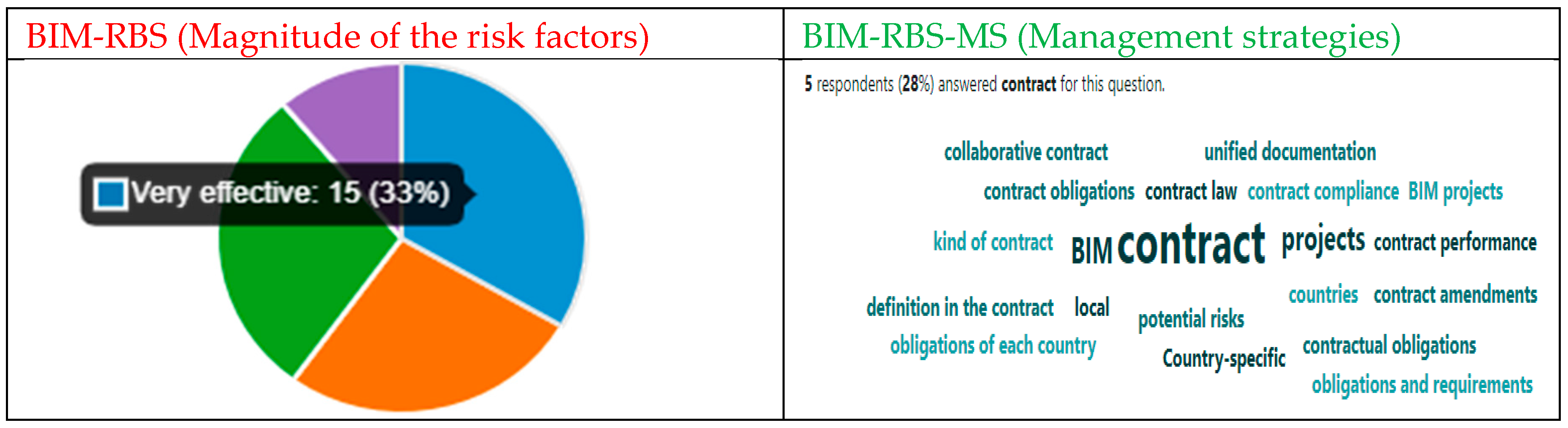
Strategies to keep a balanced system involves country-specific legal expertise, by seeking guidance from legal professionals with expertise in the specific country's laws and regulations. They can help identify and understand the contractual obligations and requirements relevant to BIM projects in that jurisdiction. Reviewing and adapting a unified documentation, such as contracts, agreements, and terms and conditions, to ensure compliance with the specific contractual obligations of each country involved in the project. This may involve incorporating country-specific clauses or provisions into the unified documentation. Contractual flexibility, by considering managing and building flexibility into the contractual framework to accommodate variations in contract obligations across different countries ensuring they are cognitive of the change required. This can include mechanisms for contract amendments or addenda to address specific requirements or obligations unique to each jurisdiction. Collaboration with local partners, by engaging with them or consultants who have knowledge of the local legal and contractual landscape. Effective communication with local experts can help ensure that the unified documentation aligns with local requirements and that the project adheres to all necessary contractual obligations. Conducting a regular contract compliance review throughout the project lifecycle to ensure ongoing adherence to contractual obligations in each country involved. This can involve monitoring changes in local regulations, evaluating contract performance, and addressing any deviations or potential risks proactively.
The risk of professional licensing issues in BIM projects can significantly impact project effectiveness and success, particularly when there are regulatory requirements related to professional licensing that must be met. These requirements vary across countries and regions, and failure to comply with these requirements can lead to legal consequences, delays in project delivery, and compromised quality of work. Additionally, licensing fees are expensive for software’s such as Revit, and CDE’s. This can elevate the cost for BIM and as a result be a barrier for adoption. Analysing the magnitude of the risk, 38% of participants indicated very effective; 29% somewhat effective; 23% neither effective nor ineffective; 2% somewhat ineffective; 8% very ineffective. A shift to disequilibrium state by 67%. However, it is important to note that the level of risk can vary depending on the specific regulatory environment and the complexity of licensing requirements in different jurisdictions.
Figure 7.
Risk magnitude of professional licensing issues in BIM projects.
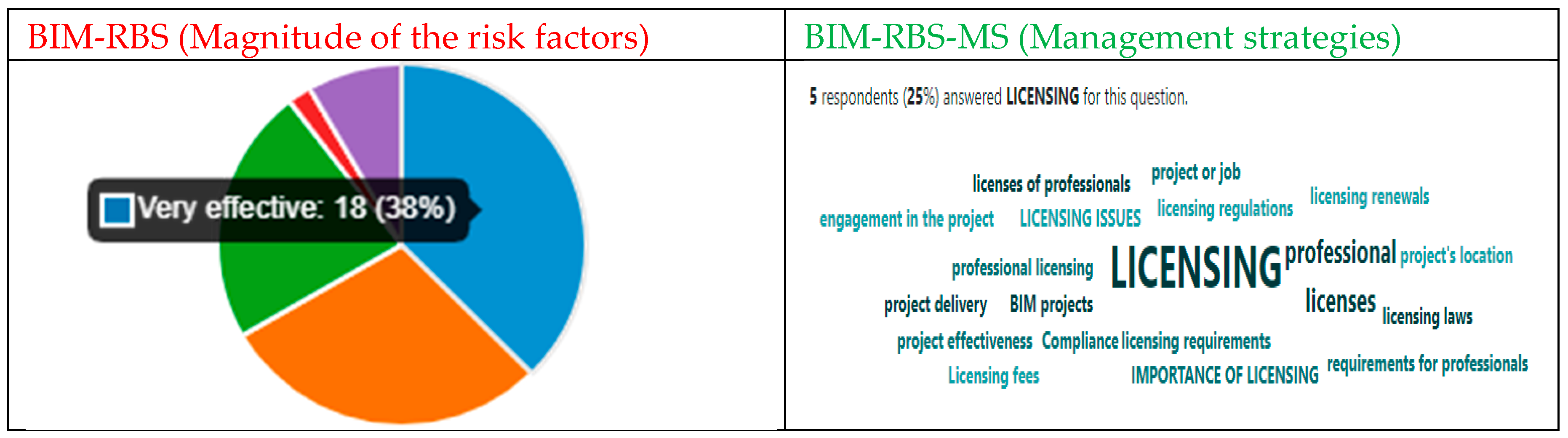
The effectiveness of managing this level of risk to equilibrium status involves taking several steps by ensuring a thorough understanding and familiarity with professional licensing regulations applicable to the project's location. Identifying the specific licensing requirements for professionals involved in the project, such as architects, engineers, or other specialised roles. Require certifications to verify the qualifications, and licenses of professionals before their engagement in the project by adhering to licensing regulations, and maintaining compliance throughout the project duration. Establish effective collaboration and communication channels with professionals overseeing compliance planning that include maintaining a register of licensed professionals, monitoring licensing renewals, and keeping up-to-date records of compliance. By staying informed about any changes or additional requirements that may affect the project, thereby adjusting plans and practices accordingly to mitigate potential risks.
The risk associated with the lack of supportive BIM-collaboration contract form due to contract structure misalignment that also stems from a real estate dynamic. Analysing for the magnitude of risk factor, 33% of participant respond as very effective; 25% somewhat effective; 21% neither effective nor ineffective; 6% somewhat ineffective; 15% very ineffective. A slight shift to disequilibrium state by 58%.
Figure 8.
Risk magnitude due to lack of supportive BIM-collaboration contract form.
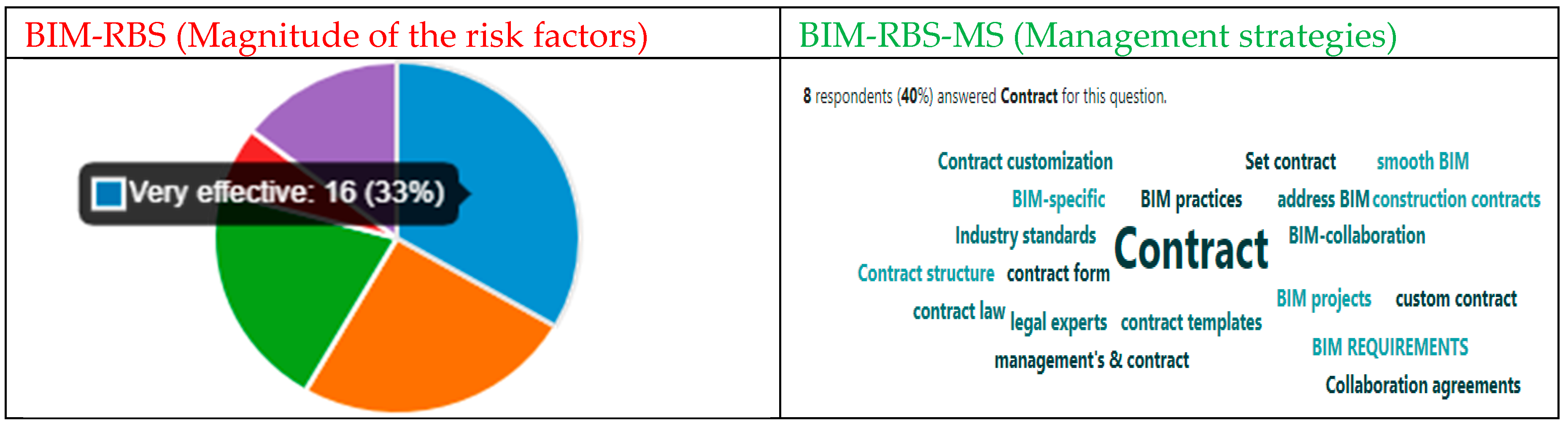
To effectively manage this risk for equilibrium status, the following steps can be beneficial. Organisations should consider customising existing contracts or contract templates to incorporate BIM-specific provisions. This may involve adding clauses related to information exchange protocols, data ownership, liability allocation, intellectual property rights, and collaborative processes. Seek legal expertise from professionals experienced in BIM projects and contract law. They can provide guidance on adapting contracts to address BIM collaboration requirements and help identify potential risks and liabilities associated with the absence of a dedicated contract form. Referring to industry standards and guidelines that addresses BIM collaboration and contractual arrangements, such as those provided by professional organisations or industry consortia. These resources can offer insights into best practices and contractual considerations specific to BIM projects. Consider implementing separate collaboration agreements or Memoranda of Understanding (MoUs) between project participants to address specific aspects of BIM collaboration. These agreements can outline the roles and responsibilities of each party, data sharing protocols, and the overall framework for collaboration. Continuous review and improvement by regularly updating the contract form and associated agreements as BIM practices evolve and project requirements change. This ensures that contractual arrangements align with the evolving needs of BIM collaboration and mitigates potential risks associated with outdated contract forms. However, it's important to note that the effectiveness of these risk management efforts can vary based on the specific contractual provisions and the legal frameworks of different jurisdictions.
Analysing the magnitude of the risk factor relating to the issue with legal differences (i.e., aspect related to law in different countries) when different organisations are engaged in BIM project. 27% of participants respond very effective; 40% somewhat effective; 20% neither effective nor ineffective; 2% somewhat ineffective; 11% very ineffective. A shift to disequilibrium state by 67%.
Figure 9.
Risk magnitude relating to issues with legal differences of various countries laws.
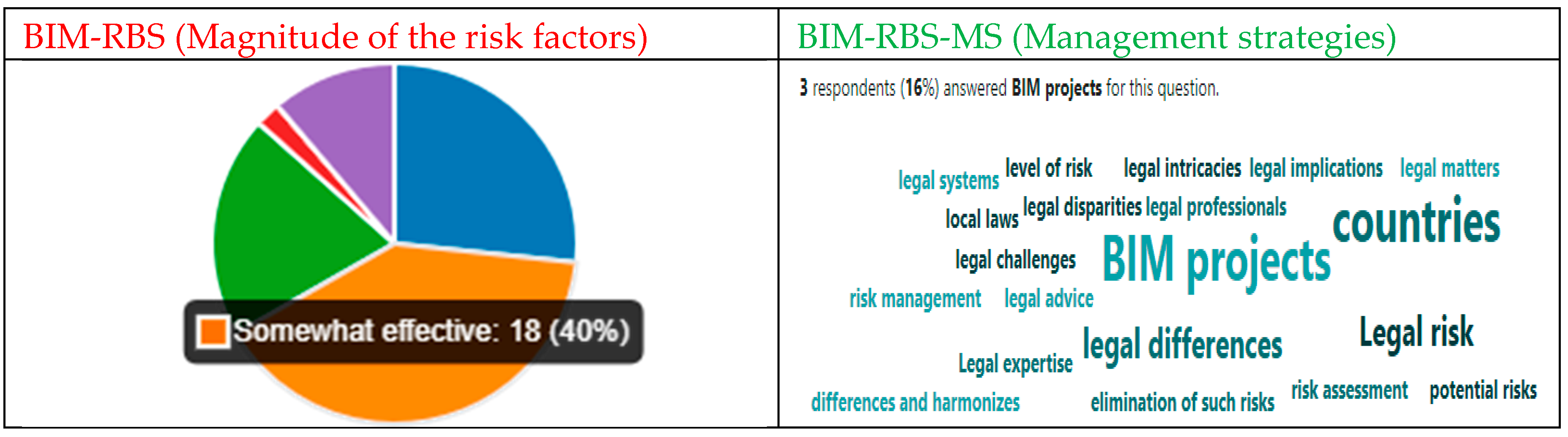
To effectively manage the risk for equilibrium status, the following steps can be crucial. Engaging legal professionals with expertise in international law or the legal systems of the countries involved in the project. They can provide guidance on legal disparities, assist in contract drafting and negotiation, and help ensure compliance with relevant laws and regulations. Develop a contract that addresses legal differences and harmonizes contractual provisions to the extent possible. Consider using dispute resolution mechanisms that are internationally recognised, such as arbitration, to provide a neutral and enforceable means of resolving conflicts. Conduct a thorough legal risk assessment to identify potential legal disparities and their impact on the project, which can help anticipate challenges and develop strategies to mitigate or manage legal risks effectively. Establish protocols and discuss legal matters to ensure that all parties are aware of their rights, obligations, and any legal implications by fostering an open, transparent communication and collaboration among project stakeholders to address legal differences proactively. Seek advice from local legal professionals familiar with local laws, regulations, and customs to navigate the legal intricacies of specific jurisdictions ensuring compliance to mitigate potential risks associated with legal differences. However, it is important to note that complete elimination of such risks may not be possible. As legal systems can be complex and subject to change, and unforeseen legal challenges may arise during the project lifecycle. Therefore, following ISO19650 as an international standard can alleviate this risk.
3.4. Findings
The findings from the analysis present an up to date understanding of the aspects and capabilities of “BIM-RBS Matrix and BIM-RBS-MS Nexus” providing an innovative knowledge framework of risk magnitude and management strategy in the legal-contractual spectrum.
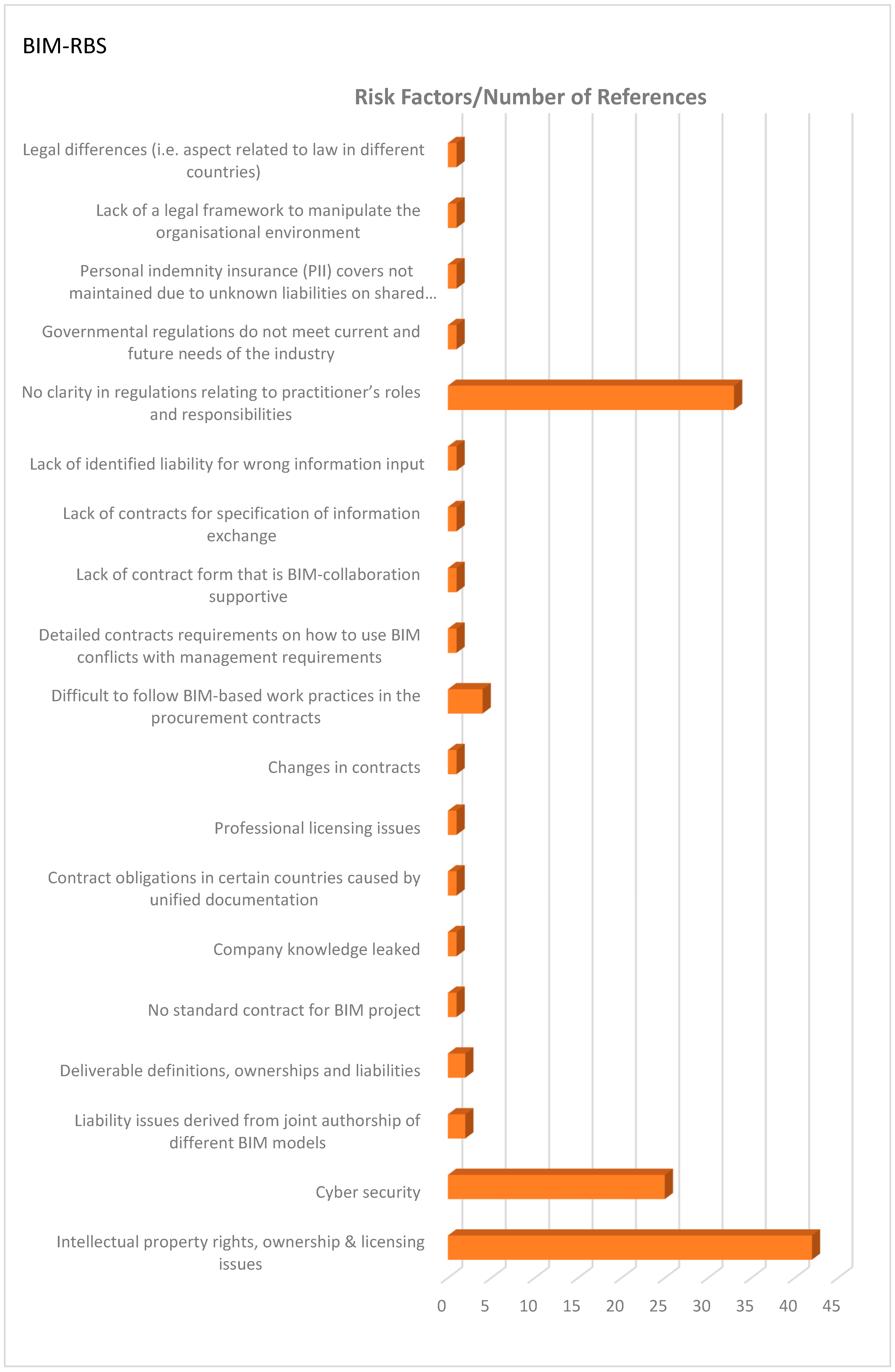
The findings in Table 2 presents the average magnitude of the risk factors assessed in this spectrum as 63% shift to disequilibrium status. The dominant risk factor in this category is associated with intellectual property rights, ownership and licensing issues shown in Table 1 and Figure 10. To minimise or eradicate this risk as these requirements vary across countries and regions involves understanding of the professional licensing regulations applicable to the project's location. Early contractual agreement establishing intellectual property rights, copyright ownership and licenses for the usage of the model, including verifying the qualifications and licenses of professionals. Issues with contract obligations in certain countries caused by unified documentation in BIM projects has 60% shift to disequilibrium state and can be mitigated by seeking the country-specific legal expertise; the adaptation of unified documentation and contractual flexibility with negotiation points. The lack of supportive BIM-collaboration contract form has 58% shift to disequilibrium status. To minimise this risk is to customise existing contracts to incorporate BIM-specific provisions such as separate collaboration agreements or Memoranda of Understanding between project participants to address specific aspects of BIM collaboration. The issues with legal differences of various countries laws have a 67% shift to disequilibrium state. To mitigate this risk is by engaging legal professionals with expertise in international law and develop a contract that addresses legal differences and harmonizes contractual provisions with dispute resolution mechanisms such as arbitration. These strategies are innovation in practice not only from a legal-contractual perspective but also from a technological, organisational and social aspect.

Table 1.
Legal-contract Aspect BIM-RBS and BIM-RBS-MS Nexus 2021-2025.
| BIM-RBS (Risk factors) | BIM-RBS-MS (Management strategies) | References |
|---|---|---|
| Conditions of the Agreement | Incorporate BIM standards and protocols into the contract guidelines such as: -NEC3 and NEC4 contracts -CIOB contract - FIDIC contract - ACA) PPC 2000 contract - JCT CE contract -SBCC contract - CIC/BIM Protocol - Function: Add-on contract clauses - Standards: BS 1192/PAS1192 |
Muhammad and Nasir, (2022) El Hajj et al., (2023) Dao et al., (2021) Mohammadi et al., (2024) Erpay and Sertyesilisik, (2021) Weber and Achenbach, (2023) Nilchian et al., (2022) Mahdian et al., (2023) |
| Data security | Establish data security policies and inspection procedures, and assign responsibilities for data backup and recovery. (model creation/ signing the contracts with their subsets) | |
| ICT protocols and liability | Employ common data environment (CDE) and BIM execution plan (BEP) to promote data sharing and cooperation | |
| Intellectual property and Copyright Ownership Model ownership |
In the contractual agreement establish intellectual property rights, copyright ownership and licenses for the usage of the model. (updating LOD table and modelling requirements) (IFC) (BIM protocol) | |
| Data infringement and confidentiality. | BIM data governance, protect confidential data from corruption, theft, or manipulation by project players | |
| Hosting and archiving of BIM Files/ Missing files/ Authenticity of the files/ File misuse/ Adequacy and method of transferred files | Define BIM, integrated model and modelling requirements | |
| Access rights to specify model users and the authority to share information to other parties | Define model element, production and delivery table with naming convention | |
| BIM model issues: quality control; error; inaccurate; inconsistent; integrity and responsibility of model. | Define LOD, availability of information and technology, and the licensing of the model. | |
| Method of resolving clashes | Define model user and author | |
| Contradiction between BIM and construction method | Define project information requirements | |
| Unclear rights and legal obligations and responsibilities | Define the role of BIM coordinator, relationships between BIM stakeholder in the contracts and appendix. Establish standards and guidelines for BIM adoption. | |
| Uncertainty of the current status of legal system in the country where BIM is adopted | Government schemes with clear standard/duty of care for each project stakeholder | |
| Modification Rights | Sought permission from copyright owner | |
| Legal status of the BIM Model as the ‘single source of truth’ | (Using meta data, e.g. Map viewer BIM without disclosures) (BEP) (Addendum) Industry-wide cultural change |
|
| Unclear BIM standards and protocols used in contract | (ISO; PAS; BSI Standards) CIC/BIM Protocol |
Table 2.
Risk magnitude summary (BIM-RBS Matrix).
| Categories | Magnitude of risk factors | ||||
|---|---|---|---|---|---|
| Legal-contract Aspect | Very low risk | Low risk | Medium risk | High risk | Very high risk |
| Contract obligations caused by unified documentation | 11 | 0 | 29 | 27 | 33 |
| Professional licensing issues | 8 | 2 | 23 | 29 | 38 |
| Lack of supportive BIM-collaboration contract form | 15 | 6 | 21 | 25 | 33 |
| Issues with legal differences of various countries laws | 11 | 2 | 20 | 40 | 27 |
| Average (%) | 11.25 | 2.5 | 23.25 | 30.25 | 32.75 |
| LSTM | Equilibrium state |
<<<<<<<< >>>>>>>> |
Disequilibrium state | ||
Figure 10.
Legal-contract Aspect BIM-RBS and BIM-RBS-MS Nexus 2000-2020 (Author’s own).
3.5. Discussions
The body of literature exploring legal and contractual issues, as assessed by various scholars (Muhammad and Nasir, 2022; El Hajj et al., 2023; Dao et al., 2021; Mohammadi et al., 2024; Erpay and Sertyesilisik, 2021; Weber and Achenbach, 2023; Nilchian et al., 2022; Mahdian et al., 2023) has significantly advanced our apprehension of BIM issues in such key interrelated domains. BIM itself is a technological and organisational innovation and this research shows how contracts and risk strategies can enable its adoption. The critical analysis of these findings highlights key areas within BIM studies, presenting previously unexplored areas and identifying notable research gaps at the intersection of the two knowledge domains. The above-mentioned scholars have independently identified singular dimensions of risk factors focused on legal and contractual issues, culminating in the emergence of the concept of BIM-RBS, a term adopted and amalgamated in this study. The novel approach aligning the research design with the risk management process that extends to the risk response and treatment stage discovered management strategies. Facilitating the development BIM-RBS-MS in alignment with BIM-RBS as strategies to mitigate the risk factors from a multi-dimensional perspective but limiting the scope to the legal-contractual aspect.
To achieve this, an integrative approach was employed, enabling the processing of retrieved papers on BIM integrated with risk management. Subsequently, the analysis conducted through coding using NVivo 12 Pro software, not only established BIM-RBS through thematic analysis but also revealed BIM-RBS-MS through content analysis and the purpose was to examine these variables from a double dimensional perspective. This extended to the analysis conducted through statistics using SPSS software to further establish appropriate management strategies for the identified risk factors and determine its magnitude, guided by the developed theoretical framework by Elnokaly and Dogonyaro (2024). The statistical methods implemented include the Cronbach's Alpha (α) test for consistency and reliability and 'Simple' Linear Regression to predict the outcome variable (BIM-RBS) using the predictor variable (Level of BIM experience). This enabled the interpretation of risk factors and management strategies, creating the terminology not previously explored in scholarly works. Hence, contributes to a deeper understanding of the root cause of BIM-related risk severity and provides valuable insights into the development of effective management strategies. This approach systematically neutralises the issue linked to the root cause of risk factors because this research investigation delves into the intersection of the two knowledge domains. While these components are interrelated based the principles of the theoretical framework, this implies legal issues can be mitigated contractually. The construction industry is fragmented and so is BIM therefore Hartmann and Fischer’s (2008) suggest it is better to understand the processes behind the use of BIM rather than just BIM technology itself, because writing contracts covering technological features in detail is not practical, as the integration of BIM maturity advances with various components, methods, and processes heightens the risk factors. Henceforth, BIM technology is changing rapidly to be covered through detailed legal agreements and this innovative approach eliminates the root cause hidden in one of the domains. This study not only enhances the existing knowledge base but also equips AEC professionals with data that exceeds traditional disciplinary boundaries, fostering a more integrated and informed approach to mitigating the root cause implementing BIM. Moreover, the qualitative methodology, leveraging NVivo 12 Pro software for coding, and the online interview analysis demonstrated its efficacy. The quantitative methodology via the statistical approach determined the severity of the risk factors. Both approaches (i.e. mixed method by triangulation) facilitated the establishment of this novel framework "BIM-RBS Matrix and BIM-RBS-MS Nexus." as knowledge structures that improves decision-making, contract drafting, and collaboration in BIM-enable projects. Remarkably, the developed database systematically categorises risks inherent across different construction stages and offers targeted management strategies aimed at mitigating their impact.
It is essential to acknowledge certain limitations in spite of the invaluable insights offered by this study, even though academic publications, the survey and interviews conducted were informative, it may not fully capture the complex and dynamic challenges present in actual construction scenarios which presents a potential limitation. This indicate the lack of data validation involving real-world cases implies that the robustness of the findings may be subject to the absence of direct engagement with practitioners and stakeholders in real construction projects. Another potential limitation is the small sample size of 60 survey responses limiting generalizability, including response bias. Given the differences in life experience between different age groups, and people's changing behaviour with maturity. As younger respondents have a higher tendency to leave surveys incomplete due to less experience, while older respondents with higher interaction while doing the survey based on withal BIM experience. Therefore, future research endeavours should focus on validation through case studies via interviews and observation in real-world BIM-enabled projects to address these limitations.
The practical implications of this study are incomparable as the developed "BIM-RBS Matrix and BIM-RBS-MS Nexus" provides a mitigating process to assist industry professionals in eradicating these risk factors successfully. The potential for generalisation and application of the BIM-RBS and BIM-RBS-MS nexus is extensive because its adaptability accentuates its value for various disciplines involved in construction projects. For contract manager during procurement, risk manager throughout construction, and for project managers overseeing all stages providing significant guidance. Academically, this study expands the research domain delving into the two knowledge domains of the legal-contractual aspect which can influence government regulations and guidelines concerning BIM and risk management, shaping contractual agreements to prevent legal issues. The robust framework BIM-RBS Matrix and BIM-RBS-MS Nexus transforms tacit risk knowledge into explicit, transferable knowledge in various fields. In other words, while rooted in the construction industry, the legal-contractual innovation is transferable across jurisdictions and other sectors. Constituting a unique knowledge contribution to the field addressing important knowledge gaps by providing new insight and applicability via the innovative legal-contractual aspect with potential for global impact.
4. Conclusion and Knowledge Contributions
This research positions BIM not only as a digital construction tool but as a technological and organisational innovation whose diffusion is constrained by unresolved legal and contractual complexities. By focusing on the intersection of law, contracts, and risk management, this study contributes new knowledge structures that enable the systematic integration of risk insights into BIM-enabled collaboration.
The BIM-RBS Matrix and BIM-RBS–MS Nexus represent knowledge-based frameworks that transform fragmented and tacit understandings of legal-contractual risks into structured, actionable insights. These frameworks enable both industry and policymakers to embed innovation more effectively into project delivery, thereby strengthening collaboration, reducing disputes, and supporting the transition toward Construction 5.0.
The global relevance of this work lies in its adaptability. The proposed frameworks can act as knowledge transfer mechanisms across diverse jurisdictions, legal systems, and organisational contexts. They provide practical tools for contract drafting, risk allocation, and dispute resolution while also advancing theoretical knowledge on the role of legal-contractual arrangements in enabling innovation. Importantly, the frameworks are dynamic and can evolve in response to emerging technologies, collaborative models, and regulatory changes.
This study makes three contributions: (1) conceptualising a novel legal-contractual knowledge spectrum for BIM innovation, (2) integrating mixed-method approaches to create, validate, and operationalise risk knowledge, and (3) providing actionable frameworks that bridge theory and practice in supporting knowledge-based innovation adoption. Future research should refine and test these frameworks across varied jurisdictions and project scales, ensuring their robustness and wider applicability.
Recommendations for Innovation and Knowledge Impact
This study highlights a significant gap in existing research, particularly at the intersection of legal and contractual domains in BIM-enabled projects. By introducing the BIM-RBS Matrix and BIM-RBS–MS Nexus, the study provides both theoretical and practical pathways for mitigating risks and improving collaborative governance. Building on these contributions, the study offers the following recommendations to support knowledge-driven innovation adoption in the AEC sector and beyond (Table 3).
For the Construction Industry:
- Adopt the BIM-RBS Matrix as a proactive tool during contract preparation and project planning phases to clarify risk allocation, reduce disputes, and improve collaboration.
- Use the BIM-RBS–MS Nexus to guide the selection of tailored management strategies, ensuring that digital, legal, and organisational risks are jointly addressed rather than managed in isolation.
- Invest in training and capacity building to equip project managers, legal advisors, and BIM coordinators with the skills required to operationalise these frameworks.
For Policymakers and Standard-Setting Bodies:
- Integrate the BIM-RBS framework into national and international BIM guidelines (e.g., ISO 19650, NEC, JCT, CIC) to provide standardised guidance on risk allocation and contractual provisions.
- Encourage the development of dispute resolution protocols specific to BIM by recognising the unique challenges of shared digital environments.
- Promote incentives for collaborative risk-sharing models, such as shared risk–reward mechanisms, to align stakeholder interests and reduce adversarial practices.
For Research and Academia:
- Further investigation is needed across socio-organisational, eco-financial, and techno-organisational perspectives to validate and refine the framework across different contexts.
- Future research should empirically test the BIM-RBS Matrix across jurisdictions, contract types, and project scales, ensuring global applicability.
- Theoretical development is required to strengthen the legal-contractual dimension within BIM adoption models, thereby extending current construction management theory.
List of Acronyms
| ACA | Association of Consultant Architects |
| AEC | Architecture Engineering Construction |
| AIA | American Institute of Architects |
| BbCNs | BIM-based Construction Networks |
| BEP | BIM execution plan |
| BIM | Building Information Modelling |
| CA | Cronbach's Alpha (α) test |
| CDBB | Central of digital built Britain |
| CDE | Common Data Environment |
| CIOB | Chartered Institute of Building |
| CIC | Construction Industry Council |
| DBB | Design bid-build |
| FIDIC | Fédération Internationale des Ingénieurs-Conseils (International Federation of Consulting Engineers) |
| GC | General Contractor |
| IFC | Industry Foundation Classes |
| IPD | Integrated Project Delivery |
| IPR | Intellectual Property Rights |
| ISO | International Organisation for Standardisation |
| JCT | Joint Contracts Tribunal |
| LCA | Legal Contract Aspect |
| LOD | Level of Development |
| LSTM | Leavitt Socio-technical Model |
| MoU | Memoranda of Understanding |
| MS | Management Strategies |
| NBS | National Building Specification |
| NEC | New Engineering Contracts |
| PAS | Publicly Available Specification |
| PII | Personal Indemnity Insurance |
| PPC | Project partnering contract |
| PRISMA | Preferred Reporting Items for Systematic Reviews and Meta-Analyses |
| RBS | Risk Breakdown Structure |
| SBCC | Scottish Building Contracts Committee |
| SLR | Simple Linear Regression |
| SPSS | Statistical Package for Social Sciences |
| UK | United Kingdom |
| VC | Version Control |
Appendix A
NVivo 12 Pro Data (Legal-contract Aspect)
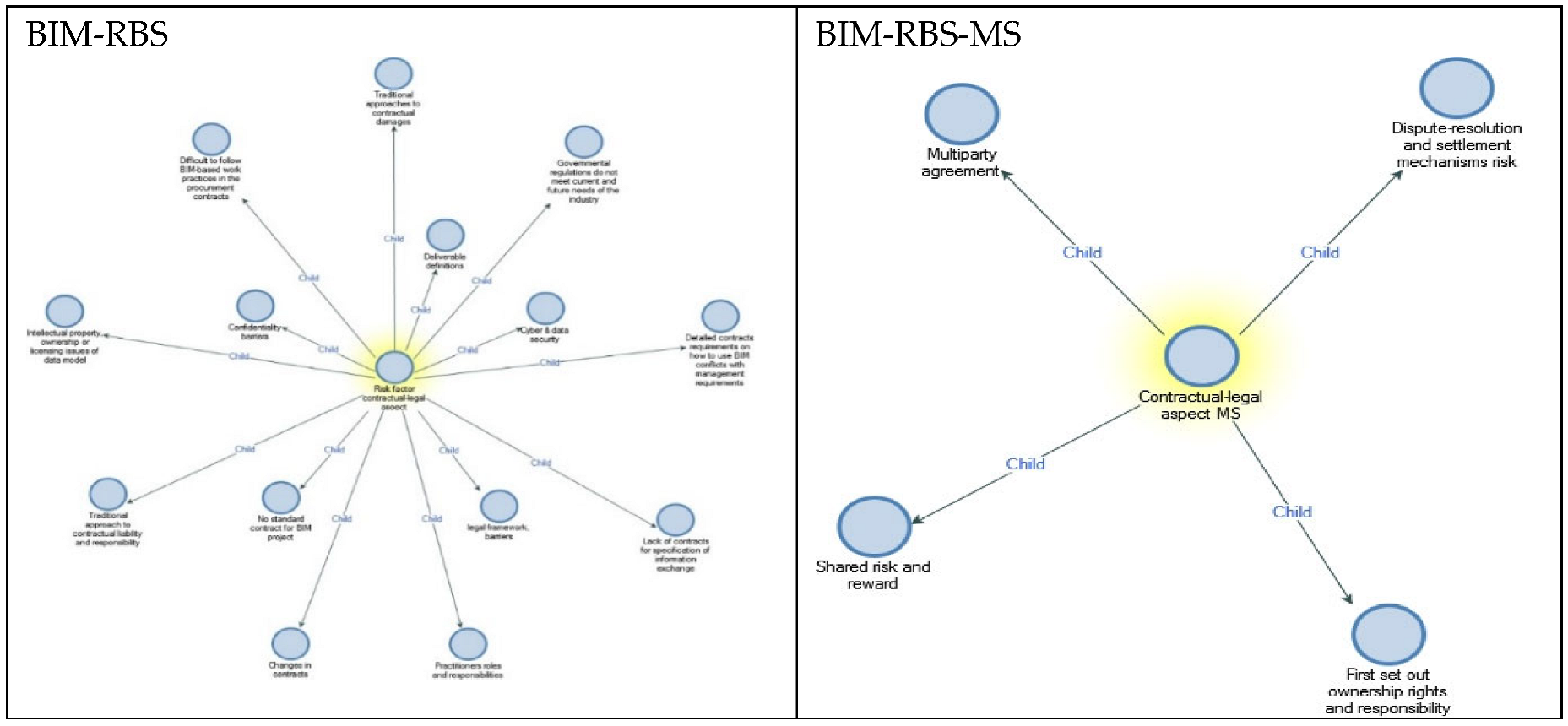
References
- Akhtar, D.M.I. , (2016) Research design. Research in Social Science: Interdisciplinary Perspectives. pp.68-84. Available online at: https://scholar.google.com/scholar?hl=en&as_sdt=0%2C5&q=Research+Design+Md.+Inaam+Akhtar+Deptt.
- Aksenova, G.; Kiviniemi, A.; Kocaturk, T.; Lejeune, A. From Finnish AEC knowledge ecosystem to business ecosystem: lessons learned from the national deployment of BIM. Constr. Manag. Econ. 2018, 37, 317–335. [Google Scholar] [CrossRef]
- Almarri, K.; Aljarman, M.; Boussabaine, H. Emerging contractual and legal risks from the application of building information modelling. Eng. Constr. Arch. Manag. 2019, 26, 2307–2325. [Google Scholar] [CrossRef]
- Alotaibi, B.S.; Waqar, A.; Radu, D.; M. KHan, A.; Dodo, Y.; Althoey, F.; Almujibah, H. Building information modeling (BIM) adoption for enhanced legal and contractual management in construction projects. Ain Shams Eng. J. 2024, 15. [Google Scholar] [CrossRef]
- Baharom, M.H.; Habib, S.N.H.A.; Ismail, S. Building Information Modelling (BIM): Contractual Issues of Intellectual Property Rights (IPR) in Construction Projects. Int. J. Sustain. Constr. Eng. Technol. 2021, 12, 170–178. [Google Scholar] [CrossRef]
- Beach, T.; Petri, I.; Rezgui, Y.; Rana, O. Management of Collaborative BIM Data by Federating Distributed BIM Models. J. Comput. Civ. Eng. 2017, 31. [Google Scholar] [CrossRef]
- Bensalah, M.; Elouadi, A.; Mharzi, H. Overview: the opportunity of BIM in railway. Smart Sustain. Built Environ. 2019, 8, 103–116. [Google Scholar] [CrossRef]
- Berema, R.K.R.; Ismail, Z.; Brahim, J. Comparative Analysis of Existing Contracts for Building Information Modelling (BIM) Projects in Malaysia and Selected Common Law Countries. Int. J. Sustain. Constr. Eng. Technol. 2021, 12, 9–18. [Google Scholar] [CrossRef]
- Building Information Modelling (BIM) PROTOCOL (2018) Standard Protocol for use in projects using Building Information Models. Second edition. Construction Industry Council. London.
- Butler, H. N. (1989) The contractual theory of the corporation “ Geo. mason u.l. rev,, 11(4) 99-123.
- Chien, K.-F.; Wu, Z.-H.; Huang, S.-C. Identifying and assessing critical risk factors for BIM projects: Empirical study. Autom. Constr. 2014, 45, 1–15. [Google Scholar] [CrossRef]
- Chong, H.-Y.; Fan, S.-L.; Sutrisna, M.; Hsieh, S.-H.; Tsai, C.-M. Preliminary Contractual Framework for BIM-Enabled Projects. J. Constr. Eng. Manag. 2017, 143. [Google Scholar] [CrossRef]
- Circo, C. J. Contract theory and contract practice: Allocating design responsibility in the construction industry “Florida law review, (58) 561-638. 2006. [Google Scholar]
- Cohen, L. , Manion, L. and Morrison, K., (2018) Research methods in education. Routledge.
- Creswell, J.W. and Creswell, J.D., (2020) Research design: Qualitative, quantitative, and mixed methods approach. 5th edition. Sage publications.
- Dao, T.-N.; Chen, P.-H.; Nguyen, T.-Q. Critical Success Factors and a Contractual Framework for Construction Projects Adopting Building Information Modeling in Vietnam. Int. J. Civ. Eng. 2020, 19, 85–102. [Google Scholar] [CrossRef]
- Darabseh, M. and Joo, M., (2021) October. Protecting BIM design intellectual property with blockchain: review and framework. In Proc. of the Conference CIB W78 (Vol. 2021, pp. 11-15).
- Dhakal, K. , (2022) NVivo. “Journal of the Medical Library Association, 110(2) 270-272.
- Ding, L.; Zhong, B.; Wu, S.; Luo, H. Construction risk knowledge management in BIM using ontology and semantic web technology. Saf. Sci. 2016, 87, 202–213. [Google Scholar] [CrossRef]
- El Hajj, C.; Montes, G.M.; Sleiman, S. Investigation of BIM Contractual Perspective in the MENA Construction Industry. 2023 Fifth International Conference on Advances in Computational Tools for Engineering Applications (ACTEA). LOCATION OF CONFERENCE, LebanonDATE OF CONFERENCE; pp. 104–108.
- Elnokaly, A.; Dogonyaro, I. Framework to assess connection of risk factors and management strategies in Building Information Modeling. Acad. Eng. 2024, 1. [Google Scholar] [CrossRef]
- Enegbuma, W.I.; Aliagha, U.G.; Ali, K.N. Preliminary building information modelling adoption model in Malaysia. Constr. Innov. 2014, 14, 408–432. [Google Scholar] [CrossRef]
- Feist, S.; Ferreira, B.; Leitao, A. Collaborative Algorithmic-based Building Information Modelling. CAADRIA 2017: Protocols, Flows, and Glitches. LOCATION OF CONFERENCE, ChinaDATE OF CONFERENCE; pp. 613–622.
- Ganbat, T.; Chong, H.-Y.; Liao, P.-C.; Lee, C.-Y. A Cross-Systematic Review of Addressing Risks in Building Information Modelling-Enabled International Construction Projects. Arch. Comput. Methods Eng. 2018, 26, 899–931. [Google Scholar] [CrossRef]
- Georgiadou, M.C. An overview of benefits and challenges of building information modelling (BIM) adoption in UK residential projects. Constr. Innov. 2019, 19, 298–320. [Google Scholar] [CrossRef]
- Contract theory and contract practice: Allocating design responsibility in the construction industry “Florida law review, (58) 561-638.
- Hartmann, T. and Fischer, M. (2008) Applications of BIM and Hurdles for Widespread Adoption of BIM 2007 AISC-ACCL e-Construction Roundtable Event Report “Centre for Integrated Facility Engineering, 1-18.
- Kivits, R.A.; Furneaux, C. BIM: Enabling Sustainability and Asset Management through Knowledge Management. Sci. World J. 2013, 2013, 983721. [Google Scholar] [CrossRef] [PubMed]
- Leavitt, H. J. (1964). “Applied organization change in industry: Structural, technical and human approaches.” New perspectives in organizational research, W. W. Cooper, H. J. Leavitt, and M. W. Shelly, eds.
- Lin, Y.-C.; Chen, Y.-P.; Huang, W.-T.; Hong, C.-C. Development of BIM Execution Plan for BIM Model Management during the Pre-Operation Phase: A Case Study. Buildings 2016, 6, 8. [Google Scholar] [CrossRef]
- Lindblad, H. Black boxing BIM: the public client’s strategy in BIM implementation. Constr. Manag. Econ. 2018, 37, 1–12. [Google Scholar] [CrossRef]
- Lu, W.; Peng, Y.; Shen, Q.; Li, H. Generic Model for Measuring Benefits of BIM as a Learning Tool in Construction Tasks. J. Constr. Eng. Manag. 2013, 139, 195–203. [Google Scholar] [CrossRef]
- Mahdian, A.; Jalal, M.P.; Roushan, T.Y. Contractual Risks of BIM Implementation and the Proposed Contract Form for DBB and DB Projects. J. Leg. Aff. Disput. Resolut. Eng. Constr. 2023, 15, 06522003. [Google Scholar] [CrossRef]
- Ya’aCob, I.A.M.; Rahim, F.A.M.; Zainon, N. Risk in Implementing Building Information Modelling (BIM) in Malaysia Construction Industry: A Review.CONFERENCE NAME, LOCATION OF CONFERENCE, COUNTRYDATE OF CONFERENCE; p. 03002.
- Merschbrock, C.; Hosseini, M.R.; Martek, I.; Arashpour, M.; Mignone, G. Collaborative Role of Sociotechnical Components in BIM-Based Construction Networks in Two Hospitals. J. Manag. Eng. 2018, 34. [Google Scholar] [CrossRef]
- Erpay, M.Y.; Sertyesilisik, B. Preliminary checklist proposal for enhancing BIM-based construction project contracts. J. Inf. Technol. Constr. 2021, 26, 341–365. [Google Scholar] [CrossRef]
- Mohammadi, S.; Aibinu, A.A.; Oraee, M. Risk Allocation and Mitigation Practices for Building Information Modeling: Addressing Legal and Contractual Risks Associated with Contract Documentation. J. Leg. Aff. Disput. Resolut. Eng. Constr. 2024, 16. [Google Scholar] [CrossRef]
- Nilchian, S. , Sardrood, J.M., DarabPour, M. and Tafreshi, S.T., (2021) The Study of the Contracts of Building Information Model (BIM) and the Approach to its Contractual Framework Codification. “Amirkabir Journal of Civil Engineering, 53(8), pp.3239-3260.
- Nilchian, S.; Sardroud, J.M.; Darabpour, M.; Tafreshi, S.T. Features and Conditions of Building Information Modeling Contracts. Buildings 2022, 12, 1839. [Google Scholar] [CrossRef]
- Oraee, M.; Hosseini, M.R.; Papadonikolaki, E.; Palliyaguru, R.; Arashpour, M. Collaboration in BIM-based construction networks: A bibliometric-qualitative literature review. Int. J. Proj. Manag. 2017, 35, 1288–1301. [Google Scholar] [CrossRef]
- Oyedele, L.O.; Regan, M.; von Meding, J.; Ahmed, A.; Ebohon, O.J.; Elnokaly, A. Reducing waste to landfill in the UK: identifying impediments and critical solutions. World J. Sci. Technol. Sustain. Dev. 2013, 10, 131–142. [Google Scholar] [CrossRef]
- Sabo, W. and Zahn, J. K. (2005) Building information modelling and legal issues. “The Construction Specifier, 58 (6) 18-19.
- Sackey, E.; Tuuli, M.; Dainty, A. Sociotechnical Systems Approach to BIM Implementation in a Multidisciplinary Construction Context. J. Manag. Eng. 2015, 31. [Google Scholar] [CrossRef]
- Schwartz, A.; Scott, R.E. Contract Theory and the Limits of Contract Law. Yale Law J. 2003, 113, 541. [Google Scholar] [CrossRef]
- Taghizadeh, K.; Roushan, T.Y.; Alizadeh, M. Liability in BIM projects—Preliminary review results. Int. J. Arch. Comput. 2022, 20, 476–490. [Google Scholar] [CrossRef]
- Weber, B. and Achenbach, M., (2023) Legal governance for BIM–Rights management and lawful data Use. In Life-Cycle of Structures and Infrastructure Systems (pp. 3292-3299). CRC Press.
- Winfield, M. , (2015) UK standard form contracts: Are they ‘BIM-enabled’.
- Zhao, X.; Feng, Y.; Pienaar, J.; O’Brien, D. Modelling paths of risks associated with BIM implementation in architectural, engineering and construction projects. Archit. Sci. Rev. 2017, 60, 472–482. [Google Scholar] [CrossRef]
- Zou, Y.; Kiviniemi, A.; Jones, S.W. A review of risk management through BIM and BIM-related technologies. Saf. Sci. 2017, 97, 88–98. [Google Scholar] [CrossRef]
Figure 1.
Flowchart diagram of the research design aligned with risk management process (Author’s own).
Figure 1.
Flowchart diagram of the research design aligned with risk management process (Author’s own).
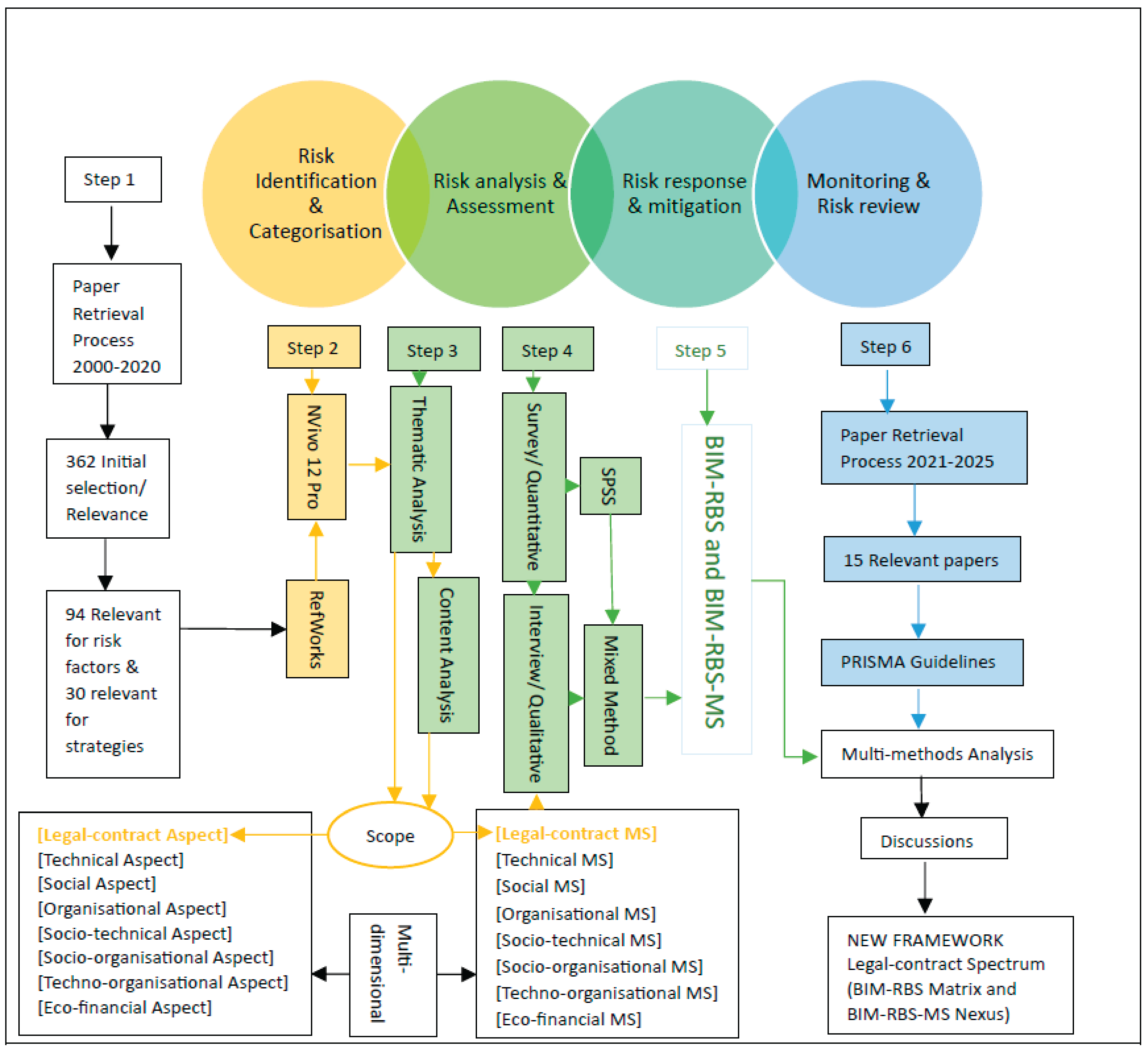
Table 3.
Recommendations for BIM-RBS Adoption and Knowledge Impact.
| Stakeholder | Recommendation | Knowledge & Innovation Impact |
|---|---|---|
| Construction Industry | Adopt the BIM-RBS Matrix during contract preparation and project planning. | Converts tacit legal/contractual risks into explicit knowledge, reducing disputes and enabling collaborative innovation. |
| Use the BIM-RBS–MS Nexus to guide tailored management strategies. | Integrates digital, legal, and organisational knowledge streams to enable effective innovation diffusion. | |
| Invest in training and capacity building for BIM managers, legal advisors, and project leaders. | Builds absorptive capacity to operationalise frameworks and embed innovation into daily practice. | |
| Policymakers & Standard-Setting Bodies | Integrate the BIM-RBS framework into BIM standards (e.g., ISO 19650, NEC, JCT, CIC). | Standardises risk knowledge, ensuring scalability and comparability across projects and countries. |
| Develop dispute resolution protocols tailored to BIM environments. | Provides knowledge-based mechanisms for fair and timely resolution, enhancing trust in BIM adoption. | |
| Promote incentives for collaborative risk-sharing (e.g., shared risk–reward). | Aligns stakeholder knowledge and interests, fostering organisational innovation and reducing adversarial practices. | |
| Research & Academia | Extend investigations into socio-organisational, eco-financial, and techno-organisational perspectives. | Expands the knowledge base by embedding multidisciplinary perspectives into innovation adoption. |
| Empirically test the BIM-RBS Matrix across jurisdictions and project scales. | Validates knowledge transferability, ensuring global relevance and adaptability. | |
| Advance theoretical development on the legal-contractual dimension in BIM adoption models. | Strengthens the knowledge foundations for innovation governance in construction and allied industries. |
Disclaimer/Publisher’s Note: The statements, opinions and data contained in all publications are solely those of the individual author(s) and contributor(s) and not of MDPI and/or the editor(s). MDPI and/or the editor(s) disclaim responsibility for any injury to people or property resulting from any ideas, methods, instructions or products referred to in the content. |
© 2025 by the authors. Licensee MDPI, Basel, Switzerland. This article is an open access article distributed under the terms and conditions of the Creative Commons Attribution (CC BY) license (http://creativecommons.org/licenses/by/4.0/).
Copyright: This open access article is published under a Creative Commons CC BY 4.0 license, which permit the free download, distribution, and reuse, provided that the author and preprint are cited in any reuse.


