

Submitted:
13 October 2025
Posted:
14 October 2025
You are already at the latest version
Abstract
Integrating sustainability principles into enterprise risk management has become a strategic priority for construction organizations seeking resilience and long-term value creation. Despite growing attention to sustainability-driven risk governance, limited empirical research has examined the underlying enablers that determine the successful adoption of Sustainable Enterprise Risk Management (SERM) in the construction context. This study identifies and validates the critical success factors (CSFs) that facilitate effective SERM implementation, focusing on the construction industry of the United Arab Emirates. A multi-method research design was employed, encompassing a systematic literature review to extract potential CSFs, followed by a quantitative phase involving Relative Importance Index (RII) analysis, Exploratory Factor Analysis (EFA), and Partial Least Squares Structural Equation Modeling (PLS-SEM) applied to data from 106 industry professionals and expert interviews. The analysis uncovered 22 CSFs structured into four interdependent dimensions: ‘strategic risk governance’, ‘risk culture and leadership’, ‘regulatory and process integration’, and ‘risk infrastructure and communication’. The findings reveal ‘strategic risk governance’, significantly influencing ‘risk culture and leadership’, which in turn mediate the development of robust risk infrastructure and communication systems, thereby enabling comprehensive SERM integration. The validated conceptual framework offers practical insights for enhancing resilience, regulatory alignment, and long-term competitiveness in construction organizations. This study advances theoretical discourse by repositioning SERM as a system of interdependent enablers rather than a compliance-driven function and contributes actionable strategies for embedding sustainability into enterprise-wide risk governance.
Keywords:
Sustainable Enterprise risk management (SERM)
; critical success factors (CSF)
; construction projects
; Factor analysis
; relative importance index (RII)
; structure equation modeling (SEM)
1. Introduction
One of the world’s most risk-prone industries is the construction industry [1]. Among the various reasons for this are the industry’s critical role in meeting infrastructure needs across all activity sectors; the complex and ever-changing dynamics of construction, resulting in frequent cost overruns, delays, and failures to meet operational and quality standards; the vast network of interrelated actors in the industry; and other stochastic factors beyond human control [2,3]. Traditionally, the focus has been on managing risks at the project level, as individual projects are primary revenue sources [4]. However, this narrow focus can lead to challenges such as a fragmented understanding of risks, limited transparency between projects, suboptimal resource distribution, and obstacles in fulfilling broader corporate strategies [5,6]. Organizations have recently undergone a major transformation in their risk management strategies, shifting toward a more holistic perspective [7,8]. Central to this evolution is enterprise risk management (ERM), which has garnered considerable attention on a global scale [9]. According to the Committee of Sponsoring Organizations of the Treadway Commission [10], ERM is characterized as “a process, carried out by an organization’s board of directors, management, and staff, that is integrated into strategy formulation and across the organization, aimed at identifying potential events that could impact the organization and managing risks in alignment with its risk appetite, thereby providing reasonable assurance for the achievement of organizational objectives”.
ERM is essential for driving sustainable development in the construction industry by identifying, measuring, and managing risks that impact long-term organizational success [11,12]. Effective ERM practices enhance economic efficiency, foster growth, and boost investor confidence [13]. Given the complexity of construction projects, ERM is a crucial factor influencing business performance. However, as globalization, technological advancements, and evolving stakeholder expectations reshape the industry, construction firms must adapt their risk management strategies to remain competitive [14]. While ERM is widely recognized for its role in managing project and operational risks, ensuring its own process is sustainable remains underexplored [15]. Companies implement ERM to improve performance indicators, optimize decision-making, and minimize losses (Liu et al., 2011; Low et al., 2013). However, for ERM to deliver lasting value, it must be integrated into an organization’s long-term strategy, continuously improved, and adapted to changing environments. This shift towards Sustainable ERM (SERM) is not about managing sustainability-related risks but rather ensuring that ERM itself remains effective, agile, and resilient over time.
SERM enhances traditional ERM by broadening its scope and introducing a more holistic and forward-looking orientation to risk governance. Unlike conventional ERM, which typically centers on financial and operational risk mitigation, SERM incorporates long-term sustainability considerations, enabling organizations to respond to emerging environmental, social, and governance (ESG) challenges [13]. According to [16], SERM is the process of identifying, assessing, and prioritizing threats to cost-effective organizational performance, while adopting long-term initiatives to address and mitigate these risks. This practice ensures that organizations not only manage immediate risks but also maintain resilience and sustainability over time [17]. It encourages organizations to consider the environmental and social consequences of their actions, promoting responsible practices and minimizing negative externalities [16]. Recent empirical research such as the work of Bashir et al. [18], Dewi et al. [19] and Jegan Joseph Jerome et al. [20] confirms that SERM implementation in construction firms is positively associated with enhanced competitive advantage, improved sustainability performance, and strengthened stakeholder relationships, reinforcing its value as a transformative tool in high-risk project environments.
This relevance is magnified in the construction sector, where the convergence of high-risk project environments and long-term sustainability pressures creates unique operational challenges. In the United Arab Emirates (UAE), the construction industry is a central pillar of economic development, yet it faces persistent exposure to uncertainties ranging from regulatory fluctuations to environmental and social liabilities [21]. Despite a general awareness of risk, many firms continue to apply fragmented approaches that neglect the broader sustainability implications of their activities. Risk management practices in UAE construction projects often lack methodological depth, limiting their capacity to anticipate and mitigate systemic project risks [22]. Integrating SERM in the construction of projects is essential to mitigate these negative impacts and enhance the long-term viability of the industry. The adoption of SERM practices enables construction companies in the UAE to proactively manage risks related to environmental regulations, resource scarcity, and growing social expectations, while also creating opportunities for innovation and improved efficiency [23].
Despite extensive research on ERM across industries manufacturing [24], banking [25], construction [6] and healthcare [26], there is little focus on the critical success factors (CSFs) driving SERM implementation, particularly in the UAE construction sector. The UAE presents a unique setting due to its rapid urbanization, regulatory developments, and increasing emphasis on structured risk management in construction. Understanding the CSFs of SERM in this context can provide valuable insights into how organizations can strengthen ERM frameworks to support long-term business continuity and industry resilience as highlighted Hristov et al. [27]. This forms the central motivation of the current study, which is positioned to fill this critical gap by identifying the organizational elements that underpin effective and enduring SERM in the UAE’s construction environment.
Prior research on risk management in the construction industry has primarily focused on traditional ERM frameworks, risk identification tools, and their influence on operational or financial performance [28,29,30]. These studies have contributed to a foundational understanding of how construction firms manage risks, yet they tend to concentrate on procedural aspects or firm-level outcomes, often excluding broader sustainability dimensions. More recent work has emphasized the need for integrated approaches that link risk governance with long-term environmental and social goals, yet empirical investigation into such approaches, particularly in project-based contexts, remains limited [16,31]. It has been noted that the CSFs that enable or constrain the effective integration of SERM in construction are underexplored, particularly in the context of emerging economies. This gap has limited the operational relevance of existing ERM models and their ability to support sustainability-aligned project delivery. As a result, there is a need for research that identifies and contextualizes the key enablers of SERM implementation. This study responds to that gap by focusing on the construction industry in the UAE. To this end, this research aims to investigate the CSFs that enable effective SERM integration in the UAE construction industry. The objectives are to: (1) identify the CSFs that matter most to SERM in construction settings; (2) assess the significance of these factors for long-term business continuity and resilience; (3) group the factors into clear dimensions that reflect the main areas of SERM; and (4) explore how these factors collectively contribute to strengthening enterprise-wide risk management frameworks in the context of the UAE construction industry.
1.1. Contributions
This research contribution can be summarized as follows. First, this research identifies and categorizes the critical success factors essential for the effective implementation of SERM in the UAE construction sector. While existing literature has emphasized the importance of identifying CSFs for enterprise risk practices, particularly in sectors with high volatility and complex stakeholder networks [5,32], the integration of sustainability principles into ERM frameworks within the Middle Eastern construction context remains underexplored. This research addresses that gap by focusing on sector-specific characteristics such as rapid urbanization, regulatory evolution, and economic diversification unique to the UAE, thereby contributing new empirical knowledge relevant to both regional and international audiences. This approach aligns with calls for more context-specific analyses in construction project management [33].
Second, the study applies a multi-method approach, including a Systematic Literature Review, Relative Importance Index, Exploratory Factor Analysis, and Structural Equation Modeling, to examine the structure and influence of SERM CSFs. Prior research has validated the use of combined statistical methodologies for risk factor prioritization and model development [34,35]. This comprehensive design enables a layered investigation; first identifying CSFs through literature synthesis, then validating their significance via industry data, and finally testing causal pathways using SEM. This contributes methodologically by refining how empirical models can be used to capture interdependencies in construction risk governance.
Third, the research empirically validates that strategic risk governance acts as a foundational enabler, positively impacting organizational risk culture and leadership, which in turn influence the robustness of risk infrastructure and communication systems. These interlinkages are crucial for facilitating seamless regulatory and process integration within construction firms [36]. The findings support the conceptual alignment with COSO’s ERM framework while extending its applicability to sustainable risk practices [10].
Fourth, the study introduces a validated SERM model that supports long-term organizational resilience and competitive advantage in high-risk construction environments. This model advances theoretical discourse by contextualizing sustainability not only as an environmental consideration but as a structural requirement for enterprise-wide risk strategy. It aligns with emerging perspectives that call for resilience and agility in risk management as strategic imperatives rather than operational afterthoughts [37]. The model provides construction organizations with a structured pathway to integrate sustainability into risk governance, helping transition ERM from compliance-oriented to strategy-driven frameworks.
Fifth, the study offers actionable insights for industry professionals and policymakers by outlining how specific organizational capabilities such as governance, leadership, and communication can be leveraged to enhance regulatory integration and operational resilience. This has practical implications for reforming policy and institutional mechanisms in the UAE and comparable economies. These insights are intended to guide future industry initiatives aimed at embedding sustainability within core risk management practices, thereby improving project outcomes and long-term viability.
1.2. Knowledge Gap Identification
Despite growing scholarly attention to risk management for sustainability in construction, the literature reveals persistent gaps. For example, Guan et al. [38] examined interdependencies among risks in green building projects via interpretive structural modeling, but this project-level analysis did not integrate sustainability considerations into a broader ERM framework. Similarly, Qazi et al. [39] introduced a Monte Carlo simulation-based process to prioritize sustainability-related construction risks in the UAE; however, their focus on isolated project risk prioritization fails to bridge into enterprise-wide sustainable risk management. Erdenekhuu et al. [40] proposed a method combining Monte Carlo and AHP to assess critical environmental risk factors in construction activities, yet this approach remains confined to the environmental dimension at the project level and does not model how multiple success factors interrelate within an organization’s risk landscape. Likewise, Kassem [36] used PLS-SEM to model key risk factors affecting project success in oil and gas construction, capturing static cause–effect relationships but without addressing sustainability performance or dynamic enterprise contexts. Furthermore, Prakash and Ambekar [6] employed a Delphi-driven ISM–MICMAC framework to map hierarchical ERM barriers in Indian construction firmsemerald.com, yet their barrier-centric analysis omitted sustainability considerations and offered no guidance for enterprise-level SERM integration. Collectively, these studies demonstrate limited integration of ERM and sustainability at the enterprise level. This clear knowledge gap in enterprise wide SERM integration indicates the need for research that synthesizes sustainability and risk management beyond the project scope. The present study fills this gap by adopting a structured, multi-method approach that integrates sustainability into ERM at the enterprise level, models the complex interdependencies among CSFs, and is tailored to the dynamic conditions of the UAE construction industry. Table 1 summarizes the most recent and relevant studies, highlighting their focus, findings, and the specific gaps that the current research seeks to fill.
2. Methodology
The study employed a structured mixed-method approach, following a series of clearly defined steps, as shown in Figure 1.
2.1. Step 1—Systematic Literature Review to Identify CFSs
To develop a comprehensive definition and set of fundamental pillars for SRM, an SLR was conducted following the PRISMA framework [41], a widely recognized guideline used in multiple review papers. The framework consists of four essential steps: identifying potential literature sources, screening them, verifying their eligibility, and determining whether to include or exclude them. In the identification phase, the review focused on studies from 2014 to 2024, a period marked by a growing emphasis on sustainability in organizational strategies, particularly in the construction sector. While the specific term “sustainable ERM” is still emerging, related research underscores the industry’s increasing commitment to sustainable risk management practices [6,39,42]. The adoption of the United Nations Sustainable Development Goals in 2015 accelerated this shift, prompting organizations to incorporate sustainability into their strategies to address environmental concerns and resource efficiency [43]. As a result, sustainability became a key driver of innovation and strategic planning within the industry [44].
A thorough search was completed in Scopus, Taylor & Francis, IEEE Xplore, Emerald Insight, Wiley, and Google Scholar, which were selected for their academic relevance. Journals had to be Scopus-indexed, published in English, and possess an impact factor of at least 2.0. Keywords such as “drivers for ERM,” “critical success factors for ERM,” and “factors for ERM sustainability in the construction industry” were combined with Boolean operators for precision, and content analysis was used to extract factors influencing SERM implementation [45]. During screening, duplicates were removed, and each record was checked for relevance using its title, publication year, and abstract. PRISMA guidelines were followed, and reasons for exclusion were documented to keep the process transparent. Screening concentrated on papers that directly addressed the research questions, ensuring the selection stayed focused on the study objectives. During eligibility assessment, every remaining study was confirmed against the inclusion criteria. Although PRISMA improves transparency, biases can still appear, including a preference for peer-reviewed journals, the exclusion of non-English studies, and limitations tied to database choice. Subjective judgments in screening and coding were also recognized. To reduce these risks, explicit selection rules were applied, and several reviewers checked each decision independently. The inclusion criteria admitted English-language papers published between 2014 and 2024 that centered on sustainability practices and risk management, whereas studies were excluded if they were not in English, lacked full-text access, or mentioned risk management only superficially.
2.2. Step 2—Survey to Assess CSFs
Following the identification of CSFs, a structured questionnaire survey was administered to assess their perceived influence within the UAE construction sector, a method frequently used in construction management research [2,46]. Prior to data collection, ethical approval was secured from the Institutional Review Board at the American University of Sharjah (AUS) (Protocol #: 25-0190). This method was selected for primary data collection because questionnaire surveys are cost-effective, allow rapid data collection from large, geographically dispersed expert groups, and provide quantifiable insights that have proven reliable in construction research [47,48]
The instrument contained three sections. Section 1 gathered respondent demographics and firm characteristics (job title, years of experience, organization type, typical project size). Section 2 listed the CSFs and asked participants to rate each factor’s influence. Section 3 offered an open-ended space for additional comments, enabling qualitative insights. The survey utilized a five-point Likert scale, where 1 represented a very weak influence and 5 indicated a very strong influence, following established research practices [35,36]. Before its official distribution, the questionnaire underwent pilot testing with five experienced UAE construction professionals to refine its structure, improve response options, and eliminate redundant or unclear questions. This process also ensured clarity by identifying and addressing ambiguities or typographical errors [49]. Based on the feedback received, necessary adjustments were made, and pilot responses were excluded from the final dataset to maintain the accuracy of the analysis.
Following pilot testing, a cross-sectional online survey was conducted using non-probabilistic sampling to ensure diverse participation. A total of 150 valid responses were collected from the distributed questionnaires, a sample size consistent with prior construction-sector studies that used similar numbers to ensure adequate representation and reliability in findings [50]. The study employed purposive sampling to select qualified UAE professionals, including main contractors, project managers, risk managers, consultants, subcontractors, and academics, and this was followed by snowball sampling, where participants referred additional experts from various backgrounds
The study employed purposive sampling to select qualified UAE professionals, including construction managers, project managers, risk managers, engineers, consultants, and academics. This was followed by snowball sampling, where participants referred additional experts from various backgrounds. To mitigate bias, only individuals with relevant expertise were chosen, referrals were monitored for diversity, and the survey was distributed across multiple platforms, including academic networks and professional forums. To prevent response bias, items were randomized to avoid consecutive similar questions affecting participant answers. The collected data were tabulated, summarized, and analyzed statistically to address the research objectives.
2.3. Step 3—Ranking of CSFs
The responses collected in the previous step were converted into Relative Importance Index (RII) values to rank the CSFs based on their perceived significance. The RII method is widely recognized as a robust and reliable approach for ranking variables based on structured questionnaire responses [51]. It has been extensively applied in construction management research, particularly in studies evaluating risk assessment, project performance, and sustainability integration [51,52,53]. Those studies highlighted the effectiveness of RII in prioritizing critical factors that influence decision-making in construction projects. The RII was determined using the formula: RII = ∑ W/A x N, where W represents the assigned weight for each factor, ranging from 1 (least important) to 5 (most important), N denotes the total number of respondents, ∑W is the sum of all responses for a given factor, and A corresponds to the maximum possible weight (5 in this case). The resulting RII values ranged between 0 and 1, with higher values indicating greater significance. The classification of RII values followed the framework proposed by Rajgor et al. [54]: High (H) (0.8 ≤ RII ≤ 1), High–Medium (H-M) (0.6 ≤ RII ≤ 0.8), Medium (M) (0.4 ≤ RII ≤ 0.6), Medium–Low (M-L) (0.2 ≤ RII ≤ 0.4), and Low (L) (0 ≤ RII ≤ 0.2).
2.4. Step 4—Grouping of Factors into Core Dimensions
After the ranking of the CSFs, Exploratory Factor Analysis (EFA) was employed. EFA is a statistical method designed to consolidate multiple interrelated variables into broader, more fundamental constructs known as “factors” [55]. EFA has been utilized in previous studies on CSFs within construction management [53,56,57] and serves as a precursor to latent variable modeling and Confirmatory Factor Analysis (CFA), which in turn leads to Structural Equation Modeling (SEM). This approach was adopted to uncover the underlying structures among the 22 identified CSFs for SERM. The selection of retainable variables was determined based on factor loadings, with a threshold of ≥0.50, which is widely recognized as an acceptable criterion in construction-related research [36,58].
2.5. Step 5—Evaluation of Interrelationships Among Factors
After factor grouping, a PLS-SEM model was developed to examine how the identified CSFs influence SERM in UAE construction firms. SEM is a widely used technique for examining relationships among variables [1,59,60]. Unlike traditional techniques such as least squares regression, logistic regression, and log-linear modeling, SEM offers several distinct advantages. It enables researchers to evaluate the entire conceptual framework rather than testing individual hypotheses in isolation (Shackman, 2013). Additionally, SEM allows for the estimation of measurement error, enhancing the accuracy of model assessment. There are two primary approaches to SEM: covariance-based SEM (CB-SEM) and partial least squares SEM (PLS-SEM). CB-SEM is particularly well-suited for theory testing, confirmation, and model comparison (Dash and Paul, 2021). This study adopted PLS-SEM due to its capability to handle complex, interdependent relationships, making it particularly suitable for exploratory research and refining existing theoretical frameworks [61]. Given the study’s objective of quantifying the impact of CSFs on SERM, PLS-SEM was employed to (1) assess the reliability and validity of the measurement model and (2) test the hypothesized relationships among key constructs. The data collected during Phase 2 of the research was analyzed using SmartPLS 4, ensuring a rigorous evaluation of the model’s structure and the significance of each factor.
2.6. Step 6—Validation Through Expert Interviews
After developing the model, semi-structured interviews were conducted were carried out to validate the model of key CSFs and their interrelationships influencing SERM in UAE construction projects. Semi-structured interviews were chosen for their ability to combine focused inquiry with flexibility, allowing experts to provide detailed insights while ensuring consistency across responses [62]. This approach is widely recommended in construction research for validating complex frameworks due to its depth and practical relevance [63,64]. Six industry experts participated, including two project managers, a construction manager, a consultant, and two academics, all selected for their key decision-making roles or notable academic contributions in the field. Each expert had over a decade of professional experience, ensuring a comprehensive and well-rounded analysis. Their primary role was to assess the conceptual model, validate its findings, and provide insights on strengthening the identified CSFs to enhance the adoption and effectiveness of SERM in the UAE construction sector. The validation process was based on four key criteria: practical relevance, clarity and interpretability, feasibility of implementation, and adaptability to industry changes. Their collective expertise provided diverse perspectives and valuable insights, enriching the study’s findings.
3. Analysis and Results
3.1. Identified CSFs for SERM
Using the inclusion criteria outlined in phase 1 of the research methodology, 214 studies related to the CSFs of SERM from 2014 to 2024 were identified. The titles and abstracts of these papers underwent a thorough review to evaluate their relevance and determine their suitability for further examination. A rigorous two-step screening approach was applied to ensure methodological consistency and maintain high research standards. Following an in-depth assessment, only 26 articles were deemed directly relevant to CSFs impacting SERM across various industries. Through this process, a total of 22 key CSFs were identified. To the best of the authors’ knowledge, no prior study has comprehensively examined all 22 CSFs simultaneously, particularly in relation to SERM within construction projects. As a result, the findings of this study provide significant contributions to the field. Figure 2 illustrates the SLR outcomes, mapping the identified CSFs to the reviewed literature.
3.2. Descriptive Statistics
Table 1 summarizes respondent demographics, showing a male majority at 75% and females comprising 24%. The educational qualifications indicate a highly skilled sample, with 55% holding a bachelor’s degree, 33% earning a postgraduate qualification, and 12% possessing a doctorate. Most participants (77%) are employed in the private sector, and 42% hold managerial positions, reinforcing the study’s focus on decision-makers. Industry experience is also notable, with 80% having worked in construction for over a decade, and 58% specializing in multi-purpose projects. In terms of ERM awareness, 53% reported moderate familiarity, while 13% had no prior knowledge, underscoring the relevance of this research. A total of 106 valid responses were collected over ten weeks, aligning with the recommended sample size for SEM-based studies to ensure statistical validity and robust analysis [65,66].
3.3. Ranking of the CSFs for SERM
The reliability of the dataset was confirmed by a Cronbach’s alpha coefficient of 0.920, surpassing the widely accepted threshold of 0.70 [67], thus demonstrating strong internal consistency. In this study, the 22 CSFs for ERM were ranked using RII, with the computed scores detailed in Table 2. The RII results indicate that all identified CSFs are highly significant, as their values exceed 0.7, reflecting strong consensus among respondents on their critical importance. To determine whether each CSF was significantly relevant to SERM success in the UAE construction sector, a one-sample t-test was performed. The results indicated p-values of 0 for all CSFs, confirming their statistical significance. Furthermore, the Spearman rank correlation coefficient was 0.561, demonstrating a statistically significant agreement at the 0.05 level between the public and private sectors regarding the ranking of the 22 CSFs, despite variations in RII scores. The prioritization of these CSFs provides valuable insights for practitioners, enabling them to identify key focus areas for ERM implementation and allocate resources effectively to enhance sustainability in risk management practices.
Table 2 highlights a strong overall emphasis on integrating ERM into core business processes, underscoring its critical role in enhancing decision-making, resilience, and long-term value creation. The most highly ranked critical success factor is the integration of erm into business processes, reflecting the industry’s recognition that embedding risk practices within operational workflows is vital for sustaining project performance amid growing complexity and regulatory demands. This is followed by ongoing training and capacity building, emphasizing the importance of equipping teams with the skills and awareness needed to adapt to emerging risks and uphold a proactive risk culture. Conversely, risk appetite and tolerance and formalized key risk indicators (KRIs) received the lowest rankings. This is particularly interesting in the UAE context, where organizations, especially in the construction sector, often rely on informal or reactive approaches due to fast-paced project environments and limited regulatory pressure to formalize risk thresholds or metrics. These findings demonstrate that while the specific context may vary, the fundamental pillars of sustainable ERM are consistently viewed as essential for navigating complexity and ensuring organizational continuity.
3.4. CSF Underlying Groupings
In this study, EFA was employed to identify underlying relationships among the 22 CSFs for SERM. The adequacy of factor analysis for extracting factors was evaluated through multiple statistical measures. The Kaiser-Meyer-Olkin (KMO) test resulted in a value of 0.860, demonstrating a strong level of common variance among the CSFs. Additionally, Bartlett’s test of sphericity yielded a chi-square value of 2794.054 with a p-value of 0, indicating that the correlation matrix is significantly different from an identity matrix. These findings confirm that EFA is appropriate for identifying the underlying factor structure. The findings, as shown in Table 3, reveal a clear four-factor structure, with each factor consisting of closely related items exhibiting strong loadings. Notably, there are no significant cross-loadings, ensuring that each factor remains distinct. This supports the validity of the four-factor model as an appropriate representation of the data. The factors were named based on the common characteristics shared among the CSFs within each grouping: strategic risk governance, risk culture and leadership, regulatory and process integration, and risk infrastructure and communication.
3.4.1. Strategic Risk Governance (SRG)
This establishes the foundation for effective SERM by embedding structured decision-making processes into construction firms. A clearly defined risk appetite and tolerance level enable organizations to balance opportunity and uncertainty, ensuring that risk exposure aligns with strategic goals [68]. Formalized KRIs further enhance this approach by providing measurable benchmarks that allow firms to detect early warning signs and take preemptive action [8]. However, governance structures alone are insufficient without continuous training and capacity building, which equip employees with the necessary skills to identify and manage risks effectively [69]. Agile risk management processes complement this by allowing firms to quickly adapt to shifting market conditions, regulatory changes, and emerging risks, ensuring resilience in an unpredictable environment [70]. Ultimately, establishing clear ERM ownership is crucial in reinforcing accountability and ensuring that risk management is not an isolated function but a core component of corporate strategy [71].
3.4.2. Risk Culture and Leadership (RCL)
A strong risk culture and effective leadership play a critical role in shaping how organizations perceive, manage, and capitalize on risks. Firms that embrace risks as opportunities rather than mere threats gain a competitive edge by fostering innovation and resilience [27]. A well-established risk-aware culture ensures that employees across all levels integrate risk considerations into daily decision-making, reducing the likelihood of unforeseen disruptions [72]. However, sustaining such a culture requires continuous monitoring, auditing, and improvement of ERM processes, ensuring that risk management remains dynamic and responsive to industry changes [73]. Strong leadership is the driving force behind this transformation, as executives who actively champion risk-conscious behaviors encourage a mindset where risk is viewed as an integral part of business success [24]. Stakeholder engagement and collaboration further strengthen risk culture by fostering transparency, trust, and shared responsibility for risk mitigation [9]. By embedding risk-based decision-making into corporate structures, firms can align their risk strategies with broader business objectives, ensuring a balance between risk-taking and long-term sustainability [74].
3.4.3. Risk Infrastructure and Communication (RIC)
The effectiveness of risk management heavily relies on the infrastructure and communication mechanisms that support it. Without effective risk communication, even the most sophisticated risk frameworks can fail due to a lack of coordination and awareness [75]. Establishing a common risk language ensures consistency in risk assessments, allowing different departments and stakeholders to interpret and respond to risks uniformly [76]. At the core of this structure lies a strong governance framework that provides clear guidance on risk identification, analysis, and response, ensuring that risk mitigation is systematic rather than reactive [27]. Setting clear objectives further enhances this framework, aligning risk management efforts with broader business goals and enabling firms to measure their risk performance effectively [77]. However, infrastructure alone is insufficient without the allocation of sufficient resources, as underfunded risk management functions often struggle with ineffective monitoring and delayed responses [74].
3.4.4. SERM Integration (SRI)
For risk management to be truly sustainable, it must be embedded within regulatory frameworks and seamlessly integrated into core business processes. Compliance with legal and regulatory requirements forms the foundation of risk accountability, ensuring that firms avoid financial penalties and reputational damage [72]. However, accountability in risk management extends beyond compliance. It requires organizations to instill responsibility across all levels, ensuring that risk ownership is not confined to specialized departments but embraced company-wide [75]. The integration of a Risk Management Information System (RMIS) further strengthens this approach by providing real-time risk insights, enabling organizations to make data-driven decisions and mitigate threats proactively [74]. Yet, even the most advanced risk tools require strong management commitment to be effectively adopted, as leadership plays a key role in ensuring that risk management is not perceived as a regulatory burden but as a strategic necessity [78]. By embedding ERM into business processes, organizations create a resilient structure where risk awareness becomes a natural component of decision-making, ensuring agility, compliance, and long-term sustainability in the fast-evolving construction sector [29].
3.5. Structural Analysis
3.5.1. Hypothesis Development
A conceptual framework was formulated based on the EFA findings to outline the core activities of SERM and the proposed relationships among the four CSF groupings (Figure 3). Recent literature shows that sustainable enterprise-risk success stems from the interplay of governance commitment, cultural alignment, and robust information infrastructure. Strategic risk governance provides the top-down mandate that weaves sustainability objectives into formal risk policies and oversight routines, a link evidenced by public-sector studies reporting stronger sustainability integration when boards adopt active risk-oversight roles [79,80,81]. Once such direction is in place, a supportive risk culture, nurtured by leaders who model and reward responsible behavior, mobilizes project teams to act on those objectives, as recent work with contractor staff confirms [82]. Digital platforms and structured communication channels then translate intent into practice, supplying timely data that embeds sustainability criteria in everyday decisions and demonstrably lifts project-level risk-mitigation performance [83,84]. Transparent communication, in turn, reinforces cultural norms by giving teams shared risk visibility and feedback loops, a dynamic highlighted in contract-management research that links open information flows with proactive, collaborative cultures [85,86]. Finally, governance structures themselves shape culture, as construction firms with explicit sustainability controls report noticeably stronger risk-aware climates, completing the top-down cascade from boardroom to site [87]. Guided by this literature, this framework incorporates five hypotheses:
H1.
Strategic risk governance positively impacts SERM integration within the construction sector.
H2.
Risk culture and leadership positively impacts SERM integration within the construction sector.
H3.
Risk infrastructure and communication positively impacts SERM integration within the construction sector.
H4.
Risk infrastructure and communication positively impacts risk culture and leadership within the construction sector.
H5.
Strategic risk governance positively impacts risk culture and leadership within the construction sector.
3.5.2. Evaluation of Measurement Model
The measurement model specifies the relationships between the observed variables and their associated latent constructs [61]. Evaluating this model involves key criteria such as Internal Consistency Reliability, Convergent Validity, and Discriminant Validity [61].
Internal Consistency Reliability: Internal Consistency Reliability ensures that measurements produce stable and consistent results under similar conditions [88]. In PLS-SEM, this reliability is typically assessed using Cronbach’s Alpha and Composite Reliability. Cronbach’s Alpha measures the correlation between observed indicators [89], while Composite Reliability accounts for varying outer loadings, offering a more precise estimate of reliability [90]. Table 4 presents the reliability values, with Cronbach’s Alpha ranging from 0.804 to 0.939 and Composite Reliability between 0.885 and 0.949. As both exceed the recommended 0.70 threshold for construct reliability [67], the measurement model demonstrates strong reliability.
Convergent Validity: Convergent validity determines how well multiple indicators designed to measure the same construct align with one another [91]. In PLS-SEM, this is evaluated using indicator outer loadings and Average Variance Extracted (AVE) [61]. Strong outer loadings signify a robust relationship between the construct and its indicators, reinforcing the accuracy of its representation [66].The factor loadings between 0.766 and 0.917, surpassing the 0.60 reliability threshold [92], which reflects the variance captured by a construct relative to measurement error, ranges from 0.673 to 0.804, exceeding the 0.5 benchmark [91].
Discriminant Validity: Discriminant validity ensures constructs are distinct [93] and is assessed in PLS-SEM using the Fornell-Larcker criterion and the Heterotrait-Monotrait Ratio (HTMT). The Fornell-Larcker method confirms discriminant validity if a construct’s AVE square root is greater than its correlations with other constructs [94]. Table 5 confirms that all constructs meet the required conditions for discriminant validity. The HTMT criterion assesses correlations between indicators of different constructs to ensure distinctiveness. Discriminant validity is achieved when HTMT values remain below 0.90 [94]. As shown in Table 6, all constructs in this study satisfy this requirement.
3.5.3. Evaluation of Structural Model
After verifying the validity and reliability of the construct measurements, the structural model was analyzed to assess internal relationships among dependent variables, their predictive power, and the overall framework’s interconnections. This study employed statistical measures such as cross-validated redundancy (Q²), path coefficients (β), Standardized Root Mean Square Residual (SRMR), and the coefficient of determination (R²) to ensure model robustness. These measures collectively determine how well the data supports the proposed research model [95]. The following subsections elaborate on each of these assessment criteria.
Coefficient of Determination: The coefficient of determination (R²) evaluates how well the model predicts outcomes by showing the extent to which changes in the dependent variable are explained by the independent variables [95,96]. In this study, R² values were calculated using the bootstrap procedure in SmartPLS 4.0, employing the standard 300 iterations. As shown in the Table 7, the R² values for the impact of SRG and RIC on RCL, as well as the effect of SRG, RCL, and RIC on the outcome variable SRI, are 0.102 and 0.213, respectively, which surpasses the threshold of 0.1 recommended by [97], demonstrating an adequate level of predictive accuracy.
Cross-Validated Redundancy: Cross-validated redundancy helps evaluate the relationship between predictor variables in regression and multivariate analysis, reducing the risk of overfitting (Al-Emran et al., 2019). It is a widely accepted resampling approach used to evaluate a model’s predictive capability and prevent overfitting. In this study, Q² values were derived using the blindfolding technique in SmartPLS 4.0, following 300 iterations, and setting the omission distance to seven. As shown in the Table 8, the Q² value for the effect of SRG, RCL, and RIC on SRI is 0.157, and 0.061 for the effects of SRG on RCL and RIC on RCL, exceeding the minimum threshold of 0.00, thereby confirming the model’s predictive relevance [95].
Path Coefficients: The path coefficient (β) is a standardized linear regression weight in SEM, used to evaluate relationships between constructs [61]. A hypothesis is supported when the T-value greater than 1.96 and the p-value is below 0.05 [61].
In this study, all hypotheses were supported, as shown in Table 9. A higher path coefficient indicates a stronger influence of an independent variable on the dependent variable (Al-Emran et al., 2019). H1 examines whether SRG has a positive impact on SRI. Results indicated that SRG had a significant impact on SRI (β = 0.572, t = 4.640, p < 1%). Hence, H1 was supported. Additionally, H2 assesses whether RCL have a positive impact on SRI. Results revealed that RCL had a significant positive impact on SRI (β = 0.478, t = 4.108, p < 1%). Consequently, H2 was supported. H3 evaluates whether RIC positively impact SRI. Results showed that RIC had a significant positive impact on RPI (β = 0.418, t = 4.150, p < 1%). Thus, H3 was supported. H4 evaluates whether RIC have a positive impact on RCL. Results revealed that RIC had a significant impact on RCL (β = 0.355, t = 4.902, p < 1%). Accordingly, H4 was supported. Finally, H5 assesses whether SRG has a positive impact on RCL. Results showed that SRG had a significant impact on RCL (β = 0.388, T = 3.439, p < 1%). Therefore, H5 was supported.
Considering the strength between exogenous (i.e., SRG, RCL, and RIC) and endogenous latent constructs (i.e., SRI and RCL), which is measured by beta coefficient (β) values [98], SRG had the strongest total effects on SRI (β = 0.572), followed by RCL (β = 0.478), and RIC (β = 0.418), respectively.
Mediation Analysis: To assess the mediation role of RCL, the total, direct, and indirect effects of the mediator were calculated as presented in Table 10. The total effect refers to the sum of direct and indirect effects, which can be used to examine the influences of mediating variables on latent variables [99]. The mediator hypotheses evaluate whether RCL mediate the relationship between SRG, RIC, and SRI.
Considering the strength between exogenous (i.e., SRG and RIC) and endogenous latent constructs (i.e., SRI), which is measured by beta coefficient (β) values [98], SRG had the strongest direct effect on SRI (β = 0.494, T = 2.924, P < 1%), followed by RCL (β = 0.378, T = 2.108, P < 1%) and RIC (β = 0.234, T = 2.629, P < 5%). Moreover, the analysis showed that the indirect effects were found to be statistically significant when the mediator was included. The indirect effect of SRG on SRI, mediated by RCL was (β = 0.223, T = 2.993, P < 1%). Similarly, the indirect effect of RIC on SRI, mediated by RCL, was (β = 0.245, T = 3.684, P < 1%). Thus, the influence of SRG and RIC on SRI is fully mediated through RCL, indicating full mediation. Accordingly, hypotheses H3 and H4 are supported.
Standardized Root Mean Square Residual: The model’s goodness of fit and potential misspecifications were evaluated using the SRMR [94]. According to [100], an SRMR value below 0.10 signifies an acceptable model fit. In this study, the SRMR was calculated at 0.058, confirming that the model achieves a satisfactory fit.
3.6. Verification of the Developed Model
To ensure the accuracy and reliability of the findings, this study included validation interviews with six independent experts from the UAE construction sector (Table 11). These professionals had no prior involvement in data collection or model development, ensuring an objective evaluation. The experts agreed that the model effectively captured the most critical CSFs necessary for implementing SERM, emphasizing its strong alignment with real-world industry needs. They found the framework clear and easy to interpret, making it accessible for decision-makers across different levels. Regarding feasibility, they confirmed that the CSFs could be integrated into existing risk management structures without major challenges. Lastly, the experts highlighted the model’s adaptability, noting that it could remain effective as the industry evolves, particularly with emerging risks, regulatory changes, and advancements in risk management practices.
4. Discussion
This research investigates the CSFs that drive the effective implementation of SERM in the UAE construction sector. Through an in-depth analysis, the study explores how these factors facilitate the integration of robust risk management practices. The discussion is reinforced by empirical findings from the PLS-SEM analysis, providing meaningful insights into the key elements shaping SERM adoption within the industry.
4.1. Strategic Risk Governance Impacts on SERM Integration
The analysis revealed that strategic risk governance has a positive impact on SERM integration by establishing a structured framework that aligns organizational processes with regulatory standards. This alignment ensures that compliance is seamlessly embedded within strategic planning, fostering a proactive approach to risk management and regulatory adherence. For instance, a handful of studies note that as the risk management process is integrated into the organization, communication between the entity and the board becomes efficient and meaningful, facilitating better regulatory compliance and process integration [79,80,81]. Moreover, strategic governance aligns compliance initiatives with broader organizational objectives, preventing regulatory requirements from becoming obstacles to business growth [101]. This alignment fosters a culture of compliance and operational excellence, positioning organizations to navigate the complexities of the construction industry effectively. The following statement captures the perspective of a project manager within the construction sector:
“In the UAE, strategic risk governance ensures that companies align their operations with strict regulations and streamline processes to avoid legal and financial penalties. Take the Dubai Metro expansion, for example. It required extensive risk governance to meet safety, environmental, and financial regulations. The implementation of clear policies, digital monitoring systems, and structured risk oversight kept the project compliant and on schedule. Also, the UAE mandates Building Information Modeling (BIM) for large projects, and companies with weak risk governance often fail to integrate BIM properly, leading to compliance issues. On the other hand, firms with structured governance frameworks ensure that regulatory updates are seamlessly incorporated into their processes, reducing project delays and costly rework.”
This perspective is reinforced by recent research demonstrating that organizations utilizing structured digital governance frameworks such as BIM-based compliance automation experience improved coordination with regulatory authorities and significantly fewer procedural lapses [84,102]. These tools help embed compliance directly into project workflows, enhancing both regulatory alignment and operational efficiency.
4.2. Risk Culture and Leadership Impacts on SERM Integration
The results of this study demonstrate that a strong risk culture, bolstered by effective leadership, significantly enhances SERM integration within the construction industry. This finding is corroborated by existing literature emphasizing the pivotal role of leadership and organizational culture in embedding risk management practices into core business processes [29,68,103]. These studies underscore that leadership commitment to risk management is essential for aligning organizational processes with regulatory requirements, thereby ensuring compliance and operational efficiency. Process integration is also enhanced when risk culture aligns with regulatory expectations. Several studies found that construction firms that emphasize risk-aware leadership integrate regulatory requirements into their project management processes more efficiently, reducing delays and minimizing compliance risks [5,86,104]. The following statement reflects the perspective of one of the experts interviewed for this study:
“Strong risk culture and leadership directly impact how well organizations integrate regulations and streamline processes here in the UAE. A real example is the Expo 2020 Dubai site development. With strict sustainability, safety, and labor laws, leadership played a crucial role in ensuring compliance. A proactive risk culture enabled the implementation of real-time risk monitoring, mandatory safety training, and transparent communication, ensuring seamless regulatory integration.”
This expert view reflects recent empirical findings highlighting how leadership and risk culture serve as enablers for regulatory and process integration. Studies show that when leadership fosters a proactive risk environment, organizations are more likely to adopt systems that ensure real-time compliance and transparent communication, which are essential for managing complex regulatory demands in large-scale construction projects [105,106].
4.3. Risk Infrastructure and Communication Impacts on SERM Integration
Robust risk infrastructure and effective communication are pivotal in ensuring seamless SERM integration within the construction industry. In a sector where regulatory landscapes are continually evolving, having a structured risk management framework allows organizations to adapt swiftly and efficiently [5]. For example, the integration of advanced technologies, such as Building Information Modeling (BIM) and Geographic Information Systems (GIS), has been shown to enhance regulatory adherence and streamline processes [107]. This integration not only ensures compliance with existing regulations but also positions organizations to proactively address future regulatory changes, thereby maintaining a competitive edge in the market. The following statement reflects the perspective of one of the experts interviewed for this study:
“That’s spot on. If a company has weak risk systems, poor reporting tools, unclear communication, or outdated risk assessment methods then compliance becomes a mess, leading to fines or delays. Digital transformation now is improving risk management through AI and automation, but without solid infrastructure, firms struggle with regulations. Effective risk communication ensures compliance updates and safety protocols are understood, making regulatory integration smoother and reducing costly errors”.
4.4. Risk Infrastructure and Communication Impacts on Risk Culture and Leadership
The study findings reveal that a robust risk culture, supported by dedicated leadership, positively influences the development of risk infrastructure and communication channels in the construction sector. When leaders exemplify a steadfast commitment to risk management, it sets a precedent, fostering an organizational culture where risk considerations are seamlessly integrated into daily operations. This cultural shift encourages open dialogues about potential risks, promoting transparency and collaborative problem-solving [29]. Several studies highlight that leadership commitment is crucial for the successful implementation of risk management frameworks, as it ensures that risk-related information flows efficiently across all organizational levels [27,28,108]. Such an environment not only enhances the organization’s ability to anticipate and mitigate potential challenges but also streamlines responses, thereby maintaining operational continuity. In an industry as intricate and multifaceted as construction, the synergy between a robust risk culture and proactive leadership is essential. It ensures that risk infrastructure is not merely a procedural formality, but a dynamic system supported by effective communication, enabling organizations to navigate complexities with agility and confidence. As one interviewee, an expert in the construction industry, highlighted in the following quote:
“In the UAE construction sector, risk culture and leadership are the backbone of how risk management is actually implemented. You can have all the policies in the world, but if leadership doesn’t actively promote risk awareness and accountability, the infrastructure, like reporting systems, training programs, and communication channels, either won’t exist or won’t be used properly”.
Another expert, a CEO in the UAE construction industry, also stated:
“Right now, the UAE is seeing a major shift toward digital construction management, with platforms like BIM, AI-driven risk assessment tools, and real-time project monitoring. But these systems only work if there’s a strong risk culture where employees feel responsible for identifying and addressing risks. If leadership fosters that culture, teams are more likely to engage with risk infrastructure documenting issues properly, using communication channels effectively, and making data-driven decisions”
This dual perspective mirrors recent empirical evidence, which shows that leadership-driven risk culture is directly linked to higher uptake of digital risk platforms and clearer information flows in construction firms [85,86], thereby confirming that strong leadership and culture jointly underpin effective risk infrastructure and communication.
4.5. Strategic Risk Governance Impacts on Risk Culture and Leadership
Finally, the results of this study indicate that strategic risk governance serves as the foundation for cultivating a robust risk culture and effective leadership within construction organizations. This finding aligns with existing literature, which emphasizes the critical role of integrating risk management into an organization’s strategic planning [28,76,77]. Integrating risk management into the core strategic framework allows companies to demonstrate a top-down commitment to risk awareness and proactive management. This alignment ensures that risk considerations are central to decision-making processes. Tircovnicu & Hategan [79] highlights that embedding risk management processes into organizational strategies leads to more effective communication between the entity and its board, thereby strengthening leadership commitment to risk initiatives. When organizations prioritize strategic risk governance, they position themselves to transform potential challenges into opportunities for growth and innovation, ensuring long-term sustainability and resilience in an ever-evolving industry landscape. The following statement reflects the perspective of one of the experts interviewed for this study:
“The construction here is a high-stakes, fast-moving industry with tight deadlines, massive investments, and strict regulations. If there’s no solid strategic risk governance—clear policies, frameworks, and accountability—then risk culture just doesn’t develop. People won’t take risk management seriously, and leadership won’t prioritize it. But when governance is strong, it sets the tone. Leadership buys in, risk awareness spreads, and teams start making better decisions proactively instead of just reacting to crises”.
5. Conclusions
This study identified the CSFs for SERM in the UAE construction sector and examined their interrelationships. It extended beyond traditional sustainability perspectives by emphasizing the development of ERM systems that remain resilient and adaptable throughout the project lifecycle. The SLR identified 26 relevant studies, leading to the selection of 22 CSFs. These factors were assessed through a structured questionnaire survey of 106 professionals and key stakeholders in the UAE construction industry. The RII analysis showed that all CSFs ranked highly in both the public and private sectors, with the top-ranked factors representing the most crucial elements for successful SERM implementation. EFA grouped these CSFs into four key categories: strategic risk governance, risk culture and leadership, regulatory and process integration, and risk infrastructure and communication. These categories and their interconnections formed a conceptual framework outlining the core areas of SERM in the UAE construction industry. The PLS-SEM analysis confirmed the acceptance of all hypotheses, while expert validation through interviews further reinforced the framework’s relevance. This proposed framework offers a structured understanding of SERM activities and their interrelationships within the UAE construction industry, providing a clearer approach to effective risk management in the sector.
5.1. Theoretical Implications
The outcomes of this study offer both theoretical and practical value. Theoretically, by systematically identifying and categorizing the CSFs that influence SERM implementation, this research enriches existing literature and provides a nuanced understanding of how sustainability considerations integrate with traditional risk management frameworks. This study contributes to theory by emphasizing the internal sustainability of ERM processes themselves, shifting the focus from managing external sustainability risks to sustaining the functionality, relevance, and adaptability of ERM frameworks over time. By clarifying the role of governance, leadership, infrastructure, communication, and regulatory alignment in sustaining ERM, the research provides a basis for future theoretical models that treat SERM as a system of interdependent organizational enablers rather than a compliance function. This reframing invites further scholarly investigation into how these enablers interact under different regulatory and institutional conditions, especially in emerging economies like the UAE. This enhanced perspective lays a robust foundation for future studies, encouraging scholars to delve deeper into SERM dynamics across various sectors. Such exploration is pivotal for developing more resilient and adaptive risk management systems globally.
5.2. Practical Implications
For practitioners, the insights from this study serve as a strategic guide for construction firms in the UAE and potentially in other regions. Pinpointing and analyzing the CSFs helps top management recognize the essential components that facilitate successful SERM adoption. This awareness enables the allocation of necessary resources and fosters executive commitment. The findings can support leadership in reinforcing a proactive risk culture, ensuring that sustainability becomes embedded in decision-making, communication structures, and governance processes. They also help organizations assess the strength of their internal risk environment and identify where adjustments are needed such as improving cross-departmental communication or aligning leadership with regulatory expectations. While the study is contextualized within the UAE, its findings offer a valuable benchmark for construction companies worldwide aiming to embed sustainability into their risk management practices, thereby bolstering industry-wide resilience.
5.3. Future work
Future research could benefit from incorporating project-based case studies alongside expert interviews and surveys to provide a more comprehensive understanding of the CSFs influencing the successful implementation of SERM. Expanding the assessment model to include additional constructs and performance indicators may further refine its applicability. Longitudinal studies could offer valuable insights into how organizations strengthen key CSFs over time and assess the effectiveness of mitigation strategies in dynamic environments. Developing and validating advanced quantitative models that incorporate emerging analytical techniques, such as machine learning, could enhance risk prediction and management capabilities. Testing the proposed model across different geographical regions would help evaluate its generalizability and robustness. Finally, investigating the role of advanced digital technologies in optimizing key CSFs could offer innovative solutions for advancing SERM practices.
References
- M. Al-Mhdawi, M. Brito, B. Onggo, A. Qazi, and A. O’Connor, “COVID-19 emerging risk assessment for the construction industry of developing countries: evidence from Iraq,” International Journal of Construction Management, vol. 24, no. 7, pp. 693-706, 2024. [CrossRef]
- S. Shayan, K. Pyung Kim, and V. W. Tam, “Critical success factor analysis for effective risk management at the execution stage of a construction project,” International Journal of Construction Management, vol. 22, no. 3, pp. 379-386, 2022. [CrossRef]
- P. Shojaei and S. A. S. Haeri, “Development of supply chain risk management approaches for construction projects: A grounded theory approach,” Computers & Industrial Engineering, vol. 128, pp. 837-850, 2019. [CrossRef]
- M. A. Musarat et al., “Evaluating the correlation between project selection criteria and organizational performance within the construction industry,” Ain Shams Engineering Journal, vol. 15, no. 7, p. 102794, 2024. [CrossRef]
- A. Ebekozien, C. Aigbavboa, M. S. Samsurijan, M. A. H. Ahmed, O. Akinradewo, and I. Omoh-Paul, “Managing construction project risks in turbulent times: a stakeholders perspective,” International Journal of Building Pathology and Adaptation, vol. 42, no. 7, pp. 35-54, 2024. [CrossRef]
- A. Prakash and S. Ambekar, “Barriers to the implementation of enterprise risk management in Indian construction firms,” Construction Innovation, no. ahead-of-print, 2024. [CrossRef]
- J. Crawford and M. Jabbour, “The relationship between enterprise risk management and managerial judgement in decision-making: A systematic literature review,” International Journal of Management Reviews, vol. 26, no. 1, pp. 110-136, 2024. [CrossRef]
- M. F. Malik, M. Zaman, and S. Buckby, “Enterprise risk management and firm performance: Role of the risk committee,” Journal of Contemporary Accounting & Economics, vol. 16, no. 1, p. 100178, 2020. [CrossRef]
- K. Oliveira, M. Méxas, M. Meirino, and G. Drumond, “Critical success factors associated with the implementation of enterprise risk management,” Journal of Risk Research, vol. 22, no. 8, pp. 1004-1019, 2019. [CrossRef]
- I. Coso, “Enterprise risk management-integrated framework,” Committee of Sponsoring Organizations of the Treadway Commission, vol. 2, no. 1, pp. 6-10, 2004.
- M. Krechovská and P. T. Procházková, “Sustainability and its integration into corporate governance focusing on corporate performance management and reporting,” Procedia Engineering, vol. 69, pp. 1144-1151, 2014. [CrossRef]
- C. Oduoza, “Framework for sustainable risk management in the manufacturing sector,” Procedia Manufacturing, vol. 51, pp. 1290-1297, 2020. [CrossRef]
- S. Q. A. Shah, F.-W. Lai, M. K. Shad, S. Hamad, and N. O. D. Ellili, “Exploring the effect of enterprise risk management for ESG risks towards green growth,” International Journal of Productivity and Performance Management, vol. 74, no. 1, pp. 224-249, 2025. [CrossRef]
- J.-P. Louisot, “Managing Emerging Risk: An Ardent Obligation in a Complex and Volatile World,” in Enterprise Risk Management in Today’s World: A Current and Futuristic View of the Complexity, Resilience, Responsibility and Tools in ERM, Part B: Emerald Publishing Limited, 2024, pp. 197-210.
- H. A. Kareem, T. K. Olaniyi, and P. Olatubosun, “Implementation of Sustainable Enterprise Risk Management (SERM) paradigm in enhancing transport sector’s performance,” International Journal of Innovative Business Strategies, vol. 10, no. 1, pp. 629-650, 2024. [CrossRef]
- R. Almashhour, M. Al-Mhdawi, A. Daghfous, A. Qazi, and U. Ojiako, “Traditional to sustainable risk management in the construction industry: a systematic literature review,” International Journal of Managing Projects in Business, 2025. [CrossRef]
- A. Kuricová, M. Hudáková, S. Kočkár, and K. Hollá, “An Innovative Approach to Occupational Risk Assessment in OHS: A Case Study on the Verification of the ALrisk Model in Manufacturing Enterprises in Slovakia,” International Journal of Environmental Research and Public Health, vol. 22, no. 5, p. 757, 2025. [CrossRef]
- H. Bashir, R. Musa, H. A. Al Zarooni, U. Ojiako, S. Haridy, and M. Shamsuzzaman, “Social sustainability in action: an explorative study of practices in construction project management,” Project Leadership and Society, vol. 5, p. 100148, 2024. [CrossRef]
- A. A. Dewi, E. Saraswati, A. F. Rahman, and S. Atmini, “Moderating role of enterprise risk management in the relationship between sustainability performance and a firm’s competitive advantage,” Problems and Perspectives in Management, vol. 22, no. 2, p. 226, 2024. [CrossRef]
- J. Jegan Joseph Jerome, V. Sonwaney, D. Bryde, and G. Graham, “Achieving competitive advantage through technology-driven proactive supply chain risk management: an empirical study,” Annals of Operations Research, vol. 332, no. 1, pp. 149-190, 2024. [CrossRef]
- O. W. Daoud, V. Ahmed, A. Alzaatreh, and C. Anane, “The impact of socio-economic factors on recycling behavior and waste generation: Insights from a diverse university population in the UAE,” Cleaner Waste Systems, vol. 11, p. 100266, 2025. [CrossRef]
- H. Bashir, A. Al-Hawarneh, S. Haridy, M. Shamsuzzaman, and R. Aydin, “Barriers to Implementing Environmental Sustainability in UAE Construction Project Management: Identification and Comparison of ISO 14001-Certified and Non-Certified Firms,” Sustainability, vol. 16, no. 16, p. 6779, 2024. [CrossRef]
- S. M. El-Sayegh, S. Manjikian, A. Ibrahim, A. Abouelyousr, and R. Jabbour, “Risk identification and assessment in sustainable construction projects in the UAE,” International Journal of Construction Management, vol. 21, no. 4, pp. 327-336, 2021. [CrossRef]
- D. Zhu, Z. Li, and A. R. Mishra, “Evaluation of the critical success factors of dynamic enterprise risk management in manufacturing SMEs using an integrated fuzzy decision-making model,” Technological Forecasting and Social Change, vol. 186, p. 122137, 2023. [CrossRef]
- B. Oyewo, “Enterprise risk management and sustainability of banks performance,” Journal of Accounting in Emerging Economies, vol. 12, no. 2, pp. 318-344, 2022. [CrossRef]
- A. P. B. d. S. Etges, d. S. J. Siqueira, K. N. F. José, and E. A. and Felix, “A proposed enterprise risk management model for health organizations,” Journal of Risk Research, vol. 22, no. 4, pp. 513-531, 2019/04/03 2019. [CrossRef]
- I. Hristov, R. Camilli, A. Chirico, and A. Mechelli, “The integration between enterprise risk management and performance management system: Managerial analysis and conceptual model to support strategic decision-making process,” Production Planning & Control, vol. 35, no. 8, pp. 842-855, 2024. [CrossRef]
- C. Tan and S. Z. Lee, “Adoption of enterprise risk management (ERM) in small and medium-sized enterprises: evidence from Malaysia,” Journal of Accounting & Organizational Change, vol. 18, no. 1, pp. 100-131, 2022. [CrossRef]
- R. Agarwal, “Enterprise risk management (ERM) adoption in developing and developed markets: a comparative study,” Journal of Accounting & Organizational Change, vol. 21, no. 1, pp. 169-188, 2025. [CrossRef]
- R. A. Bahamid, S. I. Doh, M. A. Khoiry, M. A. Kassem, and M. A. Al-Sharafi, “The current risk management practices and knowledge in the construction industry,” Buildings, vol. 12, no. 7, p. 1016, 2022. [CrossRef]
- I. Y. Wuni, “Developing a multidimensional risk assessment model for sustainable construction projects,” Engineering, Construction and Architectural Management, 2024.
- H. Mathar, S. Assaf, M. A. Hassanain, A. Abdallah, and A. M. Sayed, “Critical success factors for large building construction projects: Perception of consultants and contractors,” Built Environment Project and Asset Management, vol. 10, no. 3, pp. 349-367, 2020.
- J. Y. Altarawneh and B. Samadi, “The relationship between critical success factors and success criteria in construction projects in the United Arab Emirates,” International Journal of Advanced and Applied Sciences, vol. 6, no. 7, pp. 43-53, 2019. [CrossRef]
- B. David, J. Liu, Y. Wang, and I. Georges, “Toward Identifying and Analyzing Key Risk Factors and Their Interrelationships in Post-Disaster Reconstruction: A Comprehensive Study of Project Challenges and Case Analysis,” Sustainability, vol. 17, no. 8, p. 3696, 2025. [CrossRef]
- O. Adedokun and T. Egbelakin, “Structural equation modelling of risk factors influencing the success of building projects,” Journal of Facilities Management, vol. 22, no. 1, pp. 64-90, 2024. [CrossRef]
- M. A. Kassem, “Risk management assessment in oil and gas construction projects using structural equation modeling (PLS-SEM),” Gases, vol. 2, no. 2, pp. 33-60, 2022. [CrossRef]
- L.-W. Wong, G. W.-H. Tan, K.-B. Ooi, B. Lin, and Y. K. Dwivedi, “Artificial intelligence-driven risk management for enhancing supply chain agility: A deep-learning-based dual-stage PLS-SEM-ANN analysis,” International Journal of Production Research, vol. 62, no. 15, pp. 5535-5555, 2024. [CrossRef]
- L. Guan, A. Abbasi, and M. J. Ryan, “Analyzing green building project risk interdependencies using Interpretive Structural Modeling,” Journal of cleaner production, vol. 256, p. 120372, 2020. [CrossRef]
- A. Qazi, A. Shamayleh, S. El-Sayegh, and S. Formaneck, “Prioritizing risks in sustainable construction projects using a risk matrix-based Monte Carlo Simulation approach,” Sustainable Cities and Society, vol. 65, p. 102576, 2021. [CrossRef]
- N. Erdenekhuu, B. Kocsi, and D. Máté, “A risk-based analysis approach to sustainable construction by environmental impacts,” Energies, vol. 15, no. 18, p. 6736, 2022. [CrossRef]
- M. J. Page et al., “The PRISMA 2020 statement: an updated guideline for reporting systematic reviews,” bmj, vol. 372, 2021. [CrossRef]
- B.-G. Hwang and M. Chen, “Sustainable risk management in the construction industry: lessons learned from the IT industry,” Technological and Economic Development of Economy, vol. 21, no. 2, pp. 216-231, 2015. [CrossRef]
- K. L. Whittingham, A. G. Earle, D. I. Leyva-de la Hiz, and A. Argiolas, “The impact of the United Nations Sustainable Development Goals on corporate sustainability reporting,” BRQ Business Research Quarterly, vol. 26, no. 1, pp. 45-61, 2023. [CrossRef]
- Y. Lu and X. Zhang, “Corporate sustainability for architecture engineering and construction (AEC) organizations: Framework, transition and implication strategies,” Ecological indicators, vol. 61, pp. 911-922, 2016. [CrossRef]
- H.-F. Hsieh and S. E. Shannon, “Three approaches to qualitative content analysis,” Qualitative health research, vol. 15, no. 9, pp. 1277-1288, 2005. [CrossRef]
- M. B. Shaukat, K. F. Latif, A. Sajjad, and G. Eweje, “Revisiting the relationship between sustainable project management and project success: The moderating role of stakeholder engagement and team building,” Sustainable Development, vol. 30, no. 1, pp. 58-75, 2022. [CrossRef]
- L. Primožič and A. Kutnar, “Key decision factors of professional stakeholders (architects, engineers, constructors) when deciding for sustainable construction,” Frontiers in Built Environment, vol. 10, p. 1420163, 2024. [CrossRef]
- A. E. Oke, A. O. Oyediran, G. Koriko, and L. M. Tang, “Carbon trading practices adoption for sustainable construction: A study of the barriers in a developing country,” Sustainable Development, vol. 32, no. 1, pp. 1120-1136, 2024. [CrossRef]
- J. Brooks, D. M. Reed, and B. Savage, “Taking off with a pilot: The importance of testing research instruments,” in ECRM2016-Proceedings of the 15th European Conference on Research Methodology for Business Management”: ECRM2016. Academic Conferences and publishing limited, 2016, pp. 51-59.
- A. F. Kineber, N. Elshaboury, A. E. Oke, J. Aliu, Z. Abunada, and M. Alhusban, “Revolutionizing construction: A cutting-edge decision-making model for artificial intelligence implementation in sustainable building projects,” Heliyon, vol. 10, no. 17, 2024. [CrossRef]
- J. Ayarkwa, D.-G. J. Opoku, P. Antwi-Afari, and R. Y. M. Li, “Sustainable building processes’ challenges and strategies: The relative important index approach,” Cleaner Engineering and Technology, vol. 7, p. 100455, 2022. [CrossRef]
- O. Genc, “Identifying principal risk factors in Turkish construction sector according to their probability of occurrences: a relative importance index (RII) and exploratory factor analysis (EFA) approach,” International Journal of Construction Management, vol. 23, no. 6, pp. 979-987, 2023. [CrossRef]
- M. K. Boakye and S. K. Adanu, “On-site building construction workers perspective on environmental impacts of construction-related activities: a relative importance index (RII) and exploratory factor analysis (EFA) approach,” Sustainable Environment, vol. 8, no. 1, p. 2141158, 2022. [CrossRef]
- M. Rajgor, C. Paresh, P. Dhruv, P. Chirag, and B. Dhrmesh, “RII & IMPI: effective techniques for finding delay in construction project,” International Research Journal of Engineering and Technology, vol. 3, no. 1, pp. 1173-1177, 2016.
- M. Gunduz and E. A. Abdi, “Motivational factors and challenges of cooperative partnerships between contractors in the construction industry,” Journal of Management in Engineering, vol. 36, no. 4, p. 04020018, 2020. [CrossRef]
- M. Stanitsas and K. Kirytopoulos, “Underlying factors for successful project management to construct sustainable built assets,” Built Environment Project and Asset Management, vol. 12, no. 2, pp. 129-146, 2022. [CrossRef]
- M. K. Buniya, O. P. Esangbedo, M. Al-Mhdawi, A. A. Karakhan, S. Ismail, and O. S. Yousif, “Exploring and Modeling Critical Success Factors of Value Management in Small Construction Projects,” Journal of Structural Design and Construction Practice, vol. 30, no. 3, p. 04025038, 2025. [CrossRef]
- A. Mardani, D. Kannan, R. E. Hooker, S. Ozkul, M. Alrasheedi, and E. B. Tirkolaee, “Evaluation of green and sustainable supply chain management using structural equation modelling: A systematic review of the state of the art literature and recommendations for future research,” Journal of cleaner production, vol. 249, p. 119383, 2020. [CrossRef]
- G. Cepeda-Carrion, J.-G. Cegarra-Navarro, and V. Cillo, “Tips to use partial least squares structural equation modelling (PLS-SEM) in knowledge management,” Journal of Knowledge Management, vol. 23, no. 1, pp. 67-89, 2019. [CrossRef]
- M. K. S. Al-Mhdawi et al., “A structural equation model to analyze the effects of COVID-19 pandemic risks on project success: Contractors’ perspectives,” ASCE-ASME Journal of Risk and Uncertainty in Engineering Systems, Part A: Civil Engineering, vol. 9, no. 3, p. 05023003, 2023. [CrossRef]
- J. F. Hair Jr, M. Sarstedt, L. Hopkins, and V. G. Kuppelwieser, “Partial least squares structural equation modeling (PLS-SEM): An emerging tool in business research,” European business review, vol. 26, no. 2, pp. 106-121, 2014.
- L. P. S. Andersen and R. Grytnes, “Different ways of perceiving risk and safety on construction sites and implications for safety cooperation,” Construction Management and Economics, vol. 39, no. 5, pp. 419-431, 2021. [CrossRef]
- A. J. Likita, M. B. Jelodar, V. Vishnupriya, and J. O. B. Rotimi, “A guideline for BIM and lean integrated construction practice,” Smart and Sustainable Built Environment, 2025. [CrossRef]
- C. Wu, N. Brookes, C. Unterhitzenberger, and N. Olson, “The role of lean information flows in disaster construction projects: exploring the UK’s Covid surge hospital projects,” Construction Management and Economics, vol. 41, no. 10, pp. 840-858, 2023. [CrossRef]
- R. B. Kline, Principles and practice of structural equation modeling. Guilford publications, 2023.
- J. F. Hair Jr, G. T. M. Hult, C. M. Ringle, M. Sarstedt, N. P. Danks, and S. Ray, Partial least squares structural equation modeling (PLS-SEM) using R: A workbook. Springer Nature, 2021. [CrossRef]
- A. O. Daoud, H. Omar, A. A. E. Othman, and O. J. Ebohon, “Integrated framework towards construction waste reduction: the case of Egypt,” International Journal of Civil Engineering, vol. 21, no. 5, pp. 695-709, 2023. [CrossRef]
- M. Altuntas, T. R. Berry-Stölzle, and R. E. Hoyt, “Enterprise risk management adoption and managerial incentives,” Journal of Insurance Issues, vol. 43, no. 2, pp. 1-42, 2020.
- I. Bensaada and N. Taghezout, “An enterprise risk management system for SMEs: innovative design paradigm and risk representation model,” Small Enterprise Research, vol. 26, no. 2, pp. 179-206, 2019. [CrossRef]
- P. Saeidi, S. P. Saeidi, S. Sofian, S. P. Saeidi, M. Nilashi, and A. Mardani, “The impact of enterprise risk management on competitive advantage by moderating role of information technology,” Computer standards & interfaces, vol. 63, pp. 67-82, 2019. [CrossRef]
- J. Jean-Jules and R. Vicente, “Rethinking the implementation of enterprise risk management (ERM) as a socio-technical challenge,” Journal of Risk Research, vol. 24, no. 2, pp. 247-266, 2021. [CrossRef]
- A. Bohnert, N. Gatzert, R. E. Hoyt, and P. Lechner, “The drivers and value of enterprise risk management: evidence from ERM ratings,” The European Journal of Finance, vol. 25, no. 3, pp. 234-255, 2019. [CrossRef]
- O. O. Oyeyipo and I. C. Osuizugbo, “Factors Influencing Enterprise Risk Management Implementation of Construction Firms in Lagos State, Nigeria,” Practice Periodical on Structural Design and Construction, vol. 28, no. 2, p. 04023010, 2023. [CrossRef]
- P. Saeidi et al., “The influence of enterprise risk management on firm performance with the moderating effect of intellectual capital dimensions,” Economic Research-Ekonomska Istraživanja, vol. 34, no. 1, pp. 122-151, 2021. [CrossRef]
- D. Hanggraeni, B. Ślusarczyk, L. A. K. Sulung, and A. Subroto, “The impact of internal, external and enterprise risk management on the performance of micro, small and medium enterprises,” Sustainability, vol. 11, no. 7, p. 2172, 2019. [CrossRef]
- S. S. Horvey and J. Ankamah, “Enterprise risk management and firm performance: Empirical evidence from Ghana equity market,” Cogent Economics & Finance, vol. 8, no. 1, p. 1840102, 2020. [CrossRef]
- P. Lechner and N. Gatzert, “Determinants and value of enterprise risk management: empirical evidence from Germany,” The European Journal of Finance, vol. 24, no. 10, pp. 867-887, 2018. [CrossRef]
- I. D. Lacković, N. Kurnoga, and D. Miloš Sprčić, “Three-factor model of Enterprise Risk Management implementation: exploratory study of non-financial companies,” Risk Management, pp. 1-22, 2022. [CrossRef]
- G. I. Tircovnicu and C.-D. Hategan, “Trends in enterprise risk management research: A bibliometric analysis,” in Digital Transformation, Strategic Resilience, Cyber Security and Risk Management, vol. 111: Emerald Publishing Limited, 2023, pp. 1-20.
- M. Jabbour, J. Cullen, and J. Crawford, “Enterprise risk management: an institutional work perspective,” in Accounting Forum, 2024: Taylor & Francis, pp. 1-29. [CrossRef]
- O. Rodríguez-Espíndola, S. Chowdhury, P. K. Dey, P. Albores, and A. Emrouznejad, “Analysis of the adoption of emergent technologies for risk management in the era of digital manufacturing,” Technological Forecasting and Social Change, vol. 178, p. 121562, 2022. [CrossRef]
- Ö. Ökmen, M. Leijten, T. Stratton, M. Bosch-Rekveldt, and H. Bakker, “Employee perspectives on risk management in a construction company,” Journal of Risk Research, pp. 1-19, 2024. [CrossRef]
- M. A. Kamel, E. S. Bakhoum, and M. M. Marzouk, “A framework for smart construction contracts using BIM and blockchain,” Scientific Reports, vol. 13, no. 1, p. 10217, 2023. [CrossRef]
- M. Tantawy, M. M. Kosbar, S. M. Nour, N. Mansour, and A. Ehab, “Leveraging BIM for Proactive Dispute Avoidance in Construction Projects,” Buildings, vol. 15, no. 9, p. 1401, 2025. [CrossRef]
- K. Olofsson Hallén, M. Forsman, and A. Eriksson, “Which Aspects of Leadership Are Associated with Trustful Use of BIM and Other Digital Technologies in Construction?,” Buildings, vol. 15, no. 10, p. 1670, 2025. [CrossRef]
- A. Rehan, D. Thorpe, and A. Heravi, “An empirical study on project managers’ leadership behavioral practices impacting project success–the Australian construction sector,” International Journal of Construction Education and Research, pp. 1-25, 2024. [CrossRef]
- D. Cortés, A. A. Traxler, and D. Greiling, “Management control practices for the sustainability transformation in the European construction industry,” Journal of Accounting & Organizational Change, vol. 20, no. 6, pp. 156-177, 2024. [CrossRef]
- M. T. Kalkbrenner, “Alpha, omega, and H internal consistency reliability estimates: Reviewing these options and when to use them,” Counseling Outcome Research and Evaluation, vol. 14, no. 1, pp. 77-88, 2023. [CrossRef]
- C. L. Kimberlin and A. G. Winterstein, “Validity and reliability of measurement instruments used in research,” American journal of health-system pharmacy, vol. 65, no. 23, pp. 2276-2284, 2008. [CrossRef]
- M. Al-Emran, V. Mezhuyev, and A. Kamaludin, “PLS-SEM in information systems research: a comprehensive methodological reference,” in Proceedings of the International Conference on Advanced Intelligent Systems and Informatics 2018 4, 2019: Springer, pp. 644-653.
- J. F. Hair, “Multivariate data analysis,” 2009.
- M. Hussain, M. Khan, and R. Al-Aomar, “A framework for supply chain sustainability in service industry with Confirmatory Factor Analysis,” Renewable and Sustainable Energy Reviews, vol. 55, pp. 1301-1312, 2016. [CrossRef]
- R. P. Bagozzi, Y. Yi, and L. W. Phillips, “Assessing construct validity in organizational research,” Administrative science quarterly, pp. 421-458, 1991. [CrossRef]
- J. Henseler, C. M. Ringle, and M. Sarstedt, “A new criterion for assessing discriminant validity in variance-based structural equation modeling,” Journal of the academy of marketing science, vol. 43, pp. 115-135, 2015. [CrossRef]
- J. F. Hair, J. J. Risher, M. Sarstedt, and C. M. Ringle, “When to use and how to report the results of PLS-SEM,” European business review, vol. 31, no. 1, pp. 2-24, 2019. [CrossRef]
- A. C. Elliott and W. A. Woodward, Statistical analysis quick reference guidebook: With SPSS examples. Sage, 2007.
- R. Falk, “A primer for soft modeling,” Ohio University of AkronPress, 1992.
- M. Sarstedt, C. M. Ringle, and J. F. Hair, “Partial least squares structural equation modeling,” in Handbook of market research: Springer, 2021, pp. 587-632.
- A. T. H. Le, N. Domingo, E. Rasheed, and K. Park, “Maturity model of building maintenance management for New Zealand’s state schools,” Building Research & Information, vol. 50, no. 4, pp. 438-451, 2022. [CrossRef]
- M. Sahoo, “Structural equation modeling: Threshold criteria for assessing model fit,” in Methodological issues in management research: Advances, challenges, and the way ahead: Emerald Publishing Limited, 2019, pp. 269-276.
- N. Annesi, M. Battaglia, I. Ceglia, and F. Mercuri, “Navigating paradoxes: Building a sustainable strategy for an integrated ESG corporate governance,” Management Decision, 2024. [CrossRef]
- Z. Liu, R. Ding, Z. Gong, and O. Ejohwomu, “Fostering digitalization of construction projects through integration: A conceptual project governance Model,” Buildings, vol. 13, no. 3, p. 825, 2023. [CrossRef]
- J. R. Fraser and B. J. Simkins, “The challenges of and solutions for implementing enterprise risk management,” Business horizons, vol. 59, no. 6, pp. 689-698, 2016. [CrossRef]
- J. Liu, S. P. Low, and Q. Zhang, “Enterprise risk management practices of top ENR international contractors,” International Journal of Construction Management, vol. 18, no. 5, pp. 364-374, 2018. [CrossRef]
- H. H. Dagou, A. P. Gurgun, K. Koc, and C. Budayan, “The Future of Construction: Integrating Innovative Technologies for Smarter Project Management,” Sustainability, vol. 17, no. 10, p. 4537, 2025. [CrossRef]
- A. Rehan, D. Thorpe, and A. Heravi, “An empirical study on project managers’ leadership behavioral practices impacting project success–the Australian construction sector,” International Journal of Construction Education and Research, vol. 21, no. 2, pp. 164-188, 2025. [CrossRef]
- X. Zhao, “Construction risk management research: intellectual structure and emerging themes,” International Journal of Construction Management, vol. 24, no. 5, pp. 540-550, 2024. [CrossRef]
- W. Fourie, “Leadership and risk: a review of the literature,” Leadership & Organization Development Journal, vol. 43, no. 4, pp. 550-562, 2022.
- A. B. M. Metwally and A. Diab, “Towards an institutional understanding of risk-based management controls: evidence from a developing market,” Qualitative Research in Accounting & Management, vol. 21, no. 2, pp. 165-191, 2024. [CrossRef]
Figure 1.
Research Methodology.
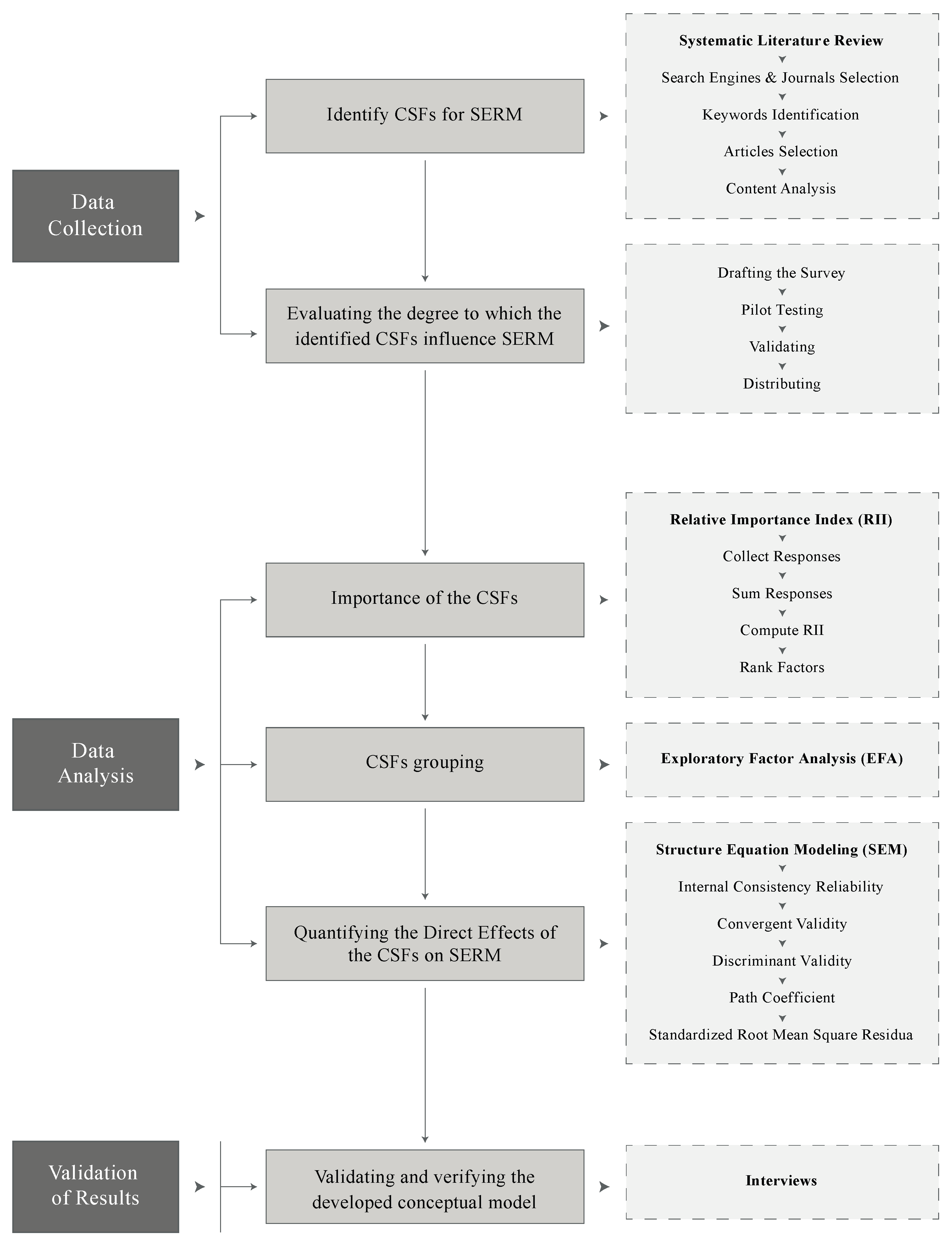
Figure 2.
A Mapping Between the Identified CSFs and the Reviewed Literature.
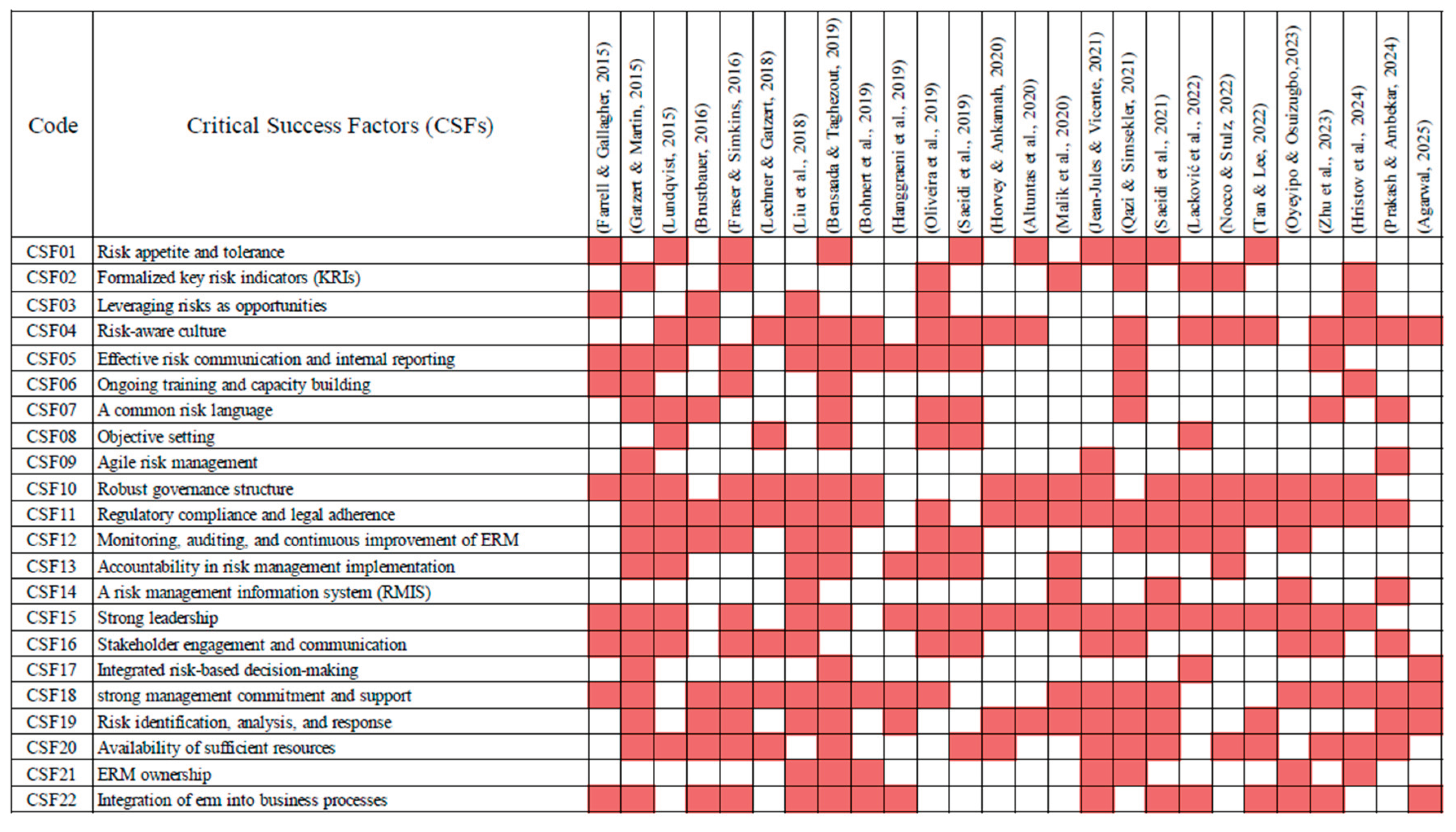
Figure 3.
Conceptual Model of the CSFs Influencing SERM.
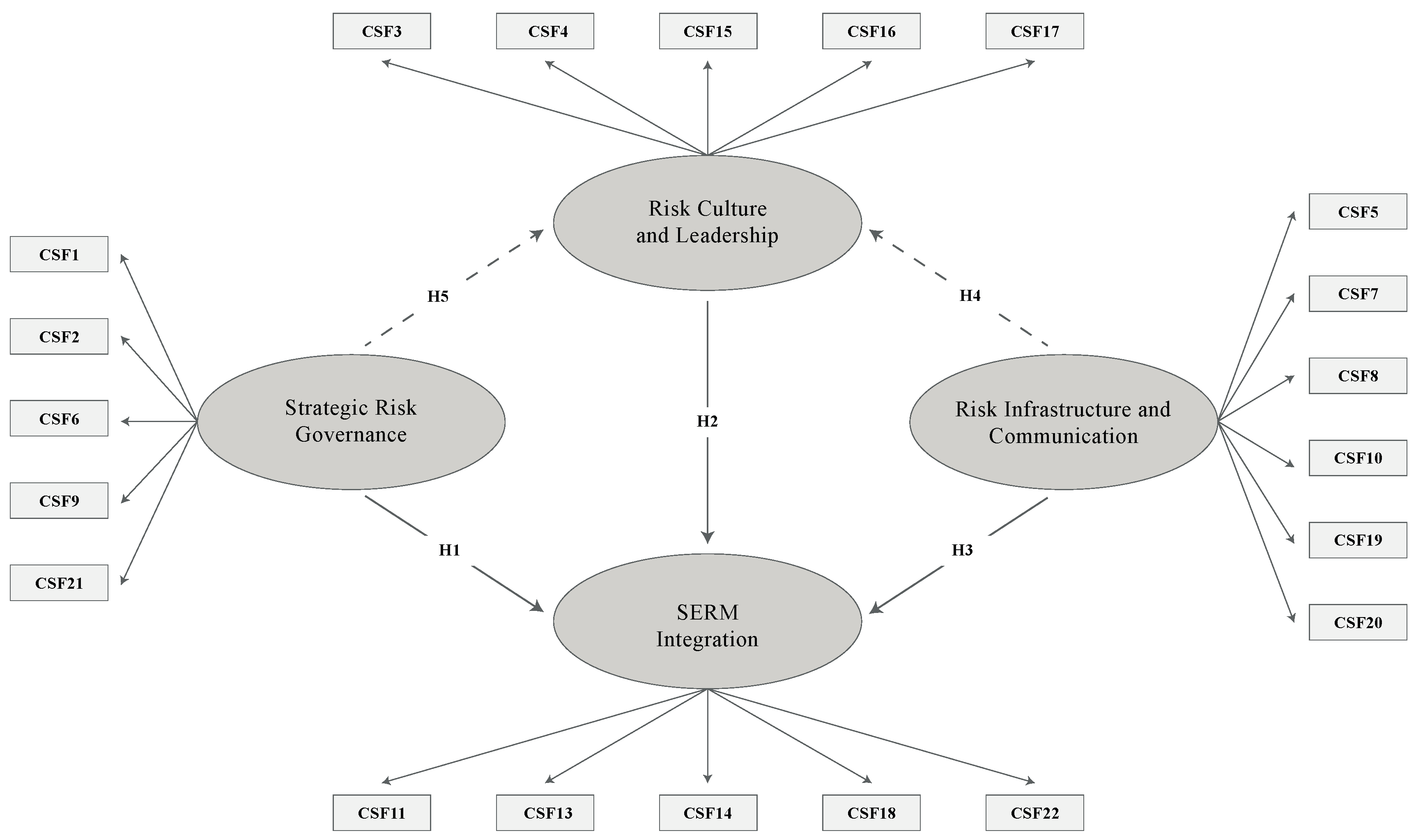

Table 1.
Summary of Existing Studies.
| Reference | Region | Focus and Context | Key Findings | Limitations/Gap |
|---|---|---|---|---|
| [38]. | Global | Risk interdependencies in sustainable (green) building projects | Identified critical drivers of risk in green projects and mapped their cascading effects; provides holistic insight into risk-sustainability links at project level. | Project-level analysis only; does not address enterprise-wide integration of sustainability into ERM. Highlights that prior research on sustainable construction risks was fragmented, lacking an overarching ERM framework. |
| [39] | UAE | Sustainability-related risk prioritization in construction projects using risk matrix-based Monte Carlo simulation. Focus on capturing “tail” risks in project risk management. | Conventional risk matrices underestimate critical sustainability risks. Demonstrated the importance of advanced risk analytics to inform sustainability goals. | Concentrated on project risk management (sustainability at project scale). Lacks extension to enterprise-level ERM, where multiple projects and strategic sustainability objectives interact. |
| [40] | South Africa | Environmental risk assessment for sustainable construction operations to evaluate how construction-phase risks impact environmental sustainability | Environmental “hotspots” identified: air, water, and land pollution, etc., were most critical. Showed that certain operational risks significantly worsen environmental outcomes and costs. Underscores need to manage sustainability risks to avoid project underperformance. | Narrow focus on environmental dimension and a single-project case. Does not integrate social or economic sustainability factors. Provides a tool for project risk analysis but not a comprehensive enterprise risk-sustainability strategy. |
| [36] | Yemen | Enterprise risk factor modeling in construction (oil & gas projects). Investigated how various internal and external risks affect project success. | Developed a validated risk factor model linking risk causes to project performance. Illustrates a structured approach to ERM in construction projects. | Focuses on traditional project success metrics; omits explicit sustainability performance criteria Context-specific to Yemen’s oil/gas sector, which calls for extending such ERM models to incorporate sustainability and to dynamic markets (e.g. UAE) with different risk profiles. |
| [6] | India | Barriers to implementing ERM in construction; employed Delphi plus ISM–MICMAC to hierarchically model relationships among ERM barriers in Indian firms. | Revealed individual-level barriers (low awareness, inadequate training) as root causes; organizational factors (lack of top management commitment) emerged as most dependent. Hierarchy shows how lower-level issues escalate into wider challenges. | Examines ERM barriers without considering sustainability dimensions; region-specific to India; does not extend to sustainable ERM or enterprise-level sustainability integration. |
Table 1.
Demographic Profile of Respondents.
| No. | Demographic Profile | % | No. | Demographic Profile | % |
|---|---|---|---|---|---|
| 1 | Educational level | 2 | Organization type | ||
| Bachelor | 55 | Public Sector | 23 | ||
| Master’s Degree | 33 | Private Sector | 77 | ||
| PhD | 12 | ||||
| 3 | Experience in the construction industry | 4 | Construction Sector | ||
| 1 - 5 Years | 20 | Residential | 15 | ||
| 6 - 15 Years | 34 | Commercial | 14 | ||
| 15 - 25 Years | 24 | Multi-Purpose | 58 | ||
| More than 25 Years | 22 | Infrastructure | 13 | ||
| 5 | Occupation | 6 | Familiarity with ERM | ||
| Project Manager | 42 | Not Familiar | 13 | ||
| Contractor | 8 | Somewhat Familiar | 53 | ||
| Consultant | 19 | Very Familiar | 33 | ||
| Site Engineer | 6 | Expert | 1 | ||
| Academic | 14 | ||||
| Other | 11 | ||||
Table 2.
Relative Importance Index (RII) scores of the CSFs.
| Code | Factors | RII | Rank | P-value |
|---|---|---|---|---|
| CSF01 | Risk Appetite and Tolerance | 0.842 | 13 | 0.00 |
| CSF02 | Formalized Key Risk Indicators (KRIs) | 0.852 | 12 | 0.00 |
| CSF03 | Leveraging Risks as Opportunities | 0.870 | 8 | 0.00 |
| CSF04 | Risk-Aware Culture | 0.855 | 11 | 0.00 |
| CSF05 | Effective Risk Communication and Internal Reporting | 0.894 | 3 | 0.00 |
| CSF06 | Ongoing Training and Capacity Building | 0.896 | 2 | 0.00 |
| CSF07 | A Common Risk Language | 0.836 | 14 | 0.00 |
| CSF08 | Objective Setting | 0.857 | 10 | 0.00 |
| CSF09 | Agile Risk Management | 0.842 | 13 | 0.00 |
| CSF10 | Robust Governance Structure | 0.865 | 9 | 0.00 |
| CSF11 | Regulatory Compliance and Legal Adherence | 0.875 | 6 | 0.00 |
| CSF12 | Monitoring, Auditing, and Continuous Improvement | 0.855 | 11 | 0.00 |
| CSF13 | Accountability in Risk Management Implementation | 0.855 | 11 | 0.00 |
| CSF14 | A Risk Management Information System (RMIS) | 0.831 | 15 | 0.00 |
| CSF15 | Strong Leadership | 0.865 | 9 | 0.00 |
| CSF16 | Stakeholder Engagement and Communication | 0.852 | 12 | 0.00 |
| CSF17 | Integrated Risk-Based Decision-Making | 0.873 | 7 | 0.00 |
| CSF18 | Strong Management Commitment and Support | 0.886 | 5 | 0.00 |
| CSF19 | Risk Identification, Analysis, and Response | 0.875 | 6 | 0.00 |
| CSF20 | Availability of Sufficient Resources | 0.891 | 4 | 0.00 |
| CSF21 | ERM Ownership | 0.894 | 3 | 0.00 |
| CSF22 | Integration of ERM into Business Processes | 0.922 | 1 | 0.00 |
Table 3.
CSFs Groupings Based on EFA Results.
| Items | Loadings (F1) | Loadings (F2) | Loadings (F3) | Loadings (F4) |
|---|---|---|---|---|
| CSF01 | 0.944 | - | - | - |
| CSF06 | 0.802 | - | - | - |
| CSF09 | 0.829 | - | - | - |
| CSF21 | 0.888 | - | - | - |
| CSF02 | 0.917 | - | - | - |
| CSF03 | - | 0.811 | - | - |
| CSF04 | - | 0.795 | - | - |
| CSF12 | - | 0.784 | - | - |
| CSF15 | - | 0.756 | - | - |
| CSF16 | - | 0.789 | - | - |
| CSF17 | - | 0.817 | - | - |
| CSF19 | - | - | 0.846 | - |
| CSF20 | - | - | 0.845 | - |
| CSF05 | - | - | 0.821 | - |
| CSF07 | - | - | 0.747 | - |
| CSF08 | - | - | 0.842 | - |
| CSF10 | - | - | 0.819 | - |
| CSF13 | - | - | - | 0.921 |
| CSF14 | - | - | - | 0.841 |
| CSF11 | - | - | - | 0.901 |
| CSF18 | - | - | - | 0.803 |
| CSF22 | - | - | - | 0.904 |
Table 4.
Measurement Model Evaluation.
| Constructs | Item Code |
Factor Loading | Cronbach’s Alpha | Composite Reliability | AVE |
|---|---|---|---|---|---|
| Strategic risk governance | SRG1 | 0.917 | 0.939 | 0.949 | 0.804 |
| SRG2 | 0.879 | ||||
| SRG3 | 0.896 | ||||
| SRG4 | 0.917 | ||||
| SRG5 | 0.873 | ||||
| Risk culture and leadership | RCL1 | 0.812 | 0.804 | 0.902 | 0.673 |
| RCL2 | 0.858 | ||||
| RCL3 | 0.766 | ||||
| RCL4 | 0.847 | ||||
| RCL5 | 0.793 | ||||
| RCL6 | 0.844 | ||||
| SERM integration | SRI1 | 0.907 | 0.901 | 0.938 | 0.784 |
| SRI 2 | 0.857 | ||||
| SRI 3 | 0.896 | ||||
| SRI 4 | 0.876 | ||||
| SRI 5 | 0.891 | ||||
| Risk infrastructure and communication | RIC1 | 0.829 | 0.833 | 0.885 | 0.719 |
| RIC2 | 0.865 | ||||
| RIC3 | 0.851 | ||||
| RIC4 | 0.814 | ||||
| RIC5 | 0.866 | ||||
| RIC6 | 0.861 |
Table 5.
Discriminant Validity by HTMT Correlations.
| RPI | RCL | RIC | SRG | |
|---|---|---|---|---|
| RPI | ||||
| RCL | 0.307 | |||
| RIC | 0.347 | 0.306 | ||
| SRG | 0.388 | 0.212 | 0.337 | |
Table 6.
Discriminant Validity by Fornell-Larcker Criterion.
| RPI | RCL | RIC | SRG | |
|---|---|---|---|---|
| RPI | 0.886 | |||
| RCL | 0.290 | 0.821 | ||
| RIC | 0.327 | 0.296 | 0.848 | |
| SRG | 0.369 | 0.209 | 0.318 | 0.897 |
Table 7.
Structural Model’s Coefficient of Determination Values.
| Construct Relation | R2 |
|---|---|
| Effect of SRG and RIC on RCL | 0.102 |
| Effect of SRG, RCL, and RIC on SRI | 0.213 |
Table 8.
Structural Model’s Cross-validated Redundancy Values.
| Endogenous Variable | SSO | SSE | Q2 (= 1 – SSE/SSO) |
|---|---|---|---|
| Effect of SRG and RIC on RCL | 618.000 | 862.869 | 0.061 |
| Effect of SRG, RCL, and RIC on SRI | 765.000 | 645.134 | 0.157 |
Table 9.
Path Coefficients.
| Hypothesis | Path | B value | T statistics (|O/STDEV|) | P value | Decision |
|---|---|---|---|---|---|
| H1 | SRG -> SRI | 0.572 | 4.640 | 0.008 | Supported |
| H2 | RCL -> SRI | 0.478 | 4.108 | 0.005 | Supported |
| H3 | RIC -> SRI | 0.418 | 4.150 | 0.002 | Supported |
| H4 | RIC -> RCL | 0.355 | 4.902 | 0.004 | Supported |
| H5 | SRG -> RCL | 0.388 | 3.439 | 0.008 | Supported |
Table 10.
Mediation Analysis.
| Hypothesis | Total Effects | Direct Effects | Hypothesis | Indirect Effects | ||||||
|---|---|---|---|---|---|---|---|---|---|---|
| B | T-value | P value | B | T-value | P value | B | T-value | P value | ||
| SRG -> SRI | 0.494 | 2.924 | 0.003 | 0.272 | 3.640 | 0.008 | SRG -> RCL -> SRI | 0.223 | 2.993 | 0.011 |
| RCL -> SRI | 0.378 | 2.108 | 0.005 | 0.178 | 2.108 | 0.005 | RIC -> RCL -> SRI | 0.245 | 3.684 | 0.002 |
| RIC -> SRI | 0.234 | 2.629 | 0.009 | 0.118 | 2.150 | 0.002 | ||||
Table 11.
Experts’ Profile.
| Expert | Experience | Job Title | Education | ||
|---|---|---|---|---|---|
| BSc | MSc | PhD | |||
| 1 | 10–15 years | Project Manager | X | ||
| 2 | 10–15 years | Construction Engineer | X | ||
| 3 | >20 years | Professor | X | ||
| 4 | 10–15 years | Project Manager | X | ||
| 5 | >20 years | Professor | X | ||
| 6 | >20 years | Construction Consultant | X | ||
Disclaimer/Publisher’s Note: The statements, opinions and data contained in all publications are solely those of the individual author(s) and contributor(s) and not of MDPI and/or the editor(s). MDPI and/or the editor(s) disclaim responsibility for any injury to people or property resulting from any ideas, methods, instructions or products referred to in the content. |
© 2025 by the authors. Licensee MDPI, Basel, Switzerland. This article is an open access article distributed under the terms and conditions of the Creative Commons Attribution (CC BY) license (http://creativecommons.org/licenses/by/4.0/).
Copyright: This open access article is published under a Creative Commons CC BY 4.0 license, which permit the free download, distribution, and reuse, provided that the author and preprint are cited in any reuse.


