Preprint
Article

This version is not peer-reviewed.

Inhalable Dry Powders from Lyophilized Sildenafil Loaded Liposomes Containing Resveratrol or Cholesterol

Submitted:

22 September 2025

Posted:

24 September 2025

You are already at the latest version

Abstract

Pulmonary drug delivery is a promising approach for the treatment of respiratory diseases allowing for passive drug targeting and enhanced drug efficacy. Background/Objectives: The aim of the present study was to develop inhalable dry powders from lyophilized sildenafil citrate (SC) loaded liposomes made of phosphatidylcholine and either cholesterol (CH) or resveratrol (RSV). Methods: Liposomes were prepared via a pH gradient method to increase drug entrapment efficiency and drug loading and then the lipid vesicles were lyophilized using different proportions of ethanol, mannitol and lactose as excipients. The resulting dry cakes were converted into powders and evaluated for aerodynamic performance using a custom-designed air-blowing device. Notably, this is the first time that resveratrol has been used as a substitute for cholesterol in SC loaded liposomes. Results: The obtained results demonstrate that RSV is a suitable component of liposome bilayer that improves drug loading and probe that lyophilized cakes containing the liposomes produced a dry powder suitable for aerosolization and pulmonary delivery of sildenafil citrate. The results found for RSV liposomes point to this polyphenol offering a potential alternative to traditional cholesterol-based liposomal formulations. Conclusions: This approach presents a novel strategy for pulmonary delivery of sildenafil using biocompatible and FDA-approved excipients for this administration route.
Keywords: 
;  ;  ;  ;  ;  

1. Introduction

A large proportion of the global population experiences various respiratory illnesses, with Chronic Obstructive Pulmonary Disease (COPD) being notably prevalent [1], ranking as the third leading cause of worldwide mortality. Asthma, tuberculosis, lung cancer, pulmonary hypertension (PH), and chronic bronchitis are also widespread. Due to the substantial global impact of these diseases, pulmonary drug delivery presents a considerable challenge for public health [2].
The inhalation route represents a non-invasive technique to deliver the drug directly to the lungs, thereby enhancing drug targeting and efficacy. This approach circumvents processes inherent in oral or intravenous administration, such as hepatic metabolism, or active ingredient degradation along the gastrointestinal tract [3] and most important, this reduces side effects related to systemic drug exposure. The pulmonary administration of drugs using nanoparticles through inhalers is increasingly gaining prominence as an alternative to traditional systems. Certain inherent characteristics of the lungs, including a vast absorption surface, exposure to high blood flow, a thin epithelial layer in the alveoli, and the slow turnover of the cellular surface, render inhalation a unique method for both systemic and local drug administration [4].
Medicine inhalation is typically achieved in the form of aerosol, a suspension of fine droplets or solid particles in a gaseous medium, produced by different devices such as nebulizers, pressurized metered-dose inhalers (pMDI), and dry powder inhalers (DPI) [5]. Nebulizers, are used at hospital or for ambulatory chronic patients, as these are large and heavy devices; pMDIs and DPIs, however, are portable and contain the active ingredient, either suspended or dissolved in a volatile non-polar propellant or as a dry powder mixture, respectively. When comparing these two technologies, the latter exhibit greater stability, is more environmentally sustainable, do not require propellants, and coordination between device activation and patient inhalation is not required [6]. DPI have proven to be more practical and superior compared to pMDIs and nebulizers. Recent advancements reveal other promising benefits, as higher clinical efficacy for antibiotics, vaccines, or drugs showing poor oral bioavailability. Furthermore, they allow for rapid action due to the efficient local delivery minimizing the administered dose and adverse effects caused by systemic drug exposure [1].
The development of drug delivery systems through mucosa is an area of significant interest. Mucosa secretion is characterized by viscosity, elasticity, and stickiness, allowing tissue protection by trapping and eliminating foreign particles. These features hinder drug retention at mucosa body sites, but recent studies have proven the feasibility of designing nanoparticles that overcome mucosal barriers [7] and reveal the particular interest of liposomes for this purpose. Liposomes are spherical lipid vesicles primarily composed of phospholipids and cholesterol. They form a lipid bilayer structure entrapping water, with an amphipathic domain [8]. Since discovery, they have been extensively studied as drug carriers in the diagnosis or treatment of various pathologies [2]. These systems have the capacity to encapsulate drugs with varying solubility, both in their aqueous core and/or within the lipid bilayer [9]. Furthermore, due to their composition, these vesicles cross biological barriers, enhancing the drug absorption, distribution and targeting. In the particular case of respiratory mucosa, the surfactant fluid in the upper respiratory pathways primarily consists of phospholipids, specific proteins, and other lipids [10]. Utilizing phospholipids as the principal components of liposomes confers numerous advantages for pulmonary delivery [11] since phospholipids (marketed as substitutes for pulmonary surfactant) are biocompatible and biodegradable excipients that may enhance the migration of inhaled particles to peripheral lung regions [12,13]. Accordingly, liposomal formulations are proposed as ideal candidates for pulmonary drug administration, offering superior safety profiles, reduced macrophage clearance, and sustained drug release [14].
PH is a heterogeneous disorder that can lead to other pathologies such as right ventricular failure, even death, in both adults and paediatric patients. It may have an idiopathic nature or be related with other pathologies, but its impact and incidence grow every day in paediatric population, while treatment options are still reduced [15]. In this regard, sildenafil citrate is a phosphodiesterase type 5 inhibitor (PDE-5) used to treat PH in adults and children, exerting vasodilator effects in lungs [16]. PDE-5 is a modulating molecule in the nitric oxide/cyclic guanosine monophosphate (NO/cGMP) pathway. NO promotes pulmonary vasodilation through cGMP, which is broken down by PDE5, an enzyme found in the smooth muscle of the pulmonary arteries and contributing to the development of PH [17]. Therefore, PDE-5 inhibition can reduce PH by avoiding the proliferation of smooth muscle cells and promoting apoptosis [18]. Recent research has confirmed its efficacy and safety in various patient groups, including those with PH secondary to connective tissue diseases and congenital heart defects [19]. Moreover, long-term studies suggest that sildenafil can improve the functional capacity and quality of life in patients with PH [20]. Despite these benefits, it is crucial to monitor side effects and adjust therapy to reduce unwanted drug effects.
Inhalable formulations of sildenafil have been investigated due to their potential for drug targeting in the treatment of PH. Polymeric nanoparticles, such as those made from PLGA (poly-lactic-co-glycolic acid) have been assayed and results find that these nanoparticles protect sildenafil from degradation and allow for prolonged drug release. Besides, high encapsulation efficiency and stability after lyophilization and nebulization was observed [21]. Paranjpe et al. [22] developed lipid formulations of sildenafil designed for DPI devices. These solid lipid nanoparticles were prepared using a novel microchannel homogenization method. Similarly, Makled et al. [23] produced solid lipid nanoparticles for the pulmonary delivery of sildenafil, demonstrating their potential in both nebulizers and DPI devices. Shahin et al. [24] developed large porous microparticles loaded with sildenafil by using spray drying techniques. These microparticles were specifically designed for DPI devices and showed controlled and sustained drug release in the lungs. More recently, highly porous iron-based metal–organic nanoparticles have been tested as drug carrier for pulmonary delivery of sildenafil and those particles showed to be non-toxic in vitro and well-tolerated in vivo [25]. SC liposome dry powders, however, have not been investigated for pulmonary delivery yet.
Due to the interest of liposomes as drug carriers for pulmonary delivery, the aim of the present study was to prepare sildenafil loaded liposomes using either cholesterol (CH) or resveratrol (RSV) and egg phosphatidylcholine (EPC) as bilayer components and to produce inhalable dry powders from the lyophilized liposomes. This is the first time that sildenafil loaded liposomes are prepared without using cholesterol but resveratrol in the lipid bilayer. Another novelty of this work is the stabilization of liposomes by lyophilization and their transformation into inhalable dry powders using excipients approved by the FDA specifically for drug inhalation.

2. Results and Discussion

2.1. Liposomes

Higher entrapment efficiency and drug loading were observed for RSV liposomes (EE=95.36±3.87% and DL=9.58±0.43%) compared to CH liposomes (EE=90.44±4.62 % and DL=9.15± 0.46%), the differences showing statistical significance (p<0.5). These results improved previous data [26] obtained for sildenafil citrate loaded liposomes using EPC and CH as bilayer components. Moreover, this is the first time that sildenafil citrate has been encapsulated in liposomes made of EPC and RSV instead of CH. Avoidance of CH in formulations is desired and the inclusion of RSV instead provides the liposomes with additional advantages inherent to the antioxidant and other beneficial properties of RSV. Literature data support the suitability of liposomes entrapping RSV [27,28] but, so far, no data have been published supporting the viability of RSV/EPC liposomes as drug carriers.
Figure 1 shows the microscopic images of fresh SC loaded liposomes prepared using RSV and EPC or CH and EPC as bilayer components.
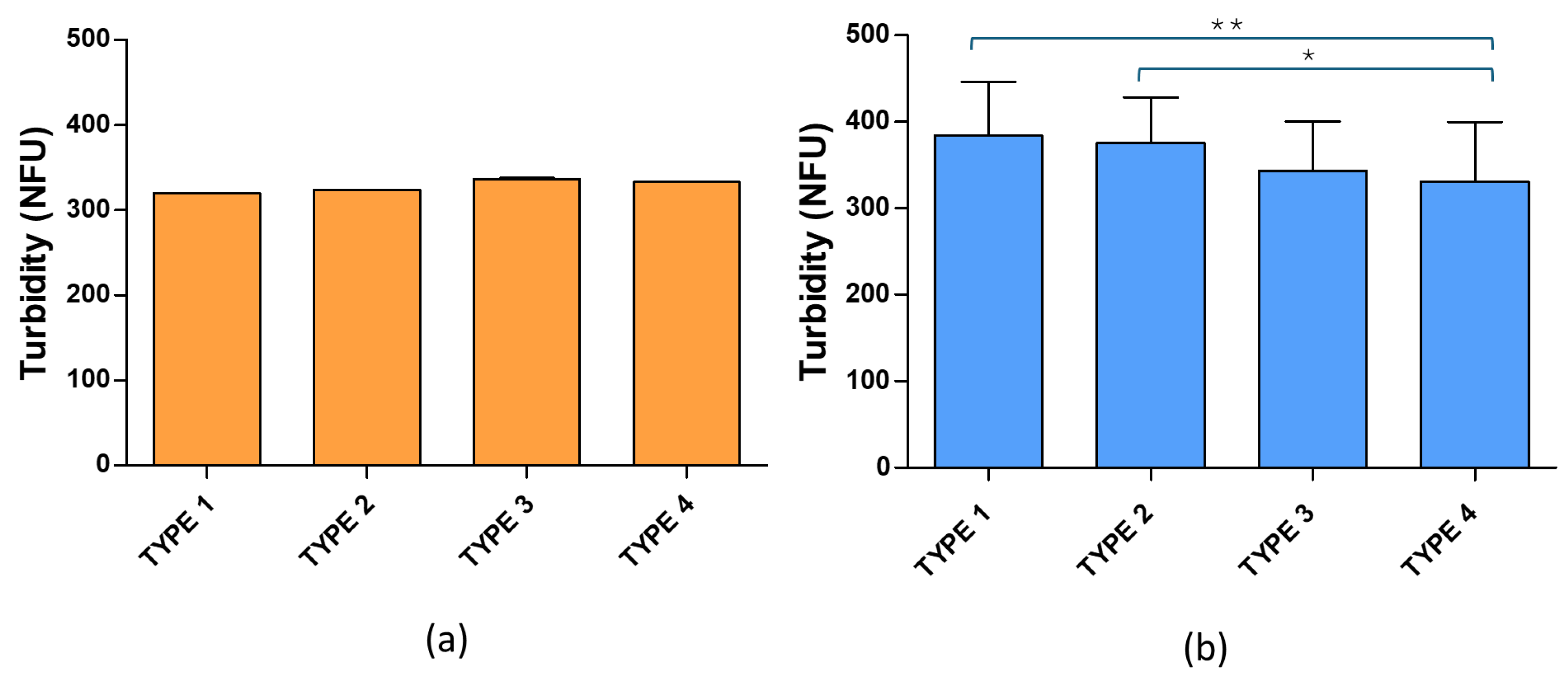
Turbidity depends on size/number of particles in suspension and this has been proposed for monitoring changes of nanoparticles in a suspension [29,30]. Therefore, this was the parameter used in this study for comparison of liposome samples. Figure 2 shows turbidity results corresponding to fresh SC liposomes made of EPC and RSV or EPC and CH.
As shown in Figure 2, turbidity mean values were homogeneous for fresh RSV liposome samples, irrespectively of including or not ethanol. These samples displayed consistent turbidity across all four types and statistical tests showed no significant differences among the 4 types (p > 0.05). Regarding CH liposomes, ethanol produced a decrease of turbidity, with statistically significant differences between samples with or without ethanol, irrespectively of mannitol and lactose amount in the samples. On top of that, lower turbidity values were observed for RSV compared to CH liposomes, these results pointing to the former being smaller than the latter. These results are in accordance with previous published data showing larger hydrodynamic diameter for CH liposomes [26] compared to RSV liposomes [28], which confirms the usefulness of turbidity as a surrogate marker for comparison of liposome samples.

2.2. Lyophilization

Conditions described in the corresponding section of Material and Methods were applied for lyophilization and these are based on previous studies carried out with liposomes made of EPC and CH [31], although slight differences related to freezing and drying periods were applied.
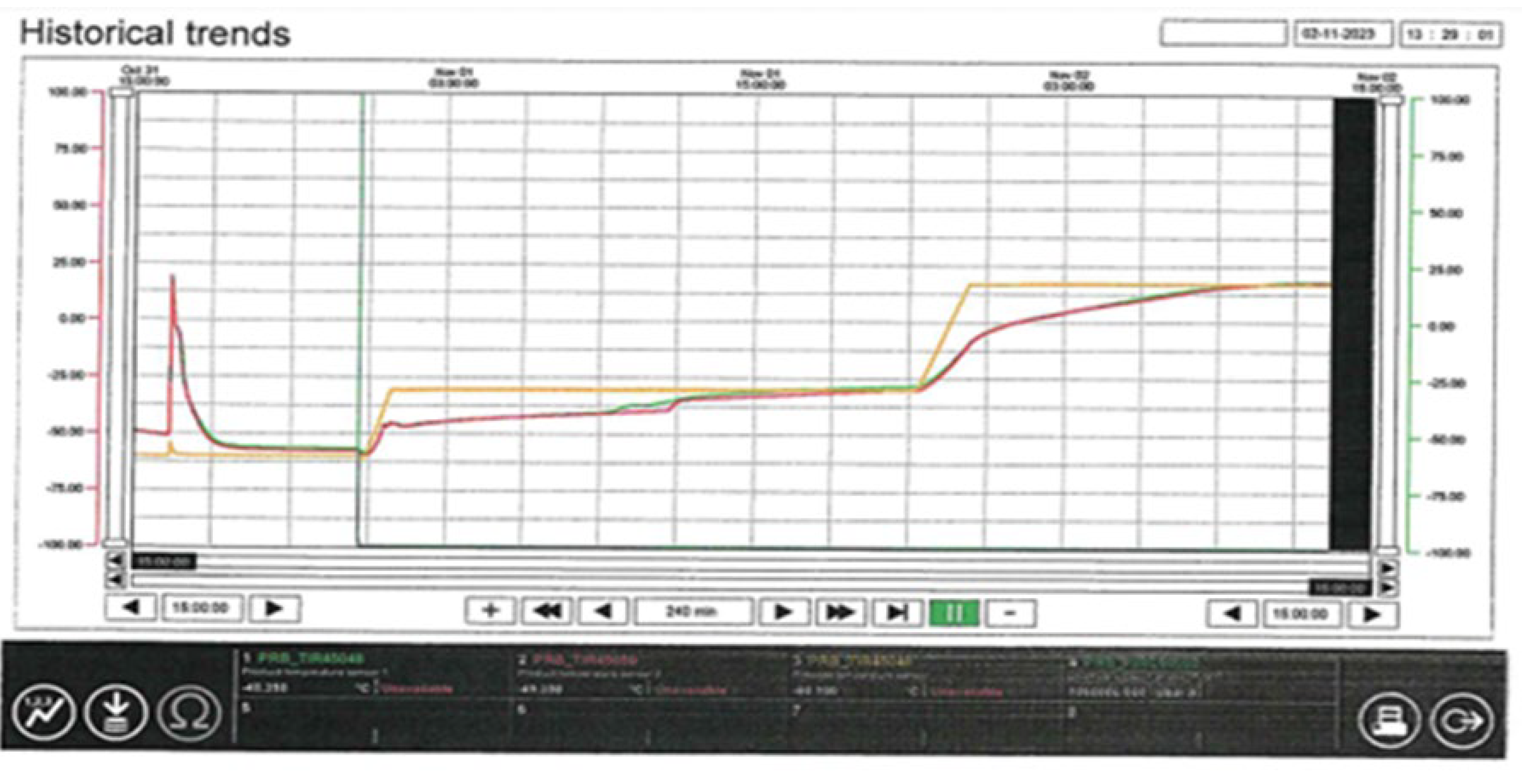
Figure 3 shows the registered curves for process and product temperature, as well as chamber pressure, all along the cycle. Superimposed temperature curves were registered for RSV and CH samples, which indicates equivalent thermodynamic properties for both type of liposomes during freezing and drying conditions.
Smart and homogeneous cakes were obtained in all cases, irrespectively of RSV or CH liposomes, mannitol or lactose amount, and presence or absence of ethanol in samples. Remaining moisture measured by Karl-Fisher showed values in the range of 0.6%-3.3%, irrespectively of sample composition.
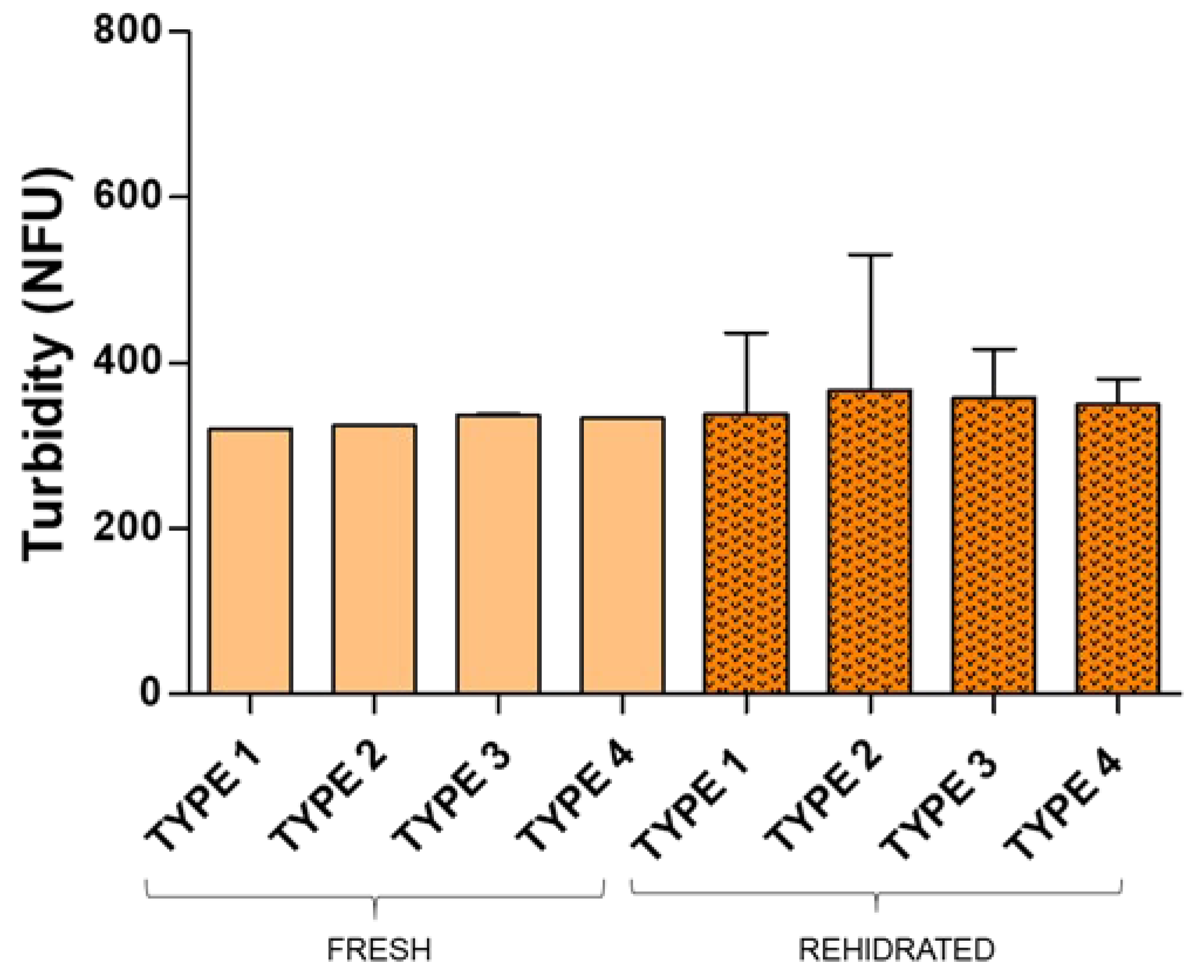
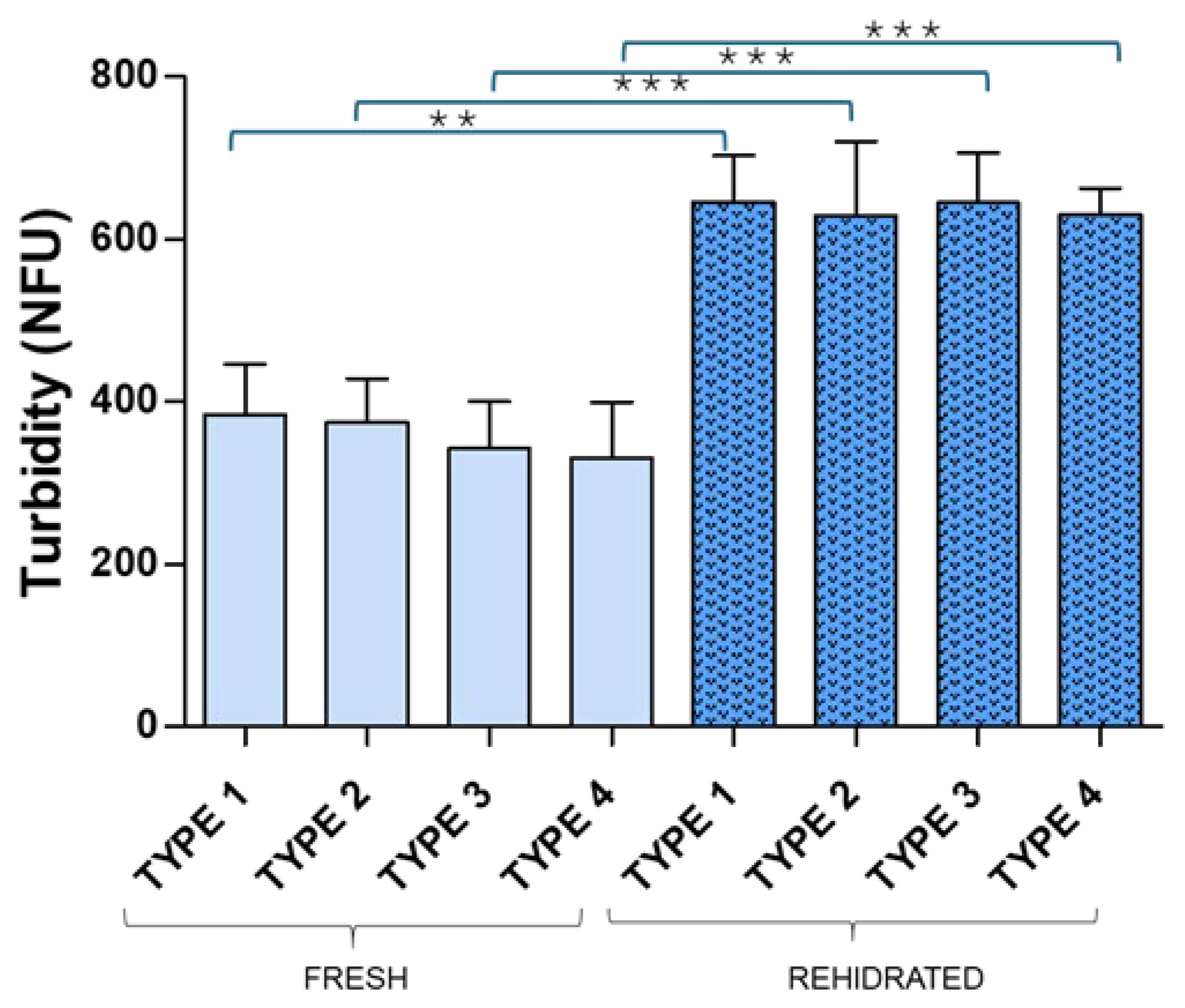
All samples were rehydrated and turbidity was measured. Figure 4 and Figure 5 illustrate turbidity results obtained for rehydrated cakes compared to their corresponding fresh samples. In the case of RSV liposomes, statistically significant differences between fresh and rehydrated samples were not found, although higher dispersion was observed for rehydrated samples than observed for fresh ones. For lyophilized CH liposomes, however, turbidity median values increased for rehydrated samples, with statistically significant differences in all cases. The increase of turbidity for rehydrated samples points to potential aggregation of vesicles. This effect has been widely reported in literature for lyophilized liposomes [32,33] and the selection of cryo-lyo protectants to avoid liposome aggregation is still a main topic of current investigation [34,35]. According to our results, the cryo-lyo protective effects of excipients used here were satisfactory for RSV liposomes but failed to protect CH liposomes showing 30-40% increase of turbidity for rehydrated samples.

2.3. Dry Powders

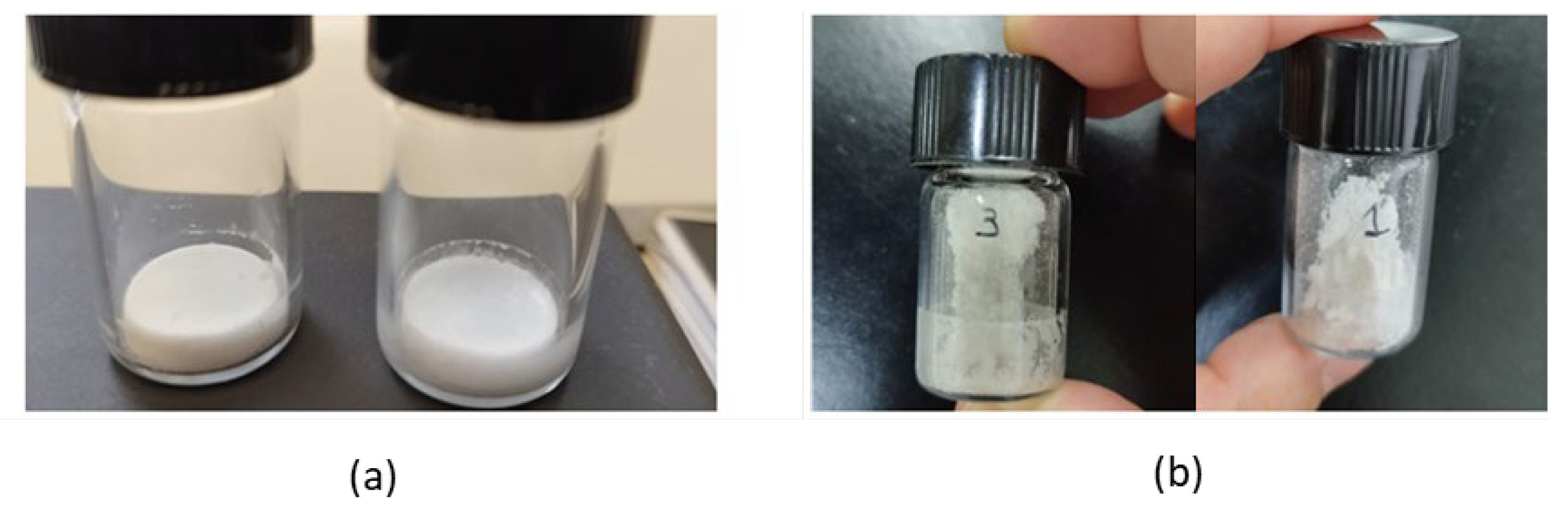
Powders with different aspect and characteristics were obtained from freeze-dried cakes with different composition. Those obtained from no diluted samples were sticky and pointed to uneasy aerosolization under conditions simulating the respiratory air turbulence. It was also observed that the addition of lactose carriers (230 Inhalac® or 10 Inhalac®) before or after orbital agitation did not facilitate cake disintegration, but the opposite. Accordingly, these samples were not evaluated in terms of aerodynamic performance. Only cakes obtained from diluted samples without added carriers produced a fine powder showing a cascade movement; therefore, only these powders were assayed in terms of aerodynamic performance. Figure 6 shows the aspect of cakes for RSV and CH lyophilized liposomes (a) and their corresponding dry powders (b).
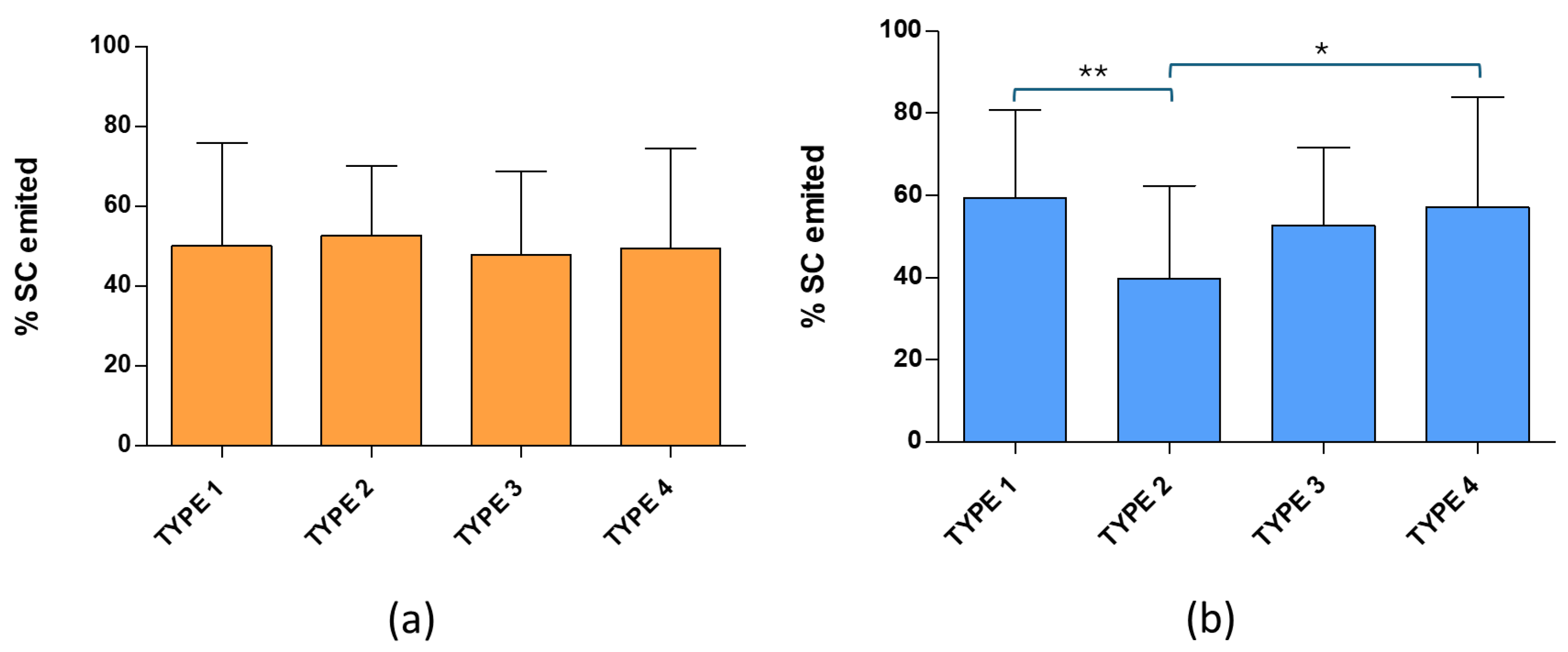
The performance of powders was evaluated by comparison of the drug amount measured in the samples containing the expelled powder with the drug amount in the original aerosolized cake. Emitted SC percentage are shown in Figure 7. Median values were compared because data did not show normal distribution. Expelled amounts were in the range of 42-53% and 33-60 % for RSV and CH samples, respectively. More homogeneous and consistent results were again observed for RSV liposomes which did not show statistically significant differences among 4 type of samples. For CH liposomes, however, statistically significant differences between Type 1 and 2 and also between 2 and 4 were found.
It is worth to highlight the variability of data obtained for expelled fraction. Despite high variability of SC emitted fraction being one of the limitations of the study, our results are in line with literature data related to DPI formulations. Extensive research has been done to enhance dry powder inhalers performance by reducing variability and improving delivery efficiency [36]. Values of total emitted dose in the range of 21.4-76.6% have been reported for terbutaline from DPI at different conditions and similar, even lower, values have been found for other drugs [37]. This is one of the handicaps to be overcome in the field of pulmonary drug delivery and numerous research studies are currently focusing on this topic [38].

3. Materials and Methods

3.1. Materials

Egg yolk L-α-phosphatidylcholine and cholesterol were purchased from Sigma-Aldrich® (Merk KGaA, Darmstadt, Germany). Laboratory HPLC-grade methanol was supplied by Thermo Fisher Scientific. H2PO4, NaOH, and K2HPO4 were purchased from Panreac ApplieChem (Darmstadt, Germany). Ultrapure water was obtained with a Wasserlab Automatic Plus System. Lactose monohydrate and mannitol were purchased from Guinama S.L.U. (Valencia, Spain). Sildenafil citrate, resveratrol and triethanolamine were supplied by Acofarma (Madrid, Spain). Pure ethanol was purchased from LabKem, Labbox Labware (Migjorn, Barcelona, Spain). Lactose carrirers (230 Inhalac® or 10 Inhalac® Lactose) were gently provided by Meggle (Wasserburg, Germany).

3.2. Liposome Preparation and Characterization

Transmembrane pH gradient liposomes were prepared following a previously described method [31] with specific adaptations. In short, EPC with CH or RSV (0.7/0.3 EPC/CH or EPC/RSV molar ratio) were mixed with 1 mg/mL sildenafil citrate (SC) in buffer solution (pH= 4.7) to a total lipid concentration of 0,9% w/w. The resultant dispersion was transposed into a flask and subjected to ultrasonic agitation (Fisher Scientifics FB 15061, 50 Hz) for 20 minutes at 40 ± 2°C in the case of CH liposomes and at 37 ± 2°C for RSV liposomes. Subsequently, the resulting suspension underwent eight rounds of filtration using syringe filters (Chromafil® PET) with a pore size of 0.45 µm. Following, the mixtures were kept for 1-hour at room temperature and then 1-hour refrigerated at 4°C. Finally, NaOH was added to adjust the pH=7.0 and samples were kept for 20 h under agitation at 4°C to facilitate the unionized drug to cross the lipid bilayer and accumulate as ionized molecule in the water core (pH= 4.7). Both type of SC loaded liposomes (RSV/EPC and CH/EPC) were lyophilized and processed to obtain dry powders assayed for aerodynamic performance. Rigorous light protection protocols were observed for all RSV-containing samples due to its inherent photosensitivity.
Turbidity of liposome suspensions was measured using a HACH 2100Q turbidimeter calibrated with standard samples in a range of 10-800 NTU (Nephelometric Turbidity Unit). Samples were properly diluted to ensure turbidity within the calibration range, and inserted in the portable HACH 2100Q turbidimeter. For entrapment efficiency (EE) and drug loading (DL) estimation, the liposome suspensions were centrifuged for 90 min at 14000 rpm and 4°C. The supernatant was separated and diluted 1:10 with ethanol. SC was quantified in both, liposome suspension (previously diluted and vortexed) and supernatant. Quantification of SC in samples was carried out by High Pressure Liquid Chromatography (HPLC) assay. A Purospher® STAR RP-18 endcapped C18 (25 cm × 4.6 mm i.d., 3 μm particle size, 80 A pore size) column was used. A 70% HPLC formic acid (0,1%) and 30% Methanol mobile phase at 1.5 mL/min flow rate and run time of 3 min was applied. Column and sample temperatures were 25°C. The diode array detector was operated al 292nm. The injection volume was set at 10 μL, and the samples were diluted and shaken with ethanol before HPLC injection. The calibration range was 5-300 μg/mL
EE and DL were estimated according to the following equations
EE=((Ct-Cs)/Ct)
Where Ct is the total SC concentration (quantified in liposome suspension) and Cs is the SC concentration quantified in the supernatant
DL (%) = ((Csc/Clip+Csc)) x100
Where Csc is the SC concentration in liposomes (1 mg/mL x EE) and Clip is the lipid concentration in liposomes suspension.

3.3. Lyophilization

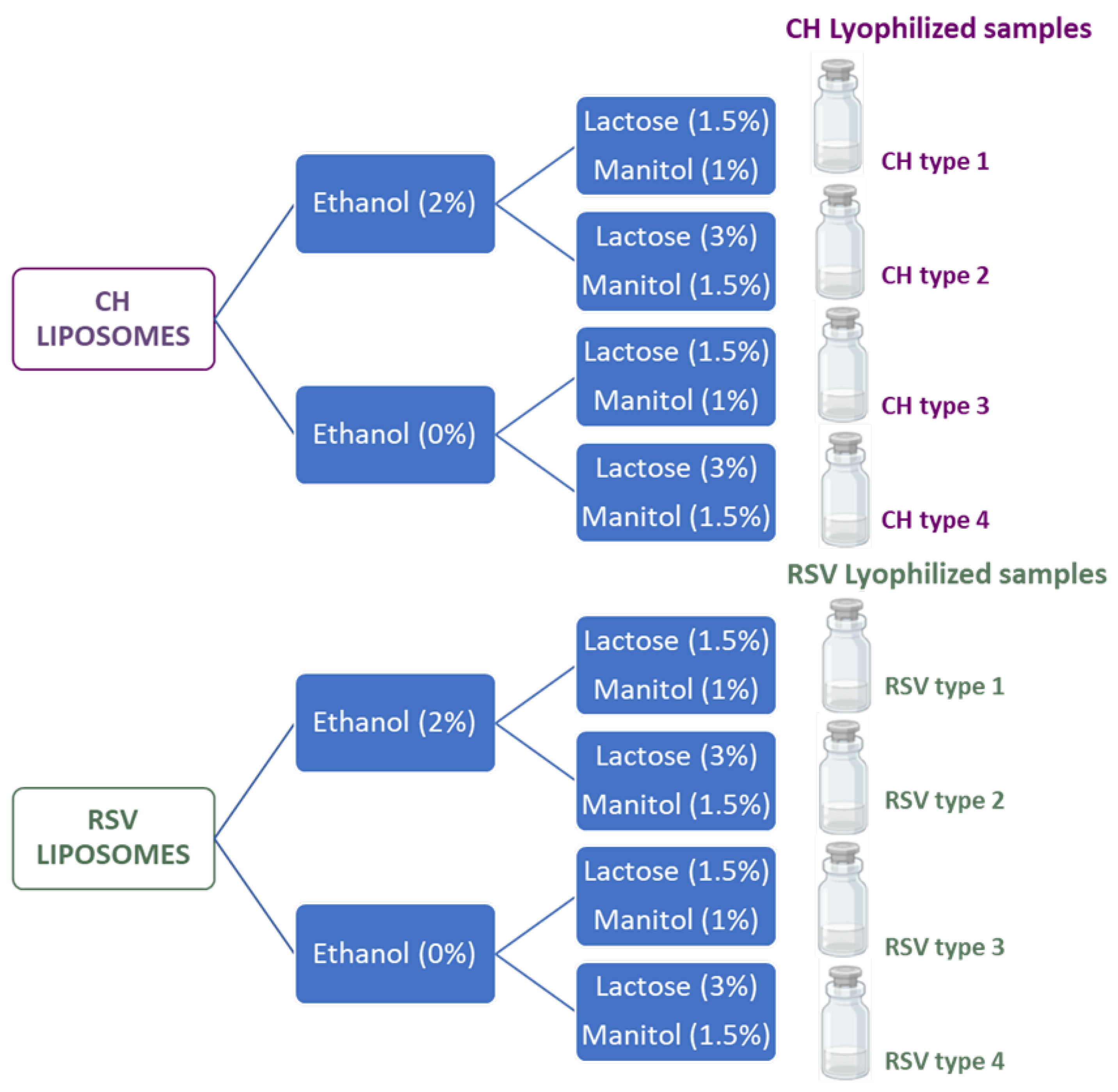
Liposome suspensions were divided into 2 aliquots and one was mixed with ethanol for 2% (w/w) final concentration. Mannitol and lactose at different proportions were added to samples with and without ethanol. Figure 8 illustrates the experimental conditions applied for obtaining lyophilized cakes aimed at powder production.
Different volumes of the resulting mixtures (0.5-2 mL) were transferred to freeze-drying vials and lyophilized. After different lyophilization assays, 1 ml of liposome suspension diluted with Milli-Q water was selected as the best condition for sample lyophilization and this condition was applied for the rest of experiments.
A LYOBETA 4PS (Telstar) equipment, in line with LyoSuiteTM software, was used for lyophilization of liposomes. Freezing at −60°C and primary drying at −30 °C for 21 h, followed by secondary drying at 17 °C for 14 h, with condenser temperature −80 ± 4 °C and chamber pressure 25-50 µBar during drying phases, were applied to obtain the lyophilized cakes used for dry powder production. Temperature probes were placed in vials containing RSV and CH liposome samples.
Lyophilized samples were visually evaluated in order to check puffing and/or sample collapse as well as differences among sample types. Remaining moisture was determined by the Karl Fisher method as follows: 0.1 g of dry cake was weight by analytical balance (Mettler Toledo, XS105DU) and transferred to the titration cell. Volumetric water content was measured with the Metrohm 870 KF Titrino plus KF titrator.
Lyophilized cakes were rehydrated and samples were tested in terms of turbidity, EE% and DL%.

3.4. Dry Powders

The vials containing freeze-dried cakes underwent orbital agitation for different periods of time (1-5 h) at different speed rates (50-100 rpm) and the aspect of resulting powders was observed. In order to evaluate the effects of lactose carriers (230 Inhalac® and 10 Inhalac®), 30 or 60 mg were added to samples before or after orbital agitation and the resulting mixtures were processed just like those without the carriers.
Samples showing easy cake disintegration and producing homogeneous powders were selected for aerodynamic performance, excluding those showing agglomerate or sticky particles.
The aerodynamic performance of dry powders was assessed using a system inspired by the methodology outlined by Miyamoto et al. [39]. A home-produced device was used for this purpose. The system (Figure 9) integrates a cap provided with in- and out-tubing, the former connected with a pump generating 1.67 mL/sec air flow entering the vial containing the dry powder, which was dragged through the outlet tube towards a flask containing water. After 3 sec air blowing, the expelled amount of SC recovered in the flask was quantified by using the above described HPLC assay.
Samples collected into the flask containing the expelled powder were also analyzed in terms of turbidity and results were compared to those obtained for the corresponding lyophilized and rehydrated cakes.

3.5. Statistical Analysis

Results were registered as mean or median values, according to distribution data shown in Figures S1–S5. Anova test was used for normal distributed data while Krustal-Wallis test with a multiple comparison Dunns test was performed for no normal distribution data. Statistical significance was considered for p-values ≤ 0.05.

4. Conclusions

In conclusion, the results of this study probe the suitability of encapsulating sildenafil citrate in liposomes made of RSV and EPC, which show advantages compared to classic CH and EPC liposomes. The use of RSV instead of CH provides the liposomes with the beneficial properties of RSV and this finding has not been reported so far. This work also probes the validity of freeze-drying process using lactose and mannitol as protective agents for producing disintegrable cakes containing SC liposomes. Under selected conditions lyophilized cakes were transformed into inhalable dry powders which produced expelled fractions in accordance with literature data for PDI emitted doses. Altogether, the results point to the feasibility of lyophilized liposomes made of RSV an EPC as suitable and beneficial formulations for SC pulmonary administration in clinical practice. The whole procedure was carried out in absence of organic solvents and using only FDA approved additives for inhalable medicines as formulation components. Further studies using in vitro and in vivo models are necessary to determine the viability and potential benefits of this proposal for pulmonary delivery of SC in clinical practice.

Supplementary Materials

The following supporting information can be downloaded at the website of this paper posted on Preprints.org, Figure S1: Comparison of fresh RSV and CH liposomes; Figure S2: Comparison of fresh and rehydrated RSV liposomes; Figure S3: Comparison of fresh and rehydrated CH liposomes; Figure S4 comparison of emitted SC from RSV liposome dry powders; Figure S5 comparison of emitted SC from CH liposome dry powders

Author Contributions

Conceptualization, A.S.N. and M.J.d.J.V..; methodology, A.S.N., M.J.d.J.V and L.C.L.; investigation, A.S.N., M.J.d.J.V and L.C.L.; resources, A.S.N., M.J.d.J.V and L.C.L.; writing—original draft: L.C.L.; writing—review and editing A.S.N., M.J.d.J.V. and L.C.L.; supervision, A.S.N. and M.J.d.J.V.; project administration, A.S.N. and M.J.d.J.V. All authors have read and agreed to the published version of the manuscript.

Acknowledgments

The authors thank the European Regional Development Fund for supporting the Infrastructures of Castilla y León Network INFRARED (IR2020-1-USAL09) and European Union NextGeneration program for young researcher support 2023-2025. The authors also thank Dr Zarzuelo Castañeda for helping with HPLC assays.

Conflicts of Interest

The authors declare no conflicts of interest. The funders had no role in the design of the study; in the collection, analyses, or interpretation of data; in the writing of the manuscript; or in the decision to publish the results.

References

  1. Gaikwad, S.S.; Pathare, S.R.; More, M.A.; Waykhinde, N.A.; Laddha, U.D.; Salunkhe, K.S.; Kshirsagar, S.J.; Patil, S.S.; Ramteke, K.H. Dry powder inhaler with the technical and practical obstacles, and forthcoming platform strategies. J. Control. Release 2023, 355, 292–311. [Google Scholar] [CrossRef] [PubMed]
  2. Mehta, P.P.; Ghoshal, D.; Pawar, A.P.; Kadam, S.S.; Dhapte-Pawar, V.S. Recent advances in inhalable liposomes for treatment of pulmonary diseases: Concept to clinical stance. J. Drug Deliv. Sci. Technol. 2020, 56, 101509. [Google Scholar] [CrossRef]
  3. Kuzmov, A.; Minko, T. Nanotechnology approaches for inhalation treatment of lung diseases. J. Control. Release 2015, 219, 500–518. [Google Scholar] [CrossRef]
  4. Shen, A.M.; Minko, T. Pharmacokinetics of inhaled nanotherapeutics for pulmonary delivery. J. Control. Release 2020, 326, 222–244. [Google Scholar] [CrossRef]
  5. Ye, Y.; Ma, Y.; Zhu, J. The future of dry powder inhaled therapy: Promising or discouraging for systemic disorders? Int. J. Pharm. 2022, 614, 121457. [Google Scholar] [CrossRef] [PubMed]
  6. Dhege, C.T.; Kumar, P.; Choonara, Y.E. Pulmonary drug delivery devices and nanosystems as potential treatment strategies for acute respiratory distress syndrome (ARDS). Int. J. Pharm. 2024, 657, 124182. [Google Scholar] [CrossRef]
  7. He, S.; Gui, J.; Xiong, K.; Chen, M.; Gao, H.; Fu, Y. A roadmap to pulmonary delivery strategies for the treatment of infectious lung diseases. J. Nanobiotechnol. 2022, 20, 101. [Google Scholar] [CrossRef]
  8. Bulbake, U.; Doppalapudi, S.; Kommineni, N.; Khan, W. Liposomal formulations in clinical use: An updated review. Pharmaceutics 2017, 9, 12. [Google Scholar] [CrossRef] [PubMed]
  9. Ngan, C.L.; Asmawi, A.A. Lipid-based pulmonary delivery system: A review and future considerations of formulation strategies and limitations. Drug Deliv. Transl. Res. 2018, 8, 1527–1544. [Google Scholar] [CrossRef]
  10. Dushianthan, A.; Grocott, M.P.W.; Murugan, G.S.; Wilkinson, T.M.A.; Postle, A.D. Pulmonary surfactant in adult ARDS: Current perspectives and future directions. Diagnostics 2023, 13, 2964. [Google Scholar] [CrossRef]
  11. Gomez, A.I.; Acosta, M.F.; Muralidharan, P.; Yuan, J.X.-J.; Black, S.M.; Hayes, D.; Mansour, H.M. Advanced spray dried proliposomes of amphotericin B lung surfactant-mimic phospholipid microparticles/nanoparticles as dry powder inhalers for targeted pulmonary drug delivery. Pulm. Pharmacol. Ther. 2020, 64, 101975. [Google Scholar] [CrossRef] [PubMed]
  12. Duan, J.; Vogt, F.G.; Li, X.; Hayes, D.; Mansour, H.M. Design, characterization, and aerosolization of organic solution advanced spray-dried moxifloxacin and ofloxacin dipalmitoylphosphatidylcholine (DPPC) microparticulate/nanoparticulate powders for pulmonary inhalation aerosol delivery. Int. J. Nanomed. 2013, 8, 3489–3505. [Google Scholar] [CrossRef]
  13. Willis, L.; Hayes, D.; Mansour, H.M. Therapeutic liposomal dry powder inhalation aerosols for targeted lung delivery. Lung 2012, 190, 251–262. [Google Scholar] [CrossRef]
  14. Chen, M.; Shou, Z.; Jin, X.; Chen, Y. Emerging strategies in nanotechnology to treat respiratory tract infections: Realizing current trends for future clinical perspectives. Drug Deliv. 2022, 29, 2442–2458. [Google Scholar] [CrossRef]
  15. Cohen, J.L.; Nees, S.N.; Valencia, G.A.; Rosenzweig, E.B.; Krishnan, U.S. Sildenafil use in children with pulmonary hypertension. J. Pediatr. 2019, 205, 29–34.e1. [Google Scholar] [CrossRef]
  16. Unegbu, C.; Noje, C.; Coulson, J.D.; Segal, J.B.; Romer, L. Pulmonary hypertension therapy and a systematic review of efficacy and safety of PDE-5 inhibitors. Pediatrics 2017, 139, e20161450. [Google Scholar] [CrossRef]
  17. Benza, R.L.; Grünig, E.; Sandner, P.; Stasch, J.-P.; Simonneau, G. The nitric oxide–soluble guanylate cyclase–cGMP pathway in pulmonary hypertension: From PDE5 to soluble guanylate cyclase. Eur. Respir. Rev. 2024, 33, 171. [Google Scholar] [CrossRef]
  18. Miller, J.M. Pulmonary hypertension: Recognition, diagnosis and management. Pharm. J. 2024. Available online: https://pharmaceutical-journal.com/article/ld/pulmonary-hypertension-recognition-diagnosisand- management.
  19. Humbert, M.; Kovacs, G.; Hoeper, M.M.; Badagliacca, R.; Berger, R.M.F.; Brida, M.; Carlsen, J.; Coats, A.J.S.; Escribano-Subias, P.; Ferrari, P.; Ferreira, D.S.; Ghofrani, H.A.; Giannakoulas, G.; Kiely, D.G.; Mayer, E.; Meszaros, G.; Nagavci, B.; Olsson, K.M.; Pepke-Zaba, J.; Quint, J.K.; Rådegran, G.; Simonneau, G.; Sitbon, O.; Tonia, T.; Toshner, M.; Vachiery, J.L.; Vonk Noordegraaf, A.; Delcroix, M.; Rosenkranz, S. 2022 ESC/ERS Guidelines for the diagnosis and treatment of pulmonary hypertension. Eur. Respir. J. 2023, 61, 2200879. [Google Scholar] [CrossRef] [PubMed]
  20. Lammi, M.R.; Mukherjee, M.; Saketkoo, L.A.; Carey, K.; Hummers, L.; Hsu, S.; Krishnan, A.; Sandi, M.; Shah, A.A.; Zimmerman, S.L.; Hassoun, P.M.; Mathai, S.C. Sildenafil versus placebo for early pulmonary vascular disease in scleroderma (SEPVADIS): Protocol for a randomized controlled trial. BMC Pulm. Med. 2024, 24, 211. [Google Scholar] [CrossRef] [PubMed]
  21. Ghasemian, E.; Vatanara, A.; Rouini, M.R.; Rouholamini Najafabadi, A.; Gilani, K.; Lavasani, H.; Mohajel, N. Inhaled sildenafil nanocomposites: Lung accumulation and pulmonary pharmacokinetics. Pharm. Dev. Technol. 2016, 21, 961–971. [Google Scholar] [CrossRef]
  22. Paranjpe, M.; Finke, J.H.; Richter, C.; Gothsch, T.; Kwade, A.; Büttgenbach, S.; Müller-Goymann, C.C. Physicochemical characterization of sildenafil-loaded solid lipid nanoparticle dispersions (SLN) for pulmonary application. Int. J. Pharm. 2014, 476, 41–49. [Google Scholar] [CrossRef]
  23. Makled, S.; Nafee, N.; Boraie, N. Nebulized solid lipid nanoparticles for the potential treatment of pulmonary hypertension via targeted delivery of phosphodiesterase-5-inhibitor. Int. J. Pharm. 2017, 517, 312–321. [Google Scholar] [CrossRef]
  24. Shahin, H.; Vinjamuri, B.P.; Mahmoud, A.A.; Mansour, S.M.; Chougule, M.B.; Chablani, L. Formulation and optimization of sildenafil citrate-loaded PLGA large porous microparticles using spray freeze-drying technique: A factorial design and in-vivo pharmacokinetic study. Int. J. Pharm. 2021, 597, 120320. [Google Scholar] [CrossRef]
  25. Mohamed, N.A.; Abou-Saleh, H.; Kameno, Y.; Marei, I.; de Nucci, G.; Ahmetaj-Shala, B.; Shala, F.; Kirkby, N.S.; Jennings, L.; Al-Ansari, D.E.; Davies, R.P.; Lickiss, P.D.; Mitchell, J.A. Studies on metal-organic framework (MOF) nanomedicine preparations of sildenafil for the future treatment of pulmonary arterial hypertension. Sci. Rep. 2021, 11, 4336. [Google Scholar] [CrossRef] [PubMed]
  26. de Jesús Valle, M.J.; Alves, A.; Coutinho, P.; Prata Ribeiro, M.; Maderuelo, C.; Sánchez Navarro, A. Lyoprotective effects of mannitol and lactose compared to sucrose and trehalose: Sildenafil citrate liposomes as a case study. Pharmaceutics 2021, 13, 1164. [Google Scholar] [CrossRef]
  27. Ali, M.; Benfante, V.; Raimondo, D.D.; Salvaggio, G.; Tuttolomondo, A.; Comelli, A. Recent developments in nanoparticle formulations for resveratrol encapsulation as an anticancer agent. Pharmaceuticals 2024, 17, 126. [Google Scholar] [CrossRef]
  28. de Jesús Valle, M.J.; Rondon Mujica, A.M.; Zarzuelo Castañeda, A.; Coutinho, P.; de Abreu Duarte, A.C.; Sánchez Navarro, A. Resveratrol liposomes in buccal formulations, an approach to overcome drawbacks limiting the application of the phytoactive molecule for chemoprevention and treatment of oral cancer. J. Drug Deliv. Sci. Technol. 2024, 98, 105910. [Google Scholar] [CrossRef]
  29. Elsayed, M.M.A.; Cevc, G. Turbidity spectroscopy for characterization of submicroscopic drug carriers, such as nanoparticles and lipid vesicles: Size determination. Pharm. Res. 2011, 28, 2204–2222. [Google Scholar] [CrossRef] [PubMed]
  30. Hsieh, A.-H.; Corti, D.S.; Franses, E.I. Rayleigh and Rayleigh-Debye-Gans light scattering intensities and spectroturbidimetry of dispersions of unilamellar vesicles and multilamellar liposomes. J. Colloid Interface Sci. 2020, 578, 471–483. [Google Scholar] [CrossRef] [PubMed]
  31. de Jesús Valle, M.J.; Zarzuelo Castañeda, A.; Maderuelo, C.; Cencerrado Treviño, A.; Loureiro, J.; Coutinho, P.; Sánchez Navarro, A. Development of a mucoadhesive vehicle based on lyophilized liposomes for drug delivery through the sublingual mucosa. Pharmaceutics 2022, 14, 1497. [Google Scholar] [CrossRef]
  32. Boafo, G.F.; Magar, K.T.; Ekpo, M.D.; Qian, W.; Tan, S.; Chen, C. The role of cryoprotective agents in liposome stabilization and preservation. Int. J. Mol. Sci. 2022, 23, 12487. [Google Scholar] [CrossRef]
  33. Yu, J.Y.; Chuesiang, P.; Shin, G.H.; Park, H.J. Post-processing techniques for the improvement of liposome stability. Pharmaceutics 2021, 13, 1023. [Google Scholar] [CrossRef]
  34. Adeagbo, B.A.; Alao, M.; Orherhe, O.; Akinloye, A.; Boukes, G.; Willenburg, E.; Fenner, C.; Bolaji, O.O.; Fox, C.B. Lyophilization strategy enhances the thermostability and field-based stability of conjugated and comixed subunit liposomal adjuvant-containing tuberculosis vaccine formulation (ID93 + GLA-LSQ). Mol. Pharm. 2025, 22, 2306–2315. [Google Scholar] [CrossRef]
  35. Panchal, K.; Reddy, A.; Paliwal, R.; Chaurasiya, A. Dynamic intervention to enhance the stability of PEGylated ibrutinib loaded lipidic nano-vesicular systems: Transitioning from colloidal dispersion to lyophilized product. Drug Deliv. Transl. Res. 2024, 14, 3269–3290. [Google Scholar] [CrossRef] [PubMed]
  36. Gamal, A.; Saeed, H.; Sayed, O.M.; Kharshoum, R.M.; Salem, H.F. Proniosomal microcarriers: Impact of constituents on the physicochemical properties of proniosomes as a new approach to enhance inhalation efficiency of dry powder inhalers. AAPS PharmSciTech 2020, 21, 156. [Google Scholar] [CrossRef] [PubMed]
  37. Abdelrahim, M.E. Emitted dose and lung deposition of inhaled terbutaline from Turbuhaler at different conditions. Respir. Med. 2010, 104, 682–689. [Google Scholar] [CrossRef] [PubMed]
  38. Pasero, L.; Susa, F.; Limongi, T.; Pisano, R. A review on micro and nanoengineering in powder-based pulmonary drug delivery. Int. J. Pharm. 2024, 659, 124248. [Google Scholar] [CrossRef] [PubMed]
  39. Miyamoto, K.; Taga, H.; Akita, T.; Yamashita, C. Simple Method to Measure the Aerodynamic Size Distribution of Porous Particles Generated on Lyophilizate for Dry Powder Inhalation. Pharmaceutics 2020, 12, 976. [Google Scholar] [CrossRef]
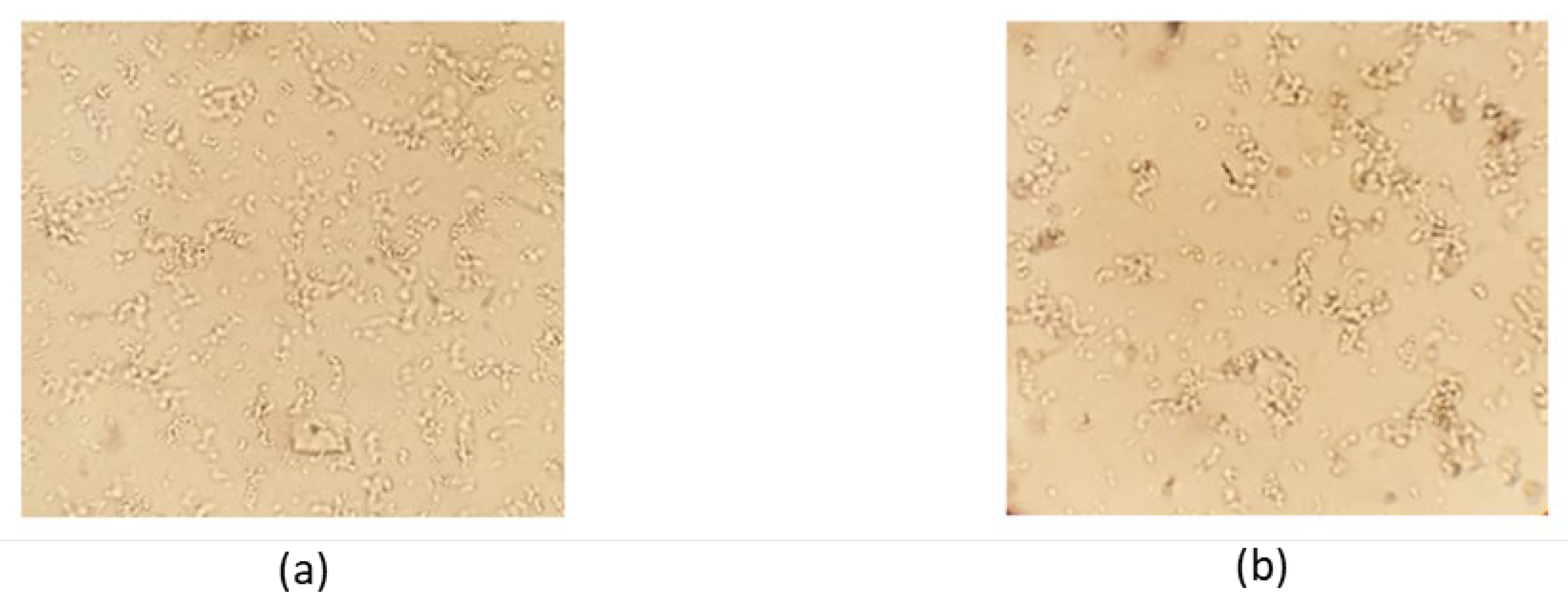
Figure 1. Optic microscopy images observed at 40X corresponding to fresh Sildenafil loaded liposomes prepared with RSV and EPC (a) or CH and EPC (b).
Preprints 177745 g001
Figure 2. Turbidity mean values for resveratrol and cholesterol fresh liposome samples (panel a and b, respectively) across four different compositions (Type 1: 1.5% mannitol and 1% lactose; Type 2: 3% mannitol and 1.5% lactose; Type 3: 2% ethanol,1.5% mannitol and 1% lactose; Type 4: 2% ethanol, 3% mannitol and 1.5% lactose.
Preprints 177745 g002
Figure 3. Display of registered curves corresponding to process (orange), CH liposome samples (green) and RSV liposome samples (red) together with chamber pressure (dark green).
Preprints 177745 g003
Figure 4. Turbidity median values for fresh and rehydrated samples containing resveratrol liposomes (Type 1: 1.5% mannitol and 1% lactose; Type 2: 3% mannitol and 1.5% lactose; Type 3: 2% ethanol,1.5% mannitol and 1% lactose; Type 4: 2% ethanol, 3% mannitol and 1.5% lactose).
Preprints 177745 g004
Figure 5. Turbidity median values for fresh and rehydrated samples containing cholesterol liposomes (Type 1: 1.5% mannitol and 1% lactose; Type 2: 3% mannitol and 1.5% lactose; Type 3: 2% ethanol,1.5% mannitol and 1% lactose; Type 4: 2% ethanol, 3% mannitol and 1.5% lactose).
Preprints 177745 g005
Figure 6. Lyophilized cakes (a) and corresponding dry powders (b) obtained by orbital agitation.
Preprints 177745 g006
Figure 7. Percentage of sildenafil citrate emitted from dry powders containing resveratrol liposomes and cholesterol liposomes (panel a and b, respectively).
Preprints 177745 g007
Figure 8. Schematic presentation of the experimental procedure applied to prepare liposome samples for lyophilization.
Preprints 177745 g008
Figure 9. Device used for aerodynamic performance of lyophilized dry powders. The device consists of air pump, in-out-tubing system and collecting flask for expelled powder.
Preprints 177745 g009
Disclaimer/Publisher’s Note: The statements, opinions and data contained in all publications are solely those of the individual author(s) and contributor(s) and not of MDPI and/or the editor(s). MDPI and/or the editor(s) disclaim responsibility for any injury to people or property resulting from any ideas, methods, instructions or products referred to in the content.
Copyright: This open access article is published under a Creative Commons CC BY 4.0 license, which permit the free download, distribution, and reuse, provided that the author and preprint are cited in any reuse.
Prerpints.org logo

Preprints.org is a free preprint server supported by MDPI in Basel, Switzerland.

Subscribe

Disclaimer

Terms of Use

Privacy Policy

Privacy Settings

© 2026 MDPI (Basel, Switzerland) unless otherwise stated