
Submitted:
22 September 2025
Posted:
22 September 2025
You are already at the latest version
Abstract
The golden apple snail (Pomacea canaliculata L.) is considered a pest in rice cultivation. However, it also holds potential as a valuable protein source for livestock feed. Rice plants produce straw as a byproduct, which can be enhanced nutritionally through microbial fermentation, making it suitable as cattle feed. A key challenge in livestock production is meeting the protein requirements of cattle, as protein is essential for amino acid synthesis, supporting both basic metabolic functions and productivity. Currently, protein sources for beef cattle predominantly come from animal protein and fishmeal, due to their rich content of essential amino acids. However, the high cost of these protein sources often leads farmers to prioritize economic considerations, potentially compromising cattle performance and meat quality. This study aims to address the need for affordable protein alternatives by combining low-protein rice straw with golden apple snail as a high-nutrient protein supplement. The goal is to improve cattle weight gain while also utilizing livestock manure as an eco-friendly fertilizer in rice farming, reducing dependence on inorganic fertilizers. The study highlights several benefits of utilizing golden apple snail: (1) it serves as an alternative feed for ducks, chickens, and cattle; (2) it can be used as a feed source for fish; (3) it has a market value of approximately IDR 600 per kg; (4) farmers can profit from selling the snails while simultaneously controlling pests in their fields, turning a pest into a profitable resource; and (5) improved pest control leads to increased agricultural productivity.
Keywords:
golden apple snail
; substitution
; protein
; animal feed
Introduction
Golden apple snail (Pomacea canaliculata L.), commonly known as the rice field snail, is a voracious pest that feeds on rice plants. Female snails lay their eggs on the stems of maturing rice plants. Once hatched, the snails consume the rice stalks, often leading to the death of the plants. Over the past five years, the golden apple snail has emerged as a major pest in rice fields, a problem that had not been significant previously. The population of this pest has increased steadily due to a lack of natural predators, such as animals and humans. In North Sulawesi, the golden apple snail poses a serious threat to rice crops. A single snail can consume a rice stalk in 3–5 minutes and, in one night, may destroy up to 50 rice stalks. This pest is not limited to rice fields but is also found in irrigation channels, ponds, rivers, and swamps [1].
In South Sulawesi during the dry season, the affected area by the golden apple snail ranges from 635 to 2,852 hectares, while in the rainy season, it decreases slightly to 249 to 1,163 hectares. On average, 90–150 kg of golden apple snail can be collected per hectare per planting season, with an average of 120 kg per hectares. This translates to approximately 57,150 kg to 427,800 kg of snails available during the dry season and 22,410 kg to 174,450 kg during the rainy season as potential cattle feed [2].
It is well known that plant-based protein alone is not as effective in formulating high-quality feed compared to a mixture of plant, animal, and fish protein [3]. Fish meal, in particular, is considered one of the best sources of protein due to its high essential amino acid content. However, the high cost of animal and fish protein often forces farmers to prioritize economic considerations, resulting in livestock that may not exhibit optimal performance or quality [4]. One alternative to this problem is the use of the golden apple snail as a protein source in ruminant livestock feed. Therefore, this research is crucial for eliminating pests in crops while utilizing the golden apple snail as a protein source in ruminant livestock feed.
Literature Review
The integration of cattle and rice cultivation can occur synergistically, as rice fields represent a significant resource ecosystem with substantial potential for agricultural and livestock development [5]. This integration concept provides synergistic benefits, yielding multiplied advantages from both crops and livestock. This is facilitated by the utilization of agricultural by-products (rice straw) as animal feed, while livestock produce manure that serves as fertilizer for crops [6]. In addition to generating straw as a by-product for animal feed, rice cultivation also presents an opportunity to utilize pests, such as the golden apple snail, as a source of ruminant feed. Prior research conducted by the investigators, both individually and as a team, has taken place from 2019 to 2023.
- Sorikmasmining dan Rompas J. 2019. Hama Keong Mas Yang Menguntungkan. PT Sorikmas Mining. Jakarta.
- Rompas dan Aries, A. 2020. Keong Mas, Pakan Alternatif Itik/Ayam dan Ikan Lele. Aneka Info.
- Tim Bertani Mandiri, J.J.I.Rompas. 2021. Limbah Keong Mas, Hama Yang Bermanfaat Untuk Pupuk.
- Rompas, J.J.I et.al 2022. Rice Field Snail Shell Anticancer Properties: An Exploration Opinion. 2022. Frontiers in Oncology. https://doi.org/10.3389/fonc.2022.1078981
- Supervising Student’s Research Entitled: Potensi Keong Mas (Pomacea canaliculata L) Sebagai Sumber Bahan Pakan Itik di Persawahan Kecamatan Sangkub. 2023.
Previous research clearly demonstrates that the golden apple snail (Pomacea canaliculata L.) offers numerous benefits for the advancement of knowledge in the fields of livestock, agriculture, and medicine [7,8]. This research is expected to yield optimal feed data for ruminant livestock, thereby increasing their body weight and producing high-quality meat suitable for human consumption. Additionally, it aims to address the pest problem affecting agricultural crops (rice), which are also essential for human needs. Consequently, this study is highly beneficial for improving nutrition and addressing stunting, contributing to the implementation of science and technology research that aligns with the strategic research plan of Sam Ratulangi University.
Method
The research will be conducted in five regions of North Sulawesi with significant cattle populations, namely Tomohon City, Minahasa, and North Minahasa. The study will take place over 8 months, including 4 months of field research (survey and sample collection), 1 month of laboratory diagnosis at BBLITVET Bogor, and 3 months for data analysis, report writing, preparing an article for submission to an international journal, and participating in seminars related to the research. Data will be collected from sample sites in the 5 regions. Cattle body weight will be measured before and after the administration of feed mixed with golden apple snail extract powder.
Results & Discussion
The golden apple snail (Pomacea canaliculata), characterized by its golden shell, is a voracious pest that feeds on rice plants in farmers' fields. Female snails lay their eggs on the stems of maturing rice plants. Once hatched, these snails immediately begin to consume the rice stalks, often leading to the death of the plants [9]. Over the past 14 years, the golden apple snail has emerged as a primary pest, a situation that was not prevalent previously. This increase in population is attributed to the absence of natural predators, such as animals and humans [10].
Figure 1.
(A) Golden Apple Snail Eggs Attached to Rice Plants (Rice Crop Pest). (B) Golden Apple Snail. (C) Golden Apple Snails Sun-Dried Under Direct Sunlight. (D) Golden Apple Snail Extract Converted into Powder.
Figure 1.
(A) Golden Apple Snail Eggs Attached to Rice Plants (Rice Crop Pest). (B) Golden Apple Snail. (C) Golden Apple Snails Sun-Dried Under Direct Sunlight. (D) Golden Apple Snail Extract Converted into Powder.
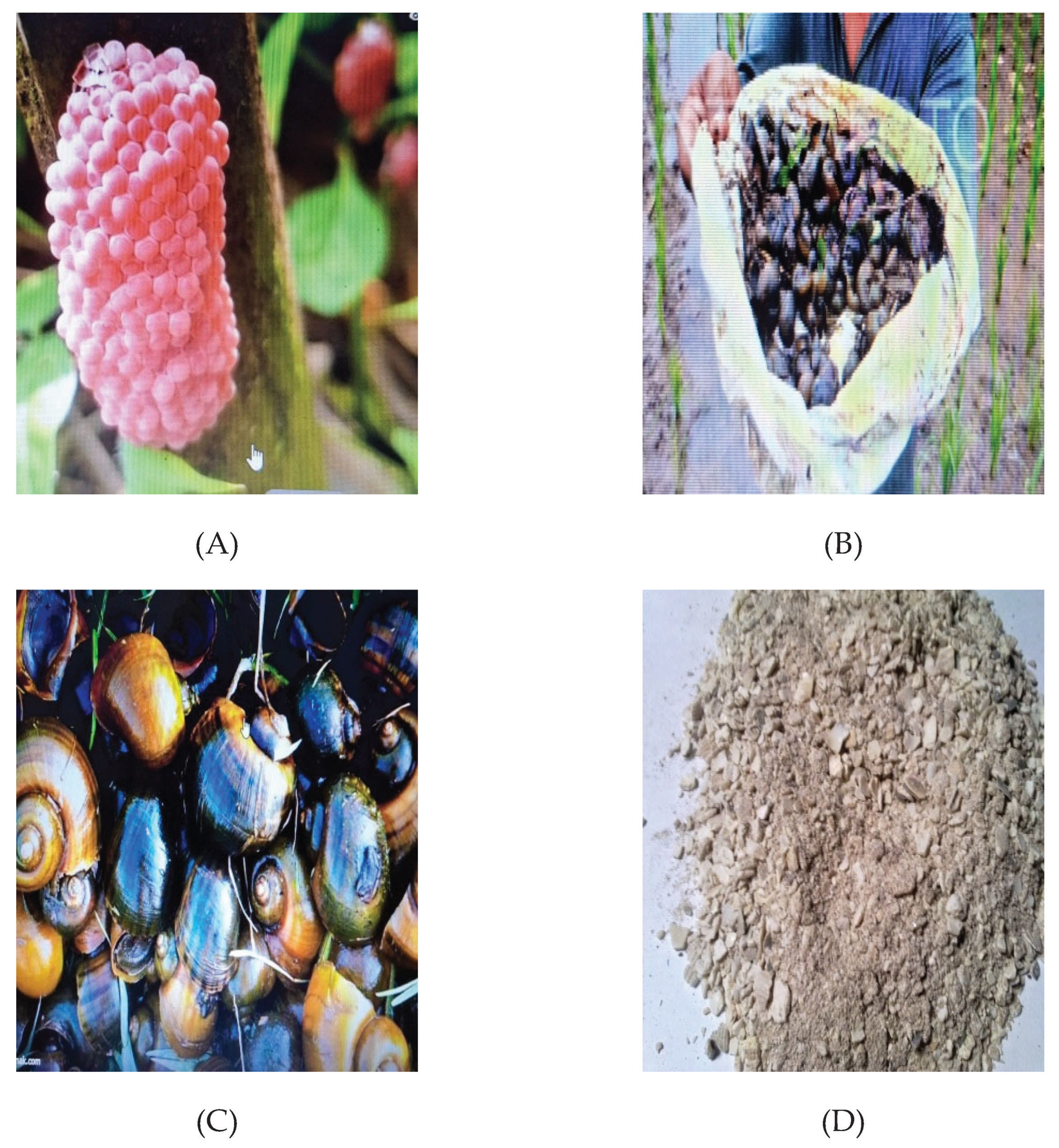
The presence of the golden apple snail in North Sulawesi poses a significant threat to rice crops. A single golden apple snail can consume one rice stalk in just 3 to 5 minutes, eating approximately 52 stalks in a single night [11]. These snails are not only found in rice fields but also in irrigation channels, ponds, rivers, and swamps. In 2017, the area affected by golden apple snails during the dry season in North Sulawesi reached between 639 and 2,854 hectares, while the area was slightly lower during the rainy season, at 252 to 1,165 hectares. On average, each hectare of rice field can yield 95 to 153 kg of golden apple snails, with an average of 121 kg per hectare throughout a growing season. This translates to approximately 378,152 kg to 427,800 kg available during the dry season and about 23,411 kg to 175,453 kg during the rainy season, providing a potential source of feed for cattle [12]. The nutritional content of golden apple snail powder can be seen in Table 1.

Table 1.
Nutrient composition of golden apple snail flour.
| Nutrients | Amount |
|---|---|
| Crude Protein | 52.7% |
| Crude Fat | 13.60% |
| Crude Fiber | 6.07% |
| Ash | 23.8% |
| Calories | 2095.91 cal per kg |
Potential Utilization of Golden Apple Snail (Pomacea canaliculata L.) as a Protein Substitute in Cow Feed
Table 1.
Cattles (2 years old) that consume a mixed feed containing golden apple snail extracts for 1 week.
Table 1.
Cattles (2 years old) that consume a mixed feed containing golden apple snail extracts for 1 week.
| No. | Samples | Weight before consuming feed combined with golden apple snail extract (g). | Weight after consuming feed combined with golden apple snail extract (g). |
|---|---|---|---|
| 1. | Cow A | 2,312 | 3,983 |
| 2. | Cow B | 2,411 | 4,011 |
| 3. | Cow C | 2,310 | 3,980 |
| 4. | Cow D | 2,300 | 3,979 |
| 5. | Cow E | 2,297 | 3,972 |
| 6. | Cow F | 2,311 | 3,901 |
| 7. | Cow G | 2,405 | 4,098 |
| 8. | Cow H | 2,318 | 3,996 |
| 9. | Cow I | 2,415 | 3,999 |
| 10. | Cow J | 2,413 | 3,997 |
Figure 1.
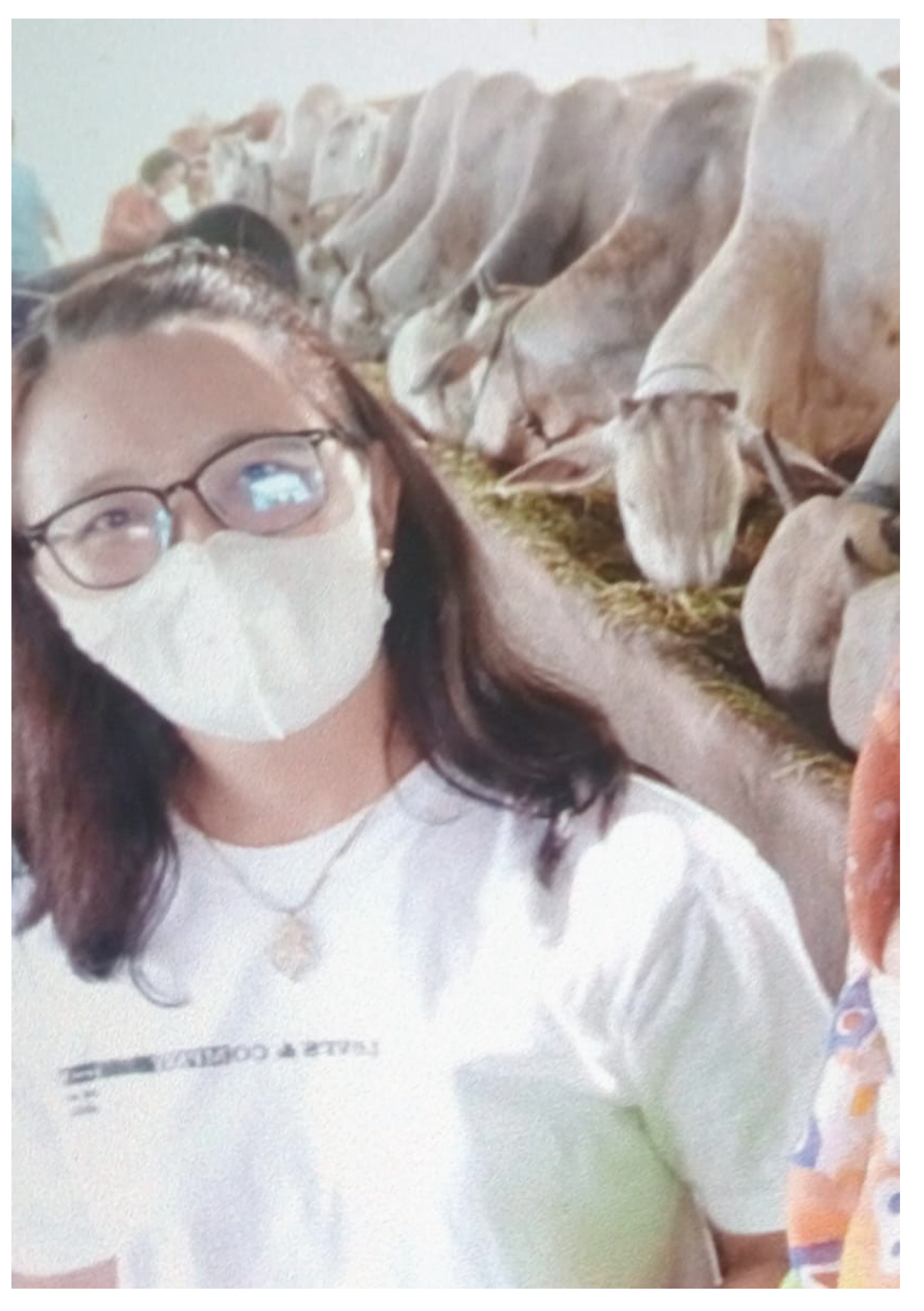
Cattle in Tondangow, Tomohon District, Tomohon City, that consume feed mixed with golden apple snail extract powder.
Figure 1.
Cattle in Tondangow, Tomohon District, Tomohon City, that consume feed mixed with golden apple snail extract powder.
Potential Utilization of Golden Apple Snail (Pomacea canaliculata L.) as a Protein Substitute in Pig Feed
Table 2.
Pigs (2 months old) that consume a mixed feed containing golden apple snail extracts for 1 week.
Table 2.
Pigs (2 months old) that consume a mixed feed containing golden apple snail extracts for 1 week.
| No. | Samples | Weight before consuming feed combined with golden apple snail extract (g). | Weight after consuming feed combined with golden apple snail extract (g). |
|---|---|---|---|
| 1. | Pig A | 2,312 | 3,983 |
| 2. | Pig B | 2,411 | 4,011 |
| 3. | Pig C | 2,310 | 3,980 |
| 4. | Pig D | 2,300 | 3,979 |
| 5. | Pig E | 2,297 | 3,972 |
| 6. | Pig F | 2,311 | 3,901 |
| 7. | Pig G | 2,405 | 4,098 |
| 8. | Pig H | 2,318 | 3,996 |
| 9. | Pig I | 2,415 | 3,999 |
| 10. | Pig J | 2,413 | 3,997 |
Figure 2.
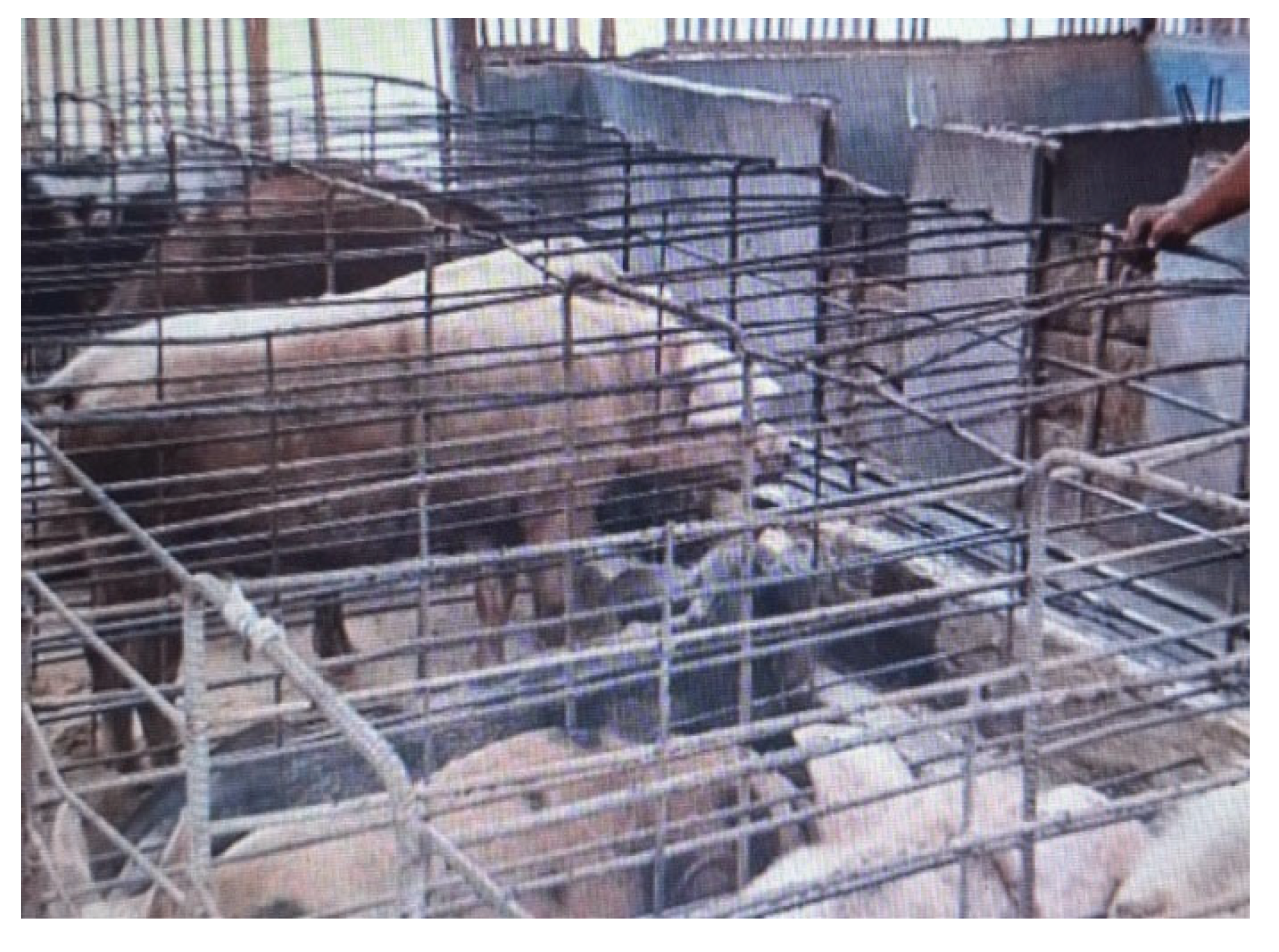
Pigs in Liba, Tompaso District, Minahasa Regency, that consume feed mixed with golden apple snail extract powder.
Figure 2.
Pigs in Liba, Tompaso District, Minahasa Regency, that consume feed mixed with golden apple snail extract powder.
Potential Utilization of Golden Apple Snail (Pomacea canaliculata L.) as a Protein Substitute in Poultry Feed
Figure 3.
Layer Hens in Matungkas, Dimembe District, North Minahasa Regency, that consume feed mixed with golden apple snail extract powder.
Figure 3.
Layer Hens in Matungkas, Dimembe District, North Minahasa Regency, that consume feed mixed with golden apple snail extract powder.
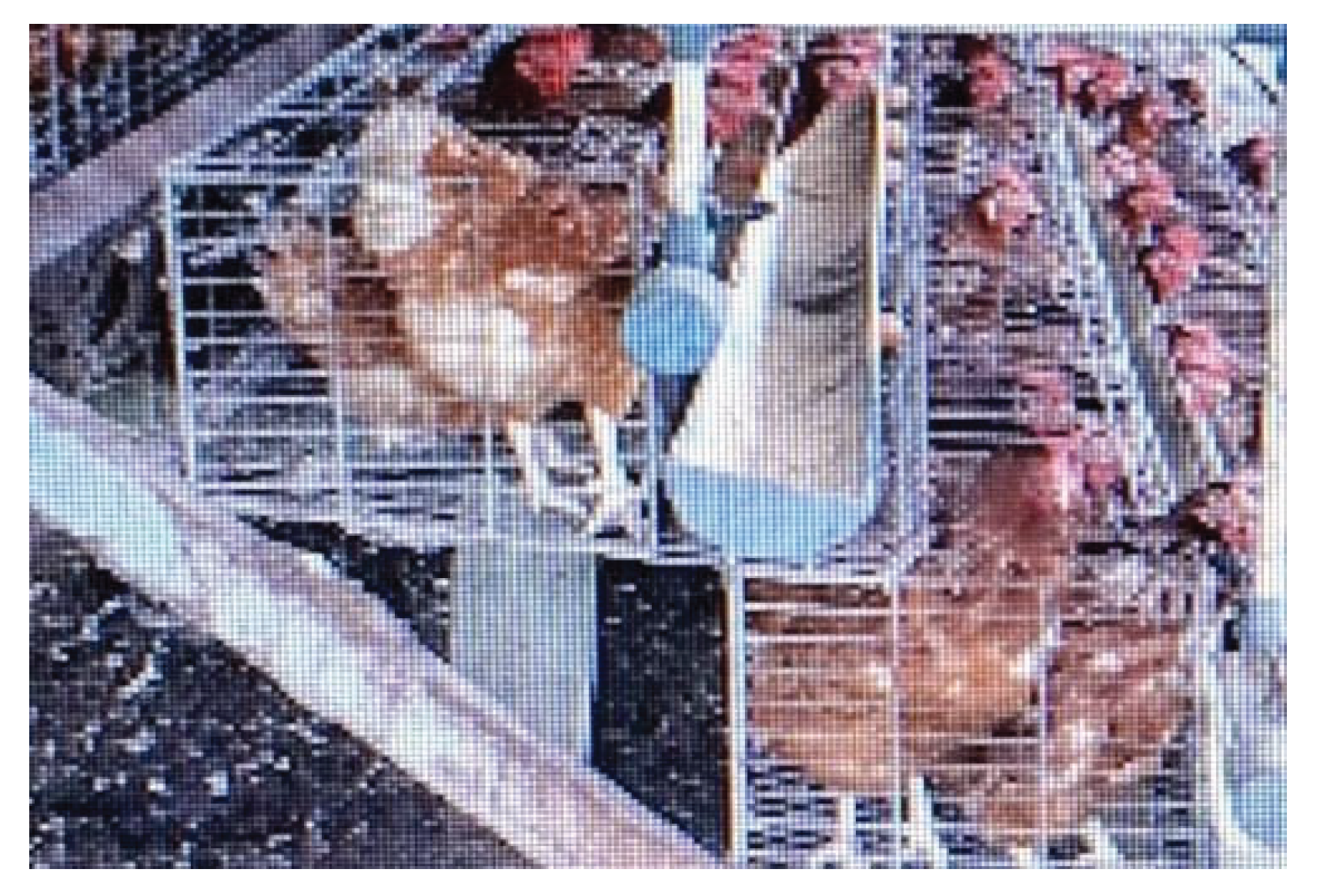
Table 3.
Chickens (3 months old) that consume a mixed feed containing golden apple snail extracts for 1 week.
Table 3.
Chickens (3 months old) that consume a mixed feed containing golden apple snail extracts for 1 week.
| No. | Samples | Weight before consuming feed combined with golden apple snail extract (g). | Weight after consuming feed combined with golden apple snail extract (g). |
|---|---|---|---|
| 1. | Chicken A | 998 | 1.176 |
| 2. | Chicken B | 1.076 | 1.978 |
| 3. | Chicken C | 999 | 1.176 |
| 4. | Chicken D | 1.006 | 1.999 |
| 5. | Chicken E | 998 | 1.176 |
| 6. | Chicken F | 1.076 | 1.978 |
| 7. | Chicken G | 998 | 1.176 |
| 8. | Chicken H | 1.106 | 2.011 |
| 9. | Chicken I | 989 | 1.076 |
| 10. | Chicken J | 1.106 | 2.102 |
Potential Utilization of Golden Apple Snail (Pomacea canaliculata L.) as a Protein Substitute in Duck Feed
Table 4.
Ducks (5 months old) that consume a mixed feed containing golden apple snail extracts for 1 week.
Table 4.
Ducks (5 months old) that consume a mixed feed containing golden apple snail extracts for 1 week.
| No. | Samples | Weight before consuming feed combined with golden apple snail extract (kg). | Weight after consuming feed combined with golden apple snail extract (kg). |
|---|---|---|---|
| 1. | Duck A | 1.408 | 1.576 |
| 2. | Duck B | 1.411 | 1.591 |
| 3. | Duck C | 1.417 | 1.596 |
| 4. | Duck D | 1.419 | 1.601 |
| 5. | Duck E | 1.422 | 1.611 |
| 6. | Duck F | 1.420 | 1.607 |
| 7. | Duck G | 1.421 | 1.602 |
| 8. | Duck H | 1.415 | 1.598 |
| 9. | Duck I | 1.513 | 1.611 |
| 10. | Duck J | 1.507 | 1.609 |
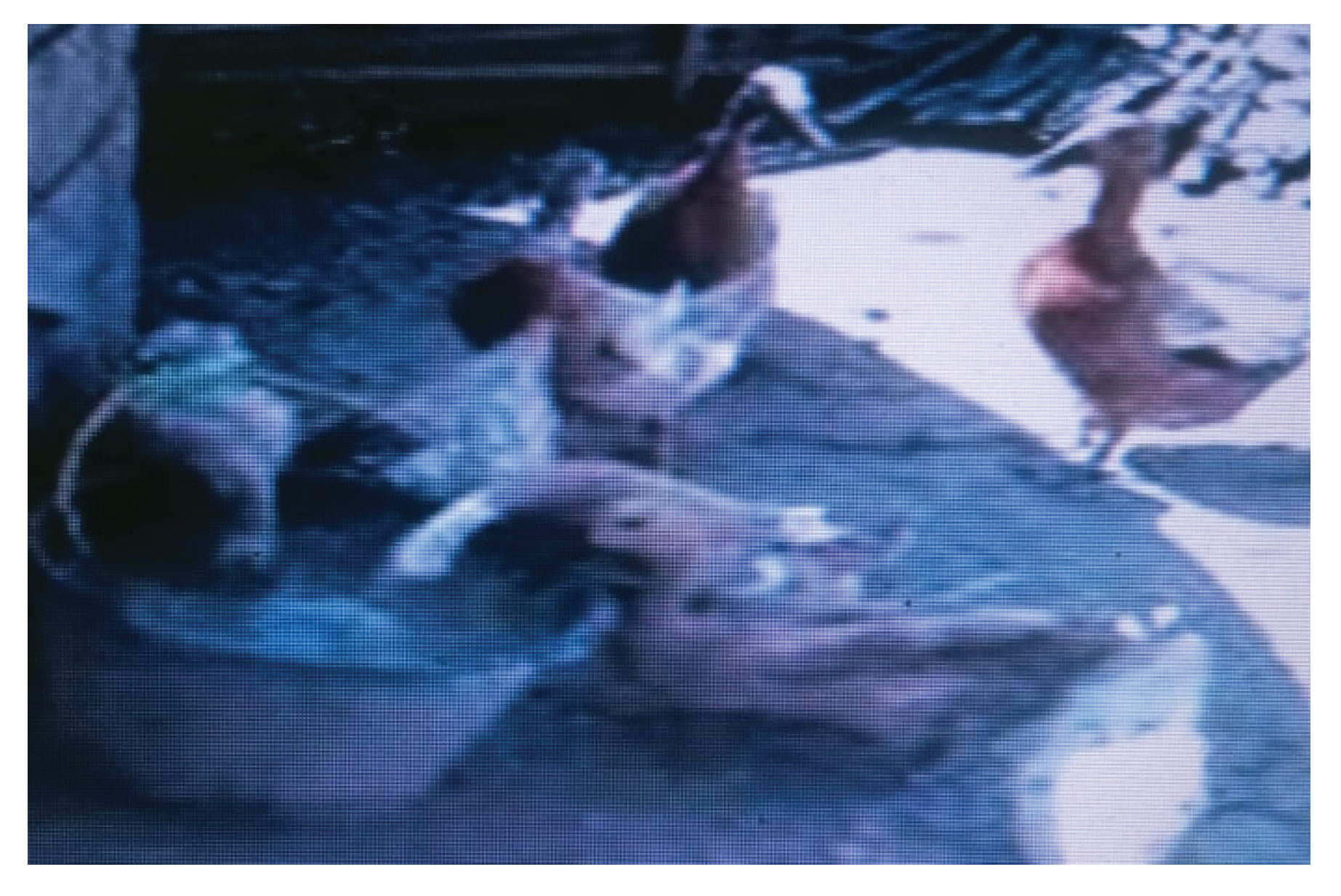
Figure 4.
Ducks in Kembes, Tombulu District, Minahasa Regency, that consume feed mixed with golden apple snail extract powder.
Figure 4.
Ducks in Kembes, Tombulu District, Minahasa Regency, that consume feed mixed with golden apple snail extract powder.
Conclusions
This research demonstrates the dual role of the golden apple snail (Pomacea canaliculata L.) as both a significant pest in rice cultivation and a promising alternative protein source for livestock feed. The findings indicate that integrating golden apple snails into the feed of cattle, pigs, and poultry can lead to substantial weight gains, highlighting its nutritional benefits and economic viability. Furthermore, this approach not only addresses the pest problem but also promotes sustainable agricultural practices by converting a nuisance into a valuable resource, ultimately benefiting farmers and enhancing livestock production.
The implications of this study extend beyond livestock nutrition, offering a sustainable solution to pest management in rice farming. By repurposing the golden apple snail as a protein source, farmers can reduce their reliance on expensive animal protein and fishmeal, improving the economic feasibility of livestock operations. This research also paves the way for further exploration of integrated farming systems that leverage agricultural by-products and local resources, fostering a circular economy in rural communities. Policymakers and agricultural stakeholders should consider implementing strategies to encourage the utilization of golden apple snails in livestock feed, promoting both environmental sustainability and food security.
References
- Schneiker J, Weisser WW, Settele J, Nguyen VS, Bustamante JV, Marquez L, et al. Is there hope for sustainable management of golden apple snails, a major invasive pest in irrigated rice? NJAS Wageningen J Life Sci [Internet]. 2016 Dec 1;79(1):11–21. [CrossRef]
- Fitriadi R, Palupi M, Azhari RF, Candra RA, Sukardi P. Short Communication: Distribution and diversity of Gastropods in the rice-fish farming system. Biodiversitas [Internet]. 2023 May 5;24(4). [CrossRef]
- Hossain MS, Small BC, Kumar V, Hardy R. Utilization of functional feed additives to produce cost-effective, ecofriendly aquafeeds high in plant-based ingredients. Rev Aquac [Internet]. 2023 May 2. [CrossRef]
- Gasco L, Acuti G, Bani P, Dalle Zotte A, Danieli PP, De Angelis A, et al. Insect and fish by-products as sustainable alternatives to conventional animal proteins in animal nutrition. Ital J Anim Sci [Internet]. 2020 Dec 14;19(1):360–72. [CrossRef]
- Sekaran U, Lai L, Ussiri DAN, Kumar S, Clay S. Role of integrated crop-livestock systems in improving agriculture production and addressing food security – A review. J Agric Food Res [Internet]. 2021 Sep;5(100190):100190. [CrossRef]
- Swastika DKS, Priyanti A, Hasibuan AM, Sahara D, Arya NN, Malik A, et al. Pursuing circular economics through the integrated crop-livestock systems: An integrative review on practices, strategies and challenges post Green Revolution in Indonesia. J Agric Food Res [Internet]. 2024 Dec;18(101269):101269. [CrossRef]
- Carranza A, Agudo-Padrón I, Collado GA, Damborenea C, Fabres A, Gutiérrez Gregoric DE, et al. Socio-environmental impacts of non-native and transplanted aquatic mollusc species in South America: What do we really know? Hydrobiologia [Internet]. 2023 Feb 15. [CrossRef]
- Rompas JJI, Laatung S, Gunawan WB, Widayanti IS, Yusuf VM, Yusuf TW, et al. Rice field snail shell anticancer properties: An exploration opinion. Front Oncol [Internet]. 2022;12:1078981. [CrossRef]
- Azmi WA, Khoo SC, Ng LC, Baharuddin N, Aziz AA, Ma NL. The current trend in biological control approaches in the mitigation of golden apple snail Pomacea spp. Biol Control [Internet]. 2022 Nov;175(105060):105060. [CrossRef]
- Carlsson NOL, Brönmark C, Hansson L-A. Invading herbivory: The golden apple snail alters ecosystem functioning in Asian wetlands. Ecology [Internet]. 2004 Jun;85(6):1575–80. [CrossRef]
- Yang R, Cao R, Gong X, Feng J. Large shifts of niche and range in the golden apple snail ( Pomacea canaliculata ), an aquatic invasive species. Ecosphere [Internet]. 2023 Jan;14(1). [CrossRef]
- Wagiman FX, Ariani Bunga J, Hasoloan Purba Sidadolog J. Sustainable control of the golden snail (Pomacea canaliculata Lamarck) on irrigated rice field in Malaka regency, east nusa Tenggara province, Indonesia. KnE Life Sci [Internet]. 2019 Mar 10;4(11):156. [CrossRef]
Disclaimer/Publisher’s Note: The statements, opinions and data contained in all publications are solely those of the individual author(s) and contributor(s) and not of MDPI and/or the editor(s). MDPI and/or the editor(s) disclaim responsibility for any injury to people or property resulting from any ideas, methods, instructions or products referred to in the content. |
© 2025 by the authors. Licensee MDPI, Basel, Switzerland. This article is an open access article distributed under the terms and conditions of the Creative Commons Attribution (CC BY) license (http://creativecommons.org/licenses/by/4.0/).
Copyright: This open access article is published under a Creative Commons CC BY 4.0 license, which permit the free download, distribution, and reuse, provided that the author and preprint are cited in any reuse.


