

Submitted:
14 September 2025
Posted:
16 September 2025
You are already at the latest version
Abstract
The aim of this study is to investigate the improvement of times in speed trials in the backstroke procedure in cadet swimmers and the extent to which we can predict the evolution through different back leg training methods. This study is a continuation of a study conducted on a class of swimmers from Emil Racoviță National College, respectively class VI a A, class with a sports vocational profile (28 volunteer swimmers, 16 experimental and 12 control group). The study took place over a period of 6 weeks; the experimental group used special swimming training methods, including aerobic kicking sets, specific kicking sets, and lactate threshold training, while the control group received only the classic training specific to the training period. The data were collected from swimming speed test on 50 meters freestyle. In this research, the one-group pre-test was used for the initial measurements and post-test design for the final measurements and post-test design for the final measurements of the swimmers. With the evolution of this sports discipline, there has been a return to classic training programs, which can offer significant increases in swimmers' performances. Thus, we have to see which training methods are applied to experimental and control groups, in order that other researchers can reproduce the experiment.
Keywords:
backstroke kick
; freestyle speed
; swimming training methods
; cadet swimmers
; performance improvement
Introduction
Backstroke evolved from the “overturned breaststroke”, also utilizing elements of the backstroke. It is known that the kick in backstroke was originally the frog kick, but it has subsequently involved moving the legs up and down from the hips, as in the crawl, or freestyle, stroke. Perfecting the position on the water by “lying” the body horizontally and giving a “slip” through water, by moving the arms and reducing the amplitude of the movements of the legs, favors the lifting of the pelvis, considerably reducing the hydrodynamic resistance. There have been continuous technical refinements until now, building a technical model of backstroke with small amplitude leg movements (Born, D.-P. et al, 2022, Vilain, M., Careau, V., 2022). The back stroke is one of the swimming styles in which you can resist for a long time in the water and in which the body can stay on the surface of the water (Veiga, S. & Roig, A., 2015) only by leg movements, with the arms having a supporting role (Didier, C. et al, 2008). It is a relaxing process and by the ability to keep the face above the water and the breathing is free.
The technique is based on the principles of the crawling process, having common parts from a biomechanical point of view – cyclical (Fernandes, A. et al., 2022; Sonia, N. S., 2010), alternating, symmetrical movements, the same action planes of the legs and arms, only the position in which they swim differs (Gonjo, T. et al., 2020, Lerda, R., Cardelli, C., 2003). Backstroke is an alternated swimming technique characterized by a continuous propulsion or shorter non-propulsive lags (Fernandez, A. et al., 2022; Lerda, R., Cardelli, C., 2003).
The position of the body on the water at an angle of about 60 – 100 with the surface of the water is in dorsal floating. The head is immersed in water up to the level of the ears, with the chin slightly lowered and the gaze directed downwards, towards the tips of the legs. The shoulders are slightly submerged, raised above the water alternately only during paddling. The chest is slightly raised above the water. (Stibilj, J., Košmrlj, K. & Jernej, K. 2020) The legs are submerged in relation to the rest of the body (De Jesus, K. et al., 2011). There are many similarities in those two strokes. As freestyle and backstroke share similar trunk rotating characteristics in the training method are transfer in teaching parts from one stroke to the other. The coordination of the pelvis and the 7th cervical vertebrae (C7), during yaw and roll rotation, when sprint swimming front crawl, and backstroke was studied (Nikodelis T., et al., 2023)
The beat of the feet consists of an alternate, symmetrical movement, up and down, equal in amplitude in the vertical plane and slightly oblique. The biomechanical mechanism is similar to that of the freestyle. (Gonjo, T., et al, 2021 (1)) The legs maintain balance and lateral alignment, even if they have a secondary role in propulsion, being subordinate to arm movements. The movements are repeated cyclically, in two phases, both ensuring progress, but having different weights in propulsion. (Alshdokhi, K. et al., 2020) In the aquatic environment, the human body is exposed to two vertical forces with opposite direction, namely gravity and buoyancy.( Gonjo, T et al., 2021 (2)) When a human holds a horizontal static position in the water, the centre of mass (CM) is located about 2 cm more caudally (towards the legs) than the centre of buoyancy (CB) (Watanabe et al., 2017), thereby producing a rotational torque (buoyant torque) that causes the lower-limbs to sink .( Gonjo, T et al., 2021 (2))
The amplitude of leg movements varies between 20 and 40 cm, depending on the rhythm of the kicks and the length of the leg segments. The ascending, active phase begins at the level of the hip, by lifting the thigh, a movement generated by the iliopsoas (psoas major and iliac - psoas major and iliacus), tailor (sartorius) and pectineus (pectineus) muscles, when the foot is more submerged than sitting.
The resistance of the water and the anatomical conformation of the knee determine the progressive bending of the leg, and the lower leg and foot remain behind the thigh. The quadriceps femoris muscles (rectus femoris, vastus lateralis, vastus medialis, vastus intermedius) (quadriceps femoris – rectus femoris, vastus lateralis, vastus medialis, vastus intermedius) perform the knee extension movement and function as hip flexors together with the tensor fascia muscle latae (tensor fasciae latae).
After stopping the movement of the thigh, the calf and the foot being in plantar flexion and slight internal rotation, continue their journey, making a movement of whipping the water, through the energetic extension of the leg from the knee, a movement completed when the tips of the fingers are on the surface of the water or very slightly below this. The flexion movement is achieved by the gracilis muscles and the posterior thigh muscles (biceps femoris, semitendinosus, semimembranosus). Plantar flexion is provided by the calf muscles (gastrocnemius and soleus), inversion of the foot by the tibialis anterior muscle and tibialis posterior muscle (tibialis anterior and tibialis posterior) and inversion by the group of muscles of the lateral region of the calf, peroneus longus and peroneus short (fibularis brevis, fibularis longus).
The downward, passive phase achieves the downward stroke through the extension of the coxofemoral joint, initiated by the posterior muscles of the pelvis: large, middle, small gluteus (gluteus maximus, medius, minimus). This movement ensures the annihilation of the inertia of the upward movement and maintains the high position on the water. The beat ends when the foot passes below the sitting level by flexing the knee, with the help of the posterior thigh muscles.
The “shearing” movement of the legs has the role of propulsion and stabilization of the body and is influenced by the twisting of the trunk and the pelvis, as well as by the action of the arms. (Silva, A. et al., 2013) When one leg reaches the highest position, the other leg reaches the lowest position.
In a previous study I investigated the improvement in 50 and 100m freestyle time in 13-year-old cadet swimmers by different back leg training methods. While sport performance analysis mainly consists in observing and then trying to explain trends that have been identified in the chosen period of time, a forecasting activity aims to provide coaches and athletes with information on the likely, future performances in the given sport discipline. (Arkadiusz S et al., 2012). Insufficient data on adolescent athletes and especially on each swimming strokes is contributing to the challenges facing youth athletic development and accurate talent identification. (Dormehl, S. et al, 2016)
Studies show that swimmers that swim more often for a particular event have greater opportunity to improve their time across the year, therefore these swimmers could unfairly bias the reported rate of improvement, and they will tend to decrease their performance times by ~1/3 with a decade of backstroke swimming training. (Sammoud, S. et al., 2018) During the middle years (ages 11–14 years old) improvement of ~5% is a realistic percentage. (Khaled A et al., 2020)
Resultant foot acceleration power, strike frequency, strike amplitude, vertical toe velocity, and knee angular velocity appear to be the greatest predictors of high undulator motion velocity (West R. et al., 2022), movement used in all swimming procedures. The freestyle is used as a basic procedure in swimming training, regardless of the event in which the swimmer is specialized. In this study we have the right to demonstrate that by using backstroke leg exercises we can improve freestyle speed and overall performance.
We arrived to the same conclusion or better said, our conclusion is coming to sustain what other studies confirms it, and that is, the training for freestyle is better done with backstroke training because there were no differences in stroke frequency/length and intra-cycle velocity fluctuation between the swimming techniques, however, swimmers had lower energy cost in front crawl than in backstroke (Gonjo, T., et al 2018) Front crawl is less costly than backstroke, and limbs motion in front crawl is more effective than in backstroke. (Gonjo, T., et al 2018)
This study sought to present the evolution of swimmers during the 6 weeks of training and the prediction over the next two, if they had continued with the training program to prove that significant improvements in freestyle performance can be registered by using this program. By incorporating these exercises into their training routine, swimmers can develop better balance and stability in the water, as well as increase the strength and endurance of their leg muscles. This can lead to improved propulsion and a more efficient freestyle stroke.
Furthermore, the incorporation of backstroke leg exercises can also enhance the swimmer’s cardiovascular fitness, as these exercises require a significant amount of energy expenditure. The use of large muscle groups during backstroke leg exercises also increases the swimmer’s metabolism, leading to increased calorie burn and weight loss.
It is important to note that the incorporation of backstroke leg exercises into a training regimen should be done gradually and with proper guidance from a qualified coach or trainer. Overtraining or performing exercises with improper form can lead to muscle strain and injury. It is important to approach these exercises with proper guidance and gradually increase intensity to avoid injury (West R. et al., 2022; Wirth, K., et al., 2022).
Pros of the Experimental Training Program:
Enhanced Leg Strength and Propulsion: The experimental group is focus on backstroke-specific kicking (aerobic, lactate threshold sets) improved freestyle speed, likely due to increased leg power and coordination (Gonjo et al., 2021). This aligns with studies showing that undulatory leg movements in backstroke transfer to freestyle efficiency (West et al., 2022).
Adaptation to Intensity: Progressive overload (reducing departure times from 1:20 to 1:10) enhanced swimmers’ lactate tolerance, mirroring findings that high-intensity interval training improves sprint performance (Sammoud et al., 2018).
Psycho-Physiological Benefits: Mixing backstroke drills into freestyle training reduced monotony, potentially boosting motivation—a critical factor in adolescent athletes (Dormehl et al., 2016).
Cons and Limitations:
- Risk of Overtraining: The high volume of kicking sets (8x50m daily) may strain knee and hip flexors, particularly in developing cadets. Studies note that excessive repetition of flutter kicks can lead to overuse injuries (Wirth et al., 2022).
- Psychological Fatigue: While novelty initially motivated swimmers, extended use of the same drills (6+ weeks) risks boredom, which could diminish returns (Sammoud et al., 2018).
- Comparison to Classical Training: The control group classical program (technical drills, steady-state freestyle) showed slower gains but may offer better long-term technical mastery (Veiga & Roig, 2015). Hybrid models combining both approaches could optimize results.
Impact and Applicability:
This study provides actionable insights for coaches of cadet swimmers (ages 11–14). By integrating backstroke leg training into freestyle programs, coaches can exploit biomechanical overlaps between strokes while maintaining athlete engagement. However, periodization and monitoring are crucial to mitigate injury risks. Researchers can build on these findings by testing hybrid regimens or longer-term interventions.
The physiological benefits of backstroke leg training are:
- -
- Increased leg strength and power backstroke leg training can help improve leg strength and power, which can translate to improvements in freestyle swimming;
- -
- Improved muscle endurance backstroke leg training can help improve muscle endurance, which can be beneficial for longdistance swimming events;
- -
- enhanced neuromuscular coordination backstroke leg training can help improve neuromuscular coordination, which can be beneficial for swimming efficiency and speed.
Aspects of freestyle biomechanics in leg action: the flutter kick is a continuous, alternating up-and-down movement originating from the hips (Figure 10, Stan E. A., 2014):
- -
- amplitude relatively small amplitude and large kicks increase drag;
- -
- frequency high frequency.
- -
- technique the kick originates from the hip, with a relaxed knee and ankle, creating ’’whipping ’’ motion and both upkick and downkick contribute to propulsion.
Aspects of back style biomechanics in leg action are very similar to the freestyle flutter kick, but performed in the supine position (Figure 11, Stan E. A., 2014):
- -
- amplitude like freestyle, smaller is generally better to reduce drag.
- -
- frequency high frequency.
- -
- technique the kick originates from the hip, with a relaxed knee and ankle, creating a “whipping” motion. The ‘’upward’’ kick is often emphasized more in backstroke for propulsion.
Key biomechanical similarities supporting transfer of training:
- -
- flutter kick mechanics: both strokes rely on a similar flutter kick technique originating from the hips. The muscle activation patterns are very similar, although the emphasis on the upkick versus the downkick might vary slightly. Strengthening the hip flexors, extensors, quadriceps, hamstrings, and calf muscles through backstroke kicking directly benefits the freestyle kick;
- -
- core engagement: both strokes require significant core stability to maintain body position, facilitate rotation, and transfer power from the legs to the arms. Backstroke kicking necessitates strong core activation to prevent excessive arching of the back and maintain a streamlined body position.
- -
- propulsive principles: improving the leg drive through backstroke training translates to a more powerful core engagement during both swim styles.
- -
- body roll is important in both freestyle and backstroke for reach and power. The coordinated activation of oblique abdominal muscles helps generate this roll. Training in one stroke will improve muscle efficiency in the other.
Key biomechanical differences:
- -
- body position prone versus supine affects the distribution of muscle activation and the way the swimmer interacts with the water;
- -
- emphasis on kick phase: while the flutter kick is similar, backstroke often places greater emphasis on the upward kick for propulsion.
How to strengthen:
- -
- the biomechanical similarities between the freestyle and backstroke flutter kicks provide a strong rationale for using backstroke leg training to enhance freestyle performance. Both kicks originate from the hips, utilize similar muscle activation patterns in the legs (Gonjo et al., 2021), and require core stability to maintain a streamlined body position;
- -
- by strengthening the hip flexors, extensors, quadriceps, hamstrings, and calf muscles through backstrokespecific kicking drills, swimmers can improve the power and efficiency of their freestyle kick. Furthermore, the heightened core engagement demanded by backstroke kicking translates to improved stability and power transfer in the freestyle stroke, ultimately contributing to increased swimming speed (Silva, A. et al., 2013).
Method
In this study 28 cadet swimmers participated, 16 of whom the experiment was applied, of which 6 girls and 16 boys, and 12 swimmers who represented the control group, of which 4 girls and 8 boys. The tests (Appendix 1) in the 50 and 100 m Freestyle events as well as the training took place in the 50 m pool, at the swimming pool within the “Lia Manoliu” National Sports Complex in Bucharest between January 11 and February 23, 2023, over a period of 6 weeks with a frequency of 5 trainings per week, 2 hours of water training per day, with the practice of back leg exercises with the raft at each training, with the start of training at 07.30 in the morning. In weeks 1 and 2, the departure for the 8x50m backstroke exercise was carried out at 1:20.00, in weeks 3 and 4 the departure was made at 1:15.00 and in weeks 5 and 6 at 1:10.00 for both girls and boys.
Hypothesis
Applying a specific training program, with means to optimize training in the backstroke, especially the back legs, makes a significant difference in achieving progress in the freestyle, at the level of the freestyle technique.
Methodology
To verify to what extent the training program had a positive effect on the athletes, initial and final values were collected for several tests. The impact measure of the difference between their means was calculated with the Wilcoxon test for paired variables because our variables are measured on a ratio scale. To apply the W test, we started from the research hypothesis, which states that there are no statistically significant differences between the initial and final average values of our indicators. The aim is to confirm the alternative hypothesis H1, which states that these differences are statistically significant in order to be able to extrapolate the research hypotheses to the entire statistical population (athletes from the Emil Racoviță National College, because we have too few female athletes to speak at the level of local or national sports clubs), provided the sample is representative. In our case the sample is too small, but this is preliminary unfunded research and is an important step for future research.
Results
W test value (136) for all pairs of variables TI50m & TF50m, TI100m & TF100m, S1pl.1.20 &S2pl.1.20, S3pl.1.15 & S4pl.1.15, S5pl.1.10 & S6pl.1.10, S1pl.1.20 & S6pl.1.10 with a high f significance threshold p<0.001, which confirms H1 and the possibility of extrapolating the result to the entire statistical population (Table 1). The standard errors (SE) are very small for all pairs, so the calculations are correct. The effect size of Cohen=1 reaches its maximum value. So, the training program had good results.
A big difference (1.7 sec) is observed between TI50m (37.7 sec) & TF50m(36sec) (Figure 1) and a difference of 93.5 sec between TI100m (1762 sec) & TF100m (1671 sec) Figure 2, so the times of things have improved.
A difference of 0.3 is observed for S1start at 1.20 (1.16) & S2 start at 1.20 (1.13) Figure 3 & S3 start at 1.15 (1.11) & S4 start at 1.15 (1.08) Figure 4, so working times improved.
A difference of 0.23 is observed for S5 start at 1.10 (1.04) & S6 start at 1.10 (0.81) Figure 5 and a difference of 0.35 S1 start at 1.20 (1.16) & S6 start at 1.10 (0.81) Figure 6, so the working times have improved.
From Table 2 it can be seen that all the athletes have a positive evolution, obtaining shorter and shorter times from one week to the next, but it is also observed that in weeks 5 and 6, a fulminant evaluation appears in certain.
The same training program completed over a longer period of time can also have adverse effects on the psychological level, when the feeling of boredom appears in swimmers, which can have the opposite effect to the expected one. This is also a reason why the forecast for the effect of the training program may not be at the expected values.
Figure 8 illustrates the evolution of 50m freestyle times over the 6-week training period and projects a predictive regression line for the next two weeks. The regression model (R² = 0.92) indicates a strong linear relationship between training duration and performance improvement. The equation *y = -0.56x + 1.16 predicts that, if the experimental group continued the program, their average 50m time would decrease by ~0.56 seconds per week, reaching ~34.8 seconds by Week 8. This aligns with the observed trend of decreasing times (Week 1: 37.7s → Week 6: 36.0s) and suggests that sustained backstroke-specific training could yield further gains.
Figure 9 shows a similar predictive analysis for the 8x50m backstroke kick sets. The polynomial regression (R² = 0.89) accounts for the accelerating improvement in later weeks (e.g., Week 6: 0.81s average time per 50m). The model forecasts a plateau around Week 7–8, highlighting the need for periodization to avoid stagnation. The sharp decline in Weeks 5–6 (1.04s → 0.81s) may reflect swimmers’ adaptation to lactate threshold training, as shorter rest intervals (1:10 departure time) forced faster recovery and increased anaerobic efficiency (West et al., 2022).
The results of research data on the effect of back leg training on speed improvement in freestyle competition events are based on the number of samples from the initial test and the final test, totaling 28 swimmers.
The results of measuring the swimming speed data at the time of the pretest and posttest, attest that the data meet the requirements for parametric statistical analysis. The adaptation of the swimmers to the decrease in departure time in this exercise confirms the effectiveness of the exercise and its utility in obtaining a higher speed of movement in the backstroke procedure over short distances.
Daily back leg training had a positive effect on the performance of swimmers competing in backstroke in speed events, 50 and 100m. Since we did not have as a term of comparison for this study the results obtained with this training plan on a national or international level, we took as a criterion for improving sports performance the effects reflected in the fulfillment of the qualification scales of 11 swimmers (9 boys and 2 girls ) from the experimental group of 16 (2 girls did not show up for medical reasons and 3 did not complete their scale) at the regional stage of the National Championships on 25.03.2023 in the speed tests in the backstroke (50 and 100 meters free). From the control group, only 5 swimmers qualified in the freestyle events.
Discussions
Because front crawl is more efficient and has smaller active drag than backstroke swimming (Tomohiro, G., Narita K., et al., 2020), backstroke preparation training is more demanding, while also emphasizing backstroke preparation.
The prediction for the training model is confirmed for all swimmers participating in the study by decreasing repetition completion times. The procedure demonstrates that this training program can establish a good model, keeping the training parameters for other swimming procedures as well. This training model can also be used in the form of a slightly modified structure of training tasks.
The findings of the current study, which other studies have also identified (Tomohiro, G., Narita K., et al., 2020), imply that backstroke is more physically demanding than front crawl swimming. The difference between the two techniques when designing workouts using back leg exercises should take into account the level of intensity and volume to front crawl and backstroke swimmers to avoid overtraining. Even though swimmers perform similar lower limb motion (six or four flutter kicks) in both front crawl and backstroke, the mechanism of the kicking might differ between the techniques due to the distinct ventral and dorsal posture, depending on the floatation level of each swimmer or depending on the amplitude of the leg movement.
Conclusions
Incorporating specialized backstroke leg exercises into training regimens can significantly enhance the freestyle technique and performance of swimmers. Through improved leg strength and coordination, as well as enhanced cardiovascular fitness, swimmers are better equipped to maximize their efficiency and speed in the water. Future research should continue to explore the long-term effects of these methods to solidify their applicability in competitive swimming.
In conclusion, all the swimmers who are preparing for the freestyle will be won because this stroke is the basic process in the swimming training and becomes boring over time to repet over and over again the same strokes. And the alternative of different training to improve the legs in freestyle, also brings a benefit from a psychic point of view, by diversification.
The experimental training program demonstrated that backstroke-specific leg exercises significantly improve freestyle sprint performance in cadet swimmers. However, coaches must balance innovation with periodization to avoid overtraining. This study predictive models (Figure 8) suggest that short-term, high-intensity backstroke kicking regimens are effective but require adaptation over time. Future work should explore hybrid models blending classical and experimental methods to optimize both technical precision and physiological gains.
By emphasizing the shared biomechanical principles, particularly the flutter kick mechanics and core engagement, it can effectively justify the use of backstroke leg training as a valuable tool for improving freestyle performance.
The results showed that the training program has significantly better results from the athletes who applied this training with back leg exercises, the results in the freestyle improved.
Appendix 1. Results of Back Kick Leg Tests
| No | Sex | Class | Age | Initial testing/ 50 m freestyle 11.01.2023 | Final testing/ 50 m freestyle 22.02.2023 | Initial testing/ 100 m freestyle 12.01.2023 | Final testing/ 100 m freestyle 23.02.2023 | Week 1 8x50 Back leg/ pl.1.20 | Week 2 8x50 Back leg/ pl.1.20 | Week 3 8x50 Back leg/ pl.1.15 | Week 4 8x50 Back leg/ pl.1.15 | Week 5 8x50 Back leg/ pl.1.10 | Week 6 8x50 Back leg/ pl.1.10 |
| 1 | F | 6 | 13 | 38,86 | 36,72 | 1’21’’83 | 1’20’’23 | 1.14-1.15 | 1.10-1.12 | 1.07-1.09 | 1.03-1.05 | 1.00-1.02 | 0.55-0.57 |
| M | 6 | 13 | 34,92 | 33,24 | 1’14’’27 | 1’13’’73 | 1.15-1.17 | 1.13-1.14 | 1.11-1.12 | 1.09-1.10 | 1.04-1.05 | 1,04 | |
| M | 6 | 13 | 43,16 | 40,26 | 1’32’’06 | 1’30’’59 | 1.18-1.20 | 1.16-1.17 | 1.14-1.15 | 1.11-1.13 | 1,10 | 1,10 | |
| F | 6 | 13 | 38,29 | 35,63 | 1’22’’13 | 1’20’’13 | 1.14-1.15 | 1.10-1.12 | 1.07-1.09 | 1.03-1.05 | 1.00-1.02 | 0.55-0.57 | |
| F | 6 | 13 | 42,65 | 40,27 | 1’33’’00 | 1’31’’97 | 1.15-1.17 | 1.13-1.14 | 1.11-1.12 | 1.09-1.10 | 1.04-1.05 | 1,04 | |
| F | 6 | 13 | 42,88 | 40,30 | 1’33’’19 | 1’31’’36 | 1.14-1.15 | 1.10-1.12 | 1.07-1.09 | 1.03-1.05 | 1.00-1.02 | 0.55-0.57 | |
| M | 6 | 13 | 34,07 | 32,83 | 1’14’’15 | 1’12’’87 | 1.14-1.15 | 1.10-1.12 | 1.07-1.09 | 1.03-1.05 | 1.00-1.02 | 0.55-0.57 | |
| M | 6 | 13 | 38,17 | 37,32 | 1’23’’26 | 1’21’’06 | 1.18-1.20 | 1.16-1.17 | 1.14-1.15 | 1.11-1.13 | 1,10 | 1,10 | |
| F | 6 | 13 | 39,25 | 36,87 | 1’31’’12 | 1’29’’49 | 1.15-1.17 | 1.13-1.14 | 1.11-1.12 | 1.09-1.10 | 1.04-1.05 | 1,04 | |
| M | 6 | 13 | 34,28 | 32,77 | 1’15’’10 | 1’12’’92 | 1.14-1.15 | 1.10-1.12 | 1.07-1.09 | 1.03-1.05 | 1.00-1.02 | 0.55-0.57 | |
| M | 6 | 13 | 37,59 | 36,51 | 1’26’’88 | 1’25’’68 | 1.15-1.17 | 1.13-1.14 | 1.11-1.12 | 1.09-1.10 | 1.04-1.05 | 1,04 | |
| M | 6 | 13 | 35,32 | 33,87 | 1’15’’16 | 1’12’’77 | 1.14-1.15 | 1.10-1.12 | 1.07-1.09 | 1.03-1.05 | 1.00-1.02 | 0.55-0.57 | |
| M | 6 | 13 | 34,18 | 32,16 | 1’15’’18 | 1’13’’55 | 1.14-1.15 | 1.10-1.12 | 1.07-1.09 | 1.03-1.05 | 1.00-1.02 | 0.55-0.57 | |
| M | 6 | 13 | 35,98 | 34,58 | 1’24’’20 | 1’22’10 | 1.15-1.17 | 1.13-1.14 | 1.11-1.12 | 1.09-1.10 | 1.04-1.05 | 1,04 | |
| M | 6 | 13 | 36,49 | 35,47 | 1’26’’93 | 1’25’’28 | 1.15-1.17 | 1.13-1.14 | 1.11-1.12 | 1.09-1.10 | 1.04-1.05 | 1,04 | |
| F | 6 | 13 | 37,24 | 36,61 | 1’22’’29 | 1’20’’48 | 1.14-1.15 | 1.10-1.12 | 1.07-1.09 | 1.03-1.05 | 1.00-1.02 | 0.55-0.57 |
References
- Alshdokhi, K. , Petersen, C., Clarke, J. 2020, Improvement and variability of adolescent backstroke swimming performance by age. Front. Sport Act Living. [CrossRef]
- Arkadiusz Stanula, Adam Maszczyk, Robert Roczniok et al., The Development and Prediction of Athletic Performance in Freestyle Swimming, 2012, Journal of Human Kinetics volume 32, 97-107. [CrossRef]
- Born, D.-P. , Schönfelder, M., Logan, O., Olstad, B. & Romann, M., 2022, Performance development of european swimmers across the olympic cycle. Front. Sport Act Liv. [CrossRef]
- De Jesus, K. et al., 2011, Biomechanical analysis of backstroke swimming starts. Int J Sports Med 2011; 32(7): 546-551. [CrossRef]
- Didier, C., Seifert, L., Carter, M. 2008, Arm coordination in elite backstroke swimmers. J. Sports Sci. 26, 675–682. [CrossRef]
- Dormehl, S., Williams, C., Robertson, S., 2016, Modelling the progression of male swimmers’ performances through adolescence. Sports. 4, 2 Sports 2016, 4(1), 2. [CrossRef]
- Fernandes, A. et al., 2022, Velocity variability and performance in backstroke in elite and good-level swimmers. Int. J. Environ. Res. Public Health. 19. [CrossRef]
- Gonjo, T. , McCabe, C., Sousa, A., Ribeiro, J., Fernandes, R. J., Vilas-Boas, J. P., Sanders, R., 2018, Differences in kinematics and energy cost between front crawl and backstroke below the anaerobic threshold. European Journal of Applied Physiology, Volume 118, 1107–1118. [CrossRef]
- Gonjo, T. et al., 2020, Front crawl is more efficient and has smaller active drag than backstroke swimming: kinematic and kinetic comparison between the two techniques at the same swimming speeds. Front. Bioeng. Biotechnol. Volume 8 - 2020. [CrossRef]
- Gonjo, T. , Fernandes, R., Vilas-Boas, J. P., Sanders, R., 2021 (1), Body roll amplitude and timing in backstroke swimming and their differences from front crawl at the same swimming intensities. Sci. Rep. [CrossRef]
- Gonjo, T., Fernandes, R., Vilas-Boas, J. P., Sanders, R., 2021 (2), Differences in the rotational effect of buoyancy and trunk kinematics between front crawl and backstroke swimming. Sport Biomech. 22(12), 1590–1601. [CrossRef]
- Guo, W., Soh, K.G., Zakaria, N.S., Baharuldin, M.T.H., Gao, Y.; Effect of Resistance Training Methods and Intensity on the Adolescent Swimmer’s Performance: A Systematic Review. 2022.
- John Kulas, Renata Garcia Prieto Palacios Roji, Adam Smith, IBM SPSS Essentials: Managing and Analyzing Social Sciences Data, Print ISBN:9781119417422 Online ISBN:9781119417453 |DOI:10.1002/9781119417453 © 2021 John Wiley & Sons Inc. 9. [CrossRef]
- Kerby, D. S. , 2014, The simple difference formula: An approach to teaching nonparametric correlation. Comprehensive Psychology, 3, 2165–2228. [CrossRef]
- Khaled Alshdokhi, Carl Petersen, Jenny Clarke, Improvement and Variability of Adolescent Backstroke Swimming Performance by Age, Front. Sports Act. Living, 23 April 2020, Sec. Sports Science, Technology and Engineering, Volume 2 - 2020. [CrossRef]
- Lerda, R. , Cardelli, C., 2003, Analysis of stroke organisation in the backstroke as a function of skill. Research Quarterly for Exercise and Sport, 74, 215–219. [CrossRef]
- Nikodelis, T. , Gourgoulis, V., Lola, A., Ntampakis, I., Kollias, I., 2023, Front Crawl and Backstroke Sprint Swimming have Distinct Differences along with Similar Patterns Regarding Trunk Rotations, Journal of Sports Sciences, 28(3), 229–236. [CrossRef]
- R Core Team, 2022, R: A Language and environment for statistical computing. (Version 4.1) [Computer software]. Retrieved from https://cran.r-project.org. (R packages retrieved from CRAN snapshot 2023-04-07).
- Revelle, W. , 2023, Psych: Procedures for Psychological, Psychometric, and Personality Research. [R package]. Retrieved from https://cran.r-project.
- Sammoud, S. et al., 2018, Key somatic variables in young backstroke swimmers. J. Sports Sci. 37, 1162–1167. [CrossRef]
- Silva, A., Figueiredo, P., Seifert, L., Soares, S., Vilas-Boas, J. P., 2013, Backstroke technical characterization of 11–13 year-old swimmers. J. Sport Sci. Med. 24(3), 409–419.
- Sonia, N. S. , 2010, Relationship between different swimming styles and somatotype in national level swimmers. Br. J. Sports Med. 44, i13. [CrossRef]
- Stan E. A. Swimming and rescue from drowning, Printech, ISBN 978-606-23-0173-6, Bucharest, 2014.
- Stibilj, J. , Košmrlj, K., Jernej, K. 2020, Evaluation of Mistakes in Backstroke Swimming. Kinesiologia Slovenica; Ljubljana Vol. 26, Iss. 2, (2020): 5-15.
- Tomohiro, G. , Narita K., et al., 2020, Front Crawl Is More Efficient and Has Smaller Active Drag Than Backstroke Swimming: Kinematic and Kinetic Comparison Between the Two Techniques at the Same Swimming Speeds, Front Bioeng Biotechnol, Sep 24;8:570657. [CrossRef]
- Veiga, S., Roig, A., 2015, Underwater and surface strategies of 200 m world level swimmers. J. Sports Sci. 34, 1–6. [CrossRef]
- Vilain, M., Careau, V., 2022, Performance trade-offs in elite swimmers. Adapt Hum. Behav. Physiol. 8(1), 28–51.
- Watanabe, Y. , Wakayoshi, K., Nomura, T., 2017, New evaluation index for the retainability of a swimmer’s horizontal posture. PLoS One, 12(5) e0177368. [CrossRef]
- West R., Lorimer A., Pearson S. et al., 2022, The Relationship Between Undulatory Underwater Kick Performance Determinants and Underwater Velocity in Competitive Swimmers: A Systematic Review, 2022, Open access, Published: 28 July, Volume 8, article number 95. [CrossRef]
- Wirth, K. , Keiner, M., Fuhrmann, S., Nimmerichter, A., Haff, G.G.; 2022, Strength Training in Swimming. Environ Res Public Health, Apr 28; 19(9):5369. [CrossRef]
Figure 10.
(Stan E. A., 2014).
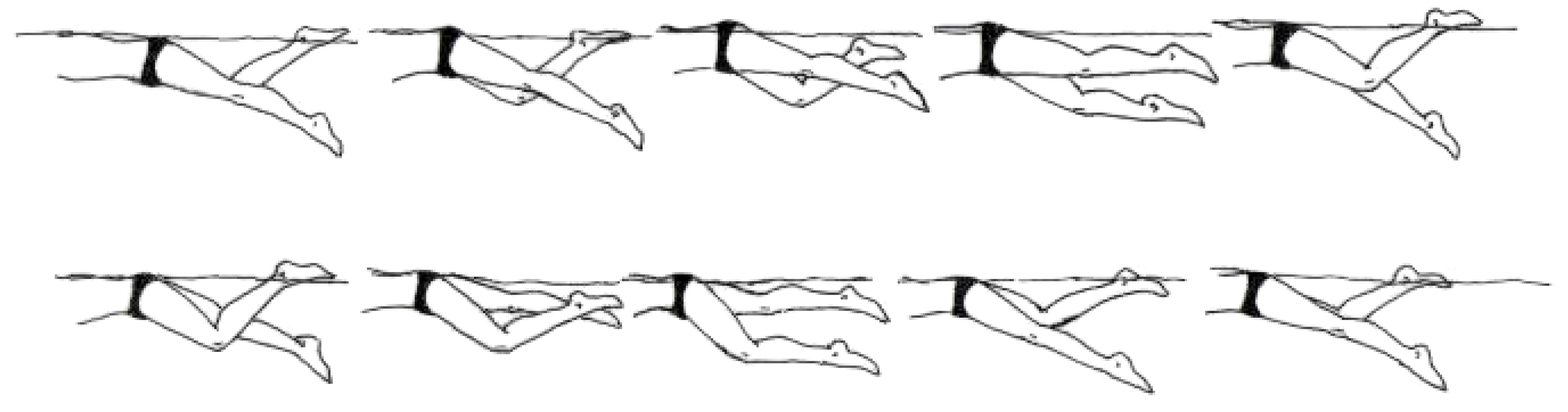
Figure 11.
(Stan E. A., 2014).
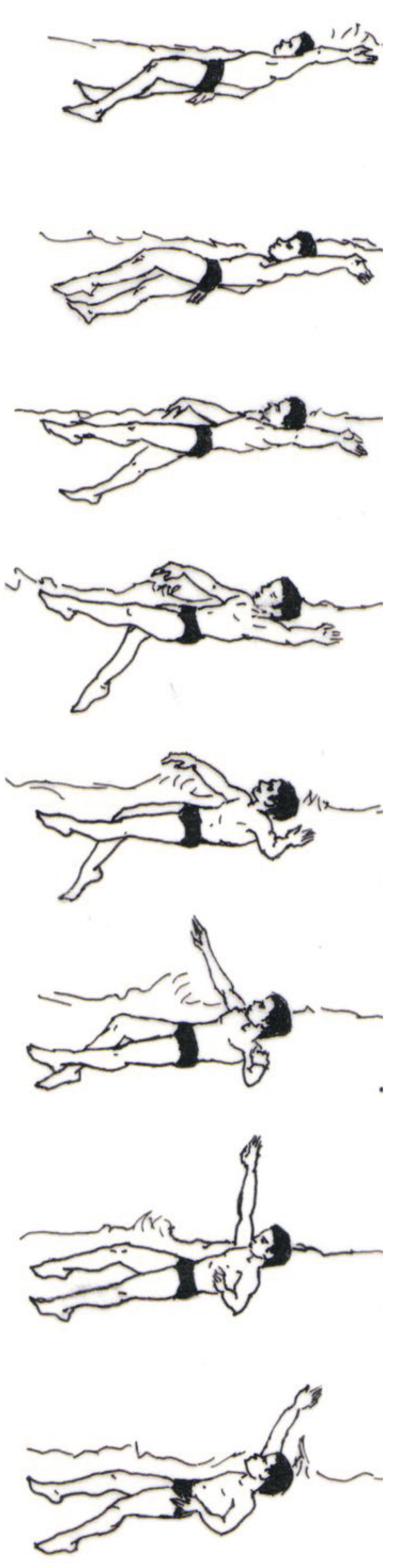
Figure 1.
Initial vs. final 50 m freestyle testing.
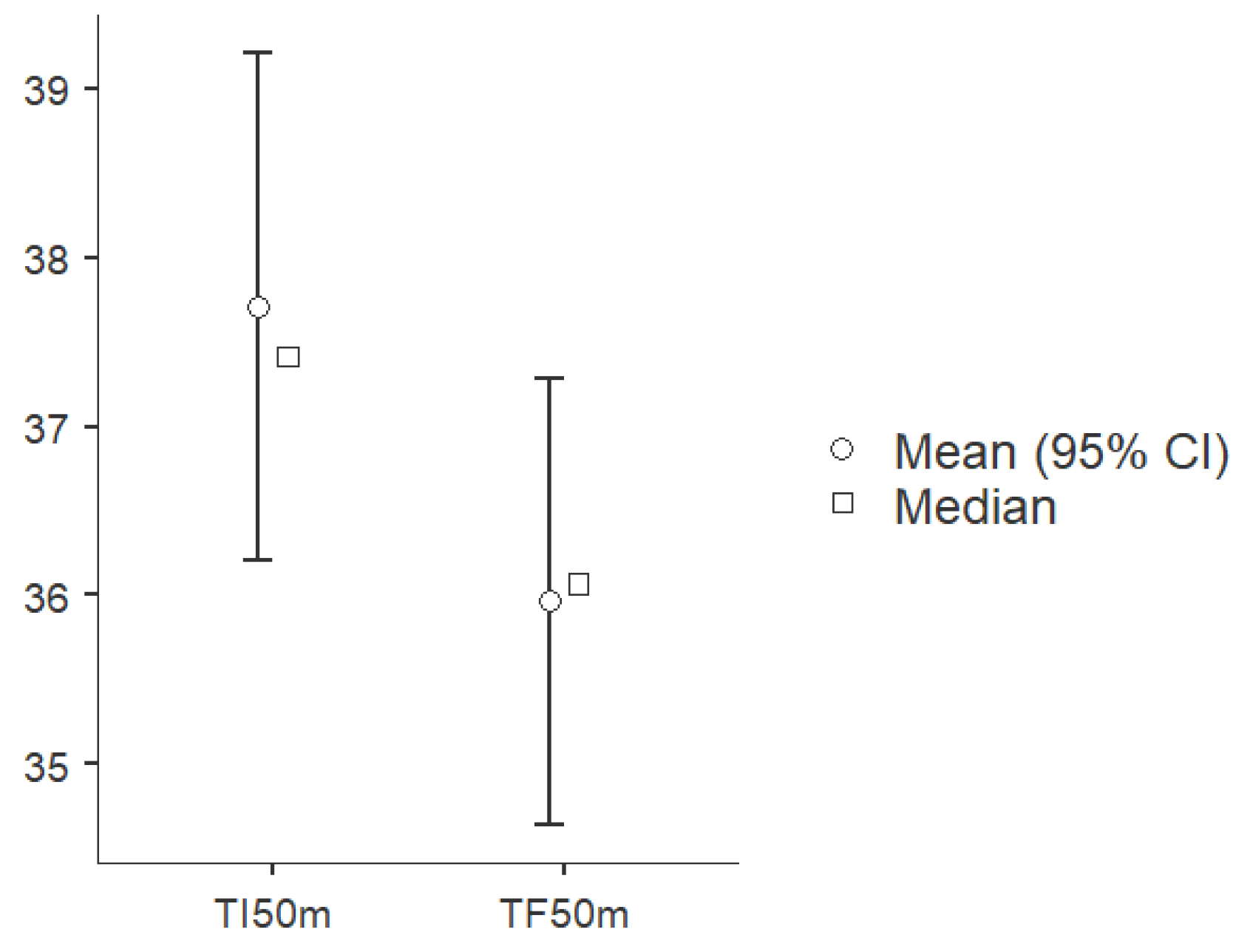
Figure 2.
Initial vs final 100m freestyle testing.
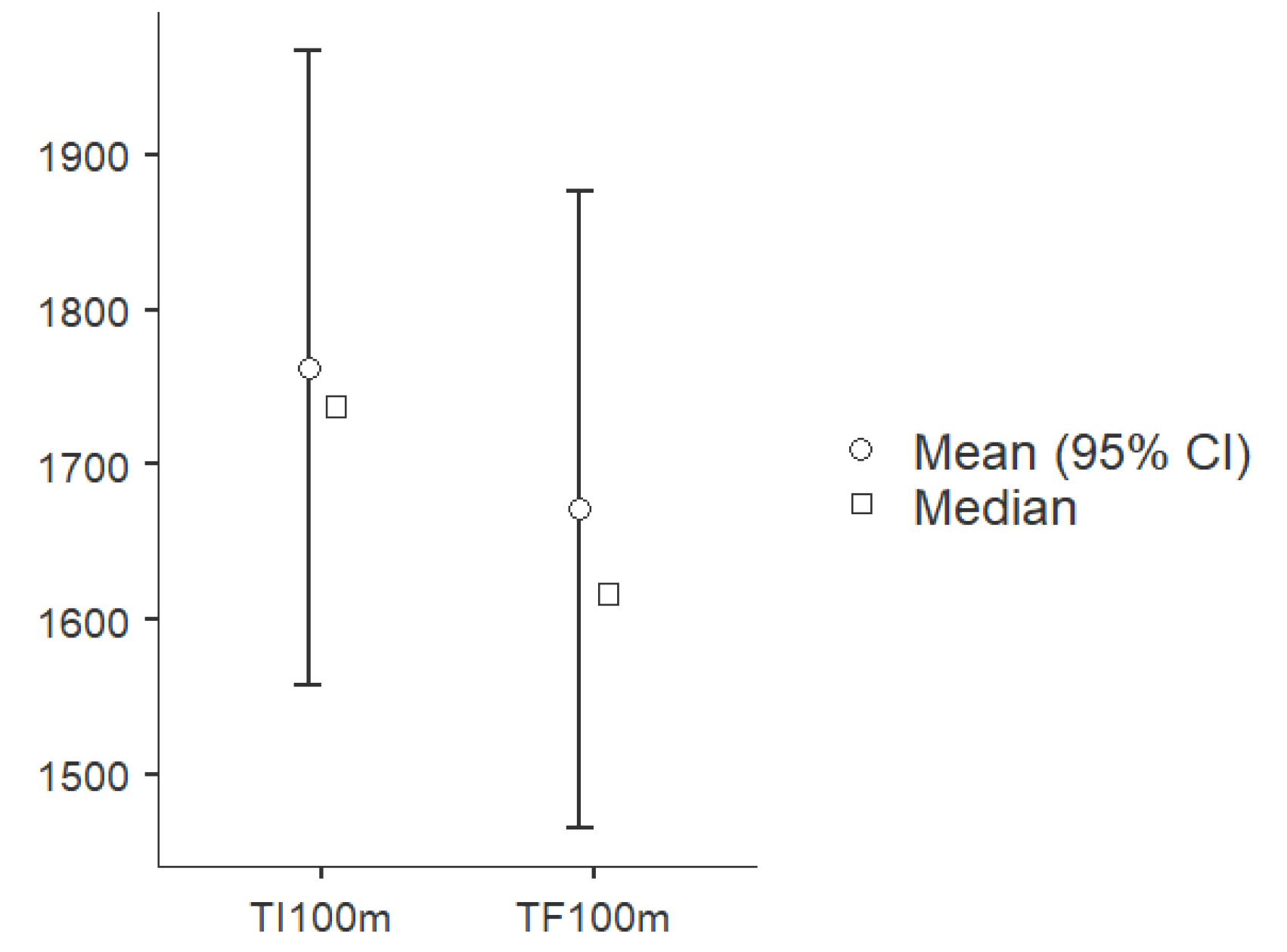
Figure 3.
Week 1 vs 2 8x50 back legs/ start 1.20.
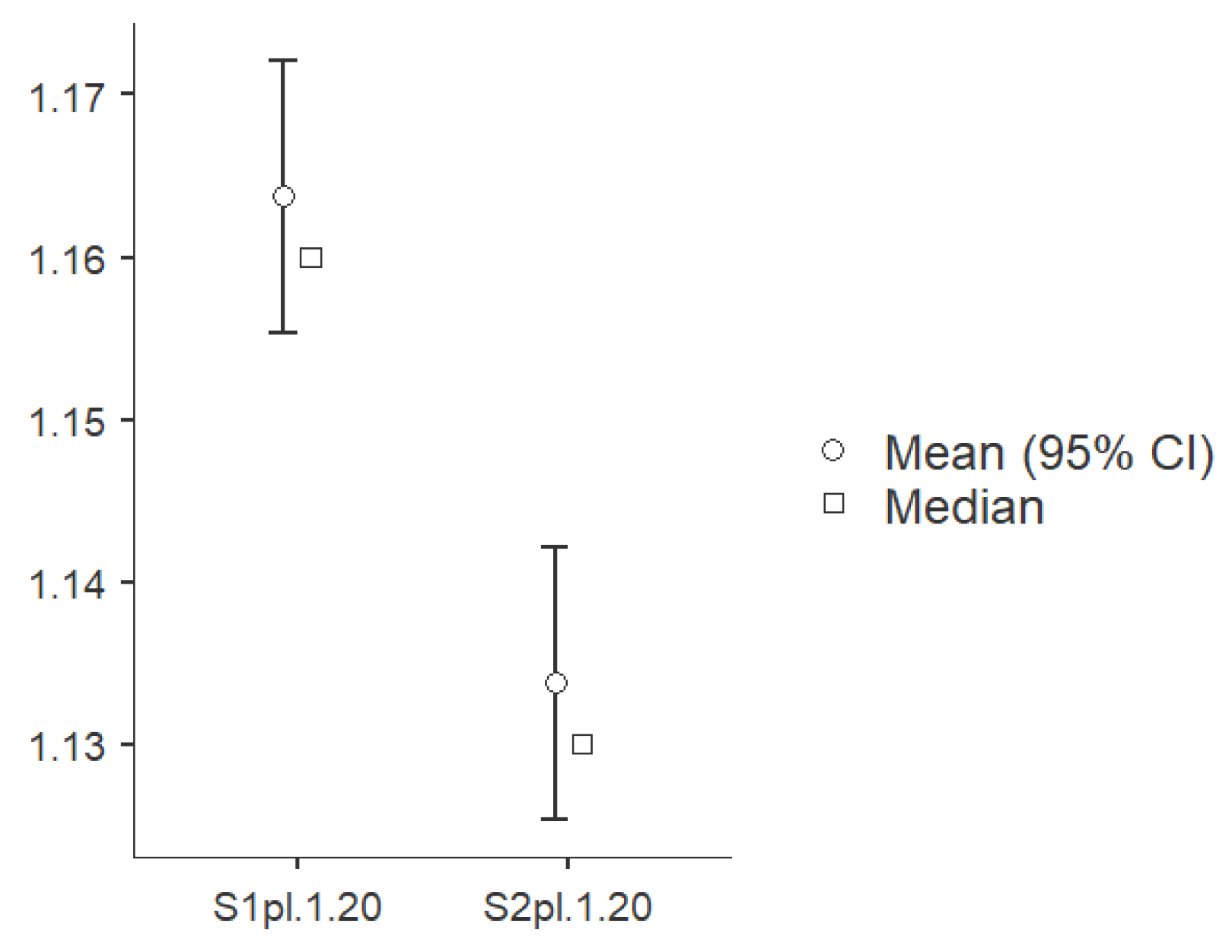
Figure 4.
Week 3 vs 4 8x50 back legs / start 1.15.
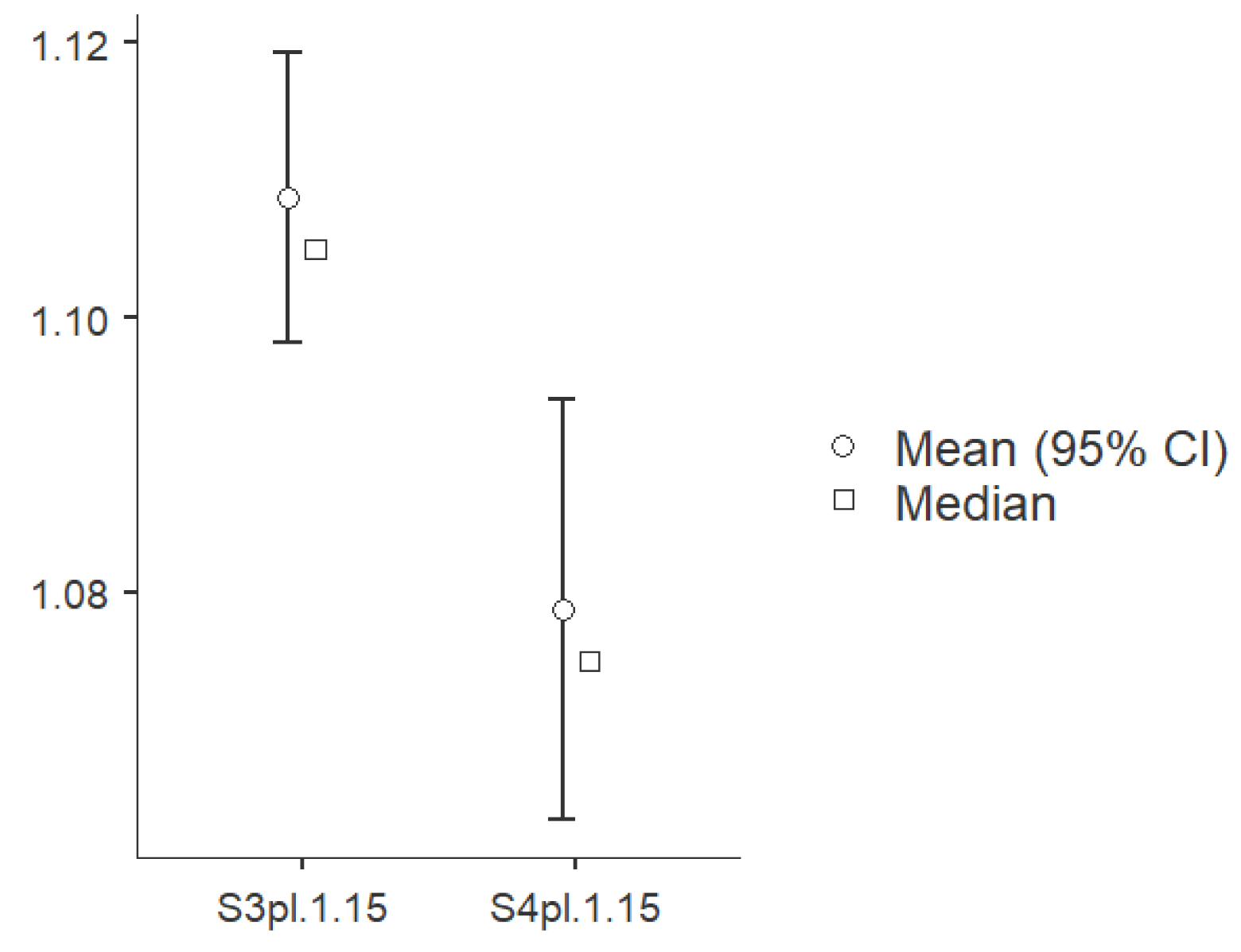
Figure 5.
Week 5 vs 6 8x50 back legs/ start 1.20 .
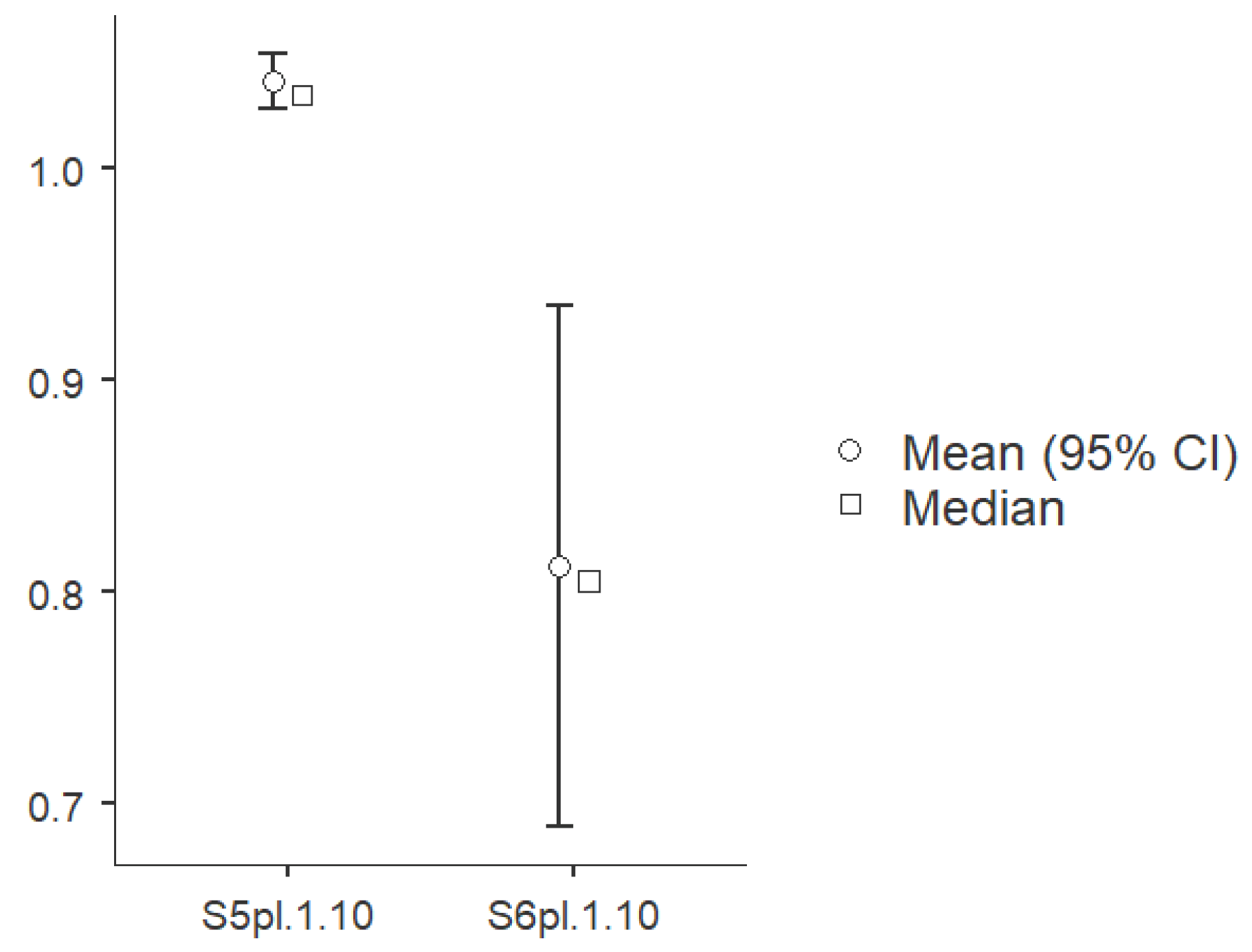
Figure 6.
Week 1 vs 6 8x50 back legs/ start 1.15.
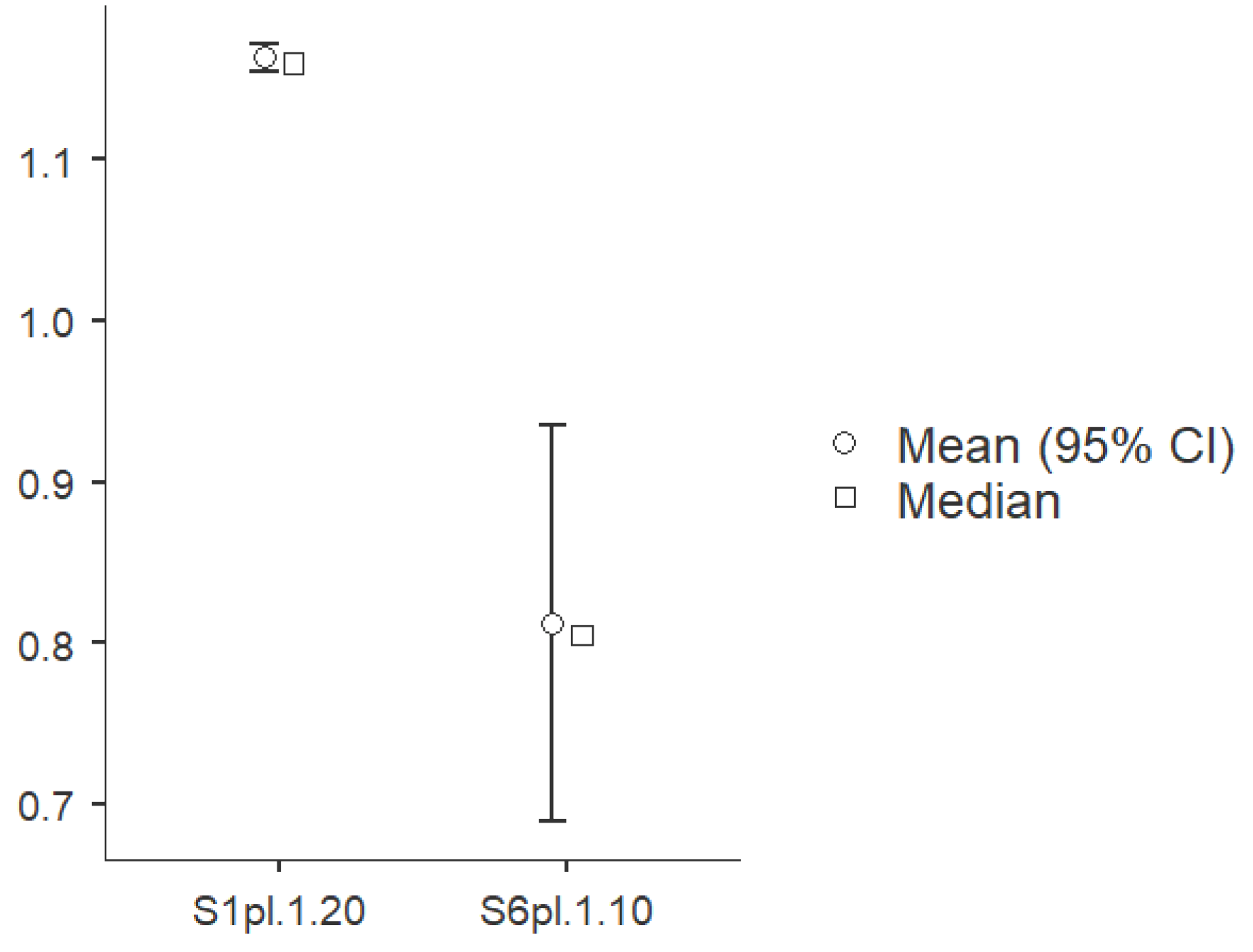
Figure 8.
Evolution and prediction.
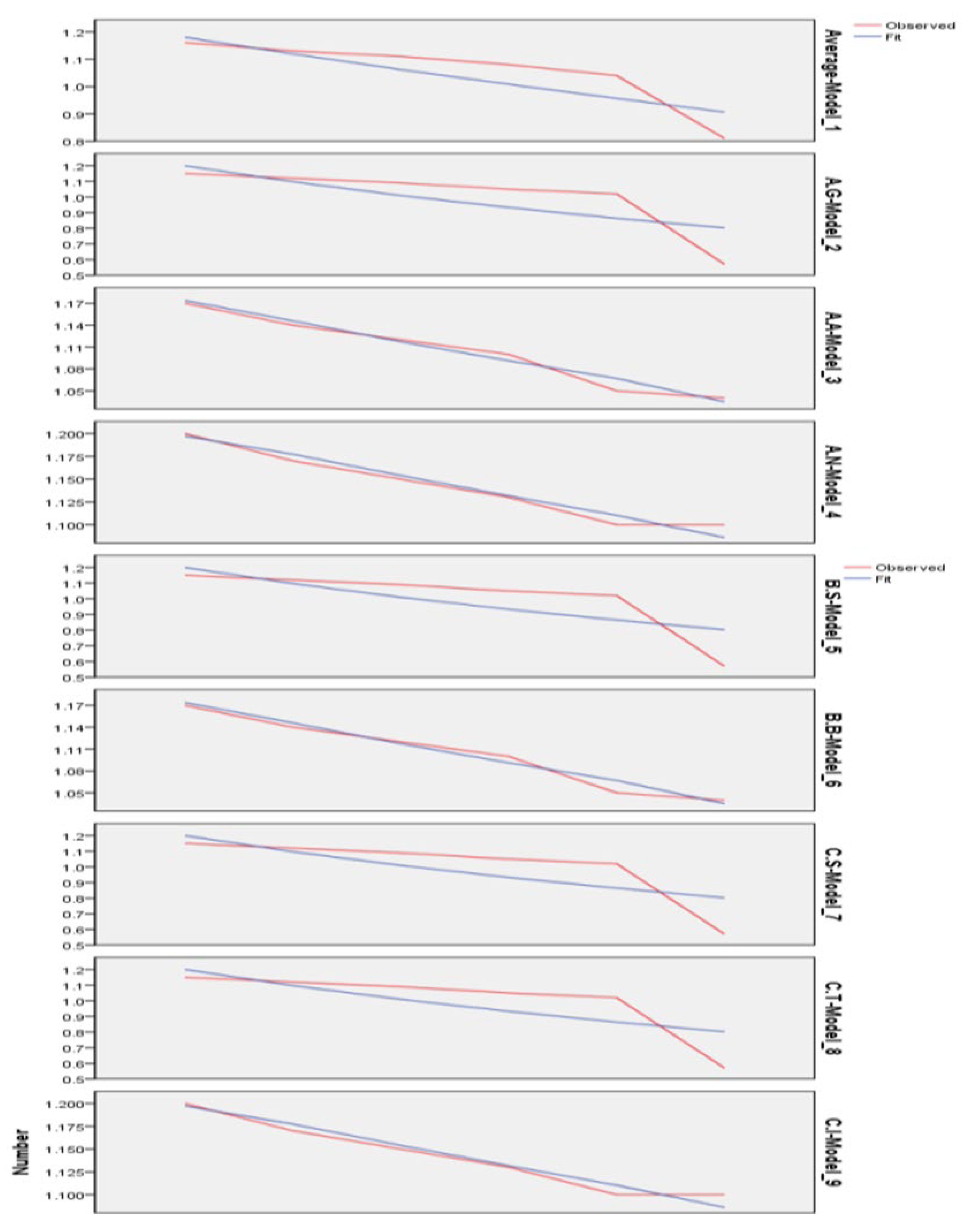
Figure 9.
Evolution and prediction.
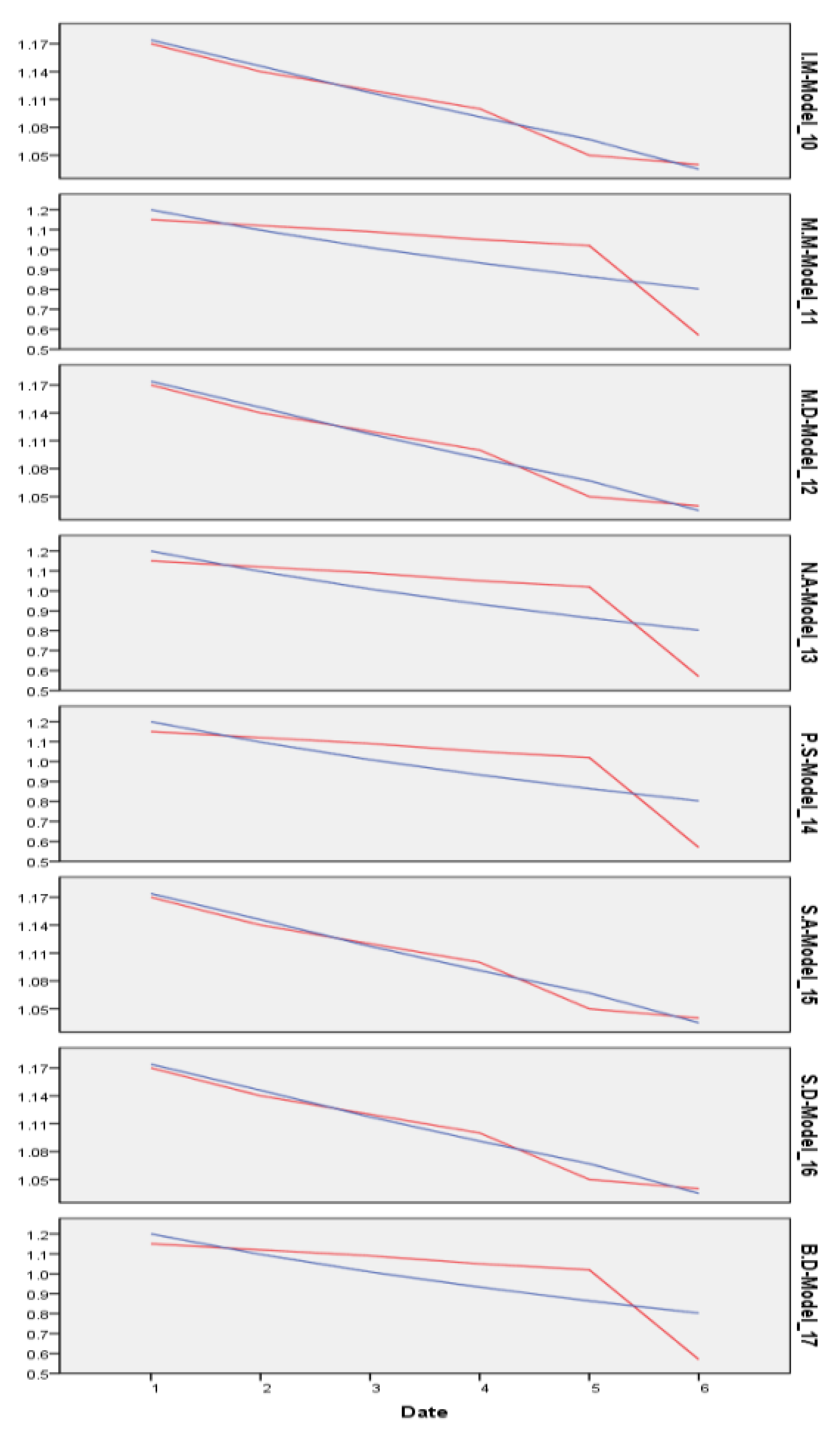

Table 1.
Paired Samples Wilcoxon W.
| Statistic W | p | Mean difference | SE difference | Effect Size | |||
|---|---|---|---|---|---|---|---|
| TI50m | TF50m | 136 | < .001 | 1.745 | 0.17606 | Rank biserial correlation | 1 |
| TI100m | TF100m | 136 | < .001 | 93.5001 | 9.36833 | 1 | |
| S1pl.1.20 | S2pl.1.20 | 136 | < .001 | 0.03 | 2.87E-17 | 1 | |
| S3pl.1.15 | S4pl.1.15 | 136 | < .001 | 0.03 | 0.00258 | 1 | |
| S5pl.1.10 | S6pl.1.10 | 105 | < .001 | 0.23 | 0.05713 | 1 | |
| S1pl.1.20 | 136 | < .001 | 0.3549 | 0.05911 | 1 | ||
| Note. Hₐ μ Measure 1 - Measure 2 ≠ 0 | |||||||
| ᵃ 2 pair(s) of values were tied | |||||||
Table 2.
The values obtained by the athletes in the first 6 weeks.
| Week Subjects |
1 | 2 | 3 | 4 | 5 | 6 |
|---|---|---|---|---|---|---|
| 1.15 | 1.12 | 1.09 | 1.05 | 1.02 | 0.57 | |
| 1.17 | 1.14 | 1.12 | 1.1 | 1.05 | 1.04 | |
| 1.20 | 1.17 | 1.15 | 1.13 | 1.1 | 1.1 | |
| 1.15 | 1.12 | 1.09 | 1.05 | 1.02 | 0.57 | |
| 1.17 | 1.14 | 1.12 | 1.1 | 1.05 | 1.04 | |
| 1.15 | 1.12 | 1.09 | 1.05 | 1.02 | 0.57 | |
| 1.15 | 1.12 | 1.09 | 1.05 | 1.02 | 0.57 | |
| 1.20 | 1.17 | 1.15 | 1.13 | 1.1 | 1.1 | |
| 1.17 | 1.14 | 1.12 | 1.1 | 1.05 | 1.04 | |
| 1.15 | 1.12 | 1.09 | 1.05 | 1.02 | 0.57 | |
| 1.17 | 1.14 | 1.12 | 1.1 | 1.05 | 1.04 | |
| 1.15 | 1.12 | 1.09 | 1.05 | 1.02 | 0.57 | |
| 1.15 | 1.12 | 1.09 | 1.05 | 1.02 | 0.57 | |
| 1.17 | 1.14 | 1.12 | 1.1 | 1.05 | 1.04 | |
| 1.17 | 1.14 | 1.12 | 1.1 | 1.05 | 1.04 | |
| 1.15 | 1.12 | 1.09 | 1.05 | 1.02 | 0.57 | |
| Average | 1.16 | 1.13 | 1.11 | 1.08 | 1.04 | 0.81 |
Disclaimer/Publisher’s Note: The statements, opinions and data contained in all publications are solely those of the individual author(s) and contributor(s) and not of MDPI and/or the editor(s). MDPI and/or the editor(s) disclaim responsibility for any injury to people or property resulting from any ideas, methods, instructions or products referred to in the content. |
© 2025 by the authors. Licensee MDPI, Basel, Switzerland. This article is an open access article distributed under the terms and conditions of the Creative Commons Attribution (CC BY) license (http://creativecommons.org/licenses/by/4.0/).
Copyright: This open access article is published under a Creative Commons CC BY 4.0 license, which permit the free download, distribution, and reuse, provided that the author and preprint are cited in any reuse.


