

Submitted:
11 September 2025
Posted:
12 September 2025
You are already at the latest version
Abstract
Ivory Coast accounts for approximately 40% of global cocoa production, with an annual average output of 2 million tons, consolidating its position as the world’s leading producer. Over 6 million people—nearly one-quarter of the Ivorian population—depend directly or indirectly on this sector. The quality of cocoa beans, particularly their **degree of fermentation**, plays a decisive role in determining the competitiveness of Ivorian cocoa on an international market that is increasingly demanding in terms of sensory attributes, food safety, and environmental sustainability. Fermentation, which contributes 25 to 30% of the post-harvest added value, is a critical step that shapes the organoleptic properties (aroma, color, texture) of the final chocolate product. However, nearly 35% of exported beans exhibit defects related to incomplete or poorly managed fermentation, leading to economic losses estimated between 10% and 30% of the potential export value. These shortcomings are largely due to the heterogeneity of fermentation practices, inadequate equipment, limited knowledge of microbial dynamics, and insufficient incentives for quality enhancement. This article explores current trends in cocoa bean fermentation in Ivory Coast through five key dimensions: 1) scientific and microbiological foundations of the process; 2) traditional practices and their limitations; 3) market requirements and economic challenges; 4) emerging technological and organizational innovations; and 5) future prospects for standardization and traceability. The study underscores the urgent need for national quality standards and differentiated valorization mechanisms for well-fermented beans, which can command premium prices of up to US/$300 per ton. Strengthening the technical capacity of local stakeholders, modernizing fermentation infrastructure, and integrating research-based innovations are essential levers to ensure the high marketability of Ivorian cocoa.
Keywords:
cacao bean fermentation
; Ivory Coast
; market quality
1. Introduction
Ivory Coast is the world’s leading producer of cocoa beans, providing more than 40% of the global supply [1]. This product is a major source of income for millions of Ivorian farmers and a national economic pillar. However, the quality of fermented beans remains a key concern to ensure the competitiveness of Ivorian cocoa in international markets, where requirements for flavour, biochemical composition and safety continue to grow [2,3]. Fermentation is a decisive step in the development of chocolate flavour precursors, significantly influencing the organoleptic, physicochemical and microbiological properties of the beans [4,5]. This complex process, driven by natural microbial successions including yeasts, lactic acid bacteria and acetic acid bacteria, allows the hydrolysis of bitter compounds, the degradation of mucilage and the generation of volatile compounds characteristic of fermented cocoa [6,7,8]. In Ivory Coast, fermentation is mainly carried out by traditional, often empirical methods, using wooden crates, banana leaves or simply covered piles, which leads to a heterogeneity of quality [9] Faced with these challenges, improvement initiatives have emerged, including the use of starter cultures, the standardization of fermentation conditions (temperature, time, aeration), and the introduction of digital monitoring technologies [10,11]. These innovations aim to optimize fermentation to guarantee impeccable marketable quality, while meeting the challenges of sustainability, certification and traceability required by contemporary markets [12,13] In addition, socio-cultural, economic and climatic issues make it necessary to adapt local fermentation practices in order to ensure the resilience of the sector in the face of global challenges [14] This study aims to examine in depth the fermentation process of cocoa beans in Ivory Coast, to analyze the constraints and opportunities related to its control, and to highlight the innovations likely to guarantee its performance and quality. In addition, the growing pressure from consumers for sustainable, fair trade and traceable products requires a review of cocoa value chains, incorporating certification standards such as UTZ, the Rainforest Alliance or Fairtrade [15,16] These certifications encourage better control of post-harvest processes, including fermentation, by reinforcing good agricultural and post-harvest practices [17] At the same time, scientific research highlights the impact of agroecological conditions (climate, soil, variety) on fermentation dynamics and final bean quality, suggesting territorialized optimization approaches [18,19]. Notable efforts are also being made to raise awareness among producers’ cooperatives of the importance of rigorous control of the fermentation process via simple and accessible analytical tools [20] In this respect, the integration of routine physicochemical analyses (pH, temperature, acidity, degree of fermentation) is a promising avenue for strengthening the professionalization of the sector [21].
2. Background and Importance of Fermentation in Ivory Coast
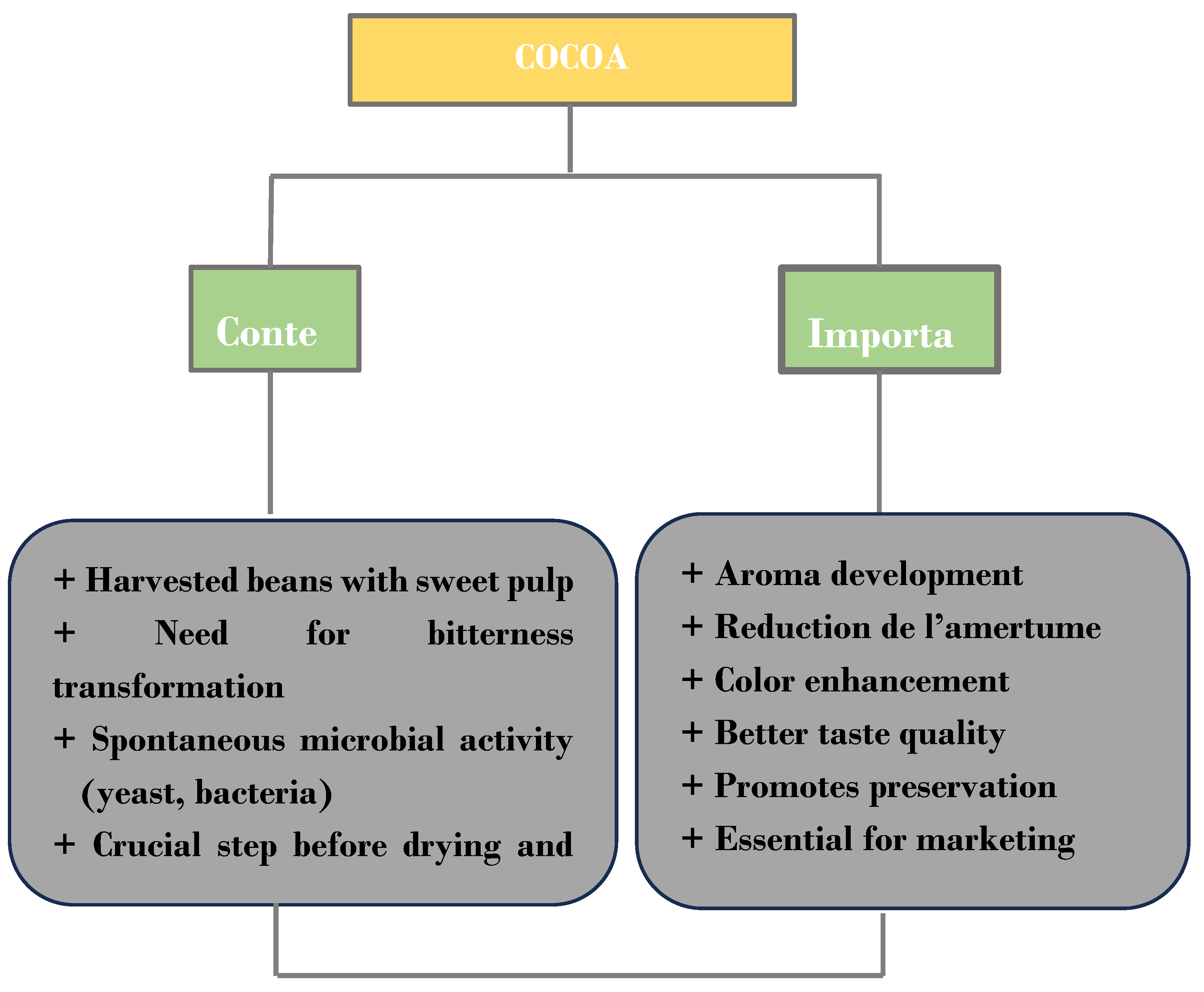
Ivory Coast, the world’s largest producer of cocoa beans with more than 2 million tons per year [22], relies largely on the quality of its cocoa to maintain its position in the global chocolate market. The fermentation of the beans, which is an essential post-harvest step, plays a decisive role in the development of flavor precursors such as organic acids, volatile compounds and oxidized polyphenols, which give chocolate its sought-after sensory characteristics [23].
Traditionally carried out in the field by producers, this natural fermentation lasts between 5 and 7 days and is mainly based on artisanal processes, such as the use of banana leaves or wooden crates. However, studies have shown that this variability in practices leads to heterogeneity in the quality of the cocoa produced, which can negatively affect its commercial value [8,24]. Traditionally carried out in the field by producers, this natural fermentation lasts between 5 and 7 days and is mainly based on artisanal processes, such as the use of banana leaves or wooden crates. However, studies have shown that this variability in practices leads to heterogeneity in the quality of the cocoa produced, which can negatively affect its commercial value [8,24]. In this context, the improvement and control of the fermentation process represents a major challenge to strengthen the competitiveness of the Ivorian cocoa sector, while promoting sustainable, traceable production that respects international quality standards.
Figure 1.
Background and importance of cocoa bean fermentation.
2.1. Cocoa in the Ivorian Economy
Ivory Coast remains the world’s leading cocoa producer, with annual production exceeding 2 million tons, or nearly 40% of global supply. This global leadership has been consolidated over the decades thanks to favorable agroclimatic conditions, strong mobilization of smallholder producers, and continuous institutional support. The cocoa sector represents the main pillar of the Ivorian agricultural economy, contributing to about 15% of the gross domestic product (GDP), more than 40% of export earnings and providing direct or indirect employment to nearly 6 million people, or about a quarter of the national population [25,26]. Here is a simple but effective illustrative diagram showing the importance of cocoa in the Ivorian economy, structured in 5 poles:
Figure 2.
Importance of cocoa in the Ivorian economy.
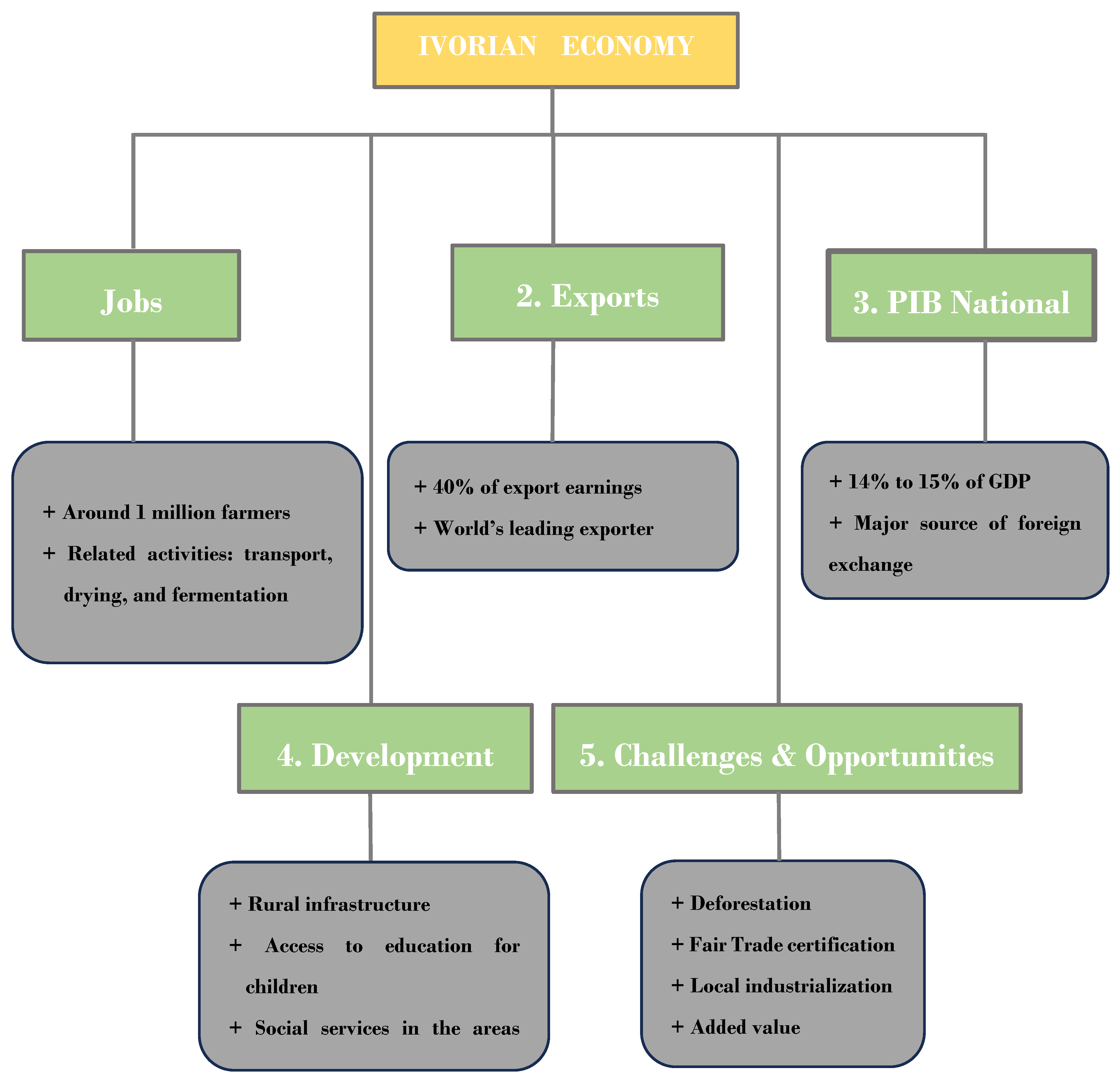
This diagram highlights the crucial role of cocoa in the Ivorian economy structured in 5 poles: highlighting its weight in employment, exports and national GDP. It also shows the positive social impact on rural communities. Finally, it recalls the environmental challenges and opportunities for sustainable development linked to this sector.
This cash crop is not only an essential source of foreign exchange for the Ivorian State, but also a driver of rural development, ensuring the livelihood of more than 800,000 family farms [27]. However, despite its macroeconomic importance, the cocoa sector still faces many structural challenges. These include low producer incomes, dependence on international markets, price volatility, land degradation, deforestation and child labour [28,29]. On the commercial level, the growing requirements in terms of traceability, environmental sustainability and organoleptic quality of beans require a profound transformation of agricultural and post-harvest practices. Thus, the modernization of key stages of the value chain, in particular fermentation and drying, is now considered a strategic lever for improving the quality of Ivorian cocoa, increasing its added value and strengthening its competitiveness on international markets [30]. In addition, the integration of international standards (such as UTZ, Rainforest Alliance or Fairtrade) in production makes it possible to meet consumer expectations while promoting more sustainable and fair models for producers [31,32].
2.2. Fermentation: A Qualitative Pivot for Post-Harvest Cocoa Quality
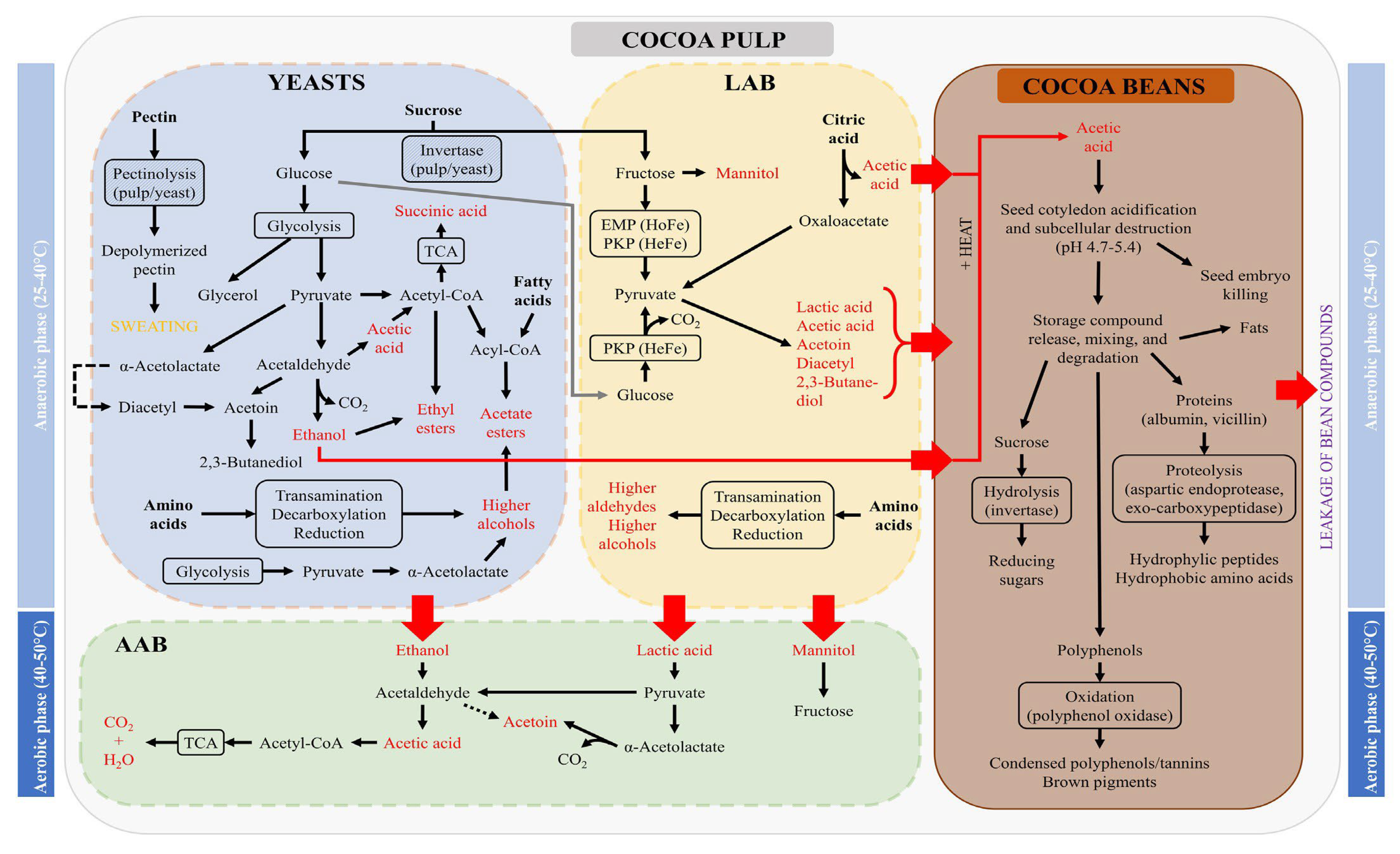
Fermentation is a decisive step in the post-harvest processing of cocoa beans (Theobroma cacao L.), conditioning their biochemical, sensory and commercial properties. It is used immediately after de-denting, and its role is twofold: to remove the mucilaginous pulp that surrounds the beans and to induce a series of biochemical transformations essential to the formation of the precursors of the aromas characteristic of chocolate (33). This spontaneous process is directed by a dynamic succession of microorganisms:
- Yeasts (Saccharomyces cerevisiae, Hanseniaspora spp.), lactic acid bacteria (Lactobacillus spp., Leuconostoc spp.) and acetic acid bacteria (Acetobacter spp.), then spore-forming bacteria (Bacillus spp.) which interact synergistically. Yeasts initiate fermentation by converting the sugars in the pulp into ethanol and CO2.
- Then, lactic acid and acetic bacteria metabolize these compounds into organic acids (acetic, lactic), creating an acidic and thermal environment favorable to the destruction of the embryo and intra-bean enzymatic activation [7,34,35].
Figure 3.
Fermentation of cocoa’s pulp of starch mass [7] : Overview of the fermentation of the pulp of starch mass of cocoa through the succession of an anaerobic phase, involving yeasts and lactic acid bacteria (BAL), and an aerobic phase, involving acetic bacteria (BAA), as well as the concomitant bioconversion reactions occurring inside the cocoa beans. Substrate uptake and metabolite secretion by microbial cells are not shown. EMP : Embden-Meyerhof-Parnas Road; HeFe : heterofermentation; HoFe : homofermentation; PKP : phosphoketolase pathway; TCA : tricarboxylic acid cycle.
Figure 3.
Fermentation of cocoa’s pulp of starch mass [7] : Overview of the fermentation of the pulp of starch mass of cocoa through the succession of an anaerobic phase, involving yeasts and lactic acid bacteria (BAL), and an aerobic phase, involving acetic bacteria (BAA), as well as the concomitant bioconversion reactions occurring inside the cocoa beans. Substrate uptake and metabolite secretion by microbial cells are not shown. EMP : Embden-Meyerhof-Parnas Road; HeFe : heterofermentation; HoFe : homofermentation; PKP : phosphoketolase pathway; TCA : tricarboxylic acid cycle.
These transformations allow the production of precursors of volatile compounds such as aldehydes, superior alcohols and esters that directly influence the aromatic profile of cocoa [18,36,37]. The control of fermentation parameters (duration, temperature, aeration, turnaround rate, type of container used) is crucial. Fermentation that is too short or poorly conducted leads to incomplete aromatic development and the persistence of organoleptic defects such as astringency or bitterness [38,39]. Conversely, excessive fermentation can lead to high residual acidity and the degradation of aromatic compounds. In Ivory Coast, the world’s leading cocoa producer, fermentation is still mainly carried out in an artisanal way, often in piles or in wooden crates. However, recent innovations include the use of thermoregulated modular tanks, perforated jute bags or biosensor-assisted controlled fermentation systems, with the aim of standardizing processes, improving aromatic yields and reducing post-harvest losses [40]. Conversely, excessive fermentation can lead to high residual acidity and the degradation of aromatic compounds. In Ivory Coast, the world’s leading cocoa producer, fermentation is still mainly carried out in an artisanal way, often in piles or in wooden crates. However, recent innovations include the use of thermoregulated modular tanks, perforated jute bags or biosensor-assisted controlled fermentation systems, with the aim of standardizing processes, improving aromatic yields and reducing post-harvest losses [41,42].
Figure 4.
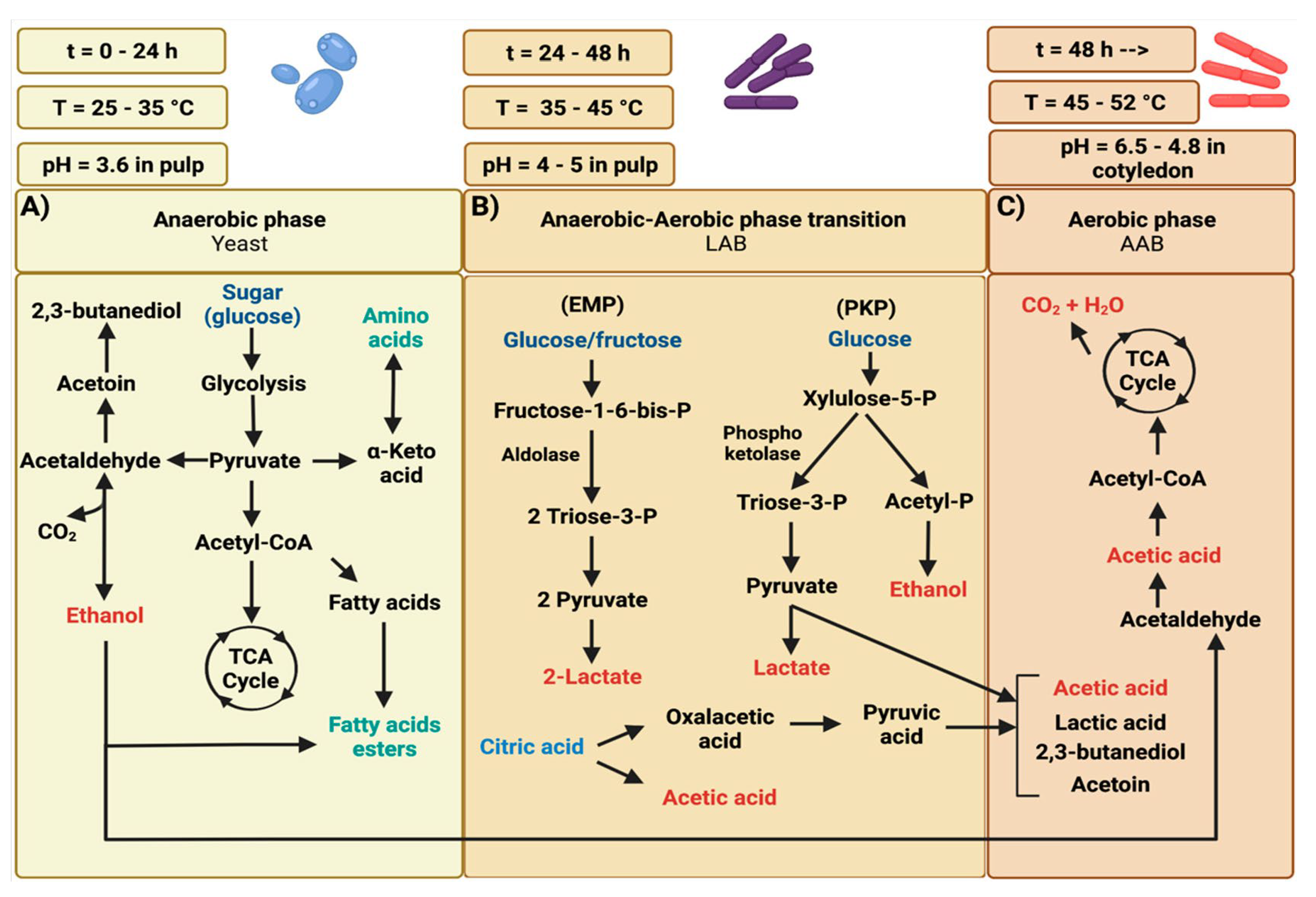
Main Phases of cocoa fermentation [2] : (A) Yeasts metabolize glucose (sugar) by the glycolytic pathway, transforming it into pyruvate. This process allows for the production of ATP and the regeneration of reduced coenzymes. The pyruvate is then converted to ethanol and carbon dioxide (CO2), in an anaerobic environment. (B) Lactic acid bacteria (LABs) also use glucose, but in two distinct metabolic pathways: – The Embden-Meyerhof-Parnas (EMP) pathway in homofermentative LABs, resulting mainly in the production of lactic acid, – The phosphoketolase (PKP) pathway in heterofermentative LABs, which leads to the formation of lactic acid, ethanol (or acetic acid) and CO2. (C) Finally, acetic acid bacteria (AABs) intervene by oxidizing the ethanol produced by yeasts. This process, under aerobic conditions, results in the formation of acetic acid, a key compound in the acidification of the fermentation environment, [2] .
Figure 4.
Main Phases of cocoa fermentation [2] : (A) Yeasts metabolize glucose (sugar) by the glycolytic pathway, transforming it into pyruvate. This process allows for the production of ATP and the regeneration of reduced coenzymes. The pyruvate is then converted to ethanol and carbon dioxide (CO2), in an anaerobic environment. (B) Lactic acid bacteria (LABs) also use glucose, but in two distinct metabolic pathways: – The Embden-Meyerhof-Parnas (EMP) pathway in homofermentative LABs, resulting mainly in the production of lactic acid, – The phosphoketolase (PKP) pathway in heterofermentative LABs, which leads to the formation of lactic acid, ethanol (or acetic acid) and CO2. (C) Finally, acetic acid bacteria (AABs) intervene by oxidizing the ethanol produced by yeasts. This process, under aerobic conditions, results in the formation of acetic acid, a key compound in the acidification of the fermentation environment, [2] .
3. The Fermentation Process of Cocoa Beans
3.1. Biochemical and Microbial Process
The fermentation of cocoa beans is an essential post-harvest process, not only for the removal of the mucilaginous pulp surrounding the beans, but above all for the development of the characteristic aroma precursors of chocolate. It is a spontaneous, i.e., non-inoculated, fermentation triggered by the microbial flora naturally present on the pods, agricultural tools, cover sheets (often banana leaves) and in the fermentation environment [7,33,39,43]. This fermentation takes place in three successive microbiological phases over a typical period of 5 to 7 days (although some industrial practices experiment with optimized durations). These phases are characterized by specific microbial dynamics that interact closely with the physicochemical factors of the environment, including temperature, pH, oxygen content, and available substrates [18,44].
3.1.1. The Different Phases
Phase 1: Yeast colonization
Yeasts, mainly Saccharomyces cerevisiae, Hanseniaspora opuntiae, Pichia kudriavzevii and Candida tropicalis, dominate the initial fermentation phase. They use the simple sugars (glucose, fructose, sucrose) in the pulp to produce ethanol, carbon dioxide (CO2), and volatile organic compounds such as acetaldehyde, methanol, and fruity esters [45,46] This activity causes a partial degradation of the pulp and a decrease in the redox potential, promoting the growth of lactic acid bacteria, (Eq. 1).
Phase 2 : Development of lactic acid bacteria (LAB)
Lactic acid bacteria, including Lactiplantibacillus plantarum (formerly Lactobacillus plantarum), Leuconostoc mesenteroides and Weissella cibaria, proliferate in a still relatively anaerobic environment. They metabolize sugars and ethanol into lactic acid, reducing the pH of the medium to values close to 4.0–4.5. This partial acidification initiates intracellular stress in the beans, which contributes to the progressive death of the embryo [21],(Eq. 2)
Phase 3: Acetic Acid Bacteria Growth (AAB)
As the pulp is degraded, the environment becomes more and more aerated, allowing the development of aerobic acetic bacteria such as Acetobacter pasteurianus and Gluconobacter oxydans. These bacteria oxidize ethanol into acetic acid, generating heat and inducing a temperature rise of up to 45 to 50 °C. Acetic acid diffuses into the beans, contributing to their internal acidification and causing cell lysis [47,48]. This heat and acid stress triggers the release of endogenous enzymes (proteases, glucosidases), which are responsible for the degradation of proteins into peptides and amino acids, and complex carbohydrates into simple sugars. All these compounds act as aroma precursors during roasting [38,49] (Eq. 3).
3.1.2. Chemical Reactions and Physical Transformations
At the same time, enzymatic reactions such as the oxidation of polyphenols by polyphenol oxidases (tyrosinase, laccase) lead to browning of the beans and the formation of pigments (theaflavins, thearubigins). These reactions affect the internal color, texture, and future aromatic complexity of the cacao [50]. Poor process management such as insufficient aeration, inadequate fermentation time, or overheating can disrupt this microbial and enzymatic succession. This leads to the production of lower quality beans, with sensory defects (excessive acidity, unbalanced aromas, residual bitterness) or storage problems [51]
3.2. Traditional Fermentation Techniques in Ivory Coast
Ivory Coast, the world’s leading cocoa producer, accounts for nearly 40% of the world’s production. Post-harvest fermentation is a crucial step in the development of cocoa’s aroma precursors. Despite technological advances, the majority of Ivorian producers continue to use traditional fermentation methods, transmitted empirically. These methods are strongly influenced by local practices, the level of organization of producers, the availability of infrastructure and the volumes processed. The three most commonly used methods are: heap fermentation, wooden crate fermentation (or tanks), and pit fermentation. Each of these techniques has advantages and limitations that influence the fermentation kinetics, the microbial profile, and ultimately, the quality of the beans.
3.2.1. Heap Fermentation
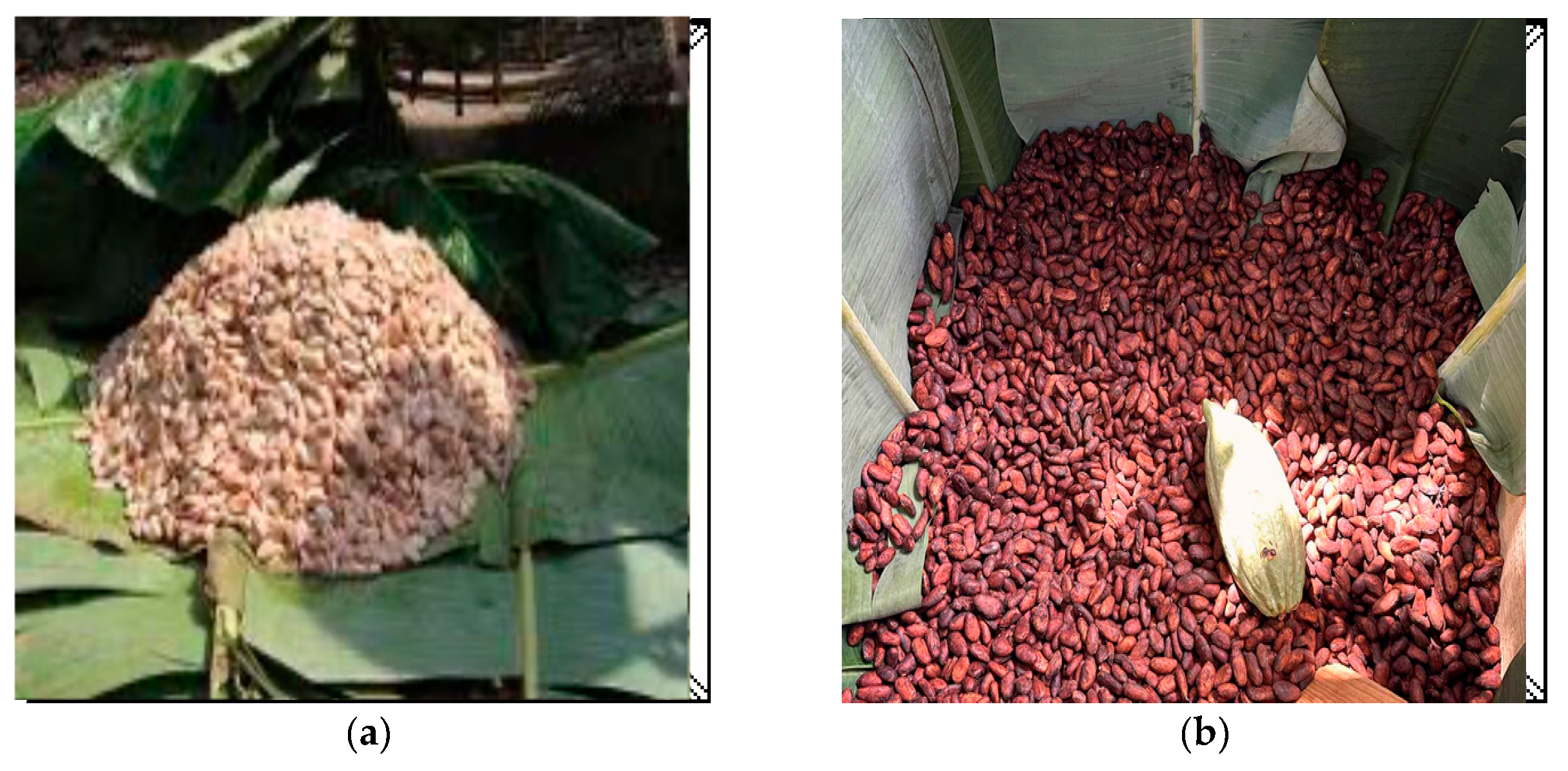
Heap fermentation (Figure 5) is the most accessible method for small producers due to its simplicity and low cost. It consists of piling the cocoa beans on banana leaves or directly on the ground, then covering them with leaves to limit heat loss and promote constant humidity. However, the lack of control over key parameters — temperature, aeration, drainage — can lead to inhomogeneous fermentations and microbiological imbalances, negatively affecting the organoleptic characteristics of cocoa [52].
Figure 5.
Fermentation of cocoa beans in heaps according Ivorian’s methods : (a). Heap fermentation of cocoa beans on banana leaves under field conditions, illustrating the initiation of spontaneous microbial succession and heat build-up. (b). Cocoa bean mass covered with banana leaves, highlighting the maintenance of humidity, restricted aeration, and favorable conditions for lactic acid and acetic acid bacterial activity.
Figure 5.
Fermentation of cocoa beans in heaps according Ivorian’s methods : (a). Heap fermentation of cocoa beans on banana leaves under field conditions, illustrating the initiation of spontaneous microbial succession and heat build-up. (b). Cocoa bean mass covered with banana leaves, highlighting the maintenance of humidity, restricted aeration, and favorable conditions for lactic acid and acetic acid bacterial activity.
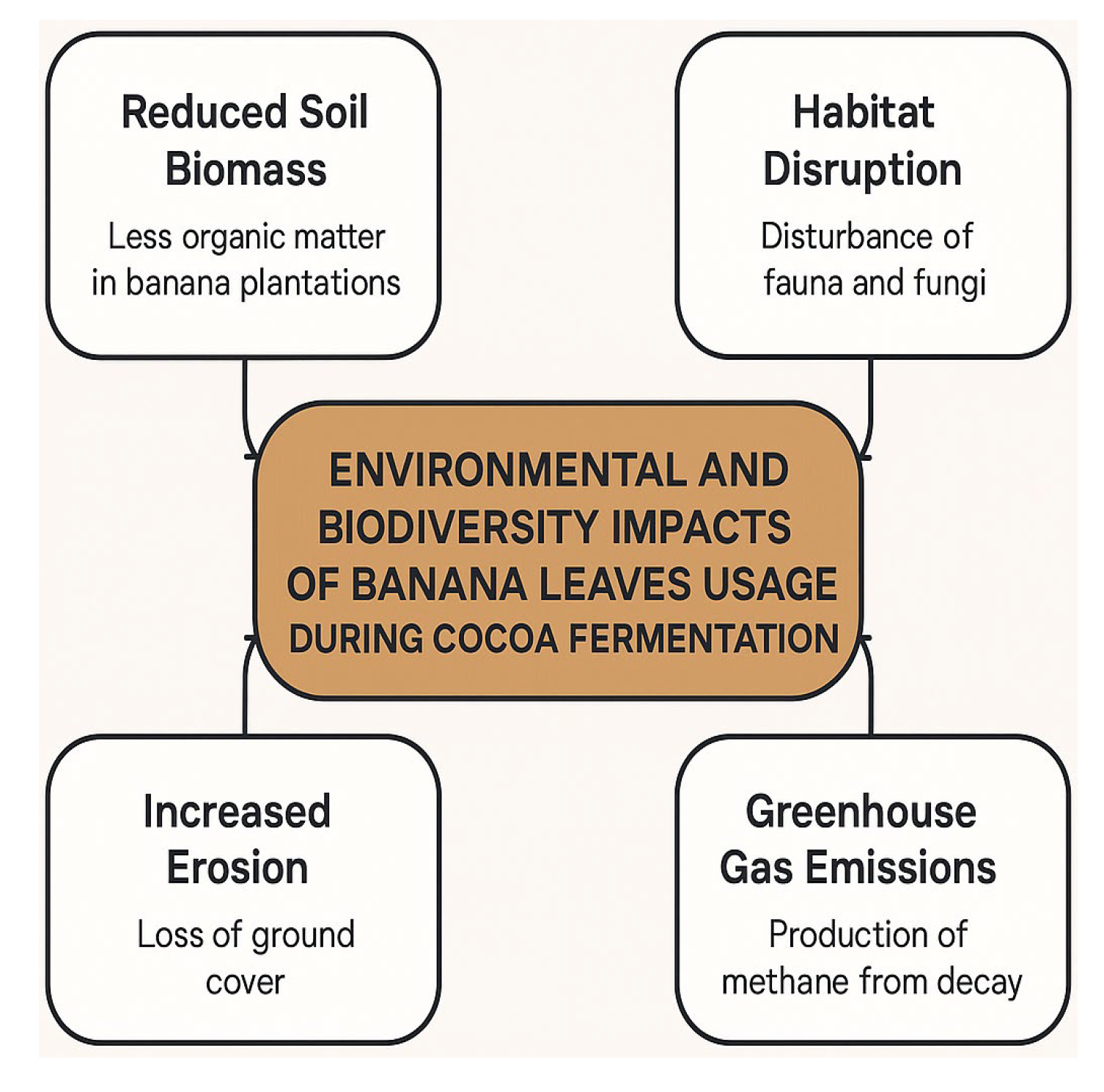
In addition, the use of banana leaves, although abundant and biodegradable, has several limitations. Their rapid decomposition under the combined effect of heat and humidity can generate undesirable compounds, create an excessive anaerobic environment or serve as a vector for contaminating microorganisms [53,54]. This degradation can also compromise the homogeneous coverage of the beans, affecting the diffusion of heat and oxygen, necessary for efficient fermentation. From an environmental point of view, the systematic harvesting of banana leaves for fermentation operations can disturb the balance of banana plantations by reducing the biomass available in the soil, which limits organic restitution and increases soil erosion. In addition, this practice can disturb the microhabitats of insects, fungi and other organisms associated with fallen leaves, thus altering local biodiversity. Finally, when abandoned en masse after use, decaying leaves can emit greenhouse gases such as methane, especially in prolonged anaerobic conditions.
Figure 6.
Limitations of fermentation of cocoa beans on banana leaves.
3.2.2. Fermentation in Wooden Crates (Bins)
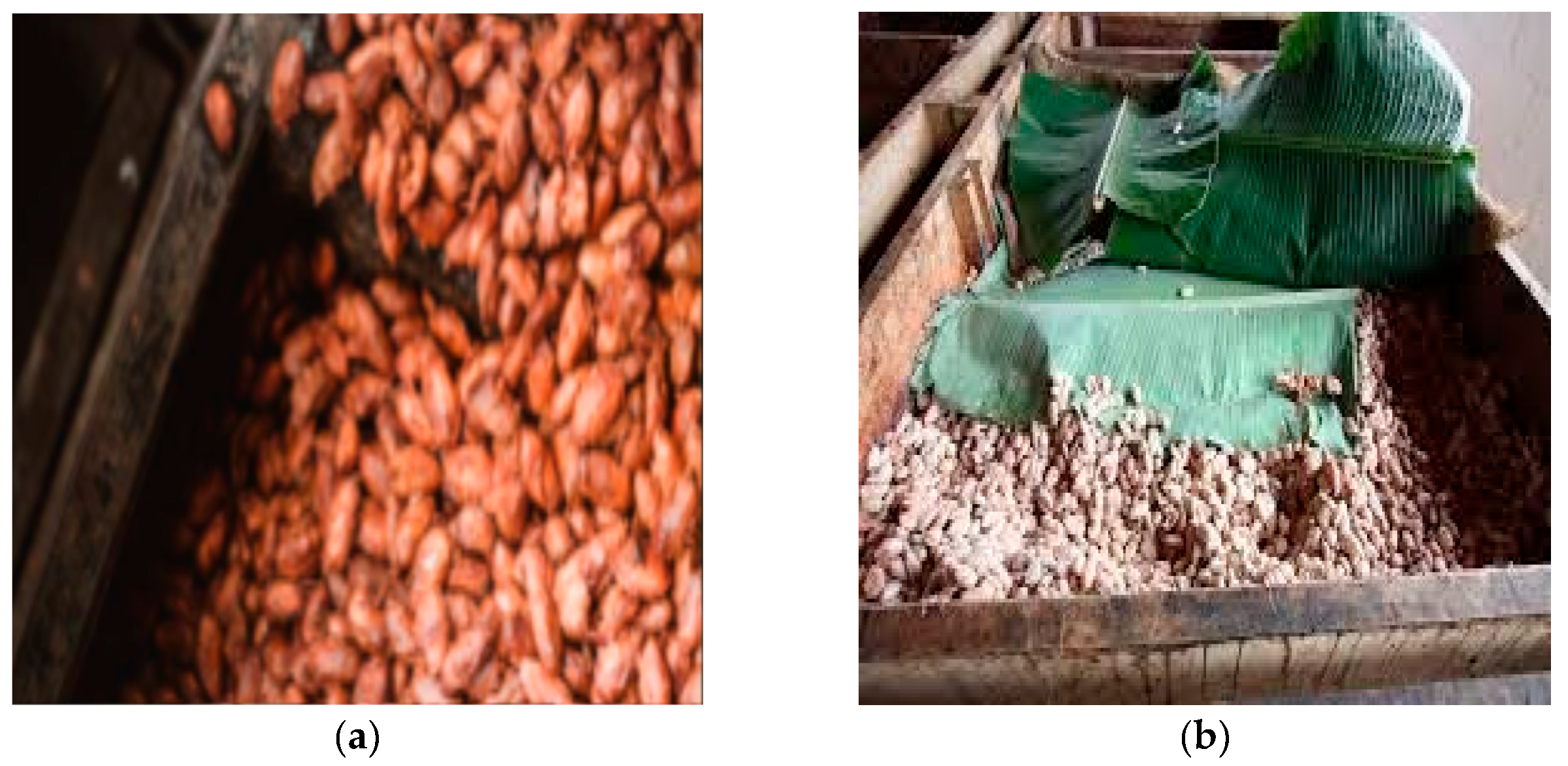
The method of wooden crates, usually made of untreated and perforated wood, is increasingly encouraged in organized cooperatives or as part of certification schemes, (Figure 7). It allows for better temperature control (45–50 °C), good aeration and efficient evacuation of the exuded liquid, called “sweatings” [55]. In addition, the periodic turning of the beans (every two days or so) promotes a homogeneous distribution of microorganisms (yeasts, lactic acid and acetic acid bacteria), which is essential for the development of aroma precursors such as aldehydes and volatile acids [56].
Figure 7.
Illustrates the setup of the wooden crates and highlights the interactions between microbial activity and the fermentation environment. Fermentation in wooden crates: (a) Microbial Activity: The wooden crates provide a natural environment that supports the growth and activity of beneficial microorganisms. This activity drives the breakdown of substrates, leading to the production of desired metabolites such as acids, flavors, and aromas. (b) Physical and Chemical Environment: The wooden crates influence moisture retention, aeration, and temperature regulation during fermentation. These conditions help maintain an optimal environment for microbial development, ensuring uniform fermentation and improved product quality.
Figure 7.
Illustrates the setup of the wooden crates and highlights the interactions between microbial activity and the fermentation environment. Fermentation in wooden crates: (a) Microbial Activity: The wooden crates provide a natural environment that supports the growth and activity of beneficial microorganisms. This activity drives the breakdown of substrates, leading to the production of desired metabolites such as acids, flavors, and aromas. (b) Physical and Chemical Environment: The wooden crates influence moisture retention, aeration, and temperature regulation during fermentation. These conditions help maintain an optimal environment for microbial development, ensuring uniform fermentation and improved product quality.
3.2.3. Fermentation in Pits
Still used in some isolated rural areas, pit fermentation consists of burying the beans in holes covered with plastic sheeting or leaves. Although this method conserves the heat generated by fermentation, it has several major drawbacks: High risk of faecal or fungal contamination, poor evacuation of liquids, poor aeration and difficulty in turning [57]. These conditions impair optimal microbiological development, resulting in incomplete or unbalanced fermentation.
3.2.4. Other fermentation Techniques Using Emerging Media
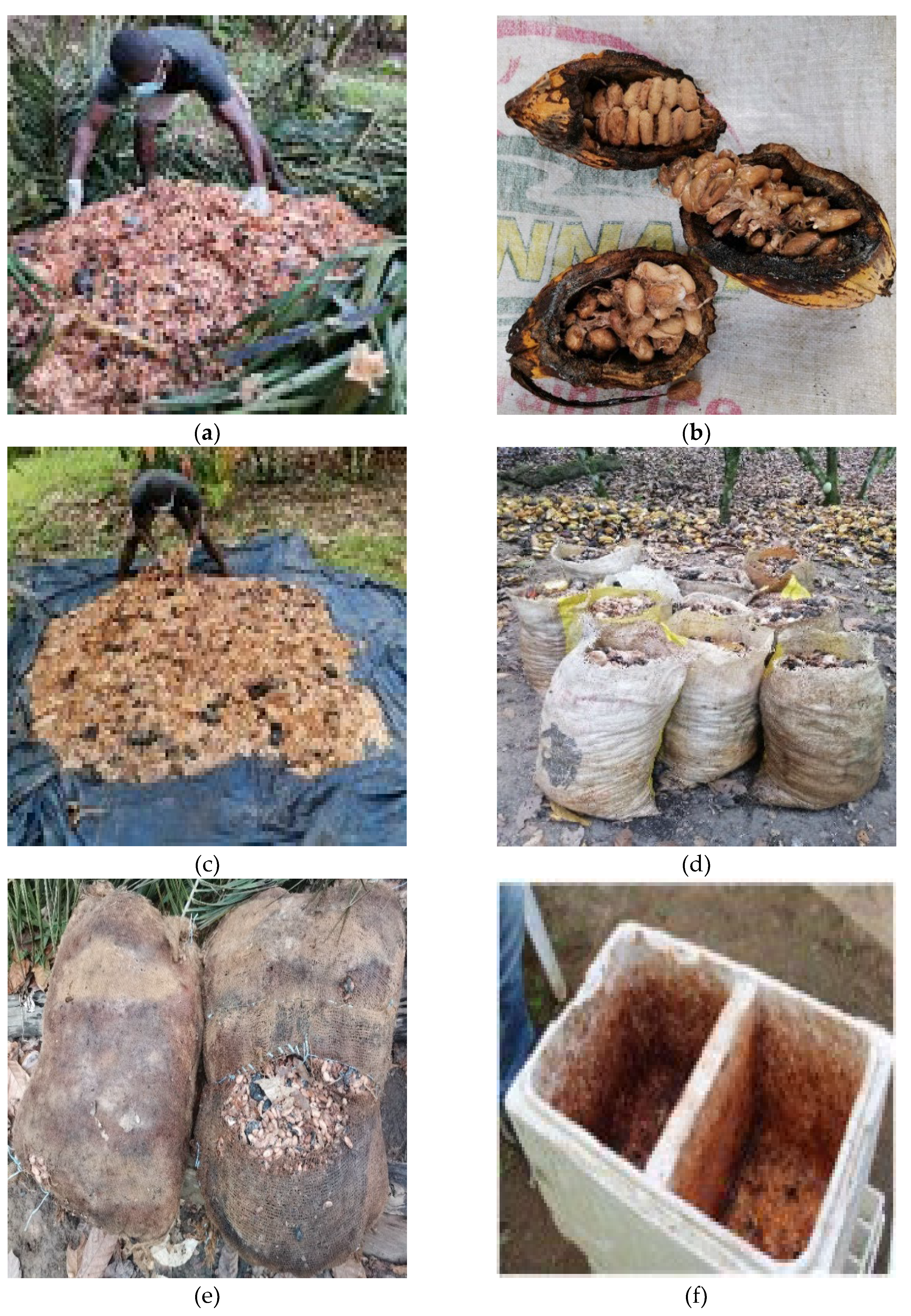
Banana leaves with the best attributes are becoming increasingly difficult to find in the main cocoa production areas and are now a limiting factor in this main post-harvest process. In addition, the use of banana leaves considerably reduces banana production and leads to the scarcity and high cost of plantains. In order to address the shortage of banana, leaves caused by various factors, smallholder farmers, who are responsible for the largest volumes of cocoa production in the main cocoa growing areas of Ivory Coast, are resorting to new emerging carriers such as palm leaves, polypropylene tarpaulin, cocoa pod, polypropylene bag and jute bag in addition to traditional carriers such as banana leaves, Black plastic sheeting (Figure 8) [58]. These modern cocoa fermentation techniques aim to improve the control of physicochemical conditions such as temperature, aeration and humidity, which are critical factors for the optimal development of fermentative microorganisms [19,36. They also reduce the risk of contamination by undesirable microorganisms, thus promoting more hygienic and controlled fermentation [55]. As a result, these methods help to increase the organoleptic quality and consistency of the final product, compared to traditional fermentations in piles or wooden boxes, which are more exposed to environmental variations and contamination [56,57]. In addition, the use of polyester, tarpaulin or vinyl tanks offers a more stable fermentation environment, facilitating industrial control and standardization of processes [54].
Figure 8.
Different fermentation supports are emerging in Ivory Coast: (a) Palm leaves, illustrating a traditional alternative with limited aeration control; (b) Cocoa pod, a rudimentary method conserving heat but restricting microbial dynamics; (c) Polypropylene tarpaulins, improving drainage and partial control of fermentation conditions; (d) Polypropylene bags, offering low-cost containment but with risks of anaerobiosis and overheating; (e) Jute bags, enhancing aeration compared to synthetic bags and supporting microbial succession; and (f) Polyester tanks, enabling improved temperature regulation, aeration, and process standardization.
Figure 8.
Different fermentation supports are emerging in Ivory Coast: (a) Palm leaves, illustrating a traditional alternative with limited aeration control; (b) Cocoa pod, a rudimentary method conserving heat but restricting microbial dynamics; (c) Polypropylene tarpaulins, improving drainage and partial control of fermentation conditions; (d) Polypropylene bags, offering low-cost containment but with risks of anaerobiosis and overheating; (e) Jute bags, enhancing aeration compared to synthetic bags and supporting microbial succession; and (f) Polyester tanks, enabling improved temperature regulation, aeration, and process standardization.
3.2.5. Turning of Beans, Importance and Consequences
- -
- Importance of reversal
Regardless of the method used, turning the beans is a key practice for successful fermentation. This procedure, generally carried out from the 2nd day, ensures better oxygenation of the beans, stimulates the metabolism of acetic bacteria, and allows the conversion of ethanol (produced by yeasts) into acetic acid. This exothermic reaction is essential for increasing the internal temperature of the ferment, often between 45 and 50 °C, and for activating the endogenous enzymes responsible for the formation of aromas [49,62]
- -
- Consequences on bean quality
The final quality of cocoa depends closely on the fermentation conditions. A well-conducted fermentation allows the development of complex aromatic profiles (floral, fruity, roasted notes) and a homogeneous brown coloring of the cotyledon, fundamental criteria for commercial classification. Conversely, incomplete fermentation can lead to excessive residual acidity, an earthy or musty taste, and rejection by international buyers [63].
3.3. Factors Influencing Process Efficiency
The efficiency of the cocoa bean fermentation process depends on many physicochemical, biological and technological factors. These factors interact in complex ways to determine the final quality of fermented beans, influencing aroma development, bitterness reduction and embryo death. The main factors include the variety of cocoa, the thickness of the fermented mass, the ambient temperature, the frequency of turning, the fermentation time, as well as the microbiota present.
3.3.1. Variety of Cocoa
The genetic variety of the pods influences the biochemical composition of the beans (sugar, organic acid, polyphenol content, etc.), which modifies the kinetics of microbial fermentation. For example, Forastero-type beans have a more abundant pulp, favoring rapid fermentation, while Criollo or Trinitario varieties may require more controlled conditions to reveal their fine aromas [17,64]
3.3.2. Thickness of the Fermented Mass
The height or thickness of the bean mass (often measured in centimeters or number of layers) influences thermal development and oxygen distribution. A mass that is too thick (>60 cm) can generate anaerobic zones or overheating that disrupt microbial metabolism and alter the quality of the product [55] Masses between 40 and 60 cm are generally recommended to ensure homogeneous fermentation.
3.3.3. Ambient Temperature
Temperature plays a decisive role in enzymatic activation and microbial development. Fermentation ideally takes place at a temperature of between 40 and 50 °C. Below this threshold, microbial activity is slowed down; above 50 °C, beneficial yeasts and bacteria are inhibited or even destroyed [33]. Temperature is partly regulated by exothermic microbial activity and by local climatic conditions.
3.3.4. Rollover Frequency
Stirring or turning the beans allows for better aeration and homogeneity of the process. It promotes the development of acetic acid bacteria that convert ethanol into acetic acid, which is essential for the destruction of cotyledons and the formation of aroma precursors [33] A two-day rollover frequency is generally considered optimal in traditional systems.
3.3.5. Total Fermentation Time
The duration of the process varies depending on the variety of cocoa and the fermentation system used. It generally lasts from 5 to 7 days for Forastero beans, and up to 8 days for Criollo beans [47]. Fermentation that is too short compromises embryonic death and aroma generation, while excessive fermentation can lead to dry matter losses, mould or excessive acidity.
3.3.6. Microbiota and Sanitary Conditions
The initial microbial diversity, influenced by the material, the environment, and the cultural practices, determines the sequence of alcoholic, lactic and acetic fermentations. Bacteria such as Lactobacillus spp., Acetobacter spp., and yeasts of the genus Saccharomyces or Hanseniaspora are essential for efficient fermentation [37,41]. The hygiene of the equipment (containers, banana leaves, etc.) also impacts the quality of the microbiological profile. Optimal fermentation therefore relies on the concerted control of these factors, which must be adapted to the specifics of the raw material and the local conditions. Improving traditional practices through a better understanding of microbial and environmental parameters paves the way for a qualitative standardization of cocoa beans.
3.4. Important Roles of Yeasts During Cocoa Bean Fermentation, Environment, Diversity and Aroma Production
Fresh cocoa pulp provides a favourable environment for yeast growth, due to its physicochemical characteristics: anaerobic environment, high content of fermentable sugars and relatively low pH, which limits the growth of many other microorganisms [4]. Numerous studies have highlighted a significant diversity of yeasts involved in the fermentation of beans. The most frequently identified genera are Pichia, Saccharomyces cerevisiae, Hanseniaspora and Candida. Other, less abundant genera include Wickerhamomyces, Torulaspora, Kluyveromyces, and Rhodotorula [10,12,14,35,46,65,66]. Concerning the most recurrent species during the fermentation process, several authors agree to mention, in order of decreasing frequency: Saccharomyces cerevisiae, Pichia kudriavzevii, Hanseniaspora opuntiae, Hanseniaspora uvarum, Hanseniaspora guilliermondii, Pichia manshurica, Pichia kluyveri and Candida tropicalis. The main metabolic functions of yeasts during cocoa fermentation include the production of volatile organic compounds (VOCs), the hydrolysis of pectin, as well as the fermentation of carbohydrates [67]. In addition, some species have notable antifungal properties [38,68] and the ability to metabolize citric acid [69]

Table 1.
Role of leaveners on the organoleptic quality of derived products, (Aldehydes and ketones).
Table 1.
Role of leaveners on the organoleptic quality of derived products, (Aldehydes and ketones).
| Yeasts | VOC | Sensory Descriptor | References |
| Aldehydes and ketones | |||
| S. cerevisiae | Acetaldehyde | Green apple | [7]1 |
| C. metapsilosis | Benzene acetaldehyde | Green | [70]1 |
| S. cerevisiae, K. marxianus, P. kudriavzevii | Phenylacetaldehyde | Floral, honey | [11,71,72]1 |
| S. cerevisiae | 2-butanal | Fruity, grassy | [7]1 |
| S. cerevisiae | 2-hexanal | Fruity, grassy | [7]1 |
|
S. cerevisiae, C. metapsilosis, Galactomyces geotrichum, P. pastoris; S. carlsbergensi, P. kudriavzevii |
Benzaldehyde | Almond, hazelnut, candy, burnt sugar | [16,70,71,73]1 |
| S. cerevisiae | Butanal, 2-methyl- | Malty, chocolate | [74,75]1 |
| S. cerevisiae, C. metapsilosis | Butanal, 3-methyl- | Malty, chocolate | [70]1 |
| S. cerevisiae | 2-Methylpropanal | malty/nutty/chocolate | [7]1 |
| S. cerevisiae, P. kudriavzevii | 2-Phenylbut-2-enal | Floral, honey, powdery, cocoa | [71]1 |
| S. cerevisiae, P. kudriavzevii | 5-Methyl-2-phenyl-2-hexenal | Cocoa | [71]1 |
| S. cerevisiae, P. kudriavzevii | Acetophenone | Floral, fruity, almond, pungent, sweet | [70,71,74]1 |
| S. cerevisiae | 2-heptanone | Floral, fruity | [7] |
| P. kudriavzevii | 2-nonanone | Fruity, sweet, waxy, green herbaceous | [71] |
1 The numbers in parentheses represent the different scientific authors.
Table 2.
Role of leaveners on the organoleptic quality of derived products, (Alcohols).
| Yeasts | VOC | Sensory Descriptor | References |
| Alcohols | |||
| S. cerevisiae | Glycerol | Sweet | [70,74]1 |
| S. cerevisiae | 2,3-butanediol | Fruity, creamy, buttery | [70,74]1 |
| S. cerevisiae | 2-Propyldecan-1-ol | Floral | [70]1 |
| S. cerevisiae | Benzene ethanol | Floral | [70]1 |
| S. cerevisiae | 1-butanol–3 methyl | Fruity, malty, bitter, chocolate | [70,74]1 |
| S. cerevisiae, C. tropicalis, G. geotrichum, | 2-phenylethanol | Fruity, floral, honey, rummy | [11,19,71,73,74,76,77]1 |
| H. guilliermondii, H. uvarum, K. lactis, K. marxianus, | 2-heptanol | Fruity, floral, citrus, herbal | [11,71,72]1 |
| P. anomala, P. farinosa, P. kudriavzevii, W. anomalus, | 2-nonanol | Fat, green | [71]1 |
1 The numbers in parentheses represent the different scientific authors.
Table 3.
Role of leaveners on the organoleptic quality of derived products, (Acids).
| Yeasts | VOC | Sensory Descriptor | References |
| Acids | |||
| S. cerevisiae | Acetic acid | Sour, vinegar | [71]1 |
| C. metapsilosis | Butanoic acid | Chessy | [70]1 |
| S. cerevisiae | 2-methylbutanoic acid | Sweaty | [7]1 |
| S. cerevisiae | 3-methylbutanoic acid | Sweaty, rancid | [70,72]1 |
| P. kudriavzevii | Octanoic acid | Sweat, fatty | [71]1 |
1 The numbers in parentheses represent the different scientific authors.
Table 4.
Role of leaveners on the organoleptic quality of derived products, (Esters).
| Yeasts | VOC | Sensory Descriptor | References |
| Esters | |||
|
S. cerevisiae, C. tropicalis, C. utilis, H. guilliermondii, H. uvarum, K. apiculate, P. anomala, P. farinosa, P. kudriavzevii, W. anomalus, K. lactis |
Ethyl acetate | Floral | [19,73,75,78]1 |
| S. cerevisiae | Acetic acid, ethyl ester | Fruity, sweet | [70]1 |
| P. kudriavzevii | Benzyl acetate | Floral, jasmine | [71]1 |
| S. cerevisiae | Ethyl octanoate | Fruity, floral | [70]1 |
| S. cerevisiae, P. kudriavzevii | Isoamyl benzoate | Balsam, sweet | [71]1 |
| P. kudriavzevii | Ethyl dodecanoate | Sweet, floral | [71]1 |
| S. cerevisiae, C. metapsilosis | Ethylphenyl acetate | Floral | [71]1 |
| S. cerevisiae, H. guilliermondii, H. uvarum,K. marxianus, P. anomala, P. farinosa, P. kudriavzevii | 2-Phenylethyl acetate | Fruity, sweet, roses honey, floral | [71]1 |
1 The numbers in parentheses represent the different scientific authors.
Table 5.
Role of leaveners on the organoleptic quality of derived products, (Others compounds).
| Yeasts | VOC | Sensory Descriptor | References |
| Others | |||
| S. cerevisiae | 2-acethyl-1-pyrrole | Caramel/chocolate/roasty | [7]1 |
| C. metapsilosis | 2-Phenylethyl formate | Floral | [70]1 |
| S. cerevisiae, P. kudriavzevii | Tetramethylpyrazine | Roasted cocoa, chocolate | [71]1 |
| S. cerevisiae | Linalool | Floral | [71]1 |
1 The numbers in parentheses represent the different scientific author.
4. Issues Related to the Marketability of Ivorian Cocoa
4.1. International Quality Standards
The marketability of cocoa is a key determinant of its competitiveness on international markets. Importing countries, particularly in Europe, North America and Asia, impose rigorous standards that govern the physical, chemical, organoleptic and health quality of cocoa beans. The requirements focus on the following criteria :
- -
- Complete fermentation (between 5 and 7 days), essential for the development of aroma precursors and the reduction of bitterness and astringency of the beans [75];
- -
- A humidity level ≤ 7 % to avoid fungal growth and the risk of contamination by mycotoxins (in particular ochratoxin A) [76];
- -
- The absence of chemical contaminants (pesticide residues, heavy metals), biological contaminants (mosses, moulds, insect fragments) or physical contaminants (foreign bodies, defective beans) (Codex Alimentarius, 2021; ISO 2451:2021);
- -
- Good uniformity of the beans in terms of size, appearance (absence of flat, sprouted or moldy beans), and fermentation visible on the test cut ;
- -
- The traceability of the product, required by sustainability standards, which make it possible to guarantee verified origin, responsible agricultural practices and respect for social and environmental rights [77].
The European Union, with the implementation of Regulation (EU) 2023/1115 on deforestation-free products, now requires that imported beans are not only traceable but also free of origin linked to deforestation or forest degradation. This increases the pressure on producing countries such as Ivory Coast, the world’s largest producer, to implement reliable geolocated traceability systems [82] Thus, sustainable access to international markets depends on the ability of Ivorian producers to meet the combined requirements of physical quality and socio-environmental compliance. The adoption of good post-harvest practices (controlled fermentation, hygienic drying, adequate storage) and certification systems is a strategic lever to maintain the competitiveness of Ivorian cocoa in a changing global market.
4.2. Constraints Encountered by Producers
Despite the numerous training and extension initiatives implemented by the Ivorian government and technical partners, cocoa producers continue to face several major constraints that affect the marketability of cocoa.
- -
- Firstly, the lack of suitable equipment for the postharvest stages, in particular fermentation and drying, remains a major obstacle. In many cocoagrowing areas, producers still use rudimentary devices such as poorly designed fermentation pits or plastic sheeting on the ground for drying, which compromises the optimal development of aromas and promotes the appearance of mould or purple beans [30].
Secondly, a persistent lack of knowledge of the role of the microorganisms involved in the fermentation process is an important limitation. Fermentations are often carried out empirically, without control of parameters such as temperature, aeration or duration, which leads to incomplete or heterogeneous fermentations. However, it is now established that microbial dynamics, in particular the coordinated activity of yeasts, lactic acid and acetic acid bacteria, are decisive for the production of high-quality cocoa [17,35]
- -
- Third, the pressure of the agricultural calendar and the need to harvest quickly before rains or flight often lead to shortcuts in postharvest practices. Fermentation is sometimes shortened, or the beans are dried inappropriately, which affects the uniformity of the physicochemical quality of the finished product [83] This factor is aggravated by the absence of a strong collective organization in some areas, preventing the pooling of infrastructure and the synchronization of harvests.
In addition, socio-economic constraints such as the low level of education of some farmers, limited access to agricultural credit, or the low differentiated valuation of quality cocoa in current commercial channels, discourage the adoption of good practices [84] Indeed, even when producers adopt improved processes, they do not always benefit from a significantly higher selling price, which limits the economic incentive to maintain high quality standards. Finally, the impacts of climate change, in particular erratic rainfall and rising temperatures, indirectly influence cocoa quality through changes in fermentation and drying conditions, as well as in bean metabolism [85] In short, the constraints encountered by cocoa producers in Ivory Coast are the result of a set of technical, economic, organizational and climatic factors, which must be addressed in an integrated manner to ensure a sustainable improvement in the marketable quality of Ivorian cocoa.
4.3. Economic Impact
The post-harvest quality of cocoa, in particular the degree of fermentation of the beans, is a major determinant of its market value on international markets. Well-fermented cocoa with a uniform brown color, a developed aroma and a low proportion of purple or mouldy beans is generally valued by buyers and can be eligible for a quality premium of up to USD 300 to USD 500 per ton depending on the year and the market situation [86,87]. In Ivory Coast, the world’s leading cocoa producer, poor mastery of traditional fermentation techniques can lead to organoleptic and physico-chemical defects that result in significant discounts ranging from USD 150 to USD 300/tons [22,26]. These economic losses directly impact the incomes of smallholder producers, who account for more than 90% of farmers, and weaken their ability to invest in better agricultural practices. The poor quality of beans undermines the competitiveness of Ivorian cocoa in specialty markets, particularly that of “bean-to-bar” chocolate, where processors require increased traceability and impeccable sensory quality [88]. This situation is a barrier to access to premium markets, despite the potential of some local varieties when they are well processed. Finally, the accumulation of poorly fermented beans in commercial channels accentuates the variability of quality at the national level, which can damage the overall reputation of Ivorian cocoa, which already faces challenges related to sustainability and child labor [89]. Improving the quality of fermentation therefore appears to be a strategic lever to increase added value at the local level and strengthen the competitiveness of the cocoa sector in a context of structural transformation of the Ivorian economy.
5. Technological Innovations and Improved Practices
5.1. Deployment of Innovative Technological Tools
The emergence of cutting-edge technologies in agri-food value chains offers major opportunities to improve the productivity, traceability, quality and sustainability of post-harvest systems, especially in the Global South. The integration of the Internet of Things (IoT), artificial intelligence (AI), robotics, as well as mobile technologies and renewable energy is profoundly transforming agricultural and post-harvest practices [90,91] In post-harvest operations, smart sensors integrated with IoT systems allow real-time monitoring of critical parameters such as temperature, relative humidity, gas concentration (ethylene, CO2), or microbial activity. This significantly improves quality control during sensitive steps such as fermentation, drying, storage or transport [88]. For example, in the cocoa sector, these tools make it possible to dynamically adjust fermentation conditions to maximize aromatic profiles and reduce quality losses [64]. Drones and computer vision technologies are also used to map plots, detect areas at risk (presence of mold or fungal degradation), and monitor harvests in real time. Combined with digital platforms, these technologies facilitate fast, data-driven decision-making, even in remote rural areas [89]. Hybrid solar drying systems, combining solar energy and biomass, are a key innovation to improve the quality of drying while reducing dependence on non-renewable energy sources. These systems allow for more homogeneous, faster and better controlled drying, thus reducing the risk of microbiological contamination and mycotoxin development, while ensuring better nutrient retention [90,91]. In addition, the development of modular and transportable food processing modules, adapted to different production capacities, strengthens the technological autonomy of small rural enterprises. These mobile units, combined with tools for digitizing production data (traceability, certification, quality control), make it possible to move processed products upmarket for local, regional or international markets [92].
Finally, access to these technologies is facilitated by the development of mobile applications adapted to the African context, allowing producers and processors to obtain information on good processing practices, market prices, weather forecasts, and health alerts [97] These tools promote digital inclusion and the empowerment of smallholder producers, while boosting the competitiveness of agri-food value chains.
5.2. Integration of Digital Technologies for Quality Control and Traceability
Strengthening the capacities of agri-food cooperatives is a strategic lever for the sustainable improvement of the processing of agricultural products in rural and peri-urban areas. International technical cooperation programmes such as those carried out by CIRAD, GIZ, FAO or the EU-AU Food Systems programme contribute significantly to the empowerment of cooperatives through continuing education, advisory support and organisational structuring [98] These interventions are based on participatory approaches that promote the transfer of skills adapted to the local context, while encouraging social and technical innovation [95]. The pooling of processing equipment (shredders, solar dryers, pasteurization units, bagging machines) within cooperatives makes it possible to lower fixed costs, improve productivity and facilitate access to formal markets while respecting health requirements [100,101] This sharing economy logic also strengthens the logistical and organizational capacities of producers, thus promoting the emergence of territorialized value chains. In addition, action-training schemes, rooted in local socio-technical realities, have demonstrated their effectiveness in disseminating good practices in hygiene, artisanal processing, post-harvest conservation and quality management [98]. The introduction of simple digital tools (mobile applications for batch tracking, e-learning modules adapted to local languages) complements these systems and improves traceability and knowledge capitalization. In a context of agroecological transition and inclusive development, these cooperative dynamics not only strengthen the resilience of local food systems, but also contribute to the reduction of rural poverty, in particular by promoting the employment of young people and women [99].
5.3. Strengthening Scientific Research on Fermentation Flora and Starter Cultures
Support for national research centers (CNRA, Universities, Microbiology Laboratories) is essential to characterize the microbial diversity involved in traditional fermentation in Ivory Coast. Several recent studies have highlighted the importance of yeasts (Saccharomyces cerevisiae, Hanseniaspora spp.), lactic acid (Lactobacillus spp.) and acetic acid (Acetobacter spp.) bacteria in the development of aromas and the reduction of undesirable compounds [43,111]. The development of specific starter cultures adapted to local conditions would standardize the process while maintaining regional aromatic specificities. In addition, the design of prototypes of thermo-insulated and aerated fermentation crates or tanks, based on scientific results, would make it possible to optimize fermentation while meeting the economic constraints of small producers.
6. Conclusions
Ivory Coast, the world’s leading cocoa producer, is facing a major strategic challenge: to improve the quality of its beans to meet the growing demands of the international market, both in terms of sensory, health and the environment. Fermentation, which accounts for up to 30% of post-harvest added value, remains a decisive step but is still insufficiently controlled. Defects linked to incomplete or poorly managed fermentation concern nearly 35% of the beans exported, causing considerable economic losses. This situation is mainly the result of a heterogeneity of practices, a lack of suitable equipment, a poor understanding of microbial processes and a valorization system that does not provide much incentive for quality. To meet these challenges and guarantee the irreproachable marketability of Ivorian cocoa, several levers of action are necessary :
- -
- Develop a national fermentation reference system, based on standardized protocols and adapted to local agroecological contexts, in order to guarantee a constant and traceable quality of the beans.
- -
- Develop and apply fermentative bio-inoculants from selected autochthonous microbial strains, to improve the efficiency and reproducibility of the fermentation process.
- -
- Promote the dissemination of appropriate technologies, including simple, durable and accessible equipment to control critical fermentation parameters (temperature, drainage, aeration).
- -
- Strengthen the capacities of local actors, by integrating continuous training on the microbiological, technological and economic aspects of fermentation.
- -
- Encourage the creation of certified premium sectors, with a differentiated valuation of well-fermented beans, likely to generate quality premiums of up to USD 300/ton.
- -
- Promote an integrated and partnership-based approach, by mobilizing researchers, cooperatives, public institutions and private sector actors to build effective governance of cocoa quality.
Thus, the modernization of the fermentation process, backed by a better valorization of quality beans, is a priority way to increase producers’ incomes, strengthen the competitiveness of Ivorian cocoa and guarantee its sustainability on international markets..
7. Patents
This section is not mandatory but may be added if there are patents resulting from the work reported in this manuscript.
Author Contributions
Conceptualization, I.C.; methodology, I.C.; formal analysis, I.C.; investigation, I.C.; data curation, I.C.; writing—original draft preparation, I.C.; writing—review and editing, I.C. and co-authors; supervision, I.C. All authors have read and agreed to the published version of the manuscript.
Funding
This research received no external funding.
Institutional Review Board Statement
Not applicable.
Informed Consent Statement
Any research article describing a study involving humans should contain this statement. Please add “Informed consent was obtained from all subjects involved in the study.” OR “Patient consent was waived due to REASON (please provide a detailed justification).” OR “Not applicable.” for studies not involving humans. You might also choose to exclude this statement if the study did not involve humans.
Data Availability Statement
Informed consent was not required for this study, as it did not involve human participants, animal experimentation, or the use of living organisms subject to ethical approval. The research focused exclusively on post-harvest processes, technological practices, and literature-based analyses related to cocoa bean fermentation in Côte d’Ivoire. No personal data, sensitive information, or identifiable materials were collected or processed during the course of this work.
Acknowledgments
The authors gratefully acknowledge the laboratories and researchers of the Department of Agroforestry and the Research and Teaching Unit in Microbiology (UREM) of Université Jean Lorougnon Guédé for their technical and scientific support. We also acknowledge the use of online platforms such as DeepL and Mistral for translation assistance and for facilitating part of the documentary research.
Conflicts of Interest
The authors declare no conflict of interest. The research was conducted in the absence of any commercial or financial relationships that could be construed as a potential conflict of interest. The funding bodies had no role in the design of the study, data collection, analysis, interpretation of results, or the decision to publish this article.
Abbreviations
The following abbreviations are used in this manuscript:
| AA. | Aide acetic |
| B. | Bifidobacterium |
| C. | Candida |
| DF | Dietary fiber |
| EFSA | The European Food Safety Authority EPS Exopolysaccharide |
| EU | European Union |
| FAO | Food and Agriculture Organization IDF Insoluble dietary fiber |
| H. | Hanseniaspora |
| K. | Kluyveromyces |
| L. | Lactobacillus, Lacticaseibacillus, Lactiplantibacillus, Limosilactobacillus, and Levilactobacillus |
| LAB | Lactic acid bacteria |
| Lac. | Lactococcus |
| Leuc. | Leuconostoc |
| MRSA | Methicillin-resistant Staphylococcus aureus MW Molecular weight |
| P. | Pichia |
| QPS | Qualified Presumption of Safety |
| QSI | Quorum sensing inhibition |
| SCFA | Short chain fatty acids |
| SDF | Soluble dietary fiber |
| Str. | Streptococcus |
| S. | Saccharomyces |
| T. | Torulaspora |
| UREM | Research and Teaching Unit in Microbiology |
| USA | United State of America |
| VOC | Volatile olfatic compounds |
| W. | Wickerhamomyces |
| WHO | World Health Organization |
References
- J. E. Kongor, M. Hinneh, D. V. de Walle, E. O. Afoakwa, P. Boeckx, and K. Dewettinck, “Facteurs influençant la variation de la qualité du profil aromatique des fèves de cacao ( Theobroma cacao ) — Une revue,” Food Res. Int., vol. 82, pp. 44–52, Apr. 2016. [CrossRef]
- H. G. Gutiérrez-Ríos et al., “Yeasts as Producers of Flavor Precursors during Cocoa Bean Fermentation and Their Relevance as Starter Cultures: A Review,” Fermentation, vol. 8, no. 7, p. 331, July 2022. [CrossRef]
- M. L. Kouamé, G. B. Goualié, S. Soumahoro, G. H. Ouattara, and L. S. Niamké, “A highly diverse Acetic Acid Bacterial community is involved in Cocoa fermenting process in Côte d’Ivoire.” Microbiology and Nature. [CrossRef]
- J. Delgado-Ospina et al., “Functional Biodiversity of Yeasts Isolated from Colombian Fermented and Dry Cocoa Beans,” Microorganisms, vol. 8, no. 7, p. 1086, July 2020. [CrossRef]
- W. Sun et al., “A smart nanofibre sensor based on anthocyanin/poly-l-lactic acid for mutton freshness monitoring,” Int. J. Food Sci. Technol., vol. 56, no. 1, pp. 342–351, Jan. 2021. [CrossRef]
- D. S. Agyirifo et al., “Metagenomics analysis of cocoa bean fermentation microbiome identifying species diversity and putative functional capabilities,” Heliyon, vol. 5, no. 7, July 2019. [CrossRef]
- L. De Vuyst and F. Leroy, “Functional role of yeasts, lactic acid bacteria and acetic acid bacteria in cocoa fermentation processes,” FEMS Microbiol. Rev., vol. 44, no. 4, pp. 432–453, July 2020. [CrossRef]
- D. S. Nielsen, S. Hønholt, K. Tano-Debrah, and L. Jespersen, “Yeast populations associated with Ghanaian cocoa fermentations analysed using denaturing gradient gel electrophoresis (DGGE),” Yeast, vol. 22, no. 4, pp. 271–284, 2005. [CrossRef]
- H.-M. Daniel, G. Vrancken, J. F. Takrama, N. Camu, P. De Vos, and L. De Vuyst, “Yeast diversity of Ghanaian cocoa bean heap fermentations,” FEMS Yeast Res., vol. 9, no. 5, pp. 774–783, Aug. 2009. [CrossRef]
- M. G. Gänzle, “Lactic metabolism revisited: metabolism of lactic acid bacteria in food fermentations and food spoilage,” Curr. Opin. Food Sci., vol. 2, pp. 106–117, Apr. 2015. [CrossRef]
- J. Mota-Gutierrez, I. Ferrocino, M. Giordano, M. L. Suarez-Quiroz, O. Gonzalez-Ríos, and L. Cocolin, “Influence of Taxonomic and Functional Content of Microbial Communities on the Quality of Fermented Cocoa Pulp-Bean Mass,” Appl. Environ. Microbiol., vol. 87, no. 14, pp. e00425-21, June 2021. [CrossRef]
- C. Díaz-Muñoz et al., “Curing of Cocoa Beans: Fine-Scale Monitoring of the Starter Cultures Applied and Metabolomics of the Fermentation and Drying Steps,” Front. Microbiol., vol. 11, Jan. 2021. [CrossRef]
- A. von Wright, “bactéries lactiques: Une introduction,” in bactéries lactiques.
- Y. Wang et al., “Metabolism Characteristics of Lactic Acid Bacteria and the Expanding Applications in Food Industry,” Front. Bioeng. Biotechnol., vol. 9, May 2021. [CrossRef]
- A. Azlan et al., “Antioxidant activity, nutritional and physicochemical characteristics, and toxicity of minimally refined brown sugar and other sugars,” Food Sci. Nutr., vol. 8, no. 9, pp. 5048–5062, 2020. [CrossRef]
- J. M. Mathara, U. Schillinger, P. M. Kutima, S. K. Mbugua, and W. H. Holzapfel, “Isolement, identification et caractérisation des micro-organismes dominants du kule naoto : le lait fermenté traditionnel maasaï au Kenya,” Int. J. Food Microbiol., vol. 94, no. 3, pp. 269–278, Aug. 2004. [CrossRef]
- L. J. R. Lima, M. H. Almeida, M. J. R. Nout, and M. H. Zwietering, “Theobroma cacao L., ‘The Food of the Gods’: Quality Determinants of Commercial Cocoa Beans, with Particular Reference to the Impact of Fermentation,” Crit. Rev. Food Sci. Nutr., vol. 51, no. 8, pp. 731–761, Sept. 2011. [CrossRef]
- T. Lefeber, M. Janssens, N. Camu, and L. De Vuyst, “Kinetic Analysis of Strains of Lactic Acid Bacteria and Acetic Acid Bacteria in Cocoa Pulp Simulation Media toward Development of a Starter Culture for Cocoa Bean Fermentation,” Appl. Environ. Microbiol., vol. 76, no. 23, pp. 7708–7716, Dec. 2010. [CrossRef]
- R. F. Schwan and A. E. Wheals, “The Microbiology of Cocoa Fermentation and its Role in Chocolate Quality,” Crit. Rev. Food Sci. Nutr., vol. 44, no. 4, pp. 205–221, July 2004. [CrossRef]
- D. S. Nielsen, O. D. Teniola, L. Ban-Koffi, M. Owusu, T. S. Andersson, and W. H. Holzapfel, “The microbiology of Ghanaian cocoa fermentations analysed using culture-dependent and culture-independent methods,” Int. J. Food Microbiol., vol. 114, no. 2, pp. 168–186, Mar. 2007. [CrossRef]
- N. Camu et al., “Influence of Turning and Environmental Contamination on the Dynamics of Populations of Lactic Acid and Acetic Acid Bacteria Involved in Spontaneous Cocoa Bean Heap Fermentation in Ghana,” Appl. Environ. Microbiol., vol. 74, no. 1, pp. 86–98, Jan. 2008. [CrossRef]
- A. Kouadio, É. Pepey, C. Boussou, S. Brou, L. Fertin, and S. Pouil, “Leviers de substitution à l’usage de pesticides dans les systèmes cacaopiscicoles intégrés en Côte d’Ivoire,” Cah. Agric., vol. 33, p. 30, 2024. [CrossRef]
- E. Arévalo-Gardini et al., “Cacao agroforestry management systems effects on soil fungi diversity in the Peruvian Amazon,” Ecol. Indic., vol. 115, p. 106404, Aug. 2020. [CrossRef]
- M. K. Koné et al., “Contribution of predominant yeasts to the occurrence of aroma compounds during cocoa bean fermentation,” Food Res. Int., vol. 89, pp. 910–917, Nov. 2016. [CrossRef]
- K. A. L. Kouadio, A. T. M. Kouakou, G. G. Zanh, P. Jagoret, J.-F. Bastin, and Y. S. S. Barima, “Floristic structure, potential carbon stocks, and dynamics in cocoa-based agroforestry systems in Côte d’Ivoire (West Africa),” Agrofor. Syst., vol. 99, no. 1, p. 12, Dec. 2024. [CrossRef]
- J.-L. Kouassi, A. Kouassi, Y. Bene, D. Konan, E. J. Tondoh, and C. Kouame, “Exploring Barriers to Agroforestry Adoption by Cocoa Farmers in South-Western Côte d’Ivoire,” Sustainability, vol. 13, no. 23, p. 13075, Jan. 2021. [CrossRef]
- E. A. Kouakou, “Effets des politiques sectorielles d’innovations sur les interactions systémiques pour une transition technologique dans l’agriculture et l’alimentation : Cas des filières agri-alimentaires de la Banane plantain et du Porc en Côte d’Ivoire,” phdthesis, Montpellier SupAgro ; Institut National Polytechnique Félix Houphouët-Boigny (Yamoussoukro, Côte d’Ivoire), 2019. Accessed: Sept. 04, 2025. [Online]. Available: https://theses.hal.science/tel-04095477.
- K. G. N’Guessan, “Le cacao, les défis nationaux d’une filière stratégique dans la lutte contre la pauvreté en Afrique de l’Ouest,” pp. 1–474, 2024, Accessed: Sept. 04, 2025. [Online]. Available: https://www.torrossa.com/it/resources/an/5904469.
- B. Losch, “La libéralisation de la filière cacaoyère ivoirienne et les recompositions du marché mondial du cacao : vers la fin des ‘pays producteurs’ et du marché international ?,” OCL Ol. Corps Gras Lipides, 2001. [CrossRef]
- J.-L. Kouassi, L. Diby, D. Konan, A. Kouassi, Y. Bene, and C. Kouamé, “Drivers of cocoa agroforestry adoption by smallholder farmers around the Taï National Park in southwestern Côte d’Ivoire,” Sci. Rep., vol. 13, no. 1, p. 14309, Aug. 2023. [CrossRef]
- P. A. Asante et al., “The cocoa yield gap in Ghana: A quantification and an analysis of factors that could narrow the gap,” Agric. Syst., vol. 201, p. 103473, Aug. 2022. [CrossRef]
- P. Läderach et al., “The importance of food systems in a climate crisis for peace and security in the Sahel,” Int. Rev. Red Cross, vol. 103, no. 918, pp. 995–1028, Dec. 2021. [CrossRef]
- R. F. Schwan and A. E. Wheals, “The Microbiology of Cocoa Fermentation and its Role in Chocolate Quality,” Crit. Rev. Food Sci. Nutr., July 2004. [CrossRef]
- V. T. T. Ho, J. Zhao, and G. Fleet, “Yeasts are essential for cocoa bean fermentation,” Int. J. Food Microbiol., vol. 174, pp. 72–87, Mar. 2014. [CrossRef]
- K. Illeghems, L. De Vuyst, and S. Weckx, “Complete genome sequence and comparative analysis of Acetobacter pasteurianus 386B, a strain well-adapted to the cocoa bean fermentation ecosystem,” BMC Genomics, vol. 14, no. 1, p. 526, Aug. 2013. [CrossRef]
- H. G. Gutiérrez-Ríos et al., “Yeasts as Producers of Flavor Precursors during Cocoa Bean Fermentation and Their Relevance as Starter Cultures: A Review,” Fermentation, vol. 8, no. 7, p. 331, July 2022. [CrossRef]
- M. Torres-Moreno, E. Torrescasana, J. Salas-Salvadó, and C. Blanch, “Nutritional composition and fatty acids profile in cocoa beans and chocolates with different geographical origin and processing conditions,” Food Chem., vol. 166, pp. 125–132, Jan. 2015. [CrossRef]
- M. M. Ardhana and G. H. Fleet, “The microbial ecology of cocoa bean fermentations in Indonesia,” Int. J. Food Microbiol., vol. 86, no. 1, pp. 87–99, Sept. 2003. [CrossRef]
- Z. Papalexandratou et al., “Species Diversity, Community Dynamics, and Metabolite Kinetics of the Microbiota Associated with Traditional Ecuadorian Spontaneous Cocoa Bean Fermentations,” Appl. Environ. Microbiol., vol. 77, no. 21, pp. 7698–7714, Nov. 2011. [CrossRef]
- K. M. Koné et al., “Pod storage time and spontaneous fermentation treatments and their impact on the generation of cocoa flavour precursor compounds,” Int. J. Food Sci. Technol., vol. 56, no. 5, pp. 2516–2529, May 2021. [CrossRef]
- D. Koné, O. Nâ€TMNan-Alla, K. M. Kouassi, and K. E. Koffi, “Use of mineral salts to remove recalcitrance to somatic embryogenesis of improved genotypes of cocoa (Theobroma cacao L.),” Afr. J. Biotechnol., vol. 20, no. 1, pp. 33–42, Jan. 2021. [CrossRef]
- K. A. Konan et al., “Impact of New Fermentation Supports on the Quality of Cocoa Beans (Theobroma cacao L.) From Côte d’Ivoire,” J. Food Qual., vol. 2025, no. 1, p. 2118517, 2025. [CrossRef]
- K. Illeghems, L. D. Vuyst, Z. Papalexandratou, and S. Weckx, “Phylogenetic Analysis of a Spontaneous Cocoa Bean Fermentation Metagenome Reveals New Insights into Its Bacterial and Fungal Community Diversity,” PLOS ONE, vol. 7, no. 5, p. e38040, May 2012. [CrossRef]
- H. Ho and S. Bunyavanich, “Role of the Microbiome in Food Allergy,” Curr. Allergy Asthma Rep., vol. 18, no. 4, p. 27, Apr. 2018. [CrossRef]
- B. Ho, A. Baryshnikova, and G. W. Brown, “Unification of Protein Abundance Datasets Yields a Quantitative Saccharomyces cerevisiae Proteome,” Cell Syst., vol. 6, no. 2, pp. 192-205.e3, Feb. 2018. [CrossRef]
- E. Meersman et al., “Detailed Analysis of the Microbial Population in Malaysian Spontaneous Cocoa Pulp Fermentations Reveals a Core and Variable Microbiota,” PLOS ONE, vol. 8, no. 12, p. e81559, Dec. 2013. [CrossRef]
- T. Garcia-Armisen et al., “Diversity of the total bacterial community associated with Ghanaian and Brazilian cocoa bean fermentation samples as revealed by a 16 S rRNA gene clone library,” Appl. Microbiol. Biotechnol., vol. 87, no. 6, pp. 2281–2292, Aug. 2010. [CrossRef]
- [Z. Papalexandratou and L. De Vuyst, “Assessment of the yeast species composition of cocoa bean fermentations in different cocoa-producing regions using denaturing gradient gel electrophoresis,” FEMS Yeast Res., vol. 11, no. 7, pp. 564–574, Nov. 2011. [CrossRef]
- L. De Vuyst and S. Weckx, “The cocoa bean fermentation process: from ecosystem analysis to starter culture development,” J. Appl. Microbiol., vol. 121, no. 1, pp. 5–17, July 2016. [CrossRef]
- R. P. Oliveira, “AMAZÔNICOS: IDENTIFICAÇÃO DE GENES ASSOCIADOS,” 2025.
- K. Choque-Quispe et al., “Impact of Altitudinal Gradients on Exportable Performance, and Physical and Cup Quality of Coffee (Coffea arabica L.) Grown in Inter-Andean Valley,” Resources, vol. 14, no. 9, p. 136, Sept. 2025. [CrossRef]
- E. O. Afoakwa, G. O. Sampson, D. Nyirenda, C. N. Mwansa, L. Brimer, and L. Chiwona-Karltun, “Physico-Functional and Starch Pasting Properties of Cassava (Manihot Esculenta Cruntz) Flours as Influenced by Processing Technique and Varietal Variations,” Asian J. Agric. Food Sci., vol. 9, no. 2, Apr. 2021. [CrossRef]
- M. M. Ardhana and G. H. Fleet, “The microbial ecology of cocoa bean fermentations in Indonesia,” Int. J. Food Microbiol., vol. 86, no. 1, pp. 87–99, Sept. 2003. [CrossRef]
- M. Crafack et al., “Influencer la saveur du cacao en utilisant Pichia kluyveri et Kluyveromyces marxianus dans une culture de démarrage mixte définie pour la fermentation du cacao,” Int. J. Food Microbiol., vol. 167, no. 1, pp. 103–116, Oct. 2013. [CrossRef]
- C. O. Arévalo-Hernández et al., “Growth and Nutritional Responses of Juvenile Wild and Domesticated Cacao Genotypes to Soil Acidity,” Agronomy, vol. 12, no. 12, p. 3124, Dec. 2022. [CrossRef]
- O. Koffi, L. Samagaci, B. Goualie, and S. Niamke, “SCREENING OF POTENTIAL YEAST STARTERS WITH HIGH ETHANOL PRODUCTION FOR A SMALL-SCALE COCOA FERMENTATION IN IVORY COAST,” Food Environ. Saf. J., vol. 17, no. 2, July 2018, Accessed: Sept. 08, 2025. [Online]. Available: https://fens.usv.ro/index.php/FENS/article/view/572.
- [L. Y. Ouattara et al., “Use of Cocoa Pods Husks (Theobroma cacao L.) as a Potential Substrate for the Production of Lactic Acid by Submerged Fermentation Using Lactobacillus Fermentum ATCC 9338,” Waste Biomass Valorization, Mar. 2025. [CrossRef]
- [K. K. Ahossi, C. Ibourahema, K. K. Athanase, F. F. Stéphane, C. Mendjara, and K. Ibrahim, “Investigation des nouveaux supports de fermentation des fèves de cacao dans les principales régions de production de cacao (Haut-Sassandra, Nawa et Bas-Sassandra) en Côte d’Ivoire,” Int. J. Innov. Appl. Stud., vol. 39, no. 2, pp. 857–865, 2023.
- A. Batista-Gonzalez, R. Vidal, A. Criollo, and L. J. Carreño, “New Insights on the Role of Lipid Metabolism in the Metabolic Reprogramming of Macrophages,” Front. Immunol., vol. 10, Jan. 2020. [CrossRef]
- [E. O. Afoakwa, J. E. Kongor, J. Takrama, and A. S. Budu, “Changes in nib acidification and biochemical composition during fermentation of pulp pre-conditioned cocoa (Theobroma cacao) beans,” 2013, Accessed: Aug. 28, 2025. [Online]. Available: https://csirspace.foodresearchgh.org/handle/1/1338.
- A. Beckett and A. Nayak, “The reflexive consumer,” Mark. Theory, vol. 8, no. 3, pp. 299–317, Sept. 2008. [CrossRef]
- A. Kumari et al., “Soil microbes: a natural solution for mitigating the impact of climate change,” Environ. Monit. Assess., vol. 195, no. 12, p. 1436, Nov. 2023. [CrossRef]
- P. Bondzie-Quaye, M. S. Swallah, A. Acheampong, S. M. Elsherbiny, E. O. Acheampong, and Q. Huang, “Advances in the biosynthesis, diversification, and hyperproduction of ganoderic acids in Ganoderma lucidum,” Mycol. Prog., vol. 22, no. 4, p. 31, Mar. 2023. [CrossRef]
- E. O. Afoakwa, R. Adjonu, and J. Asomaning, “Viscoelastic properties and pasting characteristics of fermented maize: influence of the addition of malted cereals,” Int. J. Food Sci. Technol., vol. 45, no. 2, pp. 380–386, Feb. 2010. [CrossRef]
- H.-M. Daniel, G. Vrancken, J. F. Takrama, N. Camu, P. De Vos, and L. De Vuyst, “Yeast diversity of Ghanaian cocoa bean heap fermentations”, Accessed: Sept. 01, 2025. [Online]. [CrossRef]
- D. S. Nielsen, S. Hønholt, K. Tano-Debrah, and L. Jespersen, “Yeast populations associated with Ghanaian cocoa fermentations analysed using denaturing gradient gel electrophoresis (DGGE),” Yeast, vol. 22, no. 4, pp. 271–284, 2005. [CrossRef]
- X. Xia, S. Zhao, A. Smith, J. McEvoy, J. Meng, and A. A. Bhagwat, “Caractérisation des isolats de Salmonella provenant d’aliments vendus au détail sur la base du sérotypage, de l’électrophorèse sur gel en champ pulsé, de la résistance aux antibiotiques et d’autres propriétés phénotypiques,” Int. J. Food Microbiol., vol. 129, no. 1, pp. 93–98, Jan. 2009. [CrossRef]
- Z. Papalexandratou, G. Vrancken, K. De Bruyne, P. Vandamme, and L. De Vuyst, “Spontaneous organic cocoa bean box fermentations in Brazil are characterized by a restricted species diversity of lactic acid bacteria and acetic acid bacteria,” Food Microbiol., vol. 28, no. 7, pp. 1326–1338, Oct. 2011. [CrossRef]
- O.-A. R. H, L.-V. E. F, U.-V. J. C, and C.-J. C. F, “Microorganisms during cocoa fermentation: systematic review,” Foods Raw Mater., vol. 8, no. 1, pp. 155–162, 2020, Accessed: Sept. 01, 2025. [Online]. Available: https://cyberleninka.ru/article/n/microorganisms-during-cocoa-fermentation-systematic-review.
- J. Tigrero-Vaca et al., “Microbial Diversity and Contribution to the Formation of Volatile Compounds during Fine-Flavor Cacao Bean Fermentation,” Foods, vol. 11, no. 7, p. 915, Jan. 2022. [CrossRef]
- G. C. A. Chagas Junior, N. R. Ferreira, E. H. de A. Andrade, L. D. do Nascimento, F. C. de Siqueira, and A. S. Lopes, “Profile of Volatile Compounds of On-Farm Fermented and Dried Cocoa Beans Inoculated with Saccharomyces cerevisiae KY794742 and Pichia kudriavzevii KY794725,” Molecules, vol. 26, no. 2, p. 344, Jan. 2021. [CrossRef]
- L. De Vuyst and F. Leroy, “Functional role of yeasts, lactic acid bacteria and acetic acid bacteria in cocoa fermentation processes,” FEMS Microbiol. Rev., vol. 44, no. 4, pp. 432–453, July 2020. [CrossRef]
- M. K. Koné et al., “Contribution of predominant yeasts to the occurrence of aroma compounds during cocoa bean fermentation,” Food Res. Int., vol. 89, pp. 910–917, Nov. 2016. [CrossRef]
- L. De Vuyst and F. Leroy, “Functional role of yeasts, lactic acid bacteria and acetic acid bacteria in cocoa fermentation processes,” FEMS Microbiol. Rev., vol. 44, no. 4, pp. 432–453, July 2020. [CrossRef]
- J. Mota-Gutierrez, L. Barbosa-Pereira, I. Ferrocino, and L. Cocolin, “Traceability of Functional Volatile Compounds Generated on Inoculated Cocoa Fermentation and Its Potential Health Benefits,” Nutrients, vol. 11, no. 4, p. 884, Apr. 2019. [CrossRef]
- B. Kim, B.-R. Cho, and J.-S. Hahn, “Metabolic engineering of Saccharomyces cerevisiae for the production of 2-phenylethanol via Ehrlich pathway,” Biotechnol. Bioeng., vol. 111, no. 1, pp. 115–124, 2014. [CrossRef]
- N. Moreira, F. Mendes, T. Hogg, and I. Vasconcelos, “Alcohols, esters and heavy sulphur compounds production by pure and mixed cultures of apiculate wine yeasts,” Int. J. Food Microbiol., vol. 103, no. 3, pp. 285–294, Sept. 2005. [CrossRef]
- V. Rojas, J. V. Gil, F. Piñaga, and P. Manzanares, “Études sur la production d’esters d’acétate par des levures œnologiques non Saccharomyces,” Int. J. Food Microbiol., vol. 70, no. 3, pp. 283–289, Nov. 2001. [CrossRef]
- S. Llano et al., “Exploring the Impact of Fermentation Time and Climate on Quality of Cocoa Bean-Derived Chocolate: Sensorial Profile and Volatilome Analysis,” Foods, vol. 13, no. 16, p. 2614, Jan. 2024. [CrossRef]
- E. P. on B. Hazards (BIOHAZ) et al., “Update of the list of QPS-recommended biological agents intentionally added to food or feed as notified to EFSA 15: suitability of taxonomic units notified to EFSA until September 2021,” EFSA J., vol. 20, no. 1, p. e07045, 2022. [CrossRef]
- M. A. Mekouar, “Food and Agriculture Organization of the United Nations (FAO),” Yearb. Int. Environ. Law, vol. 34, no. 1, p. yvae031, Jan. 2023. [CrossRef]
- J. R. Wessel and M. C. Anderson, “Neural mechanisms of domain-general inhibitory control,” Trends Cogn. Sci., vol. 28, no. 2, pp. 124–143, Feb. 2024. [CrossRef]
- E. Ackah and E. Dompey, “Effects of fermentation and drying durations on the quality of cocoa (Theobroma cacao L.) beans during the rainy season in the Juaboso District of the Western-North Region, Ghana,” Bull. Natl. Res. Cent., vol. 45, no. 1, p. 175, Oct. 2021. [CrossRef]
- B. L. Yao, F. G. Messoum, and K. Tano, “Contamination des fèves de cacao par les hydrocarbures aromatiques polycycliques (HAP) en Côte d’Ivoire,” Rev. Marocaine Sci. Agron. Vét., vol. 10, no. 3, pp. 319–322, Sept. 2022, Accessed: Sept. 01, 2025. [Online]. Available: https://www.agrimaroc.org/index.php/Actes_IAVH2/article/view/1174.
- P. Läderach et al., “The importance of food systems in a climate crisis for peace and security in the Sahel,” Int. Rev. Red Cross, vol. 103, no. 918, pp. 995–1028, Dec. 2021. [CrossRef]
- E. O. Afoakwa, G. O. Sampson, D. Nyirenda, C. N. Mwansa, L. Brimer, and L. Chiwona-Karltun, “Physico-Functional and Starch Pasting Properties of Cassava (Manihot Esculenta Cruntz) Flours as Influenced by Processing Technique and Varietal Variations,” Asian J. Agric. Food Sci., vol. 9, no. 2, Apr. 2021. [CrossRef]
- R. De Icco et al., “Does MIDAS reduction at 3 months predict the outcome of erenumab treatment? A real-world, open-label trial,” J. Headache Pain, vol. 23, no. 1, p. 123, Sept. 2022. [CrossRef]
- J. Cadby and T. Araki, “Towards ethical chocolate: multicriterial identifiers, pricing structures, and the role of the specialty cacao industry in sustainable development,” SN Bus. Econ., vol. 1, no. 3, p. 44, Feb. 2021. [CrossRef]
- M. Jouvin, “Strategic misreporting along the value chain : the case of certified cocoa in Côte d’Ivoire,” These de doctorat, Bordeaux, 2024. Accessed: Sept. 04, 2025. [Online]. Available: https://theses.fr/2024BORD0201.
- F. and A. O. of the U. Nations, FAO publications catalogue 2022: April. Food & Agriculture Org., 2022.
- W. H. Organization, Levels and trends in child malnutrition child malnutrition: UNICEF / WHO / World Bank Group Joint Child Malnutrition Estimates: Key findings of the 2023 edition. World Health Organization, 2023.
- A. Kamilaris, I. R. Cole, and F. X. Prenafeta-Boldú, “Chapter 7 - Blockchain in agriculture,” in Food Technology Disruptions, C. M. Galanakis, Ed., Academic Press, 2021, pp. 247–284. [CrossRef]
- P. P. Churi, S. Joshi, M. Elhoseny, and A. Omrane, Artificial Intelligence in Higher Education: A Practical Approach. CRC Press, 2022.
- S. Misra, P. Pandey, and H. N. Mishra, “Novel approaches for co-encapsulation of probiotic bacteria with bioactive compounds, their health benefits and functional food product development: A review,” Trends Food Sci. Technol., vol. 109, pp. 340–351, Mar. 2021. [CrossRef]
- D. N. Nyangena et al., “Effects of Traditional Processing Techniques on the Nutritional and Microbiological Quality of Four Edible Insect Species Used for Food and Feed in East Africa,” Foods, vol. 9, no. 5, p. 574, May 2020. [CrossRef]
- T. R. C. Konfo, F. M. C. Djouhou, M. H. Hounhouigan, E. Dahouenon-Ahoussi, F. Avlessi, and C. K. D. Sohounhloue, “Recent advances in the use of digital technologies in agri-food processing: A short review,” Appl. Food Res., vol. 3, no. 2, p. 100329, Dec. 2023. [CrossRef]
- J. Sam, “Lessons from Working with the Technical Centre for Agricultural and Rural Cooperation (CTA): The Case of the Ghana-Question and Answer Service (Ghana-QAS),” Knowl. Manag. Dev. J., vol. 16, no. 1, pp. 78–98, Aug. 2021, Accessed: Sept. 01, 2025. [Online]. Available: https://km4djournal.org/index.php/km4dj/article/view/494.
- The State of Food Security and Nutrition in the World 2023. FAO; IFAD; UNICEF; WFP; WHO;, 2023. [CrossRef]
- S. van der Linden, “Misinformation: susceptibility, spread, and interventions to immunize the public,” Nat. Med., vol. 28, no. 3, pp. 460–467, Mar. 2022. [CrossRef]
- H. A. A. Kouassi, H. A. Andrianisa, S. K. Sossou, M. B. Traoré, and R. M. Nguematio, “Sustainability of facilities built under the Community-Led Total Sanitation (CLTS) implementation: Moving from basic to safe facilities on the sanitation ladder,” PLOS ONE, vol. 18, no. 11, p. e0293395, Nov. 2023. [CrossRef]
- A. Traoré and S. Asongu, “The diffusion of green technology, governance and CO2 emissions in Sub-Saharan Africa,” Manag. Environ. Qual. Int. J., vol. 35, no. 2, pp. 463–484, Sept. 2023. [CrossRef]
- L. Boeck, “Antibiotic tolerance: targeting bacterial survival,” Curr. Opin. Microbiol., vol. 74, p. 102328, Aug. 2023. [CrossRef]
- R. Belmin et al., “Conception d’un idéotype de territoire agroécologique pour le département de Fatick, Sénégal. Rapport d’atelier d’idéotypage Dakar, Sénégal 2-6 septembre 2024,” Sept. 2024, Accessed: Sept. 01, 2025. [Online]. Available: https://hdl.handle.net/10568/168907.
- É. Michaud, “International Organization for Standardization (ISO). (2023). Plain language - Part 1 : Governing principles and guidelines. Norme ISO 24495-1:2023,” Discourse WritingRédactologie, vol. 35, pp. 35–37, 2025. [CrossRef]
- S. Zhang et al., “OPT: Open Pre-trained Transformer Language Models,” June 21, 2022, arXiv: arXiv:2205.01068. [CrossRef]
- K. Agyekum et al., “If Others Are, Why not Ghana? A Case for Industrial Hemp Application in the Ghanaian Construction Industry,” in Sustainable and Resilient Infrastructure Development in Africa’s Changing Climate, E. Adinyira, C. Amoako, T. E. Kwofie, C. Aigbavboa, K. Agyekum, and M. Addy, Eds., Cham: Springer Nature Switzerland, 2024, pp. 23–39. [CrossRef]
- O. J. Ajor, A. Akintola, and J. T. Okpa, “United nations development programme (undp) and poverty alleviation in cross river state north senatorial district, nigeria,” Glob. J. Soc. Sci., vol. 22, no. 1, pp. 49–61, Aug. 2023, Accessed: Sept. 05, 2025. [Online]. Available: https://www.ajol.info/index.php/gjss/article/view/253384.
- [ E. P. on B. Hazards (BIOHAZ) et al., “Update of the list of QPS-recommended biological agents intentionally added to food or feed as notified to EFSA 15: suitability of taxonomic units notified to EFSA until September 2021,” EFSA J., vol. 20, no. 1, p. e07045, 2022. [CrossRef]
- E. K. Asare, O. Domfeh, S. W. Avicor, P. Pobee, Y. Bukari, and -Attah I. Amoako, “Colletotrichum gloeosporioides s.l. causes an outbreak of anthracnose of cacao in Ghana,” South Afr. J. Plant Soil, vol. 38, no. 2, pp. 107–115, Mar. 2021. [CrossRef]
- M. J. End, A. J. Daymond, and P. Hadley, Directrices técnicas para el movimiento seguro del germoplasma de cacao. Versión revisada de las Directrices técnicas de FAO/IPGRI No. 20 (Quinta actualización, 2024). Bioversity, 2024. Accessed: Sept. 01, 2025. [Online]. Available: https://hdl.handle.net/10568/173210.
- T. Lefeber, Z. Papalexandratou, W. Gobert, N. Camu, and L. De Vuyst, “On-farm implementation of a starter culture for improved cocoa bean fermentation and its influence on the flavour of chocolates produced thereof,” Food Microbiol., vol. 30, no. 2, pp. 379–392, June 2012. [CrossRef]
Disclaimer/Publisher’s Note: The statements, opinions and data contained in all publications are solely those of the individual author(s) and contributor(s) and not of MDPI and/or the editor(s). MDPI and/or the editor(s) disclaim responsibility for any injury to people or property resulting from any ideas, methods, instructions or products referred to in the content. |
© 2025 by the authors. Licensee MDPI, Basel, Switzerland. This article is an open access article distributed under the terms and conditions of the Creative Commons Attribution (CC BY) license (http://creativecommons.org/licenses/by/4.0/).
Copyright: This open access article is published under a Creative Commons CC BY 4.0 license, which permit the free download, distribution, and reuse, provided that the author and preprint are cited in any reuse.


