

Submitted:
09 September 2025
Posted:
11 September 2025
You are already at the latest version
Abstract
This study explains how the integration of native corn cultivation, cultural identity, and technological innovation can foster experiential and sustainable tourism in rural Mexico. Focusing on the community of Llano de Guadalupe in Tlaxiaco, Oaxaca, it was applied a community-based participatory research approach to co-design agroecological practices, including biofertilization with Rhizobium jaguaris, and intercultural education tools such as an illustrated field notebook. The project involved collaborative storytelling, seed preservation practices, and planning of micro-tourism routes. Findings demonstrate that the combination of traditional agricultural knowledge with generative artificial intelligence (GenAI) enhances community empowerment, promotes intergenerational learning, and facilitates sustainable livelihoods. The circular model implemented connects ecological, social, and economic subsystems by converting agroecological practices into tourism assets while preserving cultural values and biodiversity. The results suggest that original communities can lead sustainable destination development when supported by inclusive education, technology, and bottom-up governance. The case of Tlaxiaco offers a replicable model of regenerative rural tourism that strengthens food sovereignty and environmental stewardship while creating new opportunities for youth and regional economies.
Keywords:
native corn
; biofertilization
; experiential tourism
; sustainable development
; circular model
; cultural identity
; Rhizobium jaguaris
; community-based research
1. Introduction
Tlaxiaco is surrounded by majestic forests of pine and ocote trees, with altitudes ranging from 1,850 to 3,460 meters above sea level. Nestled in the Mixtec highlands of Oaxaca and close to several “Pueblos Mágicos” [1,2] (Magical Towns), Tlaxiaco boasts a landscape nourished by pristine spring waters and guarded by its environmentally conscious inhabitants [3]. These communities are deeply committed to conserving their ecosystems through responsible waste management, forest fire prevention, and the protection of flora and fauna, as well as by promoting forest regeneration and limiting deforestation. The region’s biodiversity is reflected in the wild edible plants that grow naturally in the area, such as watercress, quelites, tomatillos, wild onions, aromatic herbs, and local spices, all of which enrich both the diet and the cultural identity of its people [4,5].
Arriving in Tlaxiaco evokes a profound sense of peace and renewal: the crisp, ionized mountain air is filled with birdsong, echoing through panoramic views of green valleys and rugged peaks, where deer and rabbits may be seen roaming freely, the Mixtec landscapte [6,7,8]. These natural gifts [8] are paired with rich cultural traditions, including Holy Week celebrations and the emblematic “Fiesta de La Virgen de Santa María de la Asunción” held on 15th August. At the religious festival of Santa María de la Asunción, where a stewardship is held, the delicious black mole is served with picadillo (a type of vegetable sauce), beans, and rice, and the drinks include tepache pulque (a mixture of mezcal and plenty of beer) [9,10].
And the Fair of the town was held on the third Sunday of October in honor to the virgin too. Another important celebration is the Feast of San Isidro Labrador as patron saint of farmers, on May 15th, honoring the patron saint of farmers with rituals, and community offerings. The people of Tlaxiaco embody a harmonious relationship with nature, where spiritual values, biodiversity, and collective responsibility come together in a living model of sustainability [3,11]. Tlaxiaco is composed of seven traditional neighborhoods, locally known as “barrios,” each with a strong cultural and religious identity centered on the veneration of a patron saint. These barrios are: San Pedro, which celebrates Saint Peter on June 29; San Sebastián, with festivities in honor of Saint Sebastian on January 20; San Diego, honoring its saint on February 5; San Miguel, dedicated on September 29; San Nicolás, celebrated on September 10; San Bartolo, which holds its celebration on December 13; and the Seventh Barrio, which honors the Virgin of Guadalupe with grand celebrations on December 12 [12]. These often include traditional Mass, candlelit processions, and offerings of food and flowers. These religious and cultural festivities are powerful expressions of Tlaxiaco’s community identity [13]. They frequently feature music, dance, fireworks, and shared meals, creating opportunities for social cohesion and the intergenerational transmission of traditions. A town that blends Catholic traditions and beliefs in the Mixtec Gods [14]. Each barrio’s celebration [15] contributes to the town’s vibrant calendar of events and offers unique possibilities for community-based tourism experiences [16] rooted in local spirituality and hospitality.
The culture of Tlaxiaco is deeply rooted in hospitality and generosity [16,17]. After each planting task, community members gather to rest and share knowledge about their crops while enjoying traditional local dishes such as black mole, picadillo, and vegetable soup [18]. They also drink mecate beer, a fermented barley beverage [19,20]. Locals embrace visitors with warmth, often offering more than expected as a gesture of respect and goodwill [21]. It is common for hosts to lead walking tours through the town, accompanied by lively regional brass band music, laughter, and celebration [22,23]. Cultural and religious traditions, particularly those linked to biblical events, are an essential part of community life, especially during Holy Week [12,24]. While Spanish is the primary language spoken, many residents use Mixtec words in everyday conversation [10,17], and some are fluent in the language, preserving this element of their heritage [25,26].
During Holy Week, artisans craft palm-based handicrafts [22] and share fruit-infused water with visitors, commemorating the biblical story of the Good Samaritan [27]. Local crafts include vibrantly woven baskets made from regional materials and colorful plastic strips, as well as embroidered bags, blouses, dresses, and traditional shirts that reflect the colors and identity of the surrounding Mixtec communities [28]. Some garments are made using traditional looms, creating culturally symbolic [29] and often valuable pieces of clothing [30].
One of Tlaxiaco’s most cherished values is the conservation of nature and health through traditional knowledge of medicinal plants [31,32]. Families grow and pass down herbs from generation to generation, maintaining a strong tradition of herbalism [33]. Many common ailments are treated with plant-based remedies, though residents also seek medical care when necessary [34]. Sustainability is part of daily life, through a plant-based diet rich in homegrown vegetables [35], handmade tortillas [36,37] taught by mothers to their children, and a spiritual approach to land stewardship [38,39]. Helping those in need, offering shelter without expecting payment, and sharing milpa-grown foods such as beans [40,41], fresh cheeses [42,43], and handmade tortillas with visitors are not only customs but expressions of Tlaxiaco’s enduring ethical and ecological worldview enjoying organic food such as vegetables [44] and cheese.
Visiting or working in Tlaxiaco evokes the feeling of a second home. As you walk through its streets, you encounter friendly vendors offering fresh, organically grown produce, strawberries, blackberries, onions, epazote, and tomatillos in a variety of colors and sizes, with the deep purple ones drawing particular attention [45,46]. One standout local refreshment is agua (water) de chilacayote [47], a traditional drink made from a fibrous, sweet squash from the milpa, naturally sweetened with unrefined cane sugar (panela). Transactions here go beyond commerce, they reflect a spirit of generosity. Vendors often give you more than what you paid for, along with an extra gift or kind words [48].
In restaurants, hospitality is a ritual. Diners are often treated to bonus servings of barbacoa, the finest cuts of lamb, or extra side dishes, and offered complimentary rounds of local fruit liqueurs, infusions of seasonal fruits blended with regional aguardiente [49]. Free-range eggs are another delicacy, with shells ranging in color from pale pink to soft green and sky blue, depending on the breed of hen [50]. Nearby, local mezcal masters cultivate and distill mezcal with generations of wisdom [51]. They work with both cultivated and wild agaves, including the renowned espadín [52] and the prized papalomé [53], offering a sensory journey rooted in landscape, labor, and legacy. Every interaction in Tlaxiaco is an invitation to slow down, savor, and connect, where meals are shared, stories exchanged, and visitors welcomed not as strangers but as family [54].
Arriving in Tlaxiaco feels like being welcomed by lifelong friends. Locals greet visitors with warmth and familiarity, often offering personalized recommendations about where to go, what to do, or even accompanying them personally if needed. It is not uncommon for residents to offer their own homes for lodging, especially in rural communities, where multiple houses may share the same family plot, tradition inherited from ancient times [12]. This deep-rooted hospitality is matched by a strong commitment to environmental care: the city center is remarkably clean, not by enforcement, but by a shared ethic among citizens who consciously avoid littering and work to preserve their surroundings [55].
Tlaxiaco is distinguished by a spirit of solidarity that transcends ideological differences. Neighbors support and protect one another, especially in moments of territorial conflict or social need [56]. Even in communities facing some of the highest vulnerability rates in Mexico, families endure through the strength of their milpa-based food systems [57]. Their daily meals are simple but meaningful: beans harvested from their own plots, cheese made from the milk of cows fed with corn stalks, and handmade tortillas prepared from their own native corn [58]. What sets Tlaxiaco apart from other regions is its unwavering resilience in the face of economic challenges, its dedication to preserving cultural traditions amid the challenges of migration [59], and its ability to sustain environmental stewardship and community values through intergenerational education and cultural knowledge [60]. In Tlaxiaco, sustainability is not a concept, it is a lived experience, passed down with pride and purpose.
Native corn holds profound meaning for the people of Tlaxiaco, Oaxaca. Among locals, a common phrase captures this sentiment: “Corn is more valuable than money because it feeds me.” Passed down through generations, seeds of various colors and varieties are treasured among family members, shared between siblings, cousins, and elders, and carefully stored in trojes or sealed containers. These seeds are planted each spring and harvested at the end of summer, ensuring next year’s sustenance. The planting is often done collectively, following the tradition of tequio [61], a communal labor practice rooted in reciprocity and solidarity.
Corn is not just a staple, it is the heart of the diet and culinary heritage. From handmade tortillas and soups to drinks and animal feed, the entire gastronomic landscape revolves around maize [62]. Families prepare tacos with cheese [63], beans [64], chorizo [65,66], or tasajo [67]; dishes with wild watercress or free-range eggs from their own hens. There is even friendly rivalry between families over who preserves the best maize variety. Some strains have become so adapted to specific microclimates and altitudes that they will not grow elsewhere, a knowledge farmers intuitively understand despite limited formal education.
In Tlaxiaco, many families delay breakfast in favor of a more substantial late-morning meal, usually called “el almuerzo”, which centers around corn-based foods [68] like tamales, atoles, and tortillas. These meals are often paired with atole de maíz, sweetened with panela [69] and served with pan de yema or homemade pulque bread. All corn colors are equally cherished: blue tortillas are often served with lamb barbacoa or eggs; white corn is used in dishes like la masita [70], a thick soup made from cracked corn and lamb blood or meat, seasoned with spicy salsa, onion, and cilantro; red and yellow corn varieties are commonly used for everyday tortillas.
Children are introduced to the milpa (traditional intercropping system) [71] at an early age, playing in the fields until around age 8 or 9, when they begin helping with light tasks. By age 13 or 14, many are actively planting alongside their families during school breaks, although education remains a priority. Remarkably, many of these farmers hold university degrees, including master’s and doctoral-level qualifications. Before planting, it is customary to pour mezcal, aguardiente, or beer onto the soil as an offering, a spiritual act of asking permission from the earth to receive its gifts. In Tlaxiaco, native corn is not just food, it is memory, identity, ceremony, and a living symbol of resilience and self-reliance.
In Tlaxiaco, the intergenerational transfer of traditional knowledge is deeply rooted in family dynamics, with women playing a central role. Mothers are the primary transmitters of culinary traditions, teaching their daughters [72] and sons how to prepare tortillas, both soft and toasted, as well as how to care for backyard poultry and make fresh cheese. From a young age, girls learn to cook and to carefully measure and blend herbs from their home gardens for teas, infusions, and seasoning [73]. Meanwhile, men traditionally work in the milpa and tend to livestock, pausing at midday to enjoy energizing drinks such as agua de Jamaica (hibiscus water), bottled sodas, electrolyte beverages, beer, or mezcal. In earlier times, it was common to mix traditional drinks like pulque, mezcal, and beer into potent blends.
While younger generations attend school and may still learn to make tortillas or tend gardens, migration poses a growing challenge to cultural continuity [74]. Women often leave for cities to pursue university studies, and though they carry the knowledge, the daily practice of traditional cooking fades. Similarly, men who migrate to the United States risk losing the customs associated with native corn cultivation, symbolic planting rituals, and ecological stewardship. This disruption impacts more than culture, it also affects the health of the animals, resilience to drought, and the sustainability of ancestral food systems. Still, many families remain committed to passing these values on to their grandchildren, emphasizing the importance of native crops and traditional farming for food sovereignty and cultural identity.
This evolving context presents a unique opportunity for tourism rooted in both tradition and innovation [75]. Visitors are not only drawn to the flavors and stories behind each tortilla, herb, or ritual but also to the resilience and adaptability of the community. By integrating these cultural practices into tourism experiences, supported by educational tools and sustainable technologies, Tlaxiaco is forging a path where ancestral wisdom and modern innovation can coexist and thrive [76].
Artificial Intelligence (AI) plays a crucial role in analyzing the information gathered during field research and contributes significantly to the design of innovative educational strategies and activities [77]. While rural communities in Tlaxiaco already possess deep ancestral knowledge passed down from parents and grandparents, such as how to preserve seeds, manage milpa resources, rotate crops, apply fertilizers, and determine optimal planting and harvesting times, they often lack the tools to transform these practices into marketable, sustainable experiential tourism activities. Their agricultural systems are well established, especially within the framework of circular economic practices. For example, families grow oats, wheat, beans, mustard, and barley to prepare the soil for milpa planting. Crop residues are stored and used to feed livestock, which in turn produce milk for cheese consumed at home or sold locally [78]. Beans are stored for future consumption, while squash and chilacayote are used in soups or refreshing traditional drinks. These tightly integrated cycles support household food security year-round [79].
Despite their knowledge, many families do not yet see a clear pathway to convert these traditional systems into viable tourism experiences. This is where AI can be transformative, by supporting the creation of customized training programs that help communities envision and design tourism products grounded in their everyday lives. These programs can foster alternative sources of income without requiring families to migrate in search of work or for younger generations to abandon agricultural, culinary, or artisanal traditions tied to maize culture [77].
Although Tlaxiaco receives visitors from across Mexico and abroad, the region still lacks adequate infrastructure to offer high-quality, multilingual guided tours, safe and tourist-oriented transportation, or hospitality services in communities prepared to host guests [80]. Elderly residents and women are particularly rich in culinary knowledge and are eager to share this cultural heritage with visitors, offering a unique opportunity for meaningful cultural exchange [81]. While younger generations understand both agricultural and household responsibilities, they often show decreasing interest in farming. However, when equipped with modern tools and knowledge, such as the ability to transform daily practices into income-generating tourism activities, they become more motivated to participate. Seeing tangible benefits from what they already know and do has the power to reignite their connection to tradition while securing their economic future.
The importance of this work lies in creating and diversifying employment opportunities through a tourism-focused [82] approach based on the primary source of income: corn cultivation for milk production and milpa-derived products among farmers in Llano de Guadalupe, located in the municipality of the Heroic City of Tlaxiaco, Oaxaca, Mexico. This is achieved through educational training programs designed with the support of artificial intelligence. The aim of this research is to demonstrate how, through the application of a field notebook (Appendix A.1 Field Notebook) with individuals involved in milpa cultivation, a meaningful exchange of knowledge can take place within the community [83], fostering acceptance of proposals for community-based tourism initiatives [84]. These initiatives aim to involve residents and generate new expectations around employment opportunities linked to sustainable tourism.
2. Materials and Methods
This study was conducted through an interinstitutional collaboration between the Instituto Tecnológico de Villahermosa and the Instituto Tecnológico de Tlaxiaco, both members of the Tecnológico Nacional de México (TecNM), with the purpose of formalizing partnerships for the development of a sustainable tourism project based on native corn cultivation. The collaboration extended to other academic institutions and national research networks.
A series of field activities and community engagements were carried out as follows:
A preliminary presentation and coordination session were held with academic partners from four TecNM institutions, Instituto Tecnológico de Villahermosa, Tlaxiaco, Tuxtla Gutiérrez, and Tijuana, and with members of biotechnology and native corn conservation networks.
An initial field visit was conducted in the Microcuenca de Río Delgado, municipality of Heroica Ciudad de Tlaxiaco, where an observation guide was applied. This instrument analyzed the area’s classification [85] (urban, semi-urban, rural), agricultural landscape, tools and technologies used, observed farming activities, corn processing practices, cultural elements, and symbolic expressions [86].
A formal agreement was established with the local government (Ayuntamiento de H. Ciudad de Tlaxiaco) to support intersectoral collaboration, including representatives from agricultural and biological project departments.
A second field visit was conducted with a native corn producer who has preserved his seed varieties for four generations. A semi-structured interview addressed gender, age, main occupation, production practices, seed use and preservation, and cultural perceptions.
Members of the National Research Network on Rhizobial Plant Probiotics for Sustainable Agriculture (PROBIOTEC) visited the Barrio de San Diego to assess conservation conditions for native corn and applied the same observation and interview instruments from previous visits [87].
A third visit was carried out in Barrio El Vergel with another native corn producer, where the same tools were used.
A follow-up session with PROBIOTEC and the local government was held to formalize collaborative projects with maize-producing families. Llano de Guadalupe was selected due to favorable planting conditions and the community’s willingness to participate.
Researchers visited local markets held twice a week (Tuesdays and Wednesdays) in Tlaxiaco and the neighboring community of Ojo de Agua. A participatory diagnostic and a focus group were conducted to better understand the profiles and needs of local producers.
A formal agreement was signed among the Instituto Tecnológico de Villahermosa, Instituto Tecnológico de Tlaxiaco, and Instituto Tecnológico de Tuxtla Gutiérrez to implement a sustainable development project aligned with the Agenda 2030 and the Sustainable Development Goals (SDGs), promoting food sovereignty in Tlaxiaco.
A biofertilization session was carried out on two farms growing blue and yellow native corn, with participation from local agricultural officials. The biofertilization session, which utilized Rhizobium-based microbial inoculants, plant probiotic bacteria (PPB) for sustainable agriculture [87], where multi-phase inoculation and participatory evaluation are standard Producers [88] were interviewed regarding their willingness to incorporate community-based tourism, receive visitors, and provide meals and lodging.
A subsequent visit to the Microcuenca de Río Delgado and the Capilla de Carrizal area was conducted to reassess tourism potential using the same observation guide.
A second round of biofertilization took place, and a specially designed field notebook with tourism-focused questions [89], created with the support of artificial intelligence (GenAI), was applied to collect data on local expectations and knowledge [77].
Based on insights from field visits, interviews, and diagnostics, a localized economic tourism model was developed for the region of Tlaxiaco.
Use of Generative AI. Generative Artificial Intelligence (ChatGPT by OpenAI) was used in this study for grammar correction, English translation of research notes, and the design of tourism-related interview questions in the field notebook. All AI-generated contributions were reviewed and validated by the research team to ensure accuracy and contextual relevance.
3. Results
3.1. The Cultural and Agricultural Wealth of Tlaxiaco
The cultural practices related to corn observed during field visits revealed the cultivation of milpa as both a family activity and a space for socialization. Farmers in Tlaxiaco, particularly in the community of Llano de Guadalupe, continue to practice tequio [90], a form of communal labor. On average, groups of eight to ten men gather early in the morning to begin sowing, each person carrying a personal bag filled with corn seeds. Notably, only one corn variety is sown at a time (e.g., red or blue), and another variety is not started until the first one is completed. Each farmer uses their own “coa”, a shovel instead of a traditional crescent-shaped (digging stick), a traditional regional tool designed with a pointed tip and a crescent-shaped blade. The pointed end is used to make a hole in the ground, while the crescent is used to cover it. This is part of the “cajete” planting technique [91], which creates a depression in the soil to retain moisture and protect the seed as it awaits the first rains of April or May.
Seeds are preserved in wooden storage rooms made of cured timber, which, due to the region’s cool climate, act as natural refrigeration systems. Smaller producers often store their seeds in tightly sealed bottles or containers. Rituals observed include asking Mother Nature for permission to plant and harvest, often pouring mezcal, aguardiente, pulque [92], or beer onto the soil as an offering. Refreshment breaks are a required part of the sowing process, typically at the halfway point. These include a wide range of beverages, from natural fruit waters and electrolyte drinks to beer and mezcal. In earlier generations, pulque was also commonly consumed. Alcohol is traditionally believed to help relieve the muscular pain caused by the physical demands of planting, particularly the use of the digging stick “coa”, which requires skill and strength.
At the end of the sowing session, the wife [93] or partner of the farmer usually prepares a traditional meal. This may include tortillas made from the same corn harvest, fresh cheese produced from the family’s cows, papalomé mezcal [94] (a wild agave native to the region), and beans from the milpa. Depending on availability, the meal may also include free-range eggs, tasajo, chorizo, chicken, or salsa de tripas (trips). Sometimes, however, after significant alcohol consumption, not all participants are able to eat. Nevertheless, this process remains a vital space for social bonding and knowledge exchange. Young men begin participating in these activities, supporting their fathers and learning through practice.
The community shows deep respect for natural resources such as forests and freshwater springs, recognizing these as vital sources of life [95]. They actively prevent deforestation and protect water pipelines and waste systems. Corn is at the heart of both daily labor and gastronomy, shaping the rhythm of life. All planting customs, mezcal offerings, and tequio practices are intergenerational, passed down through observation and education from parents to children.
3.2. Circular Economy in Practice
In Tlaxiaco, families structure their daily activities around the resources available in their backyards or small plots. Many raise chickens, sheep, or cattle, which are fed with crops grown on their own land, such as barley, wheat, oats, corn, legumes, and mustard [77]. These harvests serve both human and animal needs. Cattle provide milk used to produce traditional cheese [96] from Tlaxiaco, Oaxaca, a slightly salted and fresh cheese [97], typically wrapped in banana leaves for distribution [78]. The same milk is used to make cottage cheese (requesón), often served with handmade tortillas made from native corn grown on-site [98].
Poultry is also raised on household scraps and grains. A variety of hens produce colorful eggs ranging from soft pink to shades of green and blue, which are commonly used in traditional meals. These eggs are typically fried or scrambled and paired with beans, cheese, and freshly made tortillas. A popular local variation includes cooking them with chorizo, a regional sausage crafted from pork and local chilies [99].
Sheep are primarily raised for preparing slow-cooked meat wrapped in maguey leaves [100], a distinctive regional dish. The meat is also used in hearty broths, including red stews made with chili like mixiote [101], organ soups, and “menudo” (trips and stomach), which is served without spicy ingredients. Another culinary staple is “the little dough” (better known as “la masita”), a thick porridge-like dish made with ground corn and often enriched with meat or vegetables. Backyard poultry and livestock also benefit from leftover produce, reinforcing the self-sustaining nature of these systems [102].
Composting is widely practiced. Organic waste from kitchens, especially peels and remnants from fruits like peaches and apples, is mixed with manure to create nutrient-rich fertilizer for maize and fruit trees [103]. This integrated model supports food production and can significantly reduces the need for chemical inputs, lowering household expenses.
Meals are generally structured around a single main midday meal, known as almuerzo, which merges breakfast and lunch. This helps conserve both food and financial resources, with many families skipping dinner. Labor is often shared through tequio [79], a traditional practice where neighbors help each other with farming tasks, minimizing the cost of hired labor.
When available, spring water is used to irrigate fields, hydrate livestock, and for domestic tasks such as cooking, washing dishes, and laundry. In some cases, solar-powered pumps are used to access water. From the milpa, families harvest not only corn and beans but also leafy greens (quelites [104,105]), squash, tomatoes, and chayote. These ingredients are used in a variety of dishes, from soups and stews to salsas blended with proteins such as salted beef, pork ribs, and dried tripe. Locally grown vegetables like nopales and summer squash are also commonly used in everyday meals.
Orchards often include citrus fruits, lemons, limes, and oranges, as well as apples and peaches. Many households prepare traditional beverages using surplus fruits and grains, such as refreshing infusions made from squash, barley, or wheat. Additional organic products like hibiscus flowers are brought from nearby coastal areas to supplement the diet.
This deeply rooted circular system provides families with reliable access to food while reducing dependence on external sources [106]. In rural areas with larger plots, this model ensures a high level of food sovereignty. In urban parts of Tlaxiaco, although space is limited, residents often purchase fresh produce from nearby rural communities at lower prices. These farmers frequently offer generous portions, strengthening both the local economy and community ties. The abundance of native vegetables and fruits, including purple beans, heirloom tomatoes, figs, and berries, enriches the region’s culinary landscape and strengthens household resilience through resource-conscious living.
3.3. Empowering Communities Through Education and Artificial Intelligence
A central outcome of this project was the co-creation of an educational fieldwork notebook, developed with the assistance of generative artificial intelligence (ChatGPT-4 by OpenAI). This tool was designed to support meaningful engagement between native corn producers and specialists in education and biotechnology, fostering mutual knowledge exchange and enabling the documentation of local practices with the potential to be adapted into sustainable tourism experiences.
The structure of the notebook was carefully crafted to serve both as a pedagogical tool and a participatory diagnostic instrument [77]. It consisted of the following sections:
1. Sociodemographic Data – to record basic information such as gender, age, occupation, and family role in agricultural activities.
2. Cultural and Agricultural Knowledge – questions related to native corn cultivation, seed preservation, planting cycles, and food preparation.
3. Community Perception and Symbolic Practices – to explore spiritual or ritual elements related to maize (e.g., mezcal offerings, tequio [104]), and values passed between generations.
4. Circular Economy and Self-Sufficiency – assessment of how families manage agricultural byproducts, raise animals, and produce their own food (e.g., cheese, eggs, tortillas).
5. Tourism Readiness and Community Interest – evaluation of participants’ openness to hosting tourists, offering meals or workshops, and their ideas for potential tourism activities.
6. Expectations and Educational Needs – space for the community to share what knowledge or support they would need to design and operate tourism experiences.
This notebook was not applied as a rigid questionnaire, but rather as a conversation guide that encouraged storytelling, reflection, and reciprocal learning. During interviews, farmers shared their lived experiences and ancestral wisdom, while researchers provided feedback and shared insights on sustainability and tourism development. The notebook thus became a collaborative learning tool, grounded in dialogue and co-construction.
The use of AI played a supportive role in designing culturally relevant questions, improving the clarity of educational objectives, and adapting the tool for low-literacy contexts. Importantly, community members showed no resistance to the AI-assisted format. Instead, they embraced the process with curiosity and enthusiasm, as the tool respected their voices and reflected their lived realities.
By combining digital innovation with participatory methodologies, this notebook not only gathered rich qualitative data but also empowered communities to reflect on their own knowledge systems, identify their strengths, and envision future possibilities. It laid the groundwork for future educational materials, such as illustrated manuals, audio guides, or workshops, that can be developed collaboratively to support rural tourism, agroecology, and economic resilience.
3.4. Toward Experiential and Culinary Tourism
The fieldwork identified a range of community-based tourism experiences that could be developed in Tlaxiaco, particularly focused on culinary heritage, agroecology, and immersive cultural participation. One of the most prominent experiences involves hands-on tortilla-making, led by local women who also teach visitors how to prepare traditional dishes such as molcajete-crushed tomato salsa. Guests can engage directly in the preparation process by cooking their own tortillas [105], frying tasajo, chorizo, or tripe, slicing freshly made Tlaxiaco cheese, or assembling tacos with spicy chicharrón salsa and seasonal watercress (berros) harvested directly from the plots.
Additional experiential activities include feeding livestock, irrigating corn fields, planting seeds, or collecting eggs from free-range hens. Visitors may also participate in guided nature walks through the community’s agricultural plots and surrounding forests, discovering the region’s rich biodiversity. Mushroom foraging can also be organized during the rainy season, typically from June onward, as such species are rarely found during the dry months of April and May [46].
Seasonal fruit harvesting offers another authentic tourism experience. Guests can collect capulín cherries, peaches, apples, or blackberries, wash them on-site, and enjoy them fresh from the tree. Corn, beans, and other milpa crops may also be harvested as part of hands-on agricultural activities. Moreover, milking cows, participating in traditional cheese-making workshops, tortilla preparation sessions, and tastings of regional dishes are highly valued by the community and offer rich opportunities for cultural exchange.
During field visits, community members expressed their willingness to participate in tourism activities, offering meals in their homes, providing lodging in cabins adjacent to their primary dwellings, and guiding visitors through local landmarks. In fact, during pilot experiences, researchers and visitors from other states were warmly received and engaged in a variety of activities, including milpa planting, preparing chorizo and salsas, and exploring nearby natural springs, forests, and water sources. These visits also included discussions about local tools, agricultural practices, wildlife observation, and oral storytelling, including legends and mystical beliefs related to flora, fauna, hills, and ancestral customs.
The community shared Mixtec myths and traditional tales, as well as historical insights into inter-community relations across the region. This cultural wealth presents a compelling foundation for the development of structured tourism offerings, including visit protocols, sample menus, organized activities, and multilingual guides, designed to ensure that visitors engage respectfully with local customs and traditions.
By leveraging the tools and insights gathered through the AI-supported field notebook, it is possible to co-design tourism experiences that preserve cultural identity, strengthen native corn conservation, and promote sustainable land use. These activities may also contribute to the protection of surrounding forests, discourage illegal logging, and encourage the conservation of natural resources such as spring water, which plays a vital role in the region’s ecological and cultural balance.
3.5. Experiential, Sustainable, and Regenerative Tourism Based on Local Culture
The region of Tlaxiaco holds a unique wealth that combines ancestral agricultural practices, community knowledge, biodiversity, and a strong cultural identity. This combination allows for the development of a model of experiential and sustainable tourism, capable of generating economic, social, and environmental benefits without compromising the integrity of the environment or the community’s traditions. More than conventional rural tourism, the experiences designed in Tlaxiaco can be understood as regenerative tourism, as they foster the restoration of community ties, care for the land, and the revaluation of local knowledge.
Among the tourism experiences identified are immersive activities in the daily life of farming families. Visitors can participate in making handmade tortillas, grinding tomatoes in a molcajete for salsa, cooking tasajo, chorizo, or tripe, and preparing artisanal cheese. These meals are enjoyed in community settings, using locally harvested ingredients such as tomatoes, watercress, beans, or freshly collected eggs.
Other activities include the harvesting of fruits and vegetables directly from family plots (such as peaches, apples, capulines, maize, or wild greens), milking cows, feeding poultry and livestock, as well as observing agroecological processes, such as the use of Rhizobium jaguaris based biofertilizers to improve native maize cultivation.
Guided tours of farmland and forests provide opportunities for landscape interpretation and learning about local flora and fauna, including seasonal practices such as wild mushroom foraging, birdwatching, or visiting springs and sacred water sources. During these activities, elders share legends, botanical knowledge, stories about the hills, and ritual practices such as pouring mezcal or aguardiente as an offering to the Earth before planting.
Tourism can also coincide with local religious celebrations, such as San Isidro Labrador Day, Holy Week, or patron saint festivities. During these events, visitors may observe or participate in traditional dances, processions, communal masses, and shared meals, where artisanal mezcal or tequila are offered as symbols of hospitality and gratitude. These festivals are part of a living heritage that strengthens Mixtec identity and promotes respect for the community’s spiritual traditions.
During the pilot visits conducted as part of this project, participants from various states and sectors (academics, technicians, institutions) joined collective planting activities, shared meals, attended cheese-making workshops, and hiked through the forests. These interactions were well received by the community, who expressed their willingness to host tourists, provide food, share their stories, and offer lodging in family cabins or adapted spaces within their properties.
With the support of the field notebook co-created using artificial intelligence, it was possible to systematize family expectations, identify potential tourism routes and menus, and project an organized tourism model that respects traditional knowledge and customs while also promoting natural resource conservation, such as forests and spring water, and food sovereignty based on the milpa system.
If built by and for the community, experiential tourism in Tlaxiaco has the potential to become a tool for cultural, ecological, and economic regeneration [108], aligned with the Sustainable Development Goals (SDGs) and the priorities set forth in the municipality’s Voluntary Local Review (VLR). It is not just about welcoming visitors, but about opening the territory to mutual learning, where each experience strengthens the dignity, knowledge, and self-determination of Indigenous peoples.
4. Discussion
The results presented in Table 1 and Table 2 highlight the dynamic intersection between agricultural biodiversity, traditional gastronomy, and community-based experiential tourism in Tlaxiaco. This rural region showcases an integrated agroecological system deeply rooted in Indigenous knowledge and communal practices such as tequio [67], where collective labor strengthens the common good. These systems serve as examples of ecological sustainability, while also fostering social cohesion and economic viability, in alignment with the holistic principles documented in studies on food sovereignty and agroecology [1,2].
The seasonal rhythm of agricultural practices, particularly the planting and harvesting of native maize through the milpa system, exemplifies a continuous cycle of food availability and environmental regeneration. The coexistence of crops, livestock management (such as Holstein cows and poultry), and composting practices reflects an advanced understanding of resource optimization. These findings resonate with complex systems theory, in which the interdependence of components enhances resilience and adaptability [3]. The incorporation of traditional ecological knowledge into everyday practices ensures both cultural continuity and environmental sustainability.
Culinary traditions such as handmade tortillas, pulque bread, and the use of spring water for cooking highlight the value of food not merely as sustenance, but as a vehicle for identity, memory, and celebration. This aligns with previous research recognizing food heritage as part of intangible cultural heritage [4]. The community’s strong willingness, especially among women, to host visitors for activities like culinary demonstrations and tastings reveals significant potential for developing a form of tourism that is culturally rooted and respectful of local rhythms and dynamics.
Table 2 indicates a strong potential for developing experiential and regenerative tourism in Tlaxiaco, particularly through gastronomy, biodiversity observation, and participation in rural life. While some practices, such as mushroom foraging or visits to caves and fossils, are limited by logistical or seasonal constraints, others like tortilla-making, pulque bread workshops, and compost observation are viable year-round and align with low-impact tourism strategies. Community willingness, combined with traditional infrastructure and ancestral knowledge, offers a solid foundation for creating sustainable tourism circuits that support the Sustainable Development Goals, particularly those related to poverty reduction, gender equity, and environmental conservation.
Nevertheless, challenges remain in formalizing and scaling these tourism experiences without compromising cultural authenticity and ecological balance. Future research should address mechanisms for capacity-building, certification of agro-tourism practices, and equitable benefit-sharing frameworks within communities. It would also be valuable to examine the potential for partnerships with academic institutions and local governments to co-create training models that strengthen both ecological stewardship and entrepreneurial skills among community members.
The model observed in Tlaxiaco provides a replicable framework for rural development that integrates cultural heritage, sustainable agriculture, and responsible tourism. Its complex and interconnected system demonstrates how tradition and innovation can converge to generate resilience, cultural pride, and new livelihood opportunities for Indigenous rural communities.
Description of the Components of a Self-Sufficient, Agroecological, and Culturally Rooted Farm in Tlaxiaco
Figure 1 illustrates the functional and cultural organization of a self-sufficient family farm in a rural community of Tlaxiaco, Oaxaca. It reflects an agroecological model that integrates productive, domestic, and community spaces, grounded in ancestral knowledge and a deep spiritual connection to the land.
The self-sufficient, agroecological, and cultural farm in Tlaxiaco is organized into several interconnected areas that together form a holistic and sustainable rural system. At the heart of this model lies the milpa, a traditional intercropping system where maize, beans, squash, chilacayote, and wild greens (quelites [109]) are cultivated. This practice strengthens year-round food security and contributes to soil fertility and biodiversity conservation.
Complementing the milpa, there is an additional crop cultivation area where families grow vegetables, herbs, chili peppers, and other seasonal plants that diversify their diets and strengthen the household economy [110]. A garden space, common in all homes, provides flowers, medicinal plants, and a pleasant setting for recreation and emotional well-being.
Animal husbandry also plays an important role. Holstein cows are sheltered in a stable and fed with fodder grown on the same plot, providing fresh milk for traditional cheese-making. Chickens and turkeys are raised in a chicken coop and fed with corn, oats, and alfalfa. These animals offer eggs and meat for family consumption, as well as for community events or family and religious celebrations [111].
The sustainability of the system is reinforced through integrated resource management. In the backyard compost area, organic waste such as manure and kitchen scraps is recycled into natural fertilizer to nourish the crops. In addition, there is a spring water collection zone that provides water for irrigation, human consumption, and livestock care, reinforcing the autonomy of the production system.
After harvesting, maize is processed in a grain shelling area where the kernels are separated and safely stored. These grains are kept in a traditional troje or granary, designed to keep them dry and ventilated, protected from moisture and pests throughout the year.
Food is prepared in a wood-fired kitchen, where ancestral culinary practices are preserved by cooking handmade tortillas, beans, tamales, and pulque bread. These meals are often shared in a community dining area, where guests who participate in tequio or tourists can eat. It is a welcoming space for gathering with neighbors, relatives, and visitors during celebrations or communal workdays.
Lastly, the family house serves as the heart of the home, where everyday decisions are made and cultural values are passed down from generation to generation. The house also includes guest rooms or independent annexed spaces available to host visitors, offering an experience of community hospitality and supporting rural and experiential tourism activities.
This farm layout is productive and a reflection of a way of life that values food sovereignty, community collaboration, ecological stewardship, and the preservation of Mixtec traditions.
Description of a Circular Model in Experiential and Sustainable Tourism
The implementation of a circular model in the Tlaxiaco case study reveals how sustainability principles can be operationalized through community-driven tourism initiatives [112]. At the core of this model is the integration of agroecological production [113] (e.g., native corn cultivation with biofertilization using Rhizobium jaguaris) [114], cultural identity (e.g., storytelling, seed conservation, traditional food preparation), and education (e.g., field notebooks, AI-assisted learning). This circular model (Figure 2) reinforces value chains by transforming agricultural practices into educational and tourism experiences without generating additional waste or relying on external chemical inputs from other countries.
Each component of the system feeds back into the other: agricultural biodiversity enhances the cultural narrative; cultural heritage becomes a learning asset for visitors; and visitors contribute economically and symbolically to the preservation of the territory. The reuse of knowledge, seeds, soil nutrients, and community narratives creates a regenerative cycle that strengthens both the ecosystem and the local economy. This model not only reduces environmental impact but also encourages dignified livelihoods and reinforces the autonomy of original communities in defining their own paths to sustainable development.
The Circular Economy Model for Sustainable and Experiential Tourism [115] in Tlaxiaco (Figure 2) integrates native corn cultivation, biofertilization, community knowledge, and rural tourism [77] into a regenerative loop that enhances local livelihoods and environmental resilience. At its core is the cultivation of native maize using traditional seeds and agroecological practices supported by biofertilization with Rhizobium jaguaris, a species originally isolated from high mountain pine forests in southern Mexico, such as those around Tlaxiaco [116], which reduces chemical inputs and restores soil health. Knowledge is preserved and transmitted through intergenerational learning and AI-assisted educational tools like field notebooks. Visitors can engage in immersive experiences, such as touring the milpa, participating in food preparation, and learning about cultural practices, thereby supporting local economies. The income generated from tourism can be reinvested in seed conservation, community education, and infrastructure improvements, strengthening sustainable development initiatives in Tlaxiaco and aligning with models of alternative and experiential tourism described for the Río Delgado micro-basin [117]. Organic residues are composted, contributing to soil regeneration, while youth involvement ensures continuity and innovation. This circular model promotes food sovereignty, biodiversity conservation, and climate resilience, demonstrating how cultural identity, science, and sustainability can converge to create a replicable model of rural development rooted in community participation [118].
5. Conclusions
The case of Tlaxiaco demonstrates how ancestral agricultural knowledge, cultural identity, and technological innovation can converge to build sustainable, experiential, and regenerative tourism models rooted in local realities. Through the integration of native corn cultivation, circular economy practices, and community-based tourism, the region offers a replicable model that respects original values while addressing global challenges such as food sovereignty, biodiversity loss, and rural economic marginalization.
By incorporating tools such as biofertilization with Rhizobium jaguaris and educational strategies co-designed with generative artificial intelligence, local families are empowered to reflect on their agroecological practices and transform them into tourism opportunities without compromising their traditions. The development of a field notebook and immersive visitor experiences shows that intercultural scientific communication, experiential learning, and agroecological resilience can coexist to promote dignified livelihoods, youth participation, and environmental stewardship in rural Mexico. The experience of Tlaxiaco confirms that sustainable development must be built with and for the community, valuing its stories, landscapes, and seeds as fundamental pillars of a more just and regenerative future.
5.1. Limitations and Future Prospects
This study is based on a localized case in the community of Llano de Guadalupe, Tlaxiaco, which limits the generalizability of the results to broader contexts. The implementation of the biofertilization process and experiential tourism strategies is still in its early stages, requiring continuous evaluation over longer timeframes to assess environmental, social, and economic impact. Infrastructure limitations, such as access to technology, roads, and basic services, also represent challenges to the scalability of the model.
Despite these limitations, the Tlaxiaco model offers valuable insights for future replication in other rural and originary communities. Strengthening institutional collaboration, integrating formal education and AI tools, and ensuring long-term community participation will be key to scaling the impact. Future research should focus on monitoring the resilience of agroecosystems, evaluating visitor satisfaction, and exploring business models that maintain cultural integrity while generating economic opportunities.
Author Contributions
Conceptualization, O.J. and D.O.; methodology, O.J., D.O., L.M., R.R., and K.G.; software, D.O. and K.G.; validation, O.J., R.M., and D.O.; formal analysis, O.J.; investigation, O.J., D.O., R.R., K.G., C.R., and L.M.; resources, O.J., D.O., G.L., R.R., and R.M.; data curation, O.J., D.O., and C.R.; writing, original draft preparation, D.O. and O.J.; writing, review and editing, D.O. and O.J.; visualization, D.O., K.G., and L.M.; supervision, D.O., O.J., G.L., R.R. and C.R.; project administration, D.O., O.J., and G.L. All authors have read and agreed to the published version of the manuscript.
Funding
This research received no external funding.
Institutional Review Board Statement
Not applicable.
Informed Consent Statement
Informed consent was obtained from all subjects involved in the study.
Data Availability Statement
The data that support the findings of this study are available from the corresponding author upon reasonable request.
Acknowledgments
The authors thank Ramón Jiménez López, General Director of Tecnológico Nacional de México; Gaudencio Lucas Bravo, Secretary of Academic Affairs, Research, and Innovation of TecNM,; and the Directors of IT Tlaxiaco (Amado Santos Santiago), IT Villahermosa (José Manuel Dehesa Martínez), IT Tijuana (José Guillermo Cárdenas López), and IT Tuxtla Gutiérrez (José Manuel Rosado Pérez) for their support and permissions. Special thanks to Jorge Octavio Hernández Martínez, Municipal President of Tlaxiaco; Jairo Jiménez Santiago, Director of Planning; and Omar Jiménez-Márquez, Academic Deputy Director of IT Tlaxiaco, for their collaboration. We also express our sincere gratitude to Reiner Rincon-Rosales, leader of PROBIOTEC and Rodolfo Martinez-Gutierrez leader of RIESS, and to the communities of Llano de Guadalupe and Tlaxiaco for their warm hospitality and active participation. Special thanks to project leader and ACUISUR team coordinator Diana Rubí Oropeza-Tosca and to NODESS EDEN-DEL-SUR, ALIM-DEL-SUR, and BAGRE-DEL-SUR. During the preparation of this manuscript, the authors used ChatGPT (OpenAI, GPT-4, 2025 version) for the purposes of language editing, organization of ideas, generation of text drafts, and translation support. The authors have thoroughly reviewed and edited the output and take full responsibility for the content of this publication.
Conflicts of Interest
The authors declare no conflicts of interest.
Abbreviations
The following abbreviations are used in this manuscript:
| AI | Artificial Intelligence |
| NODESS | Nodos de Economía Social y Solidaria |
| IT | Instituto Tecnológico |
| PROBIOTEC | Red de Investigación de Probióticos Vegetales Rizobianos |
| RIESS | Red de Investigación de Economía Social y Solidaria |
| SDGs | Sustainable Development Goals |
| TecNM | Tecnológico Nacional de México |
| VLR | Voluntary Local Review |
Appendix A
Appendix A.1 Field Notebook
The Field Notebook “Cuidando Nuestra Milpa con Rhizobium jaguaris” is a participatory and educational tool created for rural families in Llano de Guadalupe, Tlaxiaco, as part of a community-based research project. It integrates scientific knowledge, particularly the use of Rhizobium jaguaris in biofertilization, with traditional agricultural practices, food sovereignty, and sustainable development. Through milpa observations, storytelling, illustrated glossaries, and the planning of experiential tourism routes, the notebook fosters intergenerational learning and highlights the importance of preserving native corn and promoting agroecological practices aligned with the Sustainable Development Goals (SDGs).
This notebook provides evidence of community engagement and educational outreach while serving as a model of intercultural science communication tailored to rural agricultural contexts. It demonstrates how complex systems theory can be applied to sustainability by combining ecological, social, and economic subsystems in practice. Moreover, it supports the development of experiential tourism, participatory learning, and agroecological education. Its structure and methodology make it a replicable educational tool for other rural communities involved in sustainable agriculture and community-based tourism initiatives.
Appendix B
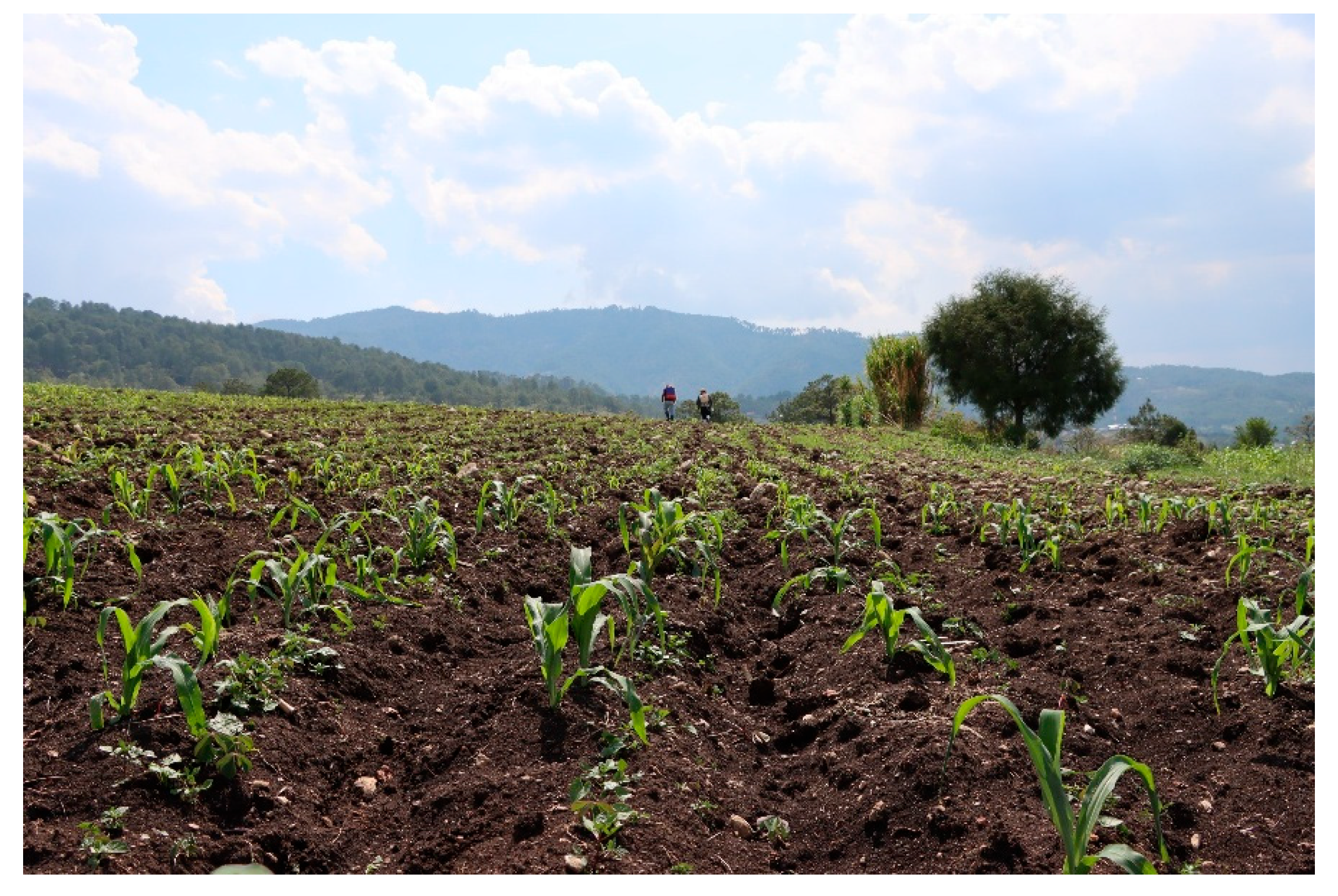
Figure A1 shows a young milpa (traditional cornfield) in Tlaxiaco, Oaxaca, at an early stage of growth after planting. Neatly aligned rows of native corn plants sprout from rich, dark soil, indicating recent cultivation, supported by biofertilization techniques with the use of Rhizobium jaguaris. In the background, a few community members can be seen walking through the field, underscoring the human connection to land and labor. The landscape is framed by mountainous forested hills under a partly cloudy sky, highlighting the region’s highland geography and agroecological setting. This image visually captures the integration of agriculture, community life, and natural beauty that defines the Tlaxiaco milpa system.
Figure A1.
Landscape that captures the integration of agriculture, community life, and natural beauty of the Tlaxiaco milpa system.
Figure A1.
Landscape that captures the integration of agriculture, community life, and natural beauty of the Tlaxiaco milpa system.
The Figure A2 captures the moment of preparing the biofertilizer mixture for the second application in a milpa in Llano de Guadalupe, Tlaxiaco. A large blue container is filled with a diluted solution containing Rhizobium jaguaris, a beneficial bacterium used to naturally enhance nitrogen fixation in native corn crops. Surrounding the barrel, community members and researchers stand ready to proceed with the application process. This preparation exemplifies a collaborative effort to promote agroecological practices in Mexico that reduce reliance on chemical inputs and improve soil fertility through microbial biotechnology, following best practices for plant growth–promoting rhizobacteria (PGPR) deployment [119].
Figure A2.
Preparation of the Second Biofertilization Mixture with Rhizobium jaguaris.
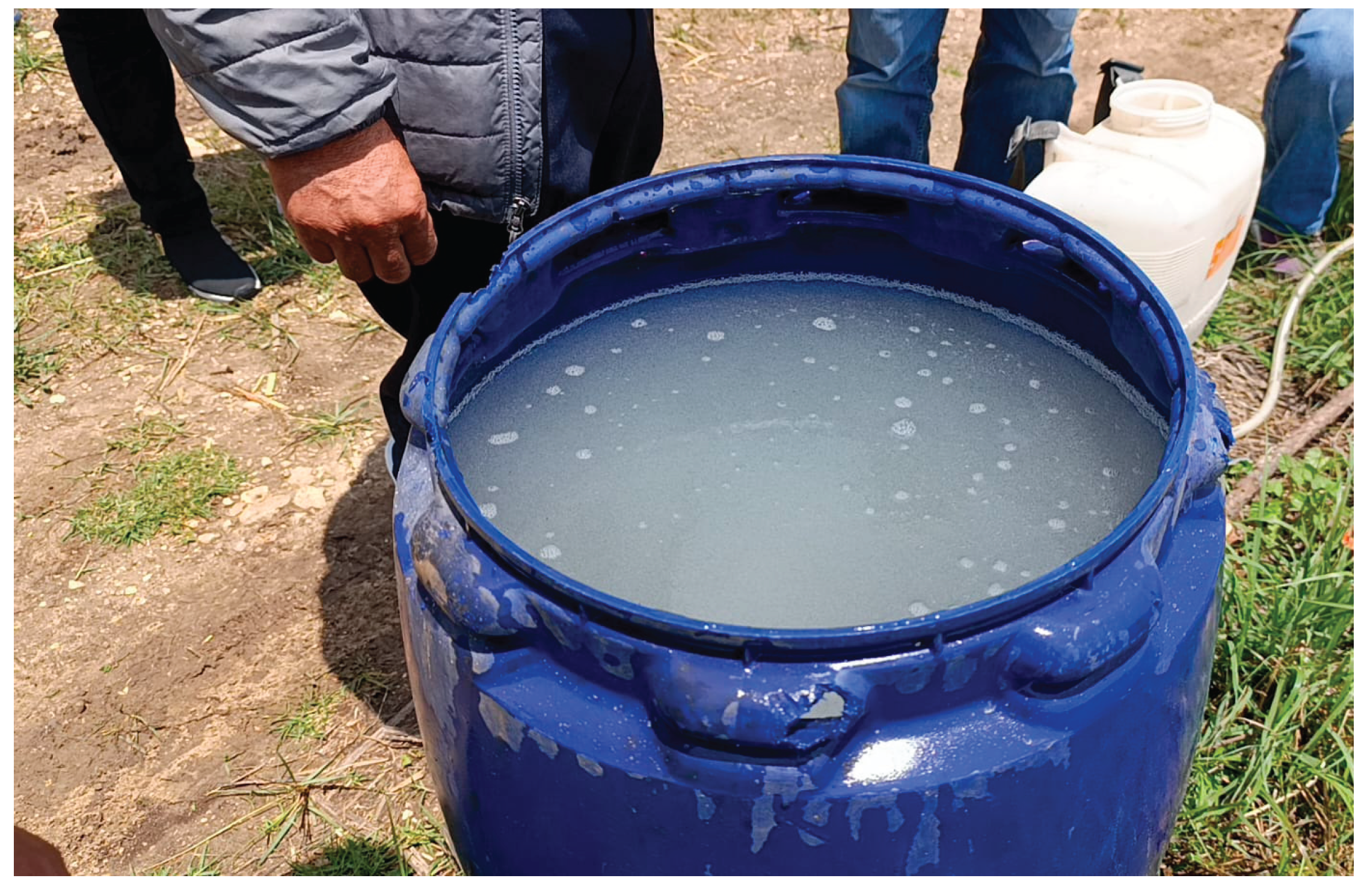
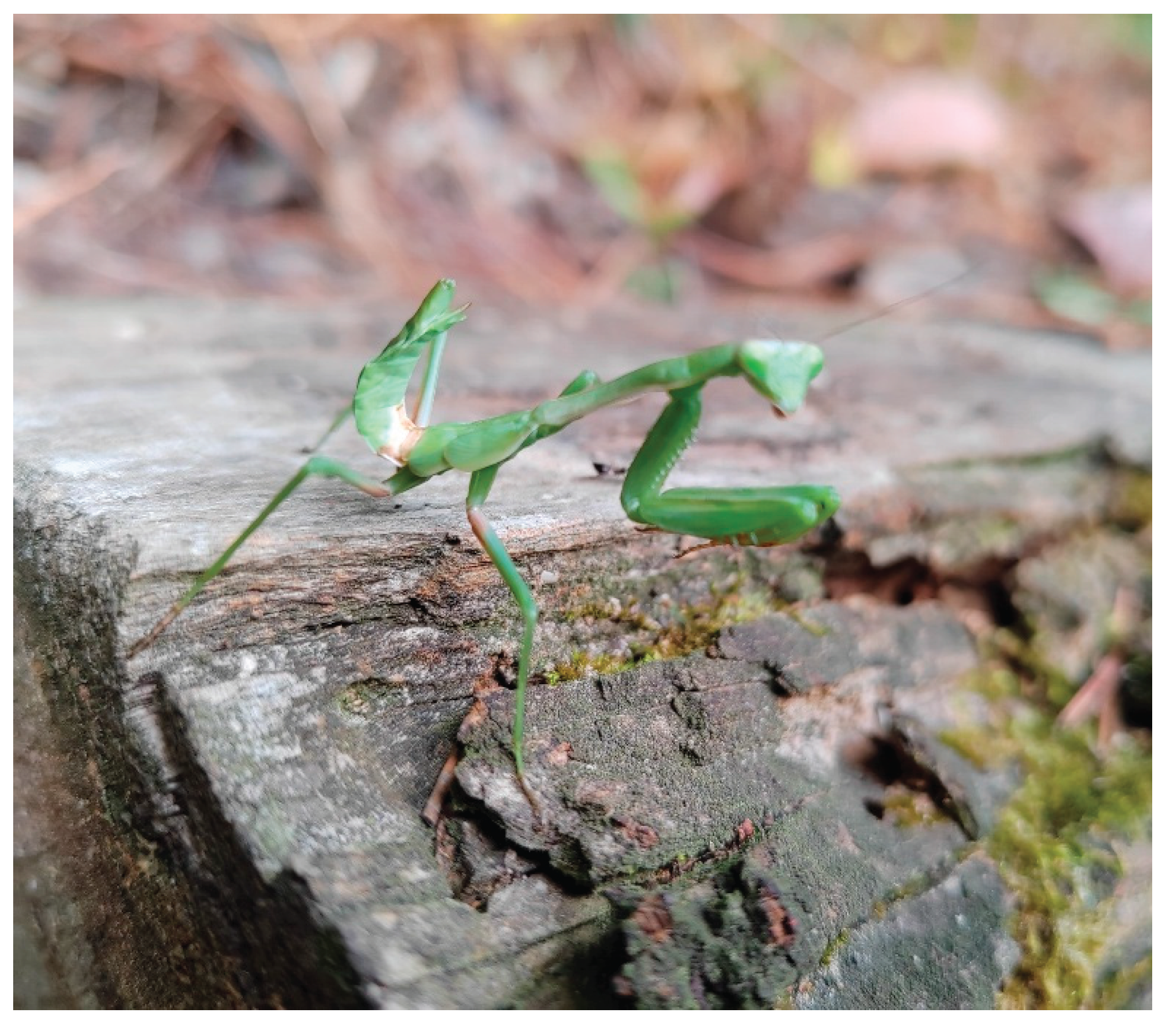
Figure A3 shows a praying mantis (Mantodea), photographed during a field visit in the Tlaxiaco region, Oaxaca. This green insect, well-camouflaged among the vegetation, was observed on a damp log near a biofertilized milpa. Its presence reflects the ecological balance and biodiversity found in agroecological systems managed without agrochemicals. The mantis is a natural predator of pests and serves as a biological indicator of environmental health [120], reinforcing the importance of conserving rural habitats as part of sustainable practices and experiential tourism offerings that include local fauna observation.
Figure A3.
Praying Mantis in a Biofertilized Milpa Ecosystem.
References
- Dirzo, R.; Brodhead, A.; Gregory, H. Bio-cultural diversity and community-based conservation in Oaxaca. Stanford Report, Available online: https://bosp.stanford.edu/explore/short-term-programs/bio-cultural-diversity-oaxaca ( accessed on 15 June 2025).
- Reyes-Santiago, M. R.; Méndez-García, E.; Sánchez-Medina, P. S. “A Mixed Methods Study on Community-Based Tourism as an Adaptive Response to Water Crisis in San Andrés Ixtlahuaca, Oaxaca, Mexico.” Sustainability 2022, 14, 5933.
- García-Padilla, E.; DeSantis, D.L.; Rocha, A.; Fucsko, L.A.; Johnson, J.D.; Lazcano-Villarreal, D. Biological and Cultural Diversity in the State of Oaxaca, Mexico: Strategies for Conservation among Indigenous Communities. Biol. Soc. 2022, 5, 48–72. [CrossRef]
- Leigh, D.S.; Kowalewski, S.A.; Holdridge, G. 3400 Years of Agricultural Engineering in Mesoamerica: Lama-Bordos of the Mixteca Alta, Oaxaca, Mexico. J. Archaeol. Sci. 2013, 40, 2061–2072. [CrossRef]
- Hernández-Aguilar, J.A.; Durán, E.; Cortina-Villar, H.S.; Velázquez, A. Landscape Approach to Support Regional Action in Communal Forest Management: The Case of the Mixteca Alta, Oaxaca, Mexico. Investigaciones Geográficas 2022, 109, 106–127. [CrossRef]
- Schmal, J. The Mixtecs and Zapotecs: Two Enduring Cultures of Oaxaca. Indigenous Mexico. Available online: https://www.indigenousmexico.org/articles/the-mixtecs-and-zapotecs-two-enduring-cultures-of-oaxaca (accessed on 15 June 2025).
- One Earth. Sierra Madre del Sur Pine-Oak Forests. Available online: https://www.oneearth.org/ecoregions/sierra-madre-del-sur-pine-oak-forests/ (accessed on 15 June 2025).
- Phillips, T. Fewer wildfires, great biodiversity: what is the secret to the success of Mexico’s forests? The Guardian. Available online: https://www.theguardian.com/global-development/2024/may/01/fewer-wildfires-great-biodiversity-what-is-the-secret-to-the-success-of-mexicos-forests (accessed on 15 June 2025).
- Cagle, N. Wildlife & Forest Management in Oaxaca: Prioritizing Biodiversity and Connectivity in Indigenous Communities of Oaxaca, Mexico. Available online: https://sites.nicholas.duke.edu/nicolettecagle/cagle-lab/applied-conservation-ecology/wildlife-forest-management-in-oaxaca/ (accessed on 15 June 2025).
- De Ávila, A. Mixtec Plant Nomenclature and Classification. Ph.D. Thesis, University of California, Berkeley, CA, USA, Fall 2010. https://escholarship.org/content/qt4pp843br/.
- Geoparque Mundial UNESCO Mixteca Alta. Patrimonio. Available online: https://geoparquemixtecaalta.org/patrimonio/ (accessed on 16 June 2025).
- Olivera, M. Notas sobre las actividades religiosas en Tlaxiaco. Anales del Instituto Nacional de Antropología e Historia 1982, 17, 129–151. Available online: https://revistas.inah.gob.mx/index.php/anales/article/view/7226/8069 (accessed on 16 June 2025).
- Ávila-Quiroz Mijangos, B.; Pérez-León, M.I.; Nahmad-Sitton, S. Ñiviñuun, Gente del Pueblo. La autoidentificación de un poblado mixteco en la costa de Oaxaca. Intersticios Sociales 2021, 12(23), 1–30. Available online: https://www.intersticiossociales.com/index.php/is/article/view/232/Versi%C3%B3n%20Final (accessed on 16 June 2025).
- Hernández Rodríguez, G.M.E.; Mariaca Méndez, R.; Vásquez Sánchez, M.Á.; Eroza Solana, E. Influencia de la cosmovisión del pueblo mixteco de Pinotepa de Don Luis, Oaxaca, México, en el uso y manejo del caracol púrpura, Plicopurpura pansa (Gould, 1853). UNAM–CEPHCIS. Available online: https://investigacion.cephcis.unam.mx/generoyrsociales/wp-content/uploads/2015/01/Hern%C3%A1ndez%20Rodr%C3%ADguez%20Griselda%20Ma.%20Eugenia.pdf (accessed on 16 June 2025).
- Secretaría de Turismo del Estado de Oaxaca. Evaluación de la Vocación Turística: Municipio de Heroica Ciudad de Tlaxiaco, Oaxaca; Gobierno del Estado de Oaxaca, Dirección de Planeación y Desarrollo Turístico, Departamento de Vocaciones Turísticas: Oaxaca, México, 2020. Available online: https://www.oaxaca.gob.mx/sectur/wp-content/uploads/sites/65/2020/01/Heroica-ciudad-de-Tlaxiaco.pdf (accessed on 16 June 2025).
- Cagle, N. Wildlife & Forest Management in Oaxaca: Prioritizing Biodiversity and Connectivity in Indigenous Communities of Oaxaca, Mexico. Available online: https://sites.nicholas.duke.edu/nicolettecagle/cagle-lab/applied-conservation-ecology/wildlife-forest-management-in-oaxaca/ (accessed on 19 May 2025).
- García Leyva, J. Al rescate de la lengua de la lluvia. Ojarasca. Available online: https://ojarasca.jornada.com.mx/2021/03/13/al-rescate-de-la-lengua-de-la-lluvia-287-1506.html (accessed on 19 May 2025).
- El Diario Mixteca. “Tlaxiaco celebrates with rich black mole, picadillo, and stuffed soup—delicacies during August festivities #Mixteca #SantaMariadelaAsunción.” Available online: https://www.facebook.com/share/p/16jnujSjMB/ (accessed on 16 June 2025).
- Cerveza de Mecate Tlaxiaqueña. Authentic Mecate Beer from Tlaxiaco. Available online: https://cervezademecatetlaxiaco.blogspot.com/2012/09/autentica-cerveza-de-mecate-tlaxiaquena.html (accessed on 16 June 2025).
- Vive Tlaxiaco. Mecate Beer and Local Delicacies from Tlaxiaco. Available online: https://www.facebook.com/share/p/196Pziq1aE/ (accessed on 16 June 2025).
- Bueno Sánchez, J.A. Crónicas de Oaxaca: Visita a Tlaxiaco. El Imparcial Oaxaca [online], 16 June 2025. Available online: https://imparcialoaxaca.mx/opinion/cronicas-de-oaxaca-visita-a-tlaxiaco/ (accessed on 16 June 2025).
- Honorable Ayuntamiento de Tlaxiaco. Semana Santa en Tlaxiaco 2025: Demostración artesanal de tejido de fibras vegetales. Tlaxiaco Gobierno Municipal [online], 11 April 2025. Available online: https://tlaxiaco.gob.mx/32/semana-santa-en-tlaxiaco-2025/ (accessed on 16 June 2025).
- Albarrán, A. Tlaxiaco disfruta de sus calendas. El Imparcial de Oaxaca [online], 10 August 2024. Available online: https://imparcialoaxaca.mx/los-municipios/tlaxiaco-disfruta-de-sus-calendas/ (accessed on 16 June 2025).
- Mixtequeando. Calenda en honor al Señor de la Columna. Segundo viernes de Cuaresma en Santa Catarina Yosonotu, Tlaxiaco. Facebook [online video], 2025. Available online: https://www.facebook.com/share/v/18gQaANo6h/ (accessed on 16 June 2025).
- Instituto Nacional de los Pueblos Indígenas (INPI). Etnografía del pueblo mixteco – Ñuu Savi. Gobierno de México [website], 2018. Available online: https://www.gob.mx/inpi/articulos/etnografia-del-pueblo-mixteco-nuu-savi (accessed on 16 June 2025).
- Rieger, I.A. Chameleonic Traditions in the Festive Practices of a Mixtec Transnational Community. Rev. Reflexiones 2019, 98, 111–129. [CrossRef]
- Vive Tlaxiaco. Día de la Samaritana: Una Tradición muy Oaxaqueña. Facebook. Available online: https://www.facebook.com/ViveTlaxiaco/posts/667464355640847/ (accessed on 16 June 2025).
- Echavarria, M. Tejiendo México: El algodón coyuchi en San Juan Colorado y la lana de Teotitlán. Travesías Digital. Available online: https://www.travesiasdigital.com/comercial/tejiendo-mexico-con-lincoln-por-oaxaca-san-juan-colorado-teotitlan-del-valle/ (accessed on 16 June 2025).
- Klein, K. (Ed.). The Unbroken Thread: Conserving the Textile Traditions of Oaxaca; The Getty Conservation Institute: Los Angeles, CA, USA, 1997. Available online: https://www.getty.edu/conservation/publications_resources/pdf_publications/pdf/unbroken_thread_eng_vl.pdf (accessed on 16 June 2025).
- Getty Conservation Institute. The Unbroken Thread: Conserving the Textile Traditions of Oaxaca; Getty Conservation Institute: Los Angeles, CA, USA, n.d. Available online: https://www.getty.edu/conservation/publications_resources/pdf_publications/pdf/unbroken_thread_eng_vl.pdf (accessed on 16 June 2025).
- La Brisa De Mi Huerto. Venta de té limón. Facebook. Available online: https://www.facebook.com/groups/765771927644267/posts/1702061110682006/ (accessed on 16 June 2025).
- Municipio de Tlaxiaco. Sabores Tradicionales de Tlaxiaco. Facebook. Available online: https://www.facebook.com/share/v/16osd9v6E3/ (accessed on 16 June 2025).
- López, R. Prevalece la medicina indígena tradicional en Tlaxiaco. El Imparcial de Oaxaca. Available online: https://imparcialoaxaca.mx/los-municipios/prevalece-la-medicina-indigena-tradicional-en-tlaxiaco/ (accessed on 16 June 2025).
- Instituto Mexicano del Seguro Social (IMSS). Compromiso cumplido: Tlaxiaco cuenta con nuevo Hospital Rural de IMSS-Bienestar. IMSS Comunicado No. 165/2020. Available online: https://www.imss.gob.mx/prensa/archivo/%20202004/165 (accessed on 16 June 2025).
- Páez Tinoco, M.C. Unidades de Producción Familiar de Trigo en la Mixteca de Oaxaca. Master’s Thesis, Instituto Tecnológico del Valle de Oaxaca, Oaxaca, Mexico, January 2023. Available online: https://rinacional.tecnm.mx/jspui/bitstream/TecNM/6744/1/TESIS%20MARIA%20CRISTINA%20PAEZ%20TINOCO.pdf (accessed on 16 June 2025).
- Katz, E.; Vargas, L.A. Cambio y continuidad en la alimentación de los mixtecos. Anales de Antropología 1990, 27, 15–51. Available online: https://www.revistas.unam.mx/index.php/antropologia/article/view/15716 (accessed on 16 June 2025).
- Delgado Nute, M. Celebrando a las palmeadoras. Fundación Tortilla. Available online: https://fundaciontortilla.org/Cultura/celebrando_a_las_palmeadoras (accessed on 16 June 2025).
- Ortega Ortega, T.; Vázquez García, V.; Flores Sánchez, D.; Núñez Espinoza, J.F. Agrobiodiversity, gender and food sovereignty in Tlaxiaco, Oaxaca. Rev. Mex. Cienc. Agríc. 2017, 8(18), 3897–3910. [CrossRef]
- Vázquez García, V.; Nuñez Espinoza, J.F.; Ortega Ortega, T. Estructura y resiliencia social en comunidades indígenas: el caso de la Unión de Palmeadoras de Tlaxiaco, Oaxaca, México. Redes 2018, 29(2), 206–225. [CrossRef]
- Martínez-López, L.; Zapata-Martelo, E.; Ayala-Carrillo, M.R.; Martínez-Corona, B.; Vázquez-Carrillo, G.; Jacinto-Hernández, C.; Espinosa-Calderón, A. Practical and theoretical knowledge of corn and beans in the Triqui High Region, Oaxaca. Rev. Mex. Cienc. Agríc. 2018, 9(1), 207–220. [CrossRef]
- Espinosa-Pérez, E.N.; Ramírez-Vallejo, P.; Crosby-Galván, M.M.; Estrada-Gómez, J.A.; Lucas-Florentino, B.; Chávez-Servia, J.L. Classification of Native Populations of Common Bean from South-Central Mexico by Seed Morphology. Rev. Fitotec. Mex. 2015, 38(1), 29–38. Available online: http://www.scielo.org.mx/scielo.php?script=sci_arttext&pid=S0187-73802015000100005 (accessed on 16 June 2025).
- El Yolomecano. Elaboración del QUESO | población de la Capilla del Carrizal, Tlaxiaco, Oaxaca. YouTube Video, 2 July 2022. Available online: https://youtu.be/2o3gezgaxWk?si=B50uztRYbFwLPSF2 (accessed on 16 June 2025).
- Mixtequeando. Desde Llano de Guadalupe, Tlaxiaco. Lugar dónde aún se elaboran los ricos quesos criollos. Available online: https://www.facebook.com/share/v/1Embt7QKRe/ (accessed on 16 June 2025).
- López, R. En Ojo de Agua, Tlaxiaco, logran alimentación sana para sus familias. El Imparcial 2019. Available online: https://imparcialoaxaca.mx/los-municipios/en-ojo-de-agua-tlaxiaco-logran-alimentacion-sana-para-sus-familias/ (accessed on 16 June 2025).
- Hecho en Oaxaca. Guisado de frutas, platillo de salvaguarda en Tlaxiaco. Leche con Tuna 2022. Available online: https://lechecontuna.com/2022/03/04/guisado-de-frutas-platillo-de-salvaguarda-en-tlaxiaco/ (accessed on 16 June 2025).
- Municipio de Tlaxiaco. Mercado: Día de Plaza en Tlaxiaco. 12 August 2023. Available online: https://lechecontuna.com/2023/08/12/dia-de-plaza-en-tlaxiaco/ (accessed on 16 June 2025).
- Maíz Cocina Tradicional. Agua de Chilacayota – bebida tradicional oaxaqueña. Available online: https://www.facebook.com/reel/1644295609673141 (accessed on 16 June 2025).
- Ayuntamiento de Tlaxiaco. Día de la Samaritana. Available online: https://tlaxiaco.gob.mx/53/dia-de-la-samaritana-2/ (accessed on 16 June 2025).
- Peach, Y. La Mesa del Rincón: Un rincón de tradición en Tlaxiaco. Leche con Tuna. Available online: https://lechecontuna.com/2024/04/25/la-mesa-del-rincon-un-rincon-de-tradicion-en-tlaxiaco/ (accessed on 16 June 2025).
- El Universal Oaxaca. Huevos de colores de Oaxaca y el origen de su peculiar pigmento. El Universal. Available online: https://oaxaca.eluniversal.com.mx/mas-de-oaxaca/huevos-de-colores-de-oaxaca-y-el-origen-de-su-peculiar-pigmento/ (accessed on 16 June 2025).
- Gobierno del Estado de Oaxaca. Huajuapan de León celebra la Feria del Mezcal de la Mixteca, cuarta edición. Gobierno del Estado de Oaxaca. Available online: https://www.oaxaca.gob.mx/comunicacion/huajuapan-de-leon-celebra-la-feria-del-mezcal-de-la-mixteca-cuarta-edicion/ (accessed on 16 June 2025).
- Vázquez García, V.; Ramírez Castillo, R.; Hernández Juárez, M. Género, clase y etnicidad en la producción de mezcal. Una genealogía familiar en Valles Centrales, Oaxaca. EntreDiversidades 2024, 21, e202403. [CrossRef]
- Comisión Nacional para el Conocimiento y Uso de la Biodiversidad (CONABIO). Fichas Técnicas de los Agaves de Oaxaca. Proyecto NE012. Available online: http://www.conabio.gob.mx/institucion/proyectos/resultados/NE012_Anexo_Fichas_agave.pdf (accessed on 16 June 2025).
- Redacción DM. Tlaxiaco vive fiesta de fraternidad. Diario de la Mixteca 2017. Available online: https://www.diariodelamixteca.com/tlaxiaco/tlaxiaco-vive-fiesta-de-fraterniadad.html (accessed on 16 June 2025).
- Chávez García, M. La morfogénesis urbana de la Heroica Ciudad de Tlaxiaco, Oaxaca. Anuario de Espacios Urbanos. Historia, Cultura, Diseño 2020, 7, 1–21. Available online: https://espaciosurbanos.azc.uam.mx/index.php/path/article/view/31/650 (accessed on 16 June 2025). [CrossRef]
- VIVE Tlaxiaco. La Samaritana en Tlaxiaco Oaxaca. Facebook. Available online: https://www.facebook.com/ViveTlaxiaco/posts/666574489063167 (accessed on 16 June 2025).
- Pérez García, C. Así se come en Tlaxiaco. NVI Noticias 2019. Available online: https://www.nvinoticias.com/gastronomia/asi-se-come-en-tlaxiaco/40256 (accessed on 17 June 2025).
- Chefs Jaime y Ramiro. Todas las delicias que uno encuentra en el Mercado de Tlaxiaco. YouTube 2022. Available online: https://youtu.be/RhW2BJU14HA (accessed on 17 June 2025).
- Secretaría de Economía. Distribución geográfica de remesas en la Heroica Ciudad de Tlaxiaco. Data México 2025. Available online: https://www.economia.gob.mx/datamexico/es/profile/geo/heroica-ciudad-de-tlaxiaco#remittances (accessed on 17 June 2025).
- Lugo-Espinosa, G., Acevedo-Ortiz, M. A., Aquino-Bolaños, T., Ortiz-Hernández, Y. D., Ortiz-Hernández, F. E., Pérez-Pacheco, R., & López-Cruz, J. Y. (2024). Cultural Heritage, Migration, and Land Use Transformation in San José Chiltepec, Oaxaca. Land, 13(10), 1658. [CrossRef]
- CIMMYT. Tequio fortalece la cadena de valor del maíz en Oaxaca. Centro Internacional de Mejoramiento de Maíz y Trigo – Noticias 2020, 31 de agosto de 2020. Disponible en: https://www.cimmyt.org/es/noticias/tequio-fortalece-la-cadena-de-valor-del-maiz-en-oaxaca/.
- Chávez Servia, J.L.; Diego Flores, P. Familias campesinas y variación fenotípica de poblaciones nativas de maíz en la región de Tlaxiaco, Oaxaca. Desarrollo, Ambiente y Cultura 2011, 1(1), Instituto Politécnico Nacional, Unidad Oaxaca. Available online: https://www.researchgate.net/publication/225069907 (accessed on 23 June 2025).
- Tech & Leadership. Puesto de queso fresco y tamales en Tlaxiaco, Oaxaca. YouTube, 2024. Available online: https://youtube.com/shorts/MPJgBpOs8Kg?si=pdYlYMHqpUKoMk7y (accessed on 24 June 2025).
- Ortega Ortega, T.; Vázquez García, V.; Flores Sánchez, D.; Núñez Espinoza, J.F. Agrobiodiversity, gender and food sovereignty in Tlaxiaco, Oaxaca. Rev. Mex. Cienc. Agríc. 2017, 8(spe18), 3853–3866. Available online: https://www.scielo.org.mx/scielo.php?script=sci_arttext_plus&pid=S2007-09342017001003673&lng=es&tlng=en (accessed on 24 June 2025).
- Cocina Con Gabby. Chorizo Oaxaqueño Casero | Con un Gran Sabor y Color unas de las Mejores Recetas que puedes Hacer. YouTube, n.d. Available online: https://www.youtube.com/watch?v=-4U-4nY8B3Y (accessed on 24 June 2025).
- Semblanza Oaxaqueña. Carnita de chicharrón, chorizo, manteca, carne enchilada, costilla y más en el mercado municipal de Tlaxiaco. Facebook, n.d. Available online: https://www.facebook.com/share/v/16Y1Ms7mB8/ (accessed on 24 June 2025).
- Semblanza Oaxaqueña. Tasajo del bueno en el mercado municipal de Tlaxiaco. Facebook. Available online: https://www.facebook.com/share/p/1HXBYN8RhR/ (accessed on 24 June 2025).
- Secretaría de Turismo del Estado de Oaxaca. ¡El maíz es la base de la alimentación oaxaqueña! Celebración del Día Estatal del Maíz Nativo. Facebook, 29 September 2024. Available online: https://www.facebook.com/share/p/1Bh8SFmvbF/ (accessed on 24 June 2025).
- Pérez, W. Bajo el calor del atole. Fundación Tortilla, 1 November 2022. Available online: https://fundaciontortilla.org/Cocina/bajo_el_calor_del_atole (accessed on 24 June 2025).
- Nochixtlan Bonito. Masita y taco de Barbacoa de #Tlaxiaco #Oaxaca, la masita en Nochixtlan es blanca y en Tlaxiaco es enchilada ambas están muy ricas #GastronomiaDeNuestraMixteca. Facebook. Available online: https://www.facebook.com/share/p/15sV8oaMMz/ (accessed on 11 July 2025).
- Fonteyne, S.; Castillo Caamal, J.B.; Lopez-Ridaura, S.; Van Loon, J.; Espidio Balbuena, J.; Osorio Alcalá, L.; Martínez Hernández, F.; Odjo, S.; Verhulst, N. Review of agronomic research on the milpa, the traditional polyculture system of Mesoamerica. Front. Agron. 2023, 5, 1115490. [CrossRef]
- Aguilar Avila, H. La milpa una forma de vida en Ñuu Kene Ndute (Ojo de Agua). Master’s Thesis, Universidad Autónoma Metropolitana, Unidad Xochimilco, Ciudad de México, México, December 2017. Available online: https://repositorio.xoc.uam.mx/jspui/bitstream/123456789/936/1/190035.pdf (accessed on 11 July 2025).
- Méndez Hernández, Á.; Hernández Hernández, A.A.; López Santiago, M.C.; Morales López, J. Herbolaria oaxaqueña para la salud, 1st ed.; Instituto Nacional de las Mujeres: Ciudad de México, México, 2009; ISBN 978-607-95272-1-1. Available online: http://cedoc.inmujeres.gob.mx/documentos_download/101102.pdf (accessed on 11 July 2025).
- París Pombo, M.D. Youth Identities and the Migratory Culture among Triqui and Mixtec Boys and Girls. Migr. Int. 2010, 5, 139–164. Available online: http://www.scielo.org.mx/scielo.php?script=sci_arttext&pid=S1665-89062010000200005 (accessed on 11 July 2025).
- Reyes-Santiago, M.D.R.; Méndez-García, E.; Sánchez-Medina, P.S. A Mixed Methods Study on Community-Based Tourism as an Adaptive Response to Water Crisis in San Andrés Ixtlahuaca, Oaxaca, Mexico. Sustainability 2022, 14, 5933. [CrossRef]
- Gingell, J. Viva Zapotec! A Thriving Ecotourism Project in Mexico’s Oaxaca State. The Guardian 2025, 28 April. Available online: https://www.theguardian.com/travel/2025/apr/28/viva-zapotec-a-thriving-ecotourism-project-in-mexicos-oaxaca-state (accessed on 11 July 2025).
- Oropeza-Tosca, D.; Jiménez-Márquez, O.; Martínez-Gutiérrez, R.; Lucas-Bravo, G.; Rincón-Molina, C. Experiential and Sustainable Tourism: Teaching with Artificial Intelligence to Native Corn Producers in Tlaxiaco, Oaxaca. In Training, Education, and Learning Sciences; Nazir, S., Ed.; AHFE Open Access: USA, 2025; Volume 193. [CrossRef]
- Martínez-Martínez, D.A.; Matías-Pérez, D.; Varapizuela-Sánchez, C.F.; Hernández-Bautista, E.; Sánchez-Medina, M.A.; García-Montalvo, I.A. Quesillo: a Cultural and Economic Legacy in Oaxaca through the Social and Solidarity Economy. Front. Sustain. Food Syst. 2024, 8, 1496193. [CrossRef]
- Novotny, I.P.; Tittonell, P.; Fuentes-Ponce, M.H.; López-Ridaura, S.; Rossing, W.A.H. The Importance of the Traditional Milpa in Food Security and Nutritional Self-Sufficiency in the Highlands of Oaxaca, Mexico. PLOS ONE 2021, 16, e0246281. [CrossRef]
- Stainton, H. Tourism in Oaxaca. Tourism Teacher 2023. Available online: https://tourismteacher.com/tourism-in-oaxaca/ (accessed on 11 July 2025).
- Sosa, M.; Aulet, S.; Mundet, L. Community-Based Tourism through Food: A Proposal of Sustainable Tourism Indicators for Isolated and Rural Destinations in Mexico. Sustainability 2021, 13, 6693. [CrossRef]
- Avalos-Rangel, M.A.; Campbell, D.E.; Reyes-López, D.; Rueda-Luna, R.; Munguía-Pérez, R.; Huerta-Lara, M. The Environmental-Economic Performance of a Poblano Family Milpa System: An Emergy Evaluation. Sustainability 2021, 13, 9425. [CrossRef]
- Acevedo-Ortiz, M.A.; Lugo-Espinosa, G.; Ortiz-Hernández, Y.D.; Pérez-Pacheco, R.; Ortiz-Hernández, F.E.; Martínez-Tomás, S.H.; Tavera-Cortés, M.E. Nature-Based Solutions for Conservation and Food Sovereignty in Indigenous Communities of Oaxaca. Sustainability 2024, 16, 8151. [CrossRef]
- Hirami, N.; Hidalgo Morales, M.R. Sustainable Community-Based Ecotourism Development Mechanism: Oaxaca and Puebla Cases in Mexico. Ciencia Latina Revista Científica Multidisciplinar 2024, 8(4), 11684–11702. [CrossRef]
- Rocandio-Rodríguez, M.; Santacruz-Varela, A.; Córdova-Téllez, L.; López-Sánchez, H.; Hernández-Bautista, A.; Castillo-González, F.; Lobato-Ortiz, R.; García-Zavala, J.J.; Antonio López, P. Estimation of Genetic Diversity in Seven Races of Native Maize from the Highlands of Mexico. Agronomy 2020, 10, 309. [CrossRef]
- Aragón-Martínez, M.; Serrato-Díaz, A.; Rocha-Munive, M.G.; Martínez-Castillo, J.; Perales, H.; Álvarez-Buylla, E.R. Traditional Management of Maize in the Sierra Sur, Oaxaca, Maintains Moderate Levels of Genetic Diversity and Low Population Differentiation Among Landraces. Econ. Bot. 2023, 77, 282–304. [CrossRef]
- Maranto-Gómez, V.M.; Rincón-Molina, C.I.; Manzano-Gómez, L.A.; Gen-Jiménez, A.; Maldonado-Gómez, J.C.; Villalobos-Maldonado, J.J.; Ruiz-Valdiviezo, V.M.; Rincón-Rosales, R.; Rincón-Molina, F.A. Plant Probiotic Potential of Native Rhizobia to Enhance Growth and Sugar Content in Agave tequilana Weber var. Blue. Horticulturae 2025, 11, 137. [CrossRef]
- Pskowski, M. Indigenous Maize: Who Owns the Rights to Mexico’s ‘Wonder’ Plant? Yale Environment 360 2019. Available online: https://e360.yale.edu/features/indigenous-maize-who-owns-the-rights-to-mexicos-wonder-plant (accessed on 11 July 2025).
- Velasco-Murguía, A.; del Castillo, R.F.; Rös, M.; Rivera-García, R. Successional Pathways of Post-Milpa Fallows in Oaxaca, Mexico. For. Ecol. Manag. 2021, 500, 119644. [CrossRef]
- Rogé, P.; Friedman, A.R.; Astier, M.; Altieri, M.A. Farmer Strategies for Dealing with Climatic Variability: A Case Study from the Mixteca Alta Region of Oaxaca, Mexico. Agroecol. Sustain. Food Syst. 2014, 38(7), 786–811. [CrossRef]
- Orozco-Ramírez, Q.; Bocco, G.; Solís-Castillo, B. Cajete maize in the Mixteca Alta region of Oaxaca, Mexico: adaptation, transformation, and permanence. Agroecol. Sustain. Food Syst. 2019, 44(9), 1162–1184. [CrossRef]
- Nixtamal99. Poetic Language of the Maguey. Masa Americana. 28 May 2021. Available online: https://masaamerica.com/2021/05/28/poetic-language-of-the-maguey/ (accessed on 11 July 2025).
- Martínez-Cruz, T.; Camacho-Villa, T.C.; Adelman, L. Indigenous Peoples and the Making of Resilient Life: Hybridizing the Culture of Maize to Achieve Food Sovereignty. In Food and Humanitarian Crises: Science and Policies for Prevention and Mitigation; Pontificia Academia Scientiarum: Vatican City, 2023. Available online: https://www.pas.va/en/publications/scripta-varia/sv154pas/martinez_cruz.html (accessed on 29 July 2025).
- Ramírez, C.A. Descubra el singular Agave Cupreata (Agave Papalome). Del Maguey Blog 2024. Available online: https://delmaguey.com/es/agave-cupreata/ (accessed on 29 July 2025).
- Mardero, S.; Schmook, B.; Calmé, S.; White, R.M.; Joo Chang, J.C.; Casanova, G.; Castelar, J. Traditional knowledge for climate change adaptation in Mesoamerica: A systematic review. Soc. Sci. Humanit. Open 2023, 7, 100473. [CrossRef]
- Sandoval-Copado, J.; Orozco-Villafuerte, J.; Pedrero-Fuehrer, D.; Colín-Cruz, M.A. Sensory Profile Development of Oaxaca Cheese and Relationship with Physicochemical Parameters. J. Dairy Sci. 2016, 99(9), 7075–7084. [CrossRef]
- Carrillo-López, L.M.; Huerta-Jiménez, M.; Morales-Rodríguez, S.; Gámez-Piñón, J.R.; Carballo-Carballo, D.E.; Gutiérrez-Méndez, N.; Alarcón-Rojo, A.D. Textural, Rheological, and Sensory Modifications in Oaxaca Cheese Made with Ultrasonicated Raw Milk. Processes 2023, 11, 1122. [CrossRef]
- Gutiérrez-Méndez, N.; Rodríguez-Figueroa, J.C.; González-Córdova, A.F.; Nevárez-Moorillón, G.V.; Rivera-Chavira, B.; Vallejo-Cordoba, B. Phenotypic and Genotypic Characteristics of Lactococcus lactis Strains Isolated from Different Ecosystems. Can. J. Microbiol. 2010, 56(5), 432–439. [CrossRef]
- Warinner, C.; Robles Garcia, N.; Tuross, N. Maize, Beans and the Floral Isotopic Diversity of Highland Oaxaca, Mexico. J. Archaeol. Sci. 2013, 40(2), 868–873. [CrossRef]
- Dots on a Map. 15 Traditional Oaxacan Foods You Have to Try. Available online: https://www.dotsonamap.net/traditional-oaxacan-foods/ (accessed on 25 August 2025).
- Secretaría de Agricultura y Desarrollo Rural (SADER). Los orígenes del mixiote. Gobierno de México, 22 August 2025. Available online: https://www.gob.mx/agricultura/articulos/los-origenes-del-mixiote (accessed on 25 August 2025).
- Fonteyne, S.; Castillo Caamal, J.B.; Lopez-Ridaura, S.; Van Loon, J.; Espidio Balbuena, J.; Osorio Alcalá, L.; Martínez Hernández, F.; Odjo, S.; Verhulst, N. Review of Agronomic Research on the Milpa, the Traditional Polyculture System of Mesoamerica. Front. Agron. 2023, 5, 1115490. [CrossRef]
- Siles, P. Fertilidad de los suelos en sistemas de pastos, café y cacao en el TeSAC Nicaragua. CGIAR Research Program on Climate Change, Agriculture and Food Security (CCAFS): Managua, Nicaragua, 2019. Available online: https://hdl.handle.net/10568/107227.
- Severiano-Pérez, P.; Cristians, S.; Bye, R.; et al. Quelites Pasados of the Sierra Tarahumara, Chihuahua, Mexico: An Interdisciplinary Ethnobotanical Study of Leafy Green Vegetables. Econ. Bot. 2023, 77, 433–454. [CrossRef]
- Slotten, V.; Lentz, D.; Sheets, P. Landscape Management and Polyculture in the Ancient Gardens and Fields at Joya de Cerén, El Salvador. J. Anthropol. Archaeol. 2020, 59, 101191. [CrossRef]
- Arnés, E.; Astier, M. Handmade Comal Tortillas in Michoacán: Traditional Practices along the Rural-Urban Gradient. Int. J. Environ. Res. Public Health 2019, 16, 3211. [CrossRef]
- Pope, V. The Communal Table: Communal Meal Traditions in Milpa Alta, Mexico. National Geographic, 2025. Available online: https://www.nationalgeographic.com/foodfeatures/communal-table/ (accessed on 25 August 2025).
- Capra, F.; Luisi, P.L. The Systems View of Life: A Unifying Vision; Cambridge University Press: Cambridge, UK, 2014. [CrossRef]
- Bost, J.A.Y.; et al. Edible Plants of the Chinantla, Oaxaca, Mexico with an Emphasis on Quelites. Univ. Res. Argo. 2009, —, —. Available online: https://www.avocadosource.com/papers/research_articles/bostjay2009.pdf.
- Peinado-Guevara, V.M.; Peinado-Guevara, H.J.; Sánchez-Alcalde, M.C.; González-Félix, G.K.; Herrera-Barrientos, J.; Ladrón de Guevara-Torres, M.d.l.Á.; Cuadras-Berrelleza, A.A. Backyard Activities as Sources of Social and Personal Well-Being: A Study of the Mexican Population (Guasave, Sinaloa). Soc. Sci. 2024, 13, 462. [CrossRef]
- Avilez-López, T.; van der Wal, H.; Aldasoro-Maya, E.; et al. Home Gardens’ Agrobiodiversity and Owners’ Knowledge of Their Ecological, Economic and Socio-Cultural Multifunctionality: A Case Study in the Lowlands of Tabasco, México. J. Ethnobiol. Ethnomed. 2020, 16, 42. [CrossRef]
- Medina, F.-X.; Vázquez-Medina, J.A.; Covarrubias, M.; Jiménez-Serna, A. Gastronomic Sustainable Tourism and Social Change in World Heritage Sites. The Enhancement of the Local Agroecological Products in the Chinampas of Xochimilco (Mexico City). Sustainability 2023, 15, 16078. [CrossRef]
- Sharer, E.J. Agroecology and Culinary Tourism: The Regeneration of Native Food Systems in Juluchuca, Guerrero, Mexico. Unpublished Thesis, Colorado College, Department of Anthropology, Colorado Springs, CO, USA, 2012. Available online: https://digitalcc.coloradocollege.edu/record/2087/files/Agroecology%20and%20Culinary%20Tourism%20the%20Regeneration%20of%20Native%20Food%20Systems%20in%20Juluchuca%2C%20Guerrero%2C%20Mexico.pdf (accessed on 25 August 2025).
- Gen-Jiménez, A.; Flores-Félix, J.D.; Rincón-Molina, C.I.; Manzano-Gómez, L.A.; Villalobos-Maldonado, J.J.; Ruiz-Lau, N.; Roca-Couso, R.; Ruíz-Valdiviezo, V.M.; Rincón-Rosales, R. Native Rhizobium Biofertilization Enhances Yield and Quality in Solanum lycopersicum under Field Conditions. World J. Microbiol. Biotechnol. 2025, 41(4), 126. [CrossRef]
- Oropeza-Tosca, D.R.; Rincón-Molina, C.I.; Baptista, A.; Notario-Priego, R. Perspective Chapter: Development of Business in Rural Southeastern Mexican Communities and Environmental Awareness. In Degrowth and Green Growth—Sustainable Innovation; Martínez-Gutiérrez, R., Ed.; IntechOpen: London, UK, 2024; pp. 1–24. [CrossRef]
- Rincón-Rosales, R.; Villalobos-Escobedo, J.M.; Rogel, M.A.; Martínez, J.; Ormeño-Orrillo, E.; Martínez-Romero, E. Rhizobium calliandrae sp. nov., Rhizobium mayense sp. nov. and Rhizobium jaguaris sp. nov., Rhizobial Species Nodulating the Medicinal Legume Calliandra grandiflora. Int. J. Syst. Evol. Microbiol. 2013, 63(9), 3423–3429. [CrossRef]
- Jiménez Márquez, O.; Soria Saavedra, R.; Pesce Gomez, A. Una Opción de Turismo Alternativo y Vivencial, Caso la Microcuenca Río Delgado. In La Producción de Conocimiento en las Ciencias Sociales Aplicadas; Atena Editora: Ponta Grossa, Brasil, 2023; Capítulo 6, pp. 58–76. Available online: https://atenaeditora.com.br/catalogo/dowload-post/77104 (accessed on 25 August 2025).
- Martínez-Gutiérrez, R.; Barreto-Canales, I.G.; Lucas-Bravo, G.; Moreno-Cabral, S. SDG Voluntary Local Reports (VLRs): Analysis of Glocal Sustainable Innovation. In Degrowth and Green Growth—Sustainable Innovation; IntechOpen: London, UK, 2025. [CrossRef]
- Aloo, B.N.; Tripathi, V.; Makumba, B.A.; Mbega, E.R. Plant Growth-Promoting Rhizobacterial Biofertilizers for Crop Production: The Past, Present, and Future. Front. Plant Sci. 2022, 13, 1002448. [CrossRef]
- Battiston, R.; di Pietro, W.; Amerini, R.; Sciberras, A. The Praying Mantids (Insecta: Mantodea) as Indicators for Biodiversity and Environmental Conservation: A Case Study from the Maltese and Balearic Archipelagos. Biodiversity 2020, 21(3), 142–149. [CrossRef]
Figure 1.
Organizational Scheme of a Self-Sufficient, Agroecological, and Culturally Rooted Farm: The Integrated Rural System of Tlaxiaco.
Figure 1.
Organizational Scheme of a Self-Sufficient, Agroecological, and Culturally Rooted Farm: The Integrated Rural System of Tlaxiaco.
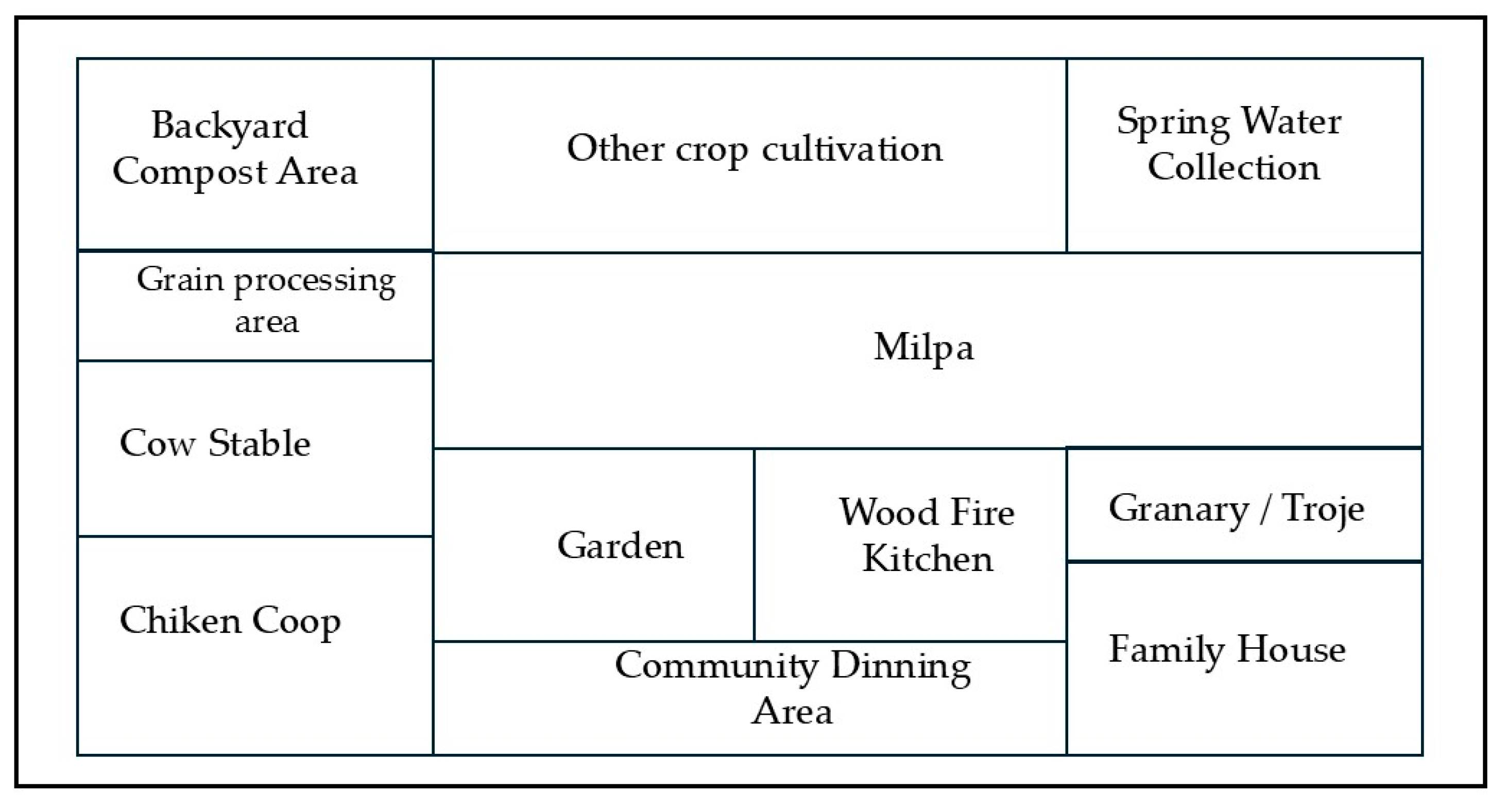
Figure 2.
Organizational Scheme of a Self-Sufficient, Agroecological, and Culturally Rooted Farm: The Integrated Rural System of Tlaxiaco.
Figure 2.
Organizational Scheme of a Self-Sufficient, Agroecological, and Culturally Rooted Farm: The Integrated Rural System of Tlaxiaco.
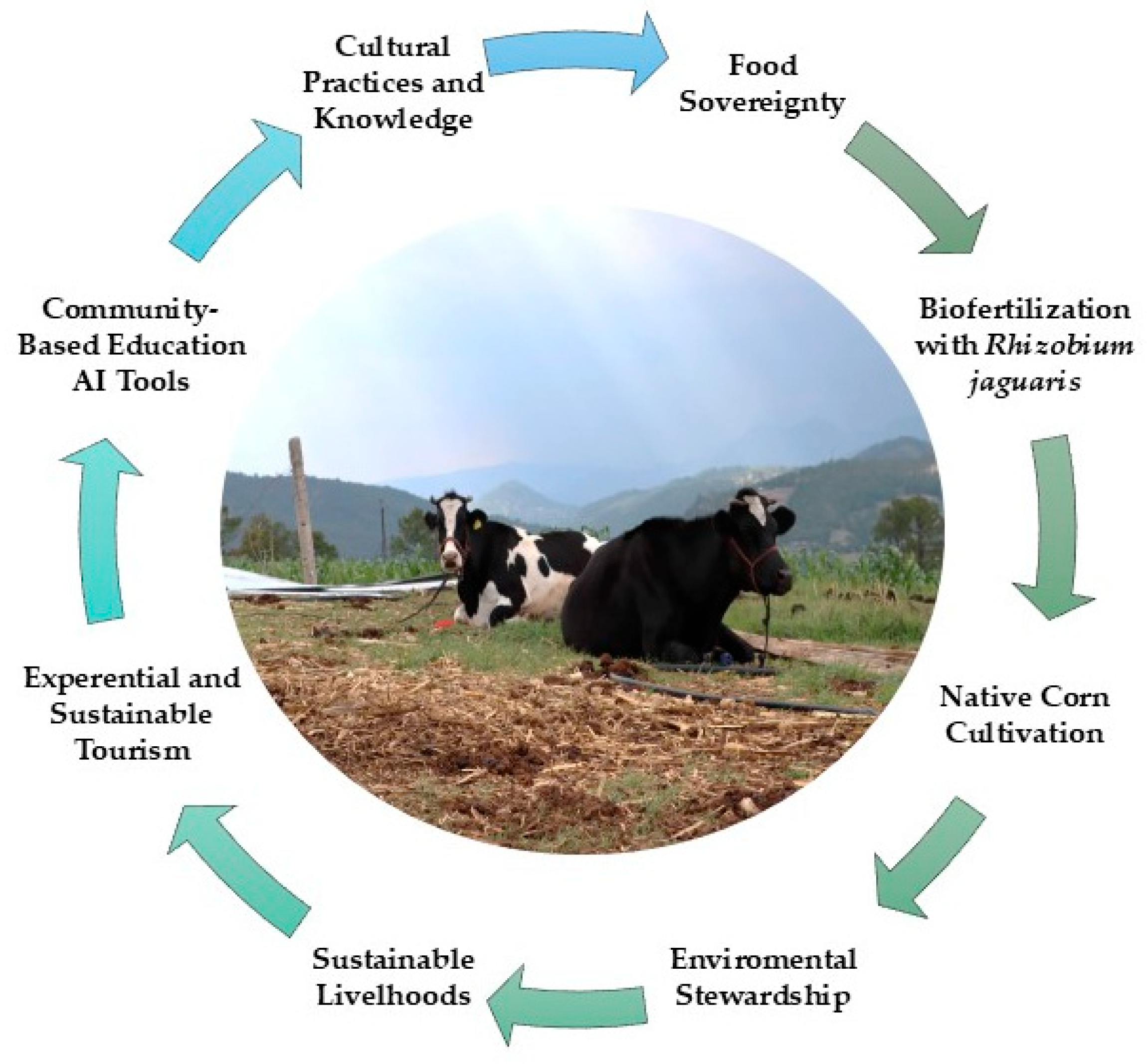

Table 1.
Summary of Community Agricultural and Gastronomic Practices in Tlaxiaco.
| Practice Type | Description | Local Ingredients/Tools | Seasonality |
|---|---|---|---|
| Maize Cultivation | Milpa planting with intercropping and tequio participation | Native corn, coa, mezcal | March–April |
| Maize Harvesting | Once the husk and stalk are dry, the maize is ready to be harvested | Picker, tenate (basket), troje (storage shed) | August–November |
| Cheese Production | Traditional fermentation for 6 to 72 hours and wrapped in banana leaves | Raw cow milk, salt, banana leaves | Year-round |
| Tortilla Making | Hand-formed and comal-cooked tortillas prepared by women | Corn (white, blue, yellow), lime | Daily |
| Mushroom Foraging | Seasonal collection in forests during the rainy season | Forest mushrooms | June–August |
| Salsa Preparation | Tomato and chili salsa ground in a molcajete and served with meats | Tomatoes, chiles, molcajete | Daily |
| Boiled Beans (Frijoles sancochados) | Cooked with spring water | Pork lard, salt, garlic, onion, epazote | Daily |
| Creole Hen Broth (Caldo de gallina criolla) |
Cooked with spring water | Rice, hoja santa, tomato, garlic, salt, onion | Weekly |
| Compost Production | Organic food scraps and animal waste used for natural fertilization | Manure, kitchen waste | Year-round |
Table 2.
Availability and Conditions for Community Tourism Activities in Tlaxiaco.
| Activity | Willingness to Host Visitors | Available Infrastructure | Comments |
|---|---|---|---|
| Traditional tortilla-making demonstration | High | Comal, space in homes | Women are enthusiastic about sharing this tradition |
| Milpa field tour | Medium | Pathways, shaded areas | Best during planting or harvesting seasons |
| Cheese-making workshop | Medium–High | Holstein cows, tools | Requires sanitary precautions |
| Mushroom foraging | Low (seasonal) | Forest access | Only possible during the rainy season |
| Hosting visitors at home | Medium | Cabins, extra rooms | Requires prior notice and flexibility |
| Forest walk and flora/fauna photography | High | Natural trails | Birds, salamanders, orchids, bromeliads, agave, juniper, and more can be observed |
| Observation of springs and irrigation channels | High | Access to natural water bodies | Ideal for connecting with nature and learning about traditional water management |
| Visits to caves, marine fossils, and rock paintings | High | Rural trails, pedestrian access | Requires hiking on uneven terrain and prior scheduling |
| Traditional food tasting | High | Community kitchens | Dishes include chicken soup, beans with cheese, handmade tortillas, chicharrón or tripe salsa, carnitas |
| Pulque bread-making workshop | High | Wood-fired oven, local ingredients | Uses pulque, eggs, sugar, salt, lard; requires advance notice |
| Observation and feeding of poultry (chickens, turkeys) | High | Chicken coops, available feed | Visitors can feed corn, oats, and alfalfa; suitable for families and children |
Disclaimer/Publisher’s Note: The statements, opinions and data contained in all publications are solely those of the individual author(s) and contributor(s) and not of MDPI and/or the editor(s). MDPI and/or the editor(s) disclaim responsibility for any injury to people or property resulting from any ideas, methods, instructions or products referred to in the content. |
© 2025 by the authors. Licensee MDPI, Basel, Switzerland. This article is an open access article distributed under the terms and conditions of the Creative Commons Attribution (CC BY) license (http://creativecommons.org/licenses/by/4.0/).
Copyright: This open access article is published under a Creative Commons CC BY 4.0 license, which permit the free download, distribution, and reuse, provided that the author and preprint are cited in any reuse.


