

Submitted:
07 July 2025
Posted:
08 July 2025
You are already at the latest version
Abstract
This research examines the ongoing challenge of depopulation in rural areas, focusing on the municipality of Buenavista del Norte in the Canary Islands. Depopulation signif-icantly impacts the social and economic viability of small rural municipalities, exacer-bating marginalization and isolation. The study highlights the role of governance and local community participation in reversing this trend. The research identifies key pro-jects and resources that could foster local development using qualitative methods, such as interviews with public representatives, key strategic sector informants, and partici-patory group dynamics. A core focus is placed on the integration of tourism, particularly wine tourism, as a tool for economic diversification and combating rural decline. De-spite the Canary Islands’ status as a mature tourist destination, rural areas have not equally benefited, with some experiencing stagnation. The study explores opportunities for public-private collaboration and community-based innovation to address territorial imbalances. The participatory approach involves key actors from various sectors, facil-itating a collaborative process to identify viable projects. This research underscores the need for integrated local development strategies, enhanced infrastructure, and quality public services to confront the demographic challenges faced by remote areas. By em-phasizing tourism and sustainable community-based approaches, the study presents a roadmap for revitalizing rural municipalities through inclusive governance and strate-gic planning.
Keywords:
agritourism
; heritage
; rural areas
; strategic planning
1. Introduction and Literature Review
The processes of regeneration or rejuvenation of rural areas are still a difficult problem to solve. Depopulation is one of the main phenomena of the deterioration and abandonment of rural spaces or remote areas on a global scale and has a devastating impact, especially in the social and economic sphere of small municipalities, which in many cases are forgotten by the administration [1]. Its analysis is far from simple as it depends on numerous factors whose effects have accumulated over time depending on the different territories according to [2], and therefore, there are no magic formulas that allow for homogeneity in terms of the solutions to be provided. For [3], tackling the demographic challenge involves a community exercise shaped by the rural entity to consolidate appropriate policies to offer quality public services and improve investment in infrastructures, which are key to combating this process. Marginalisation is one of the main effects on which policies aimed at seeking sustainability and local development of communities that are condemned to isolation and precariousness are key [4]. The processes of participation and active discussion in rural communities are currently presented as one of the most relevant mechanisms for this struggle within the processes of social innovation [5]. In this area, the role of governance in territorial planning is recognized, being fundamental for the effective local development of these rural spaces, the integral strategies and decision-making that can be established from the cooperation between the public administration, the private sector, experts and other social entities in a real and committed manner [6]. Taking the above into consideration, it should be noted that, in recent years, policies and strategies have been developed and implemented in Europe. Several studies have highlighted the ageing population and progressive depopulation of rural areas in Central, Eastern and Southern Europe, including countries such as Hungary, Poland, Greece, Italy, Montenegro and Romania. These demographic dynamics are attributed to historical and economic processes and the absence of effective public policies, resulting in territories ‘in transition’, marked by a loss of socio-economic vitality [7,8,9,10]. In regions such as Ukraine, Greece [11] and southern Italy, deep intra-rural divisions and marked territorial asymmetries are observed [12,13]. The statistical and territorial analysis of these trends, as explored by [14,15,16], reinforces the urgent need for demographic resilience and territorial cohesion policies. In response to these pressures, tourism - especially rural, sustainable and wellness tourism - has been highlighted as a promising avenue for the social and economic revitalisation of rural territories [17,18,19]. Studies such as those by [20,22] emphasise the potential of agrotourism and the valorisation of vernacular architecture in preserving local heritage. In turn, strategic marketing initiatives and tourism policies geared towards cultural authenticity are key to achieving a balance between economic development and environmental sustainability [23,24]. In the new post-pandemic and geopolitical context, tourism has a central role to play in reactivating local economies [25], as long as it avoids risks such as uncontrolled touristification and the de-characterisation of rural areas.
Also, Spain and the Autonomous Communities (Canary Islands as a case study) to address the problem of rural depopulation and the development of rural communities. To date, the study and consequences of immigration have been considered as a solution to stop and reverse depopulation, becoming a very important element as has been demonstrated [26].
In the case of the effects of tourism in this battle against depopulation and rural development, the scientific literature brings together different case studies where it has been possible to demonstrate a positive impact on tourist destinations and rural areas with greater or lesser success [26,27,28,29,30,31,32,33,34].
Agritourism has emerged as a key strategy for rural development, integrating agriculture with tourism to provide economic, social, and environmental benefits. Several authors [35,36,37] have explored various aspects of agritourism, including its definition, typologies, branding strategies, and its role in sustainable tourism. Additionally, gastronomic tourism [38,39,40] particularly cheese production, has been identified as a relevant component of agritourism, contributing to regional identity and sustainability [41,42,43].
From the point of view of the management of this problem, some policies have been put forward in recent years in which tourism is taking on a greater role. Among other examples at different scales of analysis, we find the European Parliament resolution of 25 March 2021 [44], which focuses especially on the need for an EU strategy on sustainable tourism. It is inferred that the tourism-agriculture binomial plays such an important role, contributing, among other positive impacts, to generational replacement and investment to combat depopulation. The Ministry for Ecological Transition and the Demographic Challenge of the Spanish Government has been working along the same lines with a package of strategies and plans in which tourism is included as one of the main measures and a key tool for improving the diversification of the economy in rural areas. Likewise, the Canary Islands Government, through the Regional Ministry of Territorial Policy, Territorial Cohesion and Water, has been working on development and initiatives in the strategies for the demographic challenge and territorial cohesion with the different island councils and town councils.
In the case of the Canary Islands, the subject of our analysis, it is a priori paradigmatic that, being recognized as a mature tourist destination and visited annually by 16.2 million tourists [45], there are serious territorial imbalances in terms of population. In fact, in recent decades, the archipelago has been favoured by a disproportionate population growth due to tourism development, which, although it has allowed considerable progress in terms of the economy, especially in coastal areas, has not been the same for rural areas, where some areas of the islands have been experiencing depopulation, especially the green islands and some inland districts. The decrease in agricultural land, the lack of generational replacement, the lack of infrastructures or adequate services for entrepreneurship, the scarcity of companies and the lack of interest on the part of young people in the countryside in favour of other professions not linked to the primary sector, have been some of the key factors in understanding this process of decline and in which the development of typologies such as wine tourism are considered key to its recovery [46].
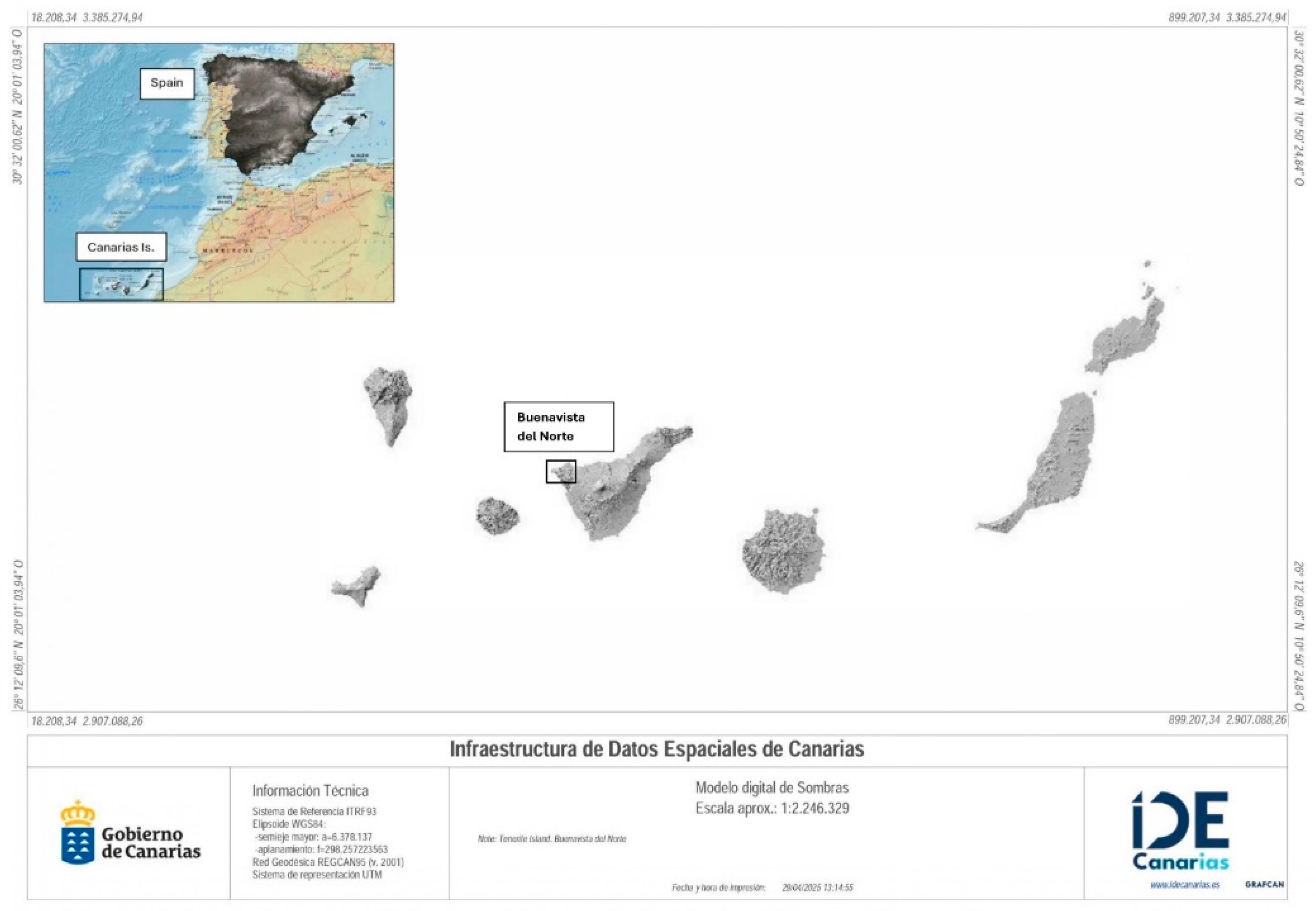
In this study, we will focus our attention on the most north-western area of the island of Tenerife, one of the most affected areas from the population point of view, referring to the case of Buenavista del Norte (Tenerife, Canary Islands). The municipality is located in one of the oldest geological parts of the island’s territory, within the Red Natura 2000 area and occupied by the Teno Rural Park, a protected natural area, which occupies 80% of its territory, and therefore directly and indirectly affects the development model of the municipality.
The main aim of this research is to analyse the persistent challenge of depopulation in rural areas, focusing on the municipality of Buenavista del Norte in the Canary Islands. The study seeks to understand how the integration of tourism, especially wine tourism and sustainable agro-tourism, combined with the valorisation of local heritage, can act as tools for economic diversification and the fight against rural decline. The research aims to analyse the social and economic impacts of depopulation in small communities, identify key projects and resources for local development through qualitative methods with the participation of public and community representatives, and explore wine tourism as a viable strategy even in a consolidated tourist destination like the Canary Islands. It also emphasises the importance of participatory governance and the active involvement of the local population in decision-making, with a view to creating jobs, strengthening cultural identity and balanced development. The study also analyses opportunities for enhancing the primary sector, including agricultural farms, wineries, gastronomic tourism and the recovery of traditional activities. In short, the research aims to demonstrate how community-based sustainable tourism approaches can revitalise rural municipalities affected by depopulation, promoting a more resilient and socially inclusive economy.
Figure 1.
Location map of the study area. Source: Own elaboration based on IDECAN GRAFCAN.
As indicated in the report on projects for socio-economic reactivation and the fight against depopulation (2023) of the Ministry for Ecological Transition and the Demographic Challenge of the Spanish Government [47], only one sub-grant was awarded within the Canary Islands during the 2022 financial year, and the beneficiary was the Town Council of Buenavista del Norte with an amount of 148,872 euros. As stated in the resolution, the municipality has lost more than 10% of its population in the last 20 years due to a very unique demographic problem derived from its orography, its nature and a high degree of territorial fragmentation.
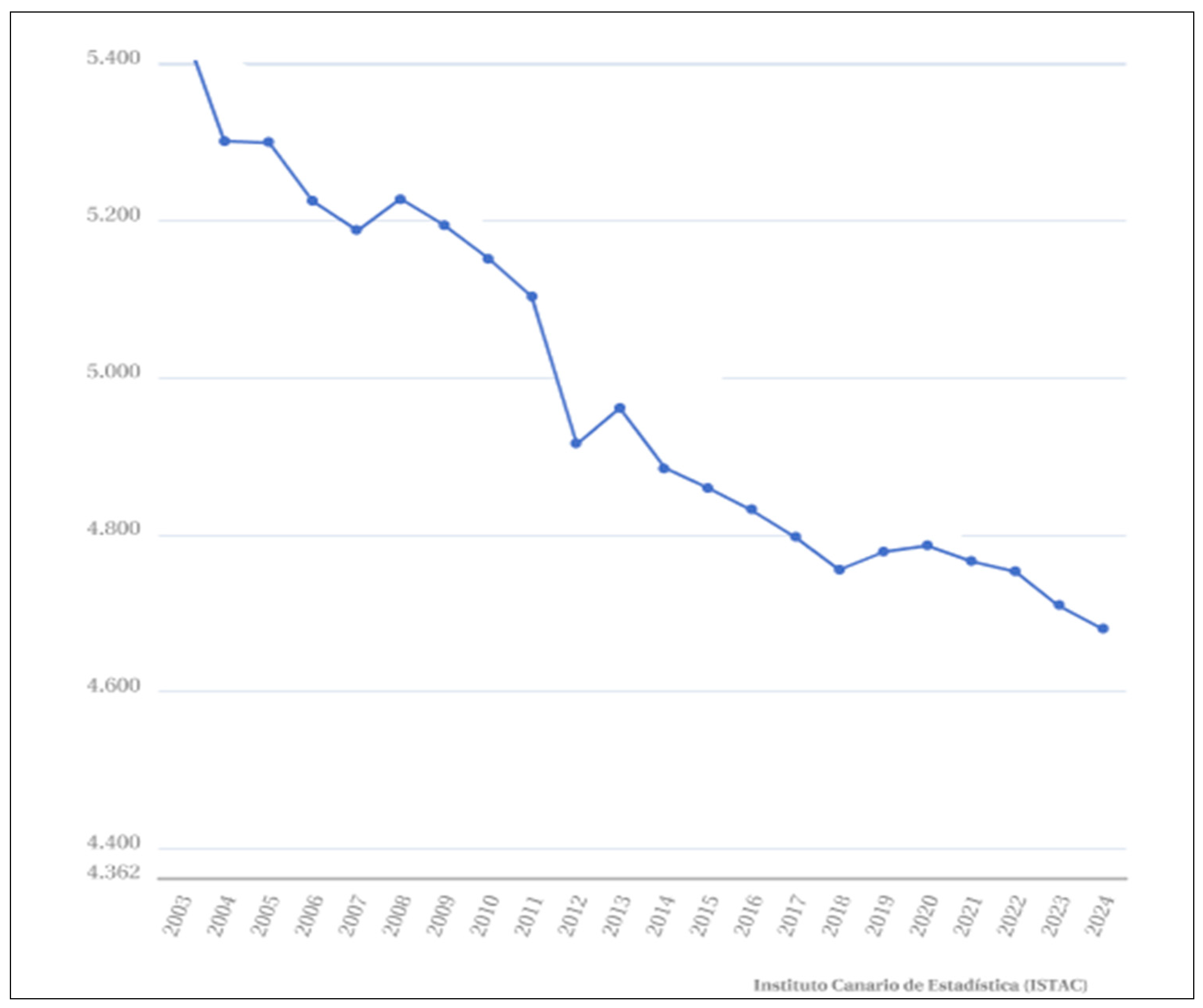
According to Rivera (2023), remote rural areas in the process of population decline are highly vulnerable and sensitive to population movements, and in the case of Buenavista del Norte, this is manifested in a very significant way. In view of this territorial singularity, from a demographic point of view, Buenavista del Norte has followed in the footsteps of other municipalities in the region with a demographic profile characterised by a mainly ageing population. The population is dispersed, although it is particularly concentrated in the town centre. According to data from the Canary Islands Institute of Statistics (ISTAC), the population of Buenavista del Norte in 2003 was 5,453 inhabitants compared to 4,680 inhabitants in 2024. As can be seen in Figure 2, the evolution of the population in the municipality reflects a gradual decrease over the last two decades, with a loss of 773 inhabitants.
The justification for this document is given by the significant changes that have been taking place in this region in recent decades and which perfectly exemplify the problems with island populations where tourism has not been the main economic product. In this sense, the effects of globalisation have led to changes in the rural economy which have led to a migration of young people in search of work opportunities in contrast to traditional activities in the area, such as agriculture, livestock farming or fishing, which are scarcely professionalised and with limited profitability. The gradual ageing and low birth rate have jeopardised the attractiveness necessary to attract young people to the region or the arrival of new inhabitants due to the lack of incentives in terms of the development of infrastructures, facilities, services, access to low-income housing, as well as the territorial dispersion itself, contributing to depopulation. As the report on projects for socio-economic reactivation and the fight against depopulation (2023) of the Ministry for Ecological Transition and the Demographic Challenge of the Spanish Government [47] points out, only one sub-grant was awarded in the Canary Islands in the 2022 financial year, with the beneficiary being the Town Council of Buenavista del Norte with an amount of 148,872 euros.
As the resolution states, the municipality has lost more than 10% of its population in the last 20 years due to a very unique demographic problem derived from its orography, its nature and a high degree of territorial fragmentation.
In view of this situation, the question of this research arises: can the role of the local community be a determining factor in decision-making in the future development of the territory based on the articulation of measures and initiatives in favour of sustainable tourism and agroenotourism?
In this case study, we start from the hypothesis (H1) in which we consider that “The active participation of the local community in territorial planning can be a determining factor to stop depopulation in the municipality, through the implementation of sustainable tourism and agroenotourism strategies, generating employment, reinforcing cultural identity and promoting a balanced socio-economic development”.
For this purpose, the procedure developed by the main actors involved in the territory, and the lines of action implemented and challenges will be expressed as part of an exploratory study on possible strategies to advance in the rejuvenation of the area.
Figure 2.
Evolution of the population of Buenavista del Norte (2003-2024). Source: Own elaboration based on data from Instituto Canario de Estadística (ISTAC).
Figure 2.
Evolution of the population of Buenavista del Norte (2003-2024). Source: Own elaboration based on data from Instituto Canario de Estadística (ISTAC).
2. Materials and Methods
While acknowledging the difficulty in addressing and finding a scientific method of analysis that relates tourism in rural areas to the demographic challenge [48], the role of tourism continues to be recognised as an important strategy to combat rural depopulation through the implementation of local policies [49]. In this case, the research was mainly based on direct observation techniques and qualitative methods [50] to achieve the research objectives. During the research process, an analysis of the current state of the projects under development or planned in the municipality was carried out to better identify the reality of the Municipality.
To this end, the following aspects were considered in the available sources of information.
a) This research team carried out an analysis of the macroenvironment. This allowed for an exercise in analyzing the territorial reality and, with it, the establishment and creation of a list of pre-existing projects.
b) Interviews with public representatives of the municipality of Buenavista del Norte, to gain knowledge of the projects under development, being executed or planned for the municipality.
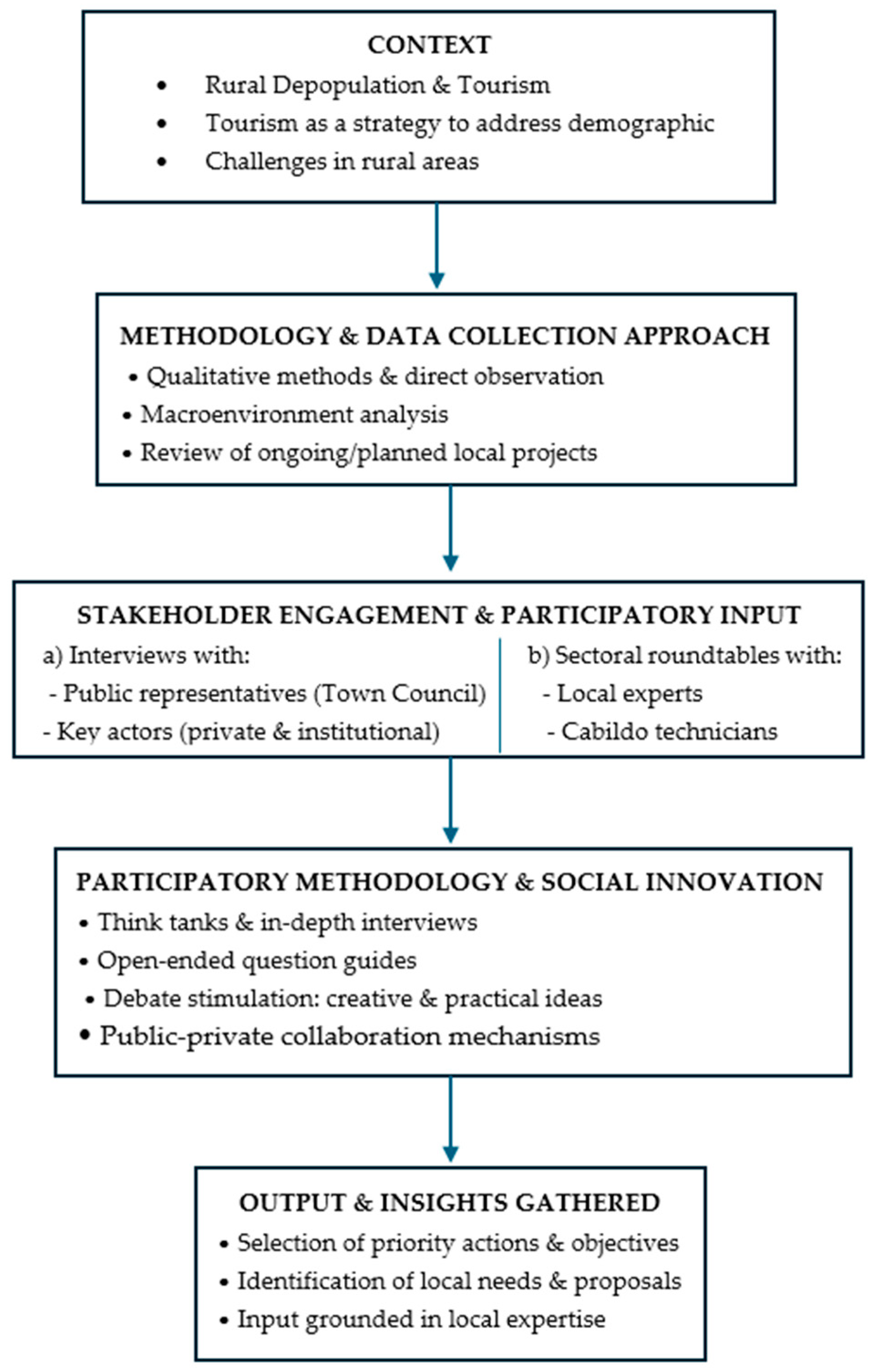
c) A series of interviews with key sources from the different strategic sectors (institutional and private) were also considered, which served as a reference for a better understanding of the proposal’s reality and development and the information gathered from the field trips in situ (see Figure 3).
The research was carried out based on the process of participation of the main socio-economic agents of the municipality of Buenavista del Norte and key actors with special incidence in the territory for the selection of objectives and priority actions of the Municipality, as has been applied in other case studies using the methodology of consultation with key actors [51]. This point was established as a fundamental part of the research construction process in line with the already described concept of rural proofing of local community development as recognised in studies where the role of experts is considered key and is used as in this research [52]. The convenience of the study allowed the use of simple qualitative techniques [53] based on the development of participatory methodologies of social innovation from think tanks and in-depth interviews with actors who had weight in the territory and were, according to [54], key references for future decision-making. This methodology aimed to stimulate debate, generating both creative and practical thinking to analyse the existing situation and provide value proposals based on plausible ideas and projects for the territory with political links and commitment.
Figure 3.
Methodological research process. Source: Own elaboration.
The coordination of the participatory dynamics was done through a local ecotourism company in the municipality with more than 25 years of experience in the tourism sector in the Canary Islands. In this case, this technique aimed to favour the meeting of the different stakeholders directly in the municipality, establishing mechanisms for public-private collaboration between civil society and the public administration. Thus, the 20 people who participated were selected based on their representativeness and knowledge of the territory from different perspectives and activity roles in a governance exercise in a municipality of less than 5,000 inhabitants were sufficient to obtain the necessary information for our study. In this way, different sectors (experts) of Buenavista del Norte society were invited to participate, establishing several sectoral roundtables made up of technicians from Buenavista del Norte Town Council, and informants of strategic interest (private and public, especially technicians from areas corresponding to the Cabildo of Tenerife). The sessions took place in several collaborative working sessions during February and April 2023, to gain insight into the local community’s perception of the research topic. The interview script was mostly based on a set of open-ended questions, in line with the objectives of the study.

Table 1.
Group of key informants participating in the consultation process.
| Sector | Area | Agency/Entity |
|---|---|---|
|
Technical Informants Buenavista del Norte Town |
Technician Employment and Local Development Agency AEDL (3) |
Buenavista del Norte Town |
| Culture and Events | ||
| Tourism | ||
| Sports | ||
| Technical Office | ||
|
Strategic Interest Informants
(Private Sector) |
Manager | Birding Canarias S.L.U |
| Farmer | Ecological farm ‘La Econtenta’. | |
| Oficial Tourist Guide | Autonomous. Buenavista del Norte | |
| Coordinator/Animator | Canary Islands Agency for Research, Innovation and the Information Society. Fundación Empresa University of La Laguna | |
| Technician | Territorial and Environmental Management and Planning, S.A. | |
| Manager | El Cardon Educación Ambiental S.L. | |
| Professor/Technician/Geographer | Government of the Canary Islands | |
| Archaeologist | PRORED, Soc. Coop. | |
|
Strategic Interest Informants
(Public Sector) |
Technician | Teno Rural Park Management Office. Cabildo of Tenerife |
| Codirector | Chair of management and cultural policies of the ULL-FECAM. | |
| Assistant Direction | Product Department. Tourism of Tenerife. |
|
| Agent | Council of Tenerife |
Source: Own elaboration.
The methodology used for the development of the sessions with the group of interviewees was established according to 3 different phases (Table 2):
- 1)
- Group dynamics using poster boards, post-its notes and office supplies.
- 2)
- With the technicians of the Municipality of Buenavista del Norte, the focus was on the identification of resources and development opportunities in the municipality with a debate session on the resources and projects that were discussed in parallel. During the debate, all proposals were analysed and a list of possible projects and associated infrastructure was created.
- 3)
- The group dynamics fostered collaboration and creativity among the team members, allowing for the identification of possible synergies between existing resources and proposed projects.
- 4)
- With the Buenavista del Norte business sector group, the focus was on continuing the dynamics developed with the technical roundtable. The group was divided into two teams and given the specific task of working separately on the identification and creation of proposals for local development. Once each team had completed its task, all ideas were reflected for all participants. During the debate and discussion process, the analysis of the resources and infrastructures of the municipality was worked on, and the projects were discussed in parallel, which allowed the participants to relate some ideas and suggest new ones that could be used to develop future projects in the municipality. Furthermore, the active discussion of the ideas allowed the participants to connect the projects with the possible infrastructures where they could be developed, which allowed them to identify synergies between both and to generate a list of ideas with a comprehensive and collaborative vision.
- 5)
- In the case of the group dynamics developed with key informants from the public sector, four people were involved and divided into two groups of two. Each group was given a specific task: one group was asked to create a list of idle resources or infrastructure in the municipality, while the other was asked to draw up a list of possible projects to be developed in the Municipality. After approximately 20 minutes of work, each group was asked to write down each idea and/or proposal and make them visible to all participants. The meeting was fruitful, as it allowed for active discussion and collaboration between the team members, which led to the identification of possible synergies between the projects and existing resources in the Municipality.
2.1. Information Processing
The group dynamics were effective in fostering collaboration and creativity among the participants. The division into teams and the group discussion of the proposals allowed for the generation of ideas and the identification of possible projects and associated infrastructures that could be implemented to improve the development of the municipality.
The process for processing the information from the sessions was as follows:
a) Collection and organisation of the information from the sessions: During the process of conducting the sessions, the information derived from the dynamics carried out by the participating group was collected (see Table 2).
b) Transcription, coding and organisation of the information: The information collected was transcribed for later analysis. It was coded into key areas of resources, ideas and projects. The information was organised considering the responses related to the specified tasks.
c) Analysis and interpretation: Based on the information obtained from the interviewees, a process of analysis and interpretation of the resources, ideas and projects was established to identify similarities, and characterisation of common problems, as well as to focus on the more proactive part of seeking and identifying the potential of the projects in line with the overall view of the group.
d) Feasibility presentation: In this phase, the main projects derived from the previous phase were identified as the highest priorities from an economic and social point of view for the municipality.
e) Contrasting information and territorial viability: This process focused on contrasting the information collected with the subsequent territorial analysis within the municipality, through specific field trips and personal interviews with different people who could not participate in the aforementioned sessions.
2.2. Analysis Phase -Field Trips for the Diagnosis of the Resources and Infrastructures of the Municipality
During this phase of work, the technical team carried out different visits to the different strategic points of the municipality under what had been developed in parallel in the work sessions with the key informants. In this way, it was possible to see in situ the real situation of many of the underused infrastructures and services in the different hamlets to check their current state, analyse areas of abandonment and identify spaces with agrotourism potential. These visits took place between March and June 2023 and included the following (Table 3):
3. Results
3.1. Rural Development Positions
During the roundtable sessions in Buenavista del Norte, various ideas and projects were proposed as key to the municipality’s social and economic development. These were organized according to themes of greatest interest (Table 4).
Enhancement of the Primary Sector: Participants highlighted the need for a comprehensive strategy to enhance the primary sector, including the promotion of local products, development of a product agenda, and public awareness of local consumption. Focus was placed on recovering underutilized agricultural areas like Valle del Palmar and Los Carrizales, with a strong emphasis on cultivating vineyards, potatoes, cereals, and onions. Promoting their use in local restaurants was seen as a way to boost gastronomic tourism and create a distinctive identity for Buenavista del Norte.
Agricultural Estates and Winery Development: The creation of a visitable banana plantation using traditional and ecological methods was suggested to promote rural tourism and preserve agricultural heritage. The municipality’s coastal banana farms and the potential for organic farming were seen as opportunities. The revitalization of wine production in the El Palmar Valley, once a hub for winegrowers but now abandoned, was also identified as promising due to the quality of local grape varieties and fertile land.
Innovation and Tradition in Wine/Gastro-tourism: Key ideas included linking local product information with the municipality’s gastronomic offerings and creating a digital platform connecting restaurants by specialty. Emphasis was placed on educating consumers about local agriculture, fishing, and other products to support sustainable gastronomic tourism.
Traditional Trades: Proposals included restoring buildings linked to traditional trades and establishing public spaces in the historic center where visitors can engage with and learn about the area’s cultural heritage.
3.2. Response Through Local Participation to the Demographic Challenge Characterised by the Unique Nature of a Fragmented Territory
Consultation and participation exercises revealed growing momentum for change in Buenavista del Norte. While acknowledging feasibility limits, the outcomes pointed to several ongoing and planned initiatives addressing depopulation and rural development (Table 5).
a) Community Response: Wine Tourism as a Means of Recovering Agricultural Landscapes and Fostering Economic Sustainability
The shift from an agriculture- and fishing-based economy to one centered on tourism has weakened traditional employment sectors, prompting youth migration. This transition, along with low profitability and a lack of generational renewal, has led to a sharp decline in vineyard use across the Canary Islands. However, vineyards have historical significance and economic potential in Buenavista, highlighting the need for a strategic action plan to revitalize this sector.
b) Community Response: Revitalisation of Local Cheesemaking to Preserve Traditional Livestock Farming and Boost Tourism
Teno Alto remains one of the few places on the island where extensive grazing supports traditional goat cheese production. This activity, however, is in decline due to aging producers and a lack of successors. Fieldwork found only five active registered cheesemakers, with additional unregistered ones, and identified an urgent need to preserve this cultural and economic asset.
c) Community Response: Opportunities in Agri-food Spaces
There is strong support for developing agri-food spaces, particularly in the Barranco de Triana area, which is accessible to both residents and schools. These spaces could host vermicomposting, farming activities, workshops, and training programs. By making them available through rental or lease agreements, the initiative aims to support a circular economy and encourage local professional development.
4. Discussion
From an exploration and assessment of the area, the municipality is found to have sufficient land to reconsider and enhance vine cultivation linked to wine tourism as an alternative source of employment. Economic sustainability through agricultural development is a key element for local dynamism and an income source for residents of the region. Economic diversification via the agricultural sector, integrating tourism, emerges as a highly viable option to address the issues arising from the lack of opportunities. As illustrated (Figure 4), the potential for vineyard cultivation, especially in the hamlet of Valle de El Palmar, represents a significant opportunity to revitalise the agricultural space due to the large areas of fertile, uncultivated land currently unused. Local revitalisation could involve incorporating wine tourism into landscape recovery models, but only if there is first a productive framework around wine-making through wineries in the valley. However, the current reality is different, with the Designation of Origin (DO) Ycoden-Daute-Isora for wines in the region recognising only one winery, making this an untapped opportunity for entrepreneurship.
During the interview process, the need for establishing a dedicated recovery space for the wine sector was highlighted. Historical records indicate that the sector was once active in the area, though it has since disappeared. Currently, only a few parcels are cultivated to produce select grapes for wineries in other regions that take advantage of this underutilised land. However, the existing infrastructure, specifically the Los Pedregales Agro-Food Complex, offers significant potential for these activities and other eco-tourism-related ventures. At present, the complex is used only for storage by a public entity of the island’s government.
A structured, phased implementation plan is essential to optimise the complex’s potential, avoiding an all-at-once approach and instead activating its sections gradually. One identified need comes from the region’s beekeepers’ association, which requires facilities for its operations. Regarding the winery, the possibilities of restoring its use should be explored, whether by seeking local producers or negotiating with wineries from other locations. If no viable solution is found, a complete reform of the space may be necessary. However, this should not hinder progress in opening other parts of the complex.
Professionalising winery operations could yield several benefits, including:
- Regenerating the landscape and recovering uncultivated areas.
- Distinguishing the municipality through a unique viticulture product, as no active wineries currently exist under the DO.
- Establishing a strategic tourist attraction for the municipality, given that the road through Valle de El Palmar serves as a critical route (north-south corridor) for vehicles travelling between Buenavista del Norte and the popular Valle de Masca/Santiago del Teide area, one of Tenerife’s most recognised tourist destinations.
- Creating jobs and opportunities for the region’s youth.
- Encouraging entrepreneurship in activities related to winery operations (e.g. distribution, marketing, specialised shops, wine bars, guides, tourist intermediaries, wine clubs).
- Supporting the circular and local economy, enabling restaurants in the valley to offer zero-kilometre products.
Also, the development of the cheesemaking sector offers an opportunity for younger generations, with goat cheese recognised as a valuable tourism asset for local development. The cheese industry benefits visitors and local restaurants alike by highlighting products from regional producers [55]. However, regulations established by the Teno Rural Park, which governs much of the area, severely limit the creation of new cheesemaking facilities due to the lack of land designated for this purpose. This highlights an ongoing conflict between natural conservation and economic development tied to regional traditions and practices.
To address the sector’s challenges and potential loss of activity, two key actions are identified:
- 1.
- Non-formal education and training to prevent the complete disappearance of the sector
Training programmes for livestock farming aim to equip young people in the municipality with the skills necessary to pursue goat herding as a viable career, promoting professionalised generational renewal. Existing public programmes, such as training and employment initiatives (PFAE), support unemployed individuals in seeking new job opportunities. In Buenavista del Norte, PFAE programmes have focused on tourism in recent years. While tourism remains a significant economic driver, it is equally important to align educational efforts with the livestock sector to ensure its preservation and promote its value.
- 2.
- Local institutional support for the recovery of abandoned cheesemaking facilities
Local government intervention is essential to acquire and rehabilitate abandoned cheesemaking facilities. Measures should be taken to incorporate expertise from experienced livestock farmers and qualified professionals. Evidence suggests that local producers are instrumental in enhancing the tourism value of cheese as part of the region’s appeal [56]. Supporting labour reintegration within existing farming operations or encouraging entrepreneurship among individuals interested in establishing their own operations can foster the sector’s growth.
4.1. Public Institutions Participation in the Face of the Demographic Challenge
In parallel to this publication, the role of the public administration in projects to combat depopulation in the village and generate an eco-economy based on one of its most underused resources, the countryside, has been noted. These measures are partly initiatives promoted by the local development agency of the municipality of Buenavista del Norte, motivated in large part by the opinion of the local population over the last few years in different sectoral working groups (Table 6). As has been demonstrated in other regions [57], this is evidence of the role of the local community as active participants in the rural environment. This information and the projects that have been carried out ratify, to a certain extent, our working hypothesis H1, in which we emphasise that the decision-making power for the transformation of this locality comes from the local initiatives themselves. In this case, this article presents this working method, which, in the authors’ opinion, represents a further contribution to the future development of the population.
Likewise, and according to web analysis, consultations with interviewees and members of the local corporation, especially the Local Development Agency, work has been carried out over the last three years on actions such as:
- Rescue of ethnographic uses and traditions of Manuel Lorenzo Perera.
- Advice for entrepreneurs and companies
- The Project: archaeological diagnosis, archaeoethnographic park. carried out by the company PRORED SOC. COOP. since May 2023 around ‘Salto del Aljube’ on the archaeological potential of the ravine within the project of repopulation and activation of the Valley of El Palmar.
- The adaptation of playgrounds in Valle de El Palmar.
- Development of the OROBAL programme through economic funds from Next Generation aimed at supporting women in rural and urban areas and which has had participation in the municipality with the training of unemployed women including advice on sustainable rural tourism.
- The holding of several editions of the Mesas con Salitre gastronomic fair as a space for training and development of the gastronomic fabric of the municipality based on the enhancement of local produce with training sessions for professionals in the catering sector in the Municipality, show-cooking, tastings, combining music and gastronomy.
- Development of online courses on entrepreneurship in the agricultural sector and training for the hotel and catering sector in the Municipality.
- Development of Traditions Day with the potato harvest in the neighbourhood of Las Portelas.
- Celebration of the first edition of “Puebleando Buenavista” (2024) as an activity within the repopulation and activation project for El Valle de El Palmar, featuring various routes and tastings of local products from businesses in the region to promote the development of the circular economy.
5. Conclusion
The results obtained from the research process in this article allow us to make several reflections. Firstly, it has become clear that there is a need to implement actions for the economic, social and environmental reactivation of municipalities such as Buenavista del Norte, which, although integrated within a consolidated tourist destination such as Tenerife and with a growing population, the indicators point to an aggravating loss of population due to different factors. Secondly, the study has been able to demonstrate how the actors involved in the territory actively recognise the need for the reactivation of the municipality, through the implementation of actions and projects that bring about its revitalisation.
In this case, the relevance of the 20 interviewees in a methodological process of social innovation in the different sectoral roundtables has been raised in this case of addressing actions and projects that relate to the recovery of the primary sector, especially the abandoned surface area and tourism.
Typologies such as wine tourism or agrotourism associated with certain underused areas, infrastructures and facilities in the municipality seem viable for the generation of employment in the region associated with the countryside, the production of new tourist products for the Valley through visitable ecological farms or wineries for wine tourism, the tourist differentiation of this rural area with ecotourism activities as opposed to other dominant sun and beach typologies, the positioning of the Buenavista del Norte brand and, in short, a way of retaining the population or generating a call effect for possible new inhabitants.
Thirdly, we can conclude that, on the part of the public administration, especially the town council, local businesses and the social fabric, there seems to be a sense of transformation in recent years aimed at reactivating the municipality, especially in response to the demographic challenge and economic development, with the implementation of various projects and initiatives that promote local production, favour the circular economy in an attempt to reposition the region and avoid the collapse and abandonment of the municipality.
This study is highly relevant as it addresses rural depopulation, a global problem with profound socio-economic impacts, especially in small municipalities that are often neglected. By analysing a specific context, the research proposes an integrated approach centred on the valorisation of tourism, with an emphasis on wine tourism and agro-tourism, as tools for economic diversification and combating rural decline. The role of community participation and local governance is strongly emphasised, as they are considered essential for the sustainable development of these areas. Through collaboration with various local actors, concrete opportunities were identified, such as the valorisation of the primary sector, the development of farms and wineries, the promotion of gastronomic tourism and the recovery of traditional activities, such as artisanal cheese production, with high potential for tourist attraction. Methodologically, the study stands out for adopting a participatory and qualitative approach, which can be replicated in other regions with similar challenges. In addition, it offers relevant contributions to the formulation of public policies by highlighting the importance of integrated local development strategies and improvements in infrastructure and essential services. Finally, the research makes a significant contribution to the academic literature on rural regeneration, agro-tourism and sustainable tourism, presenting a detailed case study that combines sustainability, community involvement and innovation in the fight against depopulation.
6. Future Research and Study Limitations
Agritourism plays a crucial role in rural development, cultural preservation, and sustainable tourism [19]. While regulatory fragmentation and environmental impact remain, agritourism presents a valuable opportunity to revitalize rural economies, promote sustainable agricultural practices, and enhance tourist experiences through cultural and gastronomic immersion. Future efforts should focus on policy standardization, branding strategies, and sustainability innovations to maximize agritourism’s potential as a tool for economic and social development.
The future will determine whether the actions being carried out in the municipality of Buenavista del Norte for social, population and economic reactivation are bearing fruit counteracting the European demographic trend in recent decades [58]. Based on what has been perceived in this territory, local development will be determined by a real commitment and a commitment in the coming years to carry out all the projects proposed by civil society as a road map. The limitations of this study focus on greater participation of actors and participation of civil society. It would be advisable in future research to investigate the opinion of the population in a global survey by profile to obtain more specific results. Likewise, future research could investigate to what extent the methodological process carried out in this village has been a sufficient driving force for the activation of the region, serving as a model for other locations which, like Buenavista del Norte, are suffering from a process of decline at all levels within the framework of consolidated tourist destinations.
Author Contributions
Conceptualization, A.D.R.; methodology, A.D.R.; validation, A.D.R., J.A.Q. and H.A.; formal analysis, A.D.R. and J.A.Q..; investigation, A.D.R.; J.A.Q. and H.A.; resources, A.D.R..; data curation, ADR., J.A.Q. and H.A.; writing—original draft preparation, A.D.R. and J.A.Q. writing—review and editing, J.A.Q. and H.A.; visualization, J.A.Q. and H.A.; supervision, A.D.R.; project administration, A.D.R. and J.A.Q.; funding acquisition, A.D.R., J.A.Q. and H.A. All authors have read and agreed to the published version of the manuscript.
Funding
This work was supported by the UIDB/05105/2020 Program Contract, funded by national funds through the FCT I.P.
Institutional Review Board Statement
The study was conducted under the Declaration of Helsinki, and approved by the Ethics Committee of Portucalense University (protocol code CES/01/06/24 from 1 June 2024).
Informed Consent Statement
Informed consent was obtained from all subjects involved in the study.
Acknowledgements
We would like to thank the interviewees for their collaboration, the Employment Training Programme of Buenavista del Norte, the Local Development Agency of the Town Council of Buenavista del Norte, the councillors of the corporation and the company El Cardón Educación Ambiental.
Conflicts of Interest
The authors declare no conflicts of interest.
References
- Navarro-Valverde, F., Cejudo-García, E., & Cañete-Pérez, J.A. (2021). The Lack of Attention Given by Neoendogenous Rural Development Practice to Areas Highly Affected by Depopulation. The Case of Andalusia (Spain) in 2015-2020 Period. European Countryside, 13(2), 352-367. [CrossRef]
- Baraja, E., Herrero, D., & Martínez, M. (2021). Política Agraria Común y despoblación en los territorios de la España interior (Castilla y León). AGER: Revista de Estudios sobre Despoblación y Desarrollo Rural (Journal of Depopulation and Rural Development Studies), (33), 151-182. [CrossRef]
- Bello Paredes, S. A. (2023). La despoblación en España: Balance de las políticas públicas implantadas y propuestas de futuro. Revista De Estudios De La Administración Local Y Autonómica, (19), 125-147. [CrossRef]
- Ștefănescu, M.S., Colesca, S.E., Păceşilă, M., Precup, I.M. & Hărătău, T. (2023). Sustainability of Local and Rural Development: Challenges of Extremely Deprived Communities. Proceedings of the International Conference on Business Excellence, The Bucharest University of Economic Studies, 17(1), 1628-1644. [CrossRef]
- Vercher, N. (2022). The Role of Actors in Social Innovation in Rural Areas. Land, 11(5), 710. [CrossRef]
- Pinilla, V., & Sáez, L.A. (2021). La despoblación rural en España. Características, causas e implicaciones para las políticas públicas. Presupuesto y gasto público, 102, 75-92.
- Jakovljevic, M., & Laaser, U. (2015). Population aging from 1950 to 2010 in seventeen transitional countries in the wider region of South Eastern Europe. South Eastern European Journal of Public Health. [CrossRef]
- Starosta, P., Szukalski, P., Czibere, I., & Kovách, I. (2021). Depopulation and Public Policies in Rural Central Europe. The Hungarian and Polish Cases. Ager, Article 33. [CrossRef]
- Papadopoulos, A. G., & Baltas, P. (2024). Rural Depopulation in Greece: Trends, Processes, and Interpretations. Geographies, 4(1), 1-20. [CrossRef]
- Muntele, I., Istrate, M., Horea-Șerban, R. I., & Banica, A. (2021). Demographic Resilience in the Rural Area of Romania. A Statistical-Territorial Approach of the Last Hundred Years. Sustainability, 13(19), 10902. [CrossRef]
- Radin, I. (2024). Assessing the problem of affordable housing in Greece. Discover Cities, 1(33). [CrossRef]
- Skryzhevska, Y., & Karácsonyi, D. (2012). Rural population in Ukraine: assessing reality, looking for revitalization. Hungarian Geographical Bulletin, 61(1), 49-78. Retrieved from https://ojs3.mtak.hu/index.php/hungeobull/article/view/2991.
- Rizzo, A. (2015). Declining, transition and slow rural territories in southern Italy Characterizing the intra-rural divides. European Planning Studies, 24(2), 231–253. [CrossRef]
- Majdzińska, A. (2024). Depopulation and population ageing in Europe in the 2010s: A regional approach. European Spatial Research and Policy, 31(2), 67–93. [CrossRef]
- Mickovic, B., Mijanovic, D., Spalevic, V., Skataric, G., & Dudic, B. (2020). Contribution to the Analysis of Depopulation in Rural Areas of the Balkans: Case Study of the Municipality of Niksic, Montenegro. Sustainability, 12(8), 3328. [CrossRef]
- Vaishar, A., Šťastná, M., Zapletalová, J., & Nováková, E. (2020). Is the European countryside depopulating? Case study Moravia. Journal of Rural Studies, 80, 567-577.
- Ivancsóné, Z., Kupi, M., & Happ, E. (2023). The role of tourism management for sustainable tourism development in nature reserves in Hungary. GeoJournal of Tourism and Geosites, 49(3), 893–900. [CrossRef]
- Borović, S., Stojanović, K., & Cvijanović, D. (2022). The future of rural tourism in the Republic of of Serbia. Ekonomika Poljoprivrede, 69(3), 925–938. [CrossRef]
- Li, Y., Ismail, M. A., Aminuddin, A. (2024). How has rural tourism influenced the sustainable development of traditional villages? A systematic literature review, Heliyon 10 (2024) e25627 . [CrossRef]
- Randelli, F.; Martellozzo, F. Is Rural Rural Tourism-Induced Built-up Growth a Threat for the Sustainability of Rural Areas? The Case Study of Tuscany. Land Use Policy 2019, 86, 387–398 . [CrossRef]
- Oltean, R.-C., Dahlman, C. T., & Arion, F.-H. (2024). Visualizing a Sustainable Future in Rural Romania: Agrotourism and Vernacular Architecture. Agriculture, 14(8), 1219. [CrossRef]
- Krasteva, N. & Alexova, D. (2024). Marketing for rural tourism – strategy and realisation in Bulgaria. Bulg. J. Agric. Sci., 30(2), 193–202 Bulgarian Journal of Agricultural Science.
- Basile, G., & Cavallo, A. (2020). Rural Identity, Authenticity, and Sustainability in Italian Inner Areas. Sustainability, 12(3), 1272. [CrossRef]
- Pripoaie, R., Turtureanu, A.-G., Schin, G.-C., Matic, A.-E., Crețu, C.-M., Pătrașcu, C.-G., Sîrbu, C.-G., & Marinescu, E. Ș. (2023). The Contribution of Tourism to the Development of Central and Eastern European Countries in the New Post-Endemic and Geostrategic Context. Administrative Sciences, 13(8), 189. [CrossRef]
- Cai, M., Ouyang, B., & Quayson, M. (2024). Navigating the Nexus between Rural Revitalization and Sustainable Development: A Bibliometric Analyses of Current Status, Progress, and Prospects. Sustainability, 16(3), 1005. [CrossRef]
- Živanović, V., Joksimović, M., Golić, R., Malinić, V., Krstić, F., Sedlak, M., & Kovjanić, A. (2022). Depopulated and Abandoned Areas in Serbia in the 21st Century—From a Local to a National Problem. Sustainability, 14(17), 10765. [CrossRef]
- Komorowski, Ł. (2024). Digitalisation as a Challenge for Smart Villages: The Case of Poland. Agriculture, 14(12), 2270. [CrossRef]
- Collantes, F., Pinilla, V., Sáez, L. A., & Silvestre, J. (2014). Reducing Depopulation in Rural Spain: The Impact of Immigration. Population, Space and Place, (20), 606–621. [CrossRef]
- Fleischer, A., & Felsenstein, D. (2000). Support for rural tourism: does it make a difference? Annals of Tourism Research, 27 (4), 1007-1024. [CrossRef]
- Manyara, G., & Jones, E. (2007). Community-based tourism enterprises development in Kenya: an exploration of their potential as avenues of poverty reduction. Journal of Sustainable Tourism, 15 (6), 628–644. [CrossRef]
- Ruiz-Ballesteros, E., Hernández, M., Coca, A., Cantero, P., & Del Campo, A. (2008). Turismo comunitario en Ecuador: comprendiendo el community-based tourism desde la comunidad. PASOS Revista de Turismo y Patrimonio Cultural, 6 (3), 399–418. [CrossRef]
- Cáceres-Feria, R., Hernández-Ramírez, M., & Ruiz-Ballesteros, E. (2021). Depopulation, community-based tourism, and community resilience in southwest Spain. Journal of Rural Studies, 88, 108 – 116. [CrossRef]
- Funduk, M., Biondić, I., & Simonić, A. L. (2024). Revitalizing Rural Tourism: A Croatian Case Study in Sustainable Practices. Sustainability, 16(1), 31. [CrossRef]
- López-Sanz, J. M., Penelas-Leguía, A., Gutiérrez-Rodríguez, P., & Cuesta-Valiño, P. (2021). Sustainable Development and Rural Tourism in Depopulated Areas. Land, 10(9), 985. [CrossRef]
- Arranz Val, P., Puche Regaliza, J. C., Antón Maraña, P., & Aparicio Castillo, S. (2024). Factores determinantes para la satisfacción del turista en destinos de interior: Impacto sobre el problema de la despoblación. Investigaciones Turísticas, (27), 77–104. [CrossRef]
- Phillip, S., Hunter, C., & Blackstock, K. (2010). A typology for defining agri-tourism. Tourism Management, 31 (6), 754-758. [CrossRef]
- Arroyo, A., Barbieri, C., & Rozier Rich, S. (2013). Defining agritourism. A comparative study of Stakeholders. Perceptions in Missouri and North Carolina. Tourism Management, 37, 39-47. [CrossRef]
- Barbieri, C., Xu, X., Gil-Arroyo, C., & Rich, S. R. (2015). Agritourism, Farm Visit, or... ? A Branding Assessment for Recreation Farms. Journal of Travel Research, 55 (8), 1094-1108. [CrossRef]
- Soltani, A. (2019). Cultural and touristic aspects of Gamalost, a local cheese from the Fjord of Norway. Journal of Gastronomy and Tourism, 3(4), 271–81. 10.3727/216929719X15603602842296.
- Medeiros, M.D.L., da Cunha, J.A.C., & Passador, J. L. (2018). Gastronomic tourism and regional development: a study based on the minas artisanal cheese of Serro. Caderno Virtual de Turismo, 18(2), 168–89.
- Ermolaev, V.A., Yashalova, N.N., & Ruban, D.A. (2019). Cheese as a tourism resource in Russia: the first report and relevance to sustainability. Sustainability,11(19), 5520. [CrossRef]
- Durrande-Moreau, A., Courvoisier, F.H., F.H., & Bocquet, A. M. (2017). Le nouvel agritourisme intégré, une tendance du tourisme durable. Téoros - Revue de Recherche en Tourisme, 36 (1), 62-74.
- Vidal-Matzanke, A., & Vidal-González, P. (2022). Hiking accommodation provision in the mountain areas of Valencia Region, Spain: a tool for combating the depopulation of rural areas. Journal of Sport and Tourism, 26(2), 165 – 184. [CrossRef]
- Declaración del Cork 2.0. Una vida mejor en el medio rural Luxemburgo: Oficina de Publicaciones de la Unión Europea, 2016. 10.2762/370993. https://ec.europa.eu/enrd/sites/default/files/cork-declaration_es.pdf.
- Promotour. Informe Sobre Perfil del Turista, Canarias e Islas. 2023. Available online: www.turismodeislascanarias.com (accessed on 19 February 2025).
- Dorta Rodriguez, A., & Quintela, J. A. (2024). The Potential of Wine Tourism in the Innovation Processes of Tourism Experiences in the Canary Islands—An Approach to the Case of the Canary Brand. Sustainability, 16(15), 6314. [CrossRef]
- Informe sobre los proyectos para la reactivación socioeconómica y la lucha contra la despoblación - Convocatoria 2022. Ministerio para la Transición Ecológica y el Reto Demográfico. Gobierno de España (2023). https://www.miteco.gob.es/content/dam/miteco/es/reto-demografico/formacion/INFORME%20FINAL%20DE%20SINTESIS%20SOBRE%20CONVOCATORIA%20DE%20SUBVENCIONES%202022.pdf.
- Ruiz-Ballesteros, E., Gálvez-García, C., & Jaraíz-Arroyo, G. (2024). Community-based tourism and rural demographic decline: Reflections from Extremadura (Spain). Current Issues in Tourism. [CrossRef]
- Yanan, L., Ismail, M.A., & Aminuddin, A. (2024). How has rural tourism influenced the sustainable development of traditional villages? A systematic literature review. Heliyon, 10(4). [CrossRef]
- Patton, M.Q. (2015). Qualitative Research & Evaluation Methods (4th ed.). SAGE. [CrossRef]
- Rapley, T. (2014). Sampling strategies in qualitative research. The SAGE Handbook of Qualitative Data Analysis, 4, 49-63.
- Martínez-Carrasco Pleite, F., & Colino Sueiras, J. (2024). Rural Depopulation in Spain: A Delphi Analysis on the Need for the Reorientation of Public Policies. Agriculture, 14(2), 295. [CrossRef]
- Richter, R., & Christmann, G. B. (2023). On the role of key players in rural social innovation processes. Journal of Rural Studies, 99, 213-222. [CrossRef]
- Macías Hernández, A. M. (2005). El paisaje vitícola de Canarias. Cinco siglos de historia. Ería, (68), 351–364.
- Fusté Forné, F. (2015). El queso como recurso turístico para el desarrollo regional: la Vall de Boí como caso de estudio. PASOS Revista De Turismo y Patrimonio Cultural, 14(1), 243–251. PFAE (2024). https://www.interregeurope.eu/good-practices/pfae-plan-de-formacion-en-alternancia-con-el-empleo.
- Fusté-Forné, F. (2020). Developing cheese tourism: a local-based perspective from Valle de Roncal (Navarra, Spain). Journal Ethn. Food, 7, 26. [CrossRef]
- Li, Y., Ismail, M. A., Aminuddin, A., Wang, R., Jiang, K., & Yu, H. (2025). The Lost View: Villager-Centered Scale Development and Validation Due to Rural Tourism for Traditional Villages in China. Sustainability, 17(6), 2721. [CrossRef]
- Sobotka, T., & Fürnkranz-Prskawetz, A. (2020). Demographic change in Central, Eastern and Southeastern Europe: Trends, determinants and challenges. In 30 Years of transition in Europe (pp. 196-222). Edward Elgar Publishing.
Figure 4.
Map showing the potential vineyard cultivation area in Valle de El Palmar compared to uncultivated land. Source: Own elaboration based on IDECAN GRAFCAN.
Figure 4.
Map showing the potential vineyard cultivation area in Valle de El Palmar compared to uncultivated land. Source: Own elaboration based on IDECAN GRAFCAN.
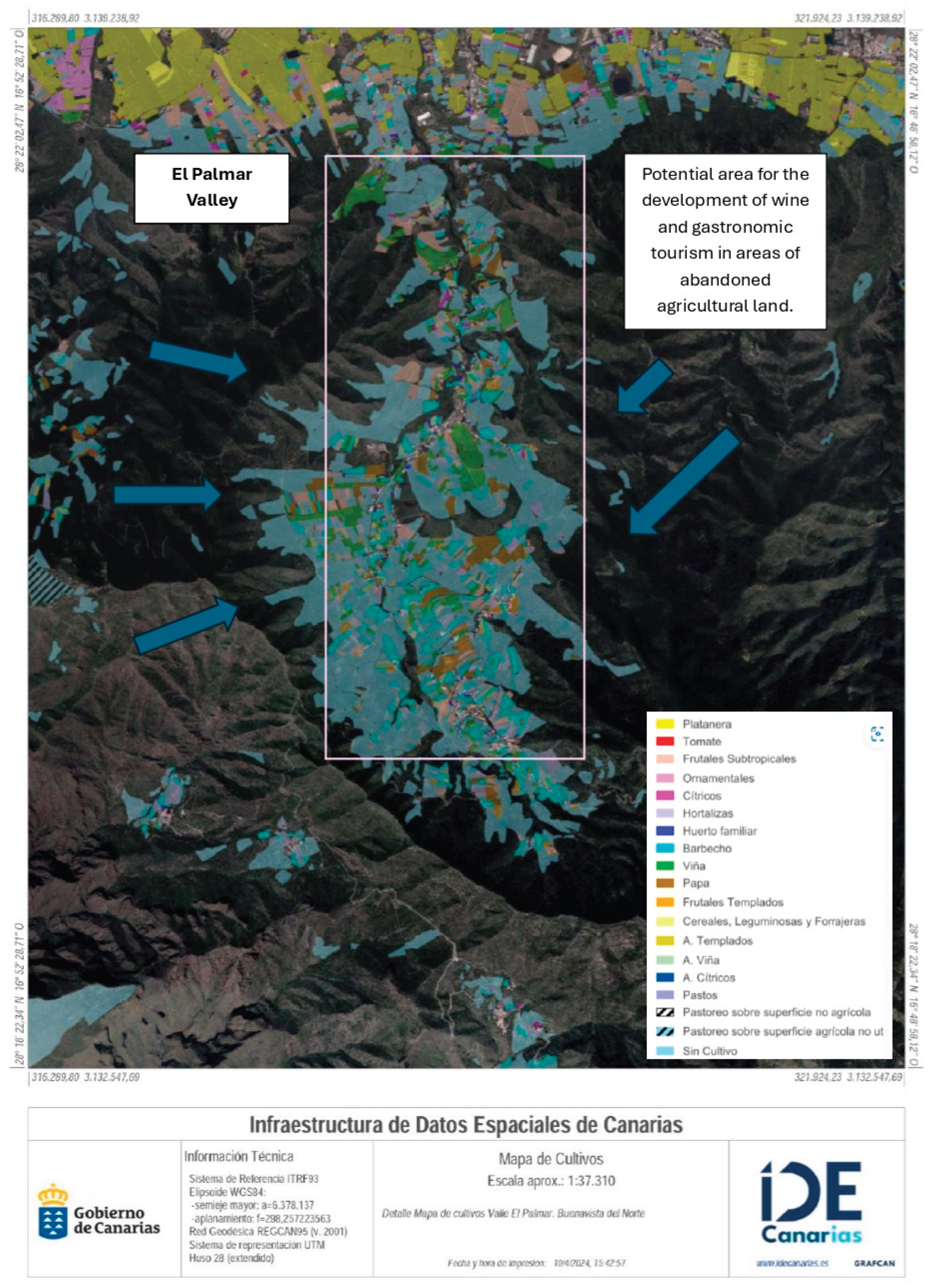
Table 2.
Phases of the participation process.
| Participatory Dynamics | Explanation | Objective |
|---|---|---|
| Phase 1. Diagnosis | ||
| Participatory Dynamics 1 | Separated into 2 groups, individually (10 minutes) and in a group session (30 minutes). | Think about proposals on the assigned theme |
| Participatory Dynamics 2 | Once they have been presented, the other group has time to complement the proposals presented. | Share the contributions of each group. |
| Phase 2. Good practices in the sector that respect the environment | ||
| Participatory Dynamics 3 | Split into groups, exchanging the themes. | Select the 10 most important resources from each one. |
| Phase 3. Set of personalised recommendations on actions to improve sustainability | ||
| Conclusion | Sharing session | Share the 10 proposals selected by each group. |
Source: Own elaboration.
Table 3.
Areas of abandonment with agrotourism potential.
| Places | Activities | Aim |
|---|---|---|
| Town Centre of the Municipality |
To observe the different buildings and underused infrastructures, such as the buildings annexed to the Granary, Teleclub, Casa de D. Nicolás, Antiguo Convento de San Francisco, Casa Comunal de los Vecinos de Teno Alto. | To highlight their capacity as versatile spaces for the development of business activities and actions related to the ecotourism sector, culture, tradition and history. |
| Triana Ravine | The observation of this unique space in the municipality was taken into account for its possible revitalisation, dynamisation and use. | The aim is to turn it into a recreational space for the community, tourists and visitors, as well as a useful place to carry out sustainable activities and experiences safely and attractively and to generate new business niches in the area through the improvement of the local footpath, agrotourism or the training of young people in the field of urban gardens. |
| Realisation of the local footpath from the town centre to the Hacienda del Conde Meliá Collection Golf & Spa | The research team’s interest in improving, modernising, and conditioning this space is highlighted. | |
| Coastal stretch of the Golf Course, Los Barqueros - Las Arenas - El Fraile | The visit aimed to improve the stretch and its key points, as well as the creation of new spaces for enjoyment, which would allow new economic activities to be generated at a local level. It is committed to a local development and employment approach that takes into account sustainability and environmental protection. In this way, the aim is to achieve economic growth that is respectful of nature and beneficial for the community and the local development of the Municipality. | |
| Punta de Teno | This visit aimed to implement a series of actions to revalue the Punta de Teno area, making the most of existing spaces to improve their use and creating new spaces and ecotourism products. To this end, the project visited areas such as the Monja viewpoint, the greenhouse and farming area, the old hermitage, and the surrounding area of Ballenita Beach, car parks and the lighthouse. These initiatives seek to catalyse innovative projects in the area and encourage economic development, always from an ecological and environmentally friendly perspective. The aim is to promote a green economy in the region, in line with its cultural and territorial characteristics, thus avoiding any negative impact on the environment. | |
| Valle El Palmar and Complejo Agroalimentario de los Pedregales | The objective of this visit was to directly observe the potential of the valley for the development of activities and actions related to the agro-astro-tourism sector, considering the progressive abandonment of the cultivated area. The potential of the existing agri-food complex and the underutilization of most of its spaces were identified in this hamlet. | |
| Teno Alto | The visit was aimed at revitalising the local economy through the Km 0 gastronomic product in the hamlet of Teno Alto where it can be achieved by revitalising livestock farming through its cheese dairies, highlighting the value of the cheese production process and allowing visitors to connect with it sustainably. | |
| Farmhouses of Masca, Portelas-Bolico and Carrizales | By providing an authentic rural gastronomic experience, visitors will be able to learn first-hand how cheese is produced and enjoy the final product in its original environment. |
Source: Own elaboration.
Table 4.
Community-Led Responses.
| Theme | Key Proposals |
|---|---|
| Enhancement of the Primary Sector | Promote local products and consumption- Develop a local product agenda- Recover agricultural areas (e.g., Valle del Palmar, Los Carrizales)- Focus on vineyards, potatoes, cereals, onions |
| Agricultural Estates & Winery Development | Create a visitable, traditional banana plantation- Support organic coastal farming- Revive wine production in El Palmar Valley |
| Wine/Gastro-tourism Innovation | Develop digital platform linking restaurants by specialty- Educate consumers on local food systems |
| Traditional Trades & Heritage | Restore buildings linked to traditional trades- Create interactive public spaces in historic center |
Source: Own elaboration.
Table 5.
Strategic Development Areas.
| Focus Area | Identified Challenges | Proposed Actions |
|---|---|---|
| Vineyards and Wine Tourism | Abandonment of vineyards- Low profitability- Youth migration | Strategic plan to recover vineyards- Develop wine tourism to boost economy |
| Local Cheesemaking (Teno Alto) | Aging producers- No generational renewal- Few active cheesemakers | Preserve traditional livestock farming- Promote cheese tourism |
| Agri-food Spaces (Barranco de Triana) | Limited engagement with agri-food education- Underused spaces | Develop spaces for farming, composting, and training- Create rental/lease model |
Source: Own elaboration.
Table 6.
Main actions carried out in Buenavista del Norte as part of the repopulation programme.
| Project | Objective | Context | Funding (€) |
|---|---|---|---|
| Composta Buenavista | To provide the municipality with a composting plant and the necessary machinery to transform organic waste into high quality worm compost and improve the quality of the municipality’s agricultural soils. | Plan de Apoyo a la implementación de la normativa de residuos y al fomento de la economía circular” comprendida en el Componente 12 “Política Industrial España 2030” del Plan de Recuperación, Transformación y Resiliencia (PRTR), financiado por la Unión Europea– NextGenerationEU (Línea 2) | 248,790.50 € (IGIC included), 90% of which is co-financed by the European Union through the Next Generation EU funds, and the rest, some 24,879.05 €, by the Buenavista del Norte Town Council itself. |
| Buenavista Recupera | To provide the municipality with the necessary material for the collection of this waste from both the general population and large generators, including both containers and the selective collection lorry. It also includes a line of information, dissemination and awareness-raising for both the general public and large generators. In this way, the correct treatment of municipal organic waste is ensured. | Medidas de apoyo para proyectos de construcción, adaptación y mejora de instalaciones específicas para el tratamiento de los biorresiduos recogidos separadamente, dentro del “Plan de Apoyo a la implementación de la normativa de residuos y al fomento de la economía circular” comprendida en el Componente 12 “Política Industrial España 2030” del Plan de Recuperación, Transformación y Resiliencia (PRTR), financiado por la Unión Europea– NextGenerationEU (Línea 1) | 84,092.85 (IGIC included), 90% of which will be co-financed by the European Union through the Next Generation EU funds, and the rest by the Buenavista del Norte Town Council itself, some 8,409.28 euros. |
| Rehabilitation of municipally owned housing | The so-called civil servants’ dwellings are three blocks of four dwellings each, which were built in the 1980s to house civil servants and their families who had to travel to Buenavista to provide their services. Over the years, they have lost this main function and have been used for social housing, although they have never had a proper maintenance plan. This grant will allow for the refurbishment of one of the blocks and its use as social rental housing. | Programa para Combatir la Despoblación en el medio rural del Instituto Canario de la Vivienda | 149.000 € |
| Repopulation and activation of Valle de El Palmar, Buenavista del Norte. |
Project within the area of ‘Structures for coordination and promotion of entrepreneurship’. | Projects for socio-economic reactivation and the fight against depopulation - Call 2022. Ministry for the Ecological Transition and the Demographic Challenge | 148.872 € |
| Creation of the Museo de Las Libreas de El Palmar | Convention between the Cabildo and Ayuntamiento de Buenavista del Norte for the creation of Museo de Las Libreas de El Palmar. | Not available Pending implementation |
Source: Own elaboration.
Disclaimer/Publisher’s Note: The statements, opinions and data contained in all publications are solely those of the individual author(s) and contributor(s) and not of MDPI and/or the editor(s). MDPI and/or the editor(s) disclaim responsibility for any injury to people or property resulting from any ideas, methods, instructions or products referred to in the content. |
© 2025 by the authors. Licensee MDPI, Basel, Switzerland. This article is an open access article distributed under the terms and conditions of the Creative Commons Attribution (CC BY) license (http://creativecommons.org/licenses/by/4.0/).
Copyright: This open access article is published under a Creative Commons CC BY 4.0 license, which permit the free download, distribution, and reuse, provided that the author and preprint are cited in any reuse.


