

Submitted:
08 September 2025
Posted:
09 September 2025
You are already at the latest version
Abstract
Health supplements—bioactive compounds derived from food sources with pharmaceutical-like benefits—offer a powerful, multi-faceted avenue to enhance body defense and build physical resilience. the strategic use of these formulations, moving beyond basic nutrition to target the body's complex defense systems. the foundational roles of essential micronutrients, the modulating power of botanical adaptogens and phytochemicals, and the critical importance of the gut-immune axis through targeted probiotic and synbiotic interventions. Finally, we examine how advanced formulation strategies like smart combination and absorption-enhanced delivery systems are paramount for efficacy. a comprehensive roadmap for leveraging health supplements to achieve a more robust and sturdy body condition.
Keywords:
Health
; immune
; formulations
; probiotics
Introduction
1. Foundational Micronutrients: The Essential Building Blocks of Immunity [1,2,3,4,5,6,7,8]
A robust immune system is not built on complex compounds alone; it relies fundamentally on a steady and adequate supply of essential vitamins and minerals. These micronutrients are the unsung heroes of our biochemistry, acting as indispensable cofactors in the enzymatic reactions that power every aspect of body defense—from the production of immune cells to the execution of their defensive duties. Without these foundational elements, the entire immune apparatus becomes inefficient and vulnerable. Two of the most critical micronutrients in this regard are Vitamin D and Zinc.
Vitamin D—The Master Immune Regulator
Often mischaracterized merely as a bone-health vitamin, Vitamin D is, in fact, a potent steroid hormone that plays a central role in modulating the immune system. Its function is not to blindly “boost” immunity but to fine-tune it, ensuring a response that is both effective and appropriately controlled.
Mechanism of Action
Nearly all immune cells—including T-cells, B-cells, and macrophages—express receptors for Vitamin D. Upon activation, these cells can locally convert circulating Vitamin D into its active form, calcitriol. This allows it to act as a powerful director of the immune response:
Innate Immunity Enhancement: Vitamin D enhances the pathogen-fighting capacity of innate immune cells. It stimulates the production of antimicrobial peptides (AMPs), like cathelicidin. These peptides act like natural antibiotics, punching holes in the cell walls of bacteria, viruses, and fungi, providing a crucial first line of defense.
Adaptive Immunity Regulation: Perhaps its most critical role is in preventing overreaction. Vitamin D helps shift the adaptive immune response away from a pro-inflammatory state (driven by Th1 and Th17 cells) and promotes a more regulatory, anti-inflammatory state. This modulation is vital for preventing autoimmunity, where the body attacks its own tissues, and for mitigating excessive inflammation that can lead to tissue damage (e.g., the infamous “cytokine storm”).
Practical Considerations
Sources: Sun exposure is the primary natural source. Dietary sources are limited (fatty fish, fortified milk, egg yolks). Due to modern lifestyles and geographic location, a significant portion of the population is deficient.
Supplementation: Vitamin D3 (cholecalciferol) is the preferred supplemental form as it is more effective at raising blood levels than D2. Dosage should ideally be guided by a blood test to assess individual status.
Zinc—The Guardian of Immune Cell Integrity and Communication
Zinc is involved in more aspects of body defense than perhaps any other micronutrient. It is crucial for the normal development and function of all immune cells, acting as a linchpin for both innate and adaptive immunity.
Mechanism of Action
Zinc’s influence is pervasive due to its role as a cofactor for over 300 enzymes involved in DNA synthesis, cell division, and protein production—all processes essential for a rapidly responding immune system.
Barrier Function & Innate Immunity: Zinc is vital for maintaining the integrity of our physical barriers, like the skin and the lining of the respiratory and gut tracts. Within the innate system, a deficiency directly impairs macrophage and neutrophil function (phagocytosis and intracellular killing) and reduces the activity of Natural Killer (NK) cells, which are critical for targeting virus-infected and cancerous cells.
Adaptive Immunity and Apoptosis: Zinc is absolutely essential for the development and function of T-lymphocytes. A deficiency leads to thymic atrophy (where T-cells mature), reduced T-cell numbers, and an impaired antibody response from B-cells. Furthermore, zinc plays a key role in apoptosis (programmed cell death). By regulating this process, it helps to eliminate old, infected, or damaged immune cells, preventing excessive inflammation and ensuring a clean conclusion to an immune response.
Practical Considerations
Sources: Excellent dietary sources include oysters, red meat, poultry, pumpkin seeds, lentils, and chickpeas.
The “Goldilocks” Mineral: The body has no dedicated zinc storage system, making consistent daily intake crucial. However, it is important to avoid excessive supplementation (typically above 40 mg/day for adults without medical supervision), as too much zinc can actually suppress body defense and interfere with the absorption of other minerals like copper.
Other Key Players in the Micronutrient Foundation
While Vitamin D and Zinc are paramount, a full cast of micronutrients supports them:
Vitamin C: A powerful antioxidant that protects immune cells from oxidative damage during infection. It supports epithelial barrier function and enhances the activity of phagocytes.
Selenium: Essential for the function of antioxidant enzymes like glutathione peroxidase, which protects tissues from inflammation-induced damage. It also supports the production of activated T-cells.
Iron: Critical for immune cell proliferation and maturation, especially lymphocytes. It is also involved in enzymatic reactions that generate reactive oxygen species to kill pathogens.
a diet rich in a diverse array of vitamins and minerals is not just about preventing deficiency diseases; it is about providing the raw materials required to construct, maintain, and command a sophisticated and precise defense force. Ensuring optimal intake of these foundational micronutrients is the most critical first step in any nutraceutical strategy aimed at achieving lasting immunity and physical sturdiness.
2. Potent Botanical and Phytochemical Enhancers: Harnessing Nature’s Power [9,10,11,12,13,14,15]:
While foundational micronutrients provide the essential building blocks, the plant kingdom offers a sophisticated arsenal of compounds that can actively prime, modulate, and enhance the immune system. These botanicals, often classified as adaptogens or immunomodulators, work not by simply replacing a deficiency but by interacting with complex biological pathways to help the body adapt to stress and mount a more efficient defense. They represent the next level of strategic nutraceutical intervention.
Subpoint 2A: Curcumin (from Turmeric)—The Anti-Inflammatory Powerhouse
Chronic, low-grade inflammation is a silent adversary of optimal body defense. It creates a distracting and resource-draining environment that can prevent the immune system from responding effectively to new threats and can slow down recovery from illness or physical exertion. Curcumin, the primary bioactive compound in turmeric, is one of nature’s most powerful tools for managing this inflammatory state.
Detailed Mechanism of Action
Curcumin’s efficacy is rooted in its ability to influence inflammatory signaling at the molecular level. Its primary molecular targets are transcription factors and enzymes that govern the inflammatory response.
NF-κB Inhibition: Nuclear factor kappa-light-chain-enhancer of activated B cells (NF-κB) is the master regulator of inflammation. When activated, it translocates to the cell nucleus and “turns on” the genes that produce pro-inflammatory cytokines (like TNF-α, IL-1, and IL-6). Curcumin effectively blocks the activation of NF-κB, thereby reducing the production of these inflammatory mediators at their source.
Modulation of Other Pathways: Curcumin also downregulates the activity of inflammatory enzymes like cyclooxygenase-2 (COX-2) and lipoxygenase (LOX), and it activates the Nrf2 pathway, which is responsible for producing the body’s own antioxidant enzymes.
Impact on Immunity: By calming systemic inflammation, curcumin allows the immune system to operate from a state of balance. Resources are no longer wasted on unnecessary inflammatory fires, meaning immune cells like lymphocytes and macrophages can be more effectively deployed against genuine pathogens. This leads to a more precise immune response and significantly faster recovery and repair of tissues, which is the very definition of physical resilience.
Practical Considerations
The Bioavailability Challenge: Pure curcumin is poorly absorbed into the bloodstream. Effective nutraceutical formulations address this by combining it with:
Piperine: A compound from black pepper that enhances absorption by up to 2000%.
Phospholipids: (e.g., in Meriva® curcumin) binding curcumin to phospholipids drastically improves its absorption.
Liposomal Encapsulation: Wrapping curcumin in tiny lipid bubbles allows for efficient delivery to cells.
Dosing: Effective anti-inflammatory doses typically range from 500 mg to 1,000 mg of a bioavailable curcumin extract, taken once or twice daily.
Detailed Mechanism of Action:
Elderberry (Sambucus nigra):
The dark purple berries are rich in anthocyanins, powerful antioxidants that give the berry its color and its antiviral properties.
Inhibition of Viral Entry and Replication: Research indicates that elderberry anthocyanins can bind to the tiny spikes on the surface of viruses (like influenza) that they use to pierce and enter our host cells. By blocking these hemagglutinin spikes, the virus is effectively “disarmed” and cannot infect the cell.
Immune Modulation: Beyond direct antiviral effects, elderberry has been shown to increase the production of inflammatory cytokines. While this may seem counterintuitive, a strong, swift inflammatory signal is crucial for initially activating the immune system against an invader. Elderberry appears to help amplify this crucial early alert system.
Echinacea (Echinacea purpurea / angustifolia):
Echinacea’s strength lies in its ability to non-specifically boost the innate immune system, making it more vigilant.
Stimulation of Phagocytosis: The key alkylamides and other compounds in Echinacea are known to activate macrophages. These are the large, Pac-Man-like cells of the innate immune system that engulf and digest pathogens. By stimulating macrophages, Echinacea enhances the body’s first-line cleanup crew.
Interferon Induction: Echinacea promotes the production of interferon, a critical signaling protein released by infected cells. Interferon acts as a distress beacon, warning neighboring cells of the viral threat and triggering them to heighten their own antiviral defenses. This creates a protective zone around the site of infection.
Practical Considerations:
Usage Timing: These herbs are most effective when used therapeutically—at the very first sign of illness—rather than as a daily supplement. Some protocols support using them preventively during high-risk seasons.
Formulation Matters: The efficacy is highly dependent on the plant part used and the extraction method. For Echinacea, formulations using the aerial parts and root from E. purpurea are most validated. For Elderberry, standardized extracts and syrups are common and effective.
Synergy: They are often found together in formulations designed for acute immune support, as their mechanisms—direct viral inhibition (Elderberry) and broad immune stimulation (Echinacea)—complement each other perfectly.
these botanical powerhouses move beyond foundational support to offer active management of the immune landscape. Curcumin works by creating a calm, low-inflammation environment ideal for efficient body defense, while Elderberry and Echinacea provide targeted, rapid-response support against specific pathogens, particularly viruses. Together, they form a critical part of a comprehensive nutraceutical strategy for robust immunity and sturdiness.
3. Advanced Formulation Strategies: Beyond Single Ingredients [16,17,18,19,20,21]
The journey of a nutraceutical from the capsule to the cell is fraught with challenges. Stomach acid, digestive enzymes, poor solubility, and inefficient absorption can all prevent a potent ingredient from ever reaching its target. Therefore, the true art and science of modern health supplements lie not just in what is included, but in how it is presented to the body. Sophisticated formulation is the critical bridge between theoretical benefit and tangible physiological effect, ensuring the body can actually absorb and utilize these powerful compounds.
Subpoint 3A: Synergistic Blending for Enhanced Efficacy
The philosophy of “more is better” is a dangerous oversimplification in nutraceutical science. A far more effective approach is synergy—where the combined effect of two or more ingredients is significantly greater than the sum of their individual effects. This strategic combination can enhance absorption, amplify biological activity, and create a more comprehensive and sustained impact on the immune system.
Detailed Mechanism and Examples
Absorption Synergy: This is where one ingredient directly improves the absorption of another.
Curcumin + Piperine: This is the classic example. Curcumin is rapidly metabolized in the liver and intestine and poorly absorbed. Piperine, the bioactive compound in black pepper, inhibits these metabolic pathways (specifically enzymes like UDP-glucuronosyltransferase) and slows intestinal motility. This allows more curcumin to enter the bloodstream intact and remain there for a longer duration, increasing its absorption by up to 2,000%.
Fat-Soluble Vitamins + Healthy Fats: Vitamins A, D, E, and K are fat-soluble, meaning they require dietary fat for absorption. Formulating these vitamins in a softgel with medium-chain triglycerides (MCT oil) or other lipids ensures they are properly emulsified and absorbed.
Functional Synergy: This is where ingredients support different parts of the same physiological pathway, creating a more robust and balanced outcome.
Vitamin C + Zinc: This is a powerhouse duo for immune support. Vitamin C is a primary antioxidant in the fluid outside cells, while zinc functions as a cofactor for antioxidant enzymes inside cells. They work in different compartments to protect immune cells from oxidative damage during activation. Furthermore, vitamin C can enhance the intestinal absorption of zinc, and both are crucial for the integrity of epithelial barriers, the body’s first line of defense.
Echinacea + Elderberry: As discussed previously, Echinacea non-specifically stimulates immune cells like macrophages, while Elderberry directly inhibits viral particles. Together, they provide a two-pronged attack: one mobilizing the body’s forces (Echinacea) and the other disarming the enemy (Elderberry).
Subpoint 3B: Optimal Delivery Systems
The delivery system is the physical vehicle that carries an active ingredient to its site of absorption or action. Advanced delivery technologies are engineered to solve specific absorption problems, ensuring ingredients survive the digestive tract and reach the systemic circulation in effective concentrations.
Detailed Mechanisms and Technologies
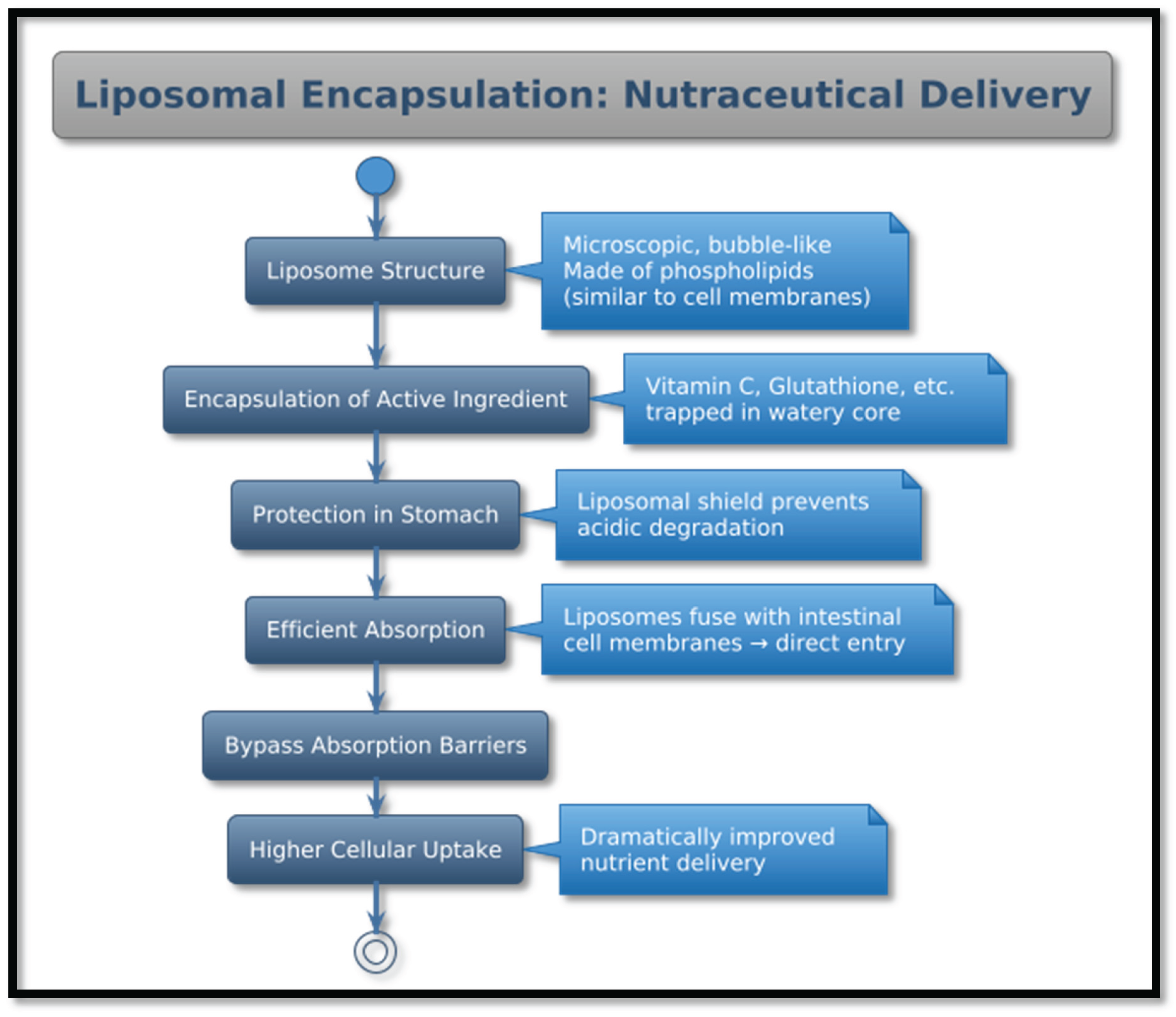
Liposomal Encapsulation: This is one of the most significant advancements in nutraceutical delivery. Liposomes are microscopic, bubble-like structures made from phospholipids (the same material as cell membranes).
How it works: The sensitive active ingredient (like Vitamin C or Glutathione) is encapsulated within the watery core of these lipid bubbles.
Benefits: The liposomal shield protects the nutrient from degradation in the harsh acidic environment of the stomach. Furthermore, because of their lipid nature, liposomes can fuse with the lipid-based cell membranes of the intestinal wall, allowing for direct and highly efficient absorption into the bloodstream. This bypasses many of the usual absorption barriers, resulting in dramatically higher cellular uptake.
Figure 1.
Liposomal encapsulation delivery system.
Enteric Coating: A simpler but highly effective technology.
How it works: A thin, acid-resistant polymer film is applied to a capsule or tablet.
Benefits: This coating prevents the capsule from dissolving in the stomach. Instead, it remains intact until it reaches the more neutral pH of the small intestine, where it then breaks down and releases its contents. This is crucial for protecting acid-sensitive ingredients like probiotics and certain enzymes from being destroyed by gastric acid.
4. Phytosome® Technology: A Specific Technology Used for Poorly Absorbed Botanical Extracts [21,22,23,24,25,26,27,28]
How it works: An active phytoconstituent (e.g., curcumin or silymarin from milk thistle) is bound to a phospholipid, creating a fat-soluble molecular complex.
Benefits: This complex mimics the body’s own molecules, allowing it to be absorbed much more efficiently through the intestinal wall and into the bloodstream, often resulting in absorption several times higher than that of a standardized extract.
ignoring formulation science is like having a powerful key but no way to insert it into the lock. Synergistic blending ensures that ingredients work together intelligently to maximize their collective potential, while advanced delivery systems act as the specialized couriers that successfully navigate the body’s defenses to deliver their payload. For a consumer, understanding these concepts means looking beyond the marketing hype on the front of a label and scrutinizing the formulation details on the back, seeking evidence of these advanced strategies for a product that is truly designed for efficacy. This is the final, critical piece in building a nutraceutical regimen that delivers real-world immune strength and physical sturdiness.
The Gut-Immune Axis: Probiotics as Foundational Nutraceuticals for Immunity
The human gastrointestinal tract is far more than a digestive organ; it is the largest immune interface in the body, housing approximately 70-80% of our immune cells. This close proximity is not coincidental but essential for surveillance and defense. The community of trillions of microorganisms residing in the gut—the microbiota—plays a pivotal role in educating and regulating this vast immune network. Probiotics, defined as live microorganisms that confer a health benefit to the host when administered in adequate amounts, are thus not merely digestive aids but fundamental health supplements for modulating systemic immunity and building long-term resilience.
Subpoint: Mechanisms of Probiotic Immune Action
Probiotics support immunity through a multi-faceted dialogue with the host’s immune system, primarily occurring in the gut-associated lymphoid tissue (GALT).
1. Reinforcement of the Gut Barrier:
A primary physical defense is the intestinal lining, a single layer of cells held together by tight junction proteins. This barrier prevents undigested food particles, toxins, and pathogens (“leaky gut”) from entering the bloodstream and triggering widespread immune activation and inflammation.
How Probiotics Help: Specific probiotic strains, particularly Lactobacillus and Bifidobacterium species, enhance the production of mucins (the protective mucus layer) and fortify tight junction proteins. This strengthens the gut barrier, preventing the leakage of pro-inflammatory compounds and allowing the immune system to remain vigilant against genuine threats rather than being constantly activated by everyday gut contents.
2. Direct Interaction with Immune Cells:
The GALT contains specialized immune cells, including Peyer’s patches and dendritic cells, that sample the gut environment.
How Probiotics Help: Probiotics interact with these cells, helping to “train” and balance the immune response. They can:
Modulate Cytokine Production: They promote the release of anti-inflammatory signaling molecules (like IL-10) and can help regulate the production of pro-inflammatory cytokines (like TNF-α and IL-6), preventing an overzealous response.
Stimulate Antibody Production: Certain probiotics have been shown to increase the production of secretory IgA (sIgA), an antibody that acts as a first line of defense in the mucosal linings of the gut, respiratory tract, and beyond. sIgA neutralizes pathogens before they can invade tissues.
3. Production of Bioactive Metabolites:
Probiotics are fermenters; they consume dietary fibers (prebiotics) and produce beneficial compounds, most notably short-chain fatty acids (SCFAs) like butyrate, acetate, and propionate.
How SCFAs Help: Butyrate is the primary fuel source for colon cells, further reinforcing gut barrier integrity. Beyond the gut, SCFAs enter the bloodstream and exert systemic anti-inflammatory effects. They can modulate the behavior of immune cells throughout the body, promoting a state of controlled readiness rather than inflammation.
Subpoint: Strategic Selection and Formulation of Probiotic Nutraceuticals
Not all probiotics are created equal. Their effects are highly strain-specific, meaning different strains of the same species can have different impacts. Therefore, strategic selection and advanced formulation are paramount for efficacy.
1. Choosing Clinically Studied Strains:
The most reliable probiotic health supplements are those that utilize strains with documented human clinical research for immune benefits. Key examples include:
Lactobacillus rhamnosus GG: One of the most extensively studied strains, shown to reduce the incidence and duration of respiratory tract infections.
*Bifidobacterium animalis subsp. lactis BB-12®:* Demonstrated to support body defense and reduce the likelihood of common childhood infections.
Lactobacillus casei Shirota: Research indicates it can modulate immune activity and help reduce the frequency of upper respiratory infections.
Consumers should look for the full strain designation (e.g., Lactobacillus rhamnosus GG, not just Lactobacillus rhamnosus) on the label.
2. Ensuring Viability and Delivery:
For probiotics to work, they must arrive alive and in sufficient numbers at their site of action in the intestines.
Colony Forming Units (CFUs): A sufficient dose, typically in the billions (e.g., 10-50 billion CFU for daily maintenance), is necessary to ensure enough bacteria survive stomach acid to colonize the gut.
Delivery Technology: To protect these delicate live organisms, high-quality formulations use technologies like:
Enteric Coating: A acid-resistant coating that prevents the capsule from dissolving in the stomach, ensuring delivery to the more neutral pH of the intestines.
Stabilization: Packaging in dark, glass bottles or blister packs to protect against moisture, oxygen, and heat—all of which can degrade potency over time.
3. Synergy with Prebiotics (Synbiotics):
A synbiotic formulation combines probiotics with their preferred food source—prebiotic fibers (e.g., fructooligosaccharides (FOS), galactooligosaccharides (GOS), or inulin).
The Benefit: This combination gives the administered probiotics a competitive advantage, helping them to establish themselves and thrive amidst the existing gut microbiota, thereby enhancing their overall efficacy and longevity.
positioning probiotics merely as digestive supplements vastly underestimates their role. They are, in fact, essential health supplements for governing the gut-immune axis. By strengthening the gut barrier, directly educating immune cells, and producing systemic anti-inflammatory metabolites, a well-formulated probiotic provides a foundational level of immune support. When combined with the previously discussed micronutrients, botanicals, and advanced delivery systems, probiotics complete a comprehensive nutraceutical strategy aimed at achieving not just a reactive, but a resilient and sturdy immune system.
Conclusions
Achieving true physical sturdiness requires an integrated, multi-system approach to supporting the immune system. Nutraceuticals provide a sophisticated and powerful toolset for this purpose, acting on different fronts to build resilience. This strategy begins by ensuring a foundation of essential micronutrients like Vitamin D and Zinc to fuel immune cell activity. It is advanced by incorporating potent botanicals such as Curcumin to manage inflammation and Elderberry for direct antiviral support. supporting the gut-immune axis with clinically-studied probiotics, which educate immune cells and strengthen barrier function. intelligent formulation—smart combination and advanced delivery systems—which ensures these powerful compounds are delivered to their target sites for maximum absorption and effect. This strategic, science-backed, and holistic approach to health supplements empowers us to build resilience from within, creating a state of robust immunity and enhanced vitality to meet daily and seasonal challenges.
References
- Munot, N.; Kandekar, U.; Rikame, C.; Patil, A.; Sengupta, P.; Urooj, S.; et al. Improved mucoadhesion, permeation and in vitro anticancer potential of synthesized thiolated acacia and karaya gum combination: a systematic study. Molecules. 2022, 27, 6829. [Google Scholar] [CrossRef]
- Munot, N.; Kandekar, U.; Giram, P.S.; Khot, K.; Patil, A.; Cavalu, S. A comparative study of quercetin-loaded nanocochleates and liposomes: formulation, characterization, assessment of degradation and in vitro anticancer potential. Pharmaceutics. 2022, 14, 1601. [Google Scholar] [CrossRef]
- Manikyam, H.K.; Tripathi, P.; Patil, S.B.; Lamichhane, J.; Chaitanya, M.; Patil, A.R. Extraction, purification, and quantification of hesperidin from the immature Citrus grandis/maxima fruit Nepal cultivar. Asian J Nat Prod Biochem. 2022, 20. [Google Scholar] [CrossRef]
- Patil, A.; Munot, N.; Patwekar, M.; Patwekar, F.; Ahmad, I.; Alraey, Y.; et al. Encapsulation of lactic acid bacteria by lyophilisation with its effects on viability and adhesion properties. Evid Based Complement Alternat Med. 2022, 2022, 1–9. [Google Scholar] [CrossRef]
- Nalawade, A.S.; Gurav, R.V.; Patil, A.R.; Patwekar, M.; Patwekar, F. A comprehensive review on morphological, genetic and phytochemical diversity, breeding and bioprospecting studies of genus Chlorophytum Ker Gawl. from India. Trends Phytochem Res. 2022, 6, 19–45. [Google Scholar]
- Patil, K.G.; Balkundhi, S.; Joshi, H.; Ghewade, G. Mehsana buffalo milk as prebiotics for growth of Lactobacillus. Int J Pharm Pharm Res. 2011, 1, 114–117. [Google Scholar]
- Das, N.; Ray, N.; Patil, A.R.; Saini, S.S.; Waghmode, B.; Ghosh, C.; et al. Inhibitory effect of selected Indian honey on colon cancer cell growth by inducing apoptosis and targeting the β-catenin/Wnt pathway. Food Funct. 2022, 13, 8283–8303. [Google Scholar] [CrossRef] [PubMed]
- Patil, M.J.; Mali, V. The diverse cytotoxicity evaluation of Lactobacillus discovered from sheep milk. Acta Sci Pharm Sci. 2021, 5, 69–70. [Google Scholar] [CrossRef]
- Abhinandan, P.; John, D. Probiotic potential of Lactobacillus plantarum with the cell adhesion properties. J Glob Pharma Technol. 2020, 10, 1–6. [Google Scholar]
- Patil, A.; Pawar, S.; Disouza, J. Granules of unistrain Lactobacillus as nutraceutical antioxidant agent. Int J Pharm Sci Res. 2018, 9, 1594–1599. [Google Scholar]
- Patil, A.; Mali, V.; Patil, R. Banana fibers camouflaging as a gut worm in a 6-month-old infant. Iberoam J Med. 2020, 2, 245–247. [Google Scholar] [CrossRef]
- Munot, N.M.; Shinde, Y.D.; Shah, P.; Patil, A.; Patil, S.B.; Bhinge, S.D. Formulation and evaluation of chitosan-PLGA biocomposite scaffolds incorporated with quercetin liposomes made by QbD approach for improved healing of oral lesions. AAPS PharmSciTech. 2021, 24, 147. [Google Scholar] [CrossRef]
- Patil, A. Psychology in the age of technology dependence and the mobile dilemma. Preprints.org. 2023, 2023070101. [Google Scholar]
- Patil, A.; Kotekar, D.; Chavan, G. Knowing the mechanisms: how probiotics affect the development and progression of cancer. Preprints.org. 2023, 2023070243. [Google Scholar]
- Kim, C.S.; Jung, M.H.; Shin, D.M. Probiotic supplementation has sex-dependent effects on immune responses in association with the gut microbiota in community-dwelling older adults: a randomized, double-blind, placebo-controlled, multicenter trial. Nutr Res Pract. 2023, 17, 883–898. [Google Scholar] [CrossRef]
- Li, G.; Li, W.; Song, B.; et al. Differences in the gut microbiome of women with and without hypoactive sexual desire disorder: a case-control study. J Med Internet Res. 2021, 23, e25342. [Google Scholar] [CrossRef]
- Kim, C.S.; Jung, M.H.; Shin, D.M. Probiotic supplementation has sex-dependent effects on immune responses in association with the gut microbiota in community-dwelling older adults: a randomized, double-blind, placebo-controlled, multicenter trial. Nutr Res Pract. 2023, 17, 883–898. [Google Scholar] [CrossRef] [PubMed]
- Li, G.; Li, W.; Song, B.; et al. Differences in the gut microbiome of women with and without hypoactive sexual desire disorder: a case-control study. J Med Internet Res. 2021, 23, e25342. [Google Scholar] [CrossRef]
- Shingade, J.A.; Padalkar, N.S.; Shin, J.H.; Kim, Y.H.; Park, T.J.; Park, J.P.; Patil, A.R. Electrostatically assembled maghemite nanoparticles-Lactobacillus plantarum: A novel hybrid for enhanced antioxidant, antimicrobial, and antibiofilm efficacy. Bioresour Technol. 2025, 430, 132538. [Google Scholar] [CrossRef]
- Manikyam, H.K.; Joshi, S.K.; Patil, S.B.; Vakadi, S.; Patil, A.R. Steroidal glycosides from Mallotus philippensis induce apoptosis in MCF-7 breast cancer cells via MTT and DAPI assays. Asian J Nat Prod Biochem. 2025, 23. [Google Scholar] [CrossRef]
- Wang, J.; Yuan, F.; Kendre, M.; He, Z.; Dong, S.; Patil, A.; Padvi, K. Rational design of allosteric inhibitors targeting C797S mutant EGFR in NSCLC: an integrative in silico and in-vitro study. Front Oncol. 2025, 15, 1590779. [Google Scholar] [CrossRef]
- Sakate, M.K.; Wategaonkar, S.B.; Zambare, D.N.; Shembade, U.V.; Moholkar, A.V.; et al. Dual extracellular activities of cobalt and zinc oxides nanoparticles mediated by Carica papaya latex: Assessment of antibacterial, antifungal, and anticancer activities. Inorg Chem Commun. 2025, 114538. [Google Scholar] [CrossRef]
- Patil, A.; Singh, N.; Patwekar, M.; Patwekar, F.; Patil, A.; Gupta, J.K.; Elumalai, S.; et al. AI-driven insights into the microbiota: Figuring out the mysterious world of the gut. Intell Pharm. 2025, 3, 46–52. [Google Scholar] [CrossRef]
- Manikyam, H.K.; Joshi, S.K.; Patil, S.B.; Patil, A.R.; Ponnuru, V.S. Free radical-induced inflammatory responses activate PPAR-γ and TNF-α feedback loops, driving HIF-α mediated metastasis in HCC: In silico approach of natural compounds. Univ Libr Biol Sci. 2025, 2, 1. [Google Scholar]
- Bhinge, S.D.; Jadhav, S.; Lade, P.; Bhutkar, M.A.; Gurav, S.; Jadhav, N.; Patil, A.; et al. Biogenic nanotransferosomal vesicular system of Clerodendrum serratum L. for skin cancer therapy: Formulation, characterization, and efficacy evaluation. Future J Pharm Sci. 2025, 11, 5. [Google Scholar] [CrossRef]
- Kareppa, M.S.; Jangme, C.M.; Patil, A.R. Phytochemical investigation and HPTLC screening of Tinospora cordifolia leaf extract. J Neonatal Surg. 2025, 14. [Google Scholar]
- Wang, L.; Xu, Z.; Bains, A.; Ali, N.; Shang, Z.; Patil, A.; Patil, S. Exploring anticancer potential of Lactobacillus strains: Insights into cytotoxicity and apoptotic mechanisms on HCT 115 cancer cells. Biologics: Targets Ther. 2024, 285–295. [Google Scholar] [CrossRef]
- Manikyam, H.K.; Joshi, S.K.; Patil, S.B.; Patil, A.R. A review on cancer cell metabolism of fats: Insights into altered lipid homeostasis. Dis Res. 2025, 4, 97–107. [Google Scholar] [CrossRef]
Disclaimer/Publisher’s Note: The statements, opinions and data contained in all publications are solely those of the individual author(s) and contributor(s) and not of MDPI and/or the editor(s). MDPI and/or the editor(s) disclaim responsibility for any injury to people or property resulting from any ideas, methods, instructions or products referred to in the content. |
© 2025 by the authors. Licensee MDPI, Basel, Switzerland. This article is an open access article distributed under the terms and conditions of the Creative Commons Attribution (CC BY) license (http://creativecommons.org/licenses/by/4.0/).
Copyright: This open access article is published under a Creative Commons CC BY 4.0 license, which permit the free download, distribution, and reuse, provided that the author and preprint are cited in any reuse.


