

Submitted:
08 September 2025
Posted:
09 September 2025
You are already at the latest version
Abstract
The increasing generation of liquid waste from agricultural, industrial, and municipal sources poses significant environmental challenges due to its high content of organic carbon (OC) and nutrients such as phosphorus and nitrogen. This review examined the effectiveness of membrane-based technologies, particularly microfiltration (MF) and ultrafiltration (UF), in separating and recovering these valuable compounds. Drawing on key literature indexed in Scopus, the review analyzed how membrane properties, operating conditions, and feed characteristics influence removal efficiency. The find-ings indicate that MF membranes primarily retain particulate organic matter and sus-pended solids (SS), with limited retention of phosphorus and nitrogen species. In con-trast, UF membranes exhibited superior performance in removing both OC and phos-phorus, and partially retain some nitrogen compounds depending on molecular size and charge. When combined with pre-treatment processes such as coagulation or ad-sorption, both MF and UF achieve higher nutrient removal rates. These membrane technologies showed promise not only in reducing pollutant loads but also in enabling nutrient recovery for potential reuse in agriculture. The optimization of membrane configuration and integration with other processes is essential for enhancing treatment performance and contributing to circular wastewater management strategies.
Keywords:
microfiltration
; nutrients
; organic carbon
; removal efficiency
; ultrafiltration
1. Introduction
The growing global demand for water and the increasing generation of wastewater from domestic, industrial, and agricultural sources have intensified the need for efficient and sustainable treatment technologies [1,2,3]
Liquid waste streams often contain significant concentrations of OC and nutrients such as nitrogen and phosphorus, which, if not properly managed, contribute to serious environmental issues including eutrophication, groundwater contamination, and greenhouse gas emissions [4,5]. Conversely, these waste streams also represent a valuable source of recoverable materials that could be reused in agriculture and industry, supporting the principles of circular economy and resource recovery [6,7,8]. Conventional wastewater treatment methods, including biological and chemical processes, have proven effective in many cases but often present limitations such as high energy consumption, sludge generation, and incomplete removal of certain pollutants [9]. Among the advanced treatment options, membrane technologies especially pressure-driven MF and UF have gained attention due to their operational efficiency, modularity, and ability to selectively separate particulate and colloidal matter based on size exclusion mechanisms [10,11]
MF and UF membranes differ in pore size and separation performance, with MF typically removing particles >0.1 micrometer (µm) and UF targeting smaller solutes, including macromolecules and certain nutrient forms [12,13]. These membranes can effectively retain OC compounds and, to a certain extent, phosphorus and nitrogen species, depending on membrane material, configuration, and operational parameters [14,15,16]. Additionally, integrating MF and UF with pre- or post-treatment techniques such as coagulation, adsorption, or biological processes enhances the removal efficiency of nutrients, making these technologies suitable for both centralized and decentralized treatment systems [11,17]. This review aims to provide a comprehensive overview of the performance of MF and UF membranes in the separation of OC and nutrient compounds from liquid waste. The emphasis is placed on the influence of membrane characteristics, feed composition, and operational conditions on the separation efficiency. The objective is to highlight the advantages and limitations of these technologies and inform future researchers the strategies for sustainable wastewater treatment and resource recovery.
2. Technologies for the Removal of OC and Nutrients from Wastewater
The elimination of OC and nutrients from wastewater is essential for several benefits, including preventing eutrophication of surface water bodies and recovering fertilizer and maintaining water quality [18]. According to [19], various technologies are employed to remove key nutrients like carbon, nitrogen and phosphorus from wastewater and the recovery rate varies from one technology to another (Figure 1).
Membrane filtration, consisting of microfiltration (MF), ultrafiltration (UF), nanofiltration (NF) and reverse osmosis (RO) processes finds its application when nutrient accumulation is targeted [20]. Product recovery quality depends on membrane pore size, nutrient size, feed characteristics and application pressure (Figure 2). Especially for the removal of organic substances from liquid waste, MF and UF processes are used [19,21,22]. In general, MF membranes are used to remove particles larger than 0.5 μm, whereas membrane filters with a pore size of 0.002-0.5 μm are available for UF in order to eliminate macromolecules and colloidal particles. According to [23], both two membranes are also required for filtration of viruses (0.03–1 μm) and bacteria (0.5–20 μm). MF membranes have pore sizes ranging from 0.1 to 10 μm with an applied pressure range of 0.1–2 bar from an inlet fluid stream. Globally, MF can effectively remove suspended solids (SS), particulate and colloidal organic species. However, it is less effective in removing dissolved organic, nutrients and smaller organic compounds. UF membranes have smaller pore sizes than MF ones, ranging from 0.01 to 0.1 μm [24]. They also operate via size exclusion but can retain much smaller particles, including macromolecules and some colloidal substances. UF is effective in removing a broader range of organic contaminants, including proteins, polysaccharides, and other macromolecules [25]. It can also remove some dissolved organic compounds, depending on their size. For a high efficiency, MF and UF in the removal of inorganic and organic micropollutants are applied in integrated systems coupled with coagulation, flocculation, sedimentation, adsorption, complexion with polymers or surfactants and biological reactions [28,29]. With low operating pressure in the range of 0.1-2.5 bar and pore size ranging between 0.1 and 10 μm, MF membrane have removed organic compounds until 95% by showing a permeability of 500L/m2.h.bar [28]. On the other hand, with UF membrane, the same recovery was achieved by applying the pressure of 2-5 bar with 0,001-1µm of membrane pore size by showing 150L/m2.h.bar of permeability. According to [31,32,33], the high concentration of organics such as O C is found in concentrate of MF when municipal, urban and agricultural wastewater are treated and inorganic ions remain in MF permeate. UF removes phosphorus, nitrogen, and OC in soluble and colloidal form within removal rate in the range of 10-85% [32]. Phosphorous and nitrogen in particulate form with the size > 0.1 μm can be selectively removed by those filtration processes [33].
In their researches, [10,31,36,37] demonstrated that organics are removed by microfiltration and ultrafiltration membranes while inorganic ions pass through the pore of each module. When MF is involved, OC is retained whereas inorganics such as phosphorus and nitrogen forms pass through the membrane pore size [36]. Inorganics separation or recovery in the UF membranes depends on the ionic charge [37]. Total nitrogen (TN) and total phosphorus (TP) dominated by particulate forms show high concentration in UF concentrate [38]. Trivalent, divalent and monovalent for instance are retained in the UF permeate [39]. This behavior also depends on the size of the components (Table 1) and membrane solute permeability.
2.1. Removal Efficiency of OC from Liquid Waste by Using MF Membrane
In the context of assessing the removal efficiency of OC from liquid waste, MF emerges as a promising option, offering distinctive operational advantages and limitations [42]. By harnessing a combination of physical sieving and adsorption mechanisms, this approach has demonstrated effectiveness in removing organic carbon from liquid waste [46,47]. The process mainly depends on the pore size, which is usually between 0.1 and 10μm. This helps to physically separate particulate organic matter from the liquid phase [45]. The liquid waste passes through the membrane, particles that are too big to fit through the holes in the membrane are caught on the surface or inside the holes in the membrane matrix[46]. This makes the water clearer and removes a lot of the suspended organic carbon [47]. As shown in Table 2, how well microfiltration works at removing organic carbon depends on a few things, like what the feed water is like and how the system is running [47,51]. Membrane material also significantly impacts removal efficiency [49]. Materials such as polyvinylidene fluoride (PVDF), polypropylene (PP), and ceramic offer different levels of hydrophobicity, chemical resistance, and mechanical strength [53,54]. These properties influence not only how well the membrane can filter out organic carbon but also its longevity and maintenance requirements. In general, microfiltration represents a robust methodology for the removal of both particulate and dissolved forms of organic carbon from liquid waste streams. This is achieved through the dual mechanisms of sieving and adsorption [25,55].The presence of organic carbon in liquid waste can be detected in a number of ways, including through the use of chemical oxygen demand (COD), biological oxygen demand (BOD), total organic carbon (TOC), and dissolved organic carbon (DOC) [54]. MF metal membranes generally operated at Transmembrane Pressure(TMP) below 0,3 bar within possibility of 65–75% of TOC removal [55].
2.2. Removal Efficiency of OC from Liquid Waste by Using UF Membranes
In the implementation of UF membranes for the removal of OC from liquid waste, pore sizes are typically observed to range from 1 to 100 nanometers(nm) [13,67]. As water permeates through the porous structure of the membrane, larger organic molecules such as humic substances, proteins, and colloids are retained on its surface or within its pores [52,68]. Materials like polyethersulfone (PES), polysulfone (PS), cellulose acetate (CA), and various types of modified polymer blends are commonly used due to their favorable mechanical strength, chemical resistance, and ability to form consistent pore structures [66]. In exploring the removal efficiency of OC from liquid waste using UF membranes, several case studies and practical applications underscore the versatility and efficiency of this technology [67].By integrating UF membranes into their treatment processes, many municipalities have achieved substantial reductions in OC levels, thereby enhancing the overall quality of discharged effluent [68]. Additionally, pilot projects in agricultural settings demonstrated its potential to manage runoff containing pesticides and fertilizers [69]. These projects have shown promising results in reducing organic load before water is released back into natural waterways or reused for irrigation purposes [73,74]

Table 3.
Some of the applications of UF membrane in the removal of OC from liquid waste.
| Wastewater | Membrane material | Removal rate | References |
| Oil and grease | PS and a polyacrylonitrile (PAN) | 96.3% in TOC | [72] |
| Oily | PS | 99.7% in TOC | [73] |
| Municipal | Stainless steel | up to 50% in terms of COD and TOC | [74] |
| Oily | PVDF | 98% in TOC | [75] |
| Oily | PS | 93,5% in TOC | [73] |
| Vegetable oil | PS | 87% in TOC | [76] |
| Poultry Slaughterhouse | PES | 8.8% of COD | [16] |
| Influent from the treatment plant | PVDF | 78% of COD and 91% of BOD5 | [77] |
| Pig manure | PVDF | Total COD mg/L= 15000 | [78] |
| Sieved and settled manure supernatant (SAS) | PVDF | Total COD mg/L= 20000 | [78] |
| Sieved, biologically treated and SBS | PVDF | Total COD mg/L= 160 | [78] |
| Biologically treated wastewater | Zirconium oxide | 52% of COD; 45% of BOD | [79] |
| Vegetable oil |
PS |
91% in COD; 87% in TOC |
[80] |
| Urban | Zirconia (ZrO2) and Al2O3 | 97% of COD | [81] |
| Anaerobically digested sludge | PES | (66% COD removal | [82] |
| Raw sewage ween | PVDF | 138±26mg/L of COD | [83] |
| Primary clarifier effluent | PVDF | 78±30 mg/L of COD | [83] |
| Urban | Polyolephine | 43mg O2/L 0f COD and 17mg O2/L of BOD5 | [84] |
2.3. Removal Efficiency of Phosphorus Compounds from Liquid Waste by Using MF Membrane
For effective removal of phosphorus compounds from liquid waste, MF has emerged as a promising alternative [87,88]. Combined with other methods such as biological treatment or chemical precipitation, it serves as an excellent pre-treatment step [89,90]. The MF membranes facilitate the concentration of phosphorus compounds by filtering out larger solids and colloidal particles that might otherwise interfere with subsequent treatment stages [89]. The practical implementation of MF membranes for the removal of phosphorus compounds from liquid waste has seen considerably success across various wastewater (Table 4). By using a series of membrane modules with pore sizes optimized for capturing fine particulate matter and colloidal phosphorus, the facility achieved a reduction in total phosphorus levels to below 0.1 mg/L, significantly surpassing local environmental standards [90]. However, when combined with coagulation or adsorption, the efficiency can be increased to 80-95% [93,94]. PO43- removal rates can reach up to 11% for MF alone, 91% for MF-NF and 99.7% for MF softening [87].
2.4. Removal Efficiency of Phosphorus Compounds from Liquid Waste by Using UF Membrane
UF represents a highly versatile and advanced method for the removal of contaminants from liquid waste, including phosphorus compounds [96]. The fundamental principle underlying this method is size exclusion, whereby the membrane’s pore size functions as a physical barrier. This obstruction facilitates the selective permeation of water and smaller molecules while retaining larger phosphorus-containing particles [97]. This approach is particularly effective for particulate phosphorus and larger colloidal forms. The material composition and surface characteristics of the membrane are also of great consequence in this regard [98]. Membranes with charged or hydrophilic surfaces have the potential to enhance adsorption efficiency by attracting oppositely charged phosphate ions or other phosphorus species (Table 5). Due to its smaller pore size, UF offers better removal of phosphorus compounds (50-80%) [91]. When combined with coagulation, removal efficiencies of 90-99% can be achieved [99]. UF effectively separates phosphorus compounds by size exclusion mechanisms without the need for additional chemicals, thus minimizing secondary pollution concerns [100].
2.5. Separation Efficiency of Nitrogen Compounds from Liquid Waste by Using MF Membrane
Nitrogen compounds are ubiquitous in agricultural runoff, wastewater treatment plants, industrial effluents, and household waste, posing significant environmental challenges [105]. These compounds primarily include ammonia (NH₃), nitrates (NO₃⁻), nitrites (NO₂⁻), and total kjeldah nitrogen (TKN) [107,108]. The separation of them from liquid waste using MF membranes is generally less effective when these membranes are used alone [109,110]. Nevertheless, when used in combination with other treatment processes, MF can contribute to nitrogen removal efficiencies [109]. The performances of MF for nitrogen compounds removal are given in Table 6.
2.6. Separation Efficiency of Nitrogen Compounds from Liquid Waste by Using UF Membrane
The efficiency of UF in separating nitrogen compounds from liquid waste relays on several factors including membrane material and structure [112,113] (Table 7). Membrane materials can be organic polymers or inorganic substances tailored for specific separation needs [112]. Proper selection ensures optimal interaction between nitrogenous compounds and the membrane surface [113]. UF can contribute to nitrogen removal efficiencies of 80-95% when used in combination with other treatment processes [114]. Using UF technology, the liquid fraction of digestate pre-treated by electrocoagulation with Fe electrodes rejects 82% of NH4+ and 49% when using Al electrodes [115]. In their experimental work, [116] found that the nitrogen efficiency of anaerobic digestate in the agricultural sector produced by pressure-driven UF is around 75–95 % and 85–99 %.
3. Comparison
MF typically removes larger suspended solids, bacteria, and particulate organic matter (>0.1 µm), while UF can also retain macromolecules, colloids, and some dissolved organic compounds due to its smaller pore size (1–100 nm) [11,117]. These differences directly influence their performance in removing key pollutants such as TOC, TP, and various nitrogen species. Table 8 summarizes findings from recent studies comparing the removal efficiencies of MF and UF for OC and nutrients under various conditions and membrane configurations.
4. Conclusion
The separation efficiency of OC and nutrients was found to be low, particularly when MF and UF are applied directly without a pretreatment system. While MF and UF may not achieve high removal efficiencies for all dissolved contaminants, they are effective for particulate and colloidal matter. Moderate levels of removal were observed for higher molecular weight OC and colloidal organic matter, particulate phosphorus (PP) and particulate nitrogen. The removal of nitrogen and phosphorus in their ionic forms from liquid waste using MF and UF is somewhat more complex, as these processes are generally not effective for removing dissolved ions. The optimization of both pre-treatment and post-treatment processes is fundamental to enhance the separation efficiency of OC, phosphorus, and nitrogen compounds from liquid waste by using MF and UF membranes. The aforementioned studies confirm that OC is elevated in the instances of MF rejection, whereas inorganic elements predominantly remain in the permeate. The utilization of UF facilitates the concentration of OC, TP and TN in the concentrate, while only ionic forms may pass through the UF membrane pore.
Author Contributions
All authors: conceptualization; S.N and E. N: investigation, writing—original draft preparation; S.B. and N.K.: review, editing and supervision; S.B.: funding acquisition and project administration. All authors have read and agreed to the published version of the manuscript.
Funding
This research was funded by the European Union, Grant no. DCI-PANAF/2020/420-028 through the African Research Initiative for Scientific Excellence (ARISE), pilot programme. ARISE is implemented by the African Academy of Sciences with support from the European Commission and the African Union Commission. The contents of this document are the sole responsibility of the author(s) and can under no circumstances be regarded as reflecting the position of the European Union, the African Academy of Sciences, or the African Union Commission.
Acknowledgments
The author gratefully acknowledges the University of Burundi for providing the research environment and institutional support necessary for the preparation of this review.
Conflicts of Interest
The authors declare no conflict of interest. The funders had no role in the design of the study; in the collection, analyses, or interpretation of data; in the writing of the manuscript; or in the decision to publish the results.
Abbreviations
The following symbols and abbreviations are used in this manuscript:
| % | Percentage |
| µm | Micrometer |
| BOD5 | Biochemical Oxygen Demand, 5 days |
| COD | Chemical Oxygen Demand |
| Da | Daltons |
| DOC | Dissolved Organic Carbon |
| h | Hour |
| kDa | KiloDaltons |
| kPa | Kilopascal |
| LMH | Liters per square meter per hour |
| m/s | Meter per second |
| m | Meter |
| m2 | Square meter |
| MF | Microfiltration |
| mg/L | Milligram per Liter |
| min | Minute |
| MWCO | Molecular weight cut-offs |
| NH₄⁺ | Nitrogen Ammonia |
| nm | Nanometer |
| NO-2 | Nitrites |
| NO₃⁻ | Nitrates |
| OC | Organic Carbon |
| Pa | Pascal |
| PAC | Powdered activated carbon , |
| PN | Particulate Nitrogen |
| PO₄³⁻ | Phosphates |
| POC | Particulate Organic Carbon |
| PP | Particulate Phosphorus |
| PVDF | Polyvinylidene Fluoride , |
| SS | Suspended Solids |
| TCOD | Total Chemical Oxygen Demand |
| TKN | Total Kjeldahl Nitrogen |
| TMP | Transmembrane Pressure |
| TN | Total Nitrogen |
| TOC | Total Organic Carbon |
| TP | Total Phosphorous |
| TSS | Total Suspended Solids |
| UF | Ultrafiltration |
References
- Kato, S.; Kansha Y. Comprehensive review of industrial wastewater treatment techniques. Springer Berlin Heidelberg 2024, 31, 39. [CrossRef]
- Sha, C.; Shen,S.; Zhang, J.; Zhou, C.; Lu,X.; Zhang, H. A Review of Strategies and Technologies for Sustainable. water 2024, 16, 3003. [CrossRef]
- Shamshad, J.; Rehman, R.U. Advances Environmental Science Innovative approaches to sustainable wastewater treatment : a comprehensive exploration of conventional and emerging technologies. Environ. Sci. Adv. 2025, 4, 189. [CrossRef]
- Tang, W.; Talbott, J.; Jones, T.; Ward, B. B. Variable contribution of wastewater treatment plant effluents to downstream nitrous oxide concentrations and emissions. Biogeosciences 2024, 21, 3239–3250. [CrossRef]
- He, X.; Li, H.; Chen, J.; Wang, H.; Lu, L. Environmental Science and Ecotechnology Quantifying greenhouse gas emissions from wastewater treatment plants : A critical review. Environ. Sci. Ecotechnology 2025, 27, 2666-4984. [CrossRef]
- Smol,M. Circular Economy in Wastewater Treatment Plant—Water, Energy and Raw Materials Recovery. energies 2023, 16, 3911. [CrossRef]
- Hao, X.; Li, J.; Liu, R.; Van Loosdrecht, M. C. M. Resource Recovery from Wastewater: What, Why, and Where? Environ. Sci. Technol. 2024, 58, 14065–14067. [CrossRef]
- Ghimire, U.; Sarpong, G.; Gude, V. G. Transitioning Wastewater Treatment Plants toward Circular Economy and Energy Sustainability. ACS Omega 2021, 6, 11794−11803. [CrossRef]
- Sravan, J. S.; Matsakas, L. Advances in Biological Wastewater Treatment Processes : Focus on Low-Carbon Energy and Resource Recovery in Biorefinery Context. Bioengineering 2024, 11, 281. [CrossRef]
- Ezugbe, E. O.; Rathilal, S. Membrane technologies in wastewater treatment: A review. Membranes (Basel) 2020, 10, 5. [CrossRef]
- Yang, J.; Monnot, M.; Ercolei, L.; Moulin, P. Membrane-Based Processes Used in Municipal Wastewater Treatment for Water Reuse : State-Of-The-Art and Performance Analysis. Membranes (Basel) 2020, 10, 131. [CrossRef]
- Aydin, D. Recent advances and applications of nanostructured membranes in water purification. Turkish J. Chem. 2024, 48, 1. [CrossRef]
- Aziz, S. A comprehensive review of membrane-based water filtration techniques. Appl. Water Sci. 2024, 14, 8, 1–17. [CrossRef]
- Bray,R. T.; Jankowska,K.; Kulbat, E.; Łuczkiewicz, A.; Sokołowska, A. Ultrafiltration process in disinfection and advanced treatment of tertiary treated wastewater. Membranes (Basel) 2021, 11, 3. [CrossRef]
- Kyllönen, H.; Heikkinen, J.; Järvelä, E.; Sorsamäki, L.; Siipola, V.; Grönroos, A. Wastewater Purification with Nutrient and Carbon Recovery in a Mobile Resource Container. Membranes 2021, 11, 975. [CrossRef]
- Fatima, F.; Fatima, S.; Du, H.; Kommalapati, R.R. An Evaluation of Microfiltration and Ultrafiltration Pretreatment on the Performance of Reverse Osmosis for Recycling Poultry Slaughterhouse Wastewater. Separations 2024, 11, 115. [CrossRef]
- Elma, M.; Pratiwi, A.E.; Rahma, A.; Rampun, E.L.A.; Mahmud, M.; Abdi, C.; Rosadi, R.; Yanto, D.H.Y.; Bilad, M.R. Combination of Coagulation, Adsorption, and Ultrafiltration Processes for Organic Matter Removal from Peat Water. Sustainability 2022, 14, 370. [CrossRef]
- Akinnawo, S. O. Eutrophication: Causes, consequences, physical, chemical and biological techniques for mitigation strategies. Environ. Challenges 2023, 12, 2667-0100. [CrossRef]
- Deemter, D.; Oller, I.; Amat, A. M.; Malato, S. Advances in membrane separation of urban wastewater effluents for (pre)concentration of microcontaminants and nutrient recovery: A mini review. Chem. Eng. J. Adv. 2022, 11, 2666-8211. [CrossRef]
- Mehta,C. M.; Khunjar, W. O.; Nguyen, V.; Tait, S.; Batstone, D. J. Technologies to recover nutrients from waste streams: A critical review. Crit. Rev. Environ. Sci. Technol. 2015, 45, 385–427. [CrossRef]
- Urošević, T.; Trivunac, K. Achievements in Low-Pressure Membrane Processes Microfiltration (MF) and Ultrafiltration (UF) for Wastewater and Water Treatment. In Current Trends and Future Developments on (Bio-) Membranes, 1st ed.; Basile, A., Ed.; Elsevier: Amsterdam, The Netherlands, 2020; pp. 35–70. [CrossRef]
- Bardhan, A.; Akhtar, A.; Subbiah, S. Microfiltration and Ultrafiltration Membrane Technologies. In Membrane Technologies for Biorefining; Subbiah, S., Ed.; Elsevier: Amsterdam, The Netherlands, 2022; pp. 1–32. [CrossRef]
- Utoro, P.A.R.; Sukoyo, A.; Sandra, S.; Izza, N.; Dewi, S.R.; Wibisono, Y. High-Throughput Microfiltration Membranes with Natural Biofouling Reducer Agent for Food Processing. Processes 2019, 7, 1. [CrossRef]
- Guo, W.; Ngo, H. H.; Li, J. A mini-review on membrane fouling. Bioresour. Technol. 2012, 122, 27–34. [CrossRef]
- Peters, C. D.; Rantissi, Gitis, T. V.; Hankins, N. P. Retention of natural organic matter by ultrafiltration and the mitigation of membrane fouling through pre-treatment, membrane enhancement, and cleaning - A review. J. Water Process Eng. 2021, 44. [CrossRef]
- Bodzek, M. Membrane separation techniques – removal of inorganic and organic admixtures and impurities from water environment – review. Arch. Environ. Prot. 2019, 45, 4–9. [CrossRef]
- Nascimento, C. O. C.; Veit, M. T.; Palácio,S. M.; Gonçalves, G. C.; Fagundes-Klen, M. R. Combined Application of Coagulation/Flocculation/Sedimentation and Membrane Separation for the Treatment of Laundry Wastewater. Int. J. Chem. Eng. 2019, 13. [CrossRef]
- Rautenbach, R.; Linn, T.; Eilers, L. Treatment of severely contaminated waste water by a combination of RO, high-pressure RO and NF - Potential and limits of the process. J. Memb. Sci. 2000, 174, 231–241. [CrossRef]
- Quist-Jensen, C. A.; Macedonio, F.; Drioli, E. Membrane technology for water production in agriculture: Desalination and wastewater reuse. Desalination 2015, 364, 17–32. [CrossRef]
- Kataki, S.; Rupam, P.; Soumya, C.; Mohan G.Sharma,V. ; Dwivedi, S. ; Kamboj,S. K. ;Dev V. Bioaerosolization and pathogen transmission in wastewater treatment plants: Microbial composition, emission rate, factors affecting and control measures. Chemosphere 2022, 287, 132180. [CrossRef]
- Wen, L.; Yang, F.; Li, X.; Liu, S. ; Lin, Y. ; Hu, E.; Gao, L. ; Li, M. Composition of dissolved organic matter (DOM) in wastewater treatment plants influent affects the efficiency of carbon and nitrogen removal. Sci. Total Environ. 2023, 857, 159541. [CrossRef]
- Szymański, D.; Zielińska, M.; Dunalska, J. A. Microfiltration and ultrafiltration for treatment of lake water during algal blooms. Ecohydrol. Hydrobiol. 2019, 19, 351–358. [CrossRef]
- Velusamy, K.; Periyasamy, S.; Kumar, P.S.V; Vo D.V.N.; Sindhu, J.; Sneka, D.; Subhashini, B. Advanced techniques to remove phosphates and nitrates from waters: a review. Environ. Chem. Lett. 2021, 19, 3165–3180. [CrossRef]
- Zacharof, M. P.; Lovitt, R. W. Complex effluent streams as a potential source of volatile fatty acids. Waste and Biomass Valorization 2013, 4, 557–581. [CrossRef]
- Vyas, H. K.; Bennett, R. J.; Marshall, A. D. Influence of operating conditions on membrane fouling in crossflow microfiltration of particulate suspensions. Int. Dairy J. 2000, 10, 477–487. [CrossRef]
- Nouri, E.; Breuillin-Sessoms, F.; Feller, U.; Reinhardt, D. Phosphorus and nitrogen regulate arbuscular mycorrhizal symbiosis in petunia hybrida. PLoS One 2014, 9, 90841. [CrossRef]
- Melnikov, S. S.; Nosova, E. N.; Melnikova, E. D.; Zabolotsky, V. I. Reactive separation of inorganic and organic ions in electrodialysis with bilayer membranes. Sep. Purif. Technol. 2021, 268, 118561. [CrossRef]
- Kim, M.; Han, D. W.; Kim, D. J. Selective release of phosphorus and nitrogen from waste activated sludge with combined thermal and alkali treatment. Bioresour. Technol., 2015, 190, 522–528. [CrossRef]
- Talens-Alesson, F. I. Behaviour of SDS micelles bound to mixtures of divalent and trivalent cations during ultrafiltration. Colloids Surfaces A Physicochem. Eng. Asp. 2007, 299, 169–179. [CrossRef]
- Modin, O.; Persson, F.; Wil, B. Nonoxidative removal of organics in the activated sludge process. Crit. Rev. Environ. Sci. Technol. 2016, 46, 635–672. [CrossRef]
- Rahimi, Y.; Torabian, A.; Mehrdadi, N.; Habibi-Rezaie, M.; Pezeshk, H.; Nabi-Bidhendi, G. R. Optimizing aeration rates for minimizing membrane fouling and its effect on sludge characteristics in a moving bed membrane bioreactor. J. Hazard. Mater. 2011, 186, 1097–1102. [CrossRef]
- Mansi, A. E.; El-Marsafy,S. M.; Elhenawy, Y.; Bassyouni, M. Assessing the potential and limitations of membrane-based technologies for the treatment of oilfield produced water. Alexandria Eng. J. 2023, 68, 787–815. [CrossRef]
- Kafle, S.R.; Adhikari, S.; Shrestha, R.; Ban, S.; Khatiwada, G.; Gaire, P.; Tuladhar, N.; Jiang, G.; Tiwari, A. Advancement of membrane separation technology for organic pollutant removal. Water Sci. Technol. 2024, 89, 2290–2310. [CrossRef]
- Zularisam, A.W.; Ismail, A.F.; Salim, R. Behaviours of natural organic matter in membrane filtration for surface water treatment—A review. Desalination 2006, 194, 211–231. [CrossRef]
- Alsoy Altinkaya, S. A Review on Microfiltration Membranes: Fabrication, Physical Morphology, and Fouling Characterization Techniques. Front. Membr. Sci. Technol. 2024, 3, 1426145. [CrossRef]
- Collivignarelli, M.C.; Abbà, A.; Carnevale Miino, M.; Damiani, S. Treatments for Color Removal from Wastewater: State of the Art. J. Environ. Manage. 2019, 236, 727–745. [CrossRef]
- Qasem, N.A.A.; Mohammed, R.H.; Lawal, D.U. Removal of Heavy Metal Ions from Wastewater: A Comprehensive and Critical Review. npj Clean Water 2021, 4, 36. [CrossRef]
- Zhang, B.; Wang, X.; Chen, Y.; Li, Q.; Liu, H.; Xu, Y.; Liu, Y. Enhanced Separation Performance of Microfiltration Carbon Membranes for Oily Wastewater Treatment by an Air Oxidation Strategy. Chem. Eng. Process. Process Intensif. 2021, 169, 108620. [CrossRef]
- Żyłła, R.; Foszpańczyk, M.; Kamińska, I.; Kudzin, M.; Balcerzak, J.; Ledakowicz, S. Impact of Polymer Membrane Properties on the Removal of Pharmaceuticals. Membranes 2022, 12, 150. [CrossRef]
- AlMarzooqi, F.A.; Bilad, M.R.; Arafat, H.A. Development of PVDF Membranes for Membrane Distillation via Vapour Induced Crystallisation. Eur. Polym. J. 2016, 77, 164–173. [CrossRef]
- Shen, J.; Zhang, Q.; Yin, Q.; Cui, Z.; Li, W.; Xing, W. Fabrication and Characterization of Amphiphilic PVDF Copolymer Ultrafiltration Membrane with High Anti-Fouling Property. J. Membr. Sci. 2017, 521, 95–103. [CrossRef]
- Anis, S.F.; Hashaikeh, R.; Hilal, N. Microfiltration Membrane Processes: A Review of Research Trends over the Past Decade. J. Water Process Eng. 2019, 32, 100941. [CrossRef]
- Othman, N.H.; Jaafar, J.; Ismail, A.F.; Othman, M.H.D.; Rahman, M.A.; Hasbullah, H.; Yusof, N.; Abdullah, N. A Review on the Use of Membrane Technology Systems in Developing Countries. Membranes 2022, 12, 30. [CrossRef]
- Cao, L.; Wang, J.; Li, Y.; Zhang, H.; Li, X.; Han, Y. An Effective Mercury Ion Adsorbent Based on a Mixed-Matrix Polyvinylidene Fluoride Membrane with Excellent Hydrophilicity and High Mechanical Strength. Processes 2024, 12, 30. [CrossRef]
- Leiknes, T.; Ødegaard, H.; Myklebust, H. Removal of Natural Organic Matter (NOM) in Drinking Water Treatment by Coagulation-Microfiltration Using Metal Membranes. J. Membr. Sci. 2004, 242, 2, 47–55. [CrossRef]
- Kim, K.Y.; Kim, H.S.; Kim, J.; Nam, J.W.; Kim, J.M.; Son, S. A Hybrid Microfiltration-Granular Activated Carbon System for Water Purification and Wastewater Reclamation/Reuse. Desalination 2009, 243, 3, 132–144. [CrossRef]
- Babaei, L.; Torabian, A.; Aminzadeh, B. Application of Microfiltration and Ultrafiltration for Reusing Treated Wastewater: A Solution to Ease Iran’s Water Shortage Problems. J. Adv. Chem. 2015, 11, 3662–3668. [CrossRef]
- Abadi, S.R.H.; Sebzari, M.R.; Hemati, M.; Rekabdar, F.; Mohammadi, T. Ceramic Membrane Performance in Microfiltration of Oily Wastewater. Desalination 2011, 265, 3, 222–228. [CrossRef]
- Campos, J.C.; Borges, R.M.H.; Oliveira Filho, A.M.; Nobrega, R.; Sant’Anna, G.L. Oilfield Wastewater Treatment by Combined Microfiltration and Biological Processes. Water Res. 2002, 36, 95–104. [CrossRef]
- Belgada, A.; Achiou, B.; Ouammou, M.; El Rhilassi, A.; Bennazha, J.; El Hafiane, Y. Optimization of Phosphate/Kaolinite Microfiltration Membrane Using Box–Behnken Design for Treatment of Industrial Wastewater. J. Environ. Chem. Eng. 2021, 9, 104972. [CrossRef]
- Hua, F.L.; Tsang, Y.F.; Wang, Y.J.; Chan, S.Y.; Chua, H.; Sin, S.N. Performance Study of Ceramic Microfiltration Membrane for Oily Wastewater Treatment. Chem. Eng. J. 2007, 128, 169–175. [CrossRef]
- Ahn, K.H.; Song, K.G. Treatment of Domestic Wastewater Using Microfiltration for Reuse of Wastewater. Desalination 1999, 126, 7–14. [CrossRef]
- Cho, J.; Song, K.G.; Ahn, K.H. Contribution of microfiltration on phosphorus removal in the sequencing anoxic/anaerobic membrane bioreactor. Bioprocess Biosyst. Eng. 2009, 32, 593–602. [CrossRef]
- Tomaszewska, M.; Mozia, S. Removal of organic matter from water by PAC/UF system. Water Res. 2002, 36, 4137–4143. [CrossRef]
- Sutzkover-Gutman, I.; Hasson, D.; Semiat, R. Humic substances fouling in ultrafiltration processes. Desalination 2010, 261, 218–231. [CrossRef]
- Wojciechowski, C.; Wasyłeczko, M.; Lewińska, D.; Chwojnowski, A. A Comprehensive Review of Hollow-Fiber Membrane Fabrication Methods across Biomedical, Biotechnological, and Environmental Domains. Molecules 2024, 29, 2637. [CrossRef]
- Diallo, H.M.; Elazhar, F.; Elmidaoui, A.; Taky, M. Combination of ultrafiltration, activated carbon and disinfection as tertiary treatment of urban wastewater for reuse in agriculture. Desalin. Water Treat. 2024, 320, 100596. [CrossRef]
- Jiménez-Benítez, A.; Sanchís-Perucho, P.; Godifredo, J.; Serralta, J.; Barat, R.; Robles, R.; Seco, A. Ultrafiltration after primary settler to enhance organic carbon valorization: Energy, economic and environmental assessment. J. Water Process Eng. 2024, 58, 104892. [CrossRef]
- Phillips, B.M.; Fuller, L.B.M.C.; Siegler, K.; Deng, X.; Tjeerdema, R.S. Treating Agricultural Runoff with a Mobile Carbon Filtration Unit. Arch. Environ. Contam. Toxicol. 2022, 82, 455–466. [CrossRef]
- Silva, J.A. Wastewater Treatment and Reuse for Sustainable Water Resources Management: A Systematic Literature Review. Sustainability 2023, 15, 10940. [CrossRef]
- Voulvoulis, N. Water Reuse from a Circular Economy Perspective and Potential Risks from an Unregulated Approach. Curr. Opin. Environ. Sci. Health 2018, 2, 32–45. [CrossRef]
- Salahi, A.; Mohammadi, T.; Mosayebi Behbahani, R.; Hemmati, M. Asymmetric Polyethersulfone Ultrafiltration Membranes for Oily Wastewater Treatment: Synthesis, Characterization, ANFIS Modeling, and Performance. J. Environ. Chem. Eng. 2015, 3, 170–178. [CrossRef]
- Chang, I.S.; Chung, C.M.; Han, S.H. Treatment of Oily Wastewater by Ultrafiltration and Ozone. Desalination 2001, 133, 225–232. [CrossRef]
- Căilean, D.; Barjoveanu, G.; Teodosiu, C.; Pintilie, L.; Dăscălescu, I.G.; Păduraru, C. Technical Performances of Ultrafiltration Applied to Municipal Wastewater Treatment Plant Effluents. Desalin. Water Treat. 2015, 56, 1476–1488. [CrossRef]
- Li, Y.S.; Yan, L.; Xiang, C.B.; Hong, L.J. Treatment of Oily Wastewater by Organic-Inorganic Composite Tubular Ultrafiltration (UF) Membranes. Desalination 2006, 196, 76–83. [CrossRef]
- Mohammadi, T.; Esmaeelifar, A. Wastewater Treatment Using Ultrafiltration at a Vegetable Oil Factory. Desalination 2004, 166, 329–337. [CrossRef]
- Bai, H.; Lin, Y.; Qu, H.; Zhang, J.; Zheng, X.; Tang, Y. Technical and Economic Evaluation of WWTP Renovation Based on Applying Ultrafiltration Membrane. Membranes 2020, 10, 180. [CrossRef]
- Fugère, R.; Mameri, N.; Gallot, J.E.; Comeau, Y. Treatment of Pig Farm Effluents by Ultrafiltration. J. Membr. Sci. 2005, 255, 225–231. [CrossRef]
- Salladini, A.; Prisciandaro, M.; Barba, D. Ultrafiltration of Biologically Treated Wastewater by Using Backflushing. Desalination 2007, 207, 24–34. [CrossRef]
- Mohammadi, T.; Esmaeelifar, A. Wastewater Treatment of a Vegetable Oil Factory by a Hybrid Ultrafiltration-Activated Carbon Process. J. Membr. Sci. 2005, 254, 129–137. [CrossRef]
- Xing, C.H.; Tardieu, E.; Qian, Y.; Wen, X.H. Ultrafiltration Membrane Bioreactor for Urban Wastewater Reclamation. J. Membr. Sci. 2000, 177, 73–82. [CrossRef]
- Cifuentes-Cabezas, M.; Pérez-Valiente, E.; Luján-Facundo, M.-J.; Bes-Piá, M.-A.; Álvarez-Blanco, S.; Mendoza-Roca, J.A. Ultrafiltration of Anaerobically Digested Sludge Centrate as Key Process for a Further Nitrogen Recovery Process. Environ. Technol. Innov. 2024, 35, 103661. [CrossRef]
- Ravazzini, A.M.; van Nieuwenhuijzen, A.F.; van der Graaf, J.H.M.J. Direct Ultrafiltration of Municipal Wastewater: Comparison between Filtration of Raw Sewage and Primary Clarifier Effluent. Desalination 2005, 178 , 51–62. [CrossRef]
- Alonso, E.; Santos, A.; Solis, G.J.; Riesco, P. On the Feasibility of Urban Wastewater Tertiary Treatment by Membranes: A Comparative Assessment. Desalination 2001, 141, 39–51. [CrossRef]
- Bunce, J.T.; Ndam, E.; Ofiteru, I.D.; Moore, A.; Graham, D.W. A Review of Phosphorus Removal Technologies and Their Applicability to Small-Scale Domestic Wastewater Treatment Systems. Front. Environ. Sci. 2018, 6, 8. [CrossRef]
- Vu, M.T.; Liu, C.; Wei, Z.; Wang, Q.; Tran, H.T.; Ngo, H.H.; Guo, W.; Zhang, X. Recent Technological Developments and Challenges for Phosphorus Removal and Recovery toward a Circular Economy. Environ. Technol. Innov. 2023, 30, 103114. [CrossRef]
- Smol, M. The Use of Membrane Processes for the Removal of Phosphorus from Wastewater. Desalin. Water Treat. 2018, 128, 397–406. [CrossRef]
- Zheng, Y.; Zhang, Y.; Zhao, R.; Li, Y.; Wang, X.; Liu, X. Recovery of Phosphorus from Wastewater: A Review Based on Current Phosphorus Removal Technologies. Crit. Rev. Environ. Sci. Technol. 2023, 53, 1148–1172. [CrossRef]
- El Batouti, M.; Alharby, N.F.; Elewa, M.M. Review of New Approaches for Fouling Mitigation in Membrane Separation Processes in Water Treatment Applications. Separations 2022, 9, 1. [CrossRef]
- Belgada, A.; Bouazizi, A.; Medjahed, S.; Bouzaza, A.; Achour, S.; Hamacha, R.; Drouiche, N.; Aoudj, S.; Ahmed, M. Low-Cost Ceramic Microfiltration Membrane Made from Natural Phosphate for Pretreatment of Raw Seawater for Desalination. J. Eur. Ceram. Soc. 2021, 41, 1613–1621. [CrossRef]
- Zahed, M.A.; Liu, Y.; Wang, Q.; Liu, Y.; Liu, Z.; Ngo, H.H.; Guo, W.; Nghiem, L.D.; Zhang, X.; Guo, J. Phosphorus Removal and Recovery: State of the Science and Challenges. Environ. Sci. Pollut. Res. 2022, 29, 58561–58589. [CrossRef]
- Battistoni, P.; De Angelis, A.; Pavan, P.; Prisciandaro, M.; Cecchi, F. Phosphorus Removal from a Real Anaerobic Supernatant by Struvite Crystallization. Water Res. 2001, 35, 2167–2178. [CrossRef]
- Zhang, J.; Sun, Y.; Chang, Q.; Liu, X.; Meng, G. Improvement of Crossflow Microfiltration Performances for Treatment of Phosphorus-Containing Wastewater. Desalination 2006, 194, 182–191. [CrossRef]
- Zhao, W.; Liang, Y.; Wu, Y.; Wang, D.; Zhang, B. Removal of Phenol and Phosphoric Acid from Wastewater by Microfiltration Carbon Membranes. Chem. Eng. Commun. 2018, 205, 1432–1441. [CrossRef]
- Lu, N.C.; Liu, J.C. Removal of Phosphate and Fluoride from Wastewater by a Hybrid Precipitation-Microfiltration Process. Sep. Purif. Technol. 2010, 74, 329–335. [CrossRef]
- Koh, K.Y.; Zhang, S.; Chen, J.P. Improvement of Ultrafiltration for Treatment of Phosphorus-Containing Water by a Lanthanum-Modified Aminated Polyacrylonitrile Membrane. ACS Omega 2020, 5, 7170–7181. [CrossRef]
- Roy, D.; Khosravanipour Mostafazadeh, A.; Drogui, P.; Tyagi, R.D. Removal of Organic Micro-Pollutants by Membrane Filtration. In Current Developments in Biotechnology and Bioengineering, 1st ed.; Pandey, A., Negi, S., Eds.; Elsevier B.V.: Amsterdam, The Netherlands, 2020; Volume 1, pp. 305–329. [CrossRef]
- Pervez, M.N.; Ahsan, M.A.; Nizami, A.S.; Rehan, M.; Lam, S.S.; Ma, Y.; Yang, Y. Factors Influencing Pressure-Driven Membrane-Assisted Volatile Fatty Acids Recovery and Purification—A Review. Sci. Total Environ. 2022, 817, 152993. [CrossRef]
- Xie, W.; Wang, Q.; Ma, H.; Ohsumi, Y.; Ogawa, H.I. Study on Phosphorus Removal Using a Coagulation System. Process Biochem. 2005, 40, 2623–2627. [CrossRef]
- Liu, R.; Sui, Y.; Wang, X. Metal–Organic Framework-Based Ultrafiltration Membrane Separation with Capacitive-Type for Enhanced Phosphate Removal. Chem. Eng. J. 2019, 371, 903–913. [CrossRef]
- Moazzem, S.; Wills, J.; Fan, L.; Roddick, F.; Jegatheesan, V. Performance of Ceramic Ultrafiltration and Reverse Osmosis Membranes in Treating Car Wash Wastewater for Reuse. Environ. Sci. Pollut. Res. 2018, 25, 8654–8668. [CrossRef]
- Moradihamedani, P.; Bin Abdullah, A. H. Phosphate Removal from Water by Polysulfone Ultrafiltration Membrane Using PVP as a Hydrophilic Modifier. Desalin. Water Treat. 2016, 57, 25542–25550. [CrossRef]
- Mitchell, S. M.; Ullman, J. L. Removal of Phosphorus, BOD, and Pharmaceuticals by Rapid Rate Sand Filtration and Ultrafiltration Systems. J. Environ. Eng. 2016, 142, 1–6. [CrossRef]
- Kim, B. K.; Baek, K.; Yang, J. W. Simultaneous Removal of Nitrate and Phosphate Using Cross-Flow Micellar-Enhanced Ultrafiltration (MEUF). Water Sci. Technol. 2004, 50, 227–234. [CrossRef]
- Al-Juboori, R. A.; Al-Shaeli, M.; Al Aani, S.; Johnson, D.; Hilal, N. Membrane Technologies for Nitrogen Recovery from Waste Streams: Scientometrics and Technical Analysis. Membranes 2023, 13, 15. [CrossRef]
- Hurtado, C. F.; Cancino-Madariaga, B.; Torrejón, C.; Villegas, P. P. Separation of Nitrite and Nitrate from Water in Aquaculture by Nanofiltration Membrane. Desalin. Water Treat. 2016, 57, 26050–26062. [CrossRef]
- Masse, L.; Massé, D. I.; Pellerin, Y. The Use of Membranes for the Treatment of Manure: A Critical Literature Review. Biosyst. Eng. 2007, 98, 371–380. [CrossRef]
- Deemter, D.; Oller, I.; Amat, A. M.; Malato, S. Advances in Membrane Separation of Urban Wastewater Effluents for (Pre)Concentration of Microcontaminants and Nutrient Recovery: A Mini Review. Chem. Eng. J. Adv. 2022, 11, 100298. [CrossRef]
- Patel, J.; Nakhla, G.; Margaritis, A. Optimization of Biological Nutrient Removal in a Membrane Bioreactor System. J. Environ. Eng. 2005, 131 , 1021–1029. [CrossRef]
- Al Aani, S.; Mustafa, T. N.; Hilal, N. Ultrafiltration Membranes for Wastewater and Water Process Engineering: A Comprehensive Statistical Review over the Past Decade. J. Water Process Eng. 2020, 35, 101241. [CrossRef]
- Yu, H.; Wang, Y.; Wu, Z.; Liu, L.; Zhang, C.; Zhang, Y.; Li, Y. Performance of Hollow Fiber Ultrafiltration Membrane in a Full-Scale Drinking Water Treatment Plant in China: A Systematic Evaluation During 7-Year Operation. J. Memb. Sci. 2020, 613, 118469. [CrossRef]
- Fard, A. K.; Lau, W. J.; Matsuura, T.; Ismail, A. F.; Emadzadeh, D. Inorganic Membranes: Preparation and Application for Water Treatment and Desalination. Materials (Basel) 2018, 11, 1. [CrossRef]
- Lee, S.; Lueptow, R. M. Membrane Rejection of Nitrogen Compounds. Environ. Sci. Technol. 2001, 35 , 3008–3018. [CrossRef]
- Chon, K.; KyongShon, H.; Cho, J. Membrane Bioreactor and Nanofiltration Hybrid System for Reclamation of Municipal Wastewater: Removal of Nutrients, Organic Matter and Micropollutants. Bioresour. Technol. 2012, 122, 181–188. [CrossRef]
- Ferrer-Polonio, E.; Ortuño, J.F.; Borrás, L.; Seco, A.; Aguado, D. Removal of Nitrogen from the Liquid Fraction of Digestate by Membrane Technologies: A Review. Processes 2022, 10, 122. [CrossRef]
- Rizzioli, F.; Bertasini, D.; Bolzonella, D.; Frison, N.; Battista, F. A Critical Review on the Techno-Economic Feasibility of Nutrients Recovery from Anaerobic Digestate in the Agricultural Sector. Separation and Purification Technology, 2023, 306, 122690. [CrossRef]
- Molina, S.; Ocaña-Biedma, H.; Rodríguez-Sáez, L.; Landaburu-Aguirre, J. Experimental evaluation of the process performance of MF and UF membranes for the removal of nanoplastics. Membranes 2023, 13, 683. [CrossRef]
Figure 1.
Technologies to remove nutrients from waste streams [20].
Figure 1.
Technologies to remove nutrients from waste streams [20].
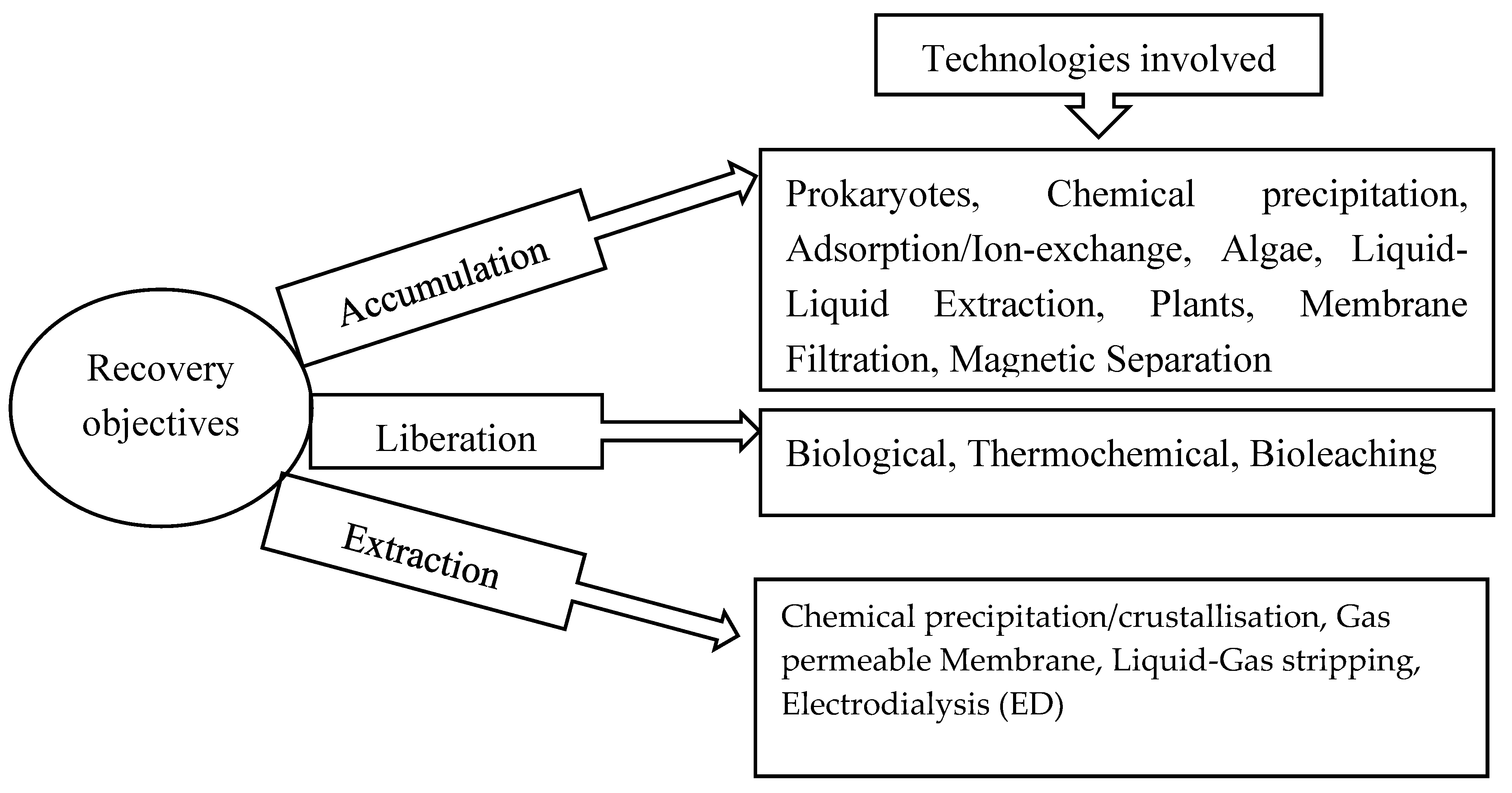
Figure 2.
General features on MF and UF membranes.
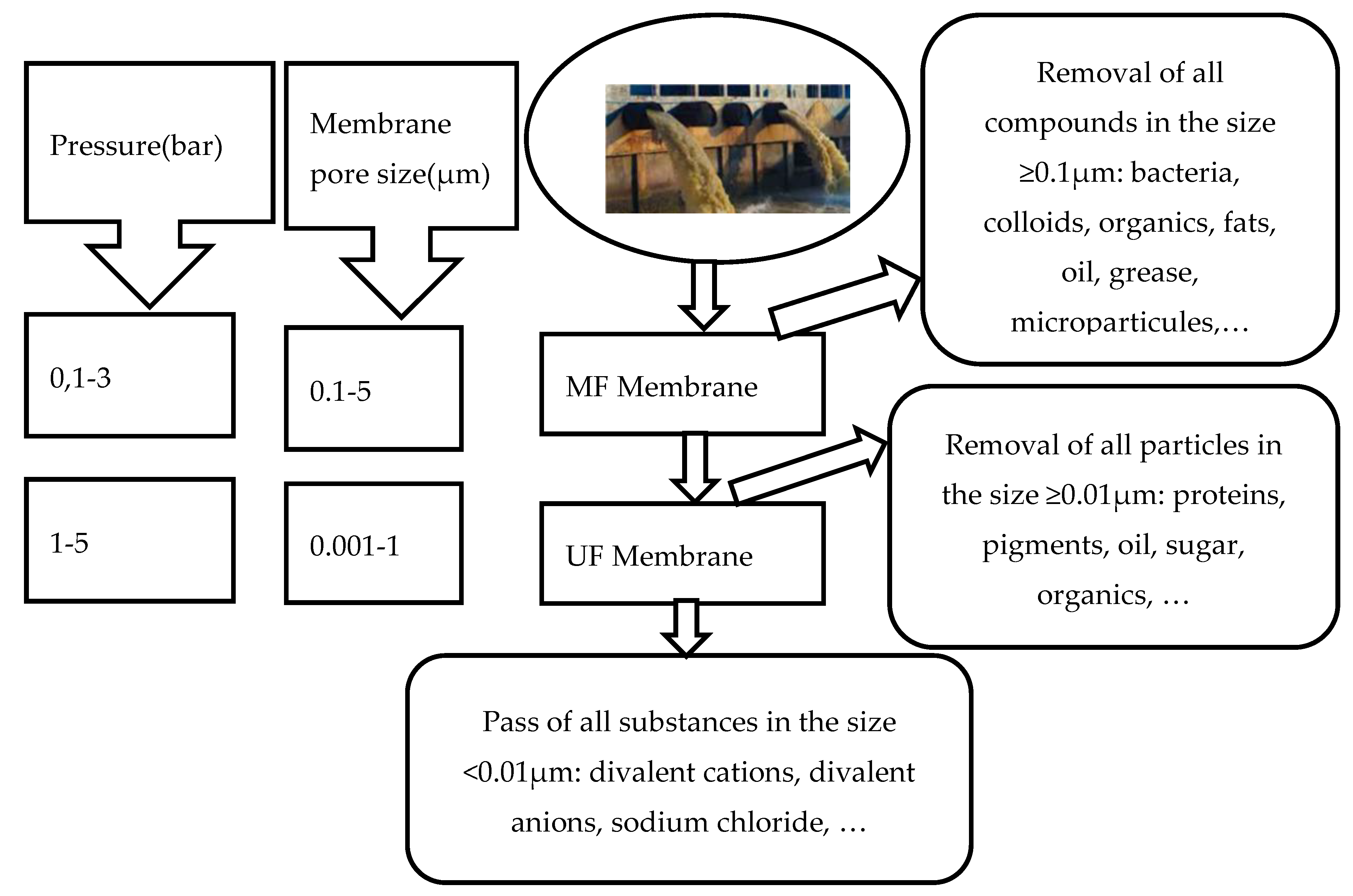
Table 1.
Size of nutrients from wastewater.
| Component | Nutrients | Nutrients form | Size(µm) | References |
| Organics | Organic Carbon | TOC | 1-100 μm | [40] |
| Inorganics | Nitrogen | TN | >0.5 nm |
[41] |
| Ammonium ion (NH₄⁺) | 0.1 to 0.5 nm | |||
| Nitrate (NO₃⁻) | 0.2 to 0.4 nm | |||
| Nitrite (NO₂⁻) | 0.2 to 0.4 nm | |||
| Phosphorus | TP | higher than 0.5nm | ||
| Phosphate (PO₄³⁻) | 0.5 nm in diameter |
Table 2.
Some of the applications of MF membrane in the removal of OC from liquid waste.
| Wastewater | Membrane material | Removal rate | References |
| Secondary treated water | Polyolefin | 25–30% in DOC | [56] |
|
Olive oil mill |
Cell body and cell holder |
75.4% in TOC |
[57] |
|
Oil |
Ceramic membrane |
higher than 95% in TOC |
[58] |
|
Oilfield |
Mixed cellulose ester (MCE) |
82% in TOC |
[59] |
|
Industrial textile |
Phosphate/kaolinite |
69.39% in TOC |
[60] |
|
Oily |
Ceramic (Al2O3) |
96.6–97.7% in TOC |
[61] |
|
Domestic |
Membrane tank |
65,8% in TOC and 60% in DOC |
[62] |
| Reclamation/reuse | Polyolefin | 25–30%; 20–25% of COD | [56] |
| Reclamation/reuse | GAC | 53% of COD | [56] |
| Secondary effluent | PP fibers | 78% of COD | [57] |
| Activated sludge | Polyethersulfone(PS) | 96.3% of TCOD | [63] |
|
Poultry Slaughterhouse |
PVDF |
26.5% of COD |
[16] |
Table 4.
Some of the applications of MF membrane in the removal of phosphorus compounds from liquid waste.
Table 4.
Some of the applications of MF membrane in the removal of phosphorus compounds from liquid waste.
| Wastewater | Membrane material | Removal rate | References |
| Secondary treated water | Polyolefin | 5–8% of TP | [56] |
| Reclamation/reuse | Polyolefin | 5–8% of TP | [56] |
| Reclamation/reuse | GAC | 13% of TP | [56] |
| Sedimentation pond | PP fibers | 7% of TP | [57] |
| Activated sludge floc | PS | 82.6 % of TP and 70.8 % of PO₄³⁻ | [63] |
| From Automobile plant | Al2O3 ceramic | 99.7% of PO₄³⁻ | [93] |
| Phosphoric acid | Carbon | 55.3% in acid form | [94] |
| Liquid crystal display | MCE | 99% of PO₄³⁻ | [95] |
| Poultry Slaughterhouse | PVDF | 5.6% of TP | [16] |
| Urban wastewater tertiary | Propylene | 7,6mg/L in TP and 5,9mg/L of PO₄³⁻ | [84] |
Table 5.
Some of the applications of UF membrane in the removal of phosphorus compounds from liquid waste.
Table 5.
Some of the applications of UF membrane in the removal of phosphorus compounds from liquid waste.
| Wastewater | Membrane material | Removal rate | References |
| Car wash | Zirconia Oxide | Phosphorus (100%) with FeCl3 coagulant | [101] |
| Aqueous solution | Iron oxide/hydroxide | 93.6% of PO₄³⁻ | [102] |
| Municipal | Anthracite | >96% in TP | [103] |
| Poultry Slaughterhouse | PES | 16.7% in TP | [16] |
| Forms micelles | Acrylonitrile | > 91% of PO₄³⁻ | [104] |
| From the treatment plant | PVDF | 85% in TP | [77] |
| Pig manure | PVDF | Pt mg/L= 80 | [78] |
| Sieved and settled manure | PVDF | Pt mg/L= 150 | [78] |
| Sieved and biologically treated | PVDF | TP mg/L=30 | [78] |
| Biologically treated | Zirconium oxide | 25% of TP | [79] |
| Biologically treated | Zirconium oxide | 55% of Pt | [79] |
| Vegetable oil | PS | 85% of PO₄³⁻ | [76] |
| Municipal: raw sewage weens | PVDF | 4,4±0,6 mg/L in TP and 4±0,8 mg/L of PO₄³⁻ | [83] |
| Municipal: primary clarifier effluent | PVDF | 4,1±1 mg/L in TP and 3,4±1,6 mg/L of PO₄³⁻ | [83] |
| Urban | Polyolephine | 4 mg/L of PO₄³⁻ | [84] |
Table 6.
Some applications of MF membrane in removal of nitrogen compounds from liquid waste.
| Wastewater | Membrane material | Removal rate | References |
| Secondary treated | Polyolefin | 5–10% of TN | [56] |
| Reclamation/reuse | Polyolefin | 5–10% of TN | [56] |
| Secondary effluent discharged | PP fibers | 40 percent of TKN | [57] |
| Activated sludge floc | PS |
68.1 % of TN; 95.3 % in NH₄⁺ and 9.7% of NO₃⁻ | [63] |
| Urban | Propylene | 35mg/L of TN; 25 mg/L in NH₄⁺; 3,2 mg/L of NO₃⁻; 1,1mg/L of NO₂⁻ | [84] |
Table 7.
Some applications of microfiltration membrane in removal of nitrogen compounds from liquid waste.
Table 7.
Some applications of microfiltration membrane in removal of nitrogen compounds from liquid waste.
| Wastewater | Membrane material | Removal rate | References |
| Poultry Slaughterhouse | PVDF | 32.1% of TN | [16] |
| Forms micelles | Acrylonitrile | > 86% of NH₄⁺ | [104] |
| Influent from the treatment plant | PVDF | 98% of NH₄⁺ | [77] |
| Sieved and settled manure supernatant (SAS) | PVDF | TKN mg/L= 900 | [78] |
| Biologically treated | Zirconium oxide | 10% of TN | [79] |
| Biologically treated | Zirconium oxide | 26% of TN | [79] |
| Urban | ZrO2 and Al2O3 | 96.2% of (NH₄⁺) | [81] |
| Anaerobically digested sludge | PES and one PVDF | 13% of NH₄⁺ | [82] |
| Municipal: raw sewage ween | PVDF | 29±3mg/L in TN and 39,4±11,6mg/L of NH₄⁺ | [83] |
| Municipal : primary clarifier effluent | PVDF | 28,1±2,3 mg/L of TN | [83] |
| Urban tertiary | Polyolephine | 38 mg/L of TN; 19 mg/L in NH₄⁺; 12 mg/L of NO₃⁻ and 1,3mg/L of NH2- | [84] |
Table 8.
comparison between MF and UF removal efficiency.
| Membrane | Target Compounds | Removal Efficiency (%) | Main Mechanism | Advantages | Limitations |
| MF | TOC, TSS, some TP | 60–75 | Sieving | Low cost, easy operation | Limited nutrient removal |
| UF | TOC, TP, TN | 75–99 | Sieving + adsorption | High selectivity | Fouling, costlier |
Disclaimer/Publisher’s Note: The statements, opinions and data contained in all publications are solely those of the individual author(s) and contributor(s) and not of MDPI and/or the editor(s). MDPI and/or the editor(s) disclaim responsibility for any injury to people or property resulting from any ideas, methods, instructions or products referred to in the content. |
© 2025 by the authors. Licensee MDPI, Basel, Switzerland. This article is an open access article distributed under the terms and conditions of the Creative Commons Attribution (CC BY) license (http://creativecommons.org/licenses/by/4.0/).
Copyright: This open access article is published under a Creative Commons CC BY 4.0 license, which permit the free download, distribution, and reuse, provided that the author and preprint are cited in any reuse.