

Submitted:
04 September 2025
Posted:
05 September 2025
You are already at the latest version
Preprints on COVID-19 and SARS-CoV-2
Abstract
Еthnobotanical research provides an important foundation for developing plant-based medicines with preventive and therapeutic potential. This study aimed (1) to investigate the distribution and indications for the use of medicinal plants in the prevention and relief of COVID-19–related symptoms among the Bulgarian population, and (2) to identify culturally significant species with potential for further development as antiviral agents. A total of 513 respondents from different regions and demographic groups in Bulgaria were interviewed. Their knowledge regarding the use of medicinal plants for COVID-19 prevention or treatment was quantitatively assessed using ethnobotanical indices: relative frequency of citation (RFC), informant consensus factor (FIC), fidelity level (FL), and use value (UV). Participants reported 45 species belonging to 43 genera and 23 families. The highest RFC and UV values were recorded for Matricaria chamomilla L., Tilia sp. L., Thymus vulgaris L., Zingiber officinal Roscoe, Mentha sp. L., Citrus × limon Osbeck, Rosa canina L., and Sideritis scardica Griseb. Culturally significant species identified were Thymus vulgaris L., Matricaria chamomilla L., Tilia sp. L., Mentha sp. L., Sideritis scardica Griseb, Zingiber officinale Roscoe, and Citrus × limon Osbeck. This is the first ethnobotanical survey in Bulgaria documenting culturally important medicinal plants with potential applications in prophylaxis and complementary therapy for COVID-19.

Keywords:
ethnobotanical study
; COVID-19
; culturally significant species
; ethnobotanical indicators
; medicinal plants
1. Introduction
In response to the COVID-19 pandemic, the global scientific community - physicians, pharmacists, biologists - united in the search for effective infection treatment, as well as in finding methods for prophylaxis and prevention.
The efforts of the global scientific community were directed in two main directions: creating vaccines to control the pandemic while simultaneously searching for and creating effective medicines for prevention, treatment and prophylaxis of post-COVID symptoms.
In this regard, the integration of traditional and conventional medicine is crucial to achieve effective improvement of symptoms and to lay the foundation for an alternative approach to COVID-19 treatment in the future [1].
The pandemic situation outlined the need for ethnobotanists to adapt to the new environment and conduct ethnobotanical studies to complement the efforts of the medical and pharmaceutical community in dealing with COVID-19.
Ethnobotanical studies play an important role in preserving traditional knowledge about medicinal plants and their use. The collection and compilation of unrecorded knowledge, transmitted orally through generations, serve as a starting point for modern pharmacognostic and pharmacological research and are therefore valuable for pharmaceutical practice [2,3,4,5].
In addition, ethnobotanical studies provide easy access to potential plant sources of bioactive compounds with potential therapeutic application [6].
Today, when the world faces global viral threats, including COVID-19, conducting new ethnobotanical research can serve as a platform for developing effective plant-based medicines for the treatment and prevention of viral diseases [7].
Documenting the folk knowledge of local communities about potential medicinal plants traditionally used for respiratory and viral infections is the first important step in this process.
This motivated the conduct of an ethnobotanical study among the Bulgarian population with the following objectives: [1] to investigate the distribution and indications for use of medicinal plants used for prevention and relief of COVID-19-related symptoms among the Bulgarian population and [2] to identify a selection of medicinal species with high cultural significance that could serve as potential agents for developing effective plant- based antiviral medicines.
2. Results and Discussion
Participants in the ethnobotanical study reported the use of 45 medicinal plant species used for COVID-19 prevention and treatment, belonging to 43 genera and 23 families.
The best represented families in terms of the number of medicinal species are Lamiaceae, Asteraceae and Rosaceae (Table 1). Among them, the Lamiaceae family (122 use reports out of a total of 149) stands out with the greatest contribution to the traditional phytotherapy of the Bulgarian population in the fight against COVID-19.
The collected ethnobotanical data related to species composition, used part, form of application and use of reported medicinal species are the subject of forthcoming publication [20].
The consensus among informants regarding the use of medicinal species reported in the study for COVID-19 prevention and treatment was quantitatively assessed using RFC [11,21].
The RFC values of the medicinal plants mentioned in the survey range from 0.0052 to 0.4124 (Table 1).
The highest RFC value is distinguished by Matricaria chamomilla L. (0.4124) followed by Tilia sp. L. (0.3711), Thymus vulgaris L. (0.3041) and Zingiber officinale Roscoe (0.2475). Species with medium RFC values are Mentha sp. L. (0.2011), Citrus × limon Osbeck (0.1495), Rosa canina L. (0.1289) and Sideritis scardica Griseb (0.1237) followed by Origanum vulgare L. (0.0464), Melissa officinalis L. (0.0412), Hypericum perforatum L. (0.0360) and Salvia officinalis L. (0.0310).
The wide popularity of the mentioned medicinal plants among respondents has its deep roots in the centuries-old experience of the Bulgarian people in the knowledge of herbs and their use, passed down from generation to generation.
With the exception of Zingiber officinale Roscoe and Citrus × limon Osbeck, the
remaining ten medicinal species - Matricaria chamomilla L., Tilia sp. L., Thymus vulgaris L., Mentha sp. L., Rosa canina L., Sideritis scardica Griseb, Origanum vulgare L., Melissa officinalis L., Hypericum perforatum L. and Salvia officinalis L. are among the most popular and most frequently used medicinal plants by the Bulgarian population [5,22,23,24,25,26].
Along with Zingiber officinale Roscoe and Citrus × limon Osbeck, study participants reported the use of seven more foreign medicinal species for Bulgaria (Aronia melanocarpa (Michx.) Elliott, Hibiscus sabdariffa L, Cinnamomum verum J.Presl, Laurus nobilis L., Armoracia G.Gaertn, Calendula officinalis L., Echinacea purpurea (L.) Moench and Tagetes erecta L., which have low RFC values - between 0.0052 and 0.0206.
The reasons for the small number of use reports for the listed foreign medicinal plants may be of different nature (poor awareness of respondents, size of the studied sample, shortcomings related to online interview conduct, etc.), which does not exclude their potential in the fight against COVID-19.
The potential of the foreign medicinal species cited in the study should not be underestimated, as they may also prove useful in the search for active substances for creating new antiviral drugs.
In support of this assumption are numerous scientific data and studies, as well as a number of ethnobotanical studies conducted in different parts of the world, which report their wide traditional use and popularity during the COVID pandemic [27,28,29,30,31,32,33].
On the other hand, the reported use of foreign medicinal plants is evidence of the continuity and influence of foreign cultures on the Bulgarian people's folk knowledge of herbs and their use. We live in a global time in which the boundaries between different peoples and ethnicities are increasingly blurring. The unification of traditional knowledge and experiences of different cultures from around the world in the name of preserving human health and the survival of humanity is of paramount importance.
The effectiveness of herbal treatment applied among respondents was assessed through UV index values, which reflect the degree of distribution of use of a given medicinal species among respondents [13].
According to the reported use of medicinal plants for COVID-19 prevention and treatment in the surveys, the highest UV values are for Matricaria chamomilla L. (0.75), Tilia sp. (0.72), Thymus vulgaris L. (0.55), Zingiber officinale Roscoe (0.44), Mentha sp. L. (0.37) and Sideritis scardica Griseb. (0.20) (Table 1).
For the remaining plant species, UV values range from 0.005 to 0.14.
The obtained UV data show that the most popular species with widespread use among study participants are Matricaria chamomilla L. (0.75), Tilia sp. (0.72), Thymus vulgaris L. (0.55) and Zingiber officinale Roscoe (0.44).
- Use Categories and Informant Consensus Factor (FIC)
Participants in the ethnobotanical study indicated one or more uses of the medicinal plants they cited for various symptoms accompanying COVID-19, as well as for disease prevention and prophylaxis.
Based on the data indicated in the survey, a total of 13 use categories were distinguished ("Cough", "Sore throat", "Runny nose and loss of smell", "Respiratory problems", "Headache", "Fever", "Antiviral agent", "Immunostimulant", "Sedative", "Fatigue", "Treatment of overall symptoms", "Prophylaxis", "Prevention of complications"), which can serve as a reflection of the traditional concept of the Bulgarian population regarding COVID-19 prevention and treatment.
For each category, ethnobotanical data were quantitatively assessed by summing the reported medicinal species, summing individual use reports, and ranking according to the calculated FIC (Table 2).
The obtained results show a high level of informant consensus for most use categories (average FIC 0.6888) (Figure 1).
The categories with the largest number of cited species are "Prevention of complications" (26 species), "Cough" (24 species), "Treatment of overall symptoms" (22 species), "Immunostimulant" (21 species), "Sore throat" (18 species) and "Respiratory diseases" (17 species). In the remaining use categories, 4 to 15 mentioned medicinal species were registered (Table 2).
The largest share of reports from surveyed participants (23.11%) relates to the use of medicinal plants for relieving the cough symptom. Second are reports for the category "Prevention of complications" (20.55%), followed by the use category concerning sore throat relief (12.35%).
The best-defined use of medicinal plants is in the categories "Cough" (FIC 0.87766), "Prevention of complications" (FIC 0.8503), "Sore throat" (FIC 0.83), "Antiviral agent" (FIC 0.78947), "Immunostimulant" (FIC 0.7435) and "Prophylaxis" (FIC 0.7241).
The high FIC values of the listed use categories show that the ethnobotanical sample is large enough to define a selection of medicinal species that emerge as culturally important in the search for new phytopharmaceutical approaches for COVID-19 prevention and treatment.
The most important medicinal species that determine the high FIC values in the respective use categories are as follows:
- Category "Cough" - Tilia sp. L. (34 reports), Thymus vulgaris L. (32 reports), Matricaria chamomilla L. (28 reports)
- Category "Prevention of complications" - Tilia sp. L. (34 reports), Thymus vulgaris L. (21 reports), Zingiber officinale Roscoe (18 reports)
- Category "Sore throat" - Tilia sp. L. (28 reports), Matricaria chamomilla L. (23 reports), Thymus vulgaris L. (14 reports)
- Category "Antiviral agent" - Thymus vulgaris L. (8 reports), Tilia sp. L. (7 reports), Zingiber officinale Roscoe (6 reports), Matricaria chamomilla L. (6 reports)
- Category "Immunostimulant" - Zingiber officinale Roscoe (12 reports), Citrus × limon Osbeck (9 reports), Rosa canina L. (9 reports), Tilia sp. L. (9 reports), Thymus vulgaris L. (7 reports), Matricaria chamomilla L. (6 reports), Mentha sp. L. (6 reports)
- Category "Prophylaxis" - Zingiber officinale Roscoe (2 reports), Thymus vulgaris L. (7 reports), Citrus × limon Osbeck (6 reports), Mentha sp. L. (6), Matricaria chamomilla L. (5 reports), Sideritis scardica Griseb (5 reports)
Comparative analysis shows that among study participants, the most widely used species with diverse use is Thymus vulgaris L., which is present in all six main use categories. This is followed by Tilia sp. L. and Matricaria chamomilla L. mentioned in five categories, as well as Zingiber officinale Roscoe mentioned in four of them.
The categories "Fever", "Sedative" and "Fatigue" show relatively low levels of informant consensus factor (FIC around 0.50).
As culturally significant and frequently used medicinal species in the "Fever" category (with a total of 14 use reports), Tilia sp. L. (5 reports) and Matricaria chamomilla L. (4 reports) stand out.
In the "Fatigue" category (with a total of 18 reports), Tilia sp. L. and Rosa canina L. have the largest number of use reports with three reports each.
In the "Sedative" category, of a total of seven registered reports, three relate to Matricaria chamomilla L., which defines it as dominant in this category.
Lower FIC values do not necessarily have to be interpreted as low efficacy of the plants used. On one hand, the reason for weaker internal consensus is often the fact that a small number of informants report a relatively large variety of medicinal species used for the respective symptoms. There is a preference among respondents for some medicinal plants that are traditionally known to them and with culturally established pharmacological effects [15,34].
On the other hand, it can be assumed that low FIC values indicate that there are differences in the way respondents from different regions of the country use medicinal plants, determined by local traditions and personal experience. This is confirmed by a number of ethnobotanical studies that document differences in folk knowledge about medicinal plants and local healing practices among the population in different regions of Bulgaria [5,35,36,37,38].
The aggregated data analysis shows that Thymus vulgaris L., Matricaria chamomilla L., Tilia sp. L. and Zingiber officinale Roscoe stand out as species with widespread, diverse use, both for relieving disease-related symptoms and for immunostimulation and body prophylaxis.
The large number of reports for their use in different symptom categories speaks both to the stability of folk knowledge and to the stability of traditional healing practices related to the treatment of respiratory and infectious diseases, passed down through generations among local communities of the Bulgarian population.
On the other hand, the relatively small number of species (8 out of a total of 45 reported) - Thymus vulgaris L., Matricaria chamomilla L., Tilia sp. L., Rosa canina L., Mentha sp. L., Sideritis scardica Griseb., Zingiber officinale Roscoe and Citrus × limon Osbeck, which have the highest FIC values in all categories, is an indicator of strongly expressed internal consensus among respondents regarding their effectiveness in prevention and relief of symptoms associated with COVID-19. This again confirms the stability of traditional phytomedicine practiced for centuries by the Bulgarian population.
- Fidelity Level Index (FL) - Culturally Significant Species by Use Categories
FL values were calculated to assess how specific the use of medicinal plants indicated in the surveys is for various COVID-19 symptoms.
Since the values of this indicator show specificity but not popularity of a given use of a medicinal species among informants, the sociocultural significance of the medicinal plants mentioned in the study was quantitatively assessed through combined analysis of FL and RFC indices. This approach allows accounting for both the degree of consensus regarding specific use of the species and the proportion of respondents who mention it as particularly important [14].
Plants used by a large number of informants for the same use category are considered culturally significant, while species cited as useful by only one or two informants are considered of low cultural significance [8].
By use categories (with FIC > 0.70), we made a selection of medicinal plants that show high FL value, supported by a sufficient number of informants (more than six). The obtained data are summarized in Table 3.
In the "Cough" category, Thymus vulgaris L. and Tilia sp. L. stand out with the highest FL and RFC values, which shows that these species possess high cultural significance and an established role in folk medicine for cough treatment.
Matricaria chamomilla L. and Mentha sp. L. have lower FL but high RFC, which indicates that they are widely known, but their traditional use is not limited to cough treatment alone, but also to many other symptoms.
Although a small portion of respondents mention Sideritis scardica Griseb. (RFC 0.12), its high FL value (42%) shows that its primary use for cough treatment is established but limited local healing practice.
Although a foreign species to Bulgarian flora, Zingiber officinale Roscoe shows a high FL value (37%), which testifies to its successful integration as a foreign species into the traditional healing practices of Bulgarians.
The greatest cultural significance in the "Prevention of complications" category belongs to Tilia sp. L., followed by Sideritis scardica Griseb. which despite lower frequency of mention shows specific cultural significance among respondents within this use category. Matricaria chamomilla L. and Mentha sp. L. are distinguished by great popularity but with lower specificity of use, probably due to their diverse applications in folk medicine. The relatively low FL of Mentha sp. L. despite its wide popularity among respondents shows that it has universal application and is not specifically associated with a single medicinal use.
In the "Sore throat" category, Tilia sp. L. stands out with high cultural significance and well-defined traditional use. Thymus vulgaris L. has medium FL and RFC values, which places it in the category of traditionally used but limited to several applications medicinal plants, while Matricaria chamomilla L. shows high popularity and universal use.
In the "Immunostimulant" and "Prophylaxis" categories, Zingiber officinale Roscoe has the largest number of use reports (12 in each), while all other medicinal species are represented with less than ten reports. Zingiber officinale Roscoe shows moderate cultural significance and is established as a very well-integrated foreign medicinal species in the modern traditional medicine of Bulgarians, with well-defined medicinal application.
In both categories, Citrus × limon Osbeck shows specific cultural significance, and Thymus vulgaris L. confirms its broad and versatile medicinal use.
In the "Antiviral agent" category, the mentioned species have a small number of reports (between 6 to 8), but some of them have high RFC values. Although antiviral use is less represented, the results confirm the universal cultural significance and role of species traditionally used by the Bulgarian population such as Tilia sp. L., Matricaria chamomilla L. and Thymus vulgaris L. Zingiber officinale Roscoe again shows moderate cultural significance.
- Culturally Significant Plants
Based on the summarized, analyzed and quantitatively evaluated ethnobotanical information, the following plant species were identified as culturally significant and promising for further experimental research with potential for prevention or complementary therapy in COVID-19 treatment: Thymus vulgaris L., Matricaria chamomilla L., Tilia sp. L., Mentha sp. L., Sideritis scardica Griseb, Zingiber officinale Roscoe and Citrus × limon Osbeck.
3. Materials and Methods
3.1. Ethnobotanical Study and Data Collection
This ethnobotanical study was conducted from July 2022 to September 2023 and represents part of a comprehensive ethnobotanical investigation of folk knowledge about medicinal plants used for COVID-19 prevention and treatment among the population of the Republic of Bulgaria.
The study included 513 people from different settlements across the territory of the Republic of Bulgaria with different demographic indicators - gender, age, education, employment status.
Informants were randomly selected. After preliminary familiarization with the purpose and methods of the study, written informed consent was obtained from each participant.
Ethnobotanical information was collected using a pre-prepared online survey in the form of a Google form.
The survey was distributed via a link, directly by invitation from the researchers, through their contacts, friends, social media groups - using the respondent method and additional distribution on the "snowball" principle - from some respondents to others.
The survey questions were structured in three main blocks aimed at collecting data on participants' demographic profile, their attitude towards herbal medicine as a means of COVID-19 prevention and therapy, as well as ethnobotanical information related to the medicinal plants they used for disease prophylaxis and treatment.
The study was approved by the Research Ethics Committee of the Medical University of Varna (№ 118/23.06.2022).
3.2. Quantitative Processing and Analysis of Collected Ethnobotanical Information
Various ethnobotanical indicators were used in the collection and analysis of the ethnobotanical data obtained in the study, allowing for quantitative and qualitative assessment of the traditional knowledge of surveyed participants regarding the use of medicinal plants for COVID-19 prevention and treatment.
The use of ethnobotanical indicators allows for the identification of widely popular and culturally significant medicinal species for a given local community, differentiation of potentially effective species for further pharmacognostic and pharmacological research, comparison between different ethnobotanical regions or groups, as well as tracking the stability of traditional knowledge and its integration with modern conventional medicine [8,9,10].
The following ethnobotanical indicators were calculated:
3.2.1. Relative Frequency of Citation (RFC)
RFC is used to assess the popularity of plants within a given community. It shows how often a given medicinal plant is mentioned by all informants, regardless of the type of use.
It was calculated using the standard method according to the formula RFC = FC/N, where FC is the number of informants mentioning the use of species X, and N is the total number of informants participating in the study who applied herbal treatment.
3.2.2. Use Value Index by Species (UV)
UV is an ethnobotanical indicator that evaluates the relative importance or popularity of a given medicinal plant based on the frequency of mention by informants.
It shows how widely and frequently a particular plant is used in a given community, regardless of what medicinal purposes.
UV is calculated by dividing the total number of reports for all uses of species X by the total number of informants reporting use of species X [10,15].
Its values range between 0 and 1. UV values close to 0 indicate that the plant is rarely mentioned and therefore has low cultural/medicinal significance, while values close to 1 or more indicate that the species is popular, with many uses [more than 1 use per informant may be indicated]. Higher values reflect more widespread use and greater confidence among respondents in the particular medicinal species [16].
3.2.3. Informant Consensus Factor (FIC)
FIC provides information about informant consensus regarding the use of a particular plant species for a specific disease [8].
It allows for the assessment of variability in medicinal plant use and is a useful tool for determining the most commonly used medicinal species for a specific disease, which are of particular interest or so-called culturally significant in the search for bioactive compounds [8]
The calculated FIC coefficient values allow determining how well the traditional use of cited medicinal species is defined for different use categories.
FIC evaluates the relationship between the number of use reports in each category minus the number of taxa used, divided by the number of use reports in each category minus 1 [17].
Factor values range from 0 to 1. High FIC values (close to 1) indicate high consensus - when a high proportion of informants report one or several plant species for a particular use category. Low FIC values indicate that informants do not have consensus regarding the use of mentioned species for treatment within the disease category [8,17,18].
3.2.4. Fidelity Level Index (FL)
FL is defined as the percentage of informants who indicate a given plant for a specific disease or category, relative to all who mention that plant for any purposes.
It is calculated as a percentage by dividing the number of informants who indicate the plant for a specific disease/symptom by the total number of informants who mention the plant for all symptoms and multiplying by 100 [17].
4. Conclusions
Thymus vulgaris L., Matricaria chamomilla L., Tilia sp. L., Mentha sp. L., Sideritis scardica Griseb., Zingiber officinale Roscoe and Citrus × limon Osbeck are strongly connected to Bulgarian folk medicine and have been used for generations to relieve symptoms similar to those accompanying COVID-19.
The high FL and RFC values, combined with strong informant consensus (FIC > 0.70), testify to the stability of information flow and widespread distribution of folk knowledge regarding the use of these species among the Bulgarian population.
These species represent a promising group of plants for pharmacological validation, especially regarding their antiviral, immunomodulation and symptom-relieving properties.
This study is the first of its kind in Bulgaria, part of a larger ethnobotanical investigation, which provides a sample of culturally significant medicinal plants.
This selection can serve as a starting point for future scientific research aimed at developing alternative approaches to dealing with both COVID-19 infection and potential future threats from viral infections.
The high frequency of use and diversity of reported applications testify to the potential of these culturally significant species as a platform for developing standardized herbal formulas with therapeutic antiviral focus.
Author Contributions
Conceptualization, D.C., methodology, D.C. and N.N.; software, N.N. and I.I.; validation, D.C., N.N., D.I., G.Y. and T.D.; formal analysis, D.C., N.N.; investigation, D.C. and N.N.; resources, D.C., G.Y., T.D. D.I., I.I. and S.G.; data cu-ration, D.C., N.N., D.I., G.Y. and T.D.; writing - original draft preparation, D.C.; writing—review and editing, D.C., G.Y., T.D. D.I. and S.G.; visualization, D.C.; N.N. and I.I.; supervision D.C., D.I., T.D.; S.G. and G.Y.; project administration, D.C., T.D., D.I. and G.Y.; funding acquisition, G.Y. All authors have read and agreed to the published version of the manuscript.
Funding
This research received no external funding. The Medical University of Varna „Prof. Dr. Paraskev Stoyanov” supported this research.
Informed Consent Statement
Not applicable.
Data Availability Statement
Data are contained within the article.
Acknowledgments
During the preparation of this manuscript, the authors used Claude – Opus 4.1 for the purposes of accurately translating the manuscript into English. The authors have reviewed and edited the out-put and take full responsibility for the content of this publication.
Conflicts of Interest
The authors declare no conflicts of interest.
References
- Hadi, A. G.; Kadhom, M.; Hairunisa, N.; Yousif, E.; Mohammed, S. A. A Review on COVID-19: Origin, Spread, Symptoms, Treatment, and Prevention. Biointerface Res. Appl. Chem. 2020, 10, 7234–7242. [Google Scholar] [CrossRef]
- Ivancheva, S.; Stantcheva, B. Ethnobotanical Inventory of Medicinal Plants in Bulgaria. J. Ethnopharmacol. 2000, 69, 165–167. [Google Scholar] [CrossRef]
- Dimitrova, D.; Raycheva, T. Ethnobotany and Modern Agrarian Education in Bulgaria. Sci. Works Agric. Univ. Plovdiv 2010, 55, 333–338. [Google Scholar]
- Kozuharova, E.; Benbassat, N.; Napier, J. New Records of the Remedial Properties of Vascular Plants, Some Traditionally Accepted as Medicinal Plants and Some Less Familiar to Ethnobotanists. Phytol. Balc. 2012, 18, 323–332. [Google Scholar]
- Cherneva, D. Biodiversity and Application of Medicinal Plants from the Northern Black Sea Wetlands in Ethnobotany; Ph.D. Thesis, Medical University "Prof. Dr. Paraskev Stoyanov": Varna, Bulgaria, 2017. [Google Scholar]
- Fabricant, D. S.; Farnsworth, N. R. The Value of Plants Used in Traditional Medicine for Drug Discovery. Environ. Health Perspect. 2001, 109 (Suppl 1), 69–75. [Google Scholar] [PubMed]
- Ahmed, N.; Hughes, K. Role of Ethno-Phytomedicine Knowledge in Healthcare of COVID-19: Advances in Traditional Phytomedicine Perspective. Beni-Suef Univ. J. Basic Appl. Sci. 2022, 11, 96. [Google Scholar] [CrossRef] [PubMed]
- Heinrich, M.; Ankli, A.; Frei, B.; Weimann, C.; Sticher, O. Medicinal Plants in Mexico: Healers’ Consensus and Cultural Importance. Soc. Sci. Med. 1998, 47, 1859–1871. [Google Scholar] [CrossRef]
- Reyes-García, V.; Huanca, T.; Vadez, V.; Leonard, W.; Wilkie, D. Cultural, Practical, and Economic Value of Wild Plants: A Quantitative Study in the Bolivian Amazon. Econ. Bot. 2006, 60, 62–74. [Google Scholar] [CrossRef]
- Tardío, J.; Pardo-de-Santayana, M. Cultural Importance Indices: A Comparative Analysis Based on the Useful Wild Plants of Southern Cantabria (Northern Spain). Econ. Bot. 2008, 62, 24–39. [Google Scholar] [CrossRef]
- Vitalini, S.; Iriti, M.; Puricelli, C.; Ciuchi, D.; Segale, A.; Fico, G. Traditional Knowledge on Medicinal and Food Plants Used in Val San Giacomo (Sondrio, Italy): An Alpine Ethnobotanical Study. J. Ethnopharmacol. 2013, 145, 517–529. [Google Scholar] [CrossRef]
- Savikin, K.; Zdunic, G.; Menkovic, N.; et al. Ethnobotanical Study on Traditional Use of Medicinal Plants in South-Western Serbia, Zlatibor District. J. Ethnopharmacol. 2013, 146, 803–810. [Google Scholar] [CrossRef] [PubMed]
- Napagoda, M. T.; Sundarapperuma, T.; Fonseka, D.; Amarasiri, S.; Gunaratna, P. An Ethnobotanical Study of the Medicinal Plants Used as Anti-Inflammatory Remedies in Gampaha District, Western Province, Sri Lanka. Scientifica 2018, 2018, 9395052. [Google Scholar] [CrossRef] [PubMed]
- Akbulut, S. Medicinal Plants Preferences for the Treatment of COVID-19 Symptoms in Central and Eastern Anatolia. Kastamonu Univ. J. For. Fac. 2021, 21, 196–207. [Google Scholar] [CrossRef]
- Phillips, O.; Gentry, A. H. The Useful Plants of Tambopata, Peru: I. Statistical Hypotheses Tests with a New Quantitative Technique. Econ. Bot. 1993, 47, 15–32. [Google Scholar] [CrossRef]
- Cordoba-Tovar, L.; Ríos-Geovo, V.; Largacha-Viveros, M. F.; Salas-Moreno, M.; Marrugo-Negrete, J. L.; Ramos, P. A.; Jonathan, M. P. Cultural Belief and Medicinal Plants in Treating COVID-19 Patients of Western Colombia. Acta Ecol. Sin. 2022, 42, 476–484. [Google Scholar] [CrossRef]
- Cheikhyoussef, A.; Shapi, M.; Matengu, K.; Mu Ashekele, H. Ethnobotanical Study of Indigenous Knowledge on Medicinal Plant Use by Traditional Healers in Oshikoto Region, Namibia. J. Ethnobiol. Ethnomed. 2011, 7, 10. [Google Scholar] [CrossRef]
- Canales, M.; Hernández, T.; Caballero, J.; De Vivar, A. R.; Avila, G.; Duran, A.; Lira, R. Informant Consensus Factor and Antibacterial Activity of the Medicinal Plants Used by the People of San Rafael Coxcatlán, Puebla, México. J. Ethnopharmacol. 2005, 97, 429–439. [Google Scholar] [CrossRef]
- Friedman, J.; Yaniv, Z.; Dafni, A.; Palewitch, D. A Preliminary Classification of the Healing Potential of Medicinal Plants, Based on the Rational Analysis of an Ethnopharmacological Field Survey among Bedouins in the Negev Desert, Israel. J. Ethnopharmacol. 1986, 16, 275–287. [Google Scholar] [CrossRef]
- Cherneva, D. Department of Biology, Faculty of Pharmacy, Medical University - Varna, Bulagaria. 2025, (manuscript in preparation).
- Yaseen, G.; Ahmad, M.; Sultana, S.; Alharrasi, A. S.; Hussain, J.; Zafar, M. Ethnobotany of Medicinal Plants in the Thar Desert (Sindh) of Pakistan. J. Ethnopharmacol. 2015, 163, 43–59. [Google Scholar] [CrossRef]
- Cherneva, D.; Ivanov, D.; Filipova-Marinova, M. Study of the Current Status of Traditional Knowledge about Herbs and Their Use among the Population of the Northern Bulgarian Black Sea Coast. Scr. Sci. Pharm. 2015, 2, 31–37. [Google Scholar]
- Cherneva, D.; Yaneva, G.; Ivanov, D. Koi sa nai-populyarnite lekarstveni rasteniya sred naselenieto v rayona na Severnoto Chernomorie? Varna Med. Forum 2017, 6, 110–115. (in Bulgarian). [Google Scholar]
- Koleva, V.; Dragoeva, A.; Nanova, Z.; Koynova, T.; Dashev, G. An Ethnobotanical Study on Current Status of Some Medicinal Plants Used in Bulgaria. Int. J. Curr. Microbiol. App. Sci. 2015, 4, 297–305. [Google Scholar]
- Zahariev, D.; Boycheva, P.; Kosev, K. Review on the Medicinal Plants of the North Black Sea Coast (Bulgaria). Ann. Sofia Univ. “St. Kliment Ohridski”, Fac. Biol., Book Bot.
- Boycheva, P. Top 10 among the Most Used Medicinal Plants of the Local Population along the North Black Sea Coast (Bulgaria). Ecol. Environ. 2018, 136. [Google Scholar]
- Butnariu, M.; Coradini, C. Z. Evaluation of Biologically Active Compounds from Calendula officinalis Flowers Using Spectrophotometry. Chem. Cent. J. 2012, 6, 35. [Google Scholar] [CrossRef] [PubMed]
- Patrakar, R.; Mansuriya, M.; Patil, P. Phytochemical and Pharmacological Review on Laurus nobilis. Int. J. Pharm. Chem. Sci. 2012, 1, 595–602. [Google Scholar]
- Nguyen, N. M.; Gonda, S.; Vasas, G. A Review on the Phytochemical Composition and Potential Medicinal Uses of Horseradish (Armoracia rusticana) Root. Food Rev. Int. 2013, 29, 261–275. [Google Scholar] [CrossRef]
- Binyane, M. E.; et al. Traditional Medicinal Plants as the Potential Adjuvant, Prophylactic and Treatment Therapy for COVID-19 Disease: A Review. In Echinacea purpurea (L.) Moench; IntechOpen: 2022.
- Ochnik, M.; Franz, D.; Sobczyński, M.; Naporowski, P.; Banach, M.; Orzechowska, B.; Sochocka, M. Inhibition of Human Respiratory Influenza A Virus and Human Betacoronavirus-1 by the Blend of Double-Standardized Extracts of Aronia melanocarpa (Michx. ) Elliot and Sambucus nigra L. Pharmaceuticals 2022, 15, 619. [Google Scholar] [CrossRef]
- Ren, Y.; Frank, T.; Meyer, G.; Lei, J.; Grebenc, J. R.; Slaughter, R.; et al. Potential Benefits of Black Chokeberry (Aronia melanocarpa) Fruits and Their Constituents in Improving Human Health. Molecules 2022, 27, 7823. [Google Scholar] [CrossRef]
- Akbaba, E.; Karataş, D. Phytochemicals of Hibiscus sabdariffa with Therapeutic Potential against SARS-CoV-2: A Molecular Docking Study. J. Inst. Sci. Technol. 2023, 13, 872–888. [Google Scholar] [CrossRef]
- Albuquerque, U. P.; Lucena, R. F. P.; Monteiro, J. M.; Florentino, A. T. N.; Almeida, C. F. C. B. R. Evaluating Two Quantitative Ethnobotanical Techniques. Ethnobot. Res. Appl. 2006, 4, 51–60. [Google Scholar] [CrossRef]
- Ploetz, K. L. An Ethnobotanical Study of Wild Herb Use in Bulgaria. Master’s Thesis, Michigan Technological University,2000.
- Kültür, S. An Ethnobotanical Study of Kirklareli (Turkey). Phytol. Balc. 2008, 14, 279–289. [Google Scholar]
- Kültür, Ş.; Sami, S. N. Medicinal Plants Used in Isperih (Razgrad-Bulgaria) District. Turk. J. Pharm. Sci. 2009, 6, 107–124. [Google Scholar]
- Koleva, V.; Dragoeva, A.; Stoyanova, Z.; Koynova, T. A Study on Current Status of Herbal Utilization in Bulgaria. Part 2: Safety Concerns. J. Ethnopharmacol. 2016, 183, 123–127. [Google Scholar] [CrossRef]
Figure 1.
Informant Consensus Factor for each use category.
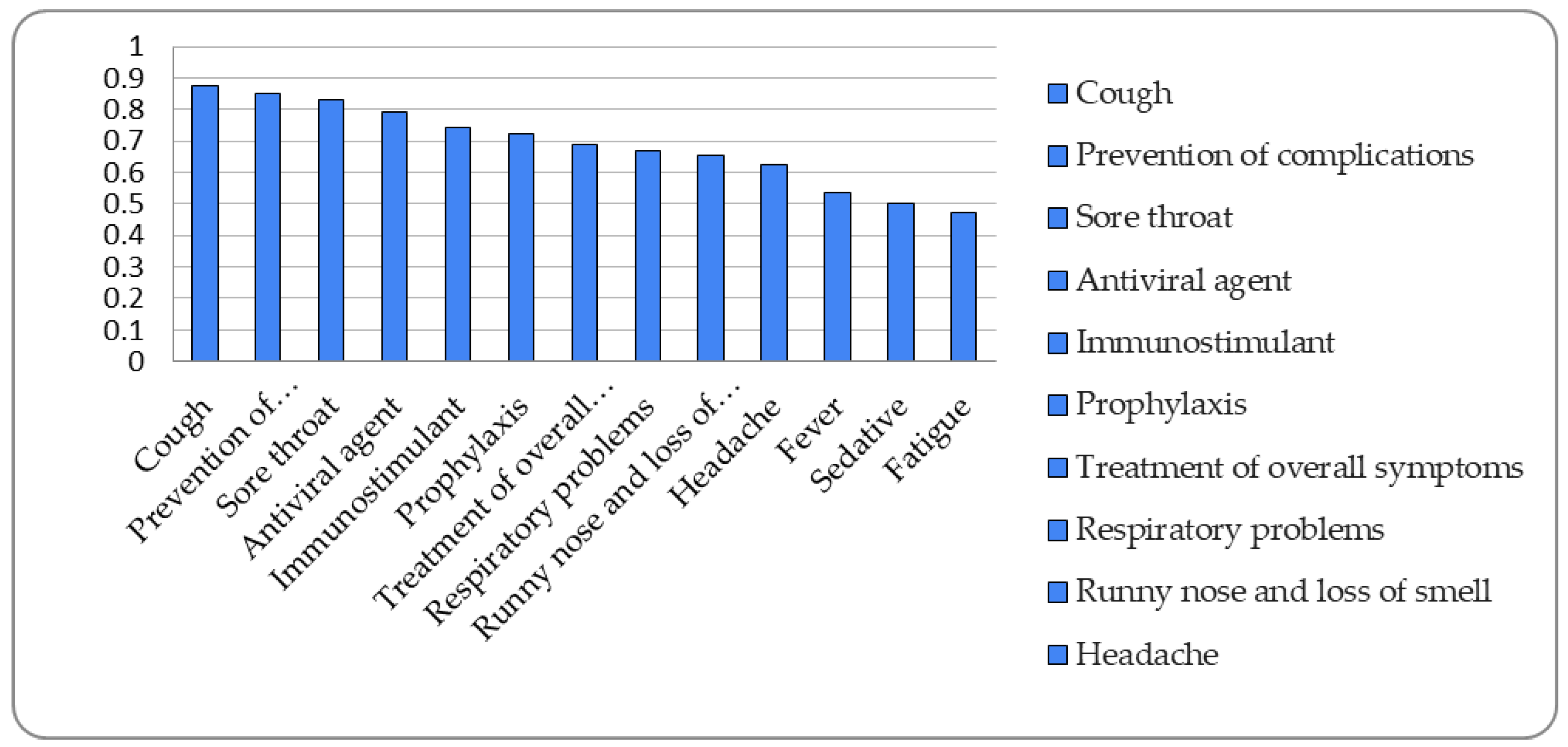

Table 1.
Medicinal plants used during COVID-19 in Bulgaria.
| Family | Scientific name |
Local name (in English) |
Loca name (in Bugaria) |
Number of respondents mentioning the plant |
RFC | UV |
|---|---|---|---|---|---|---|
| Adoxaceae |
Sambucus ebulus L. |
Dwarf elder | Trevist bŭz | 5 | 0,2512 | 0,0258 |
| Adoxaceae |
Sambucus nigra L. |
Elder | Dŭrvesen bŭz | 3 | 0,0154 | 0,0515 |
| Amaryllidaceae | Allium cepa L. | Onion | Kromid luk | 1 | 0,0052 | 0,0103 |
| Amaryllidaceae |
Allium sativum L. |
Garlic | Chesŭn | 3 | 0,0154 | 0,0412 |
| Anacardiaceae | Cotinus coggygria Scop. | Smoke tree | Smradlika | 4 | 0,0206 | 0,0309 |
| Apiaceae | Pimpinella anisum L. | Anise | Anason | 1 | 0,0052 | 0,0052 |
| Apiaceae |
Apium graveolens L. |
Celery | Tselina | 1 | 0,0052 | 0,0052 |
| Asteraceae | Matricaria chamomilla L. | Chamomile | Laika | 80 | 0,4124 | 0,7526 |
| Asteraceae | Tagetes erecta L. * | Marigold | Turta | 2 | 0,0104 | 0,0155 |
| Asteraceae | Tussilago farfara L. | Coltsfoot | Podbel | 5 | 0,0258 | 0,0464 |
| Asteraceae | Echinacea purpurea (L.) Moench* | Echinacea | Ekhinatseya | 4 | 0,0206 | 0,0309 |
| Asteraceae | Achillea millefolium L. | Yarrow | Byal ravnets | 1 | 0,0104 | 0,0309 |
| Asteraceae | Calendula officinalis L. | Calendula | Neven | 1 | 0,0052 | 0,0052 |
| Brassicaceae | Sinapis nigra L. | Black mustard | Cheren sinap | 5 | 0,0258 | 0,0361 |
| Brassicaceae | Armoracia G.Gaertn* | Horseradish | Khryan | 1 | 0,0052 | 0,0052 |
| Brassicaceae | Sinapis alba L. | White mustard | Byal sinap | 3 | 0,0154 | 0,0206 |
| Fabaceae |
Glycyrrhiza glabra L. |
Licorice | Sladŭk koren | 2 | 0,0104 | 0,0206 |
| Clusiaceae |
Hypericum perforatum L. |
St. John's wort | Zhŭlt kantarion | 7 | 0,0360 | 0,1031 |
| Juglandaceae | Juglans regia L. | Walnut | Orekh | 2 | 0,0104 | 0,0206 |
| Lamiacea | Clinopodium vulgare L. | Wild basil | Koteshka stŭpka | 3 | 0,0154 | 0,0258 |
| Lamiaceae | Mentha sp. L. | Mint | Menta | 39 | 0,2011 | 0,3660 |
| Lamiaceae | Thymus vulgaris L. | Thyme | Mashtjerka | 59 | 0,3041 | 0,5670 |
| Lamiaceae | Sideritis scardica Griseb. | Mountain tea | Mursalski chai | 24 | 0,1237 | 0,2010 |
| Lamiaceae | Salvia officinalis L. | Sage | Gradinski chai | 6 | 0,0310 | 0,0464 |
| Lamiaceae |
Melissa officinalis L. |
Lemon balm | Matochina | 8 | 0,0412 | 0,0619 |
| Lamiaceae | Origanum vulgare L. | Oregano | Rigan | 9 | 0,0464 | 0,0876 |
| Lamiaceae |
Rosmarinus officinalis L. |
Rosemary | Rozmarin | 1 | 0,0052 | 0,0052 |
| Lauraceae | Laurus nobilis L. | Bay laurel | Dafinovo dŭrvo | 2 | 0,0104 | 0,0103 |
| Lauraceae | Cinnamomum verum J.Presl* | Cinnamon | Kanela | 2 | 0,0104 | 0,0103 |
| Linaceae | Linum usitatissimum L. | Flax | Kulturnen len | 1 | 0,0052 | 0,0052 |
| Malvaceae | Tilia sp. L. | Linden | Lipa | 72 | 0.3711 | 0,7165 |
| Malvaceae |
Hibiscus sabdariffa L.* |
Hibiscus | Khibiskus | 1 | 0,0052 | 0,0103 |
| Moraceae | Ficus carica L. | Fig | Smokinya | 2 | 0,0104 | 0,0103 |
| Pinaceae | Pinus sylvestris L. | Pine | Bor | 1 | 0,0052 | 0,0103 |
| Plantaginaceae | Plantago sp. L. | Plantain | Zhivovlek | 2 | 0,0104 | 0,0108 |
| Ranunculaceae | Nigella sativa L. | Black cumin | Cheren kimon | 1 | 0,0052 | 0,0155 |
| Rosaceae |
Filipendula ulmaria (L.) Maxim. |
Meadowsweet | Blaten tŭzhnik | 1 | 0,0052 | 0,0206 |
| Rosaceae | Aronia melanocarpa (Mich.) Elliott* | Chokeberry | Aronia | 1 | 0,0052 | 0,0052 |
| Rosaceae | Rosa canina L. | Dog rose | Shipka | 25 | 0,1289 | 0,1392 |
| Rosaceae | Prunus spinosa L. | Blackthorn | Trŭnka | 4 | 0,0206 | 0,0206 |
| Rutaceae | Citrus × limon Osbeck* | Lemon | Limon | 29 | 0,1495 | 0,1289 |
| Solanaceae | Atropa belladona L. | Belladonna | Beladona | 1 | 0,0052 | 0,0052 |
| Urticaceae | Urtica dioica L. | Nettle | Kopriva | 2 | 0,0104 | 0,0155 |
| Zingiberaceae |
Zingiber officinale Roscoe* |
Ginger | Dzhindzhifil | 48 | 0,2475 | 0,4381 |
| Zygophyllaceae |
Tribulus terrestris L. |
Puncture vine | Babini zŭbi | 1 | 0,0052 | 0,0052 |
* - foreign medicinal plants.
Table 2.
Informant Consensus Factor (FI) for different use categories.
| Use Category | Number of taxa (n) |
Number of use reports (n) |
FIC |
|---|---|---|---|
| Cough | 24 | 189 | 0,8777 |
| Prevention of complications | 26 | 168 | 0,8503 |
| Treatment of overall symptoms | 22 | 68 | 0,6866 |
| Immunostimulant | 21 | 79 | 0,7436 |
| Sore throat | 18 | 101 | 0,8300 |
| Prophylaxis | 17 | 59 | 0,7241 |
| Respiratory problems | 15 | 43 | 0,6667 |
| Fatigue | 10 | 18 | 0,4706 |
| Antiviral agent | 9 | 39 | 0,7895 |
| Runny nose and loss of smell | 9 | 24 | 0,6522 |
| Headache | 4 | 9 | 0,6250 |
| Fever | 7 | 14 | 0,5384 |
| Sedative | 4 | 6 | 0,5000 |
Table 3.
Fidelity Level (FL) and cultural significance of medicinal plants cited in the survey, distributed by use categories
Table 3.
Fidelity Level (FL) and cultural significance of medicinal plants cited in the survey, distributed by use categories
| Medicinal Plant | Number of reports |
FL % | RFC | Cultural Significance |
|---|---|---|---|---|
| Category "Cough" | ||||
| Thymus vulgaris L. | 32 | 54 | 0.30 | High cultural significance |
| Tilia sp. L. | 34 | 47 | 0.37 | High cultural significance |
| Sideritis scardica Griseb. | 10 | 42 | 0.12 | Specific cultural significance |
| Zingiber officinale Roscoe | 18 | 37 | 0.25 | Universal cultural significance |
| Matricaria chamomilla L. | 28 | 35 | 0.41 | Universal cultural significance |
| Mentha sp. L. | 13 | 33 | 0.20 | Universal cultural significance |
| Category "Prevention of complications | ||||
| Tilia sp. L | 34 | 47 | 0.37 | High cultural significance |
| Sideritis scardica Griseb. | 11 | 46 | 0.12 | Specific cultural significance |
| Matricaria chamomilla L. | 36 | 45 | 0.41 | Moderate cultural significance |
| Thymus vulgaris L. | 21 | 36 | 0.30 | Moderate cultural significance |
| Zingiber officinale Roscoe | 18 | 37 | 0.25 | Established foreign species with specific local use |
| Mentha sp. L. | 10 | 26 | 0.20 | Universal cultural significance |
| Category "Sore throat | ||||
| Tilia sp. L. | 28 | 39 | 0.37 | High cultural significance |
| Matricaria chamomilla L. | 23 | 29 | 0.41 | Universal cultural significance |
| Category "Immunostimulant“ | ||||
| Zingiber officinale Roscoe | 12 | 25 | 0.25 | Moderate cultural significance |
| Citrus × limon Osbeck | 9 | 31 | 0.15 | Specific cultural significance |
| Tilia sp. L. | 9 | 13 | 0.37 | Universal cultural significance |
| Thymus vulgaris L. | 7 | 12 | 0.64 | Universal cultural significance |
| Category "Prophylaxis | ||||
| Zingiber officinale Roscoe | 12 | 25 | 0.25 | Moderate cultural significance |
| Thymus vulgaris L. | 7 | 12 | 0.64 | Universal cultural significance |
| Mentha sp. L. | 6 | 15 | 0.20 | Moderate cultural significance |
| Citrus × limon Osbeck | 6 | 21 | 0.15 | Specific cultural significance |
| Category "Antiviral agent" | ||||
| Tilia sp. L | 7 | 10 | 0.37 | Universal cultural significance |
| Matricaria chamomilla L. | 6 | 8 | 0.41 | Universal cultural significance |
| Thymus vulgaris L. | 8 | 14 | 0.64 | Universal cultural significance |
| Zingiber officinale Roscoe | 6 | 13 | 0.25 | Moderate cultural significance |
Note: High cultural significance - widespread, specific traditional use (high FL + high RFC); Moderate cultural significance - established but limited to several applications traditional use (medium FL + medium RFC); Specific cultural significance - locally specific, traditionally established medicinal use (high FL + low RFC); Universal cultural significance - widely used in traditional medicine plant with many medicinal applications, without being narrowly specialized (low FL + high RFC).
Disclaimer/Publisher’s Note: The statements, opinions and data contained in all publications are solely those of the individual author(s) and contributor(s) and not of MDPI and/or the editor(s). MDPI and/or the editor(s) disclaim responsibility for any injury to people or property resulting from any ideas, methods, instructions or products referred to in the content. |
© 2025 by the authors. Licensee MDPI, Basel, Switzerland. This article is an open access article distributed under the terms and conditions of the Creative Commons Attribution (CC BY) license (http://creativecommons.org/licenses/by/4.0/).
Copyright: This open access article is published under a Creative Commons CC BY 4.0 license, which permit the free download, distribution, and reuse, provided that the author and preprint are cited in any reuse.


