

Submitted:
01 September 2025
Posted:
02 September 2025
You are already at the latest version
Abstract
Background: Industrial operations, intensive agriculture, urbanization, and poor waste management are the main causes of Greece's environmental degradation, which is becoming more complicated due to new threats including microplastics and pharmaceuticals. This scoping review aimed to provide an overview of contaminant types, sources, exposure pathways, impacts, and the effectiveness of regulatory responses. Methods: The review was conducted following PRISMA-ScR guidelines, with searches in PubMed and Scopus covering the period 2000–2025. After screening 940 records, 50 eligible studies were included, covering evidence on air, water, soil, and marine pollution. Results: The scoping review suggests that heavy metals, polycyclic aromatic hydrocarbons (PAHs), pesticides, volatile organic compounds (VOCs), and persistent organic pollutants (POPs) are common in Greece. Major hotspots include coastal regions like the Saronic Gulf, agricultural basins, and urban centers like Athens and Thessaloniki. These pollutants are connected to respiratory, cardiovascular, and neurodevelopmental consequences and provide serious ecological dangers. Regulatory initiatives and economic downturns have resulted in localized improvements, but enforcement is uneven and monitoring is still dispersed, especially when it comes to new toxins. Conclusions: To protect public health and ecosystem integrity in Greece, this review emphasizes the critical need for interdisciplinary research, robust regulatory frameworks, and integrated monitoring systems.
Keywords:
environmental pollution in Greece
; pollution-related health risks
; contaminants in Greece
; heavy metal toxicity
; EU environmental standards
; pharmaceutical contaminants
1. Introduction
Greece is grappling with widespread environmental pollution, impacting its air, water, soil, and ecosystems. The primary sources of this contamination include industrial processes, agricultural practices, urban growth, and ineffective waste management systems. These activities release pollutants such as heavy metals, pesticides, PAHs, VOCs, POPs, and emerging contaminants like pharmaceuticals and microplastics. Heavy metals are particularly concerning due to their bioaccumulation and resistance to natural degradation [1]. In major cities like Athens and Thessaloniki, elevated levels of particulate matter (PM), nitrogen dioxide (NO2), and ground-level ozone are prevalent. Water systems across the country are frequently contaminated with nitrates, heavy metals, and microbial pathogens, often exceeding environmental quality standards in specific hotspots [2,3,4,5,6,7]. Soil contamination is significant in agricultural and industrial areas, where high concentrations of heavy metals and pesticides pose serious health risks, particularly to children [8,9,10,11,12,13,14]. Marine and coastal regions, such as the Saronic Gulf and Aegean islands, are affected by plastic debris, oil-related compounds, and trace metals [15,16,17,18]. Additionally, localized radioactive contamination from industrial and medical sources further complicates Greece’s environmental challenges [19]. While regulatory measures and economic slowdowns have led to some progress, ongoing violations and new contaminants underscore the urgent need for stronger environmental policies and enhanced monitoring systems [20,21,22,23,24]. This scoping review synthesizes current research on environmental pollutants in Greece, evaluating their sources, distribution, ecological and health impacts, and the effectiveness of existing regulations.
2. Materials and Methods
This scoping review was conducted following the PRISMA extension for scoping reviews [25]. Literature searches were performed in the PubMed and Scopus databases using a predefined set of keywords, “Contaminants” OR “Environmental Contaminants” OR “Pollution” AND “Greece”. In PubMed, the search was carried out through the Advanced Search Builder, while in Scopus the same strategy was applied to the Abstract, Title, and Keyword fields. The search included all records published from 2000 up to 2025. We applied predefined eligibility criteria to guide study selection. Studies were included if they were original research articles, observational studies, retrospective studies, or meta-analyses, and were published in English. We excluded case reports, systematic reviews, narrative literature reviews, letters to the editor, short communications, animal studies, gray literature, and studies published in languages other than English. All records were managed using Rayyan (https://new.rayyan.ai/).
The aforementioned criteria were used to screen the results that were retrieved. Through abstract and title screening of the articles, two writers (PS and GZ) carried out this process separately. In cases of disagreement, a third author (GE) assisted in the screening process. A full-text review of the chosen papers was then conducted to determine their eligibility.
3. Results
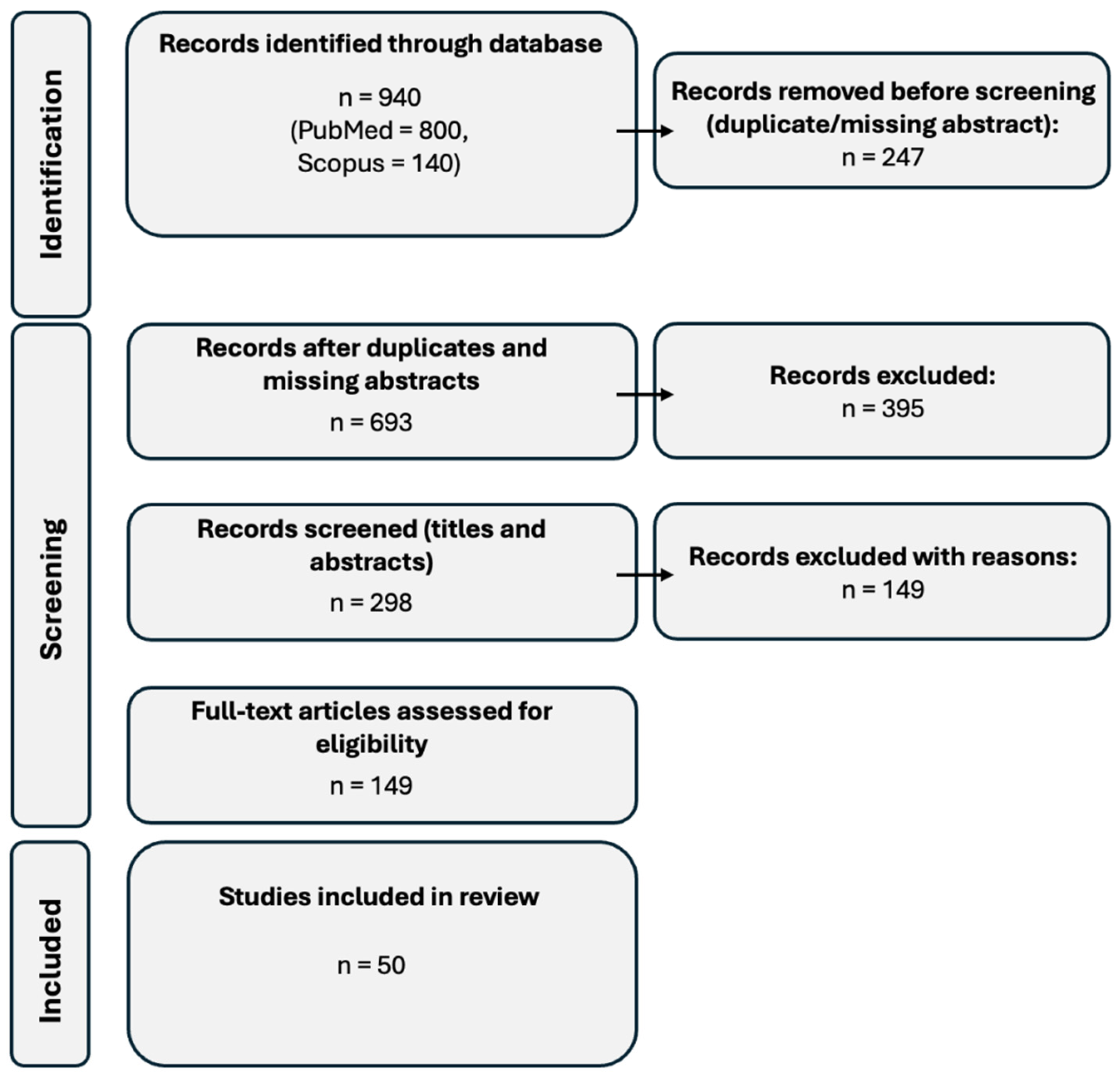
The search strategy encompassed multiple targeted queries addressing contaminant types, sources, pathways, regulatory frameworks, and both ecological and human health impacts in Greece. A total of 940 records were identified—800 from PubMed and 140 from Scopus. After removing duplicates and entries without abstracts, 693 records remained. Title and abstract screening reduced this number to 149 eligible studies. Following full-text evaluation, 50 articles met the inclusion criteria and were incorporated into the final review (Figure 1).
3.1. Types and Distribution of Environmental Contaminants
Heavy metals such as lead (Pb), cadmium (Cd), zinc (Zn), chromium (Cr), nickel (Ni), arsenic (As), and mercury (Hg) are prevalent in Greece’s surface waters, soils, sediments, and urban dust, with notable concentrations near industrial zones, mining sites, and urban areas [11,12,13,17,24,26,27]. Polycyclic aromatic hydrocarbons (PAHs), polychlorinated biphenyls (PCBs), and other persistent organic pollutants (POPs) are frequently detected in air, sediments, and marine environments, particularly around ports, industrial facilities, and densely populated regions [2,16,17,28,29,30]. Pesticide residues, including organochlorines and organophosphates, are commonly found in surface and groundwater, often surpassing EU regulatory limits in agricultural areas [3,7,31]. Nitrate pollution is a significant issue in groundwater, especially in basins with mixed land use where intensive farming overlaps with industrial activities [3]. Volatile organic compounds (VOCs) and emerging contaminants, such as pharmaceuticals and personal care products, are present in surface waters, wastewater, and soils amended with sludge, posing risks to ecosystems and potentially human health [6,32,33,34,35]. Microplastics and their associated pollutants are increasingly reported in marine and coastal ecosystems [15,17]. Additionally, road dust emissions significantly contribute to particulate matter (PM) levels, worsening both environmental and public health concerns [11,13]. As presented in scheme 1, heavy metals represent the largest proportion of environmental pollutants, followed by PAHs & POPs, pesticides, VOCs & emerging pollutants, and microplastics (Scheme 1).
3.2. Sources and Pathways
Industrial activities, such as mining, metallurgy, power generation, cement manufacturing, and steel production, are major sources of heavy metal and PAH pollution in air, soil, and water [8,10,14,24,26,36]. Agricultural practices, especially the use of fertilizers and pesticides, contribute to nitrate and pesticide contamination in both water and soil [3,7,31]. Urban growth and traffic emissions are significant sources of PM, NO2, VOCs, and heavy metals in air and dust, with Athens and Thessaloniki being the most affected cities [37,38,39,40,41,42,43]. Poor waste management and the discharge of untreated wastewater introduce microbial pathogens, pharmaceuticals, and other emerging contaminants into aquatic environments [6,32,33,35]. One study found 158 pharmaceuticals and related compounds in Greek offshore seawater, with higher concentrations near urban and industrial coastal zones, highlighting serious ecological risks from wastewater discharges [44].
Shipping operations, port activities, and oil refineries further increase marine and coastal pollution by releasing oil-derived compounds, trace metals, and microplastics [15,16,17,18,23,36]. Significant levels of short- and medium-chain polychlorinated alkanes (PCAs) have also been detected in Athens’ air, especially in urban and industrial areas, indicating their persistence in the atmosphere and the health risks from inhalation exposure [45].
3.3. Ecological and Health Impacts
Ecological risk assessments indicate that heavy metals, PAHs, pesticides, and emerging contaminants pose significant risks to aquatic organisms, benthic fauna, and terrestrial ecosystems, particularly in contaminated hotspots [15,16,27,31,32,33]. Human health risks are elevated in areas with high soil and dust contamination, with ingestion and inhalation identified as major exposure pathways, especially for children [8,11,12,13,14,20,41]. Prenatal and postnatal exposures have been linked to neurodevelopmental disorders [2]. Epidemiological studies associate long-term exposure to PM2.5, NO2, and heavy metals with increased mortality, as well as cardiovascular and respiratory diseases, primarily driven by oxidative stress and inflammatory responses [2,5,20,41,46].
Analysis of population exposure trends to particulate matter (PM10 and PM2.5) in Greek urban areas, including Athens and Thessaloniki, from 2003 to 2012 indicates that, despite reductions in emissions during the economic downturn, PM levels frequently exceeded EU air quality standards, posing significant health risks [47]. A related study reported a strong correlation between PM2.5 concentrations and increased COVID-19 incidence in four Italian cities, suggesting that elevated PM2.5 exposure may exacerbate respiratory health risks—a finding potentially relevant for comparative assessment in Greek urban areas [48]. Cancer risk assessments highlight concerns related to benzene, PAHs, and POPs in urban and industrial areas [8,15,30,41]. Elevated concentrations of benzo[a]pyrene (BaP), a Group 1 carcinogen according to the International Agency for Research on Cancer (IARC), have been detected at traffic locations such as Thissio and Piraeus Port, raising serious public health concerns [2]. Table 1, presents key scientific papers on pollutants and their impacts on the overall region of Greece (Table 1).
3.4. Regulatory Responses and Monitoring Effectiveness
While regulatory interventions and economic downturns have led to reductions in some pollutants (e.g., NO2, SO2, PM), persistent exceedances and emerging threats remain, particularly for PM, heavy metals, and organic contaminants [4,21,22,23,24]. Further research evaluating PM10 source contributions in Greek cities identified traffic and industrial activities as the predominant sources, emphasizing the need for targeted emission reduction strategies to ensure compliance with EU air quality standards [48].
Monitoring programs are often fragmented, with limited spatial and temporal coverage, and there is a need for improved indices and guidelines tailored to Greek and regional conditions [6,18,24,32,33,35]. Recent extreme events, such as floods, have exacerbated contaminant transport and highlighted vulnerabilities in environmental management [49].

Table 2.
Authors & journals that appeared most frequently in the included papers.
| Type | Name | References | Total Papers |
| Authors | E. Kelepertzis | [9,13] | 2 papers |
| Authors | S. Golfinopoulos | [31,34,50] | 3 papers |
| Authors | A. Stasinakis | [32,33,35] | 3 papers |
| Journals | The Science of the Total Environment | [3,6,7,10,11,13,24,26,27,33,39,40,51] | 13 papers |
| Journals | Chemosphere | [28,31] | 2 papers |
| Journals | Water | [36,50] | 2 papers |
4. Discussion
The reviewed literature underscores the multifaceted nature of environmental contamination in Greece, where a diverse array of pollutants impacts air, water, soil, and biota. Research in this domain is generally robust, utilizing advanced analytical techniques such as pollution indices, source apportionment, and risk assessment models to delineate contaminant distribution and effects [2,3,5,6,15,20]. This comprehensive synthesis of current knowledge highlights the occurrence, sources, and impacts of key contaminants-including heavy metals, polycyclic aromatic hydrocarbons (PAHs), pesticides, and emerging pollutants-revealing that, despite regulatory advances and some improvements in environmental quality, persistent and novel threats continue to jeopardize ecosystems and human health. Nonetheless, critical gaps in monitoring coverage, regulatory enforcement, and the understanding of emerging contaminants emphasize the need for a more integrated and proactive approach to environmental management in Greece.
Environmental monitoring in Greece remains fragmented, with a focus on urban and industrial hotspots such as Athens, Thessaloniki, the Saronikos Gulf, and the Asopos basin, while comprehensive, nationwide programs are lacking [3,24]. This limits the ability to assess cumulative and synergistic effects of pollutants across air, water, and soil-particularly in rural areas where agricultural contamination is often overlooked [3,7]. The absence of standardized protocols tailored to Greece’s specific environmental and socioeconomic context further hampers the assessment of pollution trends and risks [24,32,33]. Socioeconomic factors add complexity: while economic downturns have temporarily reduced certain emissions, they have also weakened environmental monitoring and enforcement due to limited public resources [21,22]. As economic activity resumes, pollution may increase if not accompanied by stronger regulatory frameworks [24]. Moreover, extreme weather events-such as floods-are mobilizing contaminants and accelerating their spread, as evidenced by the impact of Storm Daniel in Thessaly [49]. These challenges highlight the urgent need for real-time, climate-resilient monitoring systems and adaptive management strategies capable of addressing both chronic pollution and dynamic environmental threats.
Emerging contaminants, including pharmaceuticals, personal care products, and microplastics, are a growing concern in Greece but remain understudied compared to traditional pollutants like heavy metals and PAHs [6,15,33,35]. Research shows pharmaceuticals persist in wastewater and sludge-amended soils, risking bioaccumulation in aquatic and terrestrial ecosystems [32,33], while microplastics, acting as vectors for POPs, are increasingly found in marine environments like the Saronikos Gulf [15,17]. Limited data on their long-term ecological and health impacts, particularly synergistic effects with other pollutants like heavy metals, highlight a critical research gap [6,18,35].
Regulatory interventions in Greece have achieved some success, notably in reducing emissions of NO2, SO2, and PM due to stricter standards and economic downturns [21,22]. However, persistent exceedances of environmental quality standards (EQS) for heavy metals, pesticides, and PM in certain hotspots indicate inconsistent enforcement and implementation [7,24]. The regulatory framework lags in addressing emerging contaminants like pharmaceuticals, lacking adequate guidelines and monitoring [32,35]. Relying on economic downturns for emission reductions is unsustainable [22], necessitating proactive measures like advanced wastewater treatment and stricter agricultural runoff controls to tackle nitrates, pesticides, and pharmaceuticals [3,6,7]. Risk-based approaches, as applied in Saronikos Gulf and Lavrio studies, could enhance targeted regulations [8].
The evidence for significant ecological and human health risks is compelling, particularly in contaminated hotspots. Heavy metals, PAHs, and pesticides pose risks to aquatic and terrestrial ecosystems through bioaccumulation and toxicity, with cascading effects on biodiversity and ecosystem services [15,31]. For instance, studies in the Saronikos Gulf show persistent sediment contamination with heavy metals, threatening benthic fauna and fisheries [18]. Human health risks are equally concerning, with epidemiological studies linking long-term exposure to PM2.5, NO2, and heavy metals to increased mortality, cardiovascular, and respiratory diseases [5,20,41,46]. Children are particularly vulnerable due to their higher exposure through ingestion and inhalation of contaminated soil and dust [9,12,13,14]. However, the chronic and cumulative effects of multi-contaminant exposures remain underexplored, as most studies focus on single pollutants or short-term impacts [8,20]. Longitudinal studies, such as those recommended by Kasdagli et al., are critical to understanding the long-term health implications of living in polluted areas [20].
5. Limitations
This review has several limitations that should be acknowledged. First, it is difficult to determine the extent of certain health impacts or draw conclusions about causal linkages because the review is descriptive in nature and lacks quantitative meta-analysis and pooled risk estimates. Second, the studies that were included used different methods, covered different areas, and had different levels of quality, which could make it hard to compare the results. Furthermore, the national picture of pollution may be skewed because many studies were focused on well-known hotspots like Athens, Thessaloniki, and the Saronic Gulf, whereas rural and less industrialized areas are still underrepresented. Finally, there is currently insufficient data to draw firm conclusions on the long-term ecological and health effects of new pollutants such microplastics and medicines.
6. Conclusions and Future Perspectives
Environmental contamination in Greece remains a multifaceted and persistent challenge with substantial consequences for both public health and ecological systems. Although regulatory interventions and economic shifts have led to localized improvements, ongoing pollution from industrial, agricultural, and urban sources-along with the increasing presence of emerging contaminants such as pharmaceuticals and microplastics-continues to pose significant risks. Current remediation efforts and regulatory frameworks have demonstrated limited effectiveness, particularly in environmental hotspots where health hazards persist.
Several critical research gaps hinder progress, including limited data on emerging pollutants, inadequate monitoring coverage, and a lack of long-term, cross-media, and epidemiological studies. Understanding the cumulative and synergistic effects of multi-contaminant exposures in high-risk areas remains a major scientific and policy challenge. Questions remain about how emerging contaminants affect ecosystems and human health over time in Greek contexts, the interactive effects of complex contaminant mixtures in urban and coastal areas, and the real-world efficacy of existing remediation strategies and policies.
Greece should make investments in integrated monitoring networks that incorporate both established and newly discovered toxins from a variety of environmental media in order to tackle these issues. Technologies like remote sensing and high-resolution mass spectrometry (LC-TIMS-HRMS) have demonstrated significant potential for the detection and tracking of pollutants [49]. Additionaly, regulatory frameworks need to be revised to include new contaminants and impose stricter controls on industrial and agricultural waste [32,35]. The long-term cumulative impacts of pollutant mixtures on human and ecological health also require urgent interdisciplinary investigation [8,20]. Equally important is the role of public awareness and community engagement in supporting environmental policy and promoting sustainable practices-especially in rural and agricultural areas where pollution sources are less regulated [3,7]. Promoting community engagement and strengthening environmental awareness can facilitate the adoption of best practices and enhance the impact of intervention strategies.
In conclusion, Greece has made significant strides in comprenhending and addressing environmental contamination, persistent and emerging challenges call for urgent, coordinated action. Achieving a more sustainable and health-protective environmental future requires addressing monitoring gaps, bolstering regulatory frameworks, encouraging interdisciplinary research, and engaging the public.
Author Contributions
Conceptualization, P.S. and G.Z.; methodology, P.S.; software, P.S.; validation, P.S., G.Z., G.E.; formal analysis, ; investigation, P.S., G.Z.; resources, P.S.; data curation, P.S., G.E.; writing—original draft preparation, P.S., G.E.; writing—review and editing, P.S., G.E.; visualization, P.S.; supervision, P.S., G.Z.; All authors have read and agreed to the published version of the manuscript.
Funding
This research received no external funding.
Data Availability Statement
We encourage all authors of articles published in MDPI journals to share their research data. In this section, please provide details regarding where data supporting reported results can be found, including links to publicly archived datasets analyzed or generated during the study. Where no new data were created, or where data is unavailable due to privacy or ethical restrictions, a statement is still required. Suggested Data Availability Statements are available in section “MDPI Research Data Policies” at https://www.mdpi.com/ethics.
Conflicts of Interest
The authors declare no competing financial interests or personal relationships that could influence the work presented in this manuscript.
Abbreviations
The following abbreviations are used in this manuscript:
| TIMS Trapped ion mobility spectrometry |
| LC Liquid chromatography |
| HRMS High-resolution mass spectrometry |
| PAHs Polycyclic aromatic hydrocarbons |
| VOCs Volatile organic compounds |
| POPs Persistent organic pollutants |
| PM Particulate matter |
| NO2 Nitrogen dioxide |
| BaP Benzo(a)pyrene |
| EQS Environmental Quality Standards |
| SO2 Sulfur Dioxide |
| PM2.5 Particular Matter 2.5 |
| PM10 Particular Matter 10 |
| Pb Lead |
| Cd Cadmium |
| Zn Zinc |
| Cr Chromium |
| Ni Nickel |
| As Arsenic |
| Hg Mercury |
| PCAs Polychlorinated alkanes |
| PCBs Polychlorinated Biphenyls |
| IARC International Agency for Research on Cancer |
| PRISMA Preferred Reporting Items for Systematic Reviews and Meta-Analyses |
References
- Christophoridis, C.; Dedepsidis, D.; Fytianos, K. Occurrence distribution of selected heavy metals in the surface sediments of Thermaikos Gulf, N. Greece. Assessment using pollution indicators. Journal of Hazardous Materials. 2009, 168, 1082–1091. [Google Scholar] [CrossRef]
- Tsiodra, I.; Tavernaraki, K.; Grivas, G.; et al. Spatiotemporal Gradients of PAH Concentrations in Greek Cities and Associated Exposure Impacts. Toxics. 2024, 12, 293. [Google Scholar] [CrossRef] [PubMed]
- Matiatos, I. Nitrate source identification in groundwater of multiple land-use areas by combining isotopes and multivariate statistical analysis: A case study of Asopos basin (Central Greece). Science of The Total Environment. 2016, 541, 802–814. [Google Scholar] [CrossRef] [PubMed]
- Progiou, A.; Liora, N.; Sebos, I.; Chatzimichail, C.; Melas, D. Measures and Policies for Reducing PM Exceedances through the Use of Air Quality Modeling: The Case of Thessaloniki, Greece. Sustainability. 2023, 15, 930. [Google Scholar] [CrossRef]
- Dimitriou, K.; Mihalopoulos, N. Air Quality Assessment in Six Major Greek Cities with an Emphasis on the Athens Metropolitan Region. Atmosphere. 2024, 15, 1074. [Google Scholar] [CrossRef]
- Kosma, C.I.; Lambropoulou, D.A.; Albanis, T.A. Investigation of PPCPs in wastewater treatment plants in Greece: Occurrence, removal and environmental risk assessment. Science of The Total Environment. 2014, 466–467, 421–438. [Google Scholar] [CrossRef]
- Papadakis, E.-N.; Tsaboula, A.; Vryzas, Z.; Kotopoulou, A.; Kintzikoglou, K.; Papadopoulou-Mourkidou, E. Pesticides in the rivers and streams of two river basins in northern Greece. Science of The Total Environment. 2018, 624, 732–743. [Google Scholar] [CrossRef]
- Antoniadis, V.; Thalassinos, G.; Levizou, E.; Wang, J.; Wang, S.-L.; Shaheen, S.M.; Rinklebe, J. Hazardous enrichment of toxic elements in soils and olives in the urban zone of Lavrio, Greece, a legacy, millennia-old silver/lead mining area and related health risk assessment. Journal of Hazardous Materials. 2022, 434, 128906. [Google Scholar] [CrossRef]
- Kelepertzis, E. Investigating the sources and potential health risks of environmental contaminants in the soils and drinking waters from the rural clusters in Thiva area (Greece). Ecotoxicology and Environmental Safety. 2014, 100, 258–265. [Google Scholar] [CrossRef]
- Kazakis, N.; Kantiranis, N.; Kalaitzidou, K.; et al. Environmentally available hexavalent chromium in soils and sediments impacted by dispersed fly ash in Sarigkiol basin (Northern Greece). Environmental Pollution. 2018, 235, 632–641. [Google Scholar] [CrossRef]
- Bourliva, A.; Kantiranis, N.; Papadopoulou, L.; et al. Seasonal and spatial variations of magnetic susceptibility and potentially toxic elements (PTEs) in road dusts of Thessaloniki city, Greece: A one-year monitoring period. Science of The Total Environment. 2018, 639, 417–427. [Google Scholar] [CrossRef]
- Gkoltsou, V.-S.; Papadimou, S.G.; Bourliva, A.; Skilodimou, H.D.; Golia, E.E. Heavy Metal Levels in Green Areas of the Urban Soil Environment of Larissa City (Central Greece): Health and Sustainable Living Risk Assessment for Adults and Children. Sustainability. 2025, 17, 4421. [Google Scholar] [CrossRef]
- Kelepertzis, E.; Argyraki, A.; Chrastný, V.; Botsou, F.; Skordas, K.; Komárek, M.; Fouskas, A. Metal(loid) and isotopic tracing of Pb in soils, road and house dusts from the industrial area of Volos (central Greece). Science of The Total Environment. 2020, 725, 138300. [Google Scholar] [CrossRef]
- Kypritidou, Z.; Kourgia, P.-M.; Argyraki, A.; Demetriades, A. Do humans take good care of their offspring as animals do…! The Lavreotiki and Lavrion ‘sagas’, Hellenic Republic—Part 1: Historical outline and mapping of lead contamination. Environ Geochem Health. 2023, 45, 1107–1116. [Google Scholar] [CrossRef]
- Zafeiraki, E.; Moulas, E.; Kasiotis, K.M.; Bakeas, E.; Dassenakis, E. Polycyclic aromatic hydrocarbons (PAHs) in surface sediments from Greece: Occurrence, sources and risk assessment. Marine Pollution Bulletin. 2023, 197, 115715. [Google Scholar] [CrossRef]
- Botsou, F.; Hatzianestis, I. Polycyclic aromatic hydrocarbons (PAHs) in marine sediments of the Hellenic coastal zone, eastern Mediterranean: Levels, sources and toxicological significance. J Soils Sediments. 2012, 12, 265–277. [Google Scholar] [CrossRef]
- Karapanagioti, H.K.; Endo, S.; Ogata, Y.; Takada, H. Diffuse pollution by persistent organic pollutants as measured in plastic pellets sampled from various beaches in Greece. Marine Pollution Bulletin. 2011, 62, 312–317. [Google Scholar] [CrossRef] [PubMed]
- Kanellopoulos, T.D.; Kapetanaki, N.; Karaouzas, I.; et al. Trace element contamination status of surface marine sediments of Greece: An assessment based on two decades (2001–2021) of data. Environ Sci Pollut Res. 2022, 29, 45171–45189. [Google Scholar] [CrossRef] [PubMed]
- Tsamos, P.; Stefanou, S.; Noli, F. Assessment of distribution of heavy metals and radionuclides in soil and plants nearby an oil refinery in northern Greece. Case Studies in Chemical and Environmental Engineering. 2024, 9, 100593. [Google Scholar] [CrossRef]
- Kasdagli, M.-I.; Katsouyanni, K.; de Hoogh, K.; Lagiou, P.; Samoli, E. Associations of air pollution and greenness with mortality in Greece: An ecological study. Environmental Research. 2021, 196, 110348. [Google Scholar] [CrossRef]
- Koukouli, M.-E.; Skoulidou, I.; Karavias, A.; et al. Sudden changes in nitrogen dioxide emissions over Greece due to lockdown after the outbreak of COVID-19. Atmospheric Chemistry and Physics. 2021, 21, 1759–1774. [Google Scholar] [CrossRef]
- Vrekoussis, M.; Richter, A.; Hilboll, A.; et al. Economic crisis detected from space: Air quality observations over Athens/Greece. Geophysical Research Letters. 2013, 40, 458–463. [Google Scholar] [CrossRef]
- Overview of Total Mercury in the Coastal Waters of Greece: A Decade of Monitoring under the Water Framework Directive (WFD). Global NEST Journal. 2025. [CrossRef]
- Karageorgis, A.P.; Botsou, F.; Kaberi, H.; Iliakis, S. Geochemistry of major and trace elements in surface sediments of the Saronikos Gulf (Greece): Assessment of contamination between 1999 and 2018. Science of The Total Environment. 2020, 717, 137046. [Google Scholar] [CrossRef] [PubMed]
- Tricco, A.C.; Lillie, E.; Zarin, W.; et al. PRISMA Extension for Scoping Reviews (PRISMA-ScR): Checklist and Explanation. Ann Intern Med. 2018, 169, 467–473. [Google Scholar] [CrossRef]
- Noli, F.; Tsamos, P. Concentration of heavy metals and trace elements in soils, waters and vegetables and assessment of health risk in the vicinity of a lignite-fired power plant. Science of The Total Environment. 2016, 563–564, 377–385. [CrossRef]
- Christophoridis, C.; Evgenakis, E.; Bourliva, A.; Papadopoulou, L.; Fytianos, K. Concentration fractionation ecological risk assessment of heavy metals phosphorus in surface sediments from lakes in, N. Greece. Environ Geochem Health. 2020, 42, 2747–2769. [Google Scholar] [CrossRef]
- Manoli, E.; Samara, C.; Konstantinou, I.; Albanis, T. Polycyclic aromatic hydrocarbons in the bulk precipitation and surface waters of Northern Greece. Chemosphere. 2000, 41, 1845–1855. [Google Scholar] [CrossRef]
- Lammel, G.; Audy, O.; Besis, A.; et al. Air and seawater pollution and air–sea gas exchange of persistent toxic substances in the Aegean Sea: Spatial trends of PAHs, PCBs, OCPs and PBDEs. Environ Sci Pollut Res. 2015, 22, 11301–11313. [Google Scholar] [CrossRef]
- Koukoulakis, K.G.; Kanellopoulos, P.G.; Chrysochou, E.; Costopoulou, D.; Vassiliadou, I.; Leondiadis, L.; Bakeas, E. Atmospheric Concentrations and Health Implications of PAHs, PCBs and PCDD/Fs in the Vicinity of a Heavily Industrialized Site in Greece. Applied Sciences. 2020, 10, 9023. [Google Scholar] [CrossRef]
- Golfinopoulos, S.K.; Nikolaou, A.D.; Kostopoulou, M.N.; Xilourgidis, N.K.; Vagi, M.C.; Lekkas, D.T. Organochlorine pesticides in the surface waters of Northern Greece. Chemosphere. 2003, 50, 507–516. [Google Scholar] [CrossRef]
- Thomaidi, V.S.; Stasinakis, A.S.; Borova, V.L.; Thomaidis, N.S. Is there a risk for the aquatic environment due to the existence of emerging organic contaminants in treated domestic wastewater? Greece as a case-study. J Hazard Mater. 2015, 283, 740–747. [Google Scholar] [CrossRef]
- Thomaidi, V.S.; Stasinakis, A.S.; Borova, V.L.; Thomaidis, N.S. Assessing the risk associated with the presence of emerging organic contaminants in sludge-amended soil: A country-level analysis. Sci Total Environ. 2016, 548–549, 280–288. [Google Scholar] [CrossRef] [PubMed]
- Nikolaou, A.D.; Golfinopoulos, S.K.; Kostopoulou, M.N.; Kolokythas, G.A.; Lekkas, T.D. Determination of volatile organic compounds in surface waters and treated wastewater in Greece. Water Research. 2002, 36, 2883–2890. [Google Scholar] [CrossRef] [PubMed]
- Nödler, K.; Tsakiri, M.; Aloupi, M.; Gatidou, G.; Stasinakis, A.S.; Licha, T. Evaluation of polar organic micropollutants as indicators for wastewater-related coastal water quality impairment. Environmental Pollution. 2016, 211, 282–290. [Google Scholar] [CrossRef] [PubMed]
- Makri, P.; Hermides, D.; Kontakiotis, G.; Zarkogiannis, S.D.; Besiou, E.; Janjuhah, H.T.; Antonarakou, A. Integrated Ecological Assessment of Heavily Polluted Sedimentary Basin within the Broader Industrialized Area of Thriassion Plain (Western Attica, Greece). Water. 2022, 14, 382. [Google Scholar] [CrossRef]
- Paschalidou, A.K.; Petrou, I.; Fytianos, G.; Kassomenos, P. Anatomy of the atmospheric emissions from the transport sector in Greece: Trends and challenges. Environ Sci Pollut Res. 2022, 29, 34670–34684. [Google Scholar] [CrossRef]
- Grivas, G.; Cheristanidis, S.; Chaloulakou, A.; Koutrakis, P.; Mihalopoulos, N. Elemental Composition and Source Apportionment of Fine and Coarse Particles at Traffic and Urban Background Locations in Athens, Greece. Aerosol Air Qual Res. 2018, 18, 1642–1659. [Google Scholar] [CrossRef]
- Fameli, K.M.; Assimakopoulos, V.D. Development of a road transport emission inventory for Greece and the Greater Athens Area: Effects of important parameters. Science of The Total Environment. 2015, 505, 770–786. [Google Scholar] [CrossRef]
- Saraga, D.E.; Tolis, E.I.; Maggos, T.; Vasilakos, C.; Bartzis, J.G. PM2.5 source apportionment for the port city of Thessaloniki, Greece. Science of The Total Environment. 2019, 650, 2337–2354. [Google Scholar] [CrossRef]
- Begou, P.; Kassomenos, P. One-year measurements of toxic benzene concentrations in the ambient air of Greece: An estimation of public health risk. Atmospheric Pollution Research. 2020, 11, 1829–1838. [Google Scholar] [CrossRef]
- Dimitriou, K.; Grivas, G.; Liakakou, E.; Gerasopoulos, E.; Mihalopoulos, N. Assessing the contribution of regional sources to urban air pollution by applying 3D-PSCF modeling. Atmospheric Research. 2021, 248, 105187. [Google Scholar] [CrossRef]
- Markakis, K.; Poupkou, A.; Melas, D.; Zerefos, C. A GIS based anthropogenic PM10 emission inventory for Greece. Atmospheric Pollution Research. 2010, 1, 71–81. [Google Scholar] [CrossRef]
- Alygizakis, N.A.; Gago-Ferrero, P.; Borova, V.L.; Pavlidou, A.; Hatzianestis, I.; Thomaidis, N.S. Occurrence and spatial distribution of 158 pharmaceuticals, drugs of abuse and related metabolites in offshore seawater. Sci Total Environ. 2016, 541, 1097–1105. [Google Scholar] [CrossRef] [PubMed]
- Balla, D.; Costopoulou, D.; Perkons, I.; et al. Short- and medium-chain polychlorinated alkanes in the air of Athens, Greece. Chemosphere. 2025, 373, 144162. [Google Scholar] [CrossRef] [PubMed]
- Kotsiou, O.S.; Kotsios, V.S.; Lampropoulos, I.; Zidros, T.; Zarogiannis, S.G.; Gourgoulianis, K.I. PM2.5 Pollution Strongly Predicted COVID-19 Incidence in Four High-Polluted Urbanized Italian Cities during the Pre-Lockdown and Lockdown Periods. Int J Environ Res Public Health. 2021, 18, 5088. [Google Scholar] [CrossRef] [PubMed]
- Aleksandropoulou, V.; Lazaridis, M. Trends in population exposure to particulate matter in urban areas of Greece during the last decade. Sci Total Environ. 2017, 581–582, 399–412. [Google Scholar] [CrossRef]
- Aleksandropoulou, V.; Eleftheriadis, K.; Diapouli, E.; Torseth, K.; Lazaridis, M. Assessing PM10 source reduction in urban agglomerations for air quality compliance. J Environ Monit. 2012, 14, 266–278. [Google Scholar] [CrossRef]
- Lougkovois, R.; Gkotsis, G.; Parinos, C.; Hatzianestis, I.; Nika, M.-C.; Pavlidou, A.; Thomaidis, N. Storm Daniel Extreme Flood Event in Thessaly Greece: Assessing the Pollution Status of the Impacted Coastal Marine Areas through Extended Screening of Emerging Contaminants Using LC-TIMS-HRMS. Environ Sci Technol Lett. 2025, 12, 432–439. [Google Scholar] [CrossRef]
- Golfinopoulos, S.K.; Varnavas, S.P.; Alexakis, D.E. The Status of Arsenic Pollution in the Greek and Cyprus Environment: An Overview. Water. 2021, 13, 224. [Google Scholar] [CrossRef]
- Pantelaki, I.; Voutsa, D. Organophosphate esters in inland and coastal waters in northern Greece. Science of The Total Environment. 2021, 800, 149544. [Google Scholar] [CrossRef]
Figure 1.
Search strategy. Flow diagram of the literature search and selection process.
Scheme 1.
Heavy metals (Pb, Cd, Zn, Cr, Ni, As, Hg) are the primary contaminants of concern, commonly found in surface waters, soils, sediments, and urban dust near industrial zones and urban centers.
Scheme 1.
Heavy metals (Pb, Cd, Zn, Cr, Ni, As, Hg) are the primary contaminants of concern, commonly found in surface waters, soils, sediments, and urban dust near industrial zones and urban centers.
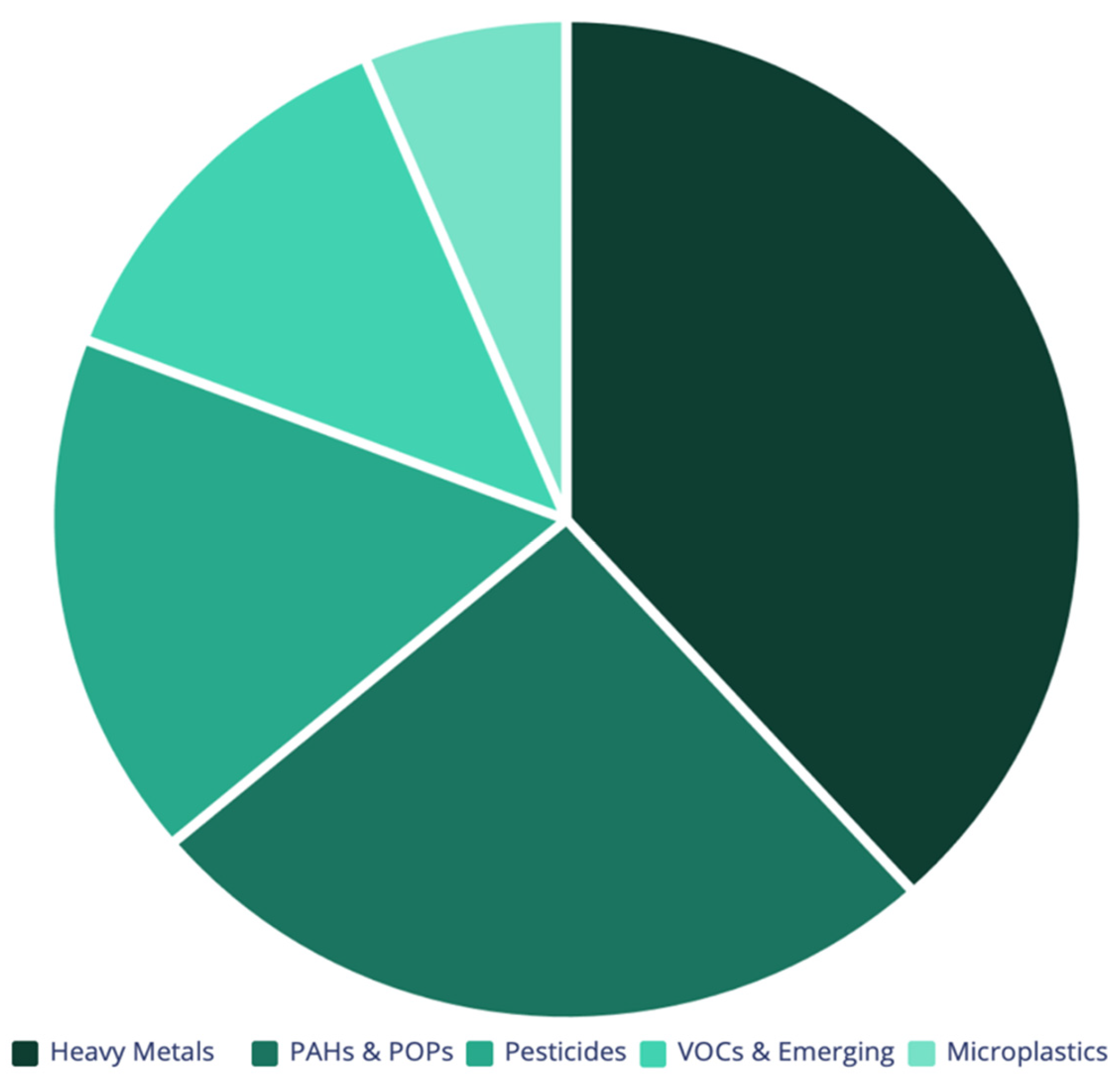
Table 1.
Comparison of key papers on contaminants, sources, and impacts in Greece.
| Title, Reference | Author, Date | Contaminant Focus | Main Sources | Key Result | Region/Setting |
| Assessment of distribution of heavy metals and radionuclides in soil and plants nearby an oil refinery in northern Greece [19] | P. Tsamos et al. (2023) | Heavy metals | Industry,urban | Heavy metal and radionuclide levels within typical ranges, minimal environmental and health risk | Northern Greece |
| Spatiotemporal Gradients of PAH Concentrations in Greek Cities and Associated Exposure Impacts [2] | I. Tsiodra et al. (2024) | PAHs | Urban, port, wood burning | High winter PAHs, exposure risk varies by city | Urban/port cities |
| Nitrate source identification in groundwater of multiple land-use areas by combining isotopes and multivariate statistical analysis: A case study of Asopos basin (Central Greece) [3] | I. Matiatos (2016) | Nitrates | Agriculture, industry,urban | Nitrate contamination traced to multiple sources | Asopos basin, Central Greece |
| Polycyclic aromatic hydrocarbons (PAHs) in surface sediments from Greece: Occurrence, sources and risk assessment [15] | E. Zafeiraki et al. (2023) | PAHs | Port, urban, industry | Piraeus port most contaminated; BaP main risk | Saronikos Gulf, Piraeus, Heraklion |
Disclaimer/Publisher’s Note: The statements, opinions and data contained in all publications are solely those of the individual author(s) and contributor(s) and not of MDPI and/or the editor(s). MDPI and/or the editor(s) disclaim responsibility for any injury to people or property resulting from any ideas, methods, instructions or products referred to in the content. |
© 2025 by the authors. Licensee MDPI, Basel, Switzerland. This article is an open access article distributed under the terms and conditions of the Creative Commons Attribution (CC BY) license (http://creativecommons.org/licenses/by/4.0/).
Copyright: This open access article is published under a Creative Commons CC BY 4.0 license, which permit the free download, distribution, and reuse, provided that the author and preprint are cited in any reuse.


