

Submitted:
25 August 2025
Posted:
26 August 2025
You are already at the latest version
Abstract
Background/Objectives: Acute leukemias (AL) in children under 1 year old are combined under the term "infant leukemia" and are a very rare malignancies, accounting for up to 5% of all childhood AL cases. The predominance of unfavorable clinical and laboratory characteristics leads to unsatisfactory treatment results, even with the use of modern treatment protocols. Patients /Methods: A comprehensive search through MEDLINE, PubMed, Scopus, and ScienceDirect using the infant leukemia-related keywords was performed and included a final set of 52 academic articles. Our own experience included 11 patients with infant leukemia underwent allo-HSCT (allogeneic hematopoietic stem cell transplantation) in NN Blokhin National Medical Research Center of Oncology in 2021-2023. Types of leukemia included acute myeloid leukemia, lymphoblastic leuke-mia, and mixed-phenotype acute leukemia. The most frequent cytogenetic aberration was KMT2A. All patients were in first complete remission. Donors: haploidentical – 5 (45.4%), matched related donor – 1 (9.2%), matched unrelated donor – 5 (45.4%). Graft manipulations: post-transplant cyclophosphamide was given to 2 patients with hap-lo-HSCT, and TCRαβ/CD19 depletion was performed in 3 patients. The type of immu-nosuppressive therapy (IST) varied based on the donor. Conditioning regimens were myeloablative. Results: Median follow-up was 23.5 months. Acute GVHD grade I–II developed in 2 patients (18%), and grade III–IV in 3 patients (27%). The current survival rate is 64% (n=7). The relapse rate after allo-HSCT was 9%. The most common cause of treatment failure was infectious complications in the early post-transplant period. Con-clusions: Our center's experience demonstrated acceptable transplant-related mortality and satisfactory relapse rates after allo-HSCT in patients with infant leukemia. The treatment of acute leukemia in infants is challenging and optimal protocols are being developed around the world specifically for these patients. Taking into account the characteristics of this age group, the choice of chemotherapy drug doses should be care-fully considered and the indications for allo-HSCT should be balanced.
Keywords:
hematopoietic stem cell transplantation
; acute leukemias
; infant leukemia
; treatment
; diagnostic
; clinical trial
1. Introduction
Infant acute leukemia (IL) is a subset of malignancies affecting children under 1 year of age at diagnosis. The average incidence of IL in the United States is 41 cases per 1 million newborns per year [1]. World statistics showed a significant increase in the incidence of acute lymphoblastic leukemia (ALL) and acute myeloid leukemia (AML) in infants between 1975 and 1989 of approximately 2.5% per year [2]. The incidence of ALL in infants is much lower than in children aged 1 to 14 years and is about the same as in adolescents. In contrast, the incidence of AML in infants is about twice as high as in older children and adolescents. The ratio of ALL/AML is about 60% and 40%, respectively [1,2,3]. This group of patients is considered to have the worst survival rates and prognostic factors. It accounts for 1% of all pediatric ALLs. Most cases are B-lineage ALL, while T-lineage and mixed phenotype (MPAL) represent a small percentage. The age of the patient is important for the prognosis of survival in pediatric leukemia. In contrast to acute myeloid leukemia (AML), ALL is characterized by poorer outcomes in infants compared to older children with similar cytogenetic characteristics. In addition, pediatric leukemias are characterized by aggressive symptoms, high-risk cytogenetic features associated with resistance to chemotherapy, high relapse rates, and increased toxicity and long-term effects of therapy [2,3]. In particular, KMT2A-rearranged ALL types are characterized by hyperleukocytosis, a relatively high incidence of central nervous system (CNS) involvement, an aggressive course, and early relapses leading to a poor prognosis. Researchers have observed that different types of rearrangements in the KMT2A gene, very high leukocyte count, age less than 6 months, and poor response to prednisone prophase are independent poor prognostic factors [4,5]. Cytogenetic analysis plays a key role in diagnosing and assessing risk in infant leukemia. KMT2A rearrangements in children with AML - including monocytic (FAB M5) myelomonocytic (FAB M4) and megakaryoblastic (FAB M7) subtypes can affect the prognosis in different ways, depending on the specific partner gene. Testing for megakaryocytic markers in all cases of infant leukemia is important because diagnosing megakaryoblastic leukemia can be difficult. Additionally, transient abnormal myelopoiesis, which resembles acute megakaryoblastic leukemia in both morphology and immunophenotype, frequently affects infants with Down syndrome and is characterized by a unique somatic mutation in GATA1[6]. Although the pathogenesis of IL in children younger than 1 year of age unclear, there is no doubt that the onset usually occurs in utero, is strongly associated with the presence of predisposing genes as well as leukemogenic exogenous exposure (chemicals, ionizing rays) [1,4,7]. During the early stages of pregnancy, the growing fetus is more sensitive to the effects of potential DNA damage. The etiology of acute leukemia in infants with KTM2A-r may be related to transplacental exposure to DNA topoisomerase inhibitors. Topoisomerase inhibitors include chemotherapeutics benzene metabolites such as benzoquinones, isoflavones, flavonoids, lignans, podophyllin resins, quinolone antibiotics and some pesticides [1,7].
Recent international studies (e.g., Interfant Study Group, COG protocols) have shown that the three-year overall survival rate for infants with acute lymphoblastic leukemia following allogeneic HSCT is approximately 40–60%. However, transplantation is discussed more frequently in patients with adverse cytogenetic variants, particularly those with KMT2A/AF1 genetic alterations and a poor response to initial treatment.
In some cases, current chemotherapeutic protocols show similar results to those of transplantation, even in patients with an aggressive disease course, especially in infants without extremely high-risk factors. International practices shows that the decision for allo-HSCT is made on a case-by-case basis in a multidisciplinary consultation involving transplant specialists, oncologists, and pediatricians, taking into account the response to treatment by minimal residual disease (MRD) and cytogenetic characteristics of IL.
2. Materials and Methods
A comprehensive search was performed through MEDLINE, PubMed, Scopus, and ScienceDirect using the following keywords: “hematopoietic stem cell transplantation”, “infant leukemia”, “treatment”, “diagnostic”, “clinical trial” in the title and abstract, and in the sections of review, systematic review, meta-analysis, clinical trial and randomized clinical trials, and we opted for articles published within the last 10 years in the English language. Of the articles that emerged, the most recent ones were selected, and especially the ones that focused on diagnostic approaches in patients with IL published papers over the last decade. The final set included 52 academic articles related to the topics of interest.
In NN Blokhin National Medical Research Center of Oncology (Moscow) in 2021-2023 eleven patients with infant leukemia underwent allo-HSCT. Eleven patients diagnosed with IL, median age was 5.7 months (0 to 11 months) were included in the study . There were 6 (54.5 %) patients with AML, 3 (27.2 %) patients with ALL and 1 (18.1 %) infant with mixed-phenotype acute leukemia. KMT2A gene rearrangement was observed in 6 (54.5%) patients. Median time from diagnosis to allo-HSCT was 6 months (from 3 to 11 months). Patients were treated according to the protocols: AML-BFM 2004, AML-MRD 2018, ALL-IC BFM 2009. Gender distribution was as follows: 5 girls and 6 boys. As a donor was equally distributed haploidentical - 5 (45.4%) and matched unrelated donor - 5 (45.4%) one patient had matched related donor - 1 (9.2%). The transplantation sources used were bone marrow - 2 pts, peripheral blood stem cells - 9 pts. The median cell dose infused was 3.0 × 10⁸ total nucleated cells per kilogram. Posttransplant cyclophosphamide was administered to 2 patients with haplo-HSCT, and TCRαβ/CD19 depletion was performed in 3 patients. Conditioning regimens were myeloablative with reduced toxicity and included Fludarabine 120 -150mg/m2, Treosulfan 36 g/m2 or Busulfan 12 mg/kg, Thiotepa 5-10 mg/kg or Melfalan 100-120 mg/m2. Drug doses were calculated per square meter regardless of the child’s weight. Patients with TCRαβ/CD19 did not receive standard immunosuppressive therapy (IST) for prevention of graft-versus-host reactions (they received abatacept/tocilizumab/abatacept alone on day-1); the others received combined IST with calcineurin inhibitors and abatacept (Table 2).
3. Results
3.1. Diagnosis
3.1.1. Genetics
The most common form of IL is characterized by cytogenetically balanced chromosomal translocations that include a mixed lineage leukemia gene (KMT2A gene previously named as MLL) on chromosome 11q23 and was described for the first time in 1991–1992 [5,7]. Fetal and neonatal hematopoietic progenitor cells may be particularly susceptible to the effects of KMT2A fusion proteins [1]. Women and men have similar frequencies of KMT2A-r. KMT2A rearrangements (KMT2A-r) occur in up to 5% of ALL cases in children of all ages with a predominance of 70 to 80% in childhood ALL. KMT2A-r in AML is most common in the group of IL - 50%. Rearrangement of the KMT2A gene results in fusion of the N-terminus of the KMT2A with the C-terminus of the KMT2A gene [1,13]. To date more than 80 different partner genes have been identified KMT2A. In infant ALL, 4 partner genes account for 93% of cases: AF4 (49%), ENL (22%), AF9 (17%) and AF10 (5%) [8]. KMT2A-r in infants with ALL has a well-defined gene expression profile. One of the features is the overexpression of FLT3. FLT3 signaling in these either by activating mutations or, more commonly, by autocrine activation by co-expressed autocrine activation by co-expression of ligand FLT3[9]. FLT3 overexpression has been shown to have a prognostic unfavorable, especially in children under 1 year of age with KMT2A-r ALL [10]. The specific expression of chondroitin sulfate proteoglycan-4, also known as neutron glial antigen-2 (NG2), is also characteristic of KMT2A-r ALL [9,10,15]. It is a transmembrane proteoglycan that has very low expression in normal hematopoietic cells. NG2 expression is common with KMT2A-r ALL (about 90% of cases). NG2 has been the subject of much recent investigation and has become a novel therapeutic target for KMT2A-r ALL due to its predictive value because it contributes to leukemia invasiveness and CNS infiltration and more frequent CNS relapse [11,19]. The most common partner genes in AML in children under one year of age are AF9 (22%), AF10 (27%) and ELL 17%) [4,11]. KMT2A rearrangements are acquired in hematopoietic progenitor cells in the in the fetus, leading to rapid progression and clinical manifestations of progression and clinical manifestations of IL [12,13,14]. KMT2A-r in AML is associated with the monocytic differentiation of AML. Dysregulation of HOX genes is a common feature of AML [13]. In the regulation of hematopoietic development, HOX genes play a key role. Dysregulated HOX gene expression can result from chromosomal translocations involving upstream regulators such as KMT2A. Specific clinical trials for infant ALL are conducted by three major cooperative groups: Interfant (based in Europe), COG (based in North America) and the Japanese Pediatric Leukemia Study Group (JPLSG). All recently completed trials have used a prospective, risk-stratified approach including KMT2A-r status and age. In contrast to infants, patients older than 1 year have more favorable genetic features in the form of high hyperdiploidy and ETV6::RUNX1 fusion. Studies have shown that older children share cytogenetic abnormalities with KMT2A-g, albeit with a different distribution; the proportion of patients with favorable genetic risk (hyperdiploidy, ETV6::RUNX1) is higher (60% vs. 12% KMT2A-r). Next-generation sequencing (NGS) involves DNA, RNA or miRNA sequencing. NGS provides a tool for identifying the most important alterations in ALL that may help determine the prognosis and pathogenesis of the disease [14].
3.2. Clinical Features
Acute childhood leukemia often presents with typical leukemia symptoms such as bruising, bleeding, fever, asthenia, hepatosplenomegaly. As for patients with infant leukemia, they are characterized by more aggressive manifestations and early central nervous system involvement [1,9,15]. Thus, children under 1 year of age are characterized initially higher hyperleukocytosis, more significant risk of tumor lysis syndrome (TLS). In addition, IL often presents with skin infiltration (Blueberry Muffin Syndrome) and other extramedullary foci (Figure 1). Leukemoid skin infiltration are more characteristic of myeloid IL and occur in about two thirds of patients (common in FAB-M4 and FAB-M5 AML), whereas they are rare in lymphoblastic IL [8]. They are unique in that they can occur without peripheral blood or bone marrow involvement. Leukemoid skin infiltration is described as multiple papules and nodules of blue, red or brown color. This type of leukemia has a very poor prognosis. It is possible that the chemotherapy may not be able to penetrate the skin sufficiently, resulting in a higher rate of relapse in these patients.
These different clinical features of IL may be related to the stage of development, fetal hematopoiesis and its different origins. Also, to the peculiarities of infantile leukemia can be attributed: transformation of one type of leukemia into another, heavier tolerance of chemotherapy, more severe late complications of therapy (endocrine, cardiovascular, neurogenic).
3.3. Instrumental and Laboratory Diagnostics
As mentioned above, IL is characterized by an initially higher leukocytosis, reaching values with a WBC count >400,000 cells/µL. Acute leukemia is diagnosed when more than 20% of blast cells are present in a bone marrow puncture. There are specific morphological and immunophenotypic features in IL. FAB (French-American-British classifications) types are more characteristic of IL: M4, M7 (megakaryoblastic), M5 variant (monoblastic) [8]. Lymphoblastic IL are more likely to have the L1 subtype than the L2 subtype, and less likely to have the L3 subtype [9]. Immunophenotypic characterization of infant ALL and AML are distinct: KMT2A-r ALL are CD19- positive/CD10 negative and often no co-express one or more myeloid antigens, suggesting that they are of the nature of immature lymphoid-forerunners [10]. Infant leukemia patients can be of undefined a mixed phenotype (mixed phenotype acute leukemia) or lack of differentiation markers (acute undifferentiated leukemia). In the cytological examination of biopsy specimens from skin infiltrates, the presence of blast cells confirms the diagnosis of leukemia, even in the absence of blast cells in the bone marrow and in the peripheral blood [12]. Abdominal ultrasound reveals marked hepatosplenomegaly, the lower edge of the liver may reach the pelvic region.
3.4. Treatment
The use of ALL and AML chemotherapy regimens or specific protocols for IL (Interfant-99/06), with the calculation of drug doses per kilogram of body weight, is unique in the treatment of IL. The use of intensive chemotherapy as well as allo-HSCT is not excluded by functional features of organs in children under 1 year of age. One of the challenging aspects of treating IL is the increased incidence of toxic and infectious complications during chemotherapeutic treatment, which is explained by the complexity of physiological processes during the first year of life [16,17].
There are currently three major groups focused on conducting clinical trials specific to IL: the Children’s Oncology Group (COG), the Japanese Pediatric Leukemia/Lymphoma Study Group (JPLSG), and the Interfant Study Group [20].
The Interfant Study Group is the largest international organization that conducts research activities in the field of IL, involving various international research groups, including the BFM-group. Their study included 482 infants divided into standard and high-risk groups (based on response to 1 week of systemic prednisone) between 1999 and 2005. Factors associated with an adverse outcome included: age less than 6 months, KMT2A-r, poor response to weekly prednisolone prophase, CD10 negativity and initial hyperleukocytosis [21]. The two-year treatment protocol was based on a hybrid regimen that included elements used to treat both ALL and AML, while minimizing the use of anthracyclines. and alkylating agents. Only for high-risk patients was the option of allo-HSCT considered, if a compatible donor was available. Higher MRD (minimal residual disease) levels at the end of induction and consolidation were significantly associated with poorer disease-free survival. These studies demonstrated that MRD is an important prognostic factor and that its diagnosis is of added value for the identification of risk groups in children with ALL. MRD analysis may be useful in the decision-making process regarding allo-HSCT. Subsequently, another study was conducted in this group called Interfant-06, which differed from its predecessor by removing dexamethasone and vincristine during maintenance chemotherapy. However, the new treatment approach did not significantly improve outcomes for children with ALL - there was no significant difference in 6-year EFS when compared (46.1% in both protocols).
The COG trial, known as P9407, was designed to provide shortened but intensified therapy by eliminating age- and weight-based dose reductions for most chemotherapy drugs to improve EFS. In the P9407 results, toxicity mortality (mainly infectious) in the first 90 days of treatment was reported in 25% of 68 infants. After the study was modified prednisolone was changed to dexamethasone, the dose of daunorubicin was reduced - the early mortality rate dropped to 6% [22].
The Japanese Pediatric Leukemia/Lymphoma Study Group combined two protocols for the treatment of infant leukemia named MLL96 and MLL98. Between 1995 and 2001 102 patients with IL with and without KMT2A-r were included [23]. Patients with KMT2A-r in first remission after intensive chemotherapy were to receive allo-HCT from any available donor but this approach revealed a high incidence of early relapse. These studies demonstrated the benefits risk-adapted therapy according to KMT2A status, with outcomes being significantly better in patients without KMT2A gene involvement, 5-year EFS and OS of 95.5% [23,24]. The 5-year EFS and OS in patients with KMT2A were 38.6 % and 50.8 %, respectively.
In the analysis of the BFM treatment protocols BFM-98 and BFM-2004 for infant AML, the EFS was 43% in the KMT2A -r group and 52% without KMT2A -r [24,25]. Japan’s Infant Leukemia Study Group in 2003 showed the results of treating infants AML with intensive chemotherapy alone and analyzed prognostic factors. Thirty-five patients with infant AML treated with intensive chemotherapy alone between 1995 and 1998 were included in this study. Induction therapy included etoposide, cytarabine and mitoxantrone. Four different courses of intensification therapy were then used, including etoposide, cytarabine and anthracyclines or vincristine. According to the results, 3-year OS and EFS were 76% and 72%, respectively. The study also shows that MRD levels by flow cytometry after consolidation therapy can be a predictor of AML outcome [26].
Also, individual case studies of treatment outcomes in myeloid IL have been reported in the literature. For example, in 2009 a group of European researchers reported their experience in treatment a patient with the M6 variant of infant myeloid leukemia. The treatment was carried out according to the MRC-12 protocol with age adjustment. Complete remission was achieved after 1 course of ADE (cytarabine, daunorubicin, etoposide). Treatment was complicated by several periods of febrile neutropenia and infections. The patient has now been in durable complete remission for 4 years [10,27].
Modern genetic studies are opening new avenues in the treatment of KMT2A -r IL through the introduction of new targeting drugs. This is most often used: proteasome inhibitors, hypomethylating agents (such as cytosine analogs azacytidine or decitabine), menin-KMT2A inhibitor, FLT3 inhibitors, curaxin CBL0137, histone deacetylase inhibitors, CAR- T-cell [16,17]. The use of monoclonal antibodies such as blinatumomab and inotuzomab ozogamicin are actively used in the treatment of patients with ALL of different age groups, including infants.
3.5. Role and Place of Allo-HSCT
The need for allo-HSCT in IL (particularly AML) remains controversial. The use of allo-HSCT in IL is always a subject of discussion due to contradictory data and peculiarities of this age category. On the one hand, a number of studies and guidelines point to the high aggressiveness and unfavorable prognosis of leukemia in infants, especially in the presence of KMT2A-r, which justifies the early use of allo-HSCT even in the first remission. Arguments in favor of early transplantation include the potential to achieve long-term remission, reduced risk of relapse, and data from individual protocols where survival was higher in transplanted patients.
On the other hand, critics draw attention to the extremely high risks of the procedure itself in children in the first year of life: unfavorable tolerability, high incidence of complications (infections, GVHD, organ failure) and transplant-related mortality risks. In addition, modern intensive chemotherapeutic protocols with optimal supportive care can already achieve remission in some patients, and the potential benefits of HSCT do not always outweigh the risks, especially in the absence of unfavorable genetic markers.
In 2015, The Japanese Pediatric Leukemia/Lymphoma Study Group published the results of treating 62 children with KMT2A -r ALL by a short course of intensive chemotherapy followed by early allo-HSCT for 4 months. The EFS and OS a were 43.2% and 67.2% respectively, which was significantly higher than the group of patients who received chemotherapy alone [28].
The results of the Interfant-99 study, which included 483 children with previously untreated ALL treated between 1999 and 2006, showed that allo-HSCT in first remission is a possible treatment strategy for intermediate-risk infant KMT2A -r ALL with high MRD [13]. All patients were stratified into 2 arms based on response to a 1-week prednisolone phase. All patients received a 5-week induction regimen (prednisolone, dexamethasone, vincristine, daunorubicin, L-asparaginase, low-dose cytarabine and intrathecal injections) followed by a 4-week consolidation regimen (high-dose methotrexate, 6-mercaptopurine, high-dose cytarabine, L-asparaginase and intrathecal injections) and 7 weeks of reinduction therapy (dexamethasone, 6-thioguanine, vincristine, daunorubicin, low-dose cytarabine, cyclophosphamide and intrathecal chemotherapy injections) [29]. Patients in the poor response to 7-day prednisolone group were indicated for allo-HSCT.
The BFM group recommended etoposide, busulfan and cyclophosphamide as the conditioning regimen. Meanwhile, total body irradiation (TBI) was strongly discouraged due to concerns about long-term side effects. Cyclosporine A was used for GVHD prophylaxis [29]. At a median follow-up of 5 years, the EFS rate for KMT2A -r ALL was only 38.6%, but this was an increase compared with previous studies. Furthermore, the results of a study using TBI during the conditioning regimen showed that of 14 infants with KMT2A -r ALL transplanted in first remission, 78.5% survived and only moderate distant endocrine and nervous system effects were observed [29,30].
More recently, the results of the Children’s Cancer Group (CCG 1953) and Pediatric Oncology Group (POG 9407) studies on the treatment of infant ALL were presented, using a similar chemotherapy regimen and recommending allo-HSCT in KMT2A -r cases [31]. 5-year EFS rates were 50.9% in the transplant group and 48.7% in the nontransplant group, suggesting no clinical benefit from first remission HSCT in infants with KMT2A -r ALL [32,33]
The effect of allo-HSCT in infant AML is also still unclear, due to the lack of randomized trials. In early studies, allo-HSCT provided long-term survival in some cases of AML among infants. The Japan Infant Leukemia Group Study analysis included all cases of AML in infants less than 2 years of age treated between 1974 and 1995 [34]. The conditioning regimen and GVHD prophylaxis differed among patients. It has been shown that infants with AML receiving HSCT had a 5-year disease-free survival rate of 73% [34,35]. But allo-HSCT was used in only four patients, while the others received autologous HSCT.
The Pediatric Oncology Group also compared the effect of intensive induction chemotherapy followed by allogeneic or autologous HSCT for infants with AML - survival rates in the allo-HSCT and chemotherapy groups were better than in the autologous HSCT group (71% vs. 40%) [36]. It was demonstrated that a conditioning regimen containing busulfan, melphalan, and cyclophosphamide was most commonly used for infants with AML and was well tolerated, avoiding serious long-term effects [35,36]. Table 1 shows some more studies in the field of treatment of infant leukemia using allo-HSCT [45,46,47,48,49,50,51,52].
Differences in the results of research studies have led to discrepancies between research groups regarding the role of allo-HSCT in current infant protocols.
3.6. Clinical Experience
Median follow-up was 23.5 months (IQR 11-47.2). OS after allo-HSCT in the group of infants with leukemia high-risk was 64%, in the group of patients with KMT2A-r - 66.6 % The relapse rate after allo-HSCT was 9%. The most common cause of treatment failure was infectious complications in the early post-transplant period. Grade I-II acute GVHD developed in 2 patients (18%) and grade III-IV in 3 patients (27%). Of those patients who are currently alive, 2 patients have chronic GVHD (extensive forms). Early relapse of leukemia occurred in two patients and they died. Primary graft failure was recorded in three patients, one of them required a second allo-HSCT. There are no serious long-term effects of allo-HSCT, surviving children develop in accordance with their peers (with the exception of two patients with c-GVHD).

Table 2.
Features of a group of infants with acute leukemia who received allo-HSCT.
| Feature |
Number of patients (n = 11)/100% |
|
Type of acute leukemia AML ALL MPAL Sex distribution Male Female KMT2A-r Yes No |
5 /54.5 4/27.2 2/18.3 |
|
6/54.5 5/45.4 | |
|
6/54.5 5/45.4 | |
|
CNS-status Positive Negative Stage of remission CR 1 CR 2 MRD status Positive Negative |
1/9 10/90.9 |
|
6/54.5 5/45.4 | |
|
4/27.2 7/63.6 | |
|
Novel drugs Blinatumomab Inotuzumab ozogamicin Nelarabin Type of donor MMRD MUD MRD |
1/9 2/18.2 1/9 |
|
5/45.4 5/45.4 1/9 |
4. Discussion
The problems of treating IL are multifaceted. Despite the development of genetic engineering, cellular technologies, the mortality rate of patients with IL remains at a high level. Effective chemotherapy requires dose modification due to factors affecting the pharmacokinetics of drugs differently than in other age groups, which is due to the peculiarity of infants hematopoiesis [37,38]. The toxic effects associated with treatment in both the early and late periods are problems that make the doses of chemotherapy to be reduced. Long-term complications that can occur after HSCT in infants are the result of both pre-transplant chemotherapy and radiation therapy aimed at the central nervous system. Many long-term complications in children have been associated with total body irradiation, and despite the fact that this treatment method shows great effectiveness in terms of myeloablation, physicians refrain from using it in children under one year old [47]. Infants who have undergone allo-HSCT are at a higher risk of experiencing severe adverse effects, including: interstitial pneumonia syndrome and sinusoidal obstruction syndrome. The risk of relapse in this population group is significant, and a deeper study of this problem will help in the future to inspect for new approaches in the management of such patients [48].
Many research groups noted late in the form of growth disorders of children’s development, after treatment, especially with the inclusion of allo-HSCT [39,40,41]. The accession of severe infectious complications requires aggressive antimicrobial prophylaxis, even outside of neutropenia. Stratification into risk groups of acute lymphoblastic leukemia in infants depending on the presence of adverse factors. Based on pooled data from numerous studies, the principal prognostic factors include: patient age less than 6 months at diagnosis, presence of KMT2A-r, and failure to achieve morphological remission by day 14 [40]. It remains uncertain whether increasing the use of strategies such as HSCT during first remission, or intensifying current hybrid protocols that combine both lymphoid- and myeloid-targeted therapies, can improve cure rates for patients [41,42].
The experience of our center has demonstrated acceptable transplantation mortality and satisfactory OS results. Patients who received monoclonal antibodies before the HSCT stage showed the best results, while it did not matter which remission the patient was in before HSCT [43]. All patients had their MRD levels assessed by flow cytometry. Of the 4 patients with positive pre-HSCT MRD status, two were alive and two died (one from toxic complications, the other from early relapse) [44]. Two cases of primary graft failure were associated with severe infection in the early post-transplant period, and one patient with primary graft failure had to undergo secondary allo-HSCT with donor switch- he is alive and in remission now [43,44]. Few GVHD cases suggest that our GVHD prevention strategies are effective and safe.
Can we say unequivocally that allo-HSCT in all cases of infantile leukemia is strictly necessary, based on our clinical cases? Probably not. The fact that seven out of eleven patients who received HSCT are currently alive with no signs of leukemia speaks in favor of HSCT in children in this category. Against allo-HSCT, however, is the fact that some of the surviving patients suffer from c-GVHD - a condition that invalidates the child and can also cause death. Furthermore, two patients died in the early post-transplantation period due to specific HSCT complications; perhaps they would have survived using a standard chemotherapeutic approach
5. Conclusions
Infant leukemia is a rare but aggressive disease. KMT2A rearrangements are most common genetic abnormality in infant leukemia. The treatment of acute leukemia in infants is challenging and optimal protocols are being developed around the world specifically for these patients. Taking into account the characteristics of this age group, the choice of chemotherapy drug doses should be carefully considered and the indications for allo-HSCT should be balanced. With great progress in the last decade, it has become possible to perform the allo-HSCT phase with minimal toxicity and maximal efficiency. The use of monoclonal antibodies to induce remission before HSCT is a promising direction to reduce toxicity and increase survival in children with infant ALL. In summary, the introduction of allo-HSCT into the standards of treatment of IL should be strictly individualized: indications are determined not only by leukemia biology, but also by the infant’s condition, donor availability, center resources, and parental preparation for possible complications. Better study and understanding of the genetics and biology of IL will stimulate the development of new therapeutic strategies to improve the quality of life of children in the future.
Author Contributions
Conceptualization, Kirill Kirgizov, Timur Valiev, Mihail Kiselevsky, Svetlana Varfolomeeva ; methodology, Irina Kostareva, Irina Shubina; software, Irina Kostareva, Nara Stepanyan, Nataliya Batmanova; formal analysis, Irina Kostareva, Mihail Kiselevsky.; resources, Irina Kostareva.; data curation, Irina Kostareva, Timur Valiev, Mihail Kiselevsky; writing— Irina Kostareva.; writing—review and editing, Timur Valiev, Mihail Kiselevsky, Kirill Kirgizov; visualization, Irina Shubina.; supervision, Kirill Kirgizov, Timur Valiev, Mihail Kiselevsky, Svetlana Varfolomeeva.; project administration, Kirill Kirgizov, Svetlana Varfolomeeva. All authors have read and agreed to the published version of the manuscript.
Funding
This research received no external funding.
Informed Consent Statement
Informed consent was obtained from all subjects involved in the study.
Conflicts of Interest
The authors declare no conflicts of interest.
References
- Paina, O.V.; Kozhokar, P.V.; Borovkova, A.S. Frolova, A.S. Ekushov, K.A. Bykova, T.A.; Rakhmanova, Z. Z.; Galas, M.A.; Khabirova, A.G.; Semenova, E.V.; Bondarenko, S.N.; Babenko, E.V.; Gindina, T.L.; Alianskii, A.L.; Barkhatov, I.M.; Zubarovskaya, L.S.; Afanasyev B.V. Results of allogeneic hematopoietic stem cell transplantation from haploidentical donors in children and adolescents with high-risk acute leukemia using unmanipulated graft. Ten years experience of R.G. Memorial institute of children oncology, hematology and transplantation. Pediatric Hematology/Oncology and Immunopathology. 2018, 17, 21–27. [CrossRef]
- Greaves, M.F. Infant leukemia biology, aetiology and treatment. Leukemia. 1996, 10, 2,372–377. [Google Scholar]
- Duguid, A.; Mattiucci, D.; Ottersbach, K. Infant leukaemia - faithful models, cell of origin and the niche. Dis Model Mech. 2021, 14, 10,dmm049189. [Google Scholar] [CrossRef]
- Wertheim, G. Infant Acute Leukemia. Clin Lab Med. 2021, 41, 3,541–550. [Google Scholar] [CrossRef] [PubMed]
- Górecki, M.; Kozioł, I.; Kopystecka, A.; Budzyńska, J.; Zawitkowska, J.; Lejman, M. Updates in KMT2A Gene Rearrangement in Pediatric Acute Lymphoblastic Leukemia. Biomedicines. 2023, 11, 821. [Google Scholar] [CrossRef]
- Kulczycka, M.; Derlatka, K.; Tasior, J.; Sygacz, M.; Lejman, M.; Zawitkowska, J. Infant Acute Lymphoblastic Leukemia—New Therapeutic Opportunities. Int. J. Mol. Sci. 2024, 25, 3721. [Google Scholar] [CrossRef]
- Gözdaşoğlu, S. Infant Leukemia. In: Li W, editor. Leukemia [Internet]. Brisbane (AU): Exon Publications. 2022, Chapter 2. Available from: https://www.ncbi.nlm.nih.gov/books/NBK586204/. [CrossRef]
- Ibrahimova, A.; Pommert, L.; Breese, E.H. Acute Leukemia in Infants. Curr Oncol Rep. 2021, 23, 3,27. [Google Scholar] [CrossRef] [PubMed]
- Meyer, C.; Burmeister, T.; Strehl, S.; et al. The MLL recombinome of acute leukemias in 2017. Leukemia. 2018, 32, 273–284. [Google Scholar] [CrossRef] [PubMed]
- Pieters, R. Infant acute lymphoblastic leukemia: Lessons learned and future directions. Curr Hematol Malig Rep. 2009, 4, 3,167–174. [Google Scholar] [CrossRef]
- Rubnitz, J.E.; Look, A.T. Molecular genetics of childhood leukemias. J Pediatr Hematol Oncol. 1998, 20, 1,1–11. [Google Scholar] [CrossRef]
- Winters, A.C.; & Bernt, K.M. MLL-rearranged leukemias – an update on science and clinical approaches. Frontiers in Pediatrics. 2017, 5, 4. [CrossRef]
- Mann, G.; Attarbaschi, A.; Schrappe, M.; De Lorenzo, P.; Peters, C.; Hann, I.; De Rossi, G.; Felice, M.; Lausen, B.; Leblanc, T.; Szczepanski, T.; Ferster, A.; Janka-Schaub, G.; Rubnitz, J.; Silverman, L.B.; Stary, J.; Campbell, M.; Li, C.K.; Suppiah, R.; Biondi, A.; Vora, A.; Valsecchi, M.G.; Pieters, R. Interfant-99 Study Group. Improved outcome with hematopoietic stem cell transplantation in a poor prognostic subgroup of infants with mixed-lineage-leukemia (MLL)-rearranged acute lymphoblastic leukemia: results from the Interfant-99 Study. Blood. 2010, 116, 15,2,644–650. [CrossRef]
- He, Y.X.; Xue, Y.Q.; Wang, H.Y.; Shao, X.J.; Pan, J.L.; Xu, J.; Yang, N.C.; Ji, Z.H.; Huang, Y.P.; Hu, S.Y. Clinical and experimental studies of childhood acute myeloid leukemia with 11q23/MLL rearrangements. Zhonghua, Yi.; Xue, Yi.; Chuan, Xue.; Za, Zhi. 2012, 29, 6,677–682. [Google Scholar] [CrossRef]
- Lopez-Millan, B.; Sanchéz-Martínez, D.; Roca-Ho, H.; Gutiérrez-Agüera, F.; Molina, O.; Diaz de la Guardia, R.; Torres-Ruiz, R.; Fuster, J.L.; Ballerini, P.; Suessbier, U.; Nombela-Arrieta, C.; Bueno, C.; Menéndez, P. NG2 antigen is a therapeutic target for MLL-rearranged B-cell acute lymphoblastic leukemia. Leukemia. 2019, 33, 1557–1569. [Google Scholar] [CrossRef]
- Cheng, Y.; He, C.; Wang, M.; Ma, X.; Mo, F.; Yang, S.; Han, J.; Wei, X. Targeting epigenetic regulators for cancer therapy: Mechanisms and advances in clinical trials. Signal Transduct. Target Ther. 2019, 4, 62. [Google Scholar] [CrossRef] [PubMed]
- Yao, J.; Li, G.; Cui, Z.; Chen, P.; Wang, J.; Hu, Z.; Zhang, L.; Wei, L. The Histone Deacetylase Inhibitor I1 Induces Differentiation of Acute Leukemia Cells With MLL Gene Rearrangements via Epigenetic Modification. Front. Pharmacol. 2022, 13, 876076. [Google Scholar] [CrossRef] [PubMed]
- Ishii, E.; Kawasaki, H.; Isoyama, K.; Eguchi-Ishimae, M.; Eguchi, M. Recent advances in the treatment of infant acute myeloid leukemia. Leuk Lymphoma. 2003, 44, 741–748. [Google Scholar] [CrossRef] [PubMed]
- Pui, C.H.; & Nichols, K.E. ; & Nichols, K. E. Infant acute lymphoblastic leukemia. Blood. 2020, 135, 9,645–661. [Google Scholar] [CrossRef]
- Brown, P.; Pieters, R.; Biondi, A. How I treat infant leukemia. Blood. 2019, 133, 205–214. [Google Scholar] [CrossRef]
- Georg, M.; Andishe, At.; Schrappe, M.; De Lorenzo, P.; Peters, Ch.; Hann, I.; De Rossi, G.; Felice, M.; Lausen, B.; LeBlanc, T.; Szczepanski, T.; Ferster, A.; Janka-Schaub, G.; Rubnitz, J.; Silverman, L.B.; Stary, J.; Campbell, M.; Kong, Ch.; Suppiah, R.; Biondi, A.; Vora, A.; Grazia Valsecchi, M.; Pieters, R. On behalf of the Interfant-99 Study Group; Improved outcome with hematopoietic stem cell transplantation in a poor prognostic subgroup of infants with mixed-lineage-leukemia (MLL)–rearranged acute lymphoblastic leukemia: results from the Interfant-99 Study. Blood. 2010, 116, 15,2644–2650. [Google Scholar] [CrossRef]
- Dreyer, Z.E.; Hilden, J.M.; Jones, T.L.; Devidas, M.; Winick, N.J.; Willman, C.L.; Harvey, R.C.; Chen, I.M.; Behm, F.G.; Pullen, J., Wood, B.L.; Carroll, A.J.; Heerema, N.A.; Felix, C.A.; Robinson, B.; Reaman, G.H.; Salzer, W.L.; Hunge, S.P.; Carroll, W.L.; Camitta, B.M. Intensified chemotherapy without SCT in infant ALL: results from COG P9407 (Cohort 3). Pediatr Blood Cancer. 2015, 62, 3,419–426. [CrossRef]
- Kosaka, Y.; Koh, K.; Kinukawa, N.; Wakazono, Y.; Isoyama, K.; Oda, T.; Hayashi, Y.; Ohta, S.; Moritake, H.; Oda, M.; et al. Infant acute lymphoblastic leukemia with MLL gene rearrangements: Outcome following intensive chemotherapy and hematopoietic stem cell transplantation. Blood. 2004, 104, 3527–3534. [Google Scholar] [CrossRef]
- Kotecha, R.; Gottardo, N.; Kees, U.; et al. The evolution of clinical trials for infant acute lymphoblastic leukemia. Blood Cancer J. 2014, 4, e200. [Google Scholar] [CrossRef] [PubMed]
- Creutzig, U.; Zimmermann, M.; Reinhardt, D.; Dworzak, M.; Stary, J.; Lehrnbecher, T. Early Deaths and Treatment-Related Mortality in Children Undergoing Therapy for Acute Myeloid Leukemia: Analysis of the Multicenter Clinical Trials AML-BFM 93 and AML-BFM 98. JCO. 2004, 22, 4384–4393. [Google Scholar] [CrossRef]
- Watanabe, A. Recent advance in treatment of childhood acute lymphoblastic leukemia. Gan To Kagaku Ryoho. 2007, 34, 2,150–155. [Google Scholar]
- Hilden J.M., Dinndorf P.A., Meerbaum S.O., Sather H., Villaluna D., Heerema N.A., McGlennen, R.; Smith, F.O.; Woods, W.G.; Salzer, W.L.; et al. Analysis of prognostic factors of acute lymphoblastic leukemia in infants: Report on CCG 1953 from the Children’s Oncology Group. Blood. 2006, 108, 441–451. [CrossRef]
- Hasegawa, D.; Tawa, A.; Tomizawa, D.; Watanabe, T.; Saito, A.M.; Kudo, K.; Taga, T.; Iwamoto, S.; Shimada, A.; Terui, K.; Moritake, H.; Kinoshita, A.; Takahashi, H.; Nakayama, H.; Koh, K.; Goto, H.; Kosaka, Y.; Miyachi, H.; Horibe, K.; Nakahata, T.; Adachi, S. Attempts to optimize postinduction treatment in childhood acute myeloid leukemia without core-binding factors: A report from the Japanese Pediatric Leukemia/Lymphoma Study Group (JPLSG). Pediatr Blood Cancer. 2020, 67, 12,e28692. [Google Scholar] [CrossRef] [PubMed]
- Pieters, R.; Schrappe, M.; De Lorenzo, P.; et al. A treatment protocol for infants younger than 1 year with acute lymphoblastic leukaemia (Interfant-99): an observational study and a multicentre randomized trial. Lancet. 2007, 3709583, 240–250. [Google Scholar] [CrossRef]
- Balduzzi, A.; Valsecchi, M.G.; Uderzo, C.; et al. Chemotherapy versus allogeneic transplantation for very-high-risk childhood acute lymphoblastic leukaemia in first complete remission: comparison by genetic randomization in an international prospective study. Lancet. 2005, 366, 635–642. [Google Scholar] [CrossRef]
- Dreyer, Z.E.; Dinndorf, P.; Sather, H.; et al. Hematopoietic stem cell transplant (HSCT) versus intensive chemotherapy in infant acute lymphoblastic leukemia. J. Clin Oncol. 2007, 25, 9514. [Google Scholar] [CrossRef]
- Chessells, J.M.; Harrison, C.J.; Watson, S.L.; Vora, A.J.; Richards, S.M. Treatment of infants with lymphoblastic leukaemia: results of the UK Infant Protocols 1987-1999. Br J Haematol. 2002, 1172, 306–314. [Google Scholar] [CrossRef]
- Ferster, A.; Benoit, Y.; Francotte, N.; Dresse, M.-T.; Uyttebroeck, A.; Plouvier, E.; Thyss, A.; Lutz, P.; Marguerite, G.; Behar, C.; Mazingue, F.; Boutard, P.; Millot, F.; Rialland, X.; Mechinaud, F.; Norton, L.; Robert, A.; Otten, J.; Vilmer, E.; Phillippe, N.; Waterkeyn, C.; & Suciu, S. Treatment outcome in infant acute lymphoblastic leukemia. Blood. 2000, 95 2729 –2730.
- Marco, F.; Bureo, E.; Ortega, J.J.; Badell, I.; Verdaguer, A.; Martínez, A.; Muñoz, A.; Madero, L.; Olivé, T.; Cubells, J.; Castel, V.; Sastre, A.; Maldonado, M.S.; Díaz, M.A. High survival rate in infant acute leukemia treated with early high-dose chemotherapy and stem-cell support. Groupo Español de Trasplante de Médula Osea en Niños. J Clin Oncol. 2000, 18, 18,3256–3261. [Google Scholar] [CrossRef] [PubMed]
- Lange, B.J.; Smith, F.O.; Kobrinsky, N.; Buckley, J.; Howells, W.; Lee, J.W.; Sanders, J.E.; Neudorf, S.; Gold, S.; Barnard, D.; Deswarte, J.; Dusenbery, K.; Arthur, D.C.; Woods, W.G. Long-Term Outcome and Prognostic Factors in Children’s Cancer Group Study 2891 for Children and Adolescents with Previously Untreated Acute Myeloid Leukemia and Myelodysplastic Syndrome. In: Büchner, T.; Hiddemann, W.; Wörmann, B.; Schellong, G.; Ritter, J.; Creutzig, U. (eds) Acute Leukemias VIII. Haematology and Blood Transfusion. Hämatologie und Bluttransfusion. 2001, 40. Springer. [CrossRef]
- Ravindranath, Y.; Chang, M.; Steuber, C. P.; et al. Pediatric Oncology Group (POG) studies 8493 and 8821: Therapy for infants with acute myeloid leukemia – a report from the Children’s Cancer Group. Blood. 1996, 88, 6,2010–2015. [Google Scholar] [CrossRef]
- Bridges, C.S.; Chen, T.J.; Puppi, M.; Rabin, K.R. Lacorazza HD. Antileukemic properties of the kinase inhibitor OTSSP167 in T-cell acute lymphoblastic leukemia. Blood Adv. 2023, 7, 422–435. [CrossRef]
- Matlawska-Wasowska, K.; Kang, H.; Devidas, M.; Wen, J.; Harvey, R.C.; Nickl, C.K.; Ness, S.A.; Rusch, M.; Li, Y.; Onozawa, M.; Martinez, C.; Wood, B.L.; Asselin, B.L.; Chen, I.M.; Roberts, K.G.; Baruchel, A.; Soulier, J.; Dombret, H.; Zhang, J.; Larson, R.S.; Raetz, E.A.; Carroll, W.L.; Winick, N.J.; Aplan, P.D.; Loh, M.L.; Mullighan, C.G.; Hunger, S.P.; Heerema, N.A.; Carroll, A.J.; Dunsmore, K.P.; Winter, S.S. MLL rearrangements impact outcome in HOXA-deregulated T-lineage acute lymphoblastic leukemia: a Children’s Oncology Group Study. Leukemia. 2016, 30, 9,1909–1912. [Google Scholar] [CrossRef] [PubMed]
- Malard, F.; Mohty, M. Acute lymphoblastic leukaemia. Lancet. 2020, 395, 10230,1146–1162. [Google Scholar] [CrossRef] [PubMed]
- Teachey, D.T.; Hunger, S.P. Predicting outcome in childhood acute lymphoblastic leukaemia. British Journal of Haematology. 2013, 160, 4,471–484. [Google Scholar] [CrossRef]
- Hilden, J.M.; Dinndorf, P.A.; Meerbaum, S.; et al. Analysis of prognostic factors of acute lymphoblastic leukemia in infants: report on CCG 1953 from the Children’s Oncology Group. Blood. 2006, 108, 2,441–451. [Google Scholar] [CrossRef] [PubMed]
- Pieters, R.; De Lorenzo, P.; Ancliffe, P.; Aversa, L.A.; Brethon, B.; Biondi, A.; Campbell, M.; Escherich, G.; Ferster, A.; Gardner, R.A.; Kotecha, R.S.; Lausen, B.; Li, C.K.; Locatelli, F.; Attarbaschi, A.; Peters, C.; Rubnitz, J.E.; Silverman, L.B.; Stary, J.; Szczepanski, T.; Vora, A.; Schrappe, M.; Valsecchi, M.G. Outcome of Infants Younger Than 1 Year With Acute Lymphoblastic Leukemia Treated With the Interfant-06 Protocol: Results From an International Phase III Randomized Study. J Clin Oncol. 2019, 37, 25,2246–2256. [Google Scholar] [CrossRef]
- Sison, E.A.; Brown, P. Does hematopoietic stem cell transplantation benefit infants with MLL-rearranged acute lymphoblastic leukemia? Best Pract Res Clin Haematol. 2014, 27, 2,163–172. [Google Scholar] [CrossRef]
- Hilden, J.M.; Dinndorf, P.A.; Meerbaum, S.; et al. Analysis of prognostic factors of acute lymphoblastic leukemia in infants: report on CCG 1953 from the Children’s Oncology Group. Blood. 2006, 108, 2,441–451. [Google Scholar] [CrossRef]
- Takachi, T.; Watanabe, T.; Miyamura, T.; Moriya Saito, A.; Deguchi, T.; Hori, T.; Yamada, T.; Ohmori, S.; Haba, M.; Aoki, Y.; Ishimaru, S.; Sasaki, S.; Ohshima, J.; Iguchi, A.; Takahashi, Y.; Hyakuna, N.; Manabe, A.; Horibe, K.; Ishii, E.; Koh, K.; Tomizawa, D. Hematopoietic stem cell transplantation for infants with high-risk KMT2A gene-rearranged acute lymphoblastic leukemia. Blood Adv. 2021, 5, 19,3891–3899. [Google Scholar] [CrossRef]
- Cui, Y.; Yan, Y. The global burden of childhood and adolescent leukaemia and attributable risk factors: An analysis of the Global Burden of Disease Study 2019. J Glob Health. 2024, 14, 04045. [Google Scholar] [CrossRef] [PubMed]
- Hunger, S.P.; Loh, K.M.; Baker, KS.; Schultz, K.R. Controversies of and unique issues in hematopoietic cell transplantation for infant leukemia. Biol. Blood Marrow Transplant. 2009, 15, 79–83. [Google Scholar] [CrossRef] [PubMed]
- Parikh, S.H.; Satwani, P.; Ahn, K.W.; et al. Survival Trends in Infants Undergoing Allogeneic Hematopoietic Cell Transplant. JAMA Pediatrics. 2019, 173, e190081. [Google Scholar] [CrossRef]
- Sison, E.A.; Brown, P. Does hematopoietic stem cell transplantation benefit infants with acute leukemia? Hematology Am Soc Hematol Educ Program. 2013, 2013, 601–604. [Google Scholar] [CrossRef] [PubMed]
- Koh, K.; Tomizawa, D.; Moriya Saito, A.; Watanabe, T.; Miyamura, T.; Hirayama, M.; Takahashi, Y.; Ogawa, A.; Kato, K.; Sugita, K.; Sato, T.; Deguchi, T.; Hayashi, Y.; Takita, J.; Takeshita, Y.; Tsurusawa, M.; Horibe, K.; Mizutani, S.; Ishii, E. Early use of allogeneic hematopoietic stem cell transplantation for infants with MLL gene-rearrangement-positive acute lymphoblastic leukemia. Leukemia. 2015, 29, 2,290–296. [Google Scholar] [CrossRef]
- Sanders, J.E.; Im, H.J.; Hoffmeister, P.A.; Gooley, T.A.; Woolfrey, A.E.; Carpenter, P.A.; Andrews, R.G.; Bryant, E.M.; Appelbaum, F.R. Allogeneic hematopoietic cell transplantation for infants with acute lymphoblastic leukemia. Blood. 2005, 105, 9,3749–3756. [Google Scholar] [CrossRef]
- Takachi, T.; Arakawa, Y.; Nakamura, H.; Watanabe, T.; Aoki, Y.; Ohshima, J.; Takahashi, Y.; Hirayama, M.; Miyamura, T.; Sugita, K.; Koh, K.; Horibe, K.; Ishii, E.; Mizutani, S.; Tomizawa, D. Personalized pharmacokinetic targeting with busulfan in allogeneic hematopoietic stem cell transplantation in infants with acute lymphoblastic leukemia. Int J Hematol. 2019, 110, 3,355–363. [Google Scholar] [CrossRef]
Figure 1.
Leukemoid skin infiltration (own clinical case).
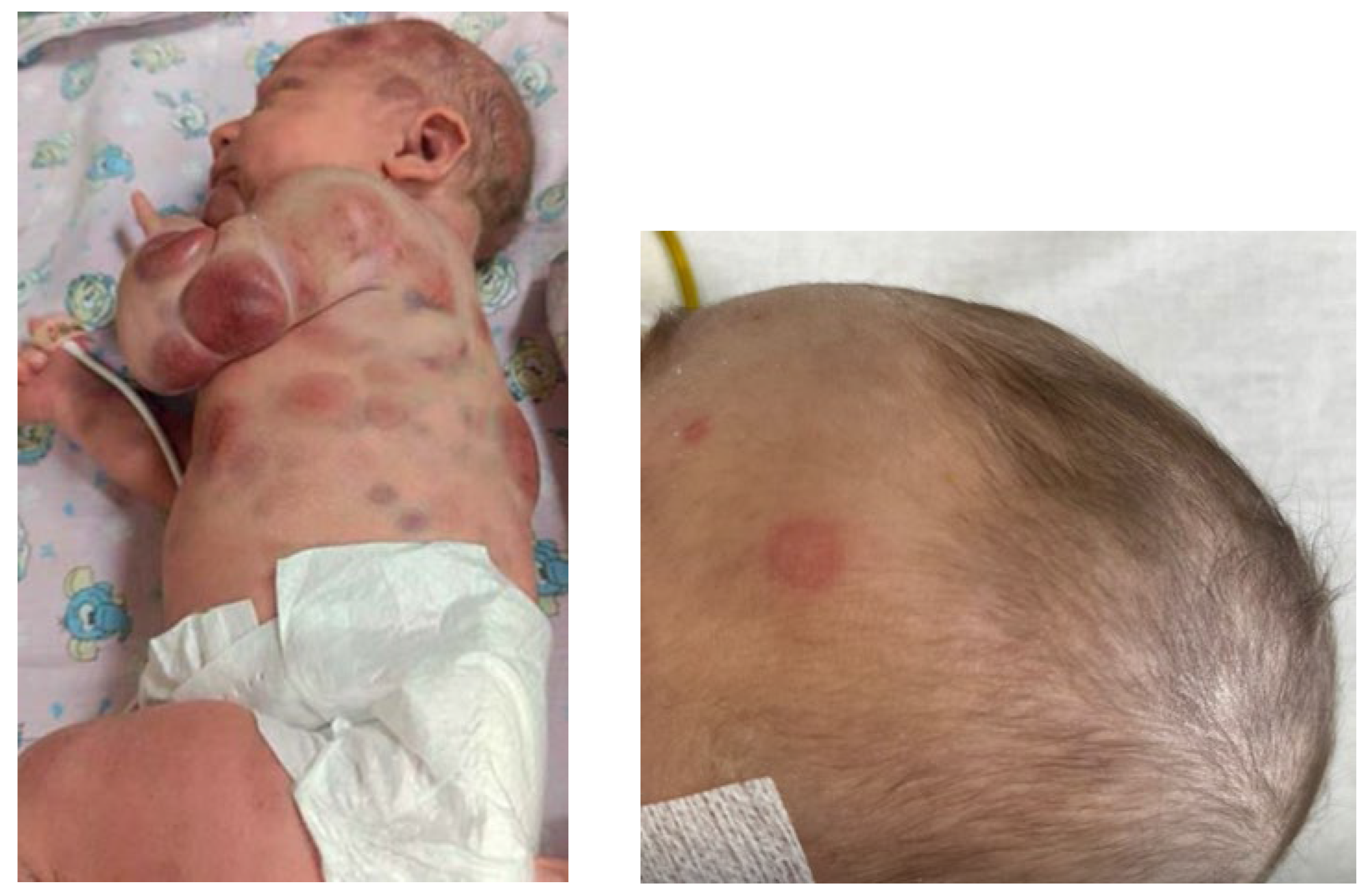
Table 1.
A compilation of research papers [45,46,47,48,49,50,51,52] Treatment results of IL according to current studies.
| Study | Disease | Country | Period (y) | HSCT(n) |
nonHSCT (n) |
Results | Publication |
| Pui et al | ALL | USA and Europe |
1983–1995 | 28 | 103 | Chemotherapy EFS 23%, OS 33%; HSCT EFS 18%, OS 25% |
Leukemia volume 17, pages 700–706 (2003) |
| Marco et al | ALL AML |
Spain | 1990–1998 | 22 | 0 | 5-y DFS for ALL 56%; 5-y DFS for AML 73% |
Journal of Clinical Oncology Volume 18, Number 18(2000) |
| Sanders et al [51] | ALL | United States | 1982–2003 | 40 | 0 | 3-y DFS overall 42%; 3-y DFS for HSCT in CR1 76% |
Blood. 2005;105(9) |
| Murray et al | ALL | United States | 1986–2005 | 4 | 5 | HSCT OS 75%; chemotherapy OS 60% |
Fetal Pediatr Pathol 2008 |
| Jacobsohn et al | ALL | United States | 1992–2005 | 16 | 0 | 4-y EFS 75% | Biol Blood Marrow Transplant. 2005 |
| Isoyama et al | ALL | Japan | 1995–1998 | 19 | 8 | EFS HSCT 58%; EFS chemotherapy 63% |
Br J Haematol. 2002 |
| Chessels et al | ALL | UK | 1992–1999 | 12 | 57 | 3-y EFS ≈35% for both HSCT and chemotherapy |
Br J Haematol. 2002 |
| Kosaka et al | ALL | Japan | 1998–2002 | 29 | 15 | 3-y EFS HSCT in CR1 64%;3-y EFS overall 44% |
Blood. 2004 |
| Mann et al | ALL | International | 1999–2006 | 37 | 240 | 4-y DFS HSCT 60%; 4-y DFS chemotherapy 47% |
Blood. 2010 |
| Dreyer et al | ALL | United States | 1996–2000 | 53 | 47 | 5-y EFS HSCT 49%; 5-y EFS chemotherapy 49% |
J Clin Oncol. 2011 |
| Kawasaki | AML | Japan | 1995–1998 | 2 | 26 | EFS HSCT 100%; EFS chemotherapy 77% |
Blood. 2001 |
| Creutzig et al | AML | Germany | 1998–2010 | 14 | 0 | OS HSCT 93% | Leukemia. 2012 |
| Pieters et al [46] | ALL | United States | 2006 - 2024 |
111 | 494 | 4-year DFS after HSCT of 44.0% |
J Clin Oncol 2019 |
| Takachi T [45] | ALL | Japan | 2019 | 43 | 13 | 13 pts relapsed after HSCT, 1 pt. died in CR, and 29 pts. are in CR |
Blood Adv 2021 |
| Parikh et al [48] | ALL AML MDS |
International | 2000 - 2014 |
472 | 0 | 3-y OS overall 31% 3-y DFS after HSCT of 28% |
JAMA Pediatr. 2019 |
Disclaimer/Publisher’s Note: The statements, opinions and data contained in all publications are solely those of the individual author(s) and contributor(s) and not of MDPI and/or the editor(s). MDPI and/or the editor(s) disclaim responsibility for any injury to people or property resulting from any ideas, methods, instructions or products referred to in the content. |
© 2025 by the authors. Licensee MDPI, Basel, Switzerland. This article is an open access article distributed under the terms and conditions of the Creative Commons Attribution (CC BY) license (http://creativecommons.org/licenses/by/4.0/).
Copyright: This open access article is published under a Creative Commons CC BY 4.0 license, which permit the free download, distribution, and reuse, provided that the author and preprint are cited in any reuse.


