Preprint
Article

This version is not peer-reviewed.

Effects of Dietary Protein Sources on the Ovarian Development of Female Largemouth Bass (Micropterus salmoides) Broodstock

Submitted:

17 August 2025

Posted:

19 August 2025

You are already at the latest version

Abstract

To investigate the effects of three protein sources—Hermetia illucens larvae meal (HIM), Chlorella meal (CM), and Stickwater meal (SWM)—on ovarian development in largemouth bass broodstock, these protein sources were used to replace 0% (control group FM, containing 40% fishmeal), 25%, and 50% of the fishmeal in the diet. A total of seven isonitrogenous and isolipidic diets were formulated (FM, 25% HIM, 50% HIM, 25% CM, 50% CM, 25% SWM, and 50% SWM). Healthy female fish with an initial body weight of 353.57 ± 28.12 g were fed these diets for eight weeks. The results showed that the viscerosomatic index, gonadosomatic index, and egg diameter of broodstock in the 50% HIM group were significantly higher than those in the FM group. The relative fecundity of broodstock in the 50% HIM and 25% CM groups was significantly higher than in other groups. The relative mRNA expression of hepatic vitellogenin (Vg) was significantly upregulated in the 50% HIM group, while the relative mRNA expression of Vg and vitellogenin receptor (VgR) in the ovary was significantly upregulated in the 25% SWM and 50% SWM groups. In conclusion, replacing 50% of the fishmeal in the diet with Hermetia illucens larvae meal can enhance ovarian development in largemouth bass broodstock by increasing the gonadosomatic index, and relative fecundity, and upregulating the expression of genes related to vitellogenin synthesis (Vg).

Keywords: 
;  ;  ;  

1. Introduction

Feed nutrition is a one of the important factors influencing the gonad development and reproductive performance of broodstock [1]. It not only directly provide a material basis for the nutrient’s deposition in the ovary [2], but also provide the energy which is essential for the vitellogenesis [3]. Therefore, it is necessary to understand the precise nutritional requirements for broodstock.
The protein is the primary nutrient for aquatic animals which closely related to the gonadal development [2]. Firstly, protein is the key components of vitellogenin, peptide hormones and various enzymes which play the important role in ovarian maturation [4]. In addition, protein could affect the development of the ovary by participating in the regulation of genes and signaling pathways related to the ovary development [5,6]. For example, some previous studies reported that an optimal dietary protein level up-regulated the mRNA expression of vitellogenin and vitellogenin receptor, and improved the ovary maturation in Litopenaeus vannamei and Procambarus clarkia [6,7]. Besides, protein can regulate the synthesis and secretion of reproductive hormones such as estrogen, thereby promoting the ovarian development [8]. A previous study reported that 35.73% and 44.38% protein significantly increased the levels of vitellogenin, estradiol 2 (E2) and progesterone (PROG) in the plasma of Carassius auratus [9]. In summary, protein is an indispensable and crucial nutrient for the development of the ovary.
The significance of protein has become widely recognized, but the functional differences among various protein sources have also gradually drawn attention. Some previous studies reported that certain plant protein sources can promote the ovarian development in aquatic animals. For example, diets supplemented with fermented rapeseed meal increased the egg weight, egg diameter and fertilization rate of Heteropneustes fossilis [10]. 30% soybean meal significantly promoted the synthesis of sex steroid hormones and increased the gonadosomatic index, egg diameter, reproductive capacity and hatching rate of the male fish [11]. Other studies have reported that some animal protein sources have similar functions. 100 or 200 g/kg of krill powder increased the egg diameter, hatching rate and fertilization rate of the Cynoglossus semilaevis, and effectively reduce the deformity rate of the fry [12]. However, some protein sources can perform adverse effects in broodstock. High levels of composite plant-based protein (soybean meal: rapeseed meal = 1:1) significantly reduced the reproductive performance of the crayfish [13]. When the content of krill powder is more than 20%, the estradiol content in the serum, the number of eggs carried, and the relative egg carrying capacity significantly decreased in Monopterus albus [14]. Therefore, it is very important to choosing the appropriate protein source for broodstock.
As is well known, fish meal is an excellent protein source for aquatic animals due to its high utilization rate, balanced amino acid composition and the existence of unknown nutritional factors [15]. Unfortunately, the output of fish meal fails to meet the demand of the aquatic feed industry. As a result, its price has been increasing annually, which severely restricts the sustainable development of the aquaculture [16]. Therefore, the development of high-quality protein sources represents a crucial field in aquatic animal feed industry. Up to now, several potential high-quality protein sources like insect protein [17], algae protein [18] and hydrolysis by-product protein [19,20] have been widely reported in aquaculture. Among them, the amino acid composition of black soldier flies (Hermetia illucens) is similar to that of fish meal. The studies on its replacement with fish meal have reported in Lateolabrax japonicus [21], Acipenser bareii [22], Oreochromis niloticus [23], Tinca tinca [24], Betta splendens [25]. Chlorella can enhance the growth performance and immune function of aquatic animals. It has been reported in Anguilla marmorata [26], Carassius auratus [27], Clarias gariepinus [28], Litopenaeus Vannamei [29] and Pontastacus leptodactylus [30]. Stickwater is a potential protein source that can serve as an alternative to fish meal. It’s stimulating feeding effect and promoting growth effect has reported in fish and shrimp [31-33]. While, most studies have focused on the juvenile stage, and it is still unknown whether these proteins can serve as a source for the broodstock stage.
The largemouth bass (Micropterus salmoides) is one of the important freshwater fish species. It has been widely farmed all over the world. There have been many studies on its protein sources, but almost all of them have focused on the juvenile stage. Therefore, three protein sources, Hermetia illucens larvae meal, Chlorella meal and stickwater meal, were selected to investigate their effects on the ovarian development and reproductive performance of the female largemouth bass.

2. Materials and Methods

2.1. Experimental Diets

Seven isonitrogenous and isolipidic experimental diets were formulated. The control diet (FM) had 40% fish meal. The experimental diets were replaced by Hermetia illucens larvae meal (HIM), Chlorella meal (CM) and stickwater meal (SWM) at the levels of 25% and 50% of fish meal. The experimental diets were named as FM, 25% HIM, 50% HIM, 25% CM, 50% CM, 25% SWM, and 50% SWM, respectively. The ingredients and proximate compositions of the experimental diets were showed in the Table 1. The amino acid contents of the diets were shown in Table 2.
The ingredients were finely ground and sieved through a 60-mesh strainer. The ingredients were weighed according to the formula and mixed using an electric mixer. The oil and distilled water were subsequently added to make a dough. Finally, the dough was pelleted using a screw-press pelletizer. The pellets were air-dried to the moisture content was < 10%. After drying, diets were stored at -20 °C.

2.2. Feeding Trial and Sampling

The farming experiment was performed in the Aquaculture System of Fisheries Aquaculture Center of Huzhou University. experimental fish were obtained from a local farm in Huzhou. They were acclimatized to the experimental conditions in a tank (12 m × 1.8 m × 1.2 m) before the feeding trial. Following, a total of 280 fish (353.57 ± 28.12 g) were weighed and allocated to 7 tanks, with 40 fish in each pond. Each fish was equipped with an electronic tag (Readell, WS-PT160). All fish were fed to apparent saturation twice daily (09:00 and 16:00). 30% of the experimental water was exchanged daily. Feces or uneaten diets were cleaned using the siphon method. During the experimental period, the dissolved oxygen concentration was >5.0 mg/L, the water temperature varied from 16.3 °C to 23 °C, the pH varied from 6.8 to 7.5, the ammonia nitrogen was <0.05 mg/L.
Before harvest, the fish were starved for 24 hours. Six fish were randomly selected from each treatment and placed in the water containing 30 mg/L eugenol anesthetic. After anesthesia, the body mass, body length was measured. Subsequently, the dissection was carried out. The internal organs, livers, ovaries, and mesenteric fat were collected and weighted. A part of ovary (0.3 - 0.5 g) was dissected and stored in Bouin's solution. Ten eggs were randomly selected from each fish to measure the diameter of the eggs. Simultaneously, a part of livers and ovaries were frozen in liquid nitrogen and kept at ultra-low temperature freezer for gene expression analyses.
Condition factor, viscerosomatic index, hepatosomatic index, mesenteric fat index, gonadosomatic index, relative fecundity and absolute fecundity were calculated using the formulas as below:
Condition factor (CF, g / cm3) = body weight / body length3 × 100.
Viscerosomatic index (VSI, %) = (viscera weight / body weight) × 100.
Hepatosomatic index (HIS, %) = (hepatopancreas weight / wet body weight) × 100.
Mesenteric fat index (MFI, %) = (Weight of mesenteric fat / body weight) × 100.
Gonadosomatic index (GSI, %) = (Weight of gonad / body weight) × 100.
Relative fecundity (RF, eggs/g) = Number of eggs / body weight.
Absolute fecundity (AF, eggs) = Number of eggs per unit mass of ovary × ovary weight.

2.3. Proximate Nutrient Composition

The proximate diets were measured using the methods described by AOAC, 2005. The moisture content was measured after the samples were owen-dried at 105 °C. The crude protein measured using the Rapid N nitrogen analyzer (Elementa, Germany). The crude lipid was determined using soxhlet extraction method. Ash content was measured after the samples were ashed at 550°C for 6 h. the amino acid profile of diets were analyzed using an ACQUITY UPLC H-Class ultra-high performance liquid chromatograph, with a chromatographic column of ACQUITY UPLC BEH C18 (2.1 mm × 150 mm, 1.7 μm).

2.4. Gene Expression

The RNA was extracted from hepatopancreas using a commercial Trizol (Takara, Japan). The concentrations of total RNA were measured using a NanoDrop 2000 spectrophotometer (Thermo, USA). After then the total RNA was reverse transcript using a commercial reagent kit (Takara, Japan). The RT-PCR amplifications were performed using a Real-Time PCR instrument (CFX96, Bio-Rad, CA). The primers were designed using NCBI Primer BLAST based on the gene sequencing results (Table 3). The samples were analyzed in quintuplicate and normalized to the control genes (glyceraldehyde-phosphate dehydrogenase and β-actin). The relative mRNA expressions were calculated according to the multiple internal control genes.

2.5. Histological Analysis

The dehydration, embedding, sectioning, staining and mounting procedures were entrusted to Wuhan Seville Biotechnology Co., Ltd. Following, the hematoxylin-eosin staining method (HE staining) was selected for staining. Finally, sections were observed and photographed using a microscope.

2.6. Statistical Analysis

Statistical analysis was performed using IBM SPSS Statistics 25.0 (Chicago, IL, USA). One-way ANOVA and Duncan’s multiple range test were used to compare the significant differences among each treatment. P < 0.05 indicated statistical significance.

3. Results

3.1. Effects of Dietary Protein Sources on Growth Performance of Female Largemouth Bass Broodstock

As shown in Figure 1, dietary protein sources did not significantly affect the condition factor of fish (Figure 1a; P > 0.05). The VSI of fish fed the 50% HIM diet was significantly higher than fish fed the FM, 25% HIM, 50% CM, 25% SWM and 50% SWM diets (Figure 1b; P < 0.05). There were no significant differences among the VSI of fish fed the FM, 25% HIM, 50% CM, 25% SWM and 50% SWM diets (Figure 1b; P > 0.05). The VSI of fish fed the 50% HIM diet was significantly higher than fish fed the 50% CM diet (Figure 1c; P < 0.05). There were no significant differences among the HSI of fish fed the FM, 25% HIM, 25% CM, 50% CM, 25% SWM and 50% SWM diets (Figure 1c; P > 0.05). The MFI of fish fed the FM diet was significantly higher than fish fed the 25% HIM, 50% CM, 25% SWM and 50% SWM diets (Figure 1d; P < 0.05).

3.2. Effects of Dietary Protein Sources on Ovarian Development of Female Largemouth Bass Broodstock

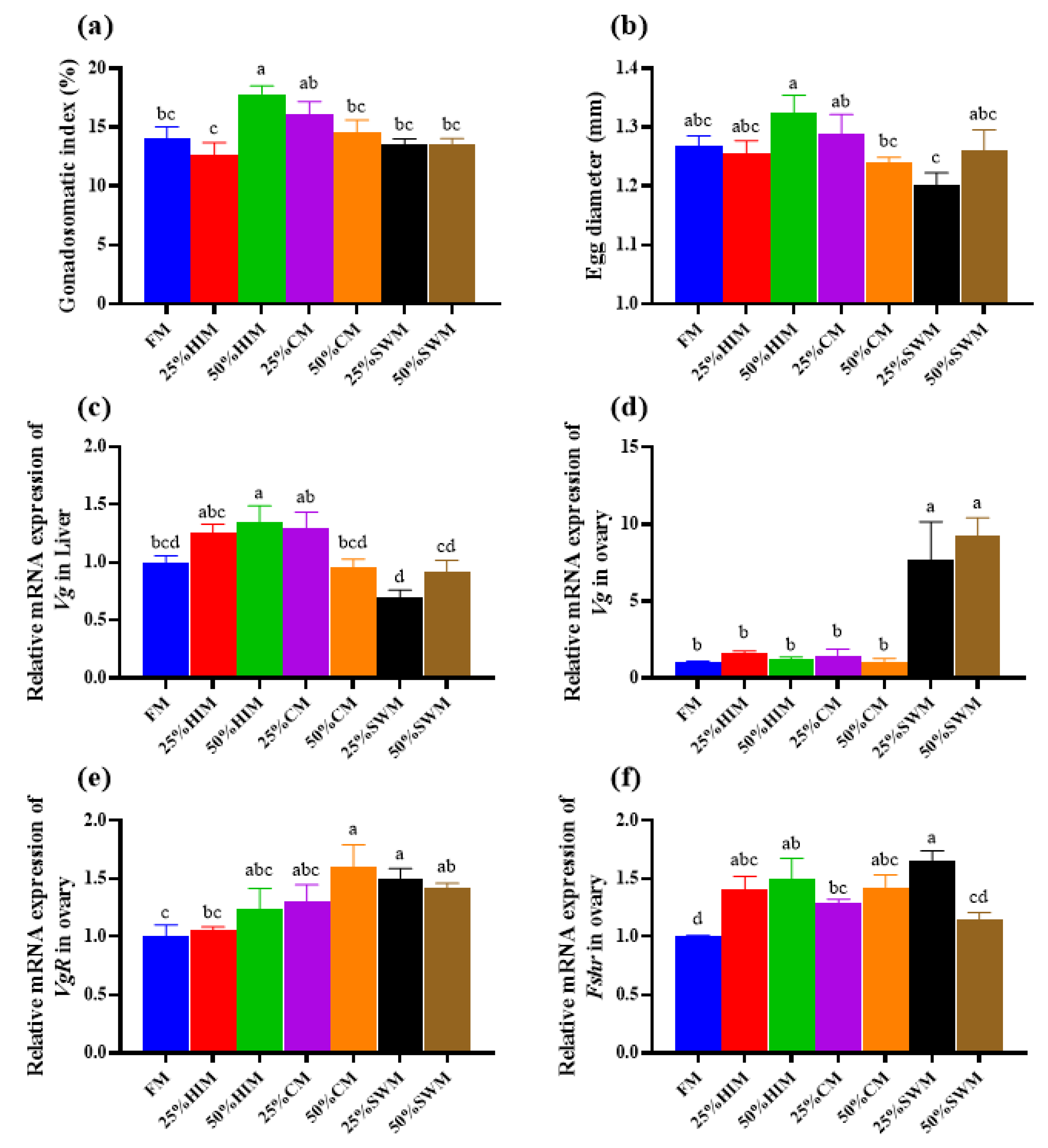
As shown in Figure 2, the GSI of fish fed the 50% HIM diet was significantly higher than fish fed the FM, 25% HIM, 50% CM, 25% SWM and 50% SWM diets (Figure 2a; P < 0.05). Moreover, the GSI of fish fed the 25% CM diet was significantly higher than fish fed the 25% HIM (Figure 2a; P < 0.05), and it has no significant differences with FM, 50% HIM, 50% CM, 25% SWM and 50% SWM diets (Figure 2a; P > 0.05). There were no significant differences among egg diameter of fish fed the FM, 25% HIM, 50% HIM, 25% CM and 50% SWM diets (Figure 2b; P > 0.05). However, the egg diameters of fish fed the 50% CM and 25% SWM diets were significantly lower than fish fed the 50% HIM diet (Figure 2b; P < 0.05). The relative mRNA expression of Vg in the liver of fish fed the 50% HIM diet was significantly higher than fish fed the FM, 50% CM, 25% SWM and 50% SWM diets (Figure 2c; P < 0.05), and it has no significant differences compared with fish fed the 25% HIM and 25% CM (Figure 2c; P > 0.05). The relative mRNA expressions of Vg in the ovary of fish fed the FM, 25% HIM, 50% HIM, 25% CM and 50% CM diets were significantly lower than fish fed the 25% SWM and 50% SWM diets (Figure 2d; P < 0.05), and there were no significant differences among fish fed FM, 25% HIM, 50% HIM, 25% CM and 50% CM diets (Figure 2d; P > 0.05). The relative mRNA expressions of VgR in the ovary of fish fed the FM and 25% HIM diets were significantly lower than fish fed the 50% CM and 25% SWM (Figure 2e; P < 0.05). The relative mRNA expression of Fshr in the ovary of fish fed the FM diet was significantly lower than fish fed the 25% HIM, 50% HIM, 25% CM, 50% CM and 25% SWM diets (Figure 2f; P < 0.05).
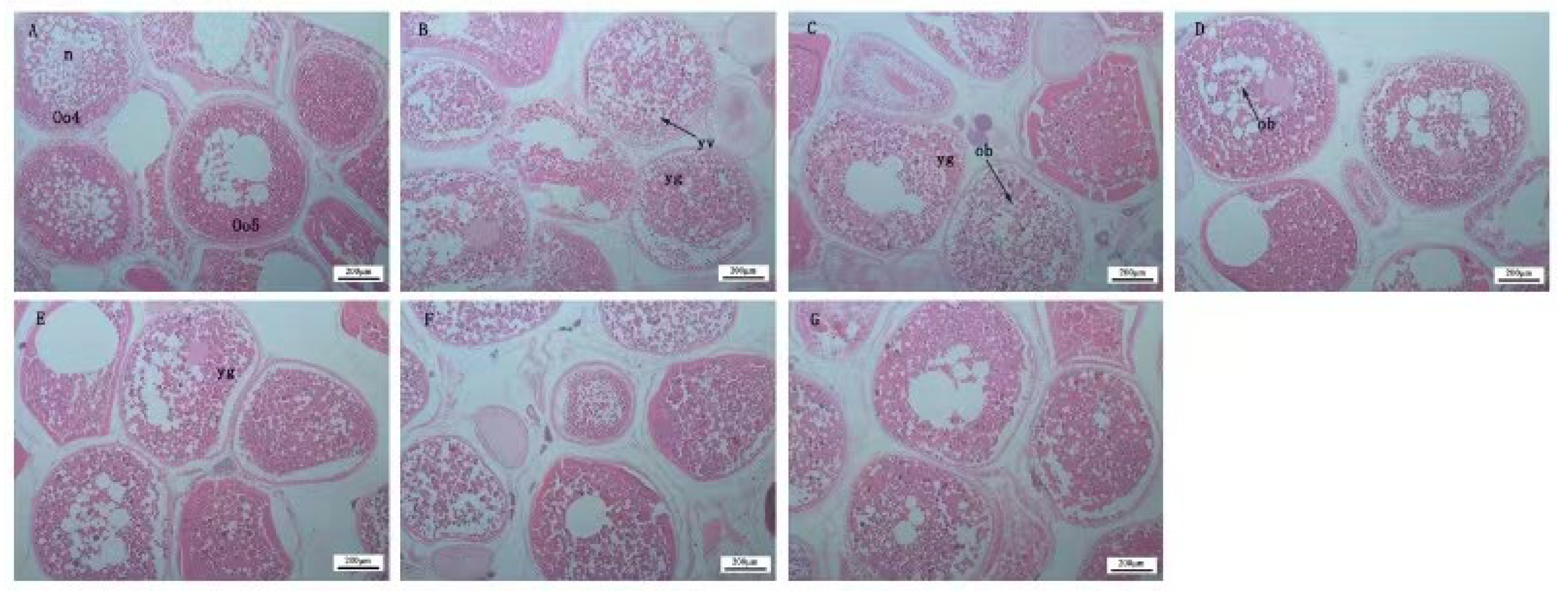
The histological results showed that the ovaries of fish varied from IV stage to V stage. According to the statistical analysis of egg diameters, the largest oocyte of fish was observed in the 50% HIM diet (Figure 3C).

3.3. Effects of Dietary Protein Sources on Antioxidant Capacity of Ovary in the Female Largemouth Bass Broodstock

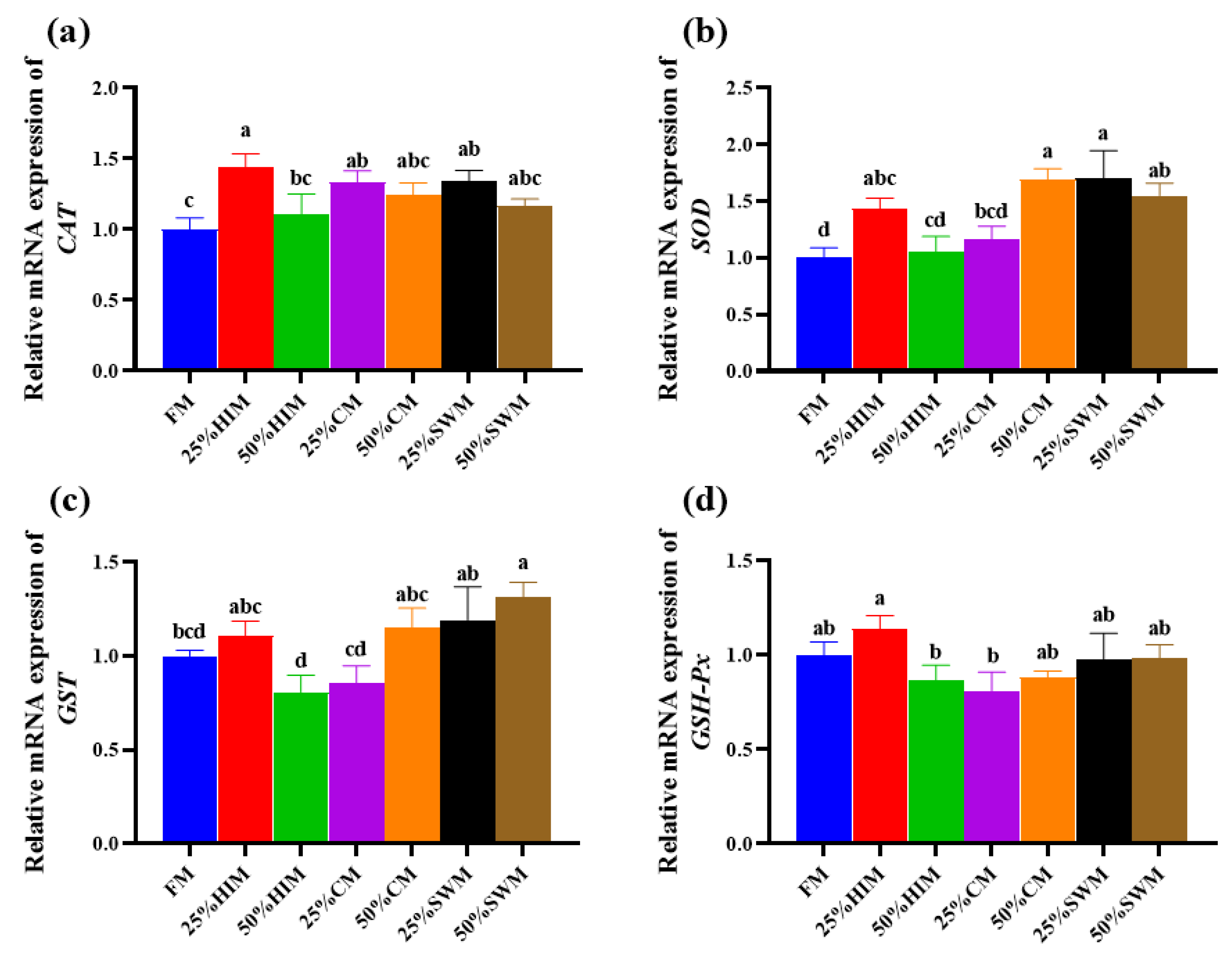
The relative mRNA expression of CAT of fish fed the 25% HIM diet was significantly higher than fish fed the FM and 50% HIM diets (Figure 4a; P < 0.05). The relative mRNA expression of SOD of fish fed the FM diet was significantly lower than fish fed the 25% HIM, 50% CM, 25% SWM and 50% SWM diets (Figure 4b; P < 0.05). The lowest relative mRNA expression of GST was observed in the 50% HIM diet, which was significantly lower than fish fed the 25% HIM, 50% CM, 25% SWM and 50% SWM diets (Figure 4c; P < 0.05). The relative mRNA expressions of GSH-Px of fish fed the 50% HIM and 25% CM diets were significantly lower than fish fed the 25% HIM diet (Figure 4d; P < 0.05).

3.4. Effects of Dietary Protein Sources on the Reproductive Capacity of Female Largemouth Bass Broodstock

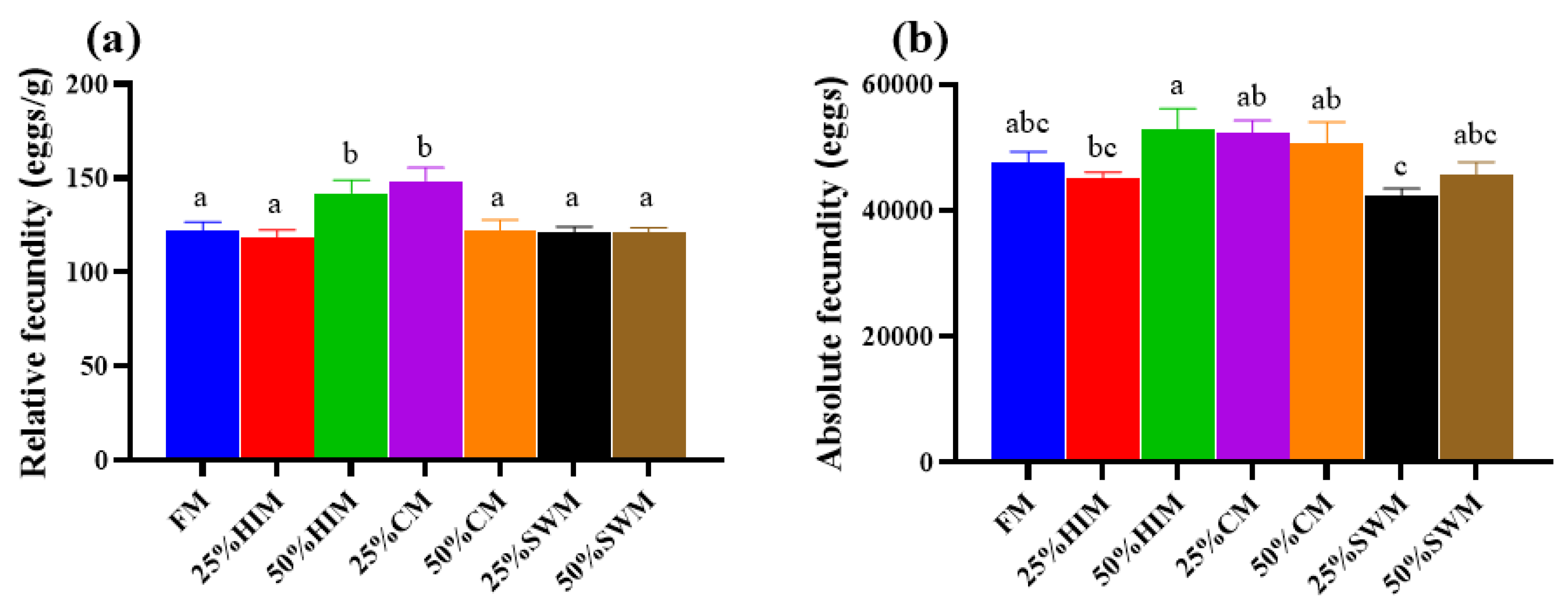
The relative fecundities of fish fed the 50% HIM and 25% CM diets were significantly higher than fish fed other diets (Figure 5a; P < 0.05). The fish fed the 50% HIM diet reached the highest absolute fecundity, which was significantly higher than fish fed the 25% HIM and 25% SWM diets (Figure 5b; P < 0.05).

4. Discussion

A large number of studies have shown that the protein sources are closely related to the ovarian development and reproductive performance of animals. A study reported that fermented soybean meal could improve the egg weight, fertilization rate, egg diameter and reproductive performance of Indian catfish (Heteropneustes fossilis)[10]. In the present study, 50% Hermetia illucens larvae meal improved the gonadosomatic index, egg diameter, Vg gene expression, relative fecundity, which indicated that diet supplemented with a certain of H. illucens larvae meal can increase the reproductive performance of largemouth bass broodstock. However, a previous studies reported that 25% H. illucens meal did not significantly affect the reproductive performance of Danio rerio[34,35]. Unfortunately, there are very few studies on the relationship between H. illucens and reproductive performance. We can only speculate that the functions of H. illucens on reproductive performance varies by species. In the present study, the result showed that 25% Chlorella meal also can improve the relative fecundity and absolute fecundity of largemouth bass. This result is consistent with a previous study in D. rerio [36]. In summary, these results indicated that H. illucens meal and Chlorella meal are two potential protein sources which could be used in the diet of largemouth bass broodstock.
Reproductive performance is closely related to the development of the ovary. The vitellogenesis is a fundamental biological process underlying the development and maturation of the ovary[37]. Therefore, the genes expression of Vg and VgR can be the indicators of ovarian development and reproductive performance. In the present study, dietary 50% H. illucens larvae meal improved the relative RNA expression of Vg in the liver of fish, but not in the ovary. This result indicated that H. illucens larvae meal affected the ovarian development of fish by influencing the synthesis of vitellogenin in the liver. It might be because H. illucens larvae meal provides the necessary nutrients for the synthesis of vitellogenin[38]. Similarly, 25% Chlorella meal improve the Vg gene expression, which can be attributed to the fact that Chlorella provides protein and vitamins for ovarian development in fish[36].
The vitellogenesis is regulated by hormones. When FSH specifically binds to FSHR, it will activate a series of intracellular signaling pathways (such as the cAMP-PKA pathway), thereby regulating the physiological processes of the ovaries[39]. Therefore, FSHR is a crucial target to regulate ovary maturation. In the present study, 50% H. illucens larvae meal up-regulated the FSHR gene expression. This might be one of the reasons why H. illucens promote the ovarian development and reproductive performance of largemouth bass broodstock.
The liver is an important site for the synthesis of vitellogenin. The hepatic Vg is secreted to blood and transported to ovary[37,40]. In this process VgR plays an important role in Vg deposition in the ovary[41]. Thus, VgR can be used as an indicator of ovarian development. In the present study, 50% Chlorella meal up-regulated the VgR gene expression of largemouth bass. We speculate that Chlorella facilitated the deposition of Vg in the ovary.
The health condition of the organism also affects the ovarian development and reproductive capacity[1]. Recent studies have shown that oxidative stress is an important factor affecting the functions of the liver and ovary[42]. In the present study, H. illucens larvae meal or Chlorella meal did not increase the antioxidant capacity of largemouth bass, which indicated these protein sources may not influence the ovarian development and reproductive performance of largemouth bass by affecting the antioxidant system.

5. Conclusions

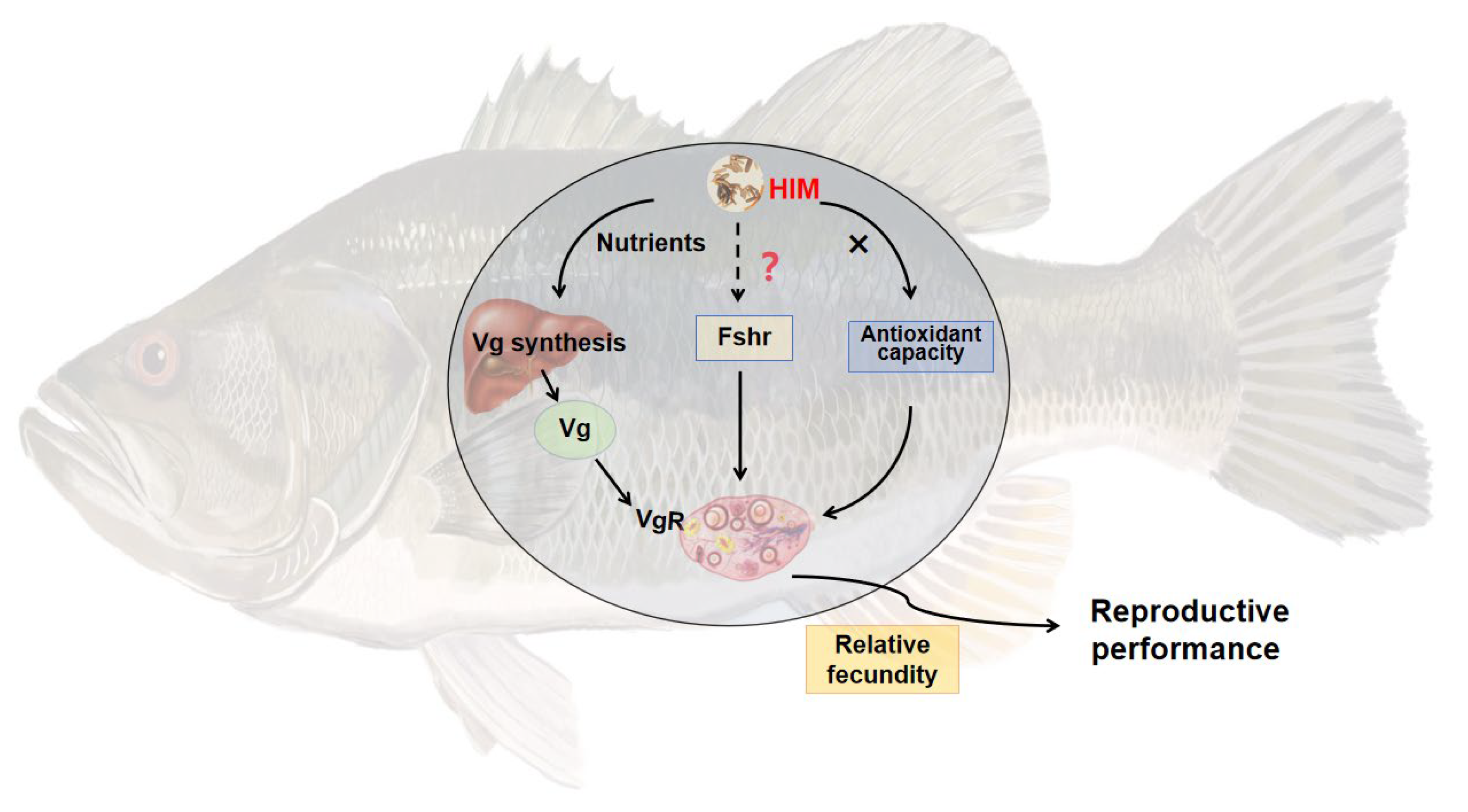
Dietary 50% Hermetia illucens larvae meal can improve the ovarian development and reproductive performance by up-regulated the Vg, VgR and Fshr gene expressions and thereby improved the gonadosomatic index, egg diameter and relative fecundity. H. illucens larvae meal is a potential protein source that can be applied to the feed of largemouth bass broodstock (Figure 6).

Author Contributions

Conceptualization, Y.T. and C.Q.; methodology, Y.T.; software, Y.X.; validation, Y.K.; formal analysis, L.J.; investigation, Y.T.; resources, Q.X.; data curation, Y.X.; writing—original draft preparation, Y.T.; writing—review and editing, C.Q.; visualization, L.J.; supervision, C.Q.; project administration, Z.D.; funding acquisition, Q.X. All authors have read and agreed to the published version of the manuscript.

Funding

This research was supported by grants from the "Leading Goose" R&D Program of Zhejiang Province (No, 2023C02024), the Zhejiang Provincial Natural Science Foundation of China under Grant No. LTGN23C190003, the National Natural Science Foundation of China (No.3247210153).

Informed Consent Statement

Not applicable.

Data Availability Statement

Data are contained within the article.

Conflicts of Interest

The authors declare no conflicts of interest.

Abbreviations

The following abbreviations are used in this manuscript:
HIM Hermetia illucens larvae meal
CM Chlorella meal
SWM Stickwater meal
FM Fish meal
Vg Vitellogenin
VgR Vitellogenin receptor
E2 Estradiol 2
PROG Progesterone
CF Condition factor
VSI Viscerosomatic index
HIS Hepatosomatic index
MFI Mesenteric fat index
GSI Gonadosomatic index
RF Relative fecundity
AF Absolute fecundity
CAT Catalase
SOD Superoxide dismutase
GST Glutathione S-transferase
GSH-Px Glutathione peroxidase
Fshr Follicle-stimulating hormone receptor
FSH Follicle stimulating hormone

References

  1. Abdel-Moez, A.M.; Ali, M.M.; El-Gandy, G.; Mohammady, E.Y.; Jarmołowicz, S.; El-Haroun, E.; Elsaied, H.E.; Hassaan, M.S. Effect of including dried microalgae Cyclotella menegheniana on the reproductive performance, lipid metabolism profile and immune response of Nile tilapia broodstock and offspring. Aquac. Rep. 2024, 36. [Google Scholar] [CrossRef]
  2. Sullivan, C.V.; Yilmaz, O. Vitellogenesis and yolk proteins, fish. Encyclopedia of reproduction 2018, 6, 266–277. [Google Scholar]
  3. Youneszadeh-Fashalami, M.; Salati, A.P.; Keyvanshokooh, S. Comparison of proteomic profiles in the ovary of Sterlet sturgeon (Acipenser ruthenus) during vitellogenic stages. Comp. Biochem. Physiol. Part D: Genom. Proteom. 2018, 27, 23–29. [Google Scholar] [CrossRef] [PubMed]
  4. Ruan, Y.; Wong, N.-K.; Zhang, X.; Zhu, C.; Wu, X.; Ren, C.; Luo, P.; Jiang, X.; Ji, J.; Wu, X.; et al. Vitellogenin Receptor (VgR) Mediates Oocyte Maturation and Ovarian Development in the Pacific White Shrimp (Litopenaeus vannamei). Front. Physiol. 2020, 11, 485. [Google Scholar] [CrossRef] [PubMed]
  5. Zhang, X.; Yin, Y.; Fan, H.; Zhou, Q.; Jiao, L. Arginine Promoted Ovarian Development in Pacific White Shrimp Litopenaeus vannamei via the NO-sGC-cGMP and TORC1 Signaling Pathways. Animals 2024, 14, 1986. [Google Scholar] [CrossRef]
  6. Li, M.; Zhang, X.; Jiao, L.; Wang, J.; He, Y.; Li, S.; Jin, M.; Zhang, L.; Zhou, Q. Dietary protein regulates ovarian development through TOR pathway mediated protein metabolism in female Litopenaeus vannamei. Aquac. Rep. 2023, 33. [Google Scholar] [CrossRef]
  7. Lu, X.; Peng, D.; Chen, X.; Wu, F.; Jiang, M.; Tian, J.; Liu, W.; Yu, L.; Wen, H.; Wei, K. Effects of dietary protein levels on growth, muscle composition, digestive enzymes activities, hemolymph biochemical indices and ovary development of pre-adult red swamp crayfish (Procambarus clarkii). Aquac. Rep. 2020, 18. [Google Scholar] [CrossRef]
  8. Chen, Z.; Fei, S.; Duan, Y.; Liu, C.; Liu, H.; Han, D.; Jin, J.; Yang, Y.; Zhu, X.; Xie, S. Effects of dietary protein level on the growth, reproductive performance, and larval quality of female yellow catfish (Pelteobagrus fulvidraco) broodstock. Aquac. Rep. 2022, 24. [Google Scholar] [CrossRef]
  9. Xiao, J.; Long, F.; Ding, L.; Yao, Y.; Wu, W.; Fu, Y.; Chen, W. Effects of three different protein levels on the growth, gonad development, and physiological biochemistry of female Pengze crucian carp (Carassius auratus var. Pengze) broodstock. Front. Mar. Sci. 2024, 11, 1459412. [Google Scholar] [CrossRef]
  10. Nandi, S.K.; Suma, A.Y.; Rashid, A.; Kabir, M.A.; Goh, K.W.; Kari, Z.A.; Van Doan, H.; Zakaria, N.N.A.; Khoo, M.I.; Wei, L.S. The Potential of Fermented Water Spinach Meal as a Fish Meal Replacement and the Impacts on Growth Performance, Reproduction, Blood Biochemistry and Gut Morphology of Female Stinging Catfish (Heteropneustes fossilis). Life 2023, 13, 176. [Google Scholar] [CrossRef]
  11. Chen, Z.; Fei, S.; Liu, C.; Duan, Y.; Liu, H.; Han, D.; Jin, J.; Yang, Y.; Zhu, X.; Xie, S.; et al. Compared to Fishmeal, Dietary Soybean Meal Improves the Reproductive Performance of Female Yellow Catfish (Pelteobagrus fulvidraco) Broodstock. Aquac. Nutr. 2023, 2023, 1–12. [Google Scholar] [CrossRef]
  12. Xu, H.; Zhao, M.; Zheng, K.; Wei, Y.; Yan, L.; Liang, M. Antarctic krill (Euphausia superba) meal in the diets improved the reproductive performance of tongue sole (Cynoglossus semilaevis) broodstock. Aquac. Nutr. 2017, 23, 1287–1295. [Google Scholar] [CrossRef]
  13. Yao, Z.; Tan, Q.; Zhu, Y.; Xu, Y.; Zhu, W. Effects of plant protein replacing fish meal on growth and reproduction of red swamp crayfish, Procambarus clarkii. Aquatic biology 2020, 44, 479–484. [Google Scholar]
  14. Fu, P. Effects of Antarctic krill meal instead of fish meal on growth and reproduction of female Monopterus albus. Master, Shanghai Ocean University, Shanghai, 2022.
  15. Zhang, M.; Wang, S.; Gan, L.; Lin, Y.; Shao, J.; Jiang, H.; Li, M. Effects of fishmeal replacement with eight protein sources on growth performance, blood biochemistry and stress resistance in Opsariichthys bidens. Aquac. Nutr. 2021, 27, 2529–2540. [Google Scholar] [CrossRef]
  16. FAO. Internation Markets for Fisherish and Aquaculture Products. Globefish Highlights 2022.
  17. Hua, K.; Cobcroft, J.M.; Cole, A.; Condon, K.; Jerry, D.R.; Mangott, A.; Praeger, C.; Vucko, M.J.; Zeng, C.; Zenger, K.; et al. The Future of Aquatic Protein: Implications for Protein Sources in Aquaculture Diets. One Earth 2019, 1, 316–329. [Google Scholar] [CrossRef]
  18. Alagawany, M.; Taha, A.E.; Noreldin, A.; El-Tarabily, K.A.; El-Hack, M.E.A. Nutritional applications of species of Spirulina and Chlorella in farmed fish: A review. Aquaculture 2021, 542. [Google Scholar] [CrossRef]
  19. Chalamaiah, M.; Hemalatha, R.; Jyothirmayi, T. Fish protein hydrolysates: proximate composition, amino acid composition, antioxidant activities and applications: a review. Food chemistry 2012, 135, 3020–3038. [Google Scholar] [CrossRef] [PubMed]
  20. Nguyen, M.C.; Fotedar, R.; Giridharan, B.; Saptoro, A.; Nagarajan, R.; Lau, J.; Tiong, Y.; Rowtho, V.; Selvan, C.; Tan, A.; et al. The effects of fish protein hydrolysate as supplementation on growth performance, feed utilization and immunological response in fish: A review. MATEC Web Conf. 2023, 377, 01020. [Google Scholar] [CrossRef]
  21. Wang, G.; Peng, K.; Hu, J.; Yi, C.; Chen, X.; Wu, H.; Huang, Y. Evaluation of defatted black soldier fly (Hermetia illucens L.) larvae meal as an alternative protein ingredient for juvenile Japanese seabass (Lateolabrax japonicus) diets. Aquaculture 2019, 507, 144–154. [Google Scholar] [CrossRef]
  22. Rawski, M.; Mazurkiewicz, J.; Kierończyk, B.; Józefiak, D. Black Soldier Fly Full-Fat Larvae Meal as an Alternative to Fish Meal and Fish Oil in Siberian Sturgeon Nutrition: The Effects on Physical Properties of the Feed, Animal Growth Performance, and Feed Acceptance and Utilization. Animals 2020, 10. [Google Scholar] [CrossRef]
  23. Limbu, S.M.; Shoko, A.P.; Ulotu, E.E.; Luvanga, S.A.; Munyi, F.M.; John, J.O.; Opiyo, M.A. Black soldier fly (Hermetia illucens, L.) larvae meal improves growth performance, feed efficiency and economic returns of Nile tilapia (Oreochromis niloticus, L.) fry. Aquaculture, Fish and Fisheries 2022, 2, 167–178. [Google Scholar] [CrossRef]
  24. Carral, J.M.; Sáez-Royuela, M. Replacement of Dietary Fishmeal by Black Soldier Fly Larvae (Hermetia illucens) Meal in Practical Diets for Juvenile Tench (Tinca tinca). Fishes 2022, 7, 390. [Google Scholar] [CrossRef]
  25. Kari, Z.A.; Téllez-Isaías, G.; Hamid, N.K.A.; Rusli, N.D.; Mat, K.; Sukri, S.A.M.; Kabir, M.A.; Ishak, A.R.; Dom, N.C.; Abdel-Warith, A.-W.A.; et al. Effect of Fish Meal Substitution with Black Soldier Fly (Hermetia illucens) on Growth Performance, Feed Stability, Blood Biochemistry, and Liver and Gut Morphology of Siamese Fighting Fish (Betta splendens). Aquac. Nutr. 2023, 2023, 1–15. [Google Scholar] [CrossRef]
  26. Huang, K.; Liu, X.; Ma, R.; Wang, B.; Ho, S.-H.; Chen, J.; Xie, Y. Effects of substituting fish meal with Chlorella meal on growth performance, whole-body composition, pigmentation, and physiological health of marbled eel (Anguilla marmorata). Algal Res. 2024, 80. [Google Scholar] [CrossRef]
  27. Luo, Z.; Ye, H.M.; Gao, Y.; Ling, S.C.; Wei, C.C.; Zhu, X. Chlorella additive increased growth performance, improved appetite and immune response of juvenile crucian carp Carassius auratus. Aquaculture research 2018, 49, 3329–3337. [Google Scholar] [CrossRef]
  28. Enyidi, U.D. Chlorella vulgaris as Protein Source in the Diets of African Catfish Clarias gariepinus. Fishes 2017, 2, 17. [Google Scholar] [CrossRef]
  29. Li, M.; Li, X.; Yao, W.; Wang, Y.; Zhang, X.; Leng, X.; Xu, H. An Evaluation of Replacing Fishmeal with Chlorella Sorokiniana in the Diet of Pacific White Shrimp (Litopenaeus Vannamei): Growth, Body Color, and Flesh Quality. Aquac. Nutr. 2022, 2022, 1–16. [Google Scholar] [CrossRef]
  30. Safari, O.; Paolucci, M.; Motlagh, H.A. Dietary supplementation of Chlorella vulgaris improved growth performance, immunity, intestinal microbiota and stress resistance of juvenile narrow clawed crayfish, Pontastacus leptodactylus Eschscholtz, 1823. Aquaculture 2022, 554. [Google Scholar] [CrossRef]
  31. Wu, D.; Ye, Y.; Cai, C.; Xu, J.; Zhang, L.; Chen, K.; Huang, Y.; Xu, D. Effects of replacing fish meal with fish paste powder on growth and health of grass carp. Chinese Journal of Animal Nutrition 2015, 27, 2094–2105. [Google Scholar]
  32. Fu, C. Effects of low fish meal diet supplemented with marine animal protein hydrolysate on growth, feed utilization and antioxidant capacity of juvenile pearl gentian grouper (Epinephelus fuscoguttatus). Master, Shanghai Ocean University, Shanghai, 2020.
  33. Wei, Y.; Liu, J.; Wang, L.; Duan, M.; Ma, Q.; Xu, H.; Liang, M. Influence of fish protein hydrolysate on intestinal health and microbial communities in turbot Scophthalmus maximus. Aquaculture 2023, 576. [Google Scholar] [CrossRef]
  34. Randazzo, B.; Zarantoniello, M.; Gioacchini, G.; Giorgini, E.; Truzzi, C.; Notarstefano, V.; Cardinaletti, G.; Huyen, K.T.; Carnevali, O.; Olivotto, I. Can Insect-Based Diets Affect Zebrafish (Danio rerio) Reproduction? A Multidisciplinary Study. Zebrafish 2020, 17, 287–304. [Google Scholar] [CrossRef]
  35. Chemello, G.; Zarantoniello, M.; Randazzo, B.; Gioacchini, G.; Truzzi, C.; Cardinaletti, G.; Riolo, P.; Olivotto, I. Effects of black soldier fly (Hermetia illucens) enriched with Schizochytrium sp. on zebrafish (Danio rerio) reproductive performances. Aquaculture 2022, 550. [Google Scholar] [CrossRef]
  36. Carneiro, W.F.; Castro, T.F.D.; Orlando, T.M.; Meurer, F.; Paula, D.A.d.J.; Virote, B.D.C.R.; Vianna, A.R.d.C.B.; Murgas, L.D.S. Replacing fish meal by Chlorella sp. meal: Effects on zebrafish growth, reproductive performance, biochemical parameters and digestive enzymes. Aquaculture 2020, 528. [Google Scholar] [CrossRef]
  37. Subramoniam, T. Mechanisms and control of vitellogenesis in crustaceans. Fish. Sci. 2010, 77, 1–21. [Google Scholar] [CrossRef]
  38. Hara, A.; Hiramatsu, N.; Fujita, T. Vitellogenesis and choriogenesis in fishes. Fish. Sci. 2016, 82, 187–202. [Google Scholar] [CrossRef]
  39. Casarini, L.; Lazzaretti, C.; Paradiso, E.; Limoncella, S.; Riccetti, L.; Sperduti, S.; Melli, B.; Marcozzi, S.; Anzivino, C.; Sayers, N.S.; et al. Membrane Estrogen Receptor (GPER) and Follicle-Stimulating Hormone Receptor (FSHR) Heteromeric Complexes Promote Human Ovarian Follicle Survival. iScience 2020, 23, 101812. [Google Scholar] [CrossRef] [PubMed]
  40. Tiu, S.H.K.; Benzie, J.; Chan, S.-M. From Hepatopancreas to Ovary: Molecular Characterization of a Shrimp Vitellogenin Receptor Involved in the Processing of Vitellogenin1. Biol. Reprod. 2008, 79, 66–74. [Google Scholar] [CrossRef]
  41. Nagaraju, G.P.C. Reproductive regulators in decapod crustaceans: an overview. J. Exp. Biol. 2011, 214, 3–16. [Google Scholar] [CrossRef]
  42. Ali, M.J.; Tao, Y.; Li, Y.; Sayouh, M.A.; Lu, S.; Qiang, J.; Xu, P. Modulation of chronic hypoxia on ovarian structure, oxidative stress, and apoptosis in female Nile Tilapia (Oreochromis niloticus). Aquaculture 2024, 590. [Google Scholar] [CrossRef]
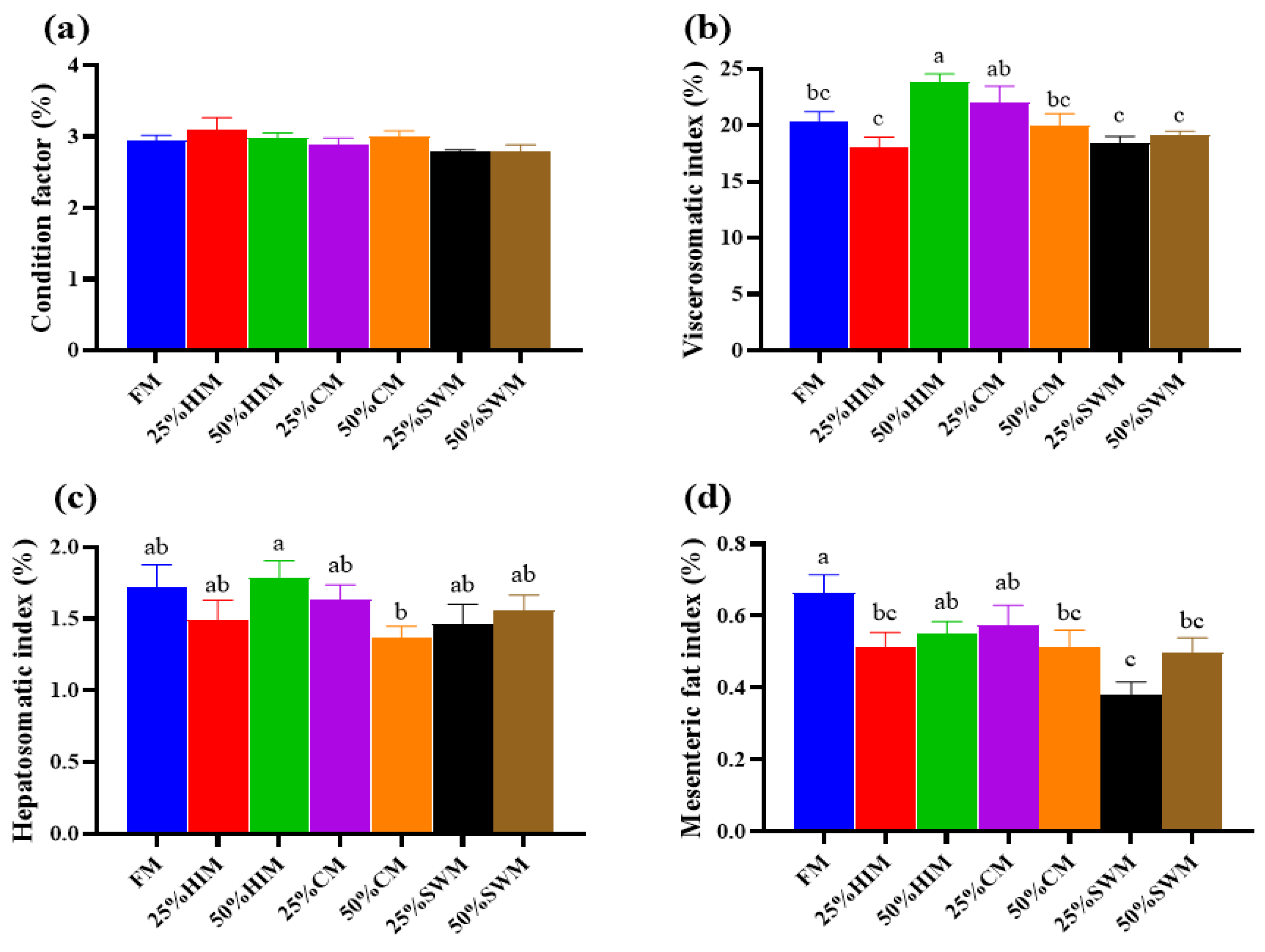
Figure 1. Effects of dietary protein sources on growth performance of female largemouth bass broodstock. Note: (a) Condition factor; (b) Viscerosomatic index; (c) Hepatosomatic index; (d) Mesenteric fat index. The experimental results are expressed as Mean ± SEM (n=6). The different superscripts on the columns represent significant differences (P < 0.05, one-way ANOVA and Duncan multiple comparisons).
Preprints 172790 g001
Figure 2. Effects of dietary protein sources on ovarian development of female largemouth bass broodstock. Note: (a) Gonadosomatic index; (b) Egg diameter; (c) Vitellogenin; (d) Vitellogenin; (e) Vitellogenin receptor; (e) Follicle-stimulating hormone receptor.
Preprints 172790 g002
Figure 3. Ovarian histological observation of largemouth bass broodstock fed with each diet. A: FM; B: 25 % HIM; C: 50% HIM; D: 25 % CM; E: 50 % CM; F: 25 % SWM; G: 50 % SWM. Oo4: IV oocytes; Oo5: V oocytes; n: nucleus; yg: yolk granules; yv: yolk bubble; ob: oil ball.
Preprints 172790 g003
Figure 4. Effects of dietary protein sources on antioxidant capacity of ovary in the female largemouth bass broodstock. Note: (a) Catalase; (b) Superoxide Dismutase; (c) Glutathione S-transferase; (d) Glutathione peroxidase.
Preprints 172790 g004
Figure 5. Effects of dietary protein sources on genes related to ovarian development of female largemouth bass broodstock. Note: (a) Relative fecundity; (b) Absolute fecundity.
Preprints 172790 g005
Figure 6. A hypothetical model of the regulatory effects of 50% HIM on ovarian development in female largemouth bass broodstock.
Preprints 172790 g006
Table 1. Ingredients and proximate compositions of the experimental diets (%).
Items FM 25% HIM 50% HIM 25% CM 50% CM 25% SWM 50% SWM
Ingredients
Fish meal 40 30 20 30 20 30 20
Hermetia illucens larvae meal 0 11.7 23.4 0 0 0 0
Chlorella meal 0 0 0 12.3 24.6 0 0
Stickwater meal 0 0 0 0 0 9 18
Soybean protein concentrate 28 28 28 28 28 28 28
Soybean meal 10 10 10 10 10 10 10
Fish oil 3 1.9 0.9 2.6 2.3 3 3.1
Soybean oil 3 1.9 0.9 2.6 2.3 3 3.1
Soybean lecithin 2 2 2 2 2 2 2
Corn starch 9 9.5 9.8 7.5 5.8 10 10.8
Vitamin premix1 0.5 0.5 0.5 0.5 0.5 0.5 0.5
Mineral premix2 0.5 0.5 0.5 0.5 0.5 0.5 0.5
Ca(H2PO4)2 1.5 1.5 1.5 1.5 1.5 1.5 1.5
Choline chloride 0.5 0.5 0.5 0.5 0.5 0.5 0.5
Sodium carboxymethylcellulose 2 2 2 2 2 2 2
Proximate composition
Moisture 8.04 7.06 8.28 7.06 9.07 6.90 9.40
Crude protein 48.58 48.58 48.59 48.58 48.59 48.62 48.65
Crude lipid 10.95 10.85 10.95 10.85 10.95 10.88 11.01
Ash 12.64 11.81 10.95 11.23 9.96 11.72 10.88
FM: Fish meal;25% HIM: Hermetia illucens larvae meal substitutes 25% of dietary fish meal; 50% HIM: Hermetia illucens larvae meal substitutes 50% of dietary fish meal; 25% CM: Chlorella meal substitutes 25% of dietary fish meal; 50% CM: Chlorella meal substitutes 50% of dietary fish meal; 25% SWM: Stickwater meal substitutes 25% of dietary fish meal; 50% SWM: Stickwater meal substitutes 50% of dietary fish meal. 1 Vitamin premix: Vitamin A 32 mg, Vitamin D3 4 mg, Vitamin C 151.52 mg, Vitamin K3 10 mg, Vitamin B1 16 mg, Vitamin B2 45 mg, Vitamin B6 20 mg, Vitamin B12 0.4 mg, Vitamin E 360 mg, Calcium pantothenate 70 mg, Niacin 80 mg, Folate 5 mg, Biotin 1 mg, Inositol 320 mg, Zeolite powder 3885.08 mg. 2 Mineral premix: CuSO4·5H2O 9.77 mg, ZnSO4·7H2O 154.53 mg, MnSO4·H2O 26.15 mg, FeSO4·7H2O 124.13 mg, Ca(IO3)2 2.31 mg, Na2SeO3 0.44 mg, CoCl2·6H2O 1.6 mg, MgSO4·7H2O 1224.49 mg, Zeolite powder 3456.59 mg.
Table 2. Amino acid composition of the diets (% dry matter).
Items FM 25% HIM 50% HIM 25% CM 50% CM 25% SWM 50% SWM
Amino acids
Arginine 3.35 3.23 2.79 2.73 3.02 2.92 2.87
Alanine 3.34 3.31 2.99 2.92 3.50 3.24 3.34
Asparagine 2.36 2.23 2.13 2.04 2.27 2.18 2.08
Glutamate 6.49 6.06 5.13 5.42 6.07 6.13 6.09
Glycine 0.99 0.94 0.87 0.86 0.93 1.10 1.27
Histidine 1.52 1.63 1.51 1.23 1.41 1.32 1.34
Isoleucine 2.97 2.70 2.63 2.49 2.67 2.57 2.45
Leucine 4.85 4.41 4.24 4.23 4.68 4.32 4.09
Lysine 4.19 3.83 3.48 3.38 3.41 3.64 3.42
Methionine 1.33 1.12 0.97 1.04 1.10 1.10 1.01
Phenylalanine 2.56 2.34 2.22 2.20 2.43 2.26 2.18
Serine 1.59 1.67 1.52 1.37 1.60 1.44 1.50
Threonine 1.89 1.87 1.61 1.52 1.78 1.61 1.61
Tyrosine 1.81 1.83 1.88 1.55 1.67 1.59 1.43
Valine 2.77 2.61 2.57 2.39 2.69 2.44 2.36
Proline 2.31 2.41 2.31 2.09 2.33 2.45 2.81
Table 3. Primer sequences used for real-time PCR.
Gene name Position Primer sequences (5'-3') Product length(bp
β-actin Forward TCACAGTCCTCCTAAGCCGA 186
Reverse GGCCCATACCAACCATCACA
GAPDH Forward GGTGAGGTCAAGGTTGAGGG 90
Reverse CCACTTGATGTTAGCGGGGT
Vg Forward ACTCTGTGGAAAGGCTGACG 70
Reverse ACTCTTGGTCAGGCGTTTGT
VgR Forward CACAAGACCTGCGGAGACAT 99
Reverse GTTGTGGCATTCGCACTTGT
Fshr Forward CCATCTCAGCGGCTCTCAAG 89
Reverse GGAGCAGGAGTTGATTGGGT
CAT Forward CTGCTGTTCCCGTCCTTCAT 154
Reverse GGTAGCCATCAGGCAAACCT
SOD Forward GCATGTTGGAGACTTGGGGA 104
Reverse CAATGATCGAGTACGGGCCA
GST Forward GGTCTCACGCTCAACCAGAA 123
Reverse CAGCTTGACCTCAGCACTCA
GSH-Px Forward CGTTATTCTGGGTGTGCCCT 166
Reverse AAACAAGGGGTGTGCATCCT
GAPDH: Glyceraldehyde-3-phosphate dehydrogenase. Vg: Vitellogenin. VgR: Vitellogenin receptor. Fshr: Follicle-stimulating hormone receptor. CAT: Catalase. SOD: Superoxide Dismutase. GST: Glutathione S-transferase. GSH-Px: Glutathione peroxidase.
Disclaimer/Publisher’s Note: The statements, opinions and data contained in all publications are solely those of the individual author(s) and contributor(s) and not of MDPI and/or the editor(s). MDPI and/or the editor(s) disclaim responsibility for any injury to people or property resulting from any ideas, methods, instructions or products referred to in the content.
Copyright: This open access article is published under a Creative Commons CC BY 4.0 license, which permit the free download, distribution, and reuse, provided that the author and preprint are cited in any reuse.
Prerpints.org logo

Preprints.org is a free preprint server supported by MDPI in Basel, Switzerland.

Subscribe

Disclaimer

Terms of Use

Privacy Policy

Privacy Settings

© 2025 MDPI (Basel, Switzerland) unless otherwise stated