

Submitted:
14 August 2025
Posted:
15 August 2025
You are already at the latest version
Abstract
This study was conducted to investigate how the climate variables of cultivation affect the response of phytonutrients in tomato to thermal processing of juice and their stability. Cultivation in a location with a higher temperature, longer sunshine, and lower precipitation yielded tomato with higher content and stability of carotenoids, mainly lycopene, which lost 39% and 55% of its initial concentration because of cold-break (CBE) and hot-break (HBE) extraction, respectively. The lycopene loss caused by CBE and HBE was 70% and 59%, respectively in tomato cultivated in the location with higher precipitation, lower temperature, and shorter sunshine period. Seasonal variation in climate manifested its effect in increasing the total carotenoid content, mainly isomers and oxidized derivatives of lycopene and β-carotene, particularly in tomato produced in the location of higher precipitation and low temperature. Similar Pattern of change and response was observed for β-Carotene, lutein, phytoene, and phytofluene and total and individual tocopherols as well. As concerns vitamin C, the abiotic factors had no significant effect on its content in tomato fruits, but its stability during processing, especially with hot-break extraction, was significantly affected by climate variables of the cultivation location (P<0.01-0-001). The content and stability of phytonutrients in the pomace, the by-product of tomato juice processing, were also evaluated.
Keywords:
tomato
; post-harvest
; processing
; carotenoids
; tocopherols
; vitamin C
; abiotic factors
1. Introduction
Tomato (Solanum Lycopersicon L.) and its products can play a significant role in modern human diets as important sources of vitamins, minerals, and antioxidants, as well as their being relatively easily accessible foods. It is consumed in different forms, such as fresh, cooked, condensed and dried.
Ripe tomato fruits contain considerable amounts of valuable phytochemicals, which raise the nutritional importance of tomatoes and increase their use as functional foods or food ingredients. Among phytochemicals, carotenoids are of special interest due to their role in the reduction of the onset of several types of cancer [1,2] or neurodegenerative diseases [3]. Polyphenols and vitamin C components play an important role in the defense against oxidative stress [4], and the alkaloid compounds in tomato have an antimicrobial effect [5]. Nowadays, numerous studies have focused on the beneficial effects of these phytonutrients in the human and animal bodies.
Juice processing is the most familiar and economically important step to preserving tomato fruits exceeded the need for fresh consumption and export. When not available, e.g., in winter, fresh tomatoes are usually replenished by tomato juice to compensate for the deficiency of bioactive nutrients such lycopene, polyphenols, tocopherols and vitamin C. Therefore, the postharvest processing should be selected and controlled to produce juices with minimal loss of quality and nutritional value.
The factors most likely to affect the concentration of phytonutrients in the industrial tomato, as in other vegetables, may include variety, ripening stage at harvest, agronomical, geographical, and environmental conditions. [6,7]. The nutritive value of tomato fruit can be optimized by the application of suitable cultural and agricultural practices such as the right choice for cultivation location [8].
The type of technology used in tomato processing is another factor that may cause alteration in quality components and nutritional properties of the final products. It is necessary to study the interaction between the abiotic factors of the cultivation season and the technological parameters applied in the processing and to select the suitable type of technology, with which minimal or reduced loss of quality attributes and nutritional traits can be achieved. To produce tomato products of outstanding quality the raw materials should be rich in the initial content of quality components. Usually, the CBE carried out at 50-60°C and HBE carried out at 90 °C are the widely used technological processes to produce tomato juice [9].
The heat treatment applied in the CBE and HBE has several goals. On one hand, inactivation of microorganisms and enzymes and on the other hand, softening of the tissue to achieve the proper sensory properties [10]. In the cold break extraction, the color, the stock, and certain organoleptic properties (taste, flavor) are better, while the loss of waste is greater. In the HBE method, yield, microbial state, enzyme inactivation, removal of absorbed gases, etc. shows better results. However, it may result in a higher loss of quality attributes such as color, taste, and nutritional traits [11]. In the domestic canned industry, the application of heat treatment at around 80-90° C is widespread [12]. Under processing, the above-mentioned bioactive molecules undergo substantial alteration because of heat treatments. To follow the compositional changes on phytochemicals it is necessary to use the analytical protocol that provides efficient and precise separation and detection of the individual compounds and their isomers and derivatives. In Hungary, industrial tomato is cultivated in different locations that have different climates [13].
The abiotic factors most likely to influence quality components in tomatoes and determinate the stability of such vegetable during post-harvest and processing may include temperature, period of sunshine and precipitation, Another research group of our university investigated biological, and physiological traits as well as the response to microbial inoculation in the soil of two industrial varieties including that used in the present research [14,15].
The main objectives of the present work were to investigate how the climate variables of the cultivation location prior to harvest impact the content and stability of carotenoids, tocopherols and vitamin C toward postharvest thermal processing of tomato juice using efficient and reproducible liquid chromatographic protocols.
2. Materials and Methods
2.1. Chemicals Used in the Determination
All analytical grade chemicals and HPLC grade organic solvents were purchased from Merck Group Ltd. (Budapest, Hungary). Standard lycopene, lutein, β-carotene, 8-β-apo-carotenal, ascorbic acid, α-tocopherol (α-toc) α-tocopherol acetate (α-tocAc) α-tocopherol palmitate (α-toc-Es), β-tocopherol (β-toc) and γ-tocopherol (γ-toc) were purchased from Sigma-Aldrich via Merck, Budapest, Hungary. The authentic standard for α-tocopherol hydroquinone (α-tocHQ) was freshly prepared as described in [16]
2.2. Cultivation of Tomato
The outdoor cultivation of industrial tomato (Solanum lycopersicon L. var. UG812 J hibrid provided by Orosco Ltd., United Genetics Seeds Co., Hollister, California, USA) was carried out in 2018 and 2019, in two experimental Farms of the Institute of Horticulture of the Hungarian University of Agricultural and Life Sciences. The two different locations have different climate conditions. Location-1 is in Szárítópuszta, (Gödöllő), of which the climate is characterized by high precipitation and low air temperature during vegetable cultivation. The location-2 is in Szarvas, (Southeast Hungary), in which the climate was characterized by low precipitation and high air temperature during vegetable cultivation season (Table 1). The soil of the two locations was sandy-clay-loam with 34% clay, 29% sand, 33% sludge fraction, 3% humus content and pH around 6.68 and has an Arany’s binding value (Ka) between 28 and 42 with medium water capacity, water absorption and drainage capacity. Sufficient and optimal water supply of the stock was provided by the drip system during the growing season, depending on air temperature and precipitation.
The planting was 120 cm x 40 cm twin rows, where the length of rows was 25 m and the space between the tomatoes was 20 cm in both years and locations. Water and nutrient supply as well as other agronomic requirements can be found in [14], in which yield, physiological, and biological traits have been studied. From a big research project, we dealt with the postharvest technology of tomato fruits taken from plant grown under regular conditions for tomato cultivation without any extra treatments.
Tomato fruits for processing were harvest at the last development stage at the end of August and beginning of September, when the mature red fruits were dominant on the plants (90%). The immature, infected, or injured fruits were excluded. The batch of harvested tomato was divided into three replicates from each location and in both cultivation seasons.
2.3. Thermal Extraction of Juice
Fully ripe fruits with deep red color (Raw) were freshly harvested from at least 40 plants in 3 replicates for each. Processing of tomato for juice extraction was carried out in the Institute of Food Science and Technology, Hungarian University of Agricultural and Life Sciences (Budapest, Hungary). The processing included washing, shredding and then cold-break and hot-break extraction (CBE, HBE) and pasteurization. In the HBE, the shredded tomato batch was heated to 90 °C for 15 min, while CBE performed at 60°C for 30 min using stain steel open cookers. The pomace samples containing peel and seeds from CBE and HBE were separated by using rotatory roller sieves. The juices were packaged in plastic bottles, pasteurized at 100°C for 15 min and stored at -20°C when not immediately analyzed. The fruits of the raw tomato (control) were homogenized in a meat mincer to avoid foaming and rapid oxidation.
The homogenate was kept at -20°C until the analysis of carotenoids and tocopherols. To analyze vitamin C, a part of the freshly harvested tomato was taken and cut into small pieces, which were thoroughly mixed and subjected to immediate extraction and HPLC analysis of the vitamin.
2.4. Analysis of Bioactive Compounds
2.4.1. Extraction of Carotenoids and Tocopherols
To extract the fat-soluble fraction, 5 grams of the whole tomato or pomace and 10 grams of juice were taken and crushed in a crucible mortar with the addition of 1g of ascorbic acid and quartz sand. To the macerate, 20 ml of methanol were added to bind the water. The methanol fraction was decanted into 100 ml Erlenmeyer flask with a stopper. The residues were further crushed and extracted by stepwise addition of 50 ml of a mixture of 1:6 methanol-1, 2-dichloroethane. The extract was pooled with the methanol fraction. To increase the solubility of pigments in the less polar solvent 1ml of water was added that assisted in separating the two phases. After mechanical shaking for 15 min, the two phases were separated in a separating funnel. The lower phase containing pigments dissolved in the less polar solvent was dried on anhydrous sodium sulfate and passed to a round bottom flask. The solvent was then evaporated under vacuum at 40°C to dryness using a vacuum-controlled evaporator (Ingots RVO-400). The residues were re-dissolved in 10 ml HPLC grade acetone before injection onto the HPLC column. For the HPLC determination of carotenoids. For HPLC of tocopherol, the residues were redissolved in 5 ml of a mixture of 55:35:10 isopropanol-acetonitrile-methanol followed by the addition of 5 ml methanol to get unturbid extract.
2.4.2. Extraction of Vitamin C
For the determination of ascorbic acid, the freshly harvested tomato fruits were cut into small pieces by stainless steel knife, and 10 grams were immediately extracted with 3% metaphosphoric acids. In the case of juices and by-products (pomaces) 5-10 grams from each were taken immediately after processing for the analysis. The samples were crushed in a crucible mortar in the presence of quartz sand with the gradual addition of 30-50 ml of a 3% metaphosphoric acid solution. The mixture was quantitatively transferred to an Erlenmeyer flask with a stopper and shaken for 15 min. The supernatant was filtered through a Hahnemüehle DF 400-125 type filter paper. The filtrate was further cleaned up by passing through a Whatman 0.22 µm cellulose acetate syringe filter before injection on the HPLC column. [17]
2.4.3. HPLC Determinations
The HPLC determinations were carried out using Hitachi Chromaster HPLC instrument consisting of a Model 5110 Pump, a Model 5430 Diode Array detector, a Model 5440 Fluorescence detector, and a Model 5210 autosampler was used. The separation and data processing were operated by EZChrom Elite software (OpenLab version 1.2).
Carotenoids were separated on a core C-30, 2.6µ, 150x4.6 mm (Accucore from Thermo Scientific, USA) with gradient elution of Tert-butyl-methyl ether (TBME) (A) in methanol containing 2% water (B) according to a recently developed protocol [18]. The gradient elution started with 100% B and turned to 30% A in B in 25 min, stayed isocratic for 5 min, and turned to 100% B in 5 min. The eluted carotenoid compounds were detected by DAD between 190 and 600 nm.
Tocopherols were separated on Nucleodur C18, 100A°, 3µ, 250 x 4.6mm column (Machnery Nagel, Dürer, Germany) with a gradient elution of water (A), methanol (B) and a mixture of 55:35:10 isopropanol-acetonitrile-methanol(C) starting with 8% A in B, changes to 100% (B) in 3min, changes to 10%B in C in 25min, and finally turns to 8% A in B in 5 min [19]. Separated tocopherols were detected by the fluorescent detector at EX: 295 nm and EM: 325 nm.
The identification of carotenoids was based on comparison of retention time and spectral characteristics with those of available standards such as lutein, β-carotene, and lycopene. In the case of no standard materials available, the compounds were identified based on their mass spectrum determined by LC-MS/MS, spectral characteristics, and retention behavior [20]. Quantitative determination of carotenoids was based on using β-8-apocarotenal as an internal standard spiked with the samples. For quantification, the area of each compound was integrated at the maximum absorbance wavelength. As for tocopherols, the identification was based on using an external standard for the different tocopherol analogs.
Vitamin C (L-ascorbic acid) was separated on aqua Nataulis (Machary Nagel, Dürer, Germany), 3µ, 150 x 4.6 mm column with gradient elution of acetonitrile (A) in 0.01M KH2PO4(B). The separation started with 2% A in B, changed 30% A in B in 15 min stayed isocratic for 5 min, and finally turned to 2% A in B in 5 min. The separated compounds were detected by DAD between 190 and 400nm. Identification and quantification of L-ascorbic acid were based on using of calibration curve of standard solutions. Under the used conditions L-ascorbic acid had an absorption maximum at 262 nm, at which the peak area was integrated.
2.5. Statistical Analysis
For the statistical analysis, we used IBM SPSS statistics data as mean value ± standard deviation. The repeated measures of ANOVA for climate 1 and climate 2, CBE and HBE followed by post hoc (Fisher’s test), were used for the detailed comparison of measurement data within replicate samples for each tomato product.
3. Results and Discussion
3.1. Content and Stability of Carotenoids
The applied HPLC method provided excellent separation of the major carotenoids and their geometrical isomers and derivatives in 35 min (Figure 1). The profile contains 5 geometrical isomers of lycopene, 2 isomers of β-carotene, and some mono- and di-epoxides of carotenoids. In addition to the two major carotenoids, ɣ-carotene, neurosporene, lycoxanthin, ʆ-carotene, and the invisible phytoene and phytofluene were efficiently separated and detected in all the tomato products examined. The major artifacts of lycopene and β-carotene were found to be 9- and 13-cis-isomer and oxidized forms, All-trans lycopene accounted for 85-87% of the total carotenoids coinciding with lycopene-rich industrial tomatoes. In the present work, the focus was on the total carotenoids and the major individual compounds that are related to quality such as all trans lycopene and its main derivatives, as well as β-carotene as the main provitamin A carotenoid.
As the extraction and sample preparation of carotenoid was performed under conditions that cause minimal artifact formation (use of brown-colored glassware, presence of antioxidants, and vacuum evaporation), the presence of cis-isomers and oxygen-containing derivatives in fresh raw tomato revealed their de-novo biosynthesis during fruit ripening via enzymes-catalyzed pathways such as isomerase, hydroxylase, and dioxygenase [21,22]. The factors most likely to affect the content and stability of carotenoids and their derivatives at post-harvest of tomatoes may include the content of essential nutrients in the growing media [23], thermal processing and uncontrolled storage [24,25]
The concentration of the total carotenoids in the industrial variety used in the present work ranged between 3500 and 4800 µgg-1 dry matter (equal to 175-230 µg g-1 fresh weight) in two different locations and seasons. Such level is in the range found in different industrial varieties [26], higher than the 75 -147 µg g-1 fresh weight reported by Temitope et al. [27], but much lower than the 3310µg g-1fresh weight reported by Mayeaux et al. [28].
In both cultivation seasons (Figure 2 and Figure 3), the content of carotenoids decreased in the dry matter of juice obtained from CBE and HBE due to the removal of seeds and peels (skin and adhered pulp), which account for the highest proportion of the dry matter in tomato fruit. The peel and pulp have been reported to distribute the highest amounts of carotenoids, mainly lycopene [29,30]. Vinha et al. [31] stated that the elimination of peel results in a 60 to 80 % loss of lycopene. The loss of carotenoids in juice from CBE of tomato from location-1 was 67% versus 35% for tomato from location-2 in 2018 as compared to the initial content in the raw materials. Similar % of loss was found in 2019 (56%. versus 32%). The great loss of carotenoids with CBE, especially with tomatoes from location-1 in 2018 is more likely due to the interference of some biochemical factors that might be influenced by the climate variables in addition to the removal of peels and seeds.
The loss of total carotenoids because of HBE was 57% and 51% for tomato from location-1 and that from location-2 respectively in 2018, while less loss took place in 2019 with no significant difference was found between tomatoes from the two locations in the % of carotenoid loss. (47% and 48%). These results indicate that cultivation under high temperature and low precipitation, particularly 3 weeks before harvest, increases the stability of carotenoids during mild thermal processing such as CBE juice. Furthermore, the seasonal variation in the climate can slightly impact the response of carotenoid to mild processing conditions.
In the case of HBE, although the high temperature processing resulted in higher amounts of retained carotenoid, particularly in 2019, than that found in CBE juice with p<0.05, the %loss of carotenoids, as related to the initial content, was slightly higher in juice from tomato grown under high air temperature and low precipitation, than that of juice from tomato grown under opposite climate (57% versus 51%). It is interesting that the % loss of carotenoids in HBE of tomato from location-2 is significantly higher (p<0.01) than that calculated for %loss in CBC in both cultivation years (51% and 48% versus 36% and 35%). It is important to mention that the % loss of carotenoid in HBE can be affected by some factors. On one side, the high temperature treatment can inactivate some biochemical carotenoid-degrading agents [32,33] and release the adhered carotenoids from the peels and solubilize them in the juice [34], on the other side, the thermal degradation of carotenoids is expected at the same time. Therefore, the overall change in carotenoids in HBE is a resultant of the interaction between such chemical and physical factors.
The by-product of juice processing is the pomace, which consists of seeds and peels of tomato after juice extraction. The carotenoid content of such a by-product depends on the amount of tomato pulp adhered to the fruit skin. The content of carotenoids in the pomace is also influenced by the severity of heating in the extraction technology and centrifugation applied to separate the pomace from the juice. Like juices, as a function of climate variation, the content of carotenoids in pomaces was significantly higher (p<0.05) in 2019., the relatively wet and cool season, than that in 2018, the dry and warm season. As regards the effect of climate variables of the cultivation location, it was found that such variables slightly significantly (p≤0.05) affected the total carotenoid content in the pomaces from the two processing methods. Unexpectedly, the concentration of carotenoids in pomace from HBE was markedly higher that in the CBE (P< 0.01), most probably due to heat catalyzed disruption of cell walls and membranes, that makes easier the extraction of bound carotenoids from tomato peels in the analytical procedure. Carotenoid content has been reported to be higher in thermally processed tomato products including the by-product pomace than in fresh raw tomatoes [35].
Table 2 and Table 3 shows the content of the individual carotenoid compounds identified in the raw material, juices and pomaces. The variation between the cultivation locations in the climate variables resulted in variable response of individual carotenoids to thermal processing of juice. Under climate conditions of location-2, in 2018, tomato fruits distributed higher amounts of lycoxanthin, lutein, phytoene, phytofluene, Z-13 lycopene and epoxides of β-carotene as compared to fruits from location-1, whereas the content of the other carotenoids was not significantly influenced by such climate variation. In 2019, with marked change in the environmental factors, particularly precipitation, air temperature and sunshine period 3 weeks before harvest the climate factors of the different locations impacted by different ways the content of the individual carotenoids (Table 3). The fruits from location-1 contained higher amount of β-carotene, Z-dimethoxy lycopene, Z- β-carotene di-epoxide, lutein, phytoene and phytofuene than the fruits from location-2., which distributed higher amounts of lutein and one epoxide of β-carotene.
The different climate variables together with seasonal variation led to variation in the response of different carotenoids to thermal processing of tomato juice. Lycopene, the abundant carotenoid in tomato showed better stability towards CBE and HBE in fruits harvested from location-1in both 2018 0nd 2019 seasons. Other carotenoids like γ-carotene, β-carotene, Z-dimethoxy lycopene, cis-lycopene isomers and phytoene showed higher stability during CBE of tomato from location-1, while stability of only epoxide derivatives of β-carotene was enhanced by the climate condition of location-2 in 2018. The stability of most individual carotenoids during the high temperature of HBE was not significantly impacted by climate conditions of the two locations except that of lycopene in tomato from location-1, lutein in tomato from location-2 (in 2018), lycopene, γ-carotene, hydroxy phytoene in tomato from location-1 and phytoene in tomato from location-2 (in 2019) It is of interest that the relatively wet and cool environment of 2019 together with the climate variables before harvest caused remarkably high accumulation of 13Z-lycopene in all juices and pomaces from tomato cultivated in location.2.This finding is of special interest from biological and nutritional points of view because cis isomers of lycopene have been found of higher bioavailability than trans-lycopene in human body [36].
As concerns the impact of climate variable of the cultivation location on content and stability in pomace it can be said that only in HBP from tomato grown under location-2 conditions there was significance increase in the stability of some carotenoids during particularly in 2019. The by-product pomace produced by both juice extraction processing ways contain considerably high levels of vital carotenoids such as lycopene, β-carotene, lutein and phytoene that make it of special interest in the fields of human nutrition, animal feeding and chemical industries.
3.2. Response of Tocopherols
The reversed-phase HPLC protocol was applied for the analysis of tocopherols from un-hydrolyzed tomato extracts. The HPLC provided good separation of the main tocopherol compounds (Figure 4). The dominant compounds are α-tocopherol, its acylated ester, and α-tocopherol hydroquinone. The later compound is naturally synthesized by oxidation of vitamin E to quinone followed by reduction by hydrogen donors like vitamin C and phenolic compounds. The ɣ-tocopherol could be detected in a considerable amount in the pomaces, which contain a higher proportion of seeds, the main source of ɣ-tocopherol in tomato. The profile of the reversed-phase HPLC is like that found in the HPLC-FL determination of tocopherols from fresh tomato [37]
The changes in the total and individual tocopherols because of seasonal variation and climate of the two locations are shown in Figure 5 and Figure 6 and Table 4. The tocopherol content of industrial tomato variety used in the present work is much higher than the 22-47 µg g-1 dry weight reported by Sybold et al. [38] and the 291µg g-1 dry weight reported by Gharbi, et al. [39] for different industrial tomatoes. In 2018 the raw materials harvested from location-1 contained significantly lower tocopherols (p<0.05) as compared to that harvested from location-2, which had opposite climate. Like carotenoids concentration of tocopherols in juice prepared by CBE dramatically decreased with a loss of 59% and 58% for tomato from location-1 and location-2 respectively. With HBE the loss of tocopherol decreased to 39% but only in juice from tomato harvested from location-2. The loss% stayed unchanged with HBE of tomato from location-1. As earlier explained for carotenoids, the high temperature used in HBE may enhance the release of tocopherols from peels to juice and/or inactivate some tocopherol-degrading biochemical agents (biotic factors). In the case of pomaces, with tomatoes from both locations there was marked increase in the level of tocopherol particularly in pomace obtained from HBE of tomatoes from both locations. The high content of tocopherols in pomaces is most likely due to high proportion of peels (skin plus adhered pulp) and seeds, which are rich in tocopherols mainly γ-analogue.
In 2019 with the seasonal variation towards higher precipitation and drop of temperature, the climate variables of the two locations caused some alteration in the stability of tocopherols during CBE and HBE. For inertance, unlike in 2018, the highest level of tocopherol was found in raw materials and HBE juice from location-1. As regards pomaces, there was no significant difference between CBP products from the different locations in the content of tocopherols. The significant increase in the concentration of tocopherols as well as the significant difference between the cultivation locations was found in pomace derived from HBE. The total tocopherols in HBP from tomato cultivated under climate of location 1 was significantly lower (P<0.05) than the product from tomato of location-2.
The CBE of tomato cultivated in location-2 yielded juice and pomace with lower tocopherol content by 59% as compared to that obtained with HBE (p<0.01). The opposite trend was observed in juice from tomato cultivated in location-1. The behavior of tocopherols is like that noticed for carotenoids since both are synthesized by the same pathways and locate in the membranes of the chromoplasts [40]. The most probable reasons for the high level of tocopherols in HBE-juice and pomas may include rupture of cell walls and membranes that lead to release of bound tocopherols, and thermal inactivation of the tocopherol-oxidizing enzymes. The contents of vitamin E and its ester in the HBE juice and pomas obtained from tomato cultivated in location-2 with low precipitation and high air temperature were significantly higher (p<0.01) than the levels of the same products from tomato of location-1 confirming the positive effect of low water supply and consumption by plants on tocopherol synthesis and stability in tomatoes.
It is interesting that in the season of 2019, when the precipitation level substantially decreased in location-1and increased in location-2, the trend of the changes as a function of HBE and CBE was unlike that observed in 2018. The tocopherol content in raw materials and CBE juice was higher in location-1 than location-2, while no significant differences were found in the locations in the content of the major tocopherols in the other products. This finding supported the belief that the concentration of vitamin E components is highly impacted by the abiotic factors of the cultivation location of industrial tomatoes.
The high level of tocopherols determined in the pomace samples is most likely due to the existence of considerable amounts of pulp in the peels and to the high proportion of seeds, the source of ɣ-tocopherol [41]. The level of the oxidation product of vitamin E (α-tocHQ) was significantly increased in raw tomato and CBE pomace derived from location-2 in the dry season 2018. In 2019 when the seasonal variation led to more rain and drop of air temperature, the amount of α-tocHQ was higher in HBE and CBP from tomato of location-2, while the significantly higher levels of vitamin E and its fatty acid esters was recorded in raw tomato and CBE from location-1.
3.2. Response of Vitamin C
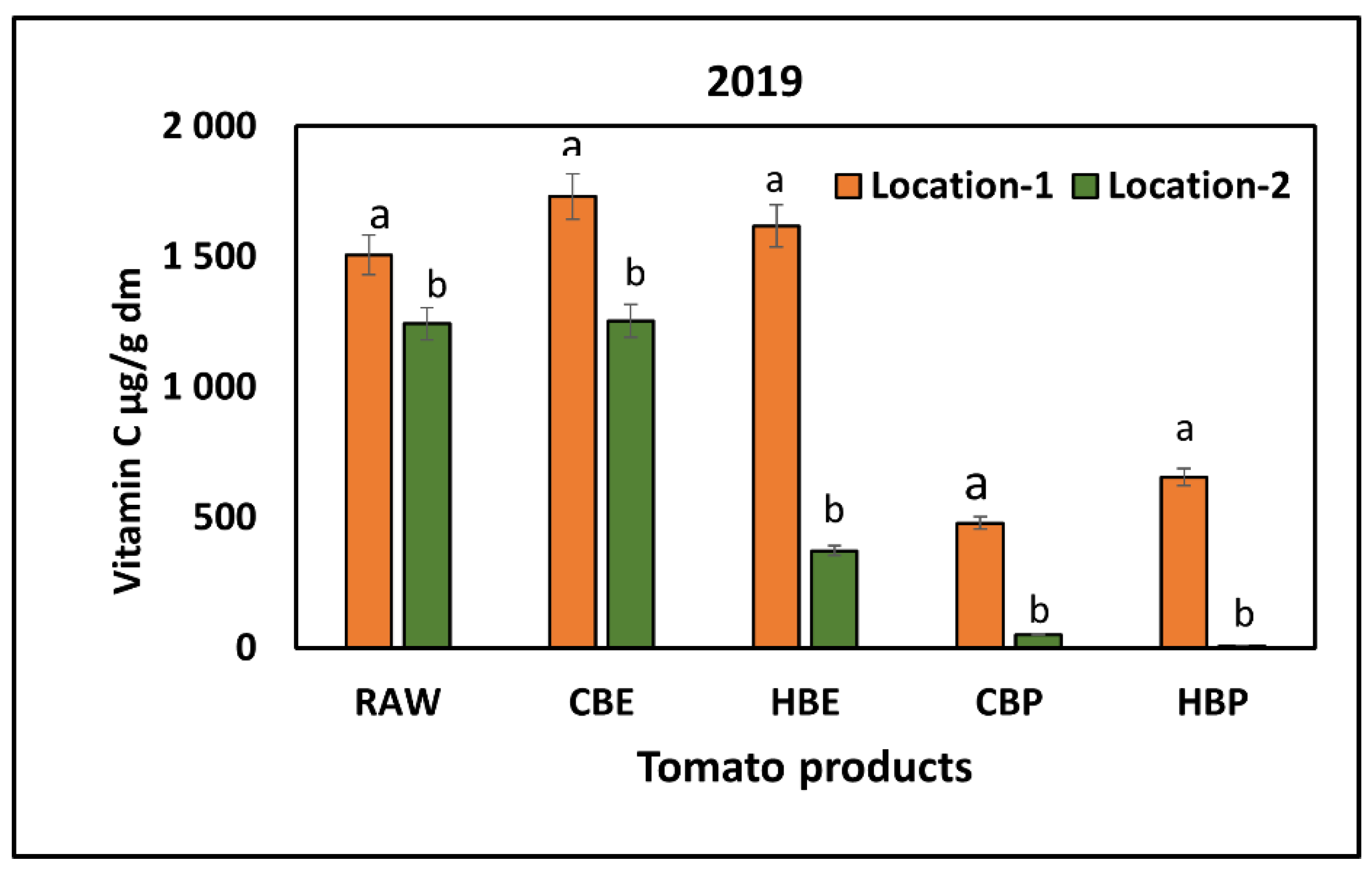
Despite the great variation between the two locations in the environmental factors, the raw materials used for juice processing showed no significant difference in the concentration of vitamin C in between the raw materials from the two locations in 2018. In 2019, the seasonal variation, especially the rainfall 3 weeks before the harvest in location-1 caused the vitamin C content to be significantly higher in raw tomato (p>0.05) as compared to that determined in 2018 (Figure 7). From these results it seems that high water supply prior to the harvest is necessary to increase the accumulation of the water-soluble vitamin in tomato fruits. The vitamin C content of raw tomatoes obtained from the cultivation locations that ranged between 1140 and 1508µg. g-1 dry matter. This range is close to the range recorded for L-ascorbic acid content in ripe fruits of some other cultivars [43].
As being sensitive to heat and molecular oxygen, substantial loss was expected for vitamin C as a function of thermal processing. In both cultivation seasons, the concentration of the vitamin C increased significantly (P<0.05) in the juice from CBE of tomato cultivated in location-1. The increase is most probably due to the removal of peel and seed fractions, which have fewer amounts of vitamin C, while in 2019 such an increase was observed only in location-1, in which the water supply was high. Surprisingly, the HBE in the relatively dry and worm cultivation season 2018 resulted in a 100% loss of vitamin C in juice and pomace produced from tomatoes harvested in both locations revealing the great decrease in the stability of the vitamin to a high-temperature thermal extraction. The same hold true for the pomace from CBE. The decreasing trend differed in 2019, in which the precipitation was higher than in 2018. The seasonal variation of abiotic factors caused a remarkable change in the stability of vitamin C during the thermal extraction process, in both locations particularly in location-1. The vitamin stability towards HBE was significantly higher in juice and pomace of tomato from location-1 as compared to that observed for the same products from location-2. Concentration of vitamin C was two folds, and five folds higher in juice and pomace from HBE than that determined in the same products of tomato from location-2 respectively in 2019 (P<0.001). A loss of 80% in vitamin C has been reported [44] during the preparation of puree from red ripe tomato grown under normal outdoor cultivation conditions
In the present work, we observed that the dramatic loss (100%) in 2018 and highly significant decrease took place in tomato products except juice from CBE in 2019, associated with the reduced amounts of water available (from precipitation and irrigation) for tomato plants especially in the dry and worm cultivation seasons and before the harvest of the crop.
Figure 8.
Content (µg.g-1 dm) of vitamin C in different juice and pomace products of tomato cultivated in 2019. RAW: raw tomato, CBE: cold-Break extracted juice, HBE: Hot-break extracted juice, CBP: cold-break pomace, HBP: hot.break pomace. The values for vitamin C in tomato from two locations with the same letter are statistically insignificant at p>0.05.
Figure 8.
Content (µg.g-1 dm) of vitamin C in different juice and pomace products of tomato cultivated in 2019. RAW: raw tomato, CBE: cold-Break extracted juice, HBE: Hot-break extracted juice, CBP: cold-break pomace, HBP: hot.break pomace. The values for vitamin C in tomato from two locations with the same letter are statistically insignificant at p>0.05.
In specific studies [45,46,47], the stability of vitamin C has been ascribed to the low or high activity of ascorbic acid oxidase in tomatoes, while other study [48] correlated the vitamin stability to activity and concentration of peroxidase enzymes in tomato juice. Another possible reason for the unchanged level of vitamin C in juices is the high activity of stabilizing and/or regenerating enzymes such as mono-dehydro-ascorbic acid reductase, catalase, and superoxide dismutase, the enzymes catalyzing regeneration of L-ascorbic acid and providing high antioxidative defense against its oxidation [49,50]. On other hand, the dramatic decrease observed in the concentration of vitamin C, especially in juice and pomace from HBE might associate with heat-assisted release of some degrading biochemical factors bound to the fruit skin and endosperm of the seeds [50]. Three peroxidase isoenzymes have been isolated from the cell walls and plasma membranes of tomato fruit and characterized [51]. Peroxidase activity has been reported to develop in the micropylar region of the endosperm of imbibed tomato seeds [52]. These enzymes have been reported to be relatively heat stable, chemically or thermally eluted, and able to oxygenize ascorbic acid. Abiotic factors such as high air temperature have been reported to inhibit recycling of ascorbic acid [53] and intensive UV and radiation from sunlight can reduce the content and stability of bioactive compounds including vitamin C in tomatoes [54]. All the above-mentioned biotic factors can be impacted by the climate variables of the cultivation season and prior to the harvest of tomato fruits.
4. Conclusions
The results obtained from this study provided new data about how the climate variables, particularly 3 weeks before the harvest, and seasonal variations in different cultivation locations affect the content of phytonutrients and their stability during postharvest processing of tomato juice. The stability and degradation of phytochemicals can be significantly affected by the seasonal variation and the abiotic factors of the cultivation location particularly air temperature and precipitation 3 weeks before harvest. The increased global warming and water deficiency in tomato cultivation territories may stand beyond the low stability of phytonutrients in tomato products making it necessary to take into consideration the interaction between abiotic factors during the cultivation period and the type of technological processes and also to select tomato cultivars that have a good adaptation to climate changes in order to produce tomato products with outstanding quality.
Author Contributions
H.G. Daood: Supervision, Writing original draft, Correspondence Sz Ráth and A. Abushita Analysis, Methodology, M. Máté: Data curation, Investigation, L. Helyes.: Conceptualization, Supervision. All authors have read and agreed to the published version of the manuscript.
Funding
This work was supported by the Flagship Research Groups Programme of the Hungarian University of Agriculture and Life Sciences.
Data Availability Statement
All the data are incorporated in the manuscript.
Conflicts of Interest
The authors declare no conflicts of interest.
Abbreviations
The following abbreviations are used in this manuscript:
| WS | Water supply |
| CBE | Cold-Break Extraction |
| HBE | Hot-Break Extraction |
| α-Toc | alpha-tocopherol |
| α-TocHQ | alpha tocopherol hydroquinone |
| α-TocES | alpha tocopherol ester |
References
- Giovannucci, E.T. Tomatoes, Tomato-Based Products, Lycopene, and Cancer: Review of the Epidemiologic Literature. J. Natl. Canc. Inst. 1999, 91, No. 4, February 17.
- Gammone, M. A.; Riccioni, G.; D’Orazio, N. Carotenoids: potential allies of cardiovascular health? Food Nutr. Res. 2015, 59: 26762 - 26772.
- Rao, A.V.; Rao, L.G. Carotenoids and human health. Pharmacol. Res. 2007, 55, 207-216.
- George, S.A.; Brat, P.; Alter, P.; Amiot, M. J. Rapid Determination of Polyphenols and Vitamin C in Plant-Derived Products. J. Agric. Food Chem. 2005, 53, 1370-1373.
- Moreno, S.; Scheyer, T.; Romano, C. S.; Vojnov, A.’N.A. Antioxidant and antimicrobial activities of rosemary extracts linked to their polyphenol composition Free Radic. Res. 2006, 40, 223–231.
- Lenucci, M.S.; Cadinu, D.; Taurino, M.; Piro, G.; Dalessandro, G. Antioxidant composition in cherry and high-pigment tomato cultivars. J. Agric. Food Chem. 2006, 54, 2606-2613.
- Ilahy, R.; Hdider, C.; Lenucci, M.S.; Tlili, I.; Dalessandro, G. Antioxidant activity and bioactive compound changes during fruit ripening of high-lycopene tomato cultivars. J. Food Compos. Anal. 2011, 24, 588-595.
- Meulebroek L.V.; Vanhaecke L.; De Swaef T.; Steppe K.; De Brabander H. U-HPLC-MS/MS to quantify liposoluble antioxidants in red-ripe tomatoes, grown under different stress levels. J. Agric. Food Chem, 2012, 60, 566-573.
- Krebbers, B.; Master, A.M.; Hoogerwerf, S.W. Combined high-pressure and thermal treatments for processing of tomato puree: evaluation of microbial inactivation and quality parameters. Innov. Food Sci. Emerg. Technol. 2003, 4, 377-385.
- Goodman C.L.; Fawcett S.; Barringer S.A. Flavour, viscosity, and color analyses of hot and cold break tomato juices. J. Food Sci. 2002, 67, No.1.
- Capanoglu, E.; Beekwilder, J.; Boyacioglu, D.; Hall, R.; de Vos, R. Changes in antioxidant s and metabolite profile during the production of tomato paste J. Agric. Food Chem. 2008, 56, 964-973.
- Krebbers, B.; Master, A.M.; Hoogerwerf, S.W. Combined high-pressure and thermal treatments for processing of tomato puree: evaluation of microbial inactivation and quality parameters. Innov. Food Sci. Emerg. Technol. 2003, 4, 377-385.
- Illés, G.; Fonyó T.; Pásztor, L.; Bakacsi ZS.; Laborczi, A. Agroclimate 2 project of compilation of digital soil-type map of Hungary, Erdészettudomány Közlemények (Forestry Science Communications). 2016, 6, 17-24.
- Nemeskéri, E.; Horváth, K.Z, ; Andryei,B.; Ilahy, R.; Takács,S.; Neményi, A.; Pék, Z.; Helyes, L. Impact of plant growth-promoting rhizobacteria inoculation on the physiological response and productivity traits of field-grown tomatoes in Hungary. Horticulturae 2022,8, no. 641.
- Bulgan, A.; Horváth, K.Z.; Duah, S.A.; Takács, S.; ÉgeI, M.; Szuvandzsiev, P.; Neményi, A. Use of plant growth promoting rhizobacteria (PGPRs) in the mitigation of water deficiency of tomato plants (Solanum lycopersicum L.). J. Centr. Eur. Agric. 2021, 22, 167-177.
- Kruk, J.; Szymanska, R.; Krupinska, K. Tocopherol quinone content of green algae and higher plants revised by a new highly sensitive fluorescence detection method using HPLC–Effects of high light stress and senescence. J. Plant Physiol. 2008, 165, 1238–1247. [CrossRef]
- Daood, H.G.; Biacs, P.A.; Dakar, M.; Hajdú, F. Ion-pair chromatography and photo mode-array detection of vitamin C and organic acids. J. Chromatogr.. Sci. 1994, 32, 481-487.
- Daood, H. G.; Ráth, Sz.; Palotás, G.; Halász, G.; Hamow, K.; Helyes L. Efficient HPLC separation on a core C30 column with MS2 characterization of isomers, derivatives, and unusual carotenoids from tomato products. J.Chromatogr. Sci., 60, 336-347.
- Daood, H.G.; Biacs. P.A. Simultenous determination of Sudan dyes and carotenoids in red pepper and tomato products by HPLC. J. Choromatogr. Sci.2005, 43, 461-465.
- Hsu, K.C.; Tan, F. J.; Chi, H.J. Evaluation of microbial inactivation and physiochemical properties of pressurized tomato juice during refrigerated storage. LWT. 2008, 41, 367-375.
- Schwartz, K.; Bertelsen, G.; Nissen, L.R.; gardner, P.T.; Heinonen, M.I.; Hopia, A.; Huynh-Ba, T.; Lambelet, P.; McPhail, D.; Skibsted, L.H.; Tijburg, L. Investigation of plant extracts for the protection of processed foods against lipid oxidation. Comparison of an antioxidant assay based on radical scavenging, lipid oxidation, analysis of the principal antioxidant compounds. Eur. Food Res.Technol. 2001, 212, 1-42.
- Bramely, P.M. Regulation of carotenoid formation during tomato fruit ripening and development. J. Exp. Bot. 2002, 53, 2107.2113.
- Deli, J.; Osz, E. Carotenoid 5,6-, 5,8- and 3,6-epoxides. Arkivoc. 2004, 7, 150-168.
- Gama, J. J. T.; Tadiotti A.C.; de Sylos C.M. Comparison of carotenoid content in tomato, tomato pulp, and ketchup by liquid chromatography. Alim. Nutr. ,Araraquara. 2006, 17, 353-358.
- Fanasca, S.; Colla, G.; Maiani G.; Venneria, E.; Rouphael, E.; Y. Azzini, E.; Saccardo, F. Changes in Antioxidant Content of Tomato Fruits in Response to Cultivar and Nutrient Solution Composition. J. Agric. Food Chem. 2006, 54, 12, 4319–4325.
- Sharma, S.K.; Maguer, M.L Kinetics of lycopene degradation in tomato pulp solids under different processing and storage conditions. Food Res. Int. 1996, 29, 309-315.
- Martinéz-Hernández, G.B.; Boluda-Aguilar, M.; Taboada-Rodréguez, A.; Soto-Jover, S.; Marín-Iniesta, F.; López Gómez, A. Processing, packaging and storage of tomato products: Influence on the lycopene content. Food Eng. Rev. 2016, 8, 52-75.
- Temitope, A.O.; Eloho, A.P.; Olubunmi I. D. lycopene content in tomatoes (Lycopersicon esculentum Mill): Effect of thermal heat and its health benefits. Fresh Produce. 2009, 3, 40-43.
- Mayeaux, M.; Xu, Z.; King, I.M.; Prinyawiwatkul, W. Effect of cooking conditions on the lycopene content in tomatoes. J. Food Sci. 2006, 71, 461-464.
- Toor, R.K.; Savage, G.P. Antioxidant activity in different fractions of tomatoes. Food Res. Int. 2005, 38, 487-494.
- Chandra, H.M.; Ramalingam, S. Antioxidant potentials of skin, pulp and seed fractions of commercially important tomato cultivars. Food Sci.Technol. 2011, 20, 15-21.
- Vinha, A. F.; Alves, R. C.; Barreira S.V.P.; Castro A.; Costa, A.S.G.; Olivieira, M.B.P.P. Effect of peel and seed removal on the nutritional value and antioxidant activity of tomato (Lycopersicon esculentum L.) fruits. LWT. 2014, 55, 197-202.
- Angaman, D. M.; Renato, M.; Azcón-Bieto, J.; Boronat, A. Oxygene consumption and lipoxygenase in isolated tomato fruit chromoplasts, J. Plant Sci. 2014, 2, 5-8.
- Urbonaviciene, D.; Viskelis, P.; Viskelis, J.; Jankauskiene, J.; Bobinas, C. Lycopene and β-carotene in non-blanched and blanched tomatoes. J. Food Agric. Environ. 2012,10, 142-146.
- Tonucci, L. H; Holden, J. M.; Beecher, G. R.; Khachik, F.; Davis C.S.; Mulokozi, G. Carotenoid content of thermally processed tomato-based food products. J. Agric. Food Chem. 1995, 43, 579-586.
- Nascimento, A.A. G.; Vasconcelos, A.G.; Souza, G.; Oliveira, A.; de Souza de Almeida Leite G.J.R.; Pintado, M. Bioavailability, anticancer potential, and chemical data of lycopene: an overview and technological prospect ing.” Antioxidants 2022, 11, no. 360.
- D’Evoli, l.; Lombardi-Boccia, G.; Lucarini, M. Influence of heat treatments on carotenoid content of cherry tomatoes. Foods, 2013, 2, 352-363.
- Seybold, C.; Fröhlich, K.; Bitch, R.; Otto, K.; Böhm, V. Change in content of carotenoids and vitamin E during tomato processing. J. Agric. Food Chem. 2004, 52, 7005-7010.
- Lin, C.H.; Chen, B.H. Stability of carotenoids in tomato juice during storage. Food Chem. 2005, 90, 837-846.
- Gharbi, S.; Renda, G.; La Barbera, L.; Amri, M.; Messina, C.M.; Santulli, A. Tunisian tomato by-products, as a potential source of natural bioactive compounds. Nat. Prod. Res. 2017, 31, 626-631.
- Quadrana, L; Almeida, J.; Otalza, S.N.; Duffy, T.; Corredo da Silva, J.V.; de Godoy F.; Asis, F.; Bermúdez, L.; Fernie, A.R.; Carrari, F.; Rossi, M. Transcriptional regulation of tocopherol biosynthesis in tomato. Plant Mol. Biol. 2013., 81, 309-325.
- Abushita, A.A.; Daood, H.G.; Biacs, P. Change in carotenoids and antioxidant vitamin in tomato as a function of varietal and technological factors. J. Agric. Food Chem. 2000, 48, 2075-2081.
- Chanforan, C.; Loonis, M.; Mora, N.; Caris-Veyrat, C.; Dufour, C. The impact of industrial processing on health-beneficial tomato microconstituents. Food Chem. 2012, 134, 1786-1795.
- Yahia, E.M.; Contreras-Padilia, M.; Gonzalez-Aguilar, G. The ascorbic acid content in relation to ascorbic acid oxidase activity and polyamine content in tomato and bell pepper fruits during development, maturation, and senescence. LWT, 2001, 34, 452-457.
- Abdelgawad, K.F.; El-Mogy, M.M.; Mohamed, M.I.A.; Garchery, C.; Stevens, R. Increasing ascorbic acid and salinity tolerance of cherry tomato plants by suppressed expression of the ascorbate oxidase gene. Agronomy, 2019, 9, 51-64.
- Munyaka, A.W.; Makule, E.E.; Oey, I.; Loey, A.V.; Hendrickx, M. Thermal stability of L-ascorbic acid and ascorbic acid oxidase in Broccoli. J. Food Sci. 2010, 75, C336-C340.
- Anthon, G. E.; Sekine, Y.; Watanabe, N.; Barrett, D.M. Thermal inactivation of pectin methylesterase, polygalacturonase and peroxidise in tomato juice. J. Agric. Food Chem, 2002, 50, 6153-6159.
- Davey, M. W.; Montagu, M.V; Inzé, D.; Sanmartin, M.; Kanellis, A.; Smirnoff, N.; Benzie, I. J. J.; Strain, J., Favell, D., Fletcher, J. Plant L-ascorbic acid: chemistry, function, metabolism, bioavailability, and effects of processing. J. Sci. Food Agric. 2000, 80, 825-860.
- Stevens, R.; Page, D.; Gouble, B.; Garchery, C.; Zamir, D.; Causs, M. Tomato fruit ascorbic acid content is liked with monodehydroascorbate reductase activity and tolerance to chilling stress. Plant Cell Environ. 2008, 31, 1086-1096.
- Melliduo, I.; Keulemans, J.; Kanellis, A.K.; Davey, M.W. Regulation of fruit ascorbic acid concentrations during ripening in high and low vitamin C tomato cultivars. BMC Plant Biol. 2012, 12, 239-252.
- Andrews, J.; Adams, S.R.; Burton, K.S.; Evered, C.E. Subcellular localization of peroxidase in tomato fruit skin and the possible implications of the regulation of fruit growth. J. Exp. Bot. 2002, 53, 1853-1691.
- Morohashi, Y. Peroxidise activity develops in the micropylar endosperm of tomato seeds prior to radical protrusion. J. Exp. Bot. 2002, 53, 1643-1650.
- Massot, C.; Bancel, D.; Lauri, F.L.; Truffault, V.; Baldet, P.; Stevens, R., Gautier, H. High-temperature inhibits recycling and light stimulation of the ascorbate pool in tomato despite increased expression of biosynthesis genes. PloS ONE, 2013, 8, e84474.
- Jagadeesh, S.L.; Charles, M.T.; Gariepy, Y.; Goyette, B.; Raghavan, G.S.V.; Vigneault, C. Influence of postharvest UV-C hormesis on the bioactive components of tomato during post-treatment handling. Food Bioproc. Technol. 2011, 4, 1463-1472.
Figure 1.
HPLC profile of tomato carotenoids on C-30, core, 3µ, 150 x 4.6 mm column and gradient elution of TBME in methanol containing 2% water.Peak identification, 1: lutein, 2,3: β-carotene di-epoxides, 4: β-carotene mono-epoxides: 5,6: Lycopene diepoxides, 7: z-dimethoxy lycopene , 8: Lycopene monoepoxide, 9: lycoxanthin, 10: z-β-carotene, 11: β-carotene, 12: 15-z- lycopene, 13: neurosporene, 14-z-lycopene, 15: γ-carotene, 16: 9-z-lycopene, 17: all-trans-lycopene.
Figure 1.
HPLC profile of tomato carotenoids on C-30, core, 3µ, 150 x 4.6 mm column and gradient elution of TBME in methanol containing 2% water.Peak identification, 1: lutein, 2,3: β-carotene di-epoxides, 4: β-carotene mono-epoxides: 5,6: Lycopene diepoxides, 7: z-dimethoxy lycopene , 8: Lycopene monoepoxide, 9: lycoxanthin, 10: z-β-carotene, 11: β-carotene, 12: 15-z- lycopene, 13: neurosporene, 14-z-lycopene, 15: γ-carotene, 16: 9-z-lycopene, 17: all-trans-lycopene.
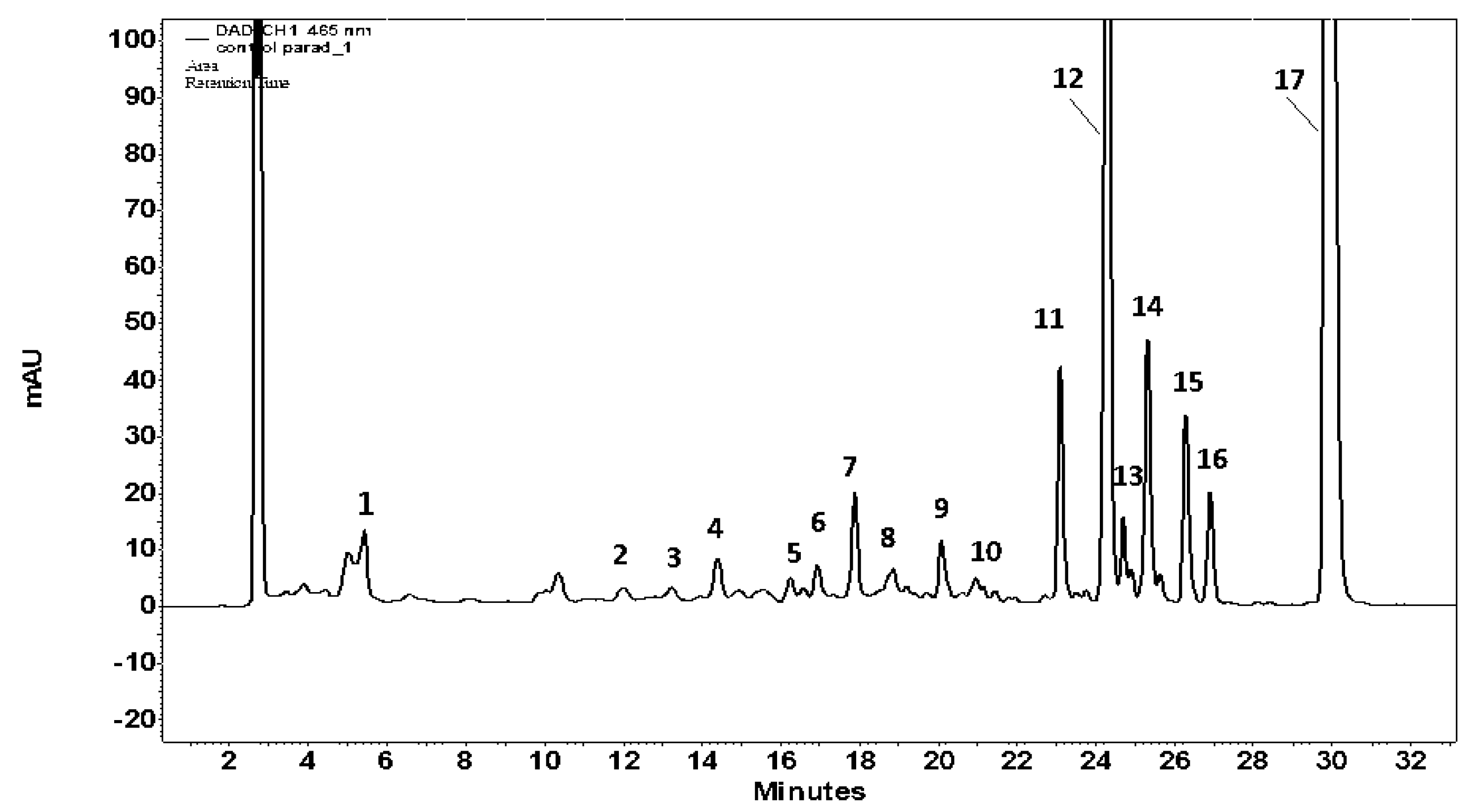
Figure 2.
Content (µg g-1 dm) of total carotenoids in different juice and pomace products of tomato cultivated in 2018. The values of two locations with the same letter are statistically insignificant (p>0.05). F: raw tomato, CBE: Cold-break extraction, HBC: hot-break extraction, CBP: cold-break pomace, HBP: hot-break pomace.
Figure 2.
Content (µg g-1 dm) of total carotenoids in different juice and pomace products of tomato cultivated in 2018. The values of two locations with the same letter are statistically insignificant (p>0.05). F: raw tomato, CBE: Cold-break extraction, HBC: hot-break extraction, CBP: cold-break pomace, HBP: hot-break pomace.
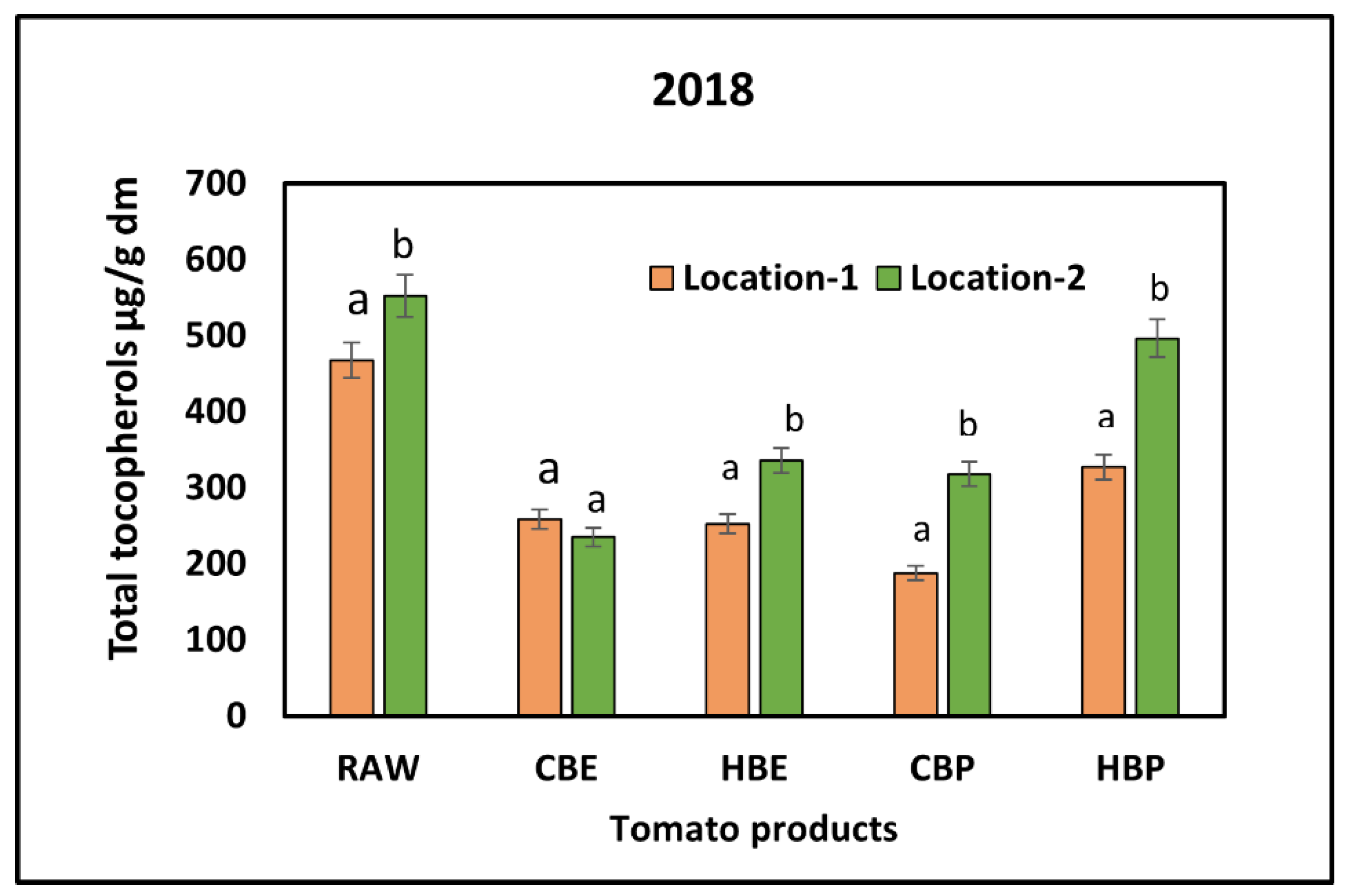
Figure 3.
Content (g g-1 dm) of total carotenoids in different juice and pomace products from tomato cultivated in 2019. The values of two locations with the same letter are statistically insignificant (p<0.05). F: raw tomato, CBE: Cold-break extraction, HBC: hot-break extraction, CBP: cold-break pomace, HBP: hot-break pomace.
Figure 3.
Content (g g-1 dm) of total carotenoids in different juice and pomace products from tomato cultivated in 2019. The values of two locations with the same letter are statistically insignificant (p<0.05). F: raw tomato, CBE: Cold-break extraction, HBC: hot-break extraction, CBP: cold-break pomace, HBP: hot-break pomace.
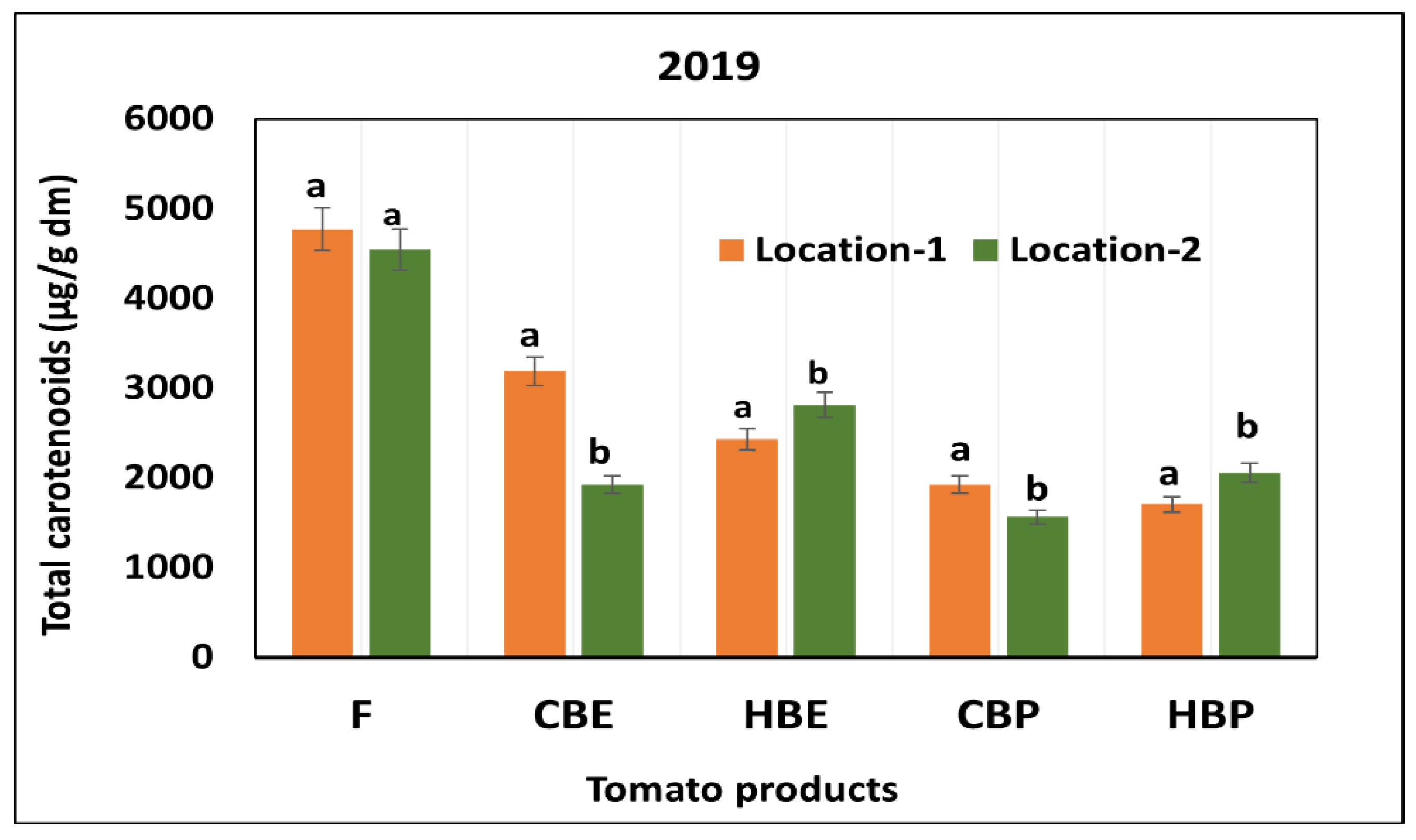
Figure 4.
HPLC profile of tomato tocopherols separated on Nucleosil C18, ec, 3µ, 250 x 4.6 mm column with gradient elution of methanol, 2-propanol, acetonitrile (10:55:35) in 8% water in methanol, 1: γ-tocopherol, β-tocopherol, 3: α-tocopherl hydroquinone, 4: α-tocopherol, 5:, : α-tocopherol acetate, 6: unidentified, 7: α-tocopherol ester.
Figure 4.
HPLC profile of tomato tocopherols separated on Nucleosil C18, ec, 3µ, 250 x 4.6 mm column with gradient elution of methanol, 2-propanol, acetonitrile (10:55:35) in 8% water in methanol, 1: γ-tocopherol, β-tocopherol, 3: α-tocopherl hydroquinone, 4: α-tocopherol, 5:, : α-tocopherol acetate, 6: unidentified, 7: α-tocopherol ester.
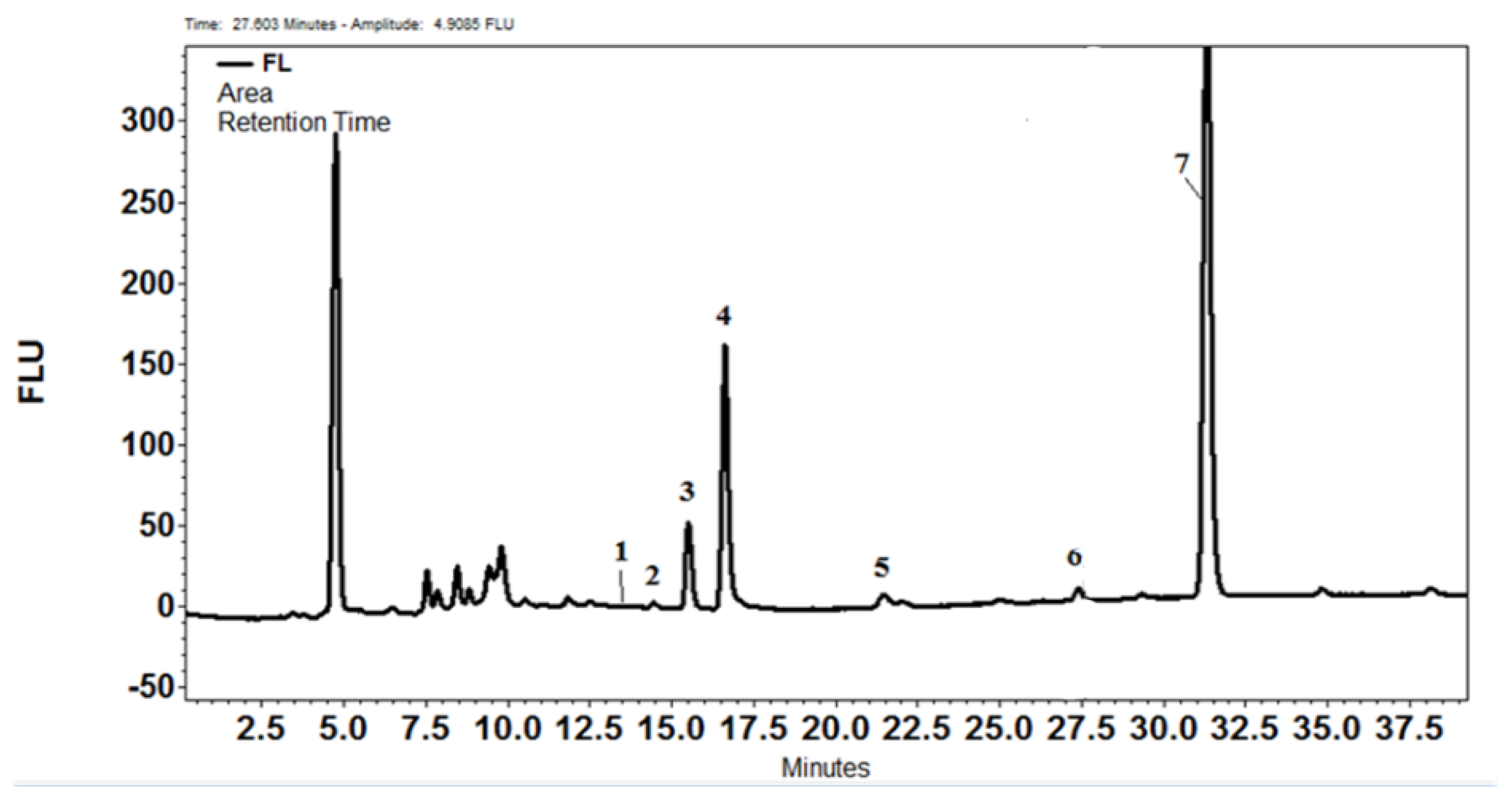
Figure 5.
Content (µg.g-1 dm) of total tocopherols in different juice and pomace products of tomato cultivated in 2018. RAW: raw tomato, CBE: cold-Break extracted juice, HBE: Hot-break extracted juice, CBP: cold-break pomace, HBP: hot.break pomace. The values for tocopherols of tomato from two locations with the same letter are statistically insignificant with p>0.05.
Figure 5.
Content (µg.g-1 dm) of total tocopherols in different juice and pomace products of tomato cultivated in 2018. RAW: raw tomato, CBE: cold-Break extracted juice, HBE: Hot-break extracted juice, CBP: cold-break pomace, HBP: hot.break pomace. The values for tocopherols of tomato from two locations with the same letter are statistically insignificant with p>0.05.
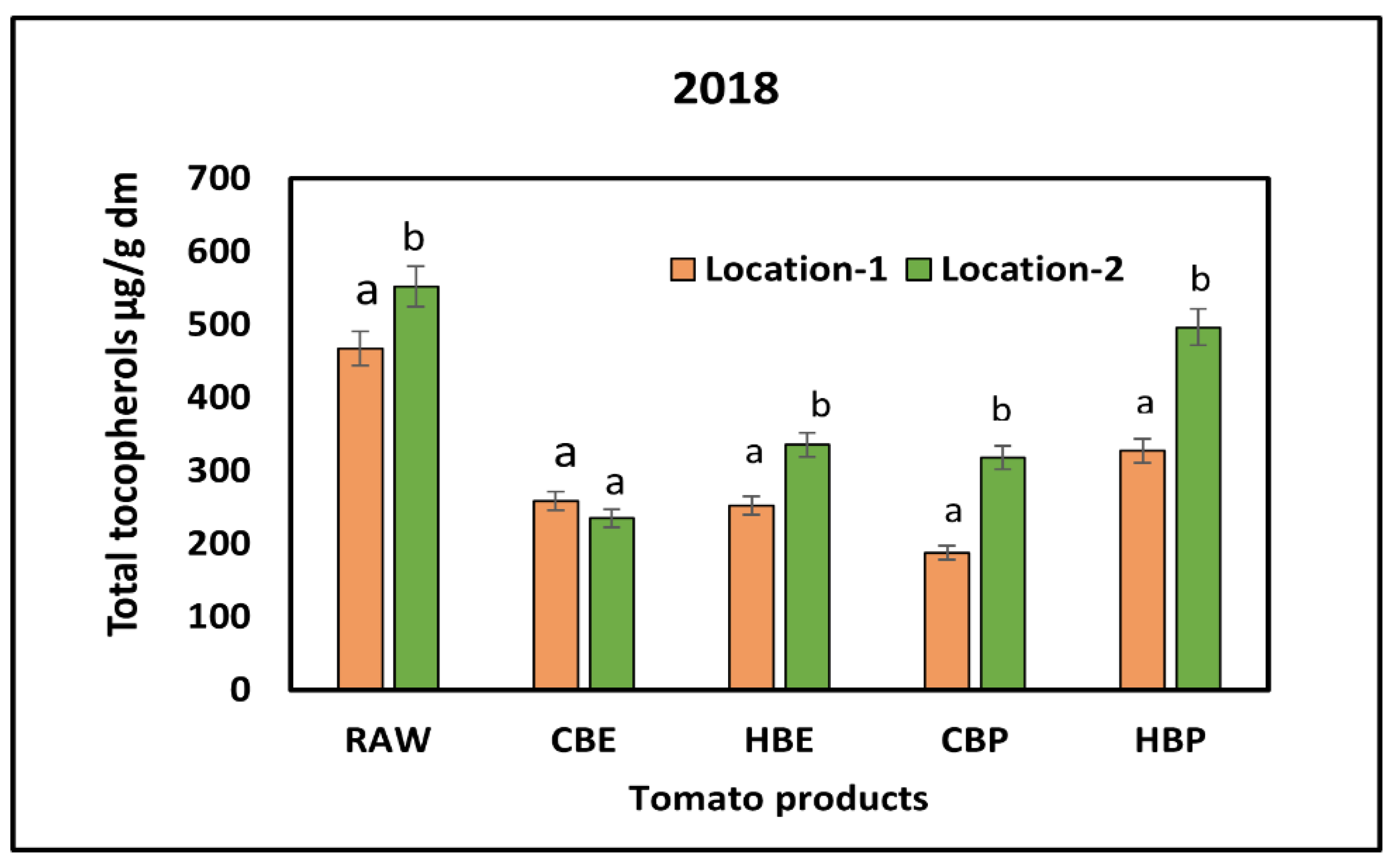
Figure 6.
Content (µg.g-1 dm) of total tocopherols in different juice and pomace products of tomato cultivated in 2019. RAW: raw tomato, CBE: cold-Break extracted juice, HBE: Hot-break extracted juice, CBP: cold-break pomace, HBP: hot.break pomace. The values for tocopherols of tomato from two locations with the same letter are statistically insignificant with p>0.05).
Figure 6.
Content (µg.g-1 dm) of total tocopherols in different juice and pomace products of tomato cultivated in 2019. RAW: raw tomato, CBE: cold-Break extracted juice, HBE: Hot-break extracted juice, CBP: cold-break pomace, HBP: hot.break pomace. The values for tocopherols of tomato from two locations with the same letter are statistically insignificant with p>0.05).
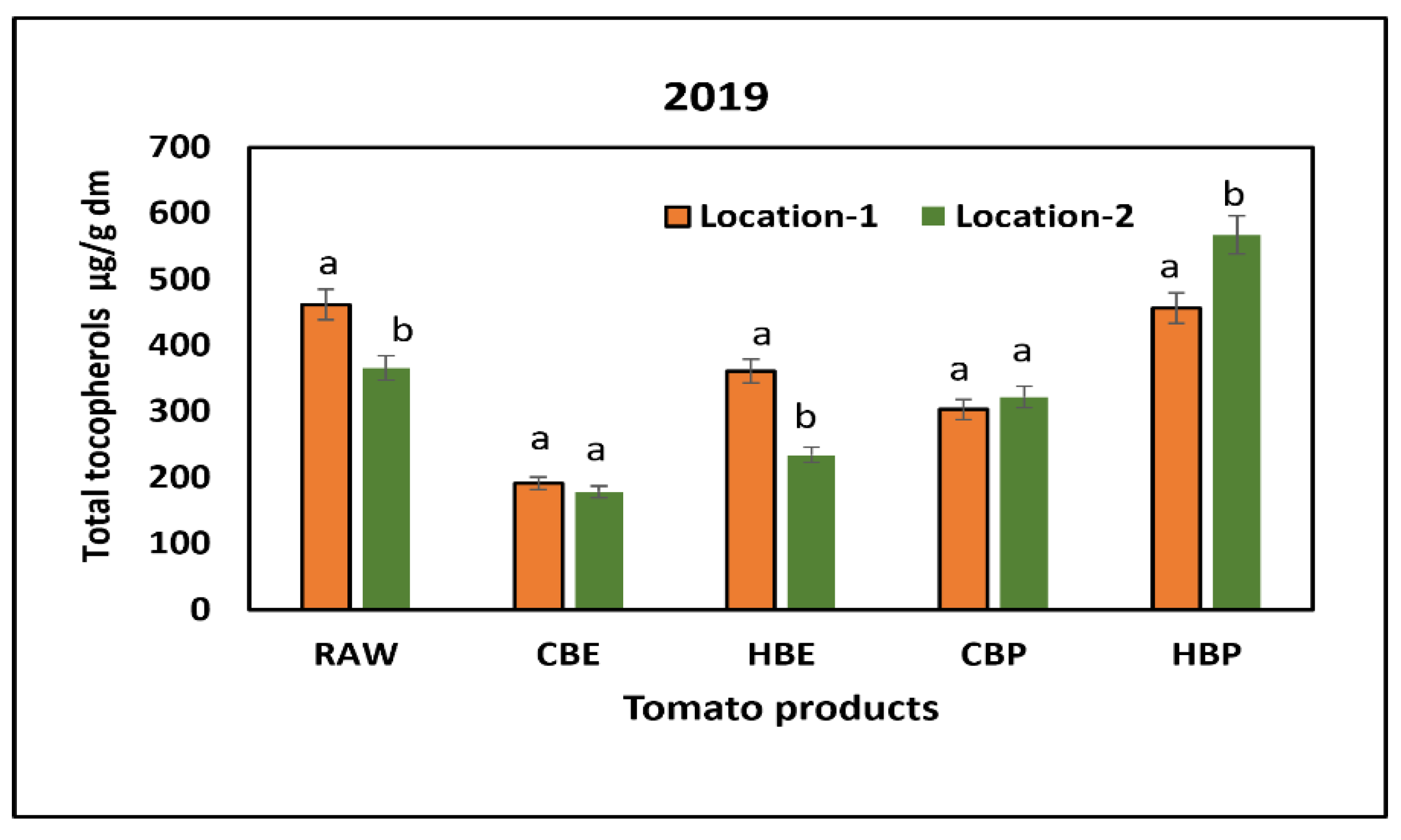
Figure 7.
Content (µg.g-1 dm) of vitamin C in different juice and pomace products of tomato cultivated in 2019. RAW: raw tomato, CBE: cold-Break extracted juice, HBE: Hot-break extracted juice, CBP: cold-break pomace, HBP: hot.break pomace. The values for vitamin C in tomato from two locations with the same letter are statistically insignificant at p>0.05.
Figure 7.
Content (µg.g-1 dm) of vitamin C in different juice and pomace products of tomato cultivated in 2019. RAW: raw tomato, CBE: cold-Break extracted juice, HBE: Hot-break extracted juice, CBP: cold-break pomace, HBP: hot.break pomace. The values for vitamin C in tomato from two locations with the same letter are statistically insignificant at p>0.05.
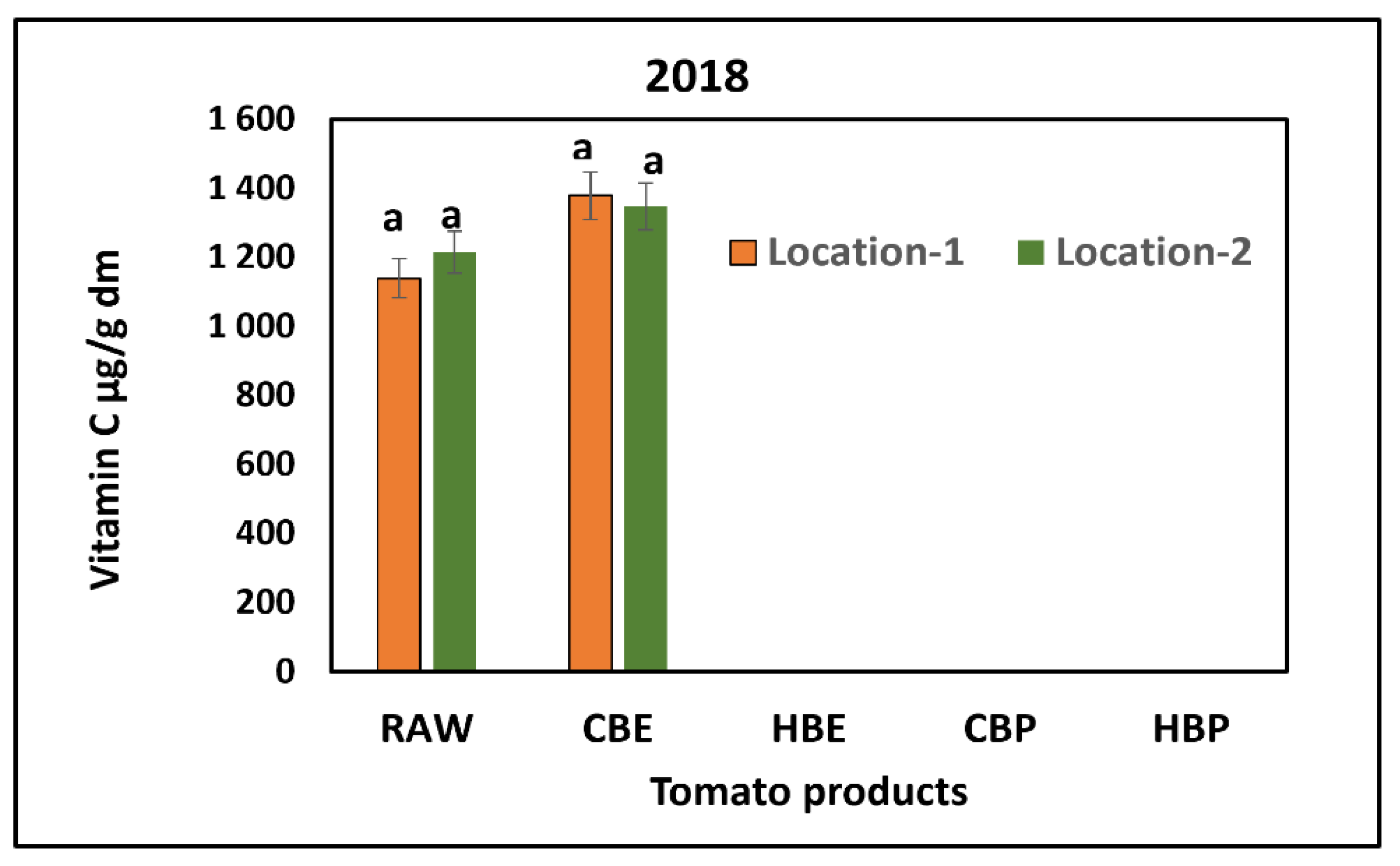

Table 1.
Meteorological data of Location-1and 2 during the growing seasons of 2018 and 2019.
| Regular Meteorological parameters | Location-1 | Location-2 | ||
|---|---|---|---|---|
| 2018 | 2019 | 2018 | 2019 | |
| Average temperature (°C) during the growing seasons | 21.6 | 21.3 | 22.3 | 22.5 |
| Average temperature (°C) 3 weeks before harvest | 23.8 | 23.6 | 25.5 | 24.6 |
| Mminimum temperature (°C) 3 weeks before harvest | 17.1 | 16.9 | 19.4 | 17.3 |
| Days in excess at 30°C during the growing season | 28 | 44 | 34 | 57 |
| Days in excess at 30°C 3 weeks before harvest | 18 | 13 | 21 | 15 |
| Precipitation (mm) during the growing seasons | 304.6 | 278.3 | 126.9 | 256.5 |
| Precipitation (mm) 3 weeks before harvest | 55.9 | 23.0 | 4.5 | 5.9 |
Table 2.
Carotenoid content (µgg-1 dm) of different products from juice processing of tomato cultivated in different locations having different climate parameters in 2018. CBE: cold break extracted juice, HBE: hot-break extracted juice, CBP: cold-break extracted pomace, HBP: hot-break extracted pomace.
Table 2.
Carotenoid content (µgg-1 dm) of different products from juice processing of tomato cultivated in different locations having different climate parameters in 2018. CBE: cold break extracted juice, HBE: hot-break extracted juice, CBP: cold-break extracted pomace, HBP: hot-break extracted pomace.
| Carotenoids | Tomato products | ||||
|---|---|---|---|---|---|
| Raw | CBE | HBE | CBP | HBP | |
| Location-1 | |||||
| Lycopene | 4018.3±131a | 2584± 65a | 1887±67a | 829±37a | 913 ± 120a |
| 9Z-lycopene | 13.5 ± 2.5a | 17.3 ± 1.3a | 16.4 ± 2.4a | 16.5 ± 4.2a | 3.5 ± 0.6a |
| Ɣ-carotene | 14.6 ± 0,8a | 12.2 ± 1.9a | 8.0 ± 0.8a | 5.2 ± 0.6a | 5.2 ± 0.6a |
| 13Z-lycopene | 31.2 ± 3.4a | 165.7 ± 5.0a | 113.8 ± 6.3 | 192.8 ± 10.8a | 33.5 ± 5.7 |
| β-carotene | 52.1 ± 5.3a | 41.6 ± 2.2a | 32.9 ± 4.9 | 60.2 ± 2.9a | 53.2 ± 2.4a |
| Lycoxanthin | 56.2 ± 6.7a | 74.6 ± 3.9a | 53.9 ± 4.0a | 19.0 ± 1.1a | 20.3 ± 2.4a |
| Z-dimethoxy lycopene | 21.3 ± 2.0a | 27.5 ± 3,1a | 19.8 ± 2.1a | 14.3 ± 0.4a | 7.9 ± 0.6a |
| Z- Lycopene diepoxy | 7.8 ± 0,6a | 9.8 ± 2.4a | 6.8 ± 1.1a | 4.4 ± 0.2a | 2.9 ± 0.1a |
| Z-β-carotene epoxide | 40.6 ± 4.9a | 65.5 ± 6,0a | 44.3 ± 2.3a | 24.9 ± 0.6a | 16.7 ± 1.3a |
| Z-diepoxy β-carotene | 11.7 ± 1.3a | 20.2 ± 2.2a | 14.4 ± 0.9a | 8.9 ± 0.1a | 5.7 ± 0.5a |
| Z-diepoxy β-carotene | 12.7 ± 1.6a | 18.1 ± 0,3a | 12.6 ± 0.7a | 8.3 ± 0.1a | 5.1 ± 0.3a |
| Lutein | 16.2 ± 1.6a | 15.1 ± 0.7a | 13.6 ± 0.1a | 14.3 ± 1.1a | 14.3 ± 0.7a |
| Phytoene | 81.4 ± 11.4a | 110.5 ± 17.7a | 93.0 ± 3.3a | 48.7 ± 2.3a | 40.5 ± 2.1a |
| OH-phytoene | 16.0 ± 2.6a | 16.9 ± 3.1a | 11.6 ± 1.9a | 6.7 ± 0.8a | 4.7 ± 0.3a |
| Phytofluene | 46.6 ± 1.8a | 47.8 ± 4.5a | 43.8 ± 8,7a | 27.3 ± 4.7a | 22.5 ± 4.6a |
| OH-phytofluene | 4,1 ± 1.3a | 2.2 ± 02a | 2.4 ± 0.1a | 1.7 ± 0.1a | 1.1 ± 0.1 |
| Location-2 | |||||
| Lycopene | 3786±142a | 1104 ± 49b | 1543± 63b | 792 ± 39a | 1067±62a |
| 9Z-lycopene | 17.8 ± 1.1a | 7.7 ± 1.2b | 15.1 ± 1.9a | 3.0 ± 0.6b | 4.3 ± 0.5a |
| Ɣ-carotene | 16.7 ± 2.6a | 4.6 ± 0.1b | 8.8± 0.6a | 4.3 ± 0.1b | 5.7 ± 0.3a |
| 13Z-lycopene | 73.5 ± 9.3b | 99.8± 4.3b | 112.7 ± 3.6a | 61.7 ± 5.0b | 62.5 ± 6.4 |
| β-carotene | 61.7 ± 9.9a | 33.3 ± 0.7b | 40.9 ± 1.9a | 40.4 ± 1.9b | 56.8 ± 1.6a |
| Lycoxanthin | 117.7 ± 5.3b | 35.0 ± 0.2b | 48.0 ± 3.4a | 18.8 ± 0.6a | 27.3 ± 1.6b |
| Z-dimethoxy lycopene | 35.2 ± 1.1b | 18.8 ± 1.8b | 19.7 ± 1.7a | 9.4 ± 0.3b | 12.2 ± 0.3b |
| Z- Lycopene diepoxy | 11.9 ± 0.8b | 6.5 ± 1.7a | 7.5 ± 0.2a | 3.7 ± 0.4a | 4.8 ± 0.2b |
| Z-β-carotene epoxide | 68.7 ± 1.9b | 37.6 ± 1.3b | 45.6 ± 2.5a | 18.6 ± 1.0b | 23.4 ± 1.1b |
| Z-diepoxy β-carotene | 71.7 ± 5.7b | 44.3 ± 1.4b | 15.8 ± 1.2a | 22.5 ± 1.1b | 22.5 ± 1.0b |
| Z-diepoxy β-carotene | 75.9 ± 4.7b | 37.5 ± 0.9b | 14.0 ± 0.9a | 19.8± 0.8b | 23.2 ± 1.0b |
| Lutein | 21.0 ± 0.8b | 15.8 ± 0.3a | 21.5 ± 0.7b | 14.1 ± 0.3a | 21.3 ± 0.6b |
| Phytoene | 108.7 ± 2.4b | 88.5 ± 6.0a | 92.0 ± 0.4a | 46.7 ± 2.4a | 57.4 ± 1.5b |
| OH-phytoene | 31.6 ± 6.1b | 16.6 ± 0.7a | 14.4 ± 0.8a | 9.4 ± 1.5b | 9.3 ± 0.2b |
| Phytofluene | 69.1 ± 3.2b | 50.0 ± 0.5a | 54.4 ± 4.8a | 29.8 ± 1.5a | 37.9 ± 1.0b |
| OH-phytofluene | 7.2 ± 1.4b | 2.6 ± 0.4a | 2.3 ± 2.2a | 1.8 ± 0.1a | 1.3 ± 0.1 |
The values of each compound in products from location-1 and location-2 with the same letter are insignificantly different at p=0.05. CBE: cold-break-extracted juice, HBE: hot-break-extracted juice; CBP: cold break-extracted pomace, and HBE: hot-break-extracted pomace.
Table 3.
Carotenoid composition and content (µgg-1 dry weight) of different products from juice processing of tomato cultivated in different locations in 2019. CBE: cold-break extracted juice, HBE: hot-break extracted juice, CBP: cold-break extracted pomace, HBP: hot-break extracted pomace.
Table 3.
Carotenoid composition and content (µgg-1 dry weight) of different products from juice processing of tomato cultivated in different locations in 2019. CBE: cold-break extracted juice, HBE: hot-break extracted juice, CBP: cold-break extracted pomace, HBP: hot-break extracted pomace.
| Carotenoids | Tomato Products | ||||
|---|---|---|---|---|---|
| Raw | CBE | HBE | CBP | HBP | |
| Location-1 | |||||
| lycopene | 4165±266a | 2634.±150a | 2423±139a | 151.6±23.2a | 137±4.a |
| 9Z-lycopene | 20.0±2.8a | 23.5±4.4a | 13.2±0.8a | 16.0±0.3a | 8.2±1.1a |
| γ-carotene | 21.1±0.7a | 21.3±1.4a | 13.3±0.6a | 10.4±0.1a | 9.7±1.4 |
| 13Z-lycopene | 93.5±11.5a | 74.3±8.4a | 93.9±14.4a | 270.1±11.1a | 84.9±7.9a |
| β-carotene | 108.0±8.3a | 41.2±10.2a | 55.4±4.4a | 36.8±4.6a | 54.0±7.3a |
| lycoxanthin | 100.2±4.6a | 48.5±0.8a | 70.8±3.6a | 30.4±0.7a | 31.7±2.6a |
| Z- dimethoxy lycopene | 77.3±7.7 | 34.5±2.1a | 60.3±3.6a | 38.5±1.2a | 34.0±3.5a |
| Z-lycopene-diepoxide | 19.4±1.8a | 18.3±3.8a | 15.9±0.2a | 8.9±0.3a | 7.1±0.1a |
| Z-β-carotene epoxide | 149.4±11.0 | 78.7±11.7a | 127.7±6.4a | 77.5±2.0a | 71.2±6.9a |
| Z-β-carotene diepoxide | 46.7±2.9a | 26.6±3.7a | 39.0±2.0a | 23.7±0.6 | 21.1±1.3a |
| Z-β-carotene diepoxide | 37.5±2.6a | 23.7±1.8a | 31.6±1.5a | 19.5±0.3a | 17.0±0.7a |
| lutein | 19.4±0.6a | 19.8±3.7a | 13.6±0.5a | 13.9±0.4a | 14.0±1.3a |
| Phytoene | 151.4±7.1a | 122.0±13.7a | 98.8±4.9a | 67.8±3.0a | 62.4±9.8a |
| OH-phytoene | 36.4±0.9a | 18.2±2.3a | 19.4±1.1a | 13.8±1.2a | 9.8±1.7a |
| Phytofluene | 80.6±4.6a | 63.8±11.7a | 53.8±4.6a | 39.2±1.5a | 37.4±6.1a |
| Location-2 | |||||
| lycopene | 4055±274a | 1453±110b | 2105±76b | 121±39b | 152±5b |
| 9Z-lycopene | 25.7±5.3a | 10.1±0.6b | 14.8±0.5a | 30.4±2.8b | 17.1±0.9b |
| γ-karotin | 20.9±2.3a | 7.3±0.7 | 10.7±0.3b | 7.7±0.6 | 6.6±0.6b |
| 13Z-lycopene | 76.2±5.3a | 107.0±2.7b | 134.1±10.3b | 311.8±17.4b | 236.3±17.8b |
| β-carotene | 65.2±7.3b | 34.2±2.1b | 51.3±2.2a | 33.4±07a | 37.4±5.4b |
| lycoxanthin | 94.8±23.1a | 45.8±4.5a | 69.7±2.7a | 46.0±2.2b | 32.4±4.7a |
| Z- dimethoxy lycopene | 15.7±4.3b | 48.6±3.1b | 61.1±1.5a | 41.0±2.6a | 40.2±1.0b |
| Z-lycopene-diepoxide | 8.8±2.4b | 12.7±0.8b | 15.1±0.2a | 9.9±1.1a | 10.9±0.5b |
| Z-β-carotene epoxide | 30.0±8.5b | 102.1±6.5b | 128.3±2.8a | 81.7±3.5a | 87.8±1.3b |
| Z-β-carotene diepoxide | 9.8±2.6b | 31.1±2.3a | 39.2±1.0a | 25.6±0.7a | 28.8±1.3 |
| Z-β-carotene diepoxide | 8.0±2.4b | 25.9±1.5b | 31.4±0.8a | 19.8±0.5a | 23.8±0.4b |
| lutein | 27.2±2.4b | 9.8±1.5b | 12.8±0.9a | 12.2±1.1a | 14.4±1.2a |
| Phytoene | 122.6±13.2b | 92.0±4.0b | 119.9±1.4b | 113.7±2.6b | 95.3±11.2b |
| OH-phytoene | 13.7±5.3b | 16.7±1.6a | 12.6±0.4b | 15.6±08b | 9.6±1.2a |
| Phytofluene | 52.6±15.7b | 47.1±2.5a | 60.3±1.9a | 57.0±0.8b | 47.2±5.3b |
Table 4.
Effect of processing on the tocopherol content (µg g-1 dry matter) of juices and pomace from tomatoes cultivated in different locations having different climate parameters.
Table 4.
Effect of processing on the tocopherol content (µg g-1 dry matter) of juices and pomace from tomatoes cultivated in different locations having different climate parameters.
| Tocopherols | Tomato Products | |||||
|---|---|---|---|---|---|---|
| Raw | CBE | HBE | CBP | HBP | ||
| Location-1 (2018) | ||||||
| α-tocopherol | 208.5±9.4a | 116.1±9.1a | 108.1±13.4a | 96.5±4.5a | 115.4±5.1a | |
| α-tocopherol ES | 217.9±12.3a | 121.0±11.3a | 107.7±13.1a | 67.2±4.9a | 103.3±3.5a | |
| α-tocopherol HQ | 37.1±5.6a | 27.8±1.3a | 32.6±4.8a | 100.8±5.4 | 73.9±7.6a | |
| Ɣ-tocopherol | 3,4±0.2a | 2.3±0.3a | 2.9±0.4a | 13.7±3.8a | 16.7±1.2a | |
| Location-2 (2018) | ||||||
| α-tocopherol | 202.4±19,6a | 106.7±1,5a | 149.2±2,7b | 98.9±7.9a | 155.9±5.0b | |
| α-tocopherol ES | 243.3±11.3a | 103.4±1.0a | 158.4±1.3b | 93.3±5.6b | 156.0±4.5b | |
| α-tocopherol HQ | 95.0±5.1b | 21.3±0.2b | 23-9±2.1a | 157.6±5.1b | 116.3±3.8b | |
| Ɣ-tocopherol | 1.96±0,2b | 2.3±0.2a | 2.7±0.6a | 7.7±0.8b | 25.1±1.7b | |
| Location-1 (2019) | ||||||
| α-tocopherol | 294.1±11.1a | 157.2±4.0a | 138.6±6.8a | 133.7±5.4a | 154.9±10.9a | |
| α-tocopherol ES | 351.1±9.4a | 172.6±8.2a | 152.2±7.9a | 172.3±14.6a | 163.8±10.6 | |
| α-tocopherol HQ | 84.8±3.3a | 43.4±1.7a | 34.9±1.5a | 163.5±14.6a | 131.1±14.4a | |
| Ɣ-tocopherol | 3.5±0.3a | 2.4±0.2a | 2.07±0.2a | 48.2±0.3a | 13.4±0.9a | |
| Location-2 (2019) | ||||||
| α-tocopherol | 257.1±13.7b | 101.06±5.6b | 148.6±6.6a | 92.6±3.0b | 143.3±7.8a | |
| α-tocopherol ES | 279.8±6.7b | 119.4±6.4b | 161.6±6.8a | 68.8±6.9b | 114.7±8.3b | |
| α-tocopherol HQ | 82.3±2.0b | 22.2±1.2b | 42.3±2.0b | 196.5±7.6b | 146.1±14.1a | |
| Ɣ-tocopherol | 3.7±0.6a | 0.7±0.1b | 0.9±0.1b | 28.1±6.9b | 49.7±8.4b | |
CBE: cold break extracted-juice, HBE: hot break-extracted juice, CBP: cold break-extracted pomace, HBE: hot break- extracted pomace.. ES: fatty acid ester, HQ hydroquinone. The values of each compound from the two locations with the same letters are statistically insignificant at p<0.05.
Disclaimer/Publisher’s Note: The statements, opinions and data contained in all publications are solely those of the individual author(s) and contributor(s) and not of MDPI and/or the editor(s). MDPI and/or the editor(s) disclaim responsibility for any injury to people or property resulting from any ideas, methods, instructions or products referred to in the content. |
© 2025 by the authors. Licensee MDPI, Basel, Switzerland. This article is an open access article distributed under the terms and conditions of the Creative Commons Attribution (CC BY) license (http://creativecommons.org/licenses/by/4.0/).
Copyright: This open access article is published under a Creative Commons CC BY 4.0 license, which permit the free download, distribution, and reuse, provided that the author and preprint are cited in any reuse.


