

Submitted:
08 August 2025
Posted:
11 August 2025
You are already at the latest version
Abstract
This study focuses on the use of almond shell ash (ASA) obtained from agricultural waste through the pyrolysis process in concrete production while at the same time presenting an environmentally sustainable design. For this purpose, ASA was obtained from the Biomass Energy Facilities (BES) for use in concrete mixes. A total of 25 concrete series were prepared, including 1 control series. In these series, 8%, 10%, 12% silica fume (SF), 5%, 10% metakaolin (MK) and 1%, 3%, 5% and 7% ratios of ASA were chosen to be substituted by volume with cement. Fresh and hardened concrete tests were performed on the specimens. With the data obtained from the test results, performance evaluation was performed in the artificial neural network. Because of this evaluation, a mathematical model that predicts the concrete compressive strength with high accuracy was developed. To evaluate the effectiveness of the developed model, it was tested again on control specimens to confirm its accuracy and applicability. A life cycle assessment (LCA) was also performed. It is aimed to make a new contribution to the literature and practical application with the method to be developed because of the study and to pioneer future studies in this field. In addition, this study demonstrates to researchers that the use of agricultural waste types in concrete production can be further diversified to improve the environmental impact of concrete in the production process and contribute to sustainability Key Words: Almond shell ash; concrete; bioenergy; life cycle assessment; sustainability.
Keywords:
almond shell ash
; concrete
; bioenergy
; life cycle assessment
; sustainability
1. Introduction
Recently, negative impacts on ecosystems such as climate change, increased consumption of natural resources, and the greenhouse effect have led countries to conduct various studies. One of the main topics of these studies is the reduction of carbon emissions. To this end, numerous agreements and regulations have been established. The Paris Climate Agreement is just one of them. [1,2]. This agreement aims to decarbonize cities and buildings. On the other hand, China plans to reach its highest CO2 emissions by 2030 in the first phase [3]. The next goal is to achieve zero carbon emissions by 2060. [4,5]. In European countries, the plan is to minimize this negative impact by imposing high carbon emission taxes on businesses that consume large amounts of energy.
The construction industry relies heavily on concrete and cement-based materials because of their strength, durability, and ability to be produced in the desired quality. Therefore, an active industry means an increased need for cement. Along with this need come many environmental problems, such as high energy consumption and CO2 emissions. [6,7]. Research has shown that approximately 22% of CO2 emissions resulting from concrete production worldwide come from buildings. [8]. Although cement has high performance characteristics such as high compressive strength and ease of maintenance, a large amount of energy is consumed in clinker production. [9,10]. This situation has created a need for alternative solutions in concrete production. These solutions include cement-based materials in concrete production, industrial waste, or industrial by-products being replaced by cement in certain proportions. [11,12,13]. However, the use of artificial aggregate or recycled aggregate and binding materials such as geopolymers are also some alternative solutions. [14,15].
The continuous renewal of material technology, rapid urbanization, wars, and destruction require continuity and innovation in the construction industry. The continuous use of non-renewable resources leads to their depletion and increased costs. [16,17]. Therefore, many effective and promising methods are used to reduce CO2 emissions and obtain more economical concrete. The most common of these methods is the use of industrial waste such as silica fume, fly ash, blast furnace slag and metakaolin [18,19,20]. These mineral additives react with the calcium hydroxide formed during cement hydration because of their pozzolanic properties, enabling the production of high-performance concrete with the desired characteristics. However, as the use of these resources becomes more widespread, their stocks will decrease. [19]. Furthermore, these materials are insufficient in terms of environmental protection and CO2 emissions. In addition, they are costly [20]. For this reason, integrating solid waste materials into cement use is of great importance in terms of sustainability. For this purpose, the use of agricultural waste products, which have been less studied as another alternative solution in concrete production, emerges as a second method. In the materials sector, energy is produced by processing new industrial wastes with excellent performance, and research is being conducted on the use of by-products obtained as a result of this processing in different areas. These studies focus on the use of agricultural waste products, which have been less studied, as a substitute for cement in concrete.
As the amount of agricultural waste products continues to increase, their management and control are becoming increasingly challenging. The reuse of these products will provide environmental advantages by eliminating storage issues and contribute to sustainability. [23,24]. When reviewing the literature, it was observed that supplementary materials such as rice husk ash, sugarcane ash, wheat straw, and corn cob ash have been used in concrete production. The use of these materials has been observed to have positive effects on the strength and performance of concrete. A study conducted in this regard investigated the effect of green gram pod ash (GGPA) on the mechanical properties of the concrete. In the study, GGPA was substituted for cement at different ratios, and it was found to improve the properties of concrete. The study concluded that an 8% GGPA cement substitution is the optimal value. [23]. In another similar study, the effect of adding bamboo biochar (BB) to the concrete slurry waste on the concrete performance was investigated. In the study, BB with particle sizes ranging from 0.075 to 1.2 mm and equal replacement ratios of 10%, 20%, and 30% (by volume) was used. The analyses revealed that increasing the dosage of BB increased the degree of hydration and improved the performance of the concrete [24].
The use of biochar (BC) as an alternative to the cement-based materials commonly used in concrete production contributes to carbon neutrality. [27,28]. This results in significant gains in terms of sustainability. Biochar is obtained through pyrolysis at a controlled oxygen level. [29,30]. This substance, which has a carbon-rich structure, plays an effective role in reducing carbon emissions. The reuse of this substance obtained from the agricultural sector contributes to reducing environmental pollution. [31,32].
The use of biochar in concrete production has a higher energy efficiency than traditional concrete. Studies conducted on the use of biochar in concrete have found many positive effects in terms of both carbon sequestration and concrete performance [27,28,29,30,31,32,33]. In addition, the low cost of this material obtained through pyrolysis and its ecological advantages provide significant benefits for concrete production. In the studies conducted, a biochar-supported core-shell aggregate developed by encapsulating biochar with cement-based materials was proposed. Because of the study, a high degree of carbonation and CO2 uptake was achieved, and it was noted that this could pave the way for new methods of biochar use [25]. On the other hand, a study conducted on the use of BC with geopolymer concrete, its chemical compatibility, and its effect on concrete has indicated that it may be a viable alternative for concrete due to its high silica and alumina content. [30]. Chen and his colleagues studied the development of biochar in cement hydration, conducted a life cycle assessment, and performed a cost analysis. As a result, they found that biochar supports the cement hydration process, facilitates the formation of the calcium-silicate-hydrate (C-S-H) gel, and increases the degree of polymerization of the C-S-H gel through internal curing. In addition, they observed that the inclusion of additional cementitious materials alongside biochar further enhanced the mechanical strength of the biochar-reinforced concrete through time-dependent pozzolanic reactions [28]. Research has also shown that the use of BB can improve the mechanical strength, thermal, and electromagnetic performance of cement composites. Additionally, the use of BB in the concrete mixtures enables the production of less permeable concrete. This increases the resistance to sulfate attacks, chloride-induced corrosion, shrinkage, and the permeability of the biochar-cement composites [31].
The construction industry has a significant carbon footprint. Given the rise in global warming, changing climates, and ecological pollution, research in this sector is a priority area [34,35]. In parallel with the studies conducted on the agricultural waste products mentioned above, there are few studies on biomass waste, which is less commonly used in concrete production. Scientific communities are also focusing on developing environmentally friendly, sustainable, and economical solutions by obtaining bioenergy from renewable sources [34]. This study investigates the use of almond shell ash, a type of agricultural waste, in concrete. The main objectives of the study are as follows: i) To contribute to sustainable waste management systems and the circular economy by using ASA, a by-product of the pyrolysis process, in concrete production and ensuring its recovery. For this purpose, the pozzolanic activity of ASA was first determined. ii) To determine the effect of using ASA with SF and MK in concrete mixtures on concrete performance and to present the optimal mixture ratios in the literature. iii) To develop mathematical models using artificial neural networks (ANN) based on test data obtained from concrete samples. Additionally, to conduct a life cycle assessment (LCA) to highlight the ecological advantages of using ASA. The study concluded that the use of ASA in concrete production improves the mechanical properties of concrete and significantly reduces environmental pollution and costs. A cement substitute containing 5% ASA, 10% SF, and 10% MK is ideal for achieving better concrete properties.
2. Methodology
2.1. Materials and Properties
CEM I 42.5 R type cement was used as the main binder material in the study and was obtained from Birlik Beton Elazıg [35]. The silica fume used in the concrete mixtures was supplied by Antalya Eti Metallurgy, and the metakaolin was supplied by Mikrons Kimya Ltd. The physical and chemical properties of the cement and other mineral admixtures are given in Table 1.
The material obtained from the almond harvest and used as the ASA additive material was obtained from Elazıg Biomass Energy Facilities (BEF). Energy is obtained from almonds coming to the facility in the form of shells as a result of the pyrolysis process (Figure 1). Almond shell ash which was obtained as a by-product, was crushed into a fine-grained powder with the help of the proctor device in the Firat University Building Materials laboratory. In addition, basalt aggregates were used in the concrete mixtures and were classified as (0-4) fine , (4-8) coarse-1 and (8-16) coarse- 2 mm. CHRYSO Optima 280 - SC3 hyper plasticizer was used as the chemical admixture in all the concrete mixtures. The flow chart of the study is presented in Figure 2.
2.2. Biochar Production and Properties
The most commonly used applications for converting biomass to coal are pyrolysis, carbonization, and gasification. In the pyrolysis method, organic wastes are kept for a certain period of time at a temperature of 650-800 ºC and in an oxygen-free environment. During this time, volatile substances called syngas in the material are gasified. Electrical energy is generated by gas generators with this gas released. After the syngas in the feedstock is gasified, the remaining material leaves the system in a carbonized form. This material is called biochar. The content of the biochar varies depending on the type and variety of feedstock. This variation depends on the calorific value of the feedstock and its fixed carbon content. Almond shells also have a high carbon content and calorific value [38,39].
Biochar, which has an important place in sectors such as paint, pharmaceuticals, cosmetics, and construction has several uses. It is especially used in the production of activated carbon, a product of strategic importance. The product, which is successfully carbonized from pyrolysis, is subjected to the activation process at 1200ºC and activated carbon is obtained [40,41]. Activated carbon is widely used in many sectors such as water treatment plants, cosmetics, health, filtration, plastic, textile and metals. As a result, organic wastes are disposed of as “zero waste”, electrical energy is obtained with the gas released, and the biochar obtained is reused in many areas [42,43]. The analysis results of the almond shell biochar used in the study are given in Table 2.
2.3. Mix Proportions and Preparation
In the first stage of the study, the pozzolanic activity was examined to determine the suitability of the almond shell ash obtained from BEF for use in concrete and as an alternative to cement. In this regard, a pozzolanic activity test was conducted. The test results showed that the strength activity index fc-28 days value was 83. It was observed that the obtained value met the ASTM C618 and TS EN 196-5 standards. [44,45].
In the second stage, the reference mixtures were determined after the trial mixtures. As shown in Table 3, a total of 25 different concrete series were produced, including 1 control series (CS). ASA was substituted for cement at ratios of 1%, 3%, 5%, and 7% in the 24 concrete mixtures. Silica fume (SF) was substituted for cement at ratios of 5%, 10%, and 15%, while metakaolin (MK) was substituted at ratios of 5% and 10%. The symbolic representation of the samples was derived from the substitution ratio. For example, ASA-1-1 represents the 1st concrete series prepared with a 1% ASA substitution ratio.
When preparing the samples, cement, aggregates, and mineral additives were first mixed in a concrete mixer for about 2 min in a dry state. After mixing, a certain amount of water was added, and the remaining water was mixed with the chemical additives and added to the mixture. This mixture was also mixed for about 4 min, and a slump test was performed to determine the fresh concrete properties before placing it in 10x10x10 cm molds. Subsequently, it was placed on a shaking table and left to cure for 24 h, after which it was subjected to standard compressive strength tests on the 3rd and 7th days. In all tests, three samples were prepared for each test day. The data obtained from the test results were processed in an artificial neural network to develop mathematical models.
2.4. Artificial Neural Network (ANN)
Statistical analyses were performed using artificial intelligence to determine the significance of the test results obtained. In the science of artificial intelligence, which can be defined as the imitation of natural intelligence, there are different techniques with different application purposes, each with its own advantages and disadvantages. Different intelligent approaches such as artificial neural networks (ANN), fuzzy logic, expert systems, genetic algorithms, and machine learning can be used for this purpose [44,45,46,47]. Each technique has its strengths and weaknesses. Hence, the application area and the reasons for using each technique differ.
Artificial intelligence (AI) techniques are used to read input data and make optimal decisions using predefined conditions [47]. Some of the input data is used to train the AI and some is used to validate the results obtained. Thus, depending on the conditions, it is ensured that the output is obtained against the incoming inputs. An artificial intelligence model is obtained using the system trained using the training data. After the AI model is created, depending on the data it is trained on, the appropriate output was produced by the AI.
In this study, ANN was used to predict the compressive strength of the concrete mixtures containing the waste almond shell ash. The compressive strength of the concrete is important both for structural safety and for determining the concrete mix proportions. Traditional experimental methods are time-consuming and costly and, have limited generalizability to widely varying material properties. In particular in environmental sustainability-based studies using binder materials such as waste almond shell ash, the effects of the material on concrete have complex and non-linear relationships. Therefore, artificial intelligence-based modeling techniques have emerged as an effective alternative for predicting the mechanical properties of concrete.
The ability of ANN to model complex and non-linear relationships between a large number of input variables with high accuracy is the main reason why it is preferred over other artificial intelligence methods in this study [48]. Thanks to these capabilities, it can model the effects of the water/cement (W/C), aggregate/cement (A/C), silica fume/cement (SF/C), metakaolin/cement (MK/C), and almond shell ash/cement (ASA/C) components on the compressive strength with high accuracy. It also offers the opportunity to develop generally valid prediction models by learning from experimental data sets. Therefore, the use of ANN in compressive strength prediction in this study provides ease of modeling complex relationships, reduction of experimental load, time saving, and environmental and economic benefits.
3. Results and Discussion
3.1. Compressive Strength
The addition of ASA and other mineral additives obtained as by-products after the pyrolysis of agricultural waste to concrete mixtures significantly increases the compressive strength of the concrete, but the use of these additives in certain proportions has been found to cause a decrease in the compressive strength (Figure 3).
When examining Figure 3, which shows the fc-3 days values, the ASA-1-4, ASA-3-4, ASA-5-4, and ASA-7-4 series containing 1%, 3%, 5%, and 7% ASA, respectively, from mixtures with an SF usage rate of 10% and an MK usage rate of 5%, showed increases of 3.5%, 12.6%, 21.4%, and 13.1%, respectively, compared to the control sample. The increase values were particularly higher in the series containing 5% ASA. When compared to CS, the use of 7% ASA showed an increasing trend in fc-3 days, while the use of ASA at a rate higher than 5% was observed to reduce the compressive strength value. Therefore, increasing the ASA usage rate from 5% to 7% reduces the compressive strength. This reduction in resistance is considered to the increased water requirements and insufficient hydration. [46,47]. The use of ASA in specific proportions in concrete mixtures has contributed to significant improvements in the early age strength.
When examining Figure 4, which shows the fc-7 days values, the ASA-1-4, ASA-3-4, ASA-5-4, and ASA-7-4 series containing 1%, 3%, 5%, and 7% ASA, respectively, from mixtures with an SF usage rate of 10% and an MK usage rate of 5%, showed increases of 3.3%, 11.1%, 14.6%, and 8.8%, respectively, compared to the control sample. Similar to the increase trend in fc-3 days values, the fc-7 days values were also higher in the series containing 5% ASA.
Within the scope of the study, it was observed that the day results of fc-3 and fc-7 were consistent with the literature studies using various types of agricultural waste. In one of the studies, which examined the effect of using green bean ash in concrete mixtures on the mechanical properties of concrete, it was stated that the optimal use of green bean ash was 8%. [23]. Similarly, another study found that adding 10% POFA to the concrete resulted in a 2.6% improvement in the compressive strength [51].
3.2. Artificial Neural Network and Its Evaluation
In this study, the five-input and two-output ANN structure shown in Figure 5 was used. A total of 25 experimentally obtained data sets were divided into three groups: 70% training (17 data), 15% validation (4 data) , and 15% testing (4 data) for training and evaluation of the model. During the training of the ANN model, the Levenberg-Marquardt algorithm was preferred to ensure high accuracy and good generalization ability.
In the ANN model with five hidden neurons, the W/C, A/C, SF/C, MK/C and ASA/C parameters of the concrete mix were used as input variables and the compressive strength at the 3rd and 7th days was predicted as the model output.
To evaluate the performance of the model, the prediction results of the artificial neural network (ANN) model were statistically analyzed. In this context, the correlation coefficient (R) and mean square error (MSE) values were calculated to measure the accuracy and generalization ability of the model. R measures the relationship between the values predicted by the model and the actual values, and as it approaches 1 it indicates a strong linear relationship [52]. The R value obtained in this study is 0.99933, indicating that the model predicts with high accuracy. MSE represents the mean square of the differences between the predicted and actual values; a low MSE value indicates that the model has a low level of error and performs successful learning [52]. The MSE value obtained is 0.0888, which supports the reliability of the model.
In addition, the regression plots obtained for training, validation, testing and all data are plotted and presented in Figure 6. These graphs provide an opportunity to visually evaluate the accuracy of the prediction results.
In order to demonstrate the success of the model more concretely, the ANN model created in the MATLAB Simulink environment was run, and the functioning of the system is presented in Figure 7. The Simulink model provides a better understanding of the implementation process of the model by reflecting the architecture of the structure and the flow of data in the network in detail.
In addition, the concrete compressive strength values predicted by the ANN model and the actual values obtained experimentally are presented comparatively for some randomly selected specimens. It was observed that the differences between the predicted and actual values were very low, indicating the high accuracy of the model. The comparison results are presented in Table 4 and support the generalization ability and practical applicability of the ANN model with concrete data.
Finally, to visually evaluate the accuracy of the model, graphs comparing the experimental data with the results predicted by the ANN were prepared (Figure 8). For both fc-3 and fc-7 days compressive strength values, the predicted values closely follow the experimental results. This clearly shows that the ANN model works with high accuracy and can successfully predict the compressive strengths. This strong agreement between the predicted and actual values visually supports the generalization ability and reliability of the model.
4. Environmental Impact Results
4.1. Goal and Scope
The environmental impact assessment in concrete production depends on the energy requirements of the components used in the concrete mix [49,50]. The purpose of conducting a life cycle assessment (LCA) in this study was to determine the environmental impact of the production of concrete mixtures containing various waste materials. For this purpose, the steps specified in the ISO 14040 (ISO, 2006a) and ISO 14044 (ISO, 2006b) standards by the International Organization for Standardization (ISO) have been taken into consideration [55]. The environmental impact coefficients of the components used in the study are presented in Table 5.
4.2. Global Warming Potential
Recently, climate agreements have been at the forefront of the agenda due to global warming, highlighting the importance of assessing carbon footprints. For this reason, researchers are conducting numerous studies to minimize the environmental impact of global warming as much as possible. One of the objectives of this study is to minimize the global warming potential (GWP) effects caused by cement and to produce alternative solutions to obtain more sustainable concrete. [61]. For this purpose, 25 concrete series were produced by significantly reducing the amount of cement and using ASA, silica fume, and metakaolin as alternatives to cement. The GWP values of these series are shown in Figure 9.
When Figure 9 is examined in detail, it is clear that the most significant decrease is in the series using 15% SF and 10% MK. Again, in the same series, it has been observed that as the percentage of ASA use increases, there are significant decreases in GWP values. This is due to the decrease in the amount of cement. [58,59]. Thus, when the ASA-1-1, ASA-3-1, ASA-5-1, and ASA-7-1 series with 5% SF and 5% MK usage rates were examined, the highest GWP value was obtained in these series due to the high cement usage rate. On the other hand, when these series are compared internally based on their ASA usage percentages, it is clearly seen that the GWP ratio decreases as the AS percentage increases. When the change in GWP is examined based on the compressive strength, the ASA-5-4 series, which has the highest compressive strength values on fc-3 and fc-7 days, has a GWP value of 201.9 kg CO2, showing a 9.26% decrease compared to CS. This demonstrates that using ASA and other mineral additives instead of cement provides significant benefits in terms of carbon emissions. [64]. Consequently, numerous studies have been conducted on environmental impact assessments using cement-based components, agricultural waste, and other materials in cement production, and these studies have yielded significant ecological gains.[61,62,63].
Figure 10 shows a comparison of the GWP and fc-3 days values. When examining the graph, it can be observed that CO2 emission values decrease as the compressive strength increases. Therefore, mixtures with a high ASA content exhibit low greenhouse gas emissions. For example, the GWP values of the ASA-1-1, ASA-3-1, ASA-5-1, and ASA-7-1 series are 232, 227, 222, and 217 kg-CO2e, respectively, while their fc-3 days values are 21.3, 21.9, 24, and 25 MPa, respectively. Because of these comparisons, it has been observed that the use of alternative materials to cement provides significant advantages in terms of carbon footprint [60,64].
4.3. Waste Generation
Rapid urbanization, wars, destruction, and developing material technology keep the construction industry constantly up to date. The sector's continuity has also increased cement demand. Cement production poses significant problems in terms of carbon emissions and natural resource consumption. In this study, the concrete series obtained by reducing the amount of cement were evaluated in terms of waste generation (WG) (Figure 11).
When Figure 11 is examined in detail, it can be seen that, first, as the percentage of ASA use increases, there is a decrease in WG values. Second, as the percentage of SF use increases, there is a similar decrease in WG values. For example, the WG values of the ASA-1-1, ASA-1-3, and ASA-1-5 series, which have an ASA ratio of 1% and an MK ratio of 5%, are 1812.7, 1780.5, and 1747.7, respectively. Accordingly, a 1.8% decrease in the WG ratio was observed between the ASA-1-1 and ASA-1-3 series, while a 3.6% decrease was observed between the ASA-1-1 and ASA-1-5 series. The same situation is observed in series with varying MK ratios. It is noteworthy that the use of ASA, SF, and MK significantly reduces the WG ratio. Thus, the use of agricultural waste and mineral additives as alternatives to cement is important in reducing environmental pollution and cement consumption. Literature studies also support that the evaluation of alternative materials to cement in terms of sustainable development, reducing environmental pollution, and economic objectives has significant effects on WG [65,66].
5. Conclusions
In concrete production, the use of cement-based materials is recommended to reduce the carbon footprint potential while maintaining the performance and mechanical properties of the concrete. In this study, the use of mineral additives in concrete with biochar, a by-product of energy production from agricultural waste through specific processes, was investigated. The following conclusions can be drawn from this study.
- 1)
- The use of ASA with cement-based materials in concrete production has improved the concrete performance and significantly reduced the carbon footprint. In addition, it has been found that biochar has potential for use in concrete, and that it can be used as an alternative in combination with alumina-silica-based materials such as silica fume and metakaolin.
- 2)
- Using 5% ASA, 10% SF, and 10% MK instead of cement is an optimal alternative for improving the compressive strength of the concrete. In addition, the use of biochar with a higher silica content will also provide a higher increase in strength.
- 3)
- The fact that the strength tends to increase as the ASA usage rate increases up to a certain percentage leads to the conclusion that this material exhibits good hydration and filling effects.
- 4)
- In this study, a time and cost-saving approach was adopted to evaluate the compressive strength of concrete without the need to conduct several experimental tests, and an ANN-based prediction model was developed. The model predicted the performance of concrete with high accuracy, and a strong agreement was obtained between the predicted results and the experimental data. These results emphasize the importance of using alternative materials to cement and show that AI-based approaches are an effective tool for more environmentally sustainable concrete production.
- 5)
- Life cycle assessments have shown significant advantages in terms of GWP and WG.
This could achieve ecologically neutral emissions.
As a result, there is a growing demand for low-carbon concrete that uses carbon-negative materials to improve concrete performance and durability. Biochar is increasingly being used in the production of cementitious materials due to its low cost, low carbon emissions, and environmental benefits. In this study, the mechanical properties and environmental impacts of concrete were comprehensively investigated by using ASA, a type of biochar, along with cement-based materials. Researchers are encouraged to conduct further studies to determine the long-term durability properties of using different types of biochar as an alternative to cement in concrete production.
Author Contributions
Tuba DEMİR: Writing–review & editing, Writing–original draft, Visualization, Supervision, Resources, Methodology, Investigation, Data curation, Conceptualization.
Funding
This research was funded by the Scientific Research Projects Coordination Unit of Fırat University (FÜBAP), grant number TEKF.25.25.
Data Availability Statement
The original contributions presented in the study are included in the article, and further inquiries can be directed to the corresponding author.
Conflicts of Interest
The author declare no conflicts of interest to report regarding this study.
References
- Li T, Yue X, Qin M, Norena-Chavez D. Towards Paris Climate Agreement goals: The essential role of green finance and green technology. Energy Econ. 2024;129:107273. [CrossRef]
- Gonnon P, Lootens D. Toward net zero carbon for concrete and mortar: Clinker substitution with ground calcium carbonate. Cem Concr Compos. 2023;142:105190. [CrossRef]
- Wen W, Su Y, Tang Y, Zhang X, Hu Y. Evaluating carbon emissions reduction compliance based on’dual control’policies of energy consumption and carbon emissions in China. J Environ Manage. 2024;367:121990. [CrossRef]
- Gomes KC, Carvalho M, Diniz D de P, Abrantes R de CC, Branco MA, Carvalho PRO de. Carbon emissions associated with two types of foundations: CP-II Portland cement-based composite vs. geopolymer concrete. Matéria (Rio Janeiro). 2019;24(4):e12525. [CrossRef]
- Tang X, Liu S, Wang Y, Wan Y. Study on carbon emission reduction countermeasures based on carbon emission influencing factors and trends. Environ Sci Pollut Res. 2024;31(9):14003-14022. [CrossRef]
- Martínez A, Miller SA. Life cycle assessment and production cost of geopolymer concrete: A meta-analysis. Resour Conserv Recycl. 2025;215:108018. [CrossRef]
- Zhuge Y, Duan W, Liu Y. Utilization of wood waste ash in green concrete production. In: Sustainable Concrete Made with Ashes and Dust from Different Sources. Elsevier; 2022:419-450. [CrossRef]
- Xu L, Wang J, Hu X, Ran B, Wu T, Zhou X, Xiong Y. Physical performance, durability, and carbon emissions of recycled cement concrete and fully recycled concrete. Constr Build Mater. 2024;447:138128. [CrossRef]
- Galusnyak SC, Petrescu L, Cormos CC. Environmental impact assessment of post-combustion CO2 capture technologies applied to cement production plants. J Environ Manage. 2022;320:115908. [CrossRef]
- Ahmad S, Al-Amoudi OSB, Khan SMS, Maslehuddin M. Effect of silica fume inclusion on the strength, shrinkage and durability characteristics of natural pozzolan-based cement concrete. Case Stud Constr Mater. 2022;17:e01255. [CrossRef]
- Demir T, Ulucan M, Alyamac KE. Development of Combined Methods Using Non-Destructive Test Methods to Determine the In-Place Strength of High-Strength Concretes. Processes. 2023;11. [CrossRef]
- Derinpinar AN, Karakoç MB, Özcan A. Performance of glass powder substituted slag based geopolymer concretes under high temperature. Constr Build Mater. 2022;331:127318. [CrossRef]
- Hassan A, Arif M, Shariq M. Mechanical behaviour and microstructural investigation of geopolymer concrete after exposure to elevated temperatures. Arab J Sci Eng. 2020;45(5):3843-3861. [CrossRef]
- Abdulkareem OM, Ben Fraj A, Bouasker M, Khelidj A. Mixture design and early age investigations of more sustainable UHPC. Constr Build Mater. 2018;163. [CrossRef]
- Paul D, Bindhu KR, Matos AM, Delgado J. Eco-friendly concrete with waste glass powder: A sustainable and circular solution. Constr Build Mater. 2022;355:129217. [CrossRef]
- Arslan F, Benli A, Karatas M. Effect of high temperature on the performance of self-compacting mortars produced with calcined kaolin and metakaolin. Constr Build Mater. 2020;256:119497. [CrossRef]
- Hamalı Y. Properties of mortars and concretes containing metakaolin and silica fume. Published online 2007.
- Bheel N, Chohan IM, Ghoto AA, et al. Synergistic Effect of recycling waste coconut shell ash, metakaolin, and calcined clay as supplementary cementitious material on hardened properties and embodied carbon of High strength concrete. Case Stud Constr Mater. Published online 2024:e02980. [CrossRef]
- Abdellatief M, AL-Tam SM, Elemam WE, Alanazi H, Elgendy GM, Tahwia AM. Development of ultra-high-performance concrete with low environmental impact integrated with metakaolin and industrial wastes. Case Stud Constr Mater. Published online 2022:e01724. [CrossRef]
- Wang XY, Lee HS. Microstructure modeling of carbonation of metakaolin blended concrete. Adv Concr Constr. 2019;7(3):167-174. [CrossRef]
- Kaplan AN, Tufan MZ, Özel C. Investigation of some cellulose derivatives effects on concrete properties using response surface methodology. Constr Build Mater. 2024;416:135115. [CrossRef]
- Kandasamy S. Investigation study data to develop sustainable concrete mix using waste materials as constituents. Data Br. 2024;52:109837. [CrossRef]
- Krishnan A, Subramanian SS. Effect of green gram pod ash (GGPA) as supplementary cementitious material (SCM) in mechanical and durability properties of concrete. Constr Build Mater. 2024;411:134663. [CrossRef]
- Liu H, Li Q. Preparation of green concrete from bamboo biochar (BB) and concrete slurry waste (CSW): Preparation method and performance evaluation. Constr Build Mater. 2025;462:139964. [CrossRef]
- Zou S, Chen X, Sham ML, Lu JX, Poon CS. Carbon sequestration in aggregate and concrete by encapsulated biochar and carbonation: Experiment and simulation. Cem Concr Compos. 2025;159:105990. [CrossRef]
- Raj VR, Parthasarathy K, Kumar DP, Dwivedi YD, Sathish T. Evaluation of the mechanical strength of mortars with almond shell ash. Mater Today Proc. Published online 2023. [CrossRef]
- Tan TH, Mo KH, El-Hassan H. Biochar waste biomass in pervious concrete. In: Pervious Concrete Pavements. Elsevier; 2025:113-131.
- Chen L, Zhang Y, Wang L, et al. Biochar-augmented carbon-negative concrete. Chem Eng J. 2022;431:133946. [CrossRef]
- Aman AMN, Selvarajoo A, Lau TL, Chen WH. Biochar as cement replacement to enhance concrete composite properties: a review. Energies. 2022;15(20):7662. [CrossRef]
- Tayyab S, Ferdous W, Lokuge W, Siddique R, Manalo A. Biochar in cementitious composites: A comprehensive review of properties, compatibility, and prospect of use in sustainable geopolymer concrete. Resour Conserv Recycl Adv. Published online 2024:200242. [CrossRef]
- Lin X, Li W, Guo Y, Dong W, Castel A, Wang K. Biochar-cement concrete toward decarbonisation and sustainability for construction: characteristic, performance and perspective. J Clean Prod. 2023;419:138219. [CrossRef]
- Dong Y. Performance assessment and design of ultra-high performance concrete (UHPC) structures incorporating life-cycle cost and environmental impacts. Constr Build Mater. 2018;167. [CrossRef]
- Wang J, Xu L, Li M, et al. Investigations on factors influencing physical properties of recycled cement and the related carbon emissions and energy consumptions. J Clean Prod. 2023;414:137715. [CrossRef]
- Salgado-Ramos M, Martí-Quijal FJ, Huertas-Alonso AJ, Sánchez-Verdú MP, Barba FJ, Moreno A. Almond hull biomass: Preliminary characterization and development of two alternative valorization routes by applying innovative and sustainable technologies. Ind Crops Prod. 2022;179:114697. [CrossRef]
- Standard T. TS EN 196–2. Methods Test Cem. 2010;2.
- Sirico A, Bernardi P, Sciancalepore C, et al. Biochar from wood waste as additive for structural concrete. Constr Build Mater. 2021;303:124500. [CrossRef]
- Barbhuiya S, Das BB, Kanavaris F. Biochar-concrete: A comprehensive review of properties, production and sustainability. Case Stud Constr Mater. 2024;20:e02859. [CrossRef]
- Ofori-Boadu AN, Bryant D, Bock-Hyeng C, Zerihun A, Frederick A, Samira M, Elham F. Physiochemical characterization of agricultural waste biochars for partial cement replacement. Int J Build Pathol Adapt. 2022;40(4):569-586. [CrossRef]
- El Mashad HM, Edalati A, Zhang R, Jenkins BM. Production and characterization of biochar from almond shells. Clean Technol. 2022;4(3):854-864. [CrossRef]
- Senadheera SS, Gupta S, Kua HW, Hou DK, Tsang, Daniel CW, Ok, YS. Application of biochar in concrete–a review. Cem Concr Compos. 2023;143:105204. [CrossRef]
- Murali G, Wong LS. A comprehensive review of biochar-modified concrete: mechanical performance and microstructural insights. Constr Build Mater. 2024;425:135986. [CrossRef]
- ASTM C. ASTM C618-19,. Stand Specif Coal Fly Ash Raw or Calcined Nat Pozzolan Use as a Miner Admix Concr Annu B ASTM Stand. 2019;(04.02).
- Cement – Test Methods – Part 5: Test for Pozzolanicity of Pozzolanic Cements, TSE, Ankara T. TS EN 196-5.; 2002.
- Açikgenç M, Ulaş M, Alyamaç KE. Using an artificial neural network to predict mix compositions of steel fiber-reinforced concrete. Arab J Sci Eng. 2015;40(2):407-419. [CrossRef]
- Shafaie V, Ghodousian O, Ghodousian A, Cucuzza R, Rad MM. Integrating push-out test validation and fuzzy logic for bond strength study of fiber-reinforced self-compacting concrete. Constr Build Mater. 2024;425:136062. [CrossRef]
- Duranay ZB, Aslan Topçuoğlu Y, Gürocak Z. Estimation of Compressive Strength of Basalt Fiber-Reinforced Kaolin Clay Mixture Using Extreme Learning Machine. Materials (Basel). 2025;18(2):245. [CrossRef]
- Coşkun F, Gülleroğlu HD. Historical development of artificial intelligence and its use in education. Ankara Univ J Fac Educ Sci. 2021;54(3):947-966.
- Duranay ZB, Guldemir H. Power Prediction in Photovoltaic Systems with Neural Networks: A Multi-Parameter Approach. Appl Sci. 2025;15(7):3615. [CrossRef]
- Güçlüer K, Özbeyaz A, Göymen S, Günaydın O. A comparative investigation using machine learning methods for concrete compressive strength estimation. Mater Today Commun. 2021;27:102278. [CrossRef]
- Murad Y. Compressive strength prediction for concrete modified with nanomaterials. Case Stud Constr Mater. 2021;15:e00660. [CrossRef]
- Panchal JN, Challagulla SP, Kishore IS. Influence of palm oil fuel ash on strength properties of concrete. In: IOP Conference Series: Materials Science and Engineering. Vol 1197. IOP Publishing; 2021:12082.
- Aslan Topçuoğlu Y, Duranay ZB, Gürocak Z, Güldemir H. AI-Driven Analysis of Tuff and Lime Effects on Basalt Fiber-Reinforced Clay Strength. Buildings. 2025;15(14):2433. [CrossRef]
- Kina C, Tanyildizi H, Acik V. Hybrid portland cement-slag-based geopolymer mortar: Strength, microstructural and environmental assessment. Process Saf Environ Prot. 2025;195:106771. [CrossRef]
- Kanagaraj B, Anand N, Alengaram UJ, Praveen B, Tattukolla K. Performance evaluation on engineering properties and sustainability analysis of high strength geopolymer concrete. J Build Eng. 2022;60:105147. [CrossRef]
- ISO. 14044: 2006. Environ Manag cycle assessment—Requirements Guidel. Published online 2006:1-46.
- Miyan N, Omur T, Amed B, Özkan H, Aydın R, Kabay N. Recycled waste concrete and metakaolin based alkali-activated paste: Characterization, optimization, and life cycle assessment. Constr Build Mater. 2024;416:135233. [CrossRef]
- Bhandari I, Kumar R. Effect of silica fume and PCE-HPMC on LC3 mortar: Microstructure, statistical optimization and life cycle Assessment. Constr Build Mater. 2023;403:133073. [CrossRef]
- Fan J, Yeo BL, Markandeya A, et al. Transforming almond shell waste into high-value activators for low-carbon concrete: life cycle assessment and technoeconomic analysis. J Build Eng. 2025;105:112547. [CrossRef]
- Lyu BC, Guo LP, Fei XP, Wu JD, Bian RS. Preparation and properties of green high ductility geopolymer composites incorporating recycled fine brick aggregate. Cem Concr Compos. 2023;139:105054. [CrossRef]
- Mim NJ, Meraz MM, Islam MH, et al. Eco-friendly and cost-effective self-compacting concrete using waste banana leaf ash. J Build Eng. 2023;64:105581. [CrossRef]
- Ulucan M. From waste to sustainable production: Experimental design and optimization of sustainable concrete using response surface methodology and life cycle assessment. Sustain Chem Pharm. 2024;42:101770. [CrossRef]
- Manjunatha M, Preethi S, Mounika HG, Niveditha KN. Life cycle assessment (LCA) of concrete prepared with sustainable cement-based materials. Mater Today Proc. 2021;47:3637-3644. [CrossRef]
- Khan MNN, Saha AK, Sarker PK. Reuse of waste glass as a supplementary binder and aggregate for sustainable cement-based construction materials: A review. J Build Eng. 2020;28:101052. [CrossRef]
- Ozcelikci E, Hu M, van der Meide M, Sahmaran M. Life cycle assessment of SCM substitution in various CDW-based geopolymer concretes and sensitivity analyses on allocation methods. Waste Manag. 2025;205:115034. [CrossRef]
- González-Quintero R, Bolívar-Vergara DM, Chirinda N, et al. Environmental impact of primary beef production chain in Colombia: Carbon footprint, non-renewable energy and land use using Life Cycle Assessment. Sci Total Environ. 2021;773:145573. [CrossRef]
- Reza B, Soltani A, Ruparathna R, Sadiq R, Hewage K. Environmental and economic aspects of production and utilization of RDF as alternative fuel in cement plants: A case study of Metro Vancouver Waste Management. Resour Conserv Recycl. 2013;81:105-114. [CrossRef]
- Li C, Nie Z, Cui S, Gong X, Wang Z, Meng X. The life cycle inventory study of cement manufacture in China. J Clean Prod. 2014;72:204-211. [CrossRef]
- Bheel N, Chohan IM, Alwetaishi M, Waheeb SA, Alkhattabi L. Sustainability assessment and mechanical characteristics of high strength concrete blended with marble dust powder and wheat straw ash as cementitious materials by using RSM modelling. Sustain Chem Pharm. 2024;39:101606. [CrossRef]
- Celik K, Meral C, Gursel AP, Mehta PK, Horvath A, Monteiro PJM. Mechanical properties, durability, and life-cycle assessment of self-consolidating concrete mixtures made with blended portland cements containing fly ash and limestone powder. Cem Concr Compos. 2015;56:59-72. [CrossRef]
- Zhong R, Wille K, Viegas R. Material efficiency in the design of UHPC paste from a life cycle point of view. Constr Build Mater. 2018;160. [CrossRef]
Figure 1.
Conversion of the waste almond shell into biochar a) waste almond shell b) coarse biochar c) powdered biochar.
Figure 1.
Conversion of the waste almond shell into biochar a) waste almond shell b) coarse biochar c) powdered biochar.
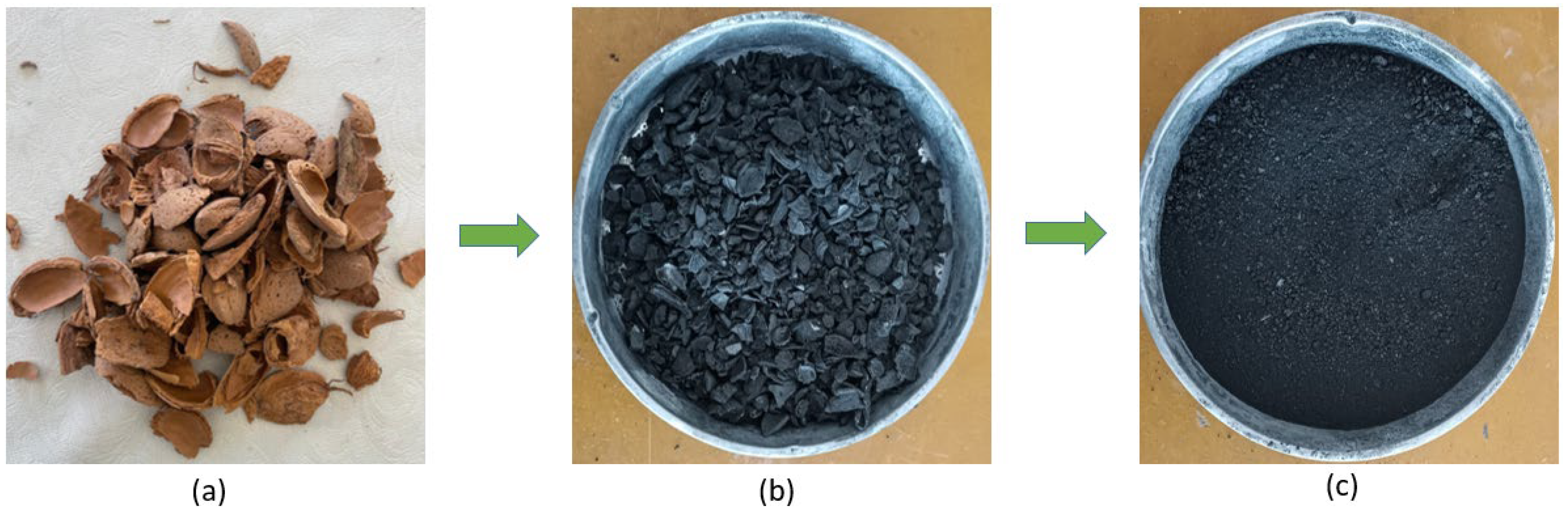
Figure 2.
Flow chart of the study.
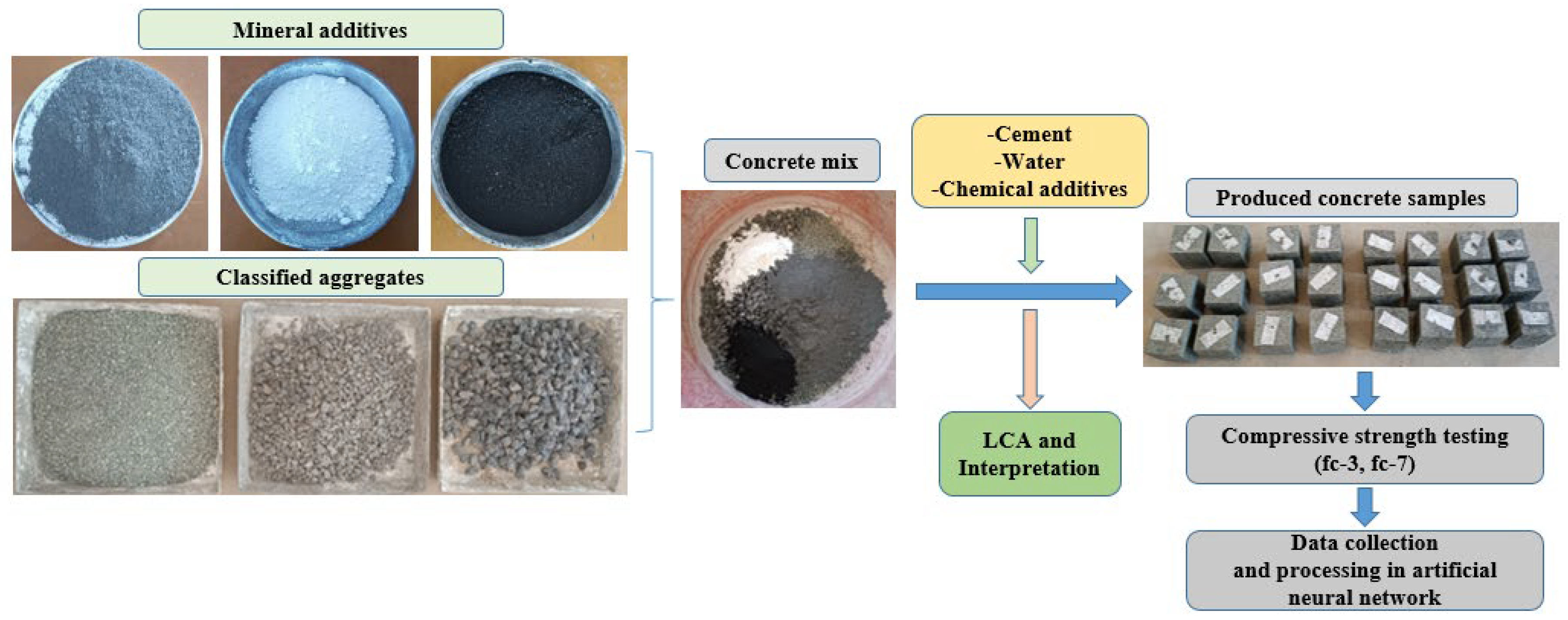
Figure 3.
Compressive strength values (fc-3 days).
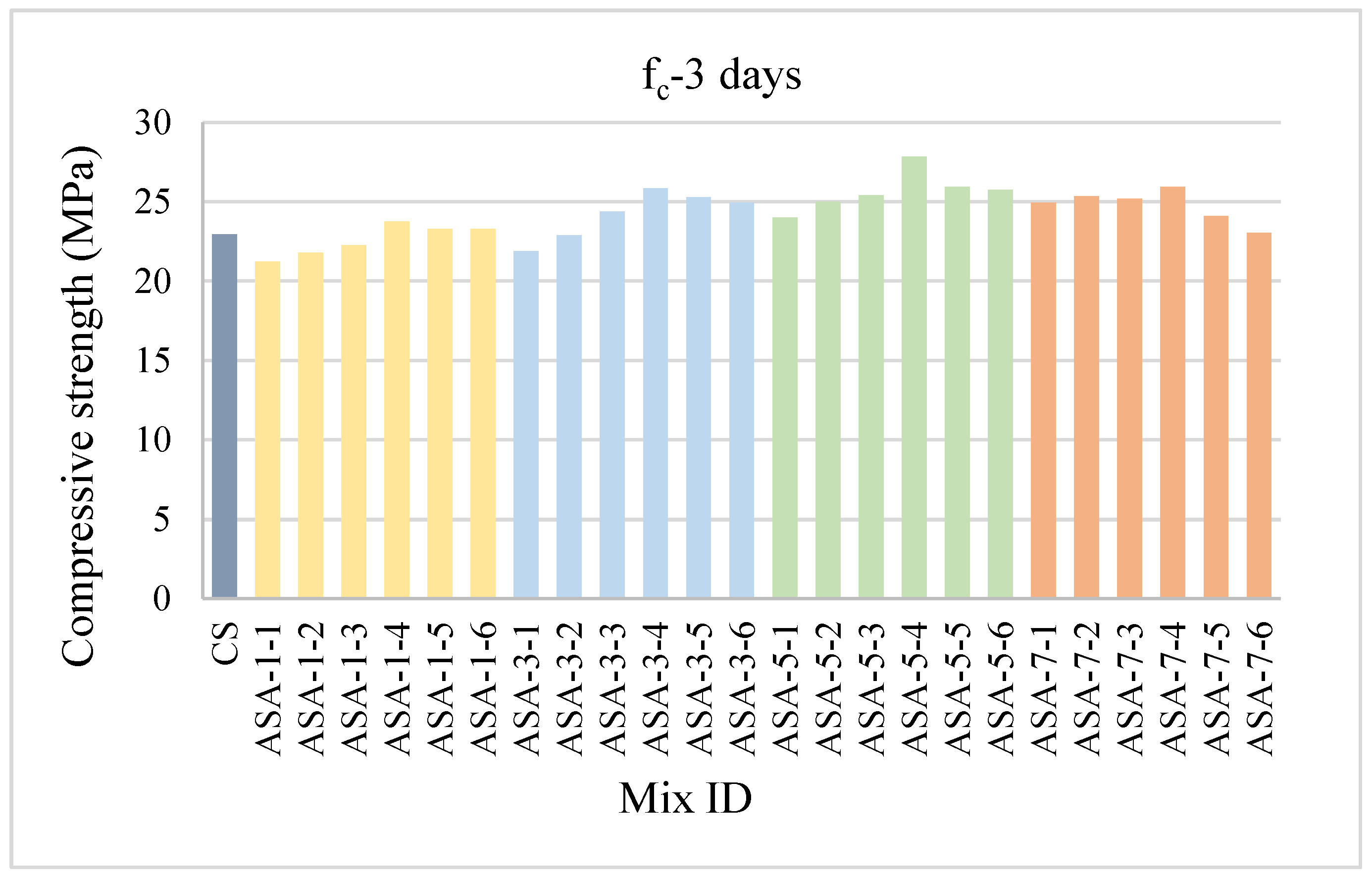
Figure 4.
Compressive strength values (fc-7 days).
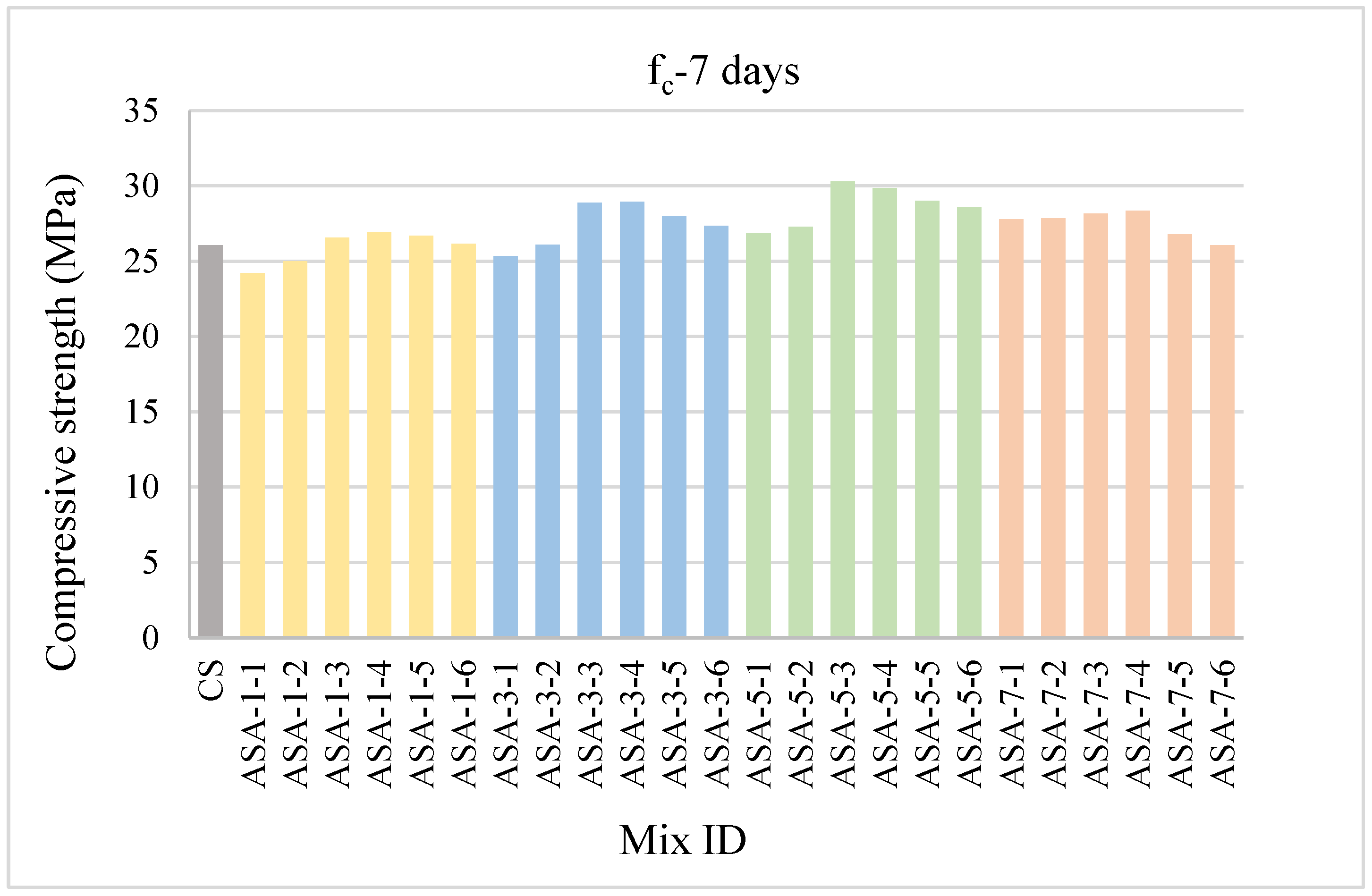
Figure 5.
ANN architecture for concrete performance.
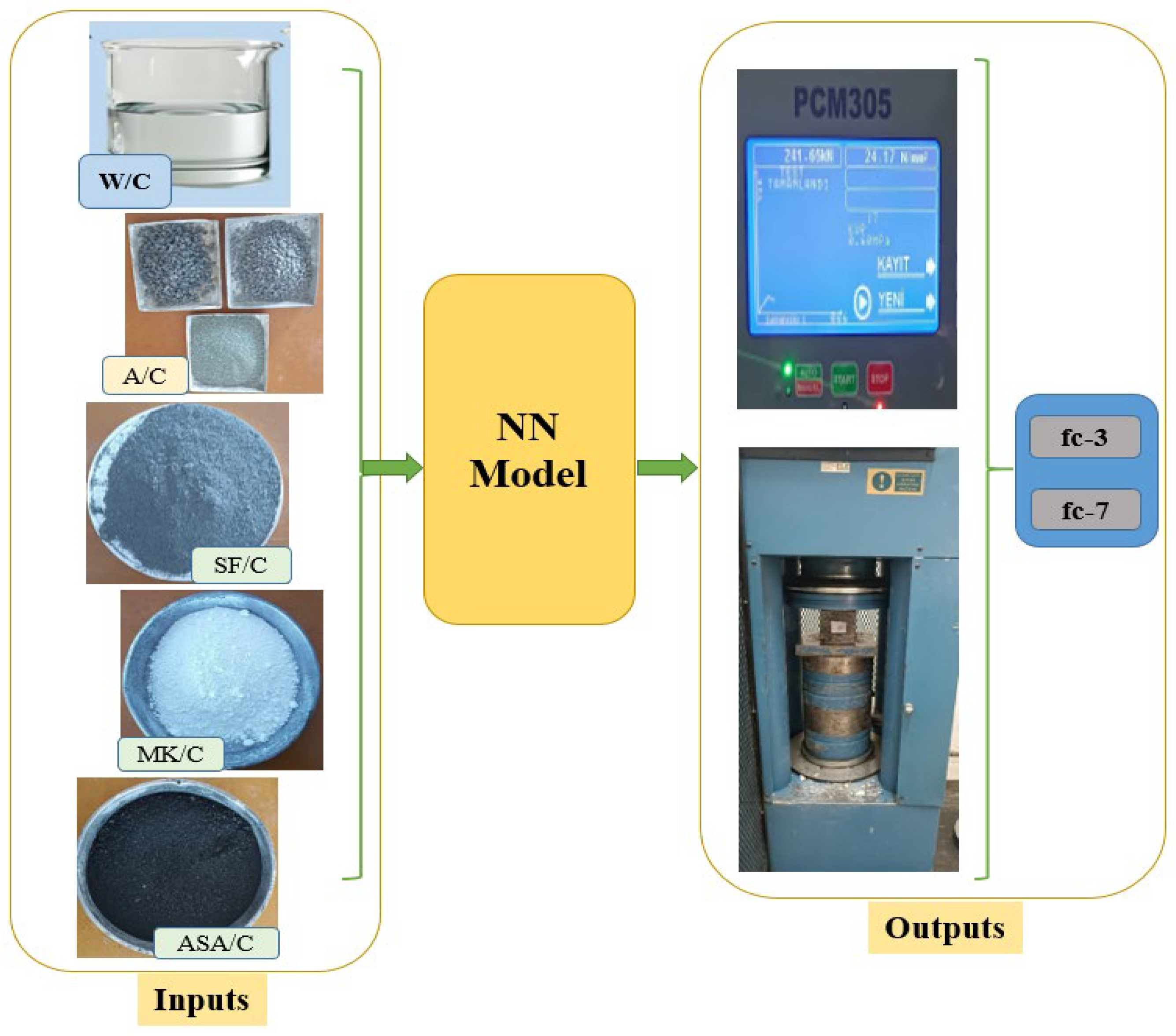
Figure 6.
The regression plot of the ANN.
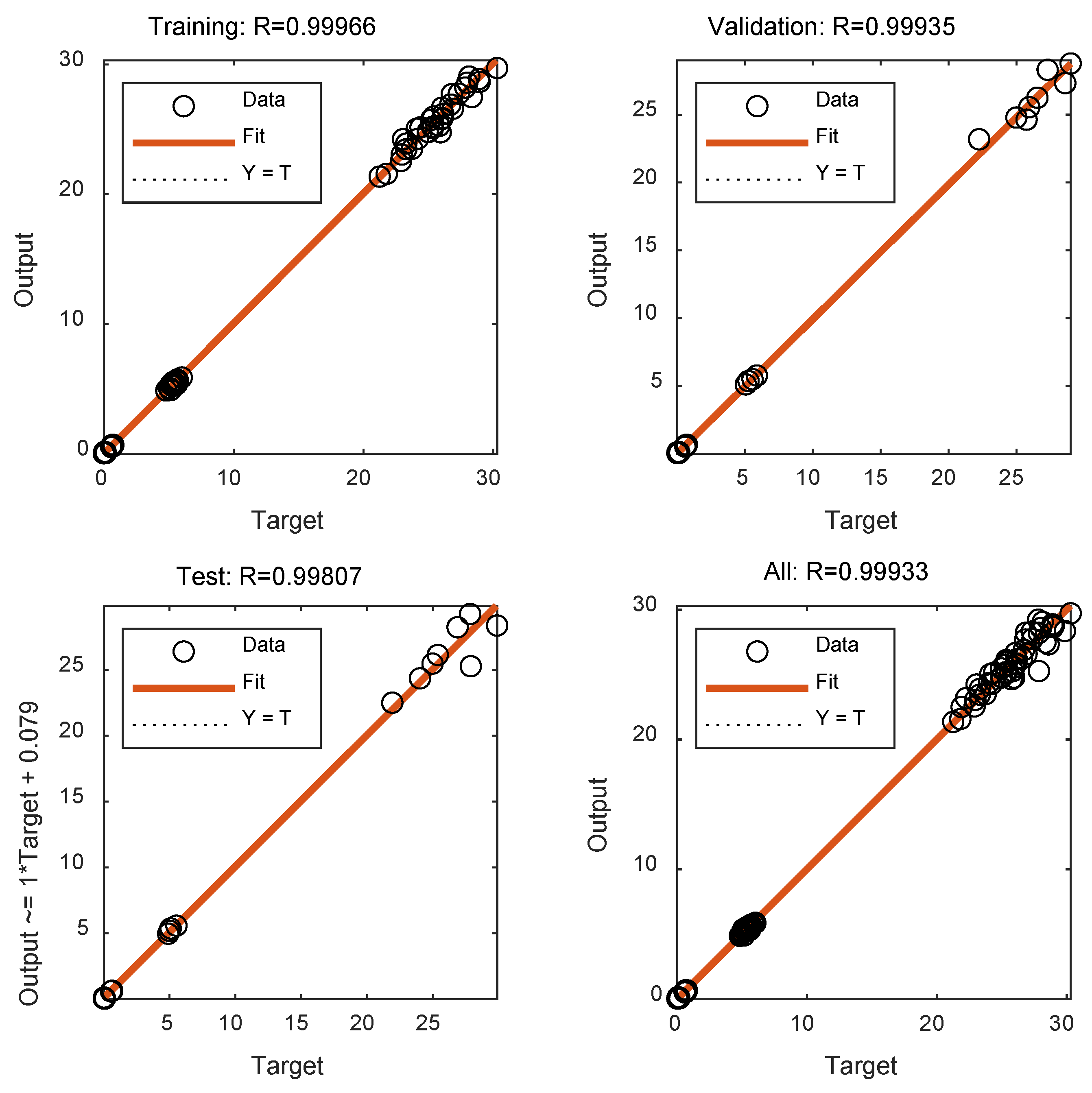
Figure 7.
Simulink model of the ANN.
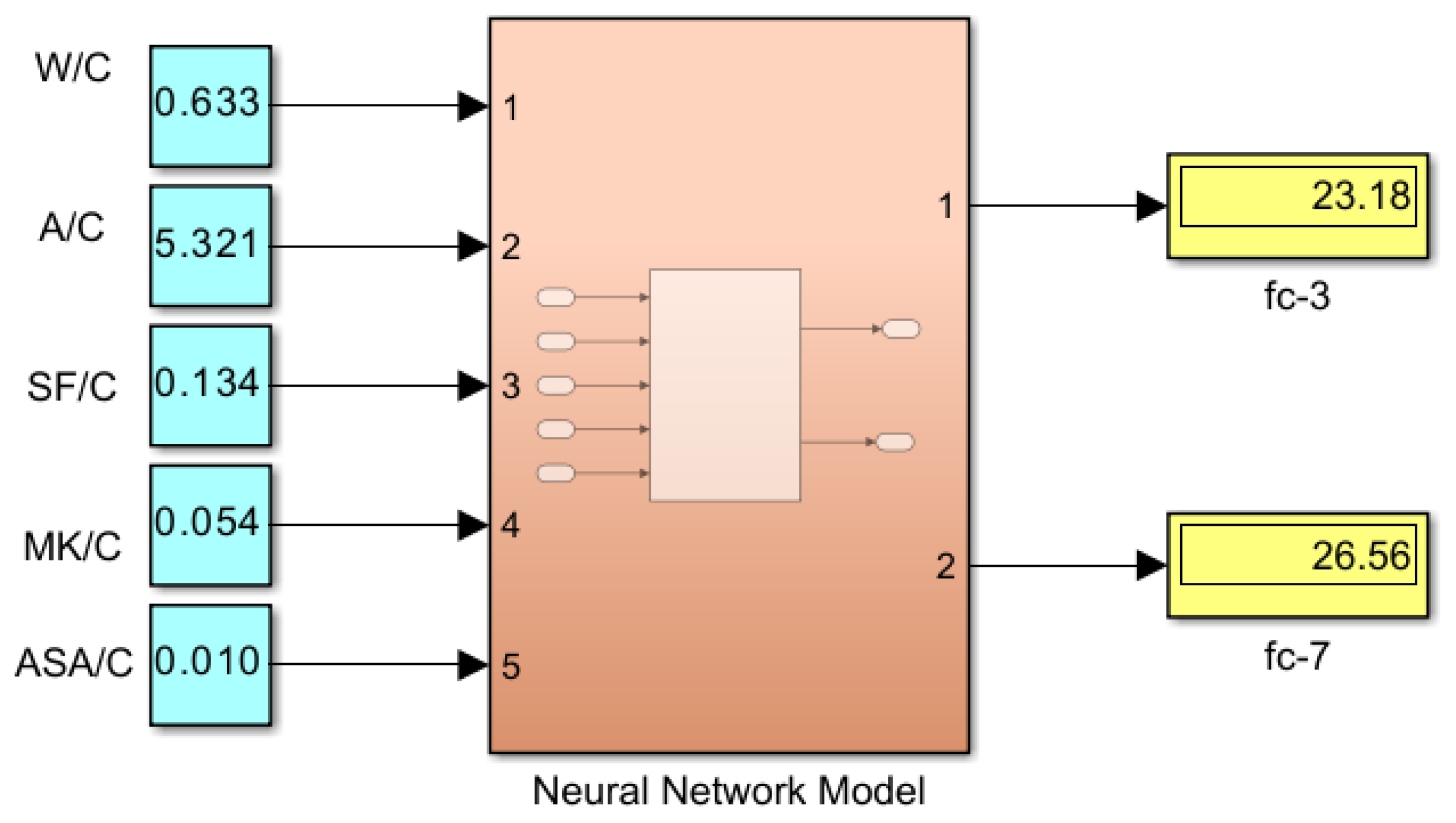
Figure 8.
Comparison of the predicted and experimental compressive strength for (a) fc-3 days (b) fc-7 days.
Figure 8.
Comparison of the predicted and experimental compressive strength for (a) fc-3 days (b) fc-7 days.
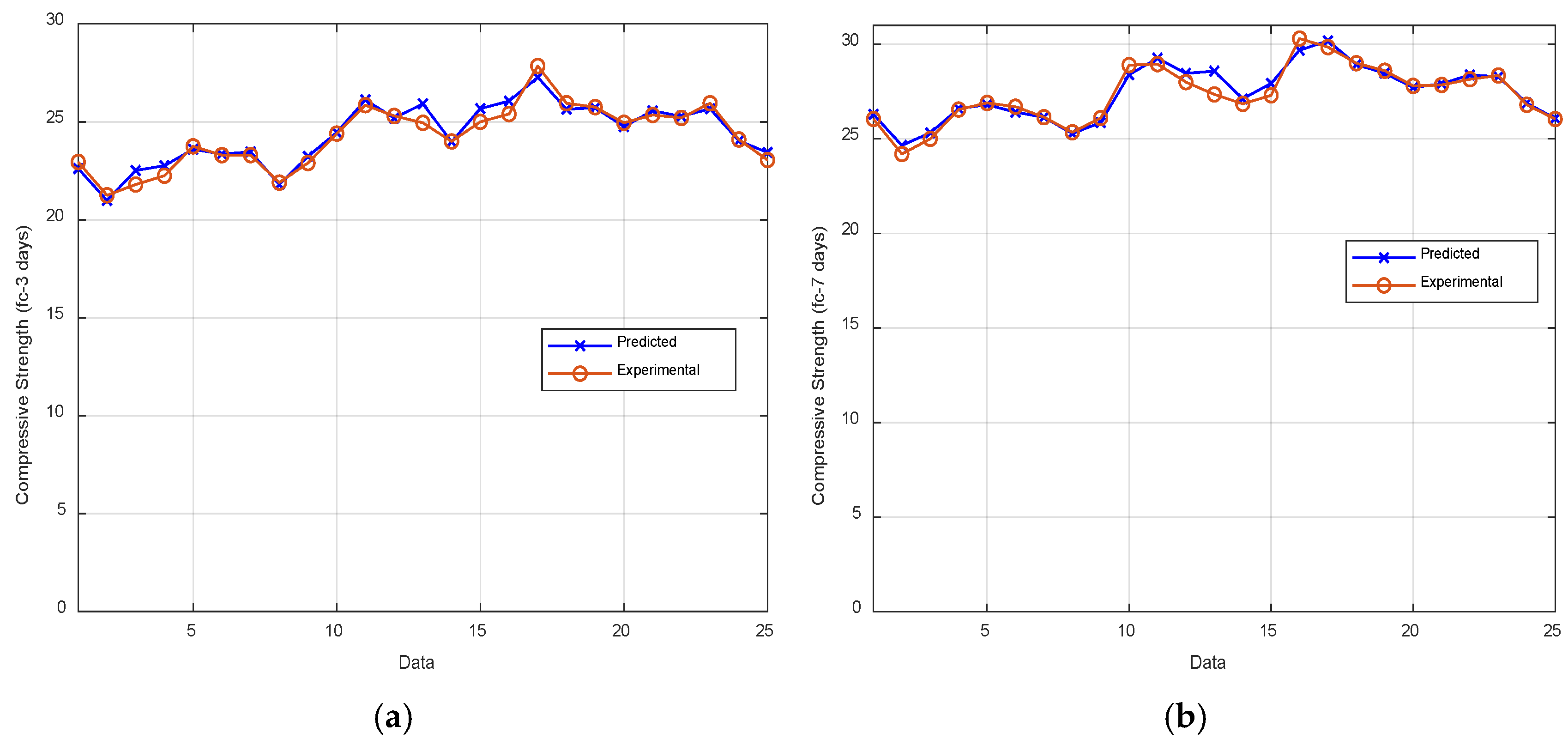
Figure 9.
GWP results.
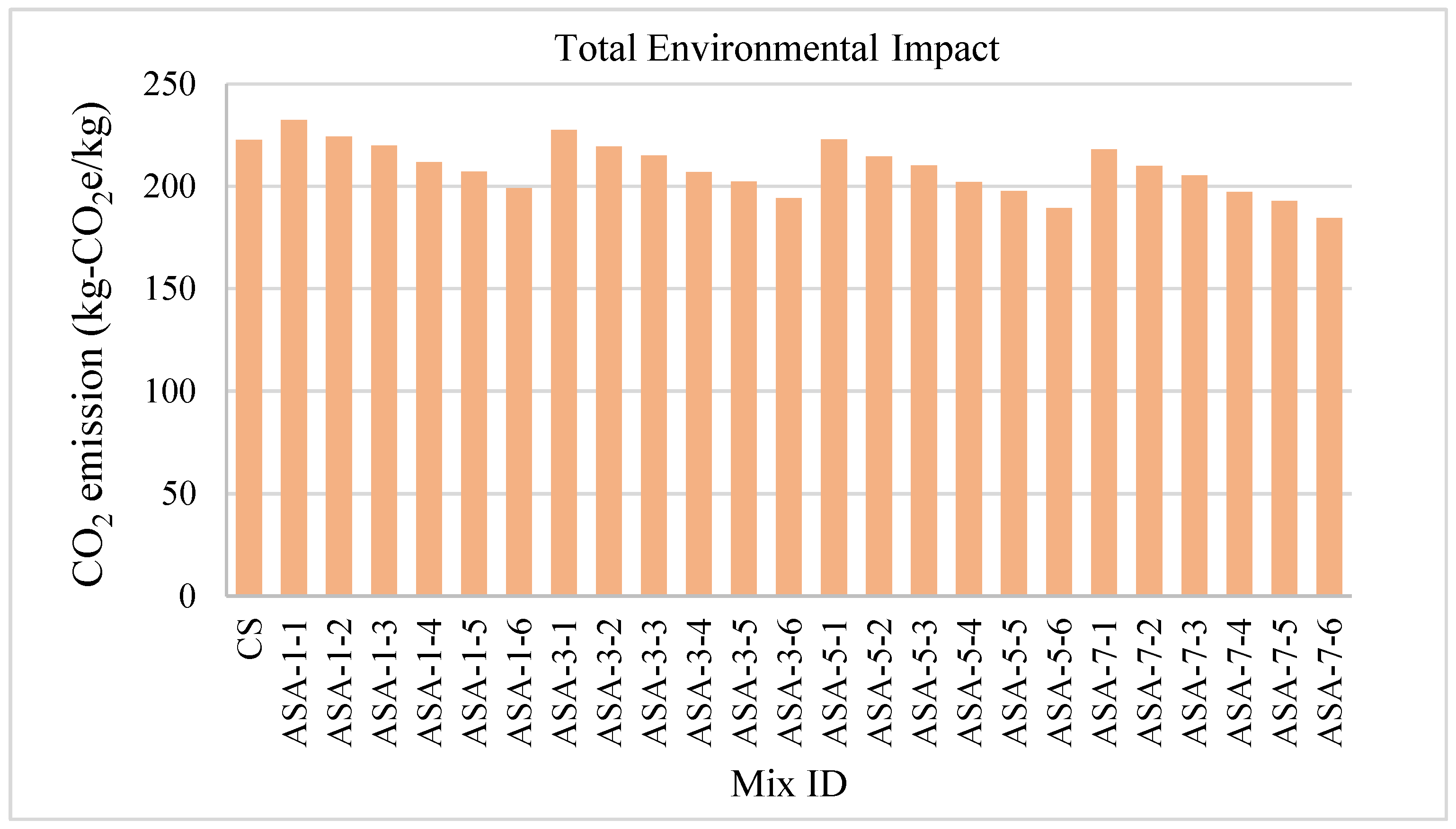
Figure 10.
Comparison of GWP and fc-3 day values.
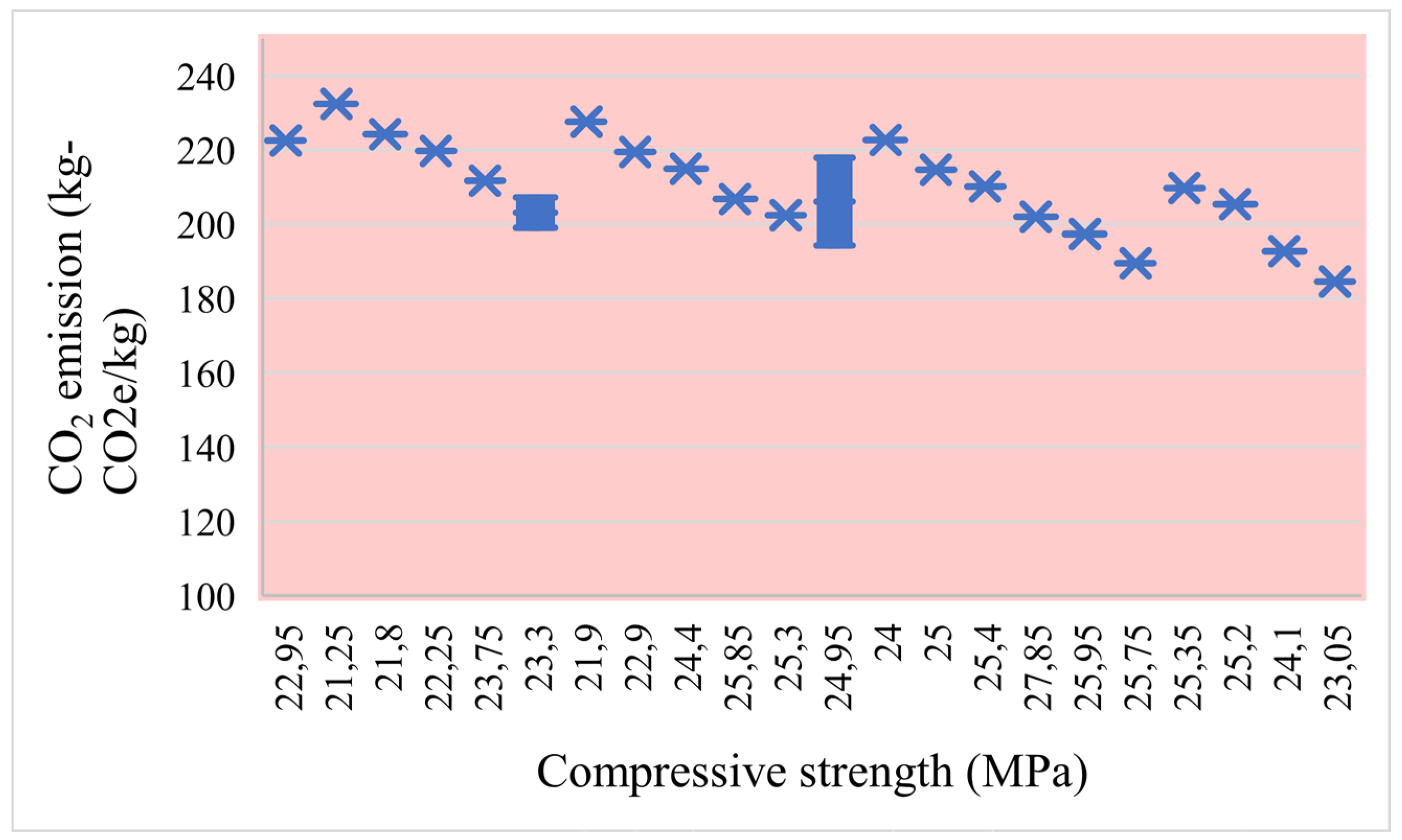
Figure 11.
Waste generation results.
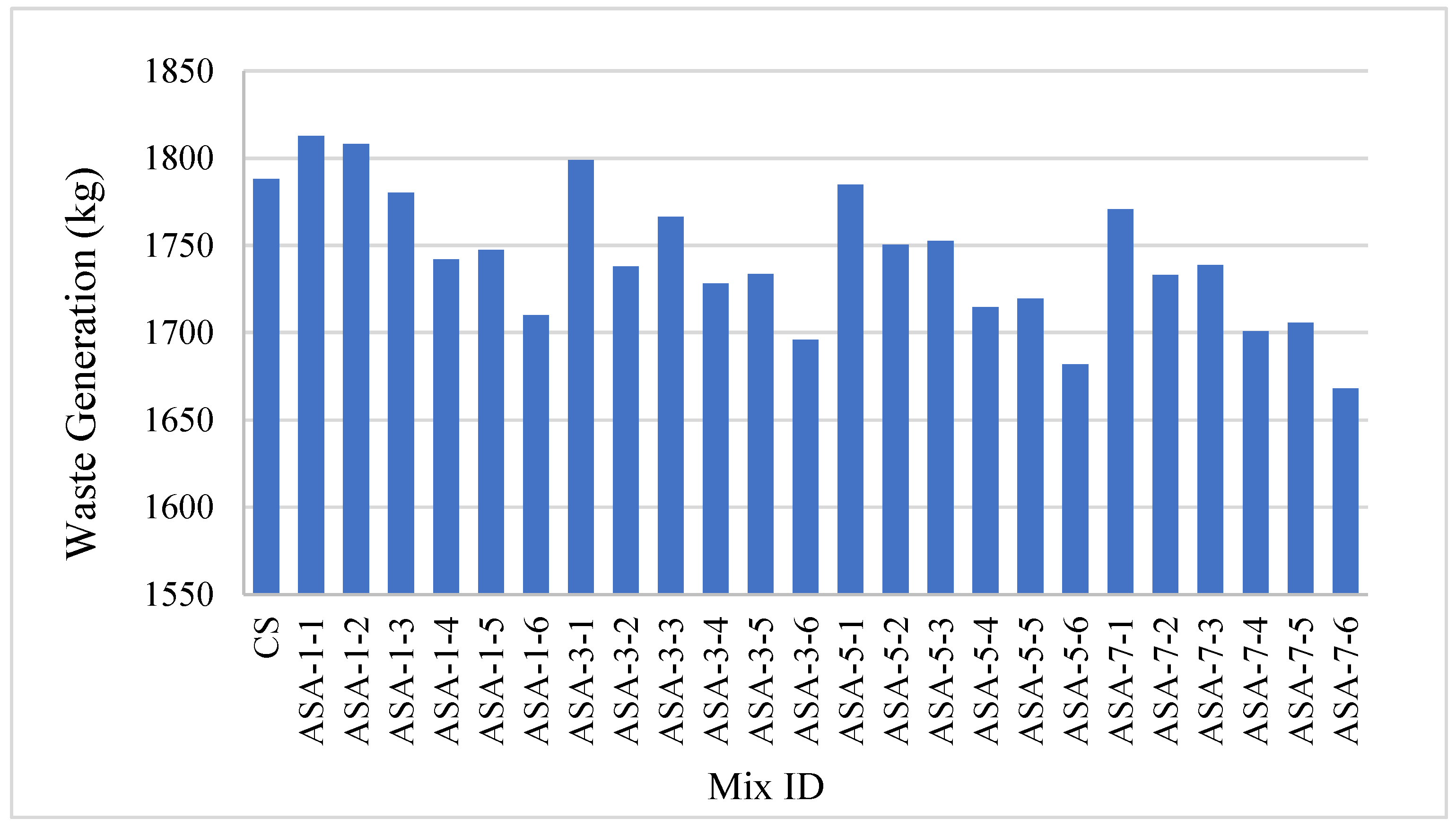

Table 1.
Physical and chemical properties of the cement and mineral additives (%).
| Chemical Composition |
Cement (C) |
Silica Fume (SF) |
Metakaolin (MK) |
| SiO2 | 21.12 | 94.94 | 48 |
| Al2O3 | 5.62 | 0.70 | 47 |
| Fe2O3 | 3.24 | 0.60 | 0.6 |
| CaO | 62.94 | 0.83 | <0.5 |
| MgO | 2.73 | 0.71 | <0.4 |
| SO3 | 2.30 | 0.21 | - |
| Na2O | 0.10 | - | <0.1 |
| K2O | - | - | <2 |
| Physical Composition | |||
| Density (g/cm2) | 3.15 | 2.20 | 2.64 |
| Specific Surface (cm2/g) (Blaine) | 3379 | 96.5%<45μm | 22000 |
Table 2.
Analysis data of the almond shell biochar.
| State of the Sample | Unit | Air Dry | Dry |
As Received |
Method of Test |
| Total Moisture | % | - | - | 7.18 | ISO 589 |
| Inherent Moisture | % | 0.96 | - | - | ASTM D 3173 |
| Ash | % | 2.37 | 2.39 | 2.22 | ISO 1171 |
| Volatile Matter | % | 5.35 | 5.40 | 5.01 | ISO 562 |
| Total Sulphur | % | 0.02 | 0.02 | 0.02 | ASTM D 4239 |
| Fixed Carbon | % | 91.32 | 92.21 | 85.59 | ASTM D 3172 |
Table 3.
Mix proportion of ASA concrete (kg/m3).
|
Mix Code |
Cement | Water | ASA | SF | MK |
Fine aggregate |
Coarse-1 aggregate |
Coarse-2 aggregate |
| CS | 298 | 175 | 0 | 24.7 | 14.8 | 447 | 447 | 596 |
| ASA-1-1 | 312 | 175 | 2.7 | 12.3 | 14.8 | 450 | 450 | 600 |
| ASA-1-2 | 294 | 175 | 2.7 | 12.3 | 29.6 | 454 | 454 | 606 |
| ASA-1-3 | 294 | 175 | 2.7 | 24.7 | 14.8 | 446 | 446 | 595 |
| ASA-1-4 | 277 | 175 | 2.7 | 24.7 | 29.6 | 440 | 440 | 586 |
| ASA-1-5 | 277 | 175 | 2.7 | 37.0 | 14.8 | 441 | 441 | 588 |
| ASA-1-6 | 259 | 175 | 2.7 | 37.0 | 29.6 | 435 | 435 | 580 |
| ASA-3-1 | 305 | 175 | 8.0 | 12.3 | 14.8 | 448 | 448 | 598 |
| ASA-3-2 | 287 | 175 | 8.0 | 12.3 | 29.6 | 435 | 435 | 580 |
| ASA-3-3 | 287 | 175 | 8.0 | 24.7 | 14.8 | 444 | 444 | 592 |
| ASA-3-4 | 270 | 175 | 8.0 | 24.7 | 29.6 | 438 | 438 | 584 |
| ASA-3-5 | 270 | 175 | 8.0 | 37.0 | 14.8 | 439 | 439 | 586 |
| ASA-3-6 | 252 | 175 | 8.0 | 37.0 | 29.6 | 433 | 433 | 578 |
| ASA-5-1 | 298 | 175 | 13.4 | 12.3 | 14.8 | 446 | 446 | 595 |
| ASA-5-2 | 280 | 175 | 13.4 | 12.3 | 29.6 | 440 | 440 | 590 |
| ASA-5-3 | 280 | 175 | 13.4 | 24.7 | 14.8 | 442 | 442 | 589 |
| ASA-5-4 | 263 | 175 | 13.4 | 24.7 | 29.6 | 436 | 436 | 581 |
| ASA-5-5 | 263 | 175 | 13.4 | 37.0 | 14.8 | 437 | 437 | 583 |
| ASA-5-6 | 245 | 175 | 13.4 | 37.0 | 29.6 | 431 | 431 | 575 |
| ASA-7-1 | 291 | 175 | 18.8 | 12.3 | 14.8 | 444 | 444 | 592 |
| ASA-7-2 | 273 | 175 | 18.8 | 12.3 | 29.6 | 438 | 438 | 584 |
| ASA-7-3 | 273 | 175 | 18.8 | 24.7 | 14.8 | 440 | 440 | 586 |
| ASA-7-4 | 256 | 175 | 18.8 | 24.7 | 29.6 | 434 | 434 | 578 |
| ASA-7-5 | 256 | 175 | 18.8 | 37.0 | 14.8 | 435 | 435 | 580 |
| ASA-7-6 | 238 | 175 | 18.8 | 37.0 | 29.6 | 429 | 429 | 572 |
Table 4.
Comparison of experimental and ANN outputs.
| Samples | INPUTS | Experimental Outputs | ANN Outputs | ||||||
| W/C | A/C | SF/C | MK/C | ASA/C | 3th | 7th | 3th | 7th | |
| CS | 0.587 | 5.000 | 0.083 | 0.050 | 0.000 | 22.95 | 26.05 | 22.71 | 26.22 |
| ASA-1-5 | 0.633 | 5.321 | 0.134 | 0.054 | 0.010 | 23.30 | 26.7 | 23.18 | 26.56 |
| ASA-3-5 | 0.649 | 5.433 | 0.137 | 0.055 | 0.030 | 25.30 | 28.00 | 25.15 | 28.11 |
| ASA-5-4 | 0.667 | 5.533 | 0.094 | 0.113 | 0.051 | 27.85 | 29.85 | 27.39 | 29.99 |
| ASA-7-4 | 0.685 | 5.657 | 0.097 | 0.116 | 0.074 | 25.95 | 28.35 | 25.76 | 28.29 |
| ASA-7-5 | 0.685 | 5.676 | 0.145 | 0.058 | 0.074 | 24.10 | 26.80 | 23.68 | 26.79 |
Disclaimer/Publisher’s Note: The statements, opinions and data contained in all publications are solely those of the individual author(s) and contributor(s) and not of MDPI and/or the editor(s). MDPI and/or the editor(s) disclaim responsibility for any injury to people or property resulting from any ideas, methods, instructions or products referred to in the content. |
© 2025 by the authors. Licensee MDPI, Basel, Switzerland. This article is an open access article distributed under the terms and conditions of the Creative Commons Attribution (CC BY) license (http://creativecommons.org/licenses/by/4.0/).
Copyright: This open access article is published under a Creative Commons CC BY 4.0 license, which permit the free download, distribution, and reuse, provided that the author and preprint are cited in any reuse.


