

Submitted:
05 August 2025
Posted:
06 August 2025
You are already at the latest version
Abstract
Microalgae and cyanobacteria produce extracellular polysaccharides that are exuded and released into the medium, typically referred to as exopolysaccharides (EPS). Microalgae-derived EPS have garnered attention in the last decade, as they may exhibit specific bioactivities and therefore hold promise for biofunctional applications in the biomedical, food, agricultural, and cosmetic fields. In cosmetic formulations, EPS can be included both to improve techno-functional and sensorial properties, and as active ingredients, showing great potential in the preparation of cosmetic products aimed at hydration and anti-aging. This review surveys the literature on the potential of EPS-microalgae in skin care and cosmeceutical formulations, to reveal a material that is sometimes discarded during the microalgae cultivation process and that can be recovered for cosmetic use. The conclusions of this review highlight that EPS from microalgae and cyanobacteria exhibit different physicochemical and biological functionalities, making them attractive for potential exploitation as commercial sources of new polysaccharides.
Keywords:
exopolysaccharides
; microalgae
; cyanobacteria
; skin care cosmetics
; cosmeceuticals
1. Introduction
Algae can be regarded as cost-effective renewable resources with higher photosynthetic efficiency and productivity than terrestrial biomass; they can promote carbon neutrality since they can be grown in non-arable land with non-potable water, even in low-cost or waste culture medium [1,2]. In addition, they can be cultivated using cheap substrates of carbon dioxide from industrial emissions, wastewaters, and saline waters [3].
Compared to macroalgae, microalgae offer advantages in large-scale cultivation, as they can be grown rapidly under controlled conditions, without the constraints of seasonal variation or restrictive coastal laws. They also have the advantage of being able to be cultivated in closed photobioreactors or open pond systems, allowing for sustainable and scalable production of polysaccharides (PS). These characteristics, combined with the growing global interest in bioactive natural products, position microalgal PS as a promising resource for next-generation biotechnological innovations aimed at improving human health and well-being [4]. Therefore, in recent years, there has been an increase in publications regarding microalgae-derived PS and their bioactivity, aimed at improving their growth and purification, with the aim of their use in the food and cosmetics industries.
Microalgae and cyanobacteria are microorganisms that produce a wide range of high-value functional and bioactive compounds, such as lipids, polyunsaturated fatty acids, pigments, vitamins, proteins/peptides, carbohydrates, and exopolysaccharides, among others [5,6]. These microbial autotrophs produce and secrete extracellular polymeric substances, mainly consisting of PS, but in this surrounding biofilm, also proteins, nucleic acids, and lipids may be present [7]. These diverse extracellular PS can be released to the medium as a byproduct [3].
Microalgae and cyanobacteria contain PS on their outer cell surface (as their main constituent of the cell wall), which forms a protective gel-like matrix to protect the microalgae from different environmental stressors, such as temperature changes, UV radiation, and predation [8].
Most microalgal and cyanobacterial extracellular polysaccharides are heteropolymers with complex chemical structures, consisting of glucose, galactose and xylose, other monosaccharides such as rhamnose, iduronic acid, and fucose, and different sulfate content. These eukaryotic and prokaryotic microbial PS have various biological functions, protection from fluctuations in environmental conditions and/or predators, sorption of organic and/or inorganic compounds, adhesion, biofilm, protection from antimicrobial agents, exportation of cell components, water retention and protection against desiccation, bacteria aggregation, also being pioneers in the colonization of soils and a nutrient source for a bacterial community [9,10,11]. Cyanobacterial PS could protect from harmful effects of oxygen and serve as a chelator for iron and calcium [12], aid in the fixation of nutrients, locomotion, attachment to solid substrates, formation of colonies and especially to provide protection against adverse conditions and predators, sorption of organic and/or inorganic compounds, binding of enzymes, sink for excess energy, adhesion, biofilm, water retention, aggregation, and nutrient source for a bacterial community adhesive, structural, protection against abiotic stress, bio weathering processes, gliding motility, and nutrient repositories in phototrophic biofilms or biological soil crusts [11,13,14].
These extracellular polysaccharides that are exuded and released to the medium are usually denoted as exopolysaccharides, extracellular, exocellular, or released polysaccharides (R-EPS). However, part of the polysaccharides is not completely excreted into the medium and remains more or less attached to the cell surface (also known as bound-EPS, B-EPS) [10,11,15]. Those produced from cyanobacteria can be divided into i) slime or released polysaccharides, poorly linked to the cell surface, ii) sheath polysaccharides in a thin layer next to the outer cell membrane, and iii) capsular polysaccharides (CPS) tightly bound [10,13,16,17].
For extracellular polysaccharides extraction and purification, different methods can be used; alcoholic precipitation with coprecipitation of salts to obtain R-EPS gives a low-purity product, so that, to achieve higher purity, purification techniques such as dialysis or ultrafiltration are used combined with alcoholic precipitation. Different chemical methods, such as acid or alkali extraction (using ethylene diamine tetra acetic acid (EDTA) or sodium hydroxide), and physical methods, such as hot water extraction or cationic resin, are used for releasing B-EPS, before proceeding with the alcoholic precipitation [8].
Since EPS derived from these natural sources are nontoxic, biodegradable, and biocompatible, they can represent an alternative source of polysaccharides [18,19]. Their recovery and valorization contribute to the economic and environmental compatibility and sustainability of zero-waste microalgal biorefineries [20]. However, EPS-derived commercial products are still being developed, and significant research remains to be completed [21].
The increasing interest in the production of value-added compounds and biofuels from algae requires the production of microalgal biomass. The extracellular polysaccharide produced simultaneously with biomass and secreted to the culture medium in the algal culture process remains as a by-product in the waste liquid streams, which are often discarded into the environment. They can be valorized, thus reducing the production cost of the microalgae lipids for preparing the biodiesel [7,22]. At the end of cell growth, the medium, generally regarded as waste [23], so that the recovery of R-EPS from spent cultivation medium is a practicable proposition in a bio-refinery-like approach to Spirulina sp. cultivation [8].
The ease of recovery from the extracellular environment has increased the attention of researchers on EPS for applications in different sectors based on their biocompatibility, biodegradability, and unique rheological and biological properties [24]. Microalgae and cyanobacteria can produce exopolysaccharides’ compounds which exhibit various physico-chemical properties, including stabilizing, thickening, gelling, texturizing, flocculating, emulsifying and water retention, of interest for a range of industrial applications in cosmetics, textiles, pharmaceuticals, adhesives, detergents, food additives and wastewater treatment [25,26,27]. In addition, these EPS exhibit biological properties including antioxidant, anti-inflammatory, antimicrobial, antiviral, antiproliferative, antihypertensive, antilipidemic, anti-diabetic, and immunomodulatory [28,29], with application in cosmetics, pharmaceuticals, nutraceuticals, and functional foods [1,15,30,31].
The mechanical properties can offer commercial applications such as bio-lubricant, emulsifier, foaming agent, thickener, and water retention activity [7,24], but they are not competitive with those from other sources. Their wide variety of biological activities, biodegradability, natural origin, and nontoxicity make them ideal bioactive compounds to be used in the cosmetic and health care industry [7,15].
Despite the unique composition, structure, with interesting rheological and biological activities of EPS from microalgae and from cyanobacteria, the research on seaweed polysaccharides is still more intense, and also the industrial exploitation [32,33]. Due to the higher production costs compared to polysaccharides from terrestrial plants and macroalgae, only microbial polysaccharides with unique properties, having a niche market, are commercialized and this could be the case for microalgal and cyanobacterial EPS [10,15].
As Pierre et al. [11] have proposed, low market value industrial products are not the best option for microalgal EPS because the production costs remain 10-100 times higher than for terrestrial, bacterial, and seaweed polysaccharides. Other microbial polysaccharides became commercially relevant and overcame the producing costs by operating in a niche market. Some pharmaceutical and cosmetic high value applications could be potential. The need for well-defined polysaccharidic structures and authorizations required in the pharmaceutical applications, makes this market not yet adequate for microalgae polysaccharides. Although the cosmetic market could receive polysaccharides of microalgae, only a small number of examples are commercialized; for example, EPS from red microalgae or spirulan from Arthrospira strains [11,13]. There is interest in screening algal strains for new polysaccharides that may compete with traditional polysaccharides for rheological properties, bioactivities, as well as for the integration into nanobiotechnology applications for stabilization of nanostructures with antimicrobial, antioxidant, and/or anticancer properties [19,26].
Several recent reviews have addressed the strategies for sustainable production, recovery, purification, chemical and structural determination, biological activities and applications, of EPS obtained by microalgae and cyanobacteria [1,2,4,6,9,10,13,15,24,27,30,34,35,36]. The main opportunities and challenges in relation to the manufacture of these compounds. Also, insights into the main challenges and future prospects for market investments were surveyed [11,26]. In any case, their use in cosmetics as active ingredients is still limited.
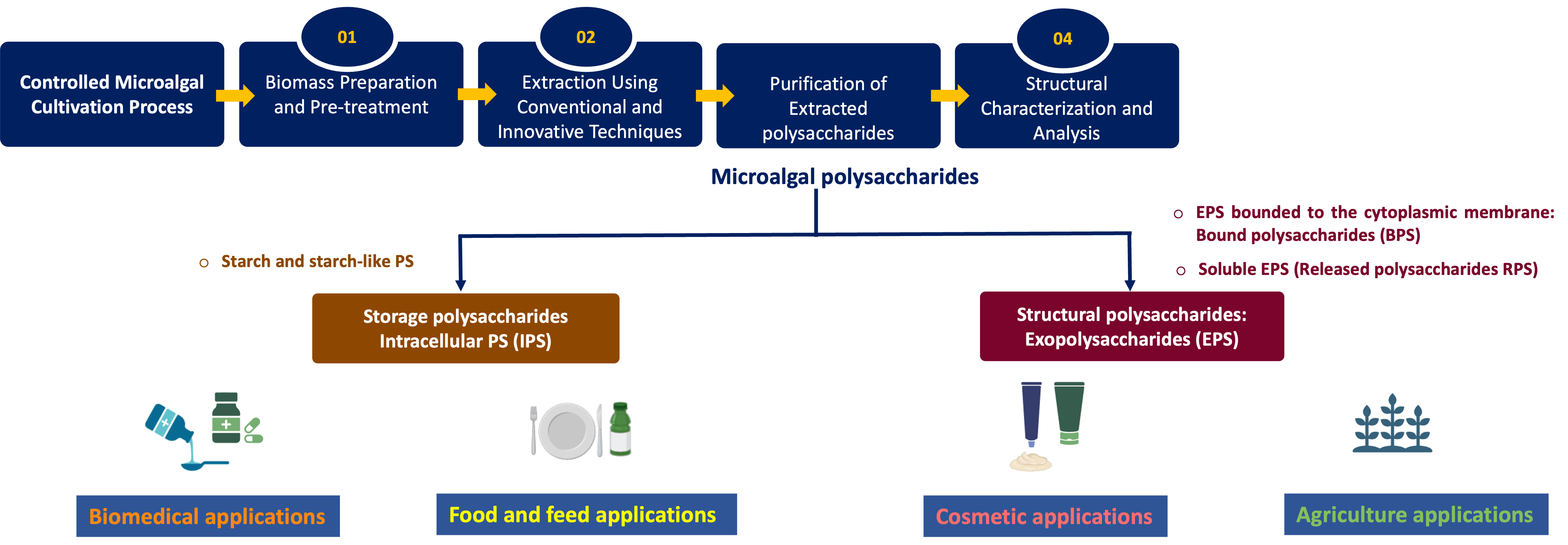
Figure 1 summarizes the key steps in microalgal polysaccharide production, extraction, and biofunctional applications.
2. Composition and Structure
Microalgae and cyanobacteria EPS are complex heteropolymers. Their composition varies between 3 and 8 monosaccharides, with a variety of substituents, sulfation, and a high molecular mass of around 106 Da [15]. The diversity of monosaccharide constituents, the presence of non-sugar substituents, the apparent absence of repeating units, and the branched structure collectively complicate their characterization.
EPS from microalgae and cyanobacteria are heteropolymers mainly composed of xylose, glucose, and galactose, in different ratios [33]. Other sugar constituents, such as mannose, rhamnose, arabinose, fucose, fructose, and ribose are also present. The polymers have different sulfate contents (1–9%, w/w), with the sulfate groups being attached to glucose and galactose in the 6 or 3 position [9]. Minor components have also been reported, i.e., Porphyridium sp. mucilaginous polysaccharide; it is generally composed of about ten monosaccharides, sulfate, proteins, and possibly phenols [68].
The composition of some EPS is variable from species to species and sometimes affected by the growth conditions, recovery, and purification/analysis methods [10,15]. So that the compositions can vary both with culture conditions and with the methodology used for extraction and quantification [33. In addition, contradictory results which can be explained by the culture conditions of microalgae, the analytical methods, and the origins of strains usually non-axenic.
The chemical and structural complexity has experienced limited research despite the critical need to determine potential applications [4,18]. The variations in monosaccharide compositions have also resulted in different physicochemical and biological functionalities. The composition influences the bioactivity and also structural features, such as sulfate groups for antiviral, antitumor, anti-inflammatory, and anti-oxidative, antitumor, antiviral, or antioxidant agents. The type and content of monosaccharides are closely related to biological activities, including antioxidant, anti-inflammatory, antitumor, and antimicrobial have been related to their molecular weight, sulfate, uronic acid, or charged group content [2].
Some examples are: uronic acids will confer a negative charge to the polymer, which can influence biological and/or physico-chemical properties. The presence of non-sugar components is also of great importance because they can also influence these properties. Methyl groups can cause high viscosity via hydrophobic interactions [24], and sulfate content is another important component, and could be responsible for important bioactivities. For instance, in red microalgal species, the highest antiviral activity was found in the polysaccharide having the highest sulfate content [9].
The other unique feature of cyanobacterial strains exposed to high sunlight areas is the presence of scytonemin, mycosporine, and other found in capsule-bound EPS [24].
On the other hand, there is growing interest in the large-scale production of cyanobacterial EPSs due to their potential industrial applications, such as their use as gums, bio-flocculants, soil conditioners, and biosorbents. Some commercial examples are Nostoflan, Spirulan, Immulan, and Emulcyan produced by Nostoc flagelliforme, Arthrospira platensis, Aphanotece halophytica, and Phormidium, respectively [13]. Other cyanobacterial EPSs also deserve mention, as cyanoflan from Cyanothece sp. [69], and sacran from Aphanothece sacrum [24].
3. Properties of EPS of Interest for Skin Care Products
In the formulation of cosmetic and cosmeceutical products, different ingredients are required, including i) those conferring techno-functional and sensorial properties, including thickeners, emulsifiers, antioxidants, preservatives, etc., and ii) the active ingredients, responsible for the final action of the product.
Figure 2 summarizes the main composition of cosmetics and cosmeceuticals.
3.1. Techno-Functional Properties of Microalgal EPS
Microalgal and cyanobacterial EPS exhibit mechanical properties of interest for the formulation of cosmetics, and with the potential to replace those from chemical synthesis.
Rheological properties of EPS are of deep interest since they can be used as excipients as well as gelling agents, thickeners, etc.
The presence of acidic components has been related to the protective role against desiccation due to the water retaining ability [3]. The development of novel and specific applications based on their weak gel behavior is expanding. Furthermore, their combination of cell wall polysaccharides and microalgal biomass to join both structural and bioactive properties has been proposed for food applications [70]. For instance, the solution with 1% EPS from whey wastewater cultivated Chlorella vulgaris showed rheological profiles similar to those of the 0.4 % commercial xanthan gum [21], one of the most used gelifying agents in organic cosmetics. The rheological properties of microalgae and cyanobacteria EPS are comparable to those of industrial polysaccharides, such as xanthan, making them suitable for industrial applications [71].
Extracellular polymeric substances can be alternative encapsulating agents, a cosmetic use on the rise, so that controlled release systems made of EPS may have potential use in cosmetics and nutraceuticals. Estevinho et al. used the EPS from the marine cyanobacterium Cyanothece sp. CCY 0110 to encapsulate vitamin B12 in spherical 8 μm microparticles, the addition of arabic gum allowed smaller sizes [72].
EPS from microalgae may also be used as emulsifying agents and stabilizers. Phormidium J-1, a hydrophobic, benthic cyanobacterium, produced a polymeric extracellular emulsifying agent called emulcyan [73], which can be regarded as a renewable and eco-friendly emulsifying agent [74]. Exopolymers from the cyanobacterium Nostoc muscorum at 1% in hydrocarbons and vegetable oils exhibited good emulsifying properties with excellent stability [75]. Their anti-settling properties have also been confirmed; rhamnofucans EPS from Glossomastix sp. have been proposed as anti-settling stabilizers, showing more stable microcrystalline cellulose particle suspensions than alginate solutions [71].
Microalgae and cyanobacteria EPSs are also being investigated as preservatives and antioxidant additives in skin care product formulations. Cosmetics antimicrobial preservatives are ingredients added to beauty and personal care products to prevent microbial growth, which can lead to spoilage, product degradation, and potential health risks, aimed to extend the shelf life of products and ensure they remain safe for use over time. Green cosmetics formulation seeks antimicrobial preservatives less harmful and safer, and algal EPS can fulfill that function. One of the most well-known antimicrobials is calcium spirulan from Arthrospira platensis that showed strong antiviral activity [76,77].
Other preserving additives are antioxidants, which are needed to protect from oxidation and to prolong the shelf life of lipid-containing products. They can be of interest in cosmetics to prevent lipid oxidation; for example, sulfated algal EPS can prevent the accumulation of free radicals and reactive species [10], with significant reducing and antiradical properties, although lower than those of ascorbic acid [25].
3.2. Microalgal EPS Bio-Activities
Biological properties of EPS have been investigated, mainly for pharmacological and nutritional purposes. Several studies showed the anti-inflammatory [31,78], antitumor [4,14,79], anti-hyperglycemic [68], anticoagulant [80], and the aforementioned antioxidant activity [10,25]. Other actions have been reported, among them antitussive and bronchodilator effects [40,81], and immunomodulatory activity [82].
Another field of interest is the use of microalga EPS as a source of prebiotics, both for nutraceuticals and cosmetics [83].
All of this leads us to consider that EPS can be included in cosmetic formulations as active ingredients, exerting antioxidant, anti-inflammatory, and immunomodulatory activities. The following section summarizes the potential uses of EPS in cosmetics and cosmeceuticals. The main patents currently on the market are also described in section 5.
4. Microalgae and Cyanobacteria Exopolysaccharides: Cosmetic Properties and Potential Uses
The use of algae-derived metabolites in cosmetics is currently increasing, driven by the wide variety of biologically active compounds that can be obtained, and the growing consumer awareness and preference for eco-friendly, natural ingredients [84].
As has been previously mentioned, the biological activities of exopolysaccharides from microalgae and cyanobacteria have been investigated for nutritional and pharmacological uses (mainly their anti-inflammatory, immunomodulatory, and antiviral activity). However, its uses in cosmetic and cosmeceutical formulations are recent. In addition to their potential as active ingredients, microalgae EPSs may be of interest in the cosmetic industry for uses as thickeners and gelling agents.
Table 1 shows a short description of the composition and the properties of microalgae EPS and their potential use in the cosmetic field.
The first studies published in the 1990s emphasized the antiviral properties of exopolysaccharides. Two studies related to Calcium Spirulan (Ca-SP) obtained from Spirulina platensis (currently Arthrospira platensis) demonstrated that Ca-SP was able to inhibit the replication of several enveloped viruses, including herpes simplex virus type 1, human cytomegalovirus, measles virus, mumps virus, influenza A virus, and HIV-1. Ca-SP was found to selectively inhibit virus penetration into host cells. The antiviral effect was suggested to be related to the retention of molecular conformation by chelating calcium ions with sulfate groups [76,77]. Later studies showed that Arthrospira platensis EPS methanolic and aqueous extract (exact composition not reported) exerted antibacterial activities on both Gram (+) and Gram (−) organisms, highlighting that the methanolic extract showed the broadest activity spectrum, resulting in effective inhibition against three microbial strains P. aeruginosa, S. typhimurium, and M. luteus. And the aqueous extracts were only effective against two strains, S. epidermis and S. typhimurium [88]. Recent investigations showed that Arthrospira maxima also exert antibacterial activity against several strains, such us Bacillus subtilis (MIC: 0.6 ± 0.05 mg/mL), Bacillus cereus (MIC: 1 ± 0.01 mg/mL), Escherichia coli (MIC: 0.8 ± 0.01 mg/mL) and Klebsiella pneumonia (MIC: 0.8 ± 0.01 mg/mL). This strain also showed antioxidant activity (DPPH radical scavenging assay), and also denoted interesting emulsifying properties [107].
Other microalgal and cyanobacterial EPS showed antimicrobial activities. Nostoflan (Glc, Gal, Xyl, and Man rich), from Nostoc flagelliforme, showed a potent anti-herpes simplex virus type 1 (HSV-1) activity, and also antiviral activities against HSV-2, human cytomegalovirus, and influenza A virus, with the advantage that it does not show antithrombin activity, unlike other sulfated polysaccharides [86]. EPS from genus Porphyridium also showed antibacterial and antiviral activities [91,97; some of them also have antifungal activity as Porphyridium sordidum characterized by a high content on Gal (~40%), Xyl (~30%), and Glu (~30%) [99]. And diatom Halamphora sp EPS demonstrated low activity against Gram (+) bacteria, and moderate activity against Gram (−) such as Escherichia coli [106].
These antimicrobial activities are of great interest, as the cosmetic industry seeks natural antimicrobial preservatives to mitigate and prevent adverse reactions caused by synthetic ones. On the other hand, they may also be of interest as active ingredients in the treatment of acne. Antifungal activity could also be relevant for the development of natural cosmetic preservatives.
The antioxidant capacity of EPS has also been demonstrated in several studies. Thus, the aforementioned EPS methanolic extracts from Arthrospira platensis showed a high antioxidant activity [88]. Chen et al. compared crude ESP and deproteinized EPS from Rhodella reticulata, finding that both of them exerted free radical scavenging and antioxidant activity in a dose-dependent manner, but crude EPS exhibited higher free radical scavenging capacity and better antioxidant activity than the various treatments of crude EPS samples. In addition, the superoxide anion radical scavenging ability of various samples was significantly higher compared to the standard antioxidant (α-tocopherol) [87]. And the aqueous extracellular polysaccharides from the thermophilic microalgae Graesiella sp. exerted a moderate scavenging activity [94].
Nostoc species and strains EPS also showed antioxidant activity. Thus, Nostoc carneum ESP demonstrated to possess antioxidant activity, but also showed non-Newtonian pseudoplastic behavior or shear thinning property in aqueous solutions, that could be of interest in the cosmetic industry to be used as gelling and emulsifier agents (allowing products like lotions to flow through a pump and spread easily on the skin) [92]. Nostoc cf. linckia also showed antioxidant properties, finding that the crude polymer and its purified fractions, as well as deproteinized EPS, possessed higher antioxidant capacity than other similar polysaccharides from Nostoc flagelliforme, and N. commune [102].
EPS from Anabaena sp. CCC 745, and Anabaena sp. CCC 746 exhibited significant antioxidant and scavenging activity [55,95]. EPS from Tetraselmis suecica (Kylin) Butcher also showed antioxidant activity; the authors suggested that this could be related to the percentage of galacturonic and glucuronic acids present in the constitution of the EPS of T. suecica [98]. Octa-saccharides from Scenedesmus acutus also presented scavenging activity [101], and EPS from the thermophilic Gloeocapsa gelatinosa demonstrated a high activity as free radicals’ scavenger, as well as metal chelating activity, both activities being of interest in the field of cosmetics [103].
Other studies showed that crude EPS from a very well-known energy microalgae strain Botryococcus braunii showed strong antioxidant activity, so that it can be considered a good source of antioxidants for the food and cosmetic industry [104]. Mousavian et al. investigated sulfated EPS from the marine green microalgae Chlorella sorokiniana, Chlorella sp., and Picochlorum sp, finding that sulfated EPS with the higher sulfate/sugar ratio presented potent ABTS radical scavenging activity [80].
Other studies focused on reversing the activity of some enzymes involved in aging. Porphyridium cruentum EPS were shown to inhibit the activity of enzymes like collagenase, elastase, and hyaluronidase, which play roles in skin degradation and aging. This inhibition suggests a potential role for Porphyridium cruentum SPs in developing cosmetic products with anti-aging and regenerative effects [89].
Studies have also been carried out on the applications of a mixture of Haslea ostrearia EPS and marennine (a blue pigment obtained from this marine diatom) to improve skin hydration and prevent aging, although the composition of the EPS is not shown in this work [108].
In addition to the aforementioned antioxidant activities, EPS from the genus Porphyridium, with acidic characteristics, may have potential applications in cosmetics as an inhibitor hyaluronidase, anti-allergic and anti-inflammatory agents [85], as well as antioxidant activity, and anti-inflammatory properties [91]. For example, Porphyridium cruentum (CCALA415) EPS showed anti-inflammatory activity comparable to that of ibuprofen and helped tissue regeneration [23].
Other microalgal strains can also exert anti-inflammatory properties. EPS from Cyanobacterium aponinum, the dominating member of the Blue Lagoon’s microbial ecosystem, was able to stimulate DCs to produce vast amounts of the immunosuppressive cytokine IL-10 [93]. EPS from Phormidium sp. ETS05, the most abundant cyanobacterium of the therapeutic Euganean thermal muds, exerted anti-inflammatory and pro-resolution activities in chemical and injury-induced zebrafish inflammation models [96]. And Auxenochlorella protothecoides EPS, rich in Gal (42.41 %) and Rha (35.29 %), inhibited the inflammatory response in lipopolysaccharide induced RAW264.7 cells by quenching inflammatory factor levels such as ROS, iNOS, TNF-α, and IL-6 [31].
In order to investigate the potential anti-aging properties, Toucheteau et al. studied several microalgal strains, as Porphyridium cruentum, Chrysotila dentata, Pavlova sp., Diacronema ennorea, Glossomastix sp., Phaeodactylum tricornutum, Synechococcus sp. EPS were isolated and depolymerized, and tested, finding that native microalgae EPS were able to inhibit 27% of human matrix metalloproteinase-1 (MMP-1) activity while the depolymerized forms were able to enhance collagen production by two different human fibroblast lines. Results also showed that MMP-1 inhibition was strongly correlated to the sulfate group content of EPS whereas collagen production by fibroblasts was mostly related to their proportion of LMW polysaccharides (<10 kDa) [105].
As preventing and slowing aging is one of the goals of cosmeceuticals and skin care products, EPS seems to be a suitable ingredient, combined with other natural bioactive substances, in the formulation of specific dermocosmetics focused on antioxidant and anti-ROS bioactivities.
The wound healing properties of certain EPSs are also of interest in the formulation of cosmeceuticals aimed at enhancing skin barrier repair and promoting epithelialization. Thus, Álvarez et al. investigated two Nostoc sp. strains (PCC7936 and PCC7413) to be used as a biomaterial for new wound dressings, finding that both strains could promote fibroblast migration and proliferation, been greater activity in PCC7936 (in vitro assay) [100]). Vázquez-Ayala et al. designed wound dressings loaded with metformin for diabetic foot healing, combining EPS from Porphyridium purpureum with fucoidan and chitosan. Interestingly, metformin-loaded chitosan sponges regenerated skin tissue after 21 days of treatment, highlighting the healing rate achieved when exopolysaccharides were added to promote tissue regeneration. Additionally, the sponge composites exerted antibacterial activity and were neither cytotoxic or hemolytic [109].
Other properties of microalgal and cyanobacterial EPS may have potential applications in cosmetics, as they can be used as emulsifiers and stabilizers. Nostoc flagelliforme EPS demonstrated strong emulsion-stabilizing capacity [90], and Porphyridium cruentum EPS in aqueous solutions with 2% (w/v) showed high viscosity values at low shear rates [91]. Nostoc carneum EPS, rich in Xyl, Glu, and uronic acid, presented pseudoplastic fluid behavior [92]. Anabaena sp. CCC 746 and Anabaena sp. CCC 746 both presented pseudoplastic fluid behavior, in addition to the aforementioned scavenging activity [55,95]. Finally, the Glossomastix sp EPS anti-settling stabilizers properties deserve to be cited, as they may have potential use as rheological agents in the cosmetic formulation of gels and creams [71].
5. Patents Claiming the Use of Microalgal and Cyanobacterial EPS in Skin Care
Different patents claiming the incorporation of microalgal and cyanobacterial EPS for skin care non-therapeutic formulations to enhance the health and appearance or texture of skin have been registered [110,111,112,113]. Most of them are designed for topical application but also for oral or injection into skin tissue [111]. Some examples are shown in Table 2. The products are not always obtained from pure cultures, also exopolysaccharides obtained by fermentation are isolated from marine bacteria found in a cyanobacterial population on a kopara microbial mat [114].
Polysaccharides can be precipitated by adding compounds such as cetylpyridinium chloride, isopropanol, ethanol, or methanol to an aqueous solution containing the polysaccharide. Membrane filtration can be used to concentrate polysaccharides and remove salts. Polysaccharides can also be dialyzed to remove excess salt and other small molecules. Anionic polysaccharides can be purified by anion exchange chromatography [110,111] or by immobilized metal affinity chromatography [115].
Polysaccharides can be treated with proteases to degrade contaminating proteins attached, either covalently or noncovalently, and after digestion, the polysaccharide is purified from residual proteins, peptide fragments, and amino acids. Heat treatment can also be used to eliminate proteins, amino acids, peptides, and salts [111]. In some cases, heterotrophically produced microalgal polysaccharides or extracts have pigments as a by-product of the fermentation process. In some cases, discoloration is used to remove undesirable coloration and pigments destined for cosmetic or nutraceutical formulation. Among the methods are bleaching, solvent extraction, adsorption, enzyme treatment, washing with acid, alcohol or with salt solution [111]. In other cases, simplicity is preferred and low-cost obtention of the product allows high presence of glycoproteins rich in hydroxyproline, an important component of collagen [115].
The obtained polysaccharides may be with any level of sulfation [111], with molecular weights in the range 30-100 kDa [116], and they can be structurally modified both enzymatically and chemically, and modifications include sulfation, phosphorylation, methylation, O-acetylation, fatty acylation, amino N-acetylation, N-sulfation, branching, and carboxyl lactonization [111]. Depolymerization has been also explored after a pretreatment by high pressure (2.7 kbar) and freeze-drying, i.e., by acid hydrolysis onto cationic resins (Amberlityst® 15 DRY) in batch or in continuous mode to increase the production of collagen and/or hyaluronic acid, in order to delay the effects of skin aging [116] (. Normal human dermal fibroblast viability was reduced by 20-80% in the presence of depolymerized EPS, due to the ralentization of growth metabolism and orientation to collagen and hyaluronic acid synthesis.
Different formulations in the cosmetic products add the exopolysaccharides wet, dialyzed or non-dialyzed [117], or dried by lyophilization or dried to form a film by heating the microalgal EPS at 135-160 °C [112].
The EPS can be added to the cosmetic at 0.1 to 10% (w / w) of the cream formulation [117]. Higher content has also been proposed, i.e., [118] is a composition comprising 2-60 wt% of a sulfated polysaccharide for moisturizing the skin. The final composition has to be sterile or substantially free of endotoxins and/or proteins [111]. Products may contain one or more microalgal polysaccharides, purified or semi-purified [110,111]. In some cases, secreted polysaccharides and also polysaccharides present in the cell wall, either crude, purified, or semi-purified, have been used to obtain nutraceutical, cosmeceutical, and pharmaceutical compositions [110,111].
The mixture of microalgal biomass and polysaccharides has been proposed, thus microalgal extract can include microalgal oil, proteins, lipids, carbohydrates, phospholipids, polysaccharides, macromolecules, minerals, cell wall, trace elements, carotenoids, and sterols [111], a combination of microalgal bio-products from different species to produce a product of interest. Other patent claimed the production of a water-soluble carotenoid from Haematococcus pluvialis or a capsular EPA from Parachlorella sp. and formulated compositions containing the carotenoid as sunscreen and others containing the EPS as moisturizing cream [119].
EPS are formulated with at least one excipient suitable for topical administration with a carrier, pigments, emulsifiers, fillers, preservatives, antioxidants, and optionally odor absorbers and fragrances [110,111,118]. These polysaccharides can also confer some of these actions, i.e., of forming a gel and swelling with water [110,113] can be used as enhancers of rheological and sensory characteristics, providing products with greater spread ability, consistency, less residual grease sensation, shine, drying speed, among others [117]). They also protect from oxidation. Other patent used them for making microcapsules in emulsion with DHA, which can enhance the antioxidant stability, the peroxide value data of microcapsule product relative value then reduces nearly 60%-80% [32].
Different formats are claimed, such as gel, oil, lotion, spray, cream, emulsion, and ointments for facial care and makeup, lip care, hair care, tooth and mouth washes [111,119]. Other topical formulations include impregnated bandages, biodegradable microcapsules, polymers, and artificial skin. However, the most valuable properties could be of interest to formulate cosmeceuticals, with interesting biological activities: anti-aging, healing, anti-acne, oil-reducing or cellulite properties, stimulating elastin synthesis in skin, or as anti-inflammatory agent, to improve barrier function of skin and/or to hydrate the skin [111,118], anti-inflammatory properties [111], reducing the effects of ultraviolet radiation [111], to aid in wrinkle reduction [113], antiaging [89], which can be due to inhibition of elastase, by chelating the calcium necessary for activation of the enzyme, and collagenase [89,111] or exerting antioxidant activity [22,120]. In addition, combining a growth factor, and a microalgal culture supernatant, a synergistic effect was observed increased proliferation of fibroblasts for the treatment of skin aging, photoaging and cutaneous senescence [115], to increase the production of collagen and/or hyaluronic acid, to delay the effects of skin aging [116]. In other embodiments, the composition further comprises hyaluronic acid or another agent suitable or desirable for the treatment of skin [111]. In addition, the EPS could be incorporated in nutraceuticals, i.e., as an antioxidant based on the confirmed potential for protecting food from oxidation [121].
Table 2 shows some examples of patents, including a short explanation of the production and/or main composition.
Based on previous research and development, cosmetic applications have emerged that have been developed by cosmetic raw material suppliers or the brands themselves. Some examples are described below.
Silidine® is a mix of trace elements and small EPS from Porphyridium purpureum obtained by applying an oxidative stress to microalgae by closing the air tightly in a culture batch of 1 m3. Silidine® claims to fight against redness and heavy legs syndrome (https://www.greentech.fr/).
Epsiline® is a modified Porphyridium purpureum EPS sold as a melanin booster. It is obtained from an optimized cultivation process, adjusting parameters in terms of media composition, quantity of light, and injection of carbon dioxide to reduce by one-third the time it takes to obtain EPS in photobioreactors, followed by a hydrolysis that allows the creation of a new “medium molecular weight” EPS (https://www.greentech.fr/).
Other examples are AlgoSource (https://algosource.com/) that produces dry extracts from Porphyridium cruentum with a very high concentration of EPS, and Alguronic acidTM by Algenist® (https://www.algenist.com/) obtained from Parachlorella kessleri or Parachlorella beijerinckii strains, which claims anti-aging skincare properties.
6. Challenges and Expected Developments
Exopolysaccharides from microalgae and cyanobacteria exhibit higher structural diversity, associated with different physicochemical and biological functionalities, than those from terrestrial plants, fungi, and macroalgae, making them attractive for potential exploitation as commercial sources of new polysaccharides [122]. However, these EPS remain underexplored for many potential applications, the market is still developing [9,24].
The industrial applications could be based on their thickening, emulsifying, stabilizing, film film-forming properties. However, they could not be competitive with polysaccharides from macroalgae and terrestrial plants. Therefore, only special and niche applications requiring properties not fulfilled by the currently available products are promising [34,123], been the cosmetic field being one of the most promising. Even in this area, further research and developments are needed, and among the major challenges in this area of research, could be mentioned i) bioprospection of strains and methodologies to discover reliable EPS producers of potential microorganisms and exploitable polysaccharides and understanding the metabolic pathway involved in their synthesis and release, ii) engineering development to optimize their production cost, i.e solar energy for cultivation and to cut the costs of downstream processes both on laboratory and at the pilot or industrial scale, iii) detailed physicochemical, structural and biological characterization to establish structure-activity relationships; iv) process development for EPS production and also the downstream processes adapted to the specific with high salts contents; and v) development of novel applications and marketable products [1,11,15,21,24,29,122,124,125].
One of the major limitations for microalgal and cyanobacterial EPSs commercial exploitation is the high production costs [126]. The EPS productivity and the concentration in bacteria culture medium can be ten or more times higher than in microalgae culture medium, therefore, the costs of recovery and purification from microalgae are still prohibitive [11]. Additionally, the recovery of EPS that partially remains partially attached to the cells would require additional processing to recover the bound EPS without extracting intra-cellular compounds, and the economic reliability of this additional step should be considered [11]. Therefore, the industrial uses of microalgal EPS are still limited to few niche markets with high selling prices like cosmetics.
Emphasis and further studies on the valorization of waste and underutilized streams to obtain high-value-added products in the cosmetics and cosmeceutical sectors may allow for to reduction of the use of synthetic additives, responsible for the presence of micropollutants in water. This could be a way to reuse microalgae cultivation waste while promoting green cosmetics.
Author Contributions
M.L.M.: Conceptualization, methodology, investigation, writing—original draft preparation, writing—review and editing. F.D-S., S.I., C.P.G.: Methodology, investigation, writing—review, and editing. J.L.L.: Writing—review and editing, supervision. All authors have read and agreed to the published version of the manuscript.
Funding
This research received no external funding.
Institutional Review Board Statement
Not applicable.
Informed Consent Statement
Not applicable.
Conflicts of Interest
The authors declare no conflict of interest.
References
- Costa, J. A. V.; Lucas, B. F.; Alvarenga, A. G. P.; Moreira, J. B.; De Morais, M. G. Microalgae Polysaccharides: An Overview of Production, Characterization, and Potential Applications. Polysaccharides 2021, 2, 759–772. [Google Scholar] [CrossRef]
- Franco-Morgado, M.; Amador-Espejo, G. G.; Pérez-Cortés, M.; Gutiérrez-Uribe, J. A. Microalgae and Cyanobacteria Polysaccharides: Important Link for Nutrient Recycling and Revalorization of Agro-Industrial Wastewater. Applied Food Research 2023, 3, 100296. [Google Scholar] [CrossRef]
- De Philippis, R. Exocellular Polysaccharides from Cyanobacteria and Their Possible Applications. FEMS Microbiology Reviews 1998, 22, 151–175. [Google Scholar] [CrossRef]
- Magnabosco, C.; Santaniello, G.; Romano, G. Microalgae: A Promising Source of Bioactive Polysaccharides for Biotechnological Applications. Molecules 2025, 30, 2055. [Google Scholar] [CrossRef] [PubMed]
- Gupta, A.; Barrow, C. J.; Puri, M. Multiproduct Biorefinery from Marine Thraustochytrids towards a Circular Bioeconomy. Trends in Biotechnology.
- Nguyen, D. T.; Johir, M. A. H.; Mahlia, T. M. I.; Silitonga, A. S.; Zhang, X.; Liu, Q.; Nghiem, L. D. Microalgae-Derived Biolubricants: Challenges and Opportunities. Science of The Total Environment 2024, 954, 176759. [Google Scholar] [CrossRef] [PubMed]
- Jakhu, S.; Sharma, Y.; Sharma, K.; Vaid, K.; Dhar, H.; Kumar, V.; Singh, R. P.; Shekh, A.; Kumar, G. Production and Characterization of Microalgal Exopolysaccharide as a Reducing and Stabilizing Agent for Green Synthesis of Gold-Nanoparticle: A Case Study with a Chlorella Sp. from Himalayan High-Altitude Psychrophilic Habitat. J Appl Phycol 2021, 33, 3899–3914. [Google Scholar] [CrossRef]
- Chaudhuri, R.; Athiyappan, K. D.; Balasubramanian, P. From Algae to Medicine: Unveiling the Therapeutic Potential of Microalgal Exopolysaccharides. In Microbial Biotechnology: Integrated Microbial Engineering for B3—Bioenergy, Bioremediation, and Bioproducts; Elsevier, 2025; pp 271–305. [CrossRef]
- Arad, S. (Malis); Levy-Ontman, O. Red Microalgal Cell-Wall Polysaccharides: Biotechnological Aspects. Current Opinion in Biotechnology 2010, 21, 358–364. [Google Scholar] [CrossRef]
- Delattre, C.; Pierre, G.; Laroche, C.; Michaud, P. Production, Extraction and Characterization of Microalgal and Cyanobacterial Exopolysaccharides. Biotechnology Advances 2016, 34, 1159–1179. [Google Scholar] [CrossRef]
- Pierre, G.; Delattre, C.; Dubessay, P.; Jubeau, S.; Vialleix, C.; Cadoret, J.-P.; Probert, I.; Michaud, P. What Is in Store for EPS Microalgae in the Next Decade? Molecules 2019, 24, 4296. [Google Scholar] [CrossRef]
- De Philippis, R.; Colica, G.; Micheletti, E. Exopolysaccharide-Producing Cyanobacteria in Heavy Metal Removal from Water: Molecular Basis and Practical Applicability of the Biosorption Process. Appl Microbiol Biotechnol 2011, 92, 697–708. [Google Scholar] [CrossRef]
- Cruz, D.; Vasconcelos, V.; Pierre, G.; Michaud, P.; Delattre, C. Exopolysaccharides from Cyanobacteria: Strategies for Bioprocess Development. Applied Sciences 2020, 10, 3763. [Google Scholar] [CrossRef]
- Sanniyasi, E.; Patrick, A. P. R.; Rajagopalan, K.; Gopal, R. K.; Damodharan, R. Characterization and in Vitro Anticancer Potential of Exopolysaccharide Extracted from a Freshwater Diatom Nitzschia Palea (Kütz.) W.Sm. 1856. Sci Rep 2022, 12, 22114. [Google Scholar] [CrossRef] [PubMed]
- Laroche, C. Exopolysaccharides from Microalgae and Cyanobacteria: Diversity of Strains, Production Strategies, and Applications. Mar. Drugs 2022. [Google Scholar] [CrossRef] [PubMed]
- Gaignard, C.; Laroche, C.; Pierre, G.; Dubessay, P.; Delattre, C.; Gardarin, C.; Gourvil, P.; Probert, I.; Dubuffet, A.; Michaud, P. Screening of Marine Microalgae: Investigation of New Exopolysaccharide Producers. Algal Research 2019, 44, 101711. [Google Scholar] [CrossRef]
- Baptista, S.; Torres, C. A. V.; Sevrin, C.; Grandfils, C.; Reis, M. A. M.; Freitas, F. Extraction of the Bacterial Extracellular Polysaccharide FucoPol by Membrane-Based Methods: Efficiency and Impact on Biopolymer Properties. Polymers 2022, 14, 390. [Google Scholar] [CrossRef]
- Navarro Gallón, S. M.; Alpaslan, E.; Wang, M.; Larese-Casanova, P.; Londoño, M. E.; Atehortúa, L.; Pavón, J. J.; Webster, T. J. Characterization and Study of the Antibacterial Mechanisms of Silver Nanoparticles Prepared with Microalgal Exopolysaccharides. Materials Science and Engineering: C 2019, 99, 685–695. [Google Scholar] [CrossRef]
- Tiwari, O. N.; Bobby, Md. N.; Kondi, V.; Halder, G.; Kargarzadeh, H.; Ikbal, A. M. A.; Bhunia, B.; Thomas, S.; Efferth, T.; Chattopadhyay, D.; Palit, P. Comprehensive Review on Recent Trends and Perspectives of Natural Exo-Polysaccharides: Pioneering Nano-Biotechnological Tools. International Journal of Biological Macromolecules 2024, 265, 130747. [Google Scholar] [CrossRef]
- Cheirsilp, B.; Maneechote, W.; Srinuanpan, S.; Angelidaki, I. Microalgae as Tools for Bio-Circular-Green Economy: Zero-Waste Approaches for Sustainable Production and Biorefineries of Microalgal Biomass. Bioresource Technology 2023, 387, 129620. [Google Scholar] [CrossRef]
- Pessoa, L. C.; Attar, S. B.-E.; Sanchez-Zurano, A.; Ciardi, M.; Morillas-Espana, A.; Ruiz-Martínez, C.; Fernandez, I.; Arrabal-Campos, F. M.; Pontes, L. A. M.; Cardoso, L. G.; de Souza, C. O.; Acien, G.; Assis, D. de J. Exopolysaccharides as Bio-Based Rheology Modifiers from Microalgae Produced on Dairy Industry Waste: Towards a Circular Bioeconomy Approach. International Journal of Biological Macromolecules.
- CN110818814A. https://patents.google.com/patent/CN110818814A/en.
- Liberti, D.; Imbimbo, P.; Giustino, E.; D’Elia, L.; Silva, M.; Barreira, L.; Monti, D. M. Shedding Light on the Hidden Benefit of Porphyridium Cruentum Culture. Antioxidants 2023, 12, 337. [Google Scholar] [CrossRef]
- Debnath, S.; Muthuraj, M.; Bandyopadhyay, T. K.; Bobby, Md. N.; Vanitha, K.; Tiwari, O. N.; Bhunia, B. Engineering Strategies and Applications of Cyanobacterial Exopolysaccharides: A Review on Past Achievements and Recent Perspectives. Carbohydrate Polymers 2024, 328, 121686. [Google Scholar] [CrossRef]
- Bafana, A. Characterization and Optimization of Production of Exopolysaccharide from Chlamydomonas Reinhardtii. Carbohydrate Polymers 2013, 95, 746–752. [Google Scholar] [CrossRef] [PubMed]
- Morais, M. G.; Santos, T. D.; Moraes, L.; Vaz, B. S.; Morais, E. G.; Costa, J. A. V. Exopolysaccharides from Microalgae: Production in a Biorefinery Framework and Potential Applications. Bioresource Technology Reports 2022, 18, 101006. [Google Scholar] [CrossRef]
- Moreira, J. B.; Kuntzler, S. G.; Bezerra, P. Q. M.; Cassuriaga, A. P. A.; Zaparoli, M.; Da Silva, J. L. V.; Costa, J. A. V.; De Morais, M. G. Recent Advances of Microalgae Exopolysaccharides for Application as Bioflocculants. Polysaccharides 2022, 3, 264–276. [Google Scholar] [CrossRef]
- Park, G.-T.; Go, R.-E.; Lee, H.-M.; Lee, G.-A.; Kim, C.-W.; Seo, J.-W.; Hong, W.-K.; Choi, K.-C.; Hwang, K.-A. Potential Anti-Proliferative and Immunomodulatory Effects of Marine Microalgal Exopolysaccharide on Various Human Cancer Cells and Lymphocytes In Vitro. Mar Biotechnol 2017, 19, 136–146. [Google Scholar] [CrossRef]
- Capek, P.; Matulová, M.; Molitorisová, M.; Kazimierová, I. Chlorella Vulgaris α-L-Arabino-α-L-Rhamno-α,β-D-Galactan Structure and Mechanisms of Its Anti-Inflammatory and Anti-Remodelling Effects. International Journal of Biological Macromolecules 2020. [Google Scholar] [CrossRef]
- Concórdio-Reis, P.; David, H.; Reis, M. A. M.; Amorim, A.; Freitas, F. Bioprospecting for New Exopolysaccharide-Producing Microalgae of Marine Origin. Int Microbiol 2023, 26, 1123–1130. [Google Scholar] [CrossRef]
- Zhou, R. Production and Characterization of Exopolysaccharides from Salinity-Induced Auxenochlorella Protothecoides and the Analysis of Anti-Inflammatory Activity. International Journal of Biological Macromolecules 2023. [Google Scholar] [CrossRef]
- CN108559006A. https://patents.google.com/patent/CN108559006A/en?oq=CN108559006A.
- Borjas Esqueda, A.; Gardarin, C.; Laroche, C. Exploring the Diversity of Red Microalgae for Exopolysaccharide Production. Marine Drugs 2022, 20, 246. [Google Scholar] [CrossRef]
- De Philippis, R.; Sili, C.; Paperi, R.; Vincenzini, M. Exopolysaccharide-Producing Cyanobacteria and Their Possible Exploitation: A Review. Journal of Applied Phycology 2001, 13, 293–299. [Google Scholar] [CrossRef]
- Severo, I. A.; Dias, R. R.; Do Nascimento, T. C.; Deprá, M. C.; Maroneze, M. M.; Zepka, L. Q.; Jacob-Lopes, E. Microalgae-Derived Polysaccharides: Potential Building Blocks for Biomedical Applications. World J Microbiol Biotechnol 2022, 38, 150. [Google Scholar] [CrossRef]
- He, Y.; Ji, L.; Yuan, Y.; Rui, D.; Li, J.; Cheng, P.; Sun, L.; Fan, J. Recent Advances in Polysaccharide-Dominated Extracellular Polymeric Substances from Microalgae: A Review. International Journal of Biological Macromolecules 2025, 302, 140572. [Google Scholar] [CrossRef]
- Qi, J.; Kim, S. M. Characterization and Immunomodulatory Activities of Polysaccharides Extracted from Green Alga Chlorella Ellipsoidea. International Journal of Biological Macromolecules 2017, 95, 106–114. [Google Scholar] [CrossRef] [PubMed]
- Guzmán, S.; Gato, A.; Lamela, M.; Freire-Garabal, M.; Calleja, J. M. Anti-inflammatory and Immunomodulatory Activities of Polysaccharide from Chlorella Stigmatophora and Phaeodactylum Tricornutum. Phytotherapy Research 2003, 17, 665–670. [Google Scholar] [CrossRef] [PubMed]
- Yim, J. H.; Kim, S. J.; Ahn, S. H.; Lee, C. K.; Rhie, K. T.; Lee, H. K. Antiviral Effects of Sulfated Exopolysaccharide from the Marine Microalga Gyrodinium Impudicum Strain KG03. Marine Biotechnology 2004, 6, 17–25. [Google Scholar] [CrossRef] [PubMed]
- Barboríková, J. Extracellular Polysaccharide Produced by Chlorella Vulgaris—Chemical Characterization and Anti-Asthmatic Profile. International Journal of Biological Macromolecules 2019. [Google Scholar] [CrossRef]
- Gardeva, E.; Toshkova, R.; Minkova, K.; Gigova, L. Cancer Protective Action of Polysaccharide, Derived from Red Microalga Porphyridium Cruentum —A Biological Background. Biotechnology & Biotechnological Equipment 2009, 23 (Suppl. S1), 783–787. [Google Scholar] [CrossRef]
- Kang, Y.; Wang, Z.-J.; Xie, D.; Sun, X.; Yang, W.; Zhao, X.; Xu, N. Characterization and Potential Antitumor Activity of Polysaccharide from Gracilariopsis Lemaneiformis. Marine Drugs 2017, 15, 100. [Google Scholar] [CrossRef]
- Zhang, J.; Liu, L.; Ren, Y.; Chen, F. Characterization of Exopolysaccharides Produced by Microalgae with Antitumor Activity on Human Colon Cancer Cells. International Journal of Biological Macromolecules 2019. [Google Scholar] [CrossRef]
- Dai, J.; Wu, Y.; Chen, S.; Zhu, S.; Yin, H.; Wang, M.; Tang, J. Sugar Compositional Determination of Polysaccharides from Dunaliella Salina by Modified RP-HPLC Method of Precolumn Derivatization with 1-Phenyl-3-Methyl-5-Pyrazolone. Carbohydrate Polymers 2010, 82, 629–635. [Google Scholar] [CrossRef]
- Amna Kashif, S.; Hwang, Y. J.; Park, J. K. Potent Biomedical Applications of Isolated Polysaccharides from Marine Microalgae Tetraselmis Species. Bioprocess Biosyst Eng 2018, 41, 1611–1620. [Google Scholar] [CrossRef]
- Shen, S.; Jia, S.; Wu, Y.; Yan, R.; Lin, Y.-H.; Zhao, D.; Han, P. Effect of Culture Conditions on the Physicochemical Properties and Antioxidant Activities of Polysaccharides from Nostoc Flagelliforme. Carbohydrate Polymers 2018, 198, 426–433. [Google Scholar] [CrossRef]
- Quan, Y.; Yang, S.; Wan, J.; Su, T.; Zhang, J.; Wang, Z. Optimization for the Extraction of Polysaccharides from Nostoc Commune and Its Antioxidant and Antibacterial Activities. Journal of the Taiwan Institute of Chemical Engineers 2015, 52, 14–21. [Google Scholar] [CrossRef]
- Raposo, M.; De Morais, R.; Bernardo De Morais, A. Bioactivity and Applications of Sulphated Polysaccharides from Marine Microalgae. Marine Drugs 2013, 11, 233–252. [Google Scholar] [CrossRef] [PubMed]
- Santoyo, S.; Jaime, L.; Plaza, M.; Herrero, M.; Rodriguez-Meizoso, I.; Ibañez, E.; Reglero, G. Antiviral Compounds Obtained from Microalgae Commonly Used as Carotenoid Sources. J Appl Phycol 2012, 24, 731–741. [Google Scholar] [CrossRef]
- Hernandezcorona, A.; Nieves, I.; Meckes, M.; Chamorro, G.; Barron, B. Antiviral Activity of Spirulina Maxima against Herpes Simplex Virus Type 2. Antiviral Research 2002, 56, 279–285. [Google Scholar] [CrossRef]
- Wan, X.; Ai, C.; Chen, Y.; Gao, X.; Zhong, R.; Liu, B.; Chen, X.; Zhao, C. Physicochemical Characterization of a Polysaccharide from Green Microalga Chlorella Pyrenoidosa and Its Hypolipidemic Activity via Gut Microbiota Regulation in Rats. J. Agric. Food Chem. 2020, 68, 1186–1197. [Google Scholar] [CrossRef]
- Majdoub, H.; Mansour, M. B.; Chaubet, F.; Roudesli, M. S.; Maaroufi, R. M. Anticoagulant Activity of a Sulfated Polysaccharide from the Green Alga Arthrospira Platensis. Biochimica et Biophysica Acta (BBA)—General Subjects 2009, 1790, 1377–1381. [Google Scholar] [CrossRef]
- Setyaningsih, I.; Prasetyo, H.; Agungpriyono, D. R.; Tarman, K. Antihyperglycemic Activity of Porphyridium Cruentum Biomass and Extra-Cellular Polysaccharide in Streptozotocin-Induced Diabetic Rats. International Journal of Biological Macromolecules 2020, 156, 1381–1386. [Google Scholar] [CrossRef]
- De Medeiros, V. P. B.; De Souza, E. L.; De Albuquerque, T. M. R.; Da Costa Sassi, C. F.; Dos Santos Lima, M.; Sivieri, K.; Pimentel, T. C.; Magnani, M. Freshwater Microalgae Biomasses Exert a Prebiotic Effect on Human Colonic Microbiota. Algal Research 2021, 60, 102547. [Google Scholar] [CrossRef]
- Tiwari, O. N. Purification, Characterization and Biotechnological Potential of New Exopolysaccharide Polymers Produced by Cyanobacterium Anabaena Sp. CCC 745. CCC 745. 2019. [Google Scholar] [CrossRef]
- Jindal, N.; Pal Singh, D.; Singh Khattar, J. Optimization, Characterization, and Flow Properties of Exopolysaccharides Produced by the Cyanobacterium Lyngbya Stagnina: Exopolysaccharides from Lyngbya Stagnina. J. Basic Microbiol. 2013, 53, 902–912. [Google Scholar] [CrossRef] [PubMed]
- Li, T.-T.; Huang, Z.-R.; Jia, R.-B.; Lv, X.-C.; Zhao, C.; Liu, B. Spirulina Platensis Polysaccharides Attenuate Lipid and Carbohydrate Metabolism Disorder in High-Sucrose and High-Fat Diet-Fed Rats in Association with Intestinal Microbiota. Food Research International 2021, 147, 110530. [Google Scholar] [CrossRef] [PubMed]
- Rajasekar, P.; Palanisamy, S.; Anjali, R.; Vinosha, M.; Elakkiya, M.; Marudhupandi, T.; Tabarsa, M.; You, S.; Prabhu, N. M. Isolation and Structural Characterization of Sulfated Polysaccharide from Spirulina Platensis and Its Bioactive Potential: In Vitro Antioxidant, Antibacterial Activity and Zebrafish Growth and Reproductive Performance. International Journal of Biological Macromolecules 2019, 141, 809–821. [Google Scholar] [CrossRef] [PubMed]
- Chen, Y.-X.; Liu, X.-Y.; Xiao, Z.; Huang, Y.-F.; Liu, B. Antioxidant Activities of Polysaccharides Obtained from Chlorella Pyrenoidosa via Different Ethanol Concentrations. International Journal of Biological Macromolecules 2016, 91, 505–509. [Google Scholar] [CrossRef]
- Zhang, H.Q. , Lin, A.P., Sun, Y., Deng, Y.M. Chemo- and Radio-Protective Effects of Polysaccharide of Spirulina Platensis on Hemopoietic System of Mice and Dogs. Acta Pharmacol. Sin 2001, No. 22, 1121–1124. [Google Scholar]
- Algosource. http://www.algosource.com.
- Micoperibeg. http://www.micoperibg.eu.
- Solazyme. http://solazymeindustrials.com.
- Givaudan. https://www.givaudan.com/fragrance beauty/active-beauty/products/hydrintense.
- Rachidi, F.; Benhima, R.; Sbabou, L.; El Arroussi, H. Microalgae Polysaccharides Bio-Stimulating Effect on Tomato Plants: Growth and Metabolic Distribution. Biotechnology Reports 2020, 25, e00426. [Google Scholar] [CrossRef]
- Park, C.-H.; Li, X. R.; Zhao, Y.; Jia, R. L.; Hur, J.-S. Rapid Development of Cyanobacterial Crust in the Field for Combating Desertification. PLoS ONE 2017, 12, e0179903. [Google Scholar] [CrossRef]
- Xu, Y.; Rossi, F.; Colica, G.; Deng, S.; De Philippis, R.; Chen, L. Use of Cyanobacterial Polysaccharides to Promote Shrub Performances in Desert Soils: A Potential Approach for the Restoration of Desertified Areas. Biol Fertil Soils 2013, 49, 143–152. [Google Scholar] [CrossRef]
- Guehaz, K.; Boual, Z.; Abdou, I.; Telli, A.; Belkhalfa, H. Microalgae’s Polysaccharides, Are They Potent Antioxidants? Critical Review. Arch Microbiol 2024, 206, 14. [Google Scholar] [CrossRef]
- Mota, R.; Vidal, R.; Pandeirada, C.; Flores, C.; Adessi, A.; De Philippis, R.; Nunes, C.; Coimbra, M. A.; Tamagnini, P. Cyanoflan: A Cyanobacterial Sulfated Carbohydrate Polymer with Emulsifying Properties. Carbohydrate Polymers 2020, 229, 115525. [Google Scholar] [CrossRef]
- Bernaerts, T. M. M.; Gheysen, L.; Foubert, I.; Hendrickx, M. E.; Van Loey, A. M. The Potential of Microalgae and Their Biopolymers as Structuring Ingredients in Food: A Review. Biotechnology Advances 2019, 37, 107419. [Google Scholar] [CrossRef]
- Dulong, V.; Rihouey, C.; Gaignard, C.; Bridiau, N.; Gourvil, P.; Laroche, C.; Pierre, G.; Varacavoudin, T.; Probert, I.; Maugard, T.; Michaud, P.; Picton, L. Exopolysaccharide from Marine Microalgae Belonging to the Glossomastix Genus: Fragile Gel Behavior and Suspension Stability.
- Estevinho, B. N.; Mota, R.; Leite, J. P.; Tamagnini, P.; Gales, L.; Rocha, F. Application of a Cyanobacterial Extracellular Polymeric Substance in the Microencapsulation of Vitamin B12. Powder Technology 2019, 343, 644–651. [Google Scholar] [CrossRef]
- Fattom, A.; Shilo, M. Production of Emulcyan by Phormidium J-1: Its Activity and Function. FEMS Microbiology Letters 1985, 31, 3–9. [Google Scholar] [CrossRef]
- US5250201A. https://patents.google.com/patent/US5250201A/en.
- Borah, D.; Rethinam, G.; Gopalakrishnan, S.; Rout, J.; Alharbi, N. S.; Alharbi, S. A.; Nooruddin, T. Ozone Enhanced Production of Potentially Useful Exopolymers from the Cyanobacterium Nostoc Muscorum. Polymer Testing 2020, 84, 106385. [Google Scholar] [CrossRef]
- Hayashi, T.; Hayashi, K.; Maeda, M.; Kojima, I. Calcium Spirulan, an Inhibitor of Enveloped Virus Replication, from a Blue-Green Alga Spirulina Platensis. J. Nat. Prod. 1996, 59, 83–87. [Google Scholar] [CrossRef] [PubMed]
- Radonić, A.; Thulke, S.; Achenbach, J.; Kurth, A.; Vreemann, A.; König, T.; Walter, C.; Possinger, K.; Nitsche, A. Anionic Polysaccharides From Phototrophic Microorganisms Exhibit Antiviral Activities to Vaccinia Virus. Robert Koch-Institut, Biologische Sicherheit , 2011. 3 January. [CrossRef]
- Motoyama, K.; Tanida, Y.; Hata, K.; Hayashi, T.; Hashim, I. I. A.; Higashi, T.; Ishitsuka, Y.; Kondo, Y.; Irie, T.; Kaneko, S.; Arima, H. Anti-Inflammatory Effects of Novel Polysaccharide Sacran Extracted from Cyanobacterium Aphanothece Sacrum in Various Inflammatory Animal Models. Biological & Pharmaceutical Bulletin 2016, 39, 1172–1178. [Google Scholar] [CrossRef] [PubMed]
- Ivanova, J.; Konstantinidou, A.; Kabaivanova, L.; Georgieva, A.; Vladov, I.; Petkova, S. Examination of Exopolysaccharides from Porphyridium Cruentum for Estimation of Their Potential Antitumour Activity in Vitro. C. R. Acad. Bulg. Sci. 2022, 75, 1146–1155. [Google Scholar] [CrossRef]
- Mousavian, Z.; Safavi, M.; Azizmohseni, F.; Hadizadeh, M.; Mirdamadi, S. Characterization, Antioxidant and Anticoagulant Properties of Exopolysaccharide from Marine Microalgae. AMB Expr 2022, 12, 27. [Google Scholar] [CrossRef]
- Uhliariková, I.; Matulová, M.; Capek, P. Structural Features of the Bioactive Cyanobacterium Nostoc Sp. Exopolysaccharide. International Journal of Biological Macromolecules 2020, 164, 2284–2292. [Google Scholar] [CrossRef]
- Goyal, M.; Baranwal, M.; Pandey, S. K.; Reddy, M. S. Hetero-Polysaccharides Secreted from Dunaliella Salina Exhibit Immunomodulatory Activity Against Peripheral Blood Mononuclear Cells and RAW 264.7 Macrophages. Indian J Microbiol 2019, 59, 428–435. [Google Scholar] [CrossRef]
- Gouda, M.; Tadda, M. A.; Zhao, Y.; Farmanullah, F.; Chu, B.; Li, X.; He, Y. Microalgae Bioactive Carbohydrates as a Novel Sustainable and Eco-Friendly Source of Prebiotics: Emerging Health Functionality and Recent Technologies for Extraction and Detection. Front. Nutr. 2022, 9, 806692. [Google Scholar] [CrossRef] [PubMed]
- Castro, V.; Oliveira, R.; Dias, A. C. P. Microalgae and Cyanobacteria as Sources of Bioactive Compounds for Cosmetic Applications: A Systematic Review. Algal Research 2023, 76, 103287. [Google Scholar] [CrossRef]
- Matsui, M. S.; Muizzuddin, N.; Arad, S.; Marenus, K. Sulfated Polysaccharides from Red Microalgae Have Antiinflammatory Properties In Vitro and In Vivo. ABAB 2003, 104, 13–22. [Google Scholar] [CrossRef] [PubMed]
- Kanekiyo, K.; Lee, J.-B.; Hayashi, K.; Takenaka, H.; Hayakawa, Y.; Endo, S.; Hayashi, T. Isolation of an Antiviral Polysaccharide, Nostoflan, from a Terrestrial Cyanobacterium, Nostoc f Lagelliforme. J. Nat. Prod. 2005, 68, 1037–1041. [Google Scholar] [CrossRef]
- Chen, B.; You, W.; Huang, J.; Yu, Y.; Chen, W. Isolation and Antioxidant Property of the Extracellular Polysaccharide from Rhodella Reticulata. World J Microbiol Biotechnol 2010, 26, 833–840. [Google Scholar] [CrossRef]
- Challouf, R.; Trabelsi, L.; Ben Dhieb, R.; El Abed, O.; Yahia, A.; Ghozzi, K.; Ben Ammar, J.; Omran, H.; Ben Ouada, H. Evaluation of Cytotoxicity and Biological Activities in Extracellular Polysaccharides Released by Cyanobacterium Arthrospira Platensis. Braz. arch. biol. technol. 2011, 54, 831–838. [Google Scholar] [CrossRef]
- Kenny Cristian Díaz Bayona; Sandra Milena Navarro GallónSandra Milena Navarro Gallón; Andres Lara EstradaAndres Lara Estrada; Jhonny Colorado-Rios; Lucía Atehortúa G. ; Alejandro Martinez Martinez. Activity of Sulfated Polysaccharides from Microalgae Porphyridium Cruentum over Degenerative Mechanisms of the Skin. International Journal of Science and Advanced Technology 2012, 2, 85–92. [Google Scholar]
- Han, P.; Sun, Y.; Wu, X.; Yuan, Y.; Dai, Y.; Jia, S. Emulsifying, Flocculating, and Physicochemical Properties of Exopolysaccharide Produced by Cyanobacterium Nostoc Flagelliforme. Appl Biochem Biotechnol 2014, 172, 36–49. [Google Scholar] [CrossRef]
- Raposo, M. F. D. J.; De Morais, A. M. M. B.; De Morais, R. M. S. C. Influence of Sulphate on the Composition and Antibacterial and Antiviral Properties of the Exopolysaccharide from Porphyridium Cruentum. Life Sciences 2014, 101, (1–2). [Google Scholar] [CrossRef]
- Hussein, M. H.; Abou-ElWaf, G. S.; Shaaban-De, S. A.; Hassan, N. I. Characterization and Antioxidant Activity of Exopolysaccharide Secreted by Nostoc Carneum. International J. of Pharmacology 2015, 11, 432–439. [Google Scholar] [CrossRef]
- Gudmundsdottir, A. B.; Omarsdottir, S.; Brynjolfsdottir, A.; Paulsen, B. S.; Olafsdottir, E. S.; Freysdottir, J. Exopolysaccharides from Cyanobacterium Aponinum from the Blue Lagoon in Iceland Increase IL-10 Secretion by Human Dendritic Cells and Their Ability to Reduce the IL-17+RORγt+/IL-10+FoxP3+ Ratio in CD4+ T Cells. Immunology Letters 2015, 163, 157–162. [Google Scholar] [CrossRef] [PubMed]
- Trabelsi, L.; Chaieb, O.; Mnari, A.; Abid-Essafi, S.; Aleya, L. Partial Characterization and Antioxidant and Antiproliferative Activities of the Aqueous Extracellular Polysaccharides from the Thermophilic Microalgae Graesiella Sp. BMC Complement Altern Med 2016, 16, 210. BMC Complement Altern Med 2016, 16, 210. [Google Scholar] [CrossRef] [PubMed]
- Tiwari, O. N.; Muthuraj, M.; Bhunia, B.; Bandyopadhyay, T. K.; Annapurna, K.; Sahu, M.; Indrama, T. Biosynthesis, Purification and Structure-Property Relationships of New Cyanobacterial Exopolysaccharides. Polymer Testing 2020, 89, 106592. [Google Scholar] [CrossRef]
- Zampieri, R. M.; Adessi, A.; Caldara, F.; Codato, A.; Furlan, M.; Rampazzo, C.; De Philippis, R.; La Rocca, N.; Dalla Valle, L. Anti-Inflammatory Activity of Exopolysaccharides from Phormidium Sp. ETS05, the Most Abundant Cyanobacterium of the Therapeutic Euganean Thermal Muds, Using the Zebrafish Model. Biomolecules 2020, 10, 582. [Google Scholar] [CrossRef]
- Risjani, Y.; Mutmainnah, N.; Manurung, P.; Wulan, S. N.; Yunianta. Exopolysaccharide from Porphyridium Cruentum (Purpureum) Is Not Toxic and Stimulates Immune Response against Vibriosis: The Assessment Using Zebrafish and White Shrimp Litopenaeus Vannamei. Marine Drugs 2021, 19, 133. [Google Scholar] [CrossRef]
- Parra-Riofrío, G.; García-Márquez, J.; Casas-Arrojo, V.; Uribe-Tapia, E.; Abdala-Díaz, R. T. Antioxidant and Cytotoxic Effects on Tumor Cells of Exopolysaccharides from Tetraselmis Suecica (Kylin) Butcher Grown Under Autotrophic and Heterotrophic Conditions. Mar. Drugs 2020. [Google Scholar] [CrossRef]
- Drira, M.; Elleuch, J.; Ben Hlima, H.; Hentati, F.; Gardarin, C.; Rihouey, C.; Le Cerf, D.; Michaud, P.; Abdelkafi, S.; Fendri, I. Optimization of Exopolysaccharides Production by Porphyridium Sordidum and Their Potential to Induce Defense Responses in Arabidopsis Thaliana against Fusarium Oxysporum. Biomolecules 2021, 11, 282. [Google Scholar] [CrossRef]
- Alvarez, X.; Alves, A.; Ribeiro, M. P.; Lazzari, M.; Coutinho, P.; Otero, A. Biochemical Characterization of Nostoc Sp. Exopolysaccharides and Evaluation of Potential Use in Wound Healing. Carbohydrate Polymers 2021, 254, 117303. [Google Scholar] [CrossRef]
- Patwal, T.; Baranwal, M. Scenedesmus Acutus Extracellular Polysaccharides Produced under Increased Concentration of Sulphur and Phosphorus Exhibited Enhanced Proliferation of Peripheral Blood Mononuclear Cells. 3 Biotech 2021, 11, 171. [Google Scholar] [CrossRef]
- Uhliariková, I.; Matulová, M.; Košťálová, Z.; Lukavský, J.; Capek, P. Lactylated Acidic Exopolysaccharide Produced by the Cyanobacterium Nostoc Cf. Linckia. Carbohydrate Polymers 2022, 276, 118801. [Google Scholar] [CrossRef]
- Gongi, W.; Gomez Pinchetti, J. L.; Cordeiro, N.; Ouada, H. B. Extracellular Polymeric Substances Produced by the Thermophilic Cyanobacterium Gloeocapsa Gelatinosa: Characterization and Assessment of Their Antioxidant and Metal-Chelating Activities. Marine Drugs 2022, 20, 227. [Google Scholar] [CrossRef] [PubMed]
- Wang, W.-N.; Li, T.; Li, Y.; Zhang, Y.; Wu, H.-L.; Xiang, W.-Z.; Li, A.-F. Exopolysaccharides from the Energy Microalga Strain Botryococcus Braunii: Purification, Characterization, and Antioxidant Activity. 2022.
- Toucheteau, C.; Deffains, V.; Gaignard, C.; Rihouey, C.; Laroche, C.; Pierre, G.; Lépine, O.; Probert, I.; Le Cerf, D.; Michaud, P.; Arnaudin-Fruitier, I.; Bridiau, N.; Maugard, T. Role of Some Structural Features in EPS from Microalgae Stimulating Collagen Production by Human Dermal Fibroblasts. Bioengineered 2023, 14, 2254027. [Google Scholar] [CrossRef] [PubMed]
- Mansour, F. B.; Guermazi, W.; Chamkha, M.; Bellassoued, K.; Salah, H. B.; Harrath, A. H.; Aldahmash, W.; Rahman, M. A.; Ayadi, H. Bioactive Potential of the Sulfated Exopolysaccharides From the Brown Microalga Halamphora Sp.: Antioxidant, Antimicrobial, and Antiapoptotic Profiles. Analytical Science Advances 2024, 5, (9–10). [Google Scholar] [CrossRef] [PubMed]
- Harbaoui, A.; Khelifi, N.; Aissaoui, N.; Muzard, M.; Martinez, A.; Smaali, I. A Novel Bioactive and Functional Exopolysaccharide from the Cyanobacterial Strain Arthrospira Maxima Cultivated under Salinity Stress. Bioprocess Biosyst Eng 2025, 48, 445–460. [Google Scholar] [CrossRef]
- Chehouri, M. Marennine et Exopolysaccharides de La Microalgue Bleue Haslea Ostrearia : Potentiel d’application Cosmétique et Pharmaceutique, 2024. https://semaphore.uqar.ca/id/eprint/3199/.
- Vazquez-Ayala, L.; Angel-Olarte, C. D.; Escobar-García, D. M.; Rosales-Mendoza, S.; Solis-Andrade, I.; Pozos-Guillen, A.; Palestino, G. Chitosan Sponges Loaded with Metformin and Microalgae as Dressing for Wound Healing: A Study in Diabetic Bio-Models. International Journal of Biological Macromolecules 2024. [Google Scholar] [CrossRef]
- US9095733B2. https://patents.google.com/patent/US9095733B2/en.
- ES2718275T3. https://patents.google.com/patent/US8277849B2/en.
- EP3398606A1. https://patents.google.com/patent/EP3398606A1/fr.
- US20240358628A1. https://patents.google.com/patent/US20240358628A1/en?oq=US20240358628A1.
- EP2265249A1. https://patents.google.com/patent/EP2265249A1/en?oq=EP2265249A1.
- US12268772B2. https://patents.google.com/patent/US12268772B2/en?oq=US12268772B2.
- FR2102020. https://hal.science/hal-03506901v1.
- Br102012004631a2. https://patents.google.com/patent/BR102012004631A2/en?oq=BR102012004631A2.
- FR2982152A1. https://patents.google.com/patent/FR2982152A1/en?oq=FR2982152A1.
- US20200232003A1. https://patents.google.com/patent/US20200232003A1/en?oq=US20200232003A1.
- BRPI1004637A2. https://patents.google.com/patent/BRPI1004637A2/en?oq=BRPI1004637A2.
- CN105685766A. https://patents.google.com/patent/CN105685766A/en?oq=CN105685766A.
- Michaud, P. Polysaccharides from Microalgae, What’s Future? aibm 2018, 08. [Google Scholar] [CrossRef]
- Cristofoli, N. L.; Lima, A. R.; Rosa Da Costa, A. M.; Evtyugin, D.; Silva, C.; Varela, J.; Vieira, M. C. Structural Characterization of Exopolysaccharides Obtained from Porphyridium Cruentum Exhausted Culture Medium. Food and Bioproducts Processing 2023, 138, 162–171. [Google Scholar] [CrossRef]
- Gargouch, N.; Elleuch, F.; Karkouch, I.; Tabbene, O.; Pichon, C.; Gardarin, C.; Rihouey, C.; Picton, L.; Abdelkafi, S.; Fendri, I.; Laroche, C. Potential of Exopolysaccharide from Porphyridium Marinum to Contend with Bacterial Proliferation, Biofilm Formation, and Breast Cancer. Marine Drugs 2021, 19, 66. [Google Scholar] [CrossRef]
- Kaur, M.; Bhatia, S.; Gupta, U.; Decker, E.; Tak, Y.; Bali, M.; Gupta, V. K.; Dar, R. A.; Bala, S. Microalgal Bioactive Metabolites as Promising Implements in Nutraceuticals and Pharmaceuticals: Inspiring Therapy for Health Benefits. Phytochem Rev 2023, 22, 903–933. [Google Scholar] [CrossRef]
- Cruz, A. M.; Gonçalves, M. C.; Marques, M. S.; Veiga, F.; Paiva-Santos, A. C.; Pires, P. C. In Vitro Models for Anti-Aging Efficacy Assessment: A Critical Update in Dermocosmetic Research. Cosmetics 2023, 10, 66. [Google Scholar] [CrossRef]
Figure 1.
Flowchart illustrating key steps in microalgal polysaccharide production, extraction, and biofunctional applications, with examples from biomedical, food, cosmetic, and agricultural fields (Ps: polysaccharides, PSs: Sulfated polysaccharides, EPS: Exopolysaccharides, and IPS: Intracellular polysaccharides). [9,37,38,39,40,41,42,43,44,45,46,47,48,49,50,51,52,53,54,55,56,57,58,59,60,61,62,63,64,65,66,67].
Figure 1.
Flowchart illustrating key steps in microalgal polysaccharide production, extraction, and biofunctional applications, with examples from biomedical, food, cosmetic, and agricultural fields (Ps: polysaccharides, PSs: Sulfated polysaccharides, EPS: Exopolysaccharides, and IPS: Intracellular polysaccharides). [9,37,38,39,40,41,42,43,44,45,46,47,48,49,50,51,52,53,54,55,56,57,58,59,60,61,62,63,64,65,66,67].
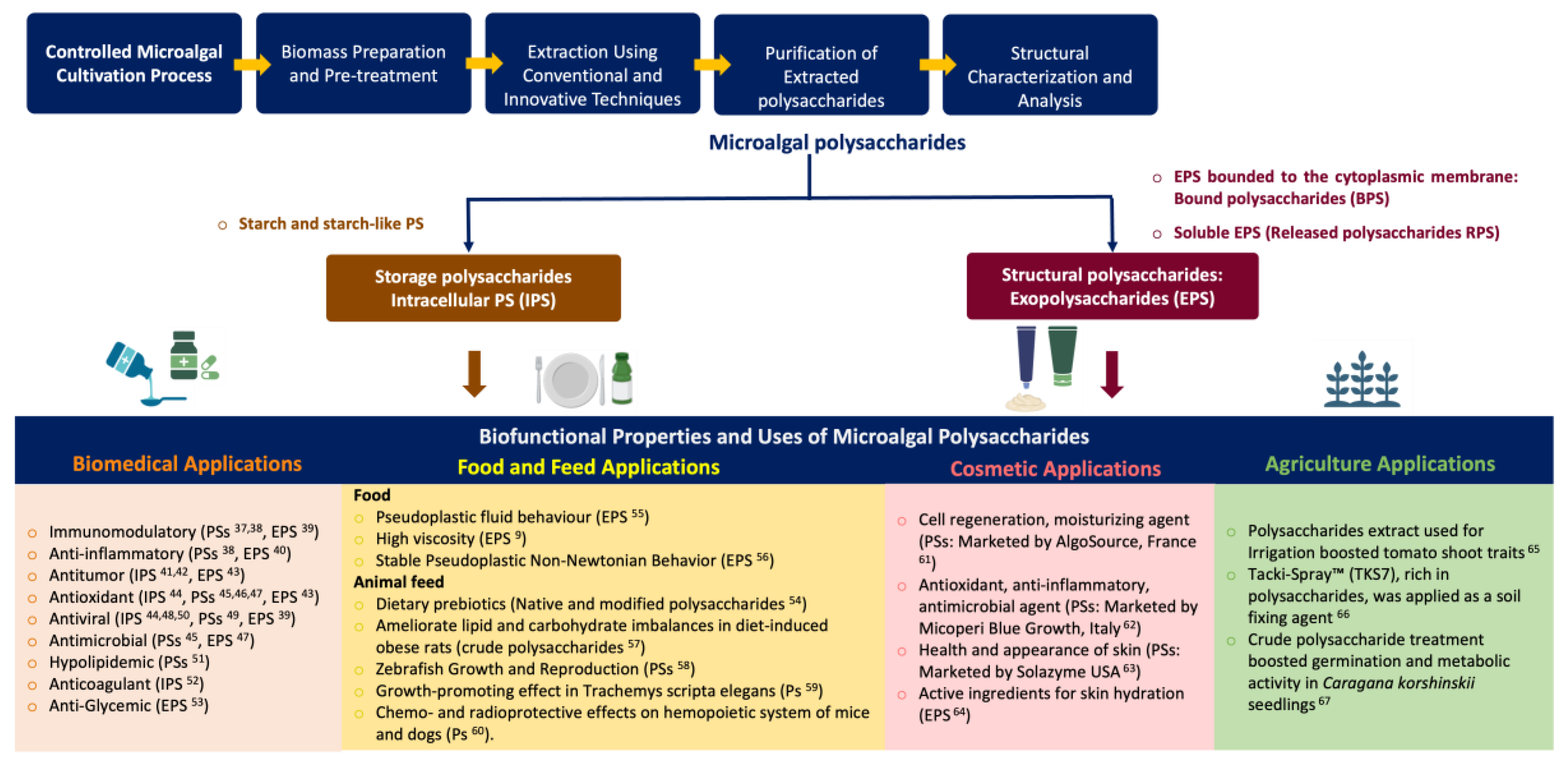
Figure 2.
Main composition of cosmetics and cosmeceuticals.

Table 1.
Activities of microalgal EPS and its potential use in the cosmetic field.
| Genus /Species / Strain | EPS | Activity | Reference | Potential cosmetic use |
|---|---|---|---|---|
| Spirulina platensis | Calcium spirulan (Rha, Rib, Man, Fru, Gal, Xyl, Glu, GlcA, GalA, sulfate, and calcium) |
Antiviral: replication inhibition of several enveloped viruses |
[76] | Antimicrobial (active ingredient/preservative) |
| Porphyridium sp | Main sugars: Xyl, Glc, Gal Glycoproteins and sulfate |
In vitro: Inhibition migration of polymorphonuclear leucocytes In vivo: Inhibition induced cutaneous erythema |
[85] | Anti-inflammatory |
| Nostoc flagelliforme | Nostoflan (Glc, Gal, Xyl, and Man) |
Potent anti-herpes simplex virus type 1 (HSV-1) activity | [86] |
Antimicrobial (active ingredient/preservative) |
| Arthrospira platensis | Calcium spirulan | Antiviral: Inhibition of orthopoxvirus and other enveloped viruses |
[77] | Antimicrobial (active ingredient/preservative) |
| Rhodella reticulata | Deproteinized EPS | Antioxidant | [87] | Antioxidant |
| Arthrospira platensis | Methanolic and aqueous EPS extracts (composition not reported) |
Antibacterial Antioxidant |
[88] | Antibacterial (preservative) Antioxidant |
| Porphyridium cruentum | Main sugars: Xyl, Gal, Glu | Inhibition of the collagenase, elastase, and hyaluronidase activity | [89] | Antiaging |
| Nostoc flagelliforme | 41.2 % Glc, 21.1 % Gal, 21.0 % Man, 2.5 % Fru, 3.6 % Rib, 1.7 % Xyl, 0.6 % Ara, 3.0 % Rha, 0.9 % Fuc, and 4.3 % GlcA | Strong emulsion-stabilizing capacity | [90] | Emulsifier and stabilizer |
| Porphyridium cruentum | Carbohydrates and uronic acids Main sugars: Gal, Glu, and Ara; Minor: Man, Fuc, Xyl, Rha |
Antibacterial and antiviral activities High viscosity values at low shear rates |
[91] | Antibacterial (preservative) Rheological agent |
| Nostoc carneum | Xyl, Glu, and uronic acid | Antioxidant Pseudoplastic fluid behavior |
[92] | Antioxidant Gelling and emulsifier agent |
| Cyanobacterium aponinum | GalA/Fuc/3-OMe-GalA/Glc/Ara/Gal/Man/Rha in a molar ratio of 24:24:17:16:10:4:3:2 | Production of immunosuppressive cytokine IL-10 | [93] | Anti-inflammatory |
| Graesiella sp. | Carbohydrate (52 %), uronic acids (23 %), ester sulfate (11 %), and protein (12 %) Carbohydrate fraction: Glc, Gal, Man, Fuc, Rha, Xyl, Ara, and Rib |
Scavenging activity | [94] | Antioxidant |
| Anabaena sp. CCC 745 | Heteropolysaccharide composed of Glc, Xyl, Rha, and GlcA | Antioxidant Pseudoplastic fluid behavior |
[55] | Antioxidant Rheological agent |
| Anabaena sp. CCC 746 | Main monosaccharides Glc, Xyl, and GlcA | Antioxidant Scavenging activity Pseudoplastic fluid behavior |
[95] | Antioxidant Rheological agent |
| Phormidium sp ETS05 | Xyl, Rha, Glc, Man, Ara, GlcN, GalA, and GlcA | Anti-inflammatory activity | [96] | Anti-inflammatory |
| Porphyridium cruentum | Glc and carboxylic acid compounds | Immune response against vibriosis | [97] | Antibacterial (preservative) |
| Tetraselmis suecica | Glc (23–37%), GlcA (20–25%), Man (2–36%), Gal (3–25%) and galactoryranoside (5–27%), GalA, (0.1–3%), Ara (5%), Xyl (0.3–3%) and Rib, Rha and Fuc (1%) | Antioxidant | [98] | Antioxidant |
| Porphyridium sordidum | Gal (~40%), Xyl (~30%) and Glu (~30%) | Plant antifungal activity | [99] | Antifungal (preservative) |
| Nostoc sp | α-Rib, α-Glc, α-LAra, α-Xyl, α-LRha, β-Man, β-Gal, GalA, and β-LFuc | Fibroblast proliferation and migration | [100] | Wound healing Skin barrier repair |
| Scenedesmus acutus | Octa-saccharides | Antioxidant | [101] | Antioxidant |
|
Chlorella sorokiniana, Chlorella sp., Picochlorum sp |
Sulfated EPS |
Antioxidant |
[80] |
Antioxidant |
| Nostoc cf. linckia | Dominant neutral saccharides, Glu, Gal, Xyl, and Man, and minor amounts of Rha, Fuc, and Ara | Antioxidant | [102] | Antioxidant |
| Gloeocapsa gelatinosa | Man (~22%), Xyl (~9%), Ara (~10%) GalA (~7%), and GlcA (~8%), Rha (~12%), Fuc (~40%) | Free radicals’ scavenger Antioxidant Metal chelating activity |
[103] | Antioxidant Chelating agent |
| Botryococcus braunii | HMW heteropolysaccharides: uronic acid (7.43–8.83%), protein (2.30–4.04%), and sulfate groups (1.52–1.95%). Gal (52.34–54.12%), Glc (34.60–35.53%), Ara (9.41–10.32%), and Fuc (1.80–1.99%) |
Antioxidant | [104] | Antioxidant |
| Porphyridium cruentum (CCALA415) | Neutral monosaccharides: D- and L-Gal, D-Glc, D-Xyl, D-GlcA, and sulfate groups | Anti-inflammatory Antioxidant Enhancement of wound closure |
[23] | Anti-inflammatory Antioxidant Skin barrier repair |
| Porphyridium cruentum, Chrysotila dentata, Pavlova sp., Diacronema ennorea, Glossomastix sp., Phaeodactylum tricornutum, Synechococcus sp. |
P. cruentum EPS: Gal (44%), Xyl (39%), and Glc (14%). C. dentata, Pavlova sp., D. ennorea, P. tricornutum, and Synechococcus sp. EPS: Gal (26–38%) and Ara/Xyl (36%/17%), Rha/Glc (47%/11%), Rha/Ara (33%/17%), Glc/Ara (42%/13%), and Glc/Fuc (38%/ 24%), respectively. Glossomastix sp. EPS Fuc/Rha/ GalA (40%/31%/21%) |
MMP-1 inhibition Stimulation of collagen production in cell lines CDD-1059Sk and CDD-1090Sk |
[105] | Stimulation of skin collagen production (preventing ageing) |
| Auxenochlorella protothecoides | Gal (42.41 %) and Rha (35.29 %) | Inhibition of the inflammatory response in lipopolysaccharide induced RAW264.7 cells | [31] | Anti-inflammatory |
| Halamphora sp | Xyl (40.55%), l-Gal (13.25%), d-Gal (13.00%), Glc (9.95%) and ribitol (9.82%) | Antimicrobial activity | [106] | Antimicrobial (preservative) |
| Glossomastix sp | Rha and Fuc as major monosaccharides and Gal, GalA and GlcA as minor monosaccharides | Anti-settling stabilizers | [71] | Rheological agent |
| Arthrospira maxima | Heteropolymer, with Man, Xyl, and GlcA | Antibacterial activity Antioxidant |
[107] | Antibacterial (preservative) Antioxidant |
Ara, arabinose; Fuc, fucose; Gal, galactose; GalA, galacturonic acid; Glc, glucose; GlcA, glucuronic acid; GlcN, glucosamine; Man, mannose; ManA, mannuronic acid; Rha, rhamnose; Rib, ribose; Xyl, xylose.
Table 2.
Examples of patents claiming the utilization of microalgal EPS for the improvement of skin health and appearance.
Table 2.
Examples of patents claiming the utilization of microalgal EPS for the improvement of skin health and appearance.
| Microalgae or cyanobacteria | EPS preparation and main composition | Application / Potential use | Applicant / Patent number | Reference |
|---|---|---|---|---|
| Arthrospira spirulina or Spirulina platensis and Spirulina maxima | Sulfated polysaccharide comprising from 2% to 60% by weight, based on the total weight of the polymer, of a rhamnose unit | Cosmetic skin moisturizing product compatible with cutaneous tissues (skin, scalp) Compositions with the appearance of a white or colored compositions in any form, such as ointment, milk, lotion, serum, paste, foam, aerosol or stick |
L’Oréal SA FR2982152A1 |
[118] |
| Several microalgal and Cyanobacteria strains; for example, Chlorella sp., Dunaliella sp., Tetraselmis sp., Anabaena sp, Aphanizomenon sp., Arthrospira sp., Nostoc sp., Isochrysis sp., Phaeodactylum sp., Skeletonema sp., Thalassiosira sp., Nannochloropsis sp., Porphyridium sp., among others | An EPS of wet, non-dialyzed and non-lyophilized origin added at 0.1-10% (wt) to the cream formulation EPS composition not mentioned |
Cosmetic formulation for topical use on human hair, skin, mucous membranes and nails Microalgal EPS as an enhancer of rheology, stability and sensory properties. Base cream for the addition of microalgal extracts as antioxidant, surfactant, emulsifier, emollient emulsifier; preservative and antimicrobials |
Univ Fed Do Parana BR102012004631A2 |
[117] |
| Genus Parachlorella | Isolation and precipitation with an alcohol, ii) drying and forming a film, iii) contacting with water and forming a gel, air drying EPS average size of between 0.1 and 400 microns EPS composition not mentioned |
Skin care compositions for wrinkle reduction and for improving the health and appearance of skin | Solazyme Inc Algenist Brands Inc US9095733B2 |
[110] |
| Parachlorella kessleri, Parachlorella beijerinckii or Chlorella sorokiniana | EPS composition: 15-55 mole percent of rhamnose, 3-30 percent of moles of xylose, 1-25 mole percent of mannose, 1-45 mole percent of galactose, 0.5-10 mole percent of glucose and 0.1-15 mole percent of glucuronic acid | Skin care products to deliver cosmeceutical ingredients such as carotenoids, polyunsaturated fatty acids, moisturizing polysaccharides, superoxide dismutase, etc. | Algenist Holdings Inc ES2718275T3 |
[111] |
| EPS from PUFA-producing microalgae fermentation waste liquid of Schizochytrium sp., or Cryptidnodinium koushii, or Crypthecodinium cohnii SD401, or Nannochloropsis sp |
Disc centrifuge separation, micro-filtration in ceramic membrane, ultrafiltration (30 kDa) to concentrate (50-70% solids), vacuum-drying (moisture 1%). 71-73 % EPS, 9.-11% peptide and protein, 3-4 % monosaccharide content | Formulation EPS as wall material in emulsions of DHA, Tween 80 and gelatin solution protected against oxidation, spray-dried in microcapsules | Qingdao Institute of Bioenergy and Bioprocess Technology of CAS CN108559006A |
[32] |
| Parachlorella, Porphyridium, Chaetoceros, Chlorella, Dunaliella, Isochrysis, Phaeodactylum, Tetraselmis, Botryococcus, Cholorococcum, Hormotilopsis, Neochloris, Ochromonas, Gyrodinium, Ellipsoidion, Rhodella, Gymnodinium, Spirulina, Cochlodinium, Nostoc, Cyanospira, Cyanothece, Tetraselmis, Chlamydomonas, Dysmorphococcus, Anabaena, Palmella, Anacystis, Phormidium, Anabaenopsis, Aphanocapsa, Cylindrotheca, Navicula, Gloeocapsa, Phaeocystis, Leptolyngbya, Symploca, Synechocystis, Stauroneis, and Achnanthes, preferably Parachlorella kessleri. | Isolation of microalgal EPS from the culture medium, drying at 40-180 °C to form a film insoluble in water, homogenizing the film into particles, formulating the particles into a non-aqueous material, oil phase of an oil-in-water emulsion, generating 0.1-50 microns particles EPS composition not mentioned |
Topical personal care products, or by injection into skin or a skin tissue and wrinkle reduction |
TerraVia Holdings Inc EP3398606A1 |
[112] |
| Parachlorella sp | Capsular exopolysaccharide obtained by separating the exopolysaccharide producing microalgal cells from the culture medium, heating the microalgal cells to release the cellular capsule, and removing the insoluble solids to produce an aqueous solution containing the EPS EPS composition not mentioned |
Vehicle for personal care products | KUEHNLE AGROSYSTEMS Inc US20200232003A1 |
[119] |
|
Glossomastix sp, Chrysotila dentata, Pavlova sp, Phaeodactylum tricornutum, Synechococcus sp |
New depolymerized exopolysaccharides (30-100 kDa) and method of obtaining consisting on: pretreatment by high pressure (2.7 kbar), freeze-drying, depolymerization by acid hydrolysis onto cationic resins (Amberlityst® 15 DRY) in batch or in continuous mode EPS composition not mentioned |
Product to increase the production of collagen and/or hyaluronic acid, to delay the effects of skin aging | Centre National de la Recherche Scientifique CNRS, Univ. Nantes, La Rochelle Univ., Sorbonne Univ., Univ. Clermont Auvergne, Univ. Rouen Normandie FR2102020 |
[116] |
| Chlorella sp | Precipitation, centrifugation, purification, and freeze-drying 131.79 kDa EPS, mainly comprises xylose, mannose and ribose |
Antioxidant activity (DPPH, hydroxyl, ABTS radicals and superoxide anions) | Xiangtan University CN110818814A |
[22] |
| Cyanobacteria of the genus Synechococcus CCMP 1333, Synechococcus PCC 7002, and Cyanothece Miami BG 043511 | EPS isolation, drying milling to a size of between 400 microns and 0.1 microns to prepare exopolysaccharide particles; and annealing the EPS particles EPS composition not mentioned |
Topical personal care products, cosmetics for improving the health and appearance of skin, and wrinkle reduction composition | Heliobiosys, Inc. US20240358628A1 |
[113] |
| Cyanobacterium Spirulina platensis | Enhancer of rheology, stability and sensory properties and antioxidant EPS freeze-dried or wet, dialyzed or non-dialyzed 0.1-10% (wt) of the cream formulation EPS composition not mentioned |
Novel products with antioxidant, antiaging, healing, oil-reducing, antiacne, rheological and sensory properties | Univ Fed Do Parana BRPI1004637A2 |
[120] |
| Cell wall-less microalgal strain Chlorophyceae class or Volvocales order, Chlamydomonadaceae family, Chlamydomonas reinhardtii |
Concentration by lyophilization or by tangential flow filtration IMAC-enriched microalgal culture supernatant comprises between 1 μg/L and 0.1 g/L of protein and between 0.001 mg/L and 10 g/L of carbohydrates |
Cosmetic or cosmeceutical composition for wound healing or skin damage repair, increased proliferation of fibroblasts for the treatment of skin aging, photoaging and cutaneous senescence | Greenaltech, S.L Gat Biosciencies SL US12268772B2 |
[115] |
Disclaimer/Publisher’s Note: The statements, opinions and data contained in all publications are solely those of the individual author(s) and contributor(s) and not of MDPI and/or the editor(s). MDPI and/or the editor(s) disclaim responsibility for any injury to people or property resulting from any ideas, methods, instructions or products referred to in the content. |
© 2025 by the authors. Licensee MDPI, Basel, Switzerland. This article is an open access article distributed under the terms and conditions of the Creative Commons Attribution (CC BY) license (http://creativecommons.org/licenses/by/4.0/).
Copyright: This open access article is published under a Creative Commons CC BY 4.0 license, which permit the free download, distribution, and reuse, provided that the author and preprint are cited in any reuse.


