

Submitted:
04 August 2025
Posted:
05 August 2025
You are already at the latest version
Abstract
Sustainability has become an essential priority across industries, as organizations grapple with the need to reduce environmental impact, conserve resources, and adapt to evolving regulations. In the pharmaceutical sector, the urgency of these demands is particularly acute, given the industry’s substantial energy use, resource consumption, and waste production. Meeting sustainability goals requires innovative approaches that can address these specific challenges. Digital Twin Technology (DTT) emerges as a powerful tool in this context, providing pharmaceutical manufacturers with a comprehensive solution to monitor, simulate, and optimize production processes in real-time. This article explores the transformative impact of Digital Twin Technology (DTT) in fostering sustainable manufacturing within the pharmaceutical industry. It provides an in-depth analysis of how DTT facilitates substantial reductions in material waste, improves energy efficiency, and enables predictive maintenance, thereby optimizing both environmental and operational performance. Drawing on real-time data integration, simulation modeling, and intelligent analytics, the study demonstrates how DTT enhances decision-making, ensures process stability, and minimizes production inefficiencies. A key contribution of this paper is the development of a structured framework that links core DTT functionalities to specific sustainability metrics, including carbon footprint reduction, resource optimization, and lifecycle performance improvement. Furthermore, the paper introduces novel use cases and data-driven strategies for applying DTT in pharmaceutical manufacturing environments, supported by case studies and empirical evidence. It also addresses the challenges of implementation, such as data interoperability, infrastructure requirements, and integration with legacy systems, providing actionable recommendations for overcoming these barriers. By aligning DTT applications with global sustainability agendas such as the UN Sustainable Development Goals (SDGs), this research positions DTT not only as a tool for operational excellence but also as a strategic enabler of environmental stewardship and industry resilience. Ultimately, the paper offers a practical and forward-looking perspective for industry stakeholders seeking to transition towards greener, smarter manufacturing paradigms.
Keywords:
digital twin
; pharmaceuticals
; sustainability
; industry 5.0
; predictive maintenance
; Sustainable Development Goals (SDGs)
; green technologies
; process optimization
; Good Manufacturing Practice (GMP)
1. Introduction:
The digital twin idea, which is mainly defined as real entity combination, the link of data, and digital corresponding that unite all, is slowly assembling its capacity acknowledgement to enhance sustainability in many areas. In recent years, as interest about digital twins has increased in both academic and industrial areas, number of articles have been published in these areas for promoting the behavior of sustainability (Figure 1).
1.1. Origin of Digital Twin:
The concept of the Digital Twin (DT) originated from NASA's Apollo 13 project, where a physical space capsule on Earth was used to simulate the behavior of its counterpart in space. Dr. Michael Grieves formally introduced the idea of a Digital Twin in 2003 during a lecture on Product Lifecycle Management at Michigan University, describing it as a virtual representation of a physical object, product, process, or service (Grieves, 2014).
A Digital Twin encompasses a high-fidelity digital replica of a physical asset, capturing its behavior, condition, and properties through data and models, which allows for real-time monitoring and simulation of the physical counterpart’s actions in its operational environment (Kshetri, 2021).
Digital Twins are designed to predict opportunities and failures, enabling real-time actions to mitigate issues and optimize operational profiles (Semeraro et al., 2021a). DT continuously maintain an updated digital representation of physical entities, providing insights that support optimal decision-making by leveraging both live and historical data to forecast and simulate potential futures. Applications of Digital Twins span various fields, including manufacturing, healthcare, smart cities, energy, transport, and smart buildings. (Fuller et al., 2020a). Advanced uses include visualization through augmented and virtual reality, predictive simulations, and orchestration of processes (Figure 2) (Aheleroff et al., 2020).
According to a recent study (Attaran & Celik, 2023), the total investment in the development of DT technology was $8 Billion in 2022 and it is expected to rise to nearly $32 Billion in 2026. This investment consists of machine learning, remote monitoring, cloud apps, IoT, computer-aided design or CAD, networking, and systems integration to build Digital Twin applications (C. Chen et al., 2023).
1.2. Components of Digital Twin:
Digital twin is a versatile technology that combines physical and cybernetic systems for optimization based on performance indicators in different fields. The core components of digital twin technology can be categorized into three primary layers: the physical layer, the transmission layer, and the virtual layer (Figure 3) (Tao et al., 2022).
The physical layer includes the actual object or system to be digitized. Physical layer or concrete layer involves digitization with the help of sensors and computing parts for data acquisition in real-time mode (Yuxizi Zheng, 2023).
The transmission layer or connection layer serves as a bridge between the digital and the physical domain, with the help of 5G, LoRa, SatCom and other technologies at macro and micro scales (Shaptala & Myronova, 2023; Yuxizi Zheng, 2023).
Finally, the virtual layer uses artificial intelligence (AI) and analytical models to work through the data gathered, subsequently developing an extensive virtual picture for tracking and improvement (Chandaluri & Nelakuditi, 2022; Steinmetz et al., 2022).
1.3. The characteristics of the DT:
DT has three key attributes: concentration, integrity, and dynamism. Concentration addresses controlling and coordinating vast amounts of operational data to improve functionalities and the efficiency of data flow in the System Development Lifecycle (Straw et al., 2022).
Integrity is achieved when integrated subsystems into a unified model which is upheld by forecasting activities and constant updating of data to aid in accurate analysis and early identification of faults (Li & Brennan, 2024).
Dynamism makes DT suitable for such changes over time and they easily transform the real- time sensor data and probabilistic models to facilitate online monitoring for effective preventive maintenance enhancing operational reliability (Tripura et al., 2023).
These features allow DT to improve on traditional project processes by facilitating cross- departmental interaction, permitting virtual testing prior to physical production, and enabling real time data driven model updates that improve accuracy and adaptability to complicated situations.
1.4. Application OF Digital Twin:
Digital twin models have been effectively applied across a broad range of manufacturing applications, including large-scale factories, precision parts, macro manufacturing systems, and specialized product production processes (Tao et al., 2022).
Table 1 summarizes the application of Digital Twin technology in various industries, its role in each sector..
1.5. Importance of Sustainability in Pharmaceutical Manufacturing:
The pharmaceutical manufacturing industry faces significant environmental, social, and economic concerns that impact public health and sustainability throughout the entire pharmaceutical life cycle, from production to disposal. A key focus for pharmaceutical companies is environmental sustainability, which includes the use of cleaner production methods, sustainable raw materials, responsible human resource management, and the sustainability of global supply chains (Milanesi et al., 2020). One of the problems that are of great concern are the disposal of pharmaceutical wastes since discharge them in a wrong way pollutes the environment and is dangerous to human health (M H et al., 2023).
The daily demand for APIs entails multiple synthesis reactions and is associated with a low material yield rate, which greatly harms the environment (Kong et al., 2021; Siegert et al., 2020). Recently, there has been much concern on the effects of presence of pharmaceutical residues into the environment since adverse impacts on wildlife is well documented (Riikonen et al., 2024). Compared to the chemical industry this sector has lower sustainability commitment which further stress the importance of improved environmental disclosure and regulation (Calciolari et al., 2024).
Through the individual steps in the process of manufacturing pharmaceuticals – synthesis of the active substance in bulk quantities, transportation, and packing the manufacture affects not only the worldwide economy but also specific segments of certain areas. Specifically, the need for pharmaceutical chemicals demonstrates twenty times more energy demand (CED) and twenty-five times more negative global warming impact than that of other essential chemical assets (Z. Chen et al., 2024).
Pharmaceutical manufacturing wastes (PMWs) such as volatile organic compound and API threaten the life of human and causes harm to the environment as it interferes with geochemical cycles and other natural physiological process (Okeke et al., 2022).
Given these multifaceted challenges, the pharmaceutical industry must prioritize sustainable practices. By minimizing waste, reducing carbon emissions, conserving resources, and ensuring equitable labor standards, the industry can lessen its environmental impact, enhance social responsibility, and achieve sustainable economic stability. Ultimately, adopting sustainable practices is essential for fostering a resilient and equitable future while safeguarding both public health and the environment.
2. Sustainability:
Sustainability encompasses the ability to maintain ecological balance while meeting the present needs without generations of compromising future. It integrates environmental, economic, and social dimensions, emphasizing the responsible use of natural assets and the preservation of biodiversity (Hajian & Kashani, 2021). The concept of sustainability became mainstream in the 1980s, but its roots trace back much earlier.
Natural scientists in the 19th and 20th centuries also contributed by highlighting the tension between conserving resources for human use and preserving nature for its own sake. The modern idea of sustainability gained momentum in the 1970s, particularly with the Rome's Club "Limits to Growth" and other influential publications (Coomer, 2013; Driver, 1979; Ecology Party Manifesto for a Sustainable Society 1975, 1975; Vernon, 1979; Woodhouse, 1972).
The 2030 blueprint established by United Nations for the growth of sustainability in 2015. This project consists of 17 goals of sustainable development to realize enhancement and more viable future ecologic. The 169 targets were accompanying having 17 goals aim to direct the most pressing challenges of world. They are divided into three categories: environment, economy, and society (United Nations, Economic and Social Council, Committee on Economic, Social and Cultural Rights, 2019). The accomplishment of these goals significantly depends on technological solutions, which catalyze the three pillars of sustainable development (Chege & Wang, 2019)
As I go to the trend of publication on sustainability (Figure 4), I found that from 2001 to 2023, there were more publications on sustainability, which indicates that people are becoming more aware of how important it is to solving global issues.
2.1. Three Pillars of Sustainability:
One common way to describe "sustainability" is by using three connected "pillars" that cover economic, social, and environmental (or ecological) aspects. This three-part idea is often shown as three overlapping circles representing society, the environment, and the economy, with sustainability sitting where they all meet, as seen in Figure 5 is widely used to explain "sustainability" in academic papers, policy documents, business materials, and online (Purvis et al., 2019).
2.2. Relationships Among the Environment, Economy, and Society:
The idea of sustainability is likely to keep playing a big role in discussions about development science. According to van der Linde and Porter (1995) (Van der Linde & Porter, 1995), the best decisions will be those that satisfy society's needs while also being good for the environment and economy, fair for everyone, and supportive of social well-being. This creates three connected areas of sustainability that show how the economic, environmental, and social aspects of sustainable development are related, as shown in Figure 6 (Mensah, 2019).
2.3. The Evolution Process of Sustainability:
The concept of Sustainable Development (SD) has matured from early environmental awareness into a comprehensive global policy framework addressing interconnected social, economic, and environmental challenges (Stagl, 2007; Olawumi & Chan, 2018). Key milestones—such as the Brundtland Report (1987), the Rio Earth Summit (1992), the adoption of the Sustainable Development Goals (2015), and the EU Green Deal (2021)—have progressively shaped SD into a central agenda in global governance. Recent developments, including AI for Climate Action and sustainable healthcare models post-COVID-19, reflect a shift toward innovation-driven solutions. This evolution underscores the increasing urgency for industries, including pharmaceuticals, to align with SD principles and integrate technologies like Digital Twin Technology to meet environmental and operational sustainability targets.
Figure 7 shows the evolution of sustainability in different eras.
2.4. Importance of Sustainability
The connection between concern for future and earth concern is at sustainability thinking heart. Sustainability is essential because it strikes a balance between economic, social, and environmental issues to protect the future and present generation’s welfare. Serious issues caused by unsustainable practices like depletion of resources, change in climate, and loss of biodiversity as the world’s consumption and population increase. Keeping an eye on previous goals, governments and sectors have incorporated practices of sustainability more and more, in results moving towards circular economics, emissions of lower carbon, and renewable energy advancement. There are many problems to be resolved, like expanding of projects, momentum, and resolving global variation (Groves, 2019).
Considering the past goals and issues that lies beyond, we can identify the advantages of sustainable practices also the possible disadvantages of not implementing them.
2.4.1. Previous Progress:
Ecosystem health is maintained by sustainable practices, prevention of environmental degradation, and support biodiversity by promoting management of responsible resources, renewable and conservation energy (Gernaat et al., 2021; Osman et al., 2023).
According to economic perspective, contribution in green technologies promote creation of jobs and resilience in economic, though sustainable models of business reduce waste, resource efficiency, and minimize prices (Geissdoerfer et al., 2017; Nikolaou et al., 2021). Also, ethical business conduct, and well-being of community boosted by promoting sustainable programs, which normally leads to developed society that is more inclusive and equitable (Orbons et al., 2024).
2.4.2. Future Challenges:
Today humanity facing the biggest challenges are natural resources loss. Unsustainable practices create the risk of exhausting vital resources such as fossil fuels, water and minerals (Kulkarni, 2024). Change in climate also made it important to decrease footprints of carbon and build resilience to its results (de Oliveira et al., 2023). Globally, more strict regulations are implemented by government to promote sustainability, legal and financial penalties are facing by companies that violate these policies (Ogrean & Herciu, 2020).
2.4.3. Positive Outcomes of Sustainable Practices:
Sustainable techniques are important for the protection of environment, providing benefits loke conservation of resources, reduction of pollution, and biodiversity. Methodology and research have shown that the renewable energy use greatly decreases emission of greenhouse gas (Hassan et al., 2024). Economically, substantial financial gains lead by sustainable approaches through reduction of waste and efficient energy, investment in sustainability, many companies getting long-term advantages (Singh & Rahman, 2021). Also, these practices increase health of public by decreasing levels of pollution, which as a result reduces costs of healthcare related to water and air quality issues (Bangsa & Schlegelmilch, 2020). Additionally, sustainability promotes responsible use of energy, other assets, water, and efficient use of resources, thus protecting these assets for upcoming generations, reducing environmental impact extraction of resources (Deng et al., 2024; M. Zhang & Wei, 2024).
2.4.4. Negative Effects of Not Using Sustainable Practices:
In contrast, Neglecting the practices of sustainability can create many degradations of environment, like depletion of resources, loss of habitat, and accelerated change in climate (Leal Filho et al., 2020). The natural resources overuse such as minerals, water, and fossil fuel can cause notable ecological shortage and damage, badly affecting both human populations and ecosystems (Rockström et al., 2023). Economically, an absence of sustainability focus creates serious risks, like increased fines, costs, and inefficiencies, along with increased risks to market crises of banking and volatility of market by change in climate (Alex Comerford, 2024; Dafermos et al., 2018; Migliorelli, 2020).
The most significant issues are health risks, contamination of water and respiratory diseases caused by unsustainable practices of pollution (Shetty et al., 2023). Also, businesses lose market share by ignoring sustainability to competitors that parallel with growing of consumers preference for responsible practices of environment (J. Z. Zhang & Chang, 2021).
2.5. Optimistic and Pessimistic Scenarios for Sustainability:
Understanding sustainability current trends are important, as they will shape the society, ecosystem, and economy in upcoming years. If current methodologies continue, the world faces two split paths; one to enhance the sustainability, and another toward instability to environment and economics. The distinct cases over the upcoming 10-15 years expose a sharp difference between unsustainable practices continuation and future of sustainability.
The Table 2 comparing worse and optimistic cases for sustainability for upcoming 10-15 years, based on the current situation:
Summary:
Optimistic Case: Progress toward restoration of biodiversity, net zero carbon emission, growth of economy, and renewable energy through green technologies, and enhanced water and food securities.
Worse Case: Collapse of biodiversity, increase emission, social instability, climate change, and loss of economy due to unemployment and scarcity of resources.
This comparison shows that adoption of sustainability is urgent need to exclude the negative impact of worse case.
IEA (2021). Net Zero by 2050: A Roadmap for the Global Energy Sector. IRENA (2021). Renewable Energy and Jobs – Annual Review.
IPCC (2021). Sixth Assessment Report.
World Bank (2021). World Development Report on Climate Change. World Economic Forum (2020). The Future of Jobs Report.
OECD (2021). Green Growth and Climate Change Policies. WWF (2020). Living Planet Report.
UNEP (2022). Global Environmental Outlook.
The two cases differentiate these situations and show how important is adapt sustainability quickly, to overcome worse case. If we fail to take serious action, we will fall in harsh situation that will affect the society negatively, the environment, and the economy. On the other side, a dynamic approach that puts first sustainability can guarantee, a more balanced, bright, and robust future (Isaksson, 2019).
3. The Impact of Industries on Sustainability:
3.1. Industrial Revolution 1.0 to 4.0 and Towards 5.0:
The Industrial Revolution, beginning in the 18th century in Great Britain, marked a shift from rural to industrial economies (Malik et al., 2023), fueled by steam engines and mechanized industry, which boosted productivity but caused environmental issues like deforestation and pollution (Allen, 2017; Growiec, 2022). The Second Industrial Revolution introduced electricity, petroleum, and mass manufacturing, further increasing productivity and global trade, yet also intensifying resource extraction and pollution (Clark, 2012; X. Wang & Yan, 2022). The Third Industrial Revolution, or Digital Revolution, brought advances in automation and IT, improving efficiency while raising concerns about energy use and e-waste (Ghulam & Abushammala, 2023; Mohajan, 2021).
Today’s Fourth Industrial Revolution, driven by AI, robotics, and IoT, is transforming industries and society, enhancing efficiency but also leading to challenges such as job displacement and the demand for new skills (Moloi & Marwala, 2023). The industrial revolution is represented in Figure 8.
Industry 5.0 represents a shift in industrial development towards sustainable and human- centered goals, prioritizing human-machine collaboration, and the personalization of manufacturing processes. Unlike Industry 4.0, which concentrated on automation and digital systems, Industry 5.0 focuses on reducing waste, promoting a circular economy, and implementing ethical labor practices and renewable energy. This approach aims to create effective, resilient, and ecologically friendly solutions that address social and environmental inequalities, balancing technological growth with sustainability (Grabowska et al., 2022; Verma, 2024).
3.2. Industrialization and Sustainability:
Sustainability has been greatly influenced by industrialization, while industrialization has boosted the economy, it has also had a negative impact on the environment and society that results in social inequality, higher carbon footprints, and environmental destruction are made worse using fossil fuels, poor waste management, and unsustainable consumption habits (Malik et al., 2024). Ineffective waste management practices in several businesses, particularly in the industrial and pharmaceutical sectors, have led to the pollution of land and water, endangering human health and ecosystems (Buckberry & Crane-Kramer, 2022; Karaduman, 2022). Rapid industrial expansion has also made social inequality worse, leading to unfavorable working conditions, low pay, and environmental injustices (Ellitan, 2020; Memon & Ooi, 2021).
The statistical data selection about the Sustainability and Revolution of industrial environment over the long term is shown in Table 3.
3.3. The Role of Pharmaceuticals in Sustainability:
Pharmaceuticals have a double effect on society, they improve healthcare tremendously while also posing possible hazards to the environment and public health. The pharmaceutical industry plays a crucial role in advancing global health by improving healthcare outcomes, notably through the distribution of vaccines that save annually an estimated 2-3 million lives and antiretroviral drugs that have reduced AIDS-related deaths (WHO, 2023), and antiretroviral drugs that have reduced AIDS-related deaths (UNAIDS, 2023). Economically, it is a major contributor, employing over 800,000 people in the U.S. and generating approximately $1.3 trillion in revenue in 2020 (Pharmaceutical Research and Manufacturers of America, 2021). The sector also drives innovation and job growth across various fields, with global R&D spending reaching $186 billion in 2021 (WifOR, 2021).
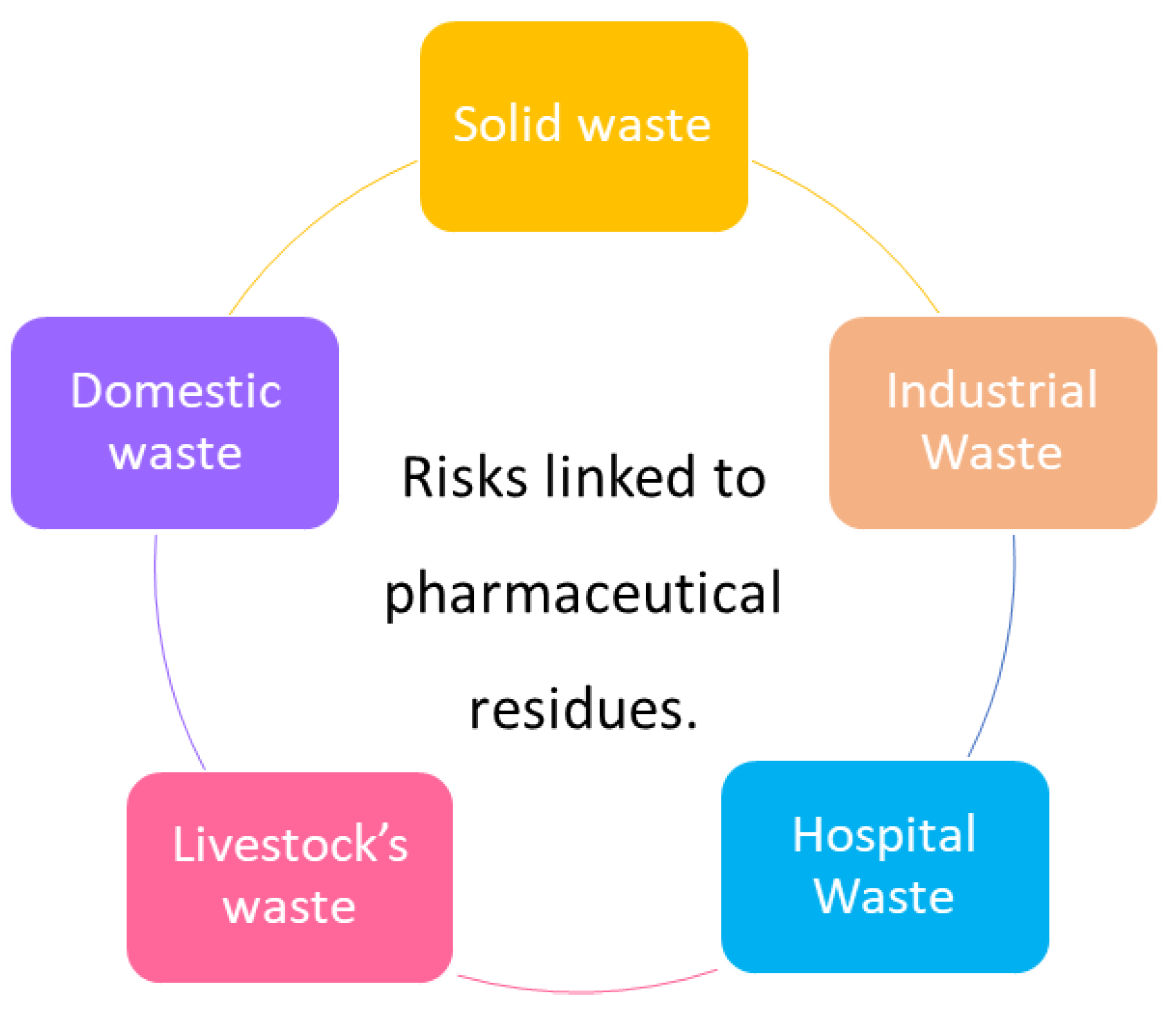
However, alongside its benefits, pharmaceuticals pose capable risks to the environment and public health. Pharmaceutical Environmental Pollution raises during drug production, disposal and use can destroy ecosystem, resistance of increases antimicrobial, and generate emissions of substantial, and generate emissions of substantial greenhouse gas (Belkhir & Elmeligi, 2019). Researchers are exploring pharmaceutical substances to treat bacterial infections in humans and livestock, but the residues from these drugs pose serious environmental and health risks. These residues are persistent, resistant to degradation, highly water-soluble, and can become more complex and carcinogenic when mixed with other substances. Consequently, emissions of pharmaceutical residues from hospitals and industrial wastewater can lead to disease outbreaks, affecting both humans and wildlife (Khan et al., 2022).
Figure 9.
Many ways that pharmaceuticals are released into the environment, including solid waste dumps, hospital effluents, pharmaceutical industrial effluents, home sources, and animal pharmaceutical releases, have resulted in significant outbreaks.
Figure 9.
Many ways that pharmaceuticals are released into the environment, including solid waste dumps, hospital effluents, pharmaceutical industrial effluents, home sources, and animal pharmaceutical releases, have resulted in significant outbreaks.
3.4. Current Sustainable Practices in Pharmaceuticals:
A more comprehensive evaluation of the literature indicates that the adoption of sustainable practices is increasing globally across multiple industrial sectors. Studies show that more industries around the world are adopting sustainable practices. As social and environmental issues get more attention, manufacturing companies are adding more environmental efforts into their business strategies. The previously mentioned study concluded that waste minimization, resource efficiency, material efficiency, and eco-efficiency were the four primary methods to sustainable production (Kar et al., 2024). Following are some of the practices adopted within the industry.
3.4.1. A dedication to green and net-zero technology:
Pharmaceutical firms are committed to using sustainable techniques in drug development and manufacture to have net-zero carbon footprints. These include of limiting waste, reducing energy use, and investing in green technologies. An analysis of 20 top pharmaceutical companies demonstrates the significance of this requirement (Booth et al., 2023).
3.4.2. Artificial Intelligence (AI) and Modern Technology Integration:
Businesses are optimizing their manufacturing processes with the use of AI and modern technologies, which lowers waste and increases energy efficiency. By sending out early alerts about possible interruptions, artificial intelligence is also helping to improve supply chain management and mitigate the effects of prescription shortages (Kumar et al., 2023; Pall et al., 2023).
3.4.3. Good Manufacturing Practice (GMP) in the Pharmaceutical Industry:
GMP addresses five crucial elements to guarantee a product's quality and consistency: people, goods, processes, procedures, and premises. Several advantages of GMP compliance include increased profitability, productivity, and risk minimization, all of which promote sustainability (Kabir et al., 2023).
3.4.4. Cooperations and Partnership Strategies:
A component of the pharmaceutical supply chain are contract development and manufacturing organizations, or CDMOs. Working with CDMOs facilitates the integration of environmentally friendly projects and sustainable production techniques. Implementing ethical sourcing and energy-efficient production requires this collaboration (Agrawal et al., 2024).
3.4.5. Regulations:
Regulatory bodies and other stakeholders around the world have periodically created and adopted several policies, programs, and guidelines related to sustainable development (Fallah Shayan et al., 2022). European nations were already adopting the SDG3 idea as a "safer pharmaceutical campaign" or "health care without harm" in 2016 (Agrawal et al., 2024).
In addition to the SDGs from the UN, which work as a model for development in all areas, ISO 14000 Standards offer businesses and organizations useful instruments for handling their environmental responsibility.
4. Digital Twin Technology as a Catalyst for Sustainability in Pharmaceutical Manufacturing:
In pharmaceutical manufacturing, achieving sustainability is challenging due to complex equipment and processes. These complexities make it hard to gather real-time data, resolve issues, and optimize production. Traditional methods often depend upon error-and-trial, resulting in material significant waste, time, and energy, resulting in loss of sustainability goals (De Soete et al., 2017; Hashmi et al., 2024; Kruk et al., 2018; X. Wang et al., 2022).
Though, these challenges are overcome gradually by industry through transformation of digital technology. New systems are evolving that boost monitoring of equipment, improve processes, and failures prediction through novel algorithms (Cui et al., 2022; Zhao et al., 2020). DTT is emerging as a trigger for transformation of sustainability, offering physical manufacturing processes real time digital replica. Digital Twin not only interact also monitor with production of live data and use AI for prediction of equipment failures, optimization of energy usage, and waste reduction, so enhance (Ciano et al., 2021; Tao, Qi, et al., 2019).
DT technology improves efficiency and allocation of resources by integrating AI, transforming pharmaceutical manufacturing more sustainable and green industry (Böttjer et al., 2023; Pimenov et al., 2023). In 2016, 4.0 industry introduce by Siemens, significantly expanded the research, with advanced technology like 5D DT model expanding manufacturing applications (Tao et al., 2018).
Overall, the sustainability practices enabler is DTT in pharmaceutical manufacturing, helping the industry integration sustainable into every production (Tao et al., 2017; Tao, Liu, et al., 2019b). Figure 10 illustrates some milestones in DT development.
4.1. The Role of Digital Twin Technology for Sustainability Enhancement in Pharmaceutical Manufacturing:
DTT is emerging rapidly as the tool of transformation to enhance sustainability in pharmaceutical manufacturing. It creates highly accurate physical production environment virtual simulation, DTT along with manufacturers to optimize and monitor their real-time processes. It reduced waste as well as boosting efficiency, environmental impact, and consumption of energy. Below, we investigate the vital areas. Where DTs are driving improvement in sustainability in pharmaceutical manufacturing. Figure 11 demonstrates the numerous ways that Digital Twin (DT) technology enhances sustainability in the production of pharmaceuticals.
4.1.1. Enhancing Process Efficiency:
The technology can enable the manufacturers in the pharmaceutical industry literally model all facets of the process and solve the system for the best strategy regarding its movements, mixing, packing and several more methodical movements. These virtual replicas enable the evaluation of situations with real and possible information to improve energy use and workforce allocation.
Examples from Xia (Xia et al., 2021) and discussions during the ProcessNet Symposium 2018 show that the implementation of DTs allows one to detect potential issues early on, work with the versatility of processes, and achieve higher quality control with less energy and material used (Kockmann, 2019). Further, they are self-contained smart sensors that collect, transmit, and control the required data highlighted by (Eisen et al., 2020) to perpetually fine-tune and optimize processes and to minimize waste as well as improve safety standards. This approach leads to sustainability in production and thus leaner, greener processes with the least wastage (Aheleroff et al., 2021; Soori et al., 2023).
4.1.2. Predictive and Preventive Maintenance:
The digital twins in the form of an overlay of physical data from the sensors or simulations show where maintenance is needed without interrupting the processes as they give a real-time view into the equipment. The enhancement of machine learning (ML) into Digital Twin-driven Predictive Maintenance (DT-PdM) has provided offsetting justification for an increment in performance improvement in manufacturing operations through actual monitoring and effective fault detection in equipment. DT technology offers the opportunity to integrate physical assets with their counterpart and support HI computation, RUL estimation, and fault diagnosis for important predictive maintenance operations as described in previous works, ML algorithms handle big data and multisource data mostly consisting of monitoring and maintenance information (Aivaliotis et al., 2019; Oluwasegun & Jung, 2020; J. Zhao et al., 2022). The ability to predict equipment failure errors minimizes the time resources are damaged or idle, and optimizes the utilization of resources (Ulmer et al., 2022; Yasin et al., 2021). Consequently, DTT enables a lean manufacturing process by increasing the useful life of the equipment and reducing the general impact on the environment (Rojek et al., 2020).
4.1.3. Minimizing Downtime and Waste:
Digital twins contribute to improved pharmaceutical manufacturing by decreasing unexpected downtime and minimizing losses due to constant inspection and forecasts. Through simulation, they discover problems that may arise in production in an early stage allowing modification to occur before a disruption happens (M. Singh et al., 2022). Also incorporate real-time sensor data, digital twins constantly observe production flow, and correct as soon as there is a deviation, minimizing downtime and waste. Moreover, they validate methods at least virtually to determine ideal processes, thus saving resources, and improving process effectiveness (Kharchenko et al., 2020). This predictive approach, implemented in advance, reduces wastage, and has a positive impact on the environment, and (Agnusdei et al., 2021; dos Santos et al., 2021).
4.1.4. Sustainable Supply Chain Management:
DT also brings positive shifts to the establishment of supply chain management of sustainability through improvement of the logistics of sustainability optimization, openness and minimized wastage. Using predictive simulation and analytics DTT can identify optimal chain routes of supply, better control stock and implement sustainable practices in source. This improves resource utilisation, promote broad sustainability initiatives and lower levels of greenhouse gas (Abualigah; et al., 2023; Dietz, & Pernul, 2020).
4.1.5. Drug Discovery and Development:
There is a worldwide implementation of using animals for scientific research. Globally, an estimated 192.1 million animals were used for research in 2015 (Rahman et al., 2022; Tao et al., 2018). By creating simulated models of biological structure, digital twins allow pharmaceutical companies to reduce depending on animal testing and process of streamline drug development. DTT allows researchers to simulate interactions of drug, efficacy of assess, and predict potential side effects without physical path. This reduces both use of resources and time, boosting a more ethical, sustainable approach to drug discovery (Sinisi et al., 2020). Also, they improve clinical paths by simulating patient responses, which reduces the creating medications that might not support in experiments (Bordukova et al., 2024; Mariam et al., 2024).
4.1.6. Energy and Resource Optimization:
Digital twins are important in optimizing resources and consumption of energy use within manufacturing environments. By managing efficient resources and enabling predictive maintenance, DTT confirms that production facilities operate with reduced waste and energy usage. This aligns with pharmaceutical manufacturing and lowers the cost of operations but also with sustainability objectives (Darbali-Zamora et al., 2021; Semeraro et al., 2023).
4.1.7. Process Control and Quality Assurance:
The pharmaceutical industry recycles raw materials into high-demanding products, requiring severe process control to ensure compliance with regulations, consistency, and quality. Precision is important, as variations can lead to compliance issues or defects (Qian et al., 2017).
As research on quality and process control advances, procedures and techniques have also improved, but challenges remained. It is hard to estimate issues, get abrupt input, or make rapid decisions about the product quality since existing methodologies aren't smarter or quicker enough. As manufacturing technology enhances, more control over product quality is needed. To resolve these issues, Digital Twins provide a platform for process of real-time control, allowing manufacturers to maintain quality of product and compliance of regulatory. By continuously monitoring key production parameters, DTT supports making decision timely and reduces the need for human action. This promotes consistent quality of product, minimizes wastage of resource, and enhances total sustainability (Kannan & Arunachalam, 2019; Zhu & Ji, 2022).
4.1.8. Enhancing Sustainability Across the Pharmaceutical Product Lifecycle:
Digital Twins play a vital role in the entire lifecycle of pharmaceutical product, from initial stage to disposal and production. By reducing waste and optimizing stage at each stage, DTT promotes a comprehensive technique to sustainability that benefits both the environment and businesses. This lifecycle opinion ensures that sustainability is integrated into pharmaceutical production each stage, boosting overall resilience of operational (Lo et al., 2021; Pronost et al., 2024; Semeraro et al., 2021b),
In summary, Digital Twin Technology offers pharmaceutical manufacturers with an extensive tool to enhance sustainability. By enabling practices of sustainable, improving efficiency, and reduction of waste, DTT aligns with operations of manufacturing with the industry's transforming goals of sustainability. Through insights of real-time and continuous innovation, Digital Twins are setting new standards for manufacturing practices which are environmentally responsible.
4.2. Case Studies of Digital Twin Technology in Pharmaceutical Sustainability:
Digital Twin Technology (DTT) is significantly transforming the pharmaceutical industry by improving operational efficiency and promoting sustainability. Several leading companies have adopted DTT, yielding measurable benefits that align with their sustainability objectives.
GSK, in collaboration with Siemens and Atos, employs digital twin technology to optimize vaccine development. This virtual simulation of the manufacturing process reduces the need for extensive physical experiments, thereby minimizing material and energy usage and supporting sustainable practices throughout vaccine development (GSK, 2022).
Pfizer uses M-Star CFD, a GPU-based computational fluid dynamics application, to develop digital replicas of bioreactors. It assists in the simulations of fluid flow and the diffusion of gases making physical experiments less necessary and aiding the scale-up process. Therefore, Pfizer has been able to advance manufacturing schedules, launch drugs in the market, and reduce resource use (M-Star, 2021).
Sanofi has implemented digital twin technology in the company’s Evolutive Facilities in France with the help of its partner Dassault Systems. By employing the use of the 3D platform, Sanofi manufactures and develops custom selective integrated production lines which are energy-effective and can produce different products at once. Here the outcomes include minimizing waste and qualification time, which also increase the speed to market and thereby, decrease the effects on the environment (Puja Mitra 2022).
Also, Sanofi uses artificial intelligence in digital twins to predict virtual patients, improving the speed of research through quantitative systems pharmacology (QSP). This makes it possible to estimate drug performance outcomes suggesting the reduction of real patient utilization in R&D processes, which shortens the timelines in drug development (Fraiser Kansteiner, 2022).
In its new Modular Aseptic Processing (MAP) factory in Kalamazoo, Michigan, Pfizer leverages digital twin technology for virtual training and supply chain optimization. This facility, which focuses on sterile injectables, enables remote training via virtual reality, reducing on-site resource demands and emissions, all while supporting Pfizer’s goal of job creation (Kenna Hughes-Castleberry, 2022).
The collaboration between Altis Labs, AstraZeneca, and Bayer further illustrates the sustainability potential of DTT. By employing Altis's Nota imaging platform, this initiative aims to enhance clinical trials through AI-driven simulations of patient responses and therapy effectiveness, streamlining drug development and optimizing resource use (Joseph Keenan, 2023).
Finally, joint Merck and Gerresheimer AG have developed and introduced a digital twin of smart solutions and primary packaging that improves the reliability of the pharmaceuticals supply chain. They assign distinct numbers related to their digital twins and, using its block- chain approach, they give real-time access to figures connected with quality which has a positive impact on productivity and ecological impact (Merck, 2022).
5. Discussion:
This paper has explored how Digital Twin Technology (DTT) can support sustainability in pharmaceutical manufacturing. From our analysis, DTT offers practical ways to reduce waste, improve energy use, and make better use of resources. It does this by creating digital copies of physical systems, allowing manufacturers to monitor operations in real-time, run simulations, and test changes virtually before applying them in real life. This makes it easier to improve processes and reduce environmental impact without causing disruptions to ongoing production.
The pharmaceutical industry faces growing pressure to lower its environmental footprint due to stricter regulations and increased expectations around corporate responsibility. At the same time, companies must still produce high-quality medicines efficiently and affordably. DTT can help meet both goals by offering detailed insights into every part of the manufacturing process. For example, it can detect early signs of equipment failure, helping to prevent breakdowns and reduce unplanned downtime. It can also optimize the use of raw materials and energy, leading to lower emissions and less waste.
One of the biggest advantages of DTT is the ability to test new ideas digitally. Companies can try different approaches such as using alternative materials, changing equipment settings, or adjusting schedules—without risking product quality or wasting resources. This speeds up innovation and supports the shift towards greener practices like clean energy and sustainable packaging. In the case studies examined, companies using DTT have already seen improvements in efficiency, product quality, and environmental performance.
However, adopting DTT also comes with challenges. Integrating it with older systems, handling large volumes of data, and ensuring that different technologies work well together is not always easy. Smaller companies may struggle with the upfront costs or lack the technical skills needed to get started. That said, the long-term savings and environmental benefits can make the investment worthwhile. Collaboration between technology providers, industry leaders, and regulators will be key to helping more companies overcome these barriers.
Looking ahead, DTT can support more than just production. It can help improve sustainability across the entire pharmaceutical product lifecycle from drug discovery and development to packaging, transportation, and even recycling. With the right strategies and support, DTT can play a leading role in building a pharmaceutical industry that is not only efficient but also environmentally responsible and ready for the future.
5.1. Challenges and Considerations:
However, problems are also observed in the implementation of DTT in the organization of the production of pharmaceutical products. A major challenge is the capital investment that is needed for the deployment of DTT involving the costs of incorporating sophisticated sensors, computing systems, and software applications. To many firms, particularly those wishing to operate on limited resources or those that are relatively small, these costs are likely to prove expensive. However, integration of DTT with other current systems may pose some technical issues especially when DTT is to be integrated with complex legacy systems which are in highly compliant or validating domains.
There are also regulatory factors as a part of the equation to consider. DTT depends heavily on the collection and evaluation of big data and therefore, organizations need to have strong data protection policies. Furthermore, for digital models integrated into pharmaceutical manufacturing, the regulatory framework is still developing, which means that the validation of the digital twin as sufficient to the traditional model in the sphere of compliance may cause unpredictable results.
5.2. Prospects and Industry Collaboration:
In the future, the application of DTT in the pharmaceutical industry can be even more empowered through the integration of AI, IoT, and ML technologies. These technologies can improve how DTT predicts processes, which further optimizes resource use and is increasingly automated. When combined with DTT, AI and ML could allow such corporations as pharmaceutical ones to predict behaviors in complicated systems, respond to changes in real- time, and advance sustainability on a much grander scale.
However, it is imperative to note that adoption barriers will require increased cooperation across industries. Pharmaceutical firms, technology vendors, and regulatory bodies could, therefore, collaborate toward establishing industry benchmarks, standards, and guidelines that enable the integration of DTT into various manufacturing processes. Such a strategy may facilitate its adoption, drive down costs, and advance improvements in sustainability throughout the automotive sector.
6. Conclusion:
Digital Twin Technology (DTT) has emerged as a pivotal tool in transforming pharmaceutical manufacturing towards more sustainable practices. As outlined in this paper, DTT offers a robust framework for optimizing production processes through real-time monitoring, simulation, and intelligent analytics. These capabilities lead to significant reductions in energy consumption, material waste, and operational inefficiencies, aligning with the industry's growing need to meet sustainability targets. For example, real-time data-driven optimization can reduce energy use in pharmaceutical plants by up to 20%, and predictive maintenance enabled by DTT can reduce equipment downtime by over 30%, leading to both operational and environmental benefits.
The pharmaceutical industry, which has traditionally been resource-intensive, stands to gain substantially from these advancements. The global push towards sustainability in pharmaceuticals is not only driven by environmental concerns but also by stringent regulatory pressures and the need to remain competitive in an increasingly eco-conscious market. The UN's Sustainable Development Goals (SDGs) call for industries to adopt greener practices, and DTT offers a pathway for pharmaceutical manufacturers to achieve these goals while maintaining operational excellence. By enabling better resource allocation and improving supply chain sustainability, DTT can help reduce the carbon footprint of pharmaceutical production, which is critical in meeting global climate targets.
However, the adoption of DTT is not without its challenges. While the technology holds immense promise, its implementation requires overcoming significant barriers such as the high upfront costs of infrastructure, integration with legacy systems, and ensuring data interoperability across various platforms. Furthermore, ensuring that DTT solutions comply with the complex and evolving regulatory landscape of the pharmaceutical industry presents an additional hurdle. Addressing these challenges will require ongoing collaboration between technology providers, pharmaceutical manufacturers, and regulatory bodies to streamline integration and standardize practices.
Despite these obstacles, the long-term benefits of DTT for sustainability are undeniable. The technology is not only a tool for improving manufacturing efficiency but also an enabler of smarter, more sustainable practices that benefit the entire pharmaceutical lifecycle—from research and development to drug manufacturing and distribution. For instance, by optimizing processes such as drug discovery and manufacturing, DTT can help reduce resource usage by as much as 15%, contributing to significant cost savings and environmental impact reduction.
Looking ahead, the potential for DTT to support sustainability in pharmaceutical manufacturing is immense. As the industry continues to innovate and adopt digital transformation strategies, DTT will play a central role in shaping a more sustainable and resilient future. Through the continued evolution of data analytics, machine learning, and AI integration, the technology’s impact will only grow, offering pharmaceutical companies new ways to not only improve their bottom line but also contribute meaningfully to global sustainability efforts.
In conclusion, Digital Twin Technology is poised to be a transformative force in pharmaceutical manufacturing, offering a holistic approach to sustainability. By integrating DTT into their operations, pharmaceutical companies can enhance process efficiency, reduce waste, lower energy consumption, and support predictive maintenance—all while contributing to broader environmental and societal goals. As the industry embraces this technology, it will play a vital role in achieving a more sustainable, resilient, and future-proof pharmaceutical sector.
References
- Aghazadeh Ardebili, A. , Longo, A., & Ficarella, A. (2021). Digital Twin (DT) in Smart Energy Systems - Systematic Literature Review of DT as a growing solution for Energy Internet of the Things (EIoT). E3S Web of Conferences, 312, 09002. [CrossRef]
- Agrawal, M. , Bansal, A., Khandelwal, V., & Bansal, N. (2024). Sustainable pharma: The need, current status and mission for the future. Scripta Medica, 55(4), 489–499. [CrossRef]
- Aheleroff, S. , Zhong, R. Y., Xu, X., Feng, Z., & Goyal, P. (2020, September 3). Digital Twin Enabled Mass Personalization: A Case Study of a Smart Wetland Maintenance System. Volume 2: Manufacturing Processes; Manufacturing Systems; Nano/Micro/Meso Manufacturing; Quality and Reliability. [CrossRef]
- Alex Comerford. (2024). The costs of ignoring sustainability in business operations. Institute of sustainability studies. https://instituteofsustainabilitystudies.com/insights/lexicon/the- costs-of-ignoring-sustainability-in-business-operations/.
- Allen, R. C. (2017). The Industrial Revolution: A Very Short Introduction. Oxford University PressOxford. [CrossRef]
- Antreas, K. , & Piromalis, D. (2021). Employing a Low-Cost Desktop 3D Printer: Challenges, and How to Overcome Them by Tuning Key Process Parameters. International Journal of Mechanics and Applications, 10(1), 11–19. [CrossRef]
- Attaran, M. , & Celik, B. (2023). Digital Twin: Benefits, use cases, challenges, and opportunities. Decision Analytics Journal, 6, 100165. [CrossRef]
- Bangsa, A. B. , & Schlegelmilch, B. B. (2020). Linking sustainable product attributes and consumer decision-making: Insights from a systematic review. Journal of Cleaner Production, 245, 118902. [CrossRef]
- Barricelli, B. , Casiraghi, E., & Fogli, D. (2019). A Survey on Digital Twin: Definitions, Characteristics, Applications, and Design Implications. IEEE Access, PP, 1. [CrossRef]
- Belkhir, L., & Elmeligi, A. (2019). Carbon footprint of the global pharmaceutical industry and relative impact of its major players. Journal of Cleaner Production, 214, 185–194. [CrossRef]
- Berkes, F. (2021). Advanced Introduction to Community-based Conservation. Edward Elgar Publishing. https://books.google.it/books?id=jmi_zQEACAAJ.
- Bhatti, G. , Mohan, H., & Singh, R. R. (2021). Towards the future of smart electric vehicles: Digital twin technology. Renewable and Sustainable Energy Reviews, 141, 110801.
- Bissadu, K. D. , Sonko, S., & Hossain, G. (2024). Society 5.0 enabled agriculture: Drivers, enabling technologies, architectures, opportunities, and challenges. Information Processing in Agriculture.
- Booth, A. , Jager, A., Faulkner, S. D., Winchester, C. C., & Shaw, S. E. (2023).
- Pharmaceutical Company Targets and Strategies to Address Climate Change: Content Analysis of Public Reports from 20 Pharmaceutical Companies. International Journal of Environmental Research and Public Health, 20(4), 3206. [CrossRef]
- Bordukova, M. , Makarov, N., Rodriguez-Esteban, R., Schmich, F., & Menden, M. P. (2024). Generative artificial intelligence empowers digital twins in drug discovery and clinical trials. Expert Opinion on Drug Discovery, 19(1), 33–42.
- Böttjer, T., Tola, D., Kakavandi, F., Wewer, C. R., Ramanujan, D., Gomes, C., Larsen, P. G., & Iosifidis, A. (2023). A review of unit level digital twin applications in the manufacturing industry. CIRP Journal of Manufacturing Science and Technology, 45, 162–189.
- Brundtland Report. (1987). Report of the World Commission on Environment and Development: Our Common Future. https://sustainabledevelopment.un.org/content/documents/5987our-common-future.pdf.
- Buckberry, J. , & Crane-Kramer, G. (2022). The dark satanic mills: Evaluating patterns of health in England during the industrial revolution. International Journal of Paleopathology, 39, 93–108. [CrossRef]
- Chege, S., & Wang, D. (2019). The influence of technology innovation on SME performance through environmental sustainability practices in Kenya. Technology in Society, 60, 101210. [CrossRef]
- Ciano, M. P. , Pozzi, R., Rossi, T., & Strozzi, F. (2021). Digital twin-enabled smart industrial systems: a bibliometric review. International Journal of Computer Integrated Manufacturing, 34(7–8), 690–708.
- Clark, G. (2012). A Review Essay on The Enlightened Economy: An Economic History of Britain 1700–1850 by Joel Mokyr. Journal of Economic Literature, 50(1), 85–95. [CrossRef]
- Coomer, J. C. (2013). Quest for a Sustainable Society: Pergamon Policy Studies on Business and Economics. Elsevier Science. https://books.google.it/books?
- Cui, X., Li, C., Zhang, Y., Said, Z., Debnath, S., Sharma, S., Ali, H. M., Yang, M., Gao, T., & Li, R. (2022). Grindability of titanium alloy using cryogenic nanolubricant minimum quantity lubrication. Journal of Manufacturing Processes, 80, 273–286.
- Dafermos, Y., Nikolaidi, M., & Galanis, G. (2018). Climate Change, Financial Stability and Monetary Policy. Ecological Economics, 152, 219–234. [CrossRef]
- Darbali-Zamora, R. , Johnson, J., Summers, A., Jones, C. B., Hansen, C., & Showalter, C. (2021). State estimation-based distributed energy resource optimization for distribution voltage regulation in telemetry-sparse environments using a real-time digital twin. Energies, 14(3), 774.
- de Oliveira, U. R. , Menezes, R. P., & Fernandes, V. A. (2023). A systematic literature review on corporate sustainability: contributions, barriers, innovations and future possibilities. Environment, Development and Sustainability. [CrossRef]
- De Soete, W. , Jiménez-González, C., Dahlin, P., & Dewulf, J. (2017). Challenges and recommendations for environmental sustainability assessments of pharmaceutical products in the healthcare sector. Green Chemistry, 19(15), 3493–3509. [CrossRef]
- Deng, X. , Song, M., Li, Z., Zhang, F., & Liu, Y. (2024). Environmental Resource Allocation Efficiency and Sustainable Development. In Environmental and Natural Resources Economics (pp. 67–95). Springer Nature Singapore. [CrossRef]
- Driver, E. D. (1979). Alternatives to Growth—I: A Search for Sustainable Futures.Edited by Dennis L. Meadows. Cambridge: Ballinger, 1977. 373 pp. Social Forces, 57(3), 1013–1014. [CrossRef]
- Dulleck, U. (2020). People, Power, and Profits: Progressive Capitalism for an Age of Discontent, by Joseph E.Stiglitz (Norton, New York, 2019), pp. 371. Economic Record, 96(313), 211–213. [CrossRef]
- Ecology Party Manifesto for a Sustainable Society 1975. (1975). https://green- history.uk/library/doc-archive/file/162-ecology-party-manifesto-for-a-sustainable- society-1975.
- Ellitan, L. (2020). Competing in the Era of Industrial Revolution 4.0 and Society 5.0. Jurnal Maksipreneur: Manajemen, Koperasi, Dan Entrepreneurship, 10(1), 1. [CrossRef]
- Enders, M. R. , & Hoßbach, N. (2019). Dimensions of digital twin applications-a literature review.
- Fallah Shayan, N. , Mohabbati-Kalejahi, N., Alavi, S., & Zahed, M. A. (2022). Sustainable Development Goals (SDGs) as a Framework for Corporate Social Responsibility (CSR). Sustainability, 14(3), 1222. [CrossRef]
- Fang, X., Li, H., Tettamanti, T., Eichberger, A., & Fellendorf, M. (2022). Effects of Automated Vehicle Models at the Mixed Traffic Situation on a Motorway Scenario. Energies, 15(6), 2008. [CrossRef]
- Fuller, A. , Fan, Z., Day, C., & Barlow, C. (2020). Digital Twin: Enabling Technologies, Challenges and Open Research. IEEE Access, 8, 108952–108971. [CrossRef]
- Geissdoerfer, M. , Savaget, P., Bocken, N. M. P., & Hultink, E. J. (2017). The Circular Economy – A new sustainability paradigm? Journal of Cleaner Production, 143, 757– 768. [CrossRef]
- Gernaat, D. E. H. J., de Boer, H. S., Daioglou, V., Yalew, S. G., Müller, C., & van Vuuren, D. P. (2021). Climate change impacts on renewable energy supply. Nature Climate Change, 11(2), 119–125. [CrossRef]
- Ghulam, S. T., & Abushammala, H. (2023). Challenges and Opportunities in the Management of Electronic Waste and Its Impact on Human Health and Environment. Sustainability, 15(3), 1837. [CrossRef]
- Gómez Peláez, L. M. , Santos, J. M., de Almeida Albuquerque, T. T., Reis, N. C., Andreão, W. L., & de Fátima Andrade, M. (2020). Air quality status and trends over large cities in South America. Environmental Science & Policy, 114, 422–435. [CrossRef]
- Grabowska, S. , Saniuk, S., & Gajdzik, B. (2022). Industry 5.0: improving humanization and sustainability of Industry 4.0. Scientometrics, 127(6), 3117–3144. [CrossRef]
- Grieves, M. (2014). Digital twin: manufacturing excellence through virtual factory replication. White Paper, 1(2014), 1–7.
- Groves, C. (2019). Sustainability and the future: reflections on the ethical and political significance of sustainability. Sustainability Science, 14(4), 915–924. [CrossRef]
- Growiec, J. (2022). Accelerating Economic Growth. Frontiers in Economic History.
- GSK. (2022). Digital twin: using advanced technology to accelerate vaccine development. https://www.gsk.com/en-gb/behind-the-science-magazine/digital-twin-using-advanced- technology-to-accelerate-vaccine-development/.
- Guo, J., & Lv, Z. (2022). Application of Digital Twins in multiple fields. Multimedia Tools and Applications, 81(19), 26941–26967. [CrossRef]
- Hajian, M. , & Kashani, S. J. (2021). Evolution of the concept of sustainability. From Brundtland Report to sustainable development goals. Sustainable Resource Management: Modern Approaches and Contexts, 1–24. [CrossRef]
- Hashmi, R. , Liu, H., & Yavari, A. (2024). Digital Twins for Enhancing Efficiency and Assuring Safety in Renewable Energy Systems: A Systematic Literature Review. Energies, 17(11), 2456. [CrossRef]
- Hassan, Q. , Viktor, P., J. Al-Musawi, T., Mahmood Ali, B., Algburi, S., Alzoubi, H. M., Khudhair Al-Jiboory, A., Zuhair Sameen, A., Salman, H. M., & Jaszczur, M. (2024). The renewable energy role in the global energy transition. Renewable Energy Focus, 100545. [CrossRef]
- Hu, L. (2023). Research on the Application of Digital Twin in Smart Cities. Advances in Economics, Management and Political Sciences, 42(1), 14–20. [CrossRef]
- Intergovernmental Panel on Climate Change (IPCC). (2021). Sixth Assessment Report. https://www.ipcc.ch/report/ar6/wg1/downloads/report/IPCC_AR6_WGI_SPM_final.pdf.
- Intergovernmental Panel on Climate Change (IPCC). (2023). Climate Change 2021 – The Physical Science Basis. Cambridge University Press. [CrossRef]
- International Renewable Energy Agency. (2020). The Post-COVID Recovery: An Agenda for Resilience, Development and Equality, Abu Dhabi,. https://www.irena.org/-/media/Files/IRENA/Agency/Publication/2020/Jun/IRENA_Post- COVID_Recovery_2020.pdf.
- Isaksson, R. (2019). Creating a sense of urgency for sustainable development – Testing two system models. Journal of Cleaner Production, 227, 1173–1184. [CrossRef]
- Joseph Keenan. (2023). Bayer, AstraZeneca gain early access to AI-driven “digital twins” courtesy of Altis collab. https://www.fiercebiotech.com/cro/altis-leads-push-digital- twins-use-trials-includes-astrazeneca-and-bayer.
- Kabir, Z. , Emon, S. Z., & Karim, S. M. A. (2023). Green pharmaceutical production and its benefits for sustainability. In Microbiology for Cleaner Production and Environmental Sustainability (pp. 115–140). CRC Press.
- Kannan, K. , & Arunachalam, N. (2019). A Digital Twin for Grinding Wheel: An Information Sharing Platform for Sustainable Grinding Process. Journal of Manufacturing Science and Engineering, 141(2). [CrossRef]
- Kar, K. , Chowdhury, S., Chakraborty, P., & Saha, A. (2024). Sustainable Practices in the Pharmaceutical Industry: Development and Adoption (pp. 11–33). [CrossRef]
- Karaduman, C. (2022). The effects of economic globalization and productivity on environmental quality: evidence from newly industrialized countries. Environmental Science and Pollution Research, 29(1), 639–652. [CrossRef]
- Kenna Hughes-Castleberry. (2022). Pfizer Will Use Virtual Reality to Help Build its Innovative New Sterile Injectables Plant. https://thedebrief.org/pfizer-is-employing- virtual-reality-to-expand-its-operations-and-boost- output/#:~:text=Digital%20twin%20technology%20can%20also%20be%20used%20to, optimize%20its%20production%2C%20as%20well%20as%20train%20employees.
- Khan, A. H. , Aziz, H. A., Khan, N. A., Hasan, M. A., Ahmed, S., Farooqi, I. H., Dhingra, A., Vambol, V., Changani, F., Yousefi, M., Islam, S., Mozaffari, N., & Mahtab, M. S. (2022). Impact, disease outbreak and the eco-hazards associated with pharmaceutical residues: a Critical review. International Journal of Environmental Science and Technology, 19(1), 677–688. [CrossRef]
- Kibria, Md. G. , Masuk, N. I., Safayet, R., Nguyen, H. Q., & Mourshed, M. (2023). Plastic Waste: Challenges and Opportunities to Mitigate Pollution and Effective Management. International Journal of Environmental Research, 17(1), 20. [CrossRef]
- Kim, M. U. (2022). A Survey on Digital Twin in Aerospace in the New Space Era. 2022 13th International Conference on Information and Communication Technology Convergence (ICTC), 1735–1737. [CrossRef]
- Kruk, M. E. , Gage, A. D., Arsenault, C., Jordan, K., Leslie, H. H., Roder-DeWan, S., Adeyi, O., Barker, P., Daelmans, B., Doubova, S. V, English, M., García-Elorrio, E., Guanais, F., Gureje, O., Hirschhorn, L. R., Jiang, L., Kelley, E., Lemango, E. T., Liljestrand, J., … Pate, M. (2018). High-quality health systems in the Sustainable Development Goals era: time for a revolution. The Lancet Global Health, 6(11), e1196–e1252. [CrossRef]
- Kshetri, N. (2021). Amplifying the value of blockchain in supply chains. In Blockchain and Supply Chain Management (pp. 67–88). Elsevier. [CrossRef]
- Kulkarni, S. (2024). Editorial: Global Sustainability: Trends, Challenges, and Case Studies (pp. 3–17). [CrossRef]
- Kumar, A. , Mani, V., Jain, V., Gupta, H., & Venkatesh, V. G. (2023). Managing healthcare supply chain through artificial intelligence (AI): A study of critical success factors.
- Computers & Industrial Engineering, 175, 108815. [CrossRef]
- Leal Filho, W. , Wolf, F., Lange Salvia, A., Beynaghi, A., Shulla, K., Kovaleva, M., & Vasconcelos, C. R. P. (2020). Heading towards an unsustainable world: some of the implications of not achieving the SDGs. Discover Sustainability, 1(1), 2. [CrossRef]
- Lehner, H. , & Dorffner, L. (2020). Digital geoTwin Vienna: Towards a digital twin city as geodata hub. Springer.
- Lo, C. K., Chen, C. H., & Zhong, R. Y. (2021). A review of digital twin in product design and development. Advanced Engineering Informatics, 48, 101297. [CrossRef]
- Malik, A. , Sharma, S., Batra, I., Sharma, C., Kaswan, M. S., & Garza-Reyes, J. A. (2023). Industrial revolution and environmental sustainability: an analytical interpretation of research constituents in Industry 4.0. [CrossRef]
- Malik, A. , Sharma, S., Batra, I., Sharma, C., Kaswan, M. S., & Garza-Reyes, J. A. (2024). Industrial revolution and environmental sustainability: an analytical interpretation of research constituents in Industry 4.0. International Journal of Lean Six Sigma, 15(1), 22–49. [CrossRef]
- Mansour, H. , & El-Khatib, A. (2024). From Ideation to Innovation: Integrating Pharmaceutical Innovation and Sustainable Development (pp. 239–280). [CrossRef]
- Mariam, Z. , Niazi, S. K., & Magoola, M. (2024). Unlocking the Future of Drug Development: Generative AI, Digital Twins, and Beyond. BioMedInformatics, 4(2), 1441–1456.
- Mary, E. Shacklett. (2025). What is a digital twin? https://www.techtarget.com/searcherp/definition/digital-twin.
- Memon, K. , & Ooi, S. (2021). THE DARK SIDE OF INDUSTRIAL REVOLUTION 4.0-IMPLICATIONS AND SUGGESTIONS. Academy of Entrepreneurship Journal, 27, 1– 18.
- Meng, W. , Yang, Y., Zang, J., Li, H., & Lu, R. (2023). DTUAV: a novel cloud–based digital twin system for unmanned aerial vehicles. SIMULATION, 99(1), 69–87. [CrossRef]
- Mensah, J. (2019). Sustainable development: Meaning, history, principles, pillars, and implications for human action: Literature review. Cogent Social Sciences, 5(1), 1653531. [CrossRef]
- Migliorelli, M. (2020). The Sustainability–Financial Risk Nexus (pp. 1–29). [CrossRef]
- Milanesi, M. , Runfola, A., & Guercini, S. (2020). Pharmaceutical industry riding the wave of sustainability: Review and opportunities for future research. Journal of Cleaner Production, 261, 121204. [CrossRef]
- Mohajan, H. (2021). Third Industrial Revolution Brings Global Development. 7, 239–251.
- Mohanraj, E., N, E., S, S., & S, S. (2024). Digital Twins for Automotive Predictive Maintenance. 2024 International Conference on Inventive Computation Technologies (ICICT), 1579–1584. [CrossRef]
- Moloi, T. , & Marwala, T. (2023). The Fourth Industrial Revolution. In Enterprise Risk Management in the Fourth Industrial Revolution (pp. 11–20). Springer Nature Singapore. [CrossRef]
- Nikolaou, I. E. , Jones, N., & Stefanakis, A. (2021). Circular Economy and Sustainability: the Past, the Present and the Future Directions. Circular Economy and Sustainability, 1(1), 1–20. [CrossRef]
- Ogrean, C. , & Herciu, M. (2020). Business Models Addressing Sustainability Challenges— Towards a New Research Agenda. Sustainability, 12(9), 3534. [CrossRef]
- Okita, T. , Kawabata, T., Murayama, H., Nishino, N., & Aichi, M. (2019). A new concept of digital twin of artifact systems: synthesizing monitoring/inspections, physical/numerical models, and social system models. Procedia Cirp, 79, 667–672.
- Olawumi, T. O., & Chan, D. W. M. (2018). A scientometric review of global research on sustainability and sustainable development. Journal of Cleaner Production, 183, 231–250. [CrossRef]
- Opoku, D.-G. J. , Perera, S., Osei-Kyei, R., & Rashidi, M. (2021). Digital twin application in the construction industry: A literature review. Journal of Building Engineering, 40, 102726. [CrossRef]
- Orbons, K. , van Vuuren, D. P., Ambrosio, G., Kulkarni, S., Weber, E., Zapata, V., Daioglou, V., Hof, A. F., & Zimm, C. (2024). A review of existing model-based scenarios achieving SDGs: progress and challenges. Global Sustainability, 7, e3. [CrossRef]
- Osman, A. I. , Chen, L., Yang, M., Msigwa, G., Farghali, M., Fawzy, S., Rooney, D. W., & Yap, P.-S. (2023). Cost, environmental impact, and resilience of renewable energy under a changing climate: a review. Environmental Chemistry Letters, 21(2), 741–764. [CrossRef]
- Pall, R., Gauthier, Y., Auer, S., & Mowaswes, W. (2023). Predicting drug shortages using pharmacy data and machine learning. Health Care Management Science, 26(3), 395–.
- 411. [CrossRef]
- Pharmaceutical Research and Manufacturers of America. (2021). Profile of the Pharmaceutical Industry.
- Pimenov, D. Y. , Bustillo, A., Wojciechowski, S., Sharma, V. S., Gupta, M. K., & Kuntoğlu, M. (2023). Artificial intelligence systems for tool condition monitoring in machining: Analysis and critical review. Journal of Intelligent Manufacturing, 34(5), 2079–2121.
- Piwowar-Sulej, K. (2022). Sustainable development and national cultures: a quantitative and qualitative analysis of the research field. Environment, Development and Sustainability, 24(12), 13447–13475. [CrossRef]
- Pokhrel, A. , Katta, V., & Colomo-Palacios, R. (2020). Digital Twin for Cybersecurity Incident Prediction. Proceedings of the IEEE/ACM 42nd International Conference on Software Engineering Workshops, 671–678. [CrossRef]
- Porter, M. E., & van der Linde, C. (1995). Toward a New Conception of the Environment- Competitiveness Relationship. Journal of Economic Perspectives, 9(4), 97–118. https://EconPapers.repec.org/RePEc:aea:jecper:v:9:y:1995:i:4:p:97-118.
- Pronost, G. , Mayer, F., Camargo, M., & Dupont, L. (2024). Digital Twins along the product lifecycle: A systematic literature review of applications in manufacturing. Digital Twin, 3, 3. [CrossRef]
- Purcell, W. , & Neubauer, T. (2023). Digital Twins in Agriculture: A State-of-the-art review. Smart Agricultural Technology, 3, 100094.
- Purvis, B. , Mao, Y., & Robinson, D. (2019). Three pillars of sustainability: in search of conceptual origins. Sustainability Science, 14(3), 681–695. [CrossRef]
- Qian, F., Zhong, W., & Du, W. (2017). Fundamental Theories and Key Technologies for Smart and Optimal Manufacturing in the Process Industry. Engineering, 3(2), 154–160. [CrossRef]
- Rahman, H. U., Mahmood, M. H. Bin, Khan, M. S. A., Sama, N. U., Asaruddin, M. R., & Afzal, M. (2022). To explore the pharmacological mechanism of action using digital twin. Int. J. Adv. Appl. Sci, 9, 55–62.
- Raihan, A. , & Tuspekova, A. (2022). Dynamic impacts of economic growth, energy use, urbanization, tourism, agricultural value-added, and forested area on carbon dioxide emissions in Brazil. Journal of Environmental Studies and Sciences, 12(4), 794–814. [CrossRef]
- Rockström, J. , Gupta, J., Qin, D., Lade, S. J., Abrams, J. F., Andersen, L. S., Armstrong McKay, D. I., Bai, X., Bala, G., Bunn, S. E., Ciobanu, D., DeClerck, F., Ebi, K., Gifford, L., Gordon, C., Hasan, S., Kanie, N., Lenton, T. M., Loriani, S., … Zhang, X. (2023). Safe and just Earth system boundaries. Nature, 619(7968), 102–111. [CrossRef]
- Sachs, J. D. (2015). The Age of Sustainable Development. Columbia University Press. [CrossRef]
- Sayed, E. T. , Wilberforce, T., Elsaid, K., Rabaia, M. K. H., Abdelkareem, M. A., Chae, K.-J., & Olabi, A. G. (2021). A critical review on environmental impacts of renewable energy systems and mitigation strategies: Wind, hydro, biomass and geothermal. Science of The Total Environment, 766, 144505. [CrossRef]
- Semeraro, C. , Lezoche, M., Panetto, H., & Dassisti, M. (2021a). Digital twin paradigm: A systematic literature review. Computers in Industry, 130, 103469. [CrossRef]
- Semeraro, C. , Olabi, A. G., Aljaghoub, H., Alami, A. H., Al Radi, M., Dassisti, M., & Abdelkareem, M. A. (2023). Digital twin application in energy storage: Trends and challenges. Journal of Energy Storage, 58, 106347.
- Sen’s, A. (2020). Sen’s Development as Freedom and Sachs’s The End of Poverty: A Comparative Study (Doctoral dissertation, Ateneo de Davao University).
- Shafto, M. , Conroy, M., Doyle, R., Glaessgen, E., Kemp, C., LeMoigne, J., & Wang, L. (2010). Draft modeling, simulation, information technology & processing roadmap. Technology Area, 11, 1–32.
- Shetty, S. S., D, D., S, H., Sonkusare, S., Naik, P. B., Kumari N, S., & Madhyastha, H. (2023). Environmental pollutants and their effects on human health. Heliyon, 9(9), e19496. [CrossRef]
- Singh, A. P. , & Rahman, Z. (2021). Integrating corporate sustainability and sustainable development goals: towards a multi-stakeholder framework. Cogent Business & Management, 8(1). [CrossRef]
- Sinisi, S. , Alimguzhin, V., Mancini, T., Tronci, E., Mari, F., & Leeners, B. (2020). Optimal Personalised Treatment Computation through In Silico Clinical Trials on Patient Digital Twins*. Fundamenta Informaticae, 174(3–4), 283–310. [CrossRef]
- Sreedevi, T. R. , & Kumar, M. B. S. (2020). Digital Twin in Smart Farming: A categorical literature review and exploring possibilities in hydroponics. 2020 Advanced Computing and Communication Technologies for High Performance Applications (ACCTHPA), 120–124.
- Stagl, S. (2007). Theoretical foundations of learning processes for sustainable development.
- International Journal of Sustainable Development & World Ecology, 14(1), 52–62. [CrossRef]
- Steffen, W., Richardson, K., Rockström, J., Cornell, S. E., Fetzer, I., Bennett, E. M., Biggs, R., Carpenter, S. R., de Vries, W., de Wit, C. A., Folke, C., Gerten, D., Heinke, J., Mace.
- G. M., Persson, L. M., Ramanathan, V., Reyers, B., & Sörlin, S. (2015). Planetary boundaries: Guiding human development on a changing planet. Science, 347(6223). [CrossRef]
- Subramanian, K. (2020). Digital Twin for Drug Discovery and Development—The Virtual Liver. Journal of the Indian Institute of Science, 100(4), 653–662. [CrossRef]
- Tao, F. , Liu, W. R., Zhang, M., Hu, T. L., Qi, Q. L., Zhang, H., Sui, Y., Wang, T., Xu, H.
- Huang, Z. (2019a). Digital twin five-dimensional model and its application in ten fields. Computer Integrated Manufacturing Systems, 25(1), 1–18.
- Tao, F. , Liu, W., Zhang, M., Hu, T., Qi, Q., Zhang, H., Sui, F., Wang, T., Xu, H., & Huang, Z. (2019b). Five-dimension digital twin model and its ten applications. Comput. Integr. Manuf. Syst, 25(1), 1–18.
- Tao, F. , Qi, Q., Wang, L., & Nee, A. Y. C. (2019). Digital twins and cyber–physical systems toward smart manufacturing and industry 4.0: Correlation and comparison. Engineering, 5(4), 653–661.
- Tao, F., Xiao, B., Qi, Q., Cheng, J., & Ji, P. (2022). Digital twin modeling. Journal of Manufacturing Systems, 64, 372–389. [CrossRef]
- Tao, F. , Zhang, H., Liu, A., & Nee, A. Y. C. (2018). Digital twin in industry: State-of-the-art.
- IEEE Transactions on Industrial Informatics, 15(4), 2405–2415.
- Tao, F. , Zhang, M., Cheng, J., & Qi, Q. (2017). Digital twin workshop: a new paradigm for future workshop. Computer Integrated Manufacturing Systems, 23(1), 1–9.
- The Origins of EPA. (1970). https://www.epa.gov/history/origins-epa.
- UNAIDS. (2023). Global HIV & AIDS statistics — Fact sheet. https://www.unaids.org/en/resources/fact-sheet.
- United Nations, Economic and Social Council, Committee on Economic, Social and Cultural Rights. (2019). https://sustainabledevelopment.un.org/content/documents/21780E_C.12_2019_1_edited. pdf.
- United Nations Educational, S. and C. O. (2023). UN General Assembly discusses UNESCO’s Report on Education for Sustainable Development. https://www.unesco.org/en/articles/un-general-assembly-discusses-unescos-report- education-sustainable-development-0.
- Verma, D. (2024). Industry 5.0: A Human-Centric and Sustainable Approach to Industrial Development. International Journal of Social Relevance & Concern, 12(5), 17–21. [CrossRef]
- Vernon, I. R. (1979). The Sustainable Society: Ethics and Economic Growth. By Robert L. Stivers. Philadelphia: Westminster Press, 1976. 240 pp. $5.25 paper. Journal of Church and State, 21(3), 580–581. [CrossRef]
- Wang, W. , He, F., Li, Y., Tang, S., Li, X., Xia, J., & Lv, Z. (2023). Data information processing of traffic digital twins in smart cities using edge intelligent federation learning. Information Processing & Management, 60(2), 103171. [CrossRef]
- Wang, X. , Li, C., Zhang, Y., Ali, H. M., Sharma, S., Li, R., Yang, M., Said, Z., & Liu, X. (2022). Tribology of enhanced turning using biolubricants: A comparative assessment. Tribology International, 174, 107766.
- Wang, X. , & Yan, L. (2022). Driving factors and decoupling analysis of fossil fuel related- carbon dioxide emissions in China. Fuel, 314, 122869. [CrossRef]
- Whelan, M. J. , Linstead, C., Worrall, F., Ormerod, S. J., Durance, I., Johnson, A. C., Johnson, D., Owen, M., Wiik, E., Howden, N. J. K., Burt, T. P., Boxall, A., Brown, C. D., Oliver, D. M., & Tickner, D. (2022). Is water quality in British rivers “better than at any time since the end of the Industrial Revolution”? Science of The Total Environment, 843, 157014. [CrossRef]
- WHO. (2023). Vaccines and immunization. https://www.who.int/health-topics/vaccines-and- immunization#tab=tab_1.
- WifOR. (2021). The Global Economic Impact of the Pharmaceutical Industry. https://www.wifor.com/uploads/2021/06/WifOR_Global_Economic_Footprint_Study_S eptember_2020.pdf.
- Woodhouse, E. J. (1972). Re-Visioning the Future of the Third World: An Ecological Perspective on Development. World Politics, 25(1), 1–33. [CrossRef]
- World Bank Group. (2021). Climate Change Could Force 216 Million People to Migrate Within Their Own Countries by 2050. https://hdl.handle.net/10986/36248.
- Xia, K. , Sacco, C., Kirkpatrick, M., Saidy, C., Nguyen, L., Kircaliali, A., & Harik, R. (2021). A digital twin to train deep reinforcement learning agent for smart manufacturing plants: Environment, interfaces and intelligence. Journal of Manufacturing Systems, 58, 210–230. [CrossRef]
- Zahoor, Z. , Latif, M. I., Khan, I., & Hou, F. (2022). Abundance of natural resources and environmental sustainability: the roles of manufacturing value-added, urbanization, and permanent cropland. Environmental Science and Pollution Research, 29(54), 82365– 82378. [CrossRef]
- Zhang, J. Z. , & Chang, C.-W. (2021). Consumer dynamics: theories, methods, and emerging directions. Journal of the Academy of Marketing Science, 49(1), 166–196. [CrossRef]
- Zhang, M. , & Wei, X. (2024). Resource efficiency, cultural industry, and green economic growth: A synergistic approach. Resources Policy, 90, 104769. [CrossRef]
- Zhang, Y., Yan, S., Chu, X., Lin, Z., & Tan, G. (2023). Application progress of digital twin in medical field. 2023 IEEE 9th International Conference on Cloud Computing and Intelligent Systems (CCIS), 462–468. [CrossRef]
- Zhao, G., Jia, P., Huang, C., Zhou, A., & Fang, Y. (2020). A machine learning based framework for identifying influential nodes in complex networks. IEEE Access, 8, 65462–65471.
- Zhu, X. , & Ji, Y. (2022). A digital twin–driven method for online quality control in process industry. The International Journal of Advanced Manufacturing Technology, 119(5–6), 3045–3064. [CrossRef]
- Shaptala, S., & Myronova, N. (2023). Embedding Digital Twin Technology in Robotics. Management of Development of Complex Systems, 53, 45–51. [CrossRef]
Figure 1.
Number of papers published on Digital Twin and Sustainability from 2020 to November 2024.
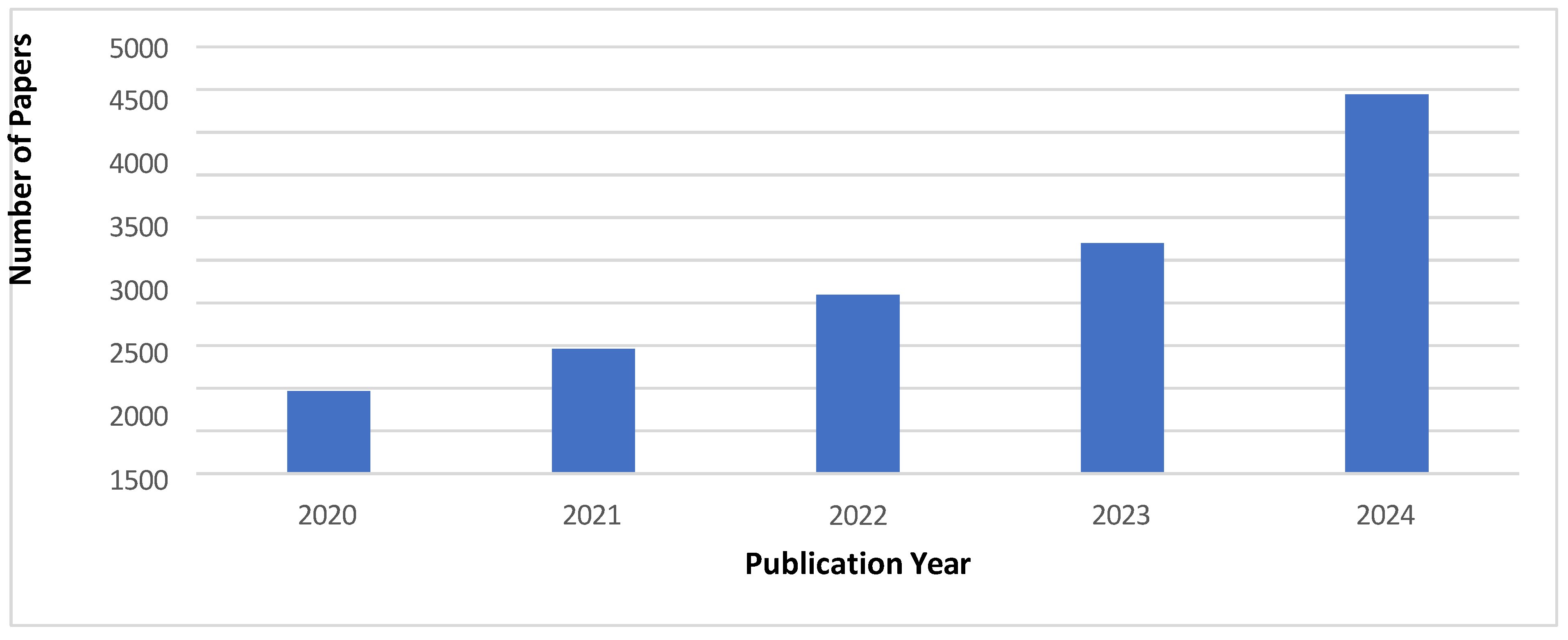
Figure 2.
Digital Twin Model, Grieves’ model adaptation result shown in the picture (Barricelli et al., 2019).
Figure 2.
Digital Twin Model, Grieves’ model adaptation result shown in the picture (Barricelli et al., 2019).
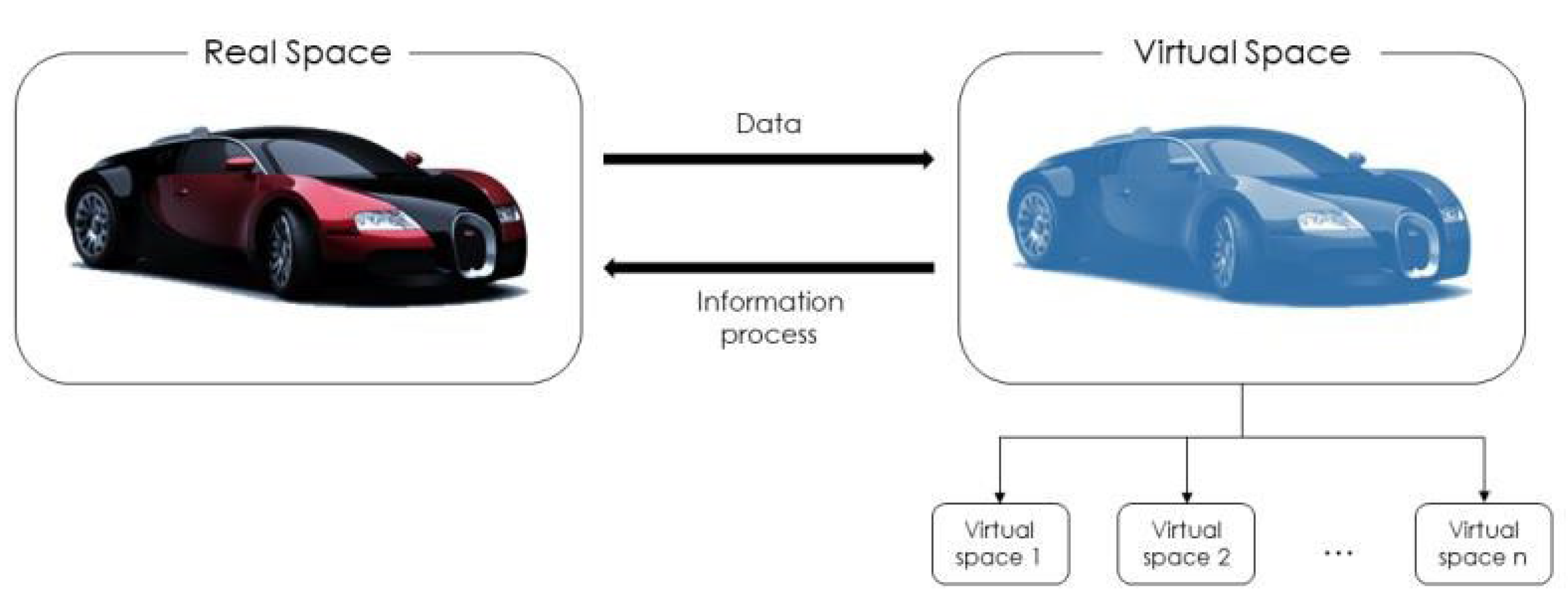
Figure 3.
Component of Digital twin technology: 1. Physical entity, 2. Virtual entity, 3. Data connection between Physical & Virtual entities (Mary E. Shacklett, 2025).
Figure 3.
Component of Digital twin technology: 1. Physical entity, 2. Virtual entity, 3. Data connection between Physical & Virtual entities (Mary E. Shacklett, 2025).
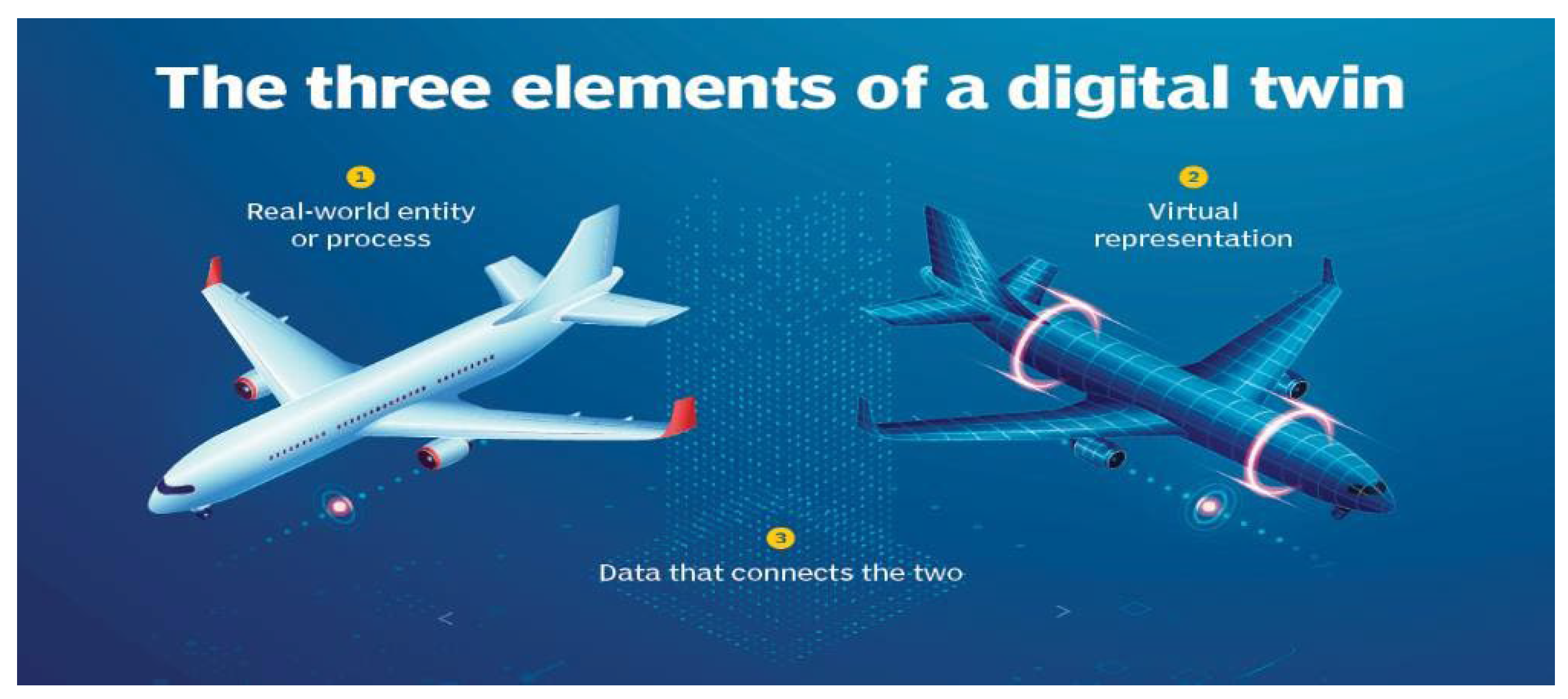
Figure 4.
The dramatic increase in the number of articles on sustainability published from 2001 to 2023.
Figure 4.
The dramatic increase in the number of articles on sustainability published from 2001 to 2023.
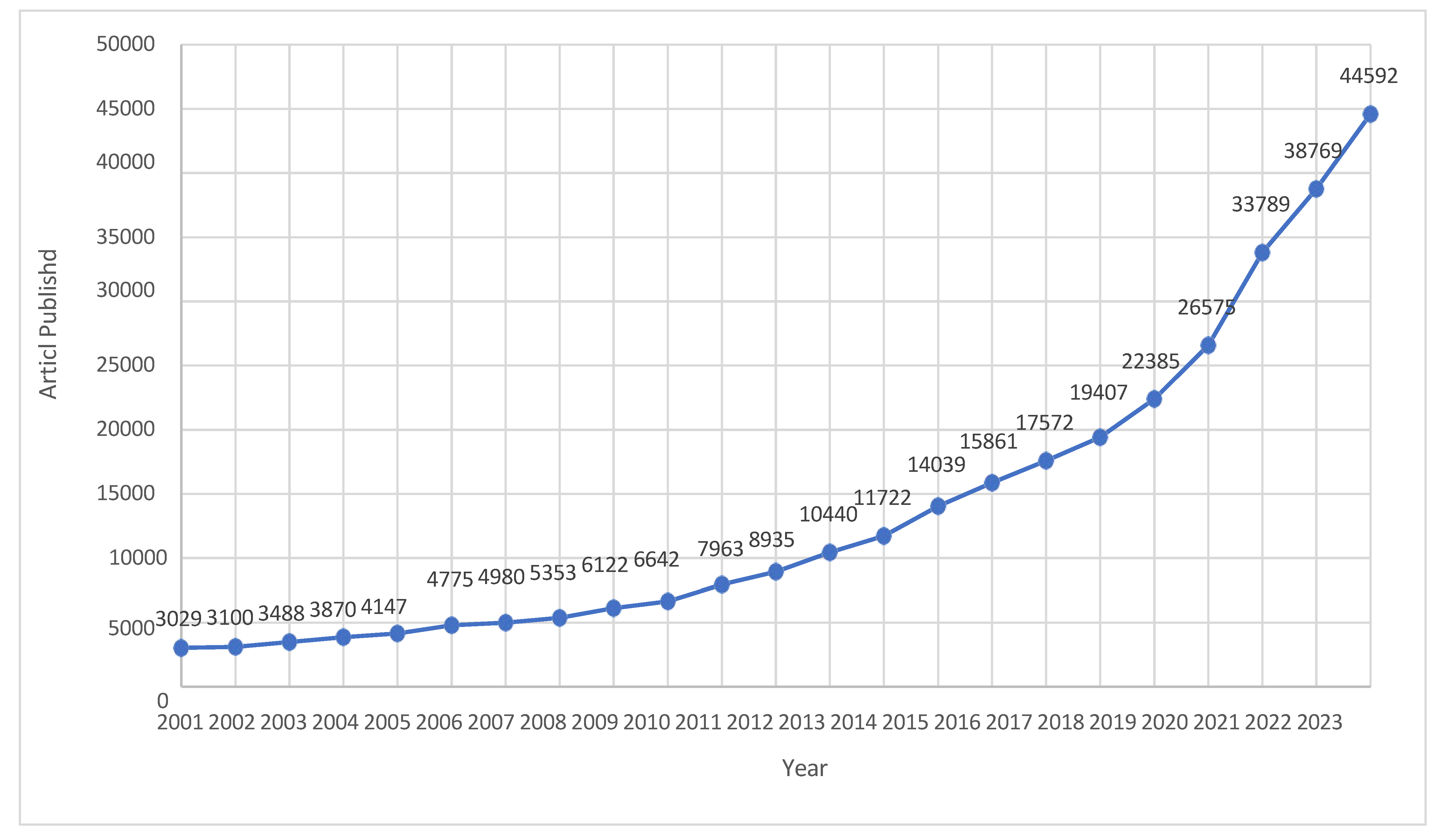
Figure 5.
Right, sustainability typical representation as three intersecting circles. Left, alternative depictions: literal ‘pillars’ approach.
Figure 5.
Right, sustainability typical representation as three intersecting circles. Left, alternative depictions: literal ‘pillars’ approach.
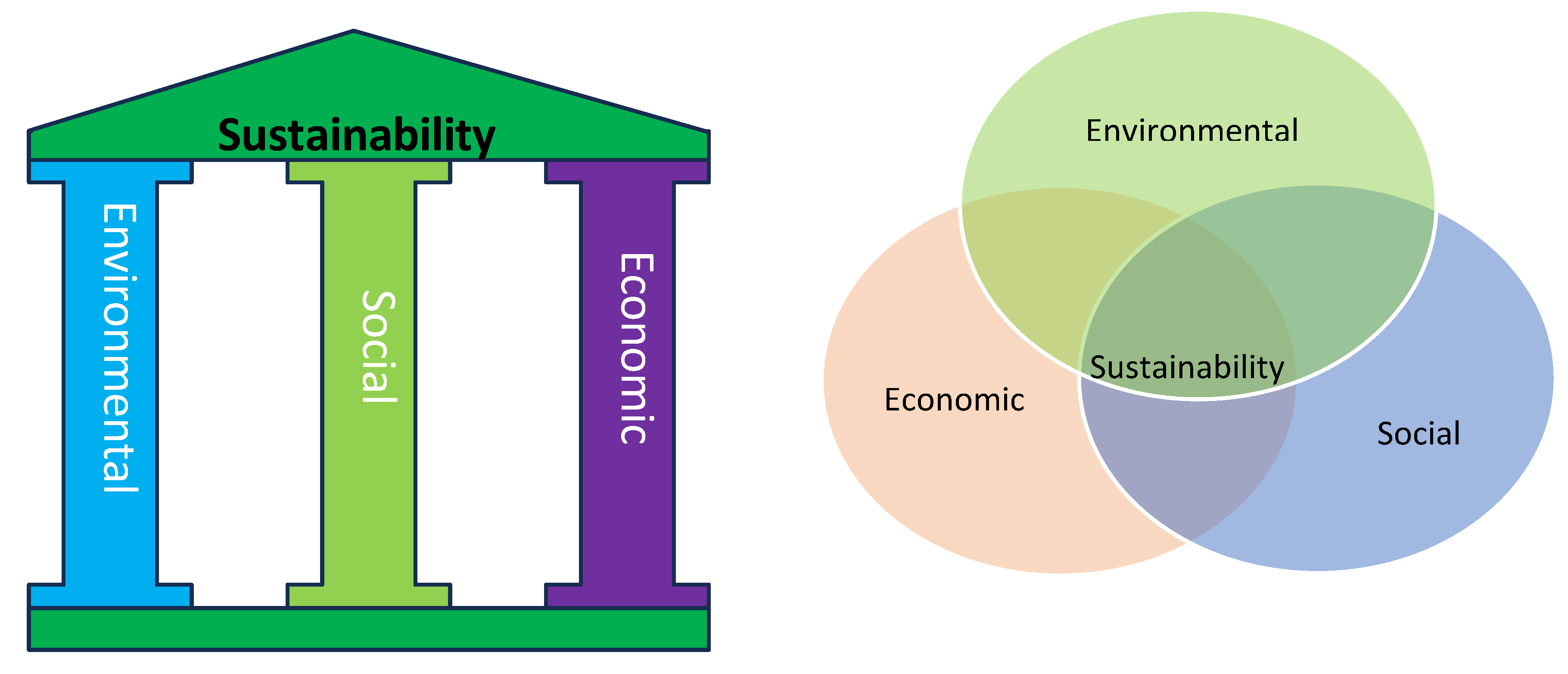
Figure 6.
Relationships among social, environmental, and economic sustainability.
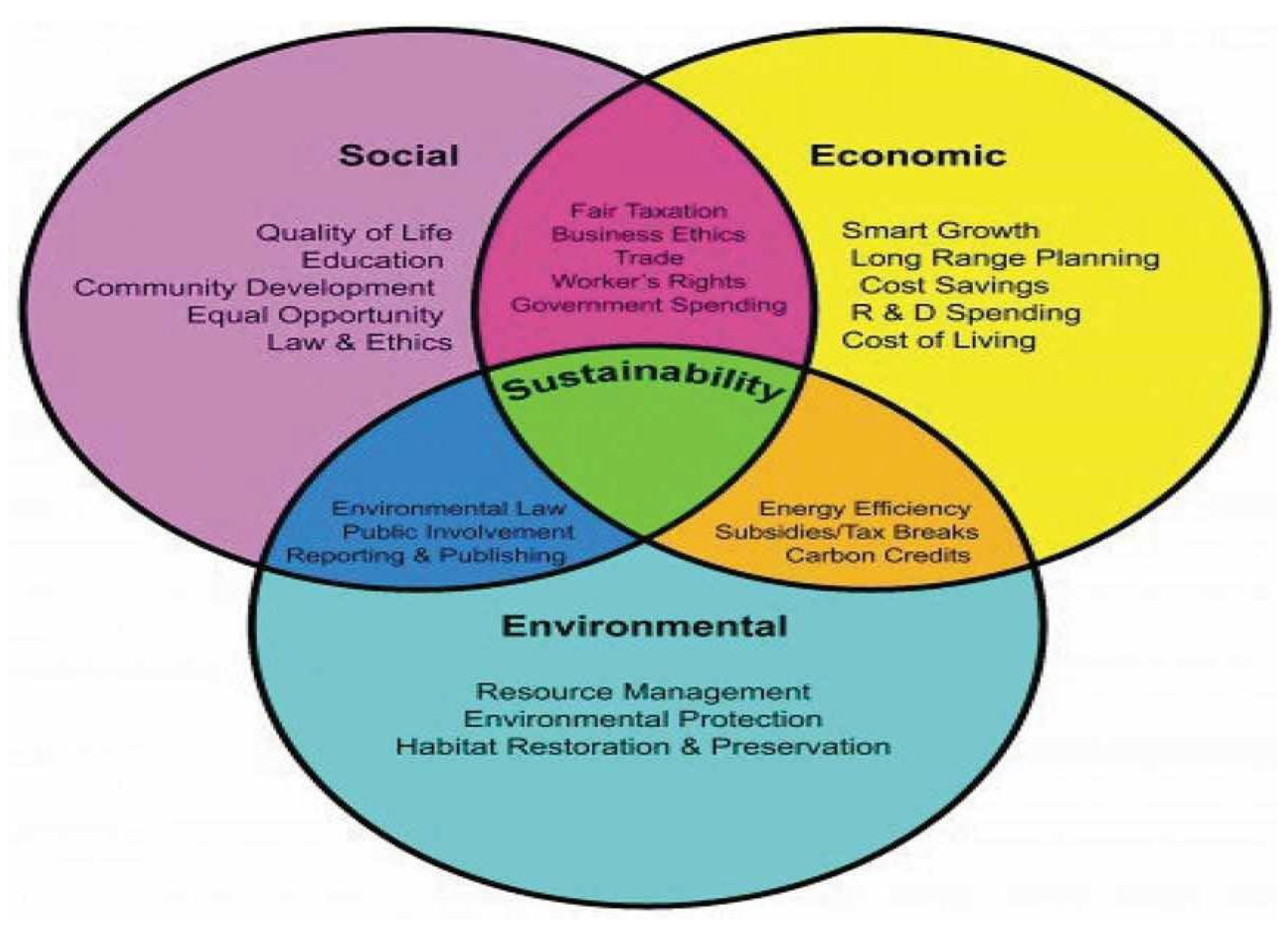
Figure 7.
The evolution of sustainability in different era.
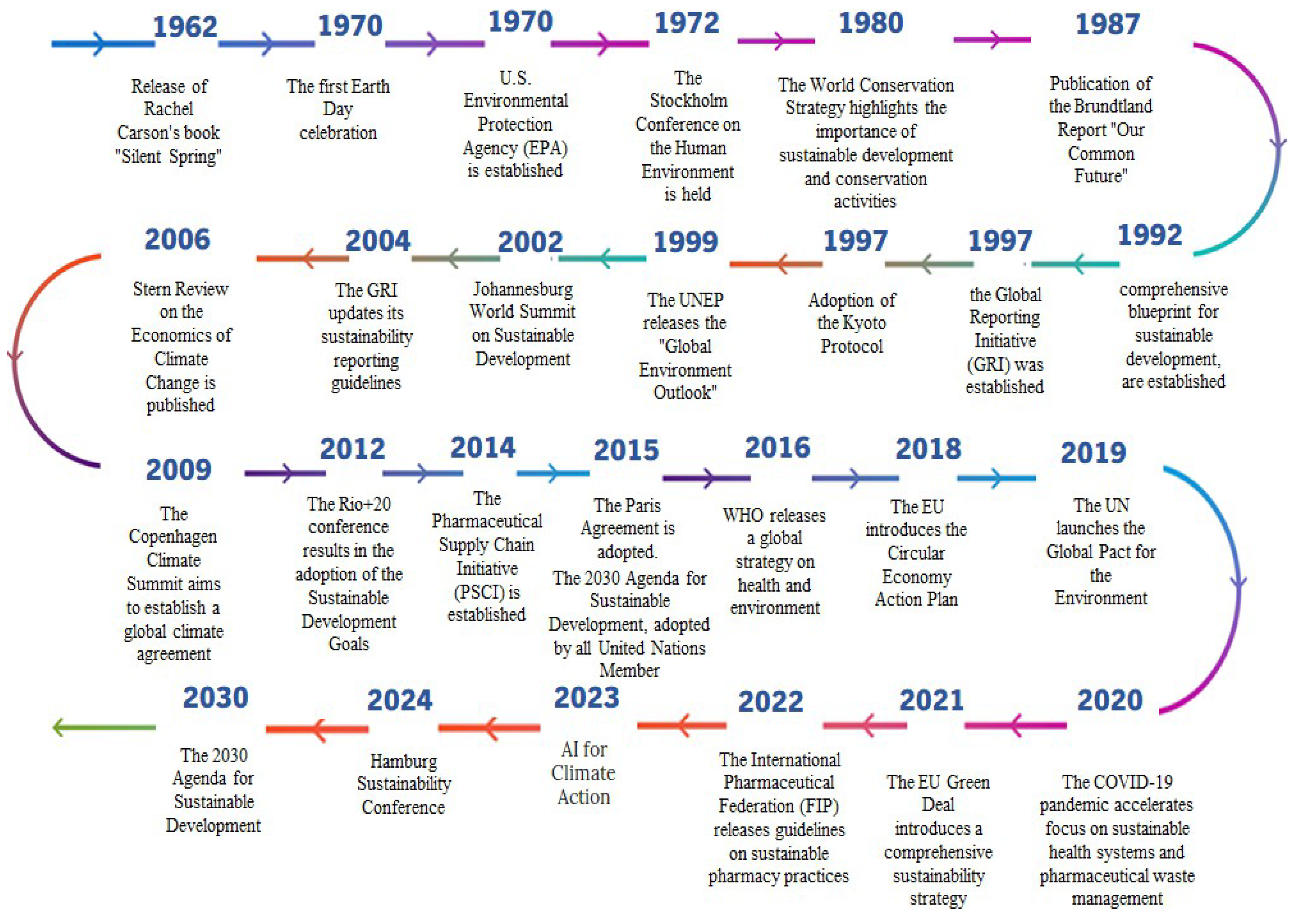
Figure 8.
The sequence and fundamental of the industrial revolutions.
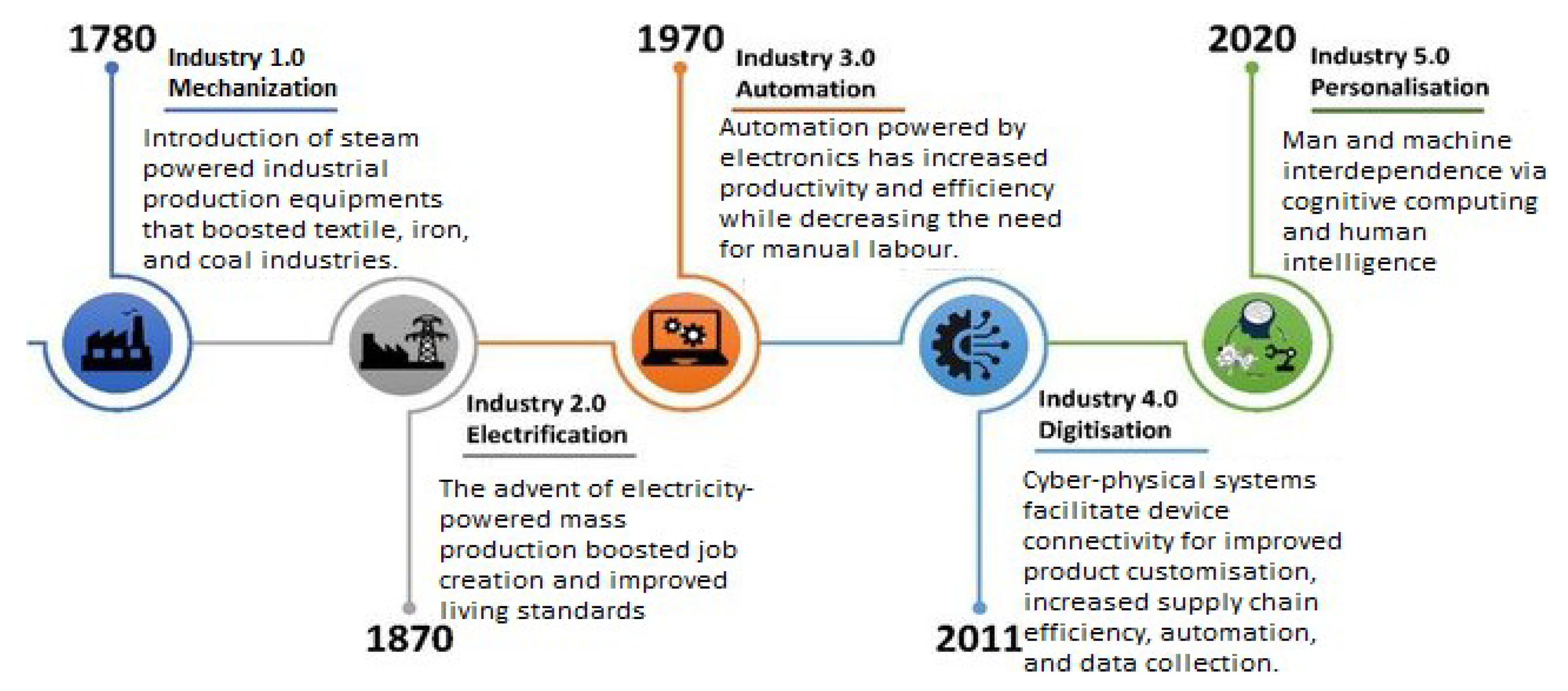
Figure 10.
Illustrates some milestones in DT development.
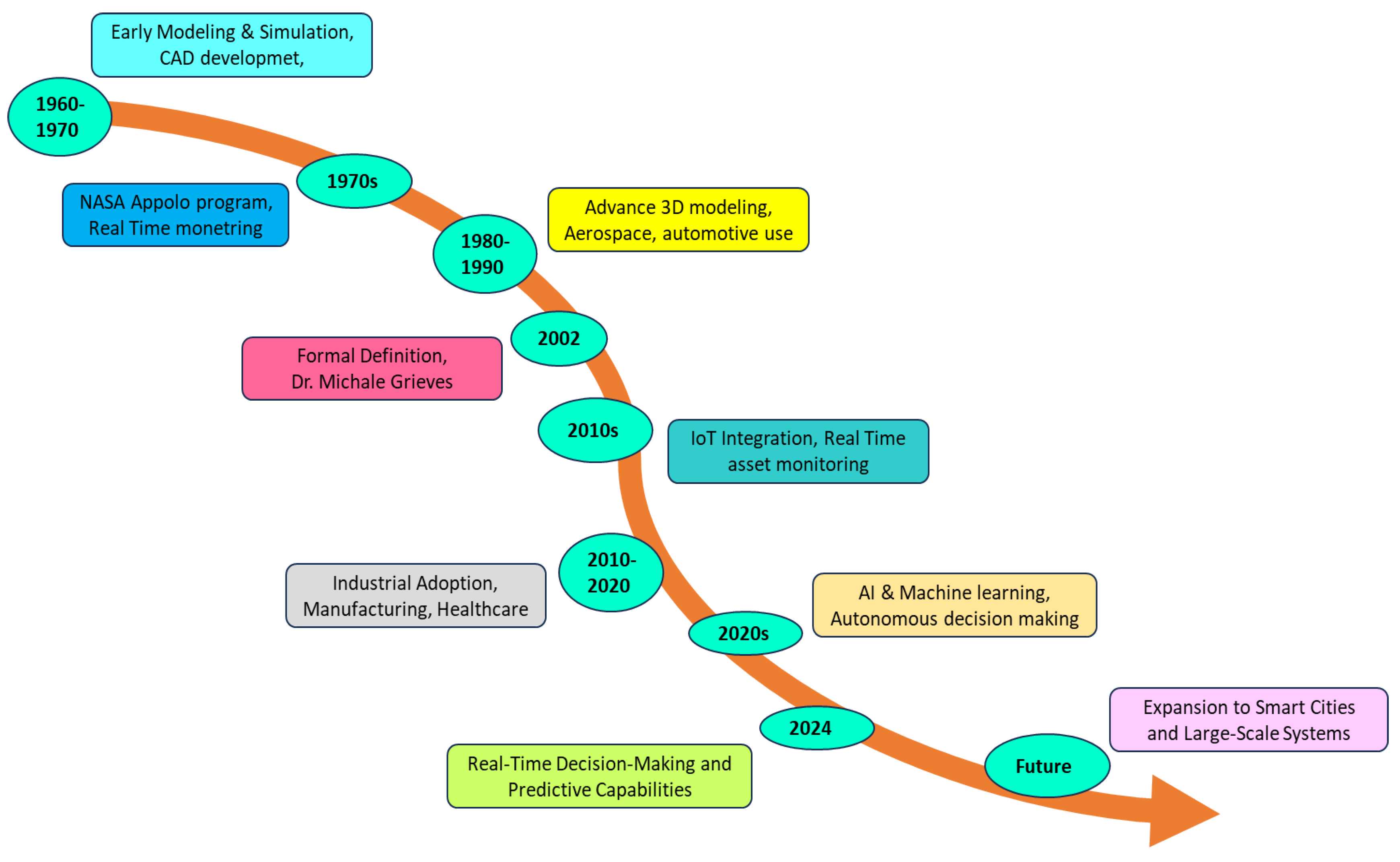
Figure 11.
Use of Digital Twin Technology for sustainability enhancement in pharmaceutical manufacturing.
Figure 11.
Use of Digital Twin Technology for sustainability enhancement in pharmaceutical manufacturing.
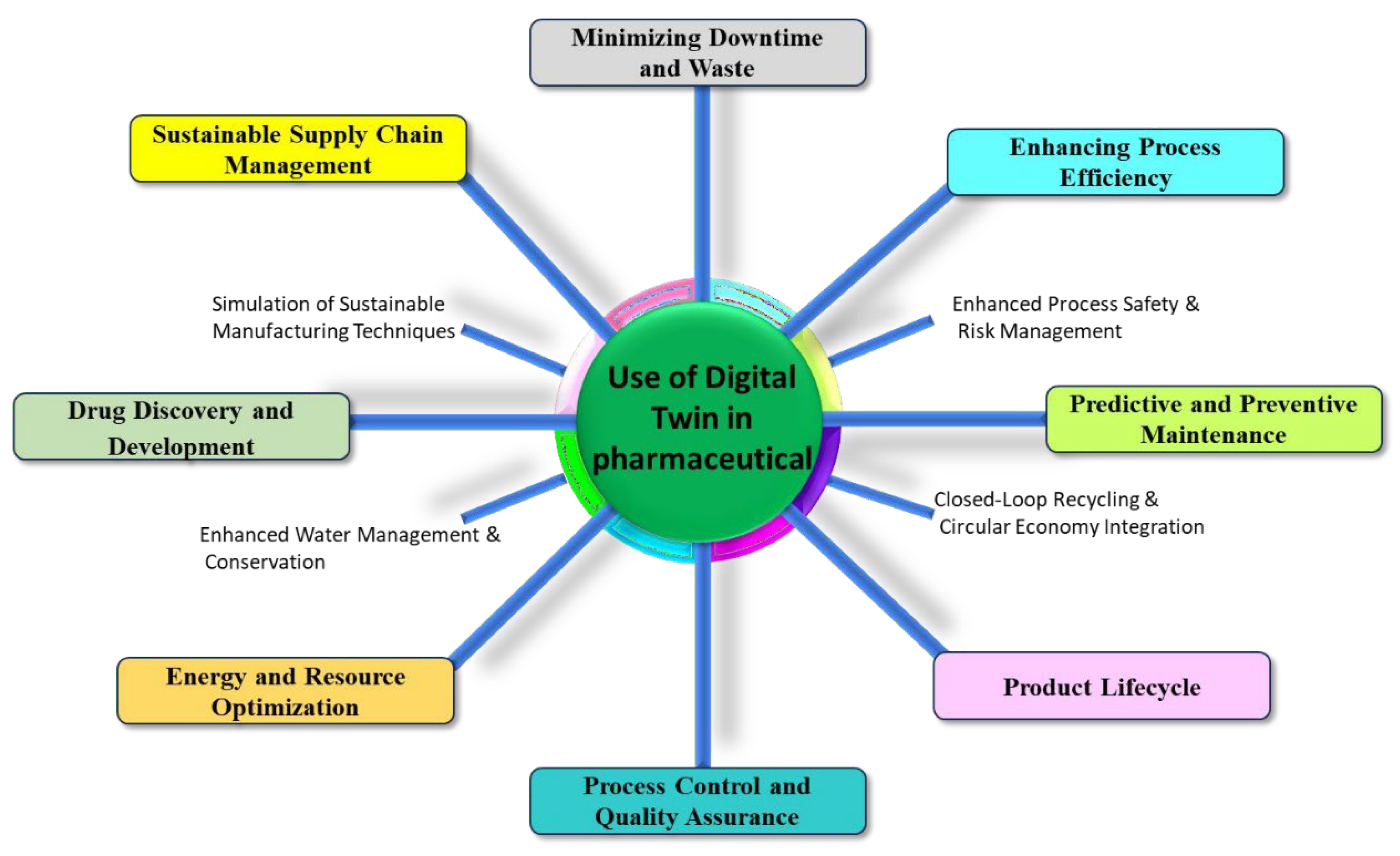

Table 1.
Application of Digital Twin technology in various industries, its role in each sector.
| Industry | Role of Digital Twin | References |
| Industrial Production | Enhances quality and productivity in Industry 4.0 processes, facilitates innovation, and establishes communication between the digital and Physical worlds. | (Enders & Hoßbach, 2019; Guo & Lv, 2022; Pokhrel et al., 2020). |
| Automotive | Supports R&D, predictive maintenance, real-time vehicle health monitoring, and Sustainable vehicle design. |
(Antreas & Piromalis, 2021; Fang et al., 2022; Mohanraj et al., 2024). |
| Healthcare | Allows predictive diagnosis, remote treatments, real-time patient monitoring, And personalized care. | (Subramanian, 2020; Tao, Liu, et al., 2019a; Y. Zhang Et al., 2023). |
| Smart Cities | Connects the real and virtual worlds for water treatment, traffic control, urban planning, and facility monitoring. | (Hu, 2023; Lehner & Dorffner, 2020; W. Wang et al., 2023). |
| Aerospace | Minimizes expenses, boosts productivity, and enhances mission success through flight replication and pre-launch simulation. | (Kim, 2022; Meng et al., 2023; Shafto et al., 2010). |
| Energy | Enhances decision-making in nuclear power plants and energy harvesting, finds anomalies, and improves smart energy systems. | (Aghazadeh Ardebili et al., 2021; Bhatti et al., 2021; Okita et al., 2019). |
| Agriculture | Increases output in precision farming, robotics, crop management, aquaponics, and smart water management. | (Bissadu et al., 2024; Purcell & Neubauer, 2023; Sreedevi & Kumar, 2020) |
| Construction | combines AI, image processing, and sensor integration to provide more efficient real-time progress tracking, resource planning, safety monitoring, and quality control. | (Opoku et al., 2021) |
Table 2.
comparing worse and optimistic cases for sustainability for upcoming 10-15 years, based on the current situation.
Table 2.
comparing worse and optimistic cases for sustainability for upcoming 10-15 years, based on the current situation.
| Category | Optimistic Scenario (2035) | Pessimistic Scenario (2035) |
| 1. Environmental Progress | ||
|
Carbon Emissions |
Global carbon emissions reduced by 40-50% by 2035. | Continued rise in emissions, leading to a 2-3°C temperature increase. |
|
Renewable Energy |
Renewables dominate 70% of global electricity generation. | Renewables account for only 40%, with fossil fuels still dominant. |
|
Biodiversity |
10% increase in biodiversity through reforestation and conservation. | 30% biodiversity loss, risking species extinction and ecosystem collapse. |
|
Resource Availability |
Natural resources managed sustainably; water scarcity reduced. | Water shortages affect 2-3 billion people globally; severe resource depletion. |
| 2. Economic Growth | ||
|
Green Economy |
$12 trillion from green economy by 2030, creating 395 million jobs. |
Economic loss from climate disasters; widening inequality and poverty. |
|
Sustainable Technologies |
Widespread adoption of clean technologies in energy, transport, and agriculture. |
Stagnation in green tech, reliance on unsustainable practices. |
| 3. Government & Policy Action | ||
|
Global Policy Alignment |
Strong international cooperation; enforcement of strict environmental regulations. |
Weak policy response: failure to meet Paris Agreement targets. |
|
Urbanization |
Sustainable, smart cities with green infrastructure and electrified public transport. | Unplanned, sprawling cities with pollution, waste problems, and social unrest. |
| 4. Technological Innovation | ||
|
Carbon Capture |
Carbon capture technology widely adopted, reducing industrial emissions. |
Slow technological progress: carbon capture remains unscalable. |
|
AI & Data for Sustainability |
AI-driven precision agriculture and resource optimization reduce waste. | Limited use of AI, inefficient resource management, and high waste levels. |
| 5. Socio-Economic Impact | ||
|
Job Creation |
Millions of jobs in renewable energy, green technology, and sustainability sectors. | Job losses in fossil fuel industries, leading to widespread unemployment. |
|
Climate-induced Economic Losses |
Climate resilience reduces damage; green sectors drive stable growth. |
Trillions of dollars in damages from climate-related disasters. |
| 6. Global & Social Impact | ||
|
Food & Water Security |
Food & Water Security |
Food & Water Security |
|
International Cooperation |
International Cooperation |
International Cooperation |
Table 3.
Statistical data about the Revolution of Industrial and the sustainability of the environment.
Table 3.
Statistical data about the Revolution of Industrial and the sustainability of the environment.
| Key area of environmental sustainability |
Analytical perspective outward |
|
Pollution of Water |
Throughout the Industrial Revolution, chemicals and industrial waste led to widespread water contamination. Over 80% of untreated wastewater worldwide is released into the environment, according to the UN, with serious consequences for the ecosystem and human health (Whelan et al.,2022). |
|
Pollution of Air |
The air pollution level increased because of industrialization. The reports of World Health Organization (WHO) show 91% people on Earth lives in locations where the amount of particle matter in the air is higher than acceptable (Gómez Peláez et al., 2020). |
|
Emissions of Greenhouse gas |
There has been a significant increase in emissions of greenhouse gas since the Revolution of Industrial. The world's produced fossil and industries fuels produced 33.1 billion tons of carbon dioxide in 2019, up significantly from 2.8 billion tons in 1850, according to the findings of the Global Carbon Project (Raihan & Tuspekova, 2022). |
|
Deforestation |
The Industrial Revolution resulted in massive deforestation because natural resources were used to power industrial activity. The United Nations Agriculture and Food Organization reports that, between 1990 and 2022, 178 million hectares of forest were destroyed worldwide (Zahoor et al., 2022). |
|
Carbon emissions |
Due to fossil fuels the extensive use for energy production, carbon emissions increased significantly during the Industrial Revolution. The Project of Global Carbon reports that worldwide emissions of carbon dioxide from fossil fuels and industry increased in 2019 by 2.6% hitting 36.8 billion tons (X. Wang & Yan, 2022). |
Disclaimer/Publisher’s Note: The statements, opinions and data contained in all publications are solely those of the individual author(s) and contributor(s) and not of MDPI and/or the editor(s). MDPI and/or the editor(s) disclaim responsibility for any injury to people or property resulting from any ideas, methods, instructions or products referred to in the content. |
© 2025 by the authors. Licensee MDPI, Basel, Switzerland. This article is an open access article distributed under the terms and conditions of the Creative Commons Attribution (CC BY) license (http://creativecommons.org/licenses/by/4.0/).
Copyright: This open access article is published under a Creative Commons CC BY 4.0 license, which permit the free download, distribution, and reuse, provided that the author and preprint are cited in any reuse.