

Submitted:
31 July 2025
Posted:
31 July 2025
Read the latest preprint version here
Abstract
This review explores the sustainable utilization and conservation of forest genetic re-sources (FGR) in Pacific Island Countries and Territories (PICTs), highlighting their vital role in enhancing environmental resilience and economic sustainability amid climate change. FGRs support adaptive forest ecosystems and provide essential goods and services, including food, fuelwood, timber, medicinal resources, and cultural val-ues rooted in traditional knowledge systems. A systemic review of 969 and 41 records of peer-reviewed from ISI Web of Science and Scopus, respectively, was conducted us-ing keywords such as “forest”, “plantation”, and “genetic resources”. The analysis re-veals significant gaps in institutional capacity and knowledge systems across PICTs, largely due to limited technical, financial and educational investments. These findings underscore the need for integrated and coordinated efforts to sustainably manage pri-ority FGRs. This review advocates for strengthening centralized, accessible reposito-ries–such as the Centre for Pacific Crops and Trees (CePaCT)–to support ecological in-tegrity, socio-economic development, and cultural continuity for future generations in the Pacific.
Keywords:
forest genetic resources (FGR)
; Pacific
1. Introduction
Melanesia, along with Polynesia, Micronesia, and the Galápagos Islands, forms a critical biodiversity hotspot within the broader Oceania and Indo-Pacific regions [1]. The insular nature of Pacific ecosystems has fostered high species turnover and localized endemism, shaped by evolutionary processes such as speciation and geographic isolation [2,3,4]. However, these ecosystems are inherently vulnerable due to small population sizes, limited genetic diversity, and increasing anthropogenic pressures [5,6]. Habitat loss, overexploitation, and invasive species continue to threaten biodiversity and forest genetic resources (FGR) across the tropical Pacific [7,8,9]. These threats are further intensified by global trade, development pressures, and demographic shifts, all of which undermine socio-ecological resilience [10,11].
In Pacific Island Countries and Territories (PICTs), FGRs are not only biological assets but also culturally embedded resources that sustain traditional knowledge systems, livelihoods, and ecological identities [12,13]. Species such as Canarium indicum (valued for its edible ‘ngali’ nut in Papua New Guinea), Santalum yasi (sandalwood in Fiji and Tonga), and introduced timber species such as mahogany (Swietenia macrophylla) and pine (Pinus caribaea), exemplify the ecological and economic importance of FGRs [14]. The coconut tree, widely regarded as the “tree of life”, and culturally significant species such as Intsia bijuga (Vesi), traditionally used canoe building and communal meeting spaces under large Ficus spp. (banyan) trees in Vanuatu, further illustrate the deep interconnection between forests and Pacific cultural heritage [13,15]. Conserving these resources is therefore essential not only for ecological resilience but also for preserving cultural continuity in the face of climate change and environmental stressors [16].
Although PICTs account for less than 0.5% of the world’s terrestrial surface (553,959 km2), they collectively harbour approximately 20% of global forest cover [17,18], positioning them as forest-rich regions within Oceania [19]. However, smaller island nations in Micronesia and Polynesia face acute land-use pressures due to limited land availability and growing populations–pressures expected to intensify with global demographic trends [20,21]. Forest conversion, unsustainable logging, plantation expansion, and overexploitation have been shown to negatively affect the genetic structure of tree populations [22,23]. Given the ecological fragility and limited landmass of PICTs, the sustainable conservation of FGRs is vital for maintaining environmental resilience and economic viability [24].
Regional efforts to conserve FGRs have evolved through initiatives such as the South Pacific Regional Initiative on Forest Genetic Resources (SPRIG projects 1997-2006), which laid the groundwork for germplasm collection, conservation capacity, and ethical exchange protocols [16]. These efforts were further strengthened by the establishment of the Centre for the Pacific Crops and Trees (CePaCT), and the development of a regional action plan, and the implementation of national reporting mechanisms. While these initiatives have improved coordination and technical infrastructure, national-level implementation remains uneven. Sustained progress will require stronger national ownership, long-term investment, and policy continuity [25].
Global momentum for conserving tree genetic diversity gained traction following the Earth Summit and Rio Convention [26]. Despite this, the FAO’s State of the World’s Forest Genetic Resources (2014) report emphasized the ongoing need for robust knowledge systems to support sustainable FGR management. While monitoring frameworks developed in Europe and Asia have informed practices in the Pacific [27,28,29,30], significant gaps remain in regional monitoring and capacity building [31,32].
This review applies the Preferred Reporting Items for Systematic Reviews and Meta-Analysis (PRISMA) framework and bibliometric analysis to examine the state of FGR research in PICTs. It identifies prevailing research trends, knowledge gaps, and implications for sustainable forest management. The aim is to inform future research priorities and policy development by ensuring that FGRs retain high levels of intra- and interspecific genetic diversity–an essential foundation for adaptation and evolutionary resilience [33,34].
2. Materials and Methods
This review employed a systemic archival search of peer-reviewed literature using the ISI Web of Science (WoS) and Scopus databases. The search strategy applied the Boolean logic (“forest” OR “plantation”) AND “genetic resources across titles, abstracts, and keywords to retrieve relevant studies. To ensure geographic relevance to Pacific Island Countries and Territories (PICTs), the following inclusion criteria were applied:
- (1)
- The publication must be a peer-reviewed journal article (including original research, short communications, or data papers);
- (2)
- The study must include at least one country within the PICTs;
- (3)
- The article must be written in English.
No temporal restrictions were imposed, allowing for a comprehensive historical and contemporary overview of forest genetic resources (FGR) research in the region. The search was conducted in September/2024, and duplicate records were removed prior to analysis.
To analyse the retrieved literature, a bibliometric approach was adopted. Bibliometric analysis is a robust method for identifying research patterns, influential publications, and uncovering collaboration networks within a field [35,36]. Unlike traditional literature narrative reviews, bibliometric techniques offer a systematic and quantitative framework to organizing and visualizing bibliographic data [37].
This study utilized RStudio version 4.3.3 and the Bibliometrix package to conduct the analysis. Bibliometrix provides tools for importing, cleaning, and analysing metadata from major academic databases, including WoS and Scopus [36]. Custom R scripts were used to extract and analyse data related to author affiliations, publication sources, institutional contributions, research themes, productivity trends, co-citation networks, and international collaborations [36]. This approach enabled a structured, reproducible, and data-driven synthesis of the FGR research landscape in the Pacific region.
3. Results and Discussions
This section may be divided by subheadings. It should provide a concise and precise description of the experimental results, their interpretation, as well as the experimental conclusions that can be drawn.
This review identifies three principal gaps in the current body of research on forest genetic resources (FGR) within Pacific Island Countries and Territories (PICTs):
- (i)
- Quantitative gap – There is a limited volume of published research on FGR in the region, reflecting an overall scarcity of scholarly attention.
- (ii)
- Geographic gap – Existing studies are unevenly distributed across PICTs, with certain countries and subregions significantly underrepresented in the literature.
- (iii)
- Temporal gap – Few studies have focussed on long-term monitoring of FGR, highlighting the need for sustained research efforts to infom comprehensive conservation and management strategies.
3.1. Bibliometric Insights into FGR Research in PICTs
A total of 969 records (0.12%) out of the 796,872 indexed in the ISI Web of Science (WoS) and 41 records (0.11%) out of 24,261 in Scopus included at least one Pacific Island Countries and Territories (PICT). In contrast, 46,612 records (5.85%) in WoS and 1,598 records (6.59%) in Scopus featured at least one country from the broader Oceania region (Figure 1). The United States accounted for the highest proportion of indexed studies, with 285,946 (35.88%) in WoS and 6,084 (25.08%) in Scopus.
Within the PICTs, an average of seventy forest resource studies were identified. However, fewer than 1% of the total indexed studies from both the databases explicitly addressed forest genetic resource (FGR) diversity or had implications for FGR conservation and management (Table 1). This represents a significant gap, particularly given the ecological, cultural, and economic importance of FGRs in the Pacific [25,38].
The limited representation of FGR-focused research in global databases highlights a broader issue of underinvestment in Pacific-based forest science. This underrepresentation may stem from limited research infrastructure, funding constraints, and challenges in regional data sharing. These findings underscore the urgent need for increased research funding, institutional capacity building, and international collaboration to support the sustainable management of FGRs in the region. Without targeted efforts to strengthen the knowledge base, PICTs risk losing critical genetic resources that underpin biodiversity and traditional livelihoods.
3.2. Geographical Representation of FGR Studies
Research on forest genetic resource (FGR) management has been predominantly concentrated in developed nations, particularly Australia, the United States, and several European countries [39]. Systematic reviews consistently highlight to a pronounced geographic imbalance, with limited scholarly output from Pacific Island Countries and Territories (PICTs) and Southeast Asian nations [40]. Bibliometric analyses have identified emerging research themes–including genetic diversity, forest productivity, resistance, and resilience–as central to advancing the field, especially within the Asia–Pacific context [29,41]. However, the marked underrepresentation of developing countries in FGR research, as illustrated in Figure 1 and Figure 2, remains a significant concern.
This gap is particularly troubling given the heightened vulnerability of these regions to climate change, demographic pressures, and unsustainable resource extraction [32]. Addressing this imbalance is critical to ensuring that FGR research and policy frameworks are inclusive, contextually relevant, and responsive to the unique challenges faced by the Pacific region.
Figure 2 shows the distribution of FGR studies across PICTs between 1973 and 2023. New Caledonia and Papua New Guinea have received relatively more attention, while countries like Samoa, Vanuatu, and Micronesia remain underrepresented. The scarcity of FGR studies in the Pacific is attributed to a range of challenges, including insufficient funding, limited technical expertise, logistical constraints, and ongoing habitat degradation [25,42,43].
Despite these limitations, notable initiatives have emerged in biodiversity hotspots such as New Caledonia, Samoa and Vanuatu [44]. Several studies have successfully integrated molecular genetics with ecological and spatial analyses to guide both in situ and ex situ conservation strategies. These efforts demonstrate the potential of FGR research to navigate systemic challenges, yet a deeper understanding of biological foundations underpinning FGR conservation remains essential [45,46,47,48].
A significant gap lies in limited knowledge of long-term ecological dynamics and biological traits of key native species. For example, reproductive biology, regeneration mechanisms, and ecological interactions of species such as Manilkara samoensis and Terminalia richii, and Santalum austrocaledonicum in New Caledonia [46,48] are poorly documented. Similarly, the reproductive variability of Araucaria nemorosa and the pollination biology of Carpoxylum macrospermum remain underexplored [47,49]. These knowledge gaps pose substantial barriers to the designing of robust conservation and restoration programs, particularly in the context of accelerating climate change.
3.3. Temporal Gap
The distribution and frequency of FGR-related studies across PICTs between 1973 to 2023 reflect a gradual expansion of the research landscape (Figure 2). Early studies addressed diverse species such as Campnosperma brevipetiolata [51], Carpoxylon macrospermum [47], the endangered Pacific Cycad [45], and the invasive Miconia calvescens [57]. More recent assessments have examined the genetic diversity of Eucalyptus pellita [56], Cyrtandra spp. [58], and Xylocarpus granatum [59], emphasizing the importance of both in situ and ex situ conservation, tree improvement programs, and institutional capacity-building.
However, historical biogeographic uncertainties complicate conservation planning in insular systems (Whittaker et al. 2023). Phylogenetic studies on Diospyros [44] and Carpoxylon macrospermum [47] underscore the need to integrate fossil records, paleogeographic data, and molecular clock dating to better understand evolutionary processes shaping current genetic diversity.
Despite these efforts, forests in PICTs face escalating threats from unsustainable land-use practices. A regional workshop on FGR convened by the Secretariat of the Pacific Community [60] highlighted biodiversity loss due to mining, agriculture and logging. In Papua New Guinea, between 2000 and 2015, over 253,000 hectares of forest were cleared for agriculture, while 2.37 million hectares were degraded by logging [61]. In New South Wales, Australia, industrial–scale logging has degraded 9 million hectares of woodland, affecting 244 forest-dependent threatened species [62]. These ecological pressures are compounded by socio-economic drivers such as population growth, extractive industries, and conservation incentives [63,64,65,66].
International research partnerships, particularly North–South collaborations, have been instrumental in advancing FGR research. Notable initiatives include the Australian Centre for International Agricultural Research (ACIAR) and the Commonwealth Scientific and Industrial Research Organisation (CSIRO) partnership, which built on the SPRIG program to conserve Santulum yasi in Fiji and Tonga [50]. In Australia, large-scale screening for myrtle rust resistance in Eucalytptus species, and in New Zealand, advanced genomics research on Pinus radiata led by Scion, have significantly contributed to FGR in Oceania.
Recently, biodiversity valuation has shifted toward holistic, interdisciplinary approaches. Frameworks like those promoted by the Intergovernmental Platform on Biodiversity and Ecosystem Services (IPBES) and citation analysis tools offer promising avenues for evaluating research impact and guiding policy [67]. While North-South collaborations have enhanced infrastructure and knowledge exchange [68], long-term success depends on addressing persistent knowledge gaps and integrating indigenous knowledge systems [69,70,71]. [72] advocate for incorporating indicators of societal use, ecosystem functions, and genetic resilience into forest management assessments.
4. Conclusions
Forest genetic resources (FGRs) are essential to the environmental resilience, cultural continuity, and sustainable development of Pacific Island Countries and Territories (PICTs), particularly in the face of climate change and limited land availability. Despite their significance, persistent gaps in research leadership, institutional capacity, and equitable access to data and funding continue to hinder effective conservation and management. Addressing these challenges required renewed investment in community-based stewardship, scientific infrastructure, and inclusive governance. Strengthening local research capacity, fostering equitable international collaboration, and enhancing centralized repositories–like the Centre for Pacific Crops and Trees (CePaCT)–are critical steps toward informed decision-making and adaptive FGR management. By empowering Pacific communities to conserve and sustainably utilize their forest genetic resources (FGR), FGRs can serve as strategic foundations for ecological integrity, cultural preservation, and long-term sustainability.
Funding
This research was funded by the NORAD-funded N-POC scholarship program administered through the University of the South Pacific and the University of Bergen, which is a Ph.D. scholarship awarded to I.K. as part of his Ph.D. research (USP AURC Grant No. FD132-RI001-71502- 212001).
Abbreviations
The following abbreviations are used in this manuscript:
| FGR | Forest Genetic Resources |
| ACIAR | Australian Centre for International Agricultural Research |
| CePaCT | Centre for the Pacific Crops and Trees |
| CSIRO | Commonwealth Scientific and Industrial Research Organisation |
| DNA | Deoxyribonucleic acid |
| FAO | UN’s Food and Agriculture Organization |
| ETS | E26 transformation-specific family of transcription factors |
| IPBES | Intergovernmental Platform on Biodiversity and Ecosystem Services |
| ISSR | Inter-simple sequence repeat |
| ITS | Internal Transcribed Spacer |
| nSSR | Nuclear microsatellite |
| PICTs | Pacific Island Countries and Territories |
| PRISMA | Preferred Reporting Items for Systematic Reviews and Meta-Analysis |
| RAPD | Random Amplified Polymorphic DNA |
| RPB2 | RNA polymerase II subunit B |
| SPRIG | South Pacific Regional Initiative on Forest genetic resources |
| SSR | Simple Sequence Repeat |
| WoS | ISI Web of Science |
References
- Mittermeier, R.A.; Gill, P.R.; Hoffman, M.; Pilgrim, J.; Brooks, T.; Mittermeier, C.G.; Lamoreux, J.; Fonseca, G. Hotspots revisited: earths biologically richest and most endangered terrestrial ecoregions. Cemex 2004, 392. [Google Scholar]
- Keppel, G.; Lowe, A.J.; Possingham, H.P. Changing perspectives on the biogeography of the tropical South Pacific: influences of dispersal, vicariance and extinction. J. Biogeogr. 2009, 36, 1035–1054. [Google Scholar] [CrossRef]
- Kier, G.; Kreft, H.; Lee, T.M.; Jetz, W.; Ibisch, P.L.; Nowicki, C.; Mutke, J.; Barthlott, W. A global assessment of endemism and species richness across island and mainland regions. Proc. Natl. Acad. Sci. 2009, 106, 9322–9327. [Google Scholar] [CrossRef]
- Whittaker, R.J.; Fernández-Palacios, J.M.; Matthews, T.J. 2023. Island biogeography: Geo-environmental dynamics, ecology, evolution, human impact, and conservation: Oxford University Press.
- Frankham, R. Inbreeding and extinction: island populations. Conserv. Biol. 1998, 12, 665–675. [Google Scholar] [CrossRef]
- Mueller-Dombois, D. Pacific Island forests: successionally impoverished and now threatened to be overgrown by aliens? Pacific Science 2008, 62, 303–308. [Google Scholar] [CrossRef]
- Kingsford, R.T.; Watson, J.E.; Lundquist, C.J.; Venter, O.; Hughes, L.; Johnston, E.; Atherton, J.; Gawel, M.; Keith, D.A.; Mackey, B.G. Major conservation policy issues for biodiversity in Oceania. Conserv. Biol. 2009, 23, 834–840. [Google Scholar] [CrossRef] [PubMed]
- Woinarski, J. Biodiversity conservation in tropical forest landscapes of Oceania. Biol. Conserv. 2010, 143, 2385–2394. [Google Scholar] [CrossRef]
- Steadman, D.W. Extinction and biogeography of tropical Pacific birds. U: Chicago, USA, 2006. [Google Scholar]
- Barnett, J.; Campbell, J. 2010. Climate change and small island states: power, knowledge and the South Pacific. London: Earthscan Ltd.; 03/31. 1-218 p.
- Schwarz, A.-M.; Béné, C.; Bennett, G.; Boso, D.; Hilly, Z.; Paul, C.; Posala, R.; Sibiti, S.; Andrew, N. Vulnerability and resilience of remote rural communities to shocks and global changes: empirical analysis from Solomon Islands. Glob. Environ. Change 2011, 21, 1128–1140. [Google Scholar] [CrossRef]
- Schmidtling, R.; Robison, T.; McKeand, S.; Rousseau, R.; Allen, H.; Goldfarb, B. 2004. The role of genetics and tree improvement in southern forest productivity. Gen Tech Rep SRS. 75. Port Royal Rd., Springfield: National Technical Information Service. p. 97-108.
- Thaman, R.R. A matter of survival: Pacific Islands vital biodiversity, agricultural biodiversity and ethno-biodiversity heritage. Pacific Ecologist 2008, 16, 55–62. [Google Scholar]
- Thomson, L.; Doran, J.; Clarke, B. <italic>Trees for life in Oceania: conservation and utilisation of genetic diversity.</italic> 2018.
- Banack, S.A.; Cox, P.A. Ethnobotany of ocean-going canoes in Lau, Fiji. Econ. Bot. 1987, 41, 148–162. [Google Scholar] [CrossRef]
- SPREP 2007. Forest and tree genetic resource conservation, management and sustainable use in Pacific Island Countries and Territories SPREP PROE - Virtual Library: Secretariat of the Pacific Regional Environment Programme; 2007.
- Schmitt, C.B.; Burgess, N.D.; Coad, L.; Belokurov, A.; Besançon, C.; Boisrobert, L.; Campbell, A.; Fish, L.; Gliddon, D.; Humphries, K. Global analysis of the protection status of the world’s forests. Biol. Conserv. 2009, 142, 2122–2130. [Google Scholar] [CrossRef]
- Pillay, R.; Venter, M.; Aragon-Osejo, J.; González-Del-Pliego, P.; Hansen AJ, Watson JE, Venter, O. Tropical forests are home to over half of the world’s vertebrate species. Front Ecol Env. 2022, 20, 10–15. [Google Scholar] [CrossRef]
- Bauer, J.; Hopa, D.; Wapot, S. The contested forests: searching for new visions for forestry in Melanesia. Port Villa, Vanuatu: Melanesian Spearhead Group (MSG) Secretariat through the Pacific Integration Technical Assistance Project (PITAP) which is funded by the European Union under the 10th European Development Fund (EDF) 2016, 2016.
- OECD 2012. OECD environmental outlook to 2050: the consequences of inaction. Kitamori, K., Manders, T., Dellink, R., Tabeau, A., editors: OECD (Organisation for Economic Co-operation and Development) Publishing.
- Corlew, L.K. The cultural impacts of climate change: sense of place and sense of community in Tuvalu, a country threatened by sea level rise. Honolulu, Hawaii: University of Hawaii. 2012. [Google Scholar]
- André, T.; Lemes, M.R.; Grogan, J.; Gribel, R. Post-logging loss of genetic diversity in a mahogany (Swietenia macrophylla King, Meliaceae) population in Brazilian Amazonia. For. Ecol. Manag. 2008, 255, 340–345. [Google Scholar] [CrossRef]
- de Lacerda, A.E.B.; Roberta Nimmo, E.; Sebbenn, A.M. Modeling the long-term impacts of logging on genetic diversity and demography of Hymenaea courbaril. For. Sci. 2013, 59, 15–26. [Google Scholar] [CrossRef]
- Ledig, F.T. Conservation strategies for forest gene resources. For. Ecol. Manag. 1986, 14, 77–90. [Google Scholar] [CrossRef]
- Padolina, C. An overview of forest genetic resource conservation and management in the Pacific. Acta Hortic 2007, 757, 37–42. [Google Scholar] [CrossRef]
- Harper, J.L.; Hawksworth, D.L. 1994. Biodiversity: measurement and estimation. Preface. The Royal Society London. p. 5-12.
- BLAG - expert group. 2004. Concept on the genetic monitoring for forest tree species in the Federal Republic of Germany. 2004.
- Aravanopoulos, F.; Tollefsrud, M.; Graudal, L.; Koskela Kätzel, R.; Soto Nagy, L.; Pilipovic, A.; Zhelev, P.; Bozic, G.; Bozzano, M. 2015. Development of genetic monitoring methods for genetic conservation units of forest trees in Europe. Bioversity International, Rome, Italy: European Forest Genetic Resources Programme (EUFORGEN).
- Luoma-Aho, T. Forest genetic resources conservation and management. Kepong, Kuala Lumpur, Malaysia: Bioversity International 2004, 2004.
- Westergren, M.; Fussi, B.; Konnert, M.; Aravanopoulos, F.; Kraigher, H.; editors. LIFEGENMON-LIFE for European forest genetic monitoring system: a LIFE+ fund for development of a system for forest genetic monitoring. XIV World Forestry Congress; 2015; Durban, South Africa.
- Newton, P.; Castle, S.; Kinzer, A.; Miller, D.; Oldekop, J.; Linhares-Juvenal, T.; Pina, L.; Madrid, M.; de Lamo Rodriguez, J. The number of forest-and tree-proximate people: a new methodology and global estimates. Rome: Food and agriculture organization of the United Nations. 2022. [Google Scholar]
- Taylor, M.; McGregor, A.; Dawson, B. Vulnerability of Pacific Island agriculture and forestry to climate change. Noumea, French Calendonia: Pacific Community. 2016. [Google Scholar]
- Namkoong, G.; Boyle, T.; Gregorius, H.-R.; Joly, H.; Savolainen, O.; Ratnam, W.; Young, A. Testing criteria and indicators for assessing the sustainability of forest management: genetic criteria and indicators: CIFOR Bogor. 1996. [Google Scholar]
- Namkoong, G.; Boyle, T. ; El-Kassaby YA, Palmberg-Lerche C, Eriksson G, Gregorius H, Joly H, Kremer A, Savolainen O, Wickneswari, R. Criteria and indicators for sustainable forest management: assessment and monitoring of genetic variation. Rome, Italy: Forestry Department (working paper), Food and Agriculture Organization of the United Nations 2002, 2002.
- Munim, Z.H.; Dushenko, M.; Jimenez, V.J.; Shakil, M.H.; Imset, M. Big data and artificial intelligence in the maritime industry: a bibliometric review and future research directions. Marit. Policy Manag. 2020, 47, 577–597. [Google Scholar] [CrossRef]
- Aria, M.; Cuccurullo, C. bibliometrix: an R-tool for comprehensive science mapping analysis. J. Informetr. 2017, 11, 959–975. [Google Scholar] [CrossRef]
- Olisah, C.; Adams, J.B. Analysing 70 years of research output on South African estuaries using bibliometric indicators. Estuarine, Coastal and Shelf Science 2021, 252, 107285. [Google Scholar] [CrossRef]
- FAO 2014. The state of the World’s forest genetic resources: Commission on genetic resources for food and agriculture food and agriculture organization of the United Nations, Rome.
- Lefevre, F.; Koskela, J.; Hubert, J.; Kraigher, H.; Longauer, R.; Olrik, D.C.; Schüler, S.; Bozzano, M.; Alizoti, P.; Bakys, R. Dynamic conservation of forest genetic resources in 33 European countries. Conserv. Biol. 2013, 27, 373–384. [Google Scholar] [CrossRef]
- Jalonen, R.; Choo, K.; Hong, L.; Sim, H. 2009. Forest genetic resources conservation and management: status in seven South and Southeast Asian countries. Malaysia: FRIM, Bioversity International and APAFRI.
- Uribe-Toril, J.; Ruiz-Real, J.L.; Haba-Osca, J.; de Pablo Valenciano, J. Forests’ first decade: A bibliometric analysis overview. Forests 2019, 10, 72. [Google Scholar] [CrossRef]
- Aravanopoulos, F.A. Conservation and monitoring of tree genetic resources in temperate forests. Current Forestry Reports 2016, 2, 119–129. [Google Scholar] [CrossRef]
- Jupiter, S.; Mangubhai, S.; Kingsford, R.T. Conservation of biodiversity in the Pacific Islands of Oceania: challenges and opportunities. Pac. Conserv. Biol. 2014, 20, 206–220. [Google Scholar] [CrossRef]
- Duangjai, S.; Samuel, R.; Munzinger, J.; Forest, F.; Wallnöfer, B.; Barfuss, M.H.; Fischer, G.; Chase, M.W. A multi-locus plastid phylogenetic analysis of the pantropical genus Diospyros (Ebenaceae), with an emphasis on the radiation and biogeographic origins of the New Caledonian endemic species. Mol. Phylogenetics Evol. 2009, 52, 602–620. [Google Scholar] [CrossRef]
- Keppel, G.; Lee, S.-W.; Hodgskiss, P. Evidence for long isolation among populations of a Pacific cycad: genetic diversity and differentiation in Cycas seemannii A. Br. (Cycadaceae). J. Hered. 2002, 93, 133–139. [Google Scholar] [CrossRef]
- Pouli, T.; Alatimu, T.; Thomson, L. Conserving the Pacific Island’s unique trees: Terminalia richii and Manilkara samoensis in Samoa. Int. For. Rev. 2002, 4, 286–291. [Google Scholar] [CrossRef]
- Dowe, J.L.; Benzie, J.; Ballment, E. Ecology and genetics of Carpoxylon macrospermum H. Wendl. & Drude (Arecaceae), an endangered palm from Vanuatu. Biological Conservation 1997, 79, 205–216. [Google Scholar] [CrossRef]
- Bottin, L.; Tassin, J.; Nasi, R.; Bouvet, J.-M. Molecular, quantitative and abiotic variables for the delineation of evolutionary significant units: case of sandalwood (Santalum austrocaledonicum Vieillard) in New Caledonia. Conservation genetics 2007, 8, 99–109. [Google Scholar] [CrossRef]
- Kettle, C.J.; Ennos, R.A.; Jaffré; T; Gardner, M. ; Hollingsworth, P.M. Cryptic genetic bottlenecks during restoration of an endangered tropical conifer. Biol. Conserv. 2008, 141, 1953–1961. [Google Scholar] [CrossRef]
- Bolatolu, W.; Clarke, B.; Likiafu, H.; Mateboto, J.; Thomson, L. 2022. Domestication and breeding of sandalwood in Fiji and Tonga. CABI Databases: Australian Centre for International Agricultural Research. p. 38.
- Sheely, D.L.; Meagher, T.R. Genetic diversity in Micronesian island populations of the tropical tree Campnosperma brevipetiolata (Anacardiaceae). American Journal of Botany 1996, 83, 1571–1579. [Google Scholar] [CrossRef]
- Swenson, U.; Munzinger, J.; Nylinder, S.; Gâteblé,, G. The largest endemic genus in New Caledonia grows: three new species of Pycnandra (Sapotaceae) restricted to ultramafic substrate with updated subgeneric keys. Aust. Syst. Bot. 2021, 34, 510–525. [Google Scholar] [CrossRef]
- Gomez, C.; Batti, A.; Le Pierrès, D.; Campa, C.; Hamon, S.; De Kochko, A.; Hamon, P.; Huynh, F.; Despinoy, M.; Poncet, V. Favourable habitats for Coffea inter-specific hybridization in central New Caledonia: combined genetic and spatial analyses. J. Appl. Ecol. 2010, 47, 85–95. [Google Scholar] [CrossRef]
- Verhaegen, D.; Assoumane, A.; Serret, J.; Noe, S.; Favreau, B.; Vaillant, A.; Gâteblé, G.; Pain, A.; Papineau, C.; Maggia, L. Structure and genetic diversity of Ixora margaretae an endangered species: a baseline study for conservation and restoration of natural dry forest of New Caledonia. Tree Genet. Genomes 2013, 9, 511–524. [Google Scholar] [CrossRef]
- Segar, S.T.; Volf, M.; Zima Jnr, J.; Isua, B.; Sisol, M.; Sam, L.; Sam, K.; Souto-Vilarós, D.; Novotny, V. Speciation in a keystone plant genus is driven by elevation: a case study in New Guinean Ficus. J. Evol. Biol. 2017, 30, 512–523. [Google Scholar] [CrossRef]
- Wang, C.; Lan, J.; Wang, J.; He, W.; Lu, W.; Lin, Y.; Luo, J. Population structure and genetic diversity in Eucalyptus pellita based on SNP markers. Front. Plant. Sci. 2023, 14, 1278427. [Google Scholar] [CrossRef]
- Le Roux, J.J.; Wieczorek, A.M.; Meyer, J.Y. Genetic diversity and structure of the invasive tree Miconia calvescens in Pacific islands. Divers. Distrib. 2008, 14, 935–948. [Google Scholar] [CrossRef]
- Johnson, M.A. Phylogenetic and functional trait-based community assembly within Pacific Cyrtandra (Gesneriaceae): Evidence for clustering at multiple spatial scales. Ecol. Evol. 2023, 13, e10048. [Google Scholar] [CrossRef] [PubMed]
- Tomizawa, Y.; Tsuda, Y.; Nazre, M.; Wee, A.K.S.; Takayama, K.; Yamamoto, T.; Yllano, O.; Salmo, S.; Sungkaew, S.; Adjie, B.; Ardli, E.; Suleiman, M.; Tung, N.; Soe, K.; Kandasamy, K.; Asakawa, T.; Watano, Y.; Baba, S.; Kajita, T. Genetic structure and population demographic history of a widespread mangrove plant Xylocarpus granatum J. Koenig across the Indo-West Pacific Region. Forests 2017, 8, 480. [Google Scholar]
- SPC 2012. Regional workshop on Forest Genetic Resources in the Pacific Suva, Fiji Islands: Secretariat of the Pacific Community; 2012.
- Gamoga, G.; Turia, R.; Abe, H.; Haraguchi, M.; Iuda, O. The forest extent in 2015 and the drivers of forest change between 2000 and 2015 in Papua New Guinea. Case studies in the environment 2021, 5. [Google Scholar] [CrossRef]
- Ward, M.; Ashman, K.; Lindenmayer, D.; Legge, S.; Kindler, G.; Cadman, T.; Fletcher, R.; Whiterod, N.; Lintermans, M.; Zylstra, P.; Stewart, R.; Thomas, H.; Blanch, S.; Watson, J.E.M. The impacts of contemporary logging after 250 years of deforestation and degradation on forest-dependent threatened species. bioRxiv bioRxiv:2023.02.22.529603. 2023. [Google Scholar] [CrossRef]
- Laurance, W.F. Reflections on the tropical deforestation crisis. Biological conservation 1999, 91, 109–117. [Google Scholar] [CrossRef]
- Boon, J.M. A socio-economic analysis of mangrove degradation in Samoa. Geographical review of Japan, Series B 2001, 74, 159–186. [Google Scholar] [CrossRef]
- Banks, G. Mining and the environment in Melanesia: contemporary debates reviewed. The contemporary pacific 2002, 39–67. [Google Scholar] [CrossRef]
- Feary, A. 2011. Restoring the soils of Nauru: plants as tools for ecological recovery.: Open Access Te Herenga Waka-Victoria University of Wellington.
- Díaz, S.; Demissew, S.; Carabias, J.; Joly, C.; Lonsdale, M.; Ash, N.; Larigauderie, A.; Adhikari, J.R.; Arico, S.; Báldi, A. The IPBES Conceptual Framework—connecting nature and people. Curr. Opin. Environ. Sustain. 2015, 14, 1–16. [Google Scholar] [CrossRef]
- Matenga, T.F.L.; Zulu, J.M.; Corbin, J.H.; Mweemba, O. Dismantling historical power inequality through authentic health research collaboration: Southern partners’ aspirations. Glob. Public Health 2021, 16, 48–59. [Google Scholar] [CrossRef]
- Nabobo-Baba, U. Decolonising framings in Pacific research: indigenous Fijian vanua research framework as an organic response. Altern. : Int. J. Indig. Peoples 2008, 4, 140–154. [Google Scholar] [CrossRef]
- Keppel, G.; Morrison, C.; Watling, D.; Tuiwawa, M.V.; Rounds, I.A. Conservation in tropical Pacific Island countries: why most current approaches are failing. Conserv. Lett. 2012, 5, 256–265. [Google Scholar] [CrossRef]
- Johansson-Fua, S. 2023. Kakala research framework. Varieties of qualitative research methods: selected contextual perspectives: Springer. p. 275-80.
- Thorsen, B.J.; Kjær, E.D. 2007. Forest genetic diversity and climate change: economic considerations. Climate Change and Forest Genetic Diversity: Implications for Sustainable Forest Management in Europe Bioversity International, Rome, Italy:69-84.
Figure 1.
Percentage of studies that satisfied the search criteria for the Oceania region.
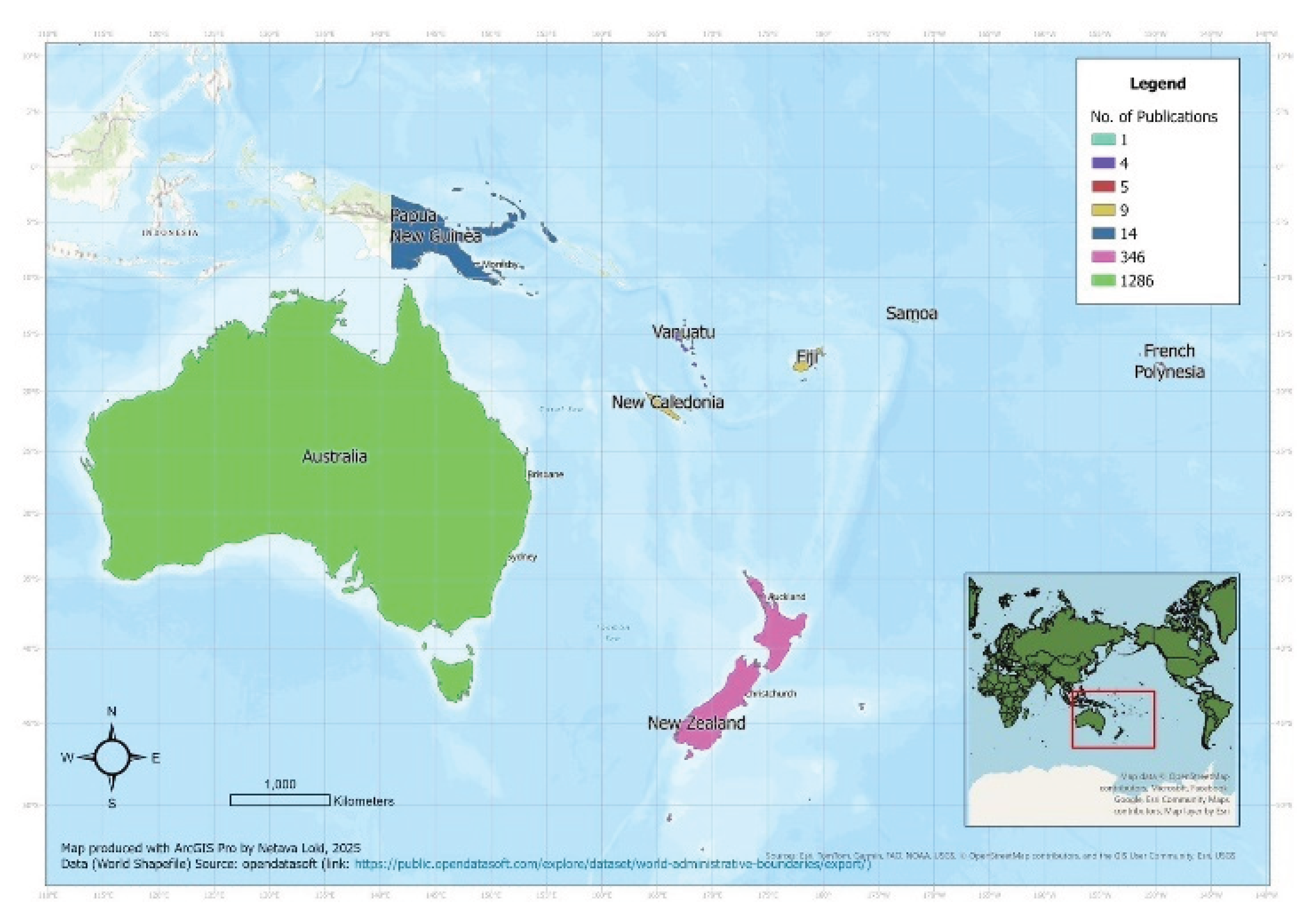
Figure 2.
FGR studies across the PICTs between 1973-2023.
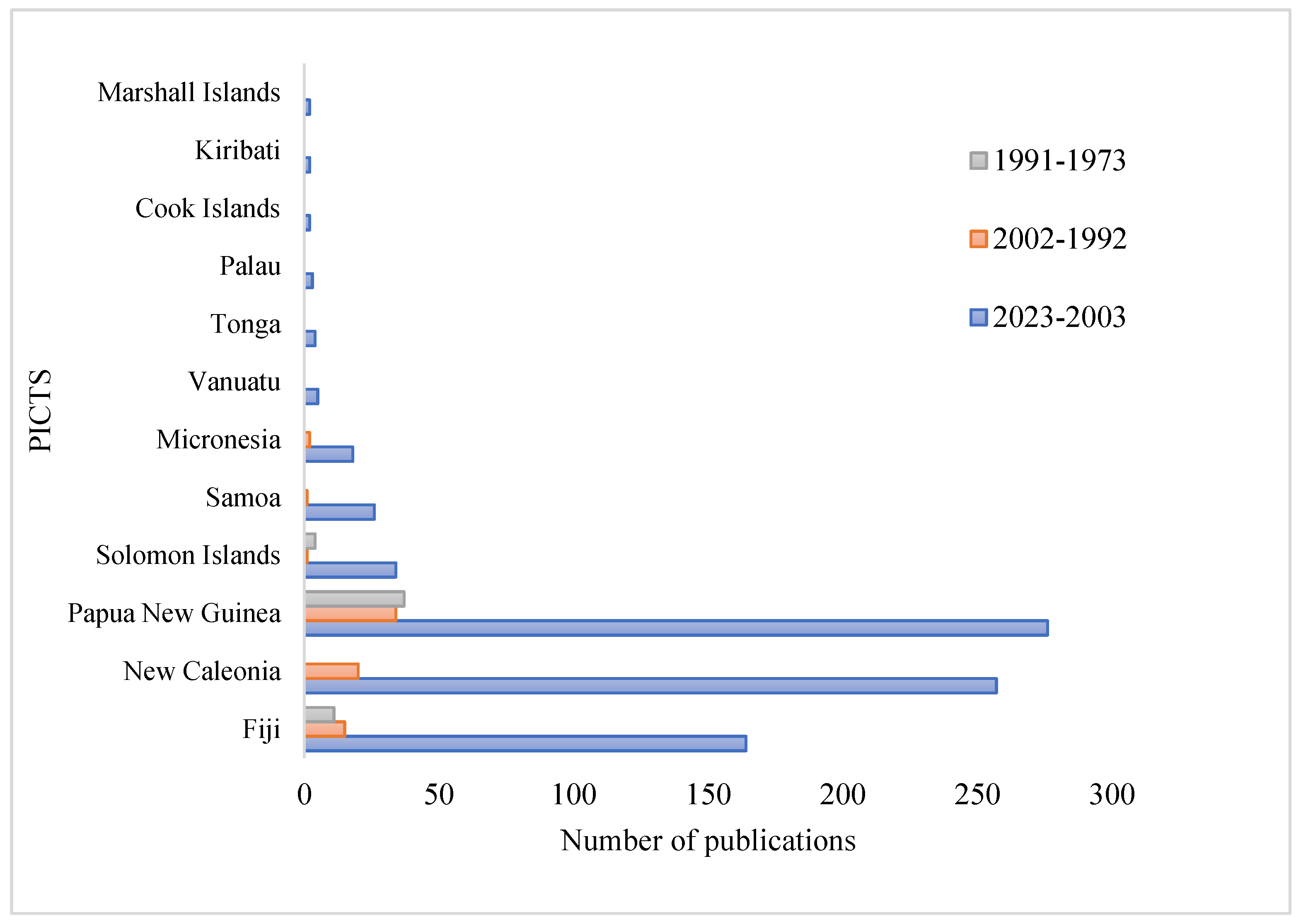

Table 1.
Studies on FGR monitoring in at least one of the PICTs.
| PICTs | FGR studied | Habitat | Results | Reference |
| Fiji |
Cycas seemannii Santulum yasi |
Native forests Native forests |
Starch-gel electrophoresis revealed low intra- population diversity and high inter- population differentiation Despite low diversity in remnant stands, the species retains substantial genetic variation |
[45] [50] |
| Micronesia | Campnosperma brevipetiolata | Native forests | Enzyme assay protocols revealed a west to east decline in genetic variation across the Indo-Malayan source region | [51] |
| New Caledonia |
Diospros spp. Santalum austrocaledonicum Pycnandra spp. Coffea spp. Araucaria nemorosa |
Native forests Native forests Native forests Plantations Plantation forests |
Genetic diversity in Diospyros stems from gradual accumulation and rapid radiations into four lineages Chloroplast microsatellite analyses revealed overall heterozygosity, with variation among islands Three new species were described using nuclear DNA data from ETS, ITS, and RPB2 regions Inter-specific hybridization was detected, with one population showing high genetic diversity based on 26 microsatellites markers using multi-locus approach Nuclear microsatellite (nSSR) analysis revealed genetic bottle neck and elevated inbreeding in nursery stock compared to seedlings and adult populations |
[44] [48] [52] [53] [49] |
| Papua New Guinea |
Ixora margaretae Ficus spp. Eucalyptus pellita |
Native forests Native forests Plantation forests |
Assisted regeneration with controlled variability will be critical to conserving species biodiversity, as indicated by SSR fingerprinting Restricted elevation ranges in multiple Ficus species constrain gene flow SNP analysis indicates Queensland as the origin of E. pellita, with high genetic diversity |
[54] [55] [56] |
| Samoa | Terminalia richii and Manilkara samoensis | Native forests | Complimentary in situ and ex situ conservation strategies are essential for the species | [46] |
| Vanuatu | Carpoxylum macrospermum | Native forests | RAPD analysis revealed low genetic variation within the existing population | [47] |
| Hawaiian Islands, Marquesas Islands, Society Islands, and New Caledonia | Miconia calvescens | Tropical islands | Microsatellites and inter-simple sequence repeat (ISSR) markers revealed genetic variation within and among populations | [57] |
| Fiji, Samoa, and Hawaiian Islands | Cyrtandra spp | Native forests | Co-existing Cyrtandra species show closer phylogenetic and phenotypic clustering within island and site communities | [58] |
Disclaimer/Publisher’s Note: The statements, opinions and data contained in all publications are solely those of the individual author(s) and contributor(s) and not of MDPI and/or the editor(s). MDPI and/or the editor(s) disclaim responsibility for any injury to people or property resulting from any ideas, methods, instructions or products referred to in the content. |
© 2025 by the authors. Licensee MDPI, Basel, Switzerland. This article is an open access article distributed under the terms and conditions of the Creative Commons Attribution (CC BY) license (http://creativecommons.org/licenses/by/4.0/).
Copyright: This open access article is published under a Creative Commons CC BY 4.0 license, which permit the free download, distribution, and reuse, provided that the author and preprint are cited in any reuse.


