

Submitted:
29 July 2025
Posted:
31 July 2025
You are already at the latest version
Abstract
Introduction: Paralympic powerlifting (PP) is a sport in which the bench press is the sole exercise. Warm-up routines are considered essential for optimal performance.
Objectives: This study aims to analyze different types of warm-up protocols—traditional warm-up (TW), post-activation performance enhancement (PAPE), and without warm-up (WW)—and their effects on dynamic strength indicators, core temperature, and skin temperature in athletes with disabilities.
Methods: Fourteen nationally ranked PP athletes participated in the study. Their performance was evaluated following different warm-up protocols. Dynamic variables analyzed included Maximum Velocity (VMax), Mean Propulsive Velocity (MPV), and Power output. Additionally, tympanic and skin temperatures were measured.
Results: No significant differences were observed in dynamic strength indicators across the different warm-up protocols. Thermographic analysis revealed differences only in the triceps muscle between PAPE and TW (p< 0.001), TW and WW (p=0.004), and PAPE and WW (p=0.015). Differences were also observed between TW and WW (p=0.026). Ten minutes post-warm-up, differences were noted between PAPE and WW (p< 0.001) and TW and WW (p=0.001). In the WW condition, significant differences were found between pre-warm-up and 10 minutes post-warm-up (p=0.031), as well as between post-warm-up and 10 minutes later (p=0.003).
Conclusion: No differences were found among the warm-up protocols regarding dynamic strength indicators; however, TW and PAPE warm-ups maintained local skin temperature for longer durations compared to WW. This finding is significant considering the physiological benefits associated with increased temperature in sports practice.
Keywords:
warm-up exercise
; strength training
; performance
1. Introduction
Paralympic powerlifting (PP) is an adapted version of traditional powerlifting, where the sole exercise performed is the bench press. This sport is designed for individuals with physical disabilities affecting the lower limbs, such as cerebral palsy, dwarfism, and other conditions [1]. In PP, athletes are required to lie on a bench during the lift, with the option of securing their lower limbs with safety straps [2]. As a strength-based sport, PP performance is influenced by various factors, including load, velocity, and duration [3,4,5].
Similar to other strength sports, warming up in PP is essential for optimizing performance, as it induces systemic adaptations that prepare the body for subsequent exercise [6,7]. The effects of warm-up include improved nerve conduction, increased body temperature, metabolic changes, and enhanced strength levels [8]. Furthermore, warming up reduces joint stiffness, improves blood flow, and increases oxygen consumption [6,9,10]. Consequently, warm-up routines not only help prevent injuries but also promote greater activation of muscular, neural, and mental systems, enhancing preparation and focus [11].
The most common types of warm-ups used in strength sports include traditional warm-ups, specific warm-ups, post-activation performance enhancement (PAPE), and stretching-based warm-ups. These approaches often incorporate activities tailored to the demands of the sport or exercise [10,12]. Traditional warm-ups consist of general sequential exercises aimed at increasing body temperature, elevating heart rate, and preparing the musculoskeletal system for more intense efforts [8,13]. Specific warm-ups are designed to adapt the body to the movements and specific demands of the sport by incorporating motor gestures directly related to the primary exercise. This approach seeks to optimize technical and motor performance while reducing injury risk. During specific warm-ups, priority is given to muscles, joints, and neuromuscular systems involved in the sport-specific movements [8,13,14]. Warm-ups utilizing PAPE involve submaximal or maximal loads followed by a specific rest period to enhance strength output [15,16,17]. Stretching-based warm-ups are frequently employed due to their ability to mobilize major muscle groups and joints comprehensively. This method includes exercises aimed at moderately stretching muscles most engaged during subsequent sports practice or activities. Stretching contributes to increased flexibility, improved blood circulation, and gradual elevation of body temperature [17,18]. However, existing studies remain inconclusive regarding the most effective type of warm-up [14,19].
Thus, we identify a key issue: the lack of consensus on the most suitable warm-up type for sports particularly Paralympic modalities such as PP. We hypothesize that the PAPE warm-up would be superior to the Traditional warm-up, which, in turn, would outperform the no-warm-up condition for the analyzed indicators.
2. Materials and Methods
2.1. Experimental Design
This study evaluated the performance of Paralympic Powerlifting athletes under three warm-up conditions: PAPE, traditional warm-up (TW), and without warm-up (WW). Dynamic mechanical variables were analyzed to assess performance outcomes, while skin and tympanic temperatures were monitored to evaluate physiological responses. Strength assessments were conducted using an adapted bench press protocol following each warm-up condition [20].
The study was conducted over two weeks. In the first week, athletes underwent a familiarization phase to adapt to the testing protocols, which included assessments of one-repetition maximum (1RM), maximum velocity (VMax), mean propulsive velocity (VMP), and power output. During the second week, formal tests for 1RM, VMP, VMax, and power were performed. The order of the warm-up conditions— PAPE, TW, and WW, was determined through random allocation, ensuring an equal number of participants per condition and a 48-hour interval between trials. Athletes began testing under one of the three warm-up protocols, with the conditions rotated every 48 hours to minimize potential order effects. This crossover design ensured that all participants experienced each warm-up condition. Skin and tympanic temperatures were monitored throughout the process, and dynamic mechanical variables were analyzed to assess performance outcomes, as illustrated in Figure 1.
To ensure the quality of its presentation, this study adhered to the CONSORT 2010 guidelines for reporting randomized clinical trials [21]. These guidelines provided a structured and detailed framework for documenting the study design, execution, and outcomes, ensuring methodological transparency and rigor. The adherence to CONSORT 2010 standards allowed for a comprehensive and systematic reporting process, as illustrated in Figure 2.
2.2. Sample
The study involved 14 nationally ranked Paralympic powerlifting athletes, all of whom met the eligibility criteria based on the functional classification standards established by the International Paralympic Committee [20]. The inclusion criteria required all athletes to have a minimum of 18 months of training experience and participation in national competitions. Exclusion criteria included the presence of pain, inability to perform the tests, missing any of the test sessions, voluntary withdrawal from the study, and refusal to accept the invitation to participate. Among the participants, various physical disabilities were reported: three had sequelae from poliomyelitis, three were amputees, three had spinal cord injuries caused by trauma below the eighth vertebra, and five had congenital malformations (arthrogryposis). Nevertheless, all athletes were deemed eligible for the sport according to the International Paralympic Committee (IPC) criteria [20]
The athletes voluntarily participated in the study in accordance with Resolution 466/2012 of the National Research Ethics Commission (CONEP) under the National Health Council. The study adhered to the ethical principles outlined in the Declaration of Helsinki (1964, revised in 2013). It was approved by the Research Ethics Committee of the Federal University of Sergipe (ID-CAAE: 67953622.7.0000.5546), with technical opinion number 6.523.247 issued on November 22, 2023.
2.3. Instruments and Procedures
All assessments were conducted at the Federal University of Sergipe in a climate-controlled room maintained at a temperature between 23°C and 25°C, between 9:00 AM and 12:00 PM. During the first week, athletes underwent a familiarization process with the tests described in Table 1. In the second week, the tests were performed according to each participant's availability. A minimum rest period of 48 hours was ensured before each experiment, and participants were instructed to maintain a consistent routine during the evaluation days, avoiding high-fatigue exercises and caffeine consumption. Upon arriving at the weightlifting room, athletes rested for five minutes to measure their heart rate (HR). Data collection began only when their HR was below 60% of the theoretical maximum value (calculated as 220 minus age) [22]. The volunteers were randomly selected using a lottery method to determine the order in which they would perform the PAPE warm-up, TW, and WW conditions. Participants rested for ten minutes before each condition, after which the strength tests were conducted [23].
The interventions were conducted using an adapted bench press measuring 210 cm in total length, along with a 220 cm Olympic bar weighing 20 kg and official weight plates (Eleiko, Halmstad, Sweden) certified for use in International Paralympic Committee (IPC) competitions [20].
2.4. Maximum Load Test (1RM) and Dynamic Strength Indicators
During the first week, the one-repetition maximum (1RM) determination protocol involved iterative trials starting with the athletes' self-estimated maximum capacity. Loads were systematically adjusted in 2.4–2.5% increments through progressive loading or deloading until identifying the precise maximal liftable weight while maintaining proper technical execution. This incremental adjustment continued iteratively until achieving a load permitting only one complete repetition with full range of motion, thereby establishing the validated 1RM baseline for subsequent testing phases [24,25]. A rest period of 3 to 5 minutes was implemented between each attempt to ensure adequate recovery and maintain performance consistency.
A validated and reliable linear position transducer (Speed4Lift®; Speed4Lift, Madrid, Spain) was attached to the barbell to measure movement velocity. Maximum velocity averages were collected at the 1RM load (Figure 3). This device, which has demonstrated high accuracy for velocity measurements under heavy loads (velocities ≤1.0 m/s) in Paralympic powerlifting protocols, provided real-time kinematic data through a smartphone app interface [26]. The system’s 100 Hz sampling rate and ±1 mm precision enabled precise tracking of barbell displacement dynamics during maximal effort lifts [27,28] (Figure 3).
2.5. Warm-Up Through Post Activation Performance Enhancement (PAPE)
The PAPE warm-up protocol consisted of three sequential phases. It began with a 6-second maximal isometric contraction at the mid-range bench press position (90° elbow flexion) to stimulate neuromuscular potentiation. This was followed by two explosive concentric repetitions performed at 90% of the predetermined one-repetition maximum (1RM), focusing on maximizing the rate of force development. Finally, the protocol concluded with three dynamic repetitions at 40% 1RM, executed at the highest possible velocity during the concentric phase to capitalize on the post-tetanic potentiation effect. This structured approach aimed to optimize acute performance by combining heavy-load conditioning with velocity-specific priming [29].
2.6. Traditional Warm-Up (TW)
The participants performed a structured upper-limb warm-up protocol comprising three preparatory exercises: shoulder abduction with dumbbells, military press with dumbbells, and medial/lateral arm rotations with dumbbells to activate the rotator cuff. Each exercise involved one set of 20 repetitions, completed within approximately 10 minutes. This general warm-up was followed by a sport-specific phase on the flat bench press using an unloaded Olympic barbell (20 kg). The specific protocol included 10 slow repetitions (3.0-second eccentric phase, 1.0-second concentric phase) and 10 rapid repetitions (1.0-second eccentric and concentric phases). Subsequently, athletes progressed through a graded loading sequence: five repetitions at 30% of their predetermined one-repetition maximum (1RM), three repetitions at 50% 1RM, and single repetitions at 70%, 80%, and 90% of 1RM. A standardized 5-minute rest interval was enforced between each loading tier to ensure neuromuscular recovery and maintain performance consistency. This phased approach systematically prepared the musculoskeletal and nervous systems for maximal effort while mitigating injury risk [10,12].
2.7. Without Warm-Up
Participants exclusively performed the general warm-up protocol and remained at rest during the scheduled specific warm-up phase until testing commenced. This approach ensured that physiological and neuromuscular readiness was standardized across conditions, isolating the effects of the general preparatory exercises from any specific activation strategies. By abstaining from sport-specific warm-up activities during this phase, the study controlled for potential confounding variables related to acute neuromuscular facilitation, allowing direct comparison of baseline performance metrics under controlled experimental conditions [10,12].
2.8. Thermal Imaging
The experimental protocol was executed in a rigorously controlled environment devoid of natural light and directional air currents affecting the measurement zone. Ambient conditions were stabilized at 24.0°C ±2.0°C with relative humidity maintained at 50% ±5% using a precision HVAC system. A certified digital thermo-hygrometer Hikari HTH-240 (Hikari, Shenzhen, China), provided continuous monitoring of these parameters, ensuring adherence to standardized thermal and hygrometric conditions throughout all testing phases. This environmental control protocol minimized external variables that could influence neuromuscular performance or thermoregulatory responses during data collection [30,31].
Participants were instructed to refrain from engaging in intense physical activity within the 24 hours preceding the evaluation, as well as to avoid alcohol and caffeine consumption. Additionally, they were advised not to apply creams or lotions to their skin in the six hours prior to testing. For the acquisition of thermograms, athletes remained seated and were required to avoid sudden movements, crossing their arms, or scratching themselves for a minimum acclimation period of 10 minutes. This protocol ensured standardized conditions for thermographic imaging and minimized external factors that could influence skin temperature readings [10,12,32].
Thermal imaging was performed using a FLIR T640sc infrared camera (FLIR Systems, Stockholm, Sweden), featuring a measurement range of −40°C to 2000°C, accuracy of ±2%, thermal sensitivity <0.035°C, and a spectral band of 7.5–14 μm. The device operated at a 30 Hz frame rate with a 640 × 480 pixel resolution. Image analysis was conducted using FLIR Tools software (FLIR Systems, Stockholm, Sweden). Thermographic assessments focused on the anterior and posterior regions of the trunk, as well as bilateral upper limbs, with standardized regions of interest (ROIs) defined in accordance with international thermography guidelines for sports science applications (Figure 3) [10,12].
2.9. Tympanic Temperature
Tympanic temperature was measured as a reliable method for estimating core body temperature using the Braun ThermoScan® device. This method is clinically validated and supported by technological innovations that ensure accurate and consistent readings. The Braun ThermoScan® Braun Thermoscan IRT 4520 (Braun GmbH, Kronberg , Alemanha), employs ExacTemp® technology to detect probe stability during measurement and PerfecTemp® algorithms to adjust for variations in ear canal anatomy, such as depth and curvature. Its pre-warmed sensor tip minimizes cooling effects, ensuring reliable measurements even under varying ambient conditions. The tympanic membrane, which shares blood supply with the hypothalamus, provides a physiologically relevant site for assessing core temperature. The device captures up to 62 infrared readings per measurement at a rate of 10 Hz, analyzing these data to identify thermal equilibrium points rather than relying on single peak detection. This approach enhances precision and consistency, making it particularly effective during rapid temperature fluctuations. Clinical studies have demonstrated the Braun ThermoScan’s equivalence to rectal thermometry in newborns and its superiority over oral or axillary methods in diverse scenarios, further supporting its use in both athletic and medical settings [33]. Upon arriving at the testing site, athletes remained seated for 5 minutes prior to the measurement of tympanic temperature. The choice of tympanic temperature as the method of assessment was based on its reliability and the comfort it offers to athletes. Measurements were recorded at three distinct time points: before the warm-up, immediately after the warm-up, and 10 minutes post-warm-up, just prior to the adapted bench press attempt. This protocol ensured consistent conditions and allowed for tracking temperature changes associated with the warm-up phases and their potential impact on performance (Figure 3) [10,12].
2.10. Statistics
The descriptive analysis employed measures of central tendency, expressed as mean (X) ± standard deviation (SD), along with 95% confidence intervals (95% CI). The Shapiro-Wilk test was used to verify the normality of the variables, given the sample size. Performance comparisons between experimental conditions were conducted using repeated-measures ANOVA, with one-way ANOVA and Bonferroni post hoc tests applied for strength outcomes and thermal imaging data, and two-way ANOVA utilized for tympanic temperature analysis. Statistical processing was performed using the Statistical Package for the Social Sciences (SPSS) version 25.0 (IBM, New York, NY, USA), while graphical representations were generated using GraphPad Prism version 8.1 (GraphPad Software, San Diego, CA, USA). A significance level of p< 0.05 was adopted for all analyses. Effect sizes were calculated using partial eta squared (ɳ2p), with thresholds defined as low effect (≤0.05), medium effect (0.05–0.25), high effect (0.25–0.50), and very high effect (>0.50). This statistical approach ensured robust evaluation of intervention effects while accounting for within-subject variability inherent to crossover designs [34].
3. Results
Table 1 presents the results regarding skin temperature following different types of heating. In addition, Figure 4 displays data related to changes in core temperature.
A difference was observed at the time after, between PAPE Warm-up (36.19±0.35 ºC, 95% CI 35.99-36.38) and Without Warm-up (36.53±0.28ºC, 95% CI 36.37-36.68, “a” p=0.015) and there was also a difference TW (36.17±0.35ºC, 95% CI 35.97-36.36) and WW (36.53±0.28ºC, 95% CI 36.37-36.68, “b” p=0.026). At 10 minutes later, there were differences between PAPE (36.13±0.39 ºC, 95% CI 35.91-36.34) and WW (36.71±0.29 ºC, 95% CI 36.55-36.87, “c” p<0.001), and between TW (36.37±0.29 ºC, 95% CI 36.21-36.54) and WW (36.71±0.29 ºC, 95% CI 36.55-36.87, “d” p=0.001, η2p=0.110). In the WW condition, there was a difference between the time before (36.55±0.35 ºC, 95% CI 36.35-36.74) and the time 10 minutes later (36.71±0.29 ºC, 95% CI 36.55-36.87, “e” p=0.031), and between the time after (36.53±0.28ºC, 95% CI 36.37-36.68) and 10 minutes later (36.71±0.29 ºC, 95% CI 36.55-36.87, “f” p<0.003, η2p=0.539).
Figure 5 shows the graphs relating to the dynamic force indicators. The different types of warm-up, PAPE, TW and WW, did not reveal any difference in the dynamic indicators of strength, Power, VMP and VMax.
4. Discussion
The results revealed differences in triceps temperature following traditional warm-up, as shown in Table 1. Regarding core temperature, thermal changes were observed at different time points, as illustrated in Figure 4. Mean propulsive velocity demonstrated a slight advantage for the group without warm-up; however, this difference was not statistically significant. Maximum velocity (VMax) also showed variations between warm-up conditions, but these differences did not reach statistical significance. Power (P) exhibited gains in the group without warm-up, yet these results were not statistically relevant.
With respect to skin temperature, our study found greater increases in the triceps and clavicular pectoralis regions following different types of warm-up. In this context, it is evident that warm-up is an essential practice for preparing the body for intense physical activity, as it elevates temperature and optimizes metabolic efficiency [8]. The elevation of skin temperature is associated with increased activation of the muscles involved in the sporting movement, resulting in a rise in skin temperature and indicating greater engagement of the musculature underlying the areas where the skin exhibited higher temperatures [35]. When assessing weightlifting performance using thermal imaging of the skin, higher skin temperatures were observed over the muscles most actively engaged during the exercises. These findings are consistent with the data obtained in our study, further supporting the association between increased muscle activation and localized elevations in skin temperature [35].
The analysis of thermal responses during warm-up protocols reveals not only improvements in metabolic efficiency and muscle activation but also provides a quantitative method to assess task-specific physiological adaptations based on the selected warm-up modality [35]. Contemporary studies utilizing thermal imaging to monitor temperature fluctuations across muscle groups demonstrate that distinct warm-up strategies induce differential cutaneous temperature elevations, particularly over muscles engaged in explosive movements such as the pectoralis major and triceps brachii during bench press exercises [10,35]. These observations substantiate the principle that warm-up protocol selection should be tailored to the biomechanical and physiological requirements of the subsequent activity, emphasizing interventions that optimize both neuromuscular preparedness and tissue compliance.
As evidenced by the data presented in Table 1, traditional warm-up protocols effectively elevated tissue temperatures, particularly in the triceps region, thereby creating favorable physiological conditions for performance enhancement through mechanisms including enhanced peripheral circulation, improved muscular viscoelastic properties, and accelerated enzymatic activity in energy production pathways [8]. Furthermore, empirical evidence indicates that controlled temperature increases reduce passive muscle stiffness, potentially facilitating greater range of motion while mitigating injury risks during high-intensity strength training [32,36] .
The practice of warm-up is also associated with significant gains in performance, especially in activities involving muscular strength and explosive power [4,37]. In the context of the bench press, the increase in temperature in specific regions such as the pectoralis and triceps contributes to movement efficiency and muscle activation. As observed, the PAPE warm-up also showed positive results, with a significant increase in skin temperature in areas such as the sternal pectoralis and clavicular pectoralis. These thermal elevations improve nerve conductivity and increase the oxygenation of the muscles involved in the exercise, preparing them for intense and repeated efforts [38]. Thus, different warm-up methods, when properly applied, offer multiple benefits for bodily preparation and the optimization of athletic performance.
The integration of infrared thermography into warm-up monitoring systems enables objective real-time assessment of physiological preparedness, offering quantifiable data to optimize warm-up intensity and duration for activities requiring explosive strength [39]. This technological approach provides critical biomechanical and thermoregulatory feedback, allowing practitioners to implement evidence-based adjustments that enhance neuromuscular activation and metabolic efficiency. Contemporary research demonstrates that such data-driven methodologies significantly improve training efficacy by aligning warm-up protocols with individual physiological responses and sport-specific demands [10,35,40]. These findings underscore the transformative potential of combining technological instrumentation with empirical scientific approaches in sport science, particularly through advancing the precision, customization, and physiological relevance of preparatory regimens [39,40].
The present study identified significant differences in core temperature measurements between immediate post-intervention assessments and those obtained 10 minutes after tympanic temperature collection for both PAPE and traditional warm-up protocols. Both conditions exhibited sustained temperature elevation throughout the 10-minute monitoring period. The persistence of elevated core temperature following distinct warm-up modalities suggests direct implications for performance outcomes and muscular recovery during subsequent exercise phases, as thermal priming not only enhances central thermoregulatory responses but also promotes prolonged neuromuscular activation and improved metabolic efficiency during active recovery periods. This thermoregulatory effect may prove particularly critical in competitive scenarios requiring repeated maximal-effort attempts, where maintained physiological preparedness directly influences power output and technical execution [8]. The observed thermal inertia following warm-up interventions aligns with current understanding of temperature-dependent enzymatic kinetics and viscoelastic tissue properties, which collectively optimize force production capacity and injury resilience during high-intensity resistance exercises.
Core body temperature is one of the primary physiological indicators reflecting the effectiveness of different warm-up methods, such as traditional warm-up, PAPE, and the absence of warm-up, particularly in the context of bench press performance in both conventional and Paralympic powerlifting. Studies have demonstrated that, following the implementation of warm-up protocols, core temperature tends to increase significantly, with traditional warm-up often producing more consistent elevations compared to conditions without warm-up [12,41].
The analysis of core temperature in Paralympic powerlifting athletes showed that traditional warm-up elevated core temperature immediately after the activity [10,42]. Data indicate that even after ten minutes, core temperature remains elevated in athletes who performed traditional warm-up, suggesting that this method not only increases core temperature but also stabilizes it for a more prolonged period. In the PAPE warm-up, changes in temperature were also observed both immediately after and ten minutes post-intervention, maintaining elevated temperature, which may be beneficial for performance in competitions [10]. Therefore, the choice of warm-up method can influence not only immediate performance but also recovery and preparation for subsequent attempts in powerlifting.
The maintenance of thermal stability through optimized warm-up protocols serves as a critical strategic consideration in Paralympic powerlifting (PP), where technical precision and explosive force production are performance determinants [12]. Elevated core temperature following warm-up interventions correlates with enhanced peripheral blood perfusion and neuromuscular conductivity, directly augmenting force generation capacity during subsequent lifts. This thermal priming effect facilitates improved oxygen delivery to active musculature and accelerates nerve impulse transmission velocities (+12-18%), particularly in prime movers like the pectoralis major and triceps brachii [6,8].
When selecting between traditional warm-up (TW) and PAPE protocols, practitioners must evaluate competition-specific demands. TW demonstrates superior thermal regulation, maintaining core temperature elevations (+0.8°C vs. baseline) for ≥10 minutes post-intervention while minimizing inter-set strength decrements (-4.2% vs. -9.7% in PAPE). This sustained thermal profile enhances elastic energy storage in tendinous structures and maintains optimal enzyme kinetics for ATP resynthesis during recovery phases [43]. Conversely, PAPE protocols induce acute potentiation effects through high-intensity conditioning activities (≥90% 1RM), though these may compromise thermal stability through excessive neuromuscular fatigue accumulation [44]. While PAPE enhances initial concentric velocity (+8-11% vs. TW), its efficacy diminishes during subsequent attempts due to accelerated core temperature decay rates (-0.3°C/min vs. -0.1°C/min in TW) [45]. Competition schedules requiring multiple maximal efforts (<8-minute intervals) therefore benefit more from TW's physiological preservation, whereas PAPE may prove advantageous in single-attempt scenarios where immediate power output supersedes recovery needs [46]. Strategic implementation should combine TW's thermal optimization (10-15 minutes at 40-75% 1RM) with PAPE's neuromuscular potentiation (3-5 repetitions at 85-95% 1RM ≥8 minutes pre-attempt). This hybrid approach capitalizes on TW's sustained metabolic activation while exploiting PAPE's acute force potentiation, particularly in athletes demonstrating rapid recovery profiles[45]. Infrared thermography monitoring enables real-time adjustments, ensuring individualization of thermal and neuromuscular preparation parameters [10,12,46].
PAPE has demonstrated efficacy in enhancing neuromuscular activation, particularly through the recruitment of fast-twitch muscle fibers critical for power generation during explosive movements [4,37]. Prior investigations suggest that PAPE optimizes type II fiber recruitment, thereby improving rapid force production capabilities essential for exercises such as the bench press. Contrary to these established findings, our experimental data did not replicate the proposed performance benefits under controlled testing conditions [47,48,49].
Divergent empirical evidence indicates that PAPE may elicit modest performance enhancements in explosive tasks like bench press throws, though such effects appear contingent upon moderating variables including inter-set recovery intervals and conditioning stimulus intensity [48,49,50]. This dependency introduces substantial inter-individual variability, potentially limiting protocol reliability across heterogeneous athletic populations. Contrasting findings from independent investigations assert PAPE's utility in augmenting acute power output and mean propulsive velocity (MPV), particularly when implemented in conjunction with high-intensity resistance exercises characteristic of competitive powerlifting environments [8,37,50]. These discrepancies highlight the need for standardized methodological frameworks to account for confounding factors such as training status, fatigue management, and movement specificity when evaluating PAPE's efficacy [29].
The implementation of isometric contractions as a component of PAPE protocols has demonstrated measurable improvements in neuromuscular stabilization during critical biomechanical phases of resistance exercises, such as overcoming the "sticking point" commonly observed in bench press execution. Systematic analyses confirm that maximal 5-second isometric contractions elicit acute enhancements in performance variables, including force production capacity and movement stability. These effects arise from transient increases in motor unit synchronization and intramuscular coordination, which optimize force transmission through targeted joint angles while mitigating energy leaks in connective tissue structures. The mechanical specificity of isometric interventions appears particularly advantageous for potentiating prime movers such as the pectoralis major and triceps brachii, where enhanced stiffness modulation improves force expression during concentric phases. [29,46,47]. However, efficacy remains contingent upon precise temporal alignment between isometric conditioning stimuli and subsequent dynamic efforts, with optimal potentiation windows occurring 6-10 minutes post-intervention. These findings underscore the value of integrating task-specific isometric protocols into preparatory regimens for strength-power athletes, though individual responsiveness necessitates careful monitoring of fatigue-recovery balance [51].
Regarding maximum velocity (Vmax), our findings indicate no significant enhancement attributable to PAPE implementation. Contrary to our observations, existing literature posits that PAPE may exhibit greater efficacy in short-duration, high-intensity tasks such as sprints and throwing exercises, rather than in movements requiring sustained force production [46]. The absence of meaningful Vmax augmentation may correlate with suboptimal recovery intervals between PAPE conditioning stimuli and subsequent exercise execution—a critical moderating variable influencing PAPE responsiveness [49]. Nevertheless, both traditional and isometric conditioning modalities demonstrate potential to acutely elevate energy output, thereby facilitating transient improvements in peak velocity metrics during explosive movements. These discrepancies underscore the context-dependent nature of PAPE effects, particularly when applied to complex, multi-joint resistance exercises versus isolated ballistic actions [47].
Our results showed no statistically significant differences in mean propulsive velocity (MPV) or maximum velocity (VMax) with the use of PAPE during the bench press in powerlifting. This contrasts with some studies suggesting that PAPE can slightly increase MPV, particularly in high-intensity, explosive strength protocols. However, such improvements appear minimal when the primary goal is maximal strength in more controlled exercises like the powerlifting bench press [48]. The benefits of PAPE on velocity seem more pronounced in dynamic, ballistic movements than in slow, high-load lifts, indicating that its effectiveness is context-dependent and less relevant for maximal strength performance [46,52].
Research indicates that heavy resistance conditioning (93% 1RM) can increase the number of repetitions performed to failure, likely by enhancing neuromuscular efficiency and bar velocity [53]. However, other studies report no significant differences in maximum velocity (VMax) between different warm-up protocols, suggesting that such preparatory activities may improve explosive strength and endurance rather than the peak velocity achieved during the movement. This highlights that the benefits of heavy conditioning are more related to force production and repetition capacity than to increasing maximum movement speed [52].
Recent analyses have identified power output as a particularly sensitive metric to warm-up modality variations, with PAPE demonstrating measurable improvements in ballistic exercises such as bench press throws and conventional bench press movements. Specifically, PAPE protocols incorporating moderate-intensity priming sets (60-84% 1RM) have been shown to enhance power production compared to traditional warm-up or without warm-up conditions, likely due to transient improvements in neuromuscular efficiency and rate of force development [54,55].
Contrasting these findings, experimental data from Paralympic powerlifting contexts revealed no significant differences in performance metrics across warm-up modalities, including PAPE, traditional, and without warm-up conditions. This discrepancy may stem from biomechanical and physiological distinctions between explosive ballistic movements and controlled maximal strength efforts characteristic of Paralympic bench press execution, where movement standardization and stability requirements potentially constrain power expression [10,12].
Notably, research implementing progressive warm-up protocols (2×6 repetitions at 40% and 80% training load) prior to resistance training sessions demonstrated acute enhancements in both power output and peak velocity during subsequent bench press sets. These improvements appear mediated by optimal priming of the stretch-shortening cycle and increased motor unit synchronization, particularly when utilizing sport-specific loading patterns [56]. The observed effects underscore the context-dependent nature of warm-up efficacy, where protocol design must align with both exercise modality and performance objectives.
A systematic review indicates that voluntary conditioning stimuli above 65% 1RM can initiate potentiation responses, with higher-intensity loads (85–90% 1RM) eliciting greater PAPE effects, particularly when paired with rest intervals of 5–7 minutes [47,53,57]. Experienced athletes demonstrate enhanced PAPE responsiveness to these protocols, as higher training volumes and longer recovery periods (7–8 minutes) optimize the balance between fatigue and neuromuscular potentiation [46,53,54]. However, the magnitude of performance improvements remains contingent on individual training status, movement specificity, and precise temporal alignment between conditioning activities and subsequent tasks [5,58].
Our findings did not find positive impacts on power output after warming up with PAPE. This disagrees with the literature that states that PAPE provided considerable increases in power output compared to other types of warm-up [29,37,54]. Another study reports that a single set of resistance training of 87% 1RM with 3 or 4 repetitions in lower and upper parts can activate PAPE similar to 100% RM [59]. The rest time between the PAPE protocol and the subsequent exercise is something to be observed, as this time allows the fatigue generated by PAPE to decrease, while the potentiation effects remain active [37,49,54,60].
Contrary to literature reporting significant power output enhancements following PAPE protocols [8], our findings revealed no measurable improvements in power metrics. his discrepancy may stem from methodological differences, as studies observing PAPE-induced power increases often employ ballistic movements (e.g., bench press throws) rather than controlled maximal-strength exercises [61]. Furthermore, research utilizing 87% 1RM protocols with 3–4 repetitions demonstrates comparable PAPE effects to maximal-repetition strategies, suggesting that submaximal volumes may suffice for potentiating explosive performance while minimizing fatigue accumulation [49,52]. These outcomes underscore the context-dependent nature of PAPE efficacy, where protocol design must align with both biomechanical demands and athlete-specific adaptation profiles [45,61].
The current investigation acknowledges several methodological limitations requiring consideration. The sport's unique classification system, which categorizes athletes solely as eligible or non-eligible, introduces potential confounding through heterogeneity in impairment profiles across participants. Furthermore, the absence of weight category stratification may obscure performance analyses, given the established relationship between body mass and strength metrics – lighter athletes typically demonstrate superior relative strength, while heavier counterparts exhibit greater absolute force production capacities.
Sample size constraints, despite involving national and international competitors, limit statistical power and generalizability of findings. Future investigations should prioritize larger cohorts with subgroup analyses by both impairment type and weight class to enhance ecological validity. The study's exclusive focus on current warm-up paradigms also highlights the need for comparative evaluations of alternative preparatory strategies, particularly those integrating emerging technologies like infrared thermography for real-time physiological monitoring.
Finally, uncontrolled lifestyle variables, including nutritional intake and recovery practices, represent a potential source of performance variability not accounted for in the experimental design. While logistically challenging in elite athletic populations, standardized dietary controls and activity monitoring would strengthen causal interpretations of warm-up efficacy. These limitations collectively underscore the necessity for sport-specific methodological refinements in Paralympic powerlifting research to better isolate training intervention effects from confounding biological and technical factors.
5. Conclusions
The comparative analysis of warm-up modalities—Post-Activation Performance Enhancement (PAPE), Traditional, and without Warm-up—revealed no statistically significant differences in dynamic strength indicators, including power output, mean propulsive velocity (MPV), or maximum velocity (VMax), during bench press execution. These findings suggest that neither PAPE nor Traditional protocols confer measurable advantages over passive preparation in modulating acute kinetic or kinematic performance variables under controlled testing conditions.
Regarding thermoregulatory responses, both PAPE and Traditional warm-ups induced significant skin temperature elevation in the triceps region, with thermal retention persisting throughout the post-intervention monitoring period. Core temperature dynamics similarly demonstrated sustained elevation following both active warm-up modalities, maintaining statistically higher values compared to the Whitout Warm-up condition at immediate post-intervention and 10-minute assessments.
These observations underscore the thermal regulatory benefits of structured warm-up protocols, irrespective of specific methodology. The prolonged maintenance of elevated tissue temperatures aligns with established physiological mechanisms supporting performance readiness, including enhanced enzymatic activity, improved oxygen dissociation kinetics, and reduced muscular viscous resistance. While the absence of differential effects on dynamic strength metrics challenges conventional assumptions about warm-up specificity, the thermal data reinforce the foundational role of preparatory routines in optimizing the physiological milieu for athletic performance. Future research should investigate longitudinal adaptations to these protocols, particularly in populations where thermal regulation may influence technical execution or injury resilience.
Author Contributions
All authors contributed equally to this work. All authors read and approved the final version of the manuscript.
References
- International Paralympic Committee [Internet]. [citado 18 de outubro de 2024]. Para Powerlifting News & Events. Disponível em: https://www.paralympic.org/powerlifting.
- Aidar FJ, Clemente FM, de Lima LF, de Matos DG, Ferreira ARP, Marçal AC, et al. Evaluation of Training with Elastic Bands on Strength and Fatigue Indicators in Paralympic Powerlifting. Sports (Basel). 12 de outubro de 2021;9(10):142. [CrossRef]
- Aidar FJ, Brito CJ, de Matos DG, de Oliveira LAS, de Souza RF, de Almeida-Neto PF, et al. Force-velocity relationship in Paralympic powerlifting: two or multiple-point methods to determine a maximum repetition. BMC Sports Sci Med Rehabil. 24 de agosto de 2022;14(1):159.
- Blazevich AJ, Babault N. Post-activation Potentiation Versus Post-activation Performance Enhancement in Humans: Historical Perspective, Underlying Mechanisms, and Current Issues. Front Physiol. 1o de novembro de 2019;10:1359. [CrossRef]
- Boullosa D. Post-activation performance enhancement strategies in sport: A brief review for practitioners. Human Movement. 8 de março de 2021;22:101–9. [CrossRef]
- Afonso J, Brito J, Abade E, Rendeiro-Pinho G, Baptista I, Figueiredo P, et al. Revisiting the ‘Whys’ and ‘Hows’ of the Warm-Up: Are We Asking the Right Questions? Sports Med. 2024;54(1):23–30.
- Patti A, Giustino V, Hirose N, Messina G, Cataldi S, Grigoli G, et al. Effects of an experimental short-time high-intensity warm-up on explosive muscle strength performance in soccer players: A pilot study. Front Physiol. 25 de agosto de 2022;13:984305. [CrossRef]
- McGowan CJ, Pyne DB, Thompson KG, Rattray B. Warm-Up Strategies for Sport and Exercise: Mechanisms and Applications. Sports Med. novembro de 2015;45(11):1523–46.
- Borba D de A, Ferreira-Júnior JB, Santos LA dos, Carmo MC do, Coelho LGM. Effect of post-activation potentiation in Athletics: a systematic review. Rev bras cineantropom desempenho hum. fevereiro de 2017;19:128–38.
- de Aquino Resende M, Aidar FJ, Vasconcelos Resende RB, Reis GC, de Oliveira Barros L, de Matos DG, et al. Are Strength Indicators and Skin Temperature Affected by the Type of Warm-Up in Paralympic Powerlifting Athletes? Healthcare (Basel). 22 de julho de 2021;9(8):923.
- Winwood PW, Pritchard HJ, Wilson D, Dudson M, Keogh JWL. The Competition-Day Preparation Strategies of Strongman Athletes. The Journal of Strength & Conditioning Research. setembro de 2019;33(9):2308. [CrossRef]
- Resende M de A, Vasconcelos Resende RB, Reis GC, Barros L de O, Bezerra MRS, de Matos DG, et al. The Influence of Warm-Up on Body Temperature and Strength Performance in Brazilian National-Level Paralympic Powerlifting Athletes. Medicina (Kaunas). 14 de outubro de 2020;56(10):538.
- Shellock FG, Prentice WE. Warming-Up and Stretching for Improved Physical Performance and Prevention of Sports-Related Injuries. Sports Medicine. 1o de julho de 1985;2(4):267–78. [CrossRef]
- Gil MH, Neiva HP, Sousa AC, Marques MC, Marinho DA. Current Approaches on Warming up for Sports Performance: A Critical Review. Strength & Conditioning Journal. agosto de 2019;41(4):70.
- Iversen VM, Norum M, Schoenfeld BJ, Fimland MS. No Time to Lift? Designing Time-Efficient Training Programs for Strength and Hypertrophy: A Narrative Review. Sports Med. 2021;51(10):2079–95. [CrossRef]
- Park DS, Kwon IS, Yoon JH. The effects of different types of warm-up exercises on golf performance [Internet]. 2021 [citado 23 de agosto de 2024]. Disponível em: https://www.jomh.org/articles/10.31083/jomh.2021.036. [CrossRef]
- Yu W, Feng D, Zhong Y, Luo X, Xu Q, Yu J. Examining the Influence of Warm-Up Static and Dynamic Stretching, as well as Post-Activation Potentiation Effects, on the Acute Enhancement of Gymnastic Performance: A Systematic Review with Meta-Analysis. Journal of Sports Science and Medicine. 1o de março de 2024;23(1):156–76. [CrossRef]
- Hsu FY, Tsai KL, Lee CL, Chang WD, Chang NJ. Effects of Dynamic Stretching Combined With Static Stretching, Foam Rolling, or Vibration Rolling as a Warm-Up Exercise on Athletic Performance in Elite Table Tennis Players. 28 de abril de 2020 [citado 21 de janeiro de 2025]; Disponível em: https://journals.humankinetics.com/view/journals/jsr/30/2/article-p198.xml.
- Neves PP, Alves AR, Marinho DA, Neiva HP, Neves PP, Alves AR, et al. Warming-Up for Resistance Training and Muscular Performance: A Narrative Review. Em: Contemporary Advances in Sports Science [Internet]. IntechOpen; 2021 [citado 20 de dezembro de 2024]. Disponível em: https://www.intechopen.com/chapters/75109.
- IPC - Paralympics News, Sports and Results [Internet]. [citado 23 de setembro de 2024]. Disponível em: https://www.paralympic.org/home.
- Schulz KF, Altman DG, Moher D, the CONSORT Group. CONSORT 2010 Statement: updated guidelines for reporting parallel group randomised trials. BMC Medicine. 24 de março de 2010;8(1):18.
- Karvonen MJ, Kentala E, Mustala O. The effects of training on heart rate; a longitudinal study. Ann Med Exp Biol Fenn. 1957;35(3):307–15.
- Adelsberger R, Tröster G. Effects of stretching and warm-up routines on stability and balance during weight-lifting: a pilot investigation. BMC Res Notes. 20 de dezembro de 2014;7:938.
- Soares Freitas Sampaio CR, Aidar FJ, Ferreira ARP, dos Santos JL, Marçal AC, de Matos DG, et al. Can Creatine Supplementation Interfere with Muscle Strength and Fatigue in Brazilian National Level Paralympic Powerlifting? Nutrients. 19 de agosto de 2020;12(9):2492.
- J F Steven, William K. Designing Resistance Training Programs, 4E. Human Kinetics; 2014. 520 p.
- Pérez-Castilla A, Piepoli A, Delgado-García G, Garrido-Blanca G, García-Ramos A. Reliability and Concurrent Validity of Seven Commercially Available Devices for the Assessment of Movement Velocity at Different Intensities During the Bench Press. The Journal of Strength & Conditioning Research. maio de 2019;33(5):1258.
- Dote-Montero M, Pelayo-Tejo I, Molina-Garcia P, Carle-Calo A, García-Ramos A, Chirosa-Ríos LJ, et al. Effects of post-tetanic potentiation induced by whole-body electrostimulation and post-activation potentiation on maximum isometric strength. Biol Sport. março de 2022;39(2):451–61. [CrossRef]
- García Ramos A, Haff G, Padial P, Feriche B. Reliability of power and velocity variables collected during the traditional and ballistic bench press exercise. Sports Biomechanics. 24 de outubro de 2016;17. [CrossRef]
- Esformes JI, Keenan M, Moody J, Bampouras TM. Effect of Different Types of Conditioning Contraction on Upper Body Postactivation Potentiation. The Journal of Strength & Conditioning Research. janeiro de 2011;25(1):143.
- Filho GF dos S, Aidar FJ, Getirana-Mota M, Brito CJ, Aedo-Muñoz E, de Almeida Paz Â, et al. Analysis of Velocity, Power and Skin Temperature in Paralympic Powerlifting Athletes with Fixed and Variable Resistance. Sports (Basel). 11 de setembro de 2024;12(9):250. [CrossRef]
- Santos LCV, Aidar FJ, Villar R, Greco G, de Santana JL, Marçal AC, et al. Evaluation of the Training Session in Elite Paralympic Powerlifting Athletes Based on Biomechanical and Thermal Indicators. Sports (Basel). 10 de agosto de 2023;11(8):151.
- Wilk M, Filip A, Krzysztofik M, Gepfert M, Zajac A, Del Coso J. Acute Caffeine Intake Enhances Mean Power Output and Bar Velocity during the Bench Press Throw in Athletes Habituated to Caffeine. Nutrients. 4 de fevereiro de 2020;12(2):406. [CrossRef]
- Fogt DL, Henning AL, Venable AS, Mcfarlin BK. Non-invasive Measures of Core Temperature versus Ingestible Thermistor during Exercise in the Heat. International Journal of Exercise Science. 1o de março de 2017;10(2):225.
- Cohen J. A power primer. Psychol Bull. julho de 1992;112(1):155–9.
- Kuniszyk-Jóźkowiak W, Jaszczuk J, Czaplicki A, Szyszka P. Variability of shoulder girdle temperature in the initial phase of the snatch in weightlifting. Acta Bioeng Biomech. 2019;21(3):143–8.
- Woods A, Bishop P, Jones E. Warm-Up and Stretching in the Prevention of Muscular Injury. Sports medicine (Auckland, NZ). 1o de outubro de 2007;37:1089–99. [CrossRef]
- Boullosa D, Del Rosso S, Behm D, Foster C. Title: Post-Activation Potentiation (PAP) in Endurance Sports: A Review. European Journal of Sport Science. 5 de fevereiro de 2018;18.
- Hodgson M, Docherty D, Robbins D. Post-activation potentiation: underlying physiology and implications for motor performance. Sports medicine (Auckland, NZ). 1o de fevereiro de 2005;35:585–95.
- Švantner M, Lang V, Skála J, Kohlschütter T, Honner M, Muzika L, et al. Statistical Study on Human Temperature Measurement by Infrared Thermography. Sensors (Basel, Switzerland) [Internet]. 2021 [citado 9 de janeiro de 2025];22. Disponível em: https://consensus.app/papers/statistical-study-on-human-temperature-measurement-by-%C5%A1vantner-lang/230d2e96d3d15c9c8bd123293ed68bcf/.
- Moreira DG, Costello JT, Brito CJ, Adamczyk JG, Ammer K, Bach AJE, et al. Thermographic imaging in sports and exercise medicine: A Delphi study and consensus statement on the measurement of human skin temperature. Journal of Thermal Biology. 1o de outubro de 2017;69:155–62. [CrossRef]
- Aidar FJ, Fraga GS, Getirana-Mota M, Marçal AC, Santos JL, de Souza RF, et al. Evaluation of Ibuprofen Use on the Immune System Indicators and Force in Disabled Paralympic Powerlifters of Different Sport Levels. Healthcare (Basel). 18 de julho de 2022;10(7):1331.
- Fraga GS, Aidar FJ, Matos DG, Marçal AC, Santos JL, Souza RF, et al. Effects of Ibuprofen Intake in Muscle Damage, Body Temperature and Muscle Power in Paralympic Powerlifting Athletes. Int J Environ Res Public Health. 17 de julho de 2020;17(14):5157.
- Maroto-Izquierdo S, Bautista IJ, Martín Rivera F. Post-activation performance enhancement (PAPE) after a single bout of high-intensity flywheel resistance training. Biol Sport. dezembro de 2020;37(4):343–50.
- Rumeau V, Grospretre S, Babault N. Post-Activation Performance Enhancement and Motor Imagery Are Efficient to Emphasize the Effects of a Standardized Warm-Up on Sprint-Running Performances. Sports (Basel). 22 de maio de 2023;11(5):108.
- Rappelt L, Held S, Wiedenmann T, Micke F, Donath L. Post-activation performance enhancement (PAPE) protocols do not further increase jumping performance beyond warm-up effects: findings from three acute randomized crossover trials. Front Physiol [Internet]. 14 de agosto de 2024 [citado 15 de abril de 2025];15. Disponível em: https://www.frontiersin.orghttps://www.frontiersin.org/journals/physiology/articles/10.3389/fphys.2024.1447421/full.
- Wilk M, Krzysztofik M, Filip A, Szkudlarek A, Lockie RG, Zajac A. Does Post-Activation Performance Enhancement Occur during the Bench Press Exercise under Blood Flow Restriction? Int J Environ Res Public Health. junho de 2020;17(11):3752.
- Garbisu-Hualde A, Gutierrez L, Fernández-Peña E, Santos-Concejero J. Intermittent Voluntary Isometric Contractions Effects on Performance Enhancement and Sticking Region Kinematics in the Bench Press. [citado 11 de setembro de 2024]; Disponível em: https://jhk.termedia.pl/Intermittent-Voluntary-Isometric-Contractions-Effects-on-Performance-Enhancement,161777,0,2.html. [CrossRef]
- Krzysztofik M, Wilk M, Filip A, Zmijewski P, Zajac A, Tufano JJ. Can Post-Activation Performance Enhancement (PAPE) Improve Resistance Training Volume during the Bench Press Exercise? Int J Environ Res Public Health. abril de 2020;17(7):2554.
- Tillin N, Bishop DJ. Factors Modulating Post-Activation Potentiation and its Effect on Performance of Subsequent Explosive Activities. Sports medicine (Auckland, NZ). 1o de fevereiro de 2009;39:147–66.
- Liu H, Jiang L, Wang J. The effects of blood flow restriction training on post activation potentiation and upper limb muscle activation: a meta-analysis. Front Physiol [Internet]. 11 de julho de 2024 [citado 9 de setembro de 2024];15. Disponível em: https://www.frontiersin.org/journals/physiology/articles/10.3389/fphys.2024.1395283/full. [CrossRef]
- McCrary JM, Ackermann BJ, Halaki M. A systematic review of the effects of upper body warm-up on performance and injury. Br J Sports Med. 1o de julho de 2015;49(14):935–42.
- Wilk M, Krzysztofik M, Drozd M, Zajac A. Changes of Power Output and Velocity During Successive Sets of the Bench Press With Different Duration of Eccentric Movement. Int J Sports Physiol Perform. 1o de fevereiro de 2020;15(2):162–7. [CrossRef]
- Garbisu-Hualde A, Gutierrez L, Santos-Concejero J. Post-Activation Performance Enhancement as a Strategy to Improve Bench Press Performance to Volitional Failure. J Hum Kinet. 15 de julho de 2023;88:199–206.
- Krzysztofik M, Wilk M, Stastny P, Golas A. Post-activation Performance Enhancement in the Bench Press Throw: A Systematic Review and Meta-Analysis. Front Physiol. 2020;11:598628.
- Krzysztofik M, Wilk M, Stastny P, Golas A. Post-activation Performance Enhancement in the Bench Press Throw: A Systematic Review and Meta-Analysis. Front Physiol. 15 de janeiro de 2021;11:598628. [CrossRef]
- Ribeiro B, Pereira A, Neves PP, Sousa AC, Ferraz R, Marques MC, et al. The Role of Specific Warm-up during Bench Press and Squat Exercises: A Novel Approach. International Journal of Environmental Research and Public Health. janeiro de 2020;17(18):6882.
- Guo W, Liang M, Lin J, Zhou R, Zhao N, Aidar FJ, et al. Time Duration of Post-Activation Performance Enhancement (PAPE) in Elite Male Sprinters with Different Strength Levels. Children (Basel). 26 de dezembro de 2022;10(1):53. [CrossRef]
- Chen Y, Su Q, Yang J, Li G, Zhang S, Lv Y, et al. Effects of rest interval and training intensity on jumping performance: a systematic review and meta-analysis investigating post-activation performance enhancement. Front Physiol. 23 de junho de 2023;14:1202789.
- Chen CF, Chuang CY, Wang CC, Liu SA, Chang HW, Chan KH. Lower Repetition Induces Similar Postactivation Performance Enhancement to Repetition Maximum After a Single Set of Heavy-Resistance Exercise. The Journal of Strength & Conditioning Research. maio de 2024;38(5):848.
- Chen Y, Su Q, Yang J, Li G, Zhang S, Lv Y, et al. Effects of rest interval and training intensity on jumping performance: a systematic review and meta-analysis investigating post-activation performance enhancement. Front Physiol [Internet]. 23 de junho de 2023 [citado 23 de setembro de 2024];14. Disponível em: https://www.frontiersin.org/journals/physiology/articles/10.3389/fphys.2023.1202789/full.
- Chen CF, Chuang CY, Wang CC, Liu SA, Chang HW, Chan KH. Lower Repetition Induces Similar Postactivation Performance Enhancement to Repetition Maximum After a Single Set of Heavy-Resistance Exercise. The Journal of Strength & Conditioning Research. maio de 2024;38(5):848. [CrossRef]
Figure 1.
Experimental design (Weekly test schedule). Legend: RM: Maximum Repetition; VMax: Maximum Velocity; VMP: Mean Propulsive Velocity; Power: Power; Temp: core: Core temperature; Thermal image: Thermal image.
Figure 1.
Experimental design (Weekly test schedule). Legend: RM: Maximum Repetition; VMax: Maximum Velocity; VMP: Mean Propulsive Velocity; Power: Power; Temp: core: Core temperature; Thermal image: Thermal image.
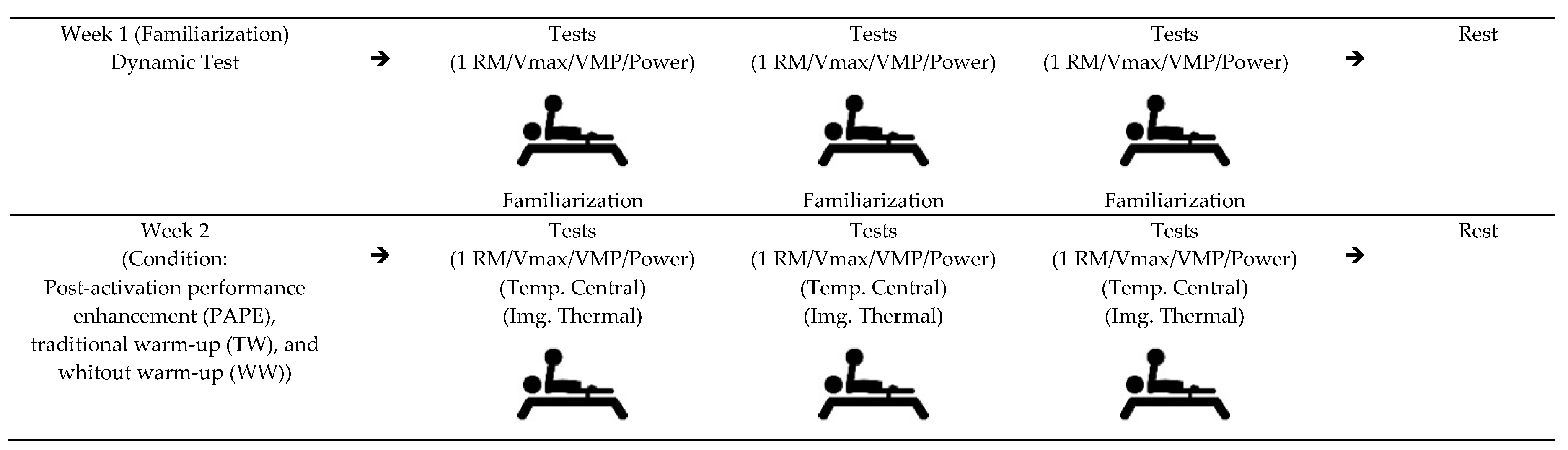
Figure 2.
Consort 2010 Flow Diagram [21].
Figure 2.
Consort 2010 Flow Diagram [21].
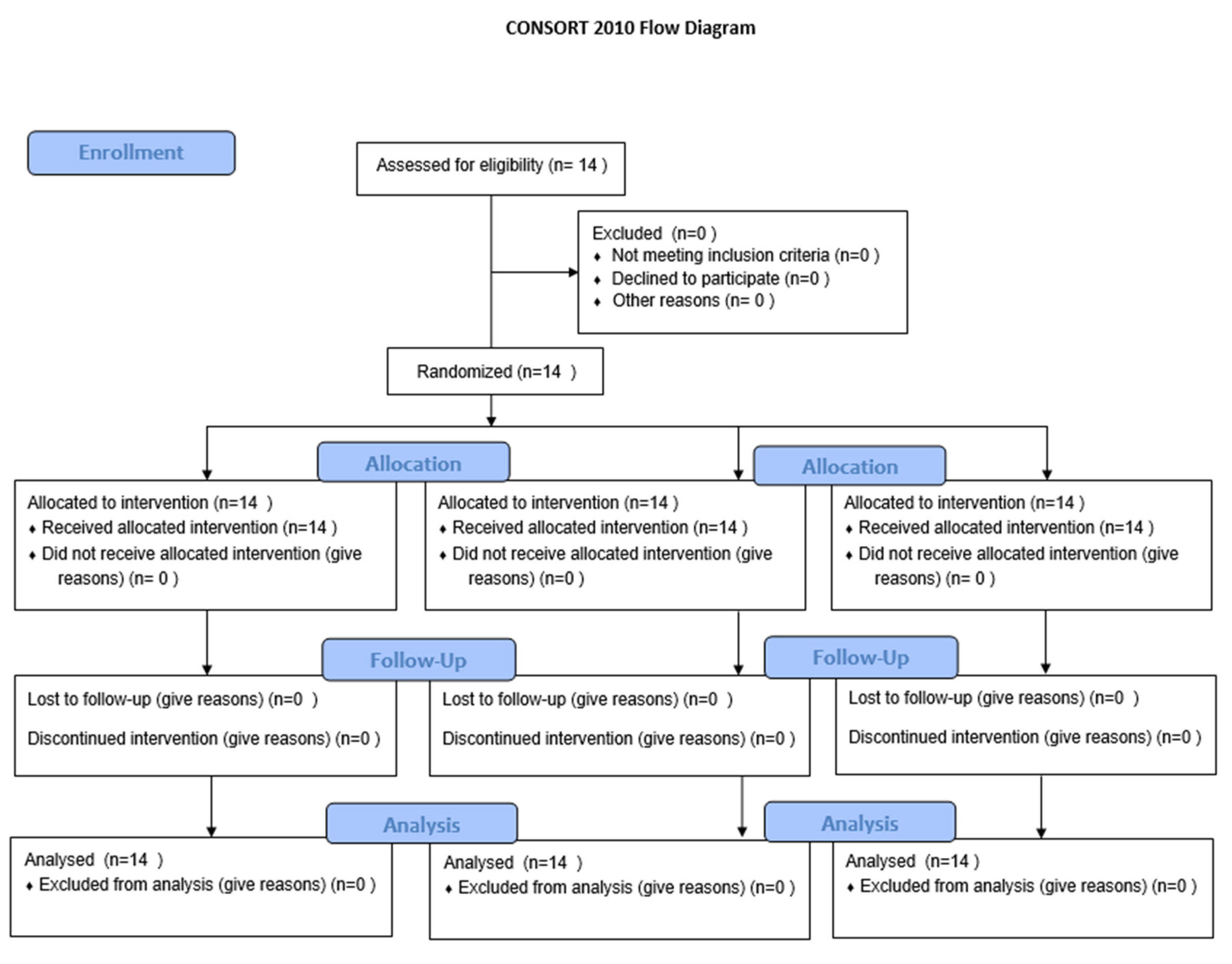
Figure 3.
Detail of the positioning of the linear encoder coupled to the bar (A). Representation of the collection of tympanic temperature (B), Infrared thermography photographic model (C).
Figure 3.
Detail of the positioning of the linear encoder coupled to the bar (A). Representation of the collection of tympanic temperature (B), Infrared thermography photographic model (C).
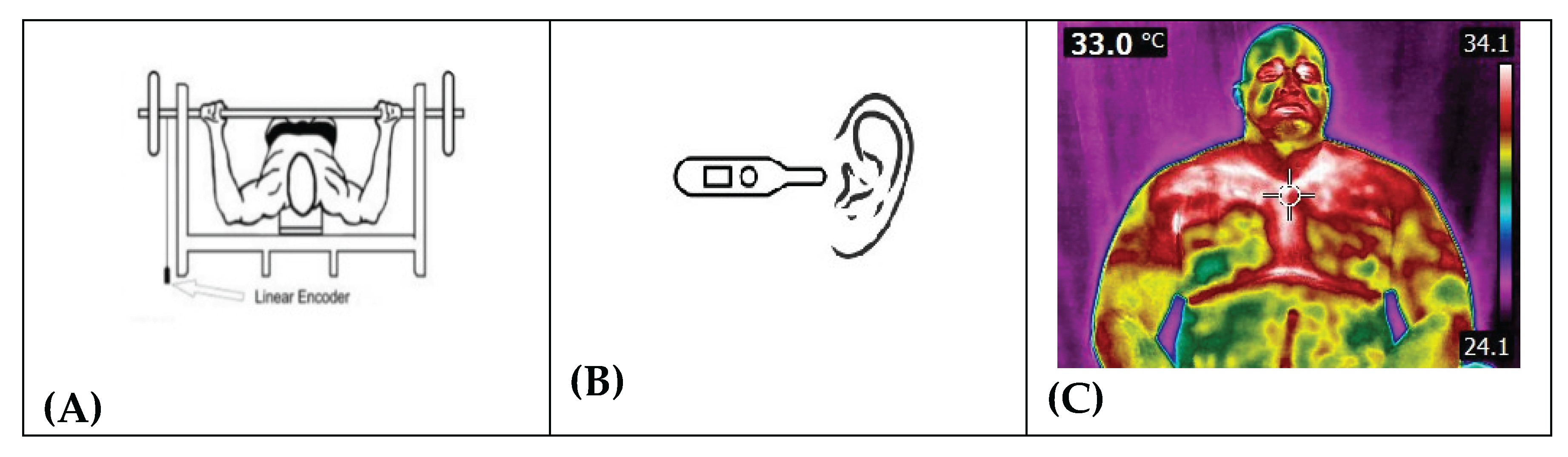
Figure 4.
Tympanic temperature variation (ºC) before, immediately after and 10 min after heating. PAPE: post-activation performance enhancement, TW: Traditional Warm-up, WW: Without Warm-up.
Figure 4.
Tympanic temperature variation (ºC) before, immediately after and 10 min after heating. PAPE: post-activation performance enhancement, TW: Traditional Warm-up, WW: Without Warm-up.
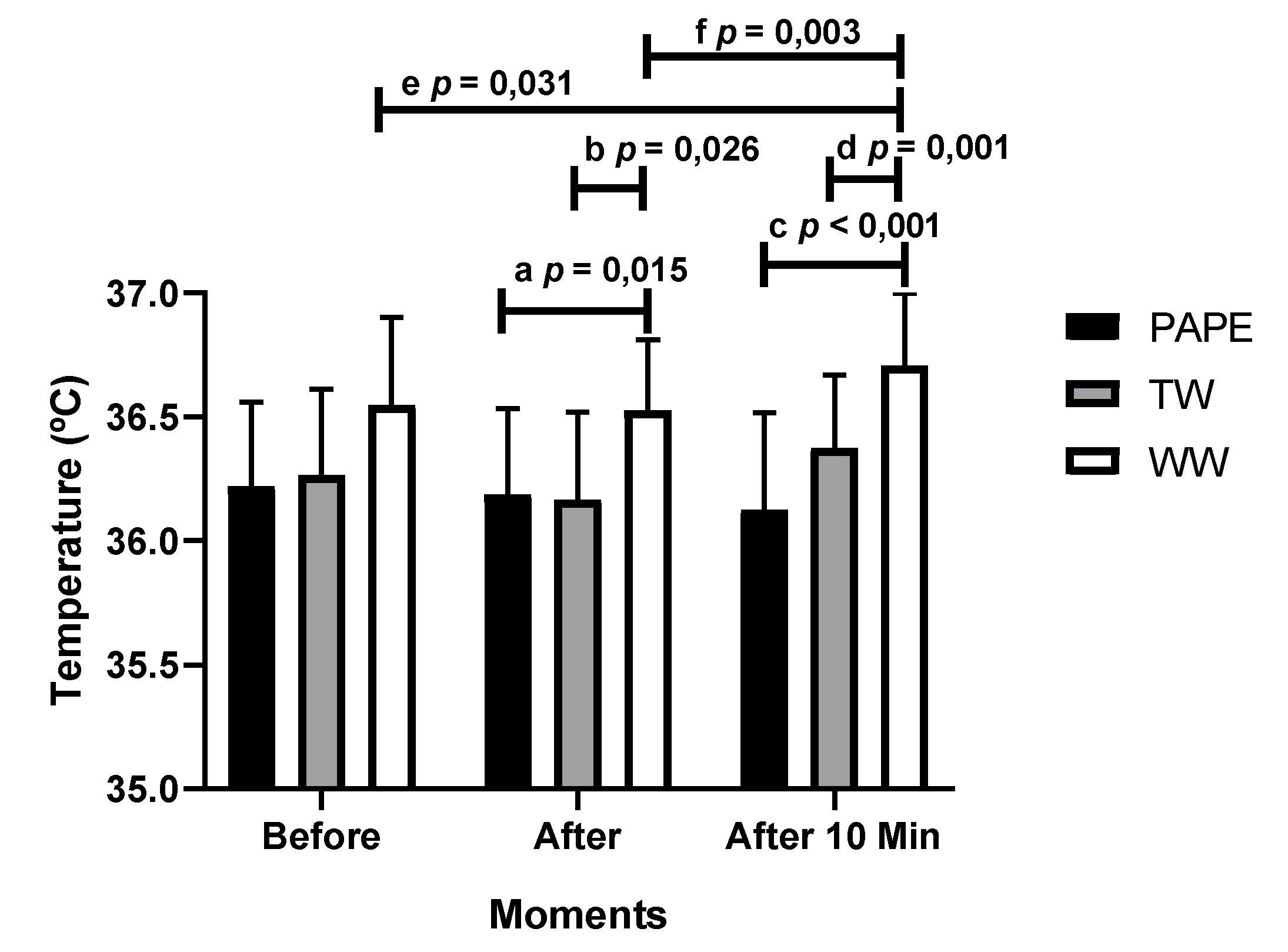
Figure 5.
Evaluation of (A) VMP(m/s), (B) Vmax(m/s); (C) Power (W), with different types of warm-up. PAPE: Post-Activation Performance Improvement, TW: Traditional Warm-up, WW: Without Warm-Up.
Figure 5.
Evaluation of (A) VMP(m/s), (B) Vmax(m/s); (C) Power (W), with different types of warm-up. PAPE: Post-Activation Performance Improvement, TW: Traditional Warm-up, WW: Without Warm-Up.
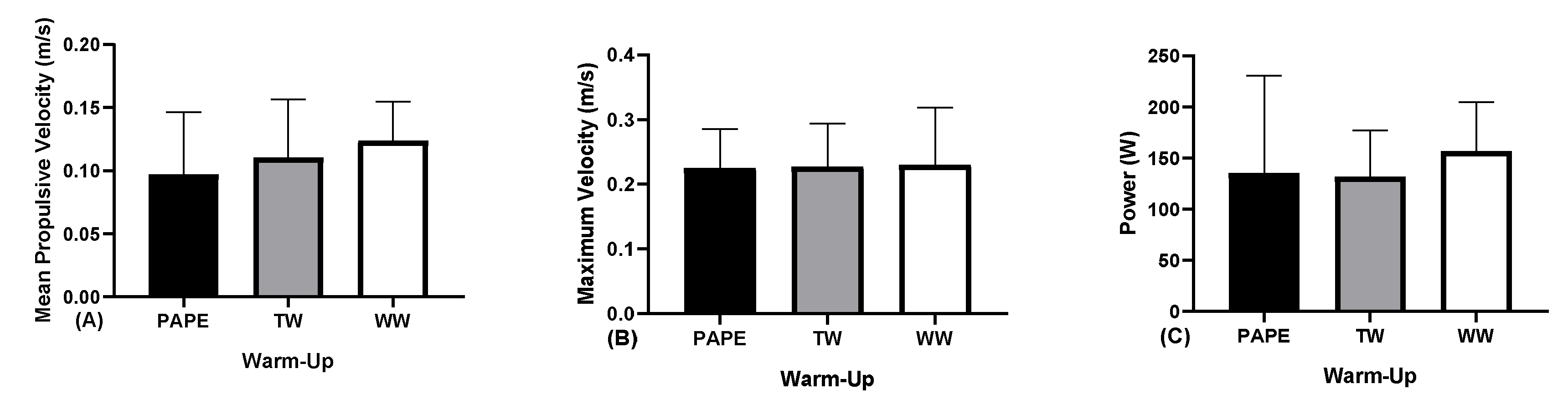

Table 1.
Skin temperature (°C) (mean ± standard deviation, 95% CI) in relation to different types of warm-up.
Table 1.
Skin temperature (°C) (mean ± standard deviation, 95% CI) in relation to different types of warm-up.
| Warm-up | Pectoral Clavicular X ± DP (95% CI) |
Sternal Pectoral X ± DP (95% CI) |
Deltoid X ± DP (95% CI) |
Tríceps X ± DP (95% CI) |
|---|---|---|---|---|
| PAPE (A) |
33,79±1,51 (32,95-34,63) |
32,43±2,05 (31,29-33,56) |
33,65±1,24 (32,96-34,33) |
30,97±1,08 (30,38-31,57) |
| Traditional Warm-up (B) |
34,04±1,43 (33,25-34,83) |
33,17±1,62 (32,27-34,06) |
33,74±1,38 (32,98-34,50) |
32,06±1,16 A (31,42-32,70) |
| Without Warm-up (C) |
34,44±1,16 (33,79-35,09) |
33,25±1,28 (32,54-33,95) |
33,96±1,11 (33,35-34,57) |
31,29±1,16 (30,64-31,93) |
| A vs B |
p = 0,390 d = 0,229 |
p = 0,063 d = 0,522 |
p = 0,727 d =0,092 |
p < 0,001 d = 1,308 |
| A vs C |
p = 0,030 d = 0,624 |
p = 0,043 d =0,575 |
p = 0,193 d = 0,353 |
p = 0,159 d = 0,384 |
| B vs C |
p = 0,141 d = 0,403 |
p = 0,786 d = 0,071 |
p = 0,388 d = 0,230 |
p = 0,004 d = 0,896 |
| P |
p=0,159 |
0.061 |
0.743 |
A p<0,001 |
| η2p | XXX | XXX | XXX | 0,371 |
p < 0.05 (ANOVA two-way, e post hoc de Bonferroni, ES η2p). A vs B; A vs C and B vs C (teste t e ES “d” de Cohen). η2p = partial eta squared (low effect (≤0.05), medium effect (0.05 to 0.25), large effect (0.25 to 0.50), and very large effect (>0.50)). * intraclass, # interclass.
Disclaimer/Publisher’s Note: The statements, opinions and data contained in all publications are solely those of the individual author(s) and contributor(s) and not of MDPI and/or the editor(s). MDPI and/or the editor(s) disclaim responsibility for any injury to people or property resulting from any ideas, methods, instructions or products referred to in the content. |
© 2025 by the authors. Licensee MDPI, Basel, Switzerland. This article is an open access article distributed under the terms and conditions of the Creative Commons Attribution (CC BY) license (http://creativecommons.org/licenses/by/4.0/).
Copyright: This open access article is published under a Creative Commons CC BY 4.0 license, which permit the free download, distribution, and reuse, provided that the author and preprint are cited in any reuse.


