

Submitted:
21 July 2025
Posted:
22 July 2025
You are already at the latest version
Abstract
The basis of the construction industry is building materials with high quality indicators both in terms of physical and mechanical characteristics and thermophysical, however, there are a number of issues affecting the quality of manufactured products. The development of the construction industry provides new opportunities for designing efficient construction facilities. To obtain enhanced design capabilities, it is very important to relieve the load on the structure, this can be achieved by reducing the mass of materials without losing strength[1,2]. Such a material is cellular concretes, which are divided into aerated concrete and foam concrete, aerated concrete is a cellular material with communicating pores. The basic principle of aerated concrete production is the chemical reaction of gas formation from the interaction of aluminum, while these issues are related not only to quality.
Keywords:
mineral additives
; foam concrete
; mineral fibers
; industrial waste
; thermal conductivity
; water absorption
1. Introduction
Foam concrete is a modern cellular building material, which, due to its unique properties, occupies an important place in the construction industry. Obtained by introducing foaming or gas-forming additives into a cement-sand mixture, foam concrete is characterized by a porous structure, which provides it with a number of valuable performance qualities[3,4]. Lightness, low thermal conductivity, high sound and heat insulation, fire resistance, biostability and resistance to external factors make this material in demand when solving many construction problems[5,6,7]. Recent studies have demonstrated the improvement of foam concrete performance when mineral additives are introduced, significantly enhancing strength and durability[8,9]. One of the key advantages of foam concrete is its versatility. It is used in both low-rise and industrial construction, in the construction of load-bearing and enclosing structures, thermal insulation of walls, floors and ceilings[10,11]. Due to the ability to reduce the load on the foundation and increase the energy efficiency of buildings, foam concrete is especially relevant in the context of modern requirements for environmental friendliness and energy saving[12,13]. In addition, its use in road construction contributes to the durability of road surfaces[14]. An important role in the quality and performance characteristics of foam concrete is played by such factors as the composition of the mixture, the type and amount of foaming agent, the water-cement ratio, as well as the technological parameters of production[15,16,17]. Modern research is aimed at finding optimal solutions to increase the strength and durability of foam concrete, reduce its shrinkage and ensure uniform distribution of pores[18,19].
This article discusses the features of foam concrete production, analyzes the main physical and mechanical characteristics of the material and the factors affecting its quality[20,21]. Also discussed are the prospects for the use of foam concrete in the construction industry, taking into account modern standards and requirements for energy efficiency, sustainability and environmental friendliness of building materials. Particular attention is paid to the possibility of improving operational technologies and the use of various additives, which opens up new horizons for its application.
The objective the study is investigation the structure of formation of modified foam concrete using mineral fiber and complex modifiers.
The tasks of the study:
- -
- To develop and optimize the composition of modified foam concrete using mineral fiber and complex modifiers to determine its setting time and water-cement ratio;
- -
- To investigate the structure formation of modified foam concrete using mineral fiber and complex modifiers to determine its structural and phase composition;
- -
- To determine the physico-mechanical and construction-technical properties of foam concrete using mineral fiber and complex modifiers.
2. Materials and Methods
Studies of the chemical composition and structure of foam concrete were carried out using a Hitachi scanning electron microscope (SEM) and a Bruker energy dispersive X-ray spectroscope (EDS).
Figure 1.
- Bruker Scanning Electron Microscope (SEM) and Energy dispersive X-ray Spectroscope (EDS) instruments.
Figure 1.
- Bruker Scanning Electron Microscope (SEM) and Energy dispersive X-ray Spectroscope (EDS) instruments.
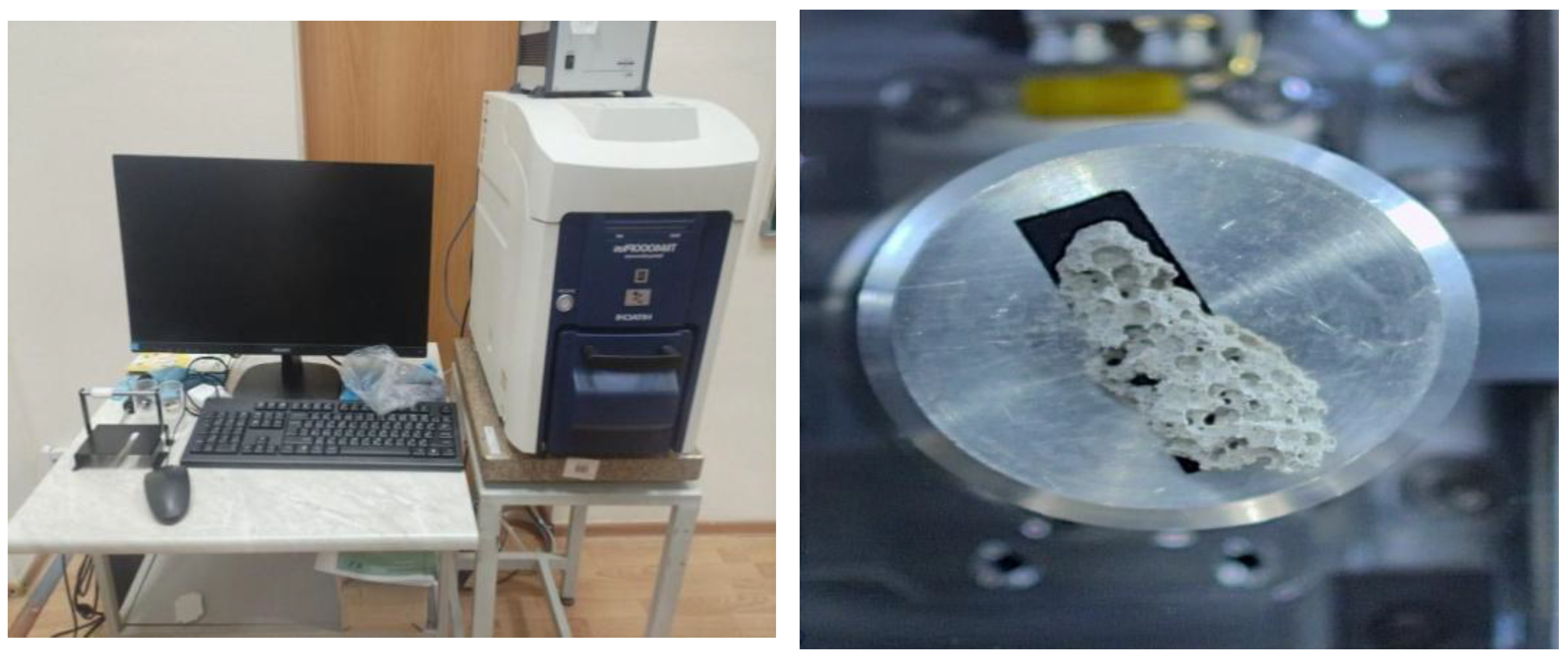
Hitachi's SEM is a scanning electron microscope that uses a focused electron beam to create images of a sample surface. The electron beam interacts with the atoms of the sample, which causes the emission of various signals, which are then detected by detectors to build an image and analyze the composition.
SEM is used to analyze the microstructure and morphology of the sample surface. This equipment allows you to study the topography of the surface, and also makes it possible to obtain high-contrast images to study the texture and structure of materials at the microscopic level.
The equipment also allows for elemental analysis in combination with energy dispersive X-ray spectroscopy (EDS), which helps determine the composition of samples at specific points or regions.
The density of foam concrete was determined according to the interstate standard GOST 12730.1.
Figure 2.
– Determination of the density of foam concrete samples.
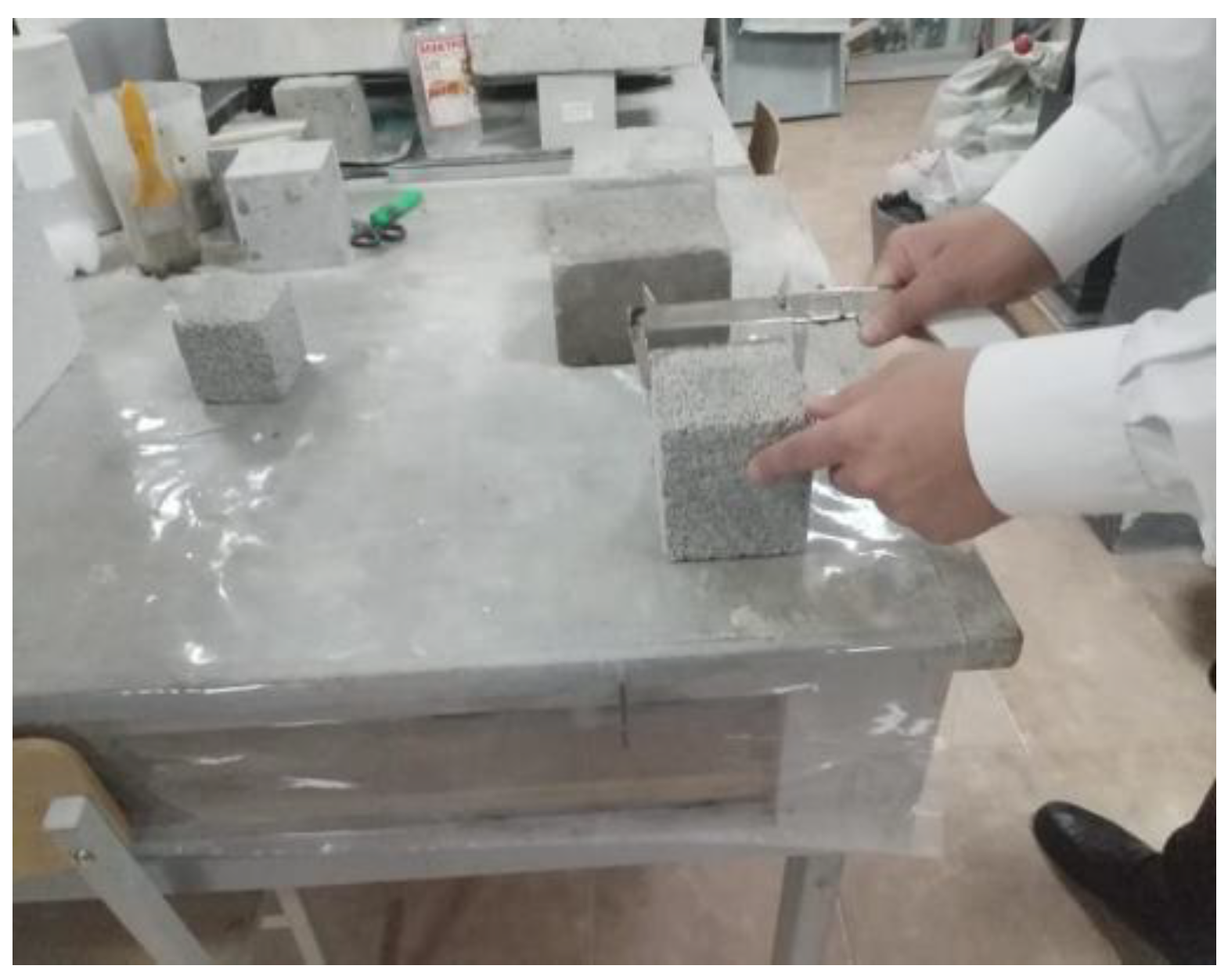
A caliper, a drying cabinet, and laboratory scales were used to determine the density. Regular shaped samples with dimensions of 100x100x100 mm were used for testing. The volume of the samples of the correct shape is calculated by their geometric dimensions. The sizes of the samples were determined with a caliper with an error of no more than 1%. The mass of the samples was determined by weighing with an error of no more than 0.1%. The samples were dried to a constant mass.
The strength of foam concrete was determined according to the interstate standard GOST 10180-2012. Samples of regular shape with dimensions of 100x100x100 mm were tested. Those who reached the age of 28 days.
Figure 3.
- Determination of strength of foam concrete specimens.
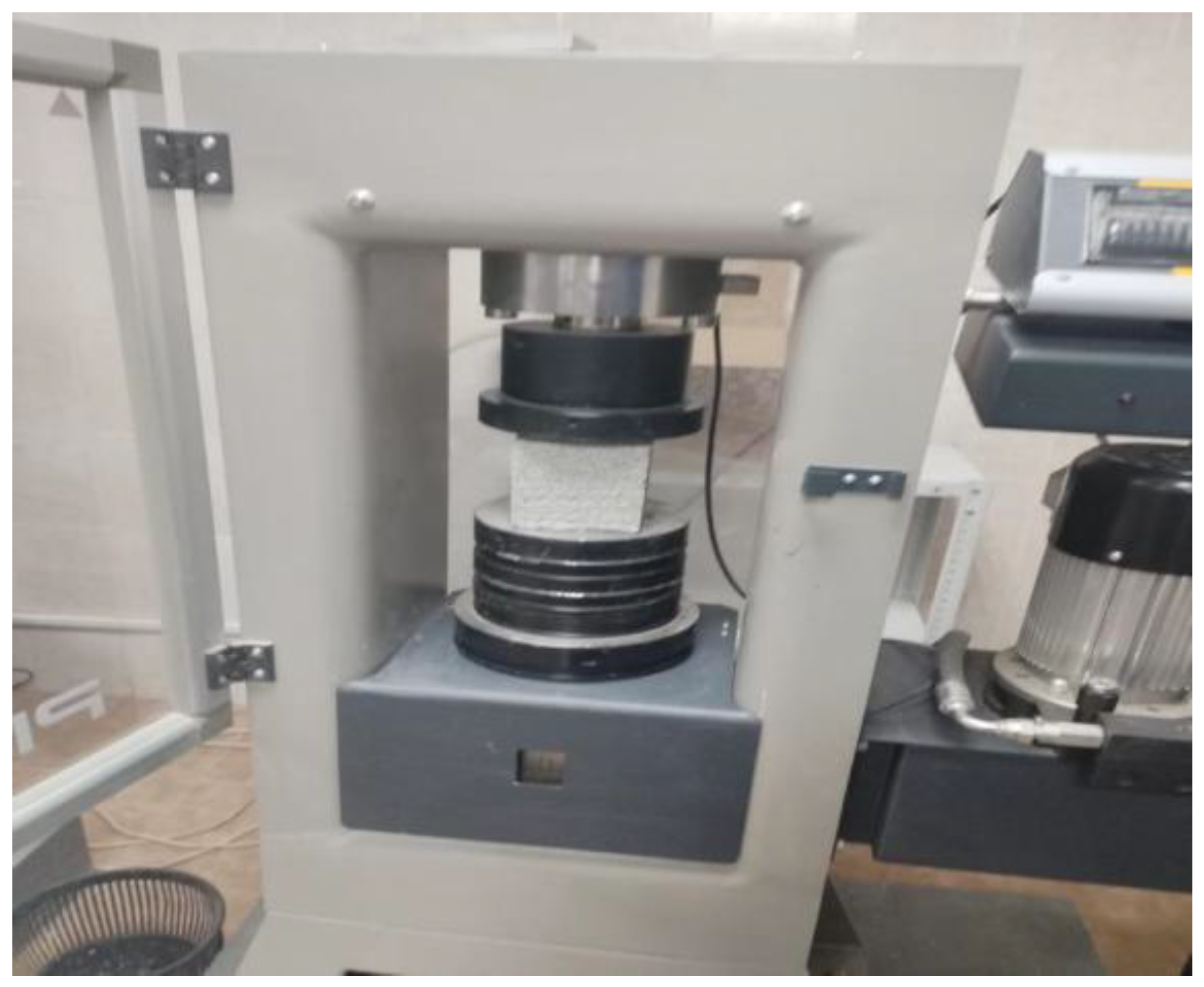
Figure 4.
– Determination of water absorption of foam concrete samples.
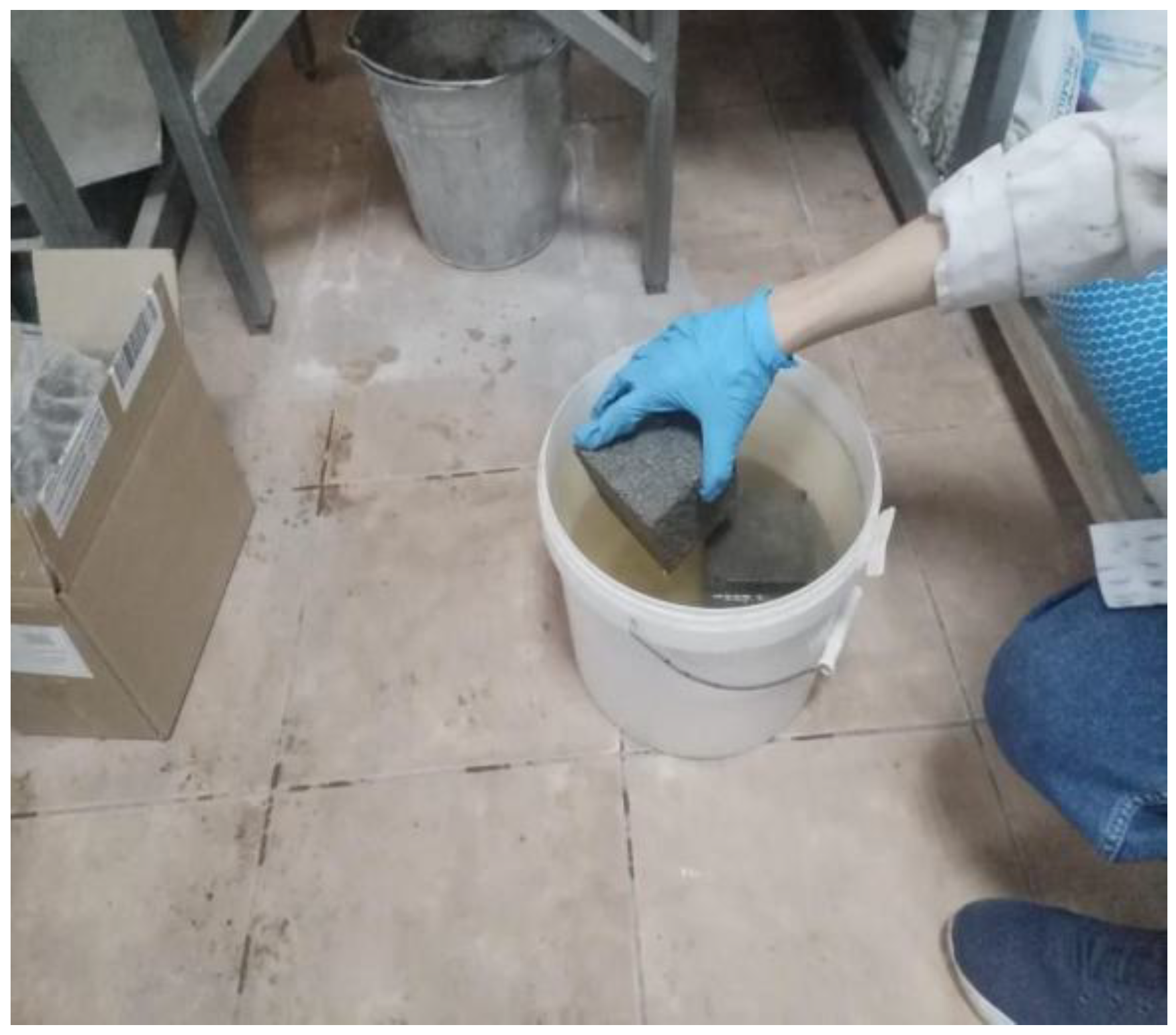
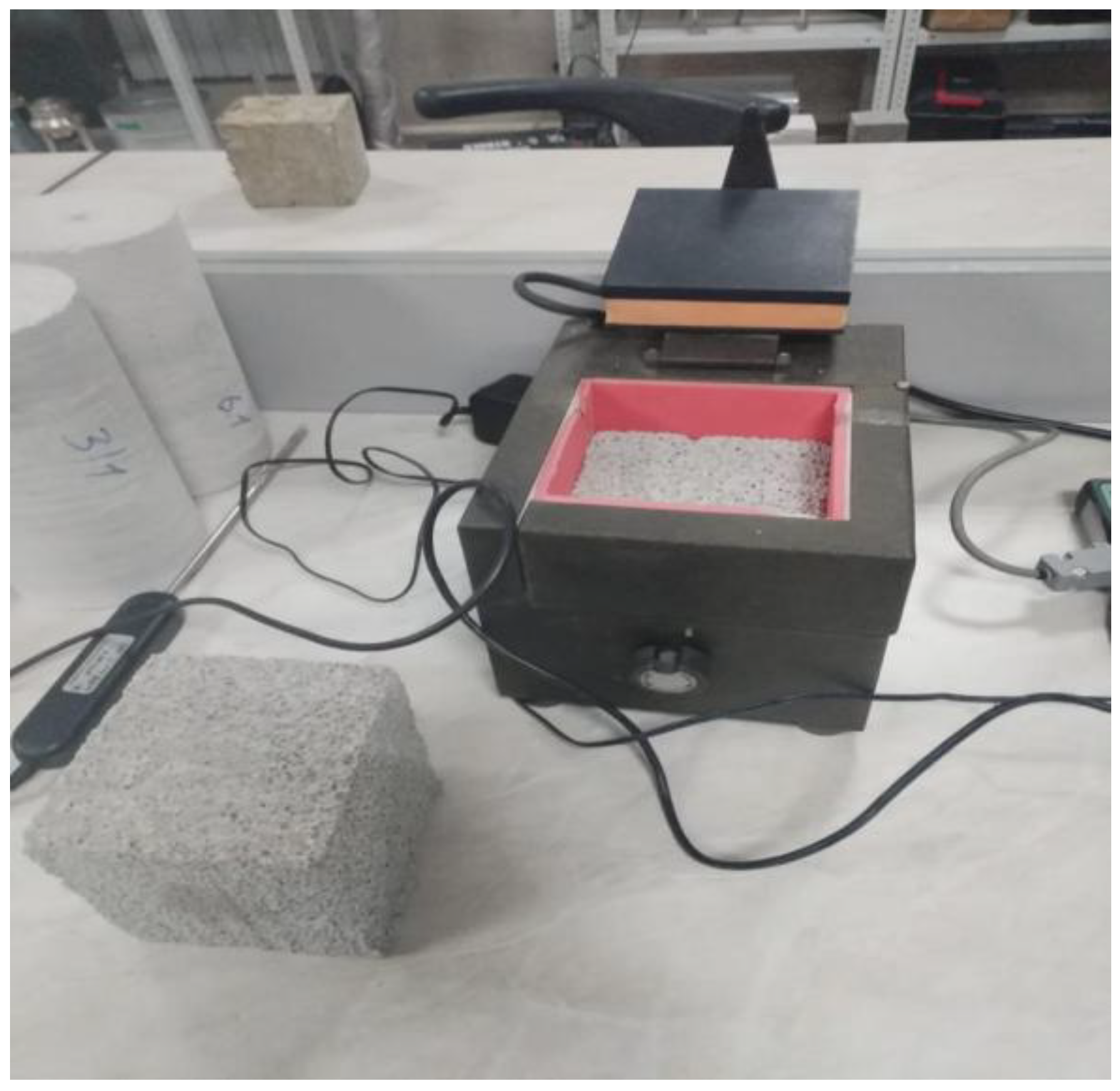
Figure 5.
– Determination of thermal conductivity of foam concrete samples.
In the development of modified foam concrete using mineral fiber and complex modifiers, determine its setting time.
In order to adopt the optimal composition of the complex modifier, the setting time of the cement binder was taken as the main indicator.

Table 1.
Setting time.
| The amount of cement binder additive | |||||||
| 0 | 1 % | 1,5% | 2% | ||||
| Start hour/min | End of hour/min | Start hour/min | End of hour/min | Start hour/min | End of hour/min | Start hour/min | End of hour/min |
| 2:45 | 6:10 | 1:00 | 4:00 | 0:40 | 3:20 | 1:10 | 3:50 |
Thus, one of the main parameters in the production of foam concrete is the setting time, since the stratification and shrinkage of the mixture and, as a result, unstable density depend on this indicator. The optimal amount of the additive is 1.5%.
Six types of aerated concrete of various compositions were considered in the work.
Table 2.
Type of samples depend on content.
| 1 | Type 1 | Control sample |
| 2 | Type 2 | Sample using a complex modifier |
| 3 | Type 3 | Sample using mineral fiber |
| 4 | Type 4 | Sample using mineral fiber and a complex modifier |
Mixtures of foam concrete of different densities were used to determine the optimal composition of the mineral fiber. D 400, D800, D1100. The optimization is presented in table 2.
Table 3.
Mineral fiber content depend in foam concrete density.
| Brand of foam concrete | The content of mineral fiber in foam concrete in kg | |||||
|
Average density |
5 kg | 10 kg | 15 kg | 20 kg | 25 kg | |
| D 400 | 495 | 470 | 445 | 408 | 379 | |
| D 800 | 877 | 842 | 803 | 760 | 738 | |
| D 1100 | 1156 | 1098 | 1025 | 1009 | 983 | |
The selection of the optimal Type 2 composition was carried out by determining the properties of cement for the duration of setting and hardening, as well as determining the strength of density, water absorption, frost resistance and thermal conductivity. To select the optimal type 3 composition, density, thermal conductivity, strength, and frost resistance were determined. Type 4 was compiled based on the optimal conditions of selected Type 2 and Type 3 formulations.
Table 4.
Optimal compositions of the studied thermal insulation foam concrete D 400.
| № | Composition | Sand | Cement | Foam concentrate | Water | Complex Modifier | Mineral fiber |
| 1 | Type 1 | 95 | 300 | 1,7 | 150 | - | - |
| 2 | Type 2 | 100 | 290 | 1,7 | 135 | 4,35 | - |
| 3 | Type 3 | 95 | 280 | 1,5 | 154 | - | 20 |
| 4 | Type 4 | 100 | 270 | 1,5 | 140 | 4,05 | 20 |
Table 5.
Optimal compositions of the studied thermal insulation and structural foam concrete D 800.
| № | Composition | Sand | Cement | Foam concentrate | Water | Complex Modifier | Mineral fiber |
| 1 | Type 1 | 445 | 350 | 1,2 | 175 | - | - |
| 2 | Type 2 | 470 | 320 | 1,2 | 144 | 4,8 | - |
| 3 | Type 3 | 480 | 300 | 1,0 | 165 | - | 15 |
| 4 | Type 4 | 485 | 290 | 1,0 | 151 | 4,35 | 15 |
Table 6.
Optimal compositions of the studied structural foam concrete D 1100.
| № | Composition | Sand | Cement | Foam concentrate | Water | Complex Modifier | Mineral fiber |
| 1 | Type 1 | 735 | 370 | 0,8 | 185 | - | - |
| 2 | Type 2 | 740 | 350 | 0,8 | 160 | 5,25 | - |
| 3 | Type 3 | 745 | 340 | 0,6 | 187 | - | 10 |
| 4 | Type 4 | 740 | 340 | 0,6 | 175 | 5,1 | 10 |
According to the results of composition optimization, studies were conducted on the physico-mechanical properties of foam concrete using a complex modifier and mineral fiber at different densities of foam concrete.
3. Results and Discussion
3.1. Chemical Composition
To investigate the structure formation of modified foam concrete using mineral fiber and complex modifiers to determine its structural and phase composition. In the process of studying the quality of foam concrete using mineral fiber and complex modifiers, the results of an energy dispersive X-ray spectroscope were obtained. These studies are necessary to ensure the stability and quality of foam concrete, taking into account the structural features of foam concrete and its changes during structure formation, which will eliminate all possible risks in the technological process of manufacturing the material.
Figure 6.
- Control sample of foam concrete D 400.
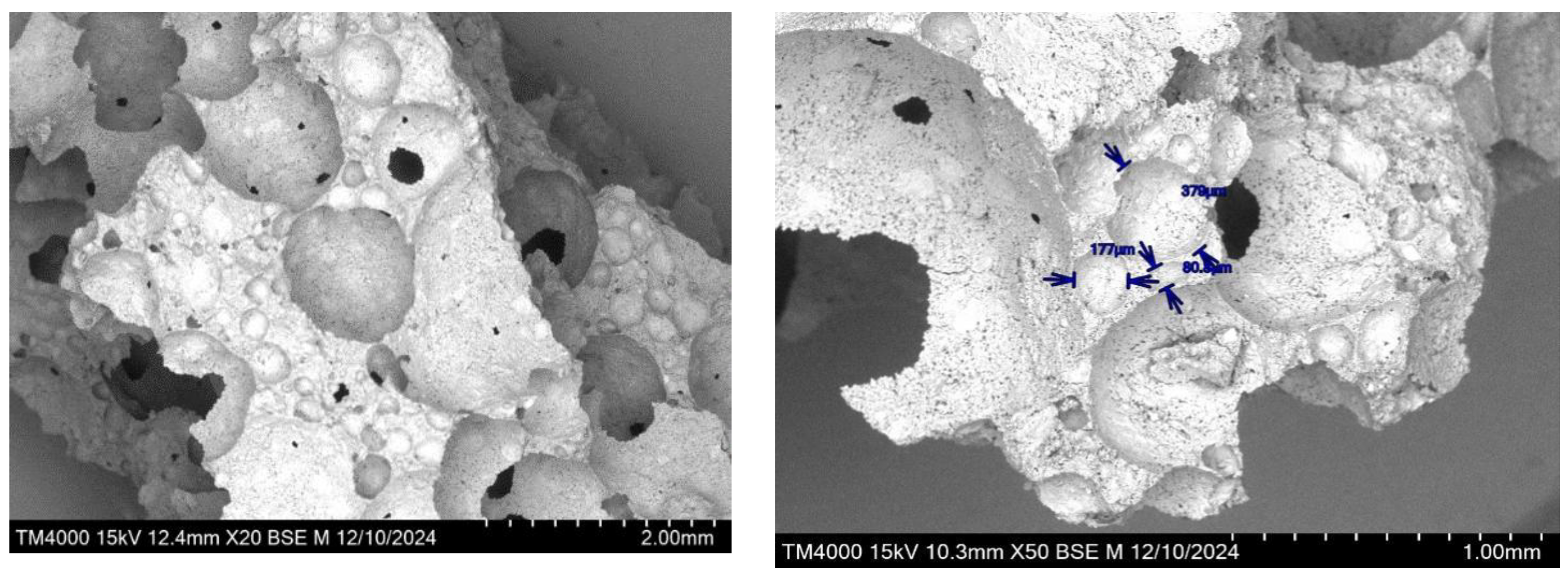
The results of the scanning electron microscope allowed us to determine the structure of the cell skeleton, its integrity and quality.
To study the structure of foam concrete, a sample with a density of 400 kg/m3 was taken. In Figure 4, we see an uneven pore structure of foam concrete, as well as defects and cracks in larger cells that violate the integrity of the pores. These results of the scanning microscope show that during the preparation of the foam concrete solution.
-firstly, the foam is unstable and its delamination leads to the formation of uneven pores, and an increase in pores leads to an increase in the surface area of the pore walls, and as a result, the foam is unable to maintain its structure since the solution has a high load on the foam due to the large area;
-secondly, the internal stress of concrete is created after the beginning of setting and hardening, and the reason is large pores, a large area and a thin structure of the pore wall contribute to the formation of microcracks.
Thus, in order to obtain low-density thermal insulation foam concrete, it is necessary to use polymer components to reduce internal stress. The polymer component creates a film on the crack areas and thereby ensures the integrity of the pore structure. One of the important factors is the stability of the foam, and it is difficult to achieve its stability because as the foam bubble increases, its area increases and the solution affects it, thereby forming defects in the pore or destroying the pores. To reduce the pore structure and density of foam concrete, a reinforcing component is needed, since the created frame will reduce the load on the foam despite its multiplicity, thereby allowing the solution to take shape and harden.
The obtained results of modified foam concrete showed that the presence of a polymer reduces the internal stress of concrete due to an additional polymer shell on the walls and in the open spaces of the pore structure. However, the use of a polymer provides only a reduction in high blood pressure.
Figure 7.
Type 4 cell structure, foam concrete sample D 400.
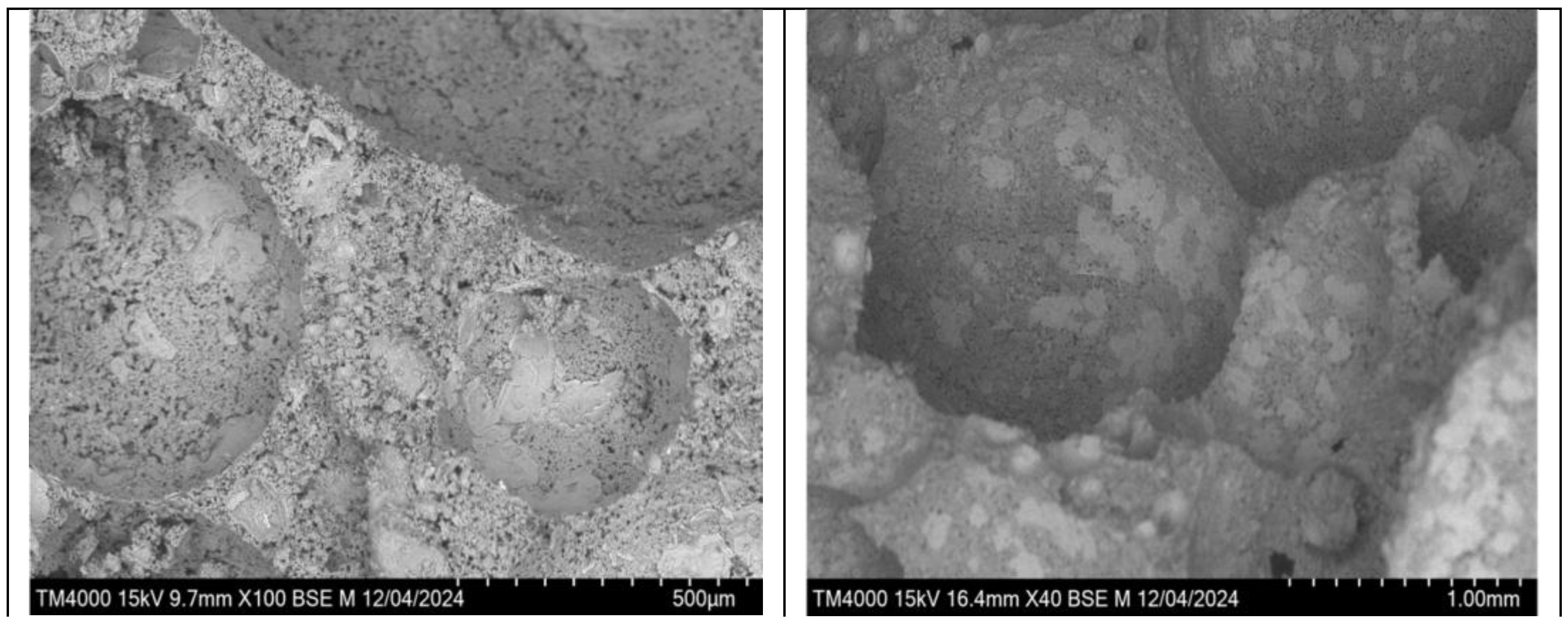
Figure 7 shows a Type 4 sample using mineral fiber and a complex modifier. According to the results of the scanning electron microscope, a cell skeleton was obtained, which had a structure without microcracks and chips, and there are no large fiber fibers in the image that violate the integrity of the cell. This study confirms that during the mixing process, the mineral fiber is destroyed, but into smaller fibers that allow the cell walls to be structured, reinforcing only them and not creating their own frame, thereby allowing the surface of the finished product to be polished after laying, eliminating the release of fibers on the surface that violate the aesthetics of the surface. Given the thickness and length of the fibers, it can be concluded that the fibers are destroyed by mixing the mixture, but during the formation of the structure, the destroyed fibers, although small, reinforce the cell structure. Figure 6 shows mineral fiber fibers and their dimensions. The maximum fiber size is 9.38µm per minute.
Figure 8.
- Microstructure of mineral fiber.
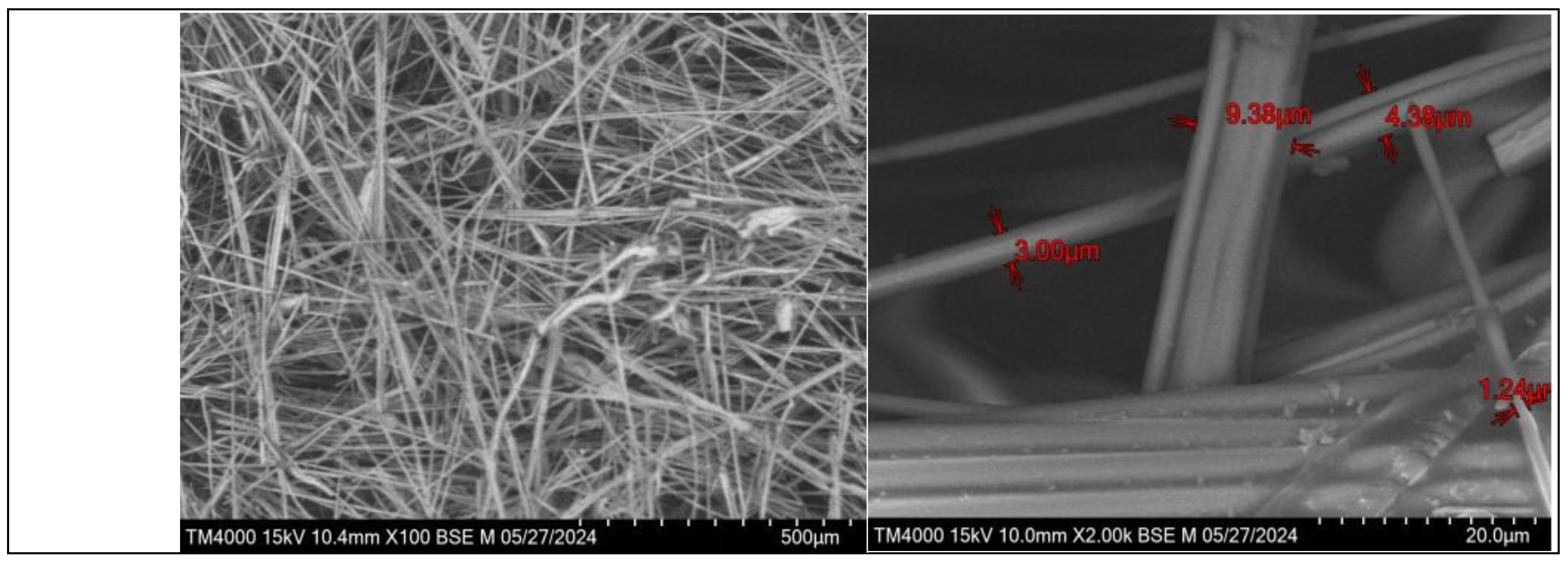
Thus, the results obtained confirm that mineral fiber can significantly strengthen the walls of cells, creating the effect of their micro-reinforcement, and when using a complex modifier based on polymer components, a protective film is formed that ensures the formation of cracks and chips on the surface of the cell, thereby allowing high-quality material to be obtained.
Having studied the changes in the chemical processes of hydration, we see that there are not significant changes in the quantitative parameters of the active oxides involved in the hydration process. These studies show that reinforcement of the cellular concrete wall structure with mineral fiber, as well as a complex modifier consisting of polymer components.
The presented studies show an increase in the activity of portlandite, as well as an increase in silicon in the composition of foam concrete with mineral fiber, as well as with a complex modifier.
Figure 9.
- Studies of the chemical composition of a control sample of foam concrete.
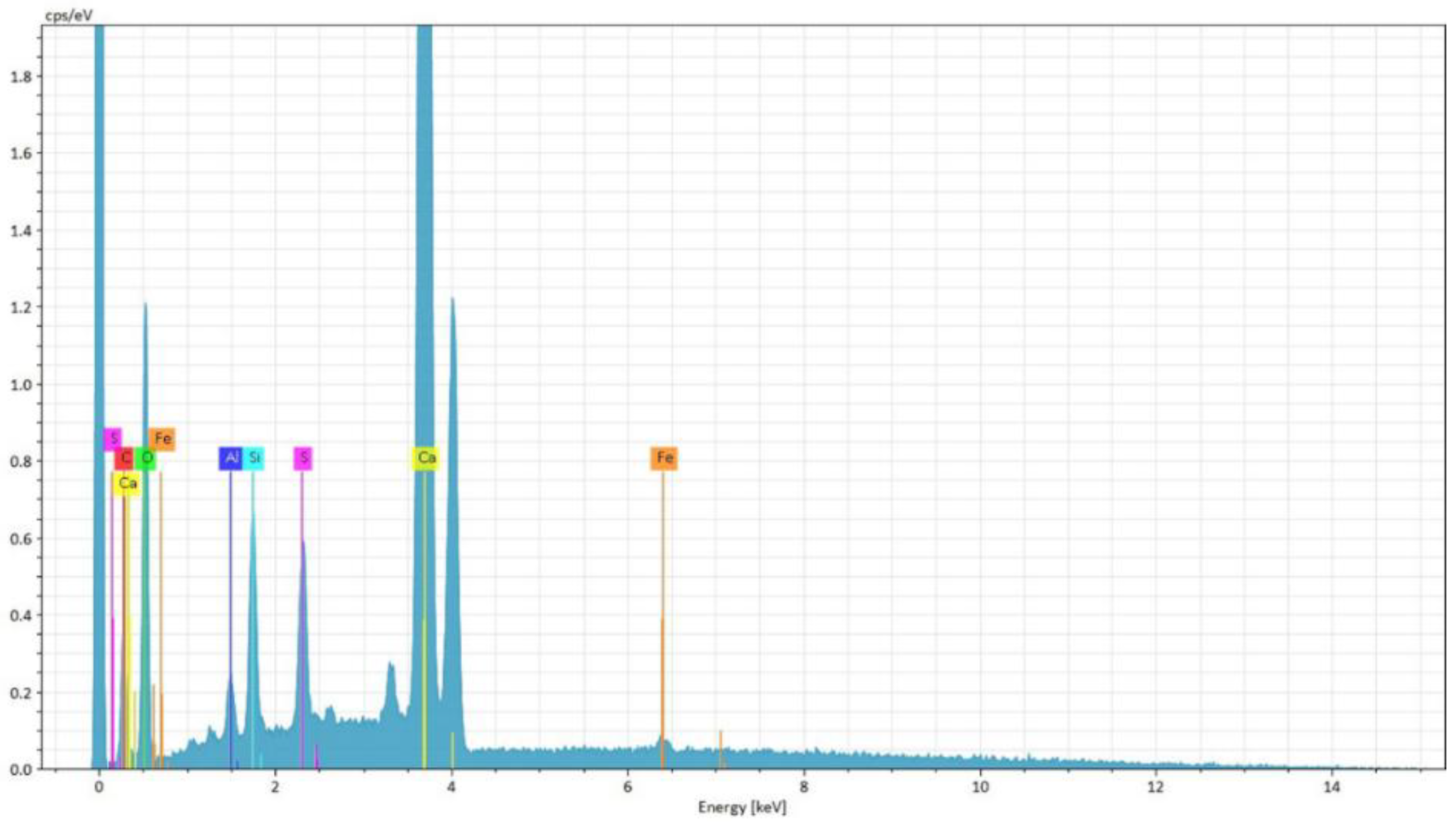
Figure 9 shows a control sample where we observe a large amount of portlandite. According to chemical analysis, the composition of calcium oxide was 93.64%, which indicates a high activity of the cement binder. However, there is also a negative side to the high activity of cement, which is the risk of high alkalinity and as a result of corrosion of the material (Peeling and cracks and chips) peeling occurs due to the migration of free lime, which promotes the movement of salts through the structure of the material, creating locations for its maximum accumulation, thereby causing corrosion processes.
Table 7.
Results of the chemical and mineralogical composition of the control sample of foam concrete.
Table 7.
Results of the chemical and mineralogical composition of the control sample of foam concrete.
| Element | Atom [%] | Comp. | Sto.Norm. [%] |
| O | 52,31 | ||
| Si | 1,63 | SiO2 | 3,62 |
| S | 1,33 | SO3 | 3,92 |
| Ca | 44,05 | CaO | 91,19 |
| Al | 0,68 | Al2O3 | 1,28 |
Figure 10.
- Studies of the chemical composition of a control sample of foam concrete with mineral fiber, as well as with a complex modifier
Figure 10.
- Studies of the chemical composition of a control sample of foam concrete with mineral fiber, as well as with a complex modifier
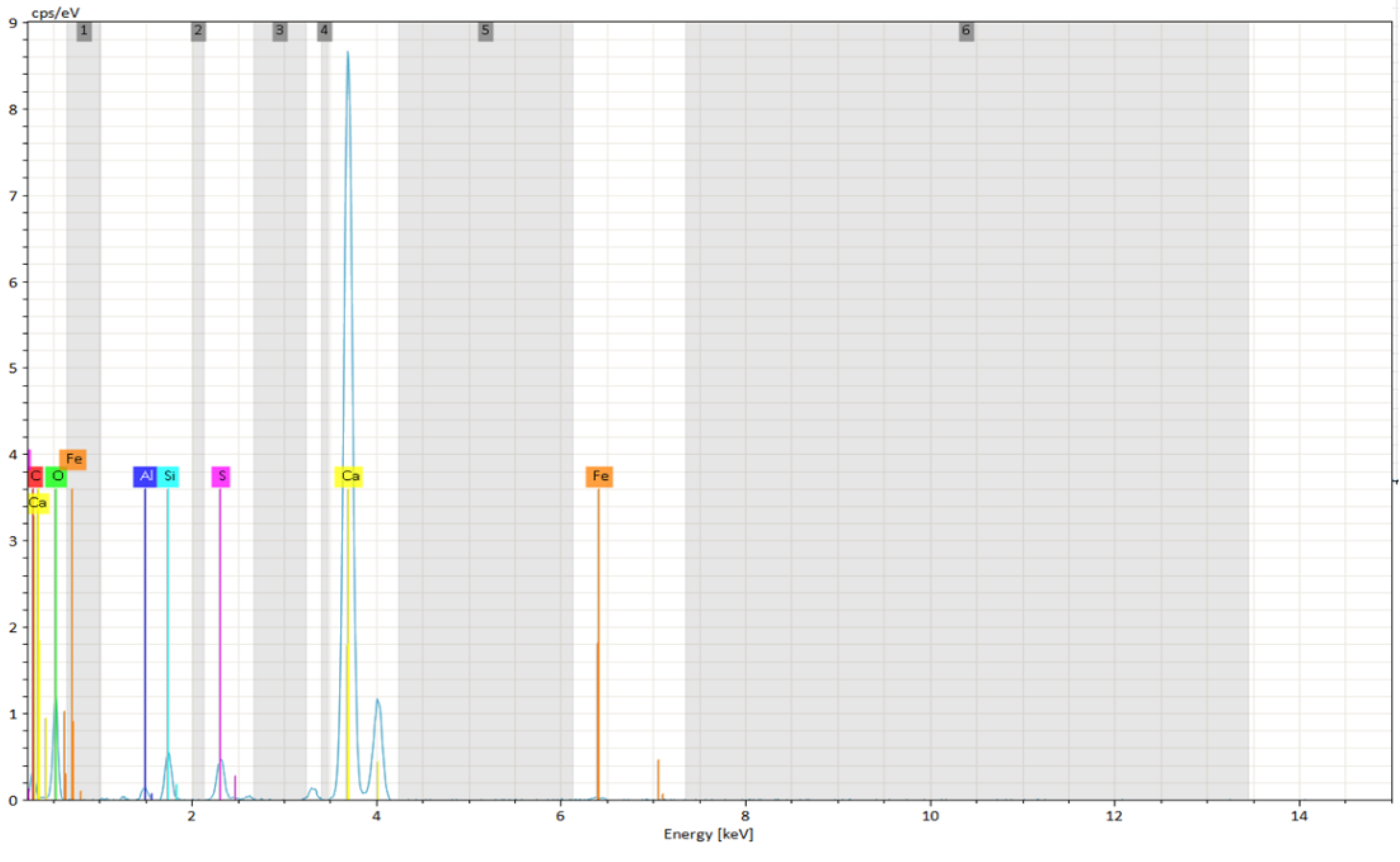
Table 8.
Results of the chemical and mineralogical composition of a sample of foam concrete with mineral fiber, as well as with a complex modifier.
Table 8.
Results of the chemical and mineralogical composition of a sample of foam concrete with mineral fiber, as well as with a complex modifier.
| Element | Atom [%] | Comp. | Sto.Norm. [%] |
| O | 54,12 | ||
| Si | 3,21 | SiO2 | 7,31 |
| S | 2,24 | SO3 | 6,79 |
| Ca | 38,95 | CaO | 82,74 |
| Al | 1,11 | Al2O3 | 2,15 |
The conducted studies showed the effectiveness of the applied additives, taking into account the microstructure images, as well as the chemical and mineralogical composition can be concluded on the improvement of the structure of foam concrete. The research of physical-mechanical and construction-technical properties of foam concrete with the use of mineral fiber and complex modifiers in comparison with the control sample showed a significant difference in the improvement of foam concrete with additives and mineral fiber.
To fully analyze the effect of polymer components and mineral fiber on the property of foam concrete, thermal insulating foam concrete D 400, thermal insulating and structural foam concrete D 800 and structural foam concrete D 1100 were taken.
Table 9 shows the quality indicators of D 400 insulating foam concrete.
Table 9.
Optimal compositions of the studied structural foam concrete D 400.
| № | Composition | Physical and mechanical properties of foam concrete | |||
| Strength MPa | Water absorption % | Thermal conductivity (λ), W/m °C | Density, kg/m3 | ||
| 1 | Type 1 | 1,1 | 15,5 | 0,10 | 489 |
| 2 | Type 2 | 1,3 | 12,3 | 0,10 | 468 |
| 3 | Type 3 | 1,8 | 13,8 | 0,09 | 405 |
| 4 | Type 4 | 2 | 11,2 | 0,09 | 411 |
Based on the results of qualitative indicators of strength we can conclude that the greatest strength effect is achieved when using Type 4. This is due to the fact that the composition of Type 4 contains both polymeric component and mineral fiber strengthening the structure of foam concrete, which provides a framework at the time of setting and hardening of foam concrete, and the polymeric component having in its composition surfactant provides effective wetting and plasticity of the mixture and as a result of quality cell walls of foam concrete. As a result of the obtained data we see an increase in the strength of foam concrete from the control sample of type 1 by 82%. Type 3 showed an increase in strength by 64% while type 2 showed an increase in strength by 19% obtained. The results are explained by the fact that because of the instability of the frame during setting and curing caused by the presence of surfactants type 2 has not gained high strength this fact confirms and not stable density, presented in Table 9 high density indicates the uneven distribution of density in the structure of foam concrete as there was shrinkage of the material. Similar result we see in type 1 control sample.
Low water absorption of foam concrete was also shown by the sample of type 4 by 28% lower than the control sample. This effect is explained by the fact that the integrity of the closed cell walls and the polymeric component contained in the additive provides a protective framework of the cell.
Low thermal conductivity was obtained in the samples of type 3 and 4. This result was obtained due to the stable density of the material as the main indicator of thermal conductivity is the stable density of the material over the entire tested surface according to the results of the study can be seen a decrease in thermal conductivity in the samples of type 3 and 4 by 10%.
Table 10 shows the quality indicators of D 800 insulating foam concrete.
Table 10.
Optimal compositions of the studied structural foam concrete D 800.
| № | Composition | Physical and mechanical properties of foam concrete | |||
| Strength MPa | Water absorption % | Thermal conductivity (λ), W/m °C | Density, kg/m3 | ||
| 1 | Type 1 | 4,3 | 11,1 | 0,21 | 895 |
| 2 | Type 2 | 6,1 | 8,2 | 0,21 | 836 |
| 3 | Type 3 | 7,5 | 9,7 | 0,18 | 807 |
| 4 | Type 4 | 7,9 | 8 | 0,18 | 802 |
Studies of physical-mechanical and construction-technical properties of heat-insulating-constructive foam concrete D 800 with the use of mineral fiber and complex modifiers in comparison with the control sample showed the following results Type 4 showed the highest quality indicators in Table 9 shows an increase in the strength of type 4 by 85%, while type 3 showed 74%, and type 2 showed an increase in strength by 42%. The obtained results of thermal insulating and structural foam concrete in percentage ratio is higher than the results of thermal insulating foam concrete this fact is explained by the fact that the density is higher and in the process of setting and curing, by reducing the size of the cells reduces the internal stress on the walls of the cells thereby allowing effective hydration.
Water absorption of insulating and structural foam concrete showed the following result type 2 showed a 29% reduction in water absorption sample type 3 showed a result of 14% and type 4 showed a 28% reduction in water absorption.
Thermal conductivity also showed improvement in type 3 and 4 samples. The reduction of thermal conductivity from the control sample of type 1 in relation to type 3 and 4 showed 14% while the thermal conductivity of type 2 showed the same results as type 1. Also according to the results of the study we can conclude that the compliance of the actual density with the design density provides high quality of all physical and mechanical characteristics.
Table 11 shows the quality indicators of D 1100 insulating foam concrete.
Table 11.
Optimal compositions of the studied structural foam concrete D 1100.
| № | Composition | Physical and mechanical properties of foam concrete | |||
| Strength MPa | Water absorption % | Thermal conductivity (λ), W/m °C | Density, kg/m3 | ||
| 1 | Type 1 | 10 | 9,8 | 0,33 | 1170 |
| 2 | Type 2 | 13,6 | 7,5 | 0,33 | 1138 |
| 3 | Type 3 | 14,3 | 9 | 0,25 | 1101 |
| 4 | Type 4 | 15,4 | 7,1 | 0,24 | 1092 |
The study of structural foam concrete D 1100 as well as heat-insulating and heat-insulating-constructive showed similar results of physical and mechanical properties maximum strength was achieved in the sample type 4 from type 1 (control) 64% strength of the sample type 3 was 43% and type 2 was 36% strength of structural foam concrete increased not significantly from the control sample this fact is due to the fact that because of the high density of cells in foam concrete is much smaller, and their walls are much thicker in contrast to the foam concrete with low density.
Water absorption of foam concrete with density 1100 type 2 with the use of complex modifier significantly decreased, because the composition contains a polymer component and amounted to 23.5%. Type 4 showed the lowest water absorption of 27.6% as the composition contained not only complex modifier, but also mineral fiber, which improved the structure of foam concrete. Type 3 showed a decrease in water absorption of only 8.2%, which is explained by the lack of complex modifier.
Thermal conductivity of the studied structural foam concrete D 1100 showed the highest results in the samples of type 4, which amounted to a decrease in thermal conductivity by 27%. Also the thermal conductivity reduction showed the sample of type 3 by 24%. The sample of type 2 showed the same results as type 1.
4. Conclusions
Based on the results of the research, it can be concluded that the use of a complex of modified additives based on a polymer component and mineral fiber achieves the highest quality, since the polymer component strengthens the structure of the skeleton by polymerizing, and the mineral fiber reinforces the cell structure by taking the load of the upper part of the mixture, ensuring uniform density, thereby creating a high-quality material.
Studies of foam concrete with the use of mineral fiber and complex modifiers conducted on energy dispersive X-ray spectroscope and scanning electron microscope showed the following results, the integrity of the cell structure of foam concrete, the correctness of the cell shape, as well as uniformity of cell wall thickness, while the control sample had a large number of defects integrity of the cell wall structure was broken, as well as the pore structure had not uniform wall thickness.
Chemical analysis showed a change in the mineralogical composition after the use of mineral fiber and complex modifier, the results show that in the process of hydration is a change in the phase composition provides a decrease in the amount of portlandite in foam concrete by 11.7%.
Studies to determine the physical-mechanical and construction-technical properties of foam concrete with the use of mineral fiber and complex modifiers showed that the main factor affecting the properties of foam concrete are the features of the applied additives. According to the researches, the complex application of mineral fiber and complex modifier allows to obtain foam concrete of high quality.
According to the results of the study of compressive strength from the complex application of mineral fiber and complex modifier in relation to the control sample of thermal insulating foam concrete D 400, left 82%. Water absorption from the complex application of mineral fiber and complex modifier in relation to the control sample of heat-insulating foam concrete D 400, left 82%.
Thermal conductivity of the material with mineral fiber and complex modifier, as well as just mineral fiber showed the same reduction in thermal conductivity by 10%. Thus, according to the results of the research the following results were obtained complex application of mineral fiber and complex modifier positively affects the strength and water absorption, but the thermal conductivity is affected only by mineral fiber in the manufacture of insulating foam concrete D 400.
When studying the compressive strength of thermal insulation and structural foam concrete D 800 in relation to the control sample, the highest quality indicators were for the sample with the combined use of mineral fiber and an integrated modifier, which showed an increase of 85% and water absorption decreased by 29%, however, thermal conductivity as well as for the sample of thermal insulation foam concrete D 400 showed the same results as With the combined use of mineral fiber and a complex modifier, as well as simply with mineral fiber, a 14% decrease in thermal conductivity was obtained.
The study of structural foam concrete D 1100 on physical-mechanical and construction-technical properties showed an increase in strength in relation to the control sample showed 64% and water absorption decreased by 27.6%, and thermal conductivity decreased by 27%. Thus, the main factor affecting the properties of foam concrete is the quality of its structure, and according to the conducted physical-mechanical and construction-technical properties, the quality of its structure is the quality of its structure.
Author Contributions
Conceptualization, R.L. and D.D.; writing—original draft preparation, Z.S.; formal analysis, A.A.; resources, A.J. All authors have read and agreed to the published version of the manuscript.
Funding
This research was funded by the Committee of Science of the Ministry of Science and Higher Education of the Republic of Kazakhstan (grant no. BR21882278 «Establishment of a construction and technical engineering centre to provide a full cycle of accredited services to the construction, road-building sector of the Republic of Kazakhstan»).
Institutional Review Board Statement
Not applicable.
Informed Consent Statement
Not applicable.
Data Availability Statement
Not applicable.
Acknowledgments
The authors would like to express thanks of gratitude to the research and production centre "ENU-Lab" of L.N. Gumilyov Eurasian National University for providing base of the experimental section.
Conflicts of Interest
The authors declare no conflict of interest. The funders had no role in the design of the study; in the collection, analyses, or interpretation of data; in the writing of the manuscript, or in the decision to publish the results.
References
- Lukpanov, R.; Dyussembinov, D.; Altynbekova, A.; Yenkebayev, S.; Zhumagulova, A. Investigation of Effect of Proposed Two-Stage Foam Injection Method and Modified Additive on Workability of Foam Concrete. Materials 2024, 17. [Google Scholar] [CrossRef] [PubMed]
- Rudenko, O.; Beisekenov, N.; Sadenova, M.; Galkina, D.; Kulenova, N.; Begentayev, M. Physical–Mechanical and Microstructural Properties of Non-Autoclaved Aerated Concrete with Ash-and-Slag Additives. Sustainability (Switzerland) 2025, 17. [Google Scholar] [CrossRef]
- Bartenjeva, E. The Effect of Mineral Additives on Foam Concrete Porosity.; 2020; Vol. 962.
- Ma, X.; Li, H.; Wang, D.; Li, C.; Wei, Y. Simulation and Experimental Substantiation of the Thermal Properties of Non-Autoclaved Aerated Concrete with Recycled Concrete Powder. Materials 2022, 15. [Google Scholar] [CrossRef] [PubMed]
- Baranova, A.; Shustov, P.; Yazina, O. Structural and Heat-Insulating Foam Concrete of Non-Autoclaved Hardening Based on Microsilica.; 2018; Vol. 212.
- Vishtorsky, E.; Bogomolov, S.; Smirnov, A.; Mutalibova, G. Use of Industrial Waste in the Production of Non-Autoclaved Foam Concrete.; 2024; Vol. 549.
- Vishtorsky, E.; Bogomolov, S.; Smirnov, A.; Mutalibova, G. Water Demand Management in the Production of Non-Autoclaved Foam Concrete.; 2023; Vol. 458.
- Utepov, Y.; Bazarbayev, D.; Tsygulyov, D.; Yenkebayev, S.; Shakhmov, Z.; Lukpanov, R.; Dyussembinov, D. Homogeneous Pore Distribution in Foam Concrete by Two-Stage Foaming. Magazine of Civil Engineering 2021, 103, 10313–10313. [Google Scholar] [CrossRef]
- Mohamad, A.; Khadraoui, F.; Chateigner, D.; Boutouil, M. Influence of Porous Structure of Non-Autoclaved Bio-Based Foamed Concrete on Mechanical Strength. Buildings 2023, 13. [Google Scholar] [CrossRef]
- Dyussembinov, D.S.; Awwad, T.; Sabitov, Y.Y.; Zhumagulova, A.A.; Shakhmov, Zh.A.; Kaliyeva, Zh.; Bazarbayev, D.O. Self-Compacting Concrete with Finely Dispersed Additives and Superplasticizer. Magazine of Civil Engineering 2023, 123. [Google Scholar] [CrossRef]
- Shon, C.-S.; Mukangali, I.; Zhang, D.; Ulykbanov, A.; Kim, J. Evaluation of Non-Autoclaved Aerated Concrete for Energy Behaviors of a Residential House in Nur-Sultan, Kazakhstan. Buildings 2021, 11. [Google Scholar] [CrossRef]
- Liu, F.; Zhao, L.; Yuan, L.; Wu, G.; Zheng, R.; Mu, Y. Research on Flexural Performance of Basalt Fiber-Reinforced Steel–Expanded Polystyrene Foam Concrete Composite Wall Panels. Buildings 2025, 15, 285. [Google Scholar] [CrossRef]
- Markin, S.; Sahmenko, G.; Korjakins, A.; Mechtcherine, V. The Impact of Production Techniques on Pore Size Distribution in High-Strength Foam Concrete. Infrastructures 2025, 10, 14. [Google Scholar] [CrossRef]
- Challenges for Transportation Geotechnics in Extreme Climates of Kazakhstan and Korea. In Advances in Transportation Geotechnics 2; CRC Press, 2012; pp. 655–660 ISBN 978-0-415-62135-9.
- Stel’makh, S.A.; Shcherban’, E.M.; Beskopylny, A.N.; Mailyan, L.R.; Meskhi, B.; Beskopylny, N.; Dotsenko, N.; Kotenko, M. Influence of Recipe Factors on the Structure and Properties of Non-Autoclaved Aerated Concrete of Increased Strength. Applied Sciences (Switzerland) 2022, 12. [Google Scholar] [CrossRef]
- Xiong, Y.; Wang, S.; Ma, L.; Wang, T.; Zhou, M.; Hu, Z.; Wang, Z. Unveiling the Influence of Activators on Stability and Pore Features of Foamed Concrete. Materials 2025, 18, 3320. [Google Scholar] [CrossRef]
- Jierula, A.; Li, H.; Chen, Y.; Wu, C.; Wu, X.; Yin, H. Study on the Influence of Density and Water–Cement Ratio on the Cement Utilization, Fluidity, Mechanical Properties, and Water Absorption of Foam Concrete. Buildings 2024, 14, 3550. [Google Scholar] [CrossRef]
- Shcherban’, E.M.; Stel’makh, S.A.; Beskopylny, A.; Mailyan, L.R.; Meskhi, B.; Shuyskiy, A.; Beskopylny, N.; Dotsenko, N. Mathematical Modeling and Experimental Substantiation of the Gas Release Process in the Production of Non-Autoclaved Aerated Concrete. Materials 2022, 15. [Google Scholar] [CrossRef] [PubMed]
- Li, L.; Sun, W.; Ayti, A.; Chen, W.; Liu, Z.; Gómez-Zamorano, L.Y. Machine Learning Modeling of Foam Concrete Performance: Predicting Mechanical Strength and Thermal Conductivity from Material Compositions. Applied Sciences 2025, 15, 7125. [Google Scholar] [CrossRef]
- Zhang, T.; Li, T.; Xu, H.; Wang, M.; Lu, L. Preparation and Performance Study of Novel Foam Vegetation Concrete. Materials 2024, 17, 6295. [Google Scholar] [CrossRef] [PubMed]
- Mohtadi, A.; Ghomeishi, M.; Dehghanbanadaki, A. Towards Sustainable Construction: Evaluating Thermal Conductivity in Advanced Foam Concrete Mixtures. Buildings 2024, 14, 3636. [Google Scholar] [CrossRef]
Disclaimer/Publisher’s Note: The statements, opinions and data contained in all publications are solely those of the individual author(s) and contributor(s) and not of MDPI and/or the editor(s). MDPI and/or the editor(s) disclaim responsibility for any injury to people or property resulting from any ideas, methods, instructions or products referred to in the content. |
© 2025 by the authors. Licensee MDPI, Basel, Switzerland. This article is an open access article distributed under the terms and conditions of the Creative Commons Attribution (CC BY) license (http://creativecommons.org/licenses/by/4.0/).
Copyright: This open access article is published under a Creative Commons CC BY 4.0 license, which permit the free download, distribution, and reuse, provided that the author and preprint are cited in any reuse.


