

Submitted:
16 July 2025
Posted:
17 July 2025
You are already at the latest version
Abstract
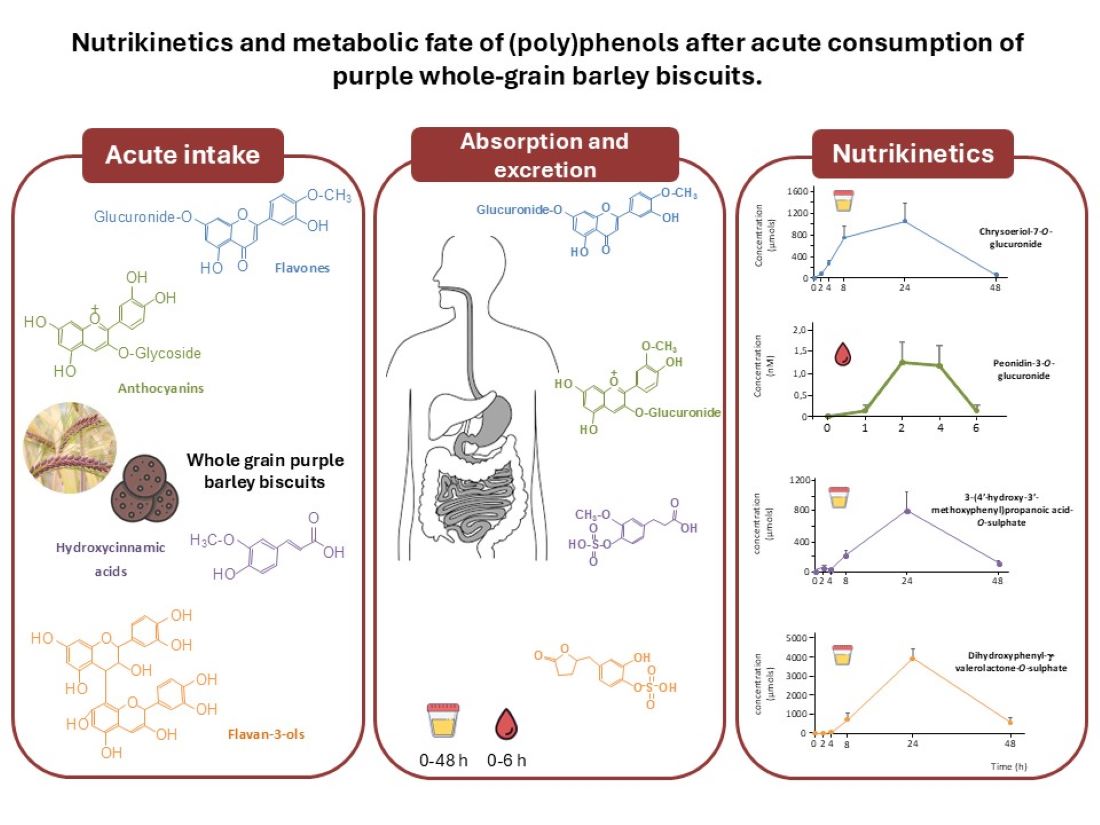
Anthocyanin-rich barley varieties have recently gained attention due to their high (poly)phenolic content and potential health benefits, yet human data on their bioavailability remain scarce. This study aimed to characterize the absorption, metabolism, and excretion of (poly)phenolic compounds from a novel hull-less purple whole-grain barley (WGB) genotype. Eleven healthy volunteers consumed 140 g of purple WGB biscuits, and plasma and urine samples were collected over 6 h and 48 h, respectively. UPLC-MS/MS analysis revealed a broad range of metabolites, with 11 compounds identified in plasma and 80 in urine. The biscuits were particularly rich in flavones (217 mg/140 g, mainly chrysoeriol derivatives), followed by hydroxycinnamic acids (~54 mg, mainly 4’-hydroxy-3’-methoxycinnamic acid), anthocyanins (44.8 mg), and flavan-3-ols (16.8 mg). In plasma, early absorption of glycosylated anthocyanins and flavone conjugates (e.g., peonidin-3-O-glucuronide, chrysoeriol-O-glucuronide) were observed within 1–2 h. In contrast, microbial-derived catabolites —including valerolactones, phenylacetic and benzoic acids —were mainly excreted in urine between 8 and 24 h, reaching concentrations above 1000 nM. These findings provide novel insights into the bioavailability and metabolic fate of barley (poly)phenols, supporting their potential contribution to host and gut health.
Keywords:
barley (poly)phenols
; bioavailability
; metabolism
; postprandial study
; UPLC-MS/MS
1. Introduction
The health benefits associated with whole grain consumption are well documented and have been consistently linked to a reduced risk of chronic diseases, including cardiovascular disease, type 2 diabetes, and certain cancers [1,2]. These protective effects are attributed not only to the high content of dietary fiber but also to the presence of a wide range of bioactive compounds, particularly (poly)phenolic compounds.
Barley is a nutrient-rich whole grain, particularly high in soluble fiber (mainly β-glucans) and (poly)phenolic compounds. Although its consumption is relatively limited in many regions, barley has gained attention due to its antioxidant, anti-inflammatory, and cholesterol-lowering properties. However, in whole grain products, (poly)phenolic compounds are frequently bound —either covalently or non-covalently —to the dietary fiber matrix, which substantially limits their absorption in the upper gastrointestinal tract. As a result, a large proportion reach the colon intact, where they are subject to microbial enzymatic activity (e.g., β-glucosidases, esterases). This microbial metabolism releases simpler (poly)phenolic metabolites, which may extend their systemic availability and enhance their bioactivity, underscoring the key role of colonic transformation in mediating the health benefits of whole grain barley intake [3].
Among barley varieties, pigmented types such as black [4], and purple barley [5, 6] attracted growing interest due to their higher concentrations of anthocyanins and other (poly)phenolic compounds that exhibit strong antioxidant and anti-inflammatory properties. Despite the increasing interest in these pigmented lines, there is still limited evidence regarding the bioavailability and metabolic fate of their (poly)phenols in humans.
To date, only one human study has assessed the absorption and excretion of (poly)phenols from pigmented barley [5] focusing on urinary excretion of (poly)phenolic metabolites after an acute intake of a cooked whole grain porridge. However, that study was limited by a small sample size (n = 3), a single 4-hour urine collection point, and low metabolite coverage. These limitations underscore the need for more robust investigations by employing extended sampling periods and advanced analytical techniques.
In response, the present study provides a comprehensive assessment of the (poly)phenolic profile of biscuits made with purple whole grain barley and investigates their metabolic fate in humans. Using a targeted UPLC-MS/MS approach, we identified and quantified (poly)phenolic metabolites in plasma and urine collected at multiple time points. To our knowledge, this is the first human study to characterize the absorption, metabolism, and excretion of (poly)phenols from processed pigmented barley, offering novel insights into their bioavailability and health-relevant transformations.
2. Materials and Methods
2.1. Chemicals and Reagents
The commercial standards 1,2-dihydroxybenzene (aka catechol), 4-hydroxybenzoic acid, 3,4-dihydroxybenzoic acid (aka protocatechuic acid), 4-hydroxy-3-methoxybenzoic acid (aka vanillic acid), 4-hydroxy-3,5-dimethoxybenzoic acid (aka syringic acid), 3-(4′-hydroxyphenyl)propanoic acid, 3-(4′-hydroxyphenyl)propanoic acid, 3-(3′,4′-dihydroxyphenyl)propanoic acid and 3-(4-hydroxy-3-methoxyphenyl)propanoic acid (aka dihydroferulic acid) were from Sigma-Aldrich (St. Louis, MO, USA). Cyanidin-3-O-glucoside, 4′-hydroxycinnamic acid, 3′,4′-dihydroxycinnamic acid (aka caffeic acid), 4′-hydroxy-3′-methoxycinnamic acid (aka ferulic acid), 4-hydroxy-3,5-dimethoxycinnamic acid (aka sinapic acid), catechin, chrysoeriol (luteolin-3′-methyl ether), and luteolin-7-O-glucuronide were from Extrasynthese (Genay, France).
Acetonitrile (HPLC-grade) was from Romil (Tecknokroma, Barcelona, Spain). Methanol (HPLC-grade), phosphoric acid (85%), glacial acetic acid (99.8%), formic acid, sodium hydroxide (NaOH) and hydrochloric acid (HCl) (37%) were from Scharlau S.L. (Barcelona Spain). Ultrapure water was obtained from a Mili-Q water purification system (Millipore Corp., Bedford, MA, USA).
Stock solutions of (poly)phenolic compounds were prepared by dissolving each standard compound in methanol at a concentration of 1000 mg/L and stored in a dark flask at −30 ºC.
2.2. Preparation of Whole-Grain Barley Biscuits
Home-made biscuits were prepared using purple-whole grain barley (WGB) following the method previously described [8] based on the AACC method 10–50.05 with slight modifications. The formulation included 51% WGB flour (dry basis), along with sugar, vegetable margarine, dextrose solution, tartaric acid, and leavening agents. After mixing and shaping, the biscuits were baked at 200 °C for 10 min. Finished products were vacuum-packed and stored at 4 °C until used in the chemical analyses and human intake study.
The extraction and quantitative determination of free and bound (poly)phenolic compounds from the purple WGB biscuits were performed according to the methodology described in our previous study [9]. The nutritional composition of the biscuits consumed in the intervention is detailed in Supplementary Table S1.
2.3. Subjects and Study Design
The present analysis is part of an acute, randomized, crossover trial comparing the absorption and metabolism of (poly)phenols from two barley-based biscuits: one made with whole grain barley (WGB) and another made exclusively from barley bran. In this article, we report only the results obtained after the consumption of the WGB biscuit.
A total of 14 healthy participants (8 women and 6 men, aged 25–45 years, BMI 20–25 kg/m2) were recruited through advertisements posted at the local hospital and affiliated research centers. All volunteers were non-smokers and not taking any chronic medication or antioxidant supplements. Exclusion criteria included: age <18 or >60 years, pregnancy or breastfeeding, chronic illness, recent antibiotic use (within the past 4 months), regular medication or dietary supplement intake, smoking, and excessive alcohol consumption (>80 g/day).
Prior to the study, participants were instructed to follow a low-(poly)phenol diet and to abstain from consuming (poly)phenol-rich foods (such as coffee, fruits, vegetables, chocolate, tea, and red wine) for 3 days. On the study day, following an overnight fast, each subject consumed 140 g of WGB biscuits. Supplementary Figure S1 shows a graphical overview of the study design.
Venous blood samples were collected at baseline (t=0 h) and at 1, 2, 4, and 6 h post-consumption using 6 mL EDTA-containing Vacutainer tubes (Becton Dickinson, Franklin Lakes, NJ, USA). Plasma was obtained by centrifugation at 8784 × g for 15 min (Hettich, Tuttlingen, Germany), aliquoted, and stored at −80 °C until analysis.
Baseline urine samples were obtained from the 24-hour period prior to the intervention. On the study day, urine was collected at 0–2 h, 2–4 h, 4–8 h, and 8–24 h intervals. A final urine sample was also collected between 24–48 h to assess delayed metabolite excretion.
The protocol of the study was approved by the Ethical Committee of Human Clinical Research at the Arnau Vilanova University Hospital, Lleida, Spain (CEIC-2387, December 14, 2020). Informed consent was obtained from all participants prior to their inclusion in the study.
2.4. Biological Samples Pretreatment
2.4.1. Plasma Analysis
For the analysis of the main circulating (poly)phenolic metabolites in plasma samples, microElution solid-phase extraction (μSPE) was employed as it was reported in our previous studies [10,11,12]. In brief, μElution plates (OASIS HLB 2 mg, Waters, Milford, MA, USA) were activated with 250 μL of methanol and equilibrated with 250 μL of 0.2% acetic acid. Following centrifugation of 350 μL of venous plasma and 350 μL of 4% phosphoric acid at 8784 g for 10 min at 4°C, the resulting supernatant was loaded into the micro-cartridge. Subsequently, the loaded micro-cartridges were cleaned-up with 200 μL of Milli-Q water and 200 μL of 0.2% acetic acid. The retained (poly)phenolic metabolites were then eluted using two sets of 50 μL of methanol each. Finally, a volume of 2.5 μL of the eluted solution was directly injected into the UPLC-MS/MS system.
2.4.2. Urine Analysis
For the analysis of the main urinary excreted (poly)phenolic metabolites, microElution solid-phase extraction (μSPE) was also employed as it was previously reported in our studies [10,11,13]. In brief, μElution plates (OASIS HLB 2 mg, Waters, Milford, MA, USA) were activated with 250 μL of methanol and equilibrated with 250 μL of 0.2% acetic acid. Following centrifugation of 100 μL of urine sample and 100 μL of 4% phosphoric acid at 8784 g for 10 min at 4°C, the resulting supernatant was loaded into the micro-cartridge. Subsequently, the retained (poly)phenolic metabolites were then eluted using two sets of 50 μL of methanol each. Finally, a volume of 2.5 μL of the eluted solution was directly injected into the UPLC-MS/MS system.
2.5. Analysis of (poly)phenolic Metabolites by UPLC-MS/MS
The (poly)phenolic compounds and their generated metabolites were determined in plasma and urine samples by using the technique AcQuity UPLC coupled to a triple quadrupole detector (TQD) mass spectrometer (Waters, Milford). The analytical column was BEH C18 column (100 mm x 2.1 mm id, 1.7 μm). During the analysis, the column was kept at 30°C, and the flow rate was 0.3 mL·min−1. The mobile phase and the elution gradient were the same as those reported in our previous studies [9,13,14].
Tandem MS analyses were performed using a triple quadrupole detector (TQD) mass spectrometer (Waters, Milford, MA, USA) equipped with a Z-spray electrospray interface. Ionization was achieved using the electrospray interface operating in the positive mode [M-H]+ for the analysis of anthocyanins and the flavones (methyl) luteolin-O-glucuronide, and in the negative mode [M−H]− for the rest of (poly)phenolic compounds. The data was acquired through selected reaction monitoring (SRM). The ionization source parameters were the same as the ones reported in previous studies [9,11].
Two SRM transitions were selected; the most sensitive one was used for quantification, and the second one for confirmation purposes. Supplementary Table S2 shows the SRM transition for quantification, as well as the cone voltage and collision energy for each (poly)phenolic metabolite. The dwell time established for each transition was 30 ms. Data acquisition was carried out with the MassLynx 4.1 software. Due to the lack of commercial standards of (poly)phenolics and its metabolites, some of these compounds were tentatively quantified by using the calibration curve of their native compound or another (poly)phenolic compound with a similar structure. This Supplementary Table S2 also shows in which (poly)phenolic standard compound, these (poly)phenolics have been quantified.
2.6. Statistical Analysis
The results are presented as mean values ± standard deviation (SD) for the determination of the (poly)phenolic compounds in the WGB biscuits. Regarding the analysis of biological samples, the results are expressed as mean values ± standard error of the mean (SEM) for the generated (poly)phenolic metabolites in plasma and urine samples.
The quantitative data were analysed by using a paired Student t-test (ANOVA one-way) to determine significant differences among the mean values of principal circulating barley (poly)phenolic metabolites. The analyses included both plasma samples at various post-intake times (0, 1, 2, 4 and 6 h) following the acute intake of WGB biscuits, and urine samples collected at different time- intervals points (0-48 h) post-consumption the WGB biscuits.
Significant differences were considered at the level of p<0.05. All the statistical analyses were carried out using STATGRAPHICS Plus 5.1 (Manugistics Inc., Rockville, MD, USA).
3. Results and Discussion
3.1. Characterization of (poly)phenolic Compounds in Barley Biscuits
Table 1 presents the (poly)phenolic composition of WGB biscuits, which were analysed to quantify both free and bound forms. (Poly)phenols in cereals like barley exist mainly in two forms: (a) soluble/free forms, either as aglycones or conjugates (e.g., glucosides, esters), and (b) bound forms, covalently linked to the cell wall matrix —predominantly arabinoxylans.
The total (poly)phenolic content in in 140 g of WGB biscuits was 359 ± 32.2 mg. Of this, 78% was found in the free fraction, while 21% was associated with the fiber-bound fraction. This distribution reflects a notable shift towards free form compared to the original flour, where bound phenolics typically predominate [13]. This change is likely due to thermal processing during baking, which promotes the partial release of (poly)phenols from the dietary fiber matrix —mainly arabinoxylans [3].
Among the free (poly)phenolic compounds, flavones were the most abundant class, comprising 77% of the total free phenolics (217 ± 33.0 mg per 140 g). Chrysoeriol-O-glucuronide was the predominant flavone, representing over half of the total flavone content. This compound, along with luteolin and its derivatives, has recently been identified as characteristic of pigmented hull-less barley lines, particularly those with black or purple pigmentation [4,6,14].
Anthocyanins represented approximately 16% of the free fraction. Cyanidin-3-O-glucoside, along with its mono- and di-malonylated derivates, were the major anthocyanins detected. Two isomers of cyanidin mono-malonylglucoside were tentatively identified by LC-MS/MS, based on their fragmentation patterns and elution order, and these were cyanidin 3-O-(3″-O-malonyl)glucoside, and cyanidin 3-O-(6″-O-malonyl)glucoside [15]. The anthocyanins most abundant were cyanidin-3-O-(3′’,6′’-O-dimalonyl)glucoside (16.9 ± 0.64 mg/140 g) and cyanidin 3-O-(6″-O-malonyl)glucoside (12.5 ± 0.50 mg/140 g).
In the bound phenolic fraction, 4-hydroxy-3-methoxycinnamic acid (ferulic acid) and its derivatives were predominant, reaching concentrations of 70-80 mg per 140 g, and accounting for 93 % of total bound (poly)phenols. This is consistent with previous reports describing this phenolic acid as the major bound phenolic acid in barley [16,17].
3.2. Plasma Appearance of Phenolic Metabolites
Plasma samples collected over the 6-hour postprandial period were analyzed to evaluate the early absorption and systemic availability of (poly)phenols from purple WGB biscuits. This timeframe captures metabolites absorbed in the small intestine, including native compounds and their phase II conjugates (glucuronides, sulfates, methylated forms). Additionally, early microbial or enzymatic catabolites may also appear, reflecting initial breakdown processes occurring before colonic fermentation. This analysis allows for a comprehensive characterization of the circulating phenolic profile and helps identify compounds with potential systemic bioactivity shortly after consumption.
3.2.1. Anthocyanins
Following consumption of WGB biscuits, five anthocyanin-derived compounds were identified in plasma, all corresponding to either cyanidin or peonidin derivatives (Figure 1). Although cyanidin derivatives were more abundant in barley biscuits (Table 1), peonidin derivatives —particularly peonidin-3-O-glucuronide— showed higher mean plasma concentrations (Figure 1F). This suggests metabolic methylation of cyanidins via catechol-O-methyltransferase (COMT), followed by glucuronidation by UDP-glucuronosyltransferases (UGTs), as illustrated in Supplementary Figure S2, and previously described in human anthocyanin metabolism [19,20].
All compounds exhibited a similar pharmacokinetic profile, with peak plasma concentrations occurring between 1 and 2 hours post-intake, indicative of rapid absorption in the upper gastrointestinal tract. No secondary peaks or delayed absorption phases were observed, suggesting limited enterohepatic recirculation (Figure 1).
Among the detected metabolites, peonidin-3-O-glucuronide (Figure 1F) and cyanidin-3-(6′’-O-malonyl)glucoside (Figure 1C) stood out for their high detection frequency and systemic exposure. These compounds were present in 82% and 91% of participants, respectively, and exhibited the highest mean AUCs, with 4.48 ± 1.56 nM·h and 3.21 ± 0.55 nM·h, respectively.
Inter-individual variability was evident both in the number of anthocyanins detected and in their plasma concentrations. Detection rates ranged from 45% to 91% depending on the compound, suggesting differences among participants in terms of absorption and metabolism.
3.2.2. Rest of the (poly)phenolic Compounds
In addition to anthocyanins, ten other (poly)phenolic metabolites were identified in plasma following the consumption of purple WGB biscuits. Among these, six metabolites exhibited early absorption with peak plasma concentrations observed at 1 or 2 h post-intake (Figure 2A-E). The most abundant was chrysoeriol-O-glucuronide (AUC: 853 ± 130 nM·h), followed by 4-hydroxy-3-methoxybenzoic acid-O-sulphate (101 ± 19.6), 3,4-dihydroxybenzoic acid-O-sulphate (47.7 ± 6.66), 4′-hydroxy-3′-methoxycinnamic acid-O-sulphate (46.7 ± 15.1), 3,4-dihydroxyphenylacetic acid-O-sulphate (25.4 ± 0.93), and 4′-hydroxy-3′-methoxycinnamic acid-O-glucuronide (9.37 ± 2.00).
Several of these compounds likely originate from conjugation of native phenolic acids present in barley, such as 4′-hydroxy-3′-methoxycinnamic acid, 4-hydroxy-3-methoxybenzoic acid, and 3,5-dimethoxy-4-hydroxybenzoic acid, via hepatic sulfation and glucuronidation.
Microbial-derived catabolites like 3,4-dihydroxybenzoic acid-O-sulphate and 3,4-dihydroxyphenylacetic acid-O-sulphate are consistent with early breakdown of cyanidin derivatives, while 4-hydroxy-3-methoxybenzoic acid-O-sulphate likely arises from peonidin degradation, all followed by sulfation in the liver [15]. Their early detection (1 h) suggests that deglycosylation and partial breakdown of anthocyanins may occur in the upper gut through enzymatic or non-microbial mechanisms [6].
Notably, chrysoeriol-O-glucuronide displayed a biphasic absorption pattern (2 h and 6 h) (Figure 2E), suggesting an initial intestinal absorption and a second release potentially due to colonic microbial action or enterohepatic recirculation, which is consistent with previous observations in capillary blood samples [10].
In contrast, four additional metabolites —dihydroxyphenyl-γ-valerolactone-O-sulphate (Figure 2F), dihydroxyphenyl-γ-valerolactone-O-glucuronide, 3-(4′-hydroxy-3′-methoxyphenyl)propanoic acid, and its sulphated form— peaked at 6 h (Supplementary Figure 3). These are characteristic end-products of colonic microbial metabolism of flavan-3-ols and anthocyanins [15].
Altogether, these findings support a dual origin of circulating metabolites: early absorption in the small intestine and delayed appearance of colonic-derived catabolites, contributing to the extended and diverse plasma profile observed following WGB biscuit intake.
3.3. Urinary excretion of phenolic metabolites
To assess the systemic fate and excretion kinetics of (poly)phenols derived from WGB biscuits, urine samples were collected over a 48-hour period. A total of 80 phenolic metabolites were identified in urine, corresponding to different (poly)phenol classes, and Supplementary Table S3 summarizes the cumulative urinary excretion (µmol) of these metabolite families. The following subsections detail the excretion profiles of the main compound groups, with a focus on their kinetics and origin (host or microbiota).
3.3.1. Anthocyanins
Four anthocyanin metabolites were identified in urine samples following acute consumption of purple WGB biscuits. These included cyanidin-3-O-(3′’-O-malonyl)glucoside, cyanidin-3-O-(6′’-O-malonyl)glucoside, peonidin-3-O-glucoside, and peonidin-3-O-glucuronide. Their urinary excretion profiles are shown in Figure 3.
Cyanidin malonylglucosides showed delayed urinary excretion, with maximum concentrations observed between 4 and 24 h post-consumption, suggesting later-phase elimination or prolonged systemic circulation. In contrast, peonidin-3-O-glucoside and peonidin-3-O-glucuronide reached their excretion peaks earlier, between 2–4 h and 2–8 h, respectively.
Urinary excretion kinetics (Supplementary Figure S4A) confirmed the distinct temporal profiles of anthocyanin metabolites, with early peaks for peonidin derivatives and delayed curves for cyanidin malonylglucosides, suggesting differences in clearance or colonic metabolism. However, cumulative 48 h excretion (Supplementary Figure S4B) revealed similar total recovery for all four metabolites, indicating comparable systemic exposure despite inter-individual variability in excretion timing.
Interestingly, although cyanidin-3-O-(6′’-O-malonyl)glucoside was the most abundant anthocyanin in both biscuits and plasma samples, its urinary levels were statistically similar to those of cyanidin-3-O-(3′’-O-malonyl)glucoside. This discrepancy may stem from structural differences between the isomers. The malonyl group at the 6′’ position could be more accessible to intestinal carboxyesterases or microbial esterases, enhancing its hydrolysis and subsequent metabolism. In contrast, the 3′’ isomer may be more sterically hindered, resulting in lower enzymatic processing and potentially greater renal elimination. This pattern —lower urinary recovery of the 6′’ isomer despite higher plasma exposure— was observed in 8 out of 11 participants
Notably, two plasma-detected compounds —peonidin-3-O-(3′’,6′’-O-dimalonyl)glucoside and peonidin-3-O-(6′’-O-malonyl)glucoside— were not found in urine, suggesting limited renal clearance or rapid transformation into other metabolites. In contrast, peonidin-3-O-glucoside was detected in urine but not in plasma, potentially reflecting its direct renal excretion without significant systemic accumulation.
Compared to previous studies, our findings provide new evidence of urinary anthocyanin excretion following purple WGB intake. A recent study detected none at 4 h post-consumption, likely due to limited anthocyanin profiling and lower analytical sensitivity [5]. The presence of both intact glycosides and conjugates in urine suggests partial absorption and rapid clearance of anthocyanins, while delayed excretion of others points to slower colonic metabolism influenced by compound structure and host factors.
3.3.2. The Rest of (poly) Phenolic Compounds
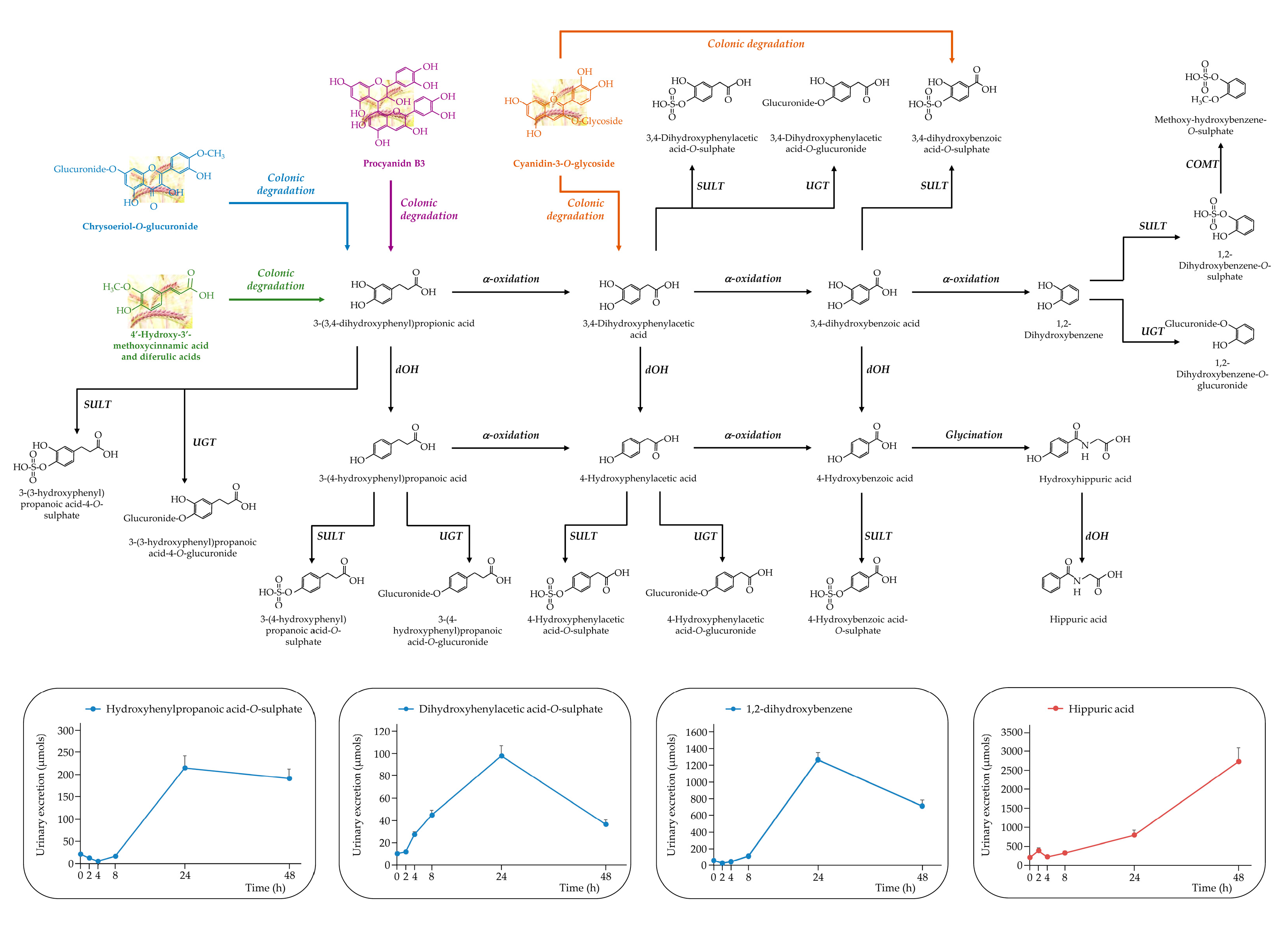
In addition to anthocyanins, a wide range of (poly)phenolic metabolites from other families were detected in urine samples. These metabolites originated from dietary flavan-3-ols, flavones, hydroxycinnamic and hydroxybenzoic acids, as well as from microbial degradation of parent compounds. Their identification provides insights into the extensive metabolic processing of WGB-derived phenolics through both host and microbial pathways. Figure 4, Figure 5, Figure 6 and Figure 7 provides an integrated overview of the proposed metabolic routes and urinary excretion kinetics of these compounds.
Flavan-3-ols. A total of eleven flavan-3-ols metabolites were identified in urine after acute WGB consumption (Figure 4). Among these, three phase II metabolites −(methyl) catechin-O-sulphate and methyl epicatechin-O-glucuronide− with peak excretion between 2 and 4 hours post-consumption. This early appearance suggests that monomers such as catechin and epicatechin were absorbed in the small intestine and rapidly metabolized by sulfotransferase (SULT), UGT and COMT enzymes in the intestinal wall and liver.
In contrast, the remaining eight metabolites were hydroxy-γ-valerolactone derivatives, which are specific colonic catabolites formed by gut microbial metabolism of unabsorbed flavan-3-ols. These included various isomers of (di)hydroxyphenyl-γ-valerolactone in sulphate, glucuronide, and mixed sulphate-glucuronide conjugated forms (Figure 4). Urinary excretion of these compounds peaked between 8 and 24 h post-consumption, reflecting their microbial origin. Among them, dihydroxyphenyl-γ-valerolactone-O-sulphate was the most abundant, reaching a cumulative excretion of 5309 ± 749 µmol over 48 h (data not shown).
The presence of both early-phase conjugated monomers and late-phase microbial catabolites in urine highlights the biphasic metabolism of WGB-derived flavan-3-ols. Monomers such as catechin and epicatechin, found in the biscuits (Table 1), were absorbed and cleared rapidly, whereas larger oligomers like procyanidin dimers B3 and B4 likely resisted digestion in the upper gastrointestinal tract and reached the colon, where they were transformed by the microbiota into valerolactones and further degraded into smaller phenolics (Figure 7).
Figure 7.
Proposed metabolic pathway for the generation of non-specific colonic (poly)phenolic-derived metabolites detected following the acute intake of purple WGB biscuits.
Figure 7.
Proposed metabolic pathway for the generation of non-specific colonic (poly)phenolic-derived metabolites detected following the acute intake of purple WGB biscuits.
Flavones. Eight flavone-derived metabolites were identified in urine following purple WGB consumption. These included luteolin, its methylated derivative chrysoeriol, and eriodictyol, each found in both sulphate and glucuronide conjugated. The urinary excretion profiles of these compounds revealed two distinct kinetic patterns, suggesting differential metabolic and absorption pathways. (Figure 5)
Figure 5.
Proposed metabolic pathway for the generation of detected (poly)phenolic metabolites derived from flavones following the acute intake of purple WGB biscuits.
Figure 5.
Proposed metabolic pathway for the generation of detected (poly)phenolic metabolites derived from flavones following the acute intake of purple WGB biscuits.
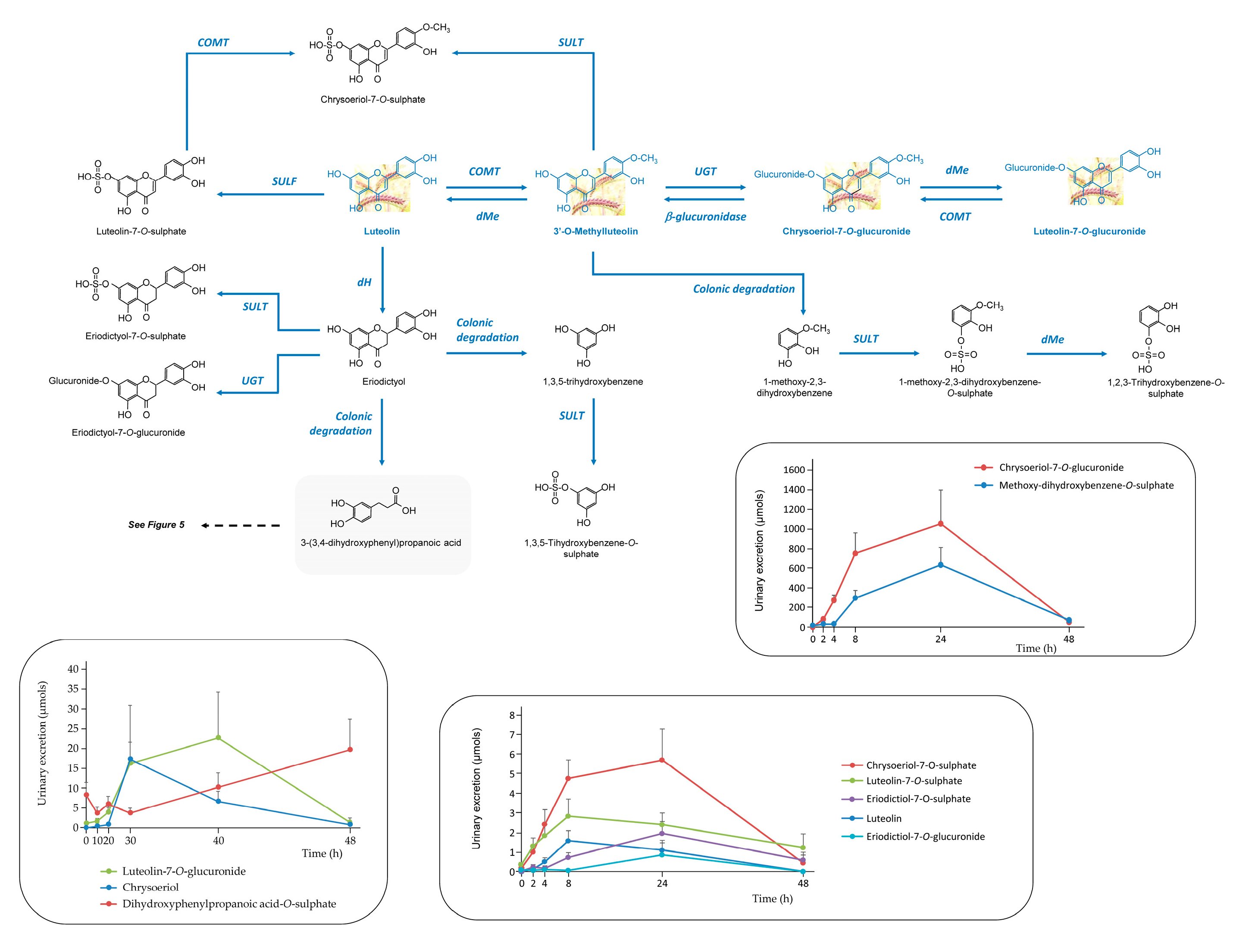
Early excretion (4–8 h post-consumption) was observed for luteolin-O-sulphate and (methyl)luteolin, indicating rapid absorption in the small intestine followed by phase II metabolism −mainly sulphation and glucuronidation mediated by SULT and UGT enzymes in the enterocytes and liver.
In contrast, later excretion (8–24 h) of (methyl)luteolin-O-glucuronide, (methyl)luteolin-O-sulphate, and both conjugates of eriodictyol points to the contribution of colonic metabolism. These compounds likely result from microbial biotransformation of parent flavones in the colon, followed by absorption and conjugation prior to urinary elimination.
The metabolic conversion of luteolin to eriodictyol could also occur via phase I reduction in the small intestine. Eriodictyol may then be absorbed and conjugated or further degraded by colonic microbiota into phenylpropanoic acids −such as 3-(3,4-dihydroxyphenyl)propanoic acid [21] − and minor A-ring cleavage products like 1,3,5-trihydroxybenzene [22].
Chrysoeriol, naturally present in the WGB biscuits, may be released in the colon through microbial β-glucuronidase activity and subsequently cleaved at the C-ring, giving rise to methoxy-dihydroxybenzene. This metabolite was detected in urine as its sulphated conjugate (methoxy-dihydroxybenzene-O-sulphate), characterized by an [M−H]− ion at m/z 219 and fragment ions at m/z 139 and 125.
As shown in Figure 5, urinary chrysoeriol levels decreased notably at 8 h post-intake, coinciding with a marked rise in chrysoeriol-O-glucuronide. The similar excretion profiles of chrysoeriol-O-glucuronide and methoxy-dihydroxybenzene-O-sulphate support a metabolic connection between these compounds, possibly reflecting sequential microbial and host transformations
Phenolic acids. A total of thirty-three (poly)phenolic metabolites were identified in urine samples, comprising 13 hydroxybenzoic acid derivatives, and 20 hydroxycinnamic acid derivatives (Supplemental Table S3). These compounds originated mainly from colonic microbial degradation and host-mediated phase I/II metabolism.
Among the hydroxybenzoic acids, the most abundant compounds included 4-hydroxybenzoic acid, 3,4-dihydroxybenzoic acid, their O-sulphated derivatives, and several methoxylated compounds.
These were excreted maximally at 24 h, confirming their colonic origin. In particular, dimethoxybenzoic acid derivatives likely arose from microbial dehydrogenation and β-oxidation of 4′-hydroxy-3,5-dimethoxycinnamic acid, followed by sulphation.
Hydroxycinnamic acid metabolites −including 4′-hydroxy-3′-methoxycinnamic acid (ferulic acid), its isomer, and various conjugates (sulphate, glucuronide, glycine)− were also predominantly excreted between 8 and 24 h, consistent with release from the cereal fiber matrix in the colon and subsequent microbial transformation (Figure 6).
Figure 6.
Proposed metabolic pathway for the generation of detected (poly)phenolic metabolites derived from 4′-hydroxy-3′-methoxycinnamic acid and its derivatives following the acute intake of purple WGB biscuits.
Figure 6.
Proposed metabolic pathway for the generation of detected (poly)phenolic metabolites derived from 4′-hydroxy-3′-methoxycinnamic acid and its derivatives following the acute intake of purple WGB biscuits.
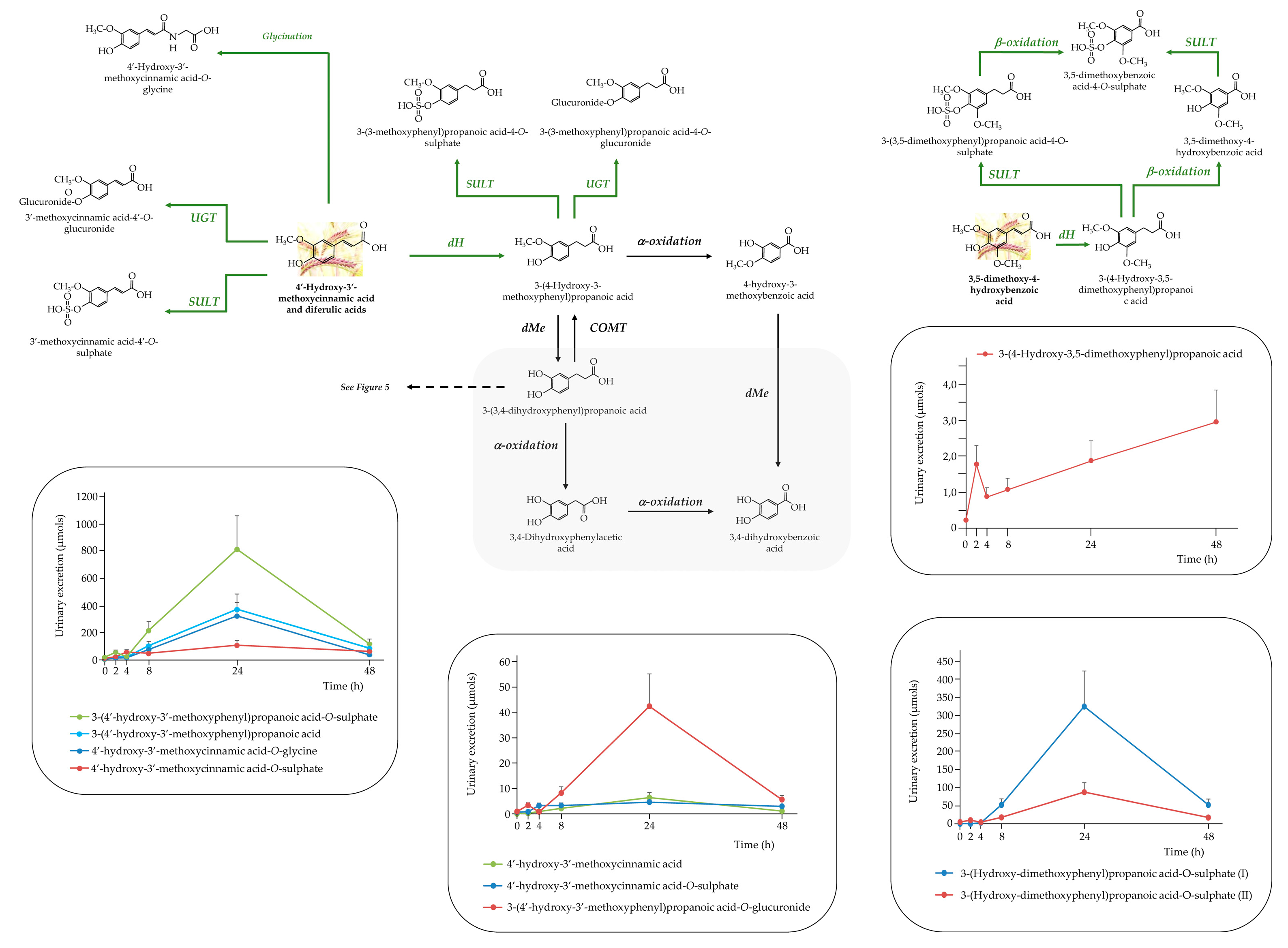
The phenolic 4′-hydroxy-3′-methoxycinnamic acid (ferulic acid), the most abundant hydroxycinnamic acid in cereals and mainly esterified to arabinoxylans, showed a biphasic excretion profile with peaks at 4 h and 24 h, suggesting both small intestinal absorption and colonic microbial release. The presence of 4′-hydroxy-3′-methoxycinnamic acid-O-sulphate in urine at 4 h and in plasma at 1 h (Figure 2) supports this dual origin. Similarly, its microbial hydrogenation product, 3-(4-hydroxy-3-methoxyphenyl)propanoic acid, also exhibited biphasic excretion (2 h and 24 h), highlighting both early host-mediated metabolism and later colonic fermentation [3,23]. In contrast, the glycine conjugate of 4′-hydroxy-3′-methoxycinnamic acid showed a single peak at 24 h, confirming its exclusive colonic microbial origin [21].
Non-specific colonic metabolites of (poly)phenols. Thirteen phenylacetic and phenylpropanoic acids, six 1,2-dihydroxybenzene, and five trihydroxybenzene derivatives were detected in urine following purple WGB biscuit consumption. These compounds are non-specific catabolites generated by microbial degradation of various (poly)phenolic families −anthocyanins, flavan-3-ols, flavones, and hydroxycinnamic acids− [15] as outlined in Figure 7.
Among them, 3-(3,4-dihydroxyphenyl)propanoic acid was a key microbial intermediate derived from several parent compounds. It was further dehydroxylated to 3-(4-hydroxyphenyl)propanoic acid, which underwent sulphation and was excreted in large amounts (445 ± 44.4 µmol at 48 h). Additional microbial transformations led to 3,4-dihydroxyphenylacetic acid and subsequently to 3,4-dihydroxybenzoic acid and benzene-1,2-diol derivatives via β-oxidation.
Flavan-3-ols and flavones also underwent A-ring cleavage, forming 1,3,5-trihydroxybenzene derivatives, while O-methylated flavones such as chrysoeriol generated methoxy-dihydroxybenzene compounds [24,25,26]. Due to analytical limitations, sulphated conjugates of 1,2,3- and 1,3,5-trihydroxybenzene could not be distinguished.
Finally, aromatic amino acids in WGB biscuits −tyrosine and phenylalanine (see Supplemental Table 1)− may have contributed to this metabolite profile. Tyrosine can be converted to 3-(4-hydroxyphenyl)propanoic acid, while phenylalanine is a precursor of phenylacetic acid and hippuric acid [27], highlighting a complementary origin beyond polyphenols.
4. Conclusions
This study provides the first comprehensive characterization of the bioavailability and metabolism of (poly)phenols from processed purple whole grain barley (WGB) in humans. A total of 92 phenolic metabolites were identified in plasma and urine following acute intake, including native phase II conjugates and a broad array of microbial-derived catabolites.
Plasma analysis revealed early-phase absorption of anthocyanins, flavones, and hydroxycinnamic acid derivatives, while urinary data reflected extensive colonic metabolism of multiple phenolic families. The most abundant urinary metabolites included valerolactone conjugates, phenylpropanoic acids, and hippuric acid, supporting the key role of gut microbiota in the metabolic fate of WGB (poly)phenols.
Together, these findings highlight the dual origin —host and microbial— of circulating and excreted phenolic metabolites, and expand current knowledge on the bioavailability of cereal phenolics. Given the scarcity of human data on pigmented barley, this study contributes new insights into the bioavailability and metabolic fate of barley-derived (poly)phenols, supporting their potential role in gut and metabolic health.
Supplementary Materials
The following supporting information can be downloaded at the website of this paper posted on Preprints.org.
Author Contributions
CRediT: conceptualization: A.M., L.R.P.; methodology: M.E.C.A., S.Y., M.MA.; validation: C.P.F., L.R.P; investigation: M.E.C.A., S.Y., M.MA.; resources: L.R.P., C.P.F., M.MO.; data curation: S.Y., A.M.; writing—original draft preparation: M.E.C.A; writing—review and editing: M.E.C.A., C.P.F., L.R.P., A.M.; visualization: L.R.P., A.M.; supervision: L.R.P., C.P.F., A.M.; project administration: A.M.; funding acquisition: L.R.P., C.P.F., M.MO.
Acknowledgements
This study was supported by the Spanish Ministry of Industry, Economy and Competitiveness, the Agencia Estatal de Investigación (AEI) and the European Regional Development Fund (ERDF) through the PID2020-113009RB-100 INNOBAR project and by the Generalitat de Catalunya through the Maria Engracia Cortijo predoctoral FI SDUR grant. Silvia Yuste has a Margarita Salas postdoctoral grant funded by the European Union—NextGeneration EU through the Ministerio de Universidades and the Universitat de Lleida.
Conflicts of Interest
On behalf of all authors, the corresponding author states that there is no conflict of interest.
References
- D Aune, N Keum, E Giovannucci, LT Fadnes, P Boffetta, DC Greenwood, S Tonstad, LJ Vatten, E Riboli, T Norat. Whole grain consumption and risk of cardiovascular disease, cancer, and all cause and cause specific mortality: systematic review and dose-response meta-analysis of prospective studies. BMJ 2016, 353, i2716. [Google Scholar] [CrossRef]
- Y Zhang, J Sui, Y Xu, L Pan, H Xia, G Sun. Effect of whole grain and fiber consumption on chronic liver diseases: a systematic review and meta-analysis. Food Funct 2024, 15, 9707–9717. [Google Scholar] [CrossRef] [PubMed]
- P Vitaglione, A Napolitano, V Fogliano, Cereal dietary fibre: a natural functional ingredient to deliver phenolic compounds into the gut. Trends Food Sci Technol 2008, 19, 451–463. [CrossRef]
- D Junlin, Y Manyou, Y Yuehang, L Tinghui, X Zhuoya, C Jian, Y Kaijun, Z Ruiling, Z Boyu, Z Yongqing, Y Xing, W Yan, X Chen. Studies of phytochemical constituents by UPLC-QTOF-MS/MS of black hulless barley bran and its antioxidation and α-glucosidase inhibition effect. Arab J Chem 2024, 17, 105644. [Google Scholar] [CrossRef]
- B Ed Nignpense, N Francis, C Blanchard, A Santhakumar. The bioavailability of polyphenols following acute consumption of pigmented barley and wheat. Food Funct 2024, 15, 9330–9342. [Google Scholar] [CrossRef] [PubMed]
- D Junlin, X Zhuoya, L Changbin, Z Yongqing, Y Kaijun, L Tinghui, X Chen, C Jian, Z Wenhui, Z Yuhong, Z Boyu. Identification and quantification of free, esterified, and insoluble-bound phenolics in grains of hulless barley varieties and their antioxidant activities. LWT 2021, 151, 112001. [Google Scholar] [CrossRef]
- CD Kay, MN Clifford, P Mena, GJ McDougall, C Andrés-Lacueva, A Cassidy, D Del Rio, N Kuhnert, C Manach, G Pereira-Caro, A Rodriguez-Mateos, A Scalbert, FA Tomás-Barberán, G Williamson, DS Wishart, A Crozier. Recommendations for standardizing nomenclature for dietary (poly)phenol catabolites. Am J Clin Nutr 2020, 112, 1051–1068. [Google Scholar] [CrossRef] [PubMed]
- C Curti, MN Clifford, CD Kay, P Mena, A Rodriguez-Mateos, D Del Rio, GJ McDougall, G Williamson, C Andrés-Lacueva, L Bresciani, B Burton Freeman, A Cassidy, Y Desjardin, CG Fraga, CCI Gill, PA Kroon, N Kuhnert, IA Ludwig, C Manach, D Milenkovic, C Nunes Dos Santos, PI Oteiza, G Pereira-Caro, FA Tomás Barberán, DS Wishart, A Crozier. Extended recommendations on the nomenclature for microbial catabolites of dietary (poly)phenols, with a focus on isomers. Food Funct 2025, 16, 3963–4000. [Google Scholar] [CrossRef] [PubMed]
- ME Cortijo-Alfonso, S Yuste, C Piñol-Felis, MP Romero, A Macià, L Rubió-Piqué. Finger-prick blood sampling using volumetric absorptive microsampling (VAMS) method for monitoring the main (poly)phenolic metabolites in human blood after barley biscuit intake. J Chromatogr B 2025, 1256, 124527. [Google Scholar] [CrossRef] [PubMed]
- S Yuste, A Macià, IA Ludwig, MP Romero, S Fernández-Castillejo, Ú Catalán, MJ Motilva, L Rubió. Validation of Dried Blood Spot Cards to Determine Apple Phenolic Metabolites in Human Blood and Plasma After an Acute Intake of Red-Fleshed Apple Snack. Mol Nutr Food Res 2018, 62, e1800623. [Google Scholar] [CrossRef] [PubMed]
- S Yuste, IA Ludwig, L Rubió, MP Romero, A Pedret, RM Valls, R Solà, MJ Motilva, A Macià. In vivo biotransformation of (poly)phenols and anthocyanins of red-fleshed apple and identification of intake biomarkers. J Funct Foods 2019, 55, 146–155. [Google Scholar] [CrossRef]
- ME Cortijo-Alfonso, S Yuste, C Piñol-Felis, MP Romero, A Macià, L Rubió-Piqué. Finger-prick blood sampling using volumetric absorptive microsampling (VAMS) method for monitoring the main (poly)phenolic metabolites in human blood after barley biscuit intake. J Chromatogr B 2025, 1256, 124527. [Google Scholar] [CrossRef] [PubMed]
- ME Cortijo-Alfonso, S Yuste, I Friero, M Martínez-Subirà, M Moralejo, C Piñol-Felis, L Rubió-Piqué, A Macià. Metabolic profiling of (poly)phenolic compounds in mouse urine following consumption of hull-less and purple-grain barley. Food Funct 2024, 15, 8300–8309. [Google Scholar] [CrossRef] [PubMed]
- I Friero, M Martínez-Subirà, A Macià, MP Romero, M Moralejo, Exploring the nutritional and techno-functional benefits of purple hull-less barley in extruded ready-to-eat cereals. LWT 2024, 212, 117018. [CrossRef]
- AD Assefa, OS Hur, BS Hahn, B Kim, NY Ro, JH Rhee. Nutritional Metabolites of Red Pigmented Lettuce (Lactuca sativa) Germplasm and Correlations with Selected Phenotypic Characters. Foods 2021, 10, 2504. [Google Scholar] [CrossRef] [PubMed]
- D Hernanz, V Nuñez, AI Sancho, CB Faulds, G Williamson, B Bartolomé, C Gómez-Cordovés. Hydroxycinnamic acids and ferulic acid dehydrodimers in barley and processed barley. J Agric Food Chem 2001, 49, 4884–4888. [Google Scholar] [CrossRef] [PubMed]
- D Horvat, G Šimić, G Drezner, A Lalić, T Ledenčan, M Tucak, H Plavšić, L Andrić, Z Zdunić. Phenolic Acid Profiles and Antioxidant Activity of Major Cereal Crops. Antioxidants 2020, 9, 527–538. [Google Scholar] [CrossRef] [PubMed]
- I Friero, A Macià, MP Romero, I Romagosa, M Martínez-Subirà, M. Moralejo. Unlocking Phenolic Potential: Determining the Optimal Grain Development Stage in Hull-Less Barley Genotypes with Varying Grain Color. Foods 2024, 13, 1841–1860. [Google Scholar] [CrossRef] [PubMed]
- A Crozier, D Del Rio, MN. Clifford. Bioavailability of dietary flavonoids and phenolic compounds. Mol Aspects Med 2010, 31, 446–467. [Google Scholar] [CrossRef] [PubMed]
- H Gui, L Sun, R Liu, X Si, D Li, Y Wang, C Shu, X Sun, Q Jiang, Y Qiao, B Li, J Tian. Current knowledge of anthocyanin metabolism in the digestive tract: absorption, distribution, degradation, and interconversion. Crit Rev Food Sci Nutr 2023, 63, 5953–5966. [Google Scholar] [CrossRef] [PubMed]
- A Serra, A Macià, MP Romero, J Reguant, N Ortega, MJ. Motilva, Metabolic pathways of the colonic metabolism of flavonoids (flavonols, flavones and flavanones) and phenolic acids. Food Chem 2012, 130, 383–393. [Google Scholar] [CrossRef]
- JI Mosele, B Viadel, S Yuste, L Tomás-Cobos, S García-Benlloch, MT Escribano Bailón, I García Estévez, P Moretón Fraile, F Rodríguez de Rivera, S de Domingo Casado, MJ Motilva. Application of a dynamic colonic gastrointestinal digestion model to red wines: a study of flavanol metabolism by the gut microbiota and the cardioprotective activity of microbial metabolites. Food Funct 2025, 16, 885–899. [Google Scholar] [CrossRef] [PubMed]
- Z Zhao, Y Egashira, H Sanada. Ferulic Acid Sugar Esters Are Recovered in Rat Plasma and Urine Mainly as the Sulfoglucuronide of Ferulic Acid. J Nutr 2003, 133, 1355–1361. [Google Scholar] [CrossRef] [PubMed]
- X Feng, Y Li, M Brobbey Oppong, F Qiu. Insights into the intestinal bacterial metabolism of flavonoids and the bioactivities of their microbe-derived ring cleavage metabolites. Drug Metab Rev 2018, 50, 343–356. [Google Scholar] [CrossRef] [PubMed]
- HG Hur, RD Beger, TM Heinze, JO Lay, JP Freeman, J Dore, F Rafii. Isolation of an anaerobic intestinal bacterium capable of cleaving the C-ring of the isoflavonoid daidzein. Arch Microbiol 2002, 178, 75–75. [Google Scholar] [CrossRef]
- J Winter, MR Popoff, P Grimont, VD Bokkenheuser. Clostridium orbiscindens sp. nov., a Human Intestinal Bacterium Capable of Cleaving the Flavonoid C-Ring. Int J Syst Bacteriol 1991, 41, 355–357. [Google Scholar] [CrossRef] [PubMed]
- G Williamson, MN Clifford. A critical examination of human data for the biological activity of phenolic acids and their phase-2 conjugates derived from dietary (poly)phenols, phenylalanine, tyrosine and catecholamines. Crit Rev Food Sci Nutr 2024, 9, 1–60. [Google Scholar] [CrossRef]
Figure 1.
Pharmacokinetic profile for the detected anthocyanins in plasma samples following the acute intake of purple WGB biscuits.
Figure 1.
Pharmacokinetic profile for the detected anthocyanins in plasma samples following the acute intake of purple WGB biscuits.

Figure 2.
Pharmacokinetic profile for the detected rest of (poly)phenolics in plasma samples from 0 to 6 h following the acute intake of purple WGB biscuits.
Figure 2.
Pharmacokinetic profile for the detected rest of (poly)phenolics in plasma samples from 0 to 6 h following the acute intake of purple WGB biscuits.
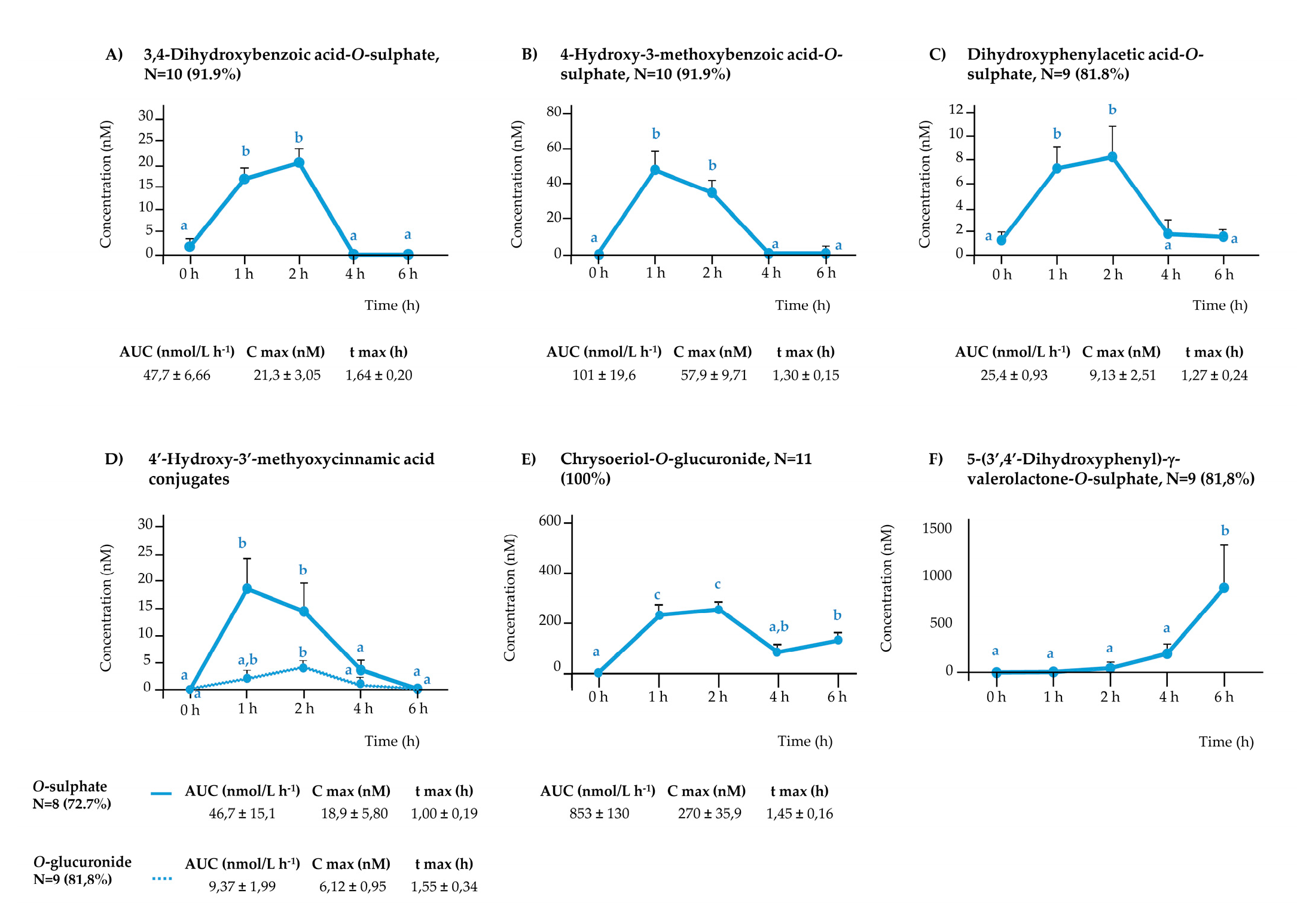
Figure 3.
Urinary excretion of anthocyanins (nmols) at different time intervals from 0 to 48 h of the four anthocyanins detected.
Figure 3.
Urinary excretion of anthocyanins (nmols) at different time intervals from 0 to 48 h of the four anthocyanins detected.
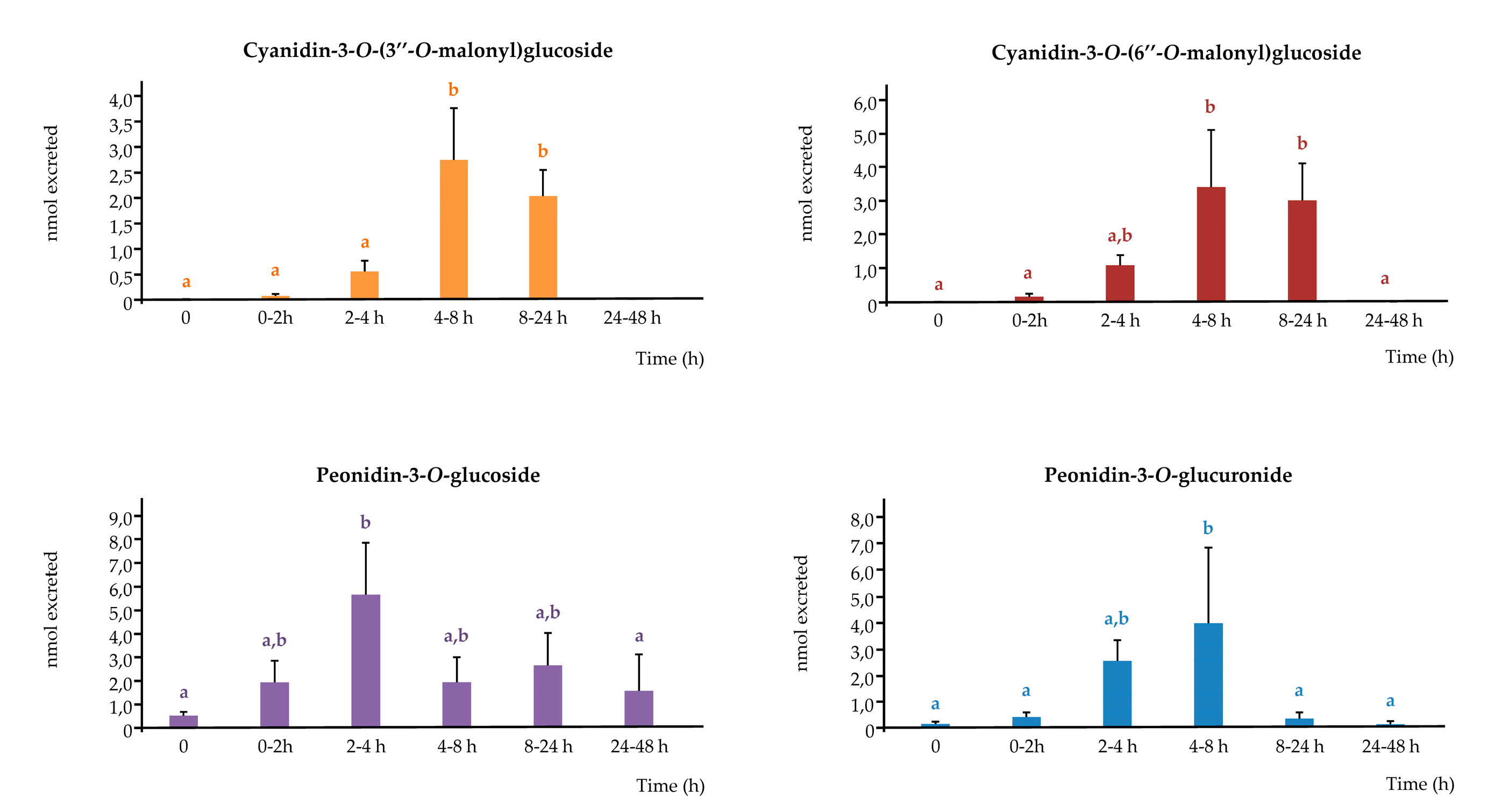
Figure 4.
Proposed metabolic pathway for the generation of detected (poly)phenolic metabolites derived from flavan-3-ols following the acute intake of purple WGB biscuits.
Figure 4.
Proposed metabolic pathway for the generation of detected (poly)phenolic metabolites derived from flavan-3-ols following the acute intake of purple WGB biscuits.
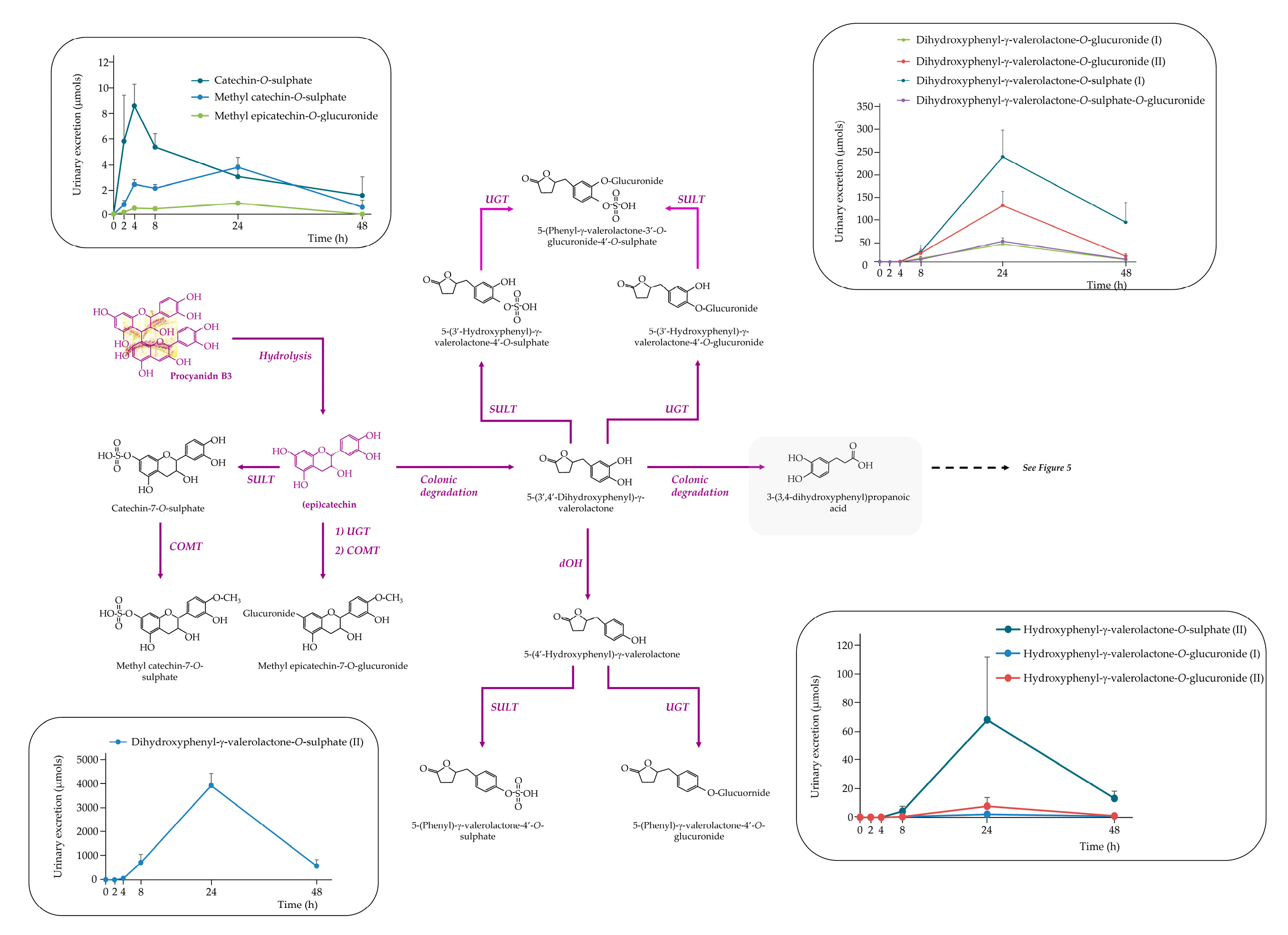

Table 1.
Free and bound (poly)phenolics (mg) in 140 g of WGB biscuits. Data is expressed as mean values ± standard deviation (SD). The number of replicates was three (n=3).
Table 1.
Free and bound (poly)phenolics (mg) in 140 g of WGB biscuits. Data is expressed as mean values ± standard deviation (SD). The number of replicates was three (n=3).
| FREE (poly)phenolics | BOUND (poly)phenolics | |
|---|---|---|
| Cyanidin-3-O-glucoside | 6.20 ± 0.24 | 0.06 ± 0.01 |
| Cyanidin-3-O-(3’’-malonyl)glucoside | 4.90 ± 0.20 | n.d. |
| Cyanidin-3-O-(6’’-malonyl)glucoside | 12.5 ± 0.50 | n.d. |
| Cyanidin-3-O-(3’’,6’’-dimalonyl)glucoside | 16.9 ± 0.64 | n.d. |
| Peonidin-3-O-glucoside | 0.38 ± 0.07 | 0.02 ± 0.00 |
| Peonidin-3-O-(3’’-O-malonyl)glucoside | 0.31 ± 0.01 | n.d. |
| Peonidin-3-O-(6’’-O-malonyl)glucoside | 1.12 ± 0.07 | n.d. |
| Peonidin-3-O-(3’’,6’’-dimalonyl)glucoside | 0.46 ± 0.01 | n.d. |
| Pelargonidin-3-O-glucoside | 0.27 ± 0.02 | 0.02 ± 0.00 |
| Pelargonidin-3-O-malonylglucoside | 0.22 ± 0.02 | n.d. |
| Pelargonidin-3-O-(6’’-malonyl)glucoside | 1.24 ± 0.08 | n.d. |
| Delphinidin-3-O-glucoside | 0.20 ± 0.06 | n.d. |
| Total anthocyanins | 44.7 ± 1.80 | 0.10 ± 0.01 |
| 4-Hydroxybenzoic acid | 0.22 ± 0.02 | 0.87 ± 0.03 |
| Hydroxybenzoic acid | n.d. | 0.18 ± 0.01 |
| 3,4-Dihydroxybenzoic acid (PCA) | 0.16 ± 0.06 | 0.03 ± 0.01 |
| 4-Hydroxy-3-methoxybenzoic acid (VA) | 0.16 ± 0.03 | 0.44 ± 0.01 |
| 4-Hydroxy-3,5-dimethoxybenzoic acid (Syr) | n.d. | 0.16 ± 0.02 |
| Cinnamic acid | n.d. | 0.11 ± 0.01 |
| 4’-Hydroxycinnamic acid | 0.10 ± 0.02 | 1.18 ± 0.04 |
| 3,4-Dihydroxycinnamic acid (CA) | n.d. | 0.02 ± 0.00 |
| 4’-Hydroxy-3’-methoxycinnamic acid (FA) | 1.22 ± 0.14 | 40.8 ± 0.80 |
| 3’-Hydroxy-4’-methoxycinnamic acid (IsoFA) | 0.20 ± 0.07 | 8.64 ± 0.17 |
| 4’-Hydroxy-3,5-dimethoxycinnamic acid | n.d. | 3.07 ± 0.16 |
| 4’-Hydroxy-3,5-dimethoxycinnamic acid-O-glucoside | n.d. | 0.95 ± 0.25 |
| Diferulic acid | n.d. | 12.4 ± 0.65 |
| Diferulic acid DC | n.d. | 1.20 ± 0.24 |
| Triferulic acid | n.d. | 2.06 ± 0.39 |
| Total phenolic acids | 2.06 ± 0.16 | 72.1 ± 1.24 |
| Catechin | 2.62 ± 0.56 | n.d. |
| Catechin glucoside | 2.09 ± 0.20 | n.d. |
| Procyanidin B3 | 8.40 ± 1.49 | n.d. |
| Gallocatechin-catechin or prodelphinidin B4 | 3.67 ± 0.39 | n.d. |
| Total flavan-3-ols | 16.8 ± 1.40 | n.d. |
| Apigenin-7-O-glucoside | n.d. | 0.04 ± 0.01 |
| Apigenin-6-C-arabinoside-8-C-glucoside | 0.46 ± 0.09 | 0.05 ± 0.01 |
| Isovitexin-C-glucoside | 0.56 ± 0.05 | 0.09 ± 0.01 |
| Isovitexin-C-rutinoside | 0.25 ± 0.03 | n.d. |
| Isoscoparin-C-glucoside | 0.89 ± 0.12 | 0.09 ± 0.02 |
| Isoscoparin-C-rutinoside | 0.26 ± 0.04 | n.d. |
| Luteolin | 5.92 ± 0.18 | 0.03 ± 0.00 |
| Methyl luteolin (Chrysoeriol) | 16.2 ± 2.63 | 0.07 ± 0.02 |
| Luteolin-O-glucoside | 0.13 ± 0.02 | n.d. |
| Luteolin-7-O-glucuronide | 32.9 ± 5.91 | 0.46 ± 0.03 |
| Methyl Luteolin-O-glucoside | 0.22 ± 0.03 | n.d. |
| Methyl Luteolin-O-glucuronide | 160 ± 24.6 | 4.64 ± 0.49 |
| Total flavones | 217 ± 33.0 | 5.53 ± 0.50 |
| Total (poly)phenolics | 281 ± 32.4 | 77.7 ± 0.73 |
| TOTAL (POLY)PHENOLS (Free and Bound) | 359 ± 32.2 | |
Disclaimer/Publisher’s Note: The statements, opinions and data contained in all publications are solely those of the individual author(s) and contributor(s) and not of MDPI and/or the editor(s). MDPI and/or the editor(s) disclaim responsibility for any injury to people or property resulting from any ideas, methods, instructions or products referred to in the content. |
© 2025 by the authors. Licensee MDPI, Basel, Switzerland. This article is an open access article distributed under the terms and conditions of the Creative Commons Attribution (CC BY) license (http://creativecommons.org/licenses/by/4.0/).
Copyright: This open access article is published under a Creative Commons CC BY 4.0 license, which permit the free download, distribution, and reuse, provided that the author and preprint are cited in any reuse.


