

Submitted:
11 July 2025
Posted:
14 July 2025
You are already at the latest version
Abstract
Introduction: Gamification has became increasingly relevant as an innovative pedagogical approach in physical education and sports contexts, emphasizing the use of game design elements to enhance learner motivation and engagement. Objective: The objective of this article was to systematically analyze existing research on gamification strategies in physical education and sports, and to propose a clear conceptual model and practical framework specifically designed to guide educators and coaches in effectively integrating gamification elements. Methodology: A systematic literature review was conducted, covering empirical and theoretical studies published from 2019 to 2025, using databases including Scopus, Web of Science, and PubMed. The PRISMA methodology was employed to ensure rigorous data extraction and synthesis. Results: The analysis revealed best practices and key gaps in existing gamification research, informing the development of a four-stage conceptual model and practical framework consisting of planning and goal setting, design and development, implementation with active engagement, and finally evaluation with adaptation. This structured approach provided clear guidance for educators to systematically apply gamification strategies. Discussion: The findings aligned with previous studies highlighting gamification’s positive effects on learner motivation and engagement, yet differed by offering a structured approach explicitly designed for physical education and sports contexts. Conclusions: The proposed model provides a significant practical contribution, bridging theoretical knowledge and practical applications in physical education and sports. Future research is necessary to empirically validate and refine the model across diverse educational environments.
Keywords:
Active learning
; gamification
; physical education
; practical framework
; motivation
1. Introduction
In recent years, educators and coaches in physical education and sports have increasingly faced challenges related to maintaining student motivation, engagement, and sustained participation in activities designed to promote physical development. Traditional methods often fail to consistently engage learners, particularly given the changing preferences and expectations of younger generations. As a response to these challenges, gamification - the integration of game-based elements into educational practices - has emerged as a compelling pedagogical approach, showing potential to significantly enhance motivation and active participation in physical education and sports (Gómez-Río et al., 2022; Dicheva et al., 2020).
At its core, gamification involves employing strategic elements traditionally associated with games, such as rewards, badges, leaderboards, and engaging narratives, within educational contexts. These elements leverage intrinsic motivational factors, making activities not only more attractive but also psychologically rewarding for learners. Evidence suggests that when gamification strategies are effectively integrated, they can positively influence learners' commitment, increase enjoyment, and promote consistent physical activity across various age groups, from primary and secondary students to university athletes (González et al., 2021; Sailer & Homner, 2020).
However, despite its demonstrated benefits, the existing research on gamification in physical education and sports still lacks structured frameworks and practical guidelines for educators and coaches. Many studies have focused on isolated aspects of gamification, providing only partial insights without clear instructions or comprehensive models to guide practical implementation. This gap between theoretical understanding and practical applicability represents a significant limitation for professionals seeking concrete guidance on integrating gamification into their teaching and coaching practices .
Therefore, this article systematically analyzes recent literature on gamification strategies in physical education and sports contexts, aiming specifically to address this gap. The primary objective is to propose a clear, structured, and practical conceptual model to guide educators and coaches in effectively integrating gamification elements into their pedagogical practice. This model is intended to support teachers and coaches in developing engaging, motivating, and pedagogically sound physical education experiences, ensuring both immediate and long-term positive impacts on learners' physical activity and motivation levels.
2. Literature Review
Gamification, although increasingly popular in educational research, remains a somewhat unclear and misunderstood concept, often perceived merely as an educational novelty. However, at its core, gamification involves strategically integrating game-based elements such as challenges, rewards, leaderboards, points, and narratives into non-game contexts, transforming routine tasks into engaging and motivating activities. In physical education and sports contexts, gamification holds significant potential precisely because it can effectively counteract student boredom, disengagement, and reduced physical activity levels, issues frequently encountered by educators and coaches today. By adopting carefully selected game elements, educators can create stimulating learning environments that actively engage diverse groups - from primary school children and adolescents to university students and professional athletes - in consistent physical activity and skill development (Almeida et al. 2023; Lee et al., 2020; Vansteenkiste et al., 2020).
Conceptualizing Gamification in Education - gamification, defined as the deliberate use of game mechanics and design elements in non-game contexts, has emerged as a powerful educational strategy in recent years, demonstrating effectiveness in fostering student engagement, motivation, and sustained participation. Initially developed within business and marketing contexts, the concept quickly found applicability in education, where researchers identified significant potential in enhancing student motivation, cognitive engagement, and overall satisfaction with the learning process (González-Cutre et al., 2020; Martins et al., 2018; Hamari, Koivisto, & Sarsa, 2014).
Key gamification elements commonly used in educational settings include points systems, badges, leaderboards, narrative contexts, and challenge-based activities. According to studies, these elements have a direct impact on intrinsic motivation by providing learners with clear goals, constant feedback, and visible indicators of progress, thus creating an environment conducive to active participation and ongoing effort. For instance, points and badges often serve as immediate rewards, reinforcing desirable behaviors, while leaderboards introduce elements of social comparison and competition, motivating students through recognition and status (Toda et al., 2020; Torres et al., 2021; Yang et al., 2021).
Despite the clear potential, gamification strategies must be designed with caution. Recent studies, warn against overly competitive designs that may inadvertently undermine intrinsic motivation or increase anxiety among participants. Effective gamification should instead strike a careful balance, encouraging healthy competition without creating negative emotional consequences. This balance can be achieved by tailoring gamification mechanics to specific learner preferences, skill levels, and individual psychological profiles (Altmeyer et al., 2021; Sailer et al., 2023; Nacke & Deterding, 2017).
Further highlighting the practical value of gamification, some authors demonstrated that narrative contexts significantly improve learners' emotional investment and sense of immersion. By embedding educational activities within meaningful narratives or storylines, educators can increase students' intrinsic motivation, transforming routine tasks into engaging and enjoyable experiences. Similarly, virtual challenges and quest-based structures, which require students to complete progressively more demanding tasks, maintain sustained interest and drive long-term engagement in learning activities (El-Nasr et al., 2021; Seaborn & Fels, 2015; Stiegler & Zimmermann, 2014).
Psychological Foundations of Gamification - the effectiveness of gamification as an educational strategy is fundamentally rooted in well-established psychological theories, among which Self-Determination Theory (SDT) and Flow Theory are particularly influential. Self-Determination Theory, extensively developed by Ryan and Deci (2020), provides a comprehensive framework that explains human motivation as a continuum ranging from extrinsic motivation - driven by external rewards or pressures - to intrinsic motivation, characterized by genuine interest, enjoyment, and satisfaction in the activity itself. According to SDT, intrinsic motivation is most effectively nurtured when activities satisfy three essential psychological needs: autonomy, competence, and relatedness (Ryan & Deci, 2020).
Gamification, when thoughtfully designed, aligns closely with these fundamental psychological needs. For example, autonomy - the sense of control and freedom over one’s own actions - is fostered in gamified environments through meaningful choices, personalized learning paths, and voluntary participation in challenges or tasks. Competence - the belief in one’s ability to effectively perform and achieve goals - is supported through clear goals, achievable challenges, immediate and meaningful feedback, and visible progress indicators such as points, badges, and progression levels. Lastly, relatedness - the feeling of connection and belongingness - is enhanced by incorporating collaborative tasks, social competition via leaderboards, and community-building activities, thus creating an environment of mutual support, recognition, and positive social interaction (Bragança et al., 2024; Badau et al., 2025; Uechi et al., 2022).
Flow Theory, proposed by Csikszentmihalyi (1990), further reinforces the theoretical foundations of gamification, emphasizing the importance of creating optimal experiences characterized by intense focus, deep engagement, intrinsic enjoyment, and effortless involvement in the activity. According to Flow Theory, achieving this optimal psychological state requires balancing the perceived difficulty of a task with the learner’s skills and competencies. Well-designed gamified environments intentionally create conditions that facilitate flow states, by continuously adjusting challenge levels, offering immediate feedback, and clearly delineating goals, thus enhancing learners’ intrinsic motivation and long-term engagement (Csikszentmihalyi, 1990).
Empirical evidence strongly supports these theoretical assertions. Recent meta-analyses have consistently demonstrated significant positive correlations between the integration of SDT and Flow principles into gamification designs and improved learner motivation, engagement, and educational outcomes. Furthermore, authors noted that incorporating personalized feedback mechanisms and tailored difficulty levels substantially improved participants' adherence and satisfaction with gamified physical activities, thus clearly illustrating the practical value of psychologically-informed gamification design (Koivisto & Hamari, 2019; Țifrea et al., 2015; Badau et al., 2023).
Therefore, grounding gamification practices firmly within these robust psychological theories not only enhances their educational effectiveness but also ensures their sustainability and adaptability to diverse educational contexts.
Gamification in Physical Education and Sport - despite widespread recognition in educational literature, gamification remains relatively underexplored within the specific context of physical education and sports. Nevertheless, emerging evidence highlights its significant potential to enhance student participation, physical activity levels, and skill development, making it a valuable pedagogical approach in educational environments. Recent systematic analyses underscore clear advantages of gamified interventions, such as improved motivation, sustained participation, and enhanced physical performance among learners. These outcomes have consistently surpassed those achieved through conventional teaching methods (Altmeyer et al., 2021; Torres et al., 2021).
Technological innovations have facilitated richer, more immersive applications of gamification within physical education settings. Various digital platforms and mobile applications leverage virtual challenges, narrative structures, and interactive elements to captivate learners' interest and stimulate consistent physical activity participation. Such digital tools effectively transform routine physical exercises into engaging and emotionally rewarding experiences, resulting in enhanced adherence and satisfaction with physical education programs (Yang et al., 2021; Añasco & Olimpo, 2025; Stiegler & Zimmermann, 2014).
Moreover, the rapid advancements in educational technologies over recent years have significantly expanded opportunities for integrating gamification. Digital solutions such as mobile fitness apps (e.g., Nike Run Club, Strava), wearable devices (e.g., Fitbit, Garmin), and immersive technologies, including virtual and augmented reality platforms, are increasingly prevalent in gamified educational contexts. These technological tools further enrich interactivity and immersion, effectively addressing motivational barriers and enhancing the appeal and accessibility of physical activities across diverse learner groups (Shameli et al., 2017; Pozón-Espina & Guerrero-López, 2019).
A critical element of successful gamification strategies in physical education involves the use of recognition-based mechanisms such as leaderboards, badges, and point systems. These tools offer learners immediate visual feedback, enhancing their sense of achievement and competence, while simultaneously fostering positive competitive and collaborative interactions. Empirical studies consistently report significant benefits related to student motivation, intrinsic enjoyment, and overall engagement when these elements are strategically employed within gamified contexts (Bragança et al., 2024; Kappen et al., 2019; González-Cutre et al., 2020).
Nevertheless, a noticeable limitation in the existing literature is the absence of explicit, structured conceptual models tailored specifically for physical education and sports contexts. Studies typically present isolated gamification elements or case-specific applications, rarely providing comprehensive frameworks or guidelines that educators can apply practically and systematically. Furthermore, literature reviews emphasize the importance of grounding gamification strategies within robust psychological theories, such as Self-Determination Theory or Flow Theory, to maximize educational effectiveness and sustainability in diverse learning contexts (Gómez-Río et al., 2022; Sal-de-Rellán et al., 2025; Zainuddin et al., 2020)
In addition, research has underscored that effective gamification in physical education should also consider broader aspects of health and fitness, including nutritional guidance and manual lateralization assessments, to personalize experiences and maximize overall educational impact. Integrating these aspects into gamification strategies can create holistic educational programs, ensuring comprehensive student development beyond mere physical skill acquisition (Parra-González et al., 2022; Badau et al., 2025; Arufe-Giráldez et al., 2022).
The evident gap in existing research highlights the significant value of a clear and rigorous conceptual model explicitly designed for educators and practitioners in physical education. Consequently, the original contribution of this article is precisely the development and proposal of such a structured, theory-based, and practically applicable model, aimed at systematically addressing current limitations and advancing the effective integration of gamification strategies within physical education curricula.
3. Method
To develop the proposed conceptual model and practical framework, a rigorous methodological approach based on a systematic review of recent literature was employed. The following section details the stages and procedures applied in carrying out this endeavor.
3.1. Search Strategy and Selection Criteria
A systematic literature review was meticulously conducted following the Preferred Reporting Items for Systematic Reviews and Meta-Analyses (PRISMA) guidelines. This methodological approach ensured transparency, replicability, and rigorous synthesis of the current knowledge related to gamification in physical education and sports contexts. The review aimed explicitly at consolidating empirical evidence and theoretical insights to develop a robust conceptual and practical framework tailored specifically for educators and coaches.
Three prominent scientific databases - Scopus, Web of Science, and PubMed - were systematically searched for peer-reviewed articles published between January 2019 and December 2025. The search strategy employed specific combinations of keywords, including "gamification," "physical education," "sports," "education," "digital tools," and "motivation," ensuring comprehensive coverage of the literature.
Articles were screened according to explicit inclusion and exclusion criteria. Inclusion criteria comprised peer-reviewed empirical or theoretical studies in English or Spanish, explicitly addressing gamification within traditional, digital, or hybrid educational settings specific to physical education or sports contexts. Exclusion criteria systematically eliminated studies not clearly focusing on gamification, physical education, or sports contexts, as well as non-academic publications.
The initial systematic search yielded 392 potentially relevant articles. After careful screening of titles and abstracts, 124 articles remained eligible for detailed full-text analysis. Following this rigorous review stage, 46 studies met all predefined criteria for inclusion in the final analysis, comprising 28 empirical studies, 12 theoretical analyses, and 6 systematic reviews or meta-analyses. The selection process is transparently detailed in a PRISMA flow diagram (Figure 1), ensuring clarity and reproducibility.
3.2. Instrument
To systematically manage and rigorously organize data during the literature review process, two primary methodological tools were employed: Zotero and Microsoft Excel.
Zotero, a reference management software, was utilized for the efficient collection, storage, and organization of articles retrieved from systematic database searches. This software facilitated the automatic import of bibliographic data directly from Scopus, Web of Science, and PubMed databases, significantly enhancing the accuracy and efficiency of reference management. Zotero was instrumental in the removal of duplicate records and facilitated the initial screening of articles based on titles and abstracts, providing quick and structured access to full-text versions for detailed eligibility assessment.
In parallel, Microsoft Excel spreadsheets were used extensively for structured data extraction and detailed analysis. Excel provided a robust platform for systematically capturing critical information such as authors, publication years, methodological details, sample characteristics, primary findings, gamification elements discussed, theoretical frameworks applied, and practical implications identified. Additionally, Excel's flexible functionalities enabled efficient thematic categorization and synthesis, quick identification of key patterns and gaps within the literature, and effective management of qualitative and quantitative data for further analysis.
The combined use of Zotero and Microsoft Excel significantly enhanced the methodological rigor, accuracy, and transparency of the systematic review, ensuring a comprehensive and robust foundation for developing the proposed conceptual model and practical framework.
3.3. Data Analysis
Data extracted from selected studies underwent rigorous thematic analysis, facilitating a systematic categorization and synthesis of methodological approaches, gamification strategies, psychological theories applied, and educational outcomes. The thematic analysis process involved identifying recurrent themes and best practices, gaps in current literature, and key success factors associated with effective gamification in physical education and sports contexts.
Insights from Self-Determination Theory (SDT) and Flow Theory were explicitly integrated into the analysis, highlighting critical psychological underpinnings such as autonomy, competence, and relatedness. This theoretically-informed analytical approach was crucial in structuring and validating the proposed four-stage conceptual model: planning and goal setting, design and development, implementation and active engagement, and evaluation and adaptation.
Quantitative data from empirical studies were systematically examined for outcomes such as student participation rates, performance indicators, motivation scales, and engagement levels. Complementary qualitative data, including participant feedback, educator reflections, and observational insights, were thematically synthesized to deepen the interpretive richness of the analysis and validate the practicality of proposed gamification strategies.
The combined quantitative and qualitative findings directly informed the development of a comprehensive, practically-oriented framework explicitly designed to address identified gaps and limitations within the existing literature. This structured model provides clear, actionable guidelines for educators and coaches seeking to systematically integrate effective gamification strategies within physical education and sports programs.
Given the nature of this review, ethical approval was not required, as the research exclusively analyzed publicly available academic literature. Nevertheless, explicit ethical considerations were maintained, ensuring accurate citation, representation, and acknowledgment of all source materials.
This systematic review acknowledges certain inherent methodological limitations, such as potential exclusion of relevant studies outside the searched databases and inherent subjectivity in thematic categorization. These limitations were mitigated through deliberate strategies, including manual searches of reference lists and independent cross-verification by multiple researchers, significantly enhancing the reliability and validity of the analysis.
Despite these methodological considerations, the thematic analysis explicitly informed the development of the original conceptual model presented in the Results section, integrating critical gamification elements, best practices, and theoretical insights identified during this systematic review.
4. Results
Exploring the territory of current practices reveals insights that sharpen our understanding and set the stage for meaningful innovation. The results below reflect an in-depth exploration of gamification as it currently unfolds in physical education and sports.
4.1. Proposed Conceptual Model and Practical Framework for Integrating Gamification Strategies into Physical Education and Sports
Based on the synthesis of best practices and addressing the identified gaps, we propose a structured, comprehensive conceptual model and practical framework (Figure 1) explicitly designed to facilitate practical implementation by physical education educators and sports coaches. This model consists of four clearly defined, interconnected stages:
Figure 2.
Four-stage conceptual model for effective integration of gamification strategies into physical education and sports teaching.
Figure 2.
Four-stage conceptual model for effective integration of gamification strategies into physical education and sports teaching.
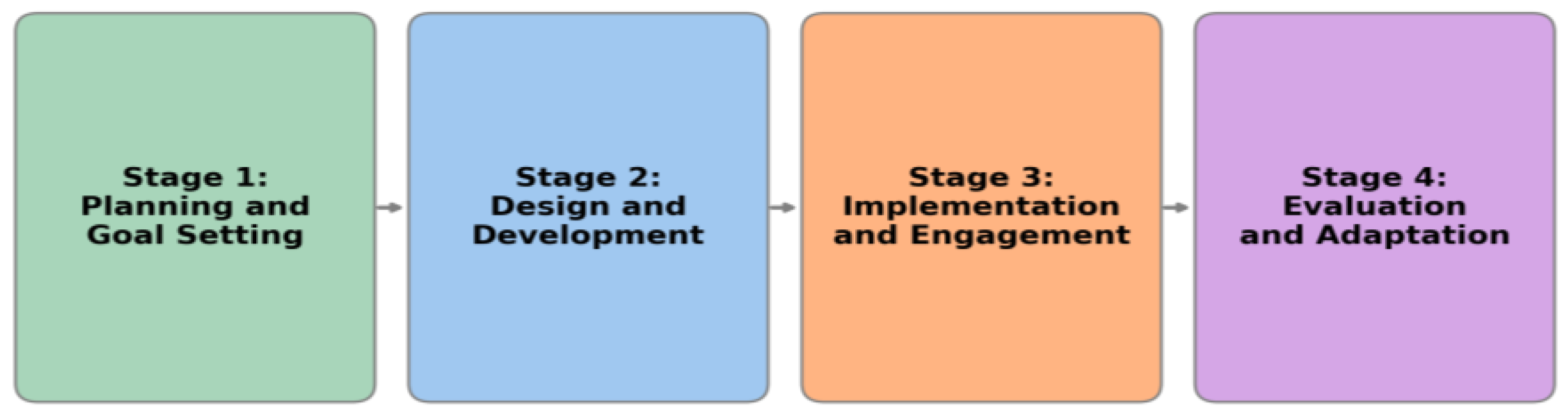
Each stage of the model presented above is described in detail below, emphasizing its practical implications and implementation guidelines.
Stage 1: Planning and Goal Setting
Explicitly define measurable and achievable learning objectives aligned with curricular goals. Educators should utilize baseline assessments or initial surveys to accurately gauge students' motivational profiles, skill levels, and learning preferences. This preliminary data facilitates targeted selection of gamification elements (e.g., badges, leaderboards, narratives) specifically tailored to students' interests and psychological needs, ensuring relevance and maximizing motivational impact.
Stage 2: Design and Development
Carefully select and customize digital tools, platforms, or apps to match educational objectives and the unique characteristics of the target group (age, skill level, technological accessibility). The design should intentionally integrate game elements that promote autonomy, competence, and social connection. For instance, educators can design varied difficulty levels, personalized goals, or collaborative missions within digital platforms, thereby addressing diverse student preferences and skillsets.
Stage 3: Implementation and Engagement
Introduce gamified activities systematically and progressively, offering clear instructions and continuous real-time feedback to maintain learner engagement. Educators should actively monitor student progress and adjust the difficulty levels and motivational triggers as necessary. Practical strategies might include periodic mini-challenges, real-time digital feedback via fitness apps, or immediate social recognition through leaderboards and badges, thereby sustaining motivation, encouraging active participation, and fostering peer-to-peer interaction.
Stage 4: Evaluation and Adaptation
In the final stage, rigorous evaluation of the gamified intervention involves the collection and analysis of both quantitative and qualitative data to comprehensively assess the effectiveness and impact of the implemented model. Quantitative data may include objective measures of participation (e.g., attendance rates, number and frequency of completed exercises), performance indicators (such as times, scores, or levels achieved within digital applications), and psychometric indicators (validated scales measuring student motivation, satisfaction, self-efficacy, or engagement in activities).
Complementary qualitative data can be gathered through semi-structured interviews, focus groups, direct observations, and reflective journals maintained by both students and coaches. These methods provide deeper insights into participant perceptions, strengths, and potential barriers encountered during the use of gamification elements.
Recommended analytical methods include descriptive and inferential statistical analyses (e.g., t-tests, ANOVA, multiple regression) for quantitative data, and thematic or content analysis for qualitative data. Evaluation results should be interpreted integratively, allowing precise adaptations to be made to the applied model. This ensures continuous optimization of the intervention, fostering sustained motivation and engagement.
4.2. Practical Applications and Implementation Examples
While theoretical frameworks offer valuable insights, their real significance is revealed through practical implementation. Successful integration of gamification into physical education and sports relies on translating conceptual clarity into concrete, actionable strategies that resonate with students and athletes. Educators and coaches need explicit examples demonstrating how each theoretical phase translates into practical outcomes, creating engaging, motivating, and effective learning environments. Reflecting this critical need, Table 1 provides specific scenarios illustrating diverse applications of the proposed gamification framework, emphasizing its flexibility and practical relevance across various educational levels and athletic contexts.
These practical examples underscore the direct applicability and utility of the proposed framework, demonstrating its seamless integration into real-world educational practices within physical education and sports.
4.3. Psychological Benefits and Educational Relevance
The systematic analysis conducted in this study clearly underscores the importance of understanding psychological benefits and educational relevance as critical factors in the effective integration of gamification into physical education and sports contexts. Based on the comprehensive literature synthesis, Table 2 presents an integrated overview of key gamification strategies, specific elements, and their associated psychological benefits relevant to various educational contexts.
The strategic integration of these elements aligns directly with core psychological principles of motivation, notably autonomy, competence, and relatedness. As such, educators and coaches who thoughtfully apply these gamification strategies and elements can significantly enhance not only the immediate engagement of learners but also their intrinsic motivation and sustained commitment to physical education and sports.
5. Discussion
The conceptual model and practical framework presented in this study explicitly bridge theoretical knowledge and real-world application, offering structured, evidence-based guidance that empowers physical education teachers and sports coaches to effectively integrate gamification strategies into their practice.
Unlike previous approaches, which often present isolated gamification elements or general principles, this framework provides a systematic, stage-based approach that aligns directly with educators' practical realities. This clear structure - covering planning, design, implementation, and evaluation stages - not only simplifies the adoption of gamification but also maximizes its effectiveness, highlighting a significant methodological advance over existing models.
The practical applications detailed in Table 1 further emphasize the versatility and ease with which the framework integrates into diverse physical education and sports contexts, directly addressing common barriers educators face when translating theoretical insights into everyday practice.
Crucially, the proposed framework is deeply rooted in robust psychological theories, notably Self-Determination Theory and Flow Theory. By explicitly fostering autonomy, competence, and relatedness, the presented gamification strategies uniquely position educators to create intrinsically motivating environments. This alignment with established psychological principles ensures immediate engagement as well as sustainable long-term motivation among learners.
Despite clear benefits, practical implementation of gamification presents educators with several challenges, such as technological accessibility, variability in student motivation, and complexity in maintaining engagement over time. However, the adaptability embedded within this framework, particularly emphasized in the evaluation and adaptation stage, provides practical solutions to overcome these barriers, enabling educators to iteratively refine their approaches based on direct student feedback and measurable outcomes.
Ultimately, the practical, structured nature of this framework equips educators and coaches not only to leverage gamification effectively but also to meaningfully contribute to advancing pedagogical practices in physical education and sports.
6. Conclusions
This article systematically analyzed existing research on gamification strategies within physical education and sports, clearly demonstrating substantial potential for enhancing student motivation, engagement, and active learning. The analysis highlighted effective practices, methodological inconsistencies, and significant gaps in current frameworks, underlining a pressing need for structured, practical guidelines explicitly tailored to educational contexts.
Addressing these gaps, this study introduced a comprehensive, structured conceptual model comprising four sequential stages: planning and goal setting, design and development, implementation and engagement, and evaluation and adaptation. The model’s practical utility lies in its detailed guidance, robust grounding in established psychological theories such as Self-Determination Theory and Flow Theory, and strong empirical support from recent research.
Future research should empirically validate and refine the proposed model across diverse educational settings and student populations, assessing its adaptability, effectiveness, and long-term impacts. Additionally, investigations exploring specific gamification mechanics, such as digital badges, leaderboards, narrative contexts, and social interactions, could provide deeper insights into their distinct effects on student motivation and learning outcomes. Furthermore, exploring advanced technological integrations - such as wearable devices or virtual reality environments - could further enhance the richness and effectiveness of gamified physical education experiences.
By pursuing these recommended research directions, educators, coaches, and researchers can continue refining gamification approaches, ultimately optimizing educational practices and significantly enriching learning experiences within physical education and sports.
References
- Almeida, C., Kalinowski, M., Uchôa, A., & Feijó, B. (2023). Negative effects of gamification in education software: Systematic mapping and practitioner perceptions. Information and Software Technology, 156, 107142. [CrossRef]
- Altmeyer, M., Schubhan, M., Krüger, A., & Lessel, P. (2021). A long term investigation on the effects of personalized gamification on course participation in a gym. arXiv.
- Añasco, E. C., & Olimpo, H. V. (2025). Effects of gamification on the learning of physical education students: “PE Quest Challenge.” International Journal of Multidisciplinary Research and Growth Evaluation, 6(3), 799–808. [CrossRef]
- Arufe-Giráldez, V., Sanmiguel-Rodríguez, A., Ramos Álvarez, O., & Navarro Patón, R. (2022). Benefits of gamified learning in physical education students: A systematic review. Apunts. Educación Física y Deportes.
- Badau, D., Badau, A., Ene-Voiculescu, V., et al. (2025). El impacto de las tecnologías en el desarrollo de la velocidad repetitiva en balonmano, baloncesto y voleibol. Retos, 64, 809–824. [CrossRef]
- Badau, D., Badau, A., Joksimović, M., et al. (2023). Identifying the level of symmetrization of reaction time according to manual lateralization. Symmetry, 16, 28. [CrossRef]
- Dicheva, D., Dichev, C., Agre, G., & Angelova, G. (2020). Gamification in education: A systematic mapping study. Educational Technology & Society, 23(3), 75–88. [CrossRef]
- El-Nasr, M. S., Durga, S., Shiyko, M., & Sceppa, C. (2021). Unpacking adherence and engagement in pervasive health games. IEEE Transactions on Games.
- Ferriz Valero, A., García Jaén, M., & Tortosa Martínez, J. (2022). The effects of gamification on the motivation and basic psychological needs of secondary school physical education students. Physical Education and Sport Pedagogy. [CrossRef]
- Gómez Río, V., Sotos Martínez, V. J., Ferriz Valero, A., & Tortosa Martínez, J. (2022). Boosting students’ motivation through gamification in physical education. Motivation and Emotion.
- González, C. S., Gómez, N., Navarro, V., Cairós, M., Quirce, C., & Toledo, P. (2021). Gamification and active learning: An educational proposal for physical education through virtual environments. Sustainability, 13(7), 4017. [CrossRef]
- González Cutre, D., et al. (2020). Complementing Self Determination Theory with the need for novelty in physical education. Frontiers in Psychology, 11, 1535. [CrossRef]
- Hamari, J., Koivisto, J., & Sarsa, H. (2014). Does gamification work?—A literature review of empirical studies on gamification. 2014 47th Hawaii International Conference on System Sciences, 3025–3034. [CrossRef]
- Koivisto, J., & Hamari, J. (2019). The rise of motivational information systems: A review of gamification research. International Journal of Information Management, 45, 191–210. [CrossRef]
- Lee, M., Whitehead, J., & Ntoumanis, N. (2020). Self determination theory in physical education: A review of qualitative research. International Review of Sport and Exercise Psychology.
- Nacke, L. E., & Deterding, S. (2017). The maturing of gamification research. Computers in Human Behavior, 71, 450–454. [CrossRef]
- Parra González, M. E., Sotos Martínez, V. J., Ferriz Valero, A., & García Martínez, S. (2022). Gamification in Physical Education: A systematic review. Education Sciences, 12(8), 540. [CrossRef]
- Pozón Espina, E. J., & Guerrero López, V. (2019). Mobile gamification apps and PE: A case study. International Journal of Mobile Learning and Organisation.
- Ryan, R. M., & Deci, E. L. (2020). Intrinsic and extrinsic motivation from a self-determination theory perspective: Definitions, theory, practices, and future directions. Contemporary Educational Psychology, 61, 101860. [CrossRef]
- Sailer, M., & Homner, L. (2020). The gamification of learning: A meta-analysis. Educational Psychology Review, 32(1), 77–112. [CrossRef]
- Sailer, M., et al. (2023). Gamification enhances student intrinsic motivation, perceptions of competence, and autonomy. Educational Technology Research and Development. [CrossRef]
- Sal de Rellán, A., Hernández Suárez, Á., & Hernaiz Sánchez, A. (2025). Gamification and motivation in adolescents: A systematic review in physical education. Frontiers in Psychology. [CrossRef]
- Seaborn, K., & Fels, D. I. (2015). Gamification in theory and action: A survey. International Journal of Human-Computer Studies, 74, 14–31. [CrossRef]
- Self Determination Theory informed research for promoting physical activity: review. (2025). Motivation and Health Journal.
- Shameli, A., Althoff, T., Saberi, A., & Leskovec, J. (2017). How gamification affects physical activity: Large-scale analysis of walking challenges in a mobile application. Proceedings of the Conference on Mobile Health.
- Stiegler, N., & Zimmermann, M. (2014). Cognitive benefits of gamification in education. Educational Science Review.
- Toda, A. M., Klock, A. C. T., Oliveira, W., Palomino, P. T., Rodrigues, L., Shi, L., … Cristea, A. I. (2020). Analysing gamification elements in educational environments using an existing gamification taxonomy. International Journal of Human–Computer Studies, 139, 102400.
- Torres, P. E., Ulrich, P. I. N., et al. (2021). A systematic review of physical–digital play technologies and child development. Physical-Digital Interaction Journal.
- Țifrea, C., Cristian, V., & Mănescu, D. (2015). Improving fitness through bodybuilding workouts. Social Sciences, 4(1), 177–182. [CrossRef]
- Uechi, S., Arufe-Giráldez, V., & Franco, M. (2022). The effectiveness of gamification in physical education: A systematic review of 27 studies. International Journal of Education in Mathematics, Science and Technology.
- Vansteenkiste, M., Ryan, R. M., & Soenens, B. (2020). Basic psychological need theory: Advancements, critical themes, and future directions. Motivation and Emotion, 44, 1–14.
- Xu, B., et al. (2024). Effectiveness of gamified intelligent tutoring in physical education through the lens of self-determination theory. Computers & Education, 180, 104xxxxx.
- Yang, X., Xu, L., & Wang, Y. (2021). Meta analysis of gamification for physical activity improvements. Health Informatics Journal.
- Zainuddin, Z., Chu, S. K., Shujahat, M., & Perera, C. J. (2020). The impact of gamification on learning and instruction: A systematic review of empirical evidence. Educational Research Review, 30, 100326. [CrossRef]
Figure 1.
PRISMA Flow Diagram illustrating the systematic selection process of studies included in the review.
Figure 1.
PRISMA Flow Diagram illustrating the systematic selection process of studies included in the review.
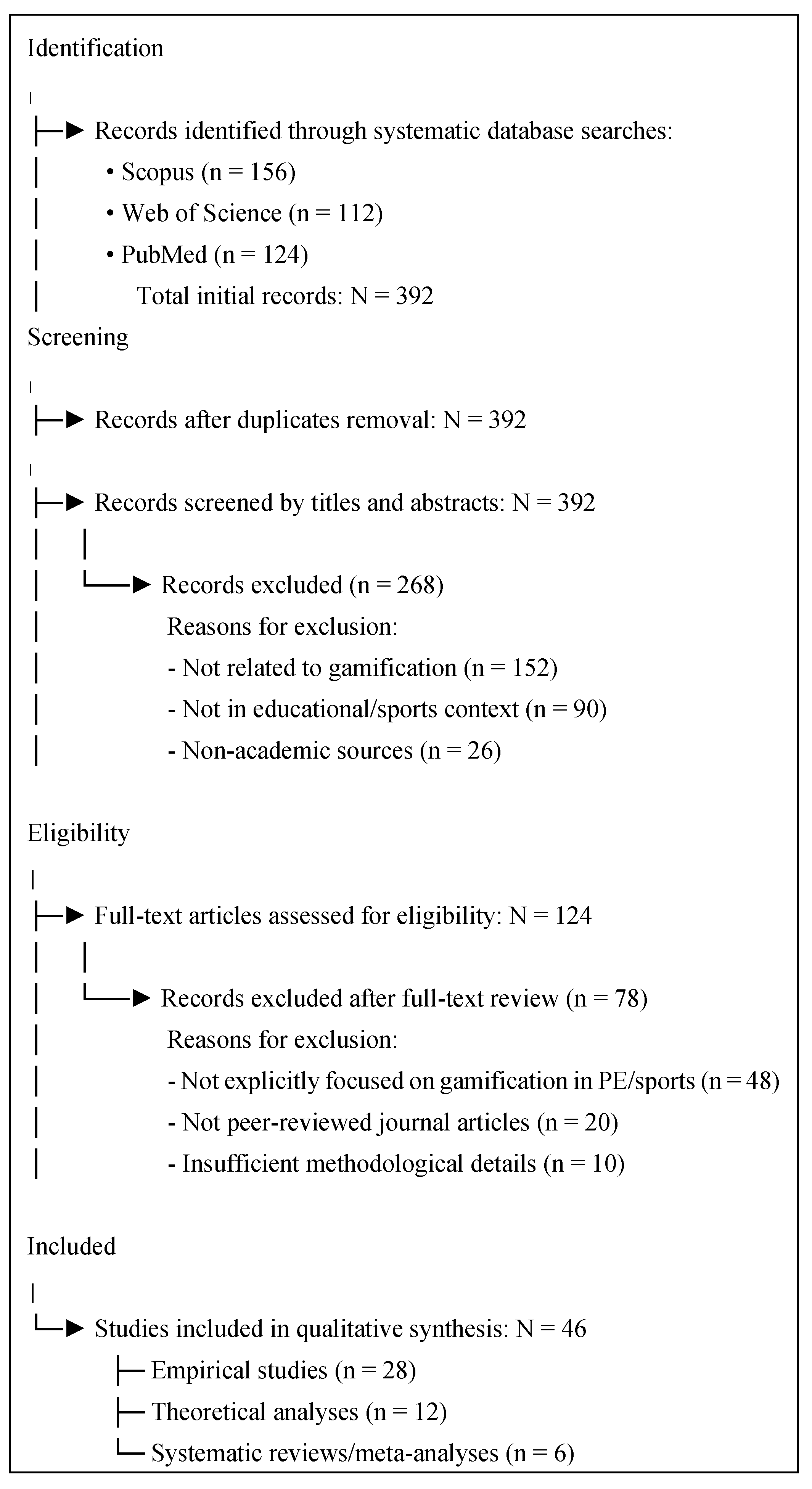

Table 1.
Practical Gamification Applications.
| Model Stage | Practical Application Example | Target Group | Expected Outcomes |
| Planning and Goal Setting | Defining clear fitness goals and specific skill targets |
High school students | Increased motivation, clear objectives |
| Design and Development | Utilizing digital leaderboards or mobile apps for progress tracking | University athletes | Real-time feedback, enhanced engagement |
| Implementation and Engagement | Organizing virtual tournaments or cooperative fitness challenges | Middle-school students | Sustained participation, improved teamwork |
| Evaluation and Adaptation | Employing surveys or analytics from fitness apps for refinement | Professional athletes | Continuous improvement, tailored training |
Table 2.
Gamification Strategies and Elements: Psychological Benefits and Educational Relevance.
| Target Group | Gamification Strategies | Key Elements | Psychological Benefits |
| Primary & Middle School | Playful challenges, storytelling |
Narratives, visual rewards | Emotional engagement, sustained motivation |
| High School Adolescents | Collaborative competition, recognition | Leaderboards, badges |
Relatedness, social belonging, motivation |
| University Students | Structured challenges, clear goal-setting |
Points, progress indicators | Competence, autonomy, clear achievement |
| Athletes (Amateur/Pro) | Personalized progression, immediate feedback |
Goals, real-time feedback | Competence, sustained effort, self-efficacy |
Disclaimer/Publisher’s Note: The statements, opinions and data contained in all publications are solely those of the individual author(s) and contributor(s) and not of MDPI and/or the editor(s). MDPI and/or the editor(s) disclaim responsibility for any injury to people or property resulting from any ideas, methods, instructions or products referred to in the content. |
© 2025 by the authors. Licensee MDPI, Basel, Switzerland. This article is an open access article distributed under the terms and conditions of the Creative Commons Attribution (CC BY) license (http://creativecommons.org/licenses/by/4.0/).
Copyright: This open access article is published under a Creative Commons CC BY 4.0 license, which permit the free download, distribution, and reuse, provided that the author and preprint are cited in any reuse.


