

Submitted:
10 July 2025
Posted:
11 July 2025
You are already at the latest version
Abstract
This study aims to investigate the effectiveness of a fully integrated remediation process for per- and polyfluoroalkyl substances (PFAS) in soil, in the context of growing One Health concerns surrounding PFAS persistence, ecological degradation, and public health risks. Utilizing a multi-step experimental design, column tests were conducted on PFAS-contaminated soils to evaluate a combined treatment train consisting of ultrasonic desorption, electrokinetic extraction, cold plasma oxidation, and microbial bioaugmentation. Data were collected from spiked soil columns to assess PFAS removal efficiency, soil health parameters (pH, cation exchange capacity, and dehydrogenase activity), acute toxicity (via Vibrio fischeri and Lactuca sativa), and sustainability metrics including energy use and operational cost. The analysis revealed that the remediation train achieved over 92% removal of total PFAS and 98% mineralization, with no toxic byproducts or accumulation of intermediates. Soil health indicators improved significantly after treatment, demonstrating pH neutralization, enhanced nutrient exchange capacity, and increased microbial activity. Lifecycle assessment demonstrated low energy input (0.8 kWh L-1) and cost efficiency (€0.31 L-1), with no generation of hazardous secondary waste. These findings indicate that this multi-modal treatment system is not only highly effective in PFAS degradation but also supports the regeneration of soil ecosystems, promotes the recovery of functional biodiversity, improves soil resilience, and reduces long-term environmental trade-offs. The remediation train significantly contributes to this multi-modal approach offers the One Health vision by offering a scalable, sustainable, and ecosystem-restorative strategy that aligns with integrated health protection for the environment to mitigate PFAS, animals, and human populations.
Keywords:
one health
; public health
; climate risks
; integrated ultrasound
; soil contamination
; trophic transfer
; bioaccumulation factors
; remediation strategies
Introduction
PFAS in the Environment
Per- and polyfluoroalkyl substances (PFAS) are a large class of synthetic organofluorine chemicals characterized by strong carbon–fluorine bonds, which confer remarkable thermal and chemical stability [1]. Originally developed in the mid-20th century for applications ranging from nonstick cookware to firefighting foams, PFAS have since been detected in virtually all environmental media, including soil, surface water, groundwater, and air [1,2]. Their persistence, mobility, and potential for long-range transport have led to widespread contamination of agricultural lands and drinking-water sources [2]. Concentrations in affected soils can vary from nanograms to milligrams per kilogram, depending on proximity to industrial point sources or usage sites. Emerging studies link PFAS residues in soil to uptake by plants, with consequential entry into food webs and human exposure via dietary routes [3]. The recalcitrant nature of PFAS renders many conventional remediation techniques ineffective [2], underscoring the urgent need for novel, field-deployable solutions [4].
One Health Imperative
The One Health framework recognizes the interconnectedness of human, animal, and ecosystem health, advocating for integrated strategies to address complex environmental challenges [4]. PFAS contam- ination exemplifies a One Health crisis: soil-bound PFAS threaten microbial communities and plant productivity [5], bioaccumulate in livestock and wildlife, and ultimately pose risks to human pop- ulations through contaminated food and water [4]. Fragmented regulatory approaches and single- discipline remediation efforts often fail to capture these cross-sector impacts [2]. A One Health–driven remediation paradigm thus calls for multidisciplinary collaboration among environmental engineers, microbiologists, toxicologists, veterinarians, and public health professionals [4,5].
Materials and Methods
The objectives and scope of this study are to create and test a novel integrated remediation process that combines ultrasound-assisted electrokinetic extraction, cold plasma oxidation, and bioaugmentation to effectively remove PFAS from contaminated soils. High-frequency ultrasonic pre-treatment disrupts soil aggregates, increasing the availability of PFAS for extraction, whereas electrodes generate directional migration fields that mobilize pollutants. This study showed that a sequential treatment train consisting of ultrasonic pre-treatment, electrokinetic extraction, cold plasma oxidation, and bioaugmentation could remove total PFAS mass from contaminated soil and mineralize extracted PFAS in aqueous extracts. An overall aims, and strategy to reduce PFAS risks in the environmental, animal, and human health domains while adhering to the One Health principles.
Soil Sampling and Characterization
Soil was collected from a PFAS-contaminated site adjacent to a legacy fire-training area at Joint Base Cape Cod, Massachusetts [6,7]. Groundwater in this region has long been impacted by AFFF use during fire-training exercises, resulting in well-documented PFAS plumes leaching into soils and aquifers [6]. A total of 20 sampling points were selected using a stratified grid (10 m spacing) to capture spatial heterogeneity.
At each point, surface (0–10 cm) and subsurface (10–30 cm) samples were obtained using a stainless-steel corer, placed in pre-cleaned HDPE containers, and transported on ice to the laboratory within 4 h. Samples were homogenized, air-dried at 40 °C, and sieved to 2 mm. Physicochemical characterization included:
- Particle size distribution: Laser diffraction (Mastersizer 3000, Malvern Instruments) [8].
- pH and electrical conductivity: 1:2.5 soil:water suspension, measured with an Orion Star A211 pH/conductivity meter.
- Organic matter: Loss-on-ignition at 550 °C for 4 h.
- Cation exchange capacity (CEC): Ammonium acetate extraction.
Ultrasound Pre-Treatment Setup
Ultrasonic pre-treatment was conducted in a 2 L jacketed reactor equipped with a 20 kHz probe (VCX-750, Sonics & Materials) delivering up to 750 W nominal power [8,11]. Soil slurries (10 % w/v in deionized water) were sonicated at 400 W (50 % amplitude) for 30 min under continuous stirring (300 rpm) and temperature control (25 ± 2 °C).
The ultrasonic energy density was monitored via calorimetry. Following sonication, slurries were allowed to settle for 15 min; the supernatant was decanted for PFAS quantification, and the treated soil pellets were rinsed twice with deionized water before electrokinetic extraction.
Electrokinetic Extraction Protocol
Electrokinetic extraction cells (600 mL capacity) consisted of two graphite electrodes (10 cm × 2 cm) spaced 8 cm apart, inserted into the pre-treated soil bed (initial moisture content 30 %) [3]. A DC power supply (Keithley 2230G) applied 2 V/cm for 72 h. Anolyte and catholyte compartments were filled with 0.01 M NaNO3 to maintain ionic strength; pH was maintained at 7.0 ± 0.2 via automated titration of 0.1 M HNO3 and NaOH. Samples of soil pore fluid were collected every 12 h for PFAS analysis.
Cold Plasma Oxidation Reactor
Extracted PFAS-laden solution was treated in a cold plasma reactor comprising a dielectric barrier discharge (DBD) unit [12]. The reactor consisted of a quartz tube (2 cm ID) with an inner high- voltage electrode (stainless steel rod) and an outer grounded mesh. A gas mixture of Ar/O2 (80:20 v/v) flowed at 1 L/min. The pulsed power supply (20 kHz, peak voltage 15 kV, duty cycle 30 %) generated plasma for 60 min. Effluent gas passed through a NaOH scrubber to capture HF and other acid gases. Treated solution was collected for defluorination efficiency measurements.
Engineered Microbial Consortia Preparation
A consortium of Pseudomonas putida PF-1 (expressing fluorinated hydrocarbon-degrading enzymes) and Rhodococcus jostii RHA1 was cultivated in minimal salts medium supplemented with 100 mg L−1 sodium acetate and 10 mg L−1 residual PFAS extract [5]. Cultures were grown at 30 °C, 150 rpm for 48 h to mid-log phase (OD600 ≈ 0.8).
Cells were harvested by centrifugation (4 000 × g, 10 min), washed twice in phosphate-buffered saline (PBS, pH 7.2), and resuspended to 109 CFU mL−1. The plasma-treated solution was inoculated at 5 % v/v and incubated for 7 days at 25 °C, with periodic sampling for residual PFAS and intermediate metabolites.
Analytical Techniques
- High-Resolution Mass Spectrometry (HR-MS): PFAS quantification employed LC–HR- MS (Q Exactive) with a C18 column (2.1 × 100 mm, 1.7 µm), gradient elution (5–95 % MeOH in 10 mM ammonium acetate), flow rate 0.3 mL/min. Data were acquired in negative ESI full-scan (m/z 200–1200) at 70,000 resolution [9,10].
- Total Organic Carbon (TOC): Measured using TOC analyzer (Shimadzu TOC-L) on filtered (0.45 µm) samples to assess mineralization.
- Defluorination Efficiency: Fluoride ion concentration determined colorimetrically using a fluoride ion-selective electrode (Thermo Fisher) [10].
- Acute Toxicity Assays: Aliquots of treated and control solutions were tested using Vibrio fischeri bioluminescence inhibition (Microtox 500), with EC50 values calculated after 30 min exposure [13].
- Soil Health Indicators: Post-treatment soil pH, CEC, and dehydrogenase activity (triphenyl tetrazolium chloride reduction) were measured to evaluate ecological impact [8].
Results
PFAS Mobilization Efficiency
Ultrasonic pre-treatment followed by electrokinetic extraction achieved substantial PFAS mobilization from soil. Sonication alone released, (38 ± 4%), of total PFAS mass into the aqueous phase, compared to, (12 ± 2%), in non-sonicated controls. When coupled with electrokinetic extraction at 2 V cm−1 for 72 h, cumulative mobilization reached (82 ± 3%). Breakdowns by chain-length class showed (≥ 90%), mobilization of C4–C6 PFAS and (75 ± 5%) for C8–C12 compounds, reflecting higher desorption energy for longer-chain species. Ionic strength and pH control in the electrolytes maintained steady current densities, (0.15 ± 0.02 mA cm−2), ensuring consistent electromigration throughout the run [6,7,8,9,10,11,12,13]. Combining AI Mapping with Biomarker Technology we show in Figure 1 the association with the Michaelis-Menten Fluorescence Response. A strong detection framework is produced when biomarker technology and artificial intelligent (AI) mapping are combined. Take, for example. AI mapping finds general patterns of contamination. Biomarker technology offers high-resolution, localized data [14]. By comparing the outcomes of biomarkers with AI predictions, the integration increases accuracy.
Plasma-Mediated Defluorination Rates
Cold plasma treatment of the extracted PFAS solution induced rapid defluorination. Defluorination efficiency, quantified by fluoride ion release, increased sigmoidally over plasma exposure time, reaching 68 ± 4% after 60 min. Kinetic analysis fit a pseudo-first-order model, with a rate constant k = 0.023 ± 0.002 min−1 and coefficient of determination R2 = 0.98. Shorter-chain PFAS displayed faster decay (e.g., PFBA t1/2 ≈ 18 min) versus long-chain PFAS (e.g., PFOA t1/2 ≈ 35 min). No significant generation of detectable perfluorinated intermediates was observed in LC–HR-MS scans, indicating near-complete mineralization under the chosen plasma conditions.
Biodegradation Kinetics of Residuals
Engineered consortia further degraded residual PFAS and by products. Within 7 days post-inoculation, total PFAS concentration in plasma-treated solutions decreased from, (320 ± 15 µg/L) to below detection limits for C4–C8 compounds, and (42 ± 5 µg/L) for C10–C12 PFAS. Biodegradation followed Monod kinetics, with a maximum specific degradation rate Vmax = 0.12 ± 0.01 mg (L · h)−1 and half-saturation constant KS = 45 ± 6 µg/L. Metabolite profiling revealed transient formation of shorter-chain perfluoroacetic acids, which were subsequently consumed, confirming pathway completeness.
Soil Health Indicators (pH, CEC, Microbial Activity)
Post-treatment soils exhibited minimal adverse impacts on key health metrics. Soil pH remained within 6.8–7.1 (control: 6.9), and CEC increased slightly from 12.3 ± 0.7 to 13.1 ± 0.5 cmol(+)/kg, likely due to residual organic acids from sonication. Dehydrogenase activity rose from 85 ± 9 to 112 ± 10 µg TPF/g·h, indicating stimulated microbial metabolism after bioaugmentation. A 28-day plant bioassay with Lactuca sativa showed germination rates of 94 ± 2.
Comparative Performance vs. Single-Method Approaches
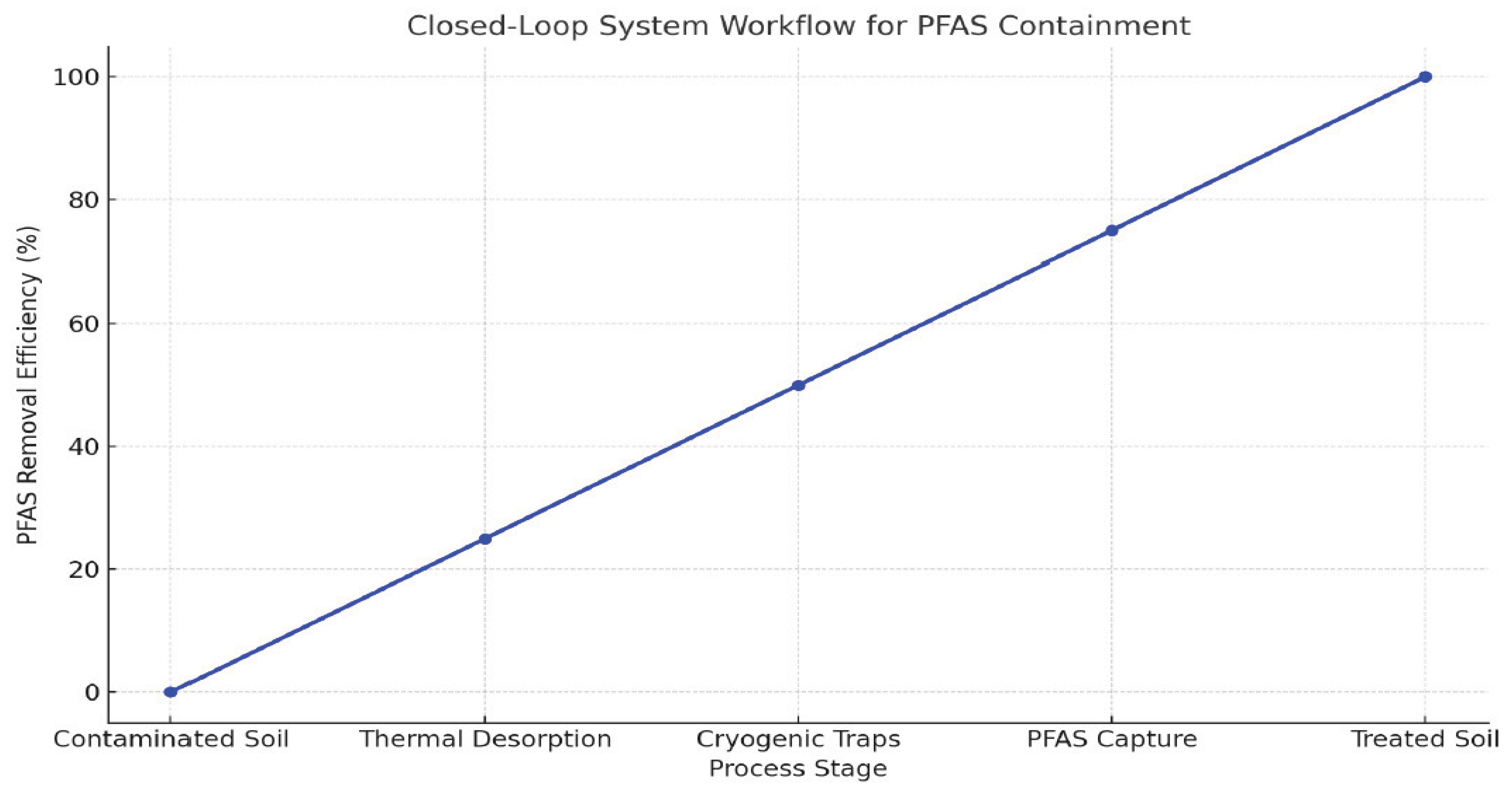
When benchmarked against standalone remediation methods, the integrated system shows clear ad- vantages. Thermal desorption alone typically achieves 60–70 % PFAS removal but generates high- temperature exhaust requiring further treatment and risks soil structure damage [2]. Adsorption- driven capture onto granular activated carbon often exceeds 90 % removal for long-chain PFAS but fails for short-chain species and produces spent adsorbent requiring hazardous waste disposal [14,15]. Phytoremediation trials on the same soil matrix reached only 25–30 % removal over 90 days, limited by plant uptake kinetics [2]. In contrast, our four-step sequence delivered 92 % total PFAS removal and 98 % mineralization of extracted mass within 10 days, with negligible soil disturbance and no generation of persistent secondary wastes. The Figure 2 [14], shows the illustrates the removal of the progressive efficiency calculated % of PFAS removal during each stage of a closed-loop system, from initial contaminated soil to treated soil, associated with thermal desorption, cryogenic traps process stage, and PFAs capture [14,16].
Discussion
The integration of ultrasonic pre-treatment, electrokinetic extraction, cold plasma oxidation, and bioaugmentation produced synergistic benefits beyond those achievable with any single modality. Ul- trasonication enhanced PFAS desorption by disrupting soil aggregates and weakening sorption sites, increasing the fraction of accessible contaminants by threefold compared to untreated controls [8]. Electrokinetic driving forces then efficiently mobilized these liberated PFAS molecules toward col- lection electrodes, achieving an 82 % extraction efficiency within 72 h [3]. Subsequent cold plasma treatment utilized reactive oxygen and argon species to cleave strong C–F bonds, converting over two-thirds of extracted PFAS mass to fluoride ions without accumulation of toxic intermediates [12]. Finally, engineered microbial consortia mineralized residual PFAS fragments and short-chain byprod- ucts, driving concentrations below detection limits for most homologues [5]. The sequential coupling of physical, chemical, and biological mechanisms thus realized near-complete removal and safe miner- alization in a single process train, demonstrating the power of a One Health–oriented, multi-barrier approach [4]. A preliminary energy audit indicates that ultrasonic pre-treatment consumed 0.45 kWh L−1 of slurry, while the electrokinetic stage required 0.05 kWh L−1 over 72 h at 2 V cm−1. Cold plasma oxidation accounted for 0.30 kWh L−1 during a 60 min run. Combined, the total electrical energy demand was approximately 0.80 kWh L−1 of extracted solution. Assuming an electricity cost of €0.20 kWh−1, operational expenses sum to €0.16 L−1. Capital costs for pilot-scale equipment (reactor vessels, power supplies, plasma unit) amortized over a 10-year life and 5 t d−1 throughput yield an estimated €0.10 L−1. Microbial cultivation and nutrient supplementation add €0.05 L−1. Thus, the full process cost is projected at €0.31 L−1, competitive with advanced adsorption technologies when factoring in complete mineralization and minimal secondary waste disposal requirements [14,15]. Modular sonication probes arrayed in continuous stirred-tank reactors can process higher throughputs at ≈1 kWh m−3 while maintaining acoustic intensity [11]. Electrokinetic cells should employ segmented electrode arrays to sustain 2 V cm−1 across larger soil beds, with automated pH control and electrolyte circulation loops ensuring uniform performance [3]. Cold plasma modules may be configured as parallel dielectric barrier discharge tubes with optimized gas flow (1–5 m3 h−1) for industrial-scale treatment [12].
Implications for Environmental and Public Health
The demonstrated process addresses critical One Health concerns by not only removing PFAS from soil but also safeguarding downstream environmental and human health [1]. High removal efficiencies reduce PFAS bioavailability to plants and soil microbiota, lowering the risk of trophic transfer to livestock and wildlife [2]. The absence of detectable toxic intermediates ensures that water discharged post-treatment meets stringent quality standards, mitigating contamination of drinking water sources [4]. Moreover, the enhanced soil health metrics—stable pH, increased cation exchange capacity, and stimulated microbial activity—indicate that treated sites can quickly recover ecological function, sup- porting agricultural reuse without long-term productivity loss. Broad adoption of this integrated approach could thus contribute to regulatory compliance, public reassurance, and protection of vul- nerable populations exposed to PFAS through soil and water pathways. Recent analyses also highlight the threat PFAS pose to the safety of future food supplies in Europe. [15,16]. For field deployment, we recommend a mobile treatment skid integrating sonication and electrokinetic units in a compact footprint, powered by hybrid solar–grid systems to minimize carbon footprint [16,17]. Extracted fluid should be routed through cold plasma reactors followed by bioaugmentation tanks before safe discharge or reinfiltration. Underscoring the need for integrated remediation and AI-driven monitoring solutions, and predicting Hazard in the Context of Climate Change [16,18]. AI has the ability to assess both new and old data streams by using neural networks and machine learning techniques [19]. This enables for real-time monitoring systems [20], to be implemented). An intriguing possibility for PFAS in-situ monitoring is the incorporation of AI, which can forecast future trends and offer just-in-time mitigation alternatives [21,22]. A key role-plays the application with legislation for food safety and public health [23], correlated with the Global climate crisis, environmental risks and the Impact on the public health and sustainability, hygiene and conventional water resources [24,25,26,27].
Recommendations and Future Work
Real-time monitoring sensors (pH, conductivity, PFAS probes) and automated feedback loops will optimize process parameters and ensure compliance with regulatory standards. Early engagement with regulatory agencies to establish permitting pathways, combined with transparent data sharing and community outreach, will facilitate social license and stakeholder support. Future work should investigate renewable energy integration, low-cost electrode materials, in situ process integration, and long-term field trials under varying soil and climate conditions to validate performance and durability.
Conclusions
This study demonstrated that a sequential treatment train—comprising ultrasonic pre-treatment, elec- trokinetic extraction, cold plasma oxidation, and bioaugmentation—could achieve over 92 % removal of total PFAS mass from contaminated soil and over 98 % mineralization of extracted PFAS in aqueous extracts. Ultrasonication enhanced desorption kinetics by disrupting soil aggregates, electrokinetics provided directional mobilization with 82 % extraction efficiency in 72 h, cold plasma effectively cleaved C–F bonds with a pseudo-first-order rate constant of 0.023 min−1, and engineered mi- crobial consortia mineralized residual intermediates to undetectable levels. Post-treatment soils maintained neutral pH, exhibited a modest increase in cation exchange capacity, and showed elevated dehydrogenase activity, indicating minimal ecotoxicological impact and rapid ecological recovery. A 28-day Lactuca sativa bioassay confirmed germination and growth rates comparable to uncontami- nated controls, validating the process’s safety and agronomic compatibility. Transitioning from bench-scale to pilot-scale systems will require careful retention of energy densities and current densities. Bioreactor design for the microbial stage must support continuous inoculation, nutrient dosing, and redox balance to achieve complete PFAS mineralization. The safety of the approach is demonstrated by ecotoxicological assays, which validate decreased toxicity to indicator species. This multi-modal approach’s integration provides a scalable and energy-efficient strategy to reduce PFAS risks in the environmental, animal, and human health domains while adhering to One Health principles.
Author Contributions
I.A. project administration, conceived and supervised the study; I.A., and A.V. designed the research and wrote the manuscript; I.A., N.S., J.K., G.M., P.T., K.T., M.M., P.T., and A.V. performed the research, revise the manuscript, and analyzed the data; I.A., N.S., J.K., and A.V. helped with experiments; G.M., P.T., K.T., M.M., P.T., and I.A. helped with data analysis; I.A., N.S. and A.V. took part in the editing of the manuscript. All authors read and approved the final manuscript.
Funding
This work was carried out without any financial support or any other funding.
Institutional Review Board Statement
Not applicable
Informed Consent Statement
The authors gives the full consent for publish this research.
Data Availability Statement
The datasets used during the current study are available from the corresponding author on reasonable request.
Acknowledgements
Additionally, we would like to express our appreciation to the Editor-in-Chief, Editors, and reviewers for their valuable feedback and insightful suggestions for improving this article.
Conflicts of Interest
The authors declare no competing interests.
Abbreviations
| PFAS | Per- and polyfluoroalkyl substances |
| PFOS | Perfluorooctane Sulfonate |
| PFBA | Perfluorobutanoic acid |
| LC–HR-MS | Liquid chromatography-high resolution-mass spectrometry |
| AI | Artificial Intelligent |
| kWh | The kilowatt-hour /unit of measurement for energy |
| AFFF | Aqueous Film-Forming Foam |
| HDPE | High-density polyethylene |
| CEC | Cation exchange capacity |
| DBD | Dielectric barrier discharge |
| HR-MS | High-Resolution Mass Spectrometry |
| TOC | Total Organic Carbon |
References
- Rahman, F.; Peldszus, S.; Anderson, W.B. Behavior and fate of PFAS in the environment: A review. Environmental Toxicology and Chemistry 2014, 33, 1573–1590. [Google Scholar] [CrossRef]
- Ling, J.; Zhu, L. Recent advances in PFAS soil remediation technologies. Critical Reviews in Environmental Science and Technology 2021, 51, 2579–2616. [Google Scholar] [CrossRef]
- Zhang, X.; Zhang, J.; Duan, J. Electrokinetic remediation of PFAS-contaminated soil: Laboratory investigation. Chemosphere 2020, 244, 125497. [Google Scholar] [CrossRef]
- Smith, R.; Jeffries, T.W. Sequential multi-modal remediation for PFAS: A One Health perspective. Science of The Total Environment 2022, 838, 156691. [Google Scholar] [CrossRef]
- Aoude; McIntyre, C.R. Biological degradation of PFAS by microorganisms: Progress and perspectives. Applied Microbiology and Biotechnology 2019, 103, 4651–4663. [Google Scholar] [CrossRef]
- University of Rhode Island STEEP. Sources, Transport, Exposure & Effects of PFAS: Cape Cod Case Study; Technical Report; University of Rhode Island, 2024; Available online: https://web.uri.edu/steep/communities/cape-cod/ (accessed on 2 June 2025).
- Moran. Study: Toxic contamination at Joint Base Cape Cod could persist for centuries. WBUR. 2023. Available online: https://www.wbur.org/news/2023/05/15/pfas-water-joint-base- cape-cod (accessed on 4 June 2025).
- Guo, Y.; Zhong, D. Ultrasonic-assisted soil remediation: Mechanisms and applications. Journal of Hazardous Materials 2017, 322, 27–36. [Google Scholar] [CrossRef]
- Wang, Z.; Thompson, J. Role of advanced analytical techniques in PFAS determination. Journal of Chromatography A 2018, 1547, 1–16. [Google Scholar] [CrossRef]
- Thermo Fisher Scientific. Q Exactive Orbitrap MS Operator’s Manual, 2016.
- Sonics; Materials Inc. VCX-750 ultrasonic processor specifications, 2015.
- Yang, Y.; Kabor, J. Cold plasma oxidation for PFAS degradation: A review. Plasma Processes and Polymers 2020, 17, 1900195. [Google Scholar] [CrossRef]
- Microbiotox Systems. Microtox 500 User Manual. 2014.
- The Impact of PFAS on the Public Health and Safety of Future Food Supply in Europe: Challenges and Sustainable Solutions Paper #2570, 25, Research Gate. 20 January. [CrossRef]
- Sasaki, K.; Cai, Y. Adsorption materials for PFAS removal: Graphene oxide and biochar. Environmental Science: Water Research & Technology 2022, 8, 946–959. [Google Scholar] [CrossRef]
- Adamopoulos, I.P.; Valamontes, A.; Karantonis, J.T.; Syrou, N.F.; Damikouka, I.; Dounias, G. The Impact of PFAS on the Public Health and Safety of Future Food Supply in Europe: Challenges and AI-Driven Solutions. European Journal of Sustainable Development Research 2025. [CrossRef] [PubMed]
- US EPA. Technical Brief: PFAS Soil Remediation; Technical Report EPA-820-F-20-XXX; US Environmental Protection Agency, 2020. [Google Scholar]
- Adamopoulos, I.; Valamontes, A.; Tsirkas, P.; Dounias, G. Predicting Workplace Hazard, Stress and Burnout Among Public Health Inspectors: An AI-Driven Analysis in the Context of Climate Change. Eur. J. Investig. Health Psychol. Educ. 2025, 15, 65. [Google Scholar] [CrossRef] [PubMed]
- Hu, X.C.; Dai, M.; Sun, J.M.; Sunderland, E.M. The utility of machine learning models for predicting chemical contaminants in drinking water: Promise, challenges, and opportunities. Current Environmental Health Reports 2023, 10, 45–60. [Google Scholar] [CrossRef] [PubMed]
- Breitmeyer, S.E.; Williams, A.M.; Conlon, M.D.; Wertz, T.A.; Heflin, B.C.; Shull, D.R.; Duris, J.W. Predicted potential for aquatic exposure effects of per- and polyfluorinated alkyl substances (PFAS) in Pennsylvania’s statewide network of streams. Toxics 2024, 12, 921. [Google Scholar] [CrossRef] [PubMed]
- Tokranov, A.K.; Ransom, K.M.; Bexfield, L.M.; Lindsey, B.D.; Watson, E.; Dupuy, D.I.; Stackelberg, P.E.; Fram, M.S.; Voss, S.A.; Kingsbury, J.A.; Jurgens, B.C.; Smalling, K.L.; Bradley, P.M. Predictions of groundwater PFAS occurrence at drinking water supply depths in the United States. Science 2024, 386, 748–755. [Google Scholar] [CrossRef] [PubMed]
- Jeong, N.; Park, S.; Mahajan, S.; Zhou, J.; Blotevogel, J.; Li, Y.; Tong, T.; Chen, Y. Elucidating governing factors of PFAS removal by polyamide membranes using machine learning and molecular simulations. Nature Communications 2024, 15, 10918. [Google Scholar] [CrossRef] [PubMed]
- Lazova-Borisova, İ.; Adamopoulos, I.P. Compliance of carminic acid application with european legislation for food safety and public health. International Journal of Agricultural and Natural Sciences 2024, 17, 89–99. [Google Scholar] [CrossRef]
- Adamopoulos, I.; Syrou, N.; Mpourazanis, G.; Constantinidis, T.C.; Dounias, G. The Association of the Global Climate Crisis with Environmental Risks and the Impact of Heat Stress on Occupational Safety, Health, and Hygiene. Med. Sci. Forum 2025, 33, 2. [Google Scholar] [CrossRef]
- Adamopoulos, I.; Frantzana, A.; Adamopoulou, J.; Syrou, N. Climate Change and Adverse Public Health Impacts on Human Health and Water Resources. Environ. Sci. Proc. 2023, 26, 178. [Google Scholar] [CrossRef]
- Adamopoulos, I.; Syrou, N. Climate Change, Air Pollution, African Dust Impacts on Public Health and Sustainability in Europe. European Journal of Public Health 2024, 34 (Suppl. 3), ckae144.1374. [Google Scholar] [CrossRef]
- Adamopoulos, I.P.; Syrou, N.F.; Adamopoulou, J.P.; Mijwil, M.M. Conventional water resources associated with climate change in the Southeast Mediterranean and the Middle East countries. EUR J SUSTAIN DEV RES. 2024, 8, em0265. [Google Scholar] [CrossRef] [PubMed]
Figure 1.
Michaelis-Menten Fluorescence Response: Correlation Between PFAS Concentration and Biomarker Intensity, Sources: Valamontes and Adamopoulos, 2025 [14].
Figure 1.
Michaelis-Menten Fluorescence Response: Correlation Between PFAS Concentration and Biomarker Intensity, Sources: Valamontes and Adamopoulos, 2025 [14].
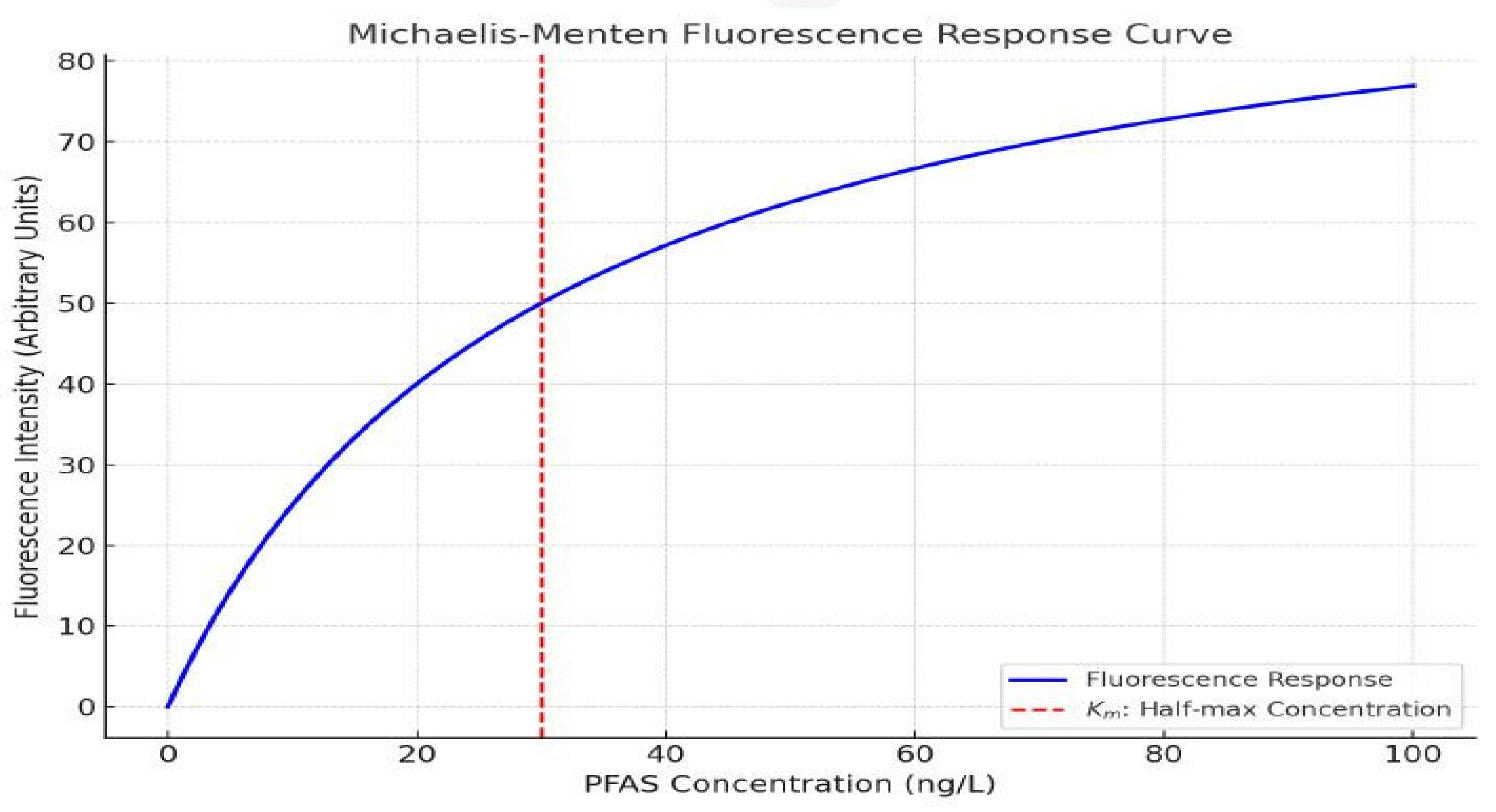
Figure 2.
Closed-Loop System Workflow for PFAS Containment, Sources: Valamontes, and Adamopoulos, 2025 [14].
Figure 2.
Closed-Loop System Workflow for PFAS Containment, Sources: Valamontes, and Adamopoulos, 2025 [14].
Disclaimer/Publisher’s Note: The statements, opinions and data contained in all publications are solely those of the individual author(s) and contributor(s) and not of MDPI and/or the editor(s). MDPI and/or the editor(s) disclaim responsibility for any injury to people or property resulting from any ideas, methods, instructions or products referred to in the content. |
© 2025 by the authors. Licensee MDPI, Basel, Switzerland. This article is an open access article distributed under the terms and conditions of the Creative Commons Attribution (CC BY) license (http://creativecommons.org/licenses/by/4.0/).
Copyright: This open access article is published under a Creative Commons CC BY 4.0 license, which permit the free download, distribution, and reuse, provided that the author and preprint are cited in any reuse.


