
Submitted:
07 July 2025
Posted:
07 July 2025
Read the latest preprint version here
Abstract
Background: The advent of artificial intelligence (AI) has fundamentally changed how education is delivered and how students perform. Since its launch, ChatGPT, a popular generative AI tool, has generated mixed reactions. Objectives: This research systematically reviews the opportunities, perceptions, and challenges of using ChatGPT among professors and students at higher education levels. Our review identified key themes and patterns in the literature and provided a comprehensive understanding of the different opinions held by students and faculty. Methods: We included peer-reviewed journal articles and conference proceedings from January 1, 2022, to April 27, 2024, taken from APA PsycInfo, CINAHL Ultimate, Education Source Ultimate, ERIC, and Web of Science. From 1046 studies, we selected 58 articles and then conducted thematic content analysis using descriptive statistics to identify key themes and patterns across the literature. The synthesis of the extracted data from the articles included gives the different perceptions of using ChatGPT in higher education. Results and Conclusions: Our review showed that faculty and students have 21 different opinions about ChatGPT’s accuracy and reliability, with a mix of positive and negative views. We also discovered 14 concerns about the ethical issues surrounding its use. We also uncovered 25 opinions on ChatGPT’s future role in higher education. Instructors and students had differing views on using ChatGPT in higher education. Some faculty members believe ChatGPT is a useful tool for teaching and learning, while others have different opinions. We concluded that appropriate measures should be taken to ensure that ChatGPT is used correctly and fairly in higher education.
Keywords:
artificial intelligence
; ChatGPT
; higher education
; systematic review
; ethical considerations
1. Introduction
The coming of Artificial Intelligence (AI) has tremendously brought changes in pedagogical approaches and learning outcomes in higher education. Using AI to improve education and raise a new generation of informed citizens is important. Zawacki-Richter et al. (2019) asserted that AI technology could help personalize education by customizing learning components given an individual's preference and goals, thus enhancing the teaching effect and educational competencies; such would make AI an educational tool of value when applied appropriately for educational purposes (Gartner et al., 2023). Chat Generative Pre-Trained Transformer (ChatGPT) is the most advanced and broadest possible application among the various AI tools. The technology is designed to generate human-like text responses based on extensive pre-training data (OpenAI, 2023). Moving from GPT-3.5 in November 2022 to GPT-4 in March 2023 and most recently to the more advanced GPT-4o in May 2024 has happened at a pace genuinely indicative of its sophistication and transformative potential for education. The research by Fauzi et al. (2023) brings out distinctive characteristics of ChatGPT that make it suitable for different learning tasks. Some of these tasks include, but are not limited to, providing research assistance, personalized tutoring, and making available customized materials and support for students to increase their efficiency. However, the infusion of this AI-based program into traditional teaching methods would result in a more interactive and exciting classroom atmosphere where students can comfortably interact with technology as if they were best friends; thus leading to individuals’ educational paths and higher degrees of student participation (An et al., 2023). Although it faces some challenges, such integration holds immense promise.
While valid concerns must be considered, many researchers believe ChatGPT will make administrative tasks like lesson preparation and assessment easier (Wach et al., 2023). University faculty are grateful for ChatGPT, asserting that it makes their jobs easier, but they are also concerned about plagiarism and cheating (Yang et al., 2023). This dichotomy emphasizes the importance of clear guidelines and ethical frameworks for ChatGPT to restrict it. On the other hand, students have recognized that ChatGPT has helped them become more productive and that they may utilize it as a useful tool for their academic work. (Ngo et al., 2024). The positive perception was further supported by a study conducted in 2023 by Fauzi et al. (2023), which discovered that ChatGPT can assist students in improving their language skills, collaborating more effectively, and being more productive and efficient during their study sessions.
The benefits of using ChatGPT in higher education are numerous, and so are the challenges. Among the ethical issues that come to light are those related to protecting academic honesty and integrity, as well as the accuracy and reliability of data. Due to several concerns over AI-aided cheating, various educational institutions have outlawed ChatGPT on their campuses (VOA News, 2023). Mohebi (2024) conducted a systematic study to determine the present level of research on ChatGPT implementation in higher education. He examined thirty-two publications about ChatGPT's potential, applications, and difficulties in reinventing contemporary pedagogies. It is pointed out that integrating ChatGPT into the educational system presents a number of difficulties with regard to pedagogical integration and student participation. In this view, Mohebi (2024) emphasized that AI should augment and not replace teachers so that learners could be in an inclusive and dynamic learning environment. Likewise, in a bibliometric analysis, Liu et al. (2024) found that the pace of development of generative AI technology is fast, providing many opportunities for innovation and transformation in education. Yet, it bears many substantial risks and challenges: increasing inequality in the educational system and integrity-related concerns. It is required to continue with ongoing research and development for the adoption of such issues and systems that can monitor and regulate the use of AI in educational settings.
While Mohebi (2024) and Liu et al. (2024) have raised concerns about the use of ChatGPT, a more comprehensive exploration of peer-reviewed articles is necessary to fully understand the benefits and potential risks of this tool in higher education. Therefore, our review is guided by the following intriguing research questions:
- What opinions do instructors and students have about ChatGPT's accuracy and reliability in higher education?
- What are the attitudes of students and professors towards the ethical implications of ChatGPT in higher education?
- How do faculty and students forecast the future role of ChatGPT in promoting traditional teaching methods?
2. Methodology
2.1. The Systematic Review Approach
ChatGPT has become well-known and has drawn much attention due to its amazing potential. Therefore, the need to understand how it would affect higher education and the possible threats that come with it is urgently needed. The systematic review approach is ideal for offering a comprehensive and in-depth summary of the most recent studies and important conclusions about ChatGPT in higher education. Peer-reviewed journal articles and conference proceedings were used as data sources between January 1, 2022, and April 27, 2024, to limit the search to high-quality literature. Advanced online publications, preprints, and non-academic sources (e.g., mass and social media) were excluded from this review. In this sense, studies of ChatGPT in higher education that focus on perceptions, attitudes, or experiences concerning the use are included in the review. Additionally, only articles written in English were included. The review included a quantitative and qualitative (content) type of analysis to obtain a complete understanding of the research findings.
2.2. Search Strategies
The selection of eligible articles for this review adhered to the Preferred Reporting Items for Systematic Reviews and Meta-Analyses (PRISMA) guidelines (Moher, 2009). We conducted the last search on April 27, 2024, for articles that include ChatGPT versions 3.5 and 4. Five electronic databases were used: (1) APA PsycInfo; (2) CINAHL Ultimate; (3) Education Source Ultimate; (4) ERIC; and (5) Web of Science. The search strategy included the following terms: "generative AI" OR "generative artificial intelligence" OR "ChatGPT") AND ("higher education" OR "university*" OR "college*" OR "undergrad*" OR "graduate" OR "postgrad*").
2.3. Inclusion and Exclusion Criteria
To guarantee that only high-quality original articles, materials, and reviews were used in this current study, only peer-reviewed conference proceedings papers and original journal articles published between January 1, 2022, and April 27, 2024 (which is the last search date) were considered. Non-academic materials and preprints, including newspapers, social media, and others, were excluded in the analysis. Studies that focused on the usage of ChatGPT in higher educational institutions with special attention to experiences, perceptions, or attitudes around its usage were included in the literature screen and analysis for this current study. Furthermore, only English-language articles were included.

Table 1.
Inclusion and exclusion criteria for article selection.
| Criterion | Inclusion | Exclusion |
| Settings | Higher Education | Studies were conducted outside higher education settings (e.g., K-12, vocational training, and public education). |
| Population | Professors and Students | Studies involving populations outside of higher education (e.g., K-12 students, public, non-academic professionals). |
| Article topic | Covers the use of ChatGPT in higher education. | Does not discuss the use of ChatGPT in higher education. |
| Article type | Empirical studies published in peer-reviewed journals and conference proceedings papers. | Articles that are not peer-reviewed/conference proceedings, including opinion pieces, editorials, and those from mass and social media |
| Outcome | Perceptions, attitudes, or experiences related to the utilization of ChatGPT. | Studies focus on outcomes unrelated to perceptions, attitudes, or experiences. |
| Time | January 1, 2022 to April 27, 2024 | Articles published outside the specified period |
| Language | English | Articles not written in English |
2.4. Quantitative Analysis
We employed descriptive statistics to examine the distribution of the 58 papers in this review. The studies were grouped according to their locations (Figure 2) and the general opinions of ChatGPT's accuracy and reliability (Figure 3). There is a noticeable presence in Asia, with 28 pieces, particularly from China, Hong Kong, Jordan, and India. This is evident in the geographical distribution of the articles. Visual representations included a bar chart summarizing opinions about ChatGPT's accuracy and reliability and a pie chart showing the articles' geographic distribution. These charts provided a clear overview of the data distribution and the varying perceptions of ChatGPT's performance in higher education contexts.
2.5. Content Analysis
A thorough and rigorous content analysis was used in this study to identify and summarize the main themes and outcomes of the included studies. A comprehensive approach was employed to ascertain accurate and complete data interpretation.
2.6. Data Extraction
Data used in this study were retrieved from selected materials using standardized forms in Covidence and extracted into a CSV file for further analysis. The retrieved data included study features, including design, sample size, setting, and general information like title, lead author, year of publication, country of the study, and important findings (major outcomes related to the research questions). This systematic extraction procedure made organizing and subsequent analysis easier and finding recurring themes and patterns.
2.7. Coding and Thematic Analysis
We created a detailed coding outline based on our review's goals and research questions. The following were the main themes found in our review:
- Accuracy and Reliability: Perceptions of ChatGPT's correctness and dependability.
- Ethical Implications: Attitudes towards privacy concerns, biases, fairness, and academic dishonesty.
- Future Role in Education: Views on how ChatGPT can support conventional teaching methods, such as instruction and learning, content production, individualized learning, creative capacities, and interaction and collaboration.
3. Findings
3.1. General Description of the Literature
Figure 1 shows the PRISMA diagram of the review. A total of 1,046 records were retrieved from database searches (Education Source Ultimate = 564, Web of Science = 263, ERIC = 149, APA PsycINFO = 43, CINAHL Ultimate = 27). There were still 840 records available for screening after removing 206 duplicates (3 manually identified, 203 by Covidence). Due to their failure to meet the inclusion criteria, 738 records were removed after the screening. After the 102 full texts were reviewed for eligibility, 44 articles were excluded for the following reasons: 19 studies focused on outcomes unrelated to perceptions, attitudes, or experiences; 10 reviews lacked empirical data collection and analysis; 8 studies involved populations outside of higher education settings; 4 full texts were not available; 2 studies had primary outcomes unrelated to the direct use of AI; and 1 study was not written in English. A total of 58 studies were included in the final review. Figure 1 illustrates the process of selecting articles.
The pie chart in Figure 2 displays the distribution of the 58 papers in the research throughout the continents. Asia is the continent with the most articles, with 28. China is the largest contributor with 5 articles, followed by Jordan with 4, India with 2, and Hong Kong with 4. Europe is next, with 11 articles that include contributions from Turkey and the United Kingdom (both with 2 articles), among other countries. 9 articles are from North America, most of which are from the United States (7 articles) and Canada (2 articles). With 4 articles from Ghana, 2 from Nigeria, 1 from Kenya, and 1 from Tunisia, Africa is represented with eight articles. Oceania, specifically Australia, has the smallest representation with 2 articles.
RQ 1: What opinions do instructors and students have about ChatGPT's accuracy and reliability in higher education?
Table 2 and Figure 3 present how instructors and students feel about ChatGPT's accuracy and dependability. Eleven studies found that people had good opinions about ChatGPT's accuracy and reliability. For example, Denecke et al. (2023) found that participants generally reported positive perceptions of ChatGPT’s capabilities in educational settings. Similarly, medical students and healthcare professionals found ChatGPT’s responses trustworthy and helpful, noting its usefulness and reliability in improving their educational experience and clinical practice (Hu et al., 2023; Tangadulrat et al., 2023). Delcker et al. (2024) also observed that first-year students' positive attitudes toward AI competence predicted their acceptance of ChatGPT as a reliable educational tool.
On the other hand, certain studies have highlighted specific concerns about ChatGPT’s inability to provide accurate and context-specific information. Despite ChatGPT's high proficiency, significant inaccuracies in generative AI tools eroded user trust (Ngo, 2023; Yusuf et al., 2024). This is consistent with Chan and Zhou (2023), who revealed that students were cognizant of ChatGPT’s limitations in delivering accurate information, which influenced their perception of its reliability. Similarly, Das and Madhusudan (2024) found that most students had concerns about ChatGPT’s correctness and dependability because of sporadic errors and a lack of contextual knowledge.
Furthermore, some articles we reviewed reported mixed perceptions. According to Cummings et al. (2024), students were grateful for ChatGPT's help in coming up with ideas and content, but they remained cautious about the veracity of the information provided. This is consistent with Bazelais et al. (2024), who found that users had high-performance expectations, yet accuracy problems remained. Similarly, CrčekN and PatekarJ (2023) noted that university students had mixed perceptions, with some finding ChatGPT’s outputs reliable, while others encountered inaccuracies that affected their trust. Likewise, Kavadella et al. (2024) found that users had mixed feelings about ChatGPT’s real-life performance, acknowledging its potential benefits and pointing out instances where its responses were not completely accurate.
While most of the study’s findings were qualitative, the overall trend suggests that people are finding ChatGPT's accuracy and dependability satisfactory. Of the fifty-eight papers reviewed, eleven reported positive, five reported negative, and five reported mixed perceptions about ChatGPT's dependability in higher education. The findings suggest that students and faculty in higher education generally perceive ChatGPT as a reliable and accurate tool. The positive feedback underscores ChatGPT’s utility in academic support and content generation. However, the negative and mixed perceptions highlight areas for improvement, particularly in contextual understanding and addressing concerns about over-reliance on AI. These suggest a need for continued evaluation and improvement of AI tools like ChatGPT to enhance their reliability and acceptance in educational settings.
RQ 2: What are the attitudes of students and professors towards the ethical implications of using ChatGPT in higher education?
Table 4 shows the ethical implications of ChatGPT in higher education across several studies based on three themes: privacy concerns, biases and fairness, and academic integrity. Professors and students had different opinions on these ethical issues.
Studies abound that demonstrate the importance of privacy to faculty and students. Significantly, Ajlouni et al. (2023) found that undergraduate students were unwilling to provide ChatGPT with personal information due to privacy and confidentiality issues. Similarly, Chan and Hu (2023) noted that students were extremely wary of AI's ability to gather personal data, especially those in the arts and social sciences. This is in line with Ofosu-Ampong (2024), who found that 83% of professors expressed concerns about privacy and ethics related to their students. Also, Fiialka et al. (2023) asserted that there is a need for stringent privacy, fairness, non-discrimination, and transparency measures when using ChatGPT in education. Choudhury and Shamszare (2023) stressed that policymakers must enforce ethical and legal privacy, data security, and bias guidelines. Our results underline the importance of better privacy controls to ensure AI technologies' ethical and safe application in educational settings.
In addition to privacy concerns, there is a serious problem with the potential for biases in the responses produced by ChatGPT. Choudhury and Shamszare (2023) pointed out that ChatGPT's training data might reflect societal biases, leading to biased responses. This aligns with Fiialka et al. (2023) emphasis on addressing accessibility, equity, and human biases when using AI in education. Chan (2023) recommended that universities openly communicate about the use of generative AI, detailing the algorithms, their functions, and any possible biases or limitations.
Furthermore, the literature is replete with concerns over academic dishonesty. Fiialka et al. (2023) state that students reported negative outcomes, such as publishing fake articles, falsifying biographical information, and violating academic integrity. Similarly, some researchers are worried about assigning tasks that require students to use precise AI responses even though they have not learned the material taught in class. Consistent with Ajlouni et al. (2023) and Ngo et al. (2024), Das and Madhusudan (2024) identified considerable ethical concerns in language learning, including issues related to privacy, bias, reliability, accessibility, authenticity, and the detrimental effects on academic integrity. Chan (2023) and ČrčekN and PatekarJ (2023) emphasized the need for assessments that minimize opportunities for AI misuse and promote ethical uses of ChatGPT in academic contexts. These findings indicate the necessity of implementing effective strategies to uphold academic standards and ensure the ethical application of AI technologies in educational settings.
RQ 3: How do faculty and students forecast the future role of ChatGPT in promoting traditional teaching methods?
Table 5 presents the differing opinions of students and professors in higher education on their perceptions of ChatGPT to promote traditional teaching methods. The table comprised five major themes: teaching and learning, content creation, personalized learning, creative capabilities, and collaboration and interaction.
ChatGPT integration in higher education represents a transformative shift rather than just a change, a notion supported by students and faculty members' enthusiastic comments. Notably, Al-Khatib (2023) suggested that ChatGPT might function as online educators, curriculum developers, evaluators, and contributors to academic publications. Li (2023) similarly claimed that ChatGPT may create a ubiquitous learning environment that encourages student participation inside and outside the classroom. Romero-Rodríguez et al. (2023) found that students valued ChatGPT's capability to offer detailed and easily comprehensible information on complex topics. Similarly, Kelly et al. (2023) found that generative AI improved accessibility and student learning, among other beneficial academic outcomes. Gao et al. (2024) reaffirmed these results and emphasized the professor's belief in ChatGPT as an effective instructional tool.
Furthermore, ChatGPT is known for its versatility and simplicity in creating content. Studies revealed that students and professors frequently used AI to gather and integrate online learning resources (Liu et al., 2024; Mosleh et al., 2023). Similarly, Al-khatib (2023) believed that using generative AI tools will improve the creation of instructional materials that will give professors time to interact with students. Also, Adetayo (2023) discussed ChatGPT's deep learning capabilities in generating human-like responses, while Saxena and Doleck (2023) highlighted its usefulness in developing learning evaluation items. These findings underscore the usefulness and lasting impact of ChatGPT in higher education.
In addition to these benefits, ChatGPT aids in personalized learning and offers several advantages. Students utilize ChatGPT to ask for help with assignments and other academic work, usually finished on time (Algaraady et al., 2023; Urban et al., 2024). Other studies reported the advantages of using ChatGPT, such as creative evaluations, automated administrative services, personalized educational help, adaptive learning support, writing assistance, and improved research skills (Damiano et al., 2024; Jepkemoi et al., 2024; Liu & Ma, 2023).
The creative capability of ChatGPT is another interesting aspect. According to Karaman and Goksu (2024) and Lelepary et al. (2022), ChatGPT is renowned for its brilliant writing and conversational abilities. It can also produce interactive content, such as activities and quizzes. Liu and Ma (2023) found ChatGPT's lesson plans more effective than regular school lesson plans at improving students' academic performance. Similarly, ChatGPT's ability to help informed students and groups apply its insights to enhance their negotiation strategies and skills proves the platform's ability to respond to inquiries and summarize data (Park, 2023). The increasingly positive response demonstrates ChatGPT's potential as a useful tool for higher education.
Finally, studies have investigated how ChatGPT fosters collaboration and interaction among students and professors. ChatGPT is an intelligent assistant that provides real-time assistance wherever and whenever needed (Kiryakova & Angelova, 2023), and can also facilitate group collaboration during problem-based learning procedures (Hamid et al., 2023). Similarly, Adams et al. (2023) asserted that ChatGPT can improve educational experiences by simulating conversations and providing real-time assistance and feedback. Crawford et al. (2024) emphasized AI's social support component, pointing out that students with fewer friends would want to engage with AI more. This is consistent with Romero-Rodríguez et al. (2023) study that ChatGPT facilitated dialogue and interaction between users and AI.
4. Discussion
After the full-text review in Covidence, we retrieved and analyzed 58 articles that met the inclusion criteria. Therefore, we used articles that looked at ChatGPT GPT-3.5 and GPT-4 versions. The study found that professors and students have varied opinions about ChatGPT and that its abrupt introduction and usage in higher education have drawn much attention (Table 2 and Table 3). While some people see ChatGPT as a powerful tool that can enhance learning, others see it as otherwise, stating that it can generate incorrect or fake information and that students can easily plagiarize. This review provides a detailed analysis of the accuracy, reliability, ethical implications, and potential future roles of ChatGPT in enhancing traditional teaching methods.
4.1. Accuracy and Reliability of ChatGPT
The results of our systematic review revealed that ChatGPT's accuracy and reliability are typically well-regarded in higher education. We found eleven studies that reported positive opinions by students and faculty. A number of these studies noted that ChatGPT can provide accurate and trustworthy responses, help with homework, and increase productivity (Denecke et al., 2023; Hu et al., 2023; Tangadulrat et al., 2023). Similarly, medical students found ChatGPT useful for clinical practice and education, appreciating its ability to generate reliable information (Delcker et al., 2024); however, certain studies raised concerns about the limitations and incessant inaccuracies of ChatGPT (Ngo, 2023; Yusuf et al., 2024). These findings suggest that while ChatGPT is generally perceived as a reliable platform, continuous improvement is necessary to enhance its dependability in educational settings (Chan & Hu, 2023; Das and Madhusudan, 2024). The mixed perceptions suggested the detrimental effect ChatGPT can have in higher education if not used appropriately. While ChatGPT can be a useful tool for finding ideas and material, its accuracy and over-reliance are concerns shared by both professors and students (Cummings et al., 2024; Bazelais et al., 2024; CrcekN & PatekarJ, 2023; Kavadella et al., 2024). The risks associated with an excessive reliance on ChatGPT in higher education should be made known to the public.
4.2. Ethical Implications of Using ChatGPT
Our review found some ethical implications of ChatGPT in higher education, which include privacy, biases, fairness, and academic integrity. Privacy concerns stand out, with students and faculty expressing serious concern about sharing personal information with AI tools (Ajlouni et al., 2023; Chan, 2023; Ofosu-Ampong, 2024). Similarly, several researchers believe that the possibility for AI to gather and abuse personal data emphasizes the necessity of stringent privacy regulations and open guidelines to safeguard users' data (Fiialka et al., 2023; Choudhury & Shamszare, 2023). Biases and fairness in AI-generated content are also significant concerns. The work of Choudhury et al. (2023) and Fiialka et al. (2023) highlighted the risk of societal biases being reflected in ChatGPT's responses due to the nature of its programming. These biases must be addressed urgently to guarantee that AI technologies support inclusion and justice in educational contexts (Chan & Hu, 2023). Also, our findings revealed that the ability of ChatGPT to provide exact responses in seconds raises fears about its misuse for academic dishonesty, with concerns about AI-assisted cheating and plagiarism (Fiialka et al., 2023; Ajlouni et al., 2023; Ngo et al., 2024). Therefore, effective strategies and responsible use of AI must be implemented and followed in higher education to maintain academic standards and encourage the ethical use of AI to reduce these risks.
4.3. Future Role of ChatGPT in Enhancing Traditional Teaching Methods
Integrating ChatGPT into higher education will greatly enhance conventional teaching techniques. Students and faculty recognize ChatGPT's ability to support teaching and learning by providing comprehensive and understandable information on complex topics (Al-Khatib, 2023; Li, 2023; Romero-Rodriguez et al., 2023). The tool's capacity to create a ubiquitous learning environment and improve student engagement is particularly valued (Kelly et al., 2023; Gao et al., 2024). Moreover, ChatGPT's role in simplifying content creation is widely acknowledged as it assists professors in developing instructional materials (Johnson et al., 2024; Al-Khatib, 2023). The simplification of the procedures for creating content improves instruction's general efficiency (Liu & Ma, 2023; Adetayo, 2023; Saxena & Doleck, 2023).
Personalized learning is another area where ChatGPT shows a lot of potential. According to Urban et al. (2024), Liu & Ma (2023), Algaraady & Mahyoob (2023), ChatGPT provides personalized feedback, facilitates tailored learning experiences, and identifies and corrects writing errors. These skills improve learning outcomes by raising students' confidence and motivation (Damiano et al., 2024; Jepkemoi et al., 2024). Additionally, ChatGPT's innovative features improve academic performance and student engagement. ChatGPT's ability to improve student performance is confirmed by Liu & Ma (2023) who found it to be an excellent tool for encouraging original problem-solving and language acquisition among students and also encourages students' ingenuity and inventiveness by its ability to deliver dynamic and captivating content (Karaman & Goksu, 2024; Park, 2023; Lelepary et al., 2022; Grajeda et al., 2023). Similarly, ChatGPT facilitates collaboration and interaction, provides real-time assistance and feedback to students, and supports group activities (Kiryakova & Angelova, 2023; Hamid et al., 2023; Adams et al., 2023; Crawford et al., 2024; Romero-Rodriguez et al., 2023). This interactive feature makes learning enjoyable and helps create a collaborative learning environment.
4.4. Limitations of the Study and Recommendations for Future Research
Our review has some limitations we need to acknowledge. Since we only looked at articles published between January 1, 2022, and April 27, 2024, we might have missed some of the newest research on using ChatGPT in higher education. This is a significant point to note, as all the studies included were conducted in 2023 and 2024, demonstrating the rapid development of the implementation of ChatGPT in different fields and settings during this period. This is because GPT-3.5 was only released in November 2022, and no peer-reviewed articles and conference proceedings papers on ChatGPT met our inclusion criteria among the articles published that year. Additionally, the use of descriptive statistics and content analysis may limit the depth of the quantitative analysis because we did not use more advanced statistical methods. We also need to consider the geographical spread of the studies, which have a lot of input from Asia. This could skew the results and may not give a full global view on using ChatGPT in higher education. As a result, the findings might be more reflective of early adopters' experiences and might not show the long-term impacts or how widely ChatGPT will be adopted. Finally, it should be noted that this review specifically concentrated on ChatGPT versions GPT-3.5 and GPT-4. It is important to realize, though, that these findings might not be true for most recent version, such GPT-4o, which was made available on May 13 during this review.
Future research has much potential to address the gaps we found in this study. We can understand the role of ChatGPT in higher education by carrying out longitudinal studies that track ChatGPT's impact over time. Researchers should also aim to include a diverse range of countries to make sure the findings are relevant and applicable worldwide (Cummings et al., 2024; Bazelais et al., 2024). Moreover, exploring the ethical implications and developing frameworks for the responsible use of AI in education should be prioritized to address privacy, bias, and academic integrity (Ajlouni et al., 2023; Choudhury & Shamszare, 2023). Future studies should examine how well GPT-4o performs, its potential benefits for teaching and learning, and address possible threats and solutions. Most studies so far have looked at higher education, but it's also important for future research to see how ChatGPT and other AI tools affect high school students. Our review points out that AI tools need to be used carefully since they can sometimes give wrong or misleading answers. This is why creating guidelines and teaching strategies is crucial, so students can better understand and responsibly use AI tools.
5. Conclusions
This systematic review of 58 articles highlights ChatGPT's significant impact on higher education and reveals its potential to improve teaching and learning through improved productivity. We found that faculty and students generally had positive perceptions of ChatGPT's accuracy and reliability despite worries about accuracy, ethical implications, and academic dishonesty. Because of these worries, professors must be constantly trained to use ChatGPT as an instructional tool to spot student plagiarism (Lo, 2023). As ChatGPT continues to advance, its function in higher education is anticipated to expand as it develops and presents fresh perspectives for creative participation and individualized learning.
- Lay Summary
- What is currently known about this topic?
ChatGPT is a generative AI tool that has rapidly gained prominence in higher education. It has generated mixed reactions since its inception. Some people worry about its accuracy, reliability, and ethical implications, while others see it as an important tool to help them learn independently.
- What does this paper add?
This systematic review synthesizes existing research on the opportunities, perceptions, and challenges of using ChatGPT in higher education. It highlights students' and faculty's positive and negative opinions and comprehensively explains its impact on the academic environment.
- Implications for practice/or policy
Our findings revealed that faculty and students generally had positive perceptions of ChatGPT's accuracy and reliability despite worries about accuracy, ethical implications, and academic dishonesty. Faculty members must be constantly trained to use ChatGPT as an instructional tool to identify student plagiarism and unethical use of ChatGPT because of these worries. Therefore, we recommend that educational institutions establish clear policies and guidelines to ensure these technologies are used responsibly and fairly.
Conflicts of Interest
The authors declare that they have no conflicts of interest to disclose.
References
- Adams, D., Chuah, K.-M., Devadason, E., & Abdul Azzis, M. S. (2023). From novice to navigator: Students’ academic help-seeking behavior, readiness, and perceived usefulness of ChatGPT in learning. Education and Information Technologies. [CrossRef]
- Adetayo, A. J. (2023). ChatGPT and librarians for reference consultations. Internet Reference Services Quarterly, 27(3), 131-147. [CrossRef]
- Ajlouni, A. O., Almahaireh, A. S., & Whaba, F. A.-A. (2023). Students’ perception of using ChatGPT in counseling and mental health education: The benefits and challenges. International Journal of Emerging Technologies in Learning (iJET), 18(20), 199–218. [CrossRef]
- Algaraady, J., & Mahyoob, M. (2023). ChatGPT’s capabilities in spotting and analyzing writing errors experienced by EFL learners. Arab World English Journal, 9, 3–17. [CrossRef]
- Al-Khatib, A. W. (2023). Drivers of generative artificial intelligence to fostering exploitative and exploratory innovation: A TOE framework. Technology in Society, 75, 102403. [CrossRef]
- An, Y., Ouyang, W., & Zhu, F. (2023). ChatGPT in higher education: Design teaching model involving ChatGPT. In Proceedings of the International Conference on Global Politics and Socio-Humanities, 47-56, . [CrossRef]
- Barrett, A., & Pack, A. (2023). Not quite eye to A.I.: Student and teacher perspectives on the use of generative artificial intelligence in the writing process. International Journal of Educational Technology in Higher Education, 20(59). [CrossRef]
- Bazelais, P., Lemay, D. J., & Doleck, T. (2024). User acceptance and adoption dynamics of ChatGPT in educational settings. EURASIA Journal of Mathematics, Science and Technology Education, 20(2), Article e2393. [CrossRef]
- Bearman, M., Smith, C., Carbone, A., Slade, S., Baik, C., Hughes-Warrington, M., & Neumann, D. (2012). Systematic review methodology in higher education. Higher Education Research & Development, 31(5), 625-640. [CrossRef]
- Chan, C. K. (2023). A comprehensive AI policy education framework for university teaching and learning. International Journal of Educational Technology in Higher Education, 20(38). [CrossRef]
- Chan, C. K., & Hu, W. (2023). Students’ voices on generative AI: Perceptions, benefits, and challenges in higher education. International Journal of Educational Technology in Higher Education, 20(43). [CrossRef]
- Chan, C. K., & Zhou, W. (2023). An expectancy value theory (EVT) based instrument for measuring student perceptions of generative AI. Smart Learning Environments, 10(64). [CrossRef]
- Choudhury, A., & Shamszare, H. (2023). Investigating the impact of user trust on the adoption and use of ChatGPT: Survey analysis. Journal of Medical Internet Research, 25, e47184. [CrossRef]
- Crawford, J., Allen, K. A., Pani, B., & Cowling, M. (2024). When artificial intelligence substitutes humans in higher education: The cost of loneliness, student success, and retention. Studies in Higher Education, 1–15. [CrossRef]
- ČrčekN., & PatekarJ. (2023). Writing with AI: University Students’ Use of ChatGPT. Journal of Language and Education, 9(4), 128-138. [CrossRef]
- Cummings, R. E., Monroe, S. M., & Watkins, M. (2024). Generative AI in first-year writing: An early analysis of affordances, limitations, and a framework for the future. Computers and Composition, 71, 102827. [CrossRef]
- Damiano, A. D., Lauría, E. J., Sarmiento, C., & Zhao, N. (2024). Early perceptions of teaching and learning using generative AI in higher education. Journal of Educational Technology Systems, 52(3), 346-375. [CrossRef]
- Das, S. R. & Madhusudan, J. V. (2024). Perceptions of higher education students towards ChatGPT usage. International Journal of Technology in Education, 7(1), 86-106. [CrossRef]
- Delcker, J., Heil, J., Ifenthaler, D., Seufert, S., & Spirgi, L. (2024). First-year students AI-competence as a predictor for intended and de facto use of AI-tools for supporting learning processes in higher education. International Journal of Educational Technology in Higher Education, 21(18). [CrossRef]
- Denecke, K., Glauser, R., & Reichenpfader, D. (2023). Assessing the potential and risks of AI-based tools in higher education: Results from an eSurvey and SWOT analysis. Trends in Higher Education, 2(4), 667-688. [CrossRef]
- Ding, L., Li, T., Jiang, S., & Gapud, A. (2023). Students’ perceptions of using ChatGPT in a physics class as a virtual tutor. International Journal of Educational Technology in Higher Education, 20(63). [CrossRef]
- Fauzi, F., Tuhuteru, L., Sampe, F., Ausat, A. M. A., & Hatta, H. R. (2023). Analyzing the role of ChatGPT in improving student productivity in higher education. Journal on Education, 5(4), 14886-14891. [CrossRef]
- Fiialka, S., Kornieva, Z., & Honcharuk, T. (2023). ChatGPT in Ukrainian education: Problems and prospects. International Journal of Emerging Technologies in Learning (iJET), 18(17), 42215. [CrossRef]
- Firat, M. (2023). What ChatGPT means for universities: Perceptions of scholars and students. Journal of Applied Learning & Teaching, 6(1), 57-63. [CrossRef]
- Gao, Y., Wang, Q., & Wang, X. (2024). Exploring EFL university teachers’ beliefs in integrating ChatGPT and other large language models in language education: A study in China. Asia Pacific Journal of Education, 44(1), 29-44. [CrossRef]
- Gartner, S., & Krasna, M. (2023). Artificial Intelligence in Education - Ethical framework. In 2023 12th Mediterranean Conference on Embedded Computing (MECO) (1-7). [CrossRef]
- Grájeda, A., Burgos, J., Córdova, P., & Sanjinés, A. (2023). Assessing student-perceived impact of using artificial intelligence tools: Construction of a synthetic index of application in higher education. Cogent Education, 11(1). [CrossRef]
- Hamid, H., Zulkifli, K., Naimat, F., Che Yaacob, N. L., & Ng, K. W. (2023). Exploratory study on student perception on the use of chat AI in process-driven problem-based learning. Currents in Pharmacy Teaching and Learning, 15(12), 1017-1025. [CrossRef]
- Han, J., Yoo, H., Kim, Y., Myung, J., Kim, M., Lim, H., Kim, J., Lee, T. Y., Hong, H., Ahn, S.-Y., & Oh, A. (2023). RECIPE: How to integrate ChatGPT into EFL writing education. In Proceedings of the Tenth ACM Conference on Learning @ Scale (L@S '23), July 20-22, 2023, Copenhagen, Denmark (pp. 5). ACM. [CrossRef]
- Hu, J. M., Liu, F. C., Chu, C. M., & Chang, Y. T. (2023). Health care trainees’ and professionals’ perceptions of ChatGPT in improving medical knowledge training: Rapid survey study. Journal of Medical Internet Research, 25, e49385. [CrossRef]
- Iwasawa, M., Kobayashi, M., & Otori, K. (2023). Knowledge and attitudes of pharmacy students towards artificial intelligence and the ChatGPT. Pharmacy Education, 23(1), 665-675. [CrossRef]
- Jepkemoi, B., Mulwa, P. K., & Mwanda, S. O. (2024). Influence of ChatGPT affordances on adaptive learning experiences among undergraduate religious education teacher trainees at the University of Nairobi, Kenya. Canadian Journal of Educational and Social Studies, 4(1), 25-35. [CrossRef]
- Johnston, H., Wells, R. F., Shanks, E. M., Boey, T., & Parsons, B. N. (2024). Student perspectives on the use of generative artificial intelligence technologies in higher education. International Journal for Educational Integrity, 20(2). [CrossRef]
- Kamoun, F., El Ayeb, W., Jabri, I., Sifi, S., & Iqbal, F. (2024). Exploring students’ and faculty’s knowledge, attitudes, and perceptions towards ChatGPT: A cross-sectional empirical study. Journal of Information Technology Education: Research, 23, Article 4. [CrossRef]
- Karaman, M.R. & Goksu, I. (2024). Are lesson plans created by ChatGPT more effective? An experimental study. International Journal of Technology in Education, 7(1), 107-127. [CrossRef]
- Kavadella, A., Dias da Silva, M. A., Kaklamanos, E. G., Stamatopoulos, V., & Giannakopoulos, K. (2024). Evaluation of ChatGPT’s real-life implementation in undergraduate dental education: Mixed methods study. JMIR Medical Education, 10, Article e51344. [CrossRef]
- Kayalı, B., Yavuz, M., Balat, Şener, & Çalışan, M. (2023). Investigation of student experiences with ChatGPT-supported online learning applications in higher education. Australasian Journal of Educational Technology, 39(5), 20–39. [CrossRef]
- Kelly, A., Sullivan, M., & Strampel, K. (2023). Generative artificial intelligence: University student awareness, experience, and confidence in use across disciplines. Journal of University Teaching & Learning Practice, 20(6). [CrossRef]
- Kiryakova, G., & Angelova, N. (2023). ChatGPT—A challenging tool for the university professors in their teaching practice. Education Sciences, 13(1056). [CrossRef]
- Lelepary, H. L., Rachmawati, R., Zani, B. N., & Maharjan, K. (2022). GPT Chat: Opportunities and challenges in the learning process of Arabic language in higher education. Journal International of Lingua and Technology, 2(1), 10-22. [CrossRef]
- Li, H. (2023). Effects of a ChatGPT-based flipped learning guiding approach on learners’ courseware project performances and perceptions. Australasian Journal of Educational Technology, 39(5), 40–58. [CrossRef]
- Liu, G. L., Darvin, R., & Ma, C. (2024). Exploring AI-mediated informal digital learning of English (AI-IDLE): A mixed-method investigation of Chinese EFL learners’ AI adoption and experiences. Computer Assisted Language Learning, 1–29. [CrossRef]
- Liu, G., & Ma, C. (2023). Measuring EFL learners’ use of ChatGPT in informal digital learning of English based on the technology acceptance model. Innovation in Language Learning and Teaching, 18(2), 125–138. [CrossRef]
- Liu, J., Wang, C., Liu, Z., Gao, M., Xu, Y., Chen, J., & Cheng, Y. (2024). A bibliometric analysis of generative AI in education: current status and development. Asia Pacific Journal of Education, 44(1), 156–175. [CrossRef]
- Lo, C. K. (2023). What is the impact of ChatGPT on education? A rapid review of the literature. Education Sciences, 13(410). [CrossRef]
- Mahapatra, S. (2024). Impact of ChatGPT on ESL students’ academic writing skills: A mixed methods intervention study. Smart Learning Environments, 11(9). [CrossRef]
- Michael P. Rogers, Hannah Miller Hillberg, and Christopher L. Groves. 2024. Attitudes towards the use (and misuse) of ChatGPT: A preliminary study. In Proceedings of the 55th ACM Technical Symposium on Computer Science Education V. 1 (SIGCSE 2024), March 20–23, 2024, Portland, OR, USA. ACM, NewYork, NY, USA, 7 pages. [CrossRef]
- Mohebi, L. (2024). Empowering learners with ChatGPT: Insights from a systematic literature exploration. Discover Education, 3(36). [CrossRef]
- Moher, D., Liberati, A., Tetzlaff, J., Altman, D. G., & The PRISMA Group. (2009). Reprint—preferred reporting items for systematic reviews and meta-analyses: The PRISMA statement. Physical Therapy, 89(9), 873-880, . [CrossRef]
- Mosleh, R., Jarrar, Q., Jarrar, Y., Tazkarji, M., & Hawash, M. (2023). Medicine and pharmacy students’ knowledge, attitudes, and practice regarding artificial intelligence programs: Jordan and West Bank of Palestine. Advances in Medical Education and Practice, 14, 1391-1400. [CrossRef]
- Ngo, T. T. (2023). The perception by university students of the use of ChatGPT in education. International Journal of Emerging Technologies in Learning (iJET), 18(17), 4–19. [CrossRef]
- Ngo, T. T., Tran, T. T., Khuong An, G., Tuan, N. D., & Quang, T. A. (2024). ChatGPT for educational purposes: Investigating the potentials and challenges. IEEE Transactions on Learning Technologies, 17(1), 1367-1378. [CrossRef]
- Ofosu-Ampong, K. (2024). Beyond the hype: Exploring faculty perceptions and acceptability of AI in teaching practices. Discover Education, 3, 38. [CrossRef]
- OpenAI. Available online: https://openai.com (accessed on 26 May 2024).
- Park, J. (2023). Medical students’ patterns of using ChatGPT as a feedback tool and perceptions of ChatGPT in a Leadership and Communication course in Korea: A cross-sectional study. Journal of Educational Evaluation for Health Professions, 20, Article 29. [CrossRef]
- Qu, K., & Wu, X. (2024). ChatGPT as a CALL tool in language education: A study of hedonic motivation adoption models in English learning environments. Education and Information Technologies. [CrossRef]
- Rahman, M. S., Sabbir, M. M., Zhang, D. J., Moral, I. H., & Hossain, G. M. (2023). Examining students’ intention to use ChatGPT: Does trust matter? Australasian Journal of Educational Technology, 39(6), 51–71. [CrossRef]
- Romero-Rodríguez, J.-M., Ramírez-Montoya, M.-S., Buenestado-Fernández, M., & Lara-Lara, F. (2023). Use of ChatGPT at university as a tool for complex thinking: Students' perceived usefulness. Journal of New Approaches in Educational Research, 12(2), 323-339. [CrossRef]
- Sallam, M., Salim, N. A., Barakat, M., Al-Mahzoum, K., Al-Tammemi, A. B., Malaeb, D., Hallit, R., & Hallit, S. (2023). Assessing health students' attitudes and usage of ChatGPT in Jordan: Validation study. JMIR Medical Education, 9, e48254. [CrossRef]
- Saxena, A., & Doleck, T. (2023). A structural model of student continuance intentions in ChatGPT adoption. EURASIA Journal of Mathematics, Science and Technology Education, 19(12), Article em2366. [CrossRef]
- Sharif, O. O., & Sudirman, I. D. (2024). The impact of AI-driven educational simulations and ideation with AI on technopreneurship education learning objectives: The integration of ChatGPT in education. Journal of Higher Education Theory and Practice, 24(2). [CrossRef]
- Strzelecki, A. (2024). Students’ acceptance of ChatGPT in higher education: An extended unified theory of acceptance and use of technology. Innovative Higher Education, 49(223-245). [CrossRef]
- Tangadulrat, P., Sono, S., & Tangtrakulwanich, B. (2023). Using ChatGPT for clinical practice and medical education: Cross-sectional survey of medical students’ and physicians’ perceptions. JMIR Medical Education, 9, e50658. [CrossRef]
- Thong, C. L., Butson, R., & Lim, W. (2023). Understanding the impact of ChatGPT in education: Exploratory study on students’ attitudes, perception and ethics. In ASCILITE 2023 Conference Proceedings. ASCILITE Publications. [CrossRef]
- Urban, M., Děchtěrenko, F., Lukavský, J., Hrabalová, V., Svacha, F., Brom, C., & Urban, K. (2024). ChatGPT improves creative problem-solving performance in university students: An experimental study. Computers & Education, 215, 105031. [CrossRef]
- VOA News. (2023, January 24). Schools ban ChatGPT amid fears of artificial intelligence-assisted cheating. Voice of America News. https://www.voanews.com/a/schools-ban-chatgpt-amid-fears-of-artificial-intelligence-assisted-cheating/6949800.html (Accessed May 26, 2024).
- Wach, K., Duong, C. D., Ejdys, J., Kazlauskaitė, R., Korzynski, P., Mazurek, G., Paliszkiewicz, J., & Ziemba, E. (2023). The dark side of generative artificial intelligence: A critical analysis of controversies and risks of ChatGPT. Entrepreneurial Business and Economics Review, 11(2), 7-30. [CrossRef]
- West, J. K., Franz, J. L., Hein, S. M., Leverentz-Culp, H. R., Mauser, J. F., Ruff, E. F., & Zemke, J. M. (2023). An analysis of AI-generated laboratory reports across the chemistry curriculum and student perceptions of ChatGPT. Journal of Chemical Education, 100(10), 4351–4359. [CrossRef]
- Yang, X., Wang, Q., & Lyu, J. (2023). Assessing ChatGPT’s educational capabilities and application potential. ECNU Review of Education, 1-15. [CrossRef]
- Yusuf, A., Pervin, N., & Román-González, M. (2024). Generative AI and the future of higher education: A threat to academic integrity or reformation? Evidence from multicultural perspectives. International Journal of Educational Technology in Higher Education, 21(21). [CrossRef]
- Zawacki-Richter, O., Marín, V., Bond, M., & Gouverneur, F. (2019). Systematic review of research on artificial intelligence applications in higher education – where are the educators?. International Journal of Educational Technology in Higher Education, 16. [CrossRef]
Figure 1.
PRISMA flow diagram of article.
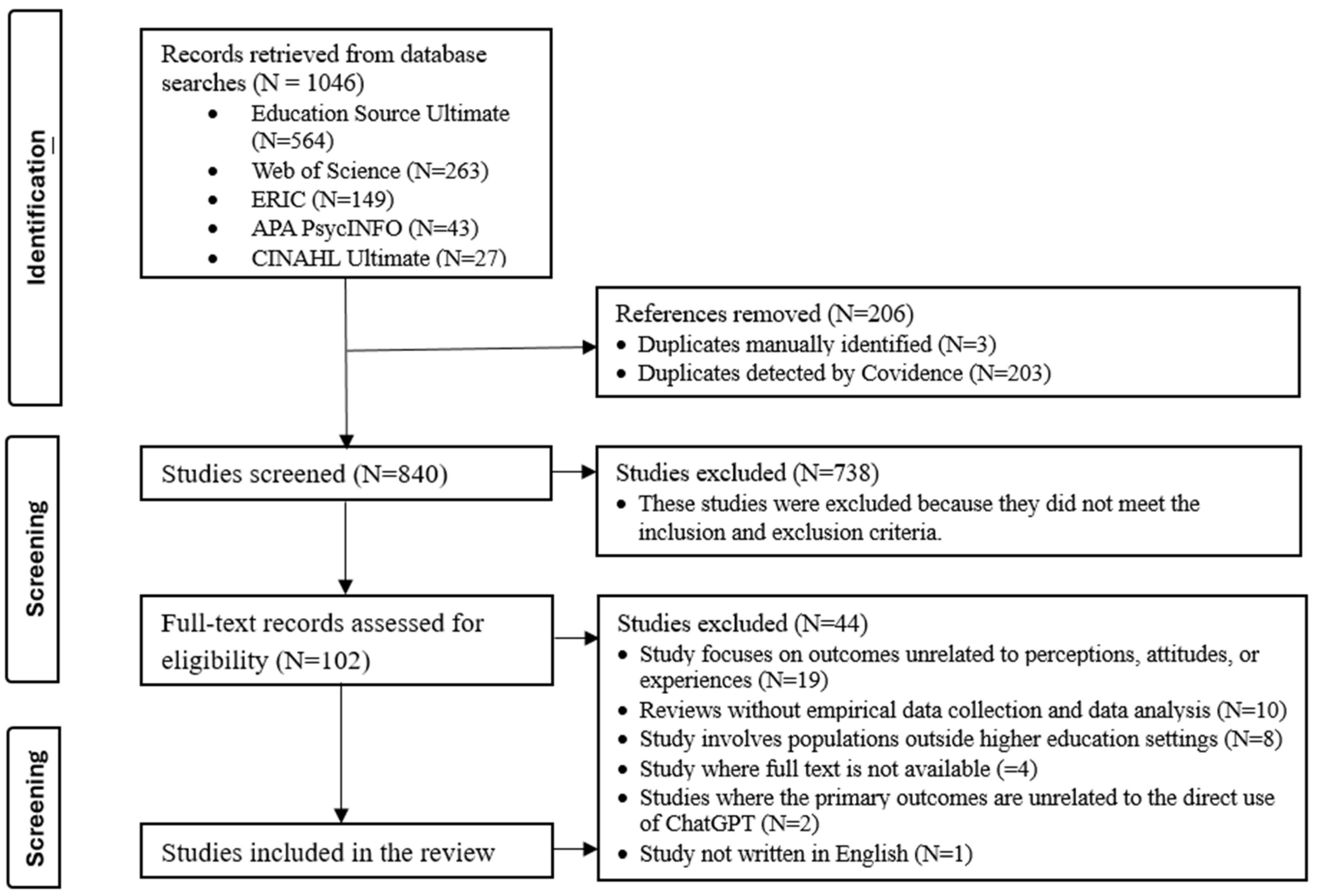
Figure 2.
Countries/locations of the included articles (N = 58).
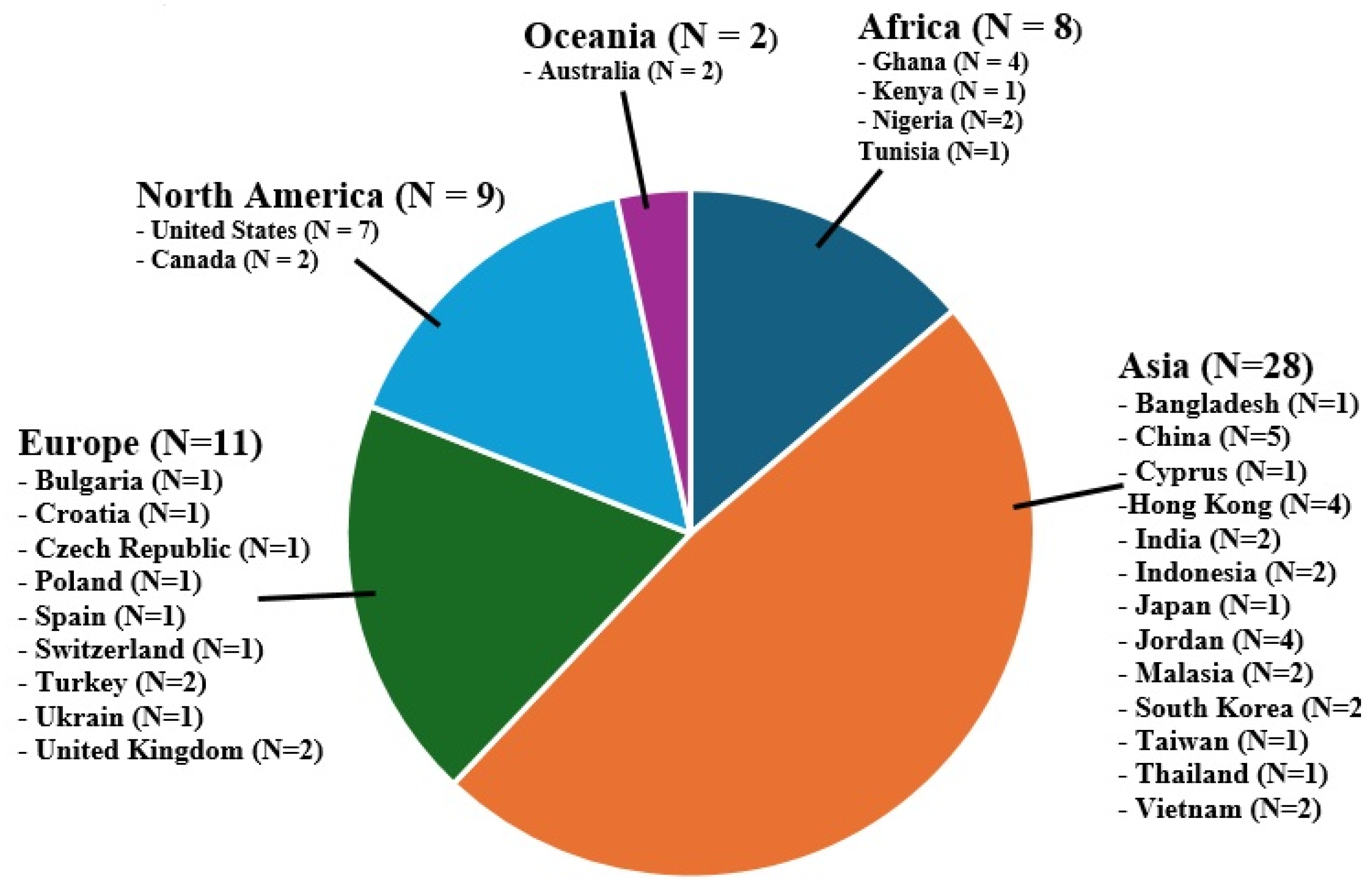
Figure 3.
Perceptions on accuracy and reliability.
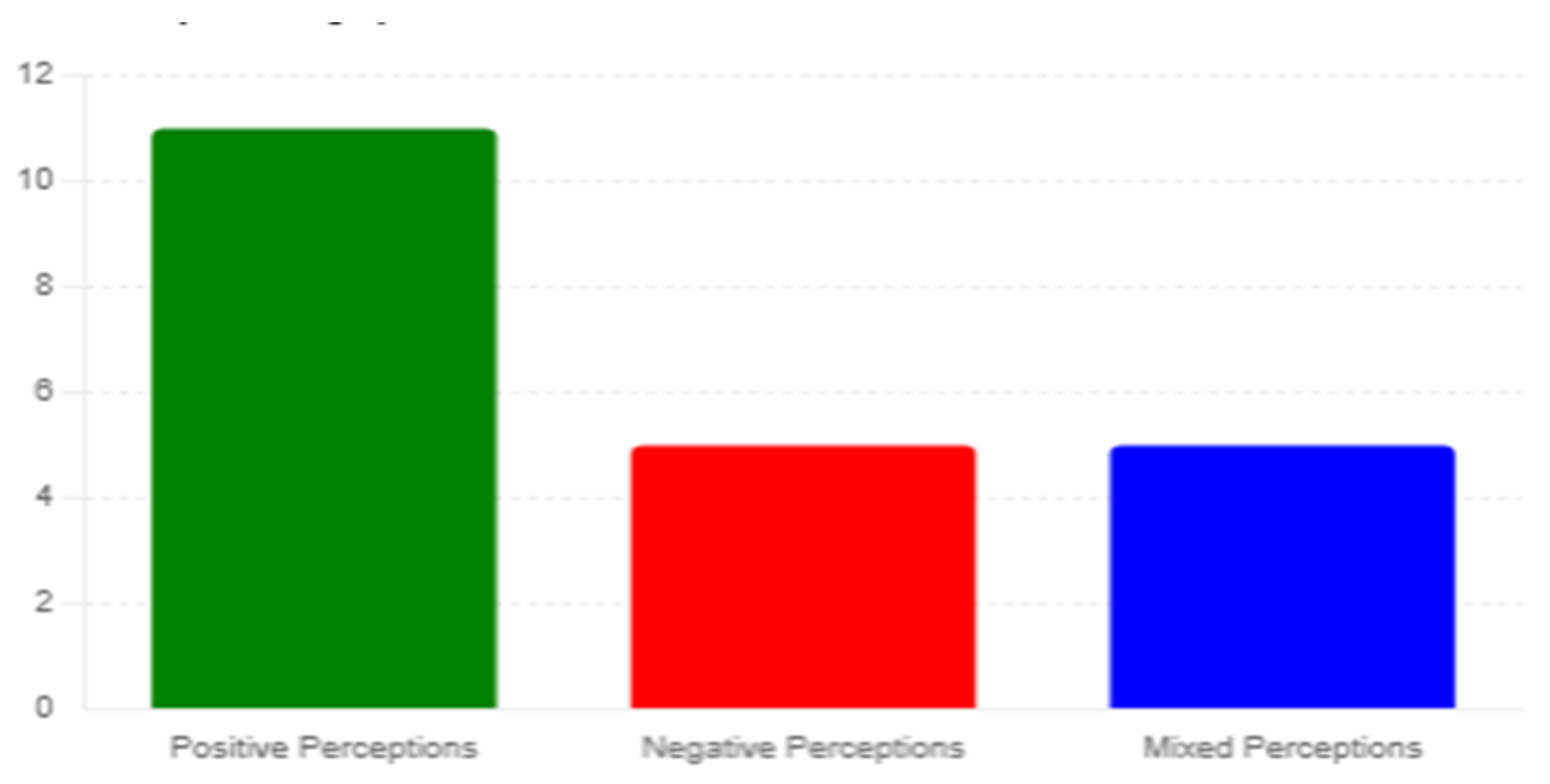
Table 2.
Summary of perceptions on accuracy & reliability.
| Category | Count |
| Positive Perceptions | 11 |
| Negative Perceptions | 5 |
| Mixed Perceptions | 5 |
Table 3.
Studies categorized by perceptions of ChatGPT’s accuracy and reliability.
| Perceptions | Studies | Representative Researcher Comments |
| Positive | Denecke et al. (2023) | "Students and lecturers already use ABTs for tasks within teaching and learning and in exams. The currently most popular tasks supported by ABTs are related to scientific writing, translating texts, and programming." Denecke et al. (2023) [p. 681]. |
| Ding et al. (2023) | “And those students are also found to be perceiving ChatGPT as easy to use and more likely to use it in the future.” Ding et al. (2023) [p. 10] | |
| Adetayo (2023) | "This reflects the practical application of ChatGPT in students’ lives and its potential as a useful tool for work-related purposes." Adetayo (2023) [p. 139] | |
| Romero-Rodriguez et al., (2023) | “The acceptance of ChatGPT by university students is due to their perception of the potential use of this technology in the learning process.” Romero-Rodriguez et al., (2023) [p. 335] | |
| Qu and Wu (2024) | “Notably, the findings endorse H1 and H2, illustrating that users’ perception of ChatGPT’s ease of use significantly boosts its perceived usefulness.” Qu and Wu (2024) [p. 15] | |
| Michael et al. (2024) | “I believe ChatGPT is a useful tool for explaining concepts that aren’t understood well or that a student is struggling to understand" Michael et al. (2024) [p. 1149] | |
| Adams (2023) | “The findings also showed students’ positive perception of ChatGPT’s usefulness in facilitating task and assignment completions and its resourcefulness in locating learning materials.” Adams (2023) [p. 14] | |
| Ngo et al. (2024) | "The results provided strong support for several hypotheses, revealing significant positive effects of expectation confirmation on perceived usefulness and satisfaction, as well as perceived usefulness on user satisfaction and continuous usage of ChatGPT." Ngo et al. (2024) [p. 1367]. | |
| Hu et al. (2023) | "Trainees and professionals were generally positive and excited about using ChatGPT as a training tool. Most of them were excited about the potential of ChatGPT to enhance knowledge transfer.” Hu et al., (2023) [p. 5]. | |
| Tangadulrat et al. (2023) | "Medical students generally had a positive perception of using ChatGPT for guiding treatment and medical education. Both medical students and graduated doctors positively perceived using ChatGPT for creating patient educational materials." Tangadulrat et al. (2023) [p. 5] | |
| Delcker et al. (2024) | "AI-based tools like ChatGPT is a significant predictor of student learning in higher education. It explained 15.41% of the variation in the estimation of AI as a cooperation possibility for humans" Delcker et al. (2024) [p. 7] | |
| Negative | Ngo (2023) | "The most concerning issues for students while using ChatGPT were the inability to assess the quality and reliability of sources, inability to cite sources accurately, and inability to replace words and use idioms accurately." Ngo (2023) [p. 4]. |
| Barrett and Pack (2023) | “Interestingly, both students and teachers predominantly viewed the use of GenAI for writing essays, even when the student is a competent writer, as inappropriate.” Barrett and Pack (2023) [p. 11] | |
| Yusuf et al. (2024) | “A majority of respondents concurred that GenAI systems are susceptible to producing factually inaccurate outputs.” Yusuf et al. (2024) [p. 19]. | |
| Chan and Zhou (2023) | “Compared with knowledge, the connection between the student-perceived cost of using generating AI and students’ intention to use GenAI was stronger, though in a negative way.” Chan and Zhou (2023) [p. 16] | |
| Das and Madhusudan (2024) | “It is revealed that a significant proportion of students (73.4%), either strongly agree or agree that using ChatGPT raises uncertainty about the reliability of information provided.” Das and Madhusudan (2024) [p. 96]. | |
| Mixed | Cummings et al. (2024) | “Student reflections reveal a spectrum of reactions to using Fermat’s AI-powered writing assistant. While many students found it helpful for brainstorming and structuring their essays, others faced challenges with Fermat’s spatial canvas interface and confusion over its AI capabilities." Cummings et al. (2024) [p. 7] |
| Bazelais et al. (2024) | “Although the use of ChatGPT has exploded, it is important to explore the drivers of adoption to mitigate bad outcomes and support best practices in educational environments. Given the novelty and potentially disruptive nature of ChatGPT, it is crucial to understand how advances in AI-chatbots are likely to change education.” Bazelais et al. (2024) [p. 2] | |
| CrcekN and PatekarJ (2023) | "Students were concerned about the tool not being able to answer certain prompts and about receiving incomplete or incorrect information. Nonetheless, the authors concluded that incorporating ChatGPT in programming courses is the right approach due to the predominantly positive influence." CrcekN and PatekarJ (2023) [p. 131] | |
| Kamoun et al. (2024) | “For the faculty survey, four items (P1, P4, P6, P8) conveyed a negative perception of ChatGPT, while six (P2-P3, P5, P7, P9-P10) conveyed a positive perception.” Kamoun et al. (2024) [p. 8] | |
| Kavadella at al. (2024) | "While comparing the output with a reference text, students reported that the answers supplied by ChatGPT were not detailed; sometimes included false data; and were brief, general, or superficial; nevertheless, the key points were evident" Kavadella at al. (2024) [p. 6]. |
Table 4.
Studies categorized by ethical implications of ChatGPT.
| Theme | Studies | Representative Quotes |
| Privacy Concerns | Fiialka et al. (2023) | "Consequently, over-reliance on ChatGPT may become an issue, and the use of the application in education requires respect for privacy, fairness, non-discrimination, and transparency." Fiialka et al. (2023) [p. 237] |
| Chan and Hu (2023) | "The use of GenAI also raised privacy and ethical concerns which was mostly mentioned by students who majored in arts and social science. They were worried that AI would collect personal information from our messages." Chan and Hu (2023) [p. 11]. | |
| Ofosu-Ampong (2024) | "Regarding privacy and ethics, 83% of lecturers (professors) reported it to be a concern for their students." Ofosu-Ampong (2024) [p. 5]. | |
| Ajlouni et al. (2023) | "80.5% of undergraduates agreed that they would not discuss their personal and psychological matters with ChatGPT regarding their concerns about privacy and confidentiality issues." Ajlouni et al. (2023) [p. 212] | |
| Choudhury and Shamszare (2023) | “Policy makers should mandate adherence to ethical and legal guidelines related to privacy, data security, and bias.” Choudhury and Shamszare (2023) [p. 7] | |
| Biases and Fairness | Fiialka et al. (2023) | “It is crucial to be mindful of the social implications of relying on AI in education, such as addressing issues of accessibility, equity, and human biases.” Fiialka et al. (2023) [p. 247] |
| Choudhury and Shamszare (2023) | “There is a possibility of the technology exacerbating preexisting societal biases, as the model’s training data may have inadvertently reflected these biases and cause ChatGPT to produce biased responses.” Choudhury and Shamszare (2023) [p. 2] | |
| Chan (2023) | “Universities should be transparent about the use of generative AI in teaching and learning, which includes disclosing information about the algorithms and their functions, as well as any potential biases or limitations of the AI tools.” Chan (2023) [p. 14] | |
| Academic Integrity | Fiialka et al. (2023) | “Among the negative ones are the generation of non-existent publications, invented biographical facts, students’ violations of academic integrity, students’ performance of tasks without understanding them, and mistakes in mathematical tasks.” Fiialka et al. (2023) [p. 244] |
| Ajlouni et al. (2023) | “There have been challenges about the limitations of GenAI and issues related to ethics, plagiarism, and academic integrity.” Ajlouni et al. (2023) [p. 2] | |
| Ngo (2023) | “The capability to provide precise responses to user inquiries gives rise to apprehensions about the possibility of AI-enabled academic dishonesty, as it can be exploited for completing assignments and exams on behalf of students.” Ngo (2023) [p. 5] | |
| Das and Madhusudan (2024) | “When using ChatGPT in language learning, privacy, bias, reliability, accessibility, authenticity, and negative impact on academic integrity are significant ethical implications to consider while integrating ChatGPT into the language classroom.” Das and Madhusudan (2024) [p. 90] | |
| Chan (2023) | “Both teachers and students have also suggested the use of assessments that minimize opportunities for AI misuse, such as oral examinations or controlled settings where internet access is limited, to help maintain academic integrity.” Chan (2023) [p. 13] | |
| CrcekN and PatekarJ (2023) | “Guidelines on ChatGPT use are needed and that academic integrity should be promoted among students to “ensure ethical uses of ChatGPT in academic context.” CrcekN and PatekarJ (2023) [p. 131] |
Table 5.
The future role of ChatGPT in enhancing traditional teaching methods.
| Theme | Studies | Representative Quotes |
| Teaching and Learning | Li (2023) | "ChatGPT may create a ubiquitous learning environment that allows learners to interact with it in out-of-class and in-class activities." Li (2023) [p. 42] |
| Al-Khatib (2023) | “In the long run, LLM-based chatbots would revolutionize research and education. If adopted successfully, they could be used as online instructors, curriculum developers, markers, and contributors to scholarly publications." Al-Khatib (2023) [p. 1] | |
| Kelly et al. (2023) | “Some academic responses to GenAI have been largely positive, noting these tools’ capability to enhance student learning and accessibility.” Kelly et al. (2023) [p. 13] | |
| Gao et al. (2024) | “The respondents believed ChatGPT and other LLMs can serve as a powerful instructional tool (M = 4.55, SD = 0.965).” Gao et al. (2024) [p. 39] | |
| Content Creation | Al-Khatib (2023) | “For the educator, generative AI presents opportunities to streamline and optimize instructional material development. Generative AI can generate such materials, allowing educators to allocate more time to direct interactions with students.” Al-Khatib (2023) [p. 2] |
| Johnson et al. (2024) | “Chat GPT can act as a “virtual teaching assistant” in helping students to understand concepts and ideas.” Johnson et al. (2024) [p. 3] | |
| Liu et al. (2024) | “Participants frequently utilized AI to collect and integrate online English learning materials and resources.” Liu et al. (2024) [p. 11] | |
| Adetayo (2023) | “ChatGPT uses deep learning techniques to generate human-like responses to text inputs in a conversational manner.” Adetayo (2023) [p. 134]. | |
| Saxena and Doleck (2023) | “Educators could use ChatGPT to create learning evaluation items while saving time and effort and potentially enhancing the content of the questions.” Saxena and Doleck (2023) [p. 2] | |
| Mosleh et al. (2023) | "Less than half the participants used AI programs in their university study: for drug information (44.5%), homework (38.9%), and writing research articles (39.3%)." Mosleh et al. (2023) [p. 1392] | |
| Personalized Learning | Urban et al. (2024) | "ChatGPT can make the task seem more manageable, strengthening participants’ belief in their ability to successfully complete the task and generate high-quality solutions." Urban et al. (2024) [p. 4] |
| Liu and Ma (2023) | “ChatGPT allows language learners to enact new meaning-making practices and benefit from enhanced personalized learning with creativity and productivity.” Liu and Ma (2023) [p. 126] | |
| Algaraady and Mahyoob (2023) | “With ChatGPT, users can quickly identify grammatical errors, spelling mistakes, and other common writing issues. The platform also offers suggestions for improving sentence structure, word choice, and clarity.” Algaraady and Mahyoob (2023) [p. 4] | |
| Jepkemoi et al. (2024) | “Employing ChatGPT in higher education has been attributed to numerous benefits. These benefits include creating innovative assessments, providing automated administrative services, supporting data analysis and research, offering personalized feedback, and facilitating adaptive learning.” Jepkemoi et al. (2024) [p. 26] | |
| Damiano et al. (2024) | “Students recognized the potential for personalized learning support, writing, brainstorming assistance, and research and analysis capabilities.” Damiano et al. (2024) [p. 369] | |
| Creative Capabilities | Liu and Ma (2023) | "ChatGPT can act as a powerful and authentic language-learning tool for EFL learners." Liu and Ma (2023) [p. 134] |
| Karaman and Goksu (2024) | “ChatGPT-4.0 is a chatbot with empathy, creative writing skills, and superior dialogue features, as well as the ability to provide its users with the ability to gain knowledge in different fields, improve their language skills, and provide instant feedback.” Karaman and Goksu (2024) [p. 109] | |
| Park (2023) | “The strongest advantages were “providing answers to questions” and “summarizing information.” Park (2023) [p. 1] | |
| Lelepary (2022) | “Chat GPT can present interactive and engaging learning content, such as quizzes or text-based activities.” Lelepary (2022) [p. 13] | |
| Grajeda et al. (2023) | “The A.I. tools used in this subject encouraged my creativity and innovation.” Grajeda et al. (2023) [p. 10] | |
| Collaboration and Interaction | Hamid et al. (2023) | “The use of ChatGPT helped the collaboration with your group members during the PBL process.” Hamid et al. (2023) [p. 1020] |
| Crawford et al. (2024) | “Students with stronger perceptions of AI social support felt less socially supported by AI. This finding suggests that individuals who have fewer friends may seek out more opportunities to feel more connected and supported by AI.” Crawford et al. (2024) [p. 9] | |
| Adams et al. (2023) | “ChatGPT can also enhance students’ educational experience by simulating conversations and providing immediate support and feedback to students.” Adams et al. (2023) [p. 2] | |
| Romero-Rodriguez et al. (2023) | “The use of ChatGPT facilitates dialogue and interaction between the user and the AI.” Romero-Rodriguez et al. (2023) [p. 324] | |
| Kiryakova and Angelova (2023) | “ChatGPT can function as an intelligent assistant in the learning process and provide learners with interactive help at any time and from any place.” Kiryakova and Angelova (2023) [p. 3] |
Disclaimer/Publisher’s Note: The statements, opinions and data contained in all publications are solely those of the individual author(s) and contributor(s) and not of MDPI and/or the editor(s). MDPI and/or the editor(s) disclaim responsibility for any injury to people or property resulting from any ideas, methods, instructions or products referred to in the content. |
© 2025 by the authors. Licensee MDPI, Basel, Switzerland. This article is an open access article distributed under the terms and conditions of the Creative Commons Attribution (CC BY) license (http://creativecommons.org/licenses/by/4.0/).
Copyright: This open access article is published under a Creative Commons CC BY 4.0 license, which permit the free download, distribution, and reuse, provided that the author and preprint are cited in any reuse.