

Submitted:
04 July 2025
Posted:
07 July 2025
You are already at the latest version
Abstract
Smart textiles are also referred to as electronic textiles or e-textiles, which have emerged as any enabling technology dealing with active electronic elements integrated into conventional textile materials in several industries. This review article describes recent development about smart textiles toward their materials, applications, and challenges with respect to their development. Further synthesis of the findings from different research papers has established that smart textiles have huge potentials with regard to use cases in healthcare, sports, fashion, and environmental monitoring. It concludes by pointing out the likely future direction of research and development in this ever-changing field.
Keywords:
smart textiles
; advanced textiles
; E-textiles
; future garments and textiles
1. Introduction
The gradual convergence of electronics and textile engineering has spawned the emergence of intelligent textiles—a breakthrough form of material designed to perform interactive functions much more sophisticated than those of regular clothing, which are passive in nature. Intelligent textiles embed electronic components such as sensors, actuators, and transmission modules in fabric substrates, rendering them sensitive and responsive to environmental and body stimuli [1,2]. This revolution in technology has not only remapped the functional purpose of clothing but also brought innovation opportunities to a wide spectrum of industries including healthcare, sports and fitness, defense, automotive interiors, and fashion technology [3].
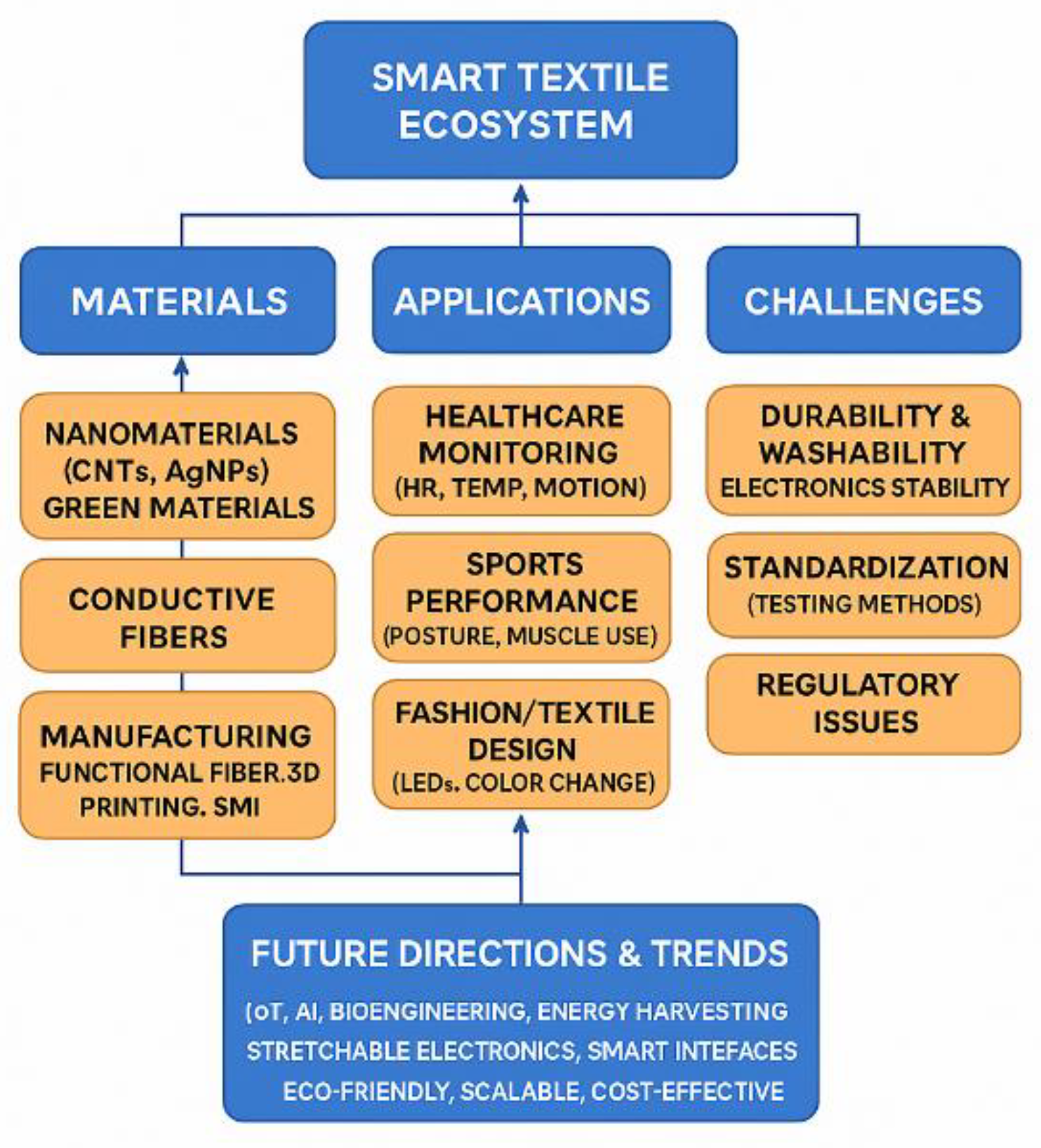
Figure 1.
Graphical abstract.
It is the synergy of disciplines such as materials science, nanotechnology, electrical engineering, and information technology that form the center of this revolution, which collectively drive the creation of clothing that is flexible, lightweight, durable, and multi-purpose [4]. Advances in these disciplines have led to the creation of clothing capable of performing real-time biometric monitoring, thermal regulation, motion detection, and even power harvesting without sacrificing comfort or wearability. These advances are rendering intelligent textiles key enablers in the development of systems for personal healthcare, ambient intelligence, and next-generation wearable technology.
Furthermore, increasing social demand for intelligent, reactive, and environmentally friendly solutions is driving academic and industrial interest in sustainable, eco-friendly smart textile production on an industrially scalable basis. With continued development in the field, smart textiles should lead the next phase of human–technology interaction and immersive experiences with enhanced quality of life in their application areas.
2. Related Work
The existing body of literature on smart textiles reflects a diverse and interdisciplinary research landscape, encompassing innovations in materials, functional integration, fabrication techniques, and end-use applications. As the field evolves, scholars have increasingly focused not only on technological advancement but also on practical implementation, scalability, and user-centered design. Recent studies provide critical insights into how smart textiles can move from experimental concepts to real-world applications, while addressing challenges related to performance, sustainability, and manufacturing efficiency.
Nuroldayeva and Balanay examined the role of flexible electrochromic materials, identifying their potential in the design of interactive and adaptive textiles for wearable devices. Their study highlights how material responsiveness to external stimuli, such as light or voltage, can be harnessed to create garments capable of visual feedback, camouflage, or mood-sensitive aesthetics—demonstrating the increasing fusion of technology and design. [1] Similarly, Ahmed and Ahmed investigated the application of fluorescent inks in textile printing, emphasizing their utility in enhancing the visibility, traceability, and authenticity of garments. Their work is particularly relevant in the domains of safety wear, sportswear, and fashion branding, where visual functionality complements conventional textile attributes. [2]
The scalability and reliability of advanced textile components remain crucial for widespread adoption. Liu et al. addressed this by exploring scalable production methods for functional fibers with nanoscale features. Their findings underscore the importance of high-throughput fabrication processes capable of preserving material properties such as conductivity, flexibility, and durability—key requirements for integrating sensors and circuits into everyday clothing. [3]
Wearablee-textiles combine smart accoutrements and technology to sense and respond to external stimulants. Using conductive polymers, carbon nanotubes, and essence nanoparticles, they're applied in healthcare, service, and fashion for functions like covering vitals, trouble discovery, and interactive apparel. This paper reviews recent inventions in this field. [4]
In parallel, Sowbhagyam investigated the integration of nanotechnology into textile systems, offering a comprehensive discussion on how nanoscale surface treatments, coatings, and embedded structures contribute to multifunctionality and environmental sustainability. This includes enhancements in self-cleaning properties, antimicrobial resistance, UV protection, and energy storage, which collectively push the boundaries of textile performance. [5]
From a healthcare perspective, Kruse et al conducted a systematic review focusing on smart textile applications for elder care. Their analysis revealed the growing role of textile-based sensors and monitoring systems in supporting independent living, detecting falls, and continuously assessing physiological parameters such as heart rate, temperature, and movement. Such contributions demonstrate the potential of smart textiles not only in clinical settings but also in everyday environments, addressing the needs of aging populations through unobtrusive, wearable technologies.
Taken together, these studies illustrate the breadth of contemporary research on smart textiles, reflecting both fundamental innovation at the material and device level and applied research targeting specific societal and industrial challenges. The literature points to a clear trend toward holistic development—where technical functionality is integrated with comfort, usability, scalability, and sustainability, forming the foundation for the next generation of intelligent, responsive textile systems. [6]
3. Methodology
This review synthesizes findings from a wide range of research studies, scholarly works, and authoritative sources, including peer-reviewed journals, conference proceedings, white papers, patents, and government and industry reports. The selection criteria were deliberately broad to capture developments across various fields, particularly in innovative materials, advanced technologies, interdisciplinary applications, and sustainable practices. Special attention was given to topics such as smart textiles, high-performance materials, green and sustainable material solutions, nanotechnology, biocomposites, additive manufacturing, and emerging trends in material science and engineering.
The search strategy was designed to be comprehensive and ensure the inclusion of the most relevant and recent developments in the field. A systematic search was conducted using established academic databases such as Scopus, Web of Science, PubMed, and IEEE Xplore, complemented by searches in specialized repositories and open-access journals. To maintain a balance between recent advancements and foundational context, the review encompasses studies published primarily over the past decade, while also considering seminal works that provide important insights into the evolution of the field. This approach enabled the inclusion of a wide range of interdisciplinary research, incorporating knowledge from materials science, engineering, environmental science, and technological innovation.
An in-depth analysis of the collected literature was carried out to identify and categorize major technological breakthroughs, significant trends, and key developments in smart textiles and related technologies. The review also explores ongoing challenges in the field, such as scalability, cost-effectiveness, environmental impact, and regulatory concerns. Additionally, it examines the role of cross-disciplinary collaborations, which have been critical in driving innovation in this area. The review concludes with potential future research directions aimed at bridging existing gaps and advancing the state-of-the-art in smart textile technologies.
This methodology provides a comprehensive and systematic framework for understanding the current state of research in smart textiles and related material technologies, offering a valuable resource for researchers, practitioners, and policymakers interested in this rapidly evolving field.
4. Results and Discussion
4.1. Materials Used in Smart Textiles
The development of smart textiles is heavily reliant on advanced materials, with nanomaterials and conductive fibers being among the most critical components. These materials not only enhance the functionality of textiles but also contribute to their sustainability. The integration of such materials enables smart textiles to perform a wide range of functions, from sensing and monitoring to energy harvesting and environmental interaction. The following sections explore the key materials used in the creation of smart textiles, focusing on their role in enhancing performance and enabling new applications.
Nanomaterials, particularly carbon nanotubes and silver nanoparticles, have emerged as pivotal components in the design and functionality of smart textiles. These nanomaterials impart a range of enhanced properties to fabrics, such as antimicrobial resistance, UV protection, and electrical conductivity, which are crucial for wearable technologies that must endure various environmental conditions. Nanotextile fabrics enriched with these materials offer enhanced durability and adaptability, making them ideal for both functional and aesthetic applications. For example, Popescu and Ungureanu (2023) have explored the synthesis of green nanomaterials for integration into smart textiles, emphasizing their positive environmental impacts, including biodegradability and reduced toxicity compared to traditional nanomaterials [7]. This research highlights the growing interest in eco-friendly materials in the development of smart textiles, as sustainability continues to be a key concern in the field.
4.2. Applications of Smart Textiles
The applications of smart textiles span a variety of industries, with healthcare, sports, and fashion being among the most prominent. As these textiles evolve, their capabilities are increasingly being applied in both everyday life and specialized fields. The versatility of smart textiles allows them to serve as an innovative tool for monitoring health, improving athletic performance, and revolutionizing the fashion industry. Below, we explore these applications in detail.
4.2.1. Healthcare
One of the most transformative applications of smart textiles lies in the healthcare sector, where they are being developed to monitor physiological parameters such as heart rate, body temperature, and respiratory rate in real-time. These textiles can serve as continuous monitoring devices, offering significant advantages for remote patient monitoring and early diagnosis. The integration of biosensors and data transmission capabilities into fabrics allows healthcare professionals to track patients’ conditions remotely, leading to timely interventions and improved patient outcomes. As noted by [8], the potential for medical smart textiles to revolutionize healthcare is immense, particularly in the context of managing chronic diseases, post-operative recovery, and elderly care.
4.2.2. Sports
In the realm of sports, smart textiles are gaining traction as tools to enhance both performance and safety. By embedding wearable sensors within sportswear, athletes can continuously monitor their physiological responses, such as heart rate, muscle fatigue, and body temperature, as well as movement patterns. This real-time data can be used to optimize training regimens, prevent injuries, and improve overall performance. For example, smart textiles can provide athletes and coaches with precise data about muscle strain and posture, enabling more personalized and data-driven training strategies [9]. Such advancements in sports textiles not only benefit professional athletes but also promote a deeper understanding of human physiology during physical activity.
4.2.3. Fashion
The fashion industry is increasingly incorporating smart textiles to create garments that can change color, pattern, or texture in response to environmental stimuli such as temperature, light, or touch. These innovative fabrics enable new forms of interactive fashion and personal expression, allowing wearers to customize their appearance in real time. Designers are exploring the use of thermochromic and photochromic materials, which change properties based on heat or light exposure, as well as fabrics integrated with LEDs or electronic circuits for dynamic visual effects. These developments are opening up exciting new avenues for both functional and artistic expression in the fashion world, as illustrated by recent works in [10] and [11], which showcase interactive and adaptive clothing designs in cutting-edge collections.
4.2.4. Challenges in Smart Textile Development
Despite the promising developments in smart textiles, several challenges remain that must be addressed for widespread commercialization. One of the key challenges is durability, particularly the ability of smart textiles to withstand washing and wearing over time without compromising their functionality. The integration of electronic components into fabrics raises concerns about their longevity and resilience to environmental factors such as moisture, abrasion, and UV exposure. In addition, the development of testing standards and protocols for these textiles is still in its early stages, meaning that ensuring the reliability and safety of smart textiles remains a critical area of research. Furthermore, scalability, cost-effectiveness, and regulatory issues pose significant barriers to the mass production of smart textiles. As noted by [12], ensuring that these textiles are affordable for consumers while maintaining high performance and safety standards is essential for their broader adoption.
4.2.5. Future Challenges and Advancement of E-Textile
Harvesting energy from human motion through piezoelectric fibers is an encouraging option for powering wearable electronics. If integrated into clothes, these fibers can generate electricity from bodily movements. Though materials such as PVDF and barium titanate are employed, issues relating to power output, sensitivity to environmental changes, and integration still remain. Further developments ought to focus on improving efficiencies, creating hybrid systems, and ensuring comfort and durability that will ultimately lead to smart textiles capable of health monitoring and portable power [13].
The field of smart fabrics, which integrates electronics into fabrics for various operations. It covers the history of their development, current technological challenges analogous as durability, washability, and power force, and different fabrication styles like weaving, knitting, and finishing ways. The composition also discusses various types of cloth- integrated sensors (e.g., pressure, heart rate, temperature, strain, and natural, optical, and gas sensors) and affair bias [14].
Technological Advancements: Details on progress in accoutrements, factors, and integration styles for smart cloth systems.
Challenges: Recognition of issues similar as high manufacturing costs, lack of invariant norms, and enterprises regarding product continuity, washability, and public acceptance.
Growth Enablers: Factors pushing the assiduity forward, including adding consumer demand for wearable technology, inventions in miniaturization, and the pursuit of more comfortable and functional products.
Future Recommendations: Strategic guidance for unborn sweats in exploration and development, fostering collaboration across disciplines, perfecting education and training, and establishing clear nonsupervisory fabrics to grease request relinquishment [15].
Thermal Comfort:
Clothing helps maintain the thermal and moisture balance of the mortal body by icing optimal heat gain/ loss, air movement near the skin, and moisture transport to and from the skin, to produce a sensation of comfort. To this end, the current vesture systems are shy and central heating and cooling systems are necessary to achieve thermal comfort. Encyclopedically, space heating and cooling account for over one- third of all energy consumed in structures, rising to over 50 in cold climates. This has reacted in an ever-present concern about the unsustainable growth in energy consumption, especially for heating and cooling as populations, homes and erected surroundings around the world increase in a period of global warming. [16].
Optical sensor to monitor health:
A study introduces a flexible, low- cost smart cloth system integrating multiplexed optic detectors able of covering stir, force, and temperature. This technology demonstrates strong eventuality for remote health monitoring through accurate exertion recognition and wearable integration [17].
Types of Smart Wearable’s:
Design: Must insure continuity, comfort, safety, aesthetics, and artistic fit.
Communication Architecture: Wireless/ conductive fabrics enable subsystem connectivity.
Selectors: LEDs, sound, vibration, heating/ cooling.
Control Subsystem: Microcontrollers, CPUs, and FPGAs balance power vs. performance.
Communication Subsystem: RFID, BLE, Wi-Fi link garments to IoT.
Power Subsystem: Batteries super capacitors power electronics.
Storage Subsystem: Original/ remote storehouse for data operation.
Display Subsystem: Optional TV/ OLED for direct stoner commerce [18].
Integration of stretchable and washable electronic modules:
The developed supple molded interconnect (SMI) technology is well- suited for cloth integration, offering a advanced degree of integration than rigid and flexible circuit boards. It has demonstrated good adhesion and continuity, opposing up to 50 domestic washing cycles, and unborn work aims to ameliorate the robustness of these modules [19].
3D printed stretchable smart fibers and textiles for self-powered e-skin:
We developed 3D- published coextensive elastic filaments and smart fabrics for tone- powered wearable tactile seeing. These accoutrements are supple, washable, and stable, enabling characterization of pressure, position, and material information [20].
As shown in Table 1, Smart fabrics are fabrics integrated with technology that can smell and respond to environmental stimulants. They include orders like unresisting, active, and ultra-smart fabrics, each with unique capabilities. These fabrics find operations in areas similar as healthcare, sportswear, military gear, and fashion particulars. Still, crucial challenges remain in making them durable, washable, and easy to power for practical everyday use.
As shown in Table 2, The United States leads in smart cloth exploration, wearable technology, and military operations. China is strong in manufacturing and has a fleetly growing consumer request for smart fabrics. Germany excels in automotive and specialized smart fabrics with advanced engineering. Meanwhile, Japan and South Korea concentrate on innovative smart fabrics integrated with electronics and robotics.
As shown in Table 3, Smart fabrics use conductive filaments and nanomaterials like carbon nanotubes and tableware nanoparticles to enhance continuity, seeing, and protection. They enable operations in healthcare for covering vital signs, in sports for performance shadowing, and in fashion for interactive garments. Unborn developments aim to integrate AI and IoT while prostrating challenges related to continuity, standardization, and scalability.
As shown in Figure 2, Figure 3, Figure 4 and Figure 5, Smart fabrics are revolutionizing colorful fields. Artificial blood vessels use engineered fabrics to mimic natural functions. For particular health, tracing wear and tear- health fabrics bed detectors to continuously cover vital signs. In active wear, ultramodern ski jackets now feature integrated heating and tracking systems. Incipiently, phase change fabric laboriously regulates body temperature, offering adaptive comfort. These inventions demonstrate how smart fabrics are reshaping our diurnal lives and diligence.
5. Conclusion
As shown in Figure 1, the whole things/steps are presented by a graphical/schematic diagram system. That is very easy to understand. Smart fabrics are a rapidly growing, complex field with the potential for game-changing events across a wide range of industries and disciplines. Advanced equipment, state-of-the-art technologies, and interdisciplinary innovation have enabled the development of innovative applications in health care, sports, fashion, defense, automotive, and environmental monitoring. From operations performed using wearable detectors for health diagnostics to adaptive apparel that may respond to environmental stimulants, the broad versatility of smart fabrics is highlighted. Though much has been achieved with smart fabrics, there are serious drawbacks which offer a barrier to the greater laying-off and perpetration in smart fabrics. Such widely perceived problems with continuity, scalability, cost-effectiveness, standardization, and environmental sustainability are the most basic barriers that need to be overcome. Second, integrating the electronic component with flexible accessories solidly will contribute toward assuring trustability and user comfort for very long periods. Progress in this dynamic field will be possible only by the continued collaboration of scientists, thinkers, designers, policy framers, and industry players. Other ways to further expand the potentiality of invention include multidisciplinary hookups and investments in exploration and development. Development and efforts toward universal norms of smart fabrics, eco-friendly accoutrements, and cost-effectiveness of manufacturing ways will play a very vital role in the commercialization and acceptance of smart fabrics worldwide. In the future, the development of intelligent textiles will most likely be influenced by emerging trends such as the Internet of Things (IoT), Artificial Intelligence (AI), and bioengineering. These technologies hold the promise of creating a mostly justified and responsive fabric outcome, further extending the range of operations. It will continue to review traditional diligence and produce new openings as the field keeps growing, which in return makes it a foundation of technological and material invention in the 21st century.
Informed Consent
This review paper, "A Tiny Analysis about the Advancement in Smart Textile," synthesizes and compares existing studies and scholarly writings on smart textiles. The studies in this instance are grounded in previously published literature, reports, and studies. As such, the review does not involve any new primary research involving human subjects. The authors have exerted their full efforts to best represent the outcomes and conclusions drawn from the primary research. There has been an appropriate acknowledgement to all sources as per citing and referencing. Material used in the review has been obtained from academia databases, depositories, and other accessible materials in compliance with the ethical requirements of academic study. Through the reading of this review, it is evident that the reader is aware that the reader knows that the content is a collection of existing scholarly work and not a presentation of fresh data collected from human subjects.
Funding
No funding involved.
Author Contributions Statement
| Name of Author | C | M | So | Va | Fo | I | R | D | O | E | Vi | Su | P | Fu |
| Md. Alif Robaiyat | ✔ | ✔ | ✔ | ✔ | ✔ | ✔ | ✔ | ✔ | ✔ | ✔ | ✔ | ✔ | ✔ | ✔ |
Ethical Approval
There is no ethical approval.
Data Availability
All are collected from authentic scientific sources.
Conflict of Interest Statement
The author declare that he has no conflicts of interest.
Recommendations
Development and progress towards universal standards for smart fabrics, green materials, and cost-effectiveness of the production process will be central to commercialization and usage of smart fabrics across the world. Intelligent textiles will follow most likely by being driven by emerging trends in the shape of the Internet of Things (IoT), Artificial Intelligence (AI), and bioengineering. More interaction of scientists, thinkers, designers, policy makers, and business persons.To further enlarge the potentiality of invention involve multidisciplinary hook-ups and investment in exploration and development.
References
- Nuroldayeva, G.; Balanay, M.P. Flexing the Spectrum: Advancements and Prospects of Flexible Electrochromic Materials. Polymers 2023, 15, 2924. [CrossRef]
- Ahmed, K.A.; Ahmed, E.A. Fluorescent inks and their potential applications in textile printing. J. Ind. Text. 2025, 55. [CrossRef]
- Liu, Y.; Chen, L.; Li, W.; Pu, J.; Wang, Z.; He, B.; Yuan, S.; Xin, J.; Huang, L.; Luo, Z.; et al. Scalable Production of Functional Fibers with Nanoscale Features for Smart Textiles. ACS Nano 2024, 18, 29394–29420. [CrossRef]
- Singha, K.; Kumar, J.; Pandit, P. Recent Advancements in Wearable & Smart Textiles: An Overview. Mater. Today Proc. 2019, 16, 1518–1523. [CrossRef]
- Sowbhagyam, D.V. Smart Fabric Textiles Using Nanomaterials: A Contemporary Overview. Int. Res. J. Adv. Eng. Hub (IRJAEH) 2024, 2, 205–209. [CrossRef]
- Kruse, K.; Sauerwein, W.; Lübben, J.; Dodel, R. Smart technologies and textiles and their potential use and application in the care and support of elderly individuals: A systematic review. Rev. Adv. Mater. Sci. 2024, 63. [CrossRef]
- Popescu, M.; Ungureanu, C. Green Nanomaterials for Smart Textiles Dedicated to Environmental and Biomedical Applications. Materials 2023, 16, 4075. [CrossRef]
- M. R. Hossain, M. R. Ahmed, and M. S. Alam, “Smart textiles,” Text. Prog., vol. 55, pp. 47–108, 2023.
- Wang, T.; Liu, C.; Zhang, J.; Wang, A. Systematic Evaluation of Research Progress in the Textile Field over the Past 10 Years: Bibliometric Study on Smart Textiles and Clothing. Processes 2023, 11, 2797. [CrossRef]
- Arshi, O.; Mondal, S. Advancements in sensors and actuators technologies for smart cities: a comprehensive review. Smart Constr. Sustain. Cities 2023, 1, 1–19. [CrossRef]
- Tabassum, M.; Zia, Q.; Zhou, Y.; Wang, Y.; Reece, M.J.; Su, L. A Review of Recent Developments in Smart Textiles Based on Perovskite Materials. Textiles 2022, 2, 447–463. [CrossRef]
- Chaudhary, B.; Winnard, T.; Oladipo, B.; Das, S.; Matos, H. Review of Fiber-Reinforced Composite Structures with Multifunctional Capabilities through Smart Textiles. Textiles 2024, 4, 391–416. [CrossRef]
- Mokhtari, F.; Cheng, Z.; Raad, R.; Xi, J.; Foroughi, J. Piezofibers to smart textiles: a review on recent advances and future outlook for wearable technology. J. Mater. Chem. A 2020, 8, 9496–9522. [CrossRef]
- Cherenack, K.; van Pieterson, L. Smart textiles: Challenges and opportunities. J. Appl. Phys. 2012, 112, 091301. [CrossRef]
- Schwarz, A.; Van Langenhove, L.; Guermonprez, P.; Deguillemont, D. A roadmap on smart textiles. Text. Prog. 2010, 42, 99–180. [CrossRef]
- Tabor, J.; Chatterjee, K.; Ghosh, T.K. Smart Textile-Based Personal Thermal Comfort Systems: Current Status and Potential Solutions. Adv. Mater. Technol. 2020, 5, 1901155. [CrossRef]
- Leal-Junior, A.; Avellar, L.; Frizera, A.; Marques, C. Smart textiles for multimodal wearable sensing using highly stretchable multiplexed optical fiber system. Sci. Rep. 2020, 10, 1–12. [CrossRef]
- Fernández-Caramés, T.M.; Fraga-Lamas, P. Towards The Internet of Smart Clothing: A Review on IoT Wearables and Garments for Creating Intelligent Connected E-Textiles. Electronics 2018, 7, 405. [CrossRef]
- Vervust, T.; Buyle, G.; Bossuyt, F.; Vanfleteren, J. Integration of stretchable and washable electronic modules for smart textile applications. J. Text. Inst. 2012, 103, 1127–1138. [CrossRef]
- Chen, Y.; Deng, Z.; Ouyang, R.; Zheng, R.; Jiang, Z.; Bai, H.; Xue, H. 3D printed stretchable smart fibers and textiles for self-powered e-skin. Nano Energy 2021, 84. [CrossRef]
Author Biography
 |
Md. Alif Robaiyat, also known as Rafin Xz, is a multi-talented artist famous for his music, research and meritory. He's a singer, music composer, researcher, and textile engineer, gaining recognition in both Bangladesh and India. Rafin has been verified on several platforms and was born in Mymensingh, Bangladesh. His research interest areas are functional clothes, technical textiles, smart textiles, composite materials. Link: https://www.google.com/search?kgmid=/g/11p15_kmm7&hl=en-BD&q=Rafin+Xz&shndl=17&source=sh/x/kp/osrp/m5/1&kgs=c76a4cc9cc222b8c&sei=FBBvaJ7uB7bvseMPpI7JwQ8. |
Figure 2.
Artificial blood vessel.
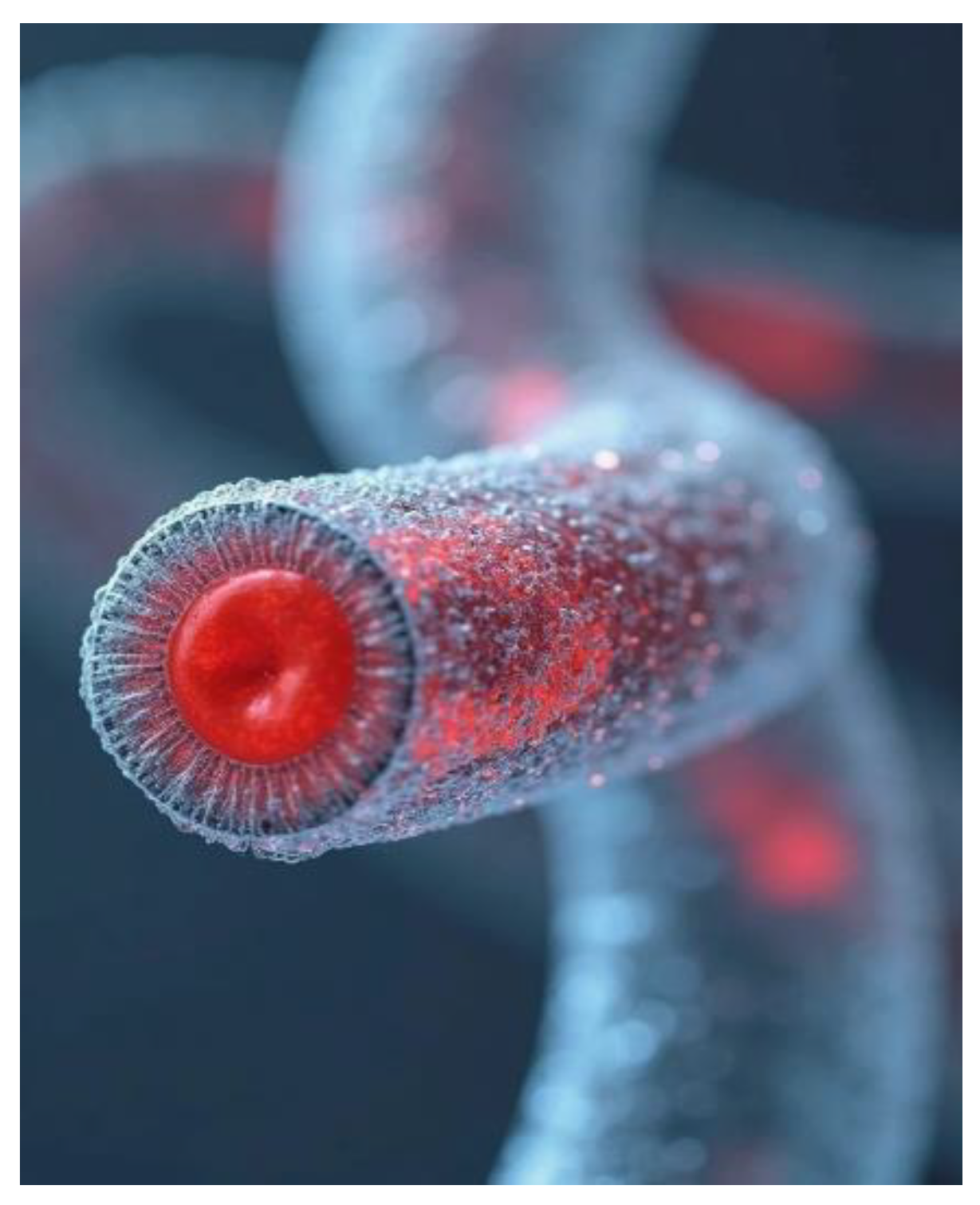
Figure 3.
Phase change fabric.

Figure 4.
Ski jacket.
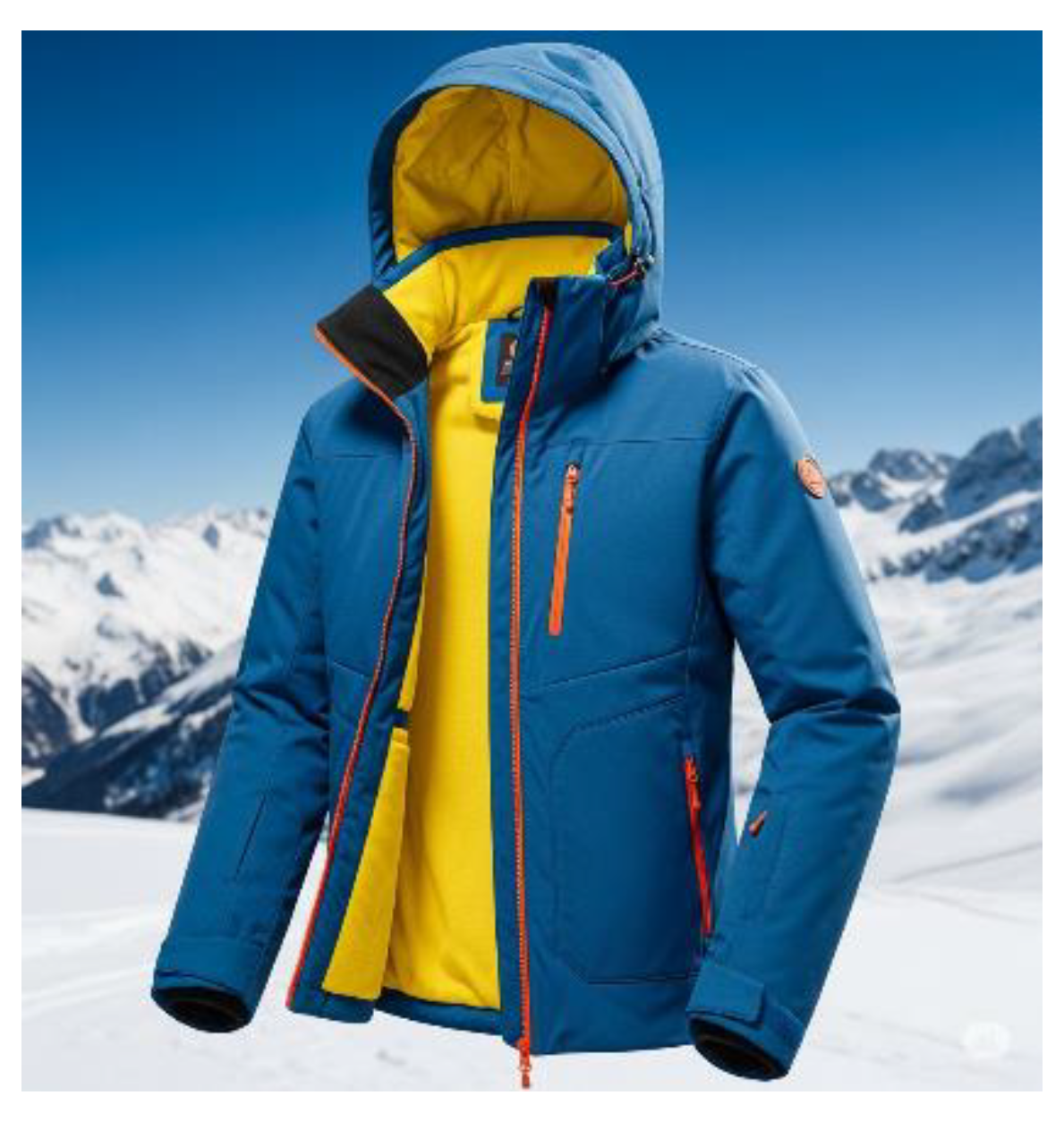
Figure 5.
Tracing wear.
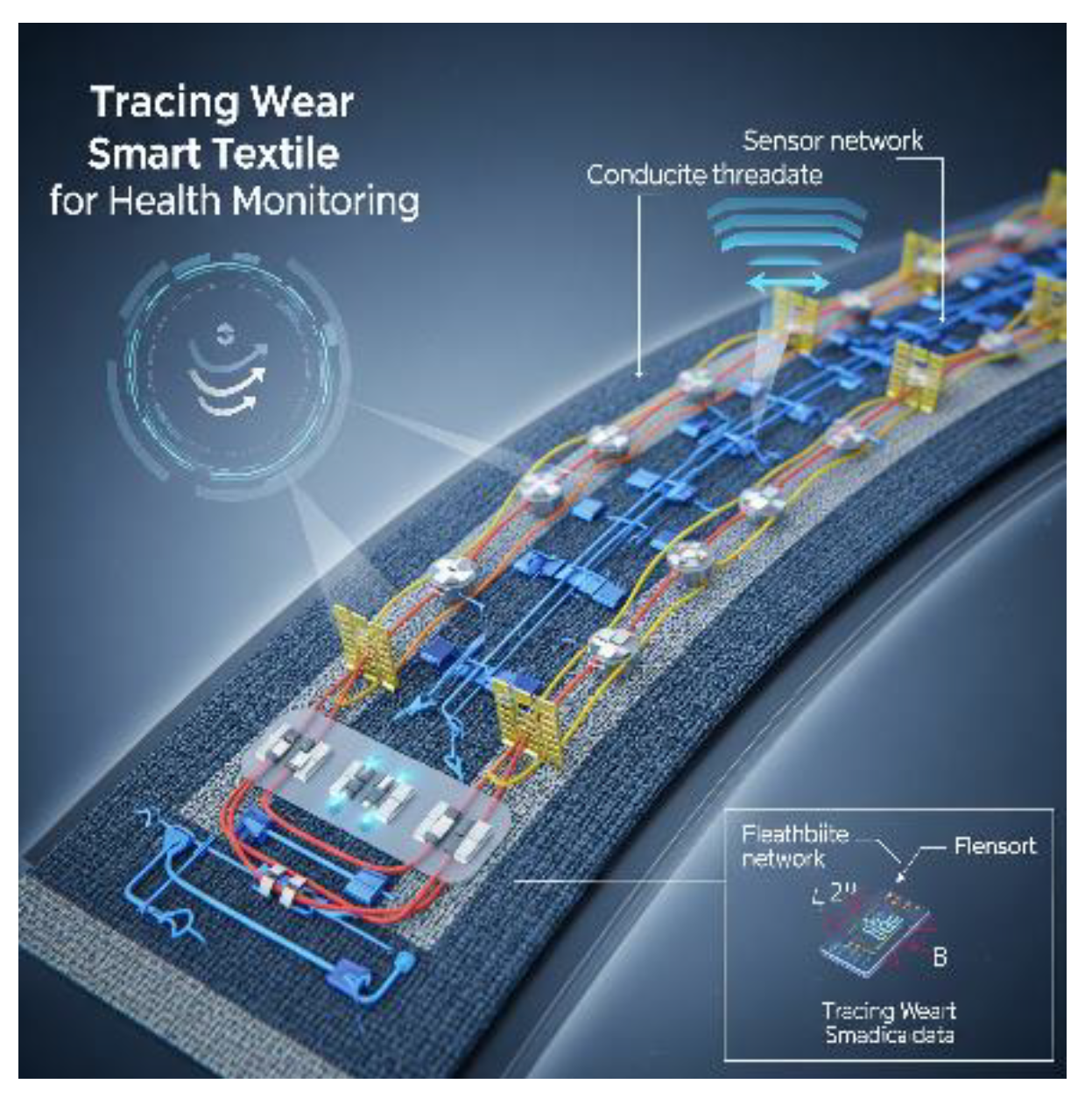

Table 1.
A simple overview of smart textiles.
| Aspect | Description | Examples |
| Definition | Textiles integrated with technology to sense & react. | Fabrics with sensors or actuators. |
| Categories | Passive, active, and ultra-smart textiles. | Thermo regulating fabrics, e-textiles. |
| Applications | Healthcare, sports, military, fashion. | Heart-rate monitoring shirts, heated jackets. |
| Key Features | Conductivity, flexibility, responsiveness. | Silver-coated fibers, shape-memory alloys. |
| Challenges | Durability, wash ability, power supply. | Battery integration, waterproofing. |
Table 2.
Top 5 country wise ranking of using smart textiles.
| Rank | Country | Key Highlights | |
| 1 | United States | Leading in research, wearable tech, and military. | |
| 2 | China | Strong manufacturing, growing consumer market. | |
| 3 | Germany | Advanced automotive and technical textiles. | |
| 4 | Japan | Innovations in smart fabrics, robotics textiles. | |
| 5 | South Korea | Focused on electronics-integrated textiles. |
Table 3.
Smart textile developments, applications, and challenges.
| Category | Key Points | Examples / References |
| Materials Used | - Conductive fibers for signal transmission and sensing- Nanomaterials for durability, conductivity, antimicrobial, and UV protection | V₂O₅ nanowires ; CNTs, silver nanoparticles |
| Types of Nanomaterials | - Carbon Nanotubes (CNTs)- Silver Nanoparticles- Green nanomaterials | Popescu & Ungureanu (2023) |
| Healthcare Applications | - Real-time monitoring of heart rate, temperature, movement- Elder care (fall detection, remote monitoring) | Kruse et al.; Hossain et al. |
| Sports Applications | - Muscle activity & posture tracking- Performance enhancement- Injury prevention | Wang et al. |
| Fashion Applications | - Interactive garments (color change, LEDs)- Thermochromic and photochromic materials- Smart couture | Arshi & Mondal Tabassum et al. |
| Manufacturing Techniques | - Scalable production of functional fibers- High-throughput nanofabrication | Liu et al. |
| Environmental Benefits | - Use of biodegradable and eco-friendly materials- Energy-efficient textiles | Popescu & Ungureanu (2023) |
| Challenges | - Durability (washing, wear, environmental exposure)- Standardization of testing methods- Scalability & cost-effectiveness- Regulation & compliance | Chaudhary et al.; Singha et al. |
| Future Trends | - Integration with AI and IoT- Development of smart interfaces for biofeedback- Multidisciplinary collaboration for commercialization | Author’s analysis (Conclusion section) |
Disclaimer/Publisher’s Note: The statements, opinions and data contained in all publications are solely those of the individual author(s) and contributor(s) and not of MDPI and/or the editor(s). MDPI and/or the editor(s) disclaim responsibility for any injury to people or property resulting from any ideas, methods, instructions or products referred to in the content. |
© 2025 by the authors. Licensee MDPI, Basel, Switzerland. This article is an open access article distributed under the terms and conditions of the Creative Commons Attribution (CC BY) license (http://creativecommons.org/licenses/by/4.0/).
Copyright: This open access article is published under a Creative Commons CC BY 4.0 license, which permit the free download, distribution, and reuse, provided that the author and preprint are cited in any reuse.


