

Submitted:
03 July 2025
Posted:
04 July 2025
You are already at the latest version
Abstract
The extensive use of conventional pesticides has been a fundamental strategy in modern agriculture for controlling pests and increasing crop productivity; however, their improper application poses significant risks to human health and environmental sustainability. This review compiles scientific evidence linking pesticide exposure to oxidative stress and genotoxic damage particularly affecting rural populations and commonly consumed foods, even at levels exceeding the maximum permissible limits in fruits, vegetables, and animal products. Additionally, excessive pesticide use has been shown to alter soil microbiota, negatively compromising long-term agricultural fertility. In response to these challenges, recent advances in nanotechnology offer promising alternatives. This review highlights the development of nanopesticides designed for controlled release, improved stability, and targeted delivery of active ingredients, thereby reducing environmental contamination and increasing efficacy. Moreover, emerging nanobiosensor technologies, such as e-nose and e-tongue systems, have shown potential for real-time monitoring of pesticide residues and soil health. Although pesticides are still necessary, it is crucial to implement stricter laws and promote sustainable solutions that ensure safe and responsible agricultural practices. The need for evidence-based public policy is emphasized to regulate pesticide use and protect both human health and agricultural resources.
Keywords:
oxidative stress
; environmental sustainability
; nanobiosensors
; nanoparticles
; antioxidant enzymes
; nanopesticides
1. Introduction
Population standards regarding resource production have evolved in response to the requirements of their social and historical context, primarily during the mid-20th century, when advances in chemistry and technology enabled the development of chemical agents for various functions. Many of these developments were driven by military needs, such as the urgent need to ensure a stable food supply under the threat of armed conflicts or natural disasters, which encouraged the development of efficient agricultural strategies [1]. The use of pesticides is a consequence of the search for tools and methodologies that maximize food production. They also generated widespread acceptance among the population due to their contribution to disease reduction by eliminating their vectors (crop pests) [2].
The evolution of pesticides can be categorized into three general phases. The first involved the use of natural pesticides, such as sulfur, silicon dioxide, and rotenone, which have been known since 1870 for their membrane-damaging effect on pathogens [3]. The second phase involved the development of inorganic pesticides, such as arsenicals and sulfides, which were commonly used between 1870 and 1945. The third phase emerged with the synthesis of organic synthetic pesticides, such as organophosphates and carbamates, which are still widely used today [2]. These developments gave rise to a wide range of classifications based on the concentration of active ingredients, chemical composition, mechanism of action, persistence, and target pest [4]. Pesticides demonstrate great versatility due to their structural diversity and specific mechanism of action. These compounds can be tailored to control a wide variety of organisms, including insects, fungi, bacteria, mammals, weeds, or herbs.
Pesticides have played a crucial role in modern agriculture by enhancing crop yields and ensuring food security. However, the intensive and often indiscriminate use of conventional pesticides has led to serious concerns regarding environmental pollution and adverse health effects in humans. Pesticide residues are frequently detected in soil, water bodies, and food products, contributing to ecological imbalance, biodiversity loss, and the bioaccumulation of toxic compounds across trophic levels [5]. Human exposure to pesticides, particularly in agricultural communities, has been associated with a wide range of chronic health conditions, including endocrine disruption, neurotoxicity, reproductive disorders, and carcinogenesis [6].
Environmental impacts are also significant. Pesticide runoff can contaminate aquatic ecosystems, impairing microbial communities, affecting non-target organisms such as pollinators and beneficial insects, and disrupting natural pest control mechanisms [7]. The persistence of certain pesticides in the environment contributes to long-term contamination, undermining efforts to achieve sustainable agriculture and conserve soil fertility [8]. While their regulated use has led to increased crop and feed production, concerns remain regarding unregulated use and human and environmental exposure. Regulatory frameworks differ considerably between countries and regions, further complicating the management of their risks [9].
Considering these challenges, nanotechnology has emerged as a promising and sustainable solution for enhancing crop protection and productivity. Nanopesticides, nanoformulated fertilizers, and nanobiosensors offer improved stability, targeted delivery, and reduced dosage of active ingredients, potentially lowering environmental burden while maintaining agricultural efficacy. Additionally, nano-enabled systems facilitate controlled release and site-specific action, minimizing off-target effects and the development of resistance in pests [10,11].
Therefore, this review aims to provide a comprehensive overview of the environmental and human health impacts associated with the use of conventional pesticides while critically evaluating the emerging role of nanotechnology as a sustainable and safer alternative in modern agriculture.
2. Environmental Impact of Conventional Pesticides
The use of pesticides entails various risks, which can be grouped into two main factors: environmental damage and health damage. The environmental damage caused by these compounds results from their interaction with the environment, whether through contact during application, degradation, or the production of specific metabolites (Figure 1). The most significant environmental risks associated with pesticides include their physicochemical properties, persistence, and resistance to natural degradation, which can result in long-term contamination of soil, water, and air, depending on their molecular weight, ionizability, volatility, solubility, and polarity [7]. Pesticides can bioaccumulate and biomagnify through the food chain, posing threats to biodiversity and ecosystem stability [12]. Access to these fractions of the environment can culminate in the accumulation of potentially toxic compounds in considerable quantities in the food environment, for example, in vegetables, which is around 0.1 to 100 mg/kg depending on the nature of the food and the pesticide, which is why the environment to which each food is exposed must be studied; the response to these components will depend on the exposure, species, and susceptibility [13]. The harm caused to the environment is related to the alteration of the ecosystem's balance, primarily affecting flora and fauna [14]. Poor practices with pesticides and inadequate regulation of compounds generate waste that ends up in channels or aquifers, affecting marine species [15].
The most significant risk associated with pesticides in soil is their potential to accumulate due to their persistence and chemical stability, which can lead to long-term soil contamination [7]. This accumulation can affect soil microbial communities and reduce soil fertility, thereby disrupting soil health and ecosystem functions. For example, Streletskii et al. [16] found that the changes in the relative abundance of the genera Terrabacter, Kitasatospora, Streptomyces, Sphingomonas, Apiotrichum, Solicoccozyma, Gamsia, and Humicola can be proposed as an indicator of pesticide contamination. Additionally, pesticides can leach and run off, transferring pollutants to water bodies and further contaminating groundwater and surface water systems [17]. The persistence and mobility of pesticides in the soil pose a long-term environmental risk by transforming soil into a secondary source of pollution, which can negatively impact plant growth, microbial diversity, and overall soil quality.
This contamination poses serious threats to aquatic ecosystems by affecting the health and diversity of marine organisms. Pesticides entering water bodies can lead to the mortality of fish and invertebrates, cause sub-lethal effects such as behavioral changes, and impair physiological functions [18]. Additionally, pesticides can affect algae and aquatic plants, which are crucial to the food web, resulting in decreased primary productivity and altered habitat structures. For example, a study found that the pesticides acetochlor, dicofol, and chlorpyrifos significantly inhibit the growth and photosynthesis (measured by chlorophyll-a) of the microalga Skeletonema costatum [19]. The bioaccumulation of pesticides in aquatic organisms can also biomagnify through the food chain, impacting higher trophic levels, including fish consumed by humans [12]. Water contamination by pesticides represents a critical environmental and public health concern due to their toxicity, persistence, and ability to enter human drinking water supplies.
Moreover, pesticides can have a significant impact on the ecosystem due to their toxic effects on non-target organisms and disruption of ecological balance [20]. Of the total amount of pesticides applied, less than 1% effectively target the intended pests, while most of the remaining pesticides disperse into the surrounding environment, posing risks to human health and harming non-target organisms within the agricultural ecosystem [21]. Pesticides can damage or eliminate beneficial species by disrupting essential biological functions. In earthworms, they compromise growth, reproduction, DNA integrity, and enzymatic activity. In pollinators such as honeybees, pesticides impair memory, learning, and alter foraging behavior. Additionally, they affect critical life-history traits in predators and parasitoids, including reproduction, development, longevity, and feeding patterns [21]. Widespread pesticide application often leads to resistance among target pests, necessitating the use of higher doses or the development of new chemical agents. This approach simultaneously suppresses natural enemies, such as predators and pollinators, which can lead to pest resurgence or secondary outbreaks that may be even more severe than the initial infestation. These impacts collectively threaten ecosystem stability, reduce biodiversity, and impair essential ecological services, including pollination, nutrient cycling, and water purification. The nature of many pesticides makes their environmental impact a long-lasting and widespread concern, emphasizing the need for effective management and remediation strategies.
3. Oxidative Stress Risk Associated with Pesticide Exposure
Exposure to pesticides represents a significant risk to human health, both through immediate acute effects and through chronic consequences that can manifest years after exposure. In the short term, the main routes of absorption are through the skin, especially in agricultural workers, as well as inhalation and ingestion of residues in food and water [22]. This can cause immediate symptoms such as eye and skin irritation, nausea, vomiting, headaches, dizziness, respiratory distress, acute bronchitis, and even seizures. Long-term, chronic exposure to pesticides has been associated with a significantly increased risk of various types of cancer, neurological disorders (such as Parkinson's, Alzheimer's, and autism), endocrine and reproductive disruptions, immunotoxicity, autoimmune disorders, and premature aging [22,23,24,25,26]. These effects are mediated by multiple toxicity mechanisms, including oxidative stress, mitochondrial damage, genetic and epigenetic alterations, interference with key neurotransmitters such as acetylcholinesterase, and disruption of the gut microbiota. The most vulnerable populations include agricultural workers, children, pregnant women, and rural communities, who are at greater risk due to constant exposure or at sensitive stages of development [22]. These findings underscore the urgent need to implement stricter regulatory measures and promote sustainable agricultural alternatives.
The extent of damage to human health varies and is influenced by the chemical structure of the compound, which dictates its mechanism of action. Its physicochemical properties determine its affinity for specific biological systems. The dose and duration of exposure are critical factors that determine both the severity and nature of the resulting health effects [27]. In this context, regulatory oversight of pesticide use is essential. One of the critical parameters for evaluating the safety of these compounds in international trade is the determination of their median lethal dose (LD₅₀), which identifies the concentration at which a pesticide becomes toxic or poses a potential risk to human health through ingestion or exposure. The LD₅₀ represents the dose that causes mortality in 50% of a test population, typically determined using animal models such as mice or rats via oral or dermal administration. Normally, the lower the LD50, the more toxic the pesticide is, and therefore, the more dangerous it is.
The potential harm associated with pesticide use is so broad that addressing it effectively requires classifying risks by compound type. Among the most studied pesticides are organophosphates, organochlorines, carbamates, pyrethroids, and their derivatives. Table 1 presents commonly used pesticides and the associated health risks resulting from exposure to them.
Organophosphates are highly lipophilic pesticides derived primarily from phosphoric acid and widely used as insecticides, fungicides, acaricides, and nematicides. Their primary mechanism of toxicity is their potent inhibition of acetylcholinesterase, which is attributed to the presence of a quaternary nitrogen group in their structure. Due to their high reactivity, some organophosphates have historically been employed as chemical warfare agents. It is estimated that approximately 40% of global crops are treated with this class of pesticide. Their lipid solubility and elevated vapor pressure at ambient temperatures enable rapid absorption through oral, dermal, and respiratory routes. Once inside the body, they distribute efficiently into lipid-rich tissues and can readily cross the blood-brain barrier. Despite this, they do not typically bioaccumulate due to their rapid and effective biotransformation [28]. Some examples of organophosphate pesticides are chlorpyrifos, diazinon, malathion, and parathion, among others.
Organochlorine pesticides are halogenated organic compounds widely recognized for their high chemical stability and environmental persistence. Approximately 40% of all pesticides used were organochlorines [29]. Their mechanism of action is based on altering nerve transmission, acting as modulators of sodium channels in neuronal membranes that remain abnormally open, thereby generating continuous hyperexcitation of the nervous system. Furthermore, some organochlorines interfere with GABA-regulated chloride channels, which exacerbate their neurotoxic effects. One of the main problems associated with their use is their capacity for bioaccumulation, as they are stored in the fatty tissues of organisms, including humans, and biomagnify throughout the food chain, increasing their concentration at higher trophic levels and posing a significant ecological and toxicological risk. Some types of organochlorines are dichlorodiphenyltrichloroethane (DDT), hexachlorobenzene, polychlorinated biphenyls, lindane, endosulfan, dieldrin, methoxychlor, dieldrin, chlordane, taxophene, and dicofol [30].
Carbamates are chemical compounds belonging to the family of esters derived from N-methyl or dimethyl carbamic acids, widely used as insecticides, nematicides, herbicides, and fungicides [31]. Their mechanism of action consists of the reversible inhibition of the enzyme acetylcholinesterase through a carbamylation process, which generates the accumulation of acetylcholine in neuronal synapses [32]. Although this mechanism is similar to that of organophosphates, the neurotoxic effects caused by carbamates are usually less prolonged and severe due to the reversible nature of the inhibition. In cases of acute toxicity, symptoms typically include manifestations of cholinergic syndrome, such as excessive salivation, muscle spasm, and respiratory distress, although with less duration and intensity. Unlike other more persistent pesticides, carbamates have a low capacity for bioaccumulation due to their short half-life and rapid metabolism and elimination by the body, which reduces their risk of long-term systemic accumulation [31].
Pyrethroids, such as permethrin, deltamethrin, resmethrin, tetramethrin, γ-cyhalothrin, and cypermethrin, are synthetic compounds designed to mimic the structure and function of natural pyrethrins and are widely used as insecticides in agriculture, public health, and domestic pest control. Pyrethroids are categorized as neurotoxins targeting the peripheral and central nervous system axons by modulating sodium channels in neurons, causing them to remain open longer than usual, which leads to hyperexcitation, paralysis, and ultimately, death in insects [33]. These compounds are more toxic to insects and fish than to mammals due to differences in metabolism rates and neuronal sensitivity. However, toxicity has been documented in aquatic organisms; in humans, exposure to high doses can cause paresthesia, skin irritation, seizures, and even severe neurological effects in extreme cases [34]. Although they present lower bioaccumulation and carcinogenic potential compared to organochlorines, their intensive use has favored the emergence of resistance in various insect species, posing a growing challenge for effective pest management.
There are various mechanisms and pathways of pesticide damage; however, one mechanism stands out as common to different types of pesticides: oxidative stress. This concept was coined by Helmut Sies, who defined it as an imbalance between the production of oxidizing agents and antioxidant defenses. Oxidative stress leads to the generation of free radicals and reactive oxygen species (ROS), which are highly reactive and capable of damaging lipids, proteins, and DNA [61]. ]. Among free radicals and ROS, the most studied include hydroxyl, peroxyl, alkoxyl, hydroperoxyl radicals, as well as nitric oxide, all of which directly contribute to oxidative damage. In addition to ROS, there are reactive nitrogen species (RNS), unstable, nitrogen-containing molecules, that also participate in redox imbalance and contribute to cellular dysfunction and inflammation. [62].
ROS are primarily produced during oxidative metabolism, such as in the mitochondrial electron transport chain, where molecular oxygen (O₂) serves as the final electron acceptor and is ultimately reduced to water (H₂O) (Figure 2). If only a single electron is transferred to oxygen, a superoxide anion (O₂⁻) is formed. This unstable species is converted into less reactive molecules by the action of the enzyme superoxide dismutase (SOD), which catalyzes its dismutation into hydrogen peroxide (H₂O₂) and oxygen. These intermediate products, in turn, can give rise to other reactive oxygen species. At the end of the electron transport chain, after the transfer of protons (H⁺) and electrons (e⁻), the complete reduction of molecular oxygen to water requires the addition of four electrons and four protons, highlighting the delicate balance in redox homeostasis [63].
ROS are essential to the body at very low concentrations, serving as a cellular signaling system and providing protection against infectious agents. However, if this balance is disrupted, ROS, given their limited stability, can generate highly reactive free radicals. Multiple factors, including poor diet, stress conditions, exposure to UV radiation, and metal ions, among others, can trigger the overproduction of these radicals. Once generated, free radicals interact with cellular components, causing damage proportional to their concentration and persistence. ROS can overcome the endogenous antioxidant system; given their reactivity, they are capable of oxidizing biomolecules. When oxidized, there is a change in their structure, resulting in the total or partial inhibition of their normal function. The most susceptible biomolecules are proteins, lipids, and DNA (nucleic acids). In search of stability, the free radical can steal an electron from any available biomolecule, generating a chain reaction called oxidative stress [64,65].
Oxidative stress is associated with the development of diseases, which can be classified as those generated by pro-oxidants that modify the redox state and alter glucose tolerance, promoting mitochondrial oxidative stress in diseases such as cancer and diabetes mellitus. The second group includes inflammatory oxidative stress and increased activity of the enzyme nicotinamide adenine dinucleotide phosphate oxidase (NADPH-ox), leading to atherosclerosis and chronic inflammation. The third group is derived from the xanthine oxidase system, generating ROS that are implicated in ischemic reperfusion injury. Furthermore, the aging process is linked to the damaging effects of free radicals, which cause the oxidation of biomolecules such as lipids, DNA, and proteins, thereby directly impacting the aging process [66]
Pesticides, being a widely used product in agriculture, are an important factor to consider when studying the means of oxidative stress as a generator of chronic degenerative diseases. Exposure to pesticides significantly increases the production of ROS, which are responsible for altering the oxidation-reduction state of cells. Faced with these stimuli, the first line of defense against oxidative imbalance is the endogenous antioxidant system, which neutralizes reactive species, thereby correcting the imbalance. Figure 3 illustrates how pesticides induce oxidative DNA damage, resulting in numerical and structural chromosomal alterations, single- and double-strand DNA breaks, and epigenetic changes. These alterations result in changes in the expression of genes involved in maintaining cellular homeostasis and in the progression of diseases. Direct interaction with the pesticide can destabilize the cell membrane, resulting in the loss of essential membrane functions. Constant exposure to pesticides generates imbalances in antioxidant enzymes (depending on the nature of the pesticide), which results in a deficient antioxidant system.
SOD is an endogenous antioxidant enzyme that is the first line of defense against oxidative imbalances. It is a catalyst in the conversion of the superoxide radical into hydrogen peroxide and molecular oxygen. The resulting products are much less toxic and more stable, which contributes to cellular homeostasis. SOD activation due to pesticide exposure varies, depending on nature and duration of exposure. It has been observed that SOD levels differ depending on the stimulated areas. In the brain, they decrease during exposure, while erythrocyte SOD increases, mainly with exposure to organophosphates and organochlorines [68].
On the other hand, the primary function of CAT is to protect cells from the harmful effects of hydrogen peroxide generated by metabolism and various external factors such as pesticide exposure. It is essential when it comes to tolerance to oxidative stress, and its action is crucial to combat hemoglobin peroxidation. Their behavior upon exposure to pesticides varies widely depending on the concentration to which they are exposed and the nature of the pesticide. Glutathione S-transferase is a dimeric enzyme responsible for phase 2 biotransformation of various electrophilic compounds, a mediator of tyrosine catabolism and prostaglandin biosynthesis, as well as cell apoptosis [69]. They are divided into three groups: cytosolic, mitochondrial, and membrane-associated proteins. When exposed to pesticides, they can be considered an inducer of enzyme activation.
Several studies have demonstrated that pesticides can significantly alter the antioxidant systems of non-target organisms, thereby affecting their ability to neutralize oxidative stress. In Labeo rohita fish exposed to the insecticide pyriproxyfen, a significant increase in oxidative stress biomarkers (such as ROS and thiobarbituric acid-reactive substances (TBARS)) was observed, along with a decrease in the activity of antioxidant enzymes such as SOD, glutathione peroxidase (GPx), peroxidase (POD), and CAT [70]. Similarly, in prepubertal mice treated with malathion, a depletion of SOD, CAT, and GPx was reported, along with a specific reduction in the expression of GPx-4 in the liver and GPx-3 in the kidney, indicating severe damage to liver and kidney function [71]. In honeybees (Apis mellifera), the combination of the pesticides imidacloprid and amitraz with the fungal compound zymosan A resulted in synergistic inhibition of SOD and glutathione-S-transferase (GST), although CAT activity remained unchanged. These findings demonstrate that pesticides from different classes converge to affect redox balance, weakening key antioxidant defenses such as SOD, GPx, CAT, and GST, and increasing the organism's vulnerability to oxidative damage and disease [72].
Genotoxic damage is a significant risk factor in evaluating potential diseases resulting from repeated exposure to pesticides over several years. Genotoxicity-related damage is of various kinds (carcinogenic, neurological, and reproductive processes). Genetic alterations occur through mutagenic and non-mutagenic processes, with the first signs being the appearance of micronuclei, chromosomal aberrations, and nuclear abnormalities, which are the most frequently observed. Research in the field confirms a strong relationship between occupational exposure to pesticides and the development of these types of damage. The different kinds of pesticides produce this genotoxic damage, in addition to their effects on the immune, nervous, and endocrine systems [73].
Various investigations have examined the health risks associated with pesticide exposure from different perspectives, considering the conditions under which they interact with xenobiotics. Singh et al. [74] determined the relationship between polymorphisms and susceptibility to genotoxic damage from organophosphate pesticides in farm workers. This point escalates further when addressing the possibility that various diseases may be triggered by prenatal exposure. A relationship was found between prenatal exposure in children and the development of a polymorphism in the paraoxonase-1 (PON1) gene, based on a substitution of glutamine for arginine at position 192, which modifies normal antioxidant properties [75].
Children exposed prenatally had similar characteristics to unexposed children, such as a larger waist circumference, a higher percentage of body fat, higher blood pressure, serum concentrations, and metabolic biomarkers, compared to children not exposed to pesticides [76]. These antecedents have made a significant contribution to linking pesticide exposure with the development of type 2 diabetes mellitus and cardiovascular diseases due to the genotoxic damage and mutations it can cause.
Hilgert Jacobsen-Pereira et al. [73]found that metabolic biomarkers, such as CAT and TBARs, were modified in exposed individuals compared to unexposed individuals, indicating consistently greater oxidative stress. There was also a greater number of micronuclei in the cells analyzed compared to those of unexposed individuals, indicating genotoxic damage. The damage caused by pesticide exposure or poisoning covers a wide range of effects, which is why there are different approaches to studying their toxicity. Among the most common tests evaluating the toxicological potential of pesticides are the following, as shown in Table 2.
4. Pesticides in Food and Their Effect on Human Health
The presence of pesticide residues in food is an undeniable reality. Numerous studies have reported that fruits and vegetables frequently contain trace amounts of these chemicals, in some cases exceeding the maximum residue limits (MRLs) established for consumer safety [93,94]. The leading causes of these residues are often related to improper pesticide use, such as applications made outside the recommended pre-harvest intervals or at concentrations higher than those approved to preserve crop yield and quality. These poor agricultural practices increase the likelihood of detecting pesticide residues above legal limits, thereby posing a potential health risk to consumers [95]. The problem posed by this situation escalates significantly when evidence of contamination is found outside of agricultural fields where direct pesticide treatment is carried out. Jia et al. [96] noted that the migration of pesticide residues into foods of animal origin and during the breeding of these species could lead to accumulation, migration, and the formation of secondary metabolites, which pose a potential risk to human health. Among the foods identified are meat, eggs, and milk [96,97].
The risks associated with consuming foods containing pesticide residues are varied; in general, they are attributed to an increased risk of developing chronic degenerative diseases, such as various types of cancer or endocrine and reproductive disorders [95]. Pesticides are known as potential mutagens due to the reactivity of their active ingredients. Although these vary depending on the nature of the chemical, the main damages are usually chromosomal aberrations and DNA damage. This mechanism has been linked to accelerated telomere shortening thanks to exposure to and consumption of pesticides, mainly organochlorines. Five groups of occupational exposure associated with this phenomenon have been identified: pesticides, organic solvents, dust and particles, metals, and ionizing radiation [98,99].
The damage mentioned above is focused explicitly on modifications resulting from interactions with pesticides. However, consuming foods with food residues produces various health effects. Table 3 presents various health effects associated with the consumption of foods containing residues and exposure to pesticides.
5. Nanotechnology as an Alternative to Pesticides in Agriculture
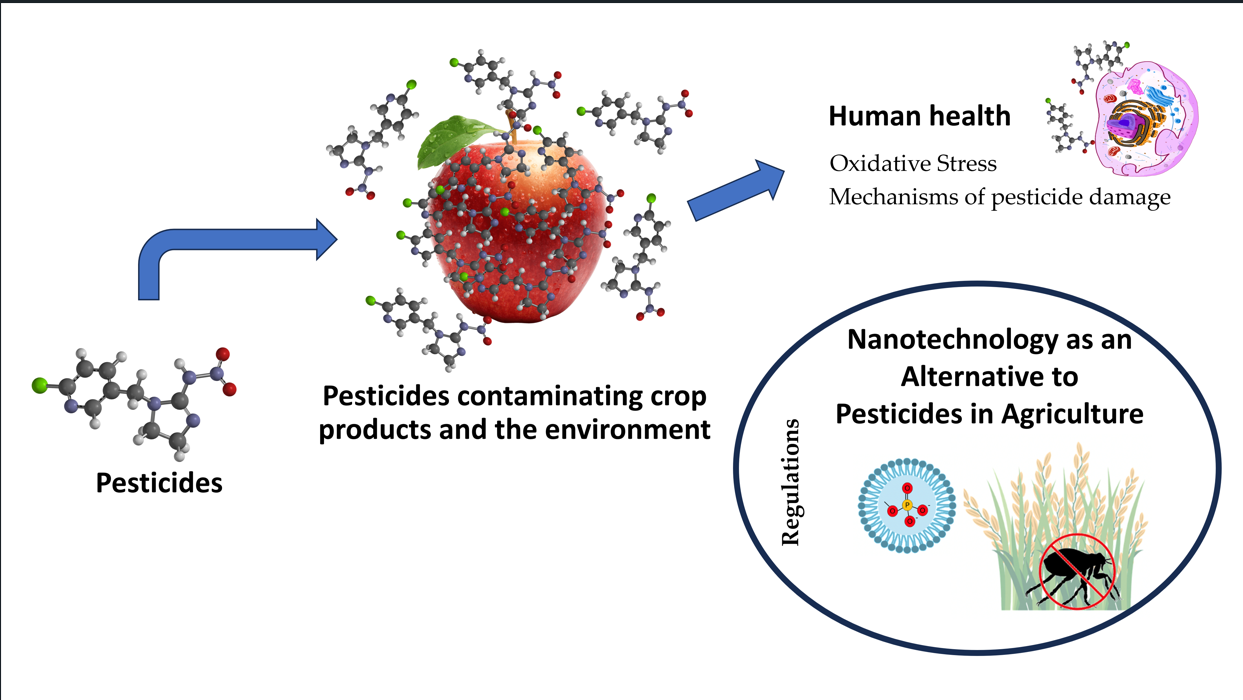
Nanotechnology is emerging as a promising alternative to alleviate the environmental and health impacts of conventional pesticides, offering more precise, biodegradable, and efficient solutions. Nanotechnology holds significant promise for addressing prevalent agricultural challenges, particularly through the development of nanofertilizers, nanopesticides, and nanobiosensors utilizing nanomaterials. These innovations aim to increase crop yield and mitigate adverse environmental impacts [104,105]. This review will focus on nanotechnology as an alternative to pesticides in agriculture (Figure 4).
It is essential to highlight that pesticides play a crucial role in agriculture, enabling the production of a greater number of crops without wasting and providing food for the population. Furthermore, without them, the loss of human lives could be significant due to vector-borne diseases and crop losses [106]. However, as mentioned above, they have adverse effects on the environment, ecosystem, and human health because only a small amount of the applied pesticides reaches the target pests, and the rest is dispersed into the environment due to their volatility and leaching. In this sense, nanotechnology, through the development of different materials, is a viable option to overcome these limitations. Thanks to their slow degradation and the controlled release of active ingredients through the use of appropriate nanomaterials, these products enable effective pest control over extended periods.
Unlike conventional pesticides, nanopesticides exhibit distinct behaviors that improve their effectiveness [107]. Nanopesticides are nanoscale materials (measuring between 1 and 100 nanometers, or even larger, depending on the application), where the physical and chemical properties of the compounds are significantly modified, giving them unique advantages. One of the primary characteristics of these nanomaterials is their high surface-to-volume ratio, which increases their contact area and enhances adherence to plant surfaces or the bodies of pest insects, also facilitating penetration through biological barriers [105,108,109]. Furthermore, they enable the encapsulation of compounds and the creation of systems for the prolonged, targeted, and specific release of the active ingredient, which responds to specific environmental stimuli, such as changes in pH, temperature, or the presence of enzymes specific to the pest organism [110,111]. Furthermore, these nanomaterials can be functionalized with molecules that bind to specific receptors of the biological target, thereby increasing their precision and reducing side effects.
Nanoencapsulation also protects the active ingredient from adverse environmental factors, such as ultraviolet radiation, humidity, and volatilization, thereby increasing its stability and prolonging its activity in the field, which allows for reduced application frequency. Nanoformulations also improve the solubility of many poorly water-soluble pesticides, increasing their bioavailability and, consequently, their efficacy. Furthermore, by increasing the solubility of the active ingredient, these systems facilitate its mobility and biodegradation by microorganisms present in the soil. For these reasons, nanoparticle-based pesticides are considered to have a lower environmental impact compared to their conventional counterparts [106]. Moreover, some nanomaterials, especially metallic nanoparticles such as silver, zinc, or copper, possess intrinsic pesticidal effects. These materials can act by ROS, releasing metal ions that are toxic to pest cells or disrupting fundamental cellular processes, thereby providing new modes of action that complement or replace traditional pesticides [112].
Nanopesticides are developed from a wide range of materials and formulations. One of the most common applications is the nanoencapsulation of conventional pesticides. It involves encapsulating the active ingredients of synthetic pesticides, such as insecticides, fungicides, and herbicides, in nanovesicles (e.g., liposomes and micelles), polymeric nanocapsules (e.g., chitosan, starch, and polylactic acid), or inorganic matrices (e.g., silica and zeolite). This improves their stability, reduces leaching and volatilization, and allows for gradual and targeted release [111]. For example, azoxystrobin, a fungicide, was encapsulated in porous silica and compared with the unencapsulated pesticide during application to agricultural soils under control conditions with Solanum lycopersicum (tomato) plants [113]. The results showed that the conventional pesticide had a severe impact on plant growth, reducing biomass by 3.85 times, whereas the nanoencapsulated formulation allowed for healthy plant growth. At the level of soil microbiota, no significant changes were observed with either formulation, indicating low environmental toxicity. Initial absorption of the pesticide was higher with the conventional form (2.7 times more per unit of biomass in 10 days), but this led to phytotoxicity due to its high bioavailability. In contrast, nanoencapsulation enabled a slow and controlled release, which prevented toxic effects and, after 20 days, resulted in greater total absorption and absorption by dry biomass (3 and 10 times more, respectively) [113].
Another application of nanotechnology is the use of nanoparticles with intrinsic pesticide activity. Specific nanomaterials, such as metal oxide nanoparticles (ZnO, CuO, AgNPs, TiO2) or carbon nanoparticles (carbon nanotubes, graphene), have demonstrated insecticidal, fungicidal, and bactericidal properties on their own, even at low concentrations [106]. This opens the door to green pesticides that do not contain synthetic chemical active ingredients. In this context, suspensions of ZnO-NPs at three concentrations (300, 1000, and 3000 ppm) were tested on controlled populations of Puto barberi (mealybug) [114]. The results showed a mortality rate of approximately 55%, demonstrating its potential as a nanopesticide. However, the authors emphasize that additional studies, particularly focused on surface characteristics and other physicochemical parameters, are needed to optimize the effectiveness and safety of the nanomaterial in agricultural applications [114]. Similarly, green-synthesized CuO nanoparticles exhibited dual functionality, demonstrating high insecticidal efficacy against storage pests and stimulating plant growth in wheat. Specifically, CuO-NPs were tested against Sitophilus granarius and Rhyzopertha dominica, observing mortality rates of 55–94.4% for S. granarius and 70–90% for R. dominica [115]. In the same approach, ZnO-NPs biosynthesized with the alga Ulva fasciata demonstrated superior efficacy as nematicides compared to their bulk form or to oxamyl alone [116]. Their ability to adhere to nematodes and potentially cause structural disruption represents a promising and environmentally friendly strategy for nematode control in plantain crops. The treatment with ZnO-NPs + oxamyl (chemical nematicide) produced the highest mortality of second-stage juveniles (J2s) with 98.91% after 72 hours, while ZnO-NPs alone reached 72.86% mortality. Under in vivo conditions, the same treatment significantly reduced the J2 population in the soil (82.77%) and the number of root galls (81.87%). However, treatments with ZnO-bulk + oxamyl and oxamyl alone promoted the most significant plant growth in terms of shoot height and weight [116].
Nanoemulsions and nanosuspensions are another approach to applying nanotechnology in the delivery of conventional pesticides. These formulations enable the active ingredient to be presented in nanometer-sized droplets or particles, thereby increasing its efficacy and improving the dispersion and penetration of poorly soluble pesticides [117]. Zhang et al. [118] developed an efficient and environmentally safe pyraclostrobin nanoemulsion, with improved retention and lower surface tension, which allows for better plant adhesion and dispersion. In addition, the formulation showed high bactericidal activity and lower toxicity in zebrafish, representing a sustainable alternative to conventional pesticide formulations. Similarly, a nanoemulsion of fenpropathrin, a lipophilic insecticide, presented an LC50 of 50.01 mg/L against Helicoverpa armigera larvae, a lower value than the commercial formulation, indicating greater insecticidal efficacy [119]. Treated larvae showed darkening, shrinkage, and rapid immobilization. Regarding toxicity to the earthworm Eisenia fetida, the LC50 values were 96.60 mg/kg at 7 days and 47.99 mg/kg at 14 days, suggesting low toxicity in soil. Regarding cellular cytotoxicity, cell viability in human L02 cells was 85.32% and 68.95% after 24 and 48 hours of exposure, respectively. Furthermore, the apoptosis rate was significantly lower with the nanoemulsion (8.52%) compared to the commercial formulation (63.18%), demonstrating lower cytotoxicity associated with the use of the nanoemulsion [119].
On the other hand, nanotechnology has also been used to encapsulate bioactive compounds, such as natural compounds extracted from plants, other than pesticides. In this regard, biodegradable nanoparticles of zein, a corn protein, were prepared for the encapsulation of limonene and carvacrol [110]. This system proved to be a targeted release system, activated by insect intestinal enzymes, allowing for controlled and specific release. The formulations were stable over time and nontoxic to bean plants (Phaseolus vulgaris). Furthermore, in in vivo tests with Spodoptera frugiperda larvae, the nanoparticles showed higher mortality compared to controls, indicating high insecticidal efficacy [110]. In a similar approach, the efficacy of nanoemulsions formulated with essential oils of basil, cumin, marjoram, and chamomile as botanical insecticides against Aphis craccivora was evaluated, compared to chemical insecticides such as dinotefuran and pymetrozine [120]. These nanoemulsions exhibited high toxicity against both laboratory and field strains of the cowpea aphid A. craccivora, with basil having an LC50 of 45 mg/L, compared to 992 mg/L for the unencapsulated essential oil and the synthetic insecticides. This was attributed to the small size of the nanoemulsion and its ability to penetrate the body of the pest. Furthermore, significant enzymatic alterations were detected in treated insects, suggesting toxicity mechanisms associated with the inhibition of key enzymes such as acetylcholine esterase [120]. These studies indicate that nanotechnology can be utilized to promote more sustainable and environmentally safe pest management.
One of the primary applications of nanotechnology is the development of nanobiosensors, which are now being utilized as a crucial tool for rapid and sensitive detection of pathogens or pests, enabling earlier and more localized intervention and reducing the need for widespread pesticide applications. Additionally, nanosensors are used to identify soil moisture levels, pesticide residues, and nutrient requirements [121]. Nanobiosensors possess essential properties, including smaller detection limits, robustness, selectivity, sensitivity, rapid response times, high surface-to-volume ratios, and cost-effectiveness, that contribute to their overall effectiveness. Detection limits reported in studies are at the parts per trillion level for atrazine, ranging from nanomoles to micromoles for acetamiprid, and at nanogram levels for glyphosate and glufosinate [122].
Biosensors function by detecting a specific stimulus and converting it into a measurable signal, such as an electrical wave, heat, or another quantifiable response. This conversion typically occurs through chemical or enzymatic reactions or via light absorption. These sensors are capable of detecting changes in wavelength, intensity, polarity, light phase, and, in some cases, fluorescence [123]. One of the most common applications of biosensors is the use of colorimetric methods. For example, Ahmed et al. [124] proposed the use of red-colored selenium particles, a product of bioreduction with heavy metals, for identification and toxicity testing in the field. Similarly, a colloidal gold immunochromatographic assay using nanobodies as recognition elements was developed to detect parathion, an organophosphate pesticide banned due to its high toxicity in agricultural products [125]. Under optimal conditions, the assay demonstrated good recoveries in detecting parathion in real samples of cabbage, cucumber, and orange, with a high correlation to UPLC-MS/MS analysis, thereby validating its accuracy [125].
Additionally, the electronic nose (e-nose) and electronic tongue (e-tongue) are examples of biosensors used in agriculture and food analysis [126,127]. These gadgets replicate the sensory roles of the human tongue and nose, respectively. With its combination of chemical sensors and pattern recognition software, the e-nose can detect and distinguish volatile organic compounds with great precision, making it a powerful tool for identifying particular odors or alterations in aroma profiles [128,129]. In a like manner, the e-tongue employs a collection of non-specific, cross-reactive sensors to identify dissolved substances associated with taste (such as bitterness, sweetness, sourness, saltiness, and umami) [127]. These sensors produce electrical signals when they detect chemical stimuli, and these signals are analyzed using statistical or machine-learning models. Both tools have extensive applications in the quality control of food products, monitoring crop freshness, detecting contamination or spoilage, and assessing the impact of various agricultural treatments on flavor and aroma. Because they are highly sensitive, respond quickly, and perform non-destructive analyses, they serve as valuable substitutes for traditional sensory panels and chromatographic techniques [105,127].
The adoption of nanotechnology in pest management offers multiple benefits, including reduced pesticide use, as increased efficiency and direct delivery can result in lower amounts of active ingredients, thereby reducing costs for farmers and minimizing environmental impact. The use of nanotechnology in agriculture helps reduce soil and water contamination by lowering the risks of volatilization and leaching, thereby decreasing the accumulation of toxic residues in the environment and throughout the food chain. Furthermore, nanotechnology, by offering controlled and even targeted release, could present lower toxicity to non-target organisms, control pesticide resistance in pests, and increase safety for pesticide applicators in the field. Moreover, nanoencapsulated pesticides or active ingredients can offer greater stability and a longer shelf life.
However, despite their many advantages, the adoption of nanopesticides in agriculture faces several challenges. Further studies are needed to assess the toxicity of these technologies to different organisms, as well as their persistence in the environment, bioaccumulation in the food chain, and long-term effects on non-target organisms and human health. Production costs and the lack of clear regulatory frameworks for commercializing these nanopesticides also need to be addressed. Public education and acceptance of these emerging technologies are crucial components for their practical application. With rigorous research, appropriate regulatory frameworks, and effective dissemination strategies, nanopesticides have the potential to become a vital tool for more efficient, sustainable, and environmentally responsible agriculture.
6. Regulations
The increasing awareness of the potential harm associated with pesticide use has led to the implementation of extensive legislation regulating these chemicals. However, such regulations vary significantly across countries, depending on specific crop requirements and legal thresholds for plant protection [130]. Typically, developed nations tend to enforce stricter regulations than developing countries, mainly due to differences in available resources and experience in implementing and monitoring pesticide legislation [131]. These disparities often pose challenges to international trade, prompting efforts to harmonize standards at the global level. To address this, organizations such as the Codex Alimentarius Commission, the North American Free Trade Agreement (NAFTA), and the European Union have sought to harmonize standards by establishing Maximum Residue Limits (MRLs). Nonetheless, these limits still differ across regions, influenced by economic interests [132].
Among the bodies responsible for legislating, the Food and Agriculture Organization of the United Nations (FAO) establishes international standards through the Codex Alimentarius, which are not mandatory. In the United States, pesticide regulation is overseen by the Environmental Protection Agency (EPA) through the Federal Insecticide, Fungicide, and Rodenticide Act. The EPA, in collaboration with the U.S. Food and Drug Administration (FDA) and the U.S. Department of Agriculture (USDA), is responsible for setting MRLs and ensuring the safe use of pesticides, including the sale, distribution, storage, waste disposal, and usage records [133].
The European Union is also recognized as having the most stringent regulatory system, as outlined in Regulation (EC) No. 1107/2009, which governs the marketing and authorization of plant protection products. This regulation prioritizes human and environmental safety, requiring comprehensive testing to verify the efficacy and safety of pesticides before they are authorized [134,135]. Despite these advances, regulatory gaps remain. For instance, in Mexico, approximately 141 pesticides are currently in use that are banned in other countries. As of 2017, many of these substances were still classified as highly hazardous pesticides by the FAO, underscoring the need for greater international alignment and enforcement in pesticide regulation [136].
7. Conclusions
Pesticides are undoubtedly effective at controlling pests when used appropriately and in accordance with regulatory guidelines, but their widespread and sometimes indiscriminate application has been linked to a range of adverse effects. Notably, long-term and chronic exposure has been linked to the development of chronic-degenerative diseases, including cancer, due to the oxidative stress generated. Oxidative stress and genotoxic damage caused by pesticide exposure have been documented from prenatal development through old age, highlighting the urgency of addressing this public health concern. Given the entrenched use of pesticides in global agriculture, a preventive and proactive approach is necessary.
Nanotechnology offers a promising and sustainable alternative to traditional pesticides, providing innovative solutions that improve effectiveness while reducing environmental and health risks. Controlled, targeted, and prolonged release of active ingredients can be achieved through nanocarriers, nanoencapsulation, and the intrinsic pesticidal activity of diverse nanomaterials. This reduces off-target effects and pesticide overuse. Moreover, incorporating nanobiosensors into agricultural frameworks facilitates real-time surveillance of pests, pathogens, and agrochemical residues. This capability enables more targeted actions and reduces dependence on the use of broad-spectrum pesticides.
Importantly, nanotechnology can play a significant role in minimizing environmental contamination by reducing pesticide runoff, leaching into soil and water systems, and volatilization into the atmosphere. This reduces the buildup of harmful residues in ecosystems and the food chain. Nanoformulations may reduce exposure risks for farmers and consumers from a human health standpoint due to their enhanced delivery mechanisms and reduced dosage needs. Nevertheless, the long-term impact of nanopesticides on non-target organisms and the potential for bioaccumulation are still crucial subjects for research.
Even with these advancements, obstacles persist regarding the long-term toxicity, environmental durability, and regulatory oversight of agricultural nanomaterials. To ensure their safe deployment, understand their interactions with ecosystems and food chains, and aid in developing standardized risk assessment protocols, further interdisciplinary research is crucial. With suitable regulatory frameworks and public acceptance, nanotechnology has the potential to transform pest management practices, leading to a more efficient, resilient, and environmentally responsible agricultural future.
Author Contributions
Conceptualization, O.M.-C., A.B.-H. and A.A.L.-Z..; writing—original draft preparation, J.M.M.-B.; writing—review and editing, A.T.B.-M. and S.R.-C.; visualization J.J.O.-P. and J.B.-F.; resources J.R.R.-E.; and supervision C.L.D.-T.-S. All authors have read and agreed to the published version of the manuscript.
Funding
The work was supported by the project CBF2023-2024-3196 from Secretaría de Ciencia, Humanidades, Tecnología e Innovación (SECIHTI).
Acknowledgments
The authors are pleased to acknowledge of Secretaría de Ciencia, Humanidades, Tecnología e Innovación (SECIHTI) for awarding Jesús Martín Muñoz Bautista for his master’s scholarship.
Conflicts of Interest
The authors declare no conflicts of interest.
Abbreviations
The following abbreviations are used in this manuscript:
| 2,4-D | 2,4-Dichlorophenoxyacetic acid |
| 2,4-DDE | 2,4-Dichlorodiphenyldichloroethylene |
| 4,4-DDE | 4,4-Dichlorodiphenyldichloroethylene |
| b-BHC | Beta-hexachlorocyclohexane |
| CAT | catalase |
| DDT | dichlorodiphenyltrichloroethane |
| DDT | Dichlorodiphenyltrichloroethane |
| DEE | Diethyl ether |
| e-nose | Electronic nose |
| EPA | Environmental Protection Agency |
| FAO | Food and Agriculture Organization of the United Nations |
| FDA | Food and Drug Administration |
| e-tongue | Electronic tongue |
| g-BHC | Gamma-hexachlorocyclohexane (Lindane); |
| GPx | glutathione peroxidase |
| GST | glutathione-S-transferase |
| HCB | Hexachlorobenzene |
| LD50 | Median lethal dose |
| MRLs | Maximum Residue Limits. |
| MRLs | Maximum Residue Limits |
| RNS | Reactive nitrogen species |
| ROS | Reactive oxygen species |
| SOD | Superoxide dismutase |
| TBARS | Thiobarbituric acid reactive substances |
| UPLC-MS/MS | Ultra Performance Liquid Chromatography coupled with Tandem Mass Spectrometry |
| USDA | U.S. Department of Agriculture |
References
- Chamizo, J.A. La no neutralidad de la química vista desde la historia. Educación Química.
- López-Maldonado, V. Uso de la nanotecnología en los diferentes sistemas productivos. Milenaria, Ciencia y arte.
- Thorat, T.; Patle, B.; Wakchaure, M.; Parihar, L. Advancements in techniques used for identification of pesticide residue on crops. Journal of Natural Pesticide Research 2023, 4, 100031. [Google Scholar] [CrossRef]
- Gaibor Zumba, M.D.; Saavedra Álava, M.I.; Gaibor Carpio, J.L. Impacto de una intervención educativa sobre la lactancia materna en madres adolescentes. Actas Médicas (Ecuador).
- Mostafalou, S.; Abdollahi, M. Pesticides: an update of human exposure and toxicity. Archives of Toxicology 2017, 91, 549–599. [Google Scholar] [CrossRef] [PubMed]
- Zhou, W.; Li, M.; Achal, V. A comprehensive review on environmental and human health impacts of chemical pesticide usage. Emerging Contaminants 2024, 100410. [Google Scholar] [CrossRef]
- Tudi, M.; Daniel Ruan, H.; Wang, L.; Lyu, J.; Sadler, R.; Connell, D.; Chu, C.; Phung, D.T. Agriculture development, pesticide application and its impact on the environment. International Journal of Environmental Research and Public Health 2021, 18, 1112. [Google Scholar] [CrossRef]
- Padhiary, M.; Kumar, R. , Assessing the environmental impacts of agriculture, industrial operations, and mining on agro-ecosystems. In Smart Internet of Things for Environment and Healthcare, Springer: 2024; pp 107-126.
- Leskovac, A.; Petrović, S. Pesticide use and degradation strategies: food safety, challenges and perspectives. Foods 2023, 12, 2709. [Google Scholar] [CrossRef]
- Aswani, R.; Radhakrishnan, E.; Visakh, P. Nanoformulations for Agricultural Applications: State-of-the-Art, New Challenges, and Opportunities. Nanoformulations for Agricultural Applications 2025, 1–34. [Google Scholar]
- Khan, J.; Kaur, A.; Alam, M.A.; Yadav, A.; Paramanick, D.; Chaudhary, S. , Nanopesticides, Nanoherbicides, and Nanofertilizers: Risks and environmental acceptability. In Nanopesticides, Nanoherbicides, and Nanofertilizers, CRC Press: 2023; pp 94-113.
- Pathak, V.M.; Verma, V.K.; Rawat, B.S.; Kaur, B.; Babu, N.; Sharma, A.; Dewali, S.; Yadav, M.; Kumari, R.; Singh, S. Current status of pesticide effects on environment, human health and it’s eco-friendly management as bioremediation: A comprehensive review. Front Microbiol 2022, 13, 962619. [Google Scholar] [CrossRef]
- Gabriel Ortega, J.; Ávila Demera, J.; Ayón Villao, F.; Morán Morán, J.; Álvarez Plúa, A.; Flores Ramírez, H. Utilización de plaguicidas por agricultores en Puerto La Boca, Manabí. Una reflexión sobre sus posibles consecuencias. Journal of the Selva Andina Biosphere.
- Rangel-Ortiz, E.; Landa-Cansigno, O.; Páramo-Vargas, J.; Camarena-Pozos, D.A. Prácticas de manejo de plaguicidas y percepciones de impactos a la salud y al medio ambiente entre usuarios de la cuenca del Río Turbio, Guanajuato, México. Acta Universitaria 2023, 33. [Google Scholar] [CrossRef]
- Rajmohan, K.; Chandrasekaran, R.; Varjani, S. A review on occurrence of pesticides in environment and current technologies for their remediation and management. Indian Journal of Microbiology 2020, 60, 125–138. [Google Scholar] [CrossRef]
- Streletskii, R.; Astaykina, A.; Krasnov, G.; Gorbatov, V. Changes in bacterial and fungal community of soil under treatment of pesticides. Agronomy 2022, 12, 124. [Google Scholar] [CrossRef]
- de Souza, R.M.; Seibert, D.; Quesada, H.B.; de Jesus Bassetti, F.; Fagundes-Klen, M.R.; Bergamasco, R. Occurrence, impacts and general aspects of pesticides in surface water: A review. Process Safety and Environmental Protection 2020, 135, 22–37. [Google Scholar] [CrossRef]
- Rajan, D.K.; Mohan, K.; Rajarajeswaran, J.; Divya, D.; Thanigaivel, S.; Zhang, S. Toxic effects of organophosphate pesticide monocrotophos in aquatic organisms: a review of challenges, regulations and future perspectives. Environmental Research 2024, 244, 117947. [Google Scholar] [CrossRef]
- Zhang, Z.; Chen, Q.; Chen, B.; Dong, T.; Chen, M. Toxic effects of pesticides on the marine microalga Skeletonema costatum and their biological degradation. Science China Earth Sciences 2023, 66, 663–674. [Google Scholar] [CrossRef]
- Kumar, V.; Sharma, N.; Sharma, P.; Pasrija, R.; Kaur, K.; Umesh, M.; Thazeem, B. Toxicity analysis of endocrine disrupting pesticides on non-target organisms: A critical analysis on toxicity mechanisms. Toxicology and Applied Pharmacology 2023, 474, 116623. [Google Scholar] [CrossRef]
- Elhamalawy, O.; Bakr, A.; Eissa, F. Impact of pesticides on non-target invertebrates in agricultural ecosystems. Pesticide Biochemistry and Physiology 2024, 105974. [Google Scholar] [CrossRef]
- Nicolopoulou-Stamati, P.; Maipas, S.; Kotampasi, C.; Stamatis, P.; Hens, L. Chemical pesticides and human health: the urgent need for a new concept in agriculture. Frontiers in Public Health 2016, 4, 148. [Google Scholar] [CrossRef]
- Miranda, R.A.; Silva, B.S.; de Moura, E.G.; Lisboa, P.C. Pesticides as endocrine disruptors: programming for obesity and diabetes. Endocrine 2023, 79, 437–447. [Google Scholar] [CrossRef]
- Gea, M.; Zhang, C.; Tota, R.; Gilardi, G.; Di Nardo, G.; Schilirò, T. Assessment of five pesticides as endocrine-disrupting chemicals: effects on estrogen receptors and aromatase. International Journal of Environmental Research and Public Health 2022, 19, 1959. [Google Scholar] [CrossRef]
- Cavalier, H.; Trasande, L.; Porta, M. Exposures to pesticides and risk of cancer: Evaluation of recent epidemiological evidence in humans and paths forward. International Journal of Cancer 2023, 152, 879–912. [Google Scholar] [CrossRef]
- Djekkoun, N.; Lalau, J.-D.; Bach, V.; Depeint, F.; Khorsi-Cauet, H. Chronic oral exposure to pesticides and their consequences on metabolic regulation: Role of the microbiota. European Journal of Nutrition 2021, 60, 4131–4149. [Google Scholar] [CrossRef]
- Silveira-Gramont, M.I.; Aldana-Madrid, M.L.; Piri-Santana, J.; Valenzuela-Quintanar, A.I.; Jasa-Silveira, G.; Rodríguez-Olibarria, G. Plaguicidas agrícolas: un marco de referencia para evaluar riesgos a la salud en comunidades rurales en el estado de Sonora, México. Revista Internacional de Contaminación Ambiental.
- Ajiboye, T.O.; Oladoye, P.O.; Olanrewaju, C.A.; Akinsola, G.O. Organophosphorus pesticides: Impacts, detection and removal strategies. Environmental Nanotechnology, Monitoring and Management, 1006. [Google Scholar]
- Jayaraj, R.; Megha, P.; Sreedev, P. Organochlorine pesticides, their toxic effects on living organisms and their fate in the environment. Interdisciplinary Toxicology 2016, 9, 90. [Google Scholar] [CrossRef] [PubMed]
- Kamalesh, T.; Kumar, P.S.; Rangasamy, G. An insights of organochlorine pesticides categories, properties, eco-toxicity and new developments in bioremediation process. Environmental Pollution 2023, 333, 122114. [Google Scholar]
- Mdeni, N.L.; Adeniji, A.O.; Okoh, A.I.; Okoh, O.O. Analytical evaluation of carbamate and organophosphate pesticides in human and environmental matrices: a review. Molecules 2022, 27, 618. [Google Scholar] [CrossRef] [PubMed]
- Rezende-Teixeira, P.; Dusi, R.G.; Jimenez, P.C.; Espindola, L.S.; Costa-Lotufo, L.V. What can we learn from commercial insecticides? Efficacy, toxicity, environmental impacts, and future developments. Environmental Pollution 2022, 300, 118983. [Google Scholar] [CrossRef]
- Farag, M.R.; Alagawany, M.; Bilal, R.M.; Gewida, A.G.; Dhama, K.; Abdel-Latif, H.M.; Amer, M.S.; Rivero-Perez, N.; Zaragoza-Bastida, A.; Binnaser, Y.S. An overview on the potential hazards of pyrethroid insecticides in fish, with special emphasis on cypermethrin toxicity. Animals 2021, 11, 1880. [Google Scholar] [CrossRef]
- Jacob, M.S.; Iyyadurai, R.; Jose, A.; Fleming, J.J.; Rebekah, G.; Zachariah, A.; Hansdak, S.G.; Alex, R.; Chandiraseharan, V.K.; Lenin, A. Clinical presentation of type 1 and type 2 pyrethroid poisoning in humans. Clinical Toxicology 2022, 60, 464–471. [Google Scholar] [CrossRef]
- Chen, T.; Chen, H.; Wang, A.; Yao, W.; Xu, Z.; Wang, B.; Wang, J.; Wu, Y. Methyl Parathion Exposure Induces Development Toxicity and Cardiotoxicity in Zebrafish Embryos. Toxics 2023, 11, 84. [Google Scholar] [CrossRef]
- Urióstegui-Acosta, M.; Tello-Mora, P.; de Jesús Solís-Heredia, M.; Ortega-Olvera, J.M.; Piña-Guzmán, B.; Martín-Tapia, D.; González-Mariscal, L.; Quintanilla-Vega, B. Methyl parathion causes genetic damage in sperm and disrupts the permeability of the blood-testis barrier by an oxidant mechanism in mice. Toxicology 2020, 438, 152463. [Google Scholar] [CrossRef]
- Zuo, W.; Zhang, X.; Chang, J.B.; Ma, W.B.; Wei, J.J. Bromadiolone poisoning leading to subarachnoid haemorrhage: A case report and review of the literature. Journal of Clinical Pharmacy and Therapeutics 2019, 44, 958–962. [Google Scholar] [CrossRef]
- Lu, A.; Yuan, F.; Yao, Y.; Wen, W.; Lu, H.; Wu, S.; Wang, L. Reversible leukoencephalopathy caused by 2 rodenticides bromadiolone and fluroacetamide: a case report and literature review. Medicine 2021, 100, e25053. [Google Scholar] [CrossRef]
- Chen, H.F.; Zhang, Z.J.; You, C.J.; Chen, L. A case of bromadiolone poisoning leading to digestive tract, abdominal hemorrhage and secondary paralytic ileus. Zhonghua lao Dong wei Sheng zhi ye Bing za zhi= Zhonghua Laodong Weisheng Zhiyebing Zazhi= Chinese Journal of Industrial Hygiene and Occupational Diseases.
- Wu, J.; Chen, J. One case of bromadiolone poisoning leading to intestinal necrosis and severe coagulopathy. Zhonghua lao Dong wei Sheng zhi ye Bing za zhi= Zhonghua Laodong Weisheng Zhiyebing Zazhi= Chinese Journal of Industrial Hygiene and Occupational Diseases.
- Hossain, M.; Suchi, T.T.; Samiha, F.; Islam, M.M.; Tully, F.A.; Hasan, J.; Rahman, M.A.; Shill, M.C.; Bepari, A.K.; Rahman, G.S. Coenzyme Q10 ameliorates carbofuran induced hepatotoxicity and nephrotoxicity in wister rats. Heliyon 2023, 9. [Google Scholar] [CrossRef] [PubMed]
- Liu, J.; Li, R.-X.; Yang, C.-S.; Zhao, L.-L.; Liu, X.; Zhang, B. Clinical study and observation on the effect of hemoperfusion therapy treatment on central nervous system injury in patients with 2, 4-dichlorophenoxyacetic acid poisoning. European Review for Medical and Pharmacological Sciences 2021, 25. [Google Scholar]
- Yang, Q.; Guo, Y.; Lian, L.; Li, J.; Blatchley 3rd, E. CH 3 NCl 2 Formation from Chlorination of Carbamate Insecticides. Environmental Science and Technology 2019, 53, 13098–13106. [Google Scholar]
- Freitas, L.M.; Valadares, L.P.d.A.; Camozzi, M.G.M.; de Oliveira, P.G.; Ferreira Machado, M.R.; Lima, F.C. Animal models in the neurotoxicology of 2,4-D. Human & Experimental Toxicology, 1182. [Google Scholar]
- Chauhan, R.; Rawat, A.; Sama, S.; Goel, D.; Ahmad, S. A case series of 2, 4 diethylamine poisoning–what the future holds for us. Tropical Doctor 2023, 53, 389–392. [Google Scholar] [CrossRef]
- Seven, B. ; Kültiğin; Çavuşoğlu; Yalçin, E.; Acar, A. Investigation of cypermethrin toxicity in Swiss albino mice with physiological, genetic and biochemical approaches. Scientific Reports, 1143. [Google Scholar]
- Xie, Y.; Gong, L.; Liu, S.; Yan, J.; Zhao, S.; Xia, C.; Li, K.; Liu, G.; Mazhar, M.W.; Zhao, J. Antioxidants improve β-cypermethrin degradation by alleviating oxidative damage and increasing bioavailability by Bacillus cereus GW-01. Environmental Research 2023, 236, 116680. [Google Scholar] [CrossRef]
- Richardson, J.R.; Fitsanakis, V.; Westerink, R.H.; Kanthasamy, A.G. Neurotoxicity of pesticides. Acta Neuropathologica 2019, 138, 343–362. [Google Scholar] [CrossRef]
- Ha, M.; Dong, Z.; Li, L.; Wang, L.; Liu, C. Cypermethrin induced liver oxidative DNA damage via the JNK/c-Jun pathway. Wei Sheng yan jiu= Journal of Hygiene Research.
- Bhatta, O.P.; Chand, S.; Chand, H.; Poudel, R.C.; Lamichhane, R.P.; Singh, A.K.; Subedi, N. Imidacloprid poisoning in a young female: a case report. Journal of Medical Case Reports 2023, 17. [Google Scholar] [CrossRef]
- Sriapha, C.; Trakulsrichai, S.; Tongpoo, A.; Pradoo, A.; Rittilert, P.; Wananukul, W. Acute imidacloprid poisoning in Thailand. Therapeutics and Clinical Risk Management 2020, 1081–1088. [Google Scholar] [CrossRef]
- Sriapha, C.; Trakulsrichai, S.; Intaraprasong, P.; Wongvisawakorn, S.; Tongpoo, A.; Schimmel, J.; Wananukul, W. Imidacloprid poisoning case series: potential for liver injury. Clinical Toxicology 2020, 58, 136–138. [Google Scholar] [CrossRef]
- Perananthan, V.; Mohamed, F.; Shahmy, S.; Gawarammana, I.; Dawson, A.; Buckley, N. The clinical toxicity of imidacloprid self-poisoning following the introduction of newer formulations. Clinical Toxicology 2021, 59, 347–350. [Google Scholar] [CrossRef]
- Mehtap, K.; Ezgi, Ö.; Tugce, B.; Fatma, K.E.; Gul, O. Benomyl induced oxidative stress related DNA damage and apoptosis in H9c2 cardiomyoblast cells. Toxicology In Vitro 2021, 75, 105180. [Google Scholar] [CrossRef] [PubMed]
- Kumar, S.; Baggi, T.R.; Zughaibi, T. Forensic toxicological and analytical aspects of carbamate poisoning–A review. Journal of Forensic and Legal Medicine 2022, 92, 102450. [Google Scholar] [CrossRef] [PubMed]
- Jiao, H.; Yuan, T.; Wang, X.; Zhou, X.; Ming, R.; Cui, H.; Hu, D.; Lu, P. Biochemical, histopathological and untargeted metabolomic analyses reveal hepatotoxic mechanism of acetamiprid to Xenopus laevis. Environmental Pollution 2023, 317, 120765. [Google Scholar] [CrossRef]
- Kang, Y.; Wu, T.; Han, B.; Yang, S.; Wang, X.; Wang, Q.; Gao, J.; Dai, P. Interaction of acetamiprid, Varroa destructor, and Nosema ceranae in honey bees. Journal of Hazardous Materials 2024, 471, 134380. [Google Scholar] [CrossRef]
- Yao, Y.-N.; Song, S.; Huang, Y.; Kannan, K.; Sun, H.; Zhang, T. Insights into free and conjugated forms of neonicotinoid insecticides in human serum and their association with oxidative stress. Environment and Health 2023, 1, 121–129. [Google Scholar] [CrossRef]
- Costas-Ferreira, C.; Durán, R.; Faro, L.R.F. Toxic Effects of Glyphosate on the Nervous System: A Systematic Review. International Journal of Molecular Sciences 2022, 23, 4605. [Google Scholar] [CrossRef]
- Pirollo, K.F.; Moghe, M.; Guan, M.; Rait, A.S.; Wang, A.; Kim, S.-S.; Chang, E.H.; Harford, J.B. A pralidoxime nanocomplex formulation targeting transferrin receptors for reactivation of brain acetylcholinesterase after exposure of mice to an anticholinesterase organophosphate. International Journal of Nanomedicine 2024, 307–326. [Google Scholar] [CrossRef]
- Forman, H.J.; Zhang, H. Targeting oxidative stress in disease: promise and limitations of antioxidant therapy. Nature Reviews Drug Discovery 2021, 20, 689–709. [Google Scholar] [CrossRef]
- Al-Shehri, S.S. Reactive oxygen and nitrogen species and innate immune response. Biochimie 2021, 181, 52–64. [Google Scholar] [CrossRef]
- Black, H.S. A synopsis of the associations of oxidative stress, ROS, and antioxidants with diabetes mellitus. Antioxidants 2022, 11, 2003. [Google Scholar] [CrossRef]
- Reddy, V.P. Oxidative stress in health and disease. Biomedicines 2023, 11, 2925. [Google Scholar] [CrossRef] [PubMed]
- Liu, T.; Sun, L.; Zhang, Y.; Wang, Y.; Zheng, J. Imbalanced GSH/ROS and sequential cell death. Journal of Biochemical and Molecular Toxicology 2022, 36, e22942. [Google Scholar] [CrossRef] [PubMed]
- Valko, M.; Leibfritz, D.; Moncol, J.; Cronin, M.T.; Mazur, M.; Telser, J. Free radicals and antioxidants in normal physiological functions and human disease. The International Journal of Biochemistry and Cell Biology 2007, 39, 44–84. [Google Scholar] [CrossRef]
- Valbuena, D.S.; Meléndez-Flórez, M.P.; Villegas, V.E.; Sánchez, M.C.; Rondón-Lagos, M. Daño celular y genético como determinantes de la toxicidad de los plaguicidas. Ciencia en Desarrollo 2020, 11, 25–42. [Google Scholar] [CrossRef]
- Kiani, Z.; Asadikaram, G.; Faramarz, S.; Salimi, F.; Ebrahimi, H. Pesticide exposure and Alzheimer’s disease: a case-control Study. Current Alzheimer Research 2022, 19, 892–903. [Google Scholar] [CrossRef]
- Mazari, A.M.; Zhang, L.; Ye, Z.-W.; Zhang, J.; Tew, K.D.; Townsend, D.M. The multifaceted role of glutathione S-transferases in health and disease. Biomolecules 2023, 13, 688. [Google Scholar] [CrossRef]
- Li, X.; Naseem, S.; Hussain, R.; Ghaffar, A.; Li, K.; Khan, A. Evaluation of DNA damage, biomarkers of oxidative stress, and status of antioxidant enzymes in freshwater fish (Labeo rohita) exposed to pyriproxyfen. Oxidative Medicine and Cellular Longevity 2022, 2022, 5859266. [Google Scholar] [CrossRef]
- Selmi, S.; Rtibi, K.; Grami, D.; Sebai, H.; Marzouki, L. Malathion, an organophosphate insecticide, provokes metabolic, histopathologic and molecular disorders in liver and kidney in prepubertal male mice. Toxicology Reports 2018, 5, 189–195. [Google Scholar] [CrossRef]
- Sukkar, D.; Wagner, L.; Bonnefoy, A.; Falla-Angel, J.; Laval-Gilly, P. Imidacloprid and amitraz differentially alter antioxidant enzymes in honeybee (Apis mellifera) hemocytes when exposed to microbial pathogen-associated molecular patterns. Science of The Total Environment 2025, 969, 178868. [Google Scholar] [CrossRef]
- Hilgert Jacobsen-Pereira, C.; dos Santos, C.R.; Troina Maraslis, F.; Pimentel, L.; Feijó, A.J.L.; Iomara Silva, C.; de Medeiros, G.d.S.; Costa Zeferino, R.; Curi Pedrosa, R.; Weidner Maluf, S. Markers of genotoxicity and oxidative stress in farmers exposed to pesticides. Ecotoxicology and Environmental Safety 2018, 148, 177–183. [Google Scholar] [CrossRef]
- Singh, S.; Kumar, V.; Thakur, S.; Banerjee, B.D.; Rautela, R.S.; Grover, S.S.; Rawat, D.S.; Pasha, S.T.; Jain, S.K.; Ichhpujani, R.L. Paraoxonase-1 genetic polymorphisms and susceptibility to DNA damage in workers occupationally exposed to organophosphate pesticides. Toxicology and Applied Pharmacology 2011, 252, 130–137. [Google Scholar] [CrossRef] [PubMed]
- Andersen, H.R.; Wohlfahrt-Veje, C.; Dalgård, C.; Christiansen, L.; Main, K.M.; Nellemann, C.; Murata, K.; Jensen, T.K.; Skakkebæk, N.E.; Grandjean, P. Paraoxonase 1 polymorphism and prenatal pesticide exposure associated with adverse cardiovascular risk profiles at school age. PLoS One 2012, 7, e36830. [Google Scholar] [CrossRef] [PubMed]
- Andersen, H.R.; Tinggaard, J.; Grandjean, P.; Jensen, T.K.; Dalgård, C.; Main, K.M. Prenatal pesticide exposure associated with glycated haemoglobin and markers of metabolic dysfunction in adolescents. Environmental Research 2018, 166, 71–77. [Google Scholar] [CrossRef] [PubMed]
- Development, O.f.E.C.-o.a. Test No. 451: Carcinogenicity Studies. https://www.oecd.org/en/publications/2018/06/test-no-451-carcinogenicity-studies_g1gh2955.
- Development, O.f.E.C.-o.a. Test No. 414: Prenatal Developmental Toxicity Study. https://www.oecd.org/en/publications/2018/06/test-no-414-prenatal-developmental-toxicity-study_g1gh293d.
- Development., O.f.E.C.-o.a. Development., O.f.E.C.-o.a. Test No. 416: Two-Generation Reproduction Toxicity. https://www.oecd.org/en/publications/test-no-416-two-generation-reproduction-toxicity_9789264070868-en.
- Ames, B.N.; McCann, J.; Yamasaki, E. Methods for detecting carcinogens and mutagens with the salmonella/mammalian-microsome mutagenicity test. Mutation Research/Environmental Mutagenesis and Related Subjects.
- Development, O.f.E.C.-o.a. Test No. 487: In Vitro Mammalian Cell Micronucleus Test. https://www.oecd.org/content/dam/oecd/en/publications/reports/2023/07/test-no-487-in-vitro-mammalian-cell-micronucleus-test_g1g6fb2a/9789264264861-en.
- Development, O.f.E.C.-o.a. Test No. 473: In Vitro Mammalian Chromosomal Aberration Test. https://www.oecd.org/env/test-no-473-in-vitro-mammalian-chromosomal-aberration-test-9789264264649-en.
- Collins, A.R. The Comet Assay for DNA Damage and Repair: Principles, Applications, and Limitations. Molecular Biotechnology 2004, 26, 249–261. [Google Scholar] [CrossRef]
- Moser, V.C. Functional assays for neurotoxicity testing. Toxicologic Pathology 2011, 39, 36–45. [Google Scholar] [CrossRef]
- Pope, C.N. Organophosphorus pesticides: do they all have the same mechanism of toxicity? Journal of Toxicology and Environmental Health Part B: Critical Reviews.
- Development, O.f.E.C.-o.a. Test No. 424: Neurotoxicity Study in Rodents. https://www.oecd.org/env/test-no-424-neurotoxicity-study-in-rodents-9789264071025-en.
- Nabi, S.U.; Ali, S.I.; Rather, M.A.; Sheikh, W.M.; Altaf, M.; Singh, H.; Mumtaz, P.T.; Mishra, N.C.; Nazir, S.U.; Bashir, S.M. Organoids: A new approach in toxicity testing of nanotherapeutics. Journal of Applied Toxicology,.
- Song, L.; Zan, C.; Liang, Z.; Chen, X.; Li, J.; Ren, N.; Shi, Y.; Zhang, M.; Lan, L.; Li, H. Potential value of FAPI PET/CT in the detection and treatment of fibrosing mediastinitis: preclinical and pilot clinical investigation. Molecular Pharmaceutics 2023, 20, 4307–4318. [Google Scholar] [CrossRef]
- Wang, X.; Yan, M.; Zhou, J.; Song, W.; Xiao, Y.; Cui, C.; Gao, W.; Ke, F.; Zhu, J.; Gu, Z. Delivery of acetamiprid to tea leaves enabled by porous silica nanoparticles: Efficiency, distribution and metabolism of acetamiprid in tea plants. BMC Plant Biology 2021, 21, 1–15. [Google Scholar] [CrossRef]
- Ireland, D.; Zhang, S.; Bochenek, V.; Hsieh, J.-H.; Rabeler, C.; Meyer, Z.; Collins, E.-M.S. Differences in neurotoxic outcomes of organophosphorus pesticides revealed via multi-dimensional screening in adult and regenerating planarians. Frontiers in Toxicology 2022, 4, 948455. [Google Scholar] [CrossRef]
- Kasteel, E.E.; Nijmeijer, S.M.; Darney, K.; Lautz, L.S.; Dorne, J.L.C.; Kramer, N.I.; Westerink, R.H. Acetylcholinesterase inhibition in electric eel and human donor blood: an in vitro approach to investigate interspecies differences and human variability in toxicodynamics. Archives of Toxicolog 2020, 94, 4055–4065. [Google Scholar] [CrossRef]
- Keresteš, O.; Pohanka, M. Affordable portable platform for classic photometry and low-cost determination of cholinesterase activity. Biosensors 2023, 13, 599. [Google Scholar] [CrossRef]
- Akiyama, H.; Iwasaki, Y.; Ito, R. Basic Principles for Setting MRLs for Pesticides in Food Commodities in Japan. Food Safety 2024, 12, 34–51. [Google Scholar] [CrossRef] [PubMed]
- Tanaka, R. Setting of Maximum Residue Limits (MRLs) for Pesticides in Foods. Yakugaku zasshi: Journal of the Pharmaceutical Society of Japan.
- Díaz-Vallejo, J.; Barraza-Villarreal, A.; Yañez-Estrada, L.; Hernández-Cadena, L. Plaguicidas en alimentos: riesgo a la salud y marco regulatorio en Veracruz, México. Salud Pública de México.
- Jia, Q.; Liao, G.-q.; Chen, L.; Qian, Y.-z.; Yan, X.; Qiu, J. Pesticide residues in animal-derived food: Current state and perspectives. Food Chemistry 2024, 438, 137974. [Google Scholar] [CrossRef]
- Yuan, S.; Yu, H.; Guo, Y.; Xie, Y.; Cheng, Y.; Qian, H.; Yao, W. Recent advance in probiotics for the elimination of pesticide residues in food and feed: mechanisms, product toxicity, and reinforcement strategies. Critical Reviews in Food Science and Nutrition 2024, 64, 12025–12039. [Google Scholar] [CrossRef]
- Arbo, M.D.; Garcia, S.C.; Sarpa, M.; Junior, F.M.D.S.; Nascimento, S.N.; Garcia, A.L.H.; Da Silva, J. Brazilian workers occupationally exposed to different toxic agents: A systematic review on DNA damage. Mutation Research/Genetic Toxicology and Environmental Mutagenesis, 5035. [Google Scholar]
- Scorza, F.A.; Finsterer, J.; Beltramim, L.; Bombardi, L.M.; de Almeida, A. TELOMERE LENGTH AND PESTICIDE RESIDUES IN FOOD-A CAUSAL LINK? Journal of the Academy of Nutrition and Dietetics, 2212. [Google Scholar]
- Rodríguez-López, A.; Mejía-Saucedo, R.; Calderón-Hernández, J.; Labrada-Martagón, V.; Yáñez-Estrada, L. Alteraciones del ciclo menstrual de adolescentes expuestas no ocupacionalmente a una mezcla de plaguicidas de una zona agrícola de San Luis Potosí, México. Estudio piloto. Revista Internacional de Contaminación Ambiental, 1010. [Google Scholar]
- de Andrade, J.C.; Galvan, D.; Kato, L.S.; Conte-Junior, C.A. Consumption of fruits and vegetables contaminated with pesticide residues in Brazil: A systematic review with health risk assessment. Chemosphere 2023, 322, 138244. [Google Scholar] [CrossRef]
- Park, B.K.; Kwon, S.H.; Yeom, M.S.; Joo, K.S.; Heo, M.J. Detection of pesticide residues and risk assessment from the local fruits and vegetables in Incheon, Korea. Scientific Reports 2022, 12, 9613. [Google Scholar] [CrossRef]
- Qi, S.-Y.; Xu, X.-L.; Ma, W.-Z.; Deng, S.-L.; Lian, Z.-X.; Yu, K. Effects of organochlorine pesticide residues in maternal body on infants. Frontiers in Endocrinology 2022, 13, 890307. [Google Scholar] [CrossRef]
- Daisley, B.A.; Chernyshova, A.M.; Thompson, G.J.; Allen-Vercoe, E. Deteriorating microbiomes in agriculture - the unintended effects of pesticides on microbial life. Microbiome Research Reports 2022. [Google Scholar] [CrossRef]
- Arora, S.; Murmu, G.; Mukherjee, K.; Saha, S.; Maity, D. A comprehensive overview of nanotechnology in sustainable agriculture. Journal of Biotechnology 2022, 355, 21–41. [Google Scholar] [CrossRef]
- Usman, M.; Farooq, M.; Wakeel, A.; Nawaz, A.; Cheema, S.A.; ur Rehman, H.; Ashraf, I.; Sanaullah, M. Nanotechnology in agriculture: Current status, challenges and future opportunities. Science of The total Environment 2020, 721, 137778. [Google Scholar] [CrossRef]
- Kah, M.; Kookana, R.S.; Gogos, A.; Bucheli, T.D. A critical evaluation of nanopesticides and nanofertilizers against their conventional analogues. Nature Nanotechnology 2018, 13, 677–684. [Google Scholar] [CrossRef]
- Münzel, T.; Kuntic, M.; Lelieveld, J.; Aschner, M.; Nieuwenhuijsen, M.J.; Landrigan, P.J.; Daiber, A. The links between soil and water pollution and cardiovascular disease. Atherosclerosis 2025, 119160. [Google Scholar] [CrossRef]
- Wang, Q.; Shan, C.; Zhang, P.; Zhao, W.; Zhu, G.; Sun, Y.; Wang, Q.; Jiang, Y.; Shakoor, N.; Rui, Y. The combination of nanotechnology and potassium: applications in agriculture. Environmental Science and Pollution Research 2024, 31, 1890–1906. [Google Scholar] [CrossRef] [PubMed]
- Monteiro, R.A.; Camara, M.C.; de Oliveira, J.L.; Campos, E.V.R.; Carvalho, L.B.; de Freitas Proenca, P.L.; Guilger-Casagrande, M.; Lima, R.; do Nascimento, J.; Gonçalves, K.C. Zein based-nanoparticles loaded botanical pesticides in pest control: An enzyme stimuli-responsive approach aiming sustainable agriculture. Journal of Hazardous Materials 2021, 417, 126004. [Google Scholar] [CrossRef] [PubMed]
- Ma, Y.; Li, L.; Zhao, R.; Sun, Z.; Wang, Y.; Yu, M.; Pan, S.; Guo, X.; Xu, Y.; Wang, H. Nanoencapsulation-based fabrication of eco-friendly pH-responsive pyraclostrobin formulations with enhanced photostability and adhesion to leaves. Journal of Environmental Chemical Engineering 2023, 11, 109688. [Google Scholar] [CrossRef]
- Li, C.; Han, Y.; Gao, T.; Zhang, J.; Xu, D.-X.; Wāng, Y. Insecticidal activity of metallic nanopesticides synthesized from natural resources: A review. Environmental Chemistry Letters 2023, 21, 1141–1176. [Google Scholar] [CrossRef]
- Bueno, V.; Wang, P.; Harrisson, O.; Bayen, S.; Ghoshal, S. Impacts of a porous hollow silica nanoparticle-encapsulated pesticide applied to soils on plant growth and soil microbial community. Environmental Science: Nano, 1476. [Google Scholar]
- Agredo-Gomez, A.; Molano-Molano, J.; Portela-Patiño, M.; Rodríguez-Páez, J. Use of ZnO nanoparticles as a pesticide: In vitro evaluation of their effect on the phytophagous Puto barberi (mealybug). Nano-Structures and Nano-Objects.
- Badawy, A.A.; Abdelfattah, N.A.; Salem, S.S.; Awad, M.F.; Fouda, A. Efficacy assessment of biosynthesized copper oxide nanoparticles (CuO-NPs) on stored grain insects and their impacts on morphological and physiological traits of wheat (Triticum aestivum L.) plant. Biology.
- El-Ansary, M.S.M.; Hamouda, R.A.; Elshamy, M.M. Using biosynthesized zinc oxide nanoparticles as a pesticide to alleviate the toxicity on banana infested with parasitic-nematode. Waste and Biomass Valorization 2022, 13, 405–415. [Google Scholar] [CrossRef]
- Gupta, R.; Malik, P.; Rani, R.; Solanki, R.; Ameta, R.K.; Malik, V.; Mukherjee, T.K. Recent progress on nanoemulsions mediated pesticides delivery: insights for agricultural sustainability. Plant Nano Biology 2024, 8, 100073. [Google Scholar] [CrossRef]
- Zhang, H.; Zhang, Y.; Cao, C.; Zhao, P.; Huang, Q.; Cao, L. Optimization and characterization of pyraclostrobin nanoemulsion for pesticide delivery: Improving activity, reducing toxicity, and protecting ecological environment. Colloids and Surfaces A: Physicochemical and Engineering Aspects, 1340. [Google Scholar]
- Wei, N.; Hou, C.; Liu, Z.; Liang, Q.; Lv, Z.; Meng, X.; Feng, J. Preparation of fenpropathrin nanoemulsions for eco-friendly management of Helicoverpa armigera: Improved insecticidal activity and biocompatibility. Colloids and Surfaces A: Physicochemical and Engineering Aspects, 1304. [Google Scholar]
- Abdelaal, K.; Essawy, M.; Quraytam, A.; Abdallah, F.; Mostafa, H.; Shoueir, K.; Fouad, H.; Hassan, F.A.; Hafez, Y. Toxicity of essential oils nanoemulsion against Aphis craccivora and their inhibitory activity on insect enzymes. Processes 2021, 9, 624. [Google Scholar] [CrossRef]
- Zia, R.; Taj, A.; Younis, S.; Bukhari, S.Z.; Latif, F.; Feroz, Y.; Fatima, K.; Imran, A.; Bajwa, S.Z. , Application of nanosensors for pesticide detection. In Nanosensors for Smart Agriculture, Elsevier: 2022; pp 259-302.
- Beegum, S.; Das, S. , Nanosensors in agriculture. In Agricultural nanobiotechnology, Elsevier: 2022; pp 465-478.
- Wu, J.; Liu, H.; Chen, W.; Ma, B.; Ju, H. Device integration of electrochemical biosensors. Nature Reviews Bioengineering 2023, 1, 346–360. [Google Scholar] [CrossRef]
- Ahmed, F.; Dwivedi, S.; Shaalan, N.M.; Kumar, S.; Arshi, N.; Alshoaibi, A.; Husain, F.M. Development of selenium nanoparticle based agriculture sensor for heavy metal toxicity detection. Agriculture 2020, 10, 610. [Google Scholar] [CrossRef]
- Guo, M.; Pang, J.; Wang, Y.; Bi, C.; Xu, Z.; Shen, Y.; Yang, J.; Wang, H.; Sun, Y. Nanobodies-based colloidal gold immunochromatographic assay for specific detection of parathion. Analytica Chimica Acta 2024, 1310, 342717. [Google Scholar] [CrossRef] [PubMed]
- Furizal, F.; Ma'arif, A.; Firdaus, A.A.; Rahmaniar, W. Future potential of E-nose technology: A review. International Journal of Robotics and Control Systems 2023, 3, 449–469. [Google Scholar] [CrossRef]
- Tan, J.; Xu, J. Applications of electronic nose (e-nose) and electronic tongue (e-tongue) in food quality-related properties determination: A review. Artificial Intelligence in Agriculture 2020, 4, 104–115. [Google Scholar] [CrossRef]
- Ali, M.M.; Hashim, N.; Abd Aziz, S.; Lasekan, O. Principles and recent advances in electronic nose for quality inspection of agricultural and food products. Trends in Food Science and Technology 2020, 99, 1–10. [Google Scholar]
- Moshayedi, A.J.; Sohail Khan, A.; Hu, J.; Nawaz, A.; Zhu, J. E-nose-driven advancements in ammonia gas detection: a comprehensive review from traditional to cutting-edge systems in indoor to outdoor agriculture. Sustainability 2023, 15, 11601. [Google Scholar] [CrossRef]
- Moo-Muñoz, A.J.; Azorín-Vega, E.P.; Ramírez-Durán, N.; Moreno-Pérez, M.P. Estado de la producción y consumo de plaguicidas en méxico†[state of the production and consumption of pesticides in México. Tropical and Subtropical Agroecosystems 2020, 23, 43. [Google Scholar] [CrossRef]
- National Institute for Agricultural and Food Research and Technology, I.; Molteni, R.; Alonso-Prados, J.L. National Institute for Agricultural and Food Research and Technology, I.; Molteni, R.; Alonso-Prados, J.L. Study of the different evaluation areas in the pesticide risk assessment process. EFSA Journal, 1811. [Google Scholar]
- Kudsk, P.; Mathiassen, S.K. Pesticide regulation in the European Union and the glyphosate controversy. Weed Science 2020, 68, 214–222. [Google Scholar] [CrossRef]
- EPA, U.S.E.P.A. Federal Insecticide, Fungicide, and Rodenticide Act (FIFRA) and Federal Facilities. https://www.epa.
- Geissen, V.; Silva, V.; Lwanga, E.H.; Beriot, N.; Oostindie, K.; Bin, Z.; Pyne, E.; Busink, S.; Zomer, P.; Mol, H.; Ritsema, C.J. Cocktails of pesticide residues in conventional and organic farming systems in Europe – Legacy of the past and turning point for the future. Environmental Pollution 2021, 278, 116827. [Google Scholar] [CrossRef]
- Union, E. Reglamento (ce) n o 1107/2009 del Parlamento Europeo y del Consejo de 21 de octubre de 2009 relativo a la comercialización de productos fitosanitarios y por el que se derogan las Directivas 79/117/CEE y 91/414/CEE del Consejo. https://eur-lex.europa.eu/legal-content/ES/TXT/? 3200. [Google Scholar]
- Bejarano González, F.; AguileraMárquez, D.; Álvarez Solís, J.D.; Arámbula Meraz, E.; Arellano Aguilar, O.; Bastidas Bastidas, P.d.J.; Beltrán Camacho, V.d.l.A.; Bernardino Hernández, H.U.; Betancourt Lozano, M.; Calderón Vázquez, C.L. Los plaguicidas altamente peligrosos en México. Texcoco: RAPAM.
Figure 1.
Main routes of environmental dispersion of pesticides applied in agriculture. A) After application in the field, pesticides can volatilize and be transported through the air over short and long distances, affecting non-target organisms such as pollinators. B) Part of the pesticide is absorbed by plants (uptake), generating residues in crops. C) The excess can run off over the soil surface into nearby water bodies (rivers, lakes), contaminating surface water and affecting aquatic fauna, or D) leach through the soil profile until it reaches groundwater. E) Furthermore, pesticides can absorb soil particles, altering the microbiota and beneficial organisms such as earthworms. These multiple dispersion routes represent a potential risk to the environment, food safety, and human health.
Figure 1.
Main routes of environmental dispersion of pesticides applied in agriculture. A) After application in the field, pesticides can volatilize and be transported through the air over short and long distances, affecting non-target organisms such as pollinators. B) Part of the pesticide is absorbed by plants (uptake), generating residues in crops. C) The excess can run off over the soil surface into nearby water bodies (rivers, lakes), contaminating surface water and affecting aquatic fauna, or D) leach through the soil profile until it reaches groundwater. E) Furthermore, pesticides can absorb soil particles, altering the microbiota and beneficial organisms such as earthworms. These multiple dispersion routes represent a potential risk to the environment, food safety, and human health.
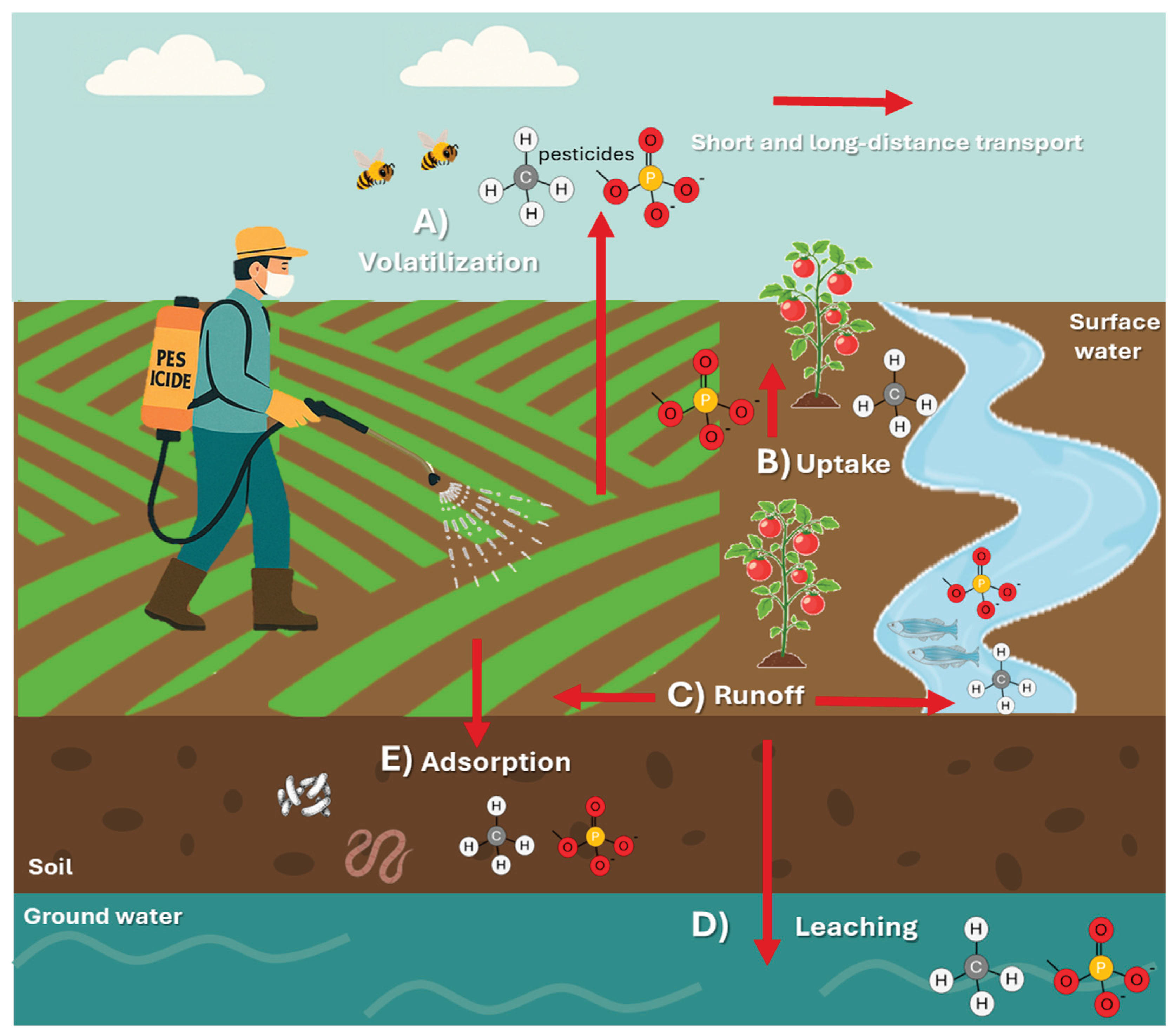
Figure 2.
Production of reactive oxygen species (ROS) from molecular oxygen.

Figure 3.
Mechanisms of pesticide damage at the cellular level. Adapted from [67].
Figure 3.
Mechanisms of pesticide damage at the cellular level. Adapted from [67].
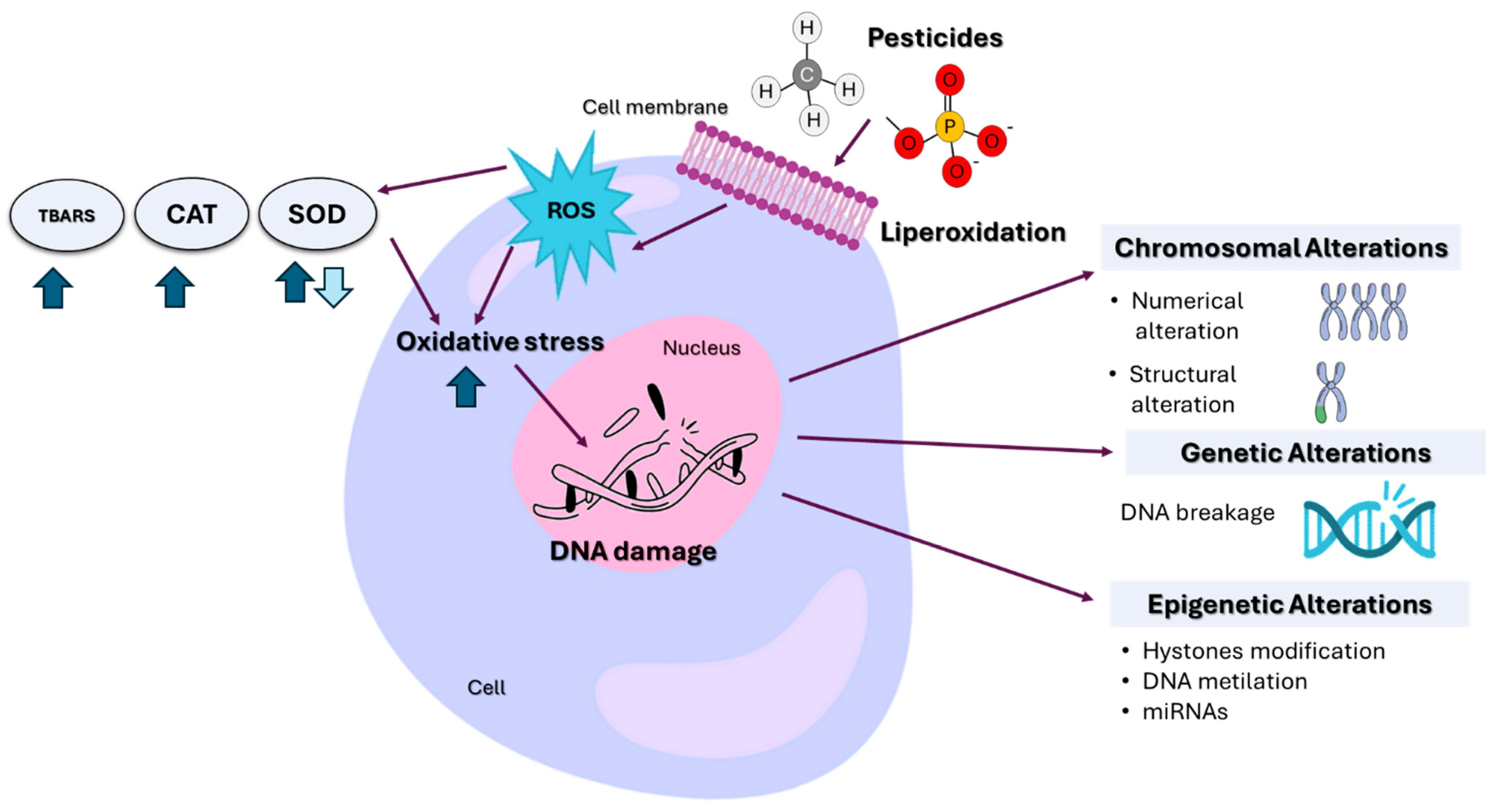
Figure 4.
Applications of nanotechnology as an alternative to the use of pesticides in agriculture.
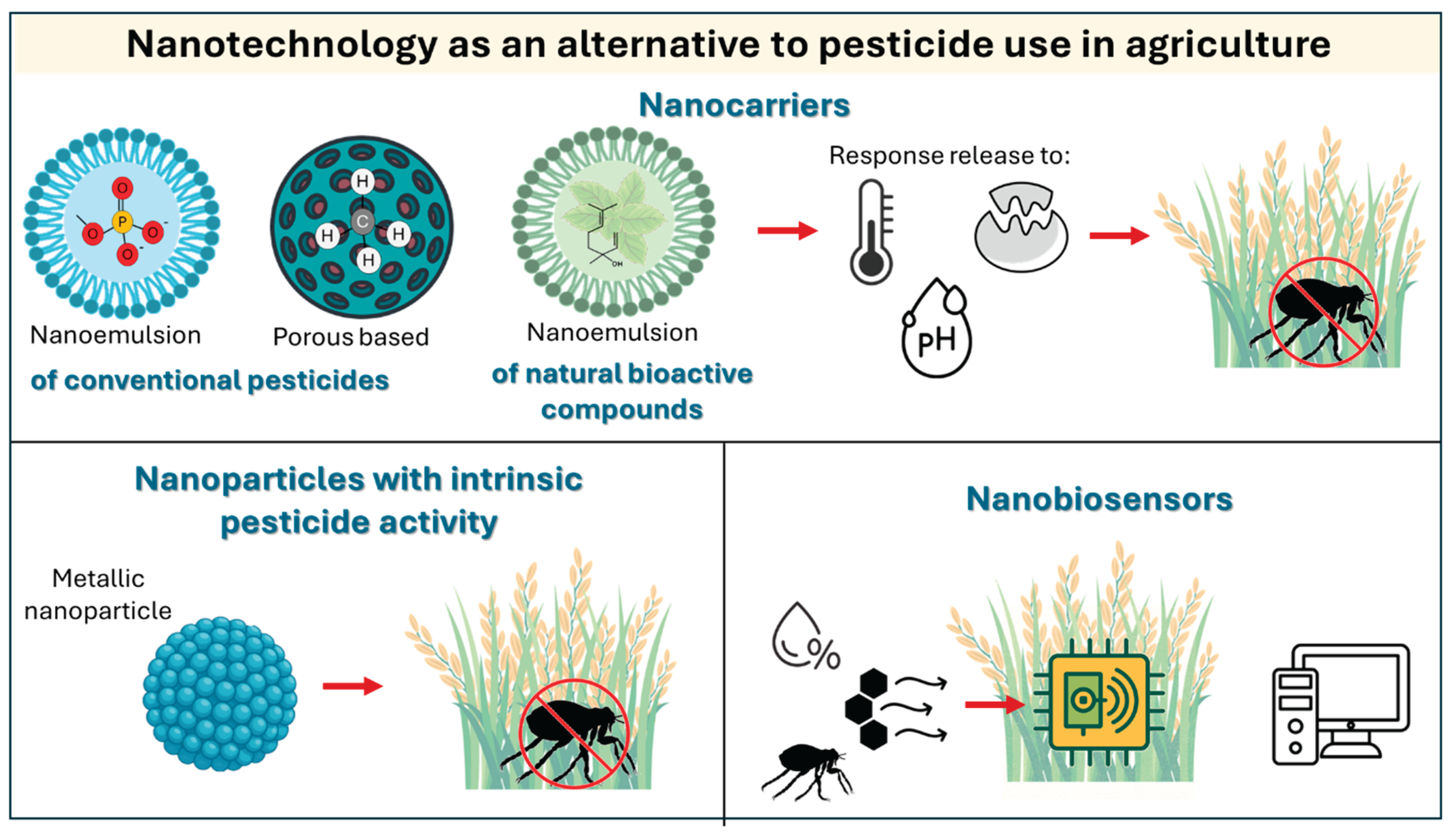

Table 1.
Highly used pesticides and the harm associated with their exposure in in vivo studies.
| Pesticide | Type | Target Organism | Associate damage | DL50 | Reference |
|---|---|---|---|---|---|
| Parathion /Methyl parathion | Organophosphate | Herbicide | In vivo studies have linked its use to the development of heart disease, an increase in CAT, TBARS, and GPx biomarkers, and a decrease in SOD, resulting in an overload of oxidative stress, alterations in acetylcholinesterase levels, and overstimulation of the central nervous system. | 6-14 mg/kg /2-30 mg/kg | [35,36] |
| Rotencidal | Coumarin | Bromadiolone | At low concentrations it has been linked to the appearance of oxidative stress in short exposures and the destabilization of biomolecules, at acute exposures bromadiolone has been linked to the inhibition of the carboxylation of vitamin K-dependent coagulation factors (II, VII, IX and X) making an anticoagulant effect, it is also widely related to the deterioration of the intestinal mucosa and bleeding in the digestive and urinary tract. There have been cases related to exposure to bromadiolone and the development of diseases of the central nervous system or conditions affecting the brain mass, such as leukoencephalopathy. | 1.125 mg/kg | [37,38,39,40] |
| Carbofuran | Carbamates | Herbicide and insecticide | After exposure to humans, a considerable increase in oxidative stress has been reported in several organs, including the liver, brain, kidney, and heart, which leads to the propagation of necrosis in hepatic and nephrotic cells. | 8-14 mg/kg | [41,42,43] |
| 2,4-D | Phenoxyacetic Acid | Herbicide | It is a widely used compound that causes significant damage to the environment and humans. In addition to the increase in oxidative stress and destabilization of biomolecules, it has been highly related to the inhibition of growth in cells and tissues; its effects have been studied in different in vivo models where they found a behavioral pattern in terms of neurotoxicity, a decrease in motor skills was observed, biochemically it showed a decrease in serotonin levels or a decrease in dopamine levels and its metabolites depending on the brain area analyzed. | 639-764 mg/kg | [44,45] |
| Cypermethrin | Pyrethroid | Acaracide | Often used in mixtures, its acute and subacute exposure causes clinical symptoms such as pneumonia, acute kidney injury, tearing, acute respiratory failure, and diarrhea. Cypermethrin primarily acts by delaying the closure of voltage-sensitive sodium channels. Most of the effects caused by poisoning with this pesticide are neurotoxic, particularly in the respiratory and gastrointestinal tracts. Cases of cardiotoxic conditions have been reported, but these are insufficient to associate them with cypermethrin poisoning. | 240-4123 mg/kg | [46,47,48,49] |
| Imidacloprid | Neonicotinoid | Insecticide | The most widely used neonicotinoid in the world is known to produce oxidative stress upon exposure. It has also been observed that, in the case of oral ingestion, the main symptoms and associated damage are gastrointestinal without corrosive lesions and neurological effects, such as dyspnea, coma, and diaphoresis. There is a particular relationship between imidacloprid poisoning and the development of various types of liver damage, which sometimes occurs late. | 450-650 mg/kg | [50,51,52,53] |
| Benomyl | Carbamates | Fungicide | Linked to the generation of systemic oxidative stress. In vitro studies in rat cardiomyoblasts (H9c2) demonstrated a 2-fold increase in ROS and glutathione levels measured in cells exposed to benomyl compared to controls. Exposure to benomyl has been shown to induce apoptosis, oxidative stress, and DNA damage. | >10000 mg/kg | [54,55] |
| Acetamiprid | Neonicotinoid | Insecticide | After the severe oxidative stress generated by this pesticide is linked to genotoxic damage and the formation of cleavages in tRNA due to the changes it generates in biomolecules, isolated cases have been reported where poisoning with acetamiprid triggered lactic acidosis, hyperglycemia, and intestinal obstruction. | 217 mg/kg | [56,57,58] |
| Glyphosate | Organophosphate | Herbicide | Exposure to pesticides during the early stages of development can severely disrupt normal cell growth by interfering with several critical signaling pathways, leading to significant changes in cell differentiation, neuronal development, and myelination. Furthermore, glyphosate appears to have a notable toxic effect on neurotransmission, generating oxidative stress, neuroinflammation, and mitochondrial dysfunction, which can result in neuronal death through mechanisms such as autophagy, necrosis, or apoptosis. These neurotoxic effects are also associated with the development of behavioral disorders and impaired motor skills. | 4320 mg/kg | [59,60] |
CAT: catalase, TBARS: thiobarbituric acid reactive substances, GPx: glutathione peroxidase, SOD: superoxide dismutase, ROS: reactive oxygen species.
Table 2.
Main toxicological tests for pesticides.
| Test name | Evaluated focus | Basis | Reference |
|---|---|---|---|
|
Acute Toxicity Evaluation (Oral, dermal, inhalation) • LD50 • LC50 • Skin irritation test (Draize Skin Test) • Eye irritation test (Draize Eye Test) • Acute inhalation test (Exposure of animal models in chambers) |
Acute toxicity tests. | Designed to assess the immediate effects of exposure to different pesticides. Tests are classified by exposure routes and evaluated within 24 to 96 hours. | [77,78,79] |
|
Chronic Toxicity Evaluation • Carcinogenicity studies (OECD TG 451) • Prenatal developmental toxicity study (OECD TG 414) • Reproductive toxicity study (OECD TG 416) |
Chronic toxicity tests. | Chronic toxicity tests evaluate the effects of prolonged and repeated low-dose exposures. | [77,78,79] |
|
Genotoxicity Tests • Ames test • Micronucleus test (OECD TG 487) • Comet assay • Chromosomal aberration test (OECD TG 473) |
Toxicological studies based on the pesticide's ability to damage DNA and cause point mutations. | Due to the high reactivity of pesticides, they can induce mutations, chromosomal aberrations, or DNA strand breaks. These tests encompass the main mechanisms of DNA damage caused by pesticides. |
[80,81,82,83] |
|
Neurotoxicity Studies • Behavioral tests • Measurement of cholinesterase inhibition • Functional tests in rats or mice (Functional Observational Battery) |
Evaluation of pesticide effects on the central nervous system, especially those caused by organophosphates and carbamates. | By detecting inhibition of key enzymes in the central nervous system, it is possible to identify motor or behavioral alterations in animal models and relate them to cognitive impairment. |
[84,85,86] |
|
Toxicokinetic Assays • ADME tests (Absorption, Distribution, Metabolism, and Excretion) • Radio-labeled isotopes • In vitro models (Cell cultures simulating liver metabolism) |
General evaluation of the pesticide. | Analyzing ADME helps understand how long a pesticide can remain reactive in the body and where it might accumulate. | [87,88,89] |
|
Biochemical Tests • Cholinesterase inhibition (Ellman test) • Alterations in liver enzymes (Alanine transaminase and aspartate transaminase) |
Evaluation of alterations in enzymatic systems based on the central nervous system. | These tests assess the pesticide's effects on specific metabolic and enzymatic systems, usually in the liver or nervous system, depending on the pesticide's nature. | [90,91,92] |
Table 3.
Health effects of pesticide consumption and exposure.
| Pesticide | Study | Conclusion | Reference |
|---|---|---|---|
| Mixtures of organochlorine and organophosphate pesticides, most notably 2,4-DDE, 4,4-DDE, g-BHC, and b-BHC. | A group of 29 adolescents was studied, with 75% of them belonging to families of agricultural day laborers. Additionally, 43.7% had gardens at home, and 64.28% used pesticides. The study linked interactions with pesticides to menstrual cycle disruption. |
In serum levels of sexual hormones, more than 40% of adolescents presented alterations in their hormonal profile, and 96.9% of adolescents had detectable plasma levels of pesticides. However, some indications suggest a relationship between 4,4-DDE in plasma and alterations in the menstrual cycle; no statistically significant differences were found. This may be due to the group chosen and the time designated for the study. | [100] |
| More than 100 pesticides classified as carcinogenic by the EPA | Meta-analysis of the presence of pesticides in different fruits and vegetables | Within the study, various pesticides found in fruits and vegetables, including grapes, mangoes, tomatoes, strawberries, apples, and peppers, were compiled. These pesticides are widely linked to the development of chronic degenerative diseases, alterations in the endocrine system, and disruptions in reproductive health in both adults and children. | [101] |
| 91 samples were identified as exceeding the permitted MRLs in Korea, including Chlorfenapyr, Procymidone, Etofenprox, Pendimethalin and Fluopyram | 1,146 fruits and vegetables were collected from the Korean market and tested for 15 pesticides of interest. | Although the identified pesticides are related to damage to the central nervous system, endocrine system, and liver conditions, it is necessary to note that it was only 8.9% of the total samples, compared to other countries, where this percentage is lower. | [102] |
| Pesticides such as DEE, DDT, dieldrin, and HCB | The factors influencing the presence of organochlorine pesticides in breast milk and the resulting damage to children were addressed. | Organochlorine pesticides can act as endocrine disruptors, and estrogen-inducing pesticides can accumulate with exposure to water, soil, environmental exposure, or food. Levels of HCB or DDT residues have been linked to decreased birth weight and head circumference. The opposite effect can occur with certain OGC pesticides, thanks to lipogenesis. | [103] |
2,4-DDE: 2,4-Dichlorodiphenyldichloroethylene; 4,4-DDE: 4,4-Dichlorodiphenyldichloroethylene; b-BHC: Beta-hexachlorocyclohexane; DEE: Diethyl ether; DDT: Dichlorodiphenyltrichloroethane; EPA: Environmental Protection Agency; HCB: Hexachlorobenzene; g-BHC: Gamma-hexachlorocyclohexane (Lindane); MRLs: Maximum Residue Limits.
Disclaimer/Publisher’s Note: The statements, opinions and data contained in all publications are solely those of the individual author(s) and contributor(s) and not of MDPI and/or the editor(s). MDPI and/or the editor(s) disclaim responsibility for any injury to people or property resulting from any ideas, methods, instructions or products referred to in the content. |
© 2025 by the authors. Licensee MDPI, Basel, Switzerland. This article is an open access article distributed under the terms and conditions of the Creative Commons Attribution (CC BY) license (http://creativecommons.org/licenses/by/4.0/).
Copyright: This open access article is published under a Creative Commons CC BY 4.0 license, which permit the free download, distribution, and reuse, provided that the author and preprint are cited in any reuse.


