

Submitted:
02 July 2025
Posted:
04 July 2025
You are already at the latest version
Abstract
Background:
Digital game addiction has emerged as a significant behavioral concern among adolescents, with potential implications for well-being. Understanding the mechanisms through which digital game addiction affects life satisfaction and how these mechanisms may differ by gender is important for targeted interventions.
Aims:
This study aimed to investigate the mediating role of difficulties in emotion regulation and the moderating role of gender in the relationship between digital game addiction and life satisfaction among adolescents.
Method:
The sample consisted of 458 Turkish adolescents (232 females, 50.7%) aged between 14 and 18 years (M = 16.27). Participants completed the Game Addiction Scale for Adolescents – Short Form, the Life Satisfaction Scale, and the Difficulties in Emotion Regulation Scale – 8.
Results:
Digital game addiction was found to have a significant negative association with life satisfaction. Difficulties in emotion regulation significantly mediated the relationship between digital game addiction and life satisfaction. Furthermore, gender moderated this mediation effect, with difficulties in emotion regulation being more pronounced among males than females.
Conclusion:
The findings highlight the importance of emotional regulation in understanding the negative impact of digital game addiction on adolescents' life satisfaction, particularly among males. These results suggest the need for gender-sensitive approaches in interventions aimed at improving emotion regulation skills and reducing problematic gaming behavior.
Keywords:
digital game addiction
; life satisfaction
; difficulties in emotion regulation
; adolescents
; gender differences
1. Introduction
Life satisfaction is a subjective indicator of well-being that expresses an individual's satisfaction with their life. Adolescence, in particular, is a period of rapid and complex changes in terms of physical, cognitive and emotional development, and is therefore a critical stage in determining life satisfaction (Russo-Netzer & Tarrasch, 2024). Research has shown that life satisfaction in adolescence is not merely a temporary state of happiness, but also plays a protective role in terms of future psychological health, academic achievement, social relationships, and coping skills (Dezhapoun, 2025; Liu et al., 2021). Supporting life satisfaction at an early age not only has a protective effect on mental health but also prevents individuals from resorting to negative coping strategies (Chiang et al., 2023; Liu et al., 2021). Indeed, studies have shown that adolescents with low life satisfaction are more likely to exhibit aggression, substance use, and risky behaviours (Hanniball et al., 2018; Manna et al., 2023). Therefore, addressing the concept of life satisfaction during adolescence is important for developing strategies that support mental health at both the individual and societal levels (Erdian & Hidayat, 2024; Kekkonen et al., 2020).
2. Literature Review
2.1. Digital Game Addiction and Life Satisfaction
In recent years, with the rapid advancement of technology, digital games have become quite widespread, especially among teenagers, and have become an indispensable part of daily life. Easy access to mobile devices, the strengthening of internet infrastructure, and the social interaction enabled by online games are among the primary factors contributing to the appeal of these games (Kuss & Griffiths, 2012; Martin-Subero & Diez-Quevedo, 2016). Adolescents find digital games appealing because they can interact with others more easily than in face-to-face situations, cope with real-life problems through interactions in the game world, gain the respect of other players due to their good gaming skills, and thus fulfil their need for self-actualisation (Li & Wang, 2013). However, the appeal of the virtual world also carries the risk of digital game addiction (Kaya et al., 2024). Digital game addiction is defined as an uncontrollable and repetitive desire to play games to a degree that may negatively affect an individual's social, academic, professional, or personal functioning (Pontes & Griffiths, 2015). Additionally, addiction symptoms include cognitive and behavioural indicators such as mental preoccupation with the game, restlessness when unable to play, failed attempts to control gaming, and neglect of social obligations, rather than merely the amount of time spent in front of a screen (Montag et al., 2021).
Adolescence, in particular, is considered a vulnerable stage for addictive behaviours because it is a period when individuals struggle with developmental tasks such as identity development, social belonging and autonomy, experience frequent emotional fluctuations and are more prone to risky behaviours (Steinberg, 2008). Excessive time spent by adolescents on digital games leads to the development of addictive tendencies and causes them to exhibit serious behavioural problems (Frangos et al., 2011). Research has found that digital game addiction is positively associated with factors such as anxiety (Mehroof & Griffiths, 2010), attention deficit hyperactivity disorder (Başgul et al., 2020), obsessive-compulsive disorder (Starcevic & Aboujaoude, 2017), depression (Andreassen et al., 2016) and social anxiety (Karaca et al., 2020). However, it has been found to be negatively associated with emotion regulation skills, school attachment (Kang, 2017), life satisfaction (Makas & Koç, 2025; Taş et al., 2022), autonomy and need for relationship (Kaya et al., 2024) In this context, it can be argued that individuals with digital game addiction may experience negative outcomes in many dimensions of their lives, which may also affect their overall life satisfaction levels.
With the widespread use of digital games, gaming addiction has become a problem that has serious effects on individuals' psychological and social lives (Yaman et al., 2020). This situation is particularly significant among young people and young adults, as it constitutes an important risk factor affecting fundamental well-being, such as life satisfaction (Makas & Koç, 2025; Purwaningsih & Nurmala, 2021). Life satisfaction is a cognitive evaluation process that reflects an individual's satisfaction in different areas of life, such as family, work, friendships, and health (Frisch, 2016). Adolescence, in particular, is a period of rapid emotional, social, and cognitive development; therefore, life satisfaction is considered an important developmental indicator (Purwaningsih & Nurmala, 2021). Indeed, Proctor and colleagues (2009) emphasised that high life satisfaction in adolescents is closely related to positive variables such as self-esteem, perceived social support, academic achievement, and overall psychological well-being. However, excessive engagement in digital games, i.e., digital game addiction, is considered an important behavioural risk factor that threatens these positive sources of life satisfaction (Baysak et al., 2020). It has been observed that individuals who become addicted to digital games redirect their time and attention resources from academic, social, and family responsibilities to the virtual world (Griffiths, 2009). This situation can lead to weakened connections with real life, social isolation, decreased academic performance, and ultimately reduced life satisfaction (Bargeron & Hormes, 2017).
A review of the literature reveals that uncontrolled digital gaming has been found to cause a decrease in satisfaction from social relationships and a weakening of psychological well-being (Çan et al., 2020; Kircaburun et al., 2019). Studies conducted in parallel with this finding have also revealed a negative relationship between digital game addiction and life satisfaction (Filipovič et al., 2023; Kircaburun et al., 2019; Makas & Koç, 2025; Tomaszek et al., 2020). Similarly, Bargeron and Hormes (2017) demonstrated that individuals diagnosed with gaming addiction have lower life satisfaction and higher levels of depression, anxiety, and stress. Research indicates that individuals with low life satisfaction tend to turn to digital games more frequently and attempt to fulfil their unmet psychological needs through these games (Çelik et al., 2022; Giardina et al., 2024; Kaya et al., 2024). In this context, low life satisfaction acts as a risk factor that triggers digital game addiction, while the continuation of addiction can further reduce an individual's life satisfaction, creating a negative cycle (Bargeron & Hormes, 2017). In conclusion, digital game addiction is considered a variable that negatively affects the level of life satisfaction, which is of fundamental importance in the psychosocial development of adolescents.
Hypothesis 1:
Digital game addiction in adolescents negatively predicts life satisfaction.
2.2. The Mediating Role of Difficulties in Emotion Regulation
Various psychological factors influence the relationship between digital game addiction and life satisfaction. One of these factors is difficulty in emotional regulation. difficulty in emotional regulation is defined as the inability to effectively control one's emotional responses, develop appropriate coping strategies, and cope with negative emotions (Erez & Gordon, 2024). Recent studies have shown that digital game addiction has a detrimental effect on difficulty in emotional regulation. Although digital games provide short-term emotional relief, they can weaken emotional intelligence components such as emotional awareness, impulse control, and coping skills in the long term (Maroney et al., 2019; Rho et al., 2018). Emotional capacities that are developing during adolescence can be harmed by excessive engagement with digital games (Loudoun et al., 2024).
Difficulty in emotional regulation can negatively affect both individual life satisfaction and social relationships. Indeed, studies have shown that difficulty in emotional regulation is positively related to life satisfaction and that difficulty in emotional regulation reduces life satisfaction (González et al., 2023; Mittal, 2020). Research has found that individuals who are unable to regulate their emotions healthily experience more anxiety and depression and, consequently, have lower life satisfaction (Basyouni & Keshky, 2021; Hebert, 2017). In this regard, digital game addiction indirectly reduces life satisfaction by causing individuals to experience difficulties in regulating their emotions. In summary, while digital game addiction is an important factor that negatively affects life satisfaction, difficulty in emotional regulation emerges as an effective mediator variable in understanding this relationship. Additionally, studies indicate that other psychological variables may influence the relationship between digital game addiction and life satisfaction. These include variables such as depression (Shimono, 2021), self-compassion (Jiang et al., 2022), and psychological flexibility (Schumacher, 2023). Each of these variables is an important factor influencing life satisfaction, but they are often directly related to emotion regulation skills.
Hypothesis 2:
Difficulty in emotional regulation mediates the relationship between digital game addiction and life satisfaction
2.3. The Moderating Role of Gender
The relationship between digital game addiction and life satisfaction may vary depending on the individual's psychological characteristics as well as gender differences. Studies show that this relationship is stronger and more negative in males. One of the main reasons for this is that males have lower emotional regulation skills than females (Wang et al., 2022). Emotional regulation skills are critical for an individual's ability to cope with stress, manage negative emotions, and develop healthy behavior patterns. Girls' more developed skills in this area may protect them to some extent from the negative effects of gaming addiction on life satisfaction (Cudo et al., 2020). A study found that female gamers regulate their emotional responses more harmoniously and thus feel the effects of gaming addiction on life satisfaction to a lesser extent (Dong & Potenza, 2022). In addition, males spend more time on games and exhibit higher levels of addiction (Rohilla, 2018). This situation may lead to greater harm to their life satisfaction (Gaetan et al., 2012; Yazici & Kumcagiz, 2021). Furthermore, when men play games primarily for competition, success, and escape motivations, combined with deficiencies in emotional regulation skills, this can elevate addiction to a more dysfunctional level (Estupiñá et al., 2024; Wang et al., 2022). All these findings indicate that gender plays a moderating role in the relationship between gaming addiction and life satisfaction, particularly in male individuals, where this relationship is stronger and more negative (Cudo et al., 2020; Bonnaire & Baptista, 2019). Girls' advanced emotion regulation skills make them more resilient to the psychological consequences of digital game use, while boys' weakness in this skill amplifies the negative effects of gaming addiction on life satisfaction (Estévez et al., 2017; Müller & Bonnaire, 2020).
Hypothesis 3:
Difficulty in emotional regulation fully mediates in boys, while partially mediating in girls.
2.4. Present Study
Today, digital game addiction has significant consequences for psychological well-being, especially among adolescents. Considering that adolescence is a critical period in terms of susceptibility to digital addictions, it is not surprising that there are many studies on the relationship between digital game addiction and life satisfaction in adolescents. However, the emotional mechanisms and gender differences in this relationship make this study valuable. In this context, studies aiming to explain the relationship between digital game addiction and life satisfaction are of critical importance in understanding individuals' emotional and social functioning. The present study aims to contribute significantly to the literature by examining difficulty in emotional regulation as a mediating variable and gender as a moderating variable in order to gain a deeper understanding of this relationship. The findings of the current study may contribute to psychoeducational programs targeting life satisfaction in adolescents by emphasizing the importance of emotion regulation skills and gender differences. Additionally, it may create the potential to offer more effective and comprehensive intervention strategies related to adolescents' life satisfaction to parents, educators, and mental health professionals.
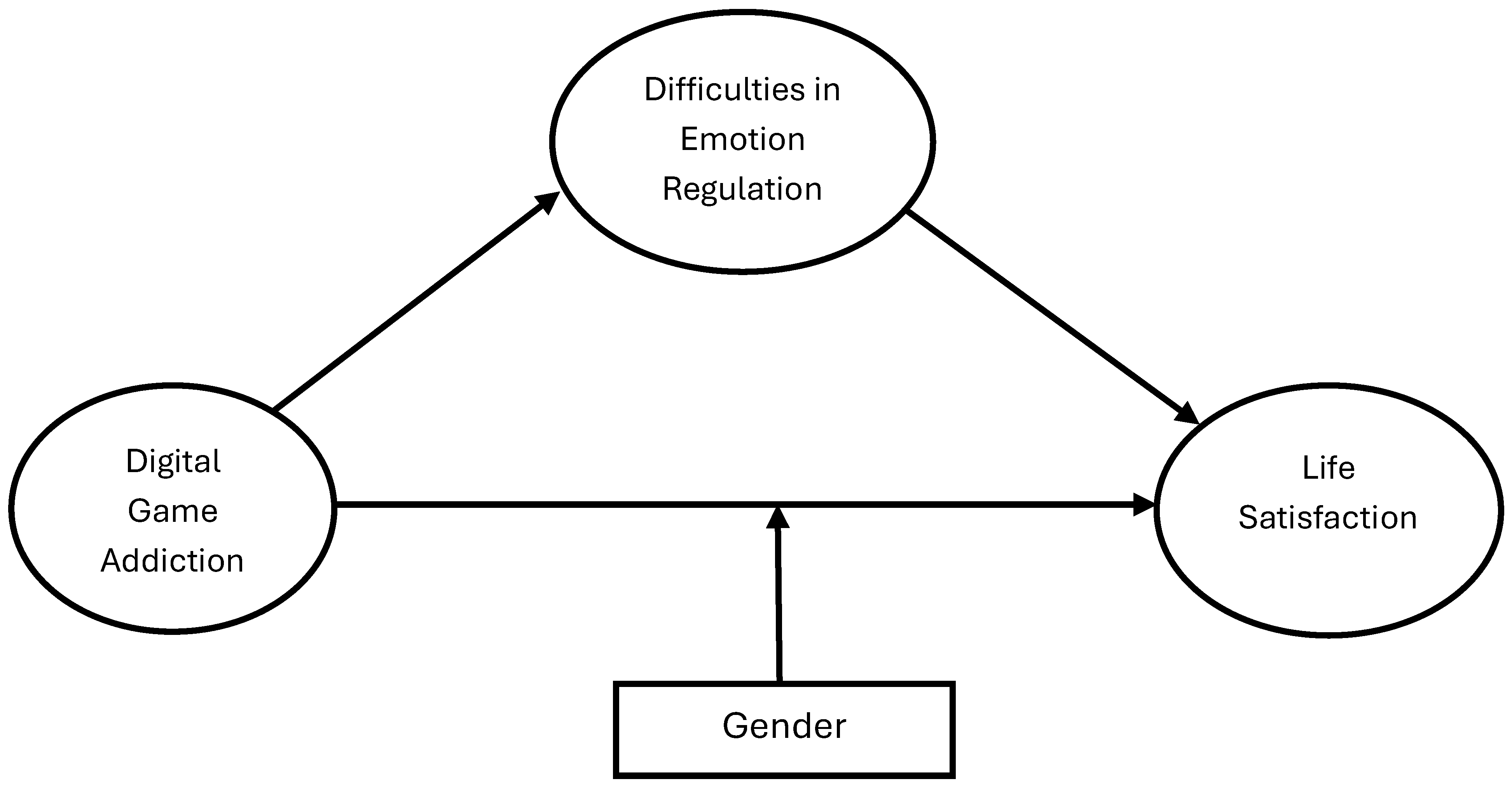
Figure 1.
The proposed hypothetical model.
3. Method
3.1. Participants and Procedure
The study included 458 Turkish adolescents. A total of 226 (49.3%) of the participants were male, while 232 (50.7%) were female. The ages of the participants ranged from 14 to 18, with a mean age of 16.27 years. A total of 136 (29.7%) of the participants were in the 9th grade, 139 (30.3%) were in the 10th grade, 104 (22.7%) were in the 11th grade, and 79 (17.2%) were in the 12th grade. After obtaining permission from the University Ethics Committee, two schools were randomly selected from among ten different high schools, and the students were reached. Within this framework, the selected high schools were visited in April 2025, and after providing information about the study to the students, those who volunteered were informed that they could answer the questions after obtaining Informed Parental Consent Forms signed by their parents, as they were under the age of 18. Additionally, information was provided regarding the absence of any incentives and the confidentiality of the data. Three days after these briefings, the schools were revisited to collect the responses. Data collection tools were not provided to students who did not consent to participate or whose parents did not sign the consent form.
3.2. Instruments
The Game Addiction Scale for Adolescents-Short Form: It was developed by Anlı and Taş (2018) to determine the addiction levels of adolescents in terms of their gaming behaviour. The scale consists of a total of 9 items, a single dimension, and a Likert-type rating ranging from 1 to 5. As the scores obtained from the scale increase, the level of addiction increases. The reliability value of the scale is α = .81. Additionally, the scale's fit indices are χ² (27) = 2.514, CFI = .96, GFI = .97, RMSEA = .054, and NFI = .94.
Life Satisfaction Scale: It was used to determine the level of satisfaction of adolescents with their general life experiences. The scale [Original: Diener et al. (1985), Turkish: Dağlı and Baysal (2016)] consists of five items, a single dimension, and a 5-point Likert scale. It has been stated that as the scores obtained from the scale increase, the level of satisfaction of adolescents also increases. The confirmatory factor analysis (CFA) of the adaptation to Turkish culture showed good fit (χ²/df = 1.17, RMSEA = .030, AGFI = .97, CFI = 1.00, SRMR = .019, GFI = .97). The Cronbach's Alpha value of the scale is .88.
Difficulties in Emotion Regulation Scale-8: It has been used to determine the emotional regulation difficulties experienced by adolescents. Scale Scale [Original: Penner et al. (2022), Turkish: Ekşi and Erik (2023)] 8 items, 4 factors (Purpose, impulse, rejection and strategy) and a 5-point Likert scale. Higher scores indicate greater difficulty. Cronbach's alpha coefficients range from .87 for the entire scale to .68 to .77 for the subscales. The results of the DFA analysis indicate that the general fit indices (χ²/df = 3.05; GFI = .97; NFI = .96; TLI = .95; CFI = .98; RMSEA = .075) are adequate.
3.3. Data Analysis
SPSS 27.0 and AMOS 24 statistical software packages were used for the analysis of the research. First, the normality of the data was determined by examining the normal distribution graph, skewness, and kurtosis values. Then, Pearson Correlation analysis was conducted to determine the relationships. Structural Equation Modelling was established to examine the mediating role of emotion regulation difficulty (M) in the relationship between game addiction (X) and life satisfaction (Y). In the final stage, the moderating effect of gender was examined.
4. Results
4.1. Preliminary Analyses
Table 1 shows that life satisfaction is negatively correlated with game addiction (r = -.45, p < .001), goal (r = -.54, p < .001), impulse (r = -.53, p < .001), non-acceptance (r = -.50, p < .001), and strategy (r = -.58, p < .001). Game addiction is positively related to goal (r = .41, p < .001), impulse (r = .45, p < .001), non-acceptance (r = .48, p < .001), and strategy (r = .39, p < .001). Impulse, one of the subscales of emotion regulation difficulty (r = .70, p < .001), is positively related to acceptance (r = .70, p < .001) and strategy (r = .78, p < .001). One of the subdimensions of emotion regulation difficulty, impulse, is positively related to acceptance (r = .71, p < .001) and strategy (r = .72, p < .001). Acceptance is positively related to strategy (r = .72, p < .001).
The results presented in Table 1 show that the skewness values range from 0.64 to -0.17, while the kurtosis values range from -1.18 to -0.43. These values are between +1.5 and -1.5, which is within the acceptable range for normality (Mayers, 2013). Before testing the mediating model, the level of digital game addiction's impact on life satisfaction was determined. The findings are presented in Figure 2.
Figure 2 shows the association between digital game addiction and life satisfaction was (r = -.51, p < .001). The fit indices for Figure 2 were found to be adequate with χ²/df = 4.60, CFI = .932, GFI = .897, TLI = .932, and SRMR = .049 (Browne & Cudeck, 1992; Hooper et al., 2008; Hu & Bentler, 1998; Marsh & Hau; 1996; Wheaton et al., 1977).
4.2. Testing for Moderated Mediation
Acceptance ranges for fit indices specified by relevant statistics experts in studies (Browne & Cudeck, 1992; Hooper et al., 2008; Hu & Bentler, 1998; Marsh & Hau; 1996; Wheaton et al., 1977) and the results of the fit indices obtained for the mediator model tested in the current study are demonstrated in Table 2.
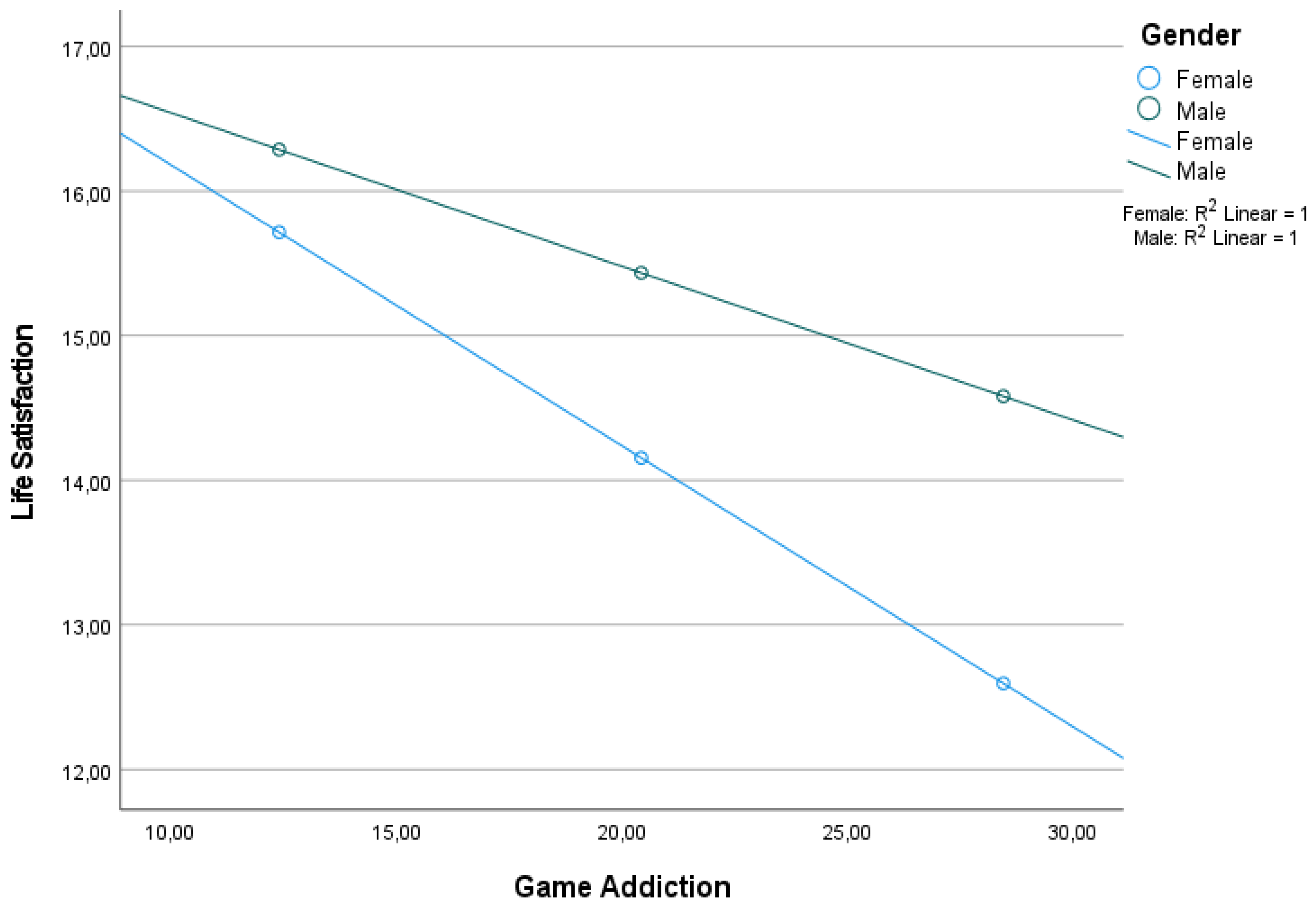
Examining the fit indices for the mediator model as seen in Table 2, the fit indices of the current research model are at an acceptable level. When the findings presented in Figure 2 (Stage One) of the model showing the mediating effects of the study are compared with those presented in Figure 3 and Figure 4, the relationship between digital game addiction and life satisfaction, when difficulty in emotional regulation is included as a mediating variable, was found to be β = -.12 for males and β = -.33 for females. The relationship between digital game addiction and life satisfaction decreased from r = -.51 to β = -.12 in males and became insignificant (p >.07). In females, it decreased to β = -.33 and its predictive power weakened. Thus, the effect of digital game addiction on life satisfaction became statistically insignificant in males (full mediation) when difficulty in emotional regulation was included in the model, while the relationship weakened (partial mediation) but did not disappear completely in females. Additionally, when comparing gender differences (Critical Ratios for Differences), the differences between male and female groups were significant (βwoman = -.33, βman = -.12, C.R. = 2.560 > 1.96, p < .001).
Figure 3.
Moderated Mediation Effect of Male (Stage 2).
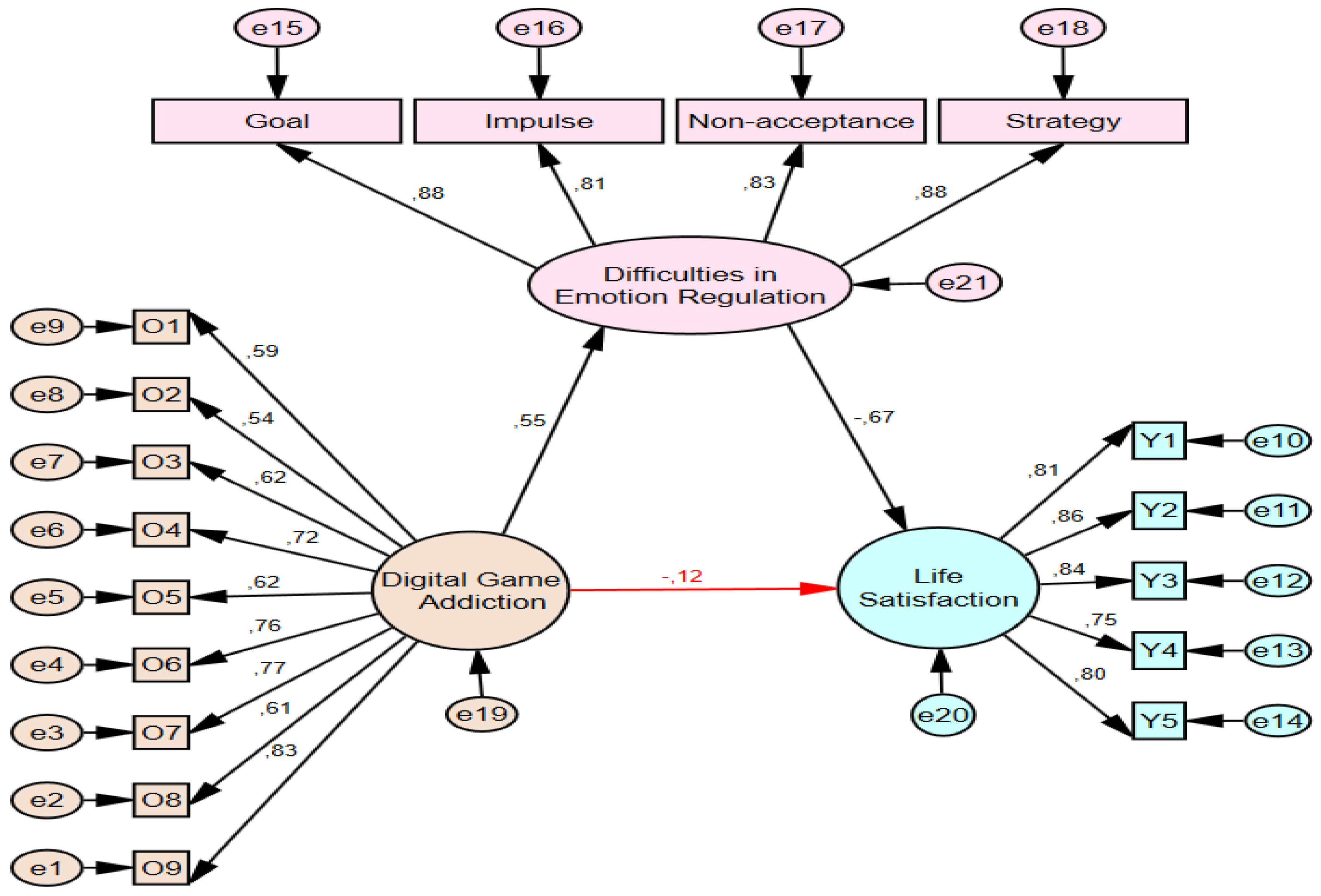
Figure 4.
Moderated Mediation Effect of Female (Stage 2).
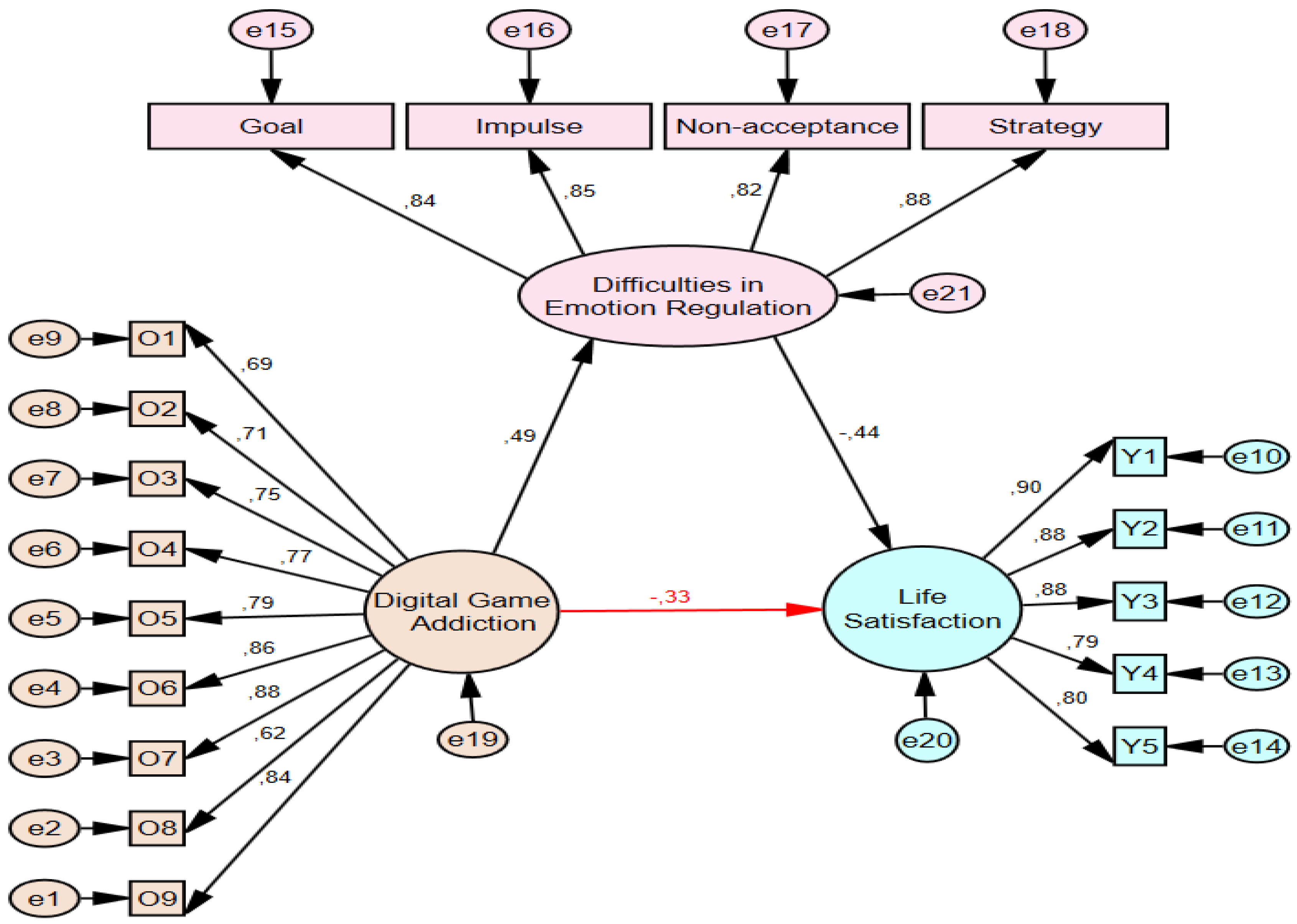
Figure 5.
Gender moderated the relation between digital game addiction and life satisfaction.
5. Discussion
This study examined the relationship between psychological mechanisms affecting adolescents' life satisfaction, namely digital game addiction and difficulty in emotional regulation, and investigated the moderating role of gender. The findings revealed that difficulty in emotional regulation mediates the relationship between gaming addiction and life satisfaction in adolescents. However, this mediating effect was found to be fully mediating in males, while only partially mediating in females. The study results were evaluated in light of the relevant literature.
5.1. The Relationship Between Digital Game Addiction and Life Satisfaction
The current study confirms that digital game addiction is one of the psychological mechanisms that negatively predict adolescent life satisfaction, as many previous studies have done. In other words, as digital game addiction increases among adolescents, life satisfaction decreases (Ho & Kao, 2021; Makas & Koç, 2025; Phan et al., 2020). When examining the background of the effect of digital game addiction on life satisfaction, it has been observed that adolescents who play excessive games experience a decline in social skills over time, an increase in loneliness levels, and consequently a decrease in life satisfaction (Luo et al., 2022). The negative impact of digital game addiction on physical health, such as sleep quality and eating habits, is another factor affecting life satisfaction (Che Mokhtar & McGee, 2025; Zaman et al., 2022). Teenagers addicted to digital games spend most of their time playing games, which leads to a decrease in their motivation to study and academic achievement, as well as a decline in life satisfaction (Taş, 2017). Additionally, excessive engagement with games negatively impacts life satisfaction by disrupting family relationships (Deniz et al., 2024). Another factor that reduces life satisfaction in adolescents is that adolescents addicted to digital games experience intense mental health issues such as depression, stress, and anxiety (Loton et al., 2016). In summary, digital game addiction negatively affects social relationships, physical and mental health, and academic achievement, thereby reducing life satisfaction in adolescents. Additionally, studies have shown that low life satisfaction is associated with high game addiction (Filipovič et al., 2023; Okur & Özekes, 2020). This suggests that adolescents with low life satisfaction may turn to gaming as a coping mechanism, which can eventually lead to a vicious cycle.
5.2. The Mediating Role of Difficulties in Emotion Regulation Between Game Addiction and Life Satisfaction
When examining the relationship between digital game addiction, the first pathway of the mediation model, and difficulties in emotion regulation, it was found that digital game addiction increases emotion regulation difficulties in adolescents. This finding is consistent with the relevant literature (Estupiñá et al., 2024; Hollett & Harris, 2020; Lin et al., 2020). Adolescents may turn to digital games to avoid facing negative emotions such as anger, anxiety, stress, and loneliness (Satapathy et al., 2024). After a while, excessive gaming makes it difficult to cope with emotions in a healthy way and weakens emotion regulation skills (Schettler et al., 2024). Excessive engagement with digital games causes sleep problems, academic difficulties, and poor time management in daily life (Hawi et al., 2018; Molaeipour et al., 2025). This situation can trigger emotional imbalances and make emotional regulation more difficult.
The second pathway of the mediation model in the current study revealed that difficulties in emotion regulation negatively affect life satisfaction. In other words, as the level of difficulties in emotion regulation increases in adolescents, life satisfaction decreases. Adolescence is a complex period involving numerous developmental tasks, and emotional fluctuations and changes are particularly common during this time (Akeren et al., 2025; Miniksar & Kılıç, 2023). Adolescents with weak emotion regulation skills experience a decline in life satisfaction during this critical period due to difficulties in coping with developmental tasks and feeling overwhelmed during emotional fluctuations (Fernández & Gorriz, 2025; Nie et al., 2025). In addition, adolescents who struggle with healthy coping with emotions are reported to be prone to substance abuse, such as smoking and alcohol (Zohreh & Ghazal, 2018). Adolescents with difficulties in emotion regulation experience loneliness because they struggle with social skills such as developing close friendships and expressing themselves in social settings (Liu et al., 2023). A similar effect to that seen in negative social relationships is also observed in the academic sphere. Adolescents with weak emotion regulation skills lack the ability to sustain and develop academic motivation. Lack of concentration also reduces their academic performance (Usán Supervía & Quílez Robres, 2021). In addition, adolescents who have difficulty regulating their emotions are prone to many psychological problems such as anxiety and depression (Chen et al., 2025; Zhou & Zhen, 2022). In conclusion, difficulties in emotion regulation in adolescents can be said to reduce life satisfaction due to reasons such as loneliness, psychological problems, academic failure, risk of substance abuse, and weak impulse control.
When these findings are evaluated together with the mediating effect in the current study, digital game addiction may directly reduce life satisfaction, as well as indirectly reduce life satisfaction by causing difficulties in emotion regulation. Another finding from the mediation analysis suggests that difficulties in emotion regulation have a greater impact on adolescent life satisfaction than digital game addiction. Compared to digital game addiction, difficulties in emotion regulation negatively affect adolescents' lives in a broader context and reduce their life satisfaction.
5.3. The Moderating Role of Gender
As the outcome of the current study, the moderating effect of difficulties in emotion regulation on the relationship between gender and life satisfaction in adolescents with digital game addiction was examined. The results indicated that difficulties in emotion regulation play a full mediating role in male adolescents, while a partial mediating effect was observed in female adolescents. In other words, difficulties in emotion regulation eliminate the effect of digital game addiction on life satisfaction in males, whereas the direct effect of digital game addiction on life satisfaction persists, albeit weakly, in females. Considering that girls have higher emotional intelligence and emotional awareness than boys (Zysberg & Raz, 2019), it can be said that the effect of game addiction on difficulties in emotion regulation is weaker in girls than in boys. While boys exhibit more eager and passionate player profiles in digital games, girls exhibit more avoidant and reluctant player profiles (Castro & Neto, 2025). Based on this, it can be expected that boys' levels of difficulties in emotion regulation in the effect of digital game addiction will be higher than girls'. The change in the mediating effect can also be explained by the gender differences in emotion expression patterns. While girls are known to express their emotions more freely and talk more about their feelings, boys are reported to suppress their emotions and adopt a more introverted attitude toward expressing emotions (Cummings et al., 2022). For this reason, difficulties in emotion regulation are more pronounced in males than in females. In summary, difficulties in emotion regulation have had a much stronger impact on life satisfaction in males than in females.
5.4. Contribution and Limitations
The study results have introduced new perspectives on intervention and prevention activities aimed at reducing the risk of low life satisfaction in adolescence. First, it has revealed that digital game addiction negatively predicts life satisfaction in adolescents. Therefore, to reduce the risk of low life satisfaction, awareness and intervention methods targeting digital game addiction should be adopted in school psychological counseling services that are easily accessible to adolescents. Second, it was observed that difficulties in emotion regulation negatively predict life satisfaction in adolescents. As an effective effort to reduce the risk of low life satisfaction in adolescents, priority should be given to awareness activities that develop emotion regulation skills. The third and perhaps most important contribution of this study is that it emphasizes the need to consider gender differences in all prevention and intervention activities aimed at reducing the risk of low life satisfaction. In particular, it is important not to overlook the need to support male adolescents in recognizing, expressing, and becoming more aware of their emotions.
As with any study, this study has certain limitations. First, since the data were collected at a single point in time, i.e., this is not a longitudinal study, it is not possible to establish a complete causal relationship between the variables in the current study. Future studies would benefit from testing the existing relationships using longitudinal designs and experimental models. Second, the study data were collected from adolescents through self-reporting. Since this situation carries the risk of respondent bias, it is recommended that future studies collect data from multiple sources, such as parents, teachers, or peers, to increase the validity of the findings. Third, this study sample is limited to students from different types of high schools in a specific city in Turkey. Therefore, a broader student sample from different age groups and cultures is required for future studies.
5.5. Conclusions
This study examined the mediating effect of emotion regulation difficulties and the moderating role of gender in the relationship between digital game addiction and life satisfaction among adolescents. The findings revealed that emotion regulation difficulties fully mediated the relationship between digital game addiction and life satisfaction among males. On the other hand, emotion regulation difficulties in females partially mediated the relationship between digital game addiction and life satisfaction. These results reveal that emotion regulation difficulties are a decisive psychological mechanism in the effect of digital game addiction on life satisfaction in adolescents and that this relationship varies according to gender. The findings indicate the importance of addressing emotion regulation difficulties in interventions targeting life satisfaction, especially in boys, while suggesting that other psychosocial factors should also be included in the process for girls. Future studies are recommended to include different psychosocial variables (social support, empathy, etc.) in addition to the model and to plan longitudinal designs. Furthermore, gender sensitivity should not be overlooked when developing preventive and developmental strategies for mental health services aimed at life satisfaction.
Author Contributions
All authors contributed substantially to the work reported in this manuscript. Specifically, they were involved in: (a) the conception and design of the study, as well as the analysis and interpretation of the data; (b) drafting the manuscript and/or revising it critically for significant intellectual content; and (c) approving the final version of the manuscript to be submitted for publication.
Funding
This research received no external funding.
Data Availability
The data that support the findings of this study are available from the corresponding author upon reasonable request. The data are not publicly available due to the inclusion of raw materials used exclusively for the analyses conducted in this research.
Institutional Review Board Statement
The study was conducted in accordance with the Declaration of Helsinki and approved by the Bayburt University (Decision Number: 103-12 March 2025).
Informed Consent Statement
Online or written informed consent was obtained from all individual participants included in this study.
Conflicts of Interest
We have no commercial or financial relationship to disclose. We have no known conflict of interest to disclose. This manuscript has not been submitted to, nor is it under review at, another journal or other publishing venue.
References
- Akeren, İ., Çelik, E., Yayla, İ. E., & Özgöl, M. (2025). The effect of self-regulation on the need for psychological help through happiness, resilience, problem solving, self-efficacy, and adjustment: A parallel mediation study in adolescent groups. Children, 12(4), 445. [CrossRef]
- Aldao, A., Nolen-Hoeksema, S., & Schweizer, S. (2010). Emotion-regulation strategies across psychopathology: A meta-analytic review. Clinical Psychology Review, 30(2), 217–237. [CrossRef]
- Andreassen, C. S., Billieux, J., Griffiths, M. D., Kuss, D. J., Demetrovics, Z., Mazzoni, E., & Pallesen, S. (2016). The relationship between addictive use of social media, narcissism, and self-esteem: Findings from a large national survey. Addictive Behaviors, 64, 287–293. [CrossRef]
- Anlı, G., & Taş, İ. (2018). The validity and reliability of the game addiction scale for adolescents-short form. Electronic Turkish Studies, 13(11), 189-203. [CrossRef]
- Bargeron, A. H., & Hormes, J. M. (2017). Psychosocial correlates of internet gaming disorder: Psychopathology, life satisfaction, and impulsivity. Computers in Human Behavior, 68, 388–394. [CrossRef]
- Basgul, S. S., Bekar, B., & Lus, M. G. (2020). Associations between computer game addiction and attention deficit and hyperactivity disorder—An empirical study. Addicta: The Turkish Journal on Addictions, 7, 122–128. [CrossRef]
- Basyouni, S. S., & Keshky, M. E. S. E. (2021). The role of emotion regulation in the relation between anxiety and life satisfaction among Saudi children and adolescents. Journal of Psychology & Clinical Psychiatry, 12(2), 21-30. [CrossRef]
- Baysak, E., Yertutanol, F. D. K., Şahiner, I. V., & Candansayar, S. (2020). Sociodemographic characteristics of online game players and the relationship of game addiction with some psychosocial factors. Turkısh Journal Clinical Psychıatry, 23(2), 196–203. [CrossRef]
- Bonnaire, C., & Baptista, D. (2019). Internet gaming disorder in male and female young adults: The role of alexithymia, depression, anxiety and gaming type. Psychiatry Research, 272, 521–530. [CrossRef]
- Browne, M. W., & Cudeck, R. (1992). Alternative ways of assessing model fit. Sociological Methods & Research, 21(2), 230-258. [CrossRef]
- Castro, C. M., & Neto, D. D. (2025). From healthy play to gaming disorder: Psychological profiles from emotional regulation and motivational factors. Journal of Behavioral Addictions. [CrossRef]
- Celik, N. D., Yesilyurt, F., & Celik, B. (2022). Internet gaming disorder: Life satisfaction, negative affect, basic psychological needs, and depression. Düşünen Adam: Journal of Psychiatry and Neurological Sciences, 35, 181–190. [CrossRef]
- Çan, G., Günüç, S., Topbaş, M., Beyhun, N. E., Şahin, K., & Somuncu, B. P. (2021). The examining of ınternet addiction and its related factors in children aged 6-18 years. Sakarya Medical Journal, 11(2), 420-433. [CrossRef]
- Çelik, E., & Ertürk, K. (2022). The effect of forgiveness psychoeducation on forgiveness and life satisfaction in high school students. Counselling and Psychotherapy Research, 22(1), 187-196. [CrossRef]
- Che Mokhtar, M., & McGee, R. (2025). Impact of internet addiction and gaming disorder on body weight in children and adolescents: A systematic review. Journal of Paediatrics and Child Health, 61(2), 136-147. [CrossRef]
- Chen, H. J., Lee, T. S. H., & Wu, W. C. (2025). The influence of children's emotional regulation on internet addiction during the COVID-19 pandemic: the mediating role of depression. Psychology, Health & Medicine, 1-15. [CrossRef]
- Chiang, S. C., Chen, W. C., & Wu, P. Y. (2023). Daily association between parent− adolescent relationship and life satisfaction: The moderating role of emotion dysregulation. Journal of Adolescence, 95(6), 1168-1178. [CrossRef]
- Colomeischi, A. A. (2014). Emotional life as influence on work satisfaction. Procedia - Social and Behavioral Sciences, 159, 350–354. [CrossRef]
- Cudo, A., Wojtasiński, M., Tużnik, P., Griffiths, M., & Zabielska-Mendyk, E. (2020). Problematic Facebook use and problematic video gaming as mediators of relationship between impulsivity and life satisfaction among female and male gamers. PLoS ONE, 15(8), e0237610. [CrossRef]
- Cummings, C., Lansing, A. H., & Houck, C. D. (2022). Perceived strengths and difficulties in emotional awareness and accessing emotion regulation strategies in early adolescents. Journal of Child and Family Studies, 31(9), 2631-2643. [CrossRef]
- Deniz, M. E., Kurtulus, H. Y., & Kaya, Y. (2024). Family communication and bi-dimensional student mental health in adolescents: A serial mediation through digital game addiction and school belongingness. Psychology in the Schools, 61(11), 4375-4390. [CrossRef]
- Dezhapoun, M. (2025). The relatıonshıp between lıfe satısfactıon and mental health of adolescents. TMP Universal Journal of Research and Review Archives, 4(1). [CrossRef]
- Dong, G., Potenza, M. N., Zhou, N., Zhang, J., Song, K., & Wang, Z. (2022). Gender-related differences in involvement of addiction brain networks in internet gaming disorder: Relationships with craving and emotional regulation. Progress in Neuro-Psychopharmacology and Biological Psychiatry, 118, 110574. [CrossRef]
- Ercengiz, M., & Şar, A. H. (2017). The role to predict the internet addiction of emotion regulation in adolescents. Sakarya University Journal of Education, 7(1). [CrossRef]
- Erdian, A., & Hidayat, D. (2024). Life satisfaction in adolescents: A systematic literature review. Bisma The Journal of Counseling, 8(1). [CrossRef]
- Estévez, A., Jáuregui, P., Sánchez-Marcos, I., López-González, H., & Griffiths, M. D. (2017). Attachment and emotion regulation in substance addictions and behavioral addictions. Journal of Behavioral Addictions, 6(4), 534–544. [CrossRef]
- Estupiñá, F. J., Bernaldo-de-Quirós, M., Vallejo-Achón, M., Fernández-Arias, I., & Labrador, F. (2024). Emotional regulation in gaming disorder: A systematic review. The American Journal on Addictions, 33(6), 605-620. [CrossRef]
- Favré, P. (2012). Efficacité clinique et obtention d’une rémission complète dans la dépression: Intérêt de l’escitalopram. L'Encéphale, 38(1), 86–96. [CrossRef]
- Fernández, I., & Gorriz, A. (2024). The Self-esteem, emotional regulation, and their relationship with the risk of self-harm and physical and emotional well-being in adolescents. Calidad De Vida Y Salud, 17(2), 2-17. https://revistacdvs.uflo.edu.ar/index.php/CdVUFLO/article/view/437.
- Filipovič, V., Dědová, M., & Mihaliková, V. (2023). Relationships of school climate, parental support, life satisfaction, and internet gaming disorder among adolescents. Journal of Educational Sciences & Psychology, 13(2). [CrossRef]
- Frangos, C. C., Frangos, C. C., & Sotiropoulos, I. (2011). Problematic internet use among Greek university students: An ordinal logistic regression with risk factors of negative psychological beliefs, pornographic sites, and online games. Cyberpsychology, Behavior, and Social Networking, 14(1–2), 51–58. [CrossRef]
- Frisch, M. B. (2016). Quality of life therapy. In J. C. Norcross & L. E. Beutler (Eds.), The Wiley Handbook of Positive Clinical Psychology (pp. 409–425). Wiley. [CrossRef]
- Gaetan, S., Bonnet, A., & Pedinielli, J. L. (2012). Self-perception and life satisfaction in video game addiction in young adolescents (11–14 years old). L'Encéphale, 38(6), 512–518. [CrossRef]
- Giardina, A., Schimmenti, A., Starcevic, V., King, D. L., Di Blasi, M., & Billieux, J. (2024). Problematic gaming, social withdrawal, and escapism: The Compensatory-Dissociative Online Gaming (C-DOG) model. Computers in Human Behavior, 155, 108187. [CrossRef]
- González, M., Rovella, A., Barrera, A., & González, M. (2023). Relationships of emotion regulation to procrastination, life satisfaction and resilience to discomfort. Interacciones. [CrossRef]
- Griffiths, M. D. (2009). The role of context in online gaming excess and addiction: Some case study evidence. International Journal of Mental Health and Addiction, 8(1), 119–125. [CrossRef]
- Gross, J. J. (2015). Emotion regulation: Current status and future prospects. Psychological Inquiry, 26(1), 1–26. [CrossRef]
- Hanniball, K. B., Viljoen, J. L., Shaffer, C. S., Bhatt, G., Tweed, R., Aknin, L., Gagnon, N., Douglas, K., & Dooley, S. (2018). The role of life satisfaction in predicting youth violence and offending: A prospective examination. Journal of Interpersonal Violence, 36(11–12), 5501–5529. [CrossRef]
- Hawi, N. S., Samaha, M., & Griffiths, M. D. (2018). Internet gaming disorder in Lebanon: Relationships with age, sleep habits, and academic achievement. Journal of Behavioral Addictions, 7(1), 70-78. [CrossRef]
- Hebert, K. R. (2017). The relationship between emotion regulation and quality of life in healthy adults: Implications for occupational therapy. American Journal of Occupational Therapy, 71(S1), 7111505138p1. [CrossRef]
- Ho, H. C., & Kao, S. F. (2021). The Relationship Between Internet Addiction, Game Addiction, and Life Satisfaction in High School Students: Parents’ Attitude Toward Their Children’s Online Behavior as a Moderating Variable. Journal of Research in Education Sciences, 66(4), 35. [CrossRef]
- Hollett, K. B., & Harris, N. (2020). Dimensions of emotion dysregulation associated with problem video gaming. Addiction Research & Theory, 28(1), 38-45. [CrossRef]
- Hooper, D., Coughlan, J., & Mullen, M. (2008). Evaluating model ft: A synthesis of the structural equation modelling literature. Proceeding of the 7th European Conference on Research Methodology for Business and Management Studies (pp. 195–200).
- Hu, L. T., & Bentler, P. M. (1998). Fit indices in covariance structure modeling: Sensitivity to underparameterized model misspecification. Psychological Methods, 3(4), 424. [CrossRef]
- Hülsheger, U. R., Lang, J. W. B., Depenbrock, F., Fehrmann, C., Zijlstra, F. R. H., & Alberts, H. J. E. M. (2013). The power of presence: The role of mindfulness at work for daily levels and change trajectories of psychological detachment and sleep quality. Journal of Applied Psychology, 99(6), 1113–1128. [CrossRef]
- Jiang, Y., Ren, Y., Zhu, J., & You, J. (2022). Gratitude and hope relate to adolescent nonsuicidal self-injury: Mediation through self-compassion and family and school experiences. Current Psychology, 41(2), 935-942. [CrossRef]
- Kang, J. Y. M. (2017). Customer interface design for customer co-creation in the social era. Computers in Human Behavior, 73, 554–567. [CrossRef]
- Karaca, S., Karakoç, A., Can Gürkan, Ö., Onan, N., & Ünsal Barlas, G. (2020). Investigation of the online game addiction level, sociodemographic characteristics and social anxiety as risk factors for online game addiction in middle school students. Community Mental Health Journal, 56(5), 830–838. [CrossRef]
- Kardefelt-Winther, D. (2014). A conceptual and methodological critique of internet addiction research: Towards a model of compensatory internet use. Computers in Human Behavior, 31, 351–354. [CrossRef]
- Kaya, A., Türk, N., Batmaz, H., & Griffiths, M. D. (2024). Online gaming addiction and basic psychological needs among adolescents: The mediating roles of meaning in life and responsibility. International Journal of Mental Health and Addiction, 22(4), 2413–2437. [CrossRef]
- Kekkonen, V., Tolmunen, T., Kraav, S. L., Hintikka, J., Kivimäki, P., Kaarre, O., & Laukkanen, E. (2020). Adolescents' peer contacts promote life satisfaction in young adulthood—A connection mediated by the subjective experience of not being lonely. Personality and Individual Differences, 167, 110264. [CrossRef]
- Kircaburun, K., Alhabash, S., Tosuntaş, Ş. B., & Griffiths, M. D. (2019). Uses and gratifications of problematic social media use among university students: A simultaneous examination of the Big Five of personality traits, social media platforms, and social media use motives. International Journal of Mental Health and Addiction, 18, 525–547. [CrossRef]
- Klein, A. M., Rapee, R. M., Hudson, J. L., Morris, T. M., Schneider, S. C., Schniering, C. A., ... & Rinck, M. (2019). Content-specific interpretation biases in clinically anxious children. Behaviour Research and Therapy, 121, 103452. [CrossRef]
- Klimecki, O., Marchant, N. L., Lutz, A., Poisnel, G., Chételat, G., & Collette, F. (2019). The impact of meditation on healthy ageing—the current state of knowledge and a roadmap to future directions. Current Opinion in Psychology, 28, 223–228. [CrossRef]
- Ko, C. H., Yen, J. Y., Chen, C. C., Chen, S. H., & Yen, C. F. (2005). Gender differences and related factors affecting online gaming addiction among Taiwanese adolescents. The Journal of Nervous and Mental Disease, 193(4), 273–277. [CrossRef]
- Kuss, D. J., & Griffiths, M. D. (2012). Internet gaming addiction: A systematic review of empirical research. International Journal of Mental Health and Addiction, 10(2), 278–296. [CrossRef]
- Küçükturan, A. G., Horzum, M. B., Korkmaz, G., & Üngören, Y. (2022). Investigating the relationship between personality, chronotype, computer game addiction, and sleep quality of high school students: A structural equation modelling approach. Chronobiology International, 39(4), 590-601. [CrossRef]
- Li, H., & Wang, S. (2013). The role of cognitive distortion in online game addiction among Chinese adolescents. Children and Youth Services Review, 35(9), 1468–1475. [CrossRef]
- Lin, P. Y., Lin, H. C., Lin, P. C., Yen, J. Y., & Ko, C. H. (2020). The association between emotional regulation and internet gaming disorder. Psychiatry Research, 289, 113060. [CrossRef]
- Liu, P., Mo, B., Yang, P., Li, D., Liu, S., & Cai, D. (2023). Values mediated emotional adjustment by emotion regulation: A longitudinal study among adolescents in China. Frontiers in Psychology, 14, 1093072. [CrossRef]
- Liu, Z., Sun, X., Guo, Y., & Yang, S. (2021). Mindful parenting is positively associated with adolescents’ life satisfaction: The mediating role of adolescents’ coping self-efficacy. Current Psychology, 4, 1–12. [CrossRef]
- Loton, D., Borkoles, E., Lubman, D., & Polman, R. (2016). Video game addiction, engagement and symptoms of stress, depression and anxiety: The mediating role of coping. International Journal of Mental Health and Addiction, 14, 565-578. [CrossRef]
- Loudoun, F. M., Larsson-Lund, M., Boyle, B., & Nyman, A. (2024). The process of negotiating and balancing digital play in everyday life: Adolescents’ narratives. Scandinavian Journal of occupational therapy, 31(1), 2435922.
- Luo, Y., Moosbrugger, M., Smith, D. M., France, T. J., Ma, J., & Xiao, J. (2022). Is increased video game participation associated with reduced sense of loneliness? A systematic review and meta-analysis. Frontiers in Public Health, 10, 898338. [CrossRef]
- Makas, S., & Koç, M. (2025). The mediating effect of emotional schemas in the relationship between online gaming addiction and life satisfaction. Scientific Reports, 15(1), 430. [CrossRef]
- Manna, N., Mullick, T., Mazumdar, S., & Das, S. (2023). A study on self-esteem and life satisfaction among adolescents aged 14–19 years attending adolescent-friendly health clinic, Medical College, Kolkata. National Journal of Physiology, Pharmacy and Pharmacology. [CrossRef]
- Maroney, N., Williams, B. J., Thomas, A., Skues, J., & Moulding, R. (2019). A stress-coping model of problem online video game use. International Journal of Mental Health and Addiction, 17, 845–858. [CrossRef]
- Marsh, H. W., & Hau, K. T. (1996). Assessing goodness of fit: Is parsimony always desirable?. The Journal of Experimental Education, 64(4), 364-390. [CrossRef]
- Martin-Subero, M., & Diez-Quevedo, C. (2016). Mental disorders in HIV/HCV coinfected patients under antiviral treatment for hepatitis C. Psychiatry Research, 246, 173–181. [CrossRef]
- Mehroof, M., & Griffiths, M. D. (2010). Online gaming addiction: The role of sensation seeking, self-control, neuroticism, aggression, state anxiety, and trait anxiety. Cyberpsychology, Behavior, and Social Networking, 13(3), 313–316. [CrossRef]
- Mills, D. J., & Allen, J. J. (2020). Self-determination theory, internet gaming disorder, and the mediating role of self-control. Computers in Human Behavior, 105, 106209. [CrossRef]
- Miniksar, D. Y., & Kılıç, M. (2023). The relationship between attachment styles and emotion regulation difficulties in adolescents with psychiatric disorders. Sakarya Medical Journal, 13(2), 277-286. [CrossRef]
- Mittal, R. (2020). Emotional regulation and life satisfaction among housewives. International Journal of Indian Psychology, 8(3), 402-411. [CrossRef]
- Molaeipour, L., Jabarbeigi, R., Lari, T., Osooli, M., & Jafari, E. (2025). Gaming disorder and psychological distress among Iranian adolescents: The mediating role of sleep hygiene. BMC Public Health, 25(1), 838. [CrossRef]
- Montag, C., Wegmann, E., Sariyska, R., Demetrovics, Z., & Brand, M. (2021). How to overcome taxonomical problems in the study of Internet use disorders and what to do with “smartphone addiction”? Journal of Behavioral Addictions, 9(4), 908–914. [CrossRef]
- Müller, T., & Bonnaire, C. (2020). Intrapersonal and interpersonal emotion regulation and identity: A preliminary study of avatar identification and gaming in adolescents and young adults. Psychiatry Research, 295, 113627. [CrossRef]
- Nezlek, J. B., & Kuppens, P. (2008). Regulating positive and negative emotions in daily life. Journal of Personality, 76(3), 561–580. [CrossRef]
- Nie, Y., Wang, T., Guo, M., Zhou, F., Ma, W., Qiu, W., ... & Liu, C. (2025). The relationship between physical activity, life satisfaction, emotional regulation, and physical self esteem among college students. Scientific Reports, 15(1), 1-10. [CrossRef]
- Ogelman, H. G., & Kahveci, D. (2024). Examining the effect of preschool children's resilience on emotion regulation skills. Sakarya University Journal of Education Faculty, 24(1), 14-29. [CrossRef]
- Okur, S., & Özekes, M. (2020). Relationship between Basic Psychological Needs and Problematic Internet Use of Adolescents: The Mediating Role of Life Satisfaction. ADDICTA: The Turkish Journal on Addictions, 7(4). [CrossRef]
- Phan, O., Prieur, C., Bonnaire, C., & Obradovic, I. (2020). Internet gaming disorder: exploring its impact on satisfaction in life in PELLEAS adolescent sample. International Journal of Environmental Eesearch and Public Health, 17(1), 3. [CrossRef]
- Pontes, H. M., & Griffiths, M. D. (2015). Measuring DSM-5 Internet gaming disorder: Development and validation of a short psychometric scale. Computers in Human Behavior, 45, 137–143. [CrossRef]
- Proctor, C. L., Linley, P. A., & Maltby, J. (2009). Youth life satisfaction: A review of the literature. Journal of Happiness Studies, 10(5), 583–630. [CrossRef]
- Purwaningsih, E., & Nurmala, I. (2021). The impact of online game addiction on adolescent mental health: A systematic review and meta-analysis. Open Access Macedonian Journal of Medical Sciences, 9(F), 260–274. [CrossRef]
- Rho, M. J., Lee, H., Lee, T. H., Cho, H., Jung, D. J., Kim, D. J., & Choi, I. Y. (2018). Risk factors for internet gaming disorder: Psychological factors and internet gaming characteristics. International Journal of Environmental Research and Public Health, 15(1), 40. [CrossRef]
- Rohilla, S. (2018). Gender difference in gaming addiction among adolescents. Journal of Emerging Technologies and Innovative Research, 6(1), 461–462. https://www.jetir.org/papers/JETIR1801088.pdf.
- Russo-Netzer, P., & Tarrasch, R. (2024). The path to life satisfaction in adolescence: life orientations, prioritizing, and meaning in life. Current Psychology, 43(18). [CrossRef]
- Satapathy, P., Khatib, M. N., Balaraman, A. K., Kaur, M., Srivastava, M., Barwal, A., ... & Samal, S. K. (2024). Burden of gaming disorder among adolescents: A systemic review and meta-analysis. Public Health in Practice, 100565. [CrossRef]
- Schettler, L. M., Thomasius, R., & Paschke, K. (2024). Emotional dysregulation predicts problematic gaming in children and youths: a cross-sectional and longitudinal approach. European Child & Adolescent Psychiatry, 33(2), 605-616. [CrossRef]
- Schumacher, S. (2023). Life Satisfaction and Motherhood: The Influence of Emotion Regulation and Psychological Flexibility. SACAD: John Heinrichs Scholarly and Creative Activity Days, 2023(2023), 115. [CrossRef]
- Silvers, J. A., Insel, C., Powers, K. E., Franz, P., Helion, C., Martin, R. E., ... & Ochsner, K. N. (2017). vlPFC–vmPFC–Amygdala interactions underlie age-related differences in cognitive regulation of emotion. Cerebral Cortex, 27(7), 3502–3514. [CrossRef]
- Starcevic, V., & Aboujaoude, E. (2017). Internet gaming disorder, obsessive-compulsive disorder, and addiction. Current Addiction Reports, 4, 317–322. [CrossRef]
- Steinberg, L. (2017). A social neuroscience perspective on adolescent risk-taking. In Biosocial theories of crime (pp. 435–463). Routledge. [CrossRef]
- Tas, I. (2017). Relationship between Internet Addiction, Gaming Addiction and School Engagement among Adolescents. Universal Journal of Educational Research, 5(12), 2304-2311. [CrossRef]
- Taş, I. (2023). The relationship between social ignore and social media addiction among adolescents: Mediator effect of satisfaction with family life. Youth & Society, 55(4), 708-729. [CrossRef]
- Taş, İ., Karacaoğlu, D., Akpınar, İ., & Taş, Y. (2022). Examining the relationship between family life satisfaction and digital game addiction in adolescents. Online Journal of Technology Addiction and Cyberbullying, 9(1), 28-42. https://dergipark.org.tr/en/pub/ojtac/issue/71122/1081361.
- Tomaszek, K., Muchacka-Cymerman, A., & Bosacki, S. (2020). Profiles of problematic internet use and psychosocial functioning in adolescents. Computers in Human Behavior, 104, 106193. [CrossRef]
- Usán Supervía, P., & Quílez Robres, A. (2021). Emotional regulation and academic performance in the academic context: The mediating role of self-efficacy in secondary education students. International Journal af Environmental Research and Public Health, 18(11), 5715. [CrossRef]
- Wang, Z. L., Song, K. R., Zhou, N., Potenza, M. N., Zhang, J. T., & Dong, G. H. (2022). Gender-related differences in involvement of addiction brain networks in internet gaming disorder: Relationships with craving and emotional regulation. Progress in Neuro-Psychopharmacology and Biological Psychiatry, 118, 110574. [CrossRef]
- Weinstein, A., & Lejoyeux, M. (2015). New developments on the neurobiological and pharmacogenetic mechanisms underlying internet and videogame addiction. The American Journal on Addictions, 24(2), 117–125. [CrossRef]
- Wheaton, B., Muthen, B., Alwin, D. F., & Summers, G. F. (1977). Assessing reliability and stability in panel models. Sociological Methodology, 8, 84-136. [CrossRef]
- Yaman, F., Çubukcu, A., Küçükali, M., & Yurdakul, I. K. (2020). Social media usage and digital game play of middle and high school students. Sakarya University Journal of Education Faculty, 20(2), 160-174. https://dergipark.org.tr/en/pub/sakaefd/issue/57931/706209.
- Yazici, Z. N., & Kumcağız, H. (2021). The relationship between problematic online game usage, depression, and life satisfaction among university students. Educational Process: International Journal, 10(1), 18–34. [CrossRef]
- Yıldırım, E., & Zeren, S. G. (2021). Video game addiction in Turkey: Does it correlate between basic psychological needs and perceived social support? Psycho-Educational Research Reviews, 10(2), 106–117. [CrossRef]
- Zaman, M., Babar, M. S., Babar, M., Sabir, F., Ashraf, F., Tahir, M. J., ... & Pakpour, A. H. (2022). Prevalence of gaming addiction and its impact on sleep quality: A cross-sectional study from Pakistan. Annals of Medicine and Surgery, 78, 103641. [CrossRef]
- Zhou, X., & Zhen, R. (2022). How do physical and emotional abuse affect depression and problematic behaviors in adolescents? The roles of emotional regulation and anger. Child Abuse & Neglect, 129, 105641. [CrossRef]
- Zohreh, A., & Ghazal, Z. (2018). Behavioral systems and difficulty with emotional regulation predict adolescents' addiction potential. Journal of Child & Adolescent Substance Abuse, 27(5-6), 272-276. [CrossRef]
- Zysberg, L., & Raz, S. (2019). Emotional intelligence and emotion regulation in self-induced emotional states: Physiological evidence. Personality and individual differences, 139, 202-207. [CrossRef]
Figure 2.
The Relationship between Digital Game Addiction and Life Satisfaction (Stage 1).
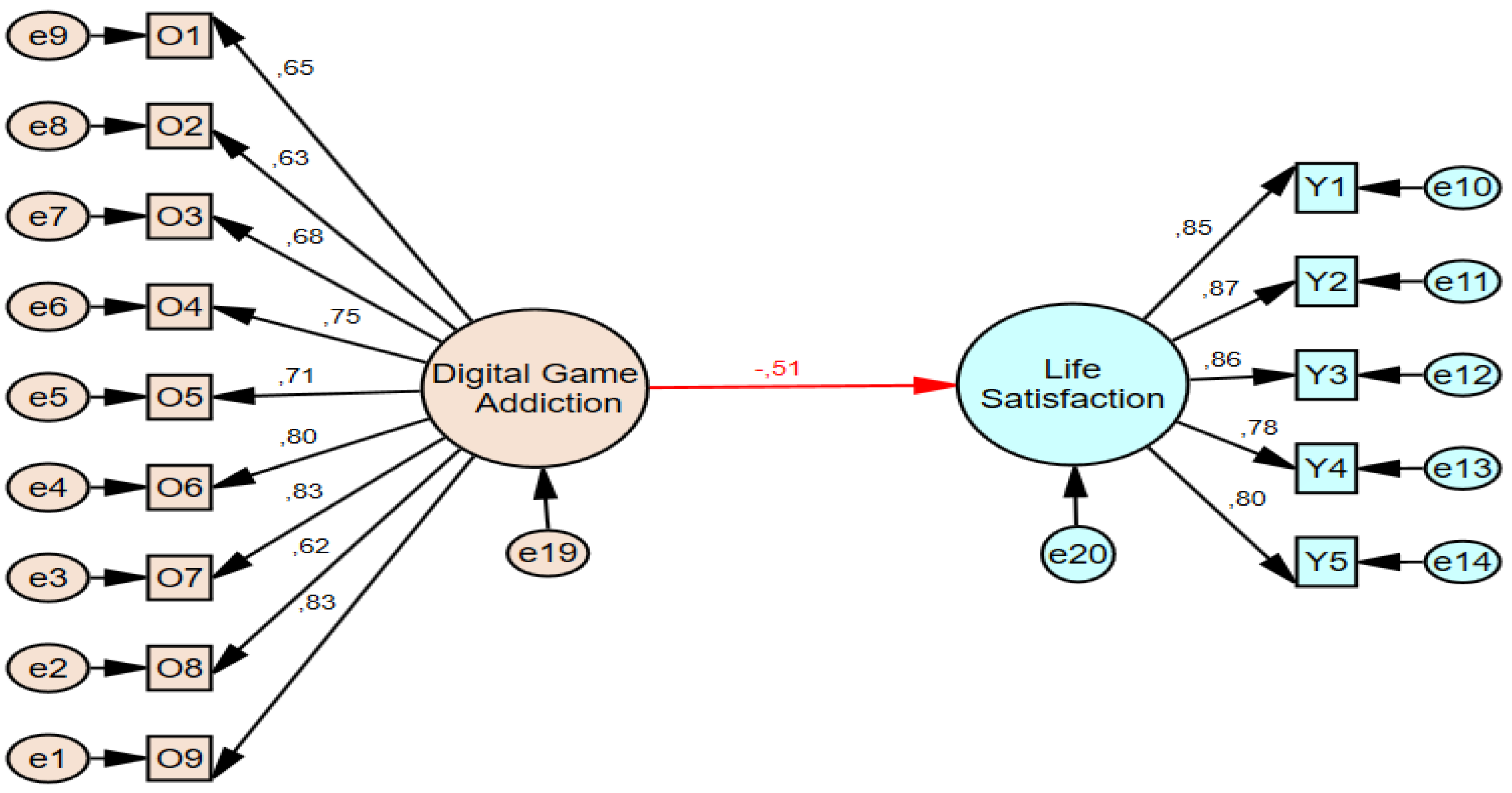

Table 1.
The Results of Correlation Analysis.
| Variable | 1 | 2 | 3 | 4 | 5 | 6 |
|---|---|---|---|---|---|---|
| 1. Life Satisfaction | 1 | |||||
| 2. Game Addiction | -.455** | 1 | ||||
| 3. Goal | -.538** | .407** | 1 | |||
| 4. Impulse 5. Non-acceptance 6. Strategy |
-.526** -.499** -.567** |
.454** .480** .387** |
.700** .698** .779** |
1 .707** .717** |
1 .723** |
1 |
| Mean | 14.83 | 20.42 | 5.85 | 5.52 | 4.98 | 5.44 |
| SD | 5.49 | 8.02 | 2.10 | 2.36 | 2.35 | 2.29 |
| Skewness | -.17 | .64 | .30 | .37 | .48 | .36 |
| Kurtosis | -1.18 | -.43 | -.81 | -1.00 | -.92 | -.85 |
| **. p< 0.01 | ||||||
Table 2.
Acceptance Ranges for Fit Indices and Fit Indices Obtained from the Mediator Model Test in Female and Male.
Table 2.
Acceptance Ranges for Fit Indices and Fit Indices Obtained from the Mediator Model Test in Female and Male.
| İndices | Perfect fit limit | Acceptable fit limit | Scale Indices | Result |
|---|---|---|---|---|
| X2/DF | 0-2.5 | ≤5 | 2.62 | Acceptable |
| RMSEA | ≤05 | ≤08 | .06 | Acceptable |
| SRMR | ≤05 | ≤08 | .05 | Perfect |
| CFI | ≥95 | ≥90 | .92 | Acceptable |
| GFI | ≥90 | ≥85 | .85 | Acceptable |
| IFI | ≥95 | ≥90 | .92 | Acceptable |
Disclaimer/Publisher’s Note: The statements, opinions and data contained in all publications are solely those of the individual author(s) and contributor(s) and not of MDPI and/or the editor(s). MDPI and/or the editor(s) disclaim responsibility for any injury to people or property resulting from any ideas, methods, instructions or products referred to in the content. |
© 2025 by the authors. Licensee MDPI, Basel, Switzerland. This article is an open access article distributed under the terms and conditions of the Creative Commons Attribution (CC BY) license (http://creativecommons.org/licenses/by/4.0/).
Copyright: This open access article is published under a Creative Commons CC BY 4.0 license, which permit the free download, distribution, and reuse, provided that the author and preprint are cited in any reuse.


