

Submitted:
25 January 2024
Posted:
26 January 2024
You are already at the latest version
Abstract
Video gamers can play to negate the psychological impact of stress (Pine et al., 2020), which may become problematic when users over-rely on the stress-relief potential of gaming. This study used a repeated-measures experimental design to investigate the relationships between stress, video gaming, and problematic video gaming behaviours in a convenience sample of 40 students at a UK university. Results indicated that positive affect increased and negative affect decreased, whilst a biological stress measure (Instantaneous Pulse Rate) also decreased after a short video gaming session (t(36) = 4.82, p < .001, d = 0.79). Results also suggest that video gaming can act as a short-term buffer against the physiological impact of stress. Further research should focus on testing individuals who have been tested for Gaming Disorder as opposed to a general population. Research could also utilise variations of the methodological framework used in this study to examine the intensity of a stress-relief effect under different social situations. The study’s findings in relation to published work are also discussed.
Keywords:
Video Games
; Stress
; Motivation
; Problematic Gaming
; Stress-relief
1. Introduction
Video Gaming is a ubiquitous technology that has become a part of everyday life. In the UK alone, consumers spent roughly £4.75bn on video games in 2022 with the video game consumer market worth £7.05 billion (UKIE, 2023). This has followed a rapid growth of interest in gaming following the Covid-19 pandemic (Pallavicini et al., 2022), in which video games played a crucial role in mitigating experiences of stress and other prominent psychological health concerns during a time of intense social isolation (Giardina et al., 2021; Kriz, 2020; Oe, 2020; Paschke et al., 2021).
However, the growth of video game consumption has piqued the interest of academia: the debate surrounding video games and their social consequences gravitates around two central ideals. On one side, some articles suggest that video games can be utilised for positive psychosocial outcomes such as increasing social connectivity, improving psychological well-being, and encouraging cooperation between players (Halbrook et al., 2019; Jenny & Thompson, 2016; Johannes et al., 2020). On the other side, some articles suggest that video games have the potential to increase aggressive cognitions (Anderson & Bushman, 2001; Hasan et al., 2013) or may be used in problematic ways that can evolve into a behavioural addiction if used in a way that severely disrupts facets of everyday life (Kuss & Griffiths, 2012; Loton et al., 2016; Wolfers & Schneider, 2021).
Video gaming also has a versatile range of applications in healthcare settings: e.g. using video games as a ‘distractor activity’ allowed children undergoing chemotherapy to regain a sense of resilience to the harsh side-effects of the therapy (Govender et al., 2015). Engagement in video gaming also helped to increase coping skills, internal locus of control, and self-management of symptoms by playing minigames as a superhero, including metaphors for beating cancer and ultimately empowering the patient to fight through depressive symptoms (Govender et al., 2015). It has also been used in a traditional therapeutic context in order to bridge the gap between therapist and client, a solution that is particularly effective with younger clients (Fernández-Aranda et al., 2012; Gardner, 1991; Hull, 2009).
Outside of clinical contexts, having an online presence within a video game can help to promote the cultivation of strong relationships with other players through shared experiences (Cole & Griffiths, 2007). Indeed, many choose to keep playing these types of games on the hope that they themselves will partake in such rich social interactions with other players (Tyack et al., 2016). In-game social interactions can provide an unorthodox therapeutic outlet otherwise unavailable to players, and many players find that in-game experiences are not available to them offline (Frostling-Henningson, 2009). It is the availability of diverse emotional experiences that have the potential to elicit complex psychosocial outcomes, such as improved mood and psychological regulation of stress (Bowman & Tamborini, 2012; Porter & Goolkasian, 2019; Russoniello et al., 2009a).
However, extreme exposure to stress offline may drive some to coping mechanisms through widely accessible means, such as technology (Cheikh-Ammar, 2020; Maroney et al., 2019; Reinecke, 2009). It has been widely discussed that escapism-driven uses of video games especially can lead to maladaptive use behaviours if the player becomes dependent on the psychological benefits of these activities to alleviate stress (Hussain et al., 2021; Kardefelt-Winther, 2014). Furthermore, Dutcher & Cresswell (2018) highlight the role of dopaminergic reward pathways in the regulation of stress. Given that these pathways also feature in the development of behavioural addiction (Poisson et al., 2021), it is important to learn more about the relative benefits and risk of activities such as gaming, which have the potential to be both stress-relieving and addictive.
Reinecke (2009) demonstrates that using interactive media such as games has a “significant recovery potential and are frequently used after stress and strain for recovery reasons” (pg. 26). Furthermore, this research finds that work-related stressors are a reliable predictor for the usage of video games, and that individuals can adapt their use of video and computer games to their individual circumstances. The research covered so far demonstrates that video game players walk a fine line between enjoyable and problematic use of games depending on their primary motivations for use.
Some video game players exhibit symptoms of video game addiction, which has been clinically recognised in previous literature and the criteria for diagnosis published within the International Classification of Diseases, eleventh edition (Griffiths et al., 2012, 2017; Kuss & Griffiths, 2012). The clinical criteria for gaming disorder include losing control over the amount of time spent playing games, conflicts with friends and family members over their habits, and the increased prioritisation on gaming as opposed to work or academic performance (Jo et al., 2019; Kuss & Griffiths, 2012). Previous research has attributed this, in part, to the rise of addiction in gaming towards the failure to either recognise emotions (alexithymia) or manage emotions, using video gaming to experiment with and correct emotional availability (Gaetan et al., 2016). However, it may be that a small minority of video game players are inefficiently regulating mood or over-relying on the game to regulate their mood for them, which has been observed in other modes of technology such as mobile phone apps (Kwon et al., 2016).
Within the video game psychology literature, there are several research papers that investigate the role of video game usage as a way of creating and promoting emotional regulation strategies (Villani et al., 2018). Emotional regulation is the process of people achieving targeted changes or fluctuations in mood by engaging with specific behaviours, leading to changes in positive and negative affect. It is posited by Villani and colleagues that people may use video games as a way of “enhancing their emotional lives and protecting themselves from psychopathologies” (pg. 2). It could be plausible that video gaming is being used as a psychological ‘mood enhancer’ and may explain why it has the potential to become a cathartic relief to the stresses of everyday life.
Previous research suggests that individuals who have problems with emotional regulation are more likely to engage in addictive behaviours to escape from, or minimize, negative moods (Yu et al., 2013). It is possible that players who adopt maladaptive coping strategies (e.g., increased play time, neglect of social responsibility, etc.) become dependent on positive video game effects such as psychological need satisfaction (Allen & Anderson, 2018) or mood regulation (Greenwood & Long, 2009) to escape from and regulate the negative psychological impact of offline stress.
However, it has become a source of debate over whether behaviours such as gaming and problematic Internet usage should be classified as an addiction in the same way as substance disorders (Bean et al., 2017; Wood, 2008). It has been suggested that these share similar characteristics in terms of tolerance, mood modification, relapse rates, and withdrawal symptoms (Griffiths, 1999). However, alternative theoretical frameworks could be better suited to explain Internet Gaming Disorder.
Kardefelt-Winther responded to the discourse on Internet addiction by suggesting that Internet usage could be explained as a compensatory mechanism (2014a). In theory, users experience a lack of social resources (e.g., social capital or cognitive arousal) offline, and therefore increasingly depend on the Internet and the online stratosphere to provide experiences that provide the resources which they lack. This is opposed to an addiction framework, as the compensatory usage model conceptually defines problematic usage as a way of fulfilling a need in a highly engaging way or can develop as a result of a maladaptive response to stress (Kardefelt-Winther, 2014). This particular model highlights the importance of stress as a unique risk factor, as opposed to the myriad of other factors commonly associated with Internet addiction, such as personality traits (Leung, 2007), and psychological well-being (Young & Abreu, 2010).
This study investigates the impact of a short-term video gaming session upon both biological and self-reported stress levels. Stress has been used in previous work as an ecologically valid way of measuring affective change to repair mood and prevent negative physiological consequences (Russoniello et al., 2009b). If the motivations of users are to decrease negative affect and increase positive mood, we hypothesise that it would be reflected in decreased stress scores. Whilst Kardefelt-Winther established this effect in the domain of Internet usage, it will be the purpose of this study to test whether these effects are applicable to video game players. If these effects can be demonstrably exhibited in video game players, it would have implications on how video gaming can be used in both ‘healthy’ and ‘unhealthy’ ways.
This research is based on the theory that emotional regulation strategies through video game play act as positive psychosocial compensation, which for moderately engaged players can be a healthy coping strategy (Gaetan et al., 2016). However, it would also be of interest to investigate potential correlations between more problematic video game use and mood shift after video game exposure, as a way of clarifying possible motivations for video game playing in those who score highly on Internet Gaming Disorder (IGD) criteria (Király et al., 2017). To investigate these assertions, an experimental task will be employed to compare stress before and after exposure to a commercial video game, with the expected effects of positive affective changes after video game exposure.
An Internet Gaming Disorder (IGD) scale will be used to assess self-reported levels of gaming disorder in participants. In accordance with Kardefelt-Winther’s research on Internet addiction (2014a) that demonstrated a mediated link between problematic internet use and affect, it is expected that those scoring highly on problematic gaming behaviours will also exhibit a higher affect shift. This will therefore be assessing whether those who register positive for several IGD criteria experience an elevation of mood and decrease of stress, which may be able to explain why players show problematic patterns of behaviour. Regardless of the motivations for play, we expect to find that video game play has a positive physiological impact on players.
To summarise, this research will be investigating the correlations between stress (at both a biological and a self-reported level), video gaming, and (self-reported) problematic video gaming behaviours, grounded in Kardefelt-Winther’s compensatory Internet use theory (2014a). This is in response to a lack of established research exploring these interactions, and with a wealth of research currently dedicated to addiction models of video game play, it would be suitable to entertain alternative explanations for motivations behind problematic video game play.
Considering the evaluation of relevant literature and the aims of the study, we predict that:
H1 – Exposure to video game play will decrease biological measures of stress.
H2 – Exposure to video game play will improve positive affect scores.
H3 – Exposure to video game play will reduce negative affect scores.
H4 – Higher scores on a gaming disorder scale will be associated with a greater increase in positive affect.
H5 – Differences in biological stress scores after video game play compared to before video game play will be associated with higher gaming disorder scores.
2. Methods
2.1. Participants
The data in this study was collected from a student sample at the University of Wolverhampton and were recruited through the advertisement of the study on a ‘Psychology Participant Pool’ in exchange for course credits. The study had no inclusion criteria that focused on prior experience of video gaming. Exclusion criteria included anyone under the age of 18, those with a background of photosensitive epilepsy or migraines, and those without normal (or corrected to normal) levels of vision.
2.2. Measures and Technology
2.2.1. Positive and Negative Affect Scale (PANAS)
State affect was measured using the Positive and Negative Affect Scale (PANAS; Watson et al., 1988) which was administered pre-game and post-game in order to measure the direct effect of the game on self-reported emotion. A widely used mood questionnaire, this scale is 20-items long measuring both positive affect (10 items) and negative affect (10 items), tasking the participant to rate how they feel at the time of questioning using chosen adjectives (such as “Excited” or “Upset”) on a Likert scale of 1-5 (1 = “Very slightly or not at all [adjective]”; 5 = “Extremely [adjective]”). The mood scores are then tallied at the bottom of the questionnaire, resulting in a personalised positive and negative mood score out of a possible 50 points for each variable. Internal reliability scores for this scale have been reported between α = .83 - .90 for positive and negative affect (Zemestani et al., 2023, pg. 4747).
2.2.2. Perceived Stress Scale (PSS)
Stress was measured using the Perceived Stress Scale (Cohen et al., 1994), a 10-item questionnaire asking the participants to rate how often they felt under stress in the last month, asking about certain scenarios illustrated in the questions (“how often have you felt that you were unable to control the important things in your life?”), using a Likert scale from 0 (“Never”) to 4 (“Very Often”). Questions 4, 5, 7, & 8 are reverse scored to prevent order bias. This results in a score ranging from 0 to 40, the higher the score, the higher the self-reported stress level. Internal reliability scores have been reported within acceptable parameters for academic research in previous research articles (Canale et al., 2019; α = .83).
2.2.3. Internet Gaming Disorder Scale 9 - Short form (IGDS9-SF)
Problematic gaming was measured by using a modified version of the Internet Gaming Disorder (IGDS9-SF; Lemmens et al., 2015). The version used in this experiment included the question “Have you experienced serious problems at work or school because of gaming?”. The item was included to reflect the diagnostic criteria that players continue to play despite adverse social consequences (Király et al., 2017).
This 10-item questionnaire asks the participant to respond either “Yes” or “No” to questions such as “Have you hidden the time you spend gaming from others?”, with a maximum score of 10. Any participants scoring 5/10 or above would be considered a problematic gamer, which has been adjusted from the original score used in previous work (Lemmens et al., 2015). Internal reliability scores for the IGDS9-SF were reported to be the highest when compared to five similar gaming disorder scales (Yoon et al., 2021; α = .89).
2.2.4. Instantaneous Pulse Rate (Photoplethysmography; PPG)
A biological level of stress was measured using Instantaneous Pulse Rate (IPR; Schäfer & Vagedes, 2013), an alternative methodology to Heart Rate Variability (HRV; Kim et al., 2018). If the pulse rate is higher than baseline levels, blood flow is increasing towards the wrist, whereas lower pulse rate indicates decreased blood flow to the wrist, which is a suitable comparison to a rise or fall in heart rate. If the pulse rate is higher than baseline, much like heart rate, it is indicative of higher stress levels. Pulse rate was taken using Photoplethysmography (PPG). The amount of light absorbed and reflected by tissue in the wrist is regulated via the flow of blood in corresponding vessels, which represents biological indicators for behaviour marked by heart rate (Webster, 1997).
By scattering infrared light into the finger, the device can measure how much light is absorbed by the red blood cells, and therefore the level of red blood cells in the finger. The photo-cellular ‘cap’ on the user’s fingertip converts light to electrical energy, which is measured as a mean value of heart rhythm between intervals. It measures pulse volume or phasic changes, which are related to beat variations in the force of blood flow. These beat-to-beat changes in peripheral blood flow reflect the heart’s inter-beat intervals similar to ECG methods. Nevertheless, this should not be confused with Pulse Rate Variability, which measures changes around the mean and is not an estimate of IPR (Schäfer & Vagedes, 2013).
2.2.5. Video Game Conditions
For the purposes of the study, Mario Kart 8 Deluxe was used for the Nintendo Switch console. This title was chosen for several key reasons - that a large number of people are already familiar with the Mario franchise as a commercially sold game (Bosboom et al., 2016); that Mario Kart is particularly easy to play, even for those with little gaming experience; the game featuring balanced design choices (McMahan et al., 2010), and the console having a high overall satisfaction rating among users regardless of prior level of gaming experience (Ting et al., 2020).
Whilst the game has multiplayer functionality, the gaming session used the Grand Prix mode on a single-player basis. This mode encompasses four races played sequentially on different levels for each race, lasting anytime between 20-30 minutes depending on participant skill level.
2.3. Procedure
Prior to the beginning of the experiment, informed consent was gained, and demographic information such as age, gender identity, and previous gaming experience was then collected. The experimental task began with participants answering questionnaires measuring self-reported positive and negative affect levels, self-reported stress, and self-reported problematic gaming.
Once completed, the participant was informed that their heart rate would be taken and instructed to put the finger cap on. The participant was told that the researcher would be noting the score displayed on the device once every 30 seconds for a five-minute period. In 3 cases, the participant was unable to use the pulse oximeter and excused from the exercise, instead continuing to the video game phase of the experiment.
The researcher instructed participants on how to use the controls for the game and, for those with no experience, how to play. The participant was informed that after the fourth race was over, they would stop playing the game. Just before the fourth race started, the researcher informed the participant that it was the last race. This allowed the participants to come to a natural conclusion of play time rather than abruptly stopping video game play, which could affect mood.
Immediately after video game play, the participant completed the pulse rate measurement for a second time or went straight to the final questionnaire if measurement was not possible. The PANAS questionnaire was administered a second time to measure any fluctuations after video game play. The participant was debriefed and any questions about the experiment or study were answered by the researcher.
2.3.1. Ethical approval
Ethical approval was provided by the University of Wolverhampton Faculty of Education Health and Wellbeing ethics committee.
2.4. Research Design
This study used an experimental repeated-measures design. Self-reported levels of gaming disorder was the independent variable, whereas positive affect, negative affect, and a biological measure of stress (PPG) were the dependent variables.
3. Results
An a priori power analysis was conducted using G*Power3 (Faul et al., 2009) to test the difference between two dependent means (matched pairs) using a one-tailed test, a medium effect size (d = .50), and an alpha of .05. Results concluded that a total sample of 36 participants (n = 36) was required to achieve a power of .90. All analysis was conducted using JASP (JASP Team, 2022), an open-source statistical software package with a graphical user interface and features the ability to run commonly used statistical analyses including t tests, ANOVAs, and regressions using both classical and Bayesian methods (van Doorn et al., 2021).
3.2. Demographic Results
The sample survey respondents (N = 40) had a range of ages (M = 24.73, SD = 7.61) between 18 and 61, and an almost even split between male and female participants (male = 18; female = 22). Participants reported a moderate level of gaming experience varying from no experience to experienced players of video games prior to the experiment.
3.3. Normality Testing
Shapiro-Wilk tests were conducted on all analyses to test for violations of normality assumptions within the data set. Normality assumptions were not violated for tests 3.4.1, 3.4.2, or 3.4.5 (W = .98, p = .82; W = .97, p = .54; W = .94, p = .054), suggesting that parametric analysis would be suitable for testing H1, H2, and H5. However, for tests 3.4.3 and 3.4.4, normality results were statistically significant (W = .86, p < .001; W = .94, p = < .05), suggesting that non-parametric analysis would be necessary to test H3 and H4.
3.4. Hypothesis Testing
3.4.1. Instantaneous Pulse Rate
To test H1, a matched pairs t-test concluded that participants had a decrease of 4.7ms (SE: 0.98) pulse rate on average following a short video gaming session, and that this decrease was statistically significant (t(36) = 4.82, p <.001, d = 0.79), as illustrated by Figure 1.
3.4.2. Positive Affect
To test H2, a matched pairs t-test confirmed that there was an increase of positive affect scores by 3.32 points (SE: 0.91) on average per participant. This was identified as a statistically significant increase in scores after a short video game session (t(39) = 3.62, p <.001, d = 0.57), as illustrated in Figure 2.
3.4.3. Negative Affect
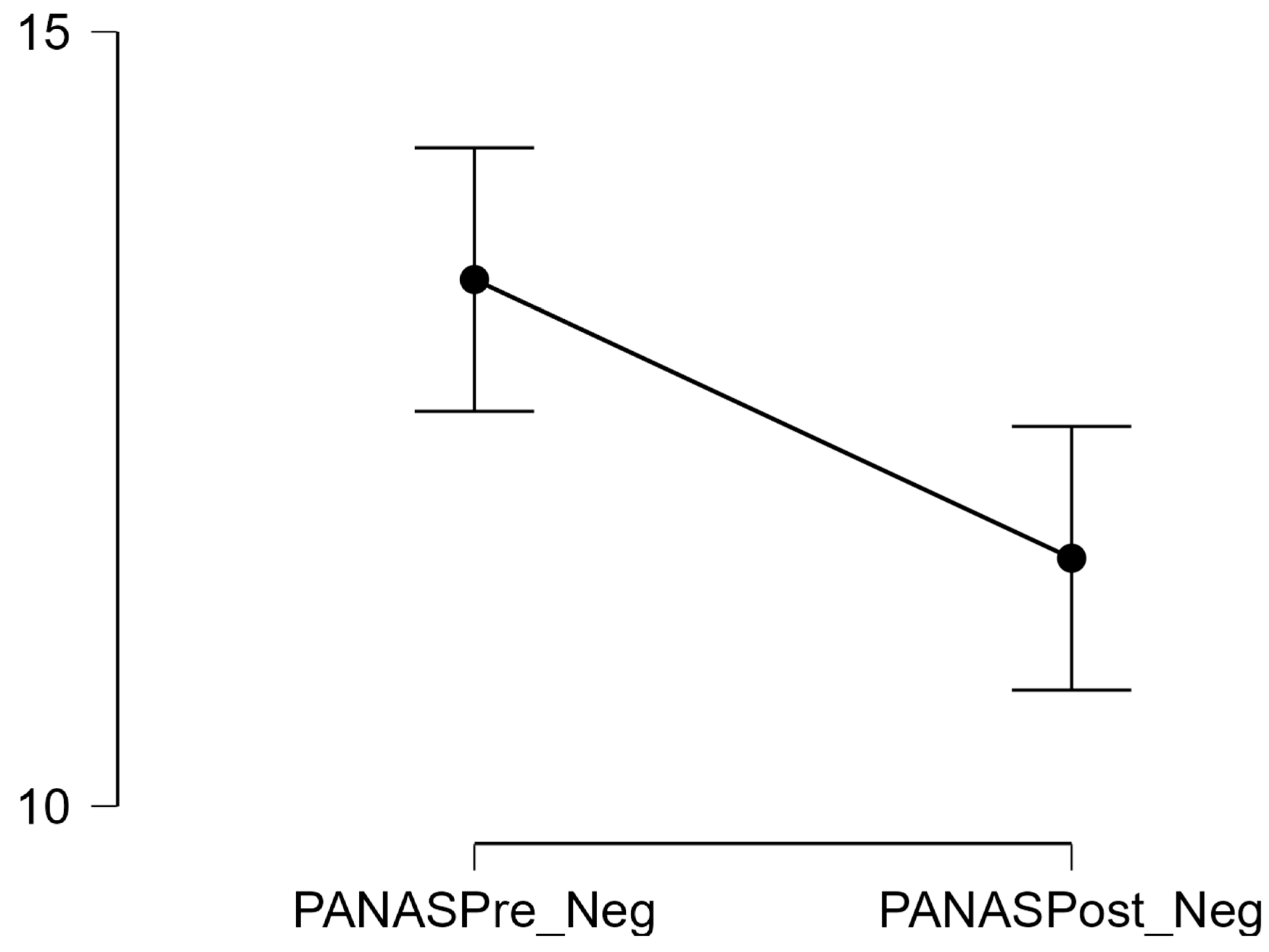
As normality assumptions were violated (see 3.3), to test H3, a Wilcoxon signed ranks test was conducted. Results showed that negative affect scores before the video game session (M = 13) decreased by a small, but statistically significant, amount after exposure to the video game (M = 11); W = 502.5, p < .001, rB = .68. This is illustrated in Figure 3.
3.4.4. Positive Affect and Problematic Gaming
A Spearman’s correlation indicated that there was not a statistically significant correlation between the difference in positive affect scores and problematic gaming scores (ρ = -.07, p = .62). These results suggest that H4 was not supported at a statistically meaningful level.
3.4.5. Instantaneous Pulse Rate and Problematic Gaming
A Pearson’s correlation coefficient was conducted to assess the association between the difference in pulse rate scores after exposure to video game play and self-reported IGD scores. The analysis produced a non-significant correlation (r = -.15, p = .38), suggesting that H5 was not supported at a statistically meaningful level.
4. Discussion
The aim of this study was to test hypotheses, based on previous findings, that video game play would decrease biological indicators of a stress response (H1), encourage positive mood states (H2), and regulate negative mood states (H3). It was also expected that the degree of increase in positive mood states after gaming would be associated with higher scores on a gaming disorder questionnaire (H4), and that there would be an association between a biomarker of stress and gaming disorder scores (H5), providing support to compensatory use accounts of video game play and illustrating why video gamers may engage in problematic use behaviours. This research used an experimental research design featuring widely accessible technology to measure biological markers of stress and a popular video game that would be accommodating of any game player, regardless of previous gaming experience. This study also provided a unique methodological perspective of measuring both biological and self-report measures of stress to partially mitigate some criticisms of biases involved in these techniques (Zendle et al., 2023).
The results of this study suggest that video gaming has a measurable effect on biological stress, isolated to a short gaming session within a laboratory environment. Exposure to the video game decreased stress levels compared to pre-experimental levels, which supports H1. This also supports a growing evidence base from previous literature that suggests video game play has been observed to measurably decrease experiences of stress (Koban et al., 2021; Pallavicini et al., 2021; Reinecke, 2009; Russoniello et al., 2009b). Indeed, in a casual form, video gaming has been previously compared to guided relaxation or meditation (Stanhope et al., 2016).
Results suggest that video game had a measurable effect on participant mood states. Self-reported positive mood scores increased by roughly 3 points per participant on average after the video gaming session, whereas self-reported negative mood scores decreased by roughly 2 points per participant on average after the video gaming session. The results therefore support H2 and H3.
Results did not support the prediction that problematic gaming scores would be associated with a more pronounced changed in affect as a result of playing the game, which was unexpected and does not support H4. The results also did not support the prediction that there would be an association between the difference in IPR scores measured after exposure to video game play and gaming disorder scores, which refuted H5.
One possible explanation for this is that the data set used for analysis did not have sufficient power to identify small effect sizes. Whilst an a priori power analysis indicated that the study was sufficiently powered to detect medium effect sizes, it is possible that the predicted relationship is only evident when measuring for smaller effect sizes, as discussed in previous literature on video game research (Johannes et al., 2021). Whilst it may be possible that video gaming’s ability to moderate affect plays a role in problematic gaming behaviours, the present study did not detect a disproportionate effect of gaming on the affect of those with higher IGDS9-SF scores.
4.1. Interpretations of Results
A confounding variable that could explain these results may have been the difficulty level of the game. The ‘Grand Prix’ game mode was set to ‘Easy’ as a default option, to cater for a variety of experience levels in the target population. However, one might expect that individuals that exhibit higher levels of problematic gaming would be more experienced or skilled at the game used in the present study; for some participants it was observed that this setting represented little-to-no challenge. Whilst these individuals may experience a small increase in mood, it is plausible that any mood increase would be attenuated by the easiness of the game by frustrating the players’ ability to experience achievement or competence from the gaming session.
This may also provide an explanation for the lack of association between IPR difference scores and gaming disorder scores (H5); individuals who exhibit higher levels of problematic gaming may be ‘desensitised’ to a short video gaming session that provided little to no challenge – it may be the case that excitation of the nervous system (such as increased heart rate) simply would not occur unless certain goals are being met within the gaming session. This has been referred to as ‘gaming tolerance’ in previous literature (King et al., 2017), however, there is a need to emphasise that this is more than players needing more time to engage with a video game. Indeed, it appears that there are several complex emotional and motivation-based factors to consider for those with gaming disorder, such as craving, fear of missing out, and the intense need to fulfil psychological needs (King et al., 2017; Przybylski et al., 2010; Yee, 2006).
For inexperienced players, an easy game allowed for a greater possibility of success, which may have improving feelings of competency, which has been associated with levels of psychological well-being (Lemmens et al., 2011). However, the opposite was also true for more experienced players, which may have unintentionally created diametrically opposed ceiling and floor effects on the PANAS. It may also be the case that participants with less gaming experience would naturally experience more negative affect as levels of competency decrease by having to ask for instructions at an increased rate or experiencing feelings of helplessness. Nevertheless, if the study was replicated with the inclusion of controls for video game difficulty and prior gaming experience, it may be easier to observe the effects predicted in H4.
This may be explained through the lens of Self-determination theory (Ryan & Deci, 2000) which suggests that individuals engage in behaviours that encourage the fulfilment of three basic psychological needs – Autonomy, Competence, and Relatedness. As the video game fulfilled all or some of the three psychological needs, participants may have experienced a greater positive affect. As these needs may have been frustrated by a lack of experience with the game, participants may have experienced a greater negative affect shift. However, the degree to which this was experienced and whether it can truly be asserted that experience would be a significantly moderating factor as to shift self-reported affect scores remains to be seen. Further research should endeavour to explore the nature of the relationships between the variables observed and theorised in this study.
The changes in mood in this experiment imply that video games can have a short-term stress-relief effect; this is similar to the theoretical principles of compensatory internet use, examined by Kardefelt-Winther (2014a). It could be suggested that problematic gaming behaviours are driven by the need to attenuate the effects of stress by interacting with video games, ameliorating this stress for a short while. It could be in this small time zone in which the overall experience of video gaming remains positive; it could be argued that the continued use and therefore over-reliance of gaming effects is what contributes to negative experiences and potential addiction (King & Delfabbro, 2014).
The results of this study implies that anyone wishing to experience a stress-relief impact from video gaming should already be at a moderately stress-free cognitive stage (Nahum & Bavelier, 2020). This also provides some explanation as to why problematic gaming has such a strong association with stress (Király et al., 2015, Rikkers et al., 2016); the compensatory internet use theory (Kardefelt-Winther, 2014a) posits that external social stressors contribute to an increased investment in resources (time, etc.) by gaming more to escape the negative consequences of this stress. However, it has been theorised that escapism is only effective as a short-term method of stress-relief (by dissipating some stress), with the potential to become both a new source of stress, and individuals developing an addictive behavioural relationship with gaming as a result (Király et al., 2015).
4.2. Limitations & Considerations
A limitation of this study is that the experiment was conducted without a control group, so it is not possible to be certain whether the mood state effects observed were solely due to the influence of the video game. Indeed, a control group would have established whether changes in mood or biological stress were influenced by any natural relaxation effects as the participants became more comfortable with the laboratory environment and could have used an unrelated activity as a comparable measure. However, the experimental protocol did partially account for relaxation effects by allowing participants to ‘settle in’ to the laboratory space, allowing for a short amount of time in which the participant’s heart rate would normalise before the first set of PPG readings. Enforcing a brief rest period before readings were taken allowed for a more natural baseline heart rate measurement in participants and would potentially mitigate any environmental stressors.
Previous research with similar research methodology found that changes in affect measured by the PANAS in the gaming condition were larger, whereas the control condition reported only mild changes in affect (Stanhope et al., 2016). It appears that whilst the results in the present study may have captured a relaxation effect occurring, the positive affect shift was more pronounced than in a comparative study. Regarding stress, previous research has established that video games, regardless of content, are able to reduce stress (Desai et al., 2021; Roy & Ferguson, 2016), which the results of the present study further supports. However, previous research suggests that biomarkers of stress increased slightly from pre-gameplay levels to post-gameplay levels (HRV; Porter & Goolkasian, 2019), which was not observed in the present study. This suggests that the results of the present study go beyond an expected general relaxation effect and that a short session of video gaming may provide tangible stress-relief benefits for the player.
One limitation of this study is the use of a student sample. Whilst this was convenient for the fulfilment of the study aims, the use of a more heterogeneous sample may be more impactful to the wider discussion of video games research. The results of this study provide further insights as to the video gaming behaviours of university students but are not necessarily generalisable to a wider population.
Another limitation of this study was the length of time used to play the video game chosen. Whilst the ‘Grand Prix’ mode was appropriate to experience a wide range of aesthetic or enjoyable experiences within the video game, it is unclear whether a 20–30-minute session of video gaming is sensitive enough from a methodological perspective to identify any significant stress-relief or mood regulation changes compared to before the session. Although, a systematic review of video gaming for the relief of stress and anxiety noted that even one to five minute sessions of game play were effective at reducing stress (Pallavicini et al., 2021), which was supported in this study. Therefore, duration may not be a major limitation to observing stress-health relationships.
Finally, this study used PPG as a measure of Instantaneous Pulse Rate, which is an alternative to materials used to measure Heart Rate Variability. This was chosen based on accessibility and convenience as the author did not have access to Electrocardiogram (ECG) equipment that produces the signal necessary to measure HRV. It is acknowledged that whilst the signal used during IPR measurement “exists between ECG and PPG signals” (Huang & Hsiao, 2022; pg. 2), it is not the most ideal proxy for measuring heart rate. Using a measure such as Instantaneous Pulse Rate Variability (Gil et al., 2010; Kiran kumar et al., 2021) may have been a better alternative considering the resources available. For future research or replication efforts, where resources allow, using ECG or HRV measures would be considered the gold standard for biological measures of stress.
4.3. Conclusion
In conclusion, video games have the potential to reduce biological measures of stress, whilst generally improving mood states (lowered negative state, higher positive state), after a short session in experimental laboratory conditions. Whilst this study cannot make any assumptions or claims as to the nature of problematic video game behaviours, the results support previous literature that asserts video gaming as comparable to alternative methods of stress-relief (Pallavicini et al., 2021). The observed changes in mood state and stress have implications towards wider health effects, mainly that video games have the potential to positively influence physical and psychological well-being in short durations. However, the findings are limited by some methodological design flaws and would benefit from replication with the addition of a control group.
References
- Allen, J. J., & Anderson, C. A. (2018). Satisfaction and frustration of basic psychological needs in the real world and in video games predict internet gaming disorder scores and well-being. Computers in Human Behavior, 84, 220–229. [CrossRef]
- Anderson, C. A., & Bushman, B. J. (2001). Effects of Violent Video Games on Aggressive Behavior, Aggressive Cognition, Aggressive Affect, Physiological Arousal, and Prosocial Behavior: A Meta-Analytic Review of the Scientific Literature. Psychological Science, 12(5), 353–359. [CrossRef]
- Bean, A. M., Nielsen, R. K. L., van Rooij, A. J., & Ferguson, C. J. (2017). Video game addiction: The push to pathologize video games. Professional Psychology: Research and Practice, 48, 378–389. [CrossRef]
- Bosboom, J., Demaine, E. D., Hesterberg, A., Lynch, J., & Waingarten, E. (2016). Mario Kart Is Hard. In J. Akiyama, H. Ito, T. Sakai, & Y. Uno (Eds.), Discrete and Computational Geometry and Graphs (Vol. 9943, pp. 49–59). Springer International Publishing. [CrossRef]
- Bowman, N. D., & Tamborini, R. (2012). Task demand and mood repair: The intervention potential of computer games. New Media & Society, 14(8), 1339–1357. [CrossRef]
- Canale, N., Marino, C., Griffiths, M. D., Scacchi, L., Monaci, M. G., & Vieno, A. (2019). The association between problematic online gaming and perceived stress: The moderating effect of psychological resilience. Journal of Behavioral Addictions, 8(1), 174–180. [CrossRef]
- Cheikh-Ammar, M. (2020). The bittersweet escape to information technology: An investigation of the stress paradox of social network sites. Information & Management, 57(8), 103368. [CrossRef]
- Cohen, S., Kamarck, T., & Mermelstein, R. (1994). Perceived stress scale. Measuring Stress: A Guide for Health and Social Scientists, 10(2), 1–2.
- Cole, H., & Griffiths, M. D. (2007). Social Interactions in Massively Multiplayer Online Role-Playing Gamers. CyberPsychology & Behavior, 10(4), 575–583. [CrossRef]
- Desai, V., Gupta, A., Andersen, L., Ronnestrand, B., & Wong, M. (2021). Stress-Reducing Effects of Playing a Casual Video Game among Undergraduate Students. Trends in Psychology, 29(3), 563–579. [CrossRef]
- Dutcher, J. M., & Creswell, J. D. (2018). The role of brain reward pathways in stress resilience and health. Neuroscience & Biobehavioral Reviews, 95, 559–567. [CrossRef]
- Faul, F., Erdfelder, E., Buchner, A., & Lang, A.-G. (2009). Statistical power analyses using G*Power 3.1: Tests for correlation and regression analyses. Behavior Research Methods, 41(4), 1149–1160. [CrossRef]
- Fernández-Aranda, F., Jiménez-Murcia, S., Santamaría, J. J., Gunnard, K., Soto, A., Kalapanidas, E., Bults, R. G. A., Davarakis, C., Ganchev, T., Granero, R., Konstantas, D., Kostoulas, T. P., Lam, T., Lucas, M., Masuet-Aumatell, C., Moussa, M. H., Nielsen, J., & Penelo, E. (2012). Video games as a complementary therapy tool in mental disorders: PlayMancer, a European multicentre study. Journal of Mental Health, 21(4), 364–374. [CrossRef]
- Gaetan, S., Bréjard, V., & Bonnet, A. (2016). Video games in adolescence and emotional functioning: Emotion regulation, emotion intensity, emotion expression, and alexithymia. Computers in Human Behavior, 61, 344–349. [CrossRef]
- Gardner, J. E. (1991). Can the Mario Bros. help? Nintendo games as an adjunct in psychotherapy with children. Psychotherapy: Theory, Research, Practice, Training, 28, 667–670. [CrossRef]
- Giardina, A., Blasi, M. D., Schimmenti, A., King, D. L., Starcevic, V., & Billieux, J. (2021). ONLINE GAMING AND PROLONGED SELF-ISOLATION: EVIDENCE FROM ITALIAN GAMERS DURING THE COVID-19 OUTBREAK. 10.
- Gil, E., Orini, M., Bailón, R., Vergara, J. M., Mainardi, L., & Laguna, P. (2010). Photoplethysmography pulse rate variability as a surrogate measurement of heart rate variability during non-stationary conditions. Physiological Measurement, 31(9), 1271. [CrossRef]
- Govender, M., Bowen, R. C., German, M. L., Bulaj, G., & Bruggers, C. S. (2015). Clinical and Neurobiological Perspectives of Empowering Pediatric Cancer Patients Using Videogames. Games for Health Journal, 4(5), 362–374. [CrossRef]
- Greenwood, D., & Long, C. (2009). Mood specific media use and emotion regulation: Patterns and individual differences | Elsevier Enhanced Reader. [CrossRef]
- Griffiths, M. (1999). Internet addiction: Fact or fiction? The Psychologist, 12, 246–250.
- Griffiths, M. D., Kuss, D. J., & King, D. L. (2012). Video game addiction: Past, present and future. Current Psychiatry Reviews, 8(4), 308–318. [CrossRef]
- Griffiths, M. D., Kuss, D. J., Lopez-Fernandez, O., & Pontes, H. M. (2017). Problematic gaming exists and is an example of disordered gaming: Commentary on: Scholars’ open debate paper on the World Health Organization ICD-11 Gaming Disorder proposal (Aarseth et al.). Journal of Behavioral Addictions, 6(3), 296–301. [CrossRef]
- Halbrook, Y. J., O’Donnell, A. T., & Msetfi, R. M. (2019). When and How Video Games Can Be Good: A Review of the Positive Effects of Video Games on Well-Being. Perspectives on Psychological Science, 14(6), 1096–1104. [CrossRef]
- Hasan, Y., Bègue, L., & Bushman, B. J. (2013). Violent Video Games Stress People Out and Make Them More Aggressive. Aggressive Behavior, 39(1), 64–70. [CrossRef]
- Huang, P.-H., & Hsiao, T.-C. (2022). Very Short-Term Photoplethysmography-Based Heart Rate Variability for Continuous Autoregulation Assessment. Applied Sciences, 12(13), Article 13. [CrossRef]
- Hull, K. (2009). Computer/Video Games as a Play Therapy Tool in Reducing Emotional Disturbances in Children. Doctoral Dissertations and Projects. https://digitalcommons.liberty.edu/doctoral/263.
- Hussain, U., Jabarkhail, S., Cunningham, G. B., & Madsen, J. A. (2021). The dual nature of escapism in video gaming: A meta-analytic approach. Computers in Human Behavior Reports, 3, 100081. [CrossRef]
- JASP Team. (2022). JASP - A Fresh Way to Do Statistics. https://jasp-stats.org/.
- Jenny, S. E., & Thompson, R. M. (2016). Pokémon Go: Encouraging Recreation through Augmented Reality Gaming. International Journal of Technology in Teaching and Learning, 12(2), 112–122.
- Jo, Y. S., Bhang, S. Y., Choi, J. S., Lee, H. K., Lee, S. Y., & Kweon, Y.-S. (2019). Clinical Characteristics of Diagnosis for Internet Gaming Disorder: Comparison of DSM-5 IGD and ICD-11 GD Diagnosis. Journal of Clinical Medicine, 8(7), Article 7. [CrossRef]
- Johannes, N., Vuorre, M., & Przybylski, A. K. (2020). Video game play is positively correlated with well-being [Preprint]. PsyArXiv. [CrossRef]
- Johannes, N., Vuorre, M., & Przybylski, A. K. (2021). Video game play is positively correlated with well-being [Preprint]. PsyArXiv. [CrossRef]
- Kardefelt-Winther, D. (2014). The moderating role of psychosocial well-being on the relationship between escapism and excessive online gaming. Computers in Human Behavior, 38, 68–74. [CrossRef]
- Kim, H.-G., Cheon, E.-J., Bai, D.-S., Lee, Y. H., & Koo, B.-H. (2018). Stress and Heart Rate Variability: A Meta-Analysis and Review of the Literature. Psychiatry Investigation, 15(3), 235–245. [CrossRef]
- King, D. L., & Delfabbro, P. H. (2014). The cognitive psychology of Internet gaming disorder. Clinical Psychology Review, 34(4), 298–308. [CrossRef]
- King, D. L., Herd, M. C. E., & Delfabbro, P. H. (2017). Tolerance in Internet gaming disorder: A need for increasing gaming time or something else? Journal of Behavioral Addictions, 6(4), 525–533. https://doi.org/10.1556/2006.6.2017.072. [CrossRef]
- Király, O., Sleczka, P., Pontes, H. M., Urbán, R., Griffiths, M. D., & Demetrovics, Z. (2017). Validation of the Ten-Item Internet Gaming Disorder Test (IGDT-10) and evaluation of the nine DSM-5 Internet Gaming Disorder criteria. Addictive Behaviors, 64, 253–260. [CrossRef]
- Kiran kumar, C., Manaswini, M., Maruthy, K. N., Siva Kumar, A. V., & Mahesh kumar, K. (2021). Association of Heart rate variability measured by RR interval from ECG and pulse to pulse interval from Photoplethysmography. Clinical Epidemiology and Global Health, 10, 100698. [CrossRef]
- Koban, K., Biehl, J., Bornemeier, J., & Ohler, P. (2021). Compensatory video gaming. Gaming behaviours and adverse outcomes and the moderating role of stress, social interaction anxiety, and loneliness. Behaviour & Information Technology, 1–18. [CrossRef]
- Kriz, W. C. (2020). Gaming in the Time of COVID-19. Simulation & Gaming, 51(4), 403–41. [CrossRef]
- Kuss, D. J., & Griffiths, M. D. (2012). Internet gaming addiction: A systematic review of empirical research. International Journal of Mental Health and Addiction, 10(2), 278–296. [CrossRef]
- Kwon, H. E., So, H., Han, S. P., & Oh, W. (2016). Excessive Dependence on Mobile Social Apps: A Rational Addiction Perspective. Information Systems Research, 27(4), 919–939. [CrossRef]
- Lemmens, J. S., Valkenburg, P. M., & Gentile, D. A. (2015). The Internet Gaming Disorder Scale. Psychological Assessment, 27(2), 567–582. https://doi.org/10.1037/pas0000062. [CrossRef]
- Lemmens, J. S., Valkenburg, P. M., & Peter, J. (2011). Psychosocial causes and consequences of pathological gaming. Computers in Human Behavior, 27(1), 144–152. [CrossRef]
- Leung, L. (2007). Stressful Life Events, Motives for Internet Use, and Social Support Among Digital Kids. CyberPsychology & Behavior, 10(2), 204–214. [CrossRef]
- Loton, D., Borkoles, E., Lubman, D., & Polman, R. (2016). Video Game Addiction, Engagement and Symptoms of Stress, Depression and Anxiety: The Mediating Role of Coping. International Journal of Mental Health and Addiction, 14(4), 565–578. [CrossRef]
- Maroney, N., Williams, B. J., Thomas, A., Skues, J., & Moulding, R. (2019). A Stress-Coping Model of Problem Online Video Game Use. International Journal of Mental Health and Addiction, 17(4), 845–858. [CrossRef]
- McMahan, R. P., Alon, A. J. D., Lazem, S., Beaton, R. J., Machaj, D., Schaefer, M., Silva, M. G., Leal, A., Hagan, R., & Bowman, D. A. (2010). Evaluating natural interaction techniques in video games. 2010 IEEE Symposium on 3D User Interfaces (3DUI), 11–14. [CrossRef]
- Nahum, M., & Bavelier, D. (2020). Chapter 10—Video games as rich environments to foster brain plasticity. In N. F. Ramsey & J. del R. Millán (Eds.), Handbook of Clinical Neurology (Vol. 168, pp. 117–136). Elsevier. [CrossRef]
- Oe, H. (2020). Discussion of digital gaming’s impact on players’ well-being during the COVID-19 lockdown. arXiv:2005.00594 [Cs]. http://arxiv.org/abs/2005.00594.
- Pallavicini, F., Pepe, A., & Mantovani, F. (2021). Commercial Off-The-Shelf Video Games for Reducing Stress and Anxiety: Systematic Review. JMIR Mental Health, 8(8), e28150. https://doi.org/10.2196/28150. [CrossRef]
- Pallavicini, F., Pepe, A., & Mantovani, F. (2022). The Effects of Playing Video Games on Stress, Anxiety, Depression, Loneliness, and Gaming Disorder During the Early Stages of the COVID-19 Pandemic: PRISMA Systematic Review. Cyberpsychology, Behavior, and Social Networking, 25(6), 334–354. [CrossRef]
- Paschke, K., Austermann, M. I., Simon-Kutscher, K., & Thomasius, R. (2021). Adolescent gaming and social media usage before and during the COVID-19 pandemic. SUCHT, 67(1), 13–22. [CrossRef]
- Pine, R., Fleming, T., McCallum, S., & Sutcliffe, K. (2020). The Effects of Casual Videogames on Anxiety, Depression, Stress, and Low Mood: A Systematic Review. Games for Health Journal, 9(4), 255–264. [CrossRef]
- Poisson, C. L., Engel, L., & Saunders, B. T. (2021). Dopamine Circuit Mechanisms of Addiction-Like Behaviors. Frontiers in Neural Circuits, 15. https://www.frontiersin.org/articles/10.3389/fncir.2021.752420.
- Porter, A. M., & Goolkasian, P. (2019). Video Games and Stress: How Stress Appraisals and Game Content Affect Cardiovascular and Emotion Outcomes. Frontiers in Psychology, 10. https://www.frontiersin.org/article/10.3389/fpsyg.2019.00967.
- Przybylski, A. K., Rigby, C. S., & Ryan, R. M. (2010). A Motivational Model of Video Game Engagement. Review of General Psychology, 14(2), 154–166. [CrossRef]
- Reinecke, L. (2009). Games and Recovery: The Use of Video and Computer Games to Recuperate from Stress and Strain. Journal of Media Psychology: Theories, Methods, and Applications, 21, 126–142. [CrossRef]
- Roy, A., & Ferguson, C. J. (2016). Competitively versus cooperatively? An analysis of the effect of game play on levels of stress. Computers in Human Behavior, 56, 14–20. [CrossRef]
- Russoniello, C., O’Brien, K., & Parks, J. M. (2009a). The effectiveness of casual video games in improving mood and decreasing stress. Journal of Cyber Therapy and Rehabilitation, 2, 53–66.
- Russoniello, C., O’Brien, K., & Parks, J. M. (2009b). The effectiveness of casual video games in improving mood and decreasing stress. Journal of Cyber Therapy and Rehabilitation, 2, 53–66.
- Ryan, R. M., & Deci, E. L. (2000). Self-Determination Theory and the Facilitation of Intrinsic Motivation, Social Development, and Well-Being. American Psychologist, 67.
- 63. Schäfer, A., & Vagedes, J. (2013). How accurate is pulse rate variability as an estimate of heart rate variability?: A review on studies comparing photoplethysmographic technology with an electrocardiogram. International Journal of Cardiology, 166(1), 15–29. [CrossRef]
- Stanhope, J., Owens, C., & Elliott, L. (2016). Stress Reduction: Casual Gaming versus Guided Relaxation. Human Factors and Applied Psychology Student Conference. https://commons.erau.edu/hfap/hfap-2015/papers/9.
- Ting, C., Mondragon, J., Almirante, J., Ramolete, G., Cohen, M., & Custodio, B. (2020). Usability and Gaming Experience Assessment of the Nintendo Switch User Interface by Filipino Users (pp. 777–783). [CrossRef]
- Tyack, A., Wyeth, P., & Johnson, D. (2016). The Appeal of MOBA Games: What Makes People Start, Stay, and Stop. Proceedings of the 2016 Annual Symposium on Computer-Human Interaction in Play, 313–325. [CrossRef]
- van Doorn, J., van den Bergh, D., Böhm, U., Dablander, F., Derks, K., Draws, T., Etz, A., Evans, N. J., Gronau, Q. F., Haaf, J. M., Hinne, M., Kucharský, Š., Ly, A., Marsman, M., Matzke, D., Gupta, A. R. K. N., Sarafoglou, A., Stefan, A., Voelkel, J. G., & Wagenmakers, E.-J. (2021). The JASP guidelines for conducting and reporting a Bayesian analysis. Psychonomic Bulletin & Review, 28(3), 813–826. [CrossRef]
- Villani, D., Carissoli, C., Triberti, S., Marchetti, A., Gilli, G., & Riva, G. (2018). Videogames for Emotion Regulation: A Systematic Review. Games for Health Journal, 7(2), 85–99. [CrossRef]
- Watson, D., Clark, L. A., & Tellegen, A. (1988). Development and validation of brief measures of positive and negative affect: The PANAS scales. Journal of Personality and Social Psychology, 54(6), 1063–1070. [CrossRef]
- Webster, J. G. (1997). Design of Pulse Oximeters. CRC Press.
- Wolfers, L. N., & Schneider, F. M. (2021). Using Media for Coping: A Scoping Review. Communication Research, 48(8), 1210–1234. [CrossRef]
- Wood, R. T. A. (2008). Problems with the Concept of Video Game “Addiction”: Some Case Study Examples. International Journal of Mental Health and Addiction, 6(2), 169–178. [CrossRef]
- Yee, N. (2006). Motivations for Play in Online Games. 6.
- Yoon, S., Yang, Y., Ro, E., Ahn, W.-Y., Kim, J., Shin, S.-H., Chey, J., & Choi, K.-H. (2021). Reliability, and Convergent and Discriminant Validity of Gaming Disorder Scales: A Meta-Analysis. Frontiers in Psychology, 12. https://www.frontiersin.org/articles/10.3389/fpsyg.2021.764209.
- Young, K. S., & Abreu, C. N. de. (2010). Internet Addiction: A Handbook and Guide to Evaluation and Treatment. John Wiley & Sons.
- Yu, J. J., Kim, H., & Hay, I. (2013). Understanding adolescents’ problematic Internet use from a social/cognitive and addiction research framework. Computers in Human Behavior, 29(6), 2682–2689. https://doi.org/10.1016/j.chb.2013.06.045. [CrossRef]
- Zemestani, M., Niakan, F., Shafeizadeh, K., & Griffiths, M. D. (2023). The relationship between psychobiological dimensions of personality and internet gaming disorder: The role of positive and negative affects. Current Psychology, 42(6), 4744–4753. [CrossRef]
- Zendle, D., Ballou, N., Cutting, J., & Petrovskaya, E. (2023). Four grand challenges for video game effects scholars: How digital trace data can improve the way we study games. PsyArXiv. [CrossRef]
Figure 1.
Pulse Rate decreases after a short video game session. Note. ‘IPR_Pre’ = Instantaneous pulse rate pre-videogame; ‘IPR_Post’ = Instantaneous pulse rate post-videogame.
Figure 1.
Pulse Rate decreases after a short video game session. Note. ‘IPR_Pre’ = Instantaneous pulse rate pre-videogame; ‘IPR_Post’ = Instantaneous pulse rate post-videogame.
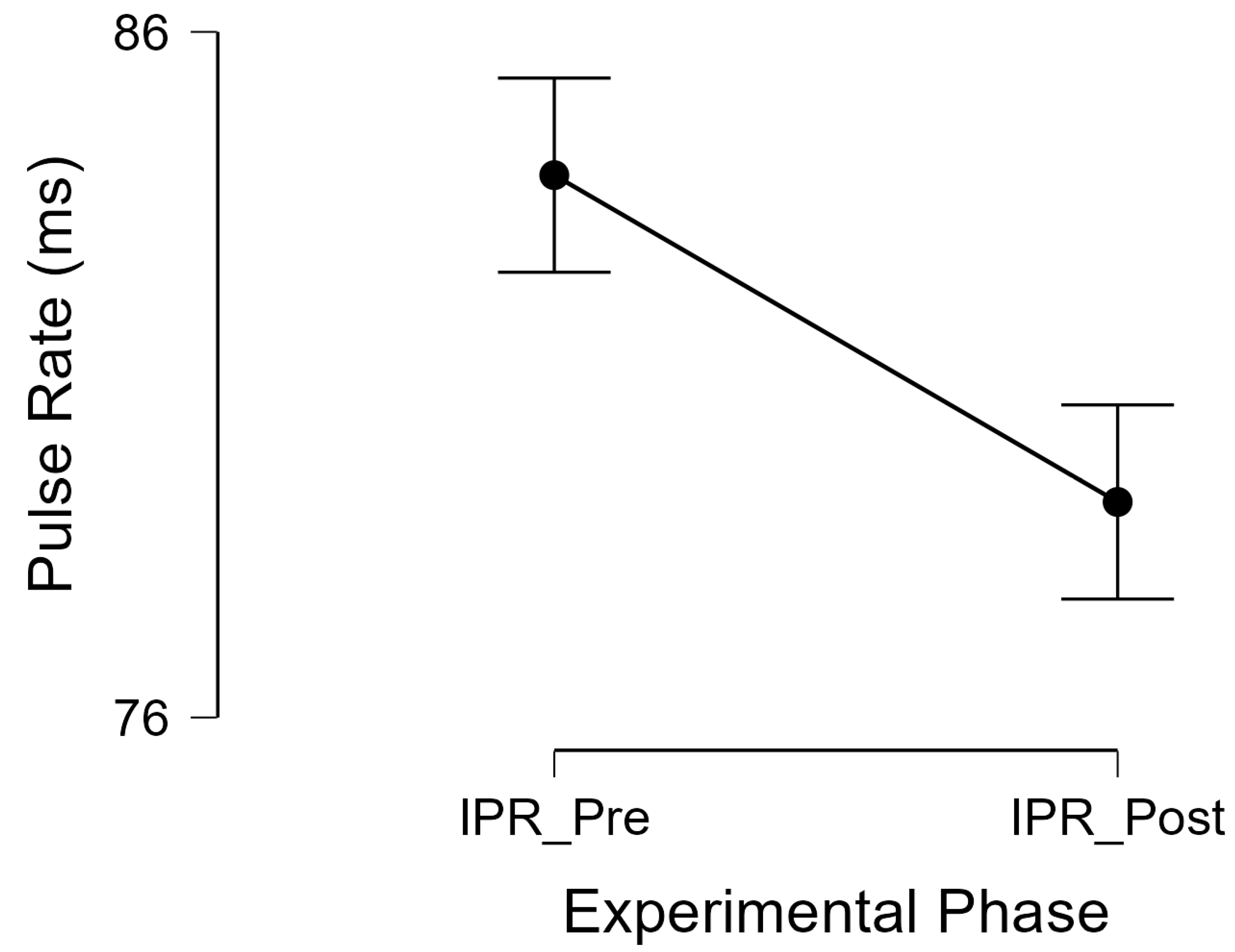
Figure 2.
Positive Affect increases after a short video gaming session. Note. ‘PANASPre-Pos’ = PANAS positive affect score pre-videogame; ‘PANASPost_Pos’ = PANAS positive affect score post-videogame.
Figure 2.
Positive Affect increases after a short video gaming session. Note. ‘PANASPre-Pos’ = PANAS positive affect score pre-videogame; ‘PANASPost_Pos’ = PANAS positive affect score post-videogame.
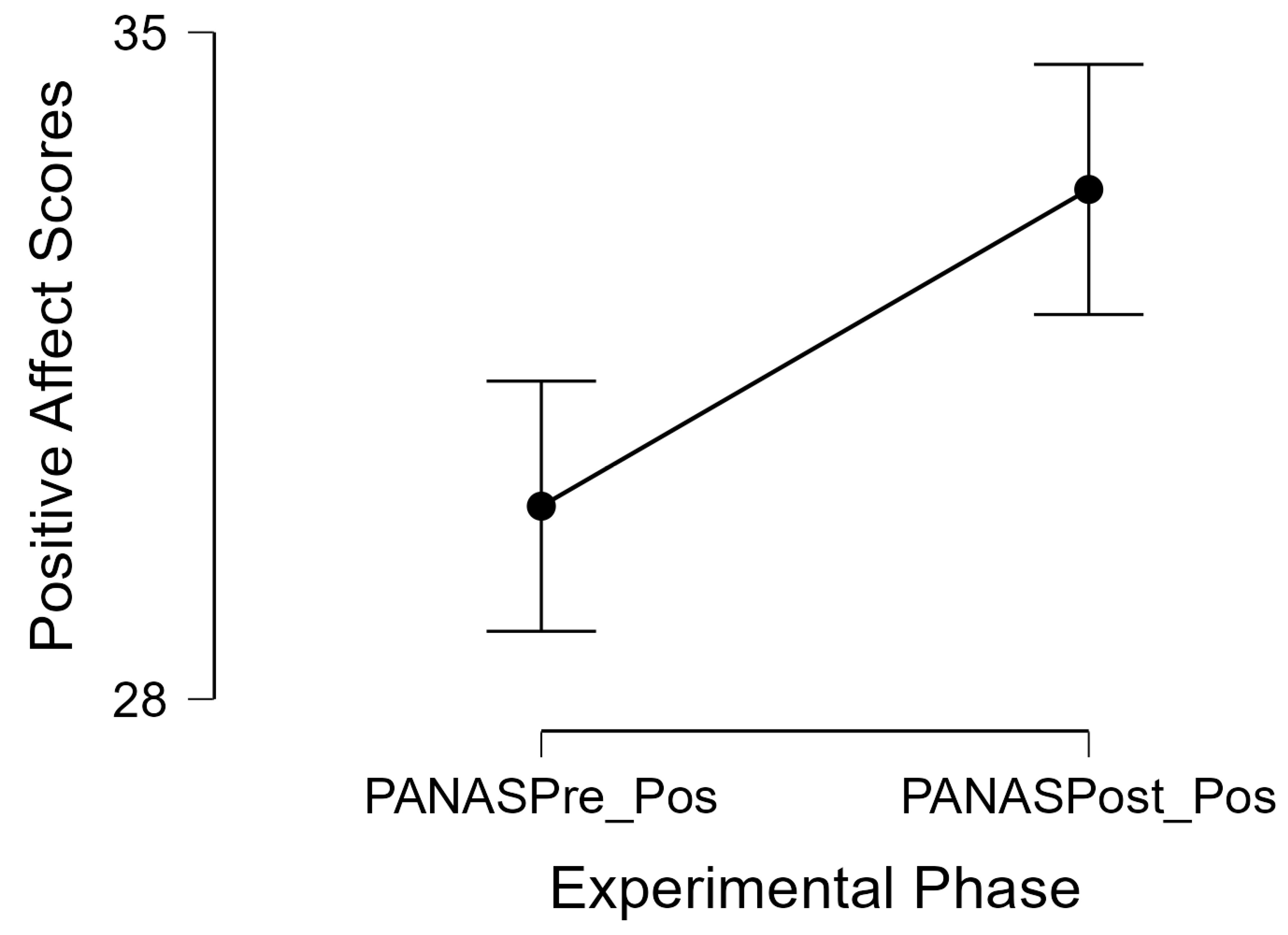
Figure 3.
Negative Affect decreases after a short video game session. Note. ‘PANASPre-Neg’ = PANAS negative affect score pre-videogame; ‘PANASPost_Neg’ = PANAS negative affect score post-videogame.
Figure 3.
Negative Affect decreases after a short video game session. Note. ‘PANASPre-Neg’ = PANAS negative affect score pre-videogame; ‘PANASPost_Neg’ = PANAS negative affect score post-videogame.
Disclaimer/Publisher’s Note: The statements, opinions and data contained in all publications are solely those of the individual author(s) and contributor(s) and not of MDPI and/or the editor(s). MDPI and/or the editor(s) disclaim responsibility for any injury to people or property resulting from any ideas, methods, instructions or products referred to in the content. |
© 2024 by the authors. Licensee MDPI, Basel, Switzerland. This article is an open access article distributed under the terms and conditions of the Creative Commons Attribution (CC BY) license (http://creativecommons.org/licenses/by/4.0/).
Copyright: This open access article is published under a Creative Commons CC BY 4.0 license, which permit the free download, distribution, and reuse, provided that the author and preprint are cited in any reuse.


