

Submitted:
30 June 2025
Posted:
03 July 2025
You are already at the latest version
Abstract
This case study examines the role of evidence in the agricultural policymaking processes within the Economic Community of West African States (ECOWAS), focusing on its regional agricultural policy, ECOWAP. It investigates how evidence flows between national and regional levels, the key actors involved, and the institutional mechanisms supporting evidence integration into policy formulation, implementation and evaluation. The study highlights that while ECOWAS has proactively used evidence in agricultural policymaking since the early 2000s, significant challenges remain. External actors, particularly consultancy firms and international organizations, dominate the evidence landscape, with limited contributions from universities and national research centers. Formalized mechanisms for transferring data between national and regional levels are lacking, compounded by insufficient regional analytical capacities. Furthermore, the flow of research evidence and expert knowledge, notably from non-state actors, remains fragmented and informal. Reliance on external funding often results in donor-driven agendas misaligned with regional priorities. While evidence-informed approaches are strong during policy formulation, they weaken significantly during implementation. Additionally, the multiplicity of actors involved creates fragmentation, reducing coherence and coordination within ECOWAS’s agricultural policy ecosystem. To address these issues, the study recommends institutionalizing evidence transfer mechanisms, strengthening regional data analysis capabilities, establishing structured engagement processes with universities and research centers, formalizing the role of non-state actors, reducing dependence on external funding by aligning research agendas with regional needs, and embedding a robust evidence culture throughout all policy stages, especially implementation.
Keywords:
ECOWAS
; agricultural policy
; evidence-informed policymaking
; ECOWAP
; evidence transfer
; regional integration
; West Africa
1. Introduction
1.1. Context and Objectives
The 2024 United Nations (UN) Summit of the Future emphasized the role of regional entities in advancing sustainable development, with a particular focus on evidence-informed policymaking (United Nations, 2024). Scientific evidence is crucial in shaping policies that address complex global challenges, including those related to the Sustainable Development Goals (SDGs) (Allen et al., 2021; Espey, 2022); yet processes through which evidence informs policy are under-documented, particularly in Africa (Allen et al., 2021; Espey, 2022; Goldman & Pabari, 2020). For example, regional organizations like the Economic Community of West African States (ECOWAS) play a key role in shaping regional policies in key sectors such as health, transport, governance and agriculture, yet the processes behind their evidence use remain largely unexplored (Kouakanou et al., 2021; Uneke et al., 2022). This case study aims to fill this gap by examining the role of evidence in ECOWAS’s agricultural policymaking, particularly through its Regional Agricultural Policy for West Africa (ECOWAP).
ECOWAS, through its ECOWAP initiative, provides a relevant case for examining how regional organizations can use evidence to shape policies in important sectors such as the agriculture sector. The integration of diverse types of evidence—ranging from national data to regional research—into ECOWAP’s policy formulation is a critical aspect of the organization’s efforts to address agricultural challenges. ECOWAP’s role in fostering regional integration and sustainable agricultural development makes it an ideal case study to understand the complexities of evidence-informed policymaking in a multi-country context.
This case study investigates how evidence flows between national and regional levels within ECOWAS’s agricultural policymaking, focusing specifically on ECOWAP. It explores the types of evidence used in policy formulation, the key actors involved, and how institutional arrangements influence the transfer and effectiveness of evidence across different governance scales. The study hypothesizes that evidence systems at the national and regional levels often operate independently, leading to inefficiencies and missed opportunities for cross-scale collaboration. By analyzing the mechanisms and frameworks supporting evidence use, this case study identifies practices that facilitate or hinder the integration of data, research, and expert knowledge into policymaking. It also examines the challenges and opportunities related to evidence transfer and provides insights into potential improvements for more effective and collaborative evidence-informed policymaking.
The case study starts by providing an overview of the regional practices and institutional arrangements that promote evidence-informed policymaking in ECOWAS’s agricultural sector. The second section delves into the evidence ecosystem surrounding ECOWAP, while the third section examines the flow of evidence between the regional and national levels. The study concludes with key insights presented from an analytical perspective, followed by proposals to strengthen evidence use and enhance institutional mechanisms for evidence transfer across different governance scales.
1.2. ECOWAS and Agriculture
ECOWAS is a key regional economic community (REC) established in 1975 to promote regional integration, stability, and economic growth in West Africa. Comprising 15 member states1 and one associate member, ECOWAS is one of the largest RECs in Africa, covering a vast area of 5.1 million square kilometers with an estimated population of 424.3 million people as of 2022. The organization has expanded its mandate over time to address not only economic issues but also political, social, and security concerns. ECOWAS aims to integrate the economies of West Africa, improve governance, and foster peace, all of which are vital for the region’s development. The region's GDP in 2022 was approximately US$758 billion, accounting for about a quarter of Africa’s total GDP (World Bank, 2024).
Despite a gradual shift towards industrialization and services, agriculture remains a critical sector in West Africa, contributing approximately 26% to the region’s GDP on average, though this figure varies widely between countries. Agriculture is particularly significant in countries such as Sierra Leone, where it accounts for up to 60% of GDP, while in nations like Cabo Verde, it represents as little as 5% (World Bank, 2024). The sector’s importance is compounded by its role in food security, poverty alleviation, and the livelihoods of millions of people, particularly smallholder farmers (Laborde et al., 2019; World Bank, 2024).
ECOWAS’s agricultural policy, ECOWAP (Economic Community of West Africa Agricultural Policy), was adopted in 2005 to foster regional agricultural development. The policy aims to ensure food security, increase agricultural productivity, and improve the livelihoods of agricultural workers (ECOWAS, 2005b). ECOWAP sets out key objectives aligned with the broader goals of the African Union’s Comprehensive Africa Agriculture Development Programme (CAADP), with a focus on increasing agricultural productivity, ensuring a stable trade regime within West Africa, and adapting to international trade dynamics. Through its alignment with the Malabo Declaration, ECOWAP aims to reduce hunger, promote poverty alleviation, and boost intra-regional trade in agricultural products.
The implementation of ECOWAP is designed to address regional challenges that transcend national borders, such as food security, trade policies, and climate resilience, through the harmonization of agricultural policies across ECOWAS member states. This regional integration approach allows for the exploitation of natural complementarities between countries, facilitating joint solutions to common agricultural challenges. ECOWAP also aligns with the SDGs, particularly those focused on ending hunger and poverty, by fostering a collaborative environment for the agricultural sector’s growth (African Union, 2014).
2. Methods
This case study utilizes a combination of research methods to investigate the evidence ecosystem within ECOWAS's agricultural sector and its integration into policymaking processes. The study begins with a comprehensive review of scientific literature, grey literature, and knowledge products from ECOWAS. This includes academic articles, policy documents, reports, policy briefs, and evaluations, which provide a foundation for understanding the historical context and current practices related to evidence use in the region. The review also covers key studies on evidence-informed policymaking (EIP) and regional agricultural development in West Africa, which informs the analysis of ECOWAP.
A series of interviews were conducted with key stakeholders who possess expertise and experience in the West African evidence ecosystem. These interviews include individuals from ECOWAS, national governments, research institutions, think tanks, international organizations, and civil society. These conversations offered valuable insights into the practical challenges and opportunities for evidence use in regional policymaking. The case study places a particular focus on the ECOWAP process, conducting a historical analysis to understand how evidence has been used throughout its formulation, implementation, and subsequent evaluations. This analysis sheds light on the dynamics of evidence use, highlighting how different types of evidence have been incorporated into policy decisions and identifying any gaps or challenges in the process.
The authors’ personal experience, with over a decade of working in the EIP and agricultural sectors in West Africa, significantly contributes to the study. Their first-hand knowledge of the region’s policy development processes, institutional structures, and challenges around evidence transfer offers an insider perspective, complementing the findings from the literature and interviews.
3. Landscape analysis: Types of Evidence Produced and Used in the Agricultural Sector in West Africa
Across ECOWAS, evidence is conceptualized broadly, encompassing multiple sources and types of knowledge used to inform agricultural policymaking. Although the ECOWAS Commission does not provide a formal, explicit definition, literature reviews and stakeholder interviews indicate that evidence primarily includes research outputs generated by universities and national research centers, consultancy studies, and statistical data produced by national institutes of statistics (ECOWAS, 2024; Thoto et al., 2023; Uneke et al., 2022). Additionally, insights, perspectives, and information shared by diverse interest groups—such as the private sector, farmers' organizations, and civil society actors—are also recognized as valuable forms of evidence, significantly contributing to the formulation and orientation of agricultural policies within the region.
3.1. Agricultural Data System
At the country level, each West African nation is engaged in efforts to collect agricultural data, with the National Agricultural Census being a key example. However, the data collected is often outdated and not detailed enough to support policy decisions (Bouët et al., 2024; Carletto et al., 2017; Hollinger & Staatz, 2015). For example, data from the World Bank Statistical Capacity Index reveal an inconsistency in the conduct of agricultural censuses across the West African nations examined between 2016 and 2020 (World Bank, 2021). While some countries like Cabo Verde, Burkina Faso, Cote d'Ivoire, Niger, Senegal, and Togo demonstrate a relatively consistent pattern of having conducted at least one census within the preceding decade for each year, a substantial number of countries, including Benin, Mali, Nigeria, Guinea, Sierra Leone, Liberia, and Guinea-Bissau, exhibit either periods of absence or complete lack of recent census data within the observed timeframe. This inconsistency highlights a critical weakness in the regional agricultural data ecosystem. Also, the data tends to focus primarily on crop production, which provides only a partial picture of the agricultural ecosystem. Effective agricultural data systems should go beyond basic metrics like crop yields and encompass critical components of the agricultural value chain, such as access to seeds, fertilizers, and market data—both formal and informal.
Moreover, data on key areas like seed systems, fertilizer markets, and arable land often exist in silos across the private sector (e.g., East West Seeds’ sales data, Omnia Fertilizer’s market analysis), government entities (e.g., agricultural inputs import from customs agencies), civil society organizations (e.g., ROPPA’s farmers member data), and international organizations (e.g., AfricaRice’s variety research, IFDC’s market studies, FAO’s land cover data). This fragmentation hinders comprehensive analysis and timely decision-making. Additionally, agricultural data is often generated within the framework of large, donor-funded projects, which compromises the sustainability of these data collection efforts and limits their long-term impact. A notable example in the region is the West Africa Agricultural Productivity Program (WAAPP), funded by the World Bank from 2011 to 2019. While WAAPP successfully established a system for data collection, analysis, and reporting on agricultural technologies, research skills, and agricultural productivity at both national and regional levels (World Bank, 2020), respondents from national agricultural research institutes in the region have reported that the system is no longer functioning at its previous capacity since the project’s conclusion.
At the regional level, agricultural data consolidation and analysis are particularly low, which impedes the ability to track agricultural trends and formulate effective regional policies. In many cases, international databases such as FAOStat or the World Bank Open Data platform are more widely regarded and trusted than national databases. As some respondents have highlighted, they prefer FAOStat because it has comparable datasets, it is more easily accessible than national agricultural databases and it has recognized authority in food and agriculture statistics.
Under ECOWAP, ECO-AGRIS (ECOWAS Agricultural Information System) was created to address these challenges. ECO-AGRIS is intended to be a regional agricultural information system that monitors food security at both the regional and country levels. Developed with technical assistance from CILSS (the Permanent Inter-State Committee for Drought Control in the Sahel), ECO-AGRIS was designed to better inform decision-making and policy processes. Following the conclusion of the European Union’s €18 million funding, the ECOAGRIS system has been inactive since 2019. This inactivity stems from persistent challenges related to capacity, coordination, and funding, which have collectively prevented the timely circulation of crucial agricultural data necessary for effective decision-making in the region (ECOWAS, 2024; European Union, 2016). Despite its potential, ECO-AGRIS has yet to fully realize its role in establishing and maintaining a good agricultural data system in West Africa.
3.2. Research in the West African Agricultural Ecosystem
Research in the agricultural sector in West Africa involves a diverse array of actors, each contributing to the generation of knowledge in different ways. Key contributors include universities, national agricultural research centers, international research organizations, think tanks, consultancy firms, and regional organizations. While each plays a critical role, there are significant gaps in the overall coordination and effectiveness of research, especially in terms of its translation into policy.
At the national level, universities and national agricultural research centers are essential sources of agricultural knowledge. However, there is a noticeable gap in formal mechanisms to ensure that the research conducted in these institutions is translated into actionable policy insights. Despite producing a large body of knowledge, universities often lack the institutionalized structures that would enable them to engage directly with policymakers or inform the ECOWAP framework. For instance, in Benin—as is the case in many West African countries—universities and faculties of agriculture fall under the Ministry of Higher Education rather than the Ministry of Agriculture (Thoto et al., 2023) This institutional arrangement presents a structural barrier that limits the systematic integration of academic research into agricultural policymaking processes.
Consultancy firms and individual consultants, both local and international, are highly active in the knowledge production space in West Africa, even though they are not classified as research centers. These firms and individuals often dominate agricultural research activities by responding to calls for services or project-based assignments. As a result, many reports and studies in the agricultural sector used by institutions like ECOWAS are produced by consultants rather than academic or research institutions. This dynamic is partly due to the structure of funding and procurement processes in the region, where projects often require external “service providers” rather than institutions like universities to carry out research or produce reports. Additionally, one interviewee from the study highlighted another reason, stating that “officers in development institutions tend to prefer reports from consultants rather than university researchers because academic studies are often perceived as overly scientific, theoretical, and disconnected from agricultural practical realities.” Consequently, consultancy firms such as IRAM, Inter-Réseaux, LARES, SAHEL Consulting and individual consultants have become important contributors to the knowledge base that informs initiatives like ECOWAP.
At the regional level, CORAF (West and Central African Council for Agricultural Research and Development) is tasked with playing the role of the anchor institution for agricultural research in the region. However, the region is crowded with multiple research institutions, which often results in fragmented efforts and a lack of coordination. CGIAR centers, CILSS and the OECD Sahel and West Africa Club also play significant roles in regional agricultural research, but there is a continued need for more consolidated efforts and enhanced regional analysis.
The agricultural research agenda in West Africa is largely driven by donor funding (Arvanitis et al., 2022; Beintema & Stads, 2017). This reliance on external financing means that research priorities are often aligned with donor interests and funding cycles, rather than long-term regional needs. The absence of a formal system to track and document agricultural research needs at the regional level by ECOWAS further compounds this issue. As a result, agricultural research is often fragmented, with various organizations pursuing research agendas that may not be fully aligned with the needs of the region’s agricultural policy.
Policy research, in particular, remains a limited area of focus. While there is extensive research on the biophysical aspects of agriculture, less attention has been given to the policy dimensions such as policy design, regional policy implementation, impact evaluation, which are critical for driving institutional reforms, market integration, and governance in the sector. A shift toward policy-oriented research is essential for addressing the complex challenges facing agricultural development in West Africa, such as land tenure, market access, and rural development.
One promising example of regional collaboration in agricultural research is the OECD Sahel and West Africa Club. The Club serves as a platform for data mapping, informed analyses, and strategic dialogue, helping to better anticipate transformations in the region and their territorial impacts. As a member of the Club, ECOWAS benefits from its analyses and insights into regional agricultural issues. This model could be expanded by strengthening the capacity of local think tanks and institutionalizing their role in providing on-demand policy analysis. A more structured approach to engaging think tanks and research institutions at both national and regional levels would help ensure that agricultural policies are grounded in solid evidence and responsive to the needs of the agricultural sector.
3.3. Expert Knowledge as a Type of Evidence in the West African Agricultural Ecosystem
In the West African agricultural ecosystem, expert knowledge plays a critical role in informing policymaking and shaping agricultural strategies. This type of evidence is often captured through workshops, technical sessions, and consultations where non-state actors, researchers, and other technical experts come together to share their knowledge and contribute to the policy process. Expert knowledge in this context refers to the insights, perspectives, and recommendations provided by individuals and organizations with specialized expertise in agriculture, economics, policy, and related fields. These contributions are vital in addressing the complex challenges of agricultural development in the region.
At these workshops and technical sessions, non-state actors such as farmers’ organizations, civil society groups, and local stakeholders provide invaluable knowledge based on their direct experiences with agricultural systems. Organizations like ROPPA (the West African Network of Farmers' Organizations), which represents the interests of smallholder farmers, contribute their practical insights into issues such as market access, land rights, and food security. This form of knowledge, rooted in the daily realities of farming communities, helps policymakers understand the challenges faced at the grassroots level and design policies that are more responsive to the needs of farmers (Mongbo & Aguemon, 2015). These actors also bring forward indigenous knowledge and traditional agricultural practices, which are often overlooked in formal research but are essential for sustainable and locally adapted agricultural development.
Researchers from universities and other institutions also participate in these forums, offering expert knowledge based on their research findings. While universities and research institutions in West Africa produce significant amounts of knowledge on topics like crop yields, soil fertility, climate resilience, and agricultural technology, this knowledge is not always integrated into the policymaking process. Workshops and technical sessions provide a crucial platform for these researchers to directly interact with policymakers and other stakeholders, ensuring that their findings are translated into actionable policy insights.
4. The Policy Context: The Regional Agricultural Policy for West Africa ECOWAP
This section presents a retrospective analysis of evidence curation and utilization under ECOWAP, exploring how evidence was generated, consolidated, and integrated into the policymaking process. It examines the ways in which ECOWAS has historically engaged with various forms of evidence, including data, research, and expert knowledge, to inform the design, implementation, and evaluation phases of its regional agricultural policy.
4.1. Design
Coordinating Knowledge Production
The process for the development of the ECOWAP began in the early 2000s with a diagnostic phase, which sought to understand the challenges facing agriculture in West Africa. This phase was crucial for laying the groundwork for the policy. At the very start, ECOWAS set up a task force aimed at bringing together the key stakeholders and actors in the regional agricultural sector to assist in the management and technical oversight of the process.
ECOWAS entrusted CILSS with the responsibility of providing the technical secretariat. CILSS was tasked with mobilizing the necessary expertise to help policymakers design the regional agricultural policy and provide technical support at every stage of the formulation and consultations on the policy framework. To this end, a consortium was recruited through a competitive bidding process, comprising eight regional and international consulting firms: AIRD (USA), Issala (France), IRAM (France), AIAE (Nigeria), CEPA (Ghana), GREAT (Mali), LARES (Benin), and Statistika (Burkina Faso). This group also collaborated with national consultants who brought in local expertise and knowledge.
The consulting firms involved in the process, under the coordination of CILSS, produced various knowledge outputs, which can be categorized into three main types (ECOWAS, 2004a). The first category consisted of country-specific reports. These reports provided an in-depth examination of the agricultural context in each country, outlining key characteristics of agriculture, the main constraints and strengths of agricultural systems, and regional challenges identified for each country. The reports also presented the expectations for the regional agricultural policy, based on interviews with policymakers and key sector actors. These reports were based on a thorough review of national policy documents, sector reviews, and development strategies such as Poverty Reduction Strategy Papers (PRSPs) and Food Security Strategies.
The second category included regional synthesis notes. These synthesis reports compiled the findings from across the region, examining various regional agricultural issues. They covered topics such as agricultural dynamics within subspaces, including central, eastern, and western regions, and the specific challenges these areas faced. The notes also explored agricultural value chains for key products such as livestock, oilseeds, rice, fruits, cotton, and others. Additionally, they addressed regional integration issues and opportunities, particularly concerning agricultural policies and trade within the region. The synthesis notes also highlighted important regional themes, including research policy, information systems, and agricultural finance. These reports provided a cohesive view of the agricultural landscape at the regional level, highlighting opportunities for integration and cooperation.
The third category consisted of statistical and quantitative analysis. This category included a comprehensive statistical review that gathered key indicators such as demographic data, socio-economic indicators, food security data, and trade data. It also presented productivity trends, including detailed graphs and tables presenting indicators like agricultural output, land use, and productivity growth. This statistical evidence was crucial in understanding the quantitative dimensions of agriculture in West Africa, helping policymakers base decisions on robust data.
Framework for the West African Agricultural Policy-ECOWAP: A Key Reference Document in the Process
The Framework for the West African Agricultural Policy-ECOWAP draws upon a broad range of evidence to inform its analysis of agricultural dynamics within the ECOWAS region. The evidence comes from a variety of sources, including statistical data, research, stakeholder consultations, and international agreements.
A significant portion of the document relies on statistical data. This data encompasses a variety of socio-economic indicators, such as population demographics, economic activity, income distribution, and food security levels across the region. Population data includes details on both urban and rural populations, with projections of future trends. Economic indicators such as GDP and social metrics, including income and development levels, are examined to provide insight into the overall economic landscape. In terms of food security, the document analyzes key indicators related to food availability, consumption patterns, and nutritional status, including metrics on calorie and protein availability by country. Trade data is another important component, which includes information on agricultural exports and imports, highlighting the region's agricultural trade balance and the degree of market integration across ECOWAS countries.
The document also incorporates sector-specific research focusing on various agricultural products such as cotton, rice, sugar, tubers, and livestock. Each sector is examined in terms of production, trade, and market conditions, with specific attention given to the challenges and opportunities within these areas. For instance, the rice, wheat, and sugar sectors are analyzed in detail, with the document addressing both the existing production capabilities and the constraints that affect these sectors’ growth and integration into regional and global markets.
Another key element of the document is its focus on the regional dynamics within ECOWAS. It explores the distinct characteristics of different sub-regions, such as the central corridor, eastern, and western zones. This analysis considers geographical, economic, and agricultural patterns that vary across these areas, identifying specific challenges and opportunities in each.
Stakeholder perspectives also play a crucial role in shaping the document's analysis. The document reflects a variety of viewpoints, from producers and consumers to government bodies and international actors. This diversity of perspectives ensures that the policy framework takes into account the interests and needs of all parties involved in agricultural policy formulation.
The document also acknowledges the influence of international agreements and trade regulations on the region’s agricultural sector. It considers the implications of global trade agreements, such as those negotiated at the WTO, as well as regional partnerships like the EU/ACP agreement and the “Everything But Arms” initiative. These discussions highlight the impact of international policies on West African agriculture, particularly in relation to tariffs, trade barriers, and agricultural exports.
Development of Scenarios
The reference document outlines several policy scenarios for the future of West African agriculture, each presenting different implications for regional integration, agricultural development, and international trade (ECOWAS, 2004a). These scenarios were developed based on a comprehensive synthesis of evidence, which played a critical role in shaping the potential outcomes of various policy options.
The basis for these scenarios is built upon a detailed diagnostic of the current agricultural landscape in West Africa. This diagnostic, informed by statistical data helps to identify the key challenges and opportunities in the sector. It highlights issues such as market fragmentation, differing trade policies, and varying regional relationships with international trade partners. The scenarios are also shaped by interviews and consultations with key stakeholders, including policymakers, farmers' organizations, and other agricultural actors. These consultations provide valuable insights into the differing perspectives on agricultural development, helping to clarify areas of consensus and points of divergence among the various stakeholders.
The scenarios address key questions that divide actors within the agricultural sector, particularly regarding the balance between family farming and larger-scale agriculture, the role of regional integration versus international trade, and the level of protection needed for the agricultural sector. These questions are at the heart of the policy debate, and the scenarios are designed to explore the potential consequences of different policy choices in these areas.
The document first presents two tendency scenarios that project the likely future of West African agriculture if current trends continue. Scenario A assumes the continuation of economic fragmentation, with some reduction in tensions and conflicts. Scenario B, on the other hand, projects a future of economic fragmentation combined with socio-political destabilization. These scenarios are grounded in evidence showing the region's multiple forms of fragmentation, including high food import costs, divergent trade policies, and varying relationships with international partners like the European Union. Additionally, the evidence on regional instability and conflicts, including examples like the situation in Côte d'Ivoire, plays a role in shaping Scenario B. These tendency scenarios highlight the potential negative consequences of failing to address critical agricultural issues, emphasizing the risks of not implementing a coherent regional agricultural policy.
Following these, four alternative scenarios are presented, each exploring different levels of regional integration and openness to international markets. These scenarios are based on the understanding that the agricultural sector's transformation requires changes in the institutional, economic, and commercial environment for producers. The evidence used to develop these scenarios includes trade data, tariff policies, and analysis of economic impacts from various international agreements, such as those with the United States and the European Union.
In Scenario 1, a highly integrated regional agriculture is assumed, with an open stance toward international markets. This scenario is based on evidence that market liberalization, combined with improved regional supply chains, could enhance competitiveness. The analysis of trade agreements such as AGOA (African Growth and Opportunity Act) and APE (Economic Partnership Agreements) with the European Union informs this scenario's assumptions about international market access.
Scenario 2, conversely, envisions a less integrated regional agriculture that remains open to international markets. It assumes the adoption of the common external tariff of UEMOA but without significant progress in regional market integration. The scenario is based on the concern that external openness without internal integration could increase dependency on food imports, which is reflected in evidence related to trade flows and regional policy dynamics.
Scenario 3 imagines a less integrated regional agriculture with high levels of protection for the entire sector. This scenario incorporates input from agricultural organizations and civil society, which argue for protection as a necessary condition for the sector's development. Evidence regarding the potential effects of protectionism and its impact on competitiveness is used to support this scenario, acknowledging that protection without integration could reduce incentives for cost reduction and sectoral competitiveness.
Scenario 4 proposes a highly integrated regional agriculture with differentiated levels of protection depending on the product or sector. This scenario is informed by sector-specific data, particularly from industries like rice, cotton, and livestock. It draws on evidence about the strategic importance of these sectors, the level of competition they face from imports, and the need for targeted protection. The case of rice, with its particular vulnerabilities to international trade pressures, serves as a focal point for this scenario.
The role of evidence in the development of these scenarios is central. The scenarios are not speculative but are grounded in a synthesis of diverse information, including statistical data, economic analyses, policy documents, and stakeholder input. The document's use of trade data and tariff policies is crucial in defining the different scenarios regarding the degree of openness to international markets. Additionally, the document makes use of specific data on sectors such as cotton, rice, and livestock to inform policy choices.
The scenarios also recognize that policy decisions are influenced by political and social factors, not just economic data. For instance, the role of family farms in West African agriculture is explicitly acknowledged, and the impact of policy choices on different stakeholders is carefully considered. In this way, the scenarios reflect the complex realities of the region and offer a range of plausible futures based on the evidence available.
National Consultations
The national consultations played a critical role in the process of shaping the ECOWAP, providing a platform for diverse stakeholders to discuss the policy framework and offer feedback on its proposed directions. These consultations, held in several countries, aimed to ensure that the policy was not only informed by regional priorities but also aligned with the specific needs and challenges faced by individual countries.
The consultations were structured to allow for a thorough examination of the reference document, which outlined the key issues, objectives, and proposed scenarios for the future of West African agriculture. The workshops began with the presentation of the ECOWAP reference document by a consultant, who highlighted the policy's diagnostic, the main agricultural challenges, and the proposed strategic directions. This was followed by open discussions where participants debated various aspects of the document, such as the role of family farming, the integration of regional markets, and the balance between protectionism and market liberalization (ECOWAS, 2004a).
In countries like Senegal, the consultation involved a broad spectrum of stakeholders, including government representatives, farmer organizations, civil society, and the private sector. The focus in Senegal was on understanding how regional integration could be implemented within the national context, and how the proposed scenarios for agricultural protection and market openness could address the country’s agricultural needs (ECOWAS, 2004b). The participants raised concerns about land tenure issues, the need for investment in infrastructure, and the importance of enhancing local food production to reduce dependency on imports.
Similarly, in Togo, the consultation brought together a diverse group of participants, including public officials, agricultural chambers, and civil society representatives. Togo’s discussions particularly centered on the challenges of integrating local agricultural systems with regional markets, and the need for policies that would protect smallholder farmers while promoting economic competitiveness (ECOWAS & MAEP-Togo, 2004). The participants in Togo were particularly vocal about the importance of regional cooperation, and many emphasized the need for differentiated protection policies based on the strategic importance of specific sectors such as rice and cotton.
One key issue that emerged during these consultations was the need to balance regional integration with the protection of local agriculture. At the national level, stakeholders expressed concerns about the potential negative impacts of open markets on local farmers and the importance of developing protective measures, particularly for sensitive sectors such as rice, cotton, and livestock. The consultations underscored the need for differentiated protection policies that would allow for strategic protection of certain agricultural sectors, while also fostering regional trade and integration.
Finalization and Adoption of ECOWAP
By the end of 2004, the policy framework for ECOWAP was ready for final review and approval. This phase marked the culmination of the consultative and scenario-building processes, as ECOWAS worked to integrate the feedback received from stakeholders across the region. The final policy document was refined and aligned with the broader goals of NEPAD (New Partnership for Africa’s Development) and the CAADP. ECOWAP was designed to be the regional expression of the agricultural objectives set by CAADP, which aimed for a 6% annual growth in the agricultural sector and a 10% budget allocation for agriculture by national governments.
The policy was submitted for formal approval to the ECOWAS Heads of State. In January 2005, after extensive deliberations, the policy was officially adopted at the ECOWAS Summit in Accra, Ghana. ECOWAP was then established as the guiding framework for agricultural development in West Africa. The policy outlined the steps to transform agriculture across the region, with an emphasis on fostering food sovereignty, promoting economic development, and addressing social inequalities.
Key Stakeholders in the Process
The design of ECOWAP (the agricultural policy framework for West Africa) was a participatory process that brought together a diverse range of stakeholders. Each group played a critical role in shaping the policy framework, ensuring that ECOWAP was not only regionally coherent but also aligned with national priorities and agricultural realities. Below is a breakdown of the key stakeholders and their roles in the development process:
The Economic Community of West African States (ECOWAS) Secretariat. ECOWAS took the leadership role in guiding the development of ECOWAP. The ECOWAS Secretariat was instrumental in managing and overseeing the entire process, ensuring that the policy framework was developed in line with regional goals. To facilitate this, ECOWAS established a task force that was responsible for overseeing the technical aspects of the policy's formulation and ensuring coordination among various stakeholders. The Secretariat also played a key role in promoting dialogue and negotiation to reach a consensus on the policy direction. Furthermore, ECOWAS was responsible for submitting the reference document to the countries in the region, helping to initiate the consultation and feedback process.
The Permanent Interstates Committee for Drought Control in the Sahel (CILSS). CILSS provided the technical secretariat for the ECOWAP development, taking on the responsibility of mobilizing the necessary expertise to support decision-makers in designing the regional agricultural policy. The CILSS secretariat was crucial during the formulation and consultation stages, offering technical support to ensure that the policy was grounded in sound research and evidence. Through its Regional Center Agrhymet, CILSS also played a significant role in gathering and centralizing information related to food security in the region, which was used to inform the policy design.
The Task Force. A task force was created by the ECOWAS Secretariat to bring together the main actors in the agricultural sector. This group was responsible for assisting in the management and technical follow-up of the ECOWAP development process. The task force was also tasked with helping countries and stakeholders transform the agricultural sector by influencing current trends and aligning national policies with regional objectives. By coordinating input from various stakeholders, the task force played an essential role in maintaining the focus on the broader regional integration agenda.
Consulting firms. A group of eight regional and international consulting firms was hired through a competitive process to assist in the design of ECOWAP. These firms included AIRD (USA), Issala (France), IRAM (France), AIAE (Nigeria), CEPA (Ghana), GREAT (Mali), LARES (Benin), and Statistika (Burkina Faso). Their role was to gather and analyze data to inform the policy design, producing country-specific reports, regional synthesis notes, and statistical reviews. They examined the agricultural dynamics within different sub-regions and strategic agricultural sectors, analyzing the potential for cooperation and integration in various areas of agriculture. These firms synthesized their findings into the reference document that served as the foundation for the national and regional consultations. Their expertise helped ensure that the policy was based on rigorous analysis of the region’s agricultural challenges and opportunities.
National decision-makers. Ministers and high-ranking officials from agriculture, livestock, environment, economy, finance, trade, and integration ministries were key players in the design process. These decision-makers were interviewed to gather insights about the main characteristics of the agricultural sector, constraints, and strengths within their respective countries. They were also involved in the debates and consultations, where they clarified their positions on key issues related to regional agricultural development. Their input was crucial in selecting from the proposed policy scenarios and ensuring that ECOWAP would be aligned with national interests and priorities.
Regional actors. Regional actors, including commercial networks, investors, farmers’ organizations, and women’s groups, played an essential role in the process by contributing to regional cooperation and integration. These actors were considered critical to the successful implementation of ECOWAP, as they would be responsible for driving the policy forward at the grassroots level. Their involvement was necessary to ensure that their interests were considered, and that the policy reflected the realities of those directly engaged in agricultural activities. Regional actors also played a role in facilitating compromises and negotiations between diverse stakeholders, helping to create a policy framework that could accommodate a variety of interests and perspectives.
Farmers’ organizations. Farmers’ organizations were directly involved in the design process, providing their perspectives on agricultural development. These organizations, especially those part of ROPPA, were instrumental in advocating for the protection of the regional agricultural sector. During the consultations, representatives from these organizations were interviewed and participated in debates, offering their views on which scenarios would best support agricultural development. For example, in Scenario 3, which focused on strong protection of the regional agricultural sector, farmers’ organizations voiced their support for policies that would shield local farmers from unfair competition and promote sustainable agricultural practices. According to Babacar Ndao of ROPPA, the organization has been “deeply involved in preparing ECOWAP” since 2003, considering it their “baby” to some extent, thus highlighting ROPPA’s central and long-standing role in its development.
4.2. Implementation
The 2006-2010 Action Plan
The ECOWAP policy was designed with the objective of fostering a strong integration of the regional internal market, while ensuring external protection that is tailored to the specific needs of different agricultural commodities. Following the adoption of the policy, an action plan for the period 2006-2010 was developed to transform these strategic goals into tangible actions aimed at improving agricultural productivity and competitiveness across West Africa. The plan emphasized three key areas of focus: increasing agricultural productivity and competitiveness, implementing an intra-community trade regime, and adapting the external trade regime to better suit the needs of the region (ECOWAS, 2005a).
The 2006-2010 action plan also aimed to establish the necessary institutional arrangements, financial mechanisms, and monitoring and evaluation systems required to support the implementation of ECOWAP. Additionally, it sought to integrate already existing programs and set the foundation for the first priority actions. During this period, efforts were made to harmonize regulations, with significant progress in areas such as quality control, seed certification, and pesticide approval, often in collaboration with the West African Economic and Monetary Union (WAEMU, UEMOA in French). By 2008, regulations concerning these areas were finalized, creating binding rules that helped promote a more conducive environment for agriculture and facilitated smoother market operations. In 2010, further regulations were introduced, focusing on fertilizer quality control, health and safety standards for livestock, plants, and foodstuffs, veterinary drug management procedures, and the establishment of a Regional Veterinary Committee to oversee these areas.
However, despite these ambitious objectives, the implementation of the action plan was significantly hindered by a weak commitment from the international community (ECOWAS, 2017). Limited financial support and a lack of coordination among development partners greatly constrained the ability of ECOWAS and other regional institutions to effectively carry out the proposed actions. This lack of sustained commitment ultimately affected the scope and impact of the action plan, preventing it from achieving its full potential and delaying the realization of the policy's intended outcomes in the region.
The 2008 Global Food Crisis and the Adoption of the NAIPs and RAIP
The 2008 global food crisis was a pivotal moment for the international community, regional institutions, and governments in West Africa (Christiaensen, 2009; ECOWAS, 2017). The sharp rise in food prices, combined with the exacerbation of food insecurity, underscored the urgent need to address agricultural development and food sovereignty in the region. The crisis highlighted three major concerns: (i) the worsening food security situation, with an increasing number of people suffering from malnutrition, hunger, and deprivation; (ii) the political instability induced by hunger-related riots and conflicts; and (iii) the challenges posed by global factors such as population growth, the fossil fuel crisis (agro-fuels competing with food crops), and climate change. These challenges brought agricultural development and food security to the forefront of the agenda for all stakeholders in the region.
In response to these issues, the 2008 food crisis revealed the relevance and timeliness of ECOWAP, particularly its focus on food sovereignty. The crisis acted as a wake-up call, emphasizing the importance of regional policy aimed at enhancing agricultural productivity and reducing reliance on food imports. In May 2008, the ECOWAS Extraordinary Council of Ministers on Rising Food Prices convened to address the food crisis and laid out the terms for a “Regional Offensive for Food Production and against Hunger” (ECOWAS, 2017; Galtier, 2016). This initiative was designed to better coordinate the efforts of ECOWAS member states, facilitate responses to the immediate food crisis, and ensure a more structured implementation of ECOWAP as a long-term response to the region's food insecurity challenges.
ECOWAP’s implementation was structured around two key pillars: the National Agricultural Investment Plans (NAIPs) and the Regional Agricultural Investment Plan (RAIP). The NAIPs were designed to reflect national priorities, focusing primarily on productive investments across agriculture, livestock, fisheries, and forestry. These plans were developed through a participatory process, engaging stakeholders from national governments, the private sector, civil society, and agricultural organizations to ensure that the plans would meet the specific needs of each country.
The NAIPs aimed to provide a clear roadmap for agricultural development, with a particular focus on increasing productivity and competitiveness. They outlined the necessary investments in infrastructure, technology, and capacity-building to address the agricultural challenges facing each country. The NAIPs were designed to achieve key objectives, such as improving food security, reducing poverty, and fostering economic growth through sustainable agricultural practices. As part of this effort, countries committed to allocating at least 10% of their national budgets towards agriculture, with the goal of achieving an annual agricultural growth rate of 6% (Diallo & Wouterse, 2023).
The RAIP, on the other hand, served as the regional counterpart to the NAIPs, providing a framework for regional cooperation and integration in agricultural development. It sought to harmonize the efforts of individual countries while promoting cross-border trade, the development of regional value chains, and shared agricultural infrastructure. The RAIP also aimed to improve market access and increase the resilience of the agricultural sector to external shocks such as climate change and global price fluctuations. Through the RAIP, ECOWAS sought to create a more integrated regional agricultural market, facilitating trade and investment across borders and reducing the region’s dependence on food imports.
The adoption of the NAIPs and RAIP marked an important step in West Africa's agricultural development. The plans represented a concerted effort to address food insecurity and promote agricultural growth through national and regional investments. While the 2008 food crisis underscored the urgency of action, the implementation of the NAIPs and RAIP highlighted both the potential and the limitations of regional policy in addressing the complex challenges facing West African agriculture.
Evidence Use in the Process for Developing the NAIP
The development of the NAIPs was driven by a thorough, evidence-based approach that ensured the plans were aligned with national priorities and grounded in reliable data. This evidence-based methodology was critical for identifying key interventions needed to boost agricultural productivity, enhance food security, and reduce poverty in West Africa. The process relied on a combination of statistical data, sectoral analysis, consultations with stakeholders, and economic modeling to inform decision-making and guide the development of the NAIPs.
One of the central elements in the process was the collection of data from national agricultural surveys, statistical databases, and sectoral reports. This data provided a deep understanding of the agricultural sector’s current state, highlighting strengths and weaknesses, as well as identifying the most pressing constraints. Key areas covered by this data included agricultural productivity levels across various sub-sectors, food security indicators, trade and market data, and socio-economic information. The analysis of this data helped pinpoint sectors with the highest growth potential and identified areas that required immediate investment, such as infrastructure, technology, and market access.
The development of the NAIPs also involved extensive stakeholder consultations, ensuring that a broad spectrum of perspectives was incorporated into the planning process. Key participants in these consultations included national decision-makers such as ministers of agriculture, finance, and trade, as well as representatives from farmers' organizations, the private sector, and civil society. These consultations provided valuable insights into the needs and challenges of the agricultural sector, ensuring that the NAIPs would reflect the priorities and expectations of the various stakeholders involved. For instance, farmers' organizations emphasized the need for policies that would support smallholder farmers and improve market access, while the private sector focused on creating an enabling environment for agribusiness development.
A key innovation in the development of the NAIPs was the use of economic modeling to guide decision-making. The International Food Policy Research Institute (IFPRI) provided support through General Equilibrium Models (GEMs), which were used to project the potential impacts of different policy interventions (Diallo & Wouterse, 2023). These models helped assess the relationship between agricultural spending and economic growth, evaluate the potential for poverty reduction through agricultural development, and analyze the likely outcomes of various policy scenarios. The models also enabled policymakers to simulate the impact of different agricultural interventions, such as investments in irrigation, infrastructure, and input subsidies, on productivity and food security. By using economic models, the process was able to identify priority value chains and sectors with the greatest potential for boosting economic growth and improving food security in the region.
The development of the NAIPs was also guided by a clear strategic framework that aligned with both national and regional development goals. This framework considered the objectives of ECOWAP, the CAADP, and SDGs. By aligning the NAIPs with these broader frameworks, the plans ensured that national agricultural policies were contributing to a cohesive regional vision for agricultural development. The plans were also tailored to the specific needs and challenges of each country, taking into account differences in agricultural conditions, economic priorities, and political contexts. This ensured that the NAIPs were not only aligned with regional objectives but also responsive to national realities.
Furthermore, the Regional Strategic Analysis and Knowledge Support System (ReSAKSS) played a pivotal role in supporting ECOWAP by providing essential evidence and analytical tools for decision-making and policymaking. Established in 2006 under the CAADP, ReSAKSS was created to address the growing need for reliable information and analysis in the design and implementation of agricultural development strategies. It helped facilitate evidence-based policy planning and strengthened accountability processes at both regional and national levels. At the continental level, ReSAKSS is hosted by the International Food Policy Research Institute (IFPRI) in Washington, D.C., while at the national level, ReSAKSS is hosted by the International Institute of Tropical Agriculture (IITA) in Ibadan, Nigeria. ReSAKSS contributed significantly to ECOWAP by offering policy-relevant data, supporting dialogue among stakeholders, and monitoring progress toward agricultural development goals, all of which were crucial in shaping the region’s agricultural policy framework.
In addition to these elements, a robust monitoring and evaluation (M&E) system was integral to the development process. The M&E system was designed to track progress, measure the impact of investments, and ensure accountability throughout the implementation of the NAIPs. By continuously monitoring the effectiveness of the interventions, the system provided feedback that allowed for adjustments to be made as needed. The use of M&E ensured that the NAIPs were not static documents but dynamic frameworks capable of responding to changing circumstances and emerging challenges.
4.3. Evaluation
The use of evaluation in the ECOWAP policy design, especially leading up to the strategic framework for 2016-2025, was crucial in assessing the policy’s effectiveness and identifying areas for improvement. However, the original ECOWAP policy, adopted in 2005, and its subsequent 2006-2010 action plan, did not incorporate concrete mechanisms for evaluation. Specifically, there was a lack of detailed plans on how evaluation would be operationalized, including the absence of explicit indicators, methodologies, and clear stakeholder engagement processes (ECOWAS, 2005a). This gap in evaluation frameworks made it difficult to assess the impact and effectiveness of the policy using rigorous methods such as impact evaluations, which could have provided solid evidence to guide future policy directions.
Despite this limitation, there were several efforts to assess the implementation of ECOWAP. In 2015, stakeholders convened in Dakar for an International Conference on West African Agriculture to review the policy’s progress from 2005 to 2015. This conference provided an opportunity for stakeholders to share experiences and evaluate the policy’s successes and challenges over the first decade of its implementation. In addition to this conference, the FAO conducted an evaluation between 2015 and 2016, specifically reviewing the contribution of ECOWAP to addressing malnutrition in the region. This evaluation analyzed the relevant factors that contributed to the reduction of malnutrition, providing useful insights into how ECOWAP had influenced food security outcomes (Bendech, 2016).
A notable aspect of the evaluation efforts was the engagement of Non-State Actors in the policy assessment process. ECOWAS member states invited these actors to present their experiences in the ECOWAP/CAADP process to the Specialized Ministerial Committee. This initiative allowed regional structures like the Platform of Civil Society Organisations in West Africa (POSCAO) and ROPPA to analyze and report on the progress made since the adoption of the AU Maputo Declaration on Agriculture and Food Security ten years earlier. This declaration had been a foundational document for the ECOWAP/CAADP process. The invitation for Non-State Actors to present their analysis was part of a broader effort spearheaded by ROPPA and various partner organizations, including ECDPM, to evaluate progress in West Africa a decade after the adoption of the Maputo Declaration. This initiative involved studies in ten ECOWAS countries and culminated in a regional report, aimed at contributing to evidence-based policy dialogues and enhancing agricultural development and food security in the region.
Furthermore, OXFAM conducted a similar review of ECOWAP’s implementation. The study concentrated on the processes and mechanisms that had shaped the policy’s outcomes. It highlighted the challenges of coordination and leadership, which had led to a fragmented policy environment (Oxfam, 2015). OXFAM’s analysis pointed out that rather than focusing solely on the final impact of the initiatives, it was important to address the structural issues in policy implementation, such as coordination challenges and leadership gaps, that had hindered the full realization of ECOWAP’s objectives.
In conclusion, while the early years of ECOWAP lacked a formal, structured evaluation framework, there were multiple efforts to assess the policy's implementation through conferences, evaluations by international organizations, and reviews by non-state actors. These evaluations, although not as rigorous as they could have been, provided valuable insights into the policy's effectiveness, the challenges faced, and the areas that needed improvement. The lessons learned from these evaluations were important in shaping the 2016-2025 strategic framework, contributing to a more evidence-based approach to agricultural policy development in the region.
4.4. The 2025 ECOWAP Strategic Policy Framework
The design of the 2025 ECOWAP Strategic Policy Framework is grounded in a comprehensive review of the past decade, drawing from evaluations, assessments, and lessons learned from the initial ECOWAP phase. Key insights from the ECOWAP+10 review and consultations held during the Dakar Conference in 2015 played a central role in shaping the new framework. These evaluations highlighted the strengths, weaknesses, and emerging challenges faced by the agricultural sector in West Africa, particularly in terms of food security, agricultural productivity, and regional integration.
The 2025 framework emphasizes the importance of evidence-based decision-making, particularly in addressing food sovereignty and nutrition (ECOWAS, 2017). Evidence from past food crises, especially the 2008 global food crisis, and the ongoing issue of chronic malnutrition, was integrated into the framework's objectives. This included a focus on improving the nutritional status of vulnerable populations and strengthening food security measures. A multidimensional approach to addressing malnutrition was emphasized, linking agricultural policy with health, education, and social protection measures.
A critical source of evidence used to inform the design of the policy was the ReSAKSS, which tracks key agricultural development indicators and provides data on trends related to production, trade, and food security across the region. This data, along with inputs from ECOWAS member states, non-state actors, and regional organizations, provided the empirical foundation for setting measurable targets for agricultural productivity, food security, and market integration under the new policy.
The strategic objectives outlined in the 2025 framework were shaped by both the regional context and global commitments, particularly the Malabo Declaration and the SDGs. These global frameworks guided the policy’s alignment with broader international goals, ensuring that the policy not only addresses regional needs but also contributes to global efforts to reduce poverty and hunger. The framework also integrates findings from previous years, including the NAIPs and RAIP, which provided critical data on sectoral performance and investment needs.
In terms of structure, the 2025 framework introduces a Results Framework to monitor progress and hold stakeholders accountable. This framework, informed by ongoing evaluations and feedback from regional actors, includes clear indicators for agricultural productivity, the competitiveness of value chains, and improvements in food and nutrition security. The use of economic modeling, data collection, and monitoring tools ensures that the policy’s implementation is guided by accurate and timely evidence, enabling ECOWAS and its partners to make informed decisions and adjustments where necessary.
The technical facilitation for the development of the 2025 ECOWAP Strategic Policy Framework was led by The Rural Hub. The Rural Hub was a support structure for rural development in West and Central Africa. Financed by the EU, the French Ministry of Foreign Affairs, IFAD, and UNIFEM, and guided by rural stakeholders (governments, regional organizations, donors, producers' organizations, and research centers), the mission of the Rural Hub was to respond to requests for methodological support, provide relevant and accessible information, and foster synergies and political dialogue between development actors. The activities of the Rural Hub declined over the years, and it is no longer operational as it once was. Its website, which hosted several knowledge products on agricultural development in the West African region, is no longer functional.
5. Results: Evidence Flow Between National and Regional Ecosystems
The flow of evidence between national and regional ecosystems is a critical aspect of agricultural policy development in West Africa. This process ensures that the policies designed at the regional level are informed by the realities, needs, and experiences of individual countries, while also enabling national policymakers to benefit from regional insights and best practices (Figure 1). Different types of evidence, such as statistical data, research outputs, expert knowledge, and stakeholder consultations, circulate between the national and regional levels, each playing a crucial role in shaping decisions that address both local and broader regional agricultural challenges.
5.1. Data
In the context of agricultural policymaking in West Africa, data is primarily collected at the national level, with national institutions such as ministries of agriculture or national institutes of statistics playing a central role in gathering relevant agricultural data. This data typically reflects national agricultural conditions, including production levels, socio-economic indicators, food security metrics, and trade figures. These national datasets serve as the foundational evidence for formulating regional policies and strategies like ECOWAP.
Once collected, data is often shared with regional organizations, such as ECOWAS agricultural department, through specific institutional arrangements. These arrangements are typically tied to large-scale, donor-funded projects, which serve as platforms for data exchange. Ministries of agriculture or national statistics institutes often provide their data to regional organizations for analysis, with the aim of informing regional decision-making. However, while data is transferred to regional instances, such as ECOWAS bodies or other regional organizations, the process often lacks formal, institutionalized mechanisms for ensuring smooth and consistent data flow. This creates inefficiencies and can lead to delays in the analysis and use of data at the regional level.
A significant challenge is the lack of consolidation and analytical capabilities at the regional level. Most national institutions in West Africa face constraints related to data processing and analysis, which limits their ability to generate actionable insights locally. As a result, data is often sent to external institutions or international organizations for processing and analysis. For instance, organizations like the OECD Sahel and West Africa Club (OECD/SWAC) play a pivotal role in analyzing and synthesizing agricultural data at the regional level (Allen, 2017; Staatz & Hollinger, 2016; Valerio, 2024). These organizations consolidate data from various countries and produce regional analyses, which are then shared with stakeholders within the region. OECD/SWAC’s efforts, while important, underscore the gap in regional analytical capacity.
Moreover, data collected at the national level may leave the region entirely before being made available for use at the regional level. International organizations like the FAO and the World Bank often receive national data, which is then processed alongside other international data sources to create global datasets, such as FAOStats and the World Bank Open Data platform. These international platforms then make this data available to regional stakeholders, which adds another layer of complexity and delay in accessing timely and relevant data for decision-making at the regional level.
An important initiative in addressing these challenges was the creation of ECO-AGRIS, the ECOWAS Agricultural Information System. The platform was designed to facilitate the flow of agricultural data between national and regional levels, aiming to create a more streamlined process for data sharing, analysis, and policy formulation. However, despite its potential, ECO-AGRIS has remained inactive since 2019, limiting its ability to play the crucial role it was intended to in enabling real-time data access and analysis. This highlights the broader issue of underutilized regional platforms and the need for sustained commitment and investment in data systems that can bridge the gap between national data collection and regional policy analysis.
5.2. Research
In the West African agricultural policy landscape, research evidence flows both from the national level to the regional level and vice versa. National researchers produce valuable insights that are directly relevant to regional policymaking, and these insights are often captured and integrated into the decision-making processes at the regional level. This flow of evidence plays a significant role in shaping the agricultural policies that are ultimately adopted within the ECOWAS framework.
At the national level, researchers from universities, national agricultural research centers, and think tanks contribute data and findings that can inform regional agricultural policies. In some instances, national researchers are commissioned to provide evidence for regional studies. For example, researchers from national universities often act as regional experts in the development of policy analyses, such as the review of fertilizer policies across ECOWAS countries (Honfoga, 2016). These experts bring valuable national perspectives, ensuring that regional policies reflect the specific needs and contexts of individual countries. By participating in regional research initiatives, national researchers effectively contribute to the creation of regional insights and policy directions, showcasing a clear flow of evidence from national to regional levels.
Regional research, in turn, often builds upon national-level studies to generate insights that are applicable across multiple countries. This process was evident in the development of the ECOWAP policy, where national research findings were compiled, synthesized, and analyzed to create regional insights. In this way, the regional research process benefits from the wealth of data and knowledge generated at the national level. By aggregating national findings, regional research offers a more comprehensive view of the agricultural landscape, identifying shared challenges and opportunities that can be addressed through coordinated regional action.
Research evidence also flows in the opposite direction, from the regional level to the national level. ECOWAS, with the support of regional and international partners such as FAO, Expertise France, CILSS, and the OECD Sahel and West Africa Club, produces various regional studies that inform policy processes at the national level. These regional studies often focus on broader issues such as regional integration, food security, and market dynamics, which have direct implications for national agricultural policies. For instance, regional studies may influence national regulations and policies through the development of regional frameworks and guidelines, such as those related to trade, food security, and agricultural subsidies. National governments then adopt these regional recommendations, integrating them into their own policy frameworks and ensuring alignment with the broader regional objectives.
Through this bi-directional flow of research evidence, both national and regional ecosystems benefit from a more integrated approach to agricultural policymaking. National research informs regional policy frameworks, ensuring that they are contextually relevant and rooted in the realities of individual countries. In turn, regional research provides national governments with valuable insights and frameworks for addressing agricultural challenges at the national level. This symbiotic relationship between national and regional research helps foster a more cohesive and effective agricultural policy across West Africa, contributing to greater regional integration and improved food security outcomes.
5.3. Expert Knowledge
Expert knowledge plays a vital role in shaping agricultural policy in West Africa, and its flow between national and regional ecosystems is a key component of the policy development process. National expertise is regularly mobilized at the regional level, often through policy dialogues, technical workshops, or regional studies conducted by individual national experts or groups of experts from various countries. This process ensures that national contexts and local experiences are reflected in regional policy decisions, helping to make the policies more relevant and effective.
An important way in which expert knowledge flows from national to regional levels is through the participation of interest group representatives such as farmers' organizations and other stakeholders. These organizations, which have national chapters across ECOWAS member states, serve as important vehicles for conveying national insights and experiences to the regional level. By consolidating the views and concerns of their members at the national level, these organizations help shape the positions shared at the regional level. For example, farmers' organizations represent the lived experiences of smallholder farmers, sharing challenges such as market access, land tenure, and food security. These contributions provide policymakers at the regional level with a grounded understanding of the issues facing the agricultural sector in each country.
The knowledge shared through these dialogues and consultations is often a reflection of national experiences, practices, and perspectives. For instance, during policy discussions on agricultural value chains, representatives from farmers' organizations may share practical insights drawn from the realities faced by farmers in different countries. These insights, based on lived experiences, inform the regional policy-making process by highlighting specific challenges and proposing solutions that are both locally relevant and scalable across the region.
Additionally, expert knowledge is contributed through regional studies conducted by national experts. These experts, selected for their technical expertise and deep understanding of national agricultural contexts, often work as part of regional teams to produce research and analysis that informs the broader regional agenda. For example, a study on fertilizers policy in ECOWAS countries may be led by national experts who contribute insights into the local conditions, challenges, and opportunities within their respective countries (Honfoga, 2016) These individual contributions are then aggregated to create a regional understanding of the issue, which can inform policy recommendations for the entire West African region.
In this process, evidence tends to flow more from national to regional levels, where it is consolidated, synthesized, and used to shape broader policy frameworks. The flow of expert knowledge ensures that the regional policies reflect the nuances and complexities of each country's agricultural landscape. This collaborative exchange of expert knowledge between national and regional ecosystems helps create a more inclusive and context-aware policy process, which is essential for addressing the diverse agricultural challenges faced by countries in West Africa.
6. Discussion: Key Insights and Proposals for Improved Evidence Use in Regional Contexts
ECOWAS has long recognized the importance of evidence in guiding policymaking, and this proactive approach has been evident since the early 2000s.
The case study shows that, even in its early stages, ECOWAS took significant steps to mobilize and use data for policymaking, particularly in the development of the ECOWAP policy. From the outset, ECOWAS demonstrated a clear commitment to ensuring that decisions were informed by reliable, evidence-based data, setting a precedent for future policymaking.
In the development of ECOWAP, the organization initiated a thorough diagnostic phase, brought together key stakeholders, and mobilized a consortium of regional and international consulting firms. These efforts produced a range of evidence, including country-specific reports, regional synthesis notes, and statistical analyses that shaped the framework of the policy. This early investment in data collection and research underlines ECOWAS’s recognition of the role evidence plays in crafting policies that address real challenges and opportunities.
Moreover, ECOWAS actively sought out expert knowledge and consultation to guide its policies. The engagement of national experts and consultants in the design of ECOWAP demonstrated the foresight to incorporate a wide range of perspectives and evidence sources into decision-making, ensuring that policies would be both data-driven and contextually relevant.
This early proactive approach to evidence use reflects a strong institutional commitment to informed decision-making. ECOWAS’s initiatives set a model for how regional organizations can leverage evidence to drive policy success. Building on this foundation, ECOWAS can further institutionalize evidence use throughout the entire policymaking process, from design to implementation, to ensure policies remain responsive and adaptable to emerging challenges. This could include creating dedicated platforms for continuous data collection, analysis, and feedback, ensuring evidence is a central component of decision-making at every stage.
The evidence landscape in ECOWAS's agricultural policymaking is dominated by external actors, such as consultancy firms and international organizations, with universities and national research centers playing a marginal role despite their potential contribution.
In the process of evidence production for agricultural policymaking in ECOWAS, a distinct gap exists between the local production of knowledge and its use in regional policy formulation. While national institutions, including universities and agricultural research centers, generate valuable evidence, they are not consistently integrated into the policy process at the regional level. Instead, consultancy firms – both local and international – often dominate the agricultural knowledge production landscape. These firms are frequently hired for specific projects and are responsible for producing much of the data and reports that inform policy.
International organizations like FAO, the World Bank, and the OECD Sahel and West Africa Club also contribute significant data and research to regional policymaking, acting as key external providers of evidence. For instance, the OECD/SWAC consolidates regional agricultural data and provides analytical insights. These organizations, while offering crucial support, also distance evidence production from the local context, as much of the analysis happens externally, particularly in Paris for OECD/SWAC, rather than within West Africa itself.
The marginalization of universities and national research centers is a critical issue. While individual researchers may participate as experts in regional policy discussions, there is no formal mechanism for universities to systematically contribute to policy processes. Their involvement is largely ad hoc and mediated through consulting firms or as individual experts, rather than through institutionalized engagements that would allow for a consistent flow of research directly influencing regional policies.
ECOWAS should work towards institutionalizing the involvement of universities, national research centers, and think tanks in the regional policymaking process. Just as agricultural producer organizations have successfully found a place in policy discussions, universities and think tanks could similarly form a collective force of proposal to ensure their voices are heard. A formalized framework could be established to facilitate the consistent integration of academic research into policy dialogues, ensuring that evidence generated at the national level is effectively channeled into regional policy development. This could involve the creation of dedicated research-to-policy units within ECOWAS, linking these units with national research centers and academic institutions. By fostering direct partnerships between ECOWAS and universities, these institutions would have a more substantial, ongoing role in producing evidence for policymaking, enabling them to contribute their expertise and context-specific knowledge at every stage of the policy process. Such a mechanism would help ensure that agricultural policies are grounded in rigorous research and are responsive to the evolving challenges faced by the region.
The lack of formalized mechanisms for data transfer between national and regional levels, compounded by limited regional data analysis capacity, impedes the timely use of agricultural data for decision-making at ECOWAS.
Data is primarily collected at the national level in West African countries, with ministries of agriculture and national statistical agencies being the main actors responsible for gathering agricultural data. However, this data often fails to be effectively utilized at the regional level due to the lack of formal mechanisms for its transfer. While regional organizations like ECOWAS rely on national data to inform policy decisions, the process is ad hoc and dependent on project-specific institutional arrangements, which are often driven by donor funding. This situation results in delays and inefficiencies in the flow of data.
A critical challenge is the lack of regional capacity to consolidate and analyze this data once it reaches regional organizations. National data often needs to be processed externally, such as at the OECD/SWAC, FAO, or the World Bank, which adds an extra layer of delay in providing timely insights for regional decision-making. Even when data is shared within the region, ECO-AGRIS, the ECOWAS Agricultural Information System, was designed to facilitate data sharing but has been inactive since 2019, further stalling the flow of actionable data within ECOWAS.
Moreover, the reliance on external organizations for data processing results in a disconnection between the regional context and the analytical approach used. Data collected from different countries is often processed in a manner that might not fully reflect the unique socio-economic and agricultural contexts of each nation, thus limiting the effectiveness of the resulting analyses for regional policymaking.
To improve the flow and use of data, ECOWAS should prioritize the activation and strengthening of the ECO-AGRIS platform to facilitate real-time data access and analysis. Additionally, there is a need for investment in regional data analysis capabilities to ensure that agricultural data can be processed locally by trained experts who understand the regional context. This would reduce the dependency on external actors and ensure that regional decision-making is based on accurate, timely, and contextually relevant data.
The flow of research evidence between national and regional levels is fragmented limiting its effectiveness in influencing regional agricultural policies.
In the context of agricultural policymaking in ECOWAS, research evidence flows both from national to regional levels and vice versa, but this flow is often fragmented and dependent on external actors. National research institutions, including universities and agricultural research centers, produce valuable research that could inform regional policies. However, the connection between national research and regional policymaking is not always formalized. National researchers may contribute to regional research initiatives through participation as experts in specific studies or through their involvement in consulting firms hired for regional projects. For example, national researchers were integral in the regional fertilizer policy review in ECOWAS, providing insights grounded in their local agricultural contexts. Yet, these contributions are often ad hoc and lack institutionalized mechanisms for systematic integration into regional policy processes.
At the regional level, ECOWAS and regional organizations like CORAF, CILSS, and the OECD Sahel and West Africa Club often commission or conduct research that is used to inform national policies. Regional studies and analyses are critical for understanding broader agricultural trends and regional integration opportunities. These studies, while valuable, are typically commissioned by external donors or international organizations, meaning that the research agenda is often shaped by the priorities of these external actors rather than being driven by regional needs. Furthermore, the reliance on international research institutions for regional studies results in a disconnection between the research process and the local context. As a result, while regional studies may generate useful insights, they often do not capture the full complexity of national agricultural realities.
Research evidence also flows in the opposite direction, with regional studies informing national policies. For example, ECOWAS's regional frameworks, such as the RAIP and NAIPs, provide guidelines and strategies that are adopted at the national level. These frameworks are shaped by regional research, but the degree to which they are adopted or adapted by national governments often depends on national priorities and the level of engagement from local stakeholders.
However, this bi-directional flow of research evidence is impeded by a lack of formal coordination and integration mechanisms. The absence of a structured framework to track research needs at the regional level, as well as limited engagement between national research institutions and regional policymakers, means that research findings are not always used effectively. Research that could significantly influence regional policy is often sidelined due to gaps in the integration process and the fragmented nature of the agricultural research ecosystem.
To enhance the flow and use of research evidence, ECOWAS should establish a formal mechanism for continuous engagement between national research institutions and regional policymakers. This could involve the creation of a regional research coordination body that actively facilitates the exchange of research evidence between national and regional levels. Additionally, ECOWAS could work to ensure that research agendas are driven by regional needs rather than external funding priorities. By strengthening the institutional framework for integrating research into policy development, ECOWAS can create a more coherent and effective system for evidence-informed policymaking across West Africa. Moreover, fostering partnerships between national universities, research centers, and regional bodies will ensure that both national realities and regional objectives are reflected in agricultural policies.
Expert knowledge, particularly from non-state actors like farmers’ organizations, is essential in shaping regional agricultural policies, but its flow from national to regional levels remains largely informal and dependent on strategic interests.
Expert knowledge, especially from national stakeholders such as farmers' organizations, civil society, and technical experts, plays a pivotal role in informing regional agricultural policies. These groups provide valuable insights based on their on-the-ground experiences and understanding of local agricultural systems. Farmers' organizations, like those represented by ROPPA, offer important perspectives on issues such as market access, food security, and land rights, which are often overlooked by formal research but are critical for effective policy design.
However, the flow of this expert knowledge from national to regional levels remains largely informal. Non-state actors often share their insights during policy dialogues and technical workshops, where they contribute based on their lived experiences. These contributions are not always integrated into structured, institutionalized decision-making processes. Furthermore, while national experts may participate in regional studies, the lack of formal channels for their continuous involvement in the policy development process means that their influence is often episodic rather than systemic.
In regional policy debates, expert knowledge can sometimes be overshadowed by political and strategic interests. Although knowledge from experts can provide nuanced and context-specific recommendations, regional decisions are often influenced by the political and economic priorities of different stakeholders. In these instances, expert knowledge takes a backseat to competing interests, which diminishes its potential to drive evidence-based policymaking.
To enhance the role of expert knowledge in regional policymaking, ECOWAS should create more structured mechanisms for engaging non-state actors, particularly farmers' organizations, research institutions, and civil society groups. This could include establishing regular consultations with these groups, formalizing their participation in the policymaking process, and creating platforms for continuous dialogue between national experts and regional policymakers. By institutionalizing the flow of expert knowledge, ECOWAS can ensure that regional agricultural policies are better aligned with the needs and realities of local agricultural systems.
External funding plays a central role in driving agricultural research and evidence use in ECOWAS, but it often leads to donor-driven agendas that may not fully align with the region's long-term agricultural priorities or local contexts.
A critical factor influencing the production and use of evidence in agricultural policymaking in ECOWAS is the dominance of external funding. Most of the agricultural research and evidence generation activities, both at the national and regional levels, are supported by international donors such as the EU, the World Bank, USAID, and various UN agencies. This reliance on external funding shapes the research priorities and methodologies, as they often reflect the interests and goals of the donor organizations rather than the regional or national agricultural development strategies.
For instance, the development of the National Agricultural Investment Plans (NAIPs) and the Regional Agricultural Investment Plan (RAIP) was largely influenced by donor funding. While these plans were instrumental in driving agricultural development goals in West Africa, the lack of long-term, sustainable funding from ECOWAS member states has meant that these plans often depend on external actors for implementation. This dependency leads to the misalignment of regional priorities with the funding mechanisms, as donor-driven agendas may focus on specific issues that are not necessarily the most pressing for the region in the long term.
The external financing model also impacts the institutionalization of evidence use. For example, organizations such as the OECD Sahel and West Africa Club, the FAO, and the World Bank often conduct research and provide evidence that directly feeds into regional policy processes. However, these organizations are primarily driven by their own funding cycles and mandates, which means that evidence production is not always aligned with the specific needs of ECOWAS or the agricultural sector in the region. As a result, policy decisions may be shaped by evidence that does not fully reflect the local context or the evolving priorities of West African countries.
Moreover, this funding model undermines the internalization of knowledge production and analysis within regional institutions like ECOWAS. The reliance on external consultants and international organizations for research and data analysis has hindered the development of strong, local analytical capacities within the region. As a result, ECOWAS and its member states lack the sustainable, institutionalized capacity to generate and analyze agricultural data independently. This external dependency limits the ownership and control that regional actors have over the policymaking process.
To reduce the over-reliance on external funding, ECOWAS should prioritize the development of local research and analytical capacity. This could involve investing in the institutional strengthening of regional bodies like CORAF, CILSS as well as national research centers and universities, to foster more locally-driven agricultural research. ECOWAS could also create mechanisms to better align donor funding with regional priorities, ensuring that research agendas and funding streams are more responsive to the long-term agricultural needs of the region. Additionally, ECOWAS should work to establish a sustainable funding model that encourages member states to take more ownership of agricultural policy development and research funding. This would not only promote more regionally relevant evidence but also ensure that West Africa has the capacity to respond to its agricultural challenges in a way that is independent and self-sustaining.
While evidence use is well documented during policy planning and formulation, there is a critical need to sustain this evidence culture throughout the implementation phase.
While evidence use in agricultural policymaking in ECOWAS is generally well-documented during the policy planning and formulation phases, the integration of evidence into the implementation phase remains vague and less transparent. This is particularly evident in the case of ECOWAP, where substantial effort is made to incorporate data, research, and expert knowledge into policy design. However, the actual utilization of evidence in the execution of these policies—and the mechanisms for ongoing monitoring and evaluation—are less well defined, pointing to a significant gap in the "evidence culture" during policy implementation.
The planning stages of the ECOWAP framework, for instance, benefit from extensive consultations, data gathering, and expert opinions, leading to detailed reference documents and policy scenarios. Stakeholders from different sectors—such as national governments, international organizations, consultancy firms, and civil society—play an active role in providing evidence, which is then synthesized into the policy’s guiding principles. This evidence-informed planning phase is crucial for shaping a coherent regional agricultural strategy that is aligned with the development goals of ECOWAS.
However, as the policy transitions from planning to implementation, the evidence that informed its creation appears to become less prominent in guiding the day-to-day decisions, operations, and monitoring of the policy’s outcomes. A key issue is the lack of a well-established evaluation culture within ECOWAS, which makes it difficult to continuously track the effectiveness of the policies once they are implemented. This issue is further compounded by the absence of a formalized framework for evaluation, as seen in the early years of ECOWAP's implementation. The 2006-2010 action plan, for example, laid out ambitious goals for agricultural development but lacked concrete mechanisms for monitoring progress or conducting impact evaluations. This oversight meant that, despite having a robust policy design phase, the actual assessment of whether those policies were achieving their intended outcomes was weak or incomplete.
As highlighted in the case study, while ECOWAS and its partners have made some attempts to evaluate the effectiveness of ECOWAP, such as through the FAO’s 2015-2016 evaluation and the 2015 International Conference on West African Agriculture, these efforts have often been limited. The ad-hoc nature of these evaluations—often led by external organizations—suggests a lack of institutionalized processes for regularly collecting evidence during implementation. Moreover, without a strong evaluation culture embedded within the policy cycle, there is little ongoing feedback loop that can inform adjustments or improvements to the policy.
The lack of consistent M&E mechanisms at the regional level further exacerbates this issue. Although the ECOWAP framework includes M&E components, these systems often face challenges such as inadequate funding, lack of coordination, and poor data quality. As a result, the evidence that should be used to inform policy adjustments is not consistently gathered, analyzed, or acted upon. Furthermore, since national-level research and data collection are often externalized or fragmented, it becomes challenging to track the policy’s impact in real time, which further weakens the connection between evidence and implementation.
An important consideration is that the policy implementation phase requires a different kind of evidence use—one that is not only based on initial data but also on continuous monitoring and adaptation. The absence of an effective feedback mechanism prevents the necessary adjustments that could improve policy effectiveness and achieve desired agricultural outcomes. A more integrated evaluation process is needed to maintain the evidence culture throughout the policy lifecycle.
To address this gap, ECOWAS should invest in building a stronger internal evaluation culture, one that moves beyond the planning and design phases and into the implementation phase. This could include strengthening the capacity of national institutions to conduct real-time evaluations and fostering a more collaborative relationship between regional bodies like ECOWAS and national actors. Additionally, establishing formalized M&E frameworks with clear indicators and regular assessment intervals would ensure that evidence continues to guide policy decisions during implementation, enabling timely interventions where needed.
The multiplicity of actors involved in regional agricultural policymaking creates fragmentation and undermines effective coordination and coherence of efforts within ECOWAS.
The ECOWAS agricultural policy ecosystem includes a diverse array of stakeholders—regional institutions, national governments, international donors, development partners, consultancy firms, research institutions, private sector entities, and civil society organizations (Figure 2). ECOWAS demonstrated leadership in establishing a clear regional policy framework, notably through the Regional Agricultural Investment Programme (RAIP) and associated structures such as the Regional Agency for Agriculture and Food (RAAF). However, despite these institutional mechanisms, effective coordination among stakeholders remains challenging.
One significant driver of this fragmentation is the presence of parallel intervention frameworks promoted and funded by various development partners. Institutions such as CILSS (Permanent Inter-State Committee for Drought Control in the Sahel), despite being officially designated as the technical arm for ECOWAS in the implementation of ECOWAP, often independently implement donor-funded regional programmes without direct involvement from ECOWAS bodies (Oxfam 2015). Similarly, WAEMU’s adoption of its separate Programme for Agricultural Transformation highlights the multiplicity of frameworks operating concurrently, sometimes without clear alignment to ECOWAP’s strategic objectives.
Interviewees and analyses emphasize that development partners frequently opt to channel resources through institutions they perceive as less restrictive or more efficient than ECOWAS itself. This perception is partly driven by the limited operational capacity of ECOWAS’s own structures, notably the RAAF, which development partners view as lacking sufficient autonomy, management capacity, and resources. Consequently, large international donors, including the World Bank and European Commission, often choose alternative platforms, further diluting the coordination role of ECOWAS.
Moreover, the ECOWAP Group, initially intended to function as a central coordination mechanism for regional development partners, has struggled to convene major donors consistently and effectively. The lack of systematic and integrated coordination mechanisms between ECOWAS, WAEMU, CILSS, and other regional or international actors has significantly reduced the coherence of agricultural policies and interventions, limiting the effectiveness and long-term impact of regional agricultural initiatives.
To address these challenges, it is essential to establish a unified regional agricultural policy framework that clearly delineates mandates, enhances the autonomy and capacity of ECOWAS structures like the RAAF, and aligns interventions from development partners. Strengthening ECOWAS’s institutional leadership and creating streamlined, effective coordination mechanisms that integrate all actors—including international donors and regional institutions—would significantly enhance the coherence, alignment, and overall impact of agricultural policy interventions across West Africa.
7. Conclusions
ECOWAS, through its regional agricultural policy ECOWAP, plays a pivotal role in shaping agricultural development in West Africa. As a regional economic community, ECOWAS faces complex challenges related to food security, agricultural productivity, and regional integration. In this context, the use of evidence in policymaking is crucial for crafting effective, sustainable, and contextually relevant policies. However, the processes through which evidence informs policymaking, particularly at the regional level, remain under-documented and under-researched, especially in Africa. Understanding how evidence flows between national and regional levels is essential for improving the coherence and effectiveness of policies addressing agricultural issues.
This case study aimed to address this gap by exploring the role of evidence in ECOWAS's agricultural policymaking, specifically within the framework of ECOWAP. The study examined the types of evidence used, the key actors involved, and the institutional arrangements affecting the transfer and integration of evidence across different governance levels. The study also explored the challenges and opportunities related to integrating data, research, and expert knowledge into regional policymaking.
The findings from the case study reveal that ECOWAS has made significant strides in utilizing evidence for policymaking, particularly in the design phase of ECOWAP. However, notable gaps exist in the transfer of evidence between national and regional levels. National research institutions, including universities and agricultural research centers, generate valuable evidence but are not consistently integrated into regional policy processes. This disconnect, compounded by fragmented data systems and informal flows of expert knowledge, undermines the ability to make timely and well-informed decisions. Additionally, the lack of a sustained evidence culture during the implementation phase, due to weak monitoring and evaluation systems, emphasizes the need for stronger frameworks to ensure that evidence continues to guide policy beyond the planning stage.
To improve evidence use in agricultural policymaking, ECOWAS should establish formalized mechanisms for transferring evidence between national and regional levels, such as dedicated platforms or knowledge hubs. Strengthening regional data systems, including activating and improving ECO-AGRIS, and investing in regional data analysis capabilities will enhance the integration of national data into regional policies. Additionally, ECOWAS should formalize the involvement of national research institutions, universities, and think tanks by creating research-to-policy units within ECOWAS, fostering partnerships with national research centers to ensure continuous input from academic and research communities. Finally, strengthening the M&E culture by aligning M&E frameworks with national systems will ensure that evidence guides policymaking throughout both the design and implementation phases, enabling timely adjustments to improve policy effectiveness.
While ECOWAS has made significant progress in using evidence for agricultural policymaking, there are still key opportunities to enhance the mechanisms for transferring and integrating evidence. By institutionalizing these processes, fostering collaboration between national and regional actors, and strengthening evaluation frameworks, ECOWAS can improve the effectiveness of its agricultural policies and contribute to the sustainable development of West Africa's agricultural sector.
List of Acronyms
| Acronym | Definition |
| CAADP | Comprehensive Africa Agriculture Development Programme |
| CGIAR | Consultative Group on International Agricultural Research |
| CILSS | Permanent Inter-State Committee for Drought Control in the Sahel (Comité Permanent Inter-Etats de Lutte contre la Sécheresse dans le Sahel) |
| CORAF | West and Central African Council for Agricultural Research and Development (Conseil Ouest et Centre Africain pour la Recherche et le Développement Agricoles) |
| ECO-AGRIS | ECOWAS Agricultural Information System |
| ECOWAS | Economic Community of West African States |
| ECOWAP | Economic Community of West Africa Agricultural Policy |
| EIP | Evidence-Informed Policymaking |
| EU | European Union |
| EU/ACP | European Union/African, Caribbean and Pacific Group of States |
| FAO | Food and Agriculture Organization of the United Nations |
| FAOStat | FAO Statistics |
| GDP | Gross Domestic Product |
| OECD | Organisation for Economic Co-operation and Development |
| PRSPs | Poverty Reduction Strategy Papers |
| RAAF | Regional Agency for Agriculture and Food (of ECOWAS) |
| REC | Regional Economic Community |
| ROPPA | West African Network of Farmers’ Organizations (Réseau Ouest Africain des Organisations Paysannes) |
| SDGs | Sustainable Development Goals |
| UN | United Nations |
| WAAPP | West Africa Agricultural Productivity Program |
| WTO | World Trade Organization |
References
- African Union. (2014). Malabo Declaration on Accelerated Agricultural Growth and Transformation for Shared Prosperity and Improved Livelihoods. Addis Ababa: African Union Retrieved from https://au.int/en/documents.
- Allen, C., Metternicht, G., & Wiedmann, T. (2021). Priorities for science to support national implementation of the sustainable development goals: A review of progress and gaps. Sustainable Development, 29(4), 635-652. [CrossRef]
- Allen, T. (2017). The cost of high food prices in West Africa. West African Papers.
- Arvanitis, R., Mouton, J., & Néron, A. (2022). Funding research in Africa: Landscapes of re-institutionalisation. Science, Technology and Society, 27(3), 351-367. [CrossRef]
- Beintema, N., & Stads, G.-J. (2017). A comprehensive overview of investments and human resource capacity in African agricultural research. Agricultural Science and Technology Indicators (ASTI) Synthesis Report, International Food Policy Research Institute (IFPRI), Washington, DC.
- Bendech, M. A. (2016). Has ten-year implementation of the regional agriculture policy of the Economic Community of West African States (ECOWAP) contributed to improve Nutrition? F. R. O. f. Africa.
- Bouët, A., Diallo, S. S., & Traoré, F. (2024). Agricultural trade integration in ECOWAS. In S. Odjo, F. Traoré, and C. Zaki (Ed.), Africa Agriculture Trade Monitor 2024. AKADEMIYA2063 and International Food Policy Research Institute (IFPRI).
- Carletto, C., Jolliffe, D., & Banerjee, R. (2017). From tragedy to renaissance: improving agricultural data for better policies. Statistical Tragedy in Africa?, 37-52.
- Christiaensen, L. (2009). Revisiting the global food architecture: lessons from the 2008 food crisis. WIDER Discussion Paper.
- Diallo, M., & Wouterse, F. (2023). Agricultural development promises more growth and less poverty in Africa: Modelling the potential impact of implementing the Comprehensive Africa Agriculture Development Programme in six countries. Development Policy Review, 41(3), e12669. [CrossRef]
- ECOWAS. (2004a). Cadre de politique agricole pour l’Afrique de l'Ouest ECOWAP : Document de référence pour la première phase des consultations nationales (Document de référence). E. C. o. W. A. S. (ECOWAS).
- ECOWAS. (2004b). Rapport de l’atelier national de concertation sur la politique agricole de la Communauté Économique de l'Afrique de l'Ouest ECOWAP. E. C. o. W. A. S. (ECOWAS).
- ECOWAS. (2005a). Plan d'actions régional 2006-2010 pour la mise en œuvre de la Politique Agricole de la CEDEAO (ECOWAP) et du PDDAA/NEPAD en Afrique de l'Ouest. Abuja: ECOWAS.
- ECOWAS. (2005b). Regional Agricultural Policy for West Africa: ECOWAP - Make agriculture the lever of regional integration. Abuja: Economic Community of West African States.
- ECOWAS. (2017). 2025 Strategic Policy Framework Summary: ECOWAP/CAADP Process 2025. Abuja: ECOWAS.
- ECOWAS. (2024, 2 February 2025). ECOWAS Concludes Comprehensive Technical Workshop to Revamp the ECOWAS Agriculture Information System (ECOAGRIS) in Lagos, Nigeria. ECOWAS Concludes Comprehensive Technical Workshop to Revamp the ECOWAS Agriculture Information System (ECOAGRIS) in Lagos, Nigeria. http://www.ecowap.ecowas.int/news/read-ecowap-news/314.
- ECOWAS, & MAEP-Togo. (2004). Rapport de l’atelier de concertation nationale sur les grandes orientations de la politique agricole de la CEDEAO « ECOWAP ». d. l. É. e. d. l. P. M. ECOWAS & Ministère de l'Agriculture.
- Espey, J. (2022). Science in Negotiation. Springer.
- European Union. (2016, 2 February 2025). Atelier régional d'évaluation technique de l'Etat de mise en œuvre de la plateforme ECOAGRIS. Suivi du projet ECOAGRIS. Atelier régional d'évaluation technique de l'Etat de mise en œuvre de la plateforme ECOAGRIS. Suivi du projet ECOAGRIS. https://publications.jrc.ec.europa.eu/repository/handle/JRC101169.
- Galtier, F. (2016). Can ECOWAS Regional Reserve Project improve the management of food crises in West Africa? (Case study report for the ASiST study ‘Which role for food reserve in improving food security in developing countries?’, Issue. CIRAD.
- Goldman, I., & Pabari, M. (2020). An introduction to evidence-informed policy and practice in Africa. Using evidence in policy and practice, 13.
- Hollinger, F., & Staatz, J. M. (2015). Agricultural growth in West Africa: Market and policy drivers. A. D. B. FAO, ECOWAS.
- Honfoga, B. G. (2016). Revue de la politique sur les engrais dans l’espace CEDEAO. F. Department of Agricultural, and Resource Economics, Michigan State University.
- Kouakanou, B., Aguemon, D., Aina, M. S., Gounou, A., & David-Gnahoui, E. M. (2021). The potential and the challenges of evaluations to positively influence reforms. Using evidence in policy and practice, 152, 9781003007043-9781003007049.
- Laborde, D., Lallemant, T., McDougal, K., Smaller, C., & Traore, F. (2019). Transforming Agriculture in Africa & Asia: What are the policy priorities?
- Mongbo, R., & Aguemon, D. (2015). Action publique, acteurs, ressources et pouvoir: cas de la relecture du Plan Stratégique de Relance du Secteur Agricole au Bénin Colloque 2015 de l’APAD, Cotonou.
- Oxfam. (2015). ECOWAP: A Fragmented Policy (Oxfam Briefing Paper, Issue. Oxfam.
- Staatz, J., & Hollinger, F. (2016). West African food systems and changing consumer demands. West African Papers.
- Thoto, F., Mas Aparisi, A., & Derlagen, C. (2023). An ecosystemic framework for analysing evidence-informed policy systems for agricultural transformation: Case study of Benin (925137631X). (FAO Agricultural Development Economics Working Paper 23-01, Issue. F. A. O. (FAO).
- Uneke, C. J., Sombie, I., Johnson, E., Uneke, B. I., & Okolo, S. (2022). Promoting the use of evidence in health policy-making in the economic commission of the West African States Region: Exploring the perception of policy-makers on the necessity of an evidence-based policy-making guidance. Annals of African Medicine, 21(3), 223-230. [CrossRef]
- United Nations. (2024). Pact for the Future, Global Digital Compact and Declaration on Future Generations.
- Valerio, V. C. (2024). Unravelling West African livestock trader networks.
- World Bank. (2020). Implementation Completion Report (ICR) Review: West Africa Agric Prod Progrm (WAAPP-1C) (P122065) (ICR0022198).
- World Bank. (2021). Agricultural census (3.01.04.01.agcen) (from Statistical Capacity Indicator). In (02 March 2021 ed.). Washington: World Bank.
- World Bank. (2024). World Development Indicators. In. Washington: World Bank.
| 1 | ECOWAS states include Benin, Burkina Faso, Cabo Verde, Côte d’Ivoire, Gambia, Ghana, Guinea, Guinea-Bissau, Liberia, Mali, Niger, Nigeria, Senegal, Sierra Leone, Togo, and Mauritania as an associate member. However, as of January 2025, Mali, Burkina Faso, and Niger have formally left ECOWAS. |
Figure 1.
Evidence flow between national and regional ecosystems.
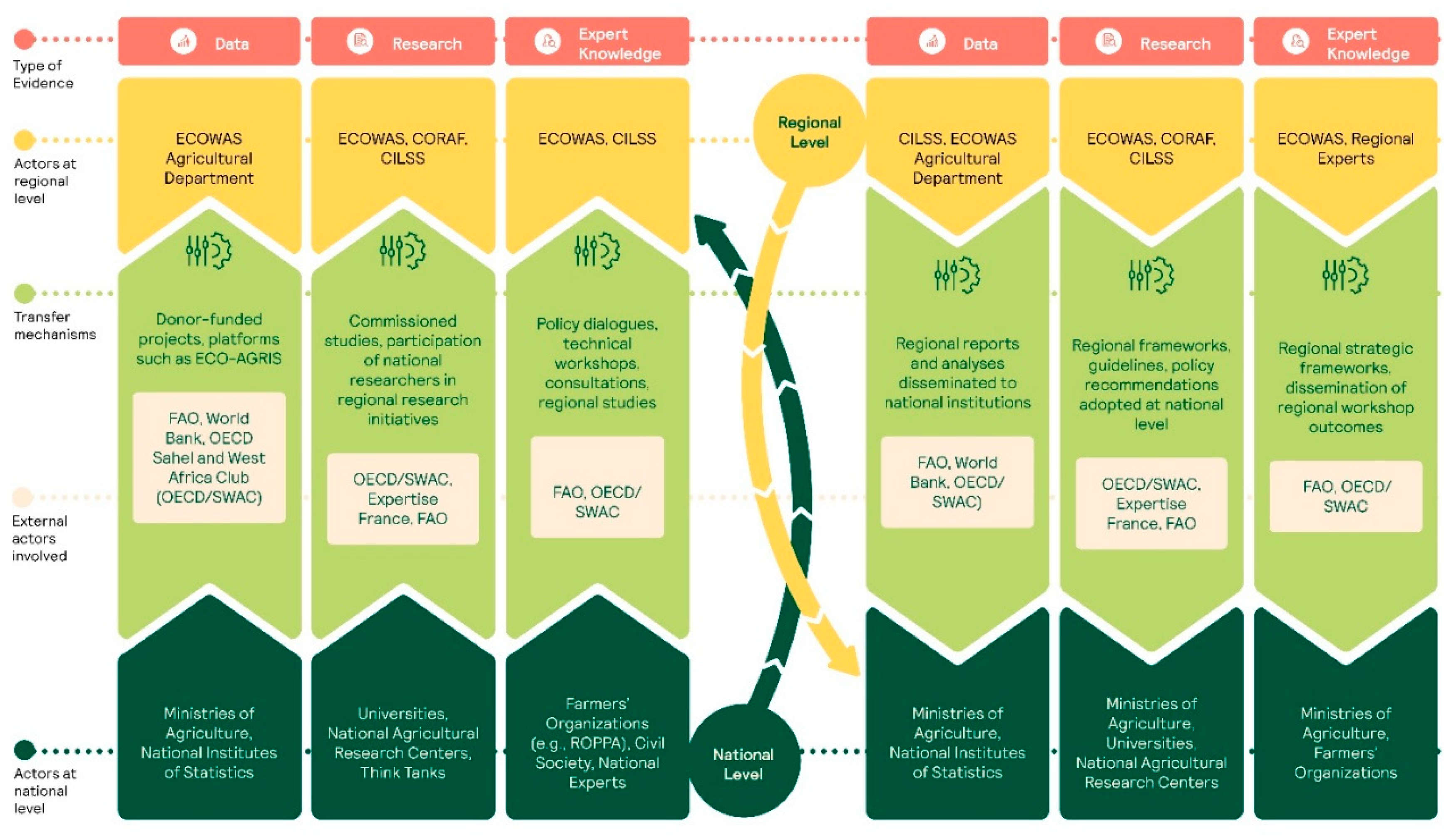
Figure 2.
Stakeholders, roles, types of evidence, and policy stages.
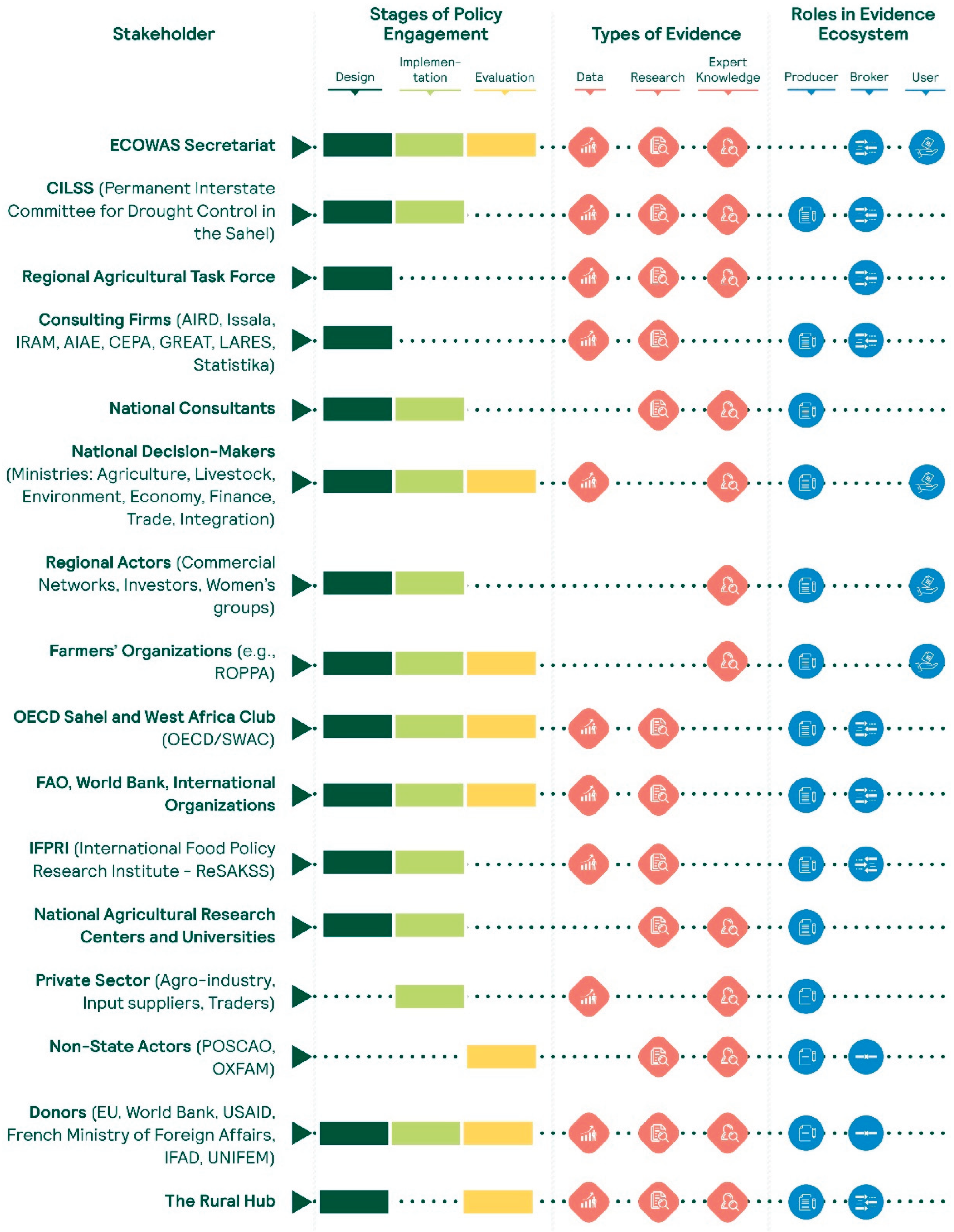
Disclaimer/Publisher’s Note: The statements, opinions and data contained in all publications are solely those of the individual author(s) and contributor(s) and not of MDPI and/or the editor(s). MDPI and/or the editor(s) disclaim responsibility for any injury to people or property resulting from any ideas, methods, instructions or products referred to in the content. |
© 2025 by the authors. Licensee MDPI, Basel, Switzerland. This article is an open access article distributed under the terms and conditions of the Creative Commons Attribution (CC BY) license (http://creativecommons.org/licenses/by/4.0/).
Copyright: This open access article is published under a Creative Commons CC BY 4.0 license, which permit the free download, distribution, and reuse, provided that the author and preprint are cited in any reuse.


