

Submitted:
30 June 2025
Posted:
01 July 2025
You are already at the latest version
Abstract
This study examines stakeholder perspectives regarding the feasibility, benefits and chal-lenges associated with the development of multipurpose shipyards that encompass shipbuilding, repair, and recycling within Indonesia's maritime industry. A convergent mixed-methods approach was utilized to collect quantitative and qualitative data from 37 stakeholders, which includes managers, employees, shipowners, regulators, subcontrac-tors, academics, and community representatives. The Stakeholder Salience Model and Diffusion of Innovations theory provided the integrated statistical and thematic analysis. Results indicated significant stakeholder support (97.3%) for multipurpose shipyards, with 81.1% expressing positive perceptions and 16.2% very positive perceptions. Stake-holders identified ship repair (97.3%) and shipbuilding (86.5%) as critical, with 59.5% highlighting the importance of ship recycling. The advantages comprised improved op-erational efficiency (70.2%), increased market competitiveness (54.1%), and job creation (91.9%). Major challenges included technical complexities (62.2%), regulatory ambigui-ties (45.9%), substantial capital investment (43.2%), and skill shortages (40.5%). The study suggests for enhancements in governmental regulations, financial support for businesses, and training for the workforce. Phased implementation and stakeholder col-laboration can align economic, environmental, and safety objectives, potentially decreas-ing Indonesia's dependence on foreign shipping services. This study integrates stake-holder theory with innovation diffusion, providing replicable insights for sustainable practices in shipyards worldwide.
Keywords:
Indonesia
; stakeholder perception
; multipurpose
; shipyard
; shipbuilding
; ship repair
; ship recycling
1. Introduction
Indonesia, with over 17,000 islands, relies on maritime infrastructure and a robust shipbuilding and repair industry to support its fleet of over 2,335 nationally registered vessels and inter-island logistics (2023) [1,2]. Aiming to become a regional marine hub, Indonesia is located along important international shipping routes [3].
Indonesian shipyards serve two primary purposes: enhancing the broader Asia-Pacific marine supply network and meeting domestic transportation requirements. They are vital in promoting economic development through ties with linked sectors such as steel manufacturing, manufacturing, and maritime services [4]. Despite their strategic role, many shipyards, particularly outside Java and Sumatra, struggle with outdated infrastructure and limited project capacity [1].
Land constraints, especially on smaller islands, hinder shipyard expansion and integration of new facilities. Additional challenges include limited port access and skilled labour shortages, especially in sustainable technologies [2].
Given these issues, multipurpose shipyards have garnered interest as a potential solution. Multipurpose shipyards integrate shipbuilding, repair, and recycling under one system, enabling resource efficiency and flexibility. Unlike hybrids (which typically combine only two functions) or integrated shipyards (with separate operations), multipurpose facilities share infrastructure and labour across all functions to reduce idle time [4].
This integration also improves market change resistance. A decrease in shipbuilding orders can lead to a balance in income streams through repair or recycling businesses [2]. Moreover, by offering thorough services during the vessel's lifetime, multipurpose shipyards reduce the need for overseas repairs or decommissioning, thus maintaining economic value within the nation [5].
Sustainability is another key driver. Integrating recycling helps meet ISO 30000 standards. Shipyards in Batam and Cilegon are progressing toward green certification. The Hong Kong Convention (effective June 2025) sets global standards for safe, eco-friendly ship recycling [6]. This enables Indonesia to conform to international maritime sustainability goals, specifically in lifecycle-oriented vessel management and minimising carbon and waste emissions in shipyard activities.
Despite its benefits, implementation poses technical, environmental, and stakeholder coordination challenges. Most studies now classify shipbuilding, repair, and recycling as distinct disciplines with little emphasis on integrated facilities or stakeholder perspectives.
This paper examines the opinions of Indonesian stakeholders, including regulators, shipyard managers, shipowners, workers, and local communities, regarding the viability, benefits, and challenges associated with the use of multipurpose shipyards.
The following questions guide the study:
- What are the main views of Indonesian stakeholders on multipurpose shipyards?
- What benefits do stakeholders see from the combination of shipbuilding, repair, and recycling?
- What challenges can stakeholders expect in the management of multipurpose shipyards?
- How can stakeholder traits and creative dynamics influence the possible acceptance of this model?
This work examines the data using Rogers' Diffusion of Innovations Theory [7] and Mitchell et al.'s Stakeholder Salience Model [8]. These models clarify the stakeholder groups with power, legitimacy, and urgency that affect adoption and how innovative characteristics such as relative advantage, complexity, and trialability shape perspectives.
The combined application of these frameworks is particularly pertinent in Indonesia, where the variety of stakeholder influences and the innovative integrated shipyard model necessitate careful alignment. The Salience Model prioritises stakeholder roles and expectations, whereas the Diffusion of Innovations Theory clarifies how perceived features of innovation affect adoption readiness. This dual lens provides a comprehensive perspective on institutional dynamics and behavioural preparedness for transformation. This research offers new insights and practical recommendations for enhancing Indonesia's maritime infrastructure via sustainable, multipurpose shipyard development.
2. Literature Review
2.1. Indonesia Shipbuilding Overview
Spanning crucial international shipping routes, Indonesia's vast archipelago of more than 17,000 islands makes the country a dual player in the shipbuilding industry, supporting internal maritime connectivity and contributing to the larger Asia-Pacific maritime supply chain. This part examines Indonesia's shipbuilding sector, its economic contribution, ongoing infrastructure issues, and regulatory environment, providing background for understanding how multipurpose shipyards can address present constraints while maximising the sector's potential for sustainable development.
2.1.1. Economic Significance
Indonesia's maritime activities depend on its shipyards. In 2023, the nation had 2,335 nationally flagged ships and 112 internationally flagged ones [9]. The shipyards enable the fleet's maintenance and expansion, helping guarantee a regular distribution of products throughout the archipelago and beyond.
Strategically located along key global trade routes, Indonesia's shipyards are crucial for domestic shipping and integral to international maritime supply chains [10]. Depending on the modernisation and expansion of its shipyard capacity, this location offers significant chances for Indonesia to become a regional maritime hub.
Apart from logistics, the shipbuilding industry is also of economic significance. It supports a system of related industries, including steel, manufacturing, and logistics, creating jobs and improving GDP [11]. Moreover, it is considered a potential industry for economic development, particularly through foreign investment and technology transfer. As Indonesia's economy expands, so does the need to strengthen this vital industrial base.
The distribution of shipyards in Indonesia, as illustrated in Figure 1, indicates a concentration of maritime industrial activity in several significant regions, particularly in the Riau Islands, DKI Jakarta, and East Java. Komara et al. (2024) report that Indonesia has 342 shipbuilding companies and 127 ship component companies, capable of building approximately 1,000,000 DWT of new ships annually and repairing around 12,000,000 DWT of existing vessels annually. Indonesia ranks among the foremost shipbuilding nations in Southeast Asia, playing a vital role in domestic maritime logistics and the global supply chain. The strategic positioning of these shipyards along critical global shipping routes highlights their capacity to enhance Indonesia's status as a regional maritime centre. Despite overall growth, a significant regional imbalance in shipyard capacity exists, with a disproportionate concentration of shipbuilding activities in western Indonesia. This underscores the necessity for a more equitable allocation of resources and infrastructure to promote growth in underdeveloped regions, ensuring that shipyards throughout the archipelago can satisfy both domestic and international demand [12].
2.1.2. Infrastructure Challenges
Although it has strategic value, Indonesia's shipbuilding industry faces significant challenges due to infrastructure-related issues. Many shipyards in Indonesia, particularly in the eastern part of the country, operate with limited capacity and old equipment. These limitations hinder the ability to undertake complex or large-scale projects and increase operational costs [1].
Logistical inefficiencies, such as limited port access, high transportation costs, and delayed project acquisition, further complicate things [13]. The government has initiated major infrastructure projects aimed at improving maritime connectivity and reducing logistical costs, including port upgrades and the construction of additional seaports, as acknowledged [9].
The absence of a qualified labour force compounds these physical infrastructure issues. Many shipyards lack personnel well-versed in digital technologies and new building practices. Without concentrated training and staff development initiatives, the industry struggles to meet international standards, which results in lower output and higher operational costs [14]. Reducing the sector's competitiveness hinges on fixing these human capital shortfalls.
2.1.3. Regulatory Environment
Regulatory issues are directly related to financial ones. Access to money is limited, especially for smaller yards hoping to grow or modernise. Many shipyards struggle to upgrade their equipment or utilise cutting-edge technologies due to a lack of readily available financing systems and clear policy guidance [13].
Environmental rules add more complexity. As global regulations tighten, Indonesian shipyards are under increasing pressure to reduce emissions and manage industrial waste responsibly. Insufficient enforcement and budgetary constraints often impede the adoption of cleaner technologies and practices [2,3]. Maintaining worldwide competitiveness depends on improving environmental compliance, as well as securing financial and governmental support.
Presenting significant difficulties and great possibilities for growth and modernisation, the Indonesian shipbuilding sector is at a tipping point. Its strategic importance in Indonesia's economy and maritime industry must be acknowledged, as it underlines the need for coordinated efforts to address problems and capitalise on new opportunities. Adopting the concept of multipurpose shipyards can help address issues such as inadequate service offerings and resource waste in Indonesian shipyards. Multipurpose shipyards could enhance the resilience and competitiveness of the industry by diversifying their services, such as providing repair and maintenance alongside construction, maximising resources through the effective use of materials, and aligning with global environmental standards.

Table 1.
Comparison of Shipyard & Ship Recycling Regulations: Indonesia, Regional & International Context.
Table 1.
Comparison of Shipyard & Ship Recycling Regulations: Indonesia, Regional & International Context.
| Regulatory level | Key regulation(s) | Features / Requirements | Relevance to Multipurpose Shipyards | Status in Indonesia | Implementation Gaps / Challenges |
| International (IMO) | Hong Kong International Convention (HKC) | Requires Inventory of Hazardous Materials (IHM), Ship Recycling Plan, certified facilities [16,17] | Gold standard for safe recycling; aligns with national rules | Not yet ratified; enters into force globally June 2025 [6] | Indonesia not party; domestic law lags HKC; pilot projects only [18] |
| MARPOL 73/78 [19] | Limits oil and pollutant discharges from ships | Applies to environmental compliance in yard operations | Ratified by Indonesia [20] | Enforcement and monitoring capacity varies across regions | |
| Regional | ASEAN Marine Environmental Law/Cooperation | Marine pollution prevention, transboundary standards, cooperative action | Encourages harmonised approaches and regional benchmarks | Indonesia participates, but implementation is uneven[21] | National legal harmonisation slow; variable local uptake |
| Basel Convention [22] | Controls the cross-border movement of hazardous waste, applies to shipbreaking | Mandates the safe export/import of hazardous waste from ships | Ratified and in force [23] | Some weak points in national enforcement and tracking | |
| National (Indonesia) | PM 29/2014 [24] | Prevents marine pollution, regulates ship recycling & hazardous material handling | Main legal framework for shipyard pollution control | In force; updated by the Ministry of Transportation No. 24/2022 | Enforcement is inconsistent, especially outside Java/Batam |
| Law No. 17/2008 (Shipping), Gov. Reg 21/2010, GR 101/2014 [25] | Environmental impact assessment (AMDAL), hazardous waste management, operational licensing | Determines site approval, waste protocols, and permits | Enacted; national coverage | Limited regional enforcement and monitoring capacity [15] | |
| Local / Provincial | Regional zoning & environmental licensing | Site-specific permits, zoning for shipyard activity, local AMDAL requirements [26] | Determines legal operation and environmental approval | Varies by region (often strict in Java, weaker in eastern provinces) [1] | Legal patchwork creates uncertainty, slows investment |
Indonesia's involvement in international agreements like MARPOL 73/78 and the Basel Convention is obstructed by the slow progress of legal harmonisation and the regional adoption of environmental standards. The disparity between national legislation and global gold standards, exemplified by the Hong Kong International Convention (HKC), is significant, particularly as Indonesia has not ratified the HKC, which imposes rigorous criteria for ship recycling. Regulatory inconsistencies and weak enforcement in specific regions generate uncertainty for investors and hinder the adoption of new technologies. The existing regulatory framework hinders the development and capacity of multipurpose shipyards to meet domestic and international demand, highlighting the need for a unified and comprehensive strategy for maritime governance in Indonesia.
2.2. Shipyard Operational Model
Shipyards' operating models are under increasing pressure to change as global maritime needs evolve. Long the norm, traditional single-purpose yards are now struggling with increasing environmental requirements, changing market needs, and the need for more effective resource usage. Other concepts, such as integrated shipyards, hybrids, and multipurpose vessels, have emerged as promising alternatives. These models seek to maximise land usage, enhance financial sustainability, and fit with international sustainability criteria. Particularly in the Indonesian context, the following section examines how these operational strategies have evolved.
2.2.1. Regulatory Environment
Historically, shipyards have been built as single-purpose facilities, either specialised in shipbuilding, repair or, in some circumstances, decommissioning. Although this approach has benefited the maritime sector for decades, its shortcomings have become increasingly apparent. During economic downturns or in the off-season when particular services are not in demand, single-purpose yards frequently suffer from underutilisation. These yards also sometimes need substantial fixed investments and specialised infrastructure that are not readily convertible, hence lessening their flexibility to changes in the market or technical breakthroughs.
This strict division of duties might also lead to unnecessary infrastructure and increased running expenses. For instance, distinct shipbuilding and repair facilities frequently duplicate vital equipment, such as dry docks, cranes, and transportation systems, which leads to poor resource allocation. The constraints of single-purpose shipyards provide a compelling argument for rethinking the conventional approach in nations like Indonesia, where land availability, investment capital, and operational efficiency are significant issues.
2.2.2. Multipurpose Shipyard Concept
Although multipurpose models offer efficiency and lifecycle integration, their implementation varies significantly across contexts and often lacks empirical validation. For example, while Zainol, Siow, et al. (2023) conceptualise the hybrid shipyard integrating repair and recycling, limited case studies examine the impact of governance structures or labour restrictions on scalability [29]. Furthermore, most contemporary models prioritise design optimisation over stakeholder coordination, which poses a significant operational obstacle in practical implementations. This gap highlights the need for additional empirical validation and strategic planning frameworks that explicitly incorporate cross-activity risk mitigation and multi-party involvement.
Research in this area is limited; however, several significant contributions help to define the field. Chabane (2004) examined the integration of shipbuilding and repair in small shipyards by employing strategic layout planning and Group Technology principles. His work highlighted the necessity for adaptable workflows and spatial efficiency, particularly in facilities that aim to operate multiple functions within limited physical constraints.
Zainol, Loon, et al. (2023) have recently enhanced the multipurpose shipyard model by including ship recycling in the current shipbuilding and repair facilities. Their research emphasises that communal dock space and workshop facilities can facilitate recycling without significantly altering the layout, decreasing operational expenses and environmental repercussions. This integration enhances the circular economy by facilitating material reuse across functions and offers a more economical alternative than creating independent recycling facilities. The hybrid shipyard concept offers a viable strategy for achieving financial sustainability while enhancing environmental stewardship.
2.2.3. Hybrid and Integrated Approaches
Building on the hybrid idea, some academics have suggested models that utilise underused or existing infrastructure for sustainable maritime uses, and have proposed converting idle ferry terminals, such as Indonesia's Kamal ferry terminal, into green ship-recycling yards. This low-capital solution reduces the need for greenfield development by utilising existing port assets and incorporating specialised safe dismantling, slipways, and hazardous waste storage facilities.
Sunaryo & Tjitrosoemarto (2022) suggested the creation of an integrated ship recycling industrial estate. This concept places ship recycling yards next to supporting industries such as steel mills, waste treatment facilities, and necessary utilities like freshwater and power plants. The co-location of these components creates a closed-loop system, ensuring regulatory compliance, including adherence to the Hong Kong Convention on safe and environmentally sound ship recycling, while enhancing logistical efficiency and increasing economic value.
Considering more general sustainability issues, Azhar et al. (2023) created a multi-criteria model particularly for the Indonesian shipyard industry. The methodology combines environmental, economic, and social indices to assess operational sustainability. Key elements include infrastructure readiness, legal compliance, and workforce development. The approach ensures the compatibility of multipurpose activities with sustainable development objectives, utilising the integration of recycling and conversion services as an expansion of shipyard capacity.
2.3. Stakeholder Perspectives in Maritime Industries
Evaluating the feasibility and sustainability of multipurpose shipyards depends on understanding the perspectives of various stakeholders. Diverse jobs, interests, regulatory frameworks, and environmental awareness across numerous regions shape these perspectives. Before discussing the theoretical framework used to evaluate the influence of various stakeholders on shipyard-related concerns, including environmental safety, operational efficiency, and innovation adoption, this section examines their perspectives in the Indonesian context.
2.3.1. Environmental and Safety Considerations
Stakeholder concerns in all domains are primarily environmental and safety-related. While South Asia struggles because of poor enforcement and high occupational risks [32]. In contrast, European stakeholders prefer strict compliance and certification [33]. Stakeholders in Southeast Asia are advocating for enhanced planning, regulatory compliance, and risk mitigation tools, including insurance [34]. Brazil and Turkey prioritise the balance between environmental goals and operational and economic sustainability [35].
These regional perspectives highlight that, while everyone agrees on the importance of environmental consciousness, the means and ability to address these concerns differ. Regulation, cultural attitudes, economic readiness, and stakeholder participation all shape the path towards sustainable shipbuilding practices.
2.3.2. Economic and Operational Factors
Stakeholders generally agree that multipurpose shipyards offer economic benefits, including lower costs, job creation, and greater flexibility. From an executive perspective, these facilities can combine services and improve the efficiency of shared infrastructure [29]. Shipowners prioritise faster turnaround times and better service efficiency. Local people want regional economic growth and job possibilities. Still, concerns persist about the complexity of implementation, land constraints, financing, and integration with existing operations [30].
Considering the different priorities of stakeholders, these operational and financial issues must be addressed. Management stresses return on investment, authorities prioritise compliance, and individuals focus on working conditions and job security. A unified approach calls for acknowledging and balancing these goals.
Indonesia has adopted MARPOL 73/78 and the Basel Convention and expects to ratify the Hong Kong Convention [18]. However, implementing sustainability in shipyards is a slow process. Shipyards, particularly in developing countries, often lack comprehensive energy management and pollution control strategies, according to [13]. Their research suggests that transdisciplinary approaches are essential to enhance energy efficiency, mitigate air pollution, and achieve zero-emission operations. Studies in Turkey and Brazil highlight the importance of regulatory enforcement, integrated infrastructure, and stakeholder participation for implementing ecologically sound practices [5,35]. Indonesia still faces structural issues, including poor emissions tracking, limited hazardous waste disposal, and a fragmented energy policy. Multipurpose shipyards must address these challenges to meet both national productivity and global sustainability objectives.
2.3.3. Regulatory Compliance and Governance
Influenced by local objectives, institutional capacity, and financial constraints, stakeholder perceptions vary significantly across the world's maritime zones. The European Ship Recycling Regulation (SRR) requires EU-flagged vessels to be recycled in licensed facilities to guarantee environmental and worker protection. Although many people support it, stakeholders express concern about the limited EU recycling capacity, which leads to a reliance on external facilities [33]. Shipowners in Norway actively support environmentally friendly practices and the global adoption of controlled ship recycling criteria to prevent poor techniques, such as beaching [36].
Stakeholders in South Asia, including Bangladesh, India, and Pakistan, acknowledge the economic benefits of shipbreaking but voice concerns about exposure to hazardous materials and harmful working conditions [32]. At the same time, Southeast Asian players prioritise long-term sustainability. While stakeholders in Indonesia support projects such as environmental insurance to mitigate risks in ship repair operations, Malaysia focuses on shipyard management practices that promote sustainable development [37].
Zaabi & Pech (2015) highlight the challenges of balancing diverse stakeholder interests in the Abu Dhabi shipbuilding sector, where strategic differences could hinder effective execution. In Turkey, stakeholders suggest that green supply chain approaches increase shipyard sustainability in economic, social, and environmental aspects [35]. Utilising the country's robust environmental and labour standards, Brazilian stakeholders in Latin America see an opportunity to convert idle shipyard capacity into ship recycling facilities. Still, they consider shortcomings in technical knowledge as a barrier to guaranteeing and sustaining execution [5].
2.3.4. Regional Implementation Variations
Geography, infrastructure, workforce, and market demands lead to regional differences in the implementation of multipurpose shipyards. Unlike concentrated maritime centres like Singapore or unified coastal industrial zones in China and South Korea, Indonesia's archipelago provides distinct implementation issues.
West Indonesia, especially Batam and Java, benefits from international trade routes, maritime clusters, and developed infrastructure. These locations have stronger technological preparedness and global connectedness, promoting knowledge transfer and integrated operating models, according to Baso et al. (2020). In contrast, Eastern Indonesian shipyards have inferior infrastructure, skilled labour, and logistical issues, making multifunctional integration more challenging. This geographical inequality requires location-specific implementation tactics rather than national ones.
Similar regional differences exist in workforce capability. Ocampo & Pereira (2019) found that rural areas face implementation challenges due to the geographic dispersion of specialised skills, particularly in environmentally friendly recycling. Java-based shipyards have access to engineering graduates and technical training, but eastern Indonesian facilities struggle to recruit and retain sophisticated shipyard professionals.
Regional differences include market orientation and service mix. Sunaryo & Santoso (2023) revealed that Java shipyards prioritise newbuilding-repair integration for Indonesia's inter-island shipping fleet. In contrast, Batam shipyards focus on repair-recycling synergy for international commercial and offshore vessels. These market-driven changes impact stakeholder objectives for integrating multipurpose facility activities.
Critically, the regulatory enforcement capabilities of Indonesia's maritime regions differ greatly. Rizwan et al. (2021) found that industrialised zones near large population centres have stricter environmental monitoring than distant areas. Due to this enforcement discrepancy, multipurpose facilities across Indonesia's diverse geography have different compliance costs and implementation durations. Thus, regional context and local regulatory effectiveness affect stakeholder views of implementation feasibility.
2.4. Theoretical Framework
Although both perspectives are complementary, tensions may emerge. Stakeholder theory ranks participants according to salient attributes (power, legitimacy, urgency), which may amplify the influence of already dominant actors. Conversely, innovation dissemination highlights perceived advantages and trialability among adopter groups, often emphasising early adopters who may lack institutional authority. This duality presents a challenge within the framework of Indonesian shipyard integration: definitive stakeholders, such as regulators, may oppose swift adoption due to bureaucratic prudence, while early adopters, including progressive Executives or academics, may lack institutional influence. A comprehensive synthesis is required to harmonise different viewpoints and guarantee that innovation readiness corresponds with decision-making authority.
Initially developed by Mitchell et al. (1997), the Stakeholder Salience Model categorises stakeholders based on three traits: power, legitimacy, and urgency. This model helps classify and prioritise stakeholders to improve strategic decisions and manage competing interests. Recent applications of this idea in maritime environments, such as port master planning and coastal zone management, have underscored the need to map stakeholder interests to manage competing goals dynamically and effectively [40]. Research on the Port of Isafjordur utilised power-interest matrices and fuzzy logic to enhance accuracy in stakeholder prioritisation and strategic involvement [41].
Rogers et al. (2014)’s diffusion of innovations theory offers a complementary framework for understanding how new ideas and technologies gain acceptance among stakeholder groups. Rogers identifies five necessary factors influencing the acceptability of innovation: relative advantage, compatibility, complexity, trialability, and observability. These factors clarify the different adoption rates among various stakeholders, hence highlighting the requirement for tailored involvement strategies. Research on developments in maritime logistics, including the use of dry ports, emphasises the vital importance of compatibility and observability as well as the need to address challenges like financial constraints and lack of technical knowledge to enhance the acceptance of innovations [42,43].
Combining these theoretical frameworks provides a complete approach for comprehending and managing stakeholder dynamics in marine infrastructure development. While the Diffusion of Innovations Theory reveals different degrees of stakeholder adoption, the Stakeholder Salience Model clarifies stakeholder prioritisation and involvement. Recent studies on digital transformation, green port transformation, and port development support this integrated strategy by showing how well it handles stakeholder perceptions, identifies innovation obstacles, and fosters strategic alignment for sustainable maritime infrastructure development [41,43,44].
3. Methodology
3.1. Research Design
This study employed a convergent mixed-methods strategy, combining quantitative and qualitative approaches to gain a thorough understanding of stakeholder perceptions regarding the deployment of multipurpose shipyards in Indonesia. Two theoretical frameworks, the Stakeholder Salience Model and Rogers' Diffusion of Innovations Theory, guided the creation of an online poll. This survey aimed to categorise stakeholder roles and assess the dynamics of innovation adoption.
3.2. Participant Selection and Sampling Strategy
Using professional networks, including the Indonesian Shipbuilders Association (IPERINDO) and allied maritime organisations, participants were recruited using purposive and snowball sampling approaches. Participants were stratified to reflect several stakeholder groups, including shipyard workers, executives, regulators, shipowners, subcontractors, academics, and community members.
Given the study's focus on depth of insight rather than statistical generalisability, this sampling approach seemed appropriate. Participants were qualified if they had at least three years of shipyard industry or marine regulation experience and had worked in at least two shipyard activities, including shipbuilding and repair.
Out of 50 completed surveys, only 37 responses (74%) were retained for further analysis, as those missing substantial open-ended material were excluded. Qualitative analysis was necessary to comprehend stakeholder logic beyond just Likert-scale ratings. This conclusion corresponds with the research's focus on analysing subtle perceptions and theme trends.
The sample size (n = 37) is justified for multiple reasons. This study emphasises depth of understanding rather than statistical generalisability, concentrating on acquiring comprehensive qualitative data from marine stakeholders. Secondly, the sample attains representation across all eight designated stakeholder categories, guaranteeing thorough ecosystem coverage. Third, topic saturation was achieved during analysis, since no new essential themes emerged in the final responses. The sample size aligns with similar stakeholder perception studies in infrastructure development and marine policy, which generally encompass 25-50 participants when employing mixed-methods approaches prioritising qualitative findings.
Data was collected from September to November 2024 through an online questionnaire disseminated via professional networks. Participants were granted informed consent before engaging, and all data were anonymised to ensure confidentiality. The research protocol obtained permission from the University Research Ethics Committee before recruiting participants.
3.3. Data Collection
Descriptive statistics are used to analyse quantitative answers, presenting a summary of opinions on viability, advantages, and issues. Once mean scores across all stakeholder groups had been computed, the results were interpreted using Rogers' Innovation Lens, with particular attention to relative advantage and complexity during the interpretation process.
Open-ended responses were analysed using a thematic approach derived from Braun & Clarke (2006) technique. Two independent researchers each performed an iterative coding process:
- Based on the wording, phrasing, and emphasis of the stakeholders, researchers independently examined and analysed the raw textual material to extract relevant codes.
- These codes were then grouped into generic categories showing linked trends and stakeholder concerns. This approach is described by axial modelling.
- Theme Consolidation Following several rounds of discussion and synthesis, the codes were organised into five main themes closely related to the research topic and the stories of the stakeholders.
The following is a thematic framework that has been filtered and coded, including:
- Market demand themes concern the feasibility, the client's interest, and the possibility of monetary loss.
- Workforce development themes stress the readiness of skills, human resources, and occupational health and safety (OHS).
- Regulatory compliance themes in the context of environmental and recycling laws include government support, enforcement, and clarification.
- Environmental themes include opinions on sustainable practices, environmentally acceptable recycling methods, and pollution control.
- Operational efficiency theme ideas are on layout design, work division, infrastructure preparation, and time-saving strategies.
This thematic framework was not pre-imposed; it developed inductively from stakeholders' responses and was reinforced through discussions gathered to reach a consensus, initially produced by distillation. 37 distinct codes led to these five major divisions.
The survey was tested with five stakeholders from governmental, academic, and shipbuilding sectors to ascertain construct validity. Modifications were implemented in response to input to enhance clarity and ensure relevance to the area. Two researchers performed Thematic coding separately, resulting in a Cohen’s Kappa of 0.77, signifying strong inter-coder reliability.
While snowball sampling effectively reaches specialised stakeholders, it carries inherent bias concerns, including the potential overrepresentation of some networks. The chain was initiated through several entry points (e.g., government, industry, community) to address this issue. Nonetheless, this constraint is recognised when assessing representativeness and generalisability.
4. Result
4.1. Stakeholder Profile
Major stakeholders in the Indonesian shipyard industry provided a thorough and diverse range of opinions, which are presented in this paper. The stakeholder makeup suggests that most respondents were employees, with 14 people (37.8%) having actual, experiential knowledge of everyday shipyard operations. Their experience provides a valuable perspective on efficiently integrating shipbuilding, ship repair, and ship recycling inside a multipurpose shipyard.
The government and regulatory bodies comprised the second-largest group, with five replies (13.5%). The participants, representatives from the Ministry of Industry and classification societies, offered significant regulatory, environmental, and policy insights, which are vital for evaluating the viability and compliance of shipyard integration.
From the business and strategic viewpoint, management/executives and consumers (shipowners) had four members (10.8%). These stakeholders offered perspectives on the broader economic consequences and decision-making models relevant to shipyard investment and operational efficiency in a multifunctional environment.
Other notable contributors included academic representatives (lecturers, 8.1%), who provided theoretical and research-oriented viewpoints to guide the technical and conceptual evaluation of shipyard integration, as well as suppliers and subcontractors (8.1%), who supported material and logistical coordination in shipyard operations. Moreover, three people (8.1%) selected "Other," suggesting professions like owner superintendents, loading instrument providers, and maritime insurance experts, highlighting the varied ecosystem surrounding shipyards. A local community member, one respondent (2.7%) offered a particular yet vital perspective on the social and environmental consequences of shipyard activities on nearby individuals.
The answer group showed excellent industrial knowledge. While ten have 7 to 10 years of experience, twelve stakeholders have been connected with shipyards for over ten years. This thorough foundation suggests that long-term engagement with industry trends and operational reality shapes the viewpoints voiced in the survey. Eight respondents were mid-career professionals with 4–6 years of experience; younger arrivals, four respondents with less than three years and three respondents with 1–3 years offered fresh insights on skill development, adaptation, and future readiness for a multipurpose shipyard environment.
Most respondents hold higher education degrees. Indicating a technically competent and intellectually aware population, more than 83% (31 of 37) had a bachelor’s degree; 13.5% (5 respondents) earned a master’s degree. One respondent selected "Other" and noted that they are currently working on a master's degree in Naval Architecture at KTH Royal Institute of Technology in Sweden. Particularly in evaluating the integration issues, benefits, and possibilities of multipurpose shipyard development, the academic rigour increases the validity and credibility of the findings offered in the study.
Figure 2 shows the relationship between years of association with the shipyard, stakeholder roles, and educational credentials, stressing that most participants are employees with bachelor's degrees and over seven years of industry experience.
4.2. Stakeholder Perception of the Multipurpose Shipyard Concept
Stakeholders showed notable knowledge and consensus on the multipurpose shipyard concept. Of the 37 valid responses, 81.1% rated their opinion of the idea as "positive," 16.2% rated it as "very positive," and 16.2% rated it as "very positive." Only 2.7% of respondents took a neutral position; none found the idea negative. This indicates strong backing from stakeholders, particularly in industries familiar with the logistical efficiencies and cost-reduction prospects of integrated maritime operations.
Participants were asked to identify the duties they thought fell under a multipurpose shipyard; the results showed a general agreement on the main activities (Figure 4). Of those who replied, 97.3% felt ship repair was a vital task. Then, 86.5% of the people polled picked shipbuilding, suggesting a common awareness that a multipurpose infrastructure is built and maintained. Moreover, 59.5% of the respondents acknowledged ship recycling, implying that various players considered shipyard operations to include recycling.
Of the replies in Figure 3. 21.6% also mentioned other activities like component manufacturing, planned maintenance, ship conversion, and modification. Many responses suggested that multipurpose shipyards engage in activities outside traditional maritime ones, such as fabricating offshore buildings and other marine-related projects. The range of tasks enhances shipyards' flexibility and multifunctional capabilities, improving their efficiency and sustainability in the maritime industry.
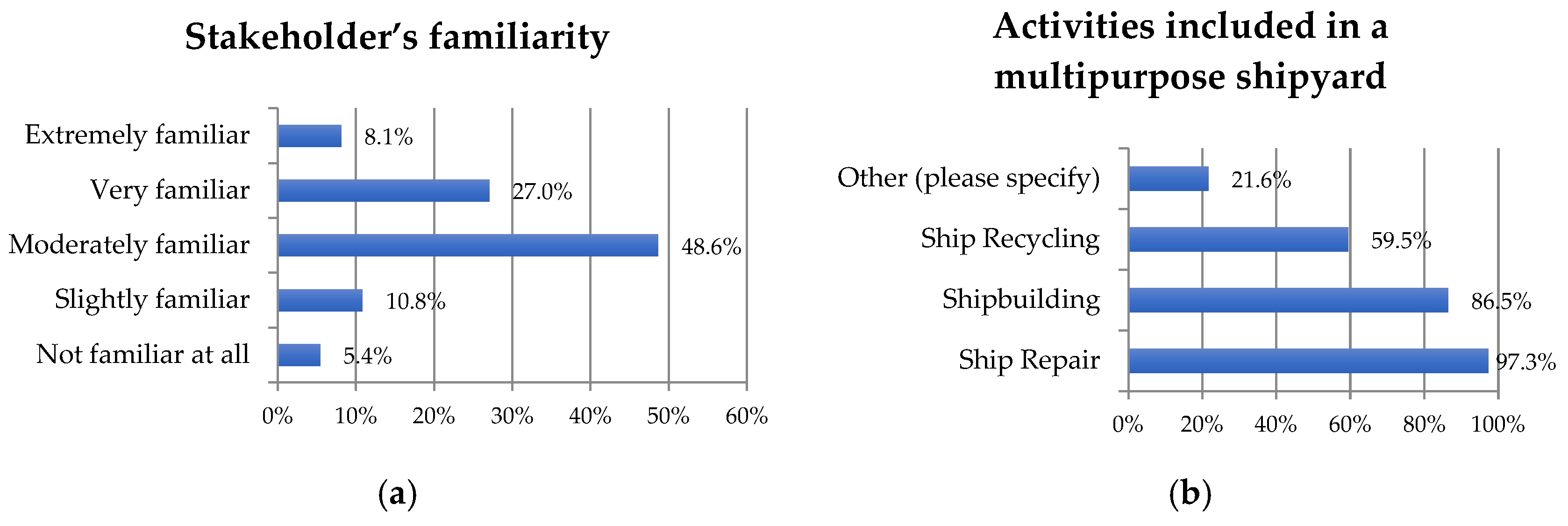
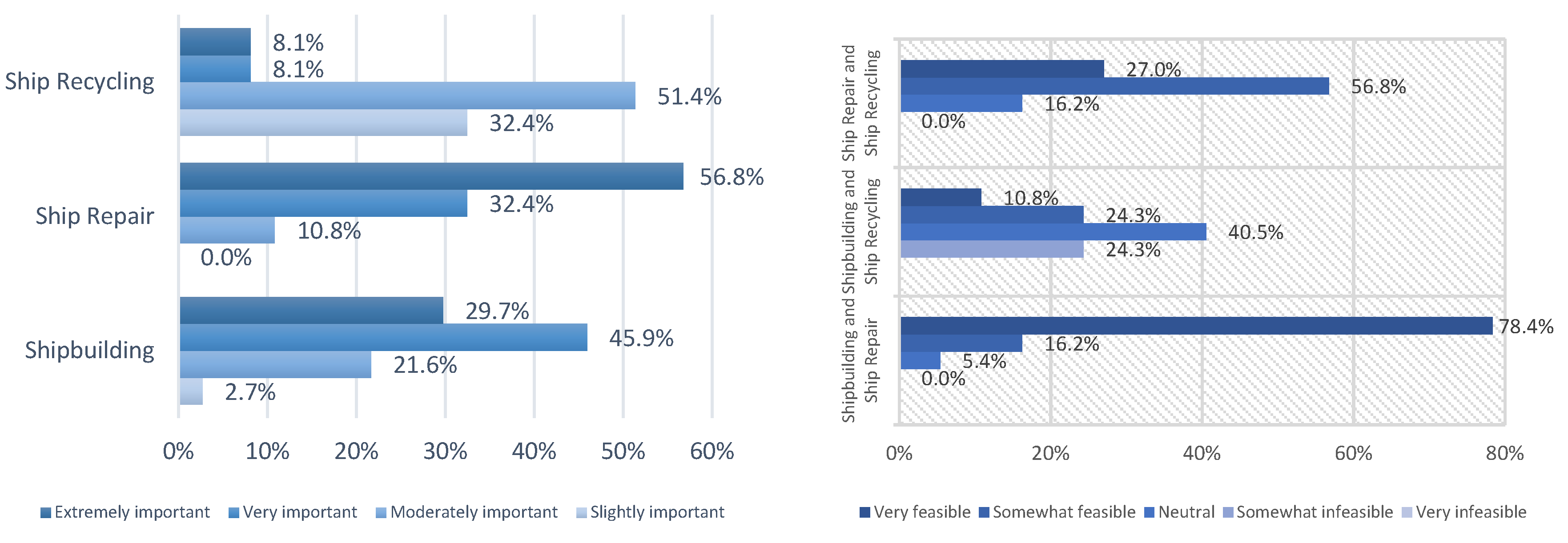
Figure 3.
Stakeholder Familiarity with Multipurpose Shipyards (a) and Recognition of Core Activities (b).
Figure 3.
Stakeholder Familiarity with Multipurpose Shipyards (a) and Recognition of Core Activities (b).
Figure 4.
Stakeholder Assessment of Activity Importance (a) and Integration Feasibility (b).
Qualitative answers strengthened this confidence. A government representative remarked:
“A multipurpose shipyard could become a model for sustainable maritime development, provided it is supported by strong regulations.”
Similarly, a shipyard executive with over 20 years of experience commented:
“It would be efficient in working time and increased financial income if we can ensure adequate space and smart layout.”
Most respondents emphasised the need for clear policies, standards, and demonstration projects, despite the significant help. An academic stakeholder noted,
“We still need evidence and operational proof before we can scale the model nationwide.”
These opinions reflect a group belief in the idea's promise, tempered by practical considerations like infrastructure, training, and gradual adoption. Although emphasising the need for gradual implementation supported by policy, planning, and capacity building, the results indicate a general conceptual consensus among stakeholder groups.
4.3. Feasibility of Integration
Participants were asked to evaluate the likelihood of merging shipyard services, including shipbuilding, repair, and recycling, to gauge stakeholder views on the viability of integration. Of the respondents, 78.4% considered the integration of shipbuilding and ship repair "very feasible," making it the most likely option. The two functions, which share infrastructure, people resources, and scheduling systems, operate in synergy. One executive stakeholder stated:
"Combining these two functions will improve financial turnover and efficiency due to shared dock and machinery use."
Combining shipbuilding and recycling was a more careful process. Of the 10.8% who thought this integration was "very feasible," 35.1% considered it "moderately feasible," and 54.1% deemed it "not feasible." Open-ended remarks focused on incompatibility with construction and dismantling. Recycling raises concerns about space management, environmental impact, and safety, which stakeholders claim contradict ship construction criteria.
"It is risky to conduct ship recycling near construction; clear environmental boundaries and protocols must be ensured."
The integration of ship repair and recycling was generally accepted. Of those polled, 27% thought it "very feasible," while 56.8% thought it "moderately feasible." Although with varying safety and waste management issues, both include retrofitting, inspections, and facility upkeep, making them more balanced.
This section addresses stakeholder remarks, emphasising strategic expansion possibilities and the advantages and disadvantages of phased versus comprehensive adoption. Most important to stakeholders was ship maintenance; 56.8% found it somewhat vital, while 32.4% found it extremely so. Of 45.9%, shipbuilding was somewhat vital; of 29.7%, it was extremely crucial. Ship recycling was less significant; 8.1% considered it highly or very important, 51.4% somewhat important, and 32.4% somewhat required.
This distribution suggests that while ship repair and new building are more crucial for a multipurpose shipyard than ship recycling, stakeholders value all three operations.
This picture depicts (left) the stakeholder perspective on the relevance of key shipyard activities, ship repair, shipbuilding, and ship recycling, and (right) the feasibility of integrating several activity combinations in a multipurpose shipyard. While ship recycling is less important and more challenging to integrate, ship repair and construction are required and operationally compatible.
The feasibility results backed Zainol, Loon, et al. (2023), who discovered that the hybrid shipyard model performs best when repair and recycling activities are merged, particularly in developing countries with constrained space and resources. Sunaryo & Santoso (2023) recommended converting idle ferry ports into green recycling centres to avoid interfering with shipbuilding.
The conditions enabling multipurpose shipyard integration are shown in Figure 5. The most crucial factor was infrastructure availability (83.8%), followed by market demand (75.7%) and land availability (64.9%). Respectively, 62.2%, 59.5%, and 56.8% appreciated technology, qualified labour, and regulatory support. Other reasons (5.4%) were resource sharing and operational costs.
Generally, stakeholders support the integrated idea; nonetheless, the findings suggest a staggered rollout. While ship recycling requires intentional separation and safety precautions, the integration of shipbuilding and repair is a standard practice. These results advocate for flexible, multifunctional design and advise Indonesia to test repair-recycling systems before incorporating them into new construction initiatives.
4.4. Stakeholder Perceptions of Benefits and Challenges
Examining the benefits of merging shipbuilding, repair, and recycling activities clarifies stakeholders' desires for process optimisation and value generation at multipurpose shipyards. Stakeholder views on five main benefit areas and the most often cited barriers in integrating shipyard activities are shown in Figure 6.
Operational efficiency was perceived as a notable benefit, with 48.6% of respondents acknowledging a significant benefit and 21.6% viewing it as offering the highest value. Notably, all participants viewed this field as beneficial, underscoring the general consensus that combining these duties would enhance performance and reduce duplication.
Another generally accepted outcome was the creation of jobs. Of the 91.9% of stakeholders who thought integration would have significant or ideal benefits, many seemed to have strong expectations for job growth in shipbuilding cities. While a small percentage (10.8%) expressed doubt, 37.8% forecasted notable benefits, and 21.6% hoped for cost reductions.
With 54.1% of stakeholders feeling integration offers a significant advantage and 24.3% thinking it brings the highest benefit, 54.1% of stakeholder Participants often connected integrated models to faster turnaround times and larger service offerings, hence attracting a broader customer base.
Still, environmental sustainability received a more tempered hope. Though 13.5% said just slight advantage, 32.4% of those polled said significant or maximum advantages. This could suggest worries about the complexity of recycling procedures, hazardous waste management, and compliance with environmental rules. A shipyard manager said,
"Green recycling requires a whole new mindset, equipment, and enforcement. Without that, we risk undermining our environmental goals."
The findings indicate that stakeholders view multipurpose integration as a means to achieve operational and economic advancement; environmental benefits depend on regulatory support and technical readiness.
Alongside acknowledging benefits, stakeholders identified major barriers that would hinder adoption. The right side of Figure 6 shows the most commonly mentioned issues: technical complexity (62.2%), regulatory uncertainty (45.9%), significant capital investment needs (43.2%), and workforce skill gaps (40.5%). Many stakeholders noted that including recycling operations raised major risks for pollution control, spatial layout, and hazardous material management.
Qualitative responses shed much more light on these challenges. One regulatory participant said:
"The biggest challenge is enforcement, without proper oversight, recycling becomes a liability rather than an opportunity."
Similarly, A subcontractor respondent said,
"The financial risks are too high unless we receive support from both the government and the market."
Figure 6 shows stakeholder reactions to five main perceived benefits: operational efficiency, cost reduction, job creation, environmental sustainability, and market competitiveness, as well as five principal challenges: technical complexity, regulatory uncertainty, financial investment, workforce capability, and environmental compliance. The results show both hope for value creation and anxiety about implementation challenges.
These problems underscore the need for clear rules, robust programs for worker development, and consistent regulation. Integration should be carried out through incremental, well-supported transitions to build stakeholder confidence, reduce risks, and ensure long-term sustainability. These findings also highlight the need for a carefully planned execution strategy that balances sustainability needs with business goals.
4.5. Stakeholder Classification and Salience Analysis
This paper utilises the Stakeholder Salience Model by Mitchell et al. (1997) to analyse stakeholder duties in the operation of multipurpose shipyards. This idea classifies stakeholders based on the presence of three traits: power, legitimacy, and urgency. Applying this model to the Indonesian shipyard environment revealed new insights into the relative influence and priorities of each stakeholder group.
The stakeholder salience study utilised survey data to evaluate each stakeholder group's relative power (impact on decision-making), legitimacy (acknowledged authority or claim), and urgency (time-sensitivity of interests). Survey items included: 'To what degree can this stakeholder group affect choices regarding constructing multipurpose shipyards?' To what extent is the involvement of this stakeholder group formally acknowledged as essential? What is the temporal sensitivity or criticality of this stakeholder group's interests in multipurpose shipyard development? Urgency. Responses were consolidated and standardised to ascertain each group's standing within the salience framework.
Definitive stakeholders are necessary for project success since they represent all three traits. This paper classifies government and regulatory bodies alongside shipowners. As public custodians, government agencies use regulatory authority and policy execution to exert power; they feel urgency from environmental and industrial responsibilities, particularly the need to follow national and international sustainability goals, including IMO decarbonisation criteria and industrial competitiveness. Likewise, in an increasingly rigorous global regulatory environment, shipowners are key customers with capital investment power and a strategic need to keep their fleets compliant and profitable under their control. Their choices immediately influence shipyard viability, influencing operational and investment timetables. Government agencies that are influenced through regulatory power and policy execution have rightful roles as public guardians and feel urgency resulting from industrial and environmental concerns. A government official said,
"Strong collaboration between government and regulators is essential to ensure smooth integration of all activities."
Likewise, shipowners are main consumers with financial power and a strategic need to follow upcoming decarbonisation and asset renewal orders. One shipowner stated,
"Maintaining competitiveness depends on enforcing ship recycling rules and guaranteeing quality, safety, and innovation."
Dominant Stakeholders have both power and credibility. Executive managers of shipyards and large subcontracting companies usually have power over decisions and control of resources; nevertheless, when commercial risks are considered low, they may show little urgency. Operational execution and capital investment plans depend on their approval. An executive said,
"This is acceptable as long as the shipyard has adequate space and management separation for each function."
Dependent stakeholders include academics, local communities, and employees with legitimate and urgent issues (e.g., employment, safety, skills development) but less institutional power. Though their influence depends on legislative representation and campaigning, these companies fervently support multipurpose shipyards for job growth and sustainability outlooks. A worker said,
"We need a clear concept and training to safely integrate new operations. Human resource improvement is essential at all levels."
Discretionary Stakeholders, while they have legitimacy, including NGOs and educational institutions, lack power and drive. Though often on the margins of short-term choices until actively engaged, they substantially contribute to training and capacity-building. A scholarly participant said,
"We need strong justification and evidence to promote integration. There are technical and training gaps that must be addressed."
Controlling integration complexity depends on stakeholder alignment from a systems perspective. For instance, dependent groups like staff members voiced ongoing concerns about workforce readiness, suggesting that their needs should be included in implementation phases to ensure long-term viability. A worker who answered said,
“Integrating operations needs targeted training across all levels, staff, subcontractors, and management.”
Government replies pushed for inter-agency cooperation, flexible designs, and clear waste management procedures. One said,
“Shipyards must prepare a structured plan for handling pollution and material flow, it's not just a matter of engineering but of regulation.”
This category helps prioritise engagement initiatives and policy creation. Engagement with primary and prominent stakeholders should focus on technical coherence, resource allocation, and regulatory design. Interaction with discretionary and dependent groups should enable advocacy channels, workforce development, and evidence-based communication.
This Figure 7 illustrates the application of the Stakeholder Salience Model within the context of Indonesian multipurpose shipyards. The diagram categorises stakeholder groups according to three essential attributes: power (the capacity to influence decisions), legitimacy (the acknowledged authority or claim), and urgency (the time sensitivity of stakeholder demands). Definitive stakeholders, characterised by holding all three criteria, comprise government agencies and shipowners, who exert the most significant influence over implementation. Dominant stakeholders, such as executives, wield influence and legitimacy yet may lack a sense of urgency. Dependent stakeholders, such as employees and communities, possess valid and pressing claims yet lack direct authority in decision-making processes. Discretionary stakeholders, such as academics and NGOs, possess legitimacy but have constrained authority and urgency. This classification aids in prioritising engagement methods and forecasting stakeholder reactions to multipurpose shipyard activities.
These findings suggest that the effective adoption of multipurpose shipyards requires more than technical viability; it necessitates a salience-based stakeholder integration that balances influence, legitimacy, and need.
4.6. Innovation Adoption and Diffusion Among Stakeholders
This part examines stakeholder groups' perceptions and adoption of multipurpose shipyards using Rogers et al. (2014) Theory. The theory holds that five fundamental qualities, relative advantage, compatibility, complexity, trialability, and observability, determine the acceptance of new ideas. By linking stakeholders to these qualities, we can improve our understanding of their adoption tendencies and the challenges they point out.
Table 2 presents stakeholder assessments of five innovation adoption attributes: compatibility, relative advantage, complexity, trialability, and observability, utilising Rogers' framework. The Total DOI Index is calculated by inverting the complexity of each value, which represents the group's average perception on a 1–5 scale. This index represents the overall preparedness to adopt the multipurpose shipyard concept. Shipyard Executives have the highest index score (21.0), followed by Shipowners (19.0) and Government (17.0), which suggests a relatively strong strategic alignment and perceived feasibility. On the other hand, the lowest scores are shown by Community and Suppliers, which underscores concerns regarding integration challenges and uncertainty. These scores are a foundation for engagement strategies tailored to stakeholders along Rogers' adoption curve.
Innovators Shipyard executives demonstrate proactive engagement with multipurpose integration from the outset. They acknowledge the relative advantage regarding regulatory alignment, cost efficiency, and competitiveness.
"Understanding market dynamics and operational composition is essential; each activity must match demand, feasibility, and risk. We've already begun adjusting our shipyard operations to reflect this integration." – Shipbuilding Executive.
This group acknowledged notable alignment with their strategic goals and stated that execution was essential.
Early adopters are shipowners and government officials. Although they recognise the strategic advantages of integration, they show more wariness than innovators due to legal, financial, or technical concerns.
"This transformation must align with long-term demand, risk management, and the strategic purpose of each operation within the yard." Shipowners
“Shipyards must prepare a structured plan for handling pollution and material flow, and it's not just a matter of engineering but of regulation." Government official.
Their support is contingent upon the presence of organised frameworks, trialability, and clarity in governance.
Early Majority - Large Subcontractors, Progressive Academics. These actors are open to change but require peer validation and practical evidence to support their decisions. While supportive of the concept, their engagement hinges on seeing operational success elsewhere first.
The Late Majority consisted of Employees, Community Members, and Cautious Academics. Members of this group acknowledge the importance of integration but exhibit caution, frequently citing obstacles such as skill deficiencies, ambiguous implementation tactics, and inadequate visibility of outcomes.
"Integration is challenging but possible if done with proper planning and skill development." Shipyard Employee.
They are more inclined to participate once widespread institutional adoption is evident.
Laggards Traditional Subcontractors and Low Participation. This group typically exhibits resistance to innovation, rooted in apprehensions over expense, feasibility, and a predilection for traditional methods. Adoption is improbable without external influences, such as regulatory mandates or market reconfiguration.
This model shows that, whereas conceptual endorsement for a multipurpose shipyard is accepted, the willingness to implement it differs greatly depending on perceived complexity and the visibility of benefits. Filling this gap requires concentrated demonstration projects, training programs, and gradual implementation strategies that align with the adoption curves of different stakeholders.
One must understand that stakeholder groups could have varied adoption patterns. Although different departments or agencies may adopt changes at varying speeds, depending on their mandates or capacities, government agencies are classified as Early Adopters due to their involvement in policy development and the launch of pilot projects. Academics and subcontractors could fit into the Early to Late Majority categories, depending on their institutional readiness and knowledge of innovation. Understanding this intra-group diversity will help to improve the accuracy of execution strategies and outreach programs.
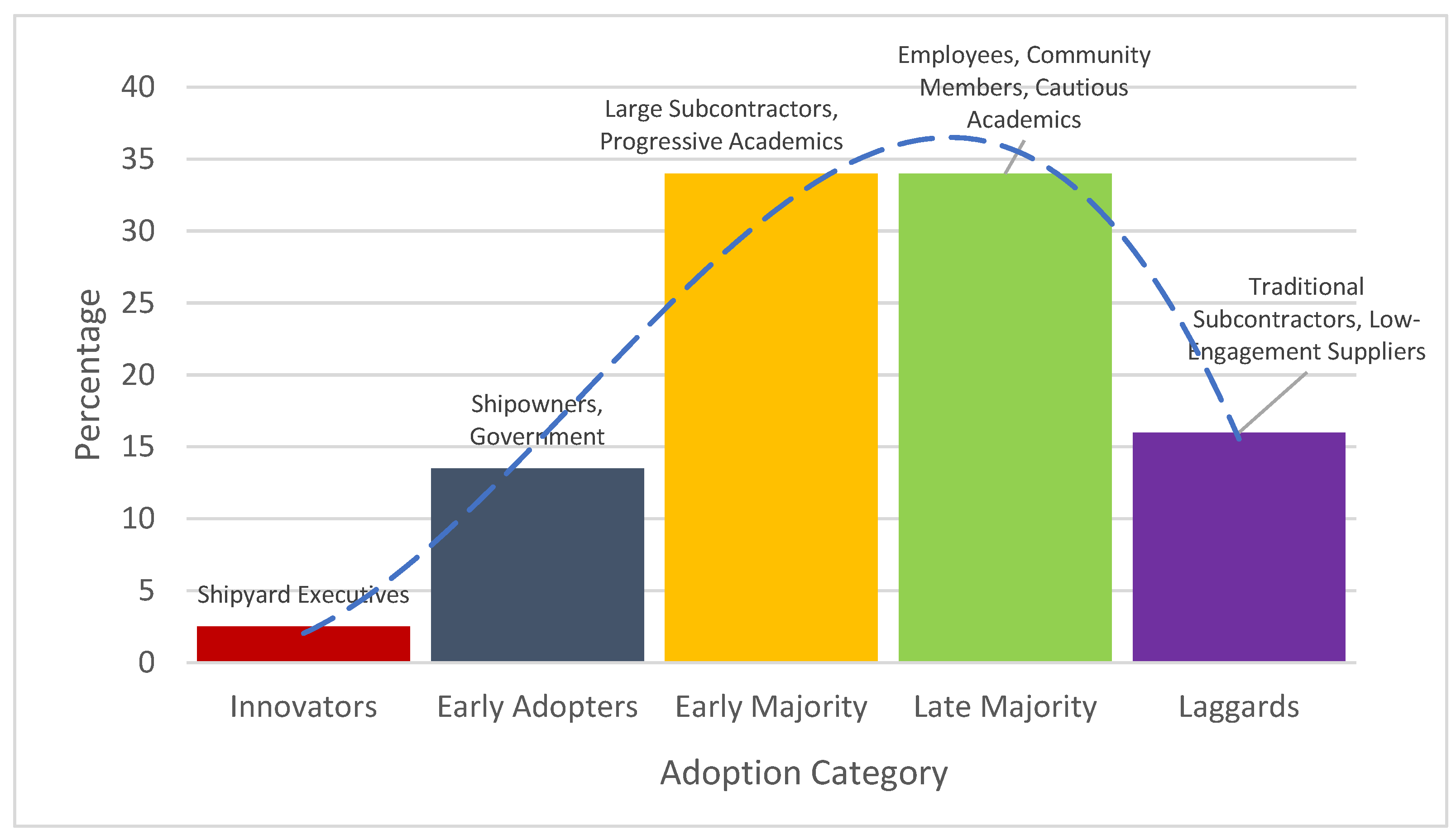
Figure 8.
Stakeholder Adoption Curve Based on Rogers’ Diffusion of Innovations.
Table 3 presents the mean ratings of seven stakeholder groups for five adoption criteria for multipurpose shipyards, revealing various patterns of prioritisation that demonstrate the marine sector's diversity of interests. Academics prioritised workforce development (4.1) and operational efficiency (4.2) to increase human capital and operations. The Community group highlighted Environmental issues (4.2), emphasising sustainability, while Workforce Development had the lowest average (3.4). Employees prioritised Workforce Development (4.3) and Operational Efficiency (4.0), focusing on skill development and operational efficiency. Government stakeholders gave Regulatory elements the highest mean (4.3), emphasising their centrality in governance and compliance, followed by Market Demand (4.0). Shipowners rated Market Demand (4.3) and Operational Efficiency (4.2) highest, indicating their interest in commercial viability and yard reliability. Shipyard Managers prioritised Operational Efficiency (4.3) for production optimisation, while Suppliers prioritised Market Demand (4.1) and Regulatory criteria (4.0) for commercial opportunity and compliance. These findings underscore the need for targeted adoption strategies that effectively address the primary concerns of stakeholder groups to integrate multipurpose shipyard programs inclusively and efficiently.
While there is consensus regarding the benefits of adopting multipurpose shipyards, different stakeholder groups demonstrate varying priorities. Shipyard managers prioritise operational efficiency, whereas government stakeholders focus on regulatory compliance in conjunction with market demand. Shipowners prioritise market competitiveness and operational efficiency, while employees and academics emphasise workforce development and productivity. The community prioritises environmental sustainability, while suppliers balance market opportunities and regulatory compliance. The observed differences illustrate various strategic, operational, and social perspectives, highlighting the necessity for engagement tailored to specific stakeholders to facilitate effective integration.
5. Discussion
5.1. Integrating Shipyard Services: Stakeholder Perspectives in Context
The questionnaire shows strong support for the multipurpose shipyard among Indonesian stakeholders. All respondents supported the idea, acknowledging the potential for integration to enhance efficiency and growth. The emphasis on operational efficiency among stakeholders is evident in the expansion and diversification of recycling activities at the Batam and Cilegon shipyards, which optimises facility utilisation throughout the year. All participants predicted efficiency advantages, roughly half considering them quite substantial, supporting the idea that integrating processes reduces downtime and redundancy. This supports a recent study that a hybrid yard model could stabilise economic cycles by focussing on dismantling projects during reduced newbuilding or repair demand. The integration of new build, repair, and recycling is particularly appealing in Indonesia, where unpredictable orders have negatively impacted shipyard profitability.
Key stakeholders cited economic and competitive advantages. Over 90% expect multipurpose shipyards to create jobs, suggesting that service integration would expand employment at shipyard hubs. The approach may boost community prosperity and skill development in a growing economy, justifying government social concerns. Most respondents identified opportunities for cost-cutting and market expansion, with integration expected to reduce transportation costs and downtime for shipowners. Shipyards can take on additional building and scrapping projects that would otherwise be handled elsewhere. Singapore and Vietnam have modern shipyards. Indonesia's ability to provide complete services may increase its competitiveness. Integration was planned to speed up turnaround and expand service offerings, helping Indonesian shipyards become comprehensive service centres in Southeast Asia.
Implementation issues differ substantially across Indonesia's many regions. Shipyards in western Indonesia, especially in Batam and Java, enjoy superior infrastructure, proximity to Singapore, and established maritime clusters [46,47], whereas facilities in eastern Indonesia encounter significant constraints regarding infrastructure access, skilled labour availability, and regulatory oversight capacity [1]. A government participant noted that the islands' geographic distribution causes irregular development, requiring large regional adjustments to implement multipurpose criteria uniformly. These regional differences necessitate tailored strategies, with eastern stakeholders, in particular, emphasising the importance of enhanced transportation infrastructure and workforce development before integration can be successful.
Challenges and hazards remain a concern for stakeholders. Without spatial planning and timing, stakeholders said, "We risk compromising our operations and safety." This meets literature recommendations: Assigning abandoned ferry ports for green recycling could promote integration without affecting shipbuilding [39]. Our results showed that multipurpose shipyards should include recycling spaces and technologies to reduce pollution and improve safety. According to 84% of participants, infrastructure was the top enabling factor for effective integration. This includes digital infrastructure for complicated project management and physical infrastructure like waste treatment facilities and dry docks of various sizes. Initial investment in ship repair yard infrastructure is crucial for the successful development of a multipurpose shipyard.
Environmental and regulatory issues are interconnected. 46% of respondents found regulatory ambiguity difficult. Indonesia's ship recycling regulatory structure is still in development; stakeholders require clear regulations and consistent implementation to trust integrated yards to operate legally and safely. On-site recycling requires policy support and control. By achieving ISO 30000 certification and following worldwide standards, the Batam and Cilegon green recycling shipyard advances regulatory compliance [46,48]. Our research participants encourage the government to amend and strictly execute the IMO Hong Kong Convention for Safe Recycling rules. Uncertain regulations could deter investors from making large capital investments, which 43% of stakeholders cited as their top concern. A strong regulatory framework, governmental investment or guarantees, and incentives can minimise the perceived financial risk for private shipyard owners considering multipurpose shipyard operations.
Worker ability is a key issue. Over 40% of respondents cited skills deficiencies, with many qualitative comments focusing on HR difficulties. A multipurpose shipyard requires people skilled in complicated welding, modular construction for new buildings, asbestos removal, and scrap metal processing for recycling. Addressing the skills gap through targeted workforce development is essential, as a lack of skilled labour could undermine integration and operational efficiency.
5.2. Stakeholder Dynamics: Salience and Innovation Diffusion
Using the stakeholder salience model clarifies the justification for particular groups, prioritising some concerns and showing the diversity of stakeholder backing for the multipurpose shipyard idea. Mitchell et al. (1997) propose power, legitimacy, and urgency define how stakeholders influence a project. Our research revealed that definitive stakeholders, especially government authorities and shipowners, strongly support particular implementation needs. Government agencies are essential in minimising negative consequences because of their regulatory power and public duty to offer safety and environmental protection. Their regulatory system and supervisory focus make this clear. Regulatory agencies underlined the need for clear standards and vigorous enforcement before approving integrated yards.
Prominent customers with financial strength and a strong interest in cost-effective operations, shipowners desperately needed consistent, high-quality service. Should they be convinced of the benefits, they will encourage early demand for multipurpose yards and at the same time push shipyards and governments to follow international standards, including certified green recycling, to maintain their corporate responsibility image and keep a link to Indonesian yards. Advancement may accelerate if these definitive stakeholders support the multipurpose shipyard idea through pro-integration policies and commercial commitments; nevertheless, development might slow if it fails.
Table 4 offers a stakeholder integration matrix that maps each group according to its salient characteristics, innovation adoption category (based on Rogers' theory), top concern area, further contextualising stakeholder roles. This matrix is a helpful tool for matching implementation priorities with strategies for involving stakeholders.
Utilising the Diffusion of Innovations Theory, we may gain deeper insights into the potential dissemination or challenges of the multipurpose shipyard concept within the Indonesian maritime sector. Numerous essential innovation aspects of Rogers are apparent in the replies of stakeholders:
- Relative Advantage: Stakeholders believe the integrated approach offers better efficiency, cost savings, and broader service coverage. Should the idea be implemented, this enormous perceived benefit suggests that possible adopters, shipyard companies, and investors would see a noticeable improvement over the current status. Our research revealed a consistent consensus that operational performance will improve, which is significant since innovations with economic or performance benefits are more likely to be adopted. Global observations indicate that integrated maritime services are driven by an urgency to optimise operations and remain competitive.
- Compatibility: Stakeholders argue that multipurpose shipyards may not meet the requirements of the Indonesian industry. The concept suits the archipelagic setting by offering dispersed, full-service hubs that align with Indonesia's geography and support its national objectives of maritime self-sufficiency and logistics. Integration calls for changing the operation of shipyards (tighter environmental regulations, altered workflow management), which could not suit current approaches. Some participants stated that recycling is not ideal due to the shipyard culture and structure, which necessitate significant modifications. Therefore, while a multipurpose yard's objectives align with Indonesia's maritime vision, their execution requires new organisational strategies. Pilot studies demonstrating that local yards can adapt and maintain current work patterns, e.g., on-time ship deliveries while recycling, could help foster compatibility.
- Complexity: As indicated, stakeholders find the innovation complicated. Often emphasised were technical and management complexity. High perceived complexity produces uncertainty and failure dread, which hinders diffusion. Many responders suggested progressive adoption to simplify innovation by breaking it down into manageable pieces. According to Rogers et al. (2014), simplifying the innovation or providing thorough education can help. Breaking the concept into phased components (e.g., start with repair + limited recycling) lowers the initial complexity barrier. Complexity issues highlight the need for knowledge-sharing: exploring international best-practice locations, exchanging knowledge, and possibly engaging consultants who have constructed integrated yards elsewhere would simplify the process for Indonesian stakeholders.
- Trialability and Observability: These traits are significant given our cautious optimism in our outcomes. Many stakeholders stressed the necessity for evidence, pilot initiatives, and proof of concept. Trialability (small-scale testing) and observability (seeing real results) are desired. As a pioneering green recycling effort, Batam and Cilegon shipyards give demonstrable results to others. Our respondents' interest in that example (some were aware of it through industry networks) suggests that a successful trial can create community confidence, a key step to diffuse from early adopters to the early majority. We propose that government and industry work on one or two regional multipurpose shipyard demonstration projects. These pilots could persuade sceptical or risk-averse stakeholders by carefully monitoring and publicising their performance (e.g., cost savings, job creation, compliance track record). The innovation in Indonesia is likely to follow Rogers' model: initial champions (possibly a few forward-thinking yard operators with government support) will implement and validate the concept, and then more followers will adopt it as benefits become apparent and uncertainty decreases.
5.3. Implications for Policy and Sustainable Implementation
This research shows that a multipurpose shipyard model in Indonesia requires concerted action and a phased, strategic implementation plan. Stakeholder input suggests various policy and practice implications:
- Policy and Regulatory Framework: The regulatory framework requires an upgrade. Indonesia should ratify and implement the Hong Kong International Convention for the Safe and Environmentally Sound Recycling of Ships to expedite the development of ship recycling regulations. Explicit rules would alleviate stakeholder apprehensions regarding environmental degradation and create equitable conditions for shipyard operators. Optimising permission procedures and providing centralised regulatory approval for integrated operations will diminish bureaucratic obstacles that hinder yard expansion, as specific stakeholders have cited regulatory uncertainty as a potential risk for delays or non-compliance. Policymakers should establish a maritime industrial working group of industry stakeholders to revise regulations and train enforcement authorities to supervise complex shipyard operations.
- Infrastructure and Investment Support: Given high capital costs and infrastructure needs, government investment facilitation will drive success. Financial incentives could include tax discounts on capital equipment for ship recycling facilities, as well as low-interest loans and grants for yards updating their infrastructure to support multipurpose shipyard activities. Public-private collaborations can help create green recycling zones near shipyards. A shipyard cluster or estate where infrastructure can be pooled (e.g., a centralised hazardous waste treatment plant serving several shipyards) is one realistic idea from the feedback. Cluster models and shared investment reduce costs and comply with regulations.
- Environmental and Safety Measures: Implement robust environmental and occupational safety regulations to ensure sustainability. This requires ship recycling yards to possess ISO 30000 certifications and to have appropriate waste management systems in place for oil, asbestos, scrap steel, and other materials. Certification, waste management, and transparent oversight are crucial to establishing trust and positioning Indonesia as a leader in sustainable ship recycling. Multipurpose shipyards enable resource recovery, material reuse, and operational innovation, advancing the circular economy and cost efficiency.
- Stakeholder Engagement and Integration: Participation in local forums and multi-stakeholder partnerships will build credibility, address concerns, and support implementation.
- Phased Implementation Roadmap: Data and theory support a phased implementation roadmap. We offer a staged implementation roadmap (see Figure 9) to guide the transition:
- Phase 1: Planning and Capacity Building. Assess feasibility, revise policy, develop skills, and select pilot sites.
- Phase 2: Pilot Multipurpose Shipyard(s). Launch demonstration shipyards and monitor operational results.
- Phase 3: Evaluation and Scale-Up. Expand based on pilot feedback and regional need.
- Phase 4: Full Integration and Continuous Improvement. Build a network, institutionalise best practices, and update standards as knowledge advances.
Despite substantial support, obstacles including fragmented authority, constrained resources for smaller shipyards, and potential local opposition necessitate the implementation of gradual, regionally customised pilot programs. This study demonstrates the influence of stakeholder dynamics, perceived complexity, and organisational readiness on the feasibility of innovation, thereby affirming the necessity for reform, pilot trials, and capacity building. These findings provide a valuable framework for Indonesia; however, adoption and impact will differ in other contexts. Additional comparative research is necessary to enhance these models for global applicability.
6. Conclusion and Further Work
This study offers multiple new perspectives on the growth of multipurpose shipyards in emerging maritime economies. This study presents the initial empirical evaluation of stakeholder perspectives regarding integrating shipbuilding, repair, and recycling within Indonesia's shipyard sector, employing a dual framework of stakeholder salience and innovation diffusion. This context-specific phased roadmap integrates theoretical frameworks with practical applications, providing actionable guidance for industry stakeholders and policymakers. Utilising a mixed-methods approach informed by this dual theoretical framework, we discovered substantial but conditional endorsement for the multipurpose shipyard concept among Indonesian maritime stakeholders. Stakeholders emphasised operational efficiency, economic competitiveness, and regional job creation as significant advantages while underscoring the necessity for strong regulation, workforce development, and risk management. Although our findings provide novel insights on maritime innovation from a stakeholder-centric viewpoint, some limitations persist. The study is limited by its small sample size, dependence on self-reported data, and focus on a single country. Future research should include longitudinal pilot studies, comparative surveys across countries, and modelling of adoption pathways to validate and refine these findings. The findings extend beyond Indonesia, providing a stakeholder-driven framework for maritime sustainability applicable to other archipelagic and developing countries. Comparative case studies and policy testing in varied marine systems can broaden impact, helping regulatory bodies design adaptive, inclusive strategies for progressive shipyard innovation.
Author Contributions
Conceptualisation, M.S.A.; methodology, S.A.G.; data collection, M.S.A.; analysis, M.S.A.; writing—original draft preparation, M.S.A.; writing—review and editing, S.A.G. and R.E.K.; supervision, S.A.G. and R.E.K.; project administration, R.E.K.; stakeholder coordination and contextual support, H.S. All authors have read and agreed to the published version of the manuscript.
Funding
his research was funded by the Indonesia Endowment Fund for Education (LPDP) through a scholarship grant awarded to the first author, Mohammad Sholikhan Arif.
Institutional Review Board Statement
The study was conducted and approved by the University of Strathclyde's Ethics Committee.
Informed Consent Statement
Informed consent was obtained from all subjects involved in the study.
Data Availability Statement
This study involved the collection of primary data through stakeholder surveys with 37 participants. Due to ethical considerations and confidentiality agreements, the individual responses cannot be shared publicly. The data contains potentially identifiable information, and participants did not consent to the public sharing of their data. Therefore, the dataset is not available in a public repository. Aggregated data supporting the findings of this study are available from the corresponding author upon reasonable request.
Acknowledgements
The authors gratefully acknowledge the academic and administrative support provided by both the University of Strathclyde and Institut Teknologi Sepuluh Nopember (ITS) during the conduct of this study.
Conflicts of Interest
The authors declare no conflict of interest. The funders had no role in the design of the study, in the collection, analysis, or interpretation of data, in the writing of the manuscript, or in the decision to publish the results.
References
- S. Baso, M. Musrina, and A. Anggriani, “Strategy for Improving the Competitiveness of Shipyards in the Eastern Part of Indonesia,” Kapal: Jurnal Ilmu Pengetahuan dan Teknologi Kelautan, vol. 17, pp. 74–85, Jun. 2020. https://doi.org/10.14710/kapal.v17i2.29448. [CrossRef]
- T. Rizwan et al., “Literature review on shipyard productivity in Indonesia,” Depik, vol. 10, no. 1, pp. 1–10, Jan. 2021. [CrossRef]
- B. J. Agung and A. Farinah, “The Urgency Of Green Ship Recycling Methods And Its Regulations In Indonesia From The International Law Perspective,” ULREV, vol. 6, no. 2, Oct. 2022. [CrossRef]
- F. Fitriadi and A. F. M. Ayob, “Optimizing Traditional Shipyard Industry: Enhancing Manufacturing Cycle Efficiency for Enhanced Production Process Performance,” IJIETOM, vol. 1, no. 1, pp. 15–24, Jun. 2023. [CrossRef]
- E. S. Ocampo and N. N. Pereira, “Can ship recycling be a sustainable activity practiced in Brazil?,” Journal of Cleaner Production, vol. 224, pp. 981–993, Jul. 2019. [CrossRef]
- M. O. IMO, “The Hong Kong International Convention for the Safe and Environmentally Sound Recycling of Ships.” Accessed: May 14, 2025. [Online]. Available: https://www.imo.org/en/about/Conventions/pages/the-hong-kong-international-convention-for-the-safe-and-environmentally-sound-recycling-of-ships.aspx.
- E. M. Rogers, A. Singhal, and M. M. Quinlan, “Diffusion of innovations,” in An integrated approach to communication theory and research, Routledge, 2014, pp. 432–448.
- R. K. Mitchell, B. R. Agle, and D. J. Wood, “Toward a Theory of Stakeholder Identification and Salience: Defining the Principle of Who and What Really Counts,” The Academy of Management Review, vol. 22, no. 4, pp. 853–886, 1997. [CrossRef]
- Statista.com, “Topic: Maritime industry in Indonesia,” Statista. Accessed: Nov. 22, 2024. [Online]. Available: https://www.statista.com/topics/12042/maritime-industry-in-indonesia/.
- trade.gov, “Indonesia - Market Overview.” Accessed: Nov. 22, 2024. [Online]. Available: https://www.trade.gov/country-commercial-guides/indonesia-market-overview.
- business-indonesia.org, “Maritime | Business-Indonesia.” Accessed: Nov. 22, 2024. [Online]. Available: https://business-indonesia.org/maritime.
- Komara, K. T. P. Iroth, S. Sungkono, J. S. Saragih, S. U. Sahubawa, and M. Dwiwanti, “The Potential of Indonesia’s Ship Engine Market to Attract Foreign Investors for Domestic Manufacturing,” Equity, vol. 12, no. 1, pp. 66–82, Jun. 2024. [CrossRef]
- S. Vakili, A. Schönborn, and A. I. Ölçer, “The road to zero emission shipbuilding Industry: A systematic and transdisciplinary approach to modern multi-energy shipyards,” Energy Conversion and Management: X, vol. 18, p. 100365, Apr. 2023. [CrossRef]
- S. N. Mohamad Idris, W. N. Wan Zakaria, N. H. N. Mahmood, and P. Mohd Samin, “Job Performance of Shipyard Workforce in the Shipbuilding and Ship Repair Industry: Do Competencies Matter in Malaysian Shipyards?,” IJARBSS, vol. 13, no. 3, p. Pages 1006-1016, Mar. 2023. [CrossRef]
- N. Ishak and M. Meica, “Implementation of Cabotage Principle in Indonesia Territory and Its Implication for Shipping: A Study from Law Perspective,” in Proceeding of Marine Safety and Maritime Installation (MSMI 2018), Clausius Scientific Press, 2018. [CrossRef]
- IMO, Ed., Hong Kong Convention: Hong Kong International Convention for the Safe and Environmentally Sound Recycling of Ships, 2009 ; with the guidelines for its implementation, 2013 edition. in IMO publication. London: International Maritime Organization, 2009.
- IMO, “Guidelines for the development of the Inventory of the Hazardous Materials.” 2023. Accessed: May 27, 2025. [Online]. Available: https://wwwcdn.imo.org/localresources/en/MediaCentre/HotTopics/Documents/MEPC.379(80).pdf.
- M. A. Oktaviany, “Challenges for the ratification of the Hong Kong Convention for the Safe and Environmentally Sound Recycling of Ships, 2009 in Indonesia,” WMU, 2019. Accessed: Jun. 11, 2025. [Online]. Available: https://commons.wmu.se/cgi/viewcontent.cgi?article=2168&context=all_dissertations.
- IMO, “International Convention for the Prevention of Pollution from Ships (MARPOL).” Accessed: Jun. 11, 2025. [Online]. Available: https://www.imo.org/en/about/Conventions/Pages/International-Convention-for-the-Prevention-of-Pollution-from-Ships-(MARPOL).aspx.
- IMO, “Indonesia ratifies several IMO instruments,” Indonesia ratifies several IMO instruments. Accessed: Jun. 11, 2025. [Online]. Available: https://www.imo.org/en/MediaCentre/PressBriefings/Pages/33-indonesiaratifies.aspx.
- Sudirman, M. Maulana, and A. Yola, “Legal Cooperation in the ASEAN Maritime Environment in the Free Trade Era: Its Implication for Indonesia,” HasanuddinLawReview, vol. 8, no. 9, 2022.
- U. N. E. UNEP, “Basel Convention on Hazardous Wastes.” 1989. [Online]. Available: http://www.basel.int.
- Basel, “Basel Convention Regional Centre for South-East Asia in Indonesia (BCRC Indonesia).” Accessed: Jun. 11, 2025. [Online]. Available: https://www.basel.int/?tabid=4845.
- Ministry of Transportation of Indonesia, PERATURAN MENTERI PERHUBUNGAN REPUBLIK INDONESIA NOMOR: PM 29 TAHUN 2014 TENTANG PENCEGAHAN PENCEMARAN LINGKUNGAN MARITIM, Rules and Regulation, 2014. [Online]. Available: https://hubla.dephub.go.id/storage/portal/documents/post/6659/pm_29_tahun_2014.pdf.
- President of Republic Indonesia, Undang-Undang No. 17 Tahun 2008 tentang Pelayaran (Law 17/2008 on Shipping). 2008. Accessed: Jun. 11, 2025. [Online]. Available: https://peraturan.bpk.go.id/Download/28451/UU%20Nomor%2017%20Tahun%202008.pdf.
- S. Fariya, K. Suastika, and M. S. Arif, “Design of Sustainable Ship Recycling Yard in Madura,Indonesia,” presented at the The Conference of Theory and Application on Marine Technology, Surabaya, Indonesia, Dec. 2016. Accessed: Mar. 01, 2024. [Online]. Available: https://repository.its.ac.id/69417/.
- Zainol, C. L. Siow, A. F. Ahmad, M. R. Zoolfakar, and N. Ismail, “Hybrid shipyard concept for improving green ship recycling competitiveness,” IOP Conf. Ser.: Earth Environ. Sci., vol. 1143, no. 1, p. 012021, Feb. 2023. [CrossRef]
- H. Chabane, “Design of a Small Shipyard Facility Layout Optimised for Production and Repair,” 2004.
- Zainol, S. C. Loon, Ahmad Faizal Ahmad Fuad, Nuraihan Ismail, and Khairunnisa Rosli, “Integrating Ship Recycling Facility into Existing Shipyard: A Study of Malaysian Shipyard,” ARASET, vol. 32, no. 3, pp. 217–227, Oct. 2023. [CrossRef]
- Sunaryo and B. A. Tjitrosoemarto, “Integrated ship recycling industrial estate design concept for Indonesia,” IOP Conf. Ser.: Earth Environ. Sci., vol. 972, no. 1, p. 012042, Jan. 2022. [CrossRef]
- Azhar, N. Harahab, F. Putra, and A. Kurniawan, “Environmental sustainability criteria in the multi-oriented shipbuilding industry in Indonesia,” Australian Journal of Maritime & Ocean Affairs, pp. 1–21, Oct. 2023. [CrossRef]
- S. Barua et al., “Environmental hazards associated with open-beach breaking of end-of-life ships: a review,” Environ Sci Pollut Res, vol. 25, no. 31, pp. 30880–30893, Nov. 2018. [CrossRef]
- I. Alcaide, E. Rodríguez-Díaz, and F. Piniella, “European policies on ship recycling: A stakeholder survey,” Marine Policy, vol. 81, pp. 262–272, Jul. 2017. [CrossRef]
- Budiyanto, H. Kusnoputranto, R. S. Widjaja, and F. Lestari, “Environmental Insurance Model in the Shipyard Industry,” Asian Journal of Applied Sciences, vol. 04, no. 03, 2016.
- M. Tantan and H. Camgöz-Akdağ, “SUSTAINABILITY CONCEPT IN TURKISH SHIPYARDS,” presented at the SDP 2020, Nov. 2020, pp. 269–281. [CrossRef]
- H. Schøyen, U. Burki, and S. Kurian, “Ship-owners’ stance to environmental and safety conditions in ship recycling. A case study among Norwegian shipping managers,” Case Studies on Transport Policy, vol. 5, no. 3, pp. 499–508, Sep. 2017. [CrossRef]
- Halim Mad Lazim and Jamaluddin Abdullah, “Malaysia Shipbuilding Industry: A Review on Sustainability and Technology Success Factors,” ARASET, vol. 28, no. 3, pp. 154–164, Nov. 2022. [CrossRef]
- M. A. Zaabi and R. Pech, “Strategic corporate governance stakeholder complexities in strategic decision implementation (sdi): The shipbuilding industry in Abu Dhabi,” jda, vol. 49, no. 6, pp. 235–246, 2015. [CrossRef]
- S. Sunaryo and F. Y. Santoso, “CONVERSION DESIGN OF AN IDLE FERRY PORT INTO GREEN SHIP RECYCLING YARD,” SSRN Journal, 2023. [CrossRef]
- E. Egorova, M. Torchiano, M. Morisio, C. Wohlin, A. Aurum, and R. B. Svensson, “Stakeholders’ Perception of Success: An Empirical Investigation,” in 2009 35th Euromicro Conference on Software Engineering and Advanced Applications, Aug. 2009, pp. 210–216. [CrossRef]
- M. Eskafi et al., “Stakeholder salience and prioritization for port master planning, a case study of the multi-purpose Port of Isafjordur in Iceland,” European Journal of Transport and Infrastructure Research, vol. 19, no. 3, Art. no. 3, Sep. 2019. [CrossRef]
- M. D. Bunn, F. Azmi, and M. Puentes, “Stakeholder perceptions and implications for technology marketing in multi-sector innovations: the case of intelligent transport systems,” International Journal of Technology Marketing, vol. 4, no. 2–3, pp. 129–148, Jan. 2009. [CrossRef]
- Sooprayen, G. Van De Kaa, and J. F. J. Pruyn, “Factors for innovation adoption by ports: a systematic literature review,” J. Ocean Eng. Mar. Energy, vol. 10, no. 4, pp. 953–962, Nov. 2024. [CrossRef]
- Castro, P. M. Klajnberg, A. B. Barcaui, M. Castro, P. M. Klajnberg, and A. B. Barcaui, “The Impact of Stakeholder Salience in the Relationship between Stakeholder-Oriented Governance Practices and Project Success,” in Corporate Governance - Evolving Practices and Emerging Challenges, IntechOpen, 2024. [CrossRef]
- V. Braun and V. Clarke, “Using thematic analysis in psychology,” Qualitative Research in Psychology, vol. 3, no. 2, pp. 77–101, Jan. 2006. [CrossRef]
- Hariyanto, N. I. Gutami, Z. Qonita, N. Shabrina, D. A. Wibowo, and A. Muhtadi, “The Development of Ship Recycling Facility Cluster in Indonesia,” IOP Conf. Ser.: Earth Environ. Sci., vol. 1166, no. 1, p. 012007, May 2023. [CrossRef]
- P. Pratama and A. Fadillah, “Study on development of shipyard type for supporting pioneer ship in Indonesia,” IOP Conf. Ser.: Earth Environ. Sci., vol. 339, no. 1, p. 012045, Oct. 2019. [CrossRef]
- PaxOcean, “Decommissioning & Green Recycling,” DECOMMISSIONING & GREEN RECYCLING. Accessed: May 14, 2025. [Online]. Available: https://paxocean.com/services/decommissioning/.
Figure 1.
Indonesia’s Maritime Industry Map [12].
Figure 1.
Indonesia’s Maritime Industry Map [12].
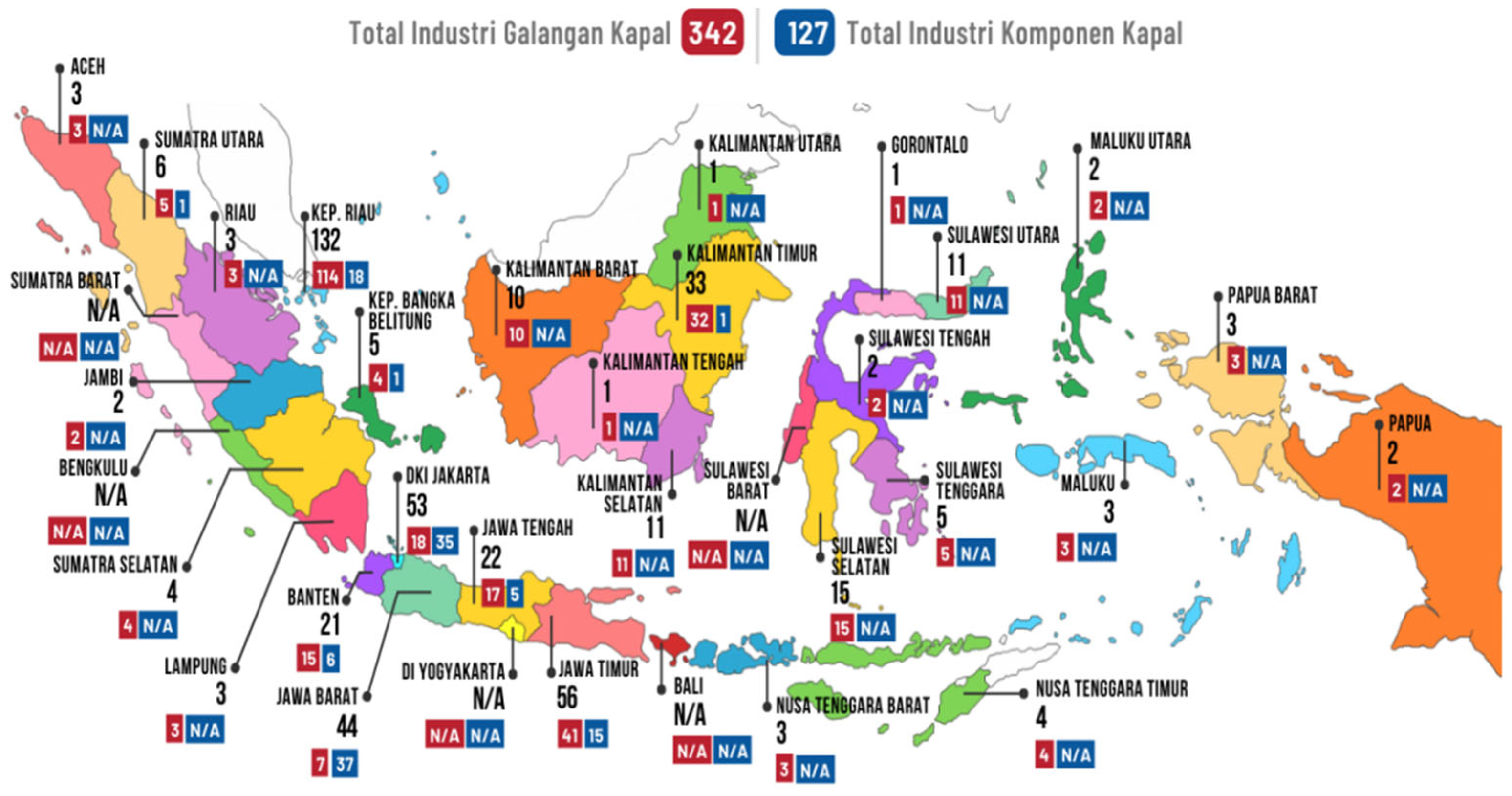
Figure 2.
Distribution of stakeholder groups by education and experience level.
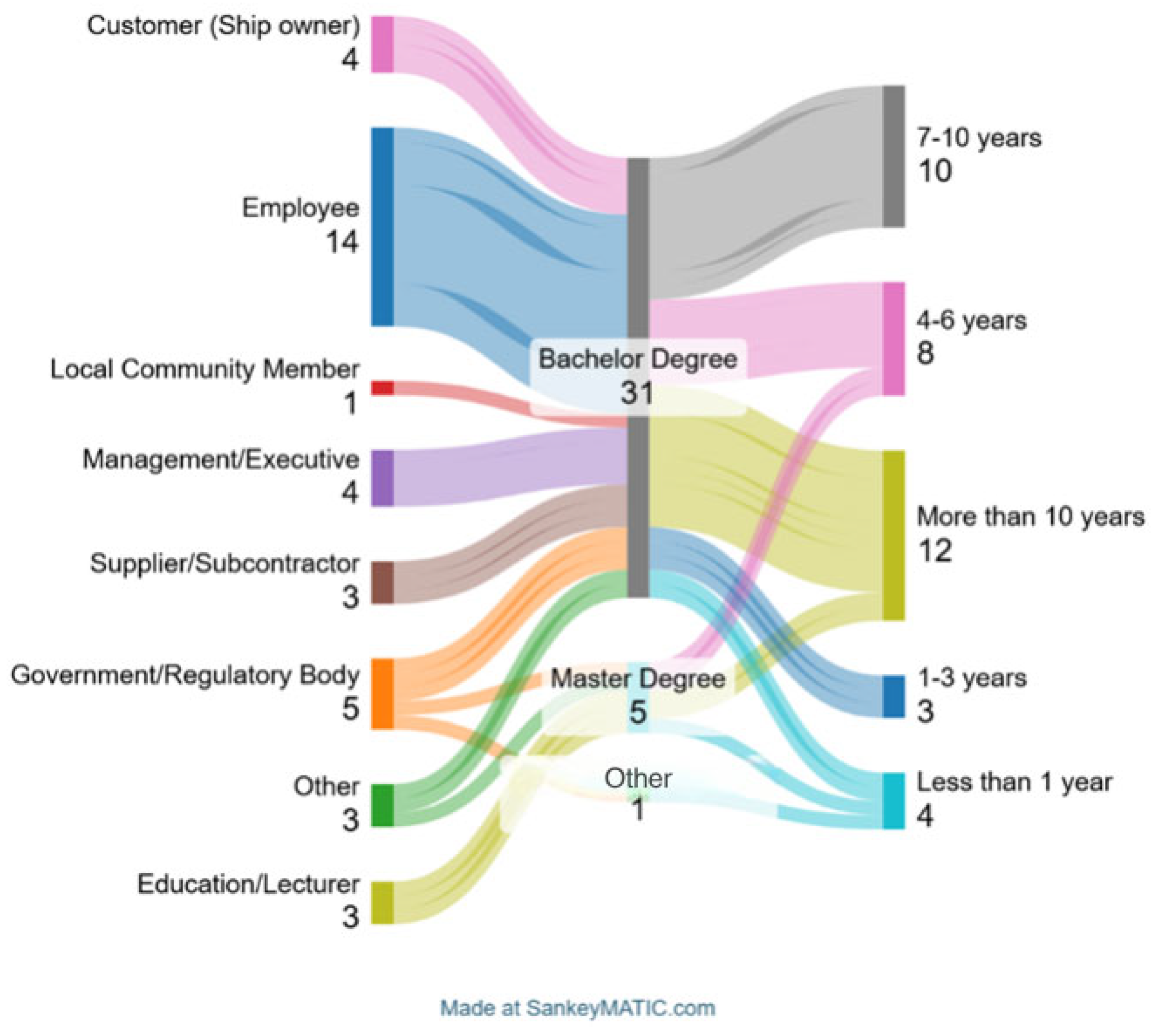
Figure 5.
Factors contributing to the feasibility of integrating shipbuilding, ship repair, and ship recycling activities.
Figure 5.
Factors contributing to the feasibility of integrating shipbuilding, ship repair, and ship recycling activities.
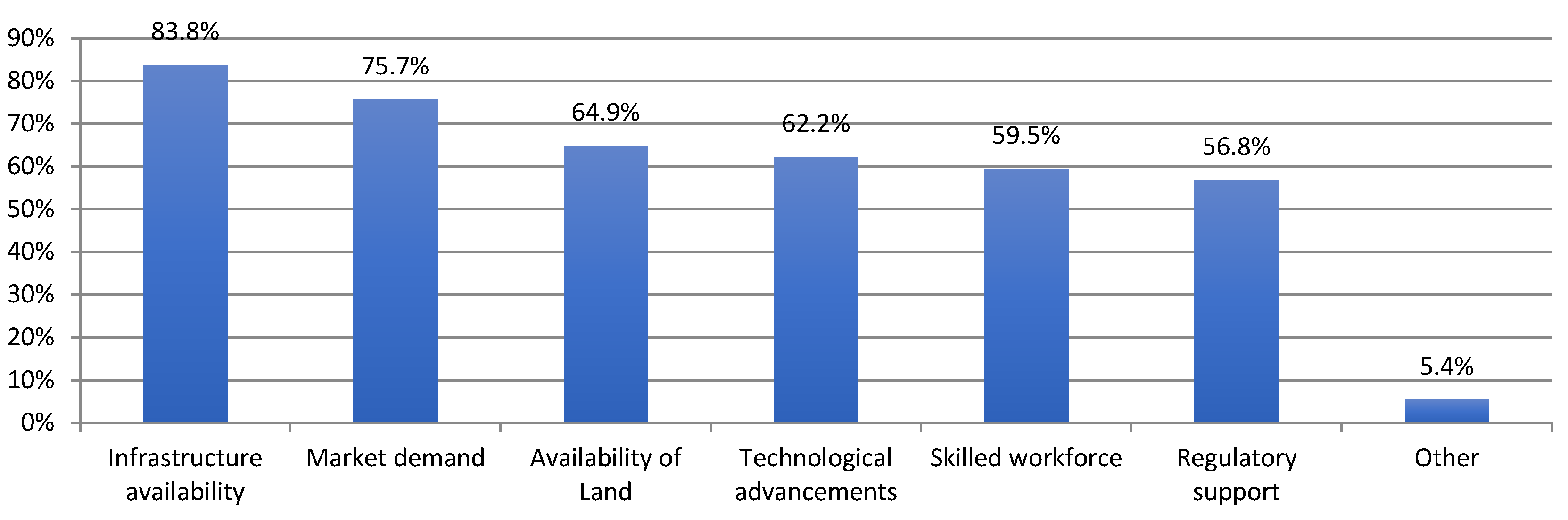
Figure 6.
Stakeholder Perceptions of Benefits (a) and Challenges (b) in Integrating Shipyard Activities.
Figure 6.
Stakeholder Perceptions of Benefits (a) and Challenges (b) in Integrating Shipyard Activities.
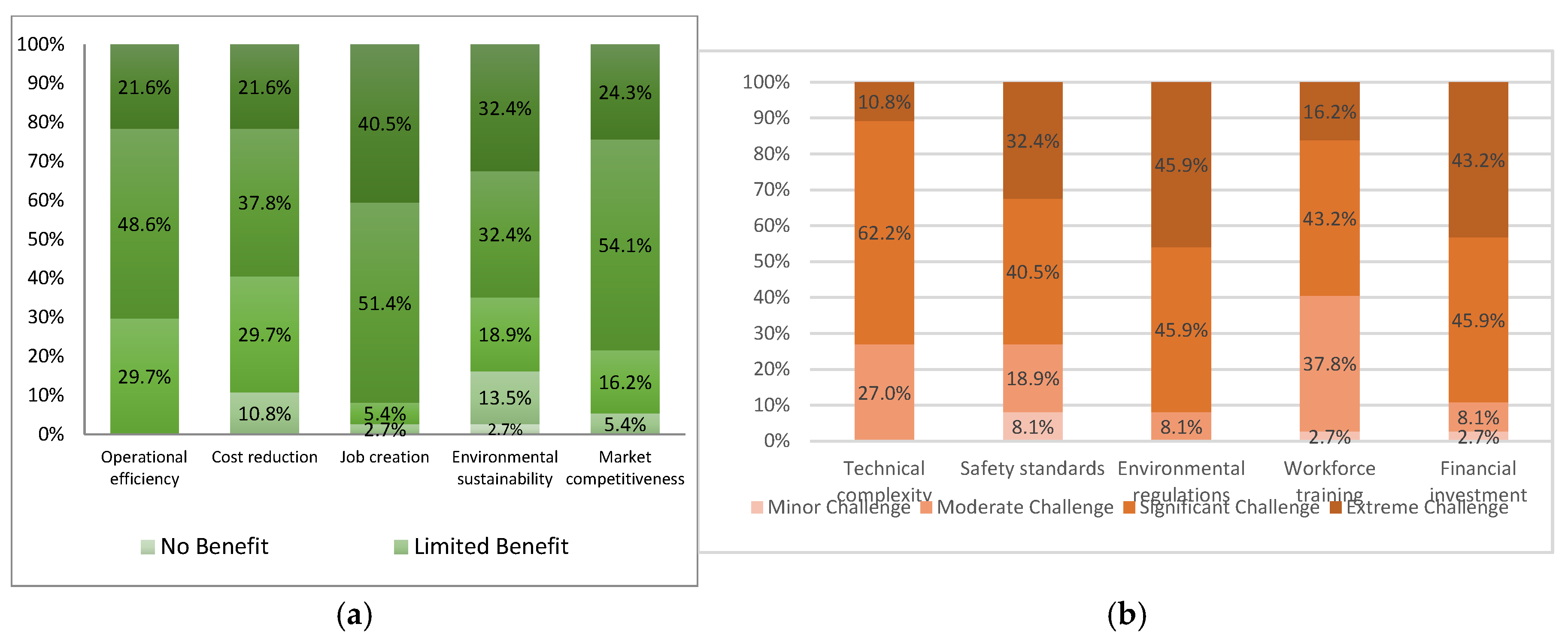
Figure 7.
Venn Diagram of Stakeholder Salience: Power, Legitimacy, Urgency.
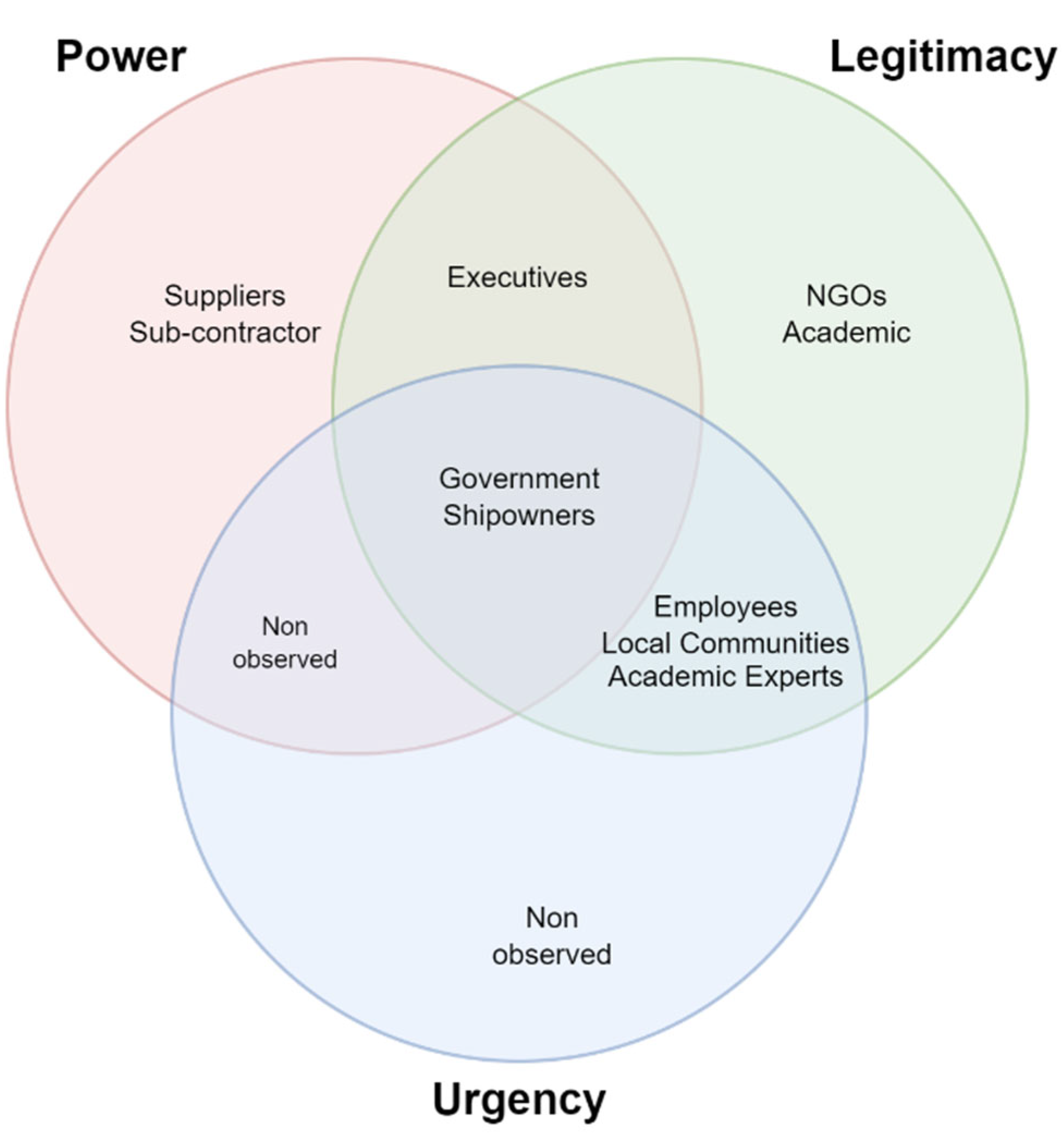
Figure 9.
Implementation phase roadmap for the multipurpose shipyard in Indonesia.
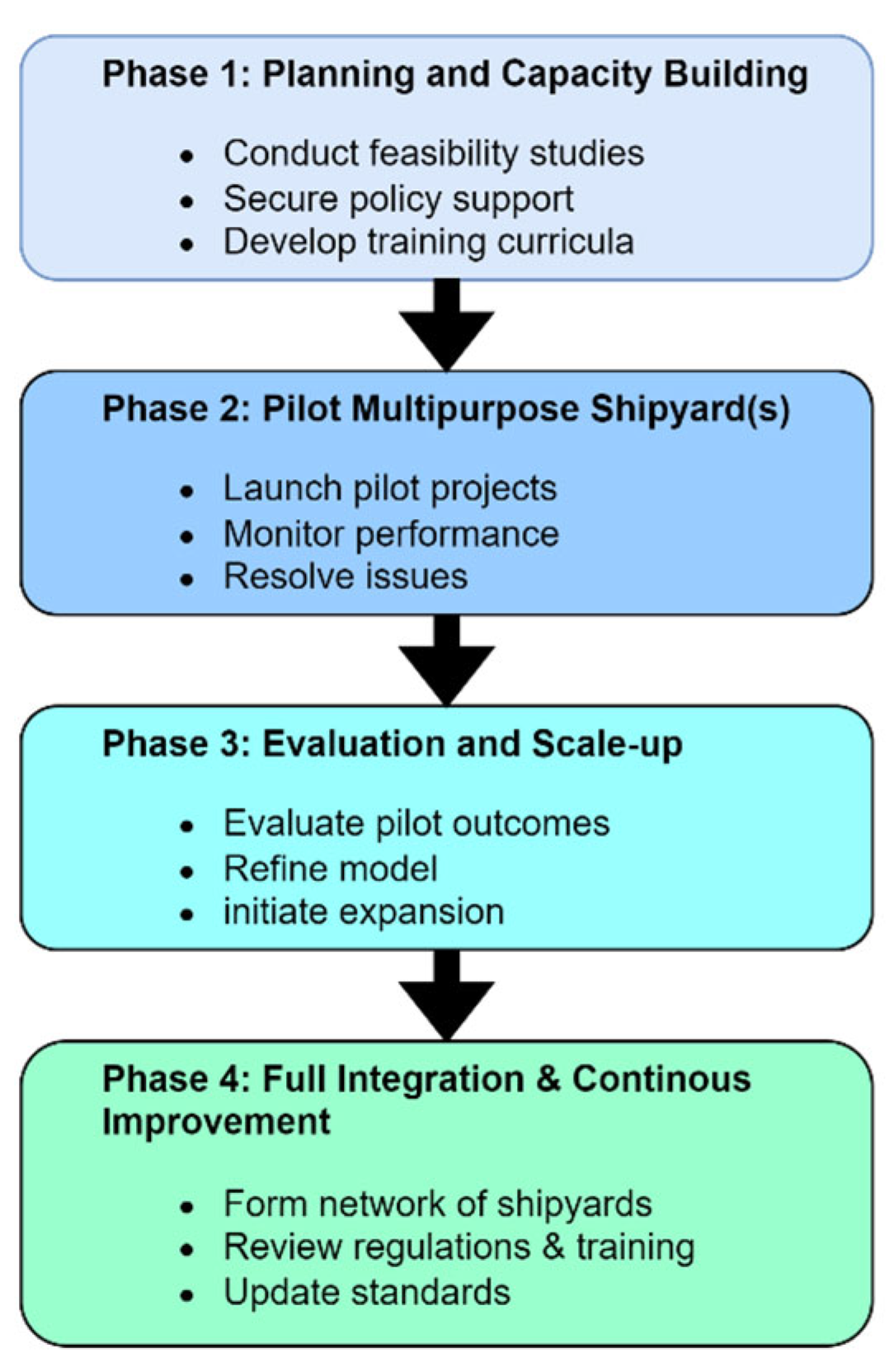
Table 2.
Stakeholder evaluation scores across Rogers' five perceived innovation attributes and resulting Diffusion of Innovation (DOI) Index.
Table 2.
Stakeholder evaluation scores across Rogers' five perceived innovation attributes and resulting Diffusion of Innovation (DOI) Index.
| Stakeholder |
Relative Advantage |
Compatibility | Complexity | Trialability | Observability |
Total DOI Index |
| Shipyard Executives | 4.80 | 4.50 | 2.90 | 3.60 | 3.80 | 19.80 |
| Government | 4.60 | 4.40 | 3.00 | 3.40 | 3.60 | 19.00 |
| Shipowners | 4.50 | 4.20 | 3.10 | 3.30 | 3.50 | 18.40 |
| Employees | 3.90 | 3.60 | 3.70 | 2.90 | 3.10 | 15.80 |
| Academics | 4.10 | 3.90 | 3.90 | 3.00 | 3.00 | 16.10 |
| Suppliers | 3.80 | 3.70 | 3.60 | 2.70 | 2.80 | 15.40 |
| Community | 3.70 | 3.40 | 4.10 | 2.50 | 2.60 | 14.10 |
Table 3.
Average stakeholder ratings on five adoption criteria for multipurpose shipyards.
| Stakeholder |
Market Demand |
Workforce Dev. |
Regulatory | Environmental |
Operational Efficiency |
| Academics | 3.6 | 4.1 | 3.7 | 3.2 | 4.2 |
| Community | 3.3 | 3.4 | 3.5 | 4.2 | 3.4 |
| Employees | 3.5 | 4.3 | 3.6 | 3.5 | 4 |
| Government | 4 | 3.3 | 4.3 | 3.7 | 3.8 |
| Shipowners | 4.3 | 3.5 | 3.2 | 3.6 | 4.2 |
| Shipyard Managers | 3.8 | 3.7 | 3.8 | 3.4 | 4.3 |
| Suppliers | 4.1 | 3.7 | 4 | 3.5 | 3.9 |
Table 4.
Stakeholder integration matrix.
| Stakeholder Group |
Salience Attributes |
Adoption Category |
Top Concern Area |
| Government | Definitive | Early Adopter | Regulatory compliance |
| Shipyard Managers | Dominant | Innovator | Operational efficiency |
| Shipowners | Definitive | Early Adopter | Market demand |
| Employees | Dependent | Late Majority | Workforce development |
| Suppliers | Dependent | Laggard | Process disruption |
| Academics | Discretionary | Late Majority | Sustainability |
| Community | Dependent | Late Majority | Environmental impact |
Disclaimer/Publisher’s Note: The statements, opinions and data contained in all publications are solely those of the individual author(s) and contributor(s) and not of MDPI and/or the editor(s). MDPI and/or the editor(s) disclaim responsibility for any injury to people or property resulting from any ideas, methods, instructions or products referred to in the content. |
© 2025 by the authors. Licensee MDPI, Basel, Switzerland. This article is an open access article distributed under the terms and conditions of the Creative Commons Attribution (CC BY) license (http://creativecommons.org/licenses/by/4.0/).
Copyright: This open access article is published under a Creative Commons CC BY 4.0 license, which permit the free download, distribution, and reuse, provided that the author and preprint are cited in any reuse.


