

Submitted:
28 June 2025
Posted:
30 June 2025
You are already at the latest version
Abstract
Traditional technology for making commercial coatings is limited in terms of efficiency and environmentally sustainability. Emerging machine learning (ML) and artificial intelligence (AI) technologies have the potential to transform the coatings industry through data-driven design, forecasting, and optimization of coating properties and processes. In this article, a brief overview of ML applications in protein-resistant, damping, ferroalloy, TiO₂, and epoxy-based coating design for net-zero carbon goals and sustainable production is presented. The major ML methods like neural networks and regression models are highlighted in property prediction, design optimization, and market analysis. The review concentrates on the transition from empirical and thermodynamic models to intelligent, green manufacturing for the substitution of traditional practices with novel, eco-friendly technologies.
Keywords:
ferroalloy coatings
; damping coatings
; protein-resistant coatings
; predictive modeling
; machine learning
; artificial intelligence
; sustainable manufacturing
1. Introduction
Coatings are protective and aesthetic layers in industries like construction, transportation, and shipbuilding. They protect against corrosion and increase surface strength, essential for the longevity and safety of infrastructure. Traditional coatings depend on fillers, additives, and binders to enhance properties such as adhesion, flexibility, and resistance to environmental stress. Nonetheless, these techniques are most likely to be challenged in terms of performance, cost, and the environment (Magadum, Murgod, Garg, et al., 2025). The international coatings market is led by nations such as Germany, the United States, and Japan, considering how technological innovation becomes important in terms of competitiveness. Integration of machine learning to coating formulation may unlock solutions for current deficiencies through the ability to provide more insightful, faster, and more eco-friendly options (Kruppa et al., 2012; Rodriguez-Galiano et al., 2015; Varoquaux et al., 2015).
2. Machine Learning Principles in Coatings
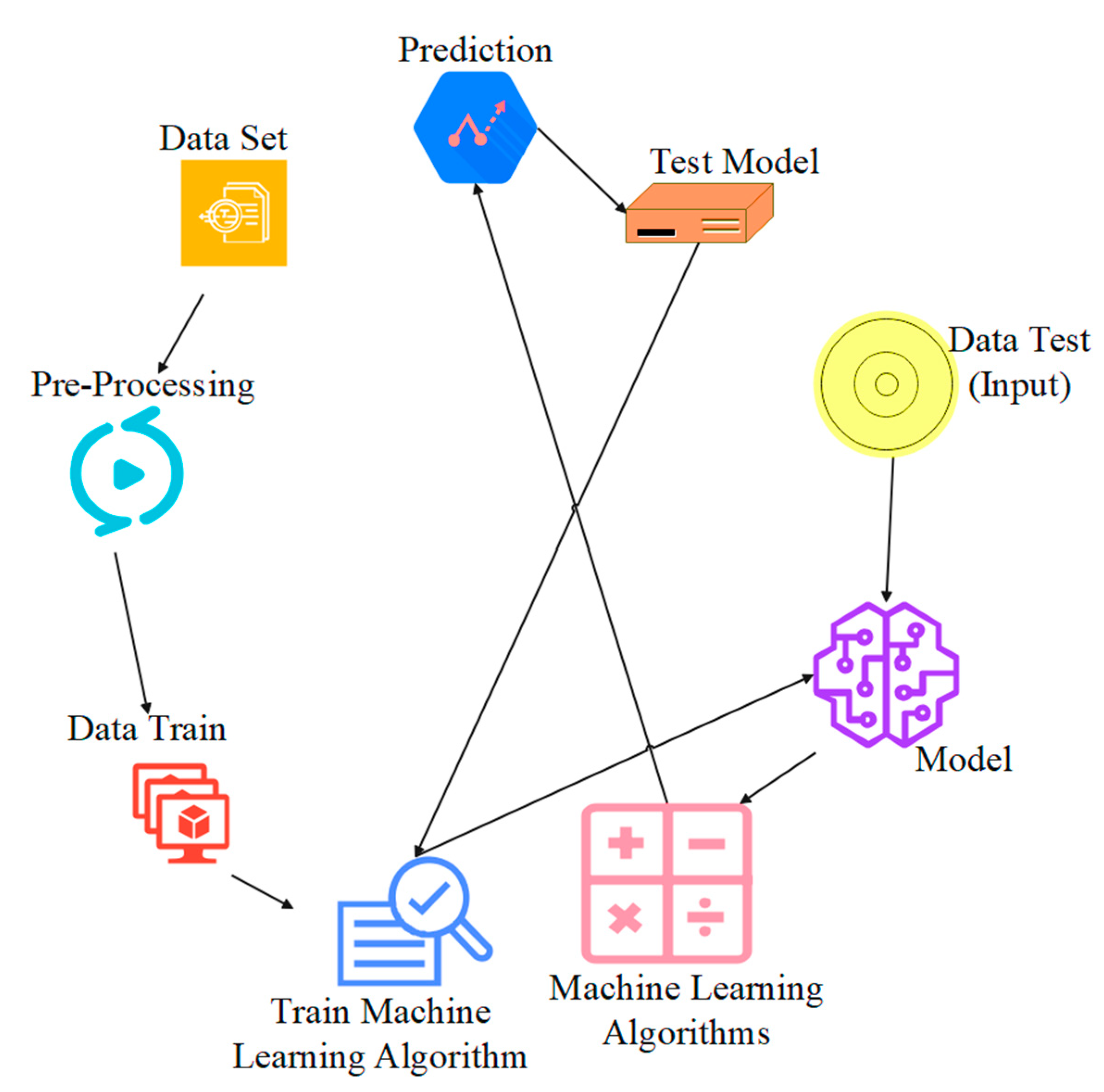
Machine learning enables computers to learn from data and make predictions or decisions without being explicitly programmed. Supervised, unsupervised, and reinforcement learning are the main ML techniques, which are suitable for different coating data types and objectives (Brunton, 2021; Candanedo et al., 2018; Garg et al., 2025; Tehrani et al., 2018; Thomare, Magadum, et al., 2025). ML algorithms in coating research are applied to process high amounts of data, recognize patterns, and streamline formulations. Overall workflow of ML comprises data pre-processing, model training, testing, and evaluation, as shown in Figure 1. This facilitates quick iteration and optimization of coating properties with minimal dependence on expensive and time-consuming experimental techniques (Murgod et al., 2025; Yadav, Deepanshu, et al., 2025; Yadav, S, et al., 2025).
Figure 1.
Phases of a generalized machine learning coating model, ranging from data preprocessing to prediction and model development.
Figure 1.
Phases of a generalized machine learning coating model, ranging from data preprocessing to prediction and model development.
3. Predictive Design and Estimation Methods
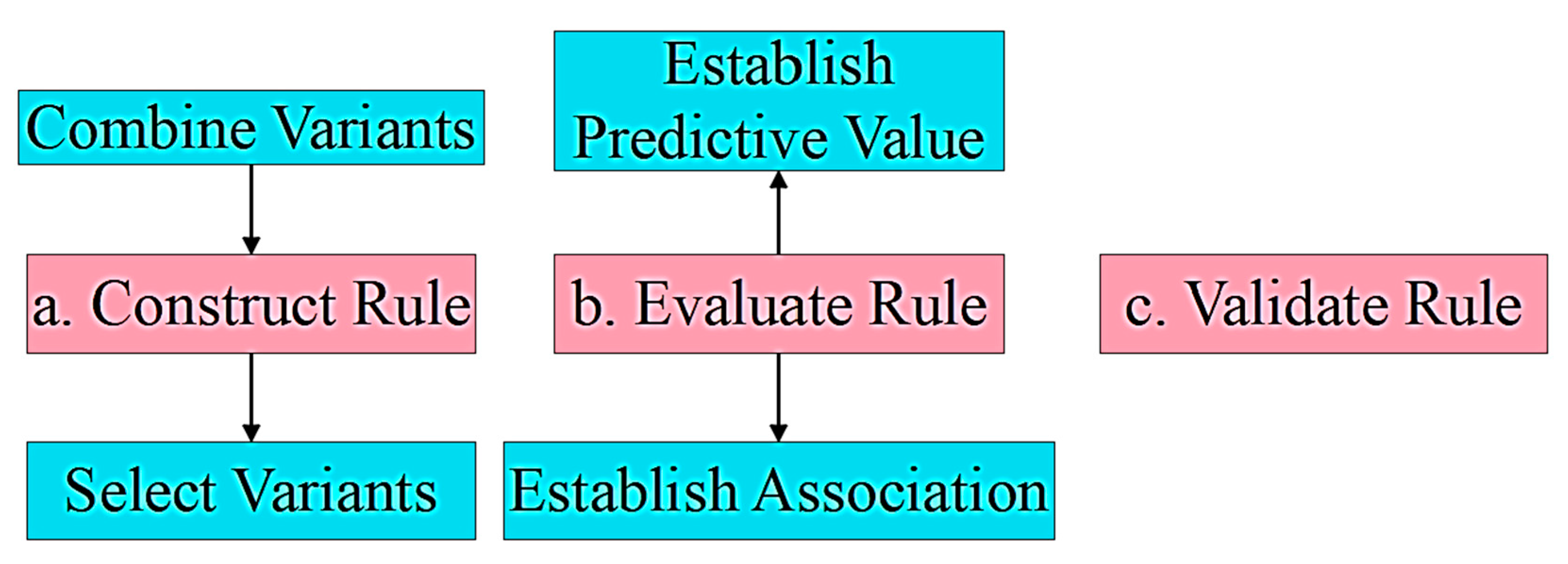
Machine learning-based predictive models are transforming decision-making across industries by deriving actionable insights from dense datasets. In the coatings industry, predictive models predict failures, maintenance requirements, production levels, and market directions. Predictive maintenance facilitated by ML lowers diagnostic uncertainty and increases efficiency of operations (Deepanshu et al., 2025; Saraswat et al., 2025; Thomare, Nagappagol, et al., 2025). Estimation methods such as regression and probability modeling are applied to forecast demand, optimize energy consumption, and analyze market dynamics for coatings. Figure 2 illustrates probability estimation paths in ML, highlighting rule development, examination, and verification for strong predictions (Mittal & Kushwaha, 2024; Ramsundar, 2018; Rout et al., 2025)
Figure 2.
Paths of probability estimation in machine learning, emphasizing rule building, testing, and validation.
Figure 2.
Paths of probability estimation in machine learning, emphasizing rule building, testing, and validation.
4. Protein-Resistant Surface Coatings
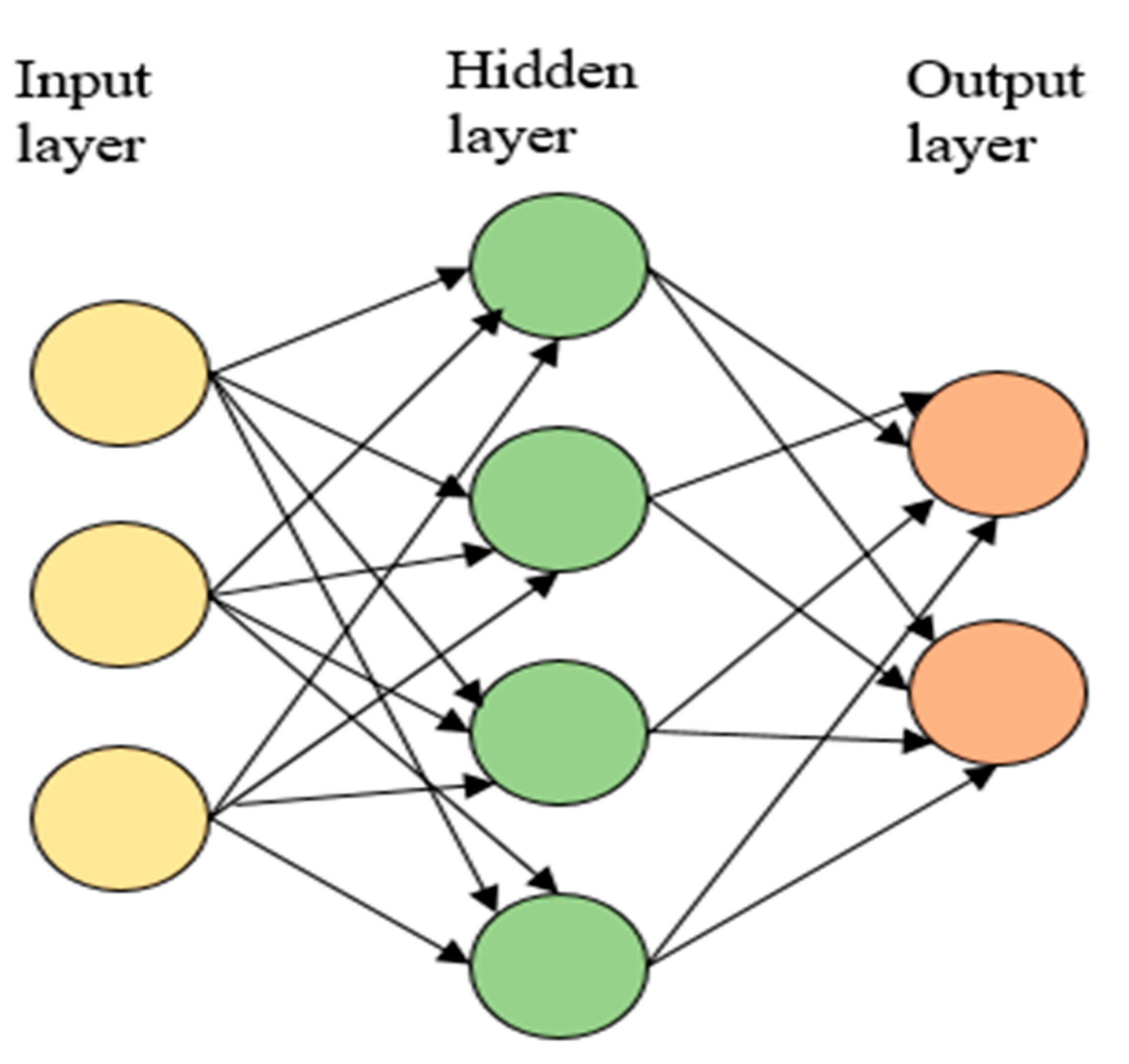
Adsorption of protein onto surfaces can result in biofouling, affecting applications ranging from biomedical devices to industrial hardware. Additionally, empirical design principles like the Whitesides criteria inform the creation of protein-resistant surfaces but are not quantitative in their precision. ML methods, especially quantitative structure-property relationship (QSPR) modeling, bridge this gap by correlating molecular descriptors to macroscopic properties. Neural networks with input, hidden, and output layers are trained from carefully prepared datasets to forecast protein adsorption levels, allowing for the design of sophisticated bioinert coatings. Figure 3 illustrates the structure of a neural network employed for such predictions (Bowen & Ungar, 2020; Magadum, Garg, et al., 2025).
Figure 3.
Protein adsorption prediction neural network structure for surface coatings, showing the input, hidden, and output layers.
Figure 3.
Protein adsorption prediction neural network structure for surface coatings, showing the input, hidden, and output layers.
5. Free Layer Damping Coatings
Damping coatings are employed to reduce vibrations and noise in metal structures. It is not easy to determine mechanical properties like storage modulus and loss factor using conventional methods. Finite element analysis (FEA)-based ML algorithms give the solution by simulating the coating thickness and damping performance relationship. Regression models from FEA data can be used to predict Rayleigh damping coefficients that can be applied in the high-performance damping coatings design (Jonayat et al., 2018; Liu et al., 2022; Magadum, Murgod, Mittal, et al., 2025; Schmitz et al., 2023). The process reduces the complexity of design and minimizes the need for much physical testing.
6. Ferroalloy and Advanced Coating Systems
Ferroalloy wear-resistanting coatings are required in an attempt to prolong the life of industrial parts. Support vector machines, linear regression, and Gaussian process regression models are applied to predict wear loss from composition and processing conditions. The models have been extremely precise and permit new compositions to be quickly screened. The same machine learning methods are applied in other advanced coatings, such as TiO₂ and epoxy composites, to maximize mechanical, thermal, and chemical properties for various applications (Boriratrit et al., 2023; Sehrawat et al., 2025).
7. Green and Sustainable Coating Production
One of the central goals of modern coatings research is to be net-zero carbon-emitting and sustainably manufactured. ML and AI enable the identification of more environmentally friendly raw materials, the efficiency optimization of processes, and the reduction of waste. By incorporating ML-based knowledge into production, the industry is able to move from conventional, resource- and energy-consuming processes to more environmentally harmonious approaches (Bajari et al., 2015; Hossain & Fredj, 2021). The change not only fulfills the regulatory and societal needs but also improves the business case for the new-generation coatings.
8. Conclusion
Machine learning is revolutionizing the commercial coatings market by facilitating data-driven design, prediction, and optimization. From protein-resistant surfaces to damping and ferroalloy coatings, ML models enable record accuracy and efficiency in property prediction and process control. ML enables the integration that facilitates the industry's shift toward sustainable, green manufacturing with reduced environmental footprint and high performance. With advancing ML techniques, their use in coatings will promote innovation, competitiveness, and sustainability in global markets.
References
- Bajari, P. Nekipelov, D., Ryan, S. P., & Yang, M. (2015). Machine Learning Methods for Demand Estimation. American Economic Review 2015, 105(5), 481–485. [Google Scholar] [CrossRef]
- Boriratrit, S. , Fuangfoo, P., Srithapon, C., & Chatthaworn, R. (2023). Adaptive meta-learning extreme learning machine with golden eagle optimization and logistic map for forecasting the incomplete data of solar irradiance. Energy and AI 2023, 13, 100243. [Google Scholar] [CrossRef]
- Bowen, D. Ungar, L. (2020). Generalized SHAP: Generating multiple types of explanations in machine learning. Arxiv 2020. [Google Scholar]
- Brunton, S. L. (2021). Applying machine learning to study fluid mechanics. In Acta Mechanica Sinica/Lixue Xuebao (Vol. 37, Issue 12, pp. 1718–1726). Springer Verlag. [CrossRef]
- Candanedo, I. S., Nieves, E. H., González, S. R., Martín, M. T. S., & Briones, A. G. (2018). Machine Learning Predictive Model for Industry 4.0 (pp. 501–510). [CrossRef]
- Deepanshu, Garg, K., Mittal, H., Yadav, V., & Kushwaha, O. S. (2025). Solar Panel Degradation Prediction using Machine Learning: A Comprehensive Approach. [CrossRef]
- Garg, K. , Mittal, H., Yadav, V., Sehrawat, A., Shah, V., & Kushwaha, O. (2025). Municipal Solid Waste (MSW) Management Prediction Through Machine Learning Models: An Ensemble Tree Regressor Analysis. [CrossRef]
- Hossain, E., & Fredj, F. (2021). Editorial Energy Efficiency of Machine-Learning-Based Designs for Future Wireless Systems and Networks. IEEE Transactions on Green Communications and Networking, 5(3), 1005–1010. [CrossRef]
- Jonayat, A. S. M., van Duin, A. C. T., & Janik, M. J. (2018). Discovery of Descriptors for Stable Monolayer Oxide Coatings through Machine Learning. ACS Applied Energy Materials 2018, 1, 6217–6226. [CrossRef]
- Kruppa, J. , Ziegler, A., & König, I. R. (2012). Risk estimation and risk prediction using machine-learning methods. Human Genetics 2012, 131, 1639–1654. [Google Scholar] [CrossRef] [PubMed]
- Liu, H. , Chan, V. K. H., Tantikhajorngosol, P., Li, T., Dong, S., Chan, C., & Tontiwachwuthikul, P. (2022). Novel Machine Learning Model Correlating CO2Equilibrium Solubility in Three Tertiary Amines. Industrial and Engineering Chemistry Research 2022, 61, 14020–14032. [Google Scholar] [CrossRef]
- Magadum, T. , Garg, K., Murgod, S., Yadav, V., Mittal, H., & Kushwaha, O. (2025). Geospatial Analysis in Machine Learning for CO2 Emissions Prediction Analysis in 2100: A Continent-Wise Analysis. [CrossRef]
- Magadum, T. , Murgod, S., Garg, K., Yadav, V., Mittal, H. N., & Kushwaha, O. (2025). Africa Renewable Energy Development to 2050: Forecast Analysis through a Machine Learning Perspective. [CrossRef]
- Magadum, T. , Murgod, S., Mittal, H., Anshu, D., & Kushwaha, O. (2025). <span style="mso-fareast-language: EN-IN;">Global Wind Energy Generation Trends and Projections: A Comprehensive Analysis to 2050. [CrossRef]
- Mittal, H. , & Kushwaha, O. S. (2024). Machine Learning in Commercialized Coatings. In Functional Coatings (pp. 450–474). Wiley. [CrossRef]
- Murgod, S. , Garg, K., Magadum, T., Yadav, V., Mittal, H., & Kushwaha, O. (2025). AI Powered Renewable Energy Balancing, Forecasting and Global Trend Analysis using ANN-LSTM Integration. [CrossRef]
- Ramsundar, B. (2018). Molecular machine learning with DeepChem. Doctoral Dissertation Stanford University.
- Rodriguez-Galiano, V. , Sanchez-Castillo, M., Chica-Olmo, M., & Chica-Rivas, M. (2015). Machine learning predictive models for mineral prospectivity: An evaluation of neural networks, random forest, regression trees and support vector machines. Ore Geology Reviews 2015, 71, 804–818. [Google Scholar] [CrossRef]
- Rout, D. , Shyamsukha, N., Mittal, H., & Kushwaha, O. S. (2025). Solar energy generation and power prediction through computer vision and machine intelligence. In Computer Vision and Machine Intelligence for Renewable Energy Systems (pp. 103–123). Elsevier. [CrossRef]
- Saraswat, V. , Magadum, T., Mittal, H., & Kushwaha, O. (2025). AI-Driven Modeling of Microbial Carbon Capture Systems for ESG-Linked Carbon Accounting and Disclosures. [CrossRef]
- Schmitz, M. , Kim, J.-Y., & Jacobs, L. J. (2023). Machine and deep learning for coating thickness prediction using Lamb waves. Wave Motion 2023, 120, 103137. [Google Scholar] [CrossRef]
- Sehrawat, A. , Bhatnagar, R. M., Magadum, T., Mittal, H., & Kushwaha, O. (2025). Comparative Analysis of Bio-Based and Traditional Plastics: Life Cycle Assessment, Cost-Benefit Analysis, and Health Impact Evaluation. [CrossRef]
- Tehrani, A. M. , Oliynyk, A. O., Parry, M., Rizvi, Z., Couper, S., Lin, F., Miyagi, L., Sparks, T. D., & Brgoch, J. (2018). Machine Learning Directed Search for Ultraincompressible, Superhard Materials. Journal of the American Chemical Society 2018, 140, 9844–9853. [Google Scholar] [CrossRef]
- Thomare, C. , Magadum, T., & Mittal, H. (2025). Conversion of Cow Dung to Electricity: Process Analysis and Energy Yield Assessment. [CrossRef]
- Thomare, C. , Nagappagol, A., Magadum, T., Mittal, H., & Kushwaha, O. (2025). Simulation and Parametric Analysis of Microbial Fuel Cells Using MATLAB-Based Mathematical Modelling. [CrossRef]
- Varoquaux, G. , Varoquaux, G., Buitinck, L., Buitinck, L., Buitinck, L., Louppe, G., Louppe, G., Grisel, O., Grisel, O., Pedregosa, F., Pedregosa, F., Mueller, A., & Mueller, A. (2015). Scikit-learn: Machine Learning Without Learning the Machinery. [CrossRef]
- Yadav, V. , Deepanshu, Mittal, H., Shah, V., & Kushwaha, O. S. (2025). Fuel Cell Degradation Prediction Using Machine Learning Models: A Study on Proton Exchange Membrane (PEM) Fuel Cell Dataset. [CrossRef]
- Yadav, V. , S, K., Sehrawat, A., Magadum, T., Mittal, H., Shah, V., & Kushwaha, O. (2025). Sustainable Development and Advanced Technologies: Properties, Perspectives, and Applications of Synthetic Aerogels. [CrossRef]
Disclaimer/Publisher’s Note: The statements, opinions and data contained in all publications are solely those of the individual author(s) and contributor(s) and not of MDPI and/or the editor(s). MDPI and/or the editor(s) disclaim responsibility for any injury to people or property resulting from any ideas, methods, instructions or products referred to in the content. |
© 2025 by the author. Licensee MDPI, Basel, Switzerland. This article is an open access article distributed under the terms and conditions of the Creative Commons Attribution (CC BY) license (https://creativecommons.org/licenses/by/4.0/).
Copyright: This open access article is published under a Creative Commons CC BY 4.0 license, which permit the free download, distribution, and reuse, provided that the author and preprint are cited in any reuse.


