

Submitted:
23 June 2025
Posted:
27 June 2025
You are already at the latest version
Abstract
Using plants to eliminate, break down, or confine environmental pollutants is a technique known as phytoremediation, which is both economical and environmentally beneficial. As a natural and sustainable restoration approach, it has benefits over traditional techniques, including lower costs, less environmental impact, and long-term use. This review focuses on the many processes of phytoremediation, how they work with flora, how well they work with fauna to remove different kinds of contaminants, and the challenges involved in putting them into practice. The study also addresses the potential of phytoremediation research in Bangladesh and throughout the world, as well as its possible application in upcoming environmental restoration initiatives. Gaining insight into such interactions can help advance sustainable environmental restoration initiatives and enhance phytoremediation approaches.
Keywords:
Phytoremediation
; environmental pollution
; heavy metal contamination
; green technology
; soil and water remediation
; Bangladesh
; sustainable restoration
; environmental management
; pollution control
; plant-based remediation
Chapter 1: Introduction
1.1. Background of the Research
In a substantial population of a country, the biotic and abiotic components are significantly endangered. Numerous methodologies have been devised to extract toxicants from soil and water. Harnessing plants’ natural capacity to eliminate, reduce, and stabilize contaminants from polluted soils, phytoremediation has become one of such viable solutions. This method has been widely applied to mitigate pollution from heavy metals, organic pollutants, and radionuclides (Ali, Khan, & Sajad, 2013). Because of its little environmental impact, this biotechnological approach not only provides a cost-effective substitute for traditional engineering techniques, which sometimes need significant financial backing, but it also supports sustainable practices. Phytotechnologies are a popular option for rehabilitation efforts because of their many benefits, which include improving soil properties, controlling water and biogeochemical cycles, and restoring ecosystems (Oleksińska et al., 2015). Notwithstanding these advantages, the effectiveness of phytoremediation depends on variables like pollutant concentration and temperature, demonstrating the need for a thorough understanding of regional ecosystems before implementation (Linacre et al., 2015). Soil is one of the key components of human life and has been polluted by many anthropogenic causes. In Bangladesh, rapid industrialization is one of the biggest reasons for soil contamination of many toxic elements. Most of them don’t have any treatment plants, so they throw waste directly into an open place, which harms water, soil, plants, and also biodiversity (Mallick et al.,2019). One of the essential elements of human life is soil and water, both of which have been contaminated by numerous human activities. One of the main causes of pollution caused by several harmful materials in Bangladesh is the country’s fast industrialization. Since the majority of them lack treatment facilities, they discharge waste into open areas, endangering biodiversity as well as plants, water, and soil (Mallick et al., 2019). Arsenic and acid rain are other sources of contamination. However, the main cause of pollution is the everyday operations of these industries. To have a healthy and balanced environment and ecosystem, we must repair the soil and water, which are crucial abiotic components in our surroundings. And because of its benefits—economic, ecological, and environmental—phytoremediation is quite profitable for that. (Yan et al.,2020).
1.2. Ex Situ Method
To save organisms from hazards like habitat loss, poaching, or environmental changes, ex-situ conservation requires keeping them outside of their natural environments. Contaminated soil must be removed for on-site or off-site treatment, and the treated soil must then be returned to the original location. The traditional ex-situ techniques used to clean up contaminated soils depend on excavating, detoxifying, and/or physically or chemically destroying the contaminants; as a consequence, the contaminants are stabilized, solidified, immobilized, incinerated, or destroyed (Ghosh & Singh, 2005).
1.3. In-Situ
In situ conservation aims to preserve the ecological interactions and processes that are vital to a species’ existence while preserving it in its native environment. Because in-situ methods are less expensive and have a smaller ecological impact than ex-situ methods, they are preferred. Traditionally, the ex-situ method involves digging up heavy metal-contaminated soil and burying it in a landfill (McNeil, & Waring, 1992). However, since off-site burial only moves the pollution issue to a different location, it is not a suitable solution (Smith,1993). The majority of these traditional restoration techniques are expensive to apply and further disrupt the already damaged ecosystem (Kumar et al.,2021). Using plants, the phytoremediation process cleans up polluted mediums, such as soil and water. By using green plants to preserve, capture, or detoxify pollutants from polluted soil and water, phytoremediation is a process that is both ecologically and economically advantageous (Ashraf et al., 2019). Although the concept of utilizing metal-accumulating plants to eliminate heavy metals and other substances was originally proposed in 1983, it has been in use for the last three centuries. The Latin word remedium (to clean or repair) is joined with the Greek prefix phyto (plant) to get the general term “phytoremediation.” (Kukreja & Goutam, 2013). Phytoremediation is an environmentally sustainable, non-invasive, and potentially beneficial green technology that uses plants and the microbiota they are associated with to absorb, capture, detoxify, or volatilize pollutants from soils, water, sediments, and perhaps air. Once the idea of phytoremediation is presented, this technique may be used to remove both organic and inorganic contaminants that are present in soil (solid substrate), water (liquid substrate), or air (Malone, 2022).
1.4. Phytoremediation and Its Importance
Phytoremediation is defined as the use of plants to remove, transfer, stabilize, or destroy contaminants in soil and water, providing a sustainable approach to environmental remediation. As heavy metals and other pollutants accumulate due to industrial activities and agricultural practices, effective remediation strategies are paramount. This process not only detoxifies the affected areas but also has significant economic advantages, as phytoremediation is generally more cost-effective than traditional clean-up methods, which often involve extensive excavation and transportation of contaminated materials (Azubuike et al., 2016). Furthermore, by leveraging the natural abilities of plants to absorb and stabilize pollutants, this method promotes ecological restoration and biodiversity, ultimately enhancing soil health. It also contributes to biodiversity conservation by creating green spaces and enhancing ecosystem functions. By stimulating plant growth, enhancing carbon sequestration, and lowering pollution in the environment, it is an environmentally sound strategy that aids in the struggle against climate change. Reducing exposure to harmful pollutants in urban and rural settings also has implications for human health (Islam et al.,2024). Therefore, understanding the mechanisms underlying phytoremediation, including heavy metal uptake and detoxification in plants, is essential for optimizing its application and maximizing its benefits (Yan et al., 2020). Many studies show that to create a safe environment for the ecosystem, agriculture must be available, and human health must be secure. As Industries have different kinds of byproducts, it’s absorbed in the soil and water, which affects the food chain and organisms by affecting plants and the ecosystem. Humans are affected by consuming direct or secondary contaminated products. To remove all this contamination and store the balance in the environment, and ecosystem, phytoremediation plays an important part. The importance of phytoremediation in treating heavy metal pollution has been emphasized by recent research. For example, studies that have been published by Yan et al., 2020, highlight how plants can improve the bioavailability of heavy metals, which in turn can improve their absorption and accumulation. To increase the effectiveness of phytoremediation, the study addresses tactics such as the release of excrement from roots and the participation of rhizosphere microorganisms. The use of phytoremediation for the sustainable use of farmland that is high in arsenic is examined in another work that was presented at a conference and published in the MDPI Proceedings. The study emphasizes how some plant species may be able to remove arsenic from polluted soils, lowering the health concerns connected to arsenic exposure (Chen et al.,2024).
Chapter 2: Concepts and Mechanisms of Phytoremediation
2.1. Overview of Phytoremediation
The variety of pollutants, bioavailability, and soil characteristics all affect the processes and effectiveness of phytoremediation (Etim,2012). One widely recognized route is the absorption of heavy metals through root systems, where plants store the contaminants in their tissues and decrease their environmental bioavailability. For example, research indicates that macroalgae can effectively absorb harmful metals, underscoring its potential to reduce heavy metal pollution in aquatic environments (Akbar et al., 2025). Another aspect of phytoremediation is demonstrated by the way certain plant species use their metabolic activities to convert organic contaminants into less dangerous forms.
Additionally, research looking at ornamental species’ ability to stabilize CO2 concentrations has shown that their presence can affect internal air quality. However, the findings vary depending on ambient circumstances (Tangahu et al., 2024).
In soils polluted with metals, plants use several strategies to flourish without experiencing negative growth impacts. Certain plants block the absorption of metals or transport them from the roots to the shoots, therefore excluding them from metabolically active regions (Sabir et al.,2015). Because some metals are known to harm DNA and cause cancer due to their mutagenic properties, the accumulation of metals in the bodies of people and animals when they reach the food chain has serious health consequences (Briffa et al.,2020). It is becoming more and more certain that phytoremediation offers a sustainable method of pollution management as studies continue to clarify these mechanisms. Compared with standard techniques, phytoremediation provides a more economical and ecologically friendly solution (Macek et al., 2004). This research has discovered six ways that plants can influence the mass of contaminants in soil, sediments, and water. This paper mentions seven phytoremediation processes, each of which is described in depth below, although some of these mechanisms have overlap or similarities, and the terminology changes. As the use of phytoremediation is meant to be accomplished, each of these methods will have an impact on the volume, mobility, or toxicity of pollutants (Etim, 2012).
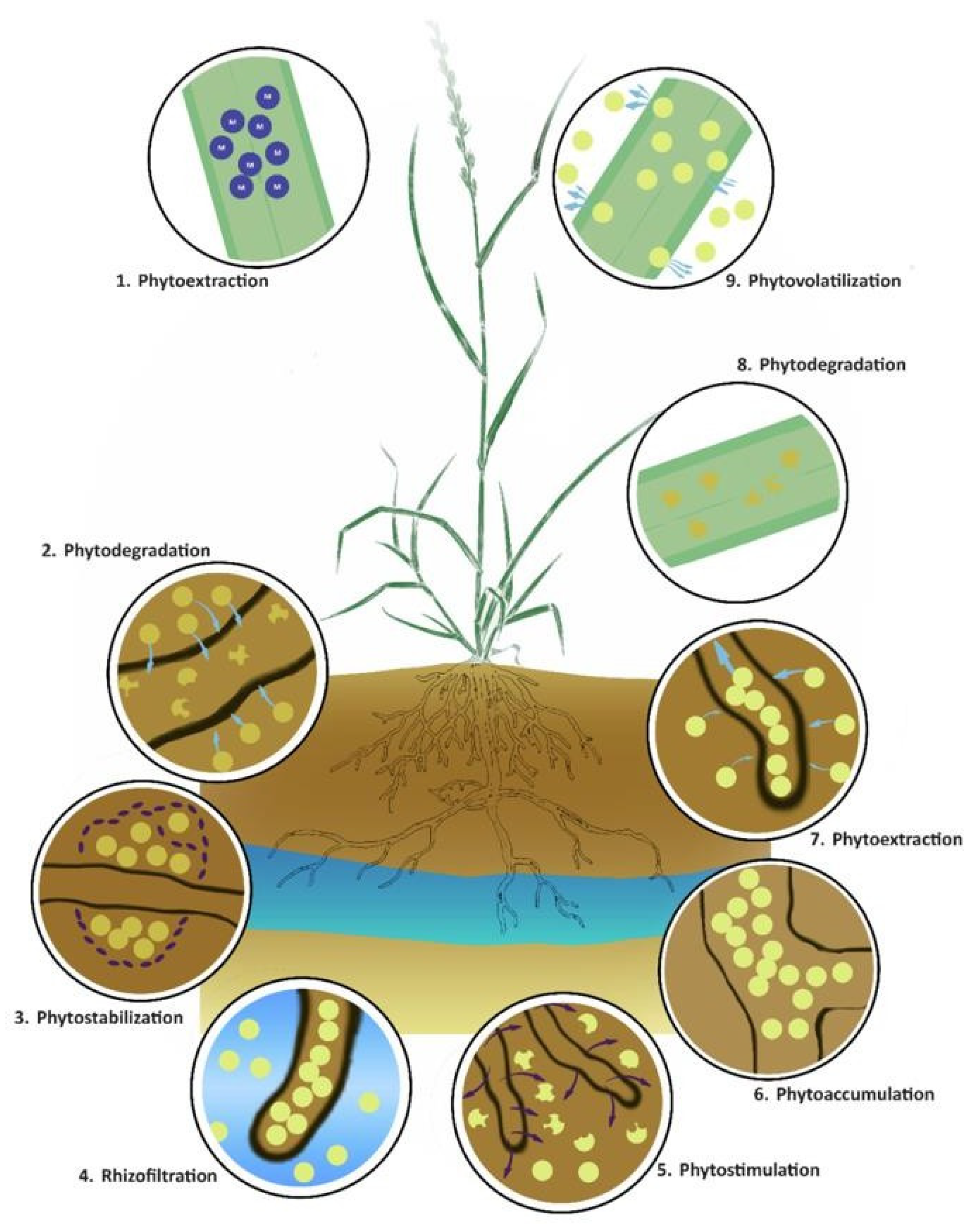
Figure 1.
Phytoremediation process.
2.2. Restoration Mechanisms
There are six ways that phytoremediation can be done, the process of remediating the pollutants from the soil, water, or any contaminated zones by plants. Which can be 1. Phytoextraction 2. Phytostabilization 3. Phytodegradation 4. Phytovolatilization 5. Rhizofiltration 6. Phyto stimulation.
2.2.1. Phytoextraction
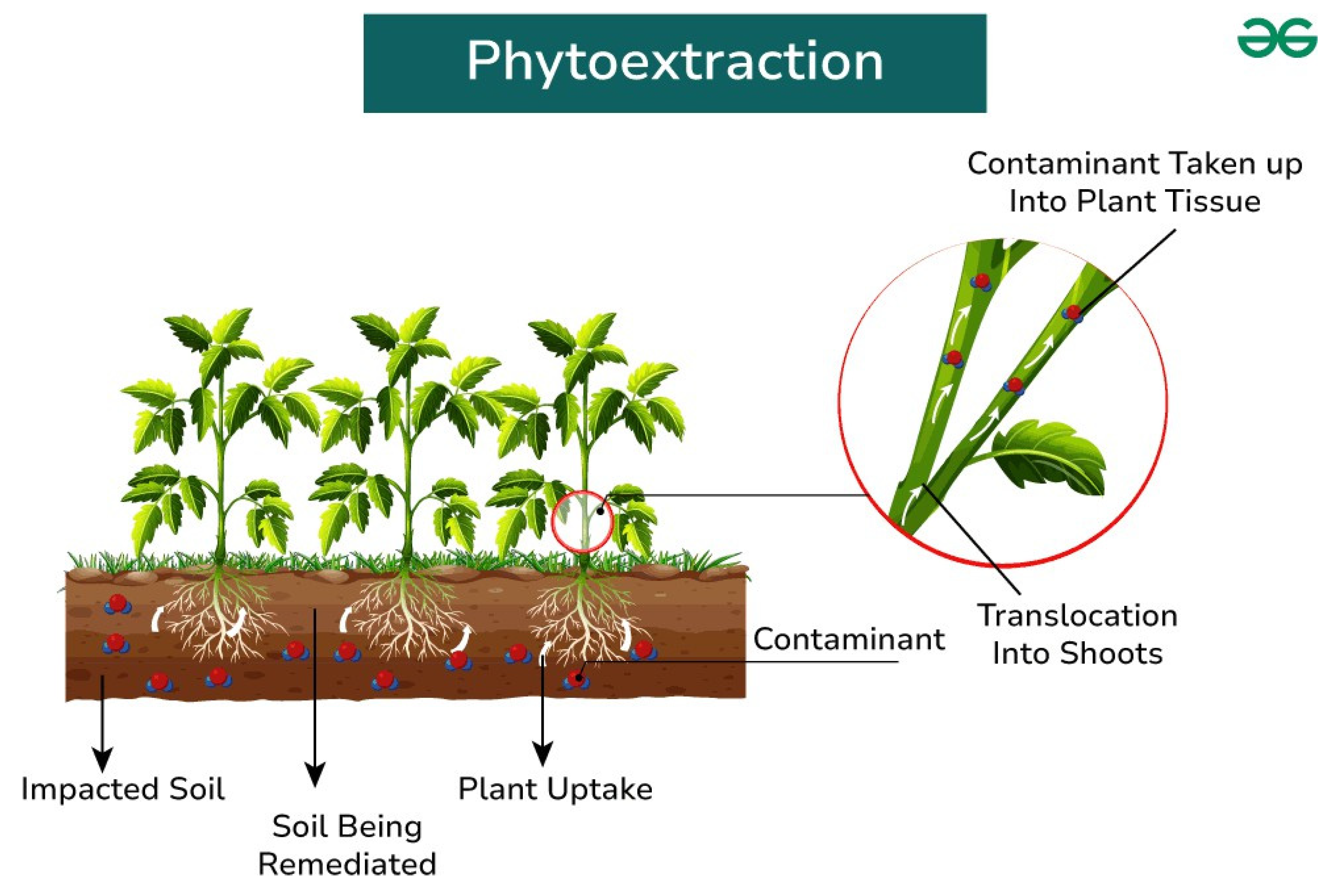
The process, also known as phytoaccumulation, implies that plant roots absorb and move metal pollutants from the soil into the above-ground parts of the plants. The main use of phytoextraction is the remediation of polluted soils (Yanitch et al., 2020). Both the phyllosphere and rhizosphere of plants are involved in phytoextraction since this technique removes pollutants from the soil and moves them to the plant components that are above ground (Pandey and Bajpai, 2019). For this reason, heavy metal-accumulating plants are grown in contaminated areas, and the metal-enriched biomass above ground is removed, eliminating some of the soil pollutants. Metal transfer to shoots is a crucial physiological process since it is much simpler to gather shoots than roots (Sharma et al., 2023).
It produces plant species that may collect significant concentrations of pollutants in their shoots, especially more than 0.1% of dry weight (DW). This approach may be divided into two categories: induced phytoextraction and continuous phytoextraction (Islam et al.,2024). The fundamental concept of phytoextraction for contaminated environments is to grow appropriate plant species on-site, gather the biomass containing heavy metals, and then process it to reduce its bulk and size using techniques including composting, compressing, drying, and thermal decomposition (Suman et al., 2018).
Some plants are best suited for the phytoremediation process and certain metals. Phytoextraction is the most efficient phytoremediation technique for removing heavy metals and metalloids from damaged soils. Additionally, it is the most economically feasible choice (Sharma et al., 2023). Therefore, the ideal phytoremediation species must not only be able to withstand and absorb heavy metals, but also grow quickly, produce a lot of biomasses, and offer financial advantages (Kafle et al., 2022). When it is economically viable, the resulting heavy metal-enriched biomass—which has high concentrations of metal contaminants—is either used for trace element extraction or disposed of as carefully hazardous waste (Suman et al., 2018).
Figure 2.
Phytoextration process (GeeksforGeeks, 2024).
2.2.2. Phyto Stabilization
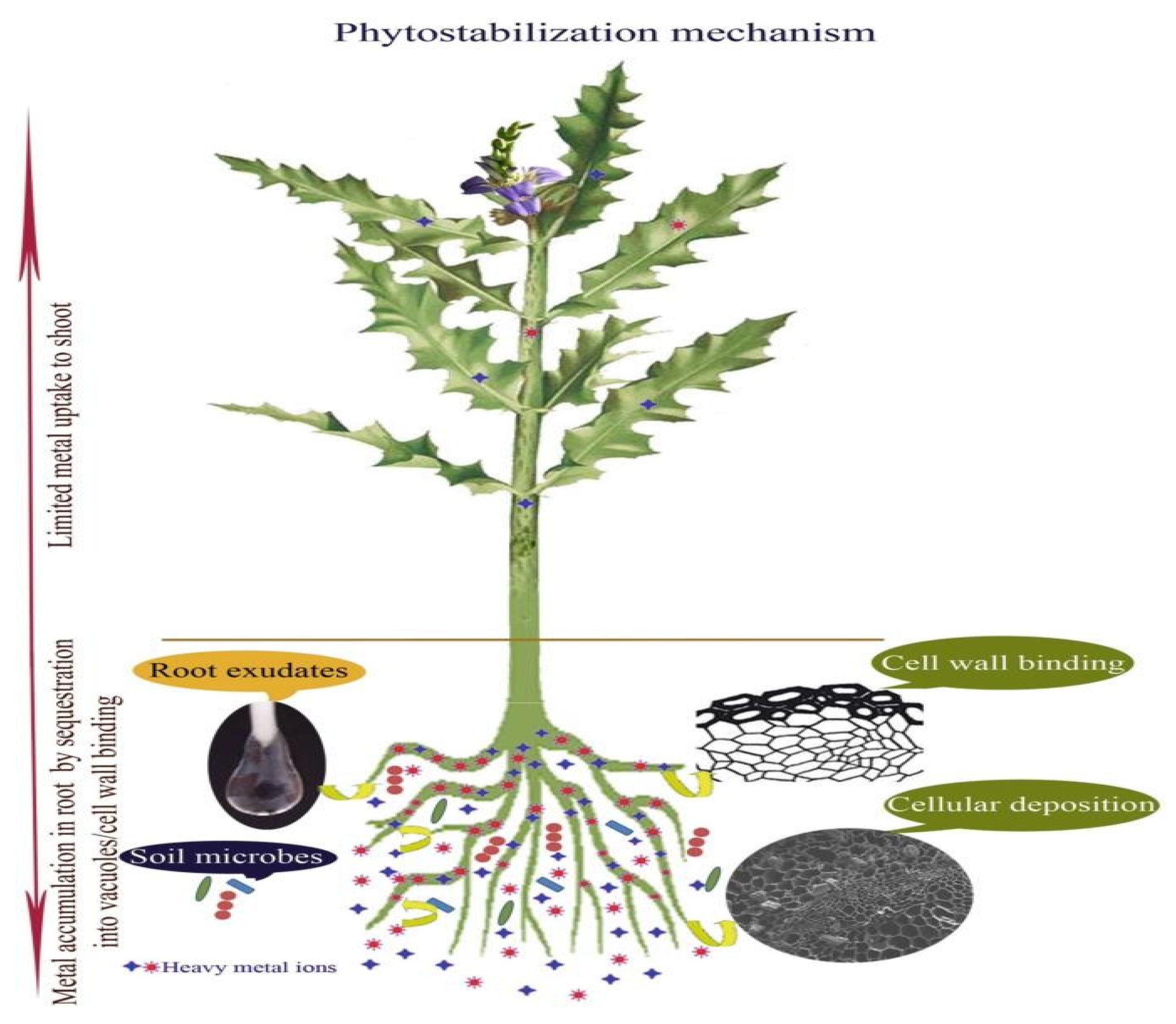
Over the past few decades, there has been a significant rise in trace element contamination of agricultural soils and waters. Additionally, the exponential growth in agricultural production in places with polluted soil has resulted in a substantial increase in human exposure. Environmental pollution by these components has been a growing ecological and worldwide public health problem in recent years (Saran et al., 2020). The accumulation and absorption of heavy metals by the roots, where they change into a non-toxic form, immobilizes contaminants in the soil. This process is known as Phyto stabilization. By enhancing the system’s evapotranspiration, this technique reduces the number of contaminants that leach. (Sladkovska, 2022). Because it contributes to inhibiting the spread of pollutants into the food chain, Phyto stabilization is essential. One of the most important factors in determining whether or not potential plants can stabilize an element is the chemical composition (Hamidpour et al., 2020).
The application of Phyto stabilization is limited since it is frequently thought of to be slower and only appropriate for low-value locations. In this way, using non-agronomic or biomass- interested plant species for these goals helps the environment, society, and economy during the restoration process by creating green spaces, ecosystem services, goods, and commodities (Cundy et al., 2016). Even while Phyto stabilization has certain benefits, its use is limited since metals are only constrained and momentarily immobilized, making it less popular than phytoextraction. It is frequently used in emergencies to quickly immobilize metals in the rhizosphere of plants (Alsafran et al., 2022). Furthermore, by including organic matter and nutrients, Phyto stabilization techniques frequently utilize natural substances to reduce metal toxicity and increase plant growth. These modifications usually come from recycling various wastes and byproducts, which is consistent with the circular economy’s ideals (Lacalle et al., 2023).
Figure 3.
Phyto stabilization process (Shackira & Puthut, 2019).
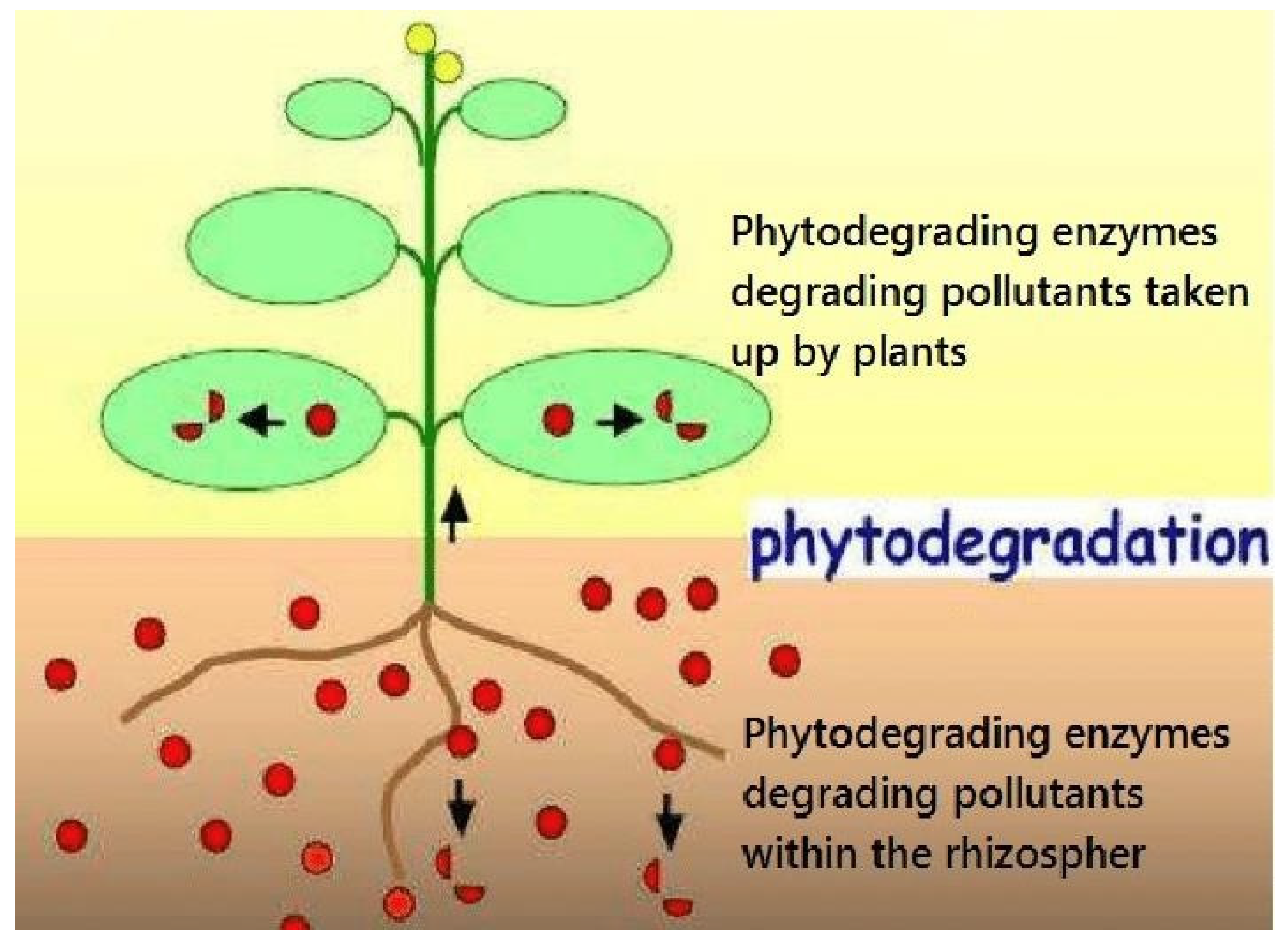
2.2.3. Phytodegradation
A developing method for dealing with contamination and restoring the efficiency and health of contaminated soil is phytodegradation. It is the procedure that breaks down potentially hazardous substances like petroleum or crude oil into their most basic components. Following their integration into the plant’s tissue, these elements support the organism’s development. By breaking down the contaminants around the plant, this function cleans out the nearby region (Poitras, 2019). Organic components may go through phytodegradation either inside the plant or in its rhizosphere. This technique may remove a wide range of substances and types of compounds from the environment, including volatile compounds in the air, aromatic substances in soils, and chemicals in groundwater (Newman & Reynolds, 2004). Contaminated soils can be treated with particular bacterial inocula to improve this process.
To break down specific pollutants, bacterial inocula comprise strains with the necessary metabolic activity. Promising outcomes have been observed when plants are inoculated with genetically modified bacterial strains that break down a particular pollutant (Greipsson, 2011). Pollutants undergo metabolic transformation into inactive forms, much as Phyto stabilization. Phytodegradation is less dependable than other methods, labor-intensive, and frequently necessitates soil amendments (Bezie et al., 2021). Phytodegradation is frequently used for eliminating organic contaminants. Nevertheless, it is rarely utilized and less effective, particularly when it comes to inorganic pollutants like Potentially toxic elements (Mishra et al., 2020).
Figure 4.
Phytodegradation process(Okon et al., 2020).
2.2.4. Phytovolatilization
“Phytovolatilization” refers to the process by which the aboveground portions of the plant release typically organic substances into the environment. This comprises all of the substances that are absorbed by the roots, partially transformed there, and then transferred into the shoot (Baeder-Bederski-Anteda, 2003). In the process, metal pollutants are transformed into a gas that gets released into the atmosphere (Aweng et al., 2018). Potentially toxic compounds are just relocated to other parts of the natural environment during this process, and they may still return to the soil after precipitation (Bisht et al., 2020).
Figure 5.
Phytovolatilization process (GeeksforGeeks,2024).
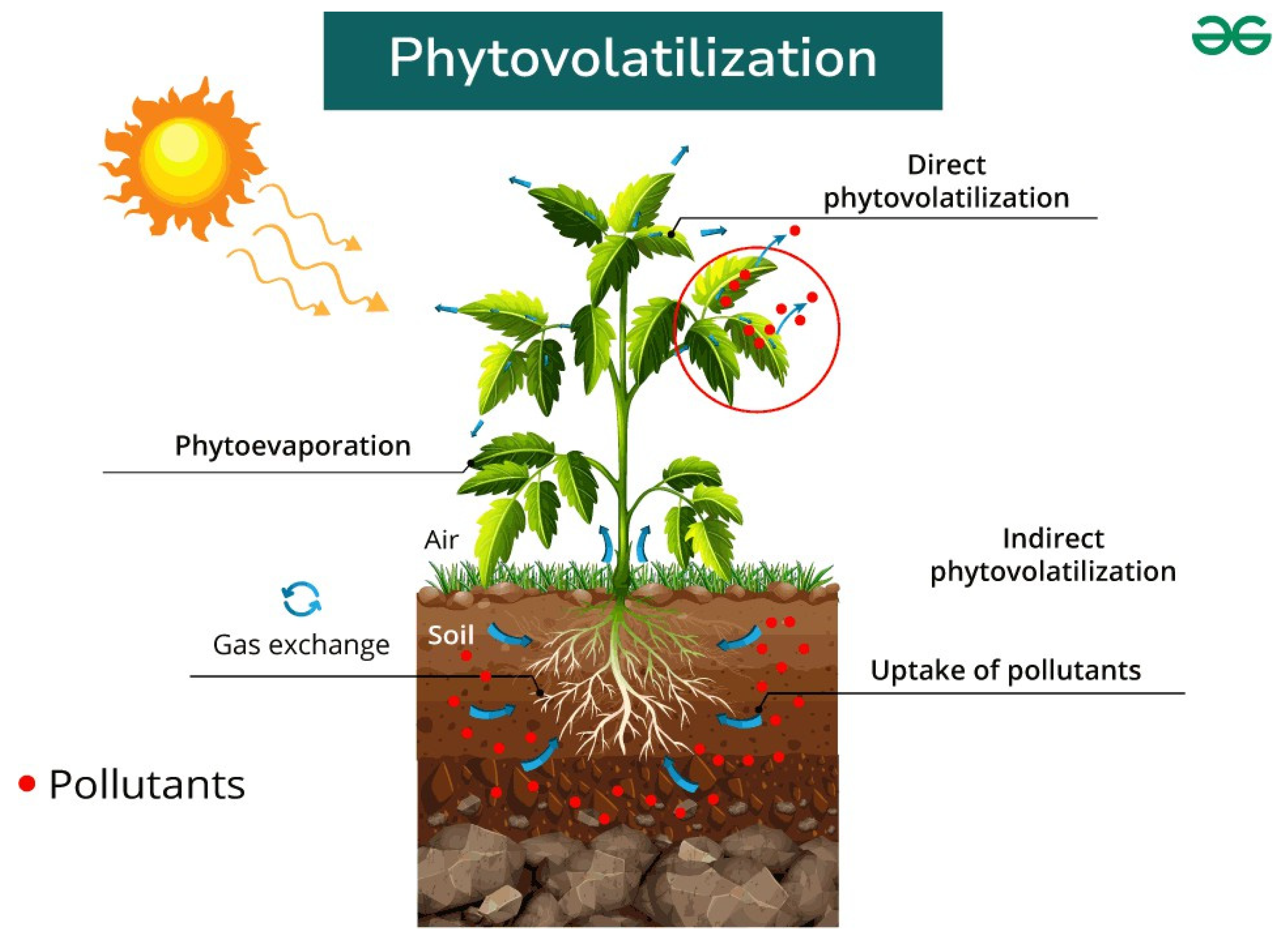
In phytovolatilization, plants with a high rate of evapotranspiration are required. The passive volatilization of organic pollutants, particularly volatile organic compounds (VOCs), occurs in plants (Greipsson, 2011). Because of this, other methods of phytoremediation are more popular than phytovolatilization.
2.2.5. Rhizofiltration
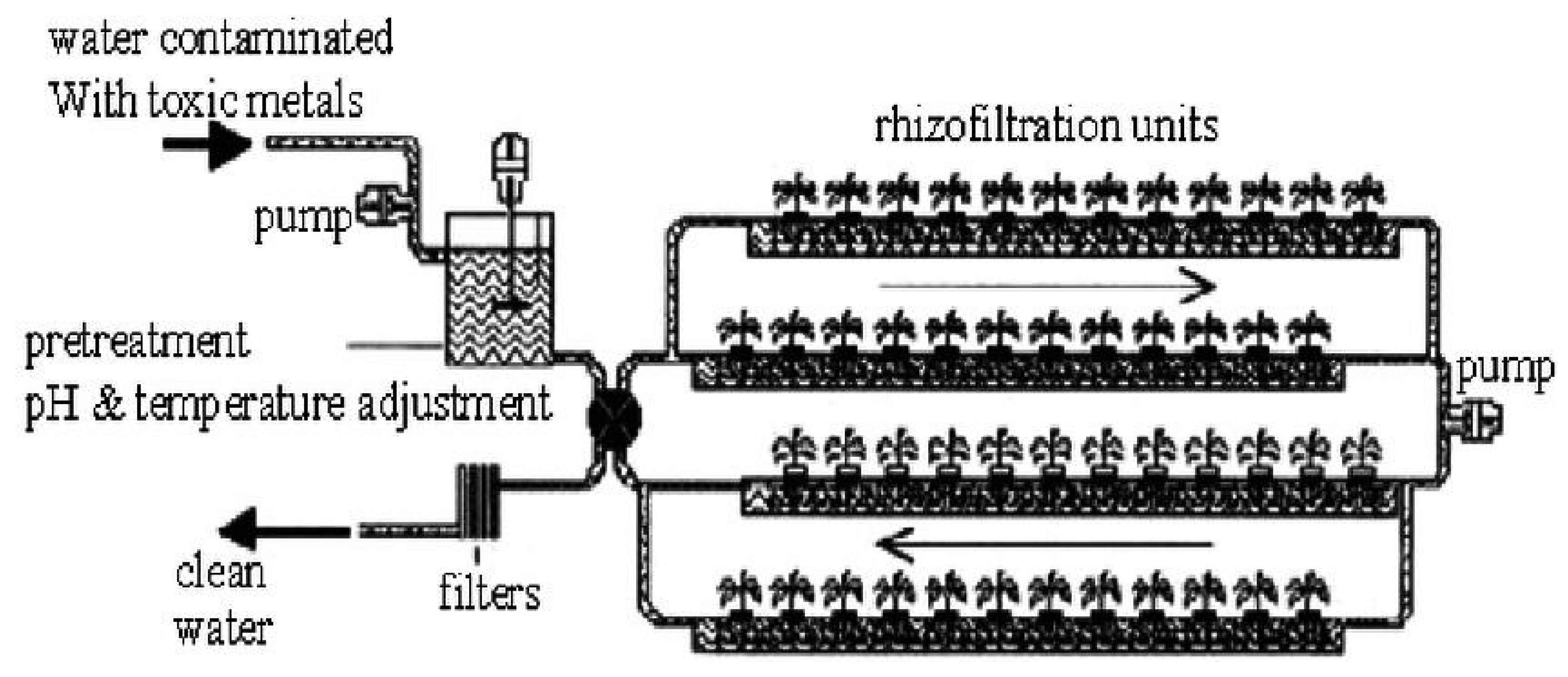
One new technique for cleaning up the environment is rhizofiltration, which uses plant roots to extract heavy metals from water (Dushenkov et al., 1995). To eliminate harmful materials or excessive nutrients, contaminated groundwater, surface water, and wastewater are filtered through a mass of roots in a process known as rhizofiltration. The procedure involves the pollutants’ adsorption and absorption on the root (Rao et al., 2022). It shows a significant result in removing contaminants from flowing water (Vinceti et al., 2024). These kinds of treatment methods are typically used in control settings, which are greenhouses with water for plant growth. Waste is brought into touch to adapt the plants to the environment to create effective methods for secondary effluents from the pulp paper sector. The roots of these adapted plants then absorb and adsorb pollutants and groundwater when they are transported to waste disposal areas. The plants are taken when the roots become coated with contaminants (Sharma et al., 2020). The most popular and effective plant-based technique for removing pollutants from industrially contaminated areas is rhizofiltration, which does not affect soil or water bodies. Compared to other traditional treatment techniques, it also offers the advantages of stabilizing soil properties and not creating secondary waste that has to be dealt with (Bakshe & Jugade, 2023).
Figure 6.
Rhizofiltration process (OB & Muchie, 2010).
2.2.6. Phyto Stimulation
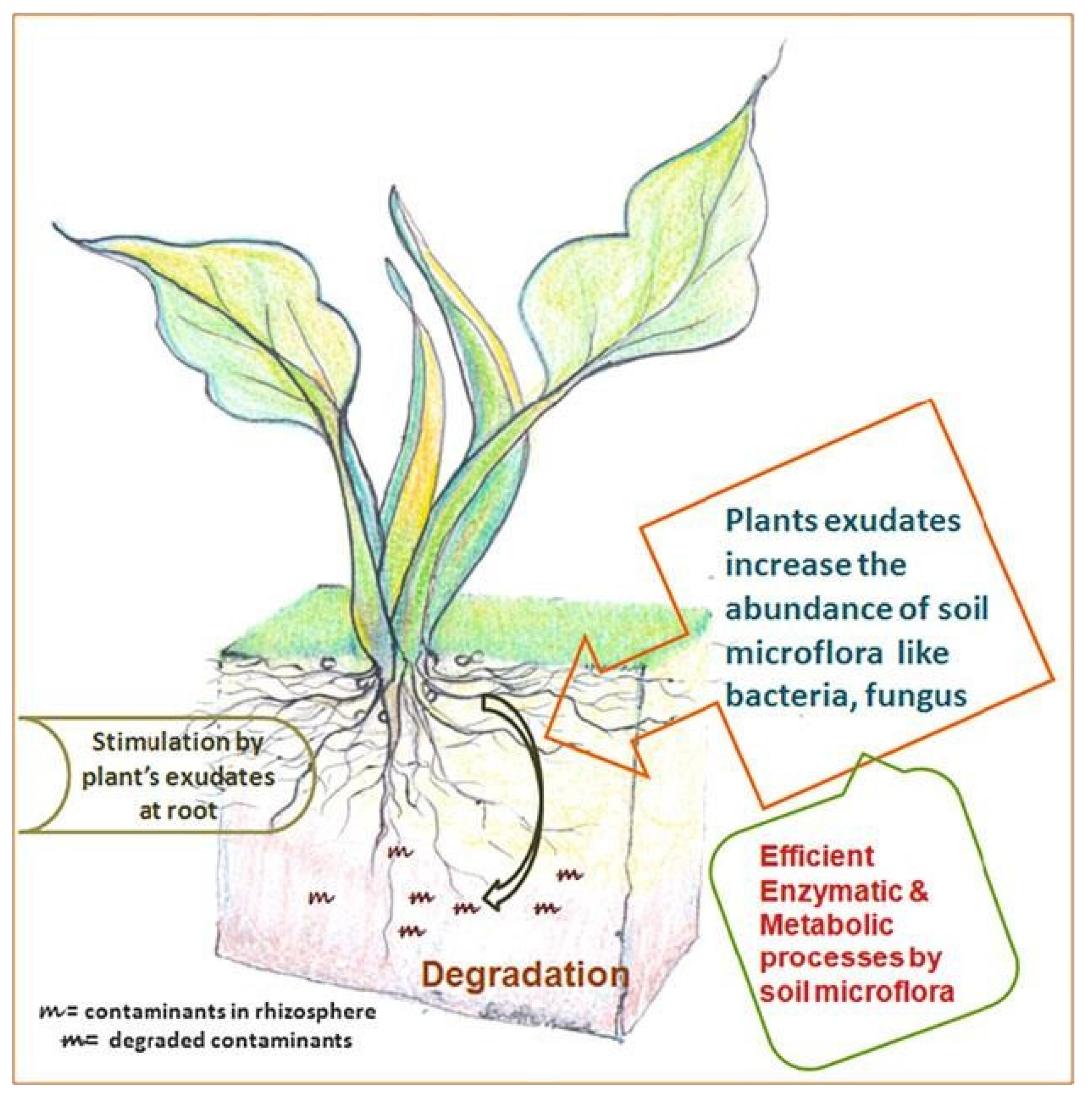
Phytostimulation is a rhizospheric biodegradation, which is based on the production by plants in root exudates that promote the development and metabolic processes of various bacterial and fungal communities in the rhizosphere that can break down a variety of pollutants (Anderson et al. 1994). The process of phytostimulation occurs when rhizosphere-dwelling bacteria biodegrade contaminants into less harmful forms. In this process, bacteria that may break down pollutants are encouraged to thrive by the root exudates that plants exude (Chojnacka et al., 2023). Utilizing functional elements in phytostimulation procedures can result in improved soil remediation outcomes. It is crucial to remember that the effectiveness might differ based on several variables, including the kind of contamination, the properties of the soil, and the interactions between plants and microorganisms (Ouvrard et al., 2014).
Figure 7.
Phyto stimulation process (Chatterjee et al., 2013).
2.3. Phytoremediation Advantages
‘’The use of green plants to remove, contain, or render harmless environmental contaminants’’ is the definition of phytoremediation (Cunningham and Lee, 1995). Green technology is another name for it, and if implemented properly, it benefits both the environment and the general public’s sense of aesthetics. Phytoremediation is comparatively simple to apply since it doesn’t require expensive equipment or highly skilled workers (Swetha et al., 2023). The fundamental idea behind phytoremediation is that pollutants are broken down by plant roots into less harmful elements or absorbed and stored in the stems and leaves of the plant (Dhaliwal et al.,2020). In recent years, phytoremediation has drawn a lot of interest in sweeping up polluted soil (Huang et al. 2016). Phytoremediation is very promising in tropical and subtropical zones. According to Yan et al.,2020, phytoremediation has many advantages as they are-
- ♦
- It can use solar energy to survive.
- ♦
- It’s easy to manage and easy to install.
- ♦
- Its maintenance is low.
- ♦
- It’s very economically feasible.
- ♦
- It can reduce exposure to pollutants in the environment and the ecosystem.
- ♦
- It can be applied over a large-scale field easily.
- ♦
- Stabilizing heavy metals can reduce the risk of spreading contaminants by preventing the metal from leaching and erosion.
- ♦
- Releasing various organic matter into the soil improves the soil fertility.
- ♦
- It can easily be disposed of when the time comes.
Chapter 3: Phytoremediation in Action
3.1. Environmental Applications of Phytoremediation
3.1.1. Soil
Soil is one of the key components of human life and has been polluted by many anthropogenic causes. Phytoremediation could reduce that pollution. Remediation techniques are required to reduce soil contamination and stop heavy metals from entering terrestrial, atmospheric, and aquatic habitats. Many approaches have been developed to reclaim toxicants from soil, and phytoremediation is one of them. Phytoremediation techniques are effective for addressing the concentrations of heavy metals, organic pollutants, and radioactive compounds in soil. Over 400 species of hyperaccumulators have been identified, capable of absorbing 50 to 500 times more heavy metals from the rhizosphere than typical plants (Kafle et al., 2022). Due to emissions from metal smelters or irrigation with river water from mines, land in Japan, particularly paddy fields, is somewhat polluted with Cd. This has led to some major issues, particularly in the 1970s, as the situation demanded urgency to remove Cd from the rice field, and phytoremediation was introduced. Compared to Brassica juncea, a recognized hyperaccumulator, indica-japonica types of rice have a significantly greater capacity to absorb cadmium (Cd) from the soil. Compared to B. juncea, these rice types absorb 2–4 times as much Cd in their tissues and around 6 times as much in their shoots. This variety of rice may successfully remove Cd from polluted soils by phytoremediation, as evidenced by the considerable drop in Cd levels in the surrounding soil (rhizosphere) following harvest (Oh et al., 2014).
3.1.2. Water Treatment
The features of the soil, the quality of the surface water, and several subsurface chemical reactions all affect the quality of groundwater (Kurwadkar et al., 2020). Geogenic in origin, many of the heavy metal pollutants found in groundwater are brought on by the decomposition of naturally occurring mineral deposits in the crust of the Earth (Adnan et al., 2024).
Heavy metals from polluted areas are being treated utilizing a variety of conventional techniques that include physical, chemical, and biological methods. These are often divided into two categories of remediation measures: ex-situ (treatment off-site) and in-situ (treatment on-site). Such treatments are only appropriate for brief periods and may only be used in small remote areas (Timalsina et al., 2022).
The cost-effectiveness, sustainability, ease of maintenance, and environmental friendliness of phytoremediation have made it a popular alternative to traditional remediation technologies in recent years (Ali et al., 2020). Groundwater has been cleaned up using phytoremediation. Poplar trees have deep roots that develop phreatophytically, have a high rate of evaporation, and can grow quickly (Kafle et al., 2022). Wastewater can also be treated using phytoremediation techniques. Wastewater was formerly treated using several free-floating plants (Ekperusi et al., 2019). These plants’ high absorption capacity allows them to treat a variety of heavy metals and organic contaminants found in wastewater from the home, business, and agricultural sectors (Mustafa & Hayder, 2021). In developing nations like Nepal, these pollutants are challenging to eliminate given the state of economic development and technological advancement. Phytoremediation is a quite affordable plant-based treatment approach that uses several widely accessible plant species and requires low to medium technology for setup, maintenance, and post-treatment. The availability of phytoremediation species worldwide is thus anticipated to have similar potential for use in developing nations such as Nepal (Timalsina et al., 2022).
3.1.3. Air
Currently, 5% of the world’s illness burden is caused by urban air pollution, which poses a serious health danger to city people everywhere (Cohen et al., 2017). The amount of time people spend indoors as well as the resulting health burden have made poor indoor air quality a major problem in the built environment. The primary causes of poor indoor air quality and its negative health impacts include nitrogen dioxide, synthetic material off-gassing, and dangerous outside volatile organic compounds (VOCs) including benzene, toluene, and ethyl- benzene that enter the indoor environment through ventilation (Matheson et al., 2023). Two SDG targets directly address poor air quality: SDG 11.6 (reduction of adverse per capita environmental impacts of cities, including paying special attention to air quality and other waste management) and SDG 3.9 (substantial reduction of health impacts from hazardous chemicals and air, water, and soil pollution) (Desa, 2019). Phytoremediation, a technique that uses plant materials and technologies to clean up contaminated air streams, has been shown to remove gaseous pollutants in a significant amount of literature during the past four decades. By primarily using phytovolatilization, phytoremediation can also be a significant factor in the removal of air pollutants. For example, it was discovered that hybrid poplar and willow trees phytovolatilize trichloroethylene (TCE) and perchloroethylene (PCE) (Teiri et al., 2018).
3.1.4. Heavy Metal Sites
Many industrialized and developing nations are facing major problems as a result of soil contamination. Uncontrolled disposal of solid waste and industrial and urban effluents frequently results in the hazardous build-up of heavy metal ions (Swetha et al., 2023). The leather business, mine sites, etc, have grown quickly, resulting in the production of a lot of waste that frequently contains heavy metals and other harmful materials. Large volumes of waste rocks and tailings were produced by mining operations, and leather industries, which led to the loss of forest, pasture, and farmed land as well as soil contamination from heavy metals (Oh et al., 2014). The environment and public health are seriously threatened by these pollutants. These industries have become a source of environmental pollution in the terrestrial ecosystem due to inadequate treatment of soil, which contains high organic load and toxic inorganic contaminants. These are among the polluting industries that discharge high levels of pollutants, and pose serious environmental impacts (Song et al., 2000). To reduce the contamination of the soil and stop heavy metals from entering the terrestrial, atmospheric, and aquatic habitats, remediation techniques are required. According to research by Manikandan et al., (2015), tannery businesses are known to contaminate soil and water with heavy metals like chromium, lead, and cadmium. The health of people and the environment is seriously endangered by these contaminants. It’s critical to find sustainable remediation approaches that work. Many approaches have been developed to reclaim the toxicants from soil and phytoremediation is one of them. It’s a plant-based biotechnology where the abiotic components like soil get extracted and remove the toxic elements. Industrial pollution could be reduced by phytoremediation. Phytoremediation is ecologically, environmentally, economically beneficial, easy disposal, and easy applicability (Yan et al.,2020). According to the study, when it came to revegetating Pb/Zn mine tailings in South China, vetiver grass provided the most biomass output and coverage. The goals of vetiver grass planting in meal- contaminated soils were to improve soil fertility, reduce erosion and leaching on metalliferous mine tailings, increase public attractiveness, and simultaneously produce very valuable oils (Oh et al., 2014).
3.2. Potential Biodiverse Flora
A plant must have a high accumulation factor (plant concentration of metal compared to soil), a short life cycle, a high propagation rate, a wide geographic distribution, a large aerial biomass, and a high potential to absorb the potential heavy metals that are enriched in the soil to comply with phytoremediation process (Antoniadis et al., 2021). Only those kinds of plants can be chosen for the phytoremediation process worldwide. Some common plants that have been used for a multiple phytoremediation process, names down below-

Table 1.
Potential plants for phytoremediation.
| Common name | Scientific name | Contaminants | References |
| Colonial bentgrass | Agrostis capillaris | As, Pb, Cu, Ni | (sladkovska et al., 2022), (kukreja & |
| goutam, 2012) | |||
| Creeping bentgrass | Agrostis stolonifera | Cd, Pb, Zn, As, Cu | (sladkovska et al., 2022), (kukreja & |
| goutam, 2012) | |||
| Mouse ear cress | Arabdidopsis helleri | Cd, Zn | (kafle, et al.,2022), (sabir etal., |
| 2015), (sladkovska et al., 2022), | |||
| Mouse-ear cress | Arabidopsis thaliana | Cd | (sladkovska et al., 2022), (sabir etal., |
| 2015) | |||
| Water velvet | Azolla caroliniana | As | (kafle et al.,2022), (sladkovska et |
| al., 2022 | |||
| Desert broom | Baccharis sarothroids | Pb, Cr, Cu, Ni, Zn and | (kukreja & goutam, 2012), (sabir |
| gray | As | etal., 2015) | |
| Indian mustard | Brassica juncea | Pb, Cd | (kafle et al.,2022), (sabir etal., |
| 2015), (kukreja & goutam, 2012), (islam et al., 2024) | |||
| Broccoli | Brassica oleracea var. | Se | (kafle et al.,2022), (islam et al., |
| Italica | 2024) | ||
| Boxwood | Buxaceae | Ni | (kukreja & goutam, 2012), (sabir |
| etal., 2015) | |||
| Water starwort | Callitriche lusitanica | As | (islam et al., 2024), (kafle et |
| al.,2022), | |||
| Vetivergrass | Chrysopogon zizanioides | As | (kukreja & goutam, 2012), (sabir |
| etal., 2015) | |||
| Commelina | Commelina communis | Cu | (kafle et al.,2022), (kukreja & |
| goutam, 2012) | |||
| Bermuda grass | Cynodon dactylon | As, Zn, Pb | (sabir etal., 2015), (kukreja & |
| goutam, 2012) | |||
| Cocksfoot grass | Dactylis glomerata | Cd, Zn, Pb | (sladkovska et al., 2022), (kukreja & |
| goutam, 2012) | |||
| Water hyacinth | Eichhornia crassipes | Fe, Cr, Cu, Cd, Zn, Ni, | (islam et al., 2024), |
| As | (kafle et al.,2022), | ||
| Cactus-like succulents | Euphoribiaceae | Ni | (kukreja & goutam, 2012), |
| (sladkovska et al., 2022 | |||
| Festuca rubra | Zn, Pb | (sladkovska et al., 2022), (kukreja & | |
| goutam, 2012) | |||
| Sunflower | Helianthus annuus | Cs (roots) and Sr | (kukreja & goutam, 2012), (kafle et |
| (shoots) | al.,2022) | ||
| Common rush | Juncus effuses | Ammonium | (kafle et al.,2022), (islam et al., |
| 2024) | |||
| Mangrove | Kandelia candel (l.) | Phenanthrene (ph) and | (kafle et al.,2022), (islam et al., |
| Druce | pyrene (py) | 2024) | |
| Lettuce | Lactuca sativa | Ni, Co, Pb, Cr, Cu and | (kafle et al.,2022), (kukreja & |
| Fe | goutam, 2012), (islam et al., 2024) | ||
| Bottle gourd | Lagenaria siceraria | Pb, Zn | (kafle et al.,2022), (islam et al., |
| 2024) | |||
| Annual ryegrass | Lolium italicum | Zn, pb | (sladkovska et al., 2022), (kukreja & |
| goutam, 2012) | |||
| Perennial rye grass | Lolium perenne | Ni, Co, and Fe | (kafle et al.,2022), (sladkovska et |
| al., 2022 | |||
| Sweet yellow clover | Melilotus officinalis | Zn, Pb, Cu | (islam et al., 2024), (sladkovska et |
| al., 2022 | |||
| Vygies | Mesembryanthemum | Pb | (kafle et al.,2022), (islam et al., |
| criniforum | 2024) | ||
| Tobacco | Nicotiana tabacum | Cd | (kafle et al.,2022), (islam et al., |
| 2024) | |||
| Atra Paspalum | Paspalum atratum | Zn, Cd | (islam et al., 2024), (sladkovska et |
| al., 2022 | |||
| Geranium | Pelargonium hortorum | Pb | (kafle et al.,2022), (sladkovska et |
| al., 2022 | |||
| Geranium | Pelargonium hortorum | Pb | (kafle et al.,2022), (islam et al., |
| 2024) | |||
| Garden geranium | Pelargonium hortorum | Pb, Cd | (kafle et al.,2022) |
| Napier grass | Pennisetum purpureum | Zn, Cr, Cu | (islam et al., 2024), (kafle et |
| al.,2022), | |||
| Perennial reed grass | Phragmites australis | Ibuprofen | (islam et al., 2024), (kafle et |
| al.,2022), | |||
| Rabbitfoot grass | Polypogonmon | As | (islam et al., 2024), (kafle et |
| speliensis | al.,2022) | ||
| Chinese brake ferns | Pteris vittate | Arsenic (as) | (kafle et al.,2022), (sabir etal., |
| 2015), (islam et al., 2024) | |||
| Paitara/ Murta | Schumannianthus | BOD, COD, Nitrate, | (sladkovska et al., 2022), |
| Dichotomus | Nitrite. | ||
| Saltmarsh bulrush | Scirpus robustus | Se | (islam et al., 2024), (kafle et |
| al.,2022), | |||
| Sedum alfredii hance | Sedum alfredii | Pb | (kafle et al.,2022), (kukreja & |
| goutam, 2012) | |||
| Rattlebush | Sesbania drummondii | Pb | (kafle et al.,2022), (islam et al., |
| 2024) | |||
| Black nightshade | Solanum nigrum | Cd, pb | (kafle et al.,2022), (sladkovska et |
| al., 2022 | |||
| Alpine pennygrass | Thlaspi caerulescens | Cd, Zn, Cr, Cu, Ni, Pb | (kafle et al.,2022), (sabir etal., |
| 2015), (kukreja & goutam, 2012) | |||
| Berseem clover | Trifolium olexandrinum | Zn, Cd, Pb, Cu | (sladkovska et al., 2022), |
| Cattail | Typha angustifolia | Cu, Pb, Ni, Fe, Mn, and | (islam et al., 2024), (kafle et |
| Zn | al.,2022) | ||
| Common cocklebur | Xanthium strumarium | Cd, Pb, Ni, Zn | (kafle et al.,2022), (islam et al., |
| 2024) | |||
| Corn | Zea mays | Pb, Ti | (kafle et al.,2022), (islam et al., |
| 2024) |
3.3. Global Cases of Phytoremediation
To protect ecosystems and public health for future generations, phytoremediation is expected to become more and more important as environmental pollution continues to be a major worldwide concern. An effective and long-lasting method of cleaning up the environment is phytoremediation. It improves soil health and the visual attractiveness of polluted places while providing an affordable in situ treatment of a variety of pollutants. And many countries have conducted this phytoremediation experiment with different plants on different heavy metals. Some research is explained below.
In India, there was research conducted on toxic metals uptake by phytoremediation. According to Gour et al., (2018), Vinca rosea was planted in the large garden area in pots. After harvesting those for 90 days, they were divided into five parts: roots, seeds, leaves, stems, and flowers. They were analyzed to find out metal ion concentrations. The result shows that as more time passes, the uptake amount is significant. As a result, plants show a high accumulation of heavy metals such as Fe, Cd, Cu, and Ni in all parts. Maximum on leaves, least on flowers.
In the study by Hegazy et al. (2023) in Egypt, a phytoremediation experiment was conducted on crude oil-polluted soil contamination. Vinca rosea plants were raised in sandy, clayey soils in pots in a small area. This research was conducted for 150 days. A physical and chemical study of the soil was conducted to show its characteristics. Each treatment was replicated five times, using plants in soil that had not been treated with oil as the negative control. And the result shows that-
(1) Total petroleum hydrocarbon (TPH) has degraded. (2) The germination rate decreased dramatically. (3) Reduction in growth rate is a significant amount (4) Chlorophyll decreased.
In the Netherlands, an experiment was conducted by Alkorta et al., (2004), according to which they were trying to find out various metal contamination removal by using phytoremediation methods. Zn, Cd, Pb, Cu, Ni, and Arsenic were analyzed to see their proportions of uptakes by plants. The affinity of those heavy metals was some low and some high, which were distributed in the overall parts of plants. But overall, plant parts it was distributed in this sequence of: root >stems>seeds>flower.
Chapter 4: A Rising Green Technology in Bangladesh: Phytoremediation
4.1. Bangladesh Overview
Bangladesh is situated in South Asia’s northeast region. The Bay of Bengal is located in the south, and the gorgeous Himalayas are located some distance to the north. West Bengal has boundaries with the mountainous and wooded areas of Tripura, Mizoram (India), and Myanmar to the east (Ministry of Foreign Affairs, 2017). Bangladesh is located in the northeastern region of South Asia, between latitudes 20°34’ and 26°38’ north and longitudes 88°01’ and 92°41’ east (Bangladesh Bureau of Statistics, 2020). A low-lying plain of around 1,47,570 square kilometers, crisscrossed by countless rivers and streams, is framed by these magnificent natural borders. The Padma (Ganges), Brahmaputra (Jamuna), Meghna, and Karnafuli are powerful rivers (Ministry of Foreign Affairs, 2017). The citizens of Bangladesh live in a delta of rivers that flow into the Bay of Bengal, making it one of the most densely populated countries in the world. About 169.8 million live in this Northeast region country (BBC News, 2024). This country’s capital is Dhaka, which has a population of about 24,652,900 estimated in 2025. With 23,234 individuals per square kilometer spread across 300 square kilometers, it is one of the most densely inhabited regions in the world (World Population Prospects, 2024). Bangladesh confronts several interconnected short- and medium-term obstacles as it moves towards upper- middle income. There have been several obstacles to Bangladesh’s economic progress in the last ten years. Bangladesh must expand human capital and develop a competent labor force, generate jobs through a competitive business environment, build efficient infrastructure, and create a policy climate that draws private investment if it is to realize its goal of becoming an upper-middle-income country. By prioritizing that for development, BD is expanding exports outside of the RMG industry, improving the sustainability of urbanization, fortifying governmental institutions, and implementing fiscal changes to increase domestic development revenue. The nation has made significant strides in economic development over recent decades, particularly in the textile and garment industry, contributing to its status as a lower-middle- income country. Filling up the gaps in infrastructure would spur growth ( World Bank, 2024). Although poverty is pervasive, Bangladesh has improved health and education and slowed population growth in recent years (BBC News, 2024).
4.2. Carbon Emission in BD
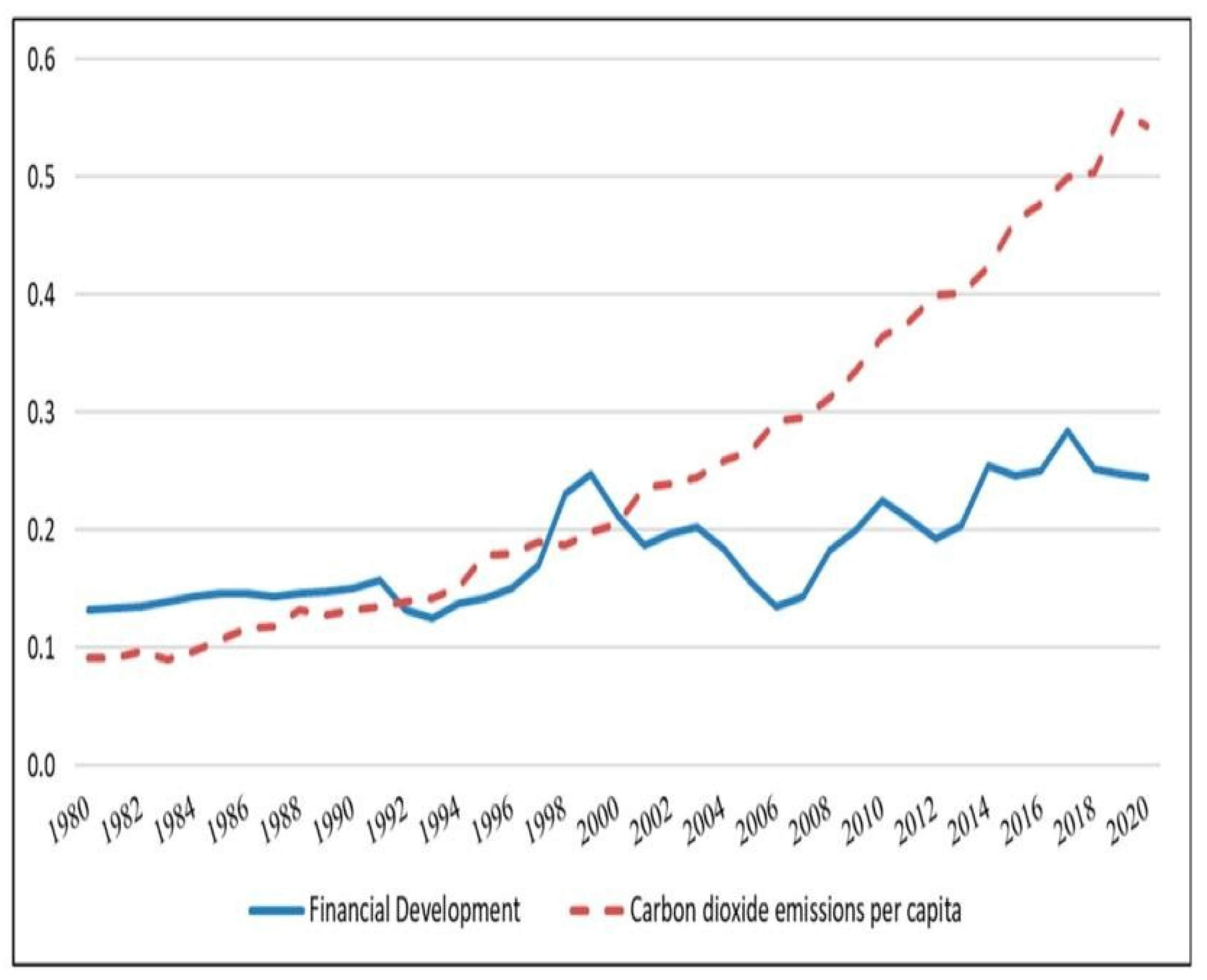
Rapid urbanization and industrialization are the main causes of Bangladesh’s rising greenhouse gas emissions. Due to its heavy reliance on fossil fuels, the energy industry is a major source of these emissions. In 2021, Bangladesh was responsible for 0.48% of the world’s greenhouse gas emissions. This translated into 224 million metric tonnes of carbon dioxide equivalent. These emissions were 7.9% higher than those of 2020. Their emissions have grown at a compound annual growth rate (CAGR) of 2.9% between 1990 and 2021. With 169.8 million people, Bangladesh ranks 170th out of 191 countries in terms of emissions generated per capita, with each individual producing 1.3 tonnes of CO2e. (Boyle, 2024). Bangladesh was the country with the highest annual average PM 2.5 concentrations, weighted by population (76.9 μg/m3), according to the 2021 IQAir study (Khatun et al., n.d). Despite this rise, Bangladesh’s per capita emissions are still below the global average. However, if the nation continues its “business-as-usual” development path, GHG emissions will rise significantly due to its enormous population and rapid economic expansion. Bangladesh also suffers from severe air pollution, which costs the country over 9% of its GDP each year (World Bank Group, October 31, 2022).
Figure 8.
Green House Gas Emission.
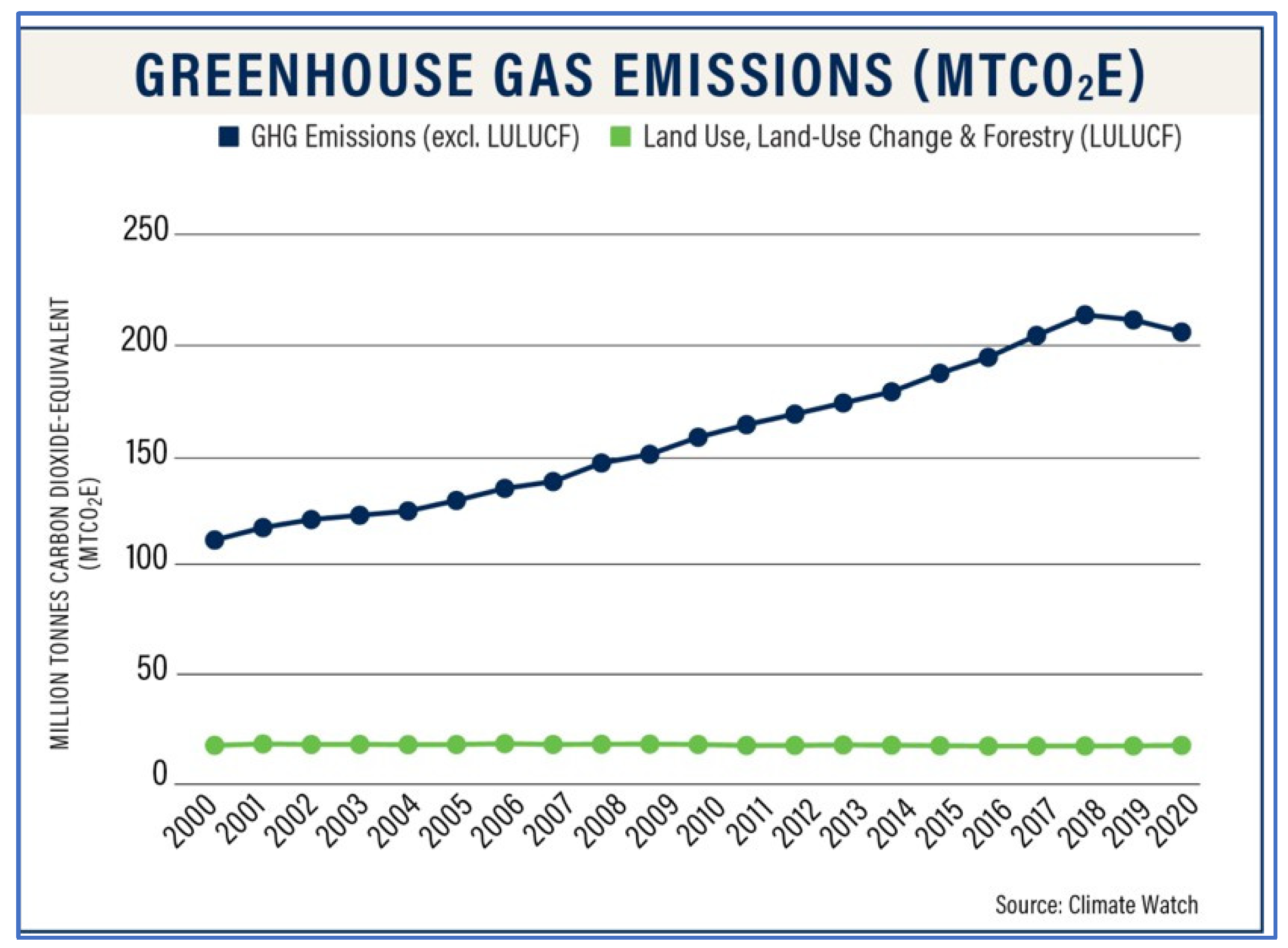
Figure 9.
Carbon emission per capita.
The chances of respiratory problems, coughing, lower respiratory tract infections, depression, and other illnesses are greatly increased by exposure to high levels of air pollution (World Bank Group, December 4, 2022). According to a recent World Bank report, in 2024, Bangladesh has dangerously high pollution levels and environmental health hazards that disproportionately affect the most vulnerable, including women, the elderly, children under five, and poor people. According to the survey, the areas in Dhaka City with the greatest levels of air pollution are those with significant development and continuous traffic. The fine particle matter PM 2.5, which is thought to be the most harmful to human health, is often 150 percent higher in these locations than the WHO Air Quality Guidelines (AQG), which is the equivalent of smoking around 1.7 cigarettes a day. In Greater Dhaka, the area around brick kilns has the second-highest concentration of particulate matter PM 2.5 levels, which is 136% higher than the WHO AQG, or 1.6 cigarettes a day (World Bank Group, December 4, 2022).
Figure 10.
Cause of Emission in BD.
Not only human health, the environment is being affected because of carbon emissions. In addition, ground-level ozone is a highly reactive pollutant that hinders crop growth and reduces the yield of many crop species, including wheat, rice, soybean, and cotton. From January to March, the concentration of ground-level ozone increases, which negatively impacts the production of crops and winter vegetables in Bangladesh. Additionally, acid rain is becoming more common in areas with extremely high air pollution. Some heavy metals, such as lead and mercury, are frequently found in road dust and other pollutant samples. When this dust falls into flowers, it disrupts the pollinating process, which impacts photosynthesis, plant growth, and the reproduction of plants (Gurjat et al., 2010). The nation has committed to lowering its carbon footprint through some mitigation efforts, such as the development of renewable energy sources and energy efficiency measures, and is actively involved in international climate accords (Boyle, 2024).
4.3. Remediation Scenario in Bangladesh
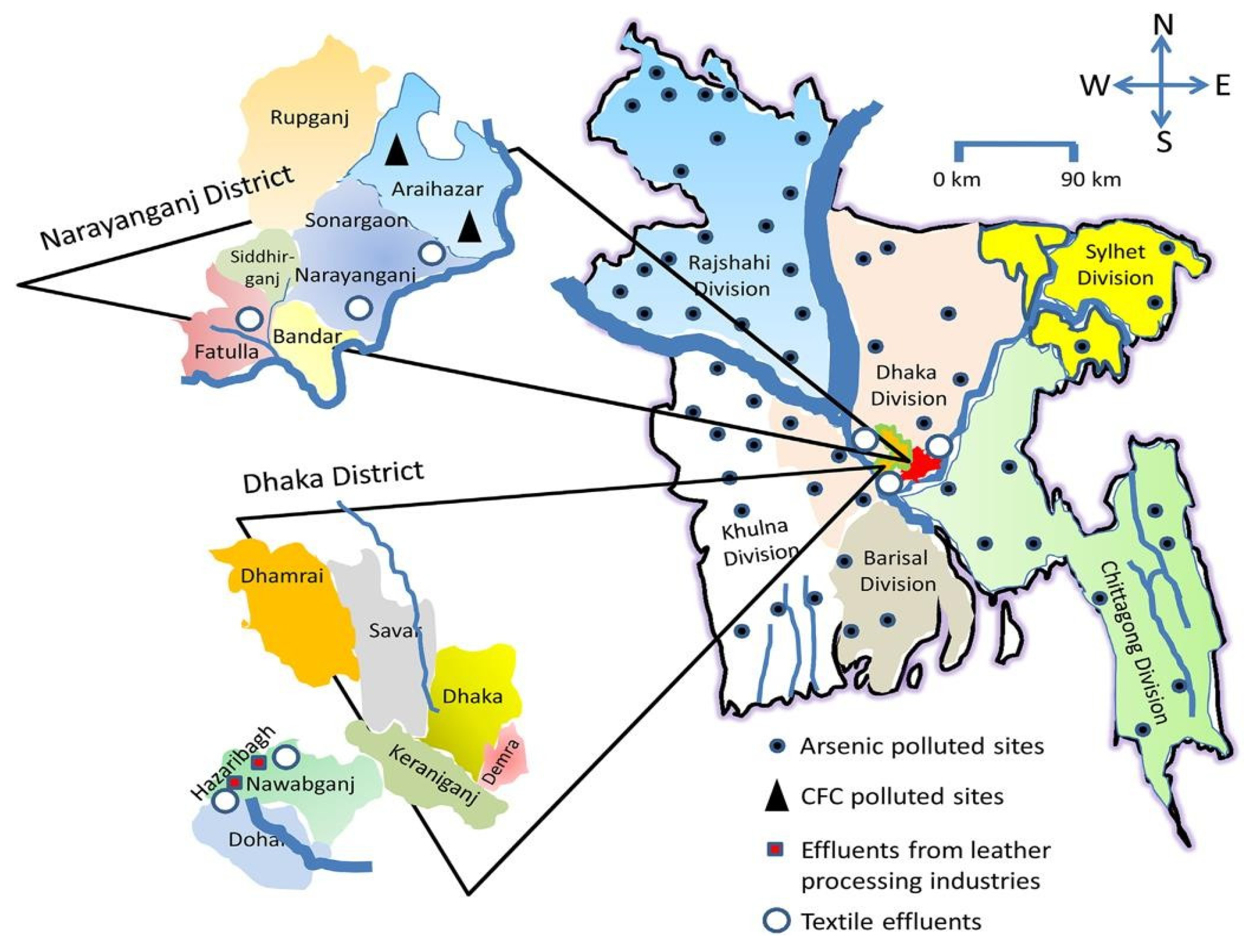
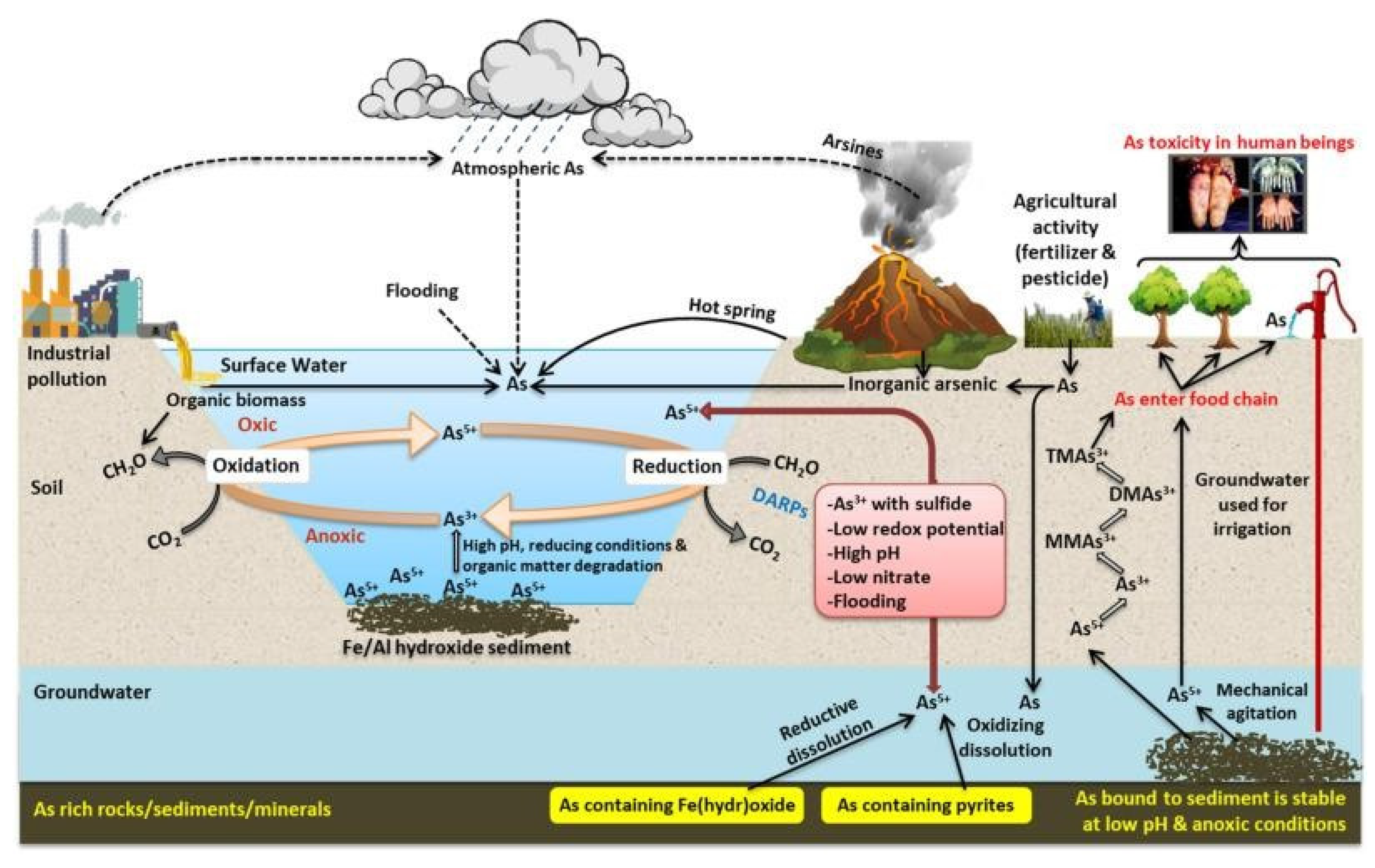
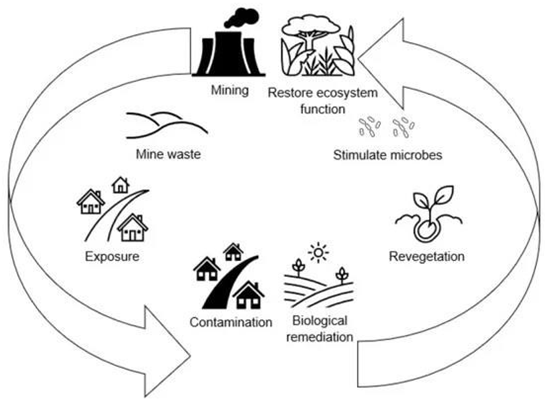
In Bangladesh, rapid industrialization is one of the biggest reasons for contamination. Most industries don’t have any treatment plants, so they throw waste directly into an open place, which harms the ecosystem and also biodiversity (Mallick et al.,2019). Industrial activities, agricultural practices, and improper waste disposal have led to soil and water contamination in various regions of Bangladesh. Heavy metals such as arsenic, lead, and cadmium pose significant health risks to the population. Curing, soaking, liming, dehairing, detaining, deliming, bating, plucking, degreasing, and tanning are all steps in the preparation of leather. Use of chemicals such as sodium sulfide, sodium bicarbonate, chromate and chloride, sodium sulfite, chromium sulfate, calcium salts, ammonium salts, acids, alkalis, fat, alcohol, organic dyes, hydrogen peroxide, and format results in the release of quite toxic chemicals such as organic chlorinated phenols, inorganic pollutants of Cr (VI), and others (Guya, n.d.).
Figure 11.
Contamination cycle.
Due to industrial activities, all biotic and abiotic components are high due to contamination by toxic substances. Tannery industries have become a source of environmental pollution in the terrestrial ecosystem due to inadequate treatment of soil, which contains high organic load and toxic inorganic contaminants. These industries are among the polluting industries that discharge high levels of pollutants, and these pose serious environmental impacts (Song et al., 2000). To reduce the contamination of the soil and stop heavy metals from entering the terrestrial, atmospheric, and aquatic habitats, remediation techniques are required. A large sector participating in pollution are the tanneries of Hazaribagh and Savar, mining sites, landfills, fugitive emissions from natural gas distribution and F-gas used in refrigeration and air conditioning during NdC update, and emissions from glass industries, lubricant Use, iron and steel production which are harming most of the soil and making it more enriched with metals and toxic contaminants (Alam et al., 2020). Replacing the tanneries in Savar also pollutes that environment now. And noticing that, plants should be tested to see if they can grow in the toxic soil. So that people can use those toxic soils as well do their agricultural work, and also be economically independent. Because of its heavy metal pollution, especially from chromium (Cr) and arsenic contamination, the Savar Tannery Industrial Estate in Dhaka has been a focus for evaluating remediation techniques (Yan et al.,2020).
As a remediation process in Bangladesh, the Government has some regulations related to this waste management-Over 5.0 billion BDT of the budget for FY 2016–2017 was set up for the purchase of land and construction of the Matuail LFS expansion in compliance with the authorized Development Project Proposal (DPP). There are about 265 vehicles for waste collection provided by the government. Gave safety education and health care services to cleaners for awareness. Also made treatment plants for each landfill (Waste Management Department (WMD), 2022).
Table 2.
Regulation for Waste Management in BD.
| Regulations | Year | Organization |
|---|---|---|
| Bangladesh Environment Conservation Act 1995, amended in 2000, 2002, and 2010 |
1995 | DoE |
| National Environmental Management Action Plan | 1995 | DoE |
| Environmental Conservation Rules 1997 | 1997 | DoE |
| Lead Acid Battery Recycling Related Circular | 2006 | DoE |
| Medical Waste (Management and Handling) Rules 2008 | 2008 | DoE |
| National 3R Strategy for Waste Management 2010 | 2010 | DoE |
| Local Government (City Corporation) (Amended) Act 2011 |
2011 | LGD |
| Hazardous Waste and Ship Breaking Waste Management Rules 2011 |
2011 | DoE |
| Ship Breaking and Recycling Rules 2011 | 2011 | Ministry of Industries |
| National Environmental Policy 2013 | 2013 | DoE |
| Seventh Five Years Plan (FY 2016–FY 2020) | 2015 | Ministry of Planning |
| Electrical and Electronic Product Induced Waste (E- waste) Management Rules 2017 |
2017 | DoE |
| Draft Solid Waste Management Rules 2018 | 2018 | DoE |
When traditional remediation techniques are unable to provide decontamination without changing the soils’ natural, healthy state at an affordable cost, phytoremediation shows genuine potential (Khanm et al., 2024). Many approaches have been developed to reclaim the toxicants from soil and phytoremediation is one of them (Yan et al.,2020). Using plants to clean up polluted areas is known as phytoremediation, and it has great potential to help Bangladesh deal with its pollution problems. Phytoremediation, the use of plants to remove, degrade, or stabilize environmental contaminants, offers an eco-friendly and cost-effective solution to address these issues. Implementing phytoremediation can improve soil and water quality, thereby enhancing agricultural productivity and safeguarding public health (Hasan et al., 2019).
Although thorough data is still few, research suggests that local plant species in Bangladesh can perform Cr phytoremediation. To find and improve native plants that can survive in such contaminated habitats and efficiently accumulate heavy metals, more research is required (Hasan et al.,2021).
4.4. Phytoremediation Prospects in Bangladesh
Numerous local plant species have been examined recently for their capacity to remove heavy metals and other contaminants from soil, water, and air. A variety of plant species with an innate capacity for phytoremediation may be found in Bangladesh’s diversified flora. Even though the initial research has found several intriguing options, more investigation is needed to completely comprehend their potential, improve remediation techniques, and deploy large- scale applications. By identifying native flora, the nation’s environmental pollution problems may be solved sustainably and economically while also utilizing their capacity to adapt to local circumstances (Hasan et al., 2019). For different contaminants, a different kind of species is needed with that specific contamination accumulation tolerance. Samples of plants and soil were gathered from four Arsenic-contaminated (groundwater) areas in Bangladesh to evaluate the potential of native plant species for phytoremediation. High bioconcentration factors (BCFs) and translocation factors (TFs) were the primary selection criteria for plants employed in phytoremediation. Out of 49 species, only a few were suitable for the phytoremediation process of Arsenic removal and water contamination removal. They are one fern species, Male fern (Dryopteris filix-mas), three herbs, 1. Lettuce-leaf Blumea (Blumea lacera), Asam lota or Bitter Vine (Mikania cordata), Goatweed (Ageratum conyzoides), and two shrubs, Harlequin Glorybower (Clerodendrum trichotomum) and Castor Bean (Ricinus communis) (Mahmud et al., 2008). Removal of heavy metal concentration from the soil, a pot experiment was conducted with the Bottle gourd (Lagenaria siceraria) plant to see the bioconcentration factors (BCFs) and translocation factors (TFs). After the experiment was conducted, the result showed a high tolerance for heavy metal stress, and the highest BCF was reported in the leaf (1.67), stem (1.82), root (4.67), and maximum TF (2.87) among the Pb treatments. The Zn treatments had the lowest BCF and TF values in the controlled plants, whereas the greatest BCF values were found in the leaf (1.80), stem (1.64), and root (2.70) in outdoor ones. According to this study, bottle gourd plants have phytoremedial ability that can help Bangladesh’s pollution situation (Khanm et al., 2024).
Another study was conducted with Napier grass (Pennisetum purpureum) and Indian mustard (Brassica juncea) yielding in tannery sludge. Research has assessed the phytoremediation potential of Napier grass and Indian mustard in soils containing heavy metals such as copper, zinc, lead, and chromium. Indian mustard showed high concentrations of Cr, Cu, and Pb in different parts of plants. Also, Napier grass showed the highest Zn uptake and good Cr and Cu accumulation capacity. Although both species have demonstrated the ability to accumulate these metals in their tissues, Napier grass is more efficient in phytoremediation efforts since its translocation factor is higher over a longer period (Juel et al., 2021).
Wetland plants like Murta (Schumannianthus dichotomus), which are common in Bangladesh, have been researched for their ecological and commercial value. This species may also have the ability to do phytoremediation, according to recent studies, especially in wetland environments. It removed a significant amount of BOD, COD, Nitrate, and Nitrite. It is a viable option for more research focused on evaluating its effectiveness in pollution removal because of its natural abundance and flexibility (Rahman et al., 2022).
The function of mangrove ecosystems in phytoremediation like Bangladesh’s Sundarbans is becoming more well-acknowledged. A study was conducted with three mangrove species, Excoecaria agallocha, Avicennia officinalis, and Sonneratia apetala, to see metal accumulation, and phytoremediation potentiality. Cu, Sr, Zn, Fe, and Mn, these heavy metals were accumulated by plants. Bio-concentration factor (BCF) and translocation factor (TF) were used to evaluate the species’ phytoremediation capacity. Except for Mn, which was extensively deposited in all mangrove plants, BCF values indicated less accumulation for the majority of the heavy metals. The majority of heavy metals were shown to be highly deposited in plant tissues by the translocation factor (TF) values. According to studies, natural mangrove trees are good candidates for cleaning up damaged coastal regions since they can withstand and collect heavy metals. However, studies on these species’ unique phytoremediation abilities in Bangladesh are still in their infancy, therefore further study is required (Hossain et al., 2022).
According to Nizam et al., (2016) study, three fiber crops were selected for this experiment to see the phytoremediation ability in arsenic-contaminated soil, which are Kenaf (Hibiscus cannabinus L.), Mesta (Hibiscus sabdariffa L.), and Jute (Corchorus capsularis L.). The ability of kenaf to remediate soils polluted with arsenic has been demonstrated by research. Because of their high biomass output and notable arsenic absorption compared to the other two fiber crops, kenaf is a good candidate for phytoremediation in impacted areas. But for a suitable green plant-based remediation approach in As-contaminated soil, all types of kenaf, mesta, and jute might be taken into consideration. All these plants in the above studies are available in Bangladesh, and they all show significant phytoremediation ability and heavy metal stress tolerance in a notable amount. Even though after all this research, Bangladesh still needs some more research experiments.
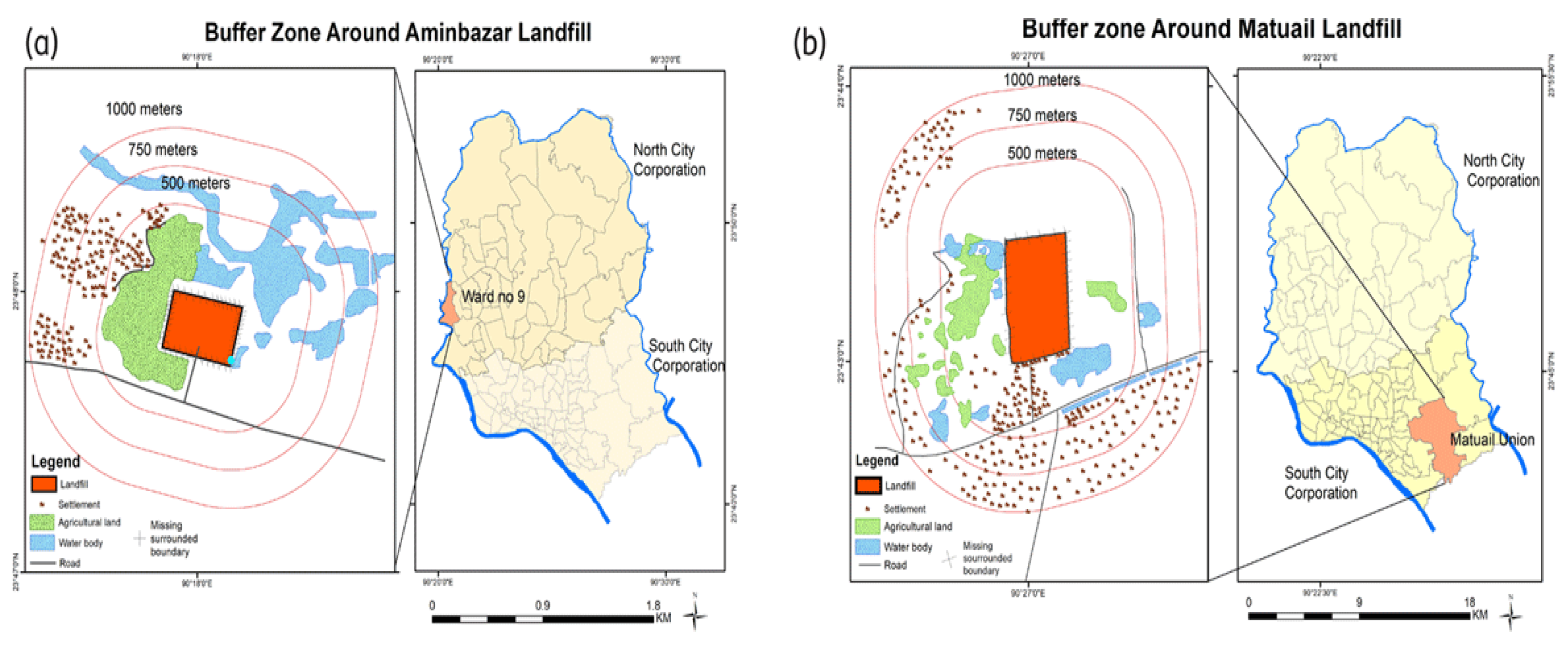
Nowadays, the most popular way to dispose of trash is in landfills. A landfill is a sizable tract of land or an excavated site created especially to serve as the last location for the dumping of solid municipal trash (Abdel-Shafy & Mansour, 2018). As there are many industries, mining sites, etc, here in the name of urbanization and industrialization in Bangladesh, it is very obvious that those industries produce a large amount of waste. Approximately 37% of garbage is dumped in landfills worldwide. Additionally, around 52.6% of garbage is landfilled in the United States, 59.1% in Brazil, 94.5% in Malaysia, 79% in China, and 42% in Bangladesh (Urme et al., 2021). And in Dhaka, the capital of Bangladesh, there are two big landfills. One is in Matuail, which is a sanitary landfill from Dhaka South City Corporation, and the other one is in Amin Bazar, which is a waste dumping site from Dhaka North City Corporation (DNCC). These dumping sites every day receive more than 4500 tons of waste every day from their city corporations‘areas (Chandan, 2021). These two landfills handle Dhaka’s ultimate garbage treatment. Amin Bazar landfill started in 2007 with more than 52 acres (21 ha). This dump includes 36 DNCC wards and nearly five zones. And Matuail started in 1995 with 50 acres (20 ha), with an additional 50 acres added in 2006. It has 57 wards in five zones. Both landfills are placed relatively close to residential neighborhoods, reservoirs, and land for agriculture, around 500 m distant, exposing these regions to different risks. These landfill distributions to environmental features are at great risk and exposed to contamination. A sizable portion of agricultural land in the 500 m benchmark a very risky zone is seen in the image below.
Many nearby residents depend on this agricultural area for their livelihood despite being vulnerable to leachate impact (Urme et al., 2021).
Figure 12.
Buffer zone of Matuail & Amin Bazar (Urme et al., 2021).
Experts cautioned that the inadequate garbage management and upkeep at the Matuail landfill, which lacks recycling capabilities, might result in serious contamination. Greenhouse emissions like methane are released when aerobic conditions gradually turn anaerobic (lack of oxygen) due to the excess pressure of a massive volume of untreated solid waste (Chandan, 2021). In 2006, Matuail’s and in 2012 Amin Bazar‘s leachate treatment facility was built. Through high-density plastic pipelines arranged in a fish skeleton configuration on the dumping platform, the raw leachate gradually enters the wastewater pond. Filtration is followed by passage to 15-meter-deep semi-aerobic treatment ponds. Three chemicals are used to treat it, and fish and microorganisms are cultivated there as well. However, it operates four hours a day and eight hours during the wet season, which is very challenging, especially in the wet season (Urme et al., 2021). In these landfills, if phytoremediation gets introduced, then the treatment of heavy metal contamination can be very high as it will work more than four hours daily. Management of waste will be simpler if we utilize half of the landfills for phytoremediation. Additionally, land usage won’t be a problem in the long run due to phytoremediation. Indian mustard must be sown for at least 40 days on 50-acre Matwail plots and 25-acre Amin Bazar landfill. From 70. 415 mg/kg (approximately) of total contamination of heavy metals of lead, cadmium, nickel, and chromium it can come up to 15.49 mg/kg (approximately) in 40 days (HariharaSudhan et al., 2021). The concentration of heavy metal content in the soil gradually decreases after 40 days. If this phytoremediation process can be done in Bangladesh for more duration, it will show great results in heavy metals removal.
Chapter 5: Obstacles to Implementing Phytoremediation in Bangladesh
5.1. Challenges & Future Prospects
Implementing phytoremediation in Bangladesh has several challenges and limitations to make it successfully adapted in the remediation process. As Bangladesh is a densely populated country with 169.8 million people, it has limited land for utilization. Phytoremediation is a feasible, efficient remediation process. Even though the phytoremediation process happens more quickly than natural attenuation, it still takes a long time (several years). Phytoremediation results can differ based on time. If the period is longer, the results of remediation, the uptake proportion can be more positive and higher. But in the meantime, that specific area for phytoremediation will be occupied. Also, phytoremediation results can be different in big space experiments (Mostafa et al., 2024). There has to be enough space to conduct these experiments to remove heavy metal contamination, which may not be available every time. Allocating such places is difficult in Bangladesh’s heavily populated and quickly urbanizing regions, especially in urban centers where pollution is frequently worse. As already discussed, because of its fundamental delays, phytoremediation sometimes requires many growing seasons to achieve a significant decrease in contaminants. The urgent repair demands of Bangladesh’s highly contaminated locations might not be met by this prolonged timeline (Babu et al., 2021). Numerous environmental factors, including soil characteristics, seasonal variations, and climatic variability, affect how effective phytoremediation is. Flooding, salinity, and monsoon patterns are some of the elements that might negatively impact plant development and the overall viability of remediation operations in Bangladesh (Mostafa et al., 2024). Considering the environment, climate, and region, it is difficult to find native plant species that are both efficient at absorbing particular pollutants and tolerant of them. Excessive levels of heavy metals may delay plant development or cause plant death, which lowers the effectiveness of phytoremediation (Kumar et al., 2024). To achieve that, Bangladesh needs more experiments and research conducted on phytoremediation. Also, as there isn‘t enough research on phytoremediation and this process will be ongoing for a long time, it is not efficient for a substantially polluted area. Mismanagement and improper care can cause food chain contamination, which increases risk in the food chain (Devi & Kumar, 2020). Inadequate legislative frameworks and low public knowledge might make it difficult to carry out phytoremediation research. Such experiments are difficult to start and maintain without sufficient government backing, financial resources, and community involvement (Mostafa et al., 2024).
5.2. Conclusions
Bangladesh’s reliance on fossil fuels, urbanization, and industrialization are all contributing to the country’s rising carbon emissions. The nation’s environmental problems are becoming worse even while attempts are being made to reduce its carbon footprint through renewable energy projects. At the same time, land and water pollution have become serious issues due to industrial pollution, heavy metal contamination, and inappropriate waste disposal. In Bangladesh, industries have a large role in the economic part of this country. However, because the environmental issue has not been considered in those industries, this study was conducted to see Bangladesh’s prospects in terms of pollution and phytoremediation to make the environment more livable and non-toxic. The results confirm that phytoremediation is a sustainable approach to toxic contamination and is suitable for Bangladesh‘s economy and environment. In Bangladesh, phytoremediation provides an ecologically responsible, economical, and sustainable method of reducing pollution. This technique can aid in restoring soil and water quality by employing plants to absorb, break down, and stabilize pollutants, in an efficient waste management process. This makes land viable for agriculture and lowers health concerns. Many phytoremediation plants, such as Indian mustard, Mangrove species, Bottle gourd, Napier grass, etc, which have demonstrated efficacy in eliminating heavy metals and toxins from polluted areas, are supported by Bangladesh’s climate. Because of the extensive pollution that is impacting biodiversity, food security, and public health in Bangladesh, phytoremediation is desperately needed. For implementation to be effective and successful, however, issues including poor cleanup rates, managing plant pollution, and ecological disturbances must be resolved. Research is needed to evaluate the impact of microbes in phytoremediation and how they affect plant health. It is necessary to investigate the usage of additional decontaminants, such as different organic acids, and microorganisms, and their compatibility with particular plants. For this reason, it is anticipated that the results will be useful for future research that will take into account our constraints and identify variable solutions. With the right preparation, funding for studies and governmental backing, phytoremediation may significantly contribute to Bangladesh’s development objectives and environmental sustainability.
References
- Abdel-Shafy, H. I., & Mansour, M. S. M. (2018). Solid waste issues: Sources, composition, disposal, recycling, and valorization. Egyptian Journal of Petroleum, 27(4), 1275–1290.
- Adnan, M., Xiao, B., Ali, M. U., Xiao, P., Zhao, P., Wang, H., & Bibi, S. (2024). Heavy metals pollution from smelting activities: A threat to soil and groundwater. Ecotoxicology and Environmental Safety, 274, 116189.
- Akbar, S. A., Lestari, A. N., Fazli, R. R., & Gunawan, G. (2025). Harnessing macroalgae for heavy metal phytoremediation: A sustainable approach to aquatic pollution control. In BIO Web of Conferences (Vol. 156, p. 02013). EDP Sciences.
- Alam, M. S., Han, B., & Pichtel, J. (2020). Assessment of soil and groundwater contamination at a former Tannery district in Dhaka, Bangladesh. Environmental Geochemistry and Health, 42(7), 1905-1920.
- Ali, H., Khan, E., & Sajad, M. A. (2013). Phytoremediation of heavy metals—concepts and applications. Chemosphere, 91(7),869-881.
- Ali, S., Abbas, Z., Rizwan, M., Zaheer, I. E., Yavaş, İ., Ünay, A., … & Kalderis, D. (2020). Application of floating aquatic plants in phytoremediation of heavy metals polluted water: A review. Sustainability, 12(5), 1927.
- Alkorta, I., Hernández-Allica, J., Becerril, J. M., Amezaga, I., Albizu, I., & Garbisu, C. (2004). Recent findings on the phytoremediation of soils contaminated with environmentally toxic heavy metals and metalloids such as zinc, cadmium, lead, and arsenic. Reviews in Environmental Science and Biotechnology, 3, 71-90. Available online: https://link.springer.com/article/10.1023/B:RESB.0000040059.70899.3d.
- Alsafran, M., Usman, K., Ahmed, B., Rizwan, M., Saleem, M. H., & Al Jabri, H. (2022). Understanding the phytoremediation mechanisms of potentially toxic elements: a proteomic overview of recent advances. Frontiers in plant science, 13, 881242.
- Ashraf, S., Ali, Q., Zahir, Z. A., Ashraf, S., & Asghar, H. N. (2019). Phytoremediation: An environmentally sustainable way for the reclamation of heavy metal polluted soils. Ecotoxicology and environmental safety, 174, 714-727.
- Aweng, E. R., Irfan, A. M., Liyana, A. A., & Aisyah, S. S. (2018). Potential of phytoremediation using Scirpus validus for domestic waste open dumping leachate. Journal of Applied Sciences and Environmental Management, 22(1), 74-78.
- Azubuike, C. C., Chikere, C. B., & Okpokwasili, G. C. (2016). Bioremediation techniques–classification based on site of application: principles, advantages, limitations and prospects. World Journal of Microbiology and Biotechnology, 32, 1-18. Available online: https://link.springer.com/article/10.1007/S11274-016-2137-X.
- Babu, S. M. O. F., Hossain, M. B., Rahman, M. S., Rahman, M., Ahmed, A. S. S., Hasan, M. M., Rakib, A., Emran, T. B., Xiao, J., & Simal-Gandara, J. (2021). Phytoremediation of Toxic Metals: A Sustainable Green Solution for Clean Environment. Applied Sciences, 11(21), 10348. [CrossRef]
- Baeder-Bederski-Anteda, O. (2003). Phytovolatilisation of organic chemicals. Journal of Soils and Sediments, 3, 65-71.
- Bakshe, P., & Jugade, R. (2023). Phytostabilization and rhizofiltration of toxic heavy metals by heavy metal accumulator plants for sustainable management of contaminated industrial sites: A comprehensive review. Journal of Hazardous Materials Advances, 10, 100293.
- Bangladesh Bureau of Statistics, (2020). Bangladesh- An Overview. Bangladesh Bureau of Statistics. BBC News, (2024). Bangladesh country profile. BBC News.
- Bezie, Y., Taye, M., & Kumar, A. (2021). Recent advancement in phytoremediation for removal of toxic compounds. In Nanobiotechnology for Green Environment (pp. 195-228). CRC Press.
- Bisht, R., Chanyal, S., & Srivastava, R. K. (2020). A systematic review on phytoremediation technology: removal of pollutants from waste water and soil. Int J Res Eng Sci Manag, 3, 54-59.
- Boyle, R. (2024). Greenhouse Gas Emissions in Bangladesh. Emission Index.
- Briffa, J., Sinagra, E., & Blundell, R. (2020). Heavy metal pollution in the environment and their toxicological effects on humans. Heliyon, 6(9).
- Chandan, Md. S. K. (2021). A tale of a landfill and its ravages. The Daily Star.
- Chatterjee, S., Mitra, A., Datta, S., & Veer, V. (2013). Phytoremediation protocols: an overview. Plant-based remediation processes, 1-18.
- Chen, C. C., Lin, M. S., Cheng, P. C., Huang, C. Y., & Cheng, S. F. (2024). Strategy of Phytoremediation for Sustainable Use of Arsenic-Rich Farmland. Engineering Proceedings, 74(1), 8.
- Chojnacka, K., Moustakas, K., & Mikulewicz, M. (2023). The combined rhizoremediation by a triad: plant-microorganism-functional materials. Environmental Science and Pollution Research, 30(39), 90500-90521.
- Cohen, A. J., Brauer, M., Burnett, R., Anderson, H. R., Frostad, J., Estep, K., … & Forouzanfar, M. H. (2017). Estimates and 25-year trends of the global burden of disease attributable to ambient air pollution: an analysis of data from the Global Burden of Diseases Study 2015. The lancet, 389(10082), 1907-1918.
- Cundy, A. B., Bardos, R. P., Puschenreiter, M., Mench, M., Bert, V., Friesl-Hanl, W., … & Vangronsveld, J. (2016). Brownfields to green fields: Realising wider benefits from practical contaminant phytomanagement strategies. Journal of Environmental Management, 184, 67-77.
- Cunningham, S. D., & Lee, C. R. (1995). Phytoremediation: Plant-based remediation of contaminated soils and sediments. Bioremediation: Science and applications, 43, 145-156. Available online: https://acsess.onlinelibrary.wiley.com/doi/abs/10.2136/sssaspecpub43.c9.
- Desa U (2019) World population prospects 2019: highlights. In: New York (US): United Nations Department for Economic and Social Affairs, 11(1): 125.
- Devi, P., & Kumar, P. (2020). Concept and application of phytoremediation in the fight against heavy metal toxicity. Journal of Pharmaceutical Sciences and Research, 12(6), 795-804.
- Dhaliwal, S. S., Singh, J., Taneja, P. K., & Mandal, A. (2020). Remediation techniques for removal of heavy metals from the soil contaminated through different sources: a review. Environmental Science and Pollution Research, 27(2), 1319-1333. Available online: https://link.springer.com/article/10.1007/s11356-019-06967-1.
- Dushenkov, V., Kumar, P. N., Motto, H., & Raskin, I. (1995). Rhizofiltration: the use of plants to remove heavy metals from aqueous streams. Environmental science & technology, 29(5), 1239-1245.
- Ekperusi, A. O., Sikoki, F. D., & Nwachukwu, E. O. (2019). Application of common duckweed (Lemna minor) in phytoremediation of chemicals in the environment: State and future perspective. Chemosphere, 223, 285-309.
- Etim, E. E. (2012). Phytoremediation and its mechanisms: a review. Int J Environ Bioenergy, 2(3), 120-136.
- GeeksforGeeks, 2024, Overview on Phytoremediation: Process, Types, and Application. GeeksforGeeks.
- Ghosh, M., & Singh, S. P. (2005). A review on phytoremediation of heavy metals and utilization of its by-products. Asian J Energy Environ, 6(4), 18.
- Gour, A., Panwar, M., & Sahu, N., (2018). STUDY OF PHYTOREMEDIATION POTENTIAL IN CATHARANTHUS ROSEUS (PERIWINKLE). GLOBAL JOURNAL OF ENGINEERING SCIENCE AND RESEARCHES, 457–461.
- Greipsson, S. (2011) Phytoremediation. Nature Education Knowledge 3(10):7.
- Gurjat, B. G., Molina, L., & Ojha, C. (2010). Air Pollution: Health and Environmental Impacts. Boca Raton, London, New York: CRC Press.
- Guya, G. L. T. T. K.(n.d.) Impacts of Tannery Effluent on the Environment and Human Health. Available online: https://core.ac.uk/download/pdf/234664866.pdf.
- Hamidpour, M., Nemati, H., Abbaszadeh Dahaji, P., & Roosta, H. R. (2020). Effects of plant growth-promoting bacteria on EDTA-assisted phytostabilization of heavy metals in a contaminated calcareous soil. Environmental Geochemistry and Health, 42(8), 2535-2545.
- HariharaSudhan, C., Anuradha, B., Jayadevsivani, S., & Gokul, K. (2021). Polluted Landfill adaptation into agricultural soil: heavy metal phytoremediation with Indian Black Mustard (Brassica Nigra) and Dolomitic Lime Fertilizer. In IOP Conference Series: Materials Science and Engineering (Vol. 1026, No. 1, p. 012005). IOP Publishing.
- Hasan, M. M., Uddin, M. N., Ara-Sharmeen, I., F. Alharby, H., Alzahrani, Y., Hakeem, K. R., & Zhang, L. (2019). Assisting Phytoremediation of Heavy Metals Using Chemical Amendments. Plants, 8(9), 295.
- Hasan, S. M. M., Akber, M. A., Bahar, M. M., Islam, M. A., Akbor, M. A., Siddique, M. A. B., & Islam, M. A. (2021). Chromium contamination from tanning industries and Phytoremediation potential of native plants: A study of Savar tannery industrial estate in Dhaka, Bangladesh. Bulletin of Environmental Contamination and Toxicology, 106(6), 1024-1032.
- Hegazy, A. K., Hussein, Z. S., Mohamed, N. H., Safwat, G., El-Dessouky, M. A., Imbrea, I., & Imbrea, F. (2023). Assessment of Vinca rosea (Apocynaceae) potentiality for remediation of crude petroleum oil pollution of soil. Sustainability, 15(14), 11046.
- Hossain, M. B., Masum, Z., Rahman, M. S., Yu, J., Noman, M. A., Jolly, Y. N., Begum, B. A., Paray, B. A., & Arai, T. (2022). Heavy Metal Accumulation and Phytoremediation Potentiality of Some Selected Mangrove Species from the World’s Largest Mangrove Forest. Biology, 11(8), 1144.
- Huang D, Hu C, Zeng G, Cheng M, Xu P, Gong X, Wang R, Xue W. (2016) Combination of Fenton processes and biotreatment for wastewater treatment and soil remediation. Sci. Total Environ 574: 1599–1610.
- Islam, M. M., Saxena, N., & Sharma, D. (2024). Phytoremediation as a green and sustainable prospective method for heavy metal contamination: a review. RSC Sustain 2: 1269–1288.
- Juel, M. A. I., Dey, T. K., Akash, M. I. S., & Das, K. K. (2021). Heavy Metals Phytoremidiation Potential of Napier Grass Cultivated on Tannery Sludge in Bangladesh. Journal of Engineering Science, 12(1), 35–41.
- Kafle, A.,Timilsina, A.,Gautam, A.,Adhikari, K.,Bhattarai, A., Aryal, N., (2022). Phytoremediation: Mechanisms, plant selection and enhancement by natural and synthetic agents. Volume 8.
- Khanm, F., Zaman, H., & Rahman, M. K. (2024). Phytoremediation Potentiality of Bottle Gourd Plant (Lagenaria siceraria). Journal of Biodiversity Conservation and Bioresource Management, 10(1), 59–74. [CrossRef]
- Khatun, F., Saadat, S. Y., Ashraf, K., (n.d.). BREATHING UNEASY: An Assessment of Air Pollution in Bangladesh. Centre for Policy Dialogue (CPD).
- Kukreja, S., & Goutam, U. (2013). Phytoremediation: a new hope for the environment. Front Recent Develop Plant Sci, 1, 149-171.
- Kumar, A., Dadhwal, M., Mukherjee, G., Srivastava, A., Gupta, S., & Ahuja, V. (2024). Phytoremediation: Sustainable Approach for Heavy Metal Pollution. Scientifica, 2024, 3909400. [CrossRef]
- Kumar, M., Seth, A., Singh, A. K., Rajput, M. S., & Sikandar, M. (2021). Remediation strategies for heavy metals contaminated ecosystem: A review. Environmental and Sustainability Indicators, 12, 100155.
- Kurwadkar, S., Kanel, S. R., & Nakarmi, A. (2020). Groundwater pollution: Occurrence, detection, and remediation of organic and inorganic pollutants. Water Environment Research, 92(10), 1659-1668.
- Lacalle, R. G., Bernal, M. P., Álvarez-Robles, M. J., & Clemente, R. (2023). Phytostabilization of soils contaminated with As, Cd, Cu, Pb and Zn: Physicochemical, toxicological and biological evaluations. Soil & Environmental Health, 1(2), 100014.
- Linacre, N. A., Whiting, S. N., & Angle, J. S. (2015). Incorporating project uncertainty in novel environmental biotechnologies.
- Mahmud, R., Inoue, N., Kasajima, S. ya, & Shaheen, R. (2008). Assessment of Potential Indigenous Plant Species for the Phytoremediation of Arsenic-Contaminated Areas of Bangladesh. International Journal of Phytoremediation, 10(2), 119–132.
- Mallick, S. R., Proshad, R., Islam, M. S., Sayeed, A., Uddin, M., Gao, J., & Zhang, D. (2019). Heavy metals toxicity of surface soils near industrial vicinity: A study on soil contamination in Bangladesh. Archives of agriculture and environmental science, 4(4), 356-368.
- Malone S (2022) Developments in Industrial Waste Biodegradation and Bioremediation. J Res Development. 10:191.
- Manikandan, M., Kannan, V., Mahalingam, K., Vimala, A., & Chun, S. (2015). Phytoremediation potential of chromium-containing tannery effluent-contaminated soil by native Indian timber-yielding tree species. Preparative Biochemistry & Biotechnology, 46(1), 100–108.
- Matheson, S., Fleck, R., Irga, P. J., & Torpy, F. R. (2023). Phytoremediation for the indoor environment: a state-of-the-art review. Reviews in Environmental Science and Bio/Technology, 22(1), 249-280.
- McNeil, K. R. and Waring, S. (1992): – In Contaminated Land Treatment Technologies (ed. Rees J. F.), Society of Chemical Industry. Elsevier Applied Sciences, London.; pp. 143-159.
- Ministry of Foreign Affairs. (2017). Bangladesh: An Introduction. Ministry of Foreign Affairs, Bangladesh.
- Mishra, A., Mishra, S. P., Arshi, A., Agarwal, A., & Dwivedi, S. K. (2020). Plant- microbe interactions for bioremediation and phytoremediation of environmental pollutants and agro-ecosystem development. Bioremediation of Industrial Waste for Environmental Safety: Volume II: Biological Agents and Methods for Industrial Waste Management, 415-436.
- Mostafa, E., Dina, S. F., & Hossain, M. N. (2024). Prospects and Challenges of Heavy Metal Pollution Mitigation in the Bay of Bengal by Phytoremediation o. Haya Saudi J Life Sci, 9(4), 139-148.
- Mustafa, H. M., & Hayder, G. (2021). Recent studies on applications of aquatic weed plants in phytoremediation of wastewater: A review article. Ain Shams Engineering Journal, 12(1), 355365.
- Newman, L. A., & Reynolds, C. M. (2004). Phytodegradation of organic compounds. Current opinion in Biotechnology, 15(3), 225-230.
- Nizam, M. U., Wahid-U-Zzaman, M., Rahman, M. M., & Kim, J.-E. (2016). Phytoremediation potential of kenaf (Hibiscus cannabinus L.), mesta (Hibiscus sabdariffa L.), and jute (Corchorus capsularis L.) in arsenic-contaminated soil. Korean Journal of Environmental Agriculture, 35(2), 111–120.
- OB, A., & Muchie, M. (2010). Remediation of heavy metals in drinking water and wastewater treatment systems: processes and applications. Int. J. Phys. Sci, 5, 1807- 1817.
- Oh, K., Cao, T., Li, T., & Cheng, H. (2014). Study on application of phytoremediation technology in management and remediation of contaminated soils. Journal of Clean Energy Technologies, 2(3), 216-220.
- Okon, E., Udo, O. O., Archibong, I. A., & Victor, I. A. (2020). Phytomechanistic processes in environmental clean-up: a biochemical perspective. Int J Res Innov Appl Sci, 213, 222.
- Oleksińska, Zuzanna (2015) Plants on duty – phytotechnologies and phytoremediation at a glance.
- Ouvrard, S., Leglize, P., & Morel, J. L. (2014). PAH phytoremediation: rhizodegradation or rhizoattenuation? International Journal of Phytoremediation, 16(1), 46-61.
- Pandey, V. C., & Bajpai, O. (2019). Phytoremediation: from theory toward practice. In Phytomanagement of polluted sites (pp. 1-49). Elsevier.
- Poitras, A. (2019). Phytodegradation and Environmental Remediation. RADIX ECOLOGICAL SUSTAINABILITY CENTER.
- Rahman, M. A., Rahaman, M. H., Yasmeen, S., Rahman, M. M., Rabbi, F. M., Shuvo, R., and Usamah, M. (2022). Phytoremediation Potential of Schumannianthus Dichotomus in Vertical Subsurface Flow Constructed Wetland.
- Rao, T. S., Panigrahi, S., & Velraj, P. (2022). Transport and disposal of radioactive wastes in the nuclear industry. In Microbial biodegradation and bioremediation (pp. 419-440). Elsevier.
- Sabir, M., Waraich, E. A., Hakeem, K. R., Öztürk, M., Ahmad, H. R., & Shahid, M. (2015). Phytoremediation: mechanisms and adaptations. Soil Remediation Plants, 4, 85-105.
- Saran, A., Imperato, V., Fernandez, L., Gkorezis, P., d’Haen, J., Merini, L. J., … & Thijs, S. (2020). Phytostabilization of polluted military soil supported by bioaugmentation with PGP-trace element tolerant bacteria isolated from Helianthus petiolaris. Agronomy, 10(2), 204.
- Shackira, A. M., & Puthur, J. T. (2019). Phytostabilization of heavy metals: understanding of principles and practices. Plant-metal interactions, 263-282.
- Sharma, J. K., Kumar, N., Singh, N. P., & Santal, A. R. (2023). Phytoremediation technologies and their mechanism for removal of heavy metal from contaminated soil: An approach for a sustainable environment. Frontiers in Plant Science, 14, 1076876.
- Sharma, P., Singh, S. P., Pandey, S., Thanki, A., & Singh, N. K. (2020). Role of potential native weeds and grasses for phytoremediation of endocrine-disrupting pollutants discharged from pulp paper industry waste. In Bioremediation of pollutants (pp. 17-37). Elsevier.
- Sladkovska, T., Wolski, K., Bujak, H., Radkowski, A., & Sobol, Ł. (2022). A Review of Research on the Use of Selected Grass Species in Removal of Heavy Metals. Agronomy 2022, 12, 2587.
- Smith, B. (1993): Remediation update funding the remedy. – Waste Management. Environ. 4: 24-30.
- Song Z, Williams CJ, Edyvean RJ, (2000); Sedimentation of tannery wastewater.Water Res.. 34.
- Swetha, T. N., Rajasekar, B., Hudge, B. V., Mishra, P., & Harshitha, D. N. (2023). Phytoremediation of Heavy Metal Contaminated Soils Using Various Flower and Ornamentals. International Journal of Plant & Soil Science, 35(18), 747-752.
- Tangahu, B. V., Przybysz, A., Mashudi, M., Popek, R., Faz, M. R. I., Titah, H. S. L., … & Mangkoedihardjo, S. (2024). Indoor CO2 phytoremediation using ornamental plants: A case study in Gresik, Indonesia. Ecological Research. Available online: https://esj-journals.onlinelibrary.wiley.com/doi/abs/10.1111/1440-1703.12511.
- Teiri, H., Pourzamani, H., & Hajizadeh, Y. (2018). Phytoremediation of VOCs from indoor air by ornamental potted plants: a pilot study using a palm species under the controlled environment. Chemosphere, 197, 375-381.
- Timalsina, H., Gyawali, T., Ghimire, S., & Paudel, S. R. (2022). Potential application of enhanced phytoremediation for heavy metals treatment in Nepal. Chemosphere, 306, 135581.
- Urme, S.A., Radia, M.A., Alam, R., Chowdhury, M.U., Hasan, S., Ahmed, S., Sara, H.H., Islam, M.S., Jerin, D.T., Hema, P.S., Rahman, M., Islam, A.K.M.M., Hasan, M.T. and Quayyum, Z. (2021) ‘Dhaka landfill waste practices: addressing urban pollution and health hazards’, Buildings and Cities, 2(1), p. 700–716.
- Vinceti, M., Filippini, T., Biswas, A., Michalke, B., Dhillon, K. S., & Naidu, R. (2024). Selenium: A global contaminant of significant concern to the environment and human health. In Inorganic Contaminants and Radionuclides (pp. 427-480). Elsevier.
- Waste Management Department (WMD), (2021). WASTE MANAGEMENT REPORT. Dhaka South City corporation.
- World Bank Group, (2022). High Air Pollution Level is Creating Physical and Mental Health Hazards in Bangladesh: World Bank. World Bank Group.
- World Bank Group, (2022). Urgent Climate Action Crucial for Bangladesh to Sustain Strong Growth. World Bank Group.
- World Bank Group, (2024). Addressing Environmental Pollution is Critical for Bangladesh’s Growth and Development. World Bank Group.
- World Bank, (2024). Bangladesh Overview: Development news, research, data. World Bank.
- World Population Prospects, (2024). Dhaka Overview. United Nations.
- Yan, A., Wang, Y., Tan, S. N., Mohd Yusof, M. L., Ghosh, S., & Chen, Z. (2020). Phytoremediation: a promising approach for revegetation of heavy metal-polluted land. Frontiers in Plant Science, 11, 359.
- Yanitch, A., Kadri, H., Frenette-Dussault, C., Joly, S., Pitre, F. E., & Labrecque, M. (2020). A four-year phytoremediation trial to decontaminate soil polluted by wood preservatives: phytoextraction of arsenic, chromium, copper, dioxins and furans. International Journal of Phytoremediation, 22(14), 1505-1514.
Disclaimer/Publisher’s Note: The statements, opinions and data contained in all publications are solely those of the individual author(s) and contributor(s) and not of MDPI and/or the editor(s). MDPI and/or the editor(s) disclaim responsibility for any injury to people or property resulting from any ideas, methods, instructions or products referred to in the content. |
© 2025 by the author. Licensee MDPI, Basel, Switzerland. This article is an open access article distributed under the terms and conditions of the Creative Commons Attribution (CC BY) license (https://creativecommons.org/licenses/by/4.0/).
Copyright: This open access article is published under a Creative Commons CC BY 4.0 license, which permit the free download, distribution, and reuse, provided that the author and preprint are cited in any reuse.


