

Submitted:
23 June 2025
Posted:
25 June 2025
You are already at the latest version
Abstract
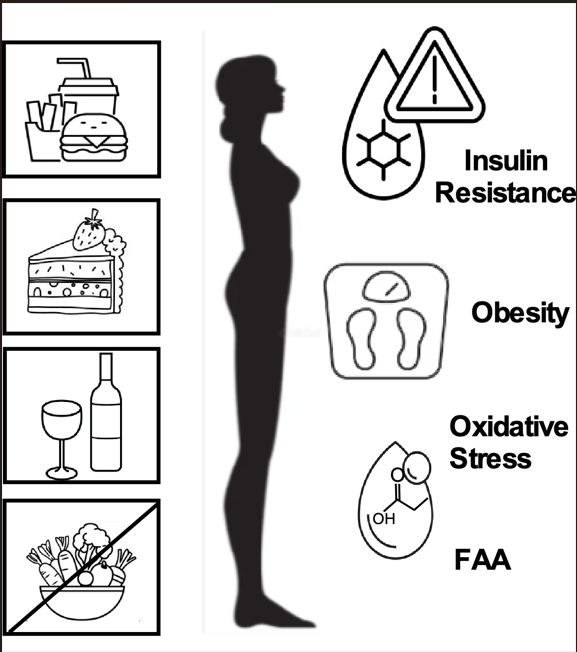
Unhealthy behaviors in Western population are strongly associate with chronic non-communicable diseases, such as hypertension and type 2 diabetes. In cross-sectional study ex-plores the association of various behaviors and metabolic status in Chilean university students. A total of 190 students from School of Medicine of the Universidad Católica de la Santísima Con-cepción participated in a survey of frequency of food and licit drug consumption was comple-mented with anthropometrics and biochemical studies. Multivariate regression analysis was employed to explore the association between parameters. The study population had an average age of 19.9±1.6 years with 74.7% being women. Of the participants, 35.7% were overweight, 9.1% were obese and 10.3% had central obesity. Additionally, 20.3% exhibited hyperinsulinemia (>15 U/mL) and 32.7% presented insulin resistance (>2.5). Vitamin C hypovitaminosis (< 29 µM) was presented in 37.0% of the population and 7.0% showing deficiency (< 8.5 µM), and 54,5% having elevated levels of protein carbonylation (>1.34 nmol/mg protein) Glycemia and plasma lipids were altered in less than 12% of the population. Insulin resistance was associated to body compo-sition, triglycerides and free fatty acids levels, and tobacco, alcohol and sugar consumption. Re-garding oxidative parameters, vitamin C hypovitaminosis correlated with low consumption of vegetable, and protein carbonylation was associated with the consumption of fish and processed foods.
Keywords:
insulin-resistance
; oxidative stress
; food behaviors
; university students
1. Introduction
The prevalence of obesity and overweight has reached pandemic levels. In 2022, the World Health Organization (WHO) reports that 43% of the world’s adult population was overweight and 16% was obese [1]. In Latin America, Chile ranks second, after Argentina, in terms of the greast increase in obesity incidence and is tenth worldwide [2]. According to the National Health Survey (NHS), a study conducted between 2016 and 2017 revealed that the prevalence of malnutrition due to excess weigh in the Chilean population aged 15 years and older was 74.2%, with 34.4% classified as obese and 39.8% as overweight [3]. This figure is double the global average. Malnutrition is associated with 4 of the 10 most frequent causes of morbidity and mortality: coronary heart disease, stroke, hypertension and type 2 diabetes mellitus (T2DM) [1]. More recently, an association between the development of obesity and metal health issue as depression, anxiety and stress [4,5].
Among the main risk factors associated with obesity and overweight are sedentary lifestyle and poor eating habits, characterized by high consumption of calorie-dense in simple carbohydrates and saturated fats. These unhealthy behaviors lead to systemic changes included impaired lipid store and glycemic control, gut dysbiosis, increase of inflammation and oxidative stress [6,7].
The transition to university life involves significant changes in various aspects, particularly diet and lifestyle, which directly impacts student’s health [8]. Recent studies have examined this group to identify patterns that affect their physical and mental well-being. It has been observed that eating behaviors acquired in university life are maintained into late adulthood, making it essential to determine how these habits influences the development of chronic non-communicable diseases in the medium and long term [9,10].
This research aims to investigate the effect of eating behaviors and lifestyle on the health status of university students from a regional university in the south of Chile (Universidad Católica de la Santísima Concepción, UCSC), focusing on identifying anthropometric, metabolic and oxidative factors associated with obesity and T2DM.
2. Materials and Methods
2.1. Study Design
A descriptive, correlational, and quantitative cross-sectional study was conducted using non-probabilistic convenience sampling methods, which included 190 healthy students from the UCSC Faculty of Medicine, recruited between 2017 and 2018. The participants did not consume nutritional supplements, medications or suffer from chronic illness at the time of the study. This research was approved by the UCSC Biosafety, Ethics and Bioethics Committee and all participants signed an informed consent form prior to data collection.
2.2. Sociodemographic and Lifestyle Variables Design
Sociodemographic data were obtained through validated surveys [11,12]. The “Do you have a healthy diet?” survey was applied to determine food consumption. The survey consisted of 15 dichotomous questions about adherence to food national consume recommendation (fruits, vegetables, legumes, white meat, skim dairy), unhealthy foods (bread, sausages, sweets) and adherence to healthy behaviors (review of nutritional labels, chewing well, not skipping meals). Based on their responses, individuals were categorized into three groups: healthy (score >10), unhealthy (6<score <10) and very unhealthy (score <6)[13].
2.3. Anthropometric Variables
Body weight measurements were conducted using a d’Acqua electronic scale (sensitivity 100 g), while height, waist circumference and hip circumference were measured with a non-distensible measuring tape from Simmedical Health Care, Chile. Nutritional status was categorized based on BMI, following WHO guidelines: normal (between 18.5 and 24.9 Kg/m2), overweight (between 25.0 and 29.9 Kg/m2), obese, (≥30.0 Kg/m2). To determine peripheral and central obesity, we used the WHO-specified cut-off points for men and women based on the waist-to-hip ratio (WHR): peripheral obesity, >0.94 in men and >0.85 in women; central obesity, <0.78 in men and <0.71 in women [10].
2.2. Metabolic and Oxidative Parameters
Blood samples were collected via venipuncture after a 12 hour fast. Glucose, triacylglycerides (TAG), total cholesterol (TC), cholesterol HDL (cHDL) and were analyzed by enzymatic end-point methods (HUMAN Diagnostics Worldwide, Germany) in serum. Insulin levels were measured using commercial enzyme immunoassay (Snibe Diagnostic. India). Cholesterol LDL (cLDL) was calculated using the Friedewald formula [14] and the Homeostasis Model Assessment for insulin resistance (HOMAIR), according to the formula described by Matthews D.R.[15]. Vanillin reactive was used for the determination of free fatty acid (FFA), using linoleic acid as stander [16]. The reactive substances to thiobarbituric acid (TBA) test was used to explore lipid peroxidation, recording the adduct formatted between malondialdehyde and the TBA at 532 nm against calibration curve [17].
Protein-carbonylation was recorded measuring the product of dinitrophenylhydrazone with protein carbonyl motive at 360 nm, according to commercial kit (Cayman Chemical, Michigan, USA). Vitamin C was measured recording the kinetic of ferric reduction at 595 nm against calibration curve [18].
The reference ranges for glucose were set at 110 mg/dL. For TAG, the normal range consider <150 mg/dL, high between 151 and 200 mg/dL, and very high >200 mg/dL. For TG, normal range consider was <200 mg/dL, high between 201 and 240 mg/dL and very high >240 g/dL. For cLDL, normal range consider was < 130 mg/dL, high between 130 and 160 and very high > 160. For cHDL, the normal range consider was > 45 mg/dL, low between 35 and 45 mg/dL and very low < 35 mg/dL. Altered ranges for insulin and HOMAIR level were consider >15 U/mL and >2.5, respectively. For FFA, range was defined arbitrarily in tricycles, corresponding to <0.73 mM for the lower range, between 0.73 and 1.46 mM to the medium range and >1.46 mM to the higher range.
For oxidative parameters evaluated, vitamin C hypovitaminosis was defined as serum levels <29 µM and deficiency as <8.5 µM. For protein carbonylation and TBARS, range was defined arbitrarily in tricycles. For TBARS, concentration <9 nM was considered the lower range, 9.1 to 16.5 nM to the medium range, and <16.5 nM to higher range. For protein carbonylation, <0.80 nmoles/mg protein corresponded to lower range, between 0.80 and 1.34 nmoles/mg protein to the medium range and >1.34 nmoles/mg protein to the higher range.
2.4. Statistical Analysis
The data regarding to the characterization of the studied population were presented as mean and standard deviation (SD) and 95% confidence interval (IC95) for continuous variables and in percentage for categorical variables. The normality of quantitative variables was assessed using the Shapiro-Wilk test. Differences between groups were analyzed with ANOVA test with Dunnett’s post hoc Tukey when the percentage of altered groups exceeded 20%. The Chi-square test was used to explore the association between categorical variables, while the Pearson correlation coefficient was used for continuous variables and Spearman’s Rho for variables of combined nature. The JASP program (version 0.19.0 for Windows) was utilized for all analyses. Values of p <0.05 (#) or <0.01 (*) were considered significant.
3. Results
3.1. General Characteristic of the University Students
The average age of the surveys was 19.7 ± 1.7 years, with a predominance of women (74.5%), first-year students (61.8%) and students studying Nutrition and Dietetics (41.9%). A significant majority (97.6%) of the surveyed students resides in or the nearby communes where the university (<45 km) and their family income fell within the highest quintile of the country (>380.00 USD per capita, 43.8%). Moreover, the 44.3% of surveyed students were classified as moderately healthy, while 15.8% were deemed unhealthy, with predominance of non-smoked (95.0%) and very occasional or no alcohol consumers (70.0%) (Table 1). Among the 15 questions of the eating behaviors survey, there was low consumption of fruits (75%) and non-fat dairy products (68%), alongside high consumption of skim dairy products (67%). While most of the students was female, the general characteristics were similar between both sexes, with a higher prevalence of unhealthy behaviors in men (30.6%) compared to women (10.4%).
3.2. Nutritional status of the university students
35.7% of the survey students were overweight and 9.1% were obese, with a high prevalence of unhealthy nutritional status in women compared to men (16.7% versus 7.1%) and significant changes among normal, overweight and obese groups (p<0.01) (Figure 1A,C). Additionally, differences between sexes were observed regarding fat distribution, with 25.0% of men exhibing peripheral obesity and 13.2% of women presenting central obesity (p<0.01) (Figure 1B,D).
3.3. Metabolic status of the university students
The serum lipid profile was generally within the normal range. For TC, the average was 156.3±27.8 mg/dL [112.1-209.9 mg/dL] with only 18.0% of students exhibiting high levels and 2.0% showing very high levels (Figure 2A). For LDLc, the average value was 79.2±21.7 mg/dL [44.0-126.5 mg/dL], with a prevalence of high values at 2.7%. (Figure 2C), for HDLc, the average of 61.5±13.4 mg/dL [42.0-90,3 mg/dL], with only 1.8% below the recommended range, and for TAG, the average was 88.8±41.4 mg/dL [43.7-183.0 mg/dL], with 9.0% showing high values (Figure 2E). Meanwhile, for FFA, 23.0% were in the high range and 44.0% in the medium range, with significant differences observed between groups (Figure 2G,H).
The average glycemic value was 75.5±15.5 mg/dL [62.0-93.5 mg/dL], with only 0.9% of participants being hyperglycemic. However, 20.4% of the surveyed students were hyper insulinemic, and 32.7% had HOMAIR >2.5, with significant differences between groups (p<0.01) (Figure 2J-L).
The data shows that two-thirds of university students included in the research had high FFA, and one-third had insulin resistance (IR). In general, men showed better values than women.
3.3. Oxidative Status of the University Students
A significant percentage of the surveyed students exhibited moderate oxidative stress, evidenced by low levels of vitamin C and high levels of protein carbonylation. 37.0% of them presented vitamin C hypovitaminosis and 7.0% deficiency (Figure 3A). Moreover, 54.5% had high level of protein carbonylation (Figure 3B). For TBARS, only 10% had medium or high values with an average of 3.9±5.5 nM [0-20.5 nM]. For vitamin C and protein carbonylation, significant differences were observed between groups (Figure 3B,D).
3.4. Association between Altered Anthropometric, Metabolic and Ooxidative Parameters in University Students
An association study was conduced between anthropometric and metabolic parameters (such as continuous variables). When parameters related to carbohydrates regulation were analyzed, association were found between insulin and HOMAIR with BMI, TAG, FFA and TBARS (Table 2). For lipids, TAG and FAA were associated with BMI, and FFA was also associated with TBARS and protein carbonylation, while cHDL and FAA were inversely associated with TBARS (Table 3, Table 4).
These results shown an interesting relationship between carbohydrates, lipids metabolism and oxidative stress, which also influence the weight gain.
3.5. Association of Altered Anthropometric, Metabolic and Oxidative Parameters with Unhealthy Behaviors in theUuniversity Students
To complement our study, we categorized the analyzed parameters and explored their associations with sociodemographic and behaviors characteristics of the studied population. Variables where the risk groups had less that 20% prevalence were excluded from the analysis. BMI was associated with residence, alcohol consumption and healthy eating behaviors, insulin and HOMAIR with the preference for sweet versus non-sweet food, FFA with bread consumption, vitamin C levels with vegetables consumption and protein carbonylation with fish consumption. No other significant association were found (Table 4).
4. Discussion
This research found that nearly 30% of UCSC health career students were overweight, had IR and high level of FFA, and suffer from vitamin C deficiency. Interested associations were identified between body composition, carbohydrate metabolism, lipid metabolism and oxidative stress, was well as them with unhealthy behaviors, such as alcohol and sugary foods consumption and lack of vegetables intake.
The nutritional status of the university students surveyed aligns with data from the last Chilean NHS conducted between 2016 and 2017, which reported 31.2% overweight rate for the age group between 15 and 24 years [3]. Studies conducted in other Latin American countries reported a prevalence of overweight and obesity ranging between 10 and 40% [19,20]. In those study, obesity was associated with the consumption of high-energy-density foods, such as saturated fats and sugars, as well as an improper meal timing [19,20,21,22]. Several factors influence these behaviors, including sociocultural characteristics, family environment, sex, age, years at university and stress [21]. In the university population, unhealthy eating habits often included replacing traditional meals with high-calorie foods, prolonged fasting, and eating quickly without proper chewing. A study conducted on 329 Argentine university students revealed that this population exceeded the recommended consumption of sugary foods (70.2%) and meats (87.1%) with having low intake of cereals, dairy products, fruits and vegetables (<20%). Additionally, 39.5% of those students reported consuming snacks between meals [21]. Previous studies also found better eating behaviors in Peruvian students of the Health Sciences compared to other university students [22]. However, Badawy et al. found that 80% of female medical students from Saudi Arabia had unhealthy eating behaviors [23]. The authors proposed that Western unhealthy behaviors had a worse effect on females, due to hormonal changes and the predominance of sedentary life. In Chile, Vera et al. reported that 70% of university students no reached the recommended intake of fruits, 72% of vegetables and 77% of legumes [24], while in Spanish university sample, Sánchez-Socarras found low consumption of vegetables (39.8%), cereals (92,6%) and fruits (73.9%) [25]. In the Chilean population analyzed in our study, 60.1% exhibited unhealthy behaviors, with low consumption of fruits (75%) and non-fat dairy products (68%), alongside high consumption of skim dairy products (67%). Worse results were found in a larger sample of the same institution from all seven Faculties [13]. Other interested associations found was the relationship between BMI and cheek and eat well, issue that had been wildly discussed when the beneficial effects of Mediterranean diet had been analyzed [26]. Also, a recent study performed in 11 Latin American countries associated appropriate dairy consumption with healthier life style [27].Thus, evidence continues to be provided on the health benefits of following dietary recommendations.
The association found between anthropometric variables (BMI and WHR) with glycemic control and unhealthy behaviors (Table 2 and Table 4) are linked to abdominal adipose tissue hypertropia, developed by excessive consumption of hypercaloric foods (such as sweet and ultra-processed foods and sausages) and impaired sugar metabolism (insulin and HOMAIR). In the last Chilean NHS report, 42.1% Chilean adults had an increased waist circumference, and a study conducted in 103 Chilean students from another Faculty of Medicine found an association between systolic pressure and waist circumference and WHR in men [28]. However, the study did not find relationship between anthropometric values and metabolic parameters, including TC, glycemia and arterial pressure. Another study, performed by Maldonado-Cervantes et al. at a Mexican university women, revealed that waist circumference is associated with HOMAIR, especially in obese or overweight students [29]. Moreover, a review performed by Hernández et al. concluded that WHR is a good indicator of abdominal obesity and that an increase of 0.01 increases the risk of cardiovascular disease 5% [30]. In the present study, WHR was associated with healthy score, while BMI was associated with alcohol consumption, the last association could be related to the activation of the anxiety axis and the ingestion of “empty calories” [29]. Additionally, both, insulin and HOMAIR were associated with sweet and non-sweet foods consumption. The high percentage of students with IR resistance (32.7%) could indicate of further development of metabolic syndrome (MetS), as was previously proposed in younger populations (children and adolescents) [2,31]. In African medical students, Al-Farai et al. found lower prevalence of IR (16%) [32]. The differences found could be attributed to sociocultural and/or genetic factors. WHR has been considered an easy and inexpensive predictor of morbidity and mortality from cardiometabolic disease; however, not only age and sex are confounding factors, but also ethnicity, especially for Central American or Asian populations, whose body composition is very different form that to Caucasian populations, how discussed Hernández et al. [30]. On the other hand, Zhu et al. propose considering % fat mass and segmental body composition as cardiometabolic predictor [33].
Inflammation is a common link between obesity and T2DM. Hypertrophic adipocytes produced fewer adipokines than improv insulin response and increase the release of pro-inflammatory cytokines, as well as FFA, which are deposited in the liver and muscles and lead to the death of pancreatic ß cells, favoring the development of T2DM [34]. Cross-sectional and longitudinal studies indicate that weight loss is accompanied by a reduction in FFA, meanwhile tobacco consumption and sleep deprivation contribute to an increase [35]. In the current study, FFA and TAG were associated with insulin, HOMAIR, indicating a direct relationship between carbohydrate and lipid metabolism. The low tobacco consumption prevented the execution of association studies. Other research conducted previously in Chilean university students also found an association between lipid profile, glycemia and HOMAIR, with differences in the prevalence of an unhealthy lipid profile associated with career, years of study and gender, with older, women and those from health-related careers exhibiting healthier habits [36]. Also in adolescents, FFA were associates to IR and TAG, markers of MeTS [37]. Moreover, FFA were increased in a small sample of adults newly diagnosed with and long-term T2DM, showing an even better association with disease progression than glycated hemoglobin [8]. Bermúdez et al. explored the nature of the FFA, finding that palmitoleic 16:1n7 y dihomo linolénico-20:3n6 were increased in obese population, which is indicative of adipocytic lipogenesis from dietary carbohydrates [37]. Recently, specific FFA profile have being associated with cardiometabolic diseases [38,39]. For example, a wide-angle Mendelian randomization study found causal association between smoking, body fat, visceral fat, and T2DM, and protective association of cHDL. Moreover, specific unsaturated FFA being protective or causal factors. Recently, a detail multiomic study that explore potential lipotoxicity of unsaturated FFA was also performed [40]. These data prevue a promissory application of serum FFA in prognosis and evolution of T2DM.
Oxidative stress is another factor involved in the development of T2DM and obesity. Hypertrophic adipose tissue has macrophages associated with it and experiences episodes of ischemia, impaired insulin response in metabolic organs and loss of ß cells associated with oxidative stress [41]. Thus, the imbalance between pro-oxidants and oxidants is a crucial factor in the development of cardiometabolic diseases, as well for cancer and neurodegenerative diseases [42]. Two recent study performed in young and middle age populations in the US found that a better oxidative profile was associated with lower obesity and segmental body fat [33,43]. However, they only estimated the intake of pro and antioxidants, without accompanying them with plasma determination and did not discuss controversial results in different populations (American, Korean, Iranian and Tehranian). The study by Zhu et al. also found a stronger association between oxidative stress and behaviors in female, non-Hispanic individuals and those with higher education, attributing to the protective antioxidant role of estrogen and the lower incomes of Hispanic residents in the US [44]. Other studies have found oxidative stress in obese across different populations. For example, Barbosa et al. found altered rate between reduced and oxidized glutathione in obese prepuberal children, while Choromańska et al. found increase of plasma nitrosylation and impaired glutathione ratio in women with morbid obesity [45,46].
Regarding the protective role of vitamin C, research on Peruvian university students found an association between vitamin C intake and lower levels of TAG [47]. Moreover, Jian et al. found that vitamin C improved metabolic parameters in young genetically modified mice (with the glucose transporter 10 variant GLUT10G128E) fed with a high fat diet [48]. The improved parameters included epididymal adipose inflammation, adipokine dysregulation, ectopic fatty acid accumulation, glycemic control, and body weight gain. Similar results were found previously in other models, such ob/ob mice [49]. Thus, vitamin C is proposed as both an antioxidant and anti-inflammatory factor in white fat tissue that modulates intracellular fat accumulation This vitamin is not only the most important water-soluble antioxidant but is also cofactor of DNA demethylases. In fact, a recent multicohort study found that vitamin C intake is associated with CpG demethylation of 1,000 genes and that there were differences in the genes modified related to sex, age and tobacco consumption [50]. Moreover, Jian et al. previously found that vitamin C supplementation induce demethylation of adipogenesis-related transcription factor genes in the GLUT10G128E mice [48].
The protein carbonylation includes the modification of tryptophan, lysine, arginine, proline and threonine residues by glucose or products of glucose or lipid oxidation, and the carbonylation of nucleophilic amino acid residues by unsaturated aldehydes groups through Michael/Schiff addition [51]. Protein carbonylation is a common and irreversible outcome of oxidative stress and is associated with loss of protein function. A differential pattern of serum protein carbonylation has been reported in lean, obese and diabetic obese individuals by Bollineni et al., with 28 modified proteins in obese individuals and 46 in diabetic obese individuals. The modified proteins were primarily from the liver and the endothelium, and were related to cell adhesion and communication, including vascular endothelial growth factor receptor 2 [52]. A previous study identified seven proteins mainly carbonylated in normal human serum, including apo-B100 [53]. Moreover, Méndez et al. found an increase in albumin carbonylation in the plasma and liver of rats submitted to a high-fat high-fructose diet [6]. In recent years, protein carbonylation in adipose tissue had been correlated with obesity-associated insulin resistance [54].
The main strength of this study is the inclusion of sociodemographic background, lifestyle, nutritional status, eating behaviors, biochemical and oxidative parameters, allowing for different association analyses. The weaknesses are associated with the low number of respondents and the over-representation of women, which could influence the strength of association or cause bias. Also, the inclusion of a 24-hour dietary recall questionnaire or other health related parameters, such as systolic and diastolic pressure, physical activity, stress management and sleep quality could be considered in further studies
5. Conclusions
Poor eating habits among university students are associated with obesity, increase of IR, FAA and protein carbonylation, and vitamin C hypovitaminosis. Sustained prevalence of these risk may lead to metabolic and cardiovascular diseases. This research highlights the necessity of further interventional studies to confirm their effectiveness such as preventive or interventional strategies, that also included specific plasma FFA composition and oxidative stress parameters.
Author Contributions
Conceptualization, data curation, funding acquisition, supervision, writing—review and editing, L.M.; methodology, formal analysis and investigation L.M. M.C. and MM; writing—original draft preparation M.M. All authors have read and agreed to the published version of the manuscript.
Funding
This research was funded by Vice rectory of Research and Post grade of Universidad Católica de la Santísima Concepción, grants number 11/2021 and 13/2018, who also funded partially the APC.
Institutional Review Board Statement
The study was conducted according to the guidelines of the Declaration of Helsinki and approved by the Institutional Ethics and Bioethics Committee of Universidad Católica de la Santísima Concepción, (October 17th, 2017).
Informed Consent Statement
Informed consent was obtained from all subjects involved in the study, without included payment.
Acknowledgments
The authors acknowledge to Nut. Jonathan Sanhueza for participants recruitment, Mrs. Paola López and Lya Montecinos for venipuncture, and Mrs. Katia Muñoz, for the technical support. We also acknowledge to Vice rectory of Research and Post grade of Universidad Católica de la Santísima Concepción for proving Funds for Academic Activities (FAA) in 2023 to L.M.
Conflicts of Interest
The authors declare no conflict of interest.
References
- Obesidad y sobrepeso. Available online: https://www.who.int/es/news-room/fact-sheets/detail/obesity-and-overweight (accessed on 12 June 2025).
- Phelps, N.H.; Singleton, R.K.; Zhou, B.; Heap, R.A.; Mishra, A.; Bennett, J.E.; Paciorek, C.J.; Lhoste, V.P.; Carrillo-Larco, R.M.; Stevens, G.A.; et al. Worldwide Trends in Underweight and Obesity from 1990 to 2022: A Pooled Analysis of 3663 Population-Representative Studies with 222 Million Children, Adolescents, and Adults. The Lancet 2024, 403, 1027–1050. [Google Scholar] [CrossRef] [PubMed]
- Chilean National Ministry of Health National Health Survey Report (ENS) 2016–2017 2018.
- Li, X.; Braakhuis, A.; Li, Z.; Roy, R. How Does the University Food Environment Impact Student Dietary Behaviors? A Systematic Review. Front. Nutr. 2022, 9, 840818. [Google Scholar] [CrossRef] [PubMed]
- Thomas-Lange, J. Sobrepeso y Obesidad En Chile: Consideraciones Para Su Abordaje En Un Contexto de Inequidad Social. Rev. Chil. Nutr. 2023, 50, 457–463. [Google Scholar] [CrossRef]
- Méndez, L.; Pazos, M.; Molinar-Toribio, E.; Sánchez-Martos, V.; Gallardo, J.M.; Rosa Nogués, M.; Torres, J.L.; Medina, I. Protein Carbonylation Associated to High-Fat, High-Sucrose Diet and Its Metabolic Effects. J. Nutr. Biochem. 2014, 25, 1243–1253. [Google Scholar] [CrossRef]
- Celis-Morales, C.A.; Perez-Bravo, F.; Ibañes, L.; Sanzana, R.; Hormazabal, E.; Ulloa, N.; Calvo, C.; Bailey, M.E.S.; Gill, J.M.R. Insulin Resistance in Chileans of European and Indigenous Descent: Evidence for an Ethnicity x Environment Interaction. PLoS ONE 2011, 6, e24690. [Google Scholar] [CrossRef]
- Spiller, S.; Blüher, M.; Hoffmann, R. Plasma Levels of Free Fatty Acids Correlate with Type 2 Diabetes Mellitus. Diabetes Obes. Metab. 2018, 20, 2661–2669. [Google Scholar] [CrossRef]
- Waist Circumference and Waist-Hip Ratio: Report of a WHO Expert Consultation. Available online: https://www.who.int/publications/i/item/9789241501491 (accessed on 12 June 2025).
- WHO Consultation on, Obesity. 1999: Geneva S.; Organization W.H. Obesity : preventing and managing the global epidemic : report of a WHO consultation; World Health Organization, 2000; ISBN 978-92-4-120894-9. [Google Scholar]
- Johnson, J.A.; Lee, A.; Vinson, D.; Seale, J.P. Use of AUDIT-Based Measures to Identify Unhealthy Alcohol Use and Alcohol Dependence in Primary Care: A Validation Study. Alcohol. Clin. Exp. Res. 2013, 37 Suppl 1, E253–259. [Google Scholar] [CrossRef]
- Zacarías, I.; Olivares, S. Alimentación Saludable. In Nutrición en el ciclo vital; Editorial Mediterráneo: Santiago, 2014; pp. 431–440. [Google Scholar]
- Mardones, L.; Muñoz, M.; Esparza, J.; Troncoso-Pantoja, C.; Mardones, L.; Muñoz, M.; Esparza, J.; Troncoso-Pantoja, C. Hábitos alimentarios en estudiantes universitarios de la Región de Bío-Bío, Chile, 2017. Perspect. En Nutr. Humana 2021, 23, 27–38. [Google Scholar] [CrossRef]
- Friedewald, W.T.; Levy, R.I.; Fredrickson, D.S. Estimation of the Concentration of Low-Density Lipoprotein Cholesterol in Plasma, Without Use of the Preparative Ultracentrifuge. Clin. Chem. 1972, 18, 499–502. [Google Scholar] [CrossRef]
- Matthews, D.R.; Hosker, J.P.; Rudenski, A.S.; Naylor, B.A.; Treacher, D.F.; Turner, R.C. Homeostasis Model Assessment: Insulin Resistance and ?-Cell Function from Fasting Plasma Glucose and Insulin Concentrations in Man. Diabetologia 1985, 28, 412–419. [Google Scholar] [CrossRef]
- Van Handel, E. Rapid Determination of Total Lipids in Mosquitoes. J. Am. Mosq. Control Assoc. 1985, 1, 302–304. [Google Scholar] [PubMed]
- Ohkawa, H.; Ohishi, N.; Yagi, K. Assay for Lipid Peroxides in Animal Tissues by Thiobarbituric Acid Reaction. Anal. Biochem. 1979, 95, 351–358. [Google Scholar] [CrossRef] [PubMed]
- Pulido, R.; Bravo, L.; Saura-Calixto, F. Antioxidant Activity of Dietary Polyphenols As Determined by a Modified Ferric Reducing/Antioxidant Power Assay. J. Agric. Food Chem. 2000, 48, 3396–3402. [Google Scholar] [CrossRef] [PubMed]
- Schnettler, B.; Denegrí, M.; Miranda, H.; Sepúlveda, J.; Orellana, L.; Paiva, G.; Grunert, K.G. Hábitos Alimentarios y Bienestar Subjetivo En Estudiantes Universitarios Del Sur de Chile. Nutr. Hosp. 2013, 28, 2221–2228. [Google Scholar] [CrossRef]
- Schnettler, B.; Miranda-Zapata, E.; Grunert, K.G.; Lobos, G.; Denegri, M.; Hueche, C.; Poblete, H. Life Satisfaction of University Students in Relation to Family and Food in a Developing Country. Front. Psychol. 2017, 8. [Google Scholar] [CrossRef]
- De Piero, A.; Bassett, N.; Rossi, A.; Sammán, N. [Trends in food consumption of university students]. Nutr. Hosp. 2015, 31, 1824–1831. [Google Scholar] [CrossRef]
- Reyes Narvaez, S.; Canto, M.O. Conocimientos Sobre Alimentación Saludable En Estudiantes de Una Universidad Pública. Rev. Chil. Nutr. 2020, 47, 67–72. [Google Scholar] [CrossRef]
- Badawy, Y.; Aljohani, N.H.; Salem, G.A.; Ashour, F.M.; Own, S.A.; Alajrafi, N.F. Predictability of the Development of Insulin Resistance Based on the Risk Factors Among Female Medical Students at a Private College in Saudi Arabia. Cureus 2023. [Google Scholar] [CrossRef]
- Vera, V.; Crovetto, M.; Valladares, M.; Oñate, G.; Fernández, M.; Espinoza, V.; Mena, F.; Aguero, S.D.; Vera, V.; Crovetto, M.; et al. Consumo de Frutas, Verduras y Legumbres En Universitarios Chilenos. Rev. Chil. Nutr. 2019, 46, 436–442. [Google Scholar] [CrossRef]
- Sánchez Socarrás, V.; Aguilar Martínez, A. Food habits and health-related behaviors in a university population. Nutr. Hosp. 2014, 31, 449–457. [Google Scholar] [CrossRef]
- Salas-Salvadó, J.; Díaz-López, A.; Ruiz-Canela, M.; Basora, J.; Fitó, M.; Corella, D.; Serra-Majem, L.; Wärnberg, J.; Romaguera, D.; Estruch, R.; et al. Effect of a Lifestyle Intervention Program With Energy-Restricted Mediterranean Diet and Exercise on Weight Loss and Cardiovascular Risk Factors: One-Year Results of the PREDIMED-Plus Trial. Diabetes Care 2019, 42, 777–788. [Google Scholar] [CrossRef] [PubMed]
- Gajardo, D.; Gómez, G.; Carpio-Arias, V.; Landaeta-Díaz, L.; Ríos, I.; Parra, S.; Araneda Flores, J.A.; Morales Illanes, G.R.; Meza, E.; Núñez, B.; et al. Association between Low Dairy Consumption and Determinants of Health in Latin American University Students: A Multicenter Study. Nutr. Hosp. 2025. [Google Scholar] [CrossRef]
- Anfossi Lubascher, M.; Hiche Schwarzhaupt, F.; Nacrur Pinto, M.J. Relación Entre Circunferencia de Cintura, Parámetros Metabólicos y Presión Arterial En Universitarios de Primer Año de La Facultad de Medicina de La Universidad Del Desarrollo. Rev. Confluencia 2021, 4, 30–34. [Google Scholar] [CrossRef]
- Maldonado-Cervantes, M.I.; Castillo-Hernández, J.R.; Martel-Gallegos, M.G.; Maldonado-Cervantes, E.; Patiño-Marín, N.; García-Rangel, M.; Torres-Rodríguez, L. La Circunferencia de La Cintura Es La Única Variable Antropométrica Que Predice El HOMA-IR: Estudio de Una Cohorte de Mujeres Jóvenes. REVMEDUAS 2022, 12, 175–183. [Google Scholar] [CrossRef]
- Hernández Rodríguez, J.; Moncada Espinal, O.M.; Domínguez, Y.A. Utilidad Del Índice Cintura/Cadera En La Detección Del Riesgo Cardiometabólico En Individuos Sobrepesos y Obesos. Rev. Cuba. Endocrinol. 2018, 29, 1–16. [Google Scholar]
- Caceres, M.; Teran, C.G.; Rodriguez, S.; Medina, M. Prevalence of Insulin Resistance and Its Association with Metabolic Syndrome Criteria among Bolivian Children and Adolescents with Obesity. BMC Pediatr. 2008, 8, 31. [Google Scholar] [CrossRef]
- Al-Farai, H.H.; Al-Aboodi, I.; Al-Sawafi, A.; Al-Busaidi, N.; Woodhouse, N. Insulin Resistance and Its Correlation with Risk Factors for Developing Diabetes Mellitus in 100 Omani Medical Students. Sultan Qaboos Univ. Med. J. 2014, 14, e393–396. [Google Scholar] [CrossRef]
- Zhu, Z.; Bai, H.; Li, Z.; Fan, M.; Li, G.; Chen, L. Association of the Oxidative Balance Score with Obesity and Body Composition among Young and Middle-Aged Adults. Front. Nutr. 2024, 11, 1373709. [Google Scholar] [CrossRef]
- Sobczak, A.I.S.; Blindauer, C.A.; Stewart, A.J. Changes in Plasma Free Fatty Acids Associated with Type-2 Diabetes. Nutrients 2019, 11, 2022. [Google Scholar] [CrossRef]
- Yuan, S.; Larsson, S.C. An Atlas on Risk Factors for Type 2 Diabetes: A Wide-Angled Mendelian Randomisation Study. Diabetologia 2020, 63, 2359–2371. [Google Scholar] [CrossRef]
- Morales, G.; Guillen-Grima, F.; Muñoz, S.; Belmar, C.; Schifferli, I.; Muñoz, A.; Soto, A. Factores de Riesgo Cardiovascular En Universitarios de Primer y Tercer Año. Rev. Médica Chile 2017, 145, 299–308. [Google Scholar] [CrossRef] [PubMed]
- Bermúdez-Cardona, J.; Velásquez-Rodríguez, C. Profile of Free Fatty Acids and Fractions of Phospholipids, Cholesterol Esters and Triglycerides in Serum of Obese Youth with and without Metabolic Syndrome. Nutrients 2016, 8, 54. [Google Scholar] [CrossRef] [PubMed]
- Kokotou, M.G.; Mantzourani, C.; Batsika, C. S Lipidomics Analysis of Free Fatty Acids in Human Plasma of Healthy and Diabetic Subjects by Liquid Chromatography-High Resolution Mass Spectrometry (LC-HRMS). Biomedicines 2022, 10, 1189. [Google Scholar] [CrossRef]
- Henderson, G.C. Plasma Free Fatty Acid Concentration as a Modifiable Risk Factor for Metabolic Disease. Nutrients 2021, 13, 2590. [Google Scholar] [CrossRef]
- Wieder, N.; Fried, J.C.; Kim, C.; Sidhom, E.-H.; Brown, M.R.; Marshall, J.L.; Arevalo, C.; Dvela-Levitt, M.; Kost-Alimova, M.; Sieber, J.; et al. FALCON Systematically Interrogates Free Fatty Acid Biology and Identifies a Novel Mediator of Lipotoxicity. Cell Metab. 2023, 35, 887–905.e11. [Google Scholar] [CrossRef]
- Keane, K.N.; Cruzat, V.F.; Carlessi, R.; De Bittencourt, P.I.H.; Newsholme, P. Molecular Events Linking Oxidative Stress and Inflammation to Insulin Resistance and β -Cell Dysfunction. Oxid. Med. Cell. Longev. 2015, 2015, 1–15. [Google Scholar] [CrossRef]
- Halliwell, B.; Gutteridge, J.M.C. Free Radicals in Biology and Medicine; Oxford University Press, 2015; ISBN 978-0-19-871748-5. [Google Scholar]
- Wang, K.; Deng, M.; Wu, J.; Luo, L.; Chen, R.; Liu, F.; Nie, J.; Tao, F.; Li, Q.; Luo, X.; et al. Associations of Oxidative Balance Score with Total Abdominal Fat Mass and Visceral Adipose Tissue Mass Percentages among Young and Middle-Aged Adults: Findings from NHANES 2011–2018. Front. Nutr. 2023, 10, 1306428. [Google Scholar] [CrossRef]
- Zhu, Z.; Bai, H.; Li, Z.; Fan, M.; Li, G.; Chen, L. Association of the Oxidative Balance Score with Obesity and Body Composition among Young and Middle-Aged Adults. Front. Nutr. 2024, 11. [Google Scholar] [CrossRef]
- Barbosa, P.; Melnyk, S.; Bennuri, S.C.; Delhey, L.; Reis, A.; Moura, G.R.; Børsheim, E.; Rose, S.; Carvalho, E. Redox Imbalance and Methylation Disturbances in Early Childhood Obesity. Oxid. Med. Cell. Longev. 2021, 2021, 2207125. [Google Scholar] [CrossRef]
- Choromańska, B.; Myśliwiec, P.; Łuba, M.; Wojskowicz, P.; Dadan, J.; Myśliwiec, H.; Choromańska, K.; Zalewska, A.; Maciejczyk, M. A Longitudinal Study of the Antioxidant Barrier and Oxidative Stress in Morbidly Obese Patients after Bariatric Surgery. Does the Metabolic Syndrome Affect the Redox Homeostasis of Obese People? J. Clin. Med. 2020, 9, 976. [Google Scholar] [CrossRef]
- Teixeira Lima, S.M.; Almondes, K.G. de S.; Clímaco Cruz, K.J.; Aguiar, H.D. de S.P.; Simplício Revoredo, C.M.; Slater, B.; Silva Morais, J.B.; Marreiro, D. do N.; Nogueira, N. do N. Consumption of Nutrients with Antioxidant Action and Its Relationship with Lipid Profile and Oxidative Stress in Student Users of a University Restaurant. Nutr. Hosp. 2017, 34, 869–874. [Google Scholar] [CrossRef]
- Jiang, C.-L.; Tsao, C.-Y.; Lee, Y.-C. Vitamin C Attenuates Predisposition to High-Fat Diet-Induced Metabolic Dysregulation in GLUT10-Deficient Mouse Model. Genes Nutr. 2022, 17, 10. [Google Scholar] [CrossRef] [PubMed]
- Abdel-Wahab, Y.; O’Harte, F.; Mooney, M.; Barnett, C.; Flatt, P. Vitamin C Supplementation Decreases Insulin Glycation and Improves Glucose Homeostasis in Obese Hyperglycemic (Ob/Ob) Mice. Metabolism 2002, 51, 514–517. [Google Scholar] [CrossRef] [PubMed]
- Keshawarz, A.; Joehanes, R.; Ma, J.; Lee, G.Y.; Costeira, R.; Tsai, P.-C.; Masachs, O.M.; Bell, J.T.; Wilson, R.; Thorand, B.; et al. Dietary and Supplemental Intake of Vitamins C and E Is Associated with Altered DNA Methylation in an Epigenome-Wide Association Study Meta-Analysis. Epigenetics 2023, 18, 2211361. [Google Scholar] [CrossRef]
- Martínez-Orgado, J.; Martínez-Vega, M.; Silva, L.; Romero, A.; De Hoz-Rivera, M.; Villa, M.; Del Pozo, A. Protein Carbonylation as a Biomarker of Oxidative Stress and a Therapeutic Target in Neonatal Brain Damage. Antioxidants 2023, 12, 1839. [Google Scholar] [CrossRef]
- Bollineni, R.C.; Fedorova, M.; Blüher, M.; Hoffmann, R. Carbonylated Plasma Proteins as Potential Biomarkers of Obesity Induced Type 2 Diabetes Mellitus. J. Proteome Res. 2014, 13, 5081–5093. [Google Scholar] [CrossRef]
- Madian, A.G.; Regnier, F.E. Profiling Carbonylated Proteins in Human Plasma. J. Proteome Res. 2010, 9, 1330–1343. [Google Scholar] [CrossRef]
- Navarro-Ruiz, M.C.; Soler-Vázquez, M.C.; Díaz-Ruiz, A.; Peinado, J.R.; Nieto Calonge, A.; Sánchez-Ceinos, J.; Tercero-Alcázar, C.; López-Alcalá, J.; Rangel-Zuñiga, O.A.; Membrives, A.; et al. Influence of Protein Carbonylation on Human Adipose Tissue Dysfunction in Obesity and Insulin Resistance. Biomedicines 2022, 10, 3032. [Google Scholar] [CrossRef]
Figure 1.
Nutritional status of the university students. Values are expressed as median, average and dispersion 25-75% with outliers. Gray bars indicate men and white bar, women. ** p<0.01. BMI: body mass index; WHR: waist to hip ratio. Cut-off values are detailed in methodology section.
Figure 1.
Nutritional status of the university students. Values are expressed as median, average and dispersion 25-75% with outliers. Gray bars indicate men and white bar, women. ** p<0.01. BMI: body mass index; WHR: waist to hip ratio. Cut-off values are detailed in methodology section.
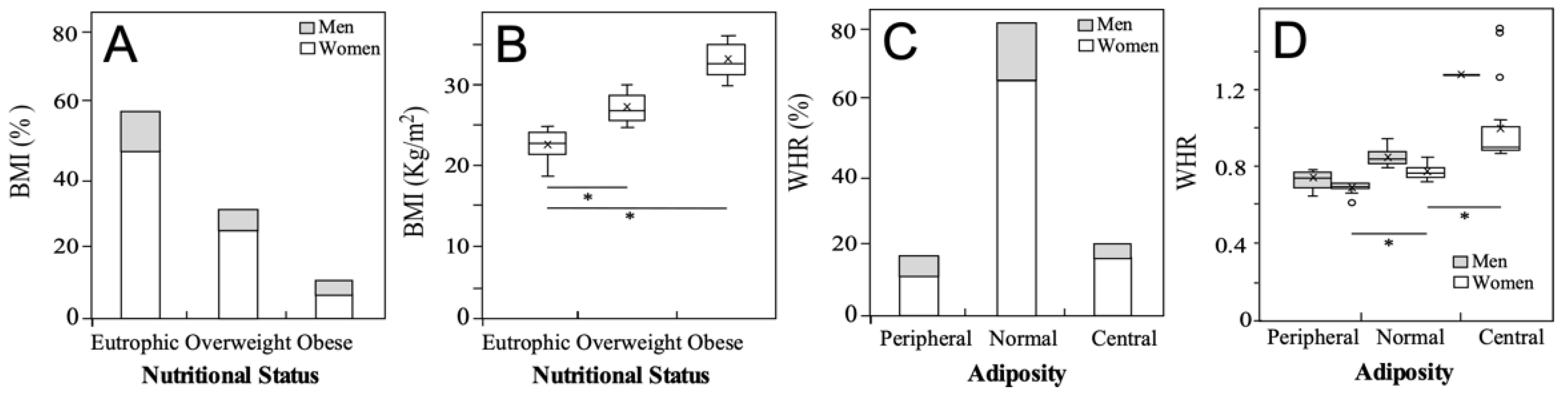
Figure 2.
Metabolic status of the university students. Values are expressed as median, average and dispersion 25-75% with outliers. Gray bars indicate men and white bar, women. ** indicates p<0.01. TAG: triacylglycerides; TC: total cholesterol; HDLc: high density lipoprotein cholesterol; cLDL: low density lipoprotein cholesterol; HOMAIR: homeostasis model assessment for insulin resistance; FFA: free fatty acid. Cut-off values are detailed in methodology section.
Figure 2.
Metabolic status of the university students. Values are expressed as median, average and dispersion 25-75% with outliers. Gray bars indicate men and white bar, women. ** indicates p<0.01. TAG: triacylglycerides; TC: total cholesterol; HDLc: high density lipoprotein cholesterol; cLDL: low density lipoprotein cholesterol; HOMAIR: homeostasis model assessment for insulin resistance; FFA: free fatty acid. Cut-off values are detailed in methodology section.
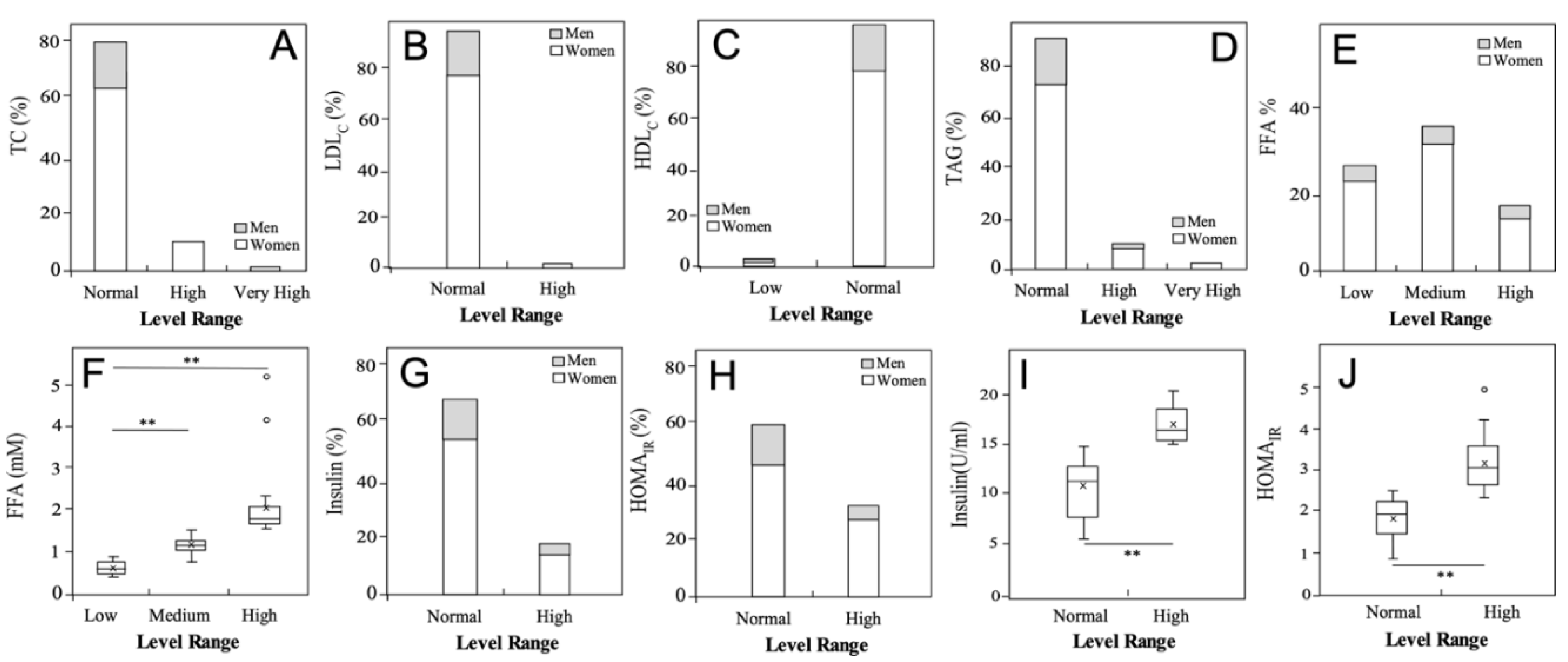
Figure 3.
Oxidative status of the university students. Values are expressed as median, average and dispersion 25-75% with outliers. ** indicates p<0.01. TBARS: thiobarbituric acid reactive substances. Cut-off values are detailed in methodology.
Figure 3.
Oxidative status of the university students. Values are expressed as median, average and dispersion 25-75% with outliers. ** indicates p<0.01. TBARS: thiobarbituric acid reactive substances. Cut-off values are detailed in methodology.
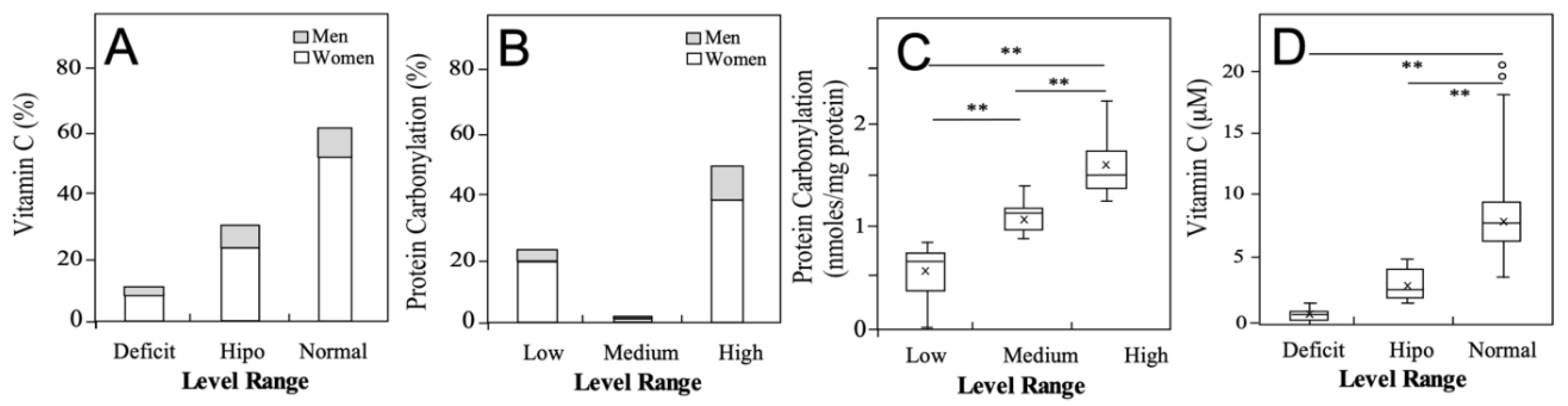

Table 1.
Sociodemographic and Healthy Behaviors of the University Students.
| Variable | Total | Men | Women |
| N | 190 | 49 | 142 |
| Age (years) | 19.9±1.6 | 19.9±1.6 | 20.0±1.7 |
| Residence (%) | |||
| In the Commune | 48.7 | 52,1 | 47.9 |
| <45 Km | 49.2 | 47.9 | 50.0 |
| >45 Km | 2.1 | 0 | 2.1 |
| Family Income Quintile (USD per cápita, %) | |||
| 1 (< 80.00) | 2.2 | 0 | 2.8 |
| 2 (80.00 to 133.00) | 10.1 | 22.2 | 7.0 |
| 3 (133.00 to 200.00) | 20.2 | 16.7 | 21.1 |
| 4 (200.00 to 380.00) | 23.6 | 22.2 | 23.4 |
| 5 (> 380.00) | 43.8 | 38.9 | 45.1 |
| Years of University (%) | |||
| 1 | 61.8 | 89.7 | 58.7 |
| 2 | 26.9 | 5.1 | 27.5 |
| 3 | 7.5 | 5.1 | 8.7 |
| 4 | 3.8 | 0 | 5.1 |
| Carreer (%) | |||
| Kinesiology | 13.8 | 26.1 | 27.5 |
| Medical Technology | 4.7 | 6.5 | 3.1 |
| Medicine | 31.7 | 45.6 | 37.2 |
| Nursing | 8.4 | 8.7 | 8.4 |
| Nutrition and Dietetics | 41.9 | 19.5 | 37.2 |
| Behaviors (%) | |||
| Healthy | 39.9 | 30.6 | 43.3 |
| Moderately healthy | 44.3 | 38.8 | 46.3 |
| Unhealthy | 15.8 | 30.6 | 10.4 |
| Tobacco Consumption (%) | |||
| Never | 95.0 | 89.7 | 96.7 |
| Moderate | 4.2 | 3.4 | 5.5 |
| Frecuent | 1.7 | 3.4 | 2.2 |
| Alcohol Consumption (%) | |||
| Never | 34.1 | 31.0 | 35.2 |
| <2 at month | 34.1 | 37.9 | 33.0 |
| 2-4 at month | 21.7 | 27.0 | 19.8 |
| Weekly | 6.7 | 3.4 | 7.7 |
| 2-4 at week | 3.3 | 0.0 | 4.3 |
Table 2.
Association of Glycemic Metabolism with Anthropometric, Lipidic and Oxidative Parameters in the University Students.
Table 2.
Association of Glycemic Metabolism with Anthropometric, Lipidic and Oxidative Parameters in the University Students.
| Variable1 | Glycemia | Insulin | HOMAIR |
| BMI | 0.292 | <0.01* | <0.01* |
| WHR | 0.325 | 0.857 | 0.590 |
| TC | 0.651 | 0.189 | 0.323 |
| LDLc | 0.985 | 0.545 | 0.560 |
| HDLc | 0.324 | 0.124 | 0.314 |
| TAG | 0.927 | <0.01* | 0.002# |
| FFA | 0.454 | <0.01* | <0.01* |
| Vitamin C | 0.302 | 0.968 | 0.554 |
| PC | 0.926 | 0.270 | 0.291 |
| TBARS | 0.308 | 0.009# | 0.006# |
1 Values indicate Pearson coefficient. BMI: body mass index; WHR: waist to hip ratio. TAG: triacylglycerides; TC: total cholesterol; HDLc: high density lipoprotein cholesterol; cLDL: low density lipoprotein cholesterol; HOMAIR: homeostasis model assessment for insulin resistance; FFA: free fatty acid, PC: protein carbonylation, TBARS: thiobarbituric acid reactive substances. Significance is indicated in bold. #p<0.05, *p<0.01.
Table 3.
Association of Oxidative Stress with Anthropometric Parameters in the University Students.
| Variable1 | TC | LDLc | HDLc | TAG | FFA |
| BMI | 0.621 | 0.433 | 0.529 | 0.011# | 0.011# |
| WHR | 0.244 | 0.078 | 0.440 | 0.637 | 0.543 |
| Vit C | 0.131 | 0.319 | 0.747 | 0.069 | 0.087 |
| PC | 0.814 | 0.826 | 0.837 | 0.495 | 0.003# |
| TBARS | 0.171 | 0.693 | 0.026#& | 0.871 | 0.006#& |
1Values indicate p value. BMI: body mass index; WHR: waist to hip ratio. TAG: triacylglycerides; TC: total cholesterol; HDLc: high density lipoprotein cholesterol; cLDL: low density lipoprotein cholesterol; HOMAIR: homeostasis model assessment for insulin resistance, FFA: free fatty acid, PC: protein carbonylation, TBARS: thiobarbituric acid reactive substances. Significance is indicated in bold. #p<0.05, *p<0.01,& negative association.
Table 4.
Association of Anthropometric, Metabolic and Oxidative Parameters with Sociodemographic and Healthy Behaviors in the University Students.
Table 4.
Association of Anthropometric, Metabolic and Oxidative Parameters with Sociodemographic and Healthy Behaviors in the University Students.
| Variable1 | BMI | Insulin | HOMAIR | FAA | VitC | PC |
| Age | 0.726 | 0.663 | 0.371 | 0.660 | 0.537 | 0.646 |
| Residence | 0.039# | 0.707 | 0.088 | 0.523 | 0.326 | 0.237 |
| Family Income | 0.218 | 0.874 | 0.760 | 0.358 | 0.531 | 0.688 |
| Years in university | 0.129 | 0.707 | 0.459 | 0.576 | 0.265 | 0.733 |
| Healthy score | 0.508 | 0.744 | 0.418 | 0.267 | 0.687 | 0.416 |
| >2 vegetables/day | 0.407 | 0.633 | 0.841 | 0.403 | 0.021# | 0.902 |
| >3 fruits /day | 0.710 | 0.758 | 0.307 | 0.824 | 0.361 | 0.421 |
| >2 dairy food portion/day | 0.459 | 0.828 | 0.732 | 0.794 | 0.315 | 0.256 |
| >3 cup of water/day | 0.552 | 0.292 | 0.456 | 0.227 | 0.463 | 0.399 |
| <3 pieces of bread/day | 0.787 | 0.408 | 0.908 | 0.049# | 0.655 | 0.589 |
| >3 legumes portion/week | 0.978 | 0.379 | 0.978 | 0.480 | 0.523 | 0.832 |
| >1 fish portion/week | 0.758 | 0.791 | 0.574 | 0.338 | 0.159 | 0.034# |
| >1 chicken portion /week | 0.349 | 0.188 | 0.220 | 0.703 | 0.114 | 0.585 |
| eat skimmed dairy foods | 0.550 | 0.448 | 0.694 | 0.544 | 0.513 | 0.442 |
| eat not-sweet foods | 0.085 | 0.011# | <0.01* | 0.125 | 0.617 | 0.933 |
| Avoid sweet foods | 0.385 | 0.085 | 0.045# | 0.338 | 0.745 | 0.871 |
| Avoid sausages | 0.365 | 0.704 | 0.730 | 0.533 | 0.436 | 0.064 |
| Take breakfast /lunch | 0.289 | 0.398 | 0.202 | 0.282 | 0.301 | 0.289 |
| Check food labels | 0.407 | 0.570 | 0.409 | 0.246 | 0.653 | 0.745 |
| Cheek well, eat slow | 0.015# | 0.135 | 0.335 | 0.457 | 0.603 | 0.491 |
| Alcohol consumption | 0.032# | 0.212 | 0.180 | 0.725 | 0.376 | 0.679 |
1 Values indicate Pearson coefficient. BMI: body mass index; WHR: waist to hip ratio. TAG: triacylglycerides; TC: total cholesterol; HDLc: high density lipoprotein cholesterol; cLDL: low density lipoprotein cholesterol; HOMAIR: homeostasis model assessment for insulin resistance; FFA: free fatty acid, PC: protein carbonylation, TBARS: thiobarbituric acid reactive substances. #p<0.05, *p<0.01.
Disclaimer/Publisher’s Note: The statements, opinions and data contained in all publications are solely those of the individual author(s) and contributor(s) and not of MDPI and/or the editor(s). MDPI and/or the editor(s) disclaim responsibility for any injury to people or property resulting from any ideas, methods, instructions or products referred to in the content. |
© 2025 by the authors. Licensee MDPI, Basel, Switzerland. This article is an open access article distributed under the terms and conditions of the Creative Commons Attribution (CC BY) license (http://creativecommons.org/licenses/by/4.0/).
Copyright: This open access article is published under a Creative Commons CC BY 4.0 license, which permit the free download, distribution, and reuse, provided that the author and preprint are cited in any reuse.


