
Submitted:
23 June 2025
Posted:
25 June 2025
You are already at the latest version
Abstract
The teaching-learning process in higher education is undergoing a period of significant transformation, driven by the advent of innovative strategies and frameworks that are set to shape the future of education. Among these, gamification is particularly noteworthy as a key mechanism for cultivating competencies and digital culture among students. In the context of intensifying global digital competitiveness and the emergence of new technologies, it is imperative to focus on these evolving trends in order to enhance knowledge creation. This study offers a strategic overview of gamification tools, demonstrating their efficacy in developing training activities and evaluating competencies via the Teams platform. It emphasizes the integration of gamified online environments into the curriculum for courses such as Sustainable Development and Research Workshop II within the Computer Systems Engineering (CSE) program. The findings of this study present a list of tools that have been identified as having the potential to significantly enhance learning outcomes. 1. The following tools were identified as being particularly effective: Mentimeter, YouTube, Kahoot/Quizizz, Wordwall, History, and. Flipped Learning. Although the students demonstrated only a basic proficiency in the use of these technologies, they exhibited a notable level of engagement with game-based tools, videos, and storytelling. This resulted in a remarkable achievement rate of 71% in cognitive competencies across both groups. It is noteworthy that YouTube emerged as the most popular tool, generating substantial interest and learning impact. These findings highlight the imperative for higher education institutions to integrate gamified learning strategies into their pedagogical approaches. Such an approach enables the cultivation of essential competencies and a robust digital culture, thereby enhancing the quality and competitiveness of education in the context of an increasingly digital world.
Keywords:
digital culture
; digital teaching platforms
; gamification in higher education
; learning strategies
; student engagement and motivation
1. Introduction
Information and Communication Technologies (ICT) are at the forefront of educational development, revolutionizing the teaching and learning process within the knowledge society. By integrating emerging digital models, online learning environments, and gamification, ICT is enhancing both face-to-face and distance education. This focus on innovation is crucial for improving student performance and fostering a digital culture. Educational models provide a structured framework for the teaching-learning process, encompassing various parameters outlined in specific documents and guidelines. These models leverage technological tools and project-based approaches, creating effective conditions for sustainability in higher education.
Recent trends emphasize the need to connect education with real-world experiences, aligning students’ daily interactions in the digital landscape with their educational activities. This connection is essential in an era where modern technology increasingly shapes cognitive development and productive learning (Mezinov et al., 2022). ICT strengthens student competencies by bridging classroom learning with the realities they will encounter in diverse environments, ensuring that educational standards remain high and collaborative learning is promoted (Raffo-Ibarra et al., 2021). Moreover, the COVID-19 pandemic has accelerated the acquisition of digital competencies, facilitating the transition to virtual teaching environments.
In this pedagogical context, learning strategies such as synchronous, asynchronous, and blended learning enable students to progress at their own pace. This flexibility fosters a smooth transition to online instruction, integrating five essential components—Discover, Learn, Practice, Collaborate, and Assess (DLPCA)—to enhance the overall learning experience and academic performance (Lapitan et al., 2021). During the pandemic, students faced unique learning challenges, employing resource management, help-seeking behavior, improved technical skills, time management, and control over their learning environments. Addressing these challenges is crucial for classroom practice, policy development, and future research (Barrot et al., 2021). Implementing innovative virtual strategies cultivates digital practices and enhances learning competencies.
Digital culture is increasingly important in higher education institutions (HEIs), where online learning has become essential for continued operation. Enthusiasm for social networking and online environments is evident across both developed and developing countries. However, further exploration of its implications for education is necessary to optimize learning in online settings (Vaghjee and Vaghjee, 2022). The current ICT development action plan for schools aims to embed a digital culture into the learning process by enhancing teachers’ digital competencies, creating digital learning resources and e-learning services, and improving ICT infrastructure. Despite coordinated efforts and substantial investments, the actual integration of ICT in teaching and learning practices varies significantly among institutions (Põldoja, 2020).
Gamification, when integrated as a reward system through learning analytics tools on virtual platforms, plays a vital role in creating collaborative and communicative educational environments. By enriching blended courses with elements that foster a sense of community, gamification leverages educational technology to enhance student engagement (Petroulis et al., 2019). This approach has gained traction in educational settings, enabling practitioners to design intentional student experiences that boost motivation and improve learning outcomes (Scott-Rivera and Palmer-Garden, 2021). Essentially, gamification can be defined as a learning and recognition strategy based on game mechanics, supported by technological tools that automatically analyze responses and provide feedback, thus promoting skill development and dynamic participation in students’ educational journeys.
In the context of the information and knowledge society, concerns surrounding digital competencies have reached new heights. Rapid technological advancement has made digital competency a crucial topic of discussion, particularly as many students and educators exhibit basic levels of proficiency in these essential skills. This gap drives educational institutions to focus on cultivating digital competencies, creating relevant learning strategies, and utilizing appropriate tools to enhance educational quality (Zhao et al., 2021). However, knowledge surrounding Education 4.0 remains limited, posing challenges related to change management through the adoption of immersive and augmented technologies as e-learning strategies. Understanding these emerging technologies is critical for advancing digital ecosystems (George-Reyes et al., 2023). Therefore, it is essential for educational institutions to effectively manage changes in practices, methodologies, and culture to shape future horizons and make a global impact, particularly in the education sector.
At the Instituto Tecnológico de Acapulco (ITA), part of the Tecnológico Nacional de México (TecNM), we are committed to the Educational Model for the 21st Century based on Professional Competences. This model encompasses three fundamental dimensions: philosophical, academic, and organizational. The philosophical dimension emphasizes ethical values such as creativity and innovation, fostering competencies to identify and solve problems using prioritized strategies. The academic dimension ensures relevant integration into the world of knowledge, promoting meaningful learning and continuous professional development through diverse intelligences and a comprehensive understanding of regional, national, and global contexts, ultimately contributing to the success of the educational process. Meanwhile, the organizational dimension promotes personal growth, the development of work competencies, and a commitment to innovation and quality, recognizing and nurturing human potential through certification and accreditation.
Accrediting agencies emphasize that the graduate profile must positively impact the productive sector by addressing real-world challenges with innovative strategies. Quality assurance in educational programs relies on meeting established standards and criteria, making internationalization an essential goal in today’s education landscape (CACEI, 2020). The Computer Systems Engineering (ISC) program at ITA, accredited by CACEI, has met the minimum requirements; however, we are actively implementing a continuous improvement program aimed at developing further strategies to enhance our educational offerings.
To optimize student learning outcomes, it is essential to reinforce all educational axes through the implementation of effective initiatives. This encompasses an expansion of the range of course delivery modalities, the standardization of processes aimed at achieving specific objectives, the implementation of effective strategies to enhance student performance, and the establishment of continuous improvement plans for educational programs.
The National Development Plan (2019-2024) of the Federal Government identifies the adverse impact of the neoliberal era on public education, resulting in budgetary constraints for universities and an environment conducive to the privatization of education. This situation has resulted in a notable deterioration in the quality of knowledge. In response, the plan advocates for sustainable development, emphasizing collaboration among universities, individuals, scientists, and businesses. The federal government has set itself the objective of promoting scientific and technological research, supporting students and academics with scholarships and incentives with a view to fostering knowledge and innovation for the benefit of society and the nation as a whole. A well-structured learning process is essential for the development of the knowledge, skills, attitudes and values that are necessary for a thriving society (Gutiérrez Villalobos et al., 2022).
In order to effectively promote sustainability, it is imperative that universities integrate these principles into their curricula (Bedolla Solano et al., 2022). It is imperative that transversal initiatives are implemented which align academic training with the social and productive sectors, as well as global digital and innovative competitiveness (Miranda Esteban et al., 2020). Higher education institutions are faced with the challenge of devising and implementing learning strategies that facilitate competency development through virtual educational environments, gamification, e-learning, and other innovative tools (Bedolla-Solano et al., 2023). It is therefore imperative that students are equipped with the requisite digital skills and knowledge to enable them to meet the competitive challenges presented by an increasingly technological landscape. Moreover, higher education institutions must consider the following:
- Analyze Gamification Platforms: Examine various gamification and online platforms to identify their functionalities and applications in learning activities tailored for higher education students.
- Develop Skill-Building Activities: Create engaging activities that cultivate digital culture and skills using platforms such as Kahoot, Quizizz, Wordwall, Mentimeter, History, Flipped Learning, and YouTube. These activities will be implemented with two student groups (53 and 45 students) in courses focused on sustainable development and research workshop II within the Computer Systems Engineering program.
- Evaluate Student Engagement: Assess student participation and the level of engagement with digital culture and learning competencies through various gamified environments and online platforms, utilizing emerging innovative educational models.
- Adopt Targeted Learning Strategies: Implement specific strategies that leverage gamification environments, prioritizing the enhancement of student competencies within the context of the educational program.
By pursuing these objectives, we aim to foster a more engaging and effective educational experience that equips students with the skills necessary to thrive in a rapidly evolving digital landscape.
2. Materials and Methods
2.1. Type of Study
The methodology used to carry out the study included documentary research and a systematized review of the identification of learning strategies with on-line environments and gamification. In the documentary research, research questions were asked, designing record formats and data collection instruments to select the information regarding digital culture and innovation; at the same time, descriptive tables and charts were designed on online learning environments in higher education to have references of innovative tools and the future of student learning.
The research questions described as purposes supported by surveys and interviews are specified to respond explicitly to the following activities: identification and selection of gamification environments in HEIs; development of skills and digital culture with innovation strategies in students; evaluation of commitment and innovative and emerging strategic learning competencies in students; and prioritization and promotion of innovative gamification environments in the future education of HEIs. Also, the analysis of the activities with gamification environments and level of achievement of the performance of the competencies of the students of the subject of sustainable development of the two groups of the educational program of ISC of the ITA is presented.
The activities carried out with gamification environments in both groups were conducted in a blended learning manner and were projected within the didactic program and programmed through the Microsoft Teams platform. The instructions of the activities, as well as the evaluation rubric were indicated in the same platform, which allowed the review, evaluation, learning competence and digital culture adopted by the students; in addition, to perform a descriptive analysis, point out observations for their attention and/or correction of the activity and performance with the learning strategy.
Documentary research with a mixed qualitative and quantitative approach, which contextualizes and supports the theories of activity as a holistic perspective, supports cognitive processes that generate learning and transformation of information (García-Mora et al., 2022). Documentary research involves the digital socialization process with structural and socio-technical variables (Gordo-López et al., 2021). Regarding the systematic review, information is synthesized in clear and structured summaries that begin with the approach to specific questions with which the search will be performed in the databases (Moreno et al., 2018). In this tenor, a description of virtual environments of gamification was carried out by way of organized records to know the functionalities and specifications of on-line environments that allow innovation in higher education.
Returning to the previous definitions, it can be deduced that systematic or systematic review research structures and argues the information with the purpose of organizing, prioritizing and selecting the information that provides answers to the research questions, while at the same time facilitating analysis, criticism, description, significant knowledge and decision making. On the other hand, documentary research is that which is supported by theoretical references, whether electronic or physical databases with which the researcher documents himself, thus supporting the development and elaboration of conclusions. Regarding the quantitative research approach, indicators are evaluated based on metrics and supported by the data generated with the Microsoft Teams platform to generate statistical results and to be able to represent the technical reports with greater precision; and the qualitative research approach is supported by subjective information from key informants who have greater knowledge and understanding of the phenomenon being studied; in addition, the analysis of the reports generated through the educational platform used.
The study was developed at the Instituto Tecnológico de Acapulco, analyzing reviews of activities with gamification environments that were presented in the Microsoft Teams platform and in the final technical reports for the periods January-June 2022 and August-December 2022. Tools with gamification environments were reviewed through descriptive records that allowed identifying and prioritizing strategic learning and digital culture environments to innovate in higher education. The participants in which the learning strategies with on-line environments and digital culture were evaluated were students of the higher level who studied the subject of sustainable development and research workshop II of the educational program of Computer Systems Engineering of the ITA, which depends on the National Technological Institute of Mexico (Tecnológico Nacional de México).
2.2. Instruments
For data collection, surveys and interviews were designed and applied; the surveys, supported with the Microsoft Teams tool, considered items with closed questions contemplating four fundamental aspects: identification and selection of gamification environments in HEIs; development of skills and digital culture with innovation tools and strategies in students; evaluation of commitment and innovative and emerging strategic learning competencies in students; and, prioritizing and promoting the use of innovative gamification environments in the education of the sustainable future of HEIs. These same aspects were contemplated for the interview, but with a focus on the implementation of learning strategies with gamification that impact the generation of competencies and the adoption of digital culture in the education of the future.
Information record formats were also designed in the form of comparative tables, indicating identifiers with descriptive and functional characteristics of the on-line gamification environments, in which the review of each virtual environment or gamification tools Kahoot, Quizizz, Wordwall, Mentimeter, History, Flipped Learning and YouTube is characterized; as well as documents, conceptualizations and theoretical references. Descriptive tables were also designed with information on the activities developed with gamification and on-line environments for learning, as well as data collection instruments such as records and reports presented in an automated way with the Teams platform, which supported the statistical reports.
Table 1 describes the assessment aspects considered in the systematized review of learning strategies applying different virtual environments of gamification in higher education; As well as, the indicators contemplated for each evaluated aspect, specifying the items that will allow collecting the necessary data and information for the measurements, the measurement for the data processing is valued based on the frequency of the answers with percentage valuation measurement results (%) and for the measurement of the digital culture and adoption of the online environment with gamification in the innovative and sustainable digital education of the future, it is additionally valued with the opinions and annotations of the informants.
These same aspects were considered for the interview, but with a focus on the implementation of learning strategies with gamification that have an impact on the generation of competencies and the adoption of digital culture in the education of the future. The interview instrument framed in qualitative research collects information on the phenomenon under study. For this purpose, the key informants (students of the ISC educational program of the sustainable development subject) provided the information of interest regarding the on-line environments with gamification, as innovative and strategic tools for learning, the development of competencies and the sustainable digital culture in HEI students.
The sampling was carried out by convenience, contemplating higher level students of the Computer Systems Engineering educational program of the ITA of the Tecnológico Nacional de México. The students who were selected for the application of the instruments were those who were within reach and those who were taking the subjects of sustainable development and research workshop II, which are within reach to develop activities and/or formative projects with learning strategies applying gamification in the ISC curricular program. Convenience sampling is allowed to an accessible population and that which represents the source population (Otzen and Manterola, 2017); therefore, and having the facilities with the students and the institution, this possibility was taken to carry out the sampling. The participation of the students was flexible, they used their electronic resources and took advantage of the infrastructure of the institution to develop and present the activities.
A total of 98 students from the Computer Systems Engineering program of the Instituto Tecnológico de Acapulco, dependent of the Tecnológico Nacional de México, who took the subjects of sustainable development and research workshop II during the periods January-June and August-December 2022, collaborated in the study; A survey was sent to them in order to make comparative evaluations of the knowledge, identification and management of on-line environments with gamification, as well as to know their opinion regarding the implementation of these tools and the impact on the competencies and digital culture that drive the education of the future. Of these same collaborators, key informants were considered for convenience in order to know opinions regarding the implementation of these environments with learning strategy for the higher level. Of the 98 students, 74 belong to the male gender and represent 75.51% and 24 belong to the female gender and represent 24.49%. It is also noted that the respondents in this study are classified into subgroups by gender, profile and age ranges; where the majority are classified in the range of 20 to 22 years of age, focusing on students taking the subjects identified in the intermediate and final level of the curricular program (Table 2).
2.3. Procedure
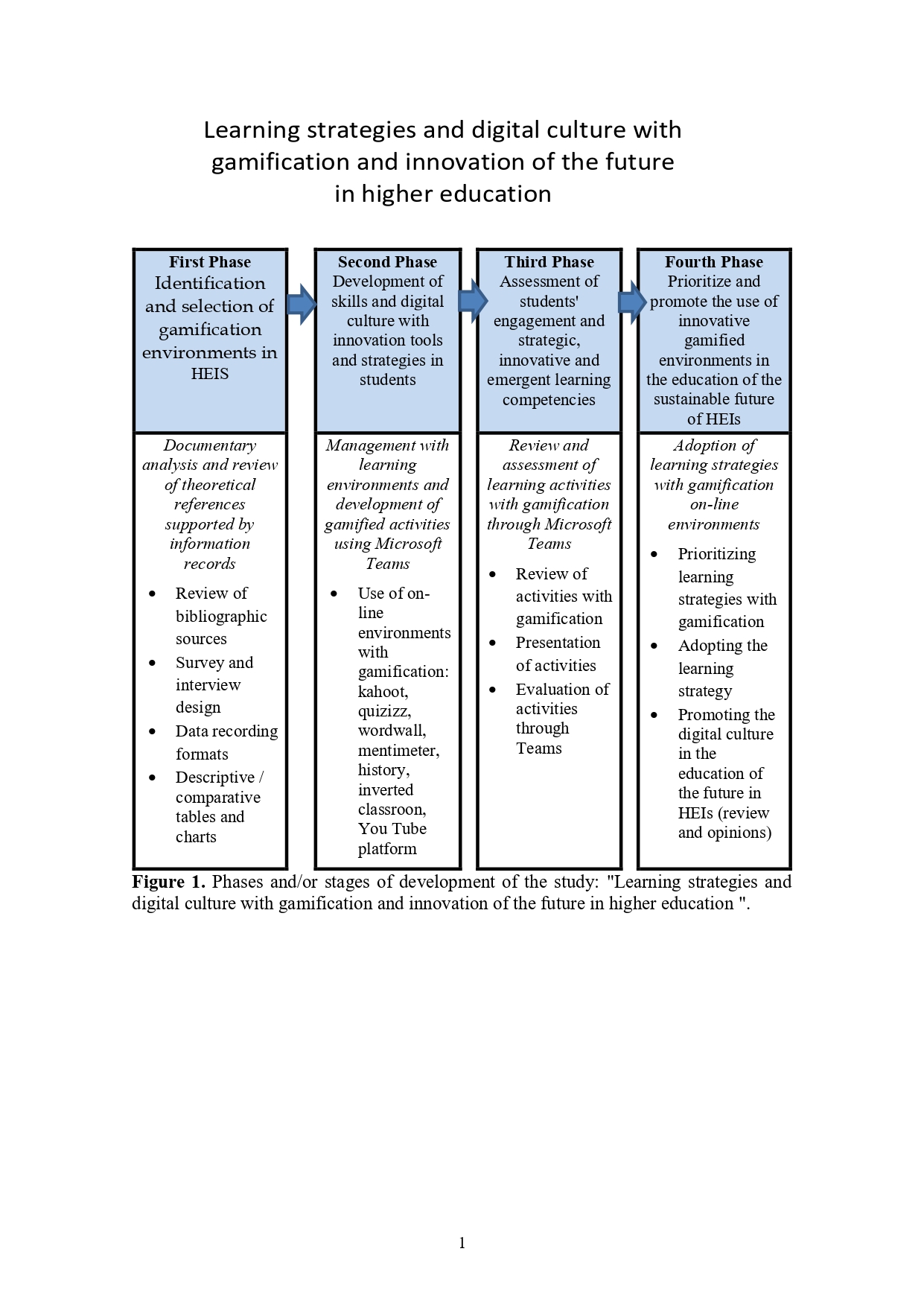
Figure 1 shows a general representation of the methodological scheme considered for the study, specifying in an orderly manner four phases or stages of development: 1) Identification and selection of gamification environments in HEIs (documentary analysis and review), 2) Development of skills and digital culture with innovation tools and strategies in students (learning management with gamification environments through the educational platform Microsoft Teams), 3) Evaluation of commitment and strategic learning competencies, innovative and emerging learning competencies in students (review and assessment of activities with gamification through the Microsoft Teams educational platform), and 4) Prioritizing and promoting the use of innovative gamified environments in the education of the sustainable future of HEIs (adoption of learning strategies with gamification).
2.3.1. First Phase: Identification and Selection of Gamification Environments in HEIs
The activities corresponding to the first phase of the study included a documentary review of theoretical references and studies related to learning strategies with gamification. For this purpose, scientific databases such as Scopus, Web of Science, PubMed, Google Scholar, among other means of information were consulted. The information was represented in descriptive/comparative tables and charts in which the functionalities and characteristics of online environments with gamification and innovative strategic tools for the development of competencies and digital culture that impact the learning of higher education students were pointed out.
Survey and interview instruments were also designed and applied in order to identify the use of online environments with gamification and that have been implemented in the training activities of the subjects taken by students of the ISC educational program, to know how they have impacted on learning, on the development of specific competencies, on the digital culture and innovation for the higher education of the future. The analysis of the documentary information was developed through descriptive reports presenting the organized information of the learning environments that incursion gamification.
The data processing and analysis of the results of these instruments allowed for documentation and better contributions of the tools aimed at learning with gamification, and it was possible to classify these innovative technologies with learning environments to select alternatives to be implemented in the training activities in the groups of the sustainable development subject. In this first phase of the study, on-line environments were identified through documentary review, and the information was organized to select the innovative tools for their application with learning alternatives.
2.3.2. Second Phase: Development of Skills and Digital Culture with Innovation Tools and Strategies in Students
In the second phase of the study, and taking as a reference the analysis of the documentary information of the first stage, the following online environments with gamification were taken as fundamental tools of innovation for learning: kahoot, quizizz, wordwall, mentimeter, history, inverted class and the You Tube platform; which were presented to the students as alternative tools for the development of training activities, they were asked for two training activities using at least two of the online tools with the purpose of applying gamification, developing the specific competence of a subject and promoting digital culture in higher education.
The activities were requested through the Microsoft Teams platform, where a project of application of a topic already addressed was requested, indicating the instructions to apply a learning strategy and the assessment instrument, rubric. In order to carry out the activities, it was requested to document the subject matter; for which, they had to use the on-line environments, specifically applying the inverted class (seeking that the students appropriate the knowledge before the class and in the class to deepen and apply this knowledge).
The purpose of this second phase of the study was to implement the development of training activities, manage the use of innovative tools with learning environments supported by gamification through the Microsoft Teams educational platform; and of course, promote the use of learning environments and the management of activities with gamification for the development of skills, competencies and digital culture with strategic and innovative tools in the students of the sustainable development course of the ISC educational program of the ITA.
2.3.3. Third Phase: Assessment of Student Engagement and Strategic, Innovative and Emergent Learning Competencies
The third phase of the study had the purpose of evaluating the performance of the students with respect to the training activities developed with the on-line environments applying gamification with innovative and emerging strategies; as well as the generation of specific competencies achieved from the thematic or project presented. For this purpose, the students of both sustainable development groups uploaded to the Microsoft Teams platform the training activities requested with the support of at least two of the gamification tools, and also presented these activities so that observations could be pointed out to them with the purpose of attending and improving the conclusion of the project, seeking to have an impact on learning.
The activities were reviewed for evaluation taking into consideration the rubric indicated, assigning the score or grade achieved in order to classify the corresponding performance level (excellent: 95-100, outstanding: 85-94, good: 75-84, sufficient: 70-74, and insufficient: NA (not achieved)). The commitment to the delivery of the activity, the strategy implemented with respect to the content, the responsible and professional dedication to the use of innovation tools with gamification in training activities in higher education were also evaluated.
2.3.4. Fourth Phase: Prioritize and Promote the Use of Innovative Gamified Environments in the Education of the Sustainable Future of HEIs
In the fourth and last phase of the research work, a systematized review was carried out through the Microsoft Teams platform to know the gamification tools used by the students; at the same time, to classify by means of a descriptive table the priority in relation to the use of gamification tools (kahoot, quizizz, wordwall, mentimeter, history, inverted class and the You Tube platform) that the students who took the sustainable development course handled and implemented in their formative activities presented during the periods January-June 2022 and August-December 2022.
From the classified description and the organization by priorities through comparative tables of the learning strategies with gamification, better deductions were made with the information, framing the alternatives in an orderly manner, pointing out why such tools and/or on-line environments should be selected for learning; and why the use of these learning environments should be encouraged by applying gamification in the subjects of the ISC educational program of the ITA and promoting the digital culture in the education of the future in the IES.
We also analyzed the opinions of the students, obtained from a brainstorming and online interview; as well as the information documented in the technical reports of approval and rejection of students who took the subject of sustainable development. In this last stage of the study, it was possible to identify the best learning alternatives using online environments with gamification as innovative technological tools that could have an impact on learning, on the specific competencies of the subjects and on the emerging digital culture to promote education for a sustainable future.
3. Results
The results obtained in this study are presented according to the purposes presented above and in accordance with the activities carried out in each of the development phases in order to be able to specifically point out the results of each section of work. In this way, the different phases or stages with the description of the advances that were developed in an orderly manner, with their respective deductions and arguments regarding the learning strategies with gamification environments in higher level institutions are pointed out.
3.1. Identification and Analysis of Environments with Gamification for the Development of Learning Activities in Higher Education
This section presents the results obtained with respect to the identification and analysis of the fundamental virtual environments that support learning using gamification and innovative technologies for their implementation in higher education as an impact strategy in the digital education of the future. The results deduce that with respect to the systematized reviews of documents and scientific databases, the following environments were identified for study: Kahoot, Quizizz, Wordwall, Mentimeter, History, Flipped Learning and the YouTube platform as fundamental tools that incursion gamification for learning in higher education.
For this purpose, descriptive tables were made with the argumentative analysis of scientific papers pointing out the characteristics, functionalities and applications in digital education. The review and analysis of the on-line environments identified as fundamental tools of gamification that support student learning, allowed the documentation of the technologies in the education of the future, the strategic knowledge for learning and to specify with scientific arguments the approach to apply these innovative tools in the learning activities to be developed by the students of the Computer Systems Engineering program of the Instituto Tecnológico de Acapulco in the subjects of Sustainable Development and Research Workshop II (Table 3).
In this first section of the study, the students of the Computer Systems Engineering program of the ITA considered that these on-line virtual environments with gamification are useful to develop activities and training projects, necessary and indispensable for a quality, competitive and sustainable education, since learning supported by innovative tools increases skills and performance levels, contributes to the development of competencies and digital culture in students with tendencies towards the education of the future.
3.2. Skills Management and Digital Culture with Gamification and Innovative Tools for the Development of Competencies in ISC Students
In this results section, and considering the documentary analysis of scientific theoretical references, the two groups of Sustainable Development and Research Workshop II of the Computer Systems Engineering educational program were asked to work with two training activities; to do so, they used electronic resources both hardware and software and applied the environments identified in the review corresponding to Kahoot, Quizizz, Wordwall, Mentimeter, History, Flipped Learning and the YouTube platform; in addition to using the Microsoft Teams educational platform to develop these activities.
The students of both groups developed the activities attending a defined task with instructions; in addition to the attention to the rubric valuation instrument to qualify the responsible dedication for the delivery of the work, the skills developed in the environments used and the digital culture as an interest to be able to apply learning technologies in the higher education of the future, and that could expand the possibilities to improve the specific competences of the thematic requested in the subjects of sustainable development and research workshop II.
Figure 2 shows the results related to the assessment of the knowledge management and digital culture aspect by applying the gamification principle to achieve certain results through the development of learning activities in the subjects of sustainable development and research workshop II of the ISC educational program. In the indicator management of technologies and virtual environments with gamification for learning in the students of the ISC educational program, 63 favorable responses were determined, equivalent to 64% of the students who used gamification environments satisfactorily; regarding the development of strategies and knowledge management with innovative tools in the education of the future to generate skills and competencies in the students of both groups, 56 students participated, equivalent to 57%, who used at least two gamification environments in the learning activities developed in a favorable manner. The criterion to value the digital culture with learning and innovation strategies in the higher education of the future, the result reflected 53 favorable responses, equivalent to 54% of the total number of students. Overall, the result of the valued aspect was 62%, this result determines that the management of skills and incursion of virtual environments with innovative gamification tools are contributing to the development of activities to generate competencies and establishing the foundations of a digital culture with a vision of competitiveness in ISC students of the ISC educational program of the ITA.
The results show that students identified and were able to adequately use at least two tools with gamification environments; and also, they were able to combine these learning technologies in the activities that were developed through the Microsoft Teams educational platform in 64%. Regarding the development of strategies and knowledge management, if fundamental skills were generated, since the activities and specific competencies were developed in both subjects of sustainable development and research workshop II in 53% and 62% respectively; regarding digital culture, it is already managed in 54%, students still do not fully visualize the emerging trends of digital education of the competitive and sustainable future in which they must be inserted.
3.3. Performance Assessment of Learning Competencies with Gamification and Innovative and Emergent Tools Using Microsoft Teams
Figure 3 shows the results related to the evaluation of the general aspect of compliance with the development of activities, commitment and dedication, and the evaluation of the learning activities carried out for the generation of specific competencies in the subjects of sustainable development and research workshop II of the ISC educational program using gamification environments and tools through the Microsoft Teams educational platform. For the indicator compliance in the development of activities with gamification through the Microsoft Teams platform by the students of both groups of the ISC educational program, 77 favorable responses were found, which is equivalent to 79% of the students who complied with the activities using the gamification environments. The indicator commitment and dedication to develop the activities using the gamification environments and tools involved 63 students, equivalent to 64%, who complied responsibly in the development of the activities. The criterion to evaluate the activities developed and competencies with respect to the rubric instrument indicated in the Microsoft Teams platform, the result reflected 72 favorable responses of accredited activities, equivalent to 73% of the students who developed the activities with dedication and reached a satisfactory performance level. In general, the result of the valued aspect of compliance, dedication and competence achieved of the activities developed with gamification tools was 71%, this result demonstrates the level of performance achieved by students who have developed learning activities implementing gamification with a learning strategy to develop competencies based on games.
3.4. Systematized and Argumentative Description with Priorities Regarding the Use of Gamification Environments and Innovative Tools to Enter and Promote Emerging Learning Strategies in the Sustainable Higher Education of the Future
Table 4 presents a systematic account of the environments and gamification tools analyzed. This includes reviews of scientific databases, the application of the strategies implemented in the activities carried out, and the evaluation report, which was documented through the Microsoft Teams platform. Furthermore, each of the gamification tools is classified according to the mentioned aspects, with a designation of priority based on the management, utilization, and skills development of ISC students during the study period. The principal strategies employed, and the gamification tools were prioritized in the following sequence: Other tools that may be employed include Mentimeter, YouTube, Kahoot/Quizizz, and similar applications such as Edpuzzle and Socrative. Mentimeter was considered to have significant value due to its capacity for interactive engagement, enabling real-time feedback and active participation from students, which in turn facilitated the development of communication and critical thinking skills. The YouTube platform provided accessible resources that enhanced the learning process through the utilization of visual and auditory means, facilitating the comprehension of complex topics. The Kahoot and Quizizz platforms facilitated the delivery of engaging, competitive quizzes, which were designed to enhance knowledge retention through a gamified approach that was perceived as enjoyable. Despite the fact that tools such as Edpuzzle and Socrative were not accorded the same level of priority, they nevertheless made a valuable contribution to the development of problem-solving and self-paced learning skills.
The evaluation report highlighted that the implementation of gamification strategies markedly enhanced student engagement, motivation, and performance. The utilisation of these tools facilitated active learning, peer interaction and the provision of immediate feedback, thereby facilitating a more profound comprehension of the subject matter. Moreover, the documentation provided through Microsoft Teams highlighted the positive impact of these tools on the students’ capacity to manage tasks, collaborate effectively, and apply critical thinking in practical scenarios. In conclusion, the study demonstrated that the incorporation of these gamification tools was instrumental in improving both the educational process and the skills of the students.
4. Discussion
The analysis of several studies with learning strategies applying the innovative tools of gamification have presented positive results similar to those obtained in the study in question, mainly in the analysis of information from the environments Kahoot, Quizizz, Wordwall, Mentimeter, History, Flipped Learning and the YouTube platform. The structured review of the gamification tools implemented as learning strategies made it possible to identify characteristics and basic functionalities of these innovative environments, which reflected documenting, knowing the technological resources and making approaches for the use of gamification environments for learning in higher education. Wannapiroon and Paitoon (2022) state that content analysis synthesizes their contribution to the learning process, mechanisms of the tools with digital virtual classroom environment are examined, then reinforced and transferred to the online gamification process to enhance creative thinking and innovation of university students.
Future revisions may involve adding additional competitive features, content, levels, incentives, and focus on strategies to incorporate gamification into traditional classroom instruction to enhance learning (Devraj et al., 2021). And beyond these tasks, questions remain open for further reviews and comparisons among various sources of information on learning strategies and the precise use of innovative tools.
Learning activities in higher education institutions are carried out with the purpose of evaluating students’ competencies in some of the subjects using at least one evaluation instrument; however, not all learning activities contribute favorably to the generation of such competencies, either because of the strategy, the time, the understanding of the argument or because of the approach not in accordance with the activity. This contrasts with what López Vázquez et al. (2023) deduce, where they observe that there is a process of acquisition of skills and that university students have not always developed them sufficiently and that not all skills are developed at the same level and in tune, but are developed over time in different ways.
The development of the activities by the students of the ISC educational program using the flipped learning strategy did not represent good participation, nor dedication; and neither did they implement a gamification tool, some of the students developed a general report but did not assimilate the reading, nor the learning that demonstrated the generation of the competencies. These argued results agree with those presented by Jon-Chao et al., (2022)
pointing out that the learning activities did not have a significant impact; but if associated with gamification, it could positively predict students’ learning progress, motivating them to take advantage of their epistemic curiosity to increase their learning and enhance knowledge effects.
The achievement obtained using at least two of the gamification tools and environments was 64%, which means that students of the ISC educational program in the subjects of sustainable development and research workshop II, are indeed managing knowledge by applying gamification and digital culture with satisfactory results; however, participation is low and learning strategies using these tools should continue to be promoted in higher education. It is true that there are learning obstacles when using methods with emerging trends and technologies that affect the experience; however, it is challenging to implement emerging solutions including open educational resources (Alsharhan et al., 2021).
The evaluation of the activities developed with the gamification environments Kahoot, Quizziz, Wordwall and other platforms allowed to improve the effectiveness of the training projects, increased the assessment and saw greater participation by students, dedication and commitment, development and improvement of the activities themselves that were uploaded and presented to develop competencies through the Teams platform. Among educational pedagogies, game-based learning (GBL) has received increasing attention in recent years, the effectiveness of Wordwall has improved cognitive performance related to foundational knowledge (Mettarikanon et al., 2023). Moreover, it is proven that the use of gamification can be easily implemented to enhance learning and positively affect students’ grades (Ortiz-Martinez et al., 2021).
The descriptive analysis regarding the use of digital environments for online learning of ISC students argues with grounded bases the classification of game-based learning tools; at the same time, the adoption of innovative strategies with gamification that could be implemented in higher education for learning are organized in the following order: 1. Mentimeter, 2. In this regard, the abrupt shift of universities to digital learning has created new challenges in the university in the context of digitization, more effective digital technologies have been identified to improve the design system and implement the content of professional educational programs, proposing modern digital technologies and methods for an updated digital education system model in the university (Akhmetshin et al., 2021).
The implementation of strategies associated with digital practices offering alternatives with on-line educational platforms opens up possibilities that lead to sustainable development (Bedolla et al., 2023c). Implementing innovative tools and environments for learning in higher education could be transcendental since training activities are carried out in a relaxed manner, with interest, with less anxieties, and competencies are developed with better performance levels. This deduction agrees with what was demonstrated by Adkins-Jablonsky et al. (2021), who pointed out that gamified student response systems can be a promising tool for active engagement that preserves the benefits of learning without contributing to increased anxiety and help to increase interest and scientific skills. On the other hand, Rincon-Flores and Santos-Guevara (2021) consider that gamification strategy helps to motivate students to participate and perform the activities by engaging them in an online learning environment. Adopting gamification to meet the aspects of the main pedagogical approaches will stimulate the process of generation, dissemination, capture, absorption and socialization of knowledge along different stages of a gamification flow, contemplating the protagonists of the knowledge management process, as knowledge generators and the expert (Da Silva Alcantara & Bezerra Oliveira, 2021).
In general, higher education institutions that train professionals are responsible for adopting innovative gamification tools to develop training activities in all subjects of the educational program on a daily basis because virtualization from the pandemic of COVID-19 was implemented in all sectors of society and as a training institution of these professionals should not lag behind in digital education, think about emerging technologies, learning strategies and competitiveness for a global digital world. On the other hand, the complexity of learning considers the implementation of different gamification tools carrying out a triple scenario; virtualization by COVID-19 pandemic, gamified training and evaluation performed remotely using three gamification web tools: Kahoot, Mentimeter and Socrative regarding academic courses taught (León and Peña, 2021).
5. Conclusions
At the Instituto Tecnológico de Acapulco, dependent of the Tecnológico Nacional de México, learning strategies were used applying gamification as an alternative to introduce competencies with innovative virtual environments and to be able to adopt the digital culture in the higher education of the sustainable future. In order to use these strategies, an analysis of gamification environments and tools was carried out, making systematized reviews of scientific databases and arguments with deductions through descriptive tables of information; which allowed, based on scientific knowledge bases, functionalities and general characteristics to identify the transcendental and innovative tools that have had an impact on student learning. The gamification tools identified and selected to manage the development of activities in the subjects of sustainable development and research workshop II through the Microsoft Teams platform were: Kahoot, Quizizz, Wordwall, Mentimeter, History, Flipped Learning and YouTube. However, a new review of scientific references and innovative learning strategies would make it possible to open the range to identify other emerging and strategic technological resources in the digital learning of the future.
The identification and knowledge of gamification environments and tools organized in descriptive tables allowed the students of both subjects to develop learning activities promoting the development of skills and digital culture. The activities were managed through the Microsoft Teams platform, giving punctual follow-up to the parameters and/or criteria of the rubric evaluation instrument registered in the same educational platform. The students of both subjects used at least two of the gamification tools analyzed, and developed the activities with a participation of 62%, thus achieving skills in the management of gamification technological environments, management of digital culture and knowledge, with learning strategies for the development of specific competencies in the subjects of sustainable development and research workshop II. The achievement of skills, management of environments and digital culture require the reinforcement of learning strategies using gamification and accurately defining a knowledge management model of game-based learning, with activities socialized to the activities and / or training projects.
The assessment of the learning activities using gamification made it possible to demonstrate the level of student performance with favorable results. This assessment generated in a systematized way through the Microsoft Teams platform helped to represent the measurement of statistical reports and reports that facilitated the information. The gamification tools used by the students were also identified according to their possibility of handling and knowledge of the same; finding differences between the tools used for each of the activities developed by the students. The level of performance of competencies with innovative gamification strategies generated by the two groups was 71%, only the criteria of compliance, dedication and learning competence valued with the rubric were considered; no differences were contemplated with respect to the application of the tools used by the students in certain activities. Students know and understand in a basic way the management of gamification tools; however, the motivation for the development of activities based on games and digital culture is necessary to develop learning activities, in addition; to the lack of resources during the distance work, the activity and compliance to reach the performance level is limited.
The competencies of millennial students are priority issues in the educational context they develop. The environment is broad and global digital competitiveness is increasingly demanding. In this sense, learning strategies in higher education institutions based on competency models consider technological tools, but innovative, creative and socializing tools with gamification environments that motivate and encourage the generation of student competencies should be reviewed and adopted. The review of the gamification environments and tools were argued for their choice according to their characteristics, their functionalities, to the development of activities, the skills for the management and evaluation of the competences developed by the ISC students in both groups, pointing out through descriptive tables, the arguments of the emerging gamification technologies and the most relevant strategies that were applied in each one of them. The systematized description regarding the use of gamification tools, behavior and development of competencies analyzed with the support of the Microsoft Teams platform, allowed the development of learning strategies in students, at the same time it was possible to classify the environments according to the application and impact for a possible adoption in higher education. According to the argumentative analysis of the assessment aspects: review and analysis of gamification environments, knowledge management and digital culture applying the principle of gamification and assessment of compliance, dedication and learning competencies with emerging innovative strategies, the following environments could be classified for adoption as a priority and in the following order: 1. Mentimeter, 2. YouTube, 3. Kahoot/Quizizz, 4. This prioritized ranking is an opportunity for the adoption of gamification tools and learning strategies for the higher education of the future.
Author Contributions
Conceptualization, Formal Analysis and Investigation: Juan José Bedolla Solano, Ramón Bedolla Solano, Adriana Miranda Esteban, Claudia Leticia Manzano Jiménez. Methodology, Data Collection and Processing: Juan José Bedolla Solano, Ramón Bedolla Solano, Adriana Miranda Esteban. Software and Management of Virtual Platforms: Juan José Bedolla Solano, Ramón Bedolla Solano. Instrument Design and Implementation; Management of Virtual Platforms: Juan José Bedolla Solano, Ramón Bedolla Solano, Adriana Miranda Esteban, Claudia Leticia Manzano Jiménez. Validation, translation, writing, and proofreading: Juan José Bedolla Solano, Ramón Bedolla Solano, Claudia Leticia Manzano Jiménez. Resources, Data Curation; Writing – Original Draft Preparation and Writing – Review and Editing: Juan José Bedolla Solano, Ramón Bedolla Solano, Adriana Miranda Esteban. Visualization, Project Administration and Funding Acquisition: Juan José Bedolla Solano, Ramón Bedolla Solano. Visualization, organization, dissemination: Juan José Bedolla Solano.
Funding
This work has not received any specific grants from funding agencies in the public, commercial, or non-profit sectors.
Data Availability Statement
All data generated or analyzed during this study is included in this published article. I confirm I have included a data availability statement in my main manuscript file. My manuscript has no associated data.
Acknowledgments
First, we would like to thank the students who took the subjects of sustainable development and research workshop II of the Computer Systems Engineering program at ITA, who also collaborated with the activities assessed and who provided relevant information for the study. Likewise, the Instituto Tecnológico de Acapulco / Tecnológico Nacional de México and the Universidad Autónoma de Guerrero contributed with spaces for the development of the research, managed by the professors participating in the project.
Conflicts of Interest
The authors declare no conflicts of interest.
References
- Adkins-Jablonsky, S.J. , Shaffer, J.F., Morris, J.J., England, B., & Raut, S. A tale of two institutions: Analyzing the impact of gamified student response systems on student anxiety in two different introductory biology courses. CBE Life Sciences Education 2021, 20, ISSN 1931–7913. [Google Scholar] [CrossRef]
- Akhmetshin, E. M. , Vasilev, V. L., Kozachek, A. V., Meshkova, G. V., & Alexandrova, T. N. Analysis of Peculiarities of Using Digital Technologies in the University Professional Training Content. International Journal of Emerging Technologies in Learning (iJET) 2021, 16, 101–118. [Google Scholar] [CrossRef]
- Alsharhan, A. , Salloum, S., & Shaalan, K. The Impact of eLearning as a Knowledge Management Tool in Organizational Performance. Advances in Science, Technology and Engineering Systems Journal 2021, 6, 928–936. [Google Scholar] [CrossRef]
- Bedolla-Solano, R. , Miranda-Esteban, A., Bedolla-Solano, J.J., Luna-Nemesio, J., & Sánchez-Adame, O. Sustainability at the Sociology Educative Program as a basis for the design of a methodological proposal for a Non-Formal Socio-Environmental Education Program (NFSEEP). Journal of Positive Psychology and Wellbeing, 2645. [Google Scholar]
- Bedolla-Solano, J.J. , Luna-Nemecio, J., Miranda-Esteban, A., & Bedolla-Solano, R. Automated model for the sustainability of the educational physical infrastructure in Smart Cities. Journal of Positive Psychology & Wellbeing 2023, 7, 664–688. [Google Scholar]
- Bedolla Solano, J. J. , Bedolla Solano, R., & Miranda Esteban, A. Digital practices and socio-environmental sustainability in basic education in Smart Cities. Distance Education Magazine (RED). [CrossRef]
- Barrot, J.S. , Llenares, I. & Del-Rosario, L.S. Students’ online learning challenges during the pandemic and how they cope with them: The case of the Philippines. Education and Information Technologies 2021, 26, 7321–7338. [Google Scholar] [CrossRef]
- CACEI. (2020). 2018 Reference Framework for the accreditation of Engineering programs. Criteria and indicators. Version 3, http://cacei.org.mx/docs/marco_ing_2018.
- Calaña Hernandez, Maritza; Palmero Ortega, Arlenys; Guillen Perez, Lianne. & Ochoa Calzadilla, Mailin. The Flipped Learning model and educational videos in English language teaching at the University of Informatics Sciences. Contemporary Dilemmas: Education, Politics, and Values 2021, 8, 00019. [Google Scholar] [CrossRef]
- Carrion-Candel, E. & Roblizo-Colmenero, M.J. Gamification and mobile learning: innovative experiences to motivate and optimize music content within university contexts. Music Education Research 2022, 24, 377–392. [Google Scholar] [CrossRef]
- Da Silva Alcantara, A. and Bezerra Oliveira, S.R.B. (2021). A gamification to support teaching-learning of knowledge management in information technology: a plan based on features of pedagogical approaches. IEEE Frontiers in Education Conference (FIE), Lincoln, NE, USA, pp. -9. [CrossRef]
- Devraj, R. , Colyott, L., & Cain, J. Design and evaluation of a mobile serious game application to supplement instruction. Currents in Pharmacy Teaching and Learning 2021, 13, 1228–1235. [Google Scholar] [CrossRef]
- Ekici, M. A. Systematic review of the use of gamification in flipped learning. Educ Inf Technol 2021, 26, 3327–3346. [Google Scholar] [CrossRef]
- Enciso, L. Generation of multimedia videos under the concept of Flipped Classroom for E-Learning and B-Learning, IEEE, XII International Congress of Virtual Campus (JICV). Arequipa, Peru 2022, 2022, 9934674. [Google Scholar] [CrossRef]
- García-Mora, J.J. , Patiño-Jaramillo, M.E., and Moreno-Jiménez, S.J. Cognitive contextualization of interactivity, A look from technological learning objects. International Humanities Review / Revista Internacional de Humanidades 2022, 11, 2–19. [Google Scholar] [CrossRef]
- George-Reyes, C.E. , Ramírez-Montoya, M.S., & López-Caudana, E.O. Imbrication of the Metaverse in the complexity of education 4.0: Approach from an analysis of the literature. Pixel-Bit. Media and Education Magazine. [CrossRef]
- Gómez, C. J. , Hinojo-Lucena, F.J., Moreno, J. R., & Alonso-García, S. Analysis of a forced blended-learning program in social sciences higher education during the COVID-19 post-pandemic. Education and Training Follow journal 2022, 65. [Google Scholar] [CrossRef]
- Gutiérrez Villalobos, M. A. , Bedolla Solano, R., Brito Carmona, R. M., Sampedro Rosas, M. L., Bedolla Solano, J. J., & Sánchez Adame, O. Sustainability in basic education: case of Las Vigas General High School, Guerrero. RIDE Ibero-American Magazine for Educational Research and Development. [CrossRef]
- Handoko, W. , Mizkat, E., Nasution, A., Hambali & Eska, J. Gamification in Learning using Quizizz Application as Assessment Tools. Journal of Physics: Conference Series 2021, 1783, DOI 10. [Google Scholar]
- Hasram, S. , Nasir, M.K.M., Mohamad, M., Daud, M.Y., Abd-Rahman, M.J. & Ruzanna-Wan-Mphammad, W.M. The Effects of WordWall Online Games (WOW) on English Language Vocabulary Learning Among Year 5 Pupils. Theory and Practice in Language Studies 2021, 11, 1059–1066. [Google Scholar] [CrossRef]
- Lapitan, L.D. , Tiangco, C.E., Sumalinog, D.A., Sabarillo, N.S. & Diaz, J.M. An effective blended online teaching and learning strategy during the COVID-19 pandemic. Education for Chemical Engineers 2021, 35, 116–131. [Google Scholar] [CrossRef]
- León, A. and Peña, M. Gamification tools in the learning of shipbuilding in the undergraduate marine engineering education. Computer Applications in Engineering Education. [CrossRef]
- López Vázquez, Julieta A., González Di Pierro, Carlos, & Pérez Álvarez, Bernardo E. Argumentative skills in higher level school digital contexts. GRID. Distance Education Magazine. [CrossRef]
- Jiménez-Rodríguez, V. , Blázquez-Rodríguez, M., Pichardo-Galán, J.I., Carabantes-Alarcón, D., Mancha-Cáceres, O.I. and Borras-Gené, O. Using Mentimeter in higher education: online digital tool to encourage and enhance the acquisition of knowledge in a fun way. Electronic scientific journal of Education and Communication in the Knowledge Society 2022, 22, https://revistaseug. [Google Scholar] [CrossRef]
- Jon-Chao Hong, Ming-Yueh Hwang, Yi-Hsuan Liu, and Kai-Hsin Tai. Effects of Playful Questions on Learning English Grammar Mediated by Epistemic Curiosity and Linguistic Anxiety. Computer-Assisted Language Learning 2022, 35, 1458–1482. [Google Scholar] [CrossRef]
- Mettarikanon, D. , Tawanwongsri, W., Wanchai, A. & Chookerd, N. Comparison of efficacy between game-based learning and booklet in improving recognition of common skin malignancies in Thai young adults. Contemporary Educational Technology 2023, 15, ep419. [Google Scholar] [CrossRef]
- Mezinov, V.N. , Zakharova, M.A., and Nekhoroshikh, N.A. (2022). Updating the problem of the development of digital culture among pedagogy students. AIP Conference Proceedings. Proceedings of the II International Scientific Congress on advances in science, engineering and digital education: (ASEDU-II 20). Volume 2647, Issue 1. [CrossRef]
- Miranda Esteban, A. , Bedolla Solano, R., Bedolla Solano, J. J., & Sánchez Adame, O. Non-formal sustainable education to conserve mangroves in coastal areas with Sociology students, UAGro. RIDE Ibero-American Magazine for Educational Research and Development. [CrossRef]
- Moreno, Begoña, Muñoz, Maximiliano, Cuellar, Javier, Domancic, Stefan,; Villanueva, Julio. Systematic reviews: definition and basic notions. Clinical journal of periodontics, implantology and oral rehabilitation 2018, 11, 184–186. [Google Scholar] [CrossRef]
- Nenohai, J.A; Rokhim, D.A.; Augustine, N.I; Munzil, M. Development of the Wordwall gaming platform based on gamification in reaction rate materials. Orbital: electron. J. Chem. 2022, 14, 116–122. [Google Scholar] [CrossRef]
- Ordonez-Palacios, L.G. and Medina-Chicaiza, R.P. Wordwall: a learning experience for the basic education student. Research Journal 2022, 46. [Google Scholar] [CrossRef]
- Ortiz-Martínez, E. , Santos-Jaén, J.M., and Palacios-Manzano, M. Games in the classroom? Analysis of their effects on financial accounting marks in higher education. The International Journal of Management Education 2021, 20, 100584. [Google Scholar] [CrossRef]
- Otzen, T. , & Manterola, C. Sampling Techniques on a Study Population. International Journal of Morphology 2017, 35, 227–232. [Google Scholar] [CrossRef]
- Parra-González, M.E. , López-Belmonte, J., Segura-Robles, A., & Moreno-Guerreo, A.J. Gamification and flipped learning and their influence on aspects related to the teaching-learning process. Heliyon 2021, 7, e06254. [Google Scholar] [CrossRef]
- Petroulis, I. , Tzelepi, M., Papanikolaou, K. (2019). About the Design of Gamification Elements in Moodle Courses. In: Liapis, A., Yannakakis, G., Gentile, M., Ninaus, M. (eds) Games and Learning Alliance. GALA 2019. Lecture Notes in Computer Science(), vol 11899. Springer, Cham. [CrossRef]
- PND. (2019). National Development Plan 2019-2024. Ministry of the Interior SEGOB. Official Journal of the Federation.
- Põldoja, H. (2020). Report on ICT in Education in the Republic of Estonia. In: Liu, D., Huang, R., Lalic, B., Zeng, H., Zivlak, N. (eds) Comparative Analysis of ICT in Education Between China and Central and Eastern European Countries. Lecture Notes in Educational Technology. Springer, Singapore. [CrossRef]
- Raffo-Ibarra, G.A. , and Yangali-Vicente, J.S. (2021). Gamification as a strategy to strengthen skills in postgraduate students. Iberian Journal of Information Systems and Technologies (RISTI). No. 44. [CrossRef]
- Raju, R. , Bhat, S., Bhat, S., D’Souza, R & Singh, A.B. (2021). Effective Usage of Gamification Techniques to Boost Student Engagement. 34. [CrossRef]
- Ramirez-Ochoa, M.I. Possibilities of the educational use of YouTube. Ra Ximhai 2016, 12, 537–546. [Google Scholar]
- Rincon-Flores, E.G. & Santos-Guevara, B.N. Gamification during Covid-19: Promoting active learning and motivation in higher education. Australasian Journal of Educational Technology 2021, 37, 43–60. [Google Scholar] [CrossRef]
- Sáez-López, J.M. , Vázquez-Cano, E., Fombona, J., & López-Meneces, E. Gamification and gaming proposals, teachers’ perceptions and practices in Primary Education. 2022. [Google Scholar] [CrossRef]
- Santos Hernandez, Erika; Pelcastre Neri, Aldo. & Ruvalcaba Ledezma, Jesus Carlos. Impact of the constructivist approach in the nursing leveling process. Journal of Negative and No Positive Results 2020, 5, 91–103. [Google Scholar] [CrossRef]
- Scott-Rivera, E. and Palmer-Garden, C.L. Gamification for Student Engagement: A Framework. Journal of Further and Higher Education 2021, 45, 999–1012. [Google Scholar] [CrossRef]
- SNEST. (2004). Educational Model for the 21st Century: Training and development of professional skills. TechNM. http://www.dgest.gob.mx/informacion/modelo-educativo-para-el-siglo-xxi-del-snest. http://www.tese.edu.mx/documentos2004/DBV9QHSKZF416.
- Soler-Bistue, M.A. Post-Alphonsine Historiography and Nobiliary Estorias. Methodological Considerations. vegeta. Yearbook of the Faculty of Geography and History 2022, 22, 405–419. [Google Scholar] [CrossRef]
- Sozen, E. High School Students’ Views and Attitudes towards Geography Courses in Turkey. Review of International Geographical Education Online 2019, 9, 458–478. [Google Scholar] [CrossRef]
- Vaghjee, G. & Vaghjee, H. (2022). 8 - Participatory learning culture: From spectators to creators in online learning environments, Editor(s): Upasana Gitanjali Singh, Chenicheri Sid Nair, Craig Blewett, Timothy Shea, Academic Voices, Chandos Publishing, Pages 101-113.
- Wannapiroon, N. & Paitoon, P. Thai undergraduate science, technology, engineering, arts, and math (STEAM) creative thinking and innovation skill development: a conceptual model using a digital virtual classroom learning environment. Education and Information Technologies 2022, 27, 5689–5716. [Google Scholar] [CrossRef]
- Zhao, Y. , Pinto-Llorente, A.M. and Sánchez-Gómez, M.C. Digital competence in higher education research: A systematic literature review. Computers & Education. [CrossRef]
Figure 1.
Phases and/or stages of development of the study: "Learning strategies and digital culture with gamification and innovation of the future in higher education ".
Figure 1.
Phases and/or stages of development of the study: "Learning strategies and digital culture with gamification and innovation of the future in higher education ".
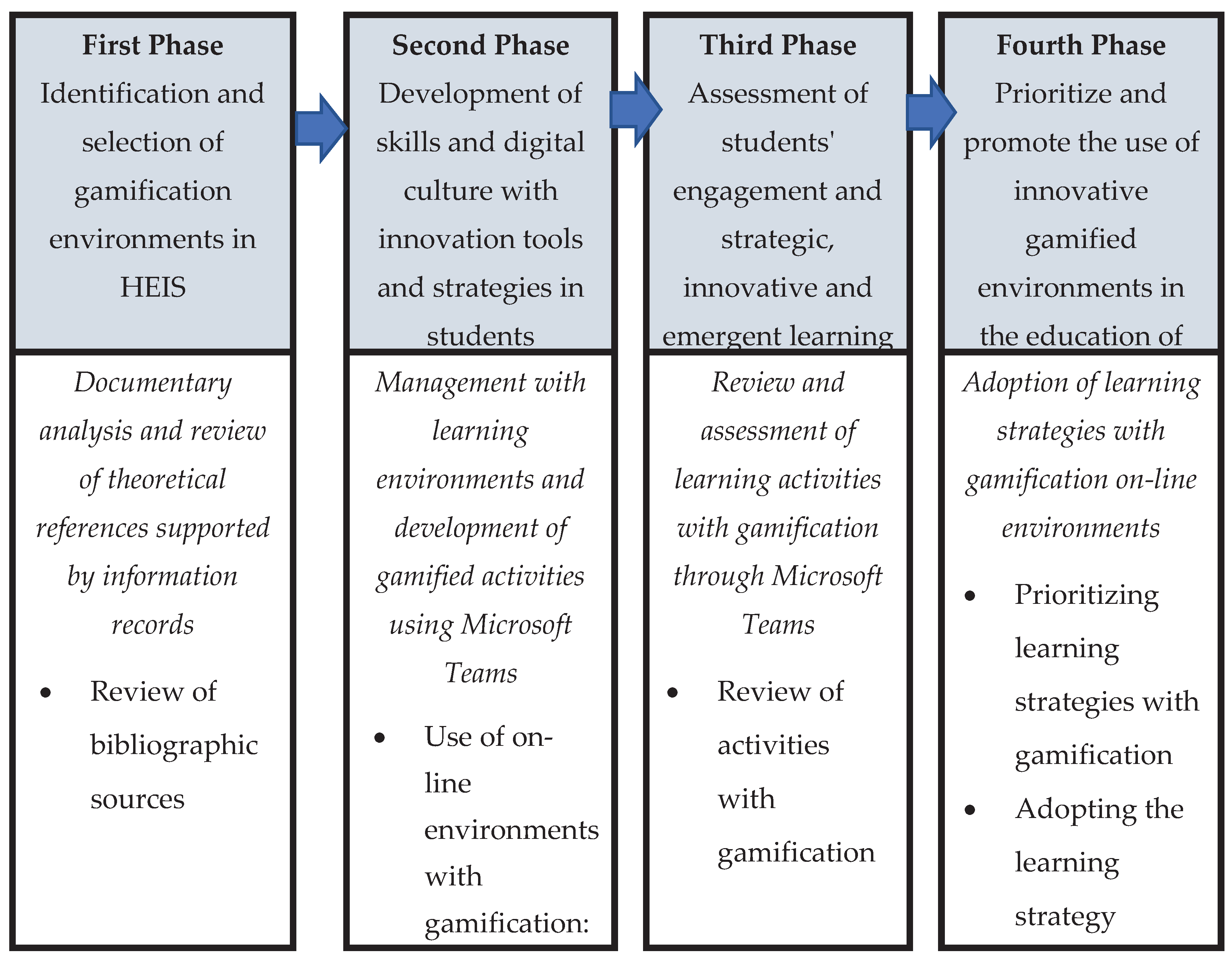
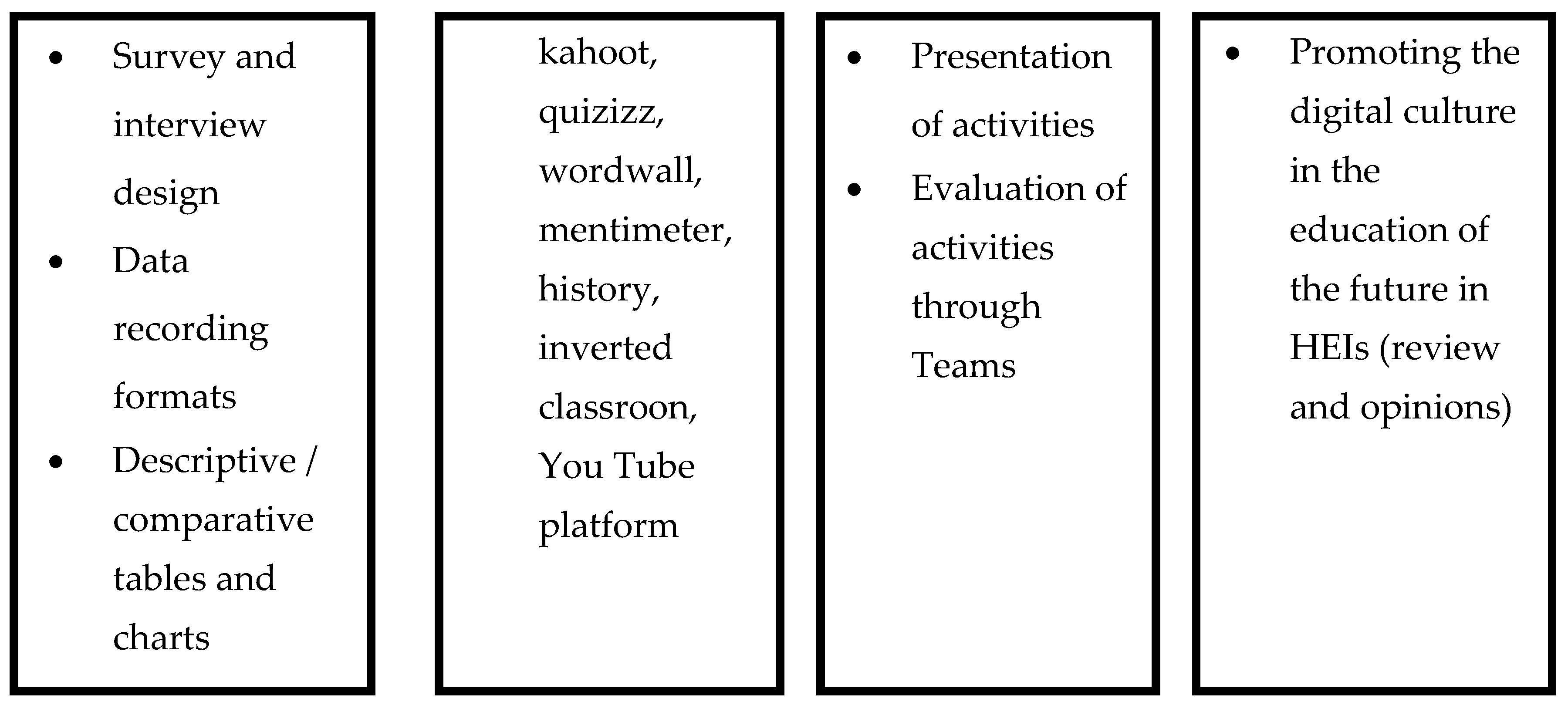
Figure 2.
Results graph of knowledge management and digital culture with gamification and innovative tools for the development of competencies with learning strategies in ISC students at ITA.
Figure 2.
Results graph of knowledge management and digital culture with gamification and innovative tools for the development of competencies with learning strategies in ISC students at ITA.
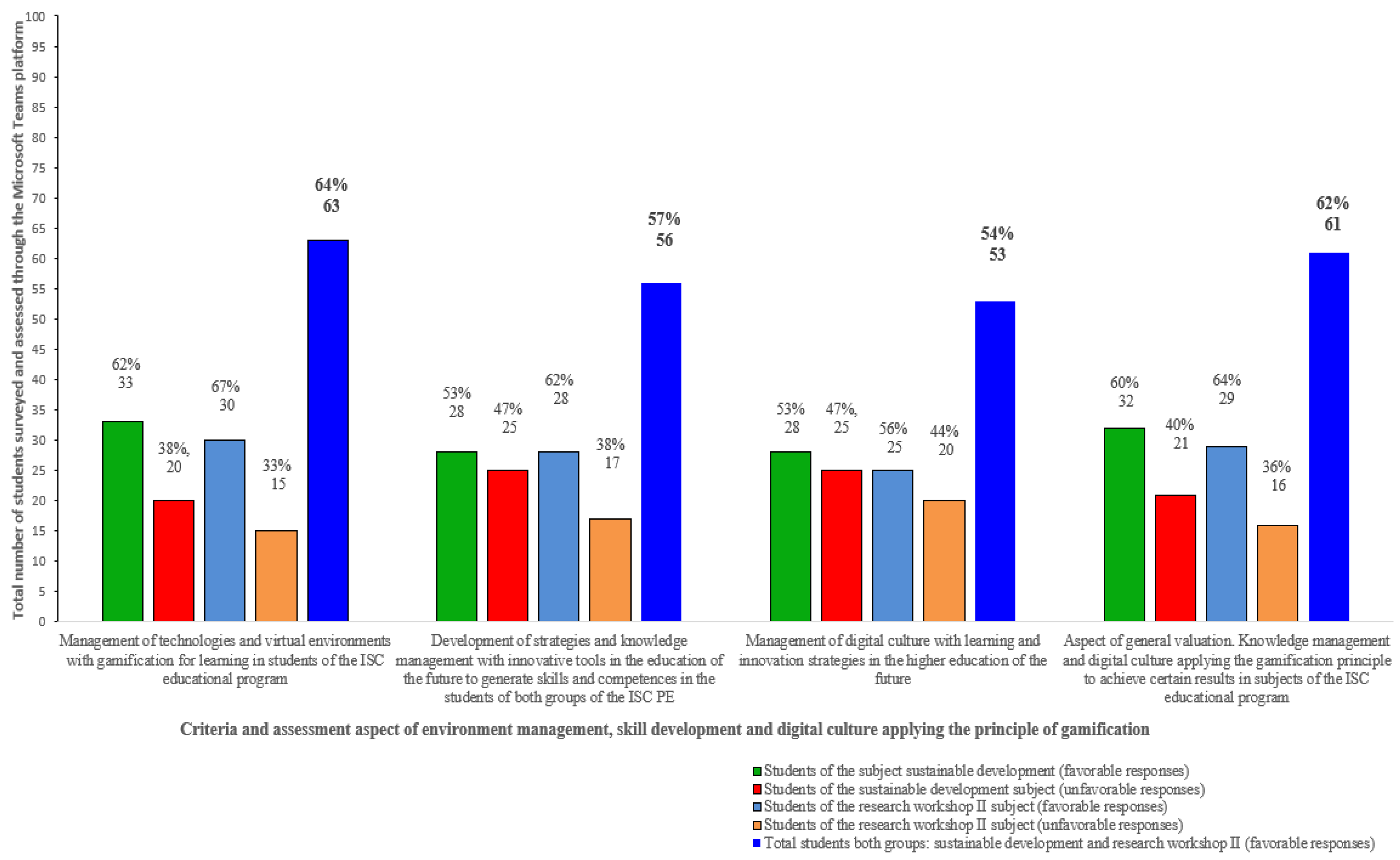
Figure 3.
Graph of results of the assessment of the activities developed with gamification tools, strategic participation and competencies achieved by ISC students of the ITA through the Microsoft Teams educational platforms.
Figure 3.
Graph of results of the assessment of the activities developed with gamification tools, strategic participation and competencies achieved by ISC students of the ITA through the Microsoft Teams educational platforms.
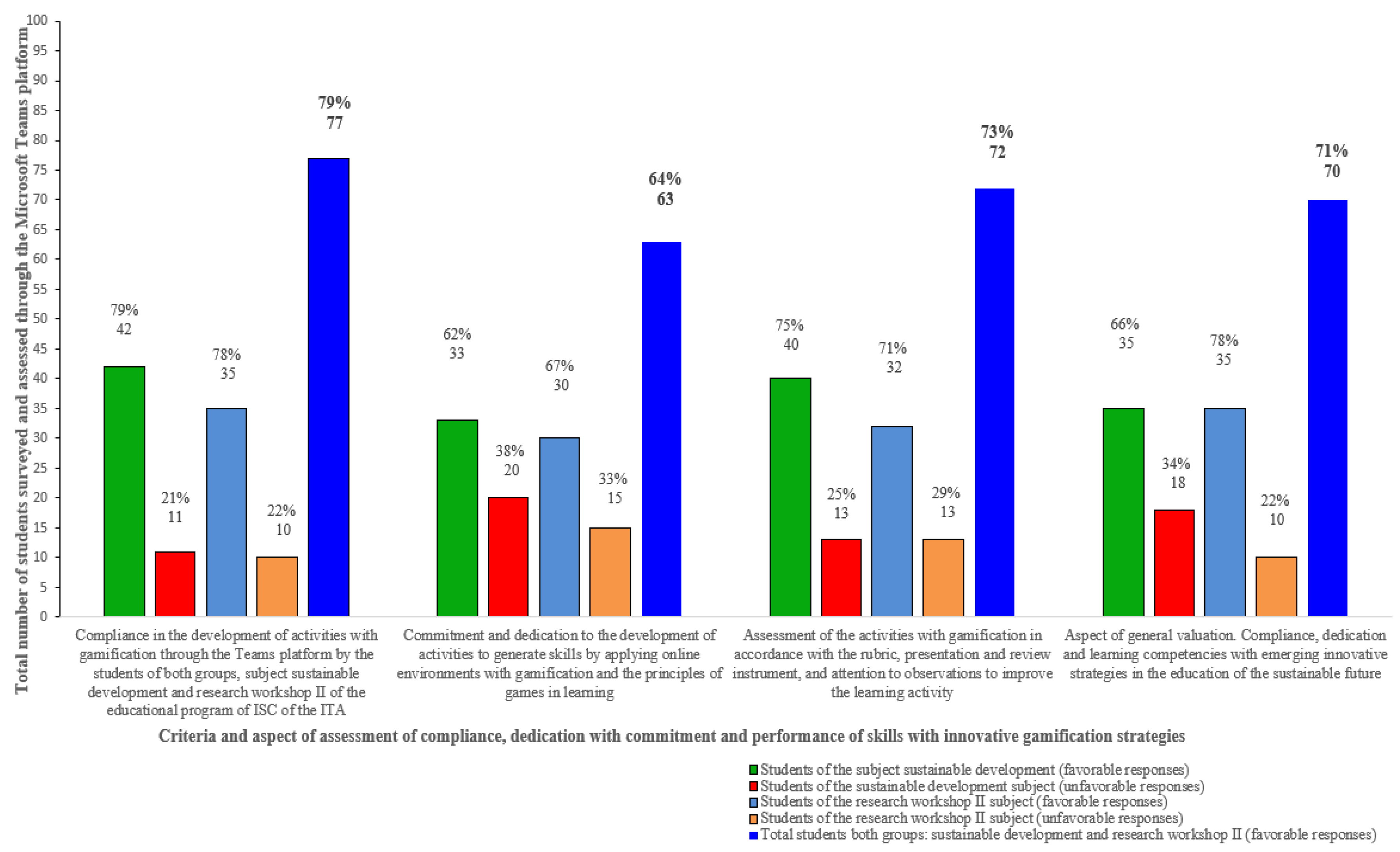

Table 1.
General aspects and indicators of assessment contemplated in the processing of data collected through systematized reviews, surveys and interviews with students of the ISC educational program.
Table 1.
General aspects and indicators of assessment contemplated in the processing of data collected through systematized reviews, surveys and interviews with students of the ISC educational program.
| Assessment aspects and systematized review of gamified learning strategies in HEIs | Indicators and/or assessment criteria of learning strategies with gamification environments, development of competencies and digital culture to adopt emerging innovative strategies in future and sustainable education in the ISC educational program of the ITA (%) |
|---|---|
| Review and analysis of gamification environments to identify and learn about innovative tools in the learning process in HEIs |
|
| Knowledge management and digital culture applying the principle of gamification to achieve certain results in subjects of the ISC educational program |
|
| Assessment of compliance, dedication and learning competencies with emerging innovative strategies in education for a sustainable future |
|
| Systematized and argumentative description with priorities for adoption of gamification environments based on functionalities, knowledge management and student behavior during application with sustainable learning strategies in the future education of HEIs |
|
Source: Own elaboration based on descriptive tables and classification of aspects and indicators of the study.
Table 2.
General and statistical data of the higher education students of the Computer Systems Engineering program of the ITA of the Tecnológico Nacional de México.
Table 2.
General and statistical data of the higher education students of the Computer Systems Engineering program of the ITA of the Tecnológico Nacional de México.
| Grouping | Subgroup | Frequency | Subclassification (gender, profile and subject) | Total percentage with respect to frequency |
|---|---|---|---|---|
| Genre | Men (H) | 74 | Students (H) | 75.51% |
| Women (M) | 24 | Students (M) | 56.05% | |
| Profile | Students (En) | 98 | Total (Es) of ISC | 100.00% |
| Subject (2 groups) |
Sustainable development (DS) | 53 | 39 (Es) (H) 14 (Es) (M) |
73.58% 26.42% |
| Research Workshop II (TI-II) | 45 | 35 (Es) (H) 10 (Es) (M) |
77.78% 22.22% |
|
| Age | 17 to 19 years old | 38 | - | 38.77% |
| 20 to 22 years old | 41 | - | 41.84% | |
| 23 to 25 years old | 14 | - | 14.29% | |
| 26 to 28 years old | 4 | - | 04.08% | |
| Between 29 and over | 1 | - | 01.02% | |
| Total | Respondents | 98 | - | 100% |
Source: Own elaboration based on information from Google Forms survey and systematized review of technical reports. Periods: January-June and August-December 2022.
Table 3.
Review and analysis of innovative gamification environments and tools identified in the learning process in HEIs.
Table 3.
Review and analysis of innovative gamification environments and tools identified in the learning process in HEIs.
| Strategic gamification environments and tools for higher level learning | Features and functionalities of online environments and gamification tools essential for learning | Analysis and identification of on-line virtual environments and platforms based on the information selected from various sources, in order to know the basic functionalities and to be able to make proposals for application in strategic learning activities to be developed by students of the ISC educational program | |
|---|---|---|---|
| Gamification Kahoot y Quizizz |
|
For interactive processes are the most used tools with didactic functionality that impact on emotional competencies and social skills (Sáez-López et al., 2022). These tools can serve in learning strategies for education, achievement, participation and motivation during student training (Carrión-Candel and Roblizo-Colmenero, 2022). Student response systems (SRS) provoke anxiety in some students. But more engaging participation is generated in students (Adkins-Jablonsky et al., 2021). The gamification environments Kahoot and Quizizz tend to be useful environments, easy to use, dynamically accessible and attractive for implementation, and could support student learning. Therefore, they would be an alternative for their application in the development of formative activities based on games, incentivizing performance levels and rewarding through recognition. |
|
| Gamification Wordwall |
|
The Wordwall application can be used as a learning medium that focuses on increasing students' interest in learning materials (Nenohai et al., 2022). The feasibility of online games in learning aims to determine the degree of improvement in learner performance (Hasram et al., 2021). The effect of Wordwall as a didactic resource on learning contributes to the achievement of learning with significant improvements (Ordoñez-Palacios and Medina-Chicaiza, 2022). With the analysis and review of these references, it is deduced that the Wordwall tool is a strategic alternative to develop competencies in the subjects of Sustainable Development and Research Workshop II, since templates with entertainment supported by games could increase interest in learning. |
|
| Mentimeter |
|
As engineering education becomes accustomed to the new normal derived from the COVID-19 pandemic, online teaching has gained attention in recent years; therefore, modern online teaching approaches with gamification such as the Mentimeter tool must manage course content and interact with students on a regular basis (Raju et al., 2021). With the irruption of COVID-19, higher education has needed to incorporate new methodological approaches to cope with new forms of learning, such as gamification using Mentimeter that facilitates active learning of students, increasing attention, engagement and motivation to have a level of complexity that the most well-known programs do not have (Jiménez-Rodríguez et al., 2022). Teaching and learning activities in the world of education must always follow the development of technology for effectiveness and efficiency (Handoko et al., 2021). This systematized review points out that the Mentimeter tool that faces the new ways of learning is adequate to apply the questionnaires and preliminary exams; and in ISC students, its incorporation and management for learning must be a commitment. |
|
| History |
|
The constructivist approach and active learning strategies were at the heart of the curriculum. It is this approach determines students' views on teaching-learning activities in the classroom and examines the subject matter in terms of several variables (Sozen, 2019). The impact of constructivism as the effects of an empiricist turn that has sometimes taken the form of a reaction centered on historiography is of special interest (Soler-Bistué, 2022). The generation of learning through the constructivist model of education represents viability, since it generates an active and transforming mind of the professional; otherwise, the exercise of the profession focused on rote learning condemns to continue with negative results (Santos Hernández et al., 2020). This analysis based on the constructivist model is supported by virtual environments to reflect a history of knowledge retention that could have an impact on meaningful learning. Implementing strategies with a constructivist approach with History for learning would be a relevant alternative in the development of activities by students taking Sustainable Development and Research Workshop II. |
|
| Flipped Learning |
|
Flipped learning is considered an increasingly common strategy for the use of gamification in reverse learning research. However, demonstrating effectiveness requires adding gamification environments (Ekici, 2021). Currently, education is going through a moment of methodological transformation. Gamification and flipped learning are two active methodologies with excellent projection within the educational environment. In the early stages, gamification is more highly valued, while older participants value the flipped learning methodology (Parra-González et al., 2021). New forms of study, search and appropriation of knowledge with creative environments stimulate self-learning and self-preparation of students (Calaña Hernández, et al., 2021). These reviews deduce that higher level students prefer gamification instead of Flipped Learning, since gamification could generate greater learning. However, combining these two strategies will improve digital competencies and digital literacy. |
|
| YouTube Platform |
|
Theoretical contents through self-made videos uploaded to YouTube and adapted to all types of devices increase explanations and resolve doubts, gamification can also be implemented to keep students engaged (Gómez et al., 2022). Creating multimedia videos aligned to a methodology represents a challenge for meaningful learning of the subject, where it is required that the resources are more interactive during learning, the inverted class would represent a good option as opposed to traditional gamification (Enciso, 2022). Creating communities and sharing videos around shared resources highlight the usefulness of the YouTube tool for learning and training representative skills with self-authorship (Ramirez-Ochoa, 2016). The YouTube platform supports student learning, since the videos help in the appropriation of knowledge in a community work framework. For higher education, the YouTube platform is an innovative and powerful tool, allowing the creation of channels to disseminate information with animations and graphic designs, facilitating the development of activities and dissemination of knowledge online. |
Source: Own elaboration based on the analysis and review of fundamental gamification environments and strategic tools for learning. Study conducted in the period: January-June and August-December 2022.
Table 4.
Ranking and prioritization of on-line gamification environments with greater application and adaptation by ITA ISC students, and promising alternatives for sustainable future higher education.
Table 4.
Ranking and prioritization of on-line gamification environments with greater application and adaptation by ITA ISC students, and promising alternatives for sustainable future higher education.
| Ranking and prioritization of strategic and emergent gamification environments and tools for higher level learning | Learning strategies and adoption of environments and/or gamification tools according to the activity developed | Systematized and argumentative description regarding the behavior of gamification environments and tools used in the development of activities, the generation of specific competencies by ISC students and the assessment of technical results through the Microsoft Teams platform | |
|---|---|---|---|
| 1. Mentimeter |
Strategies: questionnaires of diagnostic and formative activities to identify fundamental concepts and preliminary competencies, reaffirm knowledge at the end of the daily session and reminders of previous classes. Adoption: high frequency for ISC student learning, and high interest alternative proposed for future higher education. |
Taking into account all these factors and aspects involved in learning with gamification, it is essential that the teaching and learning process be adapted to the needs of our millennial students. The implementation of these tools allowed us to keep the students active and made them more involved in the formative activities. The activities developed by applying questionnaires with the Mentimeter tool had a positive impact on the evaluation of the students; students answered the questions with 70% assertiveness, compared to the evaluation of activities other than gamification. |
|
| 2. YouTube platform |
Strategies: documented and hosted videos to transmit the knowledge and promotion of digital culture, using multimedia, graphics, images, tables, maps, etc. This strategy is contemplated for preliminary training activities and final training projects. Adoption: in high frequency for ISC student learning, and alternative with high degree of interest for future higher education. |
The students developed a video, explaining the development of a training project; to do so, they were asked to create a channel on the YouTube platform, and host the video for online dissemination. The students were motivated by this activity, presented the activity for dissemination, developed competence and promoted digital culture. With the development of activities through videos, students became involved and understood how to learn with a methodology, in the same way they develop the opportunity to transmit knowledge and were able to interact with other people who watched the video supported by the Flipped Learning strategy. The YouTube platform had a relevant impact, it was used with 72% and the specific competencies proposed in the subjects of sustainable development and research workshop II were developed. |
|
| 3. Gamification Kahoot y Quizizz |
Strategies: questionnaires of diagnostic and formative activities to identify preliminary concepts and competencies, reaffirm knowledge at the end of the daily class session and reminders of previous classes. Adoption: at medium frequency for ISC student learning, and proposed alternative of interest for future higher education. |
Students demonstrated positive attitude, knowledge and management of the Kahoot and Quizizz tools. Game-based learning increased motivation, engagement, enthusiasm and digital literacy in the students of ISC's educational program. Adequate training in the didactic use of information and communication technologies is perceived, since positive results were achieved in the evaluation of the activities. The technical reports of the surveys and interviews indicate that Kahoot provoked less anxiety than other pedagogical practices, such as reading a topic to develop reports, essays, etc.; on the other hand, students had higher performance, participation and attractive interest in learning. |
|
| 4. Wordwall |
Strategies: questionnaires of formative activities to identify preliminary learning skills and competencies. Adoption: at medium frequency for ISC student learning, and proposed alternative of interest for future higher education. |
Skill development shows moderate performance levels that meet the development of competencies, dedication and commitment with significant improvements in results. The analysis of these on-line environments with gamification could serve as a guide to decide between which learning tool to use to be implemented in the formative activities of the subjects at the upper secondary level. |
|
| 5. History |
Strategies: videos with documented stories for constructivist learning in preliminary and summative formative activities of final formative projects. Adoption: in low frequency for ISC student learning, and proposed alternative of interest for future higher education. |
In this study, a survey and interview model was used to determine the usefulness of this constructivist learning tool. In addition to the activity developed by the students documenting a story about a topic addressed. The learning obtained is satisfactory and the competence developed is reflected in the memory of the students. | |
| 6. Flipped Learning |
Strategies: technical reports, essays, diagrams, conceptual and mental maps represented with didactic tools and virtual educational platforms requested as a pre-class for discussion and application during the class. This strategy is contemplated for the preliminary formative activities of the course. Adoption: in low frequency for ISC student learning, and proposed alternative of interest for future higher education. |
The realization of the requested activity through the inverted learning strategy did not reveal good motivation or participation, much less performance in the generation of competencies. This deduction of results applying the Flippen Learning strategy would not be the best learning alternative in the development of the activities by the students. However, when combined with a gamification tool such as Mentimeter, Kahoot or other, there would be relevant learning possibilities. |
Source: Own elaboration based on the descriptive and/or argumentative analysis regarding the use of gamification environments and tools, the development of competencies and digital culture. Study conducted in the periods: January-June 2022 and August-December 2022.
Disclaimer/Publisher’s Note: The statements, opinions and data contained in all publications are solely those of the individual author(s) and contributor(s) and not of MDPI and/or the editor(s). MDPI and/or the editor(s) disclaim responsibility for any injury to people or property resulting from any ideas, methods, instructions or products referred to in the content. |
© 2025 by the authors. Licensee MDPI, Basel, Switzerland. This article is an open access article distributed under the terms and conditions of the Creative Commons Attribution (CC BY) license (http://creativecommons.org/licenses/by/4.0/).
Copyright: This open access article is published under a Creative Commons CC BY 4.0 license, which permit the free download, distribution, and reuse, provided that the author and preprint are cited in any reuse.


