
Submitted:
22 January 2025
Posted:
23 January 2025
You are already at the latest version
Abstract
In recent years, the digitalization of education has reshaped the way we teach English (ELT). As technology continues to permeate classrooms around the globe, educators focus on digital tools to enhance both teaching practices and student engagement. From interactive online platforms to language learning apps, digital resources are making English instruction more accessible, flexible, and efficient. Among the most innovative approaches to emerge in this digital transformation is gamification. Gamification is to be understood as a technique that applies game-like elements to non-game contexts. Gamification has proven to be particularly effective in ELT, helping to motivate learners, engage the in classroom activities and improve language retention. By merging digitalization with game-based learning strategies, educators can create dynamic, enjoyable, and interactive learning environments that support the diverse needs of modern language learners. This article explores the role of digitalization in ELT and examines how gamification is revolutionizing the way students acquire language skills.
Keywords:
digitalization
; gamification
; teaching apps
; educational games
General Considerations
Digitalization in English Language Teaching (ELT) provides learners with unprecedented access to learning materials and resources. With online platforms, students can practice English skills at any time, from anywhere in the world. This flexibility benefits both traditional classroom settings and distance learning, allowing learners to progress at their own pace and tailor their education to personal needs. Digital tools, such as learning apps, video tutorials, and virtual classrooms, cater to various learning styles and help students develop listening, speaking, reading, and writing skills through diverse multimedia formats. Incorporating gamification into ELT adds an element of fun and competition, which can increase student motivation and engagement. By integrating game mechanics like points, badges, levels, and leaderboards, students are encouraged to participate actively in their learning process. This approach transforms potentially monotonous language drills into engaging tasks, reducing learner anxiety and making practice sessions more enjoyable. Gamification also appeals to younger learners who are familiar with digital gaming, offering them a more stimulating way to develop their language skills. Another benefit of digital tools is that they enable personalized learning in ELT by offering adaptive feedback and customized content based on a learner’s individual progress. Platforms equipped with artificial intelligence can analyse student performance and tailor activities to focus on areas that need improvement, making learning more efficient. Gamified elements can be adjusted to each learner’s level of competence, ensuring that tasks are challenging but achievable, which helps maintain motivation and build confidence in language use. Through digitalization, language learners can easily collaborate with peers from around the world, further enhancing their communication skills. Gamified environments can also promote teamwork by incorporating cooperative tasks that require students to work together to achieve shared goals. Digital platforms provide teachers with valuable data on student progress, enabling more informed instructional decisions. In gamified ELT environments, teachers can track participation rates, completion times, and skill development to identify strengths and areas needing further attention.
The Role of Computer-Based Games
Given the strong appeal of technology, especially among younger generations, students tend to react positively when digital elements are integrated into their schoolwork. Consequently, many educators are now incorporating computer-based games into their lessons, particularly in language courses, where they are often used for practice and review. In English language classrooms, the primary purpose of these games is to capture and maintain students' interest, while also enhancing their motivation to learn as much as possible. As Linda Arintia highlights in her research, "games are supposed to make students enjoy the learning process".1
Another crucial role of these games is to bridge the gap between the knowledge students are meant to acquire in their studies and the practical application of that knowledge in real-life situations. For this to happen, it is essential that students continue their learning process independently at home by practicing the concepts taught in school. Computer-based games make this feasible, as they provide students with the flexibility to access learning materials throughout their day on devices like smartphones and tablets. As Ghallab notes, "foreign language classes can work more effectively if the student has the opportunity to access learning content along his day”2
This approach can significantly improve educational3 outcomes if students use these games to review and reinforce the lessons they learned in class. By engaging with these interactive tools, they can better understand and retain the words and phrases taught during school hours, making their language skills more meaningful and applicable.
Additionally, as Emine Gozcu points out, computer-based games help to "decrease anxiety," creating a more relaxed and enjoyable learning environment for students. This reduction in stress enables learners to absorb new information more effectively, as true learning often occurs when students feel confident and comfortable rather than pressured.4
Moreover, these games play a critical role in enhancing students' comprehension of both written and spoken English. According to García, "games help students learn words and structures in context using correct pronunciation and spelling," making language acquisition more engaging and boosting students' confidence in their abilities.5 This aspect is essential because even with a broad vocabulary, students need to understand the overall meaning of sentences and ideas to truly apply their language skills.
Digital games also offer a practical means for students to practice grammar, such as nouns, verbs, adjectives, and pronouns. Harvin (2022) emphasizes that games not only foster genuine connections but also serve as effective tools for teaching language skills and vocabulary practice.6 Apps like Pixword, Duolingo, and Memrise enable students to continue honing their English skills outside the classroom, provided they are guided on how to use these resources effectively.
These interactive games can also "bring the curriculum to life" by enhancing pronunciation skills and providing models for correct language use. As Brooks suggests, many learners benefit from having a reliable example to follow and a supportive environment to practice in.7 In larger classes, where individual pronunciation practice might be limited, digital games offer personalized feedback and guidance, making them invaluable teaching tools.
Furthermore, computer-based games play a key role in vocabulary development, serving as an engaging aid to help students memorize and retain new words more easily. As Prodi explains, these games not only simplify vocabulary learning but also foster a collaborative learning atmosphere.8 The visual appeal of these games helps students associate words with images, making the learning process more interactive and effective.
Digital games also encourage students to share their language knowledge and experiences with their peers, creating a supportive community of learners. This interaction benefits both students and teachers by facilitating language practice in a low-pressure setting, allowing students to feel more at ease while showcasing their language skills.9
Overall, computer-based games significantly enhance English language instruction by reinforcing vocabulary, offering conversation practice, improving pronunciation, and supporting grammar learning. They not only help teachers maintain students' interest but also reduce the anxiety often associated with traditional learning methods. By transforming learning into an enjoyable experience, these games make classroom activities more engaging and help achieve educational objectives10 more effectively.
In conclusion, whether they are digital, physical, or paper-based, games serve as powerful tools that can significantly improve the quality of English language lessons. They add an interactive and dynamic element to teaching, making the learning process more effective and enjoyable for students.
Classroom Recommendations for App Selection
The variety of apps appropriate for the gamification of the EFL classroom is very wide. However, not all of them are efficient and display appropriate content, created by taking into account the learners` needs, level of study or competence development. We have made a selection of the ones considered beneficial or study-appropriate as well as in top teacher/student preference.
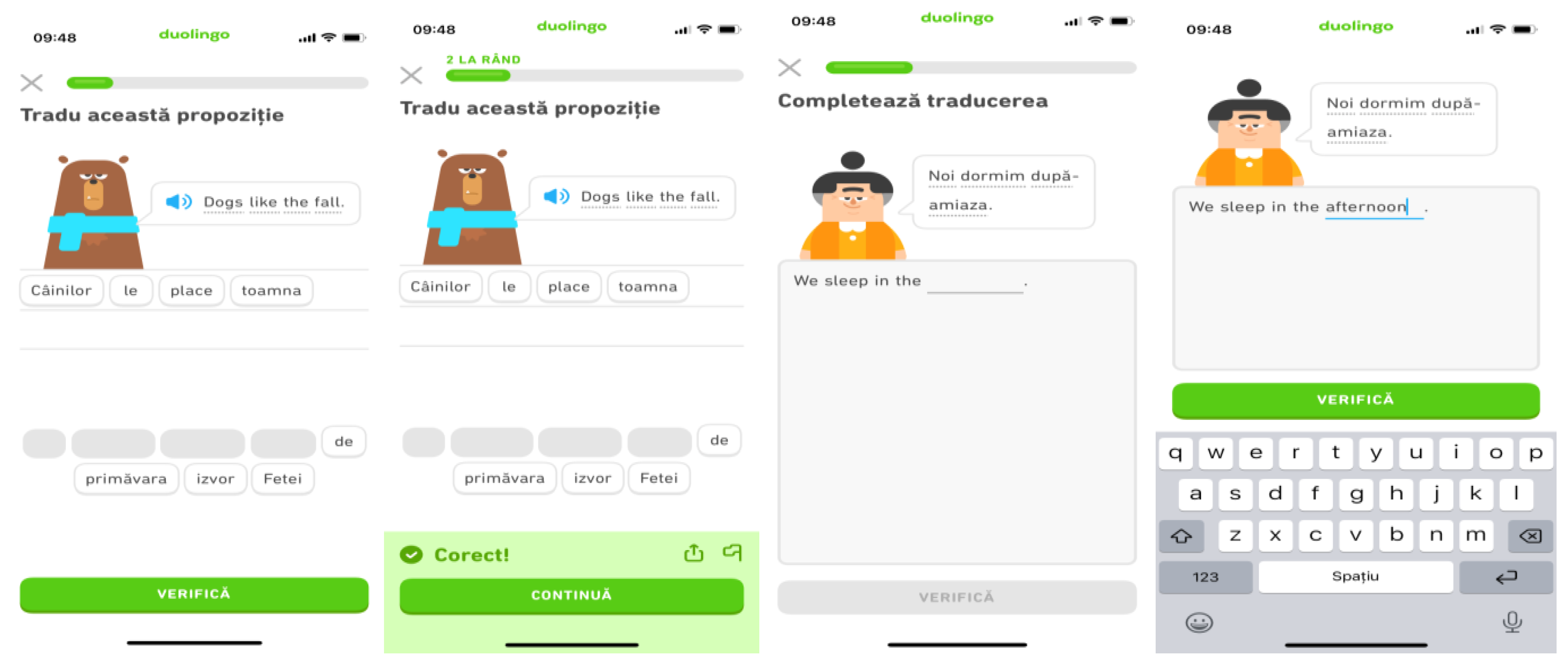
Duolingo:
- Available for free on both Google Play and the App Store.
- Includes a feature that allows users to track their progress.
- Offers a daily plan tailored to support English learning.
- Provides learning materials organized by users' English proficiency, ranging from beginner to advanced levels.
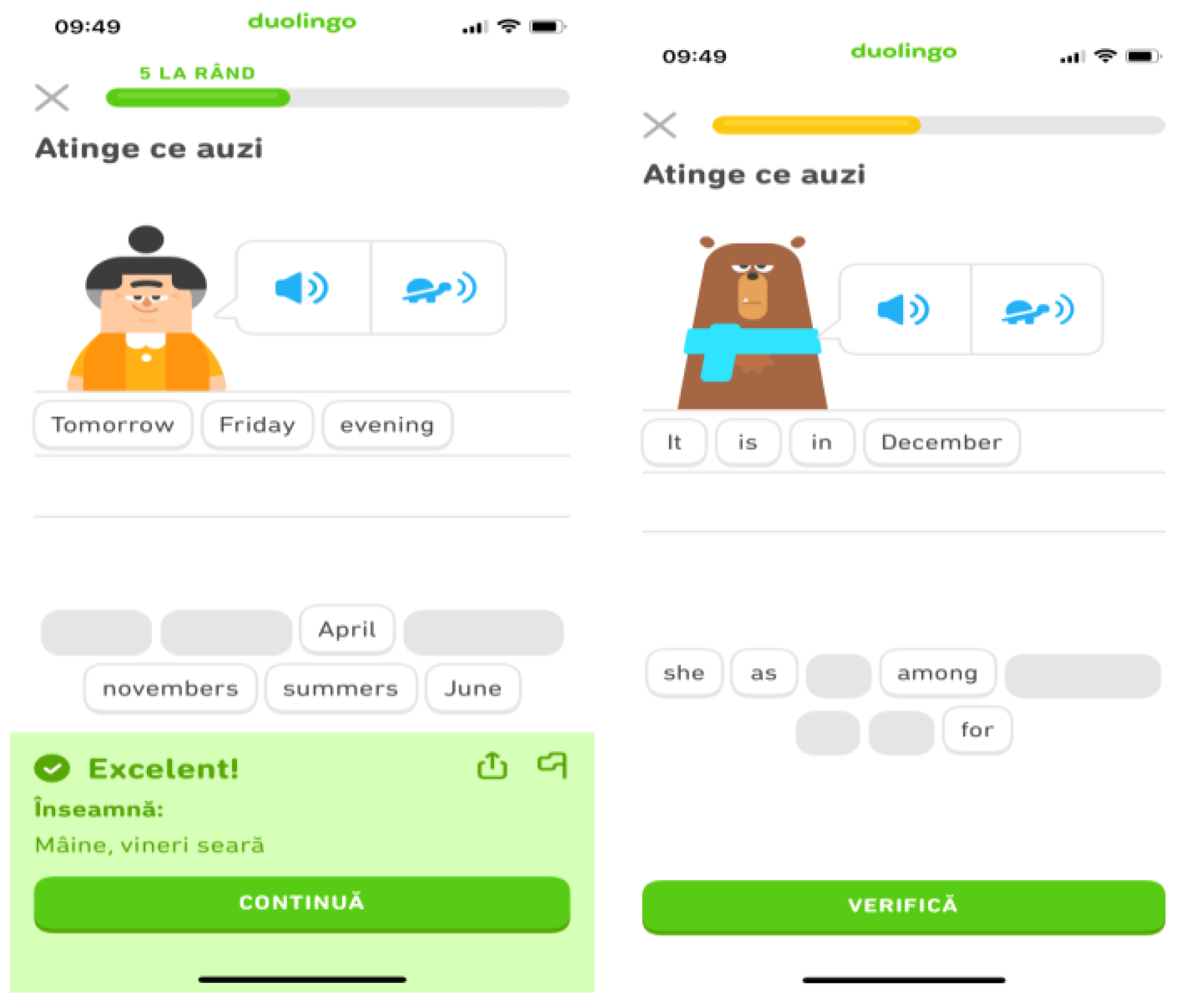
- Features a variety of exercise types:
a. Translation Exercises
- Two types are available: exercises to practice translating from English to Romanian and exercises to improve translation skills from Romanian to English.
- One of the best aspects of these exercises is the immediate feedback they offer. Once you submit an answer, it is instantly checked, and any mistakes are highlighted and corrected in real time.
b. Listening Exercises
- These exercises are especially useful for those looking to improve their listening skills, as they offer accurate pronunciation for all content. This feature is essential for many English learners, as it allows them to hear English spoken with a native accent.
- Instant feedback is also provided for these exercises.
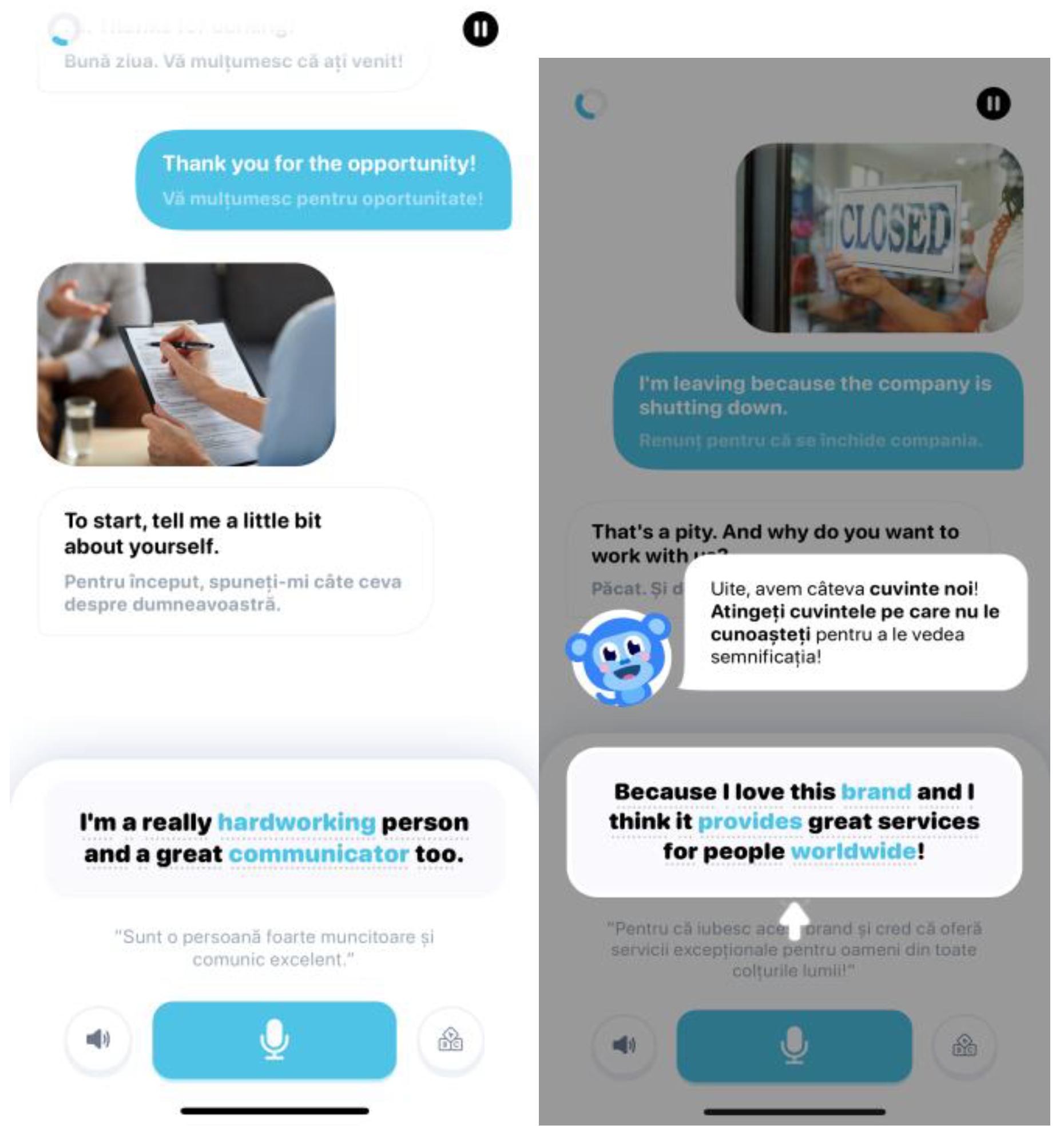
Falou
- This app primarily focuses on improving users' pronunciation skills.
- It offers a variety of conversations categorized by topics (e.g., shopping, job interviews) and organized in a daily plan.
- In each lesson, the first step is to listen to a dialogue read by a native speaker, ensuring exposure to correct pronunciation.
- After listening, users can practice speaking by reading the same dialogue aloud. Any mispronounced words are highlighted in the feedback, providing an opportunity for self-correction.
- Another available exercise involves listening and typing the correct words, reinforcing listening and spelling skills.
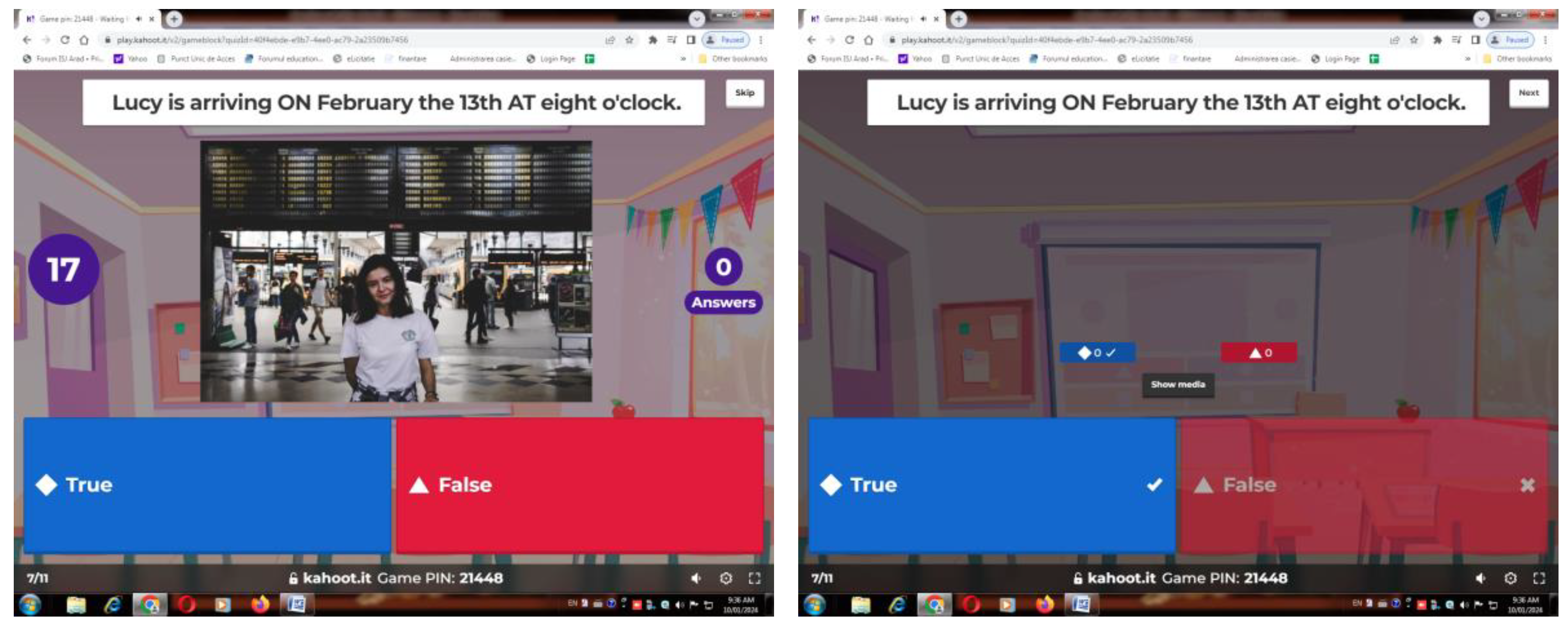
Kahoot!
- Among the games presented in this practical section, Kahoot! is likely the only one where the teacher has full control over the progression of the game.
- It is ideal for reviewing any topic, as teachers can create customized content by uploading specific exercises onto the platform.
- Exercises can include True or False questions, multiple-choice questions, polls, and more.
- Teachers pre-select the correct answers, allowing for automatic grading so that individual answers don’t need to be checked manually.
- This setup benefits students by providing instant feedback on their performance.
- Additionally, Kahoot! enhances student motivation, as it can be played as a competitive game among classmates.
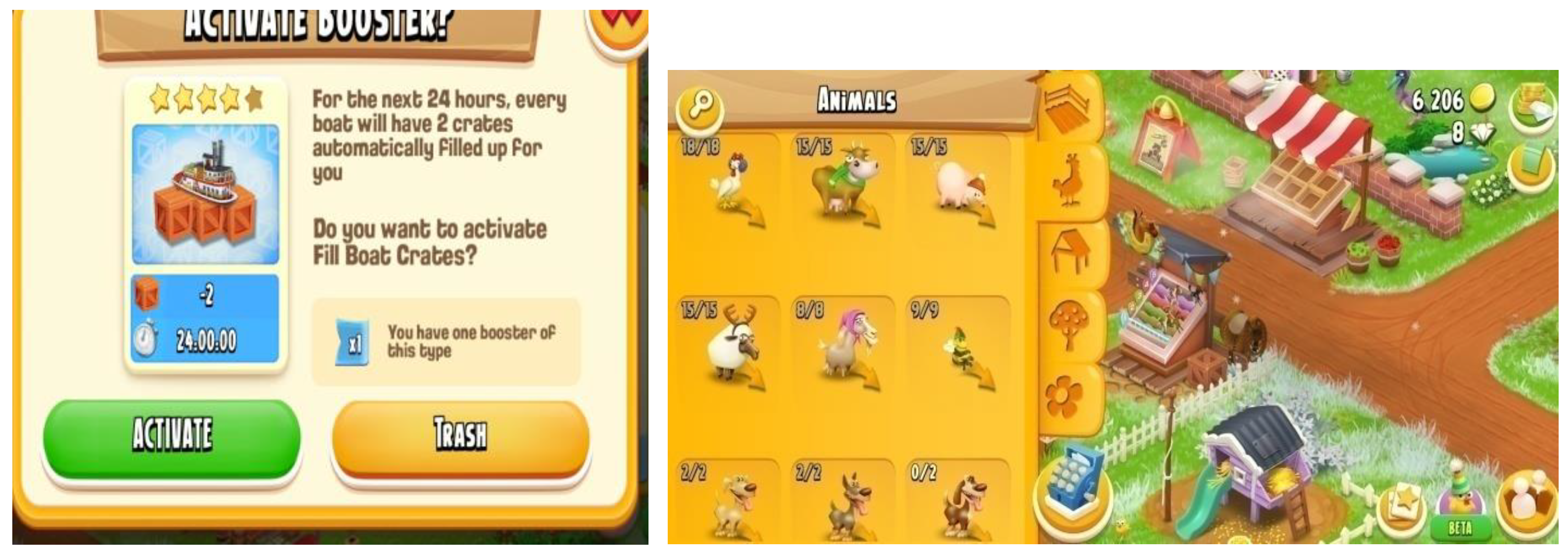
D. HayDay
- This game can be helpful for expanding vocabulary.
- It includes short messages displayed in English.
- Players have the chance to learn and review a variety of words from different categories, such as food, animals, plants, decorations, and production buildings.
- Although not originally designed for English learning, it can effectively support students in improving their English skills.
In this part of the paper, we have presented only few of the apps that would make gamification in ELT a good resource, useful in making lessons more active, participative and challenging. The selection of games and apps depends on various factors such as the teachers` preference, students` level of language, creativity, involvement and other age/gender characteristics.
We have also conducted a study among students enrolled at Aurel Vlaicu University, Faculty of Humanities and Social Sciences, study programmes: Public Administration, Romanian and English Language and Literature.
The aim of our research was to investigate whether our research hypothesis is confirmed or not at the end of the study.
We have started from the hypothesis that the use of apps and games in the classroom increases students` motivation and that gamification is a factor which contributes to higher linguistic performance.
The research sample consisted of 127 students enrolled in these 2 study programmes (all three undergraduate years of study). We conducted the study between October the 5th and October the 17th.
We distributed a questionnaire to our students and they replied anonymously. The age and gender distribution is presented in the following two charts.
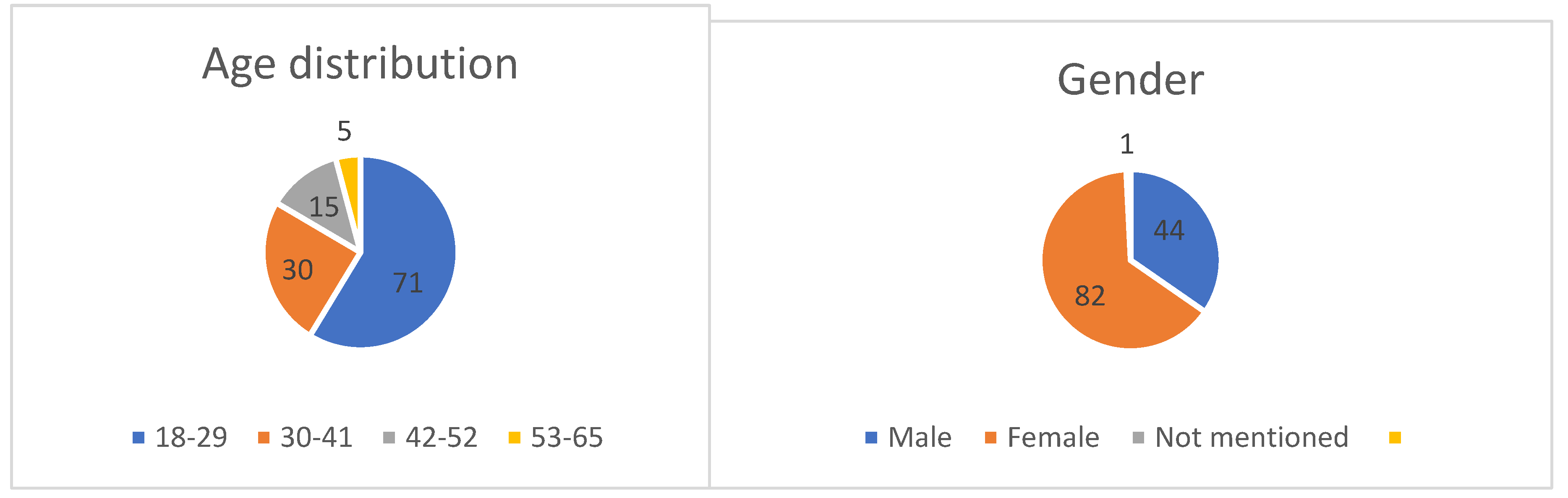
Another aspects that we took into account was there residence. 64 students live in a city whereas 63 in rural areas. As one can see, the percentage is very balanced.
The questionnaire investigated the students` opinions on various aspects related to gamification. We shall mention the most relevant here.
Q. 1 Language games help reduce anxiety and stress in the classroom, enabling learners to retain information more effectively.
Q. 2 Language games foster a collaborative learning environment.
Q. 3 Language games facilitate simultaneous practice of multiple language skills, including speaking, writing, listening, and reading.
Q. 4 Language games bring the foreign language to life by providing meaningful, real-world contexts for its use.
Q. 5 Language games enhance communicative competence.
Q. 6 Language games encourage participation from shy students.
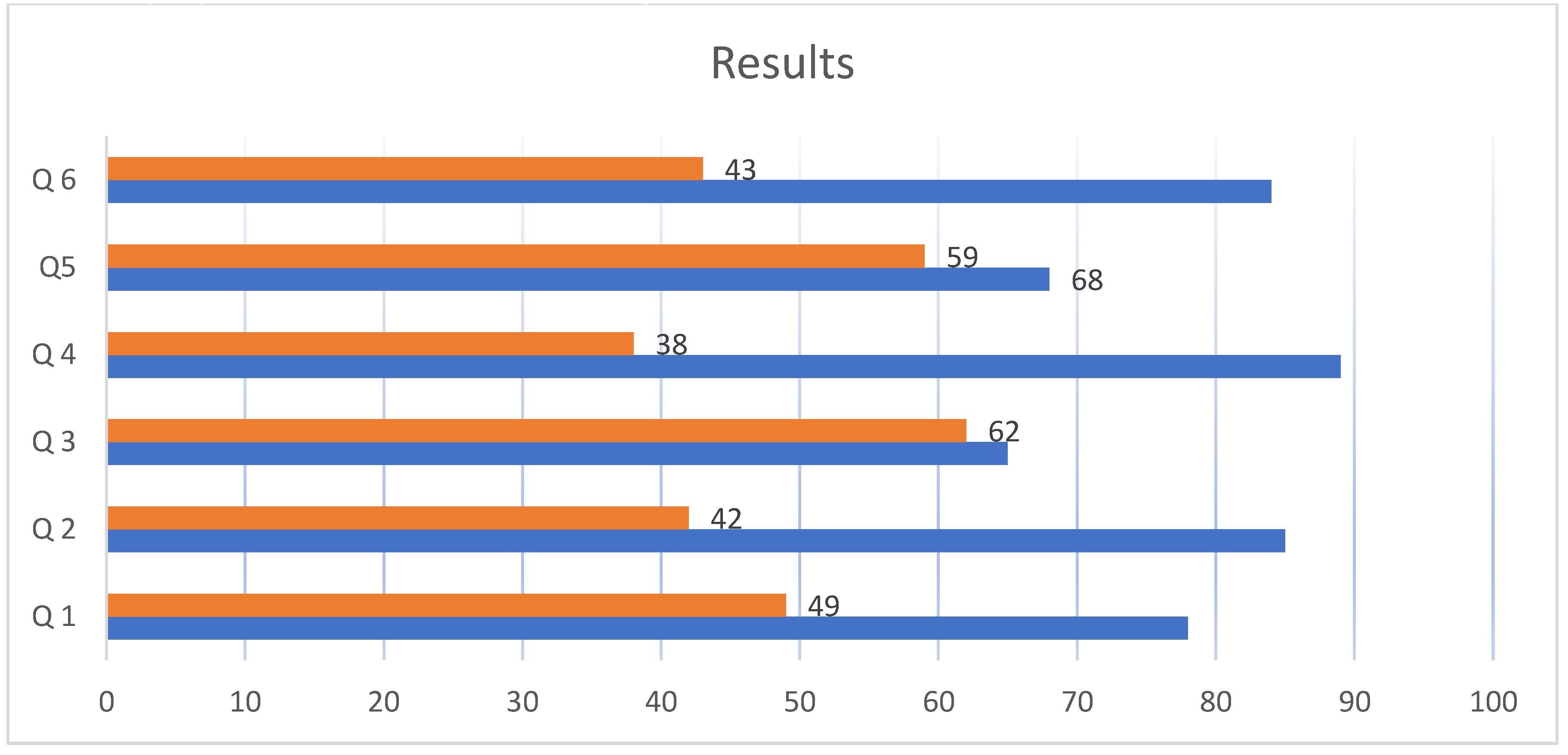
We left out the other questions because we consider these relevant enough to validate or invalidate our hypothesis. The results are presented in the charts below.
As we can see from the students` responses, most of them consider that gamification in English classrooms is beneficial because it reduces stress and anxiety and facilitates communication. Compared to other “traditional” exercises, games encourage students to open up, they feel more confident in a ludic environment and sometimes even forget that they are in a learning context. Collaboration with peers is another benefit which increases motivation and performance. They shy students take roles and act them out and therefore reduce the level of shyness. The fact that games are mostly real-life imitation activities, encourages students and te familiar context is also an additional benefit.
However, we identified two situations when the balance between yes and no answers was very light. Q 3 and Q 5 which refer to the development of all four skills and to the development of communicative competence, in particular. Apparently, students do not feel that all language skills are equally developed, reasoning that reading and writing are less developed than listening for instance. They consider that vocabulary is highly developed through games, social skills and collaboration skills. Communicative competence is also trained but to a lower extent than through debates or role plays, for instance.
To conclude, the initial hypothesis of our experiment was validated as all students agreed that through gamification in ELT, they experienced an increased feeling of motivation and their performance was better. They appreciate the interactive learning environment created at the university, which promotes games in teaching, collaboration and communication in a foreign language.
Conclusions
Gamification in teaching English has emerged as a powerful strategy to enhance student engagement, motivation, and linguistic performance. By integrating game elements into the learning process, educators can create a dynamic and interactive environment. We have identified some aspects that are improved after using games in ELT
Maybe the most relevat is increased motivation. Gamification is mostly associated with joy, amusement and these aspects motivate students. When learning activities resemble games, they become more appealing and enjoyable, leading to increased student participation. As students engage with game-based tasks, they are more likely to persist in their learning, ultimately leading to improved outcomes.
On the second position, we could place reduced anxiety and stress. Language learning can often be intimidating, particularly for shy or hesitant students. Gamified activities can motivate students creating a low-stakes environment where mistakes are seen as part of the learning process. This supportive atmosphere encourages students to take risks with their language use, thereby enhancing their confidence and willingness to participate.
Promotion of collaborative learning is another benefit of gamifiction. It often involves cooperative activities that require teamwork and communication among students. This collaborative aspect not only builds social skills but also fosters a sense of community in the classroom. Students learn from each other, share strategies, and support one another in their language development.
Gamification involves also real-world contextualization. Games often simulate real-life scenarios, providing students with meaningful contexts in which to use the language. This connection to real-world applications makes the learning process more relevant and engaging, enhancing students’ willingness to learn and use the language outside the classroom.
Lastly, we shall mention the development of communicative competence. Gamification encourages students to focus on effective communication rather than merely memorizing vocabulary and grammar rules. Through interactive gameplay, students practice language in authentic situations, which aids in developing their communicative competence and fluency.
All in all, games in ELT, like any other teaching method or technique has both advantages and disadvantages. Used prudently, in a balanced manner, games can bring a valuable experience and numerous benefits in the classroom.
References
- Arintia, L. Teaching vocabulary by using computer online-games for young learners class (Media in teaching); University of Malanga, 2022; p. 343. [Google Scholar]
- Bendo, A. Teaching English through games. European Journal of Language and Literature Studies, Beder University 2019, 43–46. [Google Scholar] [CrossRef]
- Brooks, C. Fun activities for teaching English; TESOL, 2018; pp. 5–6. [Google Scholar]
- García Rodríguez, M.-K. , Using games as techniques to teach English as a foreign language; Universidad Nacional Autónoma de Nicaragua, 2021. [Google Scholar]
- Ghallab, A. Mixed methods study: Integrating mobile games in teaching English vocabulary in formal Saudi education. In Proceedings of the 3rd International Conference on Research in Teaching and Education, Berlin, Germany; 2020; p. 5. [Google Scholar]
- Gozcu, E. The importance of using games in EFL classrooms. Cypriot Journal of Educational Sciences 2016, 11, 128–151. [Google Scholar] [CrossRef]
- Harvin, H. Top 15 games for teaching English in the classroom. TEFL 2022, 7. [Google Scholar]
- Prodi, D. The implementation of game in teaching English vocabulary. STKIP 2010, 76–78. [Google Scholar]
- Rotaru, I.-G. Current Values of Education and Culture. In Proceedings of the 23th International RAIS Conference on Social Sciences and Humanities, United States of America, Princeton, NJ, 15–16 August 2021; pp. 87–92. [Google Scholar]
- Rotaru, I.-G. “Valences of Education”. In Proceedings of the 23th International RAIS Conference on Social Sciences and Humanities, United States of America, Princeton, NJ, 15–16 August 2021; pp. 190–196. [Google Scholar]
| 1 | Arintia, L., Teaching vocabulary by using computer online-games for young learners class (Media in teaching), University of Malanga, 2022, p.343. |
| 2 | Ghallab, A., “Mixed methods study: Integrating mobile games in teaching English vocabulary in formal Saudi education”, In Proceedings of the 3rd International Conference on Research in Teaching and Education, Berlin, Germany, 2020, p.5. |
| 3 | Rotaru, I-Gh., “Current Values of Education and Culture”, in Proceedings of the 23th International RAIS Conference on Social Sciences and Humanities, August 15-16, 2021, Princeton, NJ, United States of America, pp. 87-92. |
| 4 | Gozcu, E., “The importance of using games in EFL classrooms”, Cypriot Journal of Educational Sciences, 11(3), 2016, p. 151. |
| 5 | García Rodríguez, M.-K., Using games as techniques to teach English as a foreign language, Universidad Nacional Autónoma de Nicaragua, 2021, p.8. |
| 6 | Harvin, H., “Top 15 games for teaching English in the classroom”, TEFL, 2022, p.7. |
| 7 | Brooks, C., Fun activities for teaching English, TESOL, 2018, pp. 5-6. |
| 8 | Prodi, D., “The implementation of game in teaching English vocabulary”, STKIP, 2010, pp. 76–78. |
| 9 | Bendo, A., “Teaching English through games”, European Journal of Language and Literature Studies, Beder University, 2019, pp. 43–46. |
| 10 | Rotaru, I-Gh., “Valences of Education”, in Proceedings of the 23th International RAIS Conference on Social Sciences and Humanities, August 15-16, 2021, Princeton, NJ, United States of America, pp. 190-196. |
Disclaimer/Publisher’s Note: The statements, opinions and data contained in all publications are solely those of the individual author(s) and contributor(s) and not of MDPI and/or the editor(s). MDPI and/or the editor(s) disclaim responsibility for any injury to people or property resulting from any ideas, methods, instructions or products referred to in the content. |
© 2025 by the authors. Licensee MDPI, Basel, Switzerland. This article is an open access article distributed under the terms and conditions of the Creative Commons Attribution (CC BY) license (http://creativecommons.org/licenses/by/4.0/).
Copyright: This open access article is published under a Creative Commons CC BY 4.0 license, which permit the free download, distribution, and reuse, provided that the author and preprint are cited in any reuse.


