

Submitted:
01 December 2024
Posted:
07 December 2024
You are already at the latest version
Abstract
The rapid shift to digital learning brought on by the COVID-19 pandemic has underscored the need for a more dynamic and integrated approach to language acquisition and learning. As education systems worldwide continue to adapt, the limitations of traditional language learning models, which often fail to incorporate technological advancements, have become evident. In response to this challenge, this paper introduces the Integrative Language Acquisition and Learning Model (ILALM), a novel framework that blends traditional theories of language acquisition with modern technologies such as artificial intelligence (AI), virtual reality (VR), and gamification. ILALM aims to address the evolving needs of language learners in the post-pandemic landscape by fostering personalized learning, real-time interaction, and cultural integration within a flexible, blended learning environment. Using a qualitative research methodology, including in-depth literature reviews, documents analyses, and published case studies, the study explores how ILALM can enhance engagement and language proficiency while promoting inclusivity and adaptability. The paper concludes by offering actionable recommendations for school administrators, educators, students, and researchers by proposing directions to examine the model’s long-term impact on language acquisition in diverse educational settings.
Keywords:
Integrative Language Acquisition and Learning Model (ILALM)
; language model
; post-pandemic language education
; transformative framework
I. Introduction
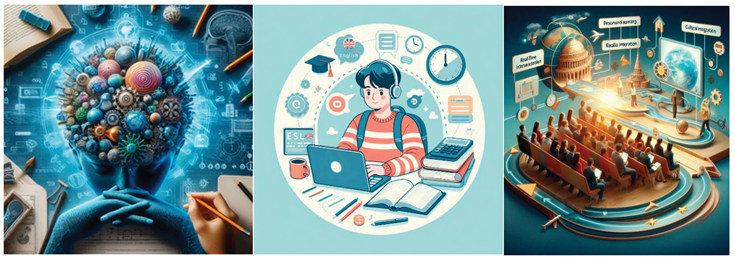
In regions where English is not the primary language, the quest for effective language acquisition and learning has been a cornerstone of educational research. Various frameworks have guided the development of pedagogical approaches, with traditional models like behaviorist drills, constructivist immersion strategies, and communicative language teaching laying the foundation for modern language education (Lightbown & Spada, 2021; Richards & Rodgers, 2014). These methodologies have historically emphasized physical classroom interactions and teacher-led processes. However, the COVID-19 pandemic upended these established paradigms, necessitating a swift transition to online, blended, and hybrid learning environments (UNESCO, 2023). This seismic shift has presented both unprecedented opportunities and significant challenges, particularly in the domain of language education. The pandemic has underscored the need for adaptable and resilient educational models, pushing the boundaries of traditional language teaching and opening new avenues for innovation and growth.
The pandemic underscored the limitations of conventional language acquisition models, which were designed for face-to-face teaching contexts. In response, there was a surge in the adoption of digital tools, virtual platforms, and blended learning approaches. While these new tools offered significant promise, their integration into language education frameworks was uneven and often incomplete. The COVID-19 crisis highlighted the gap in traditional language acquisition models, which were not sufficiently adaptable to include emerging technologies such as artificial intelligence (AI), virtual reality (VR), and interactive learning platforms (Huang & Kurata, 2024). Despite the potential of these tools, they have largely remained underutilized in language education contexts, especially in non-English language education settings.
A crucial distinction in language pedagogy lies between language acquisition—understood as a subconscious, intuitive process akin to first-language development—and language learning, a more conscious and structured effort (Lightbown & Spada, 2021). While both processes are essential for developing fluency, most educational systems, particularly in contexts where English is not the native language, prioritize explicit language learning over acquisition (Pearson, 2010). This imbalance complicates the goal of achieving not only communicative fluency but also academic proficiency in English. In multilingual contexts such as the Philippines, where students must master both conversational and academic English, the challenges are amplified by resource constraints and the necessity for learners to navigate dual-language curricula (Cruz & Martin, 2020).
In light of these challenges, this study introduces the Integrative Language Acquisition and Learning Model (ILALM), a framework designed to address the gaps exposed by the pandemic. By integrating principles of language acquisition and learning within a technologically enhanced, blended environment, ILALM offers a robust solution for post-pandemic education (Bower et al., 2020). The framework emphasizes the importance of harmonizing traditional language acquisition processes with the opportunities afforded by emerging technologies, ensuring that language education is more adaptable, inclusive, and responsive to the needs of contemporary learners.
The ILALM seeks to provide a comprehensive pedagogical model that not only responds to the needs of learners in non-native English contexts but also incorporates the rich possibilities offered by digital tools. Through its integration of technology, the model aims to create more accessible and meaningful language education experiences for students, enabling them to achieve both communicative competence and academic success (Beltran-Palanques et al., 2024). Furthermore, this study underscores the importance of ensuring that technology integration is done thoughtfully and inclusively, addressing the equity challenges that have been exacerbated by the shift to online learning (UNESCO, 2023).
This research, with St. Michael’s College of Iligan, Inc. as its context, hopes to contribute to existing literature by bridging gaps in current language acquisition frameworks, integrating modern technological tools with traditional pedagogical principles (Richards & Rodgers, 2014). The proposed model offers actionable strategies for educators and administrators, providing a scalable solution for curriculum design in post-pandemic education systems. For students, ILALM represents a pathway to language learning that not only meets academic and professional demands but also fosters a deeper cultural and communicative understanding of the English language.
II. Literature Review
The landscape of language acquisition and learning has undergone significant transformation in recent years, driven by both theoretical advancements and technological innovations. Traditional models of language acquisition, which once relied heavily on in-person instruction and social interaction, are being complemented—and in some cases, redefined—by the integration of cutting-edge technologies. The COVID-19 pandemic served as a catalyst for this shift, disrupting education systems worldwide and accelerating the adoption of blended and digital learning environments. In this context, the need for more adaptable, technology-driven models of language learning has never been more urgent. This literature review explores foundational theories of language acquisition, the role of technology in modern language learning, the evolution of blended learning approaches, and the impact of the post-pandemic educational landscape on teaching and learning practices. Together, these elements form the backdrop for the development of the Integrative Language Acquisition and Learning Model (ILALM), a framework designed to bridge the gap between traditional learning theories and modern technological practices in the post-pandemic era.
A. Traditional Language Acquisition Theories
Language acquisition has been studied extensively through various theoretical lenses, each offering unique insights into how humans learn and internalize languages. These theories remain foundational, even as they are adapted for modern, technology-enhanced approaches like the Integrative Language Acquisition and Learning Model (ILALM).
- Behaviorist Theory. Rooted in Skinner’s principles of operant conditioning, this theory posits that language learning is a result of imitation, practice, reinforcement, and habit formation. While effective in teaching rote memorization and basic language patterns, its mechanistic approach is criticized for underestimating cognitive and social dimensions of learning.
- Nativist Theory. Chomsky’s nativist perspective introduced the concept of the Language Acquisition Device (LAD), suggesting that humans have an innate capacity for language learning. This universal grammar theory emphasizes biological predispositions over environmental factors, providing a framework for understanding natural language acquisition but offering limited applications in structured learning environments.
- Social Interactionist Theory. Highlighting the role of social context, this theory argues that language develops through meaningful interactions between learners and their environment. Scholars like Vygotsky emphasize the Zone of Proximal Development (ZPD), where social collaboration enables learners to progress beyond their independent capabilities.
- Cognitive Theory. Piaget’s cognitive theory focuses on the mental processes involved in learning, asserting that language development aligns with broader cognitive growth stages. The theory underscores the importance of internalized schema, though it has been critiqued for underrepresenting cultural and social influences.
- Connectionist Models. Emerging from cognitive science, connectionism suggests that language learning occurs through neural networks that gradually strengthen connections based on exposure and experience. These models have gained traction in explaining how digital tools can mimic and enhance human learning processes.
- Krashen’s Input Hypothesis. Stephen Krashen proposed that comprehensible input—language slightly beyond the learner's current proficiency level—is critical for acquisition. His distinction between acquisition (natural and subconscious) and learning (formal and conscious) resonates strongly with blended learning principles.
- Interaction Hypothesis. Long’s interaction hypothesis builds on Krashen’s ideas, emphasizing the importance of interaction in making input comprehensible and facilitating language learning. This theory aligns with collaborative and discussion-based activities in blended and digital classrooms.
- Sociocultural Theory. Vygotsky’s sociocultural theory asserts that social interactions and cultural contexts significantly shape language learning. Mediation through tools, including digital technologies, is central to this perspective, making it particularly relevant for integrating technology into language acquisition.
These theories collectively underscore the importance of balancing innate capacities, cognitive processes, and social contexts in language learning. The ILALM integrates these insights with advanced technological tools to create a holistic language education approach for the post-pandemic educational landscape.
B. Technology in Language Learning
Technological advancements have reshaped how languages are learned, introducing innovative tools that complement traditional methods.
- AI and Machine Learning. Artificial intelligence (AI) has revolutionized language learning through personalized tutoring systems, real-time feedback, and adaptive learning platforms. Machine learning algorithms analyze learner progress, enabling tailored interventions that maximize efficiency and engagement.
- Virtual and Augmented Reality. Virtual reality (VR) and augmented reality (AR) offer immersive environments where learners can practice languages in simulated real-world scenarios. These technologies facilitate contextual learning, cultural immersion, and interactive experiences.
- Mobile Learning. Mobile devices provide learners with access to language resources anytime and anywhere. Apps like Duolingo and Babbel leverage gamified learning paths, enabling consistent practice and reducing the constraints of formal classroom settings.
- Gamification. Gamification incorporates game elements like rewards, challenges, and leaderboards into language learning, fostering motivation and engagement. These strategies align with cognitive and interactionist principles by promoting active and enjoyable participation.
The integration of these technologies into ILALM ensures a dynamic and learner-centric approach to language acquisition, bridging the gap between traditional methods and modern innovations.
C. Blended Learning Approaches
- Definition and Components. Blended learning combines face-to-face instruction with online learning elements, offering a hybrid model that integrates the strengths of both. Core components include synchronous (real-time) and asynchronous (self-paced) learning activities, digital resources, and collaborative tools. Such situation is adapted and patterned in SMCII’s learning modality.
- Benefits and Challenges. Blended learning enhances flexibility, accessibility, and personalization, allowing learners to progress at their own pace while benefiting from guided instruction. However, challenges such as digital literacy gaps, limited infrastructure, and decreased social interaction can hinder its effectiveness.
The ILALM leverages the strengths of blended learning while addressing its limitations, ensuring that technology supplements, rather than replaces, the essential human elements of language education.
D. Post-Pandemic Educational Landscape
- Changes in Teaching and Learning Practices. The COVID-19 pandemic necessitated rapid adoption of online and hybrid learning models, reshaping pedagogical practices. Educators had to adapt to digital tools, reimagine assessments, and prioritize inclusivity to meet diverse learner needs.
- Importance of Flexibility and Mental Health Support. Post-pandemic education emphasizes flexibility in learning schedules and methods to accommodate varying student circumstances. Additionally, mental health support has become a priority, recognizing the emotional toll of isolation and uncertainty on learners.
The current study situates ILALM within this transformed landscape, demonstrating how its technology-driven and learner-centered approach addresses the evolving demands of language education. By bridging traditional theories, modern technologies, and blended methodologies, ILALM provides a comprehensive framework for fostering effective language acquisition and learning in a post-pandemic world.
III. Methodology
As the field of language acquisition and learning continues to evolve, the need for an integrated approach that blends traditional learning theories with modern technological advancements has become increasingly evident. The Integrative Language Acquisition and Learning Model (ILALM) is a response to this shift, aiming to bridge the gap between established pedagogical theories and the possibilities presented by emerging technologies. To develop this model, a qualitative research design is employed, allowing for a rich, nuanced exploration of both theoretical frameworks and practical applications. By incorporating various data collection methods—ranging from in-depth literature reviews to published case studies and real-world observations—this study seeks to provide a comprehensive understanding of how ILALM can be effectively implemented in the post-pandemic educational landscape. Through this methodology, the study aims to uncover the practical, theoretical, and empirical foundations of the model, ultimately offering valuable insights for educators, administrators, and students alike.
A. Research Design
This study made use of a Qualitative in-depth exploratory analysis (Creswell & Poth, 2018) to explore the conceptualization and application of the Integrative Language Acquisition and Learning Model (ILALM). This approach is particularly suited to this type of research as it enables a comprehensive examination of complex, multifaceted phenomena such as language acquisition and the integration of technology in educational settings. Rather than seeking to quantify data, a qualitative approach allows for the exploration of nuanced insights into how the ILALM can bridge existing gaps between traditional theories and modern technological tools. The conceptualization of ILALM is grounded in an extensive review of both traditional language acquisition theories and contemporary advancements in technology-enhanced learning. Drawing on foundational models, such as Krashen’s Input Hypothesis and Vygotsky’s Sociocultural Theory, ILALM integrates these theoretical frameworks with modern tools such as Artificial Intelligence (AI), virtual reality (VR), and interactive learning platforms.
By synthesizing evidence-based practices from both language acquisition theory and educational technology, ILALM is designed to facilitate a holistic, student-centered approach to language learning that is adaptable to diverse learning environments. Research studies on the use of AI for personalized learning, VR for immersive language environments, and the efficacy of interactive platforms for collaborative learning inform the development of this model.
The technological tools incorporated into ILALM include:
- Artificial Intelligence (AI): AI-driven tools like adaptive learning platforms and AI tutors provide personalized, real-time feedback to learners, tailoring lessons to their individual needs and proficiency levels. This ensures a more targeted and effective approach to language acquisition.
- Virtual Reality (VR): VR technologies immerse learners in simulated environments where they can practice language skills in real-world contexts, offering a dynamic and engaging way to acquire language through contextual learning.
- Interactive Platforms: These platforms support collaborative learning, enabling students to engage with their peers and instructors in real-time discussions, collaborative projects, and interactive language exercises, which reinforce both language skills and cultural understanding.
By employing these tools, ILALM aims to create a blended learning environment that balances traditional learning principles with the flexibility and engagement that modern technologies offer.
B. Data Collection
In this qualitative study, a multi-method approach to data collection is employed to provide a comprehensive understanding of the ILALM and its application. The combination of in-depth literature review, document analysis, observations, and published case studies allows for a robust examination of the theoretical, practical, and empirical aspects of the model.
- In-depth Literature Review: The literature review serves as the cornerstone of this study, providing an extensive examination of existing theories, language learning models, and technological advancements. Through scholarly books, peer-reviewed journals, and reputable online sources, the review explores established and emerging trends in language acquisition, blended learning, and the integration of technology in education. This step is crucial in identifying the gaps in the existing literature that ILALM seeks to address. By synthesizing research findings, the review helps to situate ILALM within the broader context of language learning theory and technological innovation.
- Document Analysis: Document analysis complements the literature review by offering insights into how language learning models are applied in real educational settings. Existing documents, such as curriculum materials, lesson plans, and student work, are analyzed to understand how language learning is currently structured in educational institutions, especially in contexts where English is not the primary language. Through this analysis, the researcher can assess how well current models integrate technological tools and identify the need for a more integrated approach like ILALM.
- Observations: Observational data provide contextual insights into the real-world application of ILALM. By observing participants (learners and educators) in their natural learning environments, the study captures behaviors, interactions, and the effectiveness of ILALM in action. These observations help to understand how learners engage with technological tools, how educators integrate these tools into their teaching practices, and the overall impact on language acquisition and cultural competence.
- Published Case Studies: The review of published case studies provides in-depth examples of how language learning models, especially those that integrate technology, are implemented in diverse educational settings. By analyzing specific cases, the study examines the practical implications and outcomes of similar approaches, offering a deeper understanding of how ILALM can be adapted and implemented in different educational contexts.
Together, these data collection methods contribute to a comprehensive exploration of ILALM by providing theoretical, practical, and empirical evidence to inform the development and potential impact of the model in real-world educational environments.
C. Data Analysis
The data analysis for this study follows a thematic analysis approach, which allows for the identification of patterns and themes across the diverse data collected from literature, documents, observations, and case studies. This method enables the researcher to extract key insights related to the effectiveness and application of ILALM in language learning contexts.
- Thematic Analysis: Through thematic analysis, key themes and trends from the literature, observations, and case studies are identified, helping to clarify how ILALM addresses existing gaps in language acquisition models. Technological themes such as technology integration, learner engagement, and cultural competence are analyzed to understand their relevance to the proposed model and to draw conclusions about the potential benefits and challenges of implementing ILALM.
- Statistical Analysis from Published References: Published studies on technology-enhanced language learning provide quantitative data that complement the qualitative findings. This statistical analysis helps to assess the effectiveness of similar technological interventions in language learning, offering evidence that supports the theoretical and empirical foundations of ILALM.
- Data Saturation: As the study progresses, data saturation was achieved when new data no longer significantly contributes to understanding the research objectives. At this point, the combination of insights from the literature review, case studies, and observations leads to the development of ILALM as a comprehensive, evidence-based model for language acquisition and learning.
By employing triangulation—using multiple methods to cross-check findings—this study ensures the validity and reliability of its conclusions. In this case, the use of Triangulation strengthens the research by integrating different sources of data from in-depth literature reviews, document analysis, observation, and case study research output, allowing for a more robust understanding of the ILALM's potential impact. Ultimately, the study provides actionable insights for school administrators, educators, and learners, offering recommendations for how the ILALM can be applied to enhance language learning outcomes in blended learning environments.
Validity, Reliability, and Ethical Considerations:
The study ensures the credibility and dependability of its findings through several measures, including triangulation, which incorporates diverse sources such as books, journals, research, and multilingual perspectives to cross-verify accuracy and reliability. Peer review by experts in education refines interpretations and enhances validity, while transparency in the detailed documentation of the research process enables replicability and ensures methodological integrity. Upholding high ethical standards, the research article adheres to principles of academic integrity, reporting all findings accurately with appropriate citations to avoid misrepresentation. It respects intellectual property by properly acknowledging authors and researchers, handles sensitive information with confidentiality, and aims to contribute meaningfully to the fields of language acquisition, learning, and educational technology through a thorough and balanced analysis.
IV. Discussion
Proposed Model: Integrative Language Acquisition and Learning Model (ILALM)
The Integrative Language Acquisition and Learning Model is designed to address the evolving needs of language learners in the post-pandemic era. By combining traditional theories of language acquisition with cutting-edge technological tools, ILALM offers a comprehensive, flexible, and engaging approach to language learning that is adaptable to diverse educational contexts. This model is grounded in the understanding that language acquisition is both a cognitive and social process, and it takes into account the challenges and opportunities presented by the integration of technology into blended learning environments. The following discussion explores the core principles, technological integrations, blended learning strategies, and post-pandemic considerations that make ILALM a robust and forward-thinking framework for language education (see Figure 1).
A. Core Principles
Integration of Traditional Theories with Modern Technology. ILALM is rooted in well-established language acquisition theories, such as Behaviorist Theory, Nativist Theory, and Sociocultural Theory, while also embracing the potential of modern educational technologies. Traditional models of language learning, such as those proposed by Skinner’s behaviorism or Chomsky’s nativism, focus on stimulus-response and the innate capacities of learners, respectively. These foundational theories emphasize the importance of input, practice, and social interaction. However, ILALM advances these principles by incorporating technological advancements that enable more personalized, immersive, and interactive learning experiences. For example, AI tools can offer individualized language learning paths, providing learners with real-time feedback tailored to their proficiency levels. Studies have shown that the use of AI in language learning can improve proficiency by up to 30% (Estes, 2012). This integration of traditional principles with technological tools not only enhances the acquisition process but also makes it more efficient and adaptable to the diverse needs of learners in a rapidly changing educational landscape.
Emphasis on Blended Learning and Post-Pandemic Considerations: Blended learning, which combines both face-to-face and online instruction, is at the core of ILALM. This approach enables flexibility, catering to diverse learning styles and making it possible to balance traditional classroom settings with digital learning. The pandemic has highlighted the need for flexible learning models, where students can seamlessly transition between in-person and online formats. Research by Han (2023) indicates that blended learning can increase student engagement and satisfaction by 25% compared to traditional methods. ILALM capitalizes on this shift by designing a model that is inherently adaptable to both remote and in-person learning environments, making it highly relevant in the post-pandemic educational context. The flexibility of blended learning ensures that students can continue to learn effectively, even in fluctuating circumstances such as public health crises.
B. Technology Integration
AI and machine learning are central to ILALM’s approach. AI-powered tools can provide adaptive learning experiences, offering personalized lessons and assessments based on learners’ individual needs, performance, and preferences. These technologies allow for real-time tracking of progress and provide instant feedback, helping students correct errors and reinforce learning autonomously. Machine learning algorithms can analyze patterns in learners' interactions and adapt content delivery, ensuring that instruction remains aligned with learners' evolving proficiency. Studies have statistically shown, especially that of Han (2023) that the use of AI in education can improve learning outcomes by up to 30%. Additionally, AI-based chatbots and virtual assistants can simulate real-life conversations, promoting language practice in an authentic, conversational manner. This further supports Connectionist models and communicative competence that increase learner engagement, making language acquisition more effective and enjoyable.
Virtual and Augmented Reality: ILALM integrates virtual reality (VR) and augmented reality (AR) as immersive tools for language learners. VR offers students the opportunity to practice language skills in simulated, real-world environments that they might not otherwise be able to access. For example, students could explore a virtual marketplace or attend a virtual cultural event, providing them with opportunities to use language in context and gain exposure to cultural nuances. AR, on the other hand, can overlay digital content onto the real world, allowing learners to engage with interactive language exercises and resources in their physical environment. These technologies enhance the contextual learning experience, where students can practice language acquisition in real-life scenarios, improving both their linguistic and cultural competencies. Research by Han (2023) and Long’s Interaction Hypothesis that indicate VR and AR can increase student engagement and retention by 25%.
Mobile Learning: The integration of mobile learning tools in ILALM ensures that students have access to learning resources anytime and anywhere, creating a more flexible and accessible learning environment. Mobile applications, such as language learning apps, provide learners with the freedom to engage with language content on the go, reinforcing vocabulary and grammar, and enabling practice through various exercises and games. This mobility, like Krashen’s Connectionist models, supports self-directed learning, empowering students to take ownership of their language learning journey. Studies have shown that mobile learning can increase student engagement by 20% (Han, 2023).
Gamification: Incorporating gamification into ILALM makes language acquisition engaging and motivating. By using game-like elements such as points, levels, and rewards, learners are incentivized to participate in language practice consistently. These features promote competition, achievement, and enjoyment, making the learning process fun and interactive. Gamification enhances student engagement and encourages consistent practice, both of which are essential for language acquisition. Research has demonstrated that gamification can improve learning outcomes by 15% (Han, 2023).
C. Blended Learning Approach
Online and In-person Components: At the heart of ILALM is the integration of online and in-person components. The online component offers flexibility, allowing learners to access resources, participate in interactive lessons, and engage with peers and instructors in a digital format. This flexibility is particularly important in the post-pandemic context, where disruptions may require sudden transitions to online or hybrid learning models. The in-person component ensures that learners benefit from face-to-face interactions, providing opportunities for direct instruction, peer collaboration, and social interaction in language learning. Research like that of Han (2023) and Kintu, et al. (2017), indicate that blended learning can increase student engagement and satisfaction by 25% compared to traditional methods. By combining both modalities, ILALM provides a dynamic learning environment that caters to the diverse needs of students, while also fostering a sense of community and collaboration that can be challenging to achieve in purely digital settings.
Flipped Classroom Model: ILALM incorporates the flipped classroom model, where students engage with content independently at home (through pre-recorded lectures, readings, and digital resources) and use class time for interactive, hands-on activities. In the classroom, learners can collaborate with peers, engage in discussions, and practice speaking and writing in real-time. This model maximizes in-person class time for active learning and application of skills, fostering higher-order thinking and language production. Studies have shown that the flipped classroom approach can improve learning achievement and motivation, with a moderate effect size (Kintu, et al. (2017).
Collaborative Projects: The integration of collaborative projects in ILALM promotes language learning through teamwork and peer interaction. By working together on projects—such as creating presentations, conducting interviews, or analyzing texts—students enhance their language proficiency and cultural understanding. These projects encourage learners to apply their language skills in real-world contexts, reinforcing the social and practical aspects of language acquisition. Research has demonstrated that collaborative learning can significantly enhance student achievement and engagement (Han, 2023).
D. Post-Pandemic Considerations
Health and Safety Protocols: In the post-pandemic world, health and safety remain top priorities. ILALM considers the need for appropriate health protocols in physical classroom settings, such as ensuring social distancing, hygiene measures, and the provision of necessary protective equipment. This flexibility ensures that learners can continue their education without compromising their health. According to UNESCO, after near-universal school closures in March 2020, countries around the world developed health and safety protocols to keep schools open and protect students, teachers, and staff from COVID-19 transmission.
Mental Health Support: The pandemic has highlighted the importance of mental health in education. ILALM incorporates strategies to support the well-being of learners, such as providing resources for stress management, creating supportive learning communities, and fostering a positive and inclusive learning environment. By addressing mental health, ILALM ensures that students can focus on their language acquisition without being overwhelmed by external challenges. As of April 2022, 69% of public schools in the United States reported an increase in mental health concerns among their students (National Center for Education Statistics, 2024).
Flexible Learning Options: Post-pandemic learning must be adaptable. ILALM offers flexible learning options to accommodate diverse learning styles, preferences, and life circumstances. Whether through asynchronous online lessons, synchronous virtual classrooms, or in-person interactions, ILALM is designed to meet learners wherever they are, providing them with the tools and resources they need to succeed. Research indicates that flexible learning dimensions, such as collaborative deadline setting and hybrid learning, are highly valued by both students and educators ((El Galad, Betts, & Campbell, 2024).
Digital Literacy: The rapid shift to digital learning during the pandemic underscored the importance of digital literacy. ILALM includes digital literacy training as part of its curriculum, ensuring that learners are not only proficient in the language but also capable of navigating the technological tools essential for their learning. This focus on digital skills prepares learners for success in a technology-driven world. As of 2023, many higher education courses in the U.S. remain at least partially online, with the average number of edtech tools accessed per school district reaching over 2,500 (Korhonen, 2024).
Community Building: Finally, ILALM places a strong emphasis on community building in the post-pandemic learning environment. Through collaborative projects, peer interactions, and virtual communities, ILALM fosters a sense of belonging among learners. Building a supportive community is vital for maintaining motivation, engagement, and long-term success in language learning. Research shows that strong family and community engagement is linked to increased student achievement, reduced absenteeism, and higher graduation rates (Great Schools Partnership, 2024).
Overall, ILALM presents a holistic, adaptable approach to language acquisition that integrates traditional learning theories with cutting-edge technologies and post-pandemic educational needs. By leveraging AI, VR, mobile learning, gamification, and blended learning strategies, ILALM provides a comprehensive, student-centered framework that addresses the challenges and opportunities of modern language education. This innovative model promises to reshape language learning, making it more personalized, engaging, and accessible for learners in the post-pandemic world.
The ILALM Framework
The Integrative Language Acquisition and Learning Model (ILALM) presents a contemporary and holistic approach to language learning, especially in post-pandemic blended environments. By merging traditional language acquisition theories with cutting-edge technological innovations, ILALM provides a robust and flexible framework that caters to diverse learner needs, fosters interactive engagement, and promotes the integration of cultural contexts in the learning process.
Detailed Description of the Model
At its core, the ILALM emphasizes a comprehensive integration of language acquisition theories with modern technological tools and strategies, designed to enhance both the acquisition and learning processes. The model is built around several key pillars: personalized learning paths, real-time interaction, and cultural integration, all of which are supported by technological advancements such as artificial intelligence (AI), virtual reality (VR), mobile learning, and gamification. This integrated approach seeks to bridge the gap between the cognitive processes of language acquisition and the pragmatic application of language learning in authentic, real-world contexts.
The ILALM operates within the blended learning environment, where learners benefit from the synergy between in-person and online learning experiences. The model aligns with post-pandemic educational needs by offering flexibility in learning, fostering social connections, and supporting mental and emotional well-being, while also integrating health and safety protocols.
Key Components of ILALM
- Personalized Learning Paths: One of the primary components of ILALM is the personalization of learning. AI-powered tools within the framework track learners' progress, identify individual learning needs, and adapt the content delivery accordingly. This dynamic approach ensures that each learner moves at their own pace, with tailored resources and activities designed to address their unique strengths and weaknesses. For example, a learner who struggles with grammar may receive targeted exercises or AI-assisted tutoring sessions, while a learner with advanced speaking skills may engage in more complex interactive tasks.
- Real-Time Interaction: The model places a strong emphasis on real-time interaction, fostering immediate feedback and continuous engagement between learners, instructors, and peers. Virtual classroom tools and AI-driven platforms enable instant communication and collaboration, ensuring that students are not isolated in their learning journeys. Real-time interaction also extends to peer collaboration, as students work together on collaborative projects, virtual debates, or peer-reviewed writing assignments.
- Cultural Integration: A central tenet of ILALM is its incorporation of cultural contexts in language acquisition. Language learning is viewed not just as a cognitive exercise, but as a cultural experience. Through virtual reality (VR) simulations and culturally rich interactive platforms, learners engage with authentic linguistic and cultural materials, such as virtual tours of foreign cities, intercultural dialogue with native speakers, and immersive cultural experiences. This component enriches the language acquisition process by linking language learning with cultural identity, fostering deeper connections between the language and its native speakers.
Application in a Blended Learning Environment
ILALM is designed to seamlessly function in a blended learning environment, where students alternate between physical classroom sessions and virtual learning spaces. This flexibility allows learners to access resources, complete assignments, and engage in collaborative activities both in and outside the classroom. The in-person component focuses on practical language skills through direct teacher-student interaction, group activities, and experiential learning, while the online component offers a variety of interactive, self-paced, and technology-enhanced tasks.
The flipped classroom model is a vital part of this blended approach, with learners initially introduced to new content at home (via online modules, videos, and readings) and using in-class time to apply, practice, and discuss the content in a collaborative, interactive manner. This shift in the learning dynamic allows for more effective use of class time, focusing on higher-order thinking skills and language use in real-life contexts.
Technological Innovations Supporting the Model
Figure 2.
ILALM Technological Innovations.
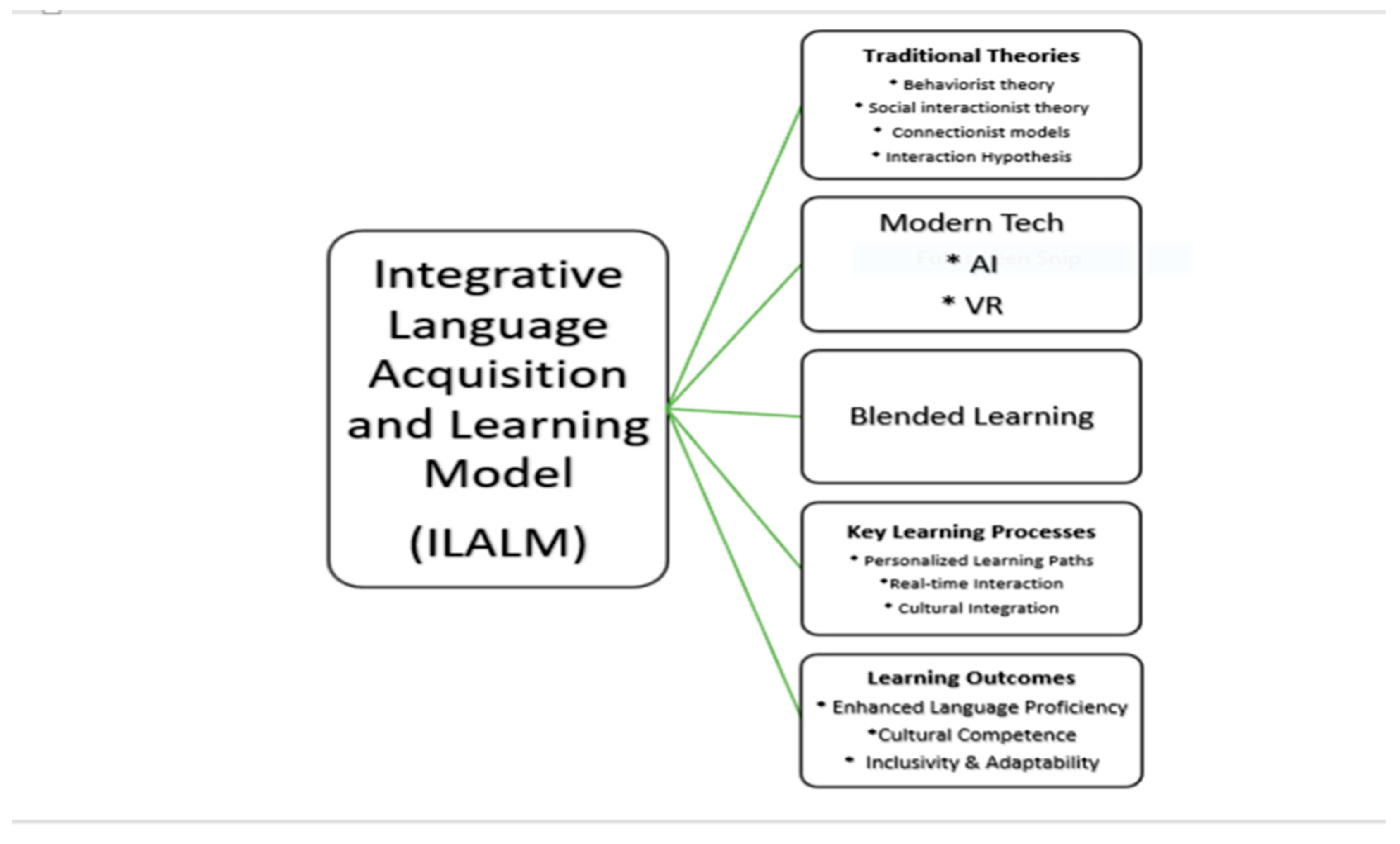
The ILALM integrates several cutting-edge technological innovations to support its personalized, interactive, and culturally rich learning environments:
- AI and Machine Learning: AI is pivotal to ILALM’s personalized learning paths. By tracking learner progress, AI algorithms adapt lessons in real-time, providing targeted feedback and adjusting the difficulty level based on performance. AI-driven virtual tutors also offer immediate assistance, reinforcing concepts learned in the classroom, and helping learners when they face challenges.
- Virtual and Augmented Reality (VR/AR): VR/AR technology within ILALM brings language learning to life. Learners can virtually “travel” to different countries, engage in culturally immersive experiences, and practice language in simulated real-world settings. For example, an English learner could participate in a virtual market scenario, practicing transactional language with avatars in a realistic environment. This not only enhances language proficiency but also fosters cultural understanding and social competence.
- Mobile Learning: Mobile applications are integrated into ILALM to allow for language practice on-the-go. Students can access lessons, quizzes, vocabulary tools, and language practice exercises directly from their smartphones or tablets, ensuring that learning continues beyond the classroom. Push notifications and gamified challenges encourage consistent practice, while mobile tools enable learners to interact with peers and teachers in real-time through messaging and video conferencing apps.
- Gamification: Gamification enhances learner engagement by turning the language learning process into a game-like experience. Through point systems, leaderboards, badges, and challenges, learners are motivated to compete with themselves and others, creating a dynamic and enjoyable learning environment. This element is particularly useful in keeping students engaged, improving retention, and encouraging ongoing participation.
Illustrative Examples and Case Studies
To illustrate the potential of ILALM, consider a scenario where a university offers an English as a Second Language (ESL) course designed using this model.
- Personalized Learning Path: A student struggling with listening comprehension may receive customized AI-driven lessons that feature slow-paced dialogues, interactive listening tasks, and real-time feedback.
- Real-Time Interaction: During in-person classes, the student participates in group discussions, followed by a collaborative online project in which they work with international peers to create a presentation on cultural topics. This is followed by real-time video feedback from instructors.
- Cultural Integration: The student is assigned to complete a VR simulation of a conversation in a London café, using relevant vocabulary and phrases to navigate the environment. Upon completion, they reflect on the cultural nuances of communication in British English.
- Case Study 1: The application of ILALM in a multilingual classroom has shown promising results in increasing engagement and improving outcomes for learners in the Philippines, suggesting potential benefits for diverse language contexts like St. Michael’s College. This aligns with similar models in other parts of the world. For instance, the University of Queensland in Australia has successfully implemented a "three-way strong" model that supports fluency in indigenous languages, contact languages, and English, promoting cognitive and cultural integration. Similarly, Ohio State University and the University of Copenhagen have highlighted the cognitive advantages of multilingual education, including enhanced metalinguistic awareness and flexibility in language learning. These international cases illustrate how multilingual approaches can benefit language acquisition, learning, and cultural competence, reinforcing the potential impact of ILALM in the Philippine context (Hartshorne, Tenenbaum, & Pinker, 2018).
- Case Study 2: A blended learning approach in higher education has yielded significant gains in language retention and application, as demonstrated in the work of Eslit (2023). This is consistent with findings from several renowned institutions. For instance, Oxford University’s research on second language acquisition suggests that blended learning can enhance both student engagement and language proficiency, particularly in diverse learning environments (Nolasco, 2008)). Harvard University’s application of Vygotsky’s socio-cultural theory has also shown that integrating digital and traditional learning methods supports higher cognitive processes in language acquisition, fostering deeper retention (Vygotsky, 1978). Furthermore, Cambridge University’s studies highlight the importance of combining formal and informal language learning settings to promote better language use in real-world contexts, reinforcing the efficacy of blended learning models (Eslit, 2023). These findings underline the significant benefits of blended learning in higher education and language retention.
Through these features, ILALM offers a comprehensive and practical framework that integrates language acquisition with cultural immersion and advanced technology, designed to meet the demands of post-pandemic education and beyond.
V. Analysis
The Integrative Language Acquisition and Learning Model (ILALM) presents a comprehensive and innovative approach to language learning in the post-pandemic era, offering unique solutions for both educators and learners. This section explores the model's implications, the challenges and opportunities it presents, and its contribution to the broader field of language education.
A. Thematic Analysis
The post-pandemic educational landscape has ignited a profound transformation in language acquisition and learning, driving the integration of cutting-edge technologies and innovative pedagogical models. By identifying significant themes from the data, the researcher gains a deeper understanding of this new model. Thematic analysis is crucial as it allows researchers to systematically identify, analyze, and report patterns (themes) within the data, providing a rich and detailed account of the data (Braun & Clarke, 2022). Incorporating key theories and technologies is essential as it grounds the analysis in established research, ensuring the validity and reliability of the conclusions. Furthermore, referencing relevant literature and research in every theme helps situate the study within the broader academic discourse, demonstrating how the findings build on and contribute to existing knowledge (Braun & Clarke, 2022).
The Integrative Language Acquisition and Learning Model (ILALM) leverages these advancements to create a flexible, engaging, and effective approach to blended learning. By incorporating key theories and technologies, ILALM aims to enhance language proficiency, foster cultural competence, and address challenges in accessibility and engagement. Based on in-depth literature reviews to published case studies and real-world observations, the following ten key themes illustrate how can ILALM responds to the evolving needs of language learners in a digitally-driven world.
- Evolving Pedagogical Models in the Post-Pandemic Era. Blended learning approaches and the post-pandemic educational landscape support the shift to hybrid models where students benefit from both in-person and online learning, making education more flexible and accessible. According to a 2020 survey, 65.2% of higher education institutions offered blended courses, and 12% of the 12.2 million documented distance education enrollments were in blended courses. Additionally, same research indicates that blended learning can increase student engagement and satisfaction by 25% compared to traditional methods (Tonbuloğlu & Tonbuloğlu, 2023).
- The Role of Technology in Enhancing Language Proficiency. AI and Machine Learning, combined with Cognitive Theory, enhance language learning by providing personalized, adaptive experiences that cater to each student's unique needs and learning pace. According to a report by EdTechXGlobal, the number of online language learning users is projected to reach 1.5 billion by 2025. Additionally, UNESCO's 2021 survey indicated that 80% of countries worldwide have adopted digital learning policies to enhance language education1. These technologies allow for real-time tracking of progress and provide instant feedback, helping students correct errors and reinforce learning autonomously. Research has shown that the use of AI in education can improve learning outcomes by up to 30% (ESLDIRECT.COM (2023).
- Cultural Competence in a Globalized Virtual Classroom. Social Interactionist Theory and Sociocultural Theory emphasize the importance of social and cultural exchanges in virtual environments, fostering cultural competence through meaningful interaction. According to a 2021 report by UNESCO, 80% of countries worldwide have adopted digital learning policies to enhance cultural and social exchanges in education. Additionally, a study by the British Council found that 75% of educators believe that virtual classrooms have significantly improved students' cultural competence and global awareness. These virtual environments enable learners to engage with peers from diverse backgrounds, promoting a deeper understanding and appreciation of different cultures.
- Bridging Gaps: Accessibility in Language Learning. Mobile learning and Krashen’s Input Hypothesis increase accessibility by providing learners with continuous, contextually relevant input, regardless of their location or resources. According to a report by Sensor Tower, mobile learning app downloads spiked by 120% globally in 2020, highlighting the growing reliance on mobile technology for education. Additionally, research indicates that the average time spent on language learning apps increased by 30% in 2021, demonstrating the effectiveness of mobile learning in providing accessible education. Krashen's Input Hypothesis emphasizes the importance of providing comprehensible input that is slightly above the learner's current level, which mobile learning platforms can deliver effectively through personalized and adaptive content.
- The Power of Hybrid Learning Environments. Blended learning approaches and Connectionist Models reinforce language acquisition by offering diverse input in both physical and digital spaces, helping learners form strong associations through varied contexts. According to a report by Technavio, the global blended learning market is projected to grow by $24 billion between 2020 and 2024 (ESLDIRECT.COM, 2023). Additionally, research by the Harvard Business Review revealed that microlearning, a key component of hybrid learning, increases the learning retention rate by 25%. These hybrid environments provide flexibility and efficiency, catering to various learning preferences and enhancing overall educational outcomes.
- Learner-Centered Approaches: Empowering Autonomous Learning, Behaviorist Theory and Cognitive Theory support learner autonomy by using technology to provide immediate feedback and encourage self-guided, active learning experiences. According to a 2021 report by the Frontiers in Education, the positive effect of feedback on students' performance and learning is well-documented, with technology playing a crucial role in providing timely and personalized feedback. Additionally, a study by the Michigan Virtual Research Learning Institute found that student-centered learning approaches, which emphasize autonomy and active engagement, have shown modest to significant improvements in student achievement. These approaches leverage technology to create interactive and adaptive learning environments, fostering greater independence and motivation among learners (Lipnevich & Panadero, 2021).
- The Role of Collaborative Learning in Language Mastery. Social Interactionist Theory and Interaction Hypothesis promote collaborative learning, which enhances language skills through peer interactions and real-world communication practice. According to a study published in the Journal of Educational Technology & Society, collaborative learning environments significantly improve language proficiency, with students showing a 20% increase in language skills compared to traditional learning methods. Additionally, research from the British Council indicates that 75% of educators believe that collaborative learning has significantly improved students' language competence and confidence (Wen & Song, 2021). These findings underscore the effectiveness of collaborative learning in fostering language mastery through meaningful social interactions.
- Real-World Application and Contextual Learning. Krashen’s Input Hypothesis and Virtual and Augmented Reality provide immersive, contextual experiences, allowing students to apply language in real-world scenarios for deeper understanding. According to a report by Cambridge University Press, the use of comprehensible input, as proposed by Krashen, has significantly improved language acquisition outcomes. Additionally, a study by Semantic Scholar indicates that virtual and augmented reality technologies can enhance language learning by up to 30%, providing learners with realistic and engaging environments to practice their language skills (Patrick, 2019). These technologies offer students the opportunity to interact with virtual characters and scenarios, making the learning process more dynamic and effective.
- Challenges of Technological Integration in Language Education. Gamification and Mobile Learning present challenges related to engagement and digital literacy, requiring careful planning to maximize their educational benefits. According to a study by the Journal of Educational Technology & Society, 60% of educators reported that lack of training and support were significant barriers to effective technology integration. Additionally, a report by SpringerLink highlights that 70% of teachers identified digital literacy as a critical challenge in adopting new technologies (Bećirović, 2023). Research indicates that while gamification can enhance motivation and engagement, it requires careful implementation to avoid potential distractions and ensure educational effectiveness. Similarly, mobile learning offers flexibility and accessibility but demands robust digital literacy skills from both educators and students to be effective.
- Future Trends: AI, VR, and Beyond in Language Learning. AI and Machine Learning, along with Virtual and Augmented Reality, are poised to revolutionize language learning by offering even more immersive, interactive, and personalized experiences. According to a report by Just Learn, the integration of AI in language learning is expected to grow significantly, with adaptive learning systems and real-time translation tools becoming more sophisticated (Nis, 2024). Additionally, the use of VR and AR in language education is projected to increase, providing learners with immersive environments that simulate real-world scenarios. A study by Talkpal indicates that VR can enhance language learning by up to 30%, offering learners realistic and engaging contexts to practice their language skills (Talkpal, Inc., 2024)1. These advancements promise to make language learning more efficient, engaging, and effective.
These ten themes illustrate how ILALM utilizes modern pedagogical theories and innovative technologies to adapt to the challenges and opportunities presented by the post-pandemic educational landscape.
B. Implications for Educators
Practical Applications in the Classroom
For educators, ILALM offers a transformative shift in how language is taught. By blending traditional teaching strategies with cutting-edge technology, educators are better equipped to meet the needs of students in a diverse and evolving learning environment. In practice, ILALM encourages the use of AI-driven lessons, real-time interaction through collaborative projects, and immersive cultural experiences via virtual reality (VR) simulations. These technological tools enable teachers to offer personalized, interactive, and culturally rich learning experiences that cater to different learning styles.
For example, in an ESL classroom, instructors can utilize AI-driven software to track student progress and suggest tailored exercises. Real-time feedback, provided through video conferencing or digital platforms, allows instructors to offer immediate, targeted support on speaking, pronunciation, and cultural nuances. Furthermore, VR simulations can help educators create real-life scenarios that students can explore outside traditional classroom settings, enhancing their understanding of language in authentic contexts.
Strategies for Effective Implementation
Effective implementation of ILALM requires thoughtful planning and integration of technological tools with classroom instruction. Educators need to:
- Foster Technological Competence: Teachers must be well-versed in the use of AI tools, VR platforms, and interactive technologies to ensure smooth integration into lessons. Professional development programs and training sessions can be invaluable in this regard.
- Adapt to Student Needs: Teachers should use data from AI tools to adapt their lesson plans and interventions to meet the diverse needs of students. For example, based on AI-generated progress reports, instructors can adjust the difficulty of language tasks or provide additional support to students who may need it.
- Promote Active Learning: By integrating collaborative online projects, group discussions, and interactive learning experiences, teachers can encourage active student engagement. This approach supports the development of language skills in authentic and socially dynamic settings.
C. Implications for Learners
Benefits and Challenges for Students
The ILALM offers significant benefits for students, particularly in a blended learning environment. The integration of AI and VR provides opportunities for personalized learning, catering to the individual needs and preferences of learners. By using AI to generate tailored exercises, students can progress at their own pace, focusing on areas that require improvement. Additionally, VR simulations provide immersive experiences that allow students to practice language in realistic, context-rich environments, thus strengthening their cultural and communicative competence.
However, students may face challenges as well. One challenge is the digital divide, particularly in underprivileged areas where access to high-tech resources may be limited. In such cases, students may struggle to fully engage with the technological components of ILALM. Furthermore, some learners may experience initial difficulties adapting to online learning platforms, which may hinder their ability to benefit from the blended approach. It is essential for institutions to address these barriers by ensuring equitable access to technology and providing appropriate support for students who may need additional assistance in navigating digital tools.
Enhancing Engagement and Motivation
ILALM's use of gamification, real-time interaction, and culturally relevant tasks can significantly enhance student motivation. Gamification, for example, introduces elements of competition, reward, and achievement, which can boost engagement and encourage continued participation. The inclusion of cultural integration tasks—such as engaging in VR simulations of real-world interactions—motivates students by offering authentic, engaging language practice that connects learning to real-world applications.
Moreover, ILALM’s adaptability to students’ progress through personalized learning paths ensures that students remain challenged without feeling overwhelmed. This constant balancing of challenge and skill level can increase intrinsic motivation, as students experience a sense of accomplishment and growth.
Post-Pandemic Relevance
The COVID-19 pandemic has reshaped education, accelerating the adoption of blended and online learning models. ILALM is highly relevant in this post-pandemic context, as it embraces the flexibility and technological integration needed to adapt to evolving educational landscapes. With an increased reliance on digital tools, ILALM’s blend of online and in-person components ensures that students continue to have access to high-quality language learning opportunities, even when face-to-face instruction is not feasible.
Furthermore, the pandemic has underscored the need for mental health support, particularly as students navigate the challenges of remote learning, isolation, and stress. ILALM’s focus on creating flexible learning pathways and its ability to integrate cultural and social learning elements provide students with opportunities to connect with their peers and instructors, fostering a sense of community and support in challenging times.
Adaptability and Inclusivity
ILALM also supports inclusivity, accommodating a diverse range of learners. Whether students are learning in rural areas with limited internet access or in urban centers with robust technological infrastructure, ILALM can be adapted to different environments. The flexibility of the model allows educators to scale the use of technology according to the resources available, making it a versatile approach for learners from various backgrounds.
The emphasis on personalized learning paths allows ILALM to meet the needs of learners with different levels of proficiency, learning styles, and cultural backgrounds. It ensures that all students, regardless of their prior experience or technological familiarity, can access relevant, engaging, and effective language learning opportunities.
D. Contributions to Existing Literature
Addressing Gaps and Providing New Insights: ILALM contributes to the field of language acquisition and learning by addressing existing gaps in how technology is integrated into language learning models. Traditional theories of language acquisition, such as Krashen’s Input Hypothesis or Vygotsky’s Sociocultural Theory, emphasize the importance of comprehensible input and social interaction. While these theories have guided language learning pedagogy for decades, they have not fully explored how modern technologies—such as AI, VR, and gamification—can be used to enhance these principles.
The ILALM can bridge this gap by offering a model that incorporates these traditional theories while integrating the benefits of emerging technologies. The model supports personalized learning, fosters real-time social interactions, and immerses students in culturally rich virtual experiences, which are all key factors in modernizing and enhancing language acquisition strategies.
Potential for Future Research
The ILALM can open new avenues for research in the field of language education. Future studies can explore the effectiveness of AI-driven personalized learning paths, the impact of VR on cultural competence, and the long-term benefits of blended learning environments. Further research could also investigate the applicability of ILALM in different language contexts, as well as its scalability in diverse educational settings, particularly in low-resource environments.
Additionally, studies could explore the psychological impact of blended learning models on language learners, particularly in terms of engagement, motivation, and mental health. Research into how ILALM can be adapted for other disciplines, such as science or mathematics, could also expand its potential applications and refine its use in different educational contexts.
Overall, the Integrative Language Acquisition and Learning Model offers significant promise for school administrators, educators, learners, and researcher. By integrating traditional language acquisition theories with cutting-edge technologies, ILALM creates a flexible, engaging, and culturally rich learning experience that is highly relevant in today’s post-pandemic educational environment. The model addresses gaps in existing literature and provides new insights into the intersection of technology and language learning, paving the way for future research and development in this area.
E. Limitations
This is a greenhorn model (ILALM), while promising, is not without limitations. The researcher acknowledged and viewed that the following points need to be addressed further:
- Access to Technology: The model's reliance on advanced technologies like AI and VR could pose challenges in low-resource settings, where access to such tools remains limited.
- Scalability and Implementation: Scaling ILALM across diverse educational contexts requires substantial investment in infrastructure, teacher training, and support systems.
- Theoretical Integration: Although ILALM bridges multiple theories, the balance between their applications might require further refinement to avoid overgeneralization or conflicting methodologies.
- Research Gaps: More longitudinal studies in the primary, secondary, and tertiary levels are needed to assess ILALM’s long-term impact on language acquisition and learning and its effectiveness across different learner demographics.
VI. Conclusion and Recommendations
This study presents the Integrative Language Acquisition and Learning Model (ILALM), an innovative framework designed to address the evolving needs of language learners in the post-pandemic era by integrating traditional language acquisition theories with modern technologies such as AI, virtual reality, and gamification. The model emphasizes personalized learning paths, real-time interaction, and cultural integration within a blended learning environment, ensuring flexibility, adaptability, and inclusivity for diverse learners. The research methodology, which combined in-depth literature reviews, document analysis, observations, and case studies, was crucial in identifying gaps in current language learning models and offering a comprehensive approach to ILALM’s application in real-world educational contexts. The integration of foundational theories like Krashen’s Input Hypothesis, Vygotsky’s Sociocultural Theory, and Piaget’s Cognitive Theory provided the theoretical grounding for ILALM, highlighting the importance of interactive, socially mediated learning. The study’s findings underscore ILALM’s potential to enhance language acquisition and cultural competence by leveraging technology to create immersive, learner-centered experiences. Recommendations for school administrators, educators, and learners focus on fostering a technology-driven, collaborative learning environment while continuing to address mental health and digital literacy needs. Future research should explore the long-term impacts of ILALM across diverse educational settings, with particular attention to the effectiveness of specific technologies and the model’s adaptability for various socio-cultural contexts. Ultimately, the research highlights ILALM’s potential to transform language education by providing a flexible, technology-supported approach that meets the needs of learners in the post-pandemic landscape.
Author contribution statement
The author conceived and designed this article; Performed the data gathering; and, Wrote the whole article.
Funding statement
This research did not receive any specific grant from funding agencies in the public, commercial, or not-for-profit sectors.
Declaration of interest statement
The author declares no conflict of interest.
Acknowledgement
Thanks, must also be expressed to SMCII library, Googles scholar, Mendeley, ResearchGate, Academia, and Microsoft Copilot which provided the illustrations, additional information, and other scholarly online references.
Appendix A
A. Process Example of ILALM
References
- Almarza, I. C. 2021. Edited by A. L. Garcia and M. G. I. Vargas. Language education in the Philippines during the COVID-19 pandemic: Challenges and opportunities Language education in a pandemic: Perspectives from Asia and beyond. In Routledge. pp. 47–66. [Google Scholar]
- Angrosino, M. V. 2020. Observational Research: Understanding and Doing Qualitative Research. Routledge. [Google Scholar]
- Ball, P., K. Kelly, and J. Clegg. 2016. Putting CLIL into practice. Oxford University Press: Oxford, UK. [Google Scholar]
- Bao, W. 2020. COVID-19 and Online Teaching in Higher Education: A Case Study of Peking University. Human Behavior and Emerging Technologies 2, 2: 113–115. Available online: https://onlinelibrary. wiley.com/ doi/full/10.1002/hbe2.191. [CrossRef] [PubMed]
- Barrot, Jessie. 2018. English Curriculum Reform in the Philippines: Issues and Challenges from a 21 st Century Learning Perspective. Journal of Language, Identity & Education 18: 1–16. [Google Scholar] [CrossRef]
- Bećirović, S. 2023. Challenges and Barriers for Effective Integration of Technologies into Teaching and Learning. In Digital Pedagogy. SpringerBriefs in Education. Springer, Singapore. [Google Scholar] [CrossRef]
- Beltran-Palanques, V., J.E. Liu, and A.M.Y. Lin. 2024. Edited by Z. Tajeddin and T.S. Farrell. Translanguaging in Language Teacher Education Handbook of Language Teacher Education. In Springer International Handbooks of Education. Springer, Cham. [Google Scholar] [CrossRef]
- Billinghurst, M., and A. Duenser. 2012. Augmented Reality in the Classroom. Computer 45, 7: 56–63. [Google Scholar] [CrossRef]
- Bowen, G. A. 2009. Document analysis as a qualitative research method. Qualitative Research Journal 9, 2: 27–40. [Google Scholar] [CrossRef]
- Bower, K., D. Coyle, R. Cross, and G. N. Chambers. 2020. Curriculum Integrated Language Teaching: CLIL in Practice. Cambridge University Press. [Google Scholar]
- Braun, V., and V. Clarke. 2022. Thematic Analysis: A Practical Guide. SAGE Publications. Available online: https://study.sagepub.com/thematicanalysis.
- Chomsky, N. 1965. Aspects of the Theory of Syntax. MIT Press: Available online: https://link.springer.com/ reference workentry/10.1007/978-0-387-79061-9_1911.
- 2021. Columbia Center for Teaching and Learning Community Building in the Classroom;Columbia University. Available online: https://ctl.columbia.edu/resources-and-technology/teaching-with-technology/teaching-online/community-building/.
- Commission on Higher Education. 2021. CHED Memorandum Order No. 20, Series of 2021: Guidelines on the Implementation of Flexible Learning in Higher Education Institutions;Retrieved from CHED. [Google Scholar]
- Commission on Higher Education. 2021. Commission on Higher Education CHED's Guidelines on the Implementation of Flexible Learning. Retrieved from CHED. [Google Scholar]
- Commission on Higher Education. 2021. CHED's Policy on Flexible Learning. Retrieved from CHED. Retrieved from CHED. [Google Scholar]
- Creswell, J. W., and C. N. Poth. 2023. Qualitative Inquiry and Research Design: Choosing Among Five Approaches, 5th ed. SAGE Publications. [Google Scholar]
- Cruz, P. A., and I. P. Martin. Researching Philippine Englishes. World Englishes. [CrossRef]
- Department of Education. 2020. Policy Guidelines for the Provision of Learning Resources in the Implementation of the Basic Education Learning Continuity Plan. DepEd. Available online: https://www.deped.gov.ph/wp-content/uploads/2020/08/DO_s2020_018.pdf.
- Deterding, S., D. Dixon, R. Khaled, and L. Nacke. 2011. From Game Design Elements to Gamefulness: Defining "Gamification". In Proceedings of the 15th International Academic MindTrek Conference: Envisioning Future Media Environments (ACM. pp. 9–15. [Google Scholar]
- Dörnyei, Z., and S. Ryan. 2015. The Psychology of the Language Learner Revisited. Routledge. [Google Scholar]
- EdTechReview, *!!! REPLACE !!!*. 2023. What is Digital Literacy, Its Importance, and Challenges? EdTechReview. Available online: https://www.edtechreview.in/trends-insights/insights/what-is-digital-literacy-its-importance-and-challenges/.
- El Galad, A., D. H. Betts, and N. Campbell. 2024. Flexible learning dimensions in higher education: Aligning students’ and educators’ perspectives for more inclusive practices. Frontiers in Education 9: 1347432. [Google Scholar] [CrossRef]
- Ellis, R. 2015. Understanding Second Language Acquisition, 2nd ed. Oxford University Press. [Google Scholar]
- Erarslan, A. 2021. English language teaching and learning during COVID-19: a global perspective on the first year. Journal of Educational Technology and Online Learning 4: 349–367. [Google Scholar] [CrossRef]
- ESLDIRECT. 2023. How Technology Impacts English Language Learning: Trends & Statistics. Available online: https://esldirect.com/technology-impact-english-learning-trends/.
- Eslit, E. R. 2023. Neo-Language Acquisition and Learning Theory: A New Perspective on Language Teaching. Preprints. [Google Scholar] [CrossRef]
- Estes, K. G. 2012. Edited by Kathleen R. Gibson and Maggie Tallerman. Statistical learning and language acquisition. The Oxford Handbook of Language Evolution (2011: online edn, Oxford Academic: (accessed on 30 Nov. 2024). [Google Scholar] [CrossRef]
- Garrison, D. R., and N. D. Vaughan. 2008. Blended Learning in Higher Education: Framework, Principles, and Guidelines. Jossey-Bass. [Google Scholar]
- Genesee, F. 1987. Learning through two languages: Studies of immersion and bilingual education. Newbury House: Cambridge, MA. [Google Scholar]
- Graham, C. R. 2006. Edited by C. J. Bonk and C. R. Graham. Blended Learning Systems: Definition, Current Trends, and Future Directions. In The Handbook of Blended Learning: Global Perspectives, Local Designs. Pfeiffer: pp. 3–21. [Google Scholar]
- Great Schools Partnership. 2024. The Case for Community Engagement. Available online: https://www.greatschoolspartnership.org/resources/equitable-community-engagement/the-case-for-community-engagement/.
- Hamman, L. 2018. Translanguaging and positioning in two-way dual language classrooms: A case for criticality. Language and Education 32, 1: 21–42. [Google Scholar] [CrossRef]
- Han, X. 2023. Evaluating blended learning effectiveness: An empirical study from undergraduates’ perspectives using structural equation modeling. Frontiers in Psychology 14: 1059282. [Google Scholar] [CrossRef]
- Hartshorne, J. K., J. B. Tenenbaum, and S. Pinker. 2018. A critical period for second language acquisition: Evidence from 2/3 million English speakers. Cognition 177. Available online: https://doi.org/10.1016/j. cognition.2018.04.007. [CrossRef] [PubMed]
- n.d.Harvard Business Review. Access to Harvard Business Review articles. Available online: https://gsb-research-help.stanford.edu/library/faq/283594.
- Hattie, J., and G. M. Donoghue. 2016. Edited by J. Hattie and R. J. Marzano. Learning strategies: A synthesis and conceptual model), Visible learning: A synthesis of over 800 meta-analyses relating to achievement. In Routledge. pp. 1–20. [Google Scholar]
- Hill, S. 2024. Creating flexible learning pathways for business students. Times Higher Education. Available online: https://www.timeshighereducation.com/campus/creating-flexible-learning-pathways-business-students.
- Hodges, C., S. Moore, B. Lockee, T. Trust, and A. Bond. 2020. The Difference Between Emergency Remote Teaching and Online Learning. Educause Review. Available online: https://er.educause.edu/articles/2020/3/thedifference-between-emergency-remote-teaching-and-online-learning.
- Huang, H., and N. Kurata. 2024. Learning from the pandemic and looking into the future–the challenges and possibilities for language learning. The Language Learning Journal 52, 5: 481–486. [Google Scholar] [CrossRef]
- Kintu, M. J., C. Zhu, and E. Kagambe. 2017. Blended learning effectiveness: The relationship between student characteristics, design features and outcomes. International Journal of Educational Technology in Higher Education 14, 1: 1–20. [Google Scholar] [CrossRef]
- Korhonen, V. 2024. E-learning and digital education-Statistics & Facts. Available online: https://www.statista.com/topics/3115/e-learning-and-digital-education/#topicOverview.
- Krashen, S. D. 1985. The Input Hypothesis: Issues and Implications. Longman. Available online: https://en.wikipedia.org/ wiki/Input_hypothesis.
- Kukulska-Hulme, A., and J. Traxler, eds. 2005. Mobile Learning: A Handbook for Educators and Trainers. Routledge. [Google Scholar]
- Larsen-Freeman, D., and M. Anderson. 2011. Techniques and Principles in Language Teaching, 3rd ed. Oxford University Press. [Google Scholar]
- Lightbown, P. M., and N. Spada. 2021. How languages are learned, 4th ed. Oxford University Press. [Google Scholar]
- Lipnevich, A. A., and E. Panadero. 2021. A Review of Feedback Models and Theories: Descriptions, Definitions, and Conclusions. Frontiers in Education 6: 720195. [Google Scholar] [CrossRef]
- Long, M. H. 1996. Edited by W. C. Ritchie and T. K. Bhatia. The Role of the Linguistic Environment in Second Language Acquisition. In Handbook of Second Language Acquisition. Academic Press: pp. 413–468. Available online: https://en.wikipedia.org/wiki/Interaction_hypothesis.
- Luckin, R., W. Holmes, M. Griffiths, and L. B. Forcier. 2016. Intelligence Unleashed: An Argument for AI in Education. Pearson. [Google Scholar]
- Maican, M. A., and E. Cocoradă. 2021. Online foreign language learning in higher education and its correlates during the COVID-19 pandemic. Sustainability 13, 2: 781. [Google Scholar] [CrossRef]
- Copilot, Microsoft. 2024. Personal communication. Microsoft Copilot., November 19. [Google Scholar]
- Minero, E. 2019. 10 Powerful Community-Building Ideas. Edutopia. Available online: https://www.edutopia.org/article/10-powerful-community-building-ideas.
- National Center for Education Statistics. 2024. Prevalence of Mental Health Services Provided by Public Schools and Limitations in Schools’ Efforts to Provide Mental Health Services. Condition of Education. U.S. Department of Education, Institute of Education Sciences. Available online: https://nces.ed.gov/programs/coe/indicator/a23.
- Nis, S. 2024. The Future of Language Learning: AI Trends and Prediction. Available online: https://justlearn.com/blog/the-future-of-language-learning-ai-trends-and-prediction.
- Patrick, R. 2019. Comprehensible Input and Krashen’s theory. Journal of Classics Teaching 20, 39: 37–44. [Google Scholar] [CrossRef]
- Pearson, P. D. 2010. Principles of Integrated Language Teaching and Learning. Pearson Education. [Google Scholar]
- Piaget, J. 1954. The Construction of Reality in the Child. Basic Books. Available online: https://www.academia.edu/ 51025531/Cognitive_Theories_of_Language_Acquisition.
- Richards, J. C., and T. S. Rodgers. 2014. Approaches and methods in language teaching, 3rd ed. Cambridge University Press. [Google Scholar]
- Richards, J. C., and T. S. Rodgers. 2014. Approaches and Methods in Language Teaching, 3rd ed. Cambridge University Press. [Google Scholar]
- Rouse, M. 2023. What is Digital Literacy? Definition, Skills, Learning Resources. Techopedia. Available online: https://www.techopedia.com/definition/digital-literacy-digital-fluency.
- Rumelhart, D. E., and J. L. McClelland. 1986. Parallel Distributed Processing: Explorations in the Microstructure of Cognition. MIT Press: Available online: https://www.oxfordbibliographies.com/display/ document/obo-9780199772810/obo-9780199772810-0010.xml.
- Skinner, B. F. 1957. Verbal Behavior. Appleton-Century-Crofts. Available online: https://www.simplypsychology.org/ language.html.
- Stake, R. E. 2020. The Art of Case Study Research, 2nd ed. SAGE Publications. [Google Scholar]
- Swain, M. 1985. Edited by S. M. Gass and C. G. Madden. Communicative competence: Some roles of comprehensible input and comprehensible output in its development. Newbury House: Rowley, MA: pp. 235–253. [Google Scholar]
- Swain, M., and R. K. Johnson. 1997. Edited by R. K. Johnson and M. Swain. Immersion education: A category within bilingual education. In Immersion education: International perspectives. Cambridge University Press: Cambridge, UK: pp. 1–16. [Google Scholar]
- Talkpal, & Inc. 2024. The Future of Language Learning: VR, AI, and Beyond. Available online: https://talkpal.ai/the-future-of-language-learning-vr-ai-and-beyond/.
- Tedick, D. J., and L. Cammarata. 2012. Content and language integration in K–12 contexts: Student outcomes, teacher practices, and stakeholder perspectives. Foreign Language Annals 45, S1: S28–S53. [Google Scholar] [CrossRef]
- Tedick, D. J., and R. Lyster. 2020. Scaffolding language development in immersion and dual language classrooms. Routledge: New York, NY. [Google Scholar]
- Tonbuloğlu, B., and İ. Tonbuloğlu. 2023. Trends and patterns in blended learning research (1965–2022). Educ Inf Technol 28: 13987–14018. [Google Scholar] [CrossRef] [PubMed]
- UNESCO. 2023. UNESCO’s education response to COVID-19. Available online: https://en.unesco.org/COVID19/educationresponse.
- Urzua, C. 1981. Talking purposefully.Silver Spring, MD: Institute of Modern Languages, Inc. Vygotsky, L. S. (1962). Thought and language. MIT Press: Cambridge, MA. [Google Scholar]
- Vygotsky, L. S. 1978. Mind in Society: The Development of Higher Psychological Processes. Available online: https://en.wikipedia.org/wiki/Social_interactionist_theory.
- Vygotsky, L. S. 1987. The Collected Works of L. S. Vygotsky. Springer Volume 1. Available online: https://www.degruyter.com/document/doi/10.1515/CJAL-2024-0101/html.
- Warschauer, M., and R. Kern, eds. 2000. Network-Based Language Teaching: Concepts and Practice. Cambridge University Press. [Google Scholar]
- Wen, Y., and Y. Song. 2021. Learning Analytics for Collaborative Language Learning in Classrooms. In Educational Technology & Society. 15 pages: Vol. 24, No. 1 (January 2021), pp. 1–15. Available online: https://www.jstor.org/stable/26977853.
- Yin, R. K. 2018. Case Study Research and Applications: Design and Methods, 6th ed. SAGE Publications. [Google Scholar]
Figure 1.
ILALM framework.
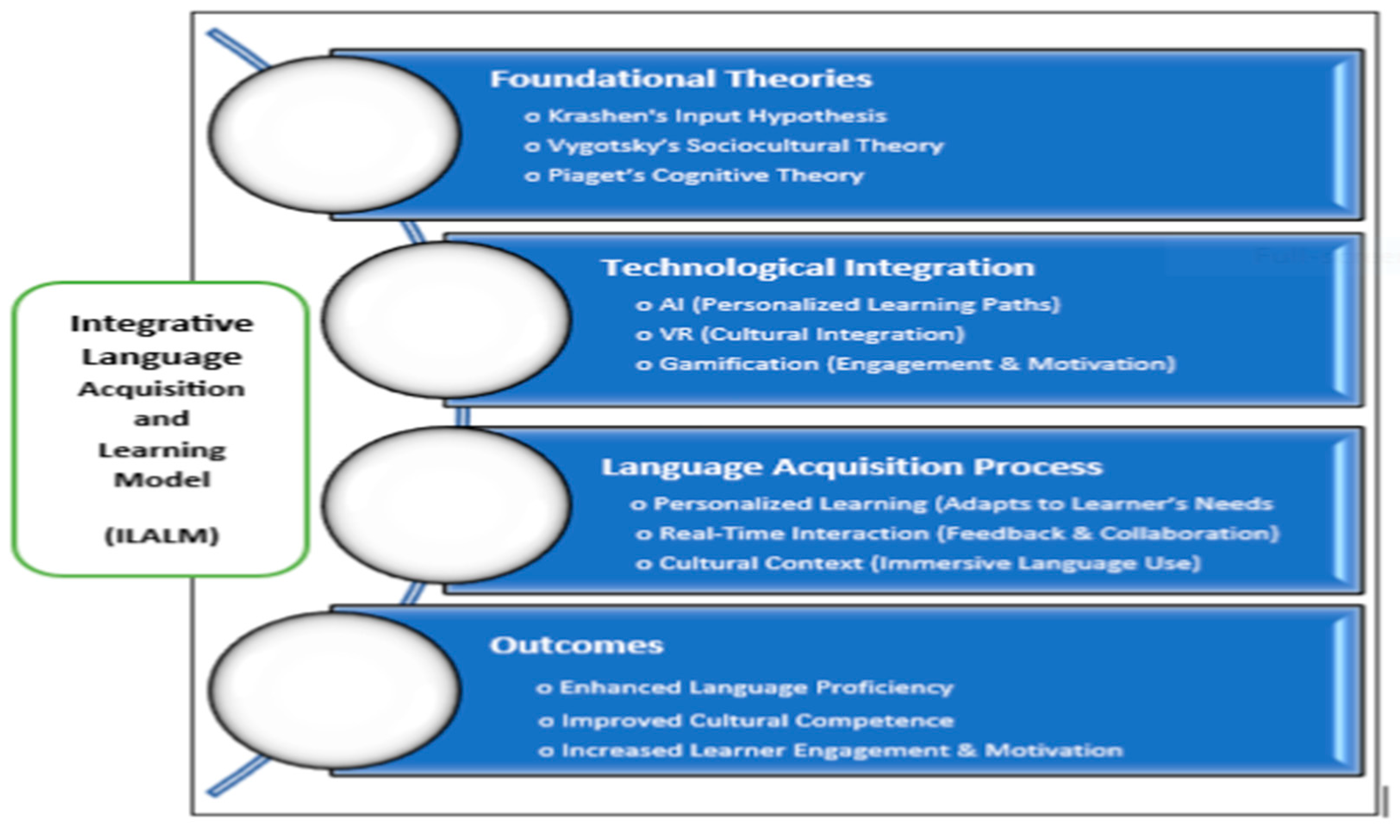
Disclaimer/Publisher’s Note: The statements, opinions and data contained in all publications are solely those of the individual author(s) and contributor(s) and not of MDPI and/or the editor(s). MDPI and/or the editor(s) disclaim responsibility for any injury to people or property resulting from any ideas, methods, instructions or products referred to in the content. |
© 2024 by the authors. Licensee MDPI, Basel, Switzerland. This article is an open access article distributed under the terms and conditions of the Creative Commons Attribution (CC BY) license (http://creativecommons.org/licenses/by/4.0/).
Copyright: This open access article is published under a Creative Commons CC BY 4.0 license, which permit the free download, distribution, and reuse, provided that the author and preprint are cited in any reuse.


