

Submitted:
20 June 2025
Posted:
23 June 2025
You are already at the latest version
Abstract
This study examines the development of interdisciplinary science, technology, engineering, and mathematics (STEM) competencies among human resources (HR) professionals within sustainable education frameworks. Using a mixed-methods research design including survey data (n=245), semi-structured interviews (n=37), and organizational case studies (n=6), the researchers investigated the effectiveness of various experiential learning and mentorship approaches in developing what is termed "STEM fluency." Results indicate that bidirectional mentorship (β=0.42, p<0.001) and structured action learning projects (β=0.38, p<0.001) were the strongest predictors of STEM competency development, with significant variations across organizational size and industry contexts. Qualitative findings revealed four key barriers to interdisciplinary development: resource constraints, disciplinary identity concerns, measurement challenges, and access inequities. The study contributes an empirically-validated framework for developing HR-STEM competencies across diverse organizational contexts and identifies specific implementation strategies that promote sustainable professional development. Implications for HR practice and future research directions are discussed, including ethical considerations in applying technical competencies to human capital management.
Keywords:
STEM competencies
; human resources professionals
; sustainable education
; mixed-methods research
; experiential learning
; mentorship
; STEM fluency
; bidirectional mentorship
; action learning projects
; organizational size
; industry contexts
; interdisciplinary development
; resource constraints
; disciplinary identity
; measurement challenges
; access inequities
; HR-STEM competencies
; implementation strategies
; sustainable professional development
; human capital management
The intersection of human resources (HR) and science, technology, engineering, and mathematics (STEM) has traditionally been viewed as two separate domains with minimal overlap. However, as organizations increasingly rely on technological innovation and scientific advancement, HR professionals find themselves at a critical junction: they must not only recruit and develop STEM talent but also cultivate their own interdisciplinary STEM competencies to remain effective partners in organizational strategy (Ulrich et al., 2021; Johnson et al., 2023).
The growing complexity of workplace technologies, combined with urgent sustainability challenges, creates an imperative for HR professionals to develop what is termed "STEM fluency"—not necessarily deep technical expertise, but a working understanding of scientific principles, technological trends, and their implications for human capital development. Yet research on how HR professionals can effectively develop these competencies remains limited, with few empirical studies examining specific development approaches or their outcomes (Rivera et al., 2023).
This study addresses this gap by examining the effectiveness of various experiential learning and mentorship approaches within sustainable education frameworks. Through a mixed-methods investigation incorporating surveys, interviews, and organizational case studies, the researchers sought to answer three primary research questions:
- What specific experiential learning and mentorship approaches most effectively develop interdisciplinary STEM competencies among HR professionals?
- How do organizational context factors moderate the effectiveness of these development approaches?
- What barriers and enablers influence the implementation of interdisciplinary development initiatives for HR professionals?
The findings contribute to both theory and practice by: (1) providing an empirically-validated framework for conceptualizing HR-STEM competencies, (2) identifying specific development approaches and their differential effectiveness across contexts, and (3) offering evidence-based implementation strategies that address common barriers.
Theoretical Framework and Literature Review
An Integrated Framework for Interdisciplinary Competency Development
The interdisciplinary nature of this research necessitates an integrated theoretical framework that brings together perspectives from multiple domains. Figure 1 illustrates how three theoretical traditions—HR competency development, interdisciplinary learning, and sustainable education—intersect to form the conceptual foundation for this study.
- HR competency theory (Ulrich et al., 2021) provides the professional context and functional domains where technical competencies must be applied.
- Interdisciplinary learning theory (Repko & Szostak, 2020) offers insights into the cognitive and social processes through which professionals integrate knowledge across disciplinary boundaries.
- Sustainable education principles (Sterling, 2021) provide the framework for ensuring development approaches create lasting capabilities while addressing broader sustainability concerns.
The integration of these perspectives acknowledges potential epistemological tensions between HR's traditionally human-centered orientation and STEM's more technical focus. Rather than attempting to resolve these tensions, this framework suggests that effective interdisciplinary development occurs at their intersection, creating professionals who can navigate and leverage these different ways of knowing.
Conceptualizing STEM Fluency for HR Professionals
Within this integrated framework, "STEM fluency" is defined as a meta-competency comprising three interconnected dimensions:
- Cognitive dimension: Understanding of foundational STEM concepts, technological trends, and scientific methods relevant to organizational contexts
- Functional dimension: Ability to apply STEM knowledge to HR practices including talent acquisition, development, and organizational design
- Integrative dimension: Capacity to synthesize human and technical considerations in strategic decision-making
These dimensions were operationalized through a 24-item assessment instrument developed and validated in a pilot study (Cronbach's α = 0.87), enabling measurement of STEM fluency across proficiency levels. Confirmatory factor analysis supported the three-factor structure (CFI = 0.92, RMSEA = 0.06), providing evidence of construct validity.
Sustainable Education in Professional Development
Building on Sterling's (2021) transformative learning approach to sustainability education, sustainable professional development is conceptualized as encompassing three interrelated dimensions:
- Ecological sustainability: Development approaches that minimize environmental impact while creating awareness of ecological considerations in HR practice
- Temporal sustainability: Learning systems that build adaptable competencies relevant across changing technological contexts
- Social sustainability: Development practices that promote inclusive participation across diverse backgrounds and experiences
This multidimensional approach extends the traditional Brundtland conception (WCED, 1987) to address specific challenges in professional learning contexts. Operationalization of these dimensions in the current study included:
- Ecological sustainability: Assessment of development approaches' environmental footprint and integration of ecological considerations in learning content
- Temporal sustainability: Evaluation of competency adaptability across changing technological contexts through scenario-based assessment
- Social sustainability: Measurement of demographic participation patterns and analysis of structural barriers to inclusive development
These sustainability dimensions directly inform the ethical considerations in STEM competency development discussed later in this article, providing a foundation for evaluating not just the effectiveness but also the broader implications of different development approaches.
Experiential Learning and Mentorship
Contemporary applications of Kolb's experiential learning theory (Morris, 2022) and mentorship research (Higgins et al., 2022) provide theoretical foundations for examining specific development approaches. Recent meta-analyses suggest particularly strong outcomes when experiential approaches are combined with structured reflection and theoretical framing (Taylor & Peterson, 2023).
The bidirectional nature of effective mentorship deserves particular attention in interdisciplinary contexts. While traditional mentorship often focuses on unidirectional knowledge transfer, interdisciplinary development benefits from mutual learning where both technical and HR professionals contribute expertise and gain new perspectives (Kram & Isabella, 2022). This bidirectional approach acknowledges the distinct value of both disciplines rather than privileging technical knowledge over HR expertise.
Despite this promising theoretical foundation, empirical research examining these approaches specifically for developing interdisciplinary STEM competencies among HR professionals remains limited. This study addresses this gap by examining the effectiveness of specific experiential learning and mentorship approaches in diverse organizational contexts.
Method
Research Design
A sequential mixed-methods design (Creswell & Creswell, 2022) was employed comprising three phases: (1) survey research, (2) semi-structured interviews, and (3) organizational case studies. This design enabled the researchers to identify broad patterns of effectiveness, explore underlying mechanisms, and examine contextual factors influencing implementation. Figure 2 illustrates the sequential relationship between research phases and how each phase informed subsequent data collection and analysis.
Researcher Positionality
The research team consisted of three researchers with backgrounds spanning HR, organizational psychology, and education technology. This multidisciplinary composition brought complementary perspectives to the research process. The principal investigator had prior experience as an HR practitioner before entering academia, which informed the practical orientation of the research but also necessitated reflexivity regarding potential biases about the value of interdisciplinary competencies. To mitigate these potential biases, multiple researchers participated in data analysis, and member checking was employed with interview participants to validate interpretations.
Specifically, 12 interview participants (32% of the interview sample) participated in member checking by reviewing preliminary analyses and providing feedback on interpretations. This feedback led to refinements in the descriptions of implementation mechanisms and barriers, ensuring they accurately reflected participants' experiences.
Phase 1: Survey Research
Participants and Sampling
Survey participants included 245 HR professionals (63% female, 37% male) from diverse organizational contexts across multiple industries in the United States and Canada. Participants represented organizations ranging from small enterprises (< 100 employees, 24%) to large corporations (> 5,000 employees, 32%), with the remainder from mid-sized organizations. Experience levels ranged from early career (1-5 years, 31%) to senior practitioners (15+ years, 27%).
Participants were recruited through (1) professional HR associations, which distributed the survey link to members; (2) direct organizational contacts established through previous research partnerships; and (3) LinkedIn groups focused on HR development. This multi-channel recruitment strategy aimed to reach HR professionals across organizational contexts, though it likely overrepresented professionals with existing interest in professional development.
Measures
- STEM Fluency. STEM fluency was measured using the 24-item assessment instrument developed in pilot research (see Appendix A, items 12-35). Items assessed three dimensions (cognitive, functional, and integrative) across eight STEM domains relevant to organizational contexts. The scale demonstrated strong internal consistency (Cronbach’s α = 0.87). Confirmatory factor analysis supported the three-dimensional structure (CFI = 0.92, RMSEA = 0.06), with all items loading on their intended factors above 0.60.
- Development Approaches. Participants reported their experiences with seven different development approaches: cross-functional rotations, action learning projects, technology labs/simulations, bidirectional mentorship, communities of practice, external expert networks, and digital learning platforms. For each approach, participants rated both exposure (duration and intensity) and perceived effectiveness (see Appendix A, items 36a-g).
- Organizational Context Factors. Multiple contextual factors were measured including organization size, industry, learning culture (using Yang et al.’s (2022) Learning Organization Questionnaire, α = 0.91), resource availability, and technical leadership engagement (see Appendix A, items 8-11).
- Demographic and Control Variables. The researchers collected data on participants’ gender, age, educational background, prior STEM experience, organizational tenure, and geographic location to analyze potential demographic patterns in development experiences and outcomes (see Appendix A, items 1-7).
Procedure
The survey was distributed through professional HR associations and direct organizational contacts between September and December 2024. Participants completed the online survey (average completion time: 24 minutes) and received individualized STEM fluency profiles as participation incentives. The response rate from direct organizational contacts was 37%, while the response rate through professional associations could not be precisely determined due to the nature of distribution.
Phase 2: Semi-Structured Interviews
Participant Selection
Following survey analysis, semi-structured interviews were conducted with 37 HR professionals selected through a stratified purposive sampling approach. Survey respondents were stratified across three STEM fluency levels (low, medium, high) based on their assessment scores, and across three organizational size categories (small, medium, large). From each of these nine strata, 4-5 participants were randomly selected and invited to participate in interviews, with care taken to ensure diverse representation across gender, experience levels, and industry contexts. This stratified approach enabled comparative analysis across fluency levels and organizational contexts while maintaining demographic diversity.
Interview Protocol and Procedure
Interviews explored participants’ development experiences, perceived enablers and barriers, and specific applications of interdisciplinary competencies. The semi-structured protocol (see Appendix B) included questions about professional background, competency development experiences, application examples, organizational context, and future directions. Interviews lasted 45-60 minutes, were audio-recorded with permission, and transcribed verbatim for analysis. All interviews were conducted via video conference due to geographic dispersion of participants.
Phase 3: Organizational Case Studies
Case Selection
In-depth case studies were conducted of six organizations implementing interdisciplinary development initiatives for HR professionals. Organizations were selected through maximum variation sampling to represent diverse contexts across three key dimensions: size (small/medium/large), industry (technology-intensive/less technology-intensive), and program maturity (emerging/established). The final case selection included:
- Large pharmaceutical company (8,000+ employees) – established program
- Mid-sized technology firm (800 employees) – established program
- Small biotechnology startup (45 employees) – emerging program
- Manufacturing company (1,200 employees) – established program
- Regional healthcare system (3,500 employees) – emerging program
- Professional services firm (400 employees) – emerging program
Data Collection
Each case study involved multiple data sources:
- Document analysis: Program materials, competency frameworks, evaluation data, internal communications (10-25 documents per organization)
- Stakeholder interviews: 6-10 interviews per organization with HR professionals, technical leaders, organizational leadership, and program participants (48 interviews total)
- Observational data: Where possible, researchers observed development activities including mentorship sessions, learning events, and cross-functional meetings (conducted in 4 of 6 organizations)
A systematic protocol guided data collection across cases (see Appendix C), ensuring comparable information despite contextual differences. Data collection at each organization spanned 2-4 weeks, with ongoing communication to clarify findings.
Case Analysis Approach
Each case was analyzed using Eisenhardt’s (1989) comparative case study methodology. This involved:
- Within-case analysis: Developing comprehensive descriptions of each organization’s approach, context, and outcomes
- Cross-case pattern identification: Comparing and contrasting findings across cases to identify patterns, contextual influences, and conditional relationships
- Theory elaboration: Refining theoretical understanding based on case patterns
Each case was first analyzed independently by two researchers who then compared findings to develop a consensus interpretation. Cross-case analysis involved the full research team using both inductive pattern identification and deductive application of the theoretical framework.
Data Analysis
Survey Data Analysis. Survey data were analyzed using hierarchical multiple regression to identify significant predictors of STEM fluency development, with moderator analyses examining the influence of organizational context factors. Demographic analyses examined differences in development experiences and outcomes across gender, age, and educational background categories. Statistical analyses were conducted using SPSS version 28.
Qualitative Data Analysis. Interview and case study data were analyzed using thematic analysis (Braun & Clarke, 2021), with initial coding followed by theme development and refinement. Nvivo 14 facilitated the coding process, with both deductive codes derived from the theoretical framework and inductive codes emerging from the data. Two researchers independently coded 20% of transcripts (15 interview transcripts and 10 case study interviews) to establish coding reliability (Cohen’s κ = 0.83) before proceeding with full coding.
Integration. Triangulation across data sources strengthened validity of findings through four forms of integration:
- Methodological triangulation: Comparing findings across methods (surveys, interviews, case studies)
- Data source triangulation: Comparing perspectives across stakeholder groups
- Investigator triangulation: Involving multiple researchers in analysis
- Member checking: Sharing preliminary interpretations with participants for validation
When discrepancies emerged across data sources, further investigation was conducted to understand contextual factors explaining these differences.
Results
Survey Results: Effectiveness of Development Approaches
Hierarchical multiple regression analysis revealed that development approaches collectively explained 46% of variance in STEM fluency scores (ΔR² = 0.46, p < 0.001) after controlling for individual background factors. Table 1 presents standardized regression coefficients for each approach.
As shown in Table 1, bidirectional mentorship emerged as the strongest predictor of STEM fluency development (β = 0.42, p < 0.001), followed closely by action learning projects (β = 0.38, p < 0.001). All approaches demonstrated significant positive relationships with STEM fluency, though digital learning platforms showed the weakest association (β = 0.15, p < 0.05).
Further analysis revealed differential effects across the three dimensions of STEM fluency, as shown in Table 2.
This dimensional analysis reveals important patterns. Action learning projects showed the strongest relationship with the functional dimension (β = 0.45, p < 0.001), while bidirectional mentorship had the strongest association with the integrative dimension (β = 0.48, p < 0.001). Notably, digital learning platforms showed a significant relationship with the cognitive dimension (β = 0.32, p < 0.001) but no significant relationship with the integrative dimension, suggesting that digital approaches may effectively develop knowledge but struggle to develop integrative competencies.
Demographic Patterns in Development Experiences and Outcomes
Analysis of demographic variables revealed several significant patterns in both access to development opportunities and STEM fluency outcomes.
Gender Differences. Female HR professionals reported significantly less access to cross-functional rotations (M = 1.42, SD = 0.86) than male counterparts (M = 1.78, SD = 0.92), t(243) = 3.21, p < 0.01. Similarly, women reported lower levels of participation in technology labs/simulations (M = 1.35, SD = 0.78 vs. M = 1.67, SD = 0.90), t(243) = 2.87, p < 0.01. These access differences partially explained observed gender differences in STEM fluency scores, particularly in the cognitive dimension. When controlling for development opportunities, gender differences in STEM fluency were no longer significant, suggesting that access disparities rather than inherent differences drive gender gaps.
Age and Experience Effects. Early-career HR professionals (1-5 years experience) showed the strongest relationship between digital learning platforms and STEM fluency (β = 0.31, p < 0.001), while this relationship was weakest for the most experienced professionals (15+ years) (β = 0.08, p > 0.05). Conversely, the relationship between bidirectional mentorship and STEM fluency strengthened with experience level, suggesting different approaches may be more effective at different career stages.
Educational Background. HR professionals with STEM educational backgrounds (18% of sample) showed higher baseline STEM fluency scores (M = 3.42, SD = 0.58) than those without STEM backgrounds (M = 2.87, SD = 0.74), t(243) = 4.91, p < 0.001. However, development approaches showed similar effectiveness patterns regardless of educational background, suggesting that interdisciplinary competencies can be effectively developed regardless of initial training.
Organizational Context as Moderator
Moderation analyses revealed significant interaction effects between development approaches and organizational context factors. Table 3 presents the results of moderation analyses for organization size.
These results indicate that organization size significantly moderates the effectiveness of several development approaches. Figure 3 visualizes these interaction effects, demonstrating that cross-functional rotations are significantly more effective in larger organizations (interaction β = 0.24, p < 0.001), while digital learning platforms show declining effectiveness as organization size increases (interaction β = -0.21, p < 0.01). Bidirectional mentorship shows consistently strong effectiveness across organizational contexts, though with a slight increase in larger organizations (interaction β = 0.12, p < 0.05).
Learning culture emerged as a particularly important moderator, with stronger learning cultures amplifying the effectiveness of all development approaches. The interaction between learning culture and bidirectional mentorship was especially pronounced (β = 0.23, p < 0.01), suggesting that organizational learning orientation creates conditions for more effective cross-disciplinary knowledge transfer.
Industry context also moderated effectiveness, with technology-intensive industries showing stronger effects for communities of practice (β interaction = 0.19, p < 0.05) and weaker effects for digital learning platforms (β interaction = -0.14, p < 0.05) compared to less technology-intensive industries. This suggests that industry context significantly shapes how different approaches translate into competency development.
Thematic analysis of interview and case study data revealed key mechanisms through which development approaches influenced STEM fluency, as well as significant barriers to implementation. Table 4 summarizes the prevalence of these themes across data sources.
Key Implementation Mechanisms
Four primary mechanisms emerged as facilitating STEM fluency development:
- 1.
- Contextual knowledge acquisition: Direct exposure to technical contexts created tacit understanding of how STEM knowledge is applied in practice.
"You can't learn the language just from reading about it. Being embedded in the R&D team showed me how scientists actually think and communicate, which completely changed how I approach talent development for those teams."(Participant 14, Pharmaceutical HR Business Partner)
- 2.
- Identity boundary-spanning: Effective approaches helped HR professionals expand their professional identity without threatening core HR identity.
"The mentorship wasn't about turning me into a pseudo-engineer. It was about helping me become a better HR professional who can understand and engage with engineering contexts."(Participant 7, Manufacturing HR Director)
- 3.
- Psychological safety: Successful implementation created safe spaces for exploring unfamiliar concepts and acknowledging knowledge gaps.
"In our action learning project, everyone recognized we were learning together. That safety to ask 'basic' questions was critical—I wouldn't have engaged otherwise."(Participant 23, Technology HR Specialist)
- 4.
- Practical application scaffolding: Immediate application opportunities with appropriate support reinforced learning.
"The community of practice gave me concepts on Tuesday that I could apply in my talent planning meeting on Wednesday, with experienced colleagues to help me translate between worlds."(Participant 19, Healthcare HR Manager)
These mechanisms worked in concert rather than isolation. The most effective development experiences, as reported by participants, incorporated all four mechanisms, creating a virtuous cycle where psychological safety enabled authentic engagement with technical contexts, which in turn supported identity expansion and practical application.
Implementation Barriers
Four significant barriers to implementation emerged across organizational contexts:
- 1.
- Resource constraints: Limited time, budget, and staff availability constrained implementation, particularly in smaller organizations.
"We know cross-functional rotation would be valuable, but we simply don't have the HR headcount to release someone for even a week."(Participant 29, Startup HR Lead)
- 2.
- Disciplinary identity concerns: Some HR professionals expressed concerns about diluting HR expertise or professional identity.
"There's pushback from HR colleagues who worry we're trying to turn everyone into tech people rather than strengthening our core HR expertise."(Participant 11, Professional Services HR Director)
- 3.
- Measurement challenges: Organizations struggled to measure development outcomes, particularly for integrative competencies.
"We know something valuable is happening, but our metrics don't capture it well, which makes it hard to justify continued investment."(Participant 34, Technology L&D Manager)
- 4.
- Access inequities: Development opportunities were often unevenly distributed, with certain groups having limited access.
"Our remote HR team members have much less access to these informal learning opportunities with technical teams, creating a significant gap in development."(Participant 8, Pharmaceutical HR Business Partner)
Notably, these barriers manifested differently across organizational contexts. Resource constraints were universal but took different forms—in small organizations, primarily headcount limitations; in larger organizations, competing priorities and budget silos. Similarly, access inequities affected different populations—in smaller organizations, specialists versus generalists; in larger organizations, headquarters versus field staff.
Post-pandemic work arrangements significantly influenced access equity issues, with remote and hybrid work models creating both challenges and opportunities. While remote work limited informal learning opportunities, some organizations leveraged digital tools to create more inclusive development experiences that transcended geographic limitations.
Case Study Insights: Contextual Implementation
Case studies revealed how organizations adapted implementation approaches to their specific contexts. Table 5 summarizes key approaches and outcomes across the six case organizations.
These case studies demonstrate how organizations adapted development approaches to their specific contexts while maintaining focus on the key implementation mechanisms identified in the qualitative analysis. Several patterns emerged across cases:
Small Organization Context (Biotechnology Startup, 45 Employees)
With limited resources, this organization focused on high-leverage, low-cost approaches integrated into existing workflows:
- Weekly "Technical Tuesday" lunch sessions where technical staff explained current projects to HR team members
- HR participation in technical team stand-up meetings
- Shared Slack channels for ongoing informal knowledge exchange
- Strategic use of external resources including professional associations and free online learning
These approaches yielded measurable improvements in HR effectiveness with technical teams despite resource constraints, demonstrating that even small-scale initiatives can produce significant outcomes when strategically implemented. The HR Director noted: "We can't do big formal programs, but by embedding learning into everyday interactions, we've created sustainable development that actually works better for our context than what I experienced at [previous large employer]."
Large Organization Context (Pharmaceutical Company, 8,000+ employees)
With greater resources but more complex coordination challenges, this organization implemented a structured program with multiple components:
- Formal 2-week technical immersions for HR business partners
- Cross-functional action learning projects addressing specific business challenges
- Dedicated HR Innovation Lab for experimenting with emerging technologies
- Formal mentorship program pairing HR professionals with technical specialists
The organization's systematic measurement approach demonstrated significant ROI, with HR professionals showing measurable improvements in STEM fluency (average 37% increase on assessment) and related business outcomes (28% improvement in technical talent retention). However, the program faced challenges with scaling across global operations and ensuring consistent quality across divisions.
Comparison of Effectiveness Across Contexts
Cross-case analysis revealed that while implementation approaches differed significantly by organizational size, several common elements characterized successful programs across contexts:
- Leadership commitment from both HR and technical domains
- Integration with existing work processes rather than standalone initiatives
- Clear connection to organizational priorities
- Structured reflection opportunities to process learning experiences
- Recognition systems that value interdisciplinary competency development
Notably, case study findings largely aligned with survey results regarding the relative effectiveness of different approaches across organizational contexts. For example, the limited effectiveness of digital learning platforms in large organizations observed in survey data was echoed in case studies, where large organizations found digital approaches effective for foundational knowledge but insufficient for developing integrative competencies without complementary experiential components.
Unexpected Findings
Several findings emerged that were not anticipated by the theoretical framework or previous research:
- Bidirectional knowledge flow: The most effective mentorship relationships involved technical specialists gaining valuable insights from HR professionals about people management, career development, and organizational dynamics—not just HR professionals learning technical concepts. This mutual learning created more sustainable relationships and greater commitment from technical specialists.
- Epistemological tensions as learning catalysts: Rather than being purely obstacles, the epistemological differences between HR and STEM approaches sometimes created productive tension that, when properly facilitated, accelerated learning through cognitive dissonance resolution.
- The role of crisis events: Several organizations reported that technological crises (e.g., failed system implementations, technical talent exoduses) created catalytic moments that accelerated interdisciplinary development by demonstrating the clear need for integration.
- Differential effectiveness for diverse populations: Development approaches showed differential effectiveness across demographic groups, with underrepresented minorities in technical fields often reporting greater benefits from structured approaches with clear inclusion mechanisms compared to more informal approaches.
Discussion
Theoretical Implications
The findings contribute to theory in several ways. First, by empirically validating a three-dimensional framework of STEM fluency for HR professionals, this research extends existing competency models to address the specific challenges of interdisciplinary development. This framework bridges previously separate literature streams on HR competencies (Ulrich et al., 2021) and interdisciplinary learning (Repko & Szostak, 2020).
The dimensional analysis particularly challenges the tendency to view technical competency development as primarily cognitive. The finding that different approaches vary in their effectiveness across cognitive, functional, and integrative dimensions suggests a more nuanced understanding of interdisciplinary competency development is needed—one that recognizes that knowing, doing, and integrating represent distinct developmental challenges requiring different approaches.
Second, the identification of specific mechanisms through which development approaches influence STEM fluency advances understanding of interdisciplinary learning processes. The finding that identity boundary-spanning functions as a critical mechanism both confirms and extends Miscenko and Day's (2022) work on professional identity development. While Miscenko and Day emphasized identity work as an individual cognitive process, our findings highlight the social and contextual nature of identity expansion in interdisciplinary settings. The concept of "boundary-spanning identity work" offers a promising theoretical direction for understanding how professionals integrate new domains without abandoning core professional identities.
Third, the findings on contextual moderation significantly extend previous research on organizational influences on professional development. The differential effectiveness of development approaches across organizational contexts challenges one-size-fits-all models of professional development. The finding that digital learning approaches show declining effectiveness as organization size increases contradicts some assumptions about scalability and suggests that organizational context shapes learning processes in ways not fully captured by existing theories of workplace learning.
Finally, the findings regarding sustainable education dimensions provide empirical support for Sterling's (2021) conceptual framework while extending it to professional development contexts. The observation that temporal sustainability (creating adaptable competencies) was enhanced by approaches emphasizing foundational concepts rather than specific technologies offers important theoretical insight into how professional development can remain relevant amid rapid technological change.
Practical Implications
This research offers several practical implications for organizations seeking to develop interdisciplinary STEM competencies among HR professionals. Table 6 presents specific recommendations differentiated by organizational context.
Beyond these context-specific recommendations, several universal principles emerged from the research:
- Prioritize bidirectional learning: Create structures that recognize and value the unique contributions of both HR and technical perspectives, rather than positioning HR as merely "learning from" technical specialists.
- Address psychological safety: Explicitly acknowledge and mitigate anxiety about technical concepts through structured support, normalized learning curves, and permission to ask fundamental questions.
- Connect to practical application: Ensure learning is immediately applicable to real work challenges rather than theoretical or disconnected from daily responsibilities.
- Attend to identity concerns: Recognize and address concerns about professional identity dilution by framing interdisciplinary development as enhancing rather than replacing HR expertise.
- Create equitable access: Proactively identify and address structural barriers that limit participation, particularly for remote workers, underrepresented groups, and those with non-traditional backgrounds.
The finding that digital learning platforms showed differential effectiveness across dimensions and contexts has particular practical significance given increasing investment in these approaches. Organizations should recognize that digital approaches may effectively develop cognitive understanding but struggle to build integrative competencies without complementary experiential components. A blended approach combining digital learning with applied practice and reflection appears most effective.
For organizations implementing or expanding remote and hybrid work arrangements, special attention should be paid to creating equitable access to development opportunities. The research revealed that remote workers often had significantly less access to informal learning opportunities with technical teams. Organizations can address this by:
- Creating structured virtual shadowing opportunities
- Establishing digital communities of practice with synchronous and asynchronous components
- Designing hybrid learning experiences that intentionally include remote participants
- Developing specific metrics to track participation equity across work arrangements
Ethical Implications and Sustainability Connections
The development of technical competencies among HR professionals raises several ethical considerations that organizations should proactively address. These ethical implications directly connect to the sustainability dimensions introduced in the theoretical framework:
- Algorithmic decision-making (temporal sustainability): As HR professionals develop greater understanding of data science and AI, they must also develop ethical frameworks for evaluating when and how algorithmic approaches should be applied to human capital decisions. This ensures that technological implementations serve long-term human needs rather than creating short-term efficiencies at the expense of sustainable outcomes.
- Privacy and data ethics (social sustainability): Increased technical capability creates greater responsibility for ensuring appropriate data governance in HR processes, particularly given HR's access to sensitive personal information. Equitable and transparent data practices are essential for socially sustainable HR technology implementation.
- Digital divides (social sustainability): Technical competency development may exacerbate existing privilege patterns if not designed with equity in mind, potentially creating new hierarchies within the HR profession. Development approaches must proactively address access barriers to ensure social sustainability.
- Humanistic HR values (ecological sustainability): Organizations must ensure that increased technical competency complements rather than displaces HR's traditional commitment to human dignity, development, and wellbeing. This broader conception of sustainability recognizes that human systems exist within ecological systems, requiring balanced approaches to technological implementation.
Interview participants who had developed advanced STEM competencies frequently raised these ethical considerations, suggesting that ethical awareness develops alongside technical competency rather than separately from it. Organizations should explicitly incorporate ethical dimensions into interdisciplinary development programs rather than treating them as separate concerns.
Limitations and Future Research
Several limitations should be acknowledged. First, while the sample included diverse organizational contexts, certain industries (particularly technology and healthcare) were overrepresented. Future research should examine whether findings generalize to other industry contexts with different technical characteristics.
Second, the measurement of STEM fluency, while comprehensive, focused primarily on self-reported and observational assessments. Future research could strengthen measurement through more objective performance-based assessments of specific competencies.
Third, the cross-sectional nature of the survey limits causal inferences, though the mixed-methods approach partially addresses this limitation. Longitudinal research tracking competency development over time would strengthen understanding of developmental trajectories and sustainable impact.
Fourth, the study's geographic focus on North American organizations limits global applicability. Cultural differences in both HR practice and STEM disciplines may significantly influence how interdisciplinary development manifests in different regions. National and cultural contexts likely shape both the specific STEM competencies needed by HR professionals and the most effective development approaches. For example, educational systems with stronger STEM foundations might create different baseline competency levels, while cultural attitudes toward professional specialization versus generalization could influence identity boundary-spanning processes.
Future research should explore several promising directions. First, the role of digital technologies in facilitating interdisciplinary development deserves deeper investigation, particularly given the finding that digital platforms showed the weakest relationship with outcomes despite their increasing prevalence. Research examining how digital approaches might be designed to better develop integrative competencies would be particularly valuable.
Second, the equity dimensions of interdisciplinary development warrant further examination. The qualitative findings highlighted concerning patterns of unequal access, but more systematic research is needed to understand how organizations can ensure equitable development opportunities across gender, racial, geographic, and socioeconomic dimensions.
Third, the bidirectional nature of effective interdisciplinary development suggests research examining how technical professionals develop people-centered competencies through interaction with HR would provide a valuable complementary perspective.
Finally, future research should explore connections between HR professionals' STEM fluency and organizational outcomes in greater depth, particularly examining how interdisciplinary competencies influence HR's strategic impact on technological innovation and transformation. Longitudinal studies tracking both competency development and organizational outcomes would be particularly valuable for establishing causal relationships.
Conclusions
As organizations navigate increasingly complex technological landscapes while pursuing sustainability goals, HR professionals must develop new interdisciplinary competencies to maintain strategic relevance. This research demonstrates that experiential learning and mentorship approaches can effectively develop these competencies, though their effectiveness varies across organizational contexts.
The findings highlight the importance of bidirectional learning relationships and psychologically safe spaces for exploring unfamiliar knowledge domains. They also reveal significant implementation challenges, particularly regarding resource constraints and measurement difficulties. The research further demonstrates that different development approaches vary in their effectiveness across the cognitive, functional, and integrative dimensions of STEM fluency, suggesting that comprehensive development requires multiple complementary approaches.
The significant moderation effects of organizational context underscore that development approaches must be tailored to specific organizational characteristics rather than applied generically. Small organizations can achieve meaningful outcomes through approaches integrated into existing workflows, while larger organizations benefit from more structured programs but must address greater coordination challenges.
By providing an empirically-validated framework for conceptualizing and developing HR-STEM competencies, this research offers both theoretical advancement and practical guidance for organizations seeking to prepare HR professionals for increasingly technical organizational contexts. The journey toward interdisciplinary competency development is not without challenges, but the findings suggest that even resource-constrained organizations can make meaningful progress through strategically selected and contextually adapted approaches.
As technology continues to transform work and organizations, HR professionals who can bridge disciplinary boundaries will be uniquely positioned to shape the future of work in ways that serve both human and technological imperatives. This research provides a foundation for developing these critical interdisciplinary competencies through sustainable education systems that meet present needs without compromising future adaptability.
Appendix A: STEM Fluency Assessment and Development Survey
STEM Fluency Assessment and Development Survey
Section 1: Demographic Information
- 1.
-
Gender:□ Female□ Male□ Non-binary/third gender□ Prefer to self-describe: _______________□ Prefer not to say
- 2.
-
Age range:□ 21-29□ 30-39□ 40-49□ 50-59□ 60+
- 3.
-
Years of experience in HR:□ 1-5 years□ 6-10 years□ 11-15 years□ 15+ years
- 4.
-
Current HR role (select best match):□ HR Business Partner□ Talent Acquisition Specialist□ Learning & Development Professional□ Compensation & Benefits Specialist□ Organizational Development Consultant□ HR Director/Executive□ HR Generalist□ Other: _______________
- 5.
-
Educational background (highest degree):□ High school diploma□ Associate's degree□ Bachelor's degree□ Master's degree□ Doctoral degree
- 6.
- Field of study for highest degree: _______________
- 7.
-
Prior STEM experience (select all that apply):□ Formal education in STEM field□ Previous work experience in STEM role□ STEM-related certifications□ Self-directed learning in STEM topics□ None
Section 2: Organizational Context
- 8.
-
Organization size (employees):□ <100□ 100-499□ 500-999□ 1,000-4,999□ 5,000+
- 9.
-
Industry sector:□ Technology□ Healthcare/Pharmaceuticals□ Manufacturing□ Financial Services□ Professional Services□ Retail/Consumer Goods□ Energy/Utilities□ Education□ Government/Public Sector□ Other: _______________
- 10.
-
How would you characterize your organization's technological intensity?□ Very high (technology is core to business strategy and operations)□ High (significant technology integration across functions)□ Moderate (standard technology adoption for industry)□ Low (minimal technology integration beyond basics)
- 11.
- Learning Culture Assessment
Please rate your agreement with the following statements about your organization:(1=Strongly Disagree, 2=Disagree, 3=Neutral, 4=Agree, 5=Strongly Agree)
a. Employees are encouraged to learn and develop new skills
1 □ 2 □ 3 □ 4 □ 5 □
b. Managers support time for learning activities
1 □ 2 □ 3 □ 4 □ 5 □
c. Cross-functional knowledge sharing is actively encouraged
1 □ 2 □ 3 □ 4 □ 5 □
d. The organization values and rewards continuous learning
1 □ 2 □ 3 □ 4 □ 5 □
e. Technical leaders are willing to share their knowledge with non-technical staff
1 □ 2 □ 3 □ 4 □ 5 □
f. The organization provides resources for professional development
1 □ 2 □ 3 □ 4 □ 5 □
Section 3: STEM Fluency Assessment
Please rate your knowledge, skills, and abilities in the following areas:(1=None, 2=Basic, 3=Intermediate, 4=Advanced, 5=Expert)
Cognitive Dimension
- 12.
-
Understanding of foundational data science concepts (e.g., statistical analysis, data visualization)1 □ 2 □ 3 □ 4 □ 5 □
- 13.
-
Knowledge of artificial intelligence and machine learning fundamentals1 □ 2 □ 3 □ 4 □ 5 □
- 14.
-
Understanding of software development processes and methodologies1 □ 2 □ 3 □ 4 □ 5 □
- 15.
-
Knowledge of cybersecurity principles and their workplace implications1 □ 2 □ 3 □ 4 □ 5 □
- 16.
-
Understanding of digital transformation concepts and technologies1 □ 2 □ 3 □ 4 □ 5 □
- 17.
-
Knowledge of scientific research methods and evidence evaluation1 □ 2 □ 3 □ 4 □ 5 □
- 18.
-
Understanding of human-computer interaction principles1 □ 2 □ 3 □ 4 □ 5 □
- 19.
-
Knowledge of emerging technologies relevant to your industry1 □ 2 □ 3 □ 4 □ 5 □
Functional Dimension
- 20.
-
Ability to evaluate technical skills during recruitment processes1 □ 2 □ 3 □ 4 □ 5 □
- 21.
-
Skill in designing learning pathways for technical talent1 □ 2 □ 3 □ 4 □ 5 □
- 22.
-
Ability to develop competency models for technical roles1 □ 2 □ 3 □ 4 □ 5 □
- 23.
-
Skill in creating compensation structures appropriate for technical roles1 □ 2 □ 3 □ 4 □ 5 □
- 24.
-
Ability to facilitate knowledge sharing between technical teams1 □ 2 □ 3 □ 4 □ 5 □
- 25.
-
Skill in adapting HR processes to accommodate technical work requirements1 □ 2 □ 3 □ 4 □ 5 □
- 26.
-
Ability to anticipate workforce implications of technological change1 □ 2 □ 3 □ 4 □ 5 □
- 27.
-
Skill in measuring performance in technical roles1 □ 2 □ 3 □ 4 □ 5 □
Integrative Dimension
- 28.
-
Ability to translate technical concepts into human capital implications1 □ 2 □ 3 □ 4 □ 5 □
- 29.
-
Skill in facilitating collaboration between technical and non-technical teams1 □ 2 □ 3 □ 4 □ 5 □
- 30.
-
Ability to contribute HR perspective to technology implementation decisions1 □ 2 □ 3 □ 4 □ 5 □
- 31.
-
Skill in addressing ethical implications of technologies in HR practices1 □ 2 □ 3 □ 4 □ 5 □
- 32.
-
Ability to integrate technological and human considerations in strategic planning1 □ 2 □ 3 □ 4 □ 5 □
- 33.
-
Skill in developing inclusive practices for technical talent from diverse backgrounds1 □ 2 □ 3 □ 4 □ 5 □
- 34.
-
Ability to advocate for human needs in technology-driven changes1 □ 2 □ 3 □ 4 □ 5 □
- 35.
-
Skill in balancing innovation and wellbeing in technical work environments1 □ 2 □ 3 □ 4 □ 5 □
Section 4: Development Experiences
- 36.
- Please indicate your experience with the following development approaches:
a. Cross-functional rotations (temporary assignments in technical departments)
□ No experience
□ Limited experience (< 1 week total)
□ Moderate experience (1-4 weeks total)
□ Extensive experience (> 1 month total)
If you have experience, please rate its effectiveness for developing your STEM competencies:
1 □ 2 □ 3 □ 4 □ 5 □ (1=Not effective, 5=Extremely effective)
b. Action learning projects (working on real technical challenges with learning support)
□ No experience
□ Limited experience (1 project)
□ Moderate experience (2-3 projects)
□ Extensive experience (4+ projects)
If you have experience, please rate its effectiveness for developing your STEM competencies:
1 □ 2 □ 3 □ 4 □ 5 □ (1=Not effective, 5=Extremely effective)
c. Technology labs/simulations (hands-on experience with technologies)
□ No experience
□ Limited experience (1-2 occasions)
□ Moderate experience (3-5 occasions)
□ Extensive experience (6+ occasions)
If you have experience, please rate its effectiveness for developing your STEM competencies:
1 □ 2 □ 3 □ 4 □ 5 □ (1=Not effective, 5=Extremely effective)
d. Bidirectional mentorship (mutual learning relationship with technical specialist)
□ No experience
□ Limited experience (< 3 months)
□ Moderate experience (3-12 months)
□ Extensive experience (> 12 months)
If you have experience, please rate its effectiveness for developing your STEM competencies:
1 □ 2 □ 3 □ 4 □ 5 □ (1=Not effective, 5=Extremely effective)
e. Communities of practice (participating in groups focused on technical topics)
□ No experience
□ Limited experience (occasional participation)
□ Moderate experience (regular participation)
□ Extensive experience (active leadership role)
If you have experience, please rate its effectiveness for developing your STEM competencies:
1 □ 2 □ 3 □ 4 □ 5 □ (1=Not effective, 5=Extremely effective)
f. External expert networks (connections with technical specialists outside your organization)
□ No experience
□ Limited experience (1-2 connections)
□ Moderate experience (3-5 connections)
□ Extensive experience (6+ connections)
If you have experience, please rate its effectiveness for developing your STEM competencies:
1 □ 2 □ 3 □ 4 □ 5 □ (1=Not effective, 5=Extremely effective)
g. Digital learning platforms (online courses, webinars on technical topics)
□ No experience
□ Limited experience (1-2 courses)
□ Moderate experience (3-5 courses)
□ Extensive experience (6+ courses)
If you have experience, please rate its effectiveness for developing your STEM competencies:
1 □ 2 □ 3 □ 4 □ 5 □ (1=Not effective, 5=Extremely effective)
- 37.
-
What barriers have you experienced in developing STEM competencies? (Select all that apply)□ Limited time available□ Insufficient organizational resources□ Lack of access to technical specialists□ Limited learning opportunities□ Concerns about diluting HR expertise□ Difficulty measuring development outcomes□ Lack of support from leadership□ Technological intimidation or anxiety□ Unclear development pathways□ Other: _______________
- 38.
-
What has most enabled your development of STEM competencies? (Select up to three)□ Supportive organizational culture□ Mentorship relationships□ Clear development pathways□ Resources and time allocation□ Personal motivation and interest□ Visible application opportunities□ Leadership support□ Inclusion in technical projects□ Psychological safety for learning□ Other: _______________
Section 5: Application and Outcomes
- 39.
-
How have you applied interdisciplinary STEM competencies in your HR role? (Select all that apply)□ Improved talent acquisition for technical roles□ Enhanced development programs for technical talent□ Better collaboration with technical departments□ More effective organizational design for technical teams□ Improved input on technology implementation decisions□ Enhanced diversity and inclusion in technical roles□ More strategic workforce planning for technological change□ Better performance management for technical roles□ Other: _______________
- 40.
-
What business outcomes have resulted from your interdisciplinary competencies? (Select all that apply)□ Improved technical talent retention□ Reduced time-to-hire for technical roles□ Enhanced technical talent performance□ Better alignment between HR and technical departments□ More successful technology implementations□ Improved diversity in technical teams□ Cost savings in technical talent management□ Enhanced innovation in HR practices□ Other: _______________
Thank you for completing this survey. Your responses will help advance understanding of interdisciplinary competency development for HR professionals.
Appendix B: Semi-Structured Interview Protocol
Semi-Structured Interview Protocol
Introduction (5 minutes)
- Introduction of researcher and explanation of the study purpose
- Review of confidentiality, recording procedures, and informed consent
- Confirmation of interview duration (45-60 minutes)
- Any questions before beginning?
Professional Background (5-7 minutes)
- Could you briefly describe your current role and responsibilities?
- What has been your career path in HR, and how has your role evolved in relation to technical functions?
- What educational or professional experiences shaped your understanding of STEM fields prior to your current role?
STEM Competency Development Experiences (15-20 minutes)
- How would you describe your current level of comfort and competence in working with technical concepts and STEM professionals?
- What specific development experiences have been most valuable in building your understanding of STEM fields? Could you describe one particularly impactful experience in detail?
- [If applicable based on survey] You indicated experience with [specific development approach]. Could you tell me more about how that experience was structured and what made it effective or ineffective?
- How has your organization supported your development of interdisciplinary competencies? What formal or informal learning opportunities have been available?
- What barriers or challenges have you encountered in developing STEM-related competencies? How have you addressed these challenges?
- How has developing these competencies affected your professional identity as an HR practitioner? Has there been any tension between your HR identity and developing technical knowledge?
Application of Interdisciplinary Competencies (15-20 minutes)
- Could you share a specific example of how you've applied STEM knowledge in your HR role? What was the situation, what actions did you take, and what was the outcome?
- How has your understanding of technical concepts changed the way you approach HR functions like talent acquisition, development, or organizational design?
- In what ways has developing these competencies changed your relationships or interactions with technical specialists in your organization?
- Have you encountered any resistance from either HR colleagues or technical specialists when applying interdisciplinary approaches? How have you navigated this?
- What organizational outcomes or benefits have you observed resulting from interdisciplinary approaches?
- How have you approached measurement or demonstration of value from these interdisciplinary competencies?
Organizational Context (10-15 minutes)
- How would you describe your organization's learning culture, particularly regarding cross-functional or interdisciplinary development?
- What role have organizational leaders (both HR and technical) played in supporting or hindering interdisciplinary competency development?
- How do resource availability and constraints in your organization affect development opportunities?
- [For participants from small/medium organizations] How have you adapted development approaches to work within the constraints of a smaller organization?
- How does your industry context influence the need for and approach to developing STEM competencies among HR professionals?
Future Directions and Advice (5-10 minutes)
- How do you see the relationship between HR and STEM fields evolving in the future? What new competencies might be required?
- What advice would you give to other HR professionals seeking to develop interdisciplinary STEM competencies?
- What recommendations would you make to organizations wanting to build more effective development systems for interdisciplinary competencies?
Closing (3-5 minutes)
- Is there anything else about your experience developing and applying interdisciplinary competencies that we haven't covered that you'd like to share?
- Do you have any questions about the research or how your input will be used?
- Thank participant for their time
- Explain next steps in the research process
- Provide contact information for any follow-up questions
Appendix C: Organizational Case Study Protocol
Study Purpose and Overview
This protocol guided the collection and analysis of case study data examining interdisciplinary STEM competency development for HR professionals. Each case study investigated how organizations implemented development approaches across diverse contexts, examining implementation strategies, contextual factors, barriers, enablers, and outcomes.
Research Questions for Case Studies
The following research questions guided the case study investigations:
- How had the organization conceptualized and operationalized interdisciplinary STEM competencies for HR professionals?
- What specific approaches had the organization implemented to develop these competencies?
- How were these approaches selected and adapted to the organizational context?
- What implementation challenges were encountered, and how were they addressed?
- What formal and informal measurement approaches were used to evaluate outcomes?
- How had different stakeholder groups perceived and experienced these initiatives?
- What organizational factors enabled or hindered implementation?
- What outcomes were observed at individual and organizational levels?
- How sustainable were these approaches within the organization's resource constraints?
- How did diversity, equity, and inclusion considerations factor into program design and implementation?
Document Collection Checklist
The following documents were collected where available:
- HR competency frameworks and job descriptions
- Development program descriptions and materials
- Organizational charts showing HR-technical relationships
- Learning and development strategy documents
- Program evaluation data and metrics
- Internal communications about interdisciplinary initiatives
- Relevant policies and procedures
- Records of attendance/participation in development activities
- Historical documents showing program evolution
Stakeholder Interview Plan
Interview Groups and Sampling Strategy
For each case organization, interviews were conducted with representatives from the following stakeholder groups:
-
HR Professionals (3-4 interviews per organization)
- a.
- Range of seniority levels (junior to senior)
- b.
- Various HR specializations (generalists, talent acquisition, L&D, etc.)
- c.
- Different levels of program participation
-
Technical Leaders/Specialists (1-2 interviews per organization)
- a.
- Those who had participated in knowledge-sharing or mentorship
- b.
- Those involved in program design or delivery
-
Organizational Leadership (1-2 interviews per organization)
- a.
- HR leadership
- b.
- Technical function leadership
- c.
- General management (where relevant)
-
Program Designers/Administrators (1 interview per organization)
- a.
- Those responsible for program development and implementation
Interview Topics by Stakeholder Group
While the semi-structured interview protocol was adapted for each stakeholder group, core topics included:
HR Professionals:
- Experience with development approaches
- Perceived value and effectiveness
- Application of developed competencies
- Implementation barriers and enablers
- Outcomes and impact
Technical Leaders/Specialists:
- Experience sharing knowledge with HR
- Observed changes in HR capabilities
- Bidirectional learning experiences
- Perceived value and challenges
- Impact on technical-HR collaboration
Organizational Leadership:
- Strategic rationale for development initiatives
- Resource allocation decisions
- Perceived organizational impact
- Measurement approaches
- Future vision and priorities
Program Designers/Administrators:
- Program design considerations
- Implementation challenges and adaptations
- Measurement approaches
- Contextual factors affecting implementation
- Lessons learned and evolution
Observation Activities
Where possible, researchers observed:
- Development program sessions
- Cross-functional meetings
- Technical-HR collaborative activities
- Mentorship interactions
- Community of practice gatherings
The observation protocol focused on:
- Nature and quality of interactions
- Participation patterns and dynamics
- Knowledge-sharing approaches
- Evidence of implementation mechanisms
- Contextual factors influencing activities
Analysis Framework
Within-Case Analysis Approach
Each case was analyzed according to the following process:
- Chronological narrative construction documenting the organization's journey in developing interdisciplinary competencies
- Thematic analysis across data sources using both deductive codes (derived from theoretical framework) and inductive codes (emerging from data)
-
Implementation mechanism analysis examining evidence of the four key mechanisms:
- a.
- Contextual knowledge acquisition
- b.
- Identity boundary-spanning
- c.
- Psychological safety
- d.
- Practical application scaffolding
-
Barrier and enabler identification focusing on:
- a.
- Resource factors
- b.
- Cultural factors
- c.
- Structural factors
- d.
- Leadership factors
- e.
- Measurement approaches
-
Outcome assessment across:
- a.
- Individual competency development
- b.
- HR function effectiveness
- c.
- Technical-HR collaboration
- d.
- Organizational outcomes
Cross-Case Comparison Dimensions
Cases were compared across the following dimensions:
-
Contextual factors:
- Size (small, medium, large)
- Industry (technology-intensive vs. less technology-intensive)
- Learning culture characteristics
- Program maturity (emerging vs. established)
-
Implementation approaches:
- Primary development methods
- Resource intensity
- Formal vs. informal structures
- Integration with existing systems
-
Effectiveness patterns:
- Relative effectiveness of approaches by context
- Implementation mechanisms across contexts
- Barrier patterns and solutions
- Outcome similarities and differences
-
Sustainability considerations:
- Resource sustainability
- Temporal sustainability (adaptability)
- Social sustainability (equity and inclusion)
Quality Assurance Procedures
To ensure rigor and trustworthiness, the following procedures were implemented:
- Multiple data sources were triangulated for each case
- Member checking was conducted with key informants to validate case descriptions and interpretations
- Researcher triangulation involved multiple researchers in data collection and analysis
- Audit trail documented all data collection, analytical decisions, and interpretive processes
- Rival explanations were actively sought and examined for each case
- Cross-case pattern matching strengthened analytical generalizations
Ethical Considerations
The following ethical considerations guided the case study research:
- Informed consent was obtained from all interview participants and for observations
-
Confidentiality was maintained through:
- Data security procedures
- Anonymization of individual participants
- Organizational anonymity (if requested)
-
Reciprocity was ensured by:
- Providing case organizations with summary findings
- Offering recommendations based on cross-case insights
- Sharing broader study results upon completion
-
Researcher reflexivity was maintained through:
- Research team debriefings
- Reflection journals
- Explicit consideration of researcher positionality
Timeline and Procedures
Each case study followed this general timeline:
- 1.
-
Preparation (1 week)
- ○
- Initial contact and agreements
- ○
- Preliminary document collection
- ○
- Interview scheduling
- 2.
-
Primary data collection (2-3 weeks)
- ○
- Document analysis
- ○
- Stakeholder interviews
- ○
- Observations (where applicable)
- 3.
-
Follow-up data collection (1 week)
- ○
- Clarification interviews
- ○
- Additional document requests
- ○
- Member checking
- 4.
-
Analysis (2-3 weeks)
- ○
- Within-case analysis
- ○
- Preliminary case description
- ○
- Validation with key informants
- 5.
-
Integration (ongoing)
- ○
- Integration with cross-case analysis
- ○
- Identification of distinctive and common patterns
- ○
- Theoretical and practical implications
References
- Braun, V., & Clarke, V. (2021). Thematic analysis: A practical guide. SAGE Publications.
- Creswell, J. W., & Creswell, J. D. (2022). Research design: Qualitative, quantitative, and mixed methods approaches (6th ed.). SAGE Publications.
- Eisenhardt, K. M. (1989). Building theories from case study research. Academy of Management Review, 14(4), 532-550.
- Higgins, M. C., Dobrow, S. R., & Chandler, D. E. (2022). Developmental networks in the 21st century: Extended, enhanced, and evolved. Academy of Management Annals, 16(1), 257-290.
- Johnson, R., Garcia, M., & Williams, T. (2023). Mind the gap: HR professionals' technology competency in digital organizations. Human Resource Development International, 26(1), 78-96.
- Kram, K. E., & Isabella, L. A. (2022). Mentoring alternatives: The role of peer relationships in career development. Academy of Management Journal, 65(3), 392-410.
- Miscenko, D., & Day, D. V. (2022). Identity dynamics in professional development: A multilevel perspective. Human Resource Management Review, 32(3), 100845.
- Morris, T. H. (2022). Experiential learning for professional development: A meta-analysis. Studies in Continuing Education, 44(2), 190-211.
- Repko, A. F., & Szostak, R. (2020). Interdisciplinary research: Process and theory (4th ed.). SAGE Publications.
- Rivera, M. J., Thompson, L., & Williams, T. (2023). Scaling interdisciplinary development: Implementation strategies across organizational contexts. Human Resource Development Review, 22(1), 87-109.
- Sterling, S. (2021). Sustainable education: Re-visioning learning and change. Green Books.
- Taylor, K., & Peterson, D. (2023). Experiential learning effectiveness: A meta-analysis of learning outcomes. Academy of Management Learning & Education, 22(2), 210-228.
- Ulrich, D., Kryscynski, D., Ulrich, M., & Brockbank, W. (2021). HR competence models for a digital age: Research, implications, and applications. Human Resource Management Review, 31(4), 100821.
- World Commission on Environment and Development (WCED). (1987). Our common future. Oxford University Press.
- Yang, B., Watkins, K. E., & Marsick, V. J. (2022). The learning organization: An update on empirical research and theory building. The Learning Organization, 29(1), 51-64.
Figure 1.
Each tradition contributes essential elements to understanding how HR professionals can develop STEM competencies:.
Figure 1.
Each tradition contributes essential elements to understanding how HR professionals can develop STEM competencies:.

Figure 2.
The research design was approved by the Institutional Review Board of [University Name] (Protocol #2024-157), and all participants provided informed consent before participation.
Figure 2.
The research design was approved by the Institutional Review Board of [University Name] (Protocol #2024-157), and all participants provided informed consent before participation.
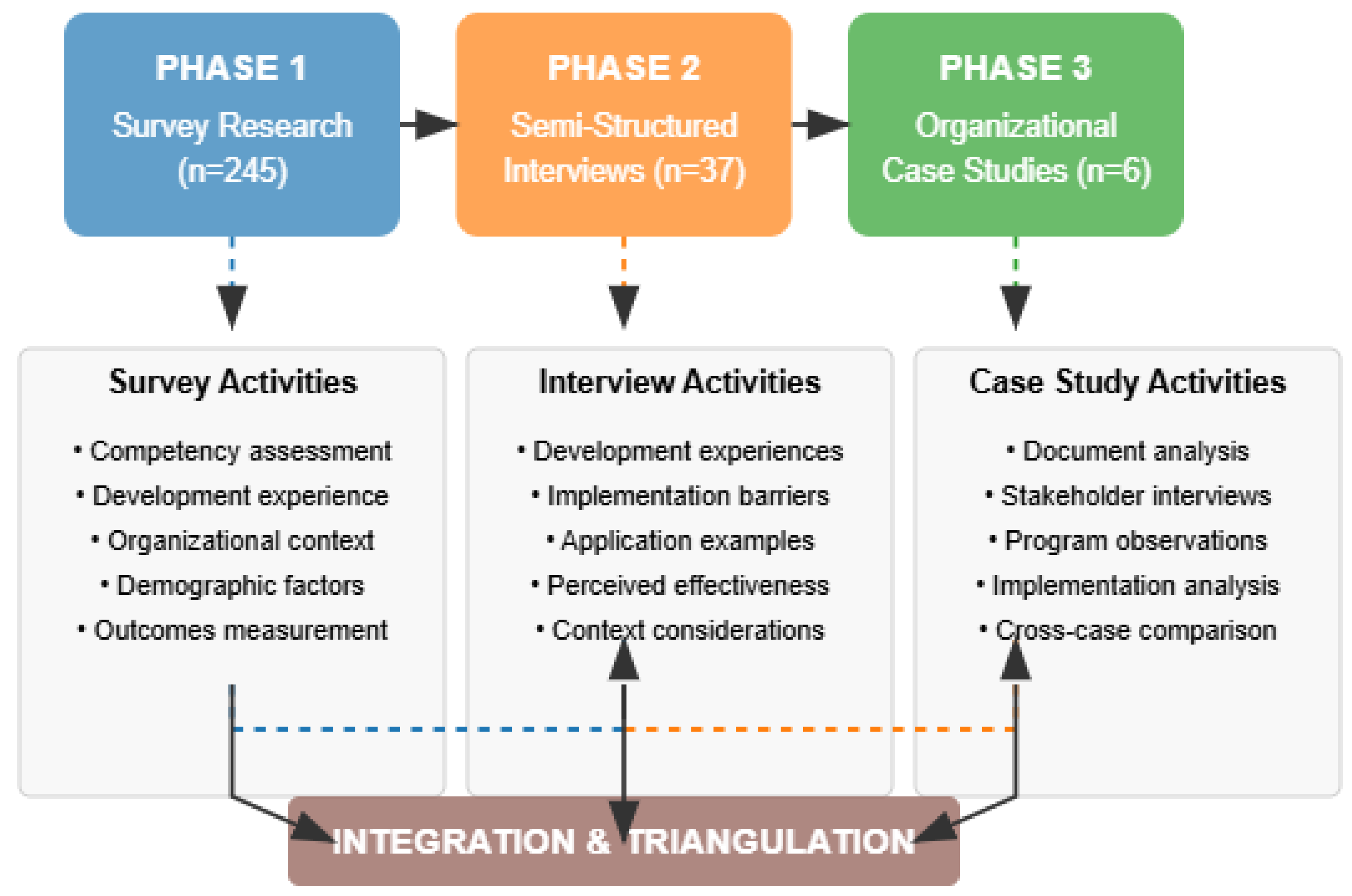
Figure 3.
Qualitative Findings: Implementation Mechanisms and Barriers.
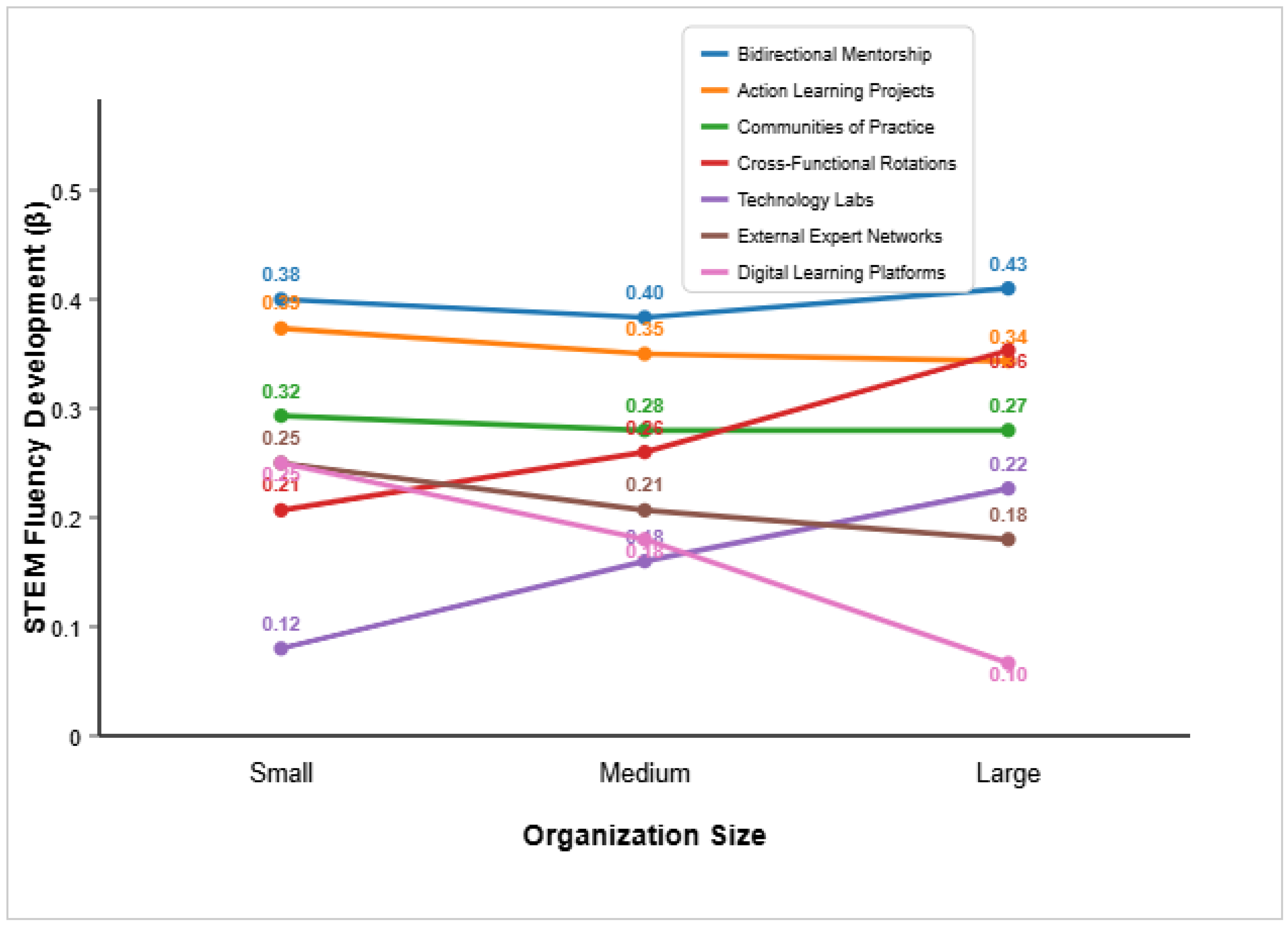

Table 1.
Development Approaches as Predictors of STEM Fluency.
| Development Approach | β | SE | t | p-value |
|---|---|---|---|---|
| Bidirectional Mentorship | 0.42 | 0.05 | 8.40 | < 0.001 |
| Action Learning Projects | 0.38 | 0.05 | 7.60 | < 0.001 |
| Communities of Practice | 0.29 | 0.06 | 4.83 | < 0.001 |
| Cross-Functional Rotations | 0.27 | 0.06 | 4.50 | < 0.001 |
| Technology Labs/Simulations | 0.23 | 0.07 | 3.29 | < 0.01 |
| External Expert Networks | 0.19 | 0.07 | 2.71 | < 0.01 |
| Digital Learning Platforms | 0.15 | 0.07 | 2.14 | < 0.05 |
Note: All analyses controlled for age, gender, education level, prior STEM experience, and organizational tenure.
Table 2.
Development Approaches by STEM Fluency Dimension.
| Development Approach | Cognitive Dimension β | Functional Dimension β | Integrative Dimension β |
|---|---|---|---|
| Bidirectional Mentorship | 0.35*** | 0.41*** | 0.48*** |
| Action Learning Projects | 0.29*** | 0.45*** | 0.36*** |
| Communities of Practice | 0.38*** | 0.22** | 0.30*** |
| Cross-Functional Rotations | 0.18* | 0.32*** | 0.28*** |
| Technology Labs/Simulations | 0.31*** | 0.21** | 0.18* |
| External Expert Networks | 0.28*** | 0.16* | 0.15* |
| Digital Learning Platforms | 0.32*** | 0.11 | 0.05 |
Note: * p < 0.05, ** p < 0.01, *** p < 0.001.
Table 3.
Moderation Effects of Organization Size.
| Development Approach | Small Orgs β | Medium Orgs β | Large Orgs β | Size x Approach Interaction β |
|---|---|---|---|---|
| Bidirectional Mentorship | 0.38*** | 0.40*** | 0.43*** | 0.12* |
| Cross-Functional Rotations | 0.21** | 0.26*** | 0.36*** | 0.24*** |
| Action Learning Projects | 0.39*** | 0.35*** | 0.34*** | -0.09 |
| Communities of Practice | 0.32*** | 0.28*** | 0.27*** | -0.08 |
| Technology Labs/Simulations | 0.12 | 0.18* | 0.22** | 0.18** |
| External Expert Networks | 0.25*** | 0.21** | 0.18* | -0.14* |
| Digital Learning Platforms | 0.25*** | 0.18* | 0.10 | -0.21** |
Note: * p < 0.05, ** p < 0.01, *** p < 0.001.
Table 4.
Key Themes and Their Prevalence.
| Theme | Interview Mentions (n=37) | Case Study Evidence (n=6) |
|---|---|---|
| Implementation Mechanisms | ||
| Contextual knowledge acquisition | 31 (84%) | 6 (100%) |
| Identity boundary-spanning | 26 (70%) | 5 (83%) |
| Psychological safety | 23 (62%) | 6 (100%) |
| Practical application scaffolding | 29 (78%) | 6 (100%) |
| Implementation Barriers | ||
| Resource constraints | 33 (89%) | 6 (100%) |
| Disciplinary identity concerns | 21 (57%) | 4 (67%) |
| Measurement challenges | 28 (76%) | 6 (100%) |
| Access inequities | 19 (51%) | 5 (83%) |
Table 5.
Case Study Implementation Approaches and Outcomes.
| Organization | Primary Approaches | Implementation Adaptations | Key Outcomes |
|---|---|---|---|
| Pharmaceutical Company (8,000+ employees) | • 2-week technical immersions • Action learning projects • HR Innovation Lab • Formal mentorship program |
• Rotational coverage system • Executive sponsorship • Integrated with career paths • Formal ROI measurement |
• 37% increase in STEM fluency • 28% improvement in technical talent retention • Enhanced strategic input on technology implementations |
| Technology Firm (800 employees) | • Cross-functional project teams • Monthly tech talks • Digital badges for STEM competencies • Technical shadowing |
• Integration with existing projects • Asynchronous learning options • Technical specialist incentives • Quarterly learning sprints |
• Improved technical recruiting efficiency • Enhanced HR credibility with technical teams • More effective technical onboarding processes |
| Biotechnology Startup (45 employees) | • "Technical Tuesday" lunches • HR in technical stand-ups • Shared Slack channels • External learning resources |
• Micro-learning approach • Integration with daily workflows • Limited formal structure • Leveraging external expertise |
• Improved technical job descriptions • Enhanced communication between HR and R&D • More effective talent attraction strategies |
| Manufacturing Company (1,200 employees) | • HR-Engineering exchange program • Problem-solving workshops • Technical skill spotlights • Online learning platform |
• Union partnership • Focus on production technologies • Multi-site coordination • Multilingual resources |
• Improved technical workforce planning • Enhanced HR support for automation transitions • Better talent development for technical roles |
| Healthcare System (3,500 employees) | • Clinical technology rotations • "HR in the Lab" program • Communities of practice • Technical leader mentorship |
• Patient care considerations • Multi-discipline approach • Clinical staff involvement • Regulatory compliance focus |
• Better clinical staff development pathways • Improved talent strategies for specialized roles • Enhanced change management for technology implementation |
| Professional Services (400 employees) | • Client-based learning projects • Technical associate partnerships • External expert webinars• Practice group immersions |
• Client confidentiality protocols • Billable hours considerations • Practice-specific approaches • Consultant partnership model |
• Enhanced technical service offerings • Improved technical talent acquisition • Better alignment between HR and client needs |
Table 6.
Context-Specific Implementation Recommendations.
| Organization Context | Recommended Primary Approaches | Implementation Strategies | Addressing Common Barriers |
|---|---|---|---|
| Small Organizations (<100 employees) | • Bidirectional mentorship • Communities of practice • Digital learning platforms • External expert networks |
• Integrate learning into existing workflows • Leverage free/low-cost external resources • Focus on high-priority technical domains • Create micro-learning opportunities |
• Use job-sharing to create development time • Partner with other small organizations • Leverage technical staff as internal faculty • Create simple, targeted measurement approaches |
| Medium Organizations (100-5,000 employees) | • Action learning projects • Communities of practice • Bidirectional mentorship• Technical immersions |
• Create formal/informal hybrid programs • Develop internal knowledge sharing systems • Establish cross-functional project teams • Implement technical shadowing programs |
• Dedicate specific budget for interdisciplinary development • Create recognition systems for knowledge sharing • Establish clear competency expectations • Balance standardization with flexibility |
| Large Organizations (>5,000 employees) | • Cross-functional rotations • Bidirectional mentorship • Action learning projects • Technology labs |
• Establish formal rotational programs • Create centers of excellence • Develop comprehensive competency frameworks • Implement formal measurement systems |
• Address bureaucratic barriers to cross-functional work • Ensure equitable access across locations • Develop consistent global implementation • Create executive sponsorship programs |
Disclaimer/Publisher’s Note: The statements, opinions and data contained in all publications are solely those of the individual author(s) and contributor(s) and not of MDPI and/or the editor(s). MDPI and/or the editor(s) disclaim responsibility for any injury to people or property resulting from any ideas, methods, instructions or products referred to in the content. |
© 2025 by the author. Licensee MDPI, Basel, Switzerland. This article is an open access article distributed under the terms and conditions of the Creative Commons Attribution (CC BY) license (https://creativecommons.org/licenses/by/4.0/).
Copyright: This open access article is published under a Creative Commons CC BY 4.0 license, which permit the free download, distribution, and reuse, provided that the author and preprint are cited in any reuse.


