
Submitted:
19 June 2025
Posted:
23 June 2025
Read the latest preprint version here
Abstract
Objectives: This study aimed to assess the efficacy of compounded semaglutide, the active ingredient of an FDA-approved weight loss drug for patients with obesity, for weight loss in otherwise healthy, normal, and overweight individuals (BMI < 29.9). Additionally, a novel method to declare the ideal or target weight—which bridges the differences in body composition, bone structure, and sex—is proposed. Achieving a target weight is also proposed as a measure of success for the weight loss program. Methods: An internal, prospective, non-randomized, dynamic cohort, observational study—Elective Weight Loss™—was the design adopted in this study. Weight was collected from 326 patients (male n = 23, female n = 303), with a mean age of 42.2 years, over 12 to 120 weeks. Weekly doses, dose adjustments, cessation of semaglutide, achievement of target weight, and weight maintenance were documented. No diet was prescribed. This is an ongoing, rolling database. Results: The results showed that 96% of the patients lost weight. Five patients gained weight, and seven lost no weight. In non-obese patients (n = 233), the mean starting BMI was 25.44 ± 2.6 (range: 20–28), and the mean end BMI was 22.99 ± 2.55 (p < 0.001). Obese patients (n = 93) had a mean starting BMI of 34.98 ± 4.6 and a mean end BMI of 30.72 ± 4.98 (p < 0.001). Conclusions: Compounded semaglutide was found to be a safe and highly effective off-label option for elective weight loss in normal and overweight individuals. It promotes weight loss at lower doses and shows potential benefits comparable to moderate calorie restriction in improving cardiometabolic health and supporting anti-aging in non-obese individuals.
Keywords:
non-obese
; semaglutide
; weight loss
; successful weight loss
1. Introduction
Obese patients suffer from a high prevalence of serious obesity-related illnesses, including diabetes, hypertension, dyslipidemia, heart disease, stroke, sleep apnea, and cancer, and impose $147 billion in costs on the healthcare system annually in the US. Obesity in the United States was 40.3% from 2017 to March 2020. It is predicted that by 2030, nearly 1 in 2 adults will have obesity [1]. Nationally, severe obesity is likely to become the most common BMI category among women, non-Hispanic Black adults, and low-income adults [1]. In addition, cardiovascular disease (CVD) is the leading cause of worldwide morbidity, disability, and death [2]. On average, one American dies every 33 seconds from cardiovascular disease. Heart disease cost approximately $252.2 billion between 2019 and 2020 in the US [3].
The tragedies of delayed weight loss include obesity-induced illnesses such as type II diabetes and comorbidities, including coronary artery disease, hypertension, elevated blood lipids, fatty liver, and painful neuropathies. An extensive review and meta-analysis determined statistically significant associations between obesity and overweight (BMI > 25) and the incidence of type II diabetes, all cardiovascular diseases (hypertension, coronary artery disease, stroke, pulmonary embolus, except congestive heart failure), all cancers (except esophageal, pancreatic, and prostate cancers), asthma, gallbladder disease, osteoarthritis, and chronic back pain [4].
The non-obese population that is overweight relative to themselves (approximately 10% over their normal, low adult weight) will likely also benefit from weight loss. This study addresses the potential physiological, psychological, and preventative benefits of weight loss in a non-obese population. This observational study aims to demonstrate the high efficacy of compounded semaglutide for weight loss in normal to overweight patients and presents anecdotal evidence of physiological and psychological improvements in this lesser-studied population.
Participants may benefit from weight loss, improved metabolic health, and enhanced overall well-being through structured medical supervision and available nutritional support. The study may also contribute to a better understanding of the effectiveness and safety of semaglutide in individuals who have struggled with weight loss through conventional methods. From a societal perspective, the findings could help refine elective weight management practices and provide insights into the off-label use of semaglutide. Additionally, the study may support more informed decision-making for healthcare providers and patients considering similar treatments. Overall, the research aims to advance knowledge in medical weight management while promoting safe and effective treatment approaches.
Many Americans strive for weight loss and maintenance. The glucagon-like peptide-1 (GLP-1) analogs have proven to be very effective in weight loss for the obese population. Overweight, non-obese patients also strongly desire to return to their normal adult weight. I propose that modest weight gain (8–25 pounds), generally 5–15% of a person’s stable, low adult weight, should be viewed as a person being “overweight” relative to themselves. Gains above, and returning to their “normal” lower weight, likely correlate with elevations or decreases in cardiovascular disease risk factors [20,21]. A method for determining a person’s target/goal weight is also proposed, along with an accompanying “success zone.”
1.1. The Current State of Research
Human studies have observed that calorie restriction (CR) protects against multiple atherosclerotic risk factors [5]. Calorie restriction is defined as reducing caloric intake without depriving essential nutrients [6] and results in changes in molecular processes associated with aging, including DNA methylation (DNAm) [7,8,9]. A moderate CR diet has improved multiple cardiometabolic risk factors in healthy, young, and middle-aged non-obese men and women, similar to effects seen in weight loss studies involving individuals with obesity [2]. A post hoc analysis of blood samples from the same group found that CR slowed the pace of aging [7]. Moderate and other calorie-restricted diets may promote anti-aging adaptations and have been shown to increase healthy lifespans in multiple species [5,6,7,8,9]. All the above considerations reinforce the importance of individuals maintaining their low, normal weight.
1.2. Specific Aims of the Study
- To evaluate the effectiveness of compounded semaglutide for weight loss.
- To study the effects of compounded semaglutide in healthy individuals who are of normal weight or overweight (BMI < 29.9).
- To evaluate safety, efficacy, and the extent of weight loss with likely consequential health benefits.
- To propose a novel method for declaring the ideal or target weight that accounts for differences in body composition, bone structure, and sex. Achieving this target weight is also proposed as a metric for program success.
1.3. The Primary Research Question
What is the change in weight following a non-obese (BMl < 29.9) patient taking semaglutide over 3-24 months?
2. Materials and Methods
2.1. Study Design
This study employed an internal, prospective, non-randomized, non-blinded, dynamic cohort observational design. It was conducted at Dr. Sharon Giese’s aesthetic medicine practice in New York City, beginning in May 2022 and ongoing, with a projected minimum end date of May 15, 2025. Ethical guidelines were adhered to throughout. The primary aim was to evaluate the effectiveness and safety of compounded subcutaneous semaglutide in promoting weight loss and weight maintenance among a non-obese adult population (BMI < 29.9).
2.2. Intervention Protocol
The single intervention in this study was the administration of compounded semaglutide via subcutaneous injection. Participants self-administered the drug at dosages aligned with FDA-approved guidelines. The intervention was part of a structured elective weight loss program that included weekly weight tracking, adherence to regular coaching, continuous medical oversight for safety and adherence, weekly follow-ups (via email, in-person, or virtually), and detailed education on semaglutide’s risks, side effects, and management strategies.
Patients remained on semaglutide until they reached their target weight. Afterward, the dose was tapered based on individual weight maintenance success. Participants could discontinue the medication at any time. The protocol for compounded semaglutide with cyanocobalamin (B12) (5/0.5 mg/1 cc) required injecting 0.25 mg (5 units) subcutaneously into the thigh or abdomen once weekly. Participants checked in with the office or a nutritional coach to titrate the dose for appetite suppression. Dosing and timing were adjusted as necessary to achieve appetite suppression and weight loss. Weekly check-ins encouraged compliance. The medication was sourced from an accredited 503A/503B pharmacy.
2.3. Inclusion and Exclusion Criteria
To be included, participants had to meet the following criteria: be an adult aged 21 years or older; have been unable to reach target weight via other methods; provide informed consent for the treatment protocol, including weekly weigh-ins and communication; and show willingness to self-administer semaglutide off-label with full understanding of the risks. All genders were eligible to participate, and there were no restrictions related to socioeconomic status. The following individuals were excluded from the study: pregnant or breastfeeding women; individuals with type 1 or type 2 diabetes; those currently using metformin or with other chronic conditions; individuals with a history of eating or severe gastrointestinal disorders; and those with known adverse reactions to GLP-1 agonists. Eligible participants were required to have a BMI between 18.5 and 40 or demonstrate weight concerns relative to their personal health goals.
2.4. Sample Size and Recruitment
A total of 400 adults were recruited through internal communication methods with existing patients. No public advertisements or mass recruitment campaigns were used. The sample size was informed by a comparable two-year randomized controlled trial on caloric restriction in non-obese adults (n = 220) [2]. Both men and women aged 21–85 years were included.
2.5. Informed Consent
Participants gave written informed consent after receiving comprehensive information about the study objectives, treatment procedures, potential benefits and risks, and their voluntary right to withdraw at any time. The consent process included written materials, verbal discussions, and video-based education. There was no financial inducement; all participants were self-funded, and no insurance claims were filed. HIPAA compliance was strictly maintained, and signed consent forms were stored securely.
2.6. Data Collection and Follow-Up
Data were collected using multiple methods: weekly self-reporting of weight (including photographic documentation of digital scale readings), structured intake and follow-up forms, visual verification by the physician during regular appointments, and review of medical records for adherence and adverse events. Periodic surveys assessed satisfaction, well-being, and treatment experience. Participants also completed intake forms that captured medical history, sleep patterns, alcohol consumption, psychiatric or diabetic medication use, and body weight history. A target weight was determined collaboratively between the patient and physician, typically above the patient’s historical low weight to ensure attainability.
2.7. Success Zone and Weight Goals
A unique “Success Zone” was established for each participant. This range—defined as achieving 75% or more of the desired weight loss—allowed a buffer for acceptable weight regain. It also established a threshold for reinitiating treatment if weight maintenance failed. For example, a participant with a starting weight of 150 pounds and a target weight of 130 pounds would have a success zone defined as 130–135 pounds. This goal-setting strategy emphasized patient involvement and realistic, sustainable outcomes rather than rigid adherence to BMI charts.
2.8. Monitoring and Safety Measures
The practice ensured 24/7 access to Dr. Giese for medical support. Commonly expected side effects—such as nausea, gastrointestinal discomfort, or temporary appetite suppression—were discussed thoroughly during intake and monitored through regular follow-ups. Participants received education on managing side effects, and dose adjustments were made in response to complications or slow weight loss progress. A small group of 29 obese patients were transitioned to tirzepatide due to side effects or plateauing while on semaglutide. This subset was not analyzed separately but will be followed in future phases.
2.9. Data Management and Confidentiality
All participant data were anonymized using unique ID codes. Each participant was assigned a unique number. The patient's name and number were stored on the practice's private server, which is backed up on a secure cloud system with firewalls. Confidential information was stored and backed up using end-to-end encryption. Terminals were password-protected, with access restricted to the principal investigator and authorized research staff. Electronic data was maintained in encrypted, password-protected systems with limited access. Physical documents were stored in locked cabinets within secure offices. Data analysis was conducted according to current ethical and legal standards. Data will be retained and eventually destroyed in accordance with those standards. HIPAA compliance protocols were strictly followed to ensure participant privacy and data integrity.
2.10. Risk and Benefit Analysis
The potential risks associated with participation in this study were minimal and included mild side effects such as nausea, vomiting, abdominal pain, diarrhea, and constipation. Serious side effects may include pancreatitis, hypoglycemia, allergic reactions, gallbladder complications, and/or stomach paralysis. Risk assessments varied based on participant characteristics. Psychological risks may involve frustration or disappointment if the expected weight loss was not achieved. The principal investigator assessed basic psychological competency prior to enrollment, particularly regarding body dysmorphic disorders. If excessive or unanticipated psychological effects occurred during or after treatment, they were addressed immediately and individually. Any suicidal ideation was referred to the emergency department.
Participants potentially benefit from weight loss, improved metabolic health, and enhanced well-being through structured medical supervision and nutritional support. The study may also contribute to a deeper understanding of semaglutide’s safety and efficacy in individuals who have not succeeded with conventional weight loss methods. Its expansion to non-obese participants allows for exploration of related health benefits. From a societal standpoint, the findings could help refine elective weight management practices and provide insight into the off-label use of semaglutide. Additionally, the study may support informed decision-making for both healthcare providers and patients. Overall, the risk–benefit profile favors participation, given the low incidence of adverse events and the high potential for health improvements.
2.11. Patient-Reported Outcomes
The practice uses a body satisfaction scale from 1 to 6 (1 being extremely dissatisfied and 6 being extremely satisfied). Patients were asked to rate their current satisfaction with various body parts, such as height, weight, stomach, and overall size and shape. These data will be analyzed at a later date in conjunction with appropriate psychological expertise. The principal investigator did not evaluate whether semaglutide dosage correlated with appetite suppression or satisfaction with the treatment program.
2.12. Participant Demographics and Follow-Up
The study population included 303 women and 23 men, ranging in age from 21 to 85 years. All participants had at least 12 weeks of follow-up, with some followed for up to 120 weeks. Most participants fell within the normal to overweight BMI range (<29.9). A smaller subgroup was classified as obese (BMI 30–35.5) but did not have diabetes or comorbid conditions. Many obese participants sought semaglutide through Dr. Giese’s practice after being denied access through primary care or insurance. They followed the same dosing and monitoring protocols as the non-obese group. This subgroup will be tracked separately due to the potential for different response patterns and a higher risk of weight regain.
3. Results
3.1. Outcome
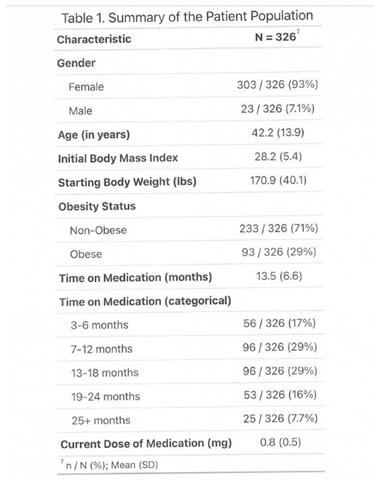
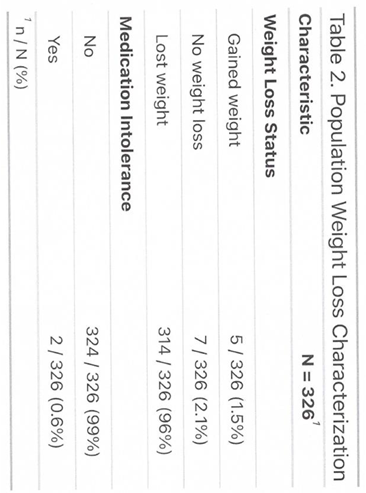
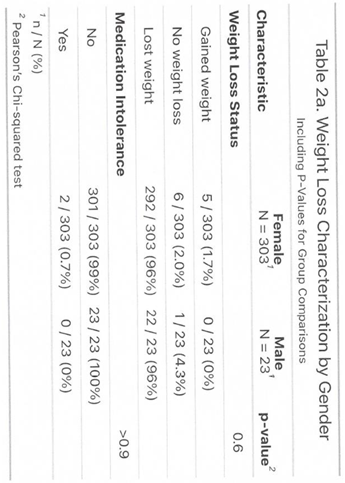
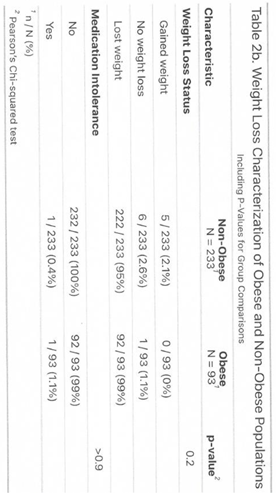
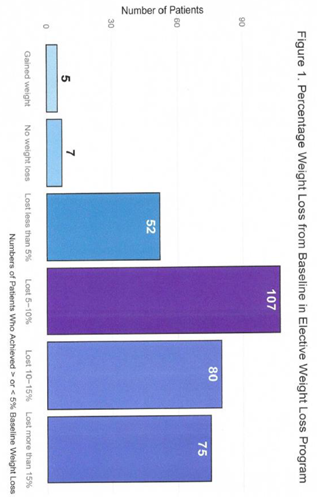
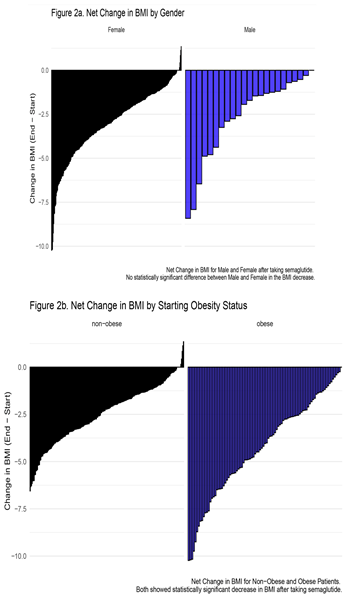
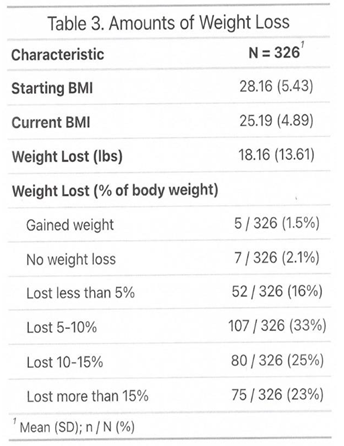
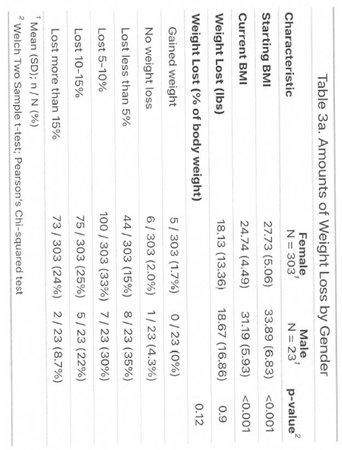
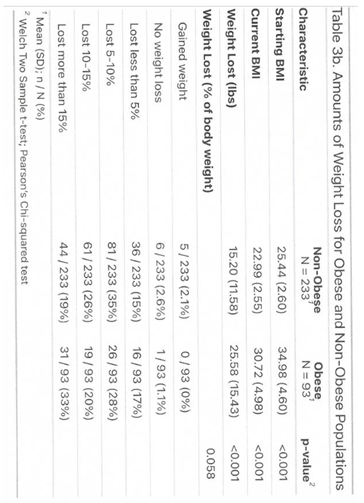
A total of 326 participants were included in the analysis. Excluded were 74 participants who were unwilling or unable to comply with follow-up procedures, resulting in an initial cohort of 400. A summary of the patient population is shown in Table 1 (excluding 74/400 participants who obtained only a single vial of medication and did not report follow-up weight). Among the 326 participants, 96% (314/326) lost weight, 1.5% (5/326) gained weight, and 2.1% (7/326) did not lose weight. Two participants (0.6%) were unable to tolerate the medication (Table 2). No statistical difference in weight loss was observed between male and female participants (Table 2a), nor between obese and non-obese participants (Table 2b).

Table 1.
summary of the patient population.
 |
 |
 |
 |
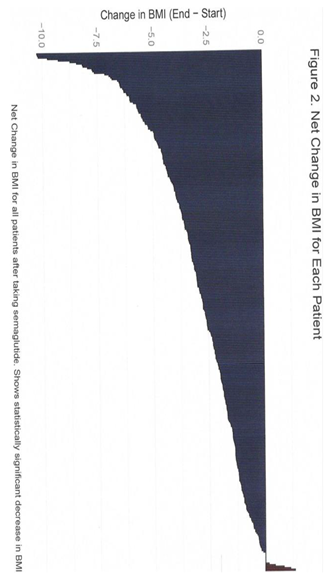
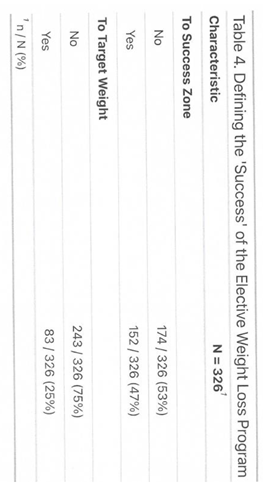
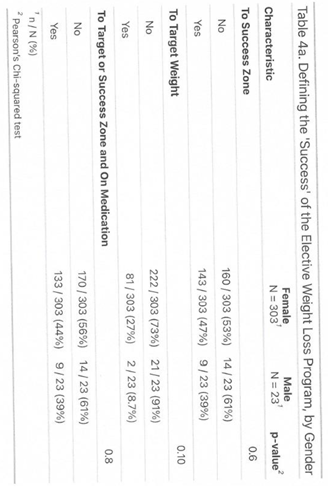
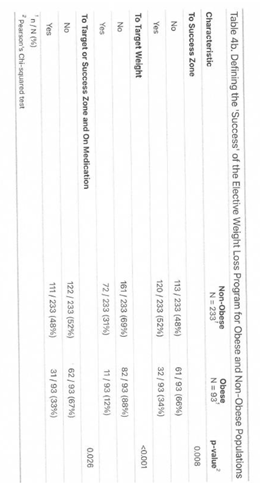
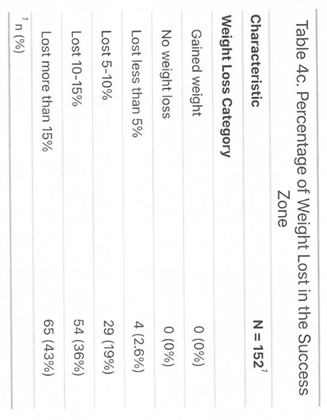
The mean weight loss was 18.16 ± 13.61 pounds. The starting mean BMI was 28.16 ± 5.43, and the current mean BMI was 25.19 ± 4.89 (Table 3). Additionally, weight loss was categorized by the percentage of starting body weight lost, as detailed in Table 3 and Figure 1 and Figure 2. The reductions in both absolute weight (in pounds) and BMI were statistically significant (p < 0.001) across both sexes (Table 3a, Figure 2a) and BMI categories (Table 3b, Figure 2b). Approximately 25% of participants achieved their target weight, and 47% entered or remained in the success zone (Table 4). No gender-based differences were found in target weight attainment or success zone status (Table 4a). Slightly more than half of the non-obese participants and about one-third of the obese participants entered the success zone (Table 4b). Concurrently, 80% of all study patients achieved a weight loss of 5% or more (Table 3). Most patients in the success zone (93%) were still on medication. Furthermore, 79% of success zone participants had lost more than 10% of their starting weight (Table 4c).
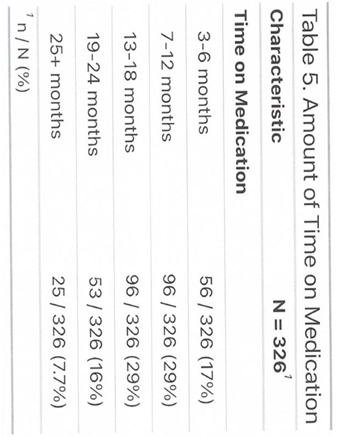
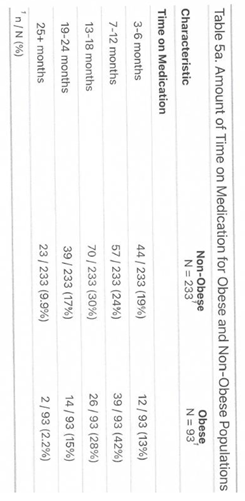
Time spent on medication is shown in Table 5. Because the study is ongoing and rolling, this reflects either the length of time patients have been on semaglutide or how long they have been followed in total. Time on medication was relatively similar between obese and non-obese participants (Table 5a). A small subset (2/326 or 0.6%) discontinued semaglutide due to complications, specifically nausea and stomach cramping. A total of 74 out of 400 participants (18.5%) were lost to follow-up—defined as failing to report weight after 3 months of receiving semaglutide. Two contact attempts were made for each of these individuals without success.
3.2. Side Effects
Reported side effects were typically transient, lasting 1–4 weeks either at treatment onset or during dose escalation aimed at appetite suppression and weight loss. Side effects included nausea (13%), vomiting (3%), and diarrhea or abdominal cramping (2%). Zofran was requested by 18.5% (60/326) of participants. Anecdotally, most Zofran requests came from participants under 30 years old, many of whom appeared to want it on hand while consuming alcohol. The average weekly semaglutide dose was 0.83 mg (range: 0.25–2.4 mg). No infections were reported in connection with the use of multi-dose vials. No participants reported cloudy or contaminated medication, and there were no documented incidents of overdose. Since the study began in May 2022, participants have ordered a total of 1,129 vials. No deviation from the study protocol was noted.
4. Discussion
Most of the studies on weight loss and the risks of obesity are understandably conducted on the obese population. Those individuals are likely already in a diseased, inflammatory state and not a comparable population to those at a normal weight (BMI < 25) or even healthy, overweight, or non-diabetic people (BMI < 29.9). Notable weight loss in the obese population has conferred improved health benefits and reduced risk factors for coronary artery disease, hypertension, and lipid profiles [2,10,46,47,48]. An extensive review and meta-analysis determined statistically significant associations between obesity and overweight (BMI > 25) and the incidence of type II diabetes, all cardiovascular diseases (hypertension, coronary artery disease, stroke, pulmonary embolus, except congestive heart failure), all cancers (except esophageal, pancreatic, and prostate cancers), asthma, gallbladder disease, osteoarthritis, and chronic back pain [11]. Maintaining a healthy weight could be important in preventing this large disease burden and significantly reducing health expenditures. Obese patients suffer from a high prevalence of serious obesity-related illnesses, including diabetes, hypertension, dyslipidemia, heart disease, stroke, sleep apnea, and cancer, and impose $147 billion in costs on the healthcare system annually in the US [2]. More recently, several STEP studies [12] have demonstrated that the magnitude of weight loss reported in STEP trials offers the potential for clinically relevant improvement for individuals with obesity-related diseases [12,13,14,15,16,17,18,19,20].
A recent, well-controlled study implementing moderate calorie restriction in non-obese men and women with a clinically normal baseline showed improvements in six cardiometabolic risk factors: reduction in LDL-C, increase in HDL-cholesterol concentration, reduced serum triglycerides, lower systolic blood pressure, reduction in BMI, and a reduction in Met syndrome Z-score and AUC insulin [2]. Normal risk factors were already improved at the two-year post-implementation of the CR diet. The improvement in long-term cardiovascular risk was implied [2]. The calorie restriction compliance was aided by intensive, weekly behavioral therapy and food and calorie calculation support. Without such support, compounded semaglutide may be a good alternative and adjunct to achieving calorie restriction and weight reduction. CR has been shown to reduce inflammatory markers TNF-α and CRP in non-obese humans [11,12]. Sustained CR was feasible in humans and sufficient to affect some potential modulation of longevity that CR has also induced in laboratory animal studies or adults [37,38,39,40]. This, in turn, likely diminishes risk factors for age-related cardiovascular and metabolic diseases and enhances human lifespan [5,21]. A recent report of two years of sustained CR in humans positively affected skeletal muscle quality, and gene expression changes induced by CR partially mediate the preservation of muscle strength [11].
I propose that people in the traditionally normal weight population (BMI < 25) and non-diabetic, overweight adults (BMI < 29.9) will equally benefit from weight loss to a target weight, around their low weight as an adult, with the aid of semaglutide. Multiple cardiometabolic risk factors are reduced in both obese and non-obese populations with weight loss achieved by moderate calorie restriction [26,27,28,29,30,31,32]. Semaglutide has also been used as an adjunct to increase the magnitude and efficacy of weight loss with attendant medical benefits [11]. I propose that the successful, efficacious weight loss in the non-obese population of this study, with the aid of semaglutide, improved cardiometabolic risk profiles as in the CALERIE study [2].
As a body contour expert, I have used this target weight benchmark for over 20 years to establish an individual's "normal weight." When assessing all my body contour patients, I always ask about a person's adult high, low, and ideal body weight. In general, those values are quickly answered. It seems that most people intuitively know their "healthier" weight and set their ideal at a little higher than their lowest weight. Therefore, attaining a "target weight" is a benchmark for a program's weight loss success or effectiveness. Success or effectiveness has been expressed as a percent decrease from the start weight, a reduction in BMI, a decrease in waist circumference, improvements in health outcomes (blood pressure, cholesterol levels, and insulin sensitivity), and participants' satisfaction.
The results in this study are analyzed in three ways: statistically significant weight loss relative to themselves, the percent decrease in body weight loss at <5%, 5–10%, 10–15%, and >15%, and statistical decrease in the BMI. Patients who achieved and maintained 75% progress toward the target weight or, following attainment of the target weight, did not regain more than 25% of the weight loss, are designated in the "Success Zone." This target weight is patient-centric and patient-motivated. It does not rely on the BMI chart. Achieving 10% of body weight loss generally correlates with improved health profiles [10]. However, obese and non-obese patients may have weight goals that are beyond that. In this case, the target weight is essential, as I recommend that patients stay on the medication until they reach the target. Just losing weight is not necessarily viewed as "success." To further justify using the target weight and "Success Zone," we compared the patients who achieved that status to typical milestones of success with weight loss medications and percent body weight loss. Seventy-nine percent of patients in the "Success Zone" have lost 10% or more of their start weight, and people with more minor total losses (<10%) had smaller weight-loss targets (Table 4c). Medical benefits have been noted with as little as 5% weight loss [12]. Eighty-one percent of the study patients have achieved 5% or greater weight loss (Table 3).
Multiple studies have questioned the BMI stratification. While there are likely gross triage benefits today, the BMI scale was not intended for individualized clinical use but rather to define the average weight of a population [21]. I use it simply as a benchmark and quantify the weight change within each individual in the study group. The fact that the BMI scale lacks overall clinical relevance supports my question about the ideal body weight for any given person. Determining the target weight was used as another benchmark of the success of any individual's weight loss and is intended to supplant the traditional standard BMI definitions of normal weight (BMI 18.5–24.9) or overweight (BMI 25–29.9)
I have a unique window into an aging, very disciplined, accomplished, and generally healthy female population. Over the years, I have seen many patients struggle to maintain weight and/or achieve weight loss. They have many resources at their disposal and access to a multibillion-dollar weight loss industry. Their failure to achieve their weight goals motivated me to explore why. If it were easy to stay near a lower weight, more people would be there and not be trying to lose.
A prescription for weight loss is hardly one-size-fits-all. Western medicine generally prescribes “calorie restriction and exercise.” Anyone who has tried to lose weight and failed knows this is easier said than done. Longitudinal and population studies have shown that weight loss and maintenance in the obese population often fail over time [22]. There is also high recidivism and minimal success for commercial and community-based weight loss programs [23,41]. A study evaluating only the most successful and overweight Weight Watchers® members found that 50% maintained at least 5% of their weight loss over five years [24]. Weight loss interventions are generally multifaceted, costly, aggressive, and involve dramatic changes imposed on individuals—all of which may contribute to failure. Given the high failure rates, or the lack of transparency regarding actual success, there is a need for higher, more reproducible standards to evaluate weight loss.
The simple answer to high failure rates is that it is challenging to stay on a restricted calorie diet for a sustained period [25,26,27,28,29,30,31]. Weight loss generally takes longer than people expect to achieve. Then there is weight maintenance, which is usually considered equally as difficult [32,33,34,35,36]. Incredibly, weight gain is often ignored by primary care physicians until a person reaches an obese level. Even then, in the face of a diseased state—perhaps pre-diabetic—in many cases, no recommendation for treatment is made [42,43,44,45,46]. Gradually, weight gain is often accepted as a natural part of aging. While many factors contribute to weight changes, one known factor is that muscle mass decreases with advancing age, particularly in women over 60. This should lead to weight reduction with age, not weight gain.
All the subjects in this observational study failed to achieve their ideal body weight by other means and opted to try compounded semaglutide to lose weight. An additional anecdotal comment, repeated by patients and likely contributing to the drug’s effectiveness, was the reduction of “food noise.” Some patients have opted to stay on a low dose (0.25–0.5 mg semaglutide weekly) as a maintenance dose to keep the food noise at bay. Recently, this has been described as “microdosing.” The food cue reactivity conceptual model is gaining credible scientific support [42]. Evidence indicates that weight loss increases appetite sensations, particularly to upregulate appetite in women [25].
This observational study indicated that the success of weight loss, aided by compounded semaglutide in non-obese individuals, was substantial. Ninety-six percent of the 326 subjects lost weight, with only one regaining weight after stopping the medication. Eighty-one percent of the total population achieved over 5% body weight loss, with nearly half of the patients still working toward their target weight. Eighteen and a half percent were lost to follow-up. I categorized the results by percent of weight loss, similar to the graded benchmarks of 5%, 10%, 15%, and above—used in obese populations—which are associated with escalating health benefits [10]. The target is health improvement, including quality of life or healthspan. It is likely that a CR diet resulting in 5% to over 15% weight loss confers similar positive health outcomes by reducing obesity-induced risk factors. The addition of the “Success Zone” provides a more nuanced measure of the program’s effectiveness. Patients enter the Success Zone when they achieve and maintain at least 75% of their target weight loss goal. This benchmark is intended to encourage patients to reach their goals and remain alert to signs of weight regain. If they fall out of the zone, they should be vigilant before losing further progress or experiencing cyclical weight fluctuations.
The weight loss success occurred without infection or overdosing. I found patients to be very competent in managing multi-dose vials and self-administering injections. They were empowered by this autonomy and motivated to avoid side effects. As a result, overdosing—which would be both costly and physically uncomfortable—was not observed. I believe patients were highly motivated to succeed efficiently, which also encouraged them to discontinue the medication or maintain a very low dose of 0.25 mg every 7–14 days.
In the future, we may use Bluetooth-enabled scales to capture data in real time, eliminating the need for patients to photograph their digital weight readings and submit them manually. I expect this would result in more data points and help strengthen the dataset, which is currently partly self-reported. Since many participants were established patients in the practice, we also had the advantage of visually verifying weight updates during visits. We often recorded weight changes during appointments when patients had not submitted them, and these values were generally lower than prior reports. A placebo group of two is not ideal; however, we were unable to recruit more participants for that arm. We did not study whether semaglutide dose correlated with appetite suppression or overall satisfaction with the program. This feedback is currently being collected through a post-participation survey. It is also unclear whether adherence to the program’s guidelines—such as weekly follow-ups and dose adjustments—directly influenced weight loss outcomes. The survey may help clarify this in the future.
Dosing in this study was significantly lower than the dosing regimens recommended by Ozempic® and Wegovy® for obese patients, which typically increase to 2.4 mg weekly. The average dose for study participants was 0.84 mg weekly (range: 0.15–2.4 mg). At those doses, patients lost weight at a rate of one-half to two pounds per week. This was used as a predictive tool to estimate how long a patient might remain on the medication. I estimated that patients would stay on the medication for another 6–8 weeks to ensure a stable target weight before beginning a taper. The tapering protocol involved reducing the dose by 2–5 units, or 0.1–0.25 mg per week, as long as the weight remained stable. Some patients stopped medication upon reaching their goal. Given semaglutide’s long half-life (approximately one week), cessation naturally resulted in a taper over 5–6 weeks, requiring no intervention.
Some patients lost as much as 30 pounds with only 0.25–0.5 mg semaglutide weekly. In those cases, body size alone did not explain the need for lower doses. In general, I found that dosing needed to be customized. Some larger patients succeeded on low doses, while some smaller individuals required 1.25–1.5 mg weekly. A small subset advanced to 2.4 mg/week to reach their target weight. If weight loss plateaued at higher semaglutide doses, patients were transitioned to tirzepatide—29 out of 326 patients. I believe that individualized, lower-dose protocols helped reduce complications, especially the most problematic one: vomiting.
Anecdotal health benefits were also reported. One patient was able to discontinue one of two hypertensive medications. Another experienced a visible reduction in spider veins, possibly indicating improved venous return and reduced venous insufficiency. Additional patients reported increased energy and decreased joint pain. One participant’s sleep apnea resolved completely following a 35-pound weight loss. Prior studies have noted both positive and negative psychological outcomes [26]. Psychological effects may not be tied solely to absolute weight loss. Viable study designs investigating psychological outcomes, subject selection, and intervention strategies are currently being explored for both obese and non-obese populations [26].
Additionally, many patients expressed appetite suppression after taking semaglutide, which helped control their portion sizes. Once they learned portion adjustments, they tended to choose more nutritionally dense foods. Some scientists believe that obesity rates have surged in recent decades, at least in part due to the manipulation, ultra-processing, and declining quality of the food supply. Semaglutide appears to mitigate these challenges through improved portion control, offering a potential interim solution while broader societal issues related to food systems are addressed.
Overwhelmingly, in the current study, all patients reported improved body image and greater satisfaction with themselves. We will attempt to quantify these perceived psychological benefits in the future. One- and two-year follow-up data from a larger cohort will provide further insights into weight maintenance after discontinuation of semaglutide and the likelihood of patients resuming semaglutide if weight is regained. Given that over 40% of the U.S. adult population is obese, I believe that adults should not gain more than 10% above their lowest adult weight unless this is due to an identified medical condition.
5. Conclusions
The active ingredient in Wegovy®, an FDA-approved weight loss drug for obese patients—semaglutide—can safely be used off-label for highly effective elective weight loss in normal and overweight individuals. It supports calorie restriction at significantly lower doses. This study presents a simple method for establishing an individual’s ideal body weight, accompanied by a defined “success zone.” Elective weight loss using compounded semaglutide in non-diabetic, non-obese individuals likely improves cardiometabolic risk factors, promotes anti-aging adaptations, and may be equally effective in achieving clinically meaningful weight loss as in obese populations.
The body is not static; it changes over time. I liken this to the brain not being “hard-wired”—it is plastic and ever-changing. It appears that semaglutide facilitated both a reduction and a physiological reset in the weight of non-obese individuals, without inducing feelings of deprivation. All participants reportedly ate and drank what they wished—just in smaller amounts. By systematically documenting patient outcomes, this research contributes meaningfully to the existing literature on semaglutide's efficacy in weight management and offers evidence-based guidance for clinical application.
Now more than ever, the old medical adage “everything in moderation” seems particularly apt. Overconsumption in many areas of life has become increasingly common in our advancing, industrious, and seemingly abundant society. “Less is more” may never have been more relevant. Perhaps witnessing and experiencing the success of reaching one’s ideal weight is itself a psychological benefit. Will this improvement motivate individuals to maintain weight loss and adopt lasting behavioral changes? This remains a key question, and we aim to answer it as we continue to monitor this growing pilot cohort over one-, two-, three-, and four-year intervals.
The data presented in Table 3a further reinforce the effectiveness of semaglutide as an off-label weight loss option for non-obese individuals. Among the non-obese participants (N = 193), the average weight loss was 15.2 lbs (7.1% of body weight), with 41.2% losing more than 15% and 31.9% losing between 10–15%. Notably, no participants in this group experienced weight gain. These results are statistically significant (p < 0.001), confirming that semaglutide induces substantial weight reduction even in individuals without obesity. These findings support its potential as an effective elective weight management tool beyond traditional obese populations.
Funding
This research received no external funding.
Institutional Review Board Statement
The study was conducted in accordance with the Declaration of Helsinki and approved by the Institutional Review Board (or Ethics Committee) of Beyond Bound IRB Approval Number: BB2503SG-083 (date of approval). ISRCTN Registry Number: ISRCTN13040627
Informed Consent Statement
Informed consent was obtained from all subjects involved in the study.
Data Availability Statement
The author declares that the data supporting the findings of this study are available within the article.
Acknowledgments
Thank you to all the participating patients who provided follow-up data, Brenda Gloria and Kandice Watson for organizing and collecting the data, and Misty Knight-Finley, PhD, for statistics and graphics.
Conflicts of Interest
The authors declare no conflicts of interest.
References
- Ward, Z. J.; Bleich, S. N.; Cradock, A. L.; Barrett, J. L.; Giles, C. M.; Flax, C.; Gortmaker, S. L. Projected US state-level prevalence of adult obesity and severe obesity. N. Engl. J. Med. 2019, 381 (25), 2440–2450.
- Kraus, W. E.; Bhapkar, M.; Huffman, K. M.; Pieper, C. F.; Das, S. K.; Redman, L. M.; Fontana, L. 2 years of calorie restriction and cardiometabolic risk (CALERIE): Exploratory outcomes of a multicentre, phase 2, randomised controlled trial. Lancet Diabetes Endocrinol. 2019, 7 (9), 673–683.
- Centers for Disease Control and Prevention. CDC twenty-four seven. Saving lives, protecting people: heart disease. https://www.cdc.gov/heart-disease/data-research/facts-stats/index.html (accessed Oct 24, 2024).
- Adeva-Andany, M. M.; Domínguez-Montero, A.; Adeva-Contreras, L.; Fernández-Fernández, C.; Carneiro-Freire, N.; González-Lucán, M. Body fat distribution contributes to defining the relationship between insulin resistance and obesity in human diseases. Curr. Diabetes Rev. 2024, 20 (5), 66–96.
- Fontana, L.; Meyer, T. E.; Klein, S.; Holloszy, J. O. Long-term calorie restriction is highly effective in reducing the risk of atherosclerosis in humans. Proc. Natl. Acad. Sci. U.S.A. 2004, 101 (17), 6659–6663. [CrossRef]
- Speakman, J. R.; Mitchell, S. E. Caloric restriction. Mol. Aspects Med. 2011, 32 (3), 159–221. https://www.sciencedirect.com/science/article/pii/S009829971100032X.
- Waziry, R.; Ryan, C. P.; Corcoran, D. L.; Huffman, K. M.; Kobor, M. S.; Kothari, M.; Belsky, D. W. Effect of long-term caloric restriction on DNA methylation measures of biological aging in healthy adults from the CALERIE trial. Nat. Aging 2023, 3 (3), 248–257. https://www.nature.com/articles/s43587-022-00357-y.
- Napoleão, A.; Fernandes, L.; Miranda, C.; Marum, A. P. Effects of calorie restriction on health span and insulin resistance: Classic calorie restriction diet vs. ketosis-inducing diet. Nutrients 2021, 13 (4), 1302. https://www.ncbi.nlm.nih.gov/pmc/articles/PMC8071299.
- Ravussin, E.; Redman, L. M.; Rochon, J.; Das, S. K.; Fontana, L.; Kraus, W. E.; CALERIE Study Group. A 2-year randomized controlled trial of human caloric restriction: Feasibility and effects on predictors of health span and longevity. J. Gerontol. A Biol. Sci. Med. Sci. 2015, 70 (9), 1097–1104. https://pubmed.ncbi.nlm.nih.gov/26187233/.
- Ryan, D. H.; Yockey, S. R. Weight loss and improvement in comorbidity: Differences at 5%, 10%, 15%, and over. Curr. Obes. Rep. 2017, 6, 187–194.
- Guh, D. P.; Zhang, W.; Bansback, N.; Amarsi, Z.; Birmingham, C. L.; Anis, A. H. The incidence of co-morbidities related to obesity and overweight: A systematic review and meta-analysis. BMC Public Health 2009, 9, 1–20.
- Wilding, J. P.; Batterham, R. L.; Calanna, S.; Davies, M.; Van Gaal, L. F.; Lingvay, I.; Kushner, R. F. Once-weekly semaglutide in adults with overweight or obesity. N. Engl. J. Med. 2021, 384 (11), 989–1002.
- Ryan, D. H.; Lingvay, I.; Colhoun, H. M.; Deanfield, J.; Emerson, S. S.; Kahn, S. E.; Kushner, R. F.; Marso, S.; Plutzky, J.; Brown-Frandsen, K.; Gronning, M. O.; Hovingh, G. K.; Holst, A. G.; Ravn, H.; Lincoff, A. M. Semaglutide effects on cardiovascular outcomes in people with overweight or obesity (SELECT) rationale and design. Am. Heart J. 2020, 229, 75–85. [CrossRef]
- Wali, S. Financial Incentives for Weight Reduction Study (FIReWoRk) [Internet]; University of California, Los Angeles. ClinicalTrials.gov, May 30, 2023. https://clinicaltrials.gov/ct2/show/NCT03157713 (accessed Jan 10, 2025).
- Davies, M.; Færch, L.; Jeppesen, O. K.; Pakseresht, A.; Pedersen, S. D.; Perreault, L.; Rosenstock, J.; Shimomura, I.; Viljoen, A.; Wadden, T. A.; Lingvay, I.; STEP 2 Study Group. Semaglutide 2.4 mg once a week in adults with overweight or obesity, and type 2 diabetes (STEP 2): A randomised, double-blind, double-dummy, placebo-controlled, phase 3 trial. Lancet 2021, 397 (10278), 971–984. [CrossRef]
- Wadden, T. A.; Bailey, T. S.; Billings, L. K.; Davies, M.; Frias, J. P.; Koroleva, A.; Lingvay, I.; O’Neil, P. M.; Rubino, D. M.; Skovgaard, D.; Wallenstein, S. O.; Garvey, W. T.; STEP 3 Investigators. Effect of subcutaneous semaglutide vs placebo as an adjunct to intensive behavioral therapy on body weight in adults with overweight or obesity: The STEP 3 randomized clinical trial. JAMA 2021, 325 (14), 1403–1413. [CrossRef]
- Rubino, D.; Abrahamsson, N.; Davies, M.; Hesse, D.; Greenway, F. L.; Jensen, C.; Lingvay, I.; Mosenzon, O.; Rosenstock, J.; Rubio, M. A.; Rudofsky, G.; Tadayon, S.; Wadden, T. A.; Dicker, D.; STEP 4 Investigators. Effect of continued weekly subcutaneous semaglutide vs placebo on weight loss maintenance in adults with overweight or obesity: The STEP 4 randomized clinical trial. JAMA 2021, 325 (14), 1414–1425. [CrossRef]
- Garvey, W. T.; Batterham, R. L.; Bhatta, M.; Buscemi, S.; Christensen, L. N.; Frias, J. P.; Jódar, E.; Kandler, K.; Rigas, G.; Wadden, T. A.; Wharton, S.; STEP 5 Study Group. Two-year effects of semaglutide in adults with overweight or obesity: The STEP 5 trial. Nat. Med. 2022, 28 (10), 2083–2091. [CrossRef]
- Kadowaki, T.; Isendahl, J.; Khalid, U.; Lee, S. Y.; Nishida, T.; Ogawa, W.; Tobe, K.; Yamauchi, T.; Lim, S.; STEP 6 Investigators. Semaglutide once a week in adults with overweight or obesity, with or without type 2 diabetes in an East Asian population (STEP 6): A randomised, double-blind, double-dummy, placebo-controlled, phase 3a trial. Lancet Diabetes Endocrinol. 2022, 10 (3), 193–206. [CrossRef]
- Rubino, D. M.; Greenway, F. L.; Khalid, U.; O'Neil, P. M.; Rosenstock, J.; Sørrig, R.; Wadden, T. A.; Wizert, A.; Garvey, W. T.; STEP 8 Investigators. Effect of weekly subcutaneous semaglutide vs daily liraglutide on body weight in adults with overweight or obesity without diabetes: The STEP 8 randomized clinical trial. JAMA 2022, 327 (2), 138–150. PMID: 35015037; PMCID: PMC8753508. [CrossRef]
- Humphreys, S. The unethical use of BMI in contemporary general practice. Br. J. Gen. Pract. 2010, 60 (578), 696–697.
- Pétré, B.; Scheen, A.; Ziegler, O.; Donneau, A. F.; Dardenne, N.; Husson, E.; Guillaume, M. Weight loss expectations and determinants in a large community-based sample. Prev. Med. Rep. 2018, 12, 12–19.
- Flore, G.; Preti, A.; Carta, M. G.; Deledda, A.; Fosci, M.; Nardi, A. E.; Velluzzi, F. Weight maintenance after dietary weight loss: Systematic review and meta-analysis on the effectiveness of behavioural intensive intervention. Nutrients 2022, 14 (6), 1259.
- Lowe, M. R.; Kral, T. V.; Miller-Kovach, K. Weight-loss maintenance 1, 2 and 5 years after successful completion of a weight-loss programme. Br. J. Nutr. 2008, 99 (4), 925–930.
- Hintze, L. J.; Mahmoodianfard, S.; Auguste, C. B.; Doucet, É. Weight loss and appetite control in women. Curr. Obes. Rep. 2017, 6, 334–351.
- Miller-Kovach, K.; Hermann, M.; Winick, M. The psychological ramifications of weight management. J. Women's Health Gend. Based Med. 1999, 8 (4), 477–482.
- Emmerich, S. D.; Fryar, C. D.; Stierman, B.; Ogden, C. L. Obesity and severe obesity prevalence in adults: United States, August 2021–August 2023. NCHS Data Brief 2024, 508. https://www.cdc.gov/nchs/data/databriefs/db508.pdf.
- Maegawa, S.; Lu, Y.; Tahara, T.; Lee, J. T.; Madzo, J.; Liang, S.; Jelinek, J.; Colman, R. J.; Issa, J. P. J. Caloric restriction delays age-related methylation drift. Nat. Commun. 2017, 8 (1), 539. [CrossRef]
- Hahn, O.; Grönke, S.; Stubbs, T. M.; Ficz, G.; Hendrich, O.; Krueger, F.; Andrews, S.; Zhang, Q.; Wakelam, M. J.; Beyer, A.; Reik, W.; Partridge, L. Dietary restriction protects from age-associated DNA methylation and induces epigenetic reprogramming of lipid metabolism. Genome Biol. 2017, 18, 56. [CrossRef]
- Petkovich, D. A.; Podolskiy, D. I.; Lobanov, A. V.; Lee, S. G.; Miller, R. A.; Gladyshev, V. N. Using DNA methylation profiling to evaluate biological age and longevity interventions. Cell Metab. 2017, 25 (4), 954–960.e6. [CrossRef]
- Fontana, L. The scientific basis of caloric restriction leading to longer life. Curr. Opin. Gastroenterol. 2009, 25 (2), 144–150. https://pubmed.ncbi.nlm.nih.gov/19262201/.
- Dutton, G. R.; Perri, M. G.; Dancer-Brown, M.; Goble, M.; Van Vessem, N. Weight loss goals of patients in a health maintenance organization. Eat. Behav. 2010, 11 (2), 74–78. https://pubmed.ncbi.nlm.nih.gov/20188289/.
- Fildes, A.; Charlton, J.; Rudisill, C.; Littlejohns, P.; Prevost, A. T.; Gulliford, M. C. Probability of an obese person attaining normal body weight: Cohort study using electronic health records. Am. J. Public Health 2015, 105 (9), e54–e59. https://pubmed.ncbi.nlm.nih.gov/23747584/.
- Han, S. H.; Safeek, R.; Ockerman, K.; Trieu, N.; Mars, P.; Klenke, A.; Furnas, H.; Sorice-Virk, S. Public interest in the off-label use of glucagon-like peptide 1 agonists (Ozempic) for cosmetic weight loss: A Google Trends analysis. Aesthet. Surg. J. 2024, 44 (1), 60–67. [CrossRef]
- Montero, A.; Sparks, G.; Presiado, M.; Hamel, L. KFF Health Tracking Poll May 2024: The public’s use and views of GLP-1 drugs; Kaiser Family Foundation, May 10, 2024. https://www.kff.org/health-costs/poll-finding/kff-health-tracking-poll-may-2024-the-publics-use-and-views-of-glp-1-drugs/.
- Sochovsky, N.; Miles, H. Global Equity Observer GLP-1: The weight of speculation; Morgan Stanley Investment Management, Dec 2023. https://www.morganstanley.com/im/publication/insights/articles/article_geoglp1_us.pdf.
- Colman, R. J.; Beasley, T. M.; Kemnitz, J. W.; Johnson, S. C.; Weindruch, R.; Anderson, R. M. Caloric restriction reduces age-related and all-cause mortality in rhesus monkeys. Nat. Commun. 2014, 5, 3557. https://pubmed.ncbi.nlm.nih.gov/24691430/.
- Mattison, J. A.; Roth, G. S.; Beasley, T. M.; Tilmont, E. M.; Handy, A. M.; Herbert, R. L.; Longo, D. L.; Allison, D. B.; Young, J. E.; Bryant, M.; Barnard, D.; Ward, W. F.; Qi, W.; Ingram, D. K.; de Cabo, R. Impact of caloric restriction on health and survival in rhesus monkeys from the NIA study. Nature 2012, 489 (7415), 318–321. [CrossRef]
- Das, J. K.; Banskota, N.; Candia, J.; Griswold, M. E.; Orenduff, M.; de Cabo, R.; Corcoran, D. L.; Das, S. K.; De, S.; Huffman, K. M.; Kraus, V. B.; Kraus, W. E.; Martin, C. K.; Racette, S. B.; Redman, L. M.; Schilling, B.; Belsky, D. W.; Ferrucci, L. Calorie restriction modulates the transcription of genes related to stress response and longevity in human muscle: The CALERIE study. Aging Cell 2023, 22 (12), e13963. PMID: 37823711; PMCID: PMC10726900. [CrossRef]
- Gutin, I. In BMI we trust: Reframing the body mass index as a measure of health. Soc. Theory Health 2018, 16 (3), 256–271. https://pubmed.ncbi.nlm.nih.gov/31007613/.
- McEvedy, S. M.; Sullivan-Mort, G.; McLean, S. A.; Pascoe, M. C.; Paxton, S. J. Ineffectiveness of commercial weight-loss programs for achieving modest but meaningful weight loss: Systematic review and meta-analysis. J. Health Psychol. 2017, 22 (12), 1614–1627. https://pubmed.ncbi.nlm.nih.gov/28810454/.
- Hayashi, D.; Edwards, C.; Emond, J. A.; Gilbert-Diamond, D.; Butt, M.; Rigby, A.; et al. What is food noise? A conceptual model of food cue reactivity. Nutrients 2023, 15 (22), 4809. PMID: 38004203; PMCID: PMC10674813. [CrossRef]
- Blaine, B. E.; Rodman, J.; Newman, J. M. Weight loss treatment and psychological well-being: A review and meta-analysis. J. Health Psychol. 2007, 12 (1), 66–82. https://pubmed.ncbi.nlm.nih.gov/22888821/.
- Jackson, S. E.; Steptoe, A.; Beeken, R. J.; Kivimaki, M.; Wardle, J. Psychological changes following weight loss in overweight and obese adults: A prospective cohort study. PLoS One 2014, 9 (8), e104552. https://pubmed.ncbi.nlm.nih.gov/30326501/.
- Swencionis, C.; Wylie-Rosett, J.; Lent, M. R.; Ginsberg, M.; Cimino, C.; Wassertheil-Smoller, S.; et al. Weight change, psychological well-being, and vitality in adults participating in a cognitive-behavioral weight loss program. Health Psychol. 2013, 32 (4), 439–446. https://pubmed.ncbi.nlm.nih.gov/25098417/.
- Chlabicz, M.; Dubatówka, M.; Jamiołkowski, J.; Sowa, P.; Łapińska, M.; Raczkowski, A.; et al. Subjective well-being in non-obese individuals depends strongly on body composition. Sci. Rep. 2021, 11 (1), 21797. https://www.nature.com/articles/s41598-021-01205-6.
- Tahrani, A. A.; Morton, J. Benefits of weight loss of 10% or more in patients with overweight or obesity: A review. Obesity (Silver Spring) 2022. [CrossRef]
- Ryan, D. H.; Lingvay, I.; Deanfield, J.; et al. Long-term weight loss effects of semaglutide in obesity without diabetes in the SELECT trial. Nat. Med. 2024, 30, 2049–2057. [CrossRef]
Disclaimer/Publisher’s Note: The statements, opinions and data contained in all publications are solely those of the individual author(s) and contributor(s) and not of MDPI and/or the editor(s). MDPI and/or the editor(s) disclaim responsibility for any injury to people or property resulting from any ideas, methods, instructions or products referred to in the content. |
© 2025 by the authors. Licensee MDPI, Basel, Switzerland. This article is an open access article distributed under the terms and conditions of the Creative Commons Attribution (CC BY) license (http://creativecommons.org/licenses/by/4.0/).
Copyright: This open access article is published under a Creative Commons CC BY 4.0 license, which permit the free download, distribution, and reuse, provided that the author and preprint are cited in any reuse.