

Submitted:
14 June 2025
Posted:
18 June 2025
You are already at the latest version
Abstract
Interior design has a profound impact on the perception and psychological well-being of individuals within a space. This effect is driven by the interaction of elements like color, textures, decorative items, and lighting, which influence the senses and emotions. A thoughtfully planned interior design can serve as a strategic tool to enhance mental health, boosting productivity, creativity, and overall well-being, while also affecting the sensory experience through lighting, colors, textures, spatial layout, and materials. The research employed documentation of specialized texts and direct observation of modified spaces. It concludes that a well-balanced interior design transforms spaces into functional and emotionally engaging environments, highlighting the link between interior design and environmental psychology.
Keywords:
interior design
; color
; sensory experience
; lighting
; decoration
; psychological well-being
; textures
; materials
; sensations
; comfort
Introduction
Interior design goes beyond aesthetics; it has a profound impact on how people experience and perceive the space around them. Key elements such as lighting, colors, textures, spatial distribution, materials, sounds, and scents directly influence the five senses, affecting the way users interact with their environment. These components can be intentionally used to create spaces that are not only functional but also promote the emotional and physical well-being of their inhabitants. The relationship between design and sensory experience is crucial for creating environments that are stimulating and comfortable, allowing for an improved quality of life for those who occupy them.
Heba-Talla (2017) emphasizes that interior design should consider elements such as identity, privacy, functionality, safety, and accessibility, as these factors influence the psychological behavior of users and residents. A design that takes these aspects into account can improve the psychological and physical comfort of individuals. In the words of Perolini (2006): “As professionals, we solve design problems for the humans who use and inhabit the space, considering their needs—whether functional, social, psychological, or environmental—by understanding how to use research to help identify and clarify the relationship between human behavior and the built environment.”
When a person lives in a well-planned and designed home, they experience a positive impact on both their physical and psychological well-being. Spaces that are functional and well distributed provide greater comfort and efficiency in daily activities. Interior design that considers flexibility and adaptability allows the inhabitant to modify the space according to changing needs, such as family growth or new work-related tasks. This ability to personalize not only improves quality of life but also reduces stress and fosters a sense of control over one’s surroundings. In addition, design elements like lighting, color, and texture help create a pleasant, stimulating, and comfortable environment that encourages relaxation and emotional well-being. “Interior architecture may need to function as a platform for happiness and human flourishing, as a combination of positive feelings and optimal human functioning. It is clear that design can serve as a direct source of pleasure or facilitate pleasurable activities. Such a vision incorporates a view of interior architecture as an enabling and dynamic platform that facilitates the occurrence of meaningful activities for its inhabitants” (Petermans, 2014).
Spatial distribution is a key aspect of architectural psychology, as it directly influences how people perceive and experience spaces. Visual order implies both the absence of randomness (Tullett, Kay, and Inzlicht, 2015) and the presence of predictable patterns such as symmetry. A well-thought-out arrangement of elements within an environment not only facilitates the functionality and efficiency of space usage but can also significantly impact the emotional and psychological state of its occupants. Proper organization of spaces can promote a sense of order and control, which reduces stress and fosters a more relaxing and positive atmosphere.
When spaces are logically and accessibly organized, users feel more comfortable and secure because they know where to find what they need and how to interact with their environment. An open and fluid layout can stimulate the circulation of air, natural light, and pleasant views, which is beneficial for both physical and mental health. Conversely, a disorganized or poorly functional space can create sensations of chaos, discomfort, and confusion. Organization also influences the perception of space, creating an experience that can make a place feel more spacious, welcoming, and harmonious. Architectural psychology focuses on how these organizational aspects affect emotions, behavior, and social interactions, using principles such as proportion, symmetry, and spatial hierarchy to enhance the user experience and support both functional and psychological needs.
Happiness within a space is also deeply influenced by interior design, as the design of the environment has a direct impact on how people feel and behave in it. A well-designed space can foster a sense of calm, well-being, and satisfaction—essential elements for happiness. The choice of colors, the layout of the space, lighting, and materials affect not only the functionality of a place but also the emotions of those who inhabit it. Abercrombie states (1990): “Interiors have a power over us that facades can never have. This is not because, as is commonly observed, we spend most of our time indoors; it is instead because interiors surround us. We do not merely walk past them in the street; we inhabit them. When we enter a building, we cease to be merely its observer; we become its content. We never fully know a building until we enter it.” Spending so much time inside a space, like our bedroom or workspace, directly affects how we feel in it. Given the number of hours spent in these environments, we subconsciously seek visual comfort that is not only pleasing to the eye but also supports our emotional and psychological well-being. A disorganized space, poorly lit or with unpleasant colors, can generate feelings of discomfort or even stress, while a well-organized space, with a soothing color palette and functional elements, can improve our mood and productivity.
Visual comfort refers not only to aesthetics but also to how design elements—such as layout, lighting, and decorative details—contribute to creating an atmosphere in which we feel at ease. In a work environment, for example, proper furniture arrangement and good lighting can increase focus and reduce eye fatigue, while in a bedroom, a design that reflects our personality and needs, with soft colors and a functional layout, can facilitate rest and relaxation.
The use of color has a direct impact on people’s psychological state. Warm colors like yellow or red are stimulating and can generate energy in spaces where dynamism is needed. In contrast, cool colors such as blue and green tend to be relaxing, ideal for bedrooms or psychological consultation rooms where calm is sought. Neutral palettes, meanwhile, provide balance and are common in spaces where serenity and emotional neutrality are needed. Choosing the appropriate color palette is essential to foster the desired emotional state in each type of environment.
Shen, Yuan, Hsu, and Chen (2000) argue that, in interior design, colors play a crucial role in creating mental impressions. For instance, one person may prefer calming colors, while another may be drawn to more exciting ones. Generally, harmony in interiors involves a combination of calming colors as dominant, assisted by stimulating ones to avoid a completely boring or unstable environment—what is known as “harmony by similarity.” Shen and colleagues also highlight that the quantitative evaluation of color harmony in interior design is mainly related to mental association. This evaluation is based on features linked to pleasure, assessed through a scale that measures the level of calm or excitement conveyed by colors in an interior space.
Textures and materials also significantly affect sensory perception. A smooth, glossy surface may convey modernity, while a rough, matte texture may generate a sense of warmth and comfort. The choice of these surfaces should not only respond to aesthetic criteria but also to the physical and emotional comfort of users, creating an enriching sensory experience.
Moreover, sound and scent also play a role in the sensory experience of a space. The acoustics of an environment can influence users’ concentration or relaxation levels; for example, a medical office with proper acoustics can help reduce patients’ stress, while a home with good soundproofing can offer a peaceful resting space. Scents, on the other hand, can trigger emotions and memories. One example is lavender, known for its calming properties. Integrating appropriate sounds and scents can enhance a space’s sensory experience, contributing to both physical and emotional well-being.
Research has shown that interaction with natural environments can benefit memory and attention in healthy individuals and patient populations. In addition, views of natural settings reduce aggression and improve post-surgery recovery (Berman MG, Hout MC, Kardan O, et al., 2014). Using vegetation within an architectural project can significantly impact psychological well-being. Interaction with nature improves memory, attention, reduces stress, and supports recovery, highlighting the importance of integrating nature into designed spaces. Natural environments, in contrast to urban or built ones, offer positive benefits.
Incorporating greenery and natural elements into an architectural project can help users feel greater well-being by providing a space that encourages relaxation, reflection, and rest. By creating environments that simulate the serenity of nature, designers and architects can enhance the emotional experience of inhabitants, easing tension and promoting a sense of calm and balance. The key lies in ensuring that these vegetative elements are well integrated, creating spaces that are not only visually pleasing but also functional for people’s psychological needs.
In interior design, wall coverings, lighting fixtures, colors, and textures are fundamental to defining a space’s aesthetic and character, but the design of an environment goes beyond these visual elements. Good interior design also considers furniture and decorative items, which play a crucial role in the user experience and, therefore, their mental well-being.
Furniture, for example, must not only be visually appealing but also functional and comfortable. The use of ergonomic furniture that meets users’ physical needs helps create spaces where people feel at ease and relaxed. Furniture that promotes proper posture and supports daily activities significantly contributes to physical well-being, which in turn impacts mental well-being. For example, an ergonomic chair in a workspace can increase productivity and reduce stress, while a comfortable sofa in a living room fosters relaxation.
Decorative elements also influence the perception and emotional state of space users. Details such as plants, artwork, cushions, or rugs not only improve aesthetics but also create more welcoming and stimulating environments. Plants not only bring natural beauty but have also been proven to positively affect mood and air quality, contributing to a sense of well-being. The colors and textures of decorative elements also have a psychological impact: warm, soft tones can induce feelings of calm and serenity, while more vibrant colors can boost energy and motivation.
Methodology
In this new section of the research, we will explore design proposals for various spaces, focusing on how the integration of key elements such as color, lighting, wall finishes, textures, furniture, and decorative objects can transform the atmosphere of a place and improve the mental state of its inhabitants. Throughout this section, solutions will be presented that go beyond mere aesthetics, demonstrating how each of these components can be strategically used to create environments that promote emotional well-being, relaxation, and concentration. We will analyze how a carefully considered design can reduce stress, increase productivity, and foster a sense of comfort and harmony, contributing to a comprehensive experience that positively impacts the mental health of the people who interact with these spaces.
- EXAMPLE 1
Figures 1 y 2.
Propuesta propia para consultorio psicológico enfocado en niños.
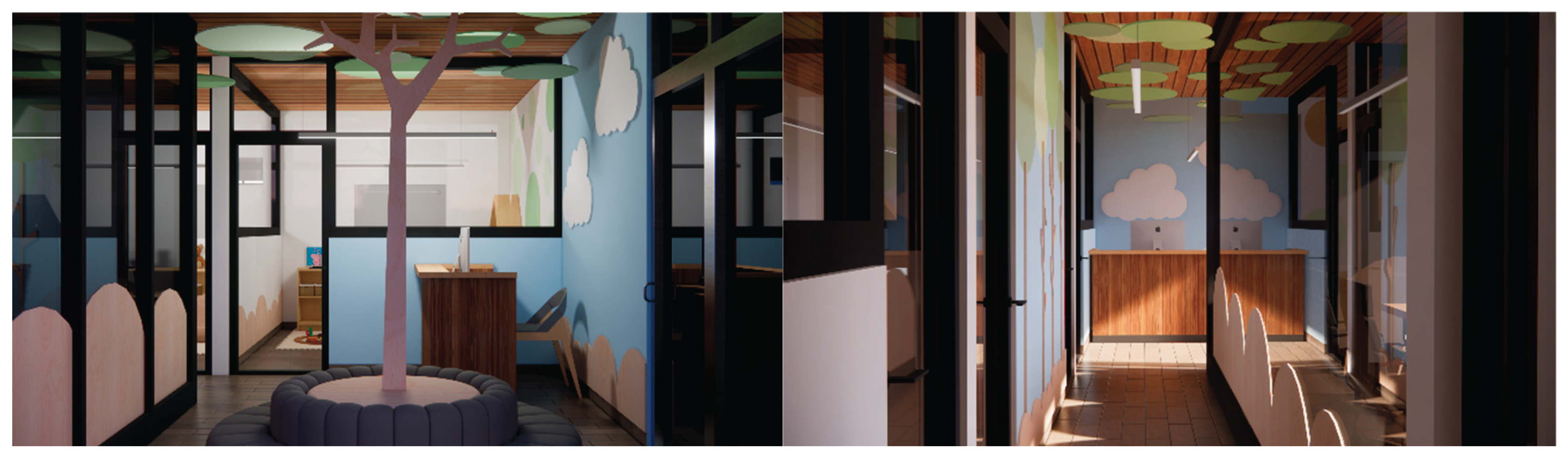
In the presented renderings, we can observe the design proposal for the reception and hallway that leads to the consultation rooms of a children’s psychological center. From the very first moment upon entering the space, the intention is to generate a sense of security and welcome for the children, which is crucial in an environment that, for many of them, may cause anxiety or discomfort.
The use of vibrant and cheerful colors plays a fundamental role in this process. Warm and joyful tones not only capture children’s attention but can also help reduce stress and create a relaxed atmosphere. Colors such as blue or green, harmoniously combined, generate a calming and positive environment, helping children feel more comfortable and safe upon arriving at the consultation space.
In addition, decorative elements and wall coverings featuring playful shapes, like clouds, serve an important role in the children’s visual and emotional stimulation. These details not only add dynamism to the space but also create a more playful and welcoming environment, aligned with the idea that children should feel free and unpressured in a place where they can express themselves.
The careful selection of colors, materials, shapes, and decorative elements in this proposal aims not only to make the space visually attractive but also to contribute to the children’s mental well-being. Every detail is designed to relieve stress, foster a calm atmosphere, and help children feel they are in a safe and trustworthy environment, which is essential for a successful therapeutic process.
- EXAMPLE 2
Figures 3 and 4.
Propuesta propia para consultorio psicológico enfocado en niños.
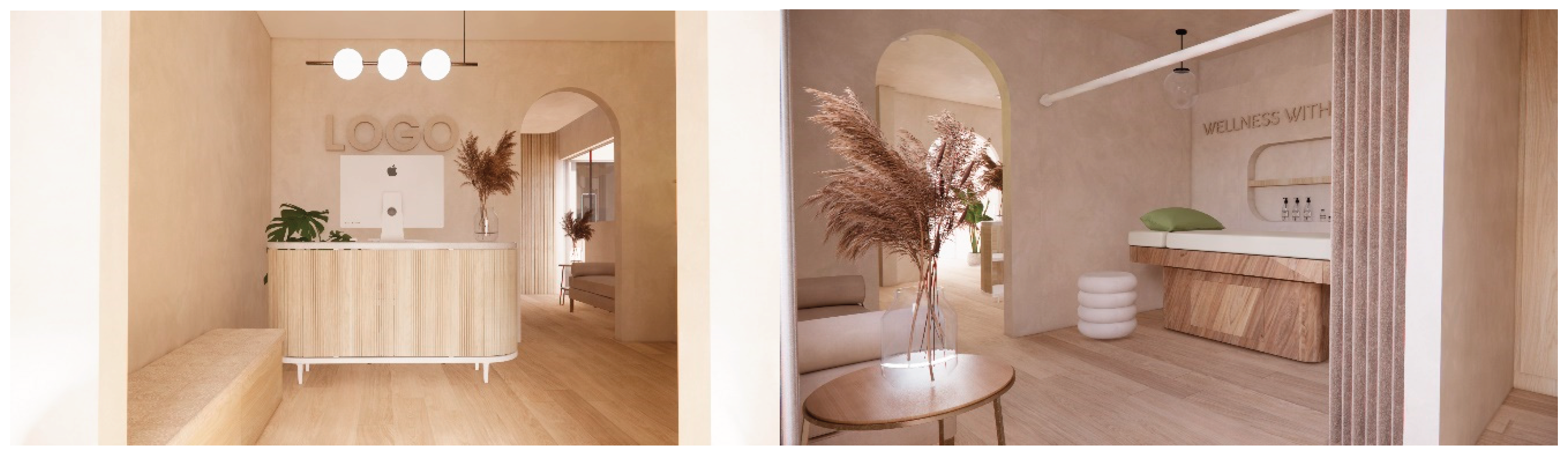
This next design proposal is for a holistic center that includes both the reception area and a massage room. The focus of this design is to create a relaxing and harmonious environment, ideal for promoting the users’ psychological and physical well-being.
One of the most prominent elements is the use of limewash on the walls—a natural finish that provides a soft and organic texture. The neutral colors used on the walls contribute to creating a calm environment, avoiding visual overload and promoting a sense of tranquility.
Warm lighting is another crucial aspect of the holistic center’s design. Soft, warm light has calming effects and helps induce a sense of comfort and serenity. This type of lighting creates a cozy and immersive environment that supports detachment from daily stress, allowing users to feel relaxed and at peace from the moment they enter the holistic center.
The design’s decorative simplicity promotes harmony and avoids sensory overload, enabling users to focus on the process of relaxation and healing. The inclusion of vegetation also plays a vital role in the users’ psychological well-being. Plants not only improve air quality but also provide a connection to nature, which has positive effects in reducing stress and anxiety. Their presence fosters a sense of freshness, calm, and balance, contributing to a space that encourages mental and emotional relaxation.
- EXAMPLE 3
Figure 5.
Own proposal for a 10-year-old child’s bedroom.
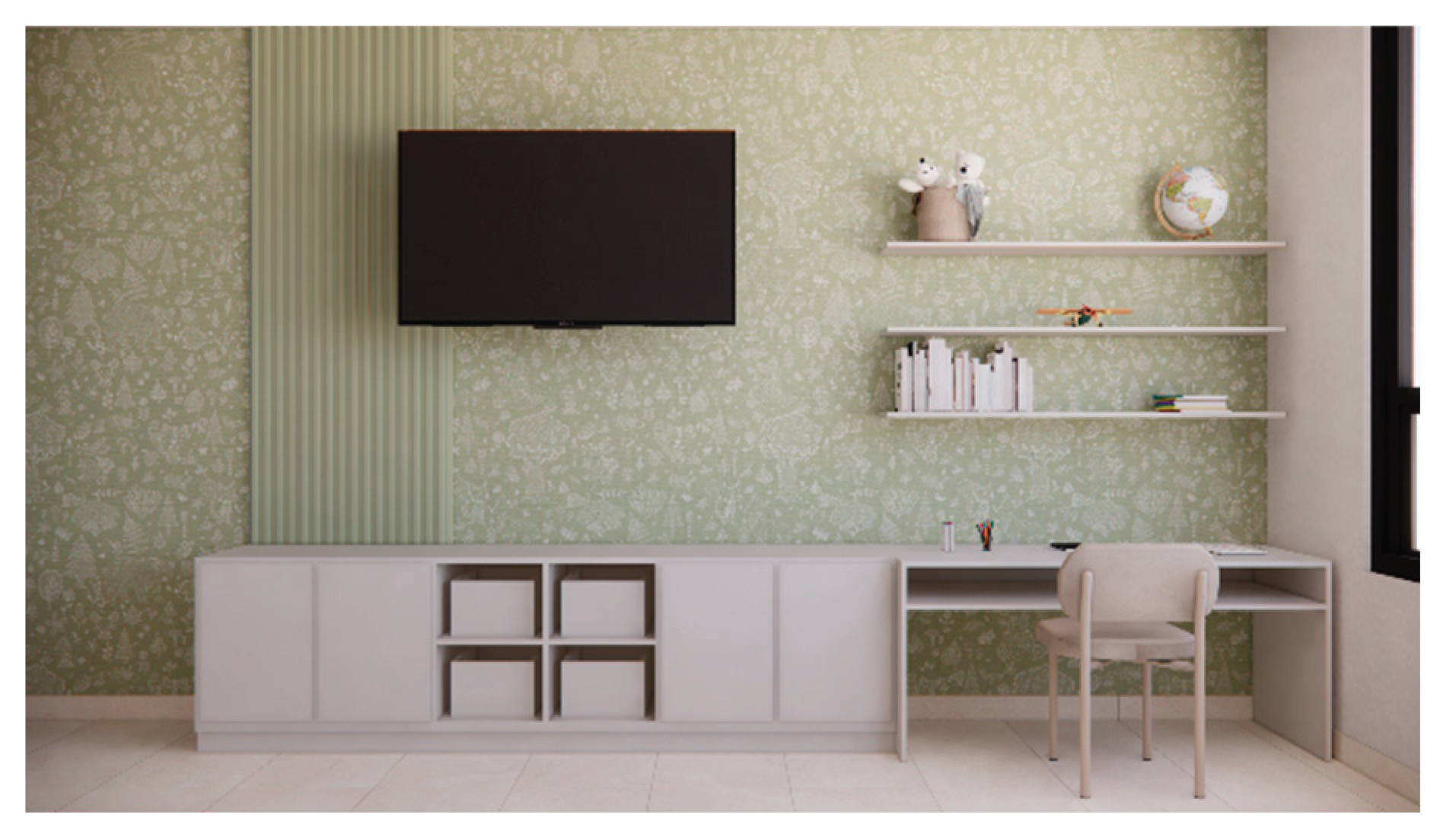
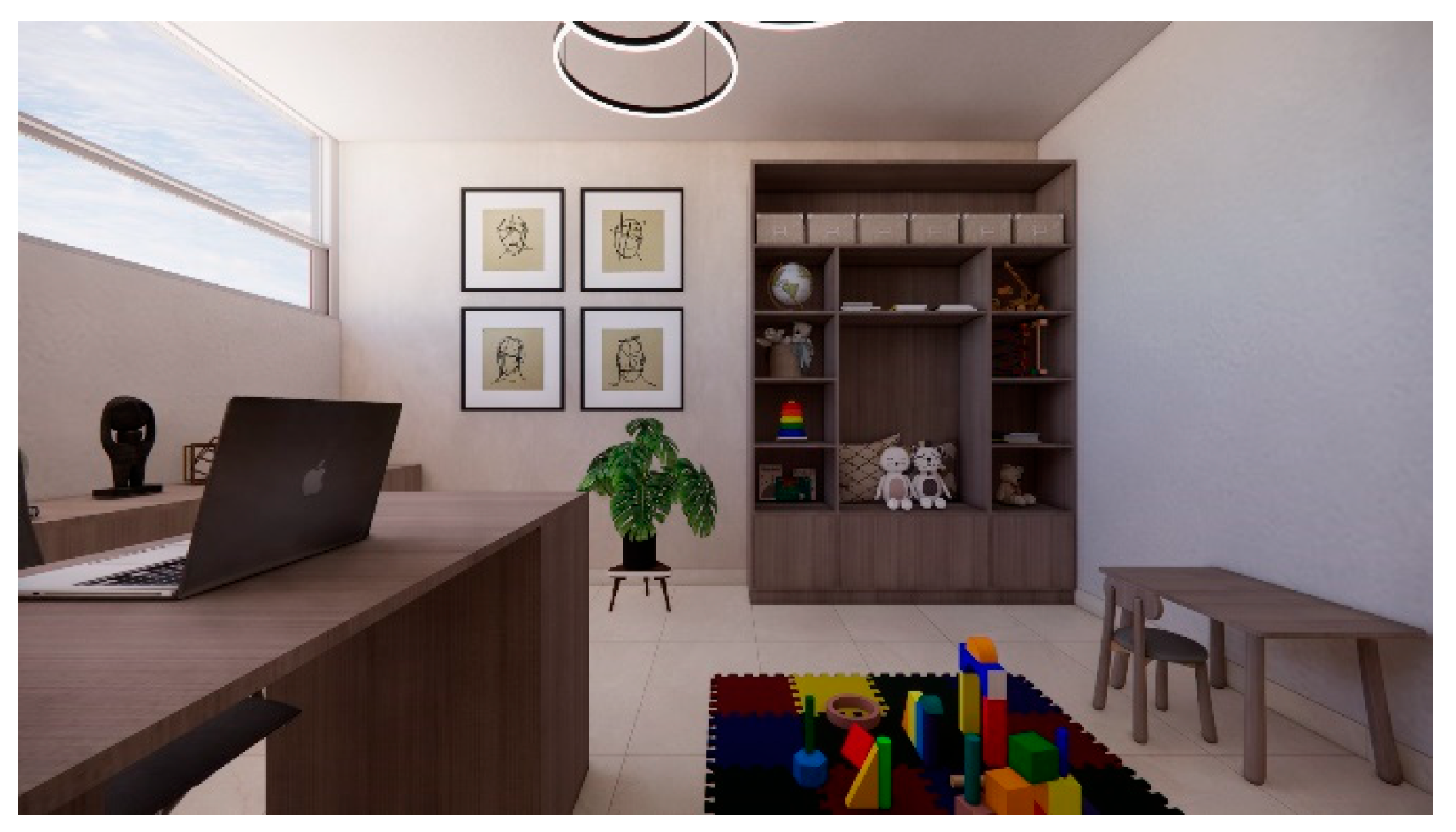
Figure 6.
Own proposal for a home office.
The first image shows a 10-year-old child’s bedroom designed to create a space where the child feels safe and comfortable. The use of a child-themed wallpaper provides a personalized atmosphere, strengthening their sense of belonging in the space. The furniture is designed to store toys and belongings, making it easier to keep the room organized and helping the child develop tidiness habits in an age-appropriate and accessible way. Additionally, the inclusion of a desk encourages a functional area for school tasks, stimulating concentration and independence.
This design fosters an environment that promotes creativity, play, and learning—essential elements for the child’s emotional and cognitive well-being. A cozy and functional space enhances self-esteem and helps establish a structured routine in a setting that is perceived as personal and secure.
The second image shows a home office. This space is designed not only as a functional work environment but also as a place that strengthens family bonds. The mother has a desk and storage furniture, ensuring she can carry out her work comfortably and efficiently. However, what stands out most is the inclusion of an area adapted for her young child, with a small table and a space where he can play while she works.
This design benefits both mother and child. For the child, being near his mother while playing offers a sense of safety and tranquility. Additionally, the child feels integrated and respected by having a space specifically designed for him within his mother’s workspace. For the mother, the ability to work knowing her child is safe and nearby offers peace of mind and improves her focus.
Conclusions
Interior design has a significant impact on how people perceive and experience a space, directly influencing their psychological well-being. Through elements such as colors, textures, furniture, decorative objects, lighting, and materials, it is possible to create environments that are not only functional but also emotionally stimulating.
Research confirms that a sensorially balanced interior design can improve mental health, increase productivity, and stimulate creativity, transforming spaces into enriching experiences for their users. This positive effect becomes even more relevant considering that people spend a large part of their time in indoor environments—whether at home, at work, or in recreational spaces. Therefore, designing with a focus on psychological well-being is not just an aesthetic choice, but a fundamental responsibility for architects and designers.
The role of the architect or designer extends beyond the visual: they must consider the user’s entire experience, anticipating how each design decision will influence their quality of life. Creating spaces that support mental well-being requires deep analysis, ensuring that the design is not only visually attractive but also functional, healthy, and emotionally supportive. A well-thought-out design not only beautifies a space—it also enriches the lives of those who inhabit it.
References
- Abercrombie, S., 1990. A philosophy of interior design. Oxford: Westview Press.
- Berman MG, Hout MC, Kardan O, Hunter MR, Yourganov G, Henderson JM, et al. (2014) The Perception of Naturalness Correlates with Low-Level Visual Features of Environmental Scenes. [CrossRef]
- Coburn, A., Vartanian, O., Kenett, Y. N., Nadal, M., Hartung, F., Hayn-Leichsenring, G., Navarrete, G., González-Mora, J. L., & Chatterjee, A. (2020). Psychological and neural responses to architectural interiors. [CrossRef]
- Gürel, M. Ö., & Potthoff, J. K. (2006). Interior design in architectural education. [CrossRef]
- Heba-Talla, H. M. Heba-Talla, H. M. (2017, October 19). Interior architectural elements that affect human psychology and behavior. https://papers.ssrn.com/sol3/papers.cfm?abstract_id=3055621.
- McGee, B., Park, N., Portillo, M., Bosch, S., & Swisher, M. (2019). DIY Biophilia: Development of the Biophilic Interior Design Matrix as a design tool. [CrossRef]
- Perolini, A. (2011). Interior Spaces and the Layers of Meaning. https://research-repository.griffith.edu.au/server/api/core/bitstreams/6ed1c292-c255-53fa-843d-2c10e4db6016/content.
- Petermans, Ann & Pohlmeyer, Anna. (2014). Design for subjective well-being in interior architecture. [CrossRef]
- Shen, Y. Shen, Y., Yuan, W., Hsu, W., & Chen, Y. (2000). Color selection in the consideration of color harmony for interior design. [CrossRef]
- Tullett, A. M., Kay, A. C., & Inzlicht, M. (2015). Randomness increases self-reported anxiety and neurophysiological correlates of performance monitoring. [CrossRef]
- Velázquez, J. (2024). Figuras 1 y 2. Propuesta propia para consultorio psicológico enfocado en niños [imagen]. Elaboración propia.
- Velázquez, J. (2024). Figuras 3 y 4. Propuesta propia para centro holístico [imagen]. Elaboración propia.
- Velázquez, J. (2024). Figura 5. Propuesta propia para recámara de niño de 10 años [imagen]. Elaboración propia.
- Velázquez, J. (2024). Figura 6. Propuesta propia para oficina en casa [imagen]. Elaboración propia.
- Zhang, Xiaodong. (2016). Introduction to Environmental Psychology and Applications for Modern Interior Design. [CrossRef]
Disclaimer/Publisher’s Note: The statements, opinions and data contained in all publications are solely those of the individual author(s) and contributor(s) and not of MDPI and/or the editor(s). MDPI and/or the editor(s) disclaim responsibility for any injury to people or property resulting from any ideas, methods, instructions or products referred to in the content. |
© 2025 by the authors. Licensee MDPI, Basel, Switzerland. This article is an open access article distributed under the terms and conditions of the Creative Commons Attribution (CC BY) license (http://creativecommons.org/licenses/by/4.0/).
Copyright: This open access article is published under a Creative Commons CC BY 4.0 license, which permit the free download, distribution, and reuse, provided that the author and preprint are cited in any reuse.


