

Submitted:
16 June 2025
Posted:
17 June 2025
You are already at the latest version
Abstract
The objective of this study is to clarify the effects of jujube-cotton intercropping on cotton yield and photosynthetic characteristics, to provide a theoretical basis for jujube-cotton intercropping in the oasis irrigation area of southern Xinjiang, and to provide new ideas for local farmers to improve their economic benefits. In this study, the effects of jujube-cotton intercropping on the photosynthetic characteristics and yield of cotton were studied from 2020 to 2023 using Zhongmian 619 cotton and juvenile jujube trees as experimental materials. The changes of lower leaf area index (LAI), transpiration rate (Tr), stomatal conductance (Gs), net photosynthetic rate (Pn), intercellular CO2 concentration (Ci), yield and economic benefits were evaluated in different years. The results showed that: (1) There was a positive correlation between leaf area index (LAI) and photosynthetic characteristics of cotton under different planting patterns; Compared with monoculture cotton, the net photosynthetic rate (Pn), stomatal conductance (Gs) and transpiration rate (Tr) of jujube-cotton intercropping were lower than those of monoculture cotton in the intercropping mode. At the peak boll stage, the photosynthetic characteristics of monoculture cotton were significantly higher than those of intercropping cotton, indicating that the intercropping pattern of jujube cotton affected the photosynthesis of cotton to a certain extent. (2) From 2020 to 2023, the land equivalent ratio (LER) of jujube-cotton intercropping was greater than 1, and the overall yield and economic benefit of jujube-cotton intercropping system were higher than those of cotton monoculture and jujube monoculture, especially in 2023, the yield of IC treatment was as high as 55.35%. (3) From 2020 to 2023, there was a significant positive correlation between cotton yield and leaf area index (LAI). In conclusion, intercropping cotton can improve the land equivalent ratio and land utilization rate by improving the photosynthetic characteristics, and increase the economic benefits and total yield of juvenile jujube orchards.
Keywords:
jujube-cotton intercropping
; photosynthetic characteristics
; yield
; economic benefits
; oasis irrigation area
1. Introduction
Jujube trees and cotton are two major economic crops in the southern region of Xinjiang. As a characteristic economic crop of the region, jujube trees hold significant importance, and southern Xinjiang is also the largest cotton planting area in Xinjiang [1].With the improvement of climatic conditions and advancements in agricultural technology, the planting area of both jujube trees and cotton has been steadily increasing, making a positive contribution to local agricultural development. However, with the expansion of jujube tree cultivation, particularly the large-scale planting of young jujube trees, the issue of land resource wastage has gradually become apparent [3].In the early stages of growth, young jujube trees, due to their small crowns and underdeveloped root systems, are unable to fully utilize land resources, leading to idle land and resulting in resource wastage. In addition, the monoculture cotton farming model also presents certain limitations [5].Although monoculture cotton farming can provide relatively stable economic returns, it often leads to excessive depletion of soil nutrients and may even trigger ecological and environmental issues, such as soil degradation and the spread of pests and diseases [6].Therefore, how to optimize the utilization of land resources and improve agricultural economic efficiency has become an urgent issue that needs to be addressed [7].
Compared to the monoculture farming model, intercropping can more effectively utilize land resources, improve soil quality, and enhance ecological benefits [8].Jujube-cotton intercropping, through the rational pairing of crops, optimizes their ecological niches. This not only enhances the utilization of sunlight but also improves the growing environment between the crops, thereby boosting photosynthetic efficiency and promoting the growth, development, and yield of cotton [8].In jujube-cotton intercropping, jujube trees and cotton occupy different ecological niches [11]. Through proper configuration, resource competition is avoided, which enhances the overall land utilization efficiency [12].Especially in arid regions where light and heat resources are limited, the rational configuration of jujube trees and cotton can achieve optimal allocation of solar energy and water resources, mitigate the negative effects of intense sunlight on cotton, and consequently enhance overall photosynthetic efficiency [13].
Photosynthesis is the fundamental physiological process underlying crop growth and yield formation; its efficiency directly affects the growth rate of plants and their yield potential [13].In the jujube-cotton intercropping system, jujube trees, as taller crops, have canopy structures that can provide partial shading for cotton plants [15]. This helps alleviate the stress caused by intense sunlight, thereby preventing the decline in photosynthetic efficiency of cotton under high-temperature and strong light conditions [16].Meanwhile, cotton plants can take advantage of the varying light conditions across different vertical layers, enhancing the photosynthetic efficiency of their leaves, boosting growth vigor, and further contributing to yield improvement [17].Proper management of light, water, and nutrients optimizes the ecological niches of the crops, which is beneficial for improving the photosynthetic efficiency and growth potential of cotton, thereby contributing to yield enhancement [18].By improving the ecological niche relationships between crops, it is possible not only to enhance the utilization of solar energy but also to increase the overall productivity and economic efficiency of the cropping system [19,20].
Although the jujube-cotton intercropping system shows potential for improving photosynthetic efficiency and yield, the relationship between photosynthetic characteristics and yield in intercropped versus monoculture cotton has not been thoroughly investigated in long-term field experiments in the Alar reclamation area. Therefore, this study aims to explore the relationship between photosynthetic traits and yield of cotton within the jujube-cotton intercropping system in the Alar reclamation area of southern Xinjiang. By conducting a comparative analysis of the photosynthetic performance and yield differences between intercropped and monoculture cotton, the study seeks to clarify the role of the intercropping model in enhancing solar energy utilization and economic benefits. The ultimate goal is to provide a theoretical foundation and practical guidance for the sustainable development of agriculture in southern Xinjiang.
2. Materials and Methods
2.1. Overview of the Experimental Site
This study was conducted from 2020 to 2023 at the jujube-cotton intercropping experimental field of the Horticultural Experiment Station, Tarim University, located in Aral City, Xinjiang (41°34′N, 82°17′E; elevation: 1014 m). The region is characterized by a large diurnal temperature range and abundant sunlight. The soil type of the experimental field is sandy loam. The annual average solar radiation is approximately 5200 MJ/m², with photosynthetically active radiation ranging from 2340 to 2600 MJ/m², and the average daily sunshine duration accounts for about 66% of the day.
The site is situated in the middle to upper reaches of the Tarim River. The contents of nitrogen (N), phosphorus (P), potassium (K), and organic matter in the soil are relatively low, at 0.10%, 0.05%, 0.20%, and 1.5%, respectively. In addition, the area is arid, with an average annual evaporation of 1985.6-2567.9 mm and an average annual precipitation of only 40.1–105.2 mm, indicating a climate with low rainfall and high evaporation rates.
2.2. Experimental Design
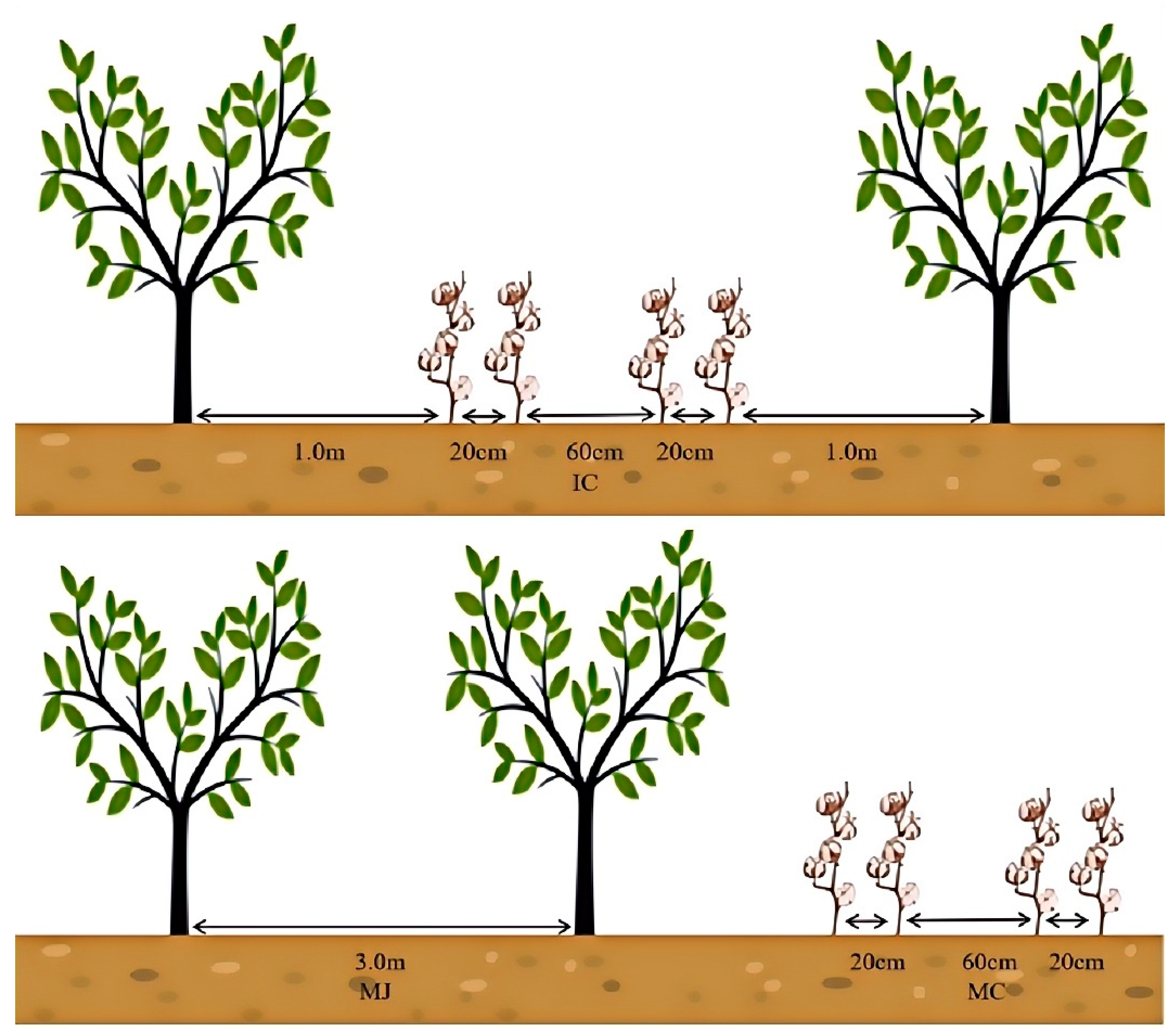
This experiment was designed as a single-factor randomized block design, consisting of three treatments(Figure 1): cotton monoculture (MC), jujube monoculture (MJ), and jujube-cotton intercropping (IC). A total of three treatments were set with three replications, resulting in nine plots. Each plot had an area of 8 m × 6 m. The experiment selected the Grey Jujube (Ziziphus jujuba Mill.) for the jujube trees and Zhongmian 619 cotton for the cotton crop.
The reason for selecting Grey Jujube for intercropping was that it has a small canopy, a short growth cycle, high yield potential, and is suitable for cultivation in southern Xinjiang. Zhongmian 619 was chosen for its short growth period and concentrated boll opening, making it an ideal choice for this experiment. Other management practices in the experimental field were consistent with those of conventional field management.
Figure 1.
Schematic diagram of field distribution of jujube-cotton intercropping.
2.3. Measured Parameters
2.3.1. Photosynthetic Parameters Measurement
For all four years of the experiment, measurements were taken during the cotton seedling, bud, full bloom, boll development, and boll opening stages, on clear days. Using a Li-6400 XT portable photosynthesis system (Li-6400, Li-COR INC., NE, USA), measurements were made between 11:00 AM and 1:00 PM [21]. For each treatment, three representative cotton plants were selected, and the following parameters were measured: Pn, Gs, Ci, and Tr. For each cotton plant, measurements were taken three times on the third leaf from the top, and the average value was calculated.
2.3.2. Leaf Area Index (LAI) Measurement
During the cotton seedling, bud, full bloom, boll development, and boll opening stages in 2020–2023, LAI was measured under clear weather conditions using an LAI-2200C Plant Canopy Analyzer. This was done to determine the leaf area index (LAI) of intercropped and monoculture cotton [22].
2.3.3. Yield Measurement
During the cotton boll opening stage, the actual harvest yield for each plot was measured. In each plot, 10 representative cotton plants were selected to measure plant height and stem diameter. The data was then converted into yield per hectare. For jujube trees, the fruit yield was measured during the harvest period, and the result was also converted to yield per hectare [23].
2.3.4. Land Equivalent Ratio (LER)
The LER is an indicator used to measure the land use efficiency of jujube-cotton intercropping. If the LER is greater than 1, it means that jujube-cotton intercropping is more efficient in utilizing land resources compared to monoculture. The calculation formula is as follows [24]:
Where:YCI=Cotton intercropping yield、YJI=Jujube intercropping yield、YCM=Cotton intercropping yield、YJM=Jujube monoculture yield.
2.3.5. Yield Advantage
The yield advantage refers to the yield difference between intercropping and monoculture systems. Specifically, it measures the difference in output between different cropping systems on the same land area. A positive yield advantage indicates that the intercropping system has more effectively increased yield compared to monoculture.The calculation formulas are as follows [25,26]:
Where:YI= Yield of intercropping system,YM= Yield of monoculture system.
2.4. Data Analysis
In this study, significance testing was conducted using SPSS 25 (Statistical Package for the Social Sciences). Pearson correlation analysis and Duncan’s multiple range test were used to analyze the correlations and differences between the groups. The significance of the results was determined based on the p-value (P < 0.05).Additionally, Origin 2021 (OriginLab Corporation’s Data Analysis and Graphing Software) and GraphPad Prism 10 (GraphPad Software’s Statistical Analysis and Graphing Software for Biomedical Research) were employed to create relevant graphs, providing a visual representation of the analysis results.
3. Results
3.1. The Effect of Jujube-Cotton Intercropping on Cotton Leaf Area Index
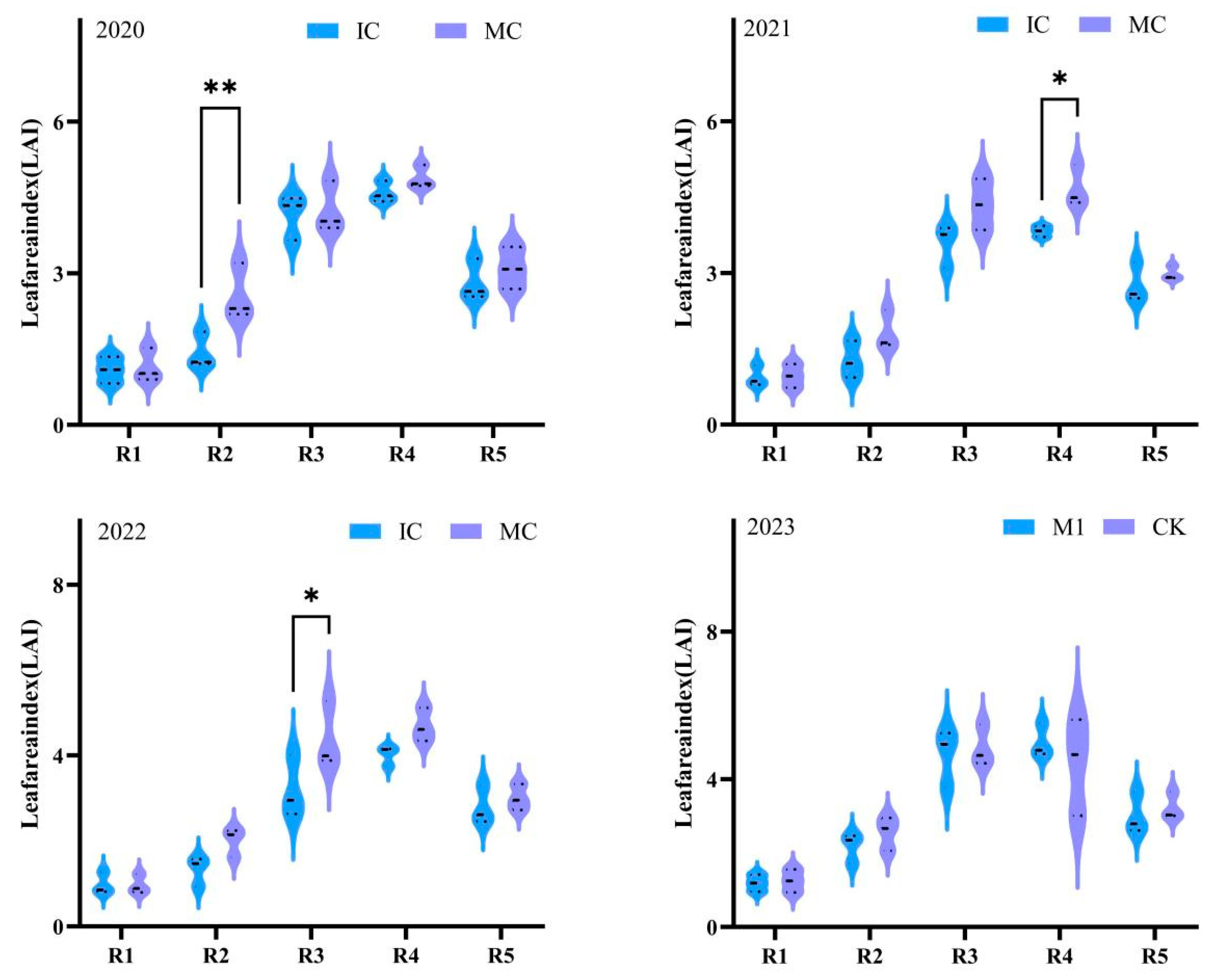
The LAI of cotton in different years showed an increasing trend initially, followed by a decrease as the growth cycle progressed, with the maximum value observed during the boll development stage (Figure 2). There were significant differences in LAI between MC and IC at different stages in different years. Specifically:In 2020, during the R2 period, the LAI of MC was 42.9% higher than that of IC.In 2021 (R4 period) and 2022 (R3 period), significant differences were observed between IC and MC.However, in 2023, there were no significant differences in LAI among the treatments.This suggests that intercropping can influence the growth dynamics of cotton, though the effect may vary across years and growth stages. The potential advantage of intercropping in terms of LAI may be more evident during certain growth periods but less so in later years.
Figure 2.
Changes in LAI of cotton under monoculture and intercropping. Note: R1, seedling stage; R2, bud stage; R3, full flowering stage; R4, peak boll stage; R5, flocculation stage; * and ** represent significant differences in P<0.05 and P<0.01 levels, respectively.
Figure 2.
Changes in LAI of cotton under monoculture and intercropping. Note: R1, seedling stage; R2, bud stage; R3, full flowering stage; R4, peak boll stage; R5, flocculation stage; * and ** represent significant differences in P<0.05 and P<0.01 levels, respectively.
3.2. The Effect of Jujube-Cotton Intercropping on Cotton Net Photosynthetic Rate
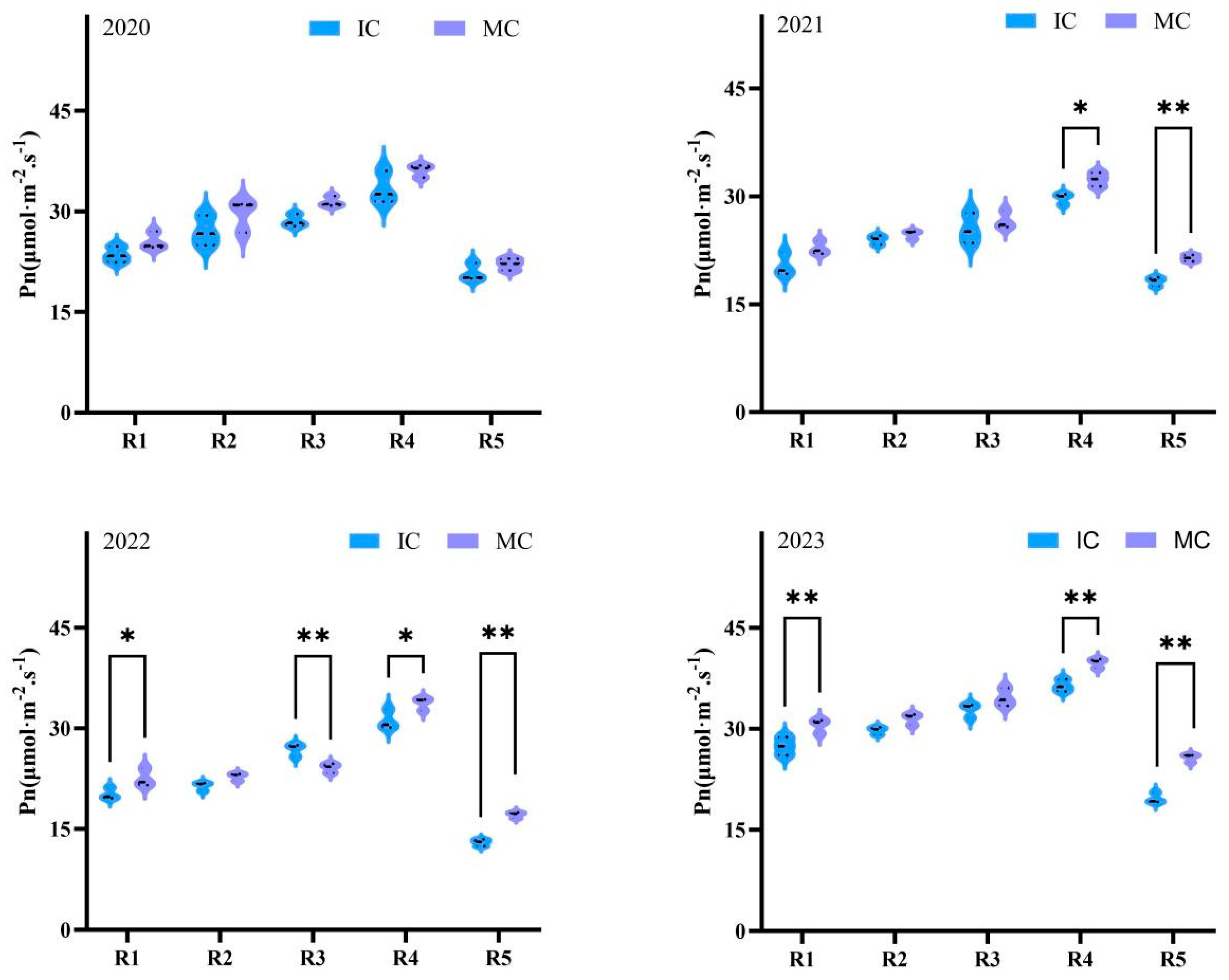
As shown in Figure 3, the Pn of cotton leaves during different growth stages from 2020 to 2023 exhibited a unimodal curve, showing an initial increase followed by a decline. Additionally, the Pn of MC was higher than that of IC.In 2021, the Pn of MC was significantly higher than that of IC by 8.9% and 17.84% during the R4 and R5 periods, respectively.In 2022, the Pn of MC was significantly higher than IC by 8.69%, 8.36%, and 30.19% during the R1, R4, and R5 periods, respectively.In 2023, the Pn of MC was significantly higher than IC by 8.66% and 30.85% during the R4 and R5 periods, respectively.These results suggest that, overall, MC exhibited a higher net photosynthetic rate compared to IC, especially during the later growth stages. However, the difference in photosynthetic rates between the two treatments varied across years and growth stages.
Figure 3.
Changes in Pn of cotton under monoculture and intercropping.
3.3. The Effect of Jujube-Cotton Intercropping on Cotton Stomatal Conductance
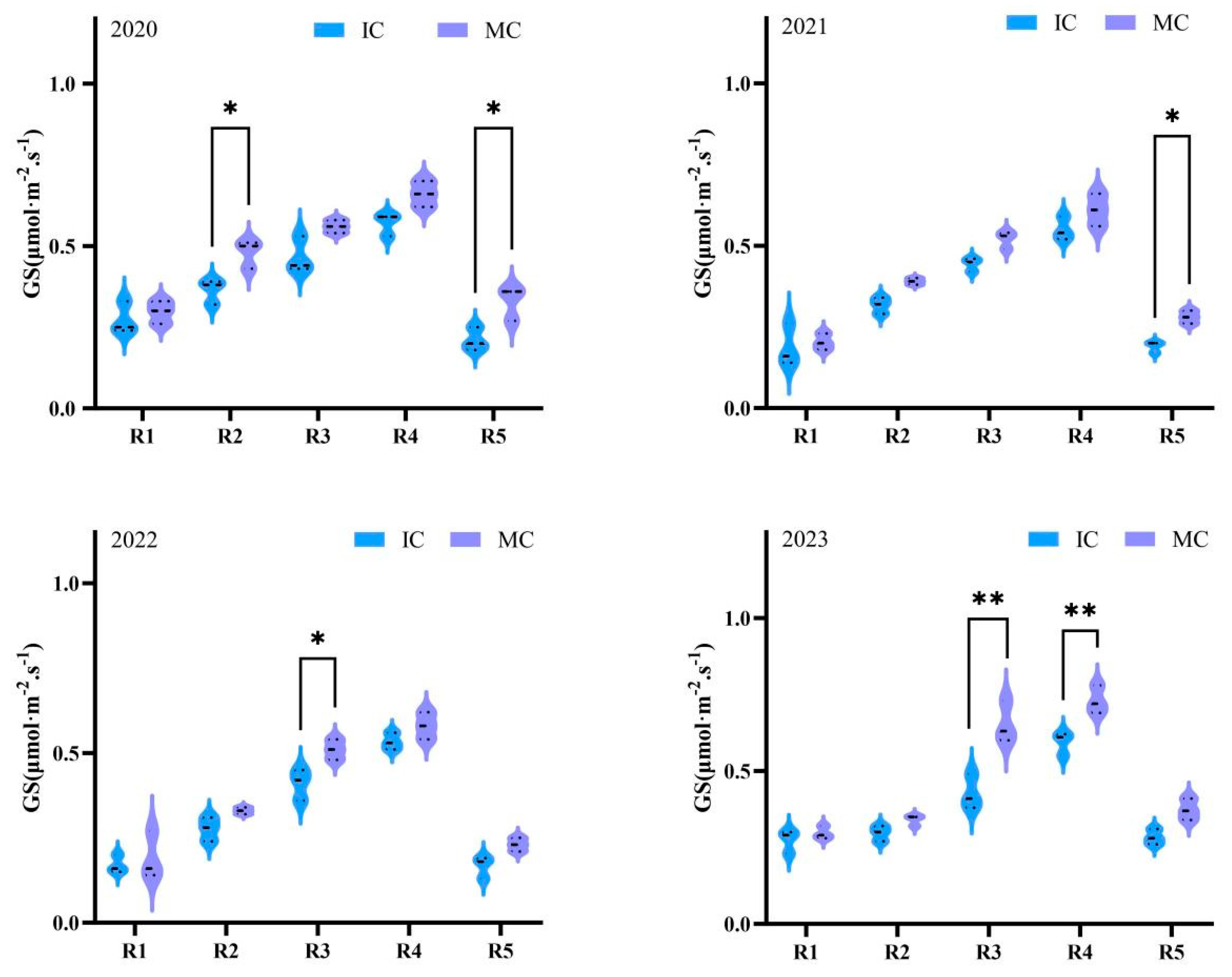
Stomatal conductance refers to the extent to which plant stomata open over a specific period of time, which directly affects the gas exchange between the plant and its environment. It is one of the main factors influencing photosynthesis. The Gs of cotton showed an increasing trend followed by a decrease as the growth cycle progressed, reaching the maximum value during the boll development stage (Figure 4).For every growth stage, the Gs of MC was higher than that of IC. Significant differences were observed between monoculture and intercropped cotton in different years:In 2020, during the R2 and R5 periods, the Gs of MC was significantly higher than that of IC, by 32.11% and 57.14%, respectively.In 2021, significant differences were observed between IC and MC during the R5 period.In 2022, during the R3 period, there was a significant difference between IC and MC.In 2023, significant differences were observed during the R3 and R4 periods.These results indicate that monoculture cotton generally had higher stomatal conductance compared to intercropped cotton, with the difference being more pronounced in certain growth periods and years.
Figure 4.
Changes in GS of cotton under monocropping and intercropping.
3.4. The Effect of Jujube-Cotton Intercropping on Cotton Intercellular CO2 Concentration
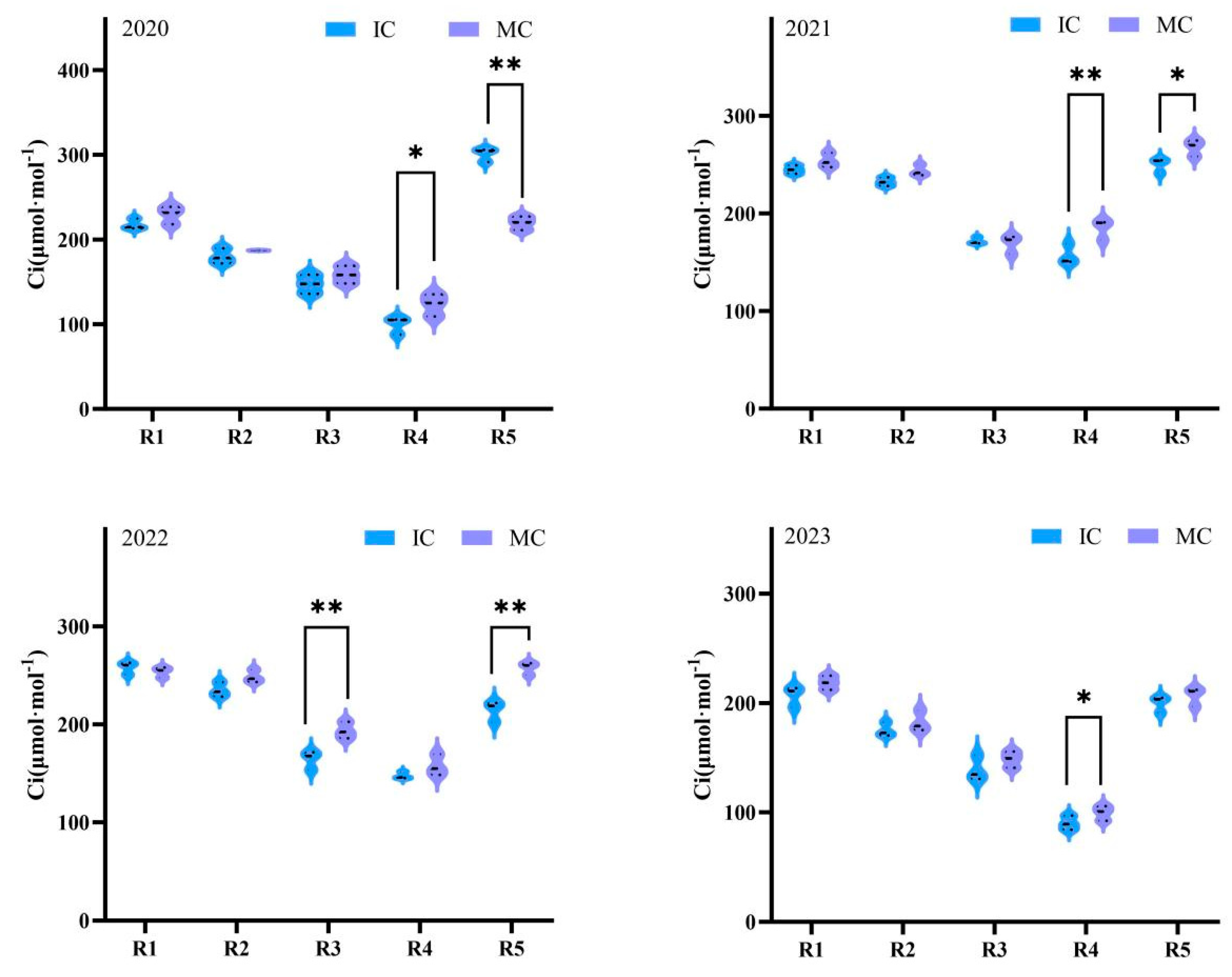
As shown in Figure 5, the Ci of cotton leaves during different growth stages from 2020 to 2023 exhibited a “V”-shaped curve, showing a decrease followed by an increase. In every growth stage, the Ci of MC was lower than that of IC.Significant differences in Ci between monoculture and intercropped cotton were observed in different years:In 2020, during the R4 and R5 periods, there was a significant difference in Ci between MC and IC.In 2021, significant differences were observed during the R4 and R5 periods.In 2022, during the R3 and R5 periods, the difference between IC and MC was extremely significant.In 2023, during the R4 period, the Ci of MC was 11.1% lower than that of IC.These findings suggest that intercropping cotton tends to have a higher intercellular CO2 concentration than monoculture cotton, with the difference being more pronounced in certain years and growth stages.
Figure 5.
Changes in Ci in cotton under intercropping and monocropping.
3.5. The Effect of Jujube-Cotton Intercropping on Cotton Transpiration Rate
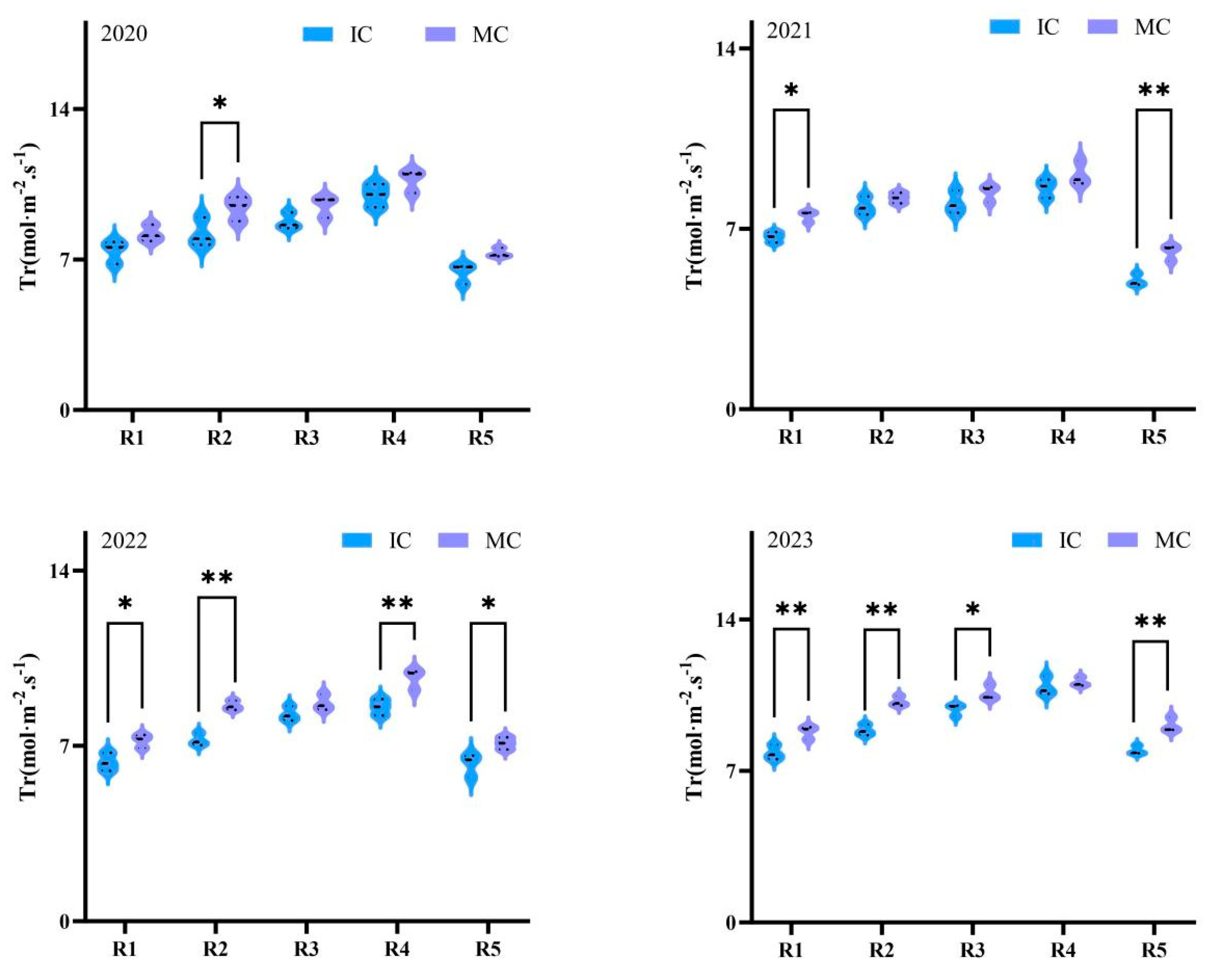
As shown in Figure 6, the Tr of cotton throughout the growth period in different years followed a peak-shaped curve, showing an initial increase followed by a decrease. Although the magnitude of change varied significantly between years, the Tr of cotton reached its maximum value during the flowering and boll development stages. In every growth stage, the Tr of MC was higher than that of IC.Significant differences in Tr between monoculture and intercropped cotton were observed in different years:In 2020, during the R2 period, there was a significant difference between MC and IC.In 2021, during the R1 and R5 periods, the Tr of MC was higher than that of IC, by 12.28% and 22.10%, respectively.In 2022 and 2023, during the R1, R2, and R5 periods, significant differences in Tr were observed between IC and MC.These results indicate that monoculture cotton consistently exhibited a higher transpiration rate compared to intercropped cotton, especially during certain growth periods. The differences in Tr between the two cropping systems varied across years and growth stages.
Figure 6.
Changes in Tr under intercropping and monocropping.
3.6. The Effect of Jujube-Cotton Intercropping on Crop Yield and Land Equivalent Ratio
In the jujube-cotton intercropping system, the jujube yield is also a significant component of the overall system yield, while the LER is a core indicator of the system’s productivity. The four-year experimental results indicated that the inclusion of cotton in the intercropping system significantly reduced both the jujube and cotton yields.However, the LER is an important parameter for assessing the intercropping advantages of the system. In all years, the LER for the jujube-cotton intercropping system was greater than 1, indicating that intercropping consistently enhanced land use efficiency. This suggests that, regardless of the year, the jujube-cotton intercropping system achieved the highest land use efficiency among the three planting systems (intercropping, monoculture cotton, and monoculture jujube).The yield of MC was always greater than that of IC in every year. Furthermore, the total yield in the jujube-cotton intercropping system was higher than that of MC or MJ. The LER was significantly affected by both the planting system and the interaction between planting system and year, with a highly significant impact from the planting system itself. The results suggest that the effect of the planting system on LER was greater than the effect of the year on LER.
3.7. Economic Benefit Comparison of Different Planting Systems in Different Years
This study showed that the net profit from both monoculture cotton and monoculture jujube was lower than that of the jujube-cotton intercropping system. Except for 2022, the net income from jujube was higher than the net income from cotton in the intercropping system. The reason for the lower net income of monoculture jujube in 2022 was due to the fact that it was the jujube orchard’s off-year, and the purchase price for jujube was as low as 6 RMB/kg. Therefore, the economic benefit from jujube was low in that year. However, over the four-year period, the net income was generally ranked as follows: IC > MJ > MC.Looking at the four years’ returns, the profit margin for the jujube-cotton intercropping system ranged from 35.72% to 49.34%, with a yield advantage of 13.62%; monoculture cotton had a profit margin ranging from 35.23% to 43.39%, with a yield advantage of 8.16%; monoculture jujube had a profit margin ranging from 14.14% to 55.36%, with a yield advantage of 41.22%. From this, it can be observed that the yield advantage for monoculture cotton was the smallest, and its economic benefits were the most stable from 2020 to 2023. The yield advantage of monoculture jujube was the largest (41.22%), indicating that its economic efficiency was the least stable.Both monoculture cotton and the jujube-cotton intercropping system had yield advantages of less than 15%, with monoculture cotton’s net profit being lower than that of the intercropping system over all four years. Therefore, it can be concluded that, overall, the jujube-cotton intercropping system is more conducive to stable and higher economic benefits.
3.8. Correlation Analysis Between Cotton Yield and Photosynthetic Characteristics
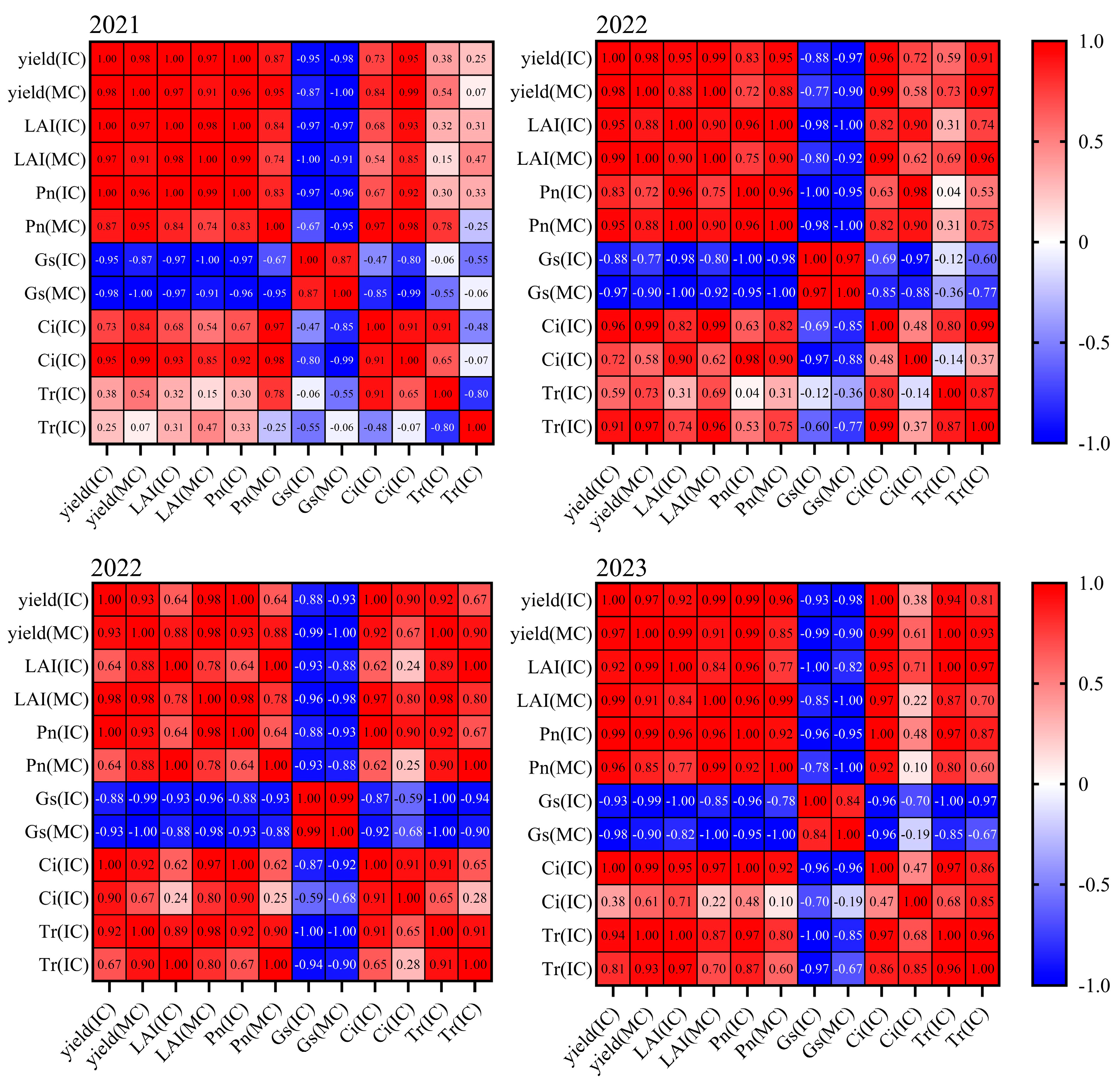
As shown in Figure 7, there was a significant positive correlation between cotton yield and photosynthetic characteristics (especially leaf area index, net photosynthetic rate, stomatal conductance, and transpiration rate) in all years, with most correlation coefficients being greater than 0.8. This correlation was particularly strong in monoculture cotton.However, the correlation between the photosynthetic characteristics and yield in intercropped cotton was generally weaker, suggesting that photosynthetic efficiency in the intercropping system might be somewhat affected. Specifically, in 2020 and 2021, the correlation between the photosynthetic characteristics and yield of intercropped cotton was lower compared to monoculture cotton.Furthermore, over the four consecutive years, cotton yield showed a significant negative correlation with intercellular CO2 concentration.Overall, the results reveal a close relationship between photosynthetic characteristics and yield. While the intercropping system did affect the photosynthetic efficiency of cotton, it still contributed positively to overall yield increases.
Figure 7.
Figure 7. Correlation analysis diagram. Note: Significant difference at P<0.05 level; This correlation analysis chart is a statistical analysis based on the data of the boll period of cotton each year, and aims to reveal the relationship between different variables.
Figure 7.
Figure 7. Correlation analysis diagram. Note: Significant difference at P<0.05 level; This correlation analysis chart is a statistical analysis based on the data of the boll period of cotton each year, and aims to reveal the relationship between different variables.
4. Discussion
4.1. Impact on Cotton Yield Efficiency
In the jujube-cotton intercropping system, year-to-year variability significantly influenced cotton yield, with planting pattern and crop growth characteristics being key contributing factors [27]. Except for the year 2023, cotton yield within the intercropping system showed a declining trend over time, while the yield of jujube trees increased steadily(Table 1).Although the total yield peaked in 2023, the LER did not reach its highest value, indicating intensified competition between cotton and jujube in that year. This suggests that while the system produced more biomass overall, the efficiency of land use a core goal of intercropping was not maximized.The unusually high yield in 2023 is closely tied to increased rainfall, highlighting the critical role of climatic factors in crop productivity [28]. This is particularly relevant in arid and semi-arid regions, where fluctuations in precipitation can have a substantial impact on crop growth and yield outcomes [29,30].

Table 1.
Effect of cropping pattern on yield.
| Year | Croppingpatterns | Cotton (kg/hm2) |
Jujube (kg/hm2) |
Total (kg/hm2) |
LER |
|---|---|---|---|---|---|
| 2020 | IC | 3451.3±194.9 b | 3235.1±167.8 b | 6686.4±352.1 b | 1.28±0.01 b |
| MJ | 5469.3±244.8 a | - | - | - | |
| MC | - | 4972.8±237.9 a | - | - | |
| 2021 | IC | 3338.5±155.6 b | 4110.3±156.8 b | 7448.8±309.6 a | 1.39±0.02 a |
| MJ | 5658.4±402.4 a | - | - | - | |
| MC | - | 5164.6±145.4 a | - | - | |
| 2022 | IC | 3301.5±270.2 b | 3125.1±202.8 b | 6426.6±463.8 c | 1.28±0.04 b |
| MJ | 5268.2±247.8 a | - | - | - | |
| MC | - | 4751.9±188.3 a | - | - | |
| 2023 | IC | 3641.2±169.6 b | 4132.1±200.3 b | 7773.3±368.9 a | 1.37±0.04 a |
| MJ | 5865.0±454.3 a | - | - | - | |
| MC | - | 5274.7±360.8 a | - | - | |
| F-value | C | ** | ** | ** | ** |
| Year | * | * | * | * | |
| C*Year | ** | ** | ** | ** |
Note: C, planting pattern.
From a yield perspective, although the cotton yield in the jujube-cotton intercropping system is slightly lower than monoculture cotton, the total yield (including both cotton and jujube) in the intercropping system is significantly higher than in the monoculture systems(Table 1). This suggests that, despite the slight reduction in cotton yield, well-designed intercropping configurations can significantly boost overall land productivity.The increase in total yield reflects the efficient land use facilitated by the jujube-cotton intercropping system. By utilizing both cotton and jujube, the system maximizes the productive potential of the land, benefiting from the complementary relationship between the two crops [31,32]. This allows for higher yields per unit area than would be achieved through monoculture farming.Furthermore, the economic benefits of the jujube-cotton intercropping system demonstrate a more stable profit margin. Especially when excluding the exceptional climatic impact of 2022, the intercropping system’s net income is notably superior to that of monoculture systems(Table 2). This further reinforces the feasibility and superiority of the jujube-cotton intercropping model in agricultural production, offering farmers more sustainable and stable economic returns.
Table 2.
Economic benefits of different cropping patterns in different years.
| Year | Cropping patterns |
Total Income (Yuan/ha) |
Cost (Yuan/ha) |
net receipt (Yuan/ha) |
Yield·Advantage Percentage(%) |
|---|---|---|---|---|---|
| 2020 | IC | 46045.50 | 26844.99 | 19200.51 | 41.70 |
| MC | 37081.85 | 21372.04 | 15709.81 | 42.37 | |
| MJ | 34809.60 | 16152.68 | 18656.92 | 53.60 | |
| 2021 | IC | 54632.73 | 29952.31 | 24680.42 | 45.18 |
| MC | 36864.48 | 21679.3 | 15185.18 | 41.19 | |
| MJ | 41316.80 | 24671.21 | 16645.59 | 40.29 | |
| 2022 | IC | 40259.87 | 25877.67 | 14382.2 | 35.72 |
| MC | 34322.32 | 22230.24 | 12092.08 | 35.23 | |
| MJ | 28511.40 | 24479.31 | 4032.09 | 14.14 | |
| 2023 | IC | 67109.47 | 33999.54 | 33109.93 | 49.34 |
| MC | 38,210.48 | 21632.11 | 16578.37 | 43.39 | |
| MJ | 55,384.35 | 24731.14 | 30653.21 | 55.35 |
Note: The prices of cotton from 2020 to 2023 are 6.51 yuan/kg, 10.8 yuan/kg, 7 yuan/kg, and 8.2 yuan/kg, respectively; From 2020 to 2023, the prices of jujube trees will be 7.3 yuan/kg, 8 yuan/kg, 6 yuan/kg, and 10.5 yuan/kg, respectively; The cost is calculated according to the market price of materials, seeds, agricultural machinery, drip irrigation, mulch, etc.
4.2. Relationship Between Photosynthetic Characteristics and Yield
Photosynthesis is a critical physiological process that influences cotton growth and yield [33].This study suggests that light availability is one of the key factors affecting cotton growth and yield in the jujube-cotton intercropping system [34]. The large canopy of the jujube trees casts shade on cotton during the later stages of growth, which can negatively affect cotton’s photosynthetic capacity [35].According to the results of this study, the photosynthetic characteristics of cotton in the jujube-cotton intercropping system (such as Pn, Gs and Tr) were lower than those in monoculture cotton (Figure 3, Figure 4 and Figure 6). Between 2020 and 2023, the Pn in intercropped cotton was 8.3%–9.4% lower than in monoculture cotton(Figure 3). This difference is primarily attributed to the shade effect caused by the jujube trees, which limits the amount of light available for cotton, thus restricting the efficiency of photosynthesis [36]. This finding highlights that, while the intercropping system can capitalize on the complementary use of land resources, the shade effect from taller crops (like jujube) still significantly influences the photosynthetic characteristics of the understory crop (cotton). This underscores the trade-off in intercropping systems, where the potential benefits of spatial resource allocation might be somewhat offset by light competition [37].
Additionally, the Gs of cotton in the intercropping system were both lower than those in monoculture cotton(Figure 5). This is closely related to the insufficient light caused by the shading effect of the jujube trees [38]. Since stomatal conductance play significant roles in photosynthesis, the Gs directly affect the photosynthetic efficiency of cotton, which, in turn, impacts its yield.Despite these limitations in photosynthetic characteristics, the overall accumulation of photosynthetic products in the jujube-cotton intercropping system was still sufficient to support a higher total yield(Table 1). This indicates that, although cotton in the intercropping system faces light limitations and reduced photosynthetic efficiency, the resource allocation and ecological niche complementarity between the crops allow for a higher overall output compared to monoculture systems [40].
In summary, the jujube-cotton intercropping system offers significant advantages in land use efficiency and economic benefits. While cotton’s photosynthetic characteristics are affected by shading from the jujube trees, leading to a slight decrease in cotton yield compared to monoculture cotton, the optimized planting patterns and resource allocation in the intercropping system increase total yield and LER, thus enhancing economic returns.Moreover, the changes in photosynthesis, especially the decline in net photosynthetic rate and the increase in intercellular CO2 concentration, further affect cotton yield. This suggests that the yield changes in cotton are closely tied to photosynthetic efficiency, highlighting the importance of optimal light and heat resource management in intercropping systems.Through scientific management and careful crop selection, jujube-cotton intercropping not only enhances cotton’s photosynthetic efficiency but also improves the overall sustainability and economic profitability of agricultural systems.
5. Conclusions
This study demonstrates that cotton yield is closely linked to its photosynthetic characteristics, with improvements in leaf area index (LAI) and photosynthetic rate (Pn) contributing to higher yield. Both the LAI and Pn of intercropped (IC) and monoculture cotton (MC) were found to be positively correlated, particularly during the boll-setting stage. However, monoculture cotton exhibited higher photosynthetic rate, stomatal conductance, and transpiration rate compared to intercropped cotton.Although cotton’s photosynthetic efficiency slightly declined under the intercropping system, the jujube-cotton intercropping system still demonstrated higher LER and total yield. Despite the reduction in cotton yield per plant, the complementary effects between the jujube trees and cotton led to higher and more stable overall economic returns compared to monoculture systems.In conclusion, while the jujube-cotton intercropping system reduces cotton’s photosynthetic efficiency, it significantly enhances land use efficiency and economic profitability, showcasing strong sustainability and economic advantages.
Author Contributions
Conceptualization, G.C. and Q.H.; methodology, S.Z.; software, S.Z.; validation, G.C., W.Z. and X.L.; formal analysis, J.W.; investigation, Z.D., S.Z. and T.L; resources, Z.C.; data curation, Z.D and T.L; writing—original draft preparation, S.Z.; writing—review and editing, J.W. and Z.C; visualization, S.W.; supervision, H.Q.; project administration, L.L.; funding acquisition, G.C. All authors have read and agreed to the published version of the manuscript.
Funding
Please add: This research was funded by the Guiding Science and Technology Program Project of Xinjiang Production and Construction Corps (2023ZD103), and President’s Fund at Tarim University (TDZKBS202421), Tarim University Presidential Fund Innovative Research Team Project (TDZKCX202309) and Tarim University Graduate Student Innovation Program (TDGRI202316).
Data Availability Statement
The entire set of raw data presented in this study is available upon request from the corresponding author.
Conflicts of Interest
The authors declare no conflicts of interest.
References
- Wang, X.Y; Lei, S.; Liu, T.T.; Wei, W.W.; Zhang, S.; Li, L.H.; Zhang, W. Microclimate, yield, and income of a jujube–cotton agroforestry system in Xinjiang, China. Industrial Crops and Products 2022, 182, 114941. [Google Scholar] [CrossRef]
- Zhao, X.F.; Zhu, A.L.; Liu, X.H.; Li, H.Y.; Tao, H.Y.; Guo, X.X.; Liu, J.F. Current status, challenges, and opportunities for sustainable crop production in Xinjiang. iScience 2025, 28, 112114. [Google Scholar] [CrossRef] [PubMed]
- Li, X.R.; Yang, C.H.; Zhang, H.R.; Wang, P.P.; Tang, J.; Tian, Y.Q.; Zhang, Q. Identification of Abandoned Jujube Fields Using Multi-Temporal High-Resolution Imagery and Machine Learning. Remote Sensing 2021, 13, 801. [Google Scholar] [CrossRef]
- Li, L.S.; Zhao, L.L.; Ge, J.K.; Li, H.G.; Yang, P.W. Age- and Drought-Related Variation in Plant-Available Water of Rain-Fed Jujube Orchards on the Loess Plateau of China. Sustainability 2022, 14, 10998. [Google Scholar] [CrossRef]
- Li, N.; Lin, H.; Wang, T.X.; Li, Y.; Liu, Y.; Chen, X.G.; Hu, X.T. Impact of climate change on cotton growth and yields in Xinjiang, China. Field Crops Research 2020, 247, 107590. [Google Scholar] [CrossRef]
- Xi, H.; Shen, J.L.; Qu, Z.; Yang, D.Y.; Liu, S.M.; Nie, X.H.; Zhu, L.F. Effects of Long-term Cotton Continuous Cropping on Soil Microbiome. Scientific Reports 2019, 9, 18297. [Google Scholar] [CrossRef]
- Zhang, W.; Wang, B.J.; Gan, Y.W.; Duan, X.D.; Xu, W.L.; Li, L.H. Competitive interaction in jujube tree/cotton agroforestry system in Xinjiang province, northwestern China. Agroforestry Systems 2019, 93, 591–605. [Google Scholar] [CrossRef]
- Wang, J.B.; Chen, G.D.; Wang, P.J.; Cui, Z.J.; Wan, S.M.; Zhai, Y.L.; Li, T.T.; Zhao, Y.R. Optimizing Cotton Row Configuration in Jujube–Cotton Intercropping Systems Improves Their Productivity, Net Effects, and Sustainability. Agronomy 2024, 14, 1216. [Google Scholar] [CrossRef]
- Cao, N.; Chen, G.D.; Wang, S.; Li, H.Q.; Lin, J.; Hu, Q.; Wan, S.M. Optimizing plant density and nitrogen fertilization in jujube/cotton intercropping systems for sustainable yield and reduced greenhouse gas emissions. Field Crops Research 2025, 326, 109873. [Google Scholar] [CrossRef]
- Ai, P.G.; Ma, Y.J.; Hai, Y. Jujube is at a competitiveness disadvantage to cotton in intercropped system. Agronomy Journal 2021. [CrossRef]
- Li, T.T.; Wang, P.J.; Li, Y.F.; Li, L.; Kong, R.Y.; Fan, W.X.; Yin, W.; Fan, Z.L.; Wu, Q.Z.; Zhai, Y.L.; Chen, G.D.; Wan, S.M. Effects of Configuration Mode on the Light-Response Characteristics and Dry Matter Accumulation of Cotton under Jujube–Cotton Intercropping. Applied Sciences 2023, 13, 2427. [Google Scholar] [CrossRef]
- TjeerdJan Stomph, Dordas Christos, Baranger Alain, et al. Chapter One - Designing intercrops for high yield, yield stability and efficient use of resources: Are there principles? Academic Press 2020, 1–50. [Google Scholar]
- Ai, P.R.; Ma, Y.J.; Hai, Y. Influence of jujube/cotton intercropping on soil temperature and crop evapotranspiration in an arid area. Agricultural Water Management 2021, 256, 107118. [Google Scholar] [CrossRef]
- Yao, H.S.; Zhang, Y.L.; Yi, X.P.; Zou, W.Q.; Lei, Z.Y.; Sui, L.L.; Zhang, W.F. Characters in light-response curves of canopy photosynthetic use efficiency of light and N in responses to plant density in field-grown cotton. Field Crops Research 2017, 203, 192–200. [Google Scholar] [CrossRef]
- Zhai, M.H.; Wei, X.W.; Pan, Z.L.; Xu, Q.Q.; Qin, D.L.; Li, J.H.; Zhang, J.; Wang, L.Z.; Wang, K.F.; Duan, X.Y.; Zhang, Y.P.; et al. Optimizing plant density and canopy structure to improve light use efficiency and cotton productivity: Two years of field evidence from two locations. Industrial Crops and Products 2024, 222, 119946. [Google Scholar] [CrossRef]
- Pandey, S.; Kumar, S.; Nagar, P.K. Photosynthetic Performance of Ginkgo biloba L. Grown Under High and Low Irradiance. Photosynthetica 2003, 41, 505–511. [Google Scholar] [CrossRef]
- Mao, L.L.; Zhang, L.Z.; Zhao, X.H.; Liu, S.D.; van der Werf, W.; Zhang, S.P.; Huub, Spiertz.; Li, Z.H. Crop growth, light utilization and yield of relay intercropped cotton as affected by plant density and a plant growth regulator. Field Crops Research 2014, 155, 67–76. [Google Scholar] [CrossRef]
- Wang, H.D.; Wu, L.F.; Wang, X.K.; Zhang, S.H.; Cheng, M.H.; Feng, H.; Fan, J.L.; Zhang, F.C.; Xiang, Y.Z. Optimization of water and fertilizer management improves yield, water, nitrogen, phosphorus and potassium uptake and use efficiency of cotton under drip fertigation. Agricultural Water Management 2021, 245, 106662. [Google Scholar] [CrossRef]
- MAO, L.L.; Zhang, L.Z.; Zhang, S.P.; Evers, J.B.; van der Werf, W.; Wang, J.J.; Sun, H.Q.; Su, Z.C.; Spiertz, H. Resource use efficiency, ecological intensification and sustainability of intercropping systems. Journal of Integrative Agriculture 2015, 14, 1542–1550. [Google Scholar] [CrossRef]
- Muhammad-Ali Raza.; Feng, L.Y.; van der Werf Wopke.; Nasir Iqbal.; Muhammad Hayder Bin Khalid.; Yuan Kai Chen.; et al. Maize leaf-removal: A new agronomic approach to increase dry matter, flower number and seed-yield of soybean in maize soybean relay intercropping system. Scientific Reports 2019, 9, 13453.
- Yao, H.S.; Zhang, Y.L.; Yi, X.P.; Zhang, X.J.; Zhang, W.F. Cotton responds to different plant population densities by adjusting specific leaf area to optimize canopy photosynthetic use efficiency of light and nitrogen. Field Crops Research 2016, 188, 10–16. [Google Scholar] [CrossRef]
- Zhang, L.; van der Werf, W.; Bastiaans, L.; Zhang c, S.; Li a,B.; Spiertz, J.H.J.. Light interception and utilization in relay intercrops of wheat and cotton. Field Crops Research 2008, 107, 29–42. [CrossRef]
- Chen, Y.F.; Zhang, Z.S.; Wang, X.J.; Sun, S.; Zhang, Y.T.; Wang, S.; Yang, M.F.; Ji, F.; Ji, C.N.; Xiang, D.; Zha, T.S.; Zhang, L.H. Sap velocity, transpiration and water use efficiency of drip-irrigated cotton in response to chemical topping and row spacing. Agricultural Water Management 2022, 267, 107611. [Google Scholar] [CrossRef]
- Wang, X.J.; Cao, B.; Zou, J.; Xu, A.Y.; Feng, X.R. Intercropping Gramineae Herbage in Semiarid Jujube Cultivar ‘LingwuChangzao’ (Ziziphus jujuba Mill. cv. LingwuChangzao) Orchard Improves Productivity, Plant Nutritional Quality, and Soil Quality. Horticulturae.
- Raza, M.A.; Din, A.M.U.; Yasin, H.S.; Hina Gul.; Amjad Saeed.; Aqib Mehmood.; Sana Ur Rehman.; Zafar Iqbal.; et al. Yield gains and resource use advantages driven by legume choice and row ratio in cotton/legume intercropping under arid-irrigated conditions. Field Crops Research 2025, 324, 109789. [CrossRef]
- Raza, M.A.; Wang, Z.Q.; Yasin, H.S.; Hina Gul.; Ruijun Qin.; Sana Ur Rehman.; Aqib Mahmood.; Zafar Iqbal.; et al. Effect of crop combination on yield performance, nutrient uptake, and land use advantage of cereal/legume intercropping systems. Field Crops Research 2023, 304, 109144. [CrossRef]
- Wang, Q.; Han, S.; Zhang, L.Z.; Zhang D.S.; Wopke van der Werf.; Jochem B. Evers.; Sun, Z.C.; Zhang, S.P.. Density responses and spatial distribution of cotton yield and yield components in jujube (Zizyphus jujube)/cotton (Gossypium hirsutum) agroforestry. European Journal of Agronomy 2016, 79, 58–65. [CrossRef]
- Zhao, X.F.; Zhu, A.L.; Liu, X.H.; Li, H.Y.; Tao, H.Y.; Guo, X.X.; Liu, J.F. Current status, challenges, and opportunities for sustainable crop production in Xinjiang. iScience 2025, 28, 112114. [Google Scholar] [CrossRef]
- Lai, X.F.; Shen, Y.Y.; Wang, Z.K.; Ma, J.Y.; Yang, X.L.; Ma, L.S. Impact of precipitation variation on summer forage crop productivity and precipitation use efficiency in a semi-arid environment. European Journal of Agronomy 2022, 141, 126616. [Google Scholar] [CrossRef]
- Mollah, W.S.; Cook, I.M. Rainfall variability and agriculture in the semi-arid tropics—the Northern Territory, Australia. Agricultural and Forest Meteorology 1996, 79, 39–60. [Google Scholar] [CrossRef]
- Ling, Q.; Gao, X.D.; Zhao, X.N. ;Huang, J,; Li, H.C.; Li, L.S.; Sun, W.H.; Wu, P.T. Soil water effects of agroforestry in rainfed jujube (Ziziphus jujube Mill.) orchards on loess hillslopes in Northwest China. Agriculture, Ecosystems & Environment, 2017; 247, 343–351. [Google Scholar]
- Wang, X.Y.; Lei, S.; Liu, T.T.; Wei, W.W.; Zhang, S.; Li, L.H.; Zhang, W. Microclimate, yield, and income of a jujube–cotton agroforestry system in Xinjiang, China. Industrial Crops and Products 2022, 182, 114941. [Google Scholar] [CrossRef]
- Iram SHAFIQ.; HUSSAIN Sajad.; RAZA Muhammad-Ali.; Nasir IQBAL.; Muhammad Ahsan ASGHAR.et al. Crop photosynthetic response to light quality and light intensity. Journal of Integrative Agriculture 2021, 20, 4–23. [CrossRef]
- Zhang, D.S.; Zhang, L.Z.; Liu, J.G.; Han, S.; Wang, Q.; Jochem Evers.; Liu, J.; Wopke van der Werf.; Li, L.. Plant density affects light interception and yield in cotton grown as companion crop in young jujube plantations. Field Crops Research 2014, 169, 132–139. [CrossRef]
- Bai, W.; Sun, Z.X.; Zheng, J.M.; Du,G.J.; Feng, L.S.; Cai, Q.; Yang, N.; Feng, C.; Zhang, Z.; Zhang,L.Z. et al. Mixing trees and crops increases land and water use efficiencies in a semi-arid area. Agricultural Water Management 2016, 178, 281–290. [CrossRef]
- Wang, Q.; Zhang, D.S.; Zhang, L.Z.; Han,A. ; Wopke van der Werf.; Jochem B. Evers.; Su, Z.C.; Niels P.R. Anten. Spatial configuration drives complementary capture of light of the understory cotton in young jujube plantations. Field Crops Research 2017, 213, 21–28. [Google Scholar] [CrossRef]
- Wang, Q.R.; Chen, H.X. Han, Y.C.Xing, F.F.; Wang, Z.B.; Feng, L.; Wang, G.P.; Yang, B.F.;Lei, Y.P.; Xiong, S.W.; Li, X.F.; et al. Effect of Spatial-Temporal Light Competition on Cotton Yield and Yield Distribution. Agronomy 2021, 11, 2346. [Google Scholar] [CrossRef]
- Wang, X.Y.; Yang, T.; Shen, L.; Zhang, W.L.; Wan, S.M.; Zhang, W.; Li, L.H. Formation of factors influencing cotton yield in jujube–cotton intercropping systems in Xinjiang, China. Agroforestry Systems 2021, 95, 177–189. [Google Scholar] [CrossRef]
- Zhang, Z.; Qiu, S.; Thistlethwaite Rebecca.-J.; Yao, X.F.; Daniel.K.Y. Tan.; Wang, D.S.; Yang, G.Z. Optimizing nitrogen application methods and frequency to increase cotton yield in summer direct sown condition. Industrial Crops and Products 2024, 213, 118468. [CrossRef]
- Li, C.J.; Stomph Tjeerd-Jan.; Makowski David.; Wopke van der Werf. The productive performance of intercropping. Proceedings of the National Academy of Sciences 2023, 120, e2093081176.
Disclaimer/Publisher’s Note: The statements, opinions and data contained in all publications are solely those of the individual author(s) and contributor(s) and not of MDPI and/or the editor(s). MDPI and/or the editor(s) disclaim responsibility for any injury to people or property resulting from any ideas, methods, instructions or products referred to in the content. |
© 2025 by the authors. Licensee MDPI, Basel, Switzerland. This article is an open access article distributed under the terms and conditions of the Creative Commons Attribution (CC BY) license (https://creativecommons.org/licenses/by/4.0/).
Copyright: This open access article is published under a Creative Commons CC BY 4.0 license, which permit the free download, distribution, and reuse, provided that the author and preprint are cited in any reuse.


